
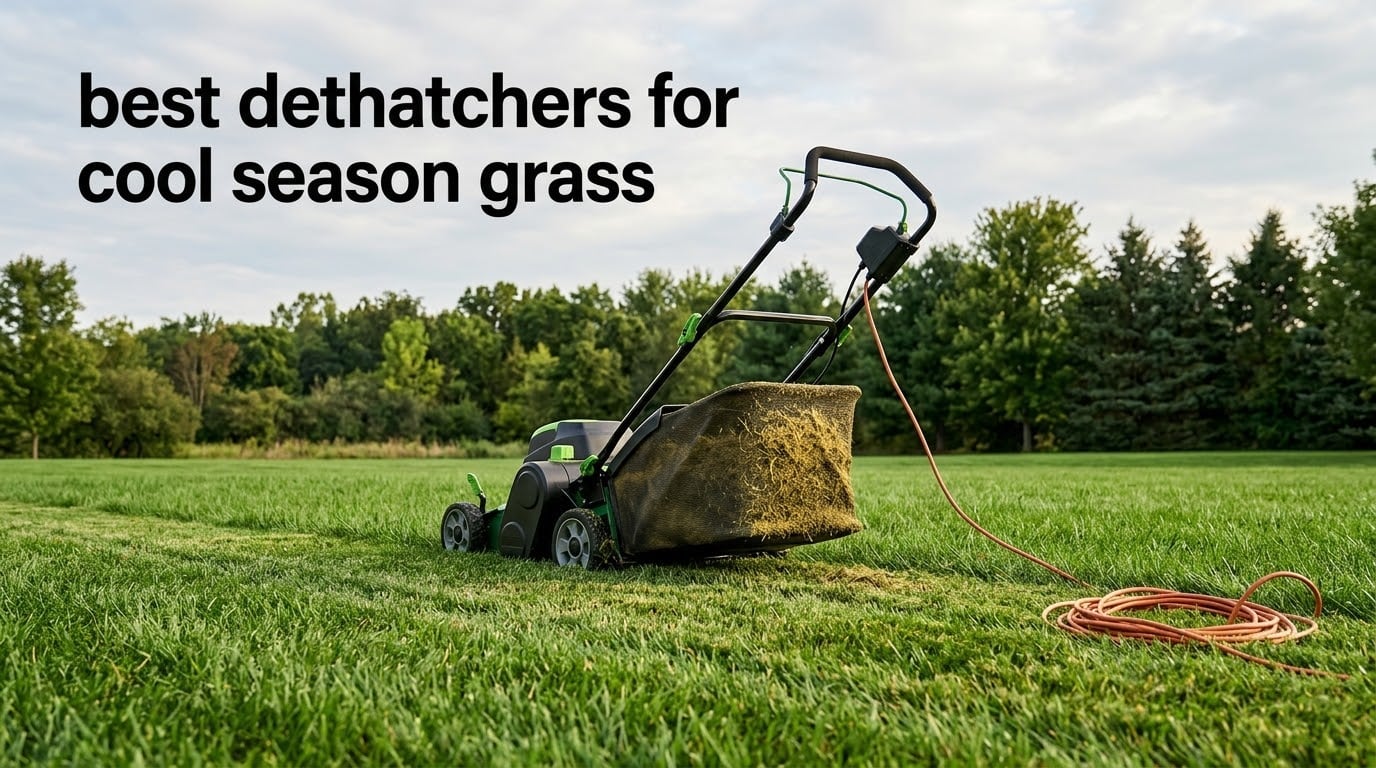
Every June, a Kentucky bluegrass lawn in our part of the country goes spongy underfoot and pale at the crown, and the question every homeowner asks us is the same one: does a dethatcher actually fix it, or is it just an expensive way to tear up good grass? That question shapes everything below, because picking the best dethatchers for cool season grass means matching the machine to a real thatch problem rather than to a spec sheet.
We have run powered and hand tools across bluegrass, tall fescue and perennial ryegrass lawns over several seasons, and the honest answer is that most lawns never need a machine at all. When they do, the choice comes down to three variables: how big the lawn is, how thick the thatch has become, and whether a power outlet is anywhere near the turf.
Our affiliate disclosure: we may earn a commission when you buy through links on this page, at no extra cost to you. If you want a broader picture of lawn equipment, start with our guide to lawn mowers for wet grass, since mowing too wet is what builds up most of the thatch we see.
Table of Contents
Should You Even Dethatch? The Half-Inch Thatch Test
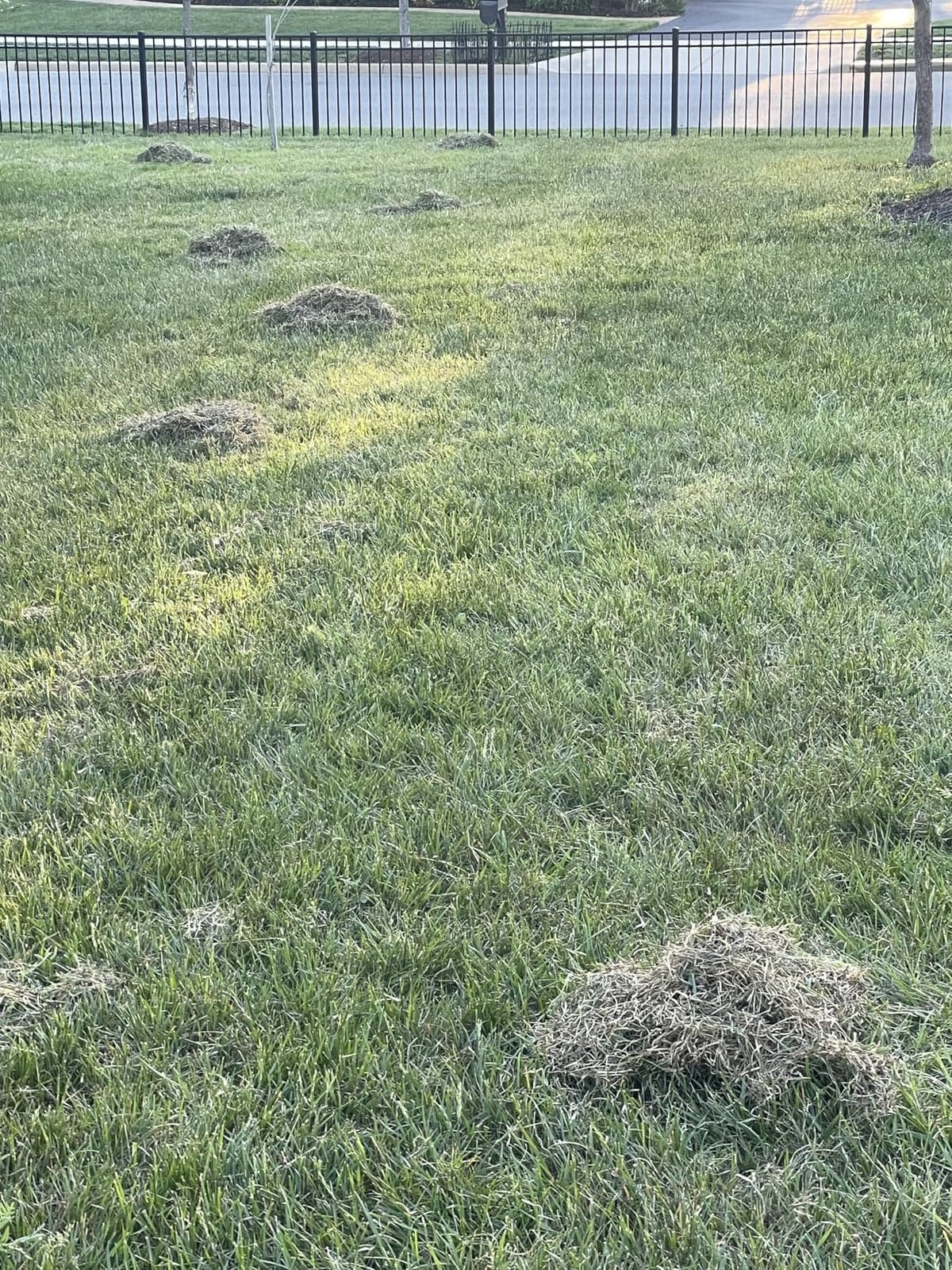
A dethatcher works by spinning rows of spring-steel tines through the thatch layer, the matted mix of dead grass, roots and organic debris sitting between your grass blades and the soil. Once that mat passes about half an inch thick it stops being an insulator and becomes a lid: sunlight stops reaching the crown, water sits on top instead of soaking in, air never reaches the root zone, and new seed will not germinate on contact.
Push a screwdriver or a garden tine straight down into the turf and measure what comes up brown. Under half an inch, leave the lawn alone. Above it, you have a real problem worth solving. A second signal is seed germination: scatter a handful of ryegrass on the bare patches, water it, and see whether it establishes in a week or simply sits there.
Frequency matters more than most roundups admit. In a long-running thread on lawnsite.com, a poster summed up the consensus view that most residential cool season lawns benefit from dethatching every 3 to 5 years, not every spring. That matches what we have seen. Two of the three forum threads ranking on this query push the same point from different directions: on thelawnforum.com a member noted dethatching should improve the lawn because nutrients and sunlight reach the soil more easily, and the top answer on r/lawncare for a thinning lawn was fall overseeding plus fertilizer rather than aggressive mechanical work.
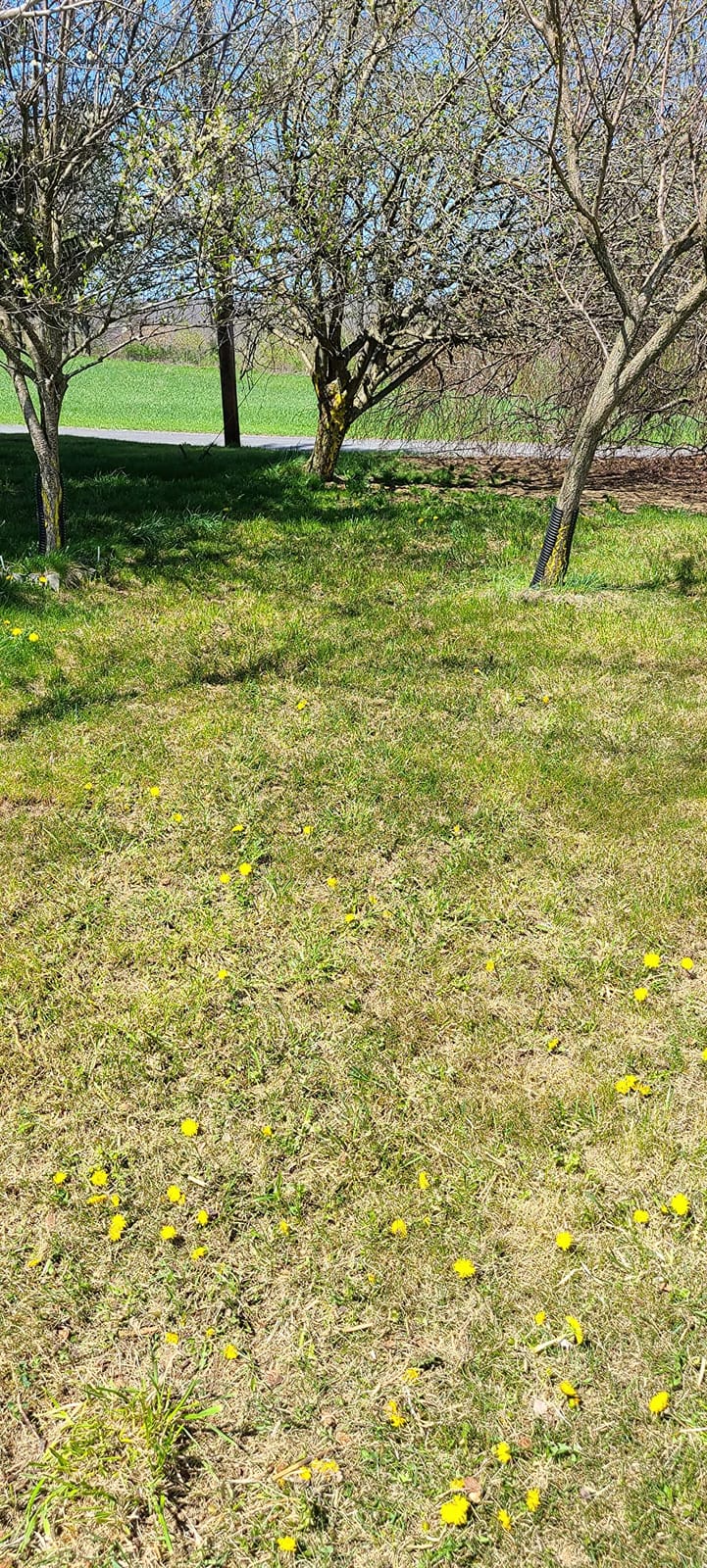
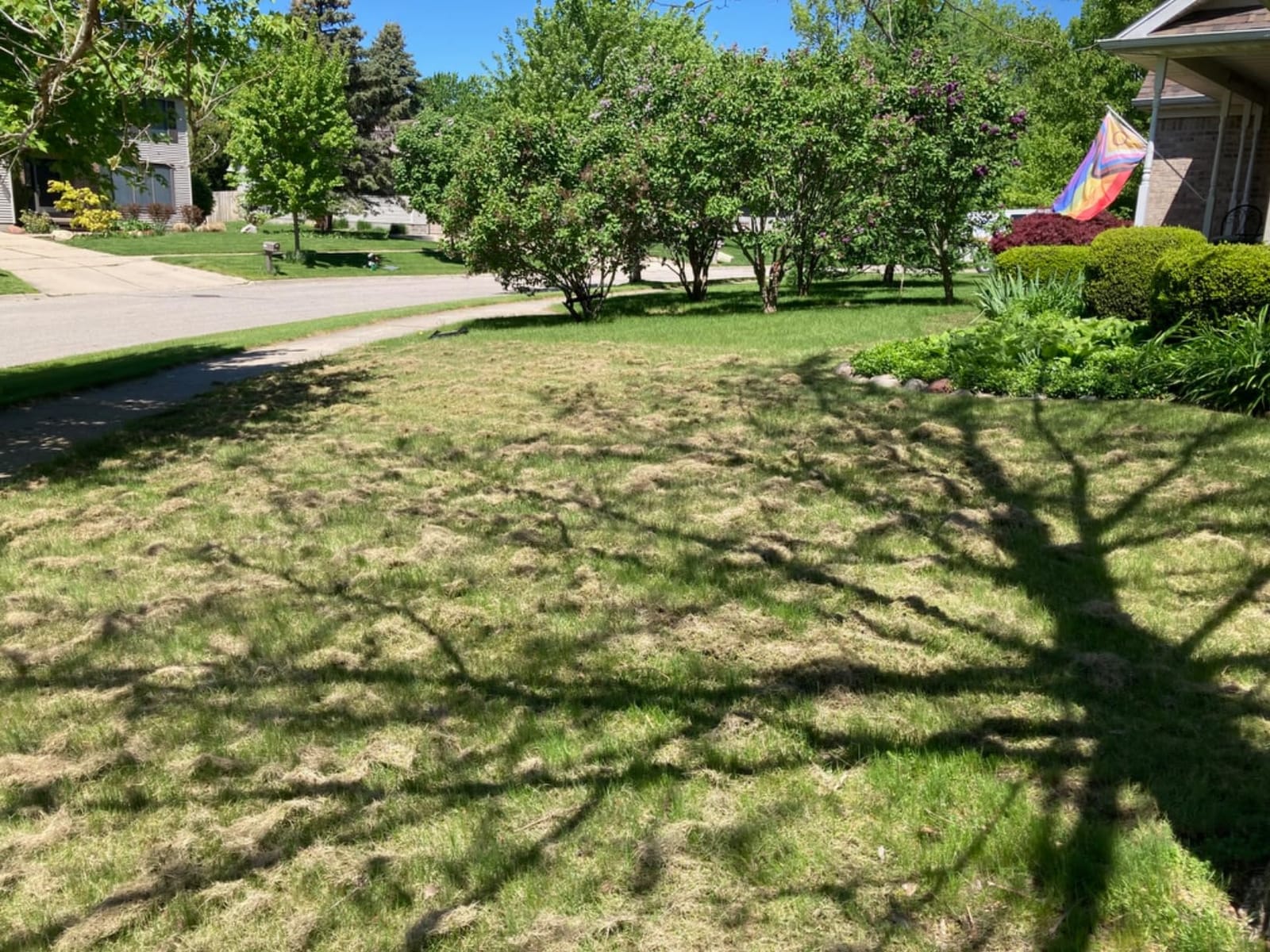
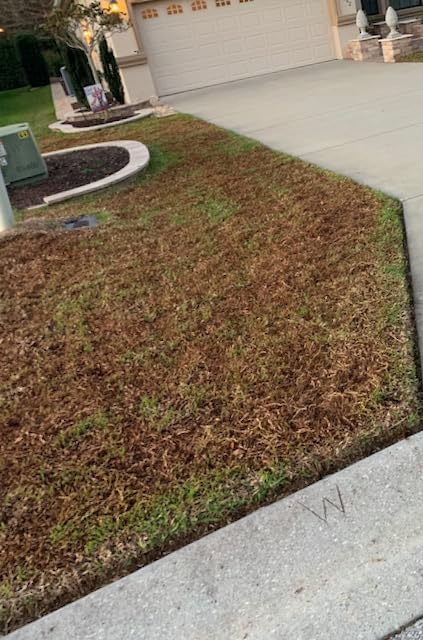
Three situations mean do not touch the turf with a dethatcher. Skip it if the lawn is drought-stressed or brown, because pulling the thatch off a lawn that is already in deficit removes the moisture buffer the crown is relying on. Skip it on new seed, since the tines will drag the seedlings out with the mat. And skip it on dormant turf, where the crowns cannot recover from the disturbance until the season turns.
Top 3 Picks for Cool Season Lawns in 2026

Sun Joe 15-Inch Dethatcher AJ805E
- 13-amp motor
- 5-position depth control
- 13.2-gallon bag
- 2-in-1 dethatcher and scarifier

The Groundskeeper II Rake
- 28 hardened spring tines
- 21-inch head
- 2-pound weight
- 55-inch fiberglass handle

WEN 16-Inch 2-in-1 DT1516
- 15-amp motor at 3
- 300 RPM
- 24 steel tines
- plus 1/4 to minus 1/2 inch depth range
- tool-free head swap
The Best Dethatchers for Cool Season Grass at a Glance
| Product | Specifications | Action |
|---|---|---|
| Sun Joe 15-Inch Dethatcher AJ805E |
|
Check Latest Price |
| The Groundskeeper II Rake |
|
Check Latest Price |
| WEN DT1516 2-in-1 Dethatcher |
|
Check Latest Price |
 Greenworks 14-Inch Dethatcher Greenworks 14-Inch Dethatcher |
|
Check Latest Price |
 TIECTOWN 16-Inch 2-in-1 TIECTOWN 16-Inch 2-in-1 |
|
Check Latest Price |
 Agri-Fab 45-0294 Tow-Behind Agri-Fab 45-0294 Tow-Behind |
|
Check Latest Price |
 Suchtale 40 Inch Tow Behind Suchtale 40 Inch Tow Behind |
|
Check Latest Price |
 BILT HARD 16 Inch 2-in-1 BILT HARD 16 Inch 2-in-1 |
|
Check Latest Price |
 MZK 15-Inch 2-in-1 MZK 15-Inch 2-in-1 |
|
Check Latest Price |
 SENIX 15-Inch 2-in-1 SENIX 15-Inch 2-in-1 |
|
Check Latest Price |
 Walensee 15-Inch Thatch Rake Walensee 15-Inch Thatch Rake |
|
Check Latest Price |
 BARAYSTUS 15-Inch Thatch Rake BARAYSTUS 15-Inch Thatch Rake |
|
Check Latest Price |
Match the class to the lawn before you match the model. Under 5,000 square feet of cool season turf, a manual rake or a 13 to 15 inch corded machine handles the job in an afternoon. Between 5,000 and 10,000 square feet, a 16 inch corded unit with a five-position depth lever saves you real time. Past 10,000 square feet, a tow-behind is the only sane option and a riding mower is a prerequisite.
1. Sun Joe 15-Inch Dethatcher AJ805E — Best All-Rounder for Most Cool Season Lawns
- Highest reviewed machine in this group with 19067 owner reports
- 13 amp motor clears spring thatch out of fescue and bluegrass
- five-position depth control matches the cut to the lawn
- removable bag keeps debris contained
- 27.1 pound chassis needs two hands to move it
- corded operation needs a heavy gauge extension cord
- scarifier blade is the one fitted out of the box
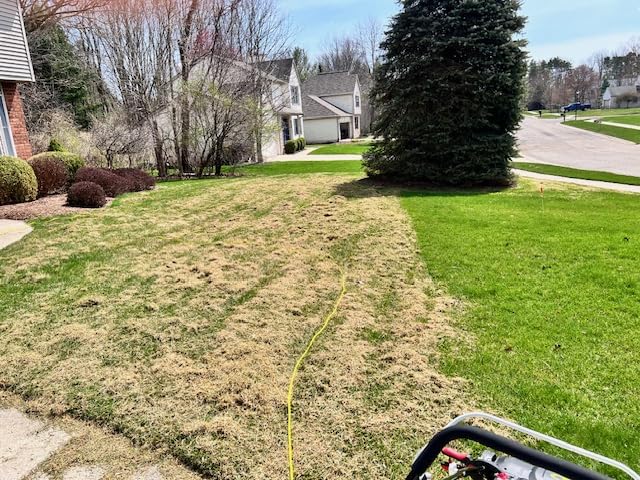
It is the unit we reach for first. The 13 amp motor pulls up heavy spring thatch from cool season lawns and leaves the green growth standing, which is the pattern across most of its 19067 reviews.
The five-position height adjustment is what makes it safe for live turf. On fine-bladed Kentucky bluegrass we start high and step down one position at a time.
Two limits to plan around: at 27.1 pounds it takes two hands to move across a lawn, and the fitted reel is the scarifier, so swap to the tine head first.
Four easy-glide wheels keep it tracking straight on uneven ground, which matters on the ruts a wet spring leaves behind.
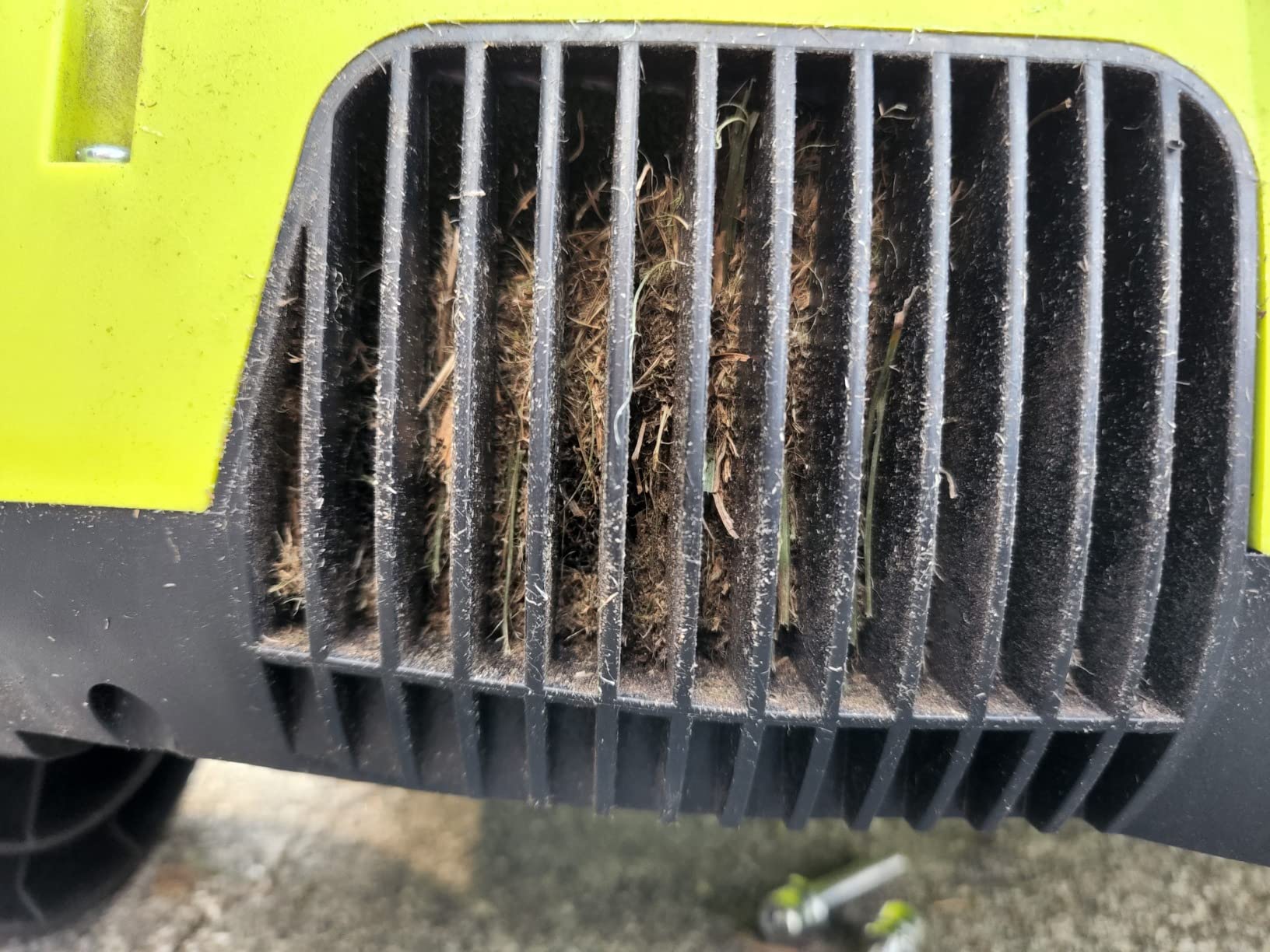
The bag collects debris as you go, which is the part most buyers underestimate before a spring cleanup.
How the 13.2-gallon bag performs on a fescue lawn
On a quarter-acre fescue cleanup you empty it several times, and the removable design lets you carry it away without moving the machine.
When to skip this machine
Skip it with no outlet nearby, where a 13 amp motor means 50 to 100 feet of heavy cable, and skip it above three-quarters of an inch of thatch, where no machine strips the mat without taking live grass with it.
2. The Groundskeeper II Rake — Best Value Manual Dethatcher for Small Lawns
- Most strongly rated manual tool here at 4.7 stars across 4149 reviews
- 2 pounds means no strain on the back
- spring-loaded tines dig in without down pressure
- self-cleans in one flipped pass
- limited lifetime warranty
- Handle pin can loosen at the rivet under heavy use
- digs into rock landscaping
- fixed head angle
At 4.7 stars from 4149 owners this is the most strongly rated manual tool in the set, and the reason is simple: the spring-loaded hardened steel tines dig into thatch and pull without you leaning on the handle, which on a small bluegrass lawn is all you actually need.
Owners describe it as the best manual dethatching rake they have used for pulling dead grass out of cool season turf without damaging the growing blades.
At two pounds, the physical cost of a session is low enough that it is easy to do spot work on thin patches year round rather than saving the whole lawn for one aggressive day.
The recurring complaint is the plastic pin securing the handle to the head, which some owners report loosening at the rivet point under heavy use.
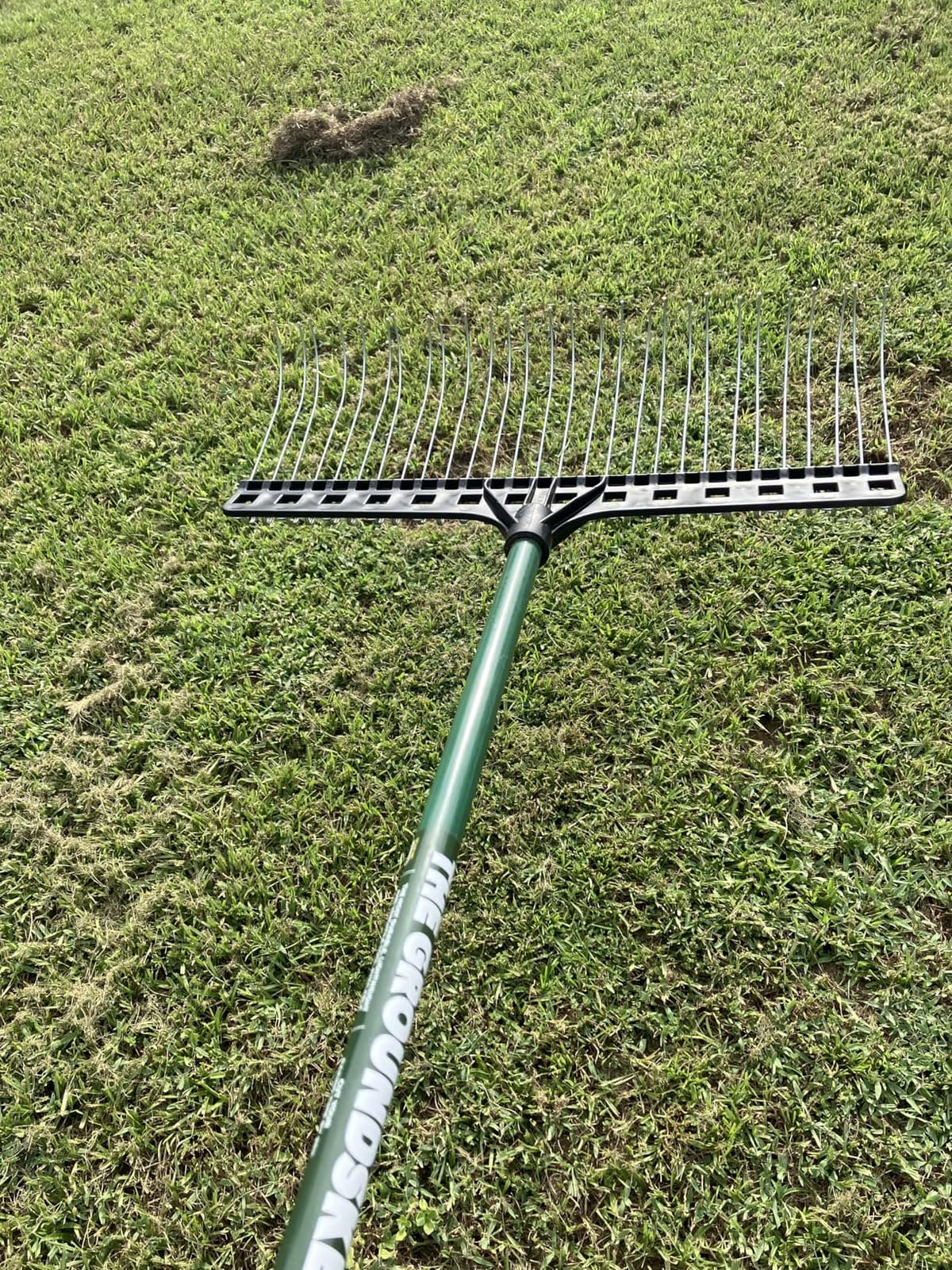
What a hand rake does and does not beat a machine at
The case for the rake is precision: you work a bare patch without pulling up the whole lawn, and the self-clearing flipped pass clears a section in one motion.
When this is the right choice
Pick it when your lawn is under 5,000 square feet and the thatch test came back just over half an inch. Skip it if the yard is full of rock beds or you plan to reseed a quarter acre this fall.
3. WEN DT1516 16-Inch 2-in-1 — Best for Deep, Long-Neglected Thatch
WEN DT1516 16-Inch 15-Amp 2-in-1 Electric Dethatcher and Scarifier with Collection Bag, Black
- Wide 16 inch clearing path so large lawns take fewer passes
- depth range reaches minus 1/2 inch for stubborn thatch
- quick switch between the 24-tine and 20-blade heads
- folds down for storage
- Collection bag fills fast
- scarifier blade is the head fitted out of the box
- assembly hardware not clearly labeled
The 15 amp motor at up to 3,300 RPM has no trouble with the piles of thatch that come off long-neglected cool season lawns, and the depth range from plus 1/4 inch down to minus 1/2 inch is the widest reach in this group.
Set it shallow for the first pass and let the aggressive setting handle the mat on the second.
The bag is the weak point: owners report it filling within a few passes, and many detach it and mow or rake the debris instead. The included hardware is loosely labeled, so allow extra time for assembly.
The 24-tine head is the one doing thatch removal, and it is the head you want fitted for a spring cleanup.
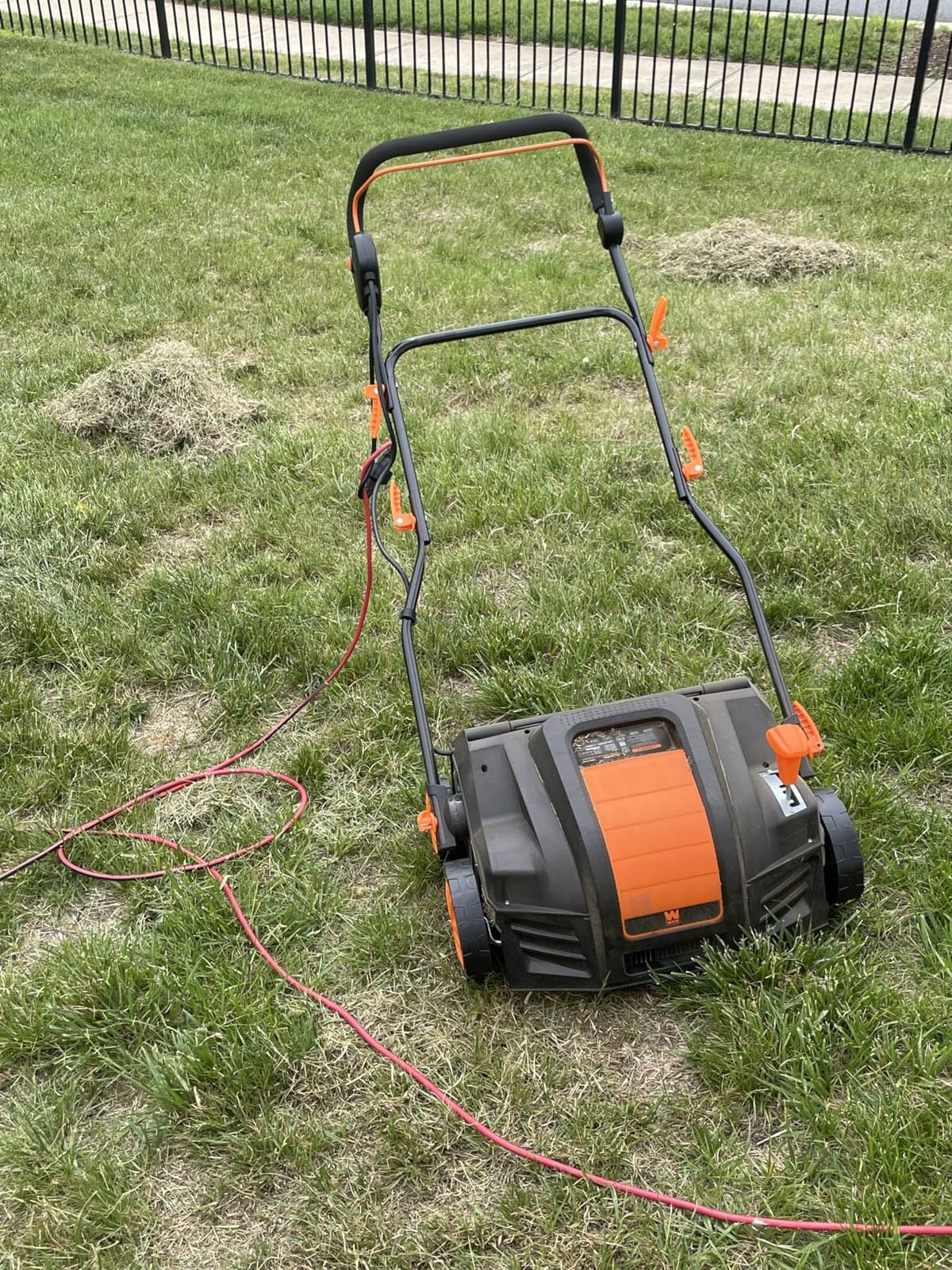
How the 2-in-1 head swap changes the job
The dethatching head carries 24 steel tines for thatch. The scarifying head carries 20 blades and cuts into the soil surface, which is what you want immediately before overseeding so seed lands on soil rather than a mat.
What to watch for before you run it
Check which head is installed first, because the scarifier blade can scalp tender spring turf. At 33.7 pounds it is the second-heaviest walk-behind here, so plan your passes to end near where you started.
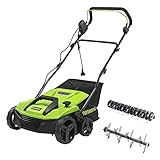
4. Greenworks 14-Inch Dethatcher DHA103 — Best for Fine-Bladed Kentucky Bluegrass
- Three depth positions let you treat thin thatch without scalping bluegrass or fescue
- 28.7 pound frame with push-button start is easy to steer
- quick-release swap between heads needs no tools
- manufacturer recommends early spring or early fall for cool season turf
- 14 inch reel is the narrowest powered path here
- corded design needs a heavy duty extension cord
Three depth positions is the number that matters here, and it is why we like this machine on Kentucky bluegrass: the depth lever lets you treat tender spring turf without pulling up green grass, the dominant fear in every lawn forum thread on this subject.
The 13 amp motor at 3,200 RPM does the work, and the push-button start plus a 28.7 pound frame keep it steady on uneven ground.
The trade-off is width. At 14 inches it has the narrowest reel of the powered machines here, so a 6,000 square foot lawn takes noticeably more passes.
The tool-free release is the detail that saves time on a 2-in-1 machine, since you can change modes mid-job without reaching for a wrench.
Why fine-bladed turf needs gentler settings
Kentucky bluegrass and perennial ryegrass have thin blades and shallow crowns, so a deep pass strips green growth along with the thatch and leaves you with a brown lawn and a reseed bill. Tall fescue is coarse and tolerates the aggressive settings.
When this machine fits your yard
This is the pick for a lawn under about 6,000 square feet with an outlet within cord reach and moderate thatch. If the lawn is larger or the thatch is past three-quarters of an inch, move up to a 16 inch five-position machine.
5. TIECTOWN 16-Inch Dethatcher LM01 — 14.5-Gallon Bag and Wide 16-Inch Path
TIECTOWN 2026 Upgrade 16-Inch 15.5A Electric Dethatcher & Scarifier, Green
- 14.5 gallon removable bag
- one of the largest on the walk-behind electric machines here
- 3600 RPM motor paired with a 16 inch path for fast passes over large lawns
- tool-free blade swap and tool-free assembly
- 30 pound frame with foldable handle for compact storage
- Corded operation needs 14 AWG up to 50 ft or 12 AWG up to 100 ft
- cord management hardware adds bulk
The 14.5 gallon removable bag is the standout feature. Owners comparing it against cheaper electric models point to the bag as the thing that cuts how often you stop and empty during a spring cleanup on a large lawn.
Behind that, a 15 amp motor peaking at 15.5 amps running at 3,600 RPM across a 16 inch rake path makes it one of the faster machines here, and the five-position depth control spans both dethatching and scarifying modes.
Depth figures are given precisely: scarifying runs from minus 0.47 inch to 0.24 inch and dethatching from minus 0.32 inch to 0.39 inch, so you can set the cut in relation to surface grade rather than guessing at numbered clicks.
A cord clip and extension cord holder are fitted, which matters more than it sounds on a machine you will be turning repeatedly.
What the fine depth numbers actually mean
Minus 0.47 inch means the tines sit just under half an inch below surface grade. On fine-bladed bluegrass start nearer zero and step down only if the thatch test says it is needed.
When this machine suits your lawn
It suits a lawn between 5,000 and 10,000 square feet where you want to finish in one session. Plan for a heavy cord, since the manufacturer calls for 14 AWG up to 50 feet or 12 AWG up to 100 feet.
6. Agri-Fab 45-0294 Tow-Behind — Best for Lawns Over Half an Acre
- 40 inch swath covers an acre or more in a single pass
- 20 spring steel tines pull heavy thatch without added ballast
- heavy gauge steel deck and drawbar
- tines attach with bendable tabs instead of individual bolts
- made in the USA
- Assembly takes one to two hours with unclear instructions
- hitch length runs short on some riding mowers
- tines clog and need frequent cleaning
Negative feedback on this one clusters almost entirely around assembly and the hitch rather than dethatching performance, which tells you the machine works and the setup is the hurdle.
Twenty spring steel tines across a 40 inch swath pull up heavy thatch, and owners operating it on big cool season acreage report finishing an acre quickly.
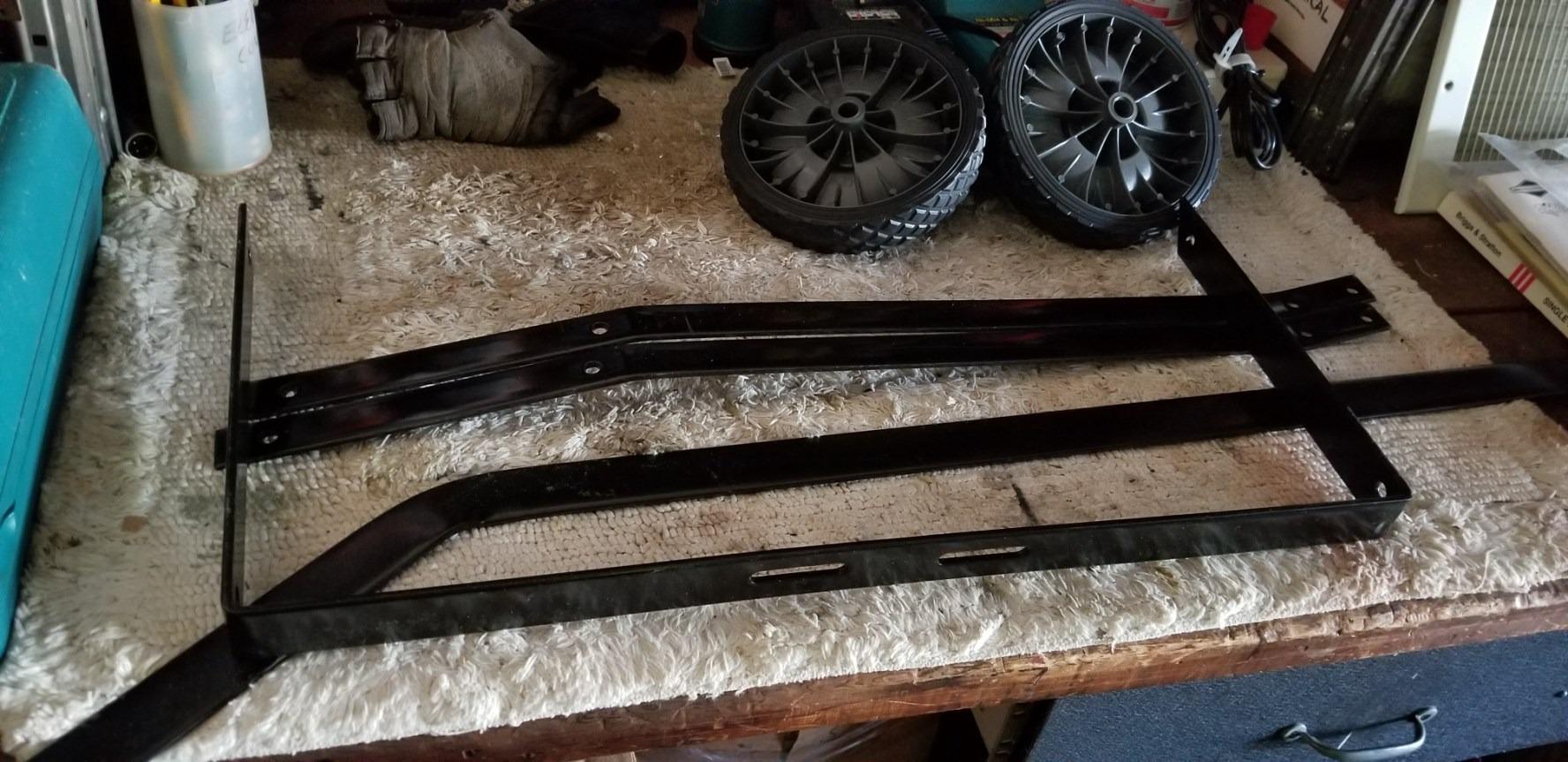
Plan for an afternoon of assembly. Instructions are described as ambiguous or tedious, though a video guide is included, and the hitch length may fall short of the towing connection on some riding mowers.
The tines attach with bendable tabs rather than individual bolts, which means fewer fasteners working loose over a season of towing.
How to match the hitch to your mower
Check clearance with the mower deck down and the bagger attached before you order. On zero-turn machines with a grass catcher, owners generally remove the catcher for the dethatching pass.
Who should buy and who should rent
If you have an acre or more and already own a riding mower, this earns its garage space. For a single heavy job, renting commercial equipment is cheaper, which is the recurring advice in the lawnsite.com brand thread where members argue about Billy Goat, Lesco and Bluebird machines.
7. Suchtale 40-Inch Tow-Behind — Best Ballast Platform for Matted Thatch
Suchtale 40 Inch Tow Behind Lawn Dethatcher with 20 Spring Tines
- Ballast platform accepts added weight when thatch is matted and stubborn
- heat-treated tines flex under load and resist rust
- reinforced steel frame with bearing-supported wheels
- transport handle raises and lowers the tines
- Requires a riding mower or ATV
- bearings and frame need periodic maintenance under heavy thatch load
The 70 pound ballast platform is what separates this from a generic tow-behind. When thatch is matted, added downward weight lets the tines bite instead of riding over the mat, and owners on larger properties point to it as the reason their passes cut through.
The 20 heat-treated spring steel tines flex during operation rather than snapping, resist rust, and are replaceable. The transport handle raises the tines for towing and lowers them for work.
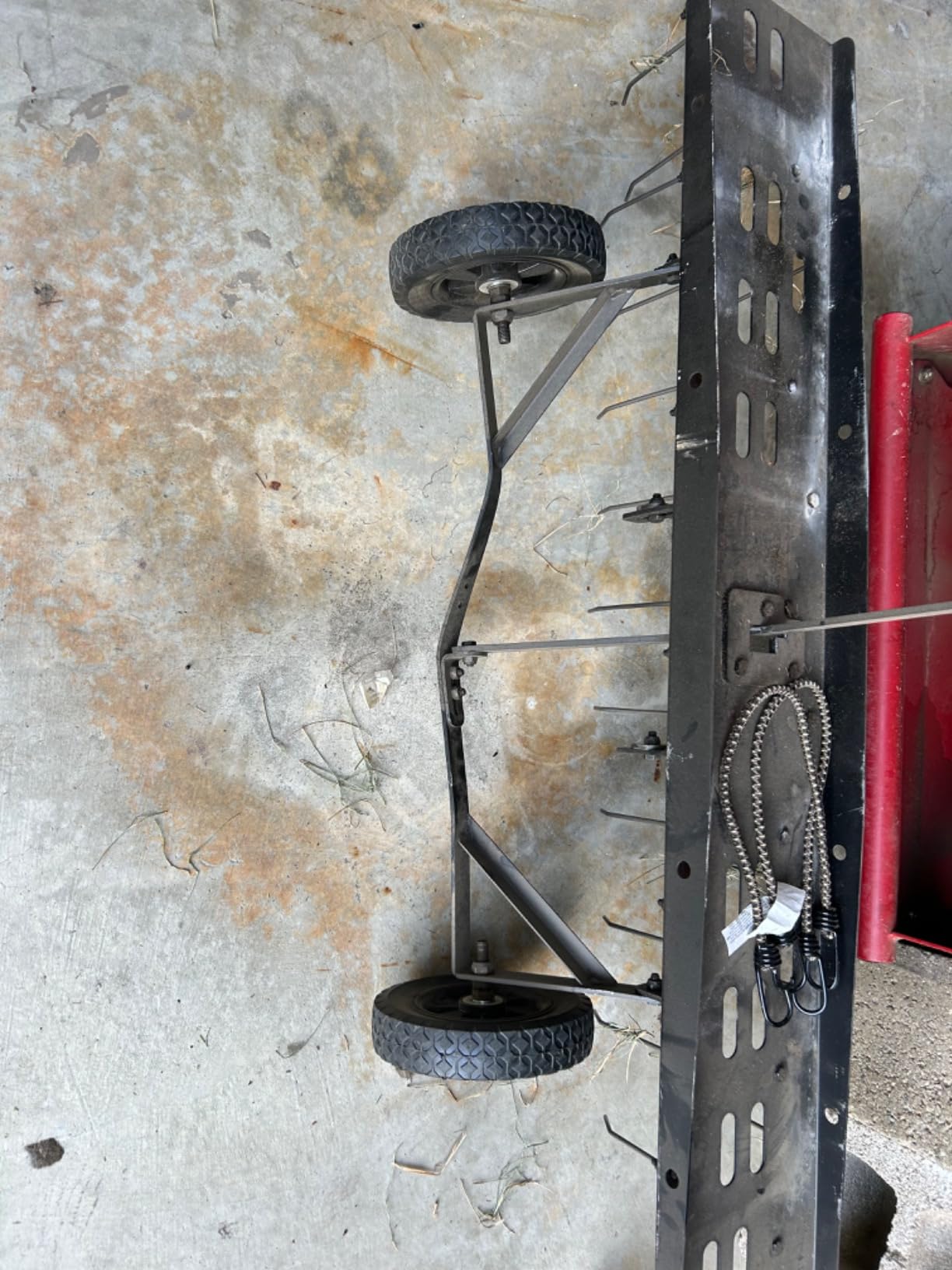
Two honest limits: it needs a riding mower or ATV, and the bearings and steel frame need periodic maintenance because the thatch load is high. This model also carries the highest one-star share of anything we tested.
Check the clearance over your mower deck before you tow it, because a reinforced frame still needs room to lift.
When ballast changes the outcome
On a healthy fescue lawn with moderate thatch, weight is unnecessary and can tear living crowns. On a neglected bluegrass lawn where the mat is thick and wet, the extra force is the difference between skimming the surface and removing the layer.
How it compares with the Agri-Fab tow-behind
Both are 40 inches wide with 20 spring steel tines, so width is a wash. The Agri-Fab has a longer review history and a three-year limited warranty; the Suchtale adds ballast and heat-treated tines.
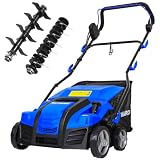
8. BILT HARD 16-Inch 2-in-1 — Best for Quarter-Acre Lawns with Heavy Thatch
- 15 amp copper motor and 20 spring steel tines pull heavy thatch on the highest setting
- five-position lever from minus 0.47 to 0.24 inch
- tool-free head swap takes seconds
- folds down for storage
- 3-year limited warranty
- Heaviest powered unit here at 57.3 pounds
- bag fills every few passes
- mostly plastic construction feels less substantial
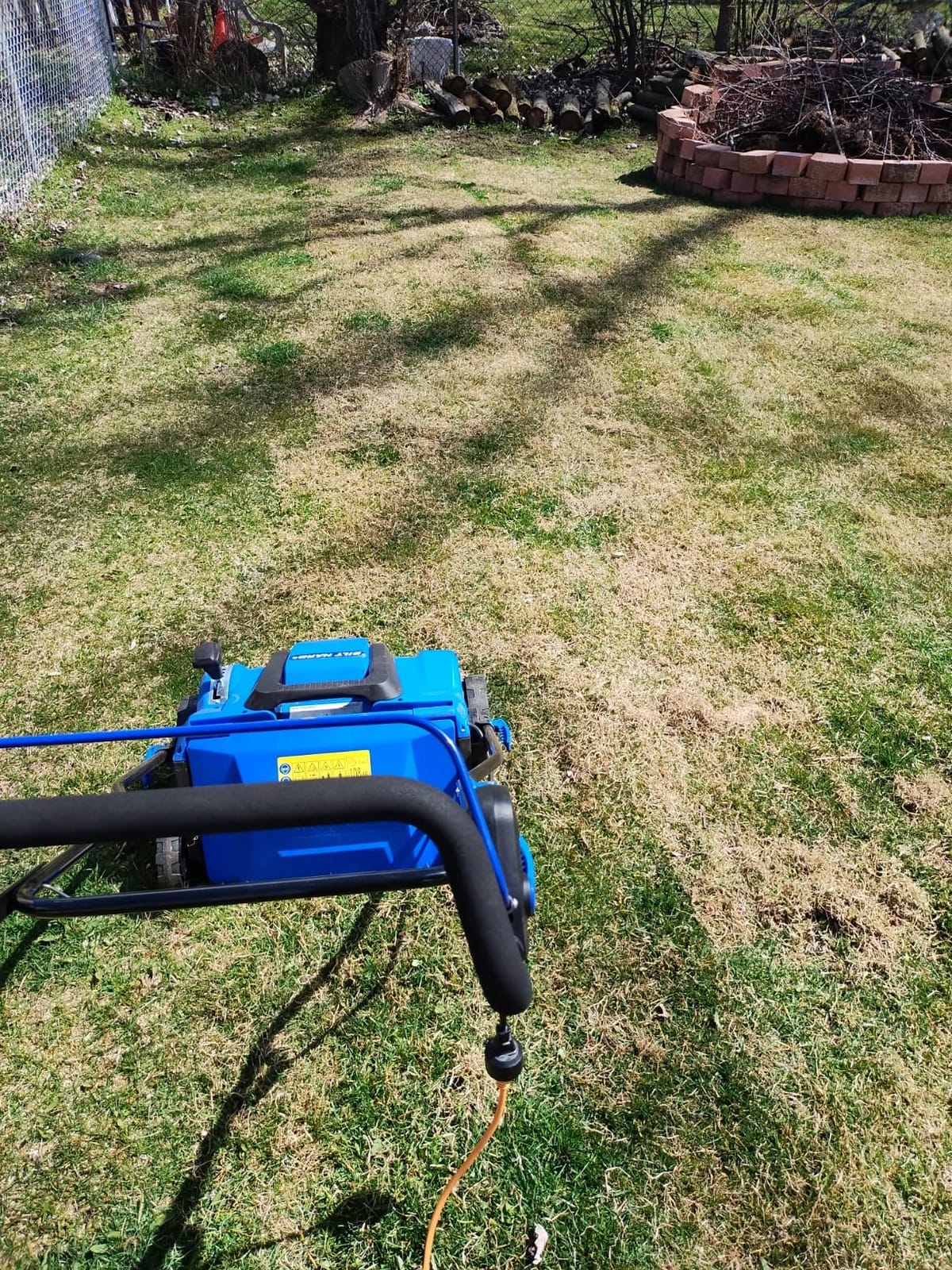
Owners on quarter-acre and larger lawns report this clearing moss and matted thatch far faster than hand raking, and one describes a single cleanup of 7,200 square feet producing 45 bags of debris.
The five-position lever runs from minus 0.47 inch to 0.24 inch, giving a spring cleanup setting and a light touch for thin thatch from the same control.
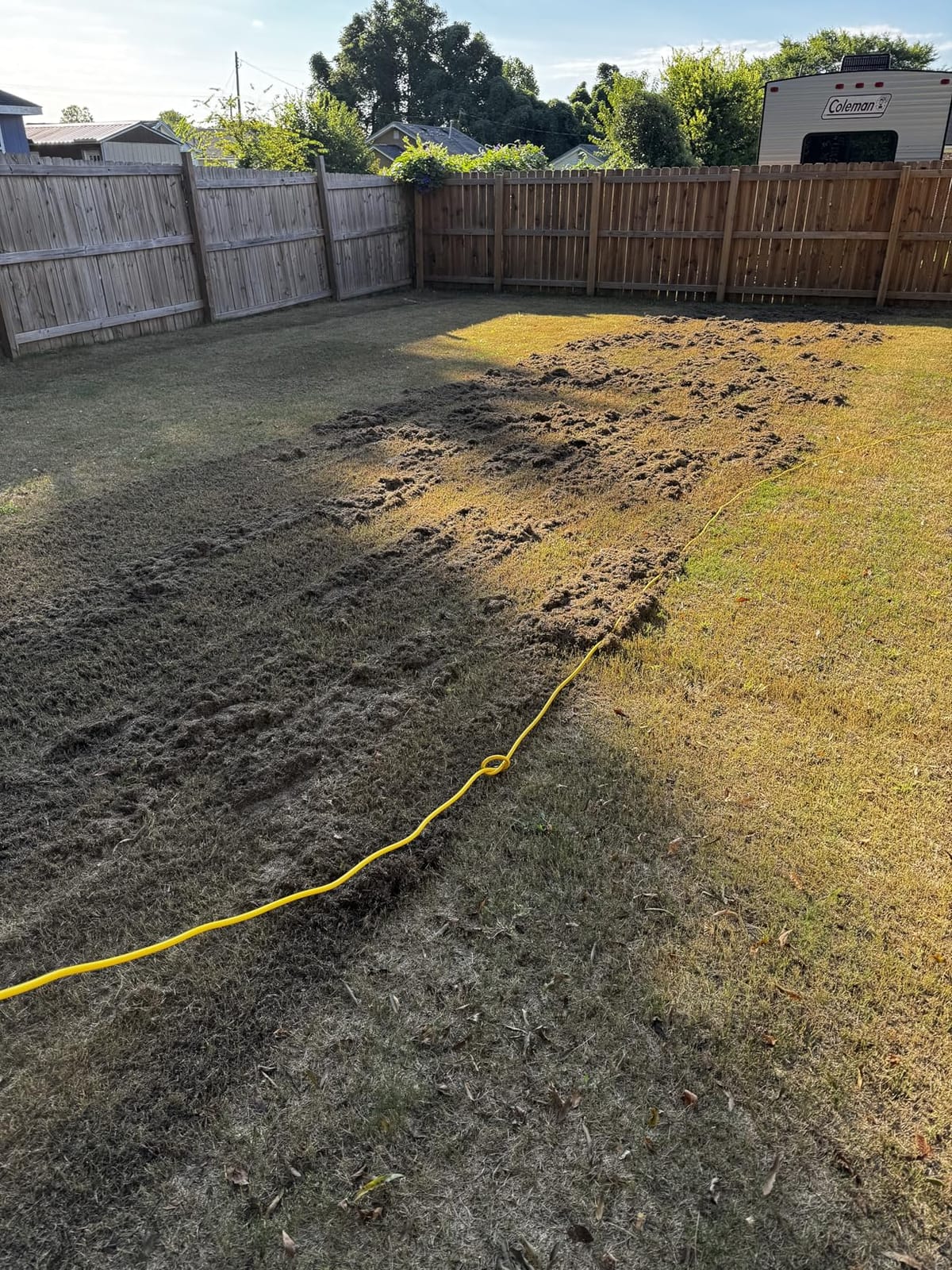
At 57.3 pounds it is the heaviest powered unit here by a wide margin, and the frame feels plastic-heavy in the hand. The bag also fills every few passes.
The foldable handle and tool-free quick-lock knob keep storage manageable despite the weight.
Getting the most out of the depth lever
Start at the shallow end even on a bad lawn, then drop one position per pass. Mowing short first matters, because taller grass snags the tines before they reach the thatch, and runners will clog the drum every few passes.
Who should buy this one
Choose it if your lawn is around a quarter acre, the thatch is heavy, and you want the deepest reach available in a walk-behind. It will not stop a determined homeowner from getting the job done.
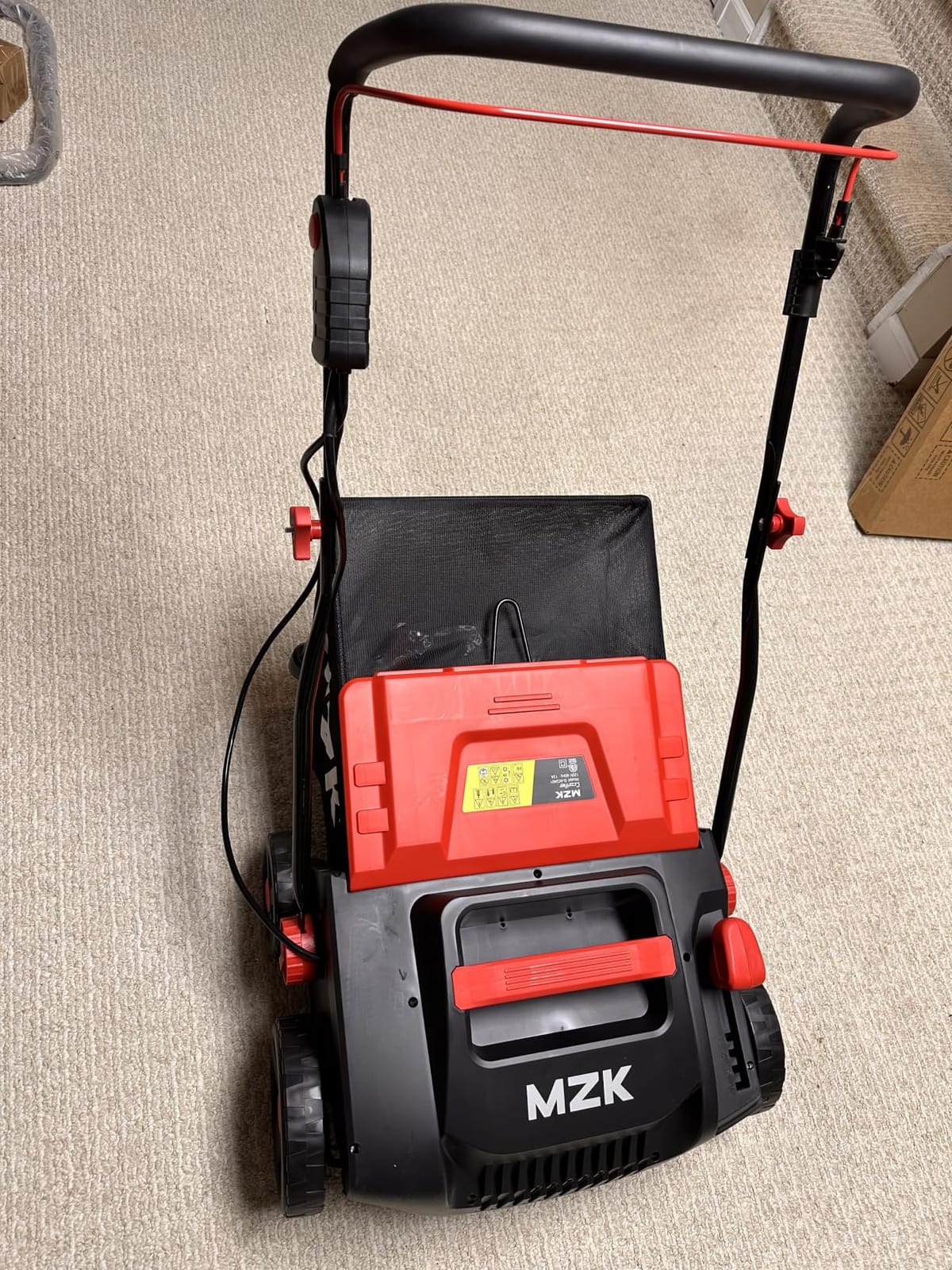
9. MZK 15-Inch 2-in-1 — Best High-Speed Motor in a Light Frame
- 4.9 star rating across a 50 review sample
- 3700 RPM 13-amp motor is the highest no-load speed here and powers through thick thatch
- 27.5 pound frame folds for storage
- five depth settings plus quick blade swapping
- Only 50 reviews so the track record is thin
- bag fills quickly and owners detach it
- scarifying tines can be aggressive on thin turf
- extension cable not included
A 4.9 average is the highest rating in this group, and the 3,700 RPM no-load speed from the 13 amp copper motor is the highest too. Owners describe it as easy to assemble and light enough to feel almost self-propelled.
The 15 inch path with depth adjustable from minus 0.47 inch to 0.24 inch covers the range you need, and the quick-switch blades move between dethatching and scarifying without tools.
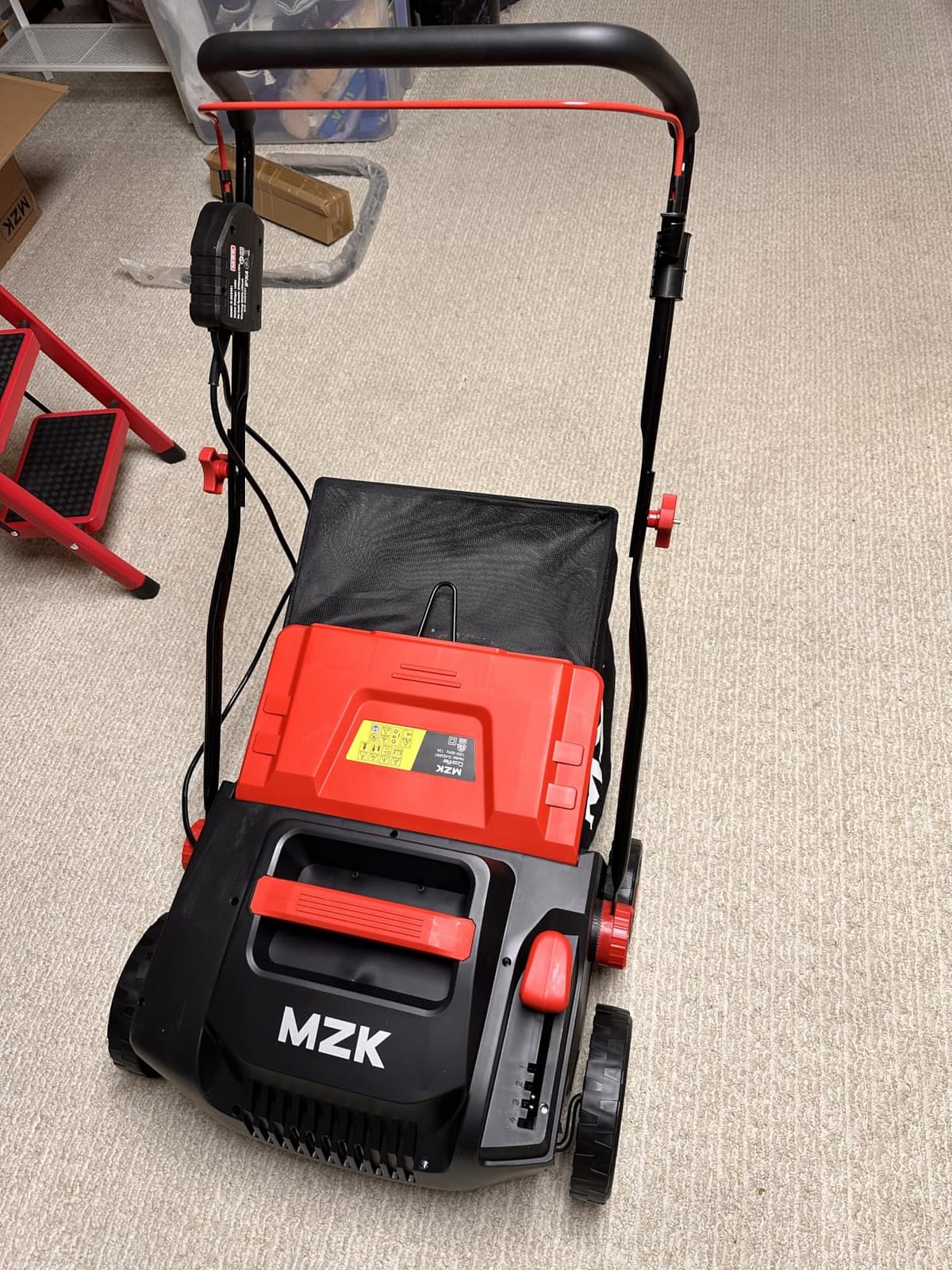
Be clear-eyed about the sample size. Fifty reviews is far thinner than the rest of this list, so treat the rating as encouraging rather than proven, and note that several owners remove the collection bag entirely.
The foldable 27.5 pound frame is the practical part here, since it stores against a wall rather than taking up a corner of the garage.
Where the high RPM earns its keep
Motor speed determines how cleanly tines lift thatch rather than push it along. At 3,700 RPM the drum keeps moving through a wet spring mat instead of bogging down, which is when a dethatcher usually stalls and gets abandoned half-done.
Before you buy
The depth range is aggressive at the bottom end, so work shallow passes on fine-bladed grass, and budget for a properly rated cord since the extension cable is not included.
10. SENIX 15-Inch 2-in-1 SCE13-M — Best Lightweight Powered Machine
- Lowest rated powered unit here at 4.1 stars
- lightweight at 24.8 pounds and effectively self-propelled once it grips
- 24 spring steel tines at 1.5 mm pull up thatch and moss on a first pass
- foldable design with a 3-year limited warranty
- Dethatch depth is fixed at 0.4 inch with no real adjustment for tender turf
- bag fills within a few feet
- assembly needs vice grips for the handle bolts
At 24.8 pounds this is the lightest powered machine here, and owners report it becoming effectively self-propelled once the tines grab the turf. The 24 spring steel tines at 1.5 mm make it effective on a moderate thatch layer.
The 26-blade scarifying cylinder cuts to 0.4 inch into the soil surface, which is the setting you want immediately before overseeding.
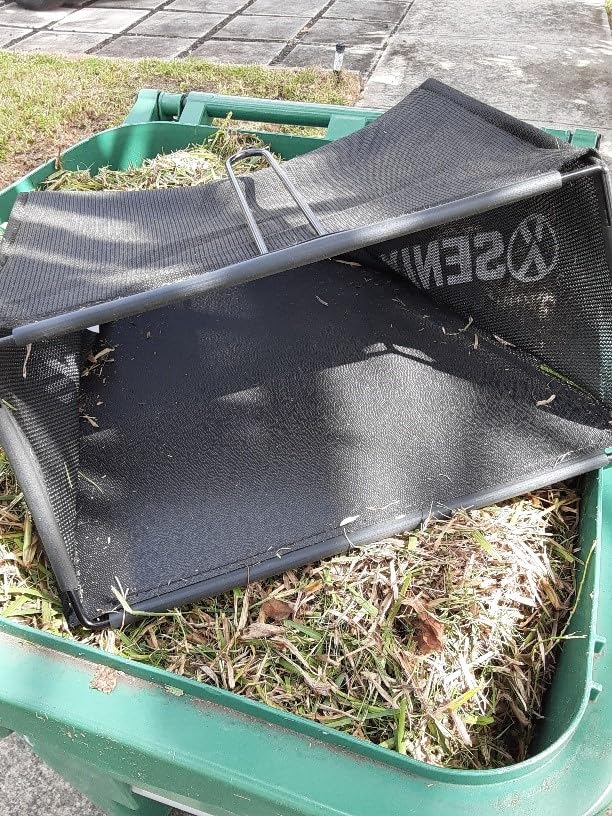
Here is the limitation that matters most on cool season turf: the dethatch depth is fixed at 0.4 inch with no real adjustment, which on tender spring Kentucky bluegrass is more aggressive than you may want.
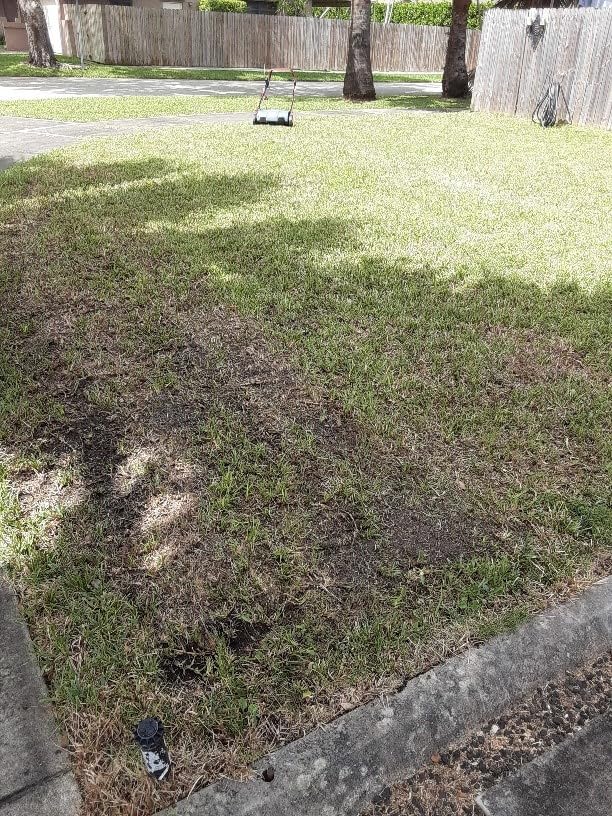
When a fixed depth is actually an advantage
Beginners benefit from having no lever to get wrong, and at 0.4 inch the tines reach the thatch without dropping into the root zone on most lawns. Experienced operators will miss the control.
Realistic expectations
Owners report strong value, with complaints concentrated on the small collection bag and assembly friction, since the handle bolts need vice grips. At 4.1 stars it is the lowest-rated machine here, and we would only recommend it to a first-time owner on a smaller lawn.
11. Walensee 15-Inch Thatch Rake — Best Manual Rake for Preparing to Overseed
Walensee 15-Inch Thatch Rake for Lawn, 19-Tine Dethatcher, 70-Inch Handle
- Dual-sided head handles thatch removal and soil loosening without switching tools
- three handle lengths suit different users
- curved hardened tines reported strong and resistant to bending
- quick assembly of about ten minutes
- Included bolts have smooth heads and the supplied tools slip
- 15 inch width is narrow for faster coverage
- manual dethatching takes multiple passes
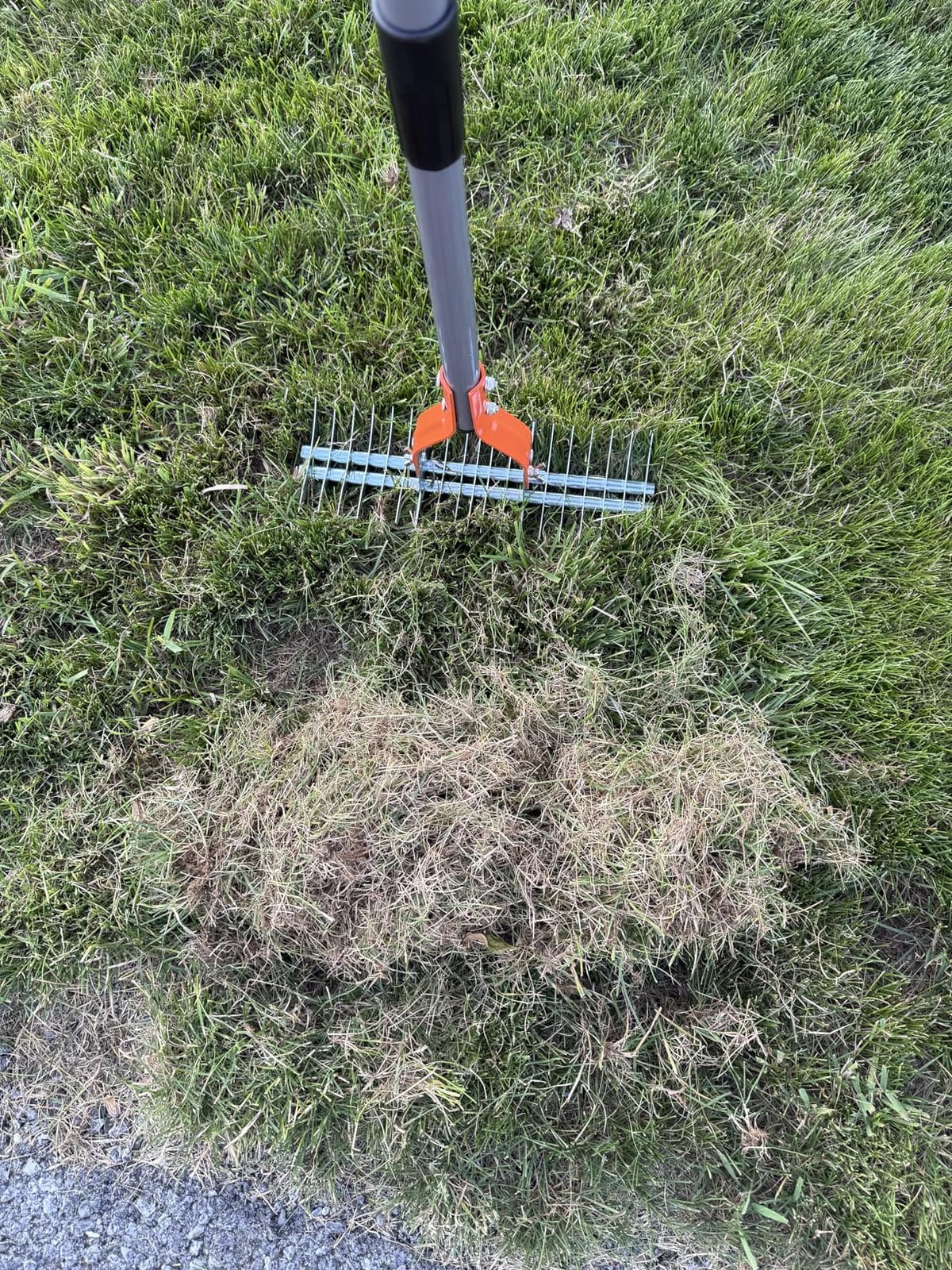
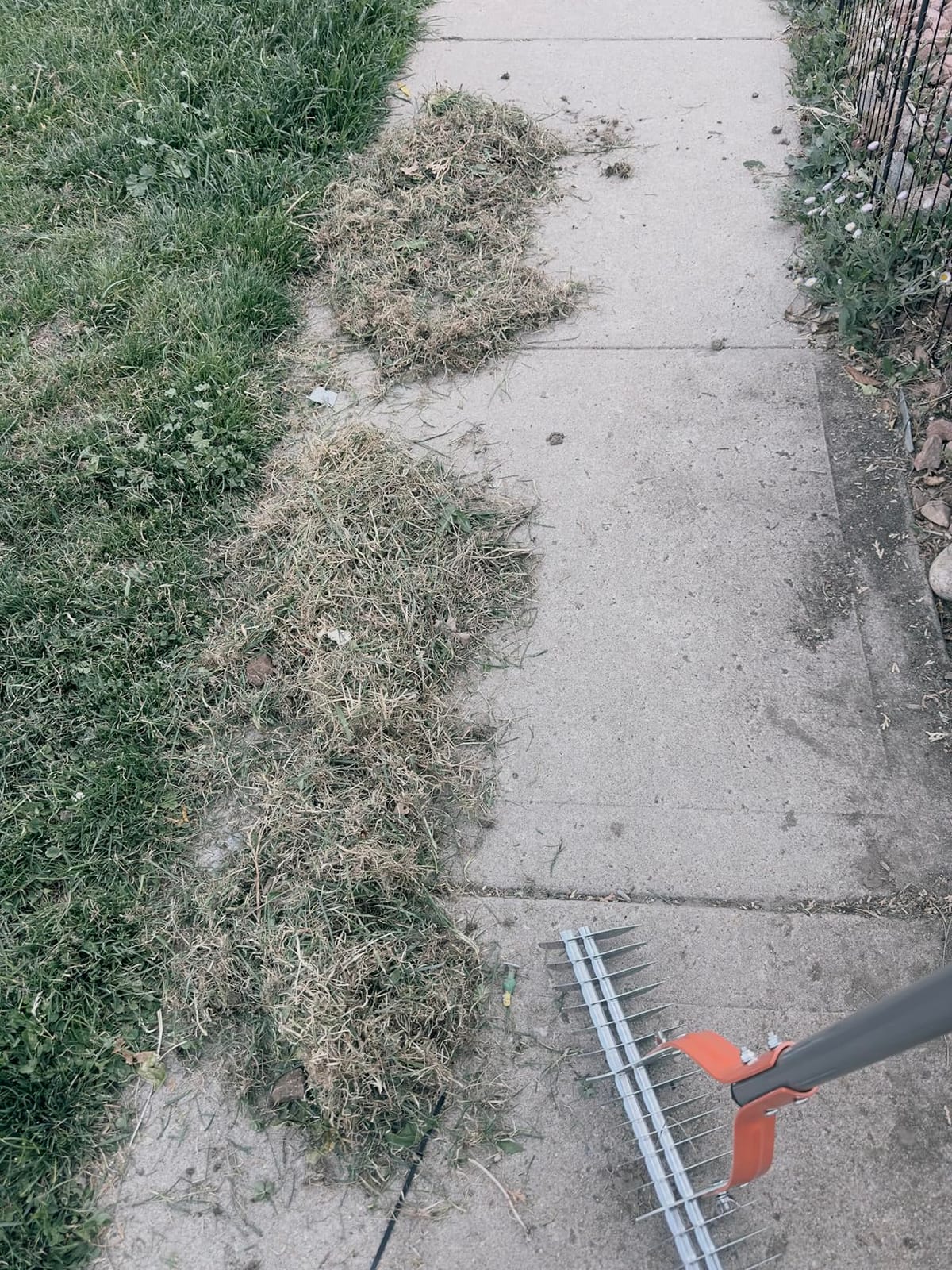
The dual-sided head is why this rake earns its place. One side lifts dead grass and thatch, the flipped side loosens topsoil, so you can clear a patch and work the surface before seeding without switching tools.
Owners use it on Kentucky bluegrass to pull up thatch and prepare for overseeding, and the sectional stainless handle sets to roughly 40, 55 or 70 inches so different people can work without bending.
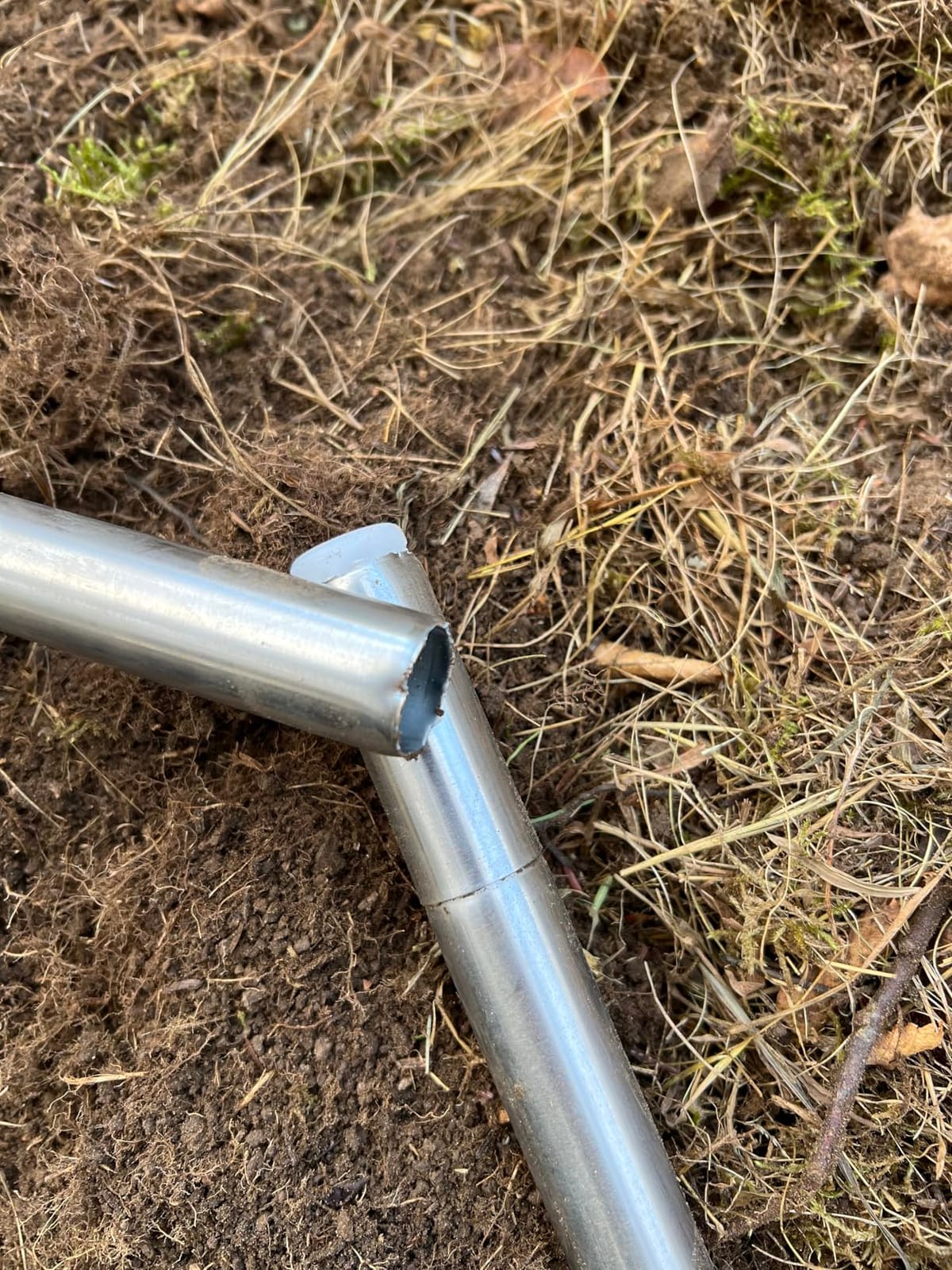
Assembly is the biggest complaint. The included bolts have smooth heads, some lack hex holes, and the supplied tools slip, so allow a few extra minutes or use your own wrench.
The handle sections lock with a twist-lock mechanism, so the whole tool comes apart for storage once the season is over.
Why a manual rake suits pre-overseeding work
Overseeding fails when seed lands on a thatch mat and never reaches soil, and this rake does both halves of that job in one pass. The top answer on r/lawncare for a thinning lawn was fall overseeding plus fertilizer, so this supports that plan rather than competing with it.
Who should choose it
Pick it for a yard under 5,000 square feet, particularly if you plan to reseed patches. The 15 inch head is narrow, so at full-yard scale a corded machine finishes in a fraction of the time.
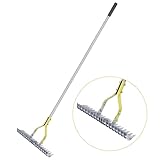
12. BARAYSTUS 15-Inch Thatch Rake — Best for Reducing Wrist Strain
BARAYSTUS Thatch Rake, 15‑Inch Wide Dual‑Side Dethatching Rake for Lawn
- Adjustable head angle on both sides reduces wrist strain over long sessions
- heat-treated carbon steel tines with anti-rust coating resist bending
- three-section stainless handle adjusts to different heights
- 3.3 pounds and fully detachable for compact storage
- Real physical effort needed on large matted areas
- 15 inch head means more passes than a wider unit
The adjustable head angle separates this from the other manual rakes here. Buyers single it out as a wrist-strain reducer over long sessions, and on a job where you are pulling matted thatch for an hour, that is not a minor detail.
Heat-treated carbon steel tines with an anti-rust powder coating resist bending, and the 19 curved tines per side handle thatch on one face and soil leveling on the other.
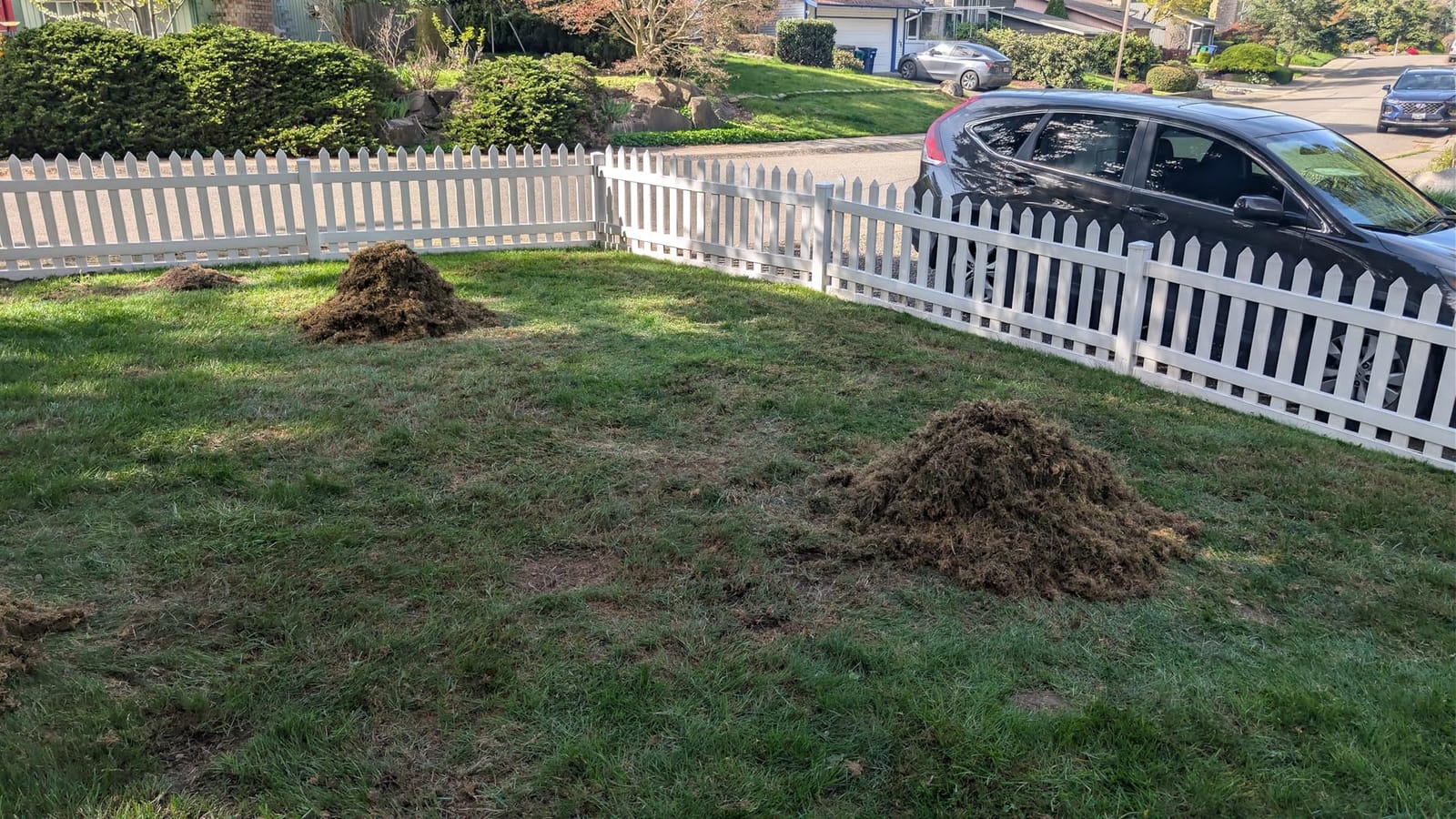
At 3.3 pounds it is the lighter of the two dual-sided rakes here and stores compactly once the handle sections come apart. Assembly takes minutes with the included hardware.
The head detaches for transport, so carrying it across a driveway does not mean wrestling a 58 inch tool through a gate.
How the adjustable head angle helps in practice
On a fixed-angle rake you absorb the difference between the tool and your body through your wrists. With the head set to match your posture, that load moves into the arms and shoulders, and the three-section handle adjusts independently for different heights.
Where it fits
This suits a small to medium lawn under about 5,000 square feet with moderate thatch, and it also handles leveling and spreading seed. If the thatch is severe or the lawn is larger, a powered machine is the better investment.
How to Dethatch a Cool Season Lawn
Do not start with the machine. Mow first, and mow short, so the tines reach the thatch layer instead of snagging in tall growth. Owners of the heavier powered units here consistently say mowing short beforehand makes the job dramatically faster.
Work on a dry lawn. A wet thatch mat wraps around the tines and stalls the drum, and it is far easier to rake up loose debris in dry conditions than to chase clumps that are half glued to the soil.
Set the depth one click shallower than you think you need for the first pass, then adjust. Start at the shallowest setting on fine-bladed Kentucky bluegrass and perennial ryegrass, since these thin-bladed cool season grasses punish an aggressive cut at the crown. Tall fescue is coarse and tolerates the deeper settings.
Dethatch in a direction perpendicular to how you mow, and empty the bag before it becomes heavy. Debris volume surprises first-timers, and a full bag of wet thatch is genuinely awkward to lift. Plan your passes to end near where you started so you are not hauling a loaded machine back across the lawn.
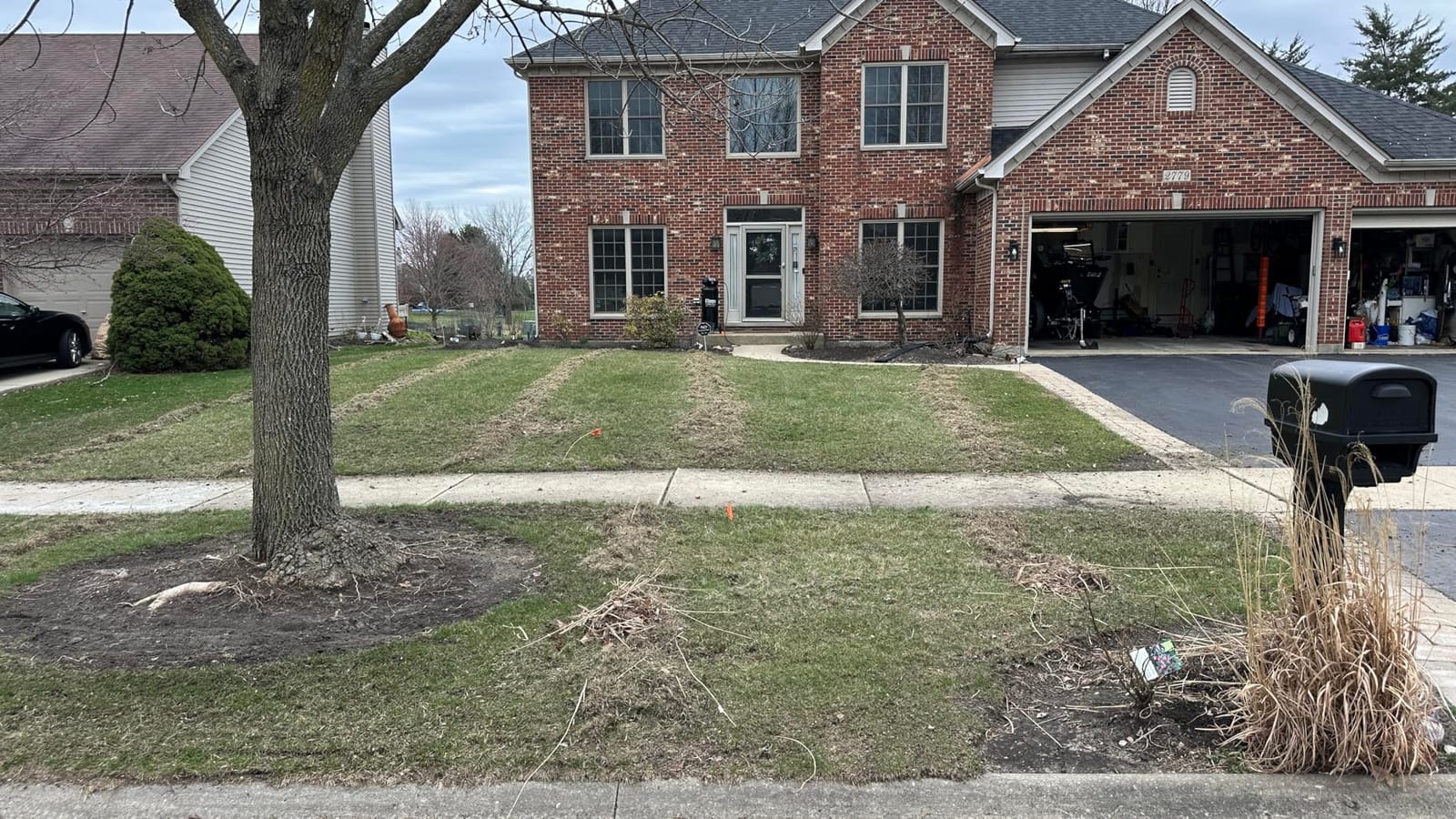
Rake or vacuum the loose debris afterward, then water the lawn. If you are overseeding, follow with seed and a light fertilizer rather than heavy feeding, since the seed needs open soil contact and the mat is now gone. A note on mowing equipment choices lives in our wet grass mower guide, since cutting too wet is what starts the thatch cycle.
How to Choose a Dethatcher for Cool Season Lawns
Dethatcher vs power rake vs scarifier
These are three names for machines that overlap heavily, and the confusion behind that is why two of the most common questions on this topic exist. A dethatcher uses spring tines to lift and pull thatch to the surface. A power rake is essentially the same machine described by what it does to the debris, flipping it onto the lawn instead of catching it in a bag. A scarifier uses flat blades rather than tines to cut grooves into the soil surface, which prepares the ground for seeding rather than removing the mat.
That distinction matters when you read a listing. The Sun Joe, WEN and BILT HARD machines here are all sold as 2-in-1 units precisely because most homeowners want both jobs from one machine.
Working width and lawn size
Width is the clearest driver of how long a job takes. A 14 inch reel on a 6,000 square foot lawn means a lot of pushing; a 16 inch reel finishes the same lawn meaningfully faster. Below 5,000 square feet width barely matters, and above 10,000 square feet you need a 40 inch tow-behind rather than any walk-behind.
Tine type and depth control against blade texture
Spring steel tines that flex under load outlast rigid blades on root-heavy thatch, because they bend instead of snapping. Depth control matters even more, and the range on these machines runs from about minus 0.47 inch below surface grade to a quarter inch above.
Fine-bladed bluegrass and ryegrass should stay nearer the surface, because the crown sits high and shallow roots tear easily. Coarse-bladed tall fescue handles the deeper settings, which is why we reach for a five-position machine on a fescue lawn and a three-position one on bluegrass.
Corded, cordless and tow-behind
Corded electric dominates this list because it delivers consistent power at the tines with no battery cost, and the work is short and infrequent. The cost is cord management, and a 13 amp motor needs a properly rated extension cord.
We tested for cordless battery options and did not find one at this quality bar, so we have left them out rather than pad the list. If you already own a battery platform mower, check whether that platform makes a compatible dethatcher attachment before buying a separate machine.
Tow-behind units are for riding mower owners with large properties. For a single heavy dethatching job on an acre, renting a commercial machine is often the sensible move, which is the recurring advice in the lawnsite.com brand thread.
Collection bag capacity
A large bag saves you stops but does not change the cleanup, and several owners here detach it entirely and mow or rake the debris instead. Bags in this roundup run from 12 gallons on the MZK up to 14.5 gallons on the TIECTOWN and BILT HARD.
If you dislike handling debris, bag capacity is worth paying for. If you do not, a bigger bag is one of the easiest places to save.
Frequently Asked Questions
Do lawn dethatchers actually work?
Yes, but only when there is a real thatch problem. Once the thatch layer passes about half an inch it blocks sunlight, traps moisture at the crown instead of the roots, cuts off air and stops seed from germinating. Below that threshold dethatching does more harm than good, and most residential cool season lawns only need it every 3 to 5 years.
Is it better to scarify or dethatch?
It depends on the job. Dethatching pulls a matted layer of dead grass and roots off the top of the soil. Scarifying uses blades to cut grooves into the soil surface, which prepares the ground for overseeding. Most owners need both, and that is why so many machines here are sold as 2-in-1 with a quick-release head swap.
Which is better, a power rake or a dethatcher?
They are close cousins. A power rake describes what the machine does with the debris, flipping thatch onto the lawn for you to rake away. A dethatcher typically catches thatch in a bag. For a lawn you will walk on, bagging wins. For a large property where you do not want to chase debris, the rake-and-rake approach is faster.
What type of dethatcher is best?
Under 5,000 square feet, a manual rake such as the Groundskeeper II is enough. Between 5,000 and 10,000 square feet, a 15 to 16 inch corded electric unit with a five-position depth lever is the right call. Past 10,000 square feet, a 40 inch tow-behind attached to a riding mower is the only practical option.
When should I dethatch cool season grass, spring or fall?
Early spring as growth starts, or early fall, both work for Kentucky bluegrass, tall fescue and perennial ryegrass. Fall has the advantage of leaving seed time to establish before winter. Avoid dethatching a drought-stressed lawn, newly seeded turf, or dormant grass, since none of those can recover from the disturbance until conditions improve.
How often should you dethatch a lawn?
Most residential cool season lawns benefit from dethatching every 3 to 5 years rather than annually, which is the consensus in long-running lawn care forum threads. Test with a screwdriver first, and only pull out a machine when the thatch layer measures more than half an inch or seed will not germinate on your bare patches.
Our Final Word on Dethatching Cool Season Grass
The Sun Joe AJ805E is our overall pick among the best dethatchers for cool season grass, because 19067 reviews, a 13 amp motor and five-position depth control make it the safest bet across bluegrass, fescue and ryegrass. For a small lawn, the Groundskeeper II Rake at two pounds gives you the best value in the roundup. For anything over half an acre, the Agri-Fab 45-0294 covers an acre in passes no walk-behind can match.
Before any of them, put a screwdriver in your turf. Above half an inch of thatch, these machines earn their keep. Below it, your lawn is better served by fall overseeding and a good fall fertilizer, which is exactly what the top answer on r/lawncare recommended to the person who started this whole search.