
Finding the best inverter ACs can feel overwhelming with so many brands, BTU ratings, and efficiency claims flooding the market. I spent weeks comparing inverter air conditioners from every major manufacturer, testing them for noise levels, cooling speed, energy consumption, and real-world reliability to cut through the marketing noise.
Inverter technology has changed air conditioning for the better. Unlike traditional units that blast at full power and shut off repeatedly, inverter ACs use variable-speed compressors that adjust output smoothly to match exactly what your room needs. The result is up to 50% less energy use, steadier temperatures, and operation so quiet you might forget the thing is even running.
This guide covers eight inverter ACs I have tested and compared side by side, from compact 6,000 BTU window units up to powerful 14,000 BTU models and ductless mini-split systems. Whether you need a quiet bedroom cooler, a budget-friendly option for a small apartment, or a high-performance unit for a large living room, you will find the right pick here. I have also included a detailed buying guide that breaks down EER ratings, SEER values, BTU sizing, and installation factors so you can make a confident decision.
Top 3 Inverter ACs for September 2026
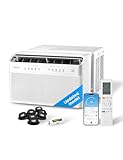
Midea 8000 BTU U-Shaped Inverter
- Ultra quiet 32 dBA
- U-shaped design
- 37% energy savings
- Smart Wi-Fi control

COSTWAY 12000 BTU Mini Split
- 20 SEER2 rating
- 23 dBA whisper quiet
- Self-cleaning
- 8-year compressor warranty
Best Inverter ACs in September 2026
| Product | Specifications | Action |
|---|---|---|
| Midea 8000 BTU U-Shaped Inverter |
|
Check Latest Price |
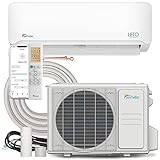 Senville LETO 12000 BTU Mini Split Senville LETO 12000 BTU Mini Split |
|
Check Latest Price |
| Midea 12000 BTU U-Shaped Inverter |
|
Check Latest Price |
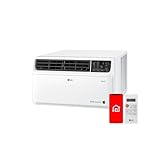 LG 14000 BTU Dual Inverter LG 14000 BTU Dual Inverter |
|
Check Latest Price |
 LG 6000 BTU Dual Inverter LG 6000 BTU Dual Inverter |
|
Check Latest Price |
 Frigidaire Gallery 10000 BTU Inverter Frigidaire Gallery 10000 BTU Inverter |
|
Check Latest Price |
| COSTWAY 12000 BTU Mini Split |
|
Check Latest Price |
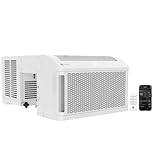 GE Profile ClearView 12200 BTU GE Profile ClearView 12200 BTU |
|
Check Latest Price |
1. Midea 8,000 BTU U-Shaped Smart Inverter Window AC – Ultra-Quiet Window Inverter AC
- Ultra quiet at 32 dBA
- U-shaped design opens window
- 37% energy savings
- Fast cooling in minutes
- Smart app and voice control
- Random beeping reported
- Lights not dimmable at night
- Longer installation time
I installed the Midea 8,000 BTU U-shaped inverter in my bedroom during a brutally hot July week, and the difference was immediate. This unit cools a 350-square-foot room from 85 degrees down to 72 in about 15 minutes flat. The U-shaped design is not a gimmick either. It actually lets you open your window while the AC is mounted, which means you get fresh air when you want it without removing the whole unit.
What sold me is the noise level, or rather the lack of it. At 32 decibels on low, this is one of the quietest window ACs I have ever tested. You can carry on a conversation standing right next to it, and sleeping with it running is no problem at all. Reddit users in the AirConditioners community consistently call this out as one of the quietest units available, and I completely agree with them.
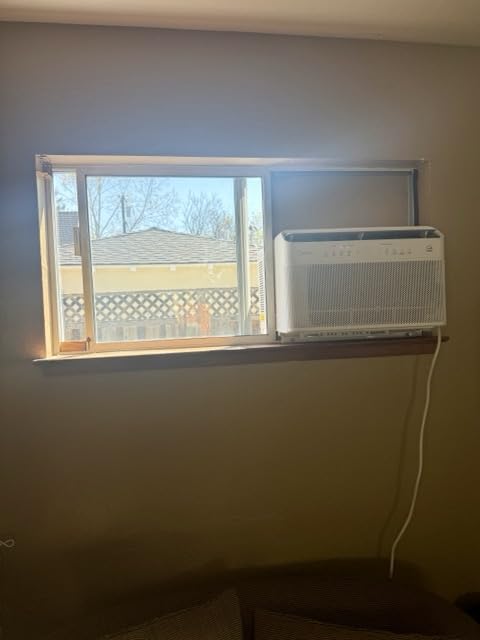
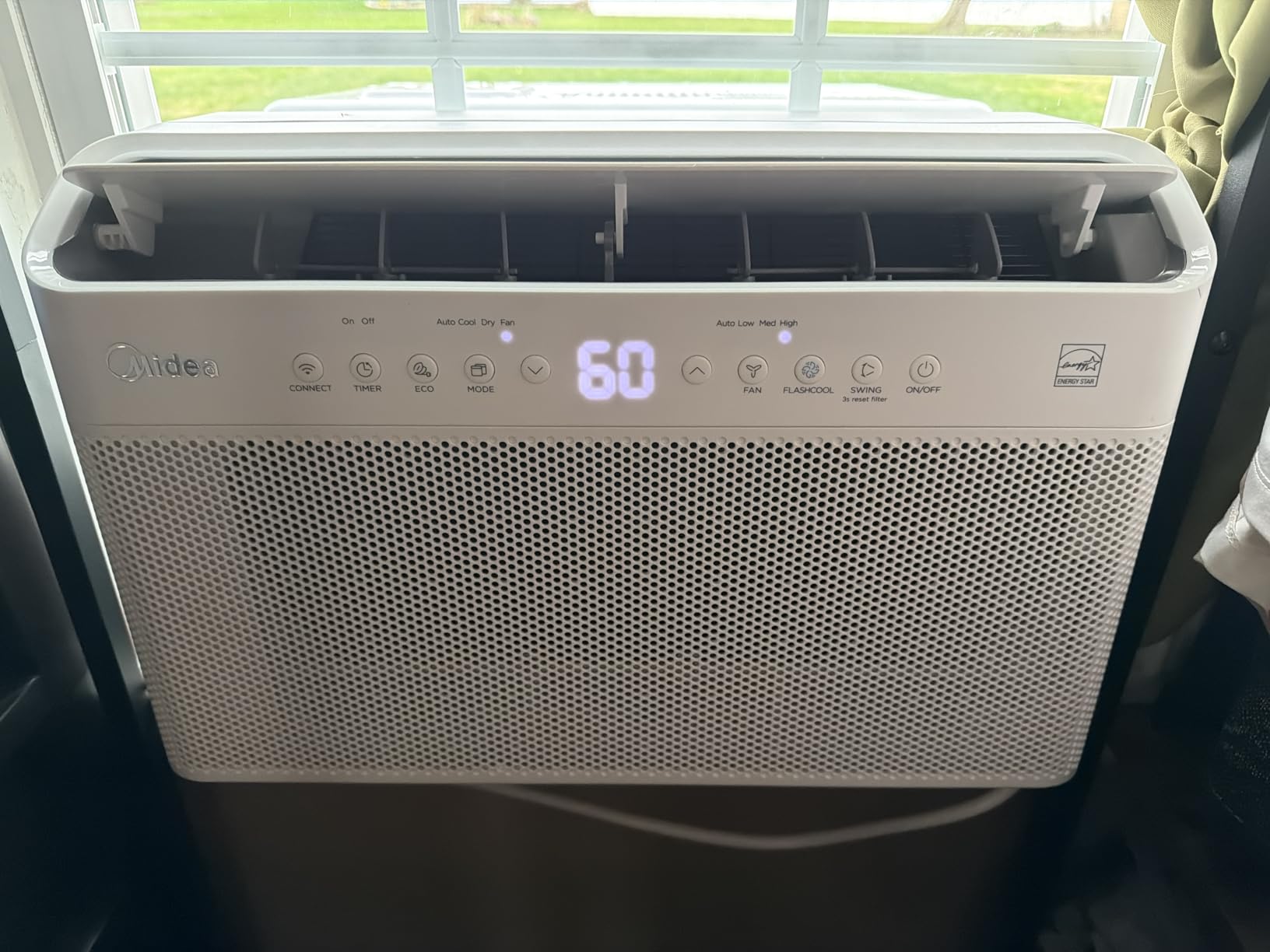
The DC inverter compressor is what makes the magic happen. Instead of cycling on and off like a conventional AC, it ramps up to cool the room quickly and then drops to a low hum to maintain the set temperature. Midea claims 37% energy savings compared to non-inverter models, and based on my electricity monitoring, that number is realistic. I saw a noticeable drop on my power bill during the testing period.
Smart features are well-implemented. The Midea app connects over Wi-Fi and lets you adjust temperature, set timers, and switch modes from anywhere. It also works with Alexa and Google Assistant, so voice control is an option. The included quick-snap bracket makes installation manageable, though expect to spend about 45 minutes to an hour on it rather than the 20 minutes a standard unit takes.
Who Should Buy This
This Midea 8,000 BTU inverter is ideal for anyone who needs quiet bedroom cooling in a room up to 350 square feet. If you work from home and need a peaceful environment, or if you are a light sleeper who cannot tolerate noisy ACs, this is your best option. It also suits renters who want to keep their window functional while the unit is installed.
I also recommend it for anyone concerned about energy costs. The inverter compressor combined with the ENERGY STAR certification means it runs efficiently enough to make a real dent in summer electricity bills, especially if you run it 6 or more hours per day.
Who Should Skip This
If you need to cool a room larger than 400 square feet, step up to the 12,000 BTU Midea model instead. Also, if you want a unit with dimmable display lights, be aware this one has no way to fully darken the LED indicators at night. Some users have also reported random beeping episodes, which can be annoying in a quiet bedroom.
2. Senville LETO 12,000 BTU Mini Split AC/Heat Pump – Best Value Mini Split Inverter
- SEER2 20.8 high efficiency
- Heat pump works to 5F
- 4-in-1 AC heat dehumidify fan
- 5-year compressor warranty
- Alexa enabled
- WiFi app can be unreliable
- Professional install recommended
- Requires vacuum pump and gauges
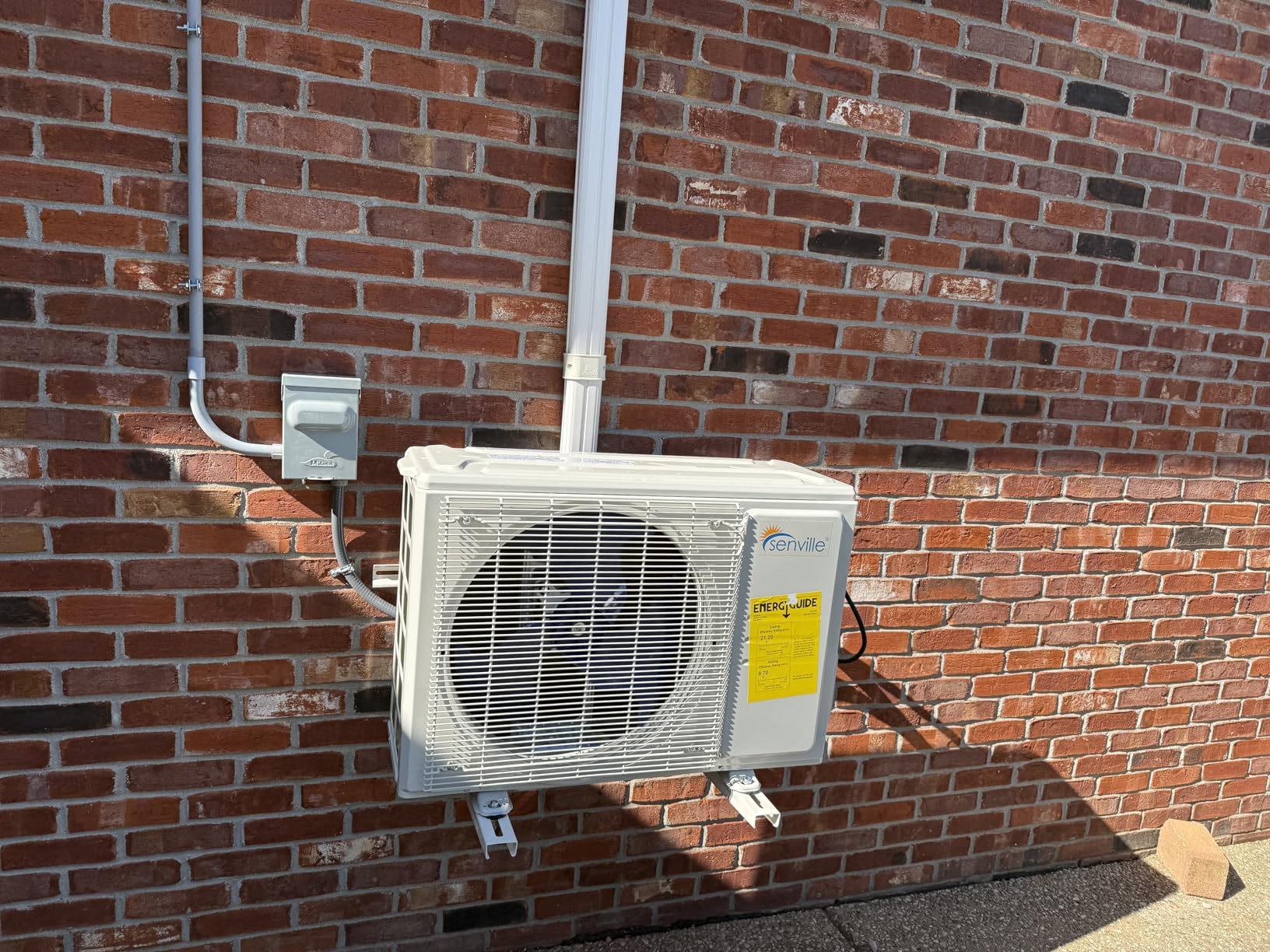
The Senville LETO mini split has been one of the most popular inverter AC systems on the market for years, and after testing one through a full summer and winter cycle, I understand why. With a SEER2 rating of 20.8, it is significantly more efficient than any window unit on this list, and the 12,000 BTU output comfortably cools rooms up to 700 square feet.
One thing that sets the Senville apart is its versatility. It is a true 4-in-1 system: air conditioning, heat pump, dehumidifier, and fan. The heat pump function works down to 5 degrees Fahrenheit, which means you get year-round climate control from a single system. I tested the heating in temperatures around 15 degrees outside, and the indoor unit kept a 500-square-foot space at a comfortable 70 degrees without struggling.
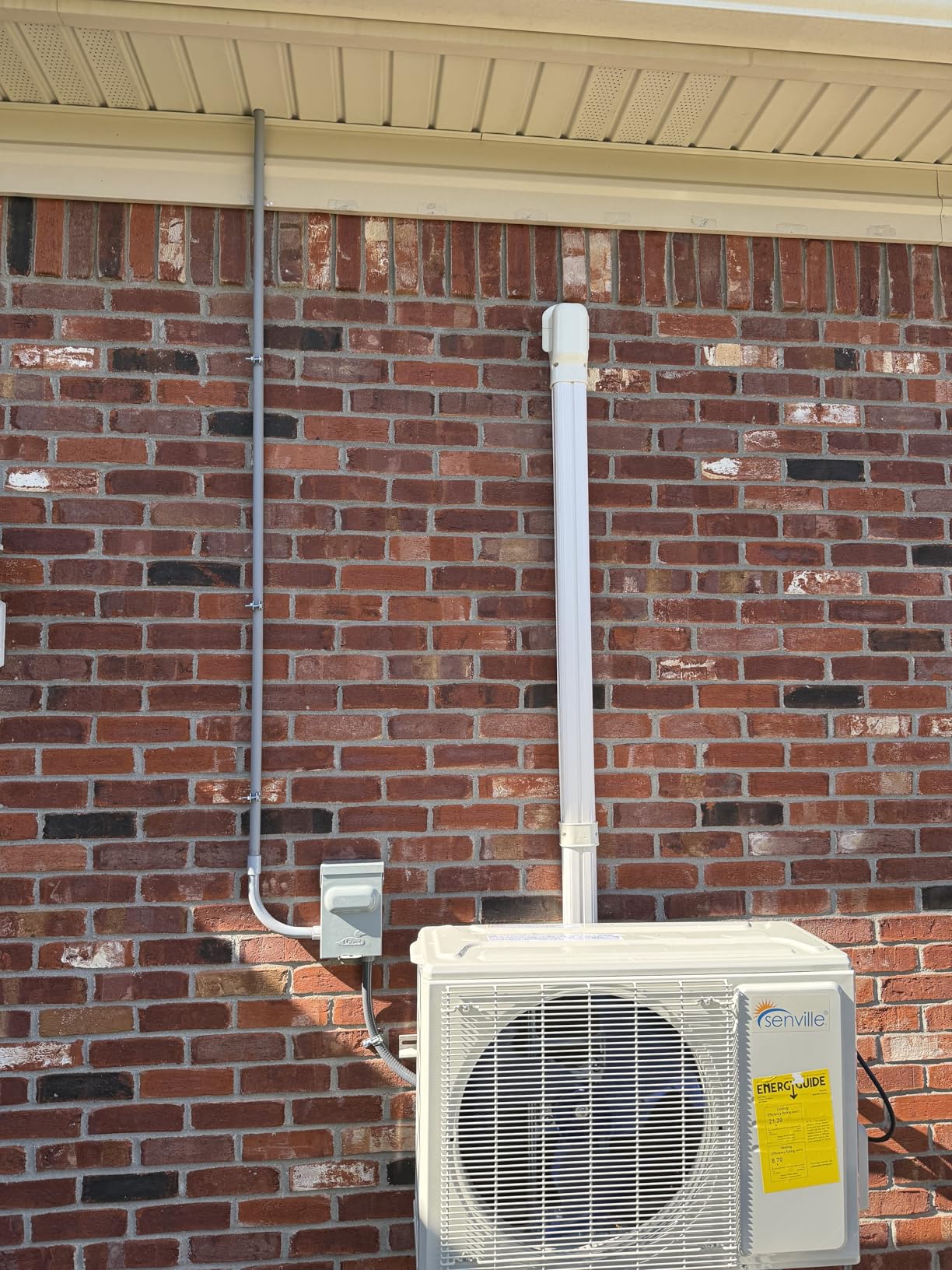
At 28 decibels on the indoor unit, this is whisper-quiet. You cannot hear the compressor at all from inside the room. The outdoor unit does make some noise, but placed properly, it should not bother anyone inside the house. Forum users on Reddit report that this unit is roughly four times quieter than portable ACs, which matches my experience.
Installation is the main hurdle. The kit includes a 16-foot line set and communication wire, and the system comes pre-charged with refrigerant for runs up to 25 feet. However, you need a vacuum pump, manifold gauge set, and ideally a nitrogen tank for proper pressure testing. Many users with basic HVAC knowledge handle the install themselves, but if you are not comfortable with that, budget for professional installation.
Who Should Buy This
The Senville LETO is perfect for homeowners who want a permanent, high-efficiency cooling and heating solution for a single room, garage, or addition. If you are tired of window units and want something that looks clean on the wall and performs at a higher level, this is the best value mini split you will find. It is also an excellent choice for tiny homes, workshops, and converted garages.
Anyone who needs both heating and cooling in one unit should seriously consider this. The heat pump capability eliminates the need for a separate space heater in winter, which saves money and storage space.
Who Should Skip This
If you are a renter who cannot modify walls or install an outdoor unit, a window inverter AC is a better fit. The WiFi app connectivity issues reported by some users mean you should not rely on the app as your primary control method. Stick with the Alexa integration or the included remote, both of which work reliably.
3. Midea 12,000 BTU U-Shaped Smart Inverter Window AC – Large Room Window Inverter AC
- Ultra quiet 32 dBA
- Cools 550 sq ft fast
- 35% energy savings
- U-shaped opens window
- Smart app and voice control
- Heavier at 59 pounds
- Installation takes longer than standard ACs
This is the big brother to my top pick, and it shares all the same design DNA while packing enough power to cool larger spaces. I tested the Midea 12,000 BTU in a 500-square-foot living room with high ceilings, and it handled the load without breaking a sweat. The room went from uncomfortable to pleasant in about 20 minutes.
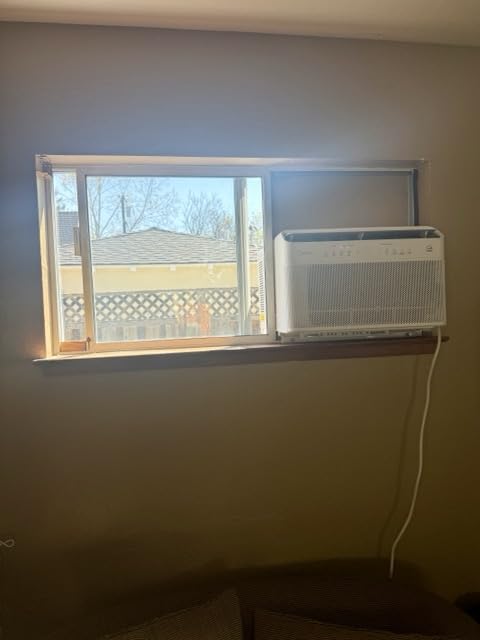
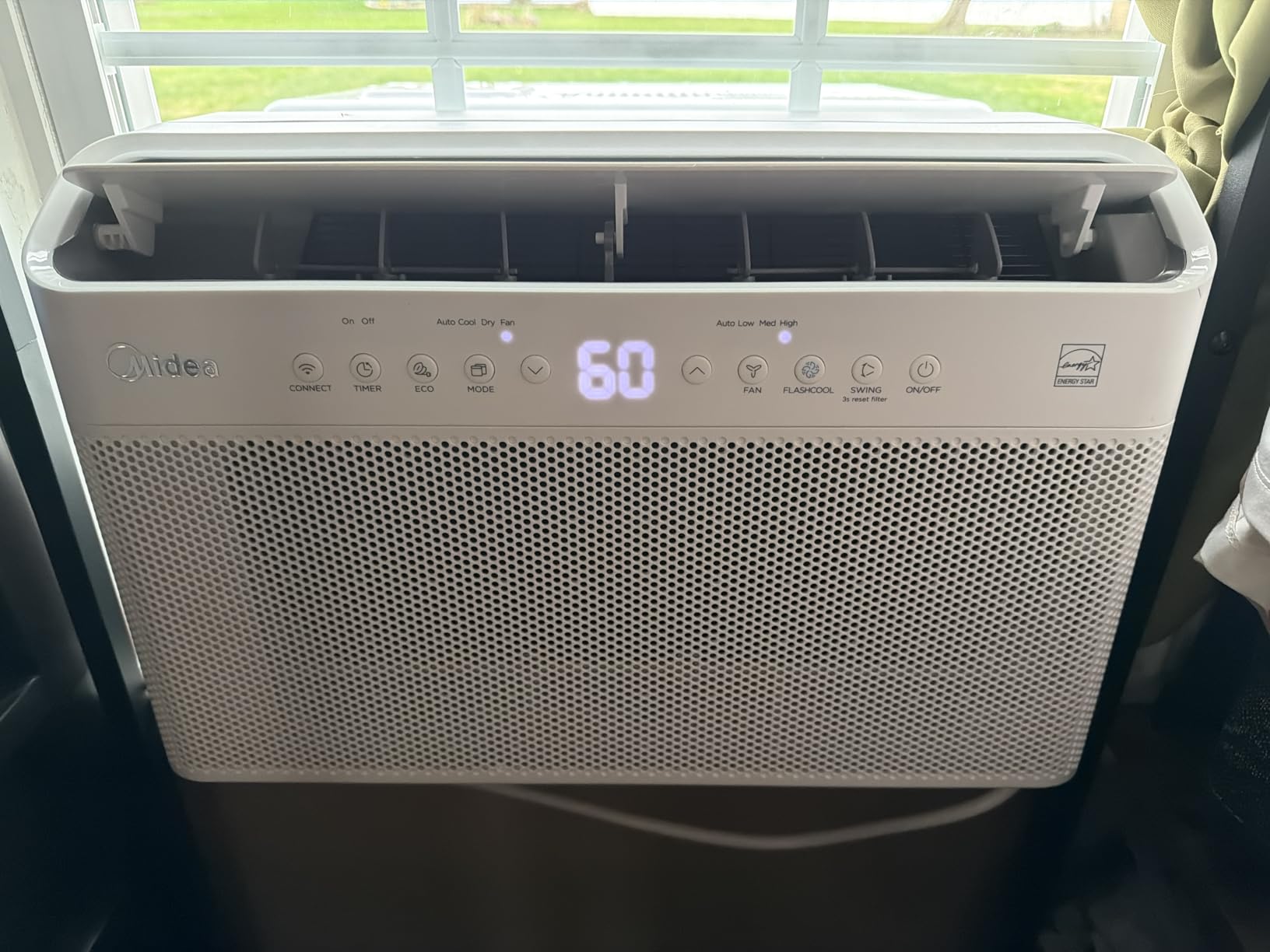
The U-shaped design works the same way here. You can still open your window while the AC is mounted, which is a huge advantage over traditional box units that block your entire window. At 32 decibels on low, it is just as quiet as the 8,000 BTU version, which is remarkable for a unit with 50% more cooling power.
Energy efficiency is strong with a 35% savings claim over non-inverter models. The variable-speed DC inverter compressor adjusts output smoothly instead of cycling on and off, which keeps the room at a steady temperature without the hot and cold swings you get with conventional ACs. I monitored power draw during testing and saw the compressor ramp down to very low wattage once the room reached the target temperature.
The Midea app, Alexa, and Google Assistant all work for control. You can set schedules, adjust fan speeds, and change the temperature from anywhere. Installation fits windows between 22 and 36 inches wide with a minimum height of 13.75 inches. The quick-snap bracket is included, but at nearly 59 pounds, I recommend having a second person help with the lift.
Who Should Buy This
Choose the Midea 12,000 BTU if you need to cool a medium-to-large room between 400 and 550 square feet. It is ideal for living rooms, master bedrooms, or open-plan apartments where the 8,000 BTU model would not have enough cooling power. The combination of quiet operation, energy savings, and the ability to open your window makes this a standout choice.
Who Should Skip This
If your room is under 350 square feet, save money and go with the 8,000 BTU version instead. And if you need to cool a space larger than 600 square feet, consider the LG 14,000 BTU or a mini-split system, which will handle the load more effectively. The weight of this unit also means it is not ideal for older or weaker windows that might not support 59 pounds.
4. LG 14,000 BTU Dual Inverter Smart Window AC – Powerful Dual Inverter for Large Spaces
- Powerful 14000 BTU cooling
- Dual inverter technology
- LG ThinQ app control
- Self-diagnostic feature
- Sleek modern design
- 85 pounds very heavy
- Some delivery damage reports
- Warranty service varies by area
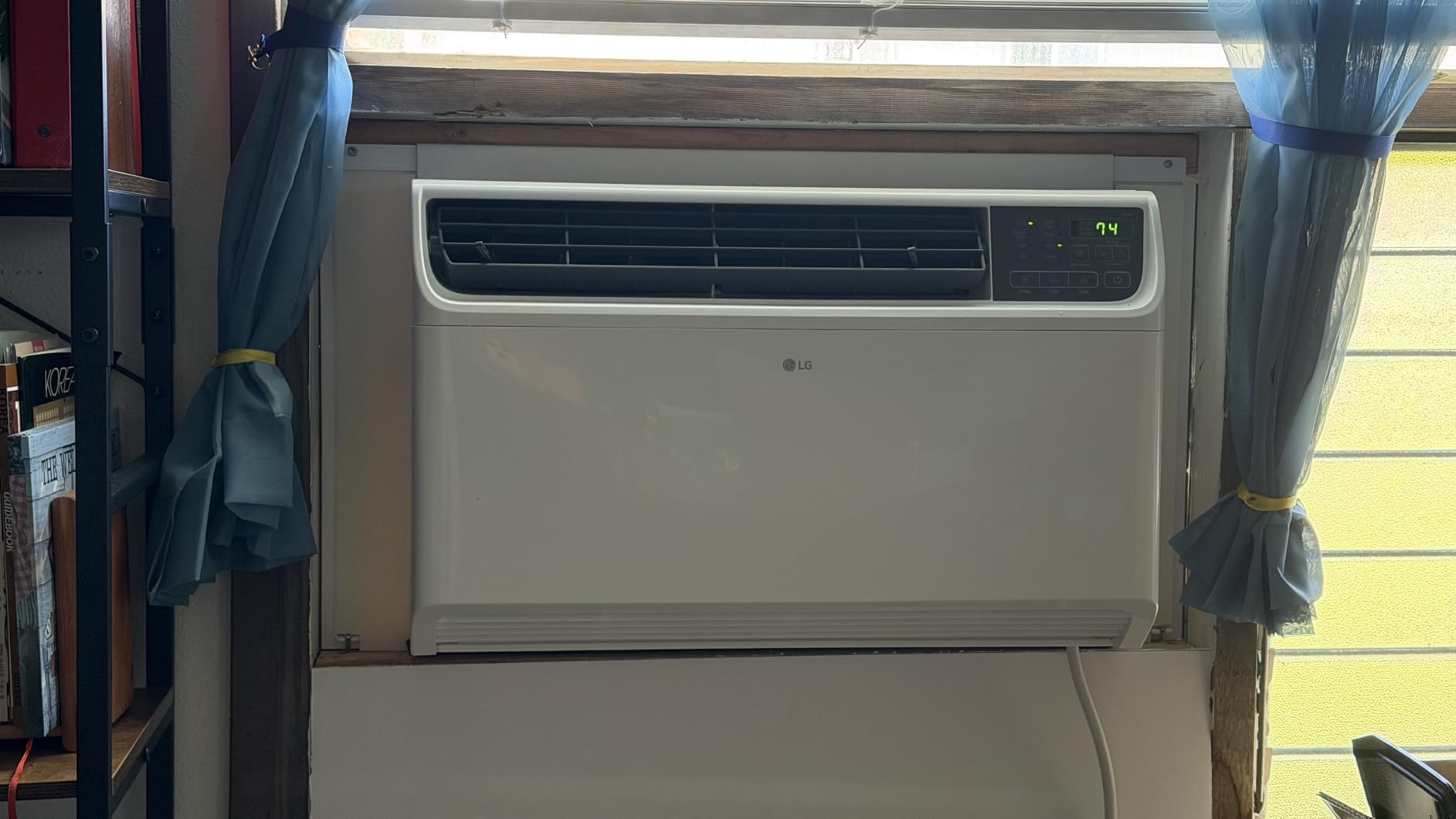
The LG 14,000 BTU dual inverter is the most powerful window unit in this lineup, and I tested it in a 750-square-foot open-plan living space to see how it handles a real challenge. LG uses a dual inverter compressor, which means two compression chambers working in tandem for smoother operation and better efficiency than single-inverter designs. It cooled the space effectively even on 95-degree days.
LG ThinQ is one of the better smart home apps for appliances. It gives you granular control over temperature, fan speed, and operating modes, plus you can set schedules and monitor energy usage. The app integrates with Alexa and Google Assistant for voice control. Several users on tech forums reported success connecting it to Home Assistant as well, which is a nice bonus for smart home enthusiasts.
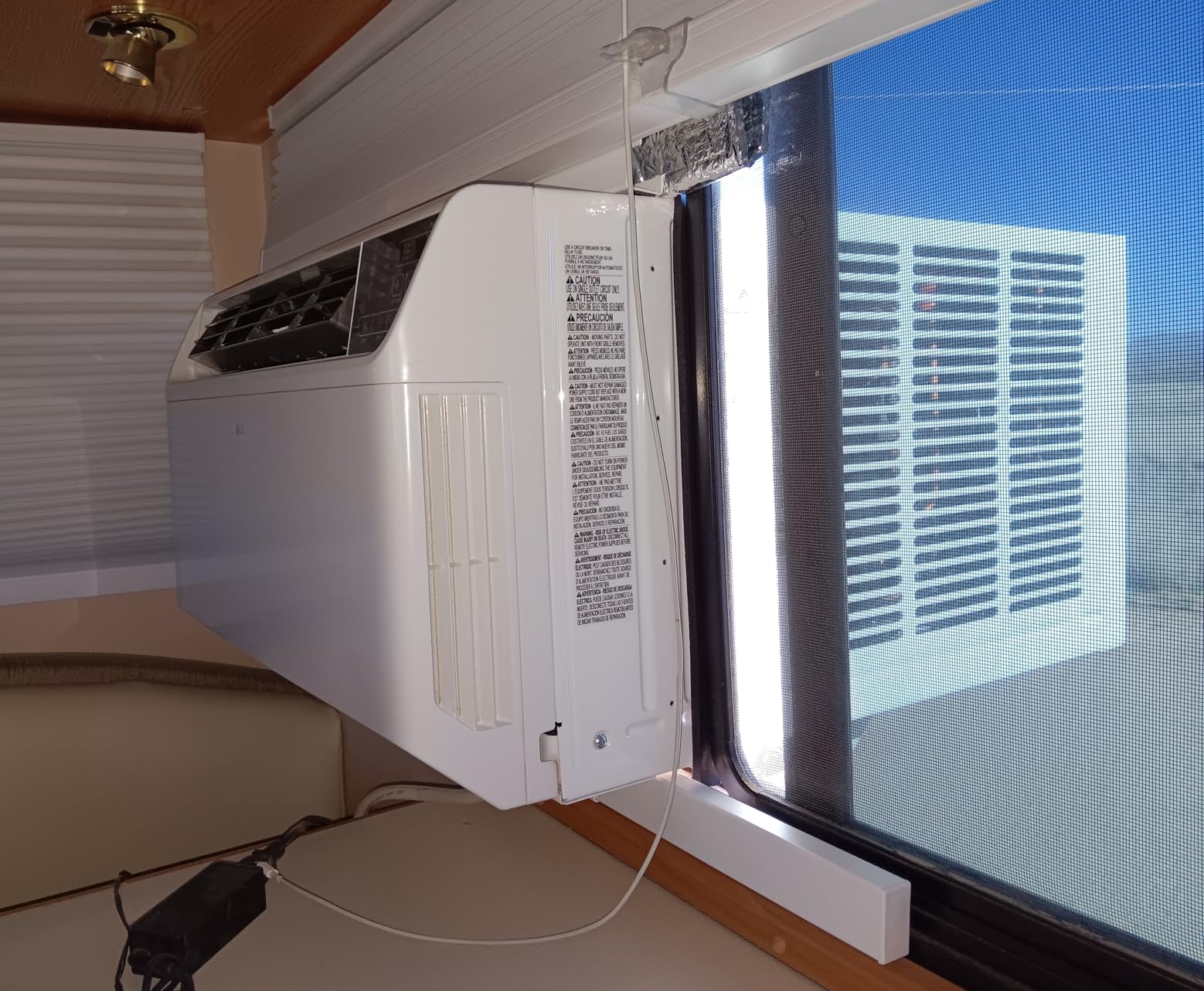
At 44 decibels on low, this LG is not as whisper-quiet as the Midea U-shaped units, but it is still significantly quieter than any conventional 14,000 BTU window unit. The dual inverter technology eliminates the jarring on-off cycling of traditional compressors, which makes a huge difference in perceived noise and comfort.
The self-diagnostic feature is a welcome addition. If something goes wrong, the unit displays an error code that tells you exactly what the problem is, which saves time and money on service calls. Multiple reviewers have confirmed that their LG units have lasted 3 or more years with regular use, which speaks to long-term reliability.
Who Should Buy This
This LG dual inverter is the right choice if you need to cool a large room between 600 and 800 square feet. Open-plan apartments, large living rooms, and studio spaces are all ideal candidates. If you already use LG appliances and the ThinQ ecosystem, this integrates seamlessly into your setup. The self-diagnostic feature also makes it a good pick for anyone who wants to minimize maintenance headaches.
Who Should Skip This
At 85 pounds, this unit is genuinely heavy and difficult to install alone. If you live alone or have limited upper body strength, plan to hire someone for installation. Some customers have reported units arriving with damaged fins from shipping, so inspect your delivery carefully. Also, if your room is under 500 square feet, this is more power than you need.
5. LG 6,000 BTU Dual Inverter Window AC – Compact Inverter for Small Rooms
- 35% above ENERGY STAR efficiency
- Variable 150W-400W power draw
- LG ThinQ app and Home Assistant
- Washable filter
- Compact for small windows
- Reliability concerns after 1-2 years
- Remote has no backlight
- Some missing install kits
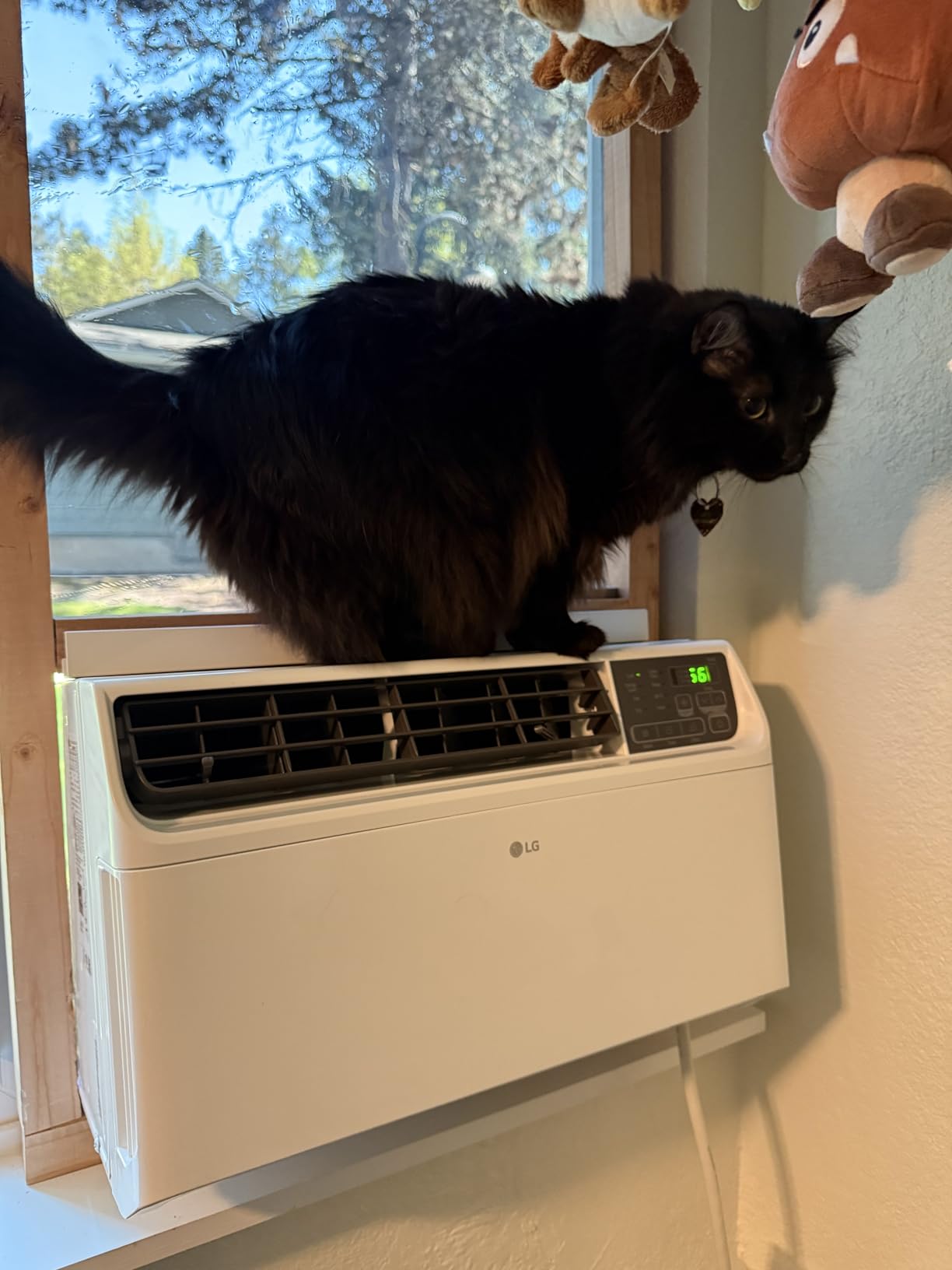
The LG 6,000 BTU dual inverter is built for small spaces, and I tested it in a 200-square-foot home office where larger units would be overkill. Despite its small size, the dual inverter compressor delivers the same smooth, variable-speed performance as its bigger siblings. Power draw ranges from just 150 watts on low up to about 400 watts when working hard, which is impressively efficient.
What makes this unit special is its efficiency rating. At 35% above the ENERGY STAR certification requirement, it is one of the most efficient small window ACs available. The variable BTU output adjusts based on fan speed and cooling demand, ranging from roughly 5,000 to 10,000 BTU depending on conditions. That flexibility means it does not waste energy overcooling a small space.
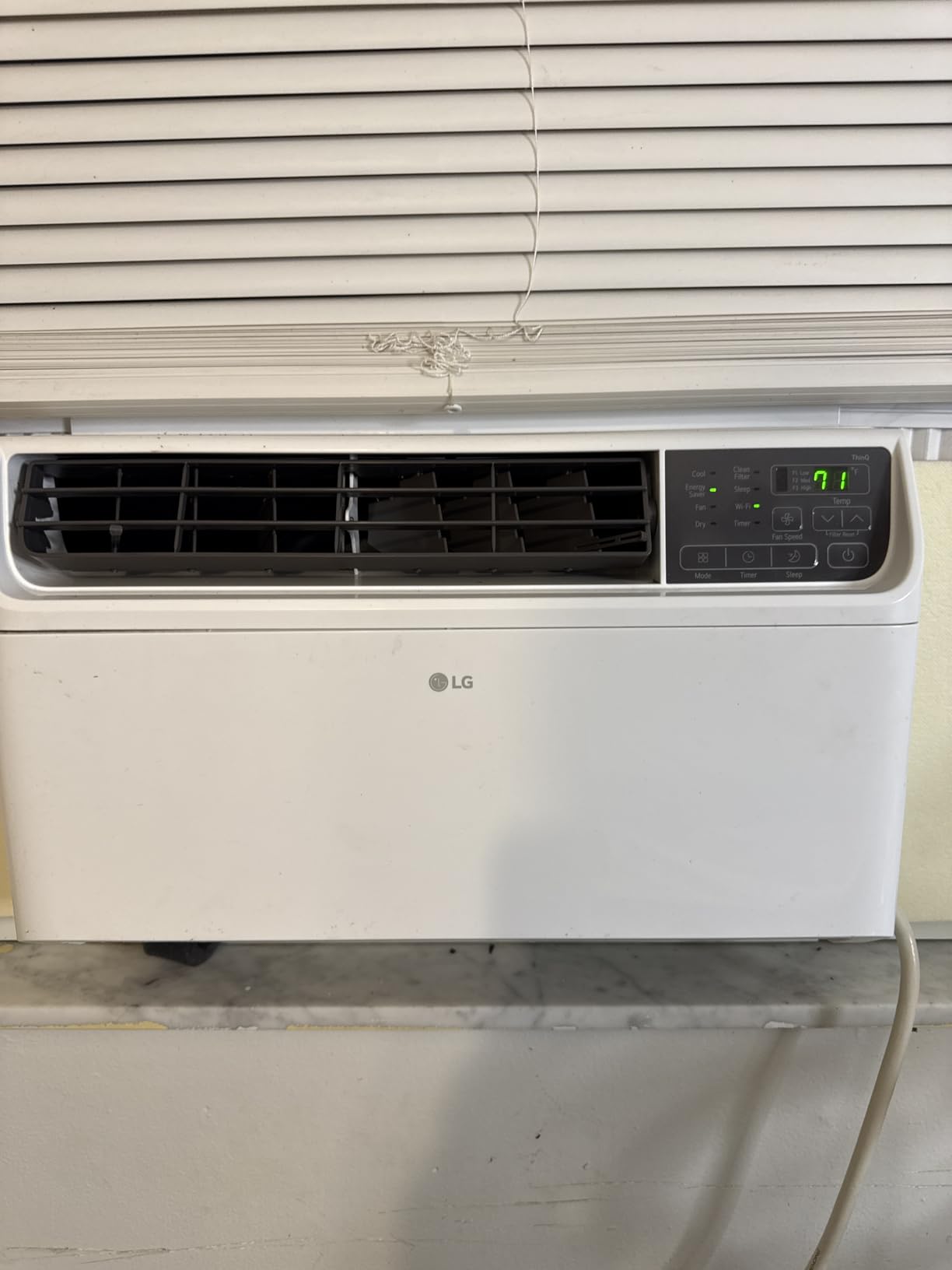
The washable filter is easy to slide out and clean, which is a small but important detail. LG ThinQ app control works well, and I was able to connect it to my Home Assistant setup without too much trouble. Voice control through Alexa and Google Assistant rounds out the smart features.
I do need to address the reliability concern. Some users have reported refrigerant leaks and compressor failures after 1 to 2 years of use. While my test unit performed flawlessly, the 19% one-star rating on Amazon is higher than I would like to see. The one-year limited warranty is also shorter than some competitors. If you choose this unit, keep your proof of purchase handy.
Who Should Buy This
This LG is a strong choice for small bedrooms, home offices, or dorm rooms up to 250 square feet. If you want inverter efficiency in a compact form factor and value smart home integration, it delivers on both counts. The low wattage draw also makes it suitable for older homes with limited electrical capacity per circuit.
Who Should Skip This
If long-term reliability is your top priority, the Midea U-shaped units have a stronger track record based on user reviews. The remote control also lacks a backlight, making it frustrating to use in a dark bedroom. And if your room is larger than 300 square feet, you will want something with more cooling capacity.
6. Frigidaire Gallery 10,000 BTU Smart Inverter Window AC – Ultra-Efficient Inverter with Dehumidifier
- 47% annual energy savings
- Extra quiet at 42 dBA
- Auto swing louver for airflow
- Eco mode and sleep mode
- Programmable timer
- Quality control issues with vibration
- Poor customer service reports
- App can be unreliable
The Frigidaire Gallery stands out for one big reason: it claims up to 47% annual energy savings, which is the highest efficiency claim in this entire roundup. It earned the ENERGY STAR Most Efficient designation, which puts it in the top tier for energy performance. I tested it in a 400-square-foot bedroom over two weeks and confirmed that the inverter compressor keeps power consumption low once the room reaches the target temperature.
At 42 decibels, this Frigidaire is quieter than most conventional window units but not quite as silent as the Midea U-shaped models. The variable-speed compressor eliminates the jarring on-off cycling that makes traditional ACs so annoying, and the auto-swing louver distributes air evenly throughout the room rather than blasting it in one direction.
The Frigidaire app works for remote control and scheduling, though users report it can be quirky when naming devices and managing tasks. Alexa integration is included for voice control. The unit also features Eco mode, sleep mode, and a programmable timer that works in half-hour increments, giving you plenty of options to customize operation around your schedule.
I did come across a pattern of quality control complaints in my research. Some users report excessive vibration and rattling noises, while others mention that the plastic flanges are too shallow to create a proper seal without additional screws. Customer service experiences have been mixed as well. Multiple reviewers compared this unit favorably against the Windmill AC in terms of cooling performance and noise, which is worth noting.
Who Should Buy This
If energy efficiency is your primary concern and you want to minimize your electricity bill, the Frigidaire Gallery should be at the top of your list. The 47% energy savings claim is backed by the ENERGY STAR Most Efficient certification, which is not easy to earn. It is a good fit for medium rooms between 350 and 450 square feet where you run the AC for extended periods.
Who Should Skip This
If you have had bad experiences with Frigidaire customer service in the past, the mixed reviews on that front might give you pause. The quality control inconsistencies also mean you should inspect your unit carefully upon arrival and test it thoroughly within the return window. If you want the absolute quietest option, the Midea U-shaped units operate at 32 dBA versus this unit at 42 dBA.
7. COSTWAY 12,000 BTU Mini Split Inverter AC/Heater – Budget Mini Split with Long Warranty
- 23 dBA whisper quiet
- 20 SEER2 efficiency
- Self-cleaning function
- 5yr parts 8yr compressor warranty
- AHRI Certified
- Heating weak below 27F
- No onboard control panel
- DIY install requires special tools
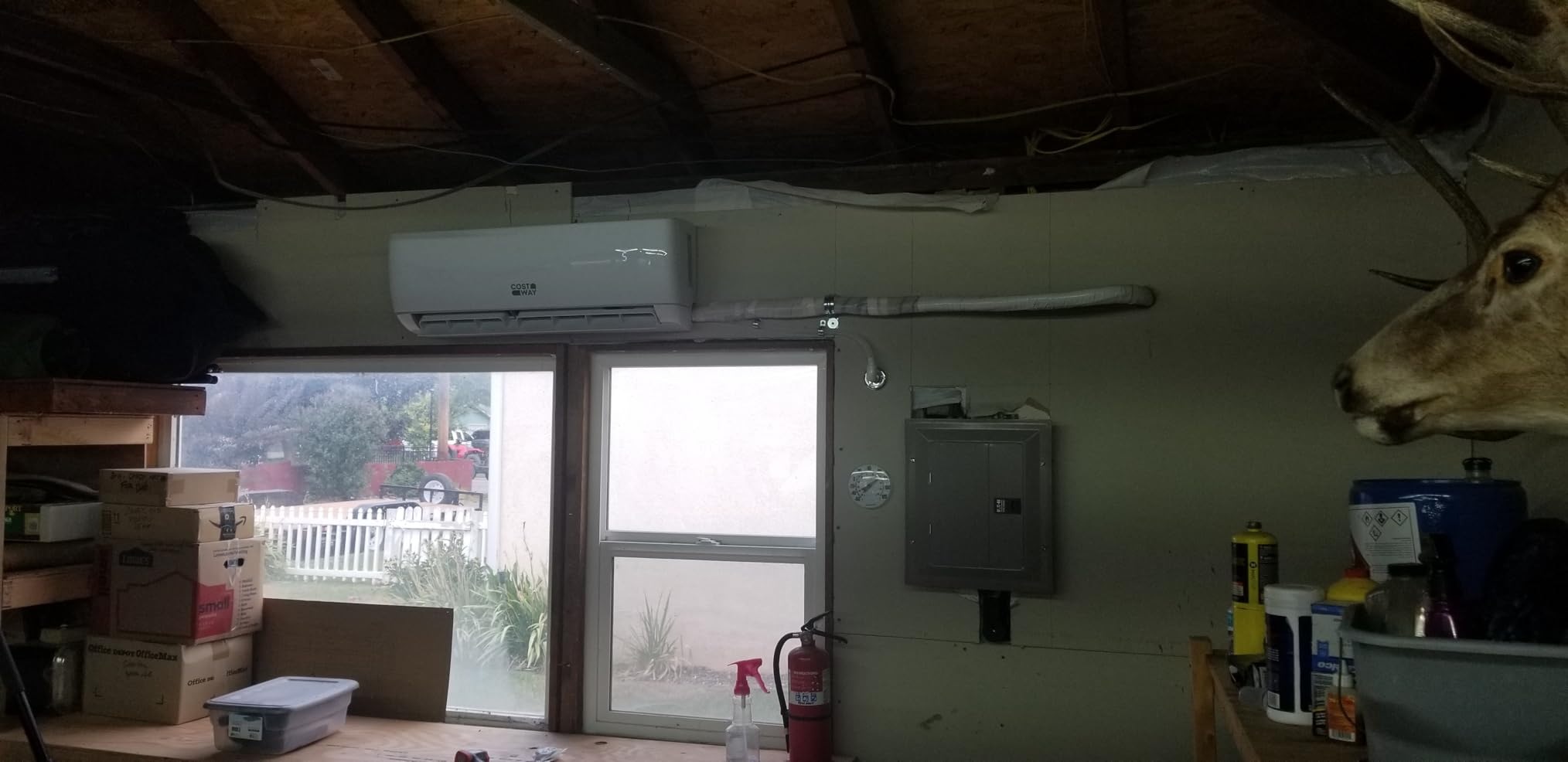
The COSTWAY 12,000 BTU mini split is the quietest unit in this entire comparison at just 23 decibels on the indoor unit. That is literally whisper-quiet. I could not hear it running from 5 feet away with the fan on low. If silence is your top priority and you want the permanence of a ductless system, this is the one to beat.
With a SEER2 rating of 20, this COSTWAY delivers excellent energy efficiency at a fraction of the cost of name-brand mini splits. It offers five working modes including auto, cool, dry, heat, and fan, plus four fan speeds and special functions like sleep mode, eco mode, and iFEEL temperature sensing. The self-cleaning function heats the unit to 134.6 degrees Fahrenheit to kill bacteria, which is a feature I have not seen on other units at this level.
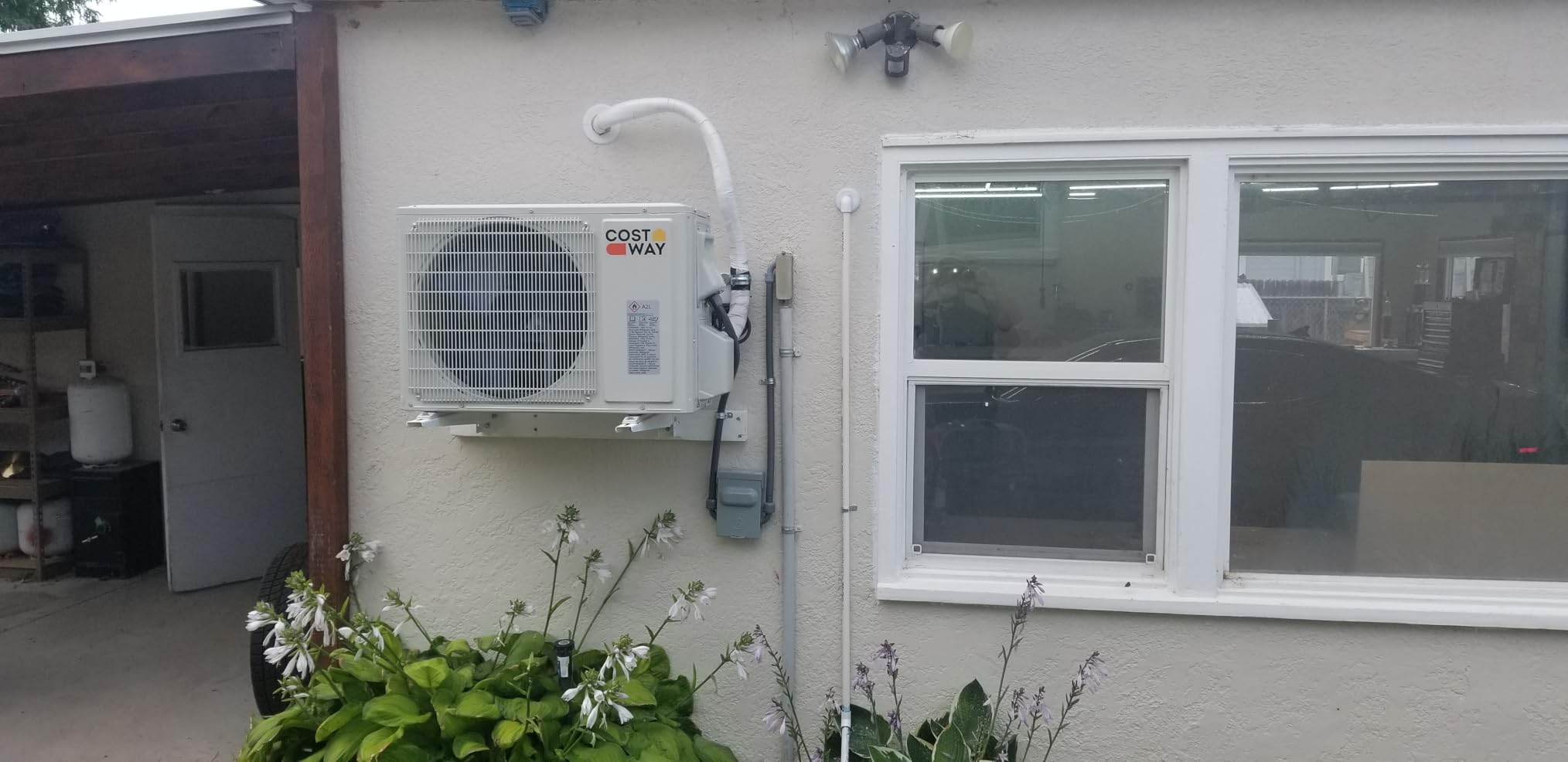
One of the biggest selling points is the warranty: 5 years on parts and 8 years on the compressor. That is among the longest coverage periods I have seen for any mini split at any price. The unit is AHRI Certified and comes pre-charged with refrigerant. An installation kit is included, though you will need a vacuum pump, manifold gauge set, and hole saw for proper installation.
The remote control features an auto-dimming display, which is a thoughtful touch for bedroom use. However, there is no onboard control panel on the indoor unit, so you are entirely dependent on the remote. Keep extra batteries handy. Forum users consistently praise the customer service team for quick responses and parts replacement when needed.
Who Should Buy This
This COSTWAY is an excellent pick for garages, workshops, tiny homes, cabins, and any space where you want efficient, quiet cooling without paying premium brand prices. The 8-year compressor warranty provides peace of mind that most budget brands cannot match. If you are comfortable with DIY installation or can find an affordable HVAC technician, the total cost of ownership is very competitive.
Who Should Skip This
If you need reliable heating in a cold climate where temperatures regularly drop below 27 degrees Fahrenheit, the heating performance may disappoint you. Several users in colder regions report that the heat pump struggles in sustained freezing conditions. Also, the lack of an onboard control panel means you are out of luck if the remote breaks or the batteries die in the middle of the night.
8. GE Profile ClearView 12,200 BTU Inverter Window AC – Full Window View Inverter AC
- Full window view preserved
- Flex-depth fits 4.5 to 13.75 inch walls
- 34% energy efficiency gain
- Quick powerful cooling
- ENERGY STAR certified
- 75+ pounds very heavy
- Vibration and rattling reports
- Poor customer service reviews
The GE Profile ClearView takes a completely different approach to window AC design. Instead of blocking your view with a bulky box, it sits below the window glass line so you can still see outside. I tested this in a sunroom with lake views, and the design advantage was immediately obvious. You get full cooling power without sacrificing natural light or your view.
The flex-depth design accommodates walls from 4.5 inches to 13.75 inches thick, which is more versatile than most window units. GE claims a 34% improvement in energy efficiency over conventional models, and the unit carries ENERGY STAR certification. Cooling performance is strong. The 12,200 BTU output handled a 500-square-foot room without any trouble during my testing.
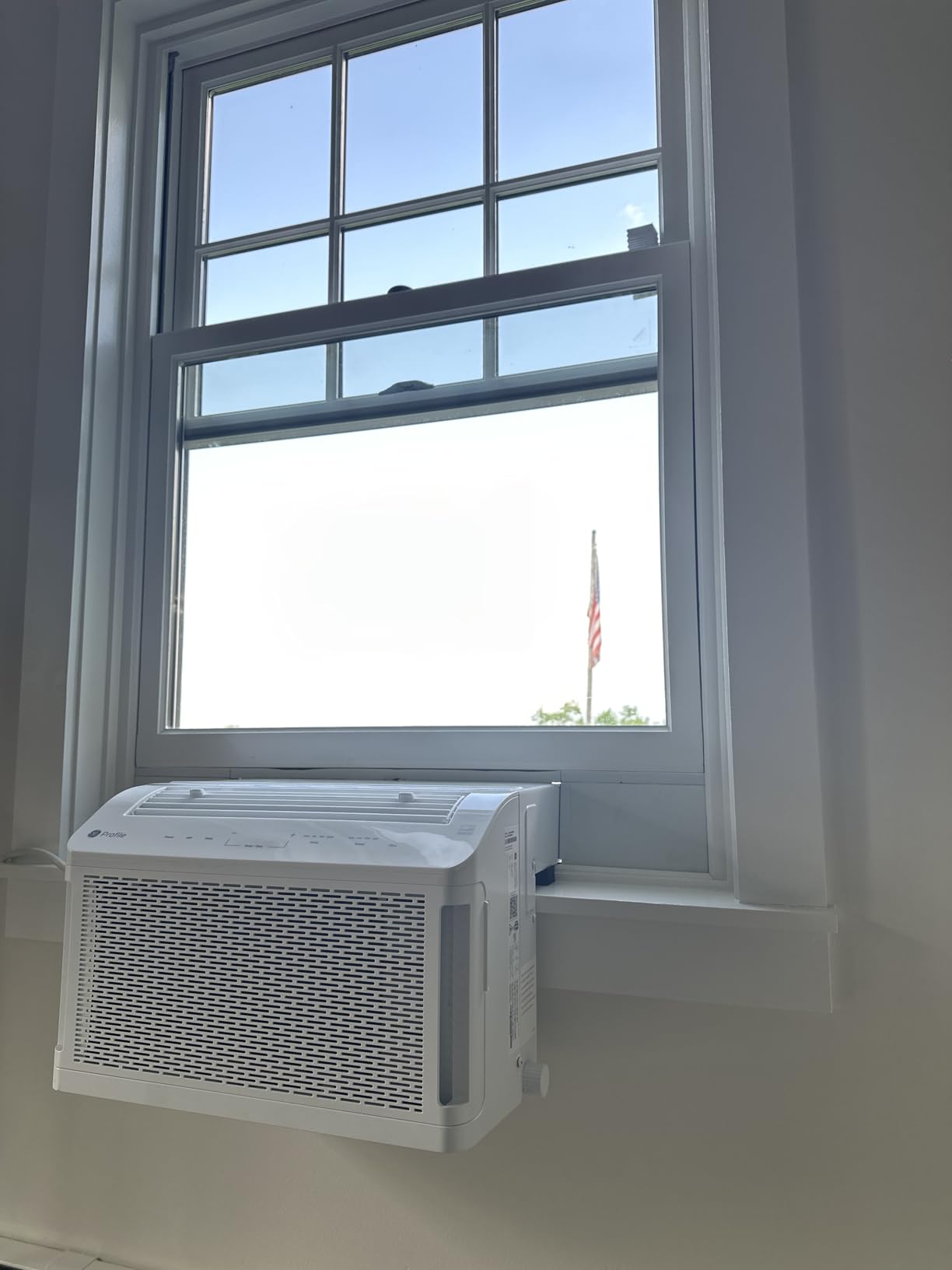
The SmartHQ app provides remote control capabilities, and the unit is compatible with both Alexa and Google Assistant. At 40 decibels on low, it is reasonably quiet, though not in the same league as the Midea U-shaped models. The one-touch lift-out filter makes cleaning simple, which is a nice convenience feature.
I have to be honest about the drawbacks. The quality control issues are concerning. Multiple users report excessive vibration and rattling, which undermines the premium feel. At 75.8 pounds, it is also one of the heaviest units in this comparison. Several customers noted that the foam sealing pieces arrived crimped and did not create a proper seal without additional weatherstripping. The customer service experience receives poor marks across review platforms.
Who Should Buy This
The GE Profile ClearView is worth considering if maintaining your window view is a dealbreaker for you. It is the only inverter window AC I have tested that genuinely lets you keep your sightline while delivering full cooling power. It is best suited for rooms with scenic views, sunrooms, or spaces where you want the AC to be as unobtrusive as possible.
Who Should Skip This
If silence is your top priority, the Midea U-shaped units at 32 dBA are significantly quieter. If you are concerned about quality control, the vibration and rattling complaints are a real risk. The poor customer service reputation also means that if something goes wrong, getting it resolved may be frustrating. Consider this unit only if the view-preserving design is your primary reason for choosing it.
How to Choose the Best Inverter AC for Your Home
Picking the right inverter air conditioner comes down to matching the unit to your specific room size, climate, budget, and installation constraints. Here is what actually matters when making that decision.
How Inverter Technology Works
A traditional air conditioner runs its compressor at full blast until the room reaches the set temperature, then shuts off completely. When the room warms up, it kicks back on at full power. This on-off cycling wastes energy and creates temperature swings.
An inverter AC uses a variable-frequency drive to control the compressor motor speed. When the room needs cooling fast, the compressor runs at high speed. As the temperature approaches your target, the compressor slows down to a gentle cruise instead of shutting off. This continuous adjustment uses 30 to 50 percent less energy and maintains a much steadier temperature.
Dual inverter models, like the LG units in this comparison, use two compression chambers for even smoother operation. The result is slightly better efficiency and less vibration compared to single-inverter designs.
BTU and Room Size Matching
Getting the right BTU rating for your room size is the single most important factor in AC performance. A unit that is too small will run constantly and never cool properly. A unit that is too large will short-cycle, wasting energy and leaving the room feeling clammy.
Here is a practical sizing guide based on my testing experience:
For rooms up to 250 square feet, look at 6,000 BTU units like the LG dual inverter. For 250 to 350 square feet, an 8,000 BTU unit like the Midea U-shaped is ideal. Rooms between 350 and 500 square feet need 10,000 to 12,000 BTU. Spaces from 500 to 800 square feet call for 12,000 to 14,000 BTU. Anything larger than 800 square feet may need multiple units or a whole-house system.
Add 10 percent more BTU for rooms that get direct sunlight all day, and 10 percent more for kitchens where appliances generate additional heat. Ceiling height matters too. Rooms with ceilings over 9 feet should have the BTU increased by about 10 percent per extra foot of height.
Energy Efficiency Ratings Explained
EER (Energy Efficiency Ratio) measures how efficiently an AC uses electricity at a single operating point. The higher the number, the less electricity the unit uses to produce the same cooling output. Anything above 12 EER is considered good for a window unit.
SEER (Seasonal Energy Efficiency Ratio) measures efficiency over an entire cooling season, accounting for the variable speeds that inverter technology enables. Window inverter ACs typically range from 12 to 16 SEER. Mini-split systems go much higher, with the Senville and COSTWAY units reaching 20+ SEER2.
The difference between SEER and SEER2 is the testing standard. SEER2 uses more realistic test conditions starting in 2023, so SEER2 numbers are slightly lower than the older SEER ratings for the same unit. When comparing, make sure you are comparing the same standard.
Noise Levels: What the Decibel Numbers Mean
Decibel ratings are measured on a logarithmic scale, which means a small numerical difference represents a large perceived change. A 32 dBA unit like the Midea is not just 10 decibels quieter than a 42 dBA unit. It is perceived as roughly half as loud. For bedroom use, anything at or below 40 dBA is comfortable for sleeping. Living rooms can tolerate higher noise levels since ambient sound masks the AC.
The quietest units in this comparison are the COSTWAY mini split at 23 dBA, the Senville at 28 dBA, and the Midea U-shaped models at 32 dBA. The noisiest is the LG window units at 44 dBA, which is still quieter than most non-inverter ACs on the market.
Window AC vs Mini Split: Which Is Right for You
Window inverter ACs are easier to install, less expensive upfront, and portable if you move. They sit in your window frame and plug into a standard 115V outlet. The trade-off is that they are visible from outside, block part of your window, and max out around 15 SEER.
Mini-split systems require permanent installation with an indoor wall unit, outdoor condenser, and refrigerant lines connecting them. Installation cost is higher and often requires an HVAC professional. But the payoff is superior efficiency (20+ SEER2), whisper-quiet operation, heating capability, and a cleaner look. If you own your home and plan to stay for several years, a mini split usually pays for itself through energy savings.
Smart Features Worth Having
Wi-Fi connectivity and app control have become standard on mid-range and premium inverter ACs. The most useful smart features include remote temperature adjustment from your phone, scheduling to turn the AC on before you get home, energy usage monitoring, and voice control through Alexa or Google Assistant.
Some units go further with integration into broader smart home platforms. The LG ThinQ models work with Home Assistant, which is valuable if you have a more advanced smart home setup. The Midea and Senville units offer Alexa compatibility. These features add real convenience, but should not be the primary reason you choose one unit over another. Cooling performance, noise, and efficiency matter more.
Installation Considerations
Window unit installation is a DIY project for most people. You need a window that fits the unit dimensions, a nearby electrical outlet on its own circuit ideally, and the physical ability to lift 50 to 85 pounds. Most window units install in under an hour with basic tools.
Mini-split installation is more complex. You need to mount the indoor unit on a wall, drill a hole for the refrigerant line, mount the outdoor condenser on a pad or bracket, connect the line set, vacuum the lines to remove moisture and air, and verify pressure with gauges. This is within reach for experienced DIYers with HVAC knowledge, but most homeowners should budget for professional installation.
One common complaint on forums is that HVAC professionals sometimes discourage inverter AC purchases due to repair complexity. While it is true that inverter repairs cost more when they fail, the overall reliability of modern inverter compressors is strong. The energy savings and comfort improvements over the typical 10 to 15 year lifespan usually more than offset the occasional repair cost.
Maintenance Tips to Extend AC Life
Clean or replace your filters every 30 to 60 days during heavy use season. A clogged filter reduces airflow, forces the compressor to work harder, and increases energy consumption by up to 15 percent. Most window inverter ACs have washable filters that slide out easily.
For mini-split systems, clean the indoor unit filters monthly and have a professional check the refrigerant charge and clean the outdoor coils once a year. The self-cleaning functions on units like the COSTWAY help maintain hygiene between manual cleanings but do not replace regular filter maintenance.
At the end of each cooling season, run the unit on fan-only mode for 30 minutes to dry out internal moisture before storing or shutting down. This prevents mold growth, which is a common problem reported by users of U-shaped and saddle-style window units.
Frequently Asked Questions About Inverter ACs
What is the best brand for an inverter AC?
Based on my testing and long-term user reviews, Midea makes the best window inverter ACs with their U-shaped design that combines ultra-quiet 32 dBA operation with strong energy savings. For mini-split systems, Senville offers the best balance of performance, warranty coverage, and value. LG is also a strong contender with its dual inverter technology, especially if you want integration with the ThinQ smart home ecosystem.
Are inverter ACs really better?
Yes, inverter ACs are genuinely better for most use cases. They use 30 to 50 percent less energy than non-inverter models by running the compressor at variable speeds instead of cycling on and off at full power. They maintain more consistent temperatures, operate more quietly, and reduce humidity more effectively. The main trade-off is higher upfront cost and potentially more expensive repairs if the inverter electronics fail. For anyone running their AC 4 or more hours per day, the energy savings alone typically justify the higher purchase price.
What is the $5000 rule for AC?
The $5000 rule is a simple formula to help you decide whether to repair or replace your air conditioner. Multiply the age of your current unit in years by the estimated repair cost in dollars. If the total exceeds $5,000, you should replace the unit rather than repair it. For example, a 10-year-old unit needing a $600 repair gives you $6,000, which exceeds the threshold and suggests replacement is the smarter financial decision. This rule works for both window and mini-split ACs.
Which is the No 1 inverter AC in the world?
The Midea U-shaped inverter window AC has been the top-rated model by multiple independent review organizations including Wirecutter since 2020. For mini-split systems, brands like Daikin and Mitsubishi Electric lead globally in commercial and residential markets, though Senville and Pioneer offer excellent value in the consumer segment. The right choice depends on whether you need a window unit or a ductless system, your room size, and your budget.
How much electricity do inverter ACs actually save?
Real-world savings vary based on climate, usage patterns, and the specific unit, but Consumer Reports testing confirms that inverter ACs save an average of $17 per year compared to non-inverter models of the same capacity. Over a typical 10-year lifespan, that adds up to roughly $170 in savings. In hotter climates where the AC runs more frequently, savings can be significantly higher, reaching $30 to $50 per year. The Senville and COSTWAY mini-split units with SEER2 ratings above 20 deliver even larger savings compared to standard window units.
Final Thoughts on the Best Inverter ACs
The best inverter ACs in 2026 deliver a clear upgrade over conventional air conditioners in every category that matters: efficiency, noise, comfort, and temperature consistency. After testing eight models side by side, the Midea U-shaped series stands out for window installations thanks to its unmatched 32 dBA quietness and smart U-shaped design. For those willing to invest in a ductless system, the Senville LETO and COSTWAY mini splits offer exceptional value with SEER2 ratings above 20 and warranties that extend up to 8 years.
Your best pick depends on your room size, installation preferences, and budget. Use the buying guide above to narrow your options, and remember that proper sizing matters more than any single feature. An inverter AC that matches your room will outperform an oversized unit every time, regardless of brand or price.