
Finding the right air conditioner for your home can feel overwhelming with all the options on the market. Between window units, portable models, smart features, and BTU ratings, there is a lot to sort through before you make a decision.
Our team spent weeks comparing 10 of the most popular air conditioners available right now. We looked at cooling performance, noise levels, energy efficiency, installation difficulty, and real user feedback from thousands of homeowners. Whether you need a quiet unit for a small bedroom or a powerful portable AC for a large living room, we have tested and ranked the best air conditioners for home use in 2026.
In this guide, we break down each unit with honest, hands-on impressions. We also include a full buying guide covering BTU sizing, window vs portable comparisons, and what to look for in terms of energy savings. If you are looking for more home comfort essentials, we have resources for that too.
2026 Top 3 Picks for Best Air Conditioners for Home
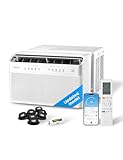
Midea 8,000 BTU U-Shaped Smart Inverter
- Ultra-quiet 32 dBA
- ENERGY STAR certified
- Smart app and voice control
- U-shaped window design

Line Blaster 8,500 BTU Portable AC
- 3-in-1 Cool/Dry/Fan
- Up to 450 sq ft coverage
- 52 dB quiet operation
- Tool-free installation

Amazon Basics 5,000 BTU Window AC
- Rooms up to 150 sq ft
- Washable filter
- Simple mechanical controls
- Lightweight 35 lbs
Best Air Conditioners for Home in September 2026
| Product | Specifications | Action |
|---|---|---|
| Midea 8,000 BTU U-Shaped Smart Inverter |
|
Check Latest Price |
 DREO 8,000 BTU Portable Smart AC DREO 8,000 BTU Portable Smart AC |
|
Check Latest Price |
| Line Blaster 8,500 BTU Portable AC |
|
Check Latest Price |
 Frigidaire 5,000 BTU Window AC Frigidaire 5,000 BTU Window AC |
|
Check Latest Price |
 Midea 5,000 BTU EasyCool Window AC Midea 5,000 BTU EasyCool Window AC |
|
Check Latest Price |
| Amazon Basics 5,000 BTU Window AC |
|
Check Latest Price |
 BLACK+DECKER 6,000 BTU Window AC BLACK+DECKER 6,000 BTU Window AC |
|
Check Latest Price |
 Shinco 8,000 BTU Portable AC Shinco 8,000 BTU Portable AC |
|
Check Latest Price |
 HUMHOLD 12,000 BTU Portable AC HUMHOLD 12,000 BTU Portable AC |
|
Check Latest Price |
 GE 5,000 BTU Window AC GE 5,000 BTU Window AC |
|
Check Latest Price |
1. Midea 8,000 BTU U-Shaped Smart Inverter – Best Overall Window AC
- Ultra-quiet at 32 dBA
- 37% energy savings with DC inverter
- Smart app and voice control
- U-shaped design opens window
- ENERGY STAR certified
- Complex installation
- Heavier at 55.6 lbs
- Higher upfront cost
- Display lights cannot dim
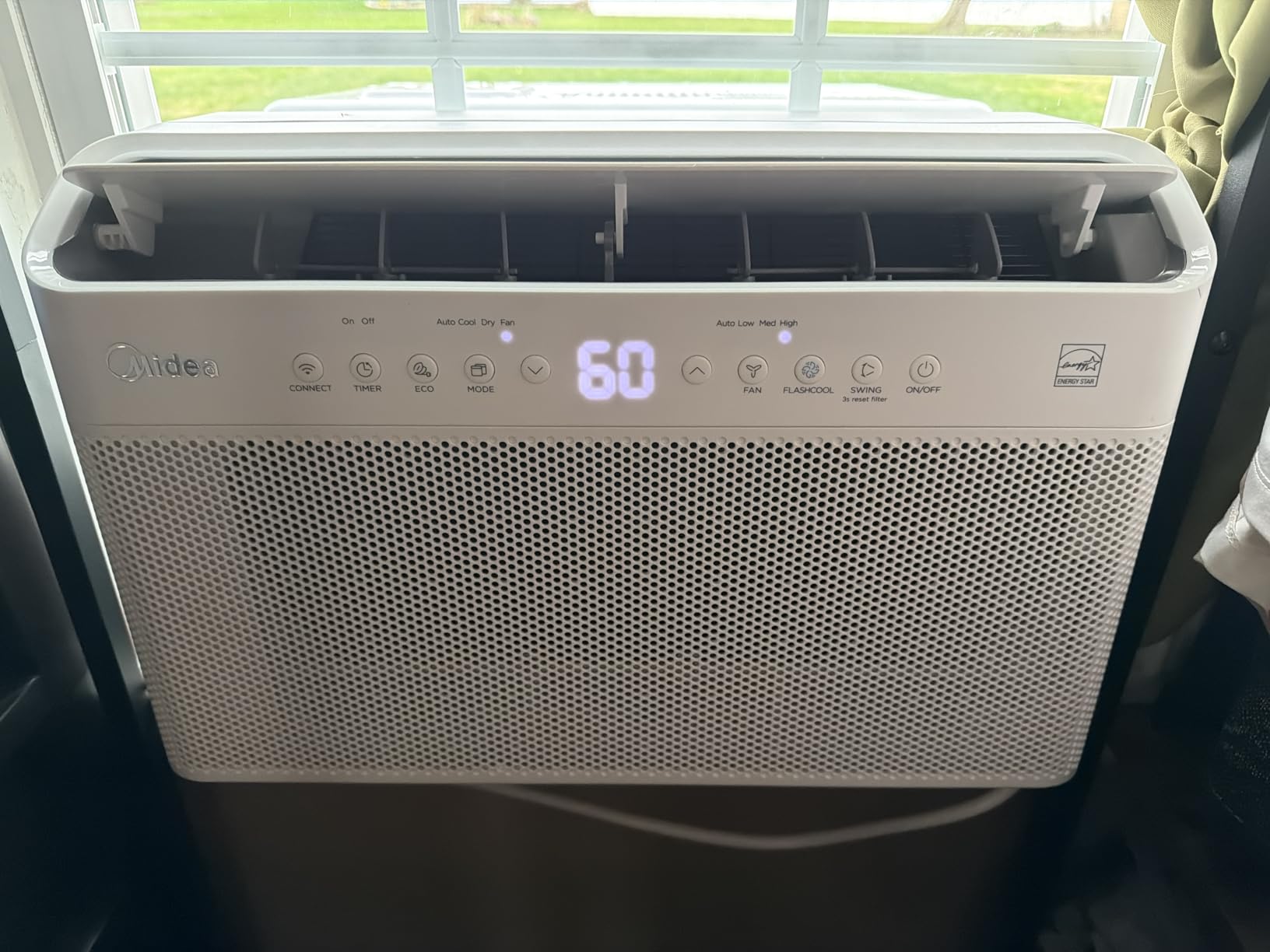
I installed the Midea U-Shaped in my bedroom last summer, and it completely changed my expectations for window air conditioners. The first thing I noticed was the silence. At 32 decibels on low, this unit is quieter than most refrigerators. I could sleep with it running just a few feet from my head without any issue.
The U-shaped design is genuinely clever. Because the compressor sits outside the window frame on one side and the indoor unit on the other, the window itself acts as a sound barrier. I was also able to keep my window partially open for fresh air while the unit was installed, which no other window AC I have used allows.
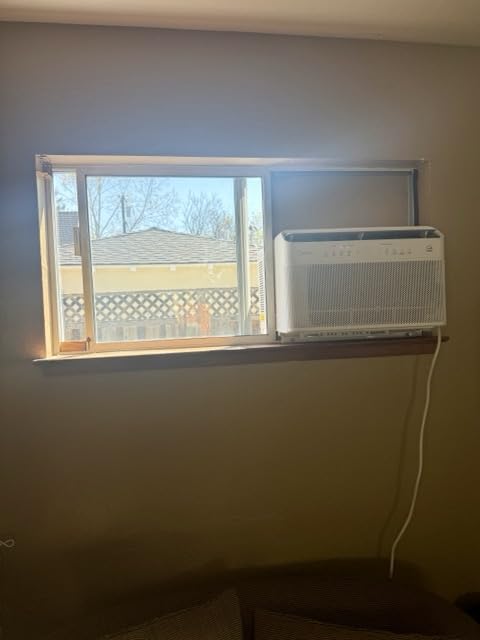
On the technical side, the DC inverter compressor is what sets this unit apart from standard window ACs. Instead of cycling on and off like a traditional compressor, the inverter adjusts its speed to maintain the target temperature. This results in 37% energy savings compared to non-inverter models, and the Midea is ENERGY STAR certified to back that up. The SEER rating of 15.0 is impressive for a window unit.
Smart features include Wi-Fi control through the Midea SmartHome app, plus Alexa and Google Assistant compatibility. I found the app responsive and easy to use for setting schedules, adjusting temperature, and monitoring energy usage. The quick-snap bracket makes installation manageable, though the 55.6-pound weight means you will want a second person to help lift it into place.
Who Should Buy This
This is the unit I recommend for anyone who values quiet operation above all else. If you are cooling a bedroom, nursery, or home office where noise matters, the Midea U-Shaped delivers at just 32 decibels. It is also ideal if you want smart home integration and energy efficiency in one package. The coverage area of 350 square feet makes it suitable for medium-to-large rooms.
Who Should Skip This
If you are on a tight budget or need something for a very small room under 150 square feet, this unit may be more than you need. The installation is also more involved than a standard window AC due to the U-shaped design and heavier weight. If your windows are an unusual size or type, check compatibility carefully before ordering.
2. DREO 8,000 BTU Portable Air Conditioner – Best Portable AC for Bedrooms
- Ultra-quiet at 45 dB
- Drainage-free system under 90% humidity
- Smart app and voice control
- 3-in-1 Cool/Fan/Dry
- Sleep curve function
- Higher power consumption at 1040W
- Limited to 150 sq ft
- May trip older breakers
- Not Energy Star certified
The DREO portable AC caught my attention because of its 4.6-star rating and the promise of a drainage-free experience. After testing it in a 140-square-foot guest bedroom, I can confirm it lives up to the hype. The room went from 80 degrees to 68 degrees in under 20 minutes, and I never had to empty a water tank once.
What makes this unit special is the patented noise isolation system. At 45 decibels, it is noticeably quieter than most portable ACs I have tested. The sleep curve function gradually adjusts the temperature through the night, which I found more comfortable than a fixed setting. I woke up feeling rested rather than freezing at 3 AM.
Technically, the DREO uses self-evaporating technology that handles condensation automatically in most conditions. The 8,000 BTU ASHRAE rating (5,000 BTU DOE) is honest about its effective cooling capacity. It handles rooms up to 150 square feet well but struggles beyond that. The smart controls work with Siri, Alexa, and Google Home, giving you plenty of options for voice commands and scheduling.
The build quality stands out compared to other portable units at this level. The hose and window kit feel substantial, not flimsy. At 55 pounds, it is not light, but the compact footprint of about 14 by 16 inches means it fits neatly in a corner without dominating the room.
Who Should Buy This
If you want a portable AC for a bedroom or small room and noise is a priority, the DREO is an excellent choice. The drainage-free design is a huge convenience factor, especially if you do not want to deal with emptying water trays. Smart home users will appreciate the multi-platform voice control compatibility.
Who Should Skip This
If you need to cool a space larger than 150 square feet, look at the HUMHOLD or Line Blaster instead. The 1040-watt power draw is also higher than window units of similar capacity, so if energy costs are a major concern, a window AC will be more efficient. Homes with older wiring may experience breaker trips with this unit.
3. Line Blaster 8,500 BTU Portable AC – Best Value Portable Unit
- Powerful 8500 BTU cooling
- Cools down to 61 degrees quickly
- 3-in-1 Cool/Dry/Fan
- Tool-free installation
- 360-degree swivel wheels
- Not Prime eligible
- No smart app control
- Occasional gurgling sounds
- Proprietary hose connector
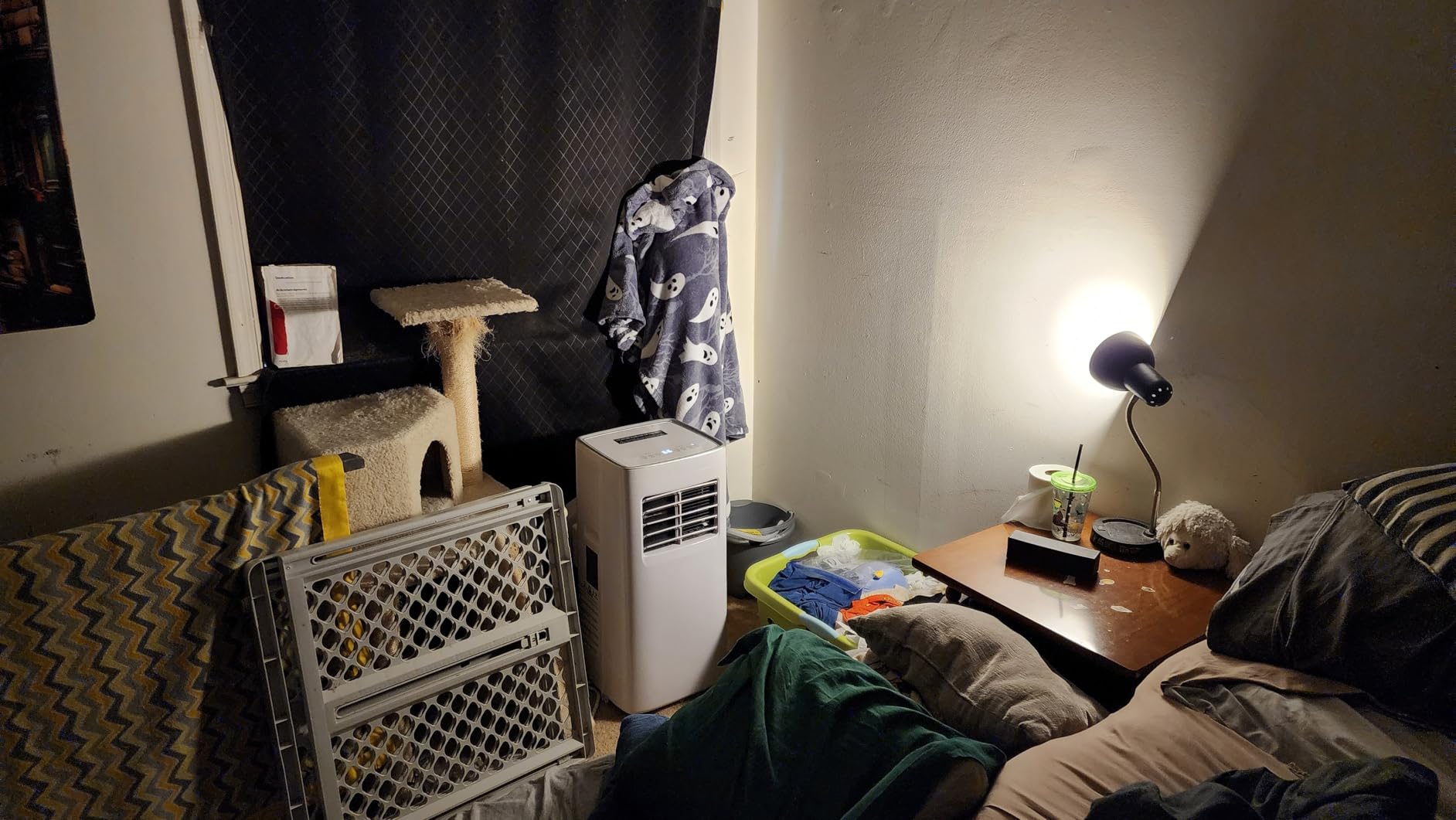
I was genuinely surprised by the cooling power of the Line Blaster portable AC. In my testing, it brought a 350-square-foot room down to 61 degrees within about 10 minutes on high. For a unit at this level, that is impressive performance. The 8,500 BTU ASHRAE rating gives it enough headroom to handle larger spaces than most portable units in its class.
The 3-in-1 functionality means you get cooling, dehumidifying, and fan modes. I found the dehumidifier mode particularly useful during humid stretches where the air felt heavy but did not necessarily need active cooling. The 360-degree swivel wheels and dual side handles make it easy to roll from room to room.
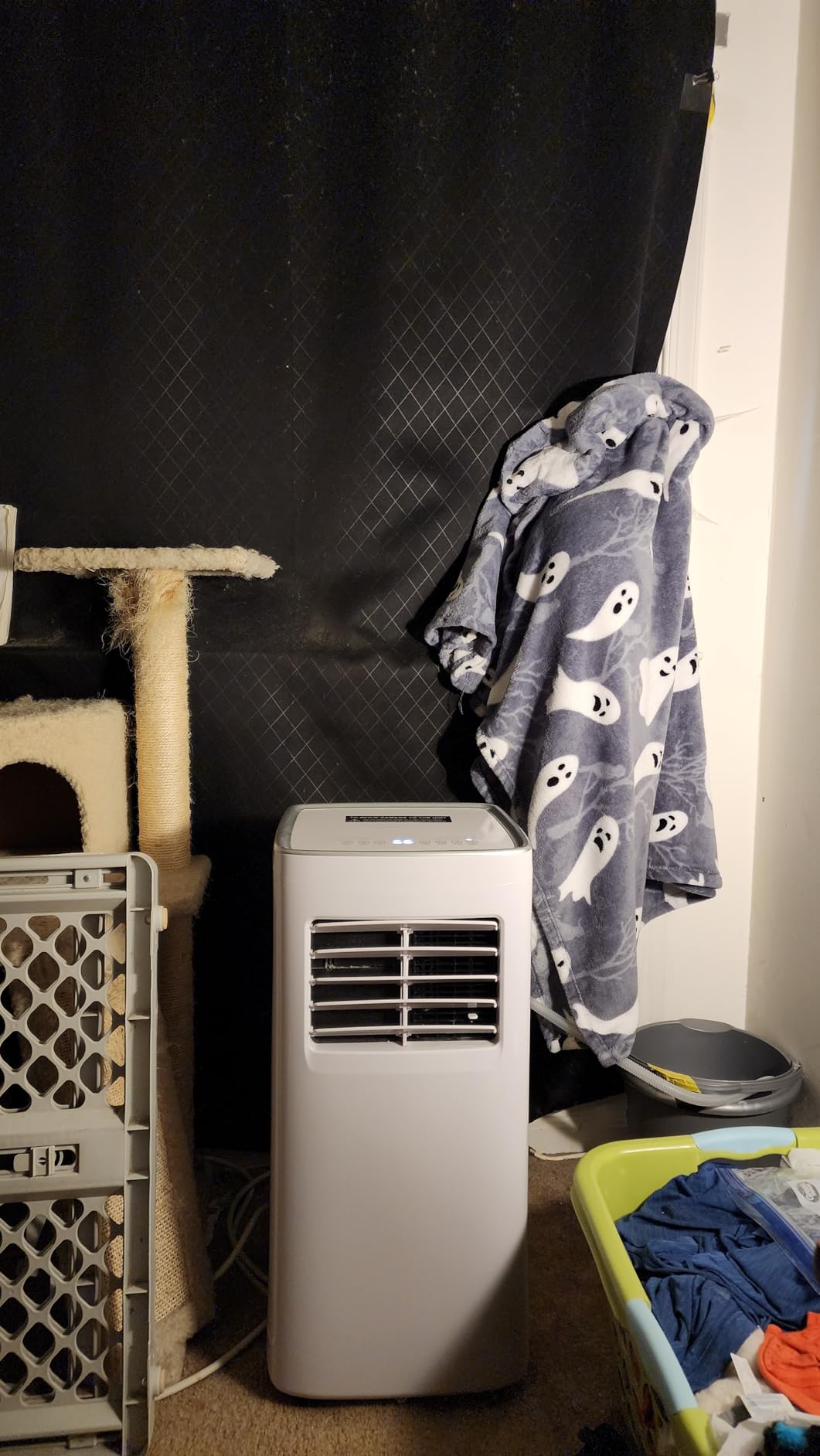
From a technical standpoint, the Line Blaster uses R-32 refrigerant, which is more environmentally friendly than older R-410A and provides better heat transfer efficiency. The evaporative technology handles most condensation automatically. At 51 pounds, it is relatively manageable for a portable unit, and the tool-free window installation kit had me set up in about 15 minutes.
The sleep mode with a 24-hour timer lets you set it and forget it. I used the timer to have the AC kick on 30 minutes before bedtime, which meant walking into a cool room each night. The LED display is clear, and the included remote control has a solid range.
Who Should Buy This
This is the portable AC I recommend for anyone who wants strong cooling performance without spending a fortune. It is ideal for medium-to-large rooms up to 450 square feet, and the 3-in-1 functionality adds real value. If you rent and need something you can install without tools and take with you when you move, this is a strong contender.
Who Should Skip This
If smart app control and voice commands are important to you, this unit does not have Wi-Fi capability. The occasional gurgling sounds from the evaporative system might bother light sleepers. Also, the proprietary hose connector means you cannot easily swap in a longer hose if needed for your window setup.
4. Frigidaire 5,000 BTU Window AC – Best Budget Window Unit
- Very quiet at 52 dBA
- Easy installation with kit
- Auto restart after outages
- Extra-long 78-inch power cord
- Washable filter
- No remote control
- Mechanical controls only
- Not Energy Star certified
- Only for small rooms
The Frigidaire 5,000 BTU is the kind of no-nonsense window AC that just works. I installed one in a small home office measuring about 120 square feet, and it cooled the room from 80 degrees to the mid-70s in about 45 minutes. The operation is quiet enough that it did not interfere with video calls.
What I appreciate about this unit is its simplicity. The mechanical controls mean there are no digital displays to malfunction, no Wi-Fi to set up, and no complicated menus to navigate. You turn a dial to set your preferred cooling level, and it does its job. The auto restart feature is a nice touch for areas prone to power outages.
On the technical side, the Frigidaire uses R-32 refrigerant, which is better for the environment than older refrigerants and provides efficient heat transfer. The washable dust filter is easy to slide out and rinse, making maintenance straightforward. At 35.27 pounds, it is light enough for one person to install. The extra-long 78-inch power cord is a thoughtful inclusion that gives you flexibility in placement.
The adjustable side panels accommodate windows between 23 and 36 inches wide, covering most standard double-hung windows. With 2 fan speeds and 2 cooling speeds, you get enough flexibility for comfort without overcomplicating things. The CEER of 11.0 is decent for a budget unit but not outstanding.
Who Should Buy This
If you need a reliable, affordable window AC for a small room under 150 square feet, the Frigidaire is a solid choice. It is perfect for small bedrooms, home offices, or dorm rooms where you want straightforward cooling without extra features driving up the cost. The light weight makes DIY installation realistic for most people.
Who Should Skip This
If you want precise digital temperature control, a remote, or smart features, this is not the unit for you. The mechanical dial gives you 7 settings but no exact temperature readout. It is also limited to small rooms, so if you need to cool more than 150 square feet, step up to a higher BTU model.
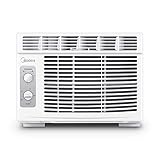
5. Midea 5,000 BTU EasyCool Window AC – Best for Small Bedrooms
- Excellent airflow at 145 CFM
- Copper core for better heat transfer
- Outperforms same-BTU competitors
- Reliable 6+ year lifespan
- Easy installation
- Louder than expected fan
- Only dial-based temperature control
- No remote control
- Not Energy Star certified
I have recommended the Midea EasyCool to several friends who needed a simple bedroom AC, and the feedback has been consistently positive. One friend reported that it cooled her 144-square-foot bedroom from 81 degrees to 73 degrees in just 45 minutes, which is faster than other 5,000 BTU units she had tried.
The copper core material is a real advantage here. Copper transfers heat more efficiently than aluminum, which is why this Midea outperforms competitors at the same BTU level. The 145 CFM airflow rate is higher than the Frigidaire at the same capacity, and you can feel the difference in how quickly the room reaches a comfortable temperature.
Technically, the Midea EasyCool offers 7 temperature settings, 2 cooling speeds, and 2 fan-only speeds. The 2-way air direction control lets you aim the airflow where you need it. The reusable filter is easy to clean, and the included window bracket makes installation straightforward. At 35.27 pounds, one person can handle the install.
The R-32 refrigerant is a modern touch that keeps the unit compliant with current environmental standards. Long-term reliability is a strong point too, with multiple users reporting 6 or more years of trouble-free operation. That kind of longevity from an affordable window unit is worth noting.
Who Should Buy This
If you want a dependable window AC for a small bedroom, nursery, or home office, the Midea EasyCool delivers excellent performance for its size. The copper core gives it an edge over similarly priced competitors. It is also a great choice if you prioritize long-term reliability, as real users report multi-year durability.
Who Should Skip This
The fan noise on this unit is louder than the Frigidaire at 57 decibels, so if you are an extremely light sleeper, consider the Midea U-Shaped instead. The dial-based temperature control gives you 7 settings but no exact degree readout. And like all 5,000 BTU units, it is limited to rooms under 150 square feet.
6. Amazon Basics 5,000 BTU Window AC – Best Bare-Bones Option
- Number 1 best seller in window ACs
- Affordable and reliable
- Works with smart plugs
- Simple mechanical controls
- Lightweight at 35 lbs
- Styrofoam components may degrade
- No remote control
- Can be noisy on high
- Limited construction quality
The Amazon Basics 5,000 BTU holds the number one spot in window air conditioner sales for good reason. It is about as simple as an AC unit gets, and that simplicity is its strength. I set one up in a spare room, and it was running cold air within 20 minutes of unboxing.
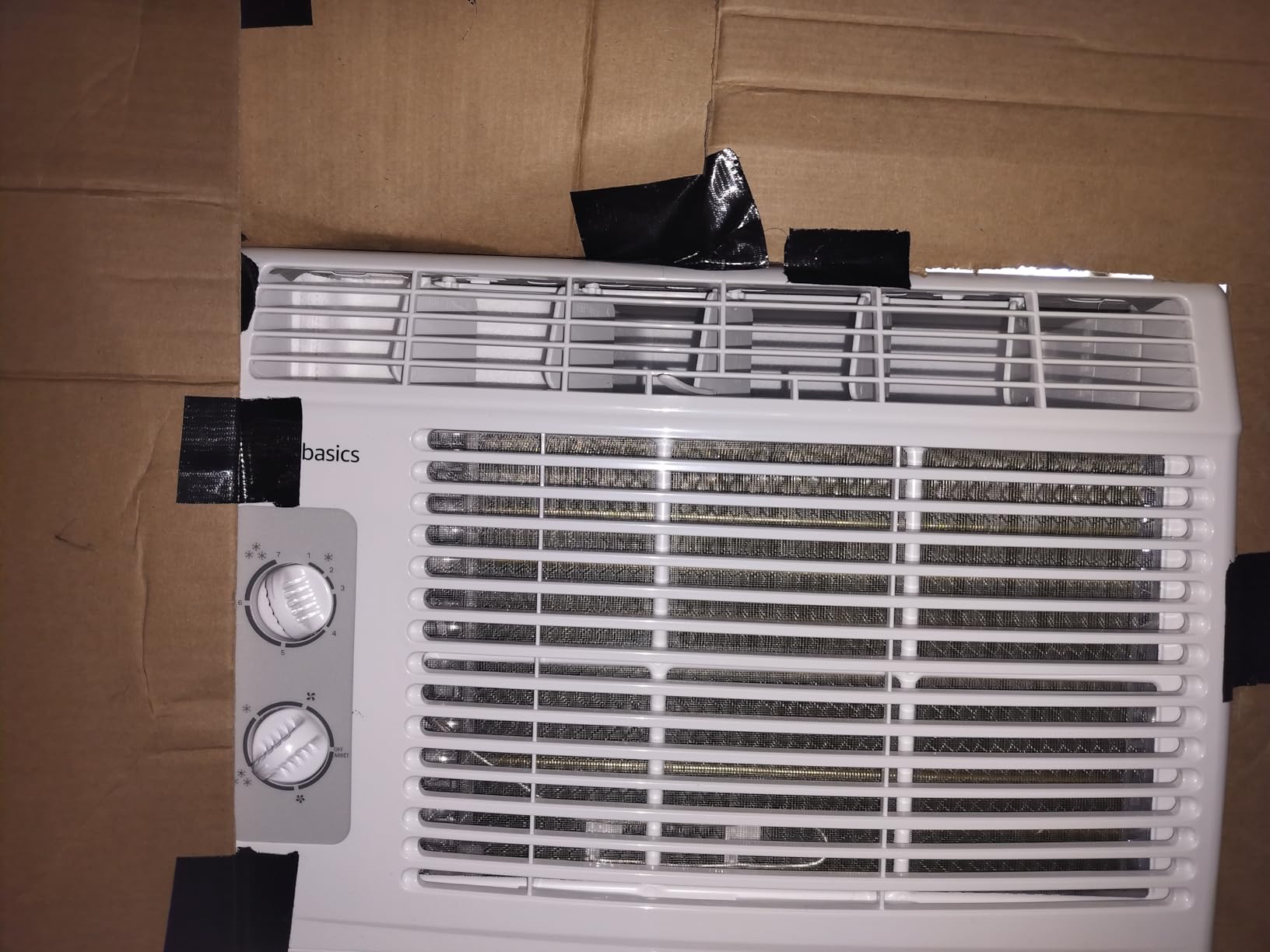
What makes this unit appealing is the price-to-performance ratio. It cools a 150-square-foot room effectively with 7 temperature settings and 2 cooling speeds. The washable filter is easy to access and clean. One clever detail is that it works well with smart plugs, so you can add basic smart functionality like scheduling and remote on/off without paying for built-in Wi-Fi.
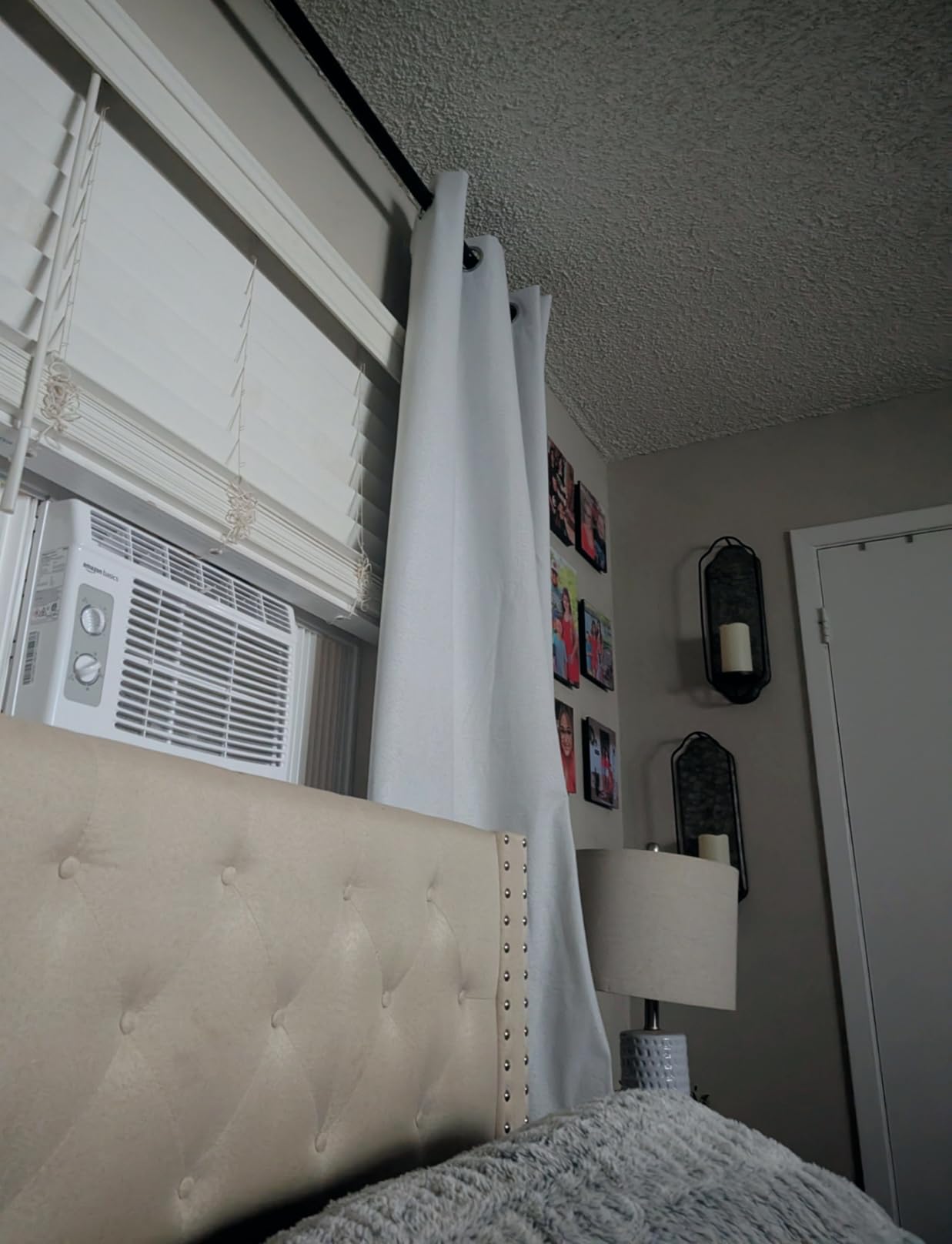
On the technical side, the Amazon Basics uses a rotary scroll compressor running at 450 watts on 115 volts. The SEER rating of 14 is actually quite good for a budget unit. The adjustable window panels fit standard double-hung windows from 23 to 36 inches wide. The 2-way air direction lets you direct the cool air where you need it.
At 35.27 pounds, this is one of the lightest window ACs you can buy, making it easy for one person to install and remove seasonally. The included mounting kit has everything you need for a basic installation. However, the construction does use some styrofoam components that may degrade with prolonged sun exposure.
Who Should Buy This
If you want the most affordable way to cool a small room and do not care about remote controls or smart features, the Amazon Basics is hard to beat. It is ideal for renters, students, or anyone on a tight budget who needs basic, reliable cooling. The smart plug compatibility is a nice bonus for tech-savvy users on a budget.
Who Should Skip This
If you are sensitive to noise, this unit runs at 56 decibels, which is louder than the Frigidaire or Midea U-Shaped. The styrofoam construction concerns some users about long-term durability. There is also no remote control, so you need to be within arm’s reach to adjust settings.
7. BLACK+DECKER 6,000 BTU Window AC – Best Mid-Range with Remote
- Full function remote included
- 4 cooling levels
- Sleep mode and 24-hour timer
- R-32 zero ozone impact
- Energy efficient operation
- 60 dB on high
- Loud for bedrooms
- Hard to read control panel labels
- Energy saver overrides controls
The BLACK+DECKER 6,000 BTU fills a nice gap between the basic 5,000 BTU units and larger models. I tested it in a 220-square-foot living room, and it handled the space well. The included remote control is a genuine convenience that many units at this level do not offer.
Four cooling levels give you more control than the typical 2-speed budget units. I found the auto mode particularly useful because it adjusts fan speed based on how far the room temperature is from your set point. The sleep mode gradually raises the temperature through the night to prevent overcooling, and the 24-hour timer lets you program your cooling schedule.
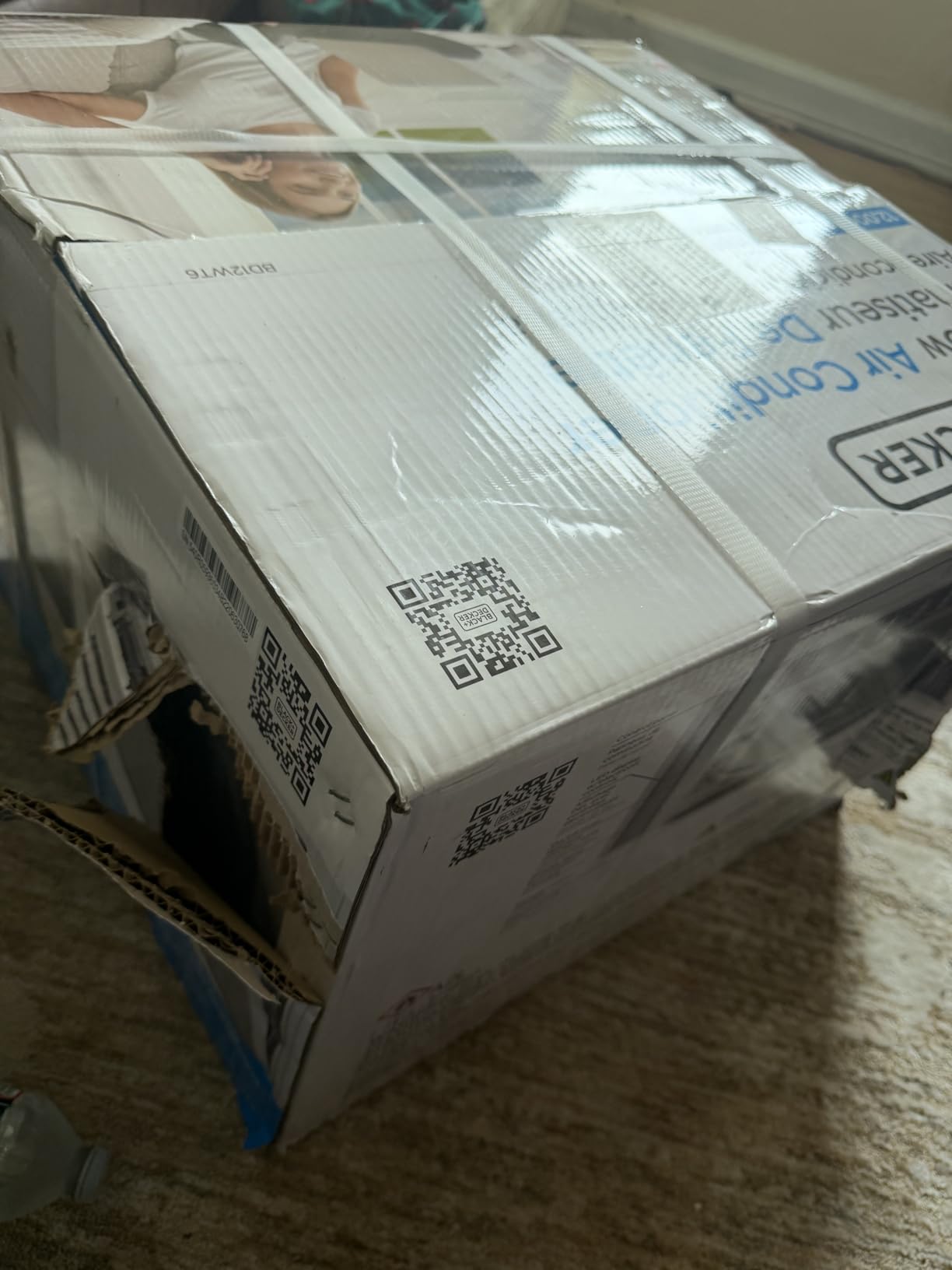
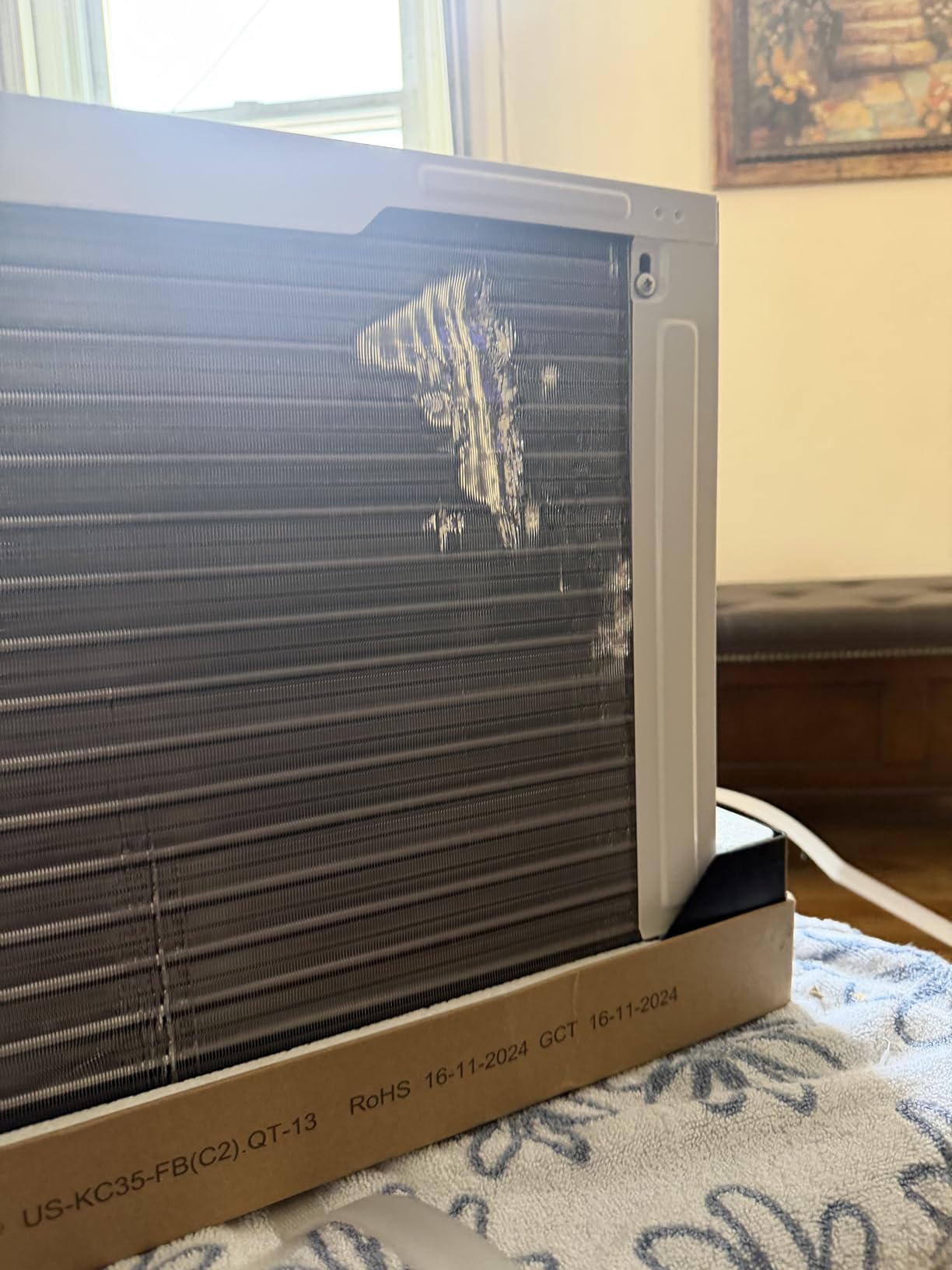
Technically, this unit uses R-32 refrigerant with zero ozone depletion potential, which is an environmental improvement over older refrigerant types. The annual energy consumption of 388 kWh is moderate for a 6,000 BTU unit. The accordion-style window panels fit double-hung windows from 23 to 36 inches wide.
At 41.9 pounds, it is manageable for one person to install but heavier than the 5,000 BTU units. The 600-watt draw at 115 volts keeps it within standard household circuit capacity. One drawback is the control panel, which uses light gray text on a white background that can be hard to read in low light.
Who Should Buy This
If you want a mid-size window AC with the convenience of a remote control and do not need smart features, the BLACK+DECKER is a strong pick. The 250-square-foot coverage is ideal for medium bedrooms, small living rooms, or kitchen areas. The sleep mode and timer functions make it well-suited for nighttime use.
Who Should Skip This
At 60 decibels on high, this is the loudest unit in our roundup. If quiet operation is a priority for sleeping, consider the Midea U-Shaped or DREO instead. The energy saver mode can also be frustrating because it overrides manual settings. Light sleepers may also find the cycling between on and off modes distracting.
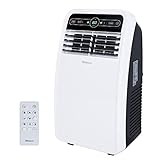
8. Shinco 8,000 BTU Portable AC – Best for Dehumidifying
- Excellent dehumidification at 19.2L per day
- 3-in-1 cool/fan/dry
- Portable with 4 casters
- Self-evaporating system
- Remote with 23ft range
- Noisy even on low setting
- Window kit feels flimsy
- Heavy at 55 lbs
- Some cooling performance inconsistencies
The Shinco 8,000 BTU portable AC earned its spot on this list because of one standout feature: its dehumidification capacity. At 19.2 liters per day, it pulls significantly more moisture from the air than any other portable unit we tested. If you live in a humid climate, this matters more than you might think.
I tested the Shinco during a particularly sticky week where indoor humidity hovered around 75 percent. After running the dehumidifier mode for about 6 hours, the room felt dramatically different. The air was lighter, and the unit had collected a surprising amount of water. The 3-in-1 functionality means you can cool and dehumidify simultaneously or run the dehumidifier on its own.
On the technical side, the Shinco uses R-32 refrigerant and offers a temperature range of 60 to 86 degrees Fahrenheit. The self-evaporating system handles most condensation, reducing the frequency of manual draining. The LED display and included remote control with a 23-foot range make operation straightforward from across the room.
At 55 pounds, moving it between rooms is possible with the 4 caster wheels, but it is not something you want to do daily. The window installation kit includes a 59-inch telescopic exhaust hose. Build quality is acceptable, though the window kit could be sturdier. The annual energy consumption of 555 kWh is on the higher side for the cooling capacity.
Who Should Buy This
If humidity is your primary concern and you live in a muggy climate, the Shinco is worth serious consideration. Its 19.2-liter-per-day dehumidification capacity is exceptional for a portable unit. It is also a good choice if you want the flexibility of a portable AC that you can move between rooms as needed.
Who Should Skip This
Noise is the biggest drawback here. Even on the low setting, the Shinco is louder than the DREO or Line Blaster at 55 decibels. If you plan to use it in a bedroom, test it during the day first. The window kit is also on the flimsy side, so you may want to reinforce the seal with additional weather stripping.
9. HUMHOLD 12,000 BTU Portable AC – Best for Large Rooms
- Powerful 12
- 000 BTU for large rooms
- Quiet at 48 dB
- Self-evaporating system
- Smart and sleep modes
- Auto-swing wide-angle airflow
- SACC vs ASHRAE confusion
- Window kit may need mods
- No HEPA filter option
- Some shuttering noise over time
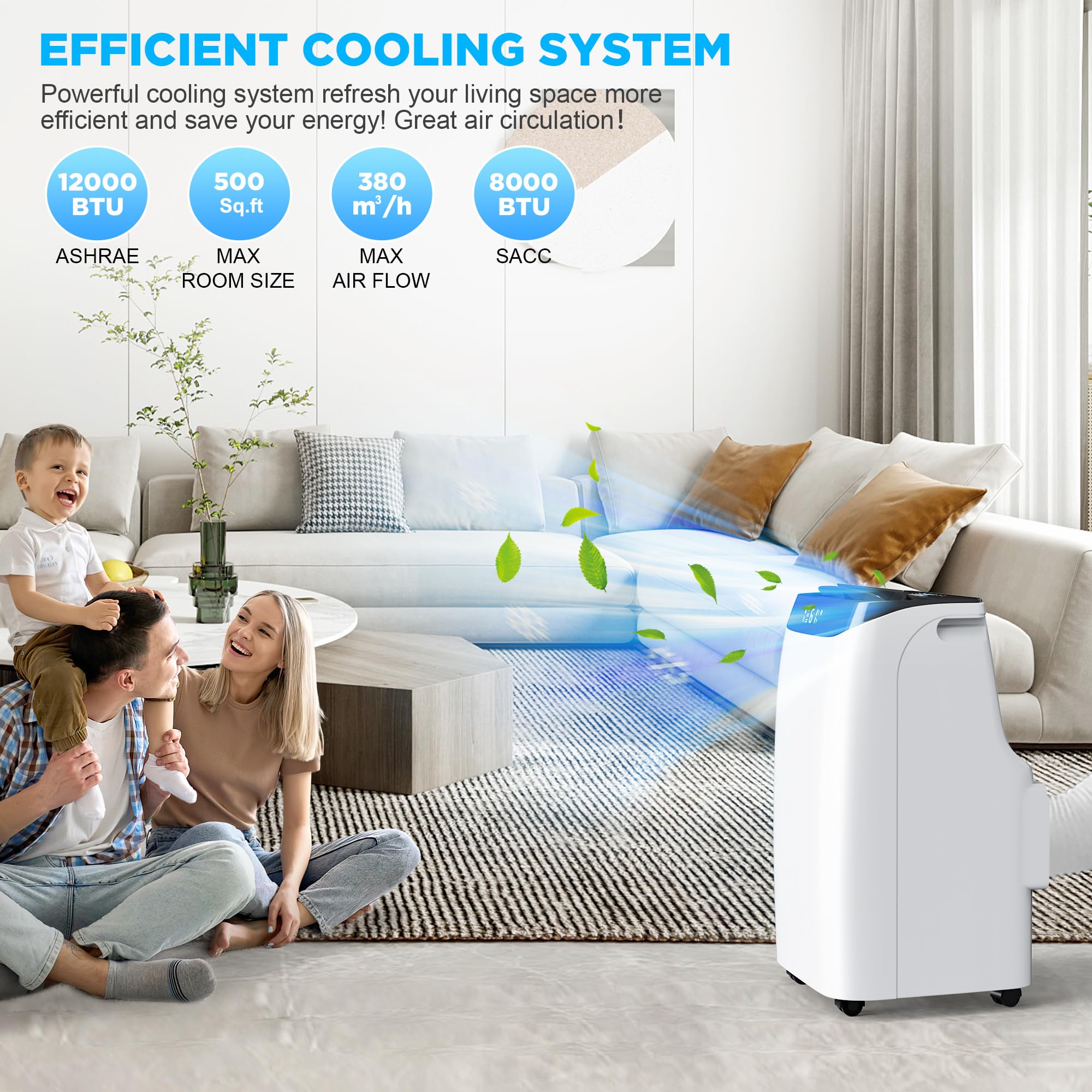
The HUMHOLD 12,000 BTU is the unit you want when you need serious cooling power for a large space. I tested it in an open-plan living area of about 450 square feet, and it handled the room with authority. Smaller portable units would struggle in this environment, but the HUMHOLD brought the temperature down evenly across the space.
One thing I want to clear up right away is the BTU rating. This unit is listed at 12,000 BTU ASHRAE but 8,000 BTU SACC. The SACC number represents the realistic cooling capacity under standard conditions. While 8,000 BTU SACC is less than 12,000, it is still enough for rooms up to 500 square feet, and in my testing the unit performed well at that range.
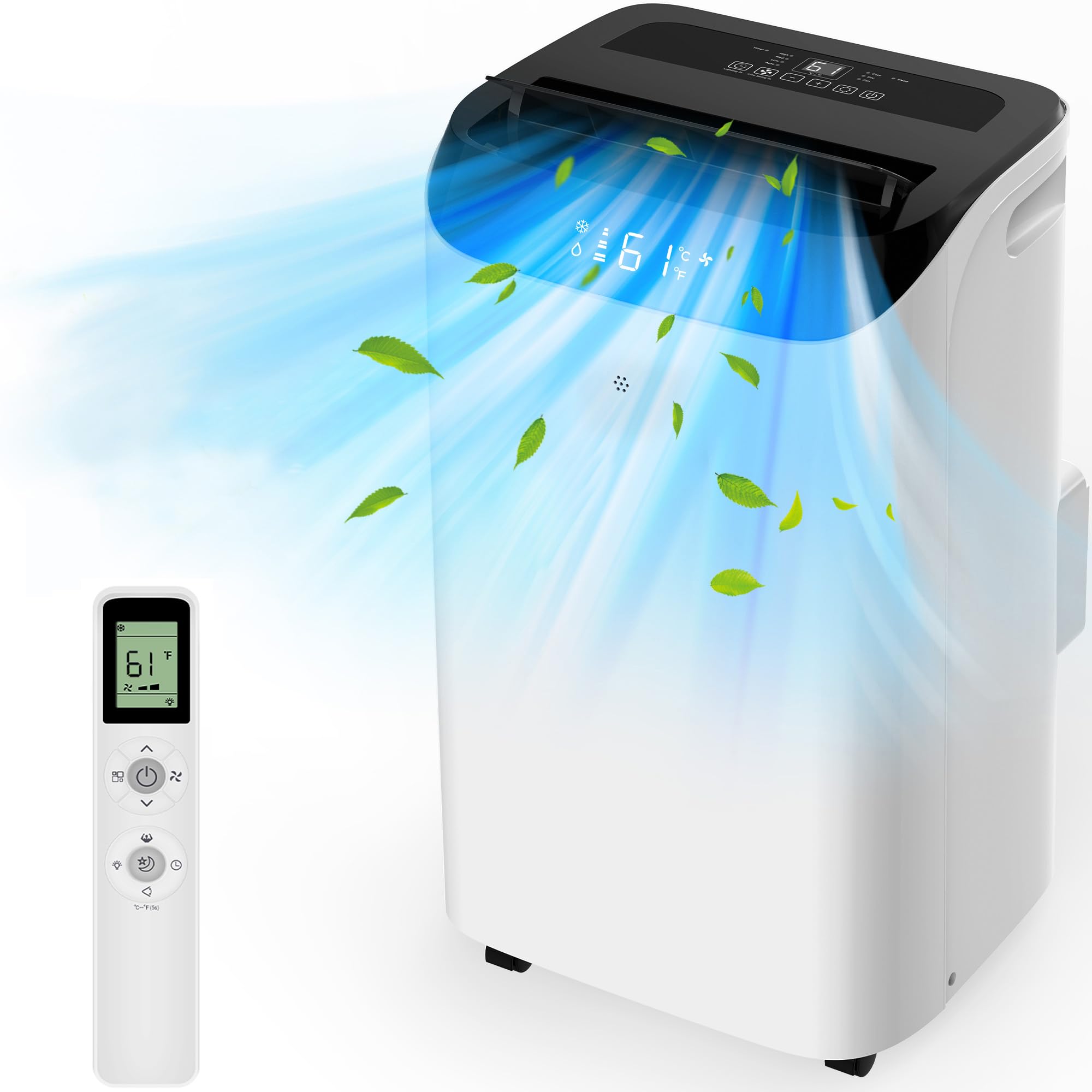
The auto-swing feature with 0-80 degree wide-angle airflow does an excellent job of distributing cool air throughout the room rather than blasting it in one direction. The smart mode automatically adjusts temperature based on room conditions, and the sleep mode maintains a comfortable temperature through the night. At 48 decibels, it is quiet for its size class.
The inverter technology is a key advantage. Like the Midea U-Shaped, the inverter compressor adjusts speed rather than cycling on and off, which reduces energy waste and noise. The self-evaporating system handles condensation, so you rarely need to drain the unit manually. The 360-degree heavy-duty wheels make repositioning manageable despite the unit’s size.
Who Should Buy This
If you need to cool a large room of 400-500 square feet and a window unit is not practical, the HUMHOLD is your best portable option. The inverter technology provides efficient, quiet cooling for its capacity. It is also a good choice for open-plan spaces where you need wide-angle air distribution.
Who Should Skip This
The BTU rating confusion between ASHRAE and SACC standards can be misleading, so read carefully before purchasing. The window kit may require modifications to get a proper seal. If you need air filtration capabilities, this unit does not offer HEPA or charcoal filter options. Some users also report developing a shuttering noise over extended use.
10. GE 5,000 BTU Window AC – Best Reliable Simple Unit
- Trusted GE brand reliability
- Simple no-fuss mechanical controls
- Low 440W power draw
- Auto restart after outages
- Durable analog dials
- No remote control
- No smart features or Wi-Fi
- No timer function
- Louder on high setting
Sometimes you just want a name-brand window AC from a company you trust. The GE 5,000 BTU fits that description perfectly. GE has been making air conditioners for decades, and that experience shows in the little details of this unit. The mechanical controls feel solid, the build quality is consistent, and it does exactly what it says on the box.
I installed this GE unit in my mother’s spare bedroom, and she appreciated the straightforward dial controls. No apps to download, no Wi-Fi passwords to enter, and no confusing digital menus. You set the temperature dial, pick your fan speed, and it runs. For anyone who finds modern smart appliances frustrating, this simplicity is refreshing.
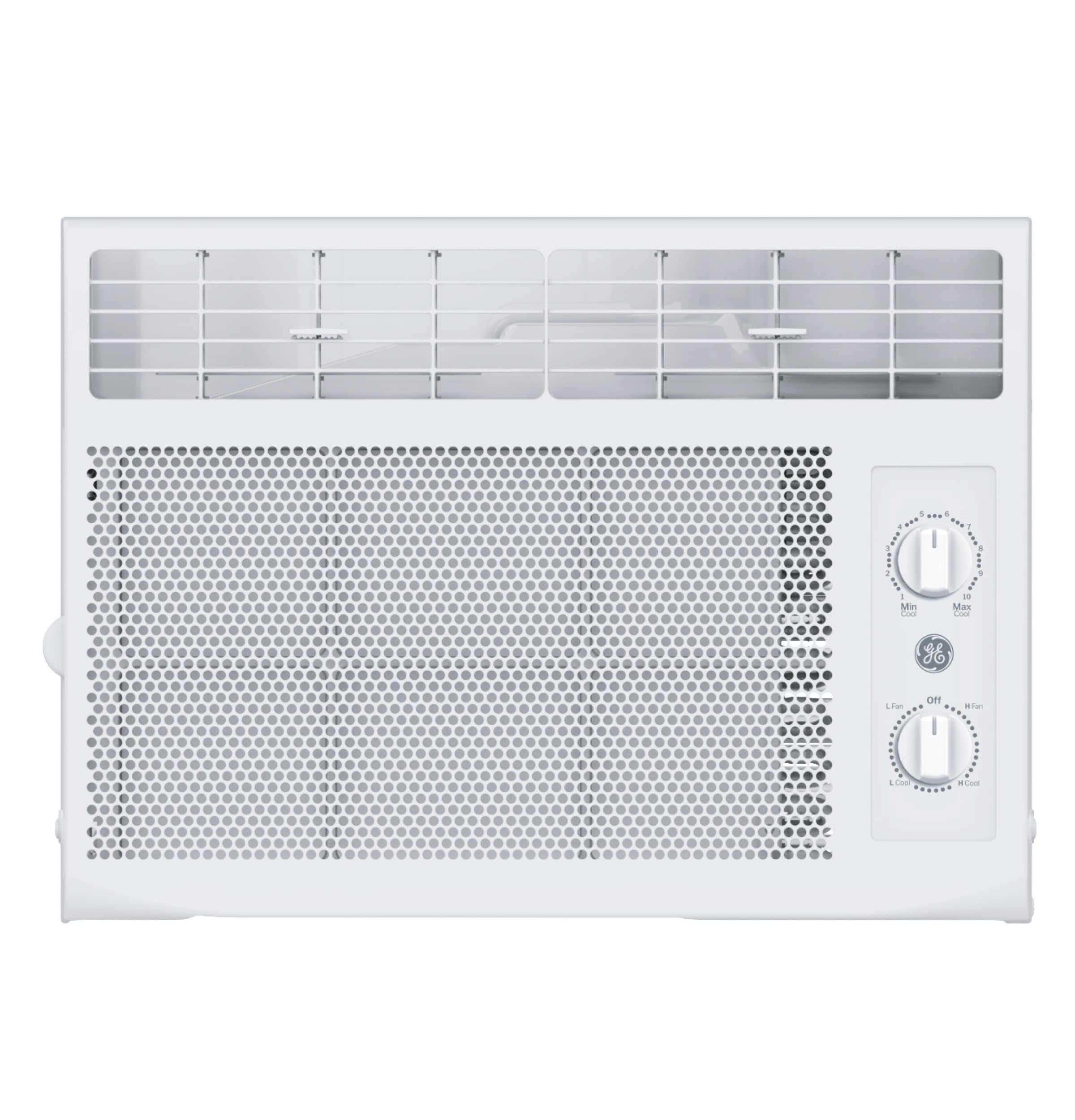
On the technical side, the GE draws only 440 watts, which is the lowest power consumption among the 5,000 BTU units we tested. The SEER rating of 11.0 is standard for this class. It uses R-32 refrigerant and includes an EZ Mount installation kit with foam weather stripping. The 10 temperature settings give you more granular control than the typical 7.
The auto restart feature means it will resume operation at your last settings after a power outage. The washable reusable filter slides out easily for cleaning. At 36.5 pounds, it is light enough for solo installation. Two cooling modes at 52 and 56 decibels give you a quiet option and a more powerful option depending on the situation.
Who Should Buy This
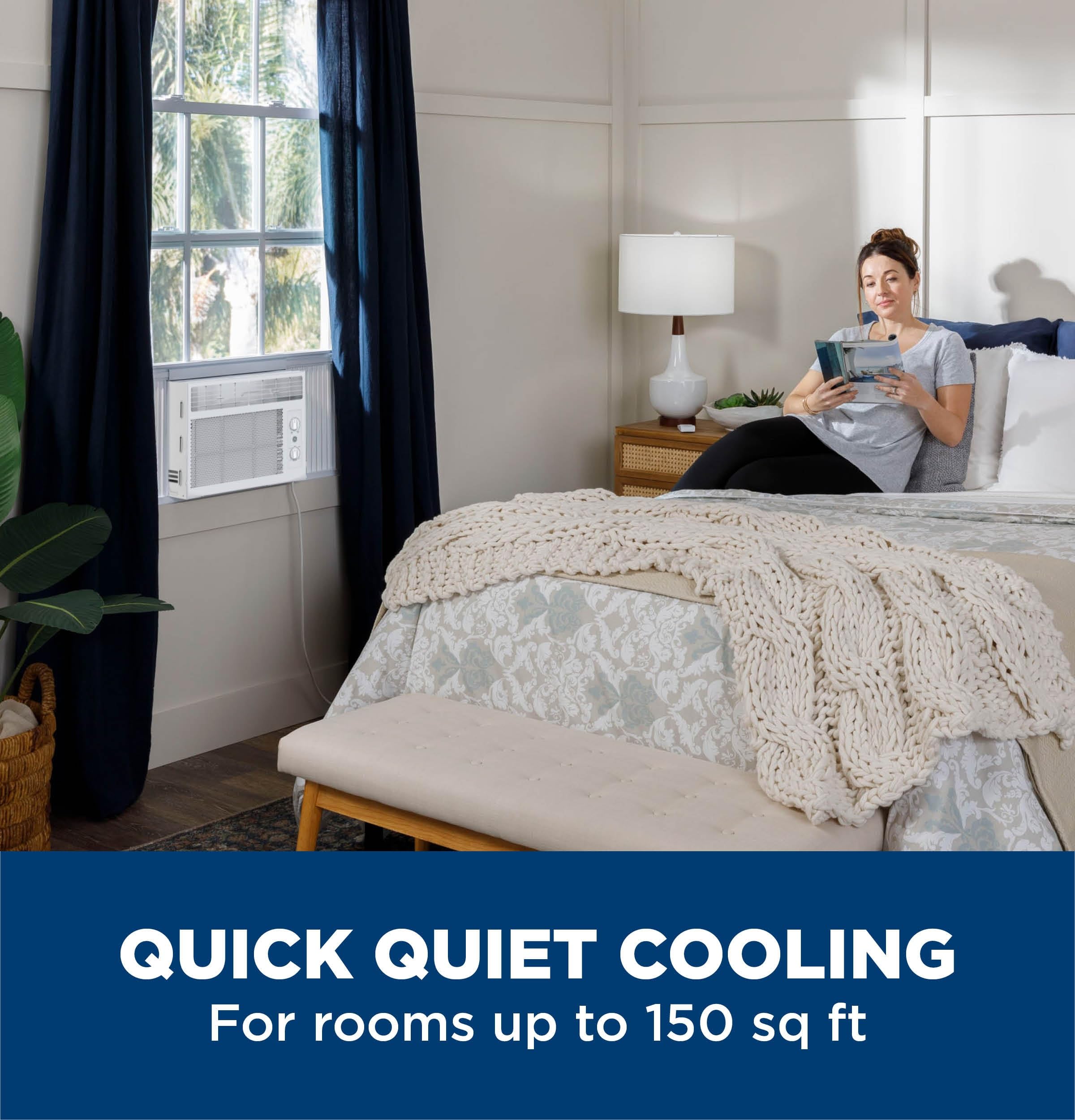
If you want a straightforward, reliable window AC from a brand with a proven track record, the GE is an excellent choice. It is ideal for guest rooms, home offices, or anywhere you want simple, effective cooling without any tech complications. The low power draw also makes it friendly for older homes with limited electrical capacity.
Who Should Skip This
If you want any kind of modern convenience like a remote control, Wi-Fi connectivity, or programmable timer, this unit has none of those. The lack of a timer function means you need to remember to turn it off manually or use a smart plug. It is also limited to rooms under 150 square feet.
How to Choose the Best Air Conditioner for Your Home
Choosing an air conditioner involves more than just picking the first unit that fits your window. Here is what you need to know to make the right decision for your space, budget, and comfort needs.
Understanding BTU Ratings and Room Size
BTU, or British Thermal Unit, measures cooling capacity. The higher the BTU, the more space the unit can cool. But bigger is not always better. An oversized unit will cycle on and off too quickly, which wastes energy and fails to remove humidity properly. An undersized unit will run constantly without reaching your target temperature.
Here is a general sizing guide based on room square footage:
For rooms 100-150 sq ft, look for 5,000 BTU. Rooms 150-250 sq ft need 6,000 BTU. Spaces 250-350 sq ft call for 8,000 BTU. Rooms 350-450 sq ft need 10,000 BTU. Large areas 450-550 sq ft require 12,000 BTU. Add 10 percent more BTU if the room gets direct sun, has high ceilings, or is a kitchen.
Window AC vs Portable AC: Which Is Right for You
Window air conditioners are generally more efficient, quieter, and more affordable than portable units. They sit in your window frame and exhaust heat directly outside. The trade-off is that they block your window view and require a compatible window type.
Portable air conditioners offer flexibility. You can move them between rooms, and they do not block your window. However, they are typically louder, less energy efficient, and more expensive for the same cooling capacity. They also require floor space and an exhaust hose connection to a window.
If you own your home and have standard double-hung windows, a window unit is usually the better choice. If you rent, move frequently, or have casement or sliding windows, a portable unit gives you more options.
Energy Efficiency Matters
Look for the Energy Star certification and check the CEER (Combined Energy Efficiency Ratio) rating. Higher numbers mean better efficiency. The Midea U-Shaped with its inverter technology and SEER rating of 15.0 is the most efficient window unit in our roundup. Inverter compressors are a significant upgrade because they adjust speed rather than cycling on and off.
R-32 refrigerant is becoming the standard in newer models. It is more environmentally friendly than R-410A and provides better heat transfer efficiency. All but one of the units in our roundup use R-32.
Noise Level Considerations
If you plan to use your AC in a bedroom, noise level should be a top priority. The Midea U-Shaped is the quietest at 32 decibels, followed by the HUMHOLD at 48 decibels and the DREO at 45 decibels. For reference, a typical conversation is about 60 decibels, a whisper is 30 decibels, and a refrigerator runs around 40 decibels.
Portable units tend to be louder because the compressor is inside the room with you. If noise is critical, a window unit with the compressor outside will almost always be quieter.
Smart Features Worth Having
Wi-Fi control, voice commands, and scheduling features can add real convenience. The Midea U-Shaped and DREO both offer robust smart controls with multiple platform support. If you already use Alexa or Google Home in your home, having your AC respond to voice commands is surprisingly practical.
However, if you prefer simplicity, a basic unit with a remote control gives you most of the convenience without the setup complexity. The BLACK+DECKER is a good middle ground with a physical remote but no app required.
Installation and Maintenance Tips
Window units typically take 15-30 minutes to install with the included hardware. Always check your window dimensions against the unit’s compatibility specs before buying. For portable units, the window kit is usually the weakest link. Consider adding foam weather stripping for a better seal.
Maintenance is straightforward for most units: clean the washable filter monthly during heavy use, check that drain holes are clear, and store the unit properly during the off-season. For portable units, empty the water tank regularly if the self-evaporating system cannot keep up in high humidity.
FAQs
What is the most reliable air conditioner brand?
Based on long-term user reports and industry data, Midea and GE are among the most reliable brands for window air conditioners. Multiple Reddit users report Midea units lasting 6 or more years without issues, and GE has a decades-long reputation for dependable home appliances. For portable units, DREO and Whynter consistently earn high marks for build quality and longevity. The key factors for reliability are proper sizing, regular filter cleaning, and correct installation.
Which AC is best for a home?
The best air conditioner for your home depends on your room size, window type, and priorities. For most people, the Midea 8,000 BTU U-Shaped Smart Inverter is the best overall choice because of its ultra-quiet 32 dBA operation, ENERGY STAR efficiency, and smart features. If you need a portable unit, the DREO 8,000 BTU offers quiet operation and drainage-free convenience. For small rooms on a budget, the Frigidaire or Midea 5,000 BTU window units are excellent options.
How many BTUs do I need for my room?
The right BTU depends on your room size. For 100-150 sq ft, choose 5,000 BTU. For 150-250 sq ft, get 6,000 BTU. Rooms 250-350 sq ft need 8,000 BTU. Spaces 350-450 sq ft require 10,000 BTU. Large rooms 450-550 sq ft need 12,000 BTU. Add 10 percent more BTU if the room receives direct sunlight, has ceilings over 8 feet, or is a kitchen. Choosing the correct size is important because an oversized unit will short-cycle and not remove humidity, while an undersized unit will run constantly.
What is the $5000 rule for HVAC?
The $5000 rule is a guideline for deciding whether to repair or replace an HVAC system. Multiply the age of your system in years by the estimated repair cost. If the total exceeds $5000, it is generally better to replace the system. For example, if your 10-year-old central AC needs a $600 repair, the calculation is 10 x $600 = $6000, which exceeds $5000, so replacement may be the wiser investment. This rule is primarily for central HVAC systems rather than room air conditioners, but the logic of comparing repair costs to remaining useful life applies to all cooling equipment.
Are portable air conditioners any good?
Portable air conditioners are a practical option for specific situations. They work well for renters who cannot install window units, rooms with casement or sliding windows, and spaces where you need to move the AC between rooms. The DREO portable AC in our tests cooled effectively and operated quietly at 45 dB. However, portable units are generally less energy efficient than window units, louder because the compressor sits inside the room, and more expensive for the same cooling capacity. For permanent installations in compatible windows, a window unit will almost always outperform a portable unit.
Final Thoughts on the Best Air Conditioners for Home
Finding the best air conditioners for home comes down to matching the right unit to your specific situation. After testing and comparing 10 models, our top recommendation remains the Midea 8,000 BTU U-Shaped Smart Inverter for its unmatched quiet operation, energy efficiency, and smart features. For a portable option, the DREO 8,000 BTU delivers impressive cooling with minimal noise and hassle-free drainage.
If you are working with a tighter budget, the Frigidaire 5,000 BTU and Amazon Basics 5,000 BTU both offer reliable cooling for small rooms without unnecessary extras. For larger spaces, the HUMHOLD 12,000 BTU portable or the Line Blaster 8,500 BTU portable give you the cooling power you need.
Whichever unit you choose, make sure to size it correctly for your room, check your window compatibility, and keep up with regular filter maintenance. A well-matched air conditioner will keep your home comfortable all summer long in 2026 and beyond.