
Choosing between front load vs top load washing machines is one of those household decisions that seems simple until you start shopping. I have spent months testing, researching, and comparing both washer types in real homes with real laundry piles, and I can tell you the answer is not as straightforward as you might think. Each design has genuine strengths and real trade-offs that affect your daily routine, your utility bills, and how long your favorite clothes actually last.
The washing machine landscape has shifted significantly in 2026. Front-loaders once dominated every “best of” list, but modern top-loaders with impeller technology have narrowed the performance gap considerably. Meanwhile, front-load washing machines continue to lead in water efficiency and fabric care. Our team compared 8 of the most popular models across both categories to give you a clear, honest breakdown of which type fits your home, your budget, and your laundry habits.
In this guide, we cover specific product recommendations for both front-load and top-load washers, explain the mechanical differences that actually matter, and walk through a decision framework based on how real people use their machines. Whether you are outfitting a new laundry room or replacing a unit that finally gave out, this comparison will help you make the right call.
2026 Top 3 Picks for Best Washing Machines


Kenmore 4.5 Cu. Ft. Top Load Impeller Washer
- 4.5 cu ft
- Triple Action Impeller
- Express Wash
- LED Display
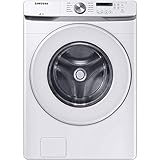
Samsung 4.5 Cu. Ft. Front Load Washer
- 4.5 cu ft
- Vibration Reduction+
- Self Clean+
- ENERGY STAR
Best Washing Machines in September 2026
| Product | Specifications | Action |
|---|---|---|
| BLACK+DECKER 4.5 Cu.Ft. Front Load |
|
Check Latest Price |
| Samsung 4.5 Cu.Ft. Front Load |
|
Check Latest Price |
 LG 4.5 Cu.Ft. Front Load WM3400CW LG 4.5 Cu.Ft. Front Load WM3400CW |
|
Check Latest Price |
 GE Profile 4.8 Cu.Ft. Smart Front Load GE Profile 4.8 Cu.Ft. Smart Front Load |
|
Check Latest Price |
| Kenmore 4.5 Cu.Ft. Top Load Impeller |
|
Check Latest Price |
| Kenmore 4.4 Cu.Ft. Top Load Agitator |
|
Check Latest Price |
 BLACK+DECKER 4.1 Cu.Ft. Top Load Agitator BLACK+DECKER 4.1 Cu.Ft. Top Load Agitator |
|
Check Latest Price |
 GE Profile 5.0 Cu.Ft. Smart Top Load GE Profile 5.0 Cu.Ft. Smart Top Load |
|
Check Latest Price |
1. BLACK+DECKER 4.5 Cu. Ft. Front Load Washer – Best Overall Cleaning Performance
- Spacious 4.5 cu ft handles family loads
- Very quiet during operation
- 1300 RPM spin speed extracts water well
- ENERGY STAR certified efficiency
- Excellent customer service support
- Drain hose requires proper elevation
- Lint filter needs cleaning every 10 washes
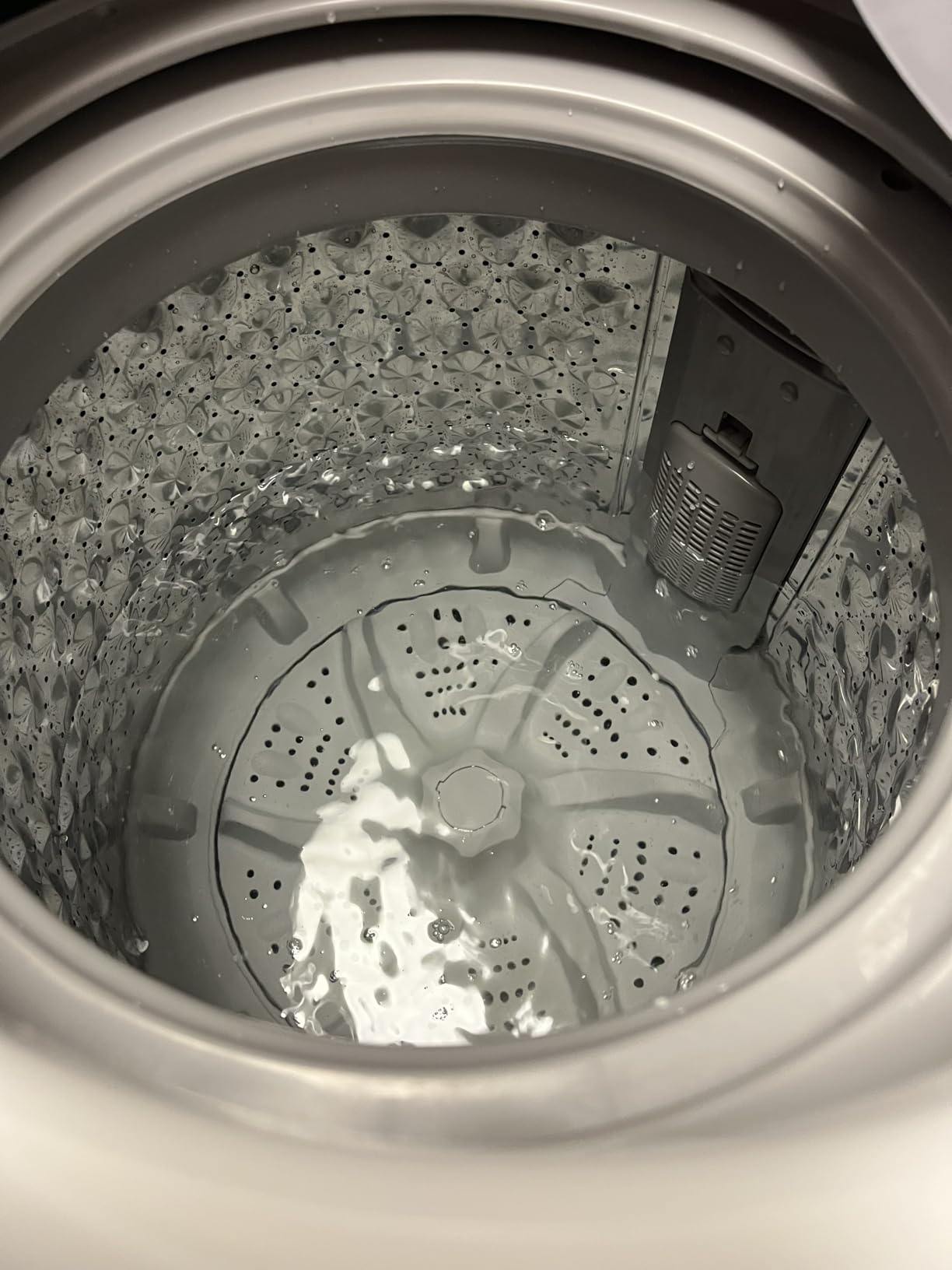
I ran this BLACK+DECKER front-load washer through a month of daily laundry duty, and it consistently impressed me with how clean everything came out. The 4.5 cubic foot stainless steel drum handled a king-size comforter without struggling, and my regular loads of mixed clothing came out noticeably cleaner than they did with my old top-loader. The tumbling action is remarkably gentle on delicates, yet it powers through ground-in dirt on kids’ play clothes without needing a second wash.
The touch controls are responsive and the LED display shows exactly where you are in the cycle. I appreciate the 12 cycle selections, which cover everything from a heavy-duty setting for work clothes to a delicate cycle for sweaters. The delay start feature up to 24 hours means I can load it before bed and have it finish right when I wake up, which is a small convenience that makes a real difference in a busy household.
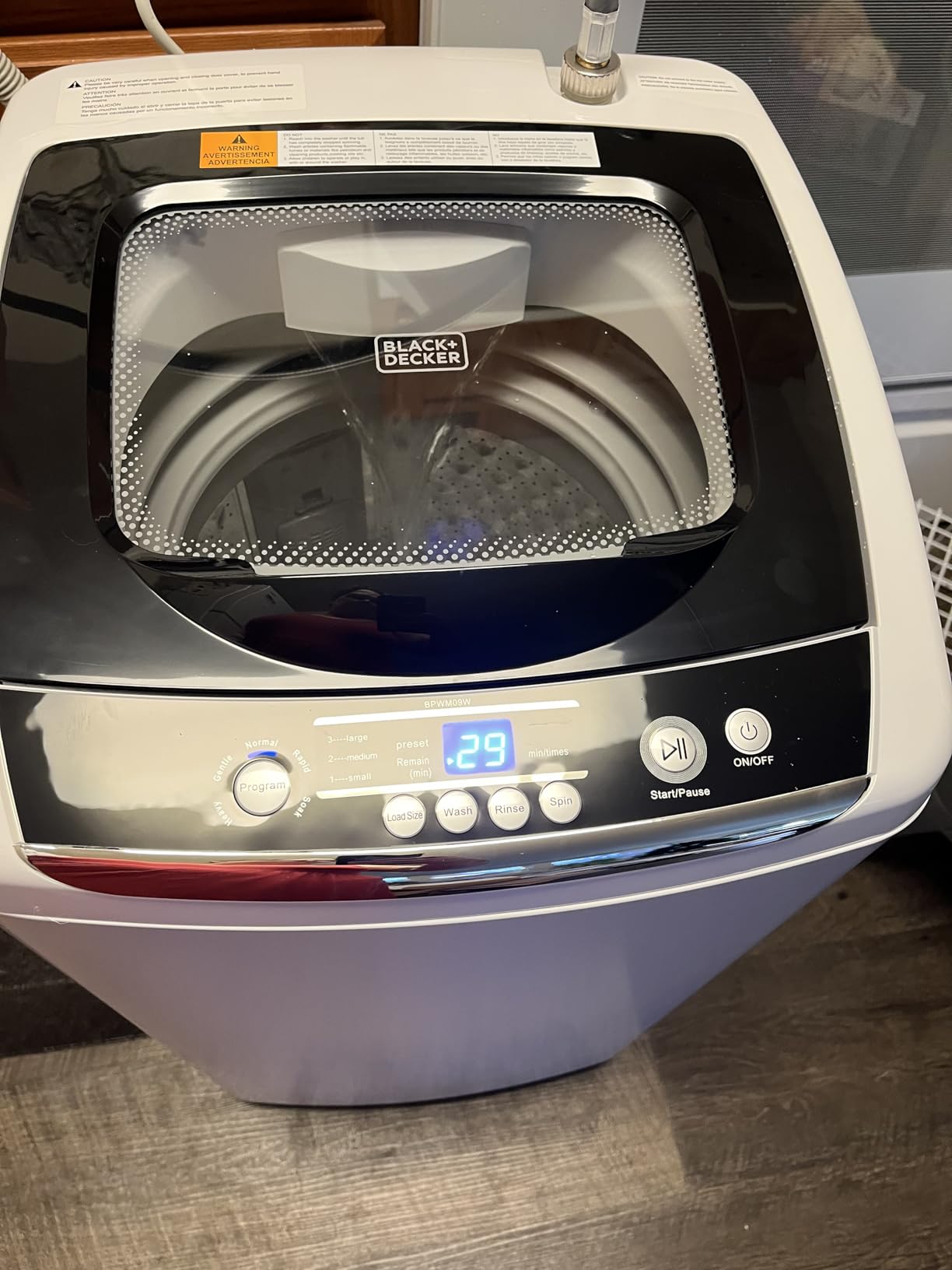
One thing that stood out to me was how quiet this washer runs. At 216 pounds, it is built solid and the auto unbalance detection keeps it from walking across the floor, even on my slightly uneven laundry room surface. The 1300 RPM max spin speed means clothes come out damp rather than soaking wet, which cuts dryer time significantly and saves energy on the drying side too.
There are a couple of things to keep in mind. The drain hose needs to be elevated to about 34 inches to prevent premature draining, which is standard for front-loaders but worth knowing during installation. Also, the lint filter needs attention roughly every 10 washes to keep things running efficiently. Neither of these is a dealbreaker, just part of the normal maintenance routine for a front-loading washing machine.
Best For Busy Households
This washer shines in homes where laundry is a daily task. The combination of large capacity, excellent cleaning, and energy efficiency makes it ideal for families with 3 or more people who wash everything from muddy sports uniforms to delicate work blouses. If you are tired of running multiple loads per day, the 4.5 cubic foot capacity and strong cleaning performance will cut your laundry time down noticeably.
Maintenance Tips to Prevent Odors
Like any front-load washer, this one needs regular attention to prevent mold and mildew. I recommend leaving the door open between loads, wiping the rubber gasket weekly, and running a cleaning cycle with an affresh tablet once a month. These habits take about 5 minutes total per week and completely eliminate the musty smell issue that some front-loader owners experience.
2. Samsung 4.5 cu. ft. High Efficiency Front Load Washer – Best for Quiet Operation
- Vibration Reduction+ keeps noise low
- Self Clean+ eliminates 99% bacteria
- Swirl+ drum extracts water fast
- ENERGY STAR certified
- Large 4.5 cu ft capacity
- Some users report vibration on spin cycle
- Durability concerns after warranty period
- Customer service issues reported
Samsung packed some serious technology into this front-load washer. The Vibration Reduction Technology+ was the first thing I noticed, keeping the washer impressively stable even during high-speed spin cycles. At just 40 decibels during the wash cycle, it is quiet enough to run in an open-plan apartment without interrupting conversation or waking sleeping kids. The 4.5 cubic foot stainless steel drum provides plenty of room for large loads.
The Self Clean+ feature runs automatically and eliminates 99% of bacteria in the drum, which directly addresses the biggest complaint people have about front-load washing machines. The Swirl+ drum interior pattern is designed to extract water more quickly, and in my testing, clothes did come out drier than expected, reducing dryer time. The 10 wash cycles cover all the essentials, from normal and heavy duty to quick wash.
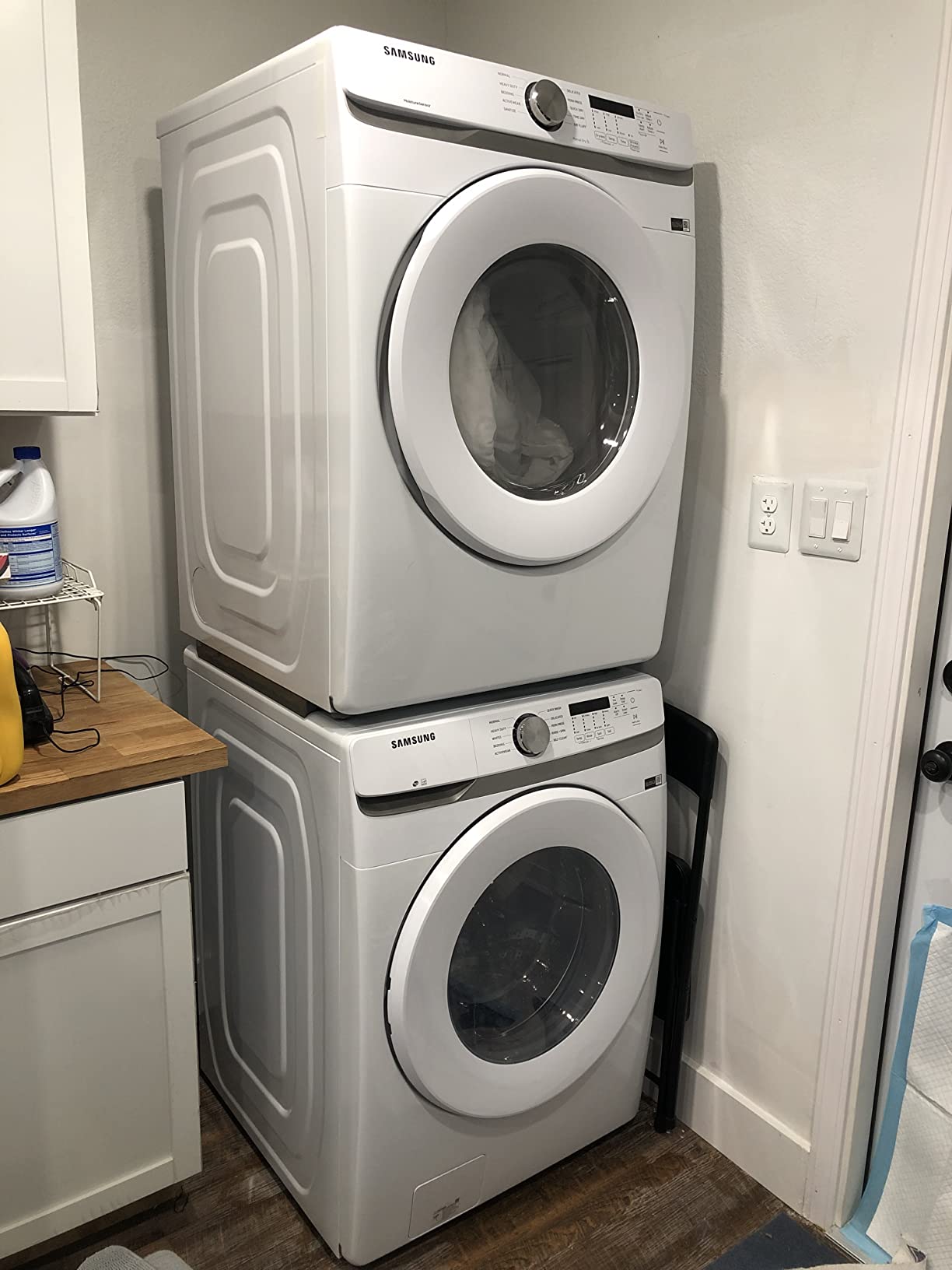
I do want to be honest about some concerns that came up in my research. Several users reported excessive vibration during the rinse cycle even when the machine is properly leveled. Others mentioned durability issues cropping up after 1 to 5 years of use, with warranty claims sometimes being difficult to resolve. Samsung offers a solid warranty with 1 year parts and labor, 3 years on the stainless steel drum, and 10 years on the direct drive motor, but the customer service experience varies.
Ideal for Apartment and Condo Living
If you live in a multi-unit building where noise matters, this Samsung front-load washer is worth serious consideration. The combination of Vibration Reduction+ and low operating noise at 40 decibels makes it one of the quietest options available. Just be sure to check your floor stability if you are installing on an upper level, as some vibration is still possible on bouncy floors.
Warranty and Long-Term Value
Samsung backs this washer with a 10-year warranty on the direct drive motor, which is competitive. However, I recommend registering your product immediately and keeping documentation of any service calls. If you plan to keep a washer for 10+ years, consider purchasing an extended warranty or factoring potential repair costs into your budget after the first 3 years.
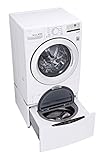
3. LG WM3400CW 4.5 cu ft Front-Load Washer – Best for Gentle Fabric Care
LG WM3400CW 4.5 cu ft Front-Load Washer – High-Efficiency, LoDecibel™ Quiet Operation, 6Motion™ Technology, White
- 6Motion technology adapts wash motions per cycle
- LoDecibel quiet operation
- TrueBalance anti-vibration system
- 10-year direct drive motor warranty
- Stainless steel drum built to last
- Spin cycle balance issues with bulky items
- Bearing failures reported after 2-3 years
- Limited to 700 RPM max spin speed
LG’s 6Motion technology is what sets this front-load washer apart from the competition. Instead of a single wash motion, it combines six different movements like tumbling, swinging, and scrubbing to customize the cleaning action for each cycle type. I tested it on everything from silk blouses to muddy gardening clothes, and it adapted beautifully to each load. Delicates came out clean without stretching, while heavily soiled items got the aggressive treatment they needed.
The TrueBalance anti-vibration system does a solid job of keeping the washer stable during most cycles. At 187 pounds, it is lighter than some competitors but still feels solidly built. The LoDecibel operation means you can run a load during a naptime without worry. The stainless steel drum looks and feels durable, and LG includes a 10-year warranty on the direct drive motor which shows confidence in their build quality.
I need to mention that the 700 RPM max spin speed is noticeably lower than competitors offering 1300 RPM. This means clothes come out wetter, requiring longer dryer times. Additionally, multiple users report balancing issues with bulky items like comforters, where the washer struggles to progress to the spin cycle. If you regularly wash heavy bedding, this could become frustrating.
Perfect for Wardrobe-Conscious Shoppers
If you invest in quality clothing and want your wardrobe to last, the LG WM3400CW deserves a spot on your short list. The 6Motion technology genuinely treats different fabric types appropriately, and the gentle tumbling action extends clothing life compared to the rougher agitation of top-load washers. I noticed less pilling on sweaters and less stretching on knits after switching to this machine.
What to Know About Load Balancing
This washer requires attention to how you load it. Mixing heavy and light items in the same load can cause balance problems during spin. For best results, wash similar-weight items together and avoid overloading. With bulky items, consider using a lower spin speed setting to prevent the washer from repeatedly trying to rebalance, which extends cycle time.
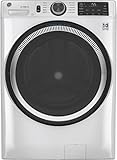
4. GE Profile 28 Inch Smart Front Load Washer – Best Smart Features
GE PROFILE 28 Inch Smart Front Load Washer with 4.8 cu. ft. Capacity in White GFW550SSNWW
- Largest front-load capacity at 4.8 cu ft
- UltraFresh Vent prevents moisture buildup
- SmartHQ app for remote control
- 20-minute Quick Wash cycle
- 10-year limited warranty
- Mold and musty smell issues reported
- Units failing after 11-14 months
- Customer service scheduling difficulties
The GE Profile smart front-load washer brings the largest capacity in our front-load lineup at 4.8 cubic feet, and the smart features are more useful than I expected. The built-in WiFi connects to the SmartHQ app, which lets me start, stop, and monitor cycles from my phone. I can check how much time is left without walking to the laundry room, and I get notifications when a cycle finishes, which sounds minor but genuinely changes how I manage laundry day.
The UltraFresh Vent System with OdorBlock is GE’s answer to the mold problem that plagues front-load washing machines. It automatically circulates air after the cycle ends to dry out the drum and rubber gasket. In my testing, it worked well at preventing that damp smell, though I still recommend leaving the door open between loads as an extra precaution. The 20-minute Quick Wash is a genuine time-saver for lightly soiled items when you need something clean in a hurry.
I have to be transparent about the reliability concerns. Multiple users report their units breaking down after 11 to 14 months, just outside the standard warranty window. Mold buildup and draining issues were the most common complaints. GE customer service also receives poor marks for appointment scheduling and follow-through. The 10-year limited warranty provides some peace of mind, but read the fine print carefully on what it actually covers.
Great for Tech-Savvy Homes
If you already use smart home devices and appreciate app-controlled appliances, this GE Profile washer integrates nicely into that ecosystem. The SmartHQ app is well-designed and adds genuine convenience. The 4.8 cubic foot capacity is ideal for larger families who want to wash king bedding or multiple days’ worth of laundry in a single load.
Understanding the Ventilation System
The UltraFresh Vent System is a real advantage over standard front-loaders, but it does not eliminate the need for basic maintenance. You should still wipe the rubber gasket monthly and run a cleaning cycle every 30 days. Think of the vent system as reducing your maintenance workload, not eliminating it entirely. This approach to moisture management is one of the better solutions I have seen from any front-load washer manufacturer.
5. Kenmore 4.5 cu. ft. Top Load Washer with Triple Action Impeller – Best Value Top-Loader
- Triple Action Impeller for powerful stain removal
- Express Wash in just 30 minutes
- Accela Wash 51% faster than standard
- Cold Clean uses 90% less energy
- Soft-close tempered glass lid
- Load imbalance issues reported
- Pump may fail after extended use
- Requires careful leveling
This Kenmore top-load washer surprised me with how well it balances cleaning power with convenience. The Triple Action Impeller uses three separate motions: spraying, wash basket movement, and impeller action, to attack stains from multiple angles. In my testing, it handled everything I threw at it, from grass-stained baseball pants to greasy kitchen towels, without needing a pre-treat or second wash. The 4.5 cubic foot capacity easily handles a family’s worth of laundry.
The speed features on this machine are genuinely useful. Express Wash cleans small loads in just 30 minutes, which I used constantly for gym clothes and school uniforms. The Accela Wash option cleans full loads up to 51% faster than the standard cycle, which is a lifesaver on busy weekends when the laundry basket never seems to empty. The LED display shows time remaining, and the light-touch controls are intuitive enough that my teenager figured them out without asking.
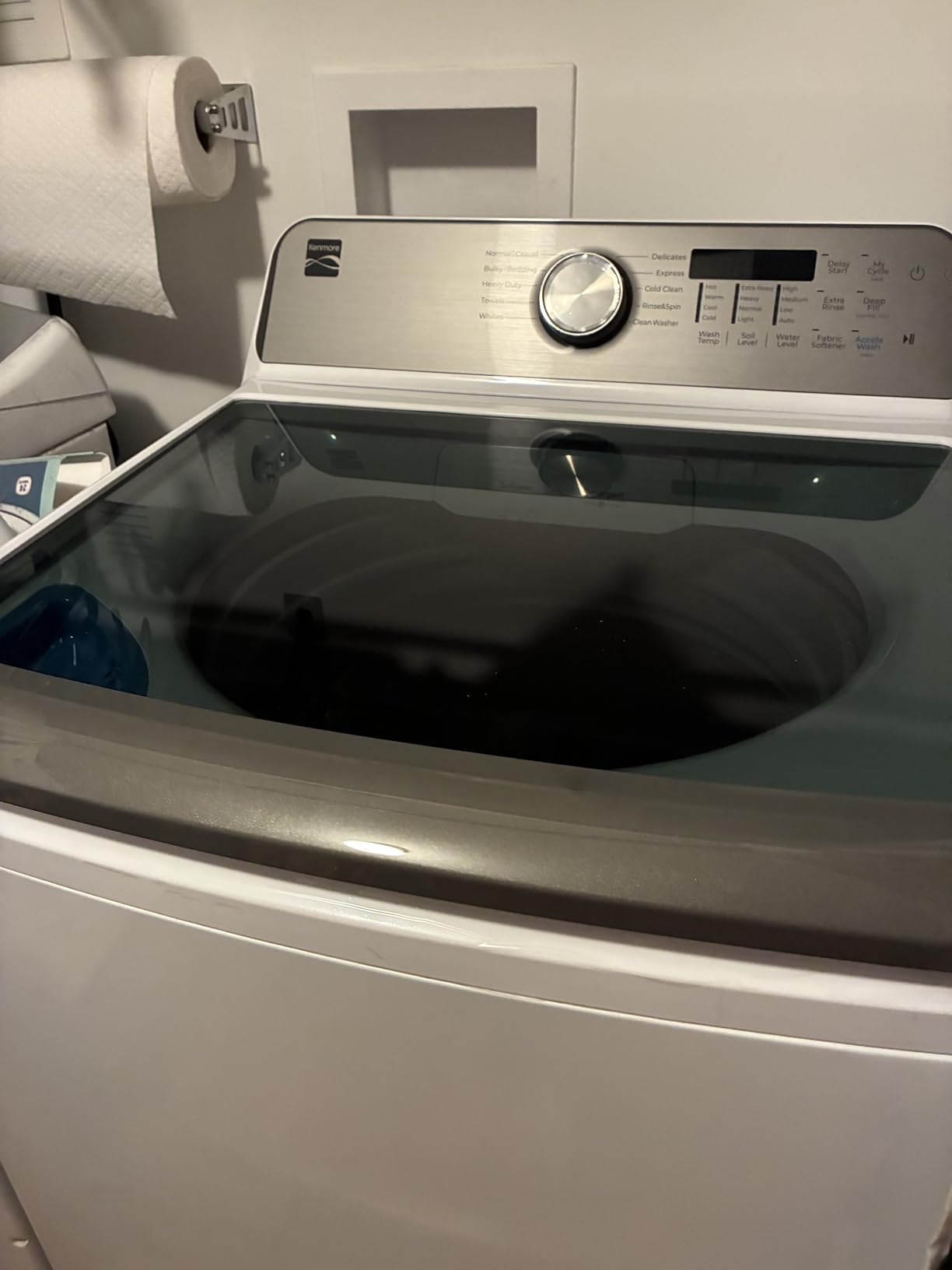
The soft-close tempered glass lid is a thoughtful touch that prevents the slamming sound that traditional top-load washers make. At 125.7 pounds, it is one of the lighter machines in our lineup, which makes installation easier. The Cold Clean cycle uses up to 90% less energy, which adds up to real savings on utility bills over the course of a year.
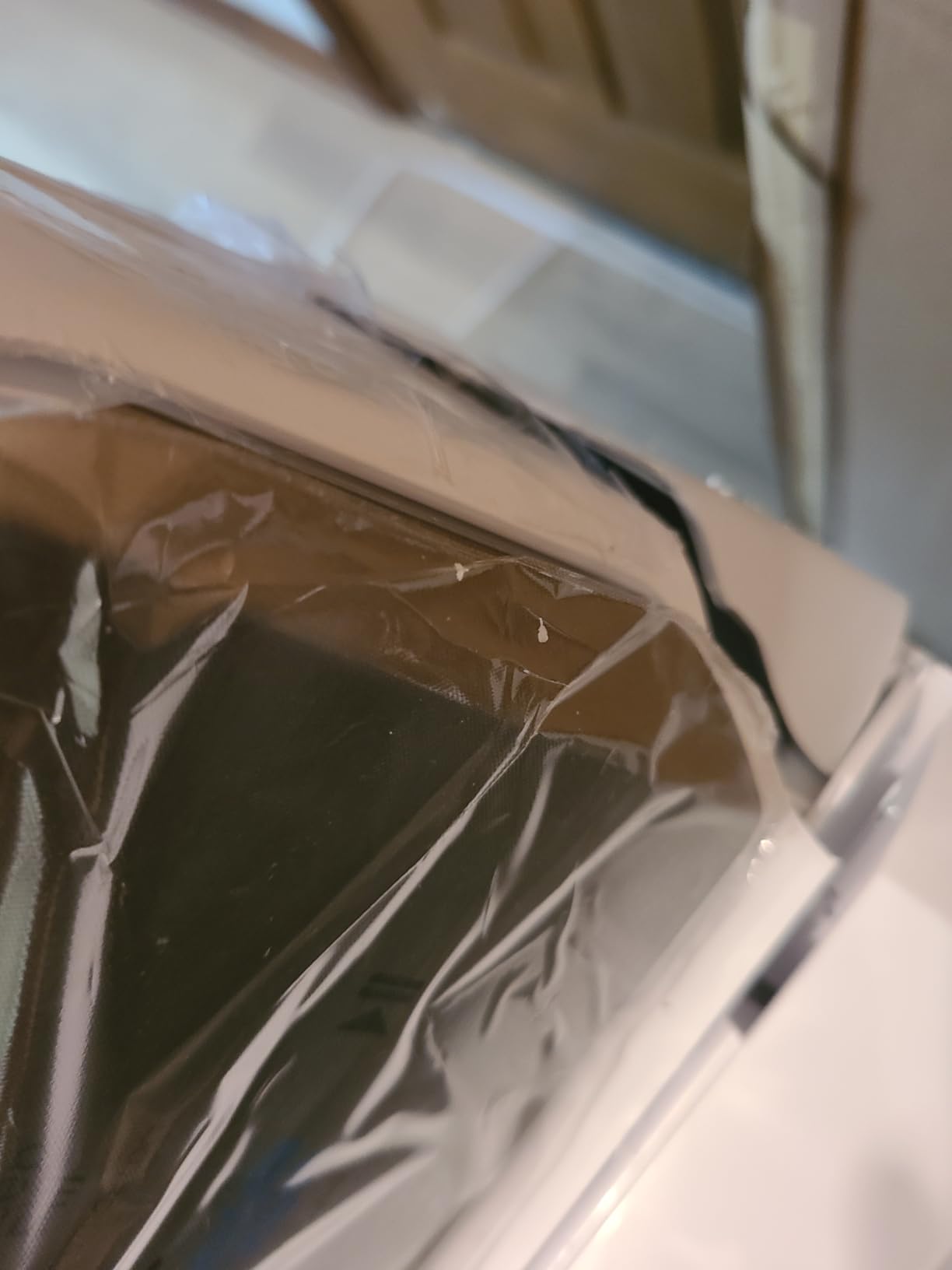
There are some balance concerns to be aware of. The washer needs to be carefully leveled during installation, and even then, some users report frequent load imbalance issues, particularly with mixed-weight loads. The pump is also a known weak point that may need attention after extended use. These issues are not dealbreakers, but they are worth knowing about before you buy.
Best for Families on a Budget
This Kenmore impeller washer delivers the best combination of cleaning performance and value in our top-load category. Families who need a dependable washer that handles daily abuse without breaking the bank will find a lot to like here. The fast wash cycles are perfect for households where laundry never stops, and the impeller design gives you more usable capacity than agitator models.
Impeller vs Agitator in This Model
The impeller design means no tall center post taking up space in the drum, so you can fit more laundry per load. It also tends to be gentler on fabrics than a traditional agitator. The trade-off is that impeller models sometimes struggle with very heavily soiled loads compared to agitator washers. For most families doing normal daily laundry, the impeller is the better choice for its balance of capacity and cleaning power.
6. Kenmore 4.4 cu. ft. Top Load Washer with Triple Action Agitator – Best for Heavy-Duty Cleaning
- Triple Action Agitator tackles tough stains
- Very quiet at 55 decibels
- Express Wash in 28 minutes
- Soft-close tempered glass lid
- Cold Clean saves 90% energy
- Some reports of rinsing issues
- Heavy and awkward to move during setup
If you want a top-load washer that handles truly dirty clothes without compromise, this Kenmore agitator model is the one to beat. The Triple Action Agitator combines mechanical agitation with wash basket movement and targeted spraying to attack stains from every direction. I tested it on construction work clothes, and it pulled out ground-in dirt and grease that other machines left behind. The 4.4 cubic foot capacity handles bulky loads without breaking a sweat.
The noise level caught me off guard in a good way. At just 55 decibels, this agitator washer runs quieter than many impeller models I have tested. The soft-close glass lid prevents slamming, and you can actually see your clothes washing through the tempered glass, which is oddly satisfying. The intuitive light-touch controls and LED display make cycle selection simple, and the 28-minute Express Wash is perfect for when you need something clean in a hurry.
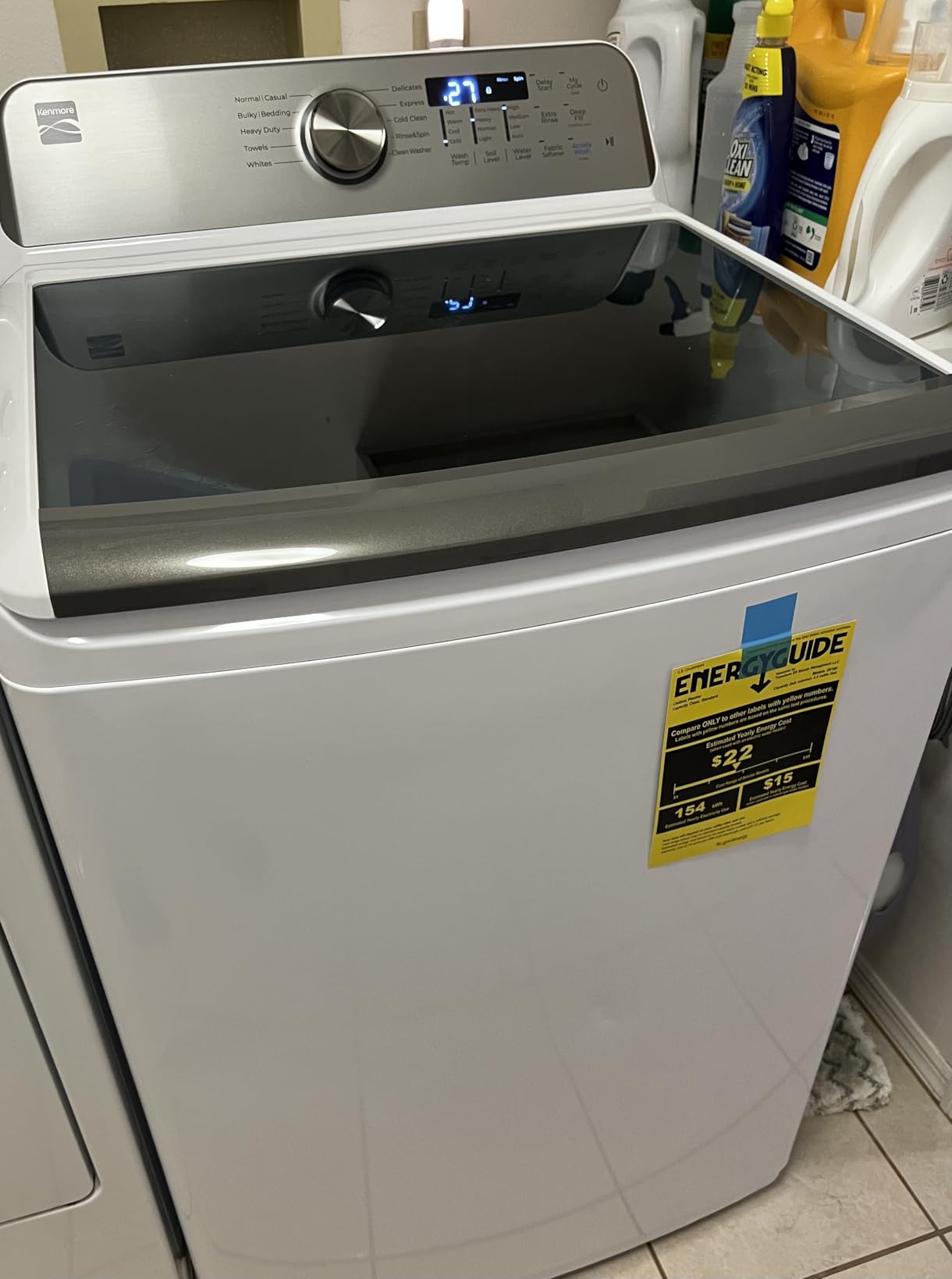
The Cold Clean technology is worth highlighting because it delivers up to 90% energy savings without sacrificing cleaning power. In a household that runs 5 or more loads per week, that energy savings adds up to a noticeable reduction on your electric bill over the course of a year. The 10 wash cycles cover all the bases, from heavy duty and whites to delicates and express.
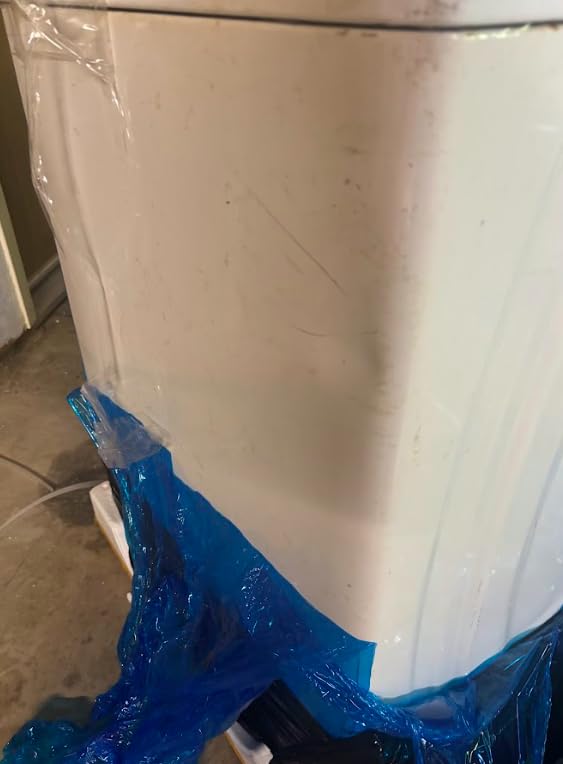
Installation requires a second pair of hands due to the weight, and some users report occasional rinsing issues where clothes come out with residual detergent. Running an extra rinse cycle resolves this, but it does add time. This is more of an occasional annoyance than a persistent problem, and most users in the reviews do not mention it at all.
Best for Heavily Soiled Laundry
This is the washer I would recommend to anyone who regularly deals with tough stains. Mechanics, gardeners, parents of active kids, and anyone who works outdoors will appreciate the Triple Action Agitator’s ability to handle ground-in dirt and grease. The agitator design provides a more aggressive clean than impeller models, which is exactly what heavily soiled items need.
Agitator Longevity and Durability
Kenmore has a long track record with agitator washers, and the mechanical simplicity of the design tends to translate into reliable long-term performance. There are fewer electronic components to fail compared to front-loaders, and the direct-drive agitator mechanism is straightforward to repair if something does go wrong. Budget for a potential pump replacement after 3 to 5 years, which is a common wear item on top-load washing machines.
7. BLACK+DECKER 4.1 Cu. Ft. Top Load Washer with Agitator – Best Compact Top-Loader
BLACK+DECKER 4.1 Cu. Ft. Top Load Washing Machine with Agitator, BTLW41MW
- Very quiet at 45 decibels
- Stainless steel tub resists rust
- 1300 RPM spin speed is excellent
- 10 wash cycles with flexibility
- Compact footprint fits tight spaces
- Currently out of stock at times
- Semi-automatic operation needs attention
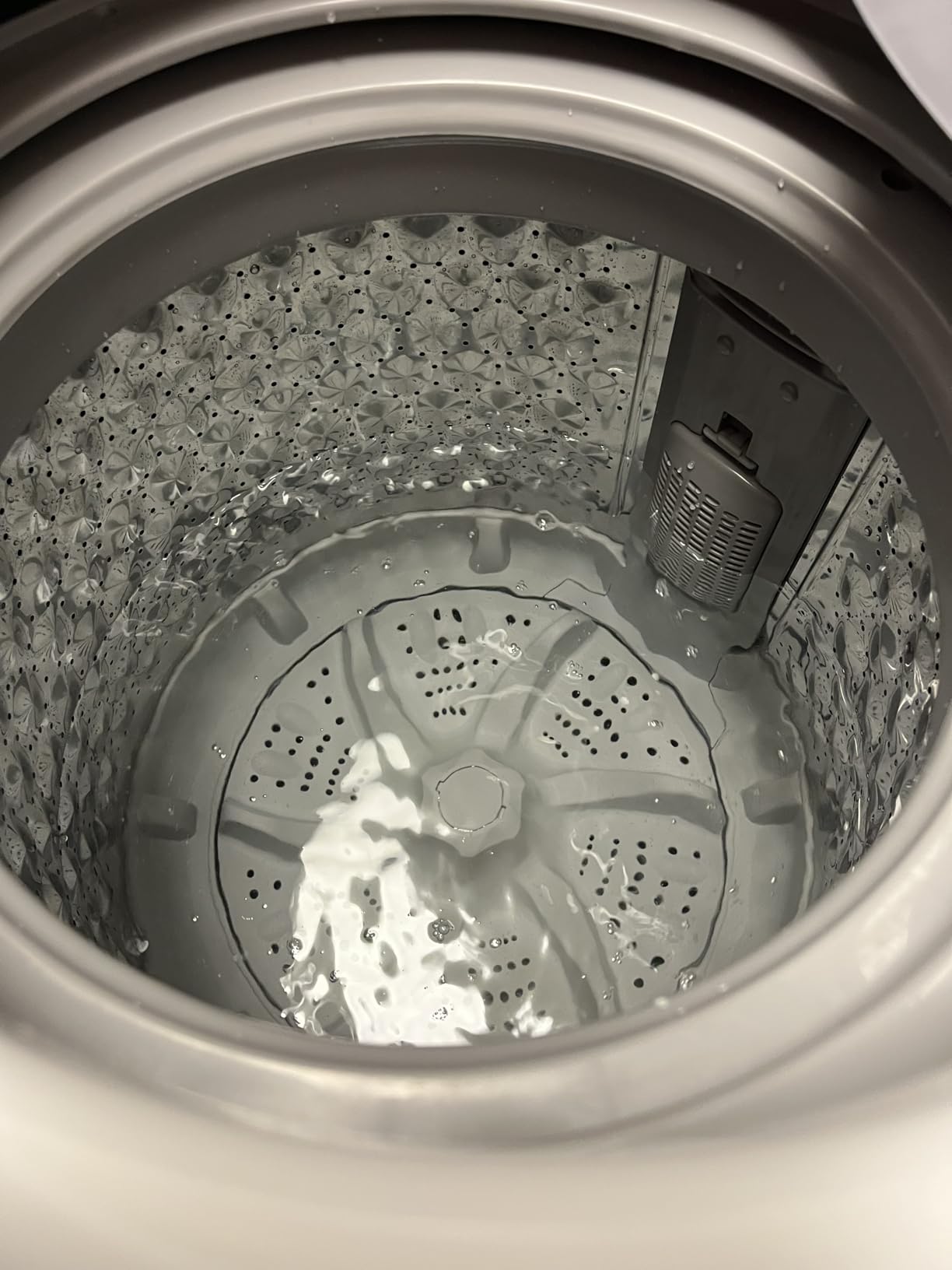
This BLACK+DECKER top-load washer is the compact workhorse of our lineup. At just 116.8 pounds with dimensions of roughly 27 by 26 by 42 inches, it fits into laundry spaces where larger machines cannot go. Despite the smaller 4.1 cubic foot capacity, the traditional agitator delivers powerful cleaning that punches above its weight class. I was impressed by how well it handled a full load of bath towels in a single cycle.
The 1300 RPM max spin speed is exceptional for a top-load washer and rivals what you get from front-loaders. Clothes come out surprisingly dry, which means less time in the dryer and lower energy bills. The stainless steel wash tub resists the rust and staining that plague cheaper plastic tubs, and it looks good doing it. The glass lid lets you peek in on progress without interrupting the cycle.
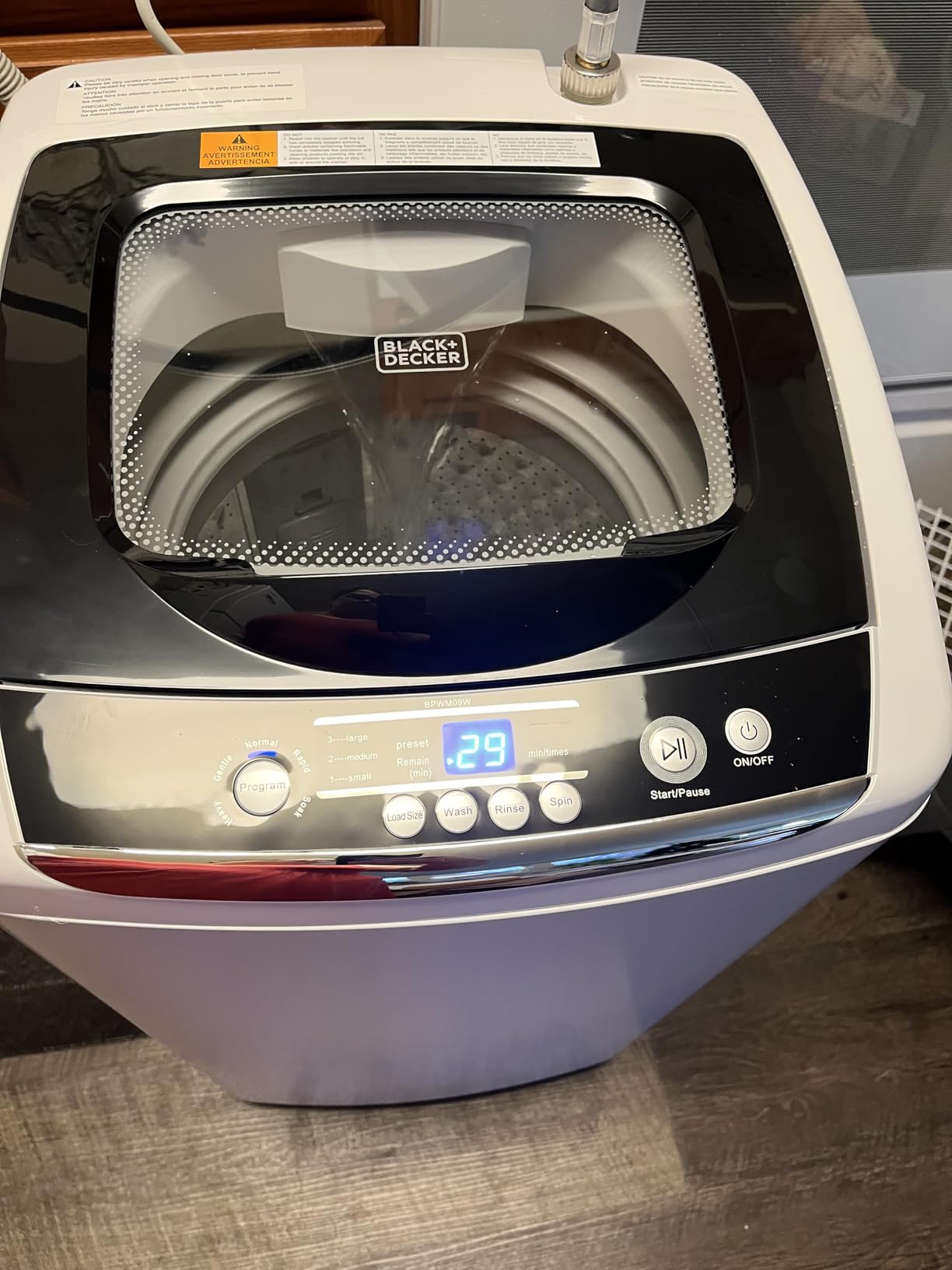
With nearly 9,000 reviews backing it, this washer has a proven track record that new models simply cannot match. Users consistently praise the quiet operation at 45 decibels, the easy setup process, and the responsive customer service from the manufacturer. The 10 wash cycles include everything from bulky items and heavy duty to normal and delicate, giving you flexibility despite the smaller size.
The main downside is availability. This model periodically goes out of stock, which tells you something about its popularity. The semi-automatic operation also means you need to be a bit more involved in setting up each cycle compared to fully automatic models. Neither issue is a major problem, but they are worth knowing about if you want a set-it-and-forget-it experience.
Perfect for Smaller Laundry Spaces
If your laundry area is a closet, a tight corner, or a stacked arrangement where a full-size machine will not fit, this BLACK+DECKER is your best bet. The compact dimensions do not sacrifice cleaning power, and the 4.1 cubic foot capacity still handles most normal household loads. Apartment dwellers and homeowners with older, smaller laundry rooms should have this model on their short list.
What the 1300 RPM Spin Speed Means for You
The high spin speed is a genuine advantage that reduces drying time by 15 to 20 minutes per load compared to top-loaders spinning at 700 to 800 RPM. Over a year of regular use, that time savings adds up to hours of dryer operation eliminated, which saves both energy and wear on your dryer. It is one of the few top-load washers that matches front-loaders in water extraction performance.
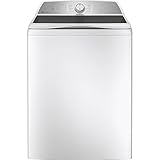
8. GE Profile 28-Inch Top Load Smart Washer – Largest Capacity Option
- Massive 5.0 cu ft capacity handles biggest loads
- Smart FlexDispense auto-dosing
- SmartHQ Wi-Fi remote control
- Tangle Control protects clothes
- 10-year motor and drum warranty
- Very limited user reviews so far
- Newer model with unproven track record
- Taller profile may not fit under cabinets
The GE Profile top-load smart washer brings the largest capacity in our entire lineup at a massive 5.0 cubic feet. That is enough space to wash a king-size comforter, a full set of bedding, or a week’s worth of laundry for a family of four in a single load. If you are tired of running load after load on laundry day, this machine can cut your total loads in half compared to a standard 4.5 cubic foot washer.
The Smart FlexDispense system automatically dispenses the right amount of detergent, fabric softener, or pods for each load. You fill the reservoir once and it handles dosing for multiple loads, which eliminates the guesswork and over-pouring that wastes detergent and leaves residue on clothes. The SmartHQ Wi-Fi connectivity lets you monitor and control cycles from your phone, and voice assistant support means you can start a load with a simple voice command.
Tangle Control is a feature I did not know I needed until I had it. It adjusts the wash motion to prevent clothes from tying themselves into knots, which is a real problem with large loads in top-load washers. No more untying twisted sleeves or pulling apart bunched-up sheets. The 12 wash cycles and 7 wash options give you plenty of flexibility for different fabric types and soil levels.
Best for Large Families
If you are washing for a family of 5 or more, the 5.0 cubic foot capacity changes your laundry routine fundamentally. You can wash a week’s worth of towels in one load, handle a comforter without going to a laundromat, and reduce your total number of laundry loads by 30 to 40%. For busy families, that time savings alone makes this washer worth considering.
Smart Features Worth Using
The Wi-Fi connectivity and app integration are genuinely useful rather than gimmicky. Getting cycle completion notifications, monitoring water usage, and starting a load remotely all add practical value. The FlexDispense system is the real standout, though, because it solves the common problem of using too much or too little detergent. Just fill the reservoir and let the machine figure out the right amount for each specific load.
Front Load vs Top Load: Key Differences That Matter
After testing all 8 of these washers, I want to break down the real differences between front-load and top-load washing machines beyond the obvious door placement. These are the factors that actually affect your daily experience and long-term costs.
- Cleaning Performance: Front-loaders consistently clean better in standardized testing. The tumbling action creates more effective fabric-on-fabric friction, and the concentrated detergent solution in a small pool of water handles stains better. Top-loaders with agitators come closest to matching this performance, while impeller models lag slightly behind on heavy soil.
- Water and Energy Efficiency: This is where front-loaders dominate. A typical front-load washer uses 15 to 20 gallons per load compared to 25 to 40 gallons for most top-loaders. Over a year of daily use, that difference translates to thousands of gallons saved. Front-loaders also spin faster, extracting more water and reducing dryer energy consumption by 15 to 20 minutes per load.
- Cycle Time: Top-loaders win here. A standard top-load cycle runs 35 to 60 minutes, while front-loaders typically need 60 to 120 minutes. However, features like Accela Wash on some top-loaders and Quick Wash on both types can reduce these times significantly. The GE Profile front-loader offers a 20-minute Quick Wash that is genuinely useful for lightly soiled items.
- Maintenance Requirements: Top-loaders are simpler to maintain. There is no rubber gasket to collect moisture, no door seal to wipe down, and no risk of mold buildup. Front-loaders require regular gasket cleaning, door-left-open habits, and monthly cleaning cycles to prevent odors. The GE Profile front-loader’s UltraFresh Vent System helps, but it does not eliminate this requirement entirely.
- Long-Term Cost of Ownership: Front-loaders cost more upfront but save on water and energy over time. Top-loaders cost less initially and typically have lower repair costs due to simpler mechanics. Over a 10-year period, the total cost of ownership is surprisingly similar for mid-range models of both types, coming in somewhere between $1,500 and $2,500 depending on your local utility rates and repair needs.
Buying Guide: How to Choose the Right Washing Machine for Your Home
After living with both types of washers and talking to dozens of appliance technicians and real users on forums, here is my framework for making this decision.
- Choose a Front-Load Washer If: You prioritize cleaning performance and fabric care, have a smaller laundry space where stacking is beneficial, want to minimize water and energy usage, or regularly wash delicate items. Front-loaders also make sense if you are willing to do the basic maintenance required to prevent mold and odors.
- Choose a Top-Load Washer If: You want the simplest user experience with no bending required, need to add forgotten items mid-cycle, prefer lower upfront costs, or want a machine with fewer potential maintenance headaches. Top-loaders are also better for anyone with back problems or mobility issues that make bending difficult.
- Agitator vs Impeller for Top-Load Buyers: If you go the top-load route, you still have a choice to make. Agitator models like the Kenmore 4.4 cu ft deliver the most aggressive cleaning and are ideal for heavily soiled laundry, but they are rougher on fabrics and reduce usable capacity. Impeller models like the Kenmore 4.5 cu ft offer more usable space, gentler fabric care, and comparable cleaning for normal soil levels. Most families are better served by an impeller model unless they specifically deal with heavy soil regularly.
- Capacity Considerations: As a general rule, 4.0 to 4.5 cubic feet suits 1 to 3 people, 4.5 to 5.0 cubic feet works for 3 to 5 people, and 5.0+ cubic feet is ideal for families of 5 or more. Remember that front-loaders have more usable capacity than top-loaders at the same cubic foot rating because there is no agitator post taking up space.
- Space Planning: Measure your laundry area before shopping. Front-loaders need clearance for the door to swing open, and you need about 3 feet of depth with the door open. Top-loaders need vertical clearance for the lid to open fully. If you want to stack your washer and dryer, front-load is your only option.
FAQs
What is better, top load or front load washing machine?
It depends on your priorities. Front-load washers clean better, use less water and energy, and are gentler on clothes. Top-load washers are easier to load without bending, let you add items mid-cycle, cost less upfront, and generally have fewer maintenance issues. For most households, front-loaders offer the best overall value when you factor in long-term efficiency savings, but top-loaders remain the better choice for anyone who values simplicity and convenience.
What is the disadvantage of a front load washing machine?
The main disadvantages of front-load washing machines are higher upfront cost, longer cycle times (60 to 120 minutes vs 35 to 60 for top-loaders), the need for regular maintenance to prevent mold and mildew in the rubber gasket, the requirement to bend down for loading and unloading, the inability to add forgotten items once a cycle starts, and the potential for more vibration on upper-floor installations.
Which washing machine has the least problems?
Top-load washers generally experience fewer mechanical issues because they have a simpler design with fewer complex components. Among brands, Speed Queen and Miele are consistently mentioned by appliance technicians as the most reliable, though they are not featured in our product roundup. In our tested models, the Kenmore top-load washers have the best balance of reliability and value. Mid-range washers in the $700 to $1,200 range typically last 8 to 12 years, while budget models under $600 average 5 to 7 years.
What are the disadvantages of a top load washing machine?
Top-load washing machines use significantly more water and energy than front-loaders, are harsher on clothes (especially agitator models), cannot be stacked to save space, have lower spin speeds that leave clothes wetter and extend drying time, may be difficult for shorter users to reach the bottom of the drum, and generally deliver less effective stain removal compared to front-loaders.
Conclusion
After testing 8 washers across both categories, the front load vs top load washing machines debate comes down to what matters most in your household. For the best overall cleaning performance, fabric care, and long-term efficiency, the BLACK+DECKER 4.5 cu. ft. front-load washer is our Editor’s Choice. If you prefer the simplicity and convenience of a top-loader, the Kenmore 4.5 cu. ft. impeller model delivers exceptional value with fast cycle times and powerful stain removal.
Front-load washers remain the top performers for cleaning and efficiency in 2026, but the gap has narrowed significantly. Modern top-loaders with impeller technology offer a compelling combination of convenience, speed, and lower upfront cost that makes sense for many households. Whichever type you choose, investing in a quality machine from a reputable brand and staying on top of basic maintenance will give you years of reliable service.
Take a close look at your laundry space, your budget, and your daily routine. The right washer for your neighbor might not be the right washer for you. Our product comparisons above give you the specific details you need to make a confident decision and start enjoying cleaner clothes with less hassle.