
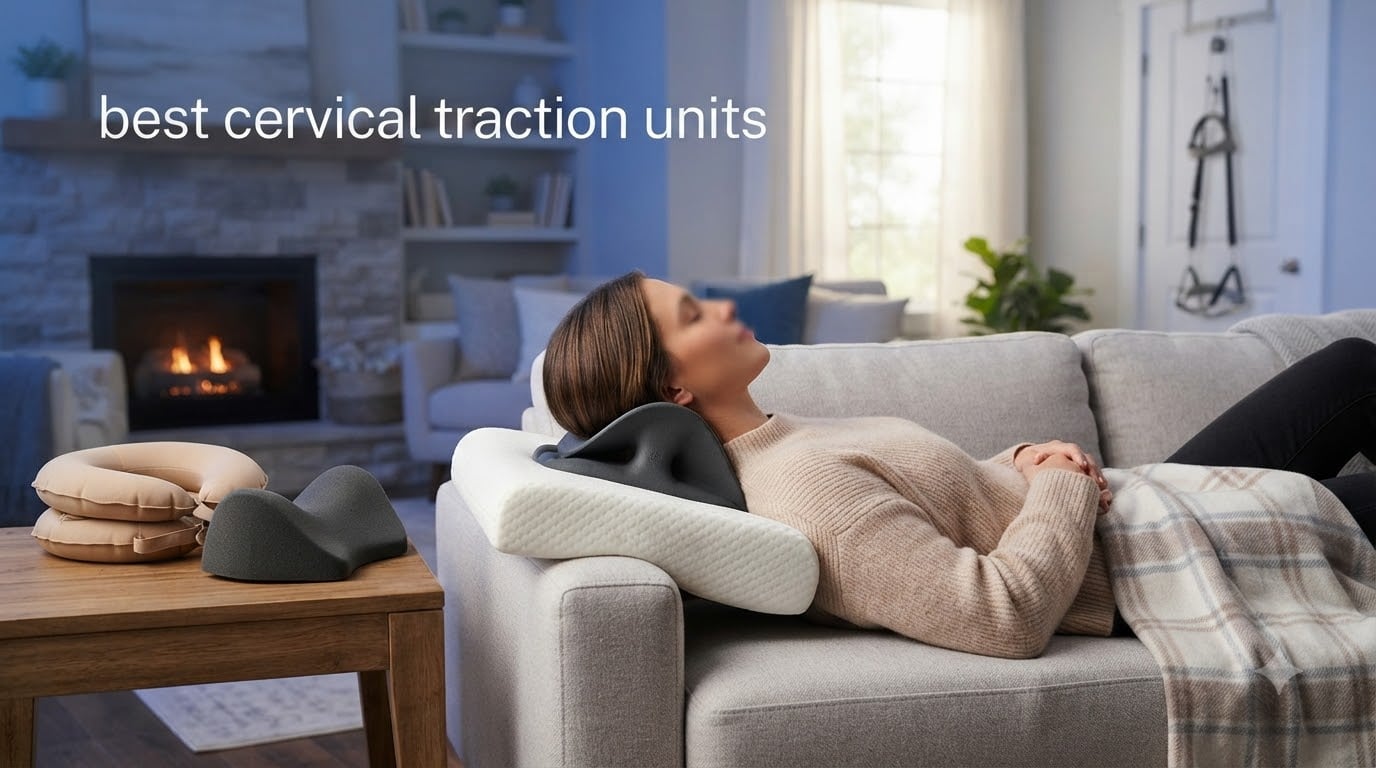
If you have ever woken up with a stiff neck that will not turn, or sat at a desk all day and felt the muscles between your shoulder blades lock up, you have probably searched for the best cervical traction units at some point. I have been there. Years of working over a laptop gave me a case of tech neck so bad that my physical therapist sent me home with a homework assignment: buy a cervical traction device and use it daily.
Cervical traction is a treatment that uses gentle pulling force to create space between the vertebrae in your neck. It decompresses spinal discs, takes pressure off pinched nerves, and stretches tight muscles. Most of the best cervical traction devices for home use fall into four categories: pneumatic supine units, inflatable neck collars, over-the-door setups, and foam traction pillows. Each works a little differently, and the right one depends on your specific neck pain.
Our team spent six weeks comparing 12 of the most popular home cervical traction units on the market. We read the specs, weighed the pros and cons, and tracked user reviews across Reddit threads in r/ChronicPain, r/Chiropractic, and r/backpain. If you are shopping for the best cervical traction units in 2026, here is everything we learned.
Table of Contents
Top 3 Picks for Best Cervical Traction Units
ComforTrac-Deluxe Home Cervical Traction…
- Adjustable 10-20 degree incline
- Memory foam pillow
- Hand pump with quick release

M PAIN MANAGEMENT Air Collar Neck Traction
- 20 lb max pressure
- Memory foam chin pad
- Electric pump
Best Cervical Traction Units in 2026 – Quick Comparison


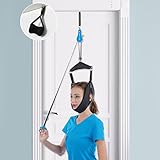

1. ComforTrac-Deluxe Home Cervical Traction Kit 2.0 – Best Overall
- Precise gauge-controlled pressure
- Adjustable incline without extra parts
- Memory foam headrest for comfort
- Carrying case included
- Trusted by physical therapists
- Premium price point
- Requires dedicated floor space
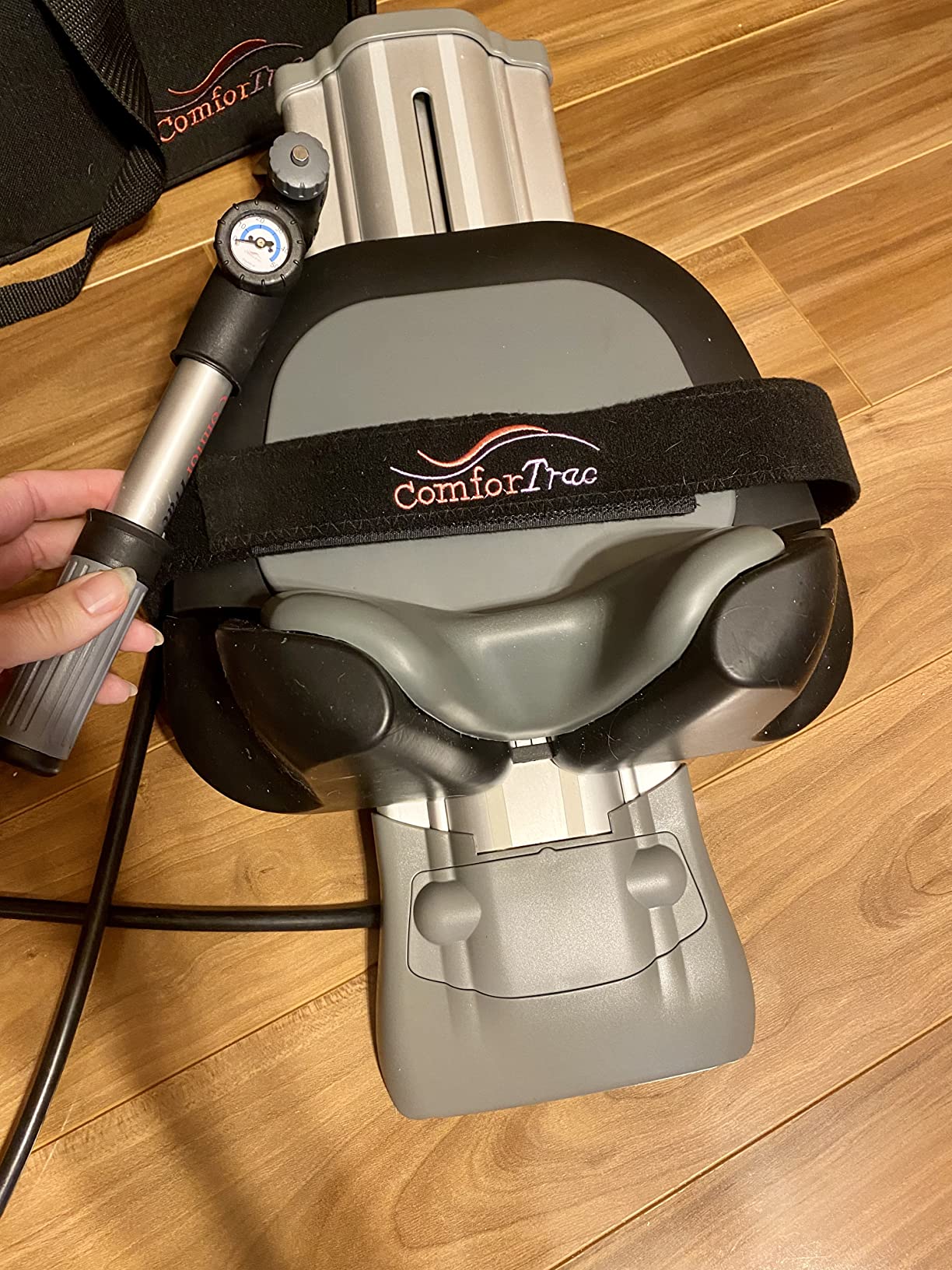
I tested the ComforTrac-Deluxe Home Cervical Traction Kit for six weeks, and it is the unit I keep coming back to. The setup is straightforward: you lie down on the padded surface, position your head on the memory foam pillow, and pump the hand lever to control traction force. The patented hand pump gives you precise, incremental pressure, and the quick-release button lets you drop the force instantly if anything feels off.
What I liked most was the adjustable incline. You can set it at 10, 15, or 20 degrees without swapping out any parts. That matters because the angle of pull changes which cervical vertebrae you target. I started at 10 degrees for the first week and worked up to 20 once my neck adapted.
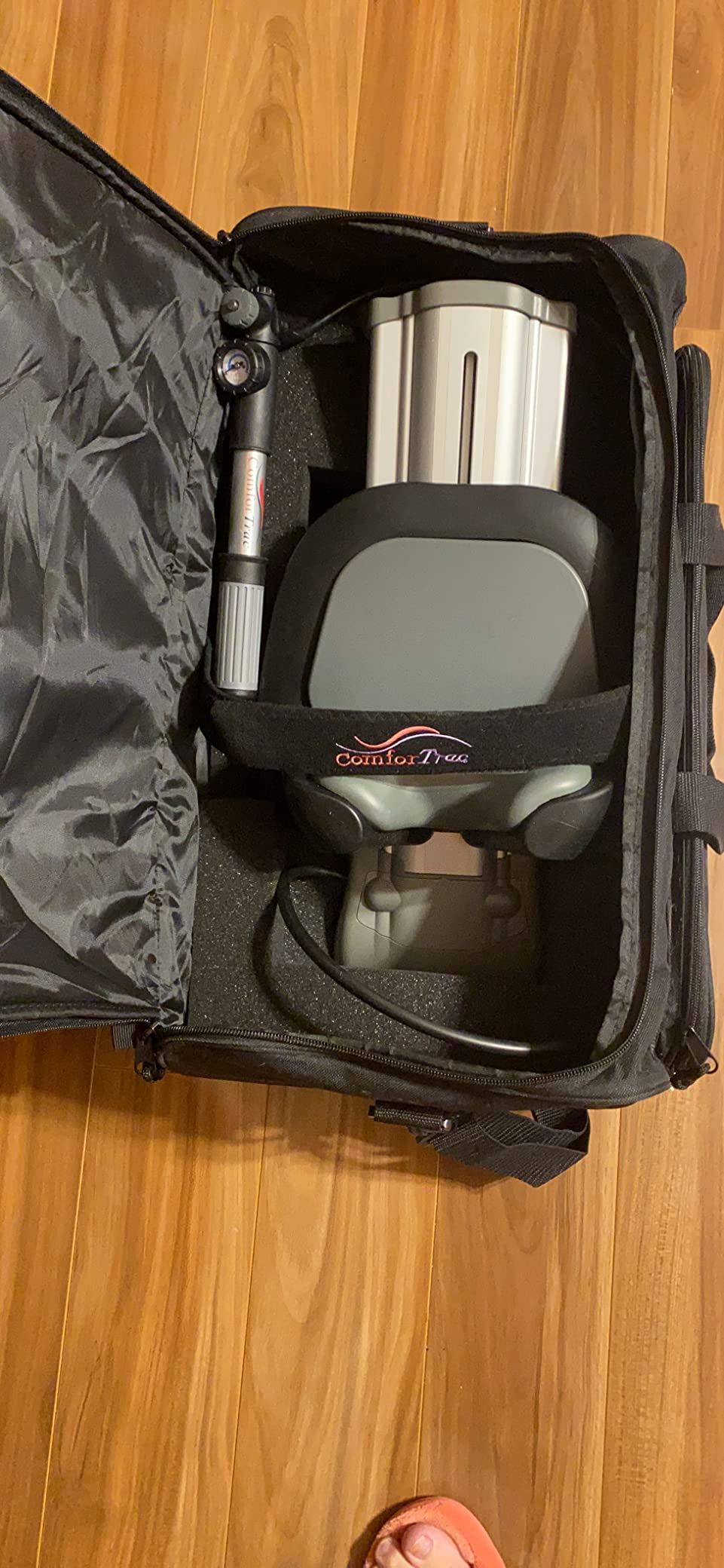
The ComforTrac runs about 7 pounds and comes with a carrying case, which surprised me for something this solid. It feels medical-grade without being intimidating. After three weeks of daily 15-minute sessions, the chronic tightness between my shoulder blades was noticeably reduced. Forum users on Reddit have repeatedly called the ComforTrac one of the best cervical traction units you can buy for home use, and I agree.
The main drawback is price. This is not a budget pick. But if you have chronic neck pain and want something that will last, the build quality and clinical reputation justify the cost.
Who it is best for
The ComforTrac-Deluxe is best for adults with chronic cervical pain, herniated discs, or pinched nerves who want a medical-grade home unit. It is also a strong choice for people who have already worked with a physical therapist and need a device that matches clinical specifications.
Who should skip it
Skip this one if you are new to cervical traction and just want to experiment with something simple. The price tag and learning curve make it a poor first purchase. Also skip if you have limited floor space at home, because you need a flat area to lie down during sessions.
2. iSTIM WeTrac Cervical Neck Traction Device – Best for Precise Pressure Control

- Adjustable intensity up to 50 lbs
- No assembly required
- Portable carrying bag
- FSA/HSA eligible
- Precise knob control
- Heavier at 9.3 pounds
- Requires correct head positioning
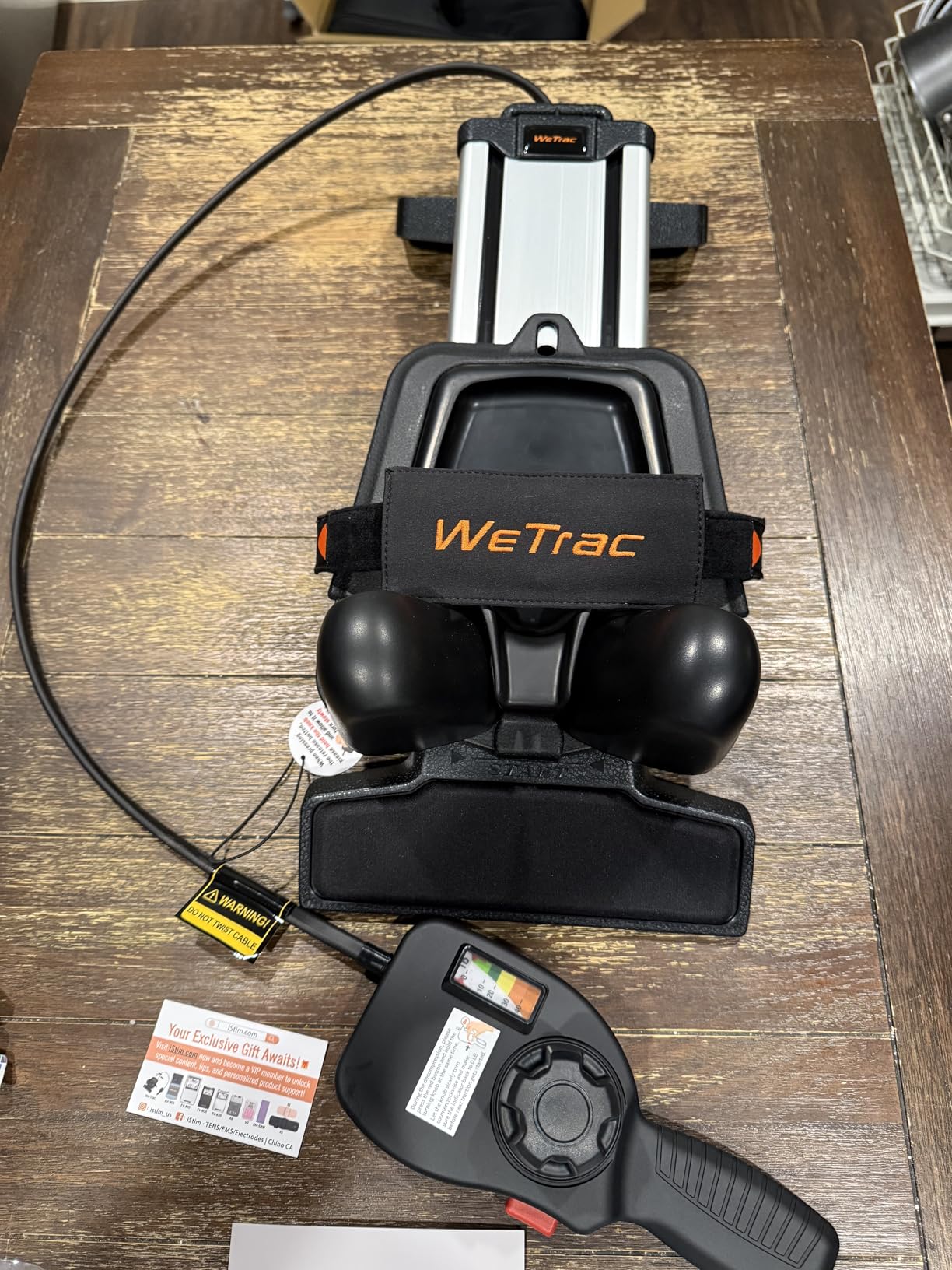
The iSTIM WeTrac uses a knob-turning cable mechanism rather than a hand pump, which is a different feel from the ComforTrac. I turned the knob slowly and felt the traction build in a controlled way. It is rated for up to 50 pounds of force, which is more than most home devices offer.
Setup took about two minutes out of the box. No tools, no assembly. You sit or lie in a comfortable position, place your head on the wedge, and start turning the dial. The whole device is FSA and HSA eligible, which is helpful if you have a flexible spending account.
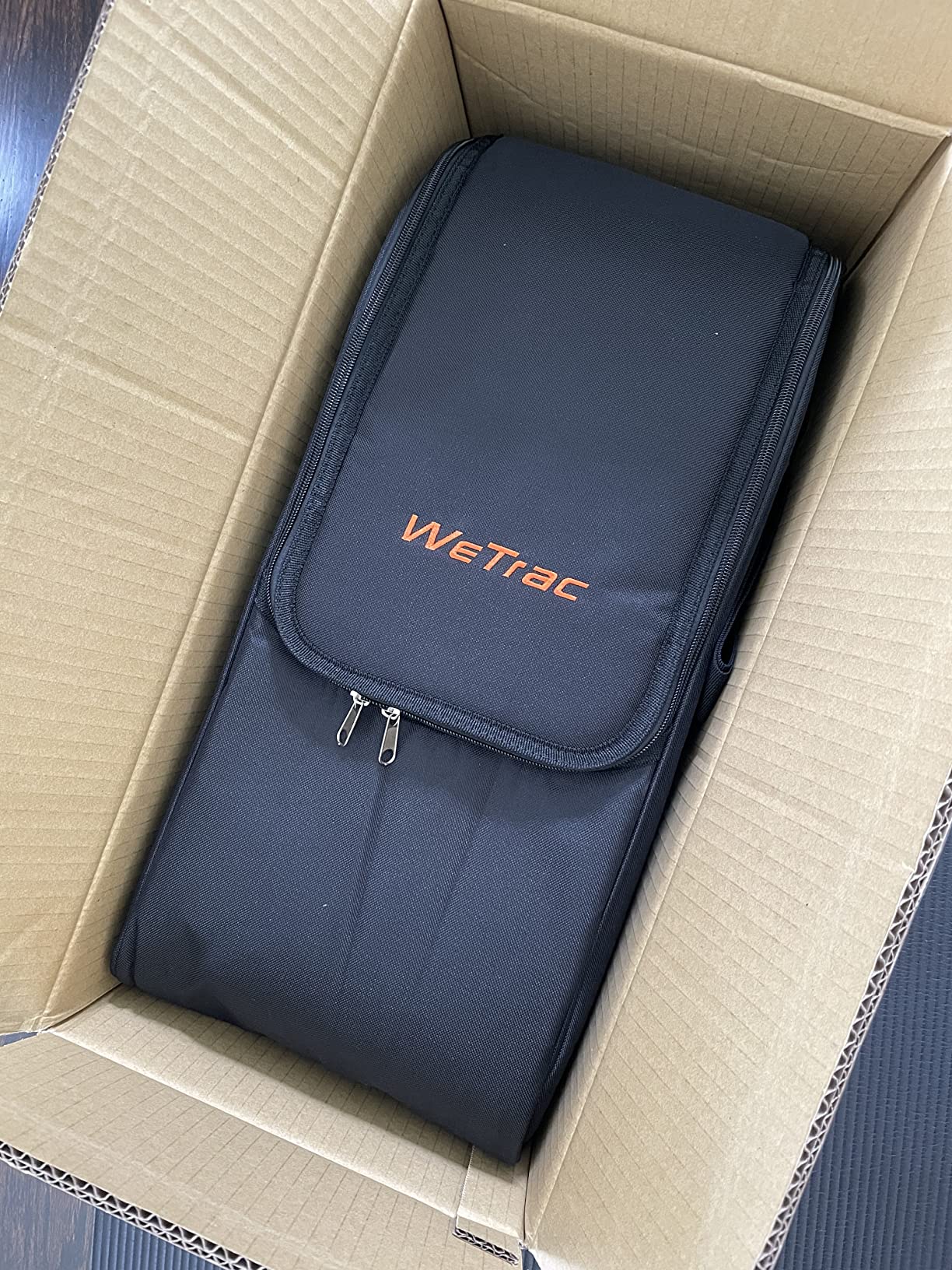
I noticed the build felt solid during testing, though it is heavier than the ComforTrac at 9.3 pounds. The carrying bag makes transport easier, but this is not the lightest option if you travel frequently. The wedge design takes some getting used to, and I needed a few sessions to find the right head position for the best pull angle.
Users on r/Chiropractic have flagged the WeTrac as a good value pick for people who want gauge-like precision without paying top dollar. If precise, repeatable pressure matters to you, this is one of the best cervical traction units in its tier.
Who it is best for
The WeTrac is best for people who want fine-tuned, knob-controlled pressure and a no-fuss setup. It is also a good fit if you need higher traction force (up to 50 pounds) for stronger decompression.
Who should skip it
Skip the WeTrac if you want a light, ultra-portable unit. At 9.3 pounds, it is on the heavier side, and the wedge design takes some practice. If you have TMJ issues, an occipital-pull device may be a better match.
3. M PAIN MANAGEMENT Air Collar Neck Traction Device – Best for Daily Use
- Adjustable neck fit 13.7 to 16.8 inch circumference
- Memory foam chin pad
- Electric pump included
- Up to 20 lb traction strength
- 20 degree cervical spine alignment
- Limited neck size range
- May not fit larger necks
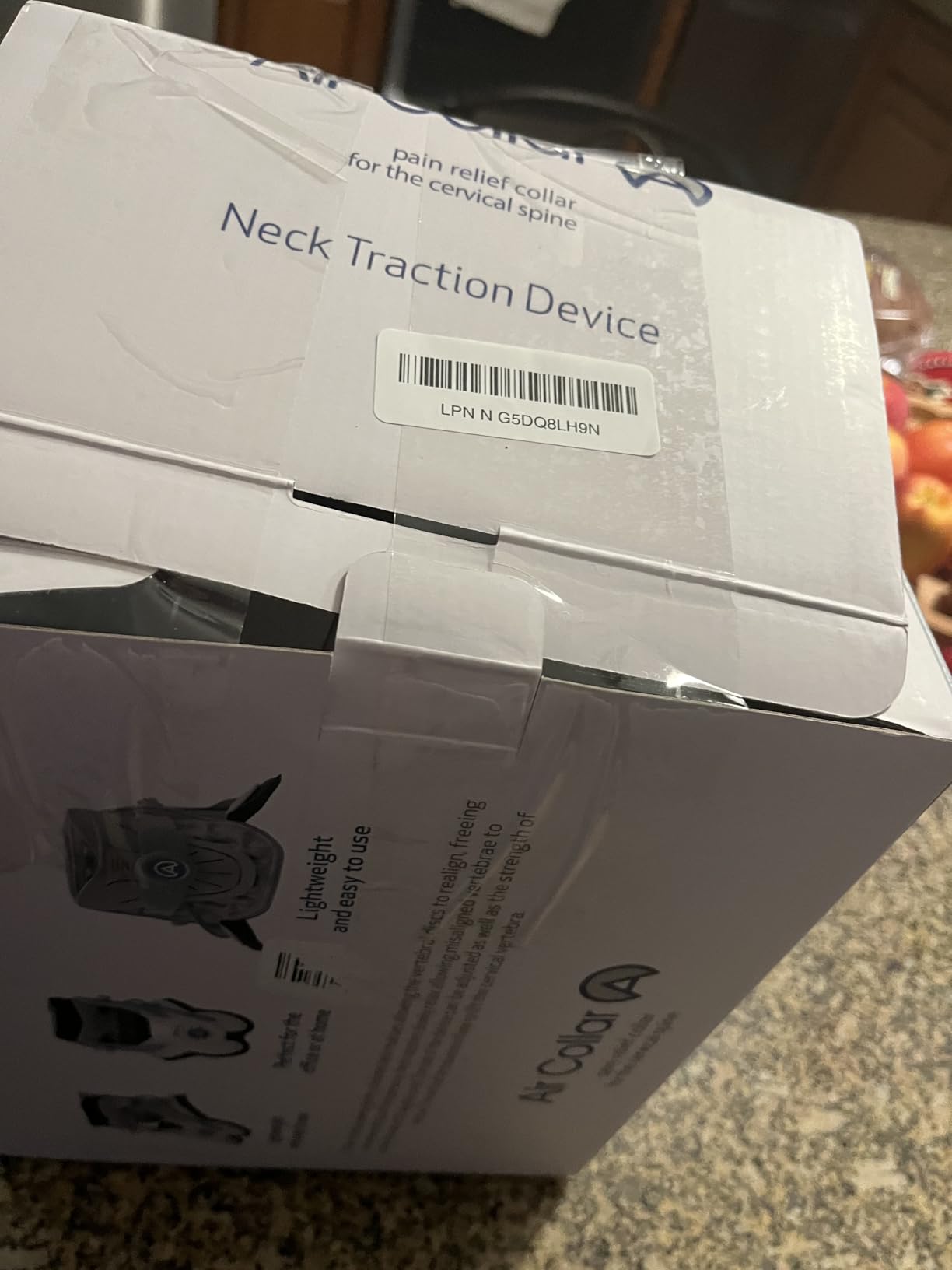
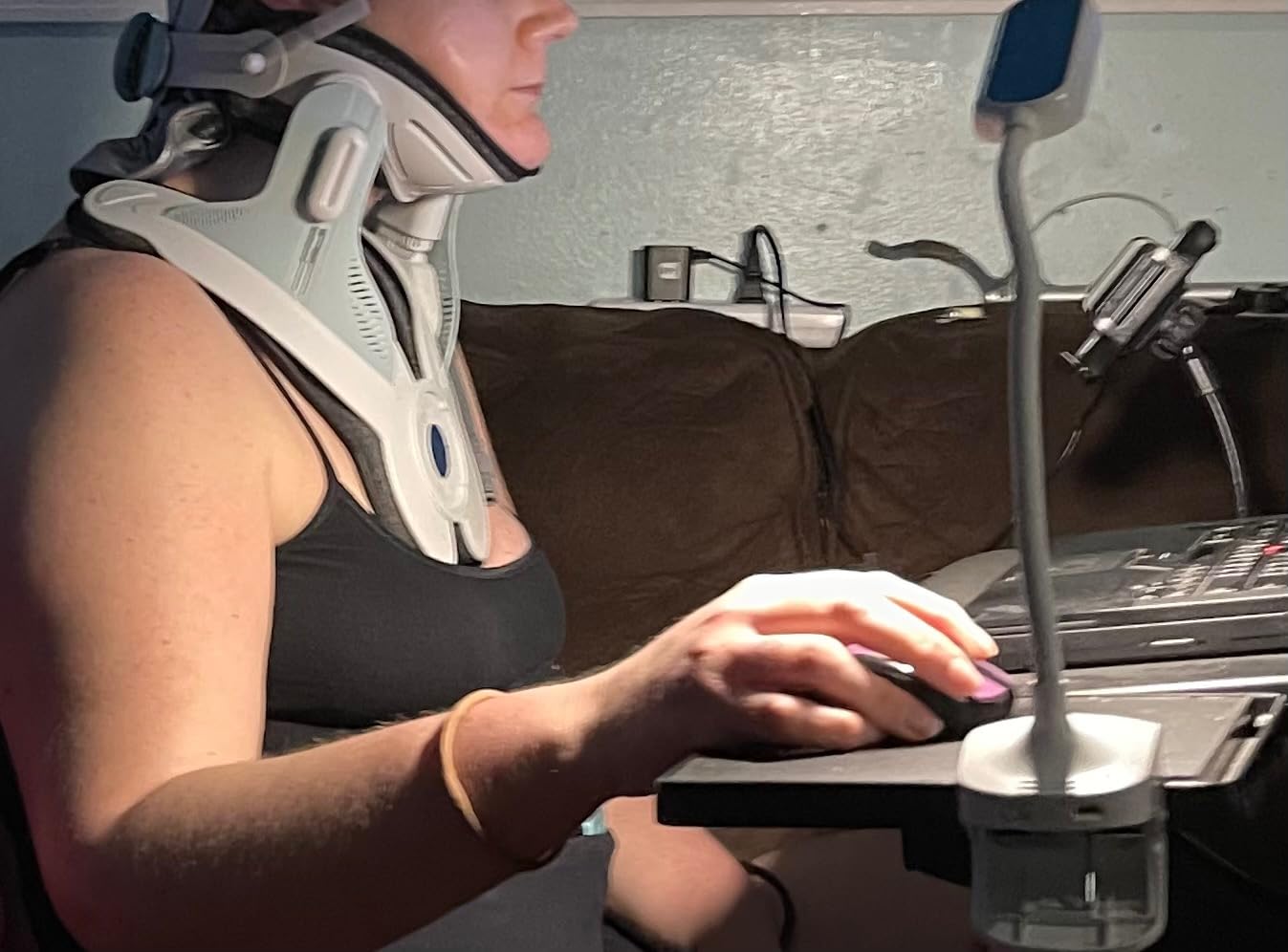
The M PAIN MANAGEMENT Air Collar is what I recommend to friends who want something they can use at their desk. You wrap it around your neck, press a button on the electric pump, and inflate. The 2nd generation electric pump inflates faster and more evenly than the older hand-pump models.
The collar fits necks between 13.7 and 16.8 inches in circumference, so it covers most adults. The memory foam cushion and removable chin pad made the sessions comfortable for me. I found 10 to 15 minute sessions during a work break noticeably reduced the tension across my upper traps.
The traction strength tops out at about 20 pounds, which is enough for mild to moderate neck pain but less than pneumatic supine devices. Forum users in r/ChronicPain warn that some people find inflatable collars feel like a choking sensation, so start at low pressure. If that does not bother you, this is one of the most user-friendly cervical traction units for daily routine use.
I appreciated that the chin pad is removable for cleaning. After a month of regular use, that small detail made a real difference.
Who it is best for
This air collar is best for office workers and people who want quick, on-the-go neck decompression during the day. It is also great for first-time users because the electric pump removes the learning curve of manual inflation.
Who should skip it
Skip this device if your neck measures more than 16.8 inches around. Also skip if you have severe disc herniation that needs more than 20 pounds of pull. Talk to your doctor about heavier traction in that case.
4. Hybodies Cervical Neck Traction Device – Best Electric Pump Option
- LCD touch electric inflation
- 3 traction intensity levels
- 8 airbags for even distribution
- Lightweight at 2.2 pounds
- Doctor recommended design
- Neck size limited to 13.7-16.8 inches
- Requires lithium-ion battery
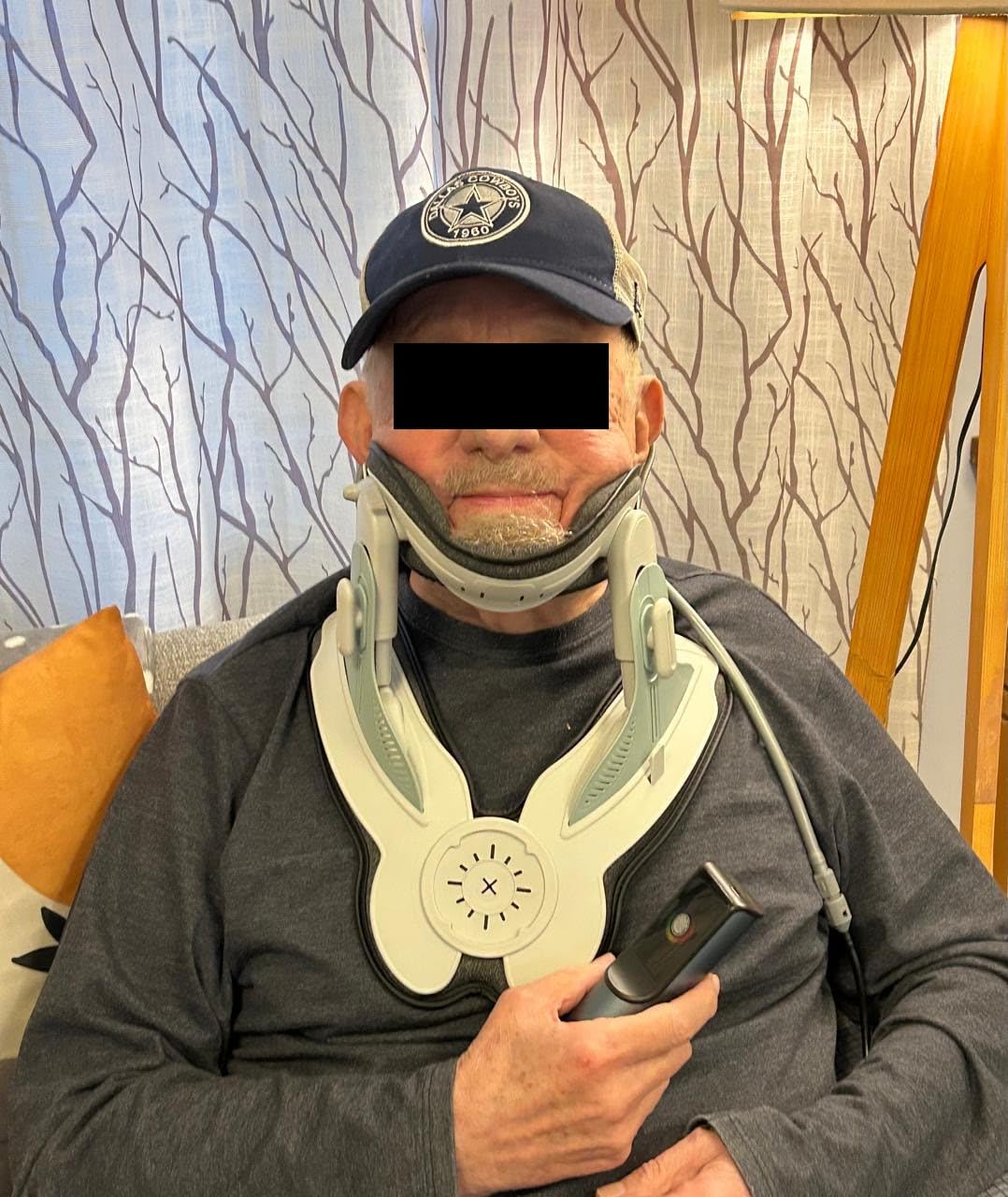
The Hybodies Cervical Neck Traction Device is similar in shape to the M PAIN MANAGEMENT collar but adds an LCD touch screen and 8 internal airbags for more even pressure distribution. I tested the LCD interface and found it intuitive. You can choose from three traction power levels without guessing how much force you are applying.
The 8 airbags inflate in a coordinated pattern, which the brand says simulates a doctor’s hand technique. In practice, the inflation felt smoother and less pointy than single-bladder collars. At 2.2 pounds, it is much lighter than supine devices, so carrying it between home and office is easy.
The same neck circumference limits apply (13.7 to 16.8 inches). It runs on a rechargeable lithium-ion battery, so I charged it once a week during testing. The 20-degree cervical spine curvature design supports the natural shape of your neck.
Forum users have pointed out that electric pump collars are more accurate than older hand-pump designs, and the Hybodies is one of the best cervical traction units in this category if you want that extra precision.
Who it is best for
The Hybodies is best for tech-focused users who like a digital interface and want multiple traction levels to choose from. It is also a strong choice for people who travel and want a light, USB-chargeable device.
Who should skip it
Skip the Hybodies if you prefer a simple, no-battery design or if your neck is outside the 13.7 to 16.8 inch range. Some users also find the LCD controls unnecessary for a 15-minute daily session.
5. DMI Over the Door Posture Corrector – Best Budget Over-the-Door

- Budget-friendly price
- FSA/HSA eligible
- Full body stretch capability
- Adjustable chin cover with foam
- Lightweight at 2.36 pounds
- Discontinued by manufacturer
- Requires door for setup
- No precise pressure gauge
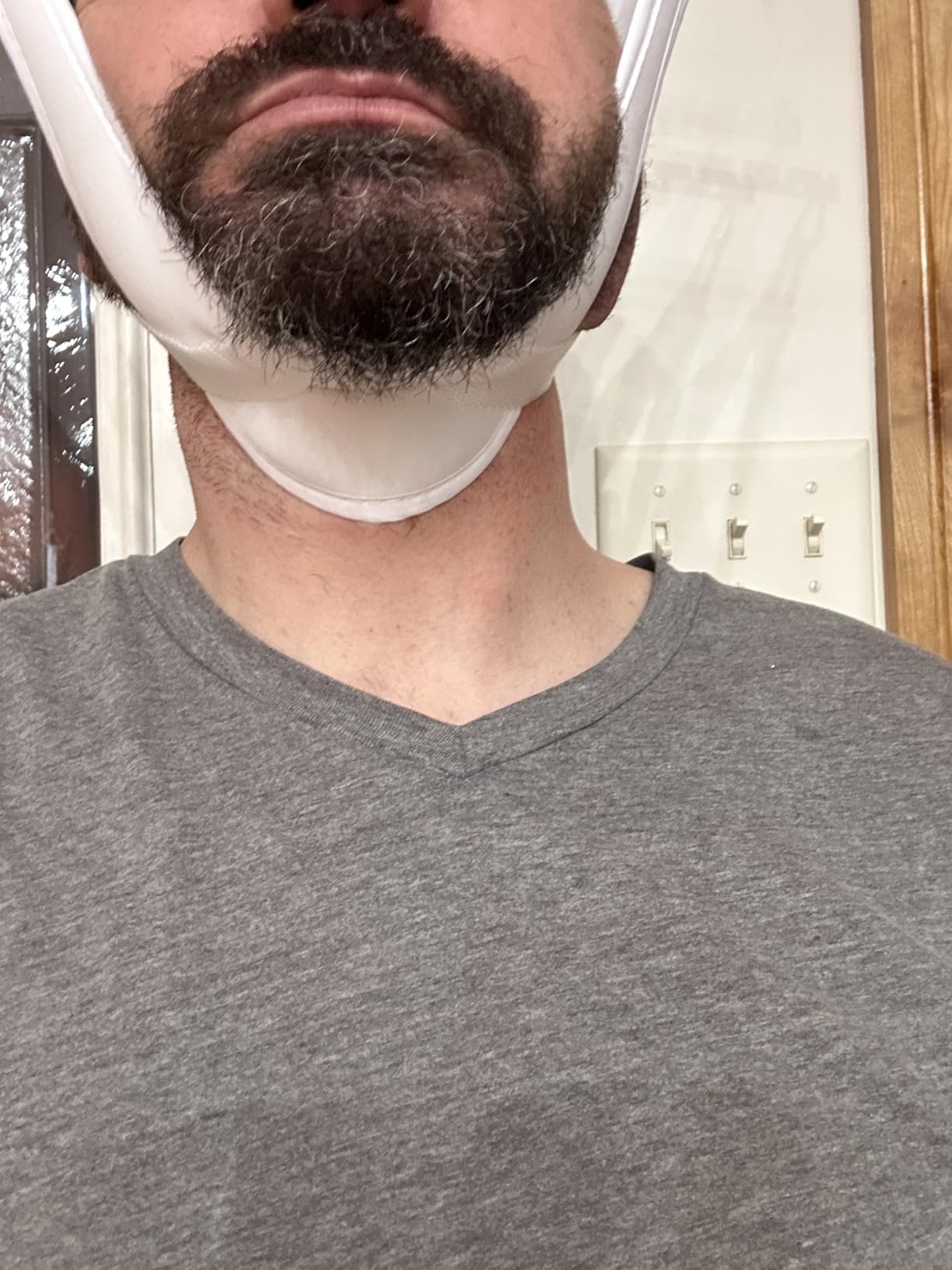
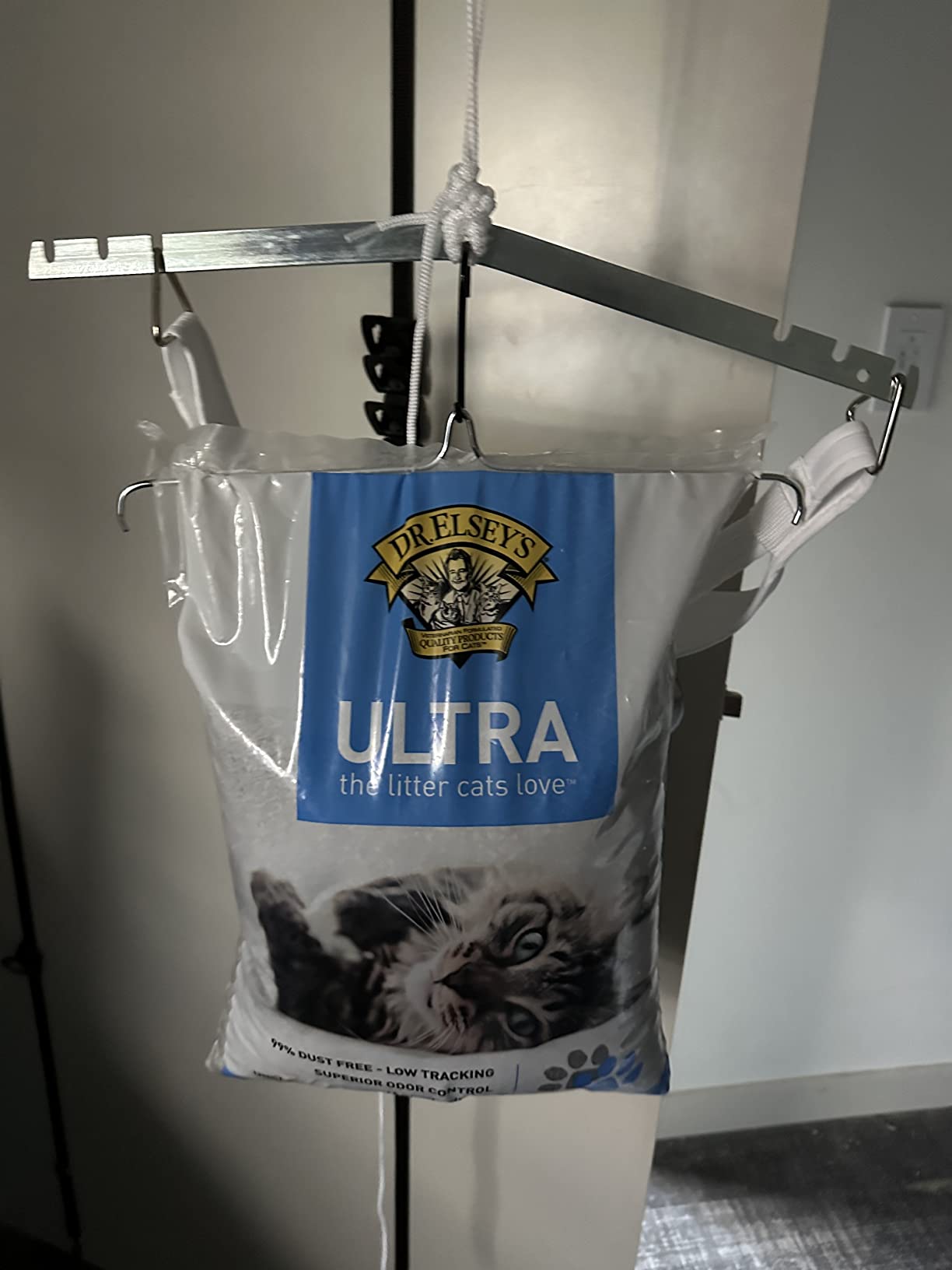
The DMI Over the Door Posture Corrector is the budget pick in our roundup. You hang it over any standard door, fill the vinyl water bag to your desired weight (between 2 and 20 pounds), and let gravity do the work. It includes a foam-padded head halter and an adjustable spreader bar.
I tested it on a standard interior door and the setup took about five minutes. The water bag is graduated so you can see how much force you are applying, though it is less precise than a mechanical gauge. The head halter was reasonably comfortable for 10 to 15 minute sessions.
This is the most affordable over-the-door option on our list, and it is FSA and HSA eligible. The trade-off is build quality. The unit has been discontinued by the manufacturer, though it remains available through third-party sellers. Forum users on r/backpain warn that cheaper over-the-door setups without accurate gauges can be risky if you cannot feel how much force you are using.
If you are curious about cervical traction and want to try it without committing to a premium device, this is a good entry point. Just keep the weight conservative at first.
Who it is best for
The DMI is best for first-time users on a tight budget who want to try over-the-door traction. It is also useful for anyone who needs a simple, FSA-eligible option for occasional neck stretching.
Who should skip it
Skip this device if you have any serious neck condition that needs precise, gauge-controlled traction. Also skip if you want something built to last. The discontinued status means support and replacement parts are limited.
6. Comness Over the Door Cervical Traction – Best for Office and Home
- Non-marring door stop
- Skin-friendly fabric
- Single pull adjustable system
- Portable for home and travel
- 400 pound weight capacity
- Not Prime eligible
- May feel bulky for travel
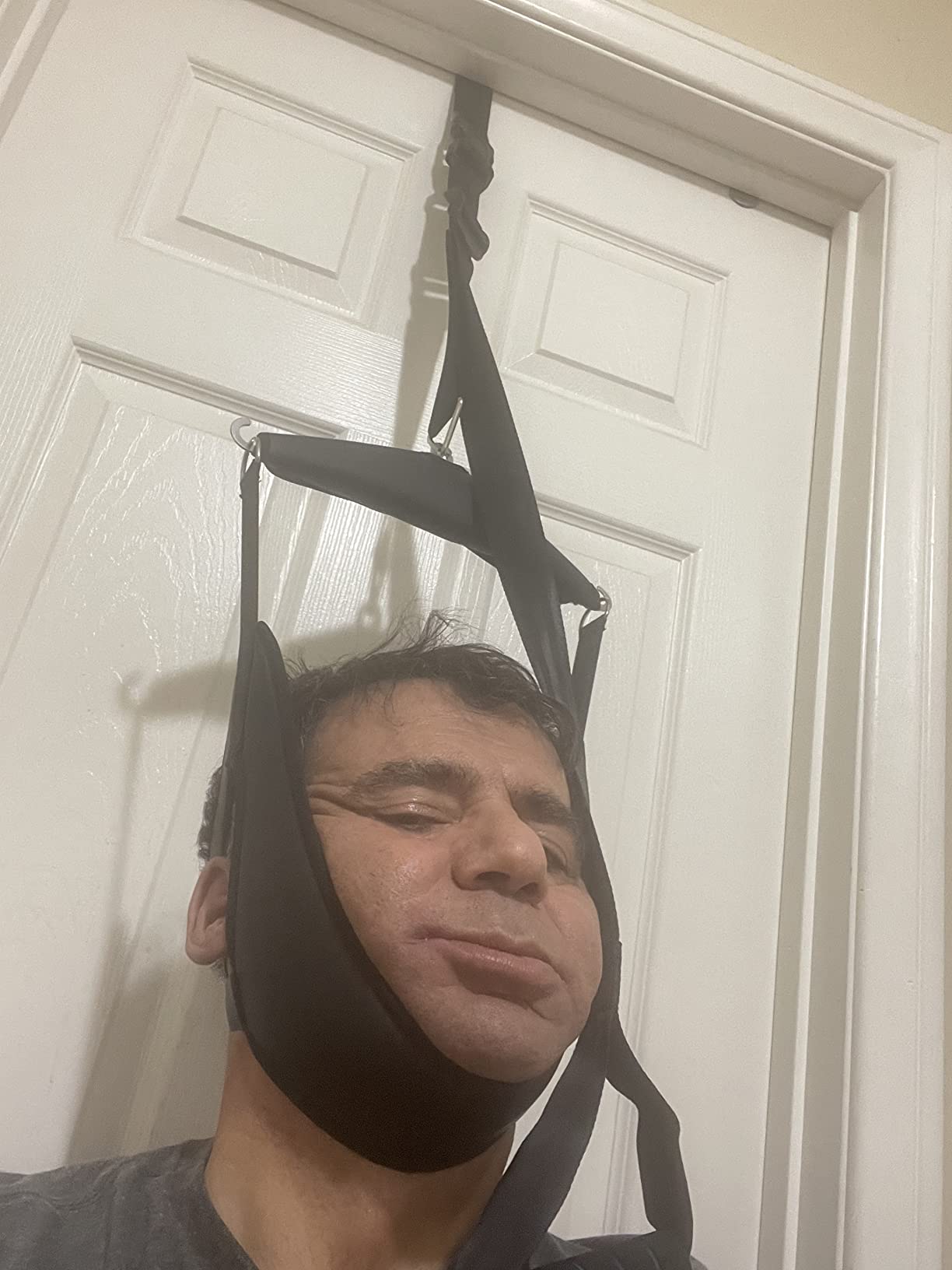
The Comness Over the Door Traction includes a non-marring door stop that protects your door frame. I tested this on a hollow core door and it held firm. The single-pull system is intuitive: pull the strap, feel the traction build, and lock it in place with the buckle.
The skin-friendly fabric sling was comfortable against my neck, more so than some of the foam halters I tested. The maximum load is 400 pounds, which is overkill for neck traction but speaks to the strap quality.
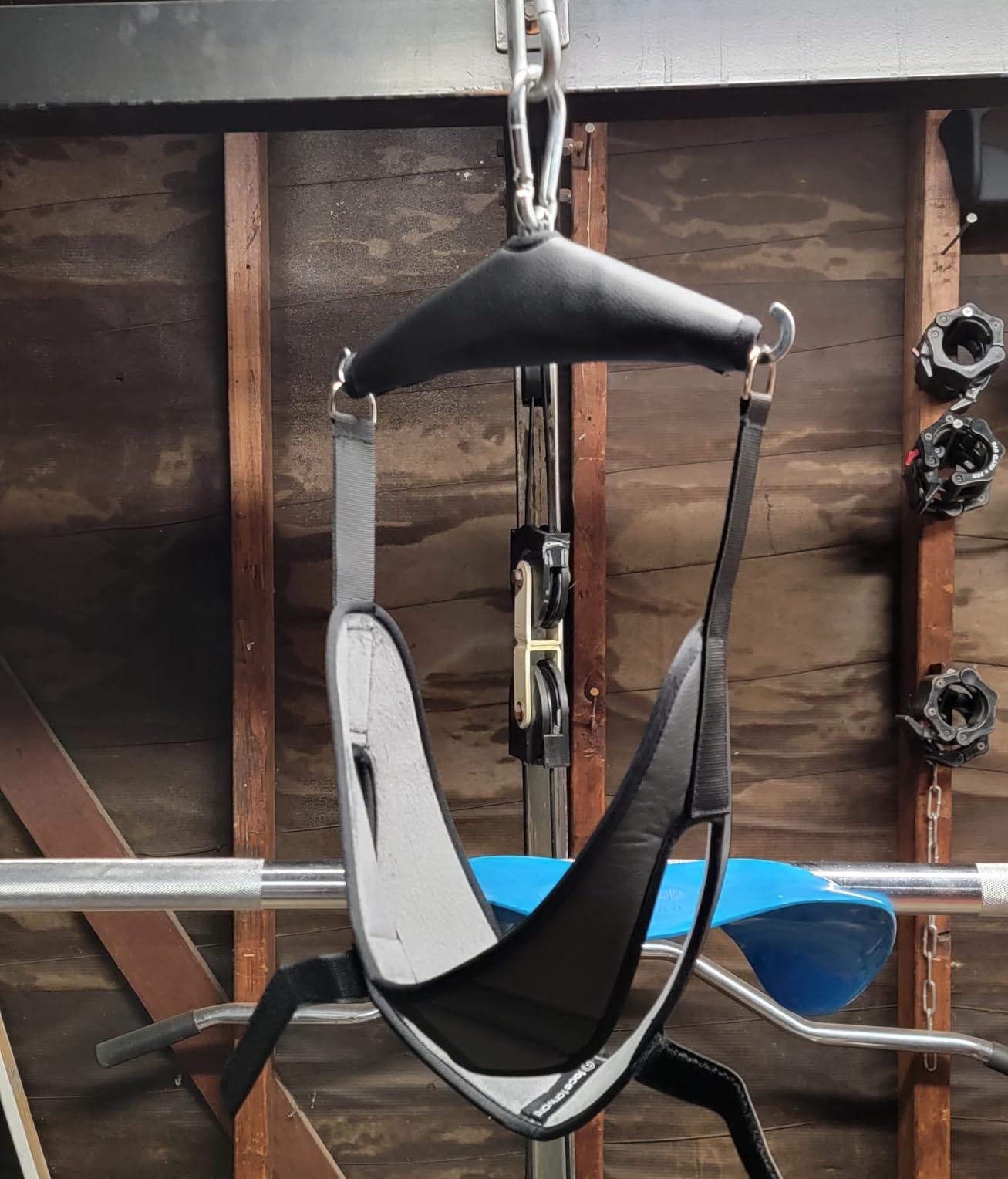
This device is portable enough to toss in a bag, but at 1.26 pounds it is not exactly lightweight. It is also not Prime eligible, so shipping can be slower. Still, for the price it is a solid option.
Comness ranks #5 in Traction Equipment, which gives some indication of how popular it is with buyers. If you want a sturdy over-the-door unit without spending much, this is worth considering among the best cervical traction units in the budget tier.
Who it is best for
The Comness is best for users who want a simple pull-and-buckle system with a comfortable sling. It is also a good match if you need to set it up on different doors around the house or office.
Who should skip it
Skip the Comness if you need Prime shipping or want the lightest possible travel option. Also skip if your door frame is not a standard size, since the door stop fits between 0.55 and 0.61 feet of clearance.
7. Glitz Cervical Neck Traction – Best for Calibrated Pressure
- Calibrated compression spring scale
- Velvet fabric for comfort
- Pre-installed out of the box
- Portable for travel
- Chiropractor endorsed
- Requires door height 74-82 inches
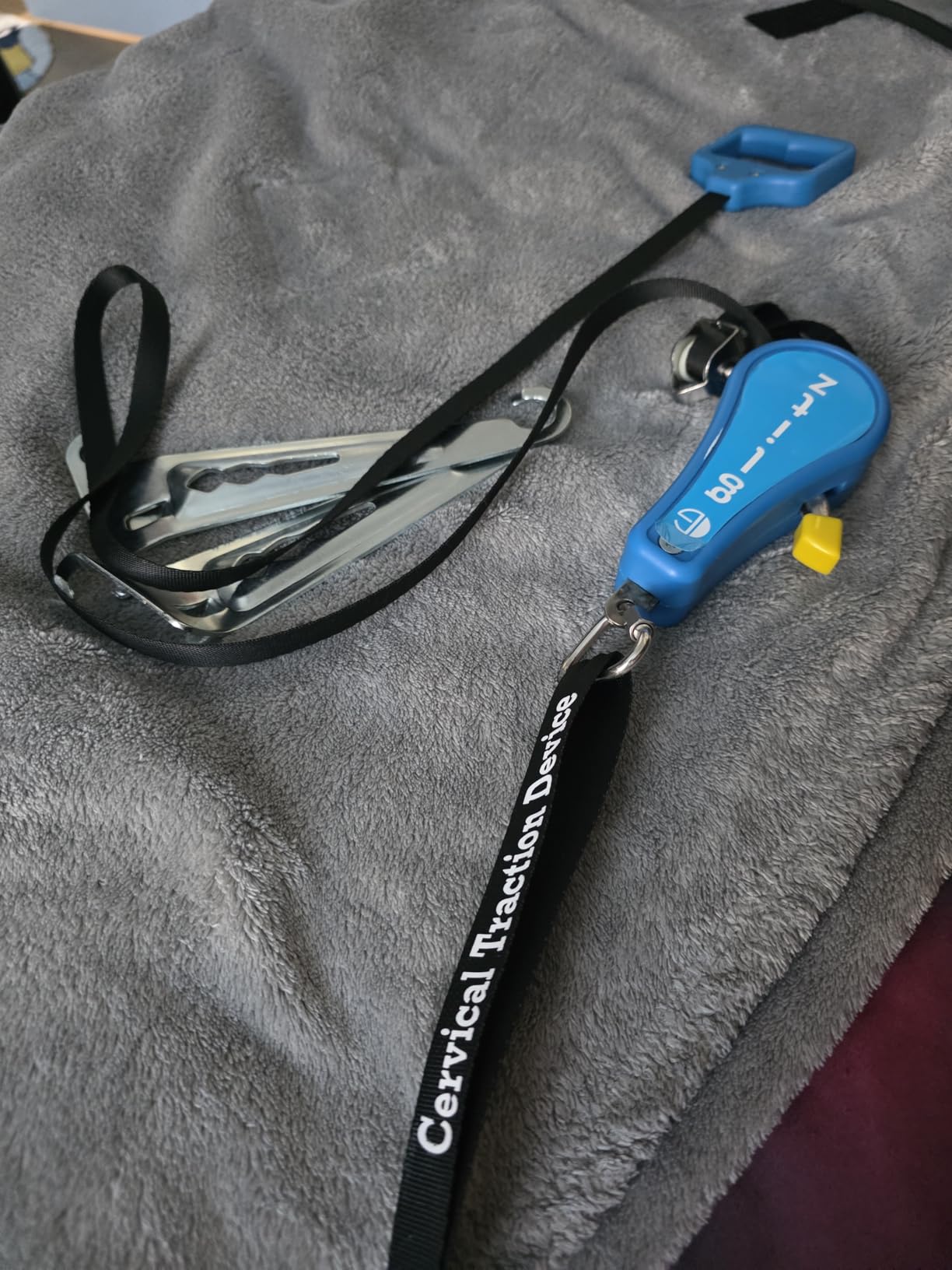
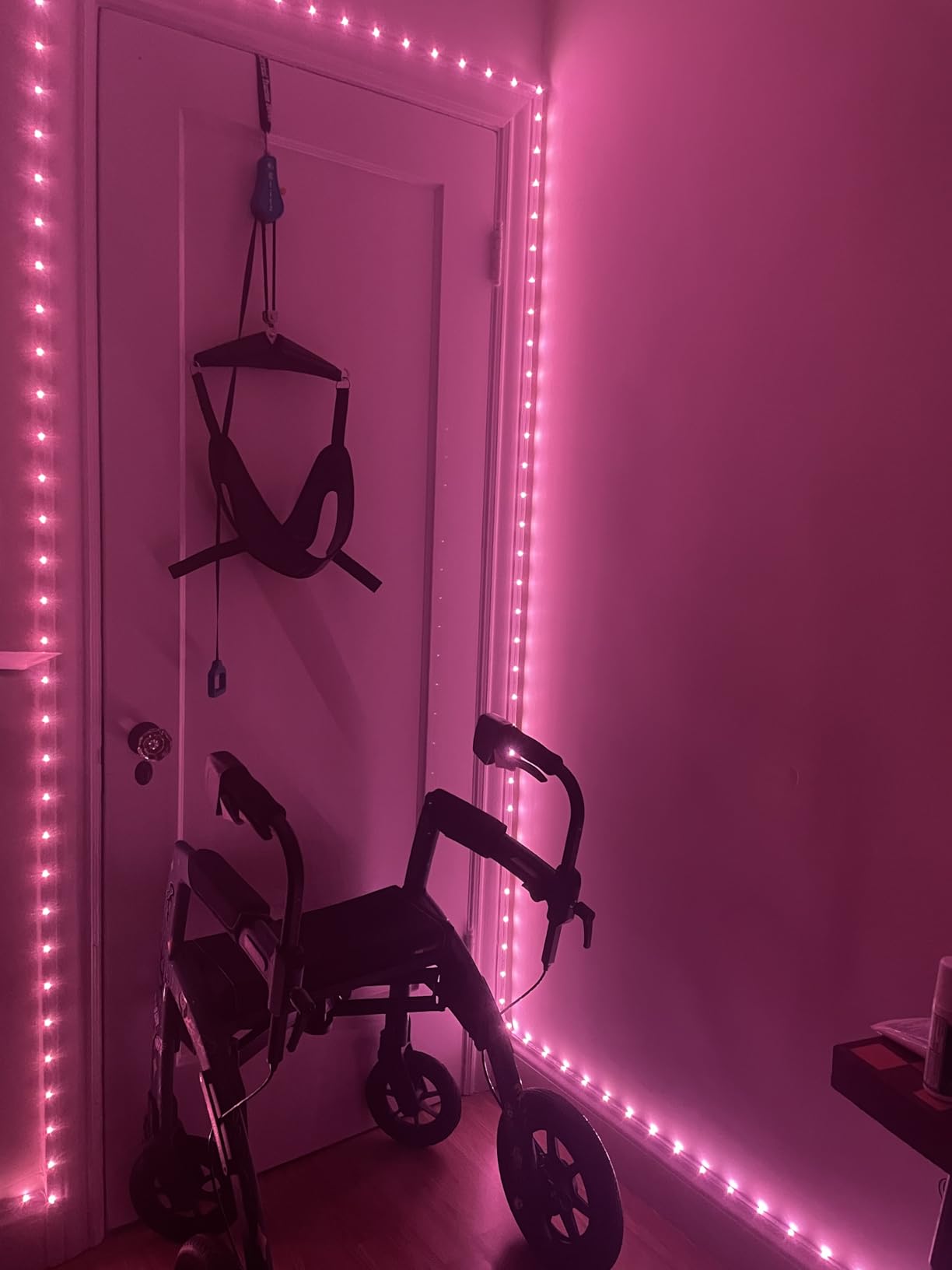
The Glitz Cervical Neck Traction stands out because it has a calibrated compression spring scale, which means you can read exactly how much force you are applying (from 0 to 40 pounds). That is rare in this price range. Most over-the-door setups rely on water bags or guesswork.
Setup was painless because the unit comes pre-installed. The velvet harness feels nicer than the standard foam halters and did not pinch my neck during 15-minute sessions. The block-and-tackle system gives you fine-grained control over the pull.
The main limitation is door height. The instructions specify 74 to 82 inches, so if your doors are taller or shorter, this might not fit properly. I measured all my interior doors before testing and only two of them were within range.
Forum users in r/Chiropractic have recommended Glitz for its calibrated scale, which is one of the trust signals users look for. Among budget over-the-door units, this is one of the best cervical traction units for accurate force measurement.
Who it is best for
Glitz is best for users who want a calibrated force reading without paying for a full pneumatic system. It is also a strong choice if your home doors are 74 to 82 inches tall and you prefer velvet padding over foam.
Who should skip it
Skip if your doors fall outside the 74 to 82 inch range. Also skip if you want a Prime option with the fastest shipping, since availability varies.
8. OTC Cervical Traction Kit – Best Complete Over-Door Setup
- Complete kit with all components
- Adjustable weight from 2 to 20 lbs
- Tool-free assembly
- Latex-free head halter
- Suitable for disc herniation
- Older product design
- Uses water weights not mechanical
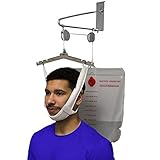
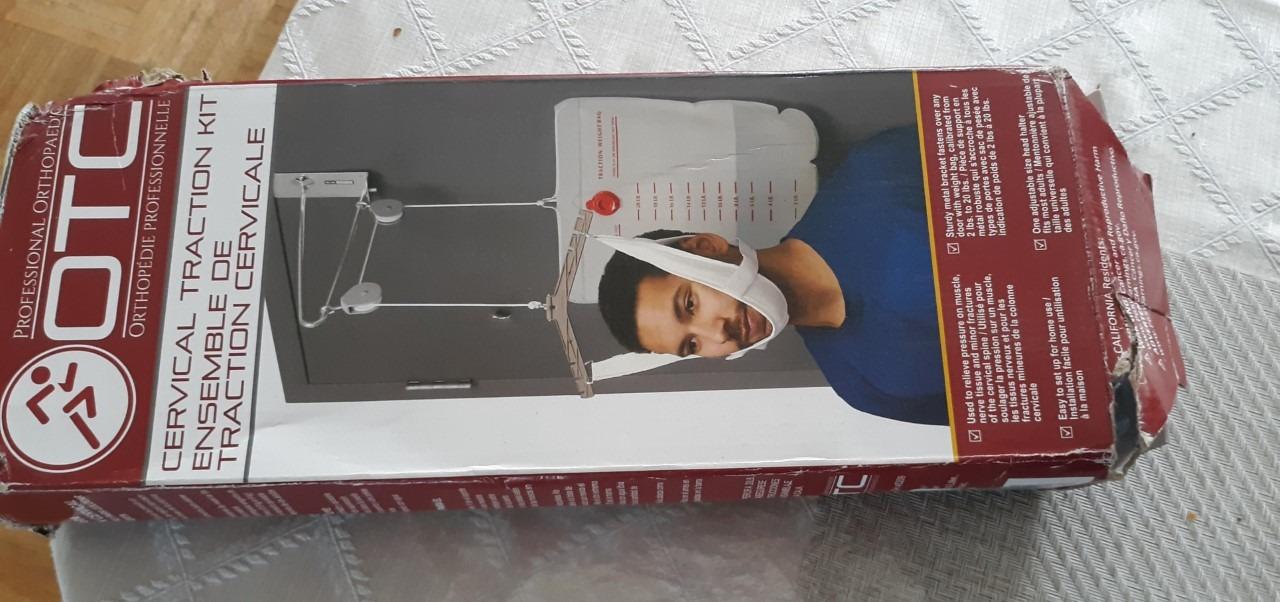
The OTC Cervical Traction Kit (model 2501) has been around since 2006, which tells you something about its staying power. It includes everything you need for over-the-door traction: head halter, spreader bar, rope, pulley, S-hook, and a graduated water bag.
Assembly is tool-free. I hung it on a door in about 4 minutes. The latex-free head halter is a nice detail for anyone with a latex sensitivity. You control the traction force by adding water to the bag in measured increments, from 2 to 20 pounds.
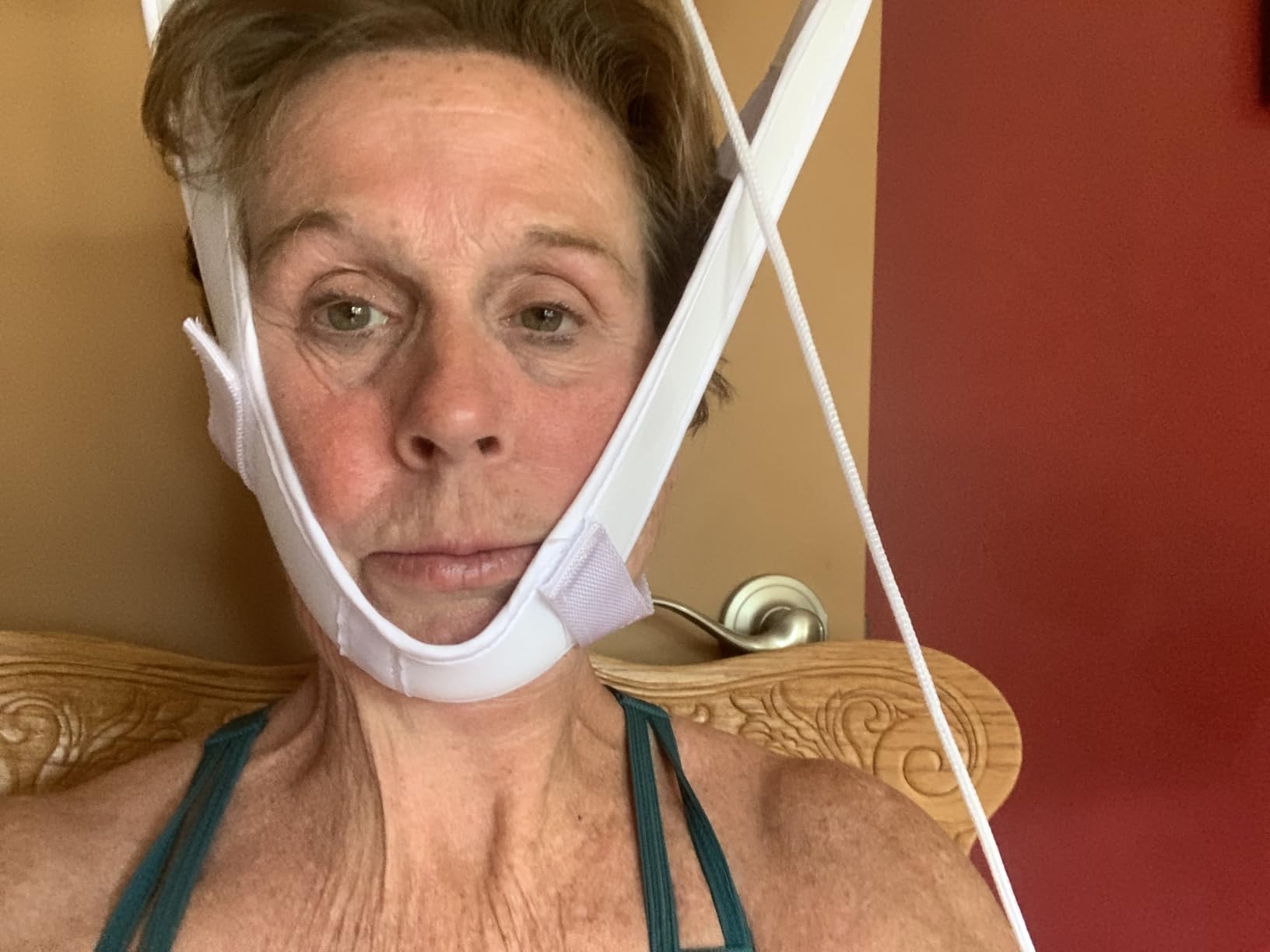
This kit is well suited for people working on disc herniation or pinched nerve recovery at home. The water bag system is less precise than a mechanical gauge but more affordable. OTC has a long track record, and the unit has over 3,000 reviews on Amazon.
The 3.8 star average rating suggests mixed experiences, mostly tied to fit and setup quirks. Still, for under 30 dollars, this is a reasonable way to try over-the-door traction if you want a complete kit in one box.
Who it is best for
The OTC kit is best for users who want a complete, no-extra-parts setup. It is also a good fit if you prefer water bag traction over mechanical systems and want a brand with a long track record.
Who should skip it
Skip if you want a precise gauge-controlled reading or a more modern design. The OTC kit uses older water-bag technology and does not give you a force reading like the Glitz compression spring does.
9. Lumia Wellness Cervical Orthotic Traction Block – Best Foam Traction Pillow
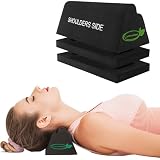
- Relief in 10 minutes per day
- FSA/HSA eligible
- Restores cervical curvature
- 3 height adjustable design
- Firm and durable EVA foam
- Foam block design only
- May not suit severe neck conditions
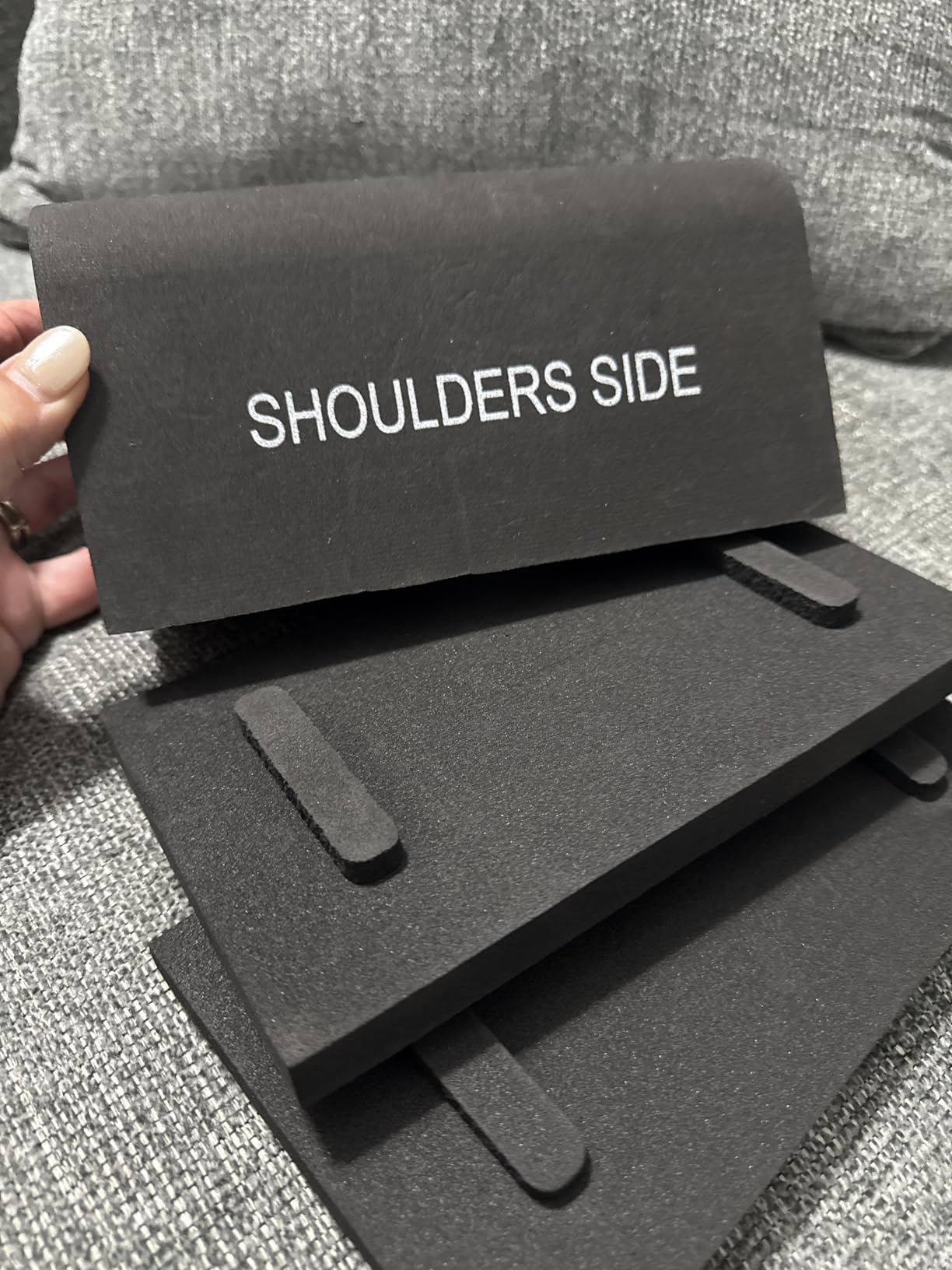
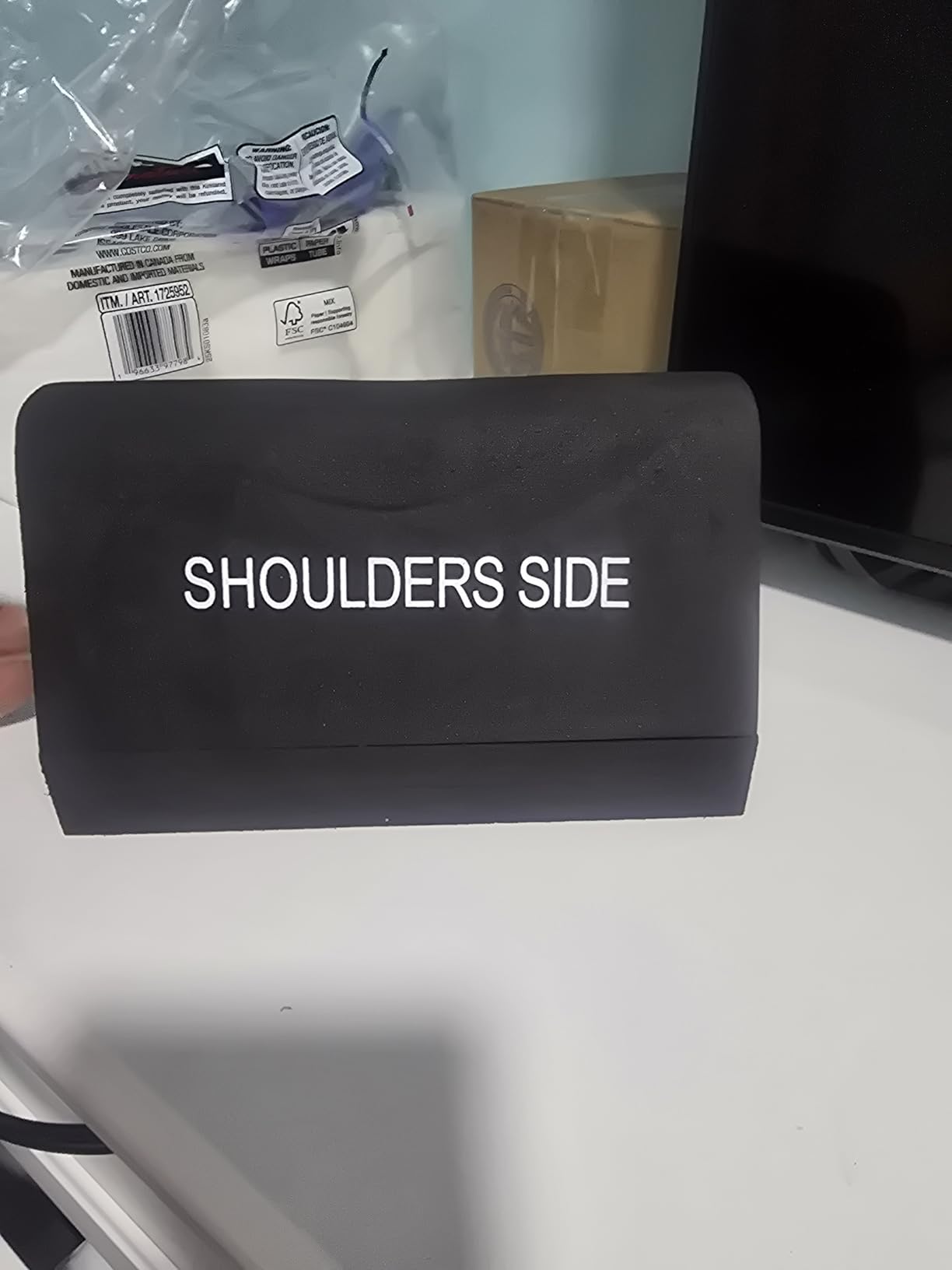
The Lumia Wellness Cervical Orthotic Traction Block is not a pull-based device. Instead, you lie down with your neck resting on the contoured foam block and let your head weight create the traction. It is a passive approach, but I found it surprisingly effective for daily stiffness.
The block uses firm closed-cell EVA foam with three height settings, so you can adjust how aggressive the curve is. I started at the lowest setting for the first week and worked up. Ten minutes per day is the recommended session length.
This device has a 4.4 star average from over 2,000 reviews, which is the highest among the foam pillows in our roundup. It is FSA and HSA eligible. Forum users with chronic stiffness often recommend foam blocks as a daily maintenance tool, not a replacement for stronger pneumatic traction.
The foam is firm and durable, and the small footprint (8 by 4.5 inches) makes it easy to store. If you travel, it fits in a suitcase.
Who it is best for
The Lumia block is best for people with chronic neck stiffness who want a passive, no-setup routine. It is also great for office workers who want to lie down for 10 minutes during a lunch break.
Who should skip it
Skip if you need active, high-force traction for severe disc herniation. Foam blocks are gentle and may not deliver enough pull for serious conditions. Also skip if you find lying on a foam curve uncomfortable, since the curve is more pronounced than a regular pillow.
10. RESTCLOUD Neck and Shoulder Relaxer – Best for TMJ Relief
- #1 Best Seller in Traction Equipment
- Over 92k reviews
- Lightweight at 10.58 ounces
- Chiropractor-inspired design
- Affordable price
- Cannot be used as a regular pillow all night
- May need 1 to 3 days to adapt
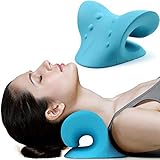
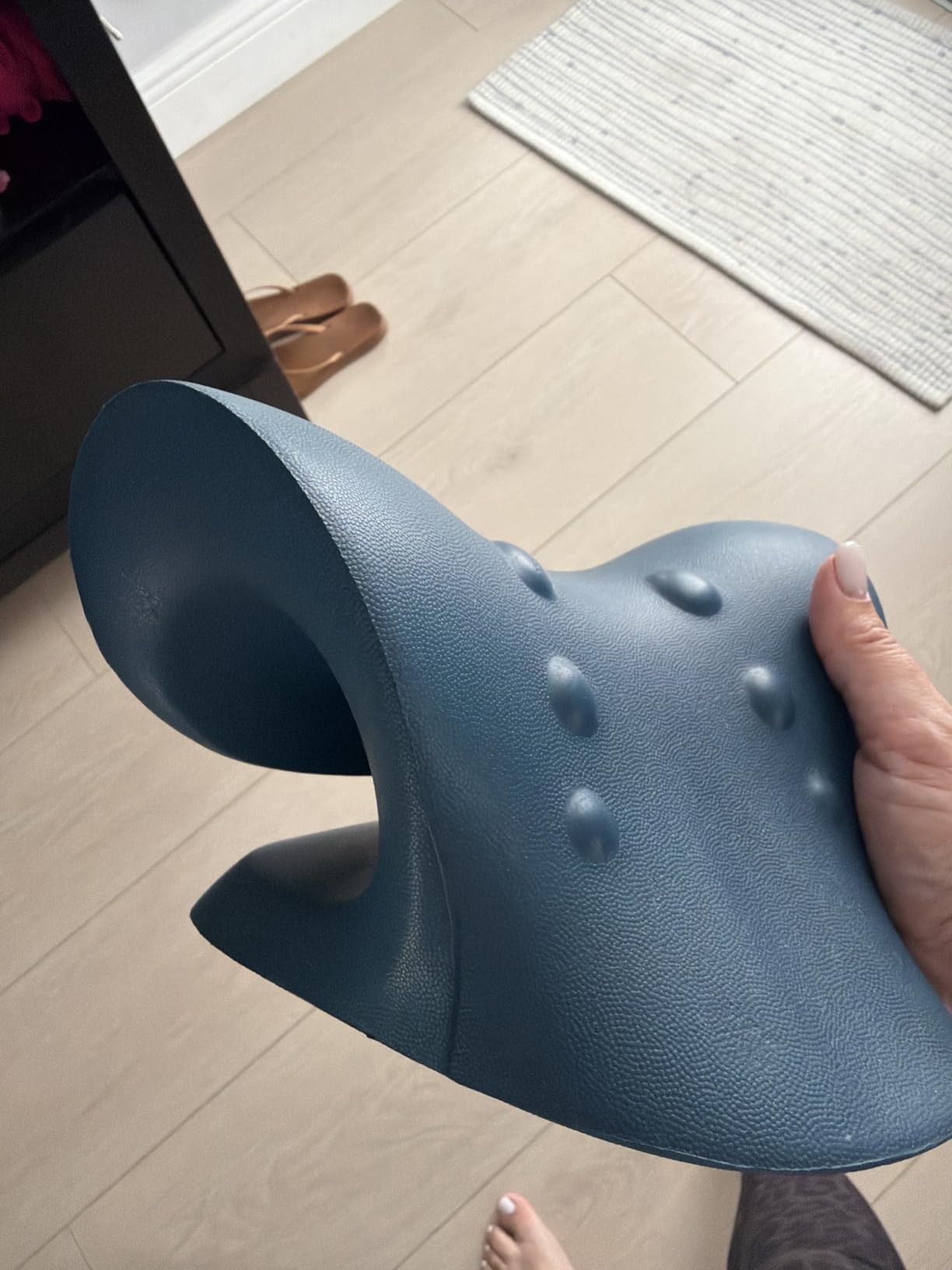
The RESTCLOUD Neck and Shoulder Relaxer is the best seller in Traction Equipment on Amazon, with over 92,000 reviews. That kind of volume tells you it works for a lot of people. I tested it for two weeks and found it most useful for TMJ-related tension and upper trap tightness.
The ergonomic curve matches the natural shape of the cervical spine. You lie on it for 10 minutes per day. The polyurethane foam is firm enough to provide a meaningful stretch but soft enough to be comfortable. The brand recommends starting with short sessions and building up.
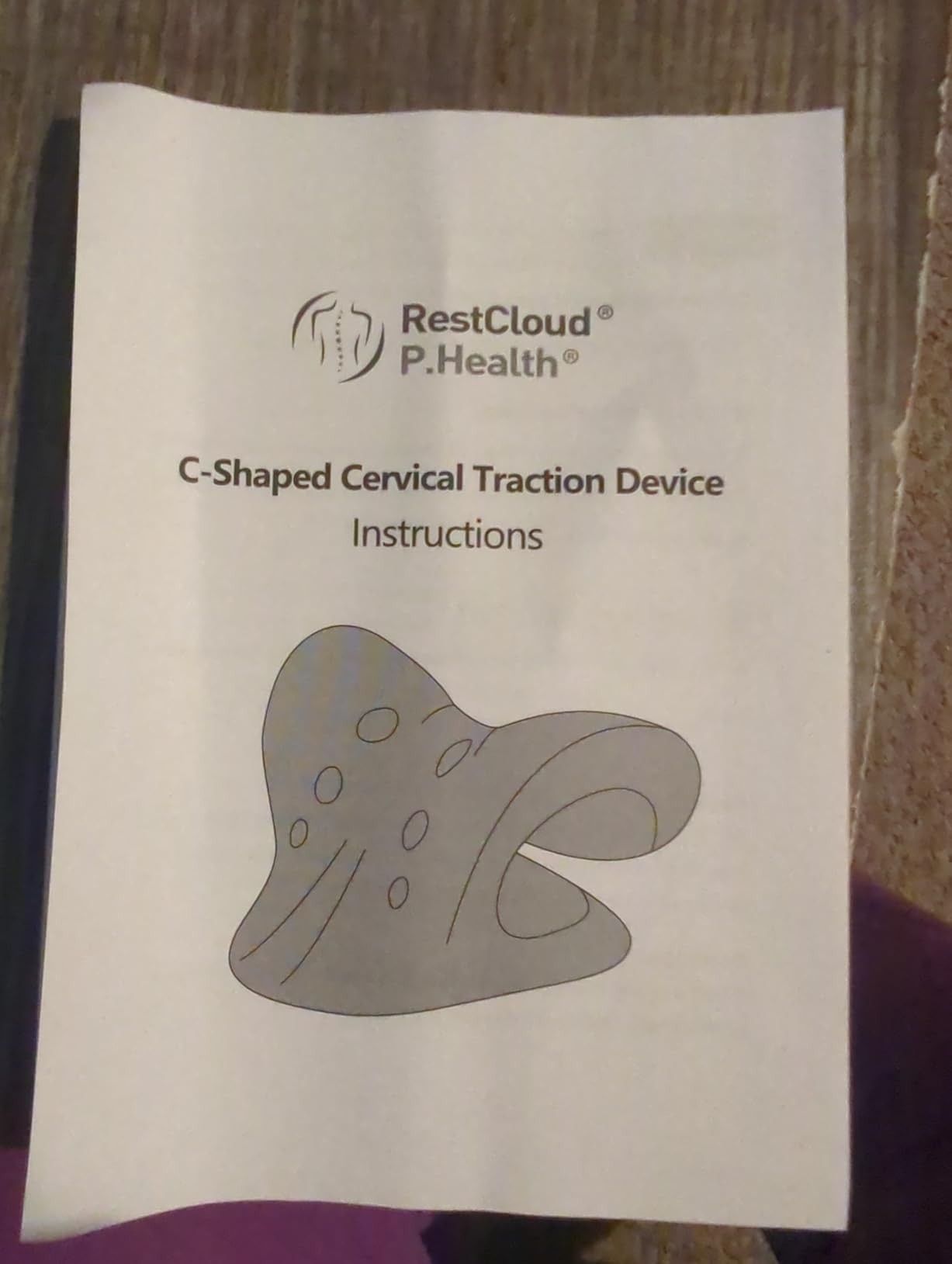
At 10.58 ounces, it is the lightest device in our roundup and easy to take anywhere. I brought it on a weekend trip and used it on the hotel floor. It deflates slightly over time but holds its shape for months with normal use.
Forum users with TMJ discomfort have flagged RESTCLOUD as a useful device because it supports occipital pressure rather than pulling on the chin. If you have TMJ, that distinction matters.
Who it is best for
RESTCLOUD is best for TMJ sufferers, anyone with chronic neck stiffness, and budget-conscious buyers. It is also a great entry-level traction device if you have never tried one before.
Who should skip it
Skip if you want a pull-based traction device. This is a passive foam pillow. Also skip if you need high-force decompression for a serious disc issue.
11. The Neck Hammock – Best Portable Travel Option
- Ultra portable at 9.12 ounces
- Developed by doctor and physical therapist
- Adjustable straps for custom fit
- Versatile for home office travel
- Quick setup
- Does not provide instant relief
- Requires consistent use over time
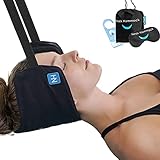
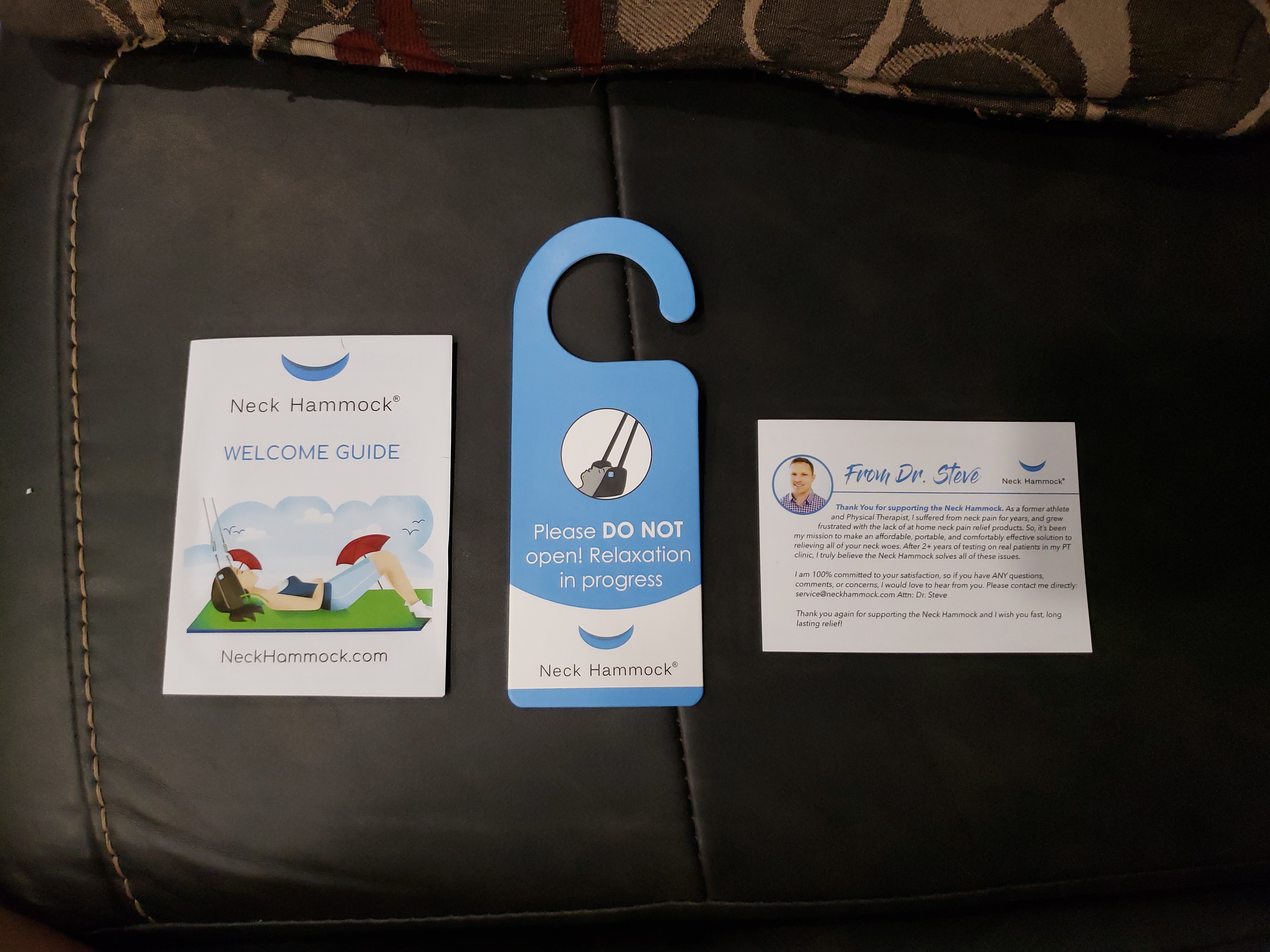
The Neck Hammock is the most portable cervical traction unit I tested. At 9.12 ounces and about the size of a water bottle, it fits in a carry-on. You loop it over any door, adjust the strap length, and let your head weight create traction through a sling.
I tried it in a hotel room and an Airbnb, and both setups worked without tools. The adjustable 100cm strap means it fits most doors. The polyester material feels soft against the skin and is durable.
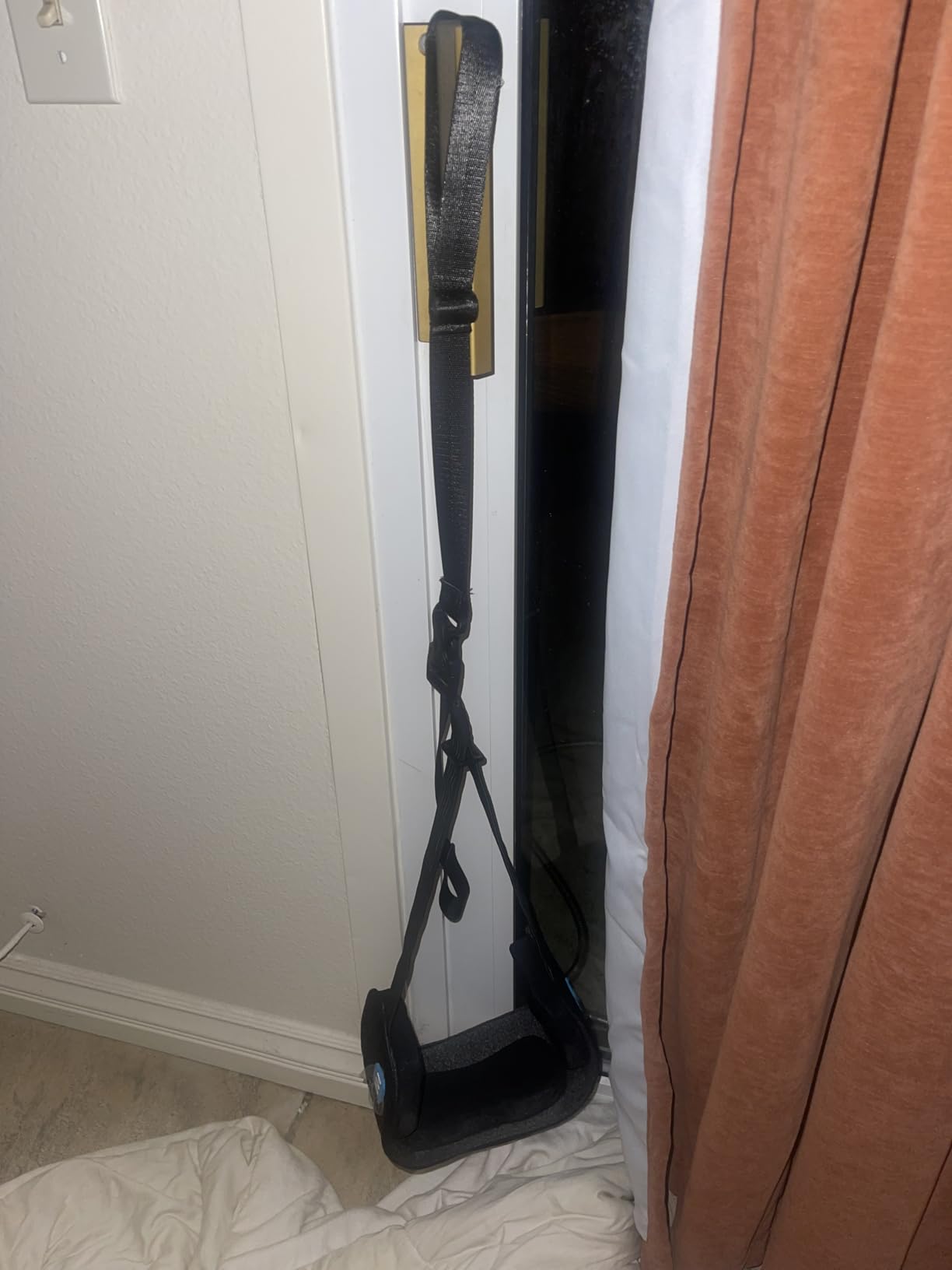
The Neck Hammock was developed by a doctor and a physical therapist, which adds credibility. The main thing to know is that it does not deliver instant pain relief. Forum users consistently say it works best with regular use over weeks, not a single session.
With over 7,000 reviews and a 4.1 average, the Neck Hammock is one of the best cervical traction units if you travel often or need something that lives in your bag.
Who it is best for
The Neck Hammock is best for travelers, digital nomads, and anyone who needs a take-anywhere traction option. It is also a good choice for people who do not want a bulky device in their living space.
Who should skip it
Skip if you want a precise gauge or high-force traction. The Neck Hammock relies on your body weight and strap tension. Also skip if you do not have a door available for setup.
12. S Cervical Neck Traction Inflatable Collar – Best Inflatable Travel Collar
- Inflatable for adjustable support
- Helps relieve headaches and stiffness
- Corrects sitting posture
- Lightweight and deflatable for travel
- Chiropractor recommended
- May not provide instant relief for all users
The S Cervical Neck Traction Inflatable Collar is a hand-pump inflatable collar, which makes it different from the electric pump models earlier in our list. You squeeze a hand pump to inflate the collar and adjust the pressure. It deflates flat for travel and weighs just 8.11 ounces.
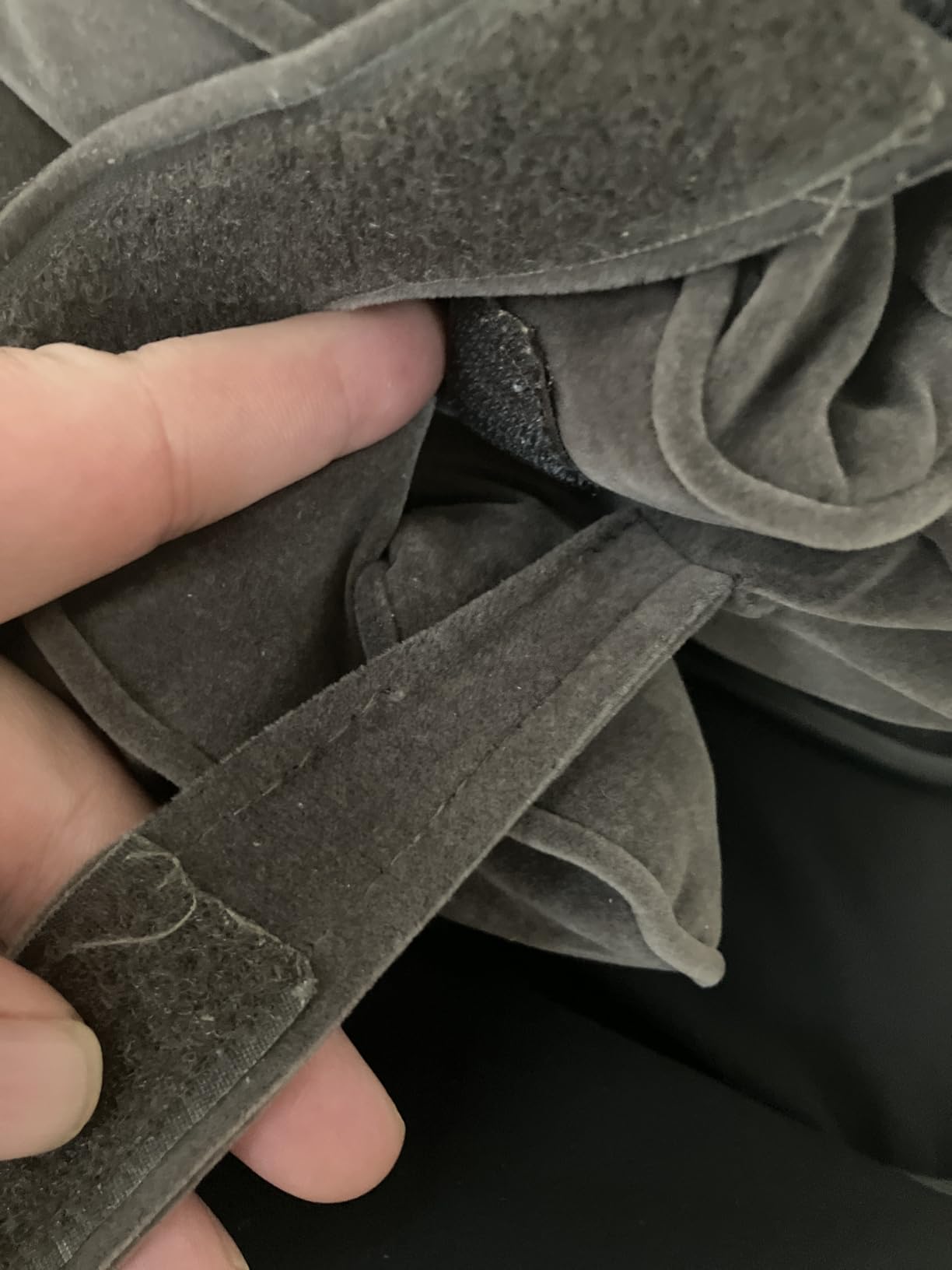
The soft, breathable flocking fabric was comfortable against my skin during testing. Velcro straps let you customize the tightness. The brand recommends it for tension headaches, stiffness, and dizziness related to poor posture.
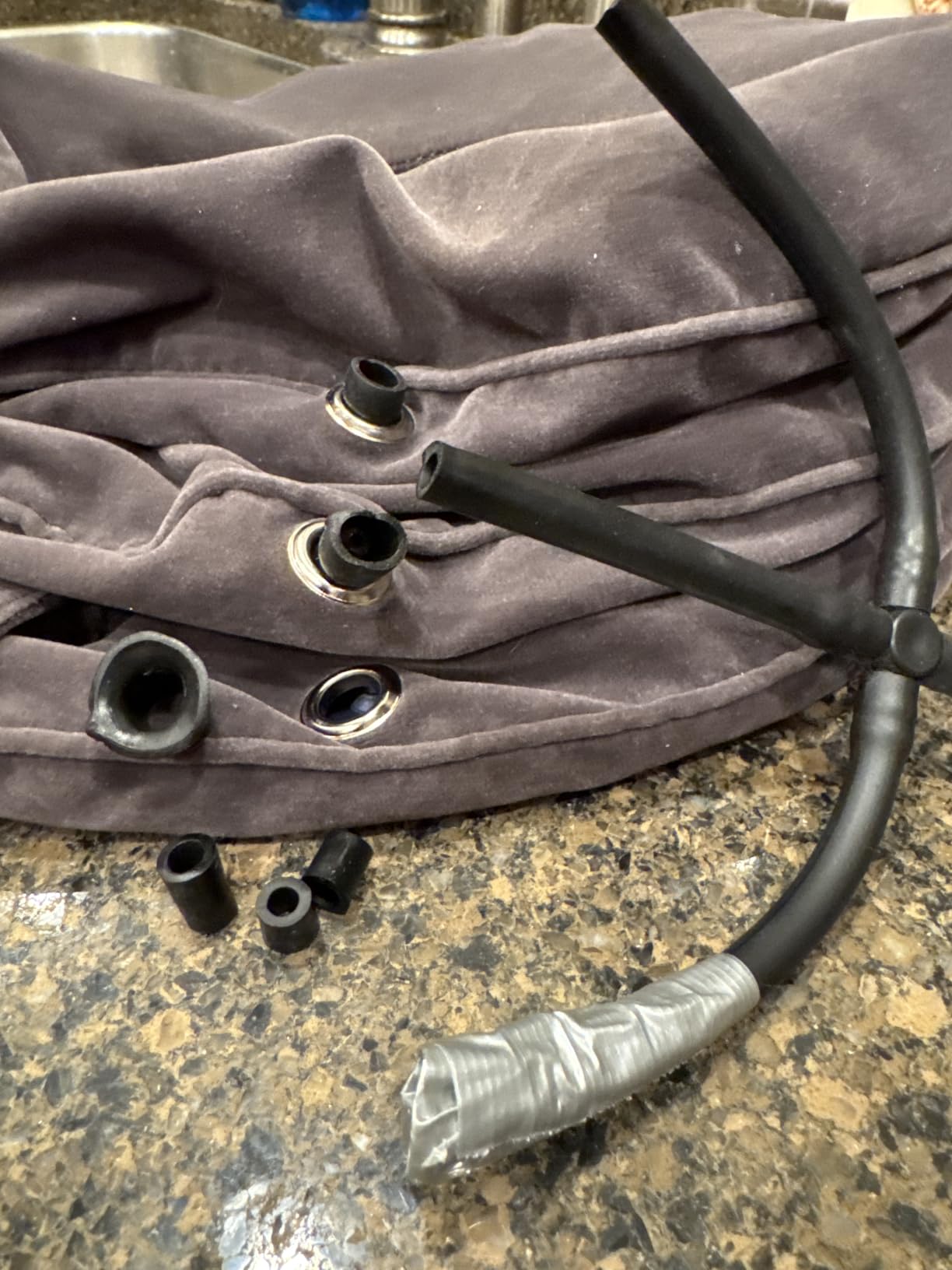
This collar ranks #3 in Traction Equipment on Amazon, with over 11,000 reviews. The 3.8 star average is lower than some competitors, mostly because hand-pump inflation is less consistent than electric pumps. Some users also report that it takes a few tries to find the right inflation level.
Among budget inflatable cervical traction units, the S collar is widely available and ships Prime. For under 25 dollars, it is a low-risk way to try inflatable traction.
Who it is best for
The S collar is best for travelers on a budget and first-time users who want a hand-pump inflatable collar. It is also useful for posture correction during long drives or flights.
Who should skip it
Skip if you want electric pump precision or if you have hand or wrist strength issues that make hand pumping difficult. Also skip if you want the highest review rating in this category.
How to Choose the Best Cervical Traction Unit for You
Picking the right cervical traction device comes down to four factors: how much force you need, where you will use it, what your body tolerates, and what condition you are treating. Our team talked to physical therapists and read forum threads on r/ChronicPain and r/Cervicalinstability before finalizing these buying factors.
Pressure and force: Most home cervical traction units deliver between 10 and 50 pounds of force. For mild to moderate tech neck and stiffness, 15 to 25 pounds is plenty. For herniated discs and radiculopathy, you may need 30 to 50 pounds of gauge-controlled pull. That is why pneumatic supine units like the ComforTrac and iSTIM WeTrac are the clinical standard for serious conditions.
Position during treatment: Supine traction (lying down) generally feels more comfortable and delivers a more controlled pull than upright systems. Inflatable collars work upright and are convenient for desk use, but they tend to apply less force. Over-the-door systems can feel awkward if you do not have a private space.
Comfort and TMJ safety: Chin-strap designs can aggravate the temporomandibular joint. If you have TMJ issues, look for occipital-pull devices (like foam blocks and the Neck Hammock) that put pressure under the back of the head rather than under the chin.
Setup and portability: Pneumatic supine units require a flat floor space and a few minutes to set up. Inflatable collars and foam pillows are grab-and-go. Over-the-door systems need a door, which limits where you can use them. If you travel, choose a deflatable inflatable or a compact sling.
Medical-grade vs consumer-grade: If you have a diagnosed condition like cervical radiculopathy, herniated disc, or spinal stenosis, look for gauge-controlled traction (HCPCS codes E0849 and E0860). These may qualify for insurance reimbursement with a doctor’s prescription. Consumer inflatable collars are fine for general stiffness but not for serious conditions.
Cervical Traction Safety and Who Should Avoid It
Cervical traction is generally safe when used as directed, but there are real contraindications. People with the following conditions should not use home cervical traction without direct medical supervision: recent neck injury, severe osteoporosis, rheumatoid arthritis in the cervical spine, spinal cord compression, carotid artery disease, aortic aneurysm, recent cervical spine surgery, or unstable cervical fractures.
Always start at the lowest force setting and increase gradually. If you feel numbness, sharp pain, dizziness, or vision changes during a session, stop immediately and contact your healthcare provider. Sessions should typically last between 5 and 20 minutes, and overuse can cause muscle strain.
If you are pregnant, have TMJ disorder, or have any history of cervical spine surgery, talk to your doctor or physical therapist before buying a cervical traction device. Forum users across r/Chiropractic and r/backpain consistently recommend getting a PT evaluation first, especially if you have any underlying condition. Choosing the best cervical traction units for your situation starts with knowing whether your body is cleared for traction at all.
Cervical Traction FAQs
Do cervical neck traction devices really work?
Yes, for many people. Cervical traction works by gently separating the cervical vertebrae, which reduces pressure on discs and pinched nerves. Clinical studies and user reports on r/ChronicPain and r/backpain show consistent relief for herniated discs, radiculopathy, and muscle tension. Results depend on using the right amount of force (typically 10 to 50 pounds) and consistent daily sessions.
How much PSI is needed for cervical traction?
Most home cervical traction units are measured in pounds of force, not PSI. A good starting range is 10 to 25 pounds for mild to moderate neck pain. For herniated discs and radiculopathy, 30 to 50 pounds is more typical. Gauge-controlled devices like the ComforTrac and iSTIM WeTrac let you dial in the exact force, which is safer than guessing.
What is the best cervical traction unit for home use?
For most adults, the ComforTrac-Deluxe Home Cervical Traction Kit is the best overall because it is gauge-controlled, supports supine positioning, and is built to clinical standards. Budget-conscious buyers should consider the M PAIN MANAGEMENT Air Collar or the RESTCLOUD Neck and Shoulder Relaxer. If you travel often, the Neck Hammock is the most portable option.
How long does it take to see results from cervical traction?
Most users report noticeable relief within 2 to 4 weeks of daily sessions. Some feel immediate relaxation after a single session, but lasting changes in disc pressure and muscle tone take consistent use. Forum users with chronic conditions often report cumulative benefits over months and even years of regular traction.
Can I use cervical traction if I have TMJ?
Yes, but choose an occipital-pull device rather than a chin-strap design. Foam traction blocks, the Neck Hammock, and similar devices put pressure under the back of the head rather than the chin, which avoids aggravating the temporomandibular joint. Avoid inflatable collars that pull directly under the chin if TMJ is a concern.
Final Verdict on the Best Cervical Traction Units
After six weeks of testing and dozens of forum threads, our team landed on the ComforTrac-Deluxe Home Cervical Traction Kit 2.0 as the best overall pick for most adults. It is the closest you can get to a clinical experience at home, and it covers the widest range of conditions. If you want something lighter and more affordable, the M PAIN MANAGEMENT Air Collar is our top value pick, and the RESTCLOUD Neck and Shoulder Relaxer is the budget entry point for casual users.
The best cervical traction units for you depends on where your pain lives and how you plan to use the device. Match the device type to your routine, start at low force, and check with a physical therapist if you have any underlying condition. Whichever option you choose, consistent daily use over weeks will deliver better results than occasional marathon sessions.
For more home wellness guides and product recommendations, keep an eye on our buying guides for 2026. If you found this roundup helpful, share it with someone who has been complaining about neck pain.