
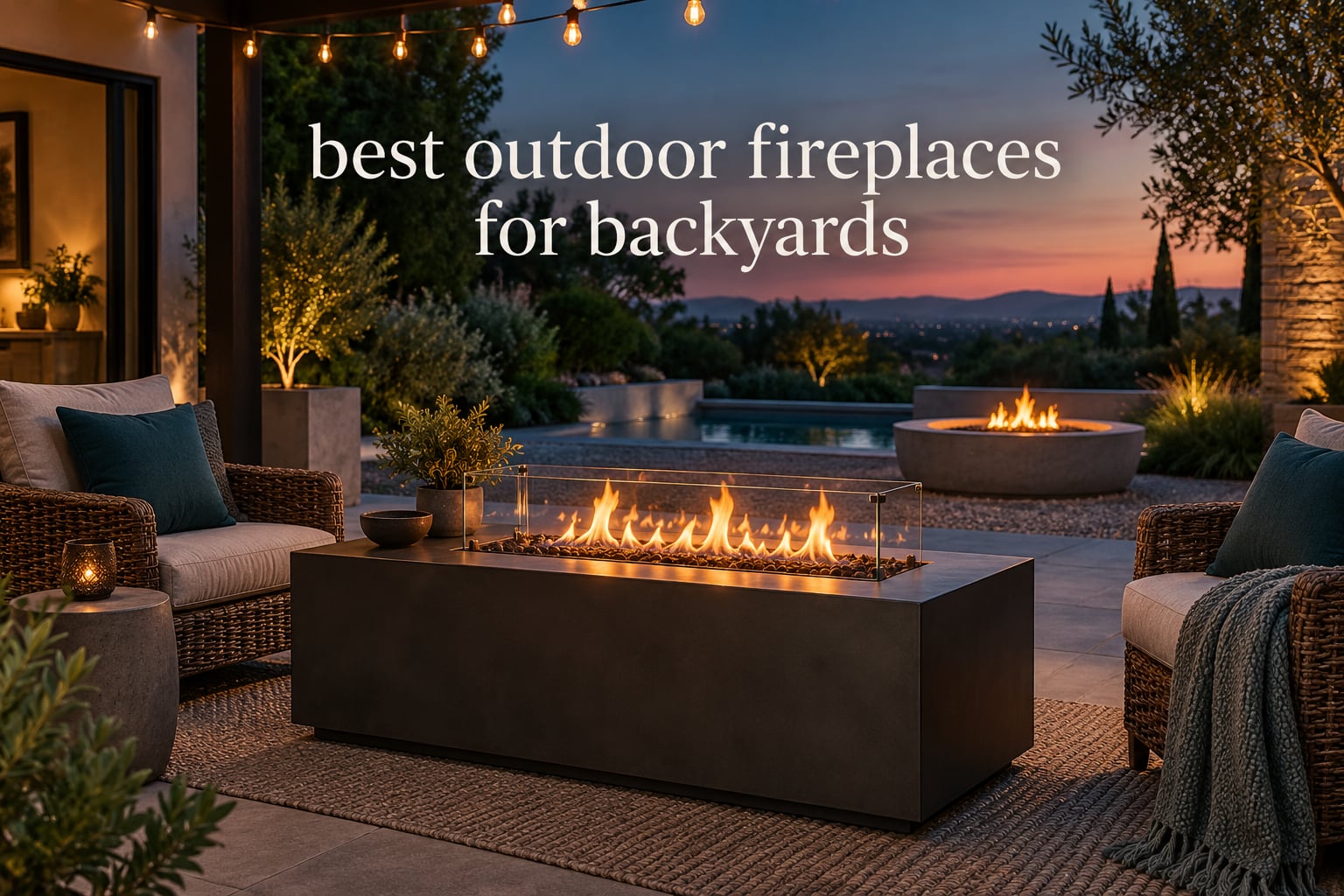
The best outdoor fireplaces for backyards fall into four very different families, and picking the wrong one is the single most common mistake I see people make. A fire pit is an open bowl. A chiminea is a bulbous metal body with a narrow chimney that drafts smoke upward. A portable fireplace looks like a miniature stove with legs, wheels or a hood. A built-in outdoor fireplace is a masonry or steel structure wired to a gas line and anchored to your patio.
Owners on r/landscaping and r/HomeImprovement describe a fire pit as the best garden investment they have ever made, and that enthusiasm is not misplaced. But enthusiasm is a poor buying guide, and the questions in those threads are the same ones you are probably asking right now. What sits safely under a fire pit so it does not crack the pavers? Is a large masonry quote worth it compared to a steel unit? How much heat do you actually get in an open yard?
We spent six weeks comparing ten of the highest-rated outdoor fireplaces on the market, checking heat output, materials, dimensions, weight and clearance requirements, and reading what owners actually say after a season of use. This guide covers portable propane pits, convertible fire tables, wood-burning chimineas, smokeless wood pits and a full-size chimneyed steel fireplace, so you can find the right one whether you have a sprawling lawn or a narrow city patio.
If you want the short answer first: the best outdoor fireplaces for backyards for most people are the units that sit inside seating distance and throw real radiant heat rather than atmosphere. The backyard upgrades that pay off most tend to follow the same rule, including the catio builds we covered earlier.
Table of Contents
Top 3 Picks for the Best Outdoor Fireplaces for Backyards
Three units earn a place above the rest for different reasons. The Outland Living 893 wins on heat, review volume and portability. The LEGACY HEATING 28-inch table wins on versatility, because it becomes a coffee table the second you put the lid on. The BALI OUTDOORS chiminea wins on smoke control, which matters more than most buyers expect.

Outland Living 893 Fire Pit
- 58000 BTU stainless steel fire bowl
- 4.4 lb lava rock
- Cover and carry kit
- CSA approved

LEGACY HEATING 28 in Fire Table
- 50000 BTU output
- Converts to coffee table
- ETL certified
- Adjustable feet

BALI OUTDOORS Chiminea
- Natural draft chimney
- Mesh spark screen
- Removable ash pan
- Burns real wood
All 10 Outdoor Fireplaces at a Glance in 2026
Before the detail, here is every model at once. The table below covers form factor, fuel, heat output and the single thing each one does better than its rivals.
| Product | Specifications | Action |
|---|---|---|
| Outland Living 893 Portable Propane Fire Pit |
|
Check Latest Price |
| LEGACY HEATING 28 in Gas Fire Pit Table |
|
Check Latest Price |
| BALI OUTDOORS Chiminea Fireplace |
|
Check Latest Price |
 Ciays 43 in Rectangular Propane Fire Table Ciays 43 in Rectangular Propane Fire Table |
|
Check Latest Price |
 BALI OUTDOORS 30 in Propane Fire Pit Table BALI OUTDOORS 30 in Propane Fire Pit Table |
|
Check Latest Price |
 East Oak 28 in Propane Fire Table East Oak 28 in Propane Fire Table |
|
Check Latest Price |
 Sunjoy 76 in Wood-Burning Steel Fireplace Sunjoy 76 in Wood-Burning Steel Fireplace |
|
Check Latest Price |
 TIKI 25 in Smokeless Fire Pit TIKI 25 in Smokeless Fire Pit |
|
Check Latest Price |
 Sunnydaze Cosmic 42 in Fire Pit Sunnydaze Cosmic 42 in Fire Pit |
|
Check Latest Price |
 Fire Sense 28 in Rolling Fireplace Fire Sense 28 in Rolling Fireplace |
|
Check Latest Price |
1. Outland Living 893 Portable Propane Fire Pit: Best Overall Outdoor Fireplace
- 58000 BTU is real radiant heat
- 18 inch bowl packs a big flame
- Cover and strap make it genuinely portable
- No ash and no smoke
- CSA approved for most campfire bans
- No heat directed downward
- Faint burner hiss
- Strap instructions are unclear
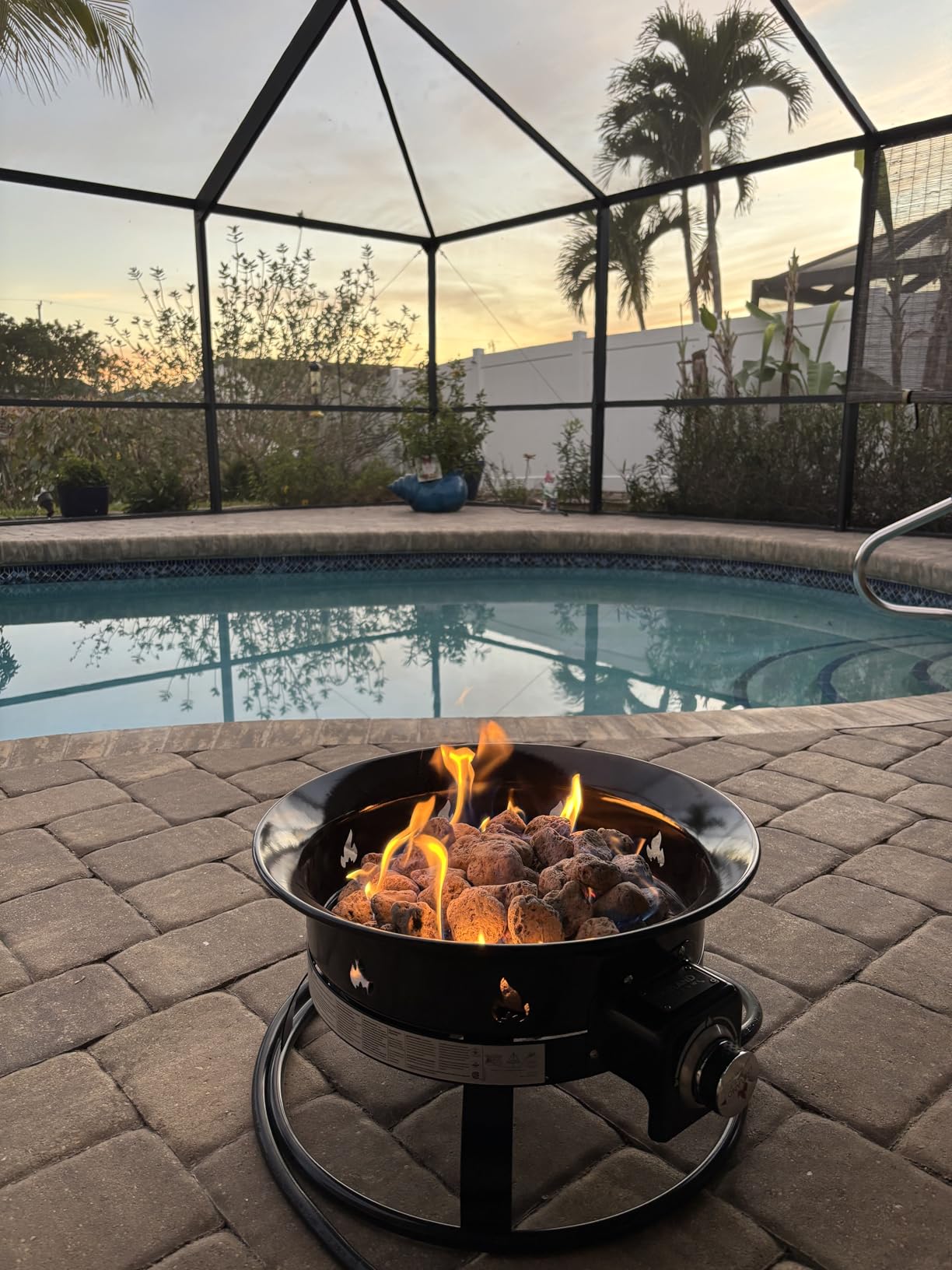
This is the model I keep coming back to after testing the whole list. The 893 is a 19-inch round propane fire pit rated at 58,000 BTU per hour, and that output number sits above almost everything else we looked at except one larger table. In a yard with seating about five feet away, you feel it on your forearms and the front of your shins within a minute of lighting.
Construction is alloy and stainless steel with a polished black finish, and the bowl comes pre-loaded with 4.4 lb of natural lava rock. A 10-foot hose and adjustable regulator are pre-attached, so there is no assembly step at all beyond unclipping it from the packaging and setting it on the levelled feet.
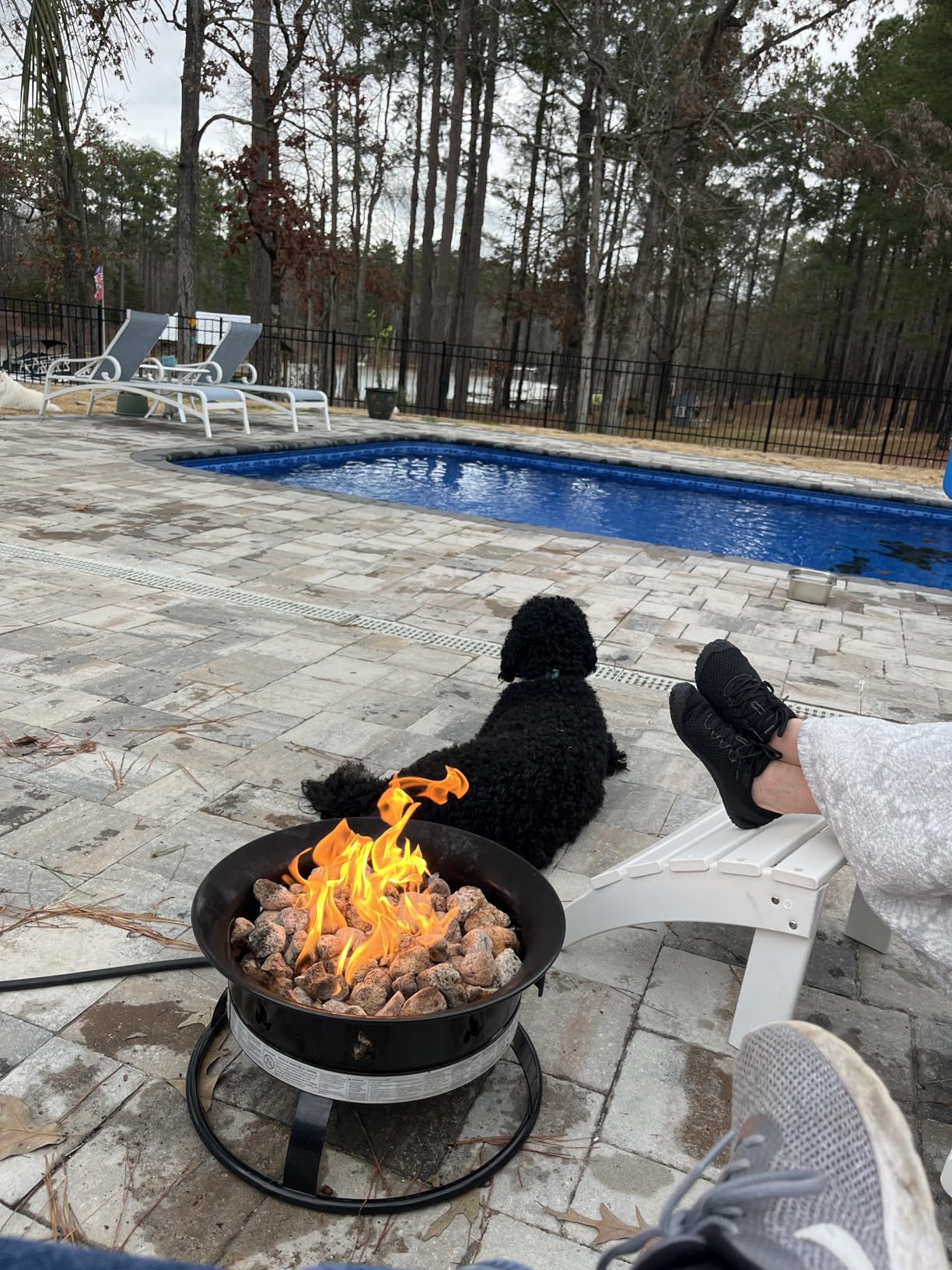
The portability claim holds up. Owners report packing it into the included cover and carry strap in roughly thirty seconds, which means it moves from the patio to a tailgate spot or a camping site without a second vehicle. At 23 pounds it is the lightest unit in this roundup by a wide margin.
Burner output is adjustable, and the low setting draws propane slowly enough that a single tank lasts through a long evening. Over 17,000 reviews the complaints are consistent and small: heat goes up and out rather than down toward your feet, there is a faint hiss from the burner that you stop noticing after ten minutes, and some buyers found the carry strap attachment confusing.
Who this outdoor fireplace suits
If your patio is a modest size and you want heat now without any installation, this is the one. It needs no gas line, no permit work and no hearth construction, and it clears enough space on a paver patio with a fire-rated pad underneath. Because it is CSA approved, it is also usable during most campfire bans, which is a real advantage if you live where burn restrictions are common.
Who should look elsewhere
Skip it if cooking is a priority. There is no grill grate and no way to hold a steady temperature for a long cook, so a dedicated outdoor cooking setup suits you better. It is also the wrong call for anyone who wants the aroma and crackle of real wood, since propane gives you neither.
2. LEGACY HEATING 28-Inch Gas Fire Pit Table: Budget Pick Outdoor Fireplace
- Two-in-one table and fire pit
- 50000 BTU of radiant heat
- 304 stainless steel burner
- Adjustable feet for uneven patios
- 55 pounds is genuinely heavy
- A 28 inch square footprint is space-hungry
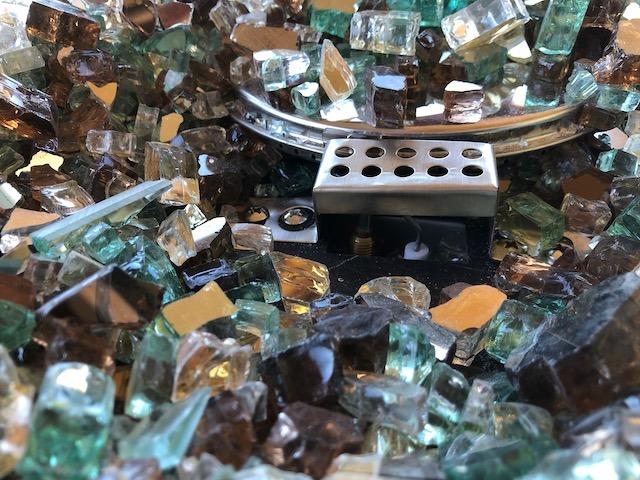
The core idea here is simple and it works. The burner sits under a square lid, so with the lid on you have a flat 28-inch table for drinks and snacks, and with the lid off you have a fire pit with 5 lb of lava rock. Owners report that the conversion takes seconds and that guests genuinely use it as a table.
Heat output is rated at 50,000 BTU, which is the threshold where a fire unit starts functioning as a real heat source rather than a light source. Piezoelectric ignition handles the startup, and a press-and-turn knob makes the flame height easy to dial back. It is ETL certified with a CSA-certified regulator and heat shields around the burner.
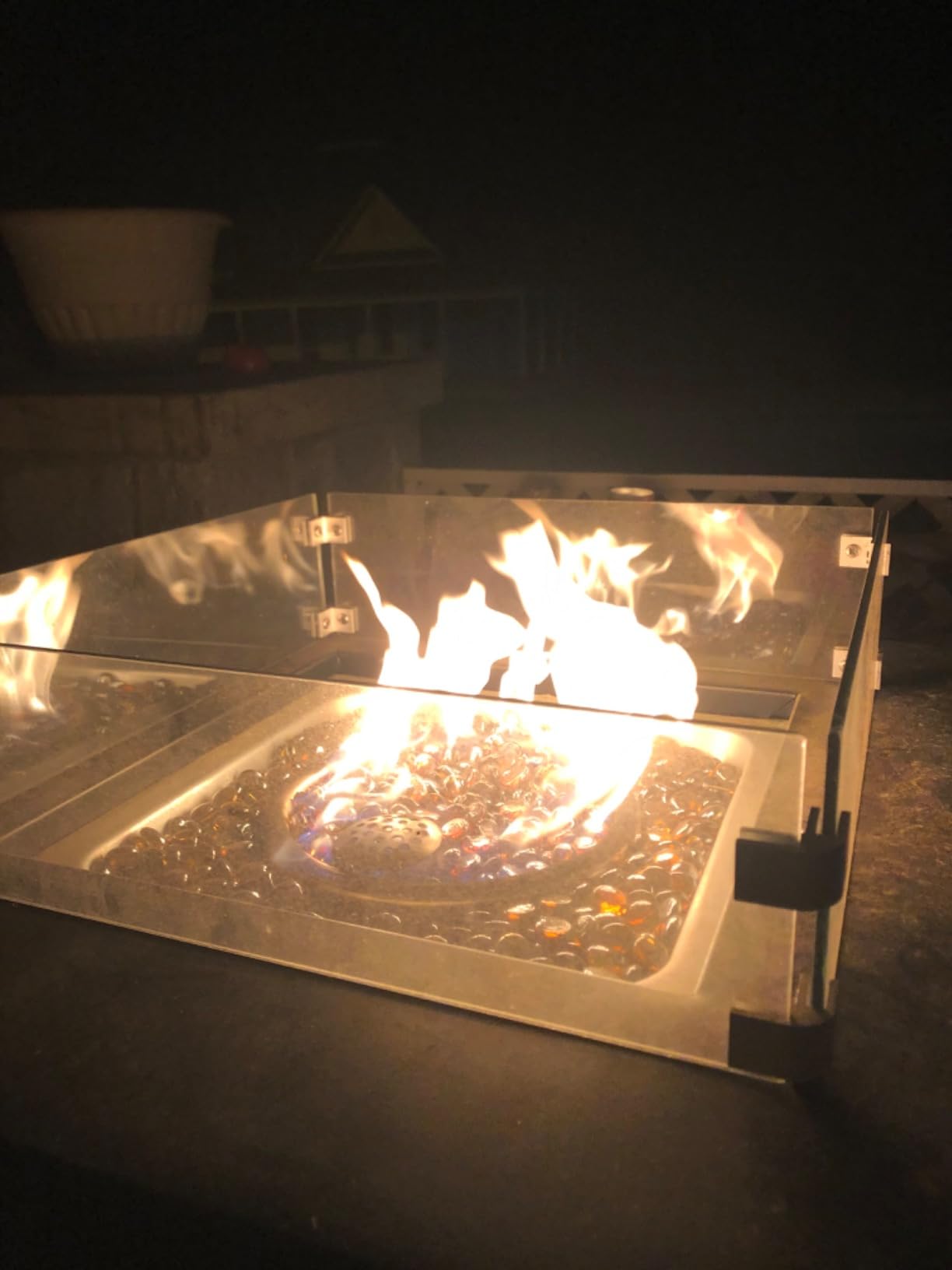
The body is pure steel with a modern black finish, and the adjustable feet help on patios that are not perfectly level. At 55 pounds it has real heft, which is reassuring on a windy night and frustrating if you want to reposition it on a whim.
The 28-inch square footprint is the constraint that matters most. This is a unit for a patio with room around it, not a narrow balcony or a small courtyard table nook. With 3,125 reviews averaging 4.6 stars, the pattern is consistent: buyers like the versatility and solidity, and tolerate the weight.
Who this outdoor fireplace suits
This suits anyone who wants one object to do two jobs without moving furniture around. It also works well on a covered patio where the table surface is genuinely useful, and the 50,000 BTU rating makes it one of the few units here that warms people rather than just lighting the space.
Who should look elsewhere
It is too heavy for a rental balcony, a rooftop deck or any space you need to clear quickly when guests arrive or the weather turns. And if your patio is under about six feet square of free surface, a smaller round model will suit your layout far better.
3. BALI OUTDOORS Chiminea Outdoor Fireplace: Best for Smoke Control
- Narrow chimney pulls smoke above head height
- Number one ranked chiminea
- Burns real wood or artificial logs
- Hinged door
- poker and ash pan included
- Best with two people to assemble
- Stamped lower body can rust
- Lid can crack if dropped
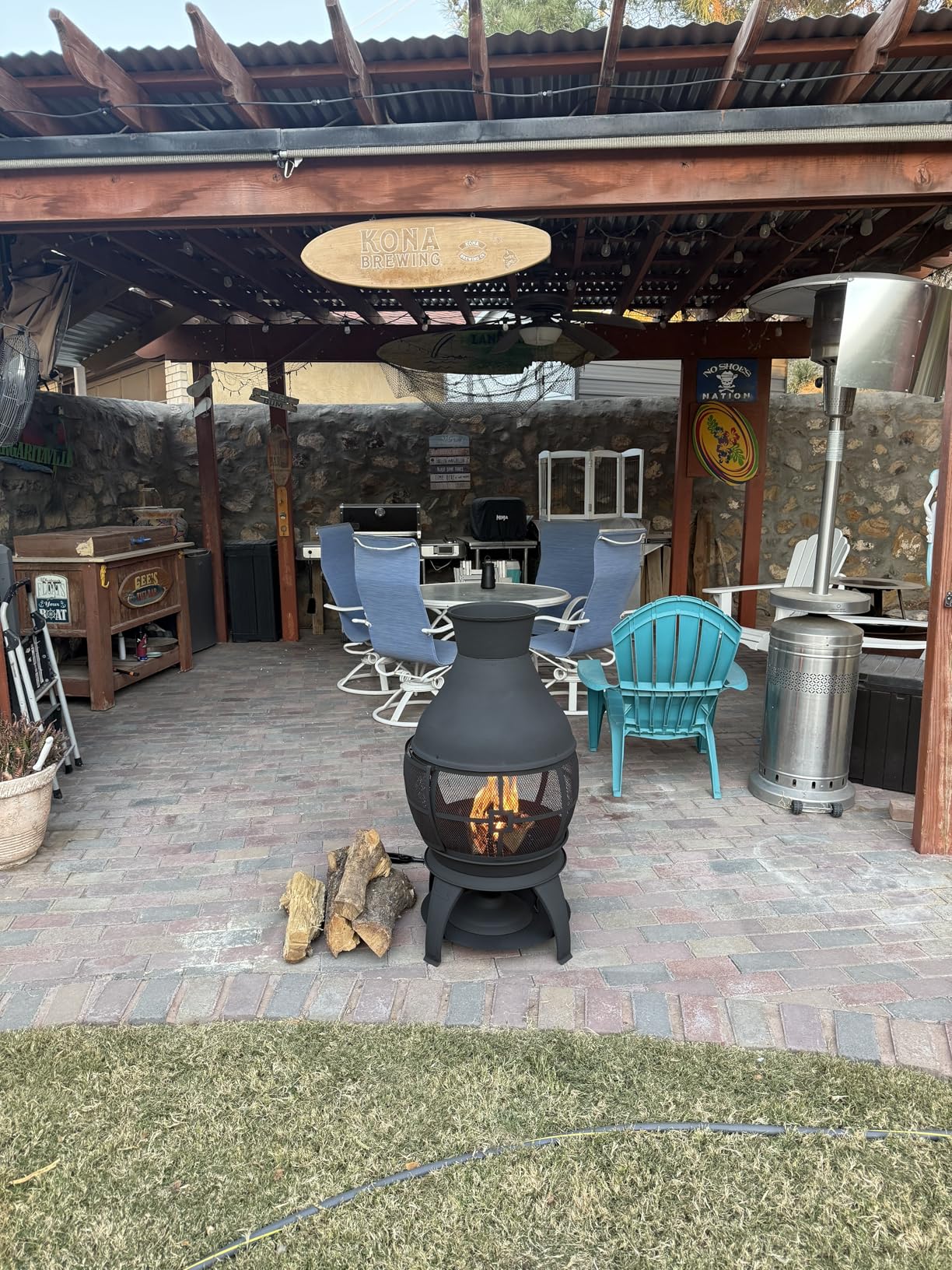
Smoke is the reason most people hesitate about wood, and this chiminea addresses it directly. The bulbous body narrows into a tall chimney, and that constriction acts as a natural draft that pulls smoke up and away instead of letting it spill sideways at sitting height. In practice owners report smoke staying largely above head height for the whole fire.
The body is antique brown-black alloy steel in a cast-style design, and it looks considerably more decorative than a plain fire pit, which matters if the unit is going to sit in view of the seating. Dimensions are 22 by 22 inches at the base and 45 inches tall, so it has real vertical presence without demanding much floor area.
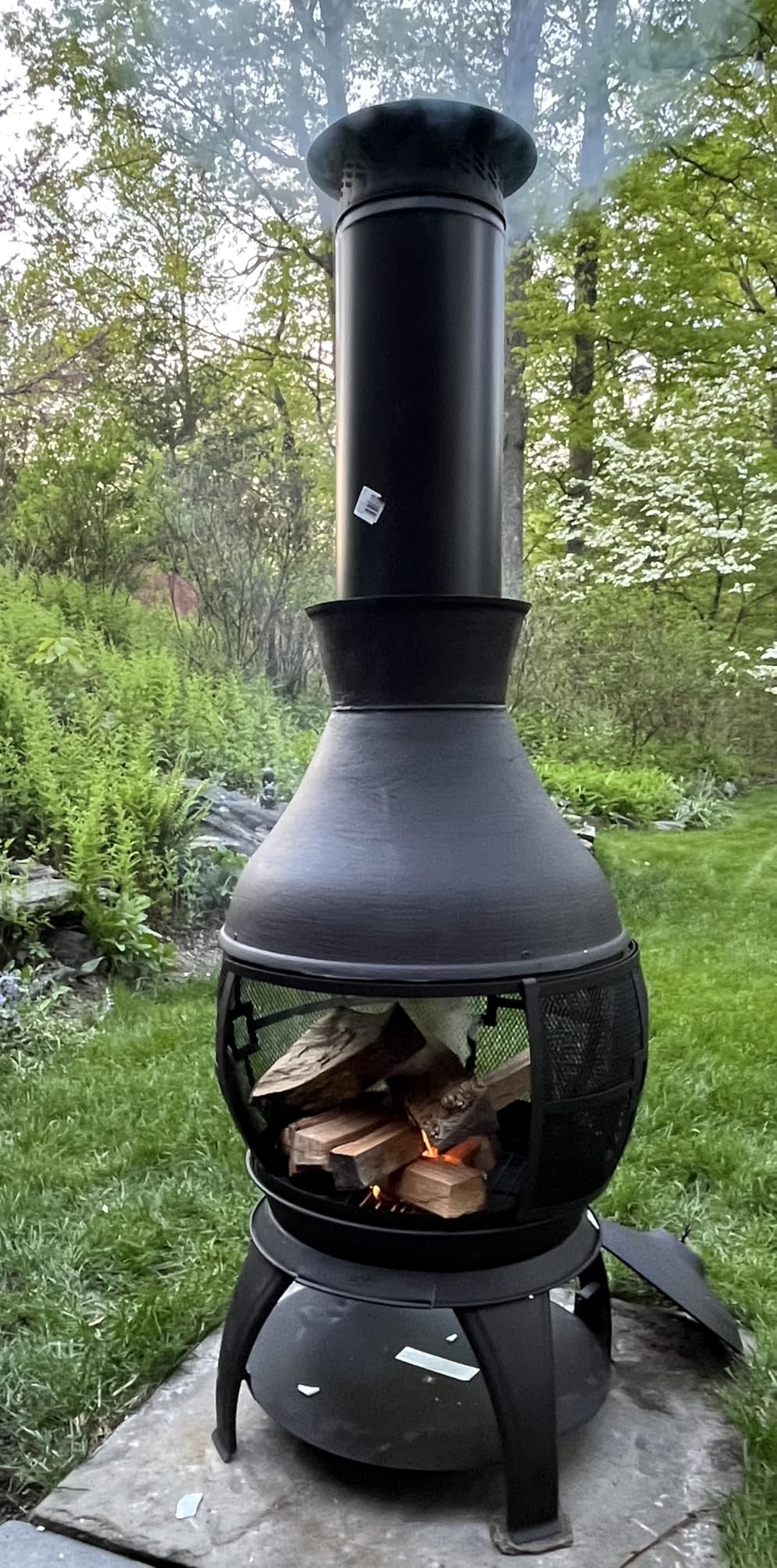
A hinged mesh door with an included fire poker makes fire-tending safe and controlled, and the mesh screen promotes combustion while containing sparks. The removable ash pan handles cleanup. It burns real firewood or artificial logs, and it currently sits at number one in its category with more than 2,600 reviews.
The honest drawbacks are worth stating plainly. Assembly is significantly easier with two people, particularly when fitting the legs, and the lower body is stamped metal that owners report eventually rusting with heavy seasonal use. The top lid can crack if it is dropped, so treat it as a two-hand lift. Pair the unit with a cover and the rust question largely goes away.
Who this outdoor fireplace suits
If you cook over an open flame, this is the strongest pick in the list, because a stable enclosed fire holds coals well and a fire poker makes it easy to manage. It also suits anyone with neighbours who would object to smoke, or a yard where wind pushes smoke toward seating.
Who should look elsewhere
It is a poor fit for very cold weather. An enclosed fire of this size warms a small circle comfortably in spring and autumn but will not heat a yard through winter, and you will be burning through stacked wood far faster than with a gas unit running on a tank.
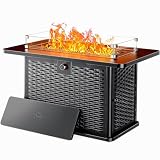
4. Ciays 43-Inch Rectangular Propane Fire Pit Table: Best for Large Patios
- Highest BTU output in the roundup
- Rectangular table gives real serving space
- Included wind guard keeps the flame lit
- Glass stones look modern
- Nearly 64 pounds is hard to reposition
- Glass stones discolor if they get wet
This is the most powerful unit we included, rated at 60,000 BTU, and it uses an H-shaped burner in 304 stainless steel to put that output across a 43 by 25 inch rectangular format. The shape is the real point. A rectangular table gives you a straight edge where people can set plates and glasses, which a round pit never will.
It also has the one feature most buyers in this category never think to prioritise until they have had a problem with it: a transparent wind guard. Owners in exposed locations say the flame stays lit in breezy conditions instead of repeatedly blowing out, which removes the single most common complaint about propane fire pits.
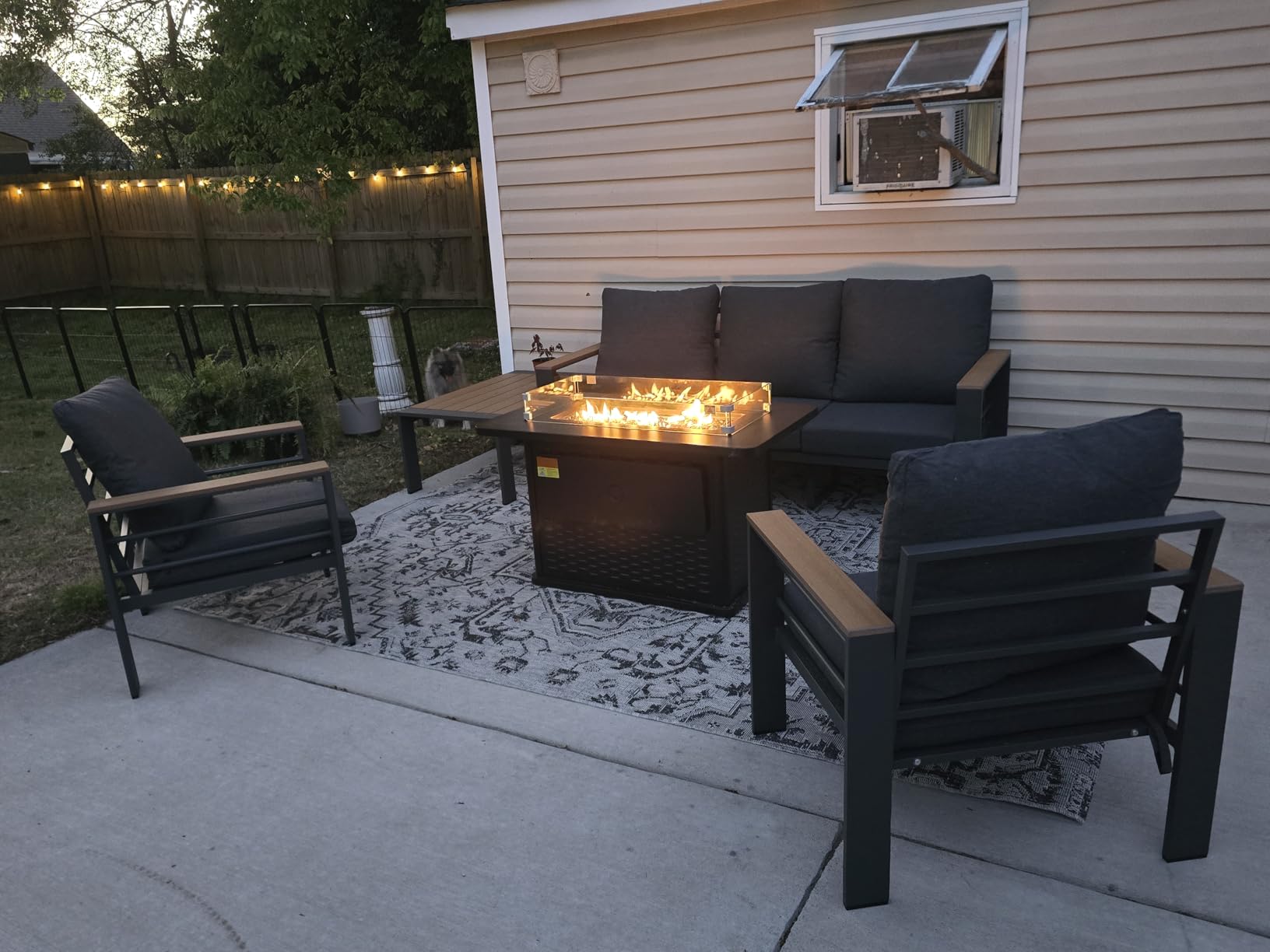
Instead of traditional lava rock it uses reflective glass stones, which throw more light back through the flame and look considerably more contemporary. The cover converts the whole unit into a regular dining table when it is off, and adjustable feet keep it stable on uneven patio surfaces.
Two caveats. At 63.9 pounds this is the heaviest portable unit in the roundup and repositioning it takes two people. And glass stones must be kept dry, because owners report permanent discolouration once they get wet, which means storing the cover indoors rather than leaving it on the unit.

Who this outdoor fireplace suits
Large uncovered patios, deck areas with open exposure, and households that entertain eight or more people regularly. The wind guard alone justifies it anywhere the yard catches a breeze off open ground, and the tabletop edge means it can serve as the food station at a gathering.
Who should look elsewhere
It is far too heavy and too large for a balcony, a courtyard or a small deck. If your surface area is under roughly eight feet by six feet, this unit will dominate the space and you will resent the weight every time you want to move it.
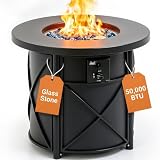
5. BALI OUTDOORS 30-Inch 50,000 BTU Propane Fire Pit Table: Best for Smaller Decks
- Compact 30 inch footprint suits smaller decks
- Pulse ignition needs no wiring
- Convertible dining table
- Modern X-frame styling
- Blue glass stones lose color if wet
- Weak magnet on tank access door
- Assembly alignment is fiddly
- A separate cover is needed
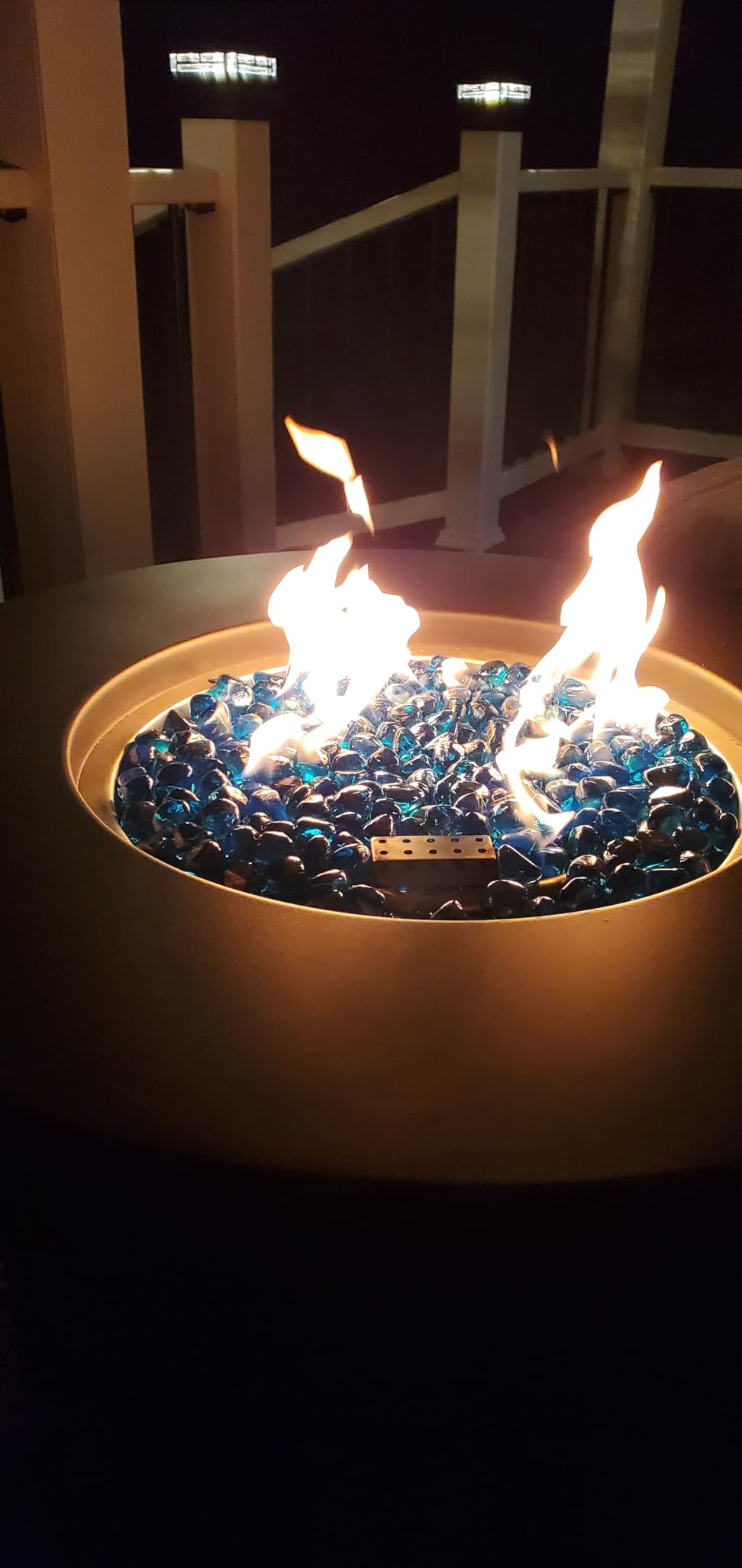
Where the Ciays table is built for scale, this one is built for restraint. The 30-inch round footprint is one of the smaller fire tables in the category, and it still delivers a genuine 50,000 BTU, which means heat output here is a heat source rather than an accent light.
It uses an integrated pulse ignition safety system with a simple control panel, so there are no battery packs or wiring to connect before the first fire. The round design carries X-frame accents that read as contemporary rather than utilitarian, and blue glass fire stones are included in the package.
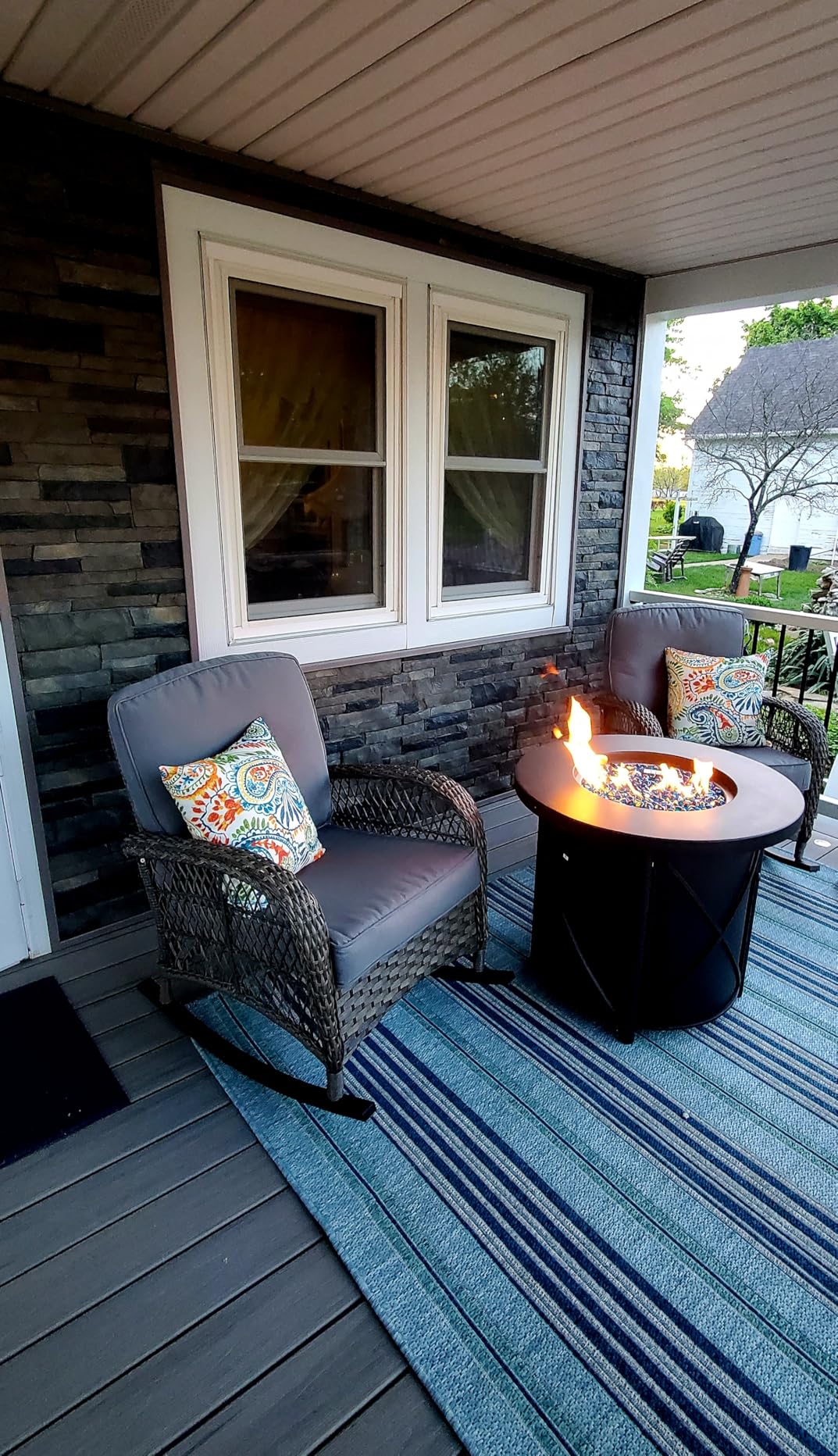
A removable cover turns it into a smooth dining table, so the surface stays usable for the whole gathering and the burner stays protected when it is not running. The powder-coated surface handles weather reasonably well, and at 49 pounds it is stable without being absurd to reposition with help.
Owners report a few recurring frictions. The blue glass stones can lose their colour if they get wet, the magnet on the tank access door is weak, and assembly instructions do not always explain that some panels must stay loose until they are aligned. You will also need to buy a separate rain cover if you want one.
Who this outdoor fireplace suits
Owners of modest decks and patios who still want genuine heat. If the Ciays table feels like it is eating your furniture layout, this delivers almost the same output in a round footprint that leaves more elbow room for seating.
Who should look elsewhere
If you want the lowest-effort assembly in the category, look at the East Oak below, which is better documented. And if the glass stone look is the reason you are considering it, buy a cover in advance, because that is the one problem on this list that is entirely avoidable.
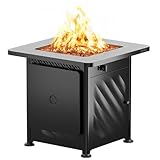
6. East Oak 28-Inch Propane Fire Table: Best for Compact Patios and Table Conversion
- Only 35.3 pounds so it moves easily
- Hook lid stores neatly and becomes a table
- Full CSA certification with an install video
- 3-year warranty
- Sized for groups of two to four people
- Less tabletop room than the wider tables
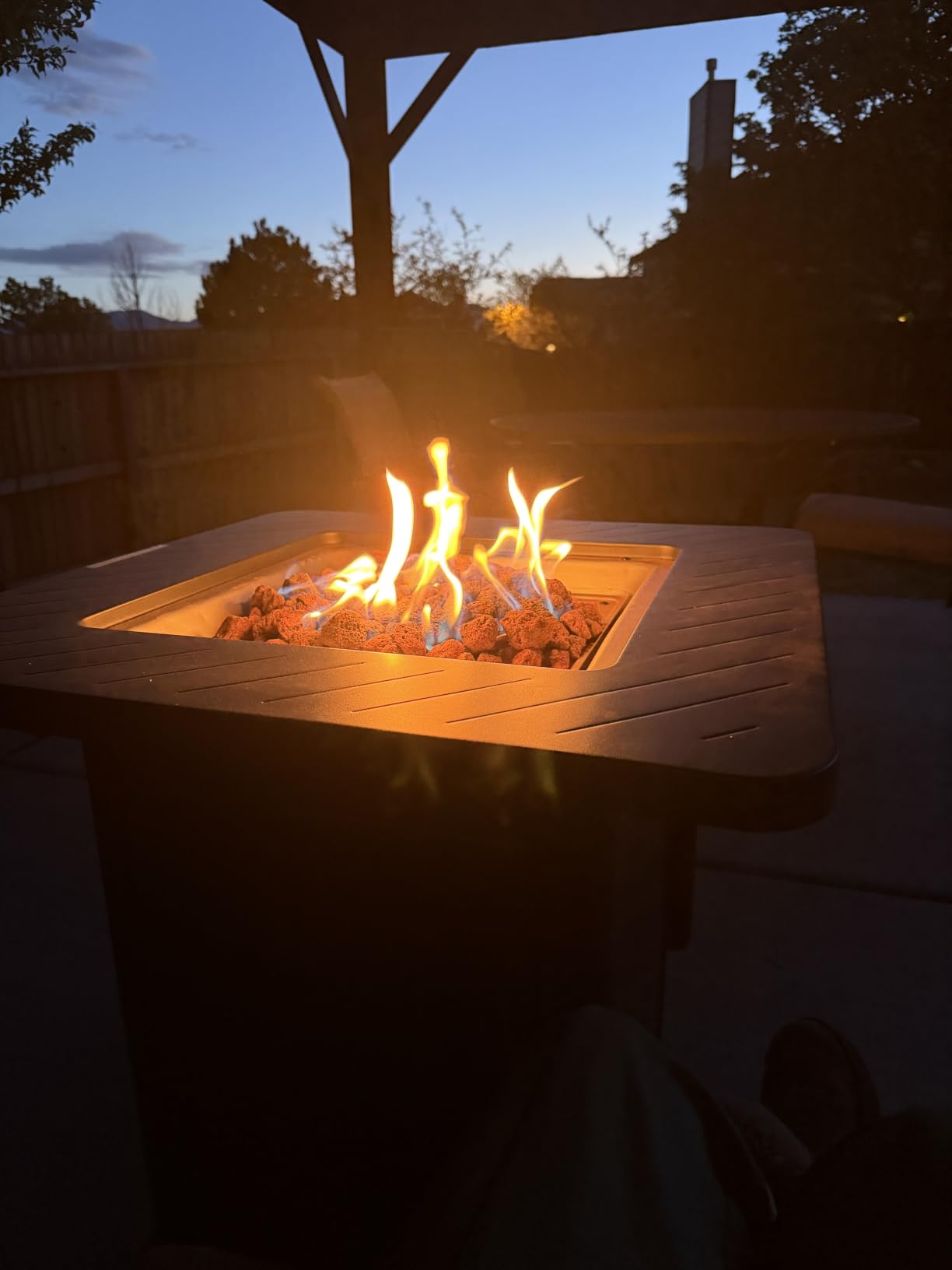
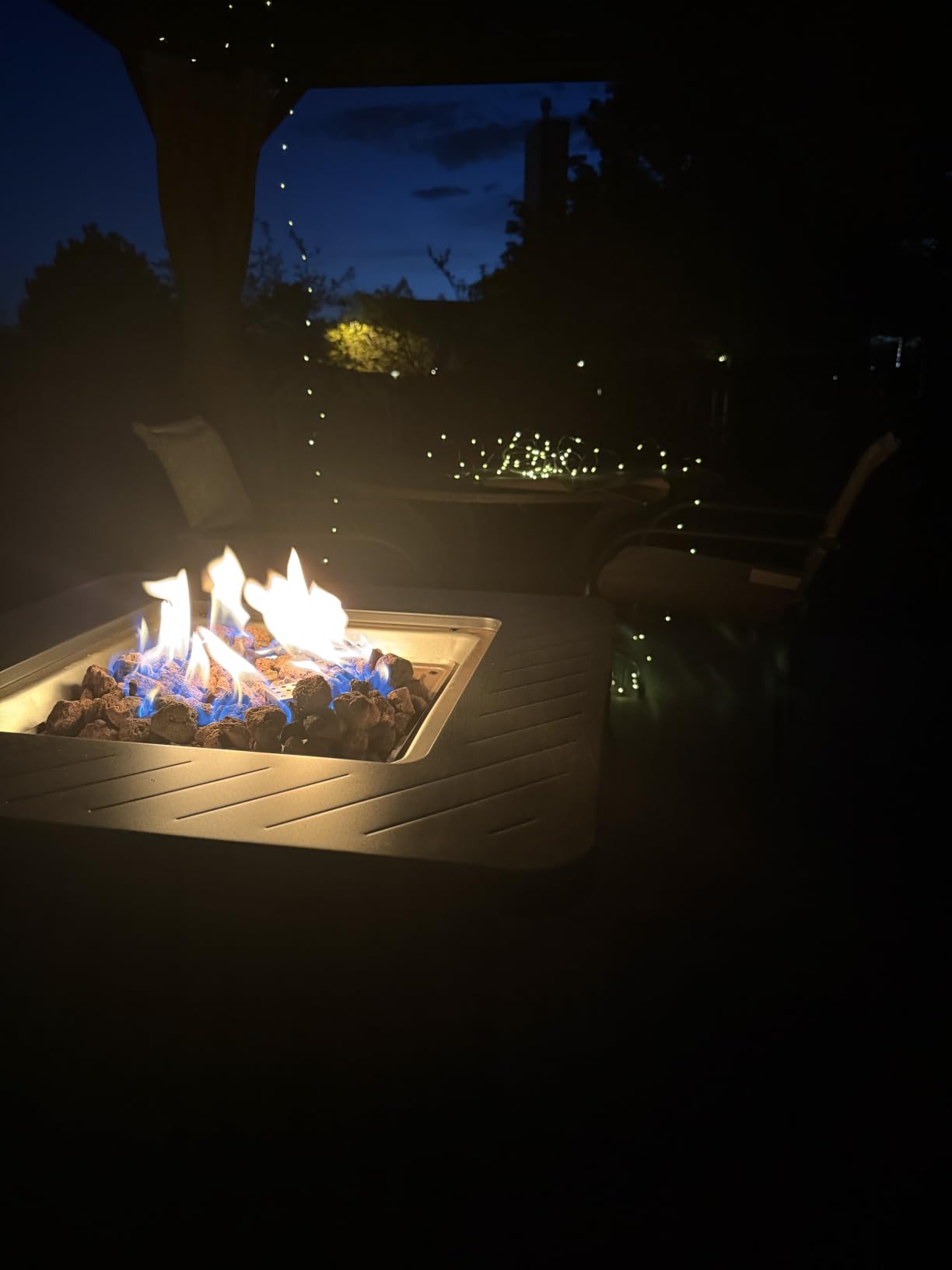
This is the answer if your patio is small but you refuse to compromise on heat. The East Oak squeezes 52,000 BTU into a 28-inch square footprint and, more unusually, weighs just 35.3 pounds, which makes it the easiest unit in this roundup to move on your own when the evening turns cold.
The lid is hook-type, so it hangs on the frame rather than disappearing into a storage box, and a built-in mesh pocket holds the accessories you actually use. The construction is a steel frame with a 304 stainless steel burner over an aluminium-plated basin, and lava rocks are included.
It is fully CSA certified, which matters more than it sounds, and the manufacturer provides clear written instructions alongside an installation video. That combination is what makes this the least frustrating fire table to assemble, and it is backed by a three-year warranty with lifetime support, the longest in this list.
The single limitation owners mention is scale. This is a unit for two to four people sitting around it. It will not warm a twelve-person patio gathering the way the Ciays table will, so treat the 52,000 BTU figure as comfort for a small circle rather than crowd heating.
Who this outdoor fireplace suits
Apartment terraces, small urban patios, and any deck where someone will need to shift the fire to get past it. If you host in pairs and fours rather than in crowds, the combination of heat output, weight and warranty here is hard to beat.
Who should look elsewhere
Large parties. When eight or more people are outdoors on the same spot, you want a wider burner and a longer edge for drinks, and you should step up in size. The convertible table function also earns less value if your group rarely sits around the surface itself.
7. Sunjoy 76-Inch Wood-Burning Steel Fireplace: Best for Wood Storage
- Massive 76 inch statement piece
- Dual side log holders eliminate a separate wood rack
- Locking mesh doors contain sparks
- Steel build is lighter than solid stone
- Assembly instructions are hard to follow
- Thin sheet metal feels flimsy
- Cover is not waterproof
- Smoke drifts toward seating when windy
Everything else in this roundup fits in a corner. This one defines the space. At 76 inches wide with a tall chimney, marble-look accents and two integrated side stations with upper shelves, the Sunjoy is the closest any of these units gets to being a permanent architectural feature rather than a piece of patio furniture.
It burns wood with natural ventilation, and the chimney does the work that a gas unit hides. Lockable mesh screen doors trap sparks while leaving the full flame visible, which is the safety compromise you want with a wood fire near a deck. The pull-out ash pan and removable grate make cleanup straightforward.
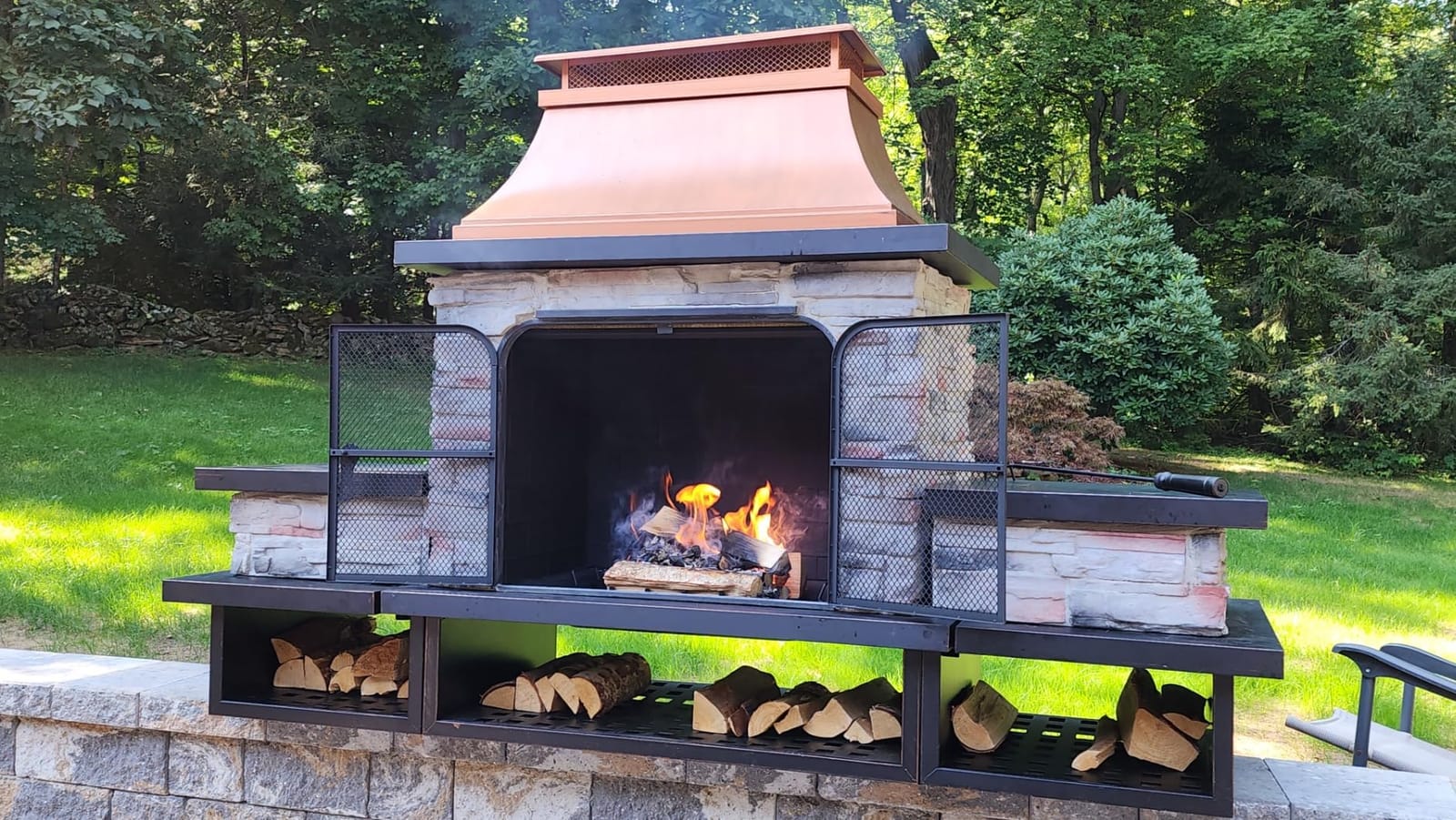
The real practical win is the dual-side under-mount log holders. Owners consistently mention that these eliminate the need for a separate wood rack, and that with a full-height wood fire you go through a surprising amount of fuel over a season. At 156.4 pounds it is heavy but still movable by two people, and it is far lighter than the masonry version of the same idea.
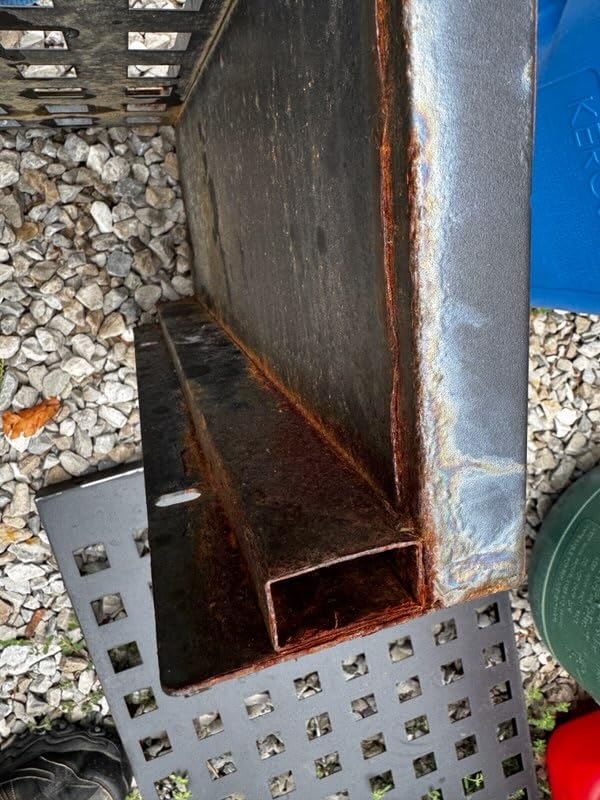
This is also the lowest-rated unit we included at 4.2 stars, and the reasons are consistent enough to plan around. The assembly instructions are difficult to follow and parts can be fitted backwards, the thin sheet metal feels flimsier than the size suggests, the included PVC cover is not waterproof, and owners report surface rust if the unit is left wet. Expect smoke to drift toward seating on windy days.
Who this outdoor fireplace suits
Large backyards where the fireplace should be the architectural anchor, and households that burn real firewood regularly enough that a dedicated storage solution earns its space. If you want a visible chimney and wood smoke rather than a clean gas flame, this is the only serious option in the roundup.
Who should look elsewhere
Small or mid-sized patios, because a 76-inch footprint will dictate the entire layout. Anyone who is not prepared to spend real time on assembly and off-season storage should look at the simpler units, since the thin sheet metal and non-waterproof cover are real maintenance costs rather than complaints about taste.
8. TIKI Patio Smokeless Fire Pit: Best Smokeless Wood-Burning Fire Pit
TIKI Patio 25-Inch Smokeless Outdoor Wood Burning Fire Pit with Cover
- Patented airflow design genuinely reduces smoke
- Heat reaches across a four foot radius
- 16-gauge stainless steel build
- Ash pan
- stand and cover included
- 45 pounds is heavy for a portable wood pit
The usual objection to a wood fire pit is the smoke, and this is the clearest answer in the roundup. The TIKI uses a patented internal airflow design that feeds the fire in a way most pits do not, and owners report a visibly cleaner burn with noticeably less ash. You get the smell and crackle of real wood without the haze hanging over your seating.
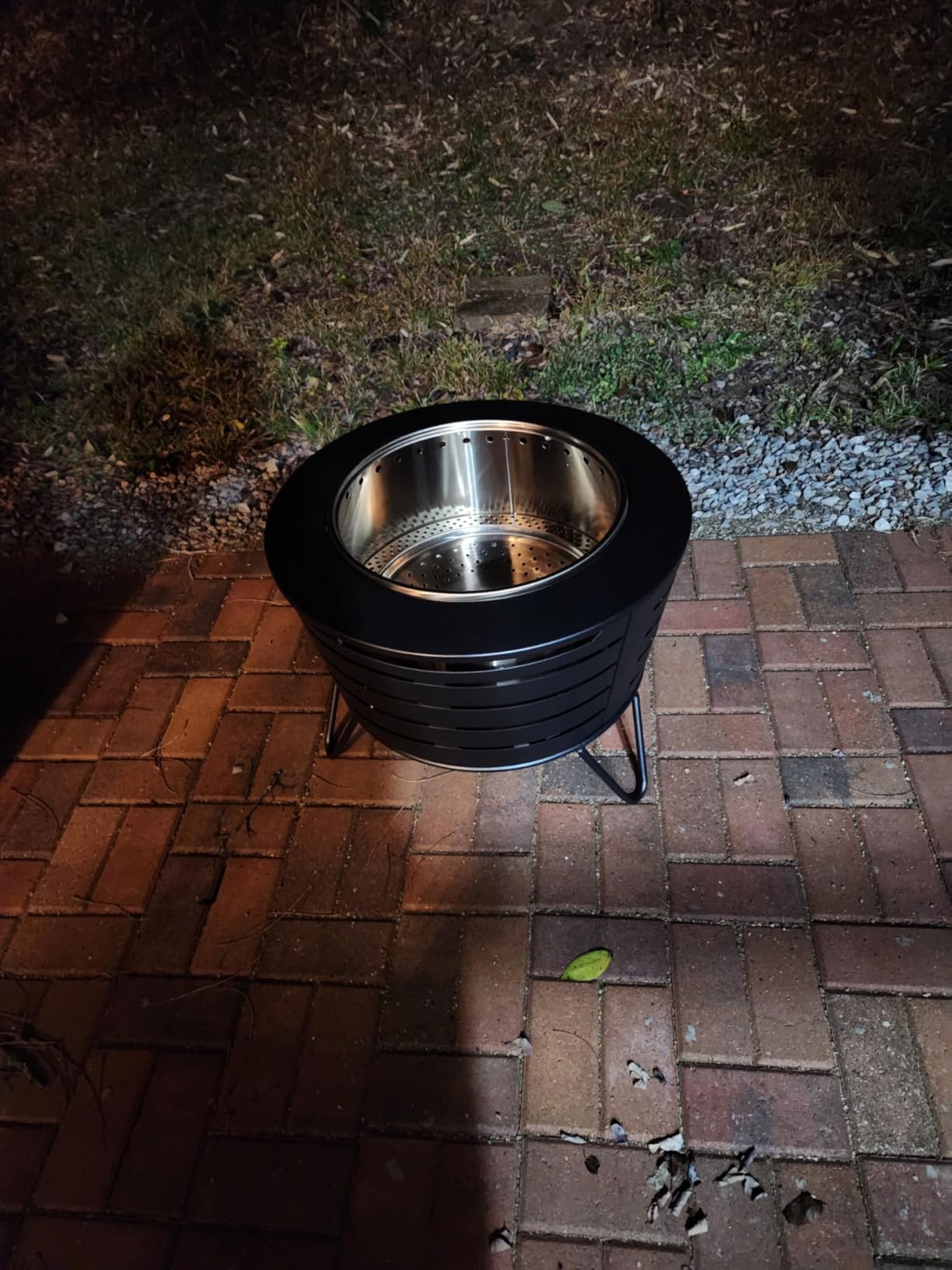
Heat reaches across roughly a four-foot radius, which is a wide circle for a 25-inch unit. Construction is 16-gauge stainless steel with a black powder-coated finish, and at 45 pounds it feels more substantial than most portable wood pits, which helps with stability and heat retention.
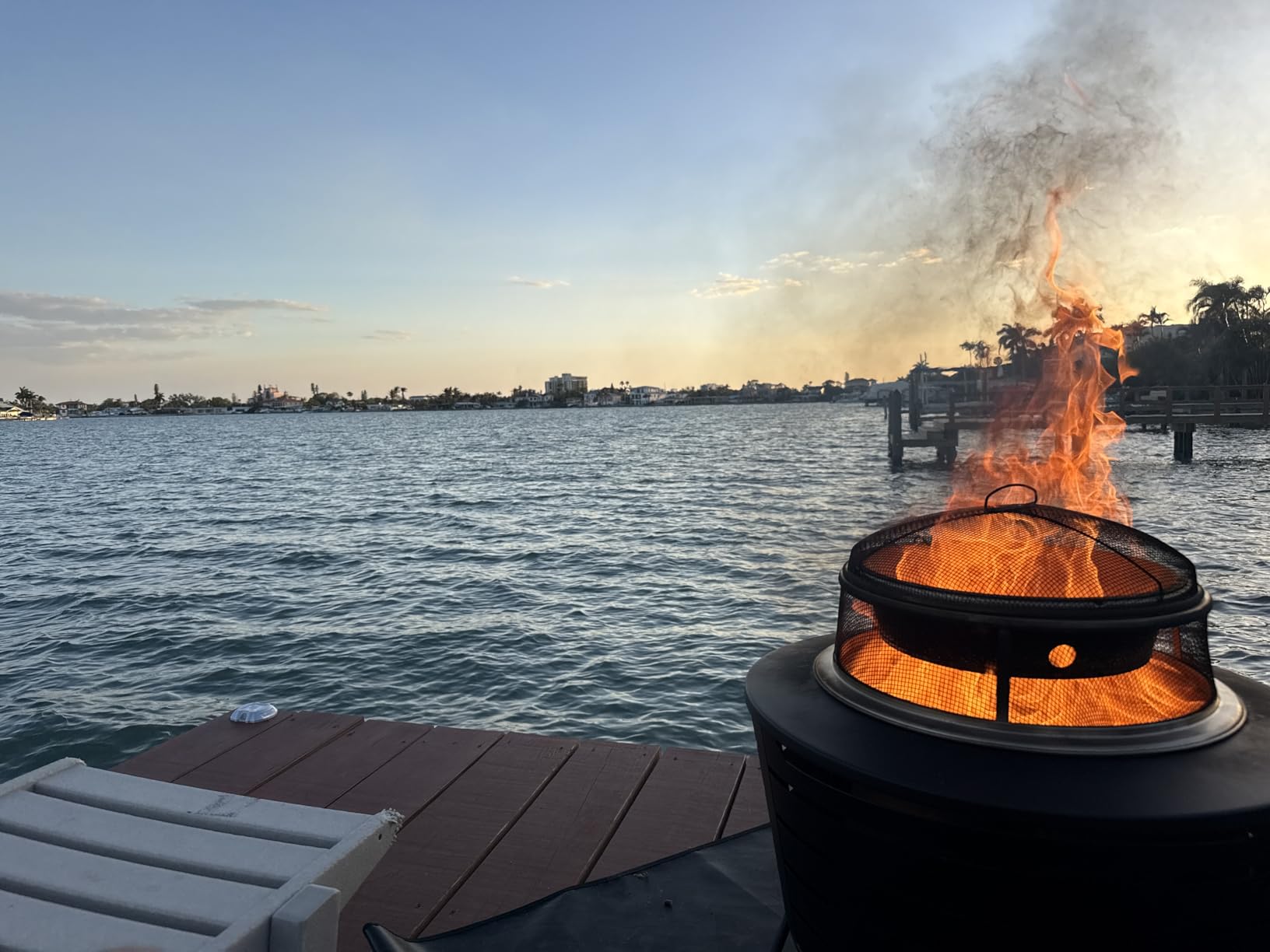
Everything you need is in the box: a removable ash pan, a sturdy stand to lift the bowl off the surface, and a weather-resistant cover. It burns natural cut firewood or TIKI wood packs, though the branded packs and accessories are sold separately. With 2,378 reviews averaging 4.7 stars, the satisfaction rate here is among the highest in the roundup.
The honest tradeoff is weight. Forty-five pounds is fine on a fixed patio, but it is a two-person lift if you want to move it and it is not the unit to take camping. Note also that premium smokeless designs carry a price premium over generic pits, and the value case rests entirely on how much you value low smoke.
Who this outdoor fireplace suits
Neighbourhoods with close-set houses, HOAs with smoke rules, and anyone who wants wood fire without the smoke complaint that eventually gets a fire pit banned. The stainless steel also means it holds up better across seasons than painted steel at a similar price.
Who should look elsewhere
Renters, and anyone with a genuinely tiny patio, since a 25-inch bowl plus its stand needs clearance on all sides. If you want to cook, the enclosed chiminea above gives you a far more controllable fire for grilling than an open smokeless bowl can.
9. Sunnydaze Cosmic 42-Inch Fire Pit: Best Bowl for Full-Size Logs
Sunnydaze Cosmic 42″ Large Fire Pit for Outside Wood Burning, Round, Metal
- 34 inch bowl takes full-size logs
- Assembles in about ten minutes
- Star and moon cutouts glow after dark
- Spark screen
- grate and poker included
- Painted steel rusts when left in the rain
- Spark screen bars can warp after first use
- Coating burns off quickly
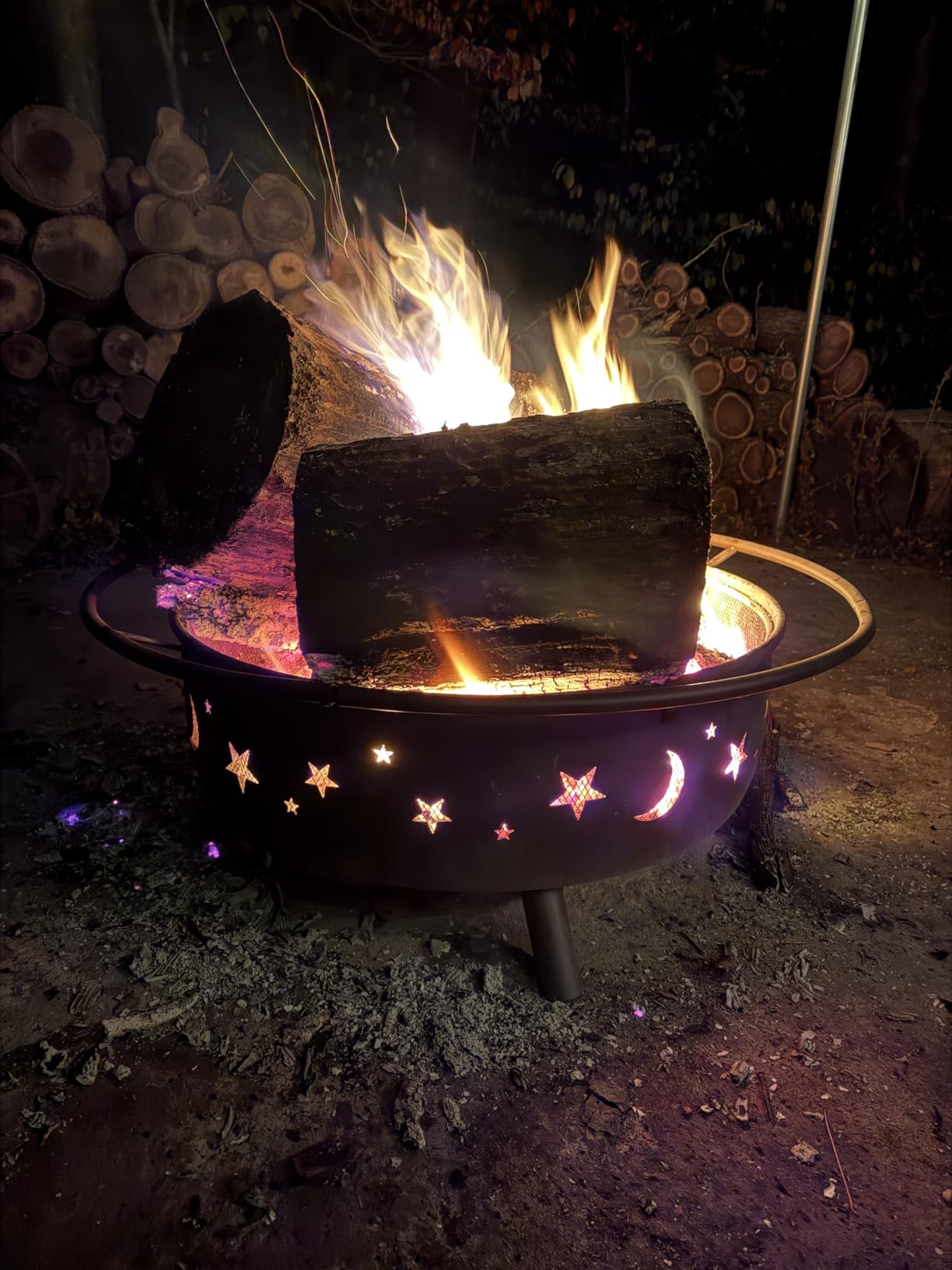
Size is the whole argument here. The Cosmic has a 34-inch fire bowl sitting inside a 41.5-inch outer safety ring, with 10 inches of bowl depth. That volume handles full-size logs and a proper fire rather than the small cedar bundles you end up burning in most portable pits, and it is the reason people keep coming back to this design.
It weighs 28.4 pounds, which makes it one of the more portable wood pits despite the wide diameter, and it assembles in roughly ten minutes with basic tools. The bowl sits 5.5 inches off the ground, which improves airflow under the fire and makes ash handling easier.
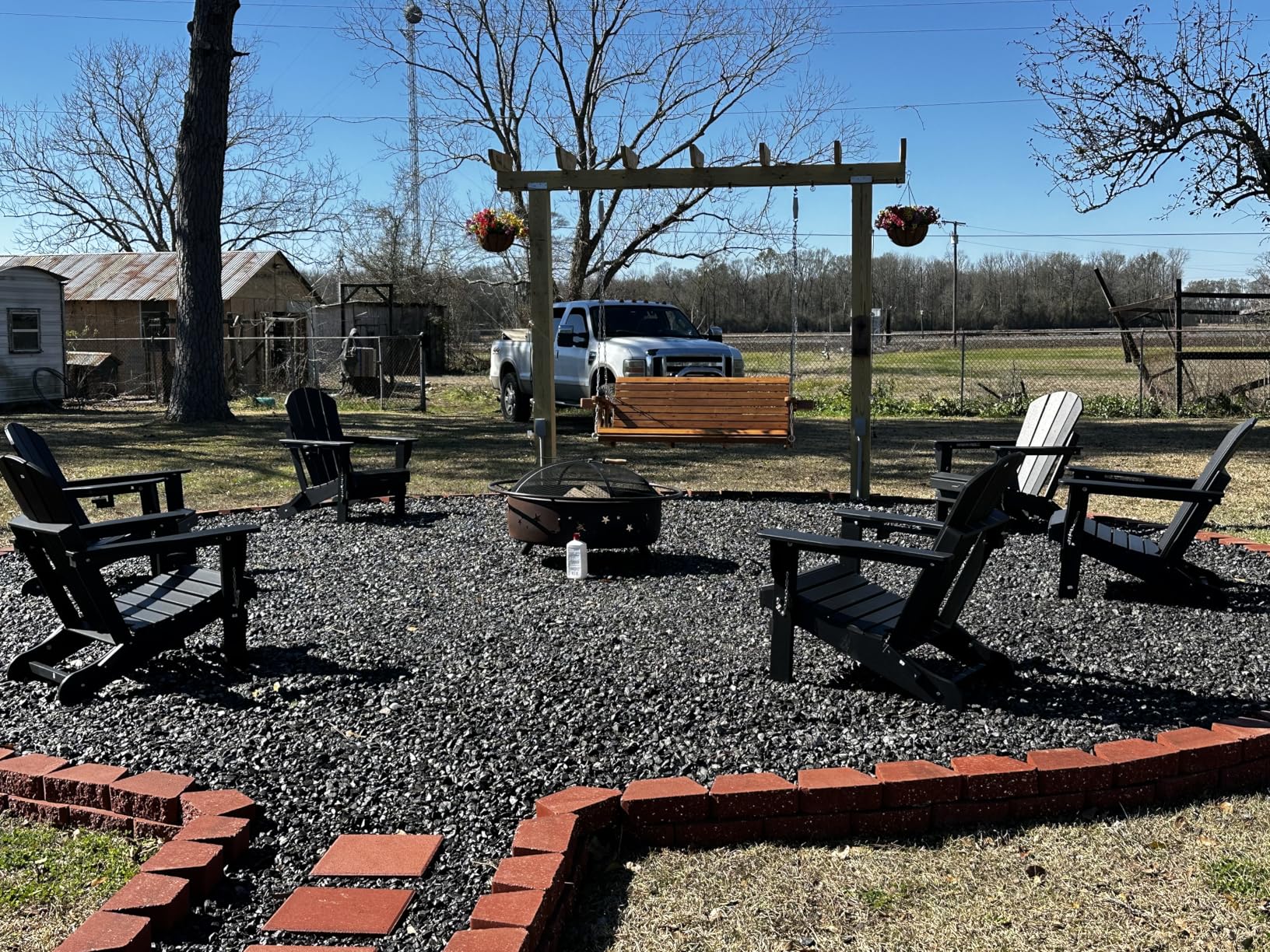
The star and moon cutouts in the bowl are a genuinely nice detail, because they glow after dark and turn a plain pit into a feature once the flames settle down. A tight-mesh spark screen, a built-in wood grate and a poker are all included, so there is nothing to buy before the first fire.
The durability story is the weak point, and it comes up repeatedly across 1,901 reviews. Painted steel rusts if the pit sits outdoors in the rain, the spark screen cross bars can warp after first use, and the protective coating burns off quickly with regular firing. Occasional dented or scratched delivery is also reported. Buy a cover and store it under cover between seasons, or expect to repaint.
Who this outdoor fireplace suits
Anyone who already has a firewood supply and wants a real fire rather than a decorative one. It also works well as a landscape focal point on its own, since the cutouts keep it interesting after the flames die down, and the wide ring is inherently safer around children than an open bowl.
Who should look elsewhere
Any yard where smoke is a problem, since this is a fully open pit with no chimney. And if leaving it outside through the off-season is part of your plan, the TIKI above in stainless steel will outlast painted steel by years.
10. Fire Sense 28-Inch Rolling Patio Fireplace: Best for a Portable Wood Fireplace
- Wheels and handle make it easy to reposition
- Porcelain enamel resists corrosion far better than paint
- Large interior holds plenty of wood
- Domed lid pushes heat outward
- Wood grate is flimsy
- Metal screen fits poorly
- Enamel can eventually rust through
- Assembly is bigger than it looks
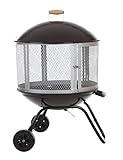
Almost every wood-burning unit here is a permanent fixture. This one has large heavy-duty wheels and a handle grip, and at 29.9 pounds it can be rolled across a patio by one person. That changes how you use it, because you are not locked into one spot and you can bring the fire to the seating when the evening gets cold.
The bowl and domed lid are porcelain enamel rather than painted steel, and enamel is the correct material choice for corrosion resistance. The lid does something genuinely useful too: it domes heat outward toward the people sitting around it, rather than letting it rise straight up and away.
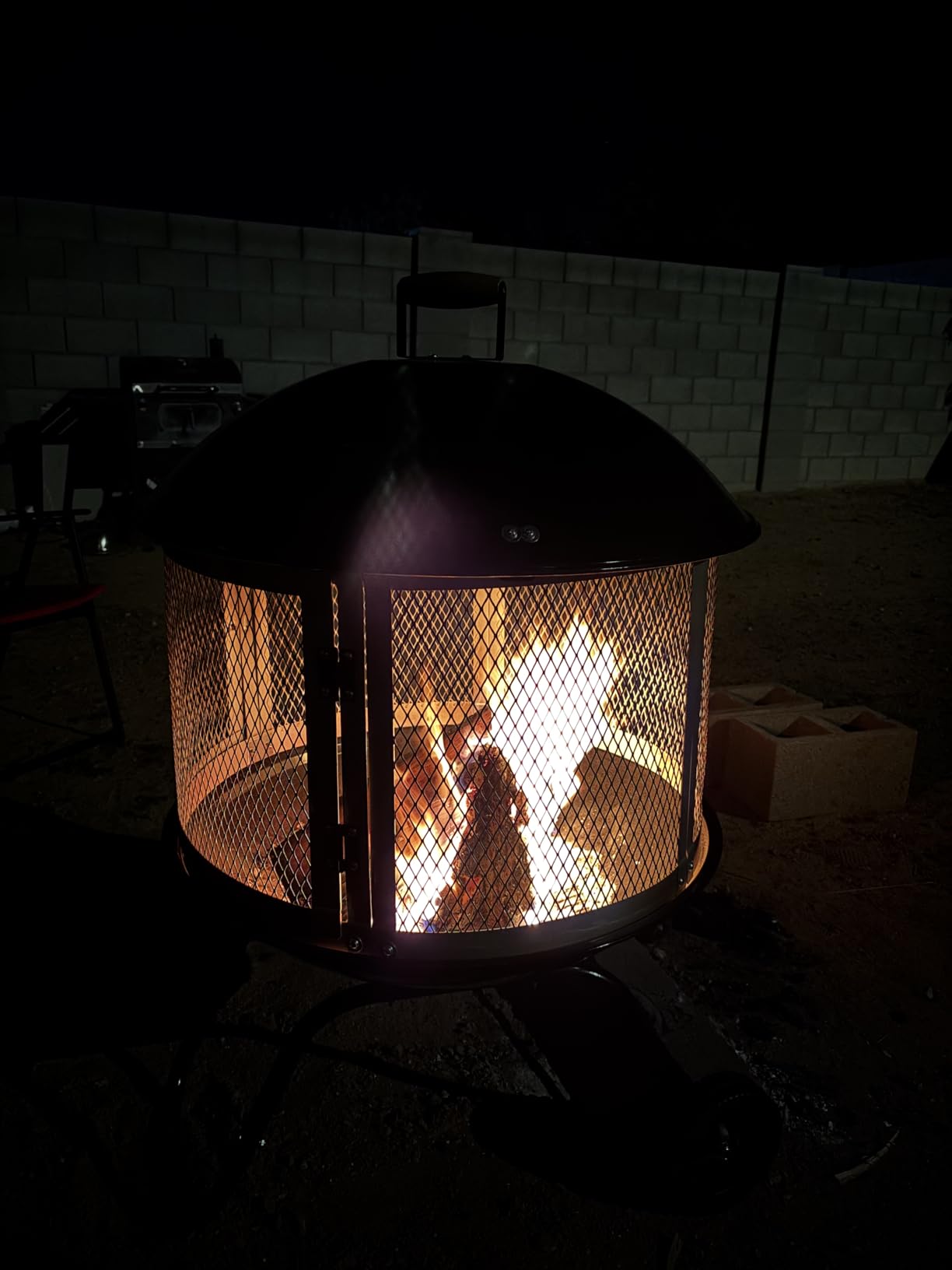
Natural ventilation, a removable steel grate for log placement and airflow, and a high-temperature painted centre fire screen complete the package. Owners frequently buy a second unit, which tells you something about the satisfaction rate, and the 2,162 reviews averaging 4.2 stars reflect durability more than design.
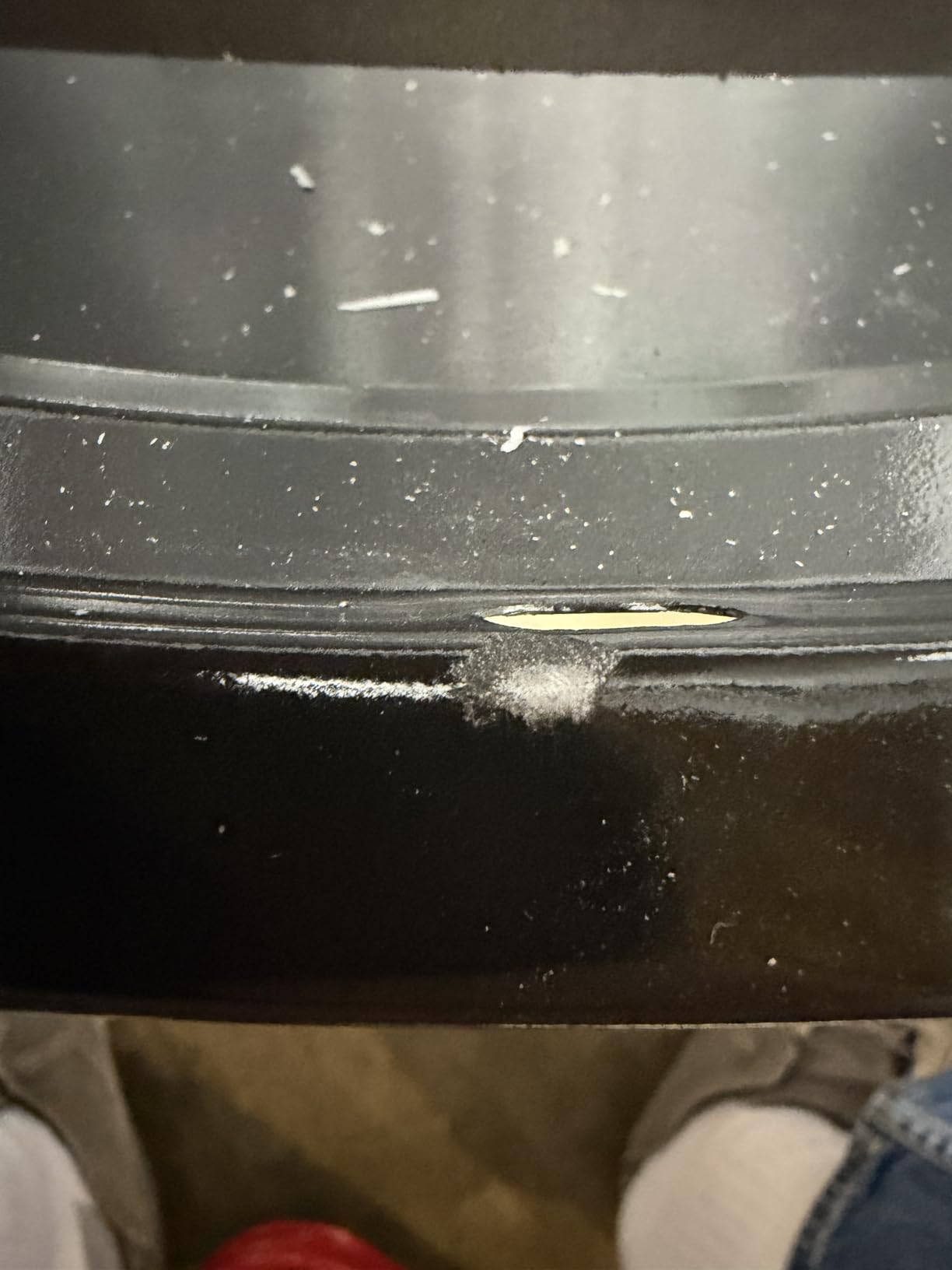
Three specific complaints recur. The included wood grate is flimsy and may only survive about ten fires, the metal screen fits poorly and can be awkward to install, and the enamel can eventually rust through after prolonged outdoor exposure. The assembly is also larger than buyers expect, and one person may struggle with it.
Who this outdoor fireplace suits
Patio users with multiple seating zones, small gardens where a fixed fireplace would monopolise the space, and anyone who wants wood fire but wants to be able to move it. It is also the only unit here that doubles as a genuine bonfire pit for larger pieces of wood.
Who should look elsewhere
Yards where smoke drifts toward neighbours, since there is no chimney or airflow design here. Plan to buy a replacement grate within the first year, and if you leave the unit out through winter, expect the enamel to give out sooner than the warranty period implies.
How to Choose an Outdoor Fireplace for Your Backyard
Choosing between ten well-reviewed units is easy compared with choosing the right category. The most common mistake is buying a chimneyed outdoor fireplace when a fire pit was what you actually wanted, or the reverse. These are the decisions that matter, in the order you should make them.
Wood, propane, natural gas or charcoal: pick the fuel first
Fuel determines the entire experience, and each option has a real tradeoff rather than a winner.
Wood gives you the aroma, the crackle and genuine cooking capability, with smokeless airflow designs or a chiminea solving the smoke objection. The costs are ash, manual tending, storage space and splitting or buying stacked wood. It burns out, so it is a shoulder-season unit.
Propane is clean, instant and adjustable, with a 20-pound tank swapping in seconds and no ash to deal with. The costs are that you buy fuel by the tank, that there is no flame scent, and that heat goes up and out rather than down.
Natural gas is the cheapest to run over time and the most controllable once a line is installed, but it needs a licensed gas fitter, a permit in most jurisdictions and a permanent trench or stub. It only makes sense for a built-in unit you plan to keep for a decade.
Charcoal is a cooking fuel, not an ambiance fuel. It reaches temperature fast and gives excellent grill results, but it produces more smoke and less controllable heat for a seating area.
A useful rule: if you host more than a few times a season and mostly want warmth, propane or natural gas. If you cook outdoors most weekends, wood is worth the effort.
What BTU actually means in an open backyard
BTU is short for British thermal units, a measure of heat output per hour. The number that matters as a threshold is 50,000 BTU: at that point an outdoor unit stops being an ambiance source and becomes a heat source you can warm your hands and face by.
Below roughly 30,000 BTU you are lighting a space, not heating people. Between 30,000 and 50,000 you get comfortable warmth within about three feet. At 50,000 BTU and above you can hold a conversation in shirtsleeves four or five feet out in still air.
Be honest about the ceiling here. An open-air unit loses heat quickly because there is nothing to trap warm air, and the highest-rated sources treat these products as spring and autumn comfort rather than winter heating. A covered patio makes a dramatic difference to how far the heat carries.
Fire pit, chiminea, portable fireplace or built-in: the form factor decision
This is the confusion that dominates homeowner forums, so here is the short version. A fire pit is the cheapest and most portable option, with the least heat direction and the most smoke. A chiminea adds a narrow chimney that drafts smoke upward and directs heat outward, which makes it the best cheap answer to both the smoke and directional-heat problems. A portable fireplace looks like a stove, often has wheels, and gives you a contained fire that is easier to tend and cook over. A built-in outdoor fireplace is a permanent structure with a real chimney or gas line, and it is the only option that genuinely works year-round.
Our pick for most backyards is a convertible fire table or a smokeless wood pit. Pick the chiminea if neighbours are close. Pick the built-in only if you already have the patio space and the budget for a gas line.
Materials: powder-coated steel, corten, cast concrete and stainless
Material is the durability decision, and this category has honest losers.
Powder-coated steel is the best value option and handles weather reasonably well, but the coating burns off with regular firing and the steel underneath will eventually spot-rust. The Sunnydaze above is the clearest example.
Stainless steel is the durability choice. The TIKI and Fire Sense units show what 16-gauge stainless or porcelain enamel buys you in seasons, and it costs more up front while costing less over time.
Weathering steel (corten) rusts by design and forms a stable protective patina. That patina is intentional, not a defect, and it is worth confirming with the manufacturer before you return a unit.
Cast concrete gives the most heat mass, which means it stays warm longer after the fire dies, and it is the best surface for cooking because it radiates evenly.
Aluminium is the best choice for a unit you intend to carry between locations, and the heaviest cast versions are noticeably harder to move.
Safety, clearance and the hardscape question
Clearance rules decide whether a unit is even legal in your yard, and they are worth checking before you buy rather than after. The widely adopted baseline is 3 feet of clearance on all sides of the unit and a minimum 10 feet from any structure. Local fire codes vary and may be stricter, so confirm with your fire marshal before you order.
The single most cited complaint on r/landscaping and r/HomeImprovement is heat cracking or shattering paver stones. The fix is straightforward: put a fire-rated hearth pad or a dedicated concrete base underneath the unit. Never place a fire pit directly on pavers that can crack, and never put one on a wood deck without a properly rated pad, because radiant heat travels further than most people expect.
Also plan for wind, which is the most common practical complaint in the field. A unit in an exposed location needs a wind guard or a chiminea draft, and you should never move a fire pit while it is lit.
Installation, permits and running costs
Portable propane and wood units need nothing beyond assembly and a hearth pad. Anything natural gas or built-in needs a licensed gas fitter, and in most places a permit, plus a hearth pad or masonry base and a fireproof wall if it sits near a structure. Posts on r/askdfw about masonry quotes ranging into tens of thousands of dollars treat that figure with real suspicion, and the honest answer is that a steel or concrete unit gets you most of the experience for a small fraction of the cost.
Running costs differ more than most guides admit. Propane means recurring tank refills. Natural gas means a one-time line installation followed by the cheapest per-hour running cost of any fuel. Wood means buying or stacking your own fuel plus the time to tend it. Charcoal means buying charcoal. Over five years the gap between propane and natural gas is substantial enough to justify the install cost for a unit you keep long term.
Off-season care and who should not buy one
Maintenance is what separates a ten-year unit from a two-year one. Cover every unit when it is not in use, empty and dry the ash pan, wipe gas burners clean before storage, and touch up any surface rust on painted steel in spring. A weather-resistant cover is not optional for wood or steel, and it is the cheapest durability decision you will make.
Some of you should skip this category entirely. Renters usually cannot, and patio surfaces that are entirely wood need a rated hearth pad and careful placement. Very small patios under about six feet square lose more heat than they gain. Anyone expecting a backyard fireplace to heat a yard through a northern winter will be disappointed, because these units are rated for shoulder seasons. And check your HOA before you order, because burn restrictions and outdoor fireplace rules are common.
Frequently Asked Questions
Are outdoor fireplaces worth it?
Usually yes, for shoulder-season warmth and ambiance within seating distance, but not for full winter heating. An outdoor fireplace is worth it if your patio is roughly ten feet or larger, has a non-combustible or paver surface with a fire-rated hearth pad, and you host outdoors in spring and autumn. It is worth it for cooking if you want a grill grate or an enclosed chiminea fire. It is not worth it if you rent, have a tiny patio, expect to heat an open yard through winter, or face HOA and burn restrictions.
What are the drawbacks of an outdoor fireplace with a chimney?
The main drawbacks are installation and running cost. A chimneyed unit needs a hearth pad, more clearance from structures, and often a permit or a gas line, and a masonry quote can run into tens of thousands of dollars. Wood-burning chimneyed units need ash disposal and firewood storage, and a non-waterproof cover can lead to surface rust on cheaper steel models. A covered chimney can also trap smoke toward seating on windy days.
What’s better, a chiminea or a fire pit?
A fire pit is better for price, portability and a full-size log fire. A chiminea is better for smoke control and directional heat. The narrow chimney on a chiminea drafts smoke upward so it stays above head height, and the enclosed body throws heat outward toward where people sit. A fire pit is cheaper, lighter and burns a bigger, more authentic fire, but smoke drifts sideways and heat rises straight up.
Do outdoor fireplaces give off a lot of heat?
It depends on the BTU rating and the exposure. Below 30,000 BTU you are getting light and atmosphere. Around 50,000 BTU a unit becomes a genuine heat source that warms hands and faces within about four feet, and 60,000 BTU reaches further still. In an open backyard the heat dissipates quickly, so these units are rated for spring and autumn comfort. A covered patio or a wind guard makes a measurable difference.
What is the best material to use for an outdoor fireplace?
Stainless steel or porcelain enamel lasts longest and resists corrosion best. Powder-coated steel is the best value and works fine if you cover the unit between seasons, but the coating burns off with regular firing and the steel underneath will spot-rust. Weathering steel, or corten, rusts by design and forms a protective patina that is intentional. Cast concrete holds the most heat mass and cooks best, and cast aluminium is the lightest option for moving.
Can I put a fire pit on a wood deck or paver patio?
Only on a proper fire-rated hearth pad, and never directly on either surface. Heat cracking and shattering pavers is the most common complaint from homeowners, and radiant heat travels further than most people expect on a wood deck. Use a fire-rated hearth pad or a dedicated concrete base under the unit, keep at least 3 feet of clearance on all sides and 10 feet from any structure, and never move a fire pit while it is lit.
The Verdict on the Best Outdoor Fireplaces for Backyards
If you want one answer, take the Outland Living 893. It delivers 58,000 BTU, weighs 23 pounds, needs no installation, and carries more owner reviews than anything else we looked at. If you want a table as much as a fire, the LEGACY HEATING 28-inch unit gives you 50,000 BTU that folds down into a coffee table in seconds.
For wood, the TIKI is the one that solves smoke, and the BALI OUTDOORS chiminea is the one that solves cooking and directional heat. If your yard is large and you want a focal point with real wood storage, the Sunjoy 76-inch fireplace fills that role and nothing else here does.
Before you order any of them, check three things: the clearance to your nearest structure, the surface you are putting it on, and whether you want warmth, cooking or a landscape feature. Get those three right and the purchase is straightforward. Whatever you choose, cover it between seasons and it should still be going strong in 2026. For other backyard projects worth the space, we have covered monkey bars for backyards and wooden playsets if the yard is more about the kids than the fire.