
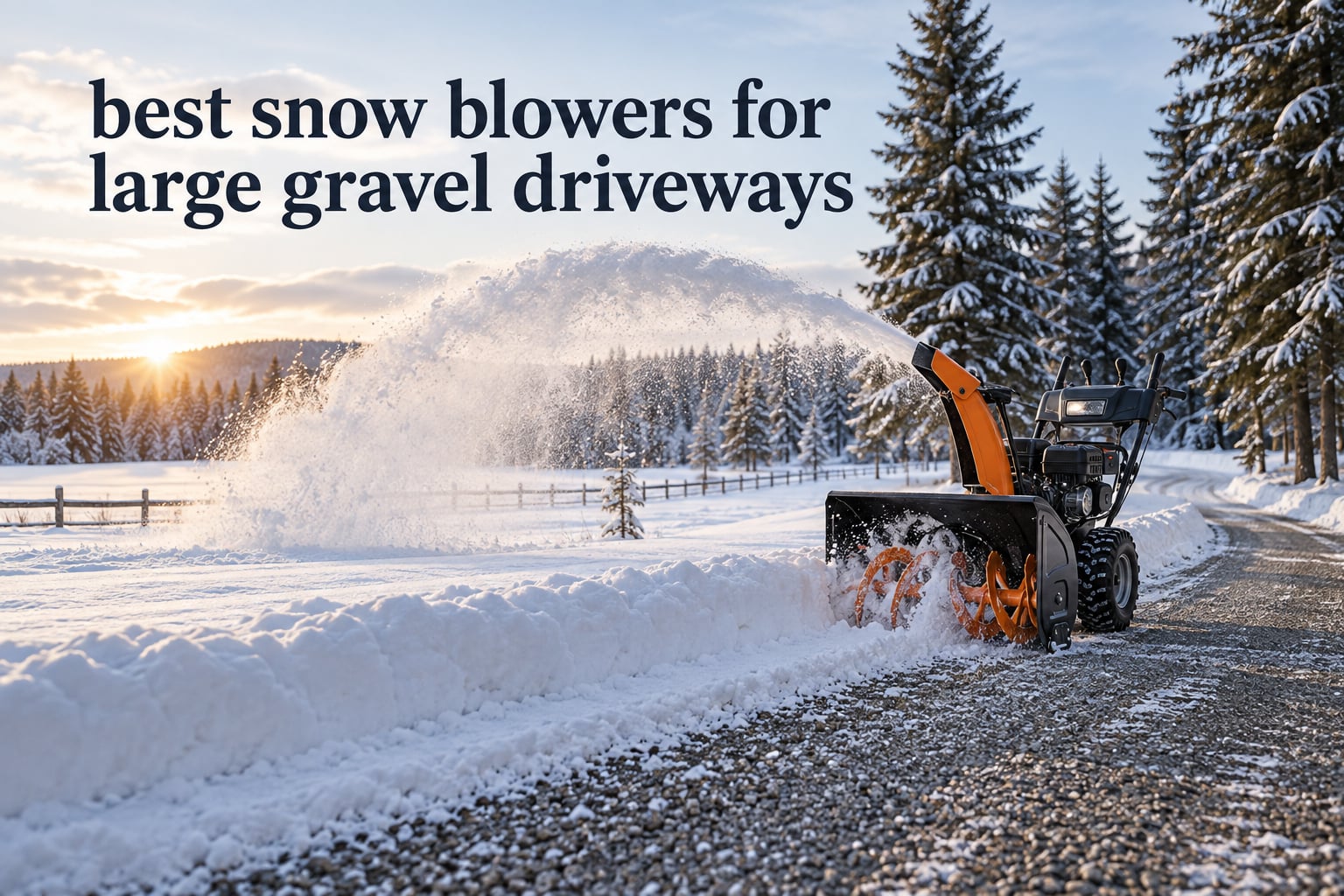
The best snow blowers for large gravel driveways are two-stage machines, gas or high-voltage cordless, with adjustable skid shoes, a steel auger and self-propelled drive. The skids lift the intake housing about an inch above the stones so the auger never digs into the gravel, and the wide intake plus long throw cut your pass count on a long drive.
That last part is where most buying guides go wrong. A large gravel drive punishes a small machine twice: you walk the length of the property twice because your machine is narrow, and you scoop stones into the yard because the housing rides too low. This roundup covers nine machines that handle both problems, and we judged every one of them on gravel behaviour first, peak specs second.
We also spend a lot of time on the settings nobody publishes. How high the skids should sit on loose stone, what to do when a rock still finds the auger, and how to size a machine to a drive that runs 200 feet past the mailbox. If you want the general buying framework first, our guide to the best snow blowers covers the categories this list draws from.
Table of Contents
Top 3 Picks for Large Gravel Driveways

PowerSmart 26in Two-Stage B&S 208cc
- 26in width and 20in clearing height
- 26in steel auger and impeller
- 13in snow tires with adjustable skids
- 6 forward and 2 reverse speeds
EGO SNT2416 24in Cordless Two-Stage
- 24in width and 20in intake height
- 50ft throw with Peak Power twin batteries
- Clears a 24-car driveway per charge
- Heated grips and 200-degree chute lever

EGO SNT2400 24in Cordless Two-Stage
- 24in width and 20in intake height
- Variable speed steel auger
- Push-button start plus four LEDs
- 18-car driveway per charge on two packs
Snow Blowers for Large Gravel Driveways in 2026
Every machine below is a two-stage design with a steel auger, which is the only configuration we would trust on loose stone. Sorting the nine takes about a minute here, and the full write-up on each follows.
| Product | Specifications | Action |
|---|---|---|
| PowerSmart 26in Two-Stage B&S 208cc |
|
Check Latest Price |
| EGO SNT2416 24in Cordless Two-Stage |
|
Check Latest Price |
| EGO SNT2400 24in Cordless Two-Stage |
|
Check Latest Price |
 PowerSmart 24in Two-Stage 212cc PowerSmart 24in Two-Stage 212cc |
|
Check Latest Price |
 WEN SB209E 24in Two-Stage WEN SB209E 24in Two-Stage |
|
Check Latest Price |
 Ariens ST28DLE Deluxe SHO 28in Ariens ST28DLE Deluxe SHO 28in |
|
Check Latest Price |
 Honda HSS1332 31.9in Two-Stage Honda HSS1332 31.9in Two-Stage |
|
Check Latest Price |
 Honda HSS928 28in Two-Stage Honda HSS928 28in Two-Stage |
|
Check Latest Price |
 PowerSmart BS26 26in Two-Stage 208cc PowerSmart BS26 26in Two-Stage 208cc |
|
Check Latest Price |
1. PowerSmart 26in Two-Stage with Briggs & Stratton 208cc
- Briggs 208cc 4-cycle engine powers through deep wet snow
- 26in width and 20in height cut passes on a long drive
- Steel auger and impeller
- 120V electric start with recoil backup
- Heated grips and LED light
- 13in snow tires with adjustable skid shoes
- Chute is flimsy and its adjustments are stiff to move on the fly
- Handle warmer does not heat gloved hands
- Small share of owners report early auger or drive failure
This is the machine we keep coming back to on gravel. The 26-inch clearing width means a 20-foot drive takes one pass rather than two, and the listing rates it for 12 inches of snow depth, which matches the settled, refrozen material that actually builds up on an unplowed lane. The 208cc Briggs & Stratton 4-cycle is the same engine family you would find on a much larger commercial unit, and owners consistently report it chewing through plow-thrown frozen slush without bogging.
The spec sheet lists adjustable skid shoes for paved and gravel driveways, which is the feature that decides this roundup. Set them so the housing rides roughly an inch above the stones and the auger sees only snow. Owners of this machine also like that the 13-inch snow tires turn more easily than the weight suggests, which matters when you are correcting course on a curve you already cleared.
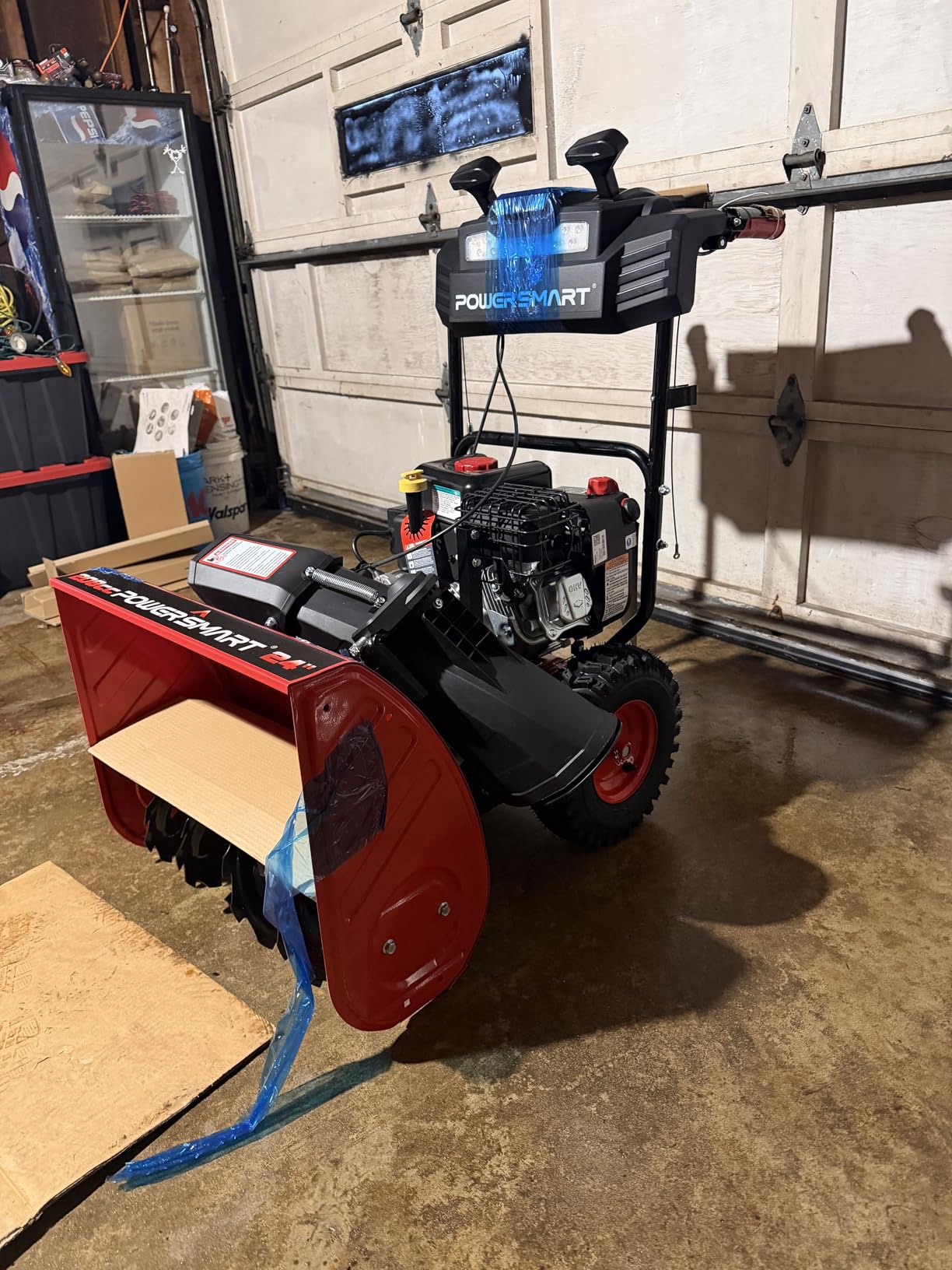
The honest weakness is the chute. Reviewers describe it as flimsy, with height and rotation controls that are very stiff to adjust while you are walking. On a big drive you will want to set your throw direction once and leave it, rather than fiddling mid-pass. The handle warmer also runs cool enough that gloved hands stay cold, which is a disappointment in February.
Our team weighed durability reports carefully here, because this is the most reviewed machine in the group and a minority of owners do report auger or drive failures inside the first season or two. That is a real share of 700-plus reviews, and it is the main reason the rating sits at 4.1 rather than higher.
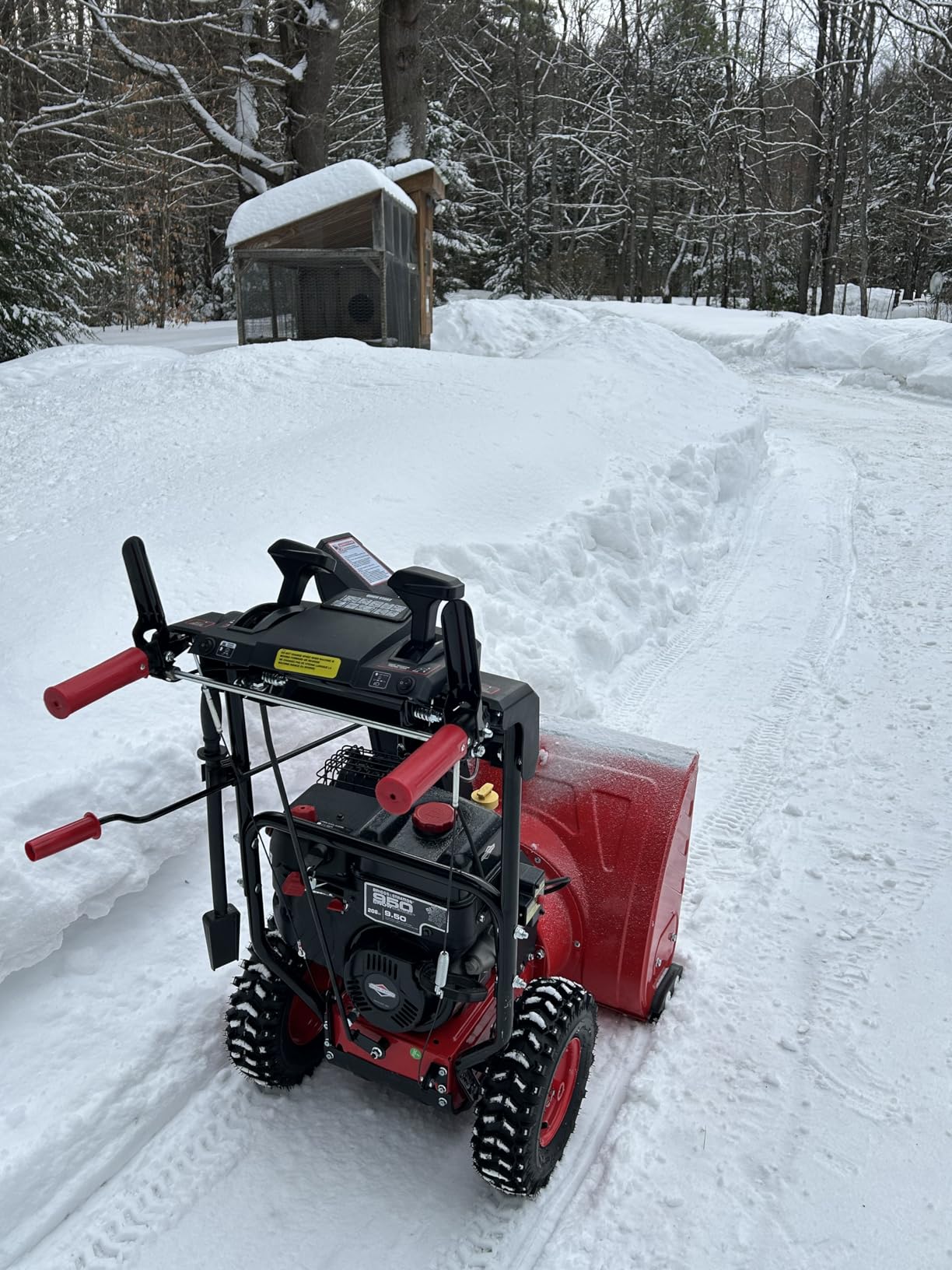
What clearing width does a long gravel drive actually need
At 26 inches this covers most drives in a single pass without becoming difficult to steer. On a drive wider than 20 feet you will overlap by a few inches, and the 50-foot throw puts the snow well past the shoulder instead of piling it on the gravel you are about to drive over next week.
The 2680 lbs per minute clearing rate matters more here than on pavement because gravel drives collect wet, dense snow that has been partly compacted by tires. A machine rated for lighter powder will stall on that material even when the depth looks manageable.
When to skip this machine
If your drive is steep and narrow, the 146.9-pound weight and sled-style steering bars make it a workout on an incline, and a tracked machine will hold its line better. If you clear early in the morning before light, the single LED is a modest improvement over nothing, not the light bar some competitors carry.
Those who need power in very deep wet events and do not mind a pull cord have a more capable option in the Honda section below. For most rural gravel drives of ordinary grade, though, this one covers the job with the deepest owner feedback behind it.
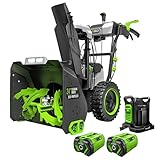
2. EGO SNT2416 24in Cordless Two-Stage with Two Batteries
- Peak Power twin-battery output throws snow 50ft
- Variable speed steel auger handles heavy wet snow and ice
- Trigger steering makes a 198lb machine maneuverable
- Heated grips and remote 200-degree chute lever
- Two 56V 10.0Ah batteries and dual port charger included
- Runtime is limited on the deepest wet events
- Heaviest cordless machine here at 198 pounds
- Requires EGO 56V ARC Lithium batteries
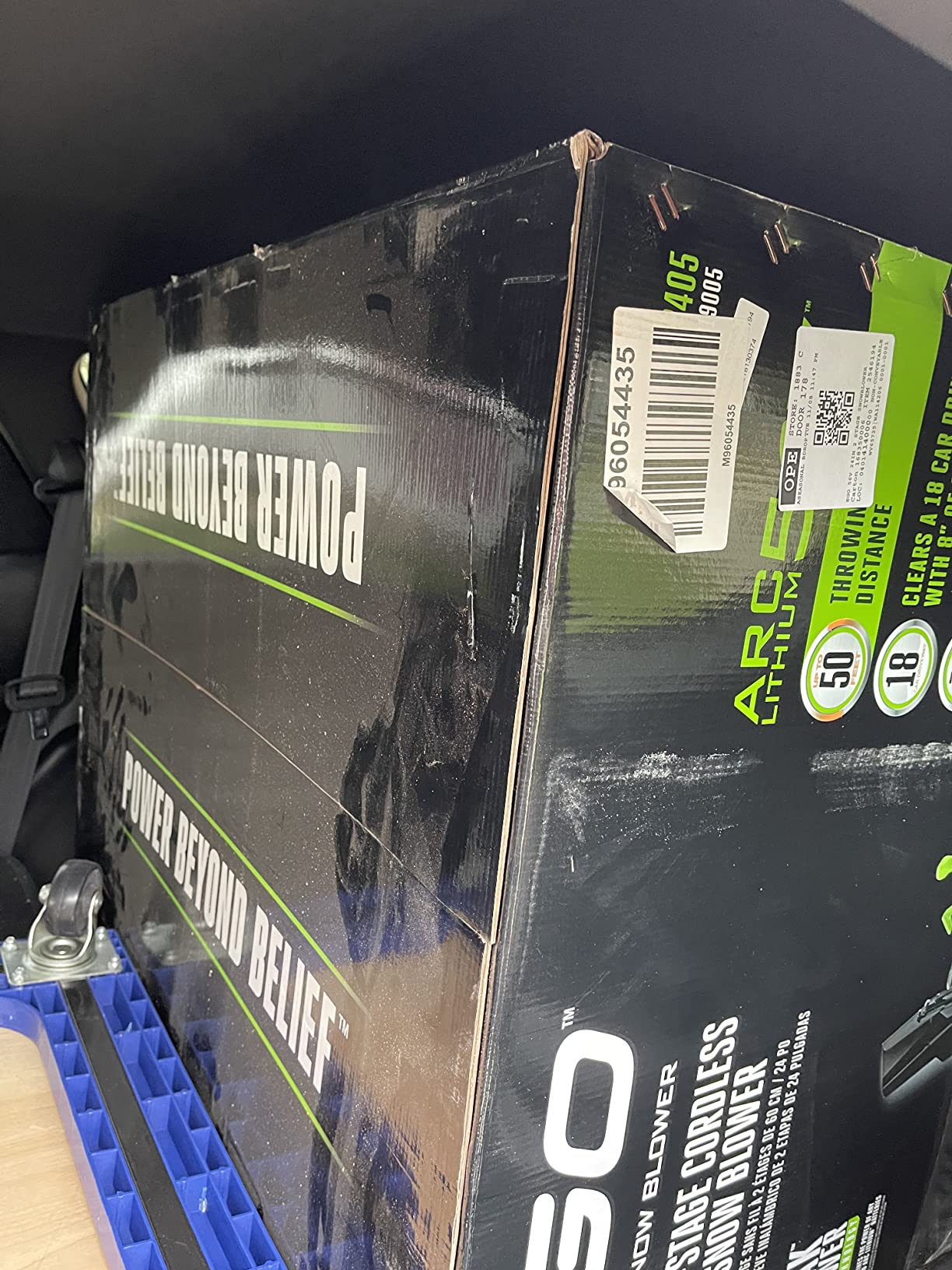
The rating on this one is 4.6 with 80 percent five-star reviews, and the cordless experience here is unlike anything from the gas camp. There is no pull cord at 6am, no exhaust cloud hanging over your drive, and no fuel to store in a shed through the summer. Peak Power technology combines any two EGO ARC Lithium batteries, so the machine runs at a power level a single pack cannot deliver.
That output is what produces the 50-foot throw, which is the number that matters on gravel. Snow needs to land off the stones and off the drive shoulder, not in a berm you will be clearing again next week. The 24-inch width and 20-inch intake height handle a 20-foot drive in a single pass.
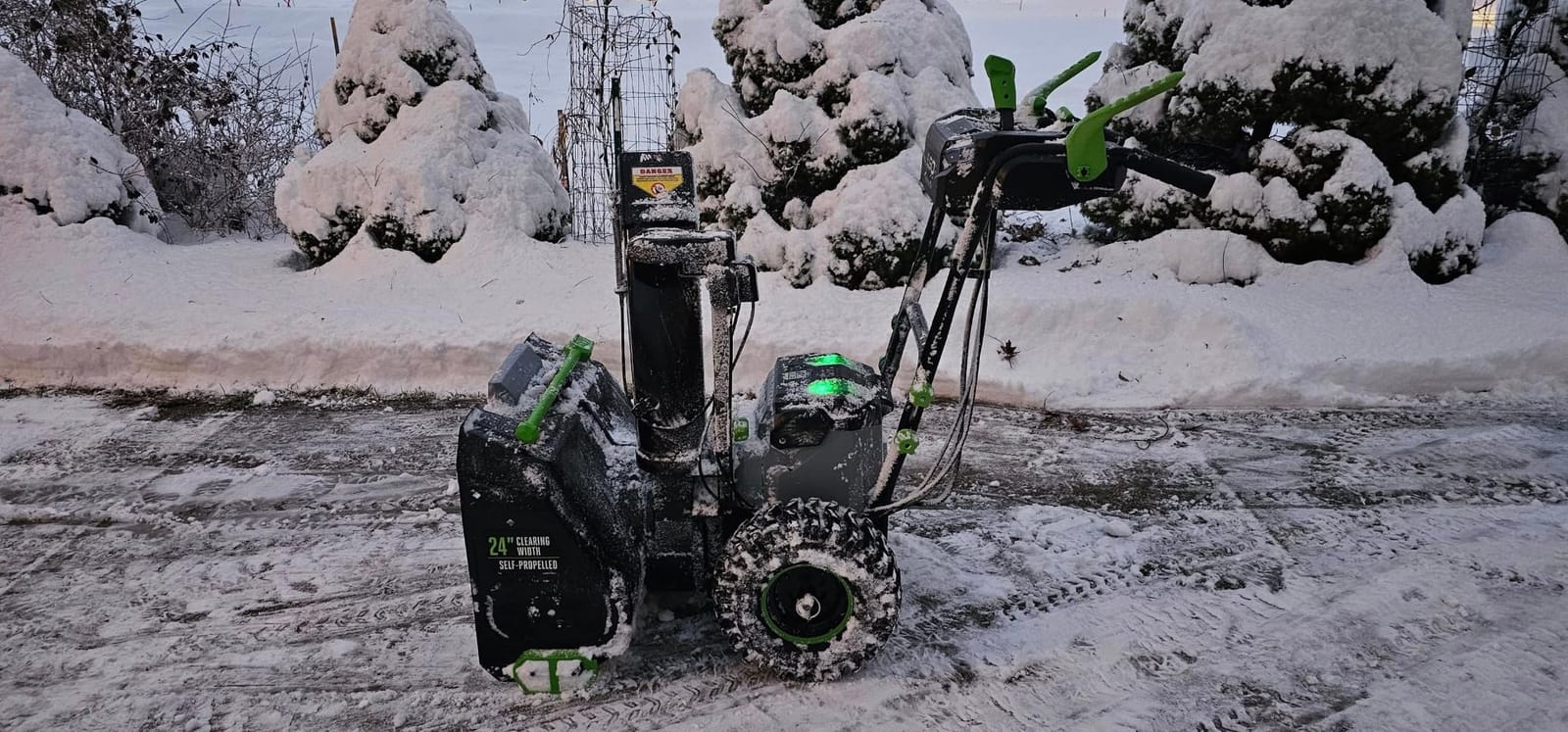
Manuverability is the quiet strength. Trigger-controlled self-propelled steering means you steer with a hand control rather than by wrestling 198 pounds sideways, and the 2-in-1 remote chute lever gives you 200 degrees of rotation and deflection without walking around the machine. Heated handle grips are genuinely useful in deep winter conditions, not a gimmick.
The manufacturer rates it for clearing a 24-car driveway with 8 inches of snow on one charge. On a long gravel drive with deeper accumulations, plan a second battery cycle. The honest limit is runtime on the deepest, wettest events, not everyday performance.
Whether a battery machine is enough for heavy wet snow
The variable speed steel auger is what makes this viable on compacted, refrozen gravel snow. A single-speed paddle struggles to break that material; a controlled-speed auger lets you feed it in stages rather than stalling the whole machine. Owners report it handling heavy wet snow and ice without complaint.
Cold weather is the other variable. Forum owners consistently flag battery capacity dropping in freezing temperatures, so charge your packs indoors before a storm and again immediately after. Our broader electric snow blower guide covers the platform question in more detail.
Who should pass on this package
If you have never owned an EGO battery, the two 10.0Ah packs and dual port charger are the bulk of what you are paying for, and the bare tool version below covers the same machine. At 198 pounds it is also the heaviest cordless machine here, so repositioning it at the end of a pass is a two-person job on a shoulder.
For a flat or gently sloped drive where quiet operation matters, this is hard to argue with. For a steep lane where traction is the deciding factor, the tracked Hondas further down handle the grade better.
3. EGO SNT2400 24in Cordless Two-Stage, Batteries Sold Separately
EGO POWER+ 24″ Electric Snow Blower, Self-Propelled 2-Stage, Battery and Charger Not Included – SNT2400
- Same Peak Power platform and 50ft throw without the battery bundle cost
- Variable speed steel auger and 20in intake height
- Push-button start with no priming or pull cords
- Variable speed self-propelled forward and reverse
- Four bright LEDs
- 5-year tool warranty
- Battery and charger not included
- Clears roughly an 18-car drive per charge
- Only compatible with EGO 56V ARC Lithium packs
- At 150 pounds it still takes effort to lift
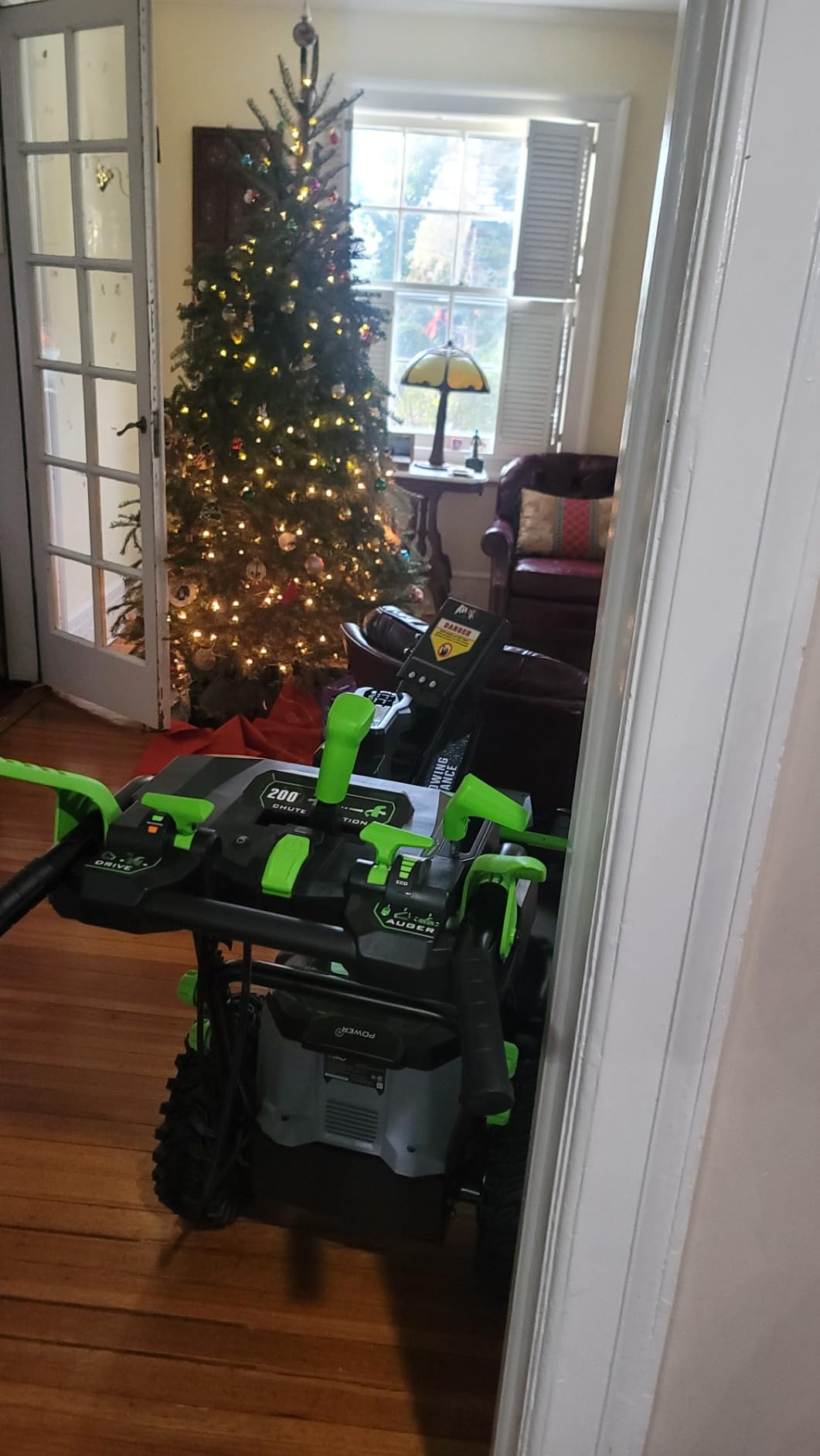
This is the same 24-inch two-stage platform as the kit above, sold as a bare tool, and it carries the same 4.6 average from 373 reviews. If your household already runs EGO 56V ARC Lithium packs on tools outside the snow season, this is the version to buy. You reuse batteries you already own instead of paying twice for the same chemistry.
For a first-time cordless buyer, the arithmetic works the other way. Add two 7.5Ah packs and a charger and you will pass the price of the bundled kit while ending up with less capacity per charge, since the manufacturer rates this configuration for an 18-car driveway at 8 inches against 24 cars for the 10.0Ah bundle.
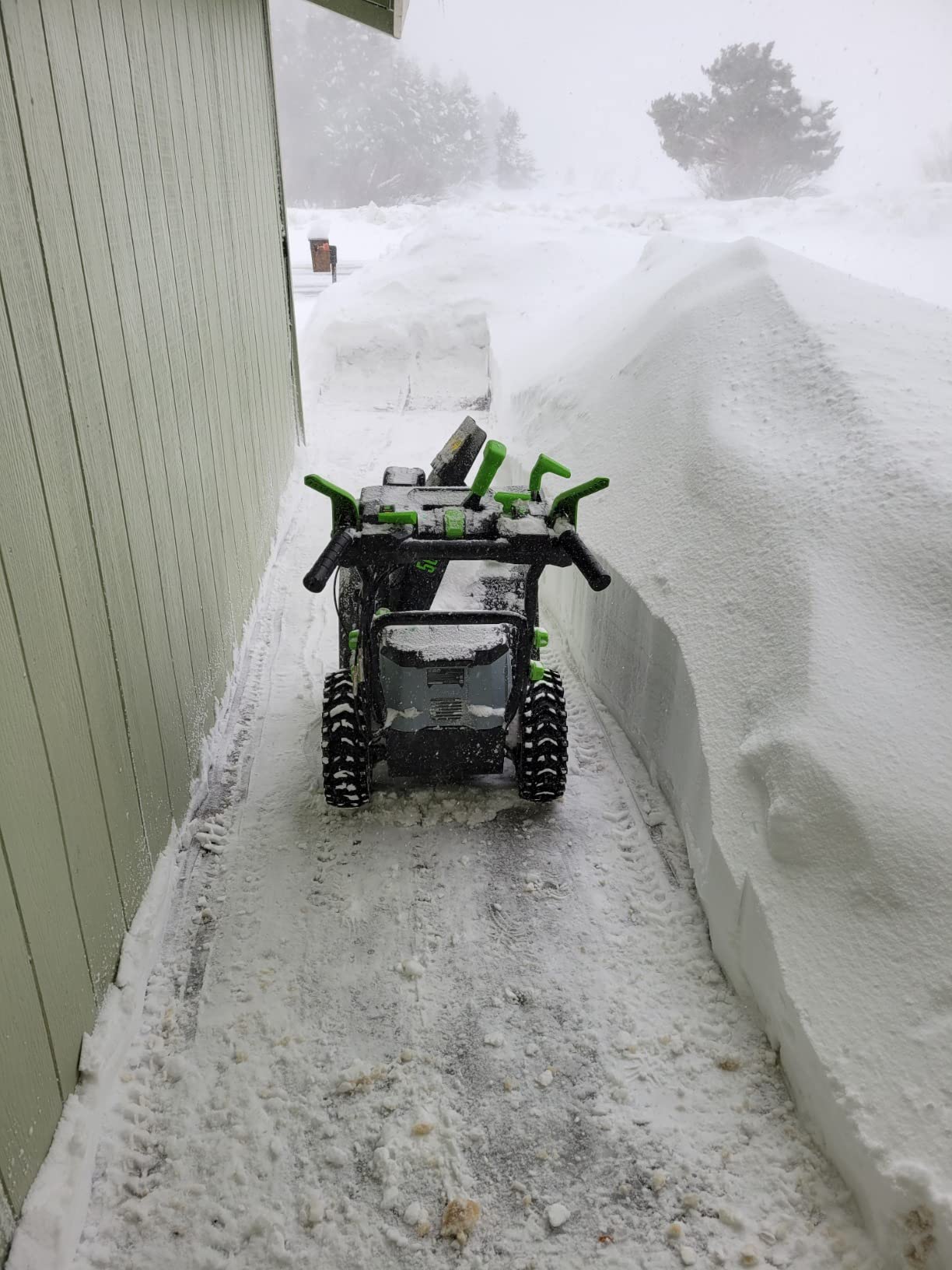
Two things stand out for gravel duty. The 20-inch intake height gives the housing room to ride above uneven stone without burying itself, and the variable speed self-propelled forward and reverse drive makes it easy to back out of a drift at the end of the drive rather than fighting it in one direction. Push-button start with no priming and no pull cords is the easiest cold-morning start in this group.
The four bright LEDs are worth more than they sound. Clearing at six in the morning before a school run, you are looking at a driveway surface that is mostly shadow. A single headlamp is not the same thing.
Whether the bare tool is really the better buy
It is, if you already own the packs. It is not, if you do not, and that is the whole question. Reviewers who already run EGO 56V ARC packs describe the value as avoiding a redundant battery purchase, which is exactly correct.
Also worth weighing: the 5-year tool warranty on this model. Cordless machines age faster than gas ones because the electronics and battery chemistry carry most of the failure risk, and a longer warranty on the tool itself is a meaningful signal about how the manufacturer expects these to be used.
Where this machine asks more of you
At 150 pounds it is lighter than the bundled version but still not a machine you carry easily up a set of steps. The 18-car charge rating also assumes 8 inches of snow, so a big storm on a long drive can mean swapping packs mid-job.
If you want the widest path in the group instead, the Honda HSS1332 clears 31.9 inches and throws 56 feet. If you want to stay in the cordless class and already own the platform, this is the right one.
4. PowerSmart 24in Two-Stage with 212cc Engine
PowerSmart Self-Propelled 2-Stage Gas Snow Blower 24-inch 212cc Engine with Electric Start, Reinforced Steel Housing
- Full two-stage 24in clearing at a fraction of premium-brand cost
- 212cc engine handles plow-thrown semi-frozen slush
- Reverse function and power assist for tight turns
- 6 forward speeds plus 180-degree chute
- Electric start with recoil backup
- 2-year manufacturer warranty
- Drive cable and wheel engagement can fail after a few uses
- Chute control binds and drifts out of position
- Loose or missing shipping hardware reported at delivery
A 212cc two-stage with a 21-inch intake height is exactly the configuration the gravel lane needs, and you get it for a fraction of the cost of the premium gas machines. The engine clears 2500 lbs per minute, which covers the dense, half-frozen material that a plow leaves at the end of a residential gravel drive.
Eight speeds, six forward and two reverse, plus a power assist function, make this easy to manage on a long run. The 180-degree chute throws 45 feet, which is enough to clear the stones of a typical shoulder if you aim away from it.
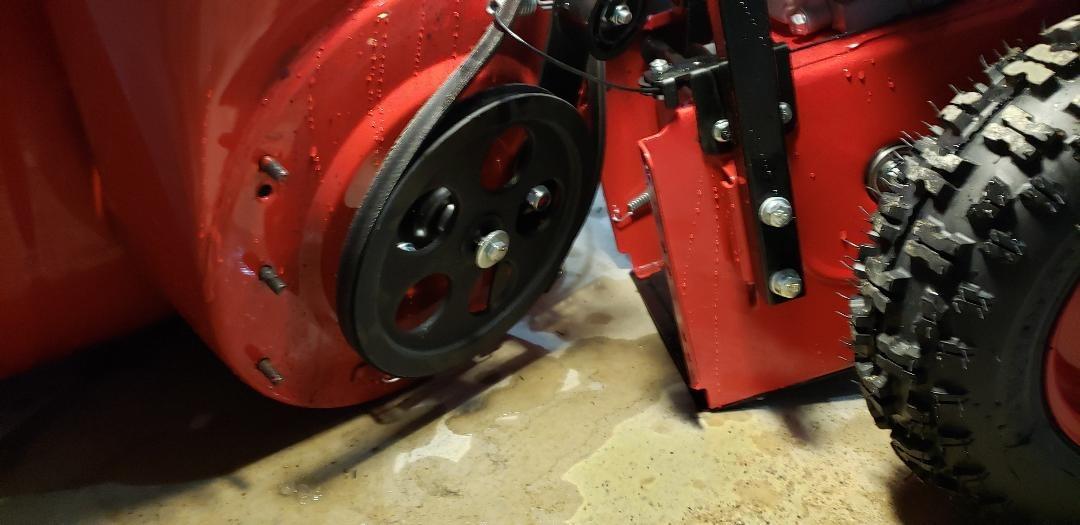
The 21-inch intake height is the quiet advantage over the 26-inch machines above. More clearance under the housing means more room to set the skids high and still leave a working depth of snow, which is the trade you want on loose gravel. You will leave a thin layer behind, and on gravel that is the right outcome.
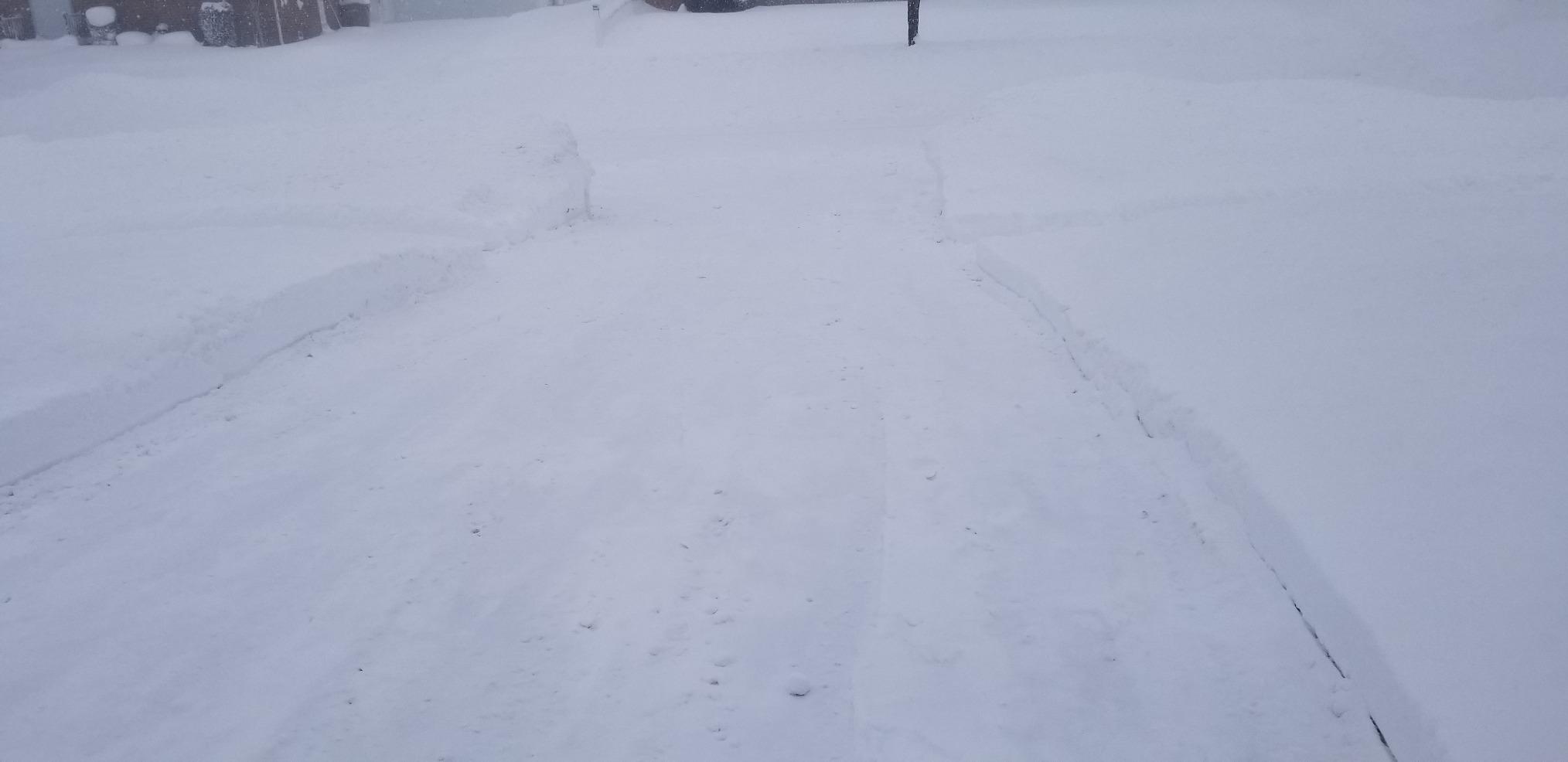
That thin leftover layer is deliberate. It is what a plow blade does, and it is the reason the surface under it does not refreeze into a sheet you have to break with an axe next week.
What the drivetrain feedback tells you
The 4.0 average is a split result, and the split is informative. Owners who receive a running machine describe it as strong value that performs well, while a meaningful minority report drivetrain or cable failures within the first few storms. Assembly quality, with loose or missing bolts at delivery, is the other repeated theme.
Our read: budget for a couple of hours with a socket set before the first storm, and check the wheel engagement and forward/reverse cable before you need it. If you enjoy maintaining equipment, that is manageable. If you want to start it once and have it work for a decade, spend up.
When the lower engine size actually matters
At 2500 lbs per minute this clears less than the 306cc and 389cc machines here, and the 45-foot throw is shorter. On a flat drive with routine storms, that is not the deciding factor. On a long drive that receives heavy wet events without a plow pass, capacity becomes the bottleneck and you will feel the extra passes.
For a straight, moderately wide drive cleared every few days, this is a sound way to get a true two-stage without premium-brand pricing. Our two-stage snow blower guide covers the mechanical differences in more detail.
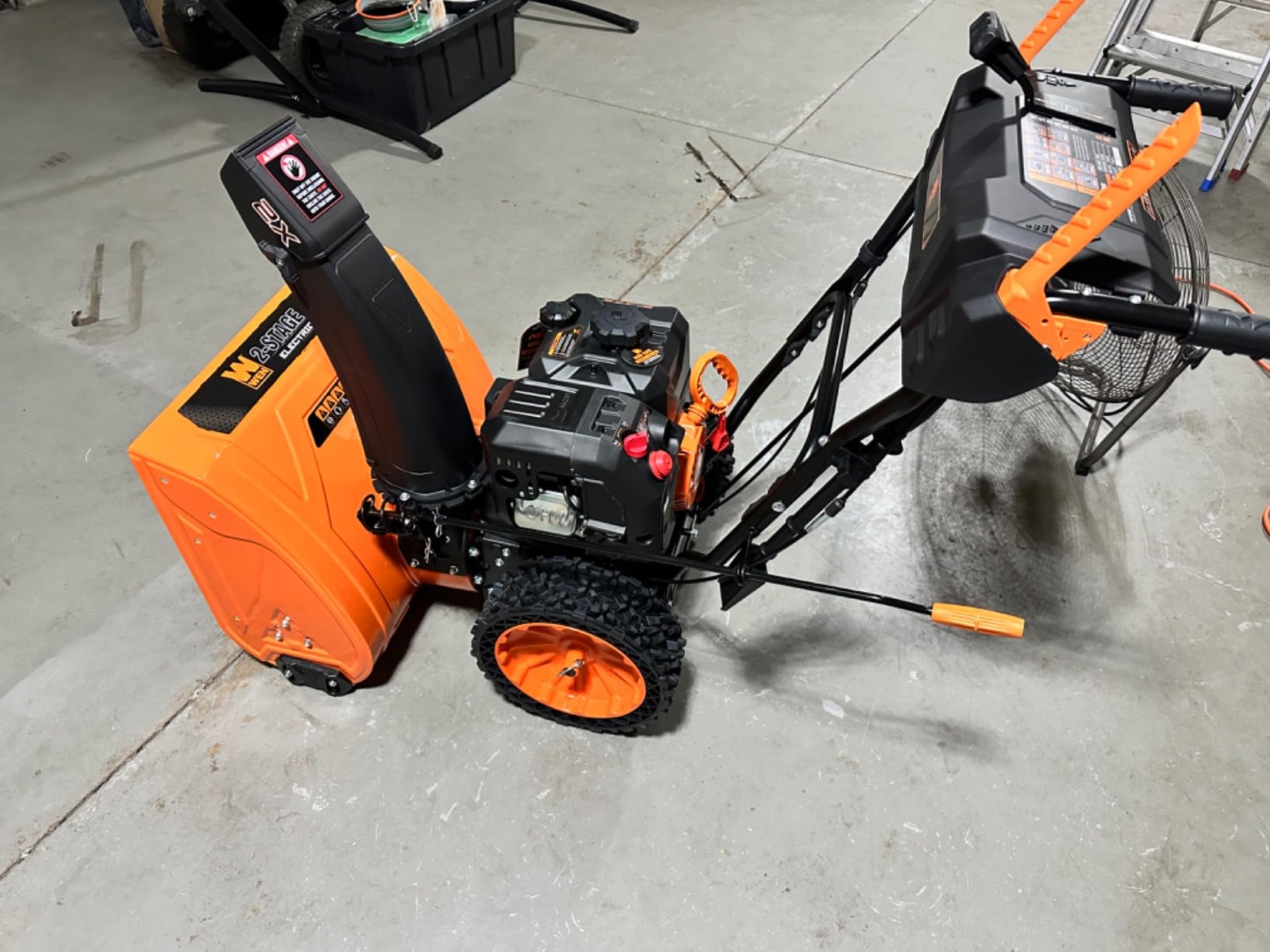
5. WEN SB209E 24in Two-Stage Gas Snow Blower
WEN 24-inch 209cc Two-Stage Self-Propelled Gas-Powered Snow Blower with Electric Start (SB209E)
- Entry-level true two-stage 24in width with a steel auger
- Notched 4-blade steel auger handles ice and packed snow
- Self-propelled with 6 forward and 2 reverse speeds
- Push-button electric start plus recoil starter
- Two-year warranty and included chute clearing tool
- 30ft throw distance is the shortest of any two-stage here
- Lower clearing rate than larger-displacement engines
- Only 81 reviews
- so long-term durability data is thin
The WEN is the least expensive way we found to get a real two-stage machine with a steel auger and self-propelled drive. That matters on gravel because the single-stage alternative, with its rubber paddle auger dragging on the ground, is the configuration that actually scoops stones. A steel auger on a lifted housing is a different machine entirely.
The notched 4-blade auger is the right geometry for ice and packed snow, and the 190-degree adjustable chute gives you directional control without walking around the machine.
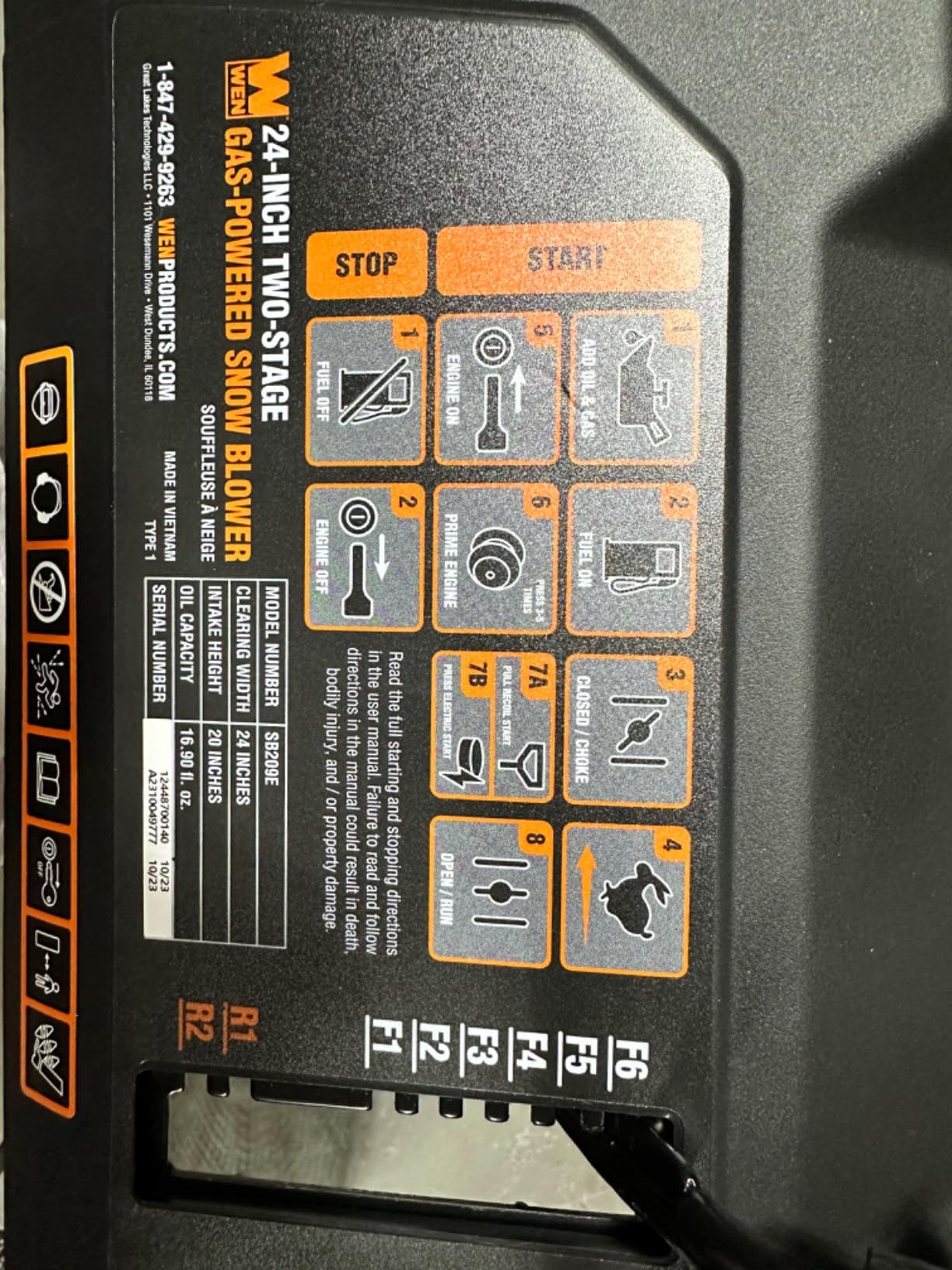
Where it falls short is throw distance. At 30 feet, this is the shortest of any two-stage in this roundup, and on a gravel drive that means snow lands closer to the stones than you would like. If your drive has a good shoulder to throw onto, that is manageable. If the gravel runs right up to a lawn or a garden bed, aim carefully.
Clearing capacity of over 2000 lbs per minute also sits below the 208cc and larger machines here, so deep events mean more passes. The trade is a real one: this machine gives up power and reach to cover the two-stage category at the lowest cost.
Whether this is the right size for your drive
Twenty-four inches covers a standard residential drive in one pass. For a drive that stretches several hundred feet, you will be walking it many times in a storm, and the 26-inch and 28-inch machines will finish the job sooner. The 81-review base means there is limited long-term data, which matters for a machine you hope to keep a long while.
It is also worth noting the review count is the second thinnest here. That is not a criticism of the machine, it is context for how much community proof you are buying alongside it.
How this compares with the budget gas alternative
The PowerSmart 24in two-stage above brings a 21-inch intake height, 45 feet of throw and 2500 lbs per minute, which are meaningful advantages on gravel. The WEN gives up roughly a third of the reach to cover the core two-stage category at the lowest cost of anything we reviewed.
If your drive is a normal width and you clear it often, the WEN is a defensible first machine. If the drive is genuinely large, the extra reach on a better blower usually pays back in saved effort per storm.
6. Ariens ST28DLE Deluxe SHO 28in Two-Stage
Ariens ST28DLE Deluxe SHO 28 in. Two-Stage Electric Start Gas Snow Blower
- Engine displacement and SHO auger handle heavy wet snow and slush
- Throws snow farther than most owners' previous machines
- 16in wheels give traction on rough unplowed driveways
- Easy-turn design improves on older Ariens models
- Parts availability supports long-term repair
- At 267.5 pounds it is hard to reposition alone
- Dealer warranty service can involve multi-week waits
- One owner reported plastic recoil and choke hardware failing
The Ariens is the machine forum owners name most often for a long gravel drive. On r/Snowblowers, the recurring recommendation for a new owner with a long drive is an Ariens Deluxe or Deluxe SHO, cited for a service life measured in decades with routine maintenance, with Honda the most common second answer. This is the SHO configuration in a 28-inch width.
The 306cc 4-cycle engine has the displacement to move heavy wet snow and the slush a plow leaves behind, and the serrated-style SHO auger is built to stay aggressive in exactly that material. The 55-foot throw distance is the longest of the wheeled machines here, which matters because it lets you put snow far enough off the stones.
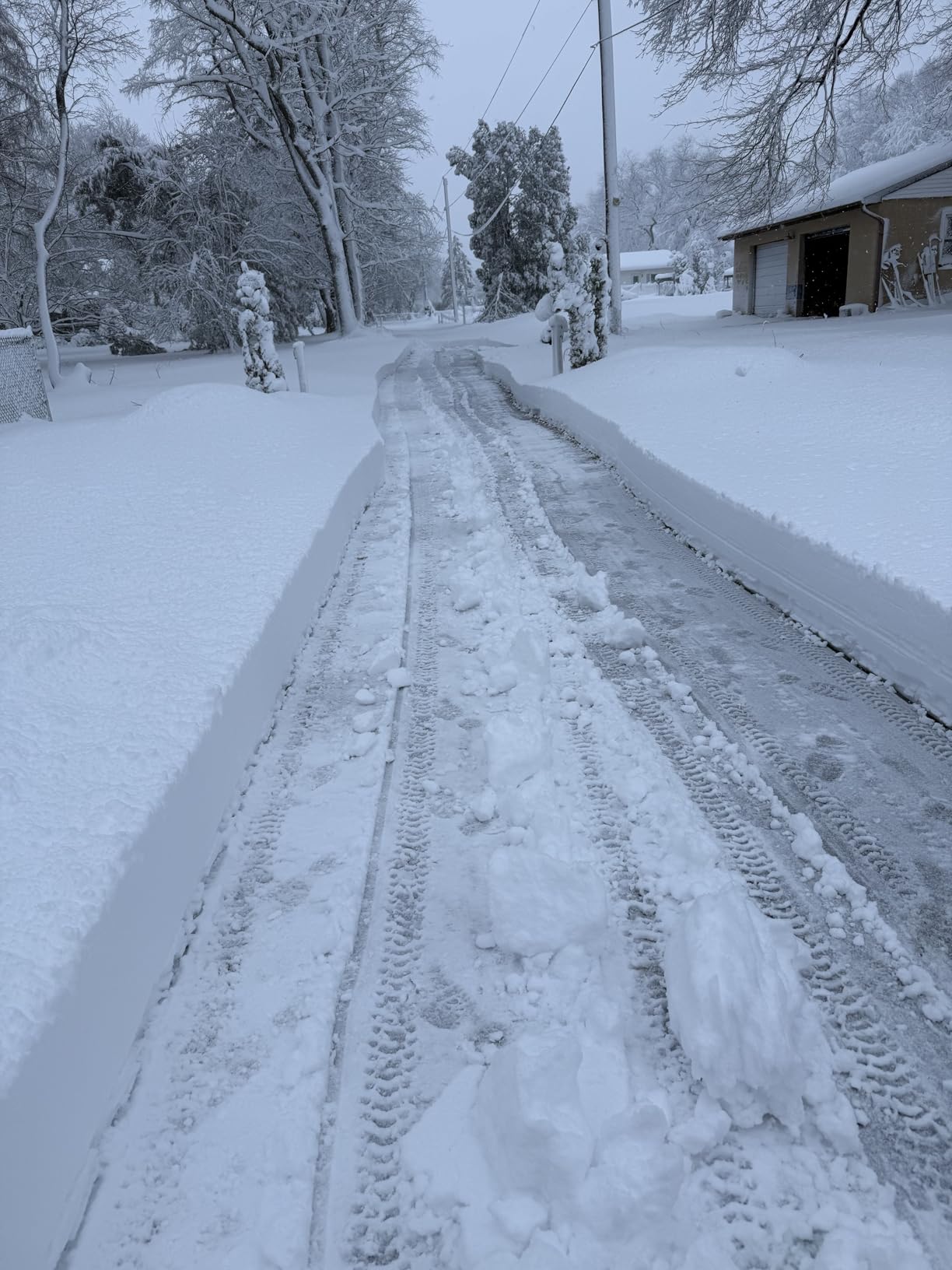
The 16-inch wheels are the detail that matters most on gravel. Wider wheels spread the machine’s weight across loose stone, and owners with experience of unplowed drives consistently point to traction as the difference between a machine that tracks straight and one that wanders into the shoulder. Six speed settings give finer ground-speed control than a two-speed design.
On a curved drive, steering response is the deciding factor. In a SnowblowerForum thread on curved gravel driveways, the recommendation for mostly dry conditions was a Deluxe 24, 28 or 30, with the 28 SHO as the likely pick. Curved lanes punish a wide machine you cannot pivot, and the easy-turn design on this generation is a real improvement over older Ariens models.
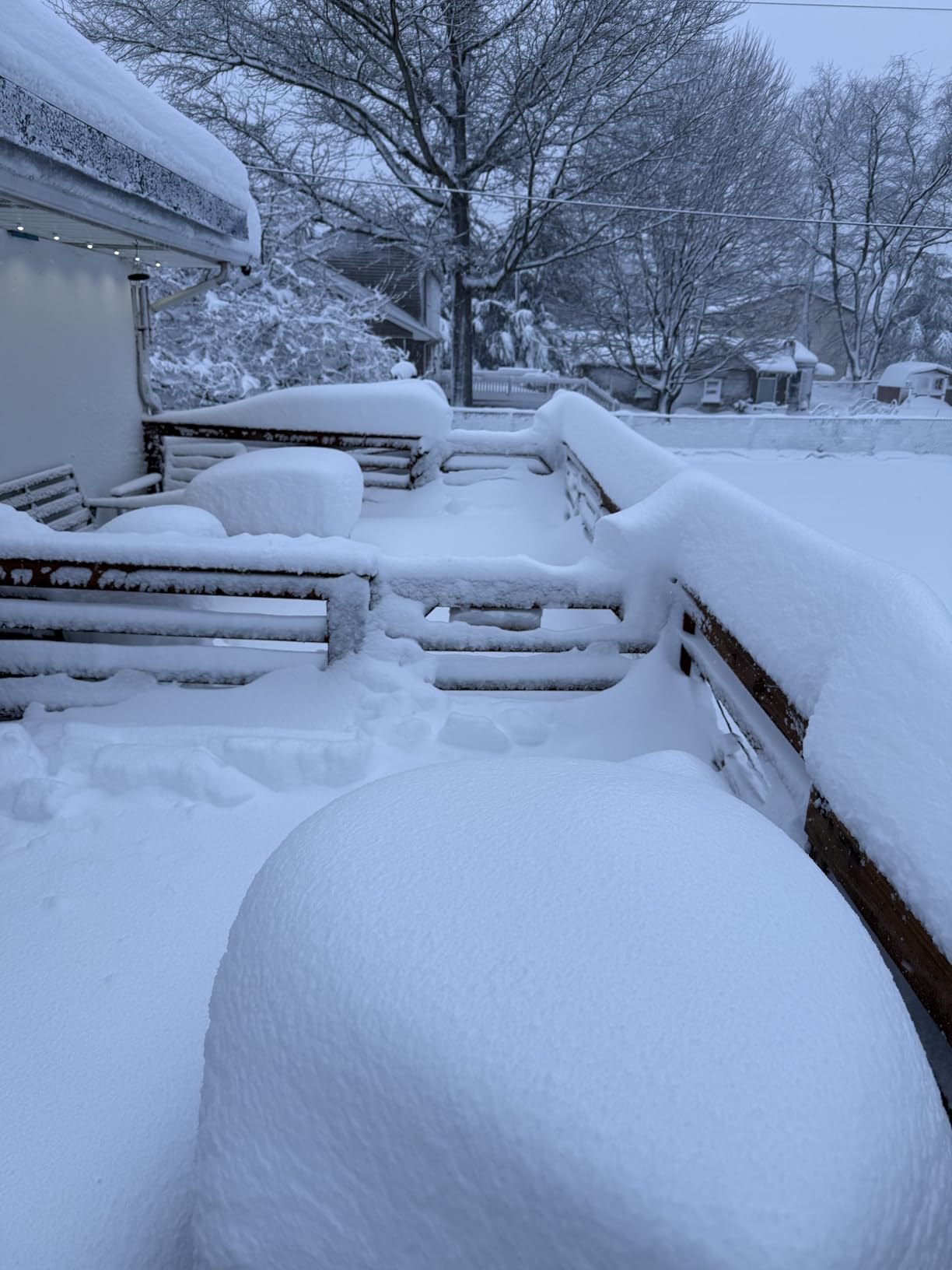
Why the brand matters more than the spec sheet
The reason this machine appears in forum threads for gravel duty is repairability. The manufacturer keeps spare parts available for three years, and owners report Ariens continuing to supply parts for machines long past that. A steel auger on a gravel drive will eventually meet a rock nobody saw, and the difference between a dented auger you can replace and a machine you retire is the brand’s parts channel.
That is not visible in a spec table. It shows up over a decade of ownership, which is exactly why the community consensus points here.
What you give up for that
At 267.5 pounds, this is the heaviest machine we could weigh and is genuinely difficult to reposition alone. On a flat drive with a wide shoulder that does not matter. On a steep, narrow lane, it is a real problem, and a tracked machine handles the grade better.
Dealer warranty service can also involve multi-week waits for parts, and one owner reported the plastic recoil starter and throttle and choke assembly breaking in extreme cold. Budget for that if you are buying on a first-snow deadline.
7. Honda HSS1332 31.9in Two-Stage with Track Drive
Honda HSS1332 31.9-Inch Two Stage Snow Blower (HSS1332AATD)
- Widest path in this roundup at 31.9in
- cutting passes on the largest drives
- GX390 engine clears up to 2750 lbs per minute
- the highest capacity here
- Dual track drive with cleated low-temp rubber grips uneven and icy gravel
- Hydrostatic drive gives shift-free speed control
- Thumb-operated auger height control
- No assembly required
- Largest machine here
- so a narrow drive wastes its width
- Thinnest review base here at 42 reviews
- Track drive needs more maintenance attention than pneumatic wheels
If your gravel drive has a grade or a curve that makes wheeled machines wander, this is the one. The dual track drive uses low-temperature rubber tracks with sure-gripping cleats, and the specification is written for traction on inclines, rough or uneven ground and ice. That is the exact surface profile of a rural gravel lane after a storm.
The 31.9-inch clearing width is the widest in this roundup, and the 2750 lbs per minute clearing rate is the highest. On a drive that runs several hundred feet, those two numbers translate directly into fewer passes, which on a steep grade is also fewer times you have to stop and regain your line.
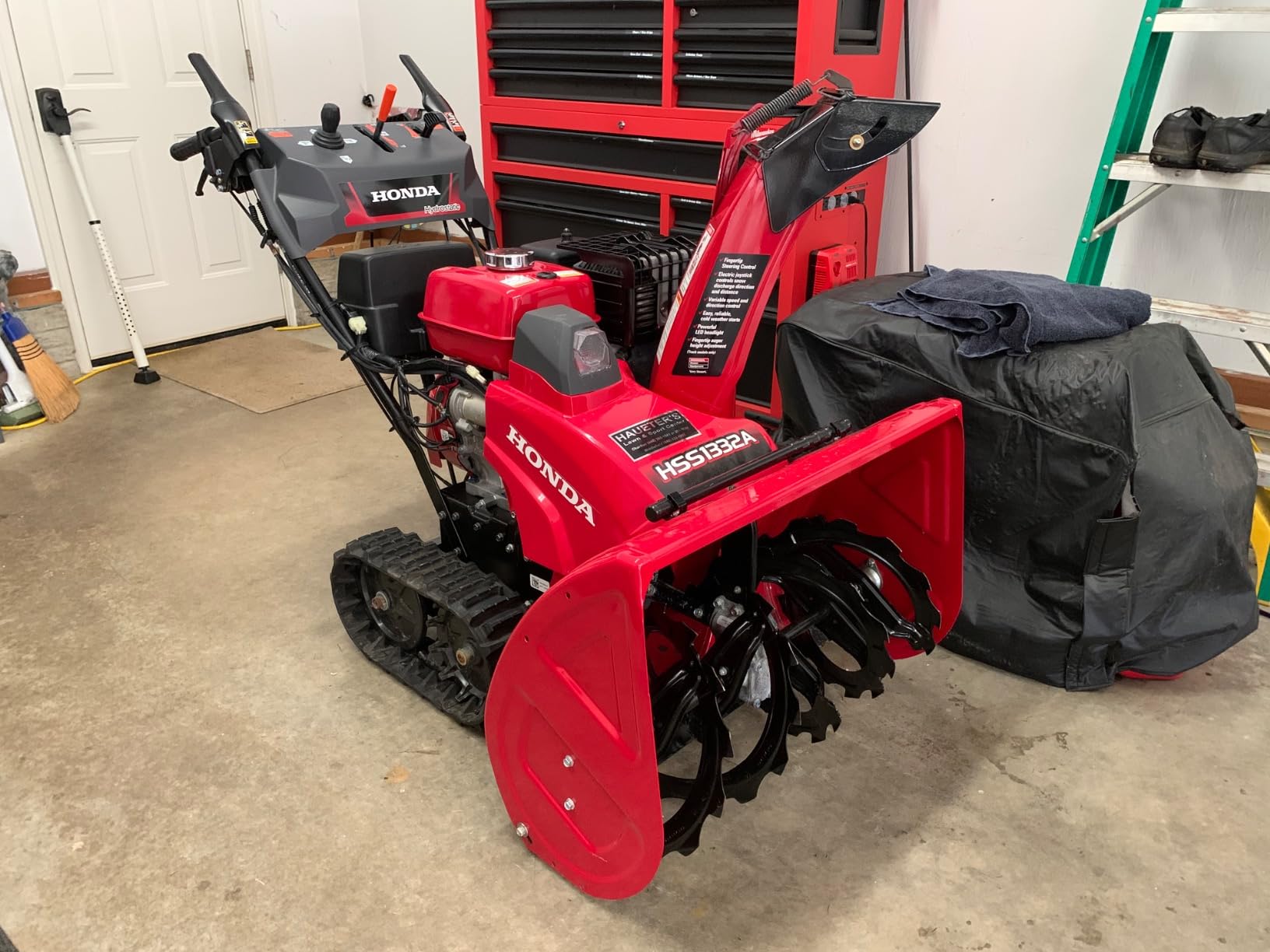
The thumb-operated auger height control lever is the feature gravel owners should care about. Rather than bending down and repositioning a skid shoe, you dial the housing height from the handle as you walk. On rutted or uneven stone, where a fixed housing can bury itself, being able to raise the auger mid-pass without stopping is genuinely useful.
The self-propelled hydrostatic transmission gives smooth, shift-free ground speed control. On a long incline that means you can creep slowly through deep snow for traction or speed up on the flat without hunting for a gear, and there is no friction disc to slip and no chains to check.
What track drive does to a gravel surface
Tracks spread weight and bite into loose stone instead of rolling across it, which is why they hold on slopes. They also compress the surface behind you, so shoulder-season passes on a gravel drive can leave a visibly smoother, packed path that behaves differently the next time it snows.
Keep that in mind if your drive has soft spots that rut under weight. Owners on SnowblowerForum report wheeled machines working better than tracked units on gravel in early- and late-season conditions, especially for turning, and that is the honest counterpoint to the traction advantage.
Where this machine is not the answer
This is a large, high-output machine, and the review base is the thinnest here at 42 reviews, so the long-term data you can draw is limited. Track drive also needs more maintenance attention than pneumatic wheels. If your drive is flat and straight, you are paying for grade capability you will rarely use, and a wheeled 28-inch machine will serve you as well.
For a sloped drive, a curved lane, or a property where ice is a regular feature, this is the strongest gravel-specific choice in the roundup.
8. Honda HSS928 28in Two-Stage with Track Drive
Honda HSS928 28-Inch Two Stage Snow Blower (HSS928AAT)
- 4.6 average from owners
- on a small review base
- GX270 engine torque handles compacted snow and heavy gravel berms
- Dual track drive with cleated rubber for traction and balance on inclines
- Hydrostatic transmission for shift-free precise ground speed
- Auger height control lever
- 3-year residential warranty
- No assembly required
- Recoil pull-start only with no electric start option
- 1900 lbs per minute is below the 31.9in HSS1332
- Smallest review base here at 28 reviews
This 28-inch Honda carries a 4.6 average, tied for the highest rating in the roundup, though on just 28 reviews, so treat it as a strong signal from a small sample rather than a settled verdict. The machine is the smaller-sibling option to the HSS1332, and the GX270 engine is no slouch: owners point to its torque working through compacted snow and heavy gravel berms at the ends of driveways.
The 21.7-inch clearing height on both Hondas is worth noting against the 20-inch intake on most machines here. More vertical clearance means the housing can sit higher on loose stone and still take a proper bite, which is the central gravel problem.
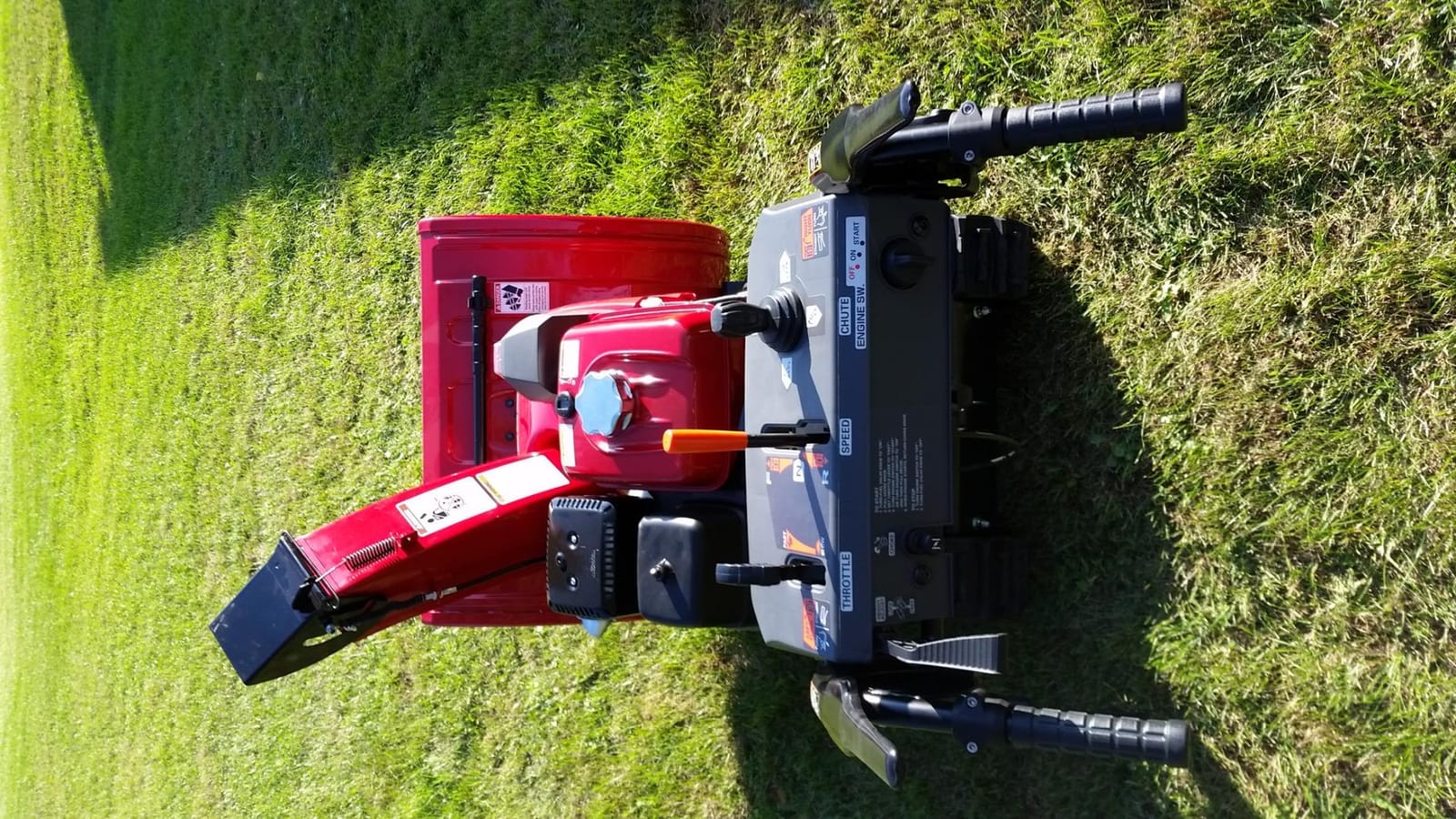
Hydrostatic drive is the quiet reason to consider this over the HSS1332. Precise, shift-free ground-speed control is useful on a long drive where you want to crawl through a drift at the crown of a hill and then move quickly along a flat run, and it removes the friction disc as a maintenance item that wears season after season.
The dual track drive with pliable low-temperature rubber and cleats delivers traction and balance on inclines, rough ground and ice, and the auger height control lever is again operated with a thumb so you can adjust the housing for gravel without stopping.
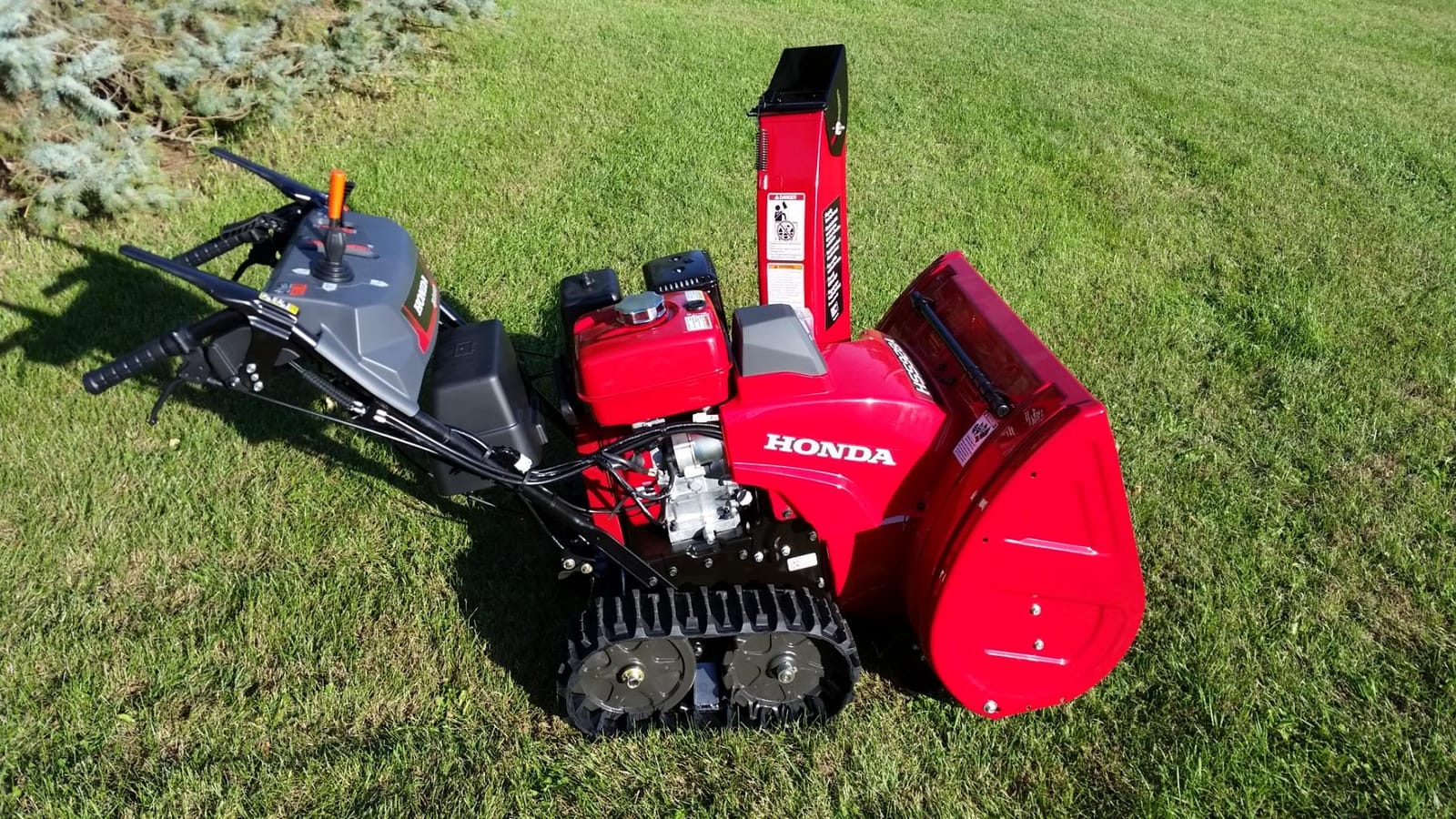
Which Honda fits a gravel driveway
Choose this one if the drive is long, moderately sloped and you want the finer speed control and lower weight. Choose the HSS1332 if the drive is very wide, the events are heavy, or you want the wider path and the electric key start. The clearing rate difference is real: 1900 lbs per minute here against 2750 on the larger machine.
Both share the track drive architecture, the hydrostatic transmission and the auger height control lever, so the gravel-specific behaviours are the same. The choice is width, capacity and starting method.
The starting method is the real trade-off
This model is recoil pull-start only, with no electric start option. On a mild winter with a covered spot to store it, that is a non-issue. On a drive that gets early morning clearing at 10 degrees below freezing, a pull cord is exactly the chore forum owners complain about, and the HSS1332 with its DC electric key start avoids it.
At 243 pounds it is a heavy machine that you will rarely need to lift once it is running. Both Hondas arrive ready to run with no assembly and carry a 3-year residential warranty, which is part of why they are the community’s most common second answer behind Ariens.
9. PowerSmart BS26 26in Two-Stage with 208cc Engine
PowerSmart 26 Inch Snow Blower Gas Powered, 2-Stage 208cc B&S Engine with Electric Start, Led Light, Hand Warmer, Self Propelled BS26
- Briggs 208cc engine moves heavy snow and salted plow berms
- 26in deck clears an 18-foot-wide drive in one pass
- Light 140-pound self-propelled frame is easy to reposition
- Heated handle and LED headlight
- Anti-clogging two-stage auger design
- 2-year warranty with US repair service center
- Lowest average rating here at 3.5
- Thin sheet-metal funnel and small auger blades
- Missing or loose assembly hardware reported at delivery
We include this one with a clear warning. At 3.5 it carries the lowest average in the roundup, with 23 percent one-star reviews, and the reasons are specific enough that you should know them before you order. It is still a genuine two-stage, 26-inch machine with a Briggs & Stratton 208cc engine, and at 140 pounds it is one of the lighter self-propelled options we reviewed.
The engine itself is not the problem. Owners praise it for moving heavy two-foot-plus snow and salted plow berms, and some report multiple reliable seasons in New England winters. The anti-clogging two-stage auger design keeps discharge moving in deep snow, which is the part that usually causes stalling.
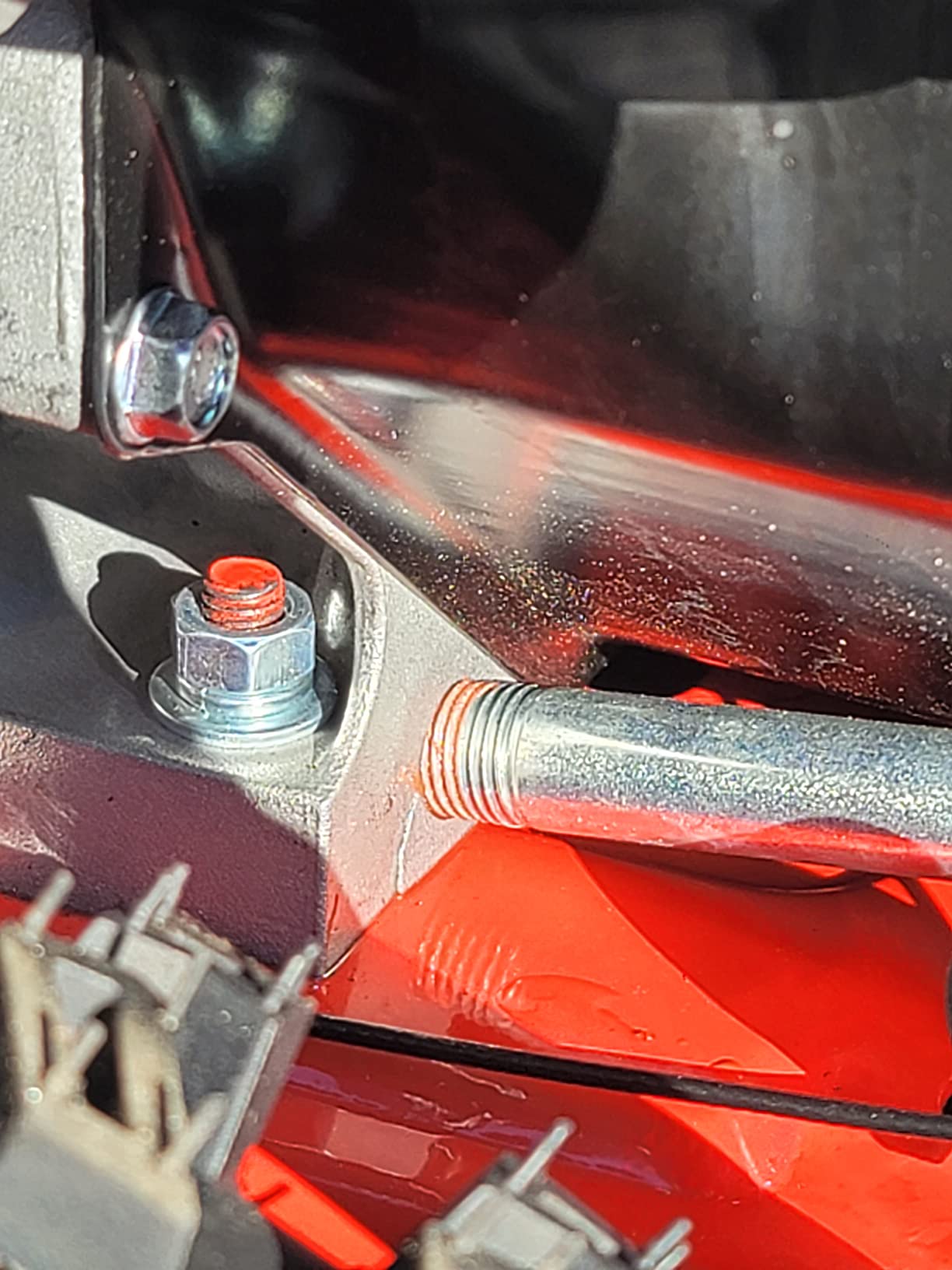
The quality control is the problem. Multiple owners report a damaged or broken oil sump drain tube on arrival, causing heavy oil leakage or a seized engine. That is a delivery failure mode you can inspect for in about five minutes, and it is worth doing before the first storm rather than after.
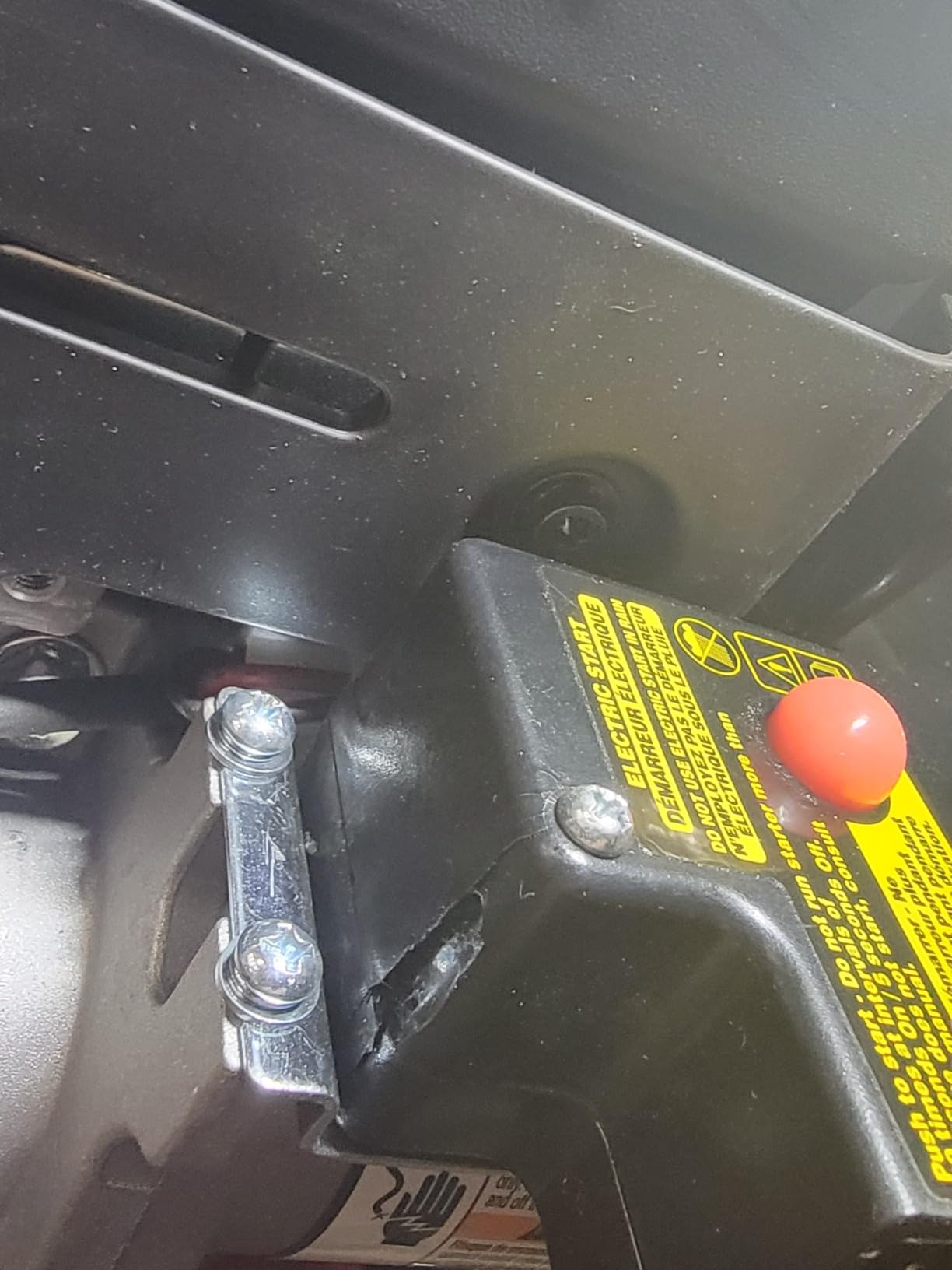
Other reported issues include a thin sheet-metal funnel and plastic chute that flex, auger blades that are small for two-stage duty, and wheels held by pins with little material around the hubs. The forward and reverse cable also needed adjustment on delivery for some owners.
When the low weight is the deciding factor
At 140 pounds this is about 7 pounds lighter than the 26-inch machine at the top of this list and 103 pounds lighter than the 28-inch Honda. If you are older, clearing a short drive, or lifting the machine into a truck bed alone, that weight difference is a genuine safety and convenience gain.
Lightness has a cost on gravel, though. Less weight means less momentum and less stability on a rutted or sloped surface, and the smaller wheels and thinner auger blades are the parts that will meet a stone first.
How to buy one of these safely
Inspect it on arrival before you run it. Check the sump drain tube, turn the wheels by hand, test forward and reverse, and confirm every assembly bolt is present and tight. The manufacturer lists a 2-year warranty, free lifetime technical support and a US repair service center, which is better support infrastructure than most machines in this class offer.
Our honest position: the PowerSmart 26in at the top of this roundup is the better buy for almost everyone, and the only strong case for this one is a hard weight limit. If that is not your situation, spend up.
How to Set Your Skid Shoes on Gravel
This is the routine no roundup publishes and the one question forum owners ask most. The goal is simple: the auger should shred snow and never touch stone. MyTractorForum users running very wide two-stage machines on gravel deliberately set the housing 2 to 3 inches above the surface, and you do not need a 47-inch machine to do the same thing.
- Clear loose snow off the surface first. Shovel or blow a pass across the bare gravel to expose the stones. You cannot judge housing height against stone you cannot see.
- Set both skids to the same height. Adjust each side independently, then re-level the machine on flat ground. A machine sitting an inch lower on one side digs on that side only.
- Raise the skids until the housing sits roughly an inch above the stones. On rough or rutted gravel, go higher. You are aiming to leave a thin layer of snow, not scrape the surface clean.
- Walk the first ten feet and stop to look. A scuff mark, a strip of pulled gravel or a divot in the shoulder means the skids are too low. Raise another half inch and repeat.
- Check the chute setting before you start throwing. Aim away from lawns, garden beds and parked cars. Stone that comes out of the housing ends up wherever the chute points.
Leave that inch of snow behind deliberately. It insulates the gravel, and the next storm softens rather than glazes over. If a rock still finds the auger, stop immediately, disconnect the spark or battery, and check the shear pin and auger edge before running again.
Driveway Size to Clearing Width
Most buying guides skip this step, so here is the shorthand. Measure the drive’s length and width, then pick a width that clears your usual parking area in one pass with a small overlap. Wider is faster; too wide is a steering problem on a curve.
Four to six cars wide, under 100 feet long: a 21-inch machine covers it, though the 24-inch models here clear it in fewer passes.
Six to ten cars, 150 to 250 feet: this is the range most rural gravel drives fall into, and 24 to 26 inches is the sweet spot. You will walk the length four or five times in a moderate storm.
Ten to fifteen cars, or a drive that also serves a shop or a lane: 28 to 30 inches cuts the work substantially. This is where the Ariens 28in and the Honda 31.9in earn their place, and where a single pass across a wide drive starts to matter.
Fifteen cars or more, or very heavy wet events: consider 30 inches and up, or a tractor-mounted blower. MyTractorForum and TractorByNet owners with rear-mounted units on large rural gravel properties use that approach rather than pushing a walk-behind the full distance.
Gas vs Cordless on a Large Gravel Driveway
Gas wins on endurance and cold-weather starting. A full tank clears as much as you can walk, cold mornings start without fuss, and there is no battery capacity to lose in freezing temperatures. The costs are fuel storage, stale gas over a summer, exhaust, noise, and maintenance on an engine and its drive components.
Cordless wins on convenience and control. Push-button start, no cord to trip on, quiet enough to clear at six in the morning without waking the house, and a variable speed trigger that reduces stalling on compacted snow. The limits are runtime on the deepest events and cold-weather capacity loss, both of which forum owners flag repeatedly.
For most of the drives this roundup covers, a 24-inch cordless two-stage with two high-capacity packs is genuinely sufficient. If your drive is 300 feet or longer, receives heavy wet snow, or you clear at odd hours in deep cold, gas gives you fewer compromises. Our single-stage guide explains why we rule that category out of gravel duty entirely.
Wheeled vs Tracked on Gravel and Slope
On a flat, straight drive, wheels win. They turn more easily at the end of a pass, they are cheaper to maintain, and they do not compress the gravel behind you. SnowblowerForum owners report wheeled machines working better than tracked units on gravel in early- and late-season conditions, specifically because of turning.
On a grade, tracks win. The cleated low-temperature rubber on the two Hondas is specified for traction on inclines, rough or uneven ground and ice, and that traction is what keeps a wide machine pointed where you are steering it instead of drifting into the shoulder.
Watch tire pressure on a wheeled machine if your drive is steep. Slightly higher pressure in the tires reduces the contact patch and improves bite on compacted snow over stone, while too little pressure lets the wheels spin. Wide tires, in the 16-inch class of the Ariens, spread weight and resist sinking into soft spots.
Frequently Asked Questions
Can I use a snow blower on a gravel driveway?
Yes, and a two-stage machine is the right one to use. The key is adjustable skid shoes set so the intake housing rides about an inch above the stones, which keeps the steel auger off the gravel. Set the skids a little higher over rutted or uneven stone, and you will leave a thin layer of snow behind rather than stripping the surface. Avoid single-stage machines with rubber paddle augers, because the paddles drag on the ground and will pick up rock.
What is the best tool to remove snow from a gravel driveway?
A self-propelled two-stage snow blower with adjustable skid shoes. The two-stage design feeds snow into a separate impeller that throws it well clear of the stones, and self-propelled drive saves your back across a long run. For a very steep drive, many owners pair a plow or a broom for the bulk of the work with the blower for finish clearing.
What is the best snow blower for a large driveway?
Match the clearing width to the parking area. A six to ten car drive suits a 24 to 26 inch machine, while a ten to fifteen car drive or a longer rural lane benefits from 28 to 30 inches because you finish in fewer passes. Always choose two-stage with adjustable skid shoes on gravel, and add self-propelled drive with multiple speeds so you can control your ground speed on a slope.
Are 2 stage snow blowers worth it?
On gravel, yes. A two-stage machine uses a steel auger to break up snow and feed it into an impeller that throws it out of the chute, so the housing can be lifted on adjustable skids and never touch the stones. A single-stage machine relies on rubber paddles that drag on the ground, which is exactly how a gravel driveway ends up full of divots and thrown stones.
What is the best 2 stage battery snow blower?
The EGO SNT2416 stands out in the cordless class. It combines any two EGO ARC Lithium batteries through Peak Power technology to throw snow up to 50 feet, runs a variable speed steel auger for heavy wet snow, and is rated to clear a 24-car driveway with 8 inches of snow on one charge. The EGO SNT2400 is the same platform sold without batteries, which is the better value if you already own 56V ARC packs.
Will a snow blower damage my gravel driveway?
It can, and the damage almost always comes from the intake housing riding too low rather than from the machine’s weight. If the skids are set below the top of the stones, the auger will pull gravel and fling it into your lawn, garden or vehicles. Raise the skids until the housing sits roughly an inch above the surface, check both sides are level, and stop the machine the moment you hear a change in sound from the auger.
Conclusion
For most people clearing a large gravel drive, the PowerSmart 26in with the Briggs & Stratton 208cc is the pick. It is the most reviewed machine in this roundup, the 26-inch width covers a typical drive in one pass, the 50-foot throw clears the stones, and the adjustable skid shoes do the one job that matters on gravel. Set them an inch high before the first storm and check both sides are level.
If you already own EGO 56V ARC Lithium packs, the SNT2400 is the smarter cordless route. If your drive has a grade, the two Honda track-drive machines hold their line where wheels wander. And if you have a plow or a tractor, a rear-mounted blower beats walking several hundred feet every storm.
Pick your width, set your skids, and get the drive cleared before the next storm arrives in 2026.