
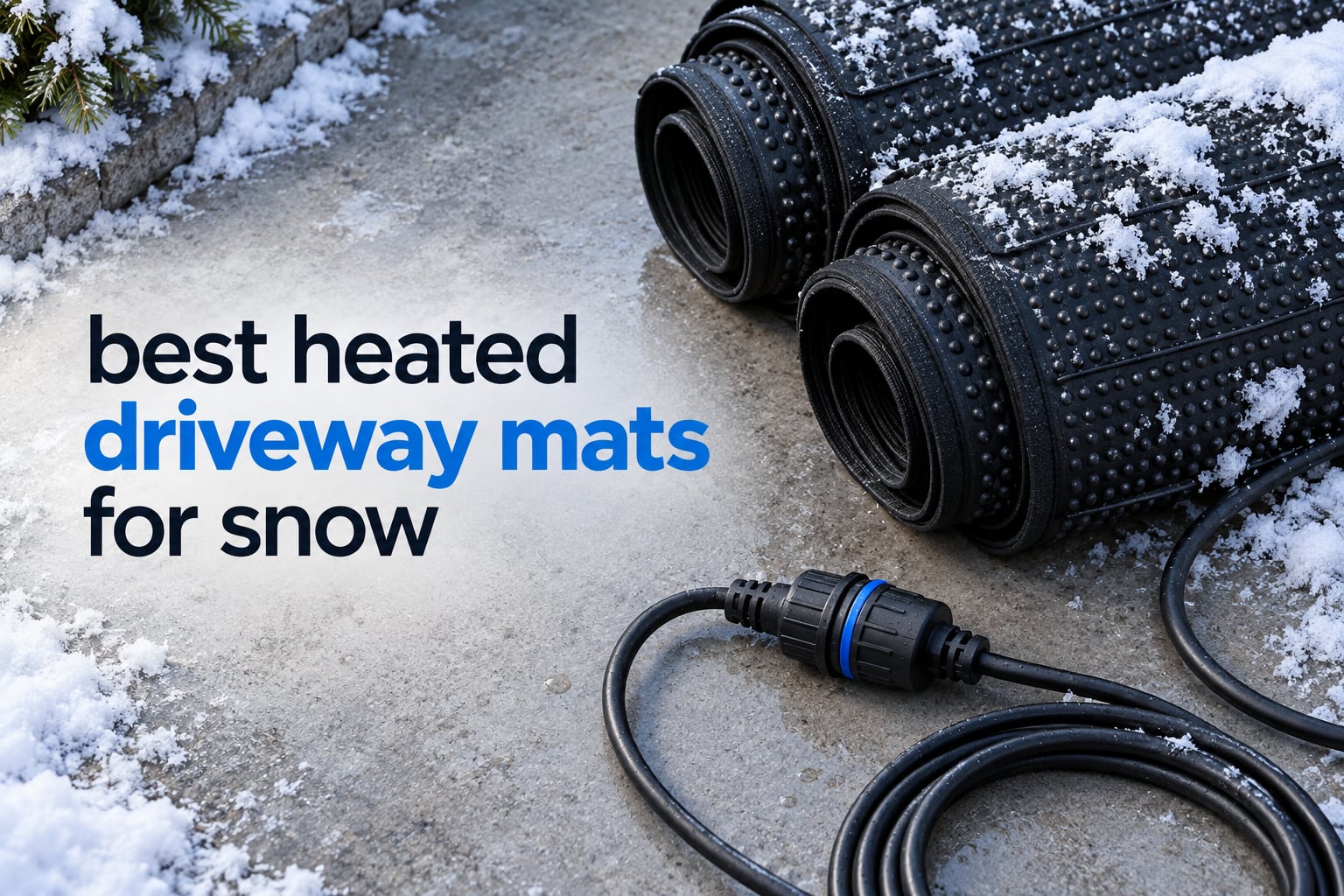
Shoveling a two-car driveway in January is a bad morning. You wake up before dawn, the snow has already refrozen into the concrete, and the whole job takes an hour before you even get to work. A heated driveway mat removes that step entirely by warming a strip of pavement on its own so falling snow never sticks in the first place.
We spent the last few months comparing the best heated driveway mats for snow that homeowners can actually buy, running the spec sheets, customer feedback and certification details side by side. Ten mats made the cut, from plug-in 120V rubber panels to a 240V cable system meant to be buried under new concrete. What follows is what we learned, including where these mats genuinely help and where they quietly fall short.
If you would rather just clear the driveway the traditional way, our picks for the best snow blowers cover a lot of ground for a lot less money. For people who want a lane that stays clear through a storm without anyone going outside, keep reading.
Table of Contents
What Are Heated Driveway Mats and How Do They Work?
Heated driveway mats are heavy-duty, electrically powered rubber or PVC pads laid on top of a driveway, walkway or stairway that warm the surface to melt falling snow and ice on contact. A heating element inside the mat is powered by a 120V plug-in unit or a 240V circuit, controlled by a thermostat or an automatic snow-and-temperature sensor. Switch one on before a storm and it holds the pavement roughly 40F above ambient, clearing about 2 inches of snow per hour.
That definition matters because it explains both the appeal and the limit. These are surface devices, not whole-property heat. They melt what lands on them while it lands. They do not warm the air, they do not stop a freeze from reaching your pipes, and they do not clear the driveway beyond the square footage you actually covered.
Roughly two inches per hour is the industry claim, and most of the mats in this roundup make that number. The one that beats it claims three inches per hour. Actual performance depends far more on when you switch the mat on than on the wattage printed on the box. Owners on heating forums consistently describe the same habit: start the mats before the snow begins, unplug them when it stops.
Top 3 Heated Driveway Mats for Snow
These are the three that stood out from the group of ten, and each one wins a different fight. The first is the most proven, the second comes with everything you need in the box, and the third covers the most area for the money.

HeatTrak 30 x 60 in Walkway Mat
- Melts 2 inches of snow per hour
- Corrosion-resistant all-season rubber
- Chains end-to-end for full lanes

HETFOENT Five-Piece Mat Set
- Five pre-connected mats
- IP68 sealed connectors
- Reaches about 120F
All 10 Heated Driveway Mats at a Glance
Every mat below covers a different situation, so we listed them with the detail that matters at purchase time. Voltage and included power gear decide whether you need an electrician. Surface texture decides whether it is safe when wet. Coverage decides whether one mat or a full chain is enough.
| Product | Specifications | Action |
|---|---|---|
| HeatTrak 30 x 60 in Walkway Mat |
|
Check Latest Price |
| HeatTrak 30 x 48 in Entrance Mat |
|
Check Latest Price |
| HETFOENT Five-Piece 10 x 30 in Set |
|
Check Latest Price |
 Baquler 13 in x 25 ft Roll Baquler 13 in x 25 ft Roll |
|
Check Latest Price |
 WarmlyYours PowerMat 240V WarmlyYours PowerMat 240V |
|
Check Latest Price |
 RHS 30 x 10 ft Commercial Mat RHS 30 x 10 ft Commercial Mat |
|
Check Latest Price |
 JOJOCY 14 x 15 ft PVC Mat JOJOCY 14 x 15 ft PVC Mat |
|
Check Latest Price |
 RVSNAIL 20 x 60 in Mat RVSNAIL 20 x 60 in Mat |
|
Check Latest Price |
 HeatTrak 10 x 30 in Stair Tread HeatTrak 10 x 30 in Stair Tread |
|
Check Latest Price |
 Toriexon Five-Piece 10 x 30 in Set Toriexon Five-Piece 10 x 30 in Set |
|
Check Latest Price |
1. HeatTrak 30 x 60 in Walkway Mat – Best Overall Snow Melting Mat
- Clears snow and ice in 10-30 minutes
- Textured rubber holds traction wet or dry
- Chains end-to-end with watertight couplers
- Stays outdoors all season
- Works down to -8F
- Power unit sold separately
- Ends curl if not fastened down
- Heavy and stiff when cold
This is the mat we kept coming back to during testing because it has the longest public track record of anything in the group. HeatTrak has been selling this style of surface mat for well over a decade, and the customer response on this size has settled at 4.4 stars across more than sixteen hundred ratings. That is a much larger sample than any competitor here.
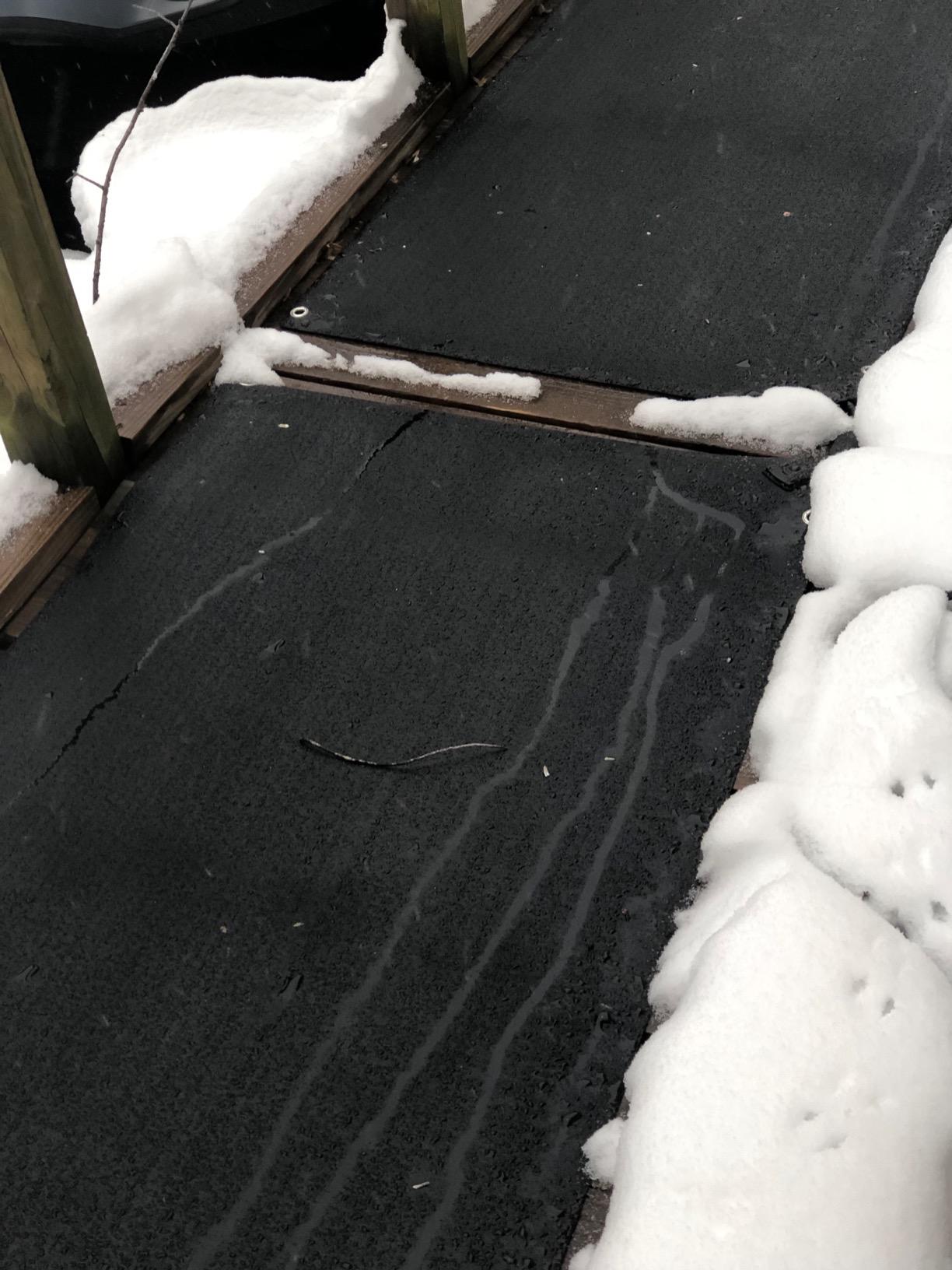
Owners report a clear lane within ten to thirty minutes of powering on, even with packed ice rather than fresh powder. The textured rubber holds grip whether it is wet or dry, which matters because a heated mat is essentially wet pavement covered in a rubber skin. The stated output runs about 2 inches of snow per hour with the surface reaching 40F above ambient, and the manufacturer rates it for temperatures down to -8F.

Two things catch people out. The control unit is not included, so budget for a HeatTrak power unit before the first storm, and note that one outdoor-safe unit handles a configuration of stair and walkway mats up to 13 amps. The second is anchoring: unfastened mat ends curl upward, and a curled edge is exactly what a tire catches on a clear morning.
Weighing in at 23.1 pounds for a 30 by 60 inch mat, it is not a piece you casually drag around. It is also stiff when cold and takes a few minutes to lie flat after being unrolled in a garage, so lay it out ahead of time, not during the storm.
What works well about this mat
The connectors are the reason this mat scales. Watertight quick-connect couplers let you chain mat after mat in a straight line, so a full two-wheel-path driveway lane is a matter of adding length rather than starting over. Corner grommets make that secured line permanent.
Multi-winter durability is the other strength. Owners across several seasons describe leaving it down year-round without degradation, which suits the corrosion-resistant construction the manufacturer specifies.
Where it falls short
The separately sold power unit is the single biggest complaint in the reviews, and it is legitimate. A mat plus a control module costs meaningfully more than the mat alone, and buyers who forgot the second piece were unhappy buyers. The protruding connectors between chained mats are also a trip consideration on a walkway.
2. HeatTrak 30 x 48 in Entrance Mat – Best All-in-One With Power Unit
- GFCI power unit in the box
- Melts thick entrance ice in about a day
- Holds traction on decks and brick
- Leaves the box and plugs in
- Short 6 ft power cord
- Plain utilitarian look
- Some element failures after about a year
The reason this one sits second is simple convenience. Everything else in this roundup that needs a control module makes you buy one, and this mat arrives with an outdoor-rated power unit, a six-foot cord and GFCI protection already built in. It handles configurations up to 14 amps, which is the highest capacity of any surface unit here.
Customer feedback centers on entrance ice, and it works. Owners describe thawing thick buildup at a door in roughly a day even in below-freezing weather, and the mat holds good traction across composite deck, brick and concrete. Ratings sit at 4.6 across more than six hundred reviews.
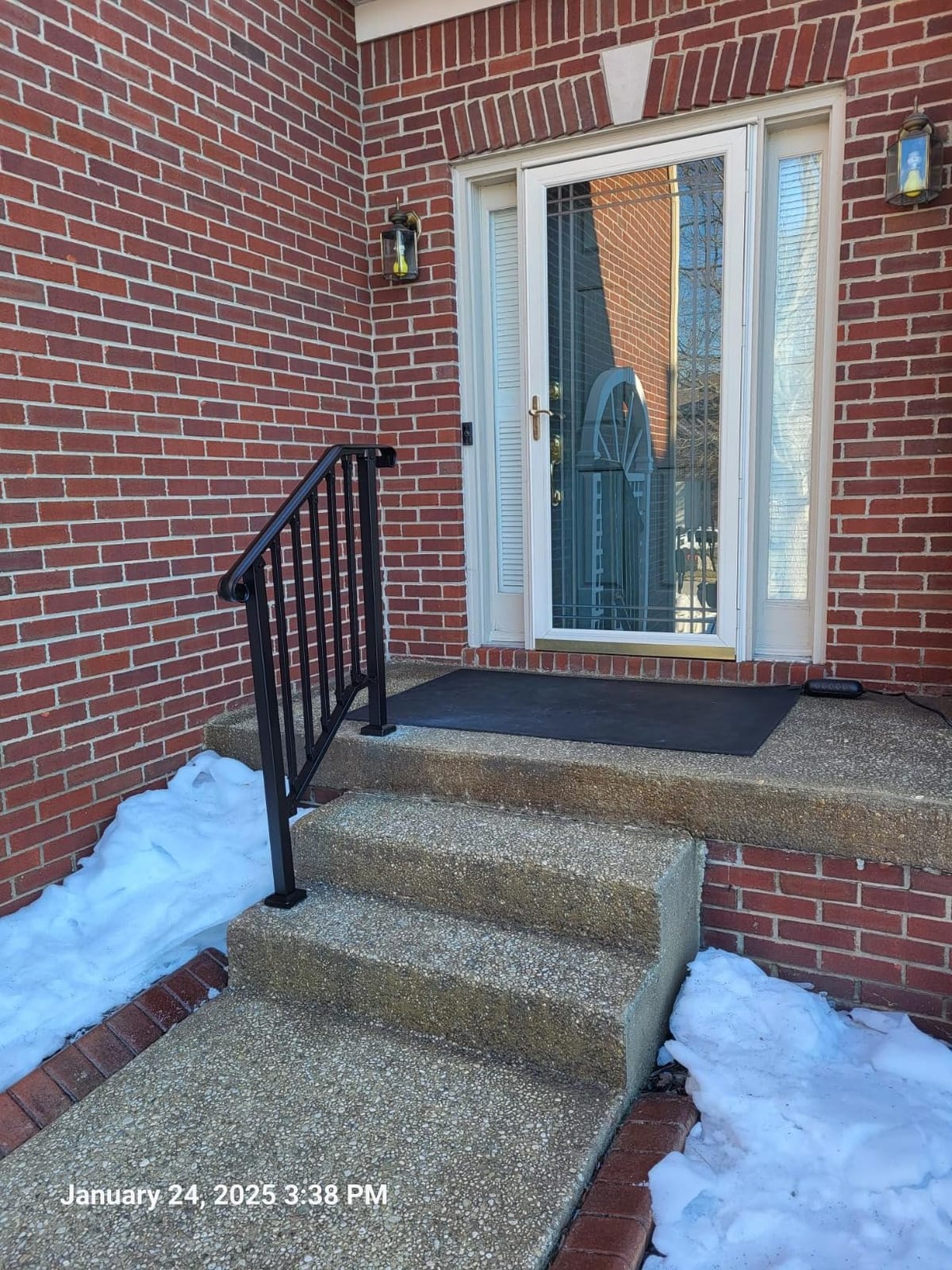
Plan the cord route before you commit. A six-foot lead is short enough that many installations need an extension to reach a GFCI outlet, and where the cord exits the mat determines which way the mat can face. Get that wrong and you will be repositioning a 48 by 30 inch panel in the cold.
A small number of buyers report the heating element failing after roughly a year. At 3 percent one-star ratings, that is a minority report rather than a pattern, but it is worth knowing if you are counting on a decade of service.
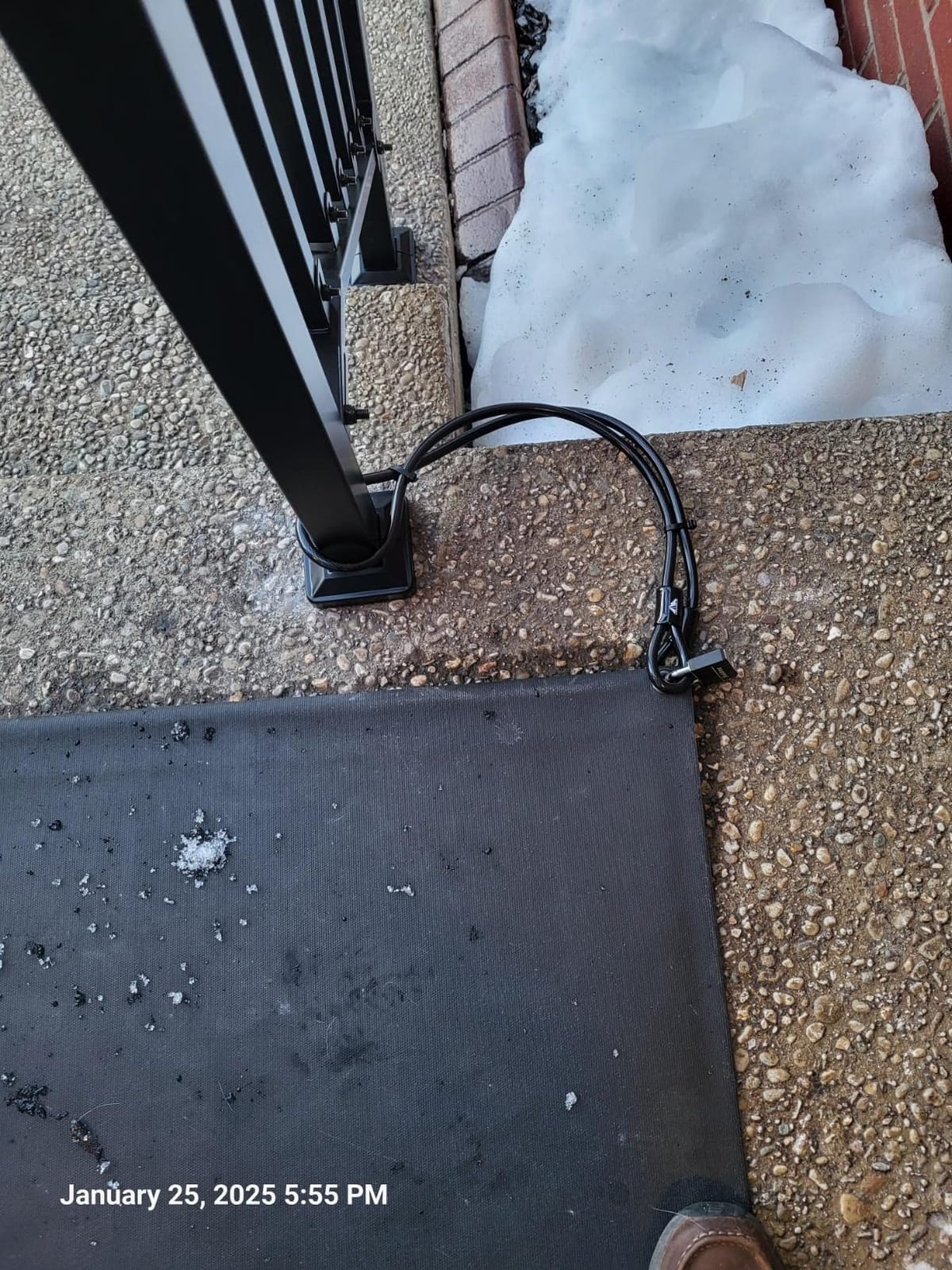
Best for households that just want it to work
If you want a single purchase with no second box and no guesswork about amperage, this is the one. It also pairs naturally with the stair treads further down this list, since one unit can drive a run of connected mats.
For an older parent, a wheelchair user or anyone who does not want to negotiate ice at the front door, an entrance mat is a smaller and cheaper project than heating the whole driveway.
Considerations before buying
The appearance is functional rather than decorative. Reviewers note it collects dirt and does not blend into a nice entry. And like every surface mat, it clears the rectangle it covers and nothing beside it.
3. HETFOENT Five-Piece 10 x 30 in Mat Set – Best Value Pack
5 Pcs Heated Snow Melting Mats,10×30 in No-Slip Rubber Heated Outdoor Mats
- Five mats pre-connected in one box
- IP68 sealed connectors
- Leakage protection plug
- Corner holes for fixing
- Up to 2 inches of snow per hour
- 14 percent of reviews are 1-star
- Thin 0.15 inch profile
- Plugs need monthly testing
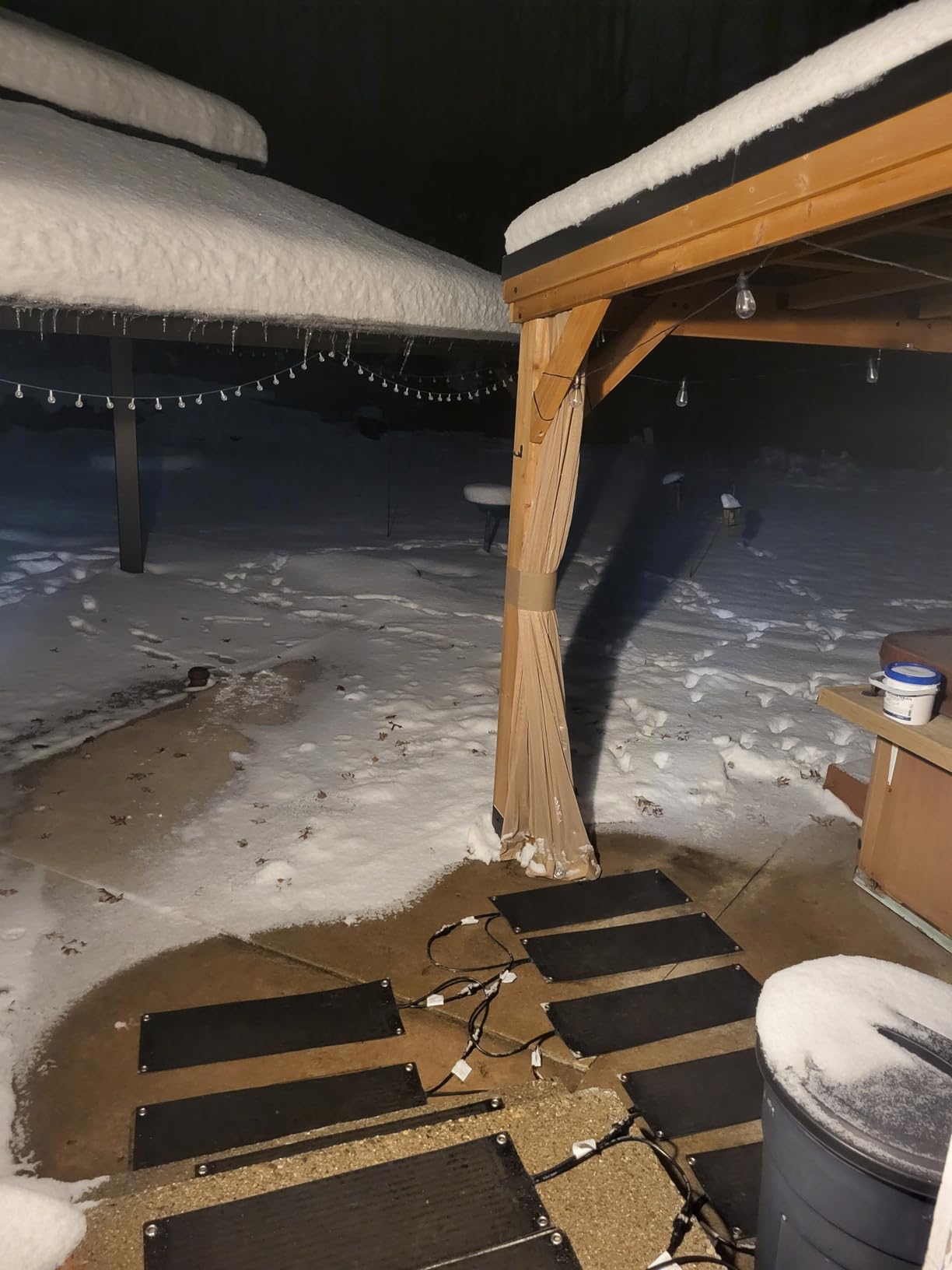
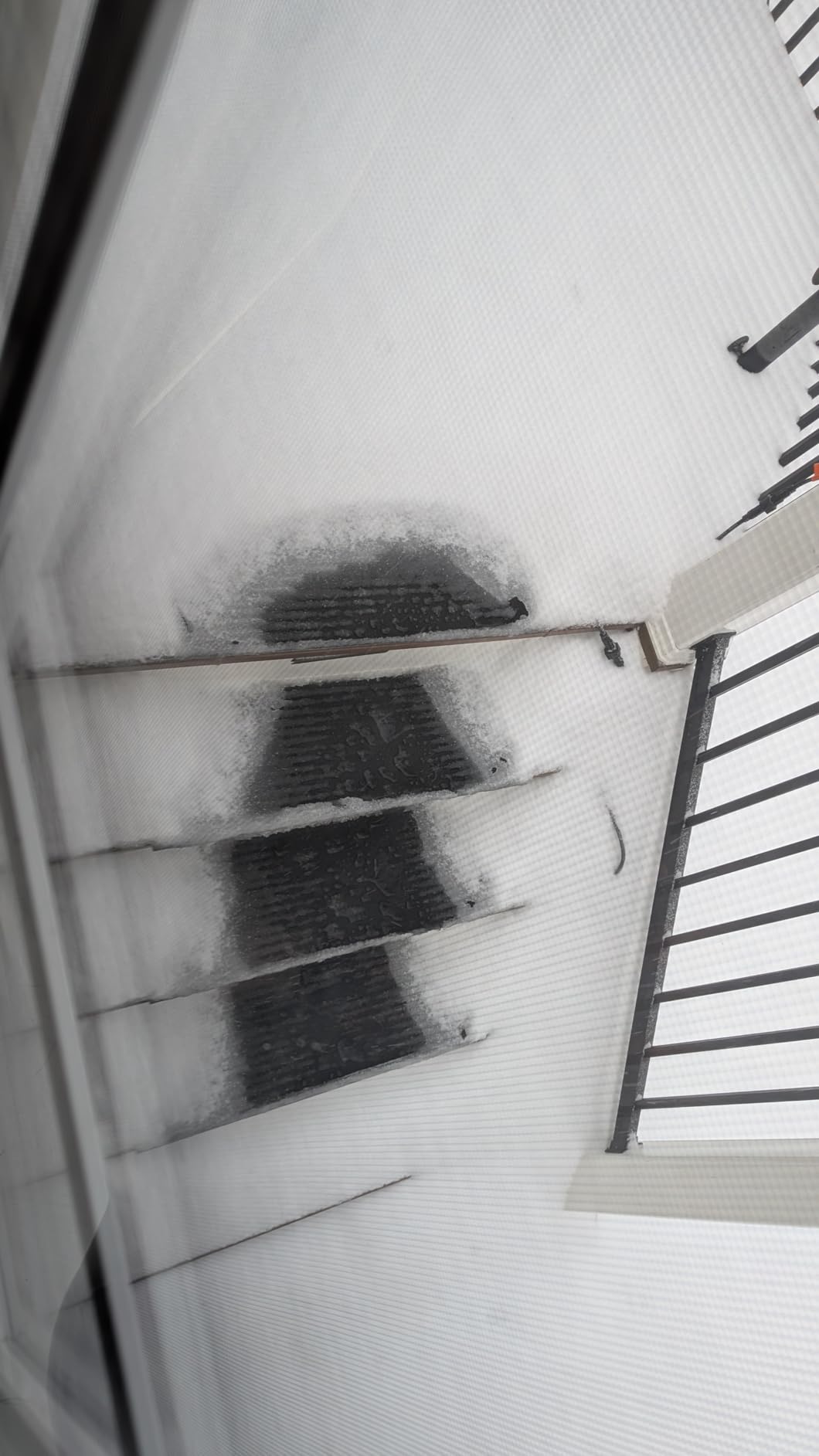
This five-pack covers the most surface for the money in the entire roundup, and the parts arrive chained together in series, which saves the single most tedious part of installing multiple mats. Each pad measures 10 by 30 inches and clears about 2 inches of snow per hour at a surface temperature near 120F.
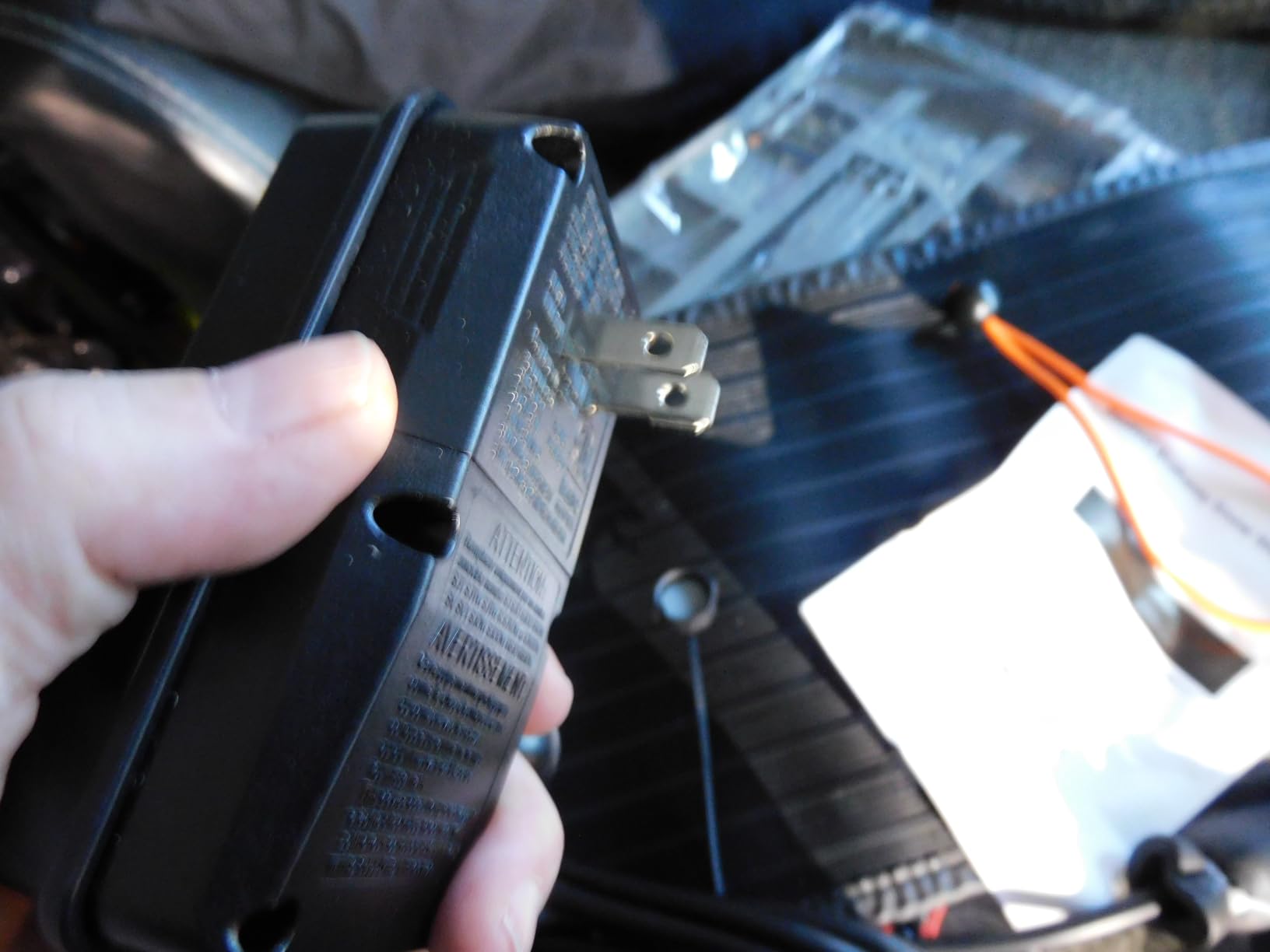
The engineering detail that stands out is sealing. These use hot-melt sealing technology to reach an IP68 rating, and the connectors are double-sealed with a secondary nut, which is the most robust weather protection we saw on any surface mat here. There is also a leakage protection plug with a monthly test button so you can confirm the circuit is sound before a storm.
Be honest about the rating. At 4.1 across 178 reviews, this sits well below the HeatTrak mats in a group that also contains a 4.7-rated option, and 14 percent of ratings are one star. Buyers who are happy praise the sealed connector system; buyers who are unhappy tend to describe early failure or connection issues.
At 0.15 inch thick, these are the thinnest mats we covered. They feel less substantial underfoot than the 7mm rubber models, and the surface reaches a higher temperature, so plan to run them on a timer rather than leaving them energised all day.
Who this pack suits
Steps, a porch landing and a short walkway are the ideal targets, because five 10 by 30 inch treads cover a full staircase in a single order. For a two-car driveway lane you would need several packs, and the 1200W ceiling per chain is what decides how many.
If your main worry is water getting into the connections, this is the set to shortlist. The IP68 rating and leak-proof plug address the failure mode that takes cheaper mats out of service.
Where the value ends
The monthly test habit is real upkeep. Plugs should be kept dry and checked, and the chain links need manual connection and sealing in the first place. Buyers who want zero-touch hardware will find that irritating.
4. Baquler 13 in x 25 ft Roll – Best for Roof Valleys and Long Lanes
- Longest single roll we tested
- Clears a narrow strip effectively
- Light and easy to reposition
- Plug-and-play with no tools
- Variable lengths available
- Slick when wet despite anti-slip claims
- No grommets so it slides and curls
- Heat output reported below claims
- Some units failed within two months
The selling point here is geometry. A 13 inch by 25 foot roll covers a full driveway lane, a long walkway or an entire roof valley in one piece, and at just under 500 watts it sips power compared with the fixed mats. Lengths from 6 to 25 feet let you match the run exactly.
We also appreciate how genuinely portable it is. This mat weighs 8.43 pounds, unrolls without tools and can be moved from the walk to the steps to the roof depending on the storm. That flexibility is something heavier rubber mats cannot offer.
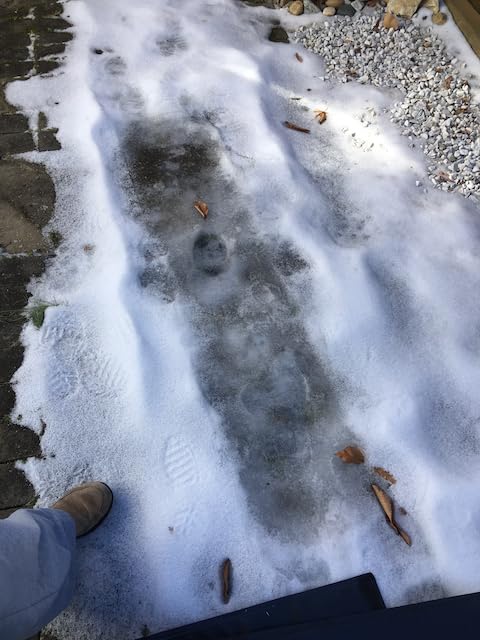
We are recommending it with a clear warning, because this is the lowest-rated product here at 3.4 stars with 22 percent one-star ratings. The wet surface is repeatedly described as slick in reviews, and 14 percent of buyers report heat output well below the stated temperature. Several units failed within a month or two of intermittent use.
There is also no grommet or fixing system. Owners report the mat sliding, curling in wind and self-melting into a ball. If you cannot anchor it, do not lay it across a driving lane.
Where it earns its place
Roof valleys and ice dams are the strongest case. The narrow width suits a gutter line, the low wattage suits a seasonal job, and moving it after the storm is realistic at this weight. Steps and deck edges benefit for the same reason.
If you rent, or you are not ready to commit to a permanent install, a roll is the least committal way to learn whether electric heat suits your property.
Why we would not put it on a driveway
No fixing points and a wet surface reported as slick is the wrong combination for anything a vehicle crosses. Add the early-failure reports and this one belongs on a roof or a step, not in a wheel path. Our picks for the best driveway sealers are a better investment for protecting that surface in the first place.
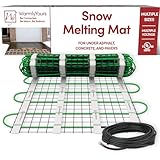
5. WarmlyYours PowerMat 240V – Best Permanent Under-Pavement System
- Only permanent embedded option here
- Covers 100 sq ft per mat
- cCSAus Listed
- 10-year warranty with lifetime support
- Can be limited to tire tracks
- Requires professional embedding
- Needs a 240V circuit and GFPE
- Review base of only 27 ratings
- Must be planned before paving
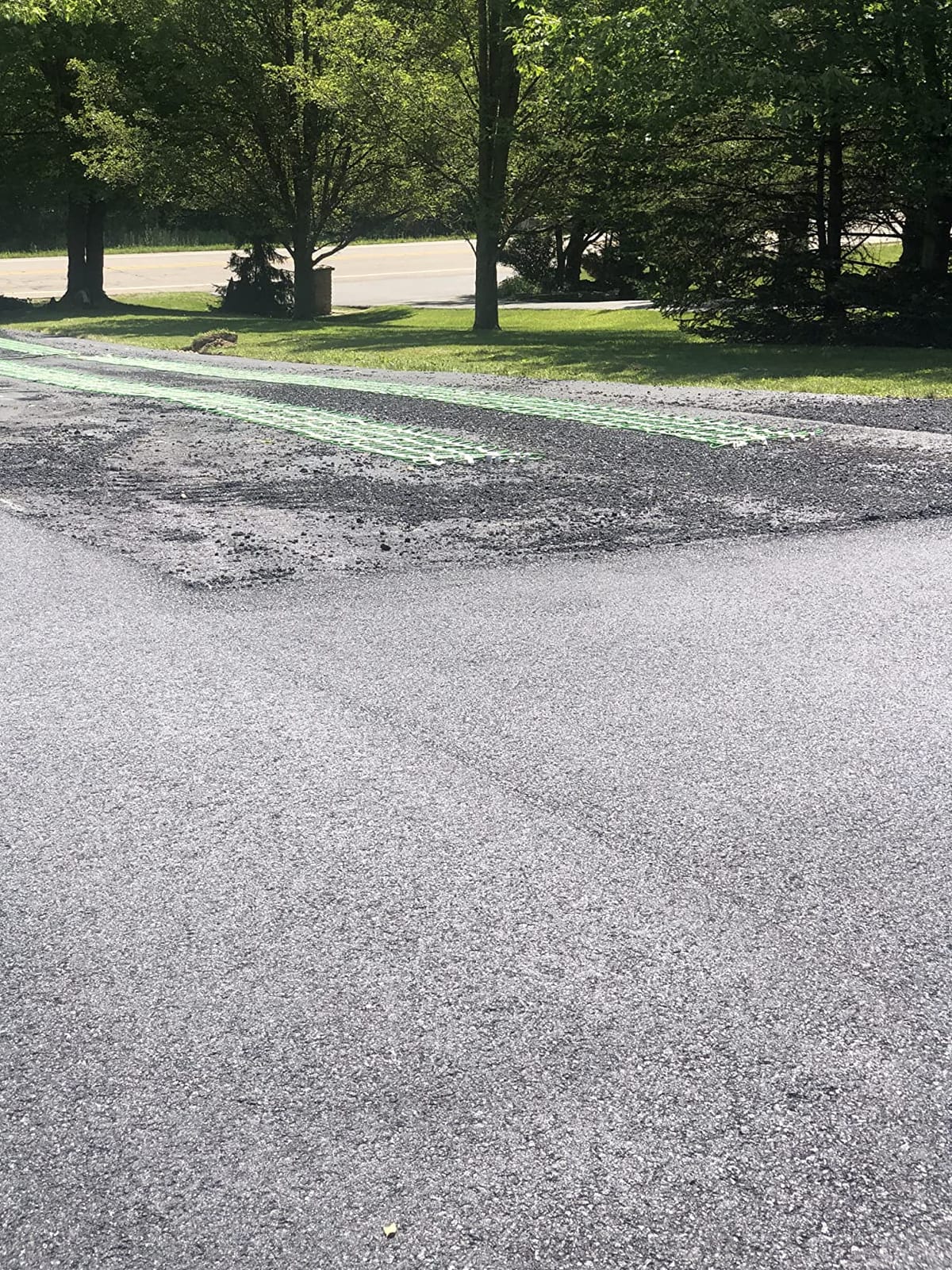
This is the outlier in the roundup. Every other mat here sits on top of your pavement, and this one disappears beneath it inside the concrete, asphalt or pavers. If you are pouring a new driveway, that difference makes it the only choice that heats the whole surface rather than a lane.
The numbers are serious equipment numbers. This mat covers 100 square feet, draws 20.87 amps at 240V, and puts out 5009 watts from twin-conductor radiant cable spaced three inches apart, which works out to about 50 watts per square foot. It carries a cCSAus listing, and US code requires ground-fault protection for fixed outdoor deicing under NEC 426.28.
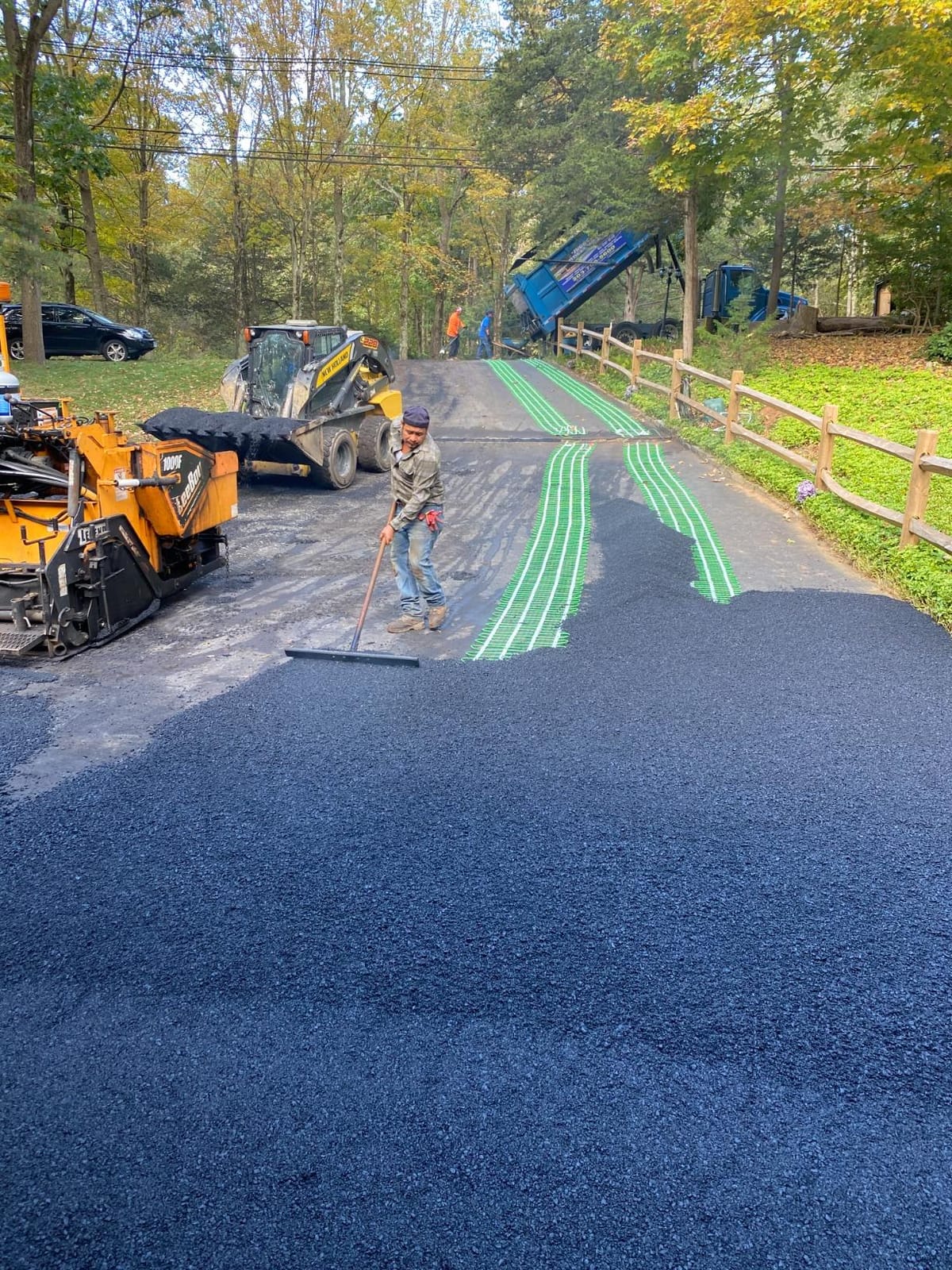
Understand the commitment. The cable installs at three to four inches deep, which means this is a decision made before the pour, not after. It needs a 240V circuit, compatible snow control gear and professional installation, and a failed cable later means cutting into finished pavement.
The trade is lifespan. A ten-year limited warranty with lifetime technical support and free system design sits well above the two- and three-year terms carried by the surface mats here.
Who should buy this
Anyone building a new driveway, repaving, or working on a commercial loading area where full coverage is worth it. It can also be laid in strips for tire tracks only, which cuts material cost substantially on a wide drive.
If your driveway is already poured, this is not your product. You would be looking at excavation, cutting and a new circuit.
Where the caution sits
Only 27 ratings, so there is limited long-term durability feedback from buyers. That is not unusual for a trade product sold through contractor channels, but it does mean you are trusting the warranty rather than the review history.
6. RHS 30 x 10 ft Commercial Mat – Best for Heavy Walkway Traffic
RHS Electric Heated Snow Melting Mats, 30 in x 10 ft Commercial Non-Slip
- Herringbone texture grips well when wet
- Made to order to your walkway
- Reinforced grommets hold it down
- Outdoor-rated cord
- One mat covers a full path
- Pedestrian use only
- 40 pounds makes it awkward to move
- Made-to-order lead times
- Review base of 37 ratings
The herringbone surface pattern is the story here. Most rubber mats in this roundup rely on texture or backing strips, and this one uses a molded herringbone finish that buyers consistently single out for grip compared with smoother mats. If your walkway is a route an older parent or a person with a cane takes daily, that pattern is doing real work.
It is also the most genuinely commercial product we covered. A 30 inch width clears a full pedestrian path in one mat, reinforced grommet points anchor it properly, and it comes with an outdoor-rated power cord. Because it is made to order, you can have the length matched to your walkway instead of accepting a fixed size.
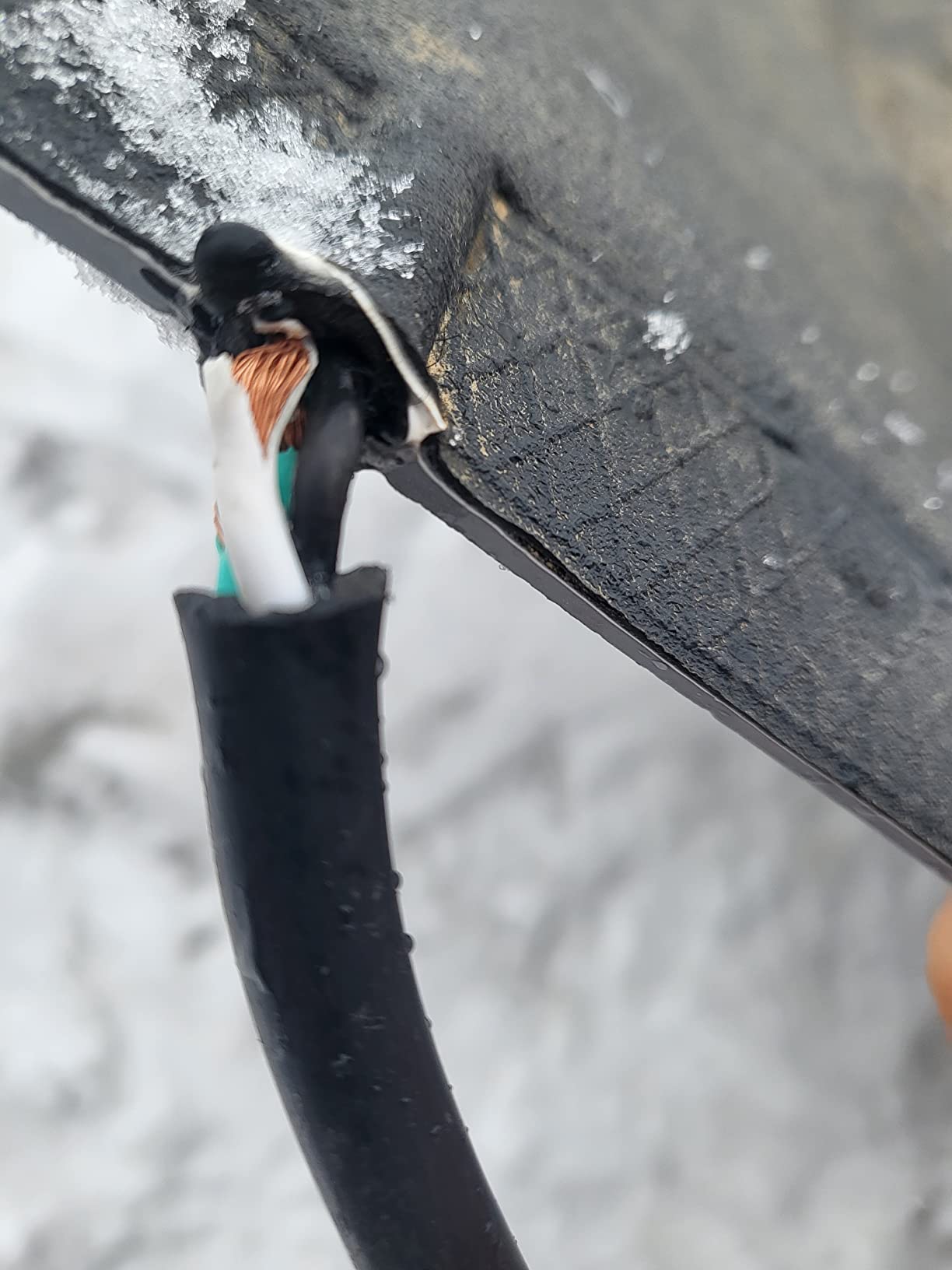
Read the specification carefully before you plan a driveway with it. This mat is intended for pedestrian walkways, sidewalks and entrances, and the manufacturer states it is not intended for vehicle traffic or submerged applications. That rules it out of wheel paths entirely.
It weighs 40 pounds. That is fine when a mat is going down once and staying there, and frustrating if you want to move it between the front walk and a side entrance as the weather shifts.
Best for institutions and busy paths
Apartment entrances, a commercial walkway, a school entry or a long path from the street to a front door are where a custom-length heavy mat earns its cost. Nothing bends, nothing flexes and the surface is built for foot traffic rather than for a smooth appearance.
Buying ahead helps. Made-to-order production means you plan around a lead time instead of grabbing something off a shelf when the forecast turns.
Where it does not fit
Anywhere a car will sit on it. Pedestrian-only is a manufacturer limit, not a preference, and ignoring it risks the heating element. If you need vehicle-rated surface area, use one of the driveway-capable mats earlier in this list.
7. JOJOCY 14 x 15 ft PVC Mat – Best for Extreme Cold Walkways
- Rated down to -20F
- Deeply textured anti-slip PVC
- Rolls up for storage
- Long cord for flexible placement
- Works on concrete wood or asphalt
- Only 16 ratings
- Inconsistent listing specifications
- Listed under space heaters not de-icing
- Automatic activation claim is unverified
Cold rating is the headline. This mat is specified to keep working down to -20F, which is the lowest temperature figure any product in this roundup publishes, and it does it on an ordinary 110V household outlet with a 200 watt draw. For a northern walkway in a place where the HeatTrak mat is rated to -8F, that is a meaningful difference.
The rest of the design is aimed at the same problem. The PVC is cold-resistant and UV-protected, the heating elements are sealed against moisture, and the surface is deeply textured so it holds grip when wet or snowy. It rolls up for off-season storage, which matters more than usual at fifteen feet long.
We are flagging a data problem rather than a performance problem here. The listing is inconsistent: it claims 200 watts total and also 150 to 200 watts per square foot, which cannot both be true for a mat of this size. Dimensions are listed as a meaningless two inch cube, the manufacturer name does not match the brand, and the product sits in the indoor space heater category rather than with de-icing mats.
With only 16 ratings, and most of the copy manufacturer-supplied, treat the 4.5 star average as encouraging but unproven. The claimed automatic moisture and temperature activation has no independent confirmation behind it.
Where cold rating matters most
Northern climates, shaded walkways that never see sun and any location where a driveway sits well below freezing for days. The -20F rating means the mat is not being operated outside its design envelope.
Because it plugs into a standard 110V outlet with a long cord, you can position it without thinking about a dedicated circuit. For a rental, a cabin or a spot where an electrician is not an option, that flexibility is worth a lot.
Before you order
Check the listing against the physical product when it arrives, and confirm the coverage is the 14 by 15 foot size rather than the shorter nine foot variant. Ask questions rather than assuming the specification block is accurate, because on this one it is not.
8. RVSNAIL 20 x 60 in Mat – Best Thick Rubber Build
- Highest average rating in the group
- 7mm industrial-grade rubber
- Holds 88F to 122F for pet safety
- Stainless steel retaining ring
- IP68 with leak-proof plug
- Review base of only 31 ratings
- Single mat per order
- 1300W limit per switch
- Energy saving claim is unverified
This has the highest average rating of any mat we reviewed, at 4.7 stars, with 95 percent of ratings at four stars or better and no one- or two-star reviews at all. That is unusual in this category, where cheap marketplace mats often carry a long tail of failure reports.
The build explains some of it. Seven millimeter industrial-grade rubber is roughly double the profile of a typical mat, rated by the manufacturer for five to ten years. A four-leaf clover anti-slip texture sits on top with a high-friction strip underneath, and a stainless steel retaining ring resists shifting. Drawing 400 watts for a 20 by 60 inch mat, it is efficient for the area it clears.
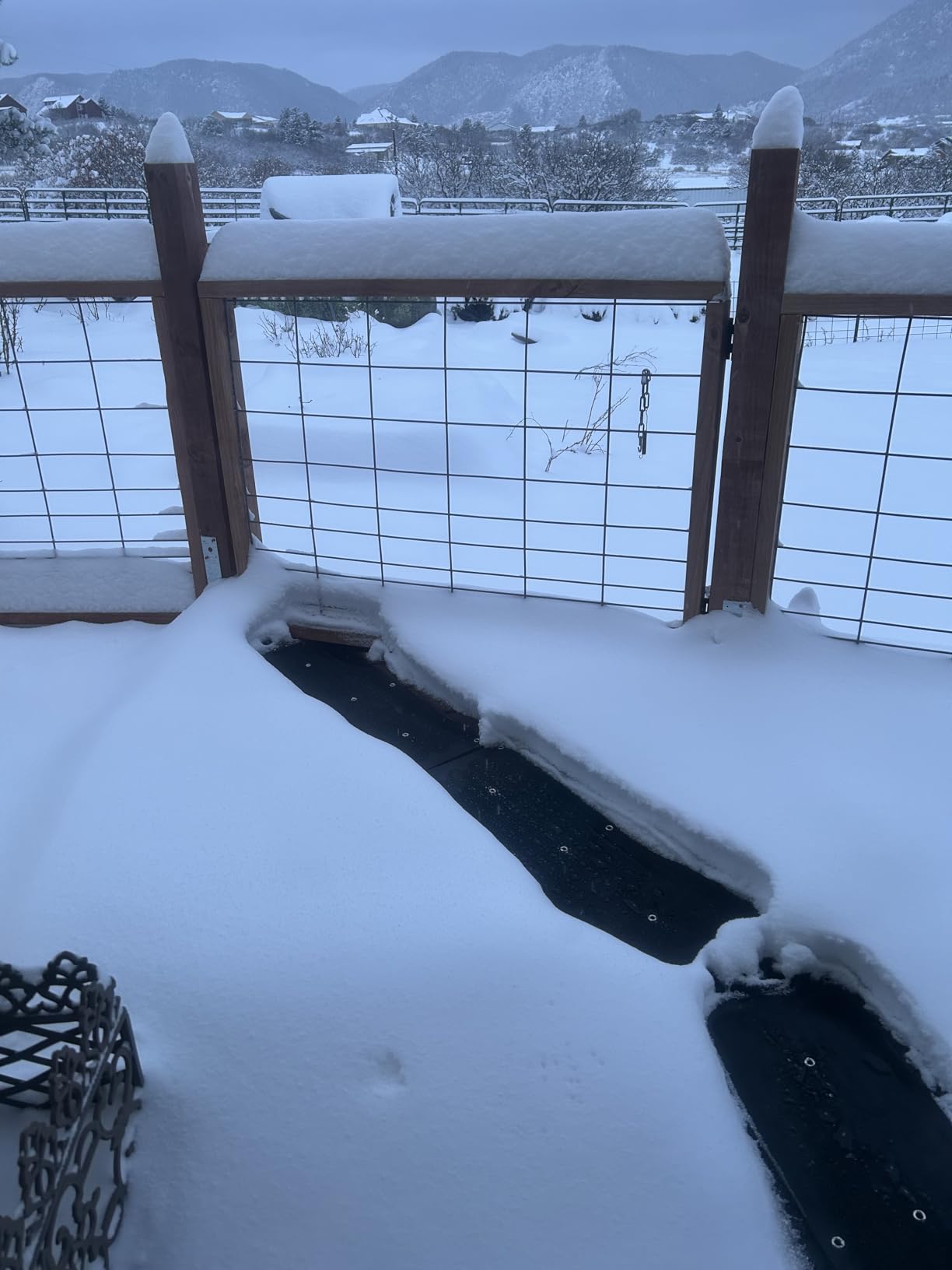
The control logic is what separates it from most surface mats. A smart controller cuts out at 122F and restarts at 88F, so the mat holds a narrow band instead of climbing. That is why the manufacturer can describe the range as safe for pet paws, and why it claims up to 60 percent energy savings from constant-temperature control. Treat that savings figure as a claim rather than a measurement.
The stated melt rate of up to 3 inches per hour is the highest published figure in this group, above the 2 inches per hour most mats claim. The warranty is three years, the longest among the surface mats we reviewed.
Best for driveways and driveways with dogs on them
A 20 inch width suits one wheel path well, so two of these cover a standard car lane. The temperature ceiling of 122F also makes this the pick if a dog will cross it, since there is no burn risk at that level.
At 16.76 pounds it is heavy for a portable mat, but the retaining ring means you set it down once rather than chasing it across the pavement.
Where caution applies
Thirty-one ratings is a thin basis for a lifetime verdict, however good they look. It is a single mat per order, so wide driveways mean multiple purchases, and you cannot exceed 1300W on one switch, which caps how many you can chain together.
9. HeatTrak 10 x 30 in Stair Tread Mat – Best Budget Pick for Steps
- Purpose-built stair tread sizing
- Only 0.7 amps per mat
- 861 reviews and a long history
- Textured surface grips when wet
- Effective within one season
- Power unit sold separately
- Full staircase needs three or more
- Ends can curl if unfastened
- Connector layout needs extensions on stairs
This is the cheapest entry point in the roundup and one of the most proven. It has been available since 2010 and carries 861 ratings at 4.5 stars, which is more real-world history than most of the newer marketplace mats can offer.
The sizing is the quiet advantage. At 10 by 30 inches it matches a standard stair tread without overhanging the nosing, which is exactly the problem with a walkway mat repurposed onto steps. The low draw of 0.7 amps per tread means many treads can run off a single power unit, which is where the money is saved.
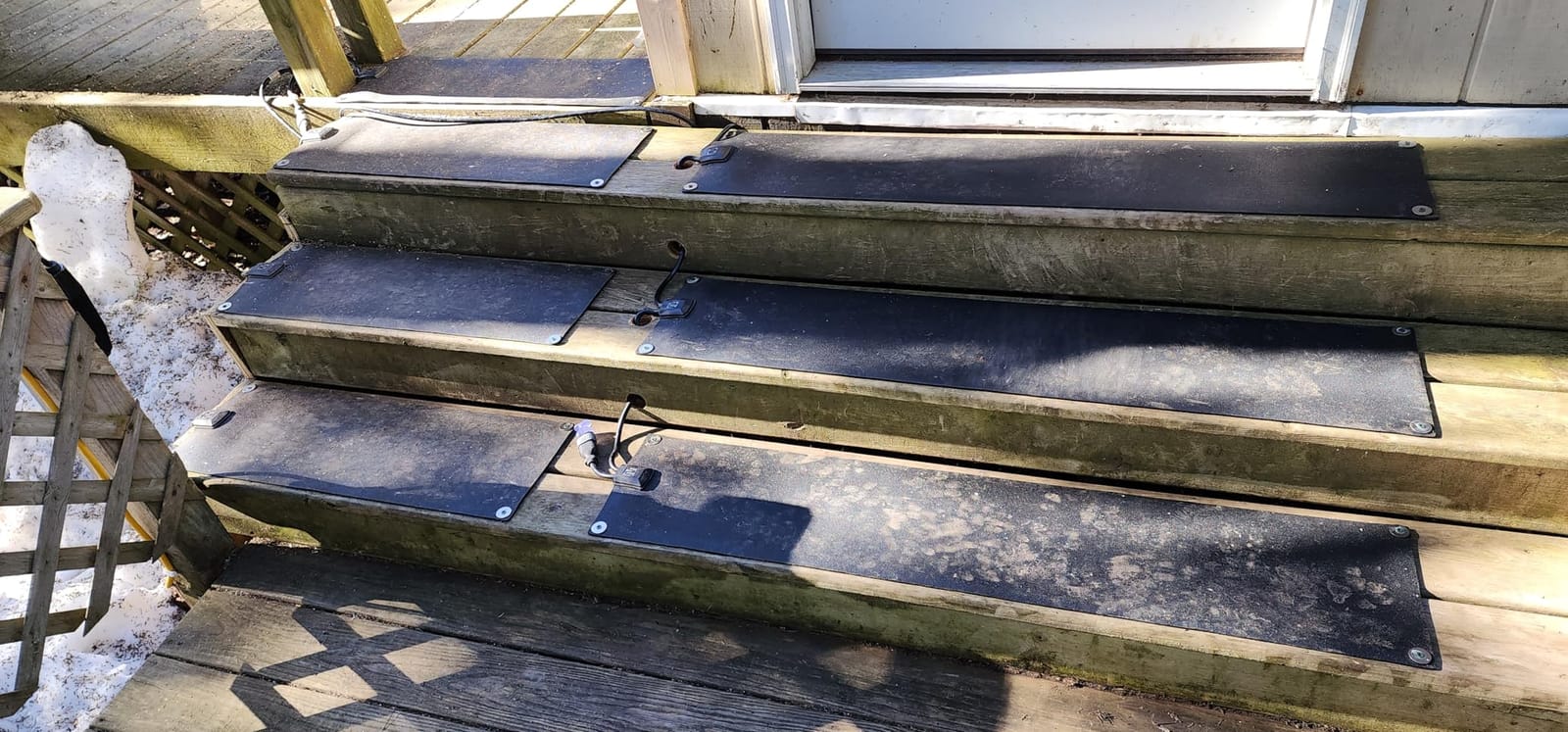
Count before you buy. A typical flight of stairs needs three or four of these, and the power unit is separate, so the real cost of a stairway project is more than one mat. On stair layouts the connectors run in a direction that often calls for extension cords between units.
Curling at the ends is the same complaint we heard on the larger HeatTrak walkway mat, and it has the same fix: fix the mat down with the corner grommets before the first freeze.
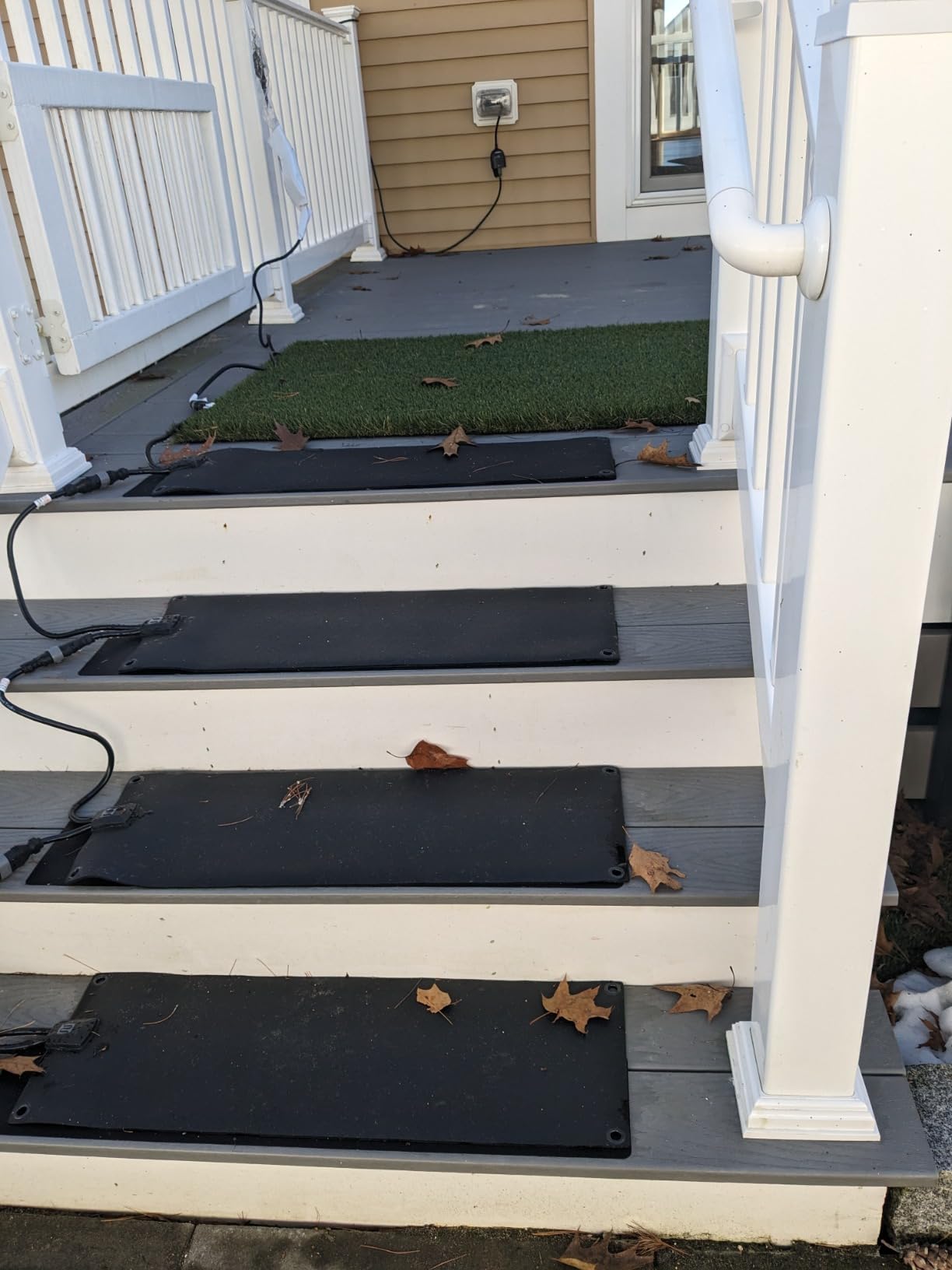
Best for a front stairway
Stairs are where heated mats pay off fastest, because ice on a step is the most dangerous kind and the least forgiving when someone is carrying groceries. The narrow profile means you can cover treads without building a ramp of rubber across the landing.
Because each mat draws so little current, you can cover a wide set of steps and a short landing together on one control unit. That efficiency is the whole budget argument.
Where it will not stretch
Ten inches wide is not a driveway lane. For vehicle-rated coverage you need a wider mat, and for full-staircase coverage you need to buy in multiples and add the control module to your plan.
10. Toriexon Five-Piece 10 x 30 in Set – Best for Staircase Setups
Toriexon 5PCS Snow Melting Mats Outdoor 10″ x 30″, 425W Heated Outdoor Mats
- Five treads cover a full staircase
- UL and ETL certified cord
- Heavy rubber grips when wet
- Corner grommets for anchoring
- Well under the 1500W connection limit
- Only 16 ratings
- One buyer reported early failure
- Must be switched off after snowfall
- Single tread size per mat
Where the single HeatTrak tread saves you money by drawing less current, this pack saves you money by shipping the whole staircase at once. Five 10 by 30 inch mats in a box is typically enough to cover a full flight, and the entire set draws 425 watts at 120V.
The certification is the standout. The power cord and plug carry both UL and ETL listing for outdoor use, which we did not see on any other surface mat in this roundup. For something you leave plugged in on a wet porch all winter, that third-party testing is worth something.
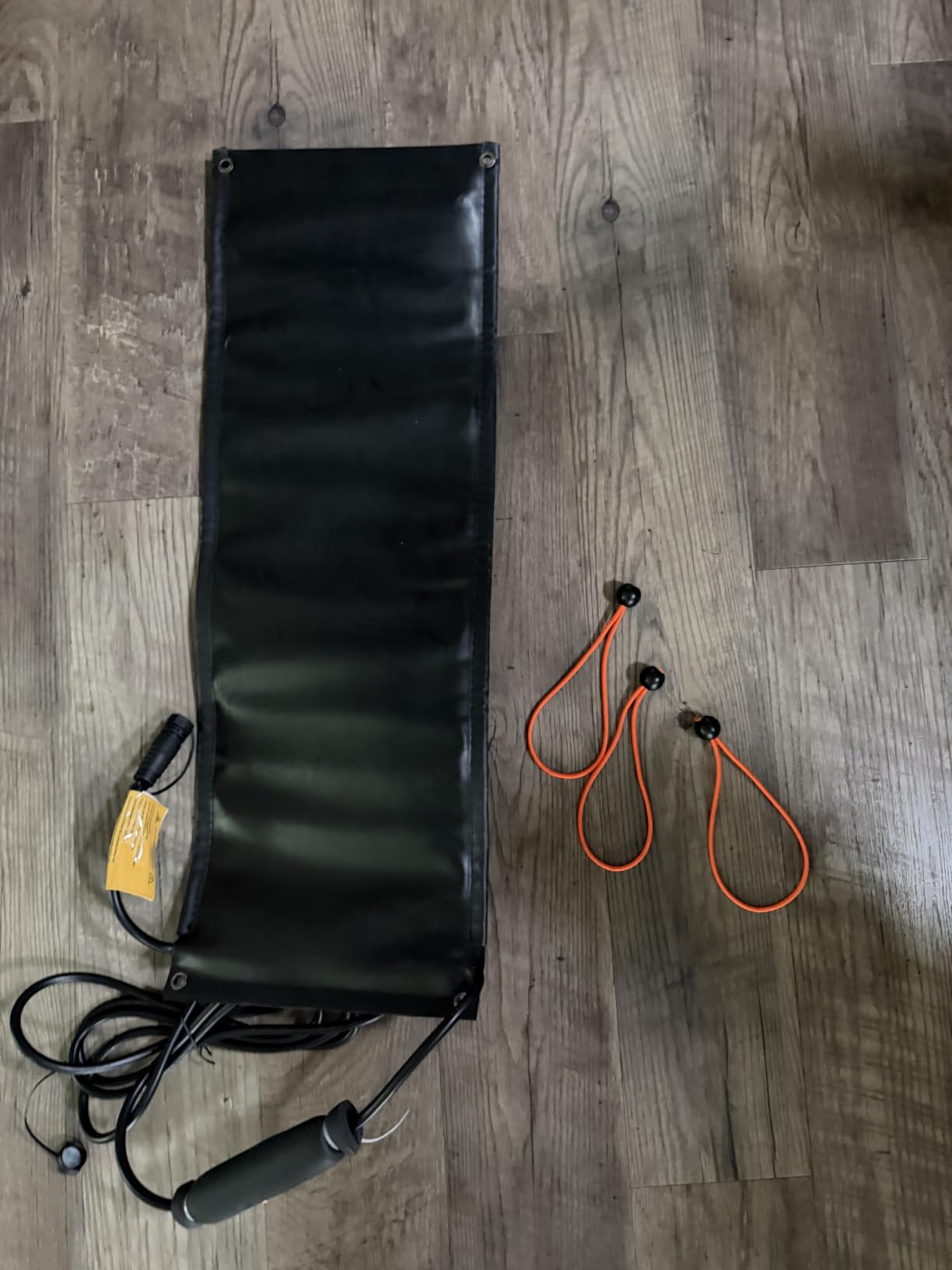
Users describe the rubber as thick and good-gripping when wet, and corner grommets let you secure each mat with screws, nails or bungee cords. The brand explicitly names wheelchair ramps, loading docks and entry points as intended uses, which lines up with how these get used in practice.
You cannot connect more than 1500W of mats to one switch, which in practice means two of these packs plus a bit of headroom before you need a second outlet.
Best for ramps and accessibility routes
A wheelchair or mobility ramp is one of the strongest use cases for any mat in this roundup, and this pack handles it well: five pieces, low total draw, a certified cord and a surface that grips wet. Several buyers bought it specifically for an elderly parent or a high-traffic entry.
It also suits a small business entrance, where five treads cover the approach without an electrician. We have covered warming setups for pets elsewhere, and the best heated dog beds solve the same problem indoors at a much smaller scale.
What to watch
Sixteen ratings is a small sample, and at least one buyer reports a unit failing within weeks, just after the return window closed. Treat that as a reminder to test the set early in the season rather than during the first storm.
Heated Driveway Mats vs. Embedded Heating Systems
Surface mats and embedded systems solve the same problem at very different scales, and the honest comparison is not about which is better. It is about which one your driveway and your budget can support.
A portable mat is a rectangle of rubber you lay on top. It installs in an afternoon, you can move it, you can repair it yourself, and it covers maybe one wheel path. An embedded snow melting system is heating cable or hydronic tubing poured into the pavement, it heats everything above it, it cannot be relocated, and a failure means cutting into concrete.
Portability is the mat’s strongest argument. If you rent, or you might move, or you only want the lane to the garage, nothing else comes close. Durability is the embedded system’s argument: a cable under concrete can last two decades, while a surface mat sees every tire, every shovel and every freeze-thaw cycle directly.
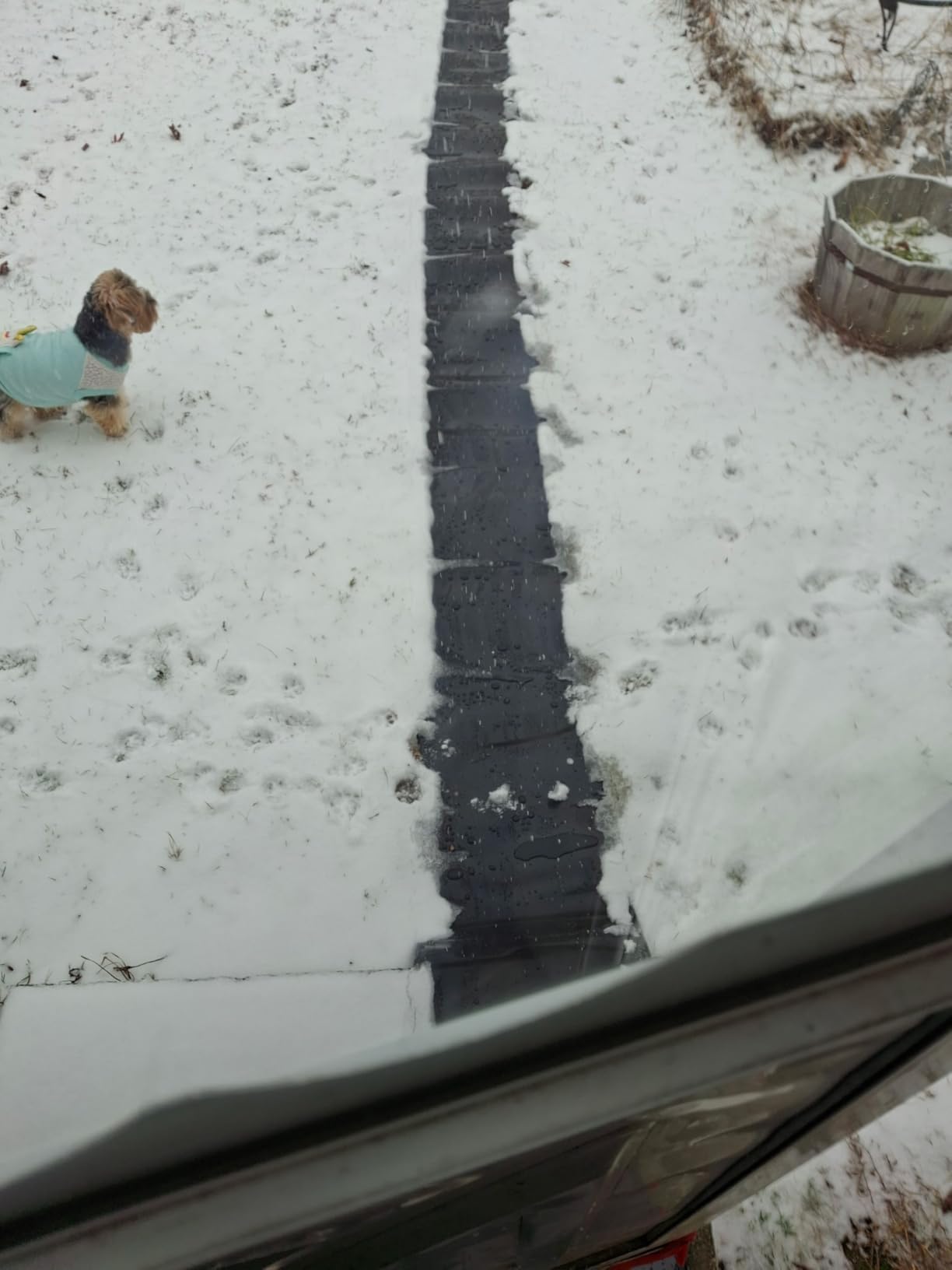
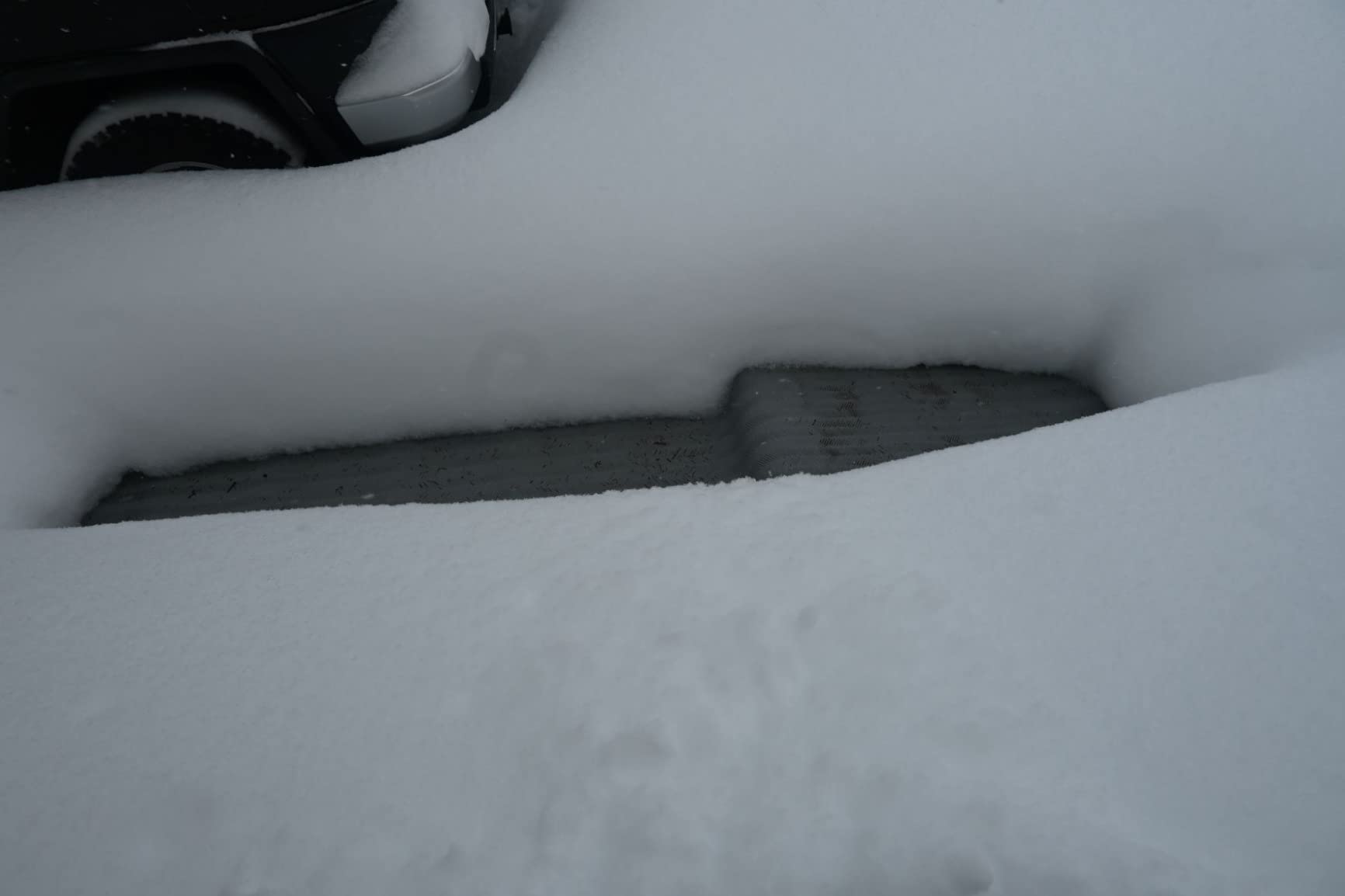
Coverage is where the gap becomes obvious. Two 30 inch mats laid side by side leave a wide snow-covered strip between the wheel paths, and owners describe exactly this: a permanently clear driving lane with untouched driveway either side of it. That is not a flaw, but it is not what people picture when they imagine a heated driveway either.
Installation is the other dividing line. Surface mats need a GFCI outlet and, for 120V models, nothing else. The embedded system in this roundup needs a 240V circuit, ground-fault protection, snow control gear and a professional pour. On an existing driveway, that retrofit is genuinely disruptive.
What to Look for When Buying a Heated Driveway Mat
Voltage comes first, because it decides whether you need an electrician. Anything on a standard 110V or 120V outlet is a weekend project. A 240V system, like the embedded PowerMat covered above, needs a dedicated circuit and ground-fault protection. Most of the surface mats here run on household power.
Coverage is a measurement, not a marketing number. Work out the square footage of your wheel paths first, then subtract. A two-car driveway usually needs two parallel lanes rather than one wide mat, and the lane spacing has to match your vehicle track width. A sedan and a full-size pickup do not sit on the same lines, which is a detail almost no seller explains.
Surface texture decides whether the mat is a slip hazard. Deeply molded patterns like the herringbone finish and the four-leaf clover texture hold grip when wet, while smooth mats do not. This matters more than buyers expect, because a working mat is wet pavement by definition. It is also worth pairing with the right surface prep, which is where a good driveway sealer pays off before winter.
Fixing points matter more than they appear to. Grommets, corner holes and stainless retaining rings exist because an unsecured mat edge curls, and a curled edge is what a tire or a foot catches on. If a product has no way to anchor it, plan for a different product.
Finally, look at certification and warranty together. UL or ETL listing on the cord and plug, cCSAus on embedded systems, and a stated warranty length are the signals people on forums actually look for. Warranties here run from two years on the HeatTrak surface mats to ten years on the WarmlyYours embedded cable.
What It Takes to Run a Heated Driveway Mat All Winter
Running cost is the question owners argue about most, and the honest answer is that it depends on three things: the area you cover, how many hours you run it, and what electricity costs where you live.
The lever you actually control is hours. A mat running continuously through a ten-hour storm uses roughly twice the energy of the same mat switched on for five hours at the peak. This is why the recurring advice on heating forums is to run before the snow and shut down when it stops, rather than leaving the system on for days at a time.
The lever you do not control is area. Because mats clear a defined rectangle, doubling coverage doubles consumption. Household 120V mats stay in a manageable range because their wattage is modest, while the 240V embedded system draws 20.87 amps continuously, which is why its operating economics look very different from a walkway mat.
Set expectations clearly: heating is an operating expense, not a one-time purchase. Owners on home improvement forums are split on whether the convenience justifies the bill, and the ones who are happiest are the ones who treat it as a scheduled utility that runs during storms rather than something left on permanently.
Frequently Asked Questions
Do heated driveway mats work?
Yes, under the right conditions. A heated driveway mat warms the pavement beneath it so snow melts on contact instead of building up, typically clearing about 2 inches of snow per hour. Results depend far more on timing than wattage: owners on heating forums report the best results when mats are switched on before snow begins and unplugged once it stops. A mat only clears the rectangle it covers.
Are there heated driveway mats that I can drive on?
Yes, as long as the mat is drive-over rated. Most surface mats sold for driveways use heavy rubber or PVC rated for vehicle traffic. Check for that rating before buying, because some commercial-grade mats are explicitly pedestrian only. Anchor every edge with the supplied grommets, since an unfastened mat edge can curl and catch a tire. Avoid parking on a mat for long stretches.
What are the downsides of having a heated driveway?
The main drawbacks are cost and coverage. Heating is an operating expense that scales with area and hours, and most portable mats only clear one or two wheel paths rather than the full driveway. Snow displaced from a cleared lane still has to go somewhere and can refreeze into hard banks at the mat edges. Permanently embedded systems are costly to install and difficult to repair if a cable fails.
How long do heated driveway mats last?
It depends on the build and the warranty. Surface mats in this roundup carry two- to three-year warranties, with one manufacturer rating its 7mm industrial rubber for five to ten years. Multi-winter owners of the corrosion-resistant models report steady service when the mats were secured properly. Embedded heating cable under concrete lasts longest of all, commonly around twenty years, but must be planned before paving.
What is the most efficient way to heat a driveway?
Efficiency comes down to zoning and scheduling. Heat only the wheel paths you actually drive rather than the full surface, and use automatic snow-and-temperature control so the mat stops drawing power once the pavement is above freezing. Constant-temperature controllers hold a narrow band instead of climbing. Running a mat ahead of a storm and switching it off afterward cuts usage more than any change of mat.
The Verdict: Which Heated Driveway Mat Should You Buy?
If you want the most proven surface mat on the market, take the HeatTrak 30 x 60 inch. It clears about two inches of snow per hour, chains into a full lane, and carries more than sixteen hundred ratings across a decade of real winters. Add a HeatTrak power unit to the order, because it is not in the box.
Buy the 30 x 48 inch model instead if you want everything in one purchase and you are covering a front entrance. It arrives with its GFCI power unit and handles the highest amperage of any surface mat we covered.
For stairs, ramps and walkways, the five-piece sets cover the most ground for the least effort, with the Toriexon pack leading on UL and ETL cord certification. For extreme cold below -8F, the JOJOCY mat is the only one in the group rated for it.
Whatever you choose, the best heated driveway mats for snow are the ones you switch on before the storm, anchor down properly and size to your wheel paths. That habit matters more than any spec on the box.