
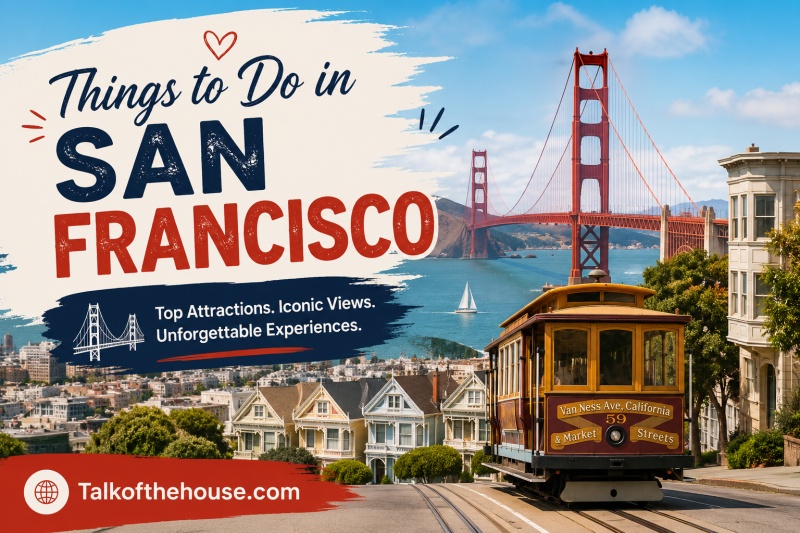
Finding the best things to do in San Francisco can feel overwhelming when you’re staring at a map of this famously hilly, fog-kissed city. I remember my first visit, standing at the bottom of a steep street wondering if my rental car would survive the climb and whether I had packed enough layers for the infamous San Francisco weather. After multiple visits and countless conversations with locals, I’ve learned that this compact 7-by-7 mile peninsula packs more distinct neighborhoods, iconic landmarks, and culinary adventures than cities three times its size.
Whether you’re planning a weekend getaway or a longer exploration, this guide covers the essential San Francisco attractions that make the city legendary. From the rust-red towers of the Golden Gate Bridge piercing through coastal fog to the chaotic charm of cable cars clanging up impossible gradients, you’ll discover experiences that define this Northern California destination. I’ve organized everything into digestible sections with practical tips gathered from both personal experience and local insights shared across travel forums and Reddit communities.
By the end of this guide, you’ll know exactly which neighborhoods deserve your time, how to avoid common tourist pitfalls, and where to find those hidden viewpoints that make Instagram-worthy memories. Let’s explore the best of San Francisco together.
Table of Contents
Quick Picks: Top 7 Must-Do Activities
Pressed for time? These seven experiences capture the essence of San Francisco and should top every first-time visitor’s list. I’ve ranked them by a combination of iconic status and overall experience quality.
- Walk or Bike Across the Golden Gate Bridge — Nothing compares to standing on this engineering marvel with the Pacific wind in your hair. Morning visits offer the clearest views before afternoon fog rolls in.
- Take the Alcatraz Night Tour — The former federal prison becomes atmospheric after dark. Book weeks ahead since tickets vanish quickly, especially during summer months.
- Ride a Historic Cable Car — Skip the long Powell Street lines and catch the California line near the Ferry Building for a more authentic experience with locals.
- Explore Chinatown’s Dragon’s Gate — The oldest Chinatown in North America delivers authentic dim sum, herbal shops, and the famous fortune cookie factory.
- Watch the Sea Lions at Pier 39 — These loud, smelly, utterly charming marine mammals have claimed their dock since 1989. Visit morning or late afternoon for the most activity.
- Savor North Beach — Little Italy serves espresso that rivals Rome and cannoli that will ruin your diet. Cafe Trieste and Vesuvio Cafe offer Old World atmosphere.
- Photograph the Painted Ladies — The row of Victorian houses at Alamo Square provides that classic San Francisco postcard moment, especially at golden hour.
Golden Gate Bridge: Iconic Views and Experiences
The Golden Gate Bridge dominates San Francisco’s visual identity for good reason. This International Orange masterpiece stretches 1.7 miles across the strait, and experiencing it from multiple angles belongs on every visitor’s itinerary.
Crissy Fields offers my favorite introduction to the bridge. This former military airfield turned park provides an unobstructed, ground-level perspective with the structure rising majestically against the Marin Headlands. Bring a blanket and coffee for a morning picnic while watching sailboats navigate the bay. The beach here works for sunbathing on rare warm days, though the water stays frigid year-round.
For photographers and romantics, Battery Spencer delivers the money shot. Located in the Marin Headlands across the bridge, this former military installation sits perched on a bluff offering straight-on bridge views with the San Francisco skyline behind. Sunset creates spectacular lighting, though you’ll compete with professional photographers and engagement sessions for prime spots. Arrive an hour before sunset to claim your position.
Baker Beach provides a unique angle from below the western anchorage. This mile-long stretch of sand offers dramatic bridge views framed by rugged coastline. Note that the northern end remains clothing-optional, which surprises some visitors expecting a family beach environment. The mile-long hike from the parking lot to the bridge viewpoint rewards effort with relative solitude compared to tourist-heavy Crissy Fields.
Walking or biking across the bridge delivers the most immersive experience. The east sidewalk accommodates pedestrians daily until 3:30 PM, then switches to cyclists only. The west sidewalk stays open to cyclists continuously. Bring a windbreaker even on sunny days since the open strait generates constant breezes that chill quickly. Halfway across, you’ll understand why this bridge represents more than transportation infrastructure.
Don’t miss the Wave Organ, a hidden acoustic sculpture located on a jetty near the Yacht Harbor. Created from granite and marble salvaged from demolished cemeteries, this artwork uses tidal movements to create haunting musical tones through 25 PVC pipes. Visit during high tide for the fullest sound experience. Most tourists miss this gem entirely.
Alcatraz Island: The Infamous Prison Tour
Alcatraz Island commands attention in San Francisco Bay like a brooding sentinel. The former federal prison housed America’s most notorious criminals from 1934 to 1963, including Al Capone and Robert Stroud, the Birdman of Alcatraz. Today, the National Park Service manages tours that consistently rank among the city’s most compelling experiences.
Booking Alcatraz tickets requires advance planning, a reality that catches many spontaneous travelers off guard. Standard day tours often sell out two weeks ahead during summer and holiday weekends. The limited-capacity night tour, available Thursday through Monday evenings, books even faster. I strongly recommend securing tickets before booking flights or hotels to avoid disappointment. The official Alcatraz Cruises website remains the only authorized ticket seller.
The night tour offers superior atmosphere for visitors choosing between options. Departing Pier 33 as daylight fades, the boat circles the island while guides share escape stories and prison lore. Landing after dark, you’ll explore cell blocks with theatrical lighting that amplifies the isolation and tension these walls once contained. The night program includes access to areas closed during day tours, including the hospital wing.
The award-winning audio tour deserves your full attention. Narrated by former inmates and guards, this self-guided experience places you inside cells while hearing firsthand accounts of riots, solitary confinement, and daily survival. Plan roughly 2.5 hours for the complete tour including the ferry ride. Wear comfortable shoes since the island terrain involves steep climbs from the dock to the cell house.
While some travelers question whether Alcatraz merits the $41-47 ticket price, the historical significance and production quality justify the cost. This isn’t a gimmicky tourist trap but a thoughtfully preserved piece of American penal history. The combination of stunning bay views and sobering human stories creates an experience that lingers in memory long after your tan fades.
Fisherman’s Wharf and Pier 39: Tourist Central with Charm
Fisherman’s Wharf represents San Francisco’s most touristy district, and locals on Reddit consistently warn visitors about overpriced restaurants and aggressive souvenir hawkers. Yet this waterfront neighborhood delivers authentic experiences worth navigating through the crowds.
The sea lions at Pier 39 provide the undeniable highlight. Since 1989, when these marine mammals mysteriously began hauling out on floating docks following the Loma Prieta earthquake, hundreds have made this their permanent address. The viewing platform offers free entertainment as these massive animals bark, jostle for prime sunning spots, and occasionally slip into the bay for fish. Morning visits show the most activity before afternoon sun drives them to cooler water.
The Musée Mécanique houses one of the world’s largest collections of antique arcade machines and mechanical musical instruments. This free-admission museum lets you play century-old games for quarters, from hand-cranked music boxes to early pinball machines. The Laughing Sal, a terrifying cackling automaton, has traumatized generations of San Francisco children. Budget $10-20 in quarters for maximum enjoyment.
Boudin Bakery’s flagship location serves the definitive San Francisco sourdough experience. Their bakers have maintained the same mother dough starter since 1849, creating bread with tangy flavor and chewy texture that imitators cannot replicate. The clam chowder bread bowl, served in a round loaf hollowed and filled with creamy soup, defines Fisherman’s Wharf dining despite tourist-trap pricing at $15-18.
Skip the overpriced sit-down restaurants lining Jefferson Street. Instead, grab crab cocktails from sidewalk vendors or venture toward the actual fishing boats where locals buy fresh Dungeness crab during season (November through June). Ghirardelli Square, a short walk west, offers chocolate samples and hot fudge sundaes in historic factory buildings that smell permanently of cocoa.
The Buena Vista Cafe near the Hyde Street cable car turnaround claims invention of the modern Irish coffee, and their version remains definitive. Watching bartenders pour perfectly layered glasses of hot coffee, Irish whiskey, and cream provides entertainment worth the price. This makes an ideal warming stop after chilly cable car rides.
Exploring San Francisco’s Distinct Neighborhoods
San Francisco’s neighborhoods function as distinct villages, each with unique character, cuisine, and atmosphere. Walking between districts often means climbing hills that test your fitness while rewarding effort with spectacular views. These four neighborhoods deserve dedicated exploration time.
Chinatown: Dragon’s Gate and Dim Sum
San Francisco’s Chinatown, the oldest and largest Chinese enclave outside Asia, bursts with sensory intensity. Enter through the Dragon’s Gate at Grant Avenue and Bush Street, the ornate green-tiled portal that announces your arrival into a world of herbal medicine shops, souvenir stalls, and restaurants serving cuisine that spans China’s regional diversity.
Grant Avenue offers the tourist-facing Chinatown experience with dragon-shaped lampposts and shops selling jade trinkets and silk robes. For authenticity, dive onto Stockton Street where elderly residents shop for fresh produce, live seafood, and medicinal herbs. The contrast between these parallel streets illustrates how Chinatown serves both visitors and a thriving residential community.
Eastern Bakery on Grant Avenue has produced mooncakes and pastries since 1924, making it Chinatown’s oldest bakery. Their lotus paste mooncakes and almond cookies reward sweet tooths. For fortune cookies hot off the press, visit the Golden Gate Fortune Cookie Factory on Ross Alley, a narrow passage where you’ll watch workers fold cookies by hand while machines press the dough. The free samples taste significantly fresher than packaged versions.
Dim sum brunch represents Chinatown’s essential culinary experience. These small plates served from rolling carts include har gow (shrimp dumplings), siu mai (pork dumplings), char siu bao (barbecue pork buns), and chicken feet for adventurous eaters. City View Restaurant and Great Eastern Restaurant earn consistent local recommendations for quality and authenticity. Arrive before 11 AM on weekends to beat crowds.
Li Po Cocktail Lounge, a dive bar with a legendary Mai Tai recipe, provides evening entertainment. The cramped space features red lanterns, Formica tables, and a Buddha statue that has witnessed decades of conversations. Their Chinese Mai Tai, made with rum, liqueur, and Chinese wine, carries surprising potency.
North Beach: Little Italy’s Cafes and Culture
North Beach claims status as San Francisco’s Little Italy, though Italian immigration peaked in the late 1800s and few Italian-Americans remain. What persists is an atmosphere of European cafe culture, espresso excellence, and literary heritage that invites lingering over cappuccinos.
Cafe Trieste, established in 1956, serves as the neighborhood’s living room. This family-owned cafe claims distinction as the first espresso house on the West Coast, and its marble-topped tables have hosted Francis Ford Coppola while he wrote The Godfather screenplay. Weekend afternoons feature live opera performances by family members. The mocha here tastes of chocolate and tradition.
Vesuvio Cafe, a narrow bar adjacent to City Lights Booksellers, provides bohemian atmosphere that hasn’t changed significantly since the Beat Generation claimed these blocks. The upstairs seating area overlooking Jack Kerouac Alley offers prime people-watching while sipping cocktails named for literary figures. The stained glass, vintage posters, and red leather booths transport visitors to 1957.
City Lights Booksellers remains essential pilgrimage for literature lovers. This independent bookstore, established in 1953 by poet Lawrence Ferlinghetti, gained fame for publishing Allen Ginsberg’s Howl and defending it against obscenity charges. The upstairs poetry room dedicates entire sections to Beat writers and small press publications unavailable elsewhere. Even non-readers appreciate the historic significance.
Dining options span touristy Italian-American restaurants to genuinely excellent establishments. Tony’s Little Star Pizza serves Chicago-style deep dish that requires knife and fork. Mama’s on Washington Square demands patience since weekend brunch lines stretch around the block, but their Monte Cristo sandwich justifies the wait. For cannoli that shatter-snap when bitten, Victoria Pastry on Stockton Street outperforms more famous competitors.
Haight-Ashbury: Counterculture and Color
Haight-Ashbury, or “the Haight,” remains synonymous with the 1960s Summer of Love when thousands of young people converged here seeking peace, psychedelic exploration, and alternative community. Today’s neighborhood blends that hippie heritage with vintage shopping, colorful Victorian architecture, and the lingering presence of counterculture burnouts who never left.
The famous intersection of Haight and Ashbury Streets marks the neighborhood’s symbolic center. A Ben & Jerry’s now occupies the building that once housed the Psychedelic Shop, America’s first head shop. Painted Victorian houses, known locally as “Painted Ladies,” line the streets with color schemes ranging from subtle pastels to retina-burning combinations that suggest hallucinogenic inspiration.
Amoeba Music, housed in a former bowling alley, ranks among America’s largest independent record stores. This temple to physical media stocks vinyl, CDs, and DVDs across every conceivable genre. Even streaming-era visitors find themselves browsing for hours, discovering album artwork and obscure releases that algorithms would never surface. The dollar vinyl section encourages adventurous exploration.
Shopping along Haight Street spans vintage clothing boutiques, smoke shops, and stores selling tie-dye that hasn’t evolved since 1969. Decades of Fashion offers genuine vintage pieces rather than reproductions. The level of gentrification surprises some visitors expecting unspoiled hippie enclaves, but the neighborhood’s alternative spirit persists despite organic grocery stores and yoga studios.
Golden Gate Park borders the neighborhood’s western edge, providing escape into green space. The park’s eastern entrance near Haight Street offers immediate access to paths perfect for morning runs or afternoon strolls. The Conservatory of Flowers, a Victorian greenhouse filled with tropical plants, provides rainy-day entertainment.
The Mission: Murals and Mexican Cuisine
The Mission District, named for the 18th-century Mission Dolores that anchors its eastern edge, functions as San Francisco’s Latinx cultural center and contemporary arts hub. This flat, sunny neighborhood offers relief from the city’s notorious hills while delivering some of its best food and most vibrant street art.
Clarion Alley, located between Mission and Valencia Streets, serves as an outdoor gallery where local artists paint and repaint murals addressing social justice, community history, and cultural identity. The alley’s contents change continuously as new works replace faded pieces. This represents street art at its most democratic and politically engaged, far from commissioned murals in wealthier districts.
Valencia Street provides the Mission’s commercial spine, lined with independent boutiques, bookstores, and restaurants that attract San Franciscans from across the city. Paxton Gate sells taxidermy, natural history specimens, and curious objects that make perfect conversation pieces. Dog Eared Books offers carefully curated selections with staff recommendations worth following. The street rewards aimless wandering and spontaneous discoveries.
The Mission’s food scene justifies dedicated culinary exploration. Tartine Bakery, at 18th and Guerrero, produces pastries that inspire religious devotion among locals. Their morning bun, a croissant dough spiraled with cinnamon and orange zest, requires early arrival since they sell out by mid-morning. For savory options, La Taqueria at 25th and Mission serves burritos that regularly win “best in city” polls despite cash-only policy and minimal atmosphere.
Mission Dolores Park, locals call it “Dolo,” provides sunny afternoon lounging with downtown skyline views. The park’s western slope becomes a massive outdoor party on warm weekends, with groups spreading blankets, sharing wine, and enjoying the rare San Francisco sunshine. The palm trees and pastel buildings behind create that distinctive California atmosphere.
Riding the Historic Cable Cars
San Francisco’s cable cars represent the last manually operated cable car system in the world and have transported passengers since 1873. These moving National Historic Landmarks climb gradients that would defeat conventional streetcars while providing open-air transportation that feels like amusement park ride and practical transit simultaneously.
Three lines currently operate: the Powell-Hyde line, the Powell-Mason line, and the California Street line. The Powell lines, departing from the turntable at Powell and Market Streets near Union Square, attract the longest waits, often exceeding 90 minutes during summer afternoons. Tourists queue for the experience of hanging off the side while the car clangs up impossible hills.
The California Street line offers superior experience for visitors wanting to actually ride rather than queue. This line runs from the Ferry Building through the Financial District and Nob Hill to Van Ness Avenue. Because fewer tourists know about it, waits rarely exceed 15 minutes even on weekends. The route passes through quieter residential blocks and provides views of the Bay Bridge rather than tourist-heavy Wharf areas.
Understanding cable car mechanics enhances appreciation. Unlike streetcars that draw electric power from overhead wires, these cars grip underground cables moving at constant 9.5 miles per hour. The gripman operates levers that clamp and release the cable, controlling speed and stopping. When you hear the distinctive bell patterns, you’re hearing communication between gripman and conductor about starting, stopping, and safety warnings.
The Cable Car Museum, housed in the actual powerhouse that drives the cables, provides free education about this engineering heritage. Located at Mason and Washington Streets, the museum lets you watch massive wheels spinning the cables that run beneath city streets. Historic cars and photographs trace the system’s evolution from 1870s transit innovation to current tourist attraction.
Riding effectively requires strategy. Download the MuniMobile app to purchase tickets digitally rather than fumbling for exact change. Board at terminal stations when possible since cars often fill completely mid-route, leaving waiting passengers stranded. Morning rides before 10 AM face lighter crowds. Stand on the outer running board for maximum excitement, but hold tight since sudden stops send unsecured riders tumbling.
Hidden Gems and Local Secrets
Every San Francisco visitor sees the Golden Gate Bridge and rides cable cars, but discovering the city’s secret spots requires local knowledge or dedicated research. These hidden gems offer authentic experiences away from tourist crowds.
Tank Hill provides San Francisco’s most underrated viewpoint. Located near the Castro and Twin Peaks neighborhoods, this small park sits at 650 feet elevation, offering panoramic views that rival Twin Peaks without the tour buses and crowds. The climb requires effort, but you’ll often have the summit to yourself for sunset photography. The view encompasses downtown, the bay, and on clear days, Mount Diablo across the East Bay.
The 16th Avenue Tiled Steps, also known as the Moraga Steps, transform a mundane staircase into an ascending mosaic artwork. Neighborhood residents created this 163-step ceramic tile installation depicting a sea-to-sky theme. Climbing to the top delivers ocean views from Grandview Park. Visit during late afternoon when sunlight illuminates the colorful tiles. Early morning provides solitude for photography without crowds.
Sutro Baths ruins at Lands End offer hauntingly beautiful exploration. Once the world’s largest indoor swimming complex in the 1890s, these concrete foundations now provide coastal hiking with dramatic ocean views. The adjacent Cliff House, recently reopened after renovations, provides dining with Pacific panoramas. Combine this with nearby hiking trails through cypress groves that feel surprisingly wild for urban location.
Lover’s Lane in the Presidio, a former military base turned national park, offers a gentle forest walk on a paved path. This quarter-mile trail connects between residential areas but feels remote from urban bustle. Eucalyptus and cypress trees create cathedral-like atmosphere. The nearby Wood Line sculpture by Andy Goldsworthy, a winding snake of eucalyptus branches, provides additional artistic exploration.
The Wave Organ, mentioned earlier near the Golden Gate Yacht Harbor, deserves emphasis as most overlooked attraction. This acoustic sculpture creates music from tidal action through 25 granite and marble pipes. High tide produces the most impressive sounds, but the site offers peaceful bay views regardless of water music. Bring a jacket and patience since the full experience requires sitting quietly for 10-15 minutes.
Filbert and Greenwich Street staircases on Telegraph Hill provide vertical adventure leading to Coit Tower. These wooden stairways climb through gardens and private property easements where parrots from the famous Telegraph Hill flock roost. The climb rewards with both Coit Tower’s murals and unexpected urban wildlife sightings.
Free Things to Do in San Francisco
San Francisco’s reputation for astronomical costs isn’t entirely deserved. The city offers abundant free experiences for budget-conscious travelers willing to skip expensive restaurants and paid attractions.
Beaches provide cost-free entertainment with distinct personalities. Baker Beach offers Golden Gate Bridge views though swimming remains dangerous due to currents and cold water. Ocean Beach stretches for three miles along the city’s western edge, providing surfing, bonfire rings for evening gatherings, and dramatic sunset viewing. Neither beach charges admission or parking fees.
Hiking trails throughout the city and surrounding parkland cost nothing while delivering exercise and views. The Lands End Coastal Trail winds for 3.4 miles along cliffs above the Pacific, passing the USS San Francisco memorial and offering bridge views. Mount Davidson, the city’s highest natural point, provides forested hiking and the prominent concrete cross visible from many neighborhoods.
Golden Gate Park, larger than New York’s Central Park, contains multiple free attractions. The Japanese Tea Garden charges admission, but the surrounding parkland, lakes, and botanical areas remain open without cost. Shakespeare Garden, the Conservatory Valley, and the Bison Paddock (yes, real bison live in the park) provide hours of free exploration. Free concerts occur at the Music Concourse during summer months.
Window shopping and neighborhood wandering costs nothing while revealing San Francisco’s character. The Mission’s murals, Chinatown’s architectural details, the Castro’s rainbow crosswalks, and the Haight’s Victorian houses provide visual entertainment without spending. Self-guided architecture tours work perfectly in these pedestrian-friendly districts.
Street festivals occur throughout the year, many free to attend. The Sunday Streets program closes major thoroughfares to traffic for biking, walking, and community activities. Check the city events calendar since something usually happens each weekend during summer months.
Practical Tips for Visiting San Francisco
Getting Around: Transportation Guide
Visitors consistently overestimate their need for rental cars in San Francisco. Parking costs average $30-50 daily at hotels, street parking requires constant meter feeding or moving for street cleaning, and car break-ins plague tourist areas. Public transportation, ride-sharing, and walking handle most transportation needs more efficiently.
Muni, the city’s public transit system, operates buses, streetcars, and cable cars covering nearly every destination. The MuniMobile app lets you purchase single rides or day passes digitally, avoiding exact-change requirements. A day pass ($13) pays for itself after three rides. Buses run frequently on major routes, though hills make them slower than flat-city alternatives.
BART (Bay Area Rapid Transit) connects San Francisco to Oakland, Berkeley, and the airports. For reaching downtown from SFO, BART costs under $11 and takes 30 minutes, significantly faster than driving during traffic. The system closes at midnight, so late-night travelers need alternative arrangements.
Ride-sharing services operate throughout the city, though surge pricing during events or rush hour creates unpredictable costs. Waymo’s self-driving taxis now operate in limited areas, offering futuristic transportation experiences if you’re comfortable with autonomous vehicles. These appear as regular ride-share options in the Waymo app.
Walking remains the best way to experience neighborhood character, though San Francisco’s hills demand fitness and appropriate footwear. The city’s 7-mile width means most attractions sit within reasonable walking distance of each other if you’re willing to climb. Flat routes exist via the Embarcadero waterfront and Mission District streets.
Weather and What to Pack
Mark Twain never actually said “the coldest winter I ever spent was a summer in San Francisco,” but the misquote persists because it rings true. Summer months, particularly June through August, often bring fog, wind, and temperatures in the 50s and 60s Fahrenheit while inland California bakes in triple digits.
The city’s microclimates mean weather changes dramatically between neighborhoods. The Sunset and Richmond districts, near the ocean, stay consistently cool and foggy. The Mission District, protected by hills, often experiences sunshine and warmth while western neighborhoods shiver. Check neighborhood-specific forecasts rather than general city predictions.
Layering represents essential packing strategy. Even warm September afternoons can turn chilly when fog rolls through the Golden Gate. Bring a packable down jacket or windbreaker even in July. Comfortable walking shoes with good grip handle hills and the city’s often-uneven sidewalks. Umbrellas see limited use since rain typically falls as drizzle rather than downpours.
September and October offer the most reliable weather, with warm days locals call “Indian Summer.” This period sees clear skies, minimal fog, and temperatures reaching the 70s. Spring (March through May) provides the second-best option, though occasional rain showers require flexible plans.
Best Time to Visit
September through November ranks as optimal visiting season. The weather clears, summer tourists depart, and hotel rates drop from peak summer pricing. September afternoons often reach the 70s with crystalline visibility for photography. This window offers the highest probability of experiencing San Francisco as picture postcards promise.
Spring (March through May) brings blooming gardens and fewer crowds than summer, though rain remains possible. Hotel rates stay reasonable before Memorial Day kicks off peak season. The unpredictable weather requires backup indoor plans, but clear spring days provide spectacular viewing conditions.
Summer vacation months bring the most tourists despite the foggy, cold weather. June through August sees maximum hotel rates and attraction crowds coinciding with the least pleasant conditions. If summer visits are unavoidable, plan indoor activities like museums for foggy mornings, saving outdoor exploration for clearer afternoons.
December through February offers lowest hotel rates but brings rain and shorter daylight hours. The holiday season illuminates Union Square and provides festive atmosphere. Pack warm layers and waterproof outerwear, and you’ll enjoy relative solitude at major attractions.
Safety and Neighborhood Boundaries
San Francisco faces visible challenges with homelessness and open drug use in certain neighborhoods, particularly the Tenderloin and parts of the Civic Center. While violent crime against tourists remains rare, property theft from vehicles occurs constantly throughout the city. Never leave luggage, shopping bags, or electronics visible in parked cars.
Tourist areas including Fisherman’s Wharf, Union Square, and major attractions maintain heavy security presence and remain generally safe during daylight hours. Exercise standard urban awareness after dark, sticking to well-lit streets with pedestrian traffic. The main visitor districts pose minimal personal safety concerns.
Some neighborhoods, particularly the Tenderloin between Union Square and Civic Center, require awareness but shouldn’t deter exploration entirely. The area contains excellent restaurants and historic buildings alongside visible social challenges. Walking through during daytime with normal awareness is fine, though solo nighttime wandering is inadvisable.
Theft prevention requires vigilance. Phone snatching occurs on public transit and in crowded tourist areas. Keep devices secured and awareness of surroundings. Don’t engage with aggressive panhandlers, simply walk past without eye contact. These precautions match standard practice in any major American city.
Day Trips from San Francisco
San Francisco’s location makes it an ideal base for exploring Northern California’s diverse landscapes. Three major day trip options offer escapes from urban density into nature and wine country.
Muir Woods National Monument, just 12 miles north, preserves old-growth coast redwood forests with trees exceeding 250 feet tall and ages surpassing 800 years. The main trail follows a boardwalk through the canyon floor, accessible for all fitness levels. Advance parking reservations are mandatory since 2018, making spontaneous visits impossible. Book weeks ahead for weekend dates. The nearby town of Mill Valley offers lunch options after your forest walk.
Napa Valley, America’s most famous wine region, lies an hour’s drive or bus ride northeast. Over 400 wineries operate in the valley, ranging from corporate operations with elaborate tasting rooms to family farms offering intimate experiences. Day trips typically allow visiting 3-4 wineries maximum. Group wine tours handle transportation, letting everyone enjoy tastings safely. The town of Yountville contains restaurants like The French Laundry, though reservations require months of advance planning.
Sausalito, across the Golden Gate Bridge, offers Mediterranean-style waterfront without long drives. This art colony turned affluent enclave features houseboat communities, seafood restaurants, and galleries. The ferry back to San Francisco provides iconic skyline views. Many visitors combine Sausalito with Muir Woods since both lie in Marin County.
Sonoma County provides less pretentious wine country than Napa, with historic town squares and family-owned wineries. The town of Sonoma itself offers a central plaza surrounded by restaurants, tasting rooms, and historic buildings including the last mission of the California chain.
Frequently Asked Questions
What should I not miss in San Francisco?
The Golden Gate Bridge (walk or bike across it), Alcatraz Island (book the night tour for atmosphere), Fisherman’s Wharf sea lions, a cable car ride, and exploring distinct neighborhoods like Chinatown and North Beach. Don’t miss the views from Twin Peaks or the Painted Ladies at Alamo Square.
How can I spend 2 days in San Francisco?
Day 1: Golden Gate Bridge (morning), Crissy Fields, Palace of Fine Arts, lunch in Marina District, Alcatraz afternoon tour, dinner in North Beach. Day 2: Cable car ride to Fisherman’s Wharf, Pier 39 sea lions, Musée Mécanique, Chinatown lunch and exploration, Coit Tower, evening in Haight-Ashbury.
What to do for 3 days in San Francisco?
Day 1: Golden Gate Bridge viewpoints, bike across to Sausalito, ferry back, dinner in North Beach. Day 2: Alcatraz morning tour, Fisherman’s Wharf, Musée Mécanique, Boudin Bakery, Ghirardelli Square, Buena Vista Irish Coffee. Day 3: Cable cars, Chinatown Dragon’s Gate and food tour, Coit Tower via Filbert Stairs, Mission District murals and food, Mission Dolores Park sunset.
What to do in San Francisco if you only have a few hours?
Walk across the Golden Gate Bridge or view from Crissy Fields, ride a cable car between Powell and Hyde lines, explore Fisherman’s Wharf and see the sea lions, walk through Chinatown’s Dragon’s Gate, or take a quick ferry ride for bay views. Choose based on your location and interests.
Your San Francisco Adventure Awaits
San Francisco rewards visitors who embrace its contradictions. The city offers world-famous landmarks alongside hidden corners known only to locals. It serves Michelin-starred tasting menus and authentic $5 dim sum from rolling carts. The fog that shrouds summer mornings burns off to reveal afternoons of startling clarity.
The things to do in San Francisco extend far beyond any single visit. I’ve covered the essential experiences that belong on every first-timer’s list while highlighting the local secrets and practical advice that transform tourist trips into genuine exploration. From the Golden Gate Bridge’s rust-red span to the hidden staircase mosaics of the Mission, each neighborhood contributes to the city’s inimitable character.
What separates good San Francisco visits from great ones is willingness to venture beyond tourist districts into the residential neighborhoods where the city actually lives. Take the California Street cable car instead of queuing for Powell Street. Walk the Filbert Steps rather than driving to Coit Tower. Eat where locals wait in line rather than where hotels recommend.
Pack layers, wear comfortable shoes, leave the rental car at home, and prepare for hills that will test your fitness while rewarding your effort with spectacular views. San Francisco in 2026 remains one of America’s most distinctive urban experiences, as relevant and captivating as it was during the Gold Rush that built it. Your adventure across these 49 square miles awaits.