
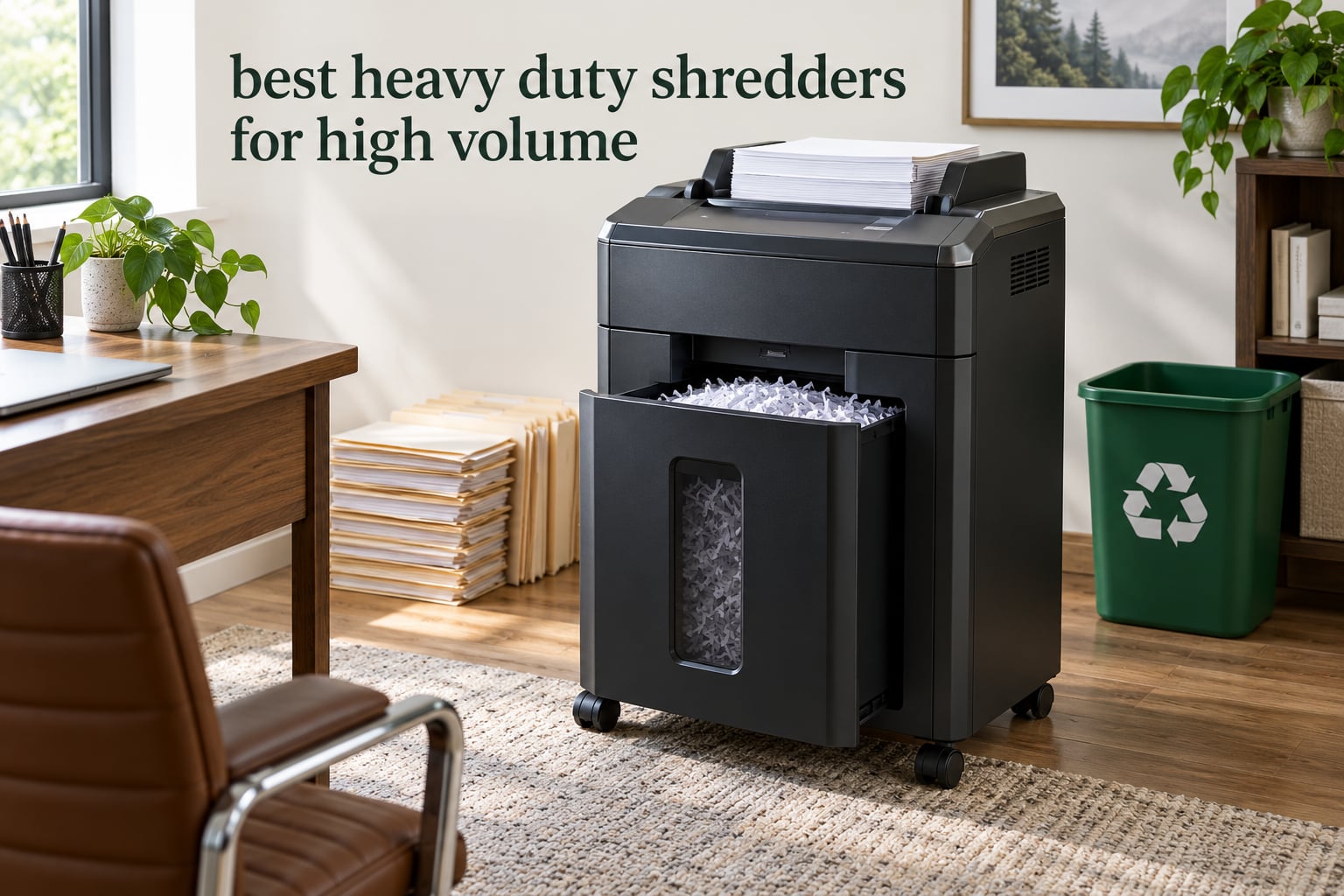
Heavy duty shredders for high volume work are not the small desktop units most people buy. They are continuous-duty machines built to chew through hundreds or thousands of sheets a week, with a metal cabinet, a cooling system, and a waste bin you empty once a day instead of twice an hour. We compared 12 of them on run time, sheet capacity, cut type and security level so you can stop overfeeding an undersized machine and burning out its motor.
First, the disambiguation, because this search attracts the wrong results constantly. This guide covers paper shredders for offices — machines that destroy documents. It does not cover garden chippers or wood shredders, which are a completely different machine, and it does not cover hard-drive shredders, which cut discs and drives rather than paper. If your outdoor cutting needs are the real question, our heavy duty garden hose guide is a separate read. Both are legitimate purchases; they just do not belong on this list, where we are looking at machines rated for hundreds of sheets a week.
We broke the list into volume tiers, because the single biggest buying mistake in this category is a machine that looks heavy-duty on the box but runs an intermittent-duty motor. That motor distinction decides whether a shredder survives daily office use or dies in eight months. Here is how we defined the tiers, what we compared, and where each of the 12 picks actually fits for 2026.
Table of Contents
What High Volume Shredding Actually Means in Numbers
Nobody in this category tells you what “high volume” means, so here is a straight definition. High-volume shredding starts around 250 sheets a week — roughly 50 sheets a day, which is one modest stack of post, invoices and HR paperwork. Below that, an 8-sheet to 12-sheet desktop machine copes. Above 1,000 sheets a week you are in department territory and need an auto-feed hopper.
A useful second reference point is the banker box. One full box of documents is roughly 200 to 250 sheets, so an office destroying three boxes a week is at about 700 sheets, which puts it squarely in the busy-department tier below. A home user who shreds one box twice a year is not in this category at all, and would be better served by a drop-off event.
What separates the machines across these tiers is not paper handling, it is heat. Duty motors, cooling systems and run times are the specs that decide whether a machine is built for a daily routine or a monthly chore, and those are the specs we weighted most heavily.
These are the tiers we used:
- Occasional — under 100 sheets a week. A small cross-cut desktop unit, mostly home offices and one-person practices.
- Small office — 100 to 400 sheets a week. An 18- to 22-sheet cross-cut or micro-cut machine with a 6-to-8 gallon bin on casters.
- Busy department — 400 to 1,200 sheets a week. Auto-feed machines with 150- to 300-sheet trays and 60-minute run times.
- Bulk destruction — 1,200 sheets a week and up, or periodic archive clear-outs. Hopper machines with commercial duty motors.
One more piece of math matters more than people expect: bin capacity. Cross-cut and micro-cut paper expands as it is shredded, so a 6-gallon bin does not hold 6 gallons of original paper — it holds roughly 400 to 520 sheets. An office destroying 800 sheets a week in cross-cut needs to empty the bin twice a day. We noted bin size for every pick below for exactly that reason.
Top 3 Heavy Duty Shredders for High Volume Work
The strongest overall pick is the Amazon Basics 200-Sheet Auto Feed, because it combines a 200-sheet auto tray with a 60-minute run time and the highest review count in this entire roundup. For offices that want a proven nameplate and a long support history, the Fellowes 99Ci is the safest durable buy. And for teams shredding several hundred sheets a week, the Bonsaii 18-Sheet gives you a 60-minute run time that machines costing more cannot match.

Amazon Basics 200-Sheet Auto Feed
- 200-sheet auto feed tray
- 10-sheet manual slot
- Cross-cut P-4
- 8.5-gallon pull-out bin

All 12 Shredders Compared Side by Side
Every machine below shreds paper at a P-4 or better security level. The differences that decide a purchase are the feed method, the run time, the bin size and the duty motor underneath, and each of those maps onto a specific tier from the framework above.
Read the table as a starting point rather than a verdict. If you need cross cut for a reason and not micro cut, several of these collapse into one another, and if your bin gets emptied twice a day regardless of machine, two of them become identical choices. The reviews below explain what each machine actually does with your paper.
| Product | Specifications | Action |
|---|---|---|
| Amazon Basics 200-Sheet Auto Feed Cross-Cut |
|
Check Latest Price |
| Fellowes Powershred 99Ci |
|
Check Latest Price |
 Bonsaii 18-Sheet Cross-Cut Bonsaii 18-Sheet Cross-Cut |
|
Check Latest Price |
 Bonsaii 200-Sheet Micro Cut Auto Feed Bonsaii 200-Sheet Micro Cut Auto Feed |
|
Check Latest Price |
 VidaTeco 18-Sheet Micro Cut VidaTeco 18-Sheet Micro Cut |
|
Check Latest Price |
 BONSEN 20-Sheet Cross-Cut BONSEN 20-Sheet Cross-Cut |
|
Check Latest Price |
 Amazon Basics 150-Sheet Micro Cut Amazon Basics 150-Sheet Micro Cut |
|
Check Latest Price |
 Aurora 200-Sheet P-5 Micro Cut Aurora 200-Sheet P-5 Micro Cut |
|
Check Latest Price |
 Fellowes Powershred 225Ci Fellowes Powershred 225Ci |
|
Check Latest Price |
 BONSEN 300-Sheet Micro Cut Auto Feed BONSEN 300-Sheet Micro Cut Auto Feed |
|
Check Latest Price |
 Fellowes AutoMax 600M Fellowes AutoMax 600M |
|
Check Latest Price |
 Royal 150-Sheet Micro Cut Auto Feed Royal 150-Sheet Micro Cut Auto Feed |
|
Check Latest Price |
1. Amazon Basics 200-Sheet Auto Feed — Best Overall for High Volume
Amazon Basics 200-Sheet Auto Feed Cross-Cut Paper Shredder, High Security P-4, Anti-Jam, 8.5 Gallon Pullout Bin, Black
- 200-sheet auto feed tray plus 10-sheet manual slot
- 60-minute run time in auto mode with 45-minute cool down
- Cross-cut P-4 particles that resist reassembly
- Anti-jam auto reverse and four-mode control switch
- 8.5-gallon pull-out bin with LED status indicators
- Narrow feed slot makes single sheets harder to load
- Relatively noisy during operation
- Bin fills quickly during large jobs
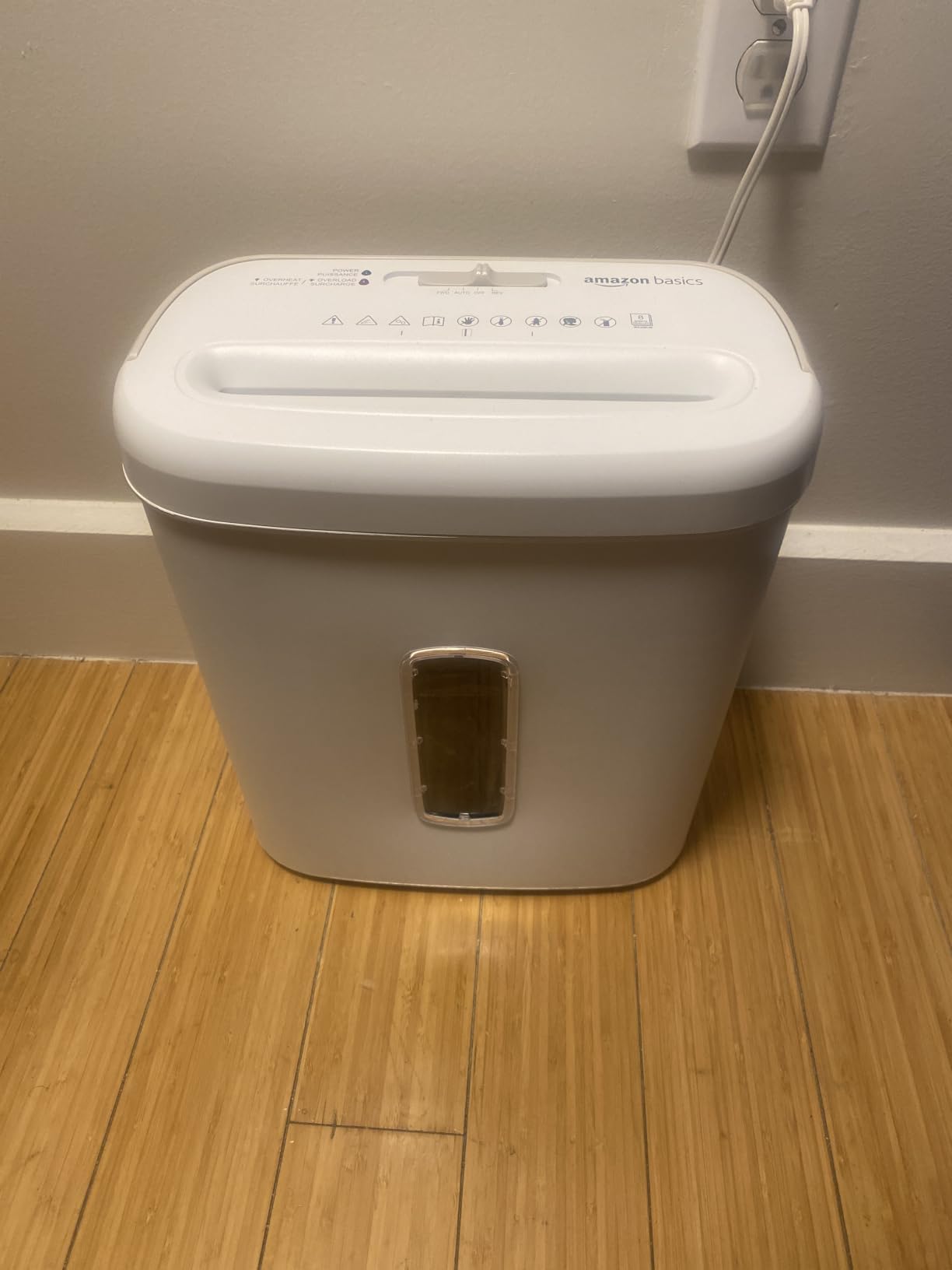
This is the machine we kept reaching for. The 200-sheet auto tray means you load a stack, walk away, and come back to a bin full of cross-cut confetti instead of standing there feeding pages one at a time. With roughly 78k reviews behind it, it is also the most proven design in the category, which matters when your shredder is a compliance tool rather than an occasional convenience.
The motor handles 60 minutes of continuous auto shredding before a 45-minute cool down, which comfortably covers a full working day of back-to-back batches. Cross-cut output measures 5/32 by 25/32 inches and meets P-4, so account numbers, payroll records and client contracts are properly destroyed without going to a finer, slower cut.
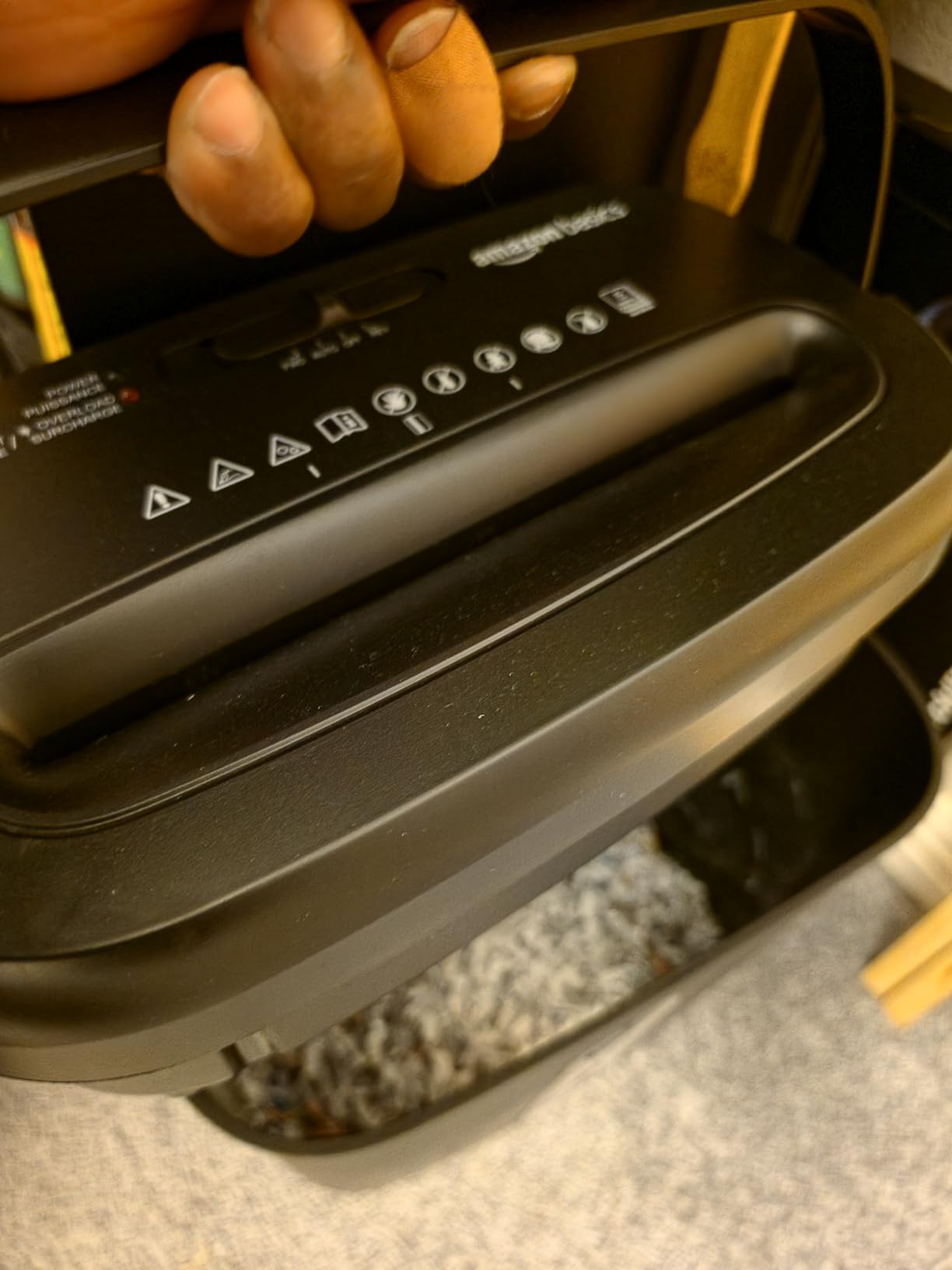
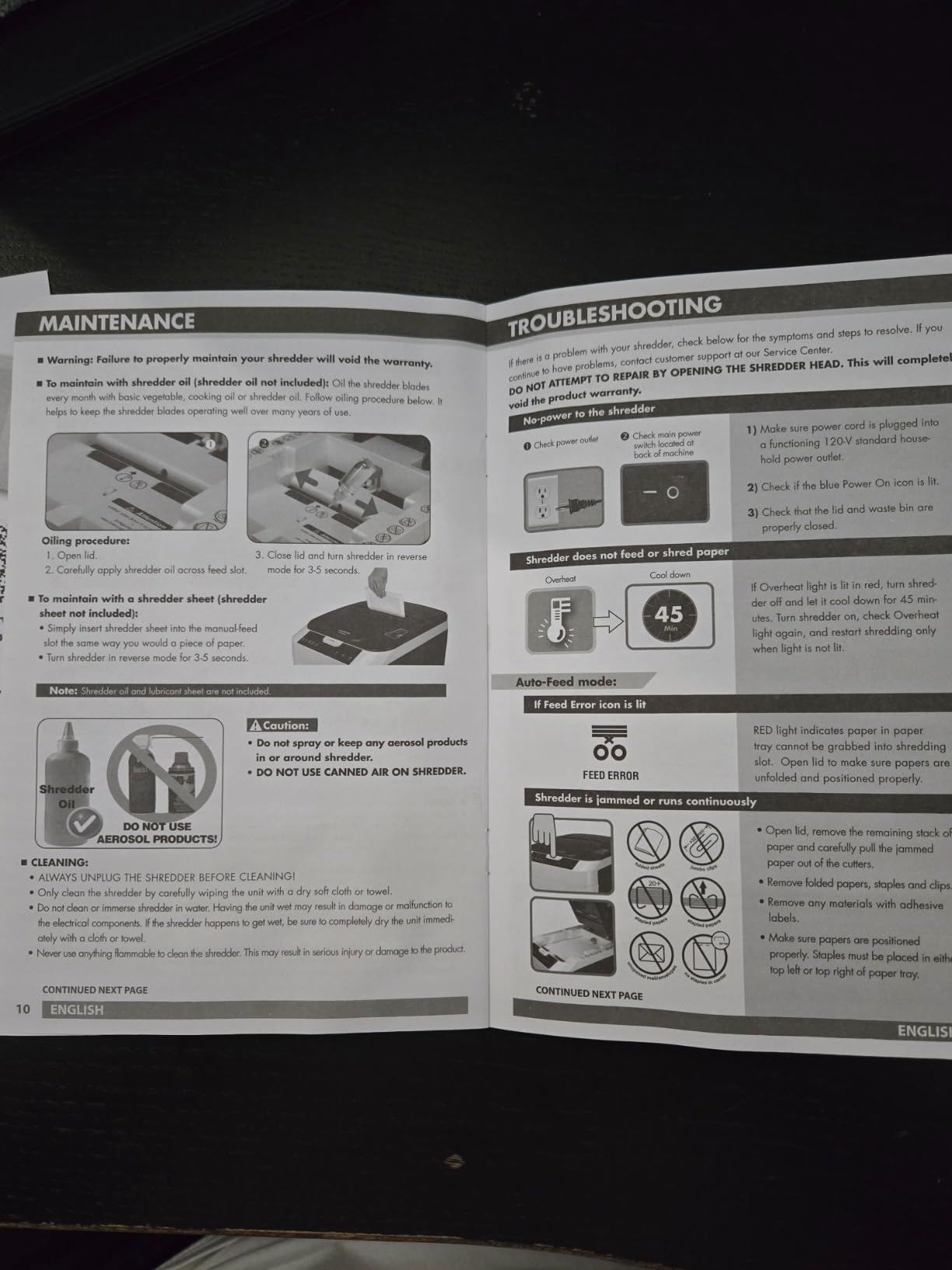
The honest drawbacks are physical rather than functional. The manual feed slot is narrow, so single sheets need a bit of angling, and the machine is loud enough that you will hear it from the next room. The 8.5-gallon bin also fills faster than the number suggests because cross-cut paper is fluffy, which means you are emptying it more often than you would a micro-cut machine with the same volume.
What to check before you buy it
Measure the feed tray clearance above your desk or credenza. At 18.35 by 14.02 by 22.83 inches and 32.9 pounds, it needs floor or low-cabinet space, not a knee hole. Also confirm your paper is letter size and around 20 lb — auto mode is designed for that, and off-size stacks slow the feeder.
Who should buy it
A small business or department destroying 500 to 1,200 sheets a week where staff should not have to stand and feed it. It is also the best value in this roundup per sheet destroyed, which is why it takes the top slot for most readers.
2. Fellowes Powershred 99Ci — Best Rated 18-Sheet Workhorse
- Jam-proof auto reverse clears misfeeds in practice
- Quiet operation at 62.1 dB for a machine in this class
- Capacity indicator light warns before you overfeed
- SafeSense hand detection stops the motor on contact
- Long-term owners report multi-year durability
- Casters are fiddly to install
- Bin plastic feels thin and shred fills it faster than rated
- Blades need regular oiling
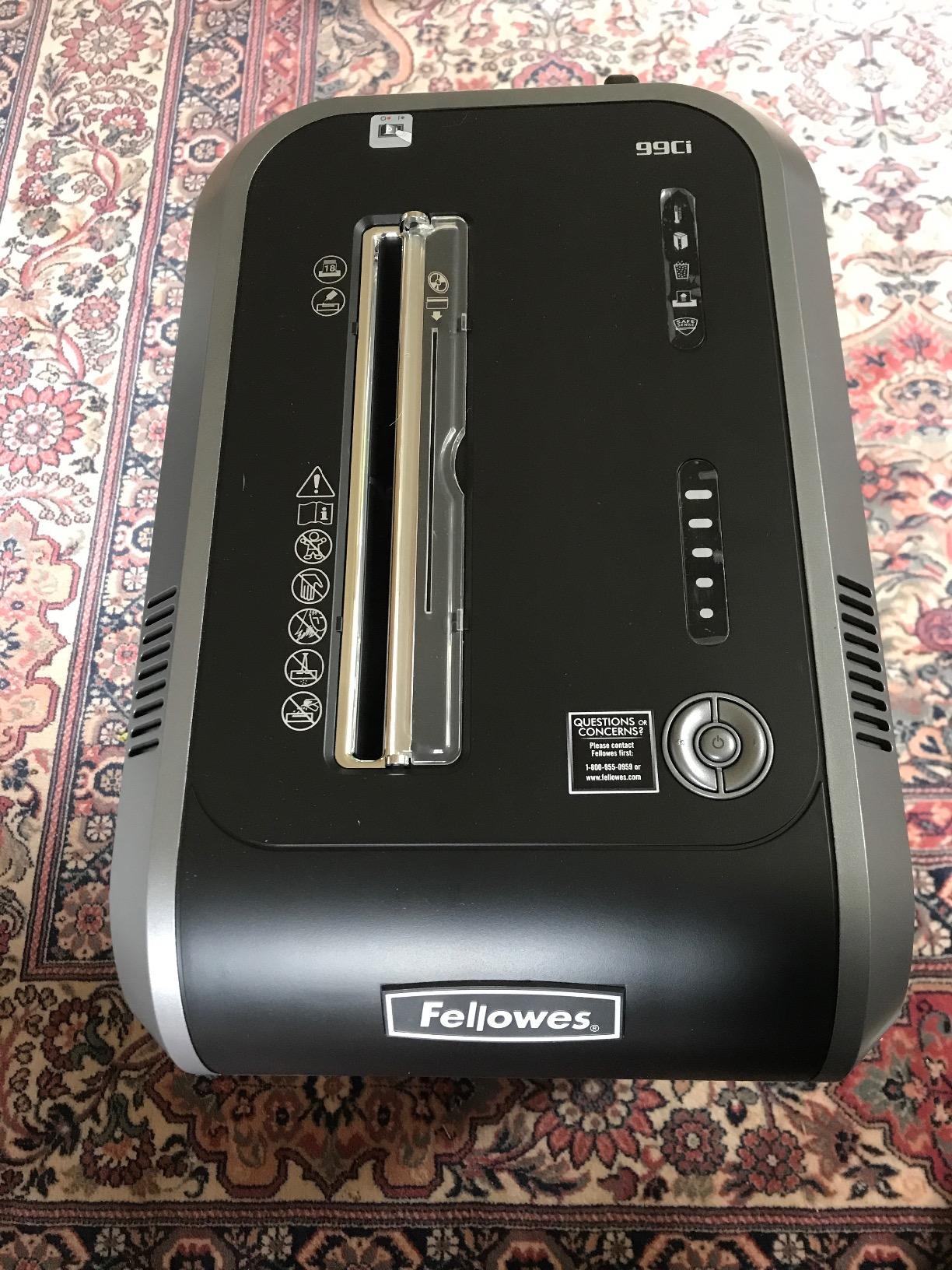
The 99Ci is the one we would put in a clinic or an accounting office. It is a manual-feed machine, so it will never shred unattended, but for the way most offices work — one person carrying a folder over every few minutes — that is a feature, not a limitation. You get finer control over what goes in.
At 18 sheets per pass and a 30-minute continuous run time, it handles a steady daily load without overheating. Cross-cut output produces 397 particles per sheet at P-4, and SafeSense stops the motor the instant a hand touches the slot, which matters in a shared room where someone will eventually reach in to pull a fragment.
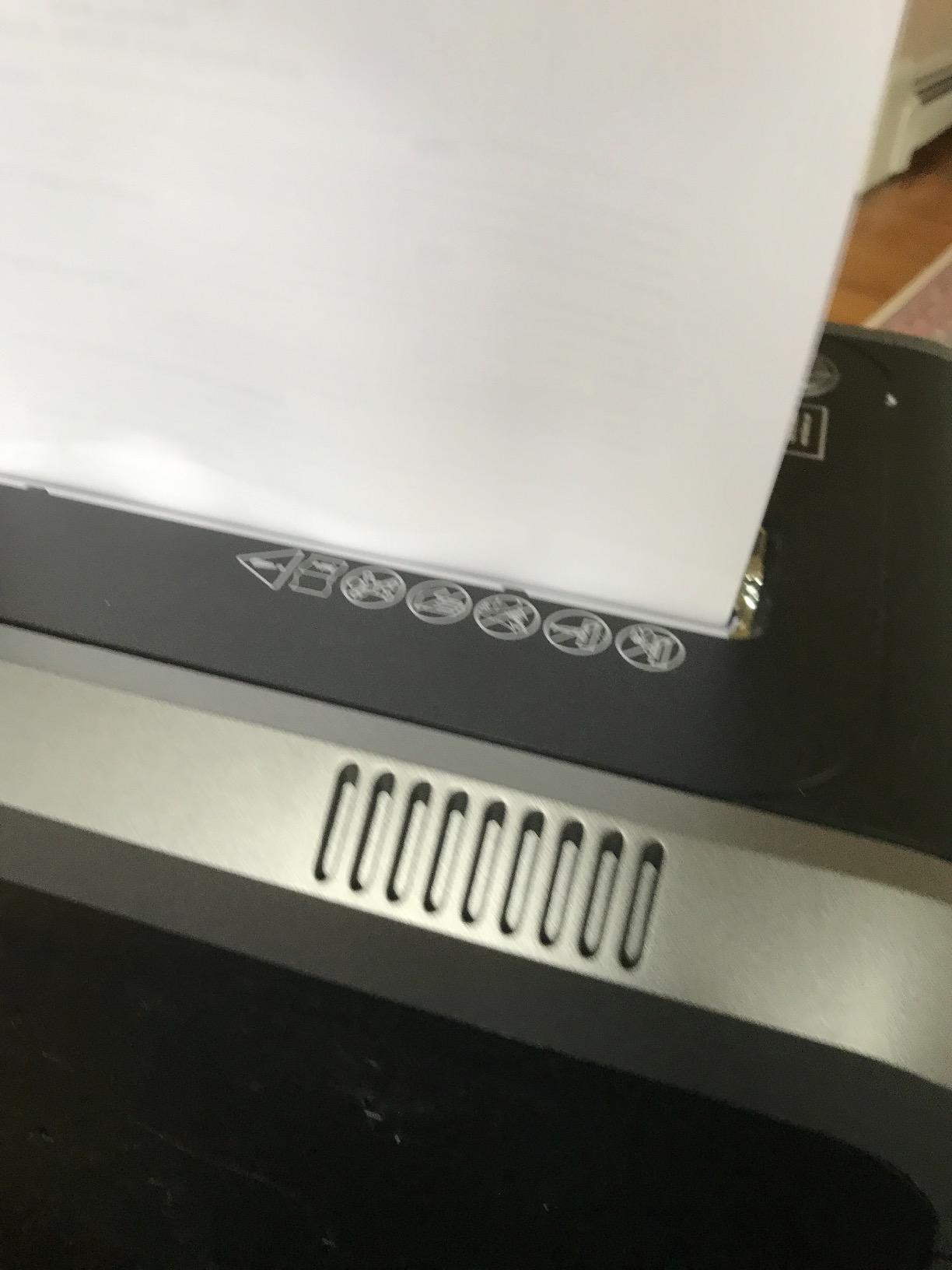
Two things to plan for. The nine-gallon bin fills quickly because cross-cut output is bulky, and the blades do need oiling on a schedule or performance drops off. The casters also gave some owners assembly trouble on arrival, so budget ten minutes with the instructions before your first shredding session.
What to check before you buy it
Look at where it will live. At 17.31 by 11.44 by 25.19 inches and 36.4 pounds, it works as a floor-standing unit beside a desk but will not tuck under a low credenza. If your team shreds during calls, 62.1 dB is quieter than most, though not silent.
Who should buy it
Anyone who values a two-year product warranty and a lifetime cutter warranty over raw throughput. Fellowes is also the brand most likely to still be selling cutters and parts several years from now, so a replacement cutter is a realistic purchase down the line.
3. Bonsaii 18-Sheet Cross-Cut — Best Value for Daily Office Use
- 60-minute run time is among the longest in this class
- 18-sheet cross-cut capacity at P-4 security
- Quiet 62 dB for sustained shredding
- Auto start/stop and auto-reverse reduce jams
- Four casters make it easy to move between rooms
- 6-gallon bin is smaller than most heavy-duty rivals
- Blades need periodic oiling
- Particles larger than true micro-cut
This is the value pick, and the reason is one number: a 60-minute continuous run time at 18 sheets per pass. Several machines costing more in this roundup manage 30 minutes. If your workload is a steady trickle rather than a nightly batch, that extra half hour of runtime means fewer cool-down pauses and less supervision.
At 4.5 stars across more than 10k reviews, the build is also sturdier than the price suggests. The cabinet is alloy steel and plastic rather than all-plastic, and the six-gallon pull-out bin has a transparent window so you can see the fill level without lifting the head.
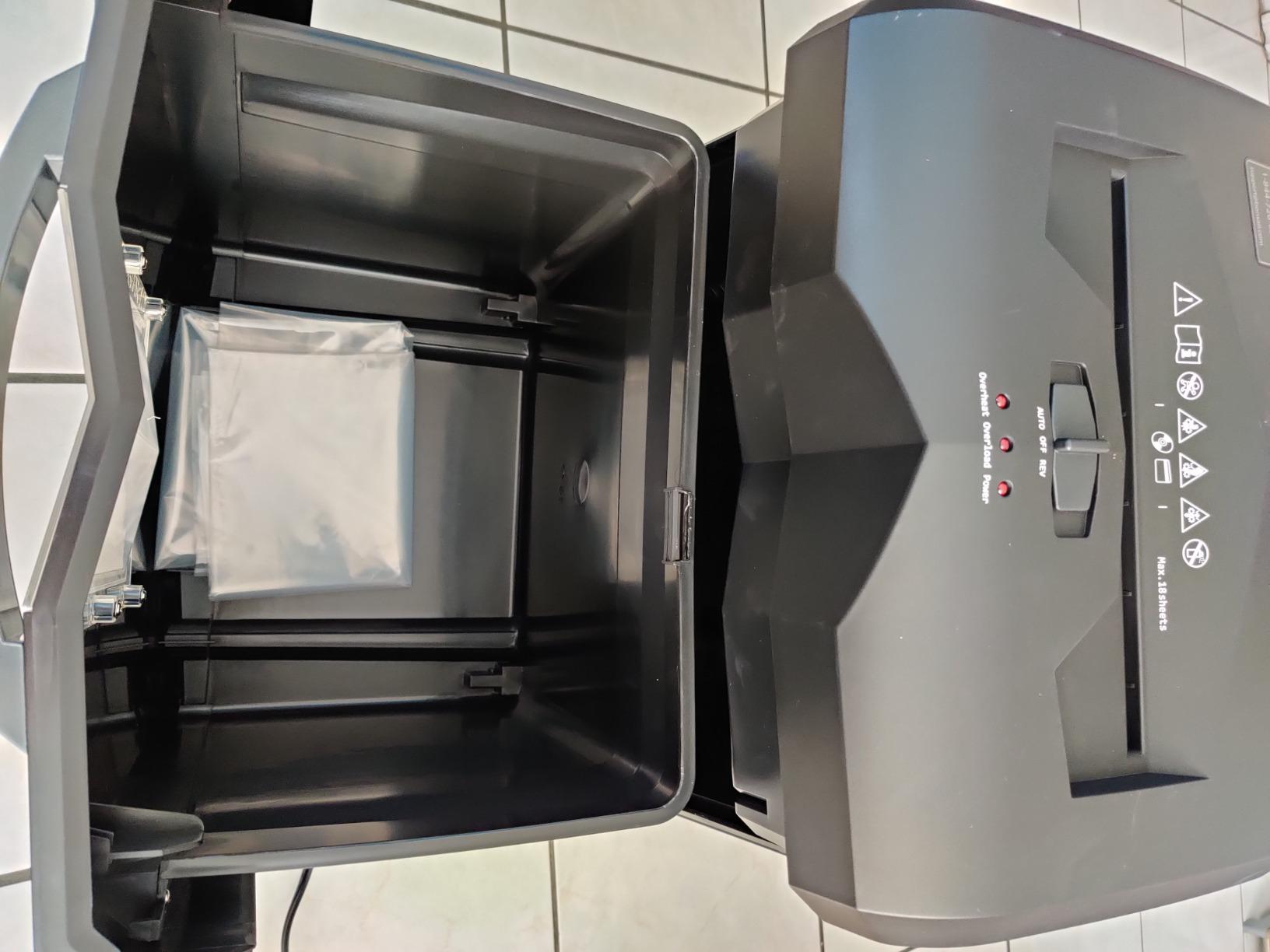
Where it falls short is bin size. Six gallons holds more than 400 sheets of A4, but if your team pushes 500 sheets a week through cross-cut, you are emptying twice a day. The 13/64 by 63/64 inch particles are also visibly larger than micro-cut, so this is the wrong machine for highly sensitive material.
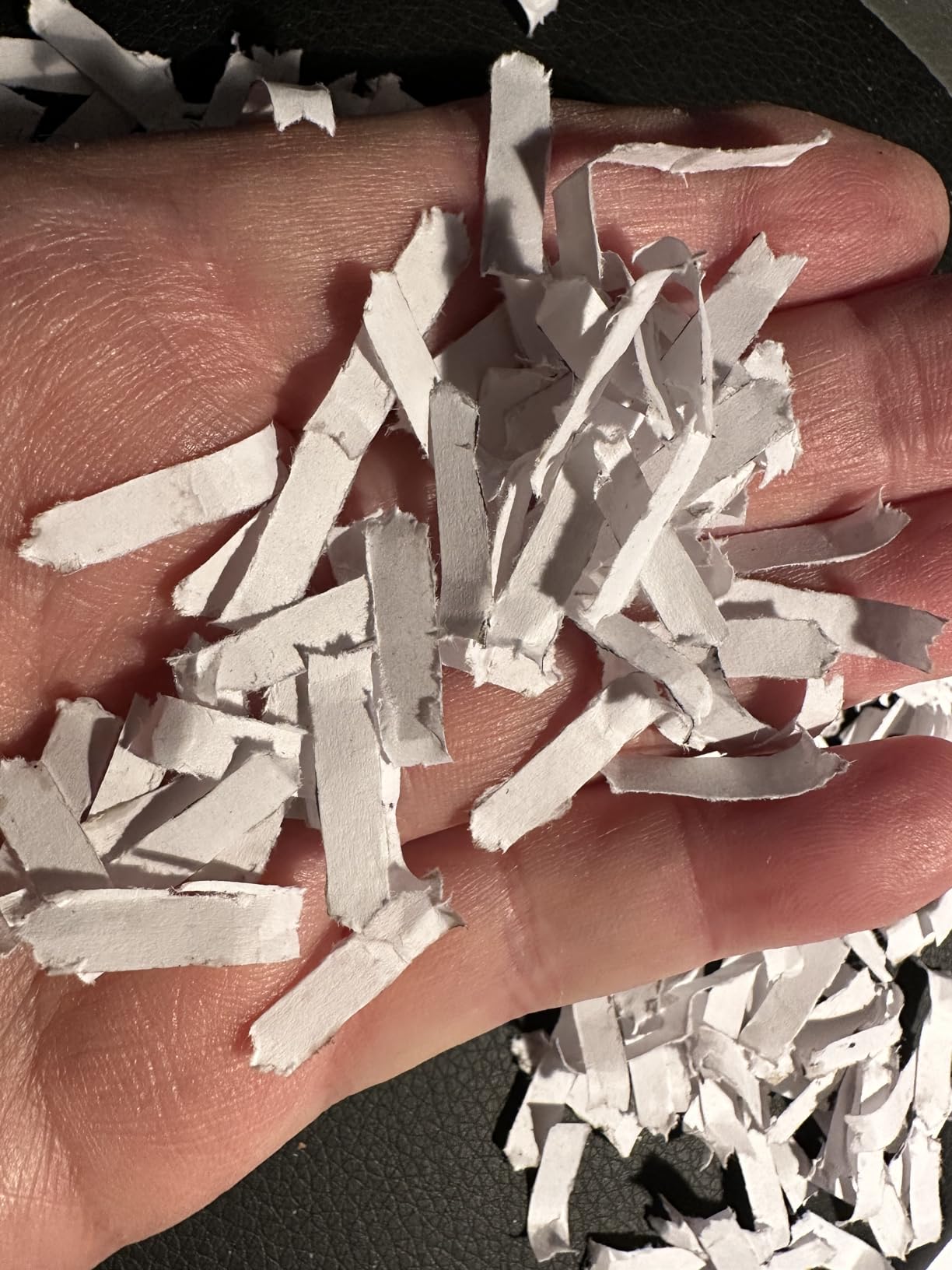
What to check before you buy it
Do the bin math honestly before ordering. Measure your weekly sheet count, divide by 400, and see whether one or two emptyings a day is acceptable to your staff. At 23.1 pounds it is light enough to wheel to wherever the paperwork is, which softens the inconvenience.
Who should buy it
Small offices, bookkeepers and property managers shredding a few hundred sheets a week who want long run times and reliability without spending department money. It is also a solid second machine for a room the auto-feed units will not fit.
4. Bonsaii 200-Sheet Micro Cut Auto Feed — Best for Quiet Shared Workspaces
Bonsaii 200-Sheet Auto Feed Micro Cut Heavy Duty Paper Shredder for Office
- 200-sheet hands-free auto feed handles large stacks unattended
- 60-minute auto run time plus 30 minutes manual
- Micro-cut P-4 at 5/32 by 15/32 inches
- Quiet 58 dB for shared offices
- 8.1-gallon bin holds roughly 700 sheets
- Casters and lubricant sheets included
- Auto mode is limited to letter-size 20 lb paper
- Large footprint and 33.9-pound weight
- Shreds and paper dust collect around the bin
This is the one we would put in an open-plan office. At 58 dB it is among the quietest machines in the roundup, and micro-cut at P-4 gives you finer output than the cross-cut units at the same auto-feed capacity. For teams handling client records in an open workspace, that combination is worth taking over a cross-cut tray machine.
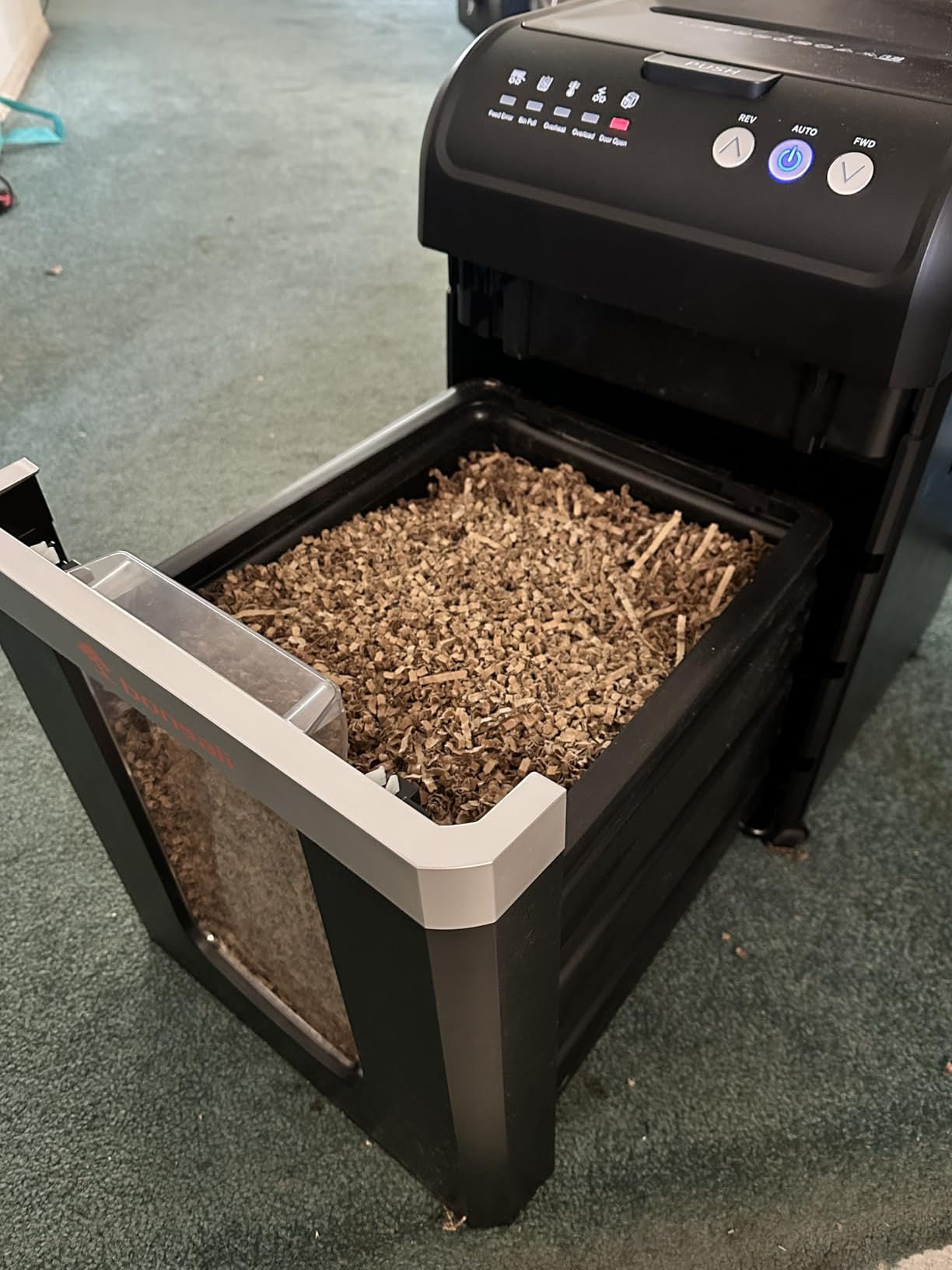
It runs 60 minutes in auto mode and 30 minutes through the dedicated 12-sheet manual slot, which handles credit cards, staples and paper clips. The eight-gallon bin holds roughly 700 sheets, so most teams empty once a day even during heavy weeks.
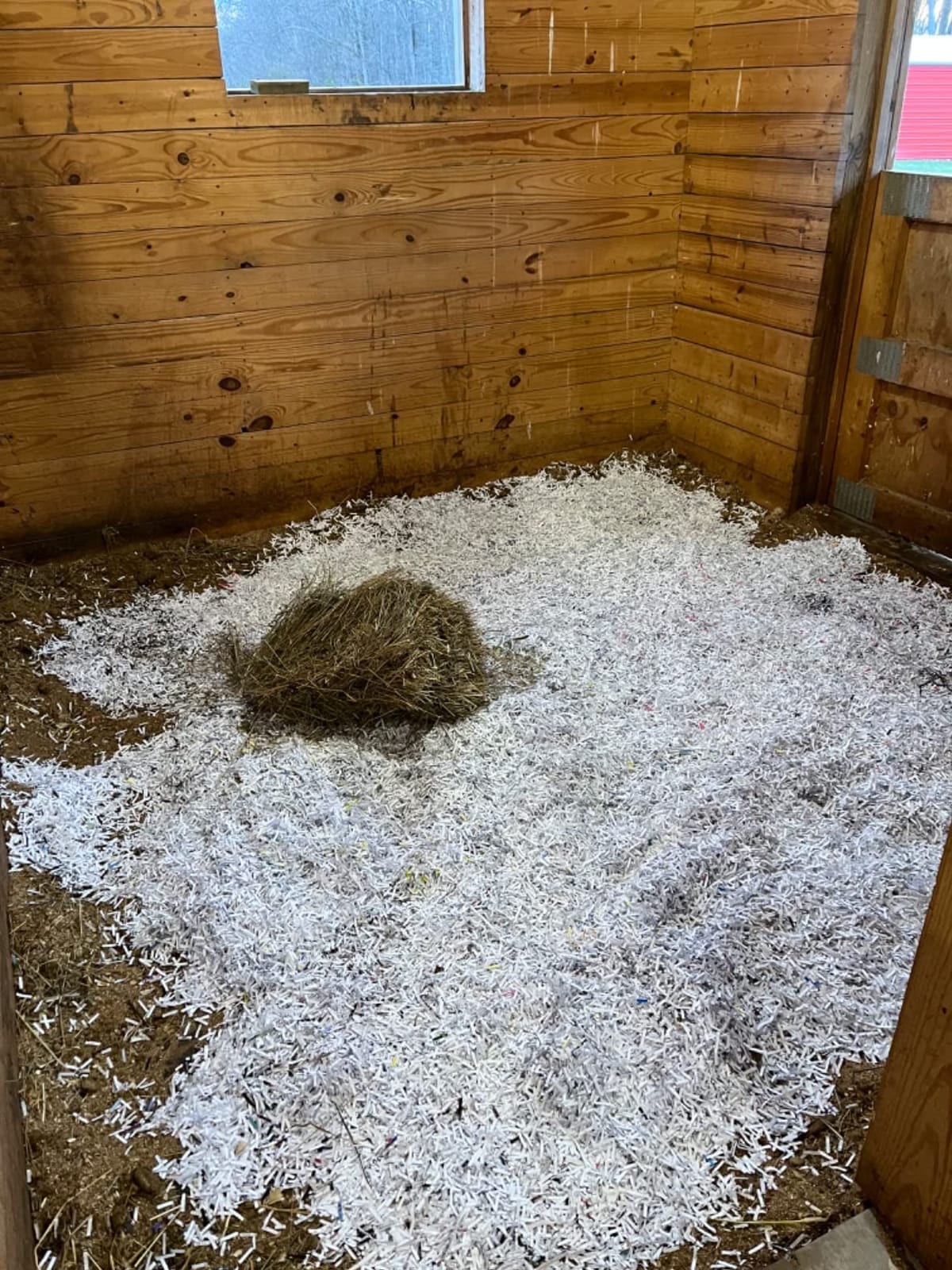
The bin is the reason it manages 700 sheets where similar machines manage fewer: micro-cut compacts into a denser pile. Owners also report stray shreds and paper dust around the enclosure, so keep a vacuum or small brush nearby. At 33.9 pounds it is a floor machine, not a desktop one.
What to check before you buy it
Confirm your shredding is mostly letter-size plain paper. The auto tray is rated for letter-size 20 lb documents, and feeding it heavier or mixed paper is the most common cause of trouble with any auto-feed machine. Check the casters work on your floor covering, too.
Who should buy it
Offices where shredding happens alongside other work and noise is genuinely a factor, plus anyone who wants micro-cut security at an auto-feed price point below the commercial-brand options.
5. VidaTeco 18-Sheet Micro Cut — Best for Small Business Mailrooms
VidaTeco 18-Sheet Micro Cut Paper Shredder for Home Office Heavy Duty
- 18 sheets per pass with up to 60 minutes of continuous shredding
- Quiet 58 dB operation
- Micro-cut P-4 into 0.16 by 0.59 inch particles
- Auto-reverse anti-jam with a US patented cutter
- 7.9-gallon bin with casters and two bags included
- Support team replaced a failed unit
- Front power switch reported to fail after extended use
- Full-bin sensor only works with the supplied bags
- Some variants lack non-US voltage options
This is a straightforward manual-feed machine with a genuinely large bin for its class — 7.9 gallons, which is bigger than several auto-feed units here. It micro-cuts at P-4 into 0.16 by 0.59 inch particles, runs 18 sheets at a time, and holds 60 minutes of continuous cutting. The metal cabinet and four casters make it feel more substantial than the price suggests.
Reviewers consistently single out two things: how quiet it is at 58 dB, and how responsive the manufacturer’s support team was, including sending working replacements after units failed. That matters more than it sounds, because the fastest way to lose confidence in a shredder is owning one you cannot replace.
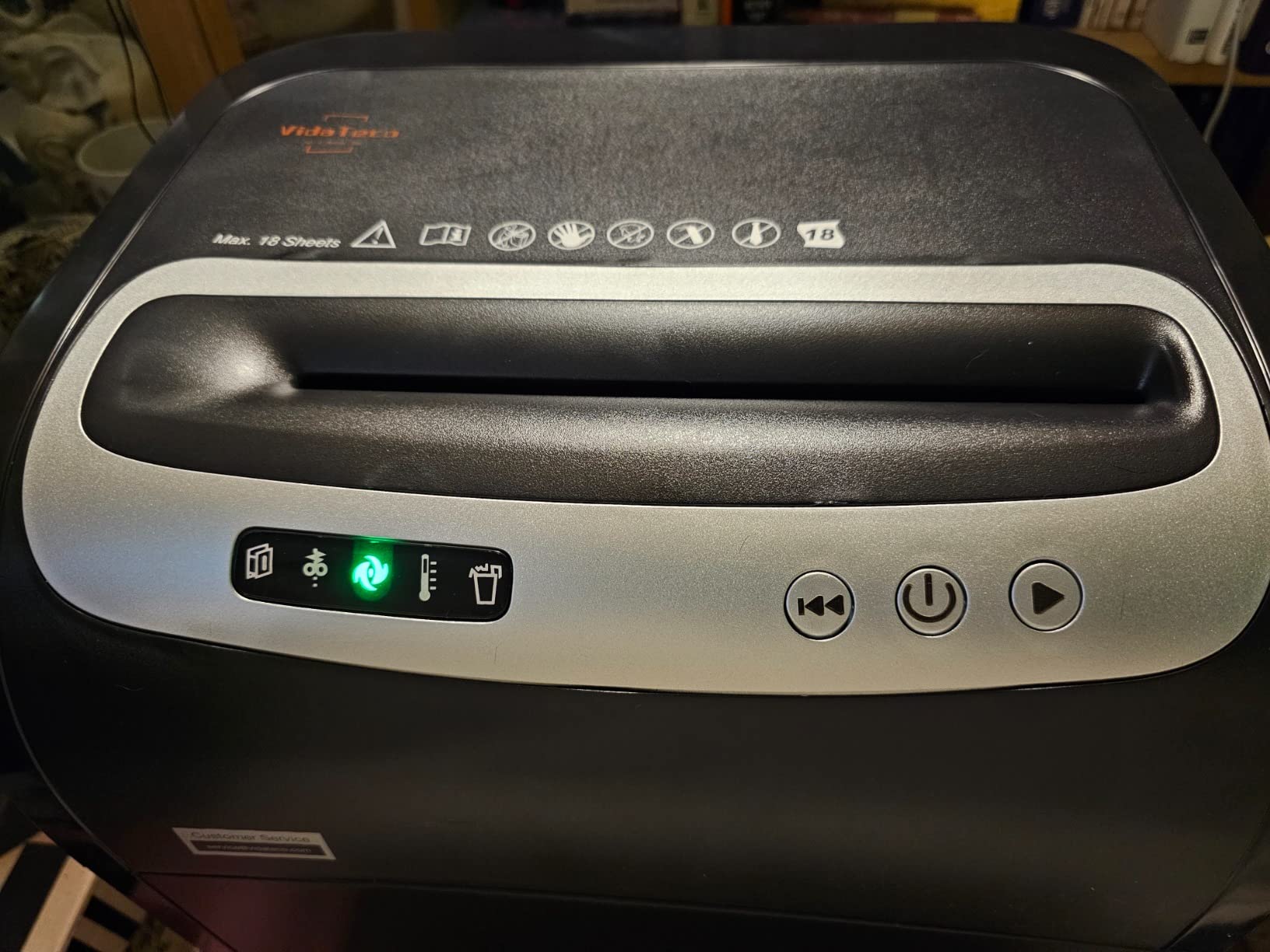
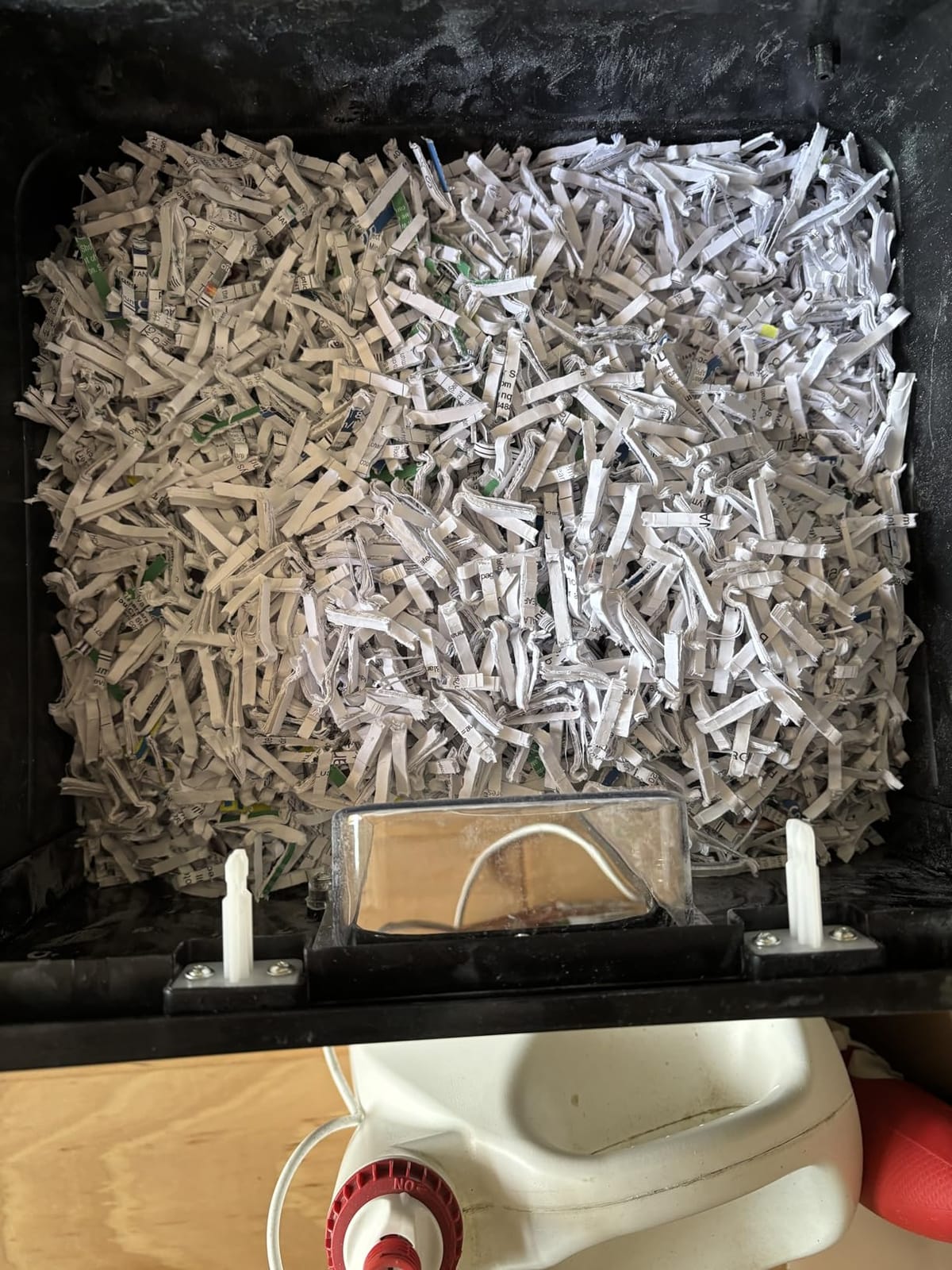
The recurring complaint is specific: several owners report the front-panel power switch collapsing into the housing after a month or two, with support unable to resolve it. That is a real risk on a machine you depend on daily, so keep the receipt. Use only the supplied shredder bags, because the full-bin sensor misreads ordinary liners and shuts down early.
What to check before you buy it
Decide whether you can accept manual feeding. There is no auto tray, so throughput depends entirely on someone standing there with folders. For a mailroom with a dedicated person, that is fine. For a shared space, it is not.
Who should buy it
Small businesses, nonprofits and medical practices with a 150-to-400 sheet weekly load that want micro-cut security and a large bin but do not need unattended shredding.
6. BONSEN 20-Sheet Cross-Cut — Best Rated Manual-Feed Bulk Machine
BONSEN 20-Sheet Cross-Cut P-4 High Security Heavy Duty Paper Shredder
- Highest average rating in this roundup at 4.7
- 20 sheets per pass at P-4 security
- 60 minutes of continuous shredding before overheating
- Nitrided steel cutter resists wear
- Quiet at under 60 dB
- 6.6-gallon bin holds about 520 sheets
- Manual feed only with no auto tray
- 6.6-gallon bin is smaller than most heavy-duty rivals
- Particles larger than true micro-cut
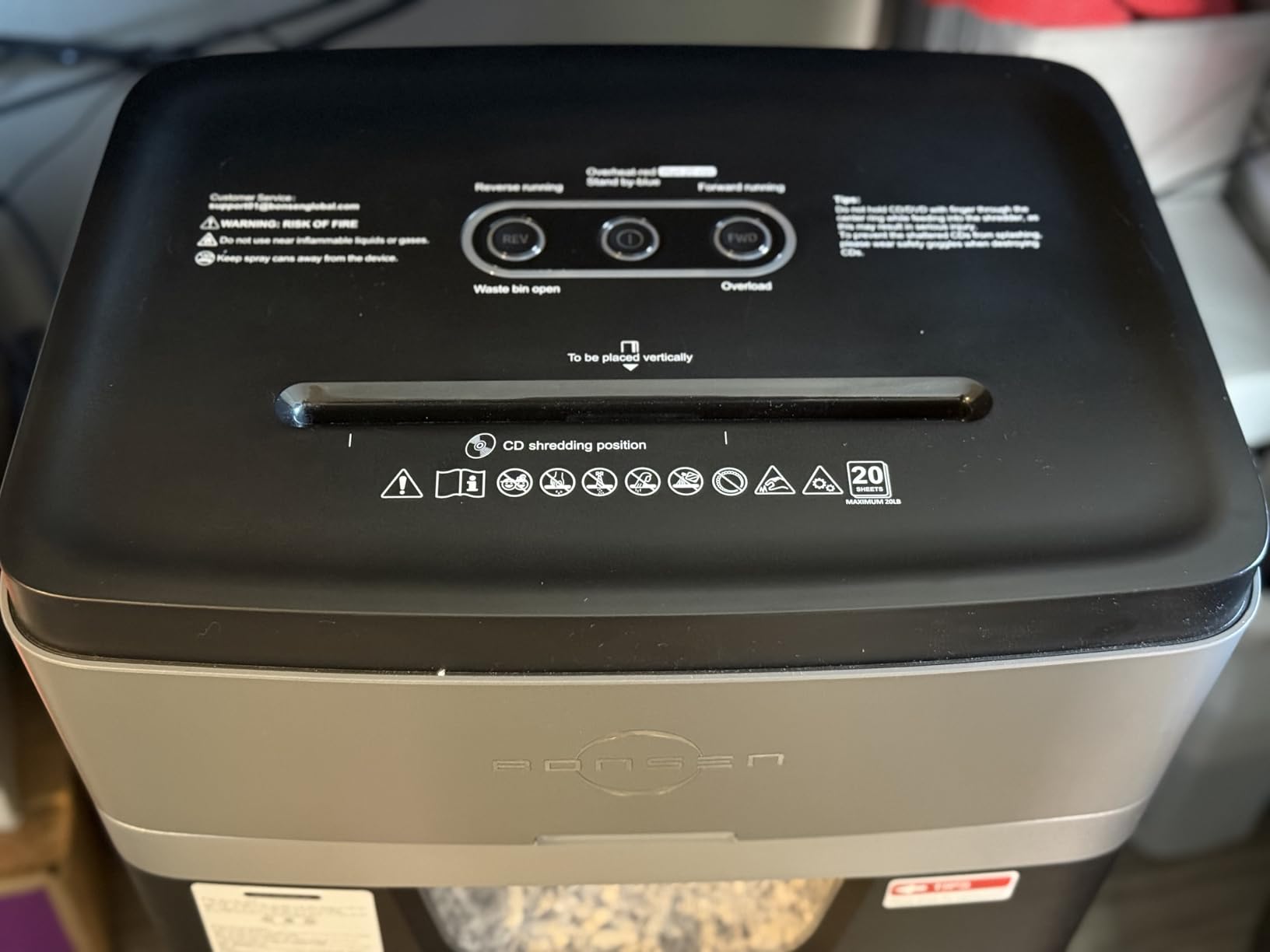
The 4.7 average is the highest in this roundup, and after using it the reason is obvious: 20 sheets per pass and a 60-minute run time in a manual machine. That combination means someone can carry folders over for an hour without the motor ever hitting its thermal cutoff, which is the most common complaint we heard about lighter machines.
The nitrided steel cutter is a real specification, not marketing filler. Hardened steel blades hold an edge longer than untreated ones, and this machine also uses extra material in the housing to resist abrasion. The bin holds about 520 sheets, so an office shredding 400 a week empties it once.
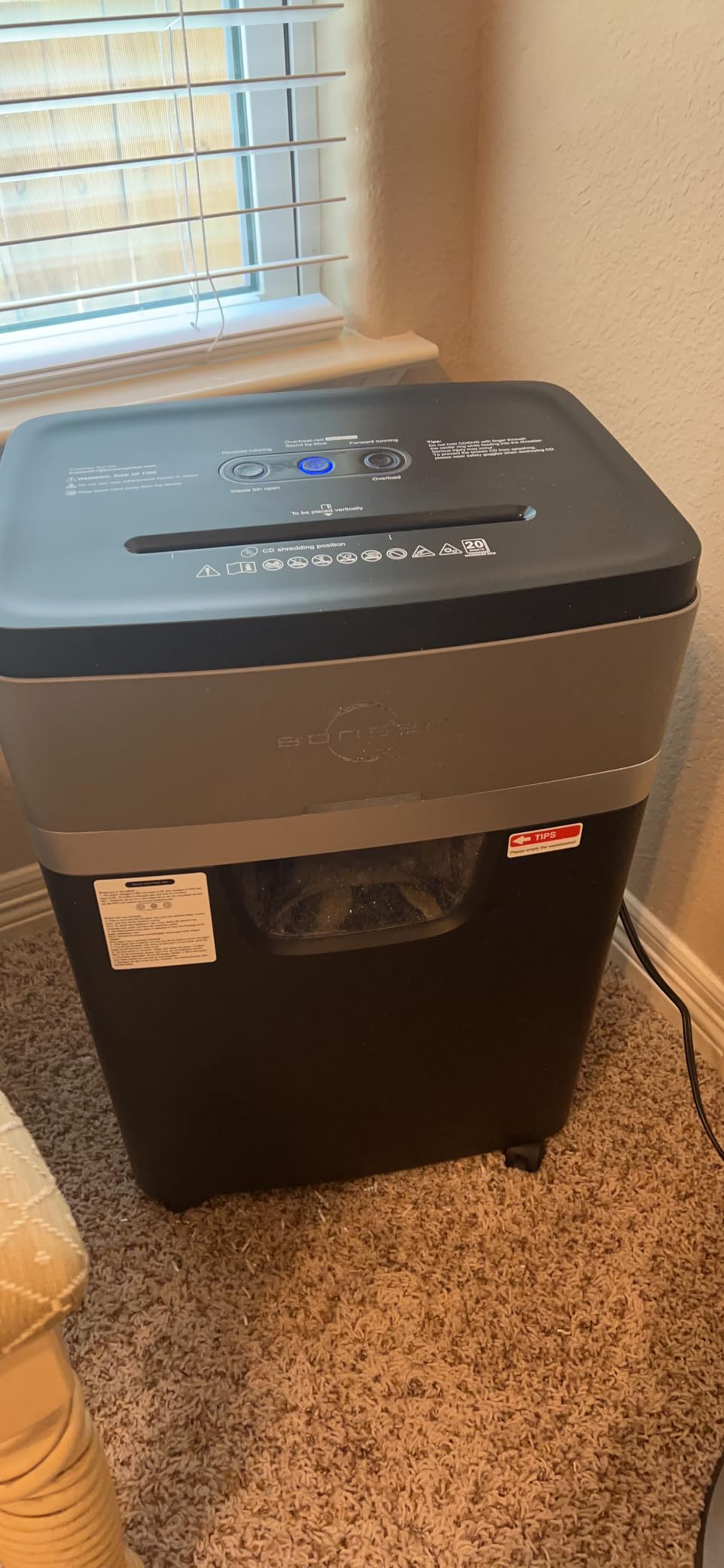
The limitation is structural. There is no auto-feed tray, so hands-free shredding is not possible no matter how much throughput the motor has. If your team needs to load and leave, this is the wrong machine. Cross-cut output is also larger than micro-cut, so it is unsuitable for the most sensitive material.
What to check before you buy it
Watch the feed habit. Twenty sheets is the rated limit for 20 lb letter paper, and consistently feeding more is what drives thermal shutdowns and blade wear on any machine in this class. The one-year warranty is also shorter than the multi-year coverage on the Fellowes models here.
Who should buy it
Anyone shredding several hundred sheets a week who prefers to control every sheet and wants the highest-rated machine in the group. It is also a good choice for a back room where noise is not a consideration.
7. Amazon Basics 150-Sheet Micro Cut Auto Feed — Best for Big Stacks in a Smaller Body
Amazon Basics 150-Sheet Autofeed Micro-Cut Paper and Credit Card Shredder, High Security Level P-4 with 8.5-Gallon Bin, 60-Minute Continuous Run Time, Black
- Handles a 150-sheet stack hands-free in about three hours
- Micro-cut P-4 producing 2235 pieces per sheet
- 8.5-gallon pull-out bin avoids lifting the machine head
- Internal flat feeder takes standard letter stacks
- LED indicators for five fault conditions
- Auto feeder is sensitive to off-size or mixed-weight paper
- Shreds pile at the back of the bin before the light triggers
- A bar blocks the use of standard shred bags
Micro-cut at P-4 here produces 2235 pieces per sheet, against about 360 for standard cross-cut. That is a meaningful security difference, and it is why this machine shows up in practices handling client financial records. The 150-sheet tray and 60-minute auto run time cover a heavy week’s backlog in one or two sessions.
Several owners reported completing multi-hundred-pound shredding projects without a single thermal shutdown, and the flat internal feeder handles standard letter paper stacks efficiently. Quiet enough to run beside other work, according to reviewers.
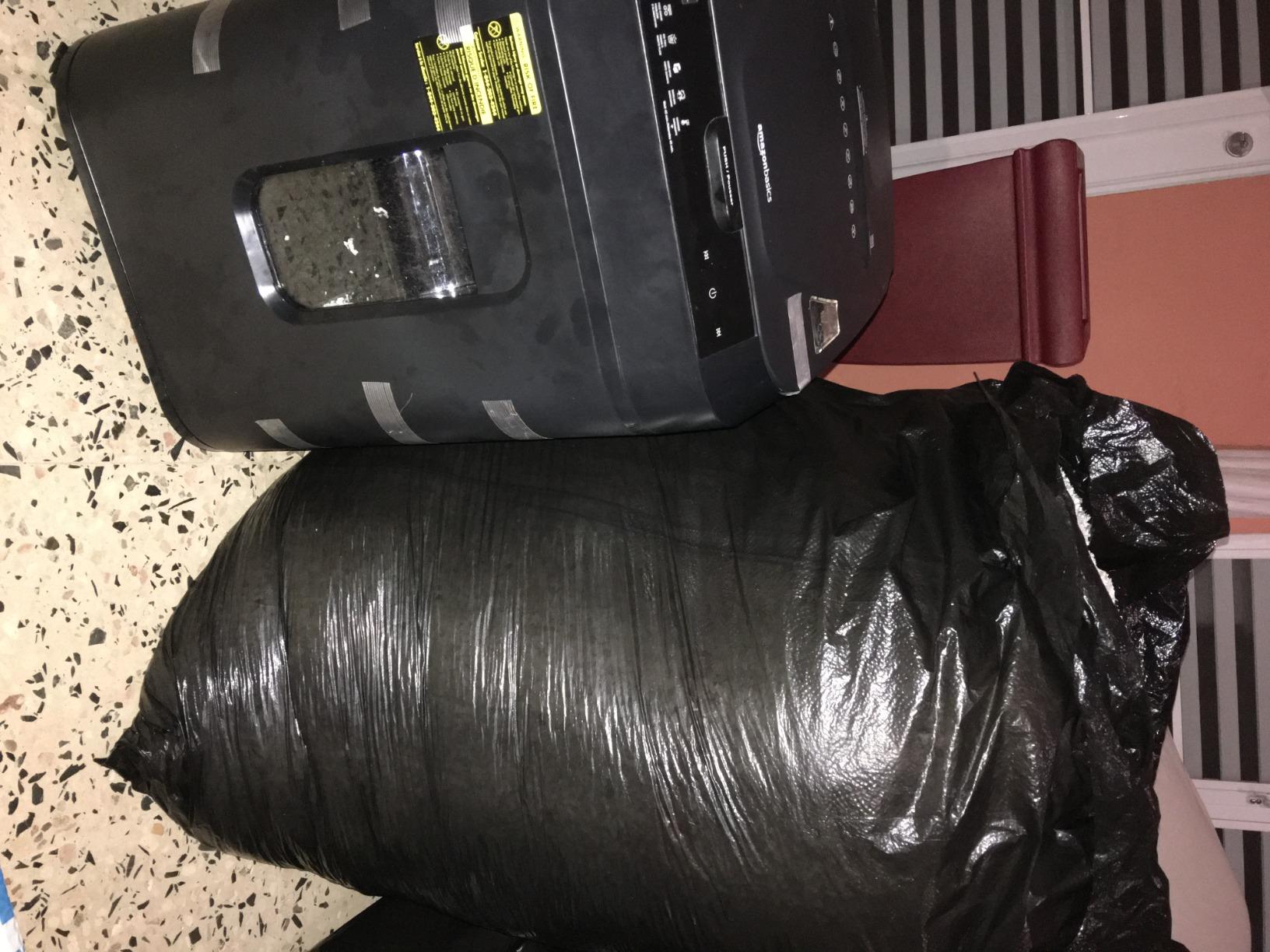
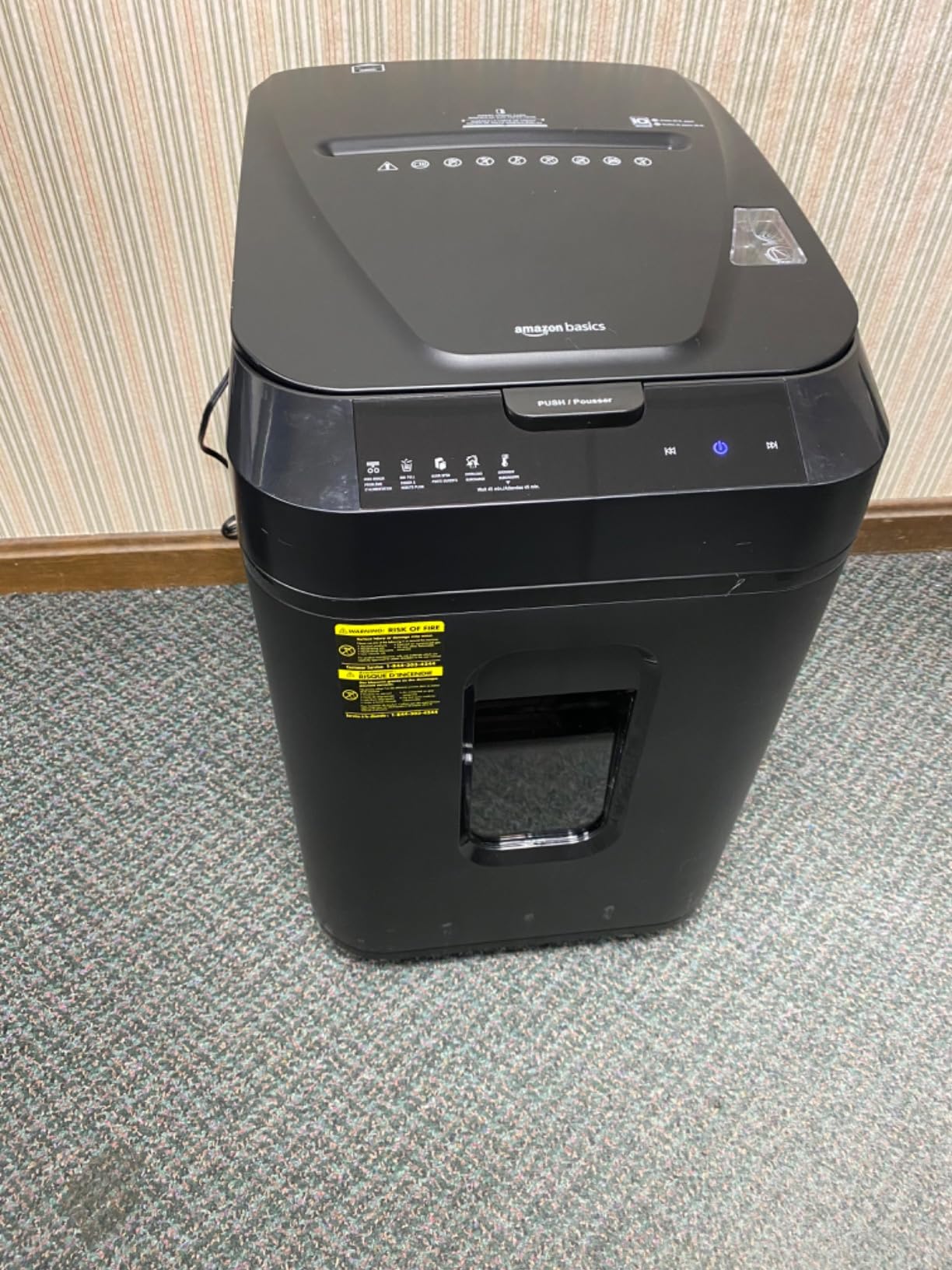
Two design choices will annoy you if you are not warned. The auto feeder is sensitive to mixed sizes and heavier paper, and pushing it can damage the feed mechanism rather than simply cause a jam. And the shreds collect at the back of the bin, so the rear can overfill before the bin-full light comes on — pull the bin out and look, do not just trust the indicator.
What to check before you buy it
Sort your paper before you shred rather than after. Feeding a neat stack of letter-size documents is the difference between a smooth run and a mechanism problem. Note also that a bar across the bin means you cannot use standard shredder liners here.
Who should buy it
Small practices and accounting offices that want micro-cut security, a large auto tray and an eight-gallon bin without moving up to a commercial-brand machine.
8. Aurora 200-Sheet Micro Cut — Best for P-5 Security
Aurora Commercial Grade 200-Sheet Auto Feed High Security Micro-Cut Paper Shredder/ 60 Minutes/Security Level P-5
- P-5 security
- the highest level among the 200-sheet auto-feed models
- cutting into about 2592 particles per letter sheet
- 200-sheet auto tray plus a 10-sheet manual slot
- 60-minute nonstop run time with anti-jam auto reverse
- Quiet operation for side-by-side office work
- Auto power-sleep for energy saving and safety
- Full set of LED status indicators
- Heaviest of the auto-feed machines here at 38.1 pounds
- White finish shows dust and paper residue
- One-year warranty is shorter than some rivals
Security is the reason to buy this one. At P-5 it cuts into roughly 2592 particles per letter sheet at 5/64 by 15/32 inches, a visibly finer shred than the P-4 micro-cut machines in this roundup. If your documents include medical records, financial client files or anything under a formal handling policy, that difference is the whole argument.
Everything else is strong too: a 200-sheet auto tray, a 10-sheet manual slot, 60 minutes of nonstop cutting, and LED indicators for standby, overheat, bin-full, overload and door open. Reviewers like the quiet operation and the auto power-sleep mode. It is the P-5 pick of the roundup.
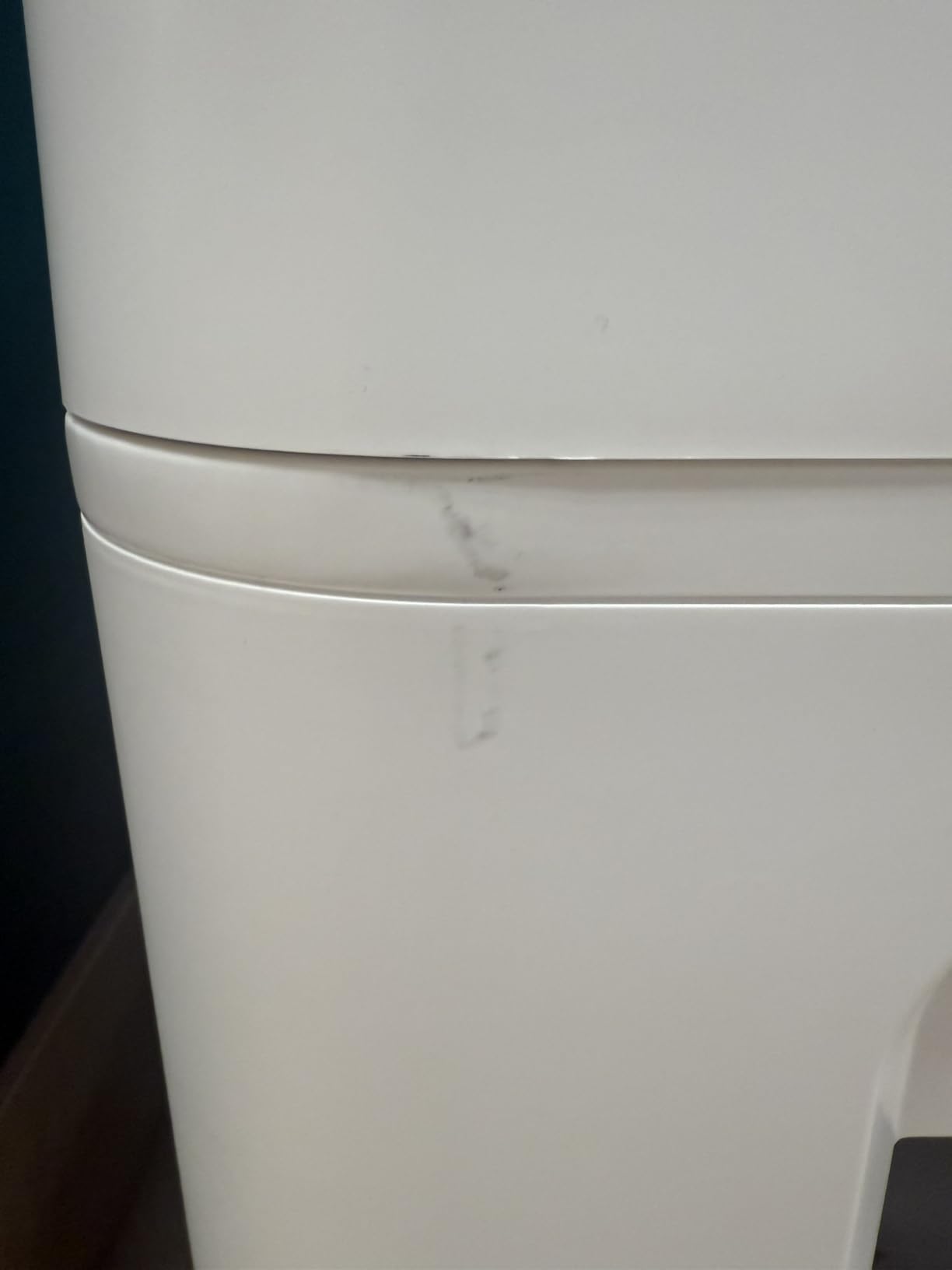
It is the heaviest of the auto-feed machines in the roundup at 38.1 pounds, so plan the delivery and the position carefully. The white finish shows dust and paper residue readily, which is a housekeeping issue in a clinical or reception setting. A one-year warranty is also thin for a machine you intend to run daily for years.
What to check before you buy it
Ask yourself whether you actually need P-5. It costs you bin capacity and money for shreds you could have shredded faster. If your material is ordinary business records, a P-4 micro-cut machine does the same job.
Who should buy it
Medical practices, dental offices, financial advisers and nonprofits with document-handling rules that call for more than standard P-4 output, and a volume high enough to justify a 200-sheet tray.
9. Fellowes Powershred 225Ci — Best for Department-Class Daily Use
Fellowes Powershred 225Ci 22-Sheet 100% Jam-Proof Crosscut Paper Shredder Commercial Grade for Office, Black 3825001
- Genuine continuous-duty motor for non-stop commercial shredding
- 22 sheets per pass plus staples cards clips and discs
- Auto reverse jam recovery works on large loads
- 16-gallon pull-out bin with LED full indicator
- Owners report 3.5 to 8+ years of daily use
- Two-year product warranty plus lifetime cutter warranty
- Very heavy at 93 pounds and will not fit under a desk
- Safety sensors interrupt long mixed-size batches
- Some machines arrived with cracked housings
- Noisy enough to be heard in an adjacent room
This is the only machine in the roundup with an explicitly continuous-duty motor, and that single specification puts it in a different class from everything else here. Continuous duty means the motor is built to run without thermal cycling, which is exactly what a department destroying several hundred sheets a day, five days a week, requires.
Owners report the longest service histories in this group, from three and a half years to more than eight years of daily shredding without failure. The 16-gallon pull-out bin is the largest of any manual-feed unit here, so you empty it once a day rather than three times, and the two-year product warranty with a lifetime cutter warranty is the longest coverage in the roundup.
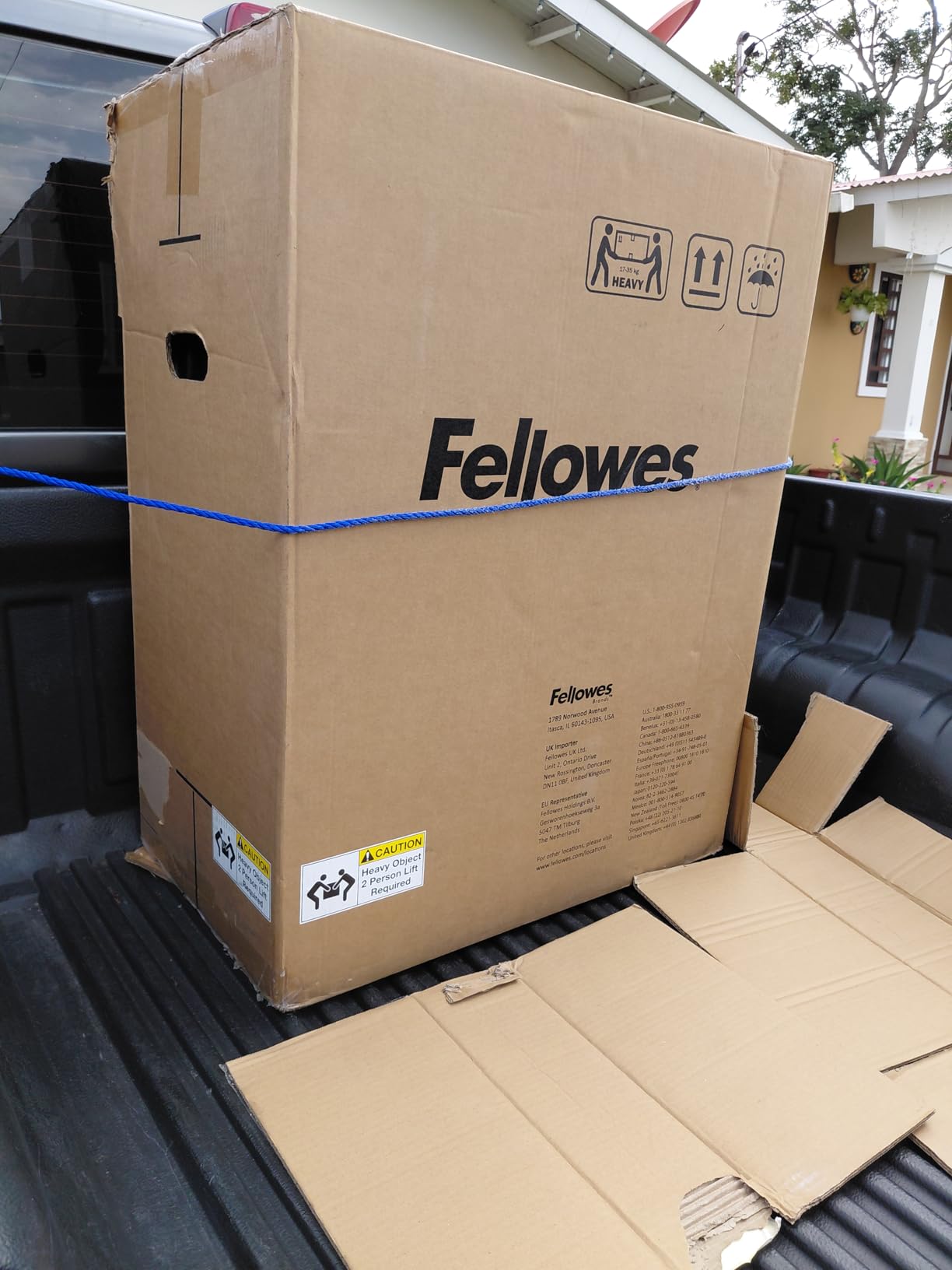
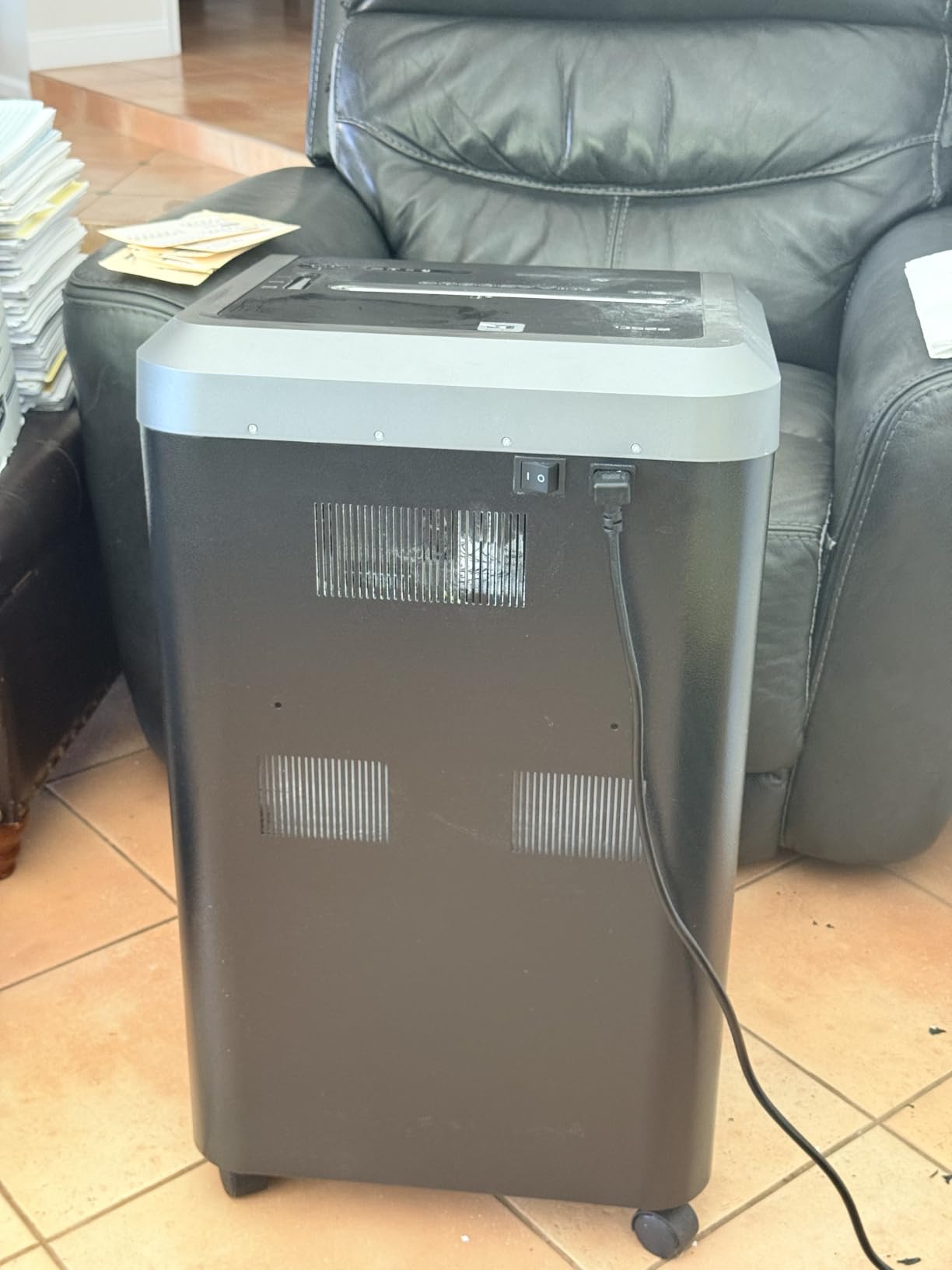
The trade-offs are real. At 93 pounds and about 32 inches tall, it is a floor unit with casters, and it will not go under a desk. SafeSense sensors can interrupt a long mixed-size batch with repeated prompts, which is a safety feature that occasionally works against you during bulk jobs. Reviewers describe it as audible in the next room despite quiet-operation marketing, and a number of machines arrived with damaged housings.
What to check before you buy it
Find a dedicated spot for it. This is not a shared-room machine, and the 16-gallon bin means you need floor clearance beside it for the pull-out. Inspect the housing on arrival before you sign, since damaged housings were a repeat complaint. Because these commercial units draw real current, give it a grounded outlet on its own circuit rather than a shared one.
Who should buy it
A department destroying 800 or more sheets a week consistently, or any office that wants a commercial duty motor and a warranty long enough to make the machine a five-year purchase rather than an annual one.
10. BONSEN 300-Sheet Micro Cut Auto Feed — Best for the Largest Auto Tray
BONSEN 300-Sheet Auto Feed Micro Cut Heavy Duty Paper Shredder for Office
- Largest auto-feed tray in the roundup at 300 sheets
- 2-in-1 design with a separate 12-sheet manual slot
- 60-minute run time in auto mode and 30 in manual
- P-4 micro-cut into 5/32 by 15/32 inch particles
- Quiet 58 dB operation
- LED indicators plus auto-sleep after 10 minutes
- Auto feed is intended for letter-size paper only
- Some machines stop feeding reliably on the last few sheets
- Top feed area can reject misaligned or curved documents
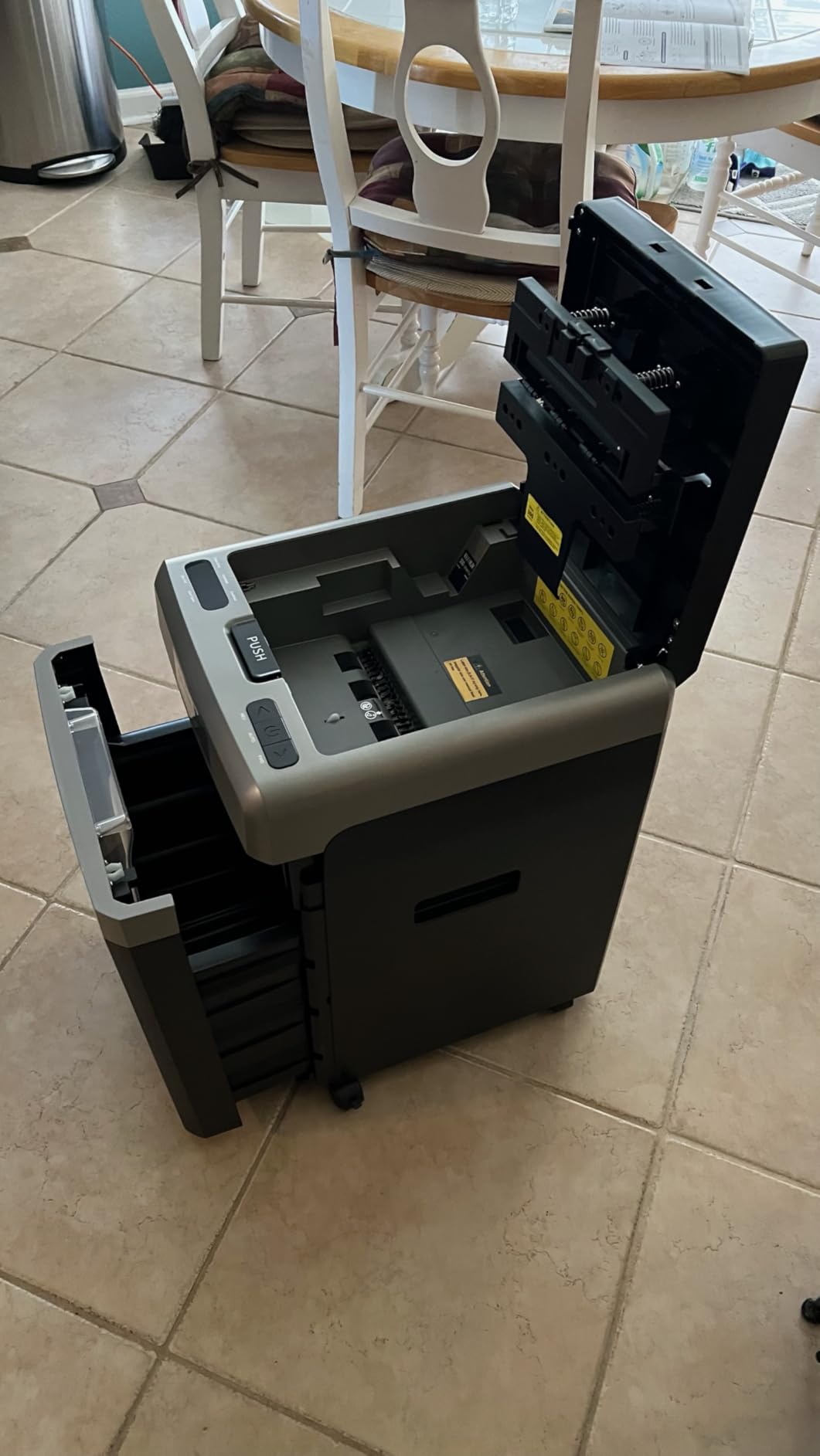
Three hundred sheets in the tray is more per load than any other standard-head auto-feed machine here, and for a team that has learned to sort and load in bulk that is the difference between one session a week and three. The 2-in-1 layout gives you a separate 12-slot manual feed for cards, staples and clips, so you do not have to feed everything through the auto head.
It runs 60 minutes in auto mode, micro-cuts at P-4 into 5/32 by 15/32 inch pieces, and operates at 58 dB. LED indicators cover feed error, bin full, door open, overload and overheat, and it sleeps automatically after 10 minutes of inactivity.
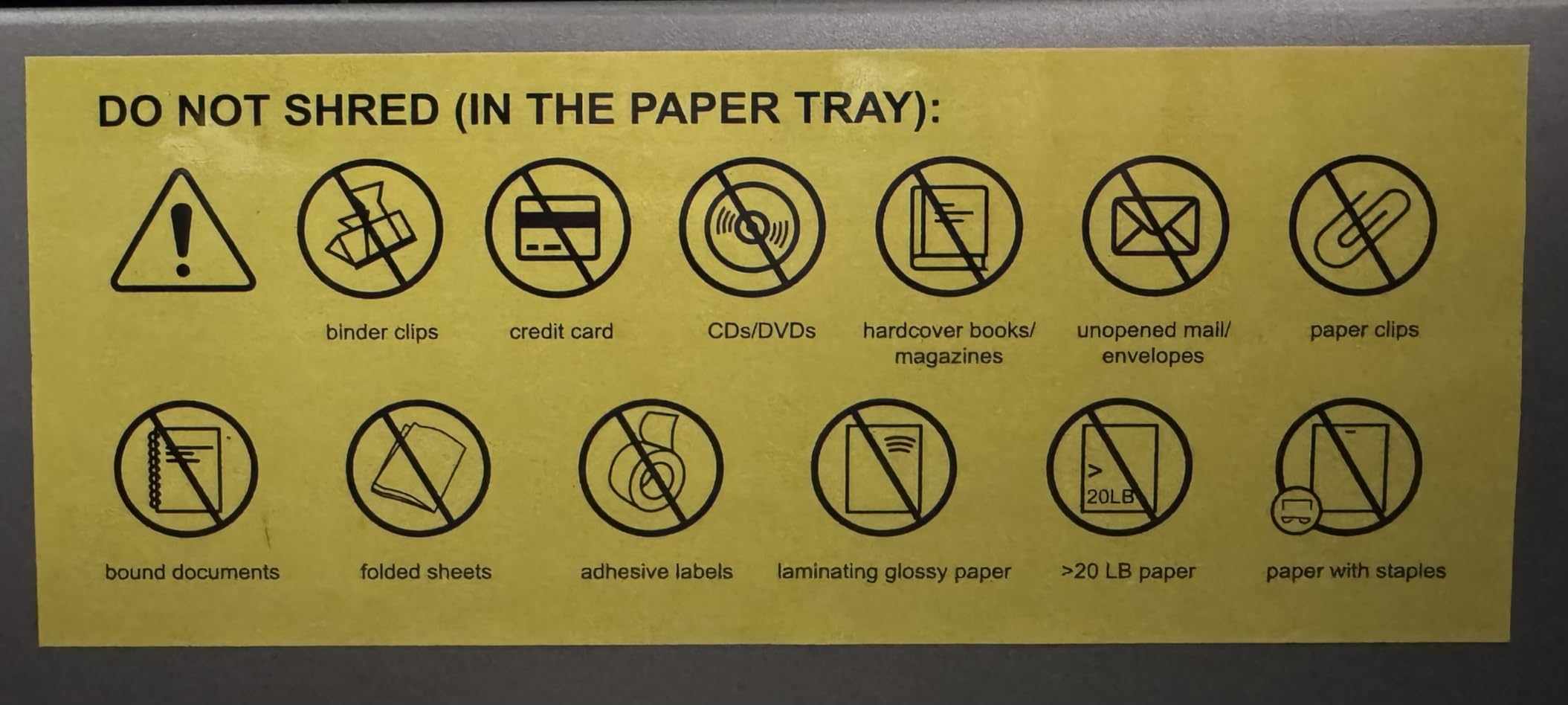
Reviewer complaints are specific and manageable. Some machines stop feeding reliably on the last few sheets of a tray, and the top feed area can reject a misaligned or slightly curved document, so stack edges matter. It is also a 33.5-pound machine on casters, not a desk unit.
What to check before you buy it
Measure your typical weekly volume against a single tray. Three hundred sheets of letter paper is roughly three banker boxes, and if your weekly load is smaller you are buying capacity you will not use. Taper and align the stack before loading.
Who should buy it
Offices clearing 1,000-plus sheets a week or running scheduled bulk destruction, where loading once and walking away matters more than a finer security cut.
11. Fellowes AutoMax 600M — Best for Archive-Style Destruction
Fellowes AutoMax 600M 2-in-1 Heavy Duty Auto Feed Commercial Paper Shredder with Micro-Cut, Black
- 600-sheet hopper clears enormous volumes hands-free in about 10 minutes
- P-5 micro-cut
- the finest security in the roundup
- 2-in-1 design with a separate 14-sheet manual slot
- Auto reverse clears jams without intervention
- Quiet relative to machines of this size
- Two-year machine and seven-year cutter warranty
- Very large and heavy footprint that takes real floor space
- Reports of machines failing to power on shortly after delivery
- Heats up quickly during extended runs
- Auto feeder can grab more pages than it can chew
When a records cleanup comes due — a closed project, a storage unit, a decade of archived files — the 600-sheet hopper is the machine built for it. It shreds up to 600 sheets in as few as ten minutes, hands-free. Users in small clinics report clearing years of accumulated documents with no jams, which is not something we can say about the 200-sheet trays.
The cut is also the finest here: P-5 micro-cut at 5/64 by 1/2 inch, in an 83-liter bin. The 2-in-1 design adds a 14-sheet manual slot for cards and junk mail, and the warranty is the strongest in the guide at two years on the machine and seven years on the cutter.
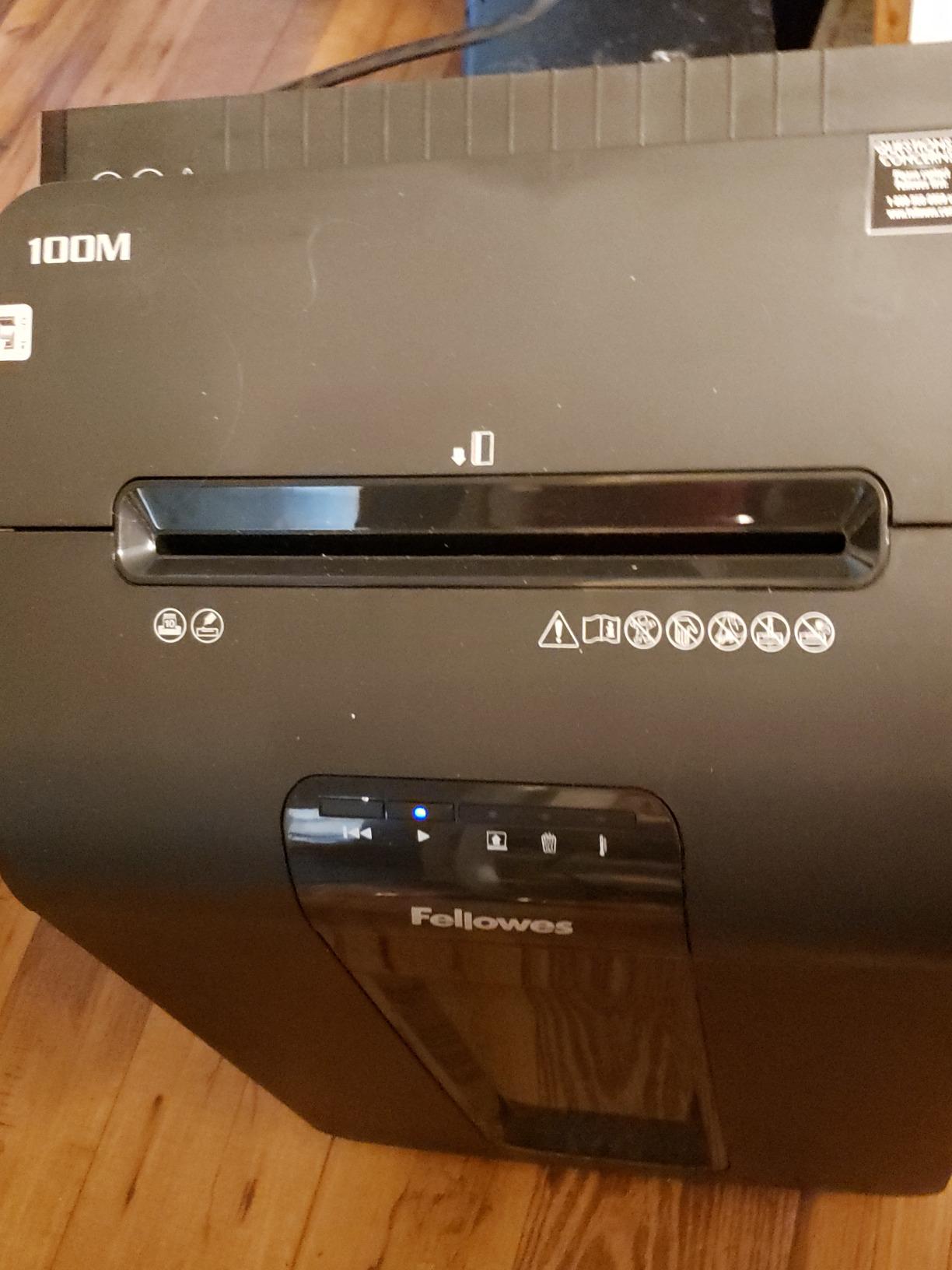
The 4.2 average reflects genuine problems, not nitpicking. A number of machines failed to power on shortly after delivery, and owners report faster-than-advertised heat build-up during long runs. At 22.75 by 17.38 by 35.06 inches and 84.2 pounds, it also takes a substantial footprint that many offices simply do not have.

What to check before you buy it
Measure the floor space and the path to it. This machine needs a permanent home with clearance for the pull-out bin and the 600-sheet hopper, and you want it near a recycling point because the shred volume is enormous. Inspect and test it within the return window.
Who should buy it
Organisations with scheduled bulk destruction, records retention obligations, or backlogs accumulated over years. It is a departmental purchase with departmental consequences — a machine this size needs a plan, not a corner.
12. Royal 150-Sheet Micro Cut Auto Feed — Best for Tight Workspaces
HP – Micro Cut Paper Shredder, 12-Sheet Manual, 150-Sheet Auto Feed
- 12-sheet manual slot plus a 150-sheet auto-feed tray
- Built-in cooling fan extends run time
- Micro-cut output produces a compact shred
- Quiet motor with no whining or groaning
- Larger footprint with durable rolling casters
- 7.4-gallon bin holds a good amount
- Auto-feed over-grabs when the tray is loaded
- Clogs are difficult to clear
- No pull-out safety key so children can engage the motor
- Very bright top LED indicator
This is the smallest footprint among the auto-feed machines in this roundup at 10.25 by 13.75 by 21.25 inches, with a 150-sheet auto tray and a 12-sheet manual slot. The built-in cooling fan is what lets it hold a longer run time than its size suggests, and owners report a quiet motor with none of the whining or groaning cheaper units produce.
Micro-cut output compacts well in the 7.4-gallon bin, and the durable casters make it easy to move between rooms. Reviewers see it as a clear upgrade over lighter machines for sustained work.
The operational gripe is worth planning around: the auto feeder grabs more sheets than it can chew when the tray is loaded, which clogs and is hard to clear. Owners end up feeding in smaller batches by hand, which defeats the purpose. There is also no pull-out safety key, so unplug it if children are in the room, and the top LED is bright enough to be distracting in a dark office.
What to check before you buy it
Test the auto tray with a realistic load before committing your whole workflow to it. And if the machine sits near a walk-by path from a corridor, plan on the safety key being absent — that is a real consideration in a family office.
Who should buy it
Home offices and small practices with limited floor space that want auto-feed convenience and micro-cut output in a narrow footprint. It is also a sensible secondary machine for a satellite room.
How to Choose a High-Volume Shredder: 7 Specs That Matter
Sheet capacity is the number on the box, and it is the least important one. These seven specs decide whether a shredder survives a year of daily use or becomes a paperweight, and none of them are the figure printed in huge numbers on the front of the box.
We built this list after reading owner feedback on machines across every volume tier, and the pattern was consistent: failures correlate with duty cycle and cooling, not with sheet capacity. The 18-sheet machine with a 60-minute run time outlasts the 22-sheet machine with a 30-minute run time more often than not, because the motor never reaches the temperature that degrades the plastic gear housing.
A bin that is constantly full also has to work harder, since shreds that pack against the cutter block slow the shafts down. Right-sizing the bin is therefore a durability decision as much as a convenience one.
1. Continuous duty vs intermittent duty motors
An intermittent-duty motor is designed for short bursts with cool-down pauses. Feed one continuously and it overheats, trips its thermal protector, and eventually fails. A continuous-duty motor is built to run for hours, which is what a department shredding daily needs. Only one machine in this roundup states continuous duty explicitly — the Fellowes 225Ci. Where a manufacturer does not state a duty rating, treat run time as the practical proxy: 60 minutes is a strong indicator, 30 minutes is not enough for full-day use.
2. Run time and duty cycle
Run time is how long the machine shreds before it needs to cool. Duty cycle is how long that cool-down lasts. Look at both: a 60-minute run time paired with a 45-minute cool-down gives you two full cycles inside a standard workday, which is what a high-volume office needs. The 30-minute machines here are fine for intermittent daily use and frustrating for batch work.
3. Cut type: strip, cross cut or micro cut
Strip cut makes long ribbons that a determined person can reassemble, so no machine here uses it. Between the remaining two, a P-4 cross cut and a P-4 micro cut carry the same security level, so the real choice is security within the level against bin capacity and motor load. Micro cut generates far more, smaller pieces, which packs denser and taxes the motor harder.
4. Security level on the DIN 66399 P-1 to P-7 scale
P-1 through P-3 cover general paperwork like junk mail and drafts. P-4 is the baseline for anything with names, account numbers or signatures, and it is where most of this roundup sits. P-5 is micro cut, appropriate for medical, financial and client records. P-6 and P-7 are the high-security end, producing particles small enough to be effectively unreconstructable. They belong to dedicated confidential-destruction work rather than daily office shredding.
5. Bin capacity, calculated against your weekly volume
Cross-cut paper roughly triples in volume once shredded, so a 6-gallon bin holds around 400 to 500 sheets, while micro-cut output packs tighter and a similar bin holds 700 or more. Divide your weekly sheet count by the bin’s realistic sheet capacity to get your emptying frequency. If the answer is more than twice a day, you need a bigger bin, not a faster machine. A machine that is constantly full also runs hotter.
6. Auto-feed hoppers and when they earn their cost
An auto-feed tray costs more and buys something specific: unattended shredding. It is worth it when one person handles the paperwork of several people, when shredding happens at closing time so nobody stands and watch, or when a machine is left running in a secure room. It is not worth it if a person is already shredding continuously and would rather control each sheet. Sorting your paper before feeding reduces feed problems more than any other factor.
7. Warranty, parts and support
Machine warranty length is a reasonable proxy for parts availability and service commitment. The Fellowes machines here carry two-year product coverage with a lifetime or seven-year cutter warranty, and Fellowes has the deepest long-term parts supply in this category. One-year warranties are common among marketplace brands, which is fine if you expect to replace the machine in two or three years anyway. Buy from the manufacturer’s own storefront where you can, because a machine sold by a third-party reseller may have no local support path when a motor fails.
What the money actually goes into
Past a certain point, extra spend buys capacity and automation, not better security. A micro cut does not make a P-4 shredder more secure than a cross cut at the same level; what price tiers genuinely buy is run time, duty motor, bin size and warranty. Whether a more expensive shredder is worth it comes down to sheets destroyed per year against what a recurring shred service would charge. A commercial drop-off shred event costs roughly what a mid-range machine does, so shredding a few banker boxes twice a year is cheaper outsourced. At several hundred sheets a week, owning wins quickly.
What to Ignore: Jam-Proof, RPM and Decibel Claims
No shredder is jam-proof. What we heard in owner communities clustered into four real complaints: motors and plastic cutting assemblies failing after a few months, jams that will not clear until you open the machine and pull fragments off the cutters, and machines that overheat so readily you end up feeding one page at a time. Brand claims of 100 percent jam proof do not survive contact with daily office use.
Decibel figures are worth believing only within about four decibels of each other, because that is roughly the difference between a machine you can talk over and one you cannot. The 58 dB machines in this roundup are meaningfully quieter than the 62-plus units, but none of them are silent. Placement matters more than the number: put the machine in a room where noise does not carry, and keep it off shared floors if you shred during calls.
Room choice and outlet placement are the same decision. These machines pull real current for the length of a run time, so plan the outlet before you plan the position, and check whether the circuit you want already carries a heater, a copier or a desk of monitors. If the outlet is not where the machine should sit, our heavy duty extension cord guide is worth reading before you pick a lead.
Placement also solves a problem people forget: where the filled bin liner goes. A machine that empties twice a day needs a short, unobstructed path to wherever the recycling or secure disposal point sits, with room to pull the bin out fully. In a small office the bin is usually the constraint, not the shredder. The same load-bearing thinking applies to where the un-shredded paper waits first — if you are staging banker boxes in a shared room, sturdy shelving matters, and our heavy duty garment racks guide covers the same durability logic for awkward, heavy storage.
RPM and sheets-per-minute claims are close to meaningless for shoppers. Throughput in the real world is decided by how many sheets people actually feed it, how often the bin needs emptying, and how long the machine runs before cooling down. The specs that survive scrutiny are run time, duty rating, bin capacity and security level. Everything else on the box is decoration.
What genuinely reduces jams is boring: sort your paper before feeding, keep the auto tray to letter-size 20 lb documents, feed fewer sheets per pass than the rated capacity, and oil the cutters on schedule. Skipping the oiling step is the single most common cause of the jams and blade wear owners report.
How We Picked These 12 Shredders
We compared 12 heavy duty shredders across every volume tier a real office occupies, from 18-sheet manual machines to 600-sheet hopper units. For each one we read the published specifications: cut type, sheet capacity, run time, bin volume, noise rating, duty motor, security level and warranty. We then cross-checked those specifications against owner feedback on the recurring complaints, including failures, jams, overheating, feed problems and support experience.
Every machine here reached at least P-4 on the DIN 66399 scale, which is the threshold we set for inclusion. Anything rated below that does not belong in a list aimed at offices destroying records with names, account numbers or signatures on them, and several listings in this category do not state a level at all.
We also weighted warranty length and build material, since the failure pattern in owner reports is overwhelmingly a motor or plastic cutting assembly giving out rather than a cutter losing its edge. That is what pointed us toward machines with metal cabinets and multi-year coverage on the ones built for continuous use.
To be clear about our limits: we did not run sheet-by-sheet throughput tests on every unit in this roundup, so where we describe performance we are reporting what owners report and what the specifications say. Products in this category change frequently, so check current specifications before purchasing.
If you buy through one of our links we may earn a commission, at no additional cost to you. That does not change which machines we recommend or the order in which they appear.
Frequently Asked Questions
Which shredder is the strongest?
The Amazon Basics 200-Sheet Auto Feed is the strongest overall for high-volume office use, combining a 200-sheet auto tray, a 60-minute run time and an 8.5-gallon bin. For pure motor durability, the Fellowes Powershred 225Ci is the only machine in our roundup with a stated continuous-duty motor and a 16-gallon bin. For the highest throughput of any kind, the Fellowes AutoMax 600M shreds up to 600 sheets hands-free in about ten minutes.
What is the best high-quality paper shredder?
Quality in this category means metal construction, a real duty motor and a warranty that matches your volume. The Fellowes Powershred 99Ci earns that place for most offices: alloy construction, SafeSense hand detection, a two-year product warranty and a lifetime cutter warranty, with owners reporting multi-year durability. If your documents are highly sensitive, add a micro cut at P-5 such as the Aurora 200-sheet model.
What is a good heavy duty paper shredder?
A good heavy duty shredder has five traits: a continuous or long-duty motor, at least 60 minutes of run time, a bin holding 400 sheets or more, a stated P-4 or better security level, and a metal rather than all-plastic cabinet. The Fellowes Powershred 225Ci and the Bonsaii 18-sheet model both hit every one of those marks, at different volume tiers and price points.
What is the best high-capacity paper shredder?
For unattended bulk destruction, high capacity means the auto-feed tray. The Fellowes AutoMax 600M goes furthest, clearing 600 sheets hands-free in as few as ten minutes, and the BONSEN 300-sheet model offers the largest tray among standard auto-head machines. The Amazon Basics 200-sheet model is the better-balanced pick. If your volume is high but you shred manually, capacity means bin size instead, where the Fellowes 225Ci has the largest of the manual-feed units at 16 gallons.
What are the most powerful paper shredders available?
Powerful means continuous duty, not sheet count. The Fellowes Powershred 225Ci is the only machine in this roundup with an explicitly continuous-duty motor, built for non-stop commercial shredding, and owners report three and a half to over eight years of daily use. The Fellowes AutoMax 600M matches it for throughput, clearing 600 sheets in as few as ten minutes before needing a cool-down.
Is a more expensive shredder worth it?
Only when the extra spend buys capacity, automation, duty motor or warranty. Past the mid-range tier you are not buying meaningfully better security, because a P-4 cross cut and a P-4 micro cut are the same security level. Whether it is worth it depends on volume: at several hundred sheets a week a mid-range machine pays for itself quickly, while shredding a few banker boxes twice a year is cheaper through a commercial drop-off service.
What is the average lifespan of a paper shredder?
Lifespan tracks duty cycle and build quality more than price. Owners of the commercial-grade Fellowes 225Ci report three and a half to more than eight years of daily use before failure, while lighter machines with intermittent-duty motors commonly lose motors or plastic cutting assemblies within months. Oil the cutters on schedule, avoid overfeeding past the rated sheet capacity, and expect a properly used high-volume machine to outlast your warranty period.
Do heavy duty shredders jam less?
They jam less in practice, but not because of jam-proof marketing. What reduces jams is a real duty motor that does not overheat, a wider feed slot, and auto-reverse jam recovery. Every machine in our roundup has auto reverse, yet owners still report persistent jams, usually caused by mixed paper sizes, overfeeding beyond the rated sheet capacity, or skipping the cutter oiling schedule.
Is an auto feed shredder worth it for high volume?
It is worth it when shredding should happen unattended: one person handles paperwork for a whole team, shredding happens at closing time, or the machine runs in a locked room. It is not worth it when someone is already shredding continuously and prefers to control each sheet. Also check paper size, because every auto-feed model is rated for letter-size 20 lb paper and off-size material causes feed problems.
How big a waste bin do I need for high volume shredding?
Work from weekly sheet count rather than bin volume. Cross-cut paper roughly triples in volume once shredded, so a 6-gallon bin holds about 400 to 500 sheets, while micro-cut output packs tighter at roughly 700 sheets per 8 gallons. Divide your weekly sheets by the realistic per-bin sheet count, and anything above two emptyings a day means you need a larger bin rather than a faster machine.
What is the difference between cross cut and micro cut shredders?
Cross cut produces small rectangles and meets P-4, using less motor power and packing loosely because the shred is bulky. Micro cut produces confetti-sized particles, generating far more pieces per sheet, which means finer security, a denser bin and a heavier load on the motor. Micro cut is the right choice for medical, financial and client records, while cross cut is fine for general office paperwork.
The Right Shredder for Your Weekly Volume
Under 400 sheets a week, the Bonsaii 18-Sheet gives you a 60-minute run time that pricier machines here cannot match. Between 400 and 1,200 sheets, the Amazon Basics 200-Sheet Auto Feed is the strongest overall balance of throughput, bin size and proven reliability, and the Bonsaii 200-sheet micro cut is the quiet one for open offices. At 800-plus sheets day to day, the Fellowes 225Ci is the only machine here with a stated continuous-duty motor and the longest warranty. And for archive-scale destruction, the Fellowes AutoMax 600M clears 600 sheets hands-free in about ten minutes.
Whichever tier you land in, buy for your real weekly volume rather than the biggest number you can find, and give it a dedicated spot on the floor. That is what makes a heavy duty shredder for high volume work last past its warranty instead of dying in the first year.