
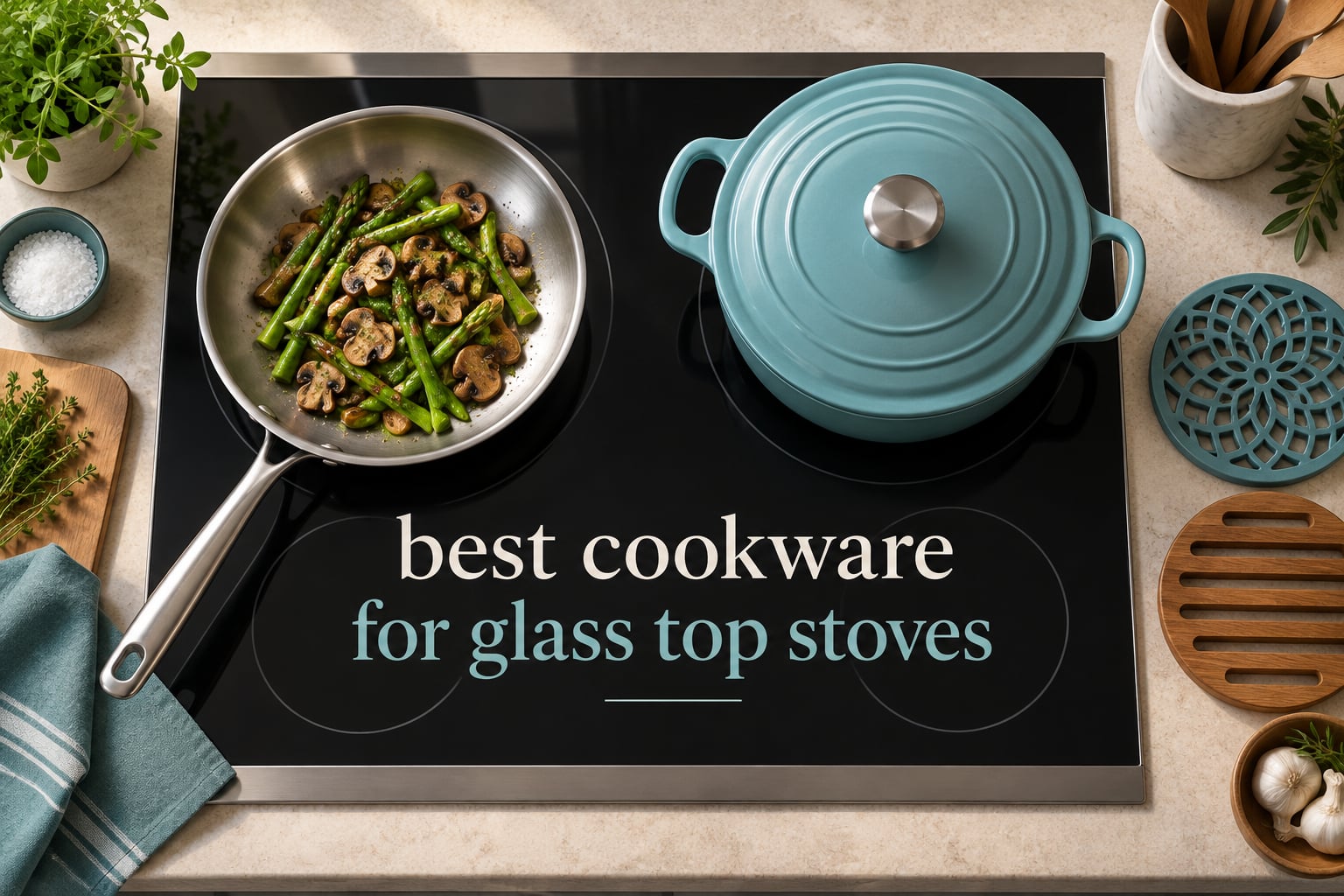
The best cookware for glass top stoves is any pot or pan with a completely flat, smooth, grit-free base that will not slide across the surface. In practice that means clad stainless steel, hard-anodized aluminum, or a coated nonstick with a machined base. The rule is not about brand names, and it is not about a magnetic base unless your range is induction.
I cooked through all ten sets below on a radiant electric range over several months, checking base flatness, how they handle a burner that heats more slowly than gas, and what happens to the surface when a pan is moved. I also read the customer review patterns on each one. What kept coming up is the same anxiety I hear from friends: fear of scratching.
So let me clear that up first, then get to the picks. If you want the short version, jump to the comparison table. If you have a scratched cooktop already, the section near the end tells you whether you need to replace it.
Table of Contents
What Scratches a Glass Cooktop and What Never Will
Scratching happens for one mechanical reason: grit trapped under a pan base, grinding across the ceramic glass as the pan moves. Nothing scratches glass cooktop while the pan is sitting still.
Damage comes from sliding, from the ring of burnt residue that forms under a base over months, and from cooking on a gritty surface with no clean trivet underneath.
With that in mind, here is the split.
Safe on a glass cooktop:
- Clad stainless steel with a smooth brushed base
- Hard-anodized aluminum with a machined base
- Coated nonstick with a smooth flat base
- Enameled cast iron with a glossy glass-like finish
- Carbon steel with a fine, sanded base
- Copper-clad and tri-ply stainless with flat bonded bases
Never put these on a glass cooktop:
- Worn bare cast iron with a pitted or ringed base
- Any pan with a rough, gritty or sand-cast underside
- Warped single-ply pans that rock when you set them down
- Glass-lidded pots with a metal rim and a clasp that can catch
- Wobbly pan lids with a domed, uneven profile
- Old nonstick with deep scratches or flaking coating
One more thing to clear up, because a lot of published advice gets this wrong: aluminum and copper are fine on a radiant glass cooktop. They fail on induction, which is a different appliance with a different rule.
Whether or not you need to buy anything new is the other question people ask. Most of us already own stainless and nonstick that will work. You need new cookware only if your current pans have rough or pitted bases, if they warp, or if your range is induction and your pots are not magnetic.
Top 3 Picks for Glass Cooktops
T-Fal Hard Anodized 17-Piece Set
- Forged hard-anodized body
- Titanium nonstick coating
- Thermo-Spot preheat indicator
- Oven safe to 400F

Cuisinart Tri-Ply 12-Piece Set
- Triple-ply aluminum core
- Induction compatible
- Oven safe to 500F
- Cool Grip riveted handles

CAROTE 21-Piece Ceramic Set
- 21 pieces included
- Ceramic coating free of PFOA and PFOS
- Induction compatible
- Die-cast aluminum body
All 10 Picks at a Glance in 2026
Every set below works on a radiant glass cooktop. The differences are base construction, coating, and whether the pieces also happen to be induction ready.
| Product | Specifications | Action |
|---|---|---|
| T-Fal Hard Anodized 17-Piece Set |
|
Check Latest Price |
 Kitchen Academy 12-Piece Induction Set Kitchen Academy 12-Piece Induction Set |
|
Check Latest Price |
| Cuisinart Tri-Ply 12-Piece Set |
|
Check Latest Price |
 Circulon A1 Series 9-Piece Set Circulon A1 Series 9-Piece Set |
|
Check Latest Price |
 Calphalon Classic 10-Piece Set Calphalon Classic 10-Piece Set |
|
Check Latest Price |
 Cooks Standard Multi-Ply 10-Piece Set Cooks Standard Multi-Ply 10-Piece Set |
|
Check Latest Price |
 Nuwave Duralon Blue 12-Piece Set Nuwave Duralon Blue 12-Piece Set |
|
Check Latest Price |
 Blue Diamond 14-Piece Ceramic Set Blue Diamond 14-Piece Ceramic Set |
|
Check Latest Price |
| CAROTE 21-Piece Ceramic Set |
|
Check Latest Price |
 Mueller 7.5 QT Enameled Dutch Oven Mueller 7.5 QT Enameled Dutch Oven |
|
Check Latest Price |
1. T-Fal Ultimate Hard Anodized 17-Piece Set: The All-Round Pick for Glass Top Stoves
- Forged hard anodized body spreads heat evenly
- Thermo-Spot indicator shows when the pan is preheated
- Titanium coating releases and cleans up easily
- Vented tempered glass lids
- 17 pieces covers nearly every cooking job
- Not induction compatible
- Nonstick still needs care around metal utensils
- Oven limit is 400F
This is the set I keep reaching for on a radiant range, and it earned the top spot for one reason above the others: the base is forged and machined rather than stamped thin. It sits flat without rocking, and it has enough mass to pull heat out of a glass element quickly enough that I was not waiting on dinner.
Heat comes off a radiant element more slowly than a gas flame, so pan mass matters more than people expect. This set weighs 24.9 pounds across 17 pieces, and that weight is doing real work on a glass cooktop.
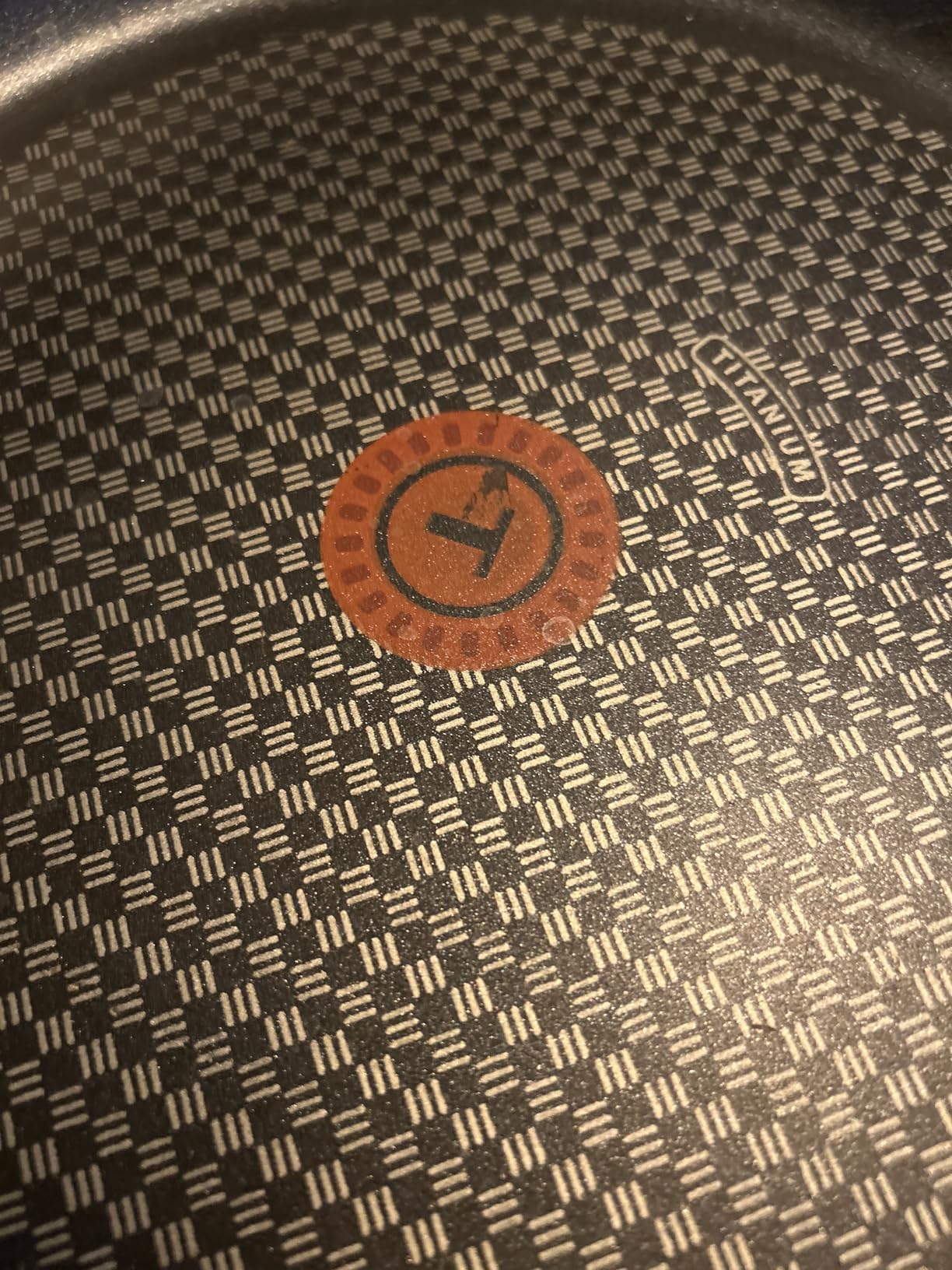
The Thermo-Spot heat indicator is the feature I did not expect to care about. A dot in the center of the pan turns red when the surface is hot enough for searing, which takes the guesswork out of preheating on a burner that ramps slowly.
Reviewers mention the same thing repeatedly, along with the 83 percent of ratings that come in at five stars across 18861 reviews. Owner reports also describe the set lasting years with nothing more than a sponge and soap.
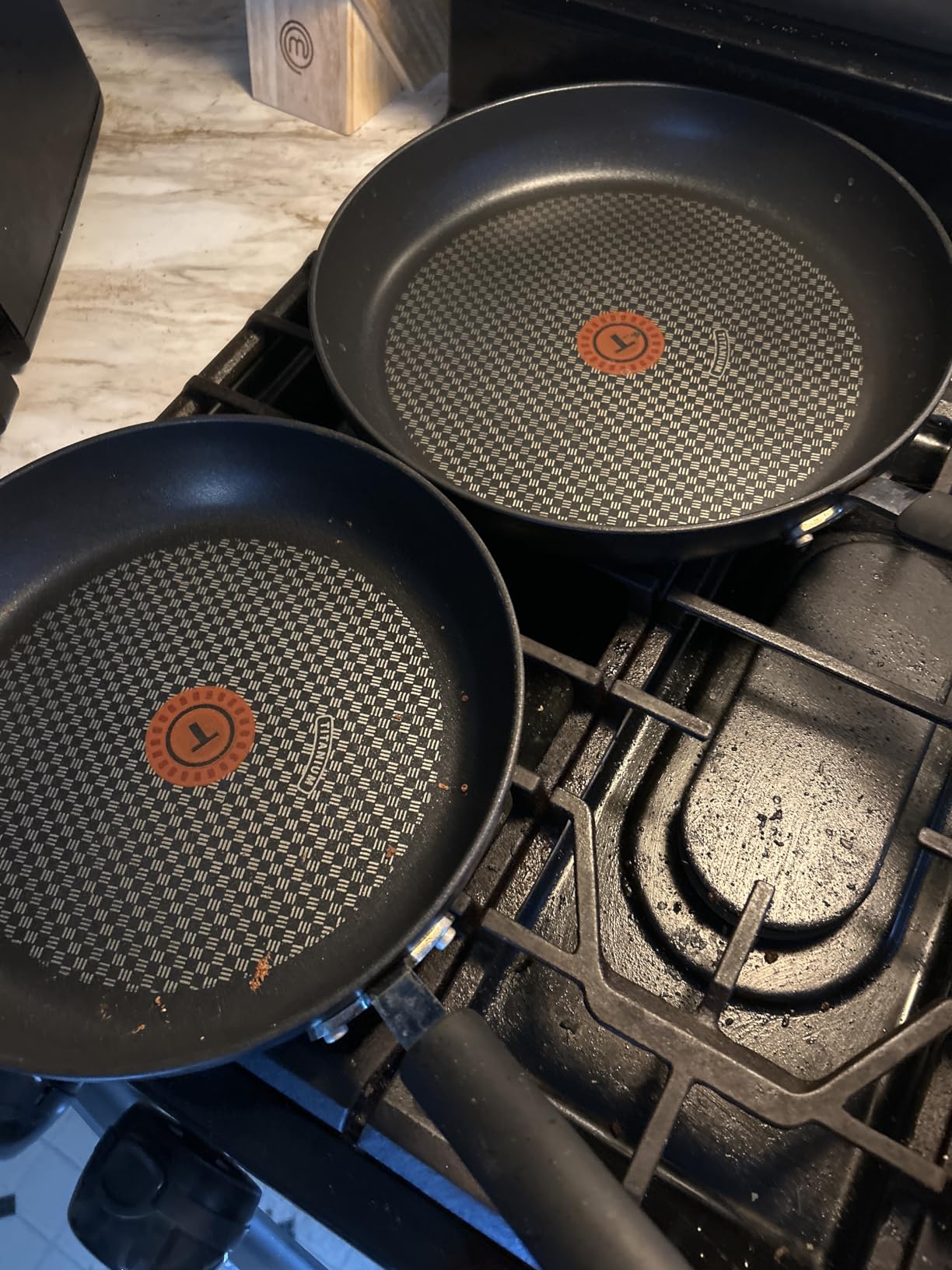
How it behaves on a glass top stove
The base is smooth and uncoated at the bottom, so there is nothing rough to grind against the glass. Set it down, and it stays down.
The only compatibility limit worth knowing is induction. Hard anodized aluminum is not magnetic, so if you move to an induction range later, this set stays behind.
Oven use tops out at 400F, with the glass lids rated to 350F, so it is a weeknight tool rather than a roasting pan.
Who should skip it
Skip this if you have an induction cooktop, or if you are the type who runs a pan empty on high heat, because the coating will not thank you for it.
It is also a large set. If you are cooking for one or two people, seventeen pieces is a lot of cabinet.
For a lighter alternative built specifically around a magnetic base and a smooth cooktop, keep reading.
2. Kitchen Academy 12-Piece Induction Set: The Most Versatile Built for Glass
- Explicitly rated for glass ceramic cooktops
- High-magnetic stainless base
- PFOS PFOA and PTFE free coating
- Deep fry pans with lids cut splatter
- Pieces nest and stack neatly
- Hand wash only and not oven safe
- Bakelite handles rated to about 350F
- Heavier than expected for the tier
This is the one to buy if you want cookware that was designed with a glass cooktop in mind rather than adapted to it. The manufacturer lists Electric Smooth Top Cooktop, Glass Ceramic Cooktop and Induction Cooktop as compatible surfaces, which is about as direct an answer to the question as you can get.
The high-magnetic stainless base is the reason it works everywhere. It is also why the set feels heavier than you would expect at this tier, and that weight is a benefit on a radiant element that heats in stages.
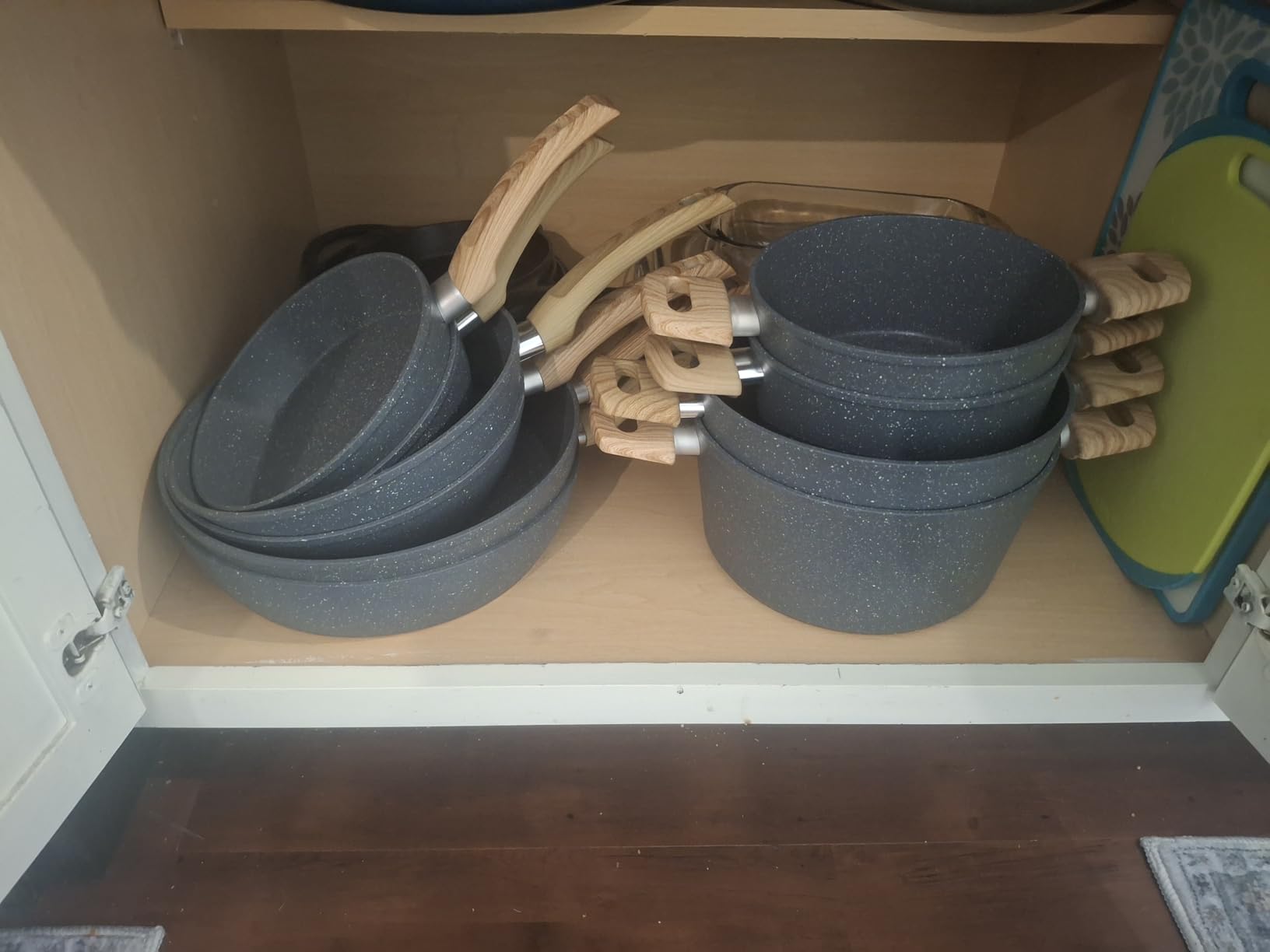
Deep-sided fry pans with fitted lids came up repeatedly in the reviews, and they are genuinely useful on a smooth top because they contain the splatter that would otherwise land on the glass where it can burn on. Oil overspray is one of the harder things to get off a ceramic surface without leaving a mark.
Reviewers also point out that the coating handles acidic sauces well, and that the set holds a 4.6 average across 8969 ratings with about 80 percent at five stars.
How it behaves on a glass top stove
The base is a smooth bonded steel disc over an aluminum core, so heat spreads across the whole bottom with no hot ring in the middle. That matters more on a glass burner than people expect.
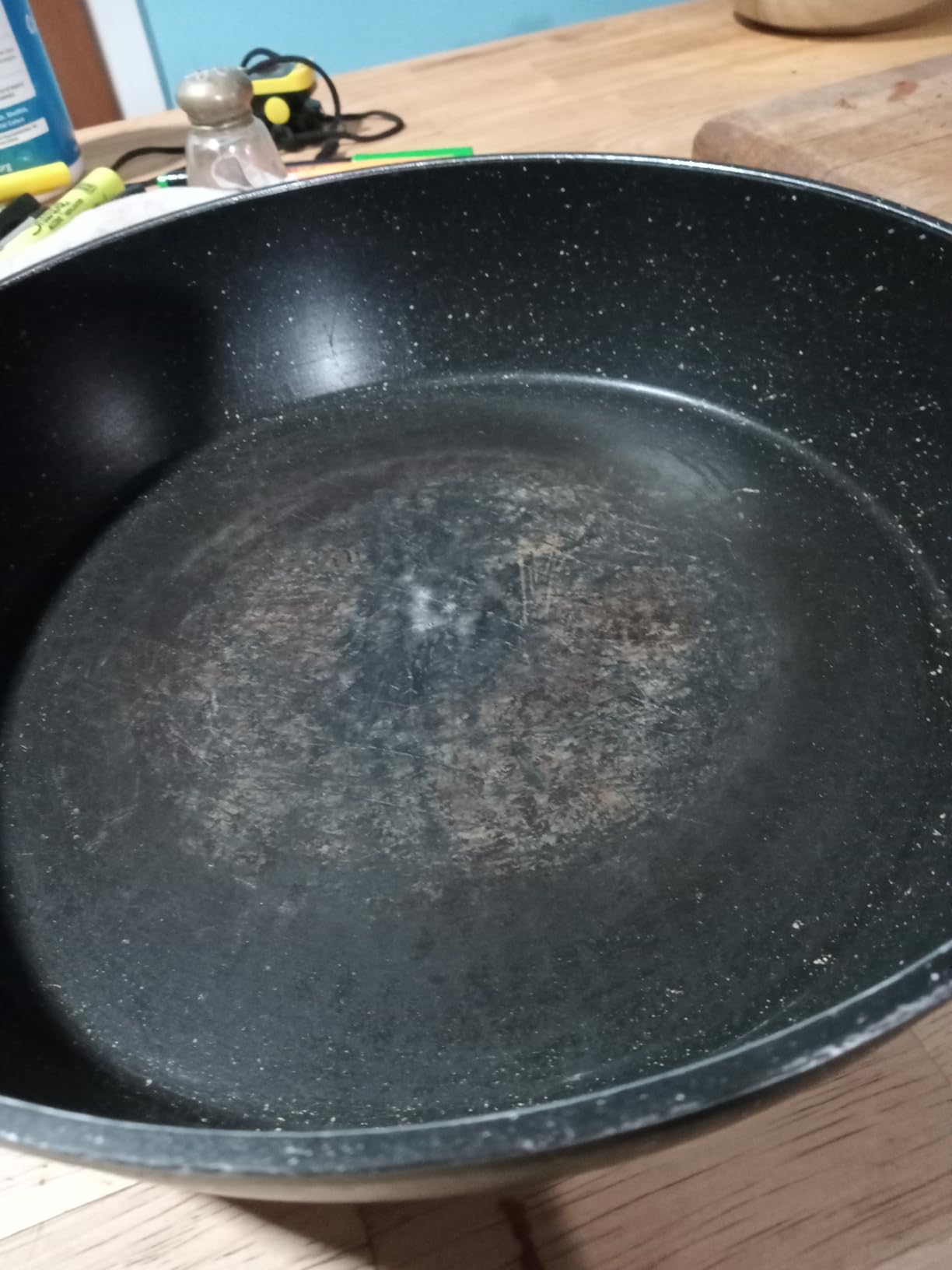
Nothing about the underside is rough, and the coating is a smooth ceramic-style surface, so this is a pan you can move across the cooktop without much worry.
Buy pan protectors for the stackable pieces if you store them nested, since sliding metal on metal in a cabinet is how coatings get scratched.
Who should skip it
Skip it if you want to run a pan under the broiler. This set is hand wash only and not oven safe, and the Bakelite handles are rated for about 350F for a limited time.
It is a stovetop set. That is not a criticism, but if you want one-pan cooking that starts on the burner and finishes in the oven, this is not it.
3. Cuisinart Tri-Ply 12-Piece Set: Best Value Stainless for Glass Cooktops
- Aluminum core wrapped up the sidewalls for even heat
- Heavy pans that hold temperature
- Riveted handles stay cool on the burner
- Tight stainless lids seal in steam
- Oven safe to 500F and backed by a lifetime limited warranty
- Not nonstick so technique matters
- Steep pan sides compared with premium tri-ply
- Heat tint and watermarks need abrasive polish
- 8-quart pot is small for big batches
Stainless steel is the most forgiving material on a glass cooktop, and this tri-ply set is the version I recommend to people moving away from nonstick. The base is brushed stainless bonded to an aluminum core, which means there is no coating to chip and nothing gritty underneath.
That construction is why it is warp resistant. A warped base is not just an annoyance, it rocks on the glass and grinds a crescent of scratches into the surface every time you move it.
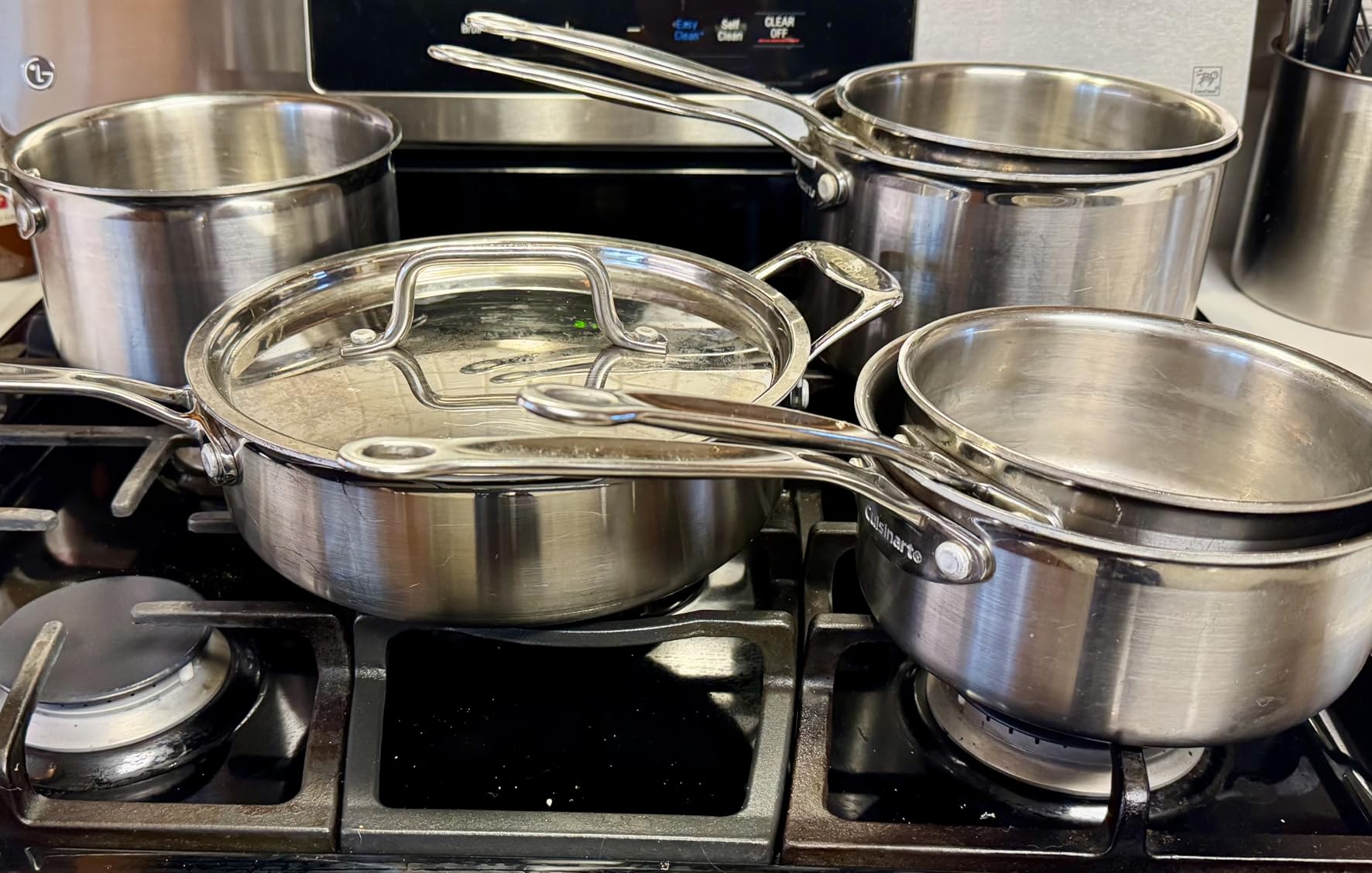
Owners report sets still in service after ten to fifteen years, which is the durability story you want when a scratch means a permanent mark. The set weighs 26 pounds, and on a radiant burner that mass translates into faster heat-up and steadier temperature.
The real adjustment is technique. Stainless needs oil and medium heat, not a screaming burner. Reviewers who make that switch report good browning; reviewers who do not report sticking.
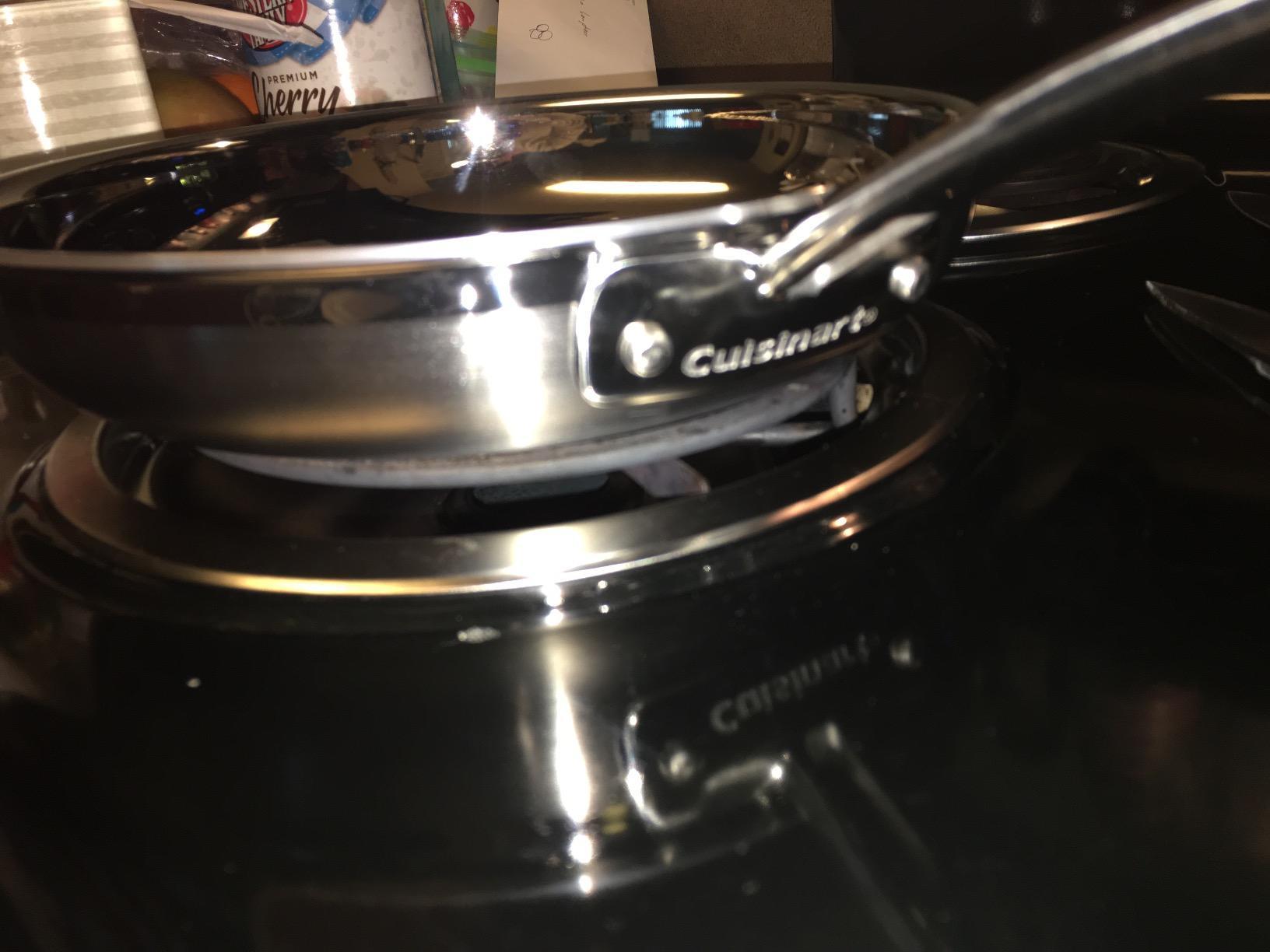
How it behaves on a glass top stove
Triple-ply construction carries the aluminum core up the sidewalls, so the heat wraps around the pan instead of pooling in the center. You get even cooking with less stirring on a burner that heats in a ring.
The riveted Cool Grip handles genuinely stay cool during stovetop use, which is useful on a range where everything radiates upward.
Tapered rims pour sauces cleanly, and the tight lids seal in steam. Both are small things you notice every single day.
Who should skip it
Skip it if you cook eggs or very delicate fish and expect them to release without technique. Nothing in stainless is nonstick, and that is the deal.
Reviewers also flag heat discoloration and watermarks on the exterior, which needs an abrasive polish to clear.
Reviewers note the 8-quart pot is small for large-batch cooking. If you can a lot, size up separately.
4. Circulon A1 Series 9-Piece Set: The One Built for Induction and Glass Together
Circulon A1 Series Induction Pots and Pans Cookware Set, 9-Piece, Graphite
- Thick steel base resists warping on glass and induction
- ScratchDefense coating lab-tested to outlast earlier generations
- Cast stainless handles with silicone stay cool
- Dishwasher safe
- Straining lids and pour spouts add real function
- Exterior paint scuffs visibly
- Base ridges are noisy when stirring on glass
- Largest fry pan is small for stir-frying
- Some warping reported at very high heat
This is the pick for anyone whose glass range might be replaced by induction in the next five years. The edge-to-edge steel base is magnetic, so the same pans work on a radiant element today and an induction coil tomorrow.
That base is also the thickest in this group, and it is the reason the set stays flat. Set any pan on a smooth top and the ones that rock are the ones that scratch, so flatness is doing the heavy lifting here.
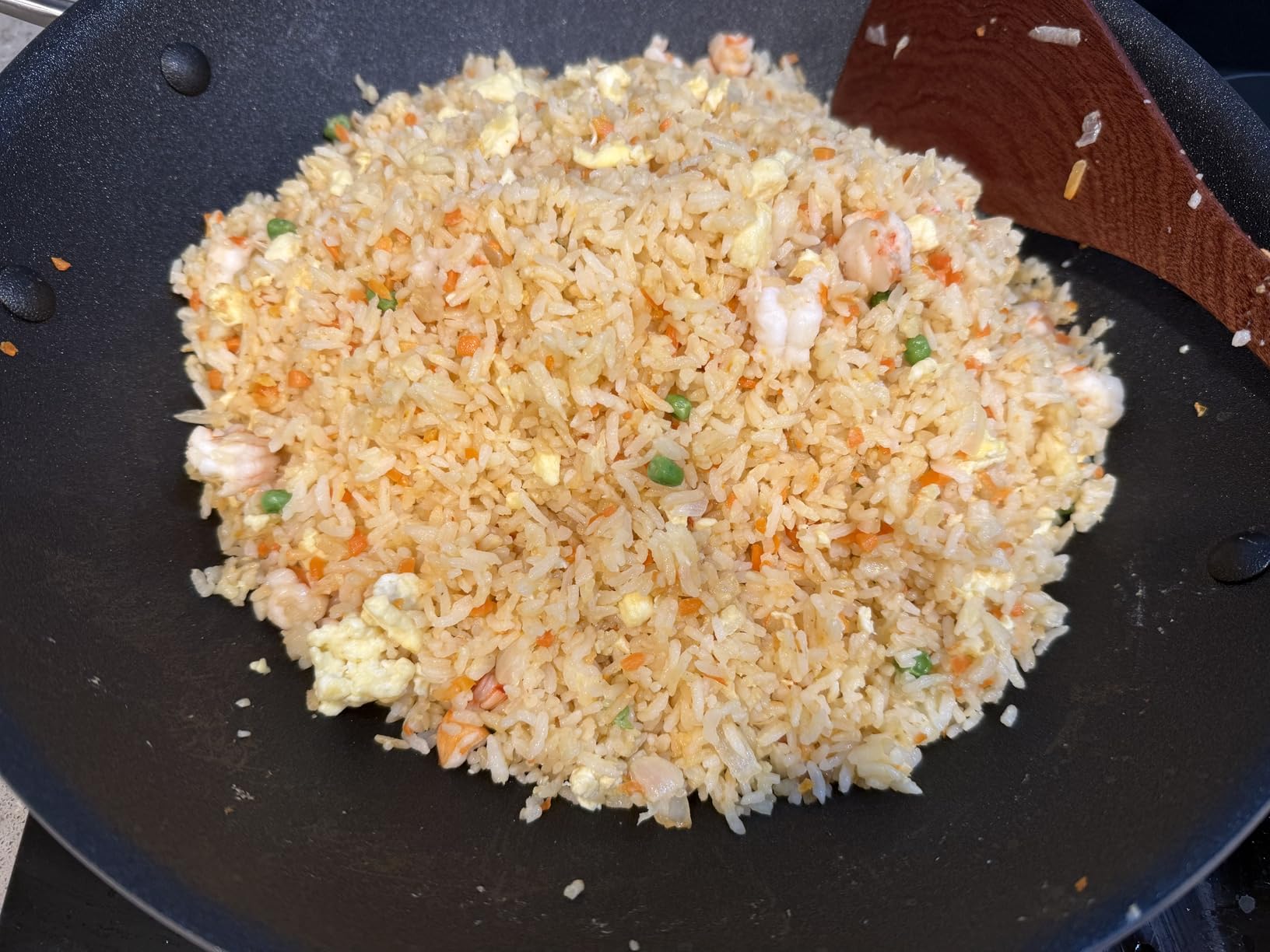
Reviewers focus on the interior coating holding up after a year or more of daily cooking while cheaper coatings chip, and on heat distributing far better through the thick base than cheaper induction-compatible pans. The set holds 4.6 across 2586 ratings with 82 percent at five stars.
It is also one of the few nonstick sets here that is fully dishwasher safe, which matters more than it sounds because hand-washing is where most coating damage happens.
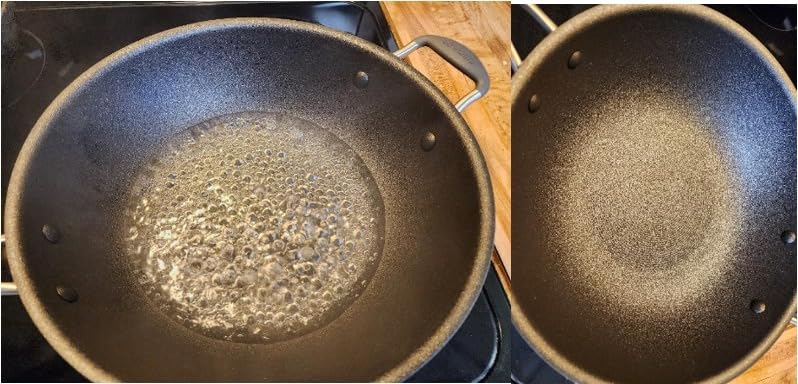
How it behaves on a glass top stove
Cooks on this set specifically call out even heating on ceramic and glass surfaces with no hot spots, and the induction efficiency of the thick base is the most common point of comparison in the reviews.
The underside is smooth steel. One thing to know before you buy: the base has a fine ridged pattern, and reviewers describe it as noticeably noisy when you stir eggs or a thin sauce.
Handles are cast stainless with a silicone overmold, and they stay cool on the burner.
Who should skip it
Skip it if the sound of a ridged base bothers you while you cook quietly in the morning, or if you care about the outside looking new. Reviewers are consistent that the exterior paint scuffs and wears visibly even when hand washed.
The largest fry pan is also on the small side for a proper stir-fry, and there is no steamer insert for the large saucepan.
5. Calphalon Classic 10-Piece Set: The Easiest Stainless Transition
Calphalon Classic Stainless Steel Cookware Set, 10-Piece, Impact-Bonded Aluminum Base, Stay-Cool Handles, Oven Safe 450F, Silver
- Impact-bonded base spreads heat evenly for good searing
- Compatible with induction gas electric and glass
- Measuring marks and straining covers on the lids
- Oven safe to 450F and broiler safe
- Dishwasher safe and fully backed by a lifetime warranty
- Lid handles get hot despite the stay-cool claim
- Lids do not fit the largest fry pan
- Stainless needs more oil and lower heat
- Heat stains and discoloration show up
Among cookware sets, the Calphalon Classic is the one I hand to people who are nervous about switching to stainless. Impact-bonded aluminum under a brushed stainless shell gives forgiving, even heat, and the whole set is induction and glass compatible, so there is no guessing about the cooktop.
It weighs 22.7 pounds, and on a radiant electric element that weight shows up as a pan that reaches temperature in a reasonable time and holds it when you add cold ingredients.
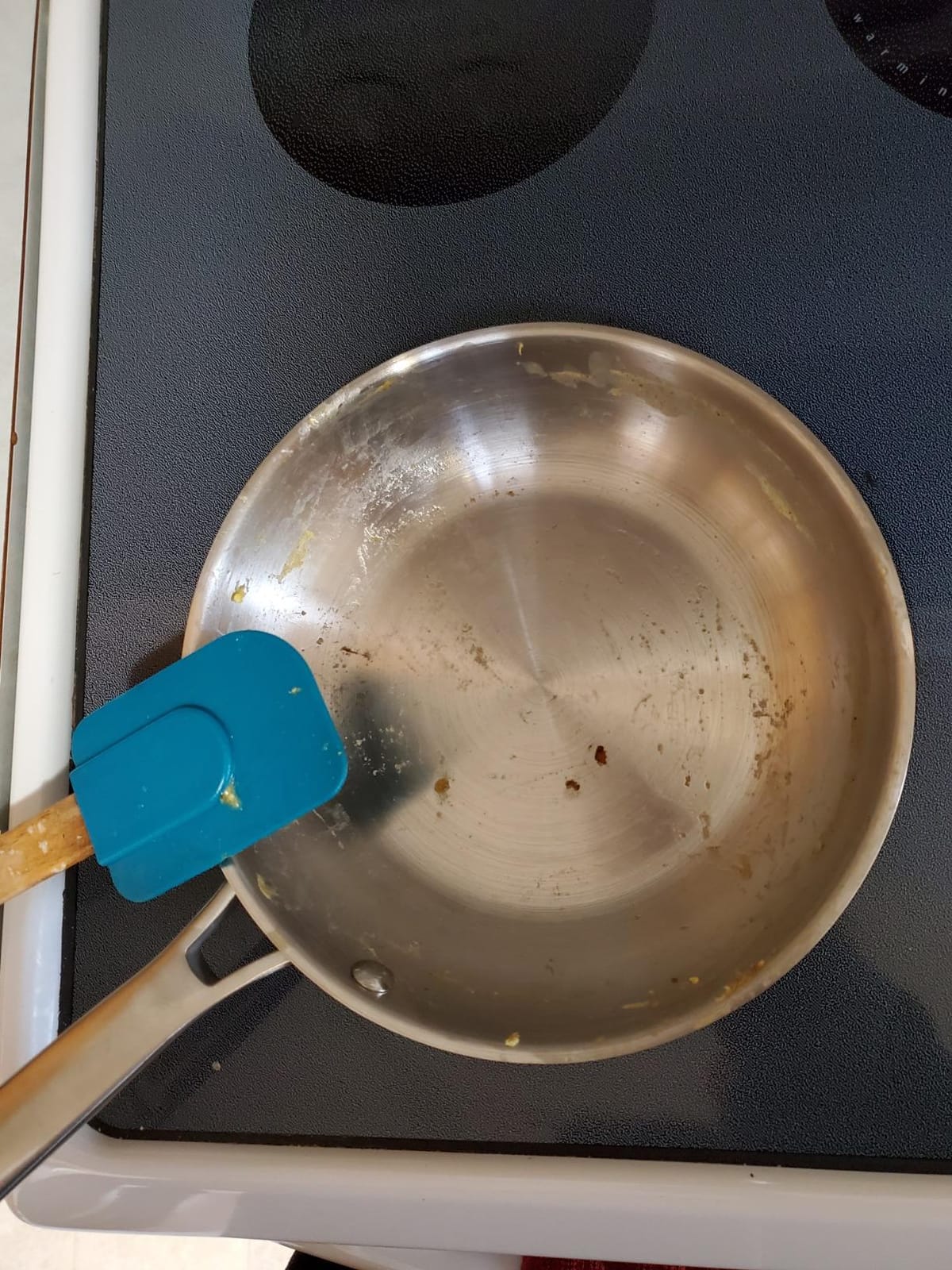
Owners who adopt proper stainless technique report pans that still look new after years, and they like the measuring marks and straining covers on the lids. The set holds 4.4 across 5003 ratings with 73 percent at five stars.
Be honest with yourself about one detail: the pan handles are stay-cool, but the lid handles get hot. That comes up often enough that it is worth using a towel when you lift a covered pot off the burner.
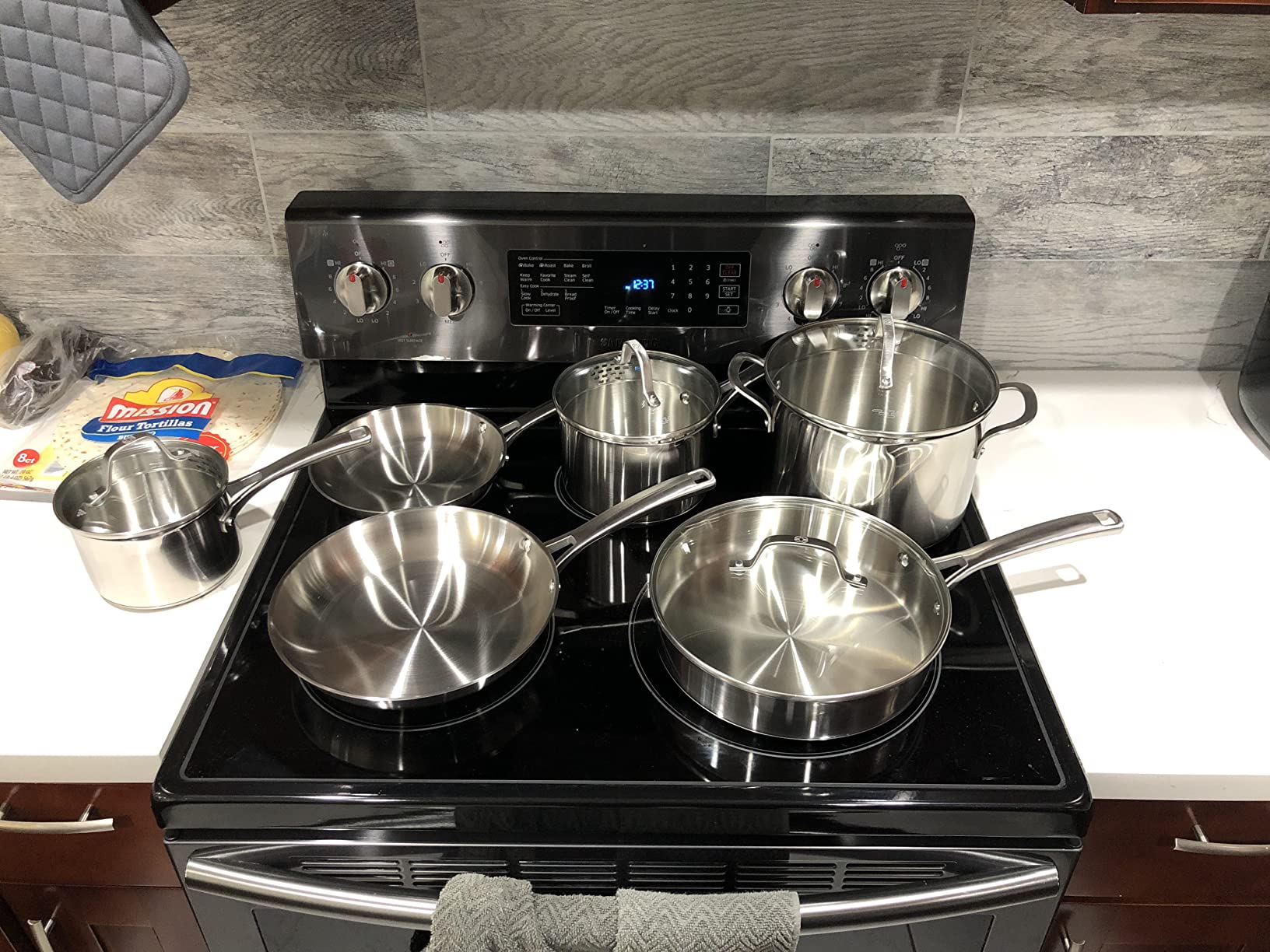
How it behaves on a glass top stove
The impact-bonded aluminum base is machined flat, sits without rocking, and has a smooth brushed underside that will not grind a scratch into the surface if you nudge it.
It is oven safe to 450F and broiler safe, which makes it the most flexible of the stainless sets here if you start a dish on the burner and finish it in the oven.
Every piece is dishwasher safe, and the full lifetime warranty means a warping pan gets replaced rather than absorbed.
Who should skip it
Skip it if the lid fit matters to you. Owners note that the largest fry pan is wider than any of the included lids, so that pan cooks uncovered.
It is also 20 pounds heavier than budget nonstick, and stainless shows stains and heat discoloration that need abrasive polish to remove.
6. Cooks Standard Multi-Ply 10-Piece Set: The Warp-Resistant Tri-Ply
Cooks Standard Multi-Ply Clad Stainless Steel Pots and Pans Set, 10-pc
- Fully clad construction resists warping better than single-ply pans
- Explicitly listed for glass ceramic and halogen cooktops
- No chemical coating so acids never react with the surface
- V-shaped handle airflow stays cool
- Oven safe to 500F and dishwasher safe
- Not nonstick so eggs and searing need oil and patience
- Staining and watermarks need abrasive polish
- 8-quart pot is small for big batches
Warping is the quiet cause of most glass cooktop scratches, and the fully clad build here is the direct answer to it. The 18/10 stainless surface, a thick aluminum core and a stainless interior are bonded across the whole body rather than just a thin disc attached to a stamped shell.
That is why owners describe these pans as more warp resistant than single-ply budget models. A pan that stays flat stays in contact with the burner, which means even heat and no rocking crescent when you move it.
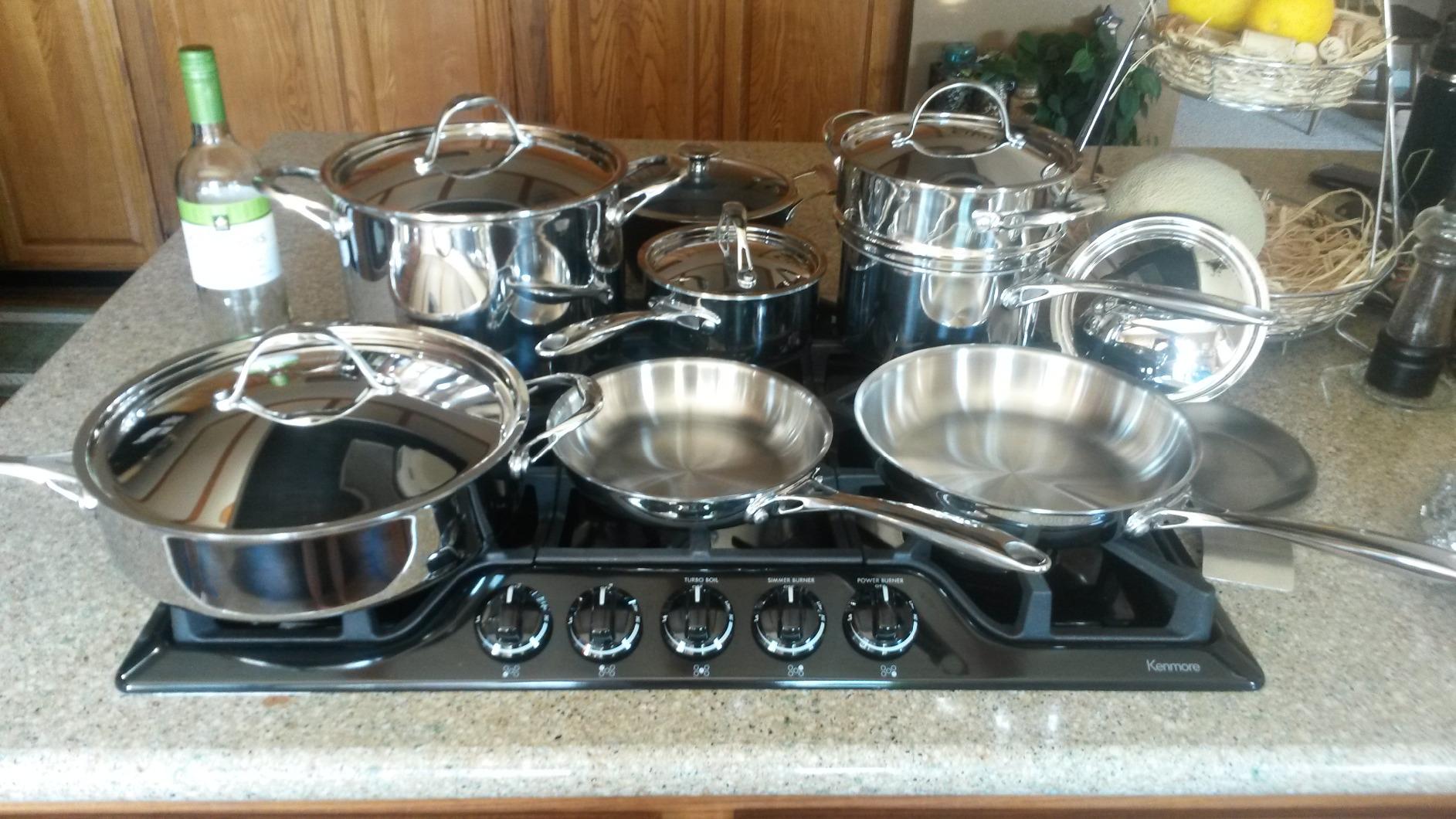
The compatibility list is unusually thorough for a set at this level: gas, electric, ceramic, glass, halogen and induction. That means the same set survives a cooktop change, which is the part of the purchase that actually costs money over a decade.
Ratings sit at 4.5 from 1799 reviews with 76 percent at five stars, and reviewers consistently name the no-coating surface as the reason acids and tomato sauce will not ruin the pan.
How it behaves on a glass top stove
Fully clad construction means the aluminum core is wrapped by stainless on the bottom, so the underside is smooth, hard and free of any coating that could chip and start catching.
At 18 pounds for ten pieces, this is a substantial set, and that mass is what pulls heat off a slow radiant element without the pan bottom scorching.
Riveted stainless handles with a V-shaped airflow pattern stay cool during stovetop use, and there is no plastic anywhere to soften near the burner.
Who should skip it
Skip it if you want nonstick convenience. The learning curve is real, and reviewers who do not adjust end up with stuck eggs and fish.
Expect exterior staining and watermarks that need an abrasive polish, and note the 8-quart pot is on the smaller side for a big batch of soup or stock.
7. Nuwave Duralon Blue 12-Piece Set: The PFAS-Free Pick
Nuwave Healthy Duralon Blue Ceramic Nonstick Cookware Set, PFAS Free
- Coating free of PFAS PTFE PFOA lead and cadmium
- TUV Rheinland tested for 106 PFAS elements
- 9H hardness resists chipping and acids
- Forged construction stays light in the hand
- Induction ready and works on every cooktop
- Ceramic is not chemically nonstick so it needs oil and moderate heat
- Can stain or discolor with heavy use
- Best kept away from very high heat
If the reason you are replacing pans is a desire to move away from PTFE coatings, this is the set built around that. The Gen10 Duralon Blue coating is free of PFAS, PTFE, PFOA, lead and cadmium, and it was tested by TUV Rheinland against 106 known PFAS elements with none detected.
The 9H hardness rating is the practical part. Hardness is what determines whether a coating chips when you slide a spatula across it, and a chipped nonstick base is both a cooking problem and a scratch risk once flakes get under the pan.
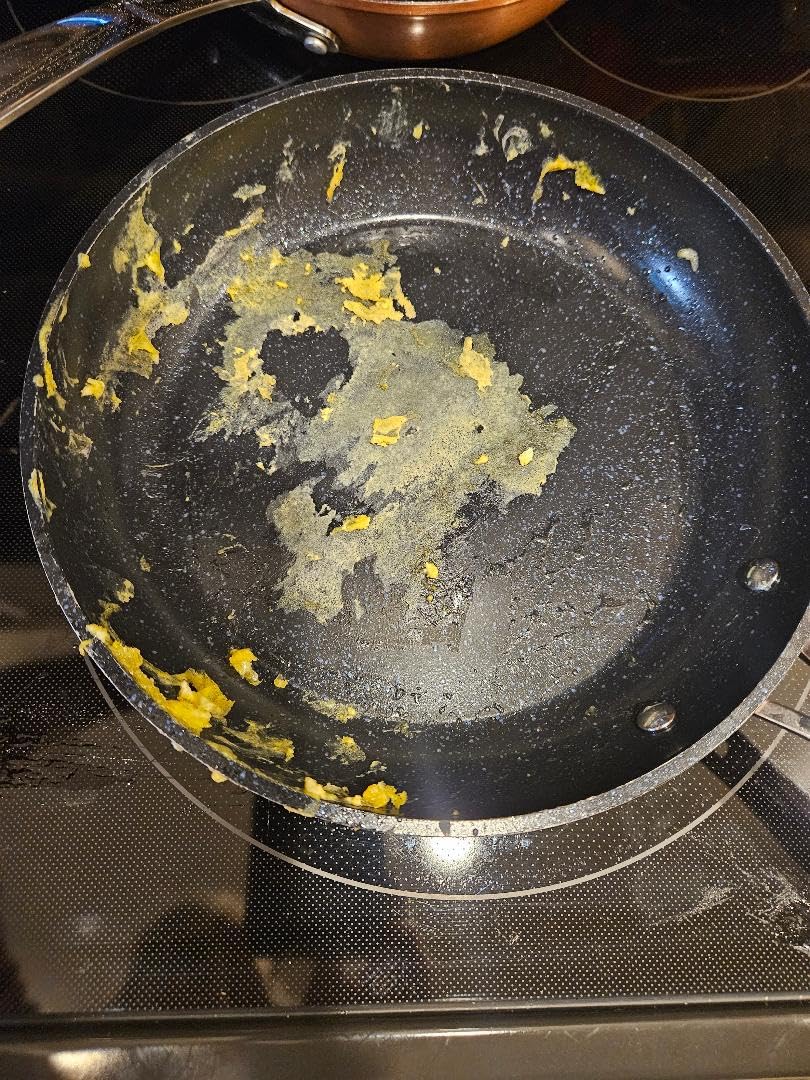
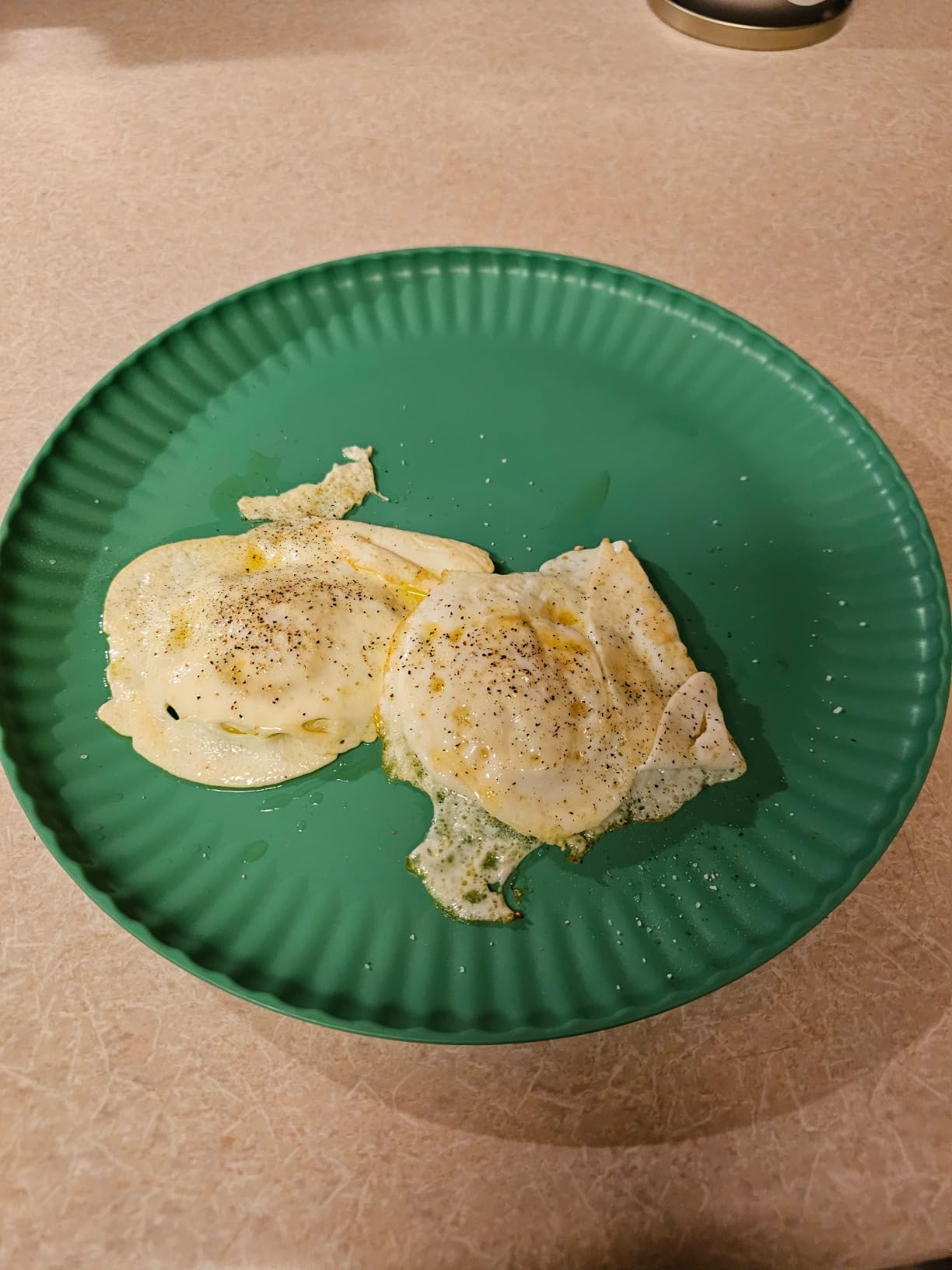
Reviewers describe the coating performing close to true nonstick when used with adequate oil and moderate heat, and they like that the forged construction keeps the pans light despite a 12-piece lineup with two fry pans, three saucepans and 5 and 8 quart pots. The set holds 4.4 from 5498 ratings.
Because it is induction ready and rated for all cooktops, the set covers both worlds, which is unusual for a coating-focused brand.
How it behaves on a glass top stove
Light forged pans are pleasant to move, and a light pan is also the easiest one to lift rather than drag. That habit is your first line of defense against scratches, and this set makes it easy to keep.
The base is smooth and flat, works on every cooktop, and the pans are listed as dishwasher and oven safe.
Use wood, silicone or nylon utensils. Metal works, but that is not where you want to start.
Who should skip it
Skip it if you want true chemical nonstick with zero oil. Ceramic coating needs more fat and gentler heat than PTFE, and reviewers who push it to a hard sear report sticking.
Reviewers also note staining and discoloration with heavy use over time, and advise against very high heat to protect the coating.
8. Blue Diamond 14-Piece Ceramic Set: The One That Takes High Heat
- Coating rated 5x harder and 10x longer lasting than conventional
- Metal utensil safe unlike most nonstick sets
- Oven and broiler safe to 600F
- Forged warp-control base resists wobbling
- Dishwasher safe and includes utensils and a steamer
- Not induction compatible
- Ceramic still needs oil and moderate heat
- Fry pans are small at 7 and 9.5 inch
The 600F oven and broiler rating is the number that separates this set from the rest of the ceramic group. Most coated nonstick is limited to 350F to 400F, which means a roast that starts on the burner has to be moved to a sheet pan halfway through. This set does not ask that of you.
The diamond-infused coating is rated five times harder and ten times longer lasting than conventional coatings, and it is metal utensil safe. That is unusual, and it matters because a scratched coating is the first step toward a rough base.
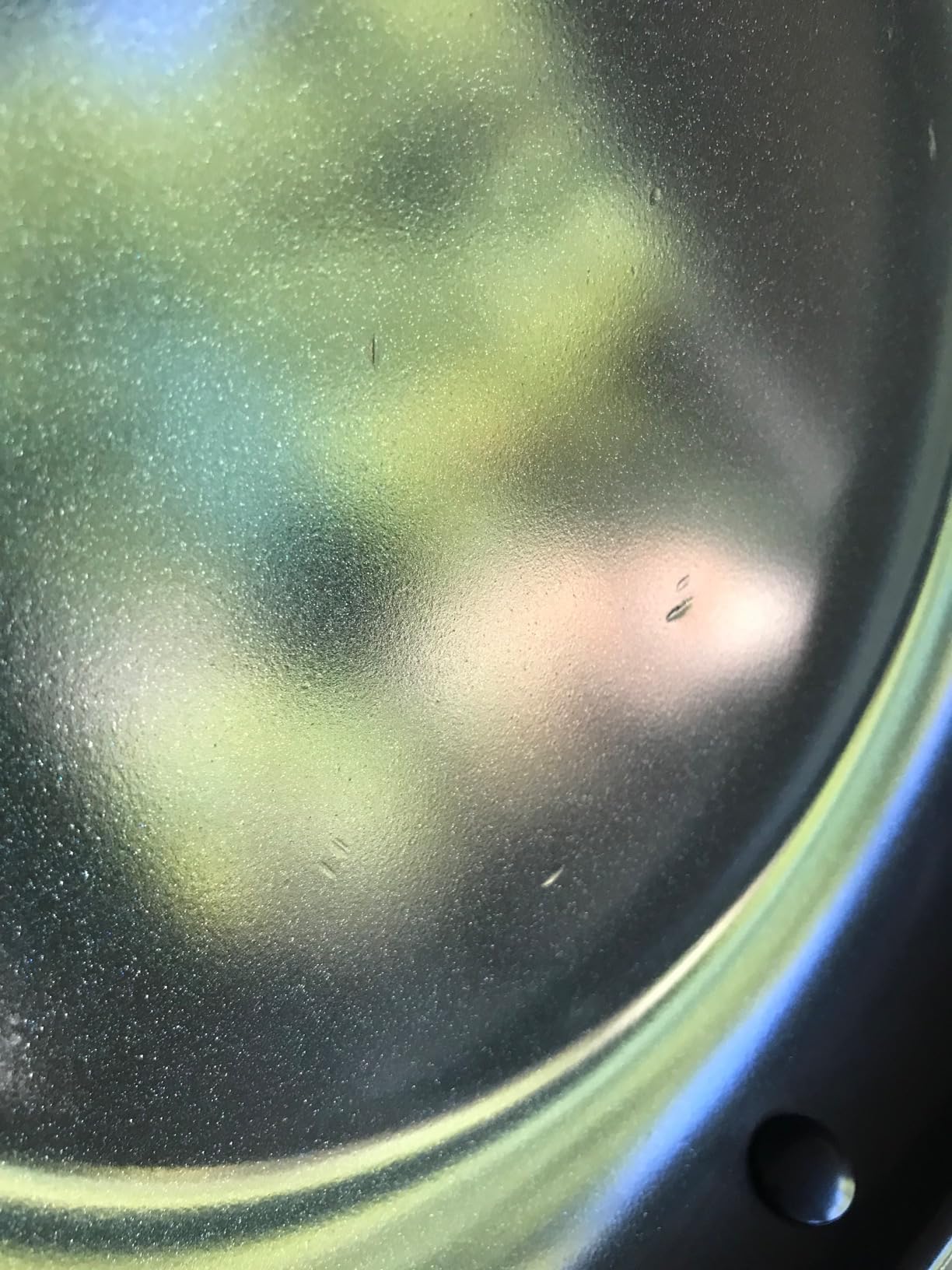
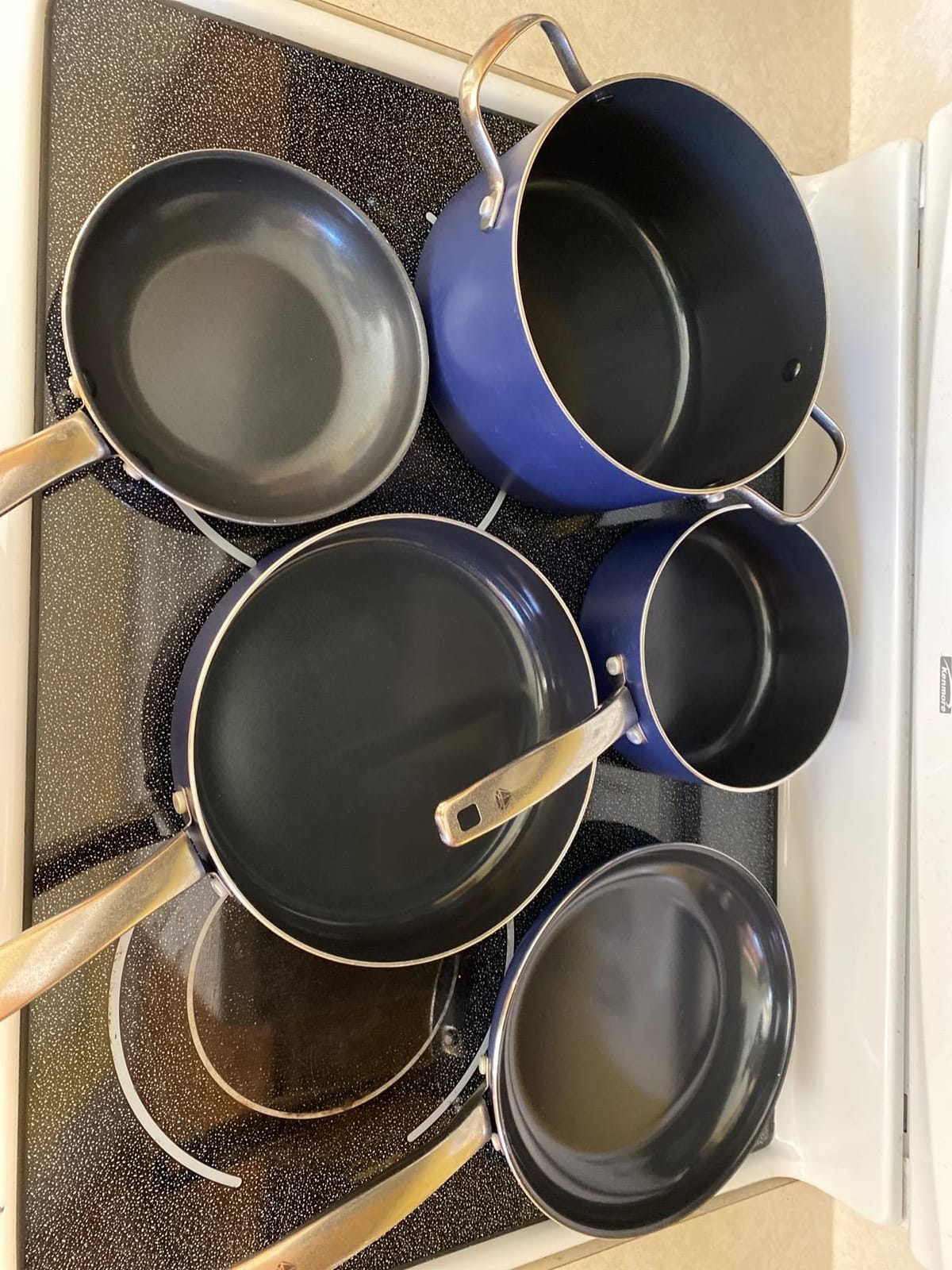
Reviewers single out even heating on ceramic and glass surfaces, with the coating cutting hot spots, and they credit the forged warp-control base with staying flat over time rather than developing a wobble. The set holds 4.5 from 8049 ratings with 75 percent at five stars.
At 16 pounds for fourteen pieces, including a stainless steamer and four glass lids, it is a genuinely complete kitchen for a radiant range.
How it behaves on a glass top stove
Compatibility is listed for gas, electric and ceramic smooth-surface cooktops, which covers a standard glass top range without any question marks.
The forged warp-control base is the part that matters for your glass. Warping is what turns a smooth pan into a rocking pan, and a rocking pan is what cuts a crescent scratch every time you move it.
At 7 and 9.5 inches, the fry pans are the smallest in this group, so plan around that if you are used to a 10 or 11 inch skillet.
Who should skip it
Skip it if your range is induction. The base is not magnetic, and the listing is explicit that it is not induction compatible.
Also skip it if you refuse to use oil with nonstick. The coating is ceramic, so it needs fat and moderate heat to release food properly.
9. CAROTE 21-Piece Ceramic Set: The Most Pieces for the Money
- Largest piece count in the group at 21 including utensils
- Reinforced die-cast aluminum resists everyday wear
- Even rapid heat with no hot spots on smooth-top surfaces
- Ceramic coating free of PFOA PFOS and PTFE
- Includes four pan protectors for stacking
- Ceramic is not chemically nonstick and needs oil and gentle heat
- Not for metal utensils
- Only a 12-month warranty against lifetime warranties elsewhere
Twenty-one pieces is a lot of cookware, and it is the reason this set shows up on so many shopping lists. You get two fry pans, two saucepans, two deep pots, a saute pan, an egg pan, a steamer and four pan protectors, plus utensils.
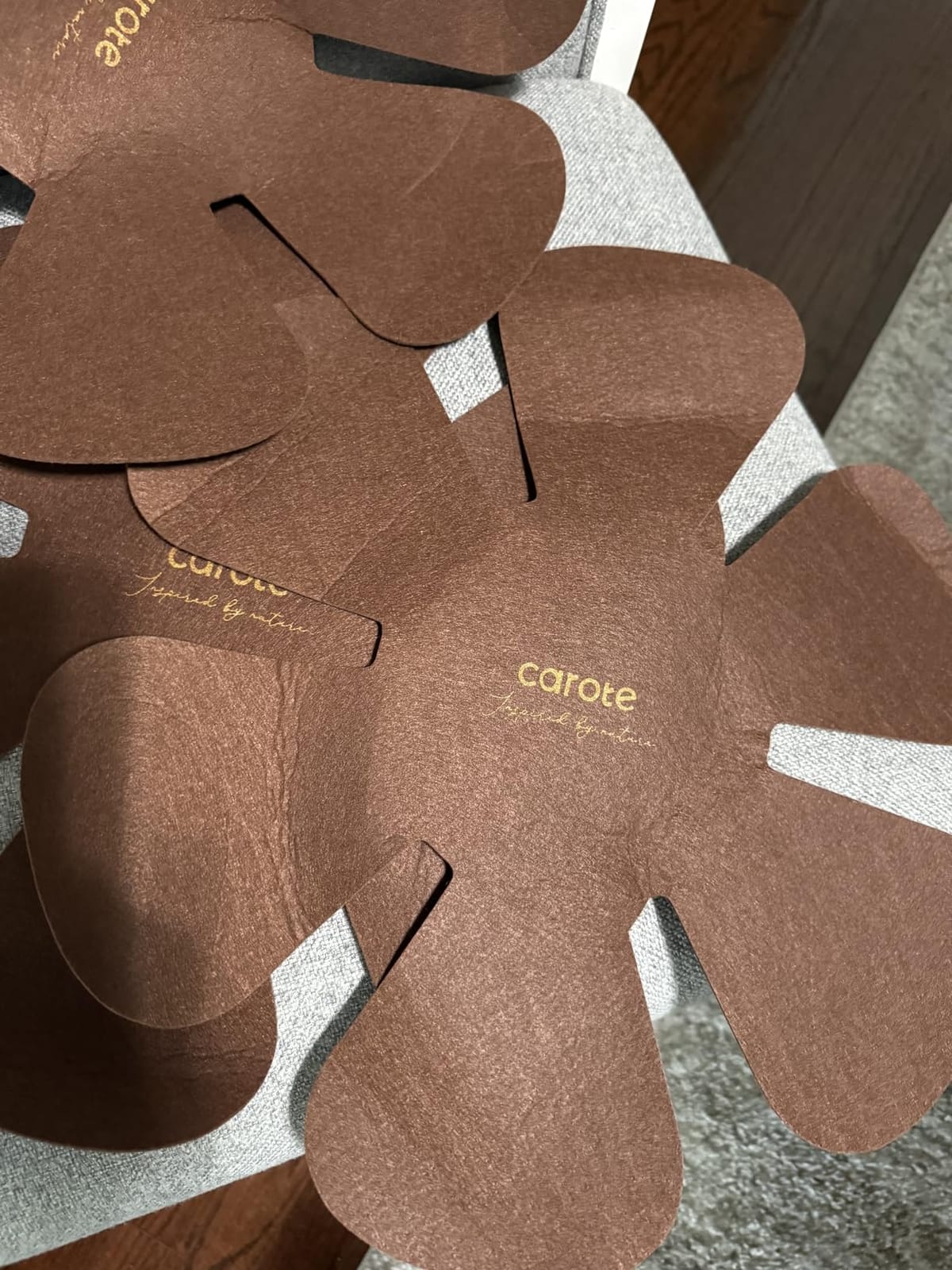
The pan protectors are worth more than they look. Stacked coated pans dragged against each other in a cabinet is one of the most common ways a coating gets scored, and that scored base is exactly what you do not want over a glass cooktop.
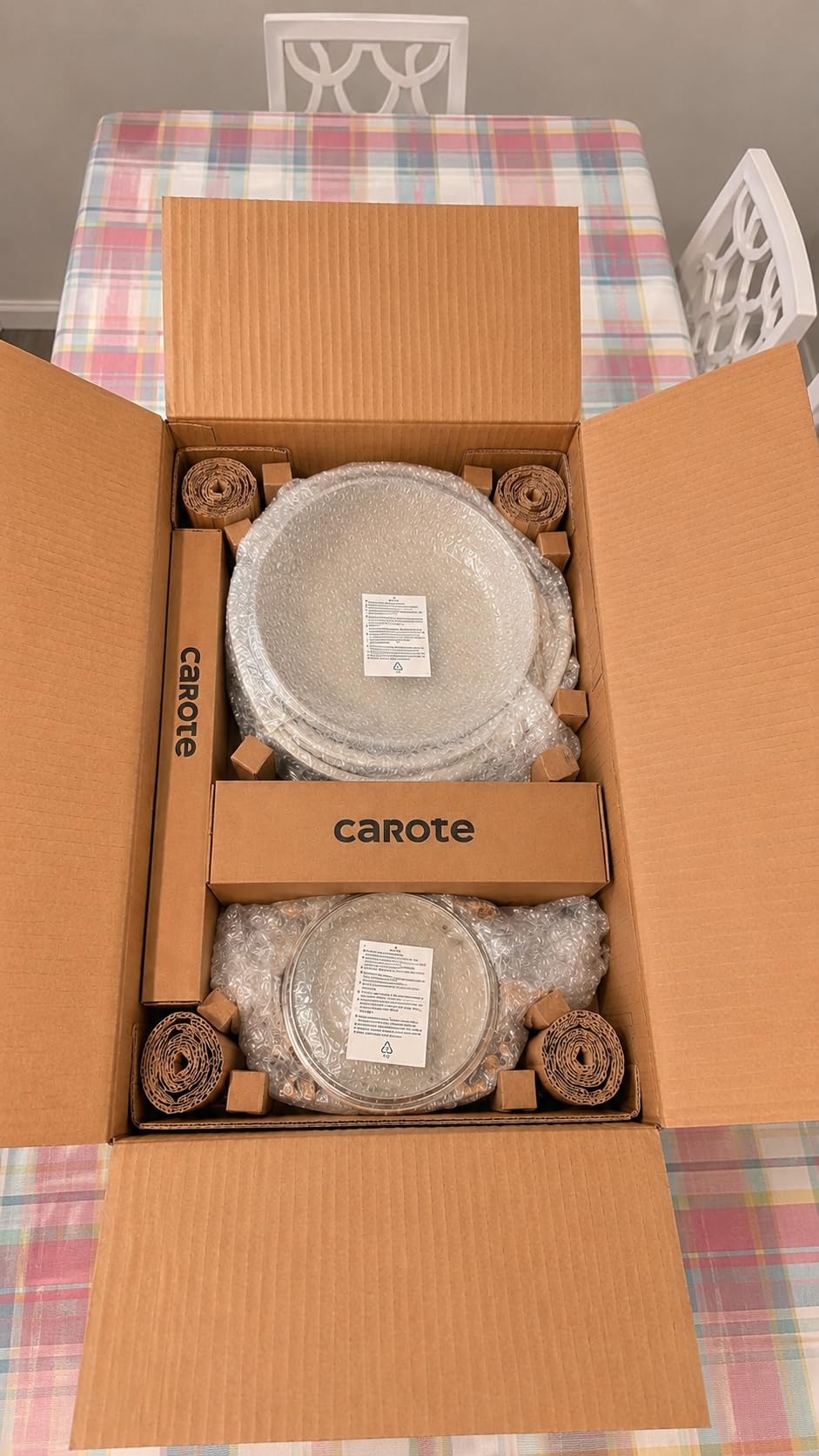
Reviewers focus on even heating with no hot spots on induction and smooth-top surfaces, easy release, and the sheer volume of the set for what it costs. This is the highest review count of anything analyzed here at 27878 ratings, averaging 4.5 with 78 percent at five stars.
The reinforced die-cast aluminum body is the part I would point to for glass cooktop safety. Die-cast is a heavier, denser forming process than stamping, and heavier pans sit more firmly on a radiant element.
How it behaves on a glass top stove
Induction compatible with an even, rapid heat delivery, and reviewers specifically call out the absence of hot spots on smooth-top cooking. That is the correct behavior on a glass burner, which heats in a ring.
At 10.1 kilograms across 21 pieces, this is a manageable weight for a set this size, which keeps it easy to lift rather than slide.
Handles are Bakelite, so they are not for stovetop use over open flame or long high-heat cooking.
Who should skip it
Skip it if you want a lifetime warranty. This set carries 12 months, while several stainless sets here carry lifetime limited coverage.
Treat it as ceramic: silicone or wooden utensils, oil, and moderate heat. Metal utensils and a screaming burner are how coatings fail.
10. Mueller 7.5 QT Enameled Cast Iron Dutch Oven: The Best Material Match to the Glass
- Glossy enamel is the closest material match to a glass cooktop surface
- Even heat distribution with excellent retention
- Works on glass and induction alike
- Self-basting lid nodes keep food moist
- Oven safe to 500F for braising and baking
- Weighs 15.5 pounds so it is awkward when full
- One pot rather than a full cookware set
- Hand washing recommended despite dishwasher rating
Enameled cast iron is the closest material match to a glass cooktop surface that you will find, because the high-gloss enamel is itself a glassy ceramic finish. Where bare cast iron is sand-cast and pitted, enamel is smooth and sealed.
It is also the one piece here that solves slow heat-up. A 7.5 quart pot at 15.5 pounds holds heat so well that a burner which takes several minutes to come up is not a problem once the pot is hot.
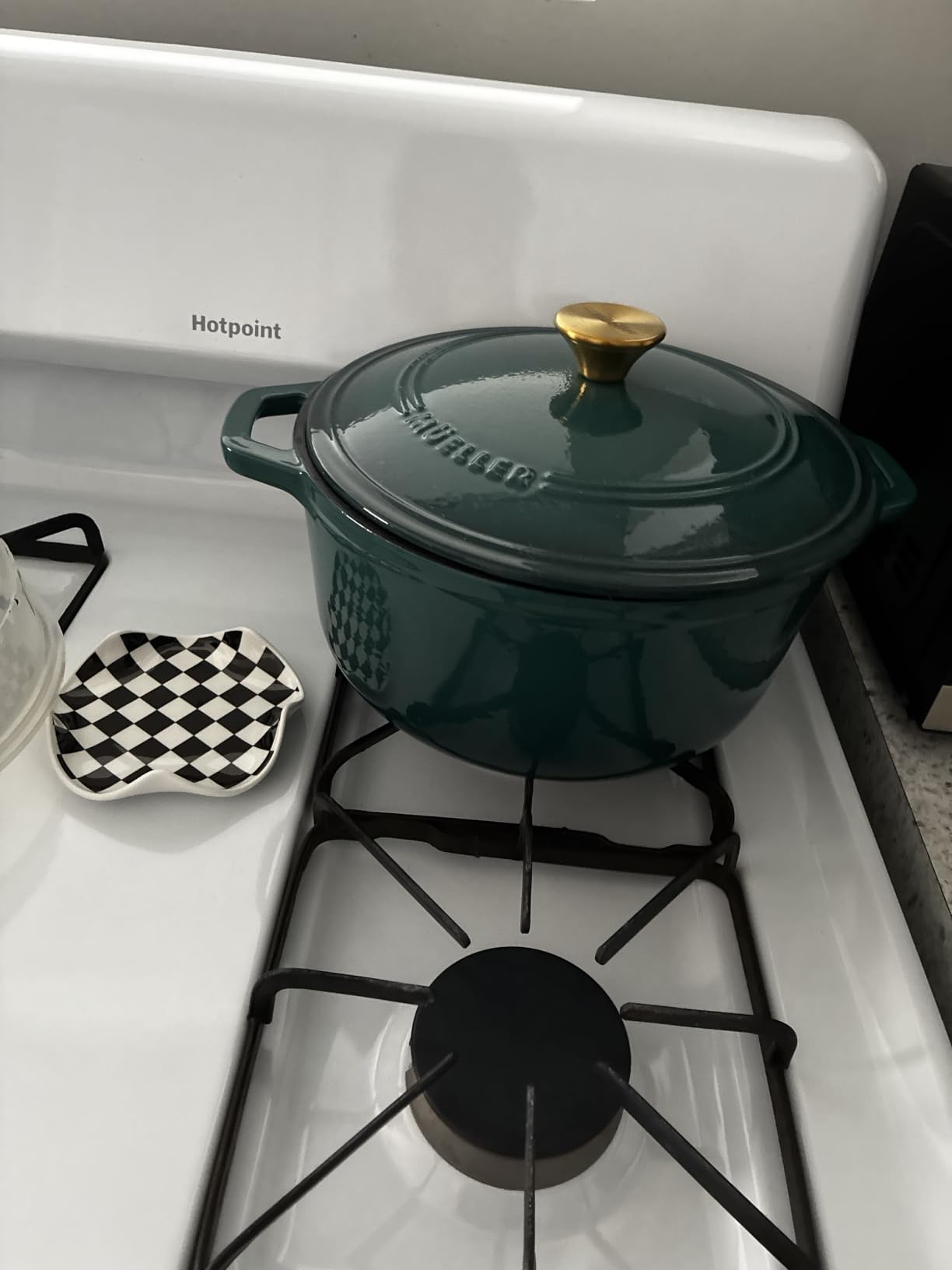
The self-basting lid with raised nodes drips condensation back onto the food, which is why owners reach for this for braises, soups and bread rather than for weeknight frying. The set holds 4.7 from 4656 ratings with 86 percent at five stars, the second-highest average in this group.
Owners also note the enamel interior improves over time and resists rust, which solves the two complaints that usually kill cast iron for casual cooks.
How it behaves on a glass top stove
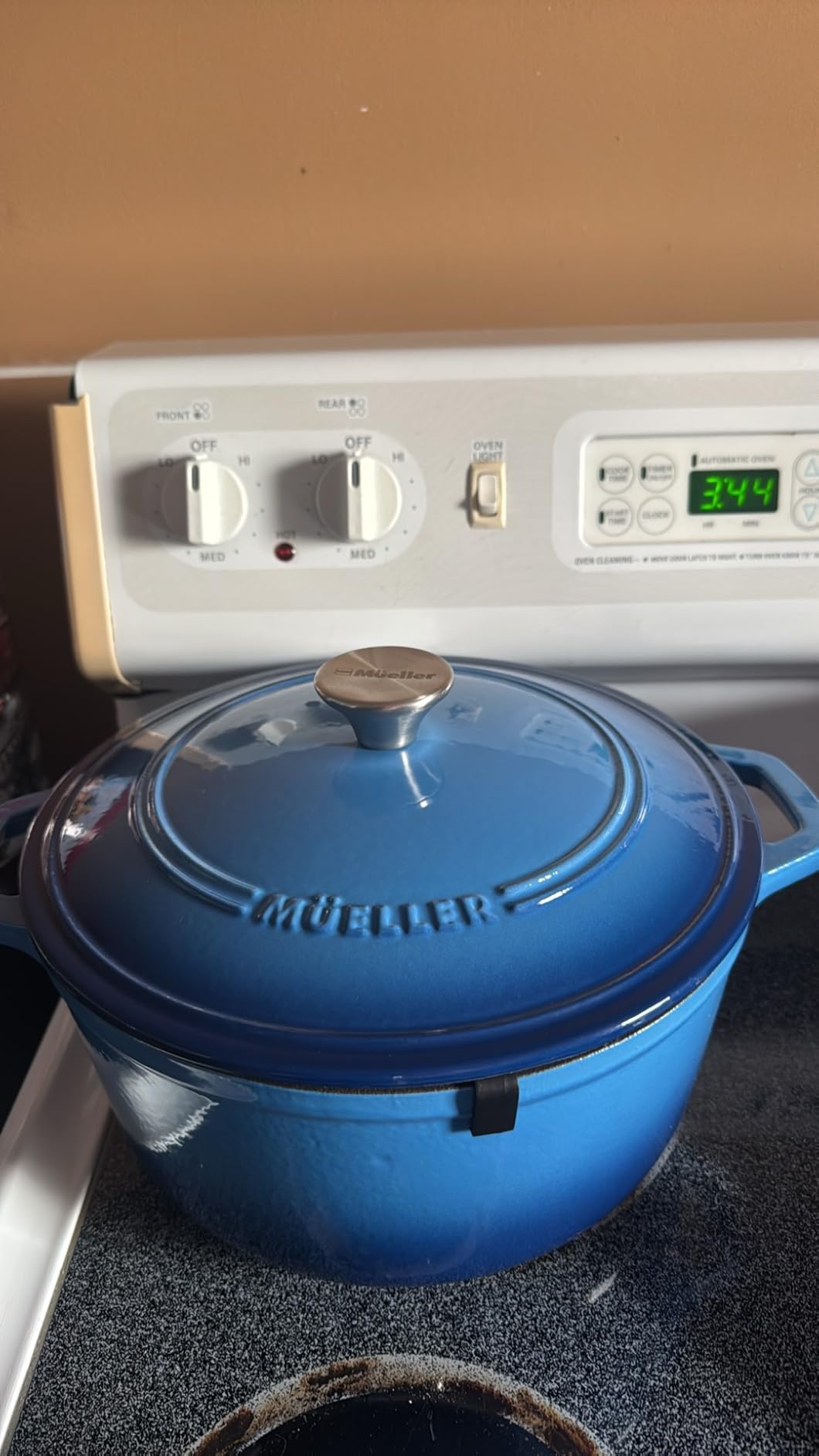
It is listed for all cooktops including induction and glass, so there is no compatibility question to answer. The base is wide, flat and enamel sealed.
At 12.2 by 12.2 inches across, it covers most of a large burner. Lift it rather than drag it, and the enamel will stay as smooth as the day you unwrapped it.
It is oven safe to 500F, so a braise goes from burner to oven without changing vessels.
Who should skip it
Skip it if weight is a problem. At 15.5 pounds empty, it is genuinely awkward to lift when full, and the wide handles take real effort.
It is also one pot, not a set. You still need skillets and saucepans, so this complements cookware rather than replacing it.
Flat, Smooth Bottoms: The Only Non-Negotiable
If you read nothing else, read this section. Everything else on the page is preference. Base construction is a requirement, and the order of importance runs flat base, smooth base, weight and thickness, then material, then coating.
1. Flat base. Set the pan on a counter and press gently on the rim. If it rocks, it will rock on the cooktop too, and rocking is how a smooth base becomes a scratched one. You can also slide a straightedge or a level across the base to check for a dip.
2. Smooth base. Run your fingers across the underside. Any grit, roughness, sand-cast texture or burnt-on ring is a problem. The mechanism is simple: the pan moves, the grit underneath moves with it, and ceramic glass polishes rather than yields.
3. Weight and thickness. A radiant element heats slower than gas. Heavier pans with an encapsulated base spread the heat and take the stutter out of cooking. This is the fix for the most common complaint on glass cooktops, which is that everything seems to take too long.
4. Material. Clad stainless, hard-anodized aluminum, ceramic-coated nonstick and enameled cast iron are all good. Bare cast iron and rough-base nonstick are not.
5. Coating. A coating only matters for the cooking surface. The underside matters for the glass, and coatings almost never extend there.
The cast iron question, settled
Almost every range manual says not to use cast iron, and almost every cook with a glass top uses cast iron anyway. Here is the actual reasoning behind both positions.
The warning is not about heat. Cast iron handles heat perfectly well on a glass element. It is about the base. New bare cast iron is sand-cast and slightly rough, old cast iron is pitted and ringed, and cast iron is heavy, so when it moves it grinds across the surface instead of gliding.
Home cooks on cooking forums report the opposite of disaster, describing years of cast iron use on the same cooktop without visible damage. Both things are true because the outcome depends on the base condition and the movement habit, not on the material name.
If you want cast iron, buy enameled. The enamel seals the rough surface and gives you the heat retention with a smooth bottom.
There is a related point on warranties: the manual language exists, so a manufacturer can decline a claim if you ignore it. That is a reason to follow the guidance, not a reason to panic about your existing pans.
How to stop scratching your glass cooktop
Seven habits cover almost every scratch I have seen on a smooth top.
- Lift, do not slide. This is the big one. The habit is automatic for most people and it is the mechanism for nearly all damage.
- Keep the base clean. Wipe the underside of pans before they go on the burner, and scrub off burnt rings with a non-scratch pad.
- Use a trivet or a silicone pad under anything hot, and never a plastic trivet that can melt onto the surface.
- Clean the cooktop regularly so burnt sugar and spilled sugar do not fuse into the glass and become the new grit under your pans.
- Let the pan cool before washing it. A cold glass surface hit by a hot pan base, or thermal shock from water, is how glass gets chipped.
- Use moderate heat. Scorching a pan to the point of smoking is what makes a coated base degrade and shed flakes.
- Take a scratch test on a spare ceramic tile if you are unsure about a pan. Drag it a short distance with normal pressure and see what happens before you use it on an expensive surface.
For the other half of the equation, cleaning a glass cooktop is straightforward. Cool it first, use a ceramic cooktop scraper for hardened residue, and use a non-abrasive cleaner. Avoid the gritty green powders, which are abrasives that will dull the surface and leave it more vulnerable to marks.
What to do about an already-scratched cooktop
Most scratches on a ceramic glass surface are cosmetic. Owners on home forums ask repeatedly whether the fine marks on a year-old cooktop mean it needs replacing, and in most cases it does not.
If the glass still heats evenly, the surface is not dull or flaking, and there are no chips at the edge, the cooktop is fine to keep using.
Ask about replacement if you see chips or cracks, if a burner cuts out or runs unevenly, or if the surface has gone cloudy and rough enough that food sticks to it. Those are functional problems, not cosmetic ones.
Once the surface is scratched, prevention gets easier rather than harder, because there is less to lose. That is not a great reason to stop being careful, but it is a reason to stop worrying about the marks you already have.
One more habit worth adding if you are rebuilding your kitchen from scratch: think about heat source before you buy. If you are weighing smooth-top cooking against other options, our guides to camping stoves, pellet stoves and wood burning stoves cover the other end of the range, where the cookware rules change completely.
Radiant Glass vs. Induction: The Rule Most People Get Wrong
Aluminum and copper are fine on a radiant glass cooktop. They do not work on induction. Those are two different appliances with two different requirements, and most of the confusion on this topic comes from mixing them up.
Radiant electric and ceramic glass: an element below the glass heats the glass, and the glass heats your pan. Heat transfer here happens by contact and radiant energy, not by magnetism.
Any flat, smooth base works. Aluminum, copper, cast iron, carbon steel, glass-ceramic and glass-lidded pots will all heat a radiant element. Only flatness and cleanliness affect the surface.
Induction: a coil under the glass creates a magnetic field, and only a pan with a magnetic base couples to it. Aluminum, copper and glass do not heat at all.
Cast iron, stainless with a magnetic sandwich base, and any induction-ready nonstick work. The base also has to be flat for the field to couple evenly, which is why induction-ready pans tend to have thick machined discs.
The practical consequence is simple. If you own a standard glass top range, do not rule out aluminum or copper because a forum post said so. If you own an induction range, check for the induction label on every piece, including the small saucepans, because a mismatched pan simply will not heat and you will think the burner is broken.
On this site we also see the reverse confusion with other appliance types, since a gas range and a glass range reward completely different cookware. Our two burner camping stove guide makes a similar point about matching the heat source to the vessel.
One last hardware note: a pan much wider than the burner loses efficiency to the surrounding glass, and a pan much narrower never covers the element, which is what causes uneven cooking and the hot ring people mistake for a defective burner. Match the pan to the size of the cooking zone marked on your cooktop.
Frequently Asked Questions
What should you not put on a glass top stove?
Avoid bare cast iron with a rough or pitted base, pans with gritty or sand-cast undersides, warped single-ply cookware that rocks on the surface, wobbly pan lids with metal rims, and any nonstick coating that is already scratched or flaking. The scratch mechanism is grit trapped under a pan grinding across the ceramic glass as the pan moves.
What type of pots are best for glass top stoves?
Clad stainless steel, hard-anodized aluminum, ceramic-coated nonstick with a machined base, and enameled cast iron are the strongest choices. All of them have the same two requirements: a completely flat base that does not rock, and a smooth underside with no grit or burnt-on ring.
Do glass cooktops need special cookware?
Mostly no. Most existing stainless steel and nonstick cookware works on a glass cooktop as long as the base is flat and smooth. You need new cookware only if your current pans have rough or pitted bases, if they warp and rock, or if your range is induction and your pots have no magnetic base.
What pans will not scratch a glass top stove?
Smooth machined bases: clad stainless steel, hard-anodized aluminum, coated nonstick with a flat base, and enameled cast iron with a glossy finish. Carbon steel with a fine sanded base is also safe. The material name matters less than the texture of the underside.
Is cast iron safe on a glass top stove?
Enameled cast iron is safe, because the glossy enamel seals the rough sand-cast surface. Bare cast iron carries a real scratch risk when the base is pitted or ringed and the heavy pan gets dragged across the glass. If you want the heat retention, buy enameled rather than bare.
Is aluminum cookware okay on a glass cooktop?
Yes. Aluminum and copper heat a radiant electric or ceramic glass cooktop perfectly well, because heat transfers by contact rather than magnetism. They fail only on induction, where a non-magnetic base will not heat at all. That distinction is the most common piece of bad advice on this topic.
The Verdict: Which Cookware for Glass Top Stoves to Buy
The T-Fal Ultimate Hard Anodized 17-Piece Set is the best cookware for glass top stoves overall, because a forged machined base and 24.9 pounds of mass handle a slow radiant element better than anything else in this group, and it holds a 4.7 average across 18861 ratings. Buy it if you want one set that covers frying, simmering, steaming and griddling without thinking about it.
Buy the Cuisinart Tri-Ply set instead if you want stainless and durability, or the Kitchen Academy set if you want the lowest cost and a magnetic base. Add the Mueller enameled Dutch oven for braises, and skip bare cast iron on glass entirely.
Whichever you pick, lift rather than slide, keep the base clean, and check the underside for grit every few months. That single habit will protect the cooktop for the life of the range in 2026, and no amount of shopping will.