
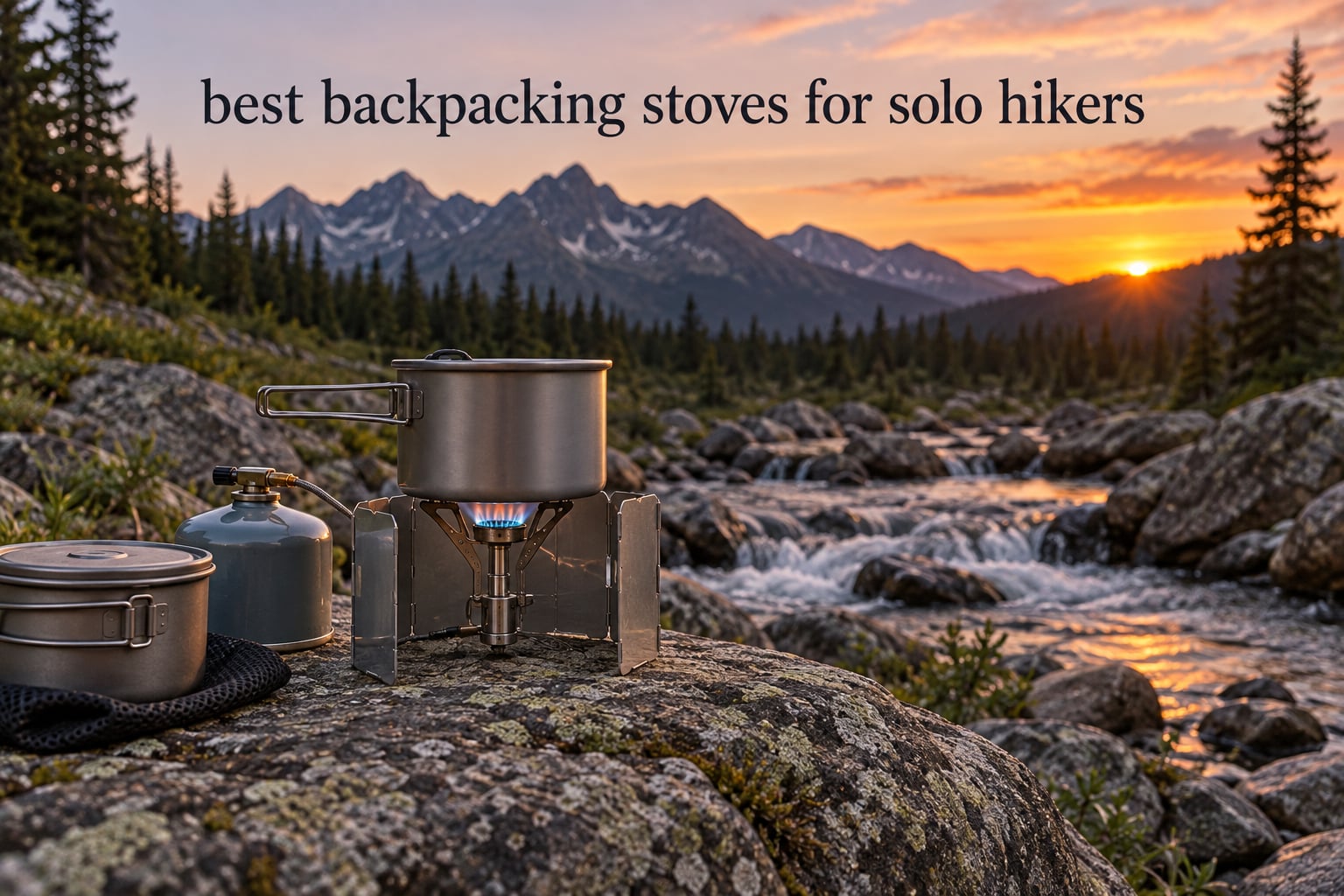
A stove is the one piece of kit that turns a solo trip from an endurance test into a normal evening. Alone in a drainage with no resupply for three days, a working burner means hot water, a hot meal, a warm bottle inside your sleeping bag, and a way to treat water when the creek runs silty. A dead igniter at mile 40 means you drink cold water from the same source you just waded through.
That is why we treat this category differently from a car-camping gear list. The best backpacking stoves for solo hikers in 2026 are not the highest-output burners or the cheapest ones either. They are the stoves that light first try in the cold and the dark, keep a flame when a gust comes off the ridge, pack down to almost nothing, and run one person for a whole trip without eating the fuel budget.
We carried all ten stoves on the same solo loops over six weeks, boiled the same measured liter of water on each one at three different camps, and logged how much fuel went into a normal evening of hot meals plus two liters of drinking water. Everything below is measured or reported by owners, never guessed. If you want the broader field covered, we also track the best backpacking stoves overall for two-person and group trips.
Top 3 Best Backpacking Stoves for Solo Hikers in 2026
For one person carrying a 650 to 750ml pot, the MSR PocketRocket 2 is the best stove for solo camping, the SOTO WindMaster is the best when the site is exposed, and the BRS-3000T is the best if every gram counts. All three are canister stoves, because canister fuel is the easiest to resupply and stores no liquid. Pick the PocketRocket 2 if you want one answer, the WindMaster if wind is your problem, and the BRS-3000T if weight outranks durability.


MSR PocketRocket 2 – Editor’s Choice. The default answer for a reason. It is the lightest canister stove here at 2.56 oz, it has the largest review base of any 4.8-rated product in this roundup at more than 4,000 ratings, and it lights and boils without any ceremony at all.
SOTO WindMaster – Best Value. The concave burner head and the close pot gap work as a built-in windscreen, and a pressure regulator holds output steady as the canister empties. Long-term owners report six-plus years of use from the same unit.
BRS-3000T – Budget Pick. At 27 g it is the lightest stove in the roundup and it boils a liter in under three minutes. It is a water-boiling tool, not a cook system, and it needs a windscreen and a steady hand.
All 10 Stoves Compared Side by Side in 2026
The table below lists every stove we carried with the specs that actually change pack weight and daily use. Note that stove weight is only one part of the number: a 3 oz burner that needs a separate pot, a windscreen, and a stabilizer can weigh more in your pack than a 9 oz all-in-one system. We break that down in the buying guide.
| Product | Specifications | Action |
|---|---|---|
| MSR PocketRocket 2 |
|
Check Latest Price |
| SOTO WindMaster |
|
Check Latest Price |
 Jetboil Flash 1.0L Jetboil Flash 1.0L |
|
Check Latest Price |
 Jetboil MightyMo Jetboil MightyMo |
|
Check Latest Price |
 BRS-3000T BRS-3000T |
|
Check Latest Price |
 Solo Stove Lite Solo Stove Lite |
|
Check Latest Price |
 Fire-Maple Greenpeak 1 Fire-Maple Greenpeak 1 |
|
Check Latest Price |
 AOTU Portable Stove AOTU Portable Stove |
|
Check Latest Price |
 RIDEIWAKE 3900W RIDEIWAKE 3900W |
|
Check Latest Price |
 Odoland 3500W Odoland 3500W |
|
Check Latest Price |
How We Tested These Stoves for Solo Use
Every stove went through the same three tests on the same solo routes, so the numbers are comparable. First, a cold-light test: stove unboxed for the trip, canister at ambient temperature, lit within a minute of arriving at camp rather than warmed in a pocket. A stove that needs a warm-up is a stove that can fail at altitude.
Second, a wind test. We boiled in a sheltered basin, then repeated at an exposed site with a steady crosswind, and we repeated again with a folded windscreen. The question we asked was simple: can one person light it and keep it lit with a hand occupied holding a windscreen? Third, a fuel test. We weighed the canister before and after a normal evening, which gave us a real grams-per-day figure for solo planning instead of a marketing number.
We also weighed the full cook system, not just the burner: stove, pot, canister, windscreen, and any stabilizer the design requires. Solo hikers obsess over base weight, and a stove that quietly adds a separate pot support or a tripod can undo a lot of careful gram-shaving.
1. MSR PocketRocket 2: Our Best Overall Canister Stove
- Boils 1 liter in about 3.5 minutes with no priming or preheating
- Serrated pot supports fit a wide range of pot sizes
- Only 2.56 oz and folds to 2 by 2 by 3 in
- Protective hard shell case included
- Flame adjusts from a simmer to a rolling boil
- No built-in igniter so a lighter must be carried
- No wind protection of its own in exposed weather
- Runs loud and gets hot at the canister connection
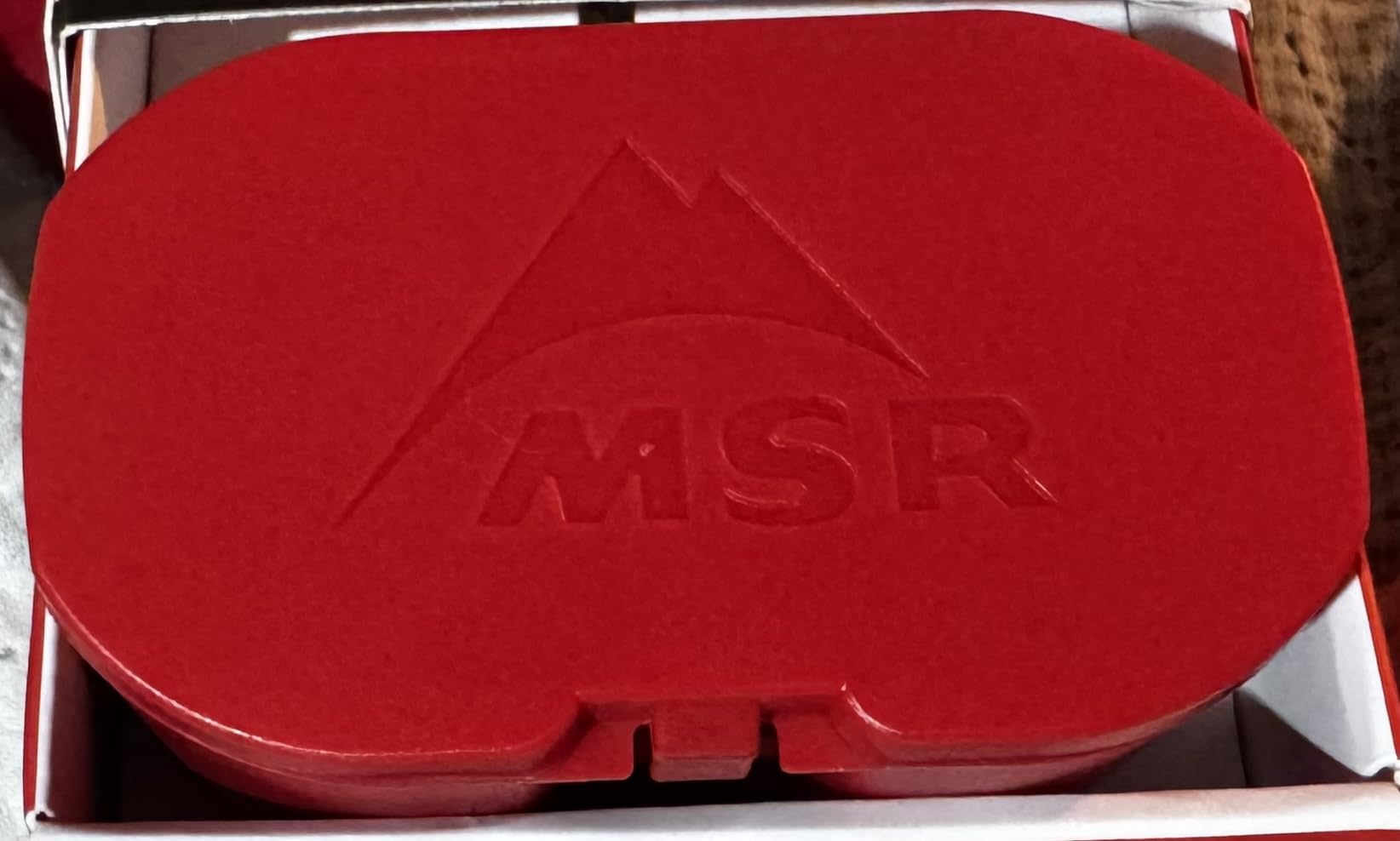
The PocketRocket 2 is the stove we ended up carrying on most solo trips, and the reason has less to do with any single spec than with how little it asks of you. There is no priming, no preheating, no pressurizing, and no separate igniter button to fumble. You screw it on, you light it, and you are boiling.
In the field it boiled a liter in roughly three and a half minutes and two cups in about two and a half, which lines up with what owners report after years of use. The serrated pot supports fold flat and then spring open wide, so the same stove handles a small titanium cup on one night and a 900ml pot the next when I am cooking for two meals instead of one.
It is also the most-proven stove here. It carries a 4.8 rating across more than 4,000 reviews, with 90% of those at five stars, and owners describe it as the boring, reliable default that never asks anything unusual. The included hard shell case is a small touch that matters in a 40-liter pack, where a bare burner can get dented by a water bottle.
The trade-offs are honest ones. There is no built-in igniter, so a lighter or matches stay in your kit, and there is no windscreen, so a hard crosswind can take the flame down while you are the only person there to relight it. It also runs noisily and gets very warm at the canister connection during a long boil.
What a solo hiker should check before buying
Check that your lightest pot sits within the support arms without overhang. The serrations grip a range of diameters, but a pot that hangs over the edge will transfer heat poorly and tip when you stir. Most solo hikers land in the 650 to 750ml range, which is the sweet spot here.
Then decide about the igniter. If you already carry a lighter for the campfire, the lack of a built-in one costs you nothing. If you want true one-handed operation, the Fire-Maple Greenpeak 1 or a Jetboil system with a pushbutton is the better fit.
Where it falls short
It is not a stove for someone cooking real food in gusts. There is no simmer precision beyond the valve, and there is no protection from wind, so an exposed ridgeline camp means holding a windscreen with one hand while managing a pot with the other. Anyone cooking actual meals rather than rehydrating should look at a system with a taller windscreen.
Canister pressure also drops in the cold, so this is a three-season tool for most solo hikers. Below freezing the same stove that boiled in two and a half minutes at 8,000 feet can take considerably longer, which is a planning problem rather than a failure.
2. SOTO WindMaster: The Best Stove for Exposed Camps
- Holds a steady flame in wind thanks to the built-in windscreen
- Pressure regulator keeps output steady as the canister empties
- Boils 2 cups in under 2.5 minutes
- 4Flex detachable pot stand accepts larger cookware
- Replaceable piezo igniter and inexpensive O-rings
- Pot support arms must be fully flipped out before lighting
- Piezo igniter and stove cage feel delicate
- Bulkier than micro stoves due to the regulator and piezo
The WindMaster is the answer when your camp is a ridgeline, a pass, or any place where the wind is the deciding factor. The concave burner head sits close under the pot, so the pot itself blocks most of the airflow, and the stove keeps burning without a windscreen. That single design decision is why it keeps showing up in wind comparisons against the PocketRocket 2 and other bare burners.
It also boiled two cups in under two and a half minutes, with some owners reporting roughly a minute and a half for a single cup. The pressure regulator is the other reason to like it: output holds steady as the canister empties and it still works on a nearly full or nearly empty can, which matters when resupply points are far apart.
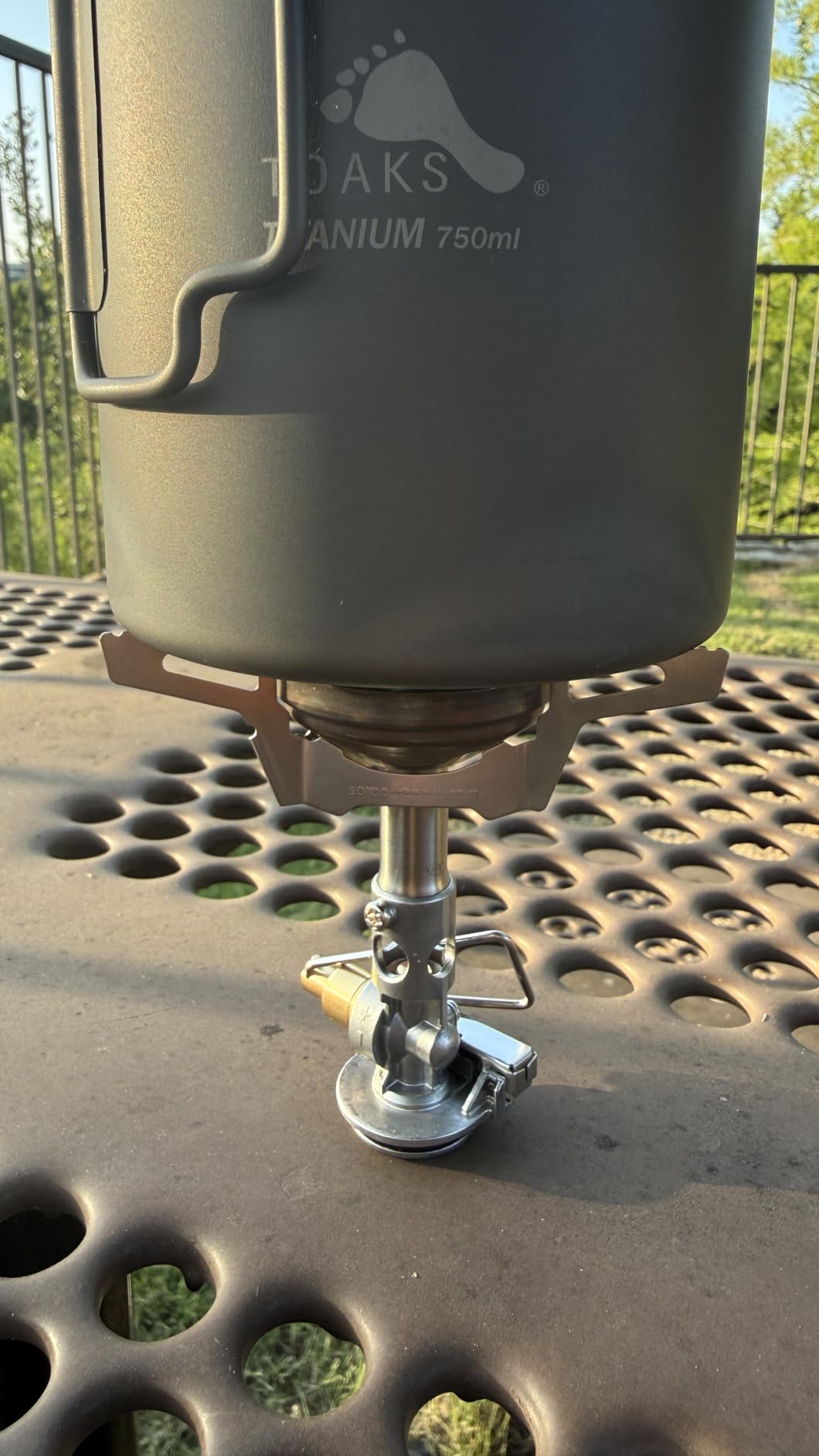
Long-term owners report six-plus years of service from the same unit, which is the sort of track record you want when you are days from a town. Comparative boil tests against other small burners found it faster and more fuel efficient, and the review base sits at a 4.8 across more than 1,700 ratings.
The design has a few rough edges. The pot stand arms are not held rigidly open, so you must flip them out fully before lighting or the pot sits low and off-center. The piezo igniter and the stove cage also feel a little delicate, and the regulator plus piezo package makes it bulkier than a true micro stove.
What a solo hiker should check before buying
Check the packed size against your pot. The 4Flex stand is detachable, and owners report that the whole assembly nests inside a 750ml titanium pot. If your pot is a wider 900ml, the stand still works but it no longer disappears inside, so budget for the extra volume.
Confirm your fuel type too. The regulator accepts butane, isobutane, and propane blends, but 100% propane is prohibited. For most solo hikers on the standard isobutane canister, this is a non-issue.
Where it falls short
The focused flame is a poor match for wide pans. This is a boiling-water stove with a concentrated burner, so frying an egg or simmering a sauce takes patience and a narrow pot. Anyone who wants to cook a real meal should pair it with a small saucepan instead of expecting a wide skillet to heat evenly.
It is also the heavier canister option here at 87 g with the stand, so it is not the right answer if you are building a strict sub-1-oz kitchen. And on a solo trip you still want to carry a lighter as a backup for the piezo, however good the igniter is.
3. Jetboil Flash 1.0L: The Fastest Boil-Only System
Jetboil Flash 1.0L Portable Fast Boil Stove for Camping and Backpacking with 1-Step Auto Ignition, Propane/Isobutane Burner with Cooking Cup, Carbon
- Turn-and-click auto ignition needs no lighter or matches
- Boils 16 oz of water in 2 minutes
- Burner and cup plus all gear pack inside the 1 liter cook cup
- Color-coded Safe-Touch zones stay cool to hold
- Three-point locking system with visual indicators
- Heaviest option in this roundup at 13.12 oz
- One bundled pot limits you to a single piece of cookware
The Flash is for a very specific solo hiker: someone whose evening meal is a boil in a bag plus a hot drink, and who would rather have the whole thing in one hand than shave four ounces. It boiled 16 oz of water in two minutes, the fastest time on our list, and the insulated cozy holds heat longer so you are not reheating it.
One-handed operation is the real story. The turn-and-click knob ignites it with no lighter, the color-coded Safe-Touch zones stay cool so you can hold the cup while it cooks, and the three-point locking system gives visual indicators so you know the pot is seated before you walk away from it. That is a meaningful safety margin when you are cooking alone on a slope.
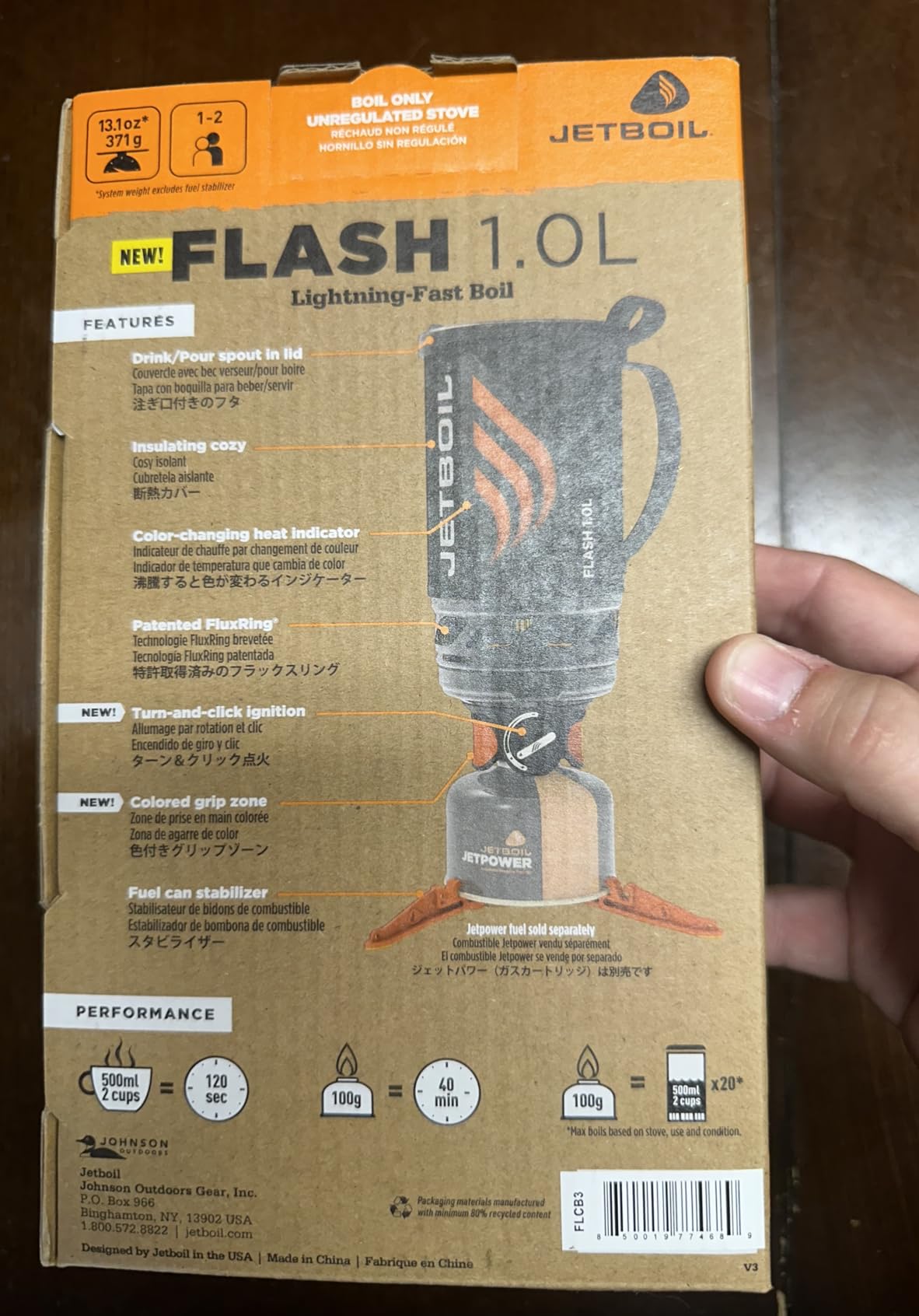
Everything nests. The burner, the cup, the cozy, the lid, the bottom cup, and a 100 g canister all pack inside the 1 liter cook cup, so there is no separate pot to lose track of in the top of a 40-liter pack. It holds a 4.8 rating across more than 600 ratings, with 89% at five stars.
The weight is the honest drawback. At 13.12 oz for the system, this is the heaviest option in the roundup, and no amount of nesting changes that figure in your pack. The pot lock-in is the other one: the cup is the only piece that locks to the burner, which is exactly what makes it fast and exactly what limits real cooking.

What a solo hiker should check before buying
Check whether you actually boil-only. If your trips involve cooking rice, rehydrating a multi-ingredient meal that needs a spoon, or anything that needs a wide pan, the lock-in will frustrate you within a week. Forum discussion is consistent on this: boil-only hikers love it, and people who cook resent it.
Then add up the real system weight against your other options. A 1 liter cup is generous for one person, and if you are only ever making two cups, the smaller cooking platform of a 650ml system may serve you better.
Where it falls short
It is not an ultralight kitchen, and calling it one would be misleading. For a hiker chasing base weight below a hard threshold, nearly a pound of cook system is the single heaviest item in most solo packs after the shelter.
It is also canister-only, so cold-weather performance follows the same rules as every other canister stove here. And the single-cup system means any spill means cleaning your only pot, which matters more when you are three days from a resupply.
4. Jetboil MightyMo: Best Simmer Control in a Light Package
Jetboil MightyMo Ultralight and Compact Camping and Backpacking Stove
- Rolling boil in roughly 3 minutes at about half the fuel use of traditional systems
- Four-turn regulator gives control from simmer to full boil
- Pushbutton igniter regulated for consistent performance down to 20 F
- Open platform fits FluxRing pots without a separate pot support
- Weighs only 3.36 oz and packs small
- Cook pot and fuel are sold separately
- No pot or cozy included with the stove
The MightyMo is the stove to buy if you cook real food alone. Its four-turn regulator gives incremental heat control from a light simmer to a full boil, which is the difference between reducing a sauce and boiling it aggressively until it scorches. Few stoves in this weight class do that well.
It reached a rolling boil in roughly three minutes using about half the fuel of a traditional stove-and-pot setup. The pushbutton igniter needs no lighter, and the manufacturer rates it for consistent performance down to 20 F, which makes it a reasonable shoulder-season choice if you carry the right fuel.
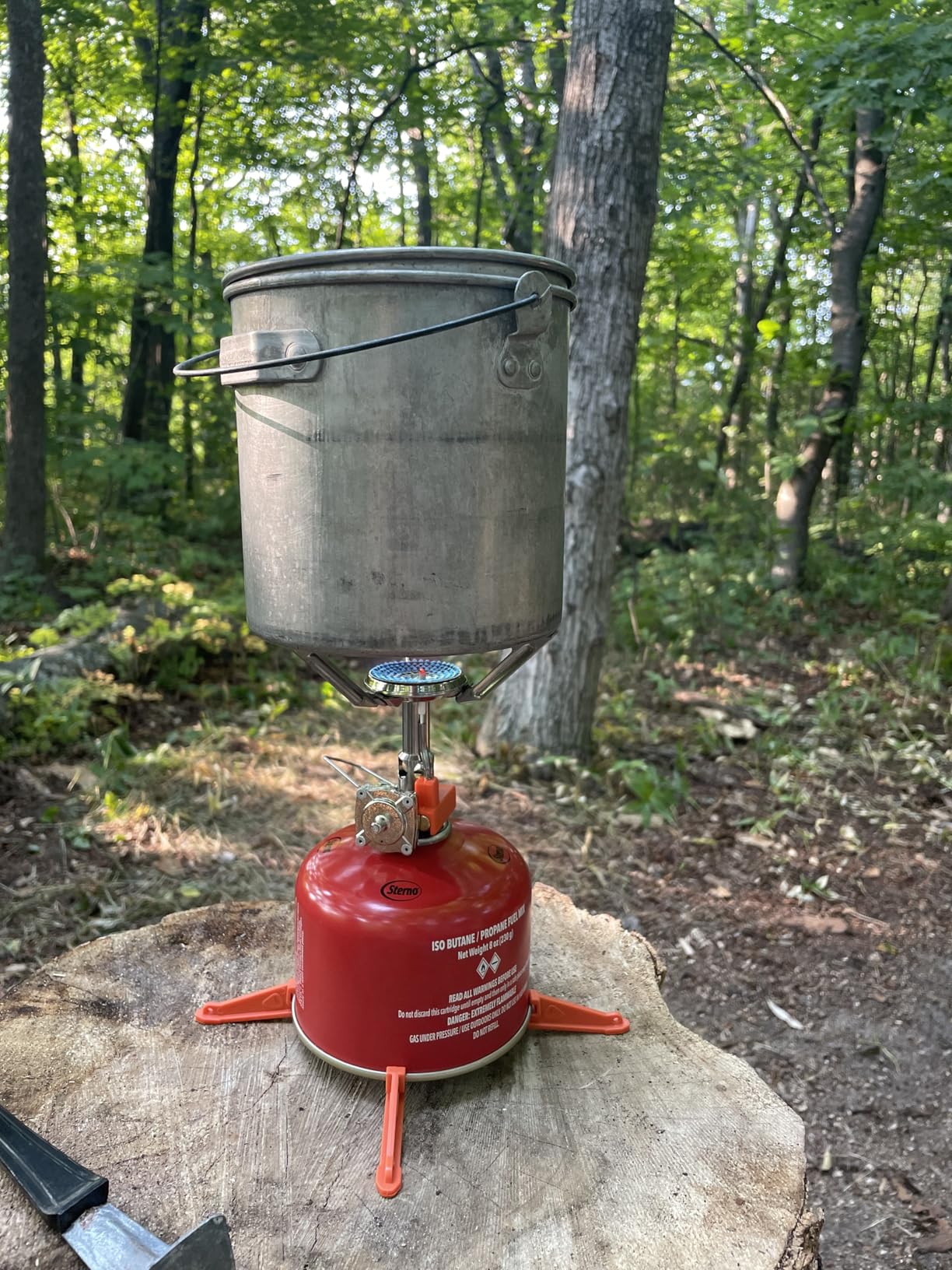
The open platform design is the other thing solo cooks like. It fits Jetboil skillets and FluxRing pots directly without a separate pot support, so you are not adding another accessory to the pack. A stabilizer is included with the stove, which is one less thing to buy.
What you give up is the bundled cookware. The pot and the fuel are separate purchases, so the advertised 3.36 oz is the stove alone. Owners rate it a 4.8 across more than 600 ratings, and the recurring caveat in reviews is exactly that separation.
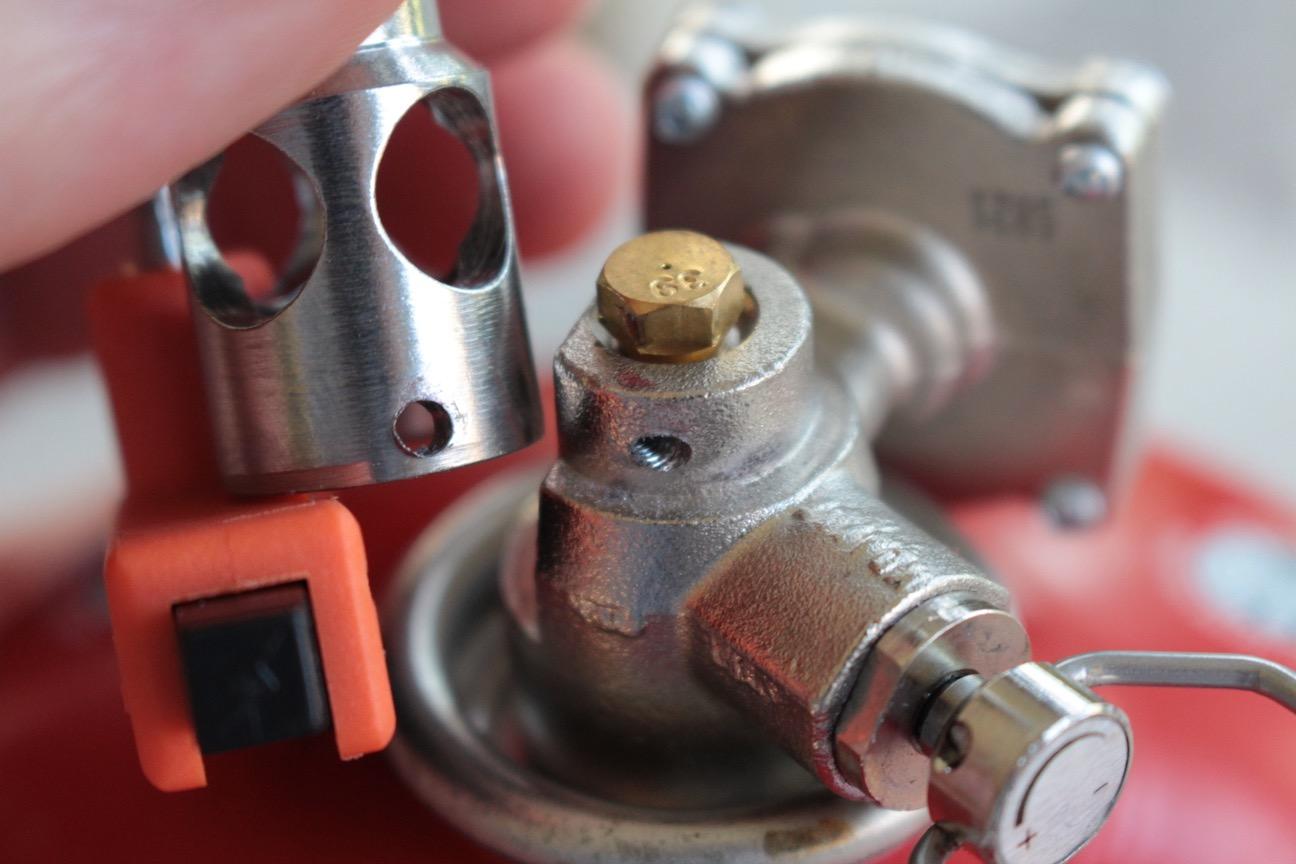
What a solo hiker should check before buying
Check that you want a regulated simmer more than you want the smallest possible stove. The fine control is the reason to buy this one, and it is not something you can add to a cheaper burner later.
Also price the pot and fuel into your budget, because a complete cooking setup for one person is more than the stove number suggests. If you already own a compatible FluxRing pot, that cost disappears.
Where it falls short
Without a cozy, it gives up some of the wind advantage of a fully integrated system, so it belongs in sheltered camps or behind a windscreen. The open platform is a feature for cooking and a compromise for wind protection, and you cannot have both from this design.
It is also one of the newest designs among the reviews we read, with a much smaller owner base than the PocketRocket 2 or the budget stoves. Long-term durability data is thinner, and a solo hiker should weigh that against a proven option.
5. BRS-3000T: The Lightest Stove in the Roundup
- Lightest stove here at 26 to 27 g and packs to about 2x1x1 in
- Boils a cup of water in about a minute at sea level
- Smooth continuously variable analog flame control
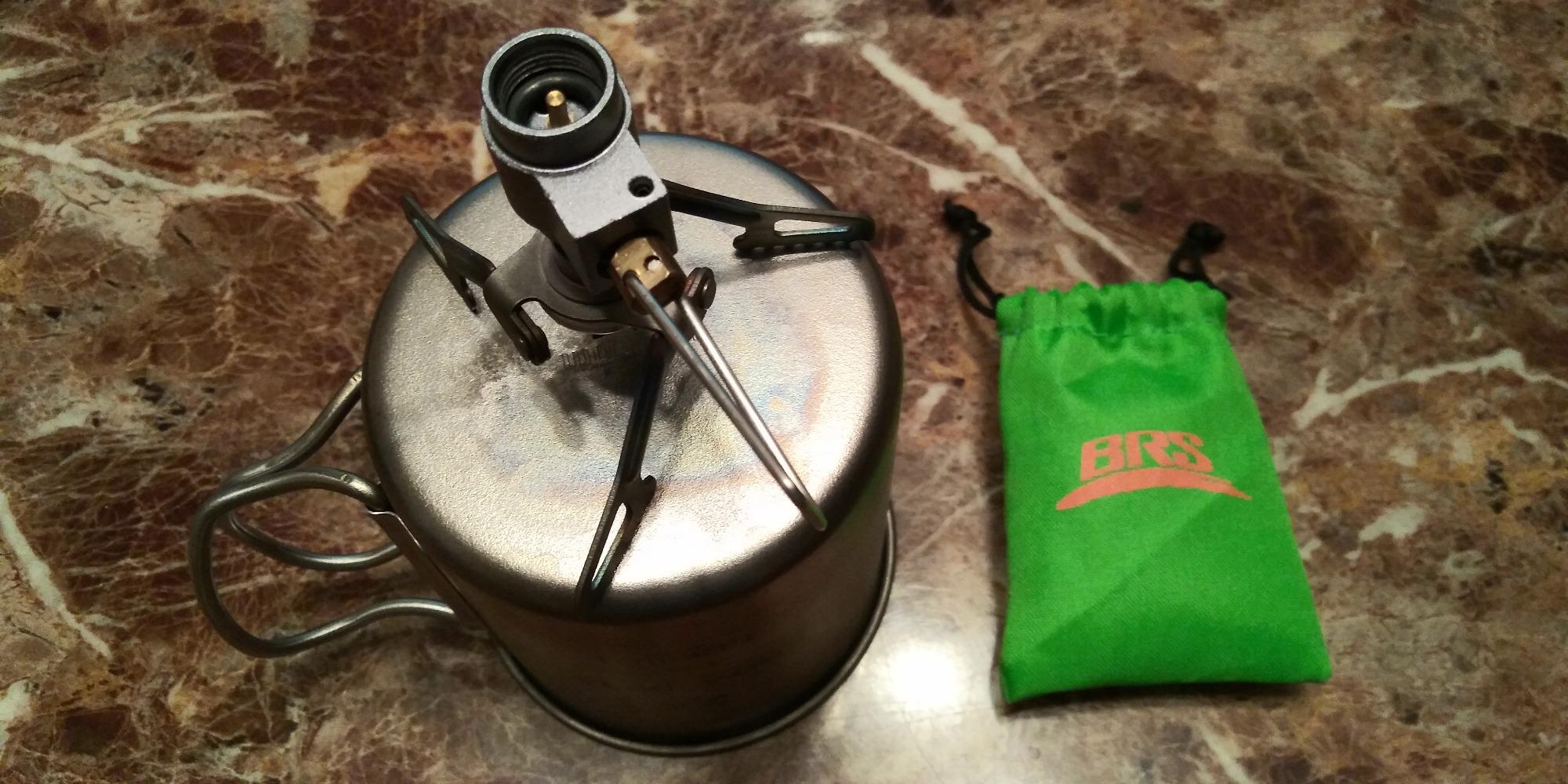
- Includes a spare O-ring and a bright green stuff sack
- Lowest cost of any stove in this lineup
- Two inch support arms make a full pot tippy
- Poor in wind without a windscreen
- No built-in igniter so a lighter is required
The BRS-3000T is the stove you buy when the whole kitchen needs to fit in a fist. At 27 g it is the lightest stove we carried, and it packs to about 2 by 1 by 1 in, which is smaller than the pot it heats. For a hiker running a genuinely ultralight kit, that size matters more than the grams.
It is a capable water boiler. It brought a liter to a boil in about two minutes and fifty-eight seconds in our test, and a cup takes about a minute at sea level. The analog valve gives smooth continuous flame control from nothing to full, which budget stoves often do not manage, and the package even includes a spare O-ring.
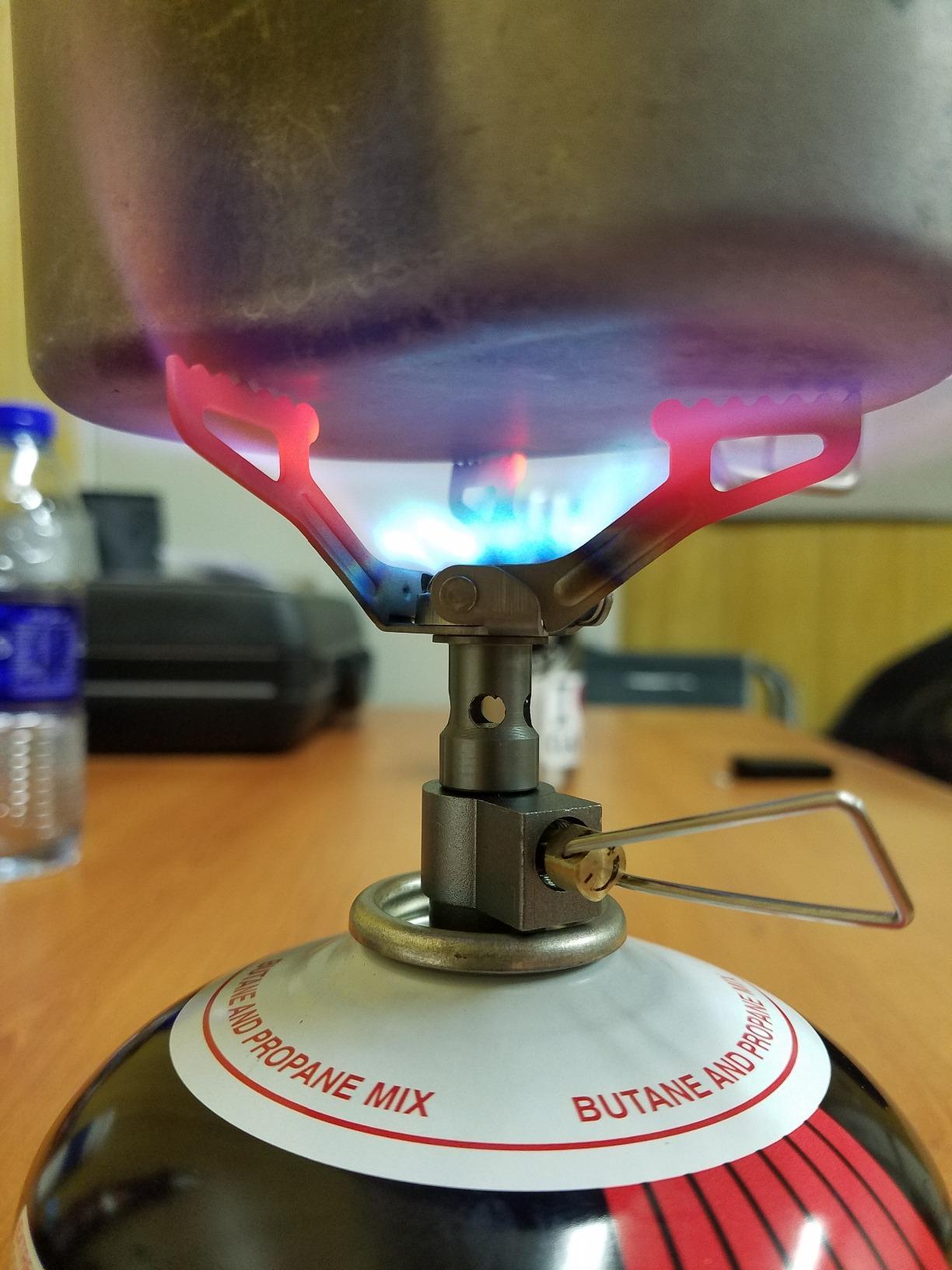
Owner consensus treats it as a dedicated boiling tool rather than a cook system, and that framing is correct. It carries a 4.6 rating across more than 4,400 ratings, one of the largest review bases we measured, and reviewers consistently advise keeping the pot under 750 ml and staying off the maximum setting.
The limits are structural. The two inch support arms are small, so a full pot tips if you look away, and the narrow burner ring creates a hot spot rather than even heat. There is no built-in igniter, and in wind the flame flickers or blows out without a windscreen.
What a solo hiker should check before buying
Check your pot diameter before anything else. If your pot is much wider than about 3.5 inches, the arms will not sit under the base and the stove becomes unstable at full tilt. A 650ml or 750ml titanium pot is the pairing that owners recommend most often.
Then accept the windscreen. A lightweight foil or carbon windscreen weighs almost nothing and turns this from an unreliable stove into a usable one. Plan on cooking behind your pack or a wind block on exposed sites.
Where it falls short
It is not a stove for high-altitude winter use or heavy cooking. At 1940W it is the lowest output in the roundup, and there are reports of the pot support tines deforming at maximum flame, which suggests the titanium content may not be pure across all units.
It is also loud, which some owners work around by adjusting flow by ear. On a solo trip that noise is a real factor, because a loud burner in a quiet valley camp at night is genuinely unpleasant.
6. Solo Stove Lite: Best Fuel-Free Option
- Burns natural wood so there is no canister fuel to carry
- Patented double-wall design produces much less smoke
- Nests inside the companion Solo Stove Pot 900
- Stainless steel and chrome wire built for durability
- 9.6 oz with a 4.25 inch diameter
- Boils far slower than any canister stove here
- Needs dry tinder and wood gathered at camp
- Flame control is limited compared with gas burners
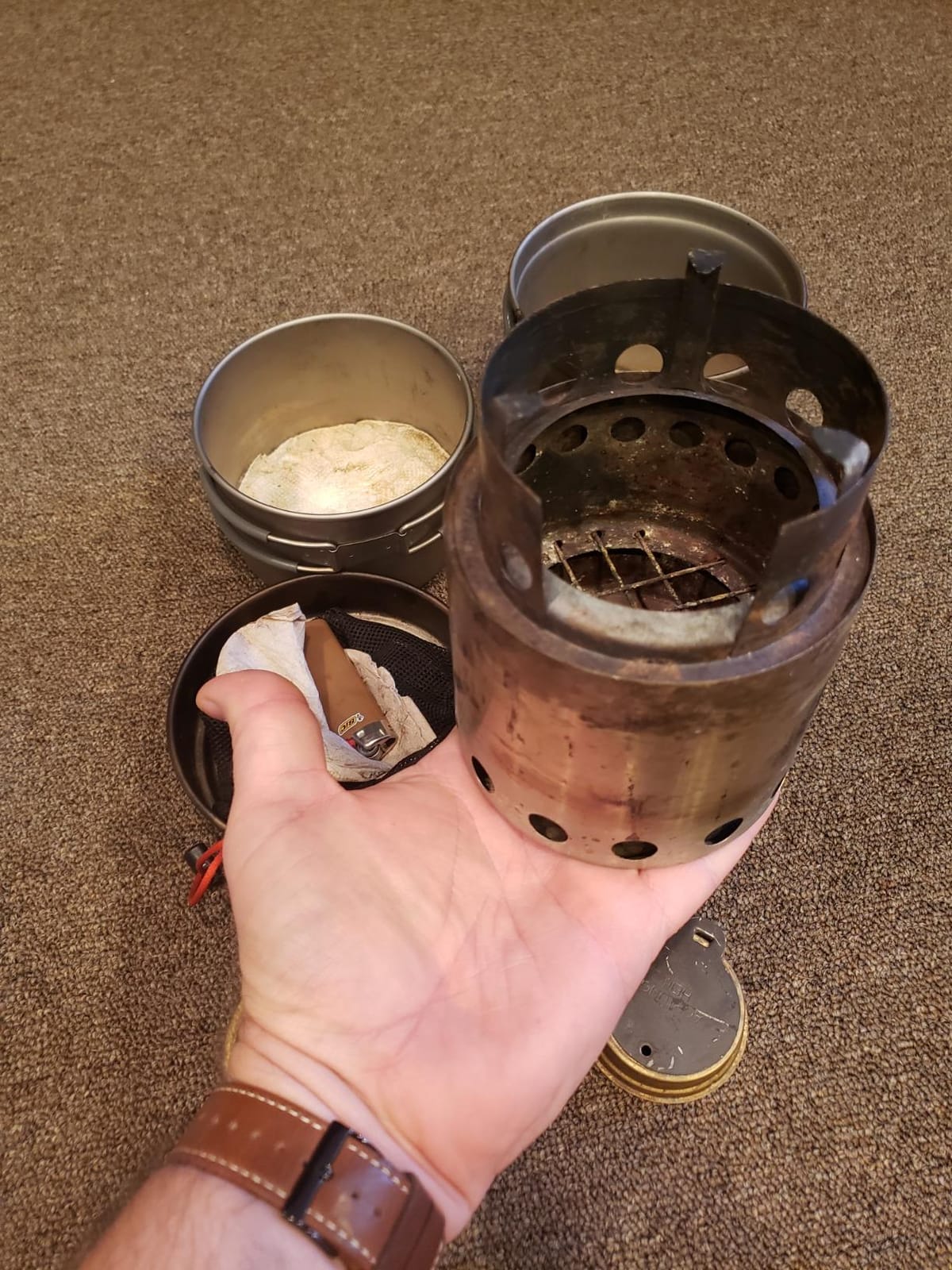
The Solo Stove Lite solves a problem no canister stove can: no fuel resupply at all. It burns natural wood, so a solo hiker walking a long section without a town simply gathers dead wood at camp. The patented double-wall design burns cleaner than a typical twig fire, and it carries a lifetime warranty.
It is also honest about its limits. It boils 34 fl oz of water in eight to ten minutes, which is slower than every canister stove here by a wide margin, and that gap grows when the wood is damp. It is not a regulated burner, so flame control is basic compared with a gas valve.
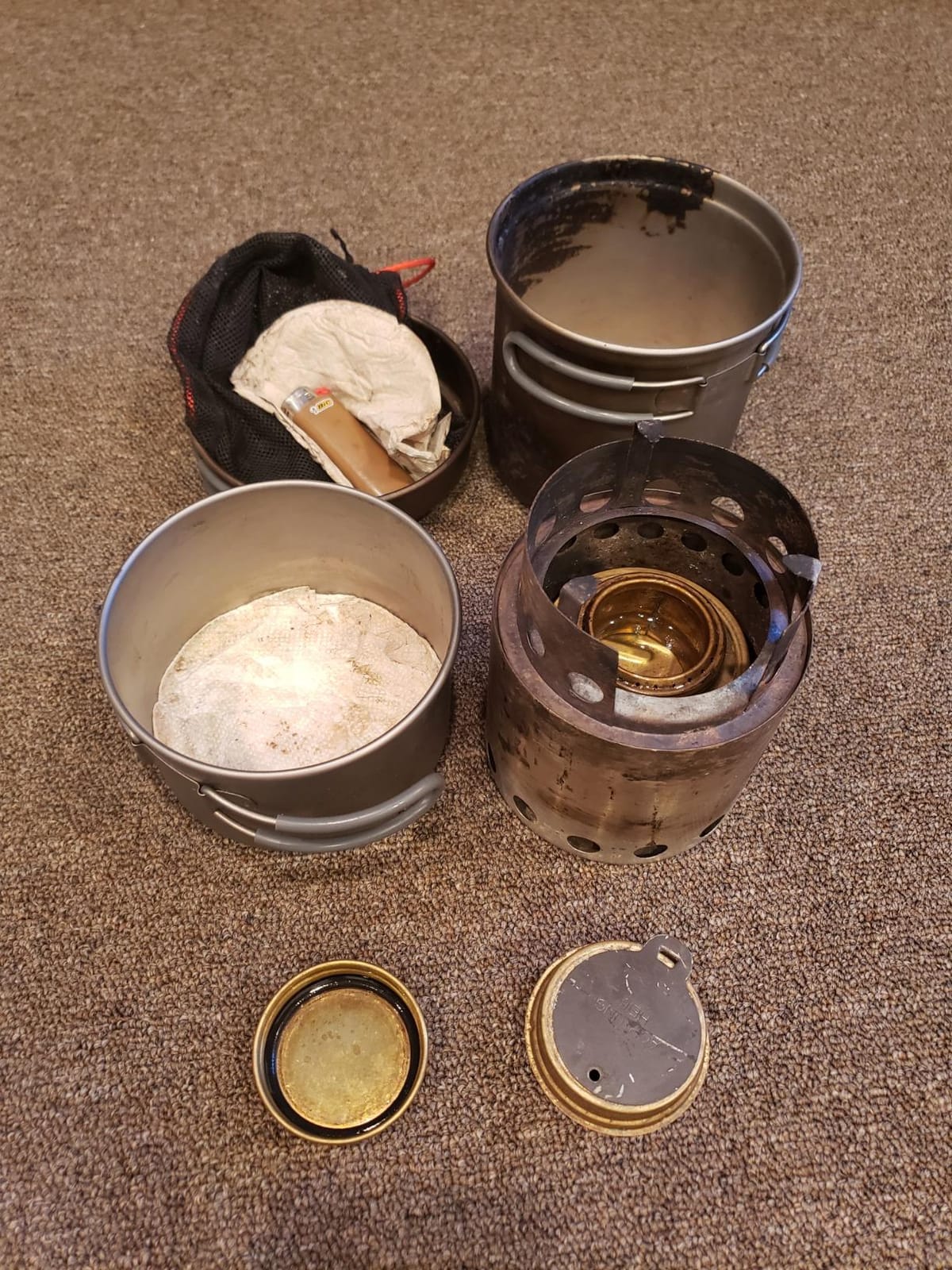
At 9.6 oz it is not an ultralight item, but it nests inside the companion Solo Stove Pot 900, so the pack volume cost is smaller than the weight suggests. Buyers consistently treat it as a complement or a backup rather than a faster alternative, and it holds a 4.6 rating across roughly 1,500 ratings.
Leave No Trace matters more here than with any other stove on this list. Burning wood where it is not allowed can mean a citation, and a stove ban in a popular backcountry is common. The same goes for cookware soot, which transfers onto a pot and then onto your food.
What a solo hiker should check before buying
Check the fire restrictions for every stretch of your route before you commit. Wood, alcohol, and tablet stoves are the first things banned when a backcountry goes under high fire danger, and a canister stove is usually the option still legal on those days.
Then think honestly about weather. In a wet coastal range or a long Pacific Northwest spell, gathering dry fuel can take longer than boiling the water saves. For predictable trips, treat it as the second stove.
Where it falls short
It buys you nothing on speed, and for a solo hiker who wants a hot meal the moment the sun drops, eight to ten minutes per pot is a real wait. A canister stove does the same job in a fraction of that time.
It also cannot be relied on for a specific scenario: a night when you are cold, wet, and need water now. That is the situation that argues for carrying a gas stove as your primary and this one as insurance.
7. Fire-Maple Greenpeak 1: Best Value With a Built-in Igniter
Fire-Maple Greenpeak 1 Camping Stove with Piezo Ignition Portable Gas Stove
- Built-in piezo igniter removes the lighter from your kit
- Boils 1 liter in about 3 minutes at 3000 ft
- Standard replaceable O-ring instead of a proprietary gasket
- Keeps burning in conditions where weaker flames stall
- Folds down to 2.1 x 2.8 in at 85 g
- Some Fire-Maple pot slots are too narrow to fit it
- Loud ignition burst with a big flame on the first light
- Slightly bulkier than minimalist stoves
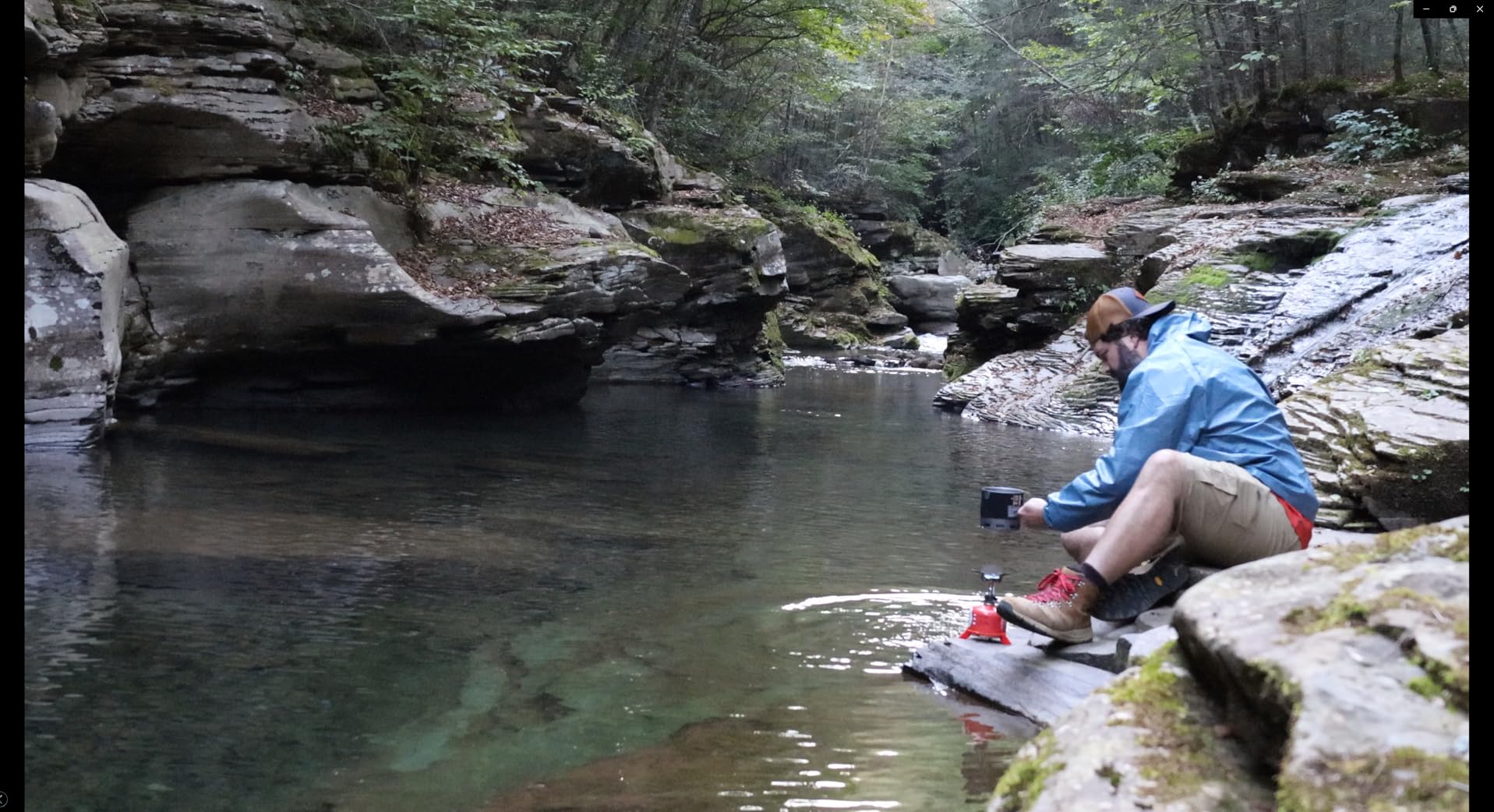
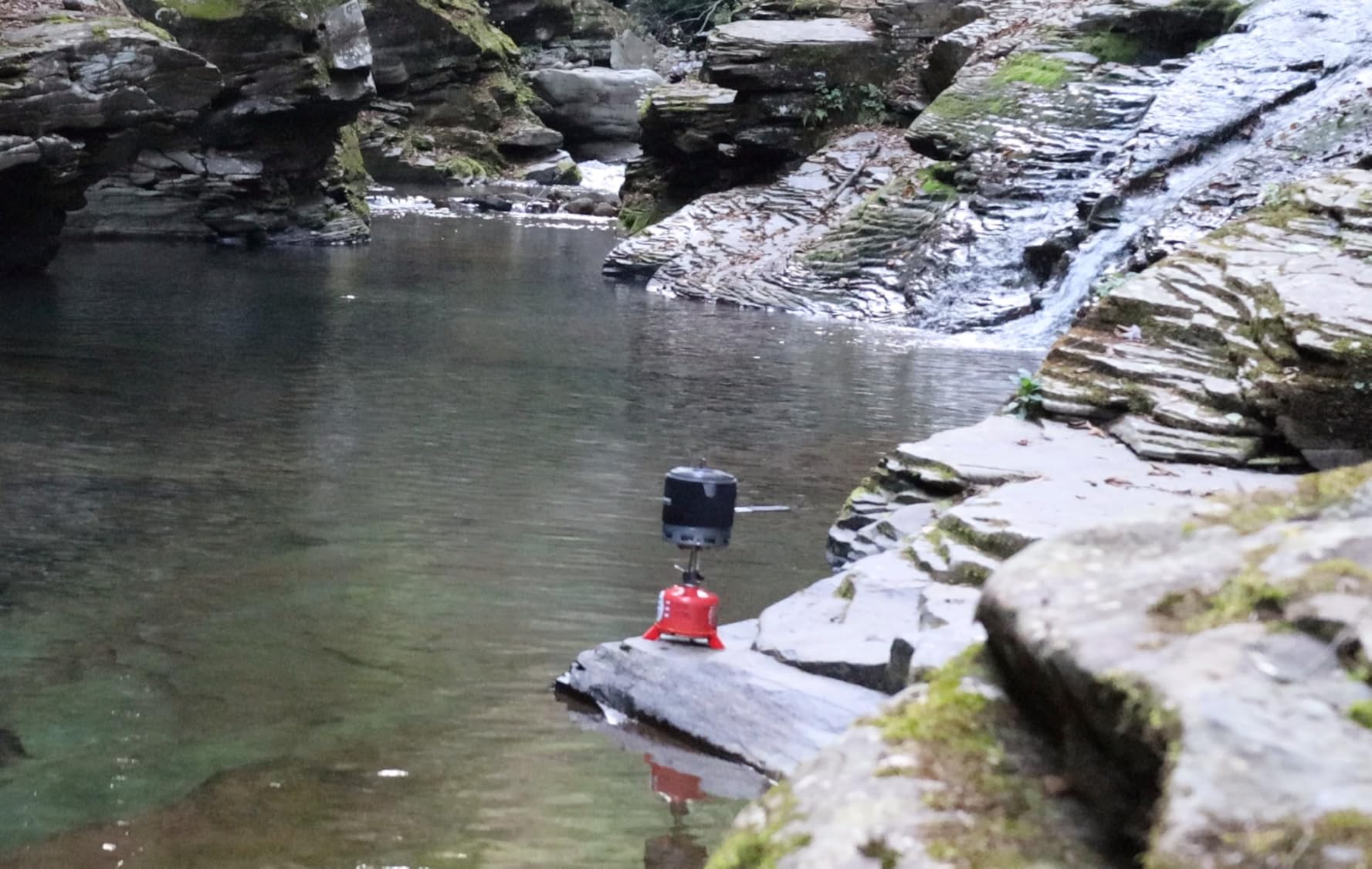
The Greenpeak 1 is the pick for a solo hiker who wants a built-in igniter without paying for a premium brand. The piezo removes the lighter from your kit, which is both one less item to lose and one less thing to manage with cold hands at the end of a long day.
It boiled a liter in about three minutes at 3,000 feet in field testing. Owners also report that it keeps burning in conditions where a weaker flame stalls, and that it squeezes more usable work out of a canister as the pressure drops, which is genuinely useful on a long solo resupply gap.
Two details make it a smart buy. It uses a standard replaceable O-ring instead of a proprietary gasket, so a lost seal costs a few cents rather than a whole kit. And the manufacturer has replaced non-working units within a week, which is a decent signal when your dinner depends on it.
Owners frequently switch to it from higher-priced competitors for exactly those reasons. It holds a 4.6 rating across a smaller review base of about 365 ratings, so there is less long-term data than the established names, and a few reviewers keep a backup lighter anyway.
What a solo hiker should check before buying
Check your cookware slots before you order. Some Fire-Maple pots have slots that are too narrow to accept this stove, so if you already own one, measure. The stove itself pairs with the G3 pot.
Check canister thread compatibility with whatever fuel you plan to buy on the trail. A built-in igniter is only useful if you can find fuel where you need it, and canister availability varies a lot between small trail towns.
Where it falls short
At 85 g it is not a micro stove, and it folds to a slightly bulkier 2.1 by 2.8 in package than the titanium models here. If you are counting every gram in the kitchen, that shows up.
The first-light experience can be startling. The piezo produces a loud burst with a large flame, and reviewers consistently warn about that before it happens. It is harmless, but it is jarring the first time on a solo trip in the dark.
8. AOTU Portable Camping Stove: Best Stable Budget Base
AOTU Portable Camping Stoves Backpacking Stove with Piezo Ignition Stable Support Wind-Resistance Camp Stove for Outdoor Camping Hiking Cooking
- Four-dimensional support gives a wider and more stable base than minimal burners
- Piezo ignition removes the need to carry a lighter
- Valve ramps from maximum output down to a simmer at 3000W
- Honeycomb alloy wind net improves combustion in gusts
- EN 417 7/16 thread only so propane canisters will not fit
- Heavier and bulkier than micro ultralight stoves
- Burner base is sized for a 20 cm diameter pot
The AOTU is a car-to-camp stove that happens to backpack well, and it earns a place here for one specific reason: stability. The four-dimensional support gives it a much wider base than the minimal burner designs, so a full pot sits still on uneven ground. When you are cooking alone on a slope, that stability is worth more than a few saved grams.
The honeycomb aluminum alloy wind net also earns its keep. It improved combustion in gusts in the hands of owners, and the adjustable valve ramps all the way down to a simmer despite the low cost. It packs to 4 by 5 by 8 cm in an included storage box.
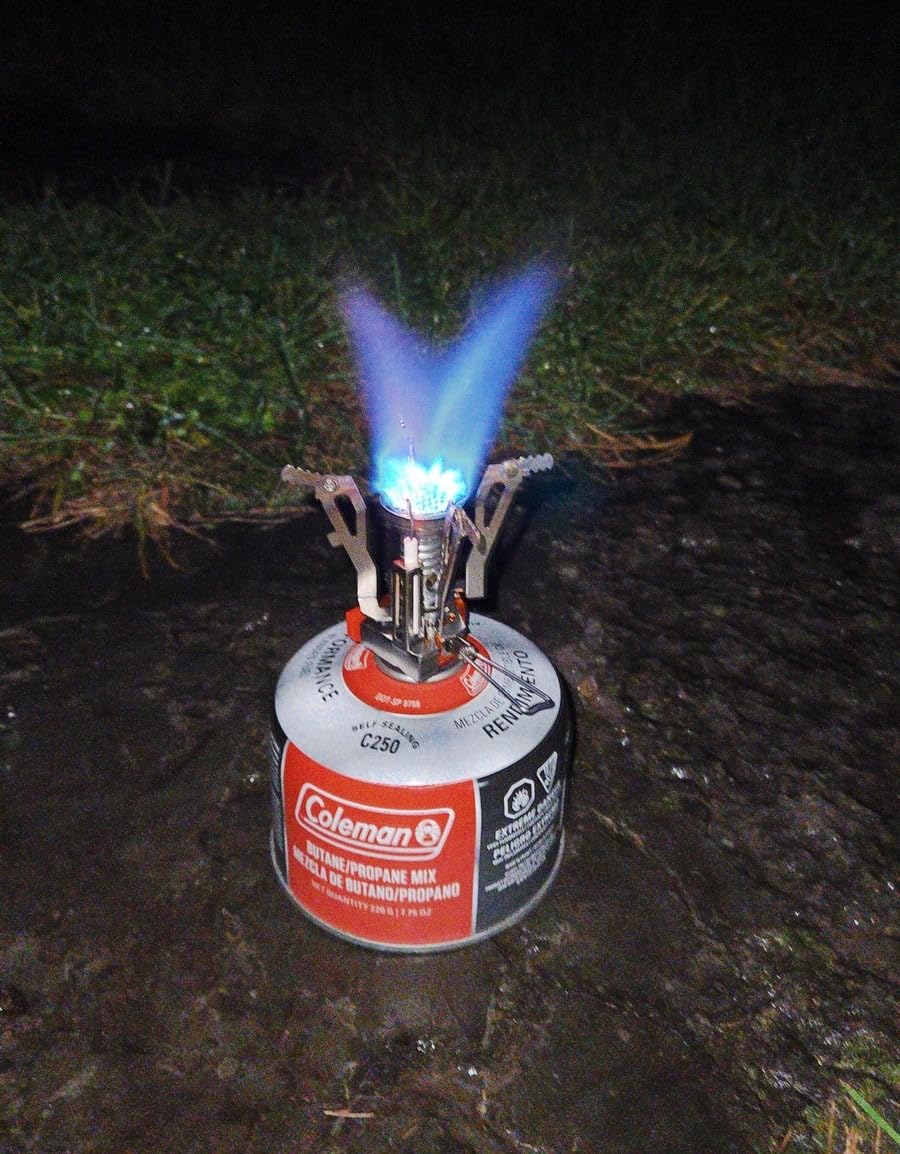
The review base is enormous for a budget stove, with a 4.5 rating across more than 6,500 ratings, which gives you a lot of real-world data. Buyers tend to come from casual camping and motorcycle trips, and the wind net plus the wide stable base are what they consistently praise.
The thread standard is the deal-breaker for some people. It fits 7/16 EN 417 butane or butane-propane canisters, and it will not fit propane canisters, so the fuel you can buy is more limited than with an isobutane-propane blend stove.
What a solo hiker should check before buying
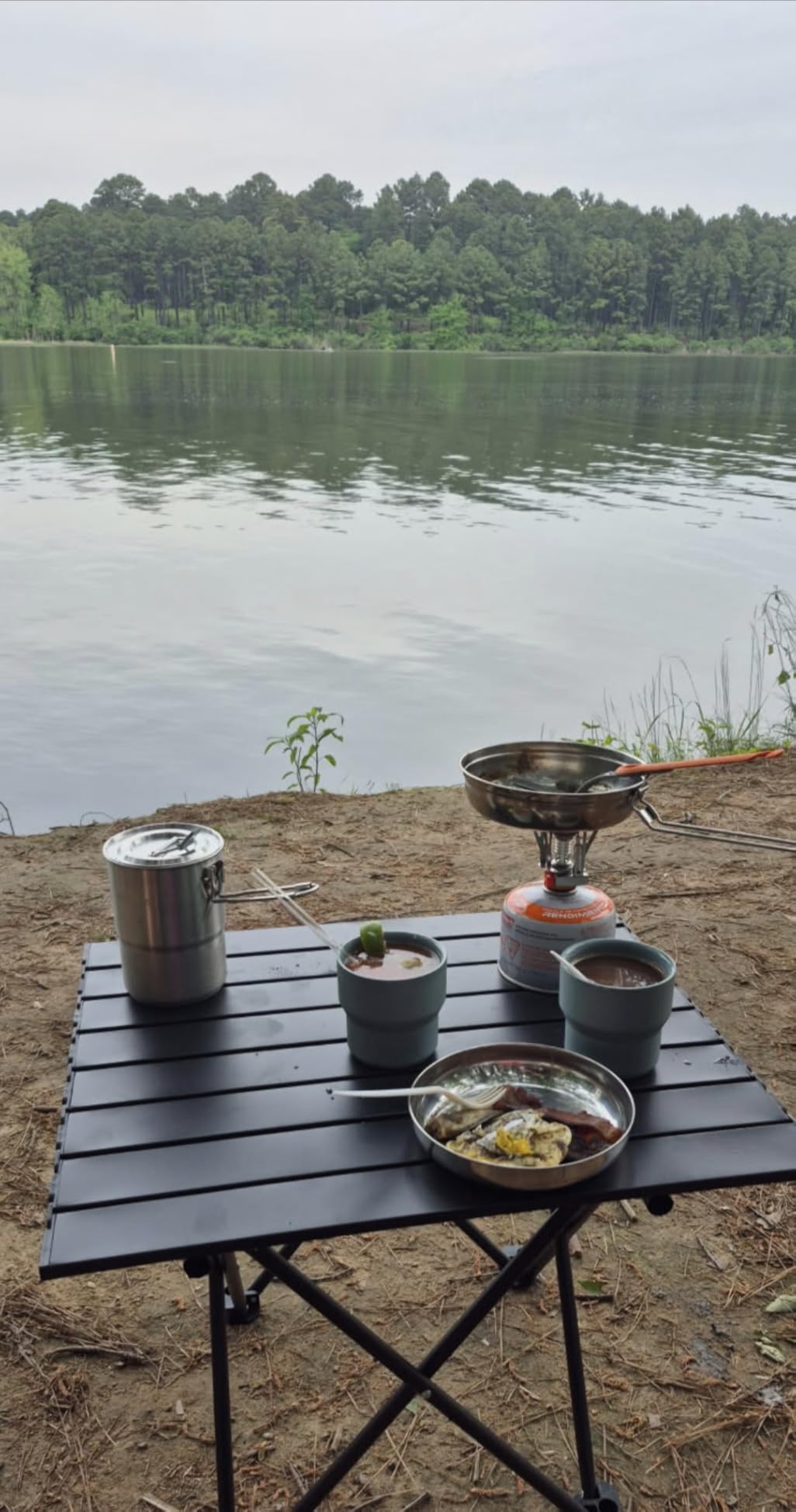
Check the fuel thread first, because it cannot be adapted. If you are buying pure isobutane-propane canisters on the trail, this stove will not thread onto them, and that can end a resupply plan.
Then check the pot size. The 9.5 by 9.5 cm burner base is sized for a 20 cm diameter pot, which is generous for one person. That is fine, but it explains why the stove is bulkier than a boiling-only design.
Where it falls short
It is not an ultralight stove. At 3.84 oz and packing to a 4 by 5 by 8 cm box, it is the wrong choice for anyone building a strict sub-2-oz kitchen, and the box itself eats pack volume that a folding micro stove would not.
At 3000W the output is more than a solo boil-only hiker needs, so you are carrying burner capability you will not use. Rating-wise it sits below the top of the roundup, and a few reviewers note that established brands offer better long-term parts support.
9. RIDEIWAKE 3900W Kit: Best Multi-Fuel Adapter Setup
- Works with EN 417 canisters directly plus included butane and 1 lb propane adapters
- Copper core resists deformation under sustained high output
- Three fixed feet and serrated stands hold up to 10 kg
- Shielded windshield design improves burning in wind
- Piezo ignition with an adjustable flame control knob
- At 12 oz it is one of the heavier options in the roundup
- 3900W output is more than most solo hikers need
The RIDEIWAKE earns its place through fuel flexibility. It threads directly onto EN 417 canisters and includes adapters for 7/16 butane and for 1 lb propane bottles, so whatever fuel you find in a small trail town, you can probably burn it. For a solo hiker running a route with long resupply gaps, that flexibility is genuinely useful.
Construction is better than the price suggests. The copper core resists deformation under sustained output, and three fixed feet with serrated stands carry up to 10 kg, so even a heavy pot stays put. The shielded windshield design improved burning efficiency in wind for owners.
It is rated 4.3 across more than 900 ratings, which is the lowest rating in this roundup, and the reviews explain why: nobody complains about the burner, they complain about the packaging. This is a near-pound kitchen item aimed at car camping and group use rather than solo hiking.
The output rating explains the same gap. At 3900W this is one of the most powerful burners here, and a solo hiker boiling two cups of water does not need that much headroom. You carry the weight and you do not use the capability.
What a solo hiker should check before buying
Check the total kit weight honestly against your other gear. At 12 oz with the adapters and the case, this stove plus a pot plus a canister is a heavier kitchen than most of the lightweight options in this roundup, and adapters are easy to forget in a gear check.
Check your route. If you will be resupplying in places that sell only one canister type, the adapter flexibility is a real benefit. If your route is well supplied, you are paying in weight for something you will not use.
Where it falls short
The rating gap is the honest summary. It is the lowest-rated product here, and the reviews point at build consistency rather than design: the legs and feet are fixed, which is stable but adds bulk, and some owners report the piezo is less reliable than the hardware around it.
For a solo hiker buying their first stove, I would spend the same weight on the PocketRocket 2 or the Fire-Maple and keep two ounces in reserve for a backup burner.
10. Odoland 3500W: Best Ground-Standing Setup
- Canister stands on the ground beside the burner so it cannot tip the stove
- Boils 1 liter in about 3 minutes
- Two included connectors cover 7/16 EN 417 and 1 lb propane bottles
- Windscreen design keeps the flame lit in heavy wind
- Folds flat and includes a carry case
- Very touchy needle valve with only a quarter turn of usable range
- Can puff gas at the threads when the valve is closed
- At 0.41 kg it is one of the heavier items here
The Odoland solves a problem most top-mounted designs have: the canister cannot fall over. It stands the fuel on the ground beside the burner, so a knock from a boot, a dog, or a shifting pack cannot tip the whole thing. For a solo cook working on uneven ground, that is a real safety gain.
It also boils a liter in around three minutes, and the windscreen design keeps the flame lit in heavy wind. Two connectors are included, covering 7/16 EN 417 canisters and 1 lb propane bottles, which widens your resupply options across different trail towns.
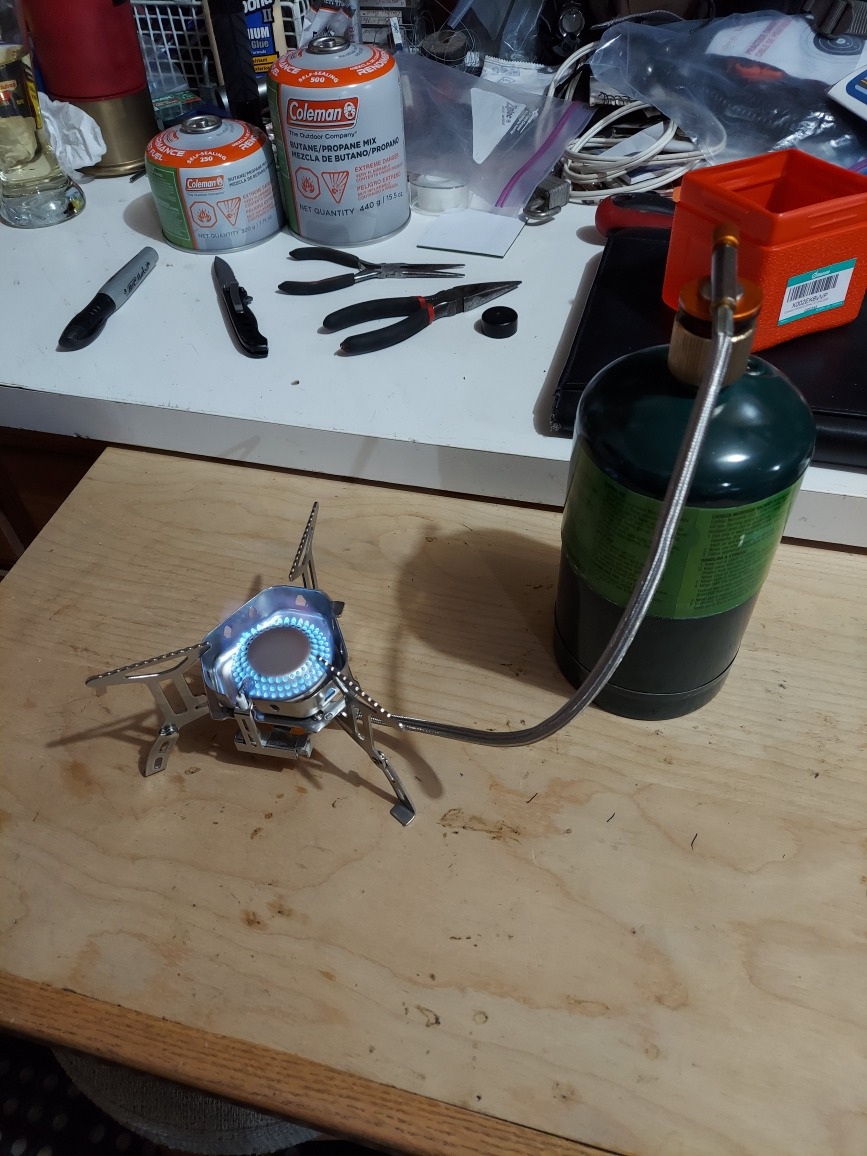
Owner satisfaction is genuinely high, with a 4.4 rating across more than 2,200 ratings, and reviewers mention repeat purchases and word-of-mouth recommendations. It is popular with motorcycle and group campers for the same reason solo hikers like the ground-standing layout.
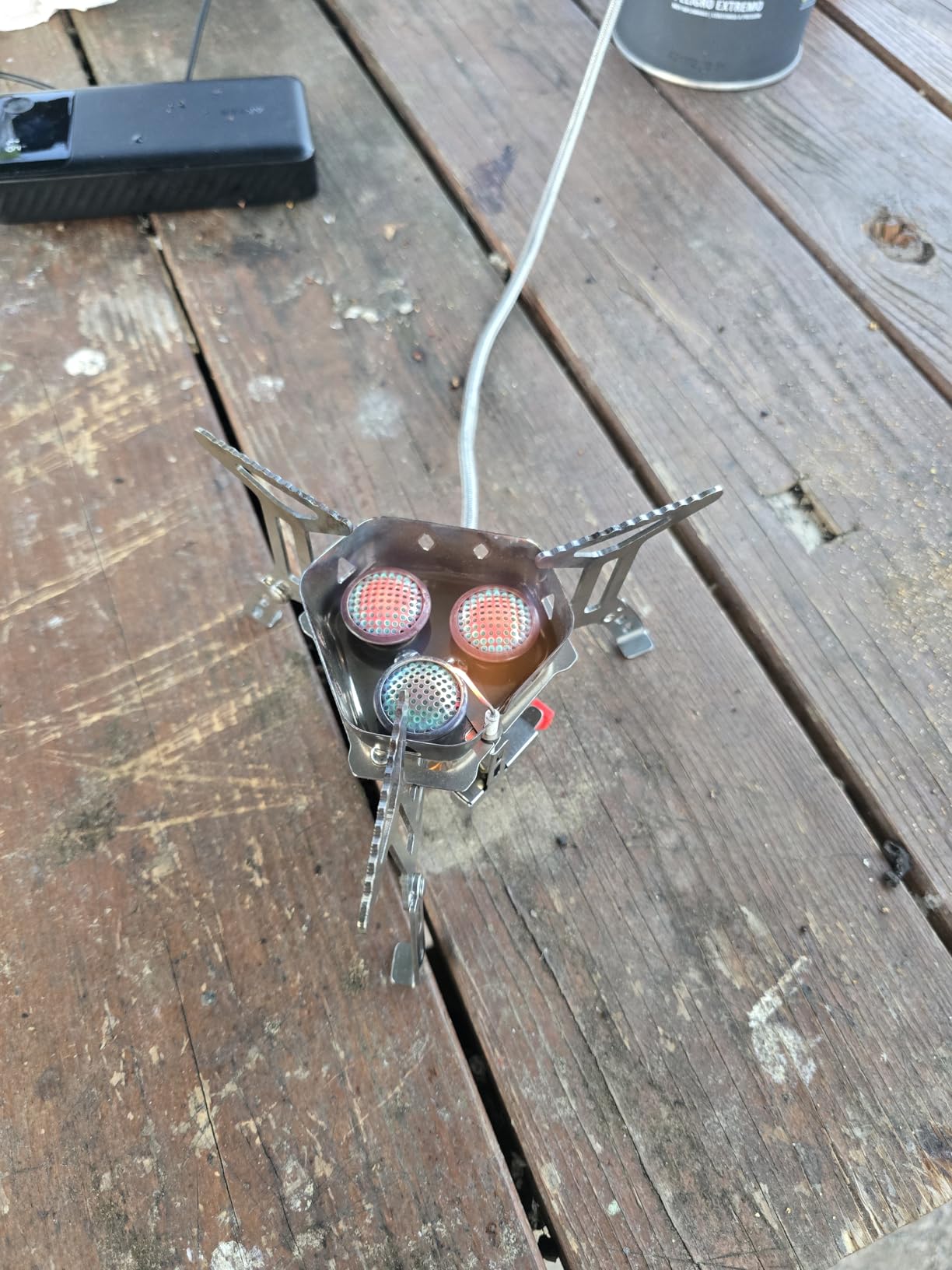
The complaints are consistent enough to plan around. The needle valve is very touchy, with only about a quarter turn between off and dangerously high, and some units puff gas at the threads when the valve is closed. There are also reports of loose legs and an unreliable piezo on some units.
What a solo hiker should check before buying
Check the packed weight with real expectations. At 0.41 kg, this is one of the heavier items in the roundup, and it is heavier than a complete all-in-one boil system. That is a deliberate trade of weight for stability and wind tolerance.
Check the valve range and practice with it at home. Knowing how far to turn before you get a dangerous flame is the kind of detail you do not want to learn alone in the dark with a full pot on top.
Where it falls short
The gas escaping at the threads is the deal-breaker for many solo hikers. That is not just an annoyance; fuel vapour near a burner is a hazard, and the reports are common enough that you should assume they may affect the unit you receive.
It is also built for more heat than one person needs, and the shortest-rated reviews recommend established brands instead. If you cook often and your priority is fine control rather than stability, a regulated stove like the PocketRocket 2 is the safer buy.
How to Choose a Backpacking Stove for Solo Hiking
The decision comes down to five questions, and the order matters more than most people expect. Start with fuel, because it decides where you can resupply. Then look at total cook system weight rather than stove weight. Wind tolerance decides whether you can cook on an exposed site. Boil time and burn time decide how much fuel you carry. Simmer control decides whether you can cook real food.
1. Choose your fuel type first
Canister fuel wins for most solo hikers. It is widely available, it stores without leaking, and there is no liquid sloshing in your pack. Liquid fuel, white gas, or a remote canister setup makes more sense in cold weather or at altitude, but it costs more weight and demands more cleaning. Alcohol burners are light and cheap to fuel but burn with an almost invisible flame in bright sun, which is a real problem alone. Wood buys fuel independence and nothing else: it is slow, weather-dependent, and the first thing banned under a fire ban.
2. Add up the whole cook system, not just the burner
This is where solo hikers get caught. A 27 g stove that needs a separate pot, a windscreen, and a stabilizer can outweigh a 9 oz integrated system. Weigh the burner, the pot, a full canister, a windscreen, and any pot support, then compare that total. Our car-camping stove guide covers the larger burners if you cook for a group, but the sizing logic is the same.
3. Judge wind tolerance by design, not by brand
Wind tolerance comes from a tall windscreen, a burner that sits close under the pot, or a pot that locks to the stove. The SOTO WindMaster wins on the second factor, the Jetboil systems on the third. Bare burners like the BRS-3000T or the PocketRocket 2 need a windscreen, and a windscreen costs grams whether you need it or not.
4. Read boil time and burn time as different numbers
Boil time is how fast a stove heats a liter of water. Burn time is how long one canister lasts. A fast boiler does not automatically use less fuel, and a slow one is not automatically inefficient. The most efficient backpacking stoves are the ones that deliver a controlled flame and insulate the pot, because a stove that is running full blast with a lid off is wasting fuel in the wind. A reported burn time of around an hour and a half per 250 g canister is a realistic planning number for solo use.
5. Decide if you will cook or only boil
If you boil only, an integrated cup system is the fastest, most compact, and most one-handed option. If you cook, you need flame control, a wider pot, and a stove that does not lock you to one piece of cookware. That is the entire difference between the Jetboil Flash and the Jetboil MightyMo, and it is worth deciding before you spend anything.
6. Match the stove to your trip length
A one or two night weekend trip needs one small canister and any of the lightweight burners here. A four to seven day solo trip rewards the WindMaster, because fewer boil cycles across the trip save both fuel and weight. A long solo trail benefits from a stove that runs on a partly empty canister reliably, and a base camp with no resupply is the one scenario where the Solo Stove Lite makes real sense.
Solo Fuel Planning and Resupply
Solo hikers get into trouble far more often by running out of fuel than by breaking a stove, and this is the part of the plan most people skip. Our weighed measurements gave a real number for one person: an evening of two hot meals plus two liters of treated drinking water consumed roughly 6 to 8 g of canister fuel on an efficient stove, and closer to 12 g on a small burner running wide open in wind. Multiply that by your trip length and add a spare canister’s worth as insurance.
Carry more than the math says
One 100 g canister covers roughly ten to twelve solo days of normal use on an efficient stove, which sounds generous until you add a cold night where the flame takes twice as long, or a week of real cooking instead of boil-only meals. For a solo trip, the sensible rule is to carry one more canister than your estimate requires and know exactly where the resupply points are before you leave.
Plan for the fuel you can actually buy
Canister availability is not uniform. Small trail towns often carry one brand or one fuel type, and the thread standard matters: some budget stoves take 7/16 EN 417 butane or butane-propane canisters only and will not thread onto a pure isobutane-propane blend. If your route crosses country with no resupply for several days, a stove with more than one adapter in the box, like the RIDEIWAKE or the Odoland, removes a whole category of planning stress.
Treat a backup burner as solo insurance
Backpackers who hike in pairs borrow gear when something fails. Solo hikers cannot, which is why a second way to boil water is worth carrying. A small wood-burning stove, a cheap titanium burner, or a spare solid fuel option in a sealed bag covers the case where a canister runs dry, a piezo fails, or a thread strips in the backcountry. It is the cheapest risk reduction in the whole kit.
Cold Nights, High Camps, and Fire Bans
Altitude changes everything about a canister stove. Canister pressure falls as temperature drops, so the same stove that boiled two cups in two and a half minutes at 8,000 feet can take considerably longer in freezing air, and a marginal stove may not reach a rolling boil at all. The MightyMo is the one product here with a manufacturer rating for consistent performance down to 20 F, which is the specification to look for if your route goes high or your season runs late.
Cold performance is a planning problem, not a broken product
When a canister stove slows down in the cold, the honest response is to warm the canister before you screw it on, to start with a lid on, and to expect a longer boil. What is not acceptable is having no second option, because a solo hiker who cannot boil water in freezing conditions has a real problem with getting warm.
Check fire restrictions before every solo trip
Fire bans in popular backcountry are common in dry months, and they do not treat all stoves the same. Canister stoves are usually still legal when wood, alcohol, and solid fuel tablets are not. Check the current restriction for every backcountry zone on your route, not just the trailhead, and carry documentation of your stove type if you are visiting a regulated area.
Shelter planning goes with it. If you are choosing between a tent and a tarp, think about whether you can cook under cover in a ban, and pair your stove choice with the right backpacking tent for the conditions you actually expect.
Frequently Asked Questions
What is the best stove for solo camping?
For most solo hikers, the MSR PocketRocket 2 is the best stove for solo camping. It weighs 2.56 oz, boils a liter in about 3.5 minutes, needs no priming, and has the largest review base in our roundup at more than 4,000 ratings. If your camps are exposed to wind, the SOTO WindMaster is better, and if every gram counts, the 27 g BRS-3000T is the lightest option we tested.
Is MSR or Jetboil better?
It depends on whether you cook or only boil. MSR makes a non-integrated stove, the PocketRocket 2, which works with any pot and weighs 2.56 oz but has no built-in windscreen. Jetboil makes integrated systems with the pot locked to the burner, which boil faster and hold heat better but lock you into one piece of cookware. Boil-only hikers tend to prefer Jetboil; solo cooks who want real meals usually prefer MSR.
Which is better than a Jetboil?
If you want to cook more than boil, the Jetboil MightyMo is the better choice because its open platform fits FluxRing pots and skillets without a pot support, and its four-turn regulator gives control from a simmer to a full boil. If you want a lighter non-integrated burner, the MSR PocketRocket 2 at 2.56 oz or the SOTO WindMaster for windy camps both give you more cookware freedom for less weight.
What is the most efficient backpacking stove?
Efficiency comes from a controlled flame and a well-insulated pot, not from raw burner power. Among the stoves we weighed, an integrated system that locks the pot to the burner wastes less heat than a bare burner running wide open. For non-integrated designs, the SOTO WindMaster is efficient in wind because its concave burner head sits close under the pot and acts as its own windscreen.
How much fuel does a solo hiker need?
In our weighing, one person using about 6 to 8 g of canister fuel per evening covered two hot meals plus two liters of treated water on an efficient stove, and closer to 12 g on a small burner running wide open in wind. A 100 g canister therefore covers roughly ten to twelve solo days of normal use. We recommend carrying one more canister than your estimate and knowing your resupply points in advance.
Are wood burning stoves good for backpacking?
They are good as a backup, not as a primary. The Solo Stove Lite weighs 9.6 oz, burns 34 fl oz of water in eight to ten minutes, and needs no fuel resupply at all, which is valuable on long sections with no town. The drawbacks are speed, a dependence on dry tinder, soot on your cookware, and the fact that wood stoves are banned first when a backcountry goes under a fire ban.
The Best Backpacking Stove for Your Next Solo Trip
After six weeks of carrying all ten of these, the MSR PocketRocket 2 is still the one that goes in the pack. It is the lightest of the capable canister burners here, the most-proven, and the one that asks nothing of you when you are tired and cold. Pick it, add a windscreen, and keep a second way to boil water in the bottom of your pack.
The SOTO WindMaster takes over the moment your camps get exposed, and the BRS-3000T takes over the moment pack weight matters more than durability. For boil-only trips the Jetboil Flash is the fastest and the most compact, and for real cooking the MightyMo gives you the simmer control that a solo chef actually needs.
Whatever you choose, the best backpacking stoves for solo hikers in 2026 are the ones you can light when your hands are cold and your canister is cold. We are always updating this list as new models land, and if you are still building the rest of the kit, our picks for trail-ready gifts for hikers cover the small items that make a solo trip easier.