
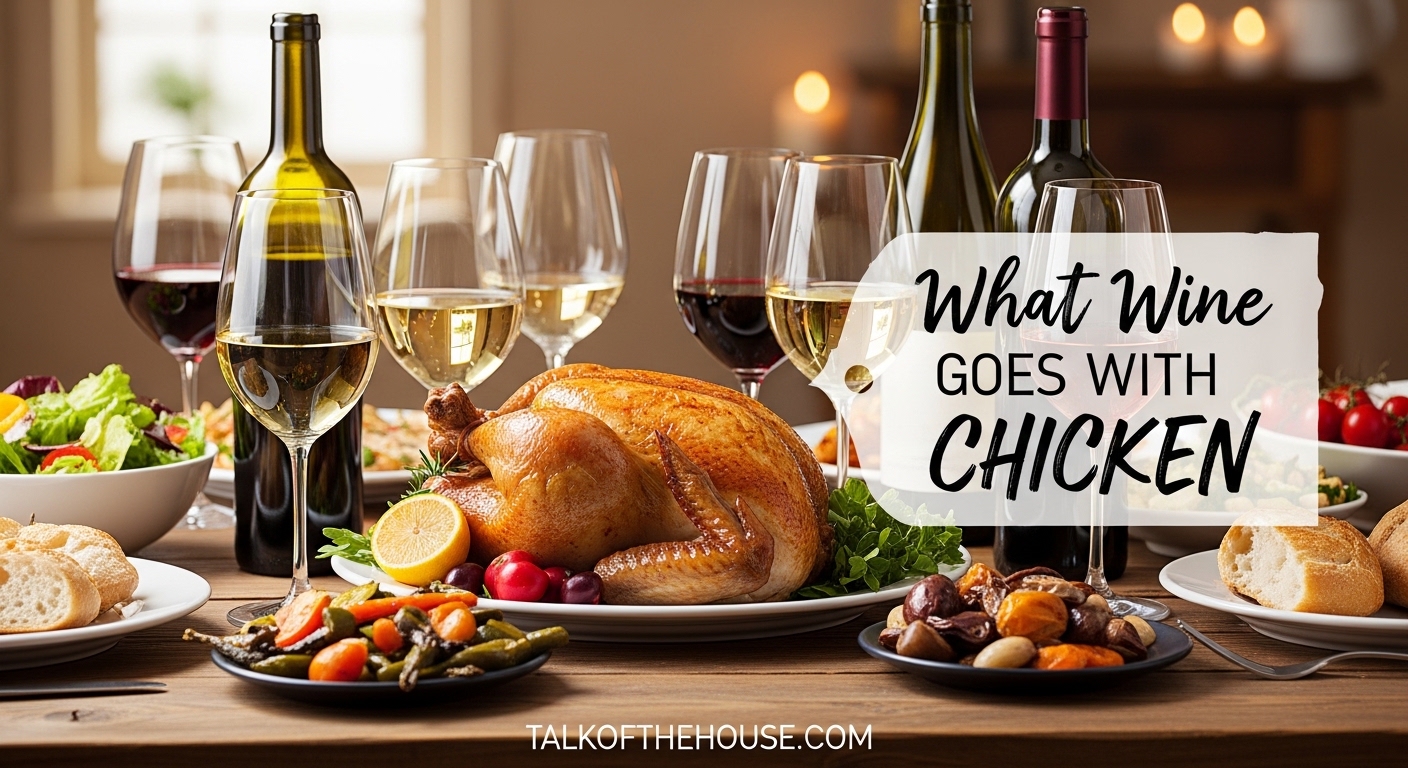
Finding the right bottle to serve with your chicken dinner doesn’t need to be complicated. What wine goes with chicken depends more on how you cook it and what sauces you add than the protein itself. Chicken is wonderfully versatile – it pairs beautifully with crisp whites, light reds, and even sparkling wines depending on the preparation.
Our team has tested dozens of wine and chicken combinations over the past year, from casual weeknight dinners to formal entertaining. The good news? Neither chicken nor wine are particularly picky. Even if you choose a bottle that isn’t the textbook pairing, you’ll likely still enjoy your meal.
The key is understanding a few simple principles about matching intensity. A delicate poached chicken breast calls for something different than smoky barbecue wings. Once you grasp the basics, you can confidently select wine for any chicken dish, whether you’re cooking for your family or hosting a dinner party in your outdoor entertaining areas.
Table of Contents
Quick Reference: What Wine Goes with Chicken
Before diving into detailed explanations, here’s a quick guide you can bookmark. Match your chicken preparation with these wine styles for guaranteed success at your next meal.
- Roasted Chicken: Oaked Chardonnay, Pinot Noir, Sauvignon Blanc
- Grilled Chicken: Rosé, Pinot Grigio, light Pinot Noir
- Fried Chicken: Sparkling wine, Chenin Blanc, dry Riesling
- Chicken in Cream Sauce: Full-bodied Chardonnay, Viognier
- Chicken Curry: Off-dry Riesling, Gewürztraminer, Viognier
- BBQ Chicken: Zinfandel, Syrah, bold Rosé
- Chicken Wings: Beer works, but try sparkling rosé or crisp white
- Chicken Stir-Fry: Sauvignon Blanc, Pinot Grigio, dry Riesling
Keep this list handy when shopping or planning your menu. The following sections explain why these pairings work and offer specific bottle recommendations at various price points.
White Wine Pairings for Chicken
White wines are the classic choice for chicken, and with good reason. The lighter body and higher acidity of most whites complement chicken’s mild flavor without overwhelming it. Here are the three white varieties we reach for most often.
Chardonnay – The Versatile Classic
Chardonnay remains the most popular white wine for chicken, and it’s easy to understand why. An oaked Chardonnay brings buttery richness that complements roast chicken beautifully. The wine’s full body stands up to the savory, caramelized flavors that develop during roasting.
For creamy chicken dishes like chicken Alfredo or mushroom sauces, oaked Chardonnay is practically mandatory. The wine’s vanilla and toast notes echo the cooking techniques used in these dishes. Look for bottles from California or Burgundy for classic examples, though excellent options now come from Chile and Australia at lower price points.
If you’re serving grilled or poached chicken, consider unoaked Chardonnay instead. The crisp, apple-forward profile won’t compete with delicate preparations. We’ve found that unoaked styles work particularly well for summer lunches and lighter meals.
Sauvignon Blanc – Crisp and Herbaceous
Sauvignon Blanc delivers exactly what many chicken dishes need: bright acidity and herbal notes. This wine cuts through richness while complementing herb-seasoned preparations perfectly. A New Zealand Sauvignon Blanc with its characteristic grapefruit and grass notes pairs wonderfully with lemon-herb chicken.
The high acidity in Sauvignon Blanc makes it an excellent partner for fried chicken. It cleanses the palate between bites of crispy, fatty goodness. We also reach for this variety when serving chicken with citrus-based marinades or caper sauces.
French Sancerre and Pouilly-Fumé offer more mineral, restrained expressions that work beautifully with simply prepared chicken breast. These wines shine when the chicken isn’t heavily sauced, letting both the protein and the wine speak clearly.
Pinot Grigio – Light and Refreshing
Sometimes you want a wine that simply refreshes without demanding attention. Pinot Grigio fills this role admirably. Italian Pinot Grigio offers crisp green apple and citrus notes that complement grilled chicken and simple preparations.
While often dismissed as simple, good Pinot Grigio from Alto Adige or Friuli can be genuinely elegant. These northern Italian examples offer more depth and mineral character than mass-market versions. They’re perfect for warm-weather entertaining when you want something easy-drinking alongside grilled chicken salads or light pasta dishes.
Budget-conscious hosts appreciate that decent Pinot Grigio starts around $10-12. It’s an accessible option that pleases crowds without breaking the bank for larger gatherings.
Red Wine Pairings for Chicken
Here’s a truth that surprises many home cooks: chicken absolutely can pair with red wine. The old rule about “white meat with white wine” is more suggestion than law. The key is choosing lighter reds that won’t overpower the chicken’s subtle flavor.
Pinot Noir – The Perfect Red for Chicken
Pinot Noir is the red wine world’s gift to chicken dishes. Its light to medium body, moderate tannins, and bright acidity make it incredibly food-friendly. An earthy Burgundy-style Pinot complements roast chicken with mushrooms, while fruit-forward examples from California or Oregon work with grilled preparations.
The earthy, mushroom-like notes in many Pinot Noirs create a natural bridge to chicken dishes featuring similar flavors. Think coq au vin, chicken with mushroom cream sauce, or simply roasted chicken with thyme. The wine and food seem to speak the same language.
For entertaining, Pinot Noir offers another advantage: it pleases both red and white wine drinkers. Its lighter profile doesn’t intimidate white wine fans, while offering enough complexity for red wine enthusiasts. Keep a few bottles on hand for dinner parties where preferences vary.
Other Light Reds to Consider
Beyond Pinot Noir, several other red varieties play nicely with chicken. Gamay, the grape behind Beaujolais, offers bright red fruit and low tannins that work beautifully with chicken. A chilled Beaujolais-Villages is surprisingly refreshing with cold chicken salads or picnic preparations.
Côtes du Rhône blends, particularly those heavy on Grenache, bring friendly fruit and spice that complement barbecue chicken or tomato-based dishes. These wines often offer excellent value, with good bottles available for $12-18.
For darker meat preparations like chicken thighs or coq au vin, consider a lighter Cabernet Franc from the Loire Valley. The variety’s herbal notes and medium body stand up to richer preparations without overwhelming them.
Rosé and Sparkling Wine Options
Don’t overlook these two categories when planning your chicken dinner. Both offer unique advantages that make them worth keeping in your wine rotation.
Rosé might be the most versatile wine for chicken of all. Its combination of white wine freshness with red wine fruit makes it a natural bridge between the two categories. A dry Provence rosé works with everything from grilled chicken to picnic chicken salads. Spanish rosados tend to be fuller-bodied and pair beautifully with spice-rubbed or barbecued chicken.
Sparkling wine deserves special mention for fried chicken. The bubbles and high acidity cut through fat and grease like nothing else. Champagne works wonderfully, but don’t overlook Crémant from France’s other regions, Spanish Cava, or Italian Prosecco for more budget-friendly options. We’ve served sparkling wine with fried chicken at casual gatherings, and guests are always pleasantly surprised by the combination.
For entertaining, sparkling wine adds instant festivity. Serving a sparkling rosé with chicken skewers or canapés sets a celebratory tone from the first pour.
Pairing by Cooking Method
How you prepare chicken matters more than the cut you choose. The cooking method dramatically affects the final flavor intensity, which in turn guides your wine selection.
Roasted Chicken
Roasting develops deep, savory flavors through caramelization and the Maillard reaction. This creates a more complex flavor profile that calls for wines with some depth. Oaked Chardonnay is the classic match, its buttery richness echoing the succulent roasted meat.
However, don’t stop there. A medium-bodied Pinot Noir brings out earthy, mushroom-like notes in the roasted skin. Sauvignon Blanc offers a brighter, more refreshing contrast if you prefer white wine. For herbed roast chicken with rosemary or thyme, try a wine with herbal notes like Sauvignon Blanc or a Loire red.
Grilled Chicken
The smoky char from grilling adds intensity that lighter wines complement beautifully. Rosé is practically made for grilled chicken – the combination is a summer staple at our house. The wine’s fruitiness balances the smokiness while its acidity cuts through any oily marinade.
Pinot Grigio and Sauvignon Blanc both work wonderfully here too. If you’re using a bold barbecue sauce, consider switching to a light red like Beaujolais or even a Zinfandel if the sauce is particularly spicy and sweet.
Fried Chicken
This is where wine pairing gets fun and slightly unexpected. The crispy, fatty, salty nature of fried chicken demands acidity and bubbles. Sparkling wine is the surprising winner here – Champagne if you’re feeling fancy, Cava or Prosecco for everyday.
Chenin Blanc from South Africa or the Loire Valley offers another excellent option. Its naturally high acidity and often slight sweetness create a delightful contrast with salty fried chicken. Off-dry Riesling works similarly well, particularly with spicier preparations like Nashville hot chicken.
Chicken in Creamy Sauces
Rich, creamy sauces like Alfredo, mushroom cream, or mustard cream require full-bodied wines. Oaked Chardonnay is the obvious choice – its weight matches the sauce while its acidity prevents the combination from feeling too heavy.
Viognier offers a less common but equally delicious alternative. This aromatic white from the Rhône Valley brings peach and apricot notes that complement cream sauces beautifully. Look for examples from France, California, or increasingly, Australia.
If you prefer red wine, a light Pinot Noir won’t fight with cream sauces as long as they aren’t too heavy. Avoid high-tannin reds like Cabernet Sauvignon here – the tannins clash with cream and create an unpleasant metallic taste.
White Meat vs Dark Meat: Does It Matter?
The short answer is yes, but not as much as you might think. Chicken breast is leaner and milder, pairing best with lighter, more delicate wines. Think Pinot Grigio, unoaked Chardonnay, or light-bodied reds like Beaujolais.
Dark meat from thighs and legs contains more fat and has a stronger flavor. This allows it to stand up to fuller-bodied wines. An oaked Chardonnay works beautifully with chicken thighs, as does a medium-bodied Pinot Noir or Côtes du Rhône.
In practice, the cooking method and sauce matter more than the cut. A simple grilled chicken breast and a grilled chicken thigh might both pair beautifully with the same rosé. But a braised chicken thigh in red wine sauce clearly calls for something different than a poached chicken breast.
When in doubt, choose based on preparation rather than cut. And remember – wine pairing should enhance your meal, not stress you out. A good wine with the “wrong” cut of chicken still beats no wine at all.
Special Chicken Dishes and Their Wine Matches
Certain chicken preparations have established wine traditions worth knowing. These combinations have evolved over generations because they genuinely work well together.
- Chicken Curry needs wines with sweetness to balance the spice. Off-dry Riesling is the classic choice, its touch of sugar taming the heat while its acidity keeps the palate fresh. Gewürztraminer works similarly well, its lychee and rose notes complementing aromatic curry spices. Viognier offers a fuller-bodied alternative if you prefer something richer.
- Chicken Piccata with its lemon-caper sauce practically demands high-acid white wine. Sauvignon Blanc from Italy or France matches beautifully. We’ve also enjoyed Vermentino from Sardinia with this dish – its citrus notes echo the sauce perfectly.
- BBQ Chicken presents a pairing challenge because of its sweet, smoky, spicy profile. Zinfandel’s bold fruit can stand up to the sauce, as can Syrah’s peppery notes. A bolder rosé or even a light red like Grenache-based Côtes du Rhône works well for those who prefer less intensity.
- Chicken Stir-Fry with soy sauce and ginger calls for crisp, refreshing whites. Sauvignon Blanc is our go-to, though Pinot Grigio or dry Riesling work well too. The key is avoiding heavy or oaky wines that would clash with the dish’s quick, fresh character.
- Chicken Alfredo and other cream-based pasta dishes require the full-bodied white treatment. Oaked Chardonnay is traditional for a reason – the combination is genuinely satisfying. Viognier offers an interesting alternative, while a light Pinot Noir can work if you absolutely must have red.
Entertaining Tips: Serving Wine with Chicken
When hosting dinner parties, wine selection becomes part of the hospitality. Here are practical tips we’ve learned from years of entertaining at home.
- Offer both red and white. Even if you’re serving a chicken dish that traditionally pairs with one or the other, guests have preferences. Keep a bottle of Pinot Noir and a bottle of Chardonnay on hand, and let guests choose. This simple gesture makes everyone feel welcome.
- Consider your food pairing ideas for dinner parties. Think about the whole menu, not just the main course. If you’re serving a rich appetizer, you might want a lighter wine with the chicken to balance the meal.
- Budget-friendly doesn’t mean bad. Excellent chicken-pairing wines exist at $12-15. Look for Spanish Albariño, Italian Vermentino, or Chilean Chardonnay for whites. For reds, Beaujolais-Villages, Chilean Pinot Noir, or Portuguese reds often outperform their price point.
- Follow the 20-minute rule. Take white wine out of the refrigerator 20 minutes before serving. Put red wine in the refrigerator for 20 minutes before serving. This brings both closer to their ideal serving temperature – about 50-55°F for most whites and 60-65°F for lighter reds.
- When in doubt, serve sparkling. A decent sparkling wine or Champagne works with virtually any chicken preparation. It’s festive, food-friendly, and always feels special. Your guests won’t complain about bubbles.
FAQs
Is chicken better with white or red wine?
Chicken pairs well with both white and red wine. As a general rule, white meat like chicken breast pairs best with white wines, while darker cuts like thighs can handle light reds. The cooking method and sauce matter more than the meat color. Lighter preparations work with crisp whites, while richer, more flavorful dishes can pair with medium-bodied reds like Pinot Noir.
Why does white wine pair well with chicken?
White wine pairs well with chicken because of its naturally higher acidity and lighter body. The acidity cuts through any richness in the dish while cleansing the palate between bites. White wines like Chardonnay and Sauvignon Blanc complement chicken’s mild flavor without overwhelming it. The crisp, refreshing character of many whites provides a pleasant contrast to savory chicken preparations.
What is the 20 minute wine rule?
The 20-minute wine rule suggests taking white wine out of the refrigerator 20 minutes before serving, and putting red wine in the refrigerator for 20 minutes before serving. This brings white wines to their ideal serving temperature of 50-55°F instead of a too-cold 40°F, and cools lighter reds to 60-65°F instead of room temperature. Proper serving temperature significantly improves how the wine tastes with your meal.
What do you drink with chicken?
The best drinks with chicken include white wines like Chardonnay, Sauvignon Blanc, and Pinot Grigio; light red wines like Pinot Noir and Beaujolais; rosé for versatility; and sparkling wines for fried chicken. Non-alcoholic options include sparkling water with lemon, iced tea, or lemonade. The specific choice depends on how the chicken is prepared – fried chicken loves sparkling wine, while roasted chicken pairs beautifully with oaked Chardonnay or Pinot Noir.
Conclusion
What wine goes with chicken? The answer is simpler than wine culture sometimes suggests. Chicken’s mild flavor makes it a friendly partner for a wide range of wines, from crisp Sauvignon Blanc to earthy Pinot Noir.
The key is matching intensity: lighter preparations with lighter wines, richer dishes with fuller-bodied options. Don’t be afraid to experiment and trust your own preferences. The best wine pairing is one that makes you and your guests happy.
As you plan your next chicken dinner in 2026, use the quick reference guide above to make confident choices. Whether you’re grilling on the patio or roasting a Sunday dinner, there’s a perfect wine waiting to join your table. Cheers!