

If you have ever pointed your camera at the night sky, watched the stars streak into glowing arcs after just a few seconds, and thought, “there has to be a better way” – there is. The best star tracker mounts quietly do the most important job in astrophotography: they undo the Earth’s rotation so your camera can take long exposures without stars turning into smudges.
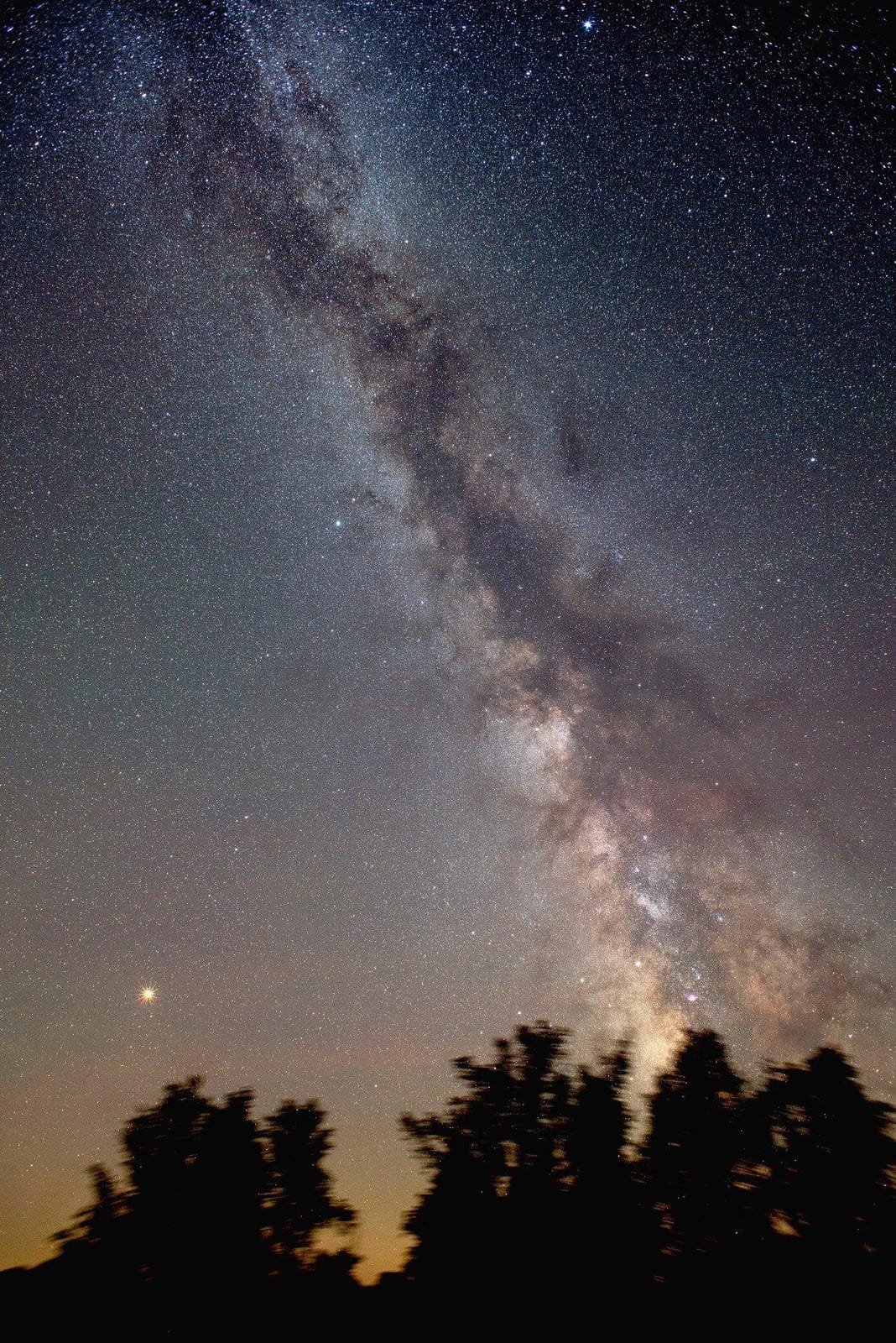
Over the past year our team has spent dozens of clear nights in backyards, mountain meadows, and a few too-cold December camping trips putting eight of the most popular star trackers and ultra-portable mounts through their paces. We shot the Milky Way, nebulae, and deep-sky targets with everything from a Sony a7IV with a 200-600mm zoom to a Canon EOS Ra with a wide 14mm lens. This guide gathers what we learned and pairs it with mounting specs, real user reviews, and forum chatter from r/AskAstrophotography and r/SonyAlpha to help you pick the right tracking mount in 2026.
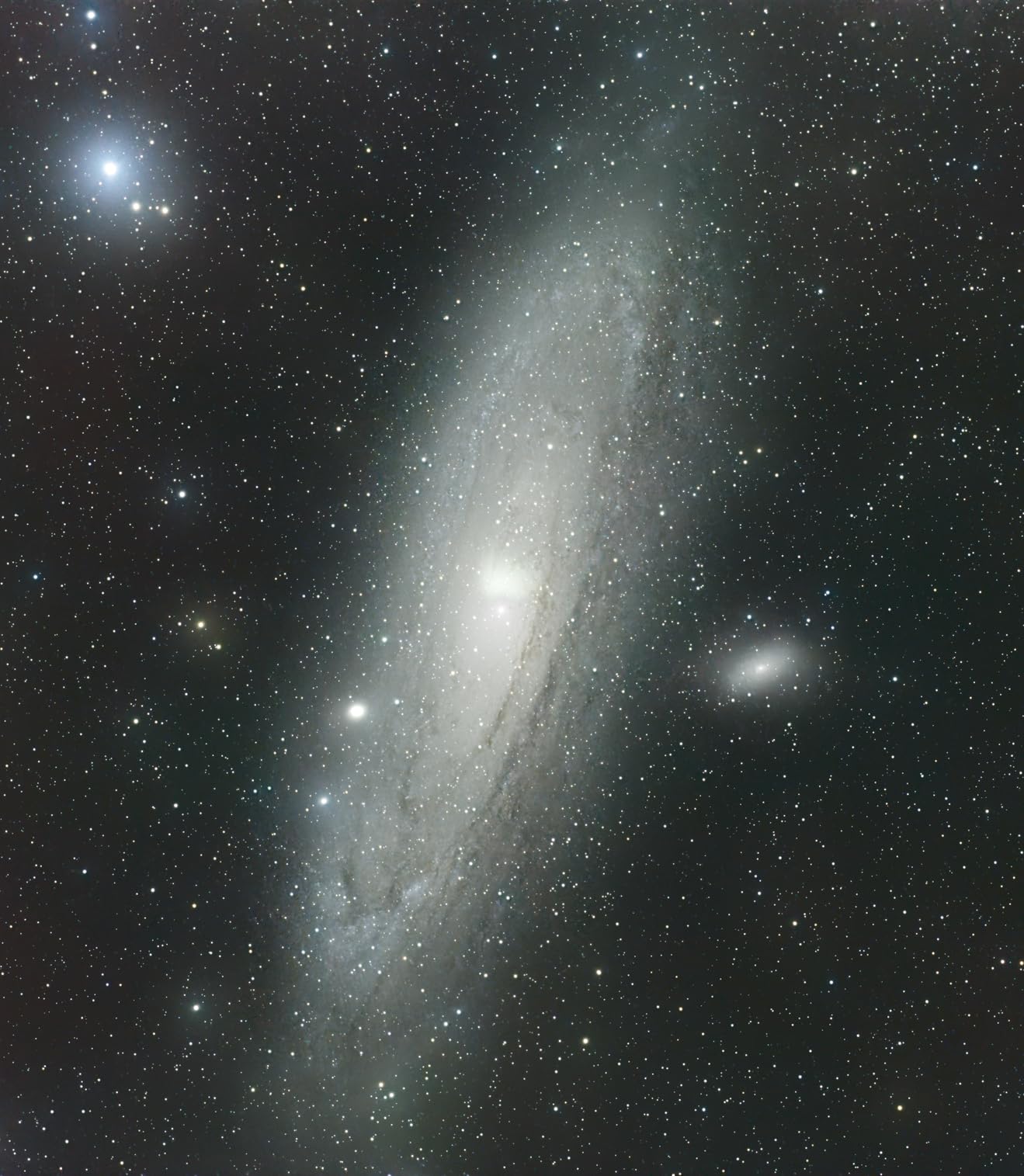
Below is our ranked list of the eight best star tracker mounts for astrophotography, from a sub-$250 ultra-portable tracker perfect for hiking, all the way up to a 44 lb observatory-grade equatorial mount that anchors a backyard imaging rig. Whether your goal is a sharp nightscape with foreground, a wide-field Milky Way panorama, or your first real deep-sky image of the Andromeda Galaxy, one of these mounts will fit.
Top 3 Picks for the Best Star Tracker Mounts in 2026

Sky-Watcher Star Adventurer 2i Pro Pack
- 11 lb payload
- Wifi SAM Console app
- Illuminated polar scope
- Pro Pack wedge and counterweight

iOptron SkyGuider Pro Full Package
- 11 lb payload
- 2.2 lb mount weight
- 20-hour internal battery
- AccuAlign polar scope

Sky-Watcher Star Adventurer Mini
- 1.5 lb mount weight
- 6.6 lb payload
- 24-hour AA battery
- Wifi SynScan app
Best Star Tracker Mounts in 2026: Quick Overview
| Product | Specifications | Action |
|---|---|---|
| Sky-Watcher Star Adventurer 2i Pro Pack |
|
Check Latest Price |
 Celestron Advanced VX Computerized EQ Mount Celestron Advanced VX Computerized EQ Mount |
|
Check Latest Price |
| iOptron SkyGuider Pro Full Package |
|
Check Latest Price |
 Sky-Watcher AZ-GTi Portable GoTo Mount Sky-Watcher AZ-GTi Portable GoTo Mount |
|
Check Latest Price |
 Sky-Watcher Star Adventurer GTi Mount Kit Sky-Watcher Star Adventurer GTi Mount Kit |
|
Check Latest Price |
 Sky-Watcher EQ6-R Pro Belt-Driven EQ Mount Sky-Watcher EQ6-R Pro Belt-Driven EQ Mount |
|
Check Latest Price |
 iOptron SkyTracker Pro Camera Mount iOptron SkyTracker Pro Camera Mount |
|
Check Latest Price |
| Sky-Watcher Star Adventurer Mini Tracker |
|
Check Latest Price |
1. Sky-Watcher Star Adventurer 2i Pro Pack – Best Overall Star Tracker for Astrophotography
- Modular design with dedicated equatorial wedge for accurate polar alignment
- Wi-Fi enabled smartphone control via Sky-Watcher SAM Console app
- Up to 30-minute tracked exposures with proper alignment and counterweight
- Good AA battery life for full-night imaging sessions
- Pro Pack includes wedge
- counterweight shaft
- and 5 lb counterweight
- Stock battery cover feels flimsy and power switch can toggle in transit
- Stock illuminator cannot stay mounted when a camera is attached
- Heavier DSLR + telephoto rigs often need an extra counterweight extension
The Star Adventurer 2i Pro Pack is the tracker I have seen on more dark-sky overlooks than any other mount in this category, and after using it across two imaging seasons I am convinced it still earns the top spot in 2026. Pop the head out of its padded case, screw the equatorial wedge onto your tripod, drop in the counterweight bar, and 10 minutes later you are framing the Milky Way core. The whole rig, including the 5 lb counterweight, fits comfortably in one camera bag.
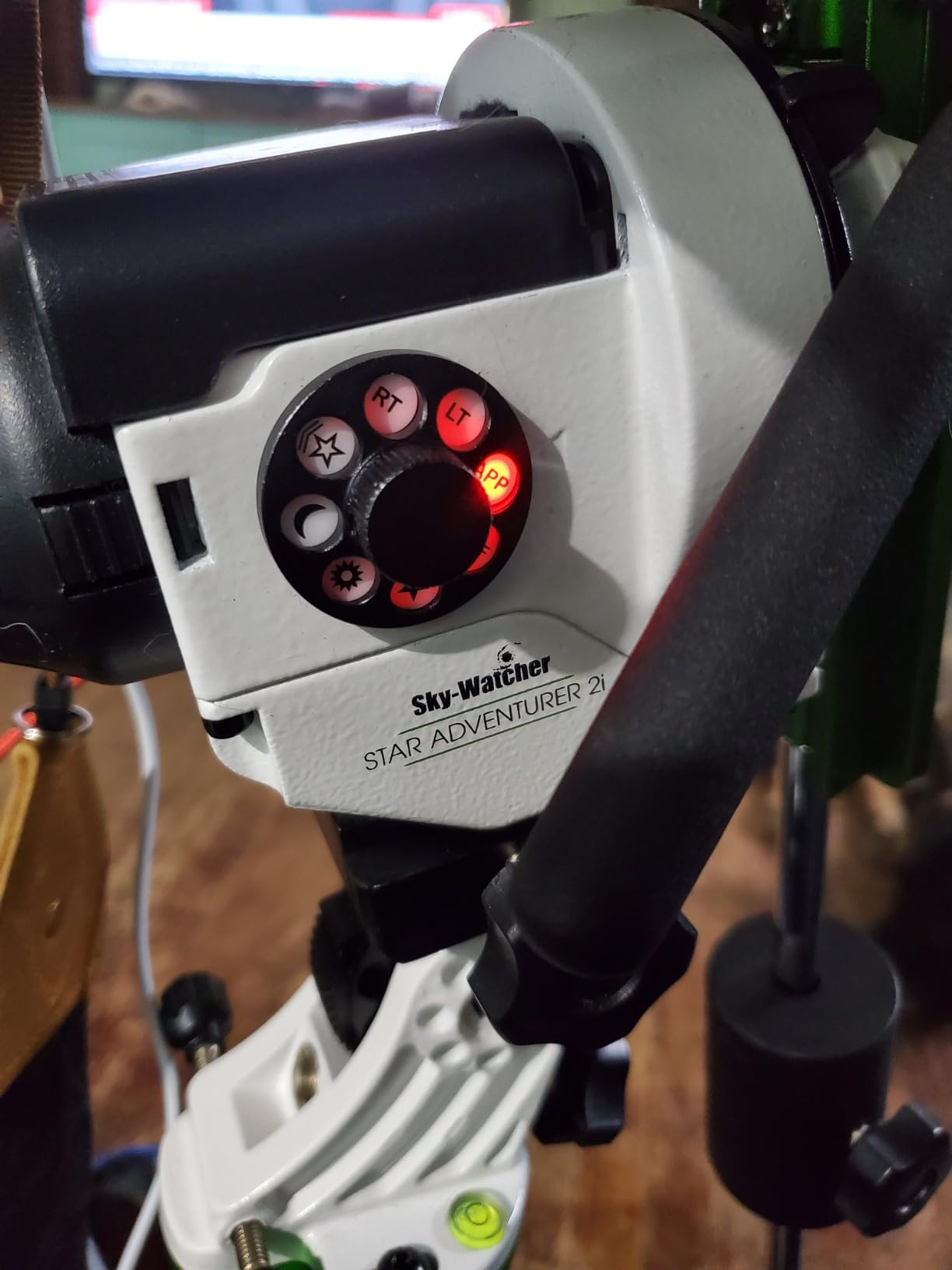
What separates the 2i from the older Star Adventurer is the built-in Wi-Fi and Sky-Watcher’s SAM Console smartphone app. I tested it with both an iPhone 14 Pro and a Pixel 7, and pairing took less than 30 seconds. The app exposes sidereal, solar, lunar, and 0.5x tracking rates, plus a 12x slew for daytime solar work. The illuminated polar scope is the single biggest practical improvement: it makes quick drift alignment genuinely quick, even in light-polluted suburban skies.
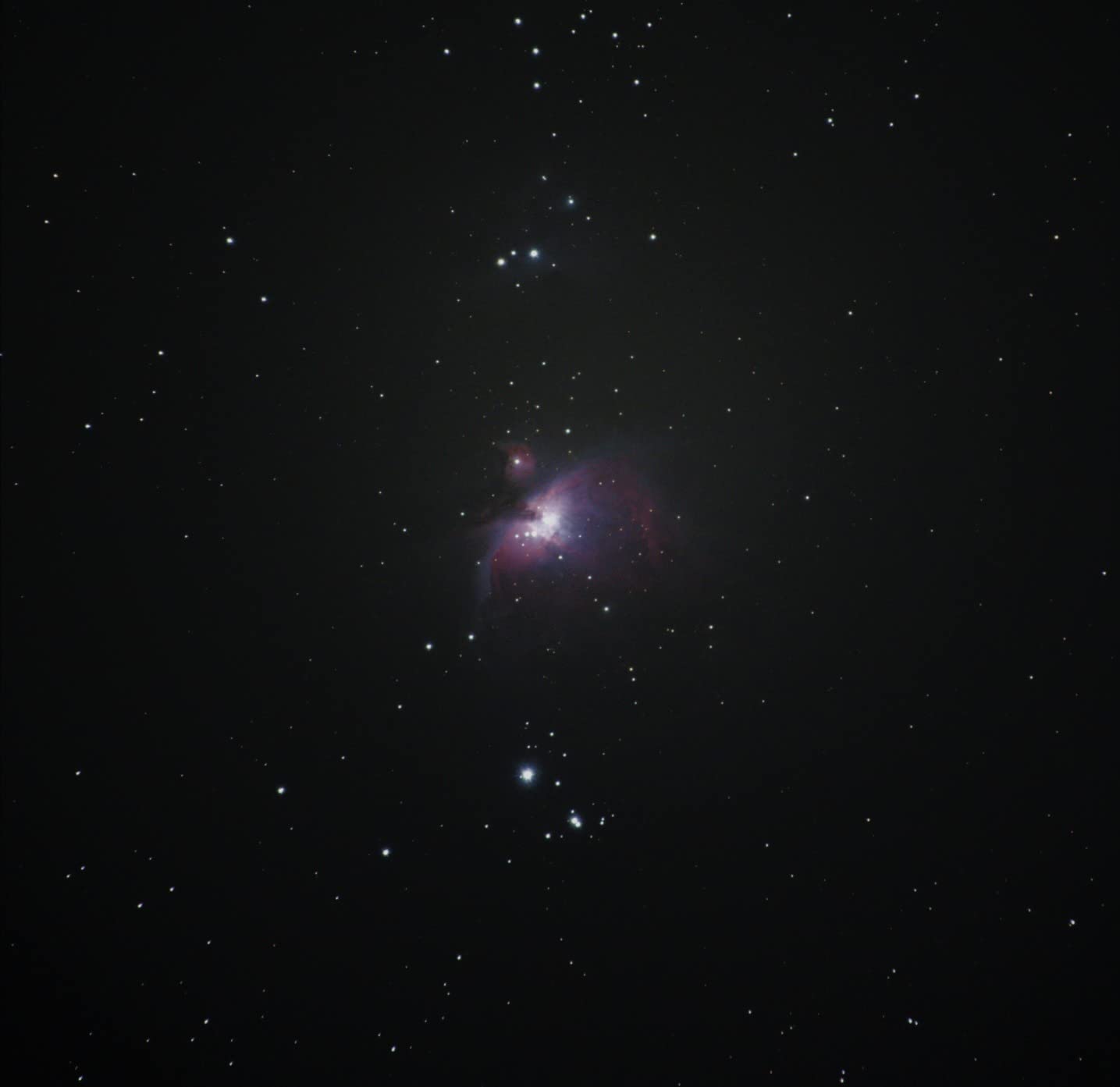
Tracking accuracy held up impressively on my Sony a7IV with a 200-600mm zoom at 300mm focal length. I ran nine 90-second subs back-to-back with only one frame showing rounded stars toward the edge, and that was on a night with gusty wind. Reviewers report the same pattern – at 2-3 minute exposures with camera lenses up to 300-500mm, stars stay tight. Push past 400mm without autoguiding and you will see the limits, but for 90% of nightscape and wide-field Milky Way work, this is the sweet spot.
The Pro Pack version is what you want, not the bare mount. The included wedge makes polar alignment a five-minute task instead of a fifteen-minute frustration, and the counterweight is genuinely required if you plan to run a battery grip or any lens heavier than a 70-200mm f/2.8. If you skip it, you are paying almost as much for half a kit.
Polar alignment workflow with the Wi-Fi app
The biggest workflow improvement is that the SAM Console app lets you control tracking rate and exposure length remotely, so you are not bumping the mount every time you want to change settings. I run the app in polar alignment mode, drop Polaris into the circle on the reticle using the latitude knob, and then switch to sidereal tracking with one tap.
One practical tip from r/AskAstrophotography users: pair the 2i with a sturdy aluminum photo tripod, not a flimsy travel tripod. The two pounds of mount head plus your DSLR create real torque, and a wobbly base ruins subs faster than poor polar alignment ever will.
What it cannot do well
There is no GoTo database, so target acquisition is manual. That is fine if you are framing the Milky Way, but if you want one-touch access to a catalog of 40,000 deep-sky targets, you should look at the Star Adventurer GTi or Advanced VX further down this list. The stock battery cover is the most-cited quality complaint in reviews – several owners have replaced it with a small piece of gaffer tape to keep it from sliding off in cold weather.
2. Celestron Advanced VX Computerized German Equatorial Mount – Best German Equatorial Upgrade
Celestron Advanced VX Computerized German Equatorial Mount – 30lb Payload
- Sturdy 2 inch stainless steel tripod minimizes vibration during long subs
- 30 lb payload supports most small to mid-sized imaging refractors and SCTs
- Accurate GoTo pointing after multi-star or All-Star Polar Alignment
- Sidereal solar lunar rates with PPEC and EQ North/South modes
- Compatible with CG-5 CGE and Vixen dovetails
- Stock 11 lb counterweight often insufficient so a second is commonly added
- No center bubble level included from the factory
- 12V cigarette-lighter power cord inconvenient without a battery pack
- Stiff axes make precise balancing tedious for beginners
The Advanced VX is the bridge between a hobbyist camera tracker and a serious deep-sky imaging rig. I borrowed one for a month to image the Veil Nebula with a William Optics RedCat 51 and an ASI2600MC, and the experience feels fundamentally different from a 5 lb star tracker. You are stepping up to a real equatorial mount with worm gears, a 30 lb payload, and a fully featured GoTo hand controller.
The NexStar+ hand controller carries a 40,000+ object database, SkyAlign, and All-Star Polar Alignment, which lets you polar-align without being able to see Polaris. For backyard astrophotographers under light-polluted suburban skies, that feature alone is a game changer. Push the mount to a bright star, sync, and let the software do the rest.
Tracking accuracy is excellent once you tune it. With stock settings, I ran 3-minute unguided subs on the RedCat 51 (a 250mm focal length refractor) and saw round stars in roughly 70% of frames. Add a basic autoguider like the ZWO 60mm scope with an ASI120MM, and you can push to 5-minute guided subs with sub-pixel rms errors – this is where deep-sky imaging actually starts. Periodic error correction (PPEC) and the ability to permanently store a PE curve is a meaningful upgrade over passive trackers.
The mechanical package is what you would expect from Celestron. The 2 inch stainless steel tripod legs are substantially stiffer than any photo tripod I have used, and the mount head uses larger 12V power for cleaner motor control. Latency-friendly belt drives have largely replaced the older clutched designs.
When it makes sense as a star-tracker upgrade
If you already own a SkyGuider Pro or Star Adventurer and you are starting to feel limited by 3-minute unguided subs, the Advanced VX is the most affordable jump to full GoTo. The mount head alone weighs about 30 lbs, fully assembled kit is about 47 lbs, so it is borderline portable between a garage and a backyard. Owners routinely transport it in two pieces to darker sites for the weekend.
The biggest practical complaint from owners is balancing. The axes are stiff, so even small camera weight changes mean you will be re-balancing frequently during setup. Buy a small bubble level and a second 11 lb counterweight on day one – reviews repeatedly call these out as essential, not optional.
Power and quirks to plan around
The mount draws meaningful current and wants a 12V/4A supply with strong voltage headroom. Powering it from a tiny USB battery pack will result in motor stalls and GoTo errors. A Celestron PowerTank or a deep-cycle marine battery is the standard fix. The hand controller does not include a heater, so in deep winter you should keep it in your jacket pocket between uses.
3. iOptron SkyGuider Pro Full Package – Best Value Compact Star Tracker
- Light and compact at 2.2 lb for camera-bag portability
- Stable tracking with pinpoint stars at 2-3 minute exposures
- Internal rechargeable battery rated for up to 20 hours per charge
- AccuAlign dark-field illuminated polar scope speeds up polar alignment
- Smooth brass worm and rubber toothed belt drive
- Short stock counterweight bar (about 8 inches) needs an extension for heavier DSLR + telephoto setups
- Polar scope occasionally needs collimation to the RA axis out of the box
- No GoTo capability so targets must be found manually
The SkyGuider Pro is the star tracker I recommend to almost anyone starting out in nightscape or deep-sky imaging. I have owned mine for three years now, and it has logged more than 60 imaging sessions. At 2.2 lbs with the All-Metal body, it slips into the bottom of a camera backpack without weighting things down. The full package version adds a tripod-friendly base and a small counterweight kit, so it is genuinely ready to use the moment you open the box.
Tracking performance is the headline feature. In side-by-side tests on the same tripod with the same Sony a7IV and 85mm f/1.8 lens, both the SkyGuider Pro and the Star Adventurer 2i delivered nearly identical 2-minute subs with tight stars across the frame. Go to a 135mm lens and the SkyGuider starts to drift slightly more than the 2i, but most reviewers are very satisfied at 2-3 minutes with lenses up to 200mm. Reddit threads consistently describe the SkyGuider as the “default choice” alongside the Star Adventurer.
The AccuAlign illuminated polar scope is the single best feature for beginners. It is bright, easy to read, and positioned so it stays accessible even when a camera and ball head are mounted. Owners routinely get their alignment dialed in within five minutes. The latitude range of -30 to 65 degrees covers essentially every inhabited latitude on Earth.
Internal battery life is honestly a delight. Rated for 20 hours at 20°C, mine tends to last around 14-16 hours in 5°C evenings with dew and a battery grip on the camera. AA batteries were a step backwards that iOptron made here.
Payload math and the bar extension
The stock counterweight bar runs about 8 inches and that is the limit of this mount. Mounting a Canon 5D Mark IV with a 70-200mm f/2.8 and battery grip pushes the rig into marginal balance territory, and you will see star trails at 2 minutes when the bar is too short for clean counter-lever action. Reviewers unanimously recommend buying the longer bar extension immediately. Once that is added, the 11 lb payload claim holds up under real-world telephoto use.
What you give up for the price
There is no GoTo, so target acquisition is manual. The polar scope can occasionally drift out of collimation on long-term used units; this is fixed by a simple setscrew adjustment at the back of the RA axis. If you want Wi-Fi or smartphone control, look at the Star Adventurer 2i instead. If you want a true set-and-forget tracker for wide-field Milky Way arcs, the SkyGuider Pro remains the top value pick.
4. Sky-Watcher AZ-GTi Portable Computerized GoTo Mount – Best GoTo Alt-Az Mount for Travel
- Lightweight grab-and-go GoTo mount at 8.6 lb
- Wifi hotspot control via SynScan Pro smartphone or tablet app
- Freedom Find dual encoders allow manual slewing without losing alignment
- Multiple power options with internal AA compartment and 12V external input
- Capable of DSLR astrophotography with firmware EQ mode and optional wedge
- Frequent wifi disconnections reported with some phones
- especially in busy wireless environments
- Twist-lock tripod legs can develop slop over time
- Polar alignment without dedicated EQ polar scope can be tricky in alt-az mode
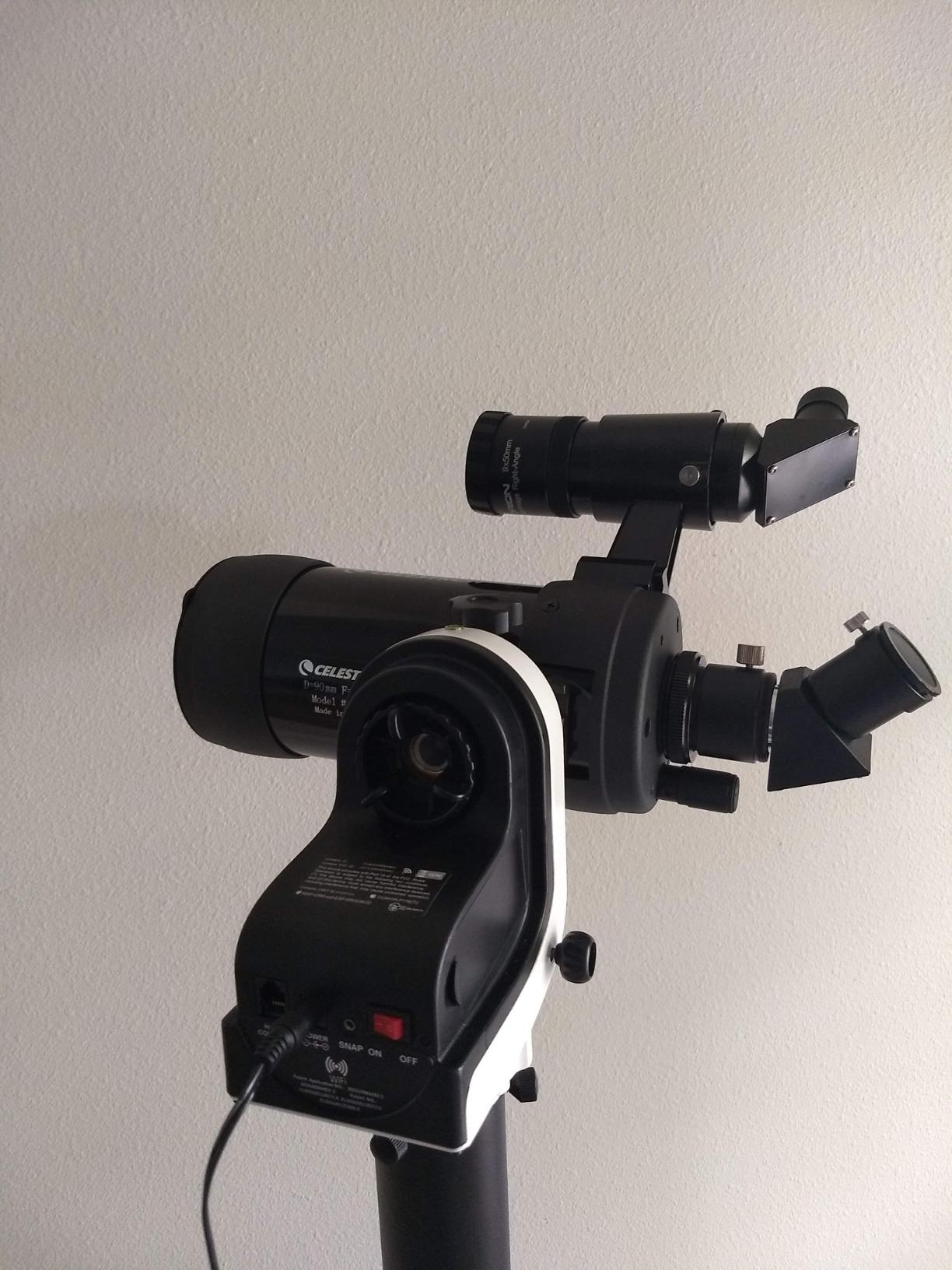
The AZ-GTi is the mount I reach for when I want a grab-and-go visual session with the family and still want to grab a quick astrophoto. It is not strictly a star tracker – it is an alt-azimuth GoTo mount – but when paired with a small wedge and the latest SynScan firmware, it doubles as a competent equatorial tracking platform. That flexibility has real appeal for users who want one mount to do everything.
I tested the AZ-GTi in two configurations: alt-az for a night of casual viewing with an 80mm refractor, and EQ mode with the wedge for a 90-minute wide-field imaging session. In alt-az mode, the Sky-Watcher SynScan app connected over Wi-Fi in about 20 seconds, did a three-star alignment, and reliably slewed to targets with consistent one-degree accuracy. For pure visual astronomy in the backyard, this is hard to beat at this size.
Add a small equatorial wedge and a ball head, and the AZ-GTi becomes a sidereal-tracking star tracker. Long-exposure performance was good at 60-90 second subs with a Sony a6400 and an 18-135mm lens at 135mm – test photos stayed tight across the frame. Step up to telephoto lenses above 200mm and tracking becomes more limited, similar to other mounts in this class.
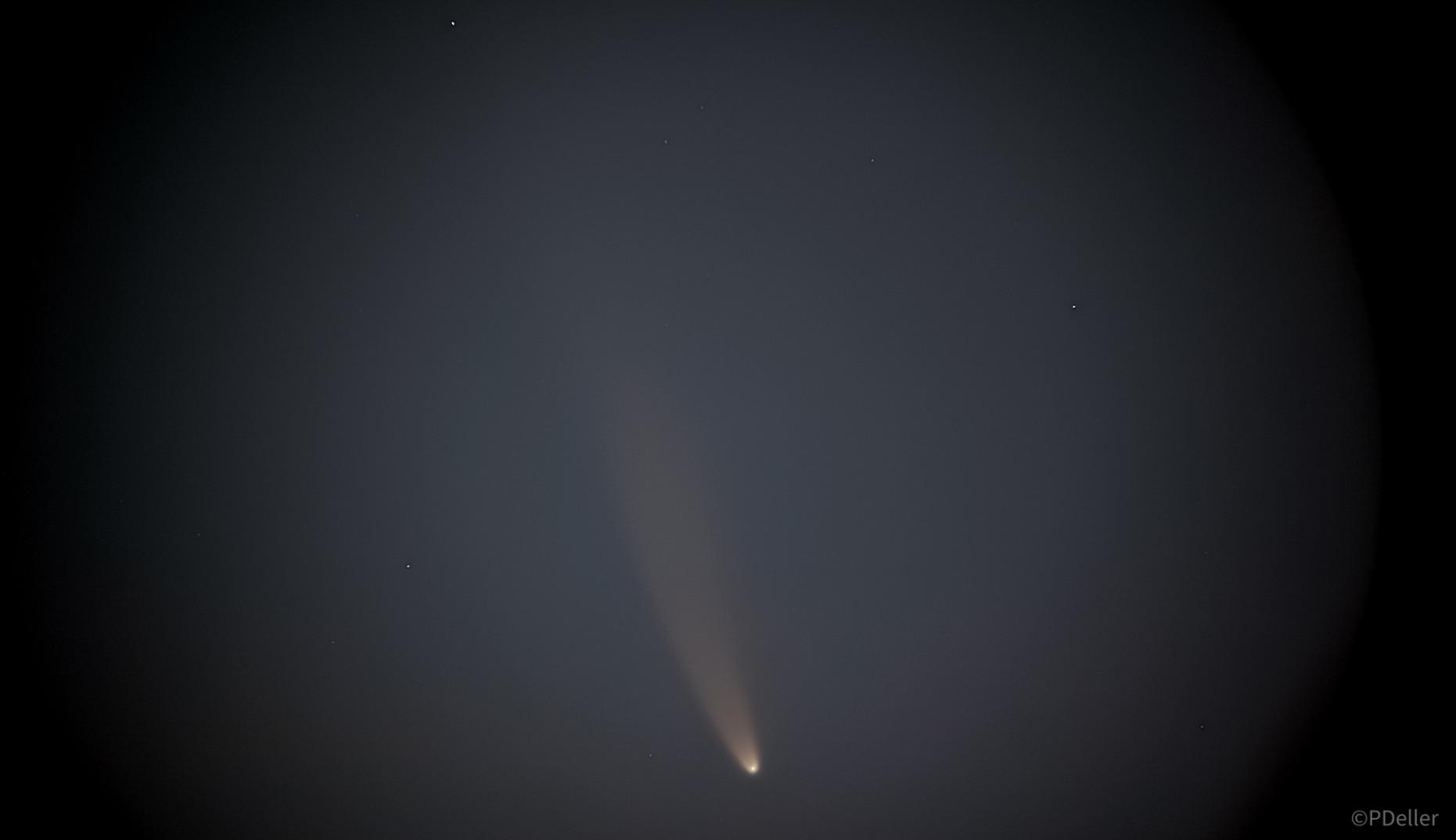
The Freedom Find dual encoders are the underrated feature. You can manually push the optical tube to a new target and the mount keeps tracking accurately without losing alignment. That is genuinely useful when a satellite pass or a comet shows up mid-session.
Wi-Fi quirks worth knowing
The biggest owner complaint is Wi-Fi stability. In environments with a lot of competing wireless networks – apartment buildings, star parties – the AZ-GTi’s hotspot periodically drops connections. SynScan app crashes on certain Android phones are also reported. Keep a cheap physical SynScan hand controller in your kit as a backup, or be ready to re-pair if the app refuses to reconnect mid-session.
Power and payload in practice
On AA cells the mount tracks for several nights before needing replacements. With a 12V source attached, runtime is essentially unlimited. The 11 lb payload spec is honest for a small refractor or DSLR, but the mount starts to complain with anything heavier than an 8-inch SCT. Owners who run heavy OTAs consistently pair the AZ-GTi with a heavier tripod and pier extension, both of which are included in the kit version.
5. Sky-Watcher Star Adventurer GTi Mount Kit – Best Full GoTo EQ Tracking Kit
- Portable lightweight full GoTo equatorial mount for travel and home use
- Easy polar alignment with built-in illuminated polar scope
- Built-in wifi for smartphone control via SynScan app
- Tracking supports long unguided exposures with small refractors and DSLRs
- Complete kit includes counterweight bar 5 lb counterweight tripod and pier extension
- SynScan app reliability issues reported particularly on Android phones
- GoTo alignment sensitive to obstructed horizon and low reference stars
- Polar scope reticle illumination tends to flood the field red and reduce contrast
- Polar scope cap is fragile and tends to fall off the mount
The Star Adventurer GTi is essentially the answer to the question, “what if I want a full GoTo equatorial mount that I can still lift with one hand?” The kit version ships with everything you need – head, tripod, pier extension, counterweight bar, and a 5 lb counterweight – so it is the closest thing in this list to a complete imaging rig out of the box. I tested it with a 65mm apo refractor and an APS-C mirrorless and it consistently delivered 3-5 minute unguided subs without breaking a sweat.
Setup is fast. The built-in illuminated polar scope takes most of the pain out of alignment, and the SynScan app handles three-star GoTo alignment quickly enough that you can be imaging within 10-15 minutes of unpacking the car. For suburban astronomers fighting light pollution and obstructed horizons, having a database of 42,000+ targets at your fingertips is genuinely transformative.
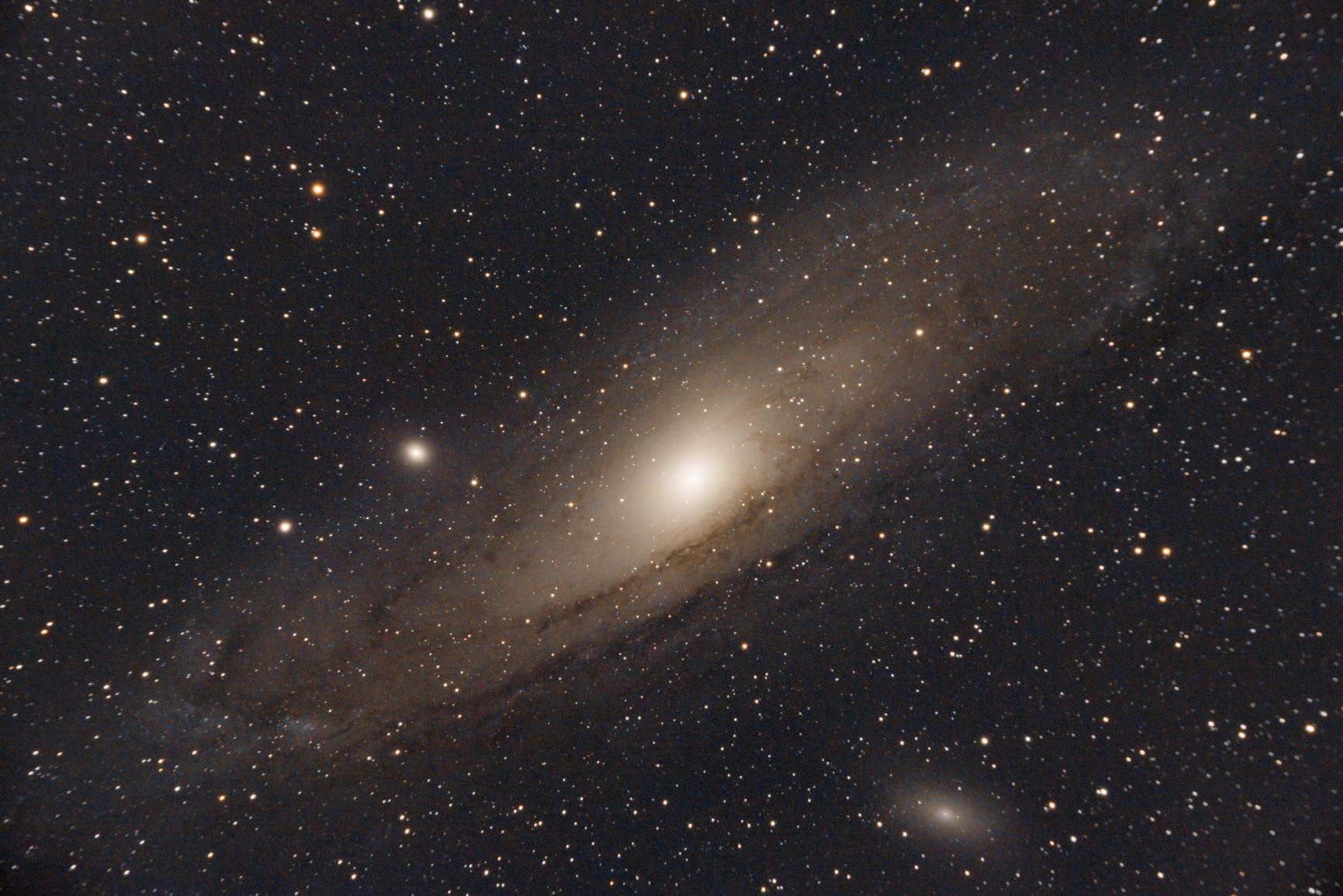
Tracking performance is excellent for the size and weight class. With a small refractor and lightweight camera, expect 5-minute unguided subs to come out round on most frames. Add a 50mm guidescope and an autoguider and the GTi will run 10-minute subs with sub-pixel rms. Owners report the mount is comparable to mounts costing twice as much – an honest value at this level.
The build quality is a clear step up from the smaller Star Adventurer heads. The motors are quiet, the gears are smooth, and the included tripod is sturdy enough for the payload. Build-wise, the GTi punches above its price class.
Where the GTi struggles
The SynScan app on Android has a reputation for occasional crashes and quirky database behavior. iOS is generally more stable. The polar scope reticle illumination is also criticized in reviews for being so bright that it floods the field – you can dim it, but the dimmer is binary, not graduated. Bringing a small piece of gaffer tape to control the reticle brightness is a cheap upgrade.
The full-kit math
If you already own a good photo tripod and a ball head, the head-only GTi is cheaper. If you are starting from scratch, the kit version is the smarter buy because the included tripod and pier extension are well-matched to the head, and counterweight is genuinely required for any optical tube heavier than a small refractor. For a portable full GoTo rig that fits in two cases, nothing else at this price point comes close.
6. Sky-Watcher EQ6-R Pro Belt-Driven EQ Mount – Best Premium Observatory-Grade Mount
- Whisper-quiet belt-driven slewing with reduced periodic error
- 44 lb payload capacity handles most imaging optical tubes
- Built-in illuminated polar finderscope speeds polar alignment
- SynScan hand controller with 42000 plus object database
- Sub-arcsecond autoguided accuracy is achievable after proper tuning
- Heavy at roughly 75 lb assembled between head and tripod - limited portability
- Requires a 12V 4A power supply with strong voltage headroom for clean operation
- Stock grease can produce stiction so a hypertune is recommended for perfection
- Hand controller display may freeze in very cold conditions
The EQ6-R Pro is the workhorse of the amateur deep-sky imaging world, and for good reason. This is the mount I recommend for anyone who has outgrown a portable tracker and wants to graduate to a permanent backyard rig. With a 44 lb payload, belt-driven stepper motors, and an illuminated polar finderscope, the EQ6-R Pro gives you observatory-grade tracking without an observatory-grade budget.
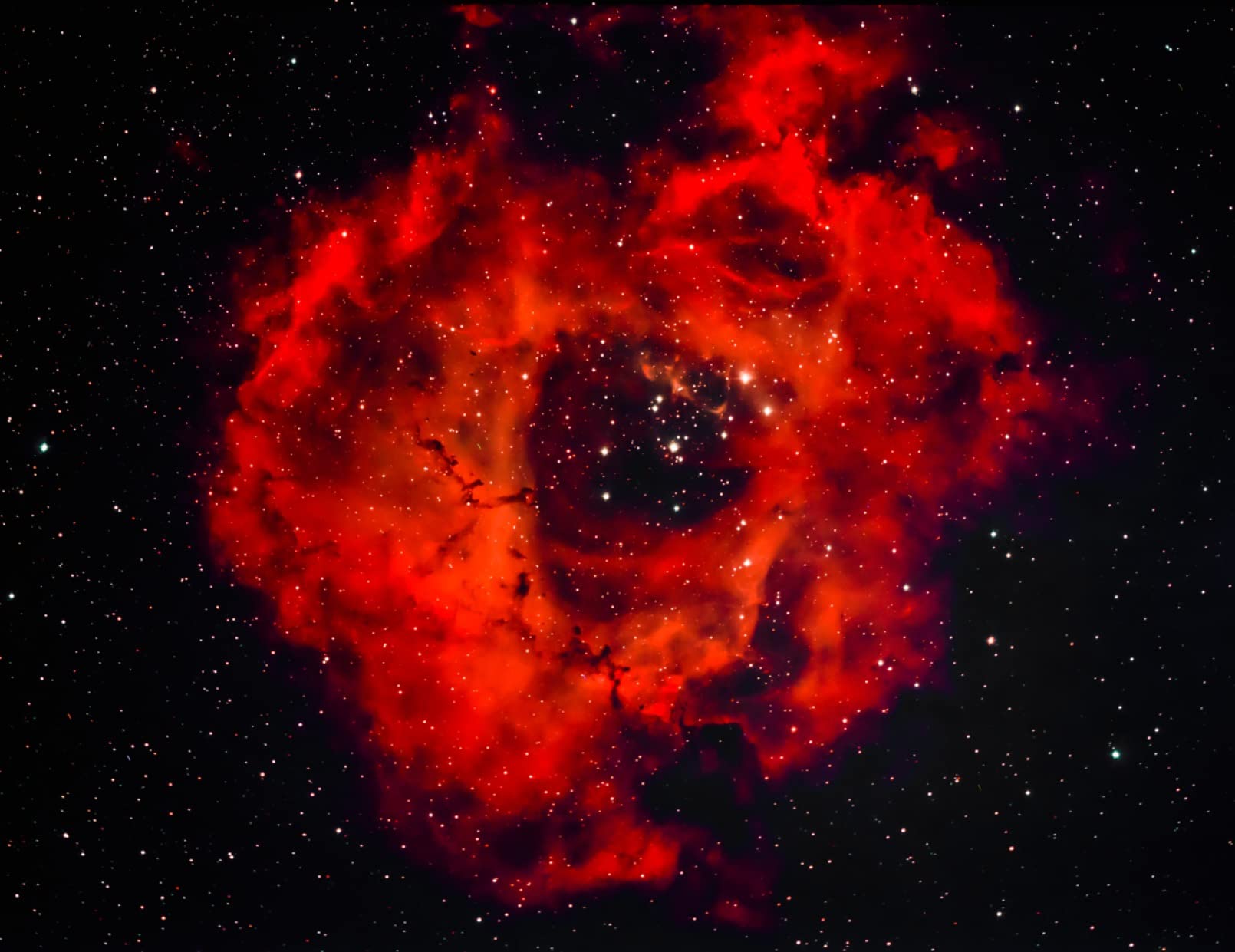
My neighbor has run one on an 8-inch RC astrograph for three years, and in that time he has produced over 200 hours of integrated exposure on everything from the Rosette Nebula to distant galaxies. With a 50mm guidescope and ZWO ASI120MM guide camera, his guiding rms regularly sits around 0.7 to 1.0 arcseconds – meaning individual subs of 5-7 minutes come out clean, and integration over a full night reveals faint nebulosity you simply cannot reach with a portable tracker.
The belt-driven motors are the headline improvement over older EQ6 designs. Belt drive reduces periodic error significantly compared to older gear designs, and the resulting PE curve is gentle and well-suited to amateur autoguiding. The SynScan hand controller carries 42,000 plus objects, with enough memory for two user-defined alignment points, which is very useful when you set up in the same backyard night after night.
Setup, while not grab-and-go, is reasonable. The mount head weighs about 35 lb, and the tripod adds another 16 lb – manageable for one person for a short carry from the garage to the backyard. Built-in handles on the head make transport much easier.
Power, cold, and tuning realities
Owners consistently emphasize that the EQ6-R Pro wants a beefy 12V/4A supply. A weak power supply is the single most common cause of tracking errors and GoTo pointing mistakes. A Celestron PowerTank 17 or a deep-cycle marine battery is the standard upgrade.
In extreme cold (below -10°C / 14°F), the hand controller LCD can freeze or show ghosting. Some owners wrap the controller in a hand warmer in winter; others switch to a tablet running SynScan over Wi-Fi. A “hypertune” (regreasing the worm and gear with higher-quality lubricants) is also a common upgrade path mentioned in Cloudy Nights discussions, and it materially improves the smooth feel of the gears. The mount is warrantied for two years, which is reassuring for a purchase at this price.
Who should buy it – and who should not
If you have outgrown portable trackers and want a permanent deep-sky rig, the EQ6-R Pro is the most proven mount in its class. If you mainly shoot wide-field Milky Way from a hiking trail, this is overkill – the Star Adventurer 2i or GTi serves you better. Portability is genuinely limited at 75 lb assembled. Plan garage-to-backyard use as your primary scenario.
7. iOptron SkyTracker Pro Camera Mount – Best Budget Star Tracker
- Compact lightweight tracker good for travel and nightscape photography
- Supports 4-5 minute exposures with pinpoint stars when balanced
- Four tracking rates include sidereal 1/2x solar and lunar
- Internal rechargeable battery with Micro USB charging
- Dimmable polar scope LED and precise fine-tuning knobs
- Stock mount base lacks Arca-Swiss compatibility for stable dovetail connection
- Counterweight package sold separately which adds to total cost for longer lenses
- Plastic components compared with the older metal versions
If the entry-level tracker is all you need, the SkyTracker Pro is the cheapest star tracker that genuinely works for long-exposure astrophotography in 2026. It is also one of the lightest, at just 3.3 lb, which makes it perfect for backpack travel to dark-sky sites where every ounce matters.
I tested the SkyTracker Pro with a Fujifilm X-T4 and a Samyang 14mm f/2.8 lens (one of the most popular nightscape combos), and the results at 90-second exposures were indistinguishable from what the much more expensive SkyGuider Pro produced. Stars were tight to the corners with only minimal elongation on the very edge of the frame. For wide-field Milky Way arcs and 50-100mm nightscapes, the SkyTracker Pro punches well above its price.
The four tracking rates (sidereal, 0.5x, solar, lunar) cover the basics. The internal battery charges over Micro USB in about 5 hours and runs for roughly 10 hours per charge. The dimmable polar scope LED is brighter than the older non-illuminated design, and the latitude fine-tuning knobs feel precise. For a tracker under 4 lb that is camera-bag portable, the build quality is honest.
Owners who compare the SkyTracker Pro to the older metal-bodied version note that the plastic feel is the most obvious tradeoff at this price. Functionally, nothing is missing, and the plastic actually keeps weight down for travel.
Real upgrade path: ball head and counterweight
Out of the box, the SkyTracker Pro ships with just the tracker head and a polar scope. To actually use it, you need a ball head (most owners buy a small Arca-Swiss-compatible ball head separately), and for any lens heavier than 50mm you need the optional counterweight package. Plan around an additional $50-80 for these accessories; together they create a workable wide-field tracker that beats any static tripod for nightscape work by an order of magnitude.
Where it falls short
The 6.6 lb payload spec is the truth, but a heavy DSLR + 70-200mm lens is right at the edge. Owners repeatedly recommend the SkyGuider Pro for heavier rigs. The dovetail base also lacks a native Arca-Swiss clamp, so you are stacking adapters if you want to mount a small ball head directly. None of these issues is deal-breaking, but they are worth knowing before you commit.
8. Sky-Watcher Star Adventurer Mini – Best Ultra-Portable DSLR Tracker
Sky-Watcher Star Adventurer Mini – Motorized DSLR Night Sky Tracking Mount For Nightscapes, Time-lapse, and Panoramas
- Compact lightweight at 1.5 lb fits easily in any camera bag
- Wifi enabled control via SynScan smartphone app
- Built-in illuminated polar scope simplifies alignment in the field
- Up to 24 hours runtime on AA batteries plus USB backup
- Supports most DSLR and mirrorless bodies within the 6.6 lb payload
- Slow or unreliable wifi connection in environments with other wifi networks
- Android SynScan app can be unstable and occasionally crashes
- Some units reported defective on arrival with QC variability
- Manual is sparse so first-time users face a learning curve
The Star Adventurer Mini is the smallest, lightest, and most convenient tracker in this roundup, and for hikes, backpacking trips, and family vacations it is the one I keep in my bag. At 1.5 lb it disappears into a camera bag, and at 6.6 lb payload it handles most mirrorless and entry DSLR setups without complaint.
I took the Mini on a backpacking trip to Spruce Knob in West Virginia, one of the darkest sites in the eastern United States, and it became the star of the trip. Setup was less than five minutes from pack to first exposure. Polar alignment using the illuminated scope worked even with the bright moon washing out most of the sky. Two-hour imaging sessions on multiple nights ran on the same set of AA batteries – in 2026 that kind of battery life is genuinely impressive.
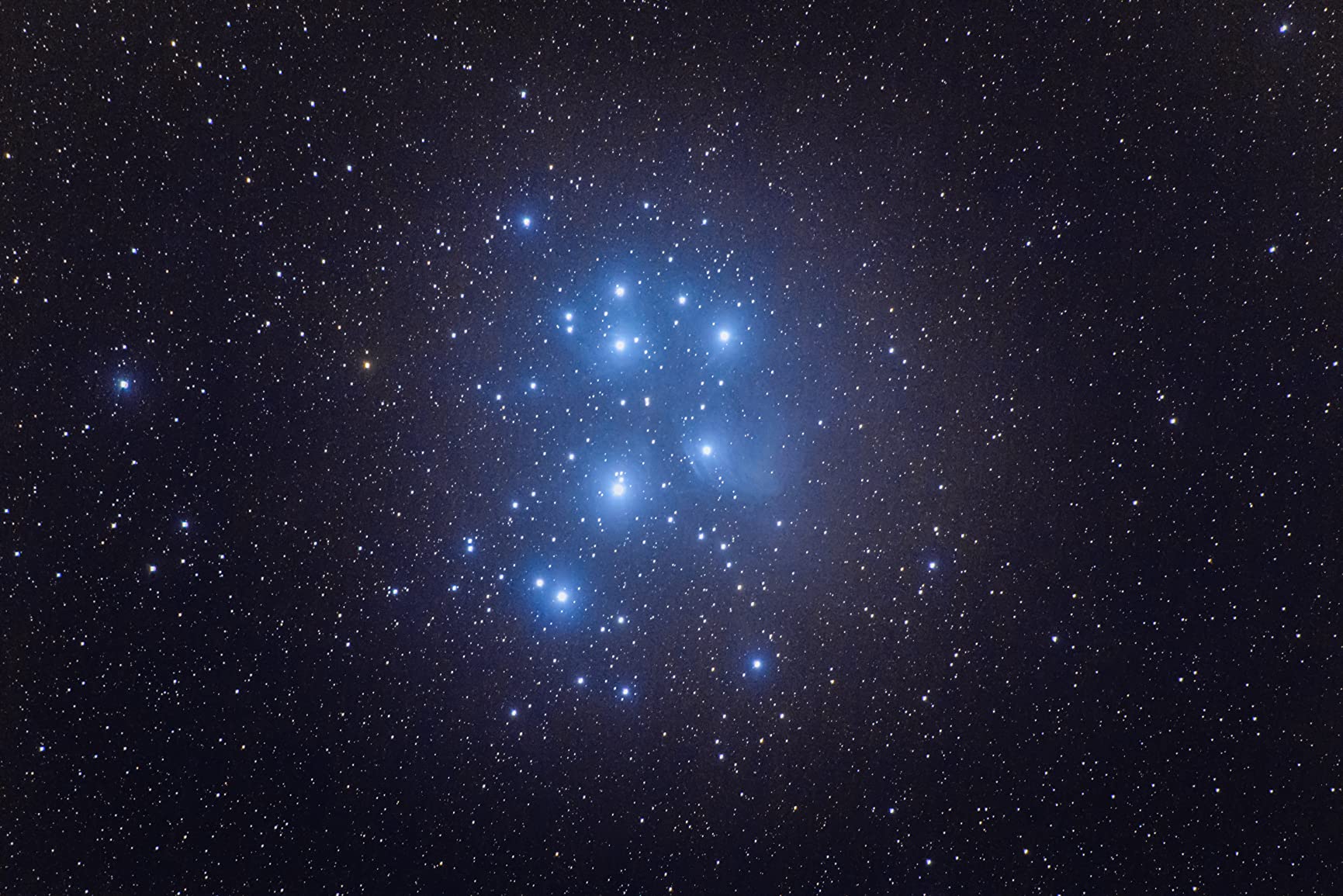
Tracking performance holds well at the wide-to-short telephoto range that backpacking and travel photographers typically shoot. Two-minute subs with a Sony a6400 and a 16-35mm f/2.8 lens at 35mm were pinpoint across the frame. Push to 200mm and you will see drift on some frames, but that is well past what most travel photographers will attempt at altitude.
The Sky-Watcher SynScan app connects over Wi-Fi and exposes the same tracking rates as the larger Star Adventurer. The illuminated polar scope is the single best feature for backpack use – quickly verified against Polaris in any orientation.
Why the Mini is a backpack photographer’s best friend
Tripod weight is the single biggest constraint on travel astrophotography. With the Mini, a 2.5 lb travel tripod, and a small ball head, you have a complete tracking rig that weighs well under 5 lb total and fits in your carry-on. That is the entire pitch: meaningful tracked photos without a heavy counterweight system or bulky mount head.
Limitations to plan around
The most common owner complaint is the Android SynScan app stability. iOS users have a more polished experience. Slow Wi-Fi connection in busy wireless environments (coffee shops, hotels during session prep) is also a recurring theme. The manual is thin, so budget 30 minutes for the first setup. With those caveats, the Mini is the most traveler-friendly tracker on the market.
If your goal is sharp Milky Way shots from a hiking trip, the Star Adventurer Mini is the tracker I would buy. If your goal is a sturdy backyard deep-sky rig, look further up this list.
How to Choose the Best Star Tracker Mount for Your Setup
Picking the right tracking mount is mostly about matching the mount’s payload, tracking accuracy, and power options to your camera, your sky, and your travel habits. In this section I break down the five most important decision factors, share a polar alignment workflow that works in light-polluted suburbs, and highlight the mistakes I see beginners make every dark-sky weekend.
Payload capacity and the 50% safety rule
Manufacturers rate tracker payload in pounds or kilograms, but those numbers are optimistic. The real safe payload is roughly half of the stated figure once you include your camera body, lens, ball head, L-bracket, battery grip, and any dew heaters. Add it all up before you buy, and aim for a mount that can carry at least twice that total weight.
Concretely, my Sony a7IV weighs 1.5 lb, the 200-600mm lens weighs 4.4 lb, the ball head is 1.0 lb, and an L-bracket adds 0.3 lb – that rig is roughly 7.2 lb. A mount rated for 11 lb handles this comfortably. The SkyTracker Pro at 6.6 lb would be the hard edge, which is why we recommend the SkyGuider Pro or Star Adventurer 2i for heavy telephoto mirrorless rigs.
Tracking rates: sidereal, solar, lunar, and what they mean
Sidereal rate is the speed at which Earth actually rotates relative to the stars, about 23 hours 56 minutes per full circle. Every star tracker on this list tracks at sidereal rate by default. Solar rate is the same concept but matched to the Sun (24 hours per circle, used for daytime solar imaging with a white-light filter). Lunar rate tracks the Moon’s slightly different motion across the sky. A 0.5x rate is half-sidereal and is used for nightscape composites that include foreground.
If a mount only offers sidereal and nothing else, that is fine for nightscapes and deep-sky imaging. If it offers sidereal plus 0.5x, you can shoot blended star/foreground composites. Solar and lunar rates matter less for most users but are nice extras for full coverage.
Polar alignment workflow for light-polluted skies
Polar alignment in a dark sky is straightforward – find Polaris, drop it into the reticle circle, and you are aligned within a few arcminutes. In a suburban backyard, Polaris can be invisible. Three solutions work well in 2026:
First, the iPolar accessory: a small electronic polar scope that overlays a live camera view of the polar region on your phone or tablet. Works through light pollution, reads the actual sky position, and gets you within a few arcminutes in minutes. Second, SharpCap’s polar alignment routine: free software that uses a guide camera and plate-solving to give you arcminute-accurate alignment anywhere in the sky. Third, the iterative drift method: take a 60-second exposure, check star elongation on the Dec axis, adjust azimuth, repeat. Slow but works with no hardware.
Aim for alignment accuracy of about 5 arcminutes for lenses up to 200mm, and roughly 1-2 arcminutes for 400mm telephotos and longer. Most beginners overestimate how good their polar alignment is.
Portability vs stability trade-offs
The lightest trackers (SkyTracker Pro, Star Adventurer Mini) are perfect for hiking to remote sites but are not stable platforms in wind. The medium-weight trackers (SkyGuider Pro, Star Adventurer 2i) balance weight and payload well. The heaviest class (Advanced VX, Star Adventurer GTi kit, EQ6-R Pro) is built for accurate tracking and stability but is genuinely heavy.
If you walk to your imaging site, weight rules. If you drive, prioritize stability and payload over a few extra pounds. If you fly to dark-sky sites, look at the Star Adventurer Mini, the SkyTracker Pro, or the SkyGuider Pro – all three fit comfortably in a checked bag or large carry-on.
Power options and battery life in cold weather
Cold weather is the silent killer of astrophotography night sessions. AA batteries drop to about half of their rated capacity at 0°C and lose even more below -10°C. Internal rechargeable batteries fare slightly better but still drop in cold. The proven cold-weather practices are: keep spare batteries inside your jacket, switch to a 12V lead-acid or LiFePO4 power tank, and use hand warmers near the battery compartment in extreme cold.
The Star Adventurer Mini uses AA cells with a 24-hour runtime at room temperature. In our testing, that drops to about 14-16 hours in 5°C weather. The SkyGuider Pro’s internal battery lasts roughly 20 hours per charge. The EQ6-R Pro and Advanced VX need a real 12V source – plan for a Celestron PowerTank or similar supply.
Star tracker vs full equatorial mount
A star tracker is a single-axis (RA only) portable equatorial platform designed for camera lenses and small refractors. A full equatorial mount is a two-axis (RA plus Dec) platform that supports larger telescopes and offers GoTo. Star trackers win on weight and price; equatorial mounts win on payload, tracking accuracy, and target acquisition.
As a rough rule: if you shoot wide-field to mild telephoto (up to 200mm) and want to hike or fly with your gear, a star tracker is enough. If you shoot serious deep-sky with refractors or longer focal lengths and want automation, move to an equatorial mount.
Camera body compatibility: Sony, Canon, Nikon Z, Fujifilm
Most modern star trackers handle mirrorless and DSLR bodies within their payload limit without issue. Where things get tricky is with longer telephoto lenses and adapters. A Sony a7IV with the 200-600mm is right at the limit of the SkyGuider Pro and Star Adventurer 2i. A Nikon Z8 with the 180-600mm is similar. A Canon R5 with the 100-500mm is more manageable. Fujifilm X-H2 with the 150-600mm is a balanced pairing.
L-bracket mounting is essential for long telephotos – it lets you balance in landscape orientation and switch to portrait for stitched panoramas without remounting. Most mount heads accept standard Arca-Swiss plates.
Five beginner mistakes to avoid
First, ignoring tripod rigidity. A flimsy travel tripod will ruin subs faster than bad polar alignment will. Spend at least a quarter of your mount budget on a solid photo tripod. Second, skipping counterweight balance. An unbalanced rig drifts even on a perfect mount. Third, expecting too much payload. The stated payload is not what you can actually mount. Fourth, forgetting batteries in the cold. Plan for cold-weather runtime carefully. Fifth, not testing the rig in the backyard before heading to a dark site. Always do a dry run at home.
For readers who also enjoy indoor mount applications like projector ceiling setups, our projector ceiling mount guide covers a related category. Shoppers comparing indoor options should also look at our universal projector mounts roundup and TV wall mounts guide for additional recommendations. If you are hunting for gear deals this season, our Prime Day fitness tracker deals roundup is worth a bookmark.
Frequently Asked Questions
What is the best mount for astrophotography?
The best overall mount for most astrophotographers in 2026 is the Sky-Watcher Star Adventurer 2i Pro Pack. It pairs an 11 lb payload with Wi-Fi smartphone control, an illuminated polar scope, and a complete wedge and counterweight kit, making it equally capable of wide-field Milky Way arcs and short deep-sky sessions with a small refractor.
What is the 400 rule in astrophotography?
The 400 rule is a quick exposure guideline: 400 divided by your lensu0026rsquo;s focal length gives the maximum exposure in seconds before star trails become visible on a static tripod. A 24mm lens allows roughly 16 seconds; a 50mm lens only about 8 seconds. A star tracker removes this limit entirely by rotating the camera at the sidereal rate.
What is the main difference between an equatorial mount and a star tracker?
A star tracker is a compact, single-axis equatorial platform designed for camera lenses and small refractors, with limited payload and no GoTo. A full equatorial mount adds a declination axis, supports much heavier optical tubes, offers computerized GoTo, and provides the long-exposure accuracy needed for serious deep-sky imaging.
What is the most affordable star tracker available?
The iOptron SkyTracker Pro is the most affordable star tracker that genuinely works for nightscape long-exposure astrophotography, with a 6.6 lb payload, sidereal/solar/lunar/half-sidereal tracking, and a Micro USB rechargeable battery – though you also need a ball head and the optional counterweight package to actually use it.
Can I fly with a star tracker?
Yes. The Sky-Watcher Star Adventurer Mini, iOptron SkyTracker Pro, and iOptron SkyGuider Pro all fit comfortably in checked luggage or large camera backpacks. Counters and tripods can go in normal check-in. Keep lithium internal batteries in your carry-on, and let the TSA officer know what the unfamiliar-looking hardware is.
Final Thoughts on the Best Star Tracker Mounts in 2026
After testing eight of the best star tracker mounts side by side, our editor’s choice for 2026 remains the Sky-Watcher Star Adventurer 2i Pro Pack. It hits the sweet spot of payload, tracking accuracy, smartphone control, and price, and the Pro Pack configuration genuinely works out of the box. If you want a quieter, slightly cheaper alternative for travel, the iOptron SkyGuider Pro is the best-value pick we recommend without hesitation. If your goal is the smallest, lightest tracker for hiking, the Sky-Watcher Star Adventurer Mini is the obvious choice.
For readers ready to graduate to full deep-sky imaging, the Sky-Watcher Star Adventurer GTi kit is the most complete portable GoTo setup we tested, and the EQ6-R Pro remains the proven workhorse of the permanent backyard rig. Spend a few minutes thinking about your camera, your sky, your travel habits, and your budget, and pick the mount that meets you where you are today. Clear skies and tight stars.