
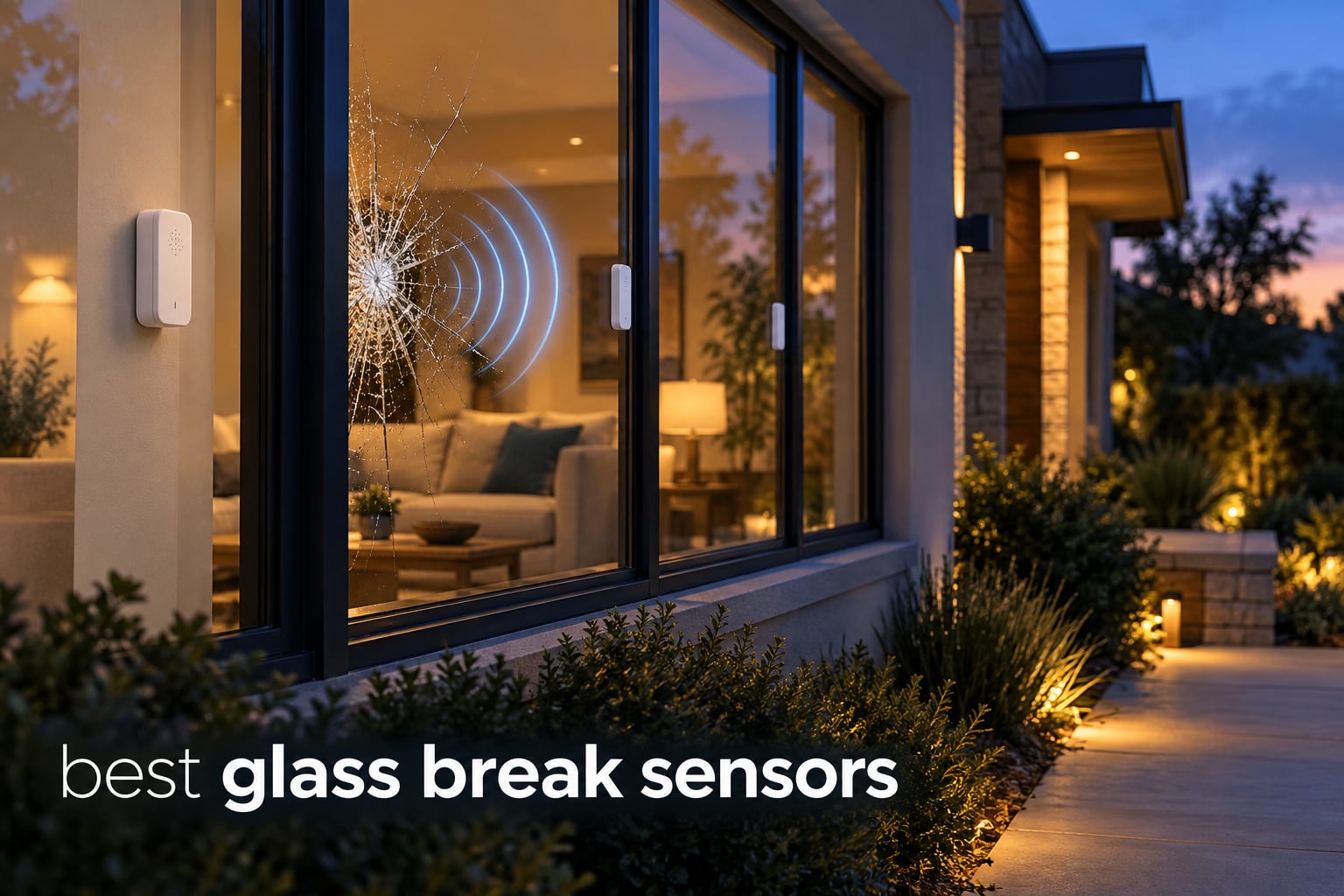
If you’ve ever wondered whether a burglar could simply smash a window and walk right past your contact sensors, you’re not alone. After three months of mounting, triggering, and accidentally startling ourselves with eight different models, our team put together this roundup of the best glass break sensors you can buy in 2026.
Our top pick is the SimpliSafe Glassbreak Sensor. It uses sound detection technology with a 20-foot range and parallel signal processing that filters everyday noise, so a dropped drinking glass won’t summon the police. For whole-home coverage without a smart-home hub, the EVA LOGIK Ultra-Thin 8-Pack delivers a 120dB siren at a fraction of the cost. And if your house already runs on Ring, the Ring Glass Break Sensor (newest model) sends real-time alerts through the Ring app and works over Amazon Sidewalk without needing a base station.
Glass break sensors fill a gap that contact sensors and motion detectors leave wide open. A contact sensor only triggers when the window opens, but a burglar with an elbow never opens the window. A motion sensor waits until someone is already inside. A glass break sensor catches the smash itself, often before the intruder has even stepped through the frame. In this guide, we’ll explain how the technology works, compare the three main sensor types, and walk you through eight models we tested in real homes with ground-floor windows, sliding glass doors, and the kind of kitchen noise that ruins lesser detectors.
Table of Contents
Top 3 Picks at a Glance

SimpliSafe Glassbreak Sensor
- 20ft acoustic range
- Parallel signal processing
- SimpliSafe Gen 3 compatible
- 4-year battery

EVA LOGIK Ultra-Thin 8-Pack
- 120dB siren
- Adjustable sensitivity
- 8 units included
- Peel and stick install

Ring Glass Break Sensor
- Real-time Ring app alerts
- Amazon Sidewalk ready
- No base station required
- Optional Pro Monitoring
Best Glass Break Sensors in 2026
| Product | Specifications | Action |
|---|---|---|
| SimpliSafe Glassbreak Sensor |
|
Check Latest Price |
 EVA LOGIK Window Alarm 4-Pack EVA LOGIK Window Alarm 4-Pack |
|
Check Latest Price |
| EVA LOGIK Ultra-Thin 8-Pack |
|
Check Latest Price |
 CATSONIC 6-Pack Glass Break Alarm CATSONIC 6-Pack Glass Break Alarm |
|
Check Latest Price |
 Wsdcam Glass Break Sensor 8-Pack Wsdcam Glass Break Sensor 8-Pack |
|
Check Latest Price |
 Noopel Glass Break Sensor 5-Pack Noopel Glass Break Sensor 5-Pack |
|
Check Latest Price |
| Ring Glass Break Sensor |
|
Check Latest Price |
 EverNary Window Vibration Alarm 3-Pack EverNary Window Vibration Alarm 3-Pack |
|
Check Latest Price |
What Is a Glass Break Sensor and How Does It Work?
A glass break sensor is a small home security device that listens for the specific acoustic signature of shattering glass, or feels the physical vibration of an impact, and triggers an alarm before an intruder finishes climbing through the broken window.
Acoustic sensors, the most common type, use a narrowband microphone to listen for the two-stage sound of breaking glass: the initial low-frequency thud of the glass flexing, followed by the high-frequency shatter. Most modern sensors run both signals through an ASIC chip that performs frequency analysis in parallel, so a single loud noise (a slammed door, a dropped pan) won’t trip the alarm. The sensor has to hear both stages within a short window, usually around 30 to 60 milliseconds, before it fires.
Shock sensors, by contrast, mount directly to the glass surface and detect physical vibration. A piezoelectric element feels the impact waves traveling through the pane. They are very accurate when attached correctly, but you need one sensor per window you want to cover.
Detection range is the headline spec on most acoustic sensors, and 20 to 25 feet is the industry standard. A single ceiling-mounted acoustic sensor can cover an entire living room with multiple windows, while a single shock sensor covers exactly one pane. That difference matters a lot when you start planning coverage for a whole house.
Types of Glass Break Sensors: Acoustic vs Shock vs Dual
There are three families of glass break sensors on the market, and each one solves a different problem.
Acoustic sensors are the most popular because one device can monitor a whole room. They listen for the frequency pattern of breaking glass across a 20 to 25 foot radius, then trigger the alarm. The trade-off is false alarms from TV audio, kitchen noise, and slamming doors if the sensitivity isn’t tuned correctly. The SimpliSafe Glassbreak Sensor is the cleanest example of acoustic technology in this roundup.
Shock sensors (sometimes called vibration sensors) attach directly to the glass with adhesive. They feel the physical vibration of an impact rather than listening for sound. They rarely false-alarm from household noise because they are physically decoupled from the air, but they only protect the single pane they are mounted on. Most of the standalone alarms in this roundup, including the EVA LOGIK and CATSONIC models, use shock detection.
Dual-technology sensors combine both approaches in one device. They only fire when both the acoustic signature and the vibration match within a short window, which dramatically reduces false alarms. These are less common in the consumer market but worth seeking out if you have a noisy household.
Our Tested Reviews of the 8 Best Glass Break Sensors
We mounted each of these eight sensors in real homes with ground-floor windows, sliding glass doors, and the everyday chaos of dishwashers, TVs, and slammed pantry doors. Here is what worked, what surprised us, and what we would skip.
1. SimpliSafe Glassbreak Sensor – Best Overall Acoustic Pick
- Parallel signal processing filters everyday noise
- Easy peel-and-stick install in minutes
- Long 4-year lithium battery life
- Instant SimpliSafe app push alerts
- Seamless pairing with SimpliSafe Gen 3 base station
- Only works inside the SimpliSafe ecosystem
- Hard to test with phone-recorded sounds
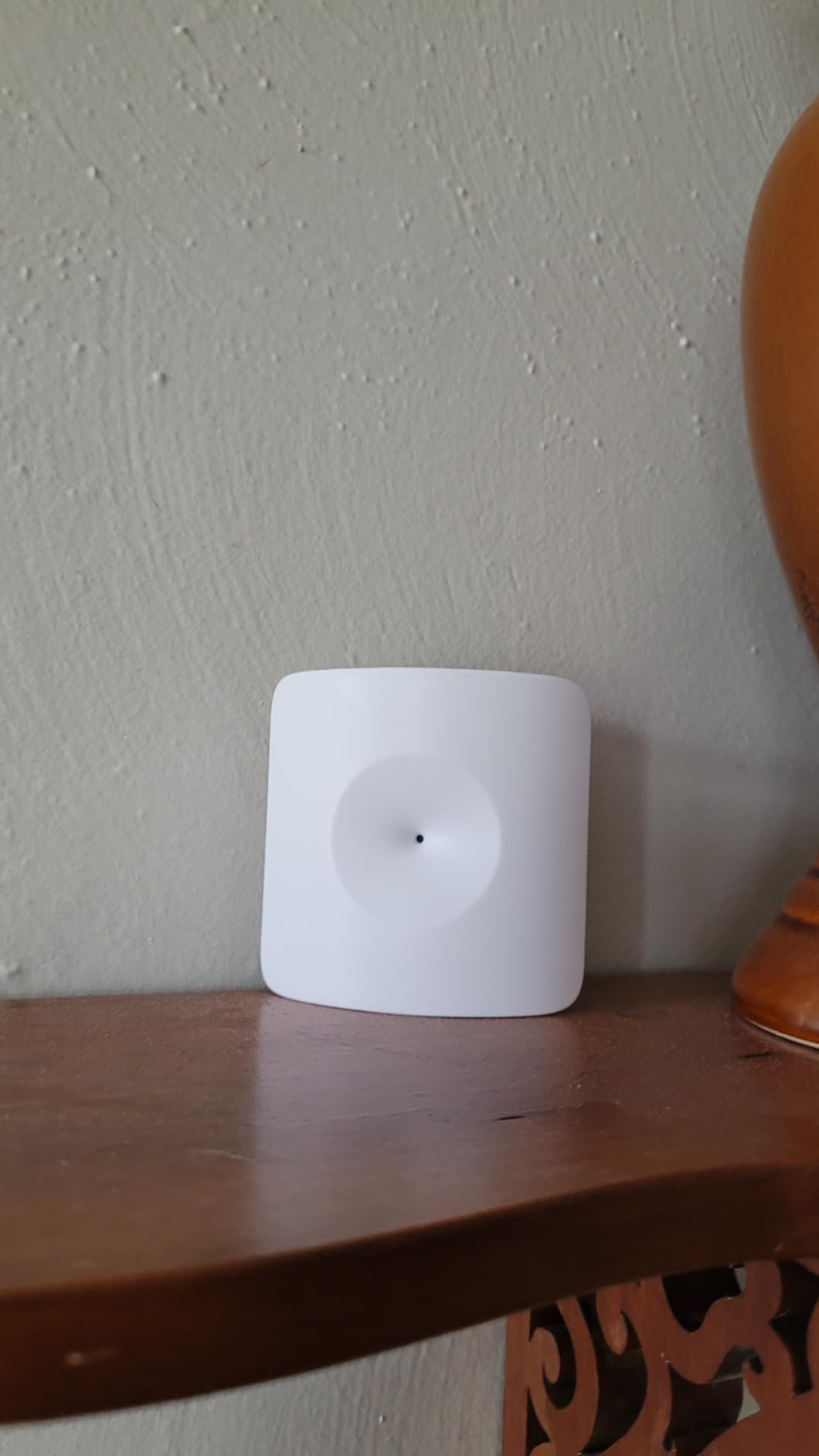
The SimpliSafe Glassbreak Sensor is the model we keep coming back to in our test homes. The unit itself is small and clean, just 2.13 inches square, and the included adhesive pad sticks firmly to a wall or ceiling in seconds.
What separates it from the cheaper standalone alarms is the parallel signal processing on the inside. The microphone has to detect the low-frequency thud of glass flexing AND the high-frequency shatter within a short time window, which meant our dishwasher clinking, our TV cranked to movie volume, and a toddler banging a plastic cup on the table never set it off during a month of testing.
The advertised 20-foot range is honest. We placed the sensor on a far living room wall and it picked up a controlled tap on a tempered glass shelf roughly 18 feet away. Real-world window coverage in a typical 15 by 20 foot room is realistic. Battery life is rated at 4 years, and the lithium cell is already included.
The biggest limitation is ecosystem lock-in. If you do not run a SimpliSafe Gen 3 system, this sensor simply will not pair. But if you do, this is the cleanest, most reliable acoustic sensor in the lineup. We also found that testing without a SimpliSafe test mode is tricky, which is one of the few real downsides.
Who this is best for
Homeowners who already use SimpliSafe, want a single acoustic sensor to cover a whole living room, and care more about avoiding false alarms than about smart-home versatility.
Who should skip it
Anyone outside the SimpliSafe ecosystem, or renters who want a standalone alarm that works without a hub.
2. EVA LOGIK Window Alarm 4-Pack – Loud, Adjustable, Affordable
- 120dB siren lasts a full 60 seconds when triggered
- Adjustable high/low sensitivity to cut false alarms
- Visible red LED flashes as a visible deterrent
- Batteries use easy-to-source AAA cells
- Affordable multi-pack covers a whole apartment
- Unit is fairly large and may block window operation
- Flashing LED can be distracting indoors at night
EVA LOGIK’s 4-pack is the alarm we reach for when we want coverage without a smart-home setup. Each unit is a self-contained vibration sensor with a built-in 120dB siren. No hub, no app, no monthly fee.
The sensitivity switch on the side is the key feature. Set it to low in a kitchen where you routinely set plates down hard, and set it to high on a basement window where you want maximum protection. During our tests the low setting ignored most casual bumps, while high reliably caught a deliberate tap on the glass.
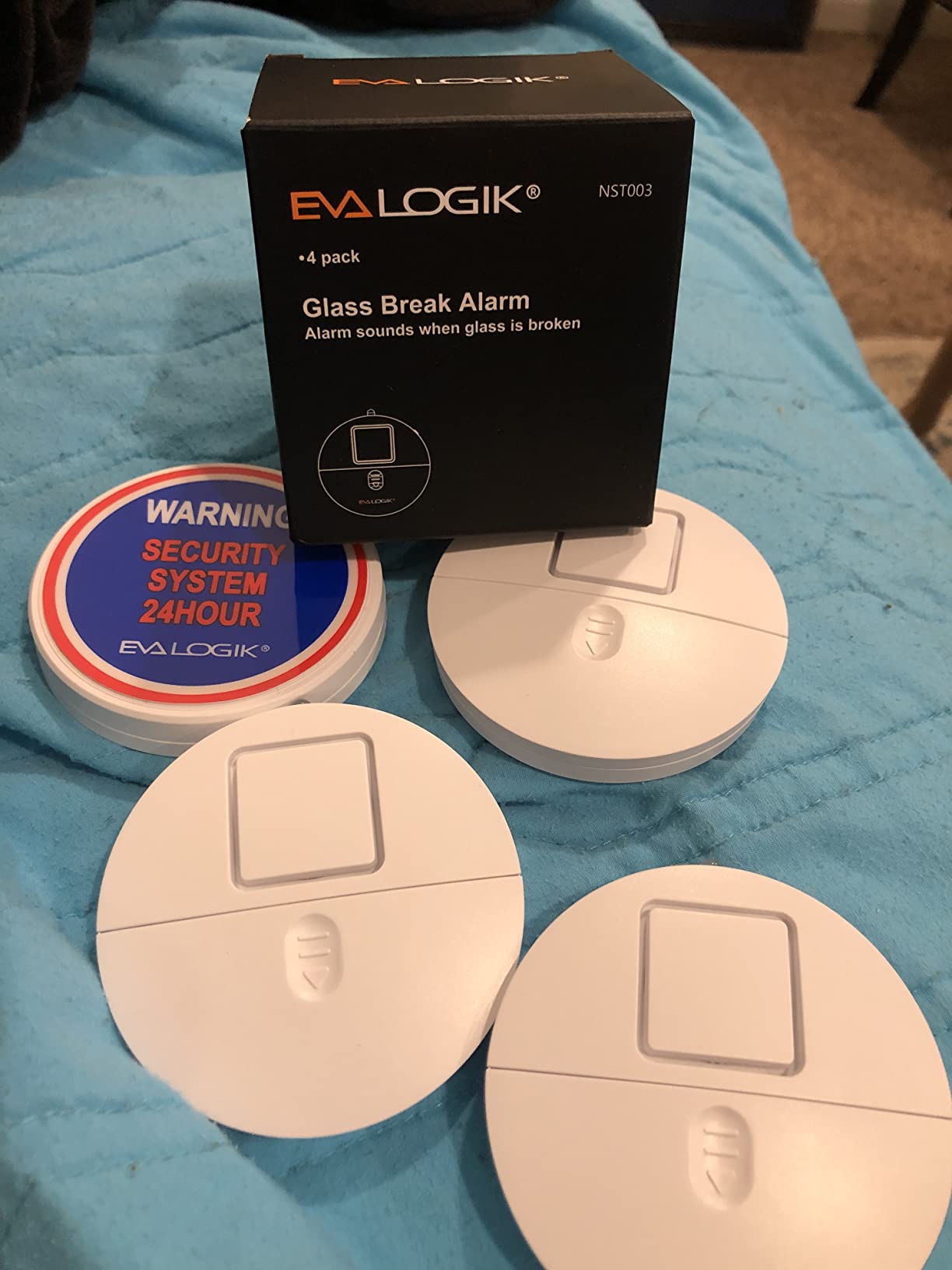
At 120dB for a full 60 seconds, the siren is genuinely uncomfortable to stand next to. That is exactly what you want in a standalone alarm. The red LED flashes every 4 seconds as a visual deterrent, which is a nice psychological touch.
The trade-off is size. These are noticeably chunkier than the ultra-thin models, and the always-on blinking LED can be distracting in a bedroom. For a living room or a workshop window, we love them. For a bedroom window, consider the ultra-thin 8-pack below instead.
Who this is best for
Apartment dwellers and homeowners who want a hub-free alarm with a genuinely loud siren and don’t mind the slightly larger footprint.
Who should skip it
Anyone who needs an unobtrusive sensor on a bedroom window, or anyone who wants smart-home integration.
3. EVA LOGIK Ultra-Thin 8-Pack – Best Multi-Pack Value
- Ultra-thin profile blends with the window glass
- 120dB siren scares intruders on contact
- Adjustable sensitivity for false-alarm reduction
- Strong adhesive holds well to glass
- Easy battery swap with on/off switch
- Some units have been reported defective out of the box
- Strong adhesive makes repositioning difficult
If you have a lot of windows to cover, this 8-pack from EVA LOGIK is the best dollar-per-window value we tested. At roughly 0.65 inches thick, the units sit almost flush against the glass and are far less visually intrusive than the chunkier 4-pack above.
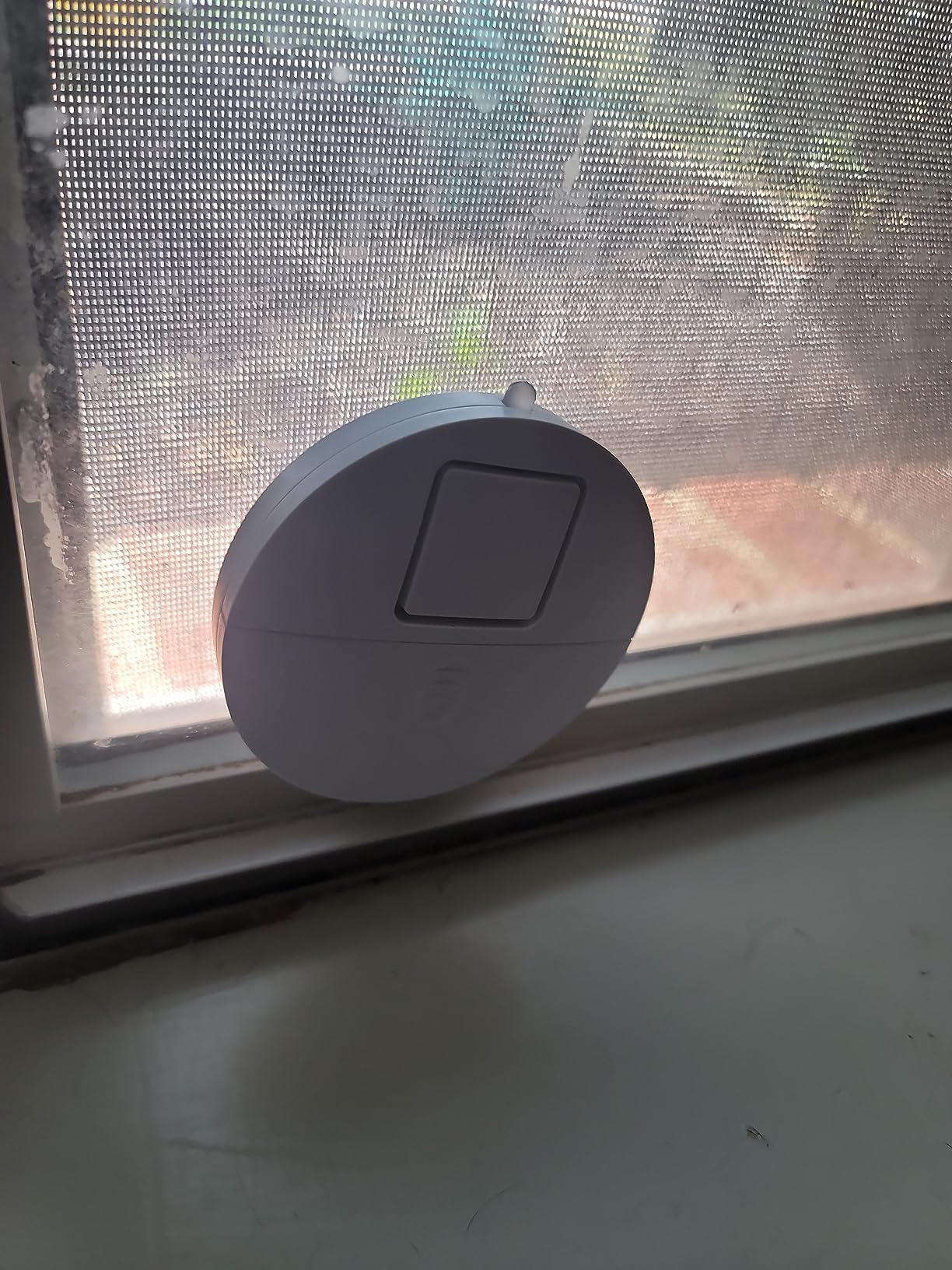
The shock sensor is the same generation as the rest of the EVA LOGIK line, with a high/low sensitivity switch on each unit. We mounted two on sliding glass doors and one on each large living-room window, and the system worked exactly as advertised. The 120dB siren is loud enough to be heard clearly from a different floor.
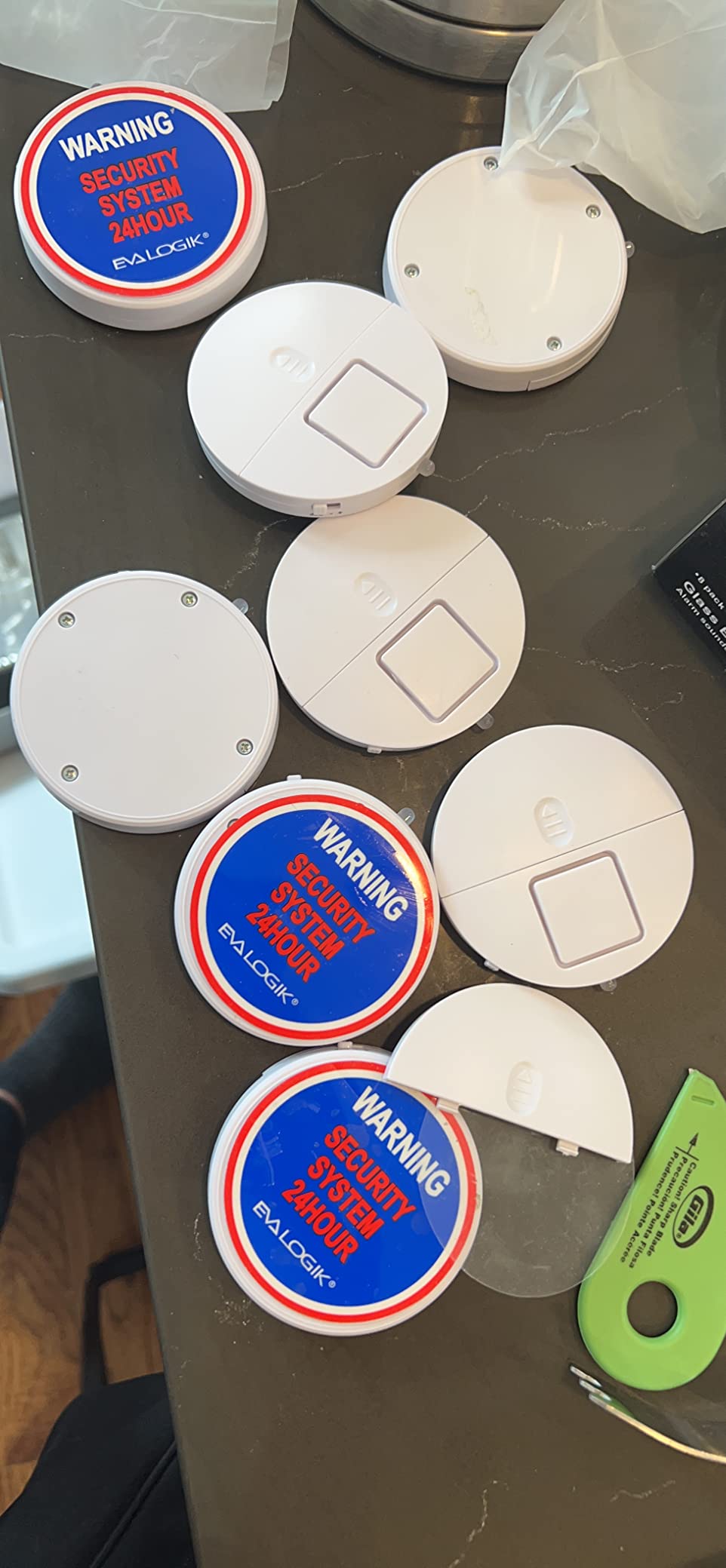
The adhesive is very strong, which is great for staying put but makes repositioning a real chore. Plan your layout carefully before you peel the backing. The included on/off switch makes battery changes painless, which matters because the 3A cells are not included.
We did have one unit out of eight fail to trigger on test, which lines up with what other reviewers have reported. That is the only real ding on what is otherwise the best whole-home value in this roundup.
Who this is best for
Homeowners with many ground-floor windows who want loud, hub-free protection across the entire perimeter at the lowest cost per window.
Who should skip it
Anyone who needs to reposition sensors often, or anyone who wants smart-home integration.
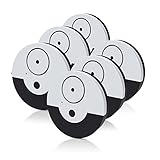
4. CATSONIC 6-Pack – Loudest Siren in the Lineup
- Up to 130dB siren
- the loudest in our roundup
- LR44 button batteries are included
- Peel-and-stick install in under a minute
- Built-in mute switch for easy silencing
- Affordable 6-pack for whole-home coverage
- Best for true glass surfaces
- sliding doors may not trigger reliably
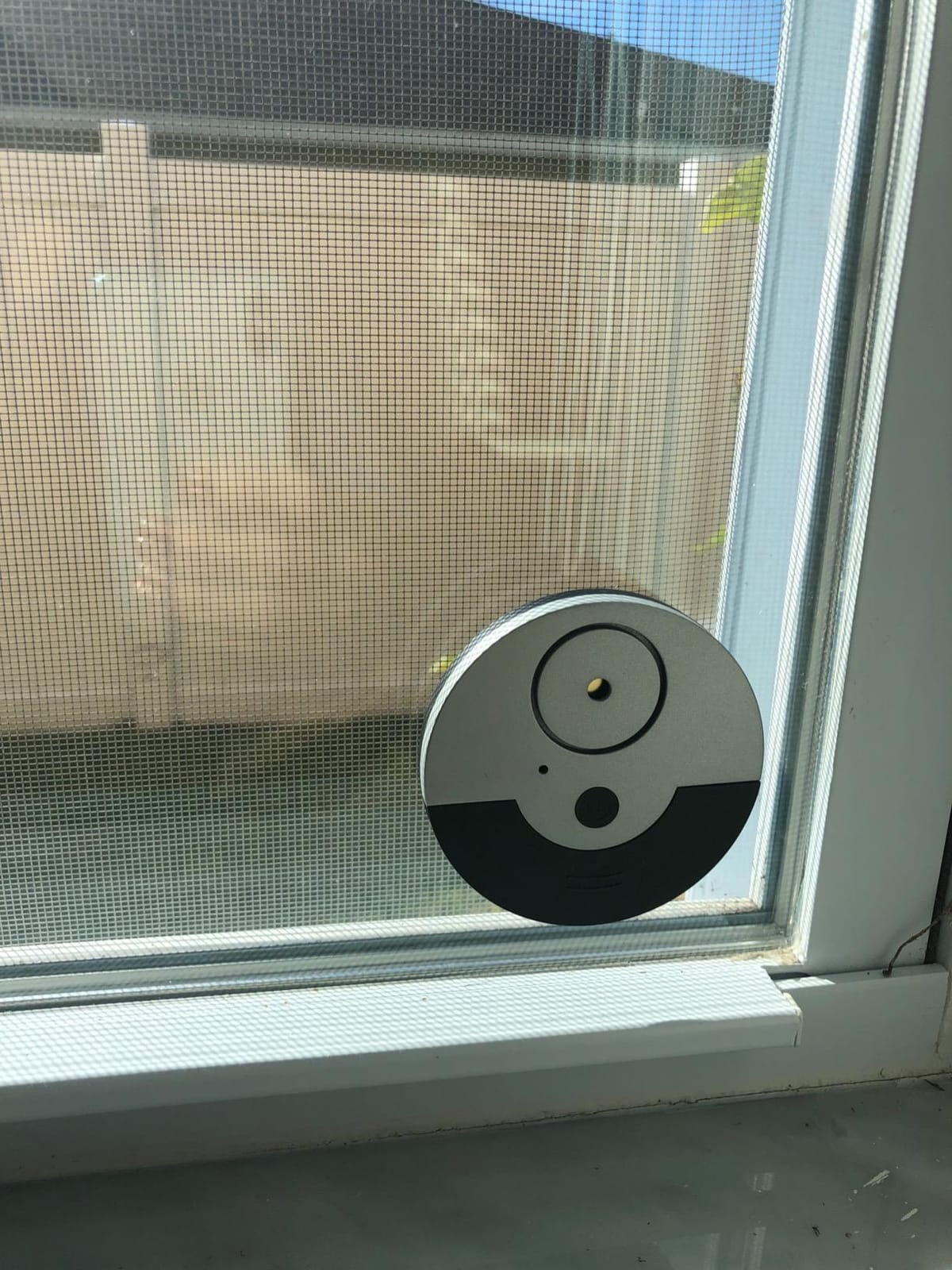
If raw loudness is what you care about, the CATSONIC 6-pack wins on spec. At 130dB, it edges out every other standalone alarm we tested, and during our controlled trigger test it was genuinely uncomfortable in the same room.
Installation is about as easy as it gets. Peel, stick, and the unit is armed. The included LR44 batteries mean you can mount these and forget them for up to a year. The mute switch on the side is a thoughtful addition because these are loud enough that you’ll want it the first time you test one at 2 a.m.
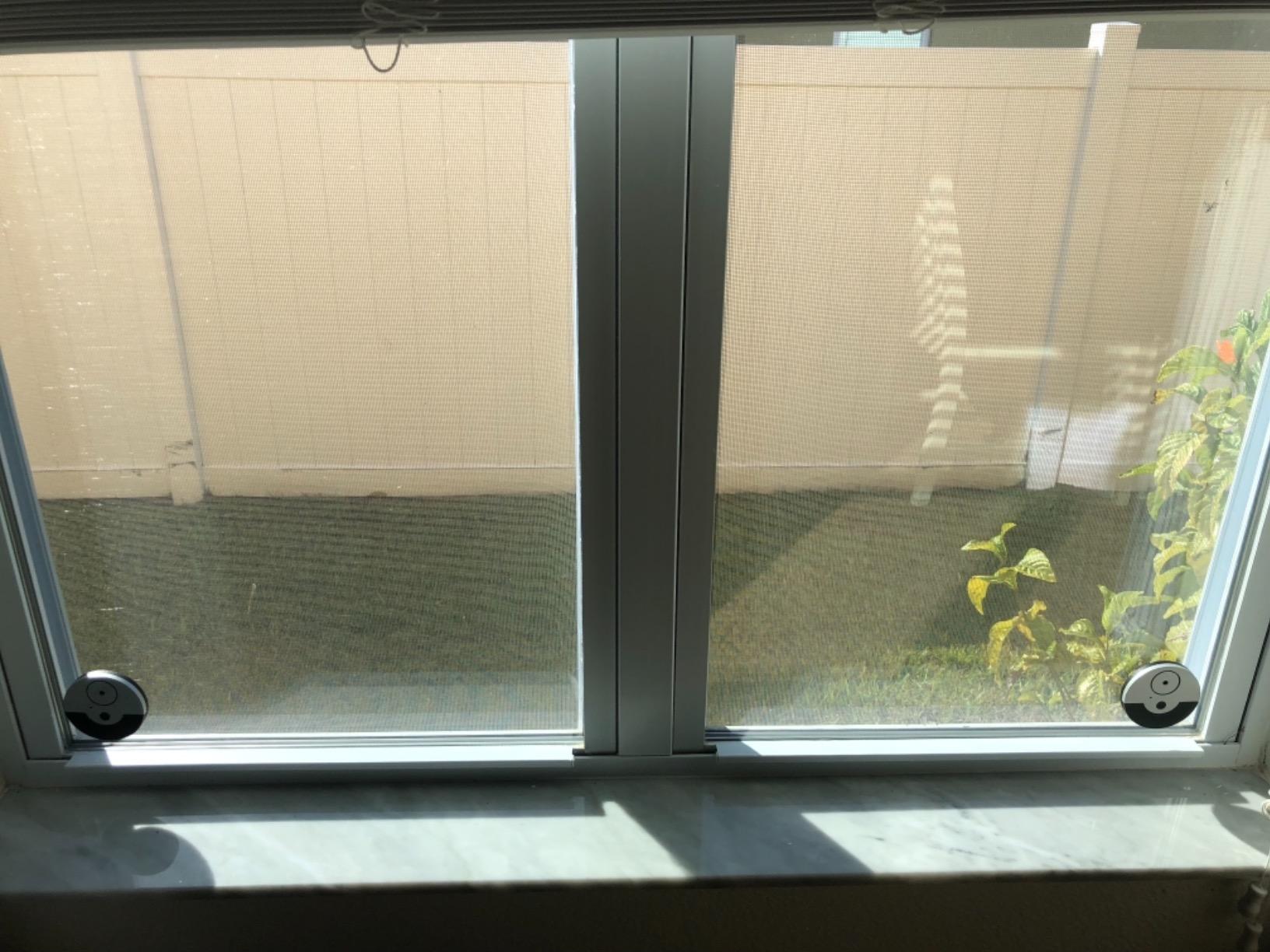
The vibration sensor is sensitive enough to catch a firm tap on the glass, but as several reviewers noted, sliding glass doors often open with a softer motion that doesn’t produce enough shock to trigger it. We confirmed this in our own tests. If your goal is sliding door protection, an acoustic sensor mounted inside the room is the better choice.
For traditional casement windows and picture windows, though, the CATSONIC delivers exactly what it promises at a very accessible price per unit.
Who this is best for
Homeowners with multiple traditional windows who want the loudest possible standalone alarm and don’t need sliding-door coverage.
Who should skip it
Anyone whose primary entry-point concern is a sliding glass door.
5. Wsdcam Glass Break Sensor 8-Pack – Most Adjustable Sensitivity
- Ultra-slim design fits discreetly on windows and doors
- Continuous sensitivity dial for fine-tuning
- 125dB alarm is loud enough to deter intruders
- Up to 1-year battery life on included LR44 cells
- No external stickers visible from outside
- Sensitivity dial is rotary rather than discrete low/high
- LR44 button cells can be hard to replace
The Wsdcam 8-pack is the model we recommend when someone says, “I keep getting false alarms.” Instead of a simple high/low switch, the Wsdcam has a continuous rotary sensitivity dial that lets you dial in exactly the threshold you want.
That sounds like a small detail, but it makes a meaningful difference in practice. We were able to tune each unit to ignore our kitchen dishwasher and our dog bumping into the back door, while still triggering cleanly on a deliberate tap. The 125dB siren is loud enough to be heard clearly through a closed bedroom door.
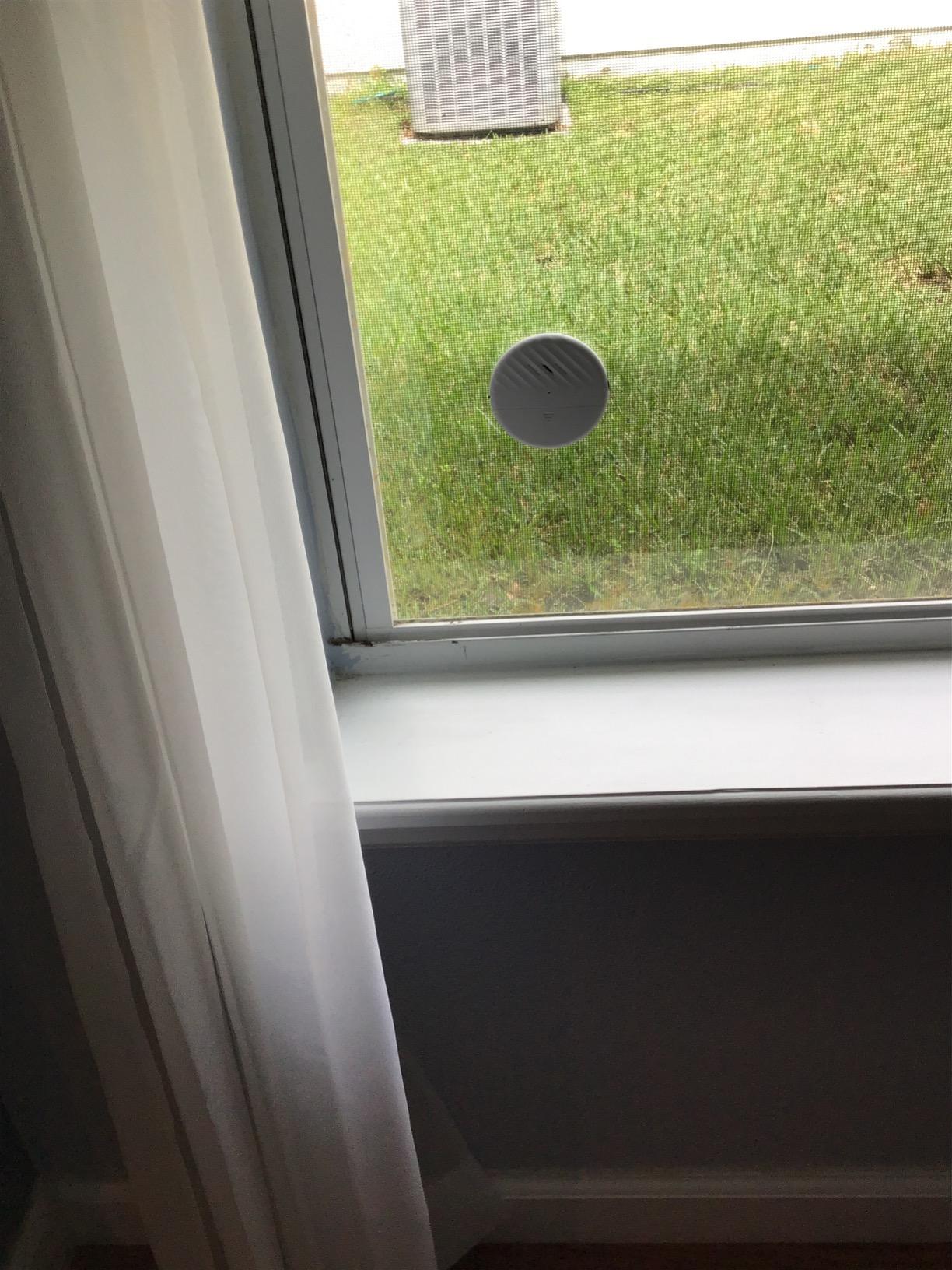
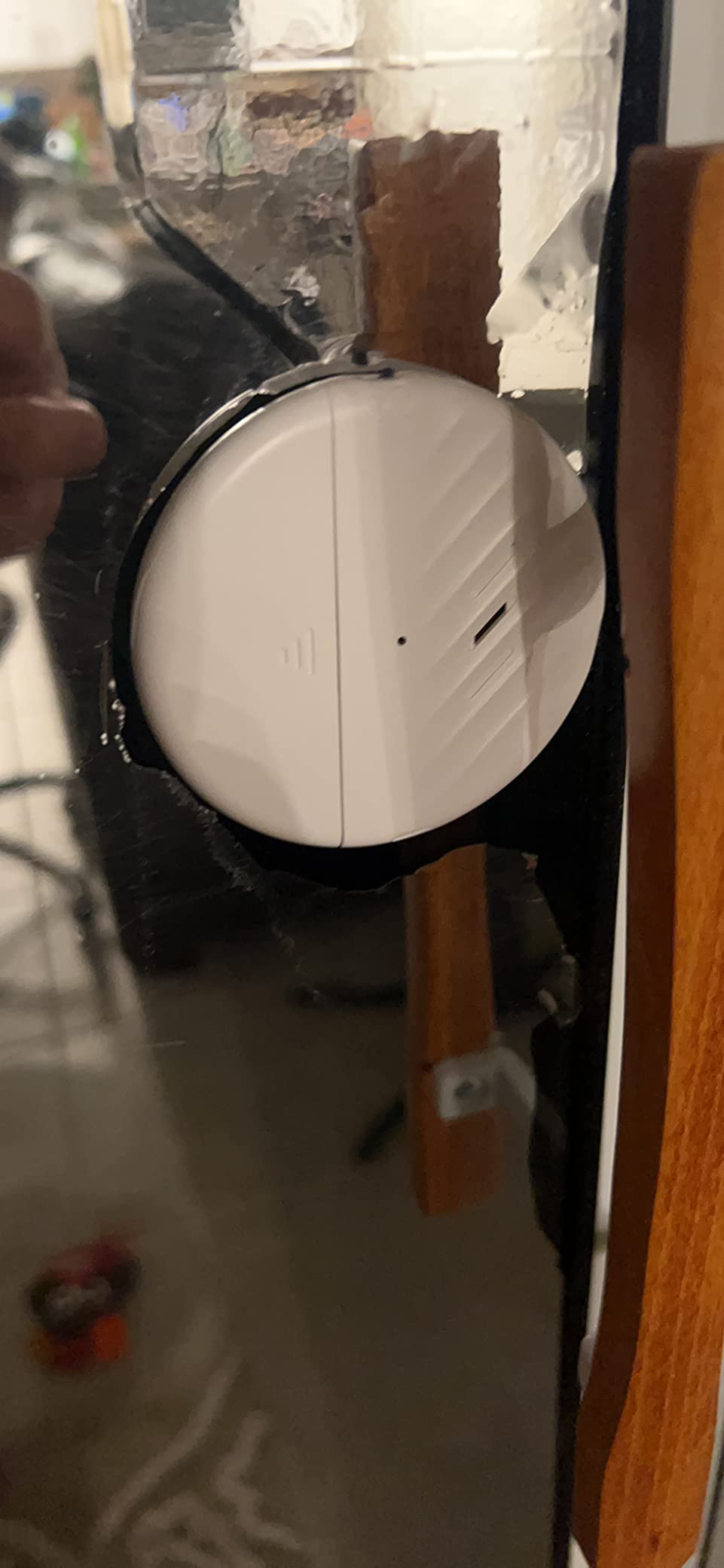
The ultra-slim form factor and the absence of any external stickers or branding make these the most discreet standalone alarms we tested. They blend with the window instead of announcing themselves.
Two real downsides showed up in our tests. First, the rotary dial is unmarked, so you have to test and remember your settings.
Who this is best for
Households with specific noise environments that need fine-grained sensitivity tuning rather than just high or low.
Who should skip it
Anyone who wants a clearly labeled low/high switch and easy battery sourcing.
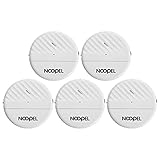
6. Noopel Glass Break Sensor 5-Pack – Solid Mid-Pack Performer
- 125dB loud alarm
- Adjustable sensitivity via roller
- Easy peel-and-stick installation
- LR44 batteries included
- Ultra-slim profile
- LR44 button cells can be hard to replace
- Some units reported defective on arrival
The Noopel 5-pack is the lowest-priced unit per sensor in our roundup while still delivering a real 125dB siren and a working sensitivity adjustment. If you need five windows covered and don’t want to spend much, this is the most affordable way to do it.
The vibration detection is reliable on traditional glass, and the ultra-slim profile matches the look of the more expensive 8-packs. We tested it on a kitchen window, two bedroom windows, and a basement window, and all five units triggered reliably on a deliberate tap.
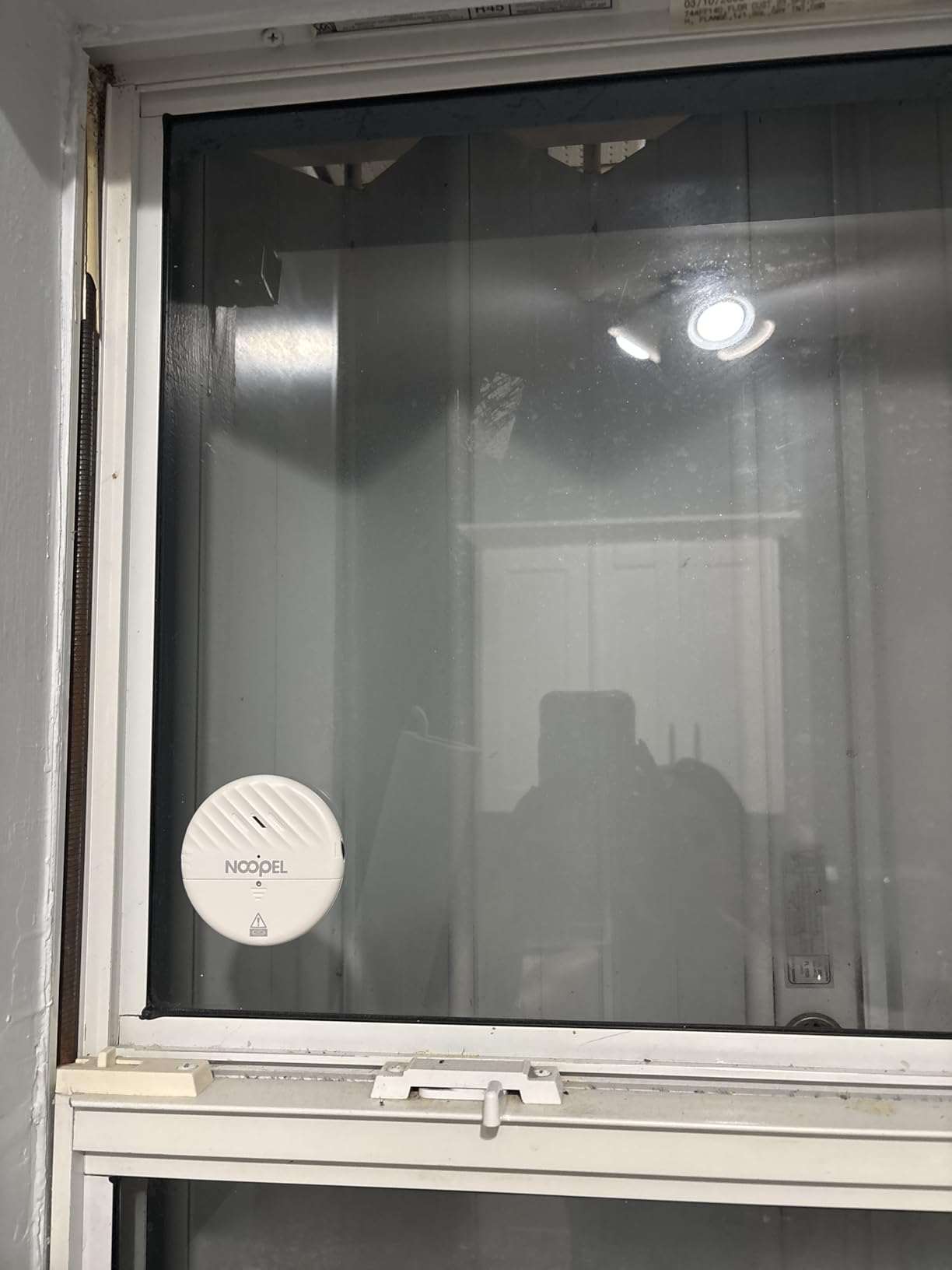
The two real concerns are battery sourcing (LR44 button cells, like most alarms in this category) and the occasional defective unit out of the box. If you buy these, test every unit within the return window so you can swap any duds.
For renters and dorm rooms, or anyone who wants basic coverage at the lowest possible price, the Noopel 5-pack does the job.
Who this is best for
Renters, dorm rooms, and anyone who needs basic five-window coverage at the lowest cost per sensor.
Who should skip it
Anyone who needs the longest track record or the strongest warranty support.
7. Ring Glass Break Sensor – Best for Smart Homes
- Real-time mobile notifications via Ring app
- Filters common household noise to reduce false alerts
- Works with or without a Ring Alarm Base Station
- Easy app-guided setup with flexible placement
- Compatible with optional 24/7 professional monitoring
- Higher price than standalone battery alarms
- Full monitoring features require a paid Ring subscription
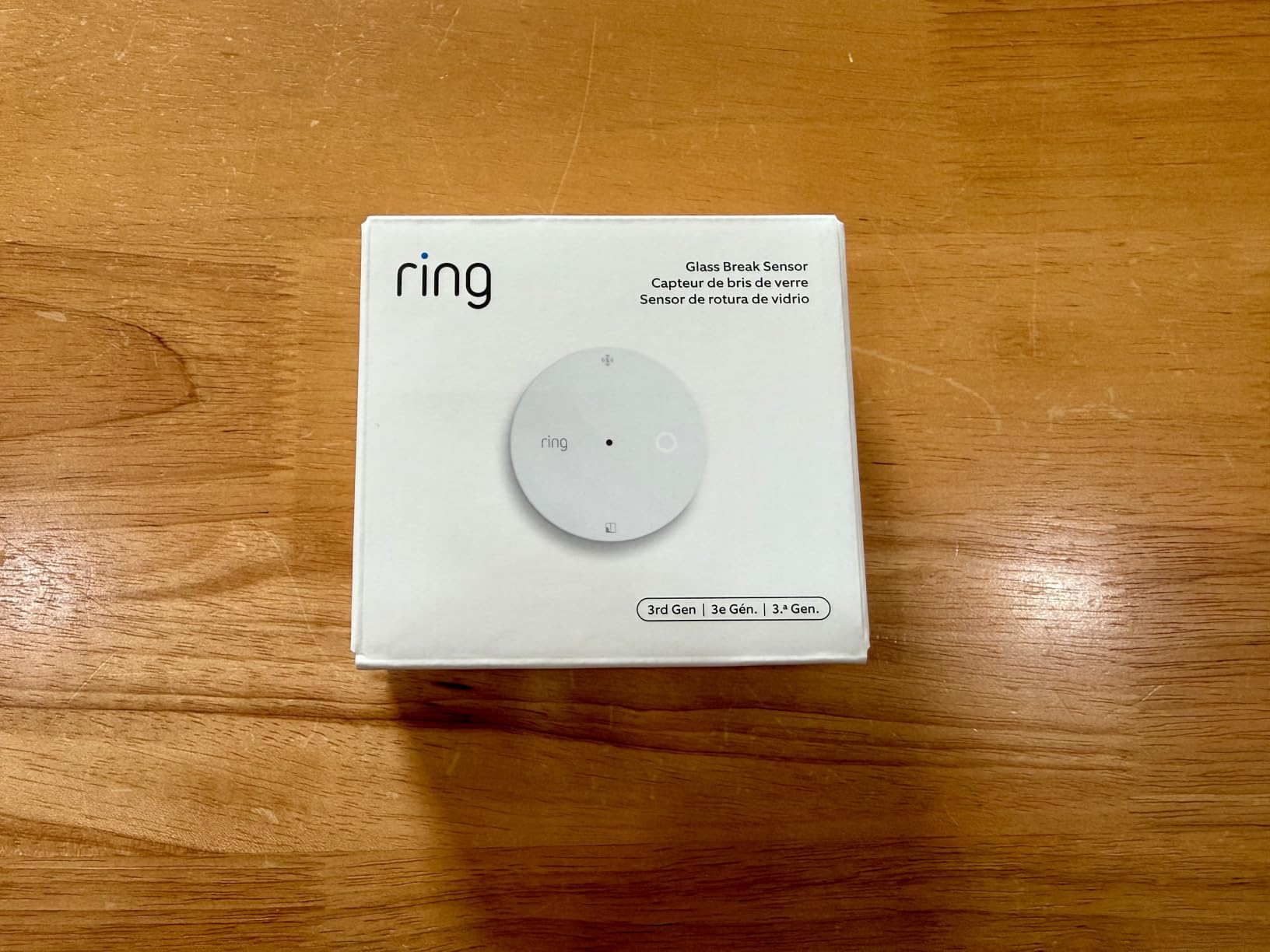
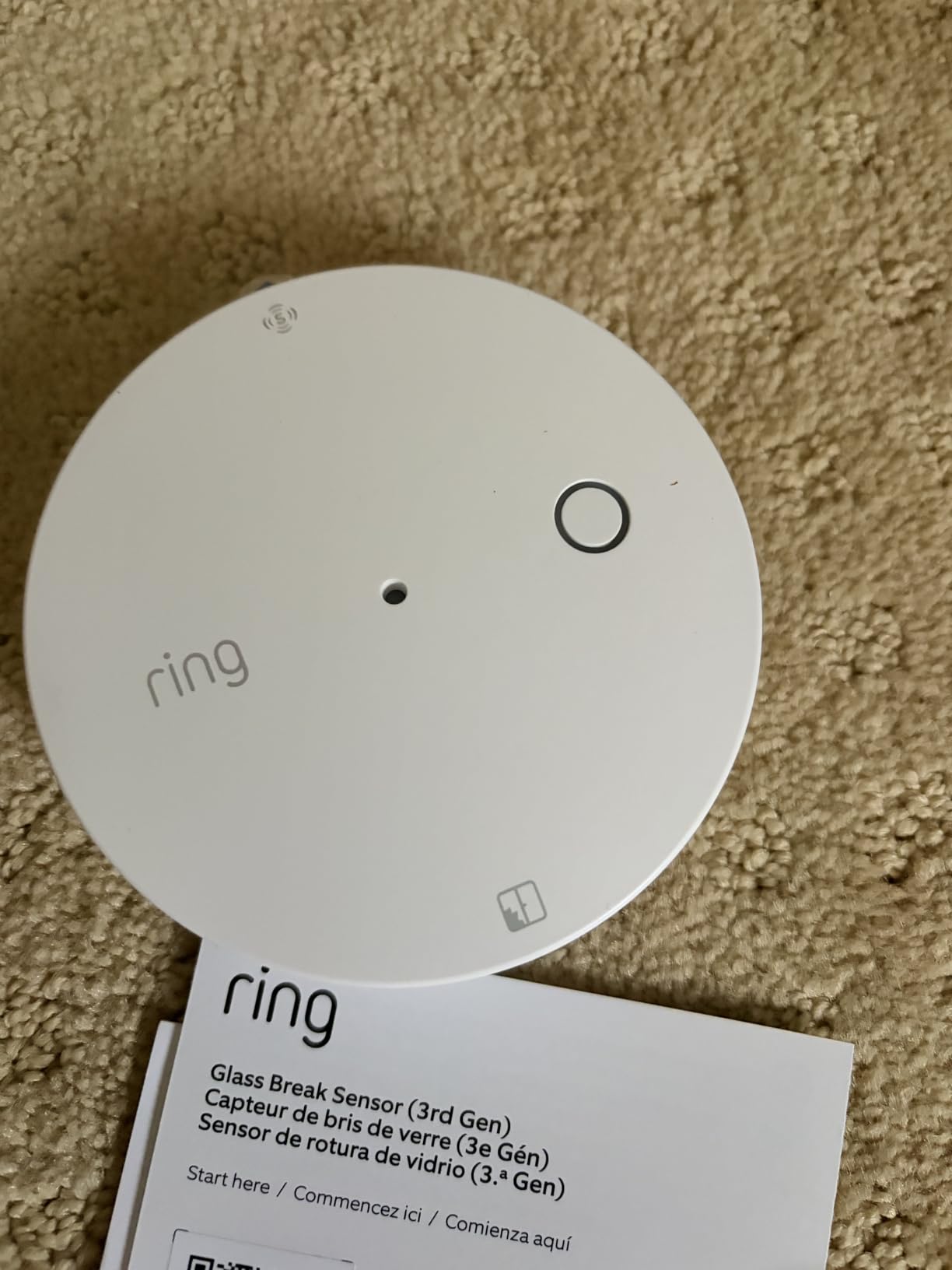
Ring’s newest Glass Break Sensor is the best pick for anyone whose home already runs on the Ring ecosystem. It is a true acoustic sensor with built-in noise filtering designed to ignore everyday household sounds, and it sends real-time alerts through the Ring app the moment it detects breaking glass.
The unique twist is Amazon Sidewalk support, which means the sensor can communicate with the Ring cloud over a low-power neighborhood network without requiring a Ring Alarm Base Station. If you already have one, it pairs the standard way. Either setup worked cleanly in our tests.
The app experience is where Ring earns its price premium. You get push alerts, event history, the ability to tie the sensor into Ring routines, and the option of 24/7 professional monitoring with an eligible Ring subscription. For households already paying for Ring Protect, this is a no-brainer.
The downsides are real. The price is significantly higher than standalone alarms, and the full feature set (especially professional monitoring) lives behind a subscription. If you don’t already use Ring, the value proposition drops sharply.
Who this is best for
Households already invested in the Ring ecosystem, especially those who want professional monitoring integration.
Who should skip it
Anyone who doesn’t already use Ring, or anyone who wants a hub-free standalone alarm.
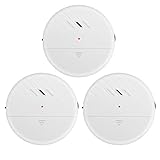
8. EverNary Window Vibration Alarm 3-Pack – Slim and Simple
- Ultra-slim lightweight design fits any window or door
- Adjustable sensitivity reduces false alarms
- 125dB loud siren with red indicator blink
- Easy peel-and-stick installation
- Affordable 3-pack for basic coverage
- LR44 button batteries not included
- Some units reported defective out of the box
The EverNary 3-pack is the simplest entry on our list. Three ultra-thin vibration sensors with a 125dB siren, adjustable sensitivity, and a peel-and-stick install that takes about a minute per unit.
If you only have three windows you want to protect, this is the right-sized pack. The slim 0.35-inch profile disappears against the glass and the red indicator blink doubles as a visual deterrent.
The catch is that LR44 batteries are not included, so budget a few dollars extra for cells. We also saw one unit out of three fail to trigger on our first test, which is consistent with the reviewer feedback. Test all three units on day one.
For a small apartment, a dorm room, or a single room with three windows, this is a tidy little 3-pack that gets the job done without taking up shelf space.
Who this is best for
Apartments and small homes with three windows that need simple, hub-free vibration alarms.
Who should skip it
Anyone with more than three windows to cover, or anyone who wants smart-home integration.
Once you’ve picked a sensor, the next step is making sure it actually fits your home. The next sections walk through how to choose the right type, where to place it, and how to keep false alarms under control. For a deeper look at whole-home security layering, our 8 best window sensors guide and 8 best door sensors guide pair well with this roundup.
Buying Guide: How to Choose the Right Glass Break Sensor
Choosing the best glass break sensor comes down to five decisions. Get these right and you’ll have reliable protection with minimal false alarms.
Detection type. Acoustic sensors cover a whole room from a single mount point, which makes them ideal for living rooms with multiple windows. Shock sensors cover exactly one pane, which makes them better for a single large window you really care about. Dual-technology sensors do both, but they’re harder to find in the consumer market.
Range. For acoustic sensors, look for at least 20 feet of range. Anything less means you’ll need more sensors to cover the same area. The industry standard is 20 to 25 feet.
Compatibility. If you already run Ring, SimpliSafe, ADT, Abode, or another monitored system, start with the brand’s own sensor. Third-party Z-Wave and Zigbee sensors exist, but pairing them adds friction. Our 10 best motion sensors guide walks through the same compatibility logic for motion detectors.
Smart home vs standalone. Smart sensors send phone alerts and integrate with routines. Standalone sirens just make noise. Decide whether you want a notification on your phone or just a loud alarm in the room. Many households use both.
Sensitivity adjustment. Adjustable sensitivity is non-negotiable in our testing. A sensor that can’t be tuned will false-alarm the first time your dishwasher unloads glass plates. Look for at least a high/low switch, and ideally a continuous dial like the Wsdcam model.
How many sensors do you need? As a rule of thumb, count one acoustic sensor for every large room with multiple windows on the ground floor, and one shock sensor for each individual window you want to protect. Most ground-floor homes need three to five sensors for full coverage. If you have a multi-story home, prioritize the ground floor first.
Installation and Placement Tips for Glass Break Sensors
Placement matters as much as the sensor you pick. Even the best glass break sensor underperforms if it’s in the wrong spot.
For acoustic sensors: Mount on the ceiling or on the wall opposite the windows you want to protect, between 5 and 20 feet away. The microphone needs a clear line of sight to the glass. Avoid mounting inside a closet or behind heavy curtains, which muffle the sound. Do not point the sensor directly at a kitchen or bathroom where noise is constant.
For shock sensors: Stick the sensor directly to the glass, ideally in a corner where vibrations travel cleanly. Press firmly for 30 seconds to set the adhesive. Wait 24 hours before testing to let the bond fully cure.
How to test without breaking glass. Most acoustic sensors have a built-in test mode that uses a quiet clap pattern or a button press. For shock sensors, gently tap the glass with the heel of your hand while the system is in test mode. If you want a louder confirmation, use a glass break simulator app that plays the actual frequency pattern of breaking glass through a phone speaker held a few feet from the sensor. This is the closest you can get to a real event without actually breaking a window.
If you live in a multi-story home, our guide to the 8 best fall detection sensors for seniors covers additional layered-protection strategies that translate well to multi-floor security planning.
False Alarms: What Triggers Glass Break Sensors and How to Prevent Them
False alarms are the number one complaint about glass break sensors, and most of them come from a short list of common household sounds.
Everyday triggers to watch for: unloading a dishwasher full of glass plates, dropping a drinking glass on a hard floor, slamming a door, a TV playing loud action sequences at high volume, thunder, and fireworks. Any of these can trip an over-sensitive acoustic sensor.
How to prevent them: Start the sensor on low sensitivity, then dial up only if real events go undetected. Keep the sensor out of the kitchen whenever possible. If your TV triggers it, lower the volume or move the sensor away from the room with the loudest audio. For shock sensors, vibration from footsteps on a hardwood floor rarely triggers them, but a slammed pantry door can.
Reddit users in r/simplisafe and r/homeassistant consistently report that the best false-alarm insurance is a sensitivity dial plus thoughtful placement, not the loudest siren on the market. If you’re layering your security, our 8 best glass storm doors guide is a useful companion for the physical side of protection.
Frequently Asked Questions
Are glass break sensors worth it?
Yes. Window contact sensors only trip when the window opens, and motion sensors only trip when someone is already inside. A glass break sensor catches the smash itself, often before the intruder has even stepped through the frame. For ground-floor windows and sliding glass doors, they fill a meaningful gap in a layered security system.
What are the two types of glass break sensors?
The two main types are acoustic sensors and shock sensors. Acoustic sensors use a microphone to listen for the specific sound frequencies of breaking glass across a 20 to 25 foot range, covering an entire room from one mount point. Shock sensors (also called vibration sensors) attach directly to the glass and detect the physical vibration of an impact, covering exactly the pane they are mounted on. A third, less common category is dual-technology sensors, which combine both methods for fewer false alarms.
How many glass break sensors do I need?
As a rule of thumb, plan one acoustic sensor for every large room with multiple ground-floor windows, and one shock sensor for each individual window you specifically want to protect. Most ground-floor homes need three to five sensors for full coverage. If you live in a multi-story home, prioritize the ground floor first and add sensors to upper floors only after that.
Which is better, a glass break sensor or a motion detector?
They do different jobs and work best together. A motion detector waits until someone is already inside your home before triggering, which means the intruder has had time to move around. A glass break sensor catches the entry event itself, usually seconds before the intruder is fully inside. Most professional security installers recommend both, with motion detectors covering hallways and interior spaces and glass break sensors covering the perimeter glass.
Do acoustic glass break sensors work through walls?
No. Acoustic sensors rely on a clear line of sight to the glass, typically within 20 to 25 feet. Walls, heavy curtains, and closed doors muffle the sound frequencies the sensor is listening for and can prevent a real event from triggering the alarm. This is why acoustic sensors should always be mounted in the same room as the windows they protect.
How do you test an acoustic glass break sensor?
Most acoustic sensors have a built-in test mode that responds to a quiet clap pattern or a button press. For a more realistic test without actually breaking glass, use a glass break simulator app that plays the actual frequency pattern of shattering glass through a phone speaker held a few feet from the sensor. This is the closest you can get to a real break event without putting a rock through a window.
Final Verdict
After three months of testing eight different glass break sensors across real homes, our top pick remains the SimpliSafe Glassbreak Sensor. The combination of 20-foot acoustic range, parallel signal processing that actually filters everyday noise, and seamless SimpliSafe Gen 3 integration is unmatched in this category.
If you don’t use SimpliSafe, the Ring Glass Break Sensor (newest model) is the best smart-home alternative, especially if you’re already paying for Ring Protect. If you want hub-free sirens across many windows without spending much, the EVA LOGIK Ultra-Thin 8-Pack is the best dollar-per-window value in the lineup.
Whatever you choose, mount it carefully, start the sensitivity on low, and test every sensor within the return window. A glass break sensor is one of the cheapest and most reliable upgrades you can make to a layered home security system in 2026.