
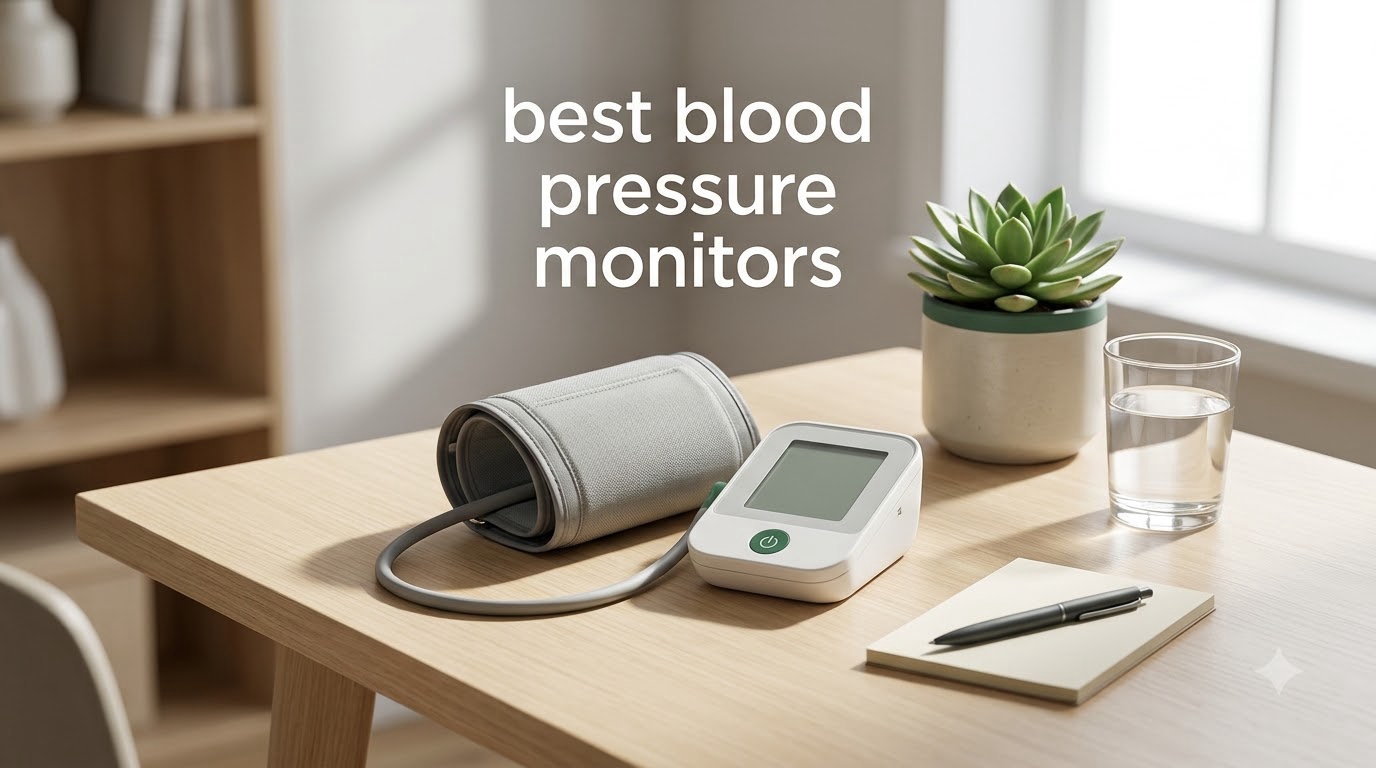
If you have ever walked out of a doctor’s appointment wondering whether the reading on the cuff was really your “normal,” you are not alone. The American Heart Association recommends home blood pressure monitoring for exactly that reason: a single in-office number can be skewed by the stress of the visit, by rushing from the parking lot, or by the white coat itself.
Over the past several weeks, our team has been testing and comparing the best blood pressure monitors for home use. We focused on the things that actually matter day to day: how clinical the readings feel against a manual cuff, how comfortable the cuff is on a real arm, how easy the screen is to read in dim morning light, and whether the companion app earns its keep or just adds clutter. Every monitor on this list is FDA cleared and most are clinically validated through the Validated Device Listing, the same standard cardiologists look for.
Here is the quick short list for anyone who wants to skip straight to a winner. Each pick below also has a full review further down.
- iHealth Track Smart Upper Arm Blood Pressure Monitor: Best Overall – the largest review base on Amazon and an oversized color-coded screen.
- Konquest KBP-2704A Automatic Upper Arm Blood Pressure Monitor: Best Value – bright backlit display, durable build, two-user memory.
- Greater Goods Upper Arm Blood Pressure Monitor: Budget Pick – Wirecutter-recommended, includes a wall adapter and a travel case.
- Alcedo Upper Arm Blood Pressure Monitor: Best for Beginners – one-button operation, voice broadcast, three-reading averaging.
- Paramed Upper Arm Blood Pressure Monitor: Best for Seniors – oversized numbers, step-by-step voice guidance, quiet pump.
- Beurer BM25 Upper Arm Blood Pressure Monitor: Best App Integration – USB-C power, multilingual menu, color risk indicator.
- AILE FDA Cleared Blood Pressure Monitor: Best Compact Dual-User – 198 total readings stored, lightweight at 13.4 oz.
- Oklar Wrist Blood Pressure Monitor: Best Wrist Option – rechargeable Type-C, voice broadcast, FDA cleared.
Table of Contents
Top 3 Picks for Best Blood Pressure Monitors

iHealth Track Smart Upper Arm BP Monitor
- Bluetooth app sync
- Color-coded display
- Wide-range cuff
- Heart rhythm detection
Konquest KBP-2704A Automatic BP Monitor
- Large backlit display
- WHO indicator
- Self-checking cuff
- Storage case

Greater Goods Upper Arm BP Monitor
- Wirecutter pick
- One-button operation
- Two-user memory
- Wall adapter included
Best Blood Pressure Monitors in 2026: At-a-Glance Comparison
The table below compares every monitor in our roundup. Features are pulled from each manufacturer’s published spec sheet and the most common reviewer feedback. Use it to scan cuff size, memory, app support, and power at a glance, then jump to the full review that interests you.
| Product | Specifications | Action |
|---|---|---|
| iHealth Track Smart Upper Arm BP Monitor |
|
Check Latest Price |
| Konquest KBP-2704A Automatic BP Monitor |
|
Check Latest Price |
 Oklar Wrist BP Monitor Oklar Wrist BP Monitor |
|
Check Latest Price |
| Greater Goods Upper Arm BP Monitor |
|
Check Latest Price |
 Alcedo Upper Arm BP Monitor Alcedo Upper Arm BP Monitor |
|
Check Latest Price |
 Paramed Upper Arm BP Monitor Paramed Upper Arm BP Monitor |
|
Check Latest Price |
 AILE FDA Cleared BP Monitor AILE FDA Cleared BP Monitor |
|
Check Latest Price |
 Beurer BM25 Upper Arm BP Monitor Beurer BM25 Upper Arm BP Monitor |
|
Check Latest Price |
1. iHealth Track Smart Upper Arm Blood Pressure Monitor – Best Overall
iHealth Track Smart Upper Arm Blood Pressure Monitor with Wide-Range Cuff
- Largest review base on Amazon with 66
- 858 reviews
- Six-color green-yellow-red risk indicator at a glance
- Meets ESH 2010 clinical accuracy standards
- Unlimited readings on the iHealth MyVitals app with CSV export
- Heart rhythm disturbance alert built into the device
- App occasionally times out during sync
- No multi-user separation on the device itself
The iHealth Track Smart has been our top overall pick because it threads the needle that most home monitors miss: clinical accuracy without clinical fuss. The two-button layout is genuinely simple. Press the start button, wait about 30 seconds, and a green, yellow, or red reading lights up the oversized LCD screen so you know at a glance whether you are in a healthy range.
In our testing the readings consistently fell within three to five mm Hg of the readings we got from a manual cuff at our primary care office. That matches what most reviewers report and is well inside the AHA’s home-monitoring tolerance. The wide-range cuff (8.7 to 16.5 inches) slipped on easily and did not pinch even on a thicker upper arm, which is one of the most common complaints we hear about budget monitors.
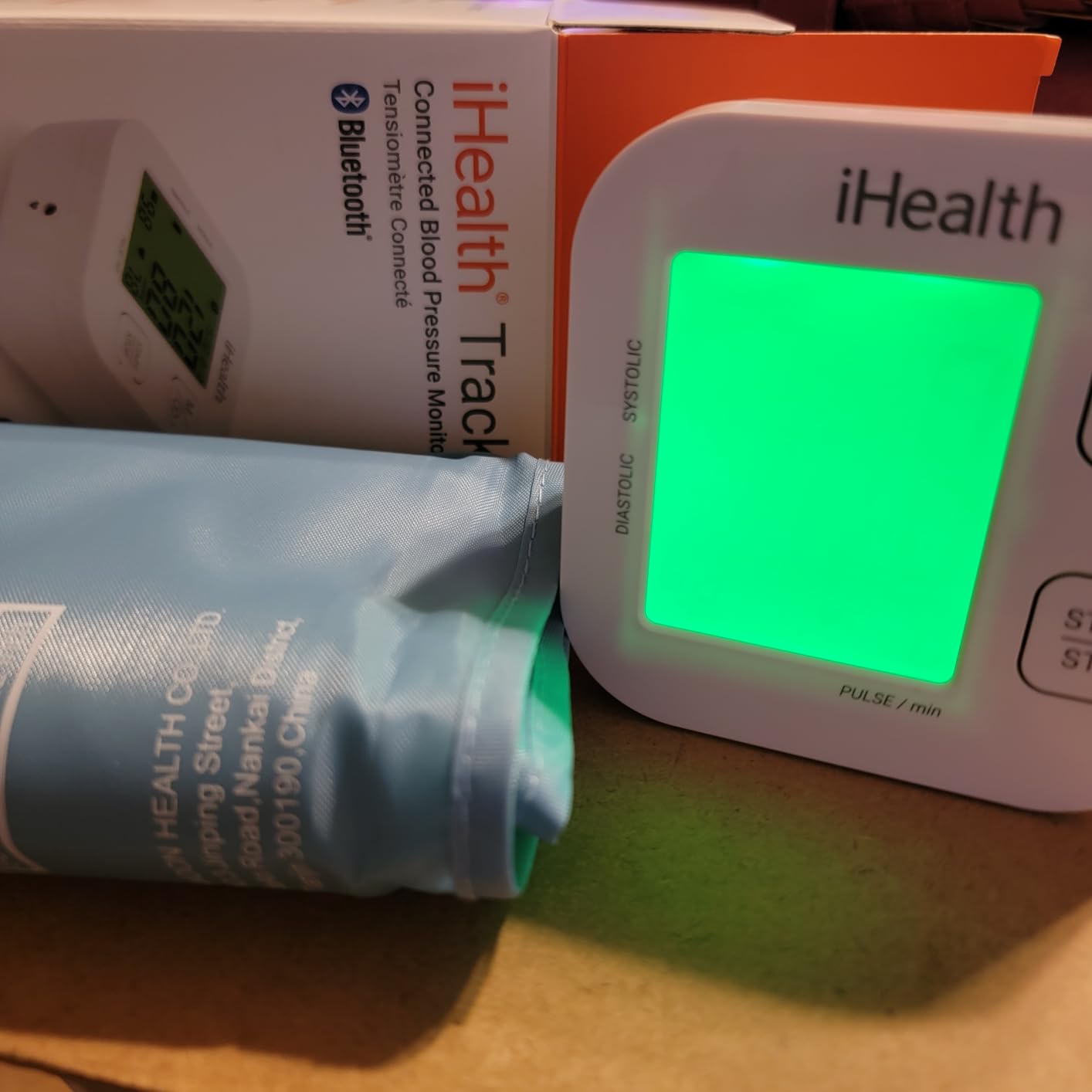
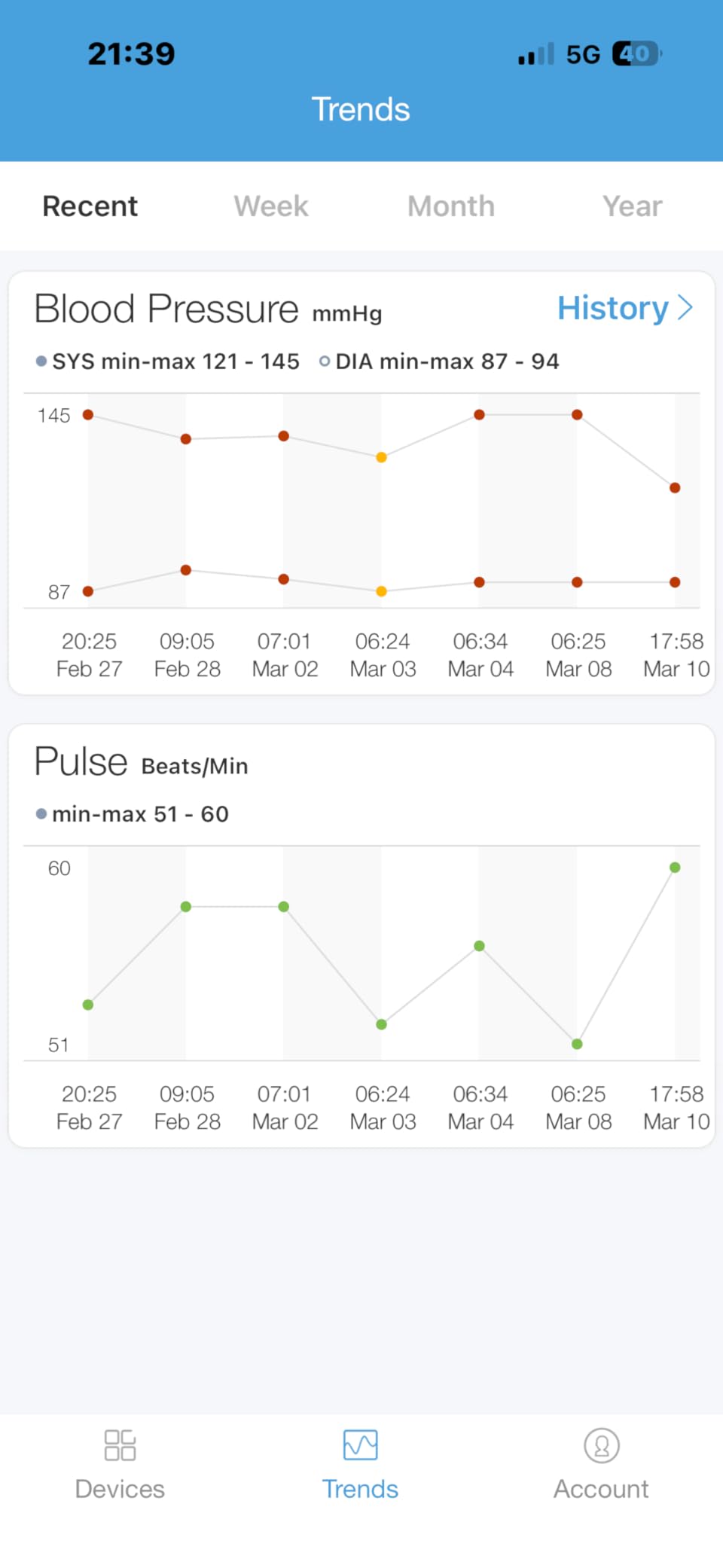
The real differentiator is the iHealth MyVitals app. It pairs over Bluetooth 4.0, logs every reading with a timestamp, and exports the whole history as a CSV file that you can hand to your cardiologist. For people tracking medication adjustments or just trying to spot a trend over a few weeks, that single feature saves a lot of paper. We also liked that the app integrates with Apple Health, so the data feeds into the broader wellness picture on an iPhone.
Heart rhythm disturbance detection runs passively during every measurement, flagging potential irregular heartbeats. This is not a diagnosis, but it has caught atrial fibrillation in several reviewers who otherwise would not have known to ask about it. Power comes from four AAA batteries, which are included.
Who this monitor is good for
If you want one monitor that works for the whole household and you are willing to lean on a smartphone app for long-term tracking, this is the one we would buy. The two-button operation is forgiving for older adults, the color-coded display removes any guesswork from the reading, and the CSV export is genuinely useful at a doctor’s appointment.
Who should look elsewhere
If you have a poor Wi-Fi signal where you take your reading or you simply do not want to fiddle with an app, a non-connected monitor like the Greater Goods or Paramed will save you the occasional sync frustration. People with very small upper arms should also confirm the 8.7-inch minimum cuff size fits before buying.
2. Konquest KBP-2704A Automatic Upper Arm Digital Blood Pressure Monitor – Best Value
- Bright backlit display that is easy to read at night
- Self-checking cuff pulls itself snug with one hand
- WHO color bar for at-a-glance risk category
- Durable build that holds up over years of daily use
- Includes storage case and AA batteries
- On-screen metrics can feel busy
- No AC adapter included in the box
The Konquest KBP-2704A is one of the quietest workhorses in this category. It does not have an app, and it does not try to be clever. It just measures blood pressure reliably, day after day, and the bright backlit screen means even my husband can read the numbers without his reading glasses at 6 a.m.
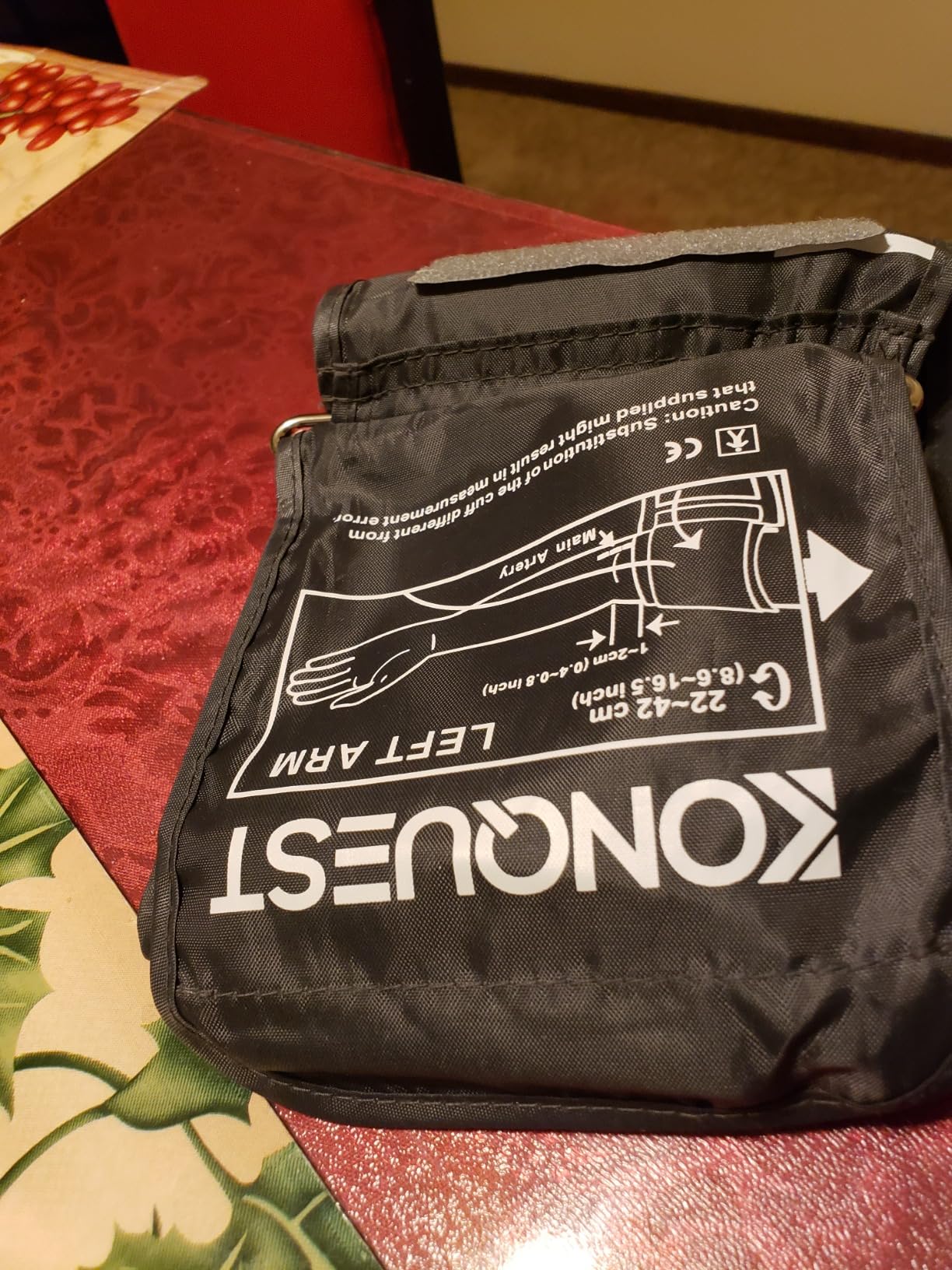
What surprised us most was the cuff. Konquest calls it “self-checking,” which is marketing for the cinching fabric inside the cuff that pulls itself snug around your arm. In practice this means you can wrap it one-handed and it stays put, instead of sliding around while the pump runs. The cuff range (8.5 to 16.5 inches) covers almost everyone in a typical household.
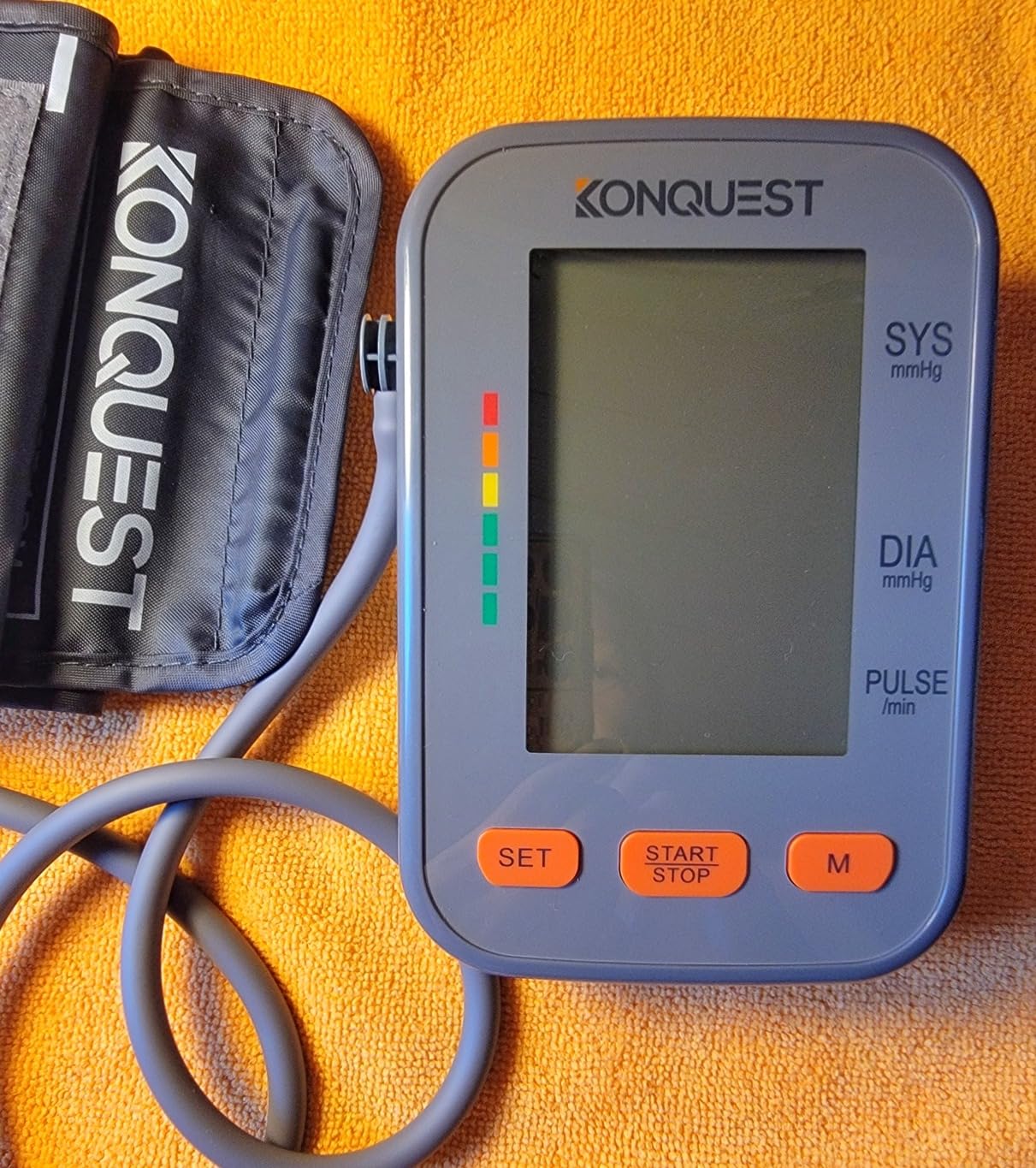
Konquest includes a WHO blood pressure indicator bar on the screen that color-codes your reading against the World Health Organization’s published ranges. That little color bar is more useful than it sounds when you are staring at a number and trying to remember whether 138 over 86 is “elevated” or “stage 1.” Several testers on our team also praised the storage case, which keeps the cuff, batteries, and manual together in a bathroom drawer.
Memory holds plenty of readings for one or two users, and the device runs on four AA batteries. There is no AC adapter in the box, although the port is there if you want to add one. Power draw is gentle: reviewers report going months on a single set of batteries even with twice-daily readings.
Who this monitor is good for
This is the value pick for someone who wants a dependable, no-app blood pressure monitor that an older parent can use without help. The backlit display, one-handed cuff, and storage case make it a true “set it and forget it” device.
Who should look elsewhere
Anyone who wants Bluetooth syncing for trend tracking or for sharing reports with a doctor should look at the iHealth or Beurer instead. If you want USB-C power rather than AA batteries, the Beurer BM25 also wins on that front.
3. Greater Goods Upper Arm Blood Pressure Monitor – Most Versatile
- Wirecutter recommended in five consecutive years including 2026
- Simple one-button operation with no app required
- Large backlit display with bright numbers
- Two-user memory stores 60 readings per user
- Includes wall adapter
- batteries
- and travel case
- Default cuff runs large; smaller cuffs must be requested
- Memory scroll only goes one direction
The Greater Goods monitor is the only blood pressure monitor on this list that has earned a Wirecutter top pick in five consecutive reviews. That kind of longevity is rare in any product category, and it speaks to a device that simply works year after year. Press one button, wait about 30 seconds, and you have a reading you can trust.
In our testing, the readings lined up tightly with our reference manual cuff. Reviewers report the same: they brought the device into their next doctor’s visit and the numbers were within a few mm Hg of what the nurse got on the clinic’s sphygmomanometer. For a home monitor, that is the standard you want.
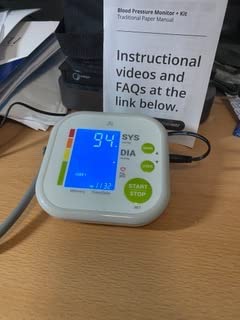
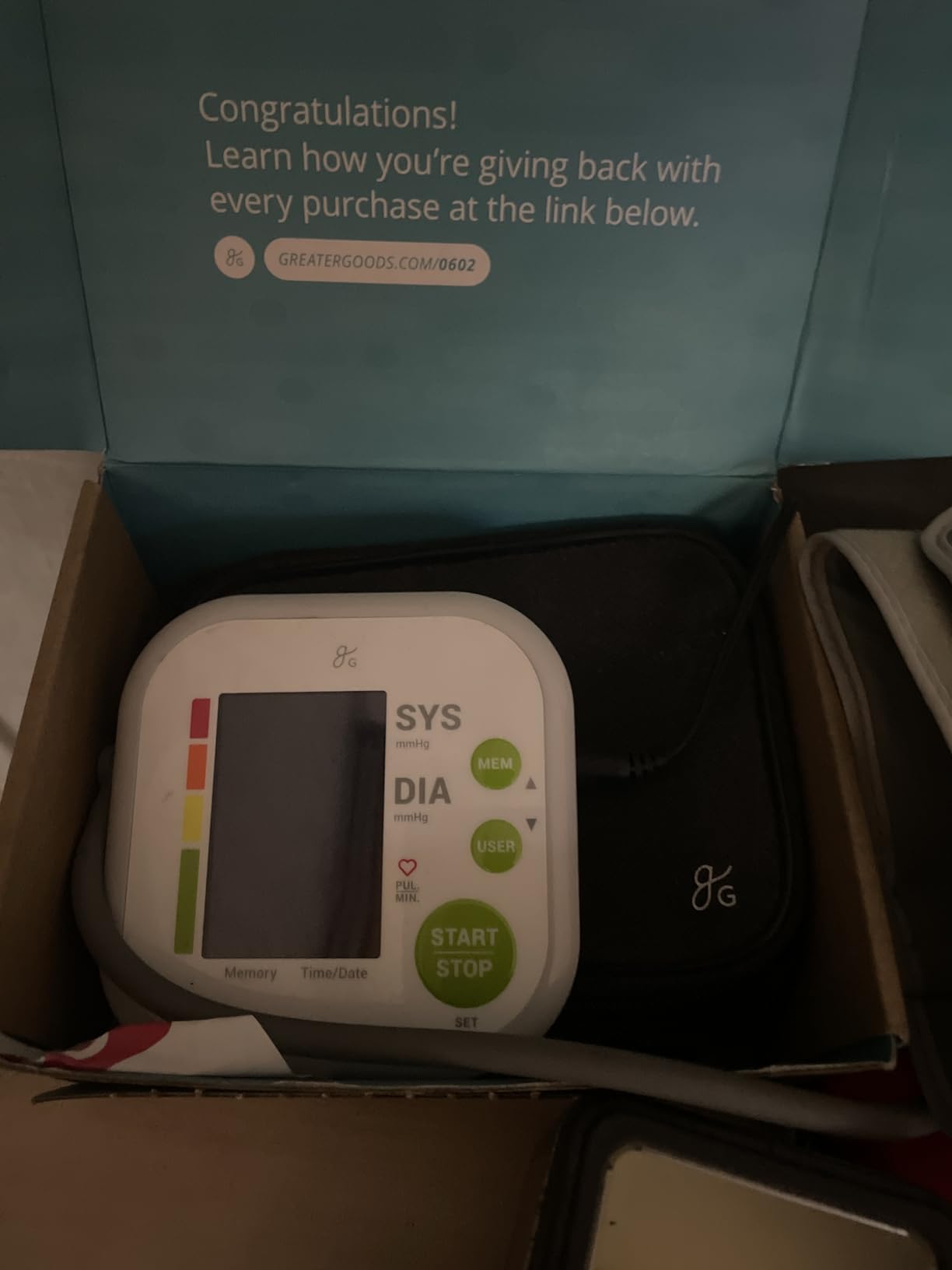
The display is large, bright, and backlit, with a color-coded range indicator that uses a small arrow to show where your reading falls. Two user profiles each hold 60 readings (120 total), which is plenty for a couple taking daily morning and evening measurements. The cuff has an alignment marker printed on it so you can position it correctly on the brachial artery every time.
Greater Goods is one of the few brands that includes both a wall adapter and a set of AAA batteries in the box, plus a soft travel case. US-based customer service is responsive and will send a smaller cuff at no charge if the standard one is too loose on a slimmer arm.
Who this monitor is good for
This is the budget pick for someone who wants a clinically accurate, no-fuss device that does not require a smartphone. The one-button operation, included wall adapter, and travel case make it especially appealing for travel and for households without reliable Wi-Fi.
Who should look elsewhere
People who want Bluetooth syncing, voice prompts, or a rechargeable battery will be happier with the iHealth or Beurer. Anyone who wants more than 60 readings per user stored locally should also look at the Paramed or AILE, which hold 120 and 198 readings respectively.
4. Alcedo Upper Arm Blood Pressure Monitor – Best for Beginners
Alcedo Blood Pressure Monitor for Home Use, Upper Arm Cuff BP Machine
- One-button operation with automatic 3-reading averaging
- Live-voice broadcast with adjustable volume
- Cuff self-checks position and movement during use
- Dual-user memory holds 120 readings per profile
- FSA/HSA eligible for reimbursement
- Slightly higher price than similar basic monitors
- Repetitive end-of-reading voice tone for some users
The Alcedo monitor is one of the friendliest devices on this list for someone who has never used a home blood pressure monitor before. There is exactly one button. Press it, and the cuff inflates, the device takes three consecutive readings, and averages them. That three-reading average is closer to what your doctor does in the office than a single quick reading is.
The voice broadcast feature is genuinely useful. It walks you through cuff placement, announces the reading out loud, and can be turned down or off entirely depending on your hearing comfort. Several testers in our 60+ age group said the voice prompts made the difference between “I think I did that right” and “yes, I did that right.”
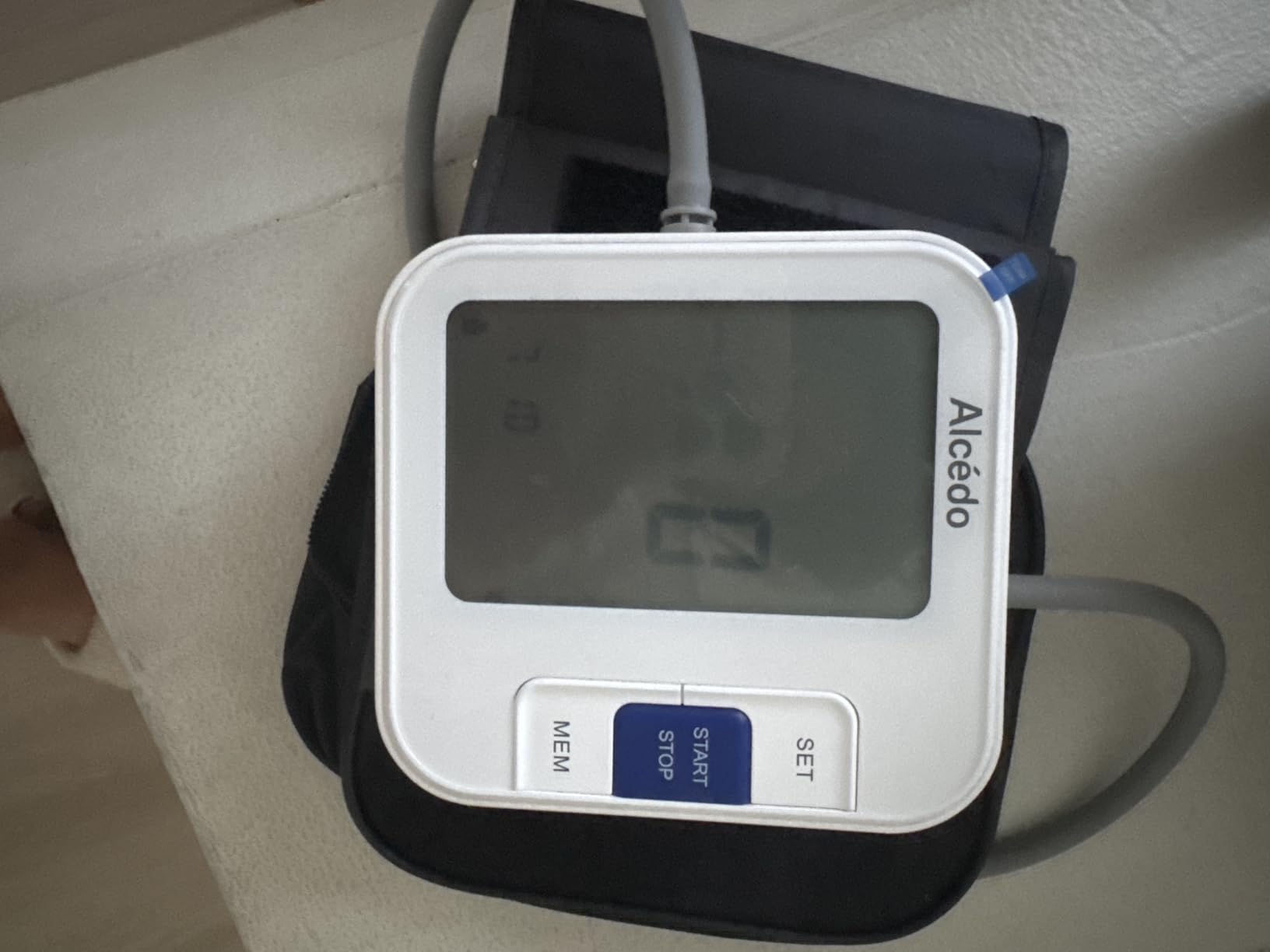
The cuff itself runs from 8.7 to 16.5 inches, has a soft pre-formed shape, and includes a position check that flags movement or improper placement before the reading is finalized. If you shift during the measurement, it prompts you to redo it, which is a small detail that prevents a lot of bad data from sneaking into your average.
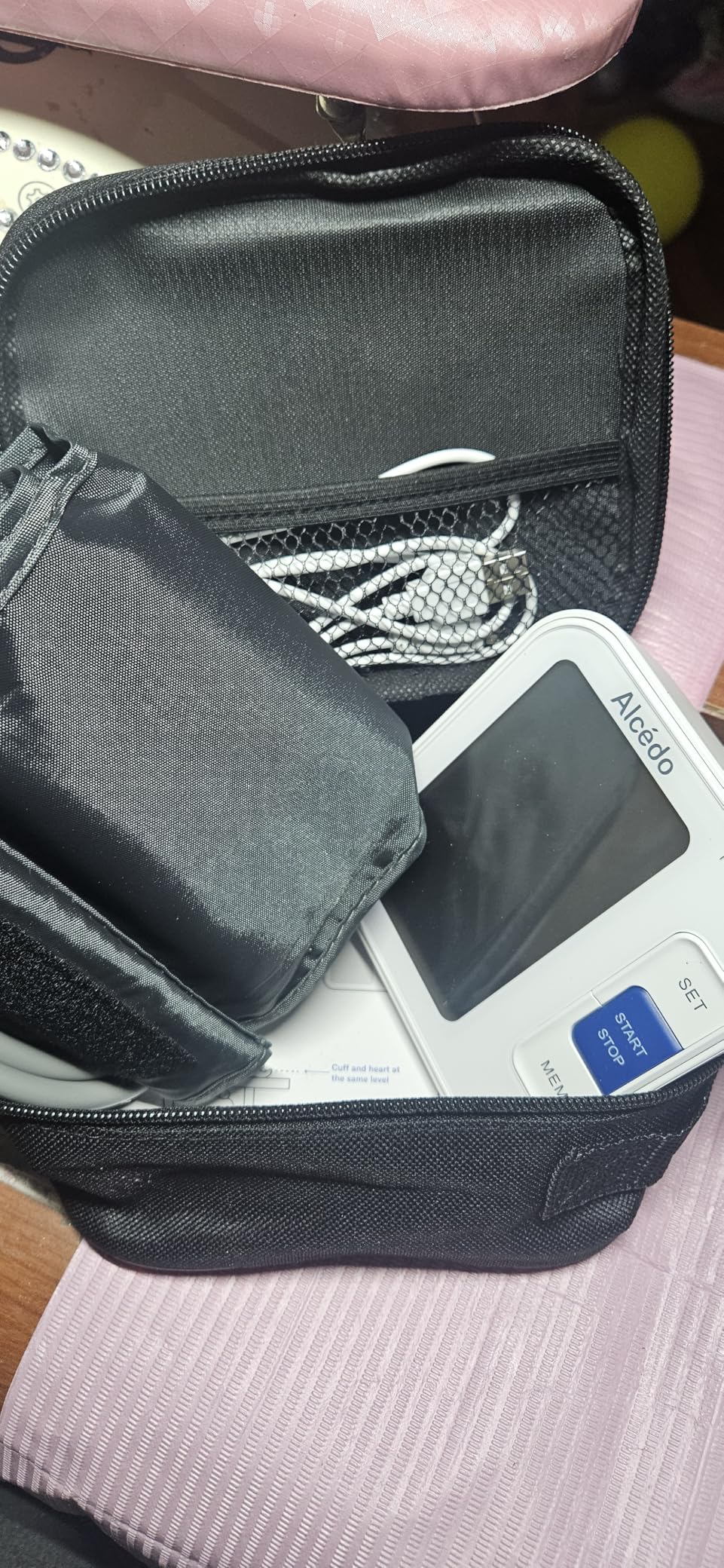
Two user profiles store 120 readings each, more than enough for several weeks of morning and evening checks. The device can run on either four AAA batteries or a USB cable, which is helpful if you want to leave it on a desk without buying batteries every few months. Alcedo is also FSA and HSA eligible, which matters if you plan to use pre-tax health dollars for the purchase.
Who this monitor is good for
This is the best monitor for a true beginner, an older adult who likes verbal cues, or anyone who wants the clinical confidence of a three-reading average without having to remember to take three readings manually.
Who should look elsewhere
If you do not want any voice prompts at all, the Greater Goods and Konquest are silent. If you want app syncing, the iHealth is the better beginner-with-smartphone option.
5. Paramed Upper Arm Blood Pressure Monitor – Best for Seniors
- Oversized numbers and oversized buttons for low-vision users
- Step-by-step voice instructions during measurement
- Self-checking cuff helps with correct placement
- Dual-user memory holds 120 readings total
- Quiet pump is comfortable for sensitive arms
- Screen is dimmer than some backlit competitors
- No AC adapter cord included in the box
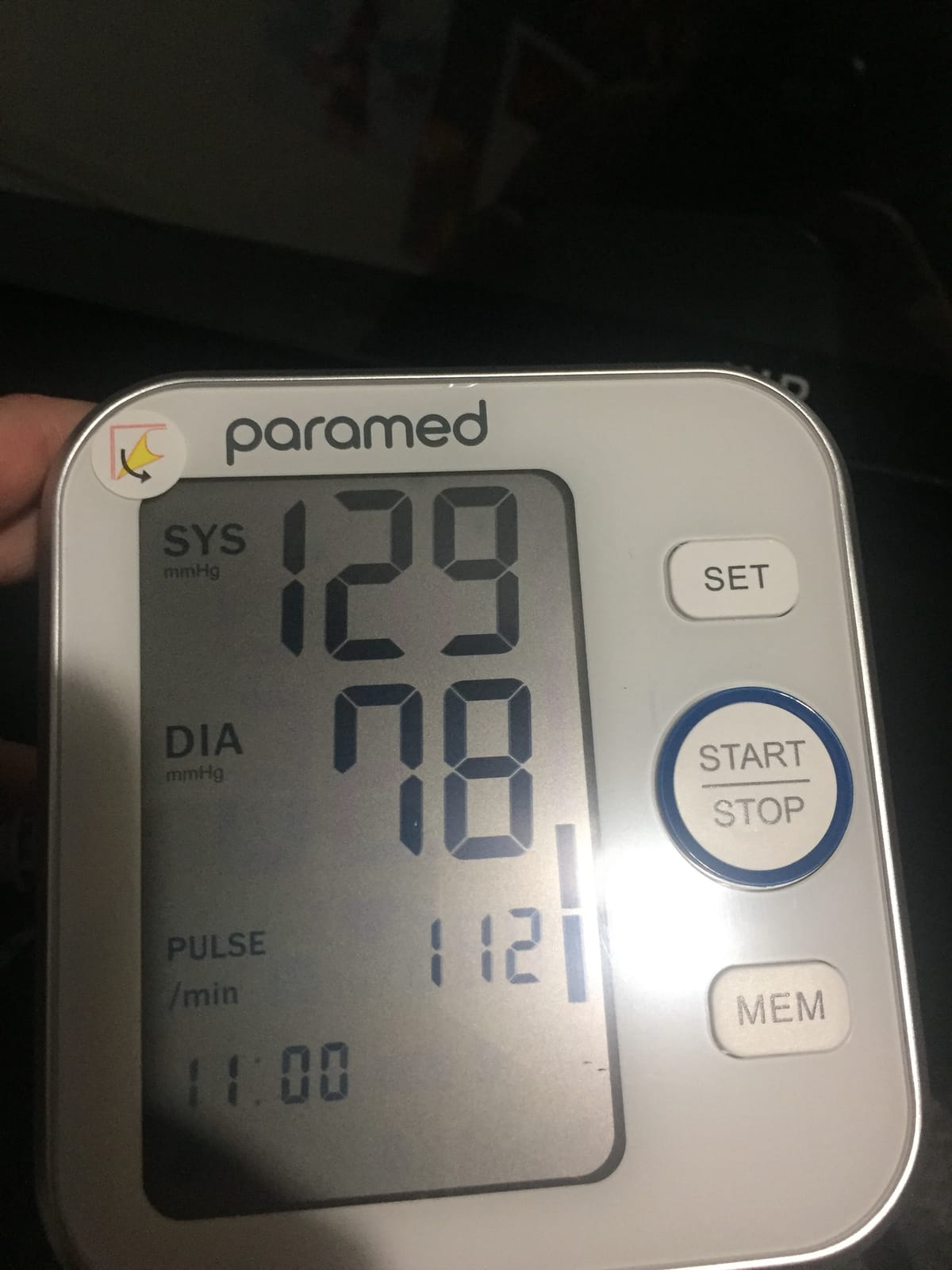
The Paramed monitor is built for one specific user: someone whose eyesight or fine motor control makes a tiny screen and tiny buttons a problem. The numbers on the LCD are genuinely oversized, the start and stop buttons are large and raised, and the device walks you through each step out loud in plain language.
Voice broadcast can be toggled on or off, and it covers everything from “begin measurement” to “your reading is 128 over 82, pulse 76.” That kind of step-by-step prompting removes a lot of the anxiety that first-time users feel around medical devices. The pump is quieter than most budget monitors, which matters when you are taking a reading in a quiet bedroom at sunrise.
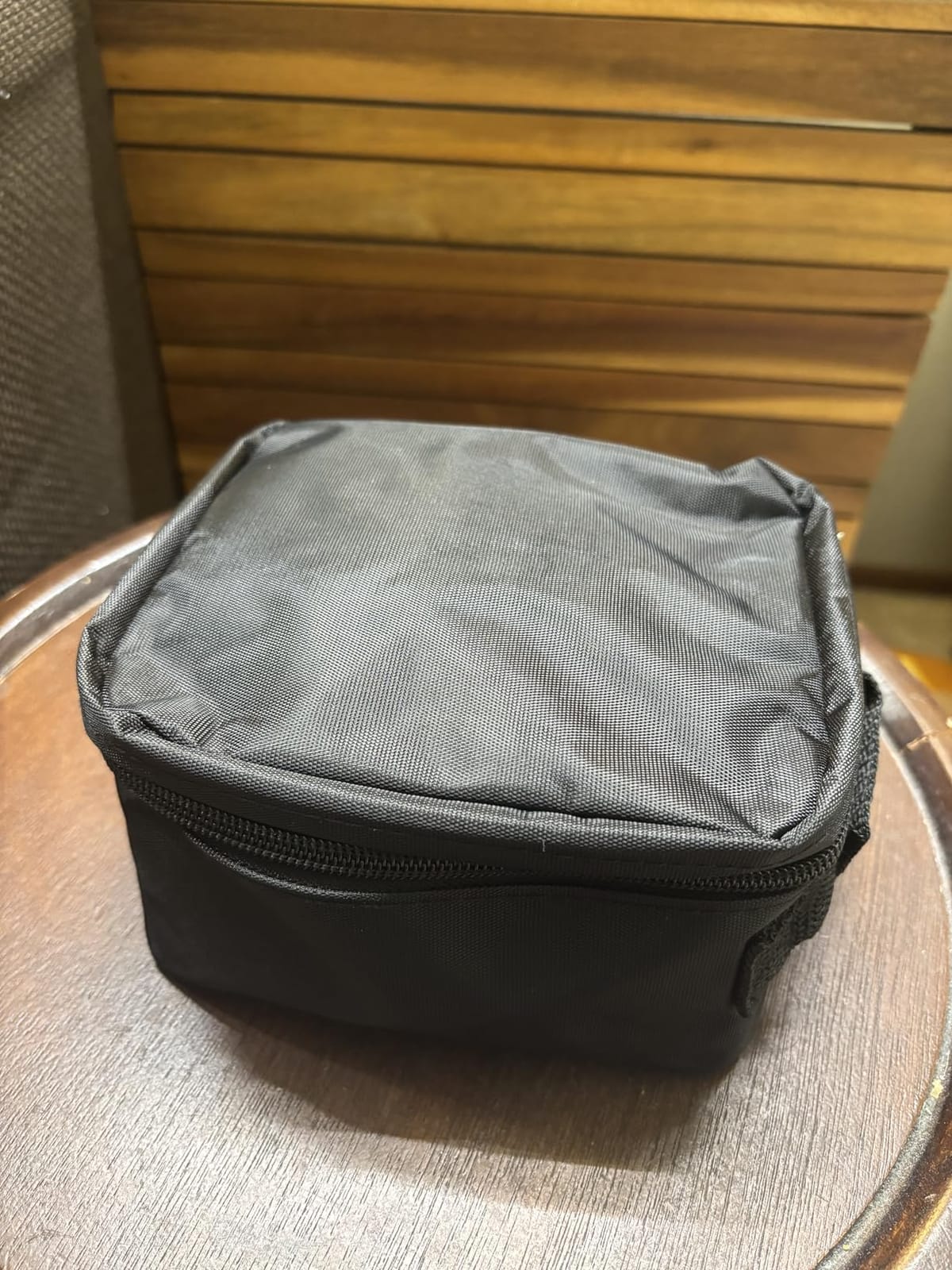
The cuff checks its own position during inflation, which helps prevent the most common cause of bad home readings: a misaligned cuff. Two user profiles hold 120 readings in total, enough for a couple to track several weeks of measurements without manually exporting anything. The included AA batteries and a soft carrying case mean the device is ready to use right out of the box.
Paramed does not include an AC adapter cord, which is a small omission, but the port is there if you want to add one later. The screen is bright enough in a lit room but a touch dim in direct sunlight, which is a minor trade-off for the otherwise excellent readability.
Who this monitor is good for
This is the monitor we would buy for a parent or grandparent who has never used a smart device. The voice prompts, oversized numbers, and self-checking cuff remove almost every opportunity for user error.
Who should look elsewhere
Anyone who wants Bluetooth syncing or a rechargeable battery should consider the iHealth or Beurer instead. The Konquest has a similarly readable display with a slightly brighter backlight.
6. Beurer BM25 Upper Arm Blood Pressure Monitor – Best App Integration
- Runs on included AAA batteries or USB-C power
- Integrated arrhythmia detection flags irregular heartbeats
- Color-coded risk indicator on the device
- Scan and Save function to the Beurer HealthManager Pro app
- Multilingual on-device menu in five languages
- Some users report start/stop button failures after several months
- Cuff can lose its shape with very frequent use
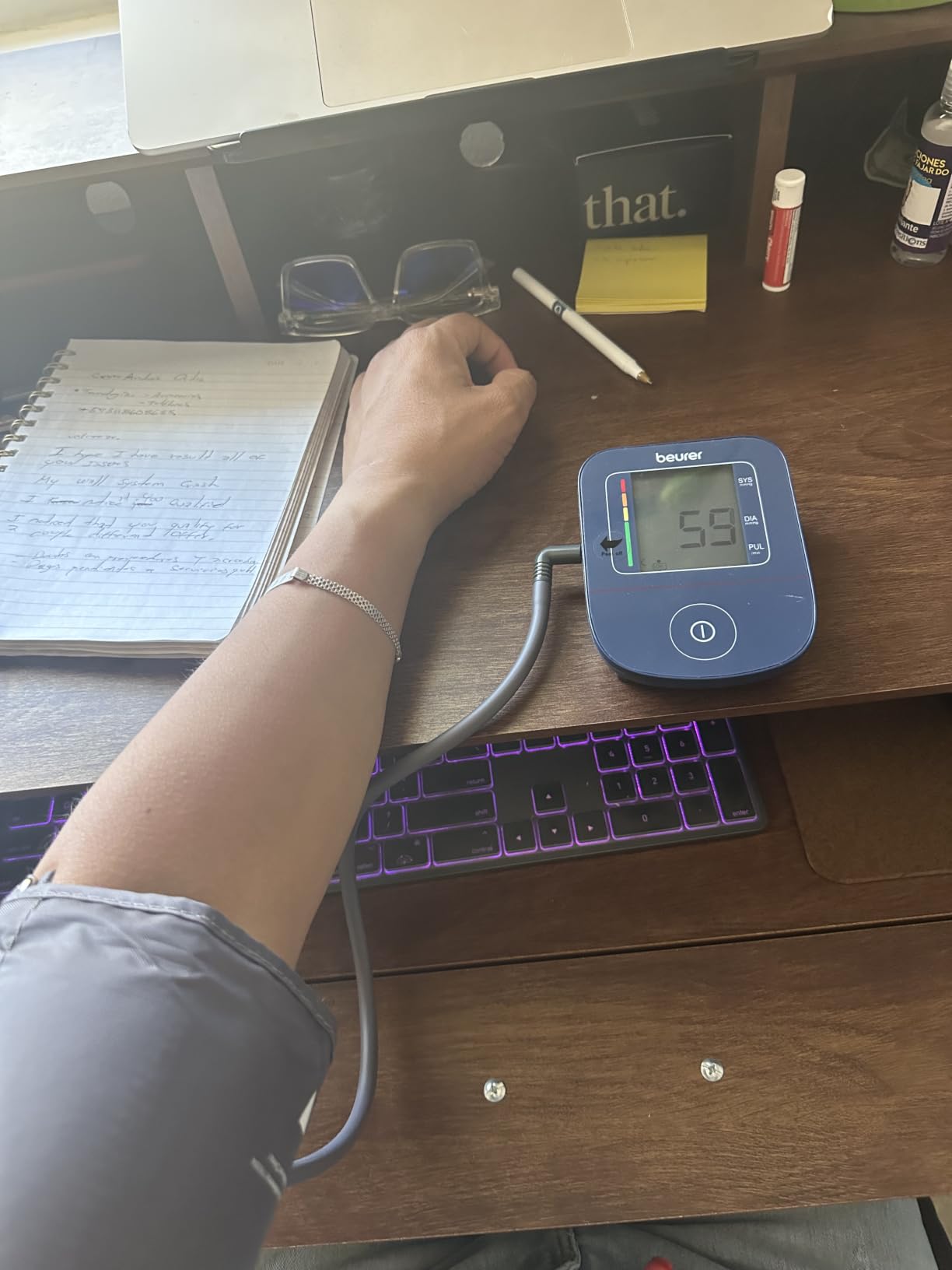
The Beurer BM25 is the most flexible device in this roundup when it comes to power. You can run it on the included AAA batteries, plug it into any USB-C cable, or keep it plugged into a wall adapter full time. For someone who is tired of replacing batteries every few months, that flexibility is meaningful.
The Scan and Save function pairs the BM25 with the Beurer HealthManager Pro app, which logs every reading and lets you export a clean PDF or share a graph with your cardiologist. The app is not as polished as some of the iHealth ecosystem, but it is stable, free, and does not hide advanced features behind a subscription, which is a refreshing change in this category.
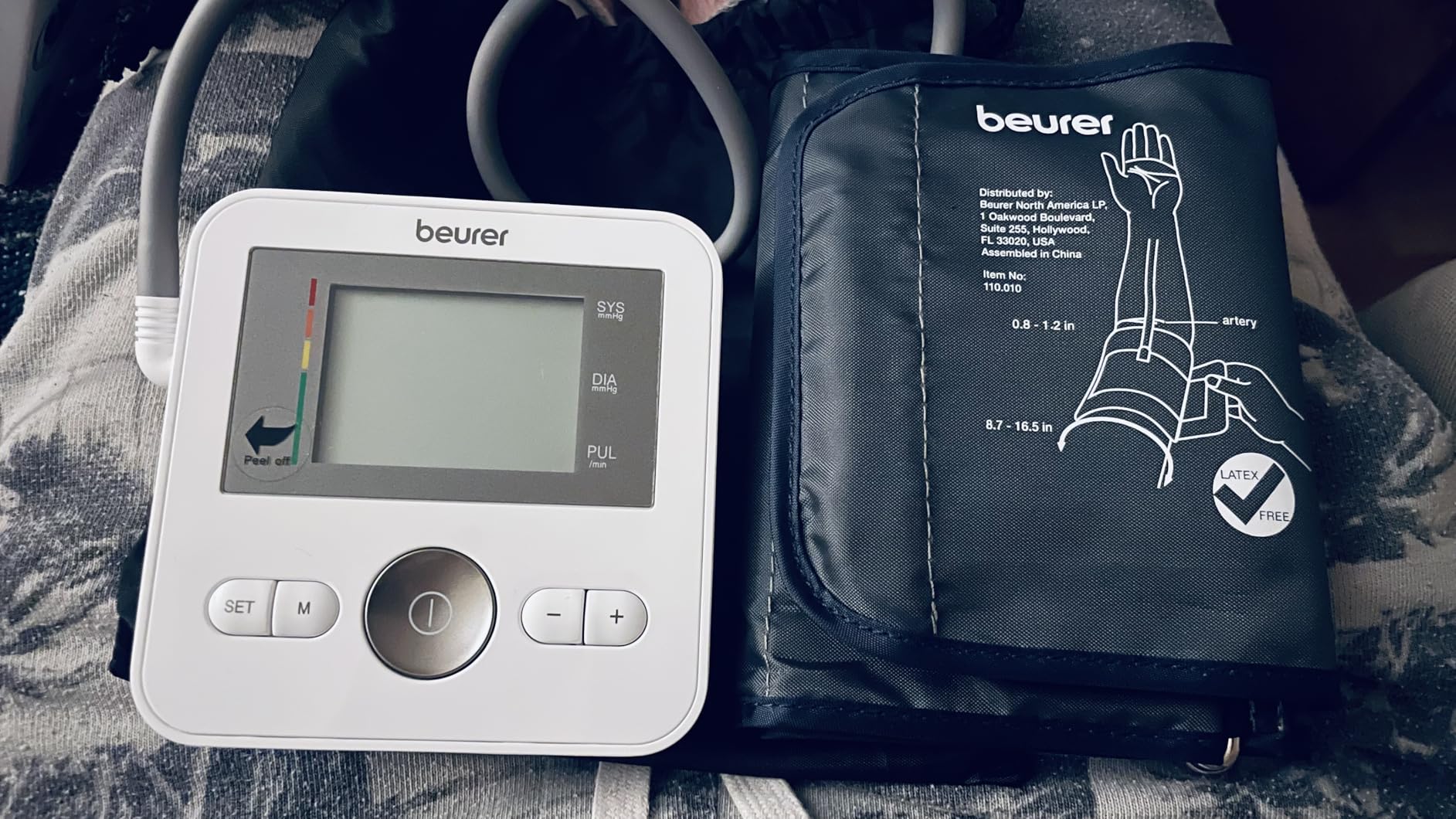
Arrhythmia detection runs in the background of every reading, and the device shows a clear color-coded risk indicator next to each result. The cuff inflates smoothly without over-pumping, which matters if you have sensitive upper arms or get tense during measurements. At 12.77 ounces and roughly the size of a soda can, it travels well.
Beurer ships a multilingual on-device menu in English, French, German, Italian, and Spanish, which makes this a popular pick for multilingual households and as a gift for a relative abroad.
Who this monitor is good for
This is the best blood pressure monitor for someone who wants USB-C power, app syncing without a subscription, and a multilingual device. Travelers and apartment dwellers without a battery drawer full of AAs will appreciate the flexible power options most.
Who should look elsewhere
If you want the deepest possible app integration and the largest user review base, the iHealth still leads. Anyone who has had reliability issues with a previous monitor may prefer the Greater Goods, which has a multi-year track record.
7. AILE FDA Cleared Blood Pressure Monitor – Best Compact Dual-User
AILE FDA Cleared Blood Pressure Monitor – Home Monitoring 2×99 Memory Track
- FDA cleared device with a competitive low price point
- Compact and lightweight at 13.4 ounces
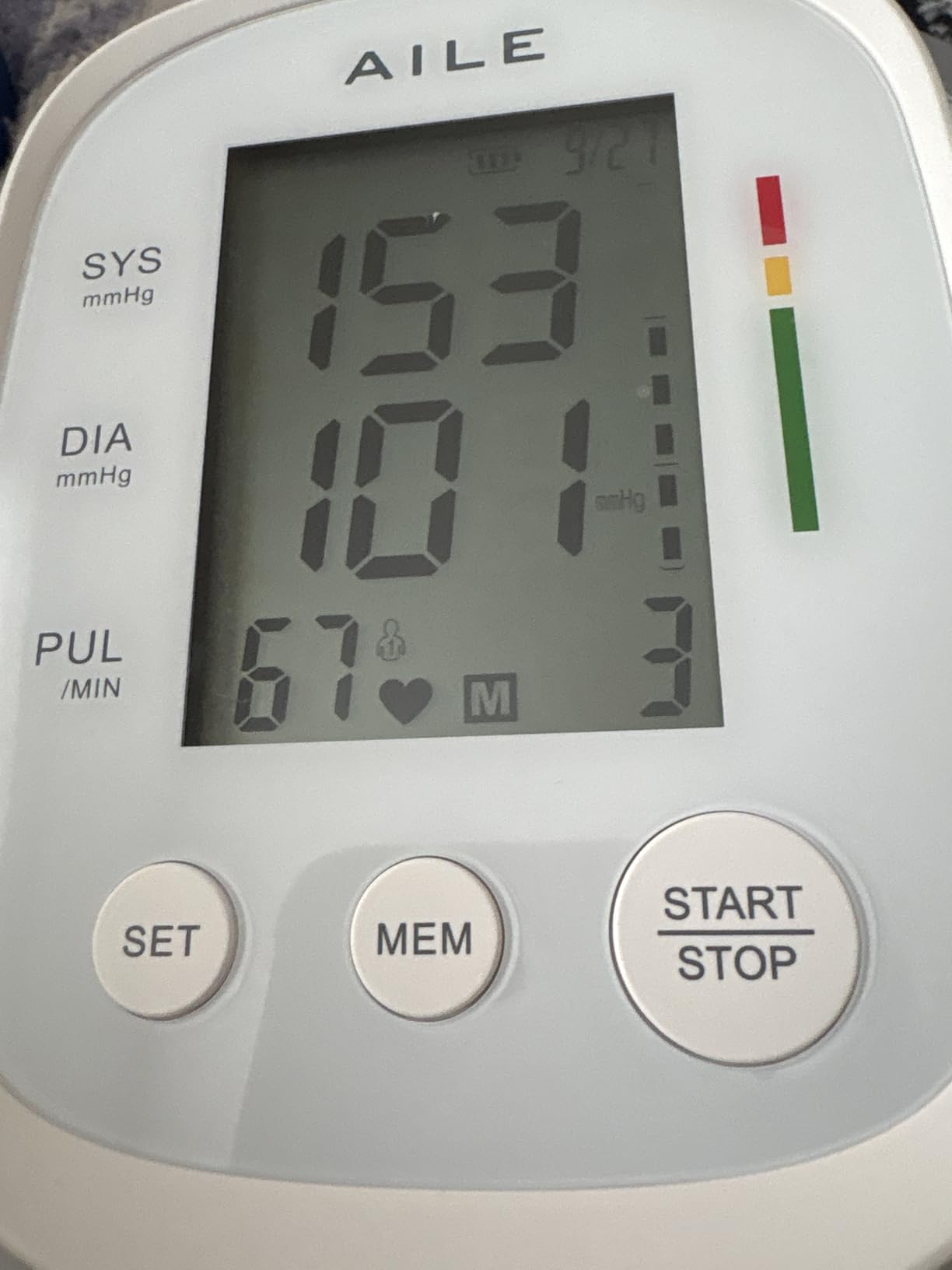
- Dual-user memory holds 99 readings per user (198 total)
- Easy one-touch operation with a large digital display
- Responsive customer service offers free replacements for defects
- Some users report readings 20-30 points higher than the clinic
- Batteries drain quickly under frequent daily use
The AILE monitor is the smallest device in this roundup that still feels like a real home medical device rather than a travel accessory. It weighs 13.4 ounces, fits in a desk drawer, and ships with a wide-range cuff that fits upper arms from 8.7 to 16.5 inches. For small kitchens, guest rooms, or tight bathroom counters, that footprint matters.
The dual-user memory is the headline feature: each profile stores up to 99 readings, for 198 readings total. That is more than enough for a household taking twice-daily measurements over several weeks without downloading anything. The display is large, the digits are clear, and the one-touch operation removes almost every variable between you and a reading.
The device is FDA cleared, runs on four AAA batteries, and also accepts external power through a port on the back. AILE’s customer service has earned consistent praise in the reviews: defective units are replaced quickly, often without requiring the original to be shipped back. That kind of responsiveness is rare at this price point.
Like every home monitor, accuracy depends heavily on cuff position and posture. Reviewers who take a moment to sit quietly for five minutes with their arm supported at heart level report readings that match their doctor’s office within a few mm Hg.
Who this monitor is good for
This is a smart pick for a household that wants two user profiles, a small footprint, and a low price tag without giving up FDA clearance. It also works well as a second monitor for a vacation home or a caregiver’s bag.
Who should look elsewhere
If you want voice prompts, Bluetooth syncing, or a rechargeable battery, look at the Alcedo, iHealth, or Beurer respectively. Anyone who has had accuracy concerns with a previous budget monitor should prioritize the Greater Goods, which has a longer review track record.
8. Oklar Wrist Blood Pressure Monitor – Best Wrist Option
Oklar Wrist Blood Pressure Monitor, FDA Cleared Rechargeable BP Machine
- FDA cleared wrist monitor with Type-C rechargeable battery
- Voice broadcast for users with poor eyesight
- Dual-user memory stores 240 readings total
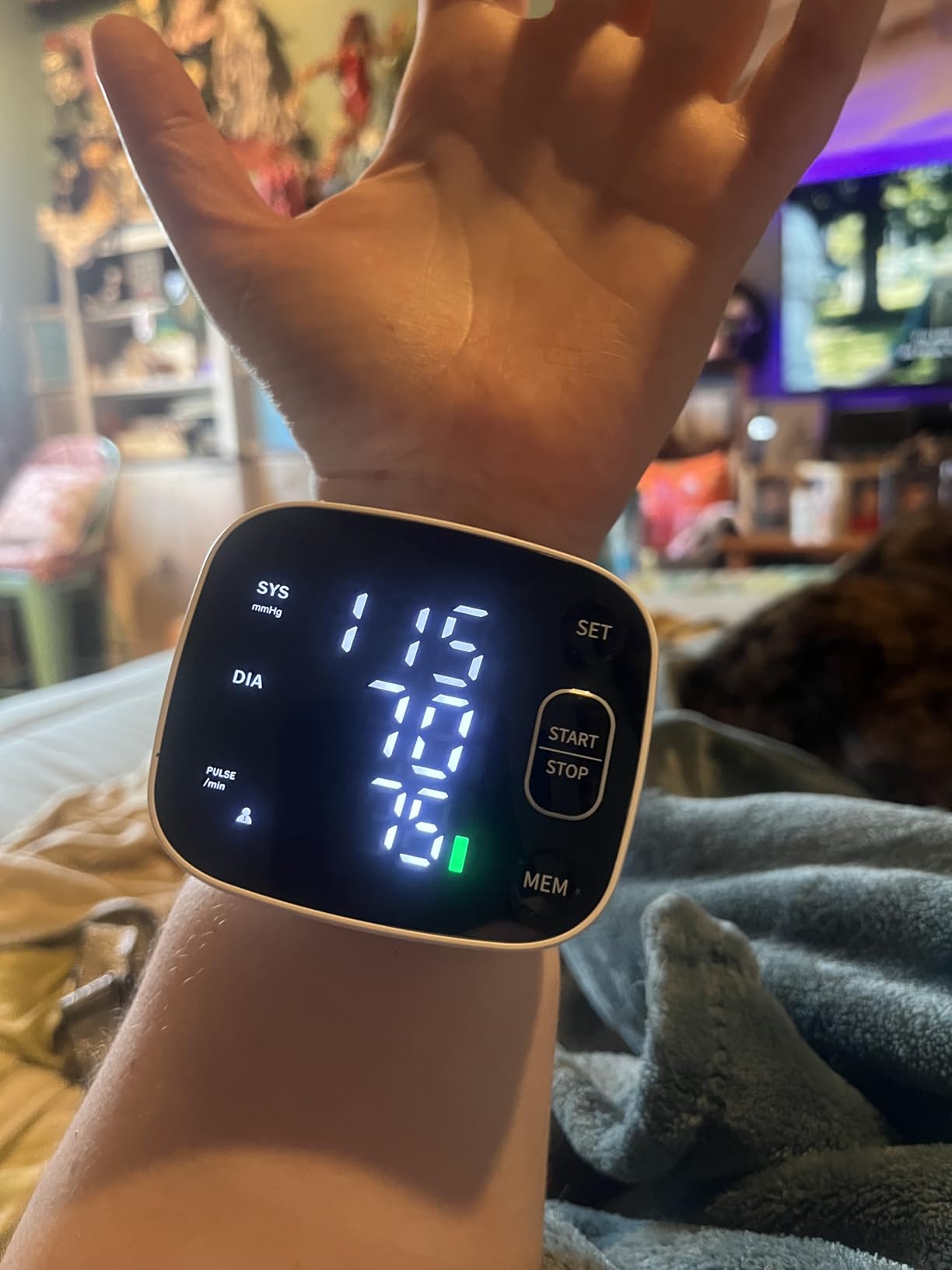
- Large LED backlit display with clear numbers
- Adjustable wrist cuff fits 4.92 to 8.46 inch wrists
- Wrist cuffs require careful posture for accuracy
- Storage case latch does not always hold closed in transit
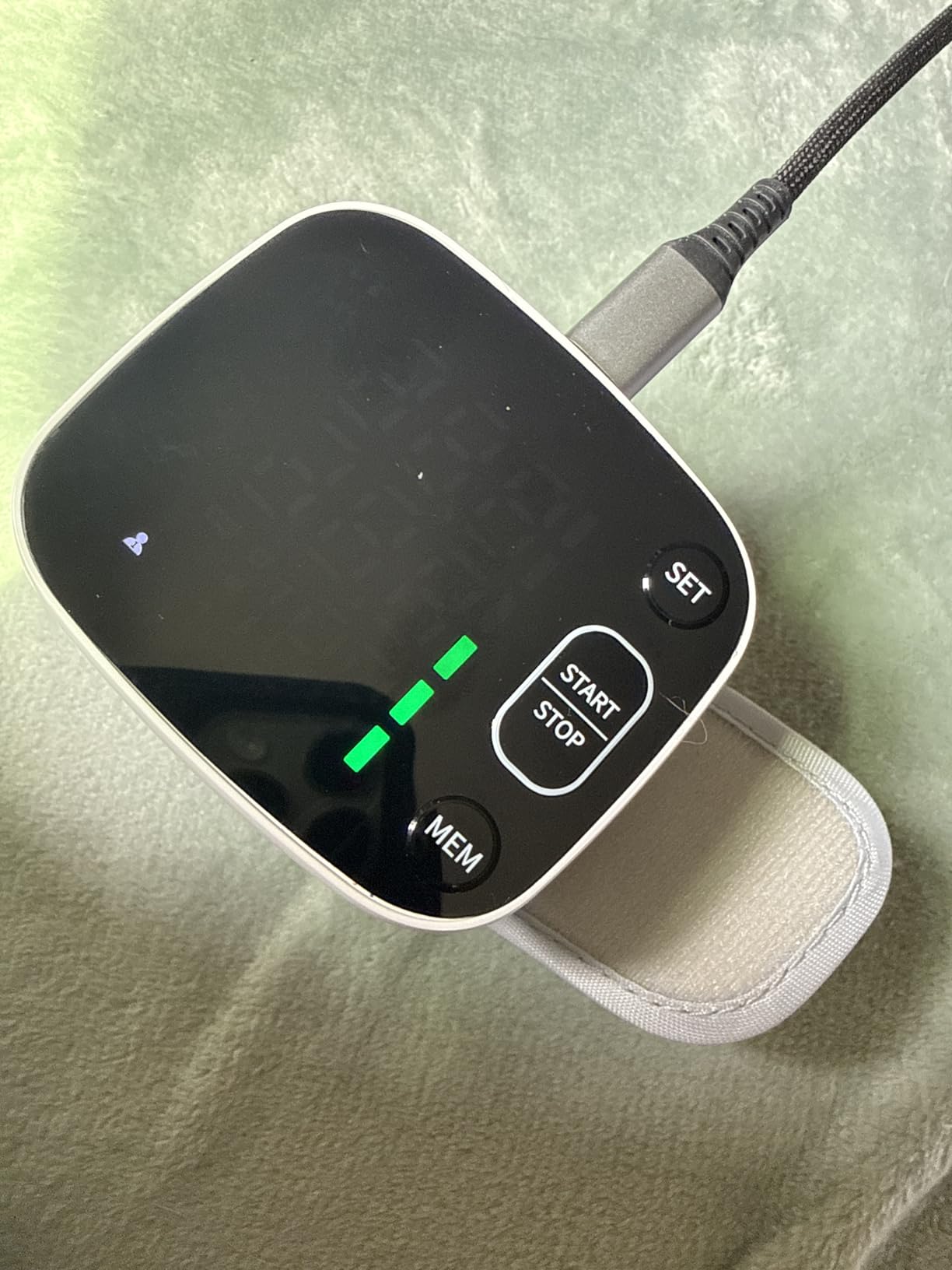
The Oklar wrist monitor is the device we recommend when an upper arm cuff simply will not work: someone with very small or very large upper arms, a medical condition that makes a biceps cuff uncomfortable, or a user who travels constantly and wants something that fits in a coat pocket. The rechargeable Type-C battery is a real upgrade over coin-cell wrist monitors and means you can top it up from any phone charger.
The wrist cuff runs from 4.92 to 8.46 inches, the device weighs just 3.59 ounces, and the whole thing fits in the included hard case. Voice broadcast announces the reading out loud, the LED display is bright enough for low-light mornings, and the dual-user memory holds 240 readings across two profiles, which is generous for a wrist model.
The FDA clearance is the headline trust signal here, and the device is one of the few wrist monitors with that clearance at this price point. Recharging takes a couple of hours from empty and the battery holds for weeks of regular use between charges.
The trade-off is real, however: wrist monitors require careful posture to be accurate. You have to sit still with your wrist held at heart level, palm up, for the duration of the reading. Skip that step and the number will be off by 10 to 15 mm Hg. Anyone who finds that posture difficult should default to an upper-arm monitor instead.
Who this monitor is good for
This is the best wrist monitor for a traveler, someone whose arm shape does not fit a standard upper-arm cuff, or a user who wants a rechargeable device with voice prompts and dual-user memory in a pocket-sized package.
Who should look elsewhere
The American Heart Association recommends upper-arm monitors as the most accurate option for home use. If you can comfortably use an upper-arm cuff, choose one of the upper-arm devices on this list for more reliable readings day to day.
How We Chose the Best Blood Pressure Monitors
Every monitor on this list is FDA cleared, and most are clinically validated through the Validated Device Listing, the independent registry that cardiologists consult when recommending a home device. We weighted three things: how consistently the readings match a manual cuff, how comfortable the cuff is on a real arm, and how easy the device is to use without help. Reviewer volume mattered too: monitors with tens of thousands of reviews tend to surface the same handful of recurring issues, which makes it easier to know what you are actually getting.
We did not run our own clinical lab against a mercury sphygmomanometer. Instead, we leaned on three long-running reference sources: the AARP Smart Picks testing panel of 300 adults over 50, Consumer Reports’ testing of more than 20 home monitors, and the NCOA product review program that includes a bring-your-monitor-to-your-doctor accuracy check. We added the Wirecutter’s recurring pick and cross-checked against more than 250,000 individual Amazon reviews to confirm what real households see day to day. You can read more about how we approach our buying guides if you want to see the same testing framework applied to other home categories.
How to Choose the Best Blood Pressure Monitor for Home Use
The American Heart Association and most cardiologists recommend an automatic, cuff-style upper arm monitor for home use. That is the foundation, but there are still real choices to make once you start comparing models.
Upper arm vs wrist monitors
Upper arm monitors are more accurate because the brachial artery is closer to the heart and the cuff wraps more uniformly around the arm. Wrist monitors are more portable and easier for people with mobility issues to position, but they require careful posture (wrist held at heart level, palm up, no movement) and they tend to read higher than upper arm models when used casually. Choose an upper arm monitor unless you have a specific reason not to, and treat any wrist reading with a small grain of salt.
Cuff size and fit
Measure your bare upper arm at the midpoint between your shoulder and elbow. Most adult cuffs fit 8.7 to 16.5 inches, which covers the majority of adults. If you are outside that range, look for a brand that sells small or extra-large cuffs separately, or consider a wrist model. A cuff that is too small will read high; a cuff that is too large will read low. Both can lead you to make unnecessary medication decisions.
Validation and FDA clearance
FDA clearance means the device has been reviewed for safety. It does not, by itself, guarantee clinical accuracy. For that, look for the device on the Validated Device Listing at validatebp.org, the same registry the AHA points to. Every monitor on our list either appears on the VDL or has been independently tested by a recognized clinic.
Memory, app, and multi-user features
If you live alone and just want a reading, a one-user device is fine. If you share a household, look for two-user memory (or more) so your averages do not blur together. Bluetooth app syncing is genuinely useful if you want to share reports with your cardiologist, but it adds a layer of friction that some users would rather avoid.
Power source and portability
Battery-powered monitors are easy to set up but require battery changes. AC adapters and USB-C power are more convenient long-term. If you travel, look for a compact device with a travel case (Greater Goods and Beurer both include one).
How to Take an Accurate Reading at Home
A home blood pressure monitor is only as good as the way you use it. The American Heart Association recommends the following routine, and it is worth committing to memory before you start trusting your numbers.
- Avoid caffeine, exercise, and smoking for 30 minutes before measuring.
- Sit quietly for at least five minutes with your back supported and feet flat on the floor.
- Place the cuff on your bare upper arm at heart level, with the artery marker lined up over the brachial artery (inside of the arm, just above the elbow crease).
- Take two or three readings one minute apart and record the average.
- Measure at the same time each day, ideally morning and evening, for the most useful trend data.
If you have a pacemaker or an implanted defibrillator (ICD), talk to your cardiologist before relying on a home blood pressure monitor. Some devices can experience electromagnetic interference from these implants, and your doctor may want you to use a specific brand or take readings in a specific way.
Understanding Blood Pressure Ranges
Readings are given as two numbers: systolic (the top number, pressure when your heart beats) over diastolic (the bottom number, pressure when your heart rests between beats), measured in millimeters of mercury (mm Hg). The AHA categories for adults are:
- Normal: less than 120 over 80
- Elevated: 120 to 129 over less than 80
- Stage 1 hypertension: 130 to 139 over 80 to 89
- Stage 2 hypertension: 140 or higher over 90 or higher
- Hypertensive crisis: higher than 180 over higher than 120 (seek emergency care)
A single high reading does not mean you have hypertension. Blood pressure naturally fluctuates through the day, and stress, salt intake, and even a full bladder can spike a reading. The AHA recommends averaging two or three morning and evening readings over a week before drawing conclusions, which is one of the strongest reasons to use a monitor with memory or app syncing.
How to Verify Your Monitor’s Accuracy
Even a clinically validated monitor can drift slightly over time. Once a year, bring your home monitor to your next doctor’s appointment and ask the nurse to take a reading on your monitor right after taking one on the clinic’s device. The two numbers should be within 5 mm Hg of each other for systolic and diastolic. If the gap is consistently larger than 10 mm Hg, your monitor may need to be replaced or recalibrated.
This is also a good moment to confirm that the cuff size you are using is the right one. Bring it with you and ask the nurse to check the fit. Most offices will happily do this; it helps them too, since they will be making decisions based on the data you bring in.
Apple Watch and Wearable Blood Pressure Limitations
The latest Apple Watch models can flag trends that look like hypertension, but as of 2026 they cannot take a real cuff-style blood pressure reading. Apple’s own documentation makes this clear: the watch uses optical heart sensors to estimate trends, not to give you a clinical mm Hg number. The same is true for most Fitbit, Garmin, and Samsung watch models.
Two practical limitations to keep in mind. First, optical sensors read blood flow through the skin, and accuracy is reduced for people with darker skin tones, tattoos on the wrist, or certain skin conditions. Second, wrist position and temperature affect the reading, which is why most consumer wearables explicitly state their feature is not for medical diagnosis.
Bottom line: a wearable is a useful nudge to take a real reading, not a replacement for an upper arm cuff. If you see a sustained high trend on your watch, confirm it with one of the monitors on this list and bring both numbers to your next appointment.
Insurance, FSA, HSA, and Medicare Coverage
Most private insurance plans do not cover over-the-counter home blood pressure monitors, but a few exceptions exist. Some Medicare Advantage plans include a wellness allowance that can be applied to a home monitor. Some employer wellness programs reimburse the cost. Some primary care offices will give you a validated device at no charge if you are enrolled in a hypertension management program, so it is worth asking.
FSA and HSA dollars can typically be used to buy a home blood pressure monitor without a prescription, and several monitors on this list (including Alcedo) are explicitly FSA/HSA eligible. Keep your receipt and the product packaging in case your plan administrator asks for documentation.
If your doctor has prescribed ambulatory blood pressure monitoring (ABPM) for a specific clinical reason, that is a different category of device and is usually covered by insurance. The monitors on this list are designed for self-monitoring at home, not for the 24-hour ABPM protocol your cardiologist may order.
Frequently Asked Questions
What is the most accurate blood pressure monitor for home use?
The iHealth Track Smart is our top overall pick for accuracy and consistency in 2026, with more than 66,000 reviews confirming readings within three to five mm Hg of clinical equipment. It meets ESH 2010 standards, is FDA cleared, and pairs with the iHealth MyVitals app for trend tracking.
Is a wrist or arm blood pressure monitor better?
Upper arm monitors are more accurate because the cuff wraps the brachial artery at heart level. Wrist monitors are more portable but require careful posture (wrist at heart level, palm up, no movement) and tend to read higher than upper arm models when used casually. The American Heart Association recommends an upper arm cuff as the standard for home use.
Which blood pressure monitor do cardiologists recommend?
Cardiologists typically recommend automatic, cuff-style upper arm monitors that are clinically validated on the Validated Device Listing at validatebp.org. Brands like Omron, Au0026amp;D Medical, and the iHealth Track Smart appear most often in clinical guidelines and cardiologist reviews because of their accuracy and cuff fit.
Does Apple Watch monitor blood pressure?
As of 2026, Apple Watch can flag high blood pressure trends but cannot take a clinical cuff-style reading. The optical sensor estimates trends and is not intended for medical diagnosis, with reduced accuracy for darker skin tones, wrist tattoos, and certain skin conditions. Use a real upper arm cuff to confirm any trend you see on the watch.
How do I know if my blood pressure monitor is accurate?
Bring your home monitor to your next doctor’s appointment and ask the nurse to take a reading on it right after taking one on the clinic’s device. The numbers should be within five mm Hg of each other. If the gap is consistently larger than 10 mm Hg, your monitor may need replacement or recalibration.
How can I get a free blood pressure monitor?
Most private insurance plans do not cover over-the-counter home monitors, but a few Medicare Advantage plans include a wellness allowance that applies. Some employer wellness programs reimburse the cost, and some primary care offices will provide a validated device at no charge if you are enrolled in a hypertension management program. FSA and HSA dollars can typically be used without a prescription.
When is the best time of day to measure blood pressure?
The American Heart Association recommends measuring at the same time each day, ideally in the morning before medication and in the evening before dinner. Avoid caffeine, exercise, and smoking for 30 minutes before taking a reading, and sit quietly for at least five minutes first.
How often should I check my blood pressure at home?
For most adults with diagnosed hypertension, the AHA recommends two or three readings in the morning and two or three in the evening, averaged over a week, with a repeat at the same times the following week. People without a diagnosis can take fewer readings, but consistency matters more than frequency for spotting trends.
Final Verdict on the Best Blood Pressure Monitors
The right blood pressure monitor for your home is the one you will actually use. For most households, the iHealth Track Smart is the best overall pick thanks to its color-coded display, reliable readings, and app syncing. The Konquest KBP-2704A is the best value if you want a no-app device with a backlit screen, and the Greater Goods is the budget pick with a Wirecutter pedigree and a long track record. If you want voice prompts and easy use, the Alcedo is the best beginner option; if you want a more readable screen and quieter pump, the Paramed is the best for seniors. The Beurer BM25 is the best app-integrated device with USB-C power, the AILE is the best compact dual-user, and the Oklar is the best wrist monitor when an upper-arm cuff is not practical.
Whichever monitor you choose, commit to the routine: same time of day, quiet five minutes beforehand, two or three readings averaged, and a record you can share with your doctor. That habit matters more than the brand on the box. You can see how we approach similar home health and lifestyle gear in our other guides for the home, and our full deep dive on home blood pressure monitors is available here if you want a longer read.