
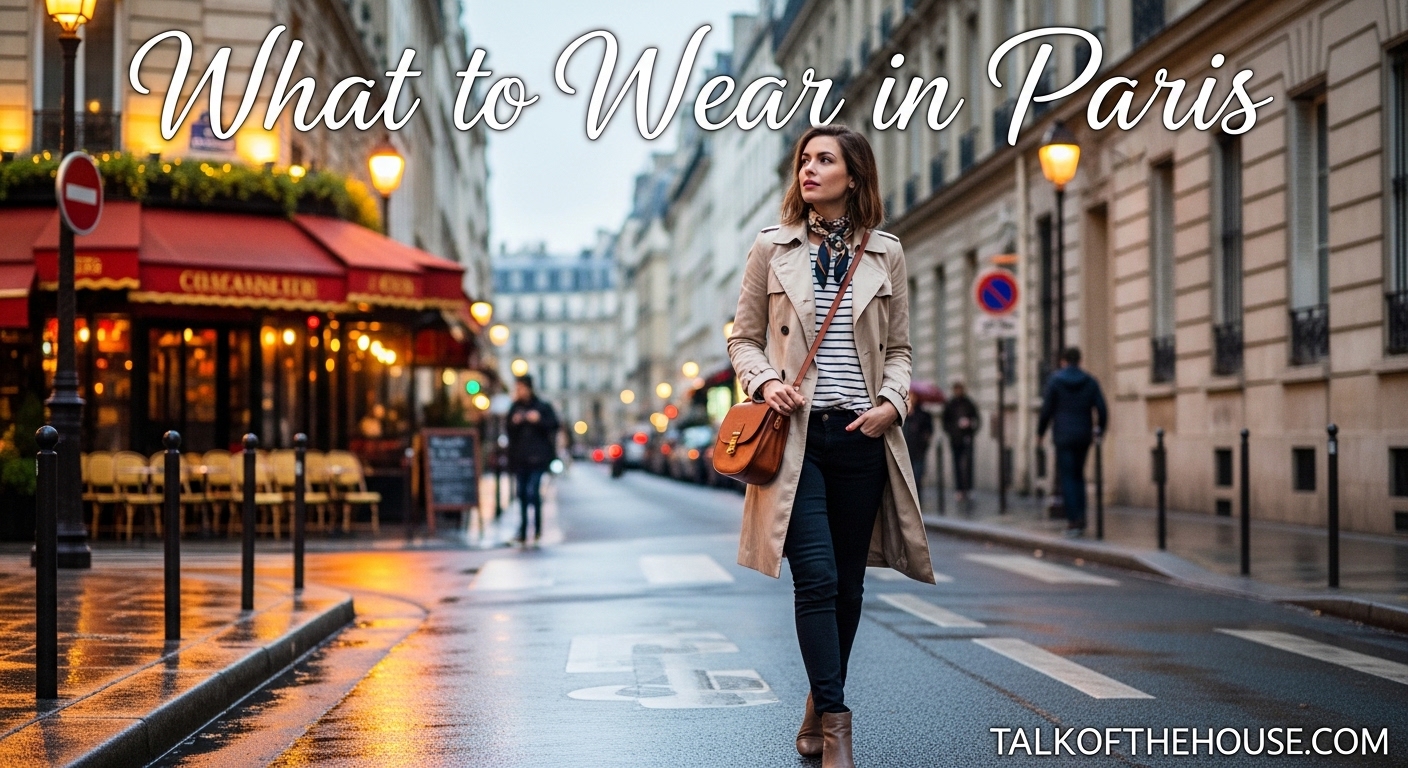
Walking through the streets of Paris for the first time feels like stepping into a living fashion editorial. I remember my initial visit standing at a sidewalk café near the Luxembourg Gardens, sipping espresso while watching Parisians pass by. Everyone looked impossibly chic yet completely effortless. They made it seem like getting dressed was the easiest thing in the world.
That is the magic of Parisian style. It is not about following every trend or wearing designer labels from head to toe. It is about understanding a philosophy that values quality over quantity, fit over flashiness, and versatility over novelty. When you figure out what to wear in Paris, you are really learning how to build a wardrobe that works harder for you.
At Talk of the House, we think about entertaining and personal style through the same lens. The same principles that guide a beautifully set table apply to dressing well in Paris. Both require thoughtfulness, restraint, and an appreciation for the details. This guide shares everything I have learned over multiple trips to Paris about dressing like a local while staying comfortable enough to walk those beautiful cobblestone streets all day.
Table of Contents
The Parisian Style Philosophy
Parisian fashion is built on a foundation of neutral colors, quality fabrics, and timeless silhouettes. You will rarely see a Parisian wearing head-to-toe bright colors or trendy pieces that scream for attention. Instead, they master the art of looking polished without appearing like they tried too hard. This is the essence of what the French call chic décontracté or effortless chic.
The color palette is where this philosophy starts. Think black, navy, beige, camel, cream, and white. These colors work together seamlessly, allowing every piece in your suitcase to coordinate with everything else. A Parisian wardrobe is essentially a capsule wardrobe, where a limited number of pieces create maximum outfit possibilities through mixing and matching.
Many travelers swear by the 3-3-3 rule when building a travel wardrobe. This means packing three tops, three bottoms, and three pairs of shoes. When every item coordinates with every other item, you have twenty-seven possible outfit combinations. This is the secret to packing light while still looking different every day of your trip. Parisians live by this principle year-round, investing in pieces that last seasons rather than weeks.
What to Wear in Paris in Spring (March-May)
Spring in Paris is notoriously unpredictable. You might wake up to brilliant sunshine and find yourself caught in a drizzle by afternoon. Temperatures range from the low fifties to the mid-sixties Fahrenheit, making layers absolutely essential. The key to spring dressing is having pieces you can add or remove throughout the day.
A classic trench coat is your best friend during Parisian spring. It handles light rain, adds polish to any outfit, and works equally well over jeans or a dress. Choose a beige or camel color in a mid-length cut that hits just above the knee. This is one of those investment pieces that photographs beautifully and functions practically.
Underneath your trench, build outfits with lightweight layers. A cashmere sweater or fine-knit merino wool pullover provides warmth without bulk. Pair these with dark wash jeans or tailored trousers in black or navy. Ankle boots with a low, sturdy heel work perfectly for spring, keeping your feet dry while navigating those cobblestones.
Spring packing list essentials include two to three long-sleeve tops, one lightweight sweater, one pair of dark jeans, one pair of tailored trousers, a trench coat, a scarf for warmth and style, and comfortable ankle boots. Add a crossbody bag in leather or canvas to keep your hands free for café au lait and croissants.
Do not forget accessories that serve double duty. A silk scarf adds color and warmth around your neck but can also be tied to your bag handle for a pop of pattern. Sunglasses are essential even on overcast spring days. A compact umbrella fits easily in your day bag and saves you from buying an overpriced one near the Louvre when unexpected rain hits.
What to Wear in Paris in Summer (June-August)
Summer in Paris brings warm days and pleasant evenings, with temperatures typically in the seventies and occasionally reaching the low eighties. The city feels alive with outdoor dining, festivals, and long evenings that stay light until after ten oclock. Dressing for Parisian summer means choosing breathable fabrics and silhouettes that keep you cool while maintaining that polished look.
Linen is the fabric of summer in Paris. It breathes beautifully, looks more elegant than cotton, and develops a relaxed character as you wear it throughout the day. A pair of wide-leg linen trousers in beige or white paired with a tucked-in silk camisole or a crisp white button-up shirt creates an outfit that works for museum visits, lunch at a bistro, or browsing the markets.
Dresses are another summer staple. Look for midi-length styles in cotton poplin or silk. Avoid anything too short or too tight. The Parisian approach to dresses favors ease of movement and modest hemlines. A wrap dress in a solid color or subtle print transitions seamlessly from daytime sightseeing to dinner along the Seine.
Footwear in summer requires careful thought. While sandals might seem obvious, many Parisian cafés and restaurants have dress codes that frown upon flip-flops or overly casual beach sandals. Instead, opt for leather sandals with a slight heel or elegant ballet flats. These keep your feet comfortable during long walking days while meeting dress code standards.
Summer packing essentials include two to three breathable tops in natural fabrics, one pair of linen trousers, one midi dress, one lightweight cardigan for air-conditioned museums, a sun hat with a brim, comfortable walking sandals or ballet flats, and a large canvas tote for market finds. Sunscreen and a refillable water bottle are practical additions.
Evenings can cool down significantly, so always carry a light layer. A cotton or linen blazer thrown over your shoulders serves as both warmth and style. This is the season where you will see the most variety in Parisian fashion, but the neutral palette still dominates even in warmer months.
What to Wear in Paris in Fall (September-November)
Fall might be the most beautiful season to visit Paris. The chestnut trees turn golden, the summer crowds thin out, and the fashion reaches its peak. Parisians return from August holidays refreshed and ready to showcase their autumn wardrobes. Temperatures range from the fifties to the sixties, with crisp mornings and mild afternoons.
This is the season for layers that look as good as they function. A fine-gauge cashmere sweater in black, navy, or camel becomes the foundation of most outfits. Layer it over a silk blouse or under a structured blazer. French women are masters at this kind of layering, creating dimension and interest while staying warm.
The blazer is arguably the most important piece in a Parisian fall wardrobe. Choose one in a quality wool blend with good structure. It should fit well through the shoulders and nip in slightly at the waist. Navy and black are the most versatile colors, though a camel blazer makes a sophisticated statement. Wear it with jeans, trousers, or even over a simple dress.
Jeans in fall should be dark wash or black. Avoid any distressing, rips, or extreme fading. The Parisian approach to denim is polished and intentional. Straight-leg or slightly wide-leg cuts are more common than skinny jeans. The goal is a clean line from hip to ankle that works with both flats and boots.
Fall packing essentials include two to three lightweight sweaters, one blazer, one pair of dark jeans, one pair of tailored trousers in wool or heavy cotton, a medium-weight coat or heavy trench, ankle boots in black or brown leather, scarves in wool or cashmere, and a leather crossbody bag. Layering pieces are crucial for the temperature swings.
Fall is also when Parisians embrace richer textures and slightly deeper colors within the neutral palette. Think burgundy, forest green, or chocolate brown added as accents. A printed scarf or textured handbag can introduce these seasonal touches without abandoning the overall sophisticated aesthetic.
What to Wear in Paris in Winter (December-February)
Parisian winters are chilly and damp rather than bitterly cold, with temperatures hovering in the forties. The humidity makes it feel colder than the thermometer suggests. Rain is frequent, and overcast days are common. Dressing for Paris in winter means prioritizing warmth, waterproofing, and layers that work indoors and out.
A proper winter coat is non-negotiable. Look for something that hits mid-thigh or knee-length in wool or a wool-cashmere blend. Black, navy, and camel are the standard colors. The coat should be tailored enough to look polished but roomy enough to accommodate layers underneath. This is worth investing in since you will wear it daily and it appears in every photograph.
Underneath your coat, thermal layers make all the difference. Thin merino wool base layers add warmth without bulk. Over these, wear your usual sweaters, blouses, and blazers. The key is creating insulation while maintaining a sleek silhouette. Avoid bulky puffer jackets unless they are the stylish slim-cut versions that have become popular in recent years.
Winter footwear must handle wet conditions and cold temperatures. Leather ankle boots with a low heel work well, but make sure they have some tread for slippery streets. Waterproof boots are practical for rainy days. Pack multiple pairs of socks in wool or wool-blend fabrics. Cold feet will ruin your day faster than almost anything else.
Winter packing essentials include a warm wool coat, two to three sweaters in varying weights, thermal base layers, dark jeans and wool trousers, waterproof ankle boots, warm scarves and gloves, a wool beret or beanie, and a spacious bag that accommodates extra layers. Consider packing hand warmers for particularly cold sightseeing days.
Indoor heating in Paris can be intense, so dressing in removable layers is essential. You will go from cold streets to overheated cafés and museums repeatedly. Being able to shed a sweater or unwrap a scarf keeps you comfortable throughout the day. This is where the art of Parisian layering truly proves its worth.
The Best Shoes for Paris Cobblestones
If there is one piece of advice that experienced Paris travelers emphasize above all others, it is this: bring the right shoes. Paris is a walking city. You will easily log five to ten miles daily exploring neighborhoods, museums, and gardens. Much of the historic center features cobblestone streets that are beautiful to look at but challenging to walk on.
The cobblestones are no joke. They are uneven, slippery when wet, and absolutely destroy the wrong footwear. I learned this the hard way on my second trip, wearing ballet flats with thin soles. By midday, my feet were aching and I was watching every step instead of enjoying the scenery. Parisians grow up navigating these streets, so they know what works.
Ankle boots with a low, chunky heel are the gold standard for Paris footwear. The heel should be one to two inches maximum, wide enough for stability, and made of rubber or another non-slip material. The sole should have some cushioning and grip. Look for boots in leather that mold to your feet over time. Black and brown are the most versatile colors.
Comfortable loafers are another excellent option, particularly for spring and fall. Choose styles with substantial soles and good arch support. Leather versions look more polished than suede in damp weather. Brands known for comfort and style include those with ergonomic footbeds and quality construction that holds up to miles of walking.
What to avoid is just as important. Leave the high stilettos at home unless you are taking a taxi directly to a restaurant with no walking involved. Platform shoes can be unstable on uneven surfaces. Flip-flops and athletic sneakers immediately mark you as a tourist and offer no protection on cobblestones. If you must bring athletic shoes, keep them for actual gym visits.
What NOT to Wear in Paris
Understanding what to avoid is just as valuable as knowing what to pack. Certain items immediately identify visitors and can make you feel self-conscious. More importantly, some clothing choices are genuinely impractical for the Parisian environment. Here are six things to leave out of your suitcase.
Athleisure worn as street clothes is the biggest giveaway. In Paris, yoga pants, hoodies, and running shoes are strictly for working out. You will not see locals wearing them to cafés or shops. Pack real clothes for sightseeing and save athletic wear for the hotel gym. This is perhaps the most significant cultural difference between American and French casual dress.
Logo-heavy clothing and conspicuous branding read as tacky in Paris. Avoid large designer logos across your chest, obvious brand names splashed across bags, or anything that looks like a walking advertisement. Parisians prefer subtle quality that speaks for itself. A well-made leather bag without obvious branding looks far more sophisticated than a logo-printed alternative.
The beret-and-stripes costume combination is a tourist cliché that Parisians find amusing. While a beret can be chic when styled correctly, wearing one with a striped shirt and a neck scarf screams costume rather than style. If you love the look, choose one element, not the full ensemble. A simple black beret with a modern outfit looks French. The full stereotype looks like a caricature.
Bright, neon colors and busy patterns stand out in a sea of neutrals. While there is nothing wrong with color, Parisians tend toward sophisticated tones. If you want to add color, do it through accessories or one statement piece, not a head-to-toe bright outfit. You will feel more confident blending in than sticking out.
Overly distressed denim with rips, holes, or extreme fading reads as sloppy in Paris. Keep your jeans dark, clean, and well-fitted. The same applies to shorts. While not forbidden, shorts are rarely seen on Parisian adults outside of parks or beaches. In the city, trousers, skirts, and dresses are the norm even in summer heat.
Finally, large backpacks and fanny packs immediately mark tourists. A small crossbody bag or sleek tote is the Parisian way to carry your essentials. Large backpacks are cumbersome in crowded metros and restaurants, and they attract pickpockets. A compact bag that stays close to your body is safer and more stylish.
Smart Packing Tips for Paris
Packing efficiently for Paris starts with embracing the capsule wardrobe concept. Instead of packing complete outfits, choose pieces that work together in multiple combinations. This approach saves suitcase space, reduces decision fatigue, and ensures you always look put together. The goal is maximum versatility with minimal volume.
The 5-4-3-2-1 packing rule offers a simple framework for one week in Paris. Pack five sets of socks and underwear, four tops, three bottoms, two pairs of shoes, and one hat, coat, and dress or suit if needed. This creates dozens of outfit combinations while fitting easily in a carry-on bag. Adjust the numbers based on your trip length.
Packing cubes transform how you organize your suitcase. Use them to group similar items or create complete outfits. They compress clothing to save space and keep everything organized throughout your trip. Unpacking at your hotel takes minutes when each cube has a designated drawer. This organization system is especially helpful for keeping clean and worn clothes separate.
Choose fabrics that travel well and require minimal care. Wrinkle-resistant blends, knits that do not pill, and fabrics that dry overnight if hand-washed are ideal. Silk, merino wool, and quality cottons generally perform well. Avoid linen for packed outfits unless you are prepared to embrace the wrinkles as part of the look.
Consider the practical aspects of Paris travel when packing. Anti-theft bags with slash-resistant straps and RFID-blocking pockets offer peace of mind in tourist areas. A compact umbrella fits easily and saves money. A universal adapter keeps your devices charged. A small first-aid kit with blister pads can save a day of sightseeing if new shoes rub wrong.
If you are committed to carry-on only, wear your heaviest items on the plane. Bulky boots, a heavy coat, and layered clothing reduce what goes in your bag. This strategy leaves room for anything you might purchase in Paris. Many travelers find themselves wanting to bring home French soaps, wine, or a new scarf, so leaving some space is wise.
From Parisian Style to Parisian Entertaining
At Talk of the House, we believe the principles that guide Parisian personal style extend beautifully into the home and entertaining. The same restraint, quality focus, and effortless elegance that define French fashion apply equally to French table settings and hospitality. Understanding this connection deepens your appreciation of Parisian culture beyond the clothes.
French entertaining favors quality ingredients prepared simply over elaborate presentations. A Parisian table might feature a single beautiful cheese, excellent bread, and wine served in simple glassware. The focus is on conversation and company rather than ostentatious displays. This mirrors how Parisians dress, emphasizing a few beautiful pieces rather than trend-driven excess.
The neutral color palette translates to interiors as well. Parisian apartments often feature white walls, natural wood, and touches of black and cream. Pops of color come from fresh flowers, a throw pillow, or art. This creates spaces that feel calm and curated rather than chaotic. The principle of mixing and matching applies to tableware too, where collected pieces from different sources create a collected-over-time feel.
When you bring Parisian style lessons home, you might find yourself investing in fewer, better things for your wardrobe and your table. A well-made linen tablecloth, quality cutlery, and simple white plates serve you for years. This approach to consumption is more sustainable and ultimately more satisfying than chasing trends in either fashion or home décor.
Frequently Asked Questions
How should tourists dress in Paris?
Tourists should dress in neutral colors with a focus on tailored, well-fitting pieces. Choose comfortable walking shoes with sturdy soles for cobblestones. Avoid athletic wear as street clothes, bright logos, and overly casual outfits. Parisians value quality basics like dark jeans, blazers, cashmere sweaters, and trench coats. The goal is polished comfort that blends with local style.
What is the 3-3-3 rule in fashion?
The 3-3-3 rule is a capsule wardrobe approach where you pack three tops, three bottoms, and three pairs of shoes. When every item coordinates with every other item, you create twenty-seven possible outfit combinations. This minimalist packing strategy ensures variety while traveling light and is a favorite technique among frequent travelers and Parisian style enthusiasts.
What to wear for 3 days in Paris?
For three days in Paris, pack a trench coat, two neutral tops (white button-up and striped tee), one pair of dark jeans, one pair of tailored trousers, one cashmere sweater, comfortable ankle boots, ballet flats, and a crossbody bag. This creates nine outfits. Add a scarf and minimal jewelry. All items should mix and match in black, navy, beige, and white.
What is in style in Paris right now?
Current Parisian style emphasizes oversized blazers, wide-leg trousers, and minimalist sneakers in neutral tones. Quality basics remain timeless. Natural fabrics like linen and cashmere are always in favor. The overall aesthetic favors tailored silhouettes with a relaxed attitude. Parisians invest in well-made pieces that last beyond seasonal trends.
What is the 5 4 3 2 1 packing rule?
The 5-4-3-2-1 packing rule suggests five sets of socks and underwear, four tops, three bottoms, two pairs of shoes, and one each of a hat, coat, and dress or suit. This creates a compact capsule wardrobe suitable for carry-on travel. The system ensures you have enough variety for a week while keeping luggage minimal and manageable.
What to wear in Paris to not look American?
To avoid looking American in Paris, skip athletic wear, bright logos, distressed denim, and large backpacks. Choose tailored pieces in neutral colors, wear leather shoes instead of sneakers, and carry a small crossbody bag. Avoid the beret-and-stripes tourist costume. Opt for dark jeans, blazers, scarves, and ankle boots. The goal is understated sophistication rather than casual comfort.
Can you wear jeans in Paris?
Yes, you can absolutely wear jeans in Paris. Parisians wear jeans regularly, but they choose dark wash or black denim without distressing or extreme fading. The cut tends toward straight-leg or wide-leg rather than skinny. Pair jeans with a blazer, cashmere sweater, or trench coat for a polished look. Avoid acid wash, rips, or overly casual styling.
Do Parisians wear sneakers?
Parisians do wear sneakers, but they choose minimalist, clean styles in white, black, or neutral tones. Think classic leather trainers rather than athletic running shoes. Brands like Veja have become popular for their understated aesthetic. Sneakers are acceptable for casual outings but should look intentional and stylish, not like gym shoes worn by accident.
Final Thoughts on What to Wear in Paris
Deciding what to wear in Paris is really about embracing a mindset more than following a rigid formula. The Parisian approach to dressing teaches us to invest in quality, prioritize comfort alongside style, and curate wardrobes that work harder through versatility. These lessons serve you well beyond a single trip to France.
Remember that confidence is the best accessory you can bring. When you feel comfortable in your clothes and shoes, you walk differently. You stand taller. You enjoy your surroundings instead of worrying about your outfit. The perfect Parisian wardrobe is one that lets you focus on the beauty of the city rather than what you are wearing.
As you plan your trip for 2026, focus on building a capsule of pieces you genuinely love. Choose items that mix and match, feel good against your skin, and fit well enough to wear all day. Pack for the season, respect the cobblestones with proper footwear, and leave the tourist costumes at home. With these principles in mind, you will look like you belong in Paris while feeling completely like yourself.
From all of us at Talk of the House, we hope your Paris adventure is filled with beautiful moments, delicious meals, and the confidence that comes from knowing you look your best. Bon voyage and happy packing.