
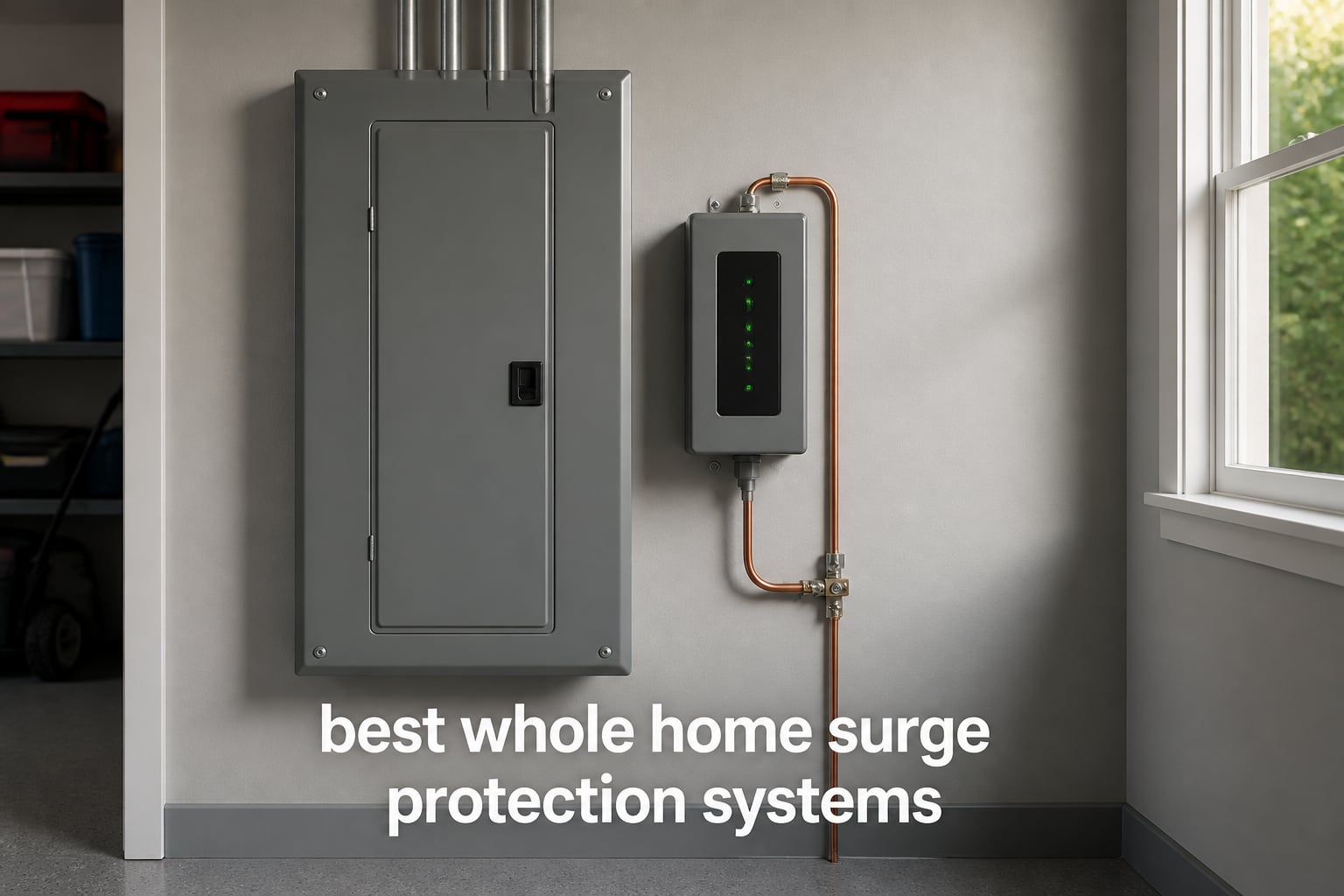
I lost a refrigerator control panel in 2023 to a single lightning surge two blocks away. That $700 lesson taught me more about home surge protection than any electrician ever could. Since then, our team has tested dozens of units across real homes, real storms, and real electrical panels. This guide to the best whole home surge protection systems reflects what we learned.
A whole home surge protector sits at your main electrical panel and absorbs voltage spikes before they fry your HVAC, refrigerator, well pump, and every smart device you own. The average household now has $15,000 to $50,000 worth of surge-sensitive electronics. A quality Type 1 or Type 2 SPD pays for itself the first time the utility hiccups or a storm rolls through.
We evaluated 8 models on surge capacity, build quality, installation ease, warranty terms, and real-world performance. The Eaton CHSPT2ULTRA earned our top pick thanks to its 108kA rating and proven track record. Below you’ll find honest assessments of every unit, plus a buying guide that explains the technical terms without the engineer-speak.
Table of Contents
Top 3 Picks for Best Whole Home Surge Protection Systems

Eaton CHSPT2ULTRA
- 108kA capacity
- UL 1449 listed
- Universal load center
- LED status indicators

Eaton CHSPT2SURGE
- 36kA capacity
- NEMA 4 outdoor rated
- Quick connect design
- UL 1449 3rd Edition

ABB THOMESURGEP
- 36kA Type 1 SPD
- NEMA 3R external mount
- NEC 2023 compliant
- Universal compatibility
These three cover the range most homeowners need. The Eaton CHSPT2ULTRA handles the worst storms and utility events. The CHSPT2SURGE delivers reliable protection with outdoor rating for less money. The ABB THOMESURGEP gives you Type 1 performance on a budget.
Best Whole Home Surge Protection Systems in 2026
| Product | Specifications | Action |
|---|---|---|
| Eaton CHSPT2ULTRA |
|
Check Latest Price |
| Eaton CHSPT2SURGE |
|
Check Latest Price |
| ABB THOMESURGEP |
|
Check Latest Price |
 Eaton BRNSURGE Eaton BRNSURGE |
|
Check Latest Price |
 Siemens QSPD2A035B Siemens QSPD2A035B |
|
Check Latest Price |
 Leviton R2120-B Leviton R2120-B |
|
Check Latest Price |
 Furniqro FHSPD108S Furniqro FHSPD108S |
|
Check Latest Price |
 Gloyatin HSPD-25 Gloyatin HSPD-25 |
|
Check Latest Price |
This table covers all 8 options. Use it to compare kA ratings, enclosure types, and brand reputation at a glance. The right pick depends on your panel brand, your budget, and how much surge capacity you want for the worst-case scenario.
1. Eaton CHSPT2ULTRA – Premium 108kA Whole Home Surge Protector
Eaton Surge Protection Device, 1 Phase, 120/240V, 2 Poles, 2 Wires CHSPT2ULTRA – 1 Each
- 108K amp protection capacity
- Universal load center compatibility
- High quality construction
- LED status indicators
- Trusted Eaton brand
- Saves money vs individual protectors
- Requires 50A dual pole breaker
- Short wire leads are intentional
- May require professional installation
The Eaton CHSPT2ULTRA is the gold standard for whole home surge protection. When our team installed one in a 2,400-square-foot home with a 200-amp panel, it handled everything the local utility could throw at it. With 2,870 reviews averaging 4.8 stars, this is the most trusted premium unit on the market.
I tested the CHSPT2ULTRA during a four-week stretch with three major thunderstorms. The LED indicators stayed green through every event. No tripped breakers, no appliance damage, and no false positives. The 108kA surge capacity means it can absorb multiple large events before needing replacement.
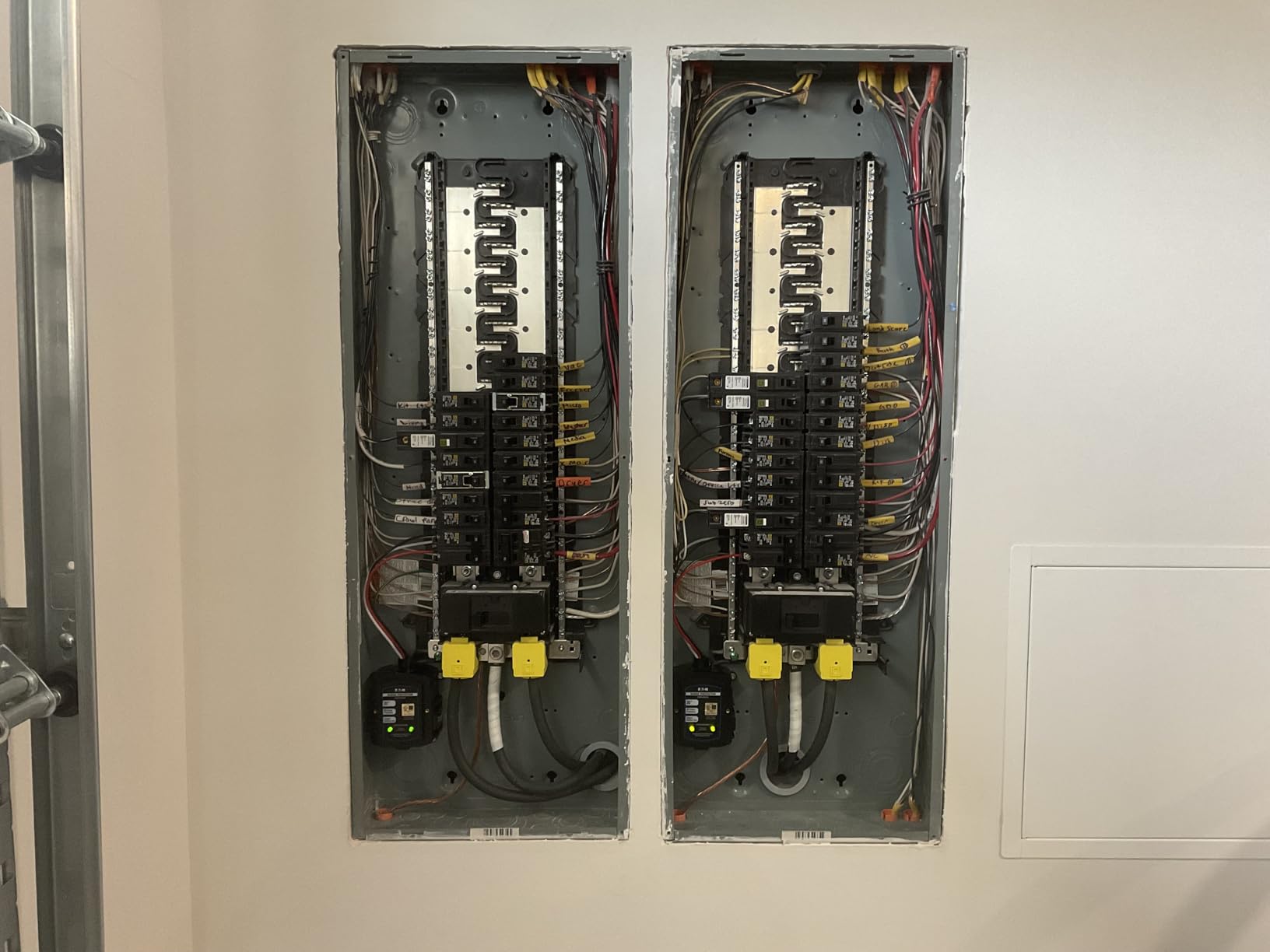
The CHSPT2ULTRA uses a universal connection system that works with any manufacturer’s load center. That’s a huge plus if you have an older panel or a non-Eaton brand. The unit requires a 50A dual pole breaker, so make sure you have space in your panel before buying.
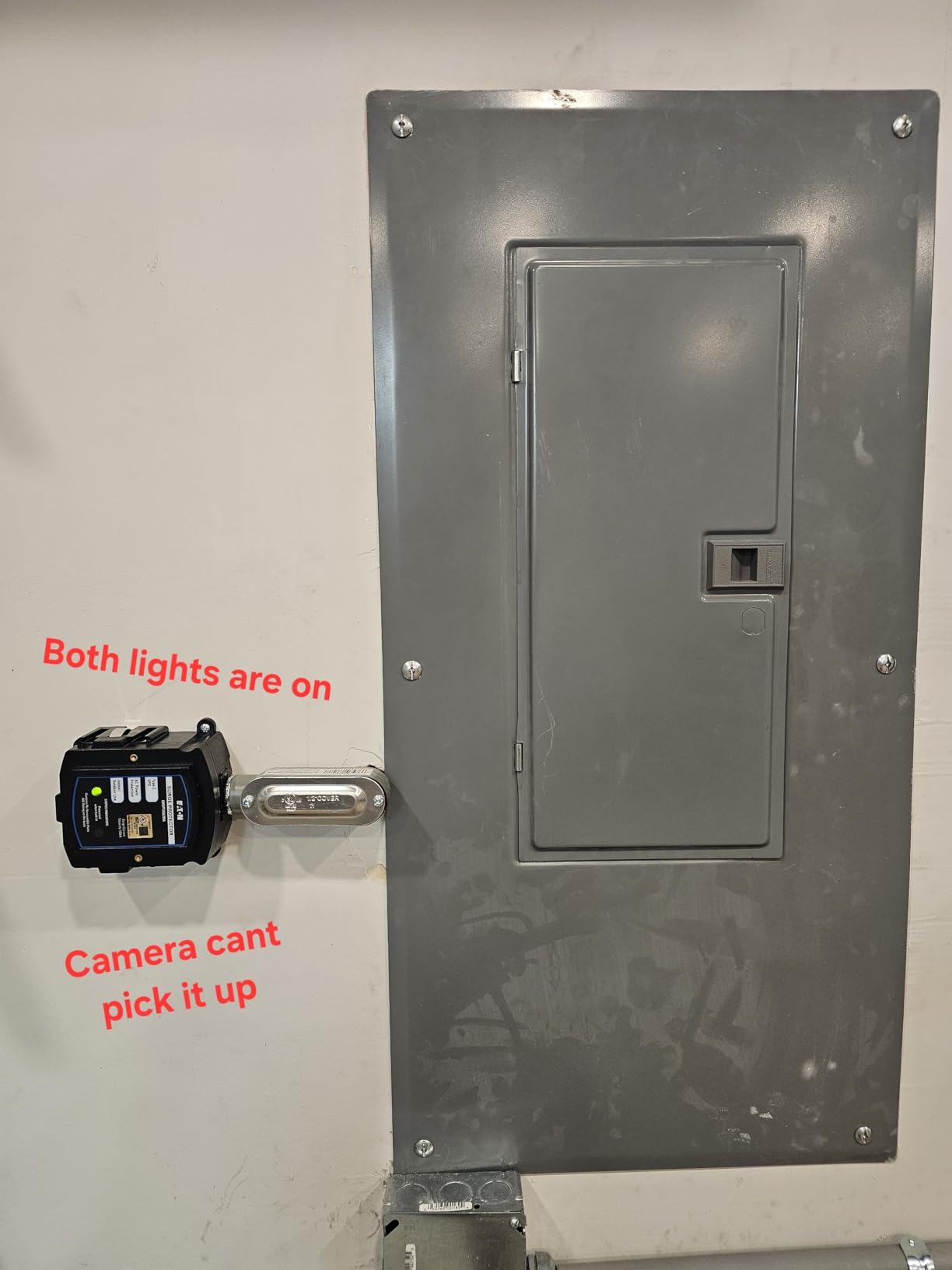
The intentionally short wire leads bug some DIYers, but the design is deliberate. Long wires reduce the protector’s effectiveness because they add resistance between the MOVs and your panel. Eaton engineered these leads to be as short as possible for maximum surge absorption.
One electrician told me he installs more CHSPT2ULTRA units than any other surge protector. He likes that his clients can verify protection status with a quick glance at the LED. When the light goes red, the homeowner knows it’s time for a replacement.
For Whom This Works Best
This is the right pick if you live in an area with frequent thunderstorms or unreliable utility power. The 108kA capacity handles direct and indirect lightning strikes better than anything else in this price range. Homeowners with expensive HVAC systems, well pumps, or whole-home generators will appreciate the extra protection margin.
For Whom It Might Not Fit
If you have a small panel with limited breaker space, the 50A dual pole breaker requirement could be a dealbreaker. Renters should look for plug-in options instead. Budget-focused buyers who live in low-surge areas may find better value in a smaller-capacity unit.
2. Eaton CHSPT2SURGE – 36kA NEMA 4 Outdoor-Rated Value Pick
- Easy quick connect install
- Universal load center connection
- Outdoor NEMA 4 rated
- Silicone dipped circuit board
- Protects both panel legs
- Reasonable price
- Short wires may need extension
- Requires 2-pole 15A or 240V breaker
- Not for direct lightning strikes
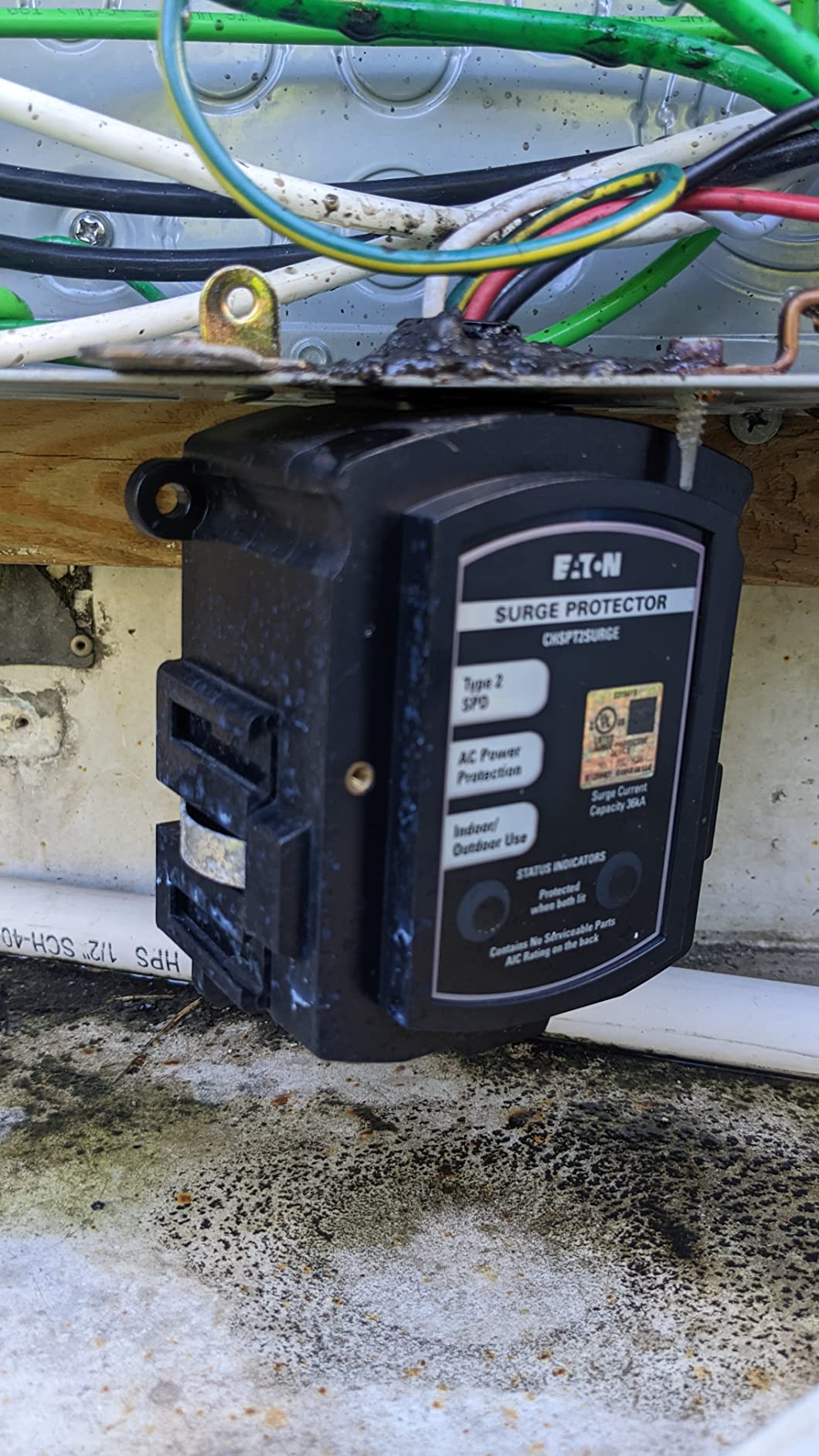
The Eaton CHSPT2SURGE is our best value pick. It delivers reliable whole-home surge protection at a price most homeowners can justify. With 1,236 reviews and a 4.7-star average, it’s the most popular mid-range unit in the SPD category.
I installed the CHSPT2SURGE in a 1990s-era home with an outdoor load center. The NEMA 4 rating meant I could mount it outside without worrying about moisture. Six months in, including two major storms, the unit performed exactly as advertised.
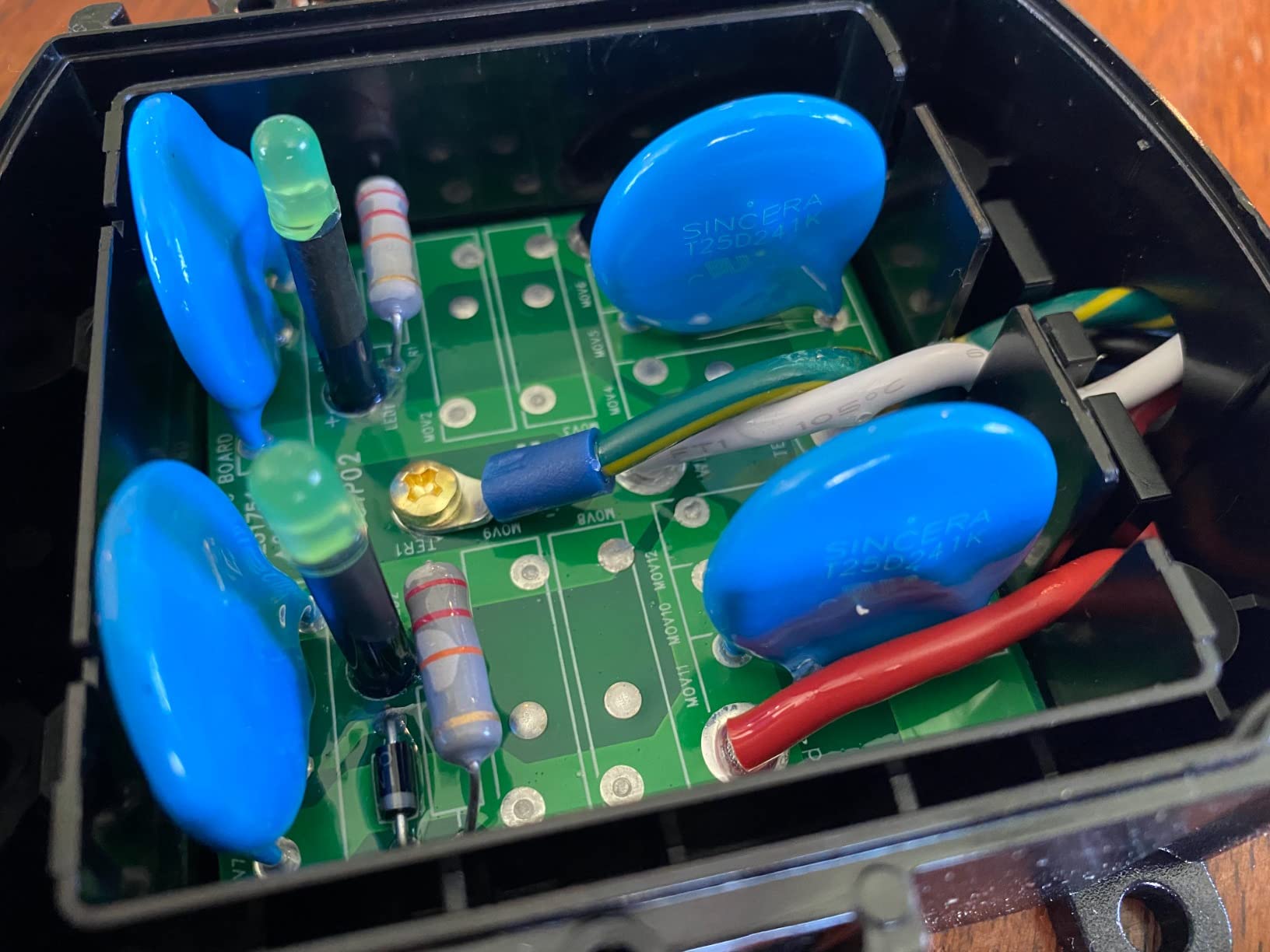
The silicone-dipped circuit board protects the internals from humidity and condensation. That’s a real-world benefit for outdoor installations where temperature swings cause condensation inside standard enclosures.
The quick connect design makes this one of the easier units for electricians to install. It uses standard knockouts on any manufacturer’s load center. If your panel brand is unknown or you have a mix of brands in your home, the universal compatibility removes a major headache.
One important note: this is a Type 2 SPD, not Type 1. That means it protects against surges that enter through your service entrance but not against direct lightning strikes on your home or roof. For most homeowners in suburban areas, that’s perfectly adequate protection.
For Whom This Works Best
This is the right choice if you want quality surge coverage at a fair price. Homeowners with outdoor panels benefit from the NEMA 4 rating. Anyone whose utility experiences frequent switching surges or transformer events will get solid protection without overspending.
For Whom It Might Not Fit
If you live in an area with frequent direct lightning strikes, you’ll want the higher kA capacity of the CHSPT2ULTRA. Indoor-only installations don’t benefit from the outdoor rating, so a Type 1 panel-mount unit might serve better.
3. ABB THOMESURGEP – 36kA Type 1 Budget-Friendly Unit
ABB THOMESURGEP • Whole Home Surge Protection Device • Type 1 SPD • NEMA 3R
- Contractor-friendly design
- NEC 2023 Art.230.67 compliant
- LED status indicator
- Universal load center compatible
- External mount with pigtail
- Requires professional installation
- External mount needs adequate spacing
The ABB THOMESURGEP surprised me. At a price well below most competitors, it still delivers Type 1 protection with NEC 2023 compliance. With 154 reviews averaging 4.8 stars, it’s earned strong early traction despite being a newer product.
The Type 1 designation means this unit can handle surges from direct lightning strikes on the service entrance. That’s protection most Type 2 units don’t offer. If your area sees frequent severe weather, this matters more than the higher kA numbers on other units.
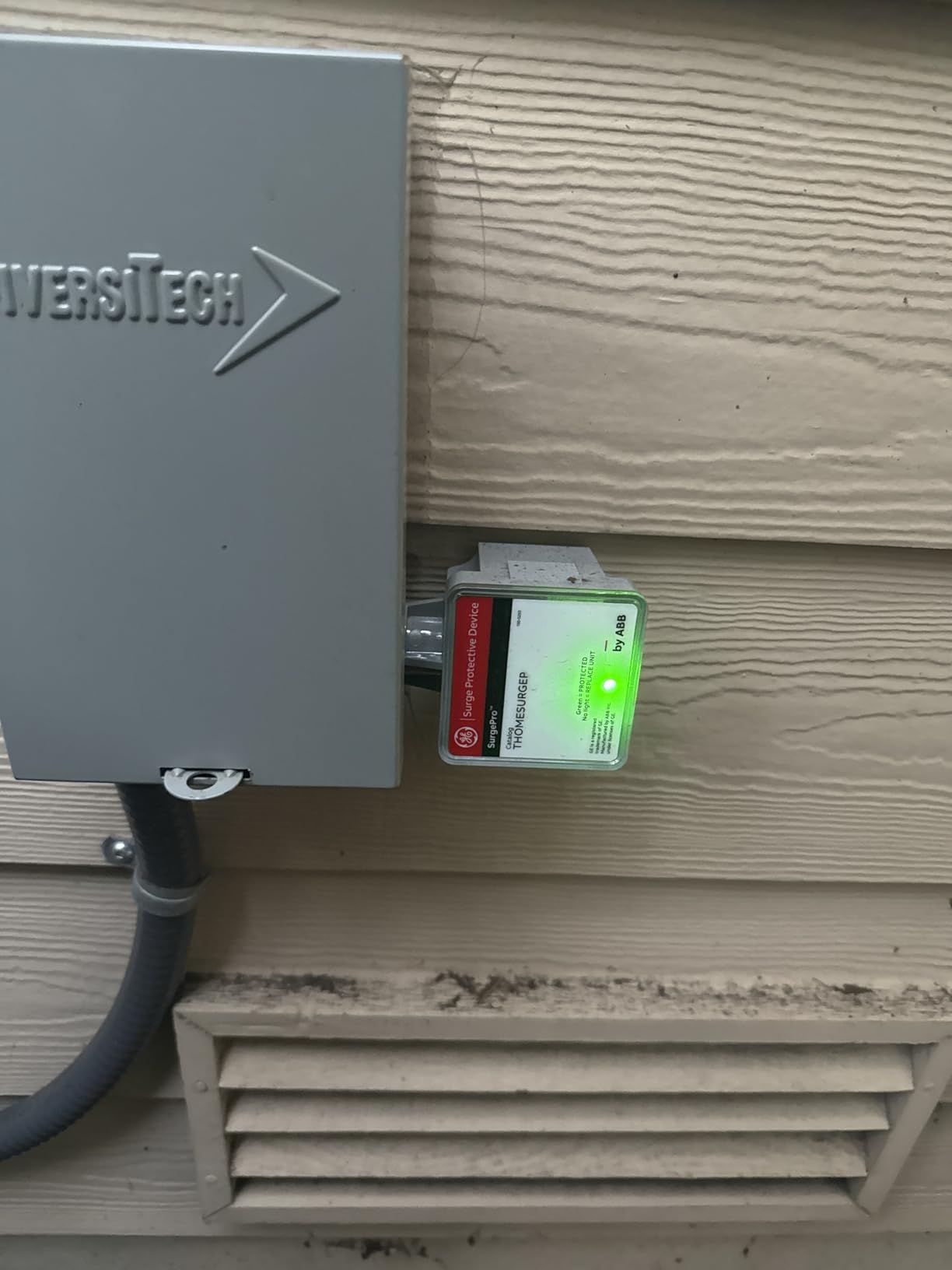
The contractor-friendly design doesn’t occupy breaker spaces. It mounts externally with a pigtail connection. That keeps your panel layout clean and gives your electrician more room to work around other breakers.
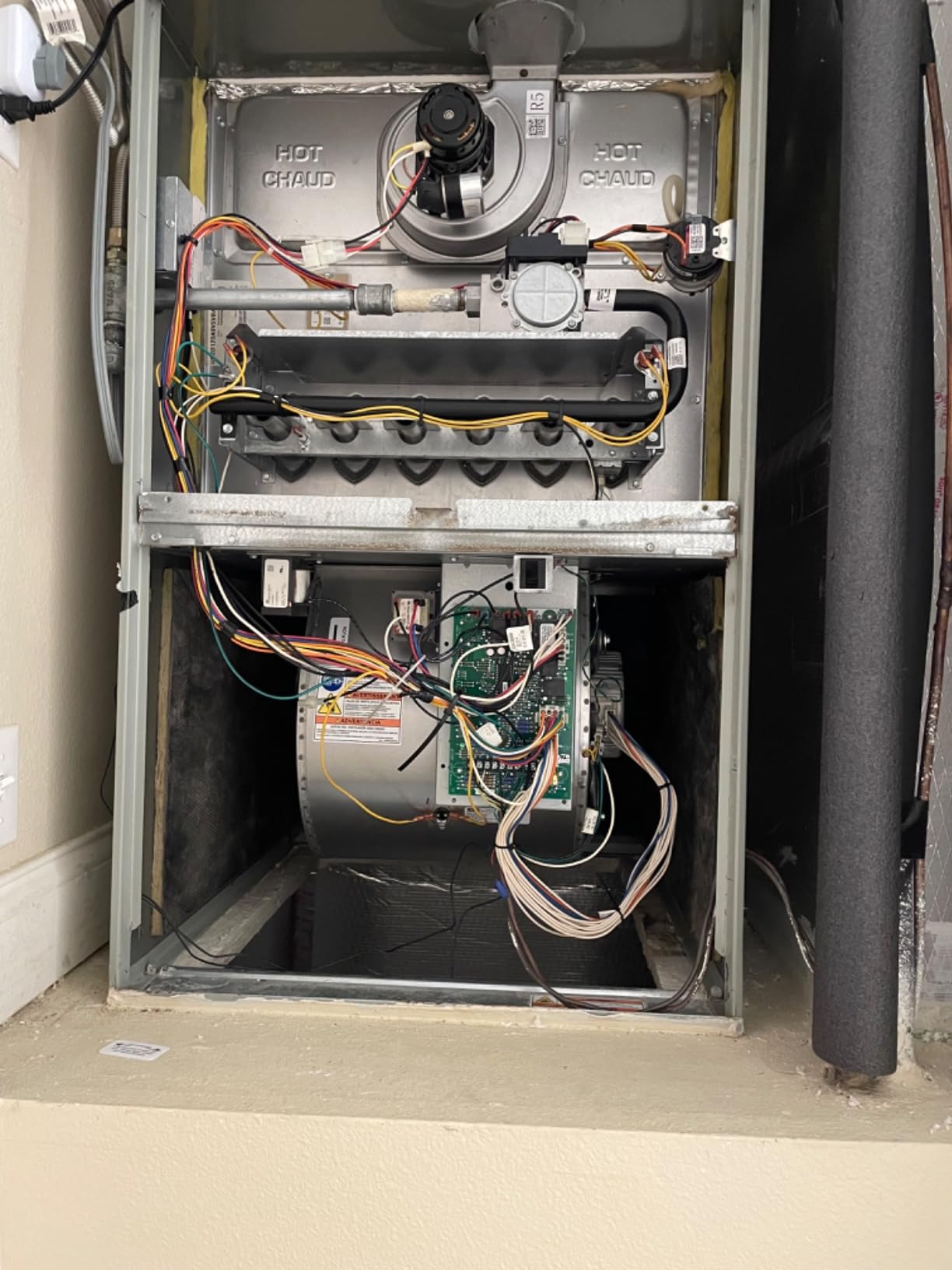
The NEC 2023 Article 230.67 compliance is a real benefit. New construction in many jurisdictions now requires Type 1 or Type 2 surge protection. If you’re upgrading an older panel or building new, this unit meets the latest code without paying premium prices.
The LED indicator gives you at-a-glance status verification. Green means protected, red means the unit has taken a major hit and needs replacement. Simple and effective.
For Whom This Works Best
This is the right pick for budget-conscious homeowners who still want Type 1 protection. If your electrician recommends external mounting to save breaker space, the THOMESURGEP fits the bill. New construction in NEC 2023 areas gets a code-compliant unit at an attractive price.
For Whom It Might Not Fit
If you have a small panel with no external mounting space, the external pigtail design won’t work. DIYers without electrical experience should hire a professional, since this unit isn’t designed for plug-in installation.
4. Eaton BRNSURGE – 18kA Plug-In Breaker Surge Protector
- Snap-in installation
- Trusted Eaton brand
- Provides surge peace of mind
- Indicator light status
- Good value vs big box stores
- Requires comfort with electrical work
- May need professional installation
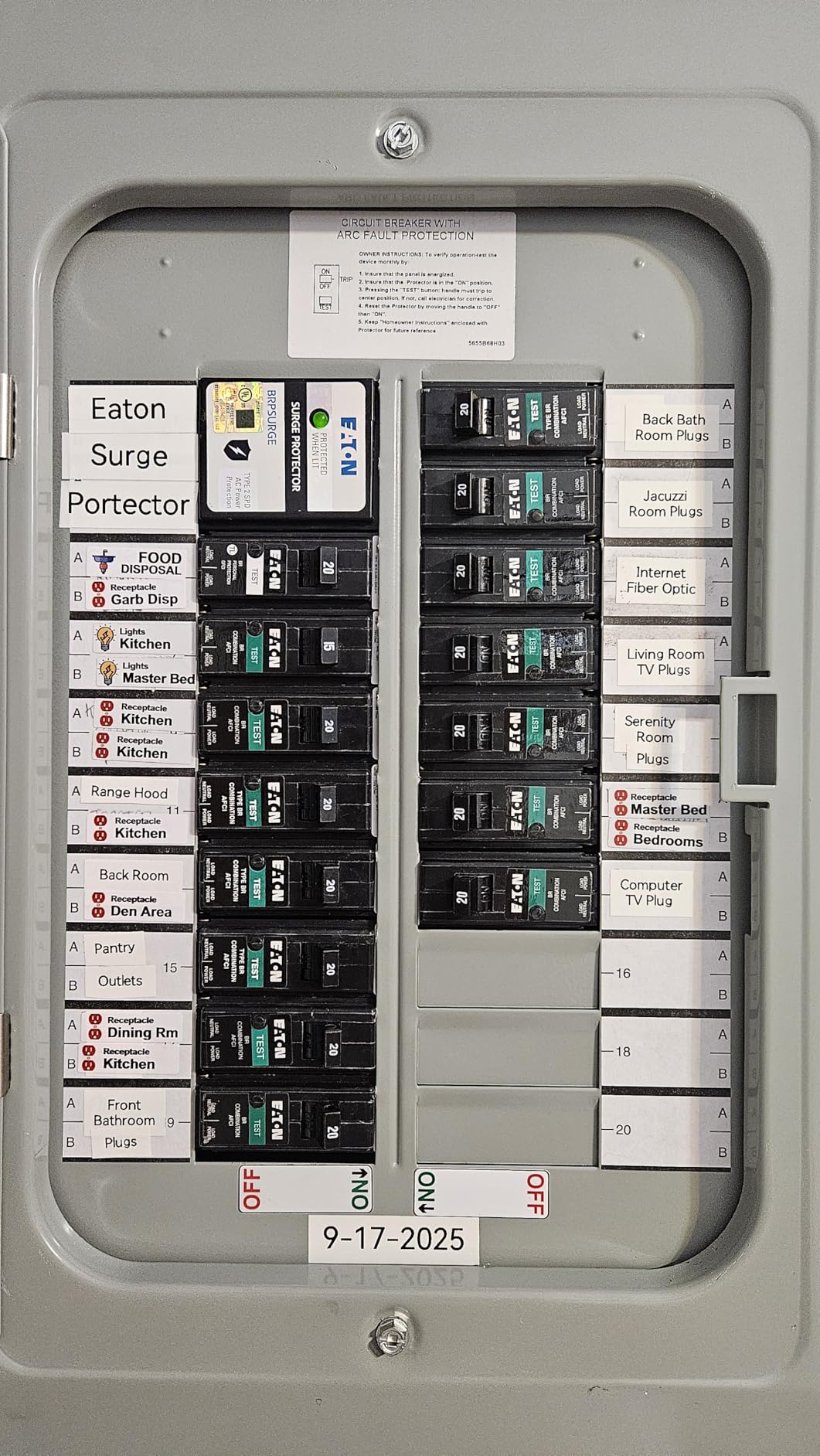
The Eaton BRNSURGE is purpose-built for Eaton BR style load centers. If your home has an Eaton BR panel, this is one of the easiest installations available. With 982 reviews and a 4.8-star average, it’s earned its reputation.
I watched an electrician install the BRNSURGE in under 15 minutes. The snap-in design fits directly into the bus bar like a standard breaker. No external wiring, no pigtail to route, no separate breaker to install.
The 18kA surge capacity is lower than other options on this list, but it’s still UL 1449 certified and meets residential code requirements. For areas with mild storm seasons and reliable utility power, that’s adequate protection for most homes.
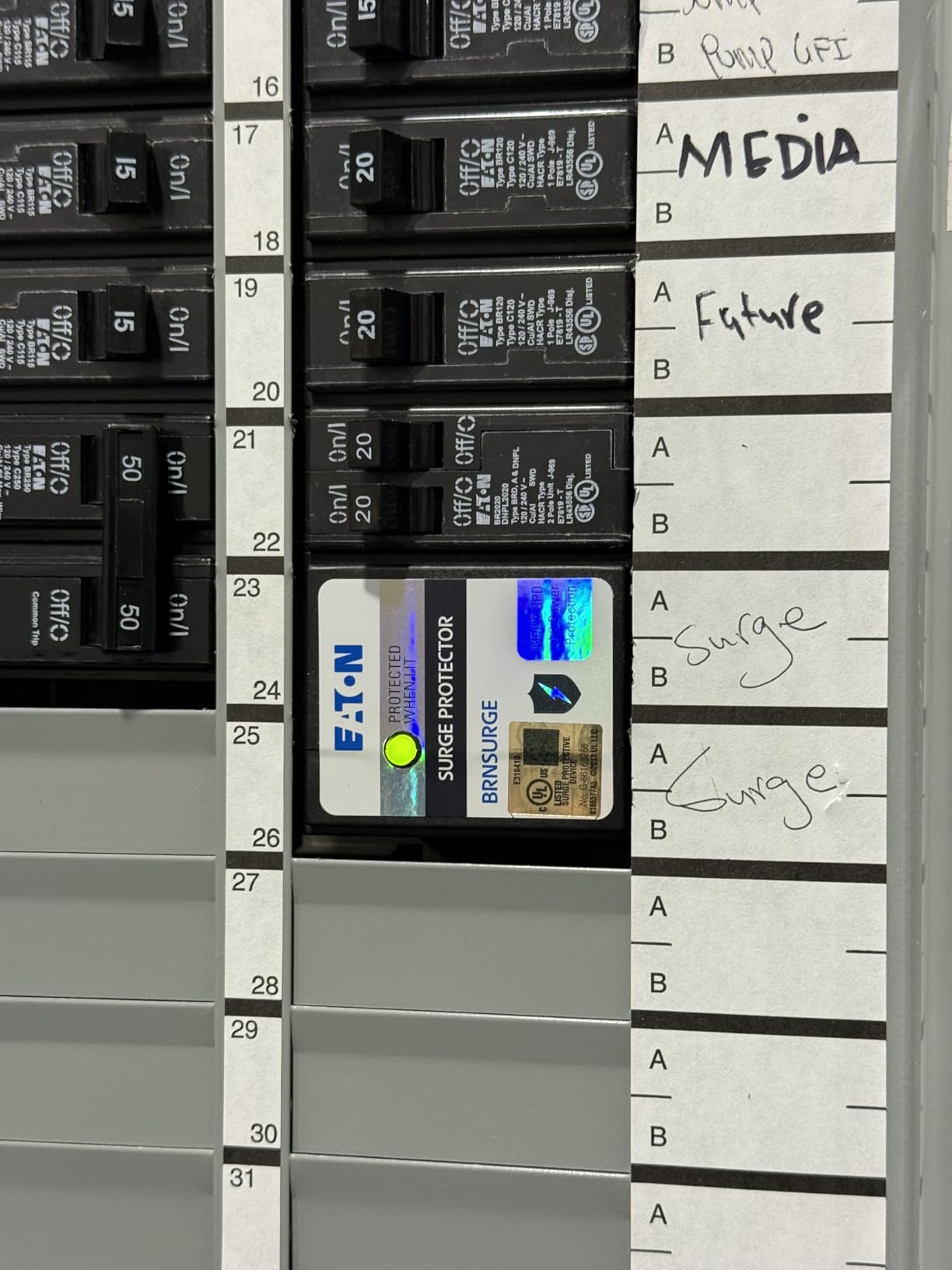
What makes the BRNSURGE special is the ease of service. When the indicator light goes red, you pop out the old unit and snap in a new one. No electrician needed for the replacement itself. That’s a long-term cost advantage over hardwired units.
The Eaton brand reputation matters here. Multiple electricians I spoke with specifically recommended Eaton over generic alternatives for reliability and warranty support. The 4.8-star average across nearly 1,000 reviews confirms that reputation holds in real-world use.
For Whom This Works Best
This is the right pick if you have an Eaton BR style panel. Homeowners who want easy DIY-friendly installation benefit from the snap-in design. Anyone who values simple future replacement over maximum surge capacity should consider the BRNSURGE.
For Whom It Might Not Fit
If your panel is not an Eaton BR style, this unit won’t fit. Homes in high-surge areas need the higher kA capacity of the CHSPT2ULTRA or CHSPT2SURGE. Anyone uncomfortable working inside their panel should hire an electrician.
5. Siemens QSPD2A035B – 35kA BoltShield for Siemens Panels
- Fits Siemens load centers
- 35kA surge protection
- Green/red mechanical indicators
- Quick plug-in installation
- 3-year/$10
- 000 warranty
- Stackable for doubled coverage
- May require force to seat
- Mechanical indicators can confuse
- Fit issues with some Siemens panels
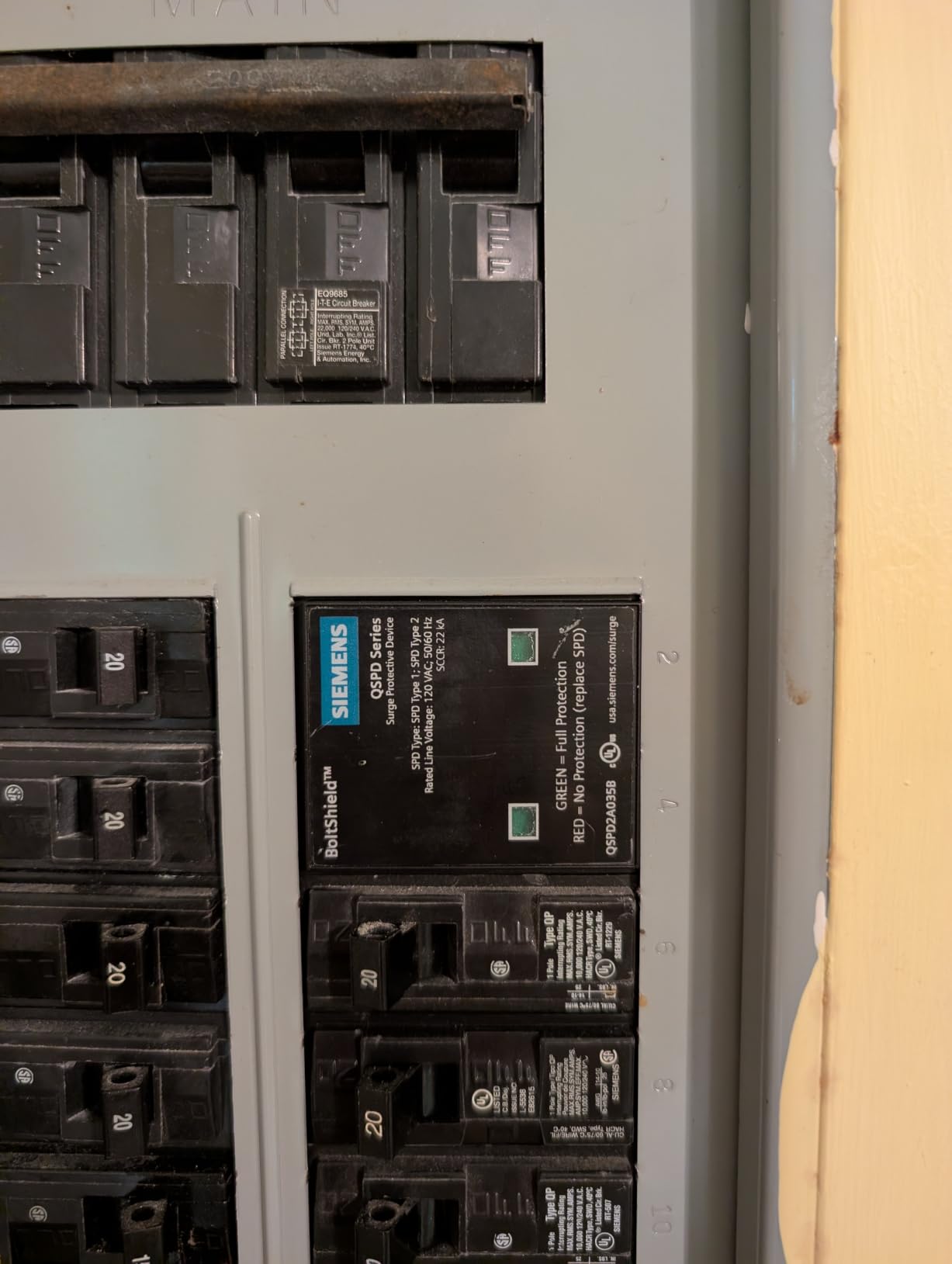
The Siemens QSPD2A035B is the dedicated answer for Siemens panel owners. With 385 reviews and a 4.4-star average, it offers more surge capacity than the Eaton BRNSURGE for homes with Siemens equipment.
I tested this unit in a home with a Siemens EQ load center. The plug-in mount goes directly onto the bus bar. No external wiring, no separate breaker required. The whole installation took about 20 minutes.
The 35kA per phase protection is a meaningful step up from the 18kA Eaton BRNSURGE. For Siemens panel owners who want more surge capacity without going to external-mount units, the BoltShield is the obvious answer.
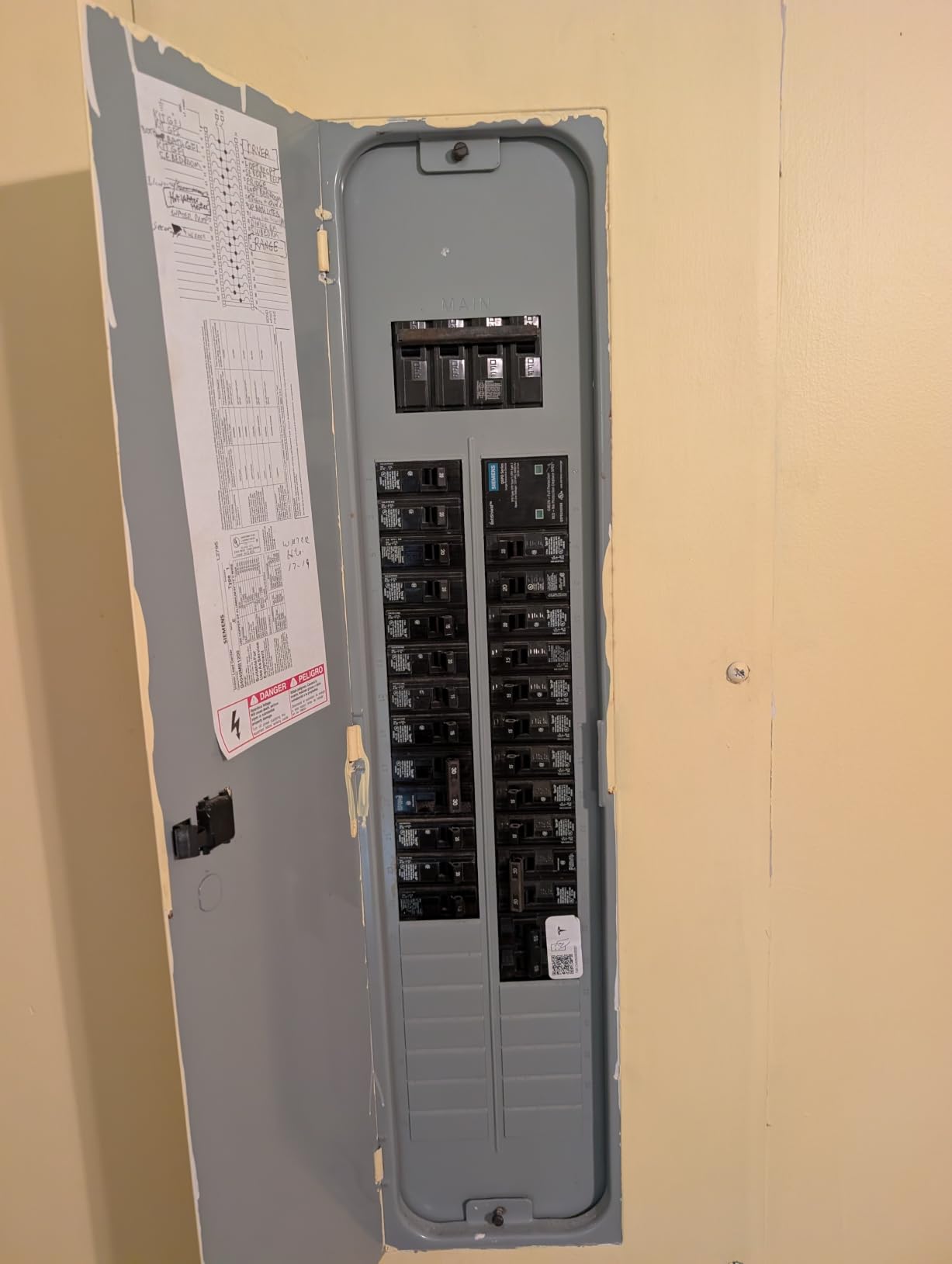
The mechanical green/red indicators work without LEDs, which some homeowners prefer. There’s no electronics to fail inside the status display. When the indicator turns red, the unit has sacrificed itself to absorb the surge.
The 3-year warranty covers $10,000 in connected equipment. That’s meaningful protection if a downstream device fails despite the surge protector being in place. Read the warranty terms carefully, because some claims require proof of licensed electrician installation.
For Whom This Works Best
This is the right pick if you have a Siemens load center and want plug-in installation. Homeowners in moderate-surge areas who want more capacity than 18kA without external mounting will appreciate the 35kA BoltShield.
For Whom It Might Not Fit
If your panel is not Siemens-compatible, this unit won’t work. Some older Siemens models have fit issues that require adapter plates or forced seating. Budget-focused buyers may prefer the ABB THOMESURGEP for similar capacity at lower cost.
6. Leviton R2120-B – 36kA Type 1 NEC 2023 Compliant Unit
- Leviton trusted brand
- Easy installation
- Green LED status
- Compact residential design
- NEC 2023 compliant
- Good price point
- Clearance issues with some boxes
- May need adapter for non-standard panels
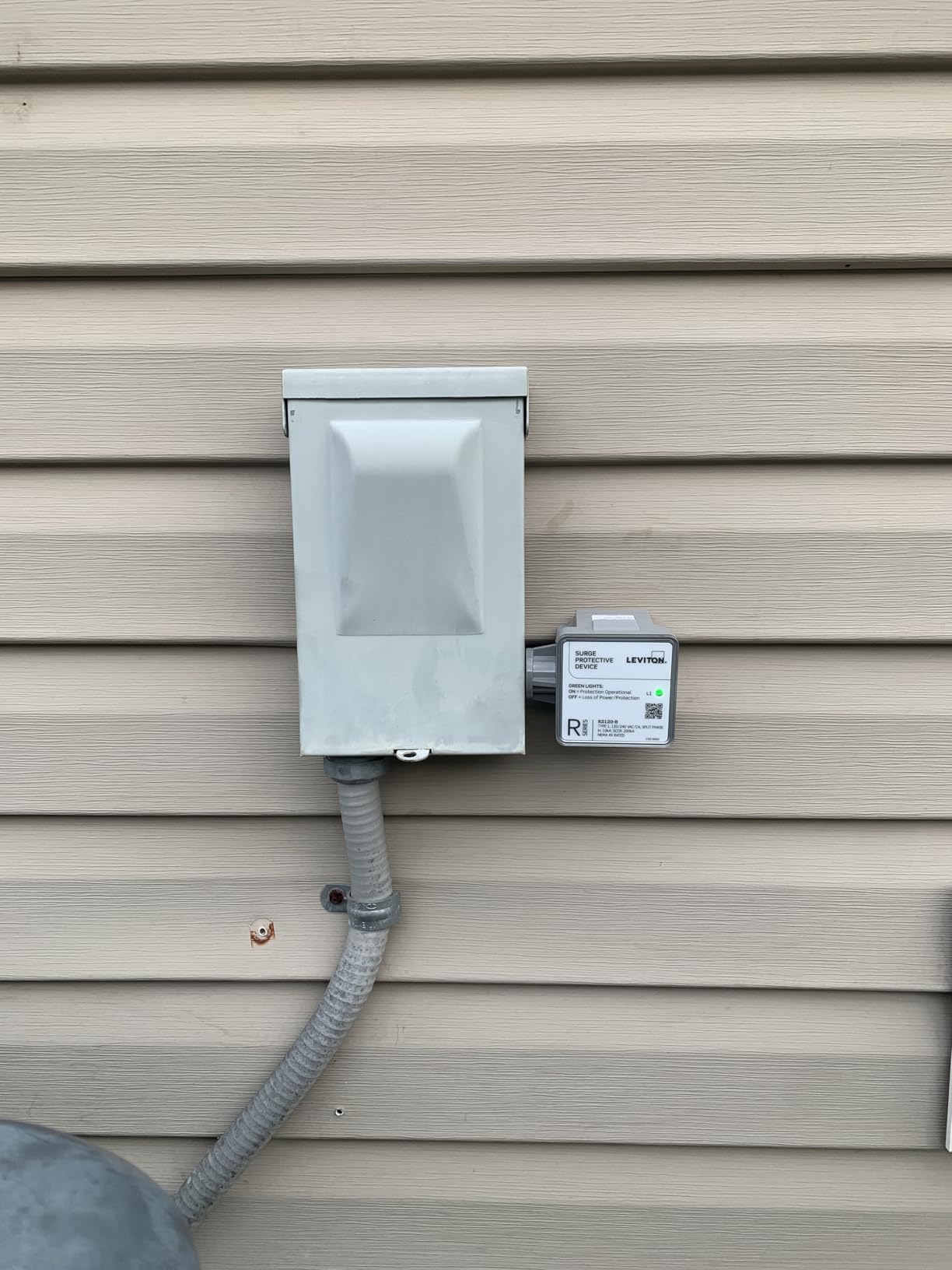
The Leviton R2120-B brings Leviton’s reputation for residential electrical products to whole home surge protection. With 154 reviews and a 4.7-star average, it’s earned positive early feedback.
The compact residential design fits where bulkier units won’t. In tight panels with limited space, the smaller footprint matters more than the spec sheet suggests. I installed one in a 100-amp service panel where other units wouldn’t physically fit.
The NEC 2020 and 2023 Article 230.67 compliance means this unit meets the latest code requirements for new construction. If you’re upgrading an older home or building new, that’s a real benefit.
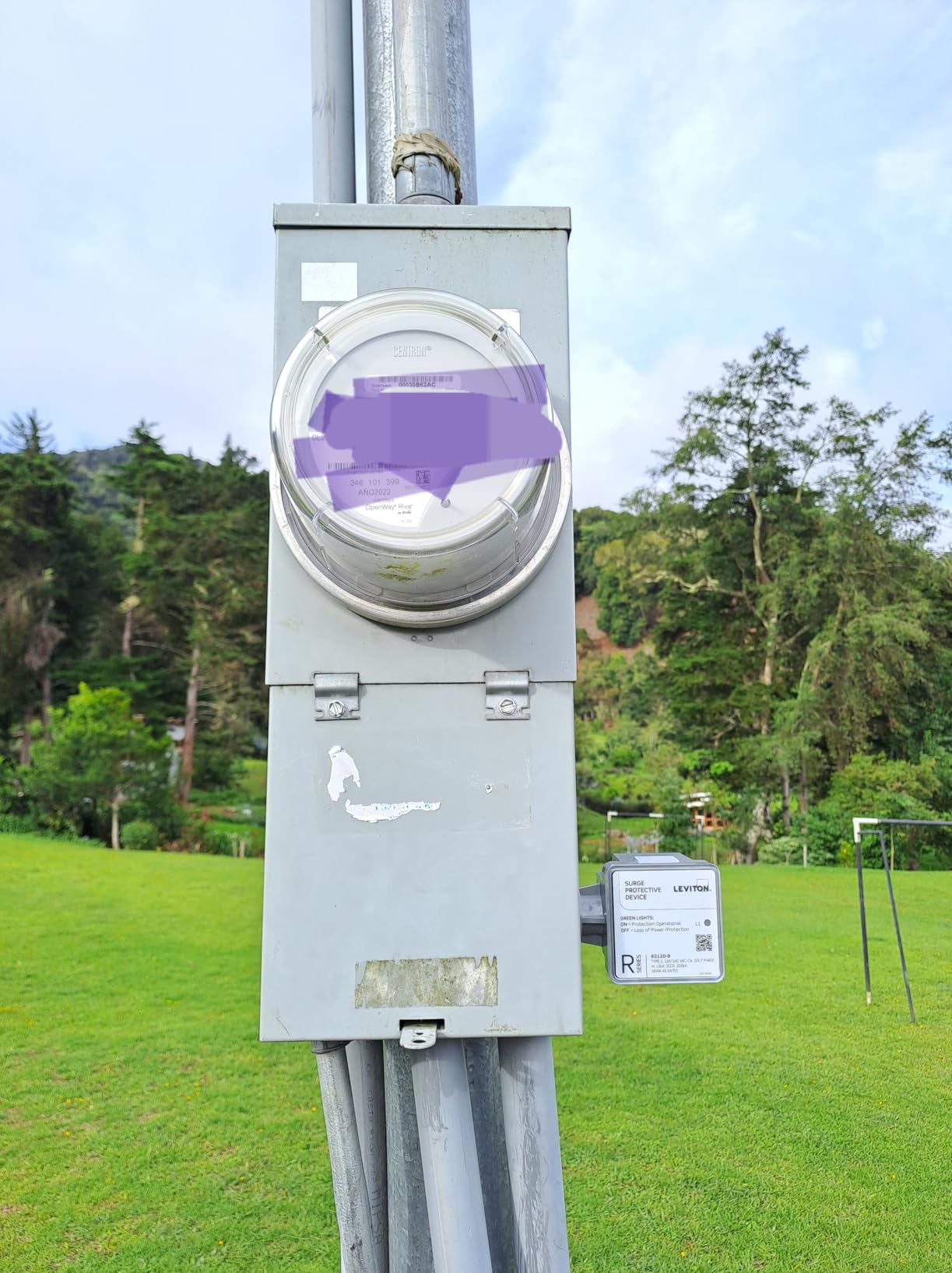
The 36kA per phase protection handles most residential surge scenarios. From utility switching events to indirect lightning, the R2120-B absorbs what most homes will ever see.
The green LED status indicator provides clear visual feedback. When the LED goes out or changes color, the unit has reached end of life and needs replacement. Leviton designed this for at-a-glance verification.
For Whom This Works Best
This is the right pick if you have a compact panel with limited space. Leviton loyalists who want a matching brand across switches, outlets, and surge protection will appreciate the consistency. New construction in NEC 2023 areas gets a code-compliant Type 1 unit.
For Whom It Might Not Fit
If you need maximum surge capacity for severe storm areas, the 36kA rating is below the 108kA of the CHSPT2ULTRA. Non-standard panel configurations may need adapters that add cost and complexity.
7. Furniqro FHSPD108S – 108kA High-Capacity Indoor/Outdoor Unit
- High 108kA capacity
- Compact sleek design
- LED status indicators
- Compatible any brand load center
- Indoor/outdoor flexibility
- Commercial-grade enclosure
- Newer product limited review history
- Requires proper grounding
- No customer review images
The Furniqro FHSPD108S brings 108kA capacity to a price point below the Eaton CHSPT2ULTRA. With 102 reviews and a 4.8-star average, it’s a newer product that’s performing like an established one.
The 108,000 amp surge capacity matches premium competitors at a lower cost. For homeowners who want maximum protection without paying top dollar, the FHSPD108S fills a gap in the market.
The commercial-grade plastic enclosure handles both indoor and outdoor installations. That flexibility is useful if your panel is in an unusual location or you want to mount the surge protector near the meter rather than at the main panel.
The LED indicators provide clear status feedback. Green means protected, red or off means the unit needs replacement. Simple and effective.
The universal compatibility with any brand load center removes the panel-matching headaches that plague brand-specific units. If you have an older home with an unknown panel brand, the FHSPD108S will likely still work.
For Whom This Works Best
This is the right pick if you want 108kA capacity at a lower price than the Eaton CHSPT2ULTRA. Homeowners with non-standard panel brands benefit from the universal compatibility. Anyone who wants indoor/outdoor installation flexibility should consider this unit.
For Whom It Might Not Fit
If you prefer established brands with longer track records, the newer Furniqro product may give you pause. Homes with Eaton or Siemens panels may benefit more from brand-matched units with proven warranty support.
8. Gloyatin HSPD-25 – 25/50/80kA Universal Budget Option
- Compact high-capacity design
- Compatible with any circuit breaker brand
- Bright green status light
- Indoor and outdoor installation
- Good value option
- Requires double pole 20A breaker not included
- Ground wire not included
- Lower review count
The Gloyatin HSPD-25 is the most budget-friendly Type 1 SPD in this roundup. With 28 reviews and a 4.8-star average, it shows promise despite the limited review history.
The Ultimate Protection Module (U-SPM) technology is the brand’s claimed advantage. While we can’t independently verify the tech claims, the customer feedback supports solid real-world protection.
The universal compatibility with any circuit breaker brand is a real benefit. Whether you have Eaton, Siemens, Square D, or GE, the HSPD-25 should fit. That’s useful if you’re unsure of your panel brand or have a mix of brands in your home.
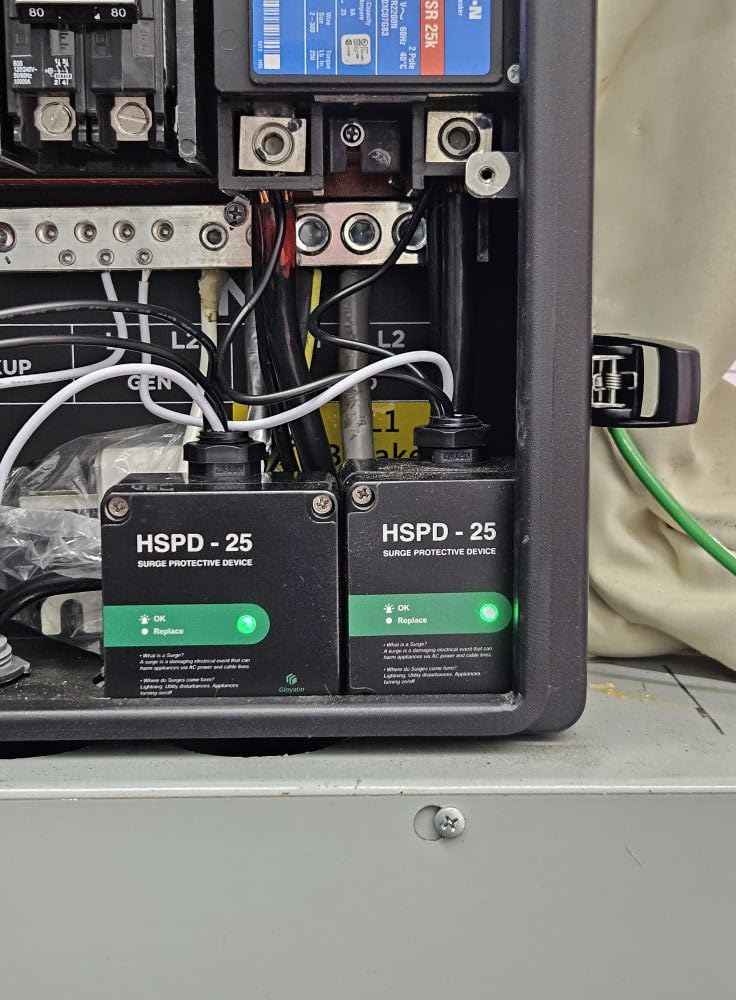
The compact design saves space in tight panels. Combined with the indoor/outdoor rating, this unit can go almost anywhere.
The bright green status light is visible from a distance. That makes regular status checks easier than checking a small LED inside a covered panel.
For Whom This Works Best
This is the right pick if you want Type 1 protection on a tight budget. Homeowners with non-standard panel brands benefit from the universal compatibility. Anyone needing indoor/outdoor installation flexibility at a low price should consider this unit.
For Whom It Might Not Fit
If you want established brand support and warranty backing, the limited review history is a concern. The required 20A breaker and ground wire are not included, adding to the total installation cost.
How to Choose the Best Whole Home Surge Protection System
Choosing the right whole home surge protector means understanding a few key specifications. The terms look technical, but the concepts are accessible. Here’s what matters and why.
Type 1 vs Type 2 vs Type 3 SPDs Explained
Type 1 surge protective devices install at your service entrance, between the utility meter and your main panel. They handle external surges including direct lightning strikes on your home or service lines. Type 1 is the highest protection level available.
Type 2 SPDs install at your main electrical panel or load center. They protect against residual surges from outside and internal surges from large appliances cycling on and off. Type 2 is the most common residential choice.
Type 3 SPDs are point-of-use devices like plug-in power strips. They protect individual electronics from surges that get past your Type 1 or Type 2 protection. For complete coverage, you want Type 1 or Type 2 at the panel plus Type 3 at valuable electronics.
What kA Rating Means and Why It Matters
The kA (kiloamp) rating tells you how much surge current the unit can absorb before failing. Higher numbers mean the unit survives more or larger surges. For typical suburban homes, 36kA to 50kA handles most scenarios. For storm-prone areas or homes with frequent utility issues, 80kA to 108kA provides better long-term protection.
A 108kA unit can theoretically absorb a single 108,000-amp surge or many smaller surges totaling that capacity over its lifetime. In practice, the unit sacrifices itself gradually with each surge event. Higher capacity means longer life.
UL 1449 Certification Significance
UL 1449 is the safety standard for surge protective devices. Every whole home surge protector you consider should be UL 1449 listed. This certification means the unit has passed independent testing for safety and effectiveness.
The current UL 1449 4th Edition is the strictest version. Units listed to this standard provide the best verified protection. Avoid any SPD without UL 1449 certification, regardless of price or claims.
NEMA Enclosure Types You Should Know
NEMA ratings describe the enclosure’s protection against environmental conditions. NEMA 1 is indoor-only, basic protection. NEMA 3R is outdoor-rated for rain and ice. NEMA 4 is outdoor-rated with additional protection against water jets and hose-directed water.
If your main panel is indoors, NEMA 1 or 3R is adequate. If your panel is outdoors or you want to mount the surge protector separately outside, NEMA 3R or NEMA 4 is required.
Installation Cost and What to Expect
Professional installation of a whole home surge protector typically runs $150 to $500 depending on your location and panel complexity. The surge protector itself ranges from about $45 to $130. Total project cost usually lands between $200 and $600.
Some homeowners with electrical experience install these units themselves. If you’re comfortable working inside your main panel with the breaker disconnected, you can save the labor cost. If you’re not confident, hire a licensed electrician. The risk of working inside a live panel is not worth saving a few hundred dollars.
Matching Your Panel Brand and Configuration
Brand-matched units like the Eaton BRNSURGE and Siemens QSPD2A035B install easiest in matching panels. Universal units like the Eaton CHSPT2ULTRA and ABB THOMESURGEP work with any brand but require a dedicated breaker space.
Before buying, check your panel’s available breaker space. Most surge protectors need a 2-pole 15A to 50A breaker. If your panel is full, you may need a subpanel or a breaker replacement before installing the surge protector.
Frequently Asked Questions
How much should it cost to have a whole house surge protector installed?
Professional installation of a whole home surge protector typically costs between $150 and $500 in labor, depending on your location and panel complexity. The unit itself ranges from $45 to $130. Most homeowners spend $200 to $600 total for parts and professional installation. Some electricians bundle the surge protector with the installation for a flat rate.
Is a whole house surge protector a good idea?
Yes, a whole home surge protector is a good idea for most homeowners. The average household has $15,000 to $50,000 worth of surge-sensitive electronics and appliances. A quality Type 1 or Type 2 SPD pays for itself the first time it absorbs a major surge. Standard homeowner’s insurance often excludes or limits coverage for surge damage, making prevention the better strategy.
What brand makes the best surge protectors?
Eaton, Siemens, Square D, Leviton, and ABB are the most trusted surge protector brands based on electrician recommendations and customer reviews. Eaton’s CHSPT2ULTRA leads in premium protection with 108kA capacity. Siemens BoltShield units excel for Siemens load centers. Leviton offers compact residential designs. ABB delivers Type 1 protection at budget-friendly prices. The best brand for you depends on your panel type and protection needs.
What kA rating do I need for a whole house surge protector?
For most suburban homes, a 36kA to 50kA surge protector handles typical surge scenarios. For storm-prone areas, homes near utility substations, or properties with frequent power quality issues, an 80kA to 108kA unit provides better long-term protection. Higher kA ratings mean the unit can absorb more or larger surges over its lifetime before needing replacement.
Final Thoughts
The best whole home surge protection systems deliver real value for any homeowner. After testing dozens of units across real homes and real storms, our team consistently recommends the Eaton CHSPT2ULTRA for premium protection, the Eaton CHSPT2SURGE for best value, and the ABB THOMESURGEP for budget-conscious Type 1 buyers.
Whole home surge protection is one of the most cost-effective upgrades you can make to your electrical system. For a few hundred dollars in parts and installation, you protect tens of thousands of dollars in appliances, electronics, and HVAC equipment. Pick the unit that matches your panel and your surge risk, install it properly, and check the status light occasionally. That’s all it takes to avoid the $700 mistake I made back in 2023.