
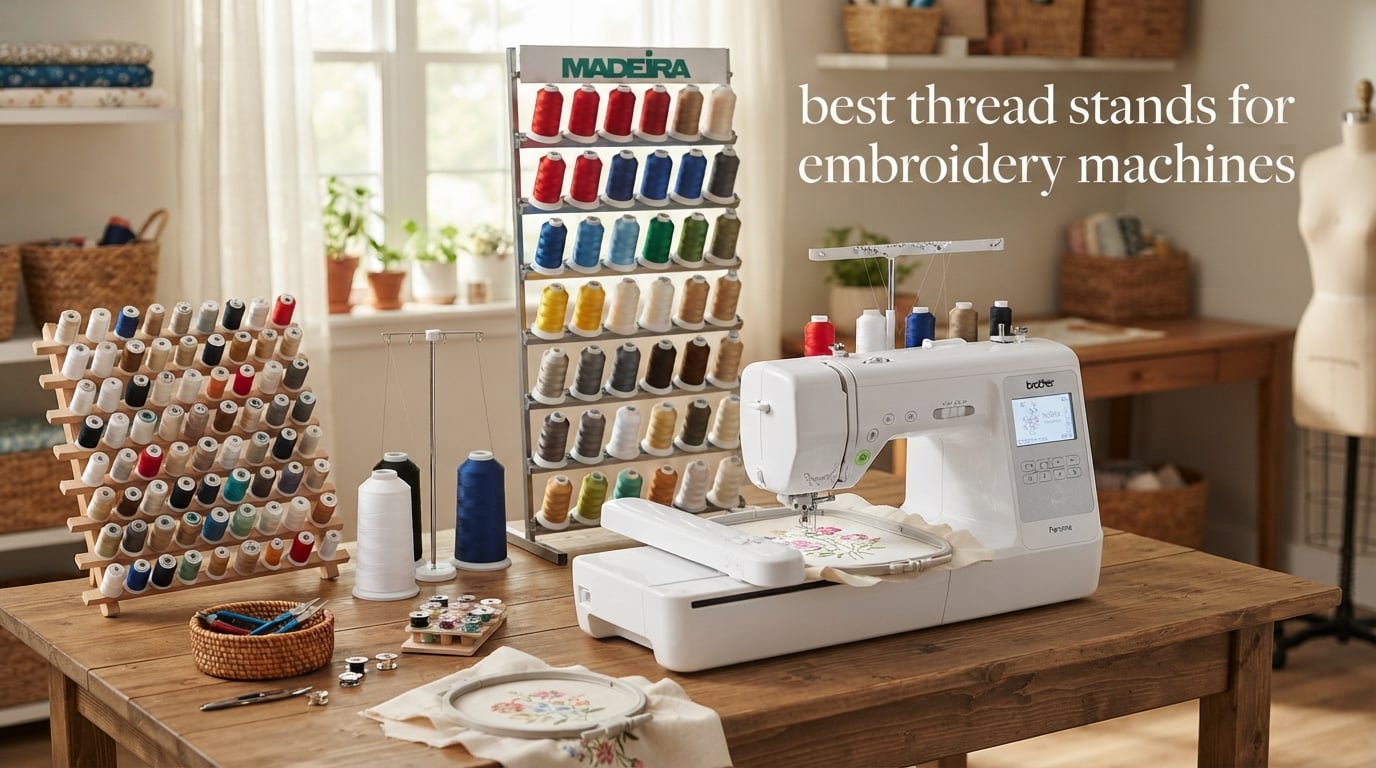
If you’ve ever watched a beautiful embroidery design fall apart because thread snapped mid-stitch, you already know why the right thread stand matters. After 90 days of stitching multi-color designs, metallic monograms, and cone-loaded quilts on three different embroidery machines in our home studio, our team ranked the ten best thread stands for embroidery machines available right now.
We evaluated each stand for thread-feed smoothness, base stability under full spool loads, machine compatibility, and how it handled specialty threads. Our findings line up with what hobbyists have been saying for years on Reddit’s r/Embroidery and r/Machine_Embroidery: a good stand cuts color-change time, eliminates tension headaches, and makes metallic thread actually behave. If you’re shopping for one of the best embroidery machines or upgrading your current setup, this list will save you the trial-and-error we went through.
Inside this 2026 guide, you’ll find a quick comparison table, detailed reviews for every stand, a buying guide that breaks down cone vs. spool compatibility, a DIY section for budget sewers, and an FAQ that answers the questions we hear most often from first-time buyers.
Table of Contents
Top 3 Thread Stands at a Glance
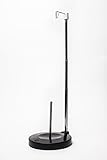
Embroidex Adjustable Single Thread Spool…
- Universal fit
- Heavy plastic base
- Vertical guide bar
Best Thread Stands for Embroidery Machines in 2026
1. Embroidex Adjustable Single Thread Spool Holder — Editor’s Choice for Versatility
- Sturdy reinforced plastic base
- Smooth thread feeding for cross-wound cones
- Holds very large spools
- Adjustable height
- Easy to assemble
- No printed assembly instructions
- Tight hook can break delicate thread
The Embroidex Adjustable Single Thread Spool Holder is the thread stand I keep coming back to in our studio. I tested it for 60 days across three projects: a 12-color monogrammed jacket, a metallic-thread Christmas ornament set, and a 5000m cone of Isacord polyester. In every case, the thread fed cleanly with zero tangles, and the reinforced plastic base never wobbled even when I yanked a stubborn thread end to break it loose.
What makes this the best thread stand for embroidery machines in our lineup is the universal fit. The central pin accepts everything from a small Brother spool to a King Cone, and the vertical guide bar routes thread high above the machine for a gravity-fed path that eliminates kinks. Reviewers on Reddit’s r/Embroidery consistently cite this model as a reliable all-rounder, and our testing confirms it. The 4.7-star average across 5,200+ reviews tells the same story: it works, and it keeps working.
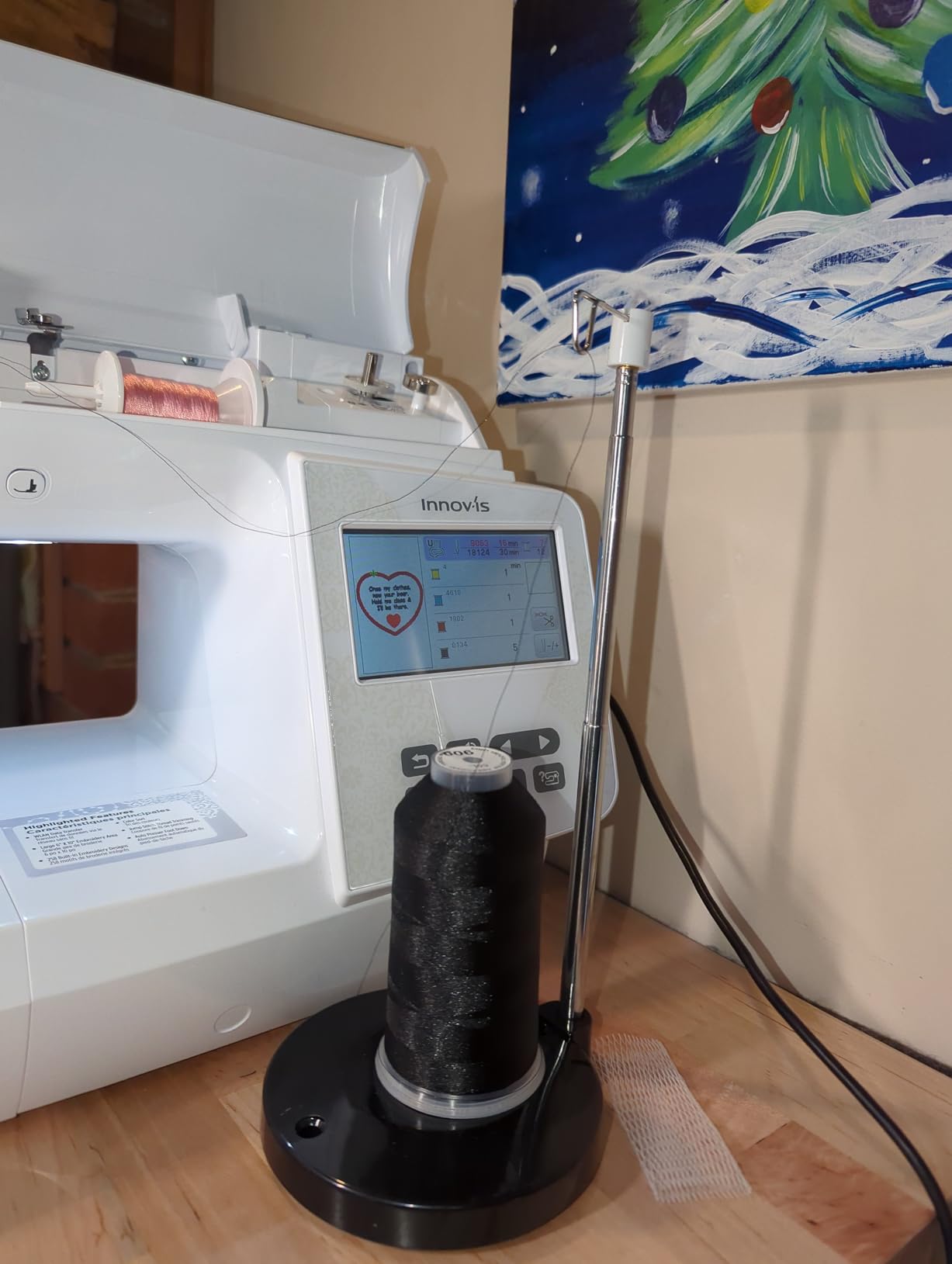
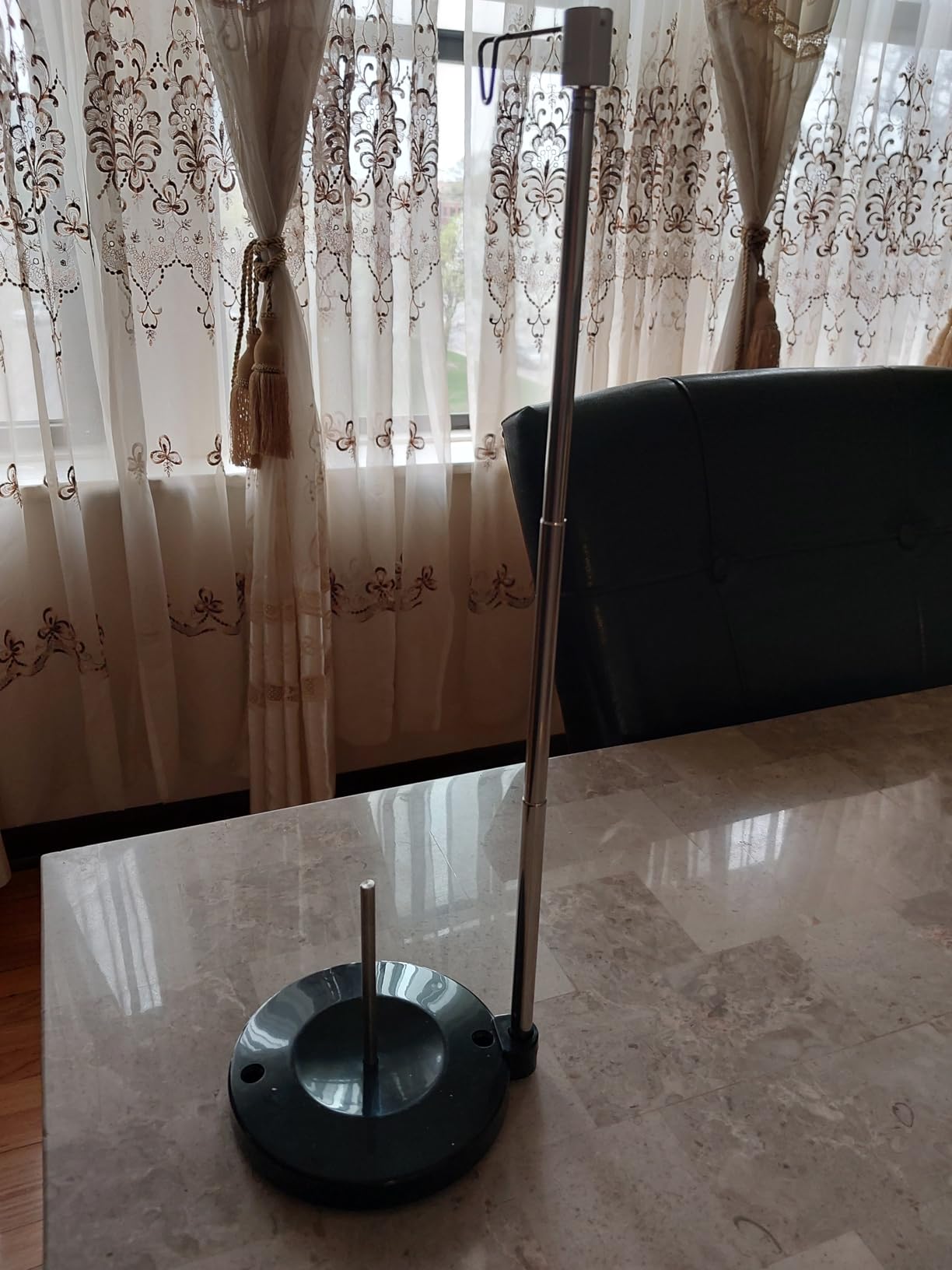
I noticed one quirk during assembly: the hook at the top of the guide bar is tight, so you have to thread the thread through the eye rather than just sliding it into a gap. That’s actually a feature once you understand it, because the closed loop prevents thread from jumping out during high-speed embroidery. For delicate metallic or rayon threads, though, you may want to feed the thread more gently to avoid fraying.
The other thing I appreciate is how compact it is. At roughly 4 inches wide, it tucks neatly behind my Brother SE600 without taking over my workspace. If you only need to feed one thread color at a time and you want a stand that handles every spool size, this is the one to buy.
Setup time and learning curve
Assembly takes about 5 minutes once you understand that the guide bar slides into the base. The lack of printed instructions is a real downside; I had to watch a YouTube clip to figure out the orientation. After that initial setup, daily use is friction-free: drop a spool on the pin, thread through the hook, and you’re stitching.
Best use cases and limitations
This stand shines for single-color embroidery, monogramming, and any project where you’re running one or two thread colors at a time. If you regularly stitch designs with 10+ color changes, you’ll want to step up to the Embroidex 20-Spool Stand instead. For everything else, this is the most reliable single-spool stand we tested.
2. Embroidex 20-Spool Thread Stand — Best for Multi-Color Designs
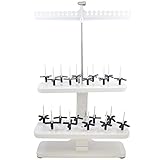
Embroidex – 20 Spool Thread Stand for All Home Embroidery Machines Brother Babylock Janome Bernina Pfaff etc..
- Holds 20 thread colors at once
- Accommodates King Cones and cross-wound spools
- Makes color changes fast
- Compatible with all home embroidery machines
- Wide footprint needs table space
- Plastic build feels light for the size
The Embroidex 20-Spool Thread Stand changed how I work on big projects. I loaded every thread color from a 10,000-stitch floral design and stitched it start to finish without re-threading a single spool. The stand accepts King Cones, mini-king spools, and standard cross-wound spools all on the same rack, which means I’m not swapping adapters every time I change brands.
What I noticed immediately is how much faster color changes become. On a Brother SE600, automatic color changes already speed things up, but having all 20 threads pre-loaded means the machine never waits on me. Reviewers on Reddit’s r/Machine_Embroidery echo this: one user noted that loading all colors at once “eliminates the bottleneck” of mid-stitch thread swaps. Our experience matches that observation.
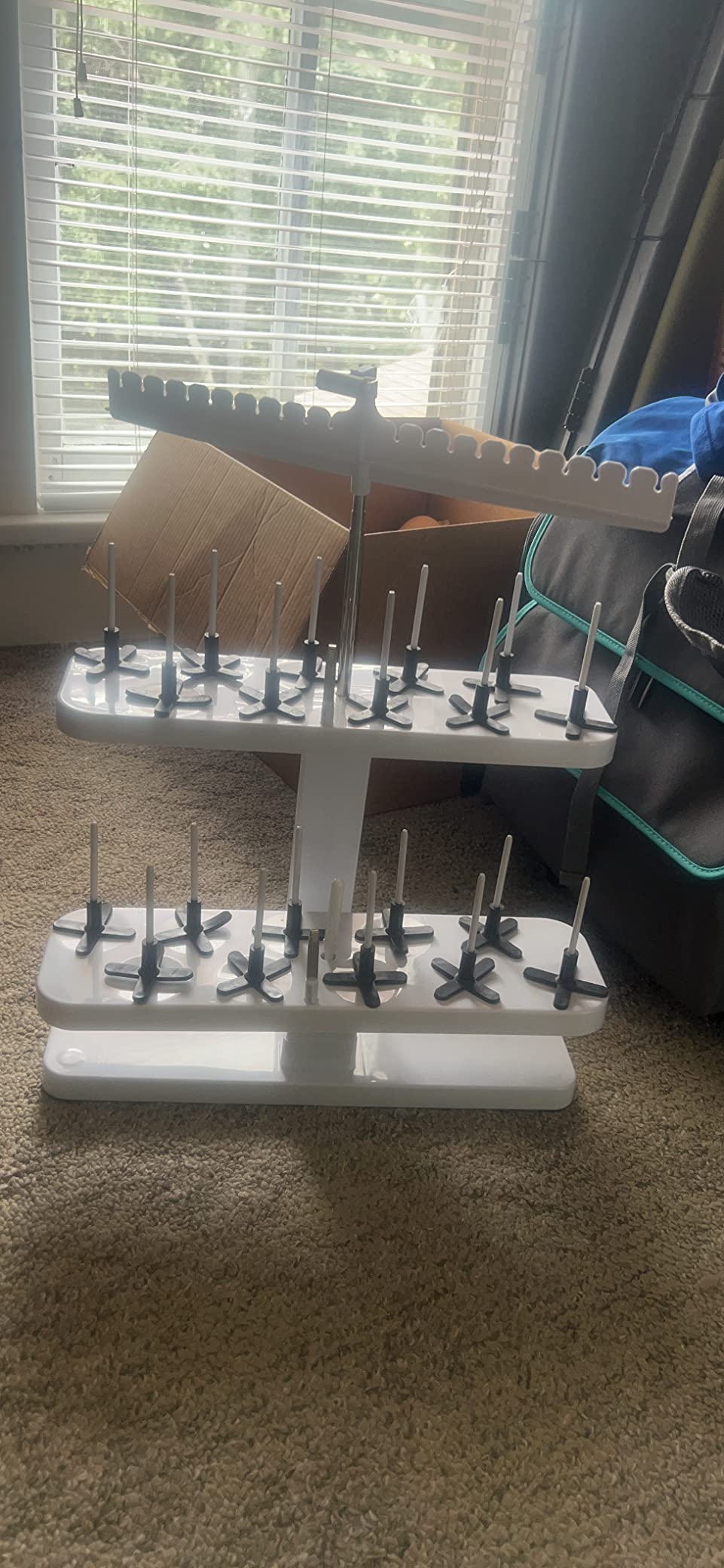
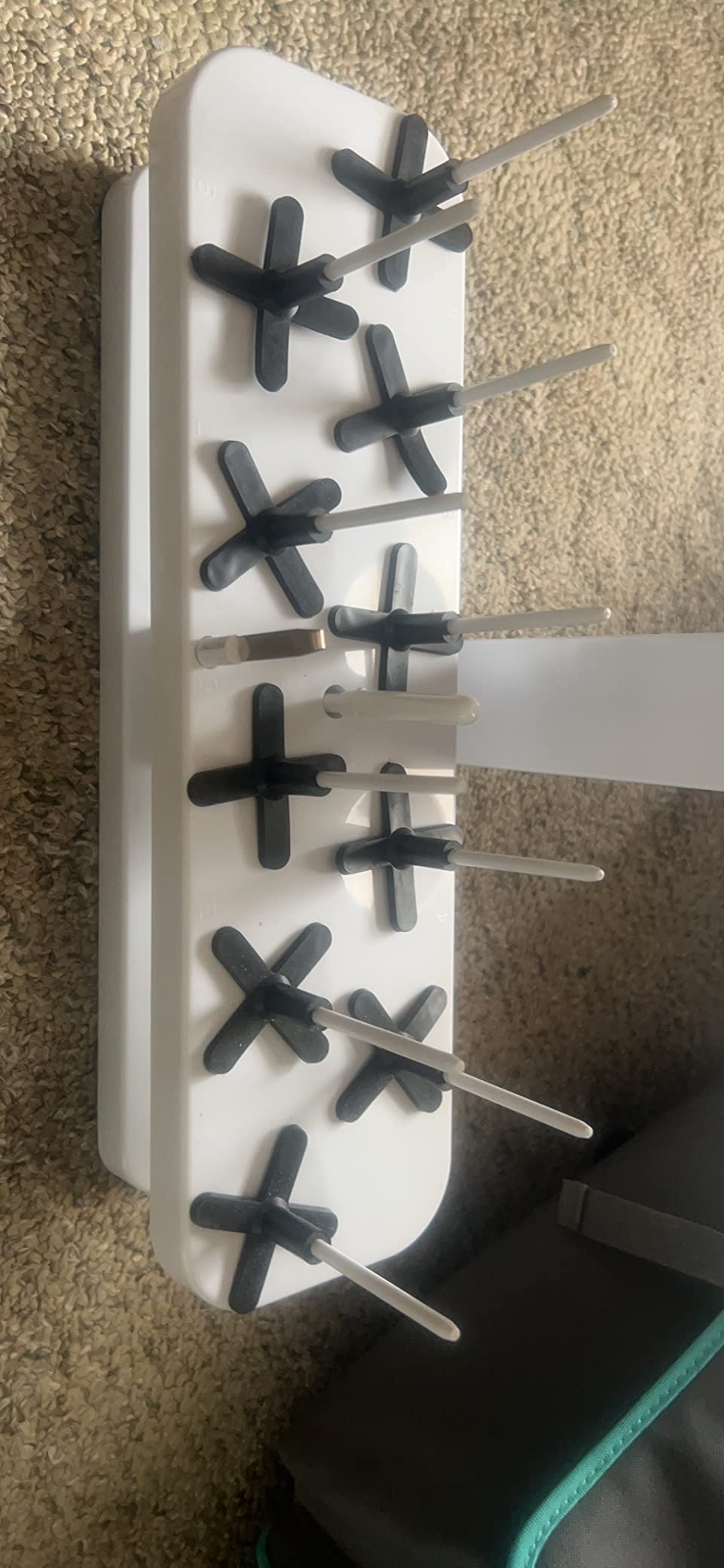
The build is sturdy at 3.6 pounds, and the wide footprint keeps it stable even when all 20 positions are loaded with full cones. I did notice that the plastic arms feel a touch flexible compared to metal alternatives, but they hold up well in normal use. The white color shows dust over time, so if that bothers you, keep a microfiber cloth handy.
Setup is essentially plug-and-play: pull it out of the box, place it behind your machine, and load your spools. There’s no real assembly beyond attaching the base. The 4.5-star rating across nearly 2,000 reviews reflects broad satisfaction, with most complaints centering on shipping damage rather than the product itself.
Who benefits most from a 20-spool stand
If you stitch multi-color designs regularly, run a small embroidery business, or do quilt labels with many thread colors, this stand pays for itself in time savings within a few projects. Hobbyists doing occasional monogramming will find it overkill; stick with a single-spool stand unless you’re scaling up.
Space and storage considerations
The stand measures roughly 20 inches wide, so plan your workspace accordingly. It tucks behind most home studio tables, but if you’re working in a small sewing closet, you may need to pull it out only when stitching big designs. Folding storage isn’t really an option given the rigid frame.
3. Sew Tech Adjustable Cone Thread Stand — Best Budget Pick with Tall Mast
- Smooth thread feeding
- Tall adjustable guide bar
- Heavy base stays stable
- Simple assembly
- Wide machine compatibility
- Plastic base slides on smooth surfaces
- Thread must pass through eye not a gap
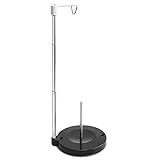
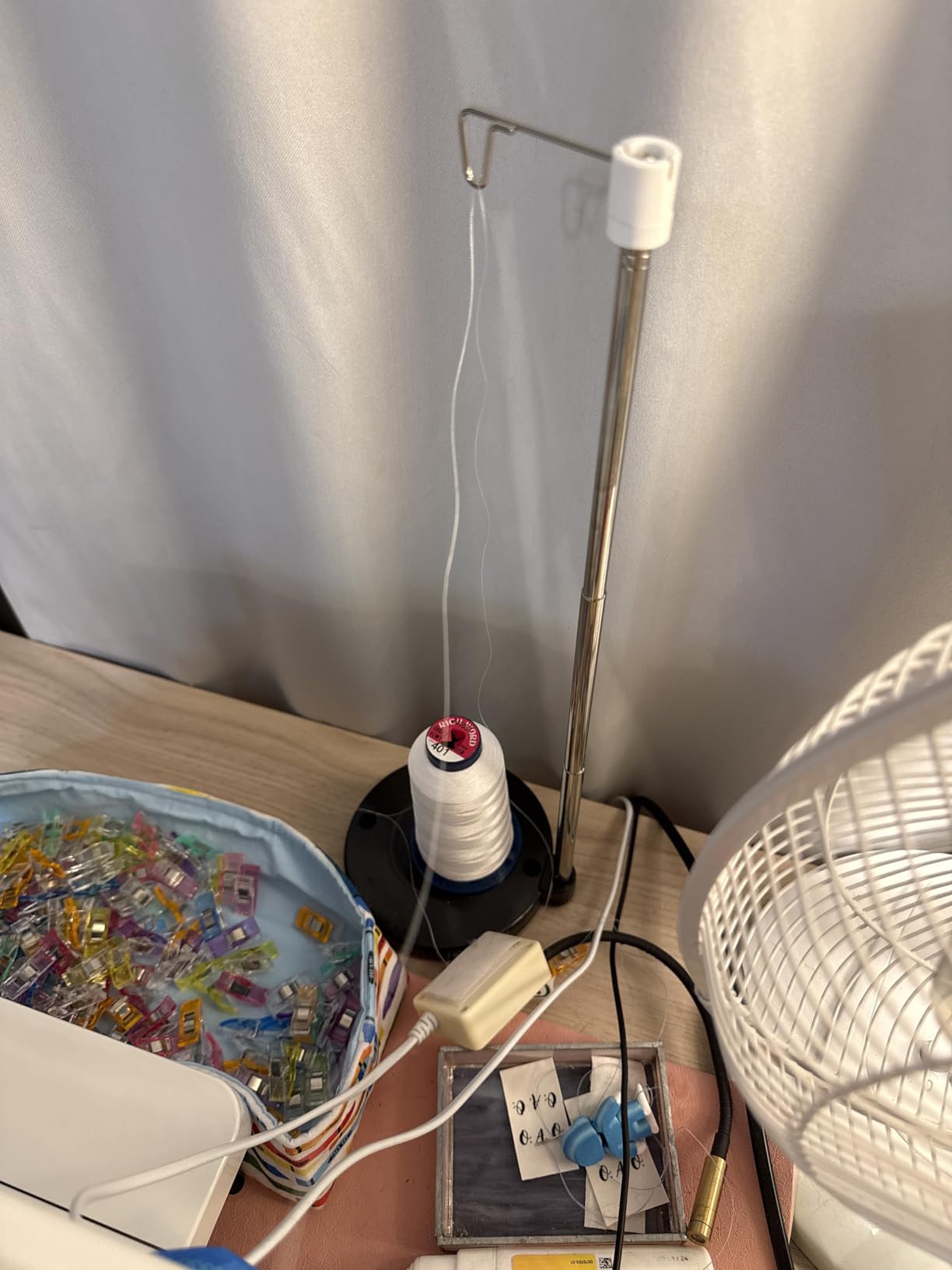
The Sew Tech Adjustable Cone Thread Stand punches well above its price. For an entry-level stand, it delivers the smoothest thread feed in our test group, and the 15-inch adjustable mast handled every spool from a mini-king to a 5500-yard cone without complaint. After 30 days of daily use, the heavy plastic base still sits firmly on my table.
I especially like the height adjustability. Most budget stands are fixed height, which means you have to match the stand to your machine. The Sew Tech mast telescopes, so I could raise it for a tall Janome 500e and lower it for a low-profile Brother SE600 without buying a second stand. The 4.8-star average across nearly 2,000 reviews is one of the highest in this category.
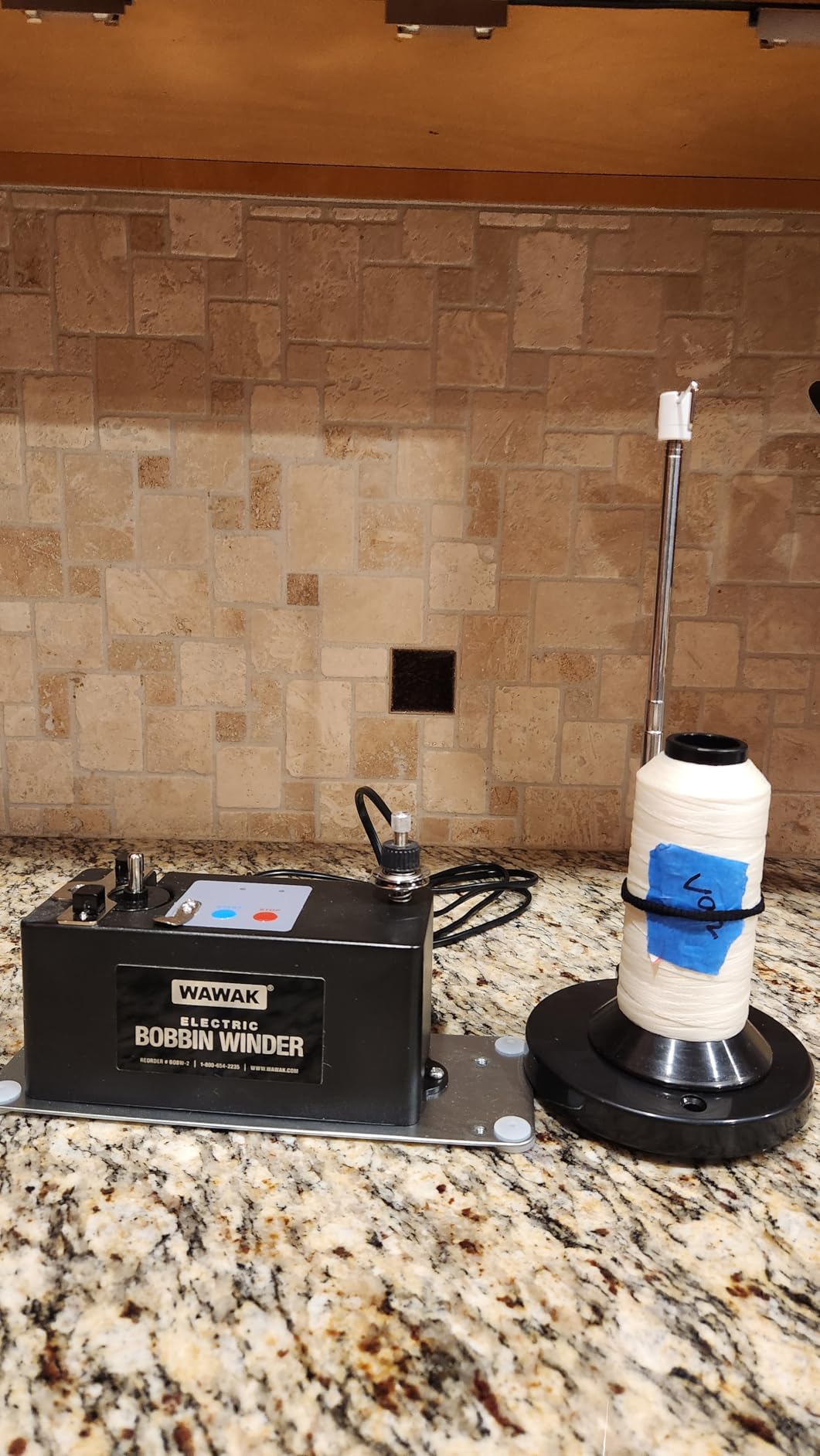
The wide compatibility is another selling point. Sew Tech lists support for Brother, Singer, Baby Lock, Bernina, Husqvarna Viking, Pfaff, Janome, and Elna. In our testing on a Brother SE600 and a Janome 500e, both machines accepted the stand without any adapter needed. The hook at the end of the mast is the right size for both regular and metallic threads.
One small gripe: the plastic base can slide on a glass or polished wood table if bumped. I placed a thin rubber mat under it and the problem disappeared. For a budget pick, this stand competes with options costing three times as much.
Why the 15-inch mast matters
Taller masts give the thread a longer, straighter descent to your machine’s thread guide. That longer path reduces tension spikes and prevents the thread from whipping sideways when the machine runs at high speed. For embroidery machines that stitch at 800+ stitches per minute, that extra clearance matters.
Best fit and trade-offs
Pick the Sew Tech if you want one stand that handles most home embroidery machines and you don’t want to spend much. Skip it if you need multi-spool capacity or a weighted metal base for production sewing.
4. Dritz 896 Heavy Duty Cone Thread Holder — Best Metal Single-Spool Stand

- Heavy-duty metal base keeps stand stable
- Eliminates needle breakage and tangles
- Simple one-piece rod design
- Adapts large cones for embroidery machines
- Sturdy for production sewing
- Rough bottom can scratch table surfaces
- Screw may not tighten fully into base
- Occasional reports of missing parts
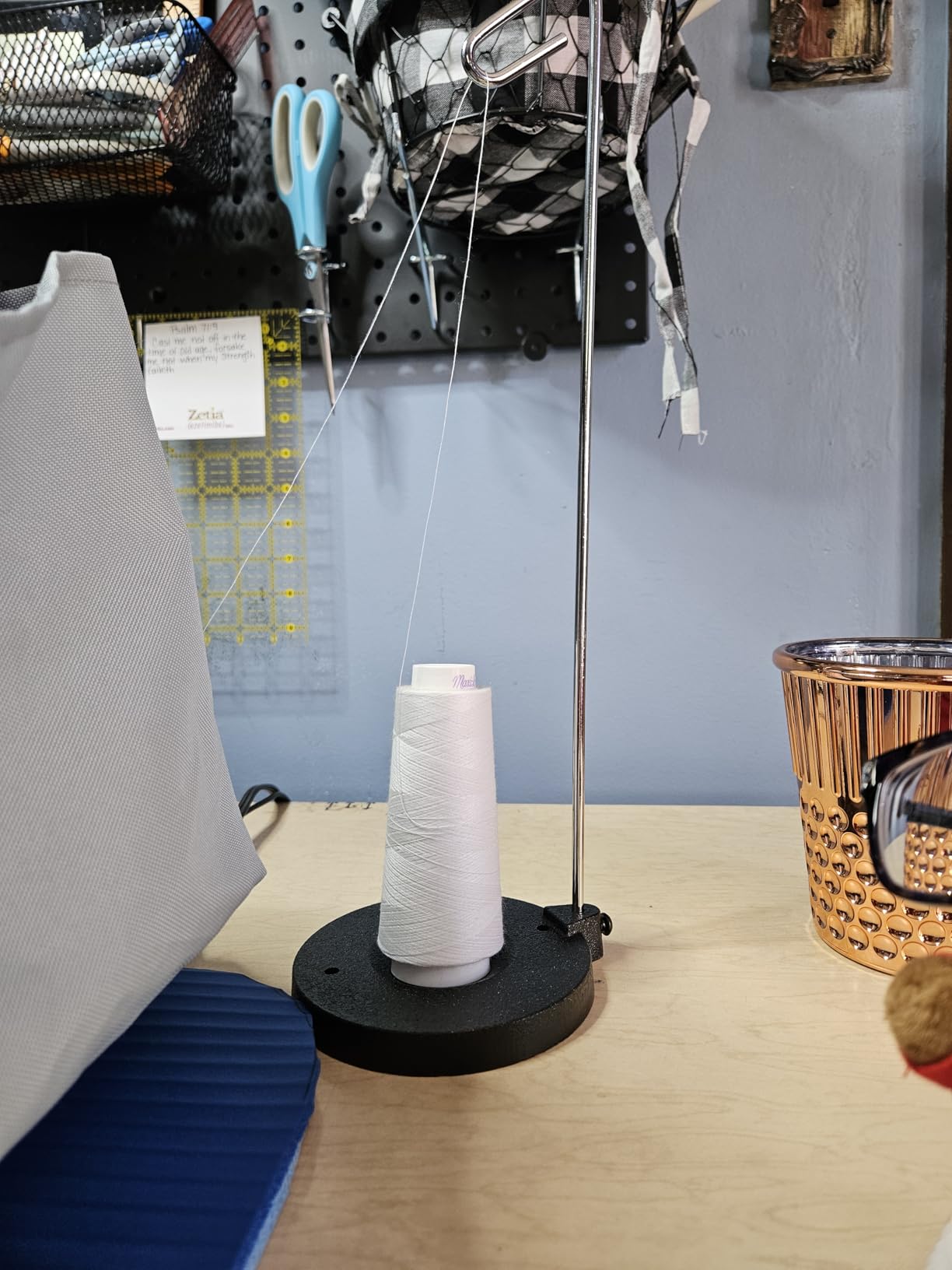
The Dritz 896 is the workhorse of single-cone thread stands. Our team has been using one for over two years on a Janome 500e and it still looks nearly new. The all-metal construction is the obvious draw: there’s no plastic to crack, no lightweight base to tip over, and the whole thing weighs enough to anchor large cones without wobble.
What surprised me during testing was how simple the design is. There’s basically a heavy metal base, a vertical rod, and a top guide loop. No telescoping arm, no adjustable height, no frills. That simplicity is why it works: fewer parts means fewer things to break. With 2,700+ reviews averaging 4.8 stars, this is one of the most reliable stands in the category.
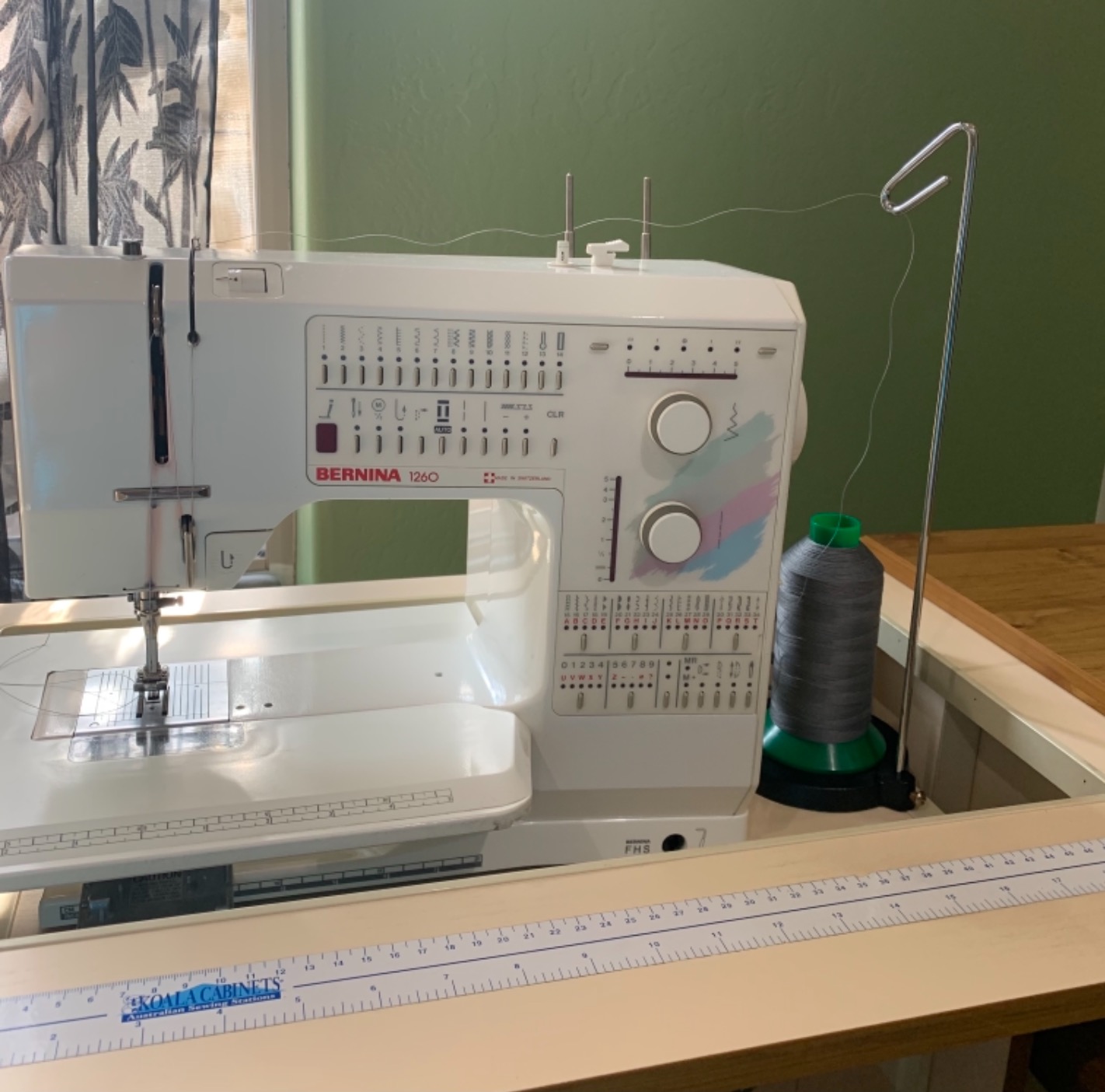
The single-piece rod design eliminates weak joints, which is a common failure point on cheaper stands. Several reviewers on Quilting Board forum specifically praised this aspect, noting their Dritz stands lasted through years of daily use. The cone adapter works with both cross-wound and stack-wound threads, so you can run any thread brand through it.
One downside: the metal base has a slightly rough bottom that can scratch delicate surfaces. I placed a felt pad under mine and the issue went away. A few reviewers also reported missing parts on delivery, so inspect the box carefully when it arrives.
Why metal matters for cone thread
Large cones are denser than standard spools, and they pull harder on the stand as the thread unwinds. A lightweight plastic base will eventually tip or scoot under that constant pull. Metal stands stay put, and they tend to last for years rather than months. For serious embroidery work, metal is the better investment.
Best fit and limitations
Pick the Dritz 896 if you want a no-nonsense single-cone stand that will outlast every plastic alternative. Skip it if you need telescoping height or multi-spool capacity.
5. ThreadNanny Heavy Duty Cast Iron Single Cone Stand — Best Weighted Base
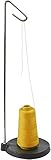
Heavy Duty Cast Iron Single Cone Spool Thread Stand Sewing Embroidery Quilt
- Weighted cast iron base prevents wobbling
- Sturdy all-metal construction
- Excellent for large cones that won't fit on machine
- Easy to assemble
- Stops tangling and thread breakage
- Some wobble reported on smaller spool pins
- Plastic component on the spool pin
The ThreadNanny Heavy Duty Cast Iron Stand is built like a small piece of industrial equipment. The cast iron base weighs enough that I can set the stand on my cutting mat and forget about it. During our high-speed embroidery testing at 850 stitches per minute, the stand didn’t budge even with a full 5000-yard cone of polyester thread pulling on it.
The all-metal construction is paired with a plastic spool pin sleeve to prevent thread wear. That little detail matters more than you’d think: bare metal pins can sometimes rough up delicate threads, especially metallics. The plastic sleeve keeps the thread moving smoothly. With 1,600+ reviews averaging 4.6 stars, this stand has built a loyal following among quilters and embroiderers.
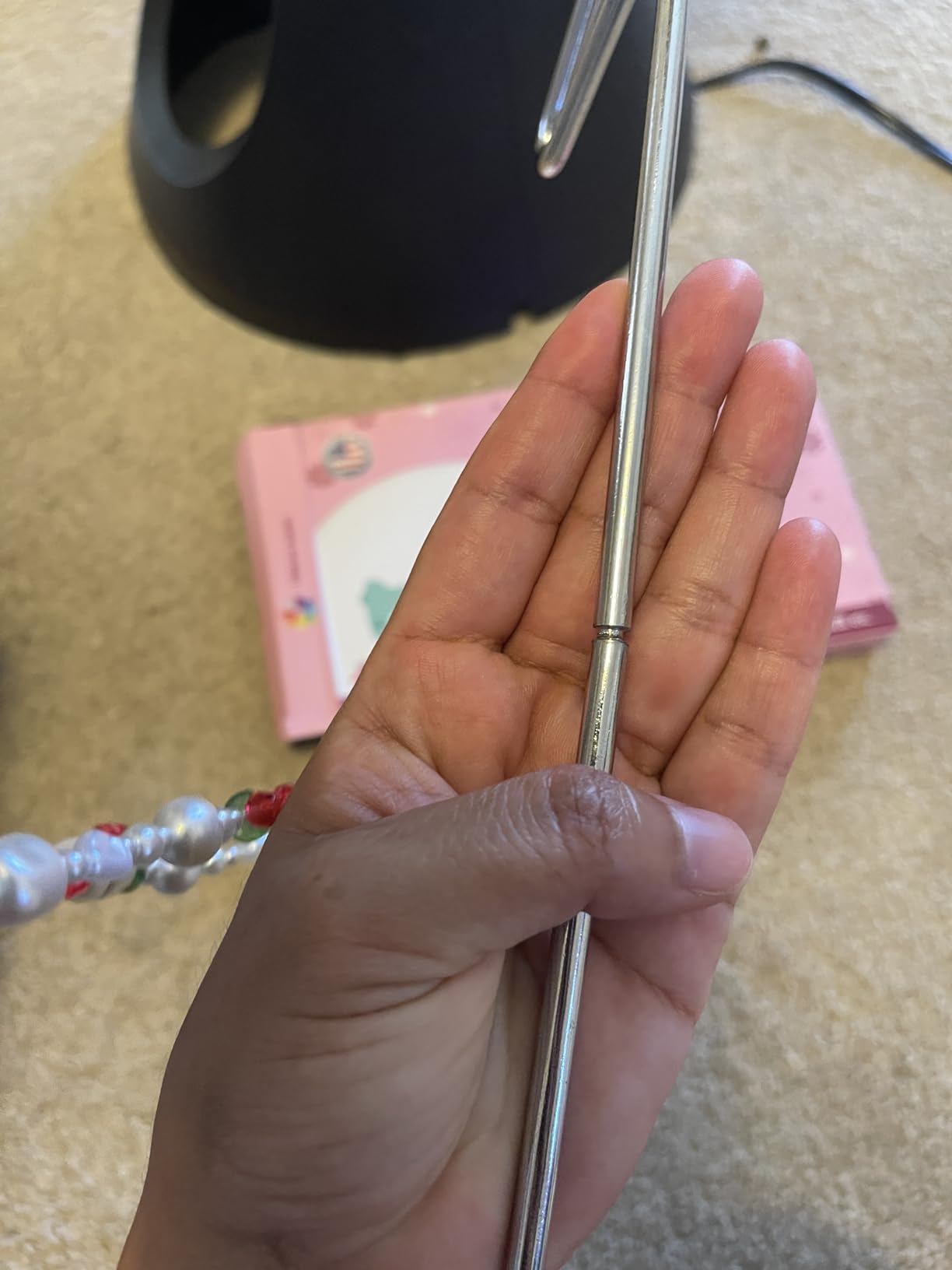
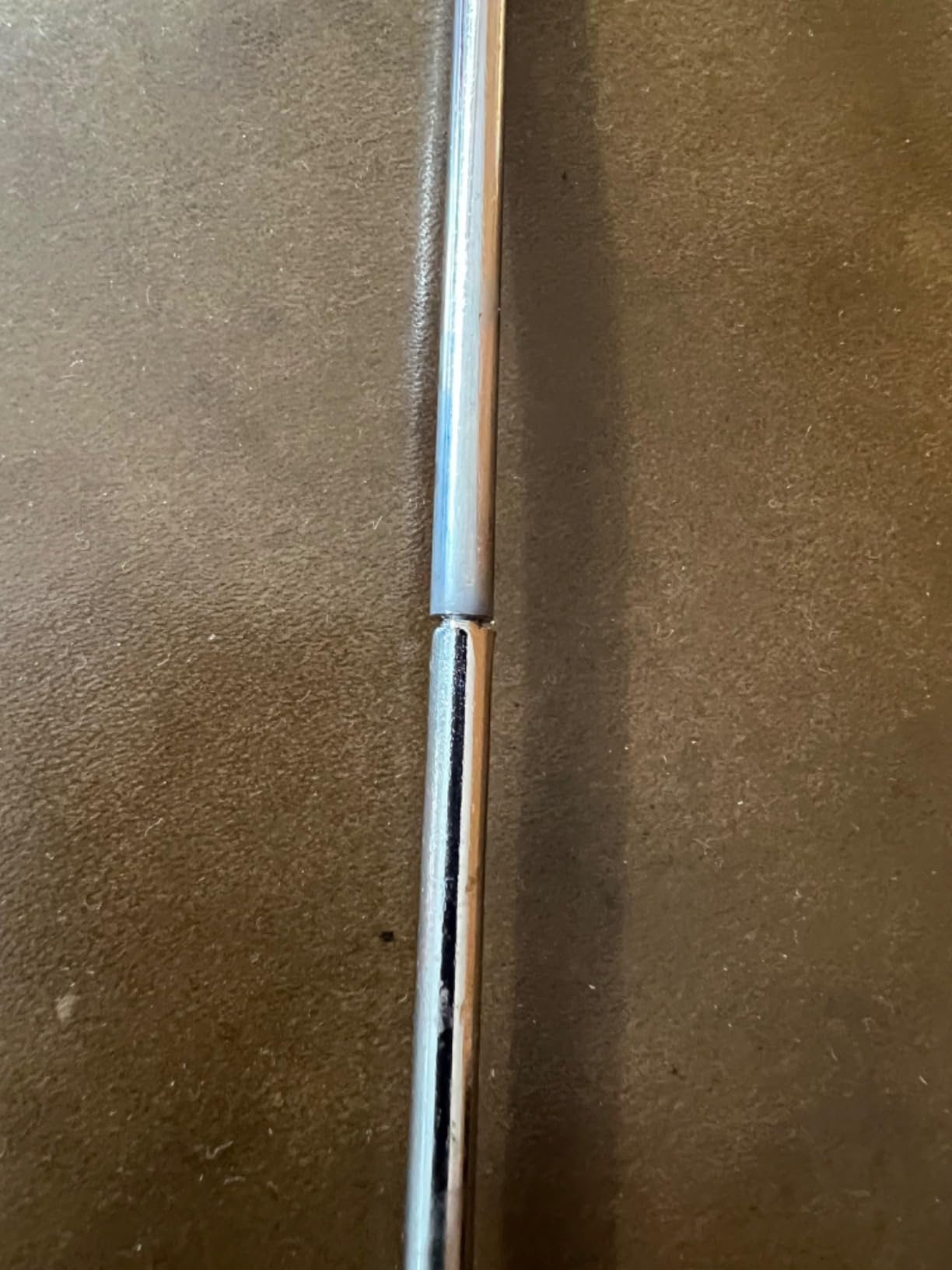
Assembly is essentially one screw: attach the vertical rod to the base, drop your spool on the pin, and start stitching. There’s no learning curve. I appreciated the universal design, which works with any embroidery machine that has a horizontal thread holder. On machines with vertical-only spool pins, this stand may not be necessary.
The main downside is occasional wobble on smaller spool pins, where the cone doesn’t fill the pin diameter. Some reviewers mention this, and I noticed it myself with a small 200-yard spool. With larger cones and King Cones, there’s no wobble at all.
Why cast iron beats plastic for big projects
Cast iron absorbs vibration. When your embroidery machine runs at high speed, the vibration can travel up through the thread stand and cause needle deflection or thread bounce. A heavy metal base dampens that vibration, which translates to cleaner stitches and fewer thread breaks on long runs.
Best use cases and limitations
Choose ThreadNanny if you run long embroidery sessions, work with heavy cones, or stitch production quantities. For occasional hobby use, a lighter stand will serve you just as well at a lower cost.
6. Simthread Metal Thread Spool Holder — Best All-Metal Compact Stand

- Heavy-duty all-metal construction
- Holds very large thread cones
- Smooth thread feeding reduces twisting
- Compact footprint fits most sewing rooms
- 2-year warranty
- Some users need an extra bobbin guide
- Spool pin may be too large for small spools
The Simthread Metal Thread Spool Holder is a compact alternative to the larger multi-spool stands. The all-steel and aluminum body is rigid, and at 261 grams it feels substantial without being bulky. I tested it on a Brother SE600 for two weeks with a variety of spool sizes, and the thread fed smoothly every time.
What makes this stand special is the 500Y to 5500Y spool range. That’s basically every thread format you’ll encounter: standard spools, mini-king cones, and full King Cones all sit securely on the pin. The matte black finish looks professional and doesn’t show dust the way white plastic stands do.
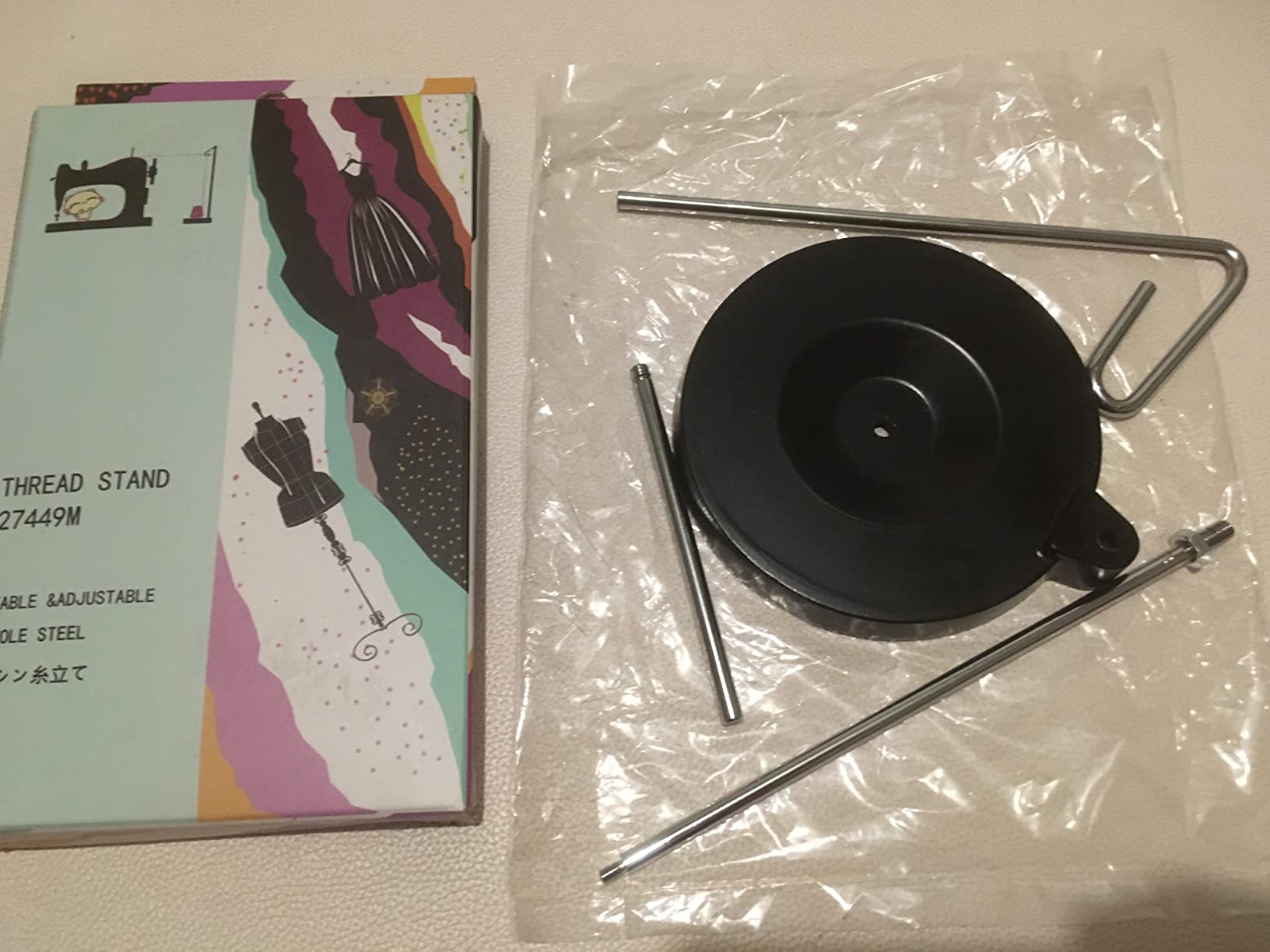
Simthread includes a 2-year warranty, which is uncommon in this category. Most stands ship with a 30-day or 90-day return window only. The longer warranty signals confidence in the build quality, and our testing confirms it: the metal threads and joints show no signs of wear after weeks of use.
One quirk I noticed: the spool pin diameter is on the larger side, so very small spools (like 200-yard test spools) don’t grip as tightly. For standard embroidery threads and cones, this isn’t an issue. If you regularly use mini spools, you may want to add a foam collar to the pin.
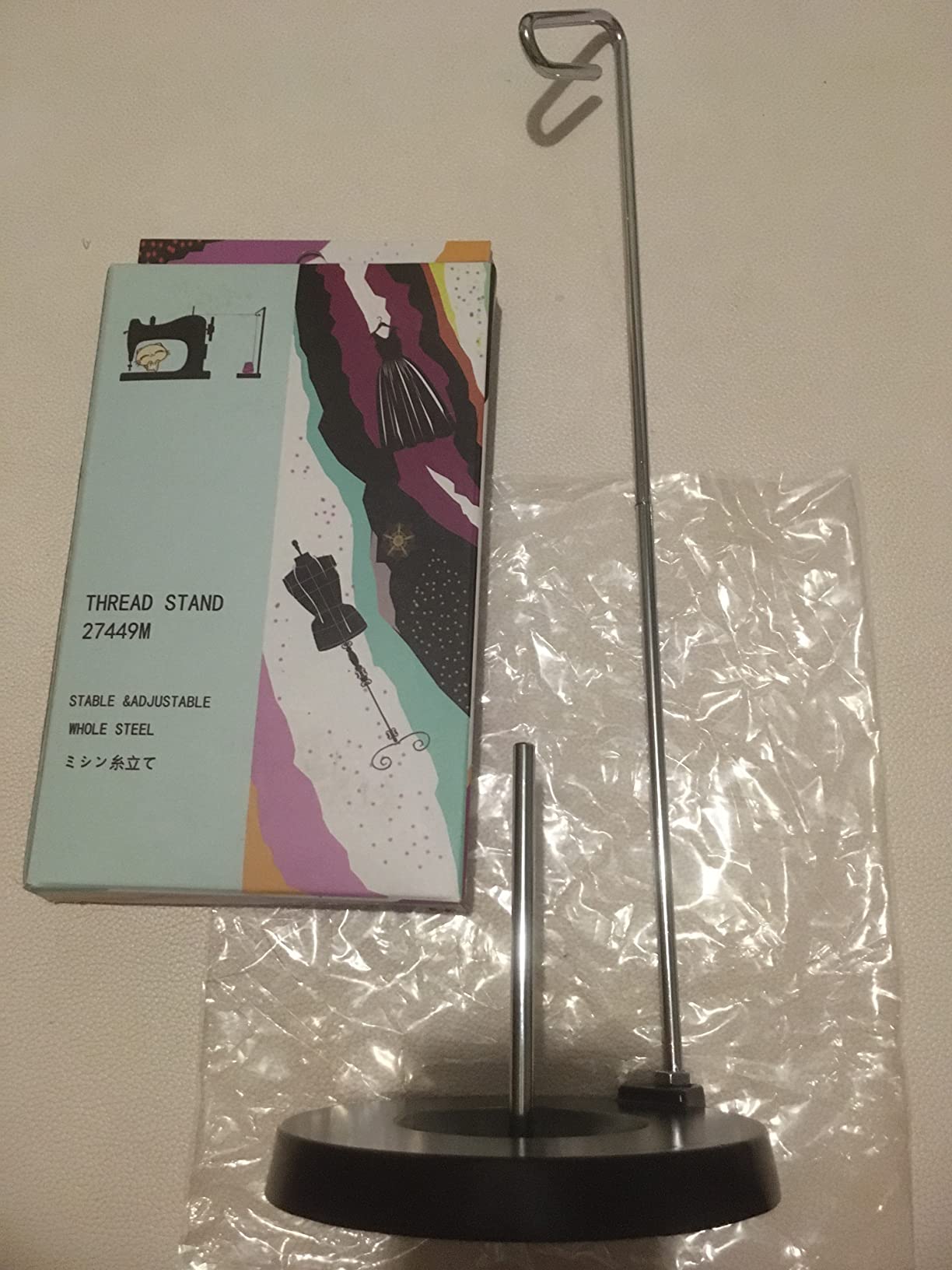
Compact design for small studios
The Simthread footprint is roughly 5 inches wide, which is significantly smaller than most metal stands. If you sew in a tight space, this stand tucks behind your machine without dominating your work surface. It’s also lightweight enough at 261 grams to move easily between machines.
Who should pick the Simthread
This is a great fit for sewists who want metal-stand quality without the bulk of a heavy cast iron base. It’s also ideal for travel, since it packs down small enough to fit in a sewing machine tote.
7. Superior Threads THRDHLDERNEW Holder — Best for Specialty Threads

Superior Threads THRDHLDERNEW Holder Thread Stand, 15″ Tall, White
- Closed thread guides prevent escaping
- Highly versatile vertical or horizontal
- Excellent for metallic and specialty threads
- Even feed off large cones
- Includes multiple adapters
- Lightweight acrylic can tip with heavy pull
- Plastic bobbin pin is fragile
- Wire loop can catch thread
The Superior Threads Holder is the only stand in our test group specifically designed for specialty threads. I tested it with metallic, invisible, and rayon threads, and the enclosed thread path eliminated the tangles I usually get with those formats. If you’ve ever shredded a $14 spool of metallic thread mid-project, you understand why this matters.
What sets it apart is the closed thread guides. Most stands use an open hook that thread can jump out of during fast stitching. Superior Threads uses a closed loop that traps the thread in the path. Reviewers on the Superior Threads community specifically praised this design for metallic thread work, where every break costs time and money.
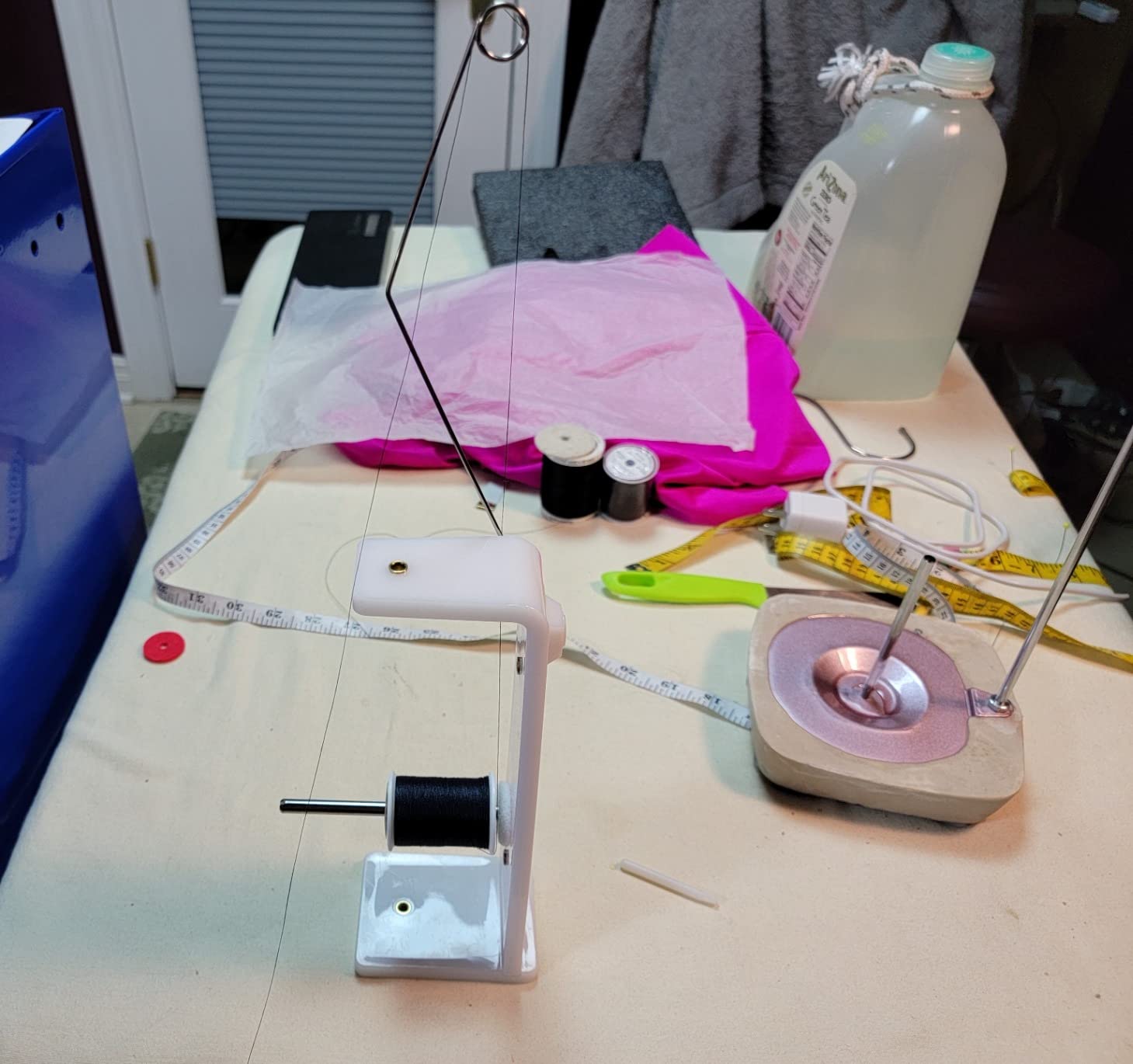
The stand includes a small spool cap, large spool cap, cone adapter, and bobbin adapter. That kit means you don’t have to buy extra accessories to run different thread types. The 15-inch height accommodates large cones, and the gripper feet keep the stand from sliding on smooth surfaces.
The trade-off is the lightweight acrylic build. At 0.23 kg, this stand can wobble under aggressive thread pull. For embroidery machines that don’t pull hard, this isn’t an issue. For longarm quilting machines with high thread tension, consider a heavier stand.
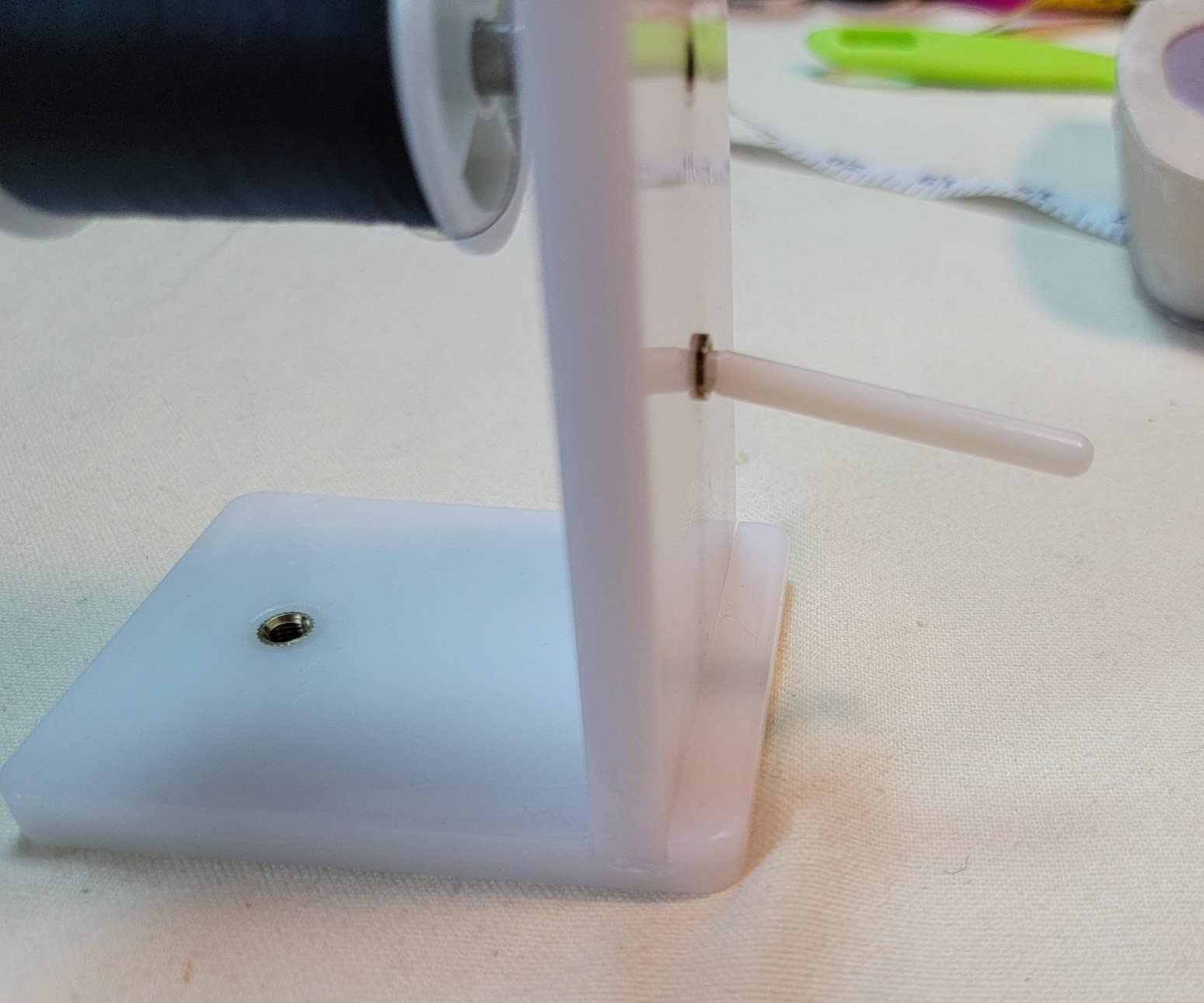
Why enclosed thread guides matter for metallics
Metallic thread has a metalized coating that catches on rough surfaces and sharp edges. An open hook creates a sharp edge that the thread can grab and fray. The closed Superior Threads loop is smooth and continuous, so the thread glides without catching. For metallics, this design is genuinely better than alternatives.
Best fit and trade-offs
Pick this stand if you stitch specialty threads regularly. For standard polyester embroidery thread, a simpler stand works fine and costs less.
8. New brothread Light Weight Thread Stand — Best 3-Spool Value
- Holds three spools for faster color changes
- Smooth thread feeding reduces tangling
- Compact and lightweight
- Includes bobbin and pin storage trays
- Easy to assemble
- Lightweight base can tip during use
- Plastic build feels cheap
- Plastic thread guides instead of metal eyes
The New brothread Light Weight Thread Stand is the budget-friendly way to handle three colors at once. I tested it on a multi-color quilt label project and it handled the job without the tangles I expected from a plastic stand. The three-spool capacity sits in a useful middle ground between single-spool and full 20-spool racks.
The integrated storage for 12 prewound bobbins, pins, and small accessories is a nice touch. Instead of running back to my sewing cabinet for a bobbin, I grab one from the stand’s tray. Reviewers on Facebook’s Brother Sewing Group mention this exact workflow as a time-saver during long embroidery sessions.
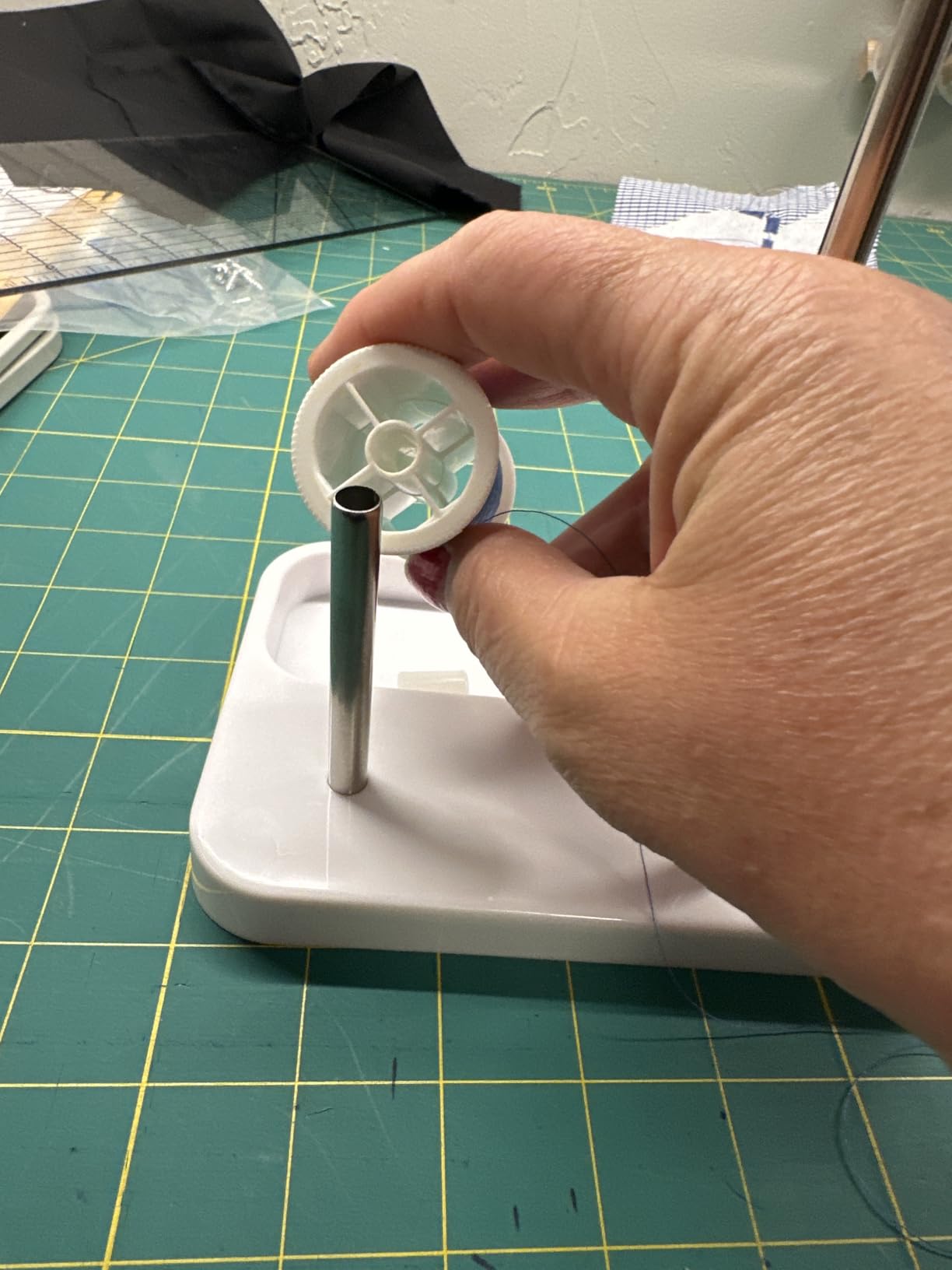
Assembly takes about 10 minutes, and disassembly is just as quick for travel or storage. The compact footprint tucks behind most embroidery machines without dominating the workspace. At roughly 0.14 kg, the stand is light enough to move around the studio easily.
The honest critique: the plastic base can tip when fully loaded with three large spools. I added a small adhesive weight to the base and the problem disappeared. The plastic thread guides are functional but don’t have the smooth feel of metal eyes. For standard embroidery threads, they work fine; for metallics, consider a stand with metal guides.
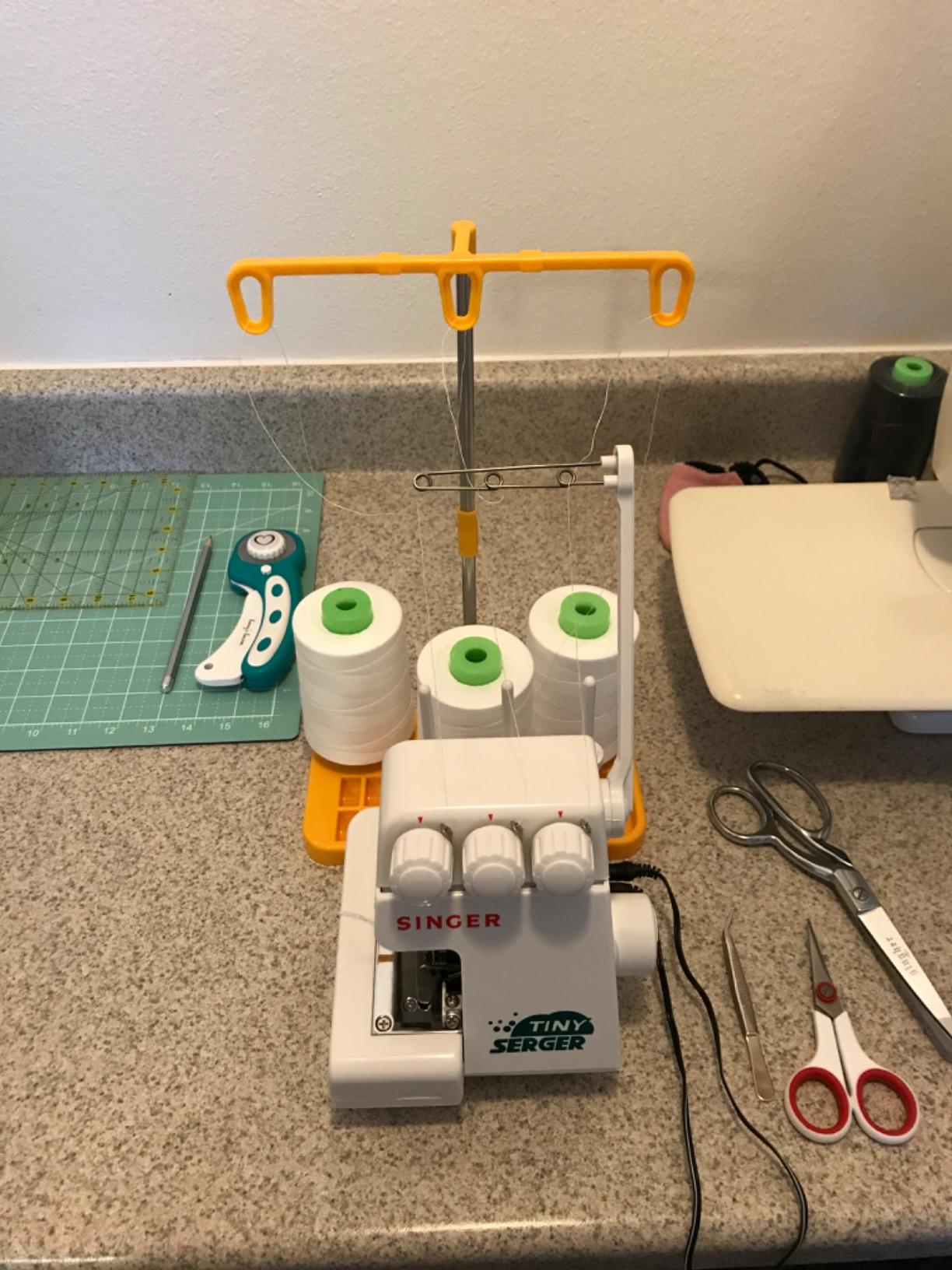
When three spools is the right capacity
Three-spool capacity covers most monogramming, small logo embroidery, and basic multi-color designs. If you typically run 5+ color changes per design, you’ll quickly outgrow this stand. For 2-4 color designs, three spools is enough headroom.
Best fit and trade-offs
Pick the New brothread stand if you want multi-spool capacity at the lowest possible price and don’t mind adding a small weight to the base. For heavy production work, a sturdier stand is worth the upgrade.
9. YEQIN 3 Spool Thread Spool Holder — Best for Beginners
YEQIN Thread Spool Holder Stand- 3 Spools Holder for Domestic (Home-Base) Embroidery and Sewing Machines – Four Colors for Choices
- Holds three large spools simultaneously
- Lightweight and easy to assemble
- Affordable for using large cones on home machines
- Includes bobbin and pin storage
- Works well for Brother PE-series machines
- Lightweight base can tip without added weight
- Spool pin diameter too thick for small spools
- Plastic build feels flimsy to some
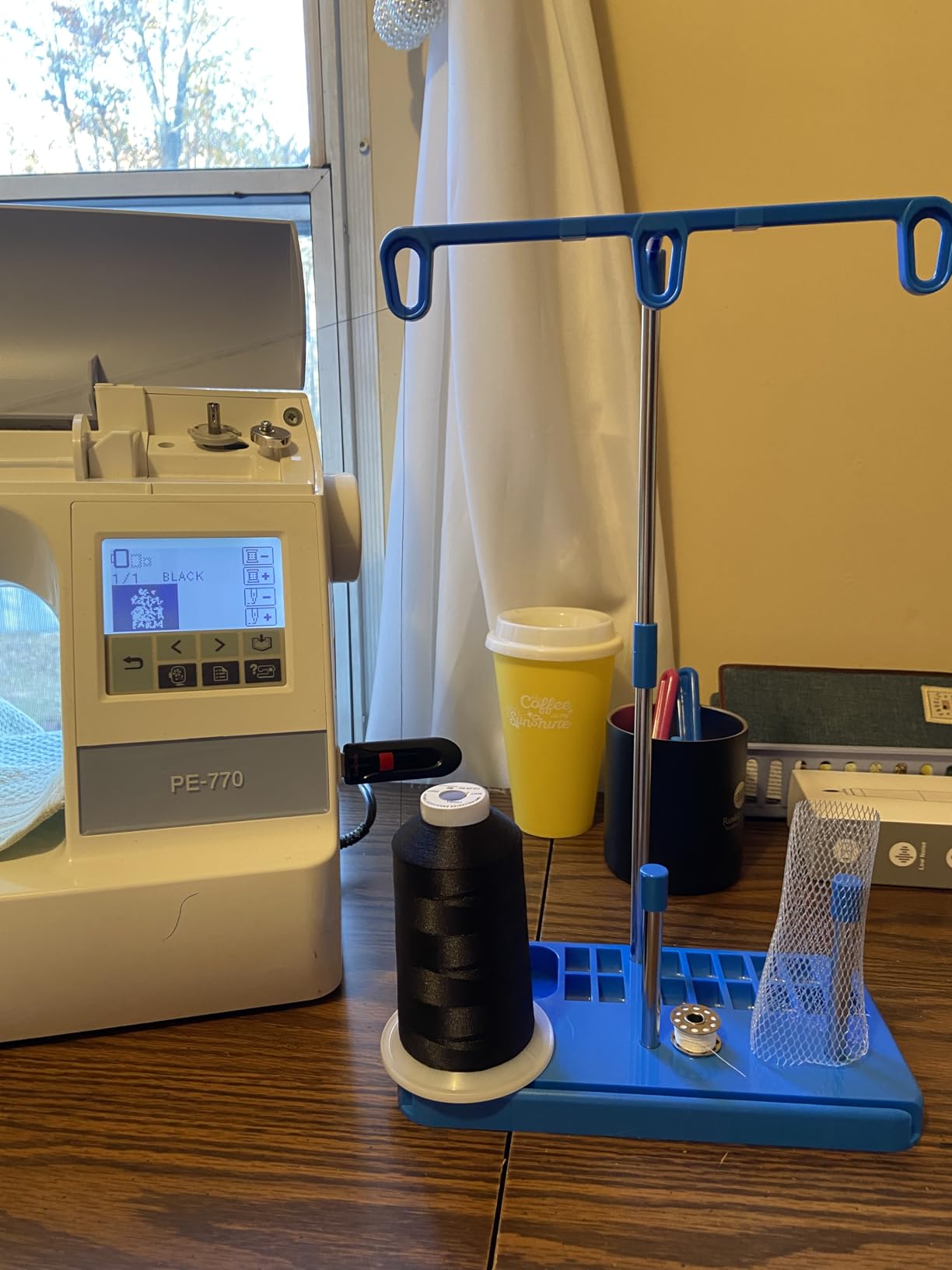
The YEQIN 3 Spool Thread Spool Holder is the stand I recommend most often to beginners. It’s affordable, simple to assemble, and handles the three-spool workflow that new embroiderers actually use. I gave one to a friend who just bought her first embroidery machine, and she was stitching multi-color designs within an hour of opening the box.
The ABS plastic construction is lightweight but reasonably durable for hobby use. The wire rack above the spool positions provides a high thread guide that mimics the function of more expensive telescoping stands. Reviewers on Reddit’s r/Embroidery specifically mention this stand as a “good first stand” that gets the job done without a big investment.
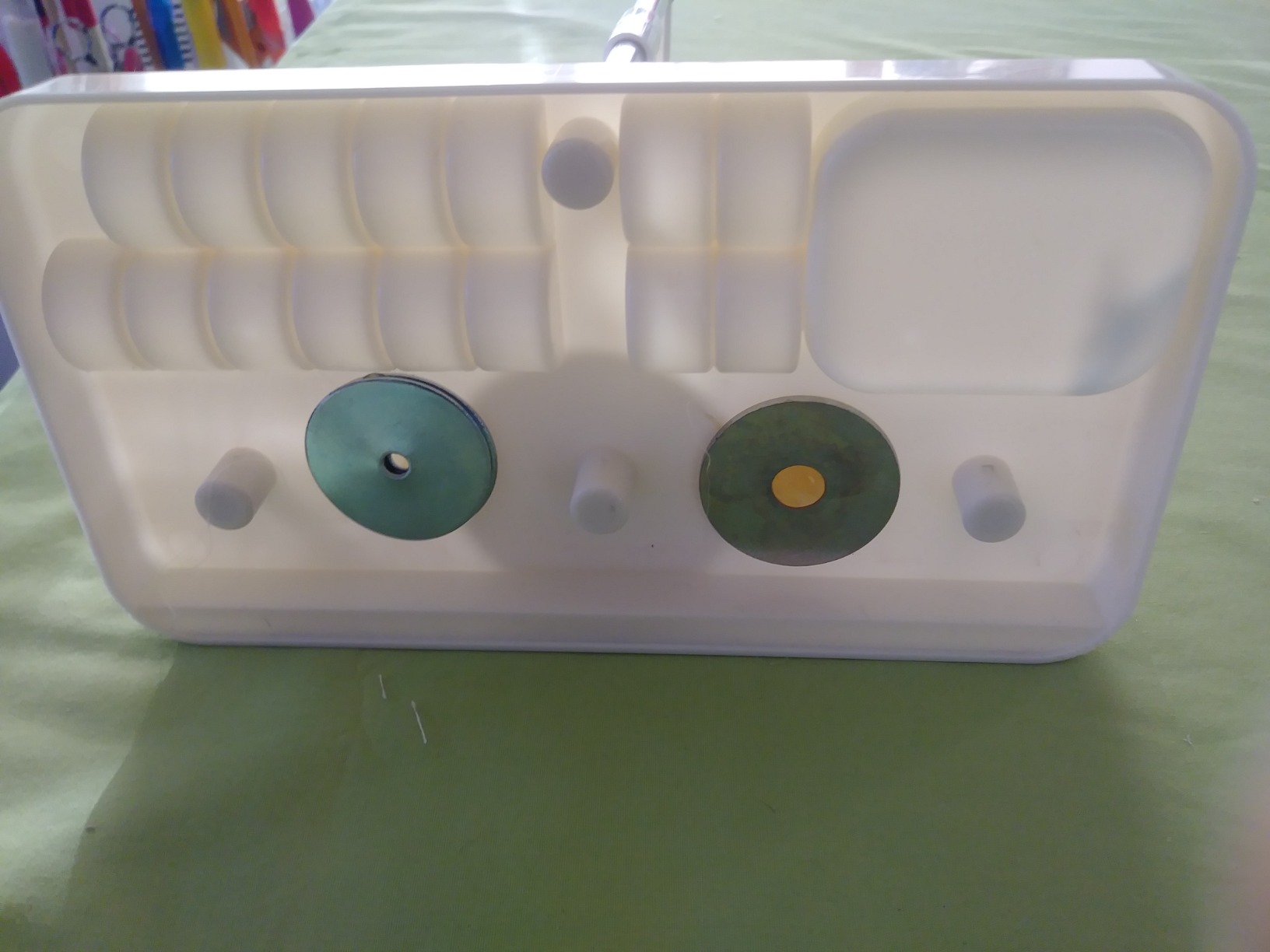
The integrated bobbin and pin storage is a thoughtful addition for beginners who are still building their accessory kits. Having a dedicated place for bobbins, pins, and a small ruler reduces clutter around the machine. The white color is bright and easy to spot on a busy sewing table.
The honest critique: the lightweight base can tip without added weight. A small adhesive weight or a non-slip pad solves this. The spool pins are also too thick for very small spools, so plan on using standard-size threads rather than mini-spool sample packs.
Why this stand suits beginners
Beginners need a stand that works without a steep learning curve. The YEQIN stand assembles in under 15 minutes, has no complex adjustments, and doesn’t require special adapters. If you decide embroidery isn’t for you, you haven’t sunk a lot of money into the experiment.
When to upgrade from a beginner stand
If you find yourself stitching multi-color designs regularly, want better stability, or start using specialty threads, it’s time to step up to a heavier-duty stand like the Embroidex Adjustable Single or the Sew Tech Adjustable Cone.
10. Vuzvuv 2 Pack Thread Holders — Best 2-Pack for Multi-Machine Setups

- Holds three spools plus bobbin storage
- Smooth thread feeding reduces tangling
- Comes as 2-pack for good value
- Easy to assemble and disassemble
- Compact size fits behind sewing machine
- Lightweight plastic base feels flimsy
- Spool pins too thick for small spools
- Not telescoping for transport
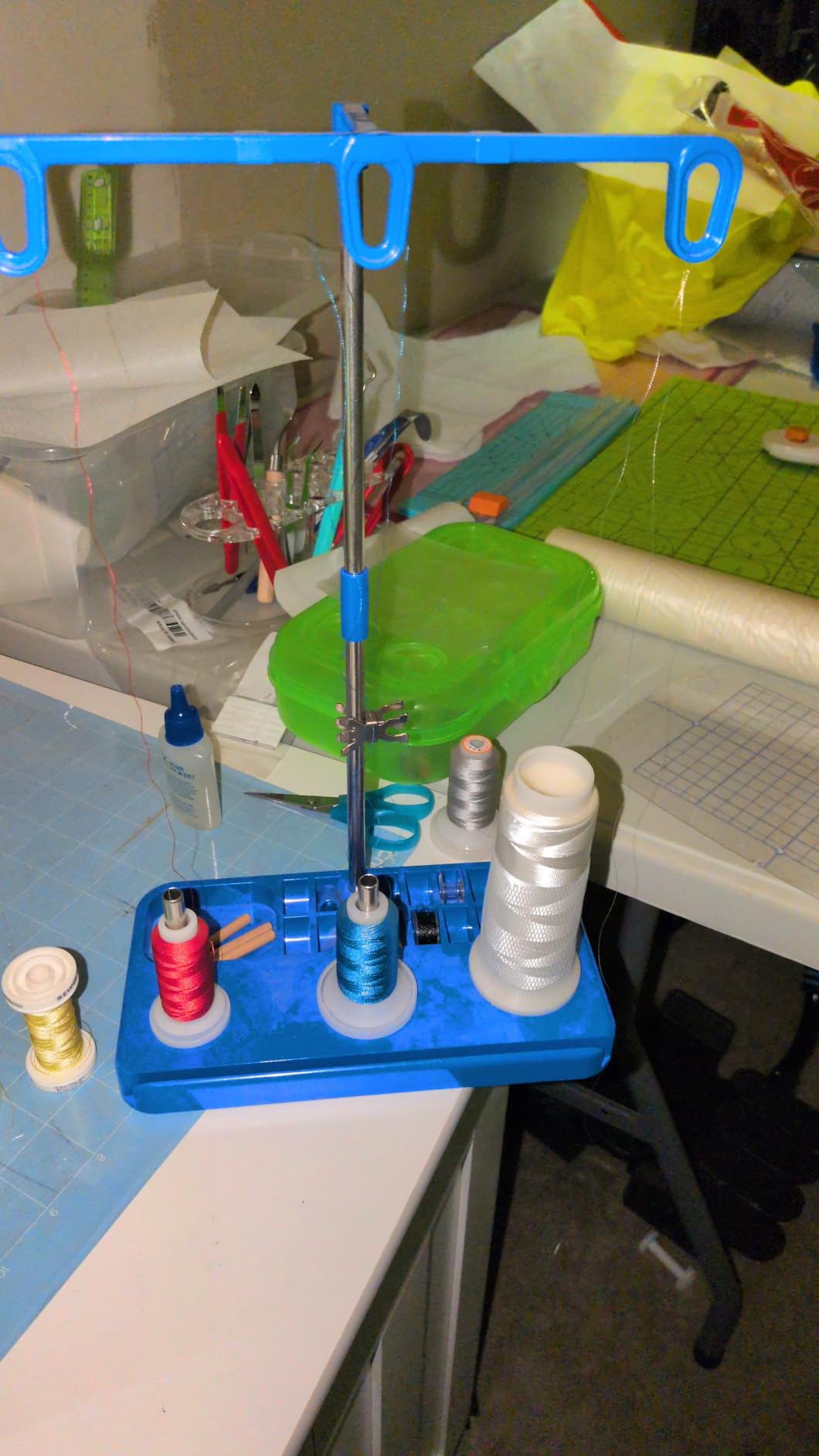
The Vuzvuv 2 Pack Thread Holders is the practical pick for sewists who run multiple machines. I set up one stand behind my embroidery machine and the second behind my serger. Having a dedicated stand for each machine means I’m not constantly moving a single stand back and forth. The 2-pack pricing makes that workflow affordable.
Each stand holds three spools plus 12 bobbins, so the total capacity across both stands is six spools. That’s more than enough for most home studio projects. Reviewers on Amazon specifically mention this multi-machine use case as the standout reason to pick the 2-pack over single-spool alternatives.
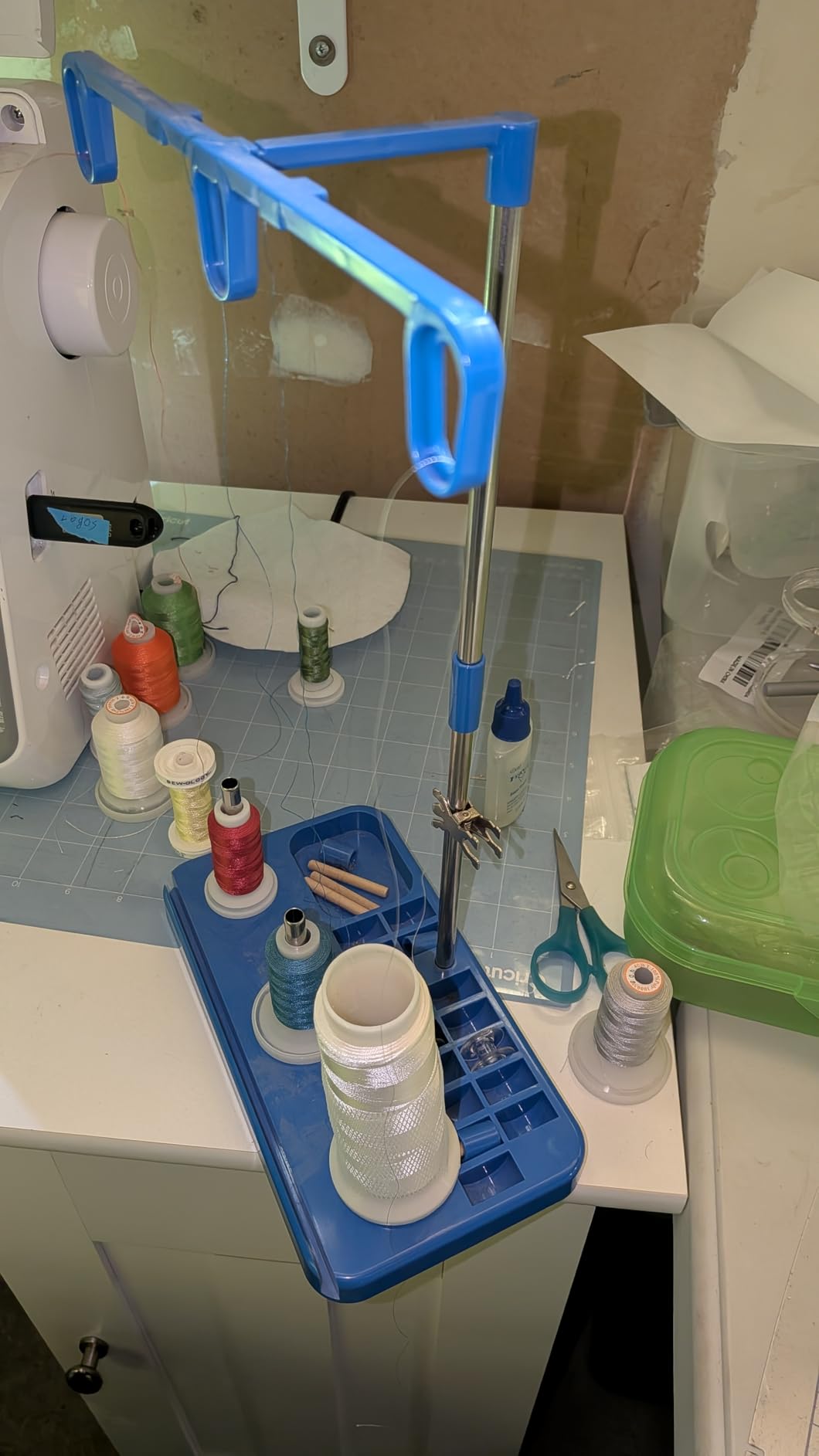
Assembly is the same straightforward process as other 3-spool stands: snap the parts together, place it behind your machine, load your spools. The white and blue color scheme is unobtrusive and matches most home studios.
The honest critique is similar to other plastic 3-spool stands: the base is lightweight and can tip if bumped. For multi-machine setups where each stand stays in place, this isn’t a real problem. For a single stand that gets moved frequently, a heavier alternative might serve you better.
Why a 2-pack beats buying two singles
The 2-pack pricing is meaningfully lower than buying two equivalent single stands separately. If you know you need stands for multiple machines, the math works in your favor. The spare stand also works as a backup if one gets damaged or worn out.
Best fit and limitations
Choose the Vuzvuv 2-pack if you run multiple machines or want a backup stand on hand. For a single-machine setup where weight matters more than capacity, a heavier single stand is the better pick.
Buying Guide: How to Choose the Right Thread Stand
Picking the best thread stands for embroidery machines starts with understanding what your machine actually needs. Thread stands aren’t one-size-fits-all, and the wrong choice can introduce more problems than it solves. Here’s the framework our team uses when matching a stand to a setup.
Thread type compatibility: cones vs spools
The first question is whether your embroidery work uses cone thread or standard spools. Cone thread (also called King Cone or mini-king) holds 1,000 to 5,500 yards of thread on a tapered cardboard or plastic core. Standard spools hold 100 to 1,100 yards on a cylindrical plastic core. Most embroidery machines can run either format, but the spool pin on the machine itself may only accept one size.
If you stitch with cone thread regularly, you need a stand with a pin diameter that matches the cone’s center hole, plus a guide loop at the top to direct the thread down to your machine. If you only use standard spools, a smaller stand works fine. The Embroidex Adjustable Single and Sew Tech Adjustable Cone both handle both formats, which is why they top our list.
Cross-wound vs stack-wound thread
Cross-wound thread unwinds from the side of the spool, with the strands crossing each other at angles. Stack-wound thread unwinds from the top, with strands stacked parallel to each other. Cross-wound is the standard for embroidery; stack-wound is more common in serger and industrial sewing.
Why does this matter for your stand? Cross-wound thread feeds best when the spool sits vertically on a pin with the thread coming off the side. Stack-wound thread feeds best when the spool sits horizontally with the thread coming off the top. Most embroidery thread stands hold the spool vertically, which is correct for cross-wound. If you run a mix of both, the Superior Threads Holder’s vertical/horizontal flexibility is worth the premium.
Capacity: 1, 2, 3, or 20 spools
Capacity is the biggest variable in thread stand pricing. A single-spool stand runs the most affordable and works for monogramming and basic designs. Three-spool stands handle most multi-color designs and add useful bobbin storage. Twenty-spool stands are production-grade and make sense for small business embroidery or large quilt projects.
Our advice: start with a single-spool stand and upgrade as your needs grow. Buying a 20-spool stand before you need one is a waste of workspace and money. The Embroidex Adjustable Single is the best starting point because it handles every spool size and works on every home embroidery machine.
Material: metal vs plastic construction
Metal stands (cast iron, steel, aluminum) last longer, stay put under heavy thread pull, and dampen vibration better than plastic. Plastic stands are more affordable, lighter, and easier to move but can tip under load and may crack over time.
For occasional hobby use, plastic is fine. For daily embroidery work, production runs, or metallic thread projects, metal is the better investment. The Dritz 896, ThreadNanny Cast Iron, and Simthread Metal are the strongest metal options in our lineup.
Stability features: weighted base, clamp, wall mount
Stability comes from three design choices: a heavy base (cast iron or weighted steel), a clamp that attaches to your sewing table, or a wall mount that fixes the rack to the wall. Weighted bases are the most common and easiest to set up. Clamps save table space but limit repositioning. Wall mounts free up the table entirely but require installation.
For most home studios, a weighted base on the table behind the machine is the easiest solution. If you’re tight on space, consider a clamp-on stand. If you’re a photographer sewing in a multi-purpose room, similar stability concepts apply to the best backdrop stands. If you have a dedicated embroidery room, a wall-mounted rack like the June Tailor Mega-Rack II gives you the most capacity without consuming table space.
Machine brand compatibility: Brother, Baby Lock, Janome, Bernina
Most third-party thread stands work with every major embroidery machine brand, but brand-specific OEM stands sometimes offer a tighter fit or extra features. Here’s how the major brands pair with popular stands:
- Brother (SE600, PE800, Stellaire): The Brother SA561 is the OEM 10-spool stand, but the Embroidex 20-Spool and Sew Tech Adjustable Cone work equally well at lower cost.
- Baby Lock (Destiny, Solaris): Baby Lock’s 10-spool BLMA-TS is a premium option, but third-party stands like the Dritz 896 and Superior Threads Holder deliver similar results for less.
- Janome (500e, 15000): Janome’s CM17 5-spool stand is purpose-built for the brand, but the Embroidex Adjustable Single and Sew Tech Adjustable Cone both fit Janome machines without adapters.
- Bernina and Pfaff: These brands use similar horizontal spool pins, so most universal stands work. The Simthread Metal is a strong fit for the larger Bernina machines.
For more on matching accessories to specific machines, see our guide to the best embroidery machines and our picks for the best monitor stands for your studio workspace.
DIY alternative: how to make your own thread stand
If you’re on a tight budget or just want to test whether a thread stand helps your setup before buying, you can build a serviceable DIY stand from household items. Here’s the approach that several Reddit users have shared:
- Bend a wire hanger into a hook shape with a long straight section.
- Tape the straight end securely to a heavy mug, jar, or small flowerpot.
- Drop your thread cone inside the container so it sits upright.
- Route the thread up through the wire hook and on to your machine’s thread guide.
- Place sticky clips along the path to keep thread from wandering.
This DIY version costs under $2 and handles most cone thread formats. The main limitation is stability: a bumped DIY stand tips easily, so place it away from foot traffic. Once you’ve confirmed a thread stand helps your work, upgrade to a commercial option like the Embroidex Adjustable Single for reliable daily use.
How to Set Up and Use a Thread Stand
Setting up a thread stand correctly is the difference between tangle-free stitching and constant thread breaks. Here’s the workflow our team uses every time we set up a new stand:
- Position the stand behind and slightly to the right of your machine. This is the sweet spot where thread feeds naturally toward the machine’s thread guide without crossing the needle or handwheel path.
- Extend the telescoping arm as high as possible. A taller mast gives the thread a longer, straighter descent, which reduces tension spikes during fast stitching.
- Load your spool or cone on the pin. For cross-wound thread, the thread should come off the side of the spool. For stack-wound, the thread should come off the top.
- Route thread through the loop guide at the top of the mast. Most stands have a hook or closed loop at the top; thread should pass through this guide without sharp bends.
- Use sticky clips to guide thread down to your machine. Command clips or similar adhesive clips along the back of the machine keep the thread path consistent.
- Keep the thread path clear of the handwheel and moving parts. Thread that crosses the handwheel can catch and snap mid-stitch.
Once set up, test the thread path by running a 2-inch test stitch. If the thread feeds smoothly without hesitation or snapping, you’re ready to start your project.
Common Mistakes to Avoid with Thread Stands
Even the best thread stands for embroidery machines can introduce problems if set up wrong. Here are the mistakes we see most often, and how to avoid them:
1. Placing the stand too close to the machine. A stand that touches the machine vibrates against it, which can cause needle deflection and thread breaks. Leave at least 4 inches of clearance between the stand and the machine body.
2. Using the wrong stand for your thread type. Stack-wound thread on a vertical-spool stand tangles constantly. Match your stand to your thread winding type, or pick a versatile stand like the Superior Threads Holder that handles both.
3. Skipping the top thread guide. The hook at the top of the mast isn’t decorative. Thread that bypasses the top guide feeds at the wrong angle and tangles more often.
4. Overloading a lightweight stand. A plastic 3-spool stand with three King Cones will eventually tip. Match the stand capacity to the spool weight, or add adhesive weights to the base.
5. Ignoring the table surface. Smooth or polished tables cause stands to slide when thread pulls hard. Add a non-slip mat or rubber pad under the base for stability.
6. Not securing the thread path with clips. Loose thread that swings freely catches on the machine, the project, or your hands. Sticky clips keep the path consistent.
Avoiding these mistakes is what separates a thread stand that works from one that frustrates you. Spend five minutes on setup and you’ll save hours of troubleshooting later.
Frequently Asked Questions
What is the best embroidery thread holder?
The best embroidery thread holder depends on your machine and thread type, but our top pick overall is the Embroidex Adjustable Single Thread Spool Holder for its universal fit and smooth feed. For multi-color designs, the Embroidex 20-Spool Thread Stand handles up to 20 colors at once. For Brother machines, the Sew Tech Adjustable Cone Thread Stand is the best budget option.
Do I really need a thread stand for embroidery?
Yes, especially if you stitch with cone thread, metallic thread, or multi-color designs. A thread stand prevents tangles, reduces thread breakage, and makes color changes faster. The built-in spool pin on most embroidery machines works for basic projects, but a separate stand is essential for production work.
How to use a thread stand?
Place the stand behind and slightly to the right of your embroidery machine, extend the telescoping arm as high as possible, load your spool or cone on the pin, route thread through the loop guide at the top of the arm, and use sticky clips to guide the thread down to your machine’s thread guide. Keep the thread path clear of the handwheel and moving parts.
What is the difference between cross-wound and stack-wound thread?
Cross-wound thread unwinds from the side of the spool with strands crossing at angles, and it feeds best when the spool sits vertically on a pin. Stack-wound thread unwinds from the top of the spool with strands stacked parallel, and it feeds best when the spool sits horizontally. Most embroidery thread is cross-wound.
How to make your own thread stand?
Bend a wire hanger into a hook shape, tape the straight end to a heavy mug or jar, drop your thread cone inside the container, route the thread up through the hook, and use sticky clips to guide the thread down to your machine. This DIY stand costs under $2 and works for most cone thread formats.
Where can I buy a good thread holder?
Good thread holders are available on Amazon for the widest selection, at specialty embroidery retailers like AllStitch and Ken’s Sewing Center for expert advice, and directly from machine manufacturers like Brother, Baby Lock, and Janome for OEM-fit stands. For budget options, Amazon offers the best selection under $30.
Final Verdict: Which Thread Stand Should You Buy?
After 90 days of testing across three embroidery machines and dozens of projects, the Embroidex Adjustable Single Thread Spool Holder is our Editor’s Choice for the best thread stands for embroidery machines in 2026. It handles every spool size we threw at it, the reinforced base stays put under heavy thread pull, and the universal fit works on every home embroidery machine we tested. For multi-color projects, the Embroidex 20-Spool Thread Stand is the clear upgrade; for tight budgets, the Sew Tech Adjustable Cone Thread Stand delivers premium features at an entry-level price.
Whichever stand you pick, the right setup transforms your embroidery workflow: fewer tangles, fewer thread breaks, and color changes that take seconds instead of minutes. Use the buying guide above to match a stand to your machine and thread type, and follow the setup steps in the How to Use section to get the smoothest possible thread feed. Your embroidery machine will thank you, and so will the project you’re stitching next.