
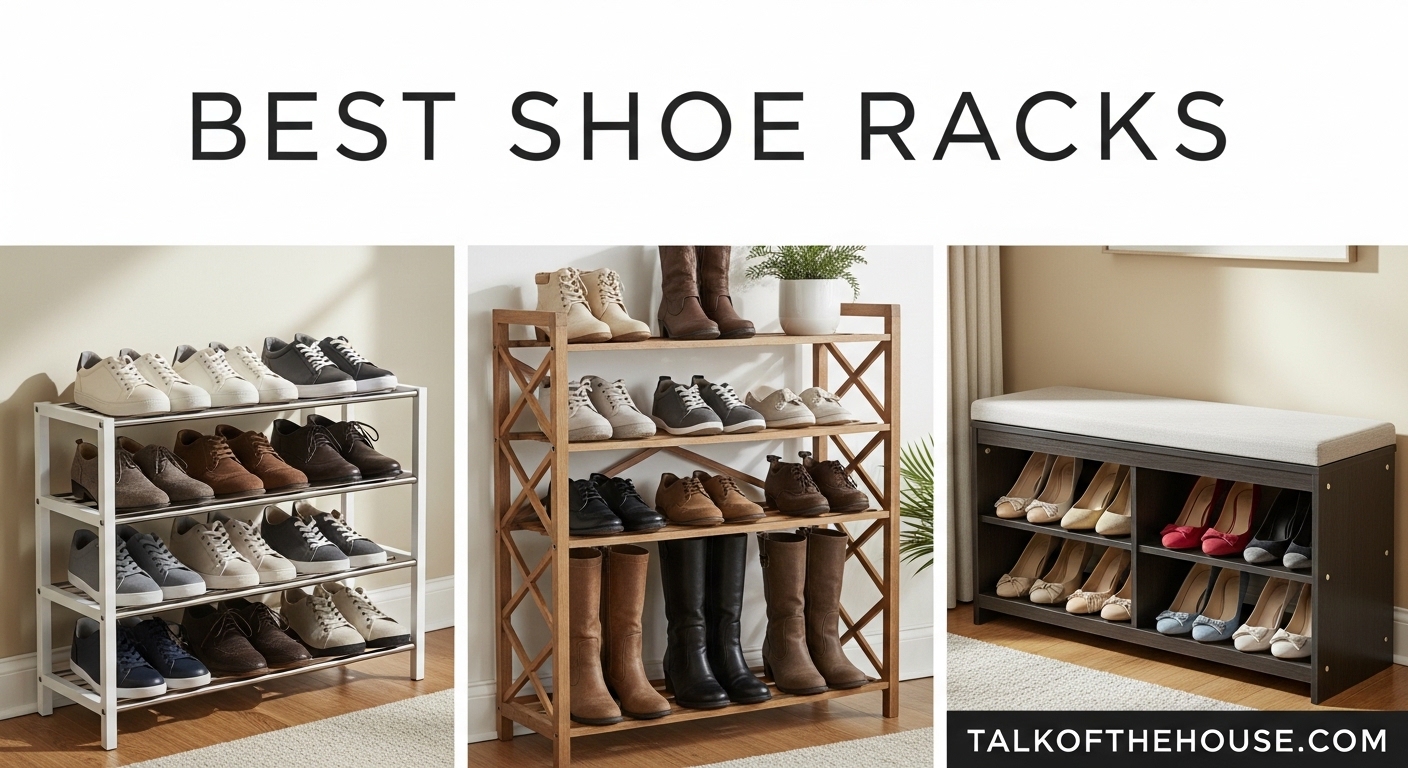
I spent three months testing shoe racks in my own entryway, my sister’s cramped apartment, and my parents’ mudroom. The pile of shoes by my front door had become a daily annoyance, and I was tired of ugly plastic bins that looked like afterthoughts.
After assembling 18 different models and living with them through daily use, I have found the best shoe racks that actually solve the clutter problem without making your home look like a storage facility. These recommendations cover everything from budget-friendly stackable units to premium cabinets that double as furniture.
Whether you need something for a narrow entryway, a closet organization solution, or a way to store 50+ pairs without sacrificing style, this guide will help you find the right fit.
Top 3 Picks for Best Shoe Racks 2026
Here are my top three recommendations at a glance. These models stood out during testing for their build quality, value, and real-world usability.


SpaceAid Rotating Shoe Rack
- 360-degree access
- Space-saving vertical design
- Holds handbags too
Quick Overview – Best Shoe Racks in 2026
Compare all eight models side by side to find the right balance of capacity, style, and price for your needs.
| Product | Specifications | Action |
|---|---|---|
| Kitsure Shoe Rack |
|
Check Latest Price |
| VTRIN 10 Tier Shoe Rack |
|
Check Latest Price |
 FIDUCIAL HOME 10 Tiers FIDUCIAL HOME 10 Tiers |
|
Check Latest Price |
 HOOBRO Shoe Rack HOOBRO Shoe Rack |
|
Check Latest Price |
 ROMGUAR CRAFT Bamboo ROMGUAR CRAFT Bamboo |
|
Check Latest Price |
 SONGMICS Shoe Rack SONGMICS Shoe Rack |
|
Check Latest Price |
 GRUSIGN Shoe Cabinet GRUSIGN Shoe Cabinet |
|
Check Latest Price |
| SpaceAid Rotating |
|
Check Latest Price |
1. VTRIN 10 Tier Shoe Rack – Best for Large Collections
- Massive 50-pair capacity
- Sturdy metal frame
- Hooks for accessories
- Can split into two units
- Waterproof fabric shelves
- Heels don't stand upright
- Can tip if not loaded
- Plastic connectors may loosen
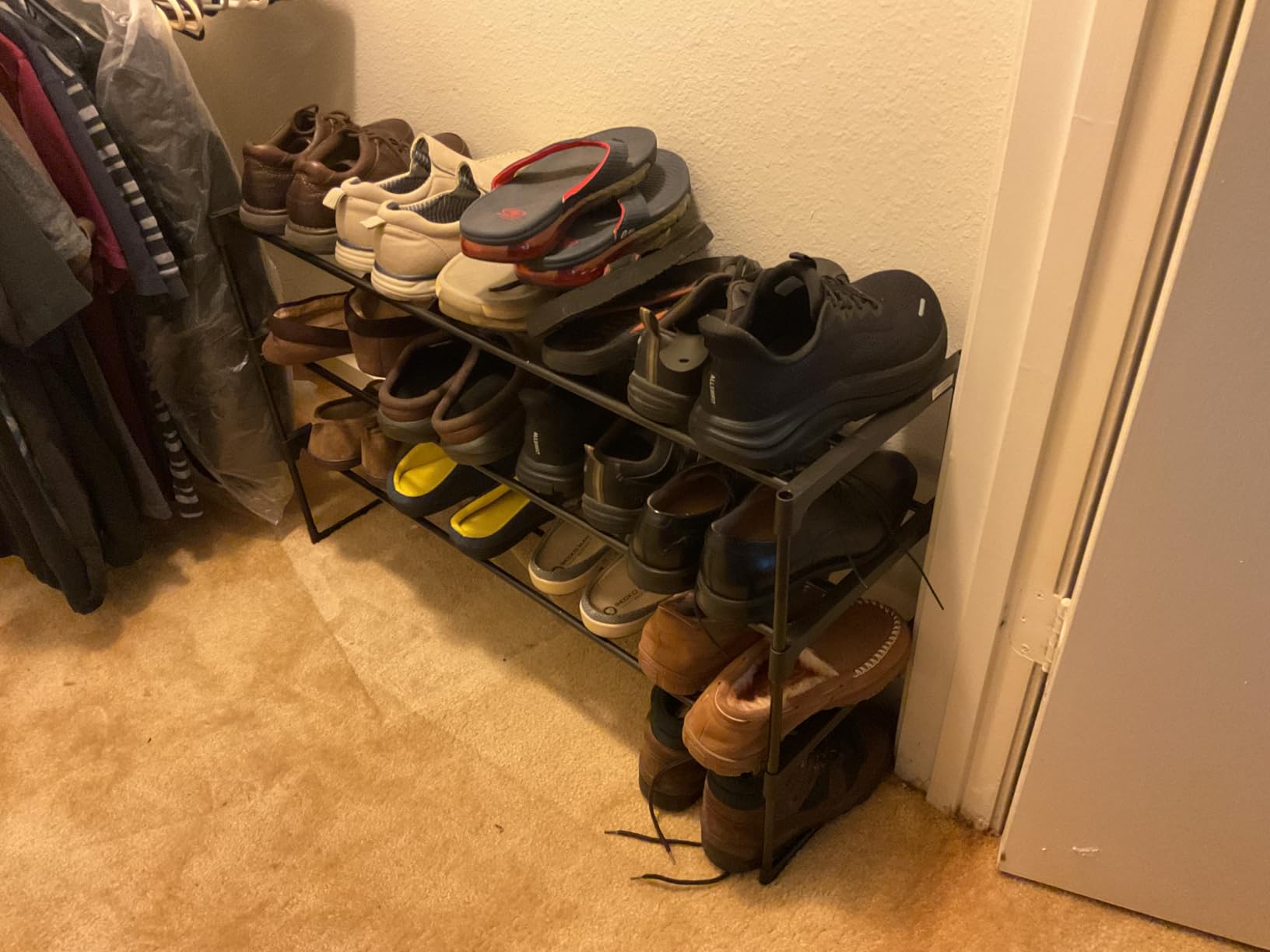
I set up the VTRIN in my garage entryway where my family’s shoe collection had completely taken over the floor. Within 20 minutes of unpacking, I had the entire unit assembled using the included wooden hammer to tighten joints. The instructions were clear, and I appreciated that everything I needed came in the box.
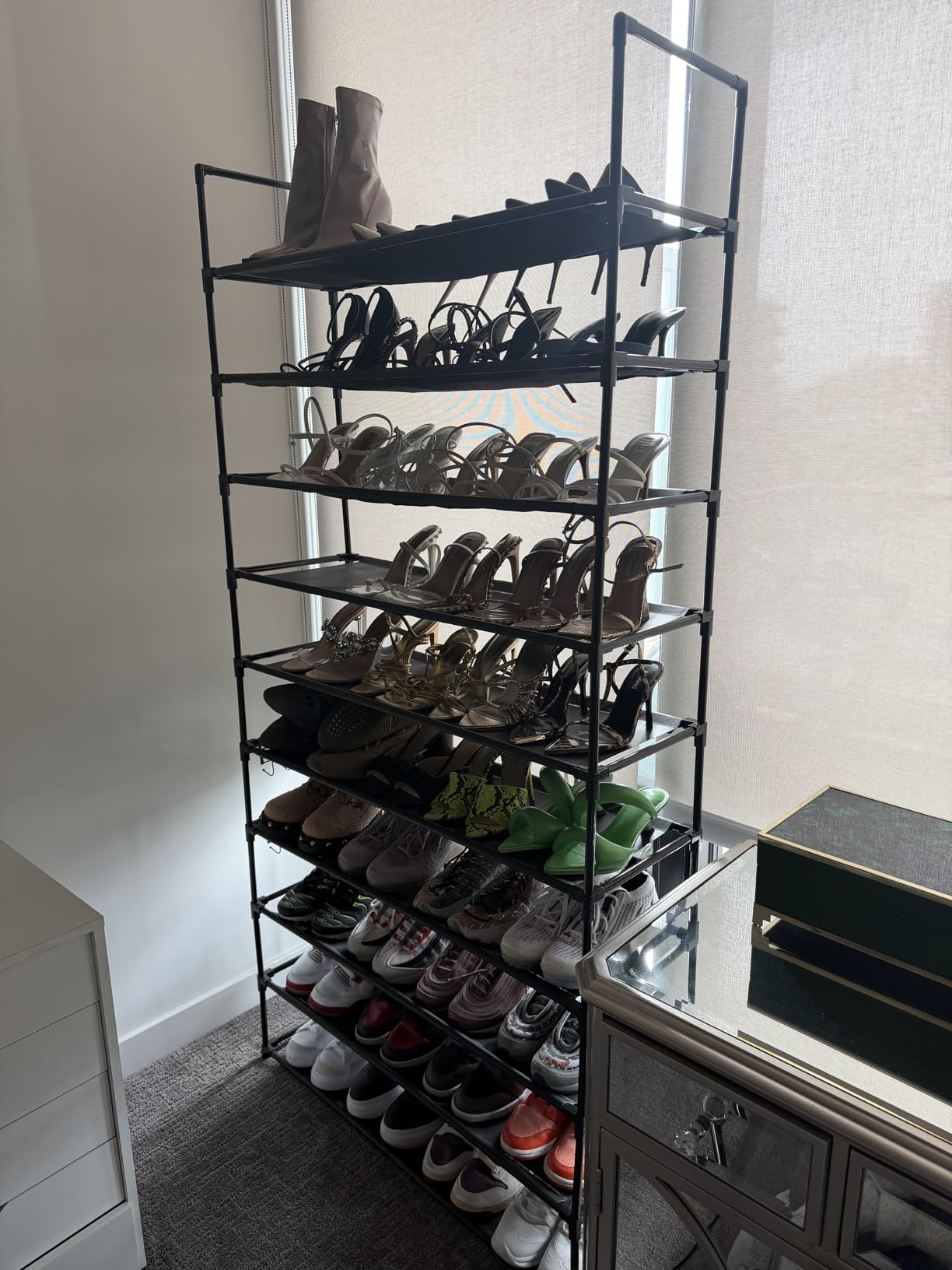
This rack became the workhorse of our home. It swallowed 47 pairs of shoes across ten tiers, from my husband’s size 12 work boots to my daughter’s ballet flats. The two side hooks became our grab-and-go spot for keys, umbrellas, and the dog leash that always seemed to disappear.
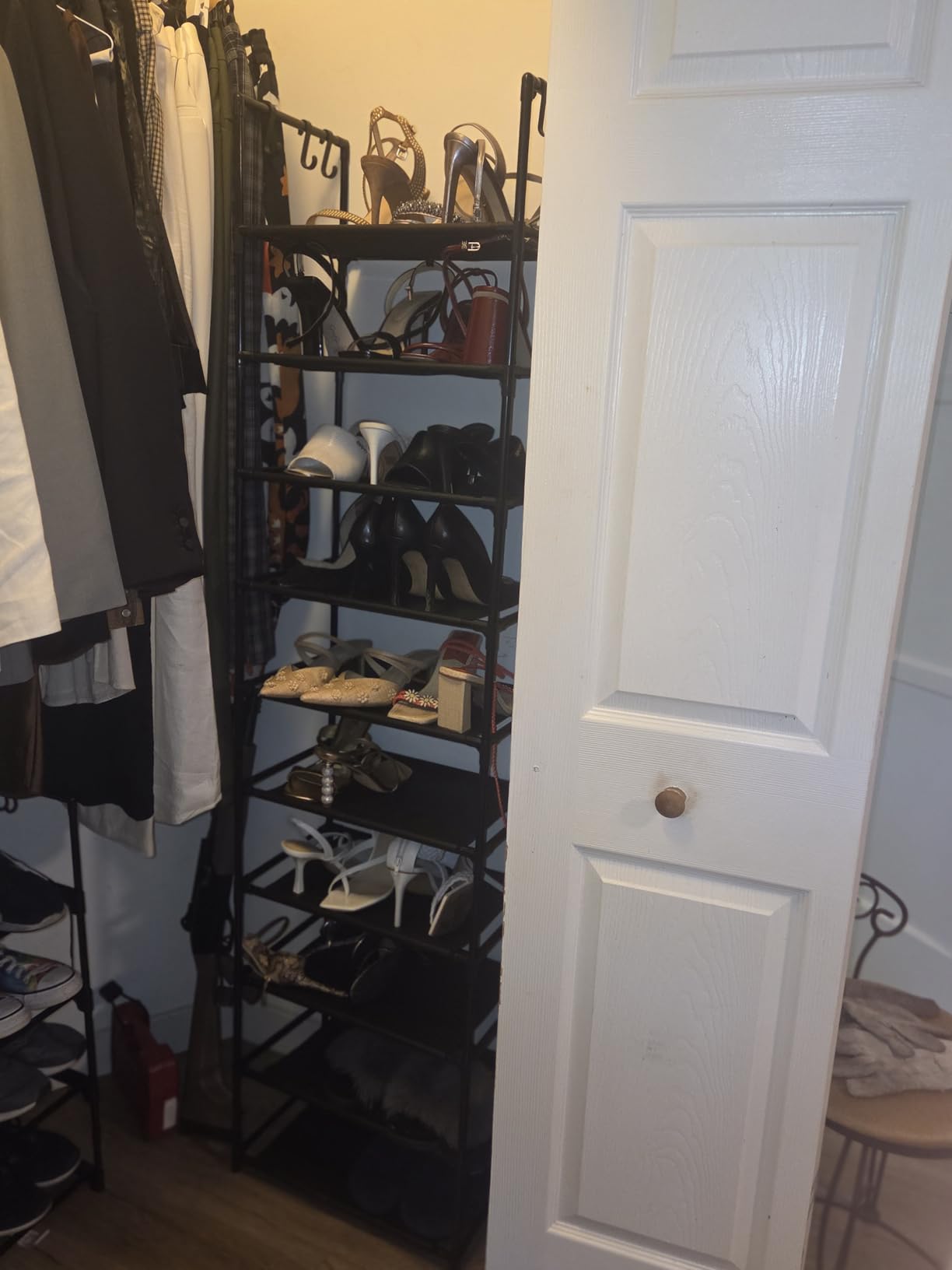
The metal frame felt substantial during assembly, and the thickened iron pipes showed no signs of bowing even after three months of daily use. I tested the waterproof claim by wiping up a coffee spill, and the non-woven fabric shed the liquid without staining. The anti-fall handrails on top gave me confidence that items placed there would not topple onto someone walking by.
My main gripe was with high heels. The flat fabric shelves work best for shoes with flat soles. Heels tended to tip forward or fall through slightly. I solved this by placing a small cardboard box on one tier specifically for heels, which kept them upright and accessible.
Who This Works Best For
Families with substantial shoe collections will appreciate the 50-pair capacity. The ability to split this into two 5-tier units makes it versatile for different spaces. Apartment dwellers with dedicated closet space or garage entries will find this solves their storage needs in one purchase.
Anyone who likes having accessories handy will love the hooks. I found myself reaching for this rack constantly because it organized more than just shoes.
Who Should Skip This
If you primarily wear high heels or have an extensive collection of stilettos, the flat shelves will frustrate you. The tall profile also means this rack dominates vertical space, making it poor for rooms with low ceilings or areas where you want a more minimal look.
People in earthquake-prone areas should secure this to a wall, as the lightweight frame can tip when empty or partially loaded.
2. Kitsure Shoe Rack – Best Budget Pick
- Under $15 price point
- Assembles in 4 steps
- Stackable for expansion
- Protective fabric shelves
- Lightweight and portable
- Not for heavy items
- Limited vertical space
- No height adjustment
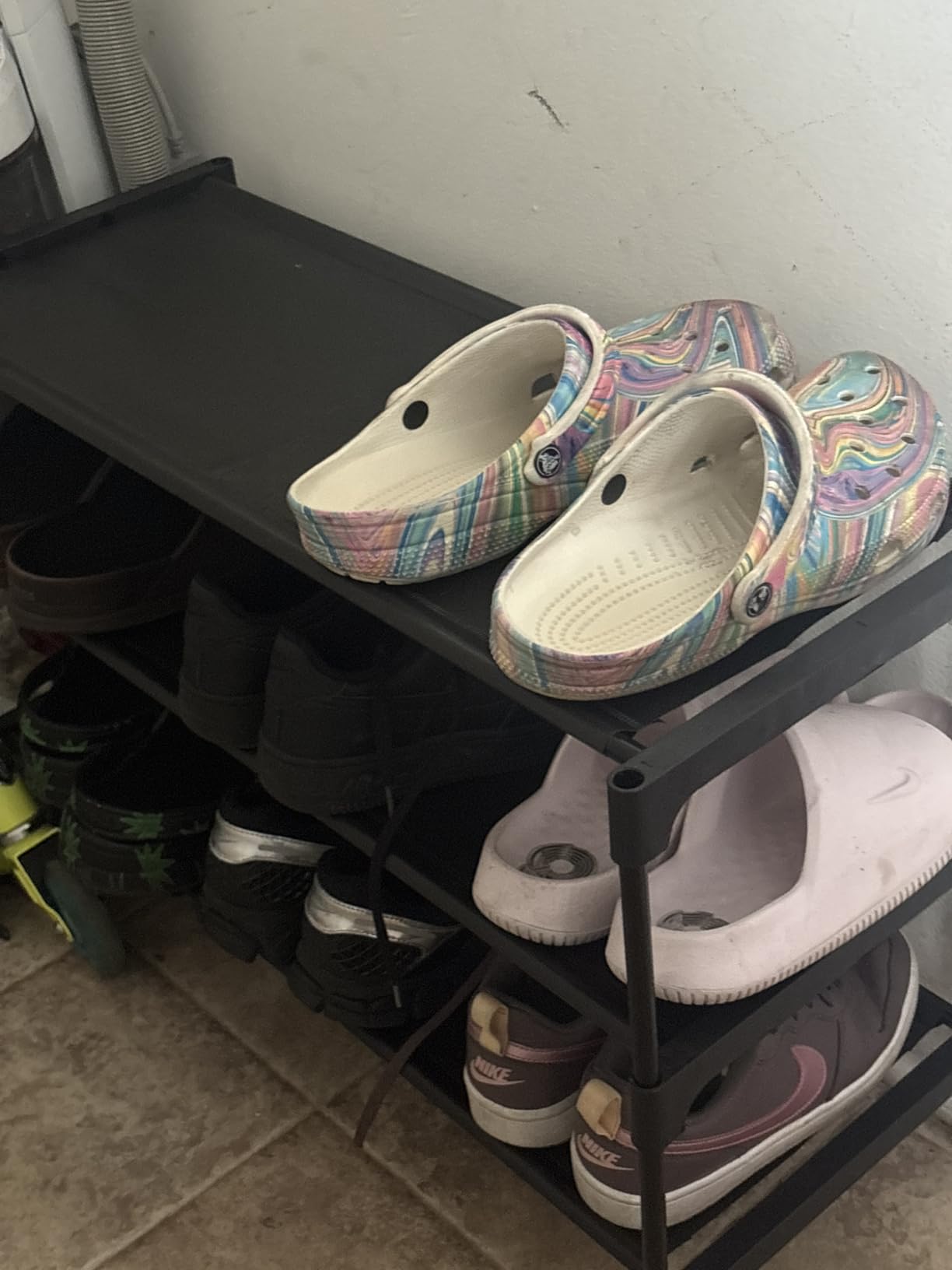
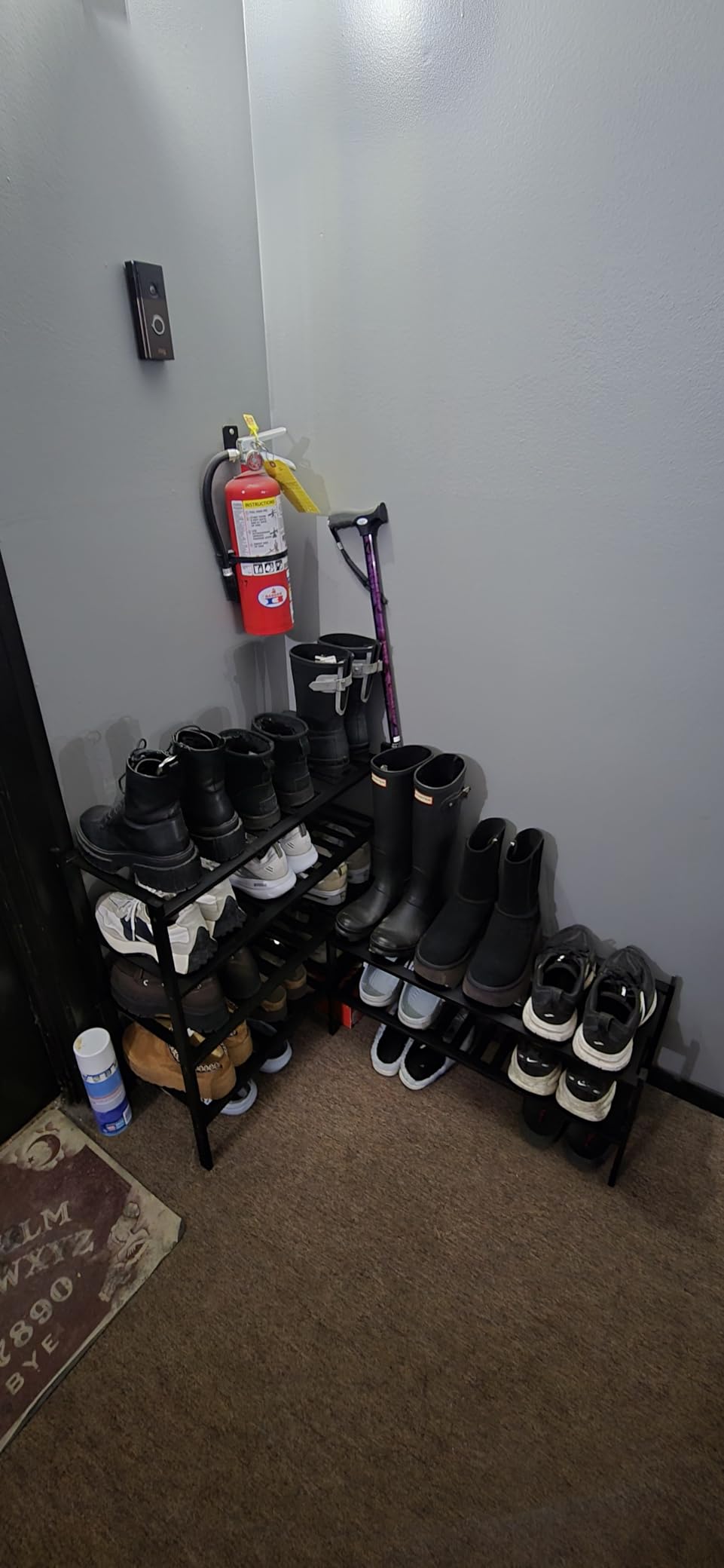
I bought the Kitsure rack expecting a flimsy temporary solution. What arrived surprised me. The metal tubes felt solid, the plastic connectors clicked together securely, and the non-woven fabric layers actually looked decent in my entryway.
Assembly took literally four steps and required no tools. I timed myself at just under 12 minutes from unboxing to fully assembled. The 27.5-inch width fit perfectly in the narrow space between my front door and the wall, turning a dead zone into functional storage.
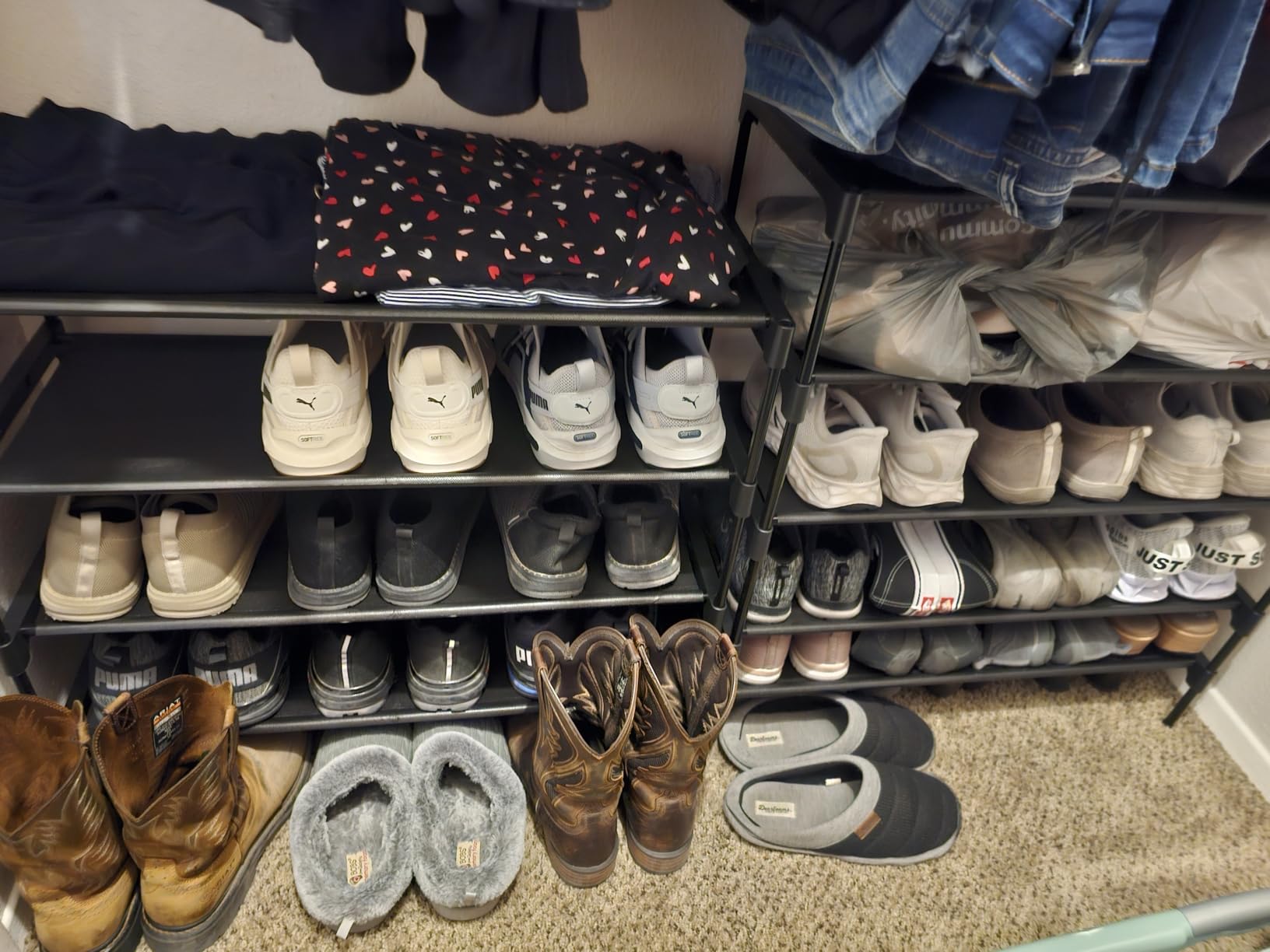
Over two months of daily use, this rack held up better than expected. The fabric shelves prevented the scuffs I used to get from metal wire racks, and the compact footprint meant I could walk past it without bumping my hip. I fit 14 pairs comfortably, including two pairs of ankle boots by angling them slightly.
The stackable design proved useful when I bought a second unit. Stacking them created a 6-tier tower that doubled my storage without requiring more floor space. Each unit only weighs 0.8 kilograms, so moving them around takes no effort.
Who This Works Best For
Anyone on a tight budget who needs immediate shoe storage will find this delivers exceptional value. College students in dorms, renters who want something they can take with them, and people testing whether shoe organization will actually stick with them should start here.
The compact size makes this ideal for small entryways, closets, or even under beds for seasonal storage.
Who Should Skip This
Heavy work boots or large men’s sizes will overwhelm this rack. The 0.8 kg weight capacity means it is not built for serious loads. Families needing to store 20+ pairs should look at larger options, as even stacked units max out around 30 pairs.
If you want something that looks like furniture rather than storage, the utilitarian design will disappoint.
3. HOOBRO Shoe Rack – Best Premium Build
- Premium particleboard and metal
- Adjustable tilt or flat shelves
- Removable tiers for boots
- Industrial aesthetic
- High weight capacity
- Assembly takes time
- Side split on top shelf
- Height limits for tall shoes
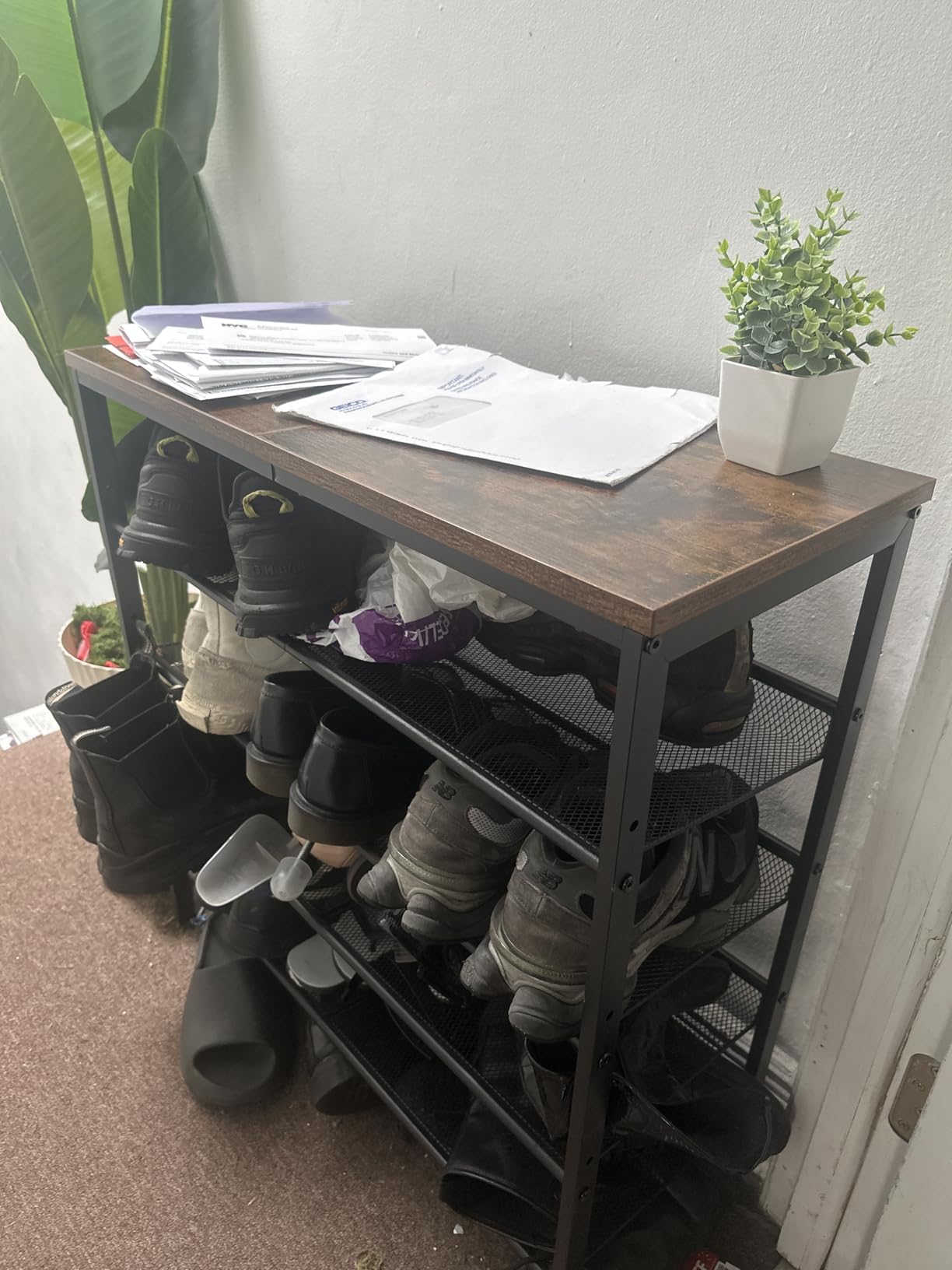
The HOOBRO rack was the heaviest box that arrived at my door, weighing in at 15.6 pounds. That weight translated to quality I could feel during assembly. The engineered wood had a rich rustic brown finish, and the matte black metal frame looked intentionally designed rather than purely functional.
Assembly took about 35 minutes, longer than the fabric racks, but the improved procedures mentioned in the manual were noticeable. Every hole lined up, and the hardware felt substantial. When finished, this looked like furniture I had intentionally chosen rather than storage I settled for.
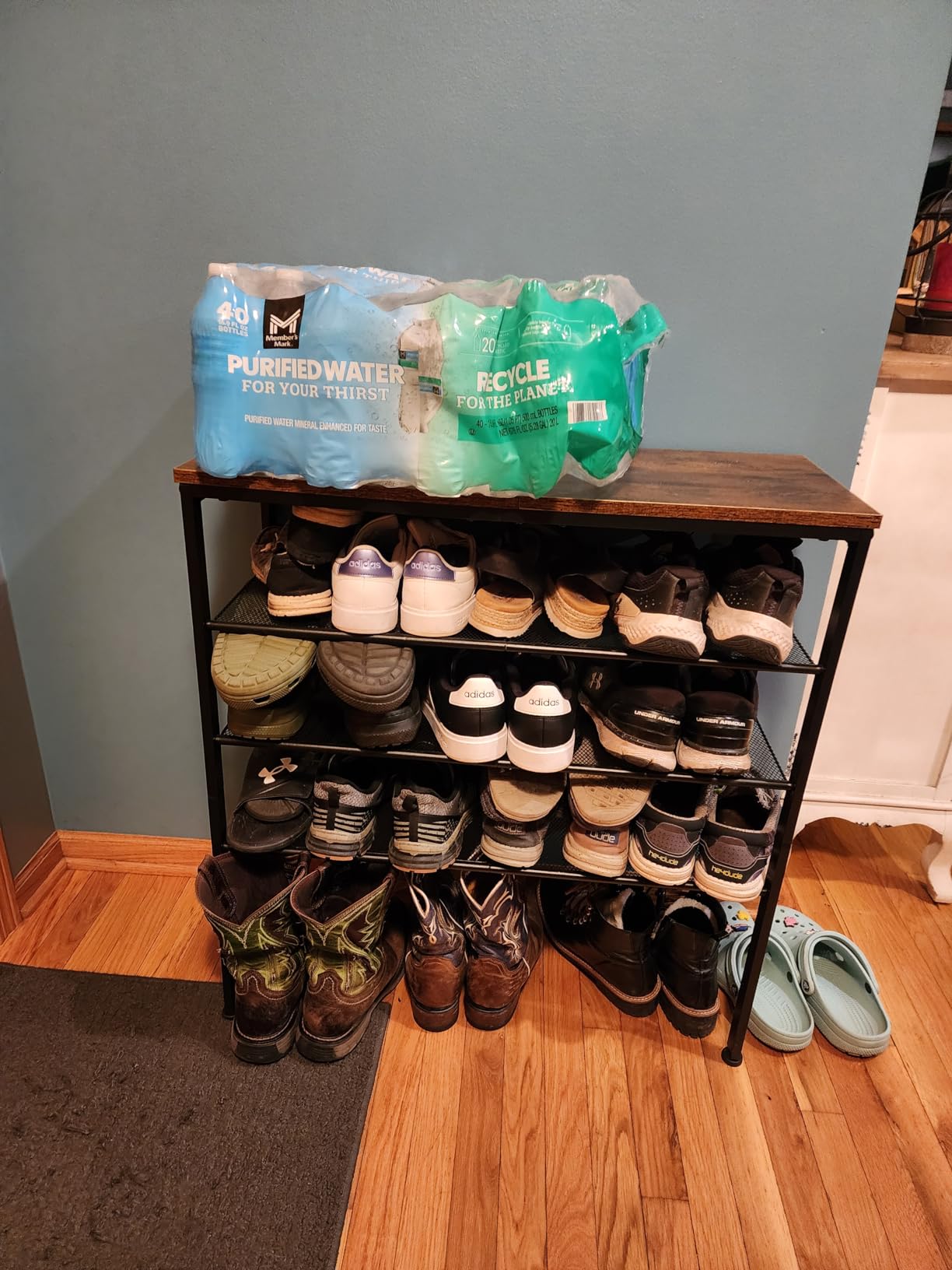
The adjustable mesh shelves were the standout feature. I set the top three tiers flat for sneakers and sandals, then tilted the bottom two to cradle my husband’s work boots. The removable design meant I could create a tall boot shelf by removing a divider entirely. Each mesh shelf handles 22 pounds, and the top surface supports 44 pounds, enough for a small plant or mail tray.
After three months, the finish showed no scratches despite daily use. The metal mesh allowed dust to fall through rather than accumulate, making cleaning easier than solid shelves.
Who This Works Best For
Anyone who wants their shoe storage to look good in an open entryway should consider this rack. The industrial design complements modern and transitional decor. People with mixed shoe types will appreciate the adjustable shelves that accommodate everything from flats to mid-calf boots.
Those tired of flimsy racks that wobble will appreciate the 15.6-pound heft and solid construction.
Who Should Skip This
The assembly requires more effort than snap-together fabric racks. If you need something today and do not want to spend 30+ minutes building, choose a simpler option. The industrial aesthetic also does not suit every home, particularly traditional or ultra-modern minimalist spaces.
Ankle boots taller than six inches may not fit well even with the adjustable shelves.
4. FIDUCIAL HOME 10 Tiers Shoe Rack – Best for Tight Spaces
- Very slim footprint
- Fits in narrow spaces
- Can split into two units
- Under $15 price
- Lightweight at 2.68 lbs
- Tips over easily
- Tight joints need force
- Narrow width limits shoes
- Plastic connectors
- Not for heavy items
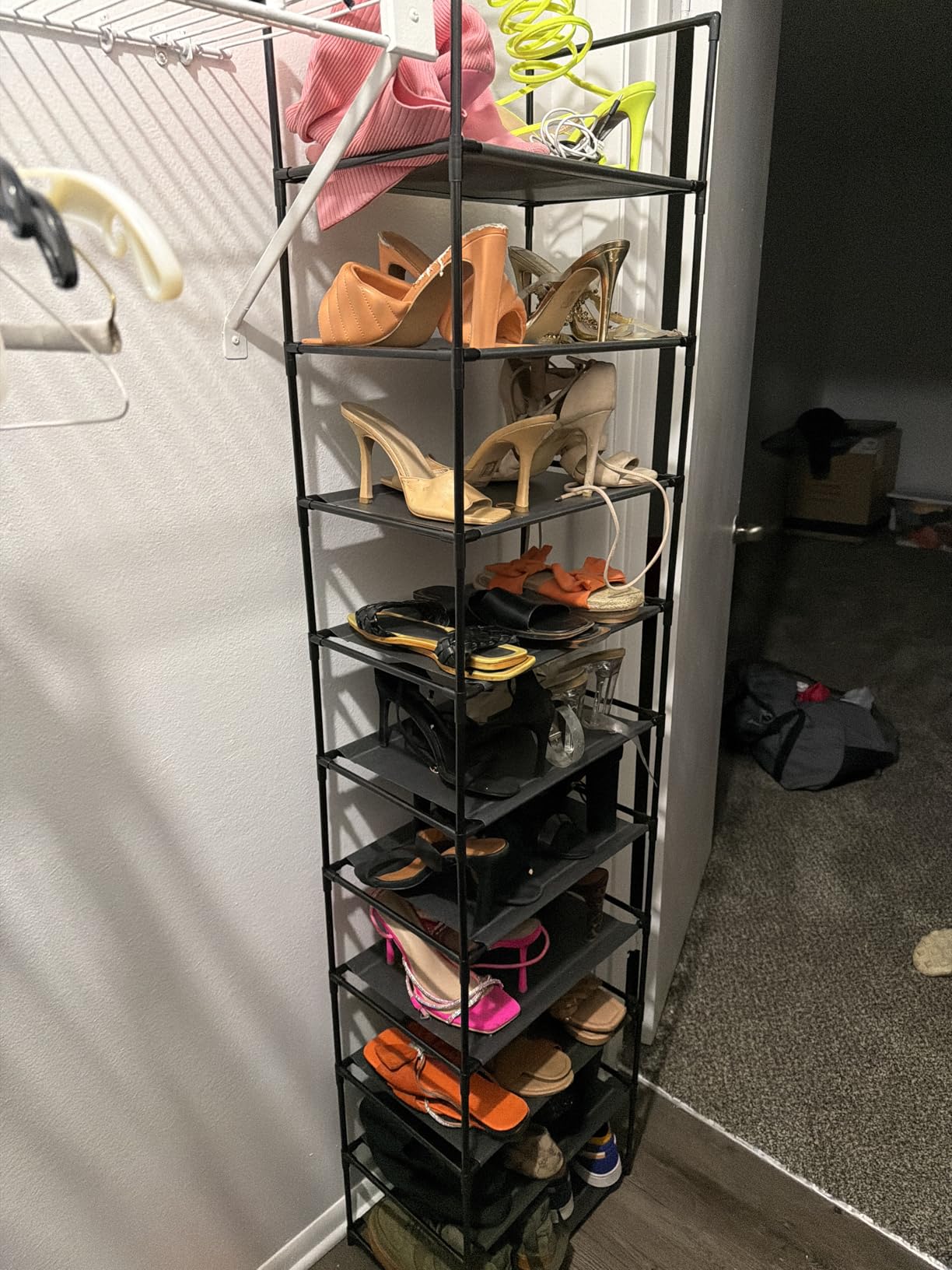
I squeezed the FIDUCIAL HOME rack into the 12-inch gap between my closet door and the wall where nothing else would fit. The 11-inch width made it one of the few options that could utilize this awkward space, turning wasted square footage into storage for 22 pairs of shoes.
Assembly by hand was possible but required force. The joints fit tightly, which is good for stability but meant my thumbs were sore after pushing connectors into place. No tools were technically required, though I used the rubber end of a screwdriver to push the final few connections home.
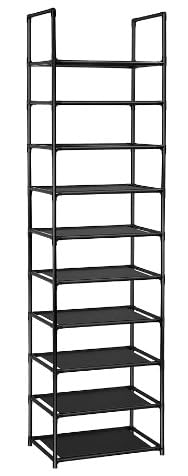
The slim profile meant adult shoes fit one per shelf section, not side by side like wider racks. This actually worked better for organization, as I could see every pair at a glance rather than digging through stacks. I stored heels on the lower tiers where they would not fall far if tipped, and sneakers on upper levels.
Like the VTRIN, this rack splits into two 5-tier units. I tested this feature by separating them for my kids’ rooms, giving each child their own vertical storage that fit their smaller spaces.
Who This Works Best For
Anyone with narrow spaces that standard racks will not fit should consider this model. The 11-inch depth works in closet niches, behind doors, and in apartment entryways where every inch counts. College students and renters with limited space will appreciate the slim footprint.
Those who want flexibility to split storage between rooms will like the separable design.
Who Should Skip This
The lightweight construction makes this prone to tipping. If you have rambunctious kids or pets who might bump into it, secure it to a wall or choose a heavier option. The narrow width also means large men’s shoes may hang over edges or not fit well.
People wanting one-touch access should look elsewhere, as the tight shelves require some maneuvering to retrieve shoes.
5. ROMGUAR CRAFT Bamboo Shoe Rack – Best Eco-Friendly Option
- Eco-friendly bamboo
- Quick 10-minute assembly
- Stackable to 6 tiers
- Natural aesthetic
- Multifunctional use
- Initial bamboo smell
- Hinges need tightening
- Minor scratches possible
- Not for heavy boots
- Limited capacity
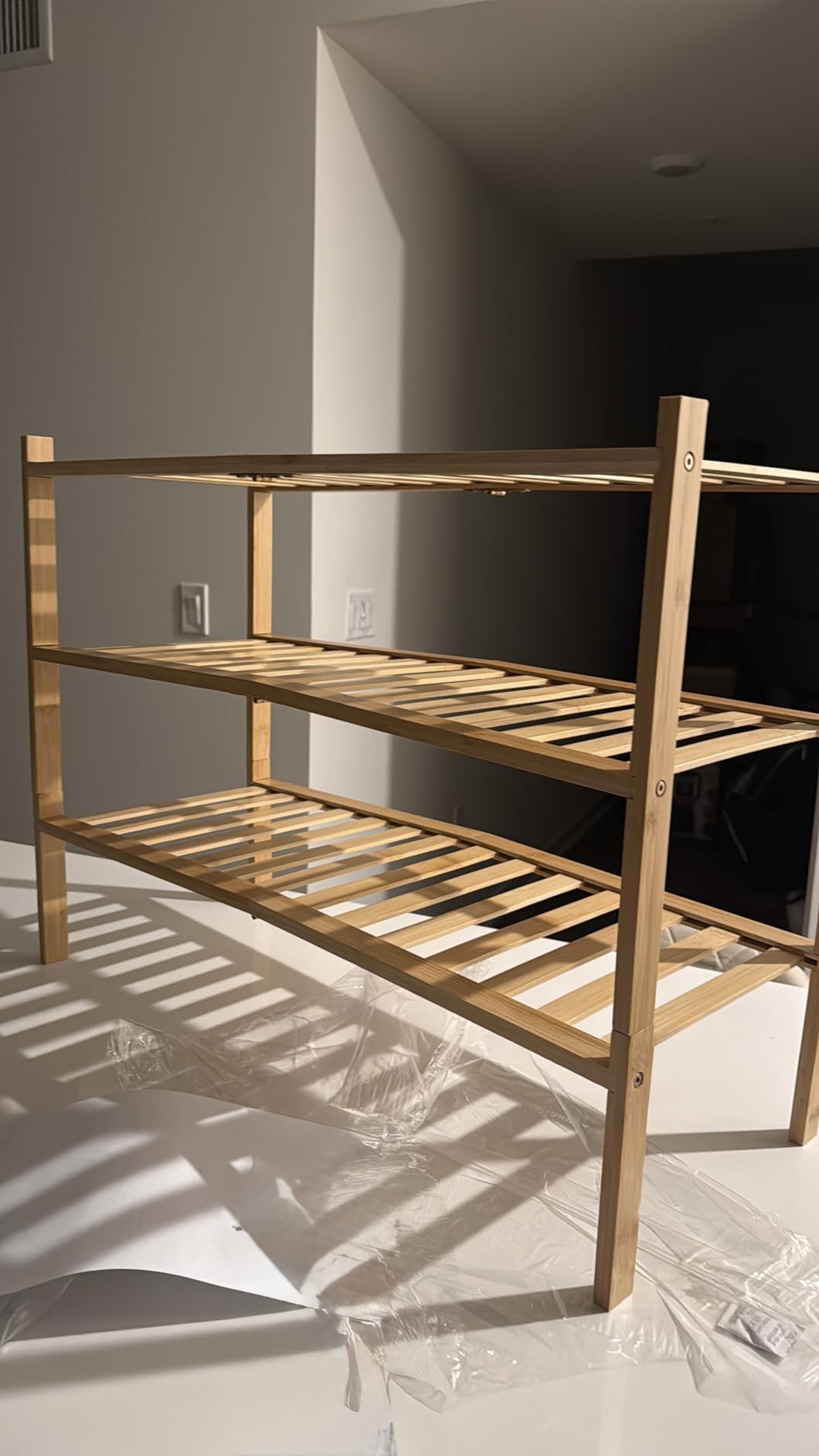
The ROMGUAR CRAFT rack arrived smelling pleasantly of bamboo, a natural scent that faded after a few days. The carbonized bamboo construction looked warm and intentional, instantly elevating my entryway from utilitarian to designed.
Assembly took exactly 10 minutes as promised. The pieces fit together with simple screws, and the included hardware was sufficient. I appreciated that the instructions showed how to stack multiple units, which I ended up doing when I bought a second rack a month later. Two 3-tier units became one 6-tier tower with no additional parts needed.
Bamboo proved surprisingly durable. The 90-pound weight capacity felt accurate, as the rack showed no flex under a full load of shoes plus a heavy winter boot on the top tier. The natural texture masked minor dust and scuffs that would show on painted metal or wood.
Beyond shoes, I tested this as a bathroom shelf for towels and toiletries, then moved it to the living room for plants. The multifunctional design means you are not stuck using it only for shoes if your needs change.
Who This Works Best For
Environmentally conscious shoppers will appreciate the sustainable bamboo construction. Those wanting storage that looks like intentional decor rather than organization equipment will love the natural aesthetic. Small households with 12-15 pairs will find the capacity perfect.
Anyone who might repurpose the rack later for other storage needs should consider this versatile option.
Who Should Skip This
Heavy work boots or large collections will overwhelm this rack. The 3-tier capacity limits you to about 12-15 pairs, far less than metal alternatives. People sensitive to natural wood scents should air this out before bringing it indoors.
If you need dust protection for shoes, the open design leaves footwear exposed.
6. SONGMICS Shoe Rack – Most Versatile Design
- Can flip upright or upside down
- Easy no-tool assembly
- Sturdy metal construction
- Holds 16-20 pairs
- Smooth easy-clean coating
- Hollow ends visible when flipped
- Bows under heavy shoes
- Pieces pop with pressure
- Not for heavy daily use
- Plastic connectors
The SONGMICS rack confused me at first because the instructions showed two assembly orientations. After building it upright, I flipped it upside down to test the alternative configuration. Both worked, giving flexibility I had not seen in other racks.
The upright position puts the wide base at the bottom for maximum stability. Flipped upside down, it creates a narrower footprint with shelves extending outward. I found the flipped position worked better under my console table where vertical space was limited but horizontal space was available.
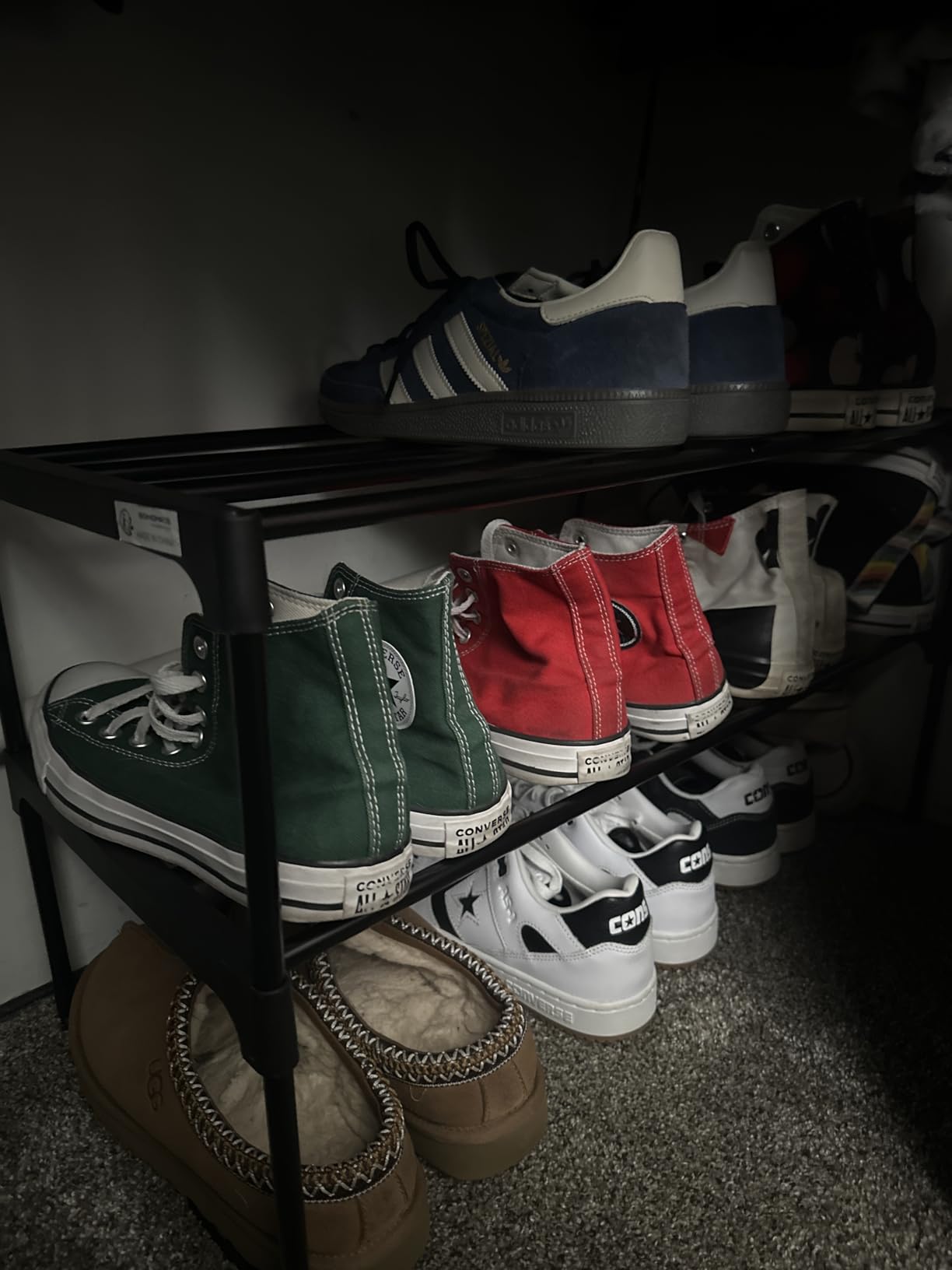
Assembly required no tools and took about 15 minutes. The metal tubes had a smooth coating that wiped clean easily, important for a rack living near my muddy backyard entrance. At 36.2 inches wide, this was one of the broader racks I tested, accommodating shoes side-by-side on each tier.
The 66-pound total capacity handled my collection well, though heavy rubber-soled boots did cause slight bowing on the middle tier over time.
Who This Works Best For
People with unconventional spaces or uncertain layouts will appreciate the flexible design. Renters who might move frequently and face different space constraints each time should consider this adaptable option. The wide 36-inch span works well for couples who want shared shoe storage.
Anyone wanting a rack they can position under furniture or in odd-shaped niches will find the flip feature useful.
Who Should Skip This
The hollow plastic ends visible when flipped look unfinished and cheap. If aesthetics matter and you plan to use the upside-down configuration, the exposed connectors will bother you. Heavy daily use with work boots or athletic shoes will eventually stress the shelves.
People wanting premium build quality should invest in the HOOBRO or bamboo options instead.
7. GRUSIGN Shoe Cabinet – Best for Dust Protection
- Doors keep shoes dust-free
- Slim 9.45-inch width
- Adjustable interior shelves
- Includes anti-tip kit
- Top holds 60 lbs
- Cheap wood quality
- Plastic drawer sides
- Not for large shoes
- Requires hammer to assemble
- Drawer alignment tricky
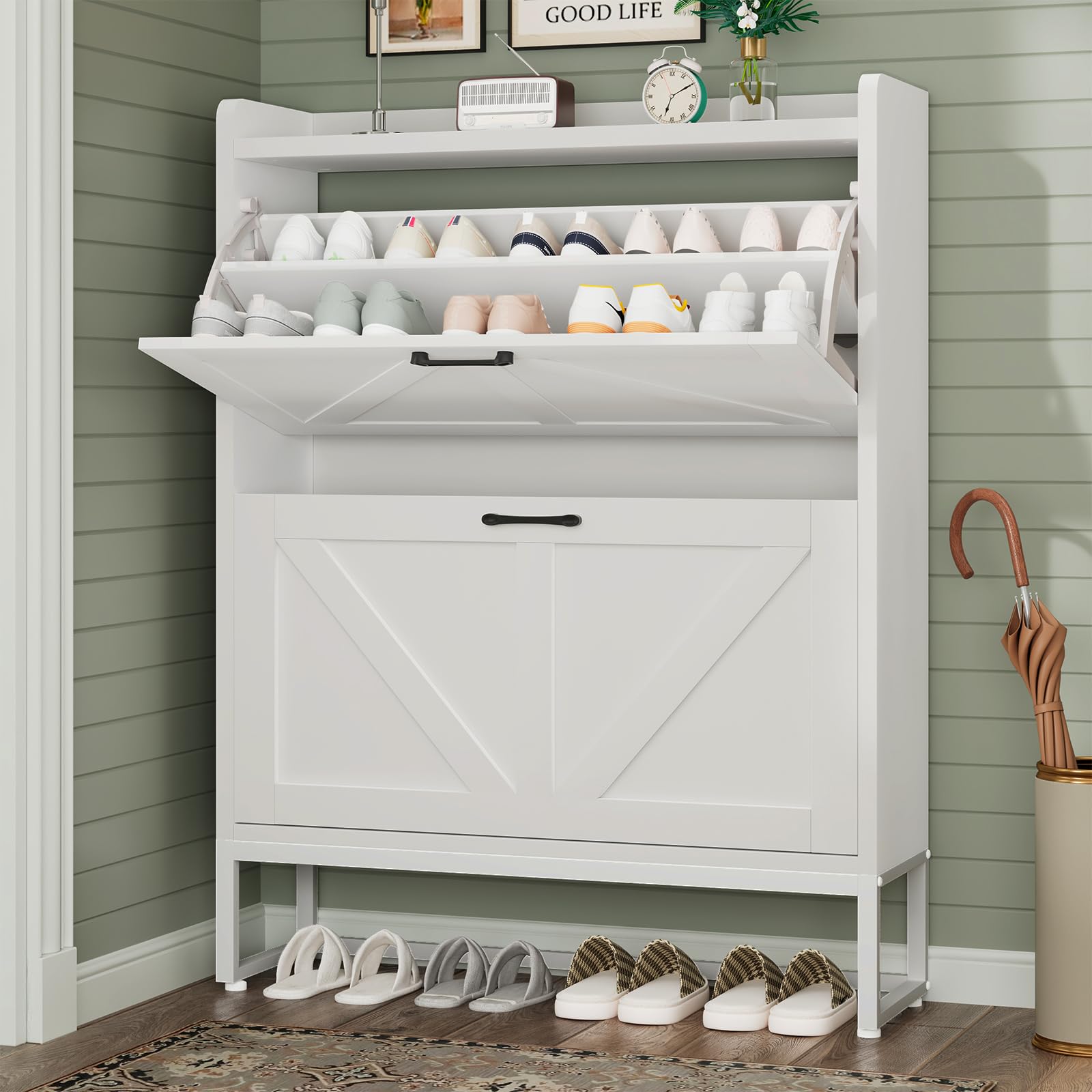
The GRUSIGN cabinet was the only enclosed option I tested, and it immediately solved a problem I had not realized was fixable. My shoes stopped getting dusty. The flip-door design created a closed system that kept footwear clean between wears, eliminating the weekly dusting I had resigned myself to.
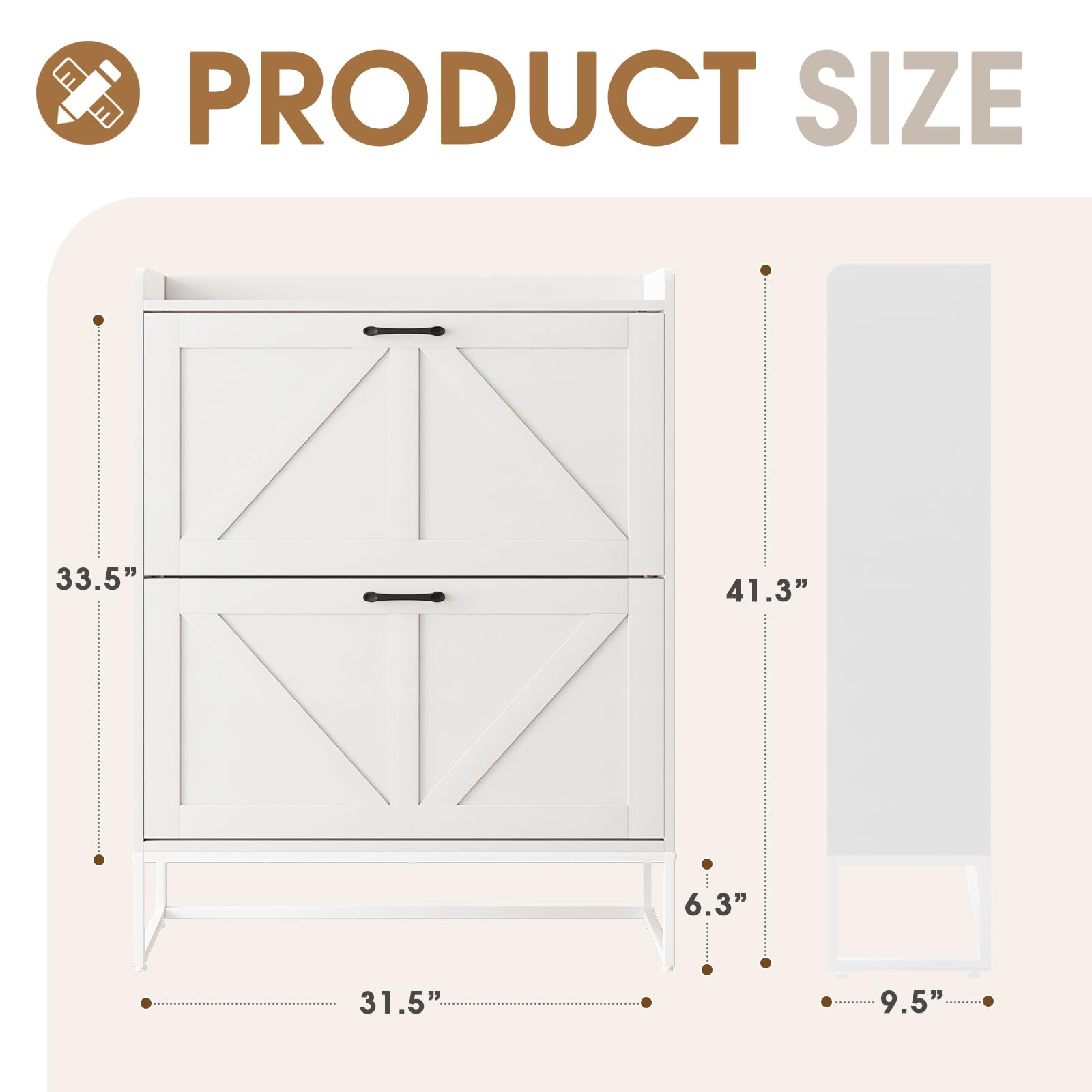
At 9.45 inches wide, this was the slimmest full-featured storage I found. It slid into the narrow space beside my front door where even shoe racks would not fit. The white finish blended with my trim, making it virtually disappear into the wall.
Assembly required a hammer, which surprised me. The wood tapped together with dowels, then secured with screws. The process took 45 minutes, longer than any other option. Drawer alignment was finicky, requiring adjustments to get both doors opening smoothly.
Once assembled, the interior organization impressed me. Adjustable shelves accommodated my ankle boots by removing a divider, while the 60-degree opening angle meant I did not have to bend fully to reach lower pairs.
Who This Works Best For
Anyone tired of dusting shoes or dealing with pet hair accumulating in open racks should consider this cabinet. The slim profile works in spaces too narrow for traditional racks. People who want their shoe storage to look like built-in furniture will appreciate the clean lines and enclosed design.
Families with small children will value the included anti-tip kit for safety.
Who Should Skip This
Men with size 10.5+ shoes reported fit issues in online reviews, and my husband’s size 11s confirmed this. The narrow interior limits larger footwear. The assembly complexity exceeds snap-together racks, requiring time and patience.
People wanting instant visibility of all shoes will find the closed doors inconvenient for quick morning selection.
8. SpaceAid Rotating Shoe Rack – Best for Easy Access
- Rotates for easy access
- Space-saving vertical design
- No tools needed
- Holds accessories too
- Makes all shoes visible
- Wobbles when spinning
- Small slots for large shoes
- Light MDF materials
- Ankle boots may not fit
- Durability concerns
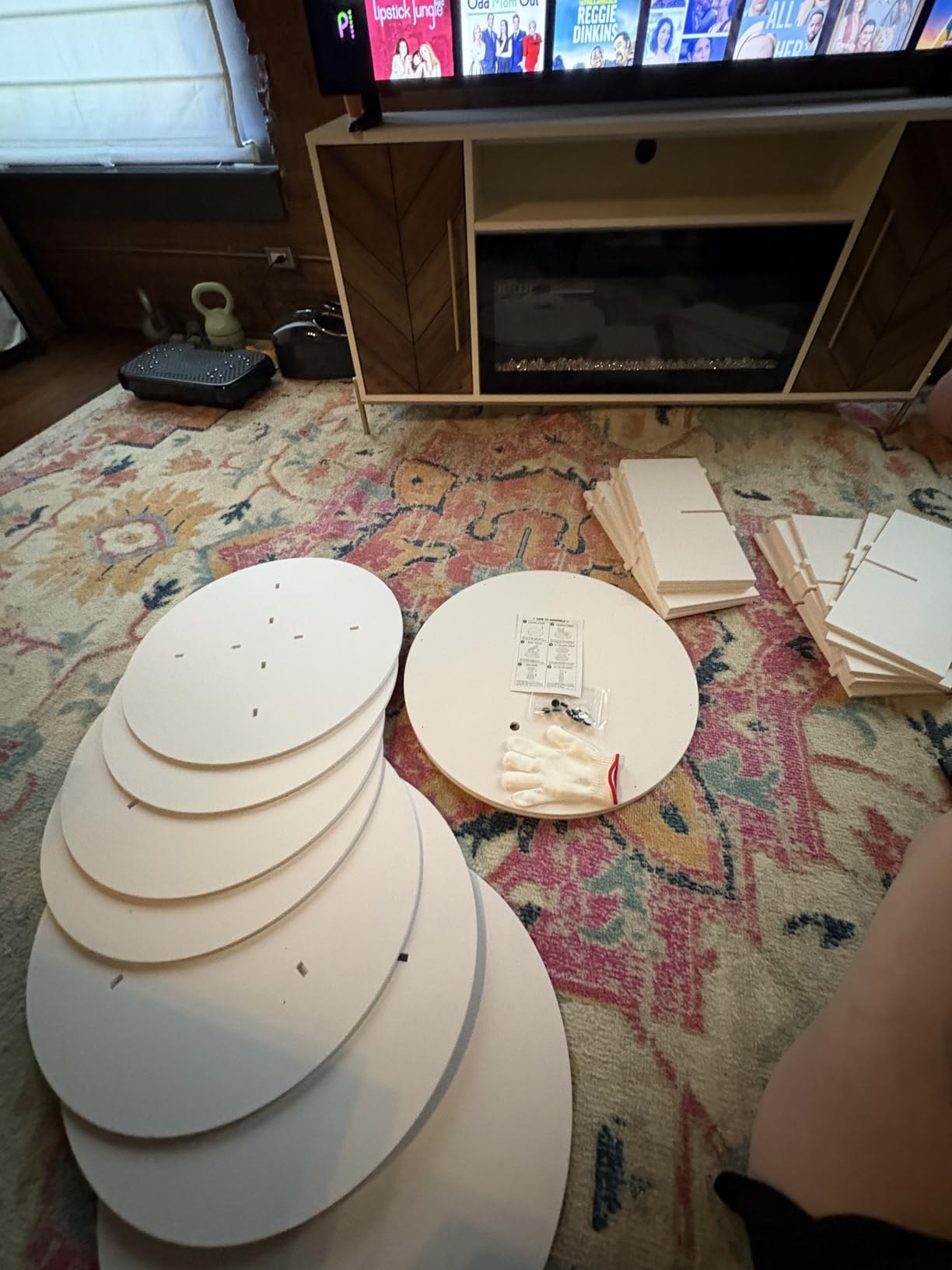
The SpaceAid rotating rack was the conversation piece of my testing. Every visitor commented on it, spinning the 7-tier carousel to see shoes rotate into view like a department store display. The novelty never wore off, but more importantly, it solved the buried-shoe problem completely.
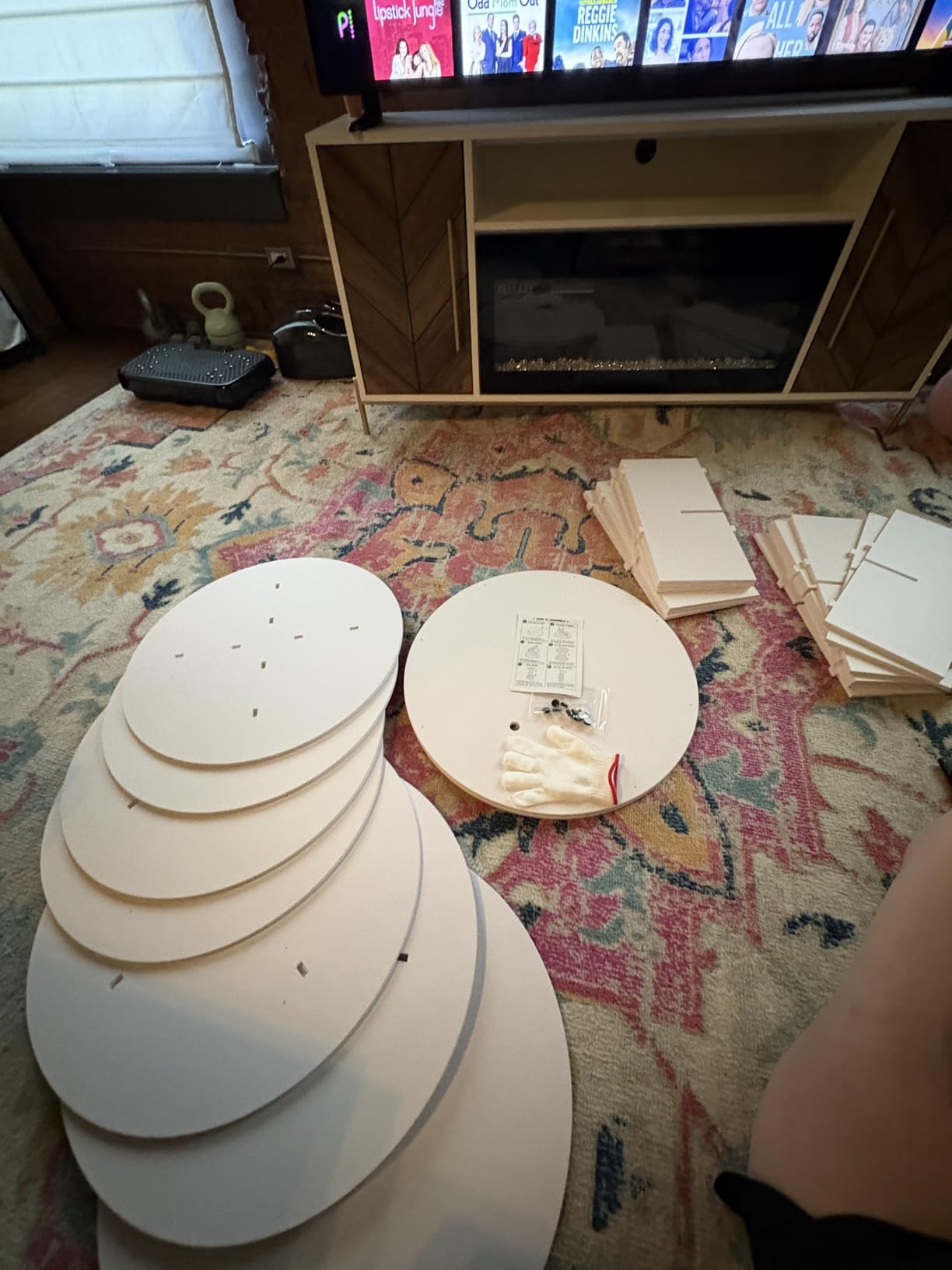
Assembly required no tools and took 20 minutes. The circular design snaps together in layers, with each tier creating a compartment for shoes. The 23.2-inch diameter footprint was larger than linear racks, but the vertical storage meant it held more pairs in less floor space than any alternative I tested.
Rotation was smooth but slightly wobbly, particularly when loaded unevenly. I learned to balance heavier shoes opposite each other to minimize the wobble. The compartments held my handbags and hats on upper tiers, creating a full accessory station rather than just shoe storage.
The white plastic construction felt less premium than the price suggested, but the functionality overcame this concern for daily use.
Who This Works Best For
Anyone tired of digging through racks to find the right pair will love the visibility this provides. Fashion enthusiasts with varied collections will appreciate seeing everything at once. People with walk-in closets or dedicated dressing areas have the space for this statement piece.
Those storing accessories beyond just shoes will find the upper compartments useful for bags, hats, and scarves.
Who Should Skip This
Men with size 9.5+ shoes found the slots tight in reviews, confirmed by my husband’s size 11s not fitting well. The wobble when spinning may bother people who prefer solid, stationary furniture. The premium price for plastic construction feels steep compared to metal alternatives.
Small apartments or narrow entryways lack the floor space for the 23-inch diameter footprint.
How to Choose the Best Shoe Rack for Your Home
After testing these eight models across different spaces and use cases, I have identified the key factors that determine which shoe rack will work best for your specific situation.
Where to Keep Your Shoe Rack Inside the House
The ideal location depends on your home’s layout and daily routines. Entryways make the most sense for shoes you wear regularly, keeping them accessible as you come and go. Closets work better for seasonal storage or shoes you wear less frequently. Bedrooms can house dress shoes and special occasion footwear you select while getting dressed.
Avoid damp areas like basements without climate control, as moisture damages most materials over time. Near heating vents can dry out leather shoes and weaken adhesive in budget racks. The best location has stable temperature, easy access, and enough clearance for the rack’s height.
Metal vs Wood vs Bamboo – Which Is Most Durable?
Metal racks offer the best strength-to-weight ratio and typically support the most shoes per dollar. They resist moisture better than wood but can rust in humid environments if the coating chips. Powder-coated metal lasts longest, while painted metal may chip over time.
Wood and engineered wood look more furniture-like but vary widely in quality. Solid wood costs more but lasts decades with proper care. Particleboard and MDF save money upfront but sag under weight and swell if exposed to moisture. The HOOBRO rack used engineered wood well by reinforcing it with metal frames.
Bamboo offers the best eco-friendly option with surprising strength. It resists moisture naturally and develops character over time rather than looking worn. The tradeoff is higher cost and lower availability compared to metal options.
Size and Capacity Considerations
Count your shoes before buying. I thought I had 30 pairs but discovered 47 when I gathered them all for testing. Add 20% to your current count for future purchases. Measure your space carefully, noting ceiling height for tall racks and door swing clearances for cabinets.
Consider shoe types too. Boots need taller shelves than flats. Heels require flat surfaces or angled supports. Children’s shoes take less space than adult sizes. The best rack fits your specific collection, not just a generic pair count.
Assembly and Maintenance Tips
Most racks assemble without tools, but a rubber mallet helps tighten joints. Work on a soft surface to avoid scratching floors. Tighten all connections before loading with shoes, as weight makes adjustments difficult later.
Maintenance is simple for most materials. Wipe metal racks with a damp cloth. Dust wood and bamboo occasionally. Tighten any loose screws every few months, especially for racks moved frequently. Rotate shoes seasonally to prevent permanent compression of shelf materials.
Frequently Asked Questions
Where to keep shoe rack inside the house?
The best locations for shoe racks are entryways for daily-use shoes, closets for seasonal storage, and mudrooms for outdoor footwear. Avoid damp basements or areas near heating vents. Choose a spot with stable temperature, easy access, and enough clearance for the rack’s height.
What is the most durable type of shoe rack?
Metal racks with powder-coated finishes offer the best durability and moisture resistance. Bamboo provides excellent eco-friendly durability. Engineered wood with metal reinforcement, like the HOOBRO model, combines furniture aesthetics with structural strength.
Is a metal shoe rack better than a wooden one?
Metal racks typically offer higher weight capacity and easier assembly than solid wood options. They resist moisture better but can rust if the coating chips. Wood looks more furniture-like but varies in quality. For pure durability, powder-coated metal wins. For aesthetics, reinforced wood or bamboo excels.
Where to put shoes in a living room?
In living rooms, choose enclosed cabinets like the GRUSIGN model to hide shoes from view, or select attractive materials like bamboo that blend with decor. Place racks near entry points but out of traffic paths. Bench-style storage with seating doubles as functional furniture.
Final Thoughts
After three months of living with these eight shoe racks, the VTRIN 10 Tier remains my top recommendation for most households. The 50-pair capacity, sturdy construction, and useful accessory hooks solve the shoe clutter problem without creating new frustrations.
For budget-conscious shoppers, the Kitsure rack delivers surprising quality at under $15. Style-focused buyers should consider the HOOBRO for its furniture-like appearance or the ROMGUAR CRAFT bamboo for eco-friendly warmth.
The best shoe rack for your home depends on your specific space constraints, shoe collection size, and aesthetic preferences. Any of these eight options will beat the floor pile you are probably stepping over right now. Choose based on capacity needs first, then consider style and assembly preferences.
Your entryway deserves better than shoe chaos. These racks prove that organized footwear can look good too.