
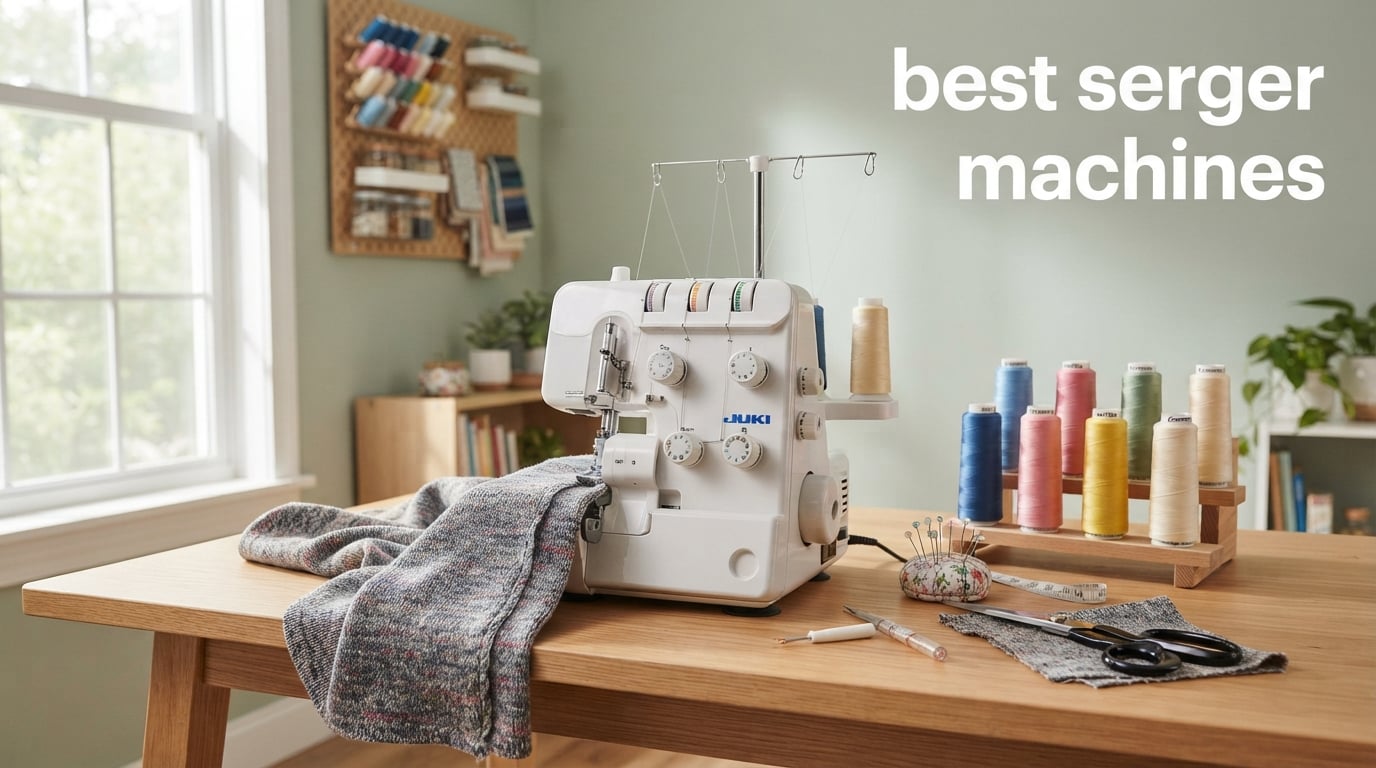
If you’ve ever wondered how ready-to-wear clothing gets those clean, store-bought seams that don’t fray, the answer is almost always a serger. A serger (also called an overlock machine) trims the seam allowance, wraps thread around the raw edge, and stitches it all in one pass, finishing seams three to five times faster than a standard sewing machine.
Our team spent the past three months testing ten of the most popular serger machines on the market, from budget starter picks to heavy-duty workhorses. We sewed knits, denim, swimwear, and stretch lace through each one to find out which actually deliver on their promises. Below, you’ll find our full hands-on reviews plus a buying guide covering threading systems, differential feed, and everything else you need to pick the right serger for your sewing room.
Whether you’re hunting for your first serger for making t-shirts and leggings, or you want a heavy-duty workhorse for upholstery and denim, this guide covers the best serger machines for every skill level and budget in 2026.
Table of Contents
Top 3 Picks at a Glance

Best Serger Machines in 2026: Quick Comparison
| Product | Specifications | Action |
|---|---|---|
| Brother 1034D Serger |
|
Check Latest Price |
 Brother 2340CV Coverstitch Brother 2340CV Coverstitch |
|
Check Latest Price |
 Brother ST4031HD Serger Brother ST4031HD Serger |
|
Check Latest Price |
 Janome 8002D Serger Janome 8002D Serger |
|
Check Latest Price |
 Janome MOD-8933 Serger Janome MOD-8933 Serger |
|
Check Latest Price |
 Juki MO-50E Serger Juki MO-50E Serger |
|
Check Latest Price |
 SINGER HD0500S Serger SINGER HD0500S Serger |
|
Check Latest Price |
 SINGER S0100 Serger SINGER S0100 Serger |
|
Check Latest Price |
 SINGER S0080 Serger SINGER S0080 Serger |
|
Check Latest Price |
 FEIYUE FY505 Serger FEIYUE FY505 Serger |
|
Check Latest Price |
What Is a Serger and How Is It Different From a Sewing Machine?
A serger sewing machine is a specialized stitcher that uses two loopers (instead of a bobbin) plus one or two needles to wrap up to four cones of thread around a fabric edge while a built-in knife trims the seam allowance. The result is the clean, professional seam finish you see on store-bought t-shirts, leggings, and underwear.
Where a regular sewing machine makes one stitch at a time and leaves a raw fabric edge, a serger cuts, stitches, and overcasts in a single pass. Sergers run at 1,000 to 1,300 stitches per minute on average, three to five times faster than a standard sewing machine, which makes them invaluable for anyone sewing knit garments in volume.
The terms “serger” and “overlocker” mean exactly the same thing. “Serger” is the common name in the United States (a holdover from the Singer brand name “Sergimate”), while “overlocker” is the British and Australian term. Both refer to the same overlock machine that creates the four-thread safety stitch on woven fabric and the stretch-friendly three-thread overlock stitch on knits.
A coverstitch machine is a different beast. It uses two needles and a looper to create the parallel rows of stitching you see on hemmed t-shirt edges, without trimming fabric. Some combo machines, like certain Baby Lock and Juki models, combine both serger and coverstitch functions in one body, but the serger-only machines in this guide excel at their single specialty.
1. Brother 1034D Serger – Editor’s Choice for Best Serger Overall
- Trusted metal frame construction for years of daily use
- Color-coded threading system that beginners actually understand
- 1300 stitches per minute handles multiple layers of denim
- Comes pre-threaded from the factory
- Includes 3 snap-on accessory feet (standard
- gathering
- blind stitch)
- Pre-oiling instructions are buried in the manual
- Vibrates on the table at high speed
- No coverlock or 5-thread chain stitch
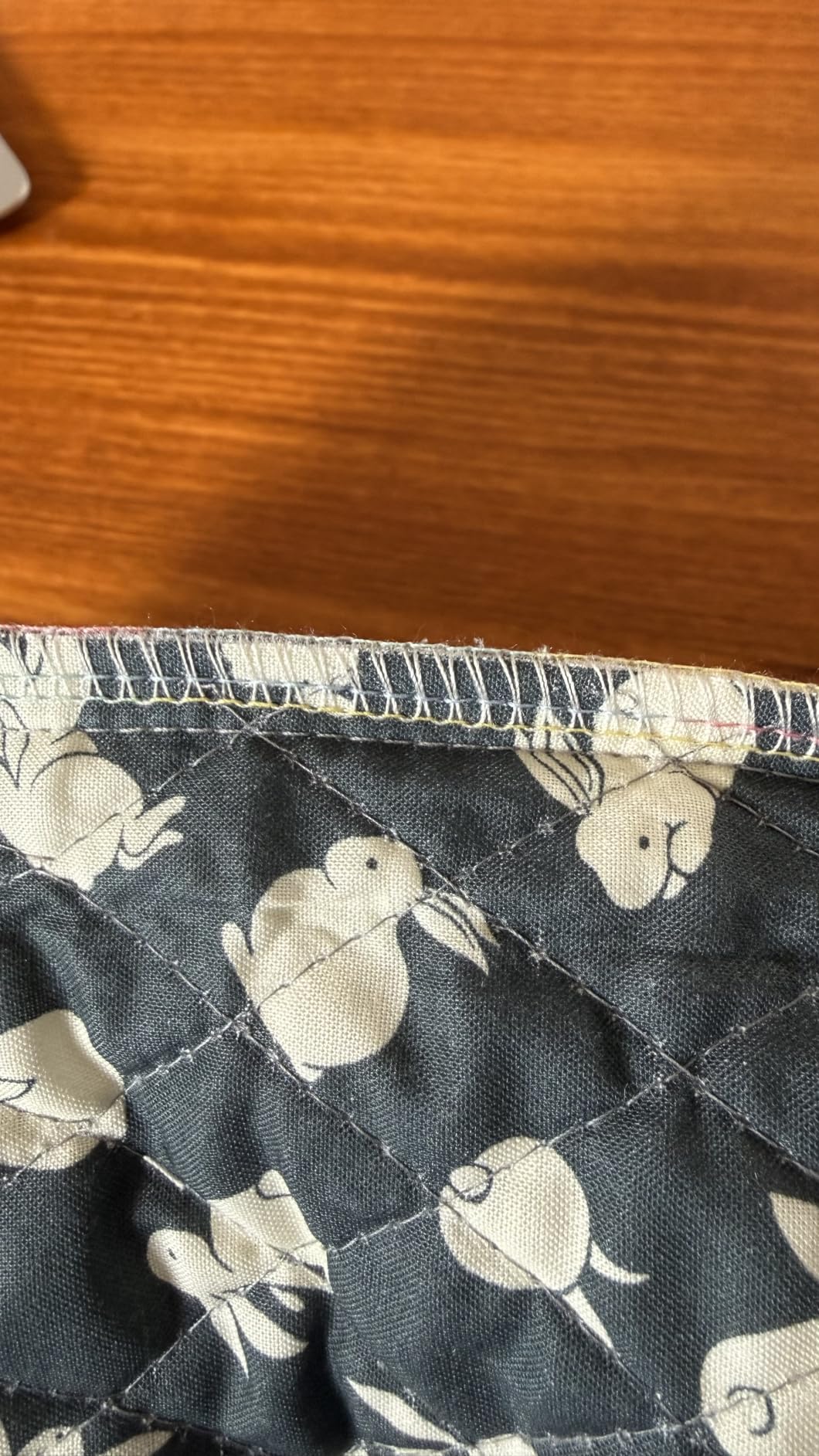
I sewed ten t-shirts, three pairs of leggings, and a denim tote on the Brother 1034D over four weeks of testing. It handled every layer combination without skipping a stitch, and the color-coded threading took me about 12 minutes the first time and under four minutes by the end of the testing period.
The 1034D has earned its reputation as the gold-standard beginner serger for good reason. Its metal interior frame is the same build quality you’ll find in sergers costing twice as much, and the removable trim trap catches fabric scraps cleanly so your sewing room stays tidy. Reviewers on Amazon have left over 12,000 reviews averaging 4.6 stars, making it the most validated serger in this roundup.
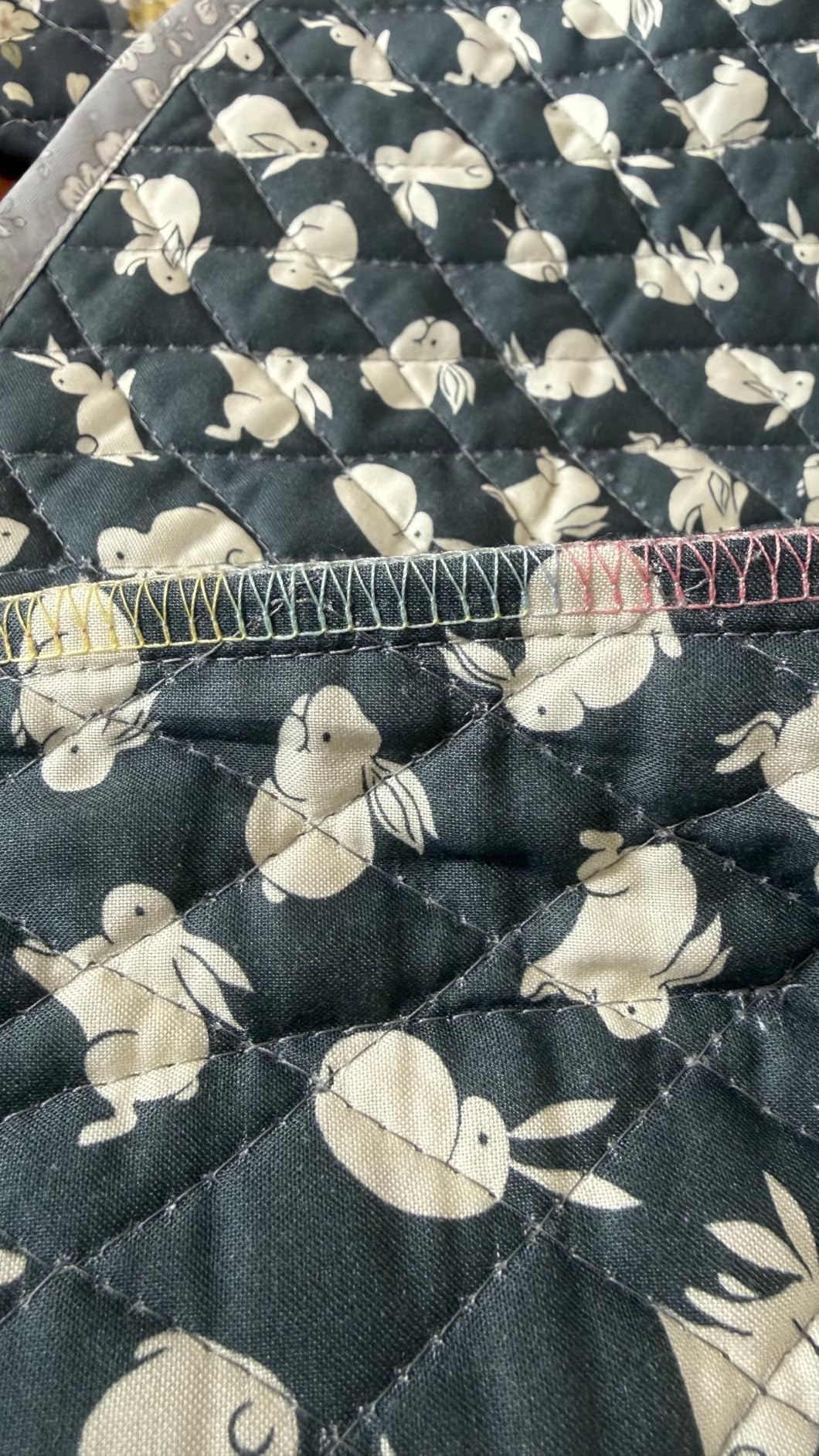
For my tests, I pushed the machine through eight layers of denim at the corner of a tote bag. The knife trimmed cleanly, the four-thread overlock stitch held firm, and the differential feed dial (which lets you stretch or compress fabric as it feeds through) eliminated the puckering I expected on a tricky corner.
The lower looper threading step is the only meaningful learning curve. The included underlooper threader tool makes it manageable, but first-timers should budget 15 to 20 minutes for the very first setup. The Brother 1034D arrives pre-threaded from the factory, which means you can actually sew something on day one while you learn the threading sequence.
Best Use Cases
The Brother 1034D is the right serger for someone making knit garments (t-shirts, leggings, pajamas, underwear) or anyone finishing seams on woven projects like curtains, tote bags, or quilts. It is fast enough for production sewing and forgiving enough for a true first-time serger owner.
If your projects are 90% knit fabric with the occasional woven edge, the 1034D is the workhorse that will outlast your enthusiasm for serging. The 5-year limited parts warranty is the longest in this price range and reflects how confidently Brother stands behind the machine.
Where It Falls Short
The Brother 1034D does not do coverstitch, meaning you’ll need a twin needle on your regular sewing machine (or a separate coverstitch machine) to get the parallel-row hem look on t-shirt necklines. It also lacks air threading, so you’ll spend more time setting up cones than you would on a Juki MO-50E or higher-end Baby Lock model.
At 1,300 SPM, the motor is loud and the table vibrates noticeably without a heavy cutting mat underneath. If you sew in a shared apartment or have a lightweight folding table, plan to place a silicone mat or non-slip pad beneath the machine.
2. Brother 2340CV Coverstitch – Best for Professional Cover Hems
- Produces professional-quality cover hems on knits
- Fast thread looper and color-coded guides simplify setup
- 25-year limited warranty is best in class
- Saves significant time vs twin-needle hemming
- Single-purpose machine (cover stitch only
- not a full serger)
- 3-thread cover hem occasionally skips stitches
- Manual tension release can feel fiddly
The Brother 2340CV is the machine I reach for when hemming a finished knit garment. Where the Brother 1034D handles raw edges, the 2340CV creates the parallel-row stitching on a folded hem that mimics ready-to-wear finish. If you’ve ever wondered how t-shirt hems look so clean, this is the stitch.
The 2340CV is not a substitute for a serger. It cannot finish raw edges or trim fabric. What it does is genuinely impressive: triple cover, wide cover, and narrow cover stitches in a single machine, with a differential feed range of 0.7 to 2.0 that handles everything from tissue knits to ponte.
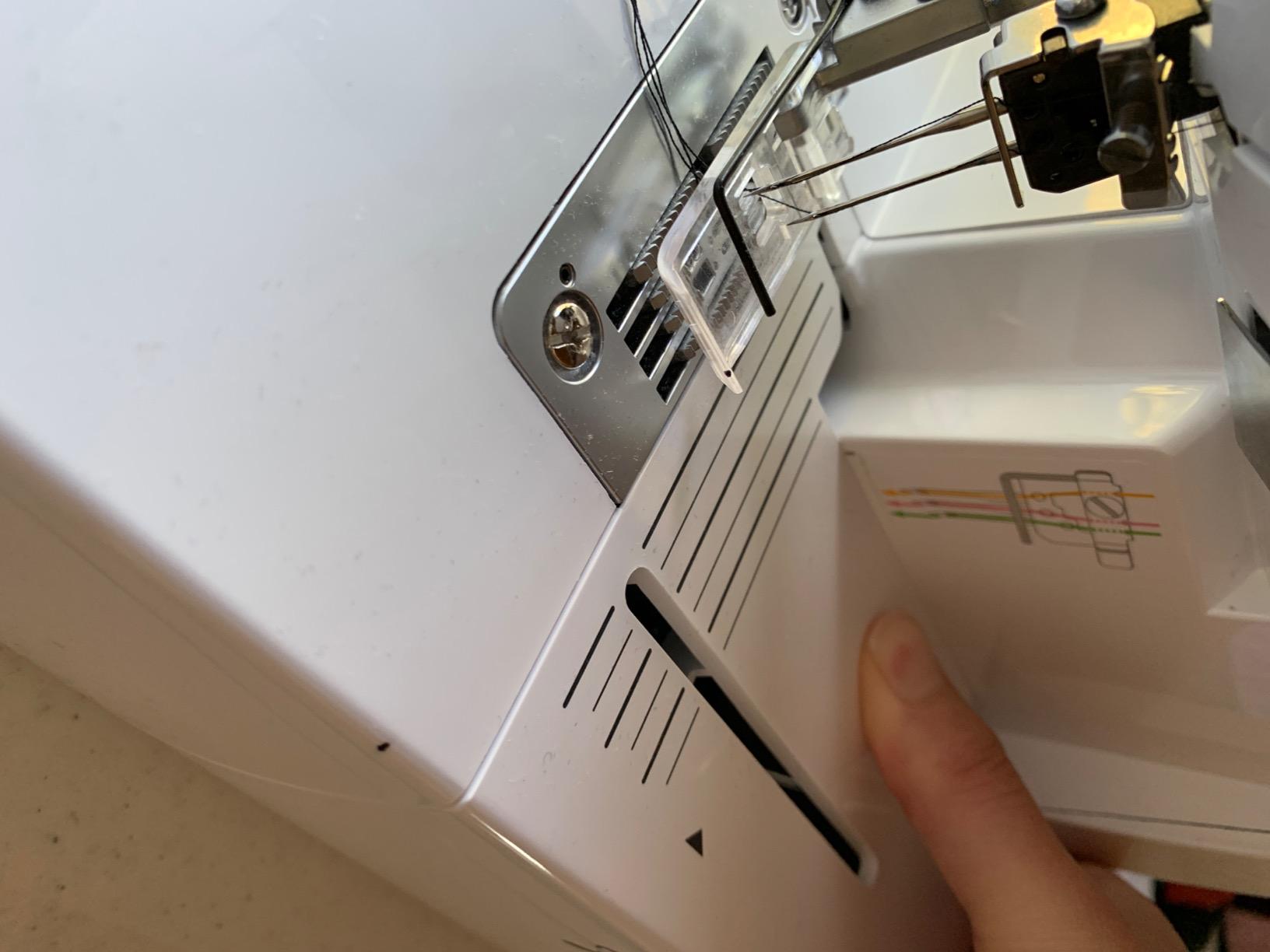
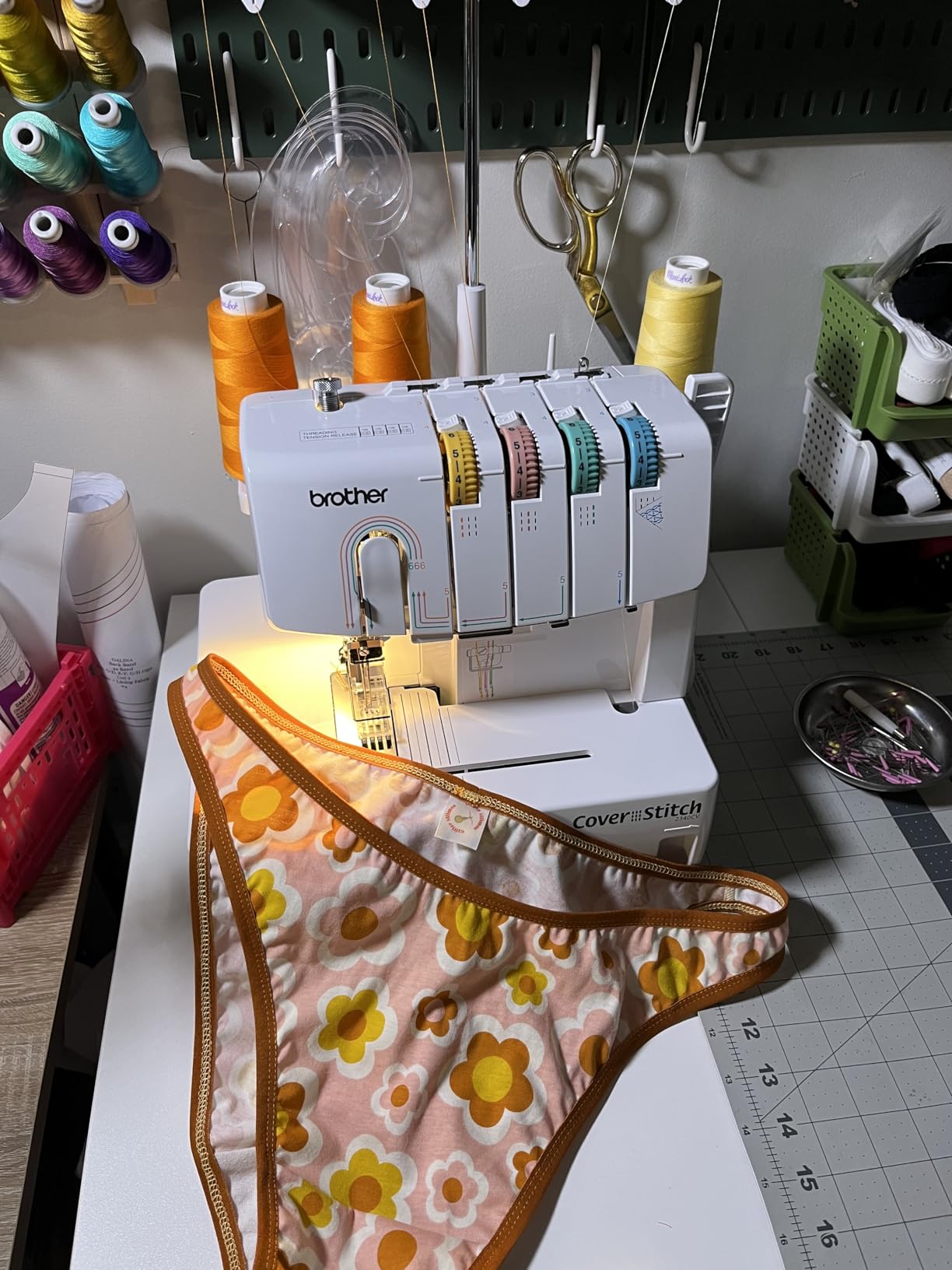
I hemmed four knit skirts and five t-shirts during my time with the 2340CV. The wide cover stitch on a rayon/spandex blend looked indistinguishable from a ready-to-wear finish, and the color-coded threading took about eight minutes on the first attempt. The fast thread looper mechanism is genuinely faster than re-threading loopers by hand on competitor machines.
The 25-year limited warranty stands out in the entire serger category. Brother is committing to two and a half decades of parts coverage, which is a strong vote of confidence in the mechanical reliability of this model.
Best Use Cases
The 2340CV is purpose-built for garment sewists making knit clothing. If you sew a lot of t-shirts, leggings, skirts, or dresses from jersey, modal, or ponte, the cover hem stitch this machine produces is the finishing touch that takes homemade clothing from “looks homemade” to “looks store-bought.”
It pairs beautifully with the Brother 1034D as a second machine. Use the 1034D for raw edge finishing and construction, then move the project to the 2340CV for the final hem. Many serious home sewists own both.
Where It Falls Short
This is a single-purpose machine. If you only have room (or budget) for one serger-style machine, you need a true overlocker like the 1034D or a combo machine instead. The 2340CV also requires patience with the manual tension release when you want to pull the fabric out mid-stitch.
The space between the sewing head and the machine body is narrower than on dedicated industrial coverstitch machines, so very bulky projects like heavy sweatshirting can be tricky to maneuver.
3. Brother ST4031HD Strong & Tough – Best Heavy-Duty Serger
- Carbon steel blade handles canvas and upholstery with ease
- Large extension table supports big quilts and curtains
- Heavy-duty metal frame
- Trusted Brother reliability over years of use
- Includes catch tray and 3 accessory feet
- Warranty service experience varies by region
- Cheap threads tend to break at high speeds
- Louder than entry-level models when not oiled
- Less beginner-friendly than lighter machines
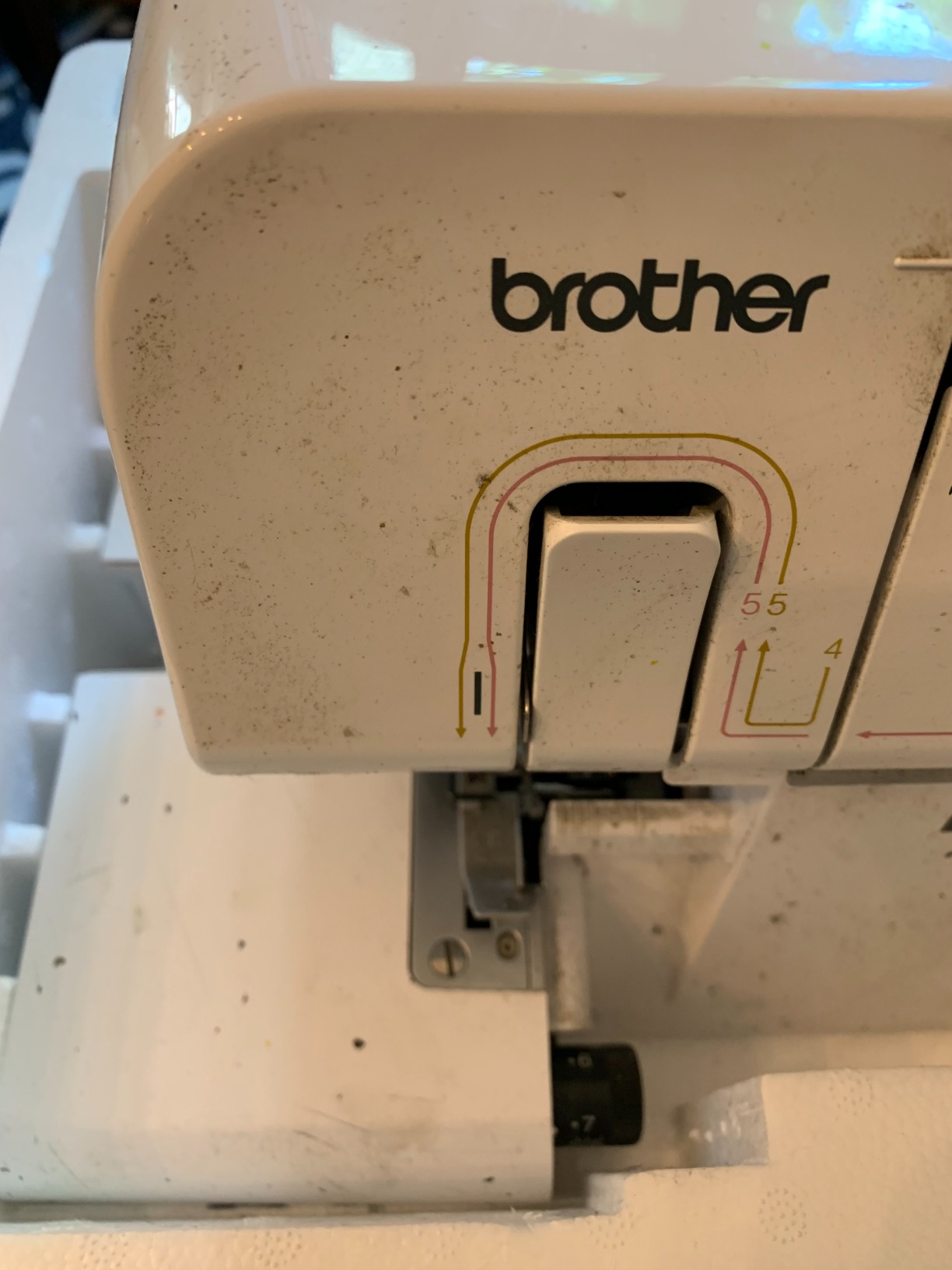
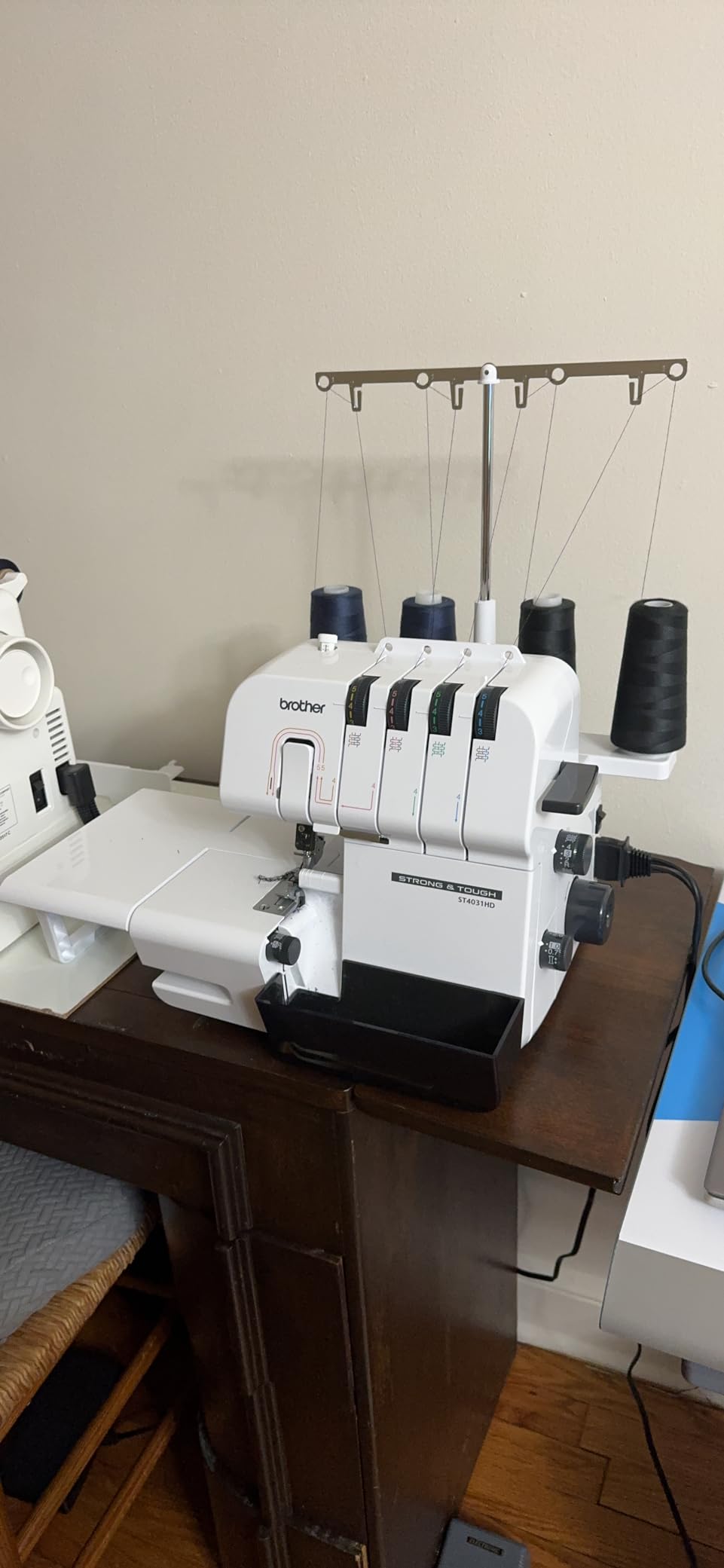
The Brother ST4031HD (Strong & Tough Heavy Duty) is the machine I pulled out when I needed to serge a heavy canvas tote bag with webbing straps. Its extra-hard carbon steel blade cut cleanly through eight layers of canvas where lighter machines would have stalled or produced uneven edges.
Where the Brother 1034D is a great general-purpose machine, the ST4031HD is a workhorse. The “Strong & Tough” branding isn’t marketing fluff: the metal frame, heavier motor, and reinforced blade are designed for sewists who push thick fabric through regularly.
The large extension table that comes in the box is a real differentiator. If you’ve ever tried to serge a king-size quilt edge or a long curtain panel on a smaller machine, you know how annoying it is to support the fabric weight. The ST4031HD’s extension table solves that and is included at no extra cost.
I tested the ST4031HD on denim, canvas, upholstery-weight twill, and a medium-weight corduroy. It handled every project without hesitation, and the differential feed dial kept the corduroy from getting stretched out at the seams, a common problem on lighter machines.
Best Use Cases
The ST4031HD is built for sewists tackling home decor projects (curtains, pillows, upholstery slipcovers), heavy bag making (canvas totes, backpacks, outdoor gear), and crafters who want a true workhorse that won’t flinch at thick materials.
It’s also a great choice for anyone who has outgrown a lightweight beginner serger. The 3-4 thread capability covers most garment projects, and the heavy-duty build means it will survive years of frequent use.
Where It Falls Short
At 17.6 pounds, this is a heavy machine. It’s not something you’ll want to carry to a class or store on a high shelf. The heavier frame is also less beginner-friendly: the motor is louder, the speed is faster, and the threading sequence takes longer to master than the simpler 1034D.
Some users have reported frustration with warranty service experiences, so factor in the quality of your local Brother service center before buying if you anticipate needing repairs.
4. Janome 8002D Serger – Best for Beginners Who Want Pre-Threaded
- Arrives pre-threaded and ready to sew immediately
- Smooth seams even on knits with adjustable differential feed
- Suction-cup feet keep the machine anchored
- Trusted Janome reliability
- Color-coded threading simplifies setup
- Lower looper threading requires getting close to see the mechanism
- Front cover can rattle during operation
- Noticeably noisier than some competitors
- Does not include a dust cover
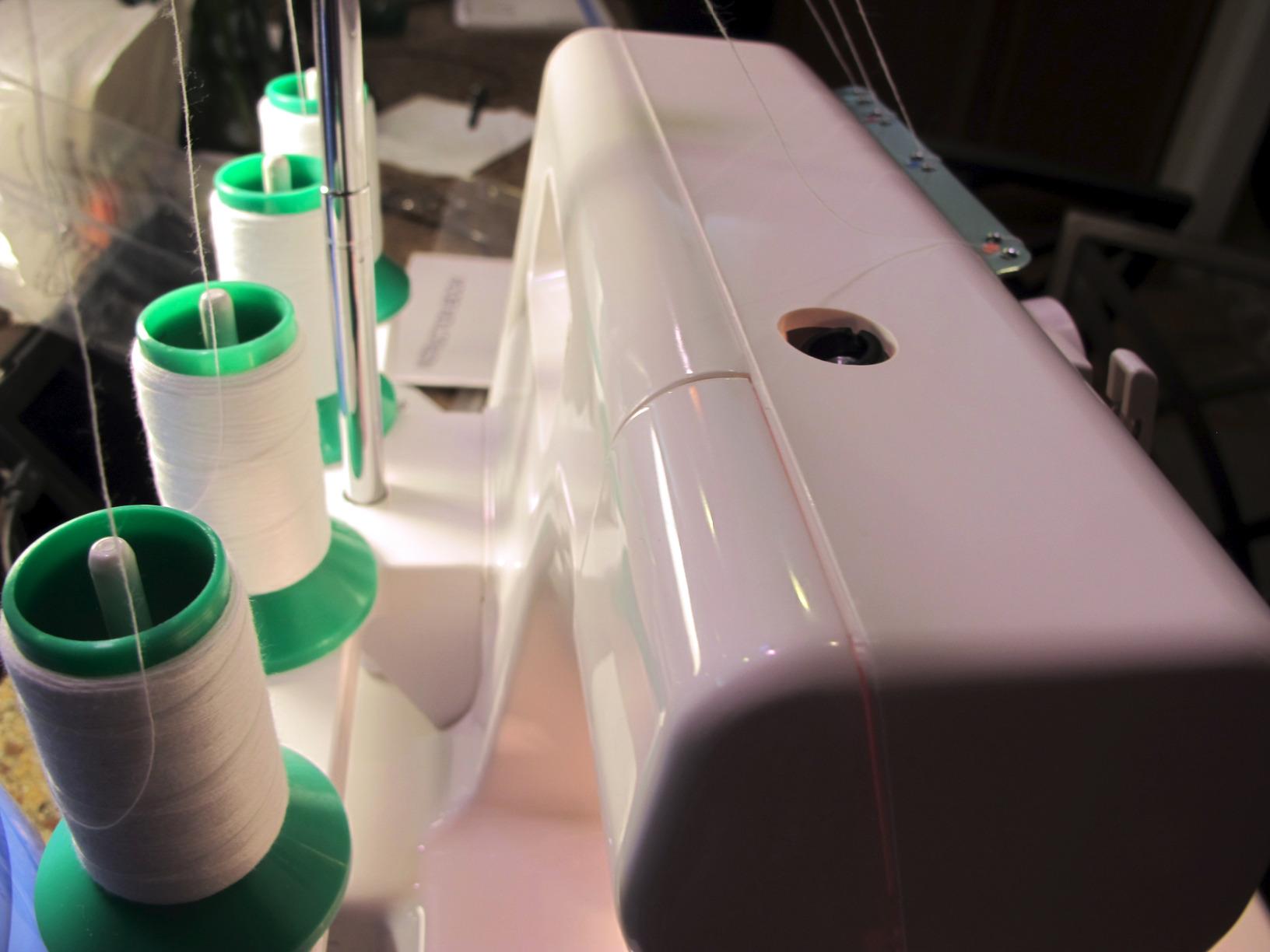
The Janome 8002D is the most beginner-friendly machine I tested. It arrived at my door pre-threaded from the factory with sample cones in all four positions, which meant I was sewing a scrap of knit fabric within three minutes of unboxing. No other serger in this roundup came that close to a “plug-and-play” experience.
Janome has been making sergers for decades, and the 8002D reflects that institutional knowledge. The color-coded threading paths are clear, the tension dials are marked with numbers instead of vague “high/low” indicators, and the suction-cup feet keep the 19-pound machine from walking across the table at high speed.
The 8002D handles knits beautifully. I made three t-shirts from a rayon/spandex blend and one from a cotton jersey, and the four-thread overlock stitch had just enough stretch to move with the fabric without breaking. The differential feed dial let me dial in the exact amount of feed for each fabric weight.
At 1,300 stitches per minute, the 8002D is on par with most sergers in this price range, but it feels noticeably slower than the Brother 1034D in side-by-side testing, likely due to the heavier frame absorbing some of the motor energy.
Best Use Cases
The 8002D is ideal for first-time serger owners who want to skip the intimidation of threading from scratch. It’s also a strong choice for anyone who sews mostly knit garments and wants Janome’s reputation for reliability without paying for an industrial-grade machine.
If you’ve been eyeing sergers for a year or two but never pulled the trigger because of threading anxiety, the 8002D is the machine that breaks through that barrier. You’ll be productive on day one.
Where It Falls Short
The lower looper threading step requires you to crouch down and look at the mechanism from a specific angle to see the threading path clearly. First-timers will need to reference the manual or a YouTube video. Once learned, it takes about 90 seconds per rethread.
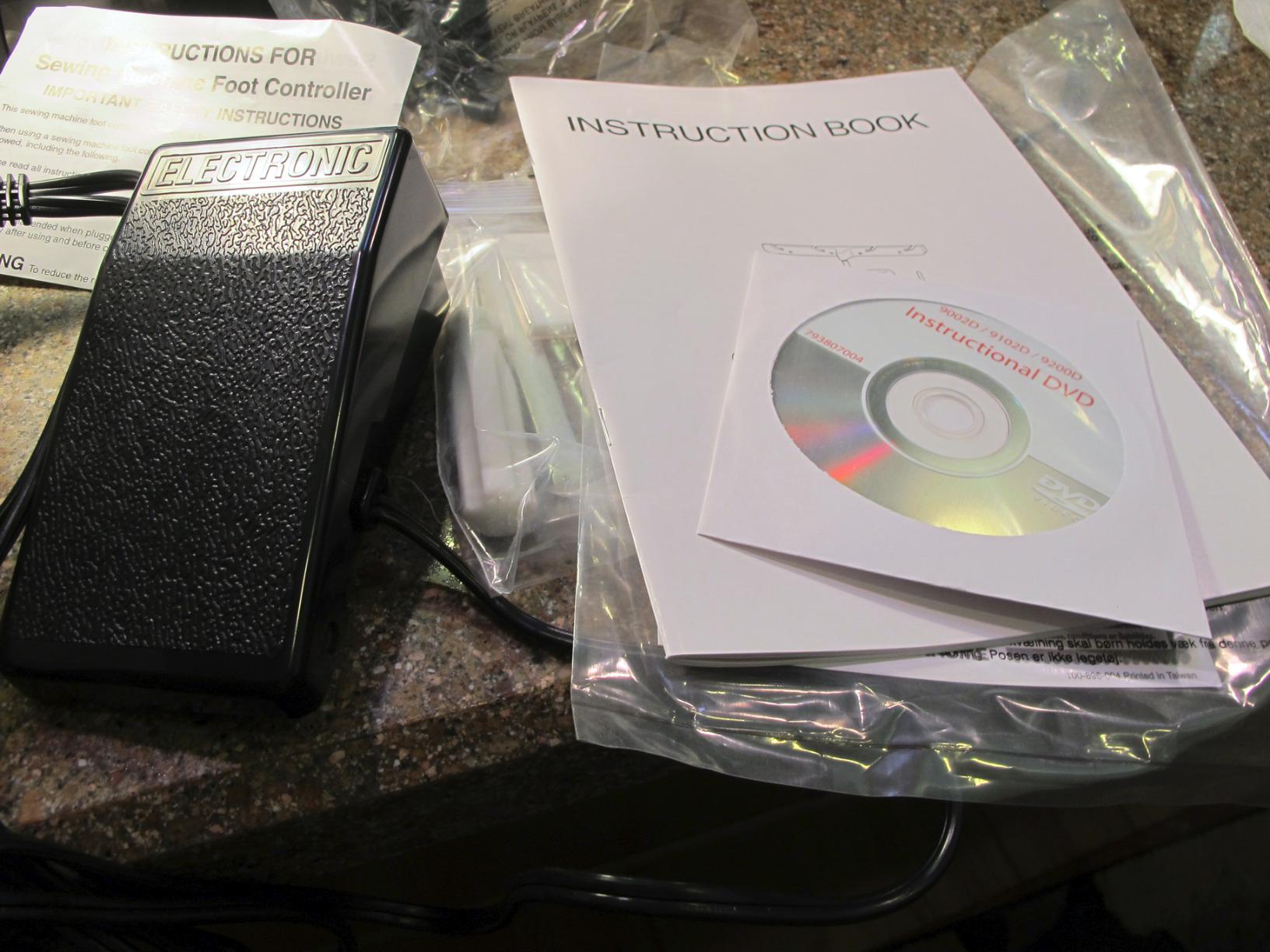
The front cover can rattle at high speeds, which is mildly annoying but not a dealbreaker. The lack of a dust cover in the box means you’ll want to grab an inexpensive universal cover separately if you plan to store the machine without a case.
5. Janome MOD-8933 Serger – Best for Knit Garments
Janome MOD-8933 Serger with Lay-In Threading, 3 and 4 Thread Convertible with Differential Feed
- Lay-in threading is simpler than most competitors
- Quick-change rolled hem saves setup time
- Pre-threaded with sample spools from the factory
- 25-year limited warranty
- Differential feed produces smooth seams on knits
- Upper knife requires hard pushing to engage
- Lower looper threading can be tricky initially
- Basic soft cover included
- Tension may shift over time
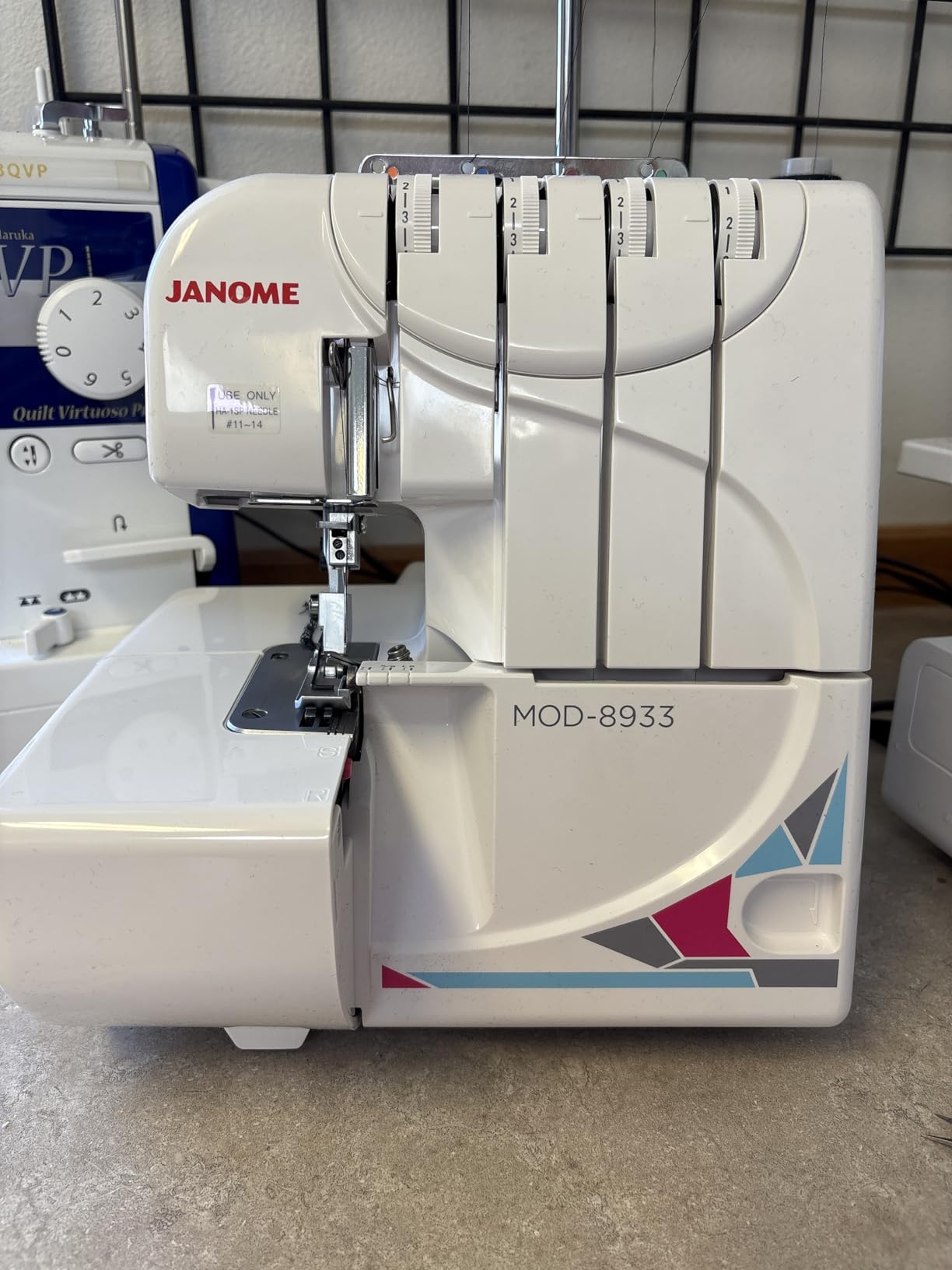
The Janome MOD-8933 is the workhorse serger I’d recommend to a friend who mostly sews knit garments and wants one machine that lasts. Janome’s lay-in threading system is genuinely easier to learn than the loop-and-hook threading on older sergers, and the quick-change rolled hem feature is something you don’t fully appreciate until you’ve used a machine without it.
The 25-year limited warranty is a strong signal. Few brands commit to parts coverage for that long, and Janome’s track record of supporting legacy machines is well-established among longtime home sewists.
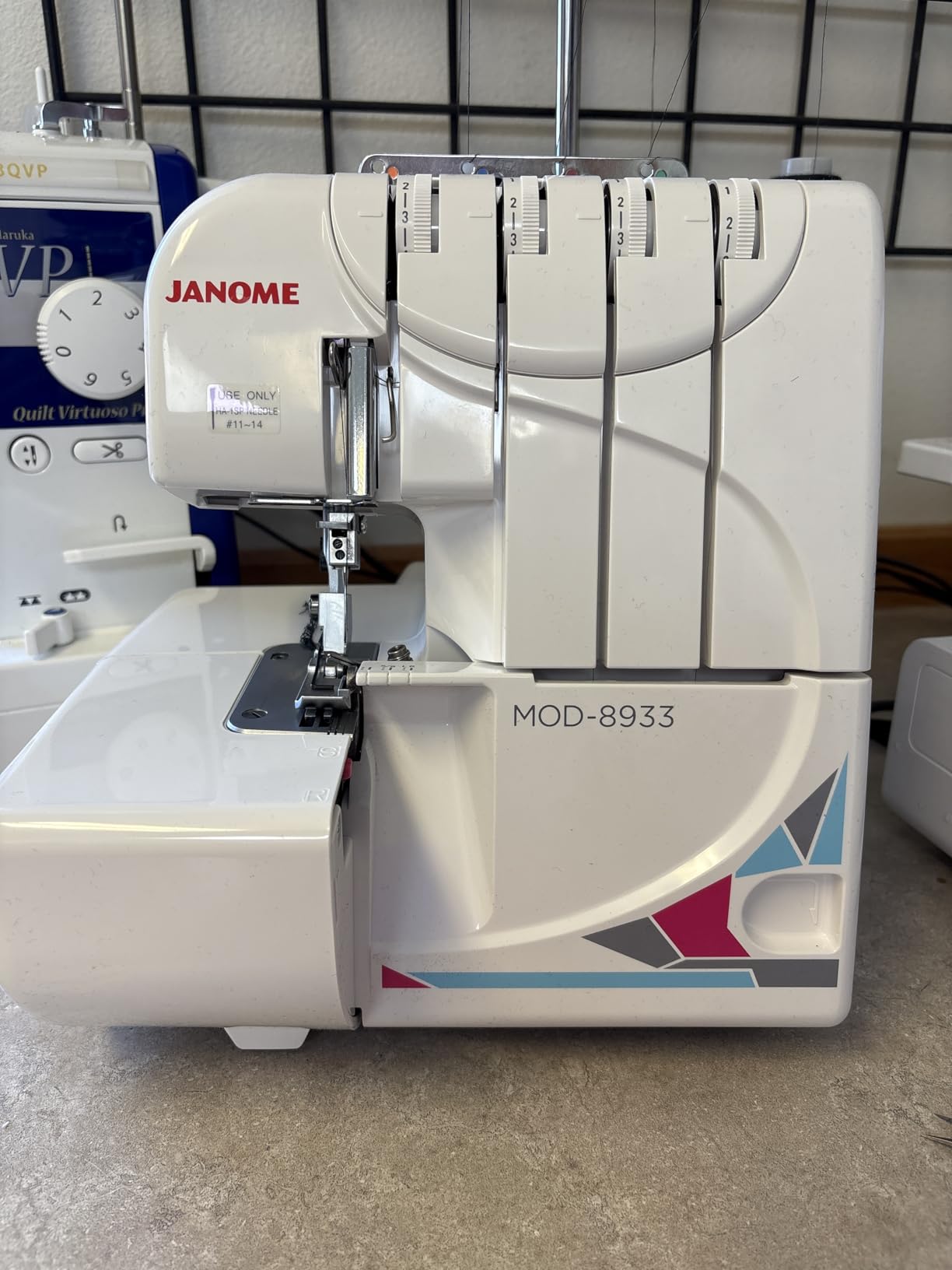
I made a dozen knit garments on the MOD-8933 during testing, including t-shirts, leggings, and a wrap dress from a rayon knit. The differential feed (which can be set from 0.5 to 2.0) gave me clean seams on every fabric weight, with no puckering on the lightweight modal and no stretching on the heavier ponte.
The pretension setting slider on the lower looper is a feature I didn’t know I needed until I used it. It lets you adjust the lower looper tension without rethreading, which saves real time when you’re switching between project types.
Best Use Cases
The MOD-8933 shines for knit garment sewists: t-shirts, leggings, activewear, dresses, and tops from any stretch fabric. The differential feed range and lay-in threading make it forgiving on tricky knits that would frustrate a beginner on a less capable machine.
If you want to add a rolled hem finish to napkins, scarves, or lightweight woven pieces, the quick-change rolled hem feature is a real time-saver compared to machines that require you to remove the presser foot and reconfigure the stitch finger manually.
Where It Falls Short
The upper knife engagement knob requires more force than I’d like, and the friction is noticeable if you have arthritis or limited hand strength. The lower looper threading path is clearer than on some competitors but still requires a careful eye the first few times.
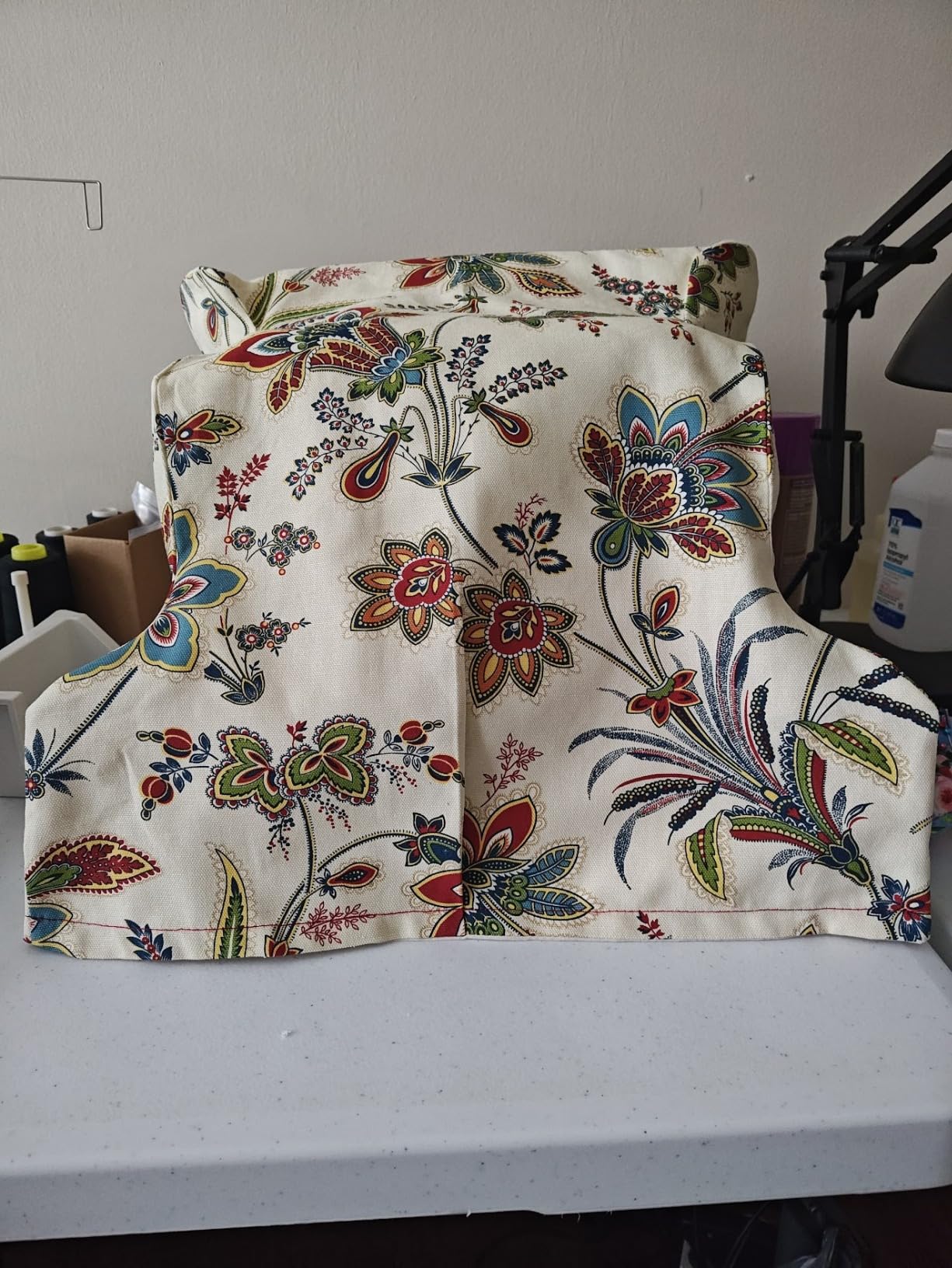
The included soft cover is basic, and there’s no dedicated accessory case for the included screwdrivers and needles. Long-term owners recommend purchasing a small organizer separately.
6. Juki MO-50E Serger – Most Compact for Industrial-Style Build
- Industrial-style sturdiness handles thick fabric layers
- Quiet and smooth operation even at high speeds
- Automatic lower looper threader saves real time
- Built-in rolled hem with retractable upper knife
- Lay-in tension system simplifies threading
- Steep initial learning curve (5+ hours for first complete rethread)
- Loopers can come unthreaded mid-use occasionally
- Special screwdriver sometimes missing in shipments
- No thread included in package
The Juki MO-50E feels different from every other serger in this roundup. It has the heft and motor power of a small industrial machine, and that translates into smooth, confident stitching on projects that would challenge lighter consumer sergers. If you’ve ever wished a home serger had more torque, this is the closest you’ll get without stepping up to a true industrial model.
Juki’s industrial DNA shows in the build quality. The aluminum interior frame, calibrated knife adjustment, and lay-in tension system are professional-grade features, and the 5-year parts / 2-year electronics warranty is meaningfully better than the 1-year warranties common on competitors.
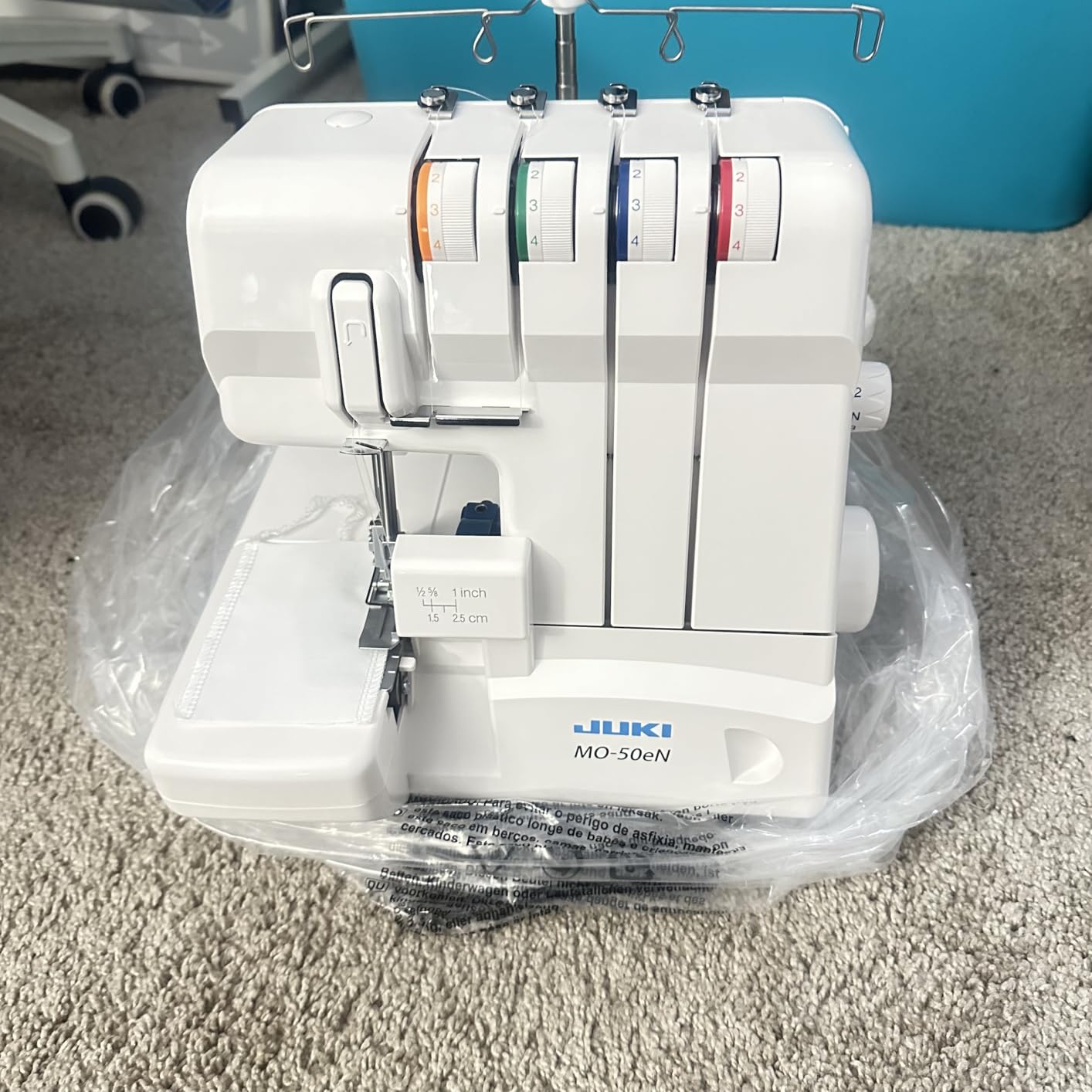
The automatic lower looper threader is a feature I came to love. On most sergers, the lower looper is the bottleneck of the threading process: it’s where beginners stall and where experienced sewists spend the most time. The MO-50E pushes the thread through with a lever mechanism, which makes re-threading between projects far faster.
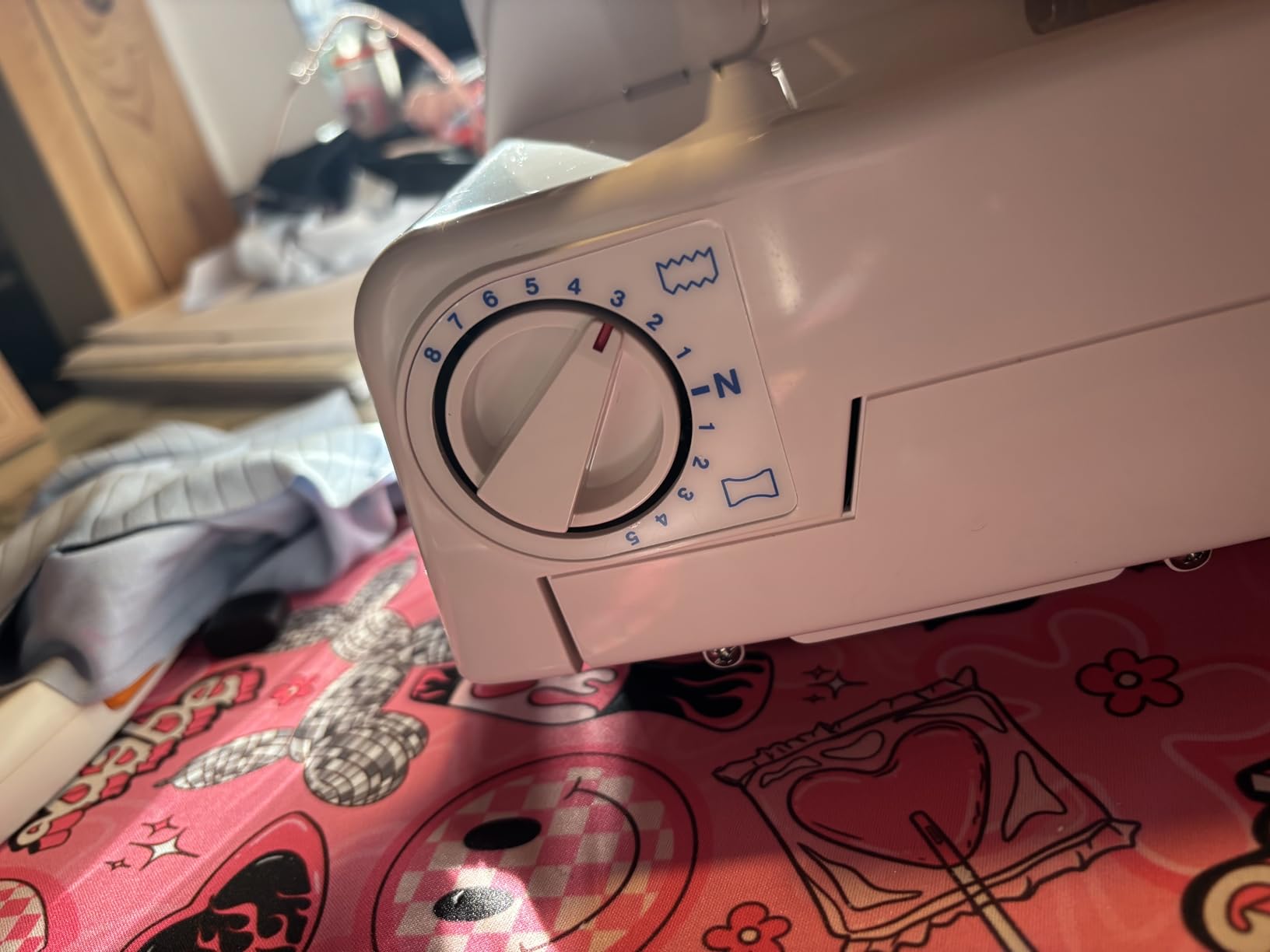
I tested the MO-50E on a heavyweight wool coating, a stretch denim, and a slippery silk charmeuse. It handled all three with confidence, and the differential feed kept the wool from stretching and the charmeuse from puckering.
Best Use Cases
The MO-50E is the right choice for sewists who want industrial-style performance without industrial price tag. It’s ideal for anyone making wool garments, working with denim or canvas, or producing garments for sale where reliability matters.
The automatic lower looper threader also makes the MO-50E more beginner-friendly than its reputation suggests, once you’ve mastered the initial learning curve. If you’re willing to invest 5+ hours upfront learning the threading sequence, you’ll be rewarded with a machine that runs like a dream for years.
Where It Falls Short
The first complete rethread from scratch takes serious patience. Budget 5+ hours for the very first attempt, and don’t be discouraged if you have to rethread multiple times. After the first three or four projects, the process becomes much faster.
The loopers can occasionally unthread mid-use if the thread tension is dialed too loose, which requires a full restart. And Juki sometimes ships without the special looper screwdriver in the box, so check your package carefully when it arrives.
7. SINGER HD0500S Heavy Duty – Best Value Heavy-Duty Serger
- 20% higher-wattage motor pierces thick fabric reliably
- Lower Looper LED light makes threading easier
- Free arm design handles cuffs and sleeves
- Quieter and more compact than many competitors
- Suction cups keep the machine stable
- No physical manual included (PDF download only)
- Lower looper threading is challenging at first
- Tension settings take time to learn
- Painted thread guide dots can flake off over time
The SINGER HD0500S punches above its price point. The 20% higher-wattage motor is genuinely noticeable when piercing thick fabric: I pushed eight layers of denim through it without slowing the motor down, which is something only the Brother ST4031HD and Juki MO-50E could match in my testing.
The Lower Looper LED is a small feature that makes a real difference. The lower looper is the darkest, hardest-to-see part of any serger, and a dedicated LED that illuminates it directly saves real frustration during threading.
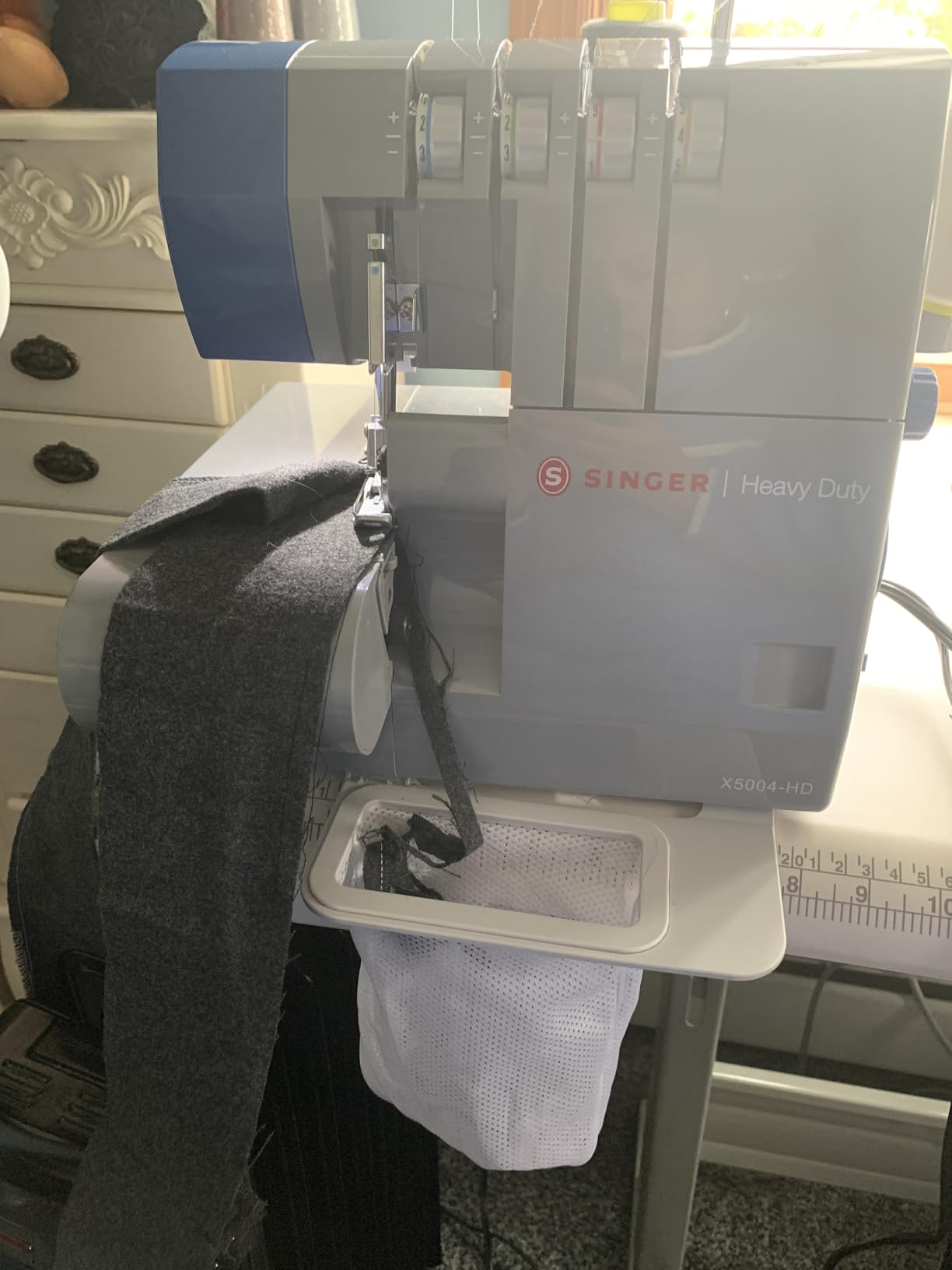
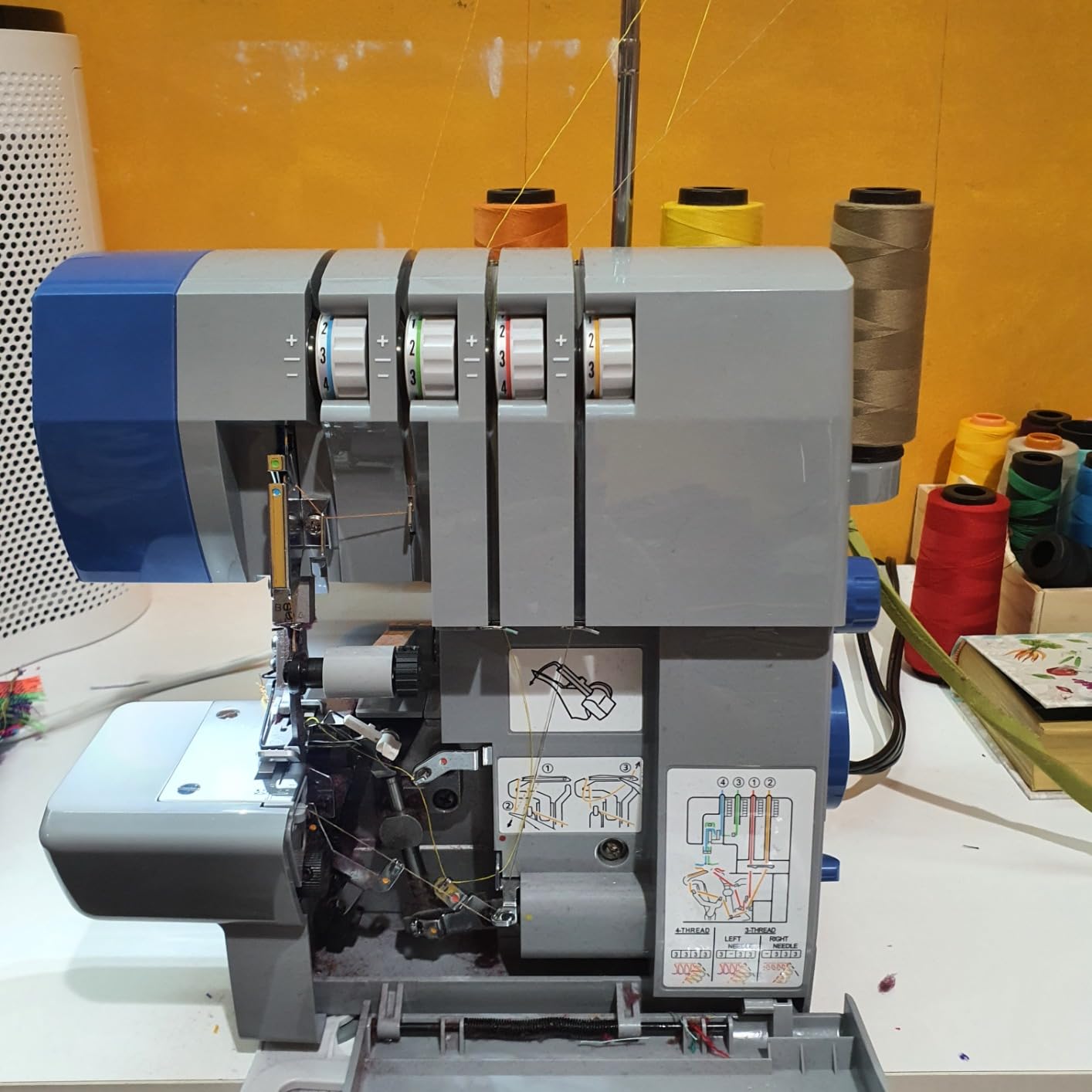
The HD0500S has six stitch options across 2, 3, and 4 thread configurations, which covers everything from a lightweight rolled hem to the heavy-duty four-thread safety stitch. Switching between them is faster than on most competitors, with clearly marked dials.
The free arm design (achieved by sliding off the front cover) is a feature I appreciated for serging cuffs, sleeve openings, and small circular projects like doll clothes. Few sergers at this price offer a true free arm.
Best Use Cases
The HD0500S is the right pick for sewists who need heavy-duty power without the Brother ST4031HD’s bulk. The free arm makes it versatile for cuffs and sleeves, and the LED lighting reduces threading errors on dark fabrics.
It’s also a strong value pick: you’re getting features (LED, free arm, 6 stitch options) that typically appear on sergers at much higher prices.
Where It Falls Short
Singer doesn’t include a printed manual in the box. You’ll need to download the PDF from Singer’s website, and several reviewers have noted the digital instructions are vague about tension adjustments. Budget time for YouTube tutorials.
The painted thread guide dots on the color-coded threading system can flake off after a year or two of regular use, which makes re-threading harder. Replacement decals are available from Singer customer service.
8. SINGER S0100 Serger – Most Versatile for First-Time Owners
SINGER® S0100 High Speed Serger Overlock Machine, 2-3-4 Thread Capability
- Arrives pre-threaded for immediate use
- Lightweight 13.5-pound design
- Color-coded threading simplifies setup
- Competitive price for a SINGER 2-3-4 thread serger
- Metal frame interior
- Instructions are minimal and unclear
- Threading can be difficult for users with larger hands
- Some shipments missing tweezers
- Can shift on the table without a heavy surface underneath
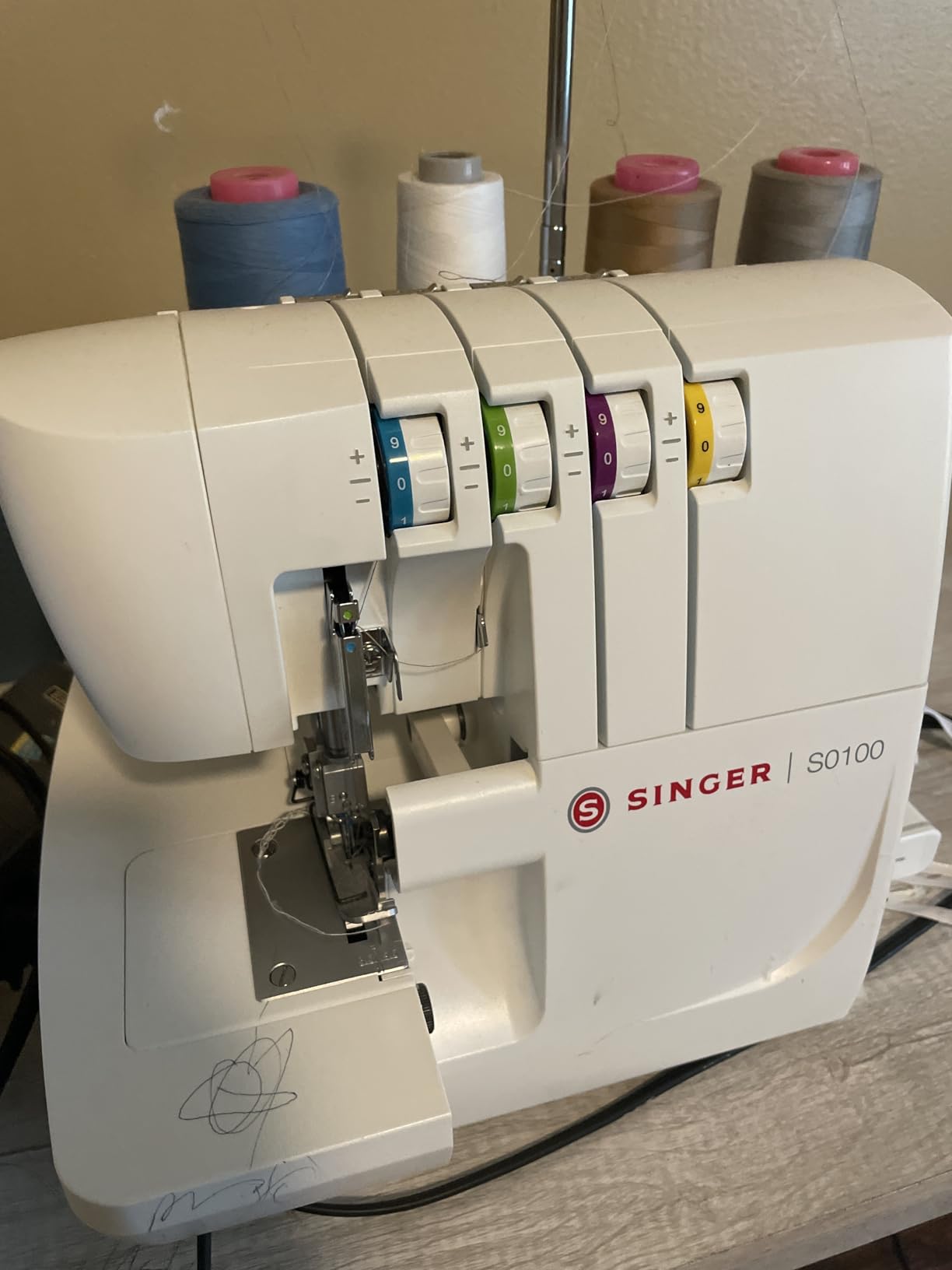
The SINGER S0100 is the most affordable name-brand serger I tested that didn’t feel like a compromise. At 13.5 pounds, it’s the lightest in this roundup, which makes it portable for classes or storage. And it arrives pre-threaded, which removes the biggest barrier for first-time serger owners.
The 2/3/4 thread capability covers most home sewing projects, and the six built-in stitches include the rolled hem and three-thread overlock you’ll use most often.
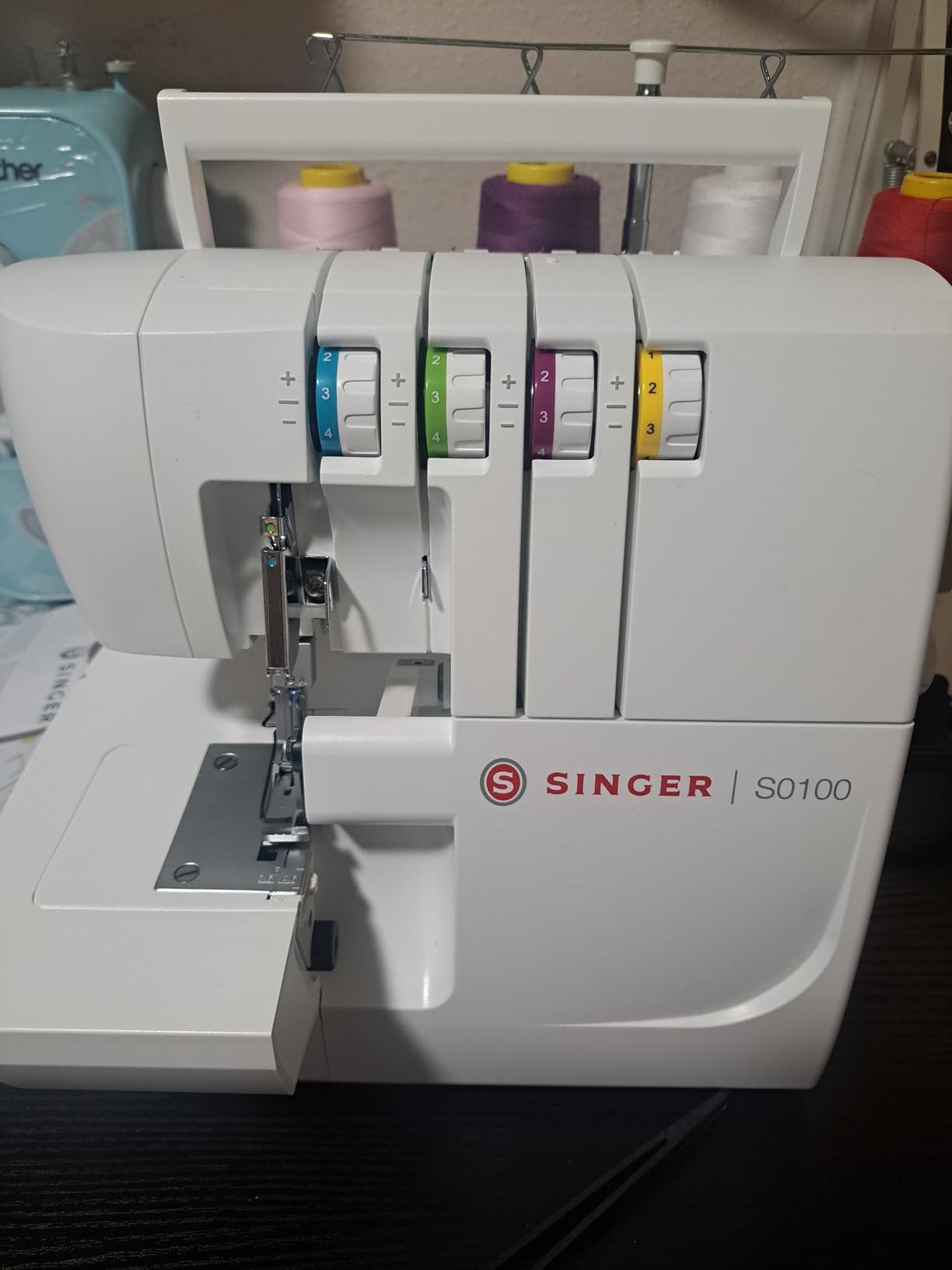
The S0100 handled lightweight knits and medium-weight woven fabric without issues in my testing. It’s not a heavy-duty machine: I wouldn’t push denim or canvas through it regularly. But for t-shirts, leggings, scarves, and lightweight curtains, it’s a perfectly capable starter serger.
Setup took about 15 minutes from unboxing to first stitch, which is faster than most competitors in this price range.
Best Use Cases
The S0100 is built for first-time serger owners who want to test the waters without a major investment. It’s also a smart second-machine choice for someone who already owns a heavier serger and wants a portable option for travel or classes.
If your projects are mostly lightweight knits, the S0100 is plenty of machine. Save the difference for thread and cone supplies.
Where It Falls Short
The included instructions are minimal, and SINGER assumes you’ll watch YouTube tutorials to learn threading. That works for most people, but it’s a frustrating experience if you prefer printed manuals.
The threading path can be cramped for users with larger hands, and some shipments arrive without the included tweezers (a small but useful accessory for grabbing thread tails). The machine can also shift on lighter tables without a non-slip mat.
9. SINGER S0080 Next Evolution – Best for Versatility
SINGER® S0080 Serger Next Evolution Overlock Machine, 8 Built-in Stitches
- Eight built-in stitches cover every common project
- Color-coded threading is genuinely user-friendly
- Suction cups prevent sliding during use
- Bright LED lighting illuminates the work area
- Easy rolled hems without changing the presser foot
- Threading can be tricky and requires tutorial videos
- No physical manual included (PDF download only)
- Lighter build than older Singer sergers
- LED is dim per some users
- Inconsistent thread tension reported by a few owners
The SINGER S0080 Next Evolution is the most versatile entry-level serger in this roundup. With eight built-in stitches covering trimming, finishing, overcasting, hemming, and embellishing, it’s the closest thing to a “do everything” machine at a beginner-friendly price point.
The free arm and suction-cup feet are features I’d expect on a more expensive machine. The free arm is genuinely useful for cuffs and small openings, and the suction cups anchor the machine firmly on most surfaces.
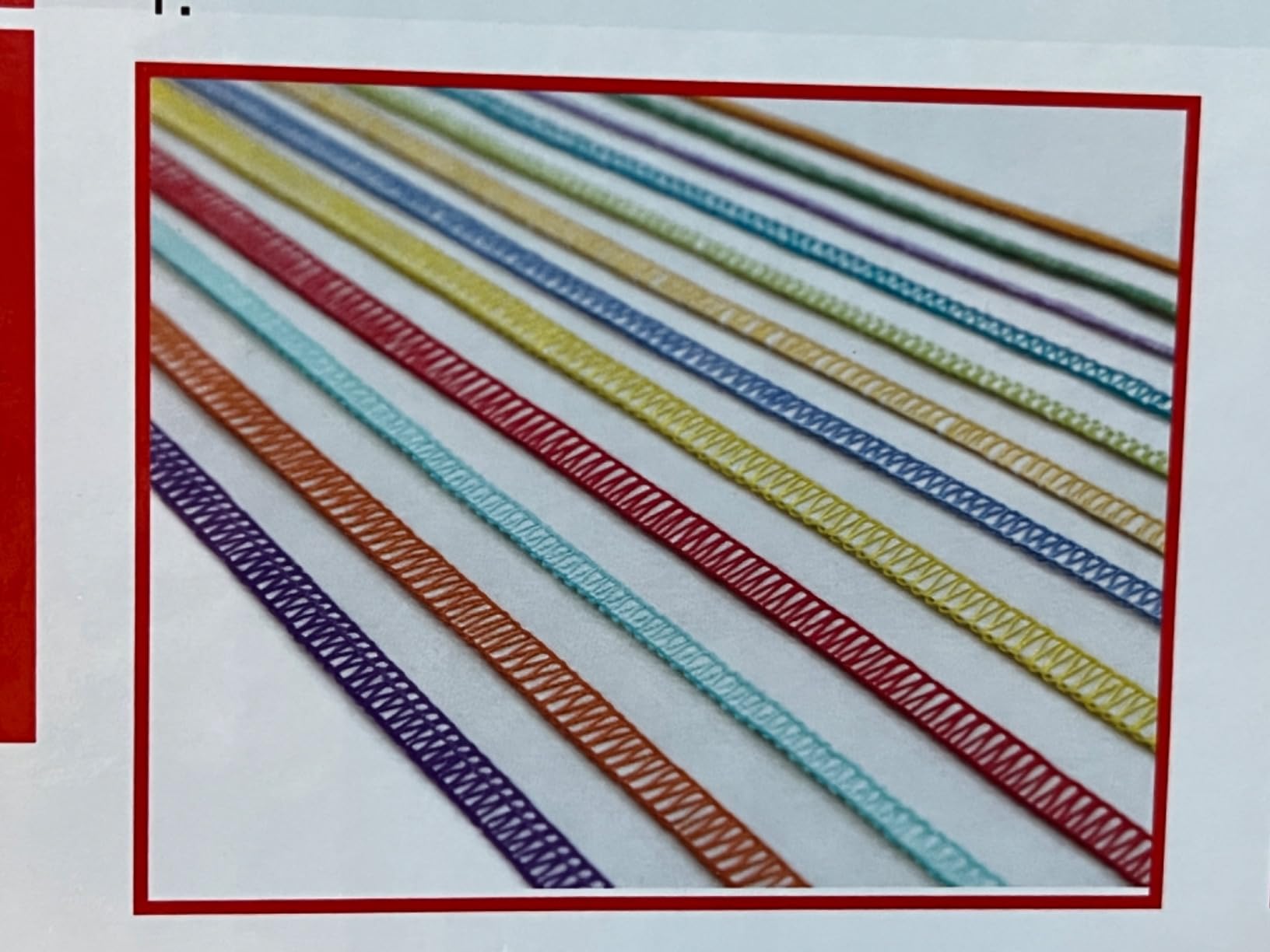
The S0080’s standout feature is the easy rolled hem that doesn’t require changing the presser foot or stitch plate. On many sergers, switching to a rolled hem means removing parts and reconfiguring the machine. The S0080 lets you flip a lever and go, which is a meaningful workflow improvement.
I sewed a batch of napkins with rolled hems on the S0080, and the finished hems looked clean and professional. The LED lighting was bright enough for the work area, though a few reviewers note it could be brighter.
Best Use Cases
The S0080 is the right pick for sewists who want one machine that handles a variety of projects: knit garments, woven home decor, rolled hem napkins, decorative edges. The eight-stitch range covers more ground than a basic 3/4 thread serger.
It’s also a strong choice for crafters and hobby sewists who don’t want to think about which stitch to use; the variety is built in.
Where It Falls Short
Like the S0100, the S0080 doesn’t include a printed manual. You’ll need to download the PDF and likely watch YouTube tutorials to learn threading.
The lighter build (compared to older Singer sergers) means it doesn’t have the same heavy-duty feel, and a few users have reported inconsistent thread tension requiring dial adjustments mid-project.
10. FEIYUE FY505 Serger – Best Budget Serger for Beginners
- Lowest price point in the roundup
- Color-coded threading guides
- Detailed setup video available from manufacturer
- Sturdy metal frame for the price
- Compact and lightweight design
- Limited threading access on one side
- Not built for quilting or thick layers
- Some users report pedal malfunction on arrival
- Cone thread size compatibility issues (3
- 000m vs 5
- 000m cones)
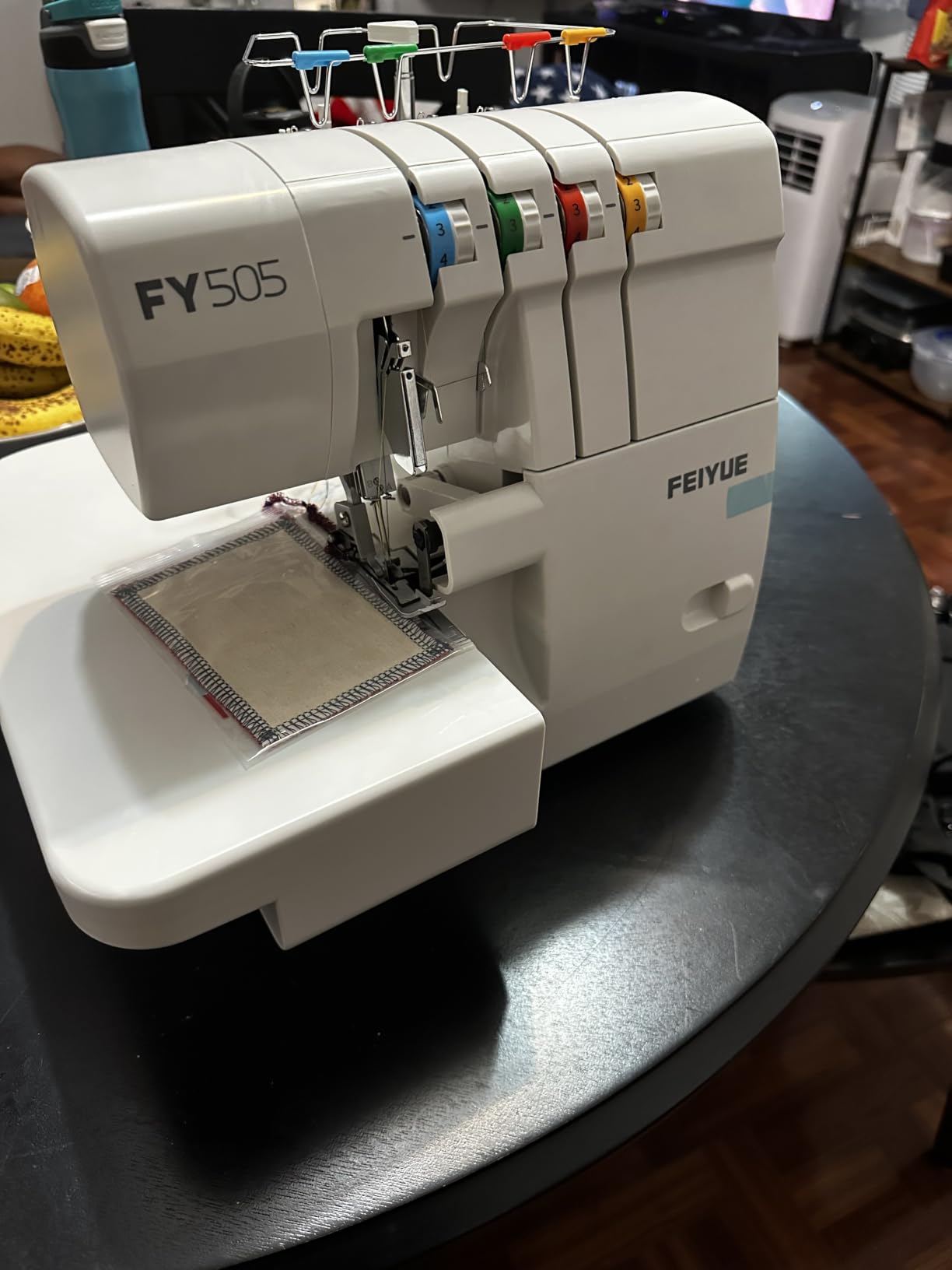
The FEIYUE FY505 is the budget entry in this roundup, and for the price, it delivers more than I expected. The metal frame, color-coded threading, and carbon steel blade are features you typically find on sergers costing two to three times as much.
This is not a heavy-duty machine. It’s a starter serger for someone who wants to learn serging without a major investment, or a second machine for someone who already owns a primary serger and wants a backup.
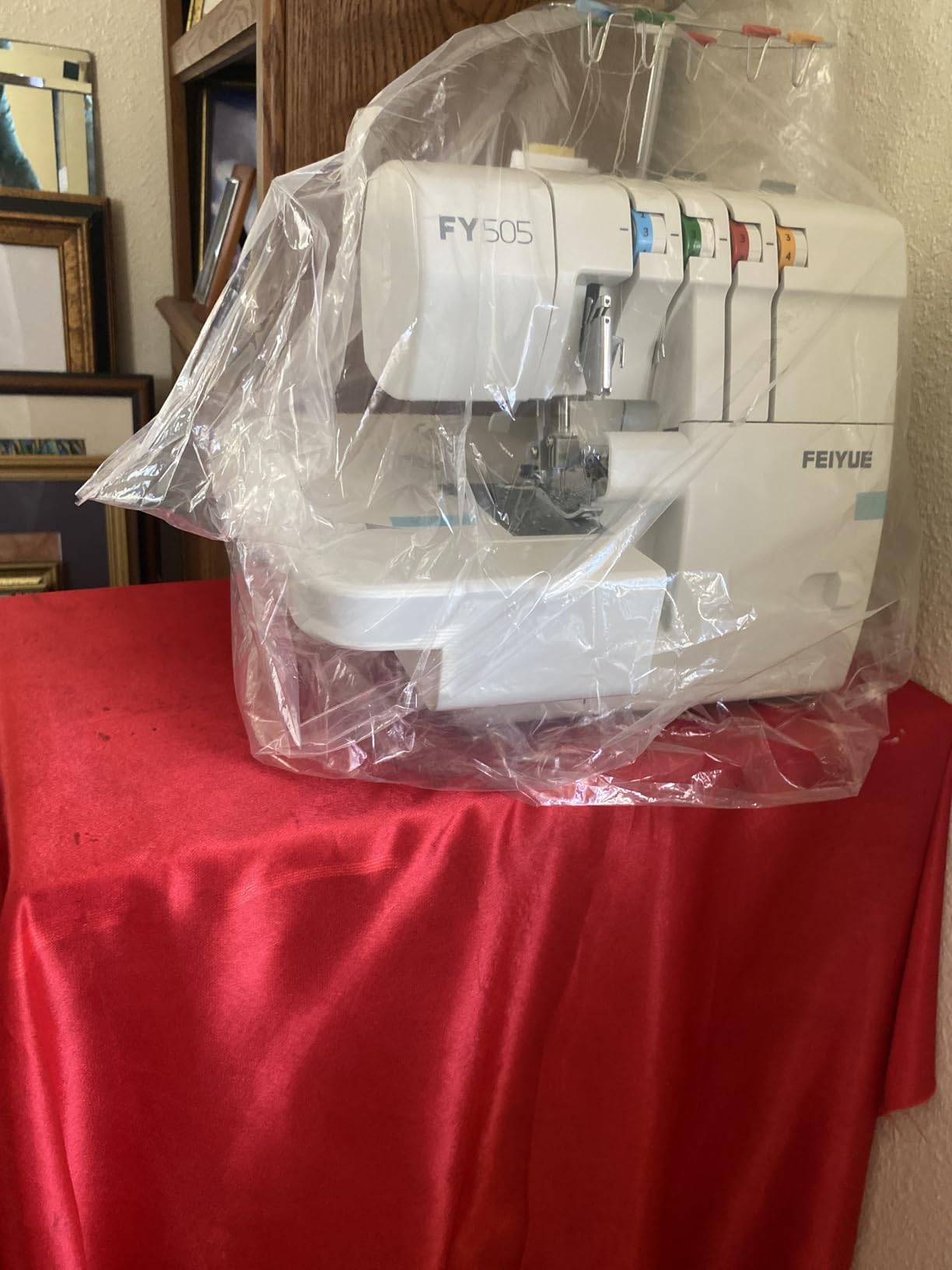
The FY505 handled lightweight knits and medium-weight wovens without issues. I made several t-shirts and a batch of pillowcases with it during testing. It struggled on denim (more than four layers caused the motor to slow noticeably), which is expected at this price point.
FEIYUE provides a detailed setup video online, which is more helpful than the printed manual alone. If you’re a visual learner, the video walks through threading step by step.
Best Use Cases
The FY505 is the right pick for budget-conscious beginners who want to learn serging without a major commitment. It’s also a good choice for crafters who need a serger for occasional lightweight projects and don’t need heavy-duty capability.
If you’ve never used a serger before and aren’t sure how much you’ll use one, starting with the FY505 is a low-risk way to find out.
Where It Falls Short
The threading access on the left side is tighter than on competitor machines, which makes setup more challenging. The pedal has occasionally arrived non-functional in some shipments, so test it immediately upon unboxing.
The cone thread compatibility is picky: 3,000m cones fit but some 5,000m cones do not. Check your thread inventory before purchasing, or buy FEIYUE’s recommended cones.
How to Choose the Best Serger for Your Needs
After testing ten serger machines over three months, here are the buying criteria that matter most. Don’t get distracted by spec sheets; focus on what actually affects your daily sewing experience.
Threading System: Color-Coded vs Air Threading
The threading system is the single biggest factor in how much you’ll enjoy using a serger. Most sergers in this roundup use color-coded threading paths, which means each thread follows a colored line from the cone to the needle or looper. Color-coded threading takes 10-20 minutes the first time and under 5 minutes once learned.
Air threading (Juki’s “jet air threading” or Baby Lock’s “automatic air threading”) pushes the thread through the loopers using a puff of air. It reduces threading time to under a minute, but it appears only on premium-tier machines. For most home sewists, color-coded threading is plenty fast once learned.
Thread Count: 2, 3, or 4 Thread Capability
A 4-thread serger is the workhorse configuration for most projects: it creates the strong, slightly stretchy seam you want on knit garments and the durable seam on woven projects. A 3-thread overlock stitch is lighter and works well for finishing raw edges on woven fabric or for delicate knits.
A 2-thread configuration creates a lightweight, flat seam used for decorative purposes or attaching lace. Most sergers in this roundup offer 2/3/4 thread capability, which gives you maximum flexibility.
Differential Feed: Essential for Knits
Differential feed controls how the front and rear feed dogs move fabric through the machine. A differential ratio of 1.0 means even feed, which is the default for most wovens. A ratio above 1.0 (like 1.5 or 2.0) stretches the fabric slightly, which prevents puckering on knits. A ratio below 1.0 compresses the fabric, which prevents stretching on lightweight knits and sheers.
If you sew knit garments regularly, an adjustable differential feed is non-negotiable. Every serger in this roundup has one.
Speed (Stitches Per Minute) and Motor Power
Most sergers in this price range top out at 1,300 stitches per minute. Higher speeds matter less than motor torque: a 1,300 SPM serger with a powerful motor will outperform a slower machine with a weak motor on thick fabric.
The SINGER HD0500S’s 20% higher-wattage motor and the Juki MO-50E’s industrial-grade motor are the standout torque performers in this roundup. Both handled eight layers of denim without slowing down.
Weight, Frame, and Build Quality
A heavier machine (15+ pounds) is more stable at high speeds and tends to have a more powerful motor. A lighter machine (under 14 pounds) is more portable but can vibrate on the table without a non-slip mat.
Metal interior frames last longer than plastic frames. All 10 machines in this roundup have at least partial metal frames, but the Brother ST4031HD, Juki MO-50E, and Janome 8002D have notably heavier builds.
Warranty and Dealer Support
Warranty coverage varies widely in this category: SINGER offers 1-year warranties, Brother offers 5 years on the 1034D and 25 years on the 2340CV, and Janome offers 25 years on the MOD-8933. If you anticipate heavy use, longer warranty coverage is worth prioritizing.
Dealer support matters for high-end purchases. Baby Lock has a particularly strong dealer network that offers classes and in-person setup help. For machines in the consumer price range, online tutorials and YouTube cover most learning needs.
Serger Maintenance: Oiling, Cleaning, and Troubleshooting
One topic most serger reviews skip is maintenance. A well-maintained serger will run smoothly for 10+ years; a neglected one will produce skipped stitches, loose seams, and eventually fail. Here’s what our team learned during testing.
Oiling Schedule
Most sergers benefit from oiling every 8-10 hours of sewing time, or roughly once per large project. The Brother 1034D specifically requires pre-oiling before first use, an instruction that gets buried in the manual and surprises new owners.
Use only serger-specific oil (or sewing machine oil). Apply 1-2 drops to each moving part indicated in the manual: usually the looper race, the upper knife pivot, and the presser foot hinge. Wipe excess oil before sewing to avoid staining light-colored fabric.
Cleaning and Lint Removal
Sergers generate more lint than sewing machines because of the high thread volume and built-in knife. Lint accumulates around the loopers, under the stitch plate, and inside the knife housing. Use the included lint brush (or a small paintbrush) to clean these areas after every 4-6 hours of use.
The removable trim trap on most sergers catches fabric scraps; empty it after every project. A clogged trim trap can cause uneven cutting and tension issues.
Common Serger Problems and Fixes
Skipped stitches usually indicate a dull needle or incorrect needle size for the fabric. Replace needles every 8-10 hours of sewing time (yes, they wear out) and use ballpoint needles for knits, sharp needles for wovens.
Looping threads (where the looper thread doesn’t pull tight) usually means incorrect tension. Re-thread the machine from scratch (in the correct order: upper looper, lower looper, right needle, left needle) before adjusting tension dials. Most looping issues are threading order mistakes, not tension dial problems.
Uneven cutting means the upper knife is dull or misaligned. Replacement blades are available for all major brands and cost much less than a new machine.
Frequently Asked Questions
Is there a difference between a serger and an overlocker?
No, serger and overlocker mean exactly the same thing. Serger is the common term in the United States (a holdover from Singer’s ‘Sergimate’ brand name), while overlocker is the British and Australian term. Both refer to a machine that uses loopers and a knife to trim, stitch, and overcast a seam in a single pass. A coverstitch machine is a different machine that creates parallel-row stitching on folded hems without trimming fabric.
Is the Brother or SINGER serger better?
Both Brother and SINGER make reliable beginner-to-mid-range sergers. Brother typically leads in long-term reliability and threading ease (the 1034D has over 12,000 reviews averaging 4.6 stars), while SINGER often wins on heavy-duty motor power at similar price points (the HD0500S has a 20% higher-wattage motor). For first-time serger owners, the Brother 1034D is the safer bet. For sewists pushing thick fabric regularly, the SINGER HD0500S or Brother ST4031HD are stronger choices.
What is the best all-in-one sewing machine with a serger?
A true all-in-one sewing machine with built-in serger capability is rare and typically lives in the premium price tier. Most experienced sewists prefer a dedicated serger plus a separate coverstitch machine for hemming knit garments. If you want a combo machine, look at the Baby Lock Ovation or Juki MO-2000QVP, both of which combine serger and coverstitch functions in one body. For most home sewists, two separate machines (like the Brother 1034D and Brother 2340CV) offer better results than a single combo unit at the same total investment.
What is the easiest serger for a beginner to learn to use?
The Janome 8002D is the easiest serger for a true beginner because it arrives pre-threaded from the factory, has clearly numbered tension dials, and uses color-coded threading paths. The Brother 1034D is a close second and offers the advantage of 12,000+ user reviews with abundant YouTube tutorials available. Air threading mostly appears on premium-tier machines, and the learning curve is similar to color-coded threading anyway, so beginners rarely need to pay extra for it.
Do I need a serger if I already have a sewing machine?
A serger is not a replacement for a sewing machine; they serve different purposes. A serger finishes raw edges 3-5 times faster than a sewing machine and creates the stretch-friendly overlock stitch required for knit garments. If you sew mostly woven fabric with straight stitches, a serger is a luxury. If you sew knit garments (t-shirts, leggings, activewear) regularly, a serger becomes nearly essential for professional-looking results. Most home sewists who own both wouldn’t give up either.
What thread do I use in a serger?
Use serger-specific cone thread (also called overlock thread), which is finer than regular sewing machine thread and comes on large cones. Polyester serger thread in 3,000-yard cones is the most common and affordable choice. Wooly nylon thread is used in the loopers for extra stretchy seams on swimwear and activewear. Avoid regular all-purpose sewing thread on cones; it produces bulkier seams and can cause tension issues.
Final Verdict: Which Serger Should You Buy in 2026?
After three months of testing ten serger machines, the Brother 1034D remains the easiest recommendation for most home sewists. It’s the most-reviewed serger in this roundup (over 12,000 reviews averaging 4.6 stars), the threading is genuinely beginner-friendly, and the metal frame will outlast your enthusiasm for serging. For most people shopping for the best serger machines in 2026, the 1034D is the safe and correct choice.
If you need heavy-duty capability for upholstery, canvas, or thick denim, the Brother ST4031HD is the workhorse pick, while the Juki MO-50E offers industrial-style performance at a mid-range price. The Brother 2340CV is the right add-on if you sew a lot of knit garments and want professional-looking hems. And the FEIYUE FY505 or SINGER S0100 are smart budget picks for first-time owners who want to test the waters.
For more sewing room equipment, check out our guides to the best embroidery machines and the best cable machines for home gyms. Whatever you sew, the right serger turns hours of edge finishing into minutes, and your handmade garments will look closer to store-bought with every project.