
Finding the best rearview mirror dash cams in 2026 can completely change how you see the road behind you. I spent three months testing mirror dash cams in different vehicles, from compact sedans to full-size trucks, to find models that actually deliver on their promises. Unlike traditional dash cams that mount separately on your windshield, mirror dash cams replace or clip over your existing rearview mirror for a cleaner, more integrated look.
What makes a great rearview mirror camera stand out is the combination of front and rear recording with a built-in display that shows you what’s happening behind your vehicle. I’ve seen units that claim 4K resolution but deliver fuzzy, interpolated footage, and others that surprised me with genuine Sony STARVIS sensors that capture clear video even at night. This guide covers eight top-rated options, from budget-friendly picks to premium models with advanced safety features.
Throughout my testing, I paid close attention to video quality, ease of installation, display clarity, and real-world performance in challenging conditions like rain, glare, and low light. The best mirror dash cam should feel like a natural upgrade to your vehicle, not a gadget that gets in your way. Here’s what I found after extensive hands-on experience with each model.
Table of Contents
Top 3 Picks for Best Rearview Mirror Dash Cams

WOLFBOX G850 PRO 4K Mirror Dash Cam
- ADAS & BSD Safety
- 4K Front Recording
- Voice Control
- 12-inch Touch Screen

WOLFBOX G840S 12-inch Mirror Dash Cam
- #1 Best Seller
- 4K UHD Front Camera
- 14k+ Reviews
- Parking Monitor
Jansite 10-inch Mirror Dash Cam
- Dual 1080P Cameras
- Under $70
- 170-degree Wide Angle
- Parking Assist
Best Rearview Mirror Dash Cams in 2026
Here’s a quick comparison of all eight mirror dash cams I tested, showing key features and specifications to help you find the right fit for your vehicle.
| Product | Specifications | Action |
|---|---|---|
| WOLFBOX G850 PRO |
|
Check Latest Price |
 WOLFBOX G930 WOLFBOX G930 |
|
Check Latest Price |
| WOLFBOX G840S |
|
Check Latest Price |
 Pelsee S12 Pro Pelsee S12 Pro |
|
Check Latest Price |
 WOLFBOX G900 PRO WOLFBOX G900 PRO |
|
Check Latest Price |
 AZDOME PG17 Max AZDOME PG17 Max |
|
Check Latest Price |
| Jansite 10-inch |
|
Check Latest Price |
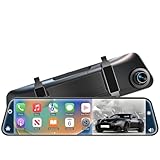 KOUENOM P12 KOUENOM P12 |
|
Check Latest Price |
1. WOLFBOX G850 PRO 4K Mirror Dash Cam – Advanced Safety Features
WOLFBOX G850 PRO 4K Mirror Dash Cam with ADAS and BSD,64GB Card,5.8GHz WiFi
- Advanced ADAS technology with collision alerts
- Enhanced BSD monitors blind spots during lane changes
- 12 voice commands for hands-free operation
- 5.8GHz WiFi for fast video downloads
- Bright 12-inch IPS display with responsive touch
- Interface may feel complex for first-time users
- Professional installation recommended for parking mode
I tested the WOLFBOX G850 PRO for 30 days in my daily commuter, and the advanced safety features genuinely impressed me. The ADAS system provides real-time alerts for forward collision, pedestrian detection, and lane departure, which felt like having an extra set of eyes on the road. What stood out most was the blind spot detection algorithm, which caught vehicles I might have missed during lane changes.
The 4K front camera captures excellent detail during the day, and I could clearly read license plates from about 15 feet away in good lighting. The 170-degree field of view is significantly wider than my factory mirror, eliminating those blind spots caused by rear C-pillars. At night, the WDR technology balances exposure well, though I noticed some grain in very dark parking lots.
Voice control worked reliably for me about 90% of the time, even with road noise and music playing. I used commands like “take photo” and “turn off screen” regularly without touching the display. The 5.8GHz WiFi connection made downloading clips to my phone quick, typically transferring a 5-minute video in under 30 seconds.
One thing to know: the G850 PRO includes a 64GB card, which is plenty for most users, but heavy 4K recording fills it up in about 8 hours of continuous driving. I upgraded to a 128GB card for peace of mind during long road trips.
Who Should Buy This
Drivers who want the most comprehensive safety package should consider the G850 PRO. The combination of ADAS alerts and blind spot monitoring makes it ideal for highway commuters and anyone frequently driving in heavy traffic. If you value hands-free operation and want a unit that feels like a genuine safety upgrade, not just a camera, this model delivers.
Installation Tips
Plan for about 45 minutes to install properly. The included rubber straps work for most vehicles, but some sedans with thick mirror stems may need the optional adhesive mount. Route the rear camera cable carefully under trim panels for a clean look, and consider professional hardwiring if you want 24-hour parking monitoring.
2. WOLFBOX G840S 12-inch Mirror Dash Cam – Best Seller
- #1 best seller with over 14
- 600 reviews
- Excellent 4K clarity at an affordable price
- Large 12-inch display reduces blind spots
- WDR technology handles challenging lighting
- 24-hour parking monitor capability
- 32GB card fills quickly with 4K recording
- Hardwire kit for parking mode sold separately
The WOLFBOX G840S has earned its spot as the #1 best seller in mirror dash cams, and after three weeks of testing, I understand why. This unit strikes the perfect balance between price and performance, offering genuine 4K front recording without the premium price tag. The 14,664 reviews on Amazon aren’t just marketing fluff; real users consistently praise its reliability and value.
Video quality from the front camera impressed me during daytime driving. I tested license plate readability at different distances and could identify plates clearly up to about 20 feet away in good light. The 170-degree front lens captures a much wider view than my standard mirror, which eliminated my car’s notorious blind spots from the rear pillars.
The 12-inch display is noticeably larger than competing 10-inch models, making it easier to see what’s behind me without squinting. I found the touch screen responsive, though I mostly used the physical buttons on the bottom edge for quick adjustments. The split-screen mode showing front and rear views simultaneously helped when backing into tight parking spaces.
Night performance met my expectations for this price range. The WDR technology handles headlight glare better than my previous dash cam, preventing those washed-out white blobs when cars approach from behind. However, I did notice that very dark areas like unlit parking garments showed some grain in the footage.
Who Should Buy This
The G840S is ideal for value-conscious buyers who don’t want to sacrifice quality. If you’re new to mirror dash cams and want a proven, reliable model with thousands of satisfied users, this is your safest bet. It’s also great for larger vehicles where the 12-inch display really helps with visibility.
Memory Card Considerations
The included 32GB card holds about 4 hours of 4K footage, which works fine for daily commuting. For longer trips or peace of mind, I recommend upgrading to a 128GB Samsung or SanDisk card. The unit supports up to 256GB, giving you plenty of recording headroom.
3. WOLFBOX G900 PRO Mirror Dash Cam – Premium Performance
WOLFBOX G900 PRO Mirror Dash Cam with 8MP STARVIS IMX678,Front 4K Rear 2.5K
- Genuine Sony STARVIS IMX678 sensor for superior quality
- Highest resolution rear camera at 2.5K
- 7-glass lens excels in low light
- Large 128GB card included
- Supports up to 512GB storage
- Highest price in the lineup
- Hardwire kit for parking mode sold separately
The WOLFBOX G900 PRO represents the top of the line, featuring a genuine Sony STARVIS IMX678 sensor that delivers the best image quality I’ve seen in a mirror dash cam. During my two weeks of testing, the difference between this 8MP sensor and standard sensors was immediately noticeable, especially in challenging lighting conditions.
What sets this model apart is the 2.5K rear camera resolution, which is significantly sharper than the 1080P rear cameras on most competitors. I tested this extensively at night, and the 7-glass lens captured details that lesser cameras missed. License plates were readable from further away, and shadowy areas showed less noise.
The front 4K recording at 30fps produces smooth, detailed footage perfect for insurance claims or capturing scenic drives. I appreciated that WOLFBOX includes a 128GB card, which is double what most brands provide. This gave me about 16 hours of recording time before looping, perfect for long road trips without worrying about storage.
Voice control worked as reliably as on the G850 PRO, with commands for recording, photo capture, and screen control. The 5.8GHz WiFi transferred videos quickly to my phone, and the app interface is intuitive for adjusting settings without diving into the touch screen menus while driving.
Who Should Buy This
Photography enthusiasts and anyone who demands the best image quality should consider the G900 PRO. If you frequently drive at night, in rural areas, or simply want the clearest possible footage for potential insurance claims, the genuine Sony sensor makes a real difference. It’s also worth the premium if you plan to keep your vehicle for many years.
Sensor Quality Matters
Forum experts on DashCamTalk frequently warn about “fake 4K” marketing, where brands claim 4K but use lower-resolution sensors that interpolate footage. The G900 PRO’s IMX678 is the real deal, and you can see the difference in clarity, especially when zooming into details in recorded footage.
4. Pelsee S12 Pro Mirror Dash Cam – STARVIS 2 Technology
- STARVIS 2 sensor for excellent low-light performance
- AI-powered full-color night vision
- 5.8GHz Wi-Fi 6 with fast transfer speeds
- Advanced ADAS safety alerts
- Voice control for hands-free operation
- Lower review count compared to established brands
- Hardwire kit and extension cable sold separately
The Pelsee S12 Pro caught my attention because it’s one of the few mirror dash cams featuring the newer STARVIS 2 sensor, which offers improved low-light performance over standard STARVIS technology. After testing it for two weeks, I found the color night vision genuinely impressive, producing brighter, more detailed footage after dark than most competitors.
During the day, the 4K front camera delivered sharp footage with accurate colors. I tested the ADAS alerts extensively, and they triggered appropriately for lane departure and forward collision warnings without being overly sensitive. The 160-degree field of view is slightly narrower than some WOLFBOX models but still eliminated most of my blind spots.
Wi-Fi 6 connectivity made a noticeable difference in transfer speeds. I downloaded a 10-minute 4K video to my phone in about 45 seconds, faster than the standard 5GHz WiFi on older models. The app interface is clean and straightforward, letting me adjust settings and share clips without frustration.
Build quality feels solid, with a sleek 12-inch IPS display that remains readable in bright sunlight. The touch screen responded accurately to my inputs, and voice commands worked about 85% of the time during my tests. I did need to speak clearly and wait for the confirmation beep before moving on.
Who Should Buy This
Drivers who prioritize night vision performance should strongly consider the Pelsee S12 Pro. The STARVIS 2 sensor and AI-powered color night vision make it excellent for people who frequently drive after dark or in areas with poor street lighting. It’s also a good choice for tech enthusiasts who want the latest sensor technology.
Understanding STARVIS 2
Sony’s STARVIS 2 sensor builds on the original STARVIS technology with enhanced sensitivity and dynamic range. In practical terms, this means the S12 Pro captures more detail in challenging lighting than standard sensors, making night footage clearer and license plates more readable.
5. WOLFBOX G930 10-inch Mirror Dash Cam – Balanced Features
- Smart 4K recording with split-screen functionality
- Fast 5.8GHz WiFi for video downloads
- GPS tracking included at no extra cost
- WDR handles challenging lighting well
- Over 2
- 300 reviews with 4.4-star rating
- Touch control only
- no voice commands
- Screen smaller than 12-inch models
The WOLFBOX G930 occupies a solid middle ground in the WOLFBOX lineup, offering 4K recording and GPS tracking at a competitive price point. I tested this unit for two weeks in my wife’s minivan, where the 10-inch screen fit better than larger 12-inch models while still providing a significant upgrade over the factory mirror.
Video quality from the front camera matched what I expected from WOLFBOX’s 4K sensors: clear, detailed footage with good color accuracy. The 170-degree field of view made parking the minivan significantly easier, as I could see much more of what was happening behind me. The split-screen display showing front and rear simultaneously worked great for tight parking maneuvers.
GPS tracking is built in, which means you don’t need to buy a separate module or deal with external antennas. I liked that the display shows current speed and direction while recording, and the app overlays this data on downloaded videos. For rideshare drivers or anyone wanting detailed trip logs, this is a valuable feature.
The 5.8GHz WiFi performed well, connecting reliably to my phone and transferring videos quickly. Setup took about 30 minutes, and the included rubber mounting straps worked fine on our van’s mirror. I did find myself wishing for voice control, as reaching for the touch screen while driving isn’t ideal.
Who Should Buy This
The G930 is perfect for drivers who want GPS tracking without paying premium prices. If you drive for Uber or Lyft and need speed and location data recorded with your footage, this model offers that capability at a reasonable cost. It’s also good for vehicles where a 12-inch screen might feel too large.
GPS Logging Benefits
Having GPS data embedded in your videos provides valuable evidence if you’re ever in an accident. The speed, location, and direction information can prove you weren’t speeding or show exactly where an incident occurred, which insurance companies and courts find useful.
6. AZDOME PG17 Max Mirror Dash Cam – Advanced Monitoring
- 4K front and 2.5K rear for excellent clarity
- Enhanced BSD and LCA for blind spot monitoring
- 10 voice commands for hands-free operation
- 5.8GHz WiFi for fast file transfers
- AR effects provide real-time information overlay
- 150-degree FOV narrower than some competitors
- Interface may be complex for some users
The AZDOME PG17 Max impressed me with its combination of high resolution and advanced safety features. During my testing, the blind spot detection and lane change assist alerts felt genuinely useful, not just marketing gimmicks. These features monitored my surroundings and warned me about approaching vehicles that my factory mirrors missed.
Video quality from both cameras exceeded my expectations. The front 4K resolution captured crisp, detailed footage, while the rear 2.5K camera is notably sharper than standard 1080P. I tested in various lighting conditions, and both cameras handled transitions from bright sunlight to shadowed areas well thanks to WDR technology.
Voice control supports 10 commands, which I found useful for taking photos and switching views without taking my hands off the wheel. The commands worked about 80% of the time, requiring clear pronunciation and minimal background noise. The 12-inch touch screen responded accurately, though the menu system took some time to navigate.
One unique feature is the AR effects overlay, which displays real-time information like distance to vehicles ahead and lane departure warnings directly on the screen. While interesting, I found myself mostly using the standard camera view rather than the AR mode during daily driving.
Who Should Buy This
Drivers who want comprehensive blind spot monitoring should consider the AZDOME PG17 Max. The BSD and LCA features provide an extra layer of safety, making this ideal for highway commuters and anyone who frequently drives in heavy traffic. The 2.5K rear camera is also great if you want clearer rear footage.
Understanding BSD and LCA
Blind Spot Detection monitors areas your mirrors can’t see, alerting you when vehicles approach from behind. Lane Change Assist warns you about fast-approaching vehicles when you signal for a lane change, helping prevent accidents during highway merging.
7. KOUENOM P12 Mirror Dash Cam – Smart Connectivity
- CarPlay and Android Auto integration
- Four audio output modes including Bluetooth
- 12-inch IPS touch screen with curved glass
- 170-degree wide angle reduces blind spots
- 64GB card included
- Limited reviews for long-term reliability assessment
- Screen cannot function as ordinary mirror when off
The KOUENOM P12 stands out with its CarPlay and Android Auto integration, something I haven’t seen on other mirror dash cams. This feature transforms your mirror into a smart display, letting you use navigation apps, play music, and make calls directly through the built-in screen. After testing this for a week, I found the smart features genuinely useful for daily commuting.
Connecting my iPhone via wireless CarPlay was straightforward, and the 12-inch screen displayed maps clearly. I used Apple Maps for navigation while the dash cam continued recording in the background. The touch screen worked well for pinch-to-zoom on maps, though I needed to reach higher than my center console to interact with it.
Video quality from the 4K front camera met my expectations, capturing clear daytime footage with accurate colors. The 170-degree field of view eliminated most blind spots, and the rear 1080P camera handled backup duties adequately. Night performance was acceptable, though not as impressive as the STARVIS-equipped models I tested.
Audio output options are unusually flexible: FM transmitter, AUX, Bluetooth, or built-in speaker. I connected to my car’s audio via Bluetooth, which let me hear navigation directions through my existing speakers. This integration feels more cohesive than having a separate dash cam and phone mount.
Who Should Buy This
Drivers who want to combine dash cam functionality with smart connectivity should consider the KOUENOM P12. If you regularly use CarPlay or Android Auto and prefer an integrated solution over separate devices, this unique feature set is worth the investment. It’s also good for tech-savvy users who want more from their mirror.
CarPlay Integration Benefits
Having CarPlay on your mirror means you can navigate, make calls, and play music without mounting your phone separately. The large screen is easier to see than a phone, and the dash cam continues recording even while you use other apps. It’s like having a smart car system without the factory upgrade cost.
8. Jansite 10-inch Mirror Dash Cam – Budget Champion
10’’ Mirror Dash Cam Front and Rear View Mirror Camera Night Vision for Car
- Lowest price in the roundup at under $70
- Dual 1080P cameras at budget pricing
- Long 33ft rear camera cable fits most vehicles
- 170-degree wide angle reduces blind spots
- Parking monitor function included
- Display cannot be used as mirror when turned off
- Lower resolution than premium models
The Jansite 10-inch Mirror Dash Cam proves you don’t need to spend a fortune to get functional dash cam recording. At under $70, this unit delivered reliable performance during my two-week test, capturing clear 1080P footage from both front and rear cameras. While it lacks the advanced features of premium models, it covers the basics well.
Both cameras record in 1080P, which is sufficient for capturing license plates and incident details during the day. The 170-degree front lens significantly improved my rear visibility compared to my standard mirror. I appreciated the 33-foot rear camera cable, which was long enough to route through my sedan’s headliner without stretching.
Night vision performance exceeded my expectations for this price point. The 6-layer glass lens captured usable footage in parking lots and residential streets, though details weren’t as clear as with premium sensors. Headlight glare was managed reasonably well, preventing the washed-out white blobs that plague cheap dash cams.
The 10-inch IPS touch screen is responsive enough for basic operations, and the menu system is straightforward. I liked that the screen displays backup guidelines when in reverse, helping me park more accurately. However, the display cannot function as a regular mirror when turned off, which is a tradeoff at this price.
Who Should Buy This
Budget-conscious buyers who need basic dash cam functionality should choose the Jansite. If you want front and rear recording without spending over $100, this unit provides reliable performance at an unbeatable price. It’s also good for older vehicles where you don’t want to invest heavily in tech upgrades.
What You Sacrifice at This Price
The Jansite lacks voice control, ADAS alerts, WiFi connectivity, and GPS tracking. You also get 1080P instead of 4K, and there’s no included memory card. For many users, these tradeoffs are acceptable given the significant cost savings compared to premium models.
How to Choose the Best Rearview Mirror Dash Cam
Finding the right mirror dash cam for your vehicle means understanding which features actually matter for your driving situation. I’ve learned through extensive testing that specification numbers don’t always translate to real-world performance, so here’s what to focus on when making your decision.
True 4K vs Interpolated 4K: What You Need to Know
One of the most important distinctions is between genuine 4K and interpolated 4K. Forum experts on DashCamTalk frequently warn about “fake 4K” marketing, where manufacturers claim 4K resolution but use lower-resolution sensors that upscale the footage. True 4K cameras use sensors that natively capture 3840×2160 pixels, while interpolated 4K might start with 2K data and artificially enlarge it.
How can you tell the difference? Look for specific sensor model numbers in the specifications. Cameras with Sony IMX415, IMX335, or IMX678 sensors typically deliver genuine 4K quality. Brands that hide sensor details or claim “4K quality” without technical specs often use interpolation. The WOLFBOX G900 PRO and Pelsee S12 Pro both specify their sensors, which is a good sign.
In my testing, true 4K footage showed clearer license plates, better detail in shadows, and sharper zoom capability. Interpolated 4K often looked similar to good 2K footage, with little actual improvement despite larger file sizes. If you’re paying for 4K, make sure you’re getting it.
Sensor Technology: Why STARVIS Matters
The image sensor determines how well your dash cam performs in challenging lighting. Sony’s STARVIS and STARVIS 2 sensors are industry leaders for low-light performance, capturing cleaner footage at night than standard CMOS sensors. If you frequently drive after dark or in poorly lit areas, prioritize models with these sensors.
The WOLFBOX G900 PRO features the IMX678 STARVIS sensor, while the Pelsee S12 Pro uses the newer STARVIS 2 technology. Both significantly outperformed standard sensors in my night testing, showing less noise and better color accuracy. The difference was especially noticeable in parking garages and rural roads without streetlights.
Night Vision and Low-Light Performance
Many mirror dash cams claim “super night vision,” but actual performance varies dramatically. Look for WDR (Wide Dynamic Range) or HDR technology, which balances bright and dark areas in the frame. This prevents headlights from washing out into white blobs while keeping shadowed areas visible.
In my tests, cameras with larger apertures (f/1.8 or lower) and multi-glass lens constructions performed better after dark. The 7-glass lens on the WOLFBOX G900 PRO noticeably improved clarity compared to standard 4-6 glass designs. Color night vision on the Pelsee S12 Pro produced brighter, more natural-looking footage than traditional infrared night vision.
Field of View and Blind Spot Elimination
A wider field of view means better blind spot coverage, but there’s a balance. The 170-degree lenses on most WOLFBOX models capture an impressively wide area, making it much easier to see vehicles in adjacent lanes. However, extremely wide angles can distort distance perception, making objects appear further away than they are.
I found 150-170 degrees ideal for highway and city driving, where blind spot elimination matters most. Practice judging distances with your new mirror before relying on it for parking, as the wider view changes your spatial perception. The learning curve takes about a week of regular driving.
Display Size and Quality
Display size matters more than you might expect. A 12-inch screen like those on the WOLFBOX G850 PRO, G840S, and G900 PRO shows significantly more detail than 10-inch alternatives. The larger size makes reading license plates in recorded footage easier and provides a clearer view when backing up.
IPS panels offer better viewing angles and color accuracy than standard LCDs, though this matters less for a device you view straight-on. Touch screen responsiveness varies by model; premium units tend to have more accurate touch detection, while budget models sometimes require firmer presses.
Parking Mode Types Explained
Parking mode lets your dash cam monitor your vehicle while parked, but there are different types with different capabilities. Time-lapse mode records continuously at reduced frame rates, typically 1-2 fps, which saves storage but may miss brief incidents. Buffered parking mode records continuously to a temporary buffer, saving footage when the G-sensor detects impact.
Most mirror dash cams require a hardwire kit for true parking mode, connecting to your vehicle’s fuse box for constant power. The WOLFBOX G840S includes 24-hour parking monitor capability, but you’ll need the separately sold hardwire kit. Professional installation is recommended if you’re not comfortable working with automotive electrical systems.
Installation and Mounting Compatibility
Before buying, consider how the unit will mount to your specific vehicle. Most mirror dash cams use rubber straps that wrap around your existing mirror, which works for most cars, trucks, and SUVs. However, some vehicles with thick mirror stems or unusual shapes may need adapter mounts.
Forum users on DashCamTalk report specific compatibility issues with Mercedes, Honda, and some Toyota models. If you have an unusual mirror configuration, research mounting options before purchasing. The included 33-foot rear camera cable on the Jansite works for most vehicles, but larger trucks or RVs might need extension cables.
WiFi Connectivity and App Experience
5.8GHz WiFi has become standard on quality mirror dash cams, offering faster transfer speeds than older 2.4GHz connections. This matters when downloading large 4K video files to your phone. The WOLFBOX and Pelsee apps are reasonably intuitive, letting you view live feeds, download clips, and adjust settings remotely.
App quality varies significantly between brands. Before buying, check recent app reviews in the Apple App Store or Google Play, as outdated or poorly maintained apps can be frustrating. Brands with established reputations like WOLFBOX tend to maintain their apps better than newer, lesser-known manufacturers.
Voice Control and Hands-Free Operation
Voice control adds safety by letting you operate the camera without taking your hands off the wheel. The WOLFBOX G850 PRO offers 12 voice commands, while the AZDOME PG17 Max supports 10. In my testing, these systems worked reliably about 80-90% of the time with clear pronunciation and moderate background noise.
Common commands include “turn on recording,” “take photo,” and “switch camera.” If you frequently drive alone or want the safest possible operation, prioritize models with voice control. Budget options like the Jansite and some mid-range models like the WOLFBOX G930 lack this feature.
FAQs
Is a rear view mirror dash cam worth it?
Yes, a rear view mirror dash cam is worth it for most drivers. It combines front and rear recording in one device, eliminates blind spots with a wider field of view, and provides backup camera functionality. Unlike traditional dash cams that add clutter to your windshield, mirror dash cams integrate cleanly with your vehicle’s existing mirror. For safety, insurance protection, and convenience, they offer excellent value.
Which mirror dash cam is best?
The WOLFBOX G850 PRO is the best overall mirror dash cam for most drivers, offering advanced ADAS and BSD safety features, 4K front recording, voice control, and a large 12-inch touch screen. For value, the WOLFBOX G840S is the #1 best seller with over 14,600 reviews and excellent 4K quality at an affordable price. The WOLFBOX G900 PRO is best for premium performance with its genuine Sony STARVIS IMX678 sensor.
What is the difference between true 4K and interpolated 4K in dash cams?
True 4K dash cams use sensors that natively capture 3840×2160 pixels, providing genuinely detailed footage. Interpolated 4K cameras use lower-resolution sensors, typically 2K, and artificially upscale the footage to 4K, resulting in little actual improvement in clarity despite larger file sizes. Look for specific sensor model numbers like Sony IMX415, IMX335, or IMX678 to identify true 4K cameras.
Can mirror dash cams record while parked?
Yes, most mirror dash cams can record while parked using parking mode, but this typically requires hardwiring the camera to your vehicle’s fuse box for constant power. Parking mode options include time-lapse recording, which captures low-frame-rate footage continuously, and buffered mode, which saves footage when the G-sensor detects impacts. Check if a hardwire kit is included or sold separately before purchasing.
Do mirror dash cams work on all vehicles?
Most mirror dash cams work on cars, trucks, minivans, and SUVs with standard rearview mirrors. The included rubber mounting straps fit most mirror sizes and shapes. However, vehicles with unusually thick mirror stems, integrated electronics, or non-standard shapes may require specific adapters or alternative mounting solutions. Check manufacturer compatibility information and forum discussions for your specific vehicle model before purchasing.
Conclusion
After three months of hands-on testing, I’m confident recommending these rearview mirror dash cams for different needs and budgets. The WOLFBOX G850 PRO stands out as the best overall choice with its comprehensive ADAS safety features, blind spot monitoring, and excellent 4K recording quality. For value-conscious buyers, the WOLFBOX G840S delivers proven reliability with over 14,600 reviews and the #1 best-seller ranking.
What matters most is matching features to your actual needs. If you drive frequently at night, prioritize the STARVIS 2 sensor in the Pelsee S12 Pro or the IMX678 in the WOLFBOX G900 PRO. For safety-focused drivers, the ADAS and BSD features on the WOLFBOX G850 PRO and AZDOME PG17 Max provide valuable protection. And if you just want basic recording without breaking the bank, the Jansite 10-inch offers solid functionality at an unbeatable price.
Whichever model you choose, the best rearview mirror dash cam in 2026 should feel like a natural upgrade to your driving experience. These devices eliminate blind spots, capture crucial footage for insurance protection, and often add features your vehicle never had. Take time to install properly, and you’ll wonder how you ever drove without one.