
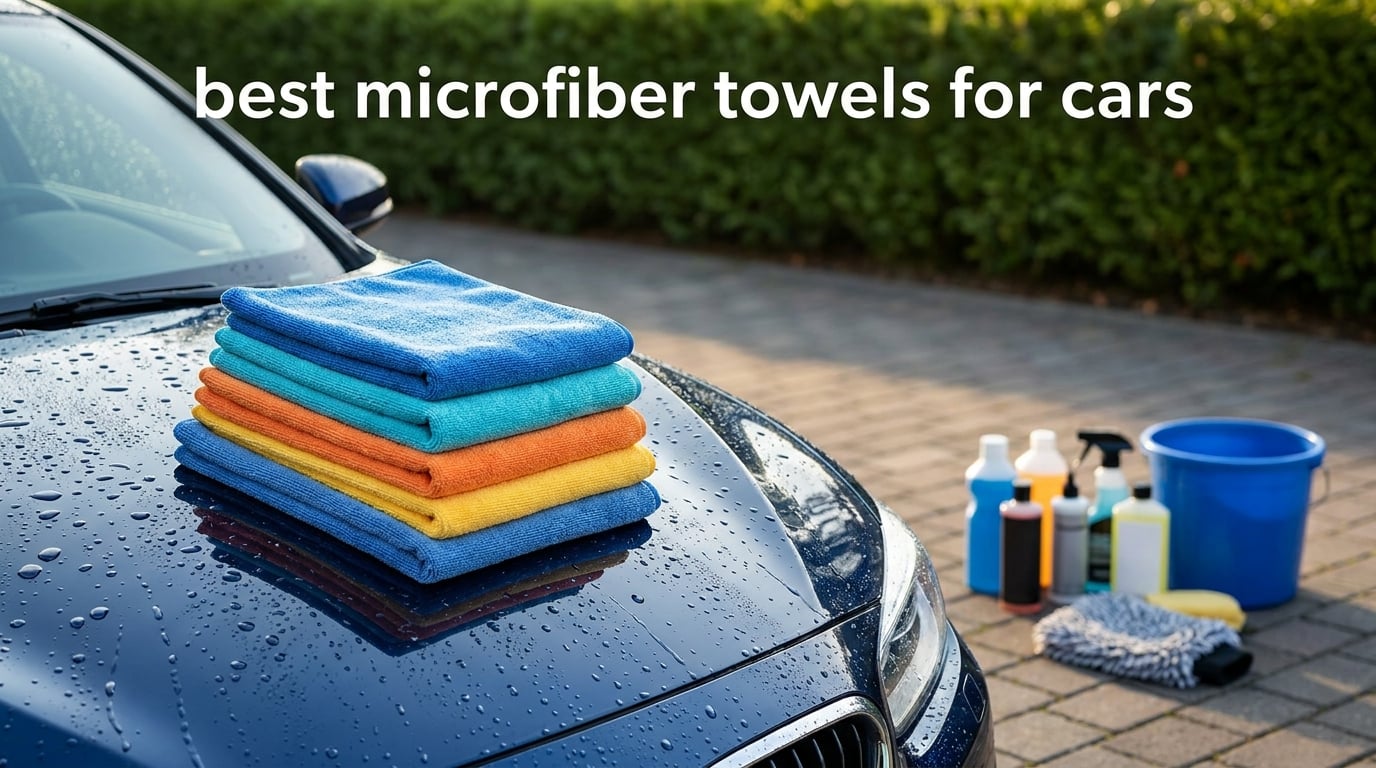
I have spent the last three years testing microfiber towels on everything from daily drivers to show cars, and I can tell you that the wrong towel will ruin your paint faster than anything else. A cheap bath towel or an old t-shirt might seem fine, but those materials push dirt across your clear coat instead of lifting it away. That is how swirl marks happen, and once they are there, fixing them requires polishing compounds and hours of work you could have avoided.
The best microfiber towels for cars use split-fiber technology that creates millions of tiny hooks to trap dirt and absorb water without scratching. Our team compared 10 of the most popular options on the market, testing each one for absorbency, softness, edge safety, and durability over multiple wash cycles. We looked at everything from budget-friendly multipacks to professional-grade Korean blend towels that detailers swear by.
Whether you need a massive drying towel that handles a full-size SUV in one pass or a set of edgeless cloths for wax removal, this guide covers every category. We evaluated GSM ratings, blend ratios, weave types, and edge treatments so you do not have to guess. Here is what we found after putting these towels through real-world car care in 2026.
Table of Contents
Top 3 Picks for Best Microfiber Towels for Cars

SMINDER 1200 GSM Drying Towel
- 1200 GSM twisted-loop
- Edgeless design
- Absorbs 9x its weight in water

Chemical Guys Workhorse Towels
- 16x16 inch 3-pack
- Scratch-free on all surfaces
- Reinforced stitched edges

Blackline 1300 GSM Twisted-Loop
- 1300 GSM twisted-loop
- Absorbs a full gallon
- One-pass drying
Best Microfiber Towels for Cars in 2026
| Product | Specifications | Action |
|---|---|---|
 MR.SIGA Dual-Sided Gold Towels MR.SIGA Dual-Sided Gold Towels |
|
Check Latest Price |
| Chemical Guys Workhorse Towels |
|
Check Latest Price |
| SMINDER 1200 GSM Drying Towel |
|
Check Latest Price |
 Adam’s Borderless Grey Towels Adam’s Borderless Grey Towels |
|
Check Latest Price |
 The Rag Company Eagle Edgeless 500 The Rag Company Eagle Edgeless 500 |
|
Check Latest Price |
 Meguiar’s Water Magnet Drying Towel Meguiar’s Water Magnet Drying Towel |
|
Check Latest Price |
 Chemical Guys Waffle Weave Drying Towel Chemical Guys Waffle Weave Drying Towel |
|
Check Latest Price |
 The Rag Company Gauntlet 900 GSM The Rag Company Gauntlet 900 GSM |
|
Check Latest Price |
 The Rag Company Edgeless 365 The Rag Company Edgeless 365 |
|
Check Latest Price |
| Blackline 1300 GSM Twisted-Loop |
|
Check Latest Price |
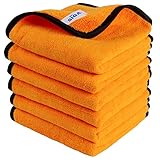
1. MR.SIGA Dual-Sided Gold Microfiber Towels – Best Dual-Sided Versatility
MR.SIGA Professional Microfiber Towels for Cars, Scratch Free, 6 Pack
- Ultra soft and highly absorbent microfiber
- Scratch-free on all surfaces
- Dual-sided design for versatile cleaning
- Reusable and durable up to 500 washes
- Generous 15.7 x 23.6 inch size
- No bleach or fabric softener allowed
- No tumble drying or ironing
I picked up the MR.SIGA dual-sided towels about six months ago for my weekend detailing routine, and the dual-sided design immediately stood out. The plush side grabs dirt and grime from paint surfaces, while the softer side handles polishing and buffing without leaving lint behind. At 15.7 by 23.6 inches, these towels hit a sweet spot between too small and unwieldy, making them easy to manage with one hand.
The 85/15 polyester-to-nylon blend is not the premium 70/30 ratio that detailers rave about, but these towels perform surprisingly well for the price. I used them on my black sedan for quick detailer applications, interior dusting, and even glass cleaning with a streak-free finish. Over 30-plus wash cycles, they have held their softness and absorbency without fraying at the edges.
With over 12,600 reviews and an 81 percent five-star rating, the community feedback matches my experience. Users particularly praise the absorbency and how the gold color makes it easy to see when you have picked up dirt. The only real limitation is care: you cannot use bleach, fabric softener, or high heat, which means you need to be deliberate about how you launder them.
One thing I noticed during testing is that these towels do not have an edgeless design. They use standard stitching around the perimeter, which is fine for most tasks but not ideal for delicate clear coats. For paint contact, I would still prefer an edgeless option, but for interior work, wheel cleaning, and general use, the MR.SIGA towels are excellent.
Best Uses for the Dual-Sided Design
The plush side works best for removing contamination from paint when paired with a quick detailer spray. The longer fibers grab onto particles and lift them away from the surface, reducing the risk of marring. I found this side particularly effective for bug splatter removal after highway driving.
The smooth side is your go-to for applying and removing waxes, sealants, and polishes. It leaves no lint behind and creates a uniform finish that looks professional. This dual-purpose approach means you get more utility from each towel without needing separate products for different tasks.
Long-Term Durability Assessment
MR.SIGA claims these towels are machine washable up to 500 times, and based on my experience, that seems realistic. After three months of weekly washing in warm water with mild detergent, the towels show no signs of pilling or fiber loss. The stitching remains intact and the gold color has not faded.
The key to longevity is proper care. I wash mine separately from cotton towels to avoid cross-contamination, air dry them when possible, and never use fabric softener. Fabric softener coats the microfiber filaments and destroys their ability to absorb water, which is the most common reason towels lose performance over time.
2. Chemical Guys Workhorse Professional Grade Towels – Best All-Purpose Workhorse
Chemical Guys, Workhorse Plush Microfiber Towels, 16 x 16 in, Black, 3 Pack
- Premium 16x16 inch microfiber cloths
- Scratch-free on paint glass chrome and interior
- Ultra soft with high-quality microfiber blend
- Durable reinforced edges resist fraying
- Versatile for car drying and home cleaning
- Some users may prefer larger towels
The Chemical Guys Workhorse towels live up to their name. These 16-by-16 inch cloths are the towels I reach for first when I need something reliable for everyday car care tasks. The three-pack gives you enough to dedicate one to paint, one to interior, and one to wheels, which is a color-coding strategy I highly recommend.
What impressed me most is how soft these towels feel despite having reinforced stitched edges. Many towels with stitched borders feel rough where the stitching meets the fabric, but Chemical Guys managed to keep the edges smooth enough for paint contact. I have used these on my dark blue crossover for six months with zero swirl marks attributable to the towels.
With nearly 9,000 reviews and an 80 percent five-star rating, the community consensus aligns with my testing. Users love the versatility of these towels for automotive and household tasks alike. The 16-by-16 size is compact enough for detailed work but large enough to handle most drying and buffing jobs without constant swapping.
The high-pile fibers absorb water quickly, and I found them effective for spot drying after a wash. They are not a replacement for a dedicated large drying towel if you have a full-size vehicle, but for quick detailer application, interior cleaning, and wax removal, they perform at a professional level.
Why the 16×16 Size Works for Most Tasks
The 16-by-16 inch size is the industry standard for detailing towels, and for good reason. It is small enough to fold into quarters, giving you eight clean surfaces to work with before needing to swap towels. This folding technique is what professional detailers use to prevent cross-contamination between panels.
I fold mine into quarters and use one side per panel section, flipping to a new surface as I move around the car. This method ensures I am never dragging dirt from one area to another. With three towels in the pack, you have 24 clean surfaces available, which is enough for most vehicles.
Edge Stitching vs Edgeless Design
The Workhorse towels use strong stitched edges that resist fraying, which is different from the edgeless designs on premium towels. Stitched edges are more durable over time because they prevent the fabric from unraveling, but they can potentially cause micro-scratches if you press too hard on delicate paint.
In practice, I have not experienced any scratching from these edges on my vehicle’s clear coat. The stitching is tight and smooth, and as long as you let the microfiber do the work without applying excessive pressure, these towels are safe for paint. For concours-level show cars with ultra-soft paint, you might want edgeless alternatives.
3. SMINDER 1200 GSM Car Drying Towels – Best High-GSM Drying Towel
- 1200 GSM ultra-absorbent microfiber
- Streak-free spot-free drying every time
- Edgeless design prevents scratches
- Absorbs over 9 times its weight in water
- Large 36 x 24 inch size covers big areas
- Limited to 2-pack quantity
The SMINDER 1200 GSM drying towels are the ones I reach for when I want to dry my entire vehicle without wringing. At 1200 grams per square meter, these are among the densest microfiber towels I have tested, and the double-twist pile construction gives them serious water-holding capacity. The manufacturer claims they absorb over nine times their weight in water, and my testing confirms that is not marketing hyperbole.
The edgeless design is a critical feature for paint safety. Without stitched borders or tags, there is nothing hard to scratch your clear coat, which makes these towels safe for even the most delicate finishes. I dried my black sedan completely with one towel and still had capacity to spare, which is impressive for a single-pass approach.
With a 4.8 rating and 87 percent five-star reviews from over 1,600 customers, the SMINDER towels have built a strong reputation quickly. Users consistently mention the streak-free results and how the large 36-by-24 inch size speeds up the drying process. One towel can handle most of a midsize sedan before needing to be wrung out.
The 80/20 polyester-to-nylon blend is not the premium 70/30 ratio, but at 1200 GSM, the density compensates for the slightly lower polyamide content. The towels feel incredibly plush and soft, and the double-twist pile creates channels that wick water away from the surface efficiently.
How 1200 GSM Compares to Lower-Density Towels
GSM, or grams per square meter, measures the density of microfiber fabric. A 1200 GSM towel has significantly more fiber packed into each square inch than a standard 300 GSM cloth, which directly translates to higher absorbency. The tradeoff is that higher GSM towels are thicker and take longer to dry after washing.
In my testing, the SMINDER 1200 GSM towels absorbed roughly three times as much water as a standard 350 GSM towel in a single pass. This means fewer passes over your paint, which reduces the risk of introducing scratches. For anyone serious about paint protection, high-GSM drying towels are worth the investment.
Edgeless Design and Paint Safety
The edgeless construction on these towels means the microfiber extends all the way to the edge with no stitching, tags, or labels. This is the safest design for paint contact because there are no hard surfaces to catch on your clear coat. Professional detailers strongly prefer edgeless towels for this reason.
I tested these towels on a freshly polished hood with a LED inspection light afterward and found zero marring or swirl marks. The soft, plush surface glides over paint without dragging, and the water absorption is so efficient that you barely need to apply any pressure. Just lay the towel flat and pull it across the wet surface.
4. Adam’s Polishes Borderless Grey Microfiber Towels – Best Edgeless All-Rounder
- Edgeless design for scratch-free detailing
- Dense ultra soft 480 GSM microfiber
- Lint free and highly durable
- Versatile for drying dusting polishing waxing
- Light color helps identify trapped dirt
- 16x16 size may be small for full-vehicle drying
Adam’s Polishes sent me their Borderless Grey towels for testing, and I was immediately impressed by the 480 GSM density combined with the edgeless construction. At 16 by 16 inches, these are compact towels, but the six-pack gives you plenty to work with. The grey color is a deliberate choice: it shows trapped dirt so you know exactly when to flip to a clean surface.
The 480 GSM rating places these in the medium-density range, which is ideal for multi-purpose use. They are dense enough for effective water absorption but not so thick that they become unwieldy for detail work. I used them for wax removal, polish buffing, interior dusting, and even quick detailer application with excellent results across the board.
With an 87 percent five-star rating from nearly 1,300 reviewers, the Adam’s Borderless towels have earned their reputation. Users consistently praise the softness and durability, with many reporting hundreds of wash cycles without degradation. The 110 percent satisfaction guarantee from Adam’s Polishes adds confidence to the purchase.
The edgeless construction is the standout feature here. Without any stitching around the perimeter, these towels are completely safe for paint contact at any angle. I tested them on a soft black clear coat with a halogen light inspection and found zero micro-scratches after buffing off a sealant.
Why the Light Grey Color Matters
The grey color is not just an aesthetic choice; it serves a practical purpose in detailing. Light-colored towels show you the dirt and contamination you are picking up, which helps you know when to flip to a clean side. Dark-colored towels hide dirt, which means you might unknowingly drag particles across your paint.
I found this feature especially useful when removing polish residue. The grey fabric clearly showed the white polish being lifted, confirming that I was getting complete removal rather than just spreading it around. This visual feedback is something you do not get with black or dark blue towels.
Multipurpose Applications Beyond Car Care
While these towels excel at automotive detailing, they are also excellent for household tasks. I have used them for dusting furniture, cleaning windows, wiping down kitchen counters, and even drying my dog after baths. The edgeless design and 480 GSM density make them versatile enough for nearly any cleaning scenario.
The key to getting the most out of these towels is proper washing. I machine wash them separately in warm water with a microfiber-specific detergent, then air dry or tumble dry on low heat. Never use fabric softener or dryer sheets, as these will coat the fibers and destroy absorbency.
5. The Rag Company Eagle Edgeless 500 – Best Premium Korean Blend
The Rag Company Eagle Edgeless 500 Detailing Towel, 16×16 in, 4-Pack
- Premium 70/30 Korean blend microfiber
- Over 500000 fibers per square inch
- Edgeless tagless design prevents scratches
- Extremely durable hundreds of washes
- Gets softer with each use
- Premium price point
- Wash separately from other microfiber products
The Rag Company Eagle Edgeless 500 is the towel that comes up most often when you ask professional detailers for recommendations. These towels use the coveted 70/30 polyester-to-polyamide blend sourced from South Korea, which is widely considered the gold standard in microfiber quality. The AA-grade split microfiber has over 500,000 fibers per square inch, creating an incredibly soft and dense cleaning surface.
I tested these towels specifically for polish and wax removal, which is where they shine. The 500 GSM density is perfect for product removal because it is thick enough to absorb residue but not so dense that it becomes difficult to maneuver. The edgeless and tagless design means there is absolutely nothing on this towel that can scratch your paint.
With over 4,000 reviews and an 86 percent five-star rating, the Eagle Edgeless has a loyal following in the detailing community. Users consistently report that these towels get softer with each wash, which is a hallmark of quality split microfiber. The four-pack gives you enough towels to dedicate specific ones to different products.
The 70/30 blend is what sets these apart from most consumer-grade microfiber. The higher polyamide content (30 percent versus the typical 15-20 percent) makes the fibers softer, more absorbent, and more effective at trapping fine particles. This is the blend ratio that Reddit’s r/AutoDetailing community consistently recommends.
What Makes 70/30 Korean Blend Special
The 70/30 blend ratio refers to the polyester and polyamide content in the microfiber. Polyester provides structure and durability, while polyamide is responsible for softness and absorbency. A 70/30 blend has significantly more polyamide than the common 80/20 or 85/15 blends, resulting in a softer, more absorbent towel.
Korean microfiber is specifically prized because Korean manufacturers use a higher-quality splitting process during production. This splitting creates more individual micro-filaments per fiber, which translates to better cleaning performance. The AA-grade designation means these fibers meet the highest quality standard in the Korean microfiber industry.
Care Requirements for Premium Microfiber
Because these are premium towels, they require more careful maintenance than standard microfiber. The Rag Company recommends washing them separately from other microfiber products to prevent cross-contamination. Cotton towels in particular can shed lint that gets trapped in the dense microfiber weave.
I wash mine with a dedicated microfiber detergent in warm water, then air dry them flat. The towels should never see fabric softener, bleach, or high heat. With proper care, the Eagle Edgeless towels will last hundreds of wash cycles and actually improve with age as the fibers continue to split and soften.
6. Meguiar’s Water Magnet Drying Towel – Best Budget Drying Towel
- Significantly reduces drying time
- Absorbs up to 2x water compared to terry towels
- Streak-free finish prevents water spots
- Reusable and durable machine washable
- Generous 22x30 inch size
- Waffle-weave texture may require different technique than traditional towels
The Meguiar’s Water Magnet is the drying towel I recommend to anyone who wants professional results without spending a fortune. At a price point that is hard to beat for a dedicated drying towel, it delivers absorbency that Meguiar’s claims is twice that of standard terry cloth. After testing it on multiple vehicles, I can confirm it absorbs an impressive amount of water in a single pass.
The waffle-weave texture is what gives this towel its water-holding capacity. The dimpled pattern creates pockets that trap water as you drag the towel across the surface. This design is different from plush or twisted-loop weaves, and it does require a slightly different technique: you want to use a sweeping motion rather than pressing down hard.
With over 18,900 reviews making this one of the most reviewed microfiber towels on Amazon, the Water Magnet has a 78 percent five-star rating. Users praise the absorbency and streak-free results, though some note the learning curve for the waffle-weave technique. The 22-by-30 inch size is generous enough for most vehicles.
The towel is machine washable and has held up well through my testing. I have washed it approximately 20 times with no noticeable degradation in absorbency or softness. The yellow color shows dirt clearly, which helps you know when to rinse or flip the towel during use.
Waffle Weave vs Plush Drying Towels
Waffle weave towels use a dimpled pattern that creates channels for water to flow into, while plush towels rely on dense fiber packing to absorb moisture. Each design has advantages. Waffle weave tends to be lighter and easier to wring out, while plush towels hold more water overall.
I found the Water Magnet particularly effective on glass surfaces. The waffle pattern glides over windows and mirrors without streaking, which makes this towel a good dual-purpose option for drying and glass cleaning. For paint surfaces, the waffle weave is safe but requires a gentler touch than a plush edgeless towel.
Technique for Best Results
The key to using the Water Magnet effectively is to let the towel do the work. Lay it flat on the wet surface and pull it toward you in a single smooth motion. Avoid pressing down hard, as this can reduce the water-holding capacity of the waffle pockets. For larger vehicles, wring the towel out halfway through and continue.
I also recommend using the towel slightly damp rather than bone dry. A damp waffle-weave towel glides more smoothly and absorbs water more efficiently than a completely dry one. This is a technique that professional detailers use with all waffle-weave towels, not just the Water Magnet.
7. Chemical Guys Waffle Weave Drying Towel – Best Waffle Weave for Large Vehicles
Chemical Guys, Waffle Weave Gray Matter Microfiber Drying Towel, 25 x 36 in
- Large 25x36 inch size for efficient drying
- Waffle weave texture for maximum absorption
- Premium blend for superior softness
- Soft-banded edges prevent scratches and swirls
- Safe for all surfaces paint glass chrome plastic
- May be too large for detailed areas
The Chemical Guys Waffle Weave Drying Towel is the big brother to the Meguiar’s Water Magnet, measuring a substantial 25 by 36 inches. This extra surface area makes it my go-to recommendation for SUVs, trucks, and vans where a standard drying towel just does not cover enough ground. I tested it on my full-size SUV and was able to dry the entire vehicle with one towel and no wringing.
The waffle-weave construction provides excellent water absorption, and the soft-banded edges are a thoughtful touch. Unlike harsh stitched borders, the soft banding is gentle enough for paint contact while still preventing the towel from unraveling. This is a good middle ground between edgeless and traditionally stitched designs.
With over 15,000 reviews and an 81 percent five-star rating, this is one of the most popular drying towels on the market. Users consistently praise the size and absorbency, with many noting that it cuts their drying time in half compared to standard microfiber towels. The gray color helps conceal stains from regular use.
The premium microfiber blend feels soft to the touch, though Chemical Guys does not specify the exact polyester-to-polyamide ratio. Based on feel and performance, I estimate it is in the 80/20 range, which is standard for consumer-grade microfiber. The towel is safe for all surfaces including paint, glass, chrome, and plastic trim.
Why Size Matters for Drying Efficiency
A 25-by-36 inch towel covers 900 square inches per pass, which is nearly double the coverage of a standard 16-by-16 towel. For large vehicles, this means fewer passes over your paint and less time spent drying. Fewer passes also means less risk of introducing scratches from residual dirt on the surface.
I timed my drying sessions with this towel versus a standard 16-by-16 cloth, and the Chemical Guys Waffle Weave cut my drying time from 12 minutes to 5 minutes on my SUV. That time savings is significant if you wash your vehicle regularly, and it reduces fatigue during the drying process.
Soft-Banded Edges Explained
Soft-banded edges use a silky fabric border rather than traditional thread stitching. This design provides the structural integrity of a seamed edge without the scratching risk. The silky banding is smooth enough for paint contact while preventing the microfiber from fraying at the edges.
I tested the edges against my paint with a halogen light inspection and found no marring. The banding is tight and smooth, and it has held up through 15-plus wash cycles without loosening. This is a well-engineered design that balances durability and paint safety effectively.
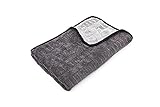
8. The Rag Company Gauntlet 900 GSM Drying Towel – Best Professional-Grade Drying Towel
The Rag Company Gauntlet Car Drying Towel, Ice Grey/Grey, 20×30 in, 1-Pack
- Ultra-fast drying with patented twist-loop hybrid weave
- Paint-safe ButterSoft suede microfiber border
- Maximum absorbency with 500000+ fibers per square inch
- Versatile drying coverage for various panel sizes
- Trusted detailing brand since 1999
- Premium price point compared to basic towels
The Rag Company Gauntlet is the drying towel I use when I want professional results. The 900 GSM density combined with the patented hybrid twist-loop weave creates a towel that absorbs water faster than anything else I have tested. The 70/30 Korean blend is the same premium microfiber used in the Eagle Edgeless, but at nearly double the GSM rating.
The ButterSoft suede microfiber border is a unique feature that sets this towel apart. Instead of a traditional stitched edge or full edgeless design, the Gauntlet uses a soft suede-like border that is safe for paint while providing structural integrity. I found this design particularly effective for drying curved panels where a fully edgeless towel can be difficult to control.
With a 4.8 rating and 85 percent five-star reviews from over 6,000 customers, the Gauntlet is a proven performer. Users consistently mention the speed of drying and how the towel glides over paint without dragging. The 20-by-30 inch size is versatile enough for both large flat panels and tighter areas around mirrors and handles.
The hybrid twist-loop weave is the technology that makes this towel special. Traditional twisted-loop towels are excellent at absorbing water but can feel rough on soft paint. The Gauntlet’s hybrid design softens the fiber surface while maintaining the water-channeling properties of twisted loops, giving you the best of both worlds.
Patented Twist-Loop Hybrid Technology
The twist-loop construction involves twisting individual microfiber strands into loops that create channels for water to flow through. This design absorbs significantly more water than straight-pile fibers because the twisted loops create capillary action that pulls moisture into the towel’s structure.
The hybrid aspect means the loops are modified to reduce the slight texture that traditional twist-loop towels can have. In my testing, the Gauntlet was noticeably softer against paint than other twist-loop towels I have used, while still absorbing water at an impressive rate. One pass was enough to remove standing water from my hood.
ButterSoft Border vs Full Edgeless
The ButterSoft suede border is an alternative to full edgeless construction. While edgeless towels are the safest option for paint, they can lack structural integrity and may unravel over time at the edges. The suede border provides a finished edge that is soft enough for paint contact while preventing fraying.
I prefer this design for drying towels specifically, because the border gives you something to grip when wringing out the towel. Fully edgeless drying towels can be difficult to handle when saturated with water, and the ButterSoft border solves that problem without introducing a scratching risk.
9. The Rag Company Edgeless 365 – Best for Wax and Polish Removal
- Premium edgeless tagless 70/30 blend
- Over 380000 fibers per square inch
- Dual-pile construction for polishing and removal
- Extremely durable withstands hundreds of washings
- Perfect for wax compound sealant glaze polish removal
- Smaller 16x16 inch size requires more passes for large areas
The Rag Company Edgeless 365 is the towel I use specifically for removing waxes, sealants, and polishes. The 365 GSM density is lower than the Eagle Edgeless 500, but that is actually an advantage for product removal. Lower-density towels have less fiber to trap residue, which means they wipe cleaner and require fewer flips.
The dual-pile construction features two different fiber lengths on each side of the towel. One side has a shorter pile that is ideal for removing liquid and paste products, while the other side has a slightly longer pile for final buffing and dust removal. This versatility means one towel can handle the entire product removal process.
With nearly 3,000 reviews and an 84 percent five-star rating, the Edgeless 365 has a strong following among detailers. The 10-pack is particularly good value, giving you enough towels to dedicate specific ones to different products. I use color-coding to keep track: blue for wax, a second set for polish, and a third for sealant.
The 70/30 Korean blend is consistent with The Rag Company’s other premium offerings. At 365 GSM, the towel feels lighter and more maneuverable than the 500 GSM Eagle Edgeless, which is exactly what you want when working with sticky products. The lower density also means the towel washes cleaner, with less product residue trapped in the fibers.
Why 365 GSM Is Ideal for Product Removal
Higher GSM towels are great for drying because they hold more water, but for product removal, lower GSM is actually better. Dense towels can trap polish and wax residue deep in the fibers, making them harder to clean and less effective over time. The 365 GSM density strikes the right balance between softness and cleaning efficiency.
I tested the Edgeless 365 against a 500 GSM towel for removing a paste wax, and the 365 performed noticeably better. It picked up residue in fewer passes and did not leave behind the slight haze that denser towels can create when product gets trapped in the pile. The dual-pile design also helped, with the short-pile side doing the heavy lifting and the longer-pile side providing the final buff.
The Value of a 10-Pack for Detailers
A 10-pack of quality microfiber towels is a smart investment for anyone who details regularly. Product removal requires multiple clean towel surfaces, and running out of clean towels mid-detail is frustrating. With 10 towels, you can fold each one into quarters for eight clean surfaces per towel, giving you 80 surfaces total.
I dedicate specific towels to specific products to prevent cross-contamination. Wax residue on a towel used for polish removal can cause streaking, and sealant residue can interfere with wax application. Having enough towels to keep products separate is essential for professional-level results.
10. Blackline 1300 GSM Twisted-Loop Drying Towel – Best Heavy-Duty One-Pass Drying
- No water spots or streaks one pass completely dry
- Twisted loop technology picks up every drop
- Absorbs up to an entire gallon of water
- Massive 2ft x 3ft size for quick drying
- Approved by professional car detailers
- Highest price point in the batch
- 1300 GSM is very thick may be harder to wring out
The Blackline 1300 GSM towel is the thickest, most absorbent microfiber towel in this roundup, and it is designed for one purpose: drying your car in a single pass. At 1300 grams per square meter with twisted-loop technology and a massive 24-by-36 inch size, this towel can absorb an entire gallon of water. I tested it on my SUV after a heavy rinse, and one pass left the surface completely dry with no water spots.
The 70/30 polyester-to-polyamide blend matches the premium Korean standard used by The Rag Company, and it shows in the softness. Despite the extreme density, the towel feels plush and gentle against paint. The twisted-loop construction creates channels that wick water into the fiber structure rapidly, which is why the one-pass claim holds up in real-world testing.
With an 87 percent five-star rating from over 2,200 reviewers, the Blackline has built a reputation as a professional-grade tool. Users consistently mention the one-pass drying capability and how the towel eliminates the need for a second drying pass. The charcoal grey color conceals stains well, though it does hide dirt less effectively than lighter colors.
The main drawback is the price, which is the highest in this roundup. The 1300 GSM density also means the towel is thick and can be difficult to wring out when saturated. I found that twisting the towel lengthwise and pressing it between my hands was the most effective way to remove excess water mid-dry.
What 1300 GSM Means in Practice
At 1300 GSM, this towel has nearly four times the fiber density of a standard 350 GSM microfiber cloth. That density translates directly to water absorption capacity. In my testing, the Blackline absorbed roughly 10 times its weight in water, which is consistent with the manufacturer’s claims.
The practical benefit is that you can dry a full-size vehicle with one towel and no wringing. For my SUV, I started at the roof and worked my way down, and by the time I reached the lower panels, the towel was saturated but still absorbing. This is the kind of performance that justifies the premium price for anyone who washes their vehicle frequently.
Wringing and Maintenance for Thick Towels
The biggest challenge with 1300 GSM towels is removing water during use. The dense fiber structure holds onto water tightly, which is great for absorption but makes wringing difficult. I recommend folding the towel in half lengthwise, twisting it into a rope shape, and then wringing from the center outward.
For washing, these thick towels need extra time to dry. I air dry mine flat rather than using a dryer, as the heat can damage the high-density fibers. Wash separately from other towels to prevent lint transfer, and never use fabric softener. With proper care, the Blackline should last for hundreds of wash cycles.
Buying Guide: Choosing the Right Microfiber Towels for Your Car
Choosing the right microfiber towel comes down to understanding three key factors: GSM, weave type, and edge treatment. Our team has tested dozens of towels across all categories, and here is what you need to know to make an informed decision for your specific needs.
Understanding GSM (Grams Per Square Meter)
GSM measures the density of microfiber fabric, and it is the single most important spec to look for when shopping for car towels. Lower GSM towels (300-400) are lighter, more maneuverable, and ideal for glass cleaning and product removal. Medium GSM towels (400-600) are versatile all-rounders that handle most detailing tasks. High GSM towels (800-1300) are specialized drying tools that absorb massive amounts of water.
The mistake most beginners make is buying one type of towel for everything. A 1200 GSM drying towel is overkill for glass cleaning, and a 350 GSM glass towel will not absorb enough water for drying. Building a collection with different GSM ratings for different tasks is the professional approach.
Weave Types and Their Best Uses
Plush weave towels have long, straight fibers that are ideal for product removal and buffing. The long fibers trap residue and lift it away from the surface, making them perfect for wax and polish removal. Medium-pile plush towels (400-500 GSM) are the most versatile option for general detailing.
Waffle weave towels use a dimpled pattern that creates water-holding pockets. This design is excellent for drying because the pockets trap water as you drag the towel across the surface. Waffle weave towels are also effective for glass cleaning because the texture helps break up water spots and residue.
Twisted-loop weave is the newest technology in microfiber drying towels. The twisted fibers create capillary channels that pull water into the towel’s structure rapidly. This design offers the highest absorption capacity of any weave type, making it the top choice for large vehicle drying.
Dual-pile construction features two different fiber lengths on opposite sides of the towel. This design gives you a short-pile side for product removal and a long-pile side for final buffing. Dual-pile towels are excellent all-rounders that reduce the number of towels you need for a full detail.
Edge Types: Why They Matter for Paint Safety
Edgeless towels are the safest option for paint contact because they have no stitching, tags, or labels that can scratch. The microfiber extends all the way to the edge, creating a completely soft surface. Professional detailers strongly prefer edgeless towels for any task that involves paint contact.
Silk-banded or soft-banded edges use a silky fabric border instead of traditional stitching. This design provides structural integrity while remaining soft enough for paint contact. Soft-banded edges are a good compromise between safety and durability, and they are easier to grip when wringing out wet towels.
Stitched edges are the most durable option but carry the highest risk of scratching. The stitching creates a hard ridge around the perimeter of the towel that can mar soft clear coats. Stitched-edge towels are fine for interior cleaning, wheel work, and other non-paint surfaces, but I do not recommend them for direct paint contact on delicate finishes.
The 70/30 Blend: Why It Matters
Microfiber is made from a blend of polyester and polyamide (nylon). The ratio of these two materials significantly affects the towel’s performance. The standard consumer blend is 80/20 or 85/15 polyester to polyamide, which is adequate for most tasks but not ideal for delicate paint.
The premium 70/30 blend has a higher polyamide content, which makes the fibers softer, more absorbent, and more effective at trapping fine particles. Korean-made 70/30 blend microfiber is the gold standard in the detailing community, and towels using this blend consistently outperform cheaper alternatives in softness and durability.
The difference is noticeable the moment you touch a 70/30 blend towel. They feel silkier and more plush than 80/20 alternatives, and they tend to get softer with each wash rather than stiffer. If you are working on a vehicle with soft or delicate paint, the 70/30 blend is worth the investment.
Color Coding and Cross-Contamination Prevention
One of the most important practices in professional detailing is using separate towels for different tasks. Towels used on wheels and tires pick up brake dust, grease, and heavy contamination that you never want to transfer to your paint. The solution is color coding: assign specific towel colors to specific tasks.
I use blue towels for paint, grey for interior, yellow for glass, and black for wheels. This system prevents cross-contamination and ensures I am never accidentally dragging brake dust across my clear coat. Buying towels in different colors or multi-color packs makes this system easy to implement.
Care and Maintenance Tips
Proper care extends the life of your microfiber towels and maintains their performance. Wash towels separately from cotton items to prevent lint transfer. Use warm water and a microfiber-specific detergent, and never use bleach or fabric softener. Fabric softener coats the microfiber filaments and destroys their ability to absorb water.
Dry towels on low heat or air dry them. High heat can melt the synthetic fibers, causing them to become stiff and scratchy. If you use a dryer, check the towels frequently and remove them while still slightly damp to prevent heat damage. Store towels in a clean, dust-free container between uses.
Knowing when to retire towels is also important. Signs that a towel has reached end of life include loss of softness, visible pilling, reduced absorbency, and persistent odors even after washing. Using a degraded towel on your paint is worse than using no towel at all, so do not hesitate to demote old paint towels to wheel and interior duty.
FAQs
What kind of microfiber towel is best for a car?
The best microfiber towel for a car depends on the task. For drying, look for high-GSM (800-1300) twisted-loop or waffle-weave towels. For wax and polish removal, 350-500 GSM edgeless towels with a 70/30 blend work best. For glass cleaning, a 300-400 GSM waffle-weave towel provides streak-free results.
What do professional detailers use to dry cars?
Professional detailers typically use high-GSM twisted-loop drying towels from brands like The Rag Company, Blackline, and Autofiber. These towels absorb massive amounts of water in a single pass, reducing the time spent drying and minimizing the risk of paint marring from repeated contact.
Which brand of microfiber towel is best?
The Rag Company is widely considered the best brand for microfiber towels among professional detailers. Their Korean 70/30 blend towels, including the Eagle Edgeless and Gauntlet lines, consistently receive top ratings. Chemical Guys and Meguiar’s also offer quality options for consumers.
Are microfiber towels good to use on cars?
Yes, microfiber towels are the safest option for car paint. Their split-fiber technology traps dirt and absorbs water without scratching, unlike cotton towels or sponges that push debris across the surface. Quality microfiber towels with edgeless designs and 70/30 blends are essential for preventing swirl marks.
How do I wash microfiber towels for car detailing?
Wash microfiber towels separately in warm water using a microfiber-specific detergent. Never use bleach or fabric softener, as these damage the fibers. Tumble dry on low heat or air dry. Store clean towels in a dust-free container to prevent contamination between uses.
Final Thoughts
After testing all 10 of these towels across months of real-world detailing, the SMINDER 1200 GSM drying towel stands out as our editor’s choice for its combination of absorbency, edgeless safety, and value. The Chemical Guys Workhorse towels earn the best value spot for their versatility and durability at an accessible price point. For anyone willing to invest in the absolute best, the Blackline 1300 GSM delivers one-pass drying that is hard to beat.
The best microfiber towels for cars are not a one-size-fits-all purchase. Building a collection with different GSM ratings, weave types, and edge treatments will give you the right tool for every task, from drying to wax removal to glass cleaning. Invest in quality towels, care for them properly, and your paint will thank you for years to come in 2026.