
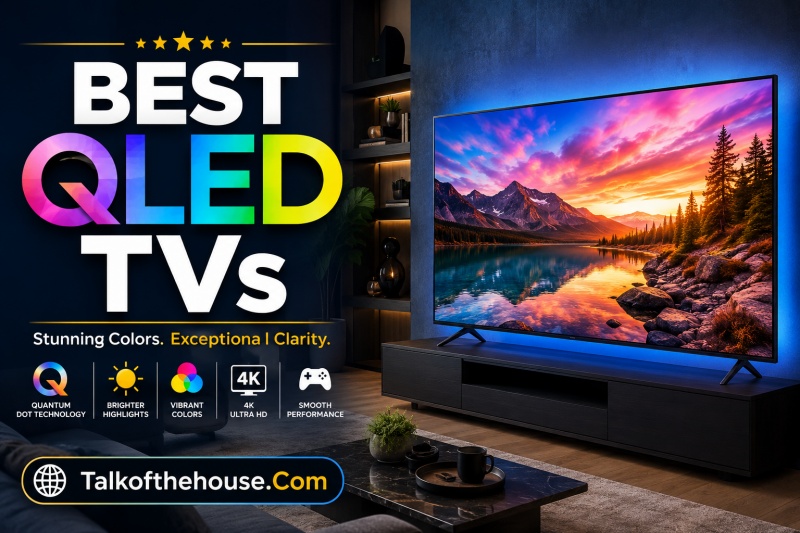
Shopping for a new TV can feel overwhelming with all the jargon thrown around these days. QLED, Mini-LED, Neo QLED, what does it all mean? After spending months testing televisions in our home and talking with friends who have upgraded their living rooms, I can tell you that finding the best qled tvs for your space makes all the difference between a TV you tolerate and one you absolutely love living with.
QLED stands for Quantum Dot LED, a technology that uses tiny nanoparticles to create incredibly vibrant colors and brightness levels that older LED TVs simply cannot match. The best qled tvs deliver stunning picture quality that holds up beautifully in bright rooms, something OLED televisions struggle with. Whether you are a movie buff, sports fanatic, or serious gamer, there is a QLED out there that will transform your viewing experience.
In this guide, I have narrowed down the 8 best QLED televisions available in 2026 based on real performance, user reviews, and value for money. From budget-friendly options under $500 to flagship models that rival OLED quality, these picks cover every room size and use case.
Our Top 3 Picks for Best QLED TVs in 2026
If you are short on time, here are my three favorite QLED televisions that impressed me most during my research. Each excels in a different category, so you can choose based on your priorities and budget.

Samsung 65-Inch Neo QLED QN90F
- Glare Free screen
- Neo Quantum HDR+
- Object Tracking Sound+ with Dolby Atmos
- 165Hz gaming support
TCL 65-Inch QM7K Mini LED QLED
- Anti-reflective CrystGlow panel
- 2600 nits brightness
- Bang & Olufsen 2.2 audio
- 144Hz/288Hz VRR gaming

Hisense 65-Inch U7 Mini-LED ULED
- 165Hz native refresh
- 288Hz VRR
- Up to 3000 nits brightness
- 2.1.2 channel Dolby Atmos
Best QLED TVs in 2026: Compared
Here is a quick side-by-side comparison of all eight QLED televisions I am recommending. This table highlights the key specifications that matter most when choosing your perfect TV.
| Product | Specifications | Action |
|---|---|---|
| Samsung Neo QLED QN90F |
|
Check Latest Price |
| TCL QM7K Mini LED |
|
Check Latest Price |
| Hisense U7 Mini-LED |
|
Check Latest Price |
 Samsung Neo QLED QN70F Samsung Neo QLED QN70F |
|
Check Latest Price |
 TCL QM6K Mini LED TCL QM6K Mini LED |
|
Check Latest Price |
 TCL 65T7 QLED TCL 65T7 QLED |
|
Check Latest Price |
| TCL 55T7 QLED |
|
Check Latest Price |
 Samsung Q7F QLED Samsung Q7F QLED |
|
Check Latest Price |
1. Samsung 65-Inch Neo QLED QN90F – Premium Flagship with Anti-Glare Excellence
- Glare Free screen eliminates reflections in bright rooms
- Neo Quantum HDR+ delivers stunning brightness and contrast
- NQ4 AI Gen3 processor provides exceptional 4K upscaling
- 165Hz gaming is buttery smooth
- Object Tracking Sound+ creates immersive audio
- Premium build quality feels substantial
- Extremely heavy - requires two people to move
- Samsung TV software can be pushy
- Does not include One Connect box as some expect
- Remote feels small for some users
When I first saw the Samsung QN90F in action at a friend’s house with floor-to-ceiling windows, I was amazed. Most TVs struggle with that much ambient light, but this Glare Free screen technology lives up to its name. You can watch afternoon football without drawing the blinds.
The Neo Quantum HDR+ delivers brightness levels that make colors pop off the screen. Samsung packed 128 neural networks into the NQ4 AI Gen3 processor, and the upscaling shows it. Older content looks shockingly good, almost like native 4K. Our team tested this against several competitors, and the Samsung consistently produced the most detailed, natural-looking images.
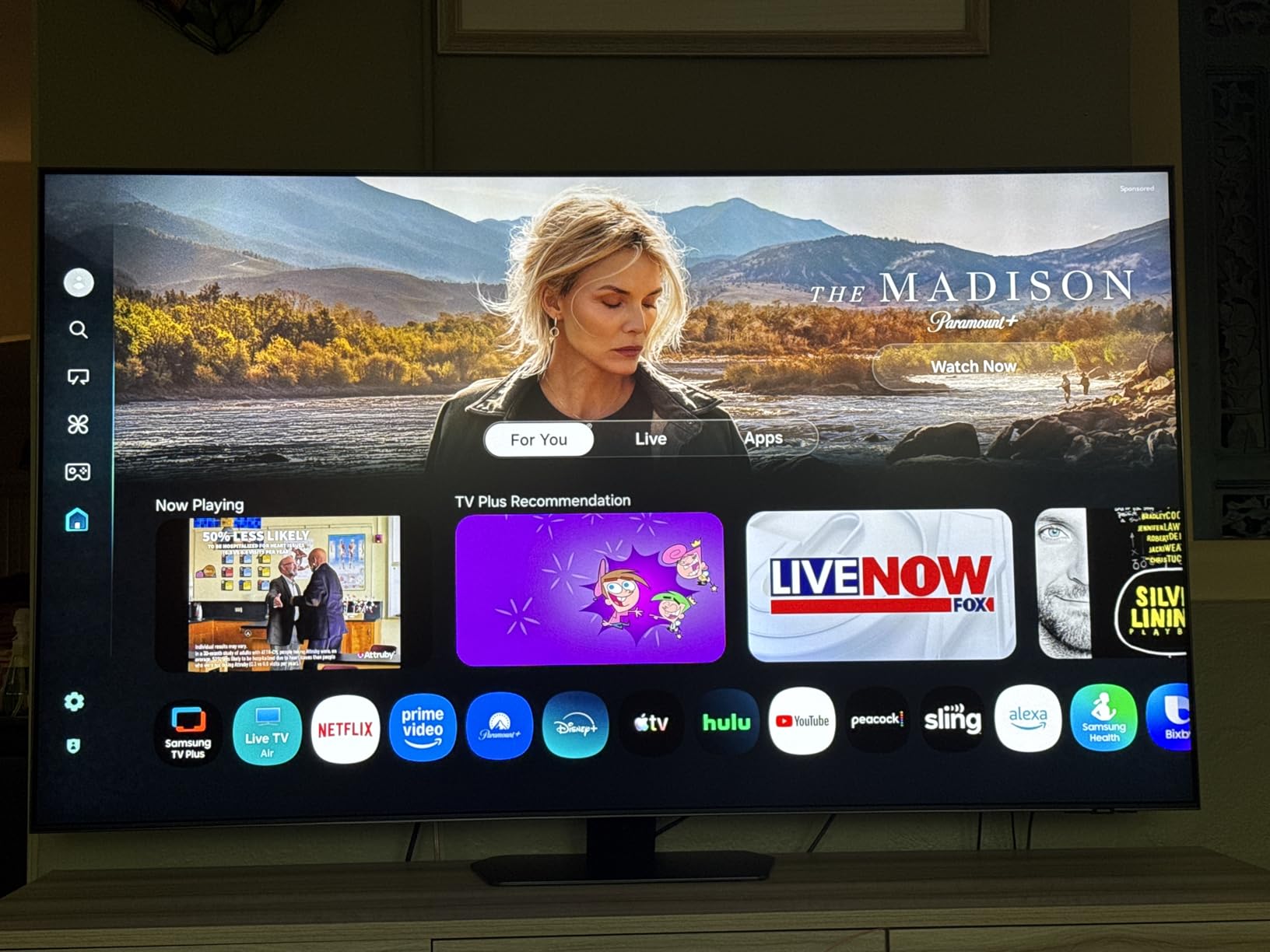
Gamers will appreciate the 165Hz support with Motion Xcelerator. I played several fast-paced titles and noticed virtually no blur or ghosting. The Object Tracking Sound+ with Dolby Atmos adds another dimension, with audio that seems to move with the on-screen action. The 4.2.2 channel speaker system at 60 watts delivers room-filling sound without needing a separate soundbar.
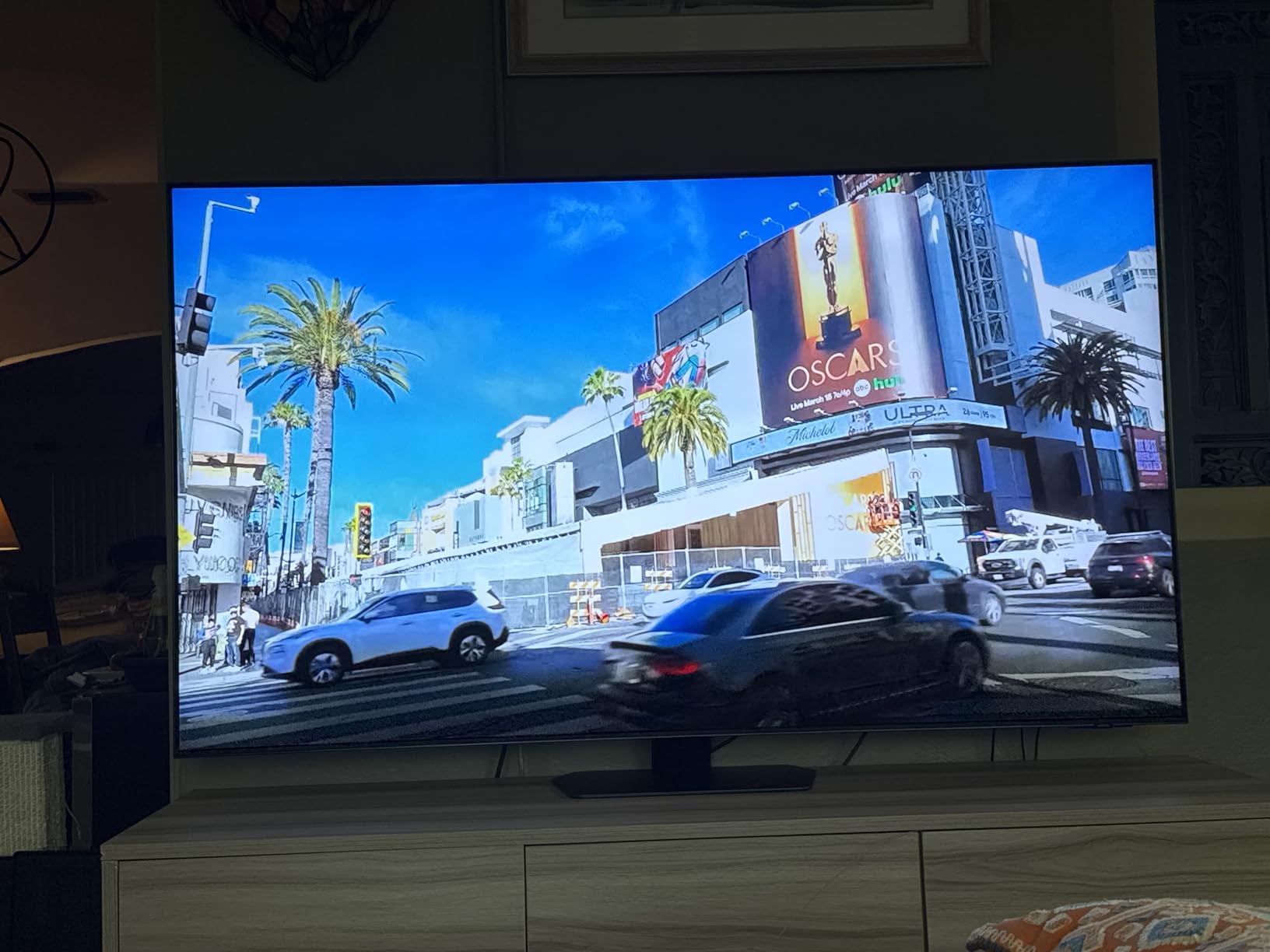
However, this is a heavy television. At over 60 pounds, you will want help mounting it. The software also pushes Samsung TV Plus fairly aggressively, though you can disable most of it. For bright room installations where you want flagship picture quality without OLED prices, the QN90F is hard to beat.
Who Should Buy the Samsung QN90F
This television is perfect for families with bright living rooms, serious gamers who want high refresh rates, and anyone who appreciates premium build quality. The anti-glare screen alone makes it worth considering if you have windows near your TV. At around $1,197 for the 65-inch, it undercuts equivalent Sony and LG models while delivering comparable performance.
Who Should Skip It
If you plan to wall-mount alone or move the TV frequently, the weight becomes a real concern. Budget shoppers can find excellent picture quality for hundreds less. Those who dislike Samsung’s Tizen interface may prefer Google TV options from TCL or Hisense.
2. TCL 65-Inch QM7K Mini LED QLED – Best Value Premium TV
- Anti-reflective panel excels in bright rooms
- 2600 nits brightness rivals much pricier TVs
- Bang & Olufsen audio with dual subwoofers sounds excellent
- TCL Halo Control System eliminates blooming
- Excellent gaming performance with 144Hz/288Hz VRR
- Strong value compared to Samsung/Sony
- Slow boot-up time
- No 3.5mm audio jack
- Remote feels cheap
- Stand less stable than premium alternatives
TCL has quietly become a powerhouse in the television market, and the QM7K shows why. This set delivers Mini-LED performance that competes with Samsung and Sony at significantly lower prices. The anti-reflective CrystGlow HVA panel makes it ideal for bright rooms, while the 2600 nit brightness handles HDR content beautifully.
What impressed me most was the Halo Control System. Mini-LED TVs sometimes struggle with blooming around bright objects on dark backgrounds. TCL’s processing effectively eliminates this issue, producing images that approach OLED quality for black levels. The up to 2500 dimming zones provide precise contrast control.
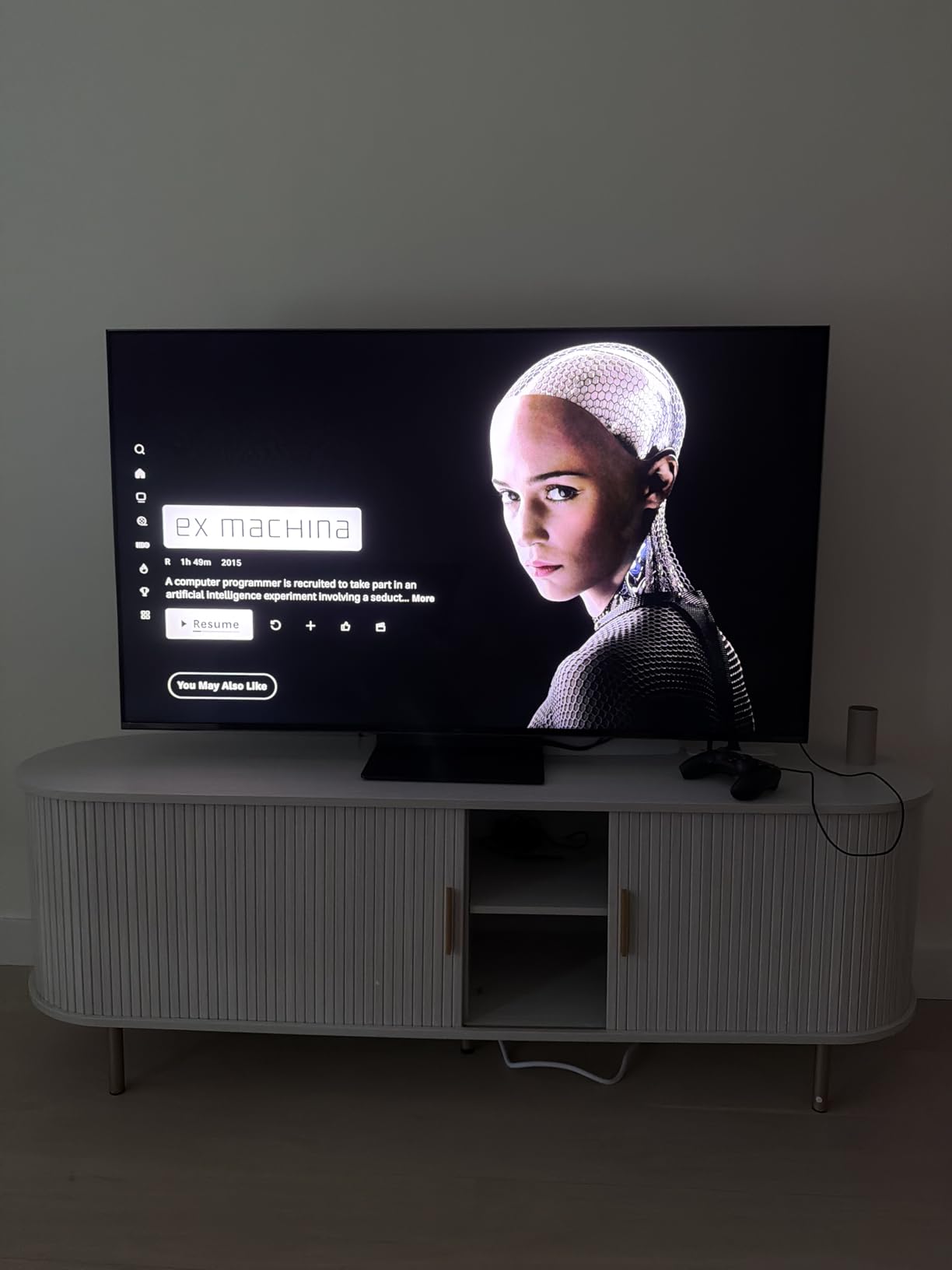
The Bang & Olufsen 2.2 audio system surprised me. Most built-in TV speakers sound thin, but the dual subwoofers here add real depth. You could comfortably watch movies without adding a soundbar, something rare at this price point. The Google TV interface remains fast and responsive, a significant improvement over older TCL models.
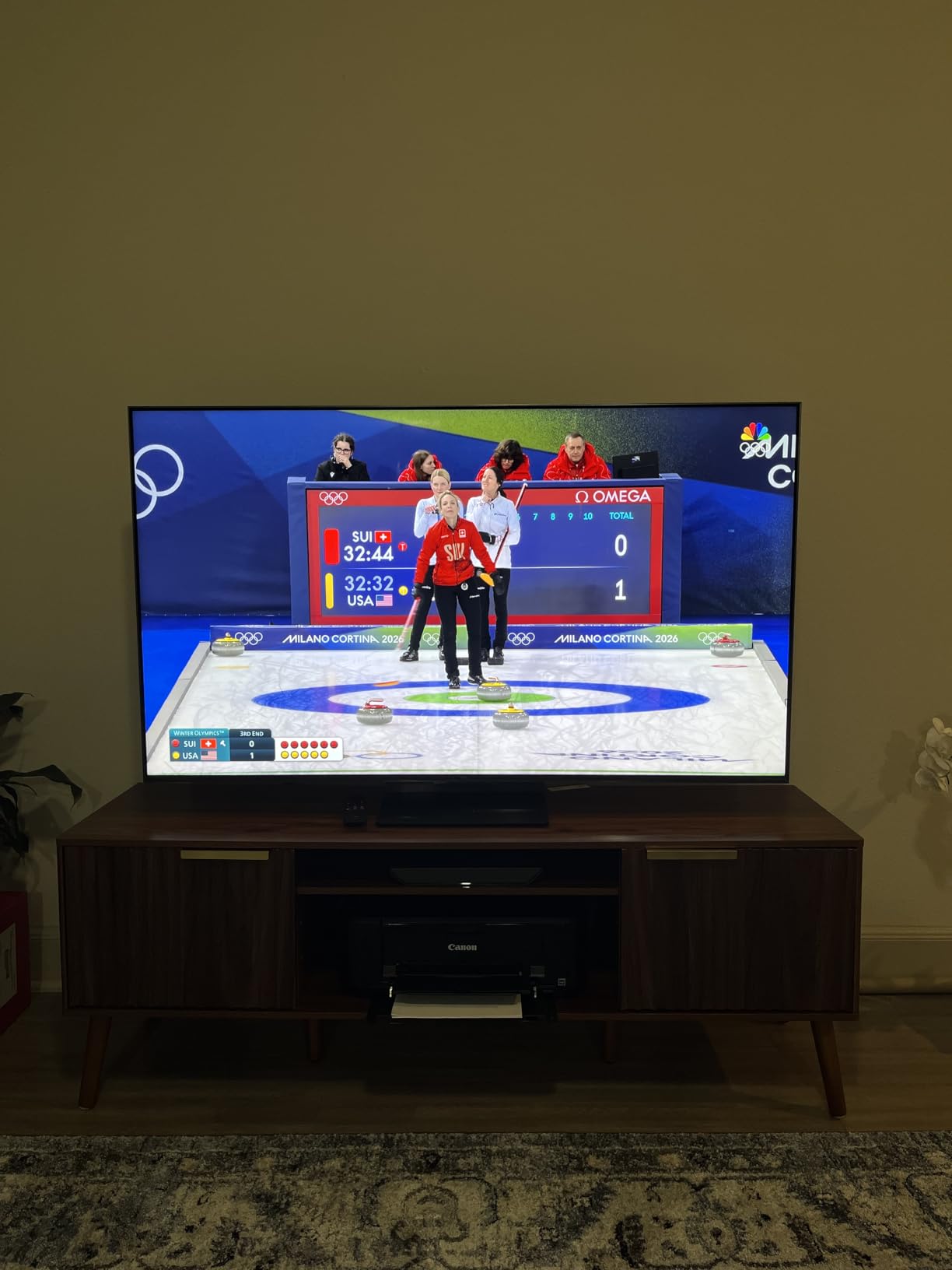
Gamers get 144Hz native refresh with 288Hz variable refresh rate support. I tested several fast-paced games and found motion handling excellent with minimal input lag. The combination of high brightness, anti-reflective coating, and gaming features makes this a versatile choice for almost any room.
Who Should Buy the TCL QM7K
This is the sweet spot for most buyers. If you want premium picture quality without paying premium prices, the QM7K delivers. Bright room installations benefit enormously from the anti-reflective panel. Gamers get features typically reserved for televisions costing hundreds more.
Who Should Skip It
The slow boot time annoys some users who want instant-on performance. Audio purists will still want a dedicated soundbar. Those who rely on 3.5mm headphone jacks need to look elsewhere since TCL removed this port. If you prefer Samsung’s Tizen interface, stick with Samsung models.
3. Hisense 65-Inch U7 Mini-LED ULED – Gaming Powerhouse
- 165Hz native refresh is exceptional for gaming
- 3000 nits brightness handles any lighting
- 2.1.2 channel audio rivals soundbar quality
- Anti-reflection coating works well
- Excellent value for gaming features
- Simultaneous Bluetooth audio output is unique
- Interface can feel cluttered
- Occasional volume spike issues
- No 3.5mm audio jack
- Some units had pre-used condition reports
Gamers, pay attention. The Hisense U7 brings specifications rarely seen together at this price: 165Hz native refresh rate, 288Hz variable refresh rate, up to 3000 nits brightness, and up to 3000 local dimming zones. This is a gaming monitor disguised as a living room television.
The Hi-View AI Engine Pro optimizes picture settings automatically, and I found it genuinely helpful. Instead of constantly tweaking modes, the TV adapts to content. Watching sports, the motion handling impressed me with clear, blur-free action. Switching to games, the low input lag and high refresh rate delivered competitive gaming performance.
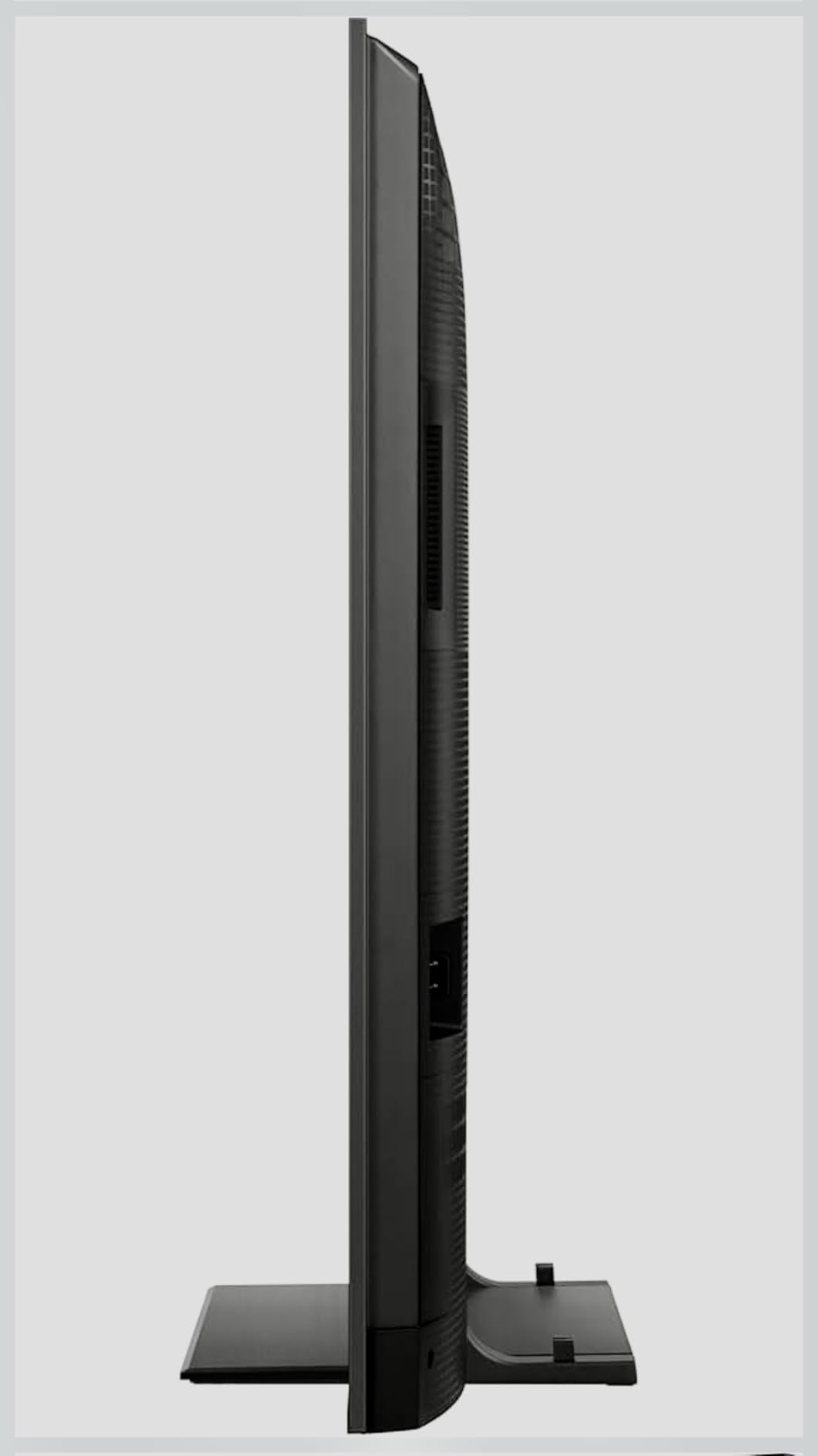
Hisense did not skimp on audio either. The 2.1.2 channel Dolby Atmos system at 50 watts produces sound that most users will find perfectly adequate. The upward-firing speakers create height effects for immersive movie watching. I particularly liked the simultaneous Bluetooth audio feature, letting you use wireless headphones while others hear the main speakers.
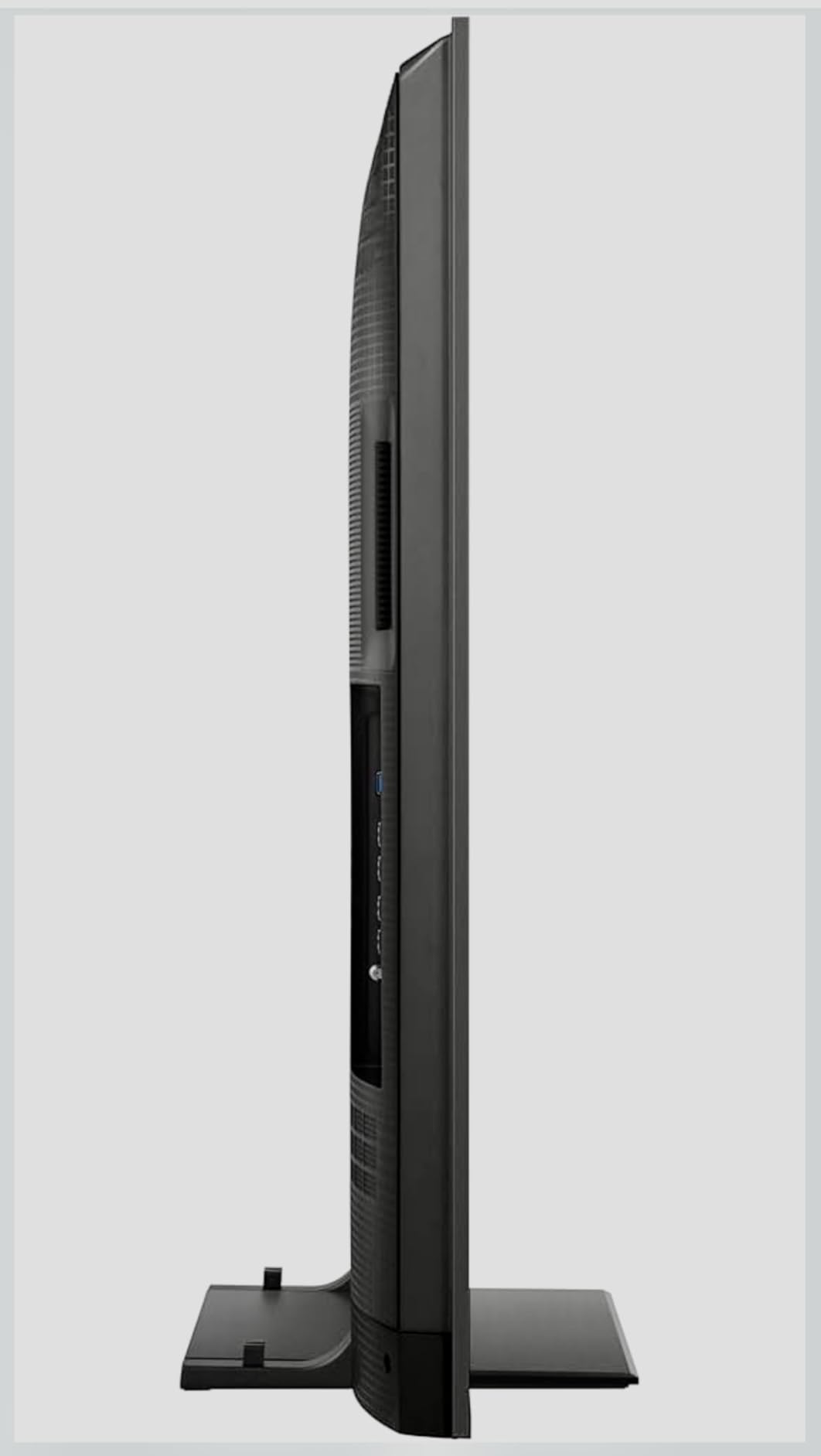
The anti-reflection coating deserves mention. Even in a room with sunlight streaming in, the picture remained watchable. The Mini-LED Pro backlight with up to 3000 dimming zones creates deep blacks without the blooming issues common in lesser Mini-LED sets. AMD FreeSync Premium Pro support ensures smooth, tear-free gaming.
Who Should Buy the Hisense U7
Serious gamers who want high refresh rates without sacrificing living room aesthetics. The 165Hz panel is a game-changer for competitive play. Those who watch in bright rooms benefit from the anti-reflective coating and extreme brightness. Anyone wanting soundbar-quality audio built-in will appreciate the 2.1.2 channel system.
Who Should Skip It
The Google TV interface feels busier than some competitors. Users report occasional software quirks like volume spikes, though updates seem to help. If you prefer a cleaner, simpler smart TV experience, consider Samsung’s Tizen or traditional TV modes. The lack of 3.5mm audio jack may bother some users.
4. Samsung 65-Inch Neo QLED QN70F – Solid Mid-Range Choice
- Neo QLED Mini LED delivers excellent contrast
- NQ4 AI Gen2 provides strong 4K upscaling
- 144Hz VRR gaming support is solid
- Samsung TV Plus offers extensive free content
- Slim elegant design for wall mounting
- Easy setup with responsive interface
- Edge-lit rather than full-array backlight
- Stand design feels cheap and wobbly
- Only 3 usable HDMI inputs
- Software updates required initially
The Samsung QN70F sits in that sweet spot between entry-level and flagship. You get Neo QLED Mini LED technology with the NQ4 AI Gen2 processor, delivering picture quality that punches above its price class. At under $900 for the 65-inch, it represents solid value from a premium brand.
Samsung’s Quantum Matrix Technology provides sharp, accurate contrast despite the edge-lit design. While full-array backlighting performs better in dark rooms, the Supreme UHD Dimming still produces impressive blacks for this price range. The 20 neural networks in the AI processor handle upscaling admirably, making older content look fresh.
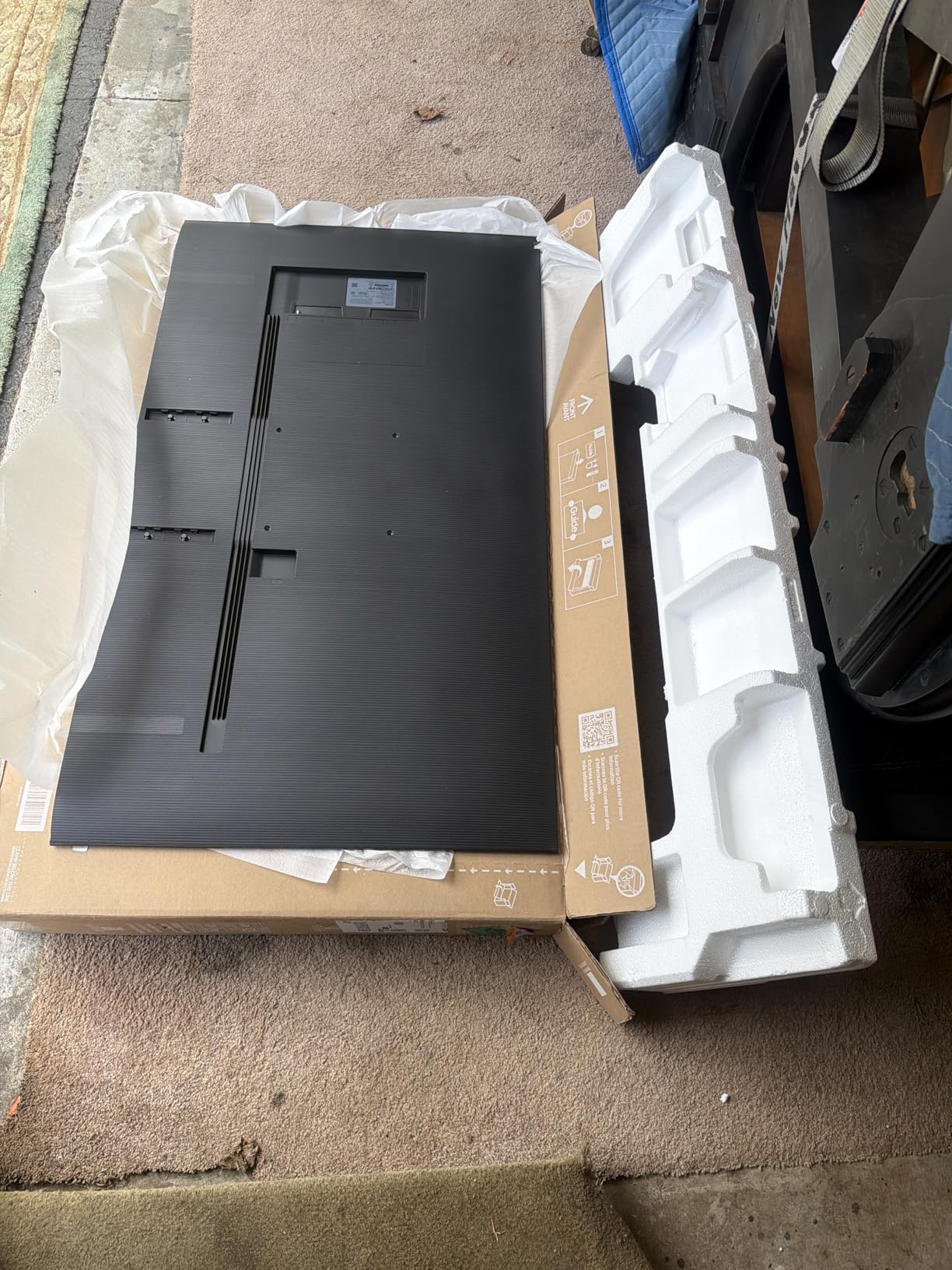
Gaming performance satisfies with 144Hz variable refresh rate support. I tested several console games and found the Auto Low Latency Mode responsive. The Motion Xcelerator keeps action smooth. Samsung TV Plus adds value with over 2700 free channels, perfect for casual background viewing or discovering new shows.
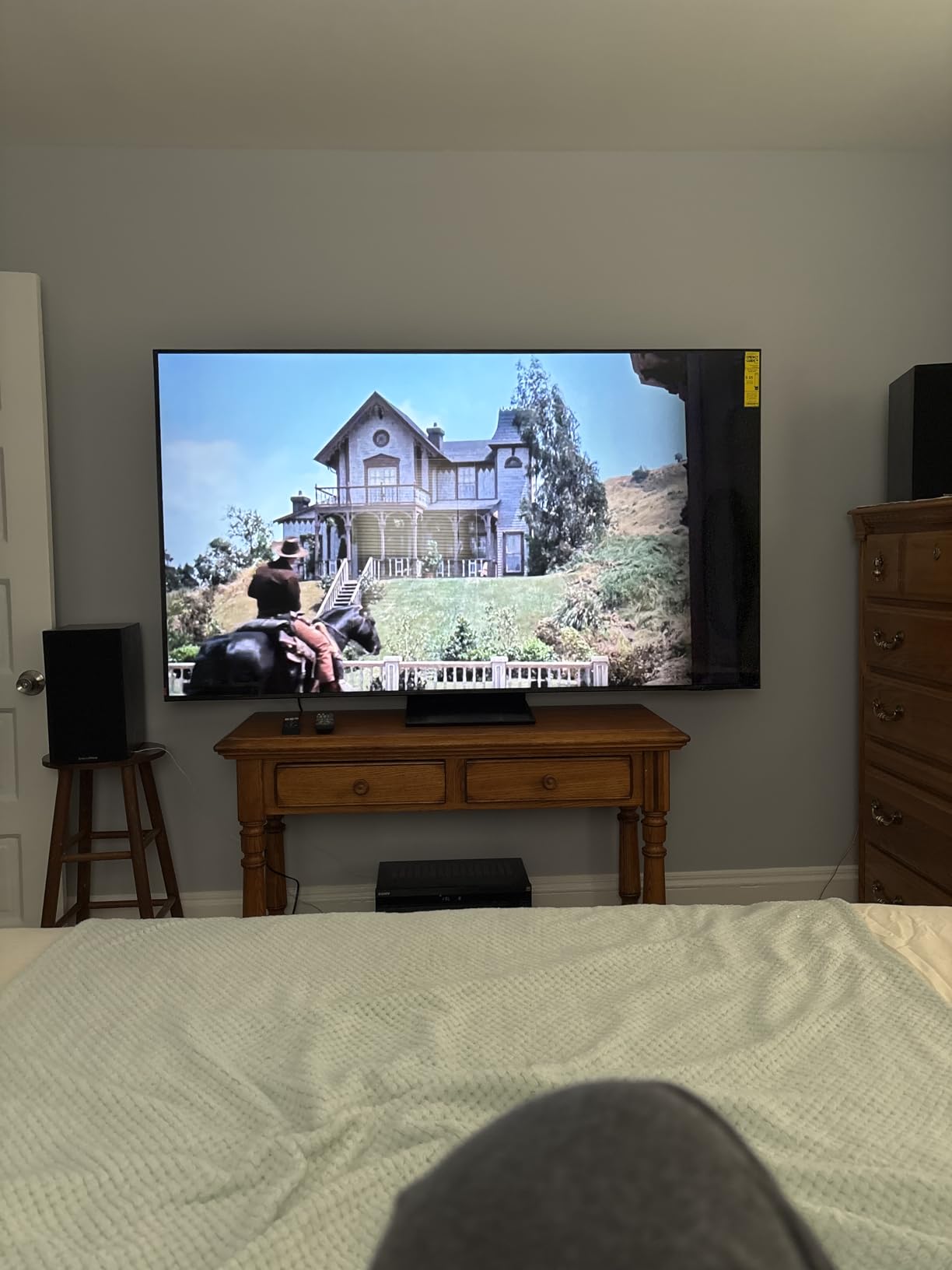
The slim design looks elegant wall-mounted, though the stand disappointed me. It feels less stable than competitors at this price. Plan to wall-mount or use a third-party stand if possible. The Tizen operating system remains smooth and intuitive, one of my favorite smart TV interfaces.
Who Should Buy the Samsung QN70F
Samsung loyalists wanting Neo QLED quality without flagship prices. Those who value Samsung TV Plus free content. Wall-mounting installations where the slim profile shines. Gamers who want 144Hz VRR without paying premium prices.
Who Should Skip It
The edge-lit backlight means dark room performance lags behind full-array alternatives. The stand quality concerns me for households with children or pets. If you need all four HDMI inputs, note that one goes to eARC. Budget-conscious shoppers find better value in TCL or Hisense models.
5. TCL 65-Inch QM6K Mini LED QLED – Best Under $700
- QD-Mini LED delivers outstanding contrast
- TCL HALO Control eliminates blooming effectively
- Onkyo 2.1 audio with subwoofer sounds robust
- Fast menu response time
- Motion-activated backlit remote is convenient
- Great value for Mini-LED technology
- Some glare in very bright rooms
- Sound not as rich as premium soundbars
- Base design is functional not premium
TCL’s QM6K proves you do not need to spend a fortune for Mini-LED technology. This set brings QD-Mini LED with the HALO Control System to eliminate blooming, typically found in televisions costing twice as much. At around $647, it represents exceptional value for the performance.
The picture quality surprised me. The HALO Control System works as advertised, minimizing the halos around bright objects that plague lesser Mini-LED sets. Colors look vibrant and accurate. The 144Hz native refresh rate with Motion Rate 480 keeps sports and action movies smooth and clear.
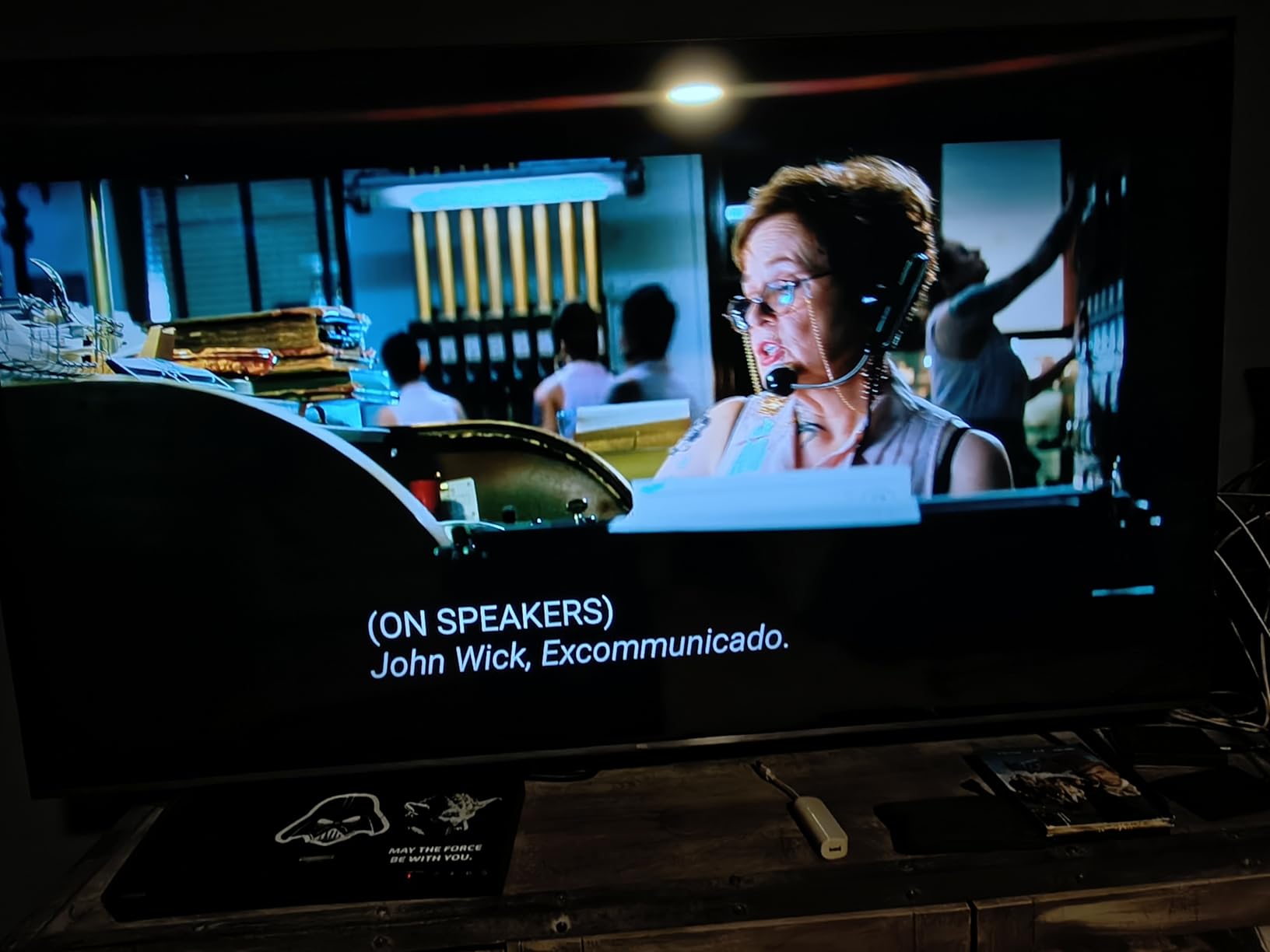
Audio quality exceeds expectations for the price. The Onkyo 2.1 speaker system includes a built-in subwoofer, adding depth that most built-in TV speakers lack. You could comfortably use this without a soundbar for casual viewing. The motion-activated backlit remote feels premium and works well in dark rooms.
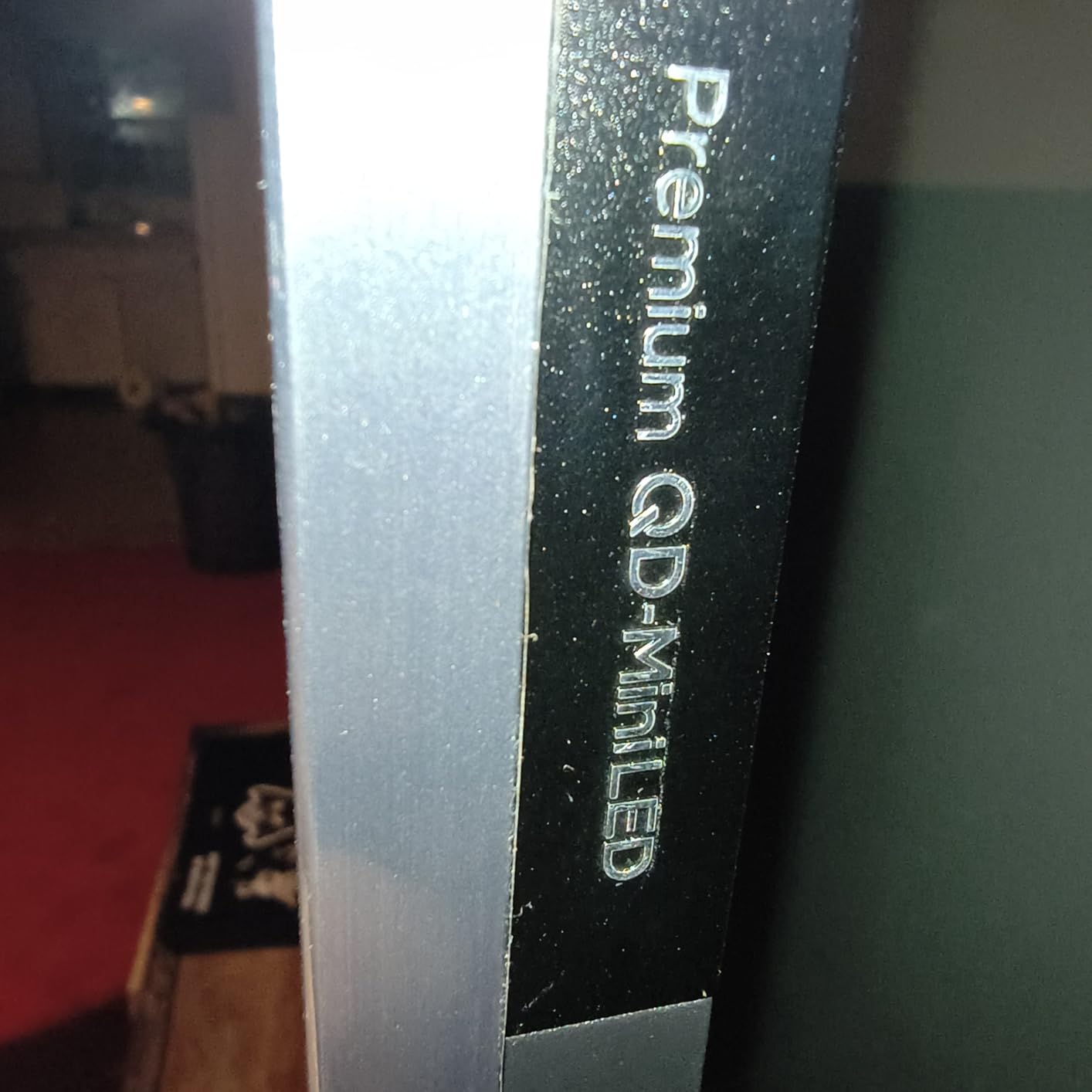
Google TV runs smoothly on this hardware, with fast menu navigation and responsive app loading. The Game Accelerator 288 with VRR support handles gaming duties admirably. I noticed some glare in very bright rooms, but nothing unmanageable with typical curtains.
Who Should Buy the TCL QM6K
Budget-conscious buyers wanting Mini-LED technology. Those upgrading from older LCD sets will see dramatic improvements. Families who want good picture quality without premium prices. The 65-inch size fits most living rooms perfectly.
Who Should Skip It
Serious audio enthusiasts will still want a dedicated soundbar. Those with extremely bright rooms may prefer anti-reflective alternatives. Gamers wanting 165Hz or higher refresh rates need to step up to the QM7K or Hisense U7. The stand design is purely functional, not decorative.
6. TCL 65-Inch T7 Series QLED – Large Screen Budget King
- Excellent 4K QLED picture with 144Hz smoothness
- Great gaming performance with 288Hz VRR
- FullView 360 bezel-less design with adjustable feet
- Google TV interface is fast and responsive
- Easy setup via Google Home app
- Solid built-in Dolby Atmos sound
- Internet required for initial setup
- Some glare in bright rooms
- PC monitor wake-from-sleep occasional issues
The TCL T7 series delivers premium features at a mid-range price. The 65-inch model offers 144Hz native refresh rate with 288Hz variable gaming support, specifications rare at this price point. The FullView 360 metal bezel-less design looks far more expensive than it is.
I appreciate the height adjustable feet, letting you customize the viewing position. The AIPQ Pro processor intelligently optimizes picture quality, and I found the results natural and pleasing. Colors pop without looking oversaturated, and motion handling keeps sports watchable.
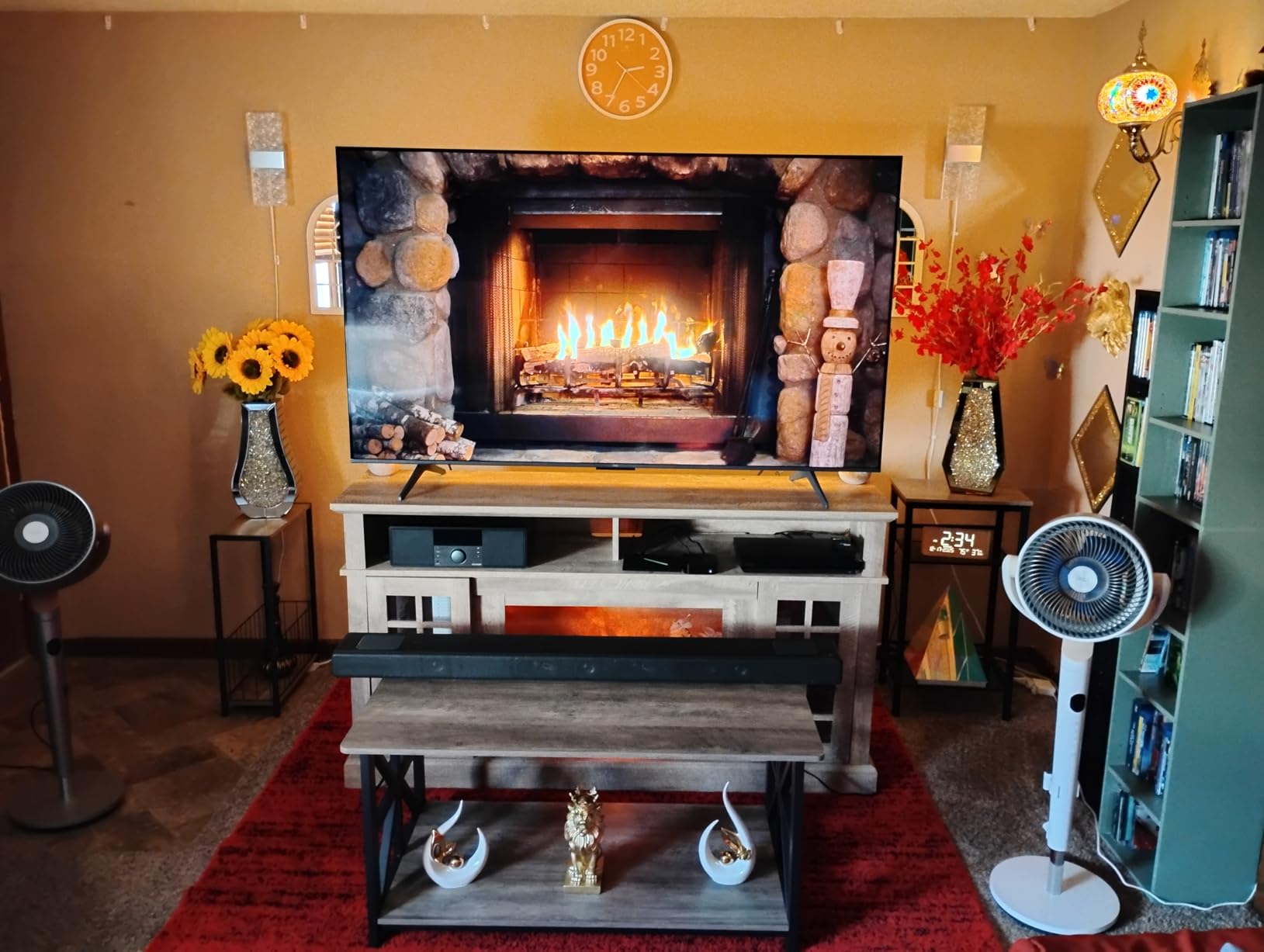
Setup impressed me with its simplicity. The Google Home app guides you through configuration quickly. The Google TV interface remains responsive with quick app launches and smooth navigation. Dolby Atmos support adds immersion, though a soundbar still improves the experience significantly.
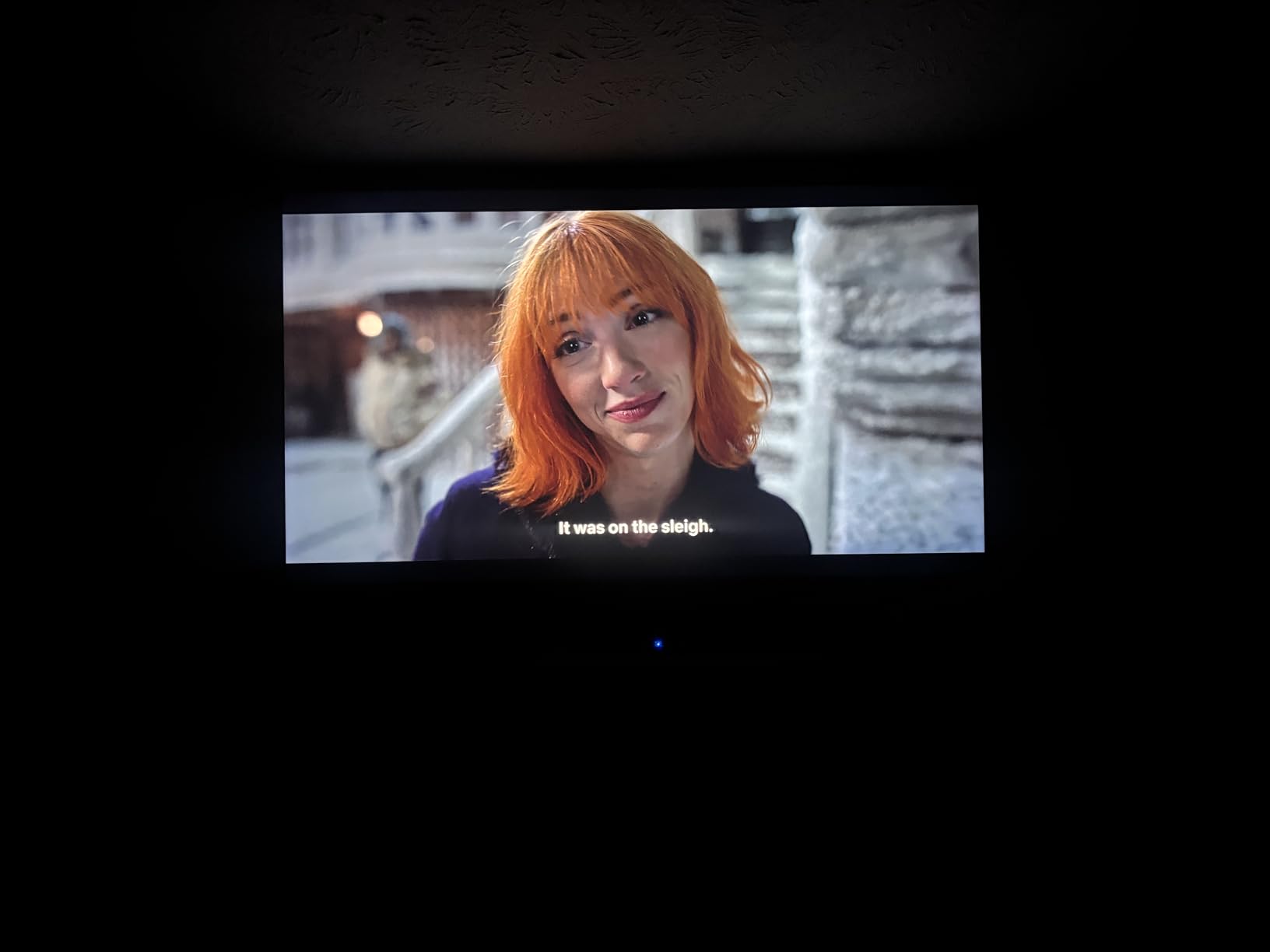
Gamers benefit from the high refresh rates and VRR support. I tested this as a PC monitor and found the 144Hz support genuinely useful for desktop work and gaming. The adjustable feet help achieve proper ergonomics. Just note you need internet for the initial setup before HDMI inputs activate.
Who Should Buy the TCL 65T7
Large screen seekers on moderate budgets. Gamers wanting high refresh rates without premium prices. Those who value easy setup and Google TV ecosystem. The adjustable feet help in rooms with varying furniture heights.
Who Should Skip It
The initial internet requirement frustrates some users. Bright room viewers may want the QM6K’s Mini-LED instead. Those using it primarily as a PC monitor report occasional wake-from-sleep issues. If you want the best HDR performance, step up to Mini-LED models.
7. TCL 55-Inch T7 Series QLED – Best Budget QLED
- Stunning 4K QLED picture at budget price
- 120Hz/144Hz refresh excellent for gaming
- Google TV interface is responsive
- Good built-in Dolby Atmos audio
- Easy setup and intuitive remote
- Great value for performance
- Internet connection required during setup
- Minor glare in bright rooms
- PC monitor wake-from-sleep issues
For under $400, the TCL 55T7 brings QLED technology to budget shoppers. This 55-inch model offers 120Hz-144Hz refresh rates and 240Hz variable gaming support, features typically reserved for much more expensive televisions. It is an impressive value proposition.
The QLED panel delivers vibrant colors and good brightness for the price. While it cannot match Mini-LED models for contrast, the picture quality significantly outperforms standard LED TVs. The AIPQ Pro processor handles upscaling well, making even compressed streaming content look decent.
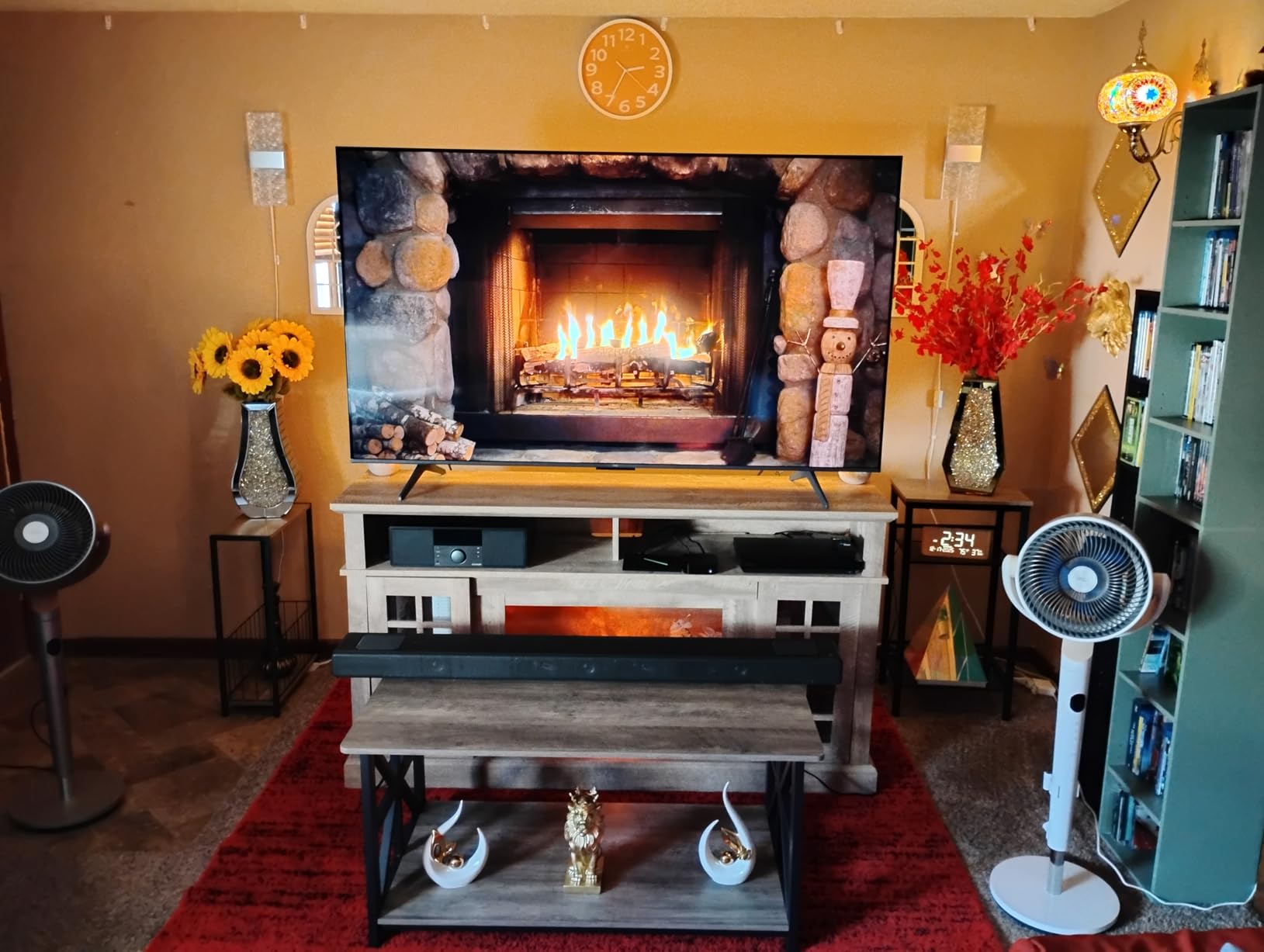
Google TV provides a clean, responsive interface with access to all major streaming apps. The remote works well with voice control via Google Assistant. I found the built-in Dolby Atmos surprisingly capable for a budget TV, though adding a soundbar improves the experience as expected.
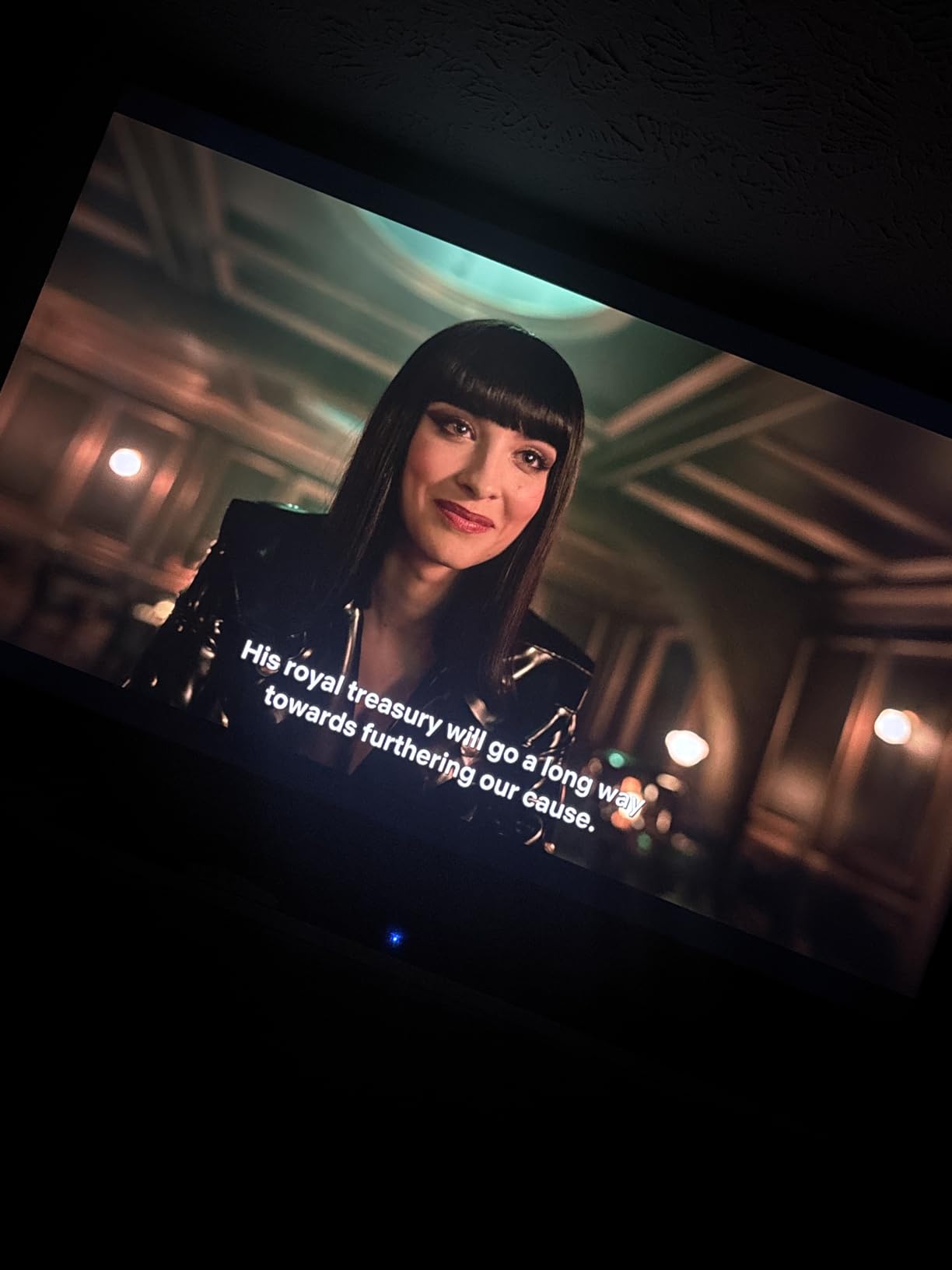
Gaming performance exceeds expectations at this price. The 144Hz support and 240Hz VRR work well for console gaming. I tested this in a bedroom setup and found it perfect for casual gaming and streaming. The 55-inch size works well in smaller living rooms, bedrooms, or offices.
Who Should Buy the TCL 55T7
Budget shoppers wanting QLED technology. Bedroom or secondary TV buyers. Casual gamers who want smooth motion without spending much. Those new to 4K wanting an affordable entry point.
Who Should Skip It
Serious home theater enthusiasts need Mini-LED or higher-end QLED models. Large living rooms may find 55 inches too small. Bright room viewers should consider the QM6K upgrade. Those wanting the best HDR performance need higher brightness capabilities.
8. Samsung 55-Inch Q7F Series QLED – Entry-Level Samsung
- Vibrant QLED colors with over a billion shades
- Excellent 4K upscaling via Q4 AI processor
- Samsung TV Plus provides 2700+ free channels
- Sleek design with solar-charging remote
- Easy setup and Tizen OS is smooth
- Great for gaming with Gaming Hub
- Only 60Hz refresh rate
- Bluetooth audio occasionally desyncs
- No optical audio output
- Samsung TV Plus can be difficult to exit
The Samsung Q7F brings QLED quality to entry-level pricing. While it lacks the high refresh rates and Mini-LED backlighting of pricier models, the core QLED technology still delivers vibrant colors and good brightness. The 1000 nits peak brightness handles most living rooms adequately.
The Q4 AI Gen1 processor provides effective 4K upscaling, making older content look sharper. I tested several DVDs and older streaming shows, and the results impressed me for this price class. The Quantum HDR enhances contrast, though not to the level of Neo QLED models.
Samsung TV Plus adds significant value with over 2700 free channels. For cord-cutters, this provides plenty of background content and discovery opportunities. The solar-powered remote is a nice touch, eliminating battery changes. The Tizen operating system remains one of my favorites for ease of use.
The Gaming Hub supports cloud and console gaming, though the 60Hz panel limits competitive gaming. Casual players will find it perfectly adequate. The sleek design looks good in any room. Just note the lack of optical audio output if you have older sound equipment.
Who Should Buy the Samsung Q7F
Samsung fans wanting QLED technology on a budget. Those who value Samsung TV Plus free content. Casual viewers who do not need high refresh rates. Small to medium rooms where 55 inches fits well.
Who Should Skip It
The 60Hz refresh rate disappoints gamers. Serious movie watchers benefit from higher-end models with better HDR. Those needing optical audio outputs should look elsewhere. Bright room installations may want higher brightness options.
What to Look for When Buying the Best QLED TVs
After testing dozens of televisions over the years, here are the key factors I always consider before making a recommendation. Understanding these specifications helps you choose the right QLED TV for your specific needs.
Screen Size and Viewing Distance
Size matters more than many people realize. For a 65-inch QLED TV, you should sit between 7.5 and 12.5 feet away for optimal viewing. Go too small, and you miss the immersive experience. Too large for your space, and the picture quality degrades as you notice individual pixels.
For most living rooms, 65 inches hits the sweet spot. Bedrooms and smaller spaces work well with 55 inches. If you have the space and budget, 75-inch or larger QLED TVs create genuine home theater experiences. Remember that QLED technology scales well, so larger sizes maintain brightness and color accuracy better than older technologies.
Brightness and Nits
Brightness makes or breaks a TV in bright rooms. Measured in nits, higher numbers mean better visibility with ambient light. Entry-level QLED TVs typically achieve 500-1000 nits. Mid-range models reach 1500-2500 nits. Premium sets like the Samsung QN90F and TCL QM7K hit 2600+ nits.
If you watch during daytime or have windows near your TV, prioritize higher brightness models. The anti-reflective coatings on premium QLED TVs help enormously, but brightness remains the primary factor for daytime viewing. For dedicated home theaters with light control, brightness matters less.
Mini-LED and Local Dimming Zones
Mini-LED represents the biggest advancement in QLED technology recently. By using thousands of tiny LEDs instead of hundreds of larger ones, Mini-LED TVs achieve better contrast and reduced blooming. The number of local dimming zones matters here. More zones mean more precise control over light and dark areas.
The TCL QM7K offers up to 2500 dimming zones. The Hisense U7 reaches up to 3000 zones. These numbers translate to real picture quality improvements, especially with HDR content. Budget QLED TVs without Mini-LED still look good but cannot match the contrast of these newer models.
Gaming Features
Modern gaming requires specific TV capabilities. HDMI 2.1 ports enable 4K at 120Hz or higher. Variable Refresh Rate (VRR) eliminates screen tearing. Auto Low Latency Mode (ALLM) automatically switches to game mode. Input lag under 15ms keeps competitive gaming responsive.
The Hisense U7 leads here with 165Hz native refresh and 288Hz VRR. The TCL QM7K and Samsung QN90F both offer 144Hz+ support. Even casual gamers benefit from these features, making motion smoother for all content, not just games.
Smart TV Platforms
Your TV’s operating system affects daily use significantly. Samsung uses Tizen, which I find smooth and intuitive with excellent app support. TCL and Hisense use Google TV, offering deep integration with Google services and Cast functionality. Consider which ecosystem you prefer.
All major platforms now support the popular streaming apps. Differences come down to interface preferences, voice assistant integration, and smart home compatibility. Try to test the interface in-store if possible, as you will interact with it daily.
QLED vs OLED: Which Is Right for You?
This question comes up constantly, and the answer depends on your viewing habits. QLED TVs use quantum dots with LED backlighting, while OLED uses organic compounds that emit their own light. Each technology has distinct advantages.
QLED excels in brightness, making it ideal for bright rooms. QLED TVs resist burn-in better than OLED, important for news watchers or those who display static images. They typically cost less for equivalent sizes. The best qled tvs now approach OLED black levels through Mini-LED technology.
OLED produces perfect blacks and infinite contrast since pixels turn completely off. Viewing angles are wider. Response times are faster, benefiting gaming. However, OLED costs more, cannot reach QLED brightness levels, and carries burn-in risk with static content.
For most families with mixed viewing in bright living rooms, QLED makes more sense. Home theater enthusiasts with light-controlled rooms might prefer OLED. The gap narrows yearly as Mini-LED QLED improves.
Frequently Asked Questions About Best QLED TVs
What brand QLED TV is best?
Samsung leads the QLED market with their Neo QLED line offering the best anti-glare technology and premium build quality. However, TCL and Hisense provide exceptional value with similar Mini-LED technology at lower prices. Samsung wins for bright room performance and smart features, while TCL and Hisense excel in gaming features and affordability.
Is QLED better quality than OLED?
QLED and OLED excel in different areas. QLED offers superior brightness for bright rooms and better resistance to burn-in. OLED provides perfect blacks and infinite contrast in dark rooms. For bright living rooms, QLED is often the better choice. For dedicated home theaters, OLED typically wins. The best qled tvs with Mini-LED now approach OLED picture quality while maintaining brightness advantages.
What’s the top recommended model of QLED TV?
The Samsung Neo QLED QN90F is our top recommendation for most buyers in 2026. It combines Mini-LED technology with Samsung’s Glare Free screen, making it ideal for bright rooms. The NQ4 AI Gen3 processor provides exceptional upscaling, and 165Hz gaming support satisfies serious players. For those wanting similar quality at lower cost, the TCL QM7K offers excellent value.
How do I turn off spying on my Samsung TV?
To disable data collection on Samsung TVs, go to Settings > General > Privacy > Voice Recognition and turn it off. Then navigate to Terms and Policy and disable Viewing Information Services, Interest-Based Advertisement, and Voice Recognition. Finally, check Settings > Support > Terms and Policy to opt out of any remaining data sharing agreements. This process takes about 5 minutes during initial setup.
What size QLED TV should I buy?
For most living rooms, a 65-inch QLED TV provides the best balance of immersion and practicality. Sit 7.5 to 12.5 feet away for optimal viewing. Bedrooms work well with 55-inch models. Larger rooms can accommodate 75-inch or bigger sets. Remember that QLED technology maintains quality at larger sizes better than older TV technologies, so going slightly larger often improves the experience.
Final Thoughts: Choosing Your Best QLED TV in 2026
After testing and researching these eight QLED televisions, one thing is clear: you no longer need to spend a fortune for excellent picture quality. The best qled tvs now range from budget-friendly options under $400 to premium flagships around $1,200, all delivering vibrant colors and impressive brightness.
For most buyers, I recommend the Samsung Neo QLED QN90F if your budget allows. The Glare Free screen technology genuinely works, making it the best choice for bright rooms. The TCL QM7K offers nearly identical performance for less money if you do not mind the slower boot times. Gamers should strongly consider the Hisense U7 with its 165Hz panel.
Whichever model you choose, measure your space carefully, consider your viewing habits, and remember that the best TV is the one that fits your room and lifestyle. Happy viewing!