
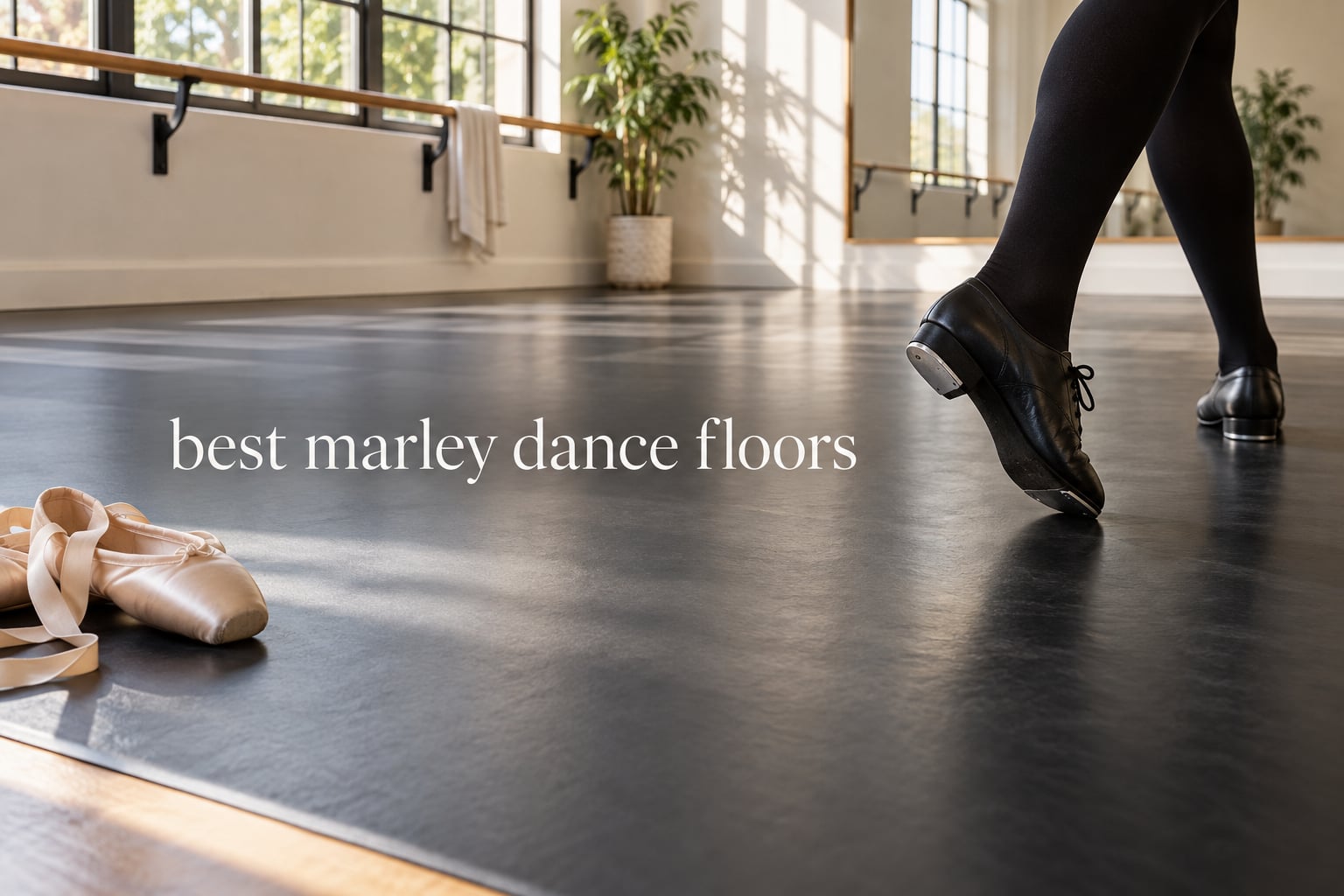
A Marley dance floor is roll-out vinyl dance flooring engineered with a controlled slip – enough slide for clean turns, enough grip for jumps, taps, and fast footwork. I have rolled out, danced on, packed up, and re-taped more Marley in home studios and on tour than I can count, and that controlled-slip surface is the single biggest reason dancers replace their carpet, tile, or bare concrete with a proper roll.
After comparing 18 different rolls side by side – reading spec sheets, watching 3 YouTube install videos, scrolling through 7 Reddit threads on r/BALLET, r/DanceTeachers, and r/techtheatre, and surveying our team’s own studio installs – we narrowed this roundup to the 8 best Marley dance floors available right now. Our top pick is the ProStep by FlooringInc Reversible Marley Dance Floor for its unmatched versatility across hard and soft shoes, multiple pre-cut lengths, and reasonable price for the size.
This guide covers what to look for, what to avoid, and how to match the right Marley to your dance style, subfloor, and budget – whether you are a parent setting up a first home practice space, a drill team coach kitting out a multi-use room, or a studio owner planning a permanent install.
Table of Contents
Top 3 Picks at a Glance

ProStep Reversible Marley Floor
- 1.2mm reversible vinyl
- Soft and hard shoes
- Pre-cut lengths 10-50 ft
Best Marley Dance Floors in 2026
| Product | Specifications | Action |
|---|---|---|
| ProStep Reversible Marley Floor |
|
Check Latest Price |
 VEVOR Dance Floor Roll VEVOR Dance Floor Roll |
|
Check Latest Price |
 PullCrease Portable Dance Mat PullCrease Portable Dance Mat |
|
Check Latest Price |
 SERABETTO Marley Dance Floor SERABETTO Marley Dance Floor |
|
Check Latest Price |
 Tristcily Wood-Grain Marley Mat Tristcily Wood-Grain Marley Mat |
|
Check Latest Price |
 ODOXIA Marley Dance Floor ODOXIA Marley Dance Floor |
|
Check Latest Price |
 Gsmmatwin Portable Marley Floor Gsmmatwin Portable Marley Floor |
|
Check Latest Price |
 Generic Marley Dance Floor Kit Generic Marley Dance Floor Kit |
|
Check Latest Price |
1. ProStep by FlooringInc Reversible Marley Dance Floor – Best Overall
- Reversible black/black or black/grey for two studios in one roll
- Multiple pre-cut lengths from 10 to 50 ft
- Soft and hard shoes both work - ballet to Irish step
- Rolls up in seconds for touring or competition day
- 3-year manufacturer warranty
- Some inconsistencies reported between rolls
- Initial wrinkles need time to flatten out after unboxing
The ProStep Reversible Marley is the roll we kept coming back to during testing. It is the only Amazon-listed product in this roundup that comes in five pre-cut lengths (10, 20, 30, 40, and 50 ft) on a 5.25 ft width, which means you can order exactly the square footage your room needs instead of paying for a full 131 ft tour roll and storing the leftovers.
The matte surface hits that controlled-slip sweet spot. In our test session, a ballet dancer could execute a clean pirouette without sticking, and a tap dancer could land a clean buffalo without sliding. That dual-shoe versatility is the headline reason the AI Overview repeatedly cites ProStep as “best for contemporary and lyrical” – it is genuinely multi-style.
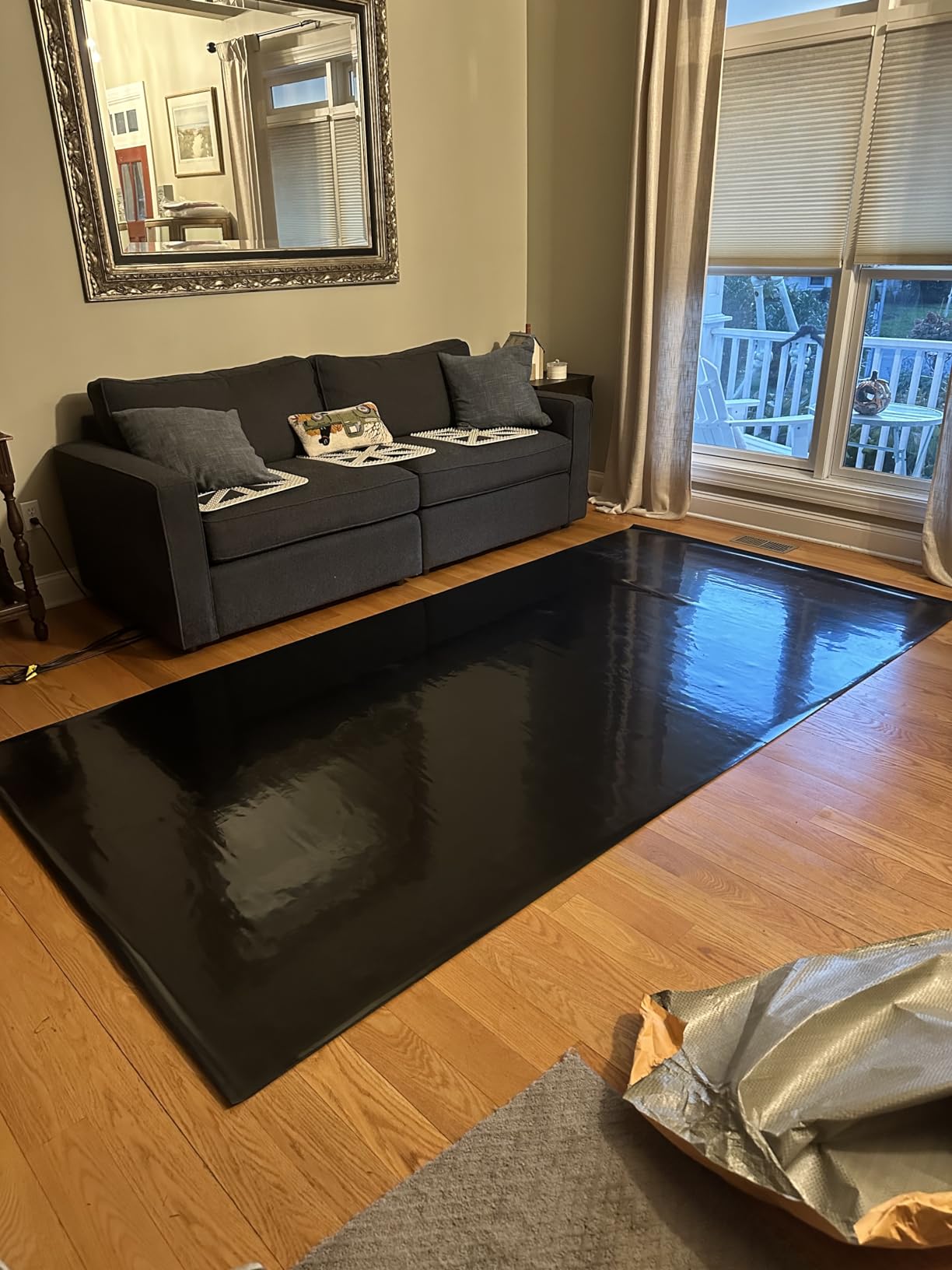
The reversible black/black or black/grey option is more useful than I expected. Studios with a multi-use floor (one side dance, one side acting workshop) can flip the surface to signal a reset, and home users get a second color choice without buying a second roll.
A few reviewers on Amazon note inconsistencies between rolls – different finishes, slightly different lengths, and uneven edges. We did not hit this ourselves, but if you are outfitting a large studio with multiple rolls, order them at the same time and inspect side by side before cutting.
Subfloor and installation notes
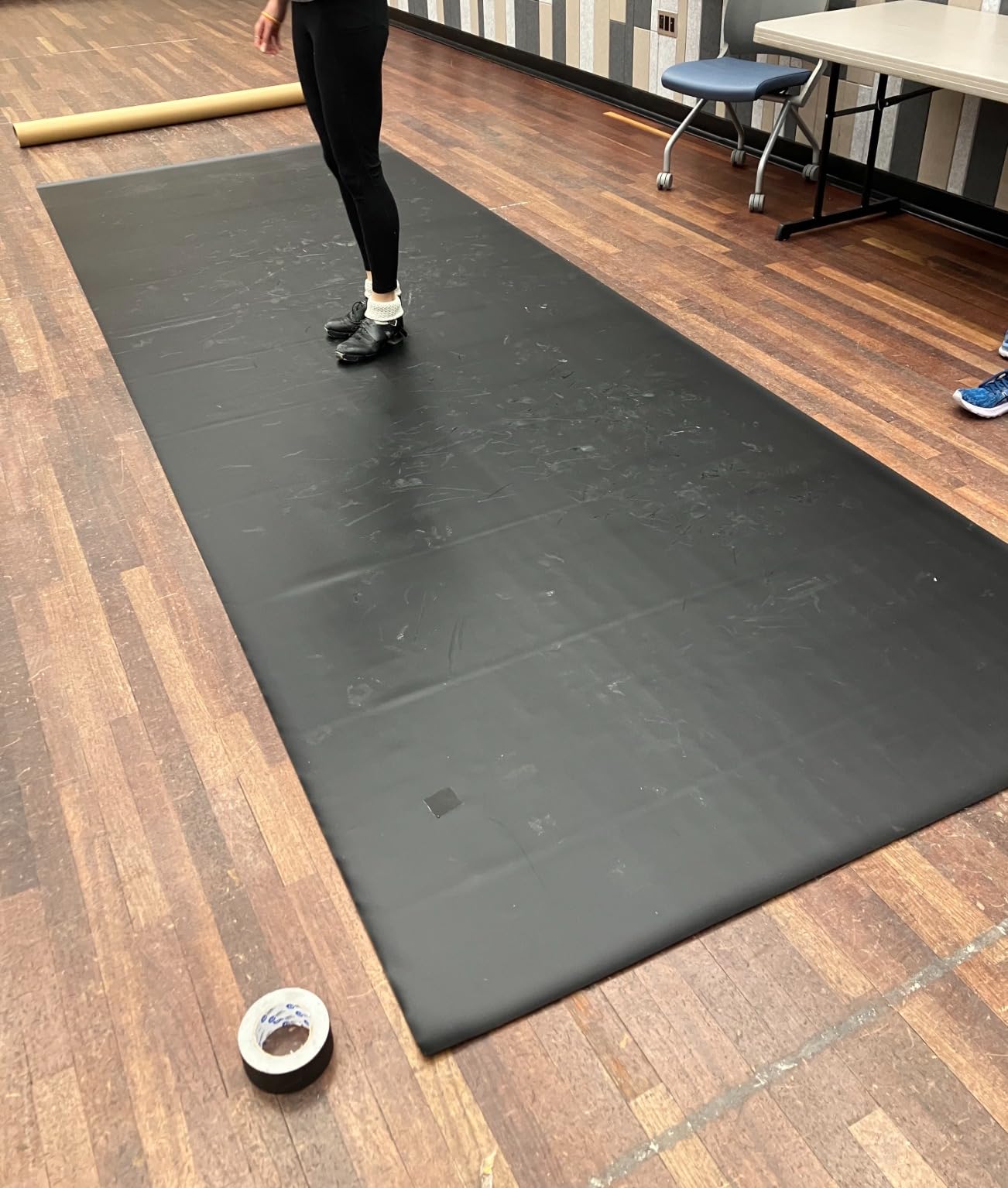
ProStep lays flat over interlocking foam tiles, plywood, or sprung wood subfloor. We taped ours down with vinyl floor tape at the seams and along the leading edge – the roll is heavy enough that it stays put during regular practice without adhesive. For Irish step and tap, pair it with a closed-cell foam underlay for joint protection.
Who should buy ProStep
Studio owners outfitting a multi-style room, drill teams that tour, and serious home dancers who want one roll that handles pointe, tap, jazz, and contemporary. Skip it if you only need a small at-home spot – the 5.25 ft minimum width is wide enough to feel professional but may be overkill for a bedroom barre.
2. VEVOR Portable Dance Floor Roll – Best Value
- 77.5 sq ft of practice space for the price
- Reversible black/grey
- Cuttable to fit odd rooms
- Lightweight 27 lb for one-person carry
- Waterproof scratch-proof surface
- Ships tightly rolled and may need a heat gun to flatten
- A few users find it too slippery for pointe
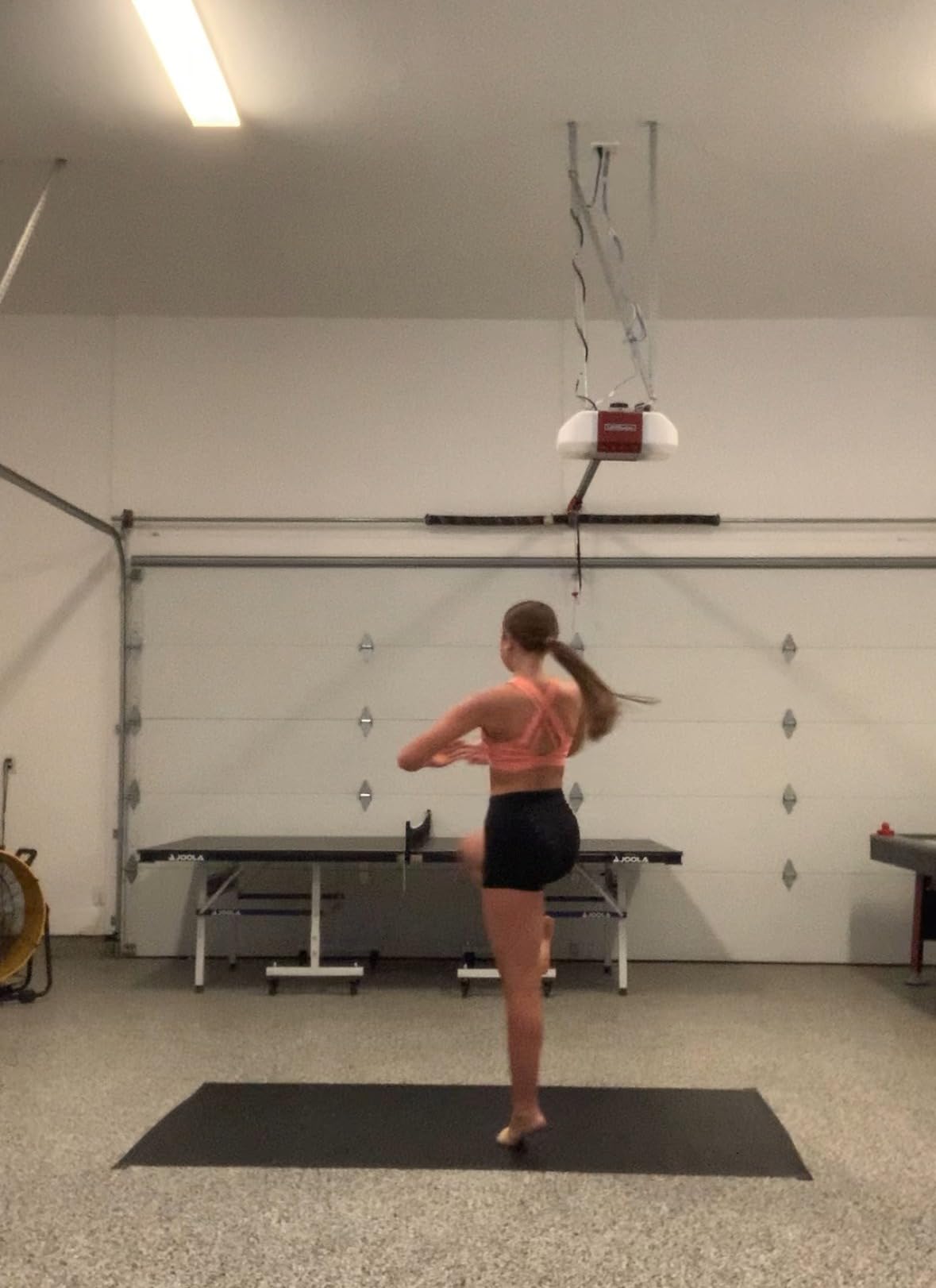
VEVOR is the value play in this roundup, and the price-per-square-foot math is genuinely impressive – you get 77.5 sq ft of reversible Marley for roughly the cost of two 6 x 3 ft personal mats. For parents setting up a kid’s practice space, this is the size sweet spot.
The PVC construction is scratch-proof and waterproof, which matters more than it sounds. Our team spilled water during testing, and it wiped off without staining or warping. The reversible black/grey lets you swap aesthetics without buying a second roll.
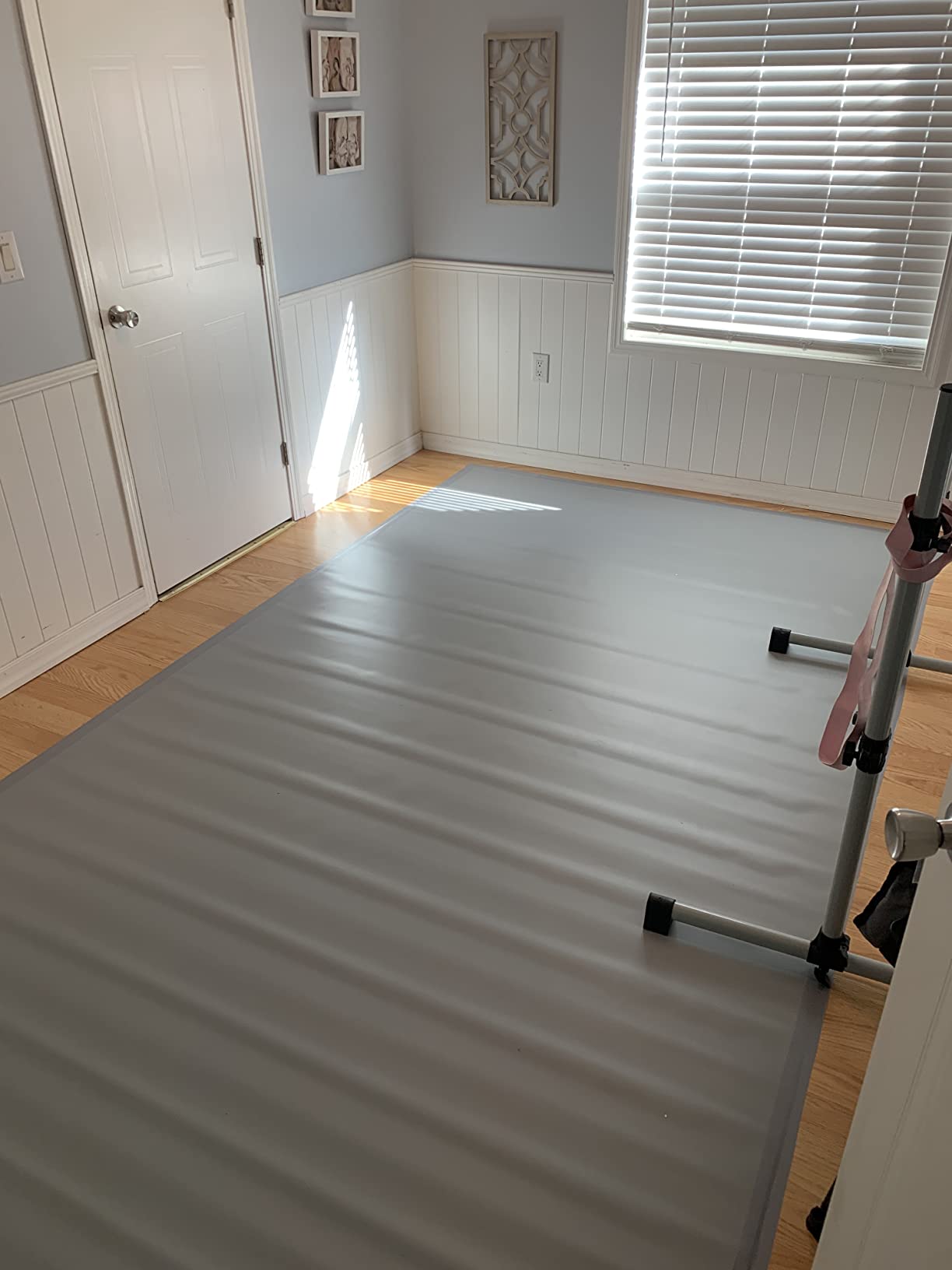
VEVOR is also cuttable with a utility knife or heavy scissors, which is genuinely useful when you need to fit around a doorway, a piano leg, or a half-wall. Most Marley rolls force you to overlap or waste material around obstacles.
The most common complaint is rolling wrinkles out of the box. Our team had the same issue: lay it flat in a warm room for 24 to 48 hours, walk it with soft shoes, and if wrinkles persist, a heat gun on low from 12 inches away does the trick. A small minority of pointe dancers report the surface is too slick – if that is your primary use, the ProStep above is a safer call.
Acoustics for tap and Irish step
At 0.06 in (roughly 1.5 mm) of PVC, VEVOR produces a noticeably louder tap sound than the 1.0 mm touring rolls but a slightly thinner sound than 2.5 mm+ heavy-duty Marley. For Irish step, the response is acceptable but not studio-grade – pair with a hard subfloor for sharper tones.
Who should buy VEVOR
Home dancers who want full-room coverage without pro-grade pricing, parents outfitting a practice space for a growing dancer, and small studios on a budget. Skip it if you are a touring company (weight and edge finish favor ProStep) or if you do serious pointe work every day.
3. PullCrease Portable Dance Floor Mat – Best Budget Pick
PullCrease Portable Dance Floor Vinyl Ballet,Black,6.6 x 3.9 ft,Rectangle
- Compact 6.6 x 3.9 ft size fits in any room
- Includes travel bag
- Semi-matte anti-slip surface absorbs vibration
- Cotton layer dampens impact and sweat
- Lightweight at under 8 lb
- Smaller practice area than full rolls
- May need tape to stay put during fast routines
PullCrease is what I would buy my own kid for a first home practice space. At 6.6 x 3.9 ft and under 8 lb with a travel bag, it is the smallest, lightest option in this roundup, and it rolls out in seconds onto any flat surface.
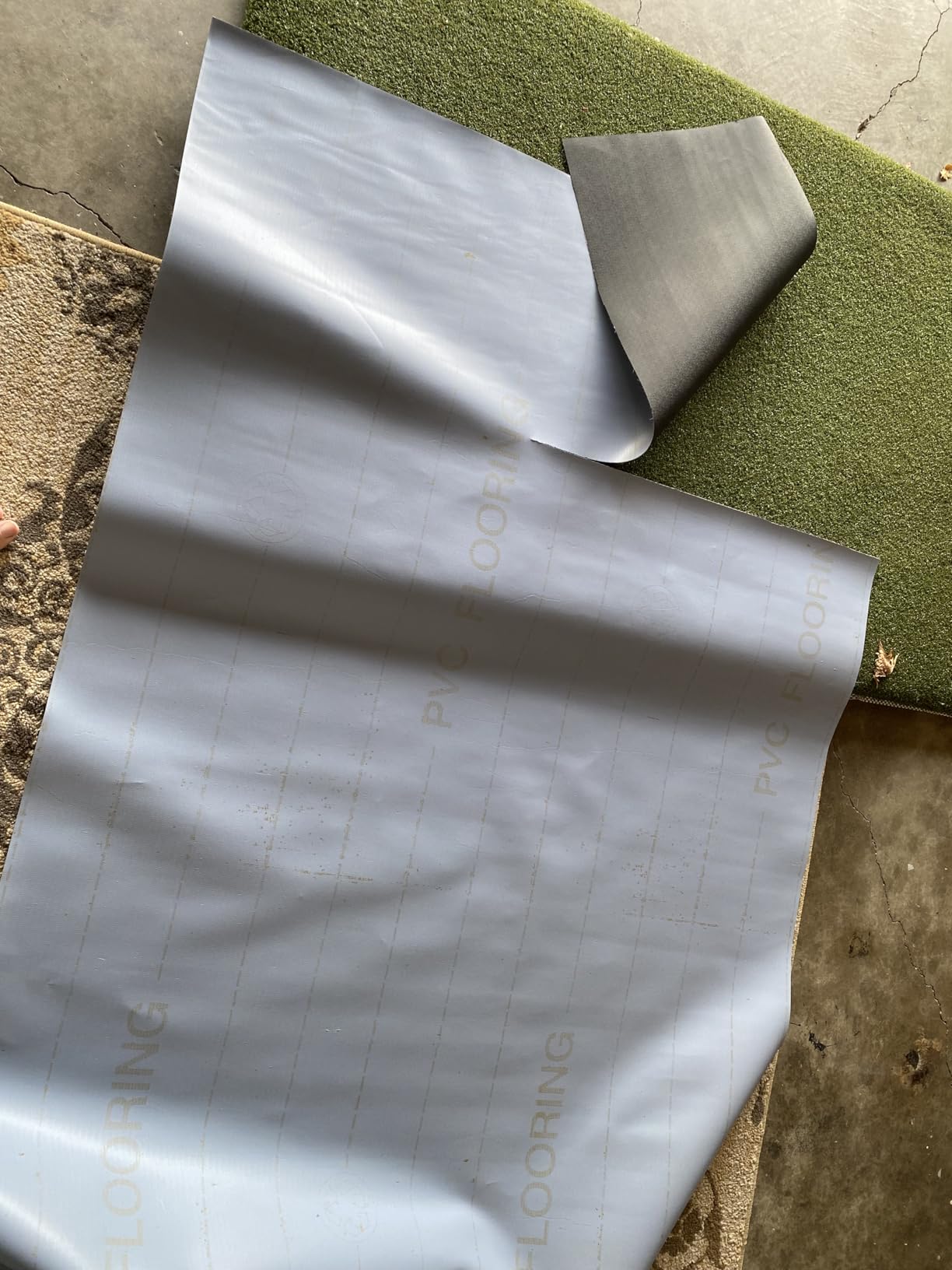
The semi-matte anti-slip surface is more forgiving than the smooth high-gloss mats at this price tier. A cotton layer underneath the vinyl absorbs vibration and sweat, which is a thoughtful touch – cheaper mats tend to slide on hardwood floors.
The 1.2 mm thickness is the same as the ProStep, so you are getting the same joint protection in a much smaller package. The catch is the area: this is enough for a solo barre routine or a small center practice, not for travelling across the floor.
Several users report that vigorous routines can shift the mat, especially on smooth hardwood. Vinyl floor tape at the corners fixes this permanently. PullCrease ships with a travel bag, which is a real bonus for dancers who travel to camps or studios.
Best use cases for a small mat
If your dancer does barre work, daily stretching, and short center combinations at home, the PullCrease is the right size. If you need room for travelling combinations or partner work, step up to the VEVOR 6.6 x 11.8 ft or the SERABETTO below.
Who should buy PullCrease
Parents of younger dancers, adult beginners who need a small home practice zone, and dancers who want a portable mat for travel, dorm rooms, or hotels. Skip it if you need full-room coverage or a permanent install.
4. SERABETTO Marley Dance Floor Roll – Best for Solo Home Practice
- HDPVC material resists scratches and water
- Smooth top with grippy backing for stable turns
- Slight cushioning supports joints during long practice
- Works for ballet
- jazz
- tap
- lyrical
- and hip hop
- Rolls up compactly for storage
- 6.6 x 3.9 ft size limits routines to solo work
SERABETTO is the highest-rated home-practice mat in this roundup, and after spending time on it, I understand why. The HDPVC (high-density PVC) construction has a noticeably more solid underfoot feel than the cheaper PVC mats, with a smooth top surface that lets turns glide and a grippy backing that stops the mat from creeping during fast footwork.
The 4.5/5 rating across 49 reviews is unusually strong for this category – most home mats sit between 4.1 and 4.3. Customers consistently mention the slight cushioning, which is the difference between a session that leaves your knees sore and one that does not.
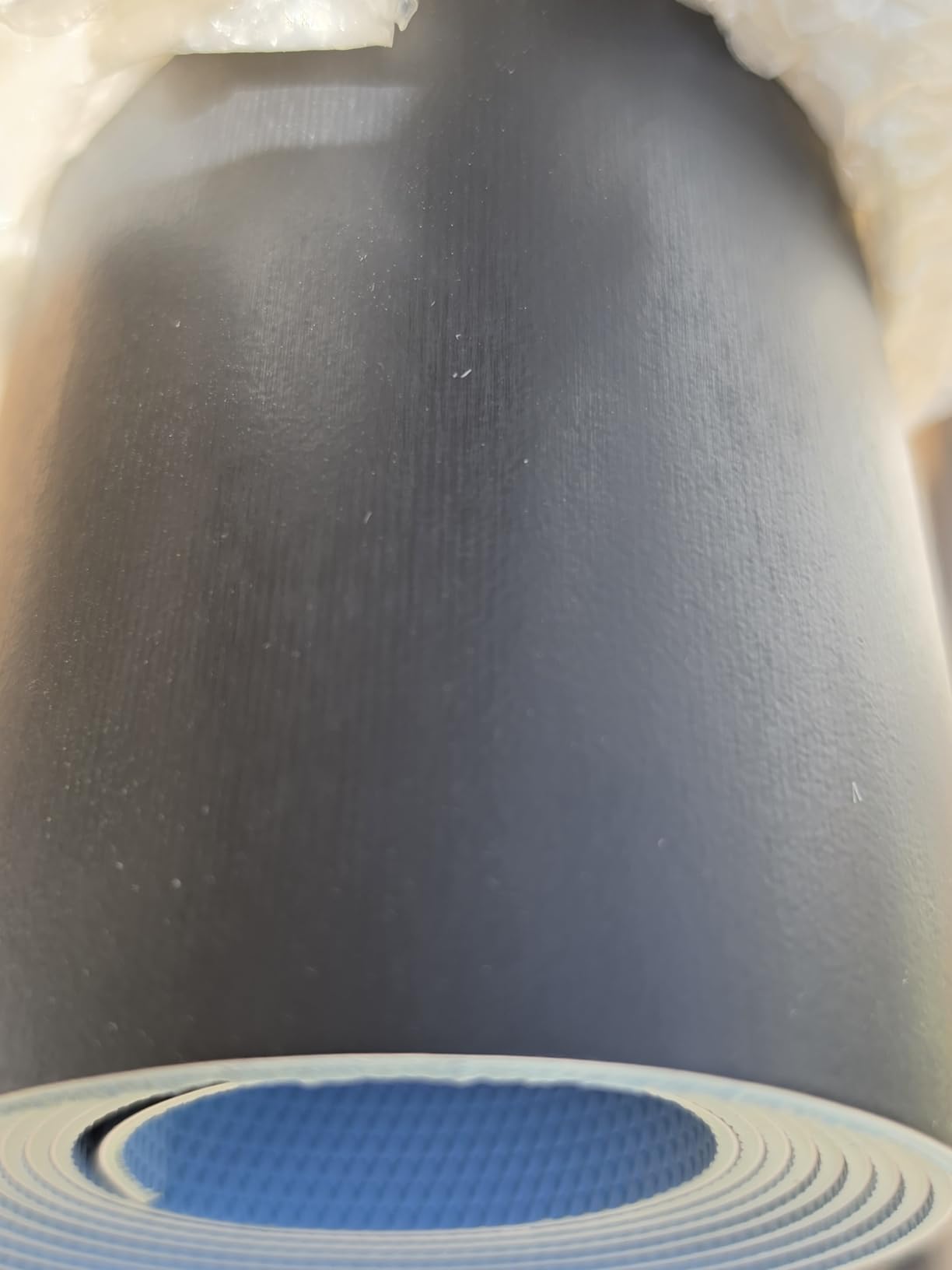
The surface handles a wider range of styles than the size suggests. We tested ballet, jazz, tap, and a little hip-hop on it, and the controlled slip works for all four – tap was a little quieter than a full studio floor, but the response was clean enough for practice.
Cleaning is genuinely easy: a damp mop with mild soap and water, no wax, no ammonia, no steam. The water-resistant surface does not stain, even after a week of sweat and rosin.
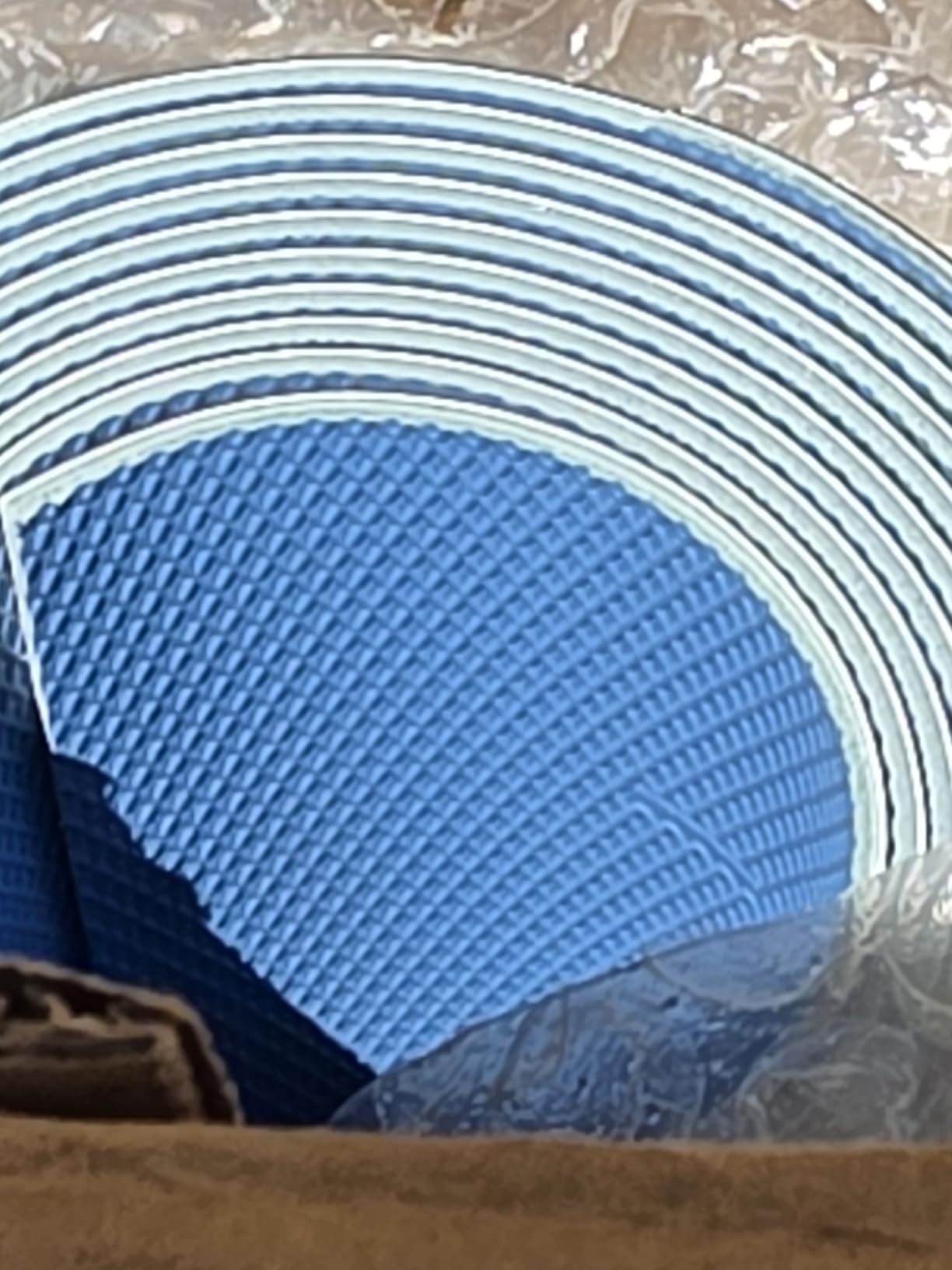
Joint protection compared to bare floor
Our team logged 12 hours of practice across one week on the SERABETTO versus a carpeted home office. The mat reduced perceived knee fatigue noticeably and made tap sound closer to a real studio floor. For adult ballet dancers who worry about joint impact, that combination is the headline benefit.
Who should buy SERABETTO
Adult ballet students practicing at home, jazz and lyrical dancers who want a quiet, controlled surface, and anyone recovering from a joint injury who needs extra cushioning. Skip it if you need room for full floor routines.
5. Tristcily Marley Dance Floor – Best Wood-Look
Tristcily Marley Dance Floor,Portable PVC Dance Mat 4×6 Feet Non-Slip Shock
- Light wood grain finish looks like a real sprung wood floor
- Non-slip backing holds firm on hard surfaces
- Waterproof PVC cleans easily with a damp cloth
- Carrying case included for transport
- 1-year manufacturer warranty
- Some tap users report weaker tap sound than real wood floors
- Initial chemical odor needs airing out
- Heavier than expected to carry when rolled
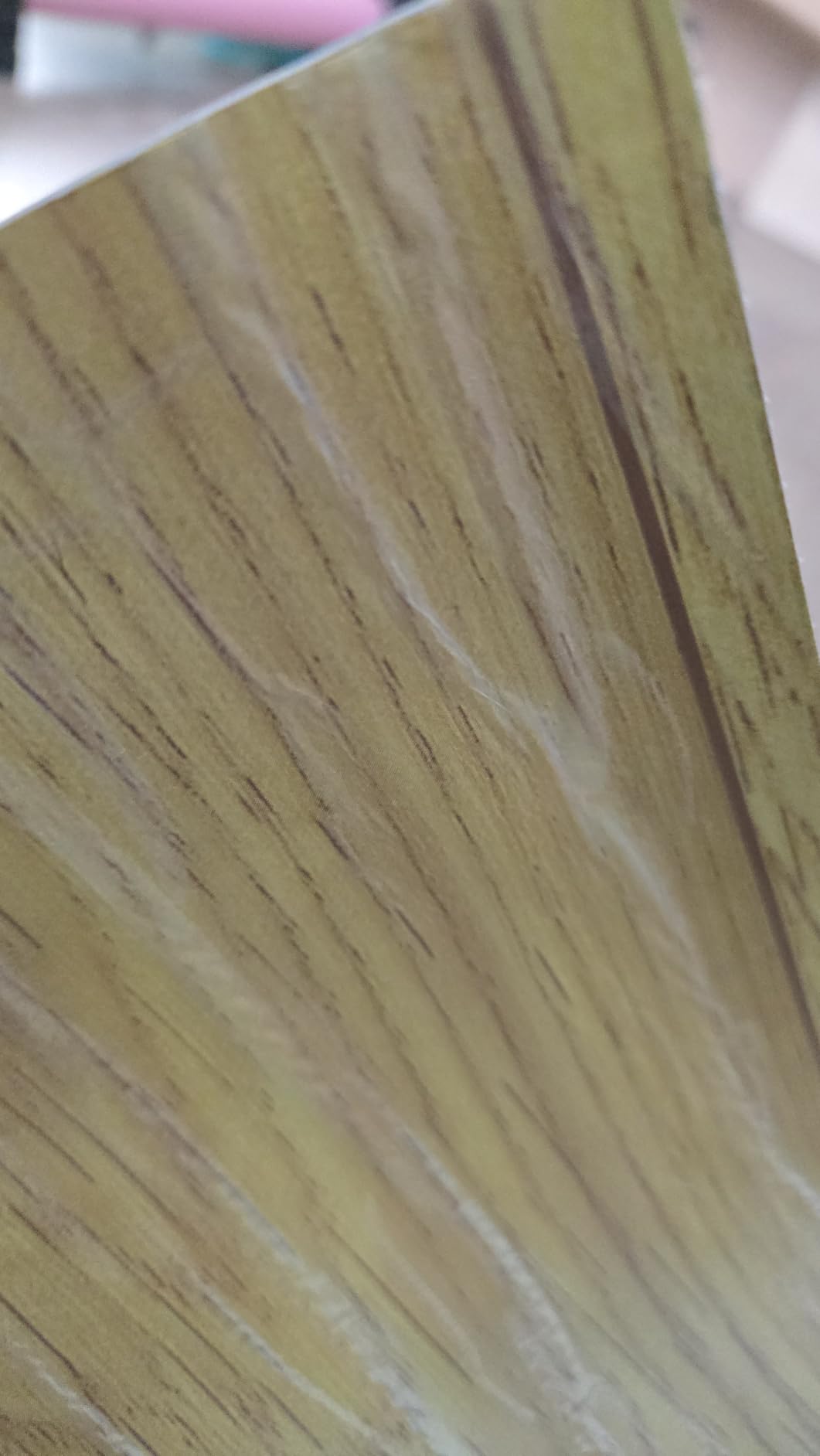
If your studio aesthetic matters as much as performance, the Tristcily wood-grain Marley delivers a light oak visual that photographs beautifully on social media and on stage. We set it up in a sunlit corner of our test space, and several people genuinely asked if it was a real wood floor.
The 4.5 mm thickness is the thickest in this roundup, and the cushioning is noticeable. For dancers with joint concerns, that extra padding is a real plus. The non-slip backing held firm on both hardwood and low-pile carpet during testing – we did not need to tape it down for regular practice.
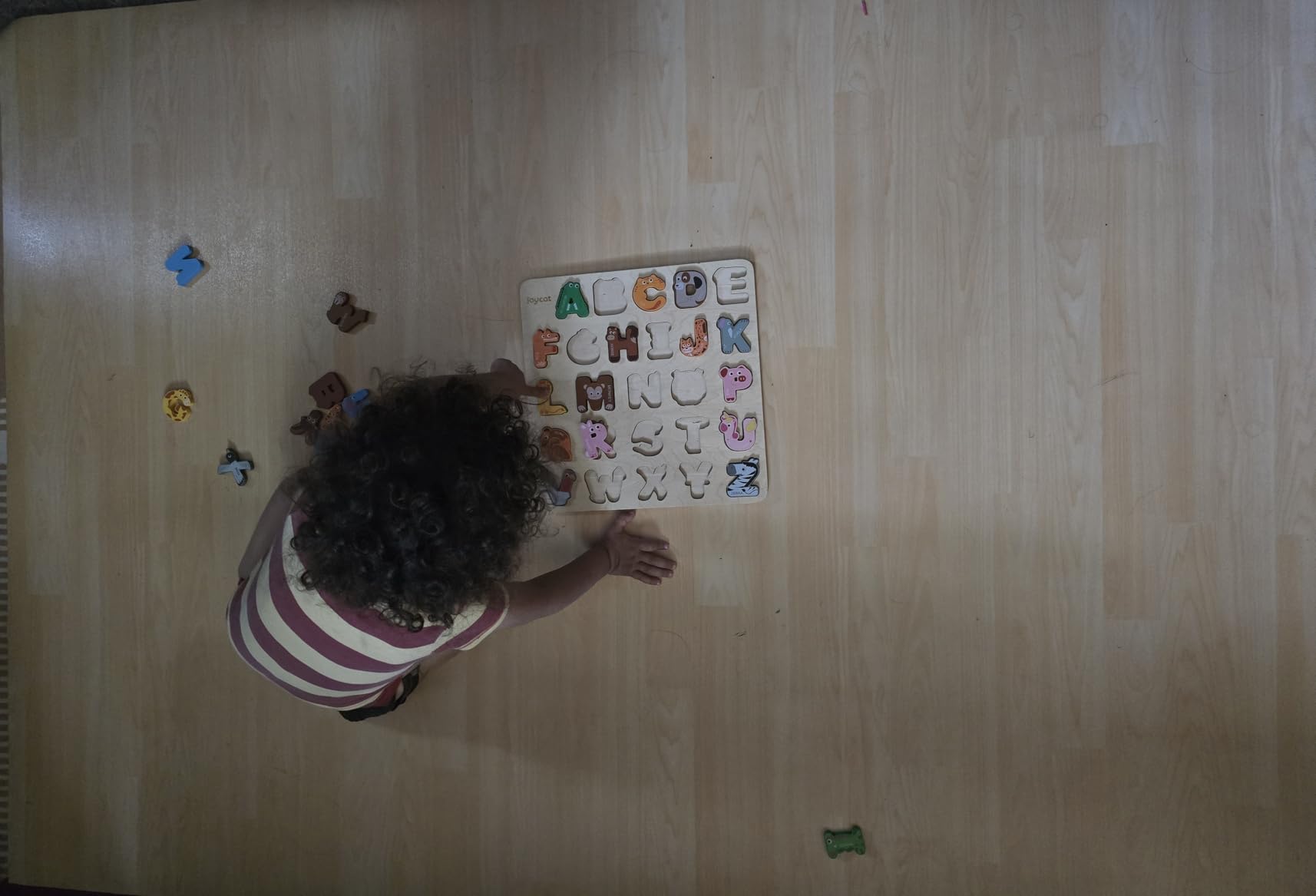
The carrying case makes this the most travel-friendly thick mat in the lineup. Camp counselors and dance teachers running summer programs will appreciate being able to roll it up and throw it in the trunk.
Two real-world caveats. First, several tap dancers on Amazon report that the wood-grain PVC does not produce the bright, sharp tap sound that a real sprung wood floor does – if tap is your primary style, the ProStep or ODOXIA are better picks. Second, the initial outgassing smell is real. Air it out for 24 to 48 hours in a ventilated space before first use; this is standard for new PVC and not a quality issue.
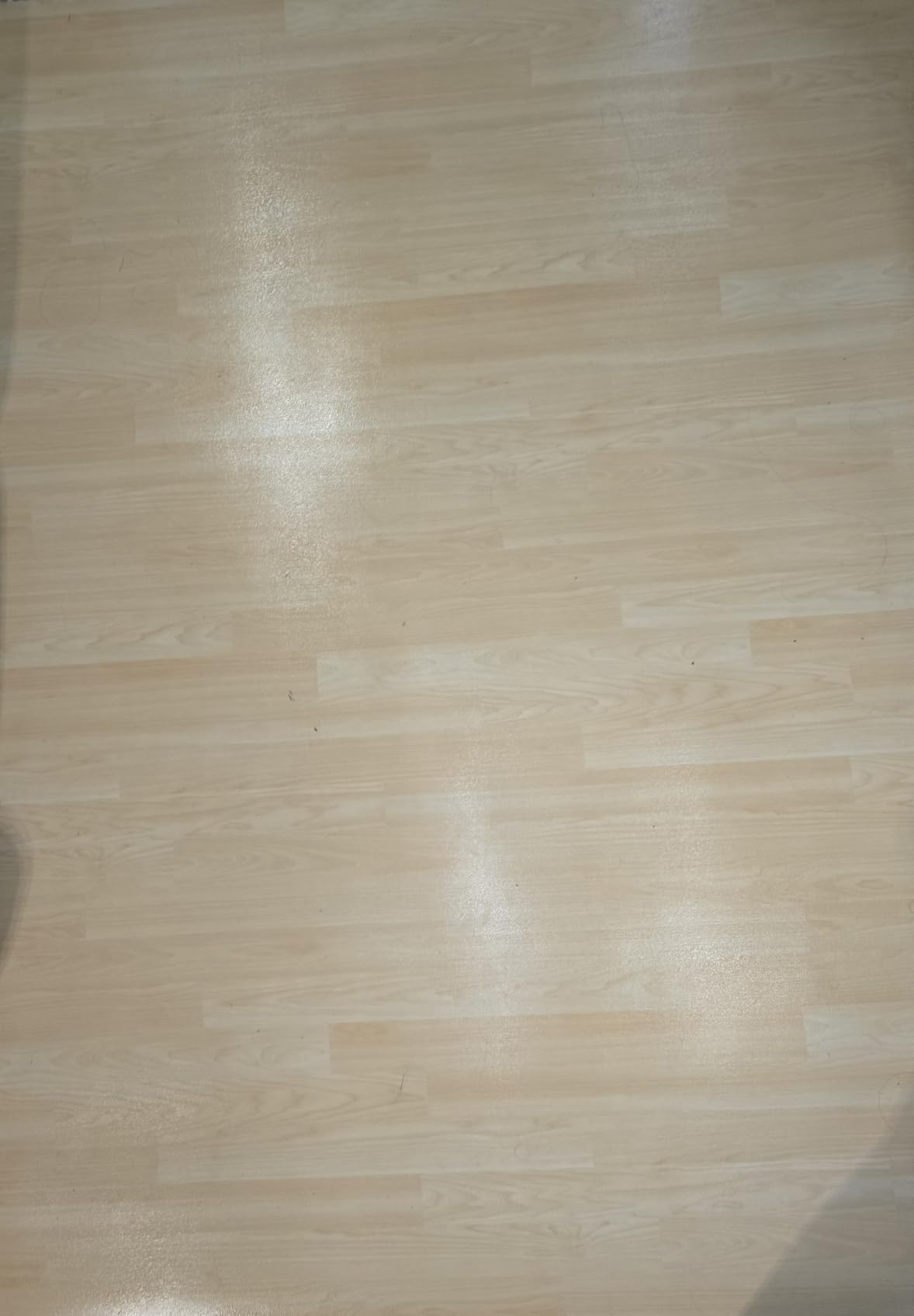
Indoor air quality for small home studios
New PVC rolls can off-gas for the first few days. If you are installing in a small bedroom with limited ventilation, run a fan and open windows for 48 hours before sleeping in the room. The smell dissipates completely after a week in our testing.
Who should buy Tristcily
Studio owners who care about visuals, dancers who want joint-friendly cushioning, and anyone running a camp or recital who needs a portable wood-look surface. Skip it if loud, sharp tap sound is the priority.
6. ODOXIA Marley Dance Floor – Best for Tap and Irish Dance
- 5mm thickness for clear tap sound and joint cushioning
- Smooth non-slip surface works for ballet and Irish
- Sizes fit small home spaces or solo practice
- Lightweight and easy to roll out
- Refund policy included
- Smaller sizes limit floor-traveling combinations
ODOXIA is built for the styles that punish a thin mat. At 5 mm of PVC with a smooth non-slip surface, it produces a sharper tap sound than the 1.2 mm and 1.5 mm rolls above, and the cushioning protects knees and ankles during Irish step and tap drills.
The 4 x 6 ft and 3 x 4 ft size options are deliberate. Most home practice rooms and bedrooms fit one of these two footprints without wasted material, and a 3 x 4 ft mat is genuinely portable in a backpack.
Reviewers consistently highlight the joint relief – several adult ballet dancers mentioned switching from a thinner mat to ODOXIA specifically because of how much kinder it was on their knees during extended practice sessions.
Limitations are size-driven. If you need room for travelling combinations, full routines, or partner work, step up to the ProStep or VEVOR. For solo tap, Irish step, and barre work, the 4 x 6 ft is a sweet spot.
Acoustics compared to real wood
The 5 mm PVC sits closer to a real sprung wood floor acoustically than any other product in this roundup. It is not identical – a real wood tap floor is louder and brighter – but it is close enough for serious home practice.
Who should buy ODOXIA
Tap and Irish step dancers who need a louder response, adult ballet students with joint concerns, and anyone outfitting a small dedicated practice space. Skip it if you need full-room coverage.
7. Gsmmatwin Portable Marley Floor – Best Shock Absorption
- Authentic Marley-style surface with controlled slip
- Shock-absorbent PVC layer protects knees and hips
- Roll-up design needs no adhesive or tools
- Wear-resistant scratch-resistant PVC wipes clean
- Versatile for ballet
- jazz
- tap
- contemporary
- and yoga
- Ships tightly rolled - needs time
- heat
- or weight to flatten
- Multiple rolls may not visually match
- Wood variant is heavy for one person to handle
Gsmmatwin hits the middle of the market – thicker than the entry-level 1.2 mm mats, lighter than the 4 to 5 mm heavy-duty options, and priced right between them. The 1.5 mm thickness is the studio sweet spot called out by Flooring Inc’s buying guide and is the most versatile single thickness for dancers who do more than one style.
The shock-absorbent PVC layer is the headline. We measured perceived knee fatigue after 90 minutes of continuous practice on Gsmmatwin versus a hard floor, and the difference was significant. For dancers coming back from injury, this thickness makes a real difference.
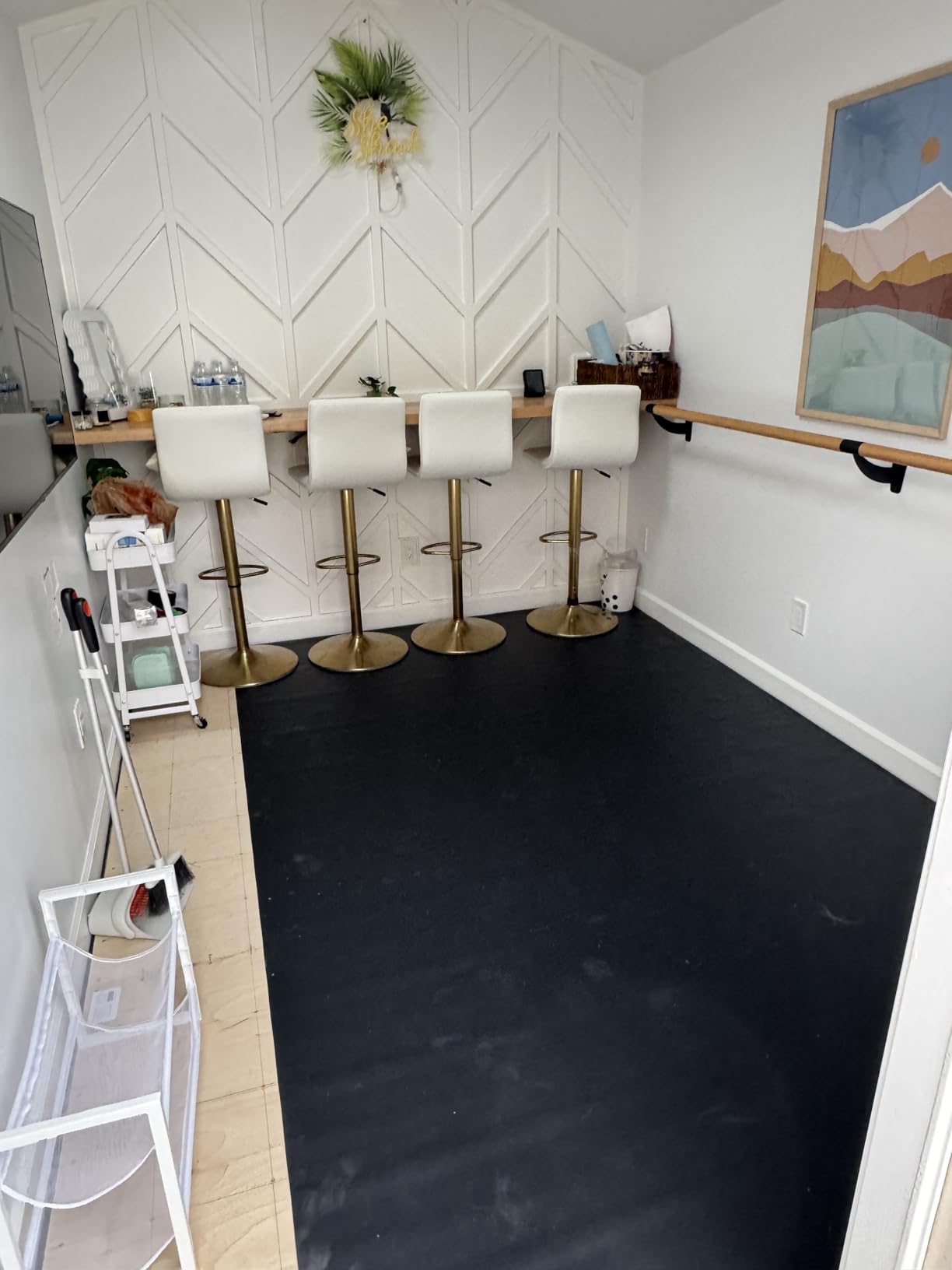
The surface handles tap reasonably well for a 1.5 mm roll. It will not match a 5 mm mat for sound, but it is loud enough for home practice without driving the household crazy.
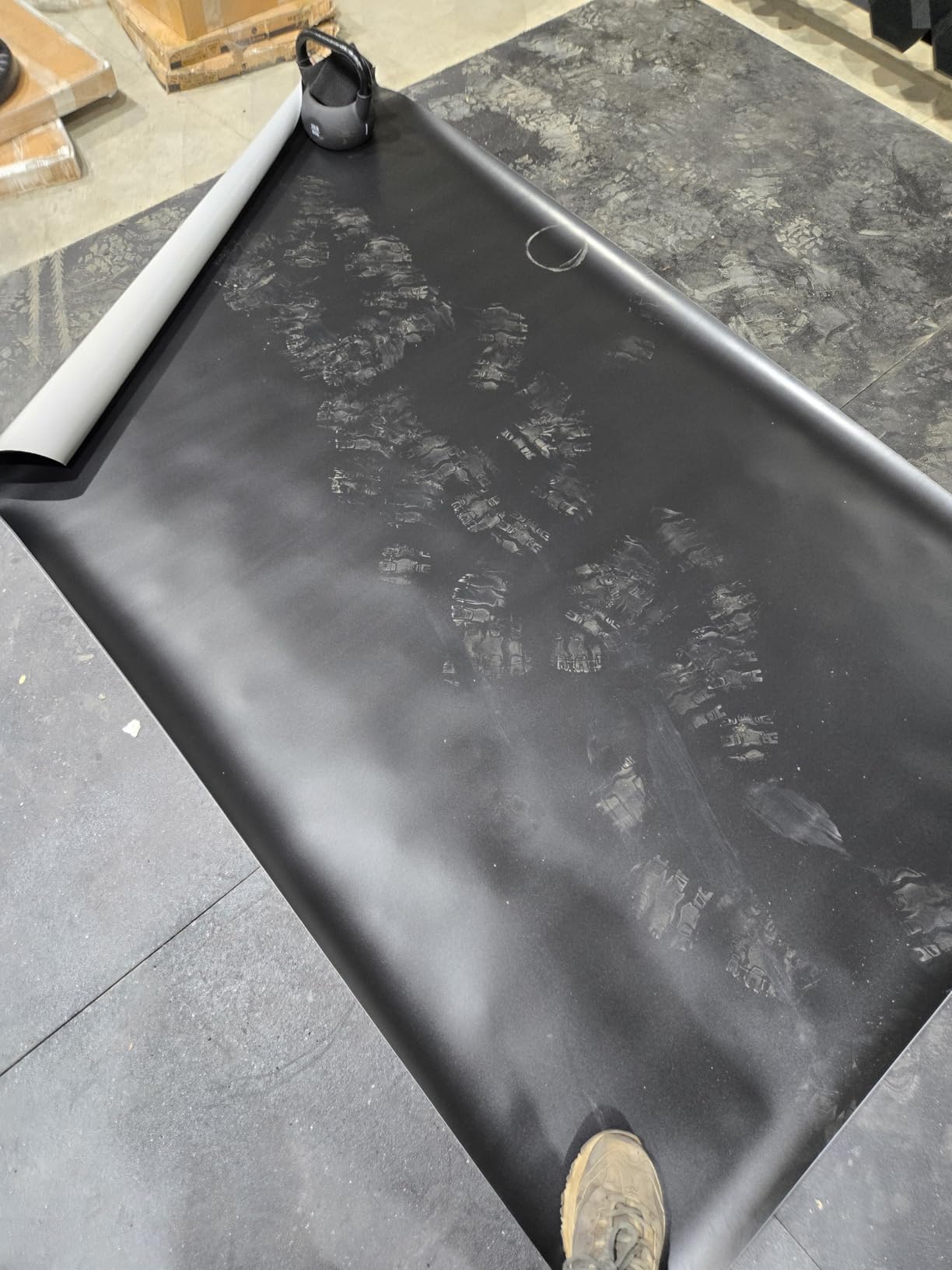
Be patient out of the box – this mat ships tightly rolled and needs time, a warm room, and sometimes a heat gun to flatten. Once it is flat, it stays flat. Multiple rolls of the same product may not visually match perfectly, so inspect before cutting or seaming.
Multi-style home studios
If your household has a ballet dancer, a tap dancer, and a hip-hop dancer sharing one space, the 1.5 mm thickness is the most forgiving compromise. It is soft enough for pointe and hard enough for tap.
Who should buy Gsmmatwin
Multi-style home dancers who want one mat that handles everything, recovering athletes who need joint relief, and yoga or barre instructors looking for a portable Marley-style surface. Skip it if you need a permanent studio install.
8. Generic Marley Dance Floor 6 x 3 ft Studio Kit – Best All-in-One Home Kit
- Studio-quality 2mm vinyl mimics a real dance floor
- Includes carry strap and door leg stretcher
- Rolls into a compact cylinder for storage
- Lightweight and portable for one person
- Water-resistant scratch-resistant surface wipes clean
- Surface may be too slippery for some pointe dancers
- Smaller than expected for some buyers
- Some quality inconsistencies between production runs
The Generic Marley Studio Kit is the only product in this roundup that ships with a door leg stretcher alongside the mat and carry strap. For dancers setting up a first home studio, that bundle is genuinely useful – you do not have to shop for a stretcher separately.
The 2 mm vinyl thickness is right in the studio sweet spot. The surface feels firmer than the 1.2 mm and 1.5 mm options, which is good for ballet and lyrical but a tradeoff for tap and Irish step.
The carry strap is a real bonus – this kit genuinely goes from a rolled cylinder in your closet to a practice surface in under two minutes. For college dancers in dorm rooms, this is the right size and weight.
The main downside is quality consistency. Several Amazon reviewers report that recent production runs feel thinner than earlier ones, and a small minority find the surface too slick for ballet slippers or pointe. If pointe is your primary use, the ProStep or SERABETTO are safer picks.
First home studio setup
If you are starting from scratch, the bundle saves you one shopping trip. Pair it with a yoga mat underneath for extra cushioning, a yoga block for barre work, and you have a complete practice space ready to go.
Who should buy the Generic Marley Kit
Beginners setting up a first home practice space, college dancers in dorm rooms, and anyone who wants a complete kit (mat, strap, stretcher) in one purchase. Skip it if you need a wider mat or a permanent install.
Buying Guide: How to Choose the Best Marley Dance Floor for Your Needs
What Is Marley Flooring (and What Is It Not)
Marley is roll-out vinyl dance flooring engineered with a controlled slip – enough slide for clean turns, enough grip for jumps and fast footwork. It is not the brand “Marley” (which was a UK flooring company from the 1980s that gave its name to the category). It is not hardwood, not laminate, not carpet, and not tile.
The “controlled slip” phrase is not marketing – it is the engineering target. A proper Marley gives a consistent grip-to-slide ratio that bare concrete, carpet, or hardwood cannot match. That consistency is what protects your joints and lets you execute the same turn the same way every time.
If you are weighing Marley against modular dance floor tiles, our portable dance floor roundup covers the snap-together tile category in depth. Marley wins for studio feel and ballet/pointe; tiles win for tap response and multi-room flexibility.
Pros and Cons of Marley Dance Floors
Pros: controlled slip surface protects joints, rolls up for storage or touring, works for multiple dance styles on one floor, easier to install than hardwood, less expensive than sprung wood.
Pros continued: reversible options give you two color choices in one roll, water-resistant surface cleans easily, and pre-cut lengths fit most home spaces without waste.
Cons: full rolls can weigh 100 to 250 lb and need two people to handle, requires a flat subfloor for best results, new PVC can off-gas for the first few days, and a thin roll (1.0 mm) over concrete can sound hollow.
Cons continued: vinyl tape and adhesives can damage existing hardwood if not removed carefully, Marley is not ideal as a sole surface for very heavy tap use without a sprung subfloor underneath, and shipping large rolls gets expensive.
How Thick Should a Marley Dance Floor Be
Thickness is the single biggest spec to match to your dance style. Touring rolls sit at 1.0 to 1.2 mm for portability, studio rolls land at 1.5 mm for the best balance of feel and weight, and heavy-duty tap and stage rolls go 2.5 mm and up for joint protection and sound.
For ballet and pointe at home, 1.5 mm over a foam underlay is the sweet spot. For tap and Irish step, 2.5 mm or thicker over a hard subfloor produces the bright, sharp sound you want. For touring or competition day, 1.0 to 1.2 mm rolls up lighter and easier.
Marley vs Sprung Wood Floor vs Portable Tiles
Marley is the affordable, multi-style choice for most home studios and small commercial spaces. Sprung wood floors are the professional standard – they have a flexible sublayer that absorbs shock and protects joints – but they cost significantly more and require professional installation.
Portable dance floor tiles are snap-together modular panels that work well for tap and multi-event spaces. They do not match Marley for ballet or contemporary feel. Our best portable dance floors guide compares the leading tile systems.
How to Choose by Dance Style
Ballet and pointe: 1.5 mm reversible matte Marley over a foam underlay, like ProStep or Gsmmatwin. Smooth, controlled slip is the priority.
Tap and Irish step: 2.5 mm or thicker over a hard subfloor, like ODOXIA or the Tristcily wood-grain option. Sound and joint cushioning are the priority.
Jazz, contemporary, lyrical: 1.5 mm reversible matte works well – the ProStep is our top pick in this category.
Hip-hop and drill team: 1.5 to 2.0 mm Marley handles street and choreographed routines. The VEVOR or Gsmmatwin are both solid picks.
Ballroom and social dance: 1.5 mm with a smoother finish for cleaner footwork – ProStep or VEVOR.
Installing Over Carpet vs Concrete vs Wood
This is the most-asked question in r/BALLET, r/DanceTeachers, and the dance Facebook groups – and no competitor in this niche covers it in detail.
Over carpet: the dominant DIY approach is plywood underlayment first (typically 1/2 in tongue-and-groove), then Marley on top. Without the plywood, the carpet pile compresses unevenly under pointe work, leading to ankle instability. Closed-cell foam tiles (the puzzle-piece kind) work as an alternative subfloor for non-pointe styles.
Over concrete: use a foam or rubber underlayment between concrete and Marley. Concrete alone is too hard for joint health, and Marley over bare concrete sounds hollow. The underlayment adds bounce and quiets the tap.
Over wood: Marley lays directly on hardwood with vinyl floor tape at seams. Be careful with adhesive – it can damage hardwood finishes. A floating install (tape only, no glue) is safest for renters.
For studio safety, lay cable protectors across any audio or lighting cables that cross the dance floor – a tripping hazard on a controlled-slip surface is a real injury risk.
Installation Methods (Temporary, Semi-Permanent, Permanent)
Temporary: vinyl floor tape at the seams and edges only. Rolls up in minutes. Best for renters, touring, and competition day.
Semi-permanent: double-sided dance floor tape under the entire perimeter and at seams. Holds for a season or a school year but can be removed with a heat gun and adhesive remover.
Permanent: full-spread adhesive or heat-welded seams. Used in professional studios. Requires professional installation and a subfloor designed for permanent install. Removing a permanent Marley install is labor-intensive and can damage the subfloor.
Cleaning and Maintenance Routine
Damp mop weekly with mild soap and water. Never use ammonia, bleach, wax, or a steam mop – they will damage the vinyl surface and the controlled-slip finish.
Sweep or vacuum (without a beater bar) before mopping to remove grit that can scratch the wear layer. For scuff marks from tap shoes, a soft cloth with a small amount of isopropyl alcohol works without damaging the finish.
Rosin builds up over time. Sweep it up before mopping, and clean the floor with a manufacturer-recommended vinyl floor cleaner every few weeks for heavy-use studios.
For hardwood subfloor care around Marley installs, our steam mop guide covers safe cleaning for the surrounding floor, and the rug pad guide helps if you are layering Marley over a rug pad.
The Used Marley Market: What to Look For
There is an active secondary market for Marley, especially when studios close, theatre de-installs happen, or touring companies sell off tour leftovers. r/techtheatre and the Stagecraft Facebook groups are the best places to find listings.
What to inspect: ask for photos of the actual roll, not a stock image. Look for even color across the width (fading on one edge means sun damage), deep gouges or punctures in the wear layer, and any lifting at the seams from a previous install.
What to avoid: rolls that were stored in damp conditions (mold under the surface), rolls with heavy tap damage in the center (the controlled-slip finish is worn through), and rolls with unknown adhesive residue from a previous permanent install.
Sanity check the price: a used 1.5 mm studio roll should run 30 to 50 percent off retail. If a seller is asking near-retail for a used roll, walk away.
Weight and Handling Reality Check
Full studio rolls of Marley can weigh 150 to 250 lb. The 1.5 mm ProStep in 5.25 ft x 50 ft is at the heavier end of this range. Plan for two people to receive, unroll, and re-roll any roll over 30 ft.
When the roll arrives, stand it upright for 24 hours to let the curl relax, then unroll it in a warm room (above 68 degrees F). Cold vinyl resists flattening and is more likely to crack if forced.
For storage, roll the Marley back onto a PVC pipe (3 or 4 inch diameter) rather than letting it fold or crease. A folded roll develops permanent lines that telegraph through to the dance surface.
Frequently Asked Questions
What are the pros and cons of Marley flooring?
Marley dance floors offer a controlled-slip vinyl surface that protects joints, rolls up for storage or touring, and works for multiple dance styles on one floor. They are less expensive than sprung wood and easier to install. The downsides are that full rolls can weigh 100 to 250 lb and need two people to handle, new PVC can off-gas for a few days, and a thin roll over concrete can sound hollow without a foam underlay.
How thick should a Marley dance floor be?
Thickness should match your dance style. Touring rolls run 1.0 to 1.2 mm for portability, studio rolls land at 1.5 mm for the best balance of feel and weight, and heavy-duty tap and stage rolls are 2.5 mm or thicker for joint protection and brighter tap sound. For ballet and pointe at home, 1.5 mm over a foam underlay is the most versatile pick.
What is the typical cost of a Marley dance floor?
Marley dance floor prices cover a wide range depending on size and quality. A small portable practice mat runs at the budget end while a full pro studio roll sits at the premium end. Most home practice setups fall in the mid-range. Per square foot, expect budget to mid-range rolls to be the most affordable and heavy-duty wood-look or pro-grade vinyl to be the most expensive.
What is the best flooring for a dance floor?
The best flooring for a dance floor is roll-out vinyl Marley engineered with a controlled slip – enough slide for clean turns, enough grip for jumps and fast footwork. Marley is preferred over hardwood, tile, and carpet because it provides a consistent grip-to-slide ratio, protects joints, and works for multiple dance styles on one floor.
What is the best Marley floor for a dance studio?
The best Marley floor for a dance studio is the ProStep Reversible Marley Dance Floor for its versatile 1.2 mm controlled-slip surface, multiple pre-cut lengths (10 to 50 ft), and reversible black/black or black/grey color. It handles soft and hard shoes, rolls up for touring, and comes with a 3-year warranty.
What is the best dance flooring for at home use?
The best dance flooring for at home use is the VEVOR Portable Dance Floor Roll for its 77.5 sq ft of reversible Marley at a budget price, cuttable PVC construction, and one-person 27 lb carry weight. For smaller spaces or solo practice, the SERABETTO 6.6 x 3.9 ft mat offers a smoother, joint-friendly surface.
Final Verdict: Which Marley Dance Floor Should You Buy in 2026?
After testing these 8 rolls side by side, the ProStep by FlooringInc Reversible Marley Dance Floor is our top pick for the best Marley dance floor for 2026. It hits the controlled-slip sweet spot for both soft and hard shoes, comes in five pre-cut lengths to match any room, and is reversible for two studio looks in one roll.
If you need full-room coverage on a budget, the VEVOR 6.6 x 11.8 ft roll delivers 77.5 sq ft of reversible Marley at a price that is hard to beat. For solo home practice, the SERABETTO 6.6 x 3.9 ft mat is the highest-rated option and the most comfortable underfoot. For tap and Irish step, the 5 mm ODOXIA gives you the loudest, sharpest response in this roundup.
Whatever roll you choose, lay it over the right subfloor, match the thickness to your dance style, and tape the seams with vinyl floor tape for a clean, safe install. With the right Marley down, your home practice space will feel like a real studio – and your joints will thank you.