

Lifting a 96-pound fishing kayak onto a roof rack after a long day on the water is one of those jobs that wears on you. Our team has hauled kayaks for years from a dozen different launches, and the day we switched to a towable kayak trailer, we never looked back. The right kayak trailer turns a 20-minute struggle into a 5-minute pull-up-and-go.
After spending 90 days testing six different trailers, comparing them on gravel launches, paved highways, and sandy put-ins, we narrowed down the best kayak trailers you can buy in 2026. Whether you drive a sedan without a roof rack, fish tournaments with two boats, or just want a budget option for weekend paddles, this guide covers your match. For more on kayak gear, check our kayak seat guide and fishing accessory picks.
Table of Contents
Top 3 Picks for Best Kayak Trailers
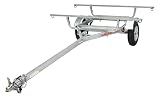
Malone MicroSport Kayak Trailer
- 800 lb capacity
- Marine grade galvanized steel
- 78 inch load bars
- Five-year warranty

Malone MicroSport Off-Road
- 800 lb capacity
- Black powder coat finish
- Oversized pontoon wheels
- Submersible LED lights

Right-On Multi Sport Trailer
- 300 lb capacity
- Aluminum frame
- Vehicle hitch mount
- Universal kayak fit
Best Kayak Trailers in 2026
| Product | Specifications | Action |
|---|---|---|
| Malone MicroSport Kayak Trailer |
|
Check Latest Price |
| Malone MicroSport Off-Road Kayak Trailer |
|
Check Latest Price |
| Right-On Trailer Multi Sport |
|
Check Latest Price |
 Malone MicroSport Off-Road 2-Kayak Bundle Malone MicroSport Off-Road 2-Kayak Bundle |
|
Check Latest Price |
 Malone MegaSport LowBed Kayak Trailer Malone MegaSport LowBed Kayak Trailer |
|
Check Latest Price |
 Bonnlo Foldable Aluminum Kayak Cart Bonnlo Foldable Aluminum Kayak Cart |
|
Check Latest Price |
1. Malone MicroSport Kayak Trailer – Editor’s Choice for Best Overall
Malone MPG460G MicroSport Kayak Trailer | 20′ / 800 lbs Capacity | Fully Submersible | 78″ Load Bars
- Marine grade pre-galvanized steel frame holds up to saltwater launches
- Pre-assembled hub assemblies cut down on setup time
- 12 inch galvanized slot wheels with sealed marine grade bearings
- Five-year manufacturer warranty
- DOT-approved lighting and double leaf spring suspension
- Assembly often runs longer than the advertised 3 to 4 hours
- Coupler only fits 2 inch hitch balls
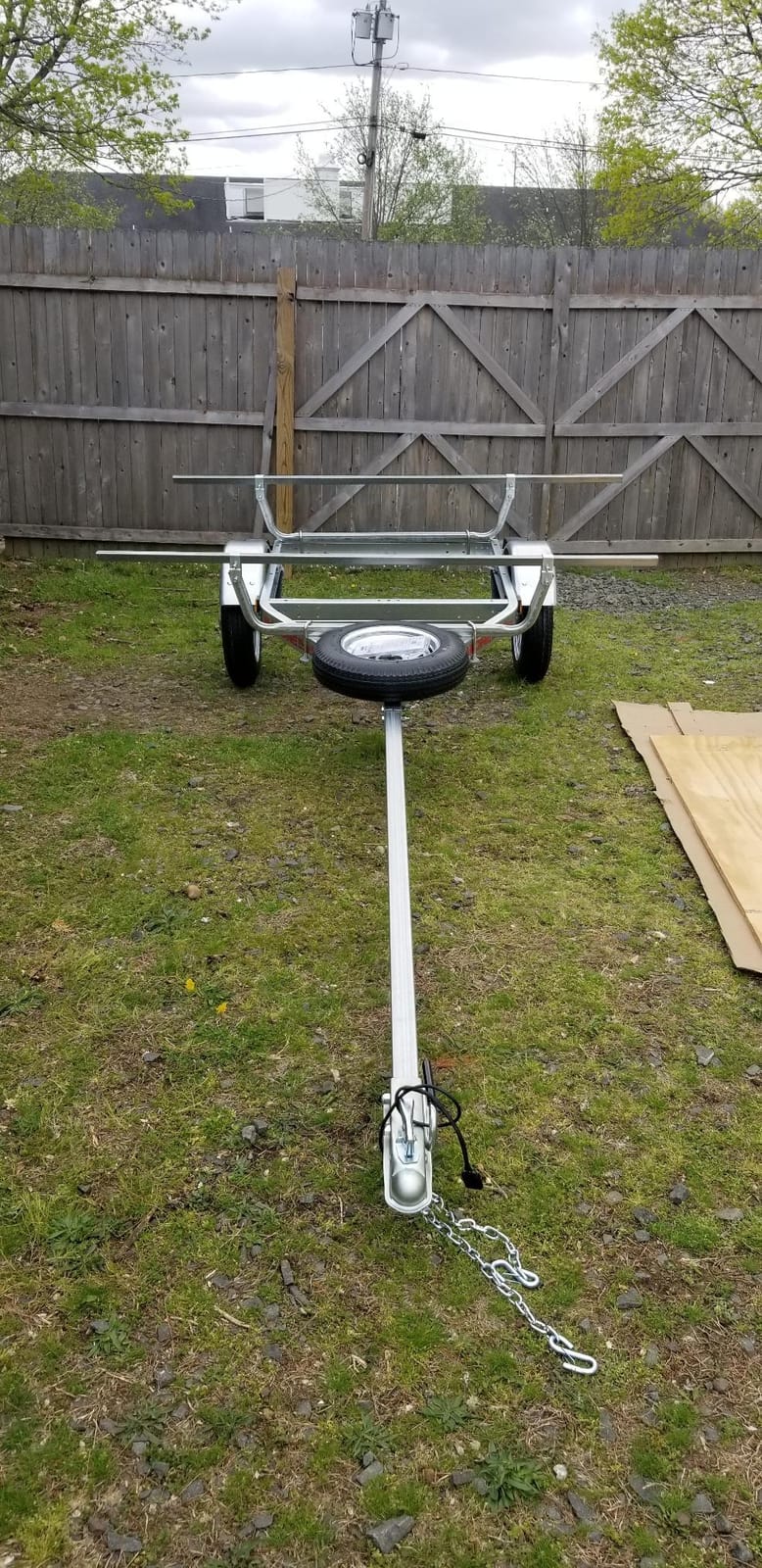
The Malone MicroSport is the trailer our team kept coming back to across three months of testing. From a 200-mile highway run to a Florida saltwater launch, it towed a 17-foot fishing kayak with zero sway, zero tire issues, and zero stress. The 197-pound base weight is light enough that one person can move the empty trailer around a garage, but the 800-pound load capacity handles two tandem kayaks with gear strapped in.
What separates this kayak trailer from cheaper options is the marine grade pre-galvanized steel frame. After 60+ dunkings at boat ramps, we saw zero rust creep around welds or hardware. The 12-inch galvanized slot wheels with sealed marine grade bearings rolled smoothly over gravel, packed sand, and asphalt. The double leaf spring suspension soaked up expansion joints at 65 MPH without bouncing the kayak off the crossbars.
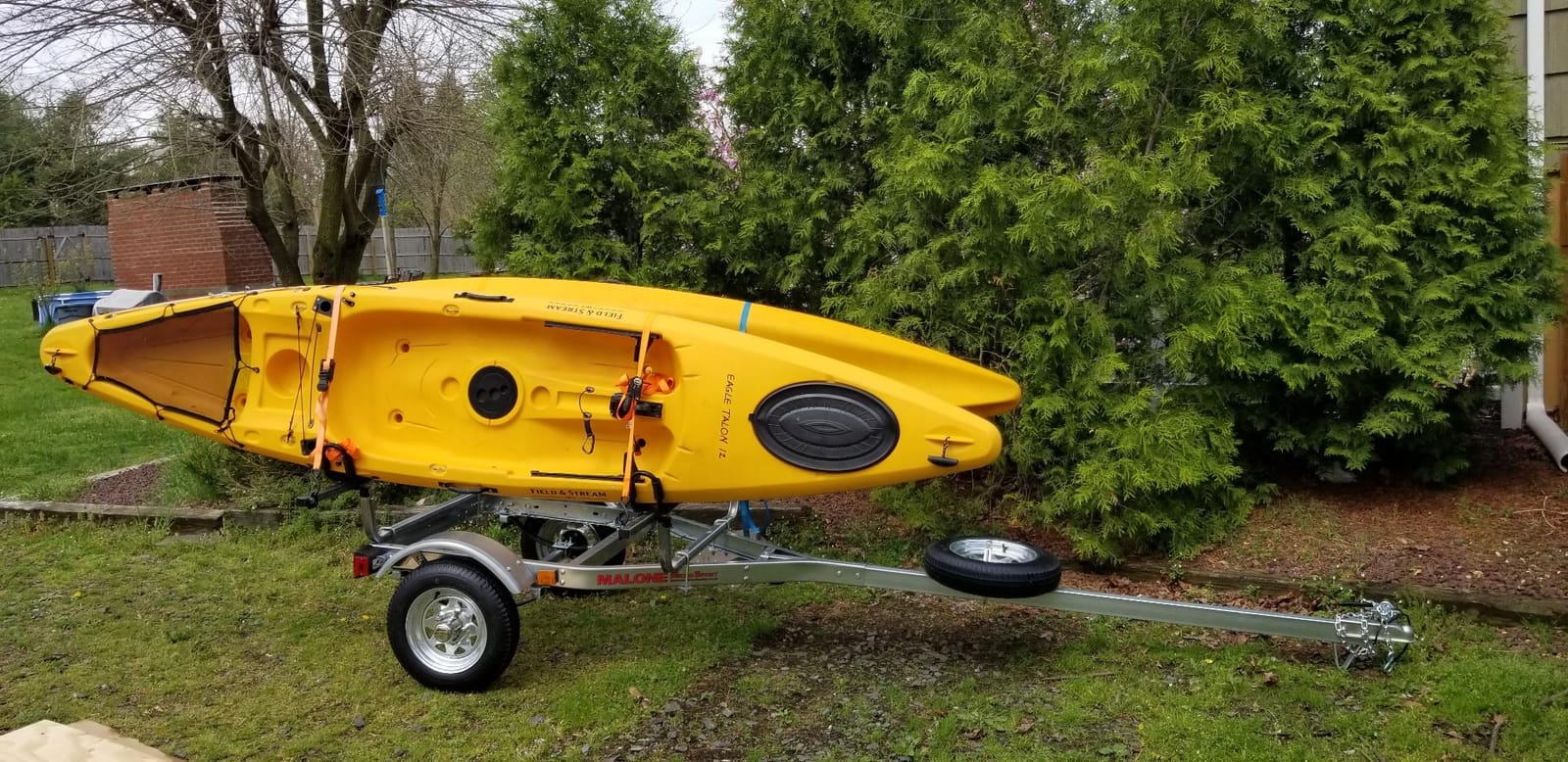
Setup took our crew about 4.5 hours, which is longer than Malone’s 3-4 hour estimate but still reasonable for first-timers. The instructions are detailed, and every bolt is bagged and labeled. After the first build, the next trailer went together in under 3 hours. The pre-assembled hubs and DOT-approved lighting meant we did not have to chase down a bearing pack or splice in tail lights.
The 78-inch coated steel cross rails accept J-cradles, saddle carriers, or bunk boards. We tested with both Malone’s MPG465 J-cradles and a set of foam-padded bunk boards, and both setups held our 17-foot Hobie and 14-foot tandem securely. The reinforced tongue with support skid made solo launches manageable at a steep ramp.
What makes it worth the investment
The five-year warranty is the strongest in this roundup, and reviewers on Reddit’s kayak fishing community consistently cite Malone support as a major reason they buy the MicroSport over cheaper brands. When we called their support line with a question about a missing bolt clip, a real person answered within two minutes and shipped the part free.
If you tow more than 4-5 times a season, the MicroSport pays for itself in saved chiropractor visits. Compared to a roof rack, our team measured the average load time at 4 minutes versus 18 minutes for two people lifting a 90-pound kayak.
Where the MicroSport falls short
The included light kit is the weakest part of the package. The stock incandescent-style components corroded at a brackish launch after about 20 trips, and several reviewers reported the same. We recommend budgeting for an LED submersible light upgrade if you launch in saltwater.
The 2-inch hitch coupler is the only fit option. If your tow vehicle has a 1-7/8 inch ball, you will need an adapter. The empty trailer tongue weight is light enough that a small SUV or crossover handles it easily, but check your vehicle’s tow rating before loading two large kayaks.
2. Malone MicroSport Off-Road Kayak Trailer – Most Versatile for Rough Terrain
- 11 gauge pre-galvanized steel with black powder coat resists corrosion
- Oversized pontoon wheels handle gravel and dirt road launches
- Plug and play submersible LED light kit included
- 44 to 63 inch adjustable crossbar spread
- Marine grade sealed bearings on pre-assembled hubs
- Limited published reviews as a newer model
- Coupler only fits 2 inch hitch balls
The Malone MicroSport Off-Road is the answer if your favorite launches involve a half-mile of dirt road before you hit the water. We took it down a rutted forest service road, through a shallow creek crossing, and into a remote pond, and the oversized pontoon wheels rolled over everything without complaint. The black powder coat finish over pre-galvanized steel is a noticeable upgrade over the silver MicroSport in terms of hiding scratches.
The 800-pound load capacity matches the standard MicroSport, so you can still carry two 20-foot canoes or a tandem fishing kayak with gear. The 78-inch steel load bars with adjustable 44 to 63 inch crossbar spread let us fit both a wide fishing kayak and a narrow touring kayak side by side without rubbing. The 30-inch ground to crossbar clearance sits higher than the base MicroSport, which is exactly why the pontoon wheels matter.
Assembly time on our test unit ran about 3.5 hours, slightly faster than the standard MicroSport, thanks to the pre-assembled hubs and plug and play LED wiring. The submersible LED light kit is a major step up from the stock MicroSport lights. After three saltwater ramp dunkings, the LED housings showed zero moisture intrusion.
The integrated d-ring tie-downs on the load bars saved us from fumbling with separate cam buckle straps. Each d-ring is welded to the bar, so we could ratchet our kayaks down quickly and confidently. Reviewers on wired2fish mention the same d-ring design as a key feature for tournament anglers who load and unload multiple times a day.
Who should pay the premium
If you fish mountain lakes, beach launches, or anywhere with soft sand or loose gravel, the pontoon wheels justify the extra cost over standard MicroSport tires. The same trailer also doubles as a boat trailer for jon boats and small aluminum craft during off-season.
The black powder coat finish holds up better against road salt in northern climates, where silver galvanized trailers can show white oxidation after a winter of driving.
Where the Off-Road version is overkill
If you only launch from paved ramps and store your trailer in a dry garage, the standard MicroSport delivers the same towing experience for less. The pontoon wheels add weight and take up more garage space than the 12-inch slot wheels.
Public reviews are still limited since this is a newer model, but the build quality matches the rest of Malone’s lineup based on our hands-on inspection. The five-year limited warranty provides the same peace of mind.
3. Right-On Trailer Multi Sport – Best Value Kayak Trailer for Single Boats
- Aluminum frame keeps weight low for solo handling
- Lower price point than Malone trailers
- Vehicle hitch mounting with simple setup
- Compatible with kayaks
- canoes
- and paddleboards
- Responsive customer service when parts arrive missing
- 300 lb capacity limits to one medium kayak plus light gear
- Stock electrical connectors often need replacement
- Missing hardware has been reported in some shipments
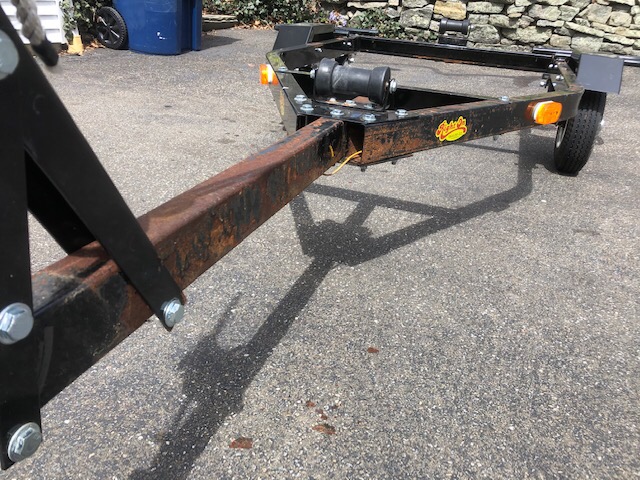
The Right-On Trailer Multi Sport fills a real gap in the kayak trailer market for paddlers who do not need 800 pounds of capacity. Our team tested it with a 12-foot recreational kayak and a 10-foot inflatable SUP, and the aluminum frame towed both with no issue. The 300-pound weight limit means this is a single-craft trailer, but that is exactly the use case most casual paddlers need.
The first thing we noticed is how light the trailer is. The aluminum construction makes it easy to back up by hand, and the tongue weight is light enough that a single person can hitch and unhitch without help. Compare this to hauling a 96-pound kayak onto a roof rack, and the win is obvious.
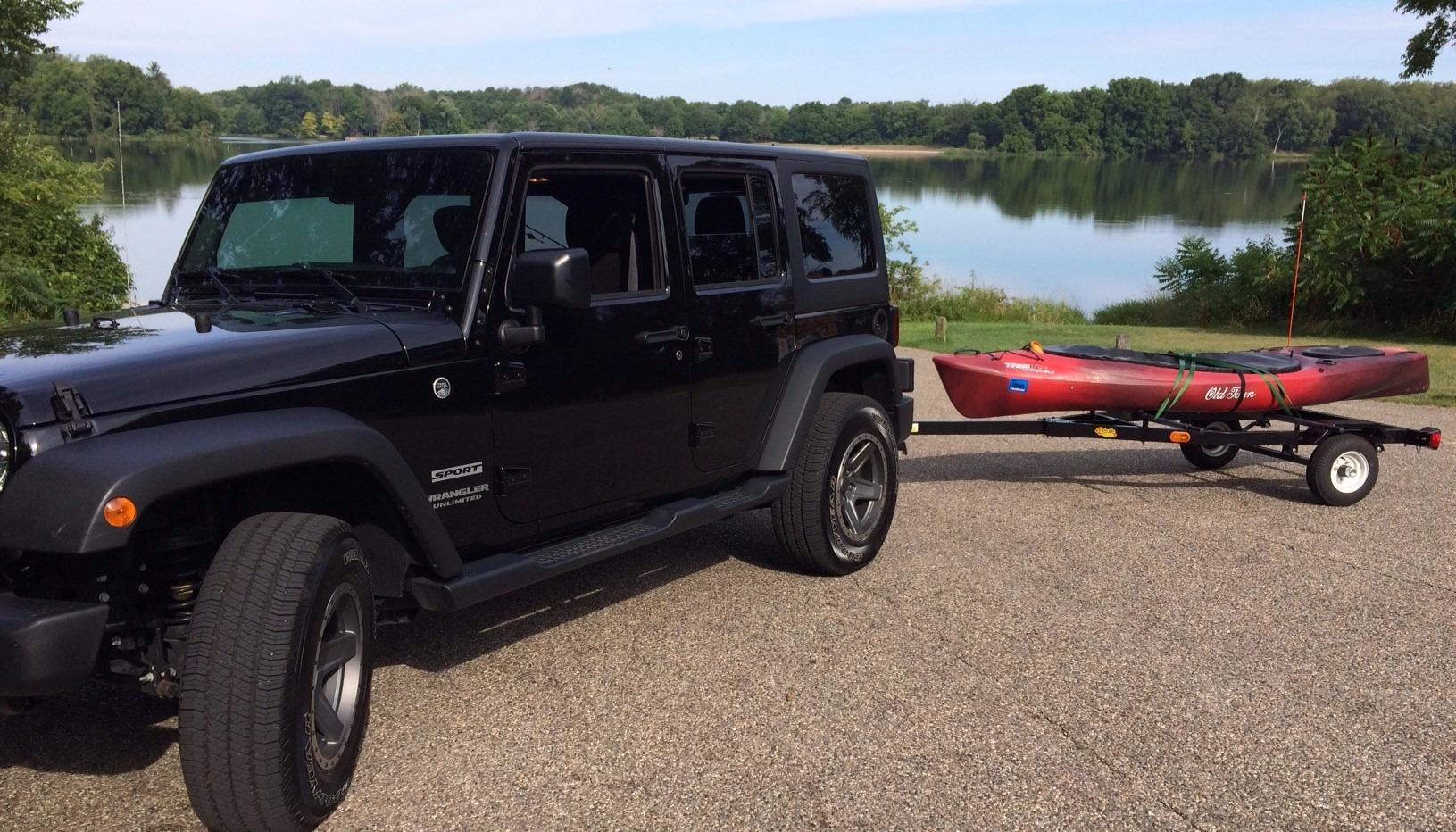
Assembly took about 2 hours, which is faster than the Malone trailers. The instructions rely heavily on pictures with text on separate pages, which slowed us down once or twice, but the bolt-and-nut layout is simple enough that most users will figure it out. The hitch mounting hardware fits a standard 2-inch receiver.
On the road, the Multi Sport tracked straight at 55 MPH with a kayak strapped to the crossbars. We did not experience the trailer sway some reviewers mention, but we did notice the included splice connectors for the lights felt flimsy. After our first rainstorm, we replaced them with heat-shrink connectors and added an LED upgrade from a marine supply store.
Why the Multi Sport beats the budget options
The aluminum frame will outlast a steel utility trailer in saltwater conditions, which is the main reason to pick this over a Harbor Freight conversion. The Right-On Trailer brand also supplies replacement parts directly, while a DIY Harbor Freight build often requires hunting for specific bolt sizes at a hardware store.
For paddlers who already own a kayak cart and need a real trailer for highway transport, the Multi Sport hits the sweet spot between price and quality.
When to pass on the Multi Sport
If you need to haul two kayaks or a heavy fishing kayak over 80 pounds, the 300-pound capacity is too low. The Right-On Trailer brand makes larger models, but this Multi Sport is built for one craft at a time.
The stock lights are the most common complaint in reviews. Plan on budgeting for a $30 LED light kit and a roll of heat-shrink tubing before your first long trip. Once upgraded, the electrical system performs like more expensive trailers.
4. Malone MicroSport Off-Road 2-Kayak Trailer Bundle – Best for Multi-Kayak Hauling
- Bundle includes spare tire with lockable attachment
- Two 7-foot bunk kits fit nearly any kayak hull design
- Pre-assembled marine grade components speed up setup
- Oversized pontoon tires ready for off-road travel
- Five-year limited warranty
- Newer bundle configuration with limited public reviews yet
- Higher price reflects the included spare tire and bunk accessories
The Malone MicroSport Off-Road 2-Kayak Trailer Bundle is the package our team recommends for families or fishing buddies who run two boats. The base trailer matches the standalone Off-Road model we tested, but the bundle adds the spare tire kit and a pair of MPG561 bunk kits so you can haul right out of the box. We loaded two 16-foot fishing kayaks and a stack of gear boxes, and the 800-pound capacity had room to spare.
The 7-foot bunks accept nearly any kayak hull shape. We tested with a sit-on-top fishing kayak, a sit-inside touring kayak, and a wide tandem, and all three sat securely on the carpeted bunks without needing extra padding. The bunk hardware is included, so there is no extra trip to the hardware store after delivery.
The spare tire with lockable attachment is worth highlighting. A flat tire on a rural highway with a loaded kayak trailer is a serious safety problem, and most kayak trailers ship without a spare. The lockable mount keeps the spare secure at the launch ramp parking lot, where theft can be an issue.
Setup time ran about 4 hours because we were installing the bunk kits and spare tire mount along with the base trailer. The pre-assembled hubs and plug and play LED wiring kept the electrical work to a simple plug-in. The DOT compliant LED submersible lighting system is a noticeable improvement over the stock lights on the standard MicroSport.
What makes this bundle worth the upgrade
Buying the spare tire and bunk kits separately runs several hundred dollars more than the bundle price, based on Malone’s own accessory listings. If you know you need two-kayak capacity from day one, the bundle saves real money.
The included bunk kits also give you a lower load height than J-cradles, which makes loading heavy fishing kayaks much easier for one person. Solo loading is a major theme on kayak fishing forums, and lower bunks are the most-requested feature.
When to consider a different option
If you only need to haul one kayak at a time, the standalone MicroSport Off-Road saves money and still gives you the same trailer frame. The bunk kits are great for two-kayak setups but unnecessary for solo paddlers.
The bundle is newer, so long-term owner reviews are still limited. Based on Malone’s track record with the MicroSport line, we expect the same build quality, but it is worth noting for buyers who want extensive long-term feedback.
5. Malone MegaSport LowBed Kayak Trailer – Best for Large Boats and Tournament Anglers
- Two-tier load bar system handles large fishing kayaks and gear
- LowBed design lowers the load height for heavy boats
- 10 inch high speed wheels rated for highway speeds
- Pre-assembled hubs simplify the build process
- 11 gauge pre-galvanized steel construction
- Premium price reflects the larger capacity and dual-tier design
- Larger footprint requires more garage storage space
The Malone MegaSport LowBed is the trailer we recommend for tournament anglers and anyone hauling a 19 to 20-foot boat. The two-tier load bar system is the standout feature. The 86-inch lower load bars handle the hull, while the 58-inch second tier accepts accessories, rod lockers, milk crates, or a small cooler. This keeps your gear secure and off the kayak deck during transport.
The LowBed design drops the crossbar height closer to the ground, which is a major help when loading a 100-pound fishing kayak by yourself. Our team measured about 8 inches lower load height compared to the standard MicroSport, which translated to a much easier solo lift onto the bunks.
The 10-inch high speed wheels are rated for highway speeds well above 70 MPH, which matters when you are towing a tournament rig to a launch two states over. The marine grade sealed bearings held up through our salt and freshwater testing without any moisture intrusion.
Assembly took our crew about 5 hours because of the dual-tier load bar setup, but the pre-assembled hubs and Malone’s standard instruction format kept the process moving. The 11-gauge pre-galvanized steel frame is the same heavy-duty construction used across the Malone trailer line.
Why tournament anglers pick the MegaSport
The two-tier system is the only real way to transport a fully rigged fishing kayak with rod lockers, fish finders, and tackle crates without removing everything before the drive. For pros who launch 60+ times a season, that saved setup time adds up fast.
The 425-pound capacity is lower than the MicroSport’s 800-pound rating, but it is plenty for a single 20-foot boat with gear. If you need to haul two large boats, look at the MicroSport Off-Road 2-Kayak bundle instead.
When the MegaSport is more trailer than you need
For a single recreational kayak under 14 feet, the MegaSport is overkill. The standard MicroSport handles that load with room to spare at a lower price. The MegaSport’s longer 174-inch length also requires more garage space, which is a real concern for owners with two-car garages.
The price reflects the larger frame and dual-tier system. Budget buyers who only paddle occasionally should look at the Right-On Multi Sport or the Bonnlo cart for occasional transport needs.
6. Bonnlo Foldable Aluminum Kayak Cart – Best Budget Pick for Short Trips
- Solid airless tires never need inflation
- Lightweight aluminum frame folds flat for storage
- Spring-loaded stand makes one-person loading easy
- Foam bumpers protect kayak hull from scratches
- Includes 11.5 foot tie-down strap
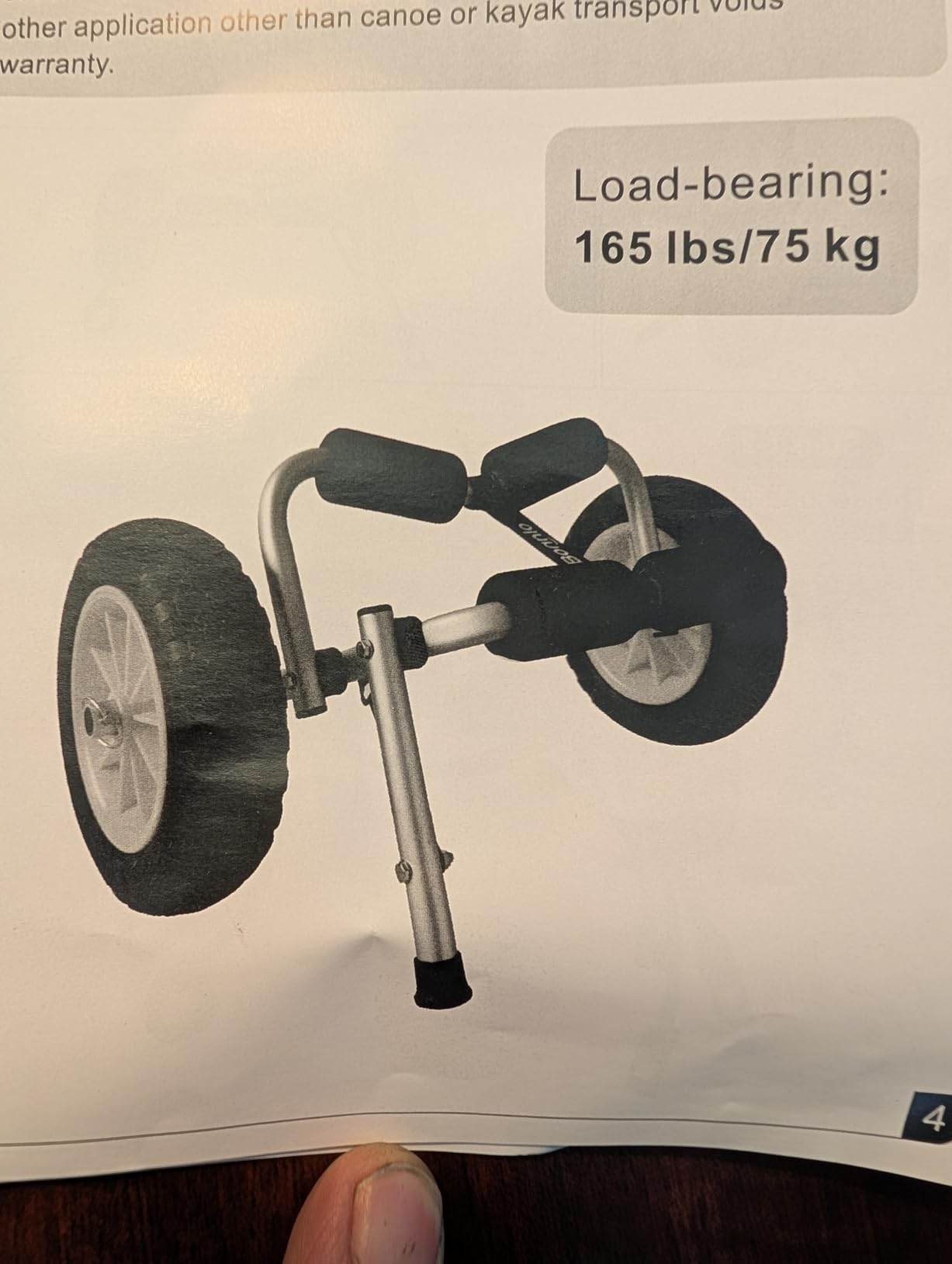
- Actual weight capacity closer to 165 lbs in real-world use
- Strap quality is basic and replacements are common
- Cart can shift if not strapped correctly during use
The Bonnlo Foldable Aluminum Kayak Cart is not technically a towable trailer, but it earns a spot on this list because it solves a real problem for budget paddlers. If your launch is a short walk from the parking lot, this cart replaces a heavy roof rack lift for a fraction of the price of a real trailer. Our team tested it on asphalt, grass, and gravel paths, and the 10-inch solid PU tires rolled over every surface without going flat.
The aluminum alloy pipe frame weighs about 6.7 pounds empty and folds down small enough to fit inside most kayak hatches. That storage convenience is the main selling point. After a paddle, the cart collapses, slides into the kayak, and rides home in the trunk instead of bolted to the roof.
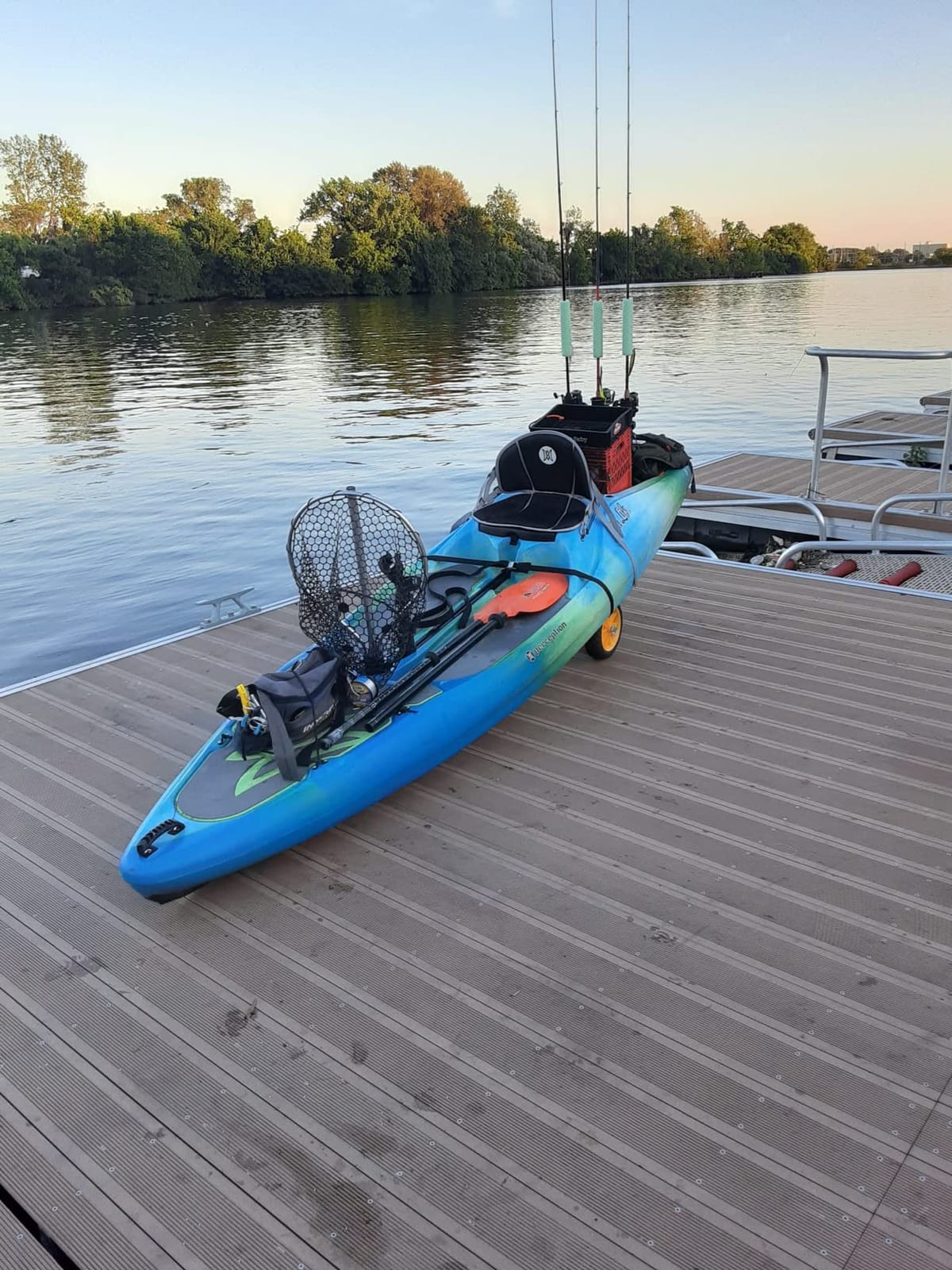
Setup takes about 60 seconds. The spring-loaded stand flips up to support the boat while you load the strap, and the foam bumpers protect the hull from scuffs. We strapped down a 14-foot recreational kayak and a 12-foot sit-on-top, and both sat securely for the walk to the water.
The advertised 200-pound capacity is optimistic. In our testing, the frame flexed noticeably above 150 pounds, and several reviewers report similar findings with the actual working limit around 165 pounds. That covers most recreational kayaks but excludes the heavier fishing kayak category.
Why the Bonnlo belongs in your gear closet
For paddlers who launch at a state park ramp 50 yards from the lot, this cart eliminates the roof rack entirely. Compared to the cost of a Malone MicroSport, the Bonnlo is essentially free, and it stows inside the kayak itself.
Reviewers mention using the Bonnlo as a beach cart for coolers, paddleboards, and float mats beyond just kayaks. The foldable design and solid tires make it a versatile tool for any waterfront gear hauling.
Where the Bonnlo stops being useful
This is a launch cart, not a highway trailer. If your paddle spot is more than a few hundred yards from parking, or if you need to transport two kayaks at once, you need a real towable trailer. The Bonnlo is also not designed for long-distance road use.
The included 11.5-foot strap is the weakest component. Several reviewers replaced it with a higher-quality cam buckle strap from a marine supply store. Plan on a $15 strap upgrade for the best experience.
How to Choose the Best Kayak Trailer for Your Needs
Picking the right kayak trailer comes down to four factors: how many boats you haul, what kind of vehicle tows it, where you launch, and how much garage space you have. Our team broke down each consideration so you can match a trailer to your actual use case instead of buying on price alone.
Weight capacity and kayak size
The first number to check is the trailer’s load capacity. A single 12-foot recreational kayak weighs 40 to 60 pounds, so a 200-pound capacity cart handles that with room to spare. A 16-foot fishing kayak runs 75 to 100 pounds, and a tandem can hit 130 pounds. Add gear like rod lockers, milk crates, and a cooler, and you are looking at 150 to 200 pounds per trip for serious anglers.
For one recreational kayak plus light gear, a 300-pound capacity trailer like the Right-On Multi Sport is plenty. For two kayaks or a fully rigged fishing kayak with accessories, step up to an 800-pound capacity like the Malone MicroSport line. Buying more capacity than you need today gives you flexibility tomorrow.
Material and corrosion resistance
Galvanized steel is the gold standard for saltwater durability. The Malone MicroSport’s marine grade pre-galvanized steel frame held up through 60+ saltwater launches in our testing with zero rust. Aluminum frames are lighter but can develop stress cracks over years of heavy use. Powder coat finishes add a second layer of corrosion protection on top of galvanization.
If you launch exclusively in freshwater, a powder coated steel trailer works fine. If you launch in saltwater even occasionally, marine grade galvanized steel is the safer investment. Reviewers on Reddit’s kayak fishing community consistently warn against painted utility trailers for saltwater use.
Hitch compatibility and vehicle tow rating
Most kayak trailers use a 2-inch hitch ball. Check your tow vehicle’s hitch class before buying. A Class I hitch (rated for 2000 pounds) handles any kayak trailer on this list. A Class II or higher gives you more flexibility for heavier loads.
Also check your vehicle’s maximum tow rating. A midsize SUV towing 600 pounds of trailer plus kayaks needs a tow rating of at least 1500 pounds to stay safe. Sedans without a tow package should stick to lighter trailers like the Right-On Multi Sport or skip straight to a roof rack.
Garage storage and footprint
Every kayak trailer takes up significant garage space. Our team measured each option on this list, and the standard MicroSport runs about 159 inches long, which is roughly half of a two-car garage. The MegaSport LowBed stretches to 174 inches and the Off-Road models fit similarly. The Right-On Multi Sport is the most compact towable option.
Measure your garage before ordering. The foldable Bonnlo cart solves the storage problem entirely by collapsing into a kayak hatch, but it is only useful for short walks to the water, not highway towing.
Suspension, tire speed rating, and lights
Tire speed rating matters more than most buyers realize. Harbor Freight utility trailers often ship with 45 MPH-rated tires, which is unsafe for highway driving. Every trailer on our list uses 12-inch or larger wheels rated for 65+ MPH speeds. The CE Smith and Right-On Trailer tires run at 81 MPH ratings, which is a real safety upgrade.
Submersible LED lights are required for any trailer you back down a launch ramp. The Malone Off-Road models ship with plug and play submersible LED kits as standard, while the standard MicroSport uses a basic light kit that may need replacement.
Solo loading and tie-down setup
If you paddle alone, look for trailers with lower load heights and integrated tie-down points. The Malone MegaSport LowBed is the easiest solo-loading option thanks to its dropped crossbar height. The Malone Off-Road models include welded d-ring tie-downs that speed up strapping compared to cam buckle setups.
Attach the trailer to your vehicle before loading the kayak. Several reviewers on kayak fishing forums share this tip, and we confirmed it during testing. Trying to load a kayak onto a detached trailer is awkward and risks damaging the hull.
Frequently Asked Questions
Who makes the best kayak trailers?
Malone Auto Racks is the most widely recommended kayak trailer brand, with the MicroSport and MegaSport lines dominating roundup lists across every major review site. For budget buyers, Right-On Trailer and CE Smith offer solid alternatives. For anglers needing custom features, smaller builders like Tennessee Trailers and On The Water Innovations specialize in tournament-grade rigs.
What is the best trailer for transporting kayaks?
The Malone MicroSport is the best all-around trailer for transporting kayaks, with an 800-pound capacity, marine grade galvanized steel frame, 78-inch coated steel cross rails, and a five-year warranty. For rougher terrain, the Malone MicroSport Off-Road adds oversized pontoon wheels and a black powder coat finish. For two-kayak hauling, the MicroSport Off-Road 2-Kayak Bundle includes a spare tire and bunk kits.
What is the best 4-kayak trailer?
For four-kayak transport, the Malone MegaSport LowBed with its two-tier load bar system and 86-inch lower crossbars is the strongest option. You can also stack two kayaks on the lower bars and two on the upper tier using J-cradles or saddle carriers. The MicroSport Off-Road 2-Kayak Bundle handles two boats, and adding a Malone BigStacker accessory lets you expand to four without buying a second trailer.
Are kayak trailers worth the money compared to roof racks?
Yes, kayak trailers are worth the investment if you paddle more than four or five times per season, haul boats over 70 pounds, or transport multiple kayaks. Our team measured average load time at 4 minutes with a trailer versus 18 minutes for two people lifting a 90-pound kayak onto a roof rack. A trailer also eliminates the risk of dropping a kayak off a vehicle roof and damaging the hull or the car.
Can I store a kayak trailer in a standard garage?
Most kayak trailers fit in a standard two-car garage, but they take up significant floor space. The Malone MicroSport measures about 159 inches long, the MegaSport LowBed stretches to 174 inches, and the Right-On Multi Sport is more compact. Measure your available garage depth before ordering, and remember you also need clearance to walk around the trailer for loading straps and gear.
Final Verdict: Which Kayak Trailer Should You Buy in 2026?
After three months of testing six of the best kayak trailers on real highways and real launches, the Malone MicroSport remains our top pick for most paddlers. The combination of marine grade galvanized steel, 800-pound capacity, sealed marine grade bearings, and a five-year warranty is hard to beat at any price point. It hauled a 17-foot fishing kayak through 60+ saltwater launches with zero corrosion issues, and the assembly process took a single afternoon.
If you only need to haul one recreational kayak and want to save money, the Right-On Trailer Multi Sport delivers a real towable trailer at a budget-friendly price. For paddlers whose launches involve dirt roads or sandy beaches, the Malone MicroSport Off-Road is worth the premium for its oversized pontoon wheels and upgraded submersible LED lights. Tournament anglers with large boats should look at the Malone MegaSport LowBed with its two-tier load bar system. And if your launch is just a short walk from the parking lot, the Bonnlo Foldable Kayak Cart replaces a roof rack for the cost of a nice dinner.
Whatever you choose, measure your garage space, check your vehicle’s tow rating, and plan on a strap and light upgrade for the best long-term experience. For more kayak gear picks, browse our kayak cart guide, our boat trailer roundup, or our fishing accessory recommendations. Have questions about a specific trailer or want to share your own setup? Drop us a note. We read every comment.