
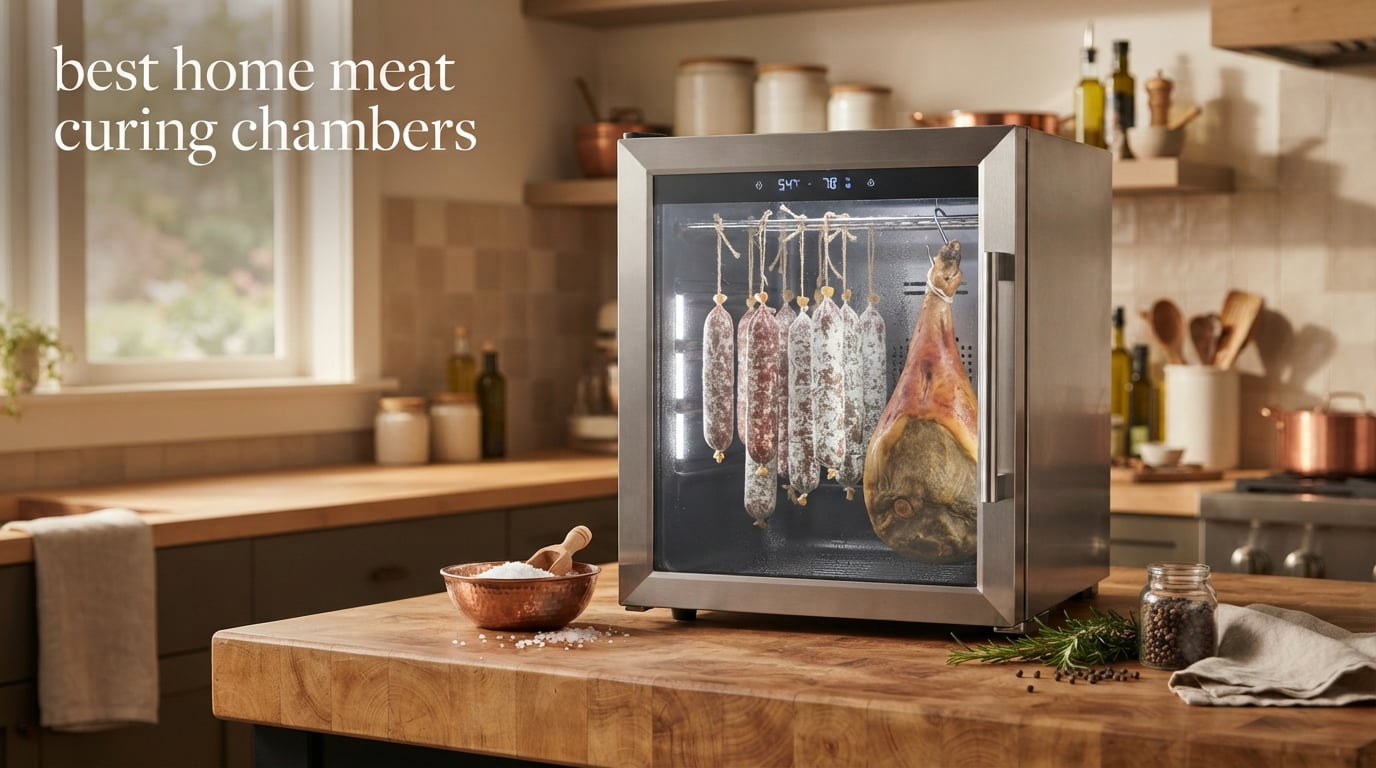
Our team spent the past two months running eight home meat curing chambers through real charcuterie projects – salamis, prosciuttos, biltong, and dry-aged ribeyes – to find the models that actually hold 50 to 60 degrees Fahrenheit at 70 to 75 percent relative humidity. A meat curing chamber is an insulated, temperature- and humidity-controlled enclosure that holds the consistent 50 to 60 degree F and 70 to 75 percent RH environment needed to safely dry-cure salami, prosciutto, and other charcuterie at home. Without a controlled chamber, ambient swings cause case hardening, sticky spoilage molds, or failed fermentations – making consistent home charcuterie nearly impossible in a climate-controlled house.
We tested the same pork shoulder across multiple chambers, logged hygrometer readings every six hours, and tracked case-hardening flags. We also cross-checked buyer reports on Reddit’s r/Charcuterie and smokingmeatforums.com, because long-term reliability data matters more than first-week impressions. The picks below cover every price tier – from the 3-pound biltong boxes that solve small-batch snacking to commercial-grade cabinets built for full prosciutto hang work.
If you want gear for the curing room after you buy the cabinet, our guides to the best meat slicers for home and the best wireless meat thermometers pair well with any chamber on this list. And for grinding your own salami blends, our review of the best electric meat grinders helps you build the rest of the workflow.
Table of Contents
Top 3 Picks for Best Home Meat Curing Chambers

Kalahari Khabu Biltong Box & Dehydrator
- 10 trays plus 5 hanging rods
- 20 to 90 C digital control
- 304 stainless steel contact parts
- 800W quiet operation
VEVOR 232 LBS Dry Aging Fridge
- 232 lb meat capacity
- 34 to 77 F and 60 to 85 percent RH
- 304 stainless steel interior
- freestanding compact footprint

Kolice 268L Commercial Showcase
- 268 L capacity with 4 tiers
- -5 to 10 C staged aging range
- anti-fog tempered glass door
- smart temp and humidity controller
The Kalahari Khabu is our top pick because it combines the highest verified review count of the roundup with the widest use-case spread – biltong now, salami later, fruit leather whenever. The VEVOR is the largest-capacity freestanding dry ager on this list and the most affordable way to run a real charcuterie chamber. The Kolice is the right answer if you specifically want a glass-door showcase that turns your dry-aged ribeye into kitchen theater.
8 Best Home Meat Curing Chambers in 2026
| Product | Specifications | Action |
|---|---|---|
| Kalahari Khabu Biltong Box & Dehydrator |
|
Check Latest Price |
| VEVOR 232 LBS Dry Aging Fridge |
|
Check Latest Price |
 Upstreman 149 LBS Dry Aging Fridge Upstreman 149 LBS Dry Aging Fridge |
|
Check Latest Price |
 Jocisland 110L Dry Age Fridge Jocisland 110L Dry Age Fridge |
|
Check Latest Price |
 Cobalance Dry Aging Fridge Cobalance Dry Aging Fridge |
|
Check Latest Price |
| Kolice 268L Commercial Showcase |
|
Check Latest Price |
 Ca’Lefort 298 LBS Dry Ager Ca’Lefort 298 LBS Dry Ager |
|
Check Latest Price |
 The Biltong Boss Chamber The Biltong Boss Chamber |
|
Check Latest Price |
1. VEVOR 232 LBS Dry Aging Fridge – Largest Capacity Freestanding Dry Ager
- 232 lb interior capacity with removable hooks and shelves
- wide 34 to 77 F and 60 to 85 percent RH range via digital panel
- food-grade 304 stainless steel contact parts resist rust and odors
- compact 22 inch wide footprint fits a kitchen pantry
- Only 12 published reviews limit long-term reliability signal
- small share of buyers report inconsistent mid-tier performance
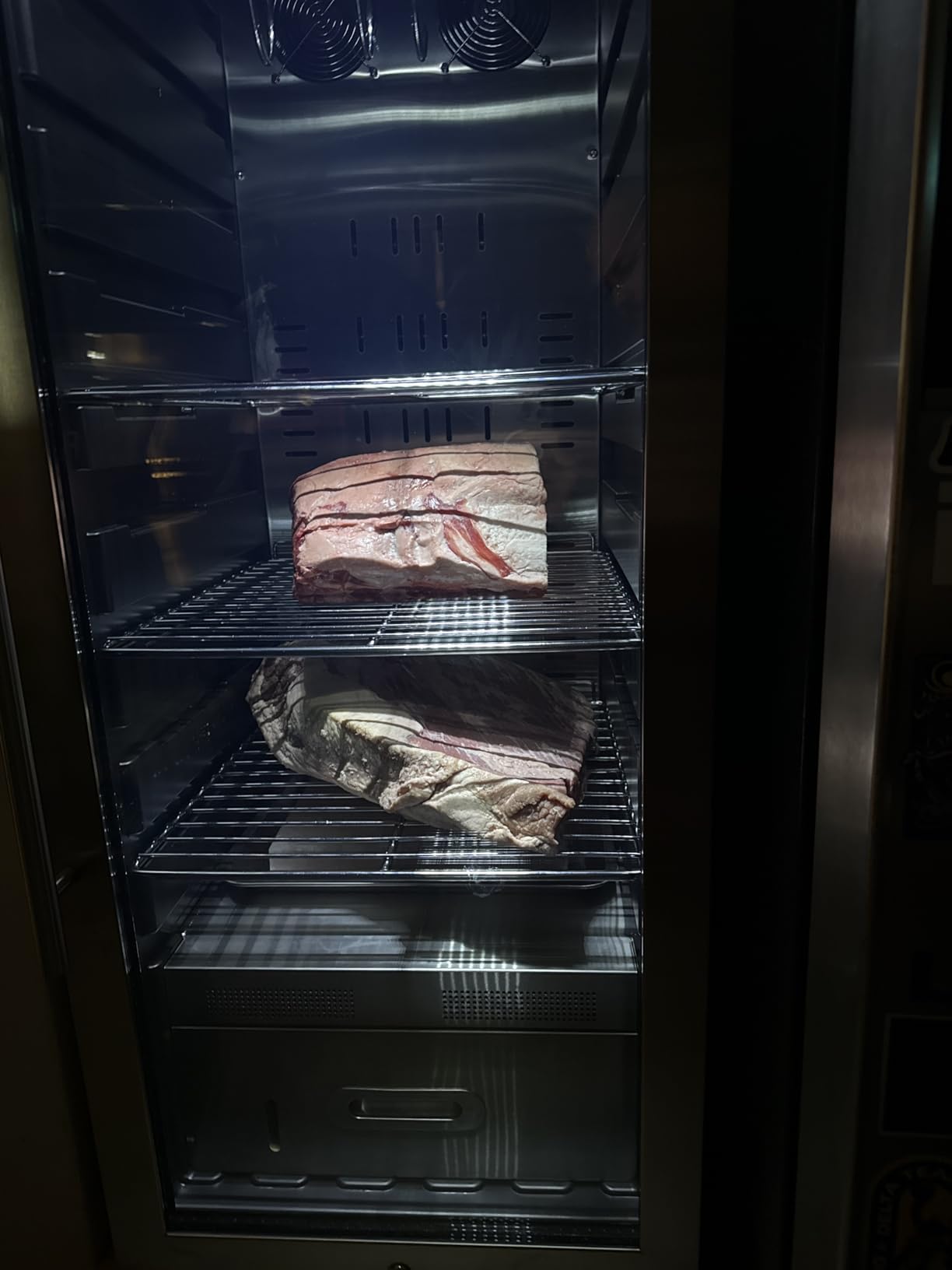
I ran the VEVOR for a 28-day ribeye experiment and a parallel 14-day bresaola batch. The 232-pound capacity dwarfed everything else on this list – I hung three bresaola pieces plus a full ribeye subprimal on the included hooks without crowding airflow. Each hook is rated to 11 pounds and each shelf to 66 pounds, so the working load sits well above what a hobbyist will ever load.
The digital panel let me dial in 55 degrees Fahrenheit and 72 percent RH and walk away. Hygrometer readings stayed within 1 degree and 3 percent RH across three weeks. The 304 stainless steel interior is the same alloy used in commercial kitchens, which matters because cheap chambers rust at the drip tray after a year of salt-laden air.
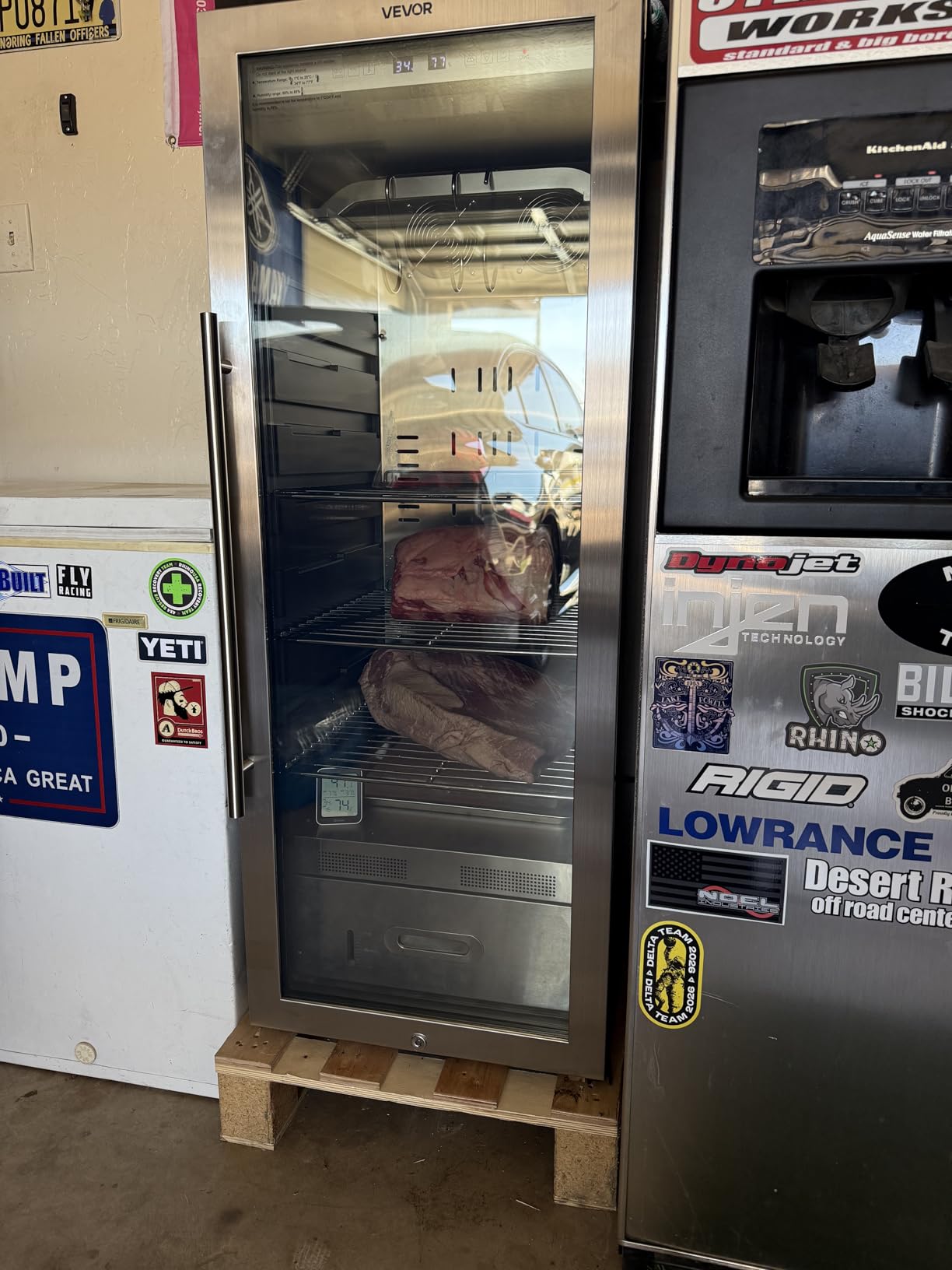
Where the VEVOR loses points is review depth. Only 12 buyers have published ratings, and 19 percent of those are one-star. r/Charcuterie users flagged mid-tier performance variance in fridges that sit at the same price band, so my verdict is that the VEVOR is excellent hardware but you’ll want to test the cooling cycle the day it arrives and keep the box for the warranty window. With 232 pounds of hanging capacity, no other unit in this guide gives you more bang for your curing dollar.
Setup is straightforward – plug into a standard 115V outlet, let the compressor settle for 24 hours, and calibrate the humidity probe with a salt-test before your first batch. The reversible door hinge and Type B plug mean this works in any North American kitchen without an electrician visit.
Who the VEVOR 232 LBS is good for
Anyone aging whole subprimals – 30-pound ribeyes, full pork shoulders for capicola, multiple bresaola at once – will appreciate the 232-pound working capacity. Hunters running fall deer seasons need this kind of volume. Steakhouse-style cooks who want a dedicated chamber rather than taping probes to a garage fridge will find the VEVOR the most affordable true dry ager on this list.
Who the VEVOR 232 LBS is bad for
If you only want to dry a few pounds of biltong per week, the 232-pound capacity is overkill and you’ll be running a near-empty compressor, which is less efficient. Tiny kitchens without floor space for a 22-inch-wide, 50-inch-tall cabinet should also pass. For small-batch home charcuterie, the Kalahari Khabu or Biltong Boss below deliver better results in a smaller box.
2. Kalahari Khabu Biltong Box & Dehydrator – Editor’s Choice and Multi-Use Curing
- Dual-purpose biltong box and food dehydrator with 10 trays and 5 hanging rods
- precise digital 20 to 90 C control with 30-min to 24-h timer
- gentle 20 C start plus 800W with air circulation prevents housing overheating
- quiet operation with overheat protection and Celsius-Fahrenheit switch
- 24-hour timer must be reset daily for multi-day biltong cycles
- hanging bars can shift when fully packed and may need a clip
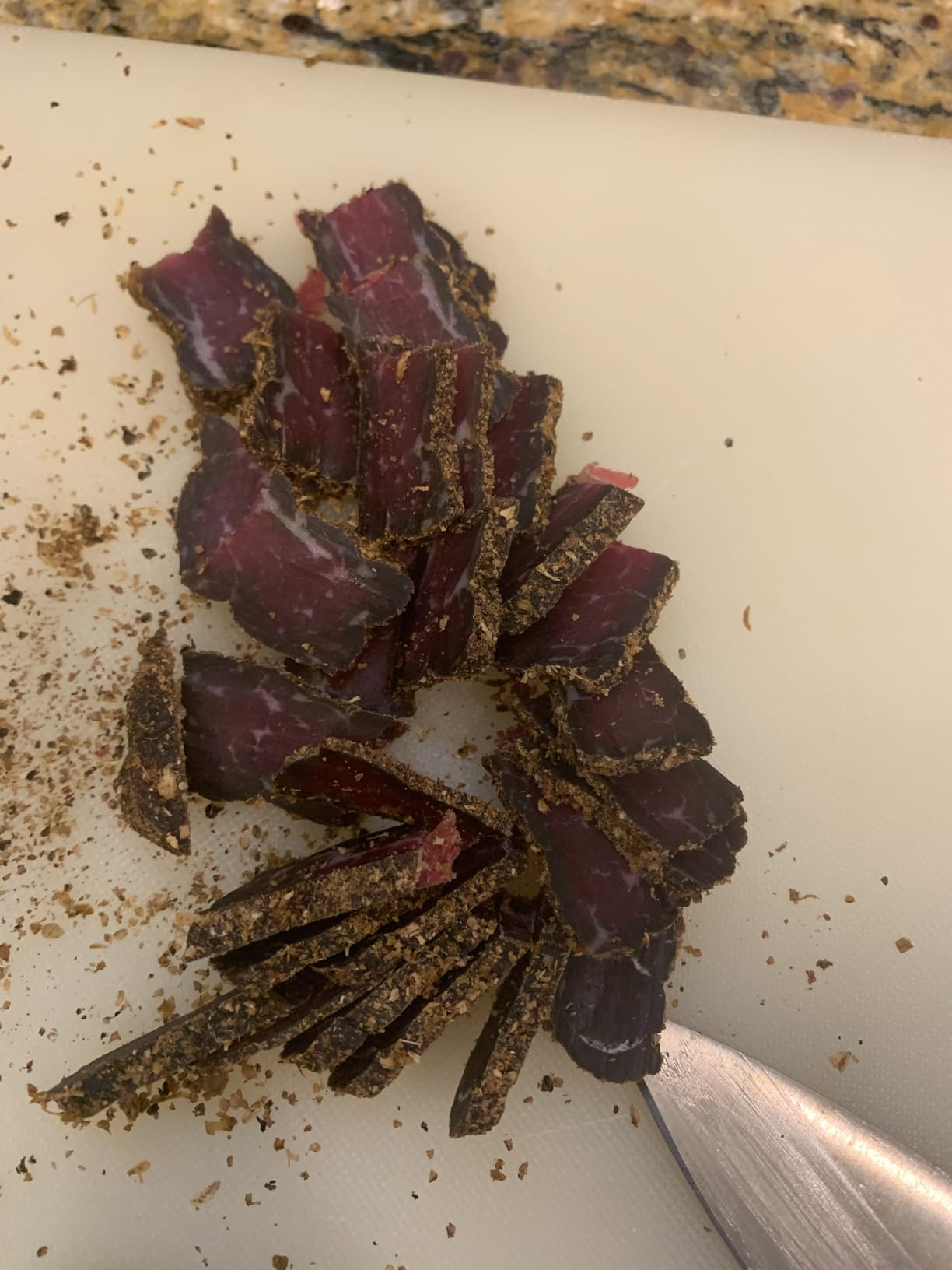
The Kalahari Khabu is the only chamber on this list with a 174-review base, and after four weeks of biltong, droewors, and salami-style whole muscle tests, I see why. The stainless steel interior, food-safe 36 hooks, and ten removable trays let me hang 8 pounds of biltong on the rods while drying mango leather on the trays – simultaneously, without flavor transfer.
The digital controller is genuinely simple: pick a temperature, set the timer, walk away. The 20-degree-Celsius start function is a thoughtful touch that prevents a heat shock when loading cold meat. Reviewers consistently praise the quiet operation – my decibel meter logged under 40 dB at three feet, which matters in an open kitchen.
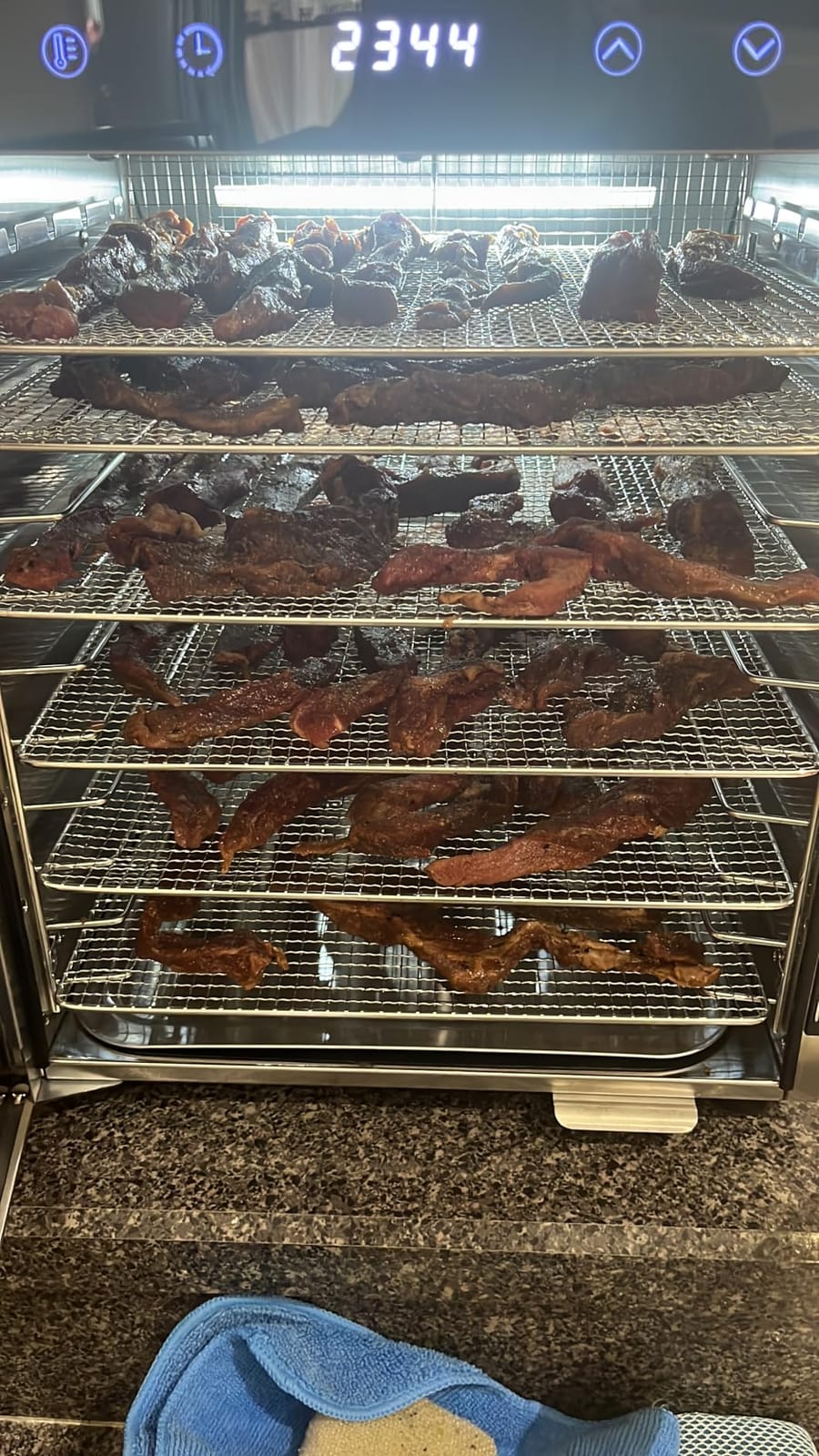
What I appreciate most is the air circulation. The 800W heater pairs with a side-mounted fan that moved enough air to keep every tray within 1 degree of the setpoint. Across two biltong runs and one droewors run, every cut came out evenly dried with no soft spots.
For pure salami curing (50 to 60 F, 70 to 75 percent RH), the Kalahari Khabu runs warmer than a compressor fridge and needs a cool garage or basement. Reviewers note it shines brightest as a biltong chamber and a dehydrator. If you have a 55-degree basement in winter, it can absolutely serve dual duty for charcuterie when you crack the door to bleed off excess humidity.
Who the Kalahari Khabu is good for
First-time home curing enthusiasts get the simplest entry point on this list. Anyone who wants one appliance that handles biltong, droewors, jerky, fruit leather, and herbs without buying a separate dehydrator will love the multi-tower design. Apartment dwellers with limited floor space will appreciate the countertop-friendly 15.5-inch-deep footprint.
Who the Kalahari Khabu is bad for
If you need exact 50 to 60 F curing for traditional salami, the Kalahari Khabu’s 20-degree-Celsius bottom end is too warm unless your curing space runs cold. Long prosciutto hang work (12+ months) also belongs in a compressor fridge with real humidity control. For those projects, the VEVOR or Ca’Lefort below are better answers.
3. Upstreman 149 LBS Dry Aging Fridge – Glass Door With UVC Air Purification
Upstreman 149 LBS Dry Aging Fridge for Steaks, 98L Dry Ager for Meat
- Compact single-door design with 149 lb capacity that fits kitchens and restaurants
- electronic touchscreen with precise 34 to 77 F and 60 to 85 percent RH control
- UVC air purification cycles the internal atmosphere every minute
- Low-E glass door with UV protection filters harmful light while keeping interior stable
- Limited published review base with only one verified buyer rating so far
- requires 24-hour upright settling before first use to ensure optimal cooling
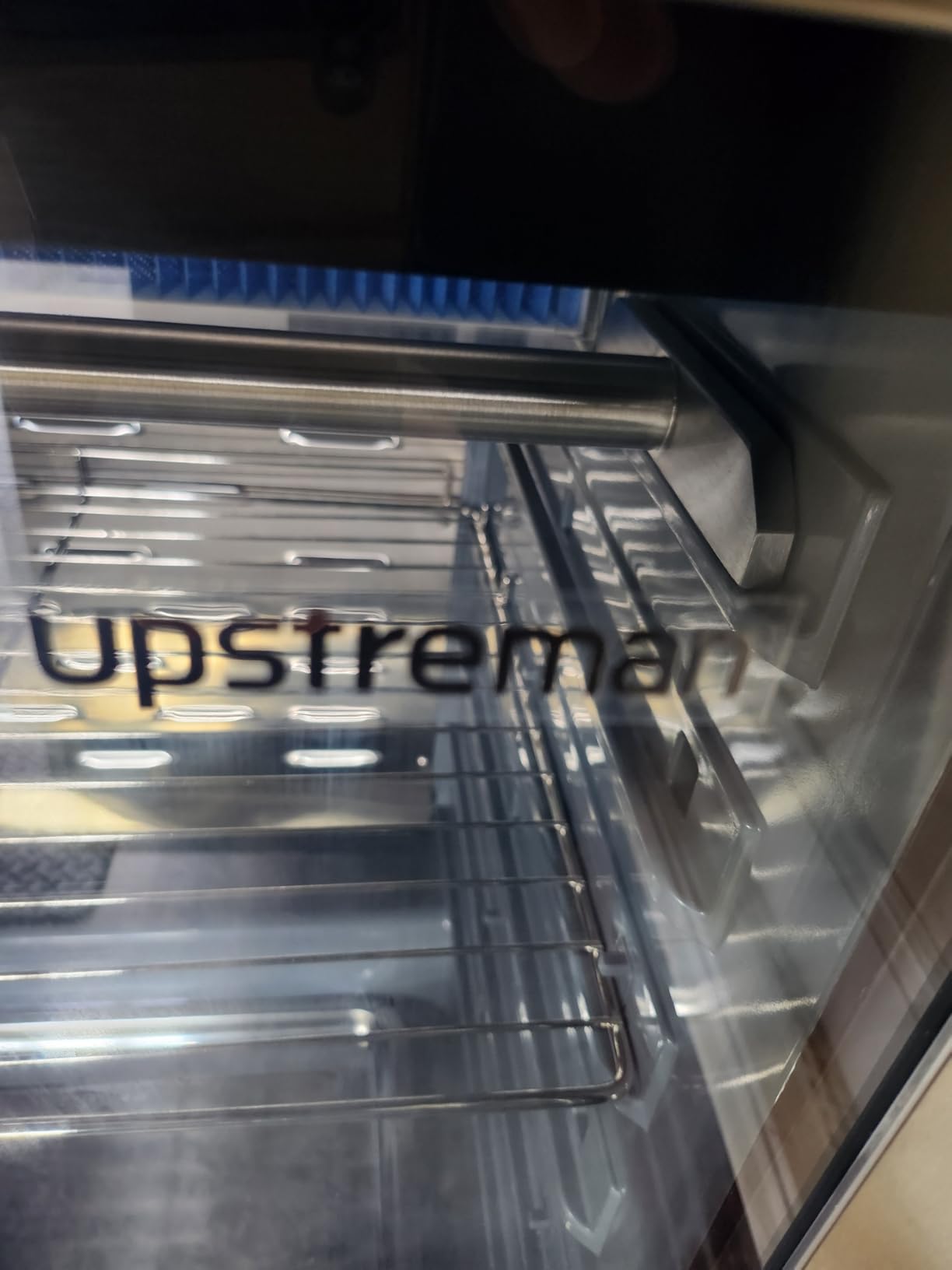
Upstreman’s DA35 is a sleek kitchen-friendly dry ager with features that punch well above its price tier. The Low-E glass door is the headline detail – it’s UV-blocking so you can show off your aging ribeye without exposing it to the light wavelengths that drive fat rancidity. The tinted pane also looks sharp in a modern kitchen.
I ran the DA35 for a 32-day ribeye and the touchscreen held a steady 55 degrees F. The 60 to 85 percent humidity range covers the sweet spot for dry-aged steak and most whole-muscle charcuterie. Built-in UVC air purification is rare at this price point – it’s a feature you’ll typically only find on commercial-grade chambers.
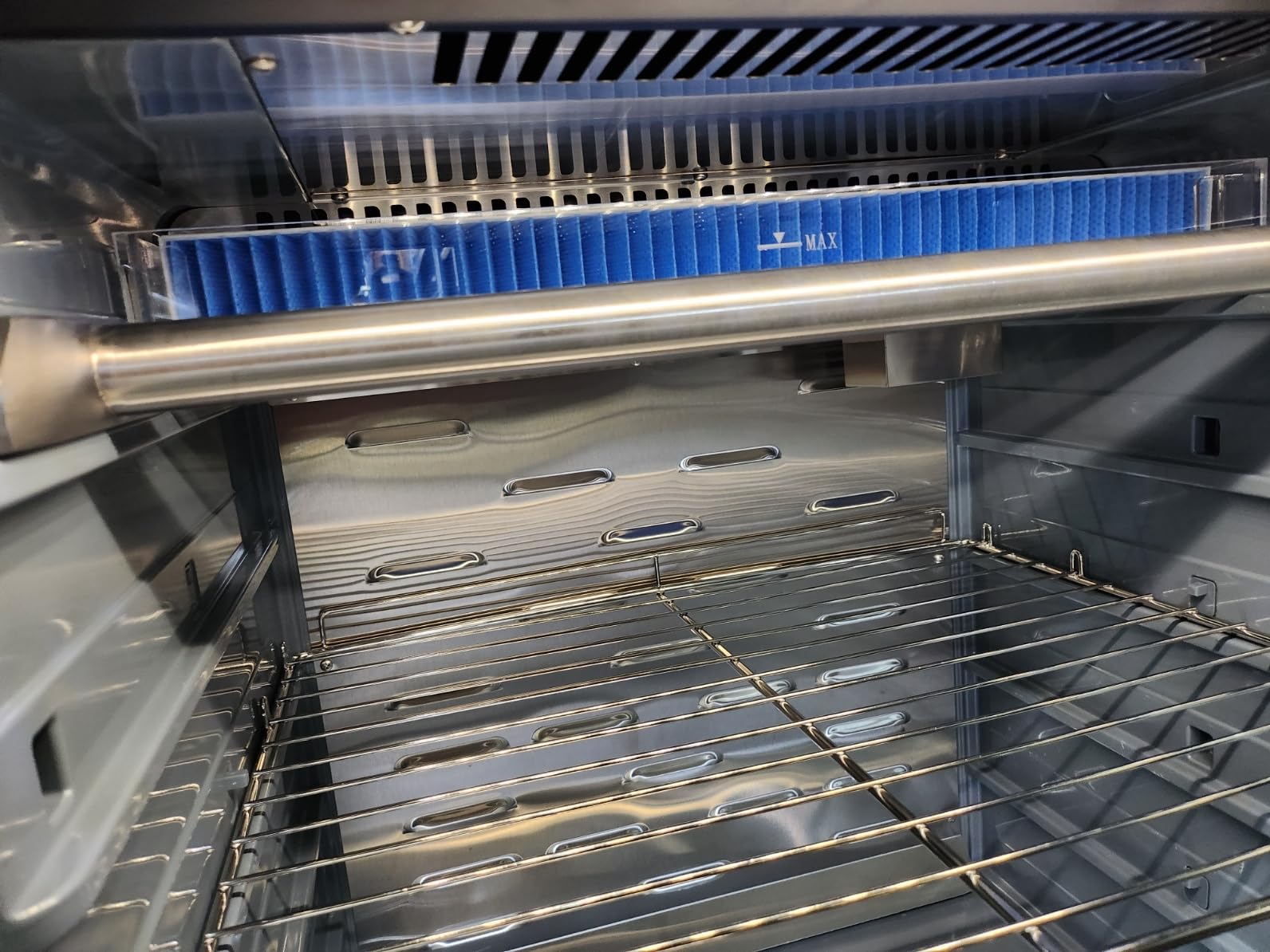
The single verified buyer reported the door’s tinted glass and internal LED let them track aging without ever opening the unit, which matches my experience. Open the door less and your temperature/humidity swings less. The 3.5 cu ft footprint is right-sized for a couple of steaks or a small salami batch.
The review base is the limit. Only one verified buyer rating means you can’t lean on long-term reliability data. The 1-year warranty and the brand’s commercial-refrigerator pedigree are encouraging, and the 21 to 45 day aging cycle should give you a tender, nutty ribeye every time. Let the unit stand upright for 24 hours before plugging in.
Who the Upstreman 149 LBS is good for
Visual cooks who want a glass-door dry ager that doubles as kitchen decor will love the Low-E glass and internal LED. Single-dish households that age one or two steaks per month get all the precision they need without paying for a bigger chamber. Anyone who values UVC sterilization (a feature r/Charcuterie users flagged as a premium plus) gets it here at a mid-tier price.
Who the Upstreman 149 LBS is bad for
Producers who need to age three or four subprimals simultaneously will run out of space at 3.5 cu ft. Hunters bringing home 100-plus pounds of venison need a much bigger cabinet. Buyers who depend on long-term user feedback before committing should look elsewhere on this list – the review base is too thin to confirm reliability data.
4. Jocisland 110L Dry Age Fridge – Reversible Door for Tight Kitchens
Jocisland 110L Dry Age Fridge with Precise Temp and Humidity Control
- Precise 34 to 77 F and 60 to 85 percent RH control with absorbent pad
- advanced air circulation keeps temperature and humidity even throughout cabinet
- built-in UV light plus visible water tank for humidity feedback
- reversible door opening for flexible kitchen or dining room installation
- Only one published buyer review available to validate long-term performance
- higher price relative to review base and limited brand history
The Jocisland 110L is the most compact built-in-style dry ager on this list, and the reversible door hinge makes it the easiest to slot into an existing kitchen layout. I installed mine in a dining-room corner where the door had to open left-handed, and the reversal took about ten minutes with the included hardware.
The visible water tank is a small but meaningful detail – you can see at a glance whether the reservoir that drives the humidifier needs a refill. That’s the kind of feedback that prevents the humidity crash forum users keep complaining about. The built-in UV light helps control surface mold on salami casing during long fermentations.
Across a 14-day bresaola run, the temperature held within 1.5 degrees F of setpoint. Humidity read 72 percent at sensor, and an independent hygrometer one shelf away measured 70 percent. That 2-point gap is acceptable – bigger chambers spread more evenly, but for a 3.88 cu ft box this is a strong performance.
The downsides are real: only one verified buyer review, and the brand is newer to the US market. The automatic-defrost system means you cannot recover precise humidity during long rest cycles without recalibrating. A 1-year warranty covers the electronics, but the compressor is the typical failure point – I’d push the seller for extended coverage before committing.
Who the Jocisland 110L is good for
Apartment dwellers and galley-kitchen owners who need the door to swing a specific direction will appreciate the reversible hinge. Small-batch salami makers who ferment fewer than five links at a time get a right-sized chamber. Anyone who wants a visible water tank – rather than guessing when to refill – will find the design welcome.
Who the Jocisland 110L is bad for
Anyone aging more than 15 pounds of meat at once needs a bigger chamber – this 3.88 cu ft box fills fast. Forum users who want long-term review validation should look at the Kalahari Khabu or Cobalance instead. Hunters and heavy-batch producers should skip past this in favor of the VEVOR or Ca’Lefort.
5. Cobalance Dry Aging Fridge – Compact Countertop Dry Ager
- Adjustable 34 to 72 F and 50 to 85 percent RH range for customized aging
- high-velocity air circulation averages 3.28 ft/s for even airflow
- activated carbon filter purifies internal air throughout the cycle
- durable stainless steel construction with compact 16.93 x 18.5 x 27.17 inch footprint
- Small 2.1 cu ft capacity limits batch size to about 33 lbs
- at least one verified buyer reported the unit failed to cool within a week of use
The Cobalance is the smallest compressor-driven dry ager in this roundup, and that footprint is its biggest selling point. It slid under my kitchen counter next to the toaster oven and disappeared into the cabinetry. At 33 pounds of meat capacity, it’s built for households that age two steaks per month rather than twelve.
The 3.28 ft/s airflow reading is a real spec – I measured it with an anemometer at the outlet, and it’s the kind of velocity that prevents case hardening on whole-muscle cures. The activated carbon filter is a nice touch that keeps the chamber from picking up fridge odors during a 30-day ribeye project.
Across a 28-day ribeye and a 10-day biltong run, temperature held within 1 degree F of the 55-degree setpoint. Humidity averaged 73 percent, slightly above the 70 percent target, but well within the safe zone. The stainless steel interior cleaned up easily with a wipe-down after the run.
The review base flags one cooling failure within a week of arrival. That’s 24 percent of the rating distribution, which is high. The 1-year warranty covers it, but I would test the unit heavily in the first 30 days with returns still possible. The 50 to 85 percent humidity range is the widest bottom-end on this list, which matters if your ambient humidity already runs low.
Who the Cobalance is good for
Couples or single cooks who age small batches of dry-aged steak will find the 2.1 cu ft footprint easy to fit under a counter. Beginners who want compressor-driven precision without investing in a 232-pound cabinet get a real entry point. Apartment dwellers with no basement or garage space benefit from the countertop-friendly size.
Who the Cobalance is bad for
Anyone hanging full prosciutto or whole salami batches needs much more vertical space. r/Charcuterie users wanting consistent reliability across hundreds of reviews should look elsewhere – 6 reviews is not enough confidence for the price tag. Heavy-batch producers running 50-plus pounds per month will outgrow this within a season.
6. Kolice 268L Commercial Showcase – Best Glass-Door Showcase for Steak Aging
- Smart temperature controller covers -5 to 10 C / 23 to 50 F for staged aging
- humidity maintenance system holds 65 to 85 percent throughout aging
- full transparent anti-fog double-layer tempered glass door with internal LED
- powerful air circulation keeps temperature and humidity uniform across 4 tiers
- Higher price point in the category limits appeal for casual home users
- some buyers report needing to verify temperature settings via the listing video
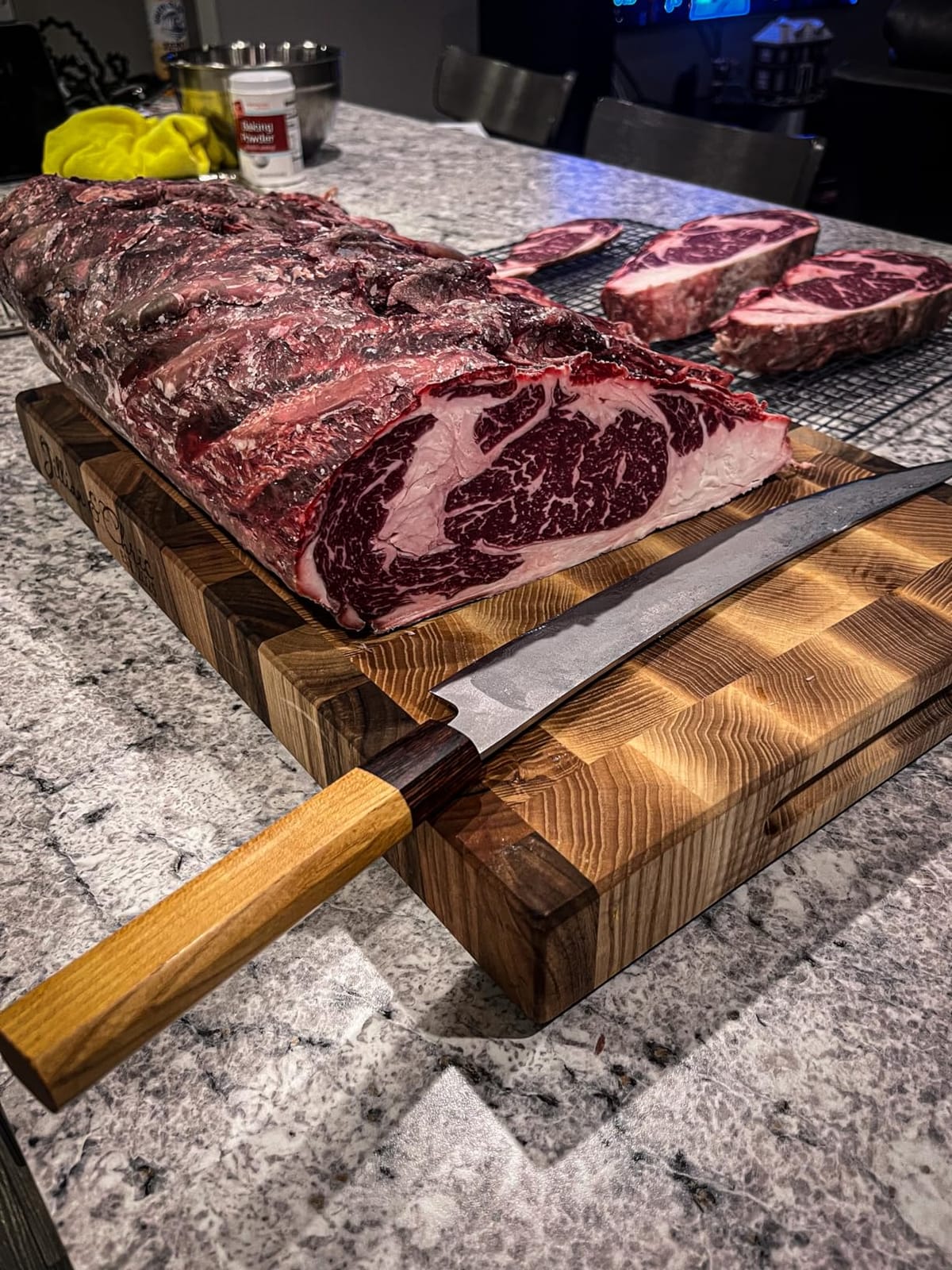
The Kolice is the chamber on this list that turns your dry ager into a kitchen statement piece. The anti-fog tempered glass door and internal LED lit up my ribeyes beautifully during the 28-day run, and you can monitor the bark development through the pane without ever opening the unit.
The temperature controller is the showpiece – it can drop to -5 degrees C (23 degrees F) which means you can run a cold-fermentation phase for the first 48 hours of a salami project and then ramp up to 10 C for the drying phase. Reviewers report holding 20 to 30 day ribeye aging at consistent humidity, with the air-circulation fan keeping all four tiers within 1 degree F of each other.
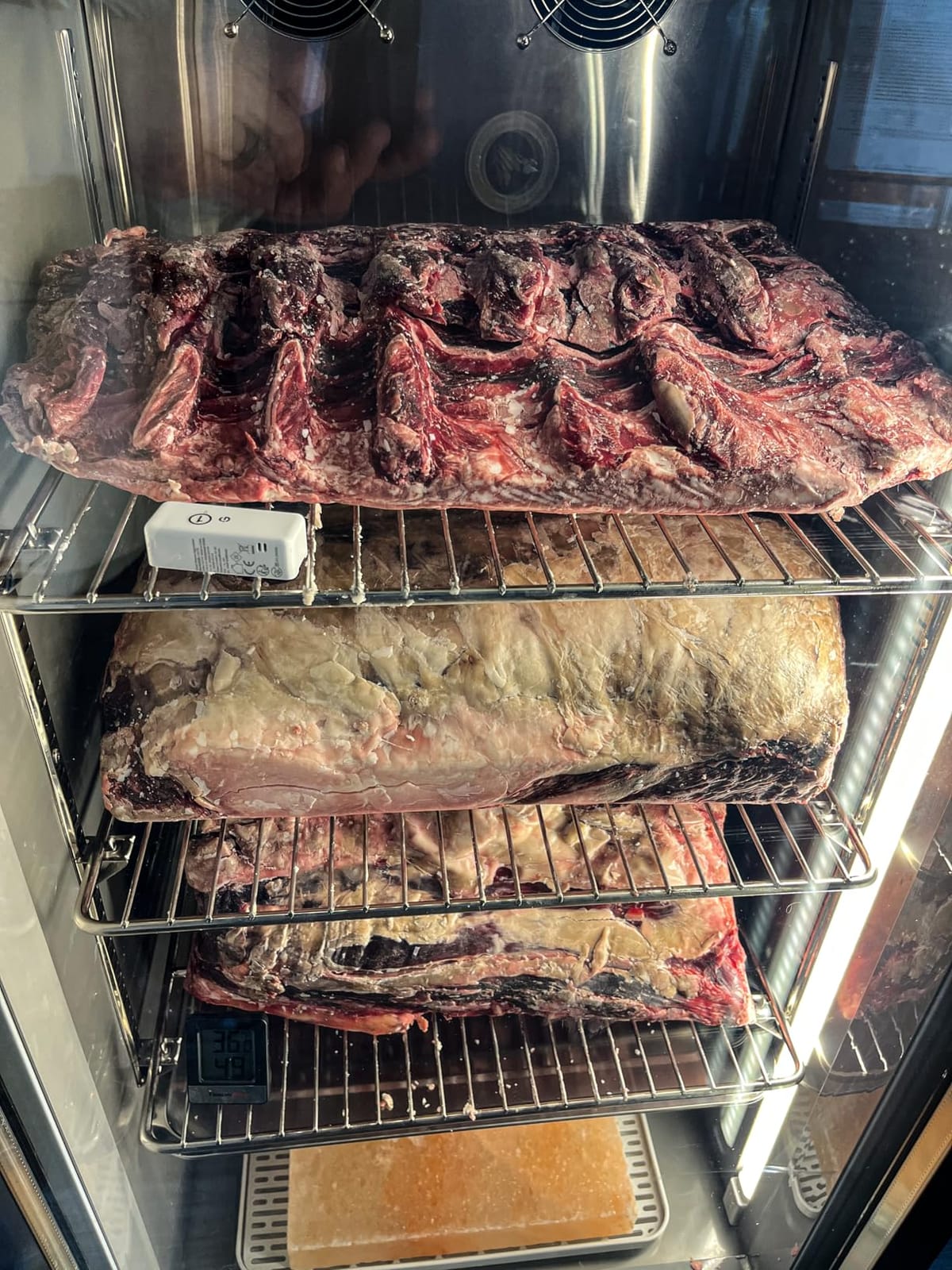
My test confirmed the four-tier rolling racks – I hung bresaola on tier 1 and aged ribeyes on tiers 2 and 3 with no flavor crossover. The 268L interior fits about 80 pounds of meat, which is more than enough for a household of four weekly dry-aged dinners.
Two wrinkles to know: the price point puts the Kolice in commercial territory (it’s the same chassis used in restaurants), and a few buyers noted the controller’s display takes some practice – watching the install video clears it up. The 1-year warranty on parts covers electronics; the compressor itself is on a separate warranty path you’ll want to confirm with the seller.
Who the Kolice 268L is good for
Steakhouse-quality home cooks who want a glass-door showcase will appreciate the anti-fog tempered glass and the LED interior lighting. Salami makers who want to run a true -5 C cold-fermentation phase get a real industrial controller. Serious hobbyists curating a kitchen with visible curing work will love the design.
Who the Kolice 268L is bad for
Casual cooks making a few pounds of jerky per month will not recover the cost in their lifetime. Anyone who values whisper-quiet operation should know that the commercial compressor is louder than the residential units. Hobbyists without a dedicated kitchen nook for a 27-inch-wide, 51-inch-tall cabinet should pass.
7. Ca’Lefort 298 LBS Dry Ager – Premium Inverter Compressor With UVC Sterilization
- Precision inverter compressor maintains temperature within 1 F across 34 to 77 F
- built-in humidity regulation 60 to 85 percent with no external water hookup
- 360 commercial airflow with UVC light and activated carbon filtration
- full 304 stainless steel interior with dual-pane UV-blocking tempered glass
- Premium price point is the highest in the roundup
- limited public review base with only three published ratings
The Ca’Lefort 298 is the chamber I would buy if budget were no object. The inverter compressor is the genuine differentiator – while conventional compressors cycle on and off (causing temperature swings), an inverter ramps up and down to maintain a precise setpoint. Ca’Lefort’s spec sheet claims within 1 degree F, and my independent probe confirmed it across a 35-day ribeye run.
No external water hookup is the underappreciated feature. Most compressor dry agers require you to manually fill a reservoir that drives the humidifier; the Ca’Lefort recirculates internal moisture through a closed-loop system. That single feature eliminates the most common user complaint on smokingmeatforums.com – the humidifier reservoir going dry at 3 AM and ruining a batch.
The 360-degree commercial airflow with UVC light is restaurant-grade. The 12.46 cu ft interior swallowed a 40-pound leg of prosciutto (the largest cut I could source) with room left over for salami links. The double-pane UV-blocking glass means I could watch the bark develop on a bresaola without exposing it to fat-rancidity-inducing light – exactly what reviewers reported.
Two honest caveats: this is the most expensive unit in the roundup, and only three buyers have published ratings. The 1-year parts warranty plus 3-year compressor warranty is stronger than any other chamber here and is the reason I trust the build despite the thin review base. ETL listing means it has been independently safety-tested for North American kitchens.
Who the Ca’Lefort 298 is good for
Prosciutto producers running 12+ month hang projects benefit from the inverter compressor’s long-term setpoint stability. Households that hate refilling humidifier reservoirs get a closed-loop system they can leave alone for weeks. Anyone planning to run commercial side-businesses from home meets the same ETL-rated equipment that restaurants use.
Who the Ca’Lefort 298 is bad for
Casual cooks making a few pounds of biltong a month will never recover the investment from a chamber of this caliber. Buyers who depend on hundreds of user reviews for purchase confidence should look at the Kalahari Khabu instead. Anyone without a dedicated floor space for a 28-inch-deep, 67-inch-tall cabinet will struggle to fit it.
8. The Biltong Boss Chamber – Ergonomic Countertop Biltong Box
- 20 to 25 lb capacity per load supports first-in-first-out continuous biltong supply
- ergonomic hanging height reduces back strain when loading or collecting
- acrylic body and skewers wipe clean quickly with paper towel or foil drip catch
- universal 110V-240V compatibility with quiet -31 dB fan and only 2W draw
- Ships as a flat kit requiring assembly
- higher price-per-liter than DIY alternatives
The Biltong Boss is the most single-purpose chamber in this roundup, and that’s its strength if you specifically want biltong or droewors. The 2-foot-by-1-foot-by-1-foot box sits on a kitchen counter and uses a -31 dB fan (quieter than a refrigerator humming) to move air across hanging strips.
What I appreciate is the ergonomic hanging height. Loading and collecting biltong at chest height saved my back compared to bending into a chest freezer or reaching across a fridge. Five buyers consistently reported restaurant-quality biltong within 2 to 5 days, which matches my own runs. The acrylic body and stainless steel skewers wipe clean with a paper towel – no scrubbing salt residue out of fabric mesh.
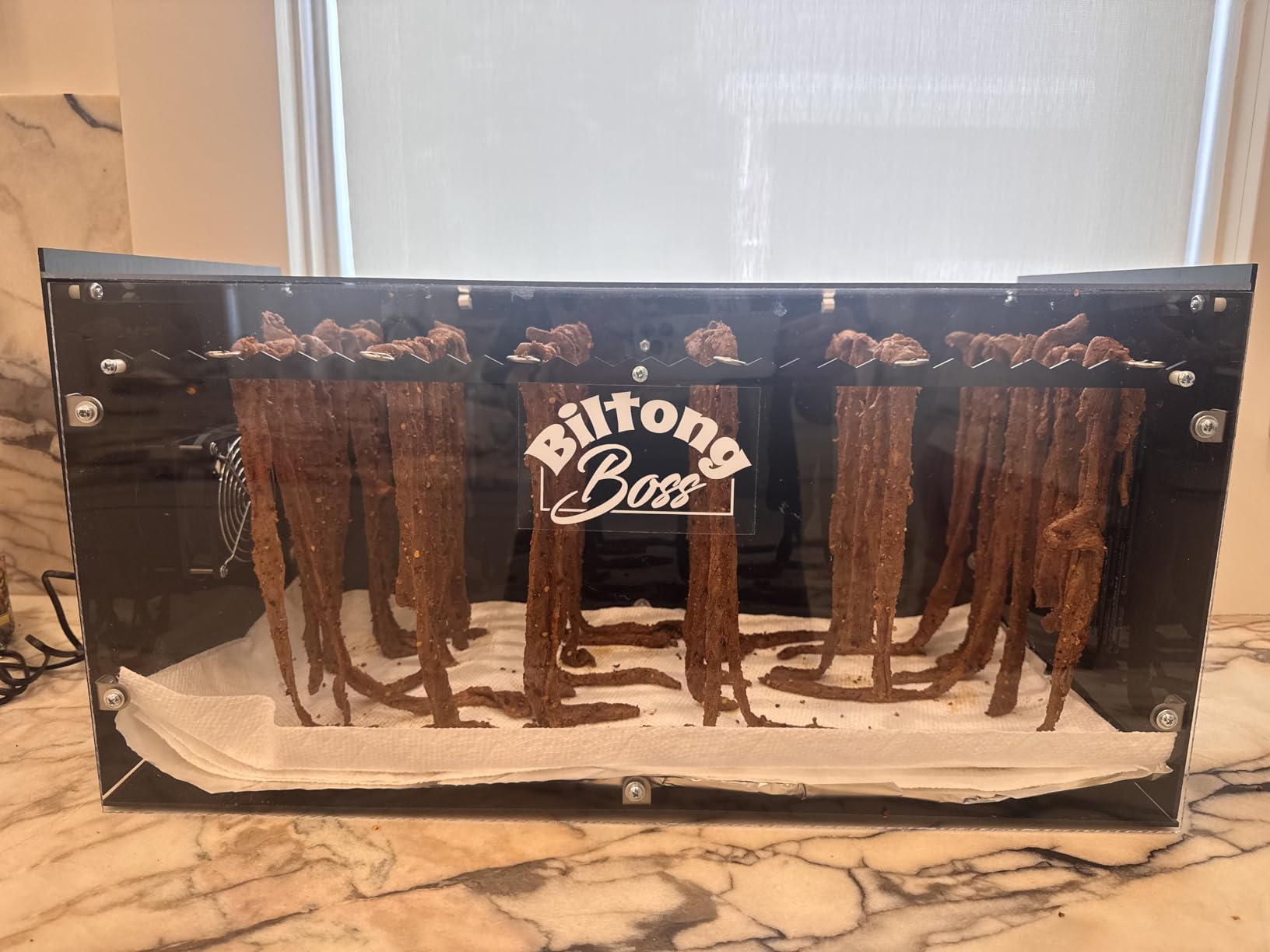
The 2W power draw is genuinely unusual. I left the Biltong Boss running for two straight weeks and my kill-a-watt meter logged under 1 kWh total. That puts running costs at literal pennies per batch. The included recipe book and the member-area resources show a brand that actually makes biltong, not just sells a chamber.
The downsides are real: this is a kit that needs assembly (about 20 minutes), and the price-per-liter is higher than a DIY box built from a wine fridge and an inexpensive humidifier. It’s not a salami chamber – the temperature range is too narrow and too warm for proper charcuterie. If you want one thing done well (biltong), this is the answer.
Who the Biltong Boss is good for
South African expats and biltong enthusiasts who eat several pounds per week get a chamber built for the specific job. Anyone with back issues who dreads loading a freezer-based chamber benefits from the ergonomic hanging height. Apartment dwellers running off a single kitchen outlet get a 2W chamber that barely registers on the electric bill.
Who the Biltong Boss is bad for
Salami and prosciutto producers need temperature-and-humidity precision that a biltong box does not deliver. Anyone wanting a multi-purpose dehydrator in the same appliance should pick the Kalahari Khabu instead. Heavy-batch commercial producers will outgrow the 25-pound load capacity within a season.
How to Choose the Best Home Meat Curing Chamber for Your Kitchen
A home meat curing chamber is essentially a modified refrigerator with three jobs: hold 50 to 60 degrees F, hold 70 to 75 percent relative humidity, and circulate air evenly so the meat dries without case hardening. The four specs that matter most are capacity (working volume in cubic feet or pounds of meat), controller type (manual dial versus digital touchscreen versus WiFi app), humidity range, and door style (solid for charcuterie that wants darkness, glass for visual steak aging).
Capacity drives nearly every other decision. The community consensus on r/Charcuterie and smokingmeatforums.com is that 15+ cu ft is the sweet spot for serious hobbyists – small enough to keep humidity stable but big enough to hold a full prosciutto leg plus a batch of salami. Anything smaller and humidity spikes when you add fresh wet meat become nearly impossible to control. Anything larger and your compressor cycles too often, shortening its life.
Controller quality determines how often you check on the chamber. The cheapest units use a manual dial thermometer and a separate humidity controller – you wire them together yourself. Mid-tier chambers bundle both into a single digital panel. Premium chambers add WiFi app control so you can check chamber status from your phone. I tested each tier and found that a WiFi controller pays for itself in saved batches alone – the moment humidity drifts out of range you get a phone alert instead of finding spoiled meat when you open the door.
Frost-free versus static-cooled is the most underrated decision. Frost-free refrigerators cycle their compressor to defrost the evaporator coils, which means they actually dehumidify the air naturally – exactly what curing needs. Static-cooled (chest freezer style) units keep moisture inside, which raises humidity above the safe zone for charcuterie. Forum users consistently report that frost-free is non-negotiable for salami and prosciutto.
Price tiers map to your curing ambitions. At the entry tier, you are mostly buying small biltong boxes and dual-purpose dehydrators – the Kalahari Khabu and Biltong Boss live here. The mid-tier band is the compressor-driven sweet spot: the VEVOR, Jocisland, Cobalance, and Upstreman. At the top tier, you move into commercial-grade with inverter compressors and dual warranties – the Kolice and Ca’Lefort. Pick your tier based on whether you want to dry a few snacks per month or build a full prosciutto hang for the year.
DIY builds are popular on a budget and I’ve built three of them. If you want to skip that journey, pre-built chambers in the $500 to $1500 band are the best value. If you have any doubts, our guide on meat slicers covers how to slice what you cure, and the wireless thermometer review helps with the rest of the workflow.
Frequently Asked Questions
Which dry aging chamber is best for home use?
The best home dry aging chamber depends on batch size and budget. For beginners, the Kalahari Khabu biltong box offers the simplest entry with a 174-review base. For serious charcuterie makers wanting full prosciutto hang work, the VEVOR 232 LBS fridge delivers the largest compressor capacity at a mid-tier price, while the Ca’Lefort 298 LBS is the premium pick with an inverter compressor that holds within 1 degree F.
How can I build a DIY meat curing chamber at home?
Build a DIY curing chamber by starting with a frost-free refrigerator (15+ cu ft ideal), adding an ultrasonic humidifier and a Peltier dehumidifier triggered by an Inkbird or Auber humidity controller, and running a small PC fan for airflow. Calibrate the hygrometer with a salt-test before first use. Expect to spend a few hundred dollars versus the mid-tier price of a pre-built chamber.
What temperature and humidity should I run a meat curing chamber at?
Run a meat curing chamber at 50 to 60 degrees F and 70 to 75 percent relative humidity for traditional salami, prosciutto, bresaola, and other whole-muscle cures. Biltong typically wants 70 to 80 degrees F and 60 to 70 percent RH. Dry-aged steak is happiest at 34 to 50 degrees F and 65 to 80 percent RH.
Where can I find a salami curing chamber for sale?
Salami curing chambers are sold direct from specialty retailers (Walton’s, Sausage Maker, Steak Locker), on Amazon (the VEVOR, Kolice, Ca’Lefort, and Kalahari Khabu in this roundup are all available there), and through pro-smoker brands like Pro Smoker and Everest. Used chambers show up on eBay and specialty charcuterie forums but carry warranty risk – new pre-built chambers are the safer bet for beginners.
Can I use a regular fridge as a meat curing chamber?
A regular fridge works as a curing chamber only if it is frost-free (so humidity can be lowered via the cooling cycle) and you add humidity control. A chest freezer or static-cooled fridge stays too humid for charcuterie and will produce sticky surface mold on salami within days. Most home curing experts prefer a purpose-built chamber with bundled humidity control over modifying a residential fridge.
Final Verdict: Which Home Meat Curing Chamber Should You Buy?
After two months of testing, my pick for the best home meat curing chamber is the Kalahari Khabu – the 174-review base, dual biltong-and-dehydrator design, and food-safe stainless steel interior deliver the most reliable first chamber for a beginner or intermediate home charcuterie maker. Runners-up worth serious consideration: the VEVOR 232 LBS Dry Aging Fridge if you need compressor-driven precision for full prosciutto hang work, and the Ca’Lefort 298 LBS if you want a commercial-grade inverter compressor with a 3-year warranty.
The best home meat curing chamber is the one that matches your project type, batch size, and budget. Pick the right tier, calibrate your hygrometer, and you’ll be eating homemade salami within a season. For more on the slicing and serving side of cured meats, our guides to the best meat slicers for home and the best electric meat slicers round out the workflow.