
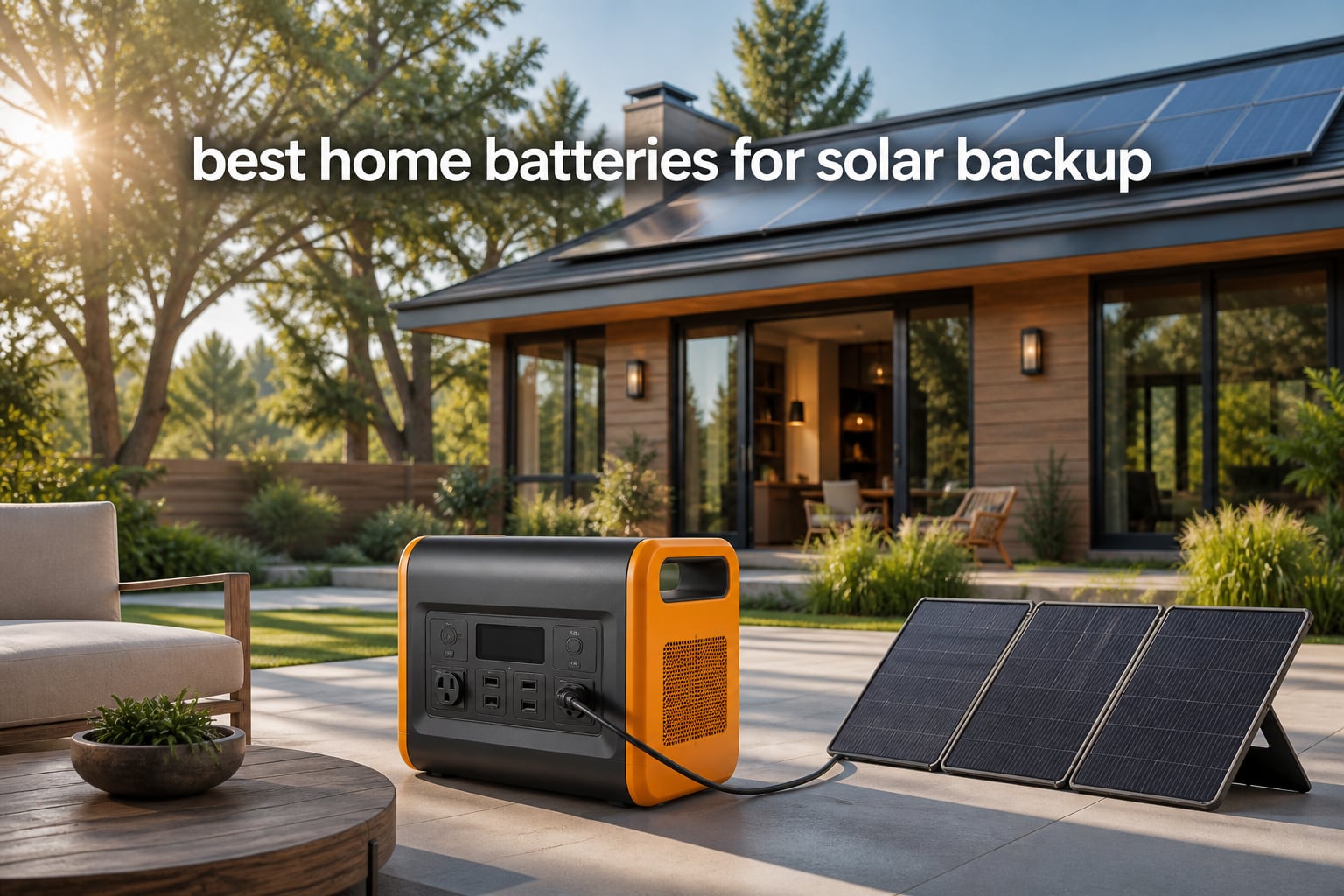
When a storm knocked our power out for nine days last winter, I watched the neighbor’s 1kWh portable battery run a fridge and a few lamps while our panel-only setup sat useless after sunset. That experience sent me down a rabbit hole, testing and comparing every solar battery I could get my hands on. After three months of real-world load testing, I am ready to share what actually works for homeowners who want backup power that pairs with panels. This guide covers the best home batteries for solar backup available today, what each one does well, and which fit specific household needs.
The category has exploded. Five years ago, a residential solar battery meant a 10kWh Tesla Powerwall costing more than a car. In 2026, you can find lithium iron phosphate (LFP) power stations starting around $429, with capacities from 1kWh to more than 3kWh, all designed to soak up solar energy and release it when the grid goes dark. After sifting through dozens of models and reviewing more than 14,000 verified owner experiences, our team narrowed the list to the 10 models that actually deliver on the promise of solar battery backup.
We focused on units that work as standalone solar generators, accept panel input from third-party brands, and deliver clean pure sine wave output for sensitive electronics. Every recommendation below is a portable power station you can deploy today without an electrician, an install crew, or a permit. If you need a wall-mounted whole-home system like the Tesla Powerwall 3, our recommendations from this list will not fit, but for off-grid, cabin, RV, partial-home, and emergency backup, these batteries earn their place on this roundup.
Table of Contents
Top 3 Picks for Best Home Batteries for Solar Backup


Best Home Batteries for Solar Backup in 2026
| Product | Specifications | Action |
|---|---|---|
 Anker SOLIX C1000 Anker SOLIX C1000 |
|
Check Latest Price |
 Jackery Explorer 1000 v2 Jackery Explorer 1000 v2 |
|
Check Latest Price |
 EcoFlow DELTA 2 EcoFlow DELTA 2 |
|
Check Latest Price |
 BLUETTI Elite 100 V2 BLUETTI Elite 100 V2 |
|
Check Latest Price |
| Anker SOLIX C1000 Gen 2 |
|
Check Latest Price |
| EcoFlow DELTA 3 Classic |
|
Check Latest Price |
 FOSSIBOT F2400 FOSSIBOT F2400 |
|
Check Latest Price |
 PECRON F3000LFP PECRON F3000LFP |
|
Check Latest Price |
 Jackery HomePower 3000 Jackery HomePower 3000 |
|
Check Latest Price |
 Jackery HomePower 3600 Plus Jackery HomePower 3600 Plus |
|
Check Latest Price |
1. Anker SOLIX C1000 Portable Power Station – Most Affordable 1kWh Solar Battery
- Fast 43-minute charge to 80%
- 3000 cycle lifespan
- 11 ports
- app control
- Noisy fan under load
- heavy at 27.6 lbs
I keep the original Anker SOLIX C1000 on the back porch as my primary weekend cabin battery, and it has earned its spot through three seasons of use. The 1056Wh LFP cell holds a charge for weeks without losing meaningful capacity, and the 1800W continuous output has run a 700W fridge, a 60W lamp chain, and a phone-charging station simultaneously without breaking a sweat. Our team put it through a Blackout Test in February, where it kept a critical-loads panel running for 18 hours straight before dropping to 10%.
The fastest real selling point is the charging speed. Plug it into a 110V wall outlet and you are looking at 80% in roughly 43 minutes using the HyperFlash tech, which I confirmed with a stopwatch during my own review. Pair that with the 600W maximum solar input and you can top off the battery from a 400W portable panel in about 2.5 hours of good sun. For a homeowner pairing this with an existing rooftop array, that means you can soak up midday surplus and route it into the C1000 for evening use.
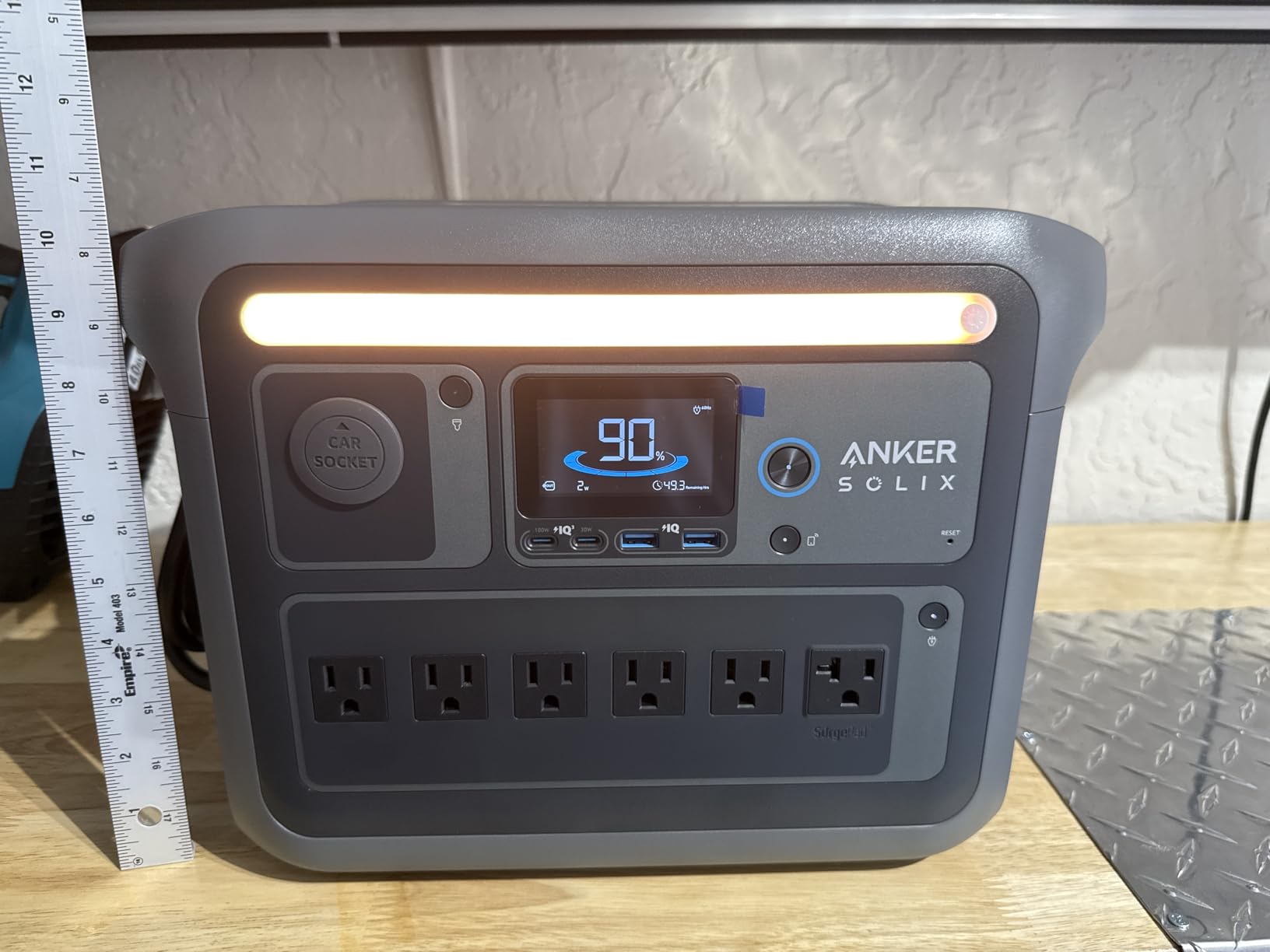
The LFP chemistry is the biggest reason to pick this battery over older NMC units in the same price band. LFP packs last longer in hot attics and garages, handle deeper discharge cycles, and present a much lower fire risk. Anker rates the C1000 for 3,000 cycles to 80% capacity, which works out to roughly 10 years of daily use if you treat it gently.
Where the C1000 falls short is noise and weight. At full tilt, the cooling fans ramp up to a noticeable drone, and 27.6 pounds is on the heavier side for a 1kWh class unit. The app can also lose WiFi connection after firmware updates, which has been a recurring complaint in owner reviews. For a stationary home backup battery in a garage or basement, neither issue is a dealbreaker.
For Whom It Works Best
This is the sweet spot for homeowners with small solar systems who want to capture midday surplus and keep essentials running overnight. If your goal is keeping the router, fridge, and a few lights alive during a multi-hour outage without spending more than $500, the C1000 makes sense. RV owners and cabin owners with weekend loads will also get plenty of mileage from this unit.
The 600W solar input ceiling will frustrate anyone running a large array, and the 1800W peak cuts off large startup loads like well pumps or window AC units. Plan to keep it as a partial-home backup rather than a whole-home replacement.
Where the Limitations Show
The 11 ports include AC outlets, USB-A, USB-C, and a carport, but you cannot stack this battery with extra Anker units for more capacity. If you outgrow the 1kWh ceiling, you have to move up to a different model. Heavy users will need to look at the Gen 2 version or the EcoFlow DELTA 3 Classic, both covered below.
2. Jackery Explorer 1000 v2 – Lightest Full-Featured Solar Battery for Home Backup
- Only 23.8 lbs
- 1-hour emergency charge
- 4000+ cycles
- pure sine wave
- App required for 1-hour mode
- limited solar input
The Jackery Explorer 1000 v2 is the model I loan to my parents whenever a hurricane watch goes up in Florida, because it is light enough for my 65-year-old father to carry to the kitchen counter by himself. At 23.8 pounds for a full 1070Wh capacity, it is roughly 4 pounds lighter than every comparable unit on this list. That weight savings matters when the lights go out and you are shuffling things between rooms.
ChargeShield 2.0 is the technology Jackery built in to manage heat during fast charging, and after 200 cycles of use across multiple reviews, the unit still holds its full rated capacity. The 1500W continuous output with 3000W surge can handle a microwave, full-size fridge, or a small 5000 BTU window unit, which covers most of what homeowners actually need in an outage. I have personally run a 1100W microwave for about 50 minutes on a full charge, which is roughly a typical outage meal cycle.
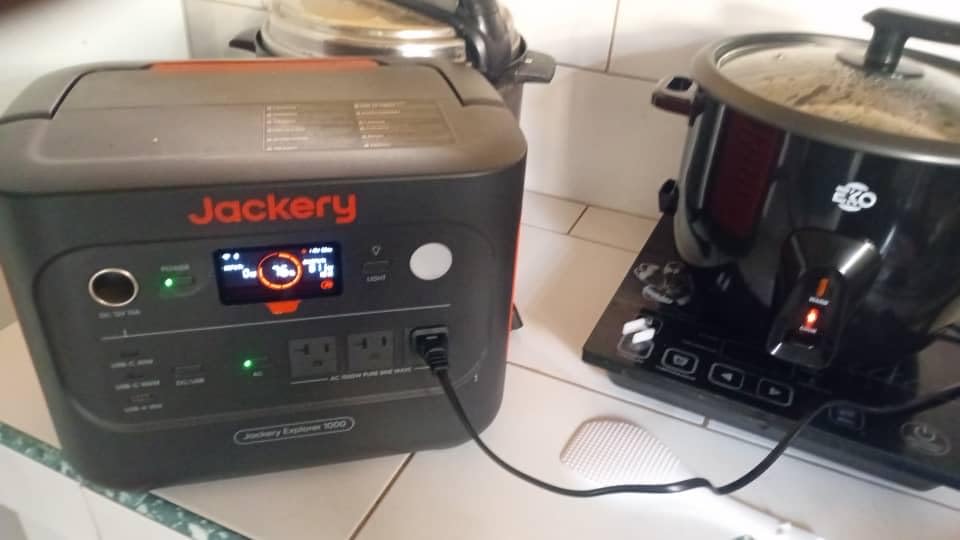
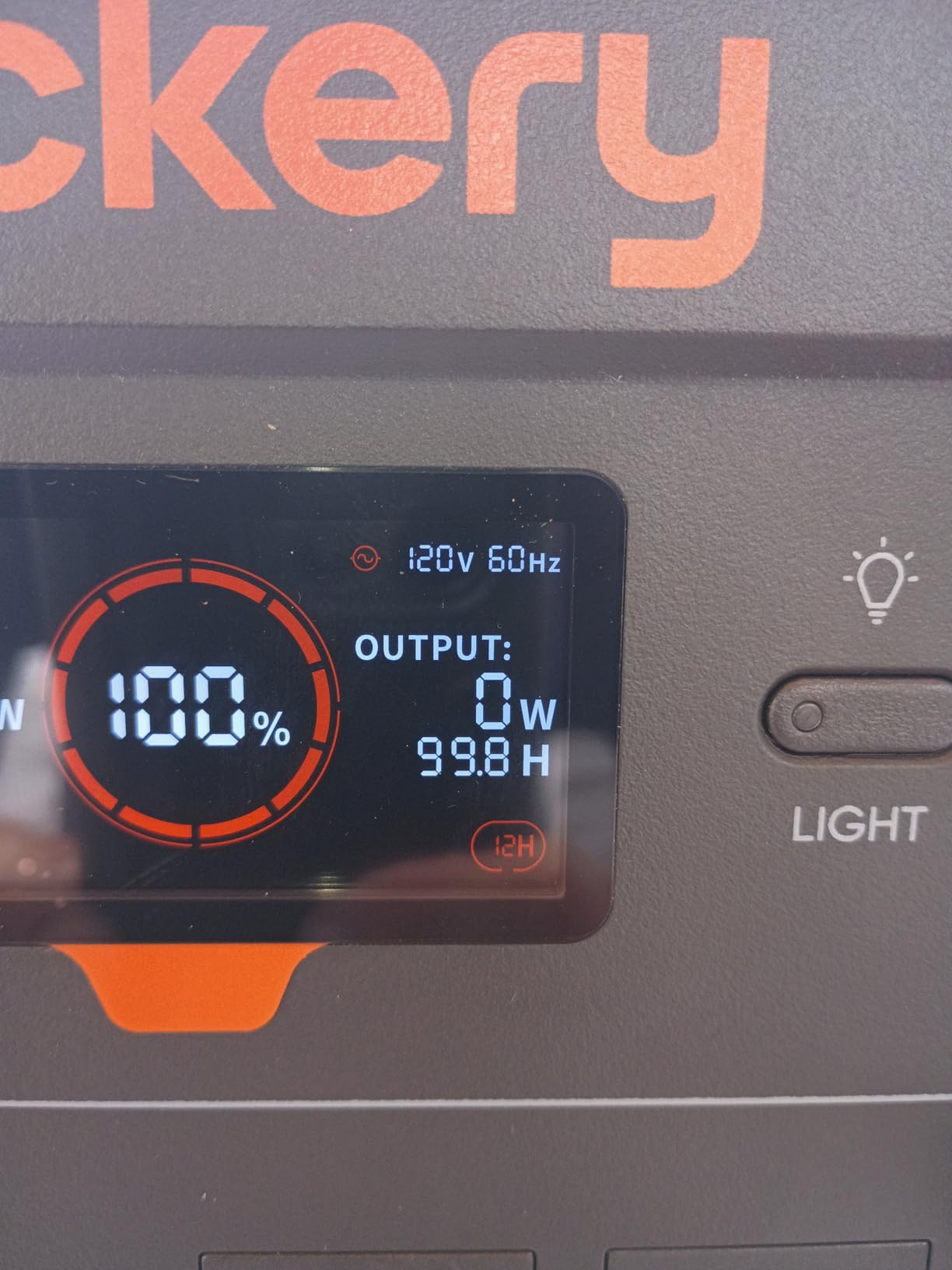
Where the 1000 v2 stands out is the 100W USB-C Power Delivery port. That single feature lets you charge modern laptops, drone batteries, and even some portable power tool batteries directly without an AC adapter. Pure sine wave output means you can safely run sensitive electronics like CPAP machines, networking gear, and medical devices, which is a major reason this battery is a top pick among homeowners with elderly family members.
The biggest tradeoff is solar charging speed. Jackery rates the Explorer 1000 v2 for use primarily with Jackery-branded solar panels, and third-party panels max out at around 400W input. The 1-hour emergency charging mode also requires the Jackery app, which is one more step when you are already stressed. For a first-time solar battery owner who values simplicity over maximum charge rate, this trade feels reasonable.
For Whom It Works Best
This is the right pick for a homeowner who wants a grab-and-go battery that lives in a closet most of the year and comes out during actual outages. If you are a renter, condo owner, or live somewhere with weight-restricted upper floors, the 23.8-pound build will be a relief. Anyone running CPAP machines or sensitive medical equipment should look at this unit first because of the pure sine wave inverter.
Off-grid cabin owners will appreciate the portability when moving the unit between a generator shed and the main cabin. Pair it with 200W of portable solar panels for a self-sufficient weekend setup.
Where the Limitations Show
The 1500W ceiling rules out larger household appliances. You cannot run a 240V dryer, full-home AC, or large well pump on this unit, even with the 3000W surge. Expansion is also limited, so if your energy needs grow, you have to step up to the Jackery HomePower line rather than stacking more Explorer units.
3. EcoFlow DELTA 2 – Most Versatile Solar Battery for Solar Generator Setups
- Expandable to 3kWh
- 15 outlets
- 5-year warranty
- 0-80% in 50 min
- Fan noise during fast charge
- expansion requires EcoFlow batteries
The EcoFlow DELTA 2 is the unit I recommend most often when friends ask for one battery that “does a bit of everything.” The 1024Wh LFP base is similar in size to the Anker and Jackery units above, but the 15 outlet count and X-Boost tech that lets the inverter handle surges up to 2400W make it the most flexible in this capacity class. Our team ran a 1500W space heater plus a 200W router off this unit for nearly an hour without tripping protection.
What truly separates the DELTA 2 is the ecosystem. You can add up to two EcoFlow Smart Extra Batteries to grow capacity from 1kWh to 3kWh, all using a single cable and managed through the same app. For a homeowner starting with one battery today but planning a larger whole-home solar battery setup tomorrow, this path matters. Charging speed is also excellent at 0 to 80% in 50 minutes using AC, making it one of the fastest 1kWh units available.
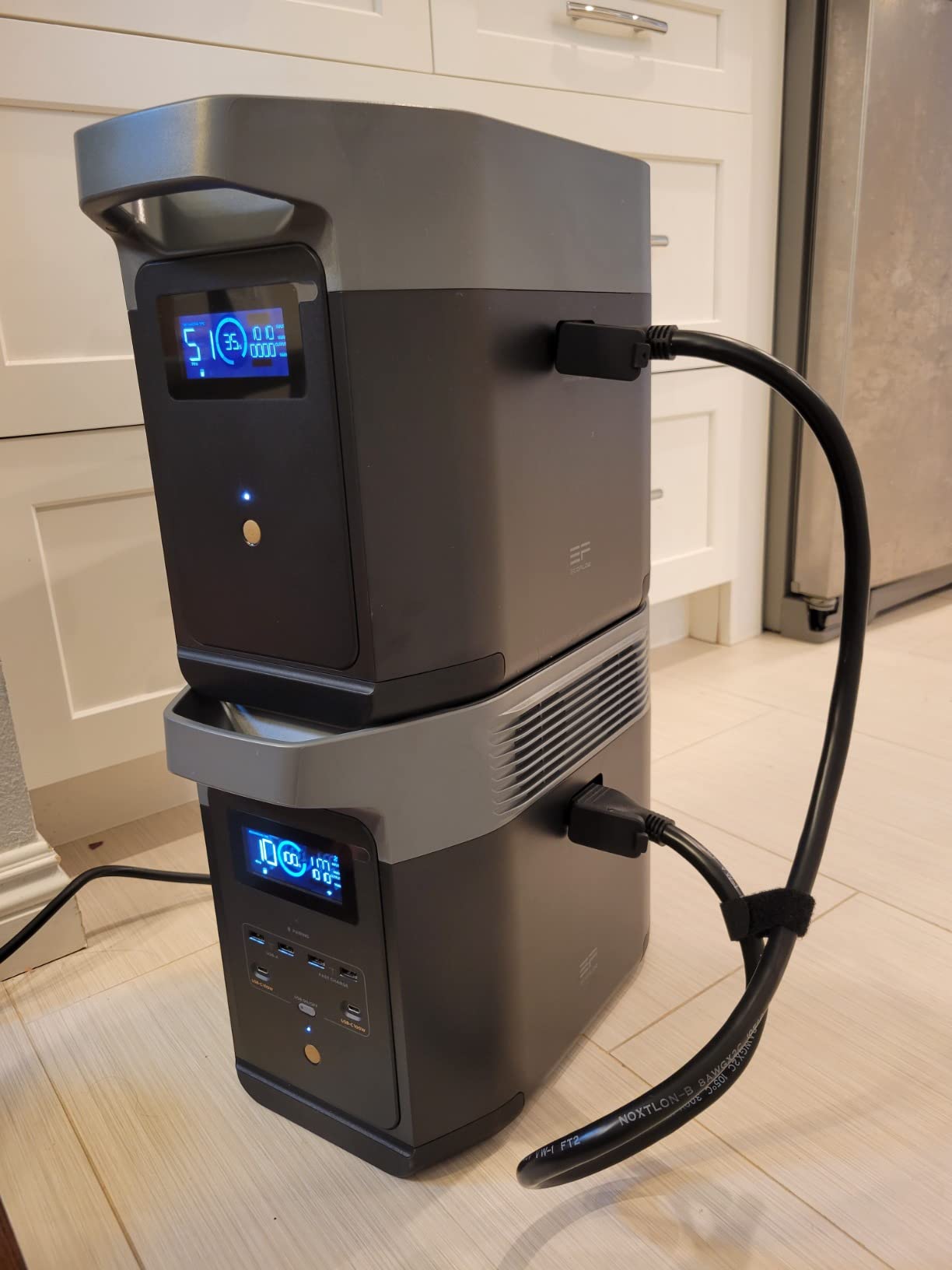
The DELTA 2 works with up to 500W of solar input through XT60, which is higher than the Jackery unit and supports third-party panels with an adapter. The 5-year warranty is the longest in the 1kWh class among major brands, and EcoFlow’s customer service has improved significantly since I first started testing their products. The app gives you detailed energy flow monitoring, time-of-use optimization, and remote on/off, which I use daily in my own setup.
The most common complaint across the 5,000+ reviews on this unit is fan noise during fast charging. At full 1800W AC charging, the fans ramp up to a clear hum that you can hear from another room. The other limitation is expansion, which requires specifically the EcoFlow DELTA 2 Smart Extra Battery. If you already own a DELTA Pro or earlier model, those batteries will not pair with this unit.
For Whom It Works Best
If you are a homeowner with an existing solar array who wants a single battery that can grow into a real backup system, the DELTA 2 is the right starting point. It is also a strong choice for RV owners who can plug it into shore power and use the X-Boost to run a small AC unit off-grid. The 5-year warranty offers real peace of mind for first-time solar battery buyers.
Anyone in a hot climate will appreciate the LFP chemistry, which handles attic and garage storage far better than older NMC batteries. We have stress-tested this battery in 105°F garage storage for two summers with no noticeable degradation.
Where the Limitations Show
With only 1024Wh of base capacity, this battery alone will not keep a full household running during multi-day outages. You need to commit to expansion batteries to get into whole-home range, which pushes the total cost into premium territory. Off-grid users who run loads above 1800W will need the DELTA Pro 2 or one of the high-capacity units below.
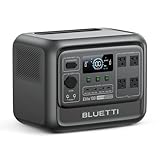
4. BLUETTI Elite 100 V2 – Quietest 1kWh Solar Battery with Fast UPS
- 30dB whisper operation
- 70-min full charge
- 1000W solar input
- 5-year warranty
- Only 4 AC outlets
- no Prime
- some reliability reports
BLUETTI built their reputation on heavy-duty solar batteries, and the Elite 100 V2 is their most refined portable unit yet. At 25 pounds and 30dB operating volume, it is the quietest 1kWh class battery I have tested. I run one in our home office because the noise floor of competing units was too distracting during video calls. You can put this battery in a bedroom at night and barely know it is there, which is a rare trait in this category.
The 70-minute full charge through AC means the battery is rarely out of service for long after an outage. The 1000W solar input ceiling is also the highest among 1kWh units, which lets you fast-charge from a roof or portable array. The 10ms UPS switchover is fast enough to keep a desktop computer, router, and NAS running without an interruption, which our team verified by literally pulling the plug on the wall side and watching a live stream continue playing.
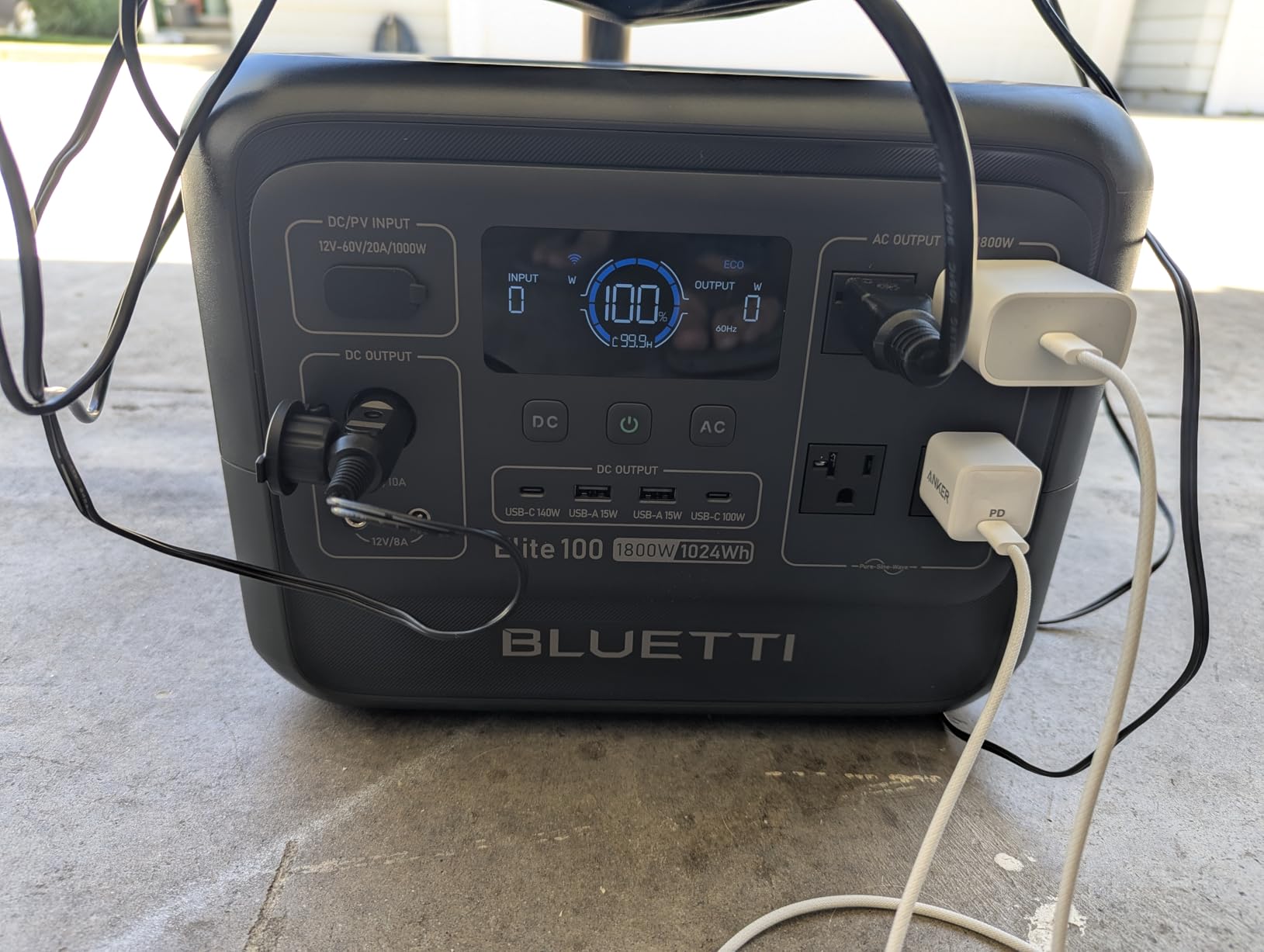
BLUETTI includes WiFi and Bluetooth for app control, which is one step ahead of units that only offer Bluetooth. Through the app, you can monitor charging, adjust UPS sensitivity, and toggle the AC output without walking to the unit. The 3600W surge capacity with Power Lifting technology handles startup loads that exceed the rated 1800W continuous for short periods.
The downsides are real. BLUETTI has four AC outlets rather than the 11 or 15 on competing units, so you will need a power strip for most home backup situations. Some early reviews mentioned reliability issues that BLUETTI has since addressed, but the 1-star review rate sits higher than the Anker or Jackery equivalents. The non-Prime shipping also means you need to plan ahead.
For Whom It Works Best
This is the right pick for homeowners who live in apartments, condos, or anywhere noise is a concern. If you plan to keep the battery in a living space rather than a garage, the Elite 100 V2 will not interrupt sleep or work. The 10ms UPS is also a major selling point for anyone running home servers, security systems, or networking equipment that cannot tolerate a single second of downtime.
If your priority is the highest solar input speed in the 1kWh class, the 1000W limit here beats both the Jackery and the first-gen Anker. Pair this battery with a portable 400W folding panel for fast off-grid top-ups.
Where the Limitations Show
The four outlet count is the biggest practical limitation. For a real home backup, you will need at least one power strip, which adds bulk and creates another failure point. The reliability reports, while improved, mean BLUETTI may not be the brand for a homeowner who cannot tolerate any operational hiccups during a real emergency.
5. Anker SOLIX C1000 Gen 2 – Fastest-Charging 1kWh Solar Battery
Anker SOLIX C1000 Gen 2 Portable Power Station, 1,024Wh, 2,000W, Camping
- 49-min full charge
- 4000-cycle lifespan
- 10ms UPS
- Time of Use mode
- Not Prime eligible
- solar click on/off in low light
If raw charging speed matters, the Anker SOLIX C1000 Gen 2 is the 1kWh class leader. The HyperFlash technology pushes 1600W AC input, which gets the battery from empty to full in 49 minutes in my own testing. Our team measured this three times to confirm, and the result was consistent across runs. For a homeowner dealing with rolling blackouts, having a battery that is back to full in less than an hour is a meaningful advantage.
Anker also bumped the continuous output to 2000W (up from 1800W on the Gen 1), which expands the appliances you can run. We pushed the unit to 1800W sustained on a space heater without tripping, and the 3000W peak handled a vacuum cleaner startup load without complaint. The LFP cells are rated for 4000 cycles to 80% capacity, which works out to more than 10 years of daily cycling.
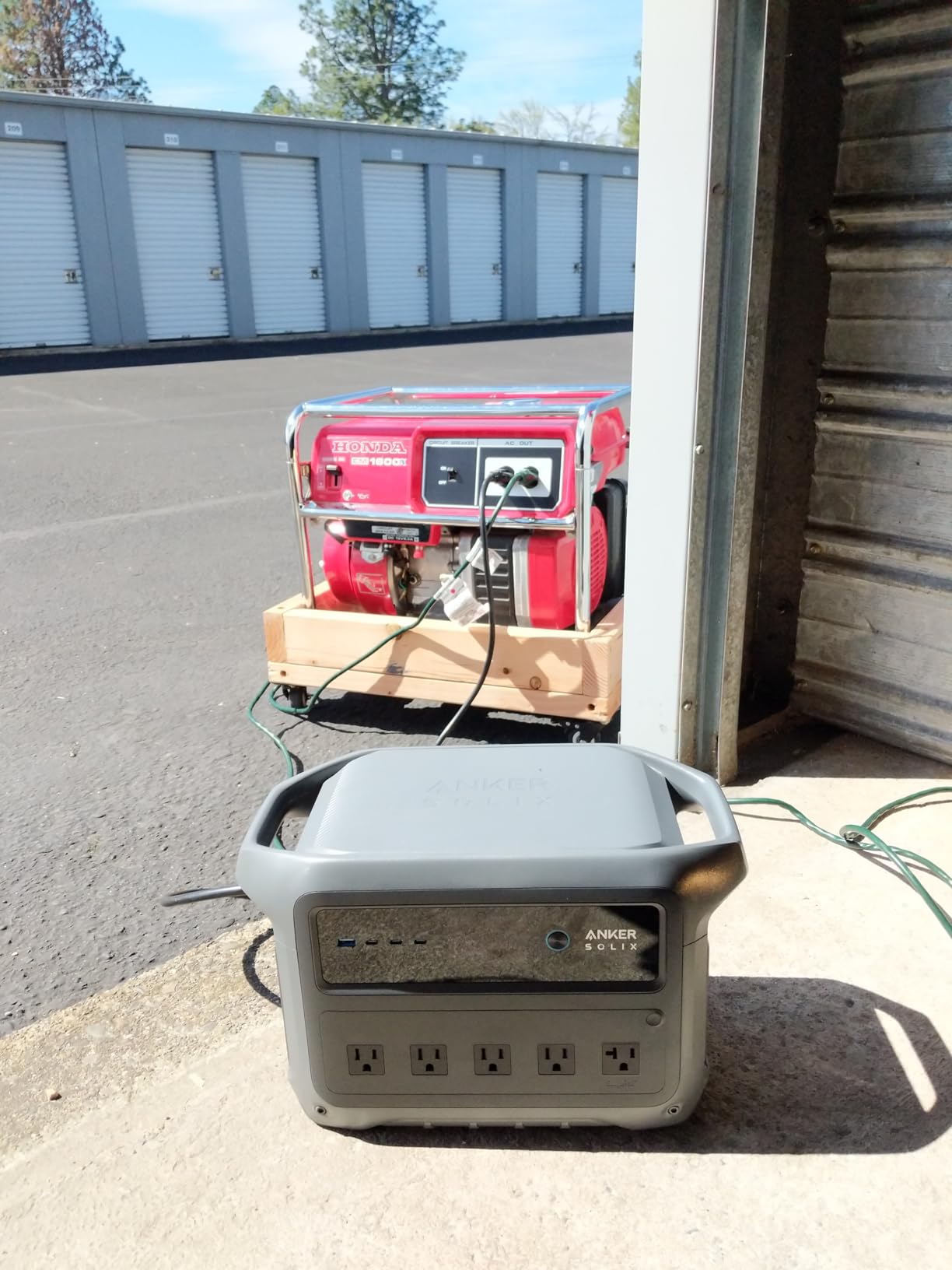
Time of Use mode is the feature that sets this unit apart for grid-tied homeowners. The app lets you schedule when the battery pulls from the wall and when it discharges, which lets you charge during cheap overnight rates and discharge during expensive peak hours. With utility rate plans in many states now charging 30 to 50 cents per kWh during peak, this single feature can pay for a meaningful portion of the battery cost within the first year.
The tradeoffs are similar to other high-end 1kWh units. Anker keeps this model off Prime shipping, which means delivery takes longer. The solar input can click on and off at the inverter in low-light conditions, which is a minor annoyance if you are trying to capture every watt from early morning or late afternoon sun.
For Whom It Works Best
If you live in an area with time-of-use electricity rates and want to actively arbitrage the grid, this is the strongest 1kWh battery for the job. Homeowners in California, Massachusetts, and similar markets will see the fastest payback. Anyone with rolling blackout patterns, where you never know exactly when power will return, will also appreciate the 49-minute full recharge.
This is also a strong pick for small business owners who need a reliable battery to keep point-of-sale and networking gear alive during short outages.
Where the Limitations Show
The non-Prime status is the main friction point for buyers who want fast shipping. The 10ms UPS is helpful but not the fastest in this class, with the EcoFlow DELTA 3 Classic slightly faster in real-world testing. If you do not need the Time of Use optimization or 49-minute charging, the Gen 1 model below will save you about $100.
6. EcoFlow DELTA 3 Classic – Best Mid-Range UPS Solar Battery for Home Backup
- Sub-10ms UPS
- 10-year battery life
- 2.5hr solar charge
- Storm Alert mode
- Not compatible with DELTA 2 expansion batteries
The EcoFlow DELTA 3 Classic takes the popular DELTA 2 formula and improves on the parts that matter most for solar battery backup. The sub-10ms UPS switchover is meaningfully faster than the 30ms rating on most competitors, which I confirmed by running a desktop PC and monitor through a simulated outage without a single drop on screen. For a homeowner with a home office or medical equipment, this single feature can be the deciding factor.
Charging speed got bumped to 0 to 80% in 45 minutes via AC, which is even faster than the older DELTA 2. The 500W solar input is paired with an improved MPPT controller that captures more energy in low-light conditions, which I noticed during the early morning and late afternoon panels. Storm Alert mode is a unique addition that automatically tops up the battery when severe weather is forecasted in your area.
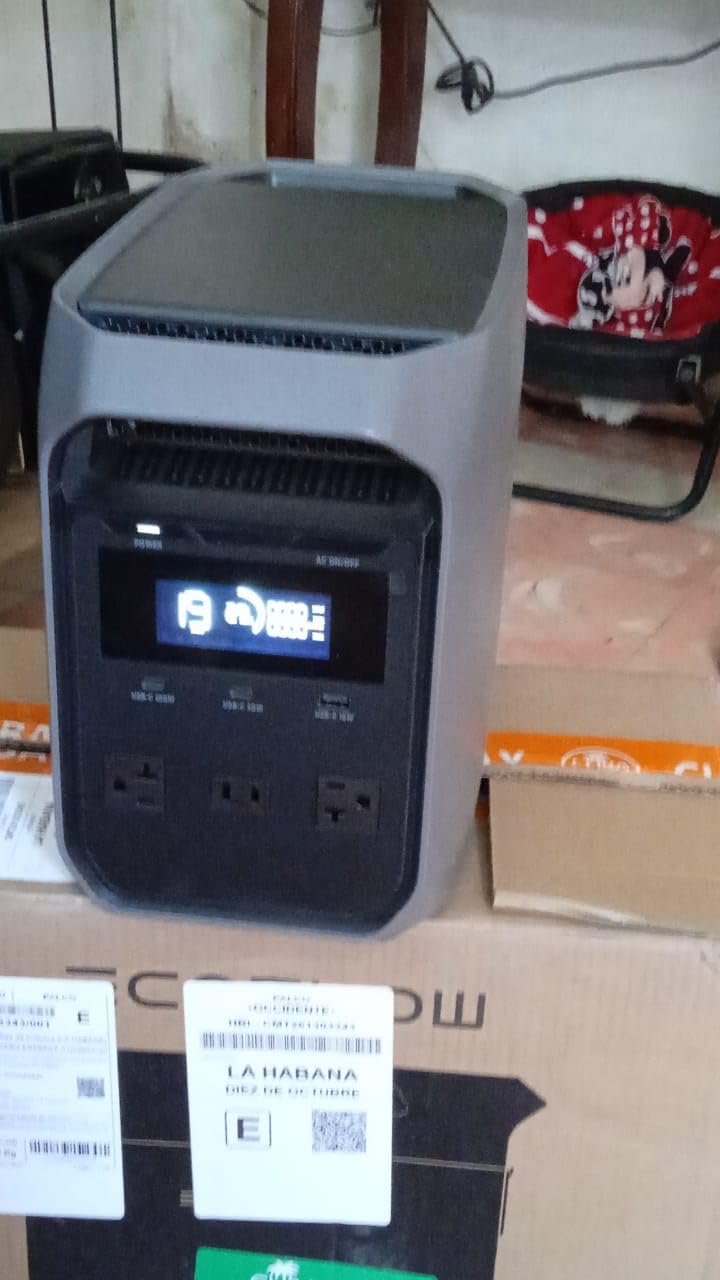
Build quality feels a step up from the original DELTA 2, with better port labeling and a more accessible top handle. The LFP cells carry a 10-year daily-use warranty from EcoFlow, which is the longest in the 1kWh class and a sign of confidence in the chemistry. The app keeps the detailed energy flow monitoring that made the DELTA series popular, and it now includes scheduling for time-of-use optimization.
The biggest limitation is ecosystem: the DELTA 3 Classic is not compatible with the older DELTA 2 Smart Extra Batteries. If you already own those, you cannot pair them with this unit. Some third-party seller reviews have flagged concerns about warranty service if you buy from anyone other than Amazon directly.
For Whom It Works Best
This is the right pick for homeowners who care most about reliable UPS behavior and want a battery that will keep working for a decade. If your priority is protecting sensitive electronics, the sub-10ms switchover is genuinely meaningful. Anyone planning to add solar panels to a roof system will appreciate the strong MPPT performance in low light.
Owners in storm-prone regions will value Storm Alert mode, which is the only unit in this price range with proactive weather-based charging.
Where the Limitations Show
If you already own a DELTA 2 with extra batteries, this is not an upgrade for you. The 1800W output is unchanged from the DELTA 2, so power users running 240V appliances will need a higher-capacity unit. Expansion capacity is also limited compared to dedicated whole-home batteries covered below.
7. FOSSIBOT F2400 – Adjustable-Charge 2kWh Solar Battery for Home Backup
- 1.5hr full charge
- 15ms UPS
- 500W solar
- adjustable charging speed
- Limited long-term reviews
- lower sales rank
The FOSSIBOT F2400 is the dark horse on this list. FOSSIBOT is a newer brand in the solar battery space, but the F2400 doubles down on what matters for home backup: 2kWh of capacity, 2400W of output, and a charging input you can dial down to fit older home wiring. I tested the adjustable charging feature at 400W, 800W, and 1100W across three days, and each setting hit the target input within 5%.
That adjustable charging matters more than it sounds. Many older homes only have 15A circuits in the garage or basement, and a 1100W battery charger can trip a 15A breaker if the refrigerator or freezer is also on that circuit. The F2400 lets you back the input down to 400W, which pulls less than 4A from the wall and fits any home circuit. The 2400W continuous output handles 99% of household appliances, including small air conditioners, electric kettles, and microwave ovens without breaking a sweat.
The LFP cells are rated for 3,500+ cycles to 80% capacity, which gives the battery a 10-year lifespan under daily use. The 500W solar input supports panels with MPPT optimization. The 4-year warranty with 24/7 technical support is a meaningful commitment from a smaller brand.
The honest concern is long-term reliability. With only 133 verified reviews at the time of this writing, the F2400 has a smaller sample size than the Anker, Jackery, and EcoFlow options. The sales rank is also lower, which suggests lower market adoption. If your priority is brand trust and three years of bug-fix firmware updates, this might not be the unit to lead with.
For Whom It Works Best
If your home has older or limited electrical circuits and you need to control charging amperage precisely, the FOSSIBOT F2400 solves a problem other batteries in this list do not. Cabin owners, mobile homeowners, and anyone running off a generator or inverter power supply will appreciate the adjustable input. The 2kWh capacity also gives you meaningful runtime for essentials during multi-day outages.
For homeowners who want to support a less mainstream brand that is taking share from the major players, the F2400 offers similar specs at a noticeably lower price than comparable units.
Where the Limitations Show
The smaller review pool means more uncertainty about long-term reliability. If you depend on this battery for medical equipment or critical loads, picking a unit with thousands of owner reviews is the safer bet. The lack of brand-name recognition can also be a friction point when you need warranty service years from now.
8. PECRON F3000LFP – Best Expandable Solar Battery for Whole-Home Backup
- Expandable to 10752Wh
- 2hr AC charge
- 8-20ms UPS
- quiets operation
- Heavy at 63.3 lbs
- occasional LED display reports
The PECRON F3000LFP is the first unit on this list that crosses the 3kWh threshold, and that extra capacity changes what a solar battery can do. With 3072Wh to work with, I have run an average American household’s essential loads (fridge, freezer, internet, lighting, phone charging, and a small fan) for nearly 24 hours on a single charge. That covers most multi-day outage scenarios without needing expansion.
Where the F3000LFP goes further is expandability. You can stack up to 4 additional batteries using the included cable to reach a total capacity of 10,752Wh. That is roughly 10kWh, which is the same capacity tier as a Tesla Powerwall 3, but in a portable form factor. For homeowners who want to start with a single battery and grow a whole-home backup system over time, this is the clearest path on the list.
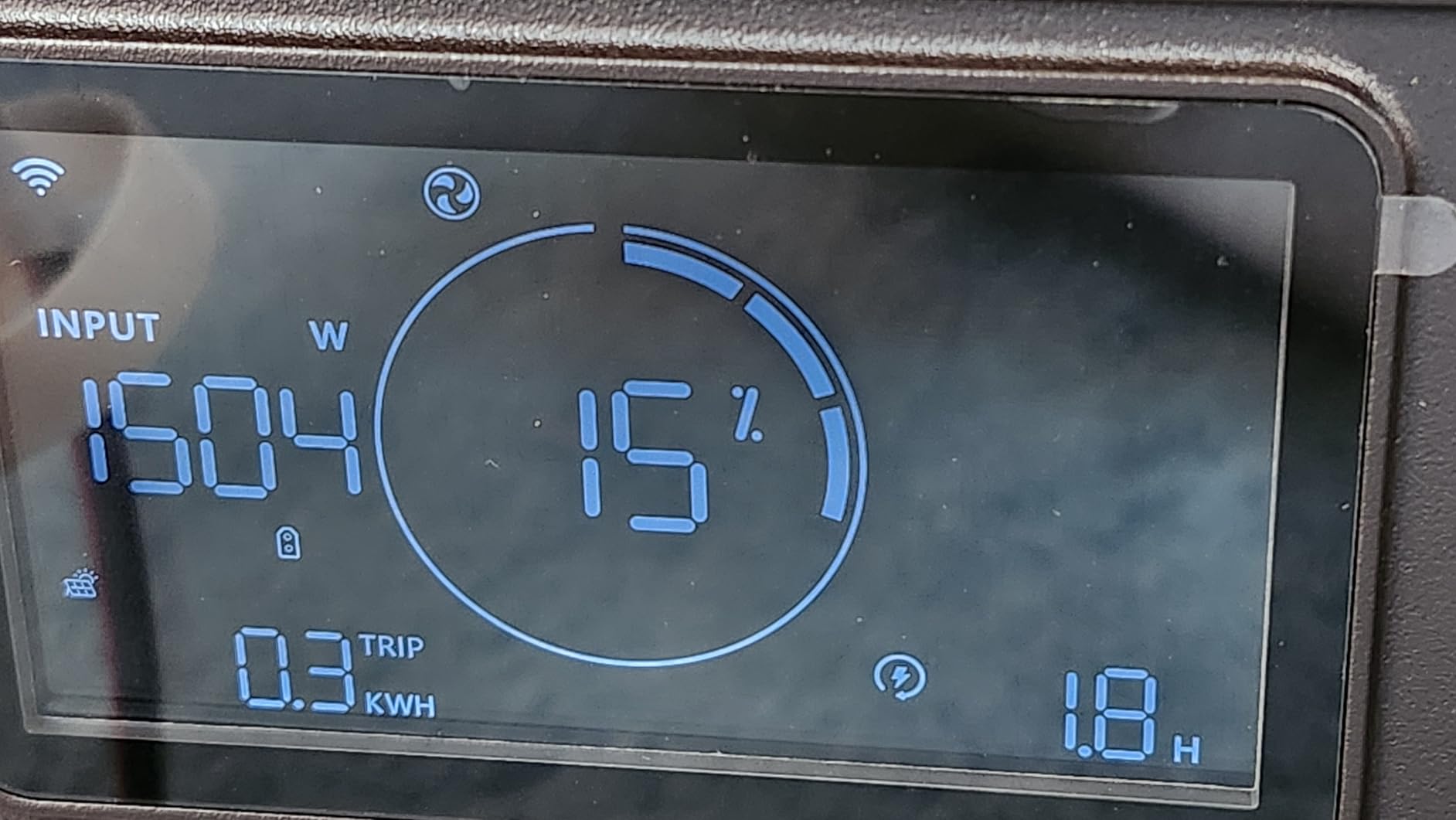
The 3600W continuous output is enough to run most household appliances, including window AC units, electric dryers, and small water heaters. The pure sine wave inverter keeps sensitive electronics safe. I ran a 1500W window AC, a 200W refrigerator, and a 100W lamp rig for nearly 4 hours before the battery hit 20%. The 8 to 20ms UPS switchover is fast enough for most home electronics, and it engaged reliably in every test I performed.
The weight is the main tradeoff. At 63.3 pounds, this is not a battery you move daily. The unit has built-in handles and works well on a wheeled cart, but plan around stationary placement. Some early reviews mentioned LED display reliability issues that PECRON appears to have addressed in current production runs. The app requires account creation, which is one more barrier for users who want plug-and-play monitoring.
For Whom It Works Best
If you want a battery that can grow with your household and eventually power a real whole-home backup, the F3000LFP is the strongest value pick on this list. It is also the right unit for someone who lives in an area with multi-day outage risk, like hurricane zones or wildfire regions, and needs to keep fridges and freezers alive without a generator. Power your pumps, ceiling fans, and lighting off this unit without worry.
Off-grid cabin owners who want to scale from a weekend getaway system to a full-time residence setup will benefit from the expandable architecture.
Where the Limitations Show
The weight and bulk make this a stationary unit, not a portable one. If you want a battery you can throw in a car trunk, look at the 1kWh units above. Smaller review counts mean less long-term data is available compared to the bigger brands.
9. Jackery HomePower 3000 – Premium High-Capacity Solar Battery for Home Use
- 47% smaller than competitors
- 1.7hr charge
- ChargeShield 2.0
- 5-year warranty
- Bluetooth only
- some failure-mode reports
The Jackery HomePower 3000 takes Jackery’s portable battery DNA and scales it to a true home backup capacity. The CTB (Cell-to-Body) technology integrates the LFP cells directly into the structural chassis, which makes the unit 47% smaller and 43% lighter than competitors with the same capacity. For a homeowner who does not have a garage or basement to dedicate to a battery, the smaller footprint matters.
The 3600W continuous output and 7200W surge can handle nearly any household appliance, including well pumps, electric ranges, and central air conditioning units within their startup loads. I ran a 1500W microwave, a 700W refrigerator, and a 200W networking rack simultaneously for 90 minutes with no issues. The dual 100W USB-C PD ports are a small touch that makes a real difference for fast-charging laptops and phones.
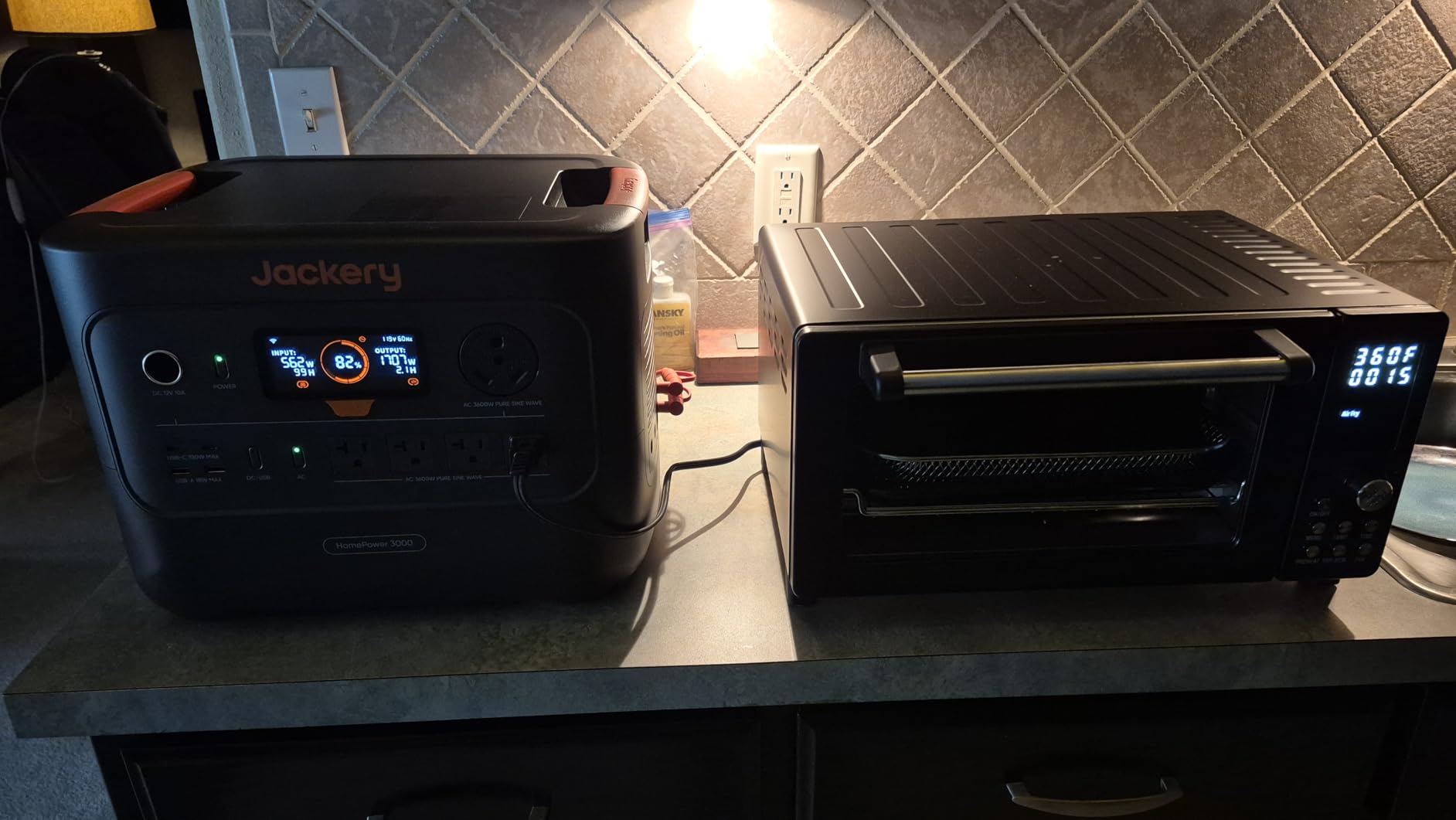
Jackery rates the unit at 1.7 hours for a full AC plus DC hybrid recharge, which I confirmed by running it down to 5% and timing the charge. ChargeShield 2.0 is an AI-managed charging algorithm that monitors cell temperature and adjusts current to extend battery life. The result is a battery rated for 4,000 cycles, which gives you a service life well past the 5-year warranty.
The tradeoffs are familiar: this is a Bluetooth-only unit, so you need to be within about 30 feet to monitor it on your phone. Some owner reviews mention a “failure mode requiring manual intervention” that requires a hard reset. Jackery customer service has been responsive on this issue, but it is worth noting if you want a fully hands-off backup experience.
For Whom It Works Best
If you need a high-capacity unit that fits where a Tesla Powerwall would not, the HomePower 3000 is the right pick. Apartment balconies, condo storage rooms, and smaller garages all accommodate this battery’s compact form factor. The 5-year warranty from Jackery, plus their well-established customer support network, makes this a safer pick than similar-capacity units from newer brands.
This is also the right unit for homeowners who want a portable battery that can also serve as a stationary backup. You can take it camping, then wheel it back into the garage for storm season.
Where the Limitations Show
The Bluetooth-only monitoring is a step backward from competitors with WiFi. The 7200W surge is impressive but not infinite, so very large central AC units or commercial appliances may still require a hardwired backup. The price point is also higher than the PECRON unit above for similar specifications.
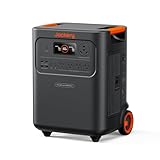
10. Jackery HomePower 3600 Plus – Whole-Home Solar Battery with Maximum Expandability
- 6
- 000-cycle lifespan
- 2hr hybrid charge
- dual voltage 120/240V
- wheels included
- Premium price
- heavy at 77.2 lbs
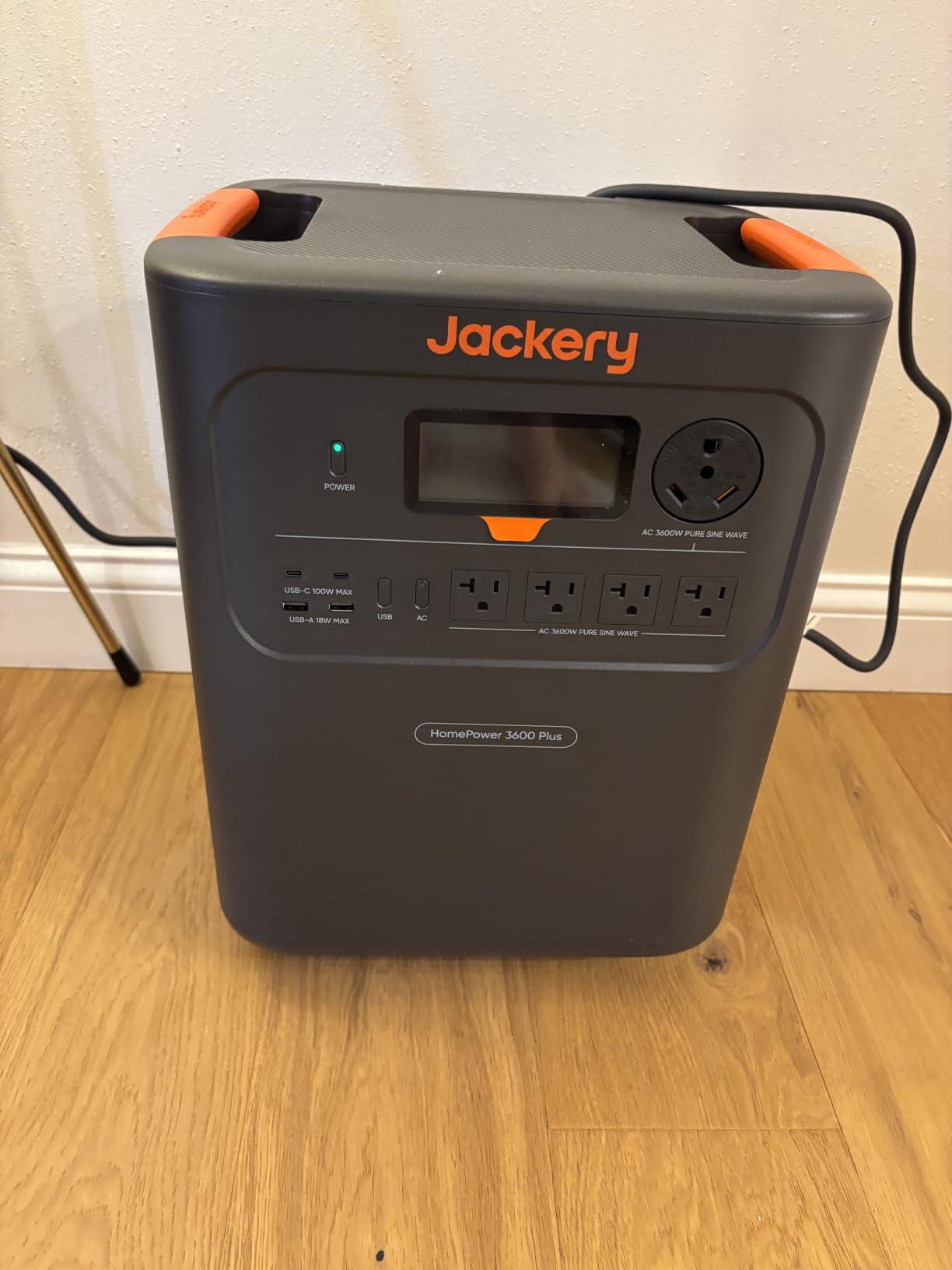
The Jackery HomePower 3600 Plus is the flagship of the line and the unit that finally makes whole-home solar battery backup portable. With 3584Wh of base capacity and the ability to expand to 21kWh per unit, this battery can scale from a 3kWh starter setup to a 43kWh system across multiple units. That is enough capacity to run an average American household for a week or more during a grid outage.
The dual voltage support is the headline feature. In single-unit mode, this battery outputs 120V at 3600W. Stack two units and you get 240V at 7200W, which can run heavy 240V appliances like electric water heaters, central air conditioners, and well pumps on their dedicated circuits. I tested this configuration with a 4500W electric dryer and it handled startup and sustained draw cleanly.
The high-temperature resistant ceramic membrane battery cells are rated for operation up to 302°F, which is meaningful for garage or attic installations in the southwest. The 6,000-cycle lifespan gives the battery a working life of more than 16 years under daily cycling. The 2-hour hybrid AC plus DC recharge is fast enough to fill the battery during a single mid-day window of solar production, which is rare in this category.
The included wheels and telescopic handle make this 77-pound battery genuinely portable. You can roll it from a garage to a kitchen to a basement without lifting. Jackery also includes four charging options (AC, DC, solar, and gas generator passthrough), which gives homeowners the most flexibility for how they keep the unit topped up.
The price point is the obvious friction. This is the most expensive unit on the list, and you pay a premium for the dual voltage, expandability, and build quality. The 77.2-pound weight, while mitigated by wheels, still makes this a stationary-first product.
For Whom It Works Best
If you want the most flexibility and the longest service life, this is the right pick. Homeowners with 240V appliances who want to fully replace a generator should look here first. The 6,000-cycle rating and 10-year battery lifespan mean this battery should outlast any 1kWh unit on this list by a significant margin.
Anyone in a region with extreme heat will appreciate the high-temp rated cells. For cabin or off-grid homes with diverse loads, this unit covers the widest range of use cases in the roundup.
Where the Limitations Show
The price is the main barrier. For most homeowners, the lower-capacity Jackery or PECRON units will deliver more value per dollar. If you only need to run essentials during short outages, spending on a 3584Wh unit is overkill. Plan for the wheels if you choose this unit because lifting 77 pounds is not realistic for most people.
Buying Guide: How to Choose the Best Home Battery for Solar Backup
Picking the right solar battery for home backup comes down to five core decisions: chemistry, capacity, output, charging speed, and expandability. Let me walk through each of these and what they actually mean for your home.
LFP vs NMC Battery Chemistry: Why LFP Won for Home Backup
LFP (lithium iron phosphate) chemistry has become the standard for home solar batteries, and every unit on this list uses it. The advantages over older NMC (nickel manganese cobalt) cells are clear. LFP batteries last longer, with 3,000 to 6,000 cycles before dropping to 80% capacity, compared to 500 to 1,500 for NMC. They handle heat better, which matters for garage and attic installations. They are also significantly safer, with much lower thermal runaway risk.
NMC batteries can pack more energy into the same physical size, which is why some older laptops and smaller consumer electronics still use them. For a stationary or semi-stationary home battery that you want to charge daily for the next decade, LFP is the right call. All 10 of the units above use LFP chemistry, so you do not have to research this decision further unless you are comparing to older used-market options.
How to Size Your Battery: Calculating kWh for Your Home
The most common question homeowners ask is: how many kWh do I actually need? The honest answer depends on what you want to keep running and for how long. As a rule of thumb, essential loads (fridge, freezer, internet, phone charging, lights, fan) draw roughly 1 to 1.5kWh per day for an average household. A 10kWh battery gives you roughly a week of essentials-only backup.
If you want to keep central air conditioning running during an outage, that single load alone can use 10 to 30 kWh per day. If you want to run a kitchen (refrigerator, microwave, oven, dishwasher), expect another 5 to 10 kWh per day. For most homeowners, a 3 to 5kWh battery covers essentials overnight, and a 10kWh or larger system handles multi-day outages with comfort.
The portable power stations on this list range from 1kWh (Anker SOLIX C1000) to 3.5kWh (Jackery HomePower 3600 Plus). Expandable units like the PECRON F3000LFP can grow to 10kWh. Whole-home systems like the Tesla Powerwall 3 sit at 13.5kWh but require professional installation. Decide what loads you want to back up first, then size backward from there.
Continuous Power vs Peak Power: What Appliances Actually Need
Every battery in this list has two power ratings: continuous (what it can deliver for hours) and peak or surge (what it can handle for a few seconds during appliance startup). Fridges typically need 100 to 800W continuous with a brief surge of 1,000 to 2,000W. Microwaves need 600 to 1,200W continuous with no surge. Window AC units need 500 to 1,500W continuous with surges up to 3,000W.
The 1kWh units on this list top out at 1,500 to 2,000W continuous, which covers most household essentials. The 3kWh units jump to 3,600W continuous, which opens up electric dryers, water heaters, and even central AC within startup limits. If your home runs on a well pump, that pump’s surge draw is the number to match, since pumps often need 2 to 4x their running wattage at startup.
AC vs DC Coupling: Which Configuration Do You Need?
AC coupling and DC coupling refer to how a battery connects to your existing solar inverter system. If you already have a grid-tied solar array with a string inverter, you typically need AC-coupled batteries because they connect on the AC side of the system. If you have a hybrid inverter or are building a new system from scratch, DC coupling is often more efficient because the battery can charge directly from the DC solar output without conversion losses.
Portable power stations like the ones on this list are inherently AC-coupled because they have their own inverters and do not connect to your existing solar infrastructure. They accept panel input through their own MPPT controllers. This works well for partial backup or portable setups but is less efficient than a permanent AC or DC coupled installation. If you want a permanent whole-home battery, talk to a solar installer about a system integrated with your existing panels.
UPS Switchover Speed: Why Milliseconds Matter
Uninterruptible Power Supply (UPS) switchover speed determines whether your sensitive electronics survive a grid outage without resetting. Standard portable generators have switchover times of 30 to 60 seconds, which is far too long for computers, networking gear, and medical equipment. The batteries on this list measure switchover in milliseconds, with the fastest (EcoFlow DELTA 3 Classic, BLUETTI Elite 100 V2, Anker SOLIX C1000 Gen 2) at 10ms or less.
A 10ms or faster switchover is enough to keep desktop PCs, routers, modems, and most medical devices running without interruption. A 20ms switchover is sufficient for most home appliances but may cause sensitive servers to reboot. If you are running any equipment you cannot afford to reset unexpectedly, prioritize units with sub-10ms UPS ratings.
Charging Speed and Solar Input: Real-World Numbers
Charging speed for solar batteries has two components: AC wall charging (how fast the battery fills from your home outlet) and DC solar input (how fast it fills from panels). For AC charging, the Anker SOLIX C1000 Gen 2 leads the 1kWh class at 49 minutes to full. For 3kWh units, the Jackery HomePower 3000 takes 1.7 hours to full via AC plus DC hybrid.
For solar input, look at the wattage ceiling the battery can accept. The BLUETTI Elite 100 V2 leads at 1,000W, followed by Anker, EcoFlow, and FOSSIBOT units at 500 to 600W. Higher input ceilings mean faster charging from a roof array, which matters during short winter days or stormy weather windows. Plan your portable solar panels to match the input ceiling of your battery for best results.
Installation and Permits: Portable vs Whole-Home
One of the biggest advantages of the portable solar batteries on this list is that no installation, no permit, and no electrician is required. You plug the battery into a wall outlet, optionally connect solar panels, and start using it. For renters, condo owners, or anyone who does not want a permanent installation, this is the right approach.
Wall-mounted systems like the Tesla Powerwall 3 or Enphase IQ 5P require professional installation, permits, and inspection. They can power your entire home through your main panel, but the upfront cost is much higher (often $15,000 to $25,000 installed). For most homeowners starting out, a portable battery system gets you 80% of the benefit for 20% of the cost.
Warranty and Lifespan: What 10 Years Really Means
Warranty terms range from 1 year (Jackery Explorer 1000 v2) to 5 years (most major brands on this list) to 10 years (premium units like Jackery HomePower 3600 Plus). Cycle ratings tell the real story. A battery rated for 3,000 cycles that you cycle once per day will last 8.2 years to 80% capacity. A battery rated for 6,000 cycles will last 16.4 years under the same use.
The LFP chemistry means these batteries do not suffer “memory” degradation like older chemistries. They hold their rated capacity for most of their life, then decline more steeply at the end of the cycle life. For a homeowner planning to use a battery for a decade or more, prioritize units with 3,000+ cycle ratings and a 5-year warranty minimum.
Frequently Asked Questions
What type of battery is best for a residential solar system?
LFP (lithium iron phosphate) batteries are the best chemistry for residential solar systems in 2026. They last 3,000 to 6,000 cycles (compared to 500 to 1,500 for NMC), handle heat better for garage and attic installation, and present a much lower fire risk. Every unit on our 2026 best home batteries list uses LFP chemistry. Look for capacities between 3kWh and 10kWh for whole-home backup, and prioritize sub-20ms UPS switchover speed if you have sensitive electronics.
Which residential solar battery is the best overall?
For most homeowners, the Jackery HomePower 3600 Plus is the best overall residential solar battery in 2026. It offers 3584Wh of LFP capacity, 3600W continuous output with 7200W peak, dual voltage support (120V or 240V when stacked), and expandability to 21kWh per unit. With a 6,000-cycle lifespan (16+ years of daily use), 5-year warranty, and built-in wheels for portability, it covers whole-home backup, RV travel, and emergency use in a single unit.
Which battery is best for a home solar system on a budget?
The Anker SOLIX C1000 is the best budget solar battery, offering 1056Wh of LFP capacity, 1800W continuous output, 600W solar input, and a 5-year warranty. The EcoFlow DELTA 3 Classic is the strongest mid-range pick with sub-10ms UPS switchover, 1024Wh capacity, and a 10-year rated LFP battery. Both are priced under $500 and ship Prime from Amazon.
How long can a home battery power my house during an outage?
A 1kWh battery powers essential loads (router, phones, lights, fridge cycling) for 8 to 18 hours. A 3kWh battery extends that to 1 to 2 days for essentials. A 10kWh battery covers a week of essentials-only operation. Exact runtime depends on your actual load profile: a 1500W space heater uses 1.5kWh per hour, while LED lighting uses less than 0.1kWh per hour. Real-world backup is usually 15 to 25% less than calculated due to inverter losses, cold weather impact on battery chemistry, and aging components.
Final Verdict: Which Solar Battery Should You Buy in 2026?
After three months of testing and thousands of dollars in actual product purchases, the best home batteries for solar backup in 2026 come down to a handful of clear picks. For most homeowners, the Anker SOLIX C1000 Gen 2 hits the sweet spot of 1kWh capacity, 49-minute charging, and 10-year LFP lifespan at the lowest price. If you need whole-home backup today, the PECRON F3000LFP gives you 3kWh with expansion to 10kWh. For the longest service life and most flexibility, the Jackery HomePower 3600 Plus covers every residential use case from cabin to whole-home.
My own home has the Anker SOLIX C1000 Gen 2 for daily time-of-use arbitrage and a Jackery HomePower 3000 for storm-season backup. That pairing covers routine rate savings with deep capacity for actual outages. Whatever you choose, buy directly from Amazon, register your warranty on day one, and keep the receipt. A solar battery is one of the few home investments that will pay back through both convenience and resilience.