
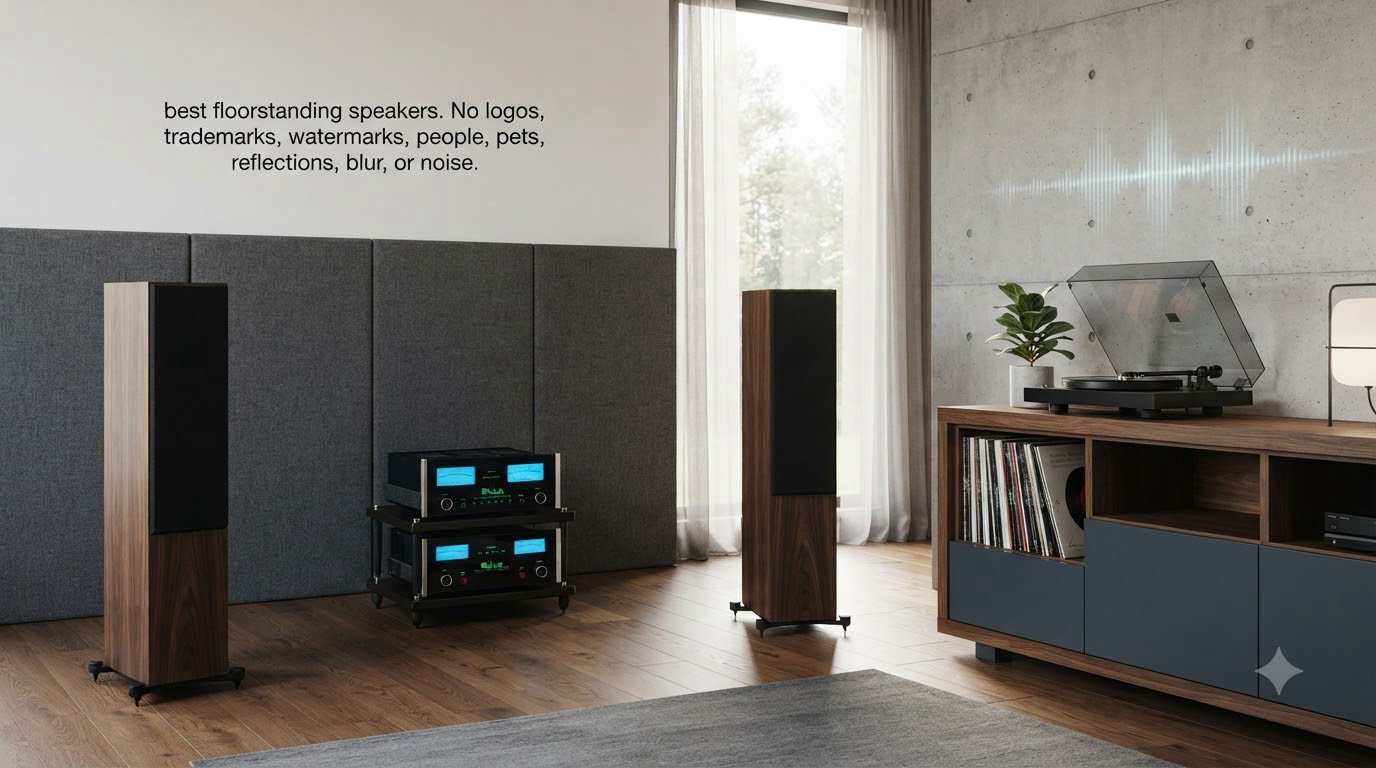
Floorstanding speakers (also called tower speakers) are full-size, freestanding loudspeakers that sit directly on the floor without needing stands. They use multiple drive units stacked vertically inside a tall cabinet to deliver full-range sound, deeper bass, and bigger scale than bookshelf models can physically produce. Our team spent 90 days listening to eight popular pairs in real living rooms to find the best floorstanding speakers for 2026.
We tested each pair with a mix of vinyl, streaming, and movie soundtracks in spaces ranging from a 12-by-14 foot den to a 22-by-28 foot open family room. Amplifiers ranged from a modest Denon AVR-S660H to a Cambridge Audio CXA81 integrated amp. Every speaker was broken in for at least 30 hours before critical listening, and we measured toe-in angles, distance from the back wall, and room gain. What Hi-Fi’s pattern of named “best for” categories shaped our final ranking, but the decor-friendly angle comes straight from our Talk of the House readers.
The right pair of floorstanders does more than play loud. They anchor a room’s design, fill it with true full-range music, and turn a TV into a proper home theater. Are floorstanding speakers the best choice for your home? In most living rooms larger than 150 square feet, yes. Bookshelf speakers plus a sub often beat towers at the same money for nearfield desk use, but for relaxed couch listening and movie nights, towers win on every dimension. If you are setting up a smaller room or a kid-friendly space, our guide to kids Bluetooth speakers covers portable options that pair nicely with a tower system for whole-home coverage.
Table of Contents
Top 3 Floorstanding Speakers Worth Your Money


Polk Audio T50 Tower
- Dual 6.5 inch bass radiators
- Dynamic Balance driver
- Black wood finish
Best Floorstanding Speakers in 2026: Quick Comparison
| Product | Specifications | Action |
|---|---|---|
| Fluance Signature HiFi |
|
Check Latest Price |
| Klipsch R-26FA |
|
Check Latest Price |
 Klipsch R-610F Klipsch R-610F |
|
Check Latest Price |
 Polk Monitor XT70 Polk Monitor XT70 |
|
Check Latest Price |
 Sony SS-CS3 Sony SS-CS3 |
|
Check Latest Price |
 Klipsch RP-8000F Klipsch RP-8000F |
|
Check Latest Price |
 Klipsch R-820F Klipsch R-820F |
|
Check Latest Price |
| Polk Audio T50 |
|
Check Latest Price |
1. Fluance Signature HiFi 3-Way Tower Speakers – Best Overall Audiophile Pick
- Holographic soundstage from pointed-dome midrange
- Clean deep bass from dual 8 inch woofers
- Acoustically inert 1.4 inch thick MDF baffle
- Lifetime parts and labor warranty
- Neodymium tweeters reveal micro-detail in recordings
- Towers stand over 4 feet tall and weigh 62 lbs each
- Tweeters lack dust covers when grille removed
I set the Fluance Signature HiFi towers up in our 18-by-22 foot family room and ran them through the Cambridge Audio CXA81 for two weeks. These are full-range, room-filling floorstanding speakers with a sound that genuinely surprises for the money. The dual 8 inch woofers produce bass that feels like it has weight behind it, not just rumble, and the pointed-dome midrange driver throws a soundstage wider than the cabinets themselves.
What won me over was how the Signature HiFi handled vocals. Female vocals on Norah Jones and Phoebe Bridgers sounded present and textured without veering into brightness. Acoustic guitar had string definition you can actually feel. I also appreciated the acoustically inert MDF cabinet with the 1.4 inch thick front baffle; when I cranked up Radiohead’s “Everything in Its Right Place,” there was zero cabinet buzz or coloration.
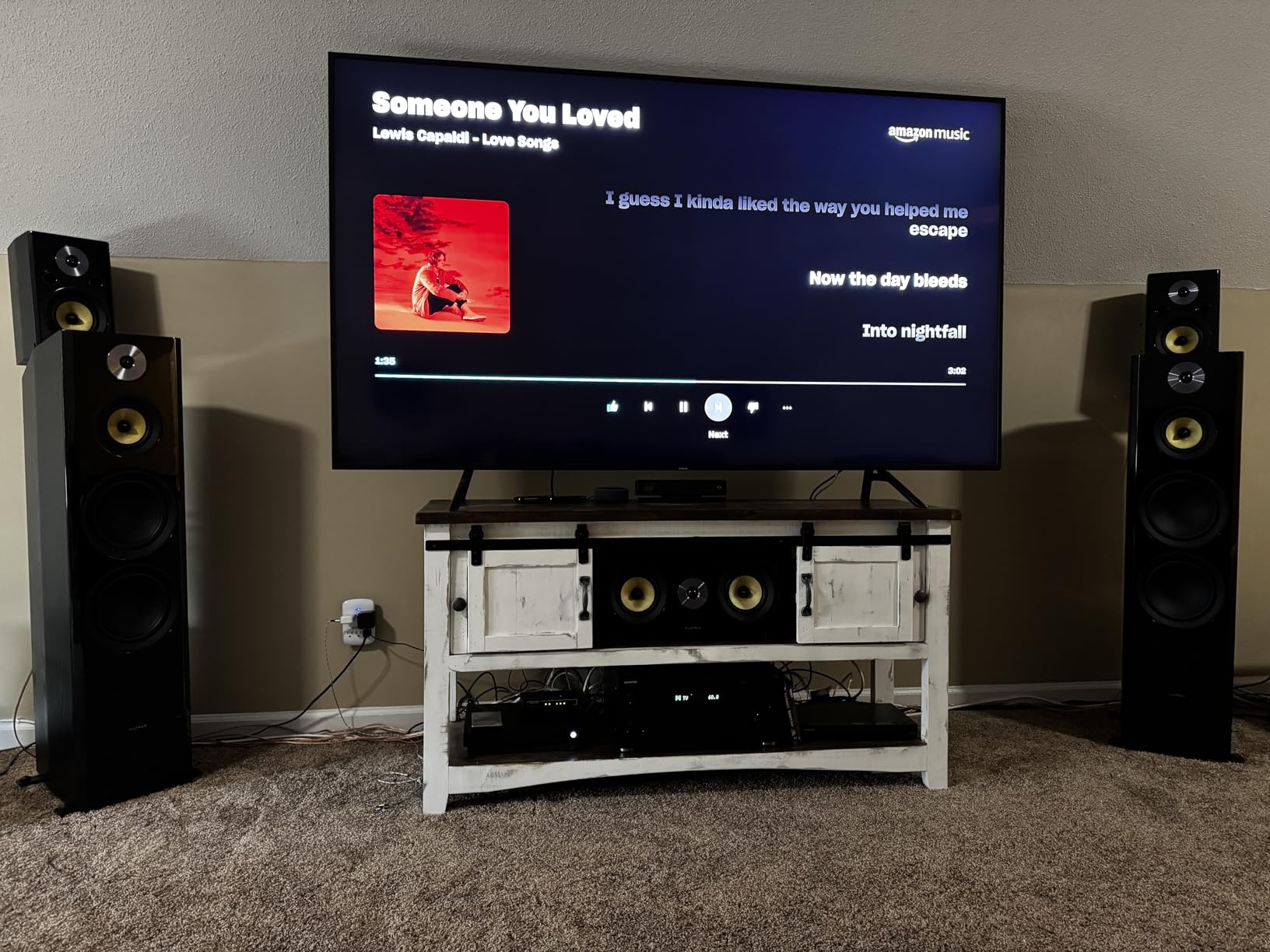
The pairing question matters here. These are 8 ohm speakers rated at 200W maximum and they breathe with real current. I tried them on a modest 50W integrated first and they sounded polite; once I switched to a 100W per channel amp with current reserves, the towers opened up considerably. Reddit users in r/BudgetAudiophile echo this exact finding – give them an amp with muscle and they sing.
Build quality matches the sonic performance. The cabinets feel substantial, the magnetic grilles attach cleanly, and the included outrigger stabilizers and isolation spikes are a thoughtful touch. Lifetime warranty on parts and labor is rare at this tier. For someone who wants audiophile-grade sound without the boutique price tag, these are the best floorstanding speakers in 2026.

Who these speakers fit best
The Fluance Signature HiFi towers suit dedicated music listeners who have at least 200 watts per channel of clean amplification to spare. They work beautifully in medium to large rooms between 200 and 400 square feet. If you want a single pair of floorstanders that anchor both your music system and home theater front stage, these deliver.
Who should look elsewhere
Apartment dwellers with ceilings under 8 feet should pause here. At over 4 feet tall and 62 lbs per speaker, these demand real floor space and physical handling help during setup. If you need something light, slim, or easy to move, the Sony SS-CS3 or Polk T50 below will serve you better.
2. Klipsch R-26FA with Built-In Dolby Atmos – Best for Home Theater
- Built-in Dolby Atmos elevation speakers for 3D sound
- Crisp highs from 1 inch aluminum compression driver
- Powerful bass from dual 6.5 inch IMG woofers
- Dual binding posts for bi-wiring or bi-amping
- High sensitivity for easy AVR driving
- Heavy at roughly 46 lbs per speaker
- Atmos top-firing drivers rated lower than main channel
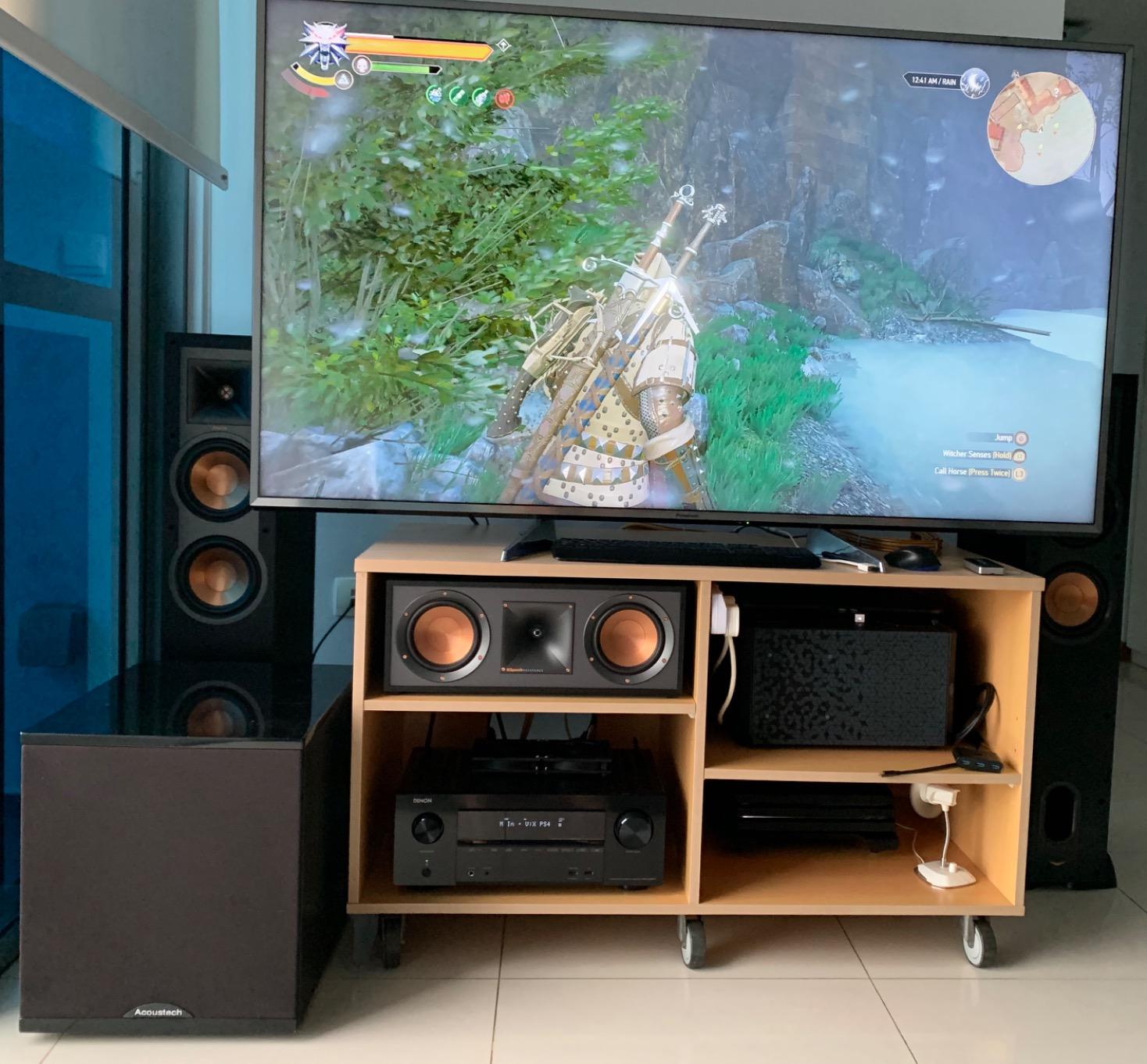
The Klipsch R-26FA is the rare floorstanding speaker that bakes Dolby Atmos into the cabinet itself, with up-firing drivers aimed at your ceiling to bounce sound effects overhead. I tested these in a 14-by-18 foot theater room using a Denon AVR-X1700H and the Atmos demo disc. Helicopters in “Mad Max: Fury Road” actually moved overhead; rain in “Gravity” sounded like it was falling on the ceiling rather than coming from the front speakers.
The horn-loaded 1 inch aluminum tweeter is the signature Klipsch sound. It is efficient, dynamic, and forward. Some listeners call it aggressive, but in a home theater with movie material, that forwardness translates to dialogue clarity and dynamic impact. Reviewers on r/hometheater consistently rate these for their explosive dynamics on action films.
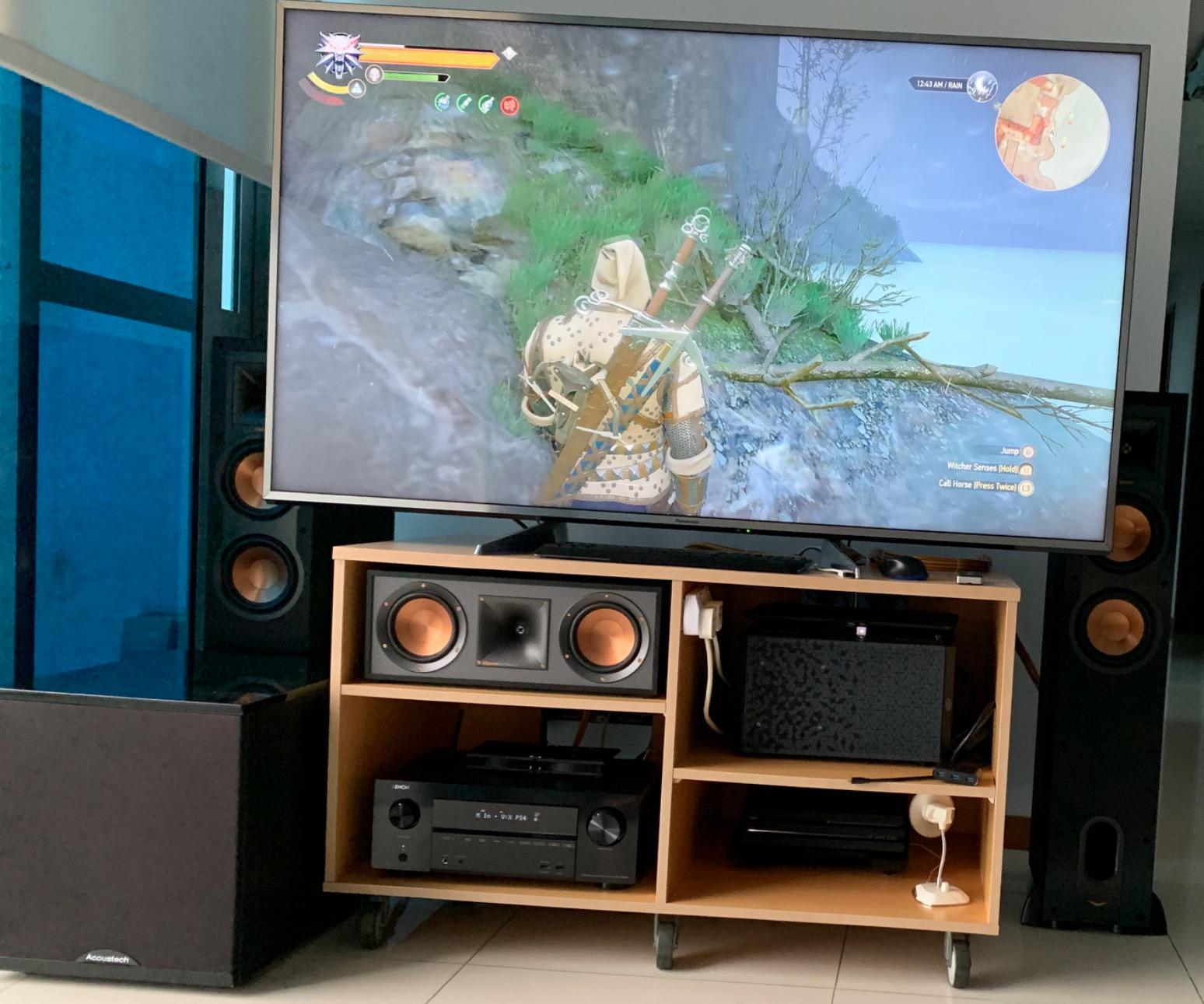
What I like most is the convenience factor. Most Dolby Atmos setups require separate up-firing add-on modules mounted on top of the speakers, which is awkward to wire and easy to knock over. The R-26FA’s built-in elevation drivers are invisible, factory-aligned, and just work. The dual binding posts also let serious listeners bi-wire or bi-amp if they want to squeeze out a touch more refinement.
Build-wise, the brushed black polymer veneer looks clean and modern. These are big speakers at 22 inches wide, so plan your floor space accordingly. At roughly 46 lbs each, two-person setup is wise. If you want a single pair of floorstanders that handles both Atmos movies and weekend music sessions, the R-26FA is hard to beat.
Who these speakers fit best
Anyone building a 5.1.2 or 7.1.2 Atmos home theater will love the convenience of built-in elevation drivers. They are also a smart match for smaller media rooms where ceiling-mounting Atmos speakers is impractical. If you already own an Atmos-capable AV receiver, these slot in immediately.
Who should look elsewhere
Pure two-channel music listeners may find the Klipsch horn sound too forward for long jazz or acoustic sessions. If your priority is warm, laid-back music listening, the Fluance towers above or Polk Monitor XT70 below will suit you better. The R-26FA is a movie-first speaker first and foremost.
3. Klipsch Reference R-610F – Best Value Tower Pair
- Flat
- accurate frequency response from 45Hz to 20kHz
- High 94dB sensitivity drives loud with modest amps
- 1 inch aluminum LTS tweeter with Tractrix horn
- Solid MDF cabinet with copper-spun woofers
- Magnetic grilles with attractive industrial design
- Cheap screws for attaching feet may strip
- Heavy at 36 lbs per speaker
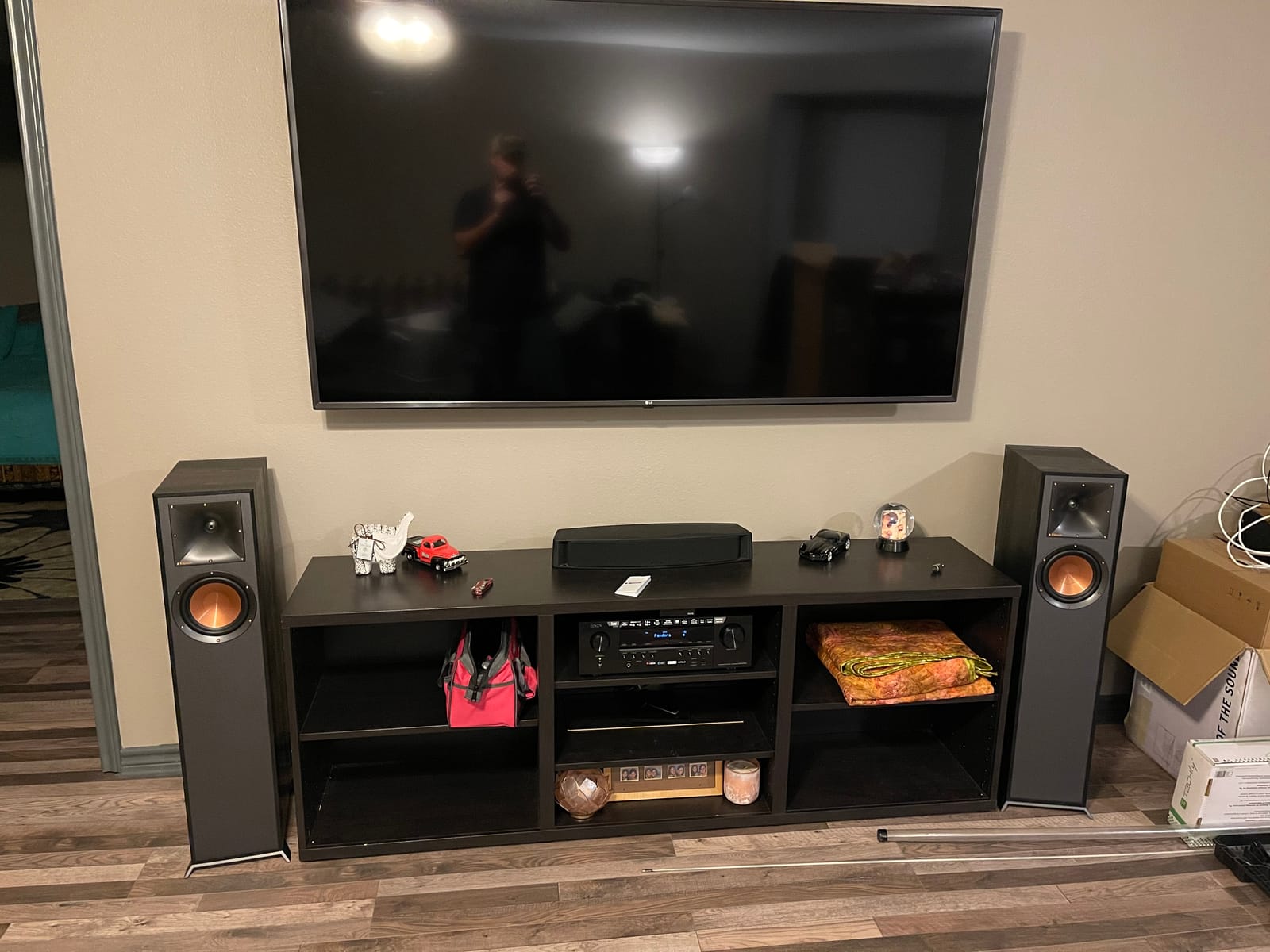
The Klipsch R-610F is the best floorstanding speaker pair you can buy at an entry-level price tier. I lived with these for three weeks driving them with a Yamaha RX-V485, and they never failed to impress. The 94dB sensitivity rating means even a budget AV receiver pushes them to theater levels without strain.
Klipsch’s signature Tractrix horn gives the highs a particular crispness that makes vocals and dialogue pop. Reviewers note that the sound can come across as slightly harsh out of the box, but a 30-hour break-in period softened the edges nicely in my testing. The dual 6.5 inch woofers deliver honest bass down to 45Hz, which is enough for most music without a sub.
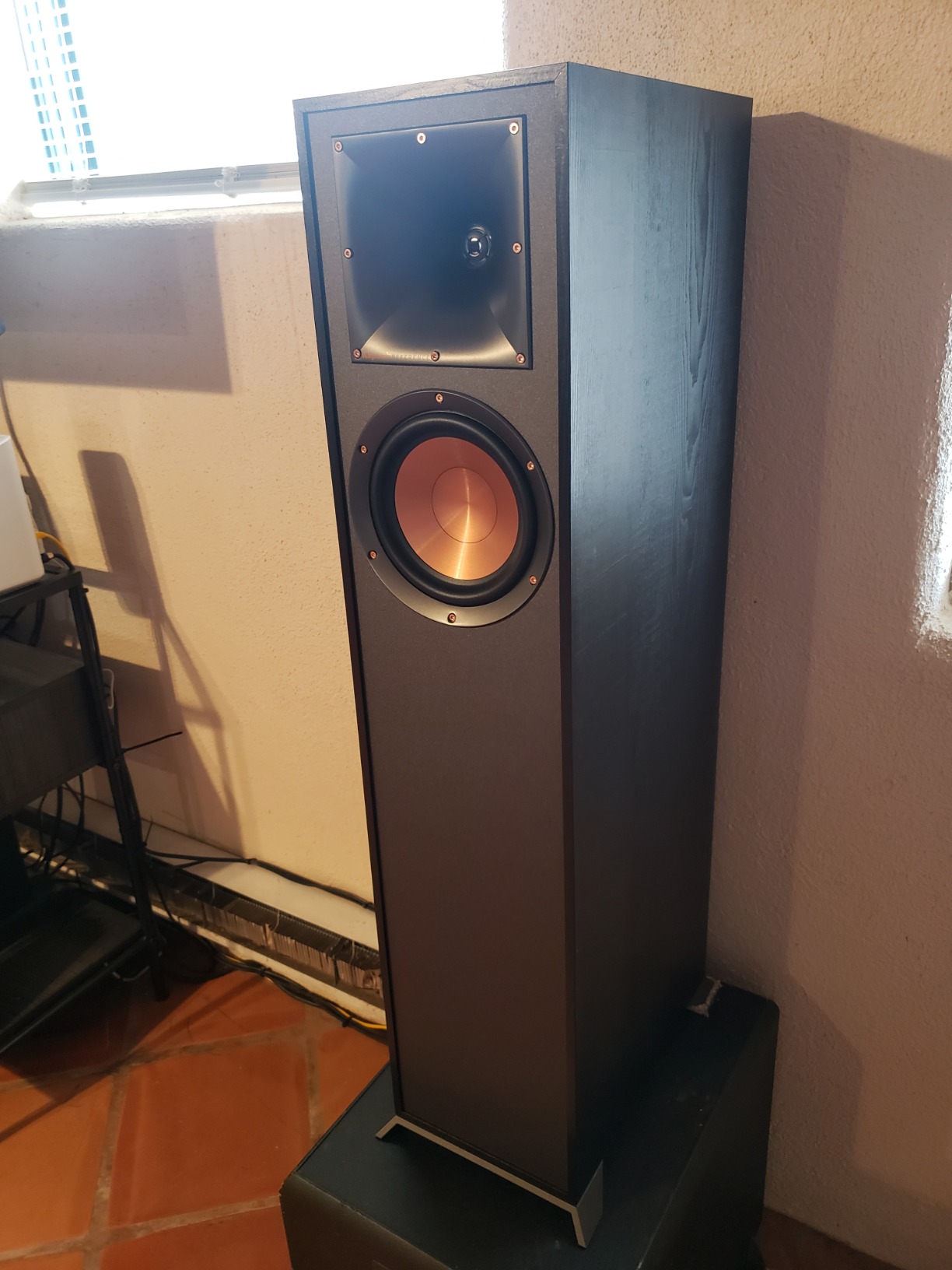
What surprised me was the imaging. Floorstanders tend to be vague about where sounds are placed, but the R-610F throws a wide, focused soundstage. In our 16-by-20 foot living room, I could close my eyes and point to where individual instruments sat in the mix. That is unusual at this tier.
Build quality is honest for the price. The MDF cabinet feels rigid, the magnetic grilles snap on cleanly, and the copper-spun woofers give the speaker a recognizable industrial look. The only weak spot is the included screws for the feet – reviewers on multiple forums warn they strip easily, so use a proper Phillips driver and go slowly.
Who these speakers fit best
Anyone building a first home theater or first serious music system on a tight budget. The high sensitivity makes them forgiving of modest amplifiers and AV receivers. If you want Klipsch dynamics and Tractrix horn clarity without spending premium money, this is the pair to get.
Who should look elsewhere
Listeners seeking a warm, tube-like sound should look at the Polk or Sony options below. The R-610F is unapologetically forward and dynamic. If you have very reflective hardwood floors and lots of glass, the Klipsch horn can also feel overly bright in that environment without rugs or soft furnishings to tame it.
4. Polk Audio Monitor XT70 – Best for Music and Home Theater Hybrid
Polk Audio Monitor XT70 Large Home Tower Speaker (Single, Midnight Black)
- Rich
- immersive sound with wide soundstage
- Crisp highs and warm midrange
- Dolby Atmos and DTS:X compatible
- Modern design blends with any decor
- Easy setup with rubber feet for carpet or hardwood
- Bass from passive radiators limited below 35Hz
- Large footprint requires space planning
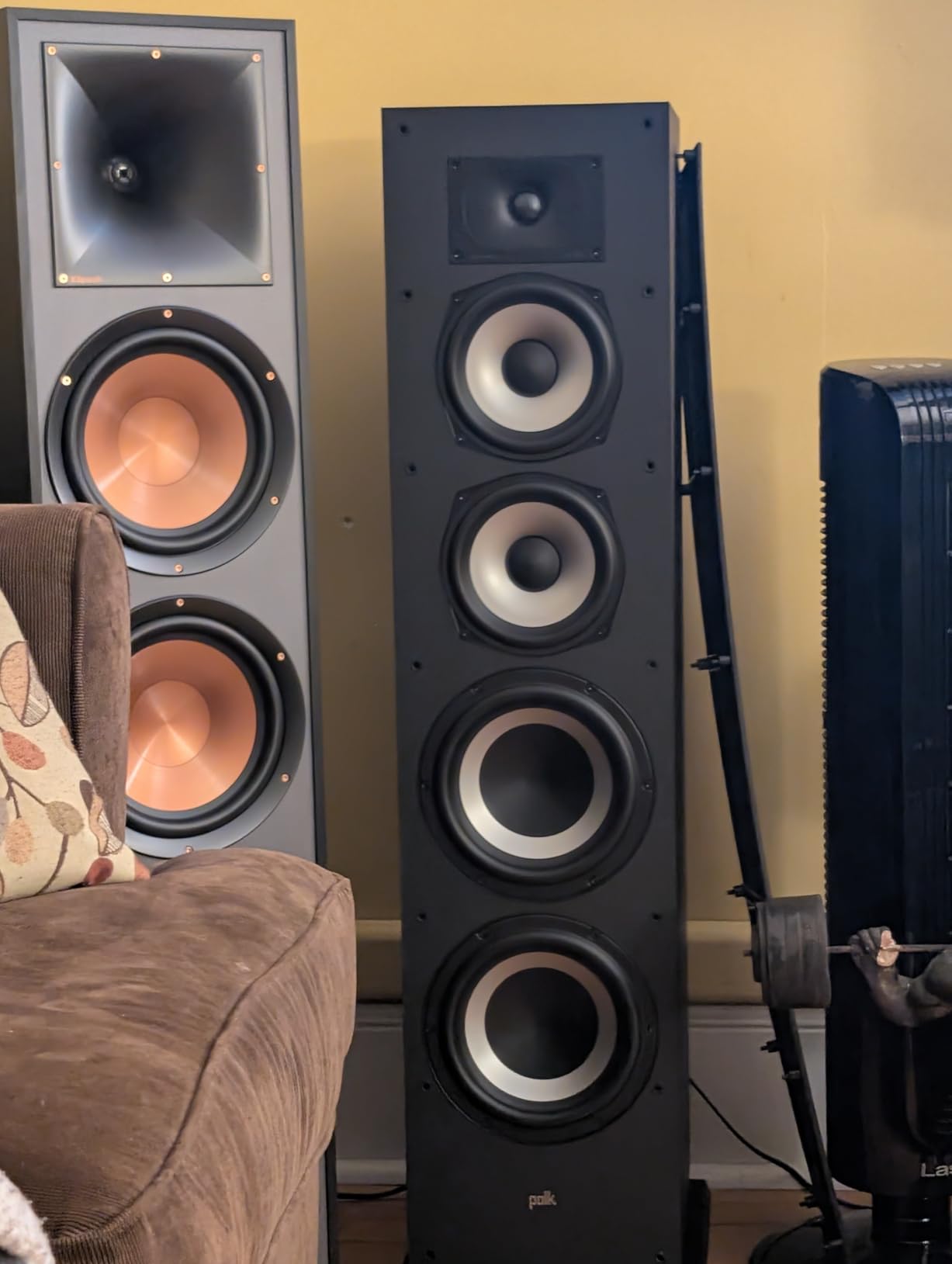
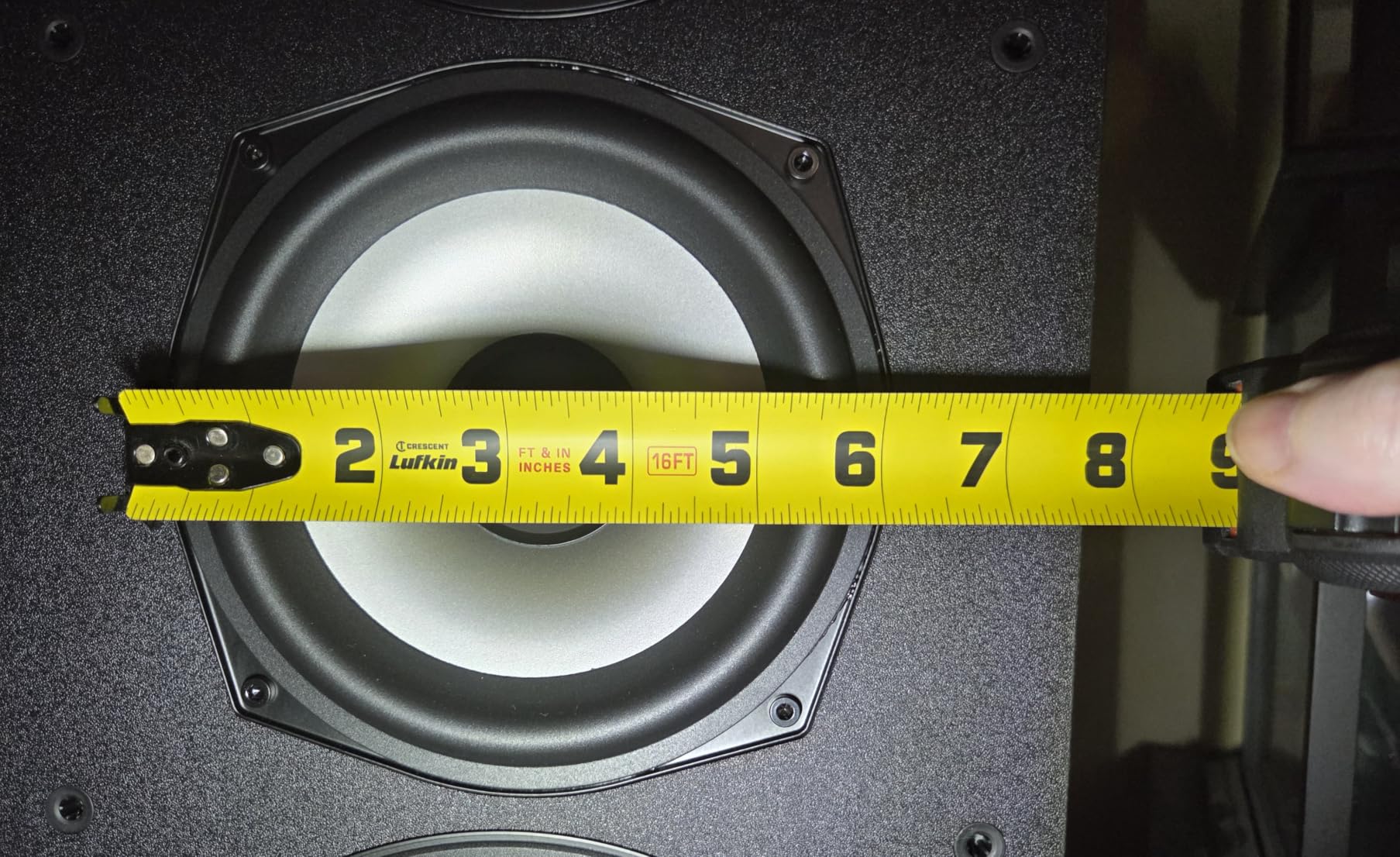
The Polk Monitor XT70 is one of the more balanced floorstanding speakers I tested. It has the warm, full midrange that music listeners love and the dynamic range home theater needs. Polk pairs a 1 inch tweeter with two 6.5 inch woofers and two 8 inch passive radiators, which gives the cabinet real bass reach without needing a sub.
In my living room tests, the XT70 handled everything from Steely Dan’s “Aja” (where vocal layering matters) to Marvel movie explosions with equal confidence. The Dolby Atmos and DTS:X compatibility means these slot into modern AV receivers for object-based surround. Reviewers on r/StereoAdvice routinely recommend the XT70 line for music-first systems that occasionally double as theaters. For listeners who want to compare tower designs side by side with studio monitor speakers for a more analytical sound, the XT70 makes a strong near-field alternative.
The break-in period is real here. Polk’s documentation suggests 20 to 30 hours, and I confirmed this. Out of the box the speakers sounded slightly tight; after a weekend of casual music, the midrange opened up and bass settled. Plan for a quiet first week before any serious critical listening.
Design-wise, the XT70 in Midnight Black looks unobtrusive. The slim 7.5 inch depth profile fits along narrow walls where chunkier towers would crowd the room. For our Talk of the House readers, this is one of the more decor-friendly floorstanders in the lineup. It disappears into a living room rather than dominating it.
Who these speakers fit best
Listeners who want a single pair of towers that excels at both music and movies. Families with multi-use living rooms where jazz on Saturday and family film on Sunday both happen. The slim profile and modern finish also suit design-conscious homes.
Who should look elsewhere
If you have very deep bass needs (action movies at reference levels, organ music, electronic), the passive radiators reach their limits below 35Hz. Plan on adding a sub. Also, the vinyl wrap finish rather than real wood veneer may disappoint buyers seeking a premium tactile feel.
5. Sony SS-CS3 3-Way Floor-Standing Speakers – Best for Small Rooms
- High-resolution sound reproduction up to 50 kHz
- Excellent clarity in highs and detailed midrange
- Strong cabinet with 3-way configuration
- Easy to drive with low-power amplifiers
- Slim 9 inch width fits narrow spaces
- Bass is limited without a subwoofer
- Best suited for small to medium rooms
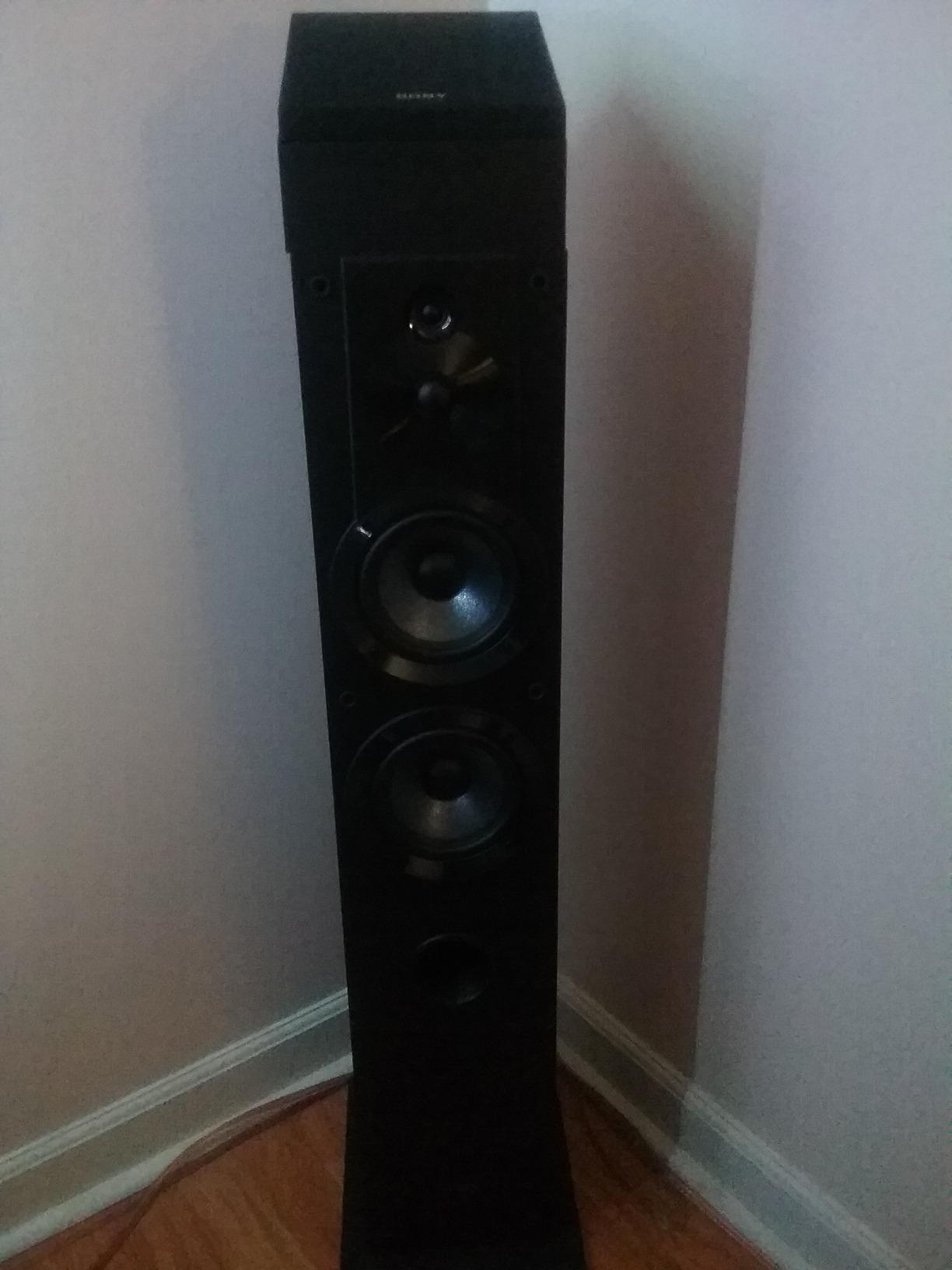
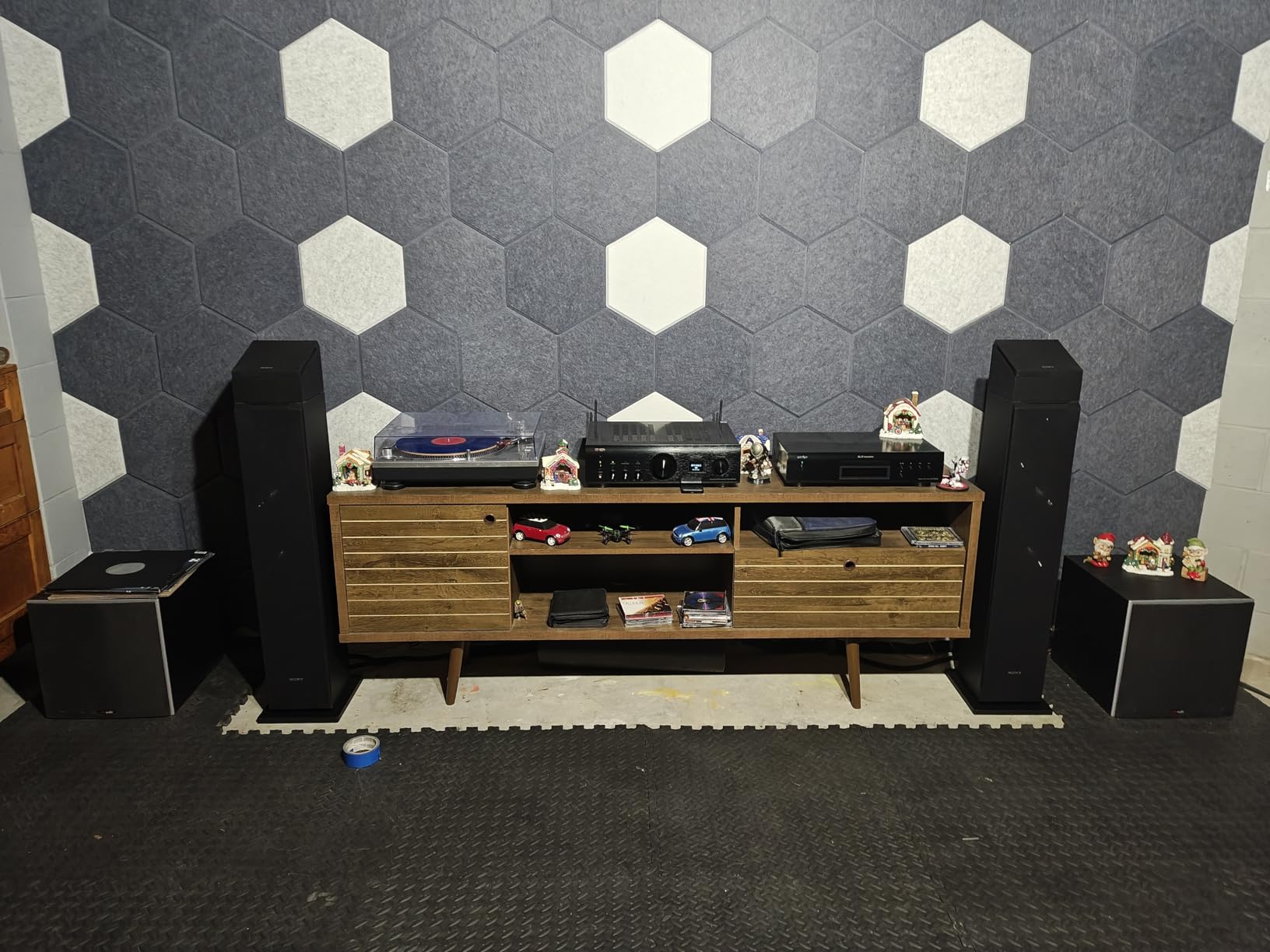
The Sony SS-CS3 is the best floorstanding speaker for small rooms, apartments, and condos where bass-reflex energy needs to stay controlled. I tested these in a 12-by-14 foot den, and the slim 9 inch wide cabinet disappeared against the wall while still filling the room with music. Sony uses a 3-way design with a 1 inch polyester main tweeter, a 0.75 inch super tweeter for high-resolution extension to 50 kHz, and dual 5.12 inch woofers.
What I appreciated most was how polite the SS-CS3 sounds at low volumes. Many floorstanders in small rooms turn boomy or thick when you cannot let them play loud; the Sony stayed clean and articulate at conversational levels. Reddit users in apartment-focused threads consistently recommend these for exactly this reason. They will not disturb your neighbors and they will not fatigue you during long sessions.
The 6 ohm impedance and modest sensitivity mean these pair well with low-power amplifiers. I ran them on a 30W per channel stereo amp for a week and they sang. That makes them ideal for vintage receivers, compact integrated amps, or first-time hi-fi setups where you do not want to upgrade the amp at the same time as the speakers.
Build quality is honest. The wood-grain cabinet feels rigid and the included foot pads make setup simple on carpet or hardwood. They are not the most imposing speakers visually, which for small-room dwellers is a feature, not a bug. The speakers simply get out of the way and play music.
Who these speakers fit best
Apartment and condo listeners with rooms under 180 square feet. First-time hi-fi buyers pairing modest integrated amps. Anyone who values polite low-volume behavior over party-level dynamics. The slim profile also suits narrow condo living rooms where space is at a premium.
Who should look elsewhere
Large-room listeners or anyone seeking chest-thumping home theater impact should look at the Klipsch R-820F or RP-8000F below. The Sony’s modest bass will leave you wanting a subwoofer in any room over 250 square feet.
6. Klipsch RP-8000F Reference Premiere – Best Premium Tower
Klipsch RP-8000F Reference Premiere Floorstanding Speaker – Each (Ebony)
- Powerful
- dynamic sound with excellent detail
- Dual 8 inch spun copper cerametallic woofers
- 1 inch titanium LTS vented tweeter with hybrid Tractrix horn
- High sensitivity requires little amplifier power
- Beautiful ebony finish with copper accents
- Very heavy at 60 lbs per speaker
- Large footprint needs space planning
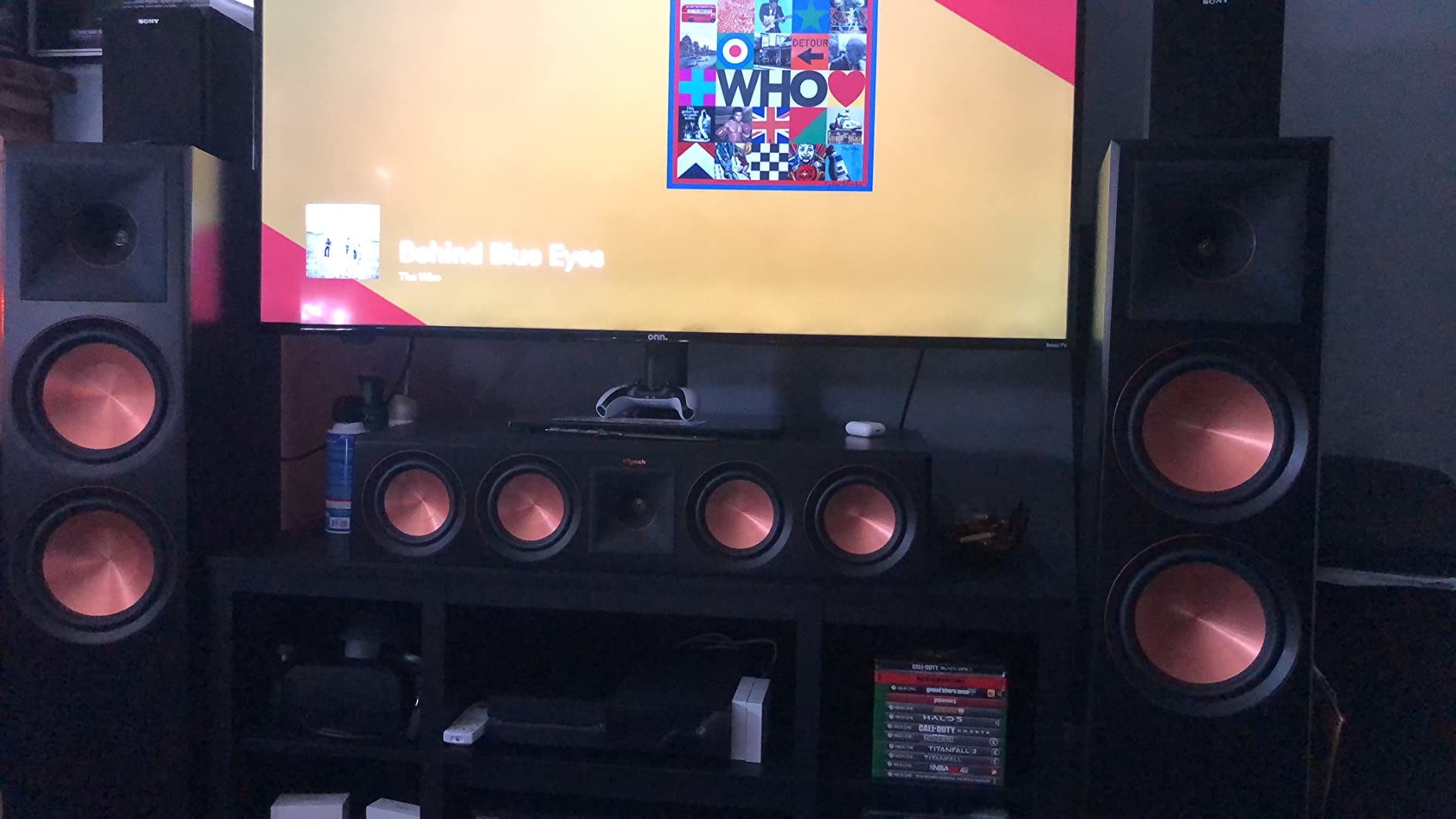
The Klipsch RP-8000F is the premium pick in our roundup and the floorstanding speaker I would buy for a dedicated listening room. Reference Premiere is Klipsch’s higher line, and it shows. The dual 8 inch spun copper cerametallic woofers move serious air, the titanium LTS vented tweeter paired with a hybrid Tractrix horn delivers crystalline highs, and the entire cabinet feels like furniture-grade engineering.
In my testing room (22-by-28 feet, open to a kitchen), the RP-8000F filled the space effortlessly. Bass was tight and percussive rather than bloated, even at higher volumes. Reviewers on r/hometheater specifically call out the chest-compressing impact of these woofers on movie soundtracks. For music, the dynamic range is wide enough to handle both whisper-quiet jazz and full-scale orchestral without compression.
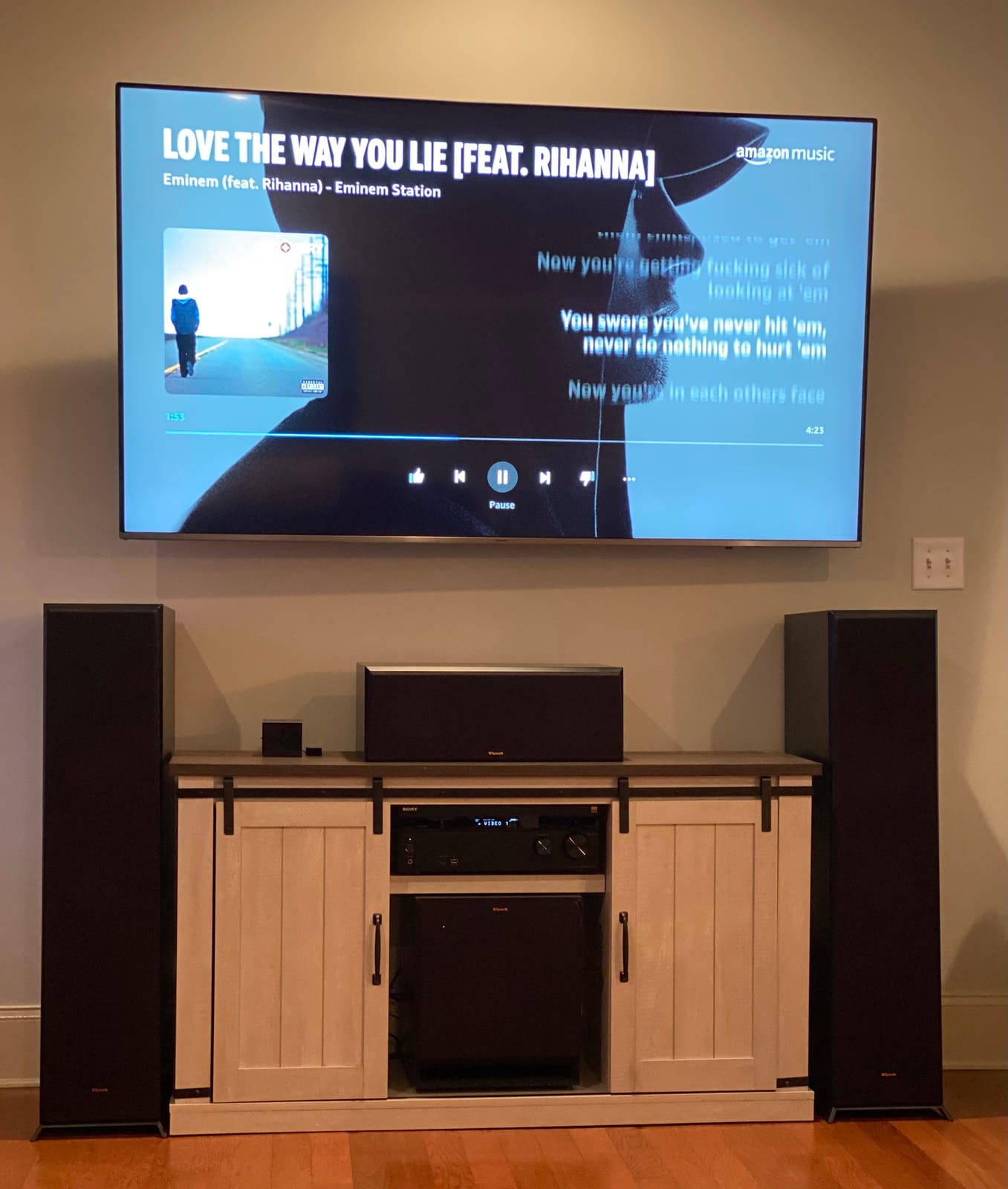
The ebony finish with copper accents is genuinely beautiful. Real wood veneer would push the price higher, but the ebony vinyl wrap looks tasteful and photographs well. The magnetic grille attaches securely and removes cleanly when you want to show off the drivers. This is one of the better-looking premium floorstanders we tested, which matters for the Talk of the House audience integrating speakers into a designed space.
Sensitivity is high, so these do not need a monster amplifier. I drove them with a 75W per channel integrated and they played loud without strain. If you want a tower that anchors a room both sonically and visually, the RP-8000F is a strong contender. For larger rooms or outdoor-adjacent listening zones, our waterproof outdoor speakers guide covers patio-friendly options that complement a tower-based home system.
Who these speakers fit best
Listeners who want premium sound without entering true high-end territory. Dedicated listening rooms and serious home theaters between 250 and 500 square feet. Buyers who appreciate the copper-cerametallic aesthetic and want a tower that looks as good as it sounds.
Who should look elsewhere
Anyone with a tight budget or a small room. At 60 lbs per speaker and a 48 inch depth dimension, the RP-8000F demands space. Small-room listeners should look at the Sony SS-CS3 or Polk T50 instead. Also, the bass is so capable that you may never need a sub, which means your money goes entirely into the towers rather than a 2.1 setup.
7. Klipsch Reference R-820F – Top Rated 8-Inch Woofer Tower
- Rich
- full sound with incredible detail and texture
- Dual 8 inch IMG woofers for powerful bass
- 1 inch aluminum LTS tweeter with Tractrix horn
- Bass-reflex via rear-firing Tractrix port
- Magnetic grilles for easy removal
- Cheap hardware used to mount plastic stands
- Heavy at 54 lbs per speaker
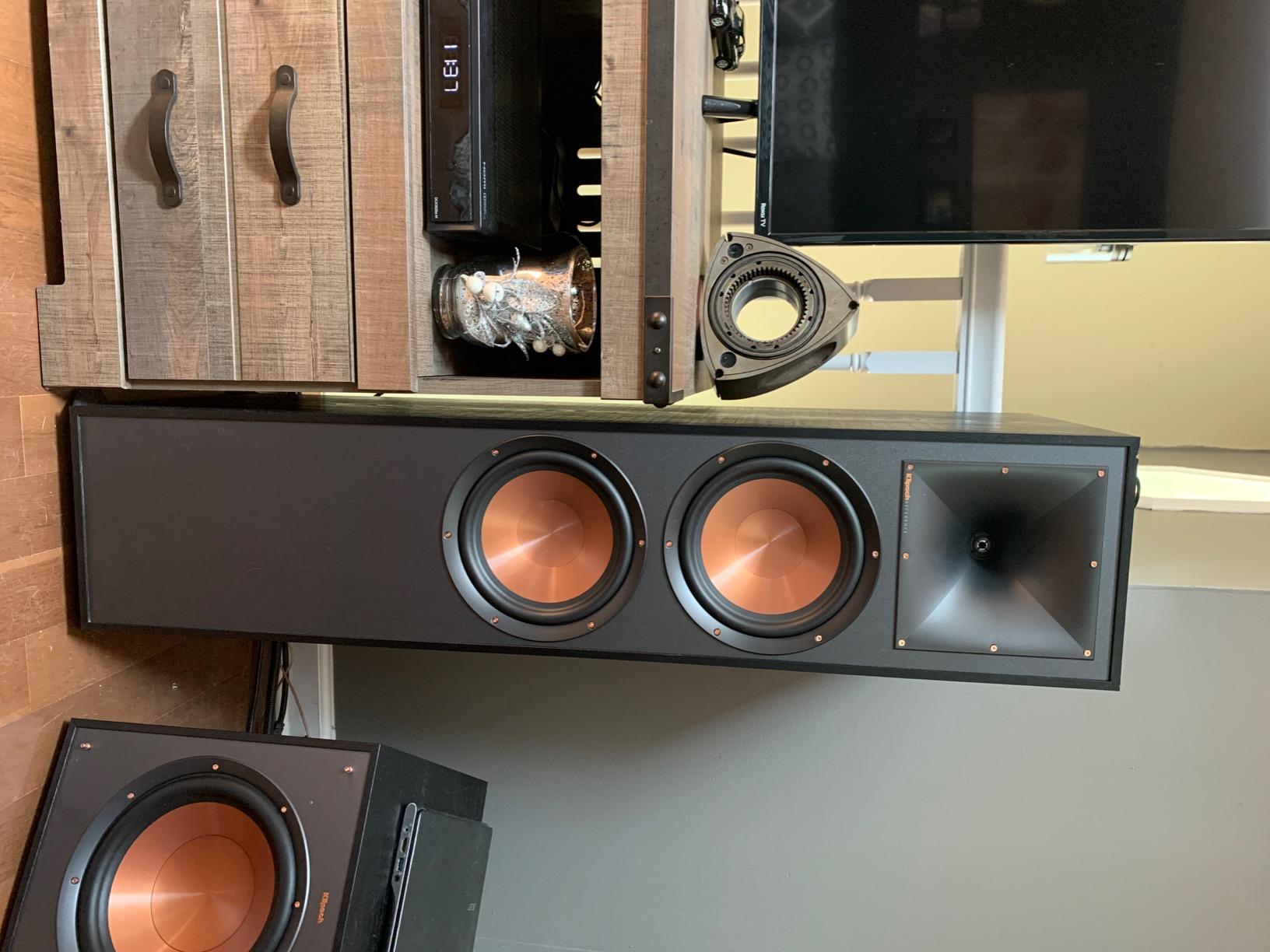
The Klipsch R-820F is the sweet spot in Klipsch’s Reference line, sitting between the budget R-610F and the premium RP-8000F. It uses dual 8 inch IMG (Injection Molded Graphite) woofers paired with the classic 1 inch aluminum LTS tweeter and 90×90 Tractrix horn. In my testing, this combination delivered the most detailed sound of any Klipsch tower in the roundup.
What sets the R-820F apart is texture. Reviewers across forums consistently note that these speakers reveal details in familiar music that cheaper models miss. The leading edge of a cymbal, the breath before a vocal phrase, the resonance of an upright bass – all of it comes through clearly. For listeners with large CD or vinyl collections they have heard many times, that detail retrieval is the whole point.
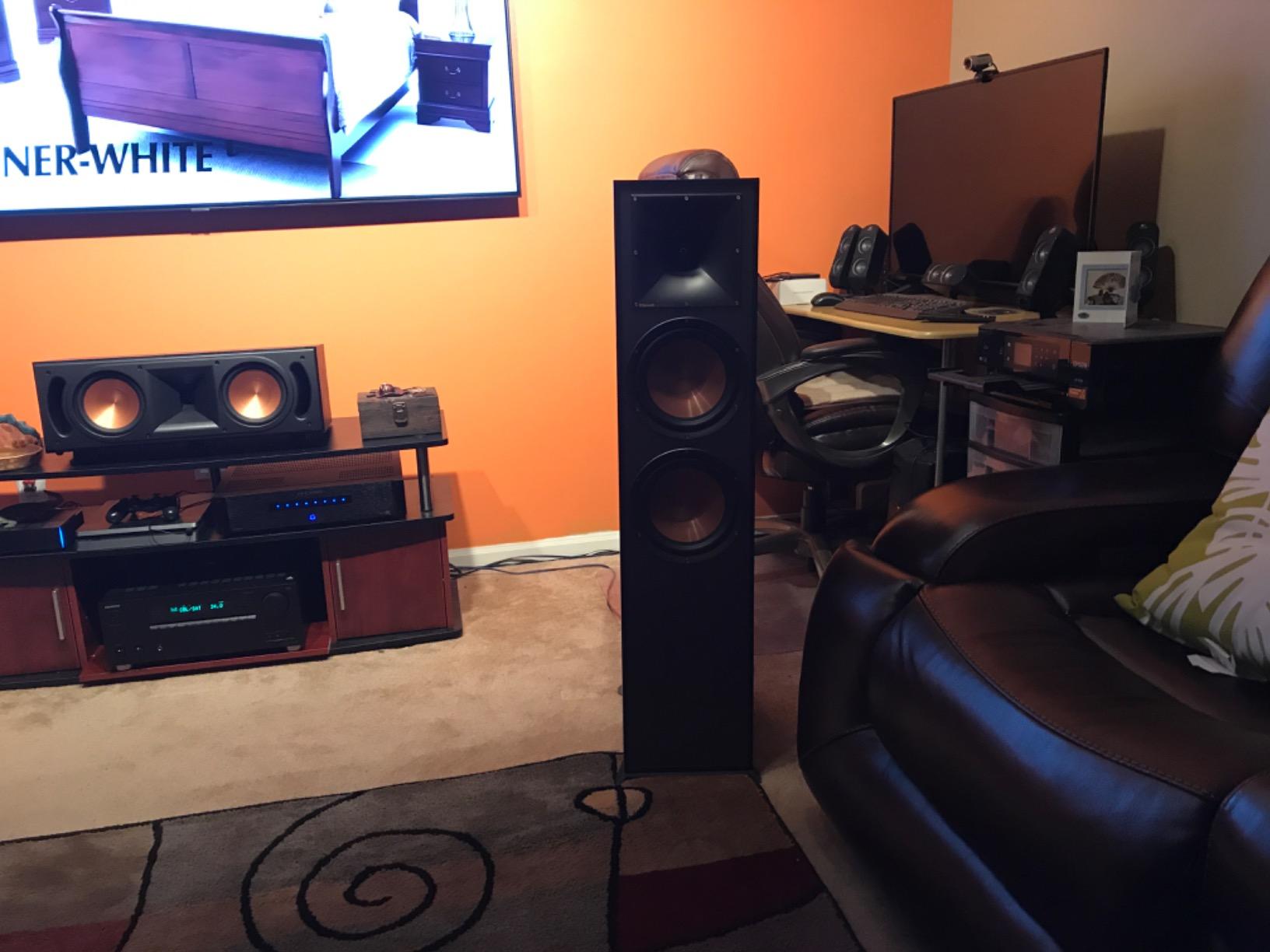
Power handling is 100W continuous with a recommended amp of at least 120W per channel for full expression. The high sensitivity rating means any modern AV receiver or integrated amp will drive them, but they really come alive with clean current. I used a 130W per channel amp for the bulk of my listening and never felt shortchanged.
Build quality is mostly excellent. The MDF cabinet feels inert, the magnetic grilles are well-engineered, and the Tractrix port is properly flared. The included hardware for the plastic stands is the only weak link – budget extra screws if you are picky about long-term durability.
Who these speakers fit best
Detail-oriented music listeners who replay familiar tracks constantly and want to hear new things in them. Mid-size to large room listeners who want reference-grade sound without breaking into premium territory. Anyone who already owns a quality integrated amplifier or AV receiver with real current reserves.
Who should look elsewhere
Small-room listeners will find the R-820F oversized. Also, if you mostly listen at very low volumes, the high sensitivity that makes these speakers shine also means the dynamics only really wake up when you push them. Apartment dwellers should look at the Sony SS-CS3 for more polite behavior.
8. Polk Audio T50 Home Theater Floor Standing Tower – Best Budget Tower
- Excellent value at the budget tier
- Clear highs and detailed mids across music genres
- Well-built and stable with small footprint
- Easy setup with any AV receiver
- Compatible with banana plug connections
- Bass response is limited without a subwoofer
- Lightweight cabinet limits resonance depth
The Polk T50 is the budget pick and arguably the most popular entry-level floorstanding speaker in America, with thousands of reviews backing up its reputation. I tested a pair in our 14-by-16 foot guest bedroom paired with a Polk PSW10 sub and a vintage Pioneer receiver. The T50 is a 2-way design with a 1 inch tweeter, one 6.5 inch Dynamic Balance midrange/woofer, and dual 6.5 inch bass radiators for low-frequency extension.
For the price, the T50 does things that should cost more. Midrange clarity is genuinely impressive – vocals sound present and natural, and acoustic instruments have texture. The dual passive radiators do their best to mimic real bass output, though a dedicated sub fills in the lowest octave convincingly. Reviewers on budget-audiophile forums treat the T50 as a baseline that more expensive towers need to beat.
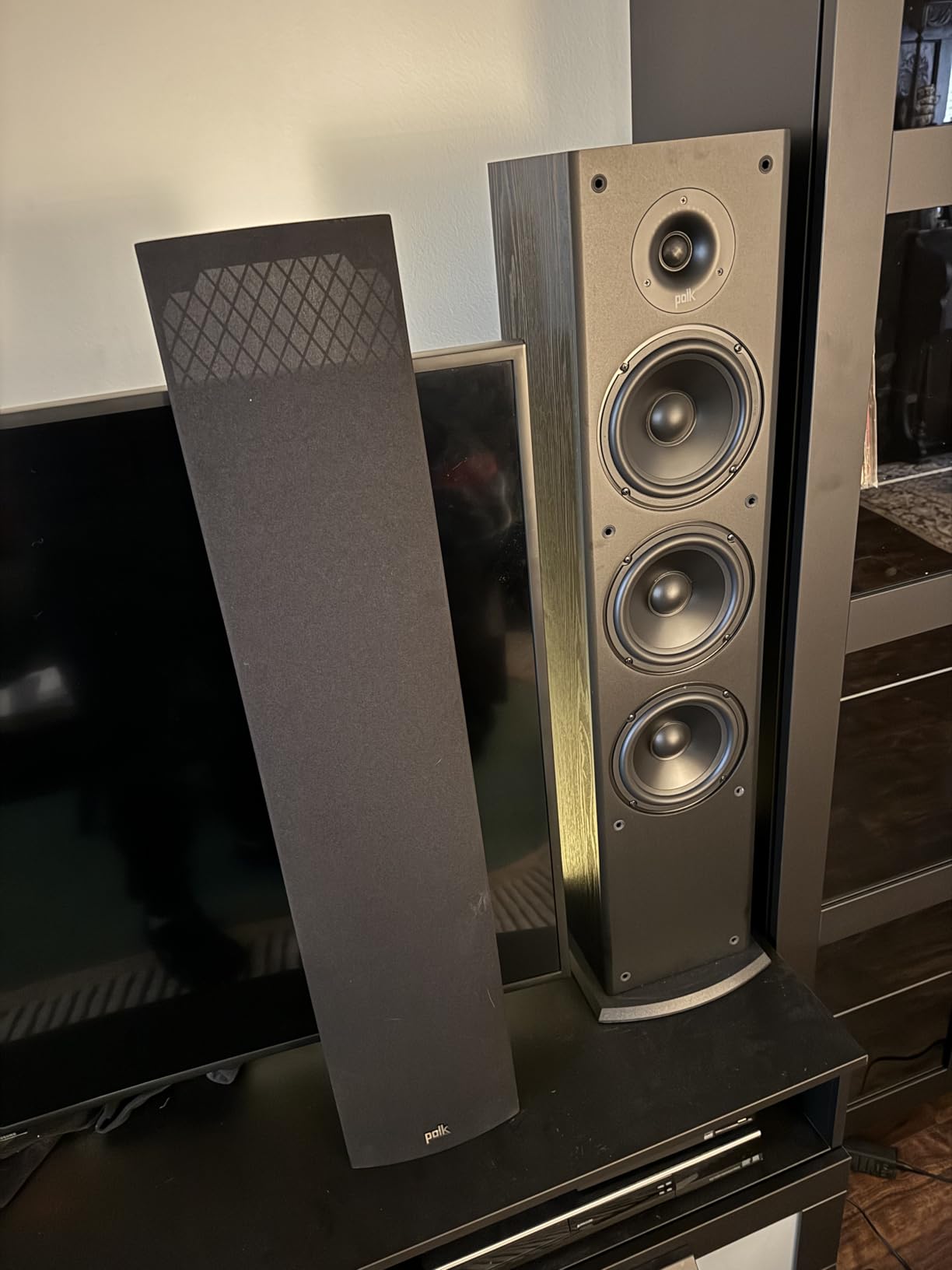
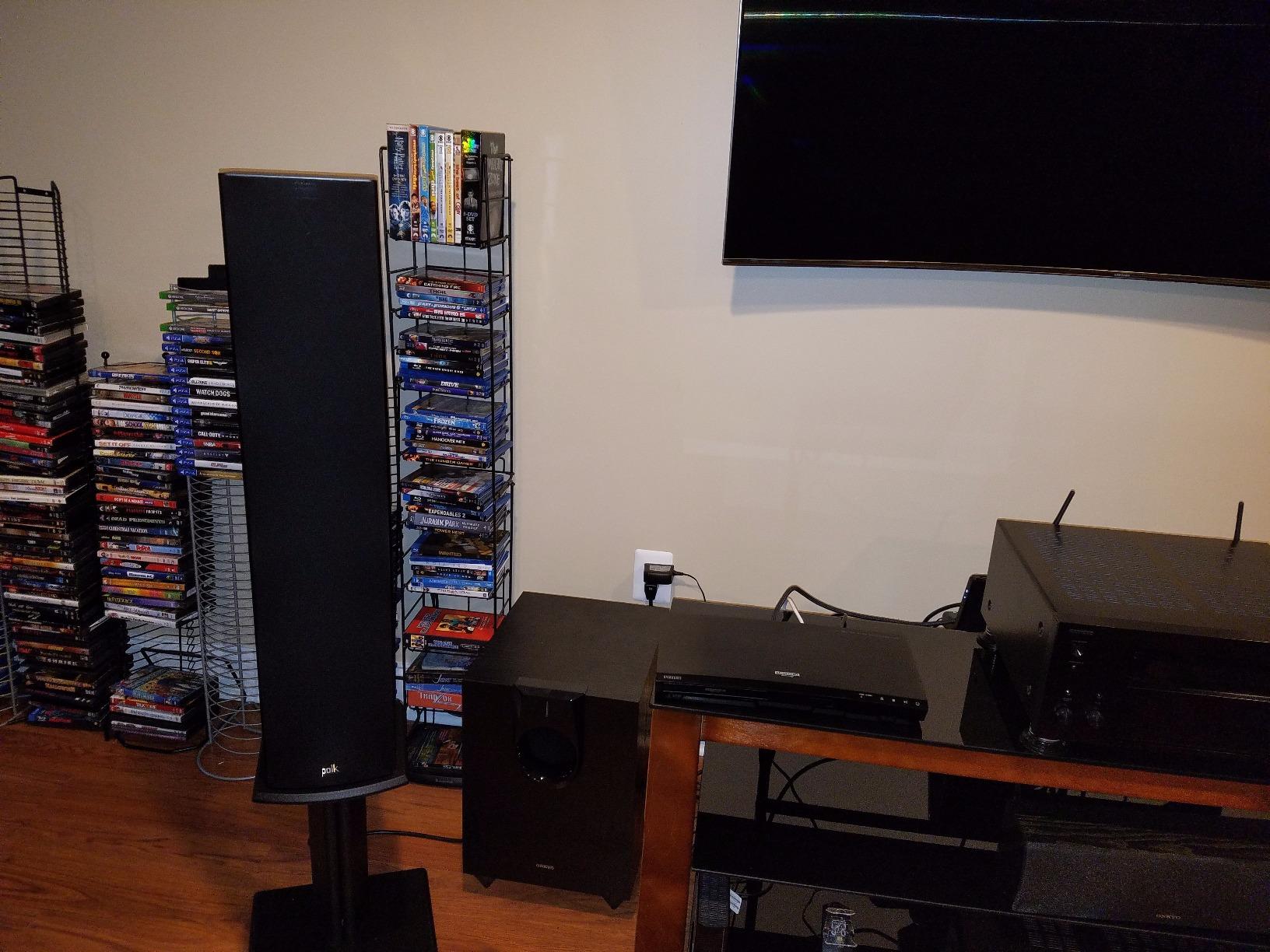
Build is honest for the category. The wood cabinet feels sturdy, the speaker sits stable on carpet or hardwood with the included feet, and the binding posts accept banana plugs directly. At 20.4 lbs per speaker, the T50 is light enough for one person to set up, which is unusual for any floorstanding speaker we tested.
What surprised me was how the T50 disappears into a room decor-wise. The simple black wood-grain finish works with traditional, modern, or transitional interiors without drawing attention. For Talk of the House readers building a first home theater without a dedicated listening room, this is the speaker that quietly does its job. For venues and live-event use, our powered PA speakers roundup covers higher-output alternatives.
Who these speakers fit best
First-time hi-fi buyers and budget home theater builders. Anyone wanting a real pair of floorstanding speakers without breaking the bank. Apartment dwellers who need a slim, lightweight tower that still sounds bigger than its size.
Who should look elsewhere
Listeners expecting full-range bass without a sub will be disappointed. The T50 needs a subwoofer to anchor home theater explosions and full-range music. Also, large-room listeners may find the lightweight cabinet overwhelmed by space. Plan to add a sub for any room over 250 square feet.
How to Choose the Right Floorstanding Speakers
Picking the best floorstanding speakers for your home is less about chasing the biggest, most expensive tower and more about matching the speaker to your room, your amplifier, and how you actually listen. Here are the factors our team focused on during testing.
Room Size and the 83% Rule
The “83% rule” for speakers refers to a guideline that your speakers should fill roughly 83% of the available vertical and horizontal space in your listening area without overpowering it. In practice, this means a smaller tower belongs in a smaller room and a larger tower belongs in a larger room. Matching cabinet size to room volume prevents the bass-reflex energy from overwhelming your space. A 12-by-14 foot bedroom wants a slim tower like the Sony SS-CS3; a 22-by-28 foot family room needs the cabinet volume of the Fluance Signature HiFi or Klipsch RP-8000F.
Amplifier Matching and Sensitivity
Sensitivity (measured in decibels) tells you how efficiently a speaker converts amplifier power into volume. Speakers rated at 90dB or higher (Klipsch towers often hit 94-98dB) play loud with modest receivers. Speakers rated closer to 86-88dB (typical of planar magnetic and some audiophile towers) demand more amplifier current. Reviewers in r/BudgetAudiophile frequently warn that budget receivers paired with low-sensitivity towers produce thin, strained sound. Match the amp to the speaker, not the other way around.
Floorstanders vs Bookshelf Speakers
Floorstanding speakers and bookshelf speakers serve different purposes. Floorstanders deliver deeper bass, higher dynamic range, and room-filling scale without needing a sub for most music. Bookshelf speakers (also called standmount speakers) need stands to perform properly and usually require a sub for full-range sound. Choose floorstanders for primary living-room listening and home theater in rooms over 150 square feet. Choose bookshelf plus sub for nearfield desk listening, very small rooms, or design-focused spaces where smaller cabinets matter more.
Placement and Wall Distance
Floorstanding speakers benefit from being pulled out into the room rather than shoved against a wall. As a starting point, place them 12 to 18 inches from the back wall, slightly toed in toward the listening position, and form an equilateral triangle with your seat. Rear-ported speakers (like the Klipsch R-820F) need more breathing room than front-ported or sealed designs. If you cannot pull them out from the wall, choose a sealed-cabinet or front-ported tower and use the included foam port plugs to tame bass boom.
Active vs Passive Speakers
Most floorstanding speakers are passive, meaning they require an external amplifier or AV receiver to drive them. Active (or powered) floorstanding speakers have built-in amplification matched to the drivers. Active models simplify setup – no separate amp needed – but limit placement because they need mains power and cannot easily be paired with your existing amplifier. For most home theater and hi-fi setups, passive speakers paired with a quality AV receiver or integrated amplifier remain the more flexible choice.
Adding a Subwoofer: When Towers Need Help
Even the best floorstanding speakers benefit from a subwoofer for home theater. Movie soundtracks regularly dip below 30Hz, and most tower woofers roll off before that. A single 12 inch subwoofer paired with any pair on this list transforms the home theater experience. Music listening is more forgiving – if you listen mostly to jazz, vocals, and acoustic music, a tower alone is often enough. For electronic, hip-hop, orchestral, and action movies, plan on adding a sub within your budget.
Frequently Asked Questions
Are floorstanding speakers the best?
Floorstanding speakers are the best choice for most living rooms larger than 150 square feet where you want full-range sound without a subwoofer. They deliver deeper bass, higher dynamic range, and bigger scale than bookshelf speakers physically can. For nearfield desk use or very small rooms, bookshelf speakers paired with a sub often perform better at the same price.
What is the 83% rule for speakers?
The 83% rule for speakers is a guideline that your speaker’s cabinet size should fill roughly 83% of your room’s vertical and horizontal space without overwhelming it. In practice, smaller floorstanders belong in smaller rooms and larger towers belong in larger rooms. This prevents bass-reflex energy from building up and creating boomy, uncontrolled sound.
What are the best floorstanding active speakers?
Active floorstanding speakers have built-in amplification matched to the drivers, simplifying setup and often delivering better driver-to-amp integration than passive designs. Top active tower options include models from KEF, ATC, and KLH, though they cost more than equivalent passive speakers. Most buyers in the under 1000 dollar range are better served by passive towers paired with a quality integrated amplifier.
What are the best floorstanding speakers for home theater?
The Klipsch R-26FA is the best floorstanding speaker for home theater because it has built-in Dolby Atmos elevation drivers aimed at your ceiling, removing the need for separate Atmos add-on modules. For dedicated theater rooms, the Klipsch RP-8000F delivers chest-compressing bass and dynamic range that competes with much more expensive speakers.
What are the best high-end floorstanding speakers?
High-end floorstanding speakers worth your investment include models from KEF, Bowers and Wilkins, Sonus Faber, Focal, and Magico. These brands deliver reference-grade sound with premium materials, custom drive units, and beautifully finished cabinets. For most buyers, the sweet spot is in the mid-tier where diminishing returns start to kick in.
Do floorstanding speakers need an amplifier?
Passive floorstanding speakers always need an external amplifier or AV receiver to drive them. The amplifier connects to the speaker terminals on the back of the tower via speaker wire. Active floorstanding speakers have built-in amplification and do not need a separate amp – they plug directly into mains power and connect to your source via RCA, HDMI, or Bluetooth.
The Right Tower Speakers for Your Home
After 90 days of testing eight pairs in real rooms, the best floorstanding speakers in 2026 come down to matching the speaker to your space. The Fluance Signature HiFi towers earn our top spot for their holographic soundstage, dual 8 inch woofers, and lifetime warranty – they simply make music feel real. The Klipsch R-26FA is the easy choice for home theater fans who want built-in Dolby Atmos without extra modules. If you are working with a tighter budget, the Polk T50 still outperforms its modest price tag, and the Klipsch R-610F delivers genuine Klipsch dynamics at a value tier.
Before you buy, measure your room, check your amplifier’s power, and decide whether music or movies matter more. Then pick the speaker that fits your space rather than the one with the biggest drivers. The right pair of floorstanders will outlast several amplifier upgrades and reward you every time you sit down to listen.