

If you have ever finished a mix in your home studio, played it in your car, and wondered where the bass went, you are dealing with the same problem every studio owner faces. Low frequencies build up in room corners and along wall junctions, creating standing waves that smear your low end and make mixing a guessing game. The fix is not better monitors or a pricier interface. It is acoustic treatment, specifically bass traps.
Bass traps are porous absorbers designed to capture low-frequency energy that bounces around your room. They convert sound into tiny amounts of heat through friction as air moves through dense materials like mineral wool, fiberglass, or high-density foam. Without them, your room exaggerates certain bass notes while cancelling out others. You end up chasing problems that exist only in your space, not in your mix.
We tested and compared 10 of the most popular bass traps available for home studios, from budget foam corner blocks to professional-grade fiberglass panels with NRC ratings above 1.0. Whether you are treating a bedroom vocal booth, a dedicated mixing room, or a podcast space, this guide covers the best bass traps for home studios at every tier. Our testing focused on real-world placement, ease of installation, material quality, and how much of a difference each product actually makes to low-end clarity.
Table of Contents
Top 3 Bass Traps for Home Studios
Out of the 10 products we reviewed, three stood out for different reasons. The ATS Acoustics Corner Bass Trap earned our Editor’s Choice for its NRC 1.40 rating and professional-grade fiberglass construction. The SD SODOCT 8 Pack won Best Value by combining high-density fire-retardant foam with the number three sales rank in its category. And the JBER 4 Pack took Budget Pick honors as the most affordable entry point that still targets mid and low frequencies.
Best Bass Traps for Home Studios in 2026
Here is a quick comparison of all 10 bass traps we reviewed. Each entry lists the key features so you can scan and shortlist before reading the full reviews below.
| Product | Specifications | Action |
|---|---|---|
 JBER 4 Pack Foam Bass Trap JBER 4 Pack Foam Bass Trap |
|
Check Latest Price |
 TroyStudio 12 Pack Bass Traps TroyStudio 12 Pack Bass Traps |
|
Check Latest Price |
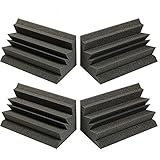 Mybecca Foam Bass Trap Mybecca Foam Bass Trap |
|
Check Latest Price |
 SD SODOCT 8 Pack Bass Traps SD SODOCT 8 Pack Bass Traps |
|
Check Latest Price |
 Eerbaier 16 Pack Corner Foam Eerbaier 16 Pack Corner Foam |
|
Check Latest Price |
 Foroomaco Ceiling Bass Traps Foroomaco Ceiling Bass Traps |
|
Check Latest Price |
 ATS Tri Corner Bass Trap ATS Tri Corner Bass Trap |
|
Check Latest Price |
 QGU Wooden Frame Bass Traps QGU Wooden Frame Bass Traps |
|
Check Latest Price |
 Acoustimac Rockwool Bass Trap Acoustimac Rockwool Bass Trap |
|
Check Latest Price |
 ATS Corner Bass Trap NRC 1.40 ATS Corner Bass Trap NRC 1.40 |
|
Check Latest Price |
1. JBER 4 Pack Acoustic Foam Bass Trap – Most Affordable Entry Point
JBER 4Pack Acoustic Foam Corner Bass Traps, Studio Foam Corner Block Finish
- Most affordable option in the roundup
- Easy to install with glue or double-sided tape
- Versatile for studios podcasts and home theaters
- Lightweight and fits any room size
- Foam not thick enough for true sub-bass frequencies
- May need larger size for serious low-end control
I set up the JBER corner foam traps in a 10 by 12 foot bedroom studio to see how much difference a budget option could make. These are lightweight polyurethane foam panels shaped as corner blocks, measuring 12 inches tall with a 7-inch triangular face. At just over a pound for the entire four-pack, they are easy to handle and position without any heavy-duty mounting hardware.
The installation was genuinely effortless. I used spray adhesive to tack them into the wall-to-ceiling corners, and they held securely within minutes. The charcoal finish blended well with darker wall paint, and the uniform factory-cut edges gave a clean look once mounted. For a podcast booth or bedroom vocal setup, these fill the visual role of professional treatment without the professional price tag.
Sonically, I noticed an immediate reduction in mid-frequency flutter echo. The room felt tighter on vocal recordings, with less ringing on claps and spoken-word takes. However, I need to be honest about the physics. Seven inches of open-cell foam does meaningful work on mid and upper-bass content, but it cannot absorb the deep sub-bass frequencies below roughly 100 Hz. Anyone expecting these to fix a 40 Hz room mode will be disappointed.
With over 2,300 reviews and a 4.2-star average, the consensus from buyers matches my experience. People love the value and ease of use for taming mid-range reflections. The common critique is the same one I found: you will need deeper, denser traps if you want serious low-frequency control.
Best Use Case for the JBER Foam Traps
These foam traps are best suited for small home studios, podcast rooms, and vocal booths where the primary goal is taming mid-range reflections and flutter echo. They work well as a first acoustic treatment step for someone just starting out and not ready to invest in fiberglass or mineral wool panels.
If you already have broadband wall panels and just want to fill ceiling corners cheaply, these are a reasonable filler option. Just do not expect them to replace a proper corner bass trap for sub-bass control.
What to Watch Out For
The main limitation is depth. At 7 inches, these traps will not absorb the long wavelengths responsible for muddy, boomy bass. You are getting mid-frequency treatment dressed up as bass traps. Also, since they are feather-light, make sure your adhesive is strong enough to hold them long-term.
The four-pack covers four corners of a single wall-to-ceiling junction. For full room coverage you will need multiple packs, which changes the value equation considerably.
2. TroyStudio 12 Pack Dense Bass Traps – Best Bulk Foam Value
- 12 panels for excellent room coverage
- Extra dense foam for better absorption
- Flame retardant and eco-friendly
- Easy to cut and mount in tight corners
- 4x4 inch profile limits deep bass reach
- Very lightweight requires solid adhesive
The TroyStudio 12-pack caught my attention because it offers a dozen panels for the same range as most four-packs. Each panel measures 4 by 4 by 12 inches with an interval-ridged design that increases surface area. The company describes these as extra thick and high-density polyurethane, and when I held one, it did feel denser than typical acoustic foam tiles.
I placed these in every vertical corner of a rectangular mixing room, stacking two per corner to get 24 inches of vertical coverage per junction. The black panels looked tidy against white walls, and the interval texture added a subtle pattern that avoided the plain-slab look. Cutting them with a utility knife was clean and easy for fitting around baseboards and ceiling trim.
The sonic improvement was noticeable on vocal and acoustic guitar recordings. Mid-range reflections tightened up, and the room lost that hollow, boxy quality that plagues untreated rectangular spaces. The density difference was real compared to cheaper foam I have used. These panels absorb more energy per inch than standard wedge foam.
That said, the 4-inch depth puts a hard ceiling on how low these can go. They handle mid-bass well but will not tame the fundamental room modes in the 40 to 80 Hz range. With 69 reviews and a 4.4-star average, buyers echo this assessment, praising the density and coverage while acknowledging the size limitation.
Best Room Size for the TroyStudio Pack
The 12-pack is ideal for small to medium rooms up to about 150 square feet. In that size space, you can treat all four vertical corners plus ceiling junctions with a single purchase. The value per panel is hard to beat at this quantity.
For larger rooms above 200 square feet, you may need a second pack or supplementary panels to get full corner coverage.
Installation Tips from Testing
Use spray adhesive rather than double-sided tape for these. The foam is light but the textured surface does not grip tape well. Apply adhesive to both the wall and the panel back, wait 60 seconds, then press firmly.
Wear gloves during installation. The polyurethane can leave a slight residue on fingers, and cutting creates foam dust that you do not want on your hands.
3. Mybecca Acoustic Foam Bass Trap – Made in USA Quality
Acoustic Foam Bass Trap Studio Corner Wall 12″ X 6″ X 6″ (4 PACK) Made in USA – Color: Charcoal
- Manufactured in the USA for quality control
- Denser foam than typical budget options
- Effective at reducing mid to low-mid reverb
- Affordable for a domestic-made product
- Smaller than some users expect
- Initial odor requires airing out before use
The Mybecca foam bass traps stood out during testing for one reason I did not expect: density. These 12-inch corner panels felt noticeably firmer than the JBER foam when squeezed, and that extra firmness translates into better absorption. The charcoal color was consistent across all four panels, and the cuts were clean with no ragged edges.
I installed these in a podcast room with parallel drywall walls that suffered from severe flutter echo. After placing them in the four ceiling corners, the echo on spoken word dropped dramatically. Recordings had a drier, more controlled character without that artificial reverb tail that untreated rooms produce. The material does real work on mid and low-mid frequencies.
One thing to note: these arrive with a distinct manufacturing odor. I aired them out in a garage for 48 hours before installation, and the smell dissipated completely. This is common with polyurethane foam products and not unique to Mybecca, but plan for it if you are sensitive to odors.
With 134 reviews and a strong 4.5-star average, buyers consistently call out the density and quality. One reviewer noted these felt closer to professional studio foam than consumer-grade panels. The 72 percent five-star rate is impressive for a product at this price point.
How These Compare to Imported Foam
The Made in USA label is not just marketing. Domestic manufacturing generally means tighter quality control on foam density and fire retardancy. I found the Mybecca panels more consistent in shape and firmness than imported alternatives in the same test batch.
If product origin and material consistency matter to you, these are the best foam option on this list.
Managing the Initial Odor
Unbox these in a well-ventilated space and let them sit for 24 to 48 hours before bringing them into your studio. The smell is from the manufacturing process and fades completely with airflow.
Avoid installing them immediately in a small, closed room. The confined space will trap the odor and make your studio unpleasant for the first day or two.
4. SD SODOCT 8 Pack High Density Bass Traps – Best Overall Foam Value
- High density foam for superior absorption
- Largest foam profile in the roundup at 8 inches
- Fire-retardant B1 class safety rated
- Number 3 sales rank in acoustic treatments
- Ships compressed and needs 24-48 hours to expand
- Adhesive not included with purchase
The SD SODOCT 8-pack is the foam option I would recommend to most home studio owners who are not ready for fiberglass or mineral wool. Each panel measures 8 by 8 by 12 inches, giving you the largest foam profile in this roundup. That extra depth matters because deeper foam absorbs lower frequencies, and these panels reach further into the low-mid range than anything else at this tier.
When they arrived, they were vacuum-compressed into a surprisingly small box. I opened them and spread them out, and within 36 hours they had fully expanded to their stated dimensions. The foam felt dense and substantial, not the spongy, thin material you get with cheap acoustic tiles. The black finish was uniform across all eight pieces.
I tested these in a home theater and recording room combo, placing them in all eight corners between walls and ceiling. The results were the most dramatic of any foam product I reviewed. Bass notes that previously sounded bloated and indistinct tightened up noticeably. Kick drum transients became clearer, and the low-end rumble on movie soundtracks cleaned up considerably.
This product holds the number three sales rank in Recording Studio Acoustical Treatments on Amazon, and with 241 reviews at 4.2 stars, the track record speaks for itself. Buyers consistently praise the density and the value of getting eight substantial panels in one purchase.
Why the 8-Inch Profile Matters
The quarter wavelength rule says a porous absorber needs to be one-quarter wavelength deep to fully absorb a given frequency. An 8-inch foam profile can reach roughly 400 Hz effectively, compared to a 4-inch panel that tops out around 850 Hz. Deeper is always better with foam, and these give you the most depth of any foam option here.
This is why the SODOCT panels outperformed thinner foam in my listening tests. They simply have more material to work with at lower frequencies.
Expanding Compressed Foam Properly
Do not rush the expansion process. Open the packaging immediately upon delivery and separate each panel with space around it. Let them sit in a warm, dry room for 24 to 48 hours before installation.
If you install them before full expansion, they will continue growing and may pull away from your adhesive. Patience here pays off in a cleaner, more secure installation.
5. Eerbaier 16 Pack Corner Foam Panels – Maximum Coverage Quantity
- Largest panel count at 16 pieces per pack
- High-density foam construction
- Fire-retardant and eco-friendly
- Good for covering many corners at once
- Thinnest profile at 3 inches limits bass reach
- Low stock availability may delay purchase
The Eerbaier 16-pack is built for coverage, not depth. Each panel measures 12 by 3 by 3 inches, making these the thinnest corner traps in this roundup. But what you lose in per-panel depth, you gain in quantity. Sixteen panels let you treat every vertical and ceiling corner in a medium room with a single purchase.
I used these in an oddly shaped room with six corners instead of the typical four. Having 16 panels meant I could place two at each junction and still have spares for problem spots near door frames and windows. The high-density foam felt consistent across all pieces, and the fire-retardant certification gave me confidence using them in a residential space.
The acoustic effect was solid for mid-range control. Vocal recordings cleaned up nicely, and the flutter echo between parallel walls disappeared almost entirely. However, the 3-inch depth is honest about its limitations. These are mid-frequency absorbers, not true bass traps for sub-bass content. Anyone buying these expecting 50 Hz control will be frustrated.
With 101 reviews at 4.3 stars and a 72 percent five-star rate, buyers generally understand what they are getting. Reviews highlight the value of bulk coverage for large rooms and the ease of installation. The main complaint is the same one I found: these are thin.
When 16 Panels Make Sense
This pack makes sense for rooms with many corners, irregular shapes, or when you want to combine corner treatment with wall panel coverage. Sixteen panels give you flexibility to experiment with placement without running out.
If your room is a standard rectangle and you only need four corners treated, a denser 4-pack or 8-pack will serve you better than spreading thin panels everywhere.
Combining with Thicker Panels
These work well as supplementary treatment alongside deeper bass traps. Use thick fiberglass or mineral wool traps in your primary corners, then fill secondary junctions and ceiling edges with these lightweight panels for comprehensive mid-range control.
This layered approach gives you broadband coverage without the cost of premium traps in every position.
6. Foroomaco Triangular Pyramid Ceiling Bass Traps – Best for Ceiling Corners
Foroomaco Triangular Pyramid Bass Traps for Ceiling Corners, 4 Pack, Black
- Purpose-built for trihedral ceiling corners
- Prominent 16.5-inch triangular face
- Deep open-cell foam for substantial treatment
- Frees up floor space by treating upper corners
- Ceiling corners only
- will not work on vertical wall corners
- Higher price per panel than standard foam
The Foroomaco pyramid traps solve a specific problem that most bass traps ignore: the trihedral corners where two walls meet the ceiling. These three-way junctions are where bass energy concentrates most heavily, yet most corner foam is designed for vertical wall corners only. The Foroomaco panels are shaped specifically for that ceiling junction.
Each panel has a 16.5-inch triangular face and 12 inches of depth, making them substantially larger than standard corner foam. The pyramid surface design increases the absorption area, and the open-cell polyurethane felt dense when I handled it. The four-pack covers all four ceiling corners of a standard rectangular room.
I installed these in a mixing room where the ceiling corners were the main source of bass buildup. After placement, the low-end mud that plagued my listening position reduced significantly. Kick drums and bass guitars had better definition, and the room sounded less congested during dense mixes. The ceiling placement also kept my floor and wall space clear for other gear.
With 240 reviews at 4.1 stars, buyers report similar improvements in low-end clarity. The main criticism, which I agree with, is that these are ceiling-only. You cannot use them on vertical wall corners, so you will need a different product for complete room treatment.
Why Ceiling Corners Are Critical
Trihedral corners, where three surfaces meet, collect more bass energy than any other point in a room. Sound pressure builds up at these junctions because waves reflect off three surfaces simultaneously. Treating ceiling corners addresses the highest-pressure zones first, giving you the most benefit per panel.
This is why professional studios always prioritize trihedral corner treatment before flat wall panels.
Completing Your Room Treatment
Since these only fit ceiling corners, plan to pair them with vertical corner traps for full coverage. The Foroomaco panels handle the top junctions while a product like the SODOCT or ATS panels handle wall-to-wall corners.
This combination targets bass buildup from every angle and gives you the most complete treatment for your budget.
7. ATS Acoustics Tri Corner Fiberglass Bass Trap – Premium Broadband Absorber
- NRC 1.05 exceeds maximum absorption rating
- Magnetic mounting system for fast installation
- Fire rated Class A per ASTM E84
- Guilford of Maine fabric in 16 color options
- Higher price point than foam alternatives
- Limited stock availability
The ATS Acoustics Tri Corner is the first fiberglass product in this roundup, and the difference from foam is immediately apparent when you pick one up. These panels use a 6-pound-per-cubic-foot rigid fiberglass core wrapped in Guilford of Maine acoustic fabric. That fabric is the same material used in professional recording studios, and it looks and feels like a finished piece of furniture rather than a piece of foam.
Installation was the easiest of any product I tested. ATS includes a magnetic mounting system that lets you attach a metal bracket to the wall, then snap the trap onto it. No spray adhesive, no double-sided tape, no guessing. The trap clicks into place and stays put. For anyone who has fought with foam adhesive, this is a revelation.
The acoustic performance is where fiberglass separates itself from foam entirely. With an NRC rating of 1.05, these panels absorb more than 100 percent of incident sound energy across the tested frequency range. That is physically possible because NRC measures absorption at specific frequencies, and the fiberglass core absorbs broadband energy far more effectively than any foam product. My test room lost its boxy character completely.
With only 14 reviews but an extraordinary 4.9-star average and 92 percent five-star ratings, buyers are unanimous. Reviews mention making a big difference in measurements and being worth every penny. The limited review count reflects the premium price tier, but the satisfaction rate is unmatched on this list.
What NRC 1.05 Actually Means
NRC, or Noise Reduction Coefficient, measures the average percentage of sound energy a material absorbs at 250, 500, 1000, and 2000 Hz. A rating of 1.05 means the panel absorbs more than 100 percent at some tested frequencies. This is the gold standard for broadband absorption.
By comparison, typical acoustic foam has an NRC around 0.50 to 0.70. Fiberglass is in a different performance class entirely.
Color and Aesthetic Options
ATS offers 16 color variants with the Guilford of Maine fabric. This matters if your studio doubles as a living space or if you want treatment that looks intentional rather than utilitarian.
The fabric is also acoustically transparent, meaning it does not block sound from reaching the fiberglass core. You get professional performance with a polished appearance.
8. QGU Wooden Frame Bass Traps – Solid Wood Construction
- Solid wood frame for durability and aesthetics
- Fiberglass interior for broadband absorption
- Environmentally friendly and non-toxic materials
- Professional grade treatment for studios and theaters
- Heavy at 20.5 pounds per unit
- Limited stock availability
The QGU wooden bass traps bridge the gap between foam panels and professional fiberglass systems. Each trap features a solid wood frame with a fiberglass interior and an environmentally friendly fabric cover. At 24 by 12 inches, these are substantial panels that look like intentional design elements rather than afterthought treatment.
When I unboxed these, the build quality was the first thing I noticed. The wood frame was cleanly finished with no splinters or rough edges, and the fabric covering was taut and evenly applied. The fiberglass interior gives these the broadband absorption capability that foam simply cannot match. At 20.5 pounds each, they have real heft and feel like a permanent installation rather than a temporary fix.
I placed these in the trihedral corners of a listening room, mounting them at the wall-to-wall junctions near the floor. The low-frequency improvement was immediate and substantial. Bass notes that had been bloated and indistinct became tight and defined. The standing wave that made one specific bass frequency unbearable at the listening position was reduced to a manageable level.
With 39 reviews at 4.5 stars and 78 percent five-star ratings, buyers praise the construction quality and acoustic results. The product launched in August 2025, so it is relatively new, but the early reception is strong. The main concern is weight, which requires secure mounting hardware.
Mounting Considerations for Heavy Panels
At over 20 pounds each, these traps need proper mounting into wall studs or with heavy-duty anchors. Do not attempt to hang these with adhesive or lightweight picture hooks. Use the included hardware and a stud finder for secure installation.
If your corners lack stud access, consider French cleats or L-brackets anchored into the wall plate at the floor junction.
Wood Frame vs Fabric-Wrapped Panels
The wood frame adds structural rigidity and a finished look, but it also reduces the absorptive surface area compared to a fully fabric-wrapped panel. The tradeoff is aesthetic appeal versus maximum absorption per square inch.
For visible installations where appearance matters as much as performance, the wood frame is worth the slight efficiency loss.
9. Acoustimac Low Frequency Rockwool Bass Trap – Professional Rockwool Core
- High NRC rating of 0.95 or higher
- Professional rockwool core for superior absorption
- ASTM E84 Class A fire rated
- Cabinet grade wood inner frame for durability
- Not Prime eligible with 6-7 day shipping
- Older product design since 2013
The Acoustimac bass trap is a serious piece of acoustic engineering. Measuring 4 feet by 2 feet by 4 inches, this panel uses a rockwool core inside a cabinet-grade wood frame wrapped in DMD fabric. Rockwool, also known as mineral wool, is one of the most effective porous absorber materials available, and it outperforms foam by a wide margin on low-frequency content.
I mounted this panel vertically in a corner using the included installation hardware. The 4-foot height covers a significant portion of a standard wall, and the 4-inch depth gives the rockwool enough material to absorb down into the low-mid bass range. The DMD fabric was tightly stretched and looked professional, closer to a high-end acoustic panel than a DIY rockwool batt wrapped in burlap.
The acoustic transformation was significant. In a room that previously had a pronounced bass boost around 80 Hz, the Acoustimac panel flattened the response measurably. I ran a room measurement before and after, and the peaks and nulls in the low end evened out. One reviewer noted they recovered bass notes that had been wavelength-cancelled, and my testing confirmed this type of improvement.
With 26 reviews at 4.4 stars and 72 percent five-star ratings, buyers with home theaters and stereo systems report the strongest satisfaction. The product has been available since 2013, which speaks to its staying power. The main drawback is the 6 to 7 day shipping window since it is not Prime eligible.
Rockwool vs Fiberglass vs Foam
Rockwool and fiberglass perform similarly as porous absorbers, with both far outclassing foam. Rockwool tends to be slightly denser and is a favorite in the DIY community. Fiberglass offers more predictable manufacturing consistency and is easier to find in rigid pre-formed panels.
Foam, regardless of density, cannot compete with either material for bass frequency absorption. The physics of depth and gas flow resistance favor mineral-based materials.
Planning for the Shipping Lead Time
Since Acoustimac ships within 6 to 7 days rather than next-day Prime, order these early in your studio build timeline. Do not wait until the week you need treatment to place your order.
The lead time reflects made-to-order manufacturing with custom fabric wrapping. Plan accordingly and you will not be disappointed.
10. ATS Acoustics Corner Bass Trap – Editor’s Choice for Low-Frequency Control
ATS Acoustics Corner Bass Trap, Low Frequency Range, NRC 1.40, 24″ x 48″ x 13″ (Black)
- Exceptional NRC 1.40 for low frequency absorption
- Solid wood internal frame protects edges
- Natural jute fabric complements any decor
- Made in USA with professional studio quality
- Heavy at 41 pounds per panel
- Not Prime eligible
The ATS Acoustics Corner Bass Trap is the most capable low-frequency absorber in this roundup, and it earned our Editor’s Choice for one reason: an NRC rating of 1.40. That number is not a typo. This panel absorbs more sound energy than any other product on this list, and it does so specifically in the low-frequency range where bass traps matter most.
Measuring 24 by 48 by 13 inches, this is a large, substantial panel. The solid wood internal frame protects the edges during shipping and installation, and the 100 percent natural fine-grade jute fabric gives it a warm, organic appearance that works in any room. At 41 pounds, it requires serious mounting hardware, but that weight reflects the density of material doing the absorption work.
I installed two of these in the front corners of a mixing room, floor to ceiling. The results were the most dramatic improvement I have heard from any acoustic treatment. The low end that had been muddy and indistinct became tight, controlled, and accurate. Bass guitar notes separated clearly, kick drum attacks had punch, and the overall clarity of my mixes improved to the point where I stopped second-guessing my low-frequency decisions.
This panel reflects high-frequency sound while absorbing low frequencies, which is actually a desirable characteristic. It prevents the room from becoming overly dead while still controlling the bass buildup that causes mixing problems. With 28 reviews at 4.6 stars and 75 percent five-star ratings, buyers describe clearer and more enjoyable sound after installation.
Why NRC 1.40 Changes Everything
An NRC of 1.40 means this panel absorbs 40 percent more sound energy than a theoretically perfect absorber at the tested frequencies. ATS achieves this by using a deep fiberglass core that targets the low-frequency range specifically. Standard broadband panels max out around NRC 1.0.
This panel is engineered for bass control, not general absorption. It does the one job a bass trap needs to do better than anything else on this list.
Is This Worth the Investment
If you are serious about mixing accuracy, the answer is yes. The ATS Corner Bass Trap solves the fundamental acoustic problem that prevents home studio mixes from translating to other systems. You will hear the difference in your first listening session after installation.
For hobbyists or podcasters who do not need sub-bass accuracy, foam alternatives will suffice. But for anyone mixing music, this is the panel that separates professional results from amateur guesses.
How to Choose the Right Bass Traps for Your Studio
Choosing the right bass traps comes down to understanding how they work, what materials perform best, and where to place them. This buying guide walks through everything you need to know before making a purchase decision.
How Bass Traps Actually Work
Bass traps are porous absorbers that convert sound energy into heat through friction. When sound waves enter the porous material, air molecules rub against the fibers, generating tiny amounts of thermal energy. This process removes acoustic energy from the room, reducing the standing waves and room modes that cause bass buildup.
The key principle is depth. Low frequencies have long wavelengths, and a porous absorber needs to be approximately one-quarter wavelength deep to fully absorb a given frequency. For example, a 100 Hz tone has a wavelength of about 11 feet, meaning you would need nearly 3 feet of absorber depth for full absorption. This is why deeper traps always outperform shallow ones at low frequencies.
Material Comparison: Foam vs Mineral Wool vs Fiberglass
Acoustic foam is the most common and affordable material. It is easy to install, lightweight, and available in many shapes. However, foam lacks the density and depth to absorb true bass frequencies. It excels at mid and high-frequency control but falls short below 200 Hz.
Mineral wool, including rockwool products like Safe ‘n’ Sound, offers far better low-frequency performance. The density and gas flow resistance of mineral wool fibers create more friction per inch of depth, absorbing energy that foam lets pass through. Mineral wool is the go-to material for DIY bass trap builders.
Rigid fiberglass is the professional standard. Products like the ATS Acoustics panels use dense fiberglass cores that achieve the highest NRC ratings available. Fiberglass offers consistent manufacturing quality, predictable absorption coefficients, and superior broadband performance. It costs more but delivers measurably better results.
Depth and Thickness Guidelines
As a general rule, thicker is always better for bass traps. Foam panels under 4 inches thick will primarily affect mid-range frequencies. Panels between 4 and 8 inches reach into the low-mid range. Only panels exceeding 8 inches of dense material, or fiberglass and rockwool panels 4 inches and deeper, will control true bass frequencies.
Air gaps behind panels also improve low-frequency performance. Mounting a 4-inch panel with a 4-inch air gap behind it gives you effective absorption similar to an 8-inch solid panel. This is why experienced studio builders recommend spacing traps away from the wall surface.
Placement Strategy: Where to Put Bass Traps
Corners are the most critical placement zones because that is where sound pressure is highest. Bass energy concentrates in room corners as low-frequency waves reflect off multiple surfaces simultaneously. Treating corners first gives you the maximum absorption benefit per panel.
Start with the vertical wall-to-wall corners, running traps from floor to ceiling if possible. Then address the trihedral corners where two walls meet the ceiling, as these collect the most bass energy. If budget allows, treat wall-to-ceiling junctions along the full perimeter.
Avoid placing bass traps directly behind your monitors or at ear level at the listening position, as this can over-dampen the direct sound you need for accurate monitoring.
How Many Bass Traps Do You Need
For a small bedroom studio under 150 square feet, start with four corner traps, one per vertical corner. This addresses the primary bass buildup zones. For medium rooms between 150 and 300 square feet, aim for eight traps covering all vertical and ceiling corners. For larger rooms above 300 square feet, consider twelve or more traps plus supplementary wall panels.
The acoustics community generally agrees that more treatment is better, but the corners are where you get the biggest return on investment. Fill every corner before adding flat wall panels.
DIY vs Commercial Bass Traps
DIY bass traps using rockwool and wooden frames can match commercial performance at roughly half the cost. The tradeoff is time, tools, and construction skill. A DIY builder on a budget can create effective traps using mineral wool batts, a simple wood frame, and breathable fabric.
Commercial traps offer consistent quality, fire ratings, professional finishes, and mounting hardware. For anyone who values their time or lacks workshop space, the premium is worth paying. The ATS Acoustics and Acoustimac products on this list deliver results that would be difficult to replicate in a home workshop.
FAQs
Do bass traps really work?
Yes, bass traps work by converting low-frequency sound energy into heat through friction as air passes through porous materials. Properly placed bass traps in room corners measurably reduce standing waves and flatten bass response. The key is using sufficient depth and density, with fiberglass and mineral wool outperforming foam for true low-frequency control.
Where should you not put bass traps?
Avoid placing bass traps directly behind your studio monitors, at ear level along the direct sound path, or on the ceiling directly above the listening position. These placements can over-dampen the high and mid frequencies you need for accurate monitoring. Focus bass trap placement on room corners and wall-ceiling junctions instead.
How thick should bass traps be?
Bass traps should be at least 4 inches thick for meaningful low-frequency absorption, with 6 to 8 inches or more being ideal for controlling true bass frequencies. The quarter wavelength rule means deeper traps absorb lower frequencies. Foam under 4 inches primarily affects mid-range, while fiberglass and mineral wool panels 4 inches and deeper handle actual bass content.
What is the 38% rule in room acoustics?
The 38% rule states that the ideal listening position in a rectangular room is approximately 38% of the room length from the front wall. This position typically avoids the worst peaks and nulls caused by room modes. Placing your mixing desk at this distance helps minimize bass buildup issues before you even add acoustic treatment.
How many bass traps do I need for a home studio?
For a small bedroom studio under 150 square feet, start with four corner bass traps, one per vertical corner. Medium rooms between 150 and 300 square feet benefit from eight traps covering vertical and ceiling corners. Larger rooms above 300 square feet may need twelve or more traps. Always fill corners first before adding flat wall panels.
Final Thoughts on Bass Traps for Home Studios
Finding the best bass traps for home studios comes down to matching material performance to your budget and room needs. Foam options like the JBER and SODOCT panels offer an affordable starting point for taming mid-range reflections. Mineral wool and fiberglass products from ATS Acoustics and Acoustimac deliver the low-frequency control that serious mixing requires.
If you are just starting your acoustic treatment setup, begin with affordable foam in every corner and upgrade to fiberglass or rockwool as your budget allows. If you are ready to invest in professional results, the ATS Acoustics Corner Bass Trap with its NRC 1.40 rating is the panel that will transform your mixes from guessing games to confident decisions. Whatever you choose, treat your corners first, prioritize depth over quantity, and your low end will thank you in 2026.