
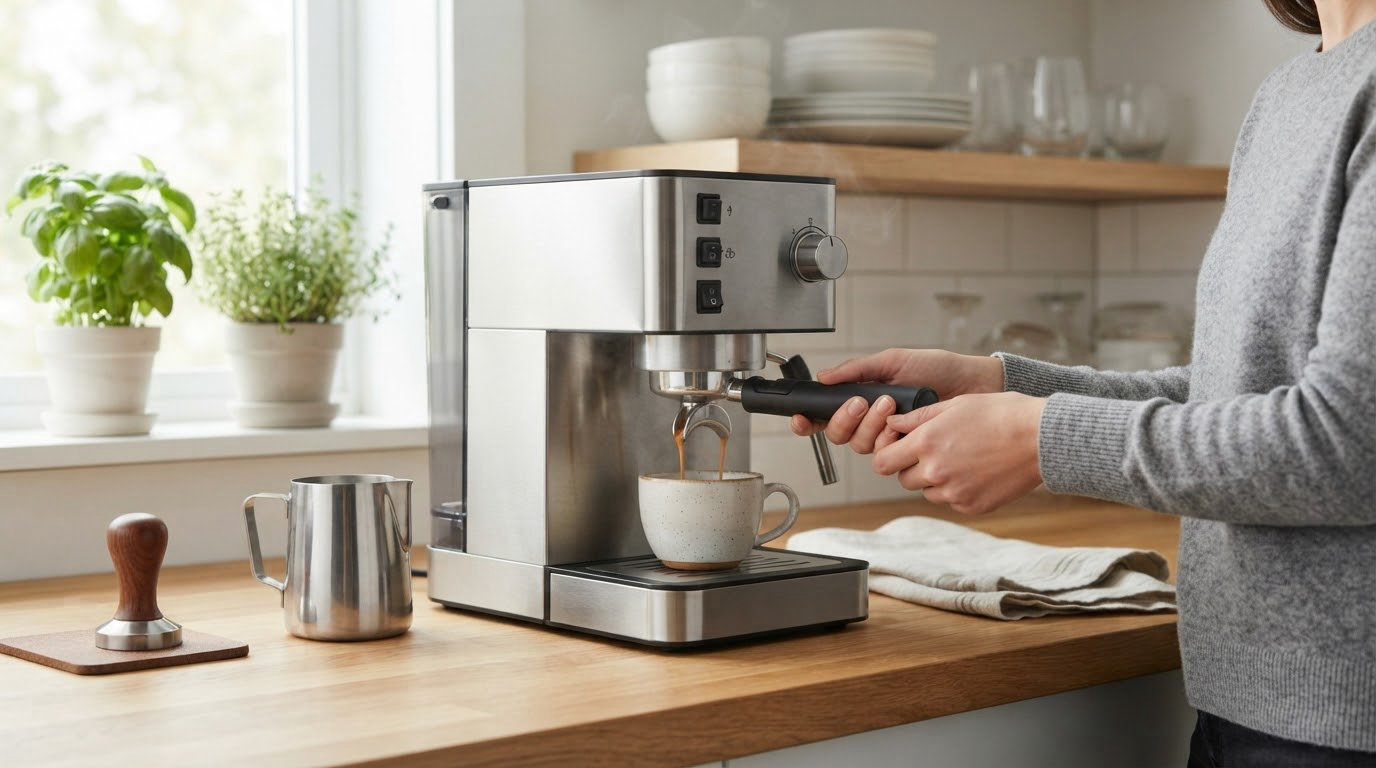
If you want one machine that hands you a latte on a busy morning without a single manual step, the Mr. Coffee ECMP1000 is the pick to watch during Prime Big Deal Days. Its one-touch panel runs the milk frother for you, and it carries more owner reviews on Amazon than any other machine in this guide. Two alternatives suit different routines: the De’Longhi Stilosa EC260 if you want to learn the craft by hand, and the CASABREWS CM5418 if a pressure gauge and a narrow footprint matter most.
Prime Big Deal Days runs October 6-7, 2026, so treat every pick below as a machine worth watching while the event is on rather than a confirmed markdown. Prices move through the window, and the buttons are the only place the current number lives.
Our Top 3 Picks for Best Amazon Prime Big Deal Days Espresso Machine Deals Under $200 in 2026
Mr. Coffee ECMP1000
- Automatic milk frother
- One-touch control panel
- Single or double shot
Best Amazon Prime Big Deal Days Espresso Machine Deals Under $200 Compared
| Product | Specifications | Action |
|---|---|---|
| Mr. Coffee ECMP1000 |
|
Check Deal Price |
| De’Longhi Stilosa EC260 |
|
Check Deal Price |
 CASABREWS CM5418 CASABREWS CM5418 |
|
Check Deal Price |
 Hamilton Beach 40715 Hamilton Beach 40715 |
|
Check Deal Price |
 Gevi ECMG0 Gevi ECMG0 |
|
Check Deal Price |
 CASABREWS 3700 Essential CASABREWS 3700 Essential |
|
Check Deal Price |
 Neretva PE3670U Neretva PE3670U |
|
Check Deal Price |
 Nespresso Vertuo Pop+ Nespresso Vertuo Pop+ |
|
Check Deal Price |
 AIRMSEN BCM2308 AIRMSEN BCM2308 |
|
Check Deal Price |
How We Chose
Every machine here was compared on the same set of fields: pump type and pressure, boiler wattage, tank size, steam wand design, control type and footprint. Owner ratings and review volume on Amazon carried equal weight, since a thin review base tells you very little about a machine that heats water. We checked the specifications and owner reviews on October 2026.
1. Mr. Coffee ECMP1000: Best for One-Button Lattes
- Automatic frother does the milk work for you
- One-touch panel for espresso latte or cappuccino
- Removable tank and milk container
- Most owner reviews in this group
- Compact 11.22 inch width
- Frother reliability drops with long daily use
- Shot temperature settles only after a descale
- Plastic tamper included bends under pressure
Verdict: the least fussy way to get a proper milk drink into a cup at 7am.
Nothing else in this list removes this much decision-making from the morning routine. You press a button, the shot runs, and an automatic frother heats and textures the milk while you are still reaching for the mugs. For someone moving from cafe habit to home habit, that gap between wanting a latte and actually producing one is the thing that kills the habit, and this machine closes it.
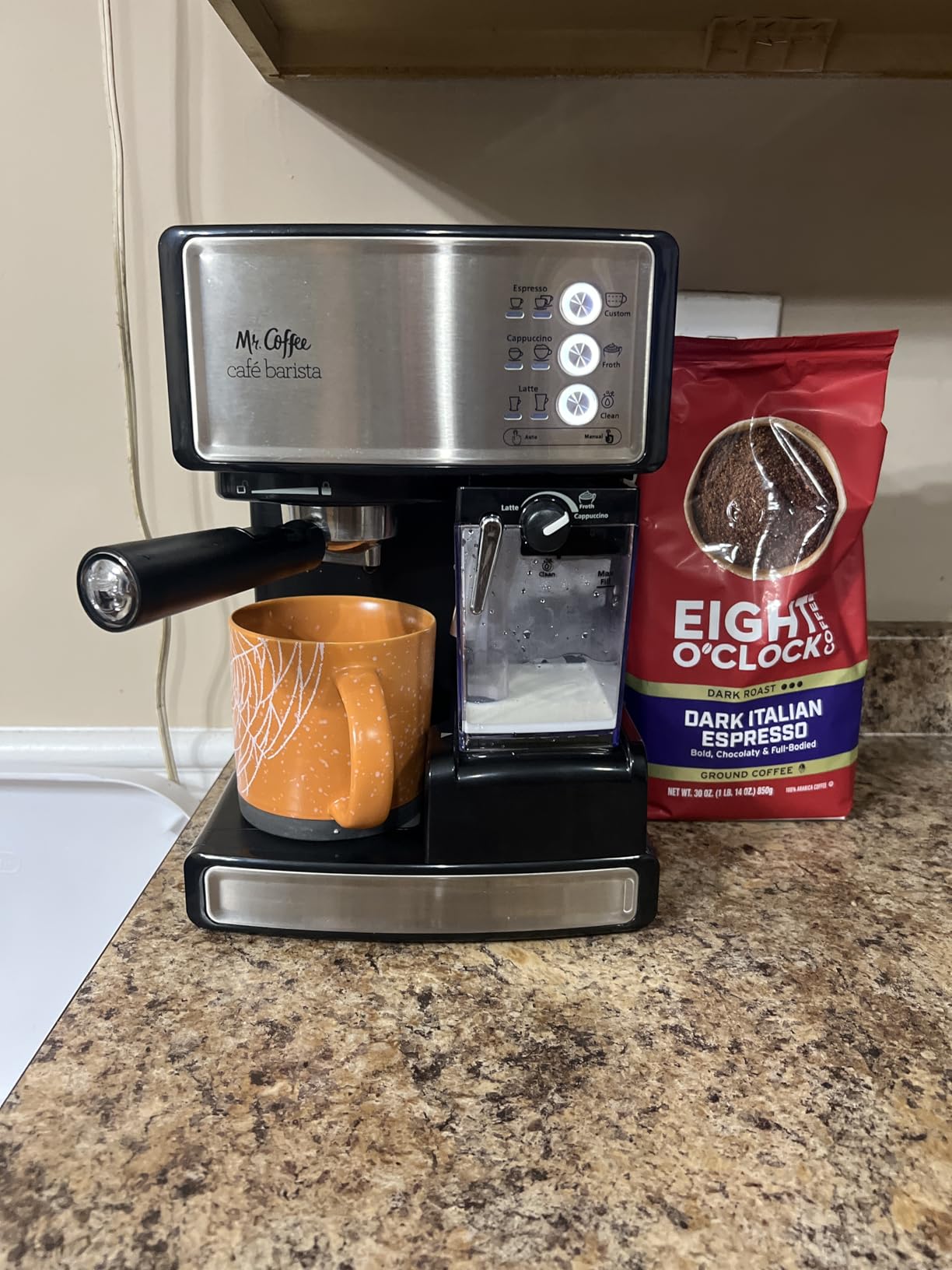
The 15-bar pump pulls a shot with visible crema, and the filter basket takes a single or double. The removable water tank and milk container both lift out for filling and washing, which is the part most automatic machines get wrong. At 10.4 pounds and 11.22 inches wide, it takes up less counter than a drip machine of the same class.
Owners are consistent about what it takes to get good results from it. Run a cleaning cycle before the first cup, grind fresh whole beans, and swap the plastic tamper for a metal one. The learning curve is real but it is short, and the reviews describe cappuccinos that hold up after about ten trial runs.
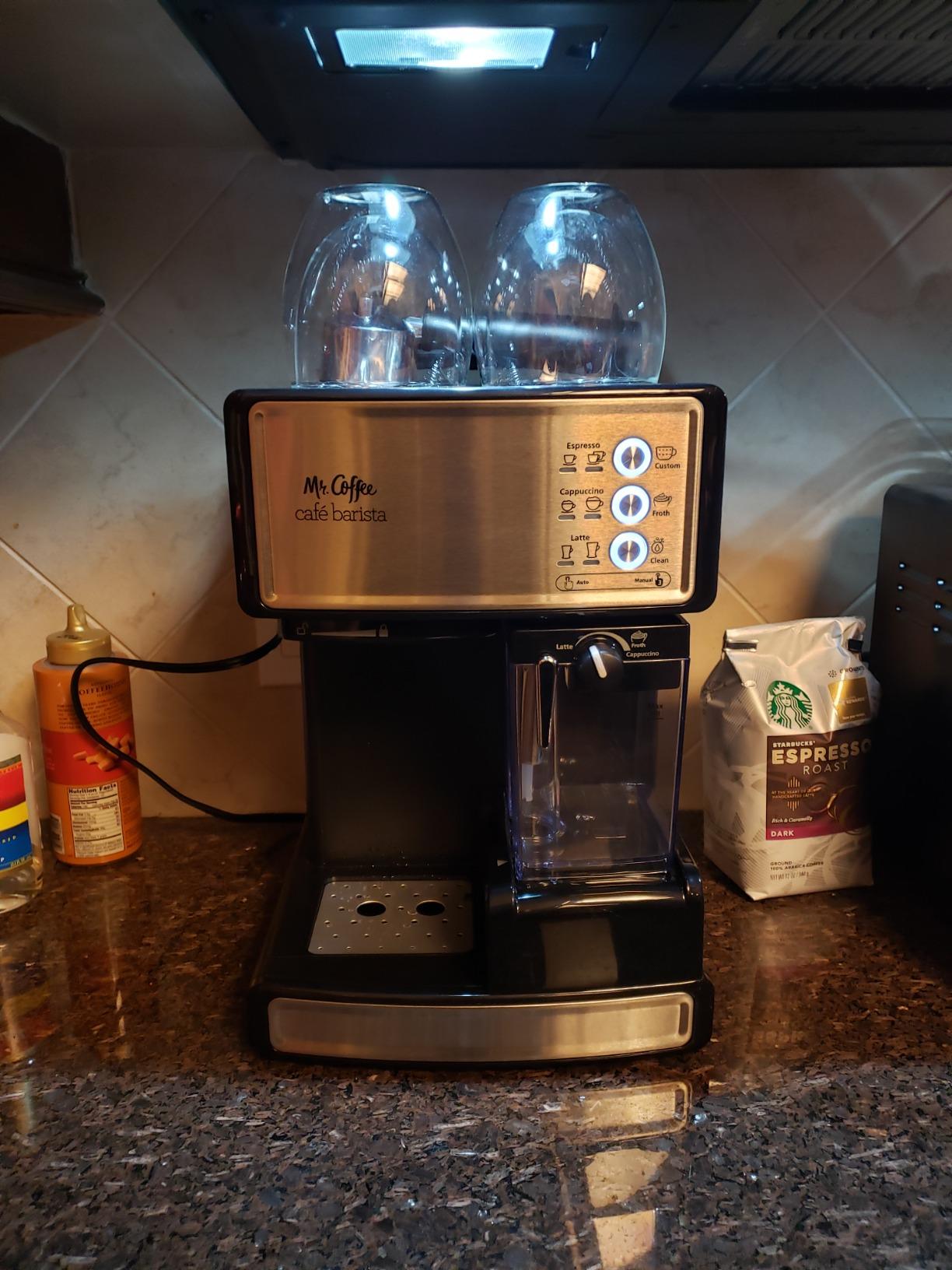
Good to know: the reported weak points are the plastic tamper that ships in the box, shot temperature that only settles once the machine has been descaled, and frother units that lose steam after many months of daily use. If you want a machine you can adjust rather than operate, the CASABREWS CM5418 gives you a pressure gauge and a manual wand to learn on.
2. De’Longhi Stilosa EC260: Best for Learning by Hand
De’Longhi Stilosa Compact Manual Espresso Machine, Manual Milk Frother
- Stainless steel boiler rated for years of service
- Manual steam wand gives full control
- Portafilter scoop and both filters included
- Narrow 9.45 inch body suits a small counter
- Fully manual so grind and tamp take practice
- Manual frothing is slower than automatic milk systems
- Only 1000 ml tank means frequent refills
Owners treat the Stilosa as a teaching machine, and that is exactly what it is good at. You push the pump yourself, you stop the shot yourself, and you hold the steam wand yourself. Every variable that a one-button machine hides becomes visible here, which is why it keeps coming up as a first pick for people who want to understand where their espresso goes wrong.
The stainless steel boiler is the part worth paying attention to. It is the same component family that keeps owners running this machine for years, and unlike a plastic-bodied machine the wear item is not the housing. At 8.6 pounds and 9.45 inches wide, it is narrower than most of the list, and the box includes the portafilter, measuring scoop and tamper, plus single and double filters.
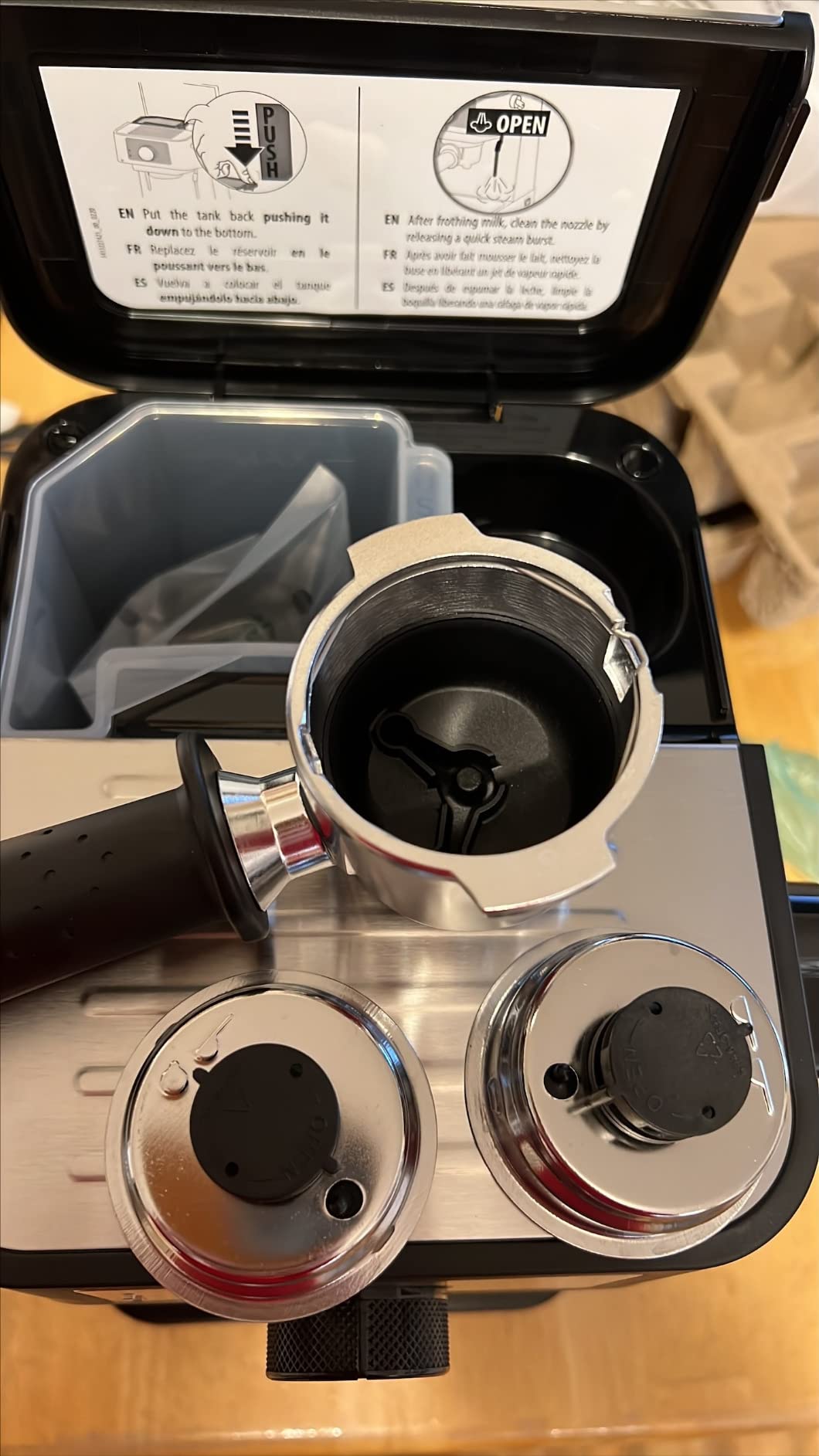
Skip it if: you want to make six drinks before work without watching a clock. Manual frothing takes longer, and the 1000 ml reservoir means a refill partway through a morning. For hands-off milk drinks, the Mr. Coffee ECMP1000 does the same job in a fraction of the time.
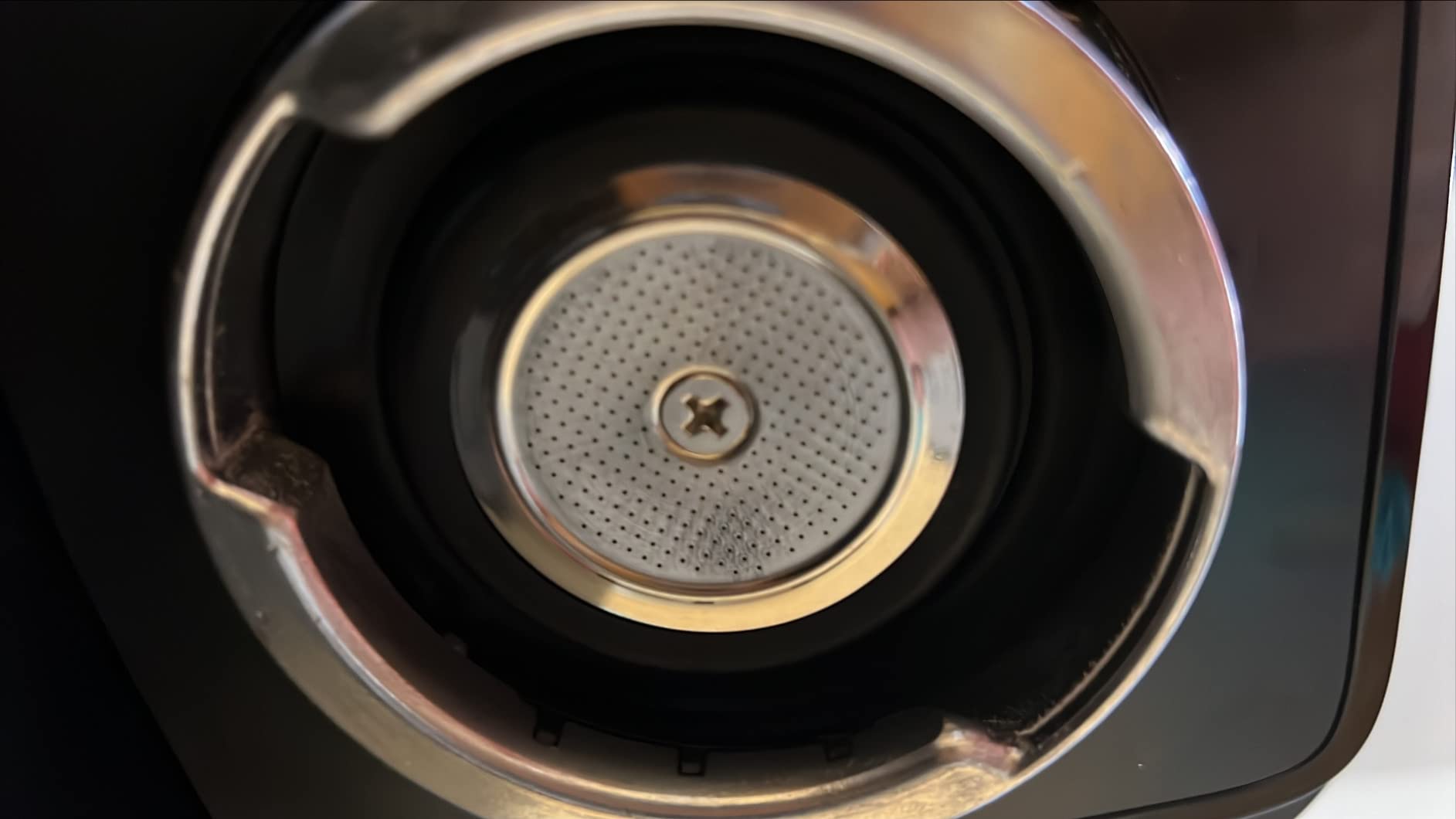
Regular owner advice reads the same way across reviews: buy a burr grinder, warm the machine with a water flush before pulling, and budget time for cleaning. That advice is not specific to this machine. It is what separates a satisfying first year from a frustrating one at any price in this bracket.
3. CASABREWS CM5418: Best for Dialing In Shots
- Built-in pressure gauge for extraction feedback
- Only 5.47 inches wide
- 20 bar pump on a 1350W boiler
- Hot water function on the side knob
- Steam wand handles microfoam
- Must cool down between frothing and brewing
- Uninsulated wand gets very hot
- Plastic portafilter baskets and spoon tamper
- No milk pitcher included
Verdict: the machine you buy once you want to stop guessing and start measuring.
A pressure gauge on a machine in this bracket is rare, and it changes what a first year looks like. You can watch the needle sit in the range you want instead of guessing from the sound of the pump. Owners use it to compare a coarser grind against a finer one, which is exactly the feedback loop that separates people who enjoy making espresso from people who quietly go back to the drive-through.
The footprint is the other headline. At 5.47 inches wide and 11.97 inches tall, it is slimmer than a drip coffee maker, which matters enormously in an apartment kitchen. Owners running it daily report fast heat-up and a solid feel for a budget machine, and the comparison that comes up most often is against machines well outside this price band.
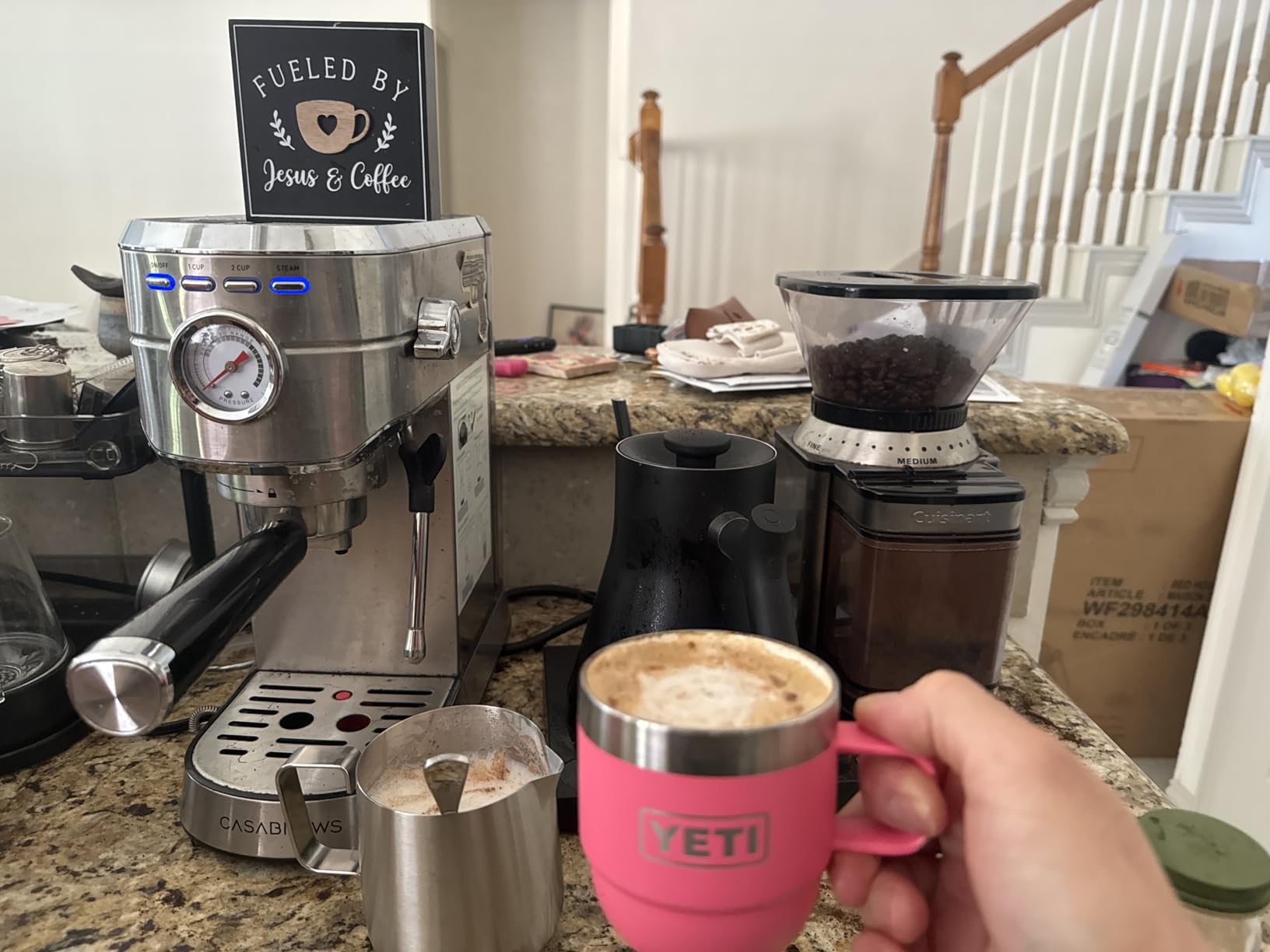
Two habits solve most of the complaints in the reviews. Pull the espresso before you froth the milk, and treat the cool-down as part of the routine rather than a fault. The included plastic portafilter, baskets and spoon tamper are widely replaced with metal parts, and a stainless pitcher is worth adding at the same time.
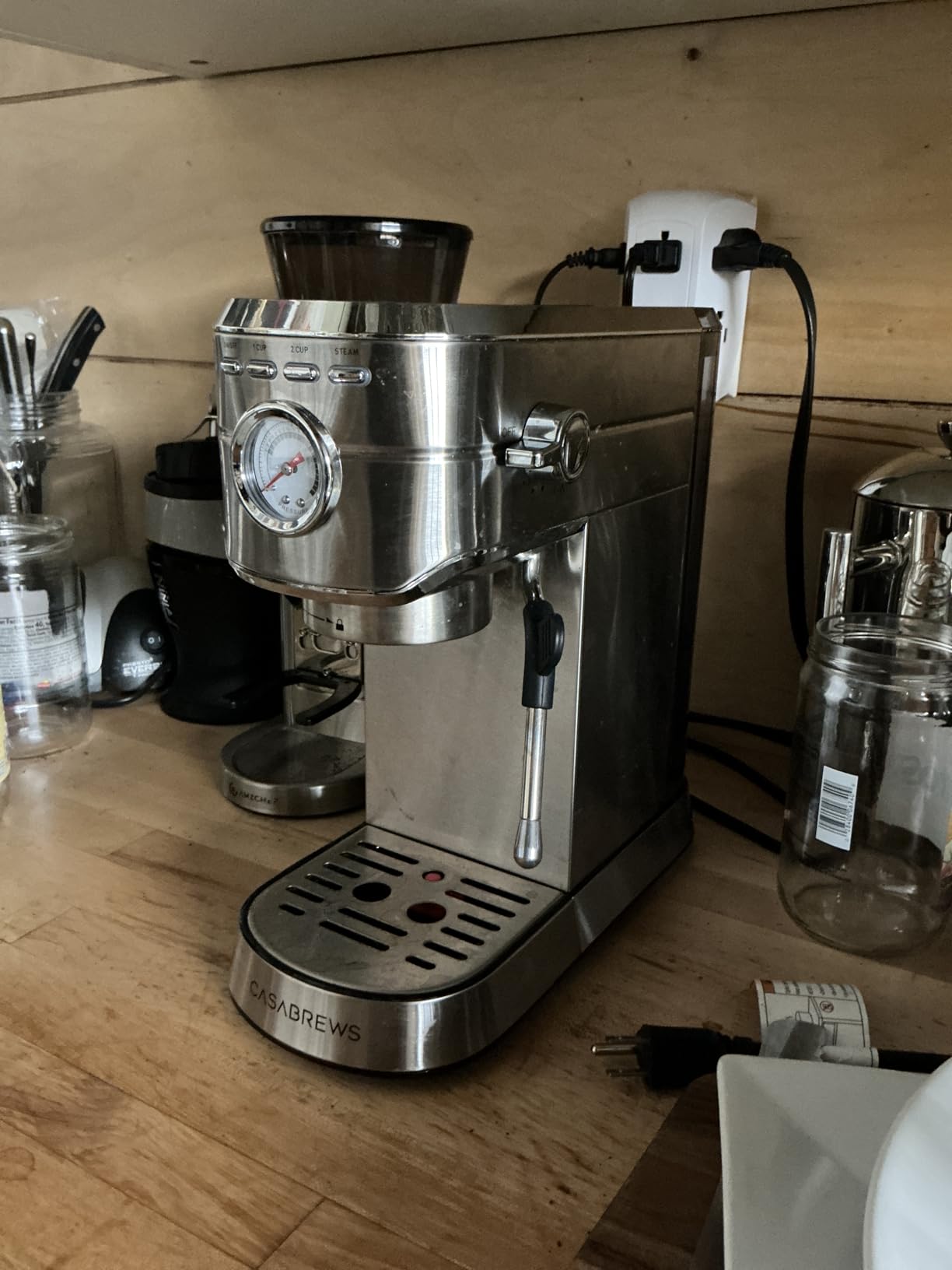
Compared with the De’Longhi Stilosa EC260, the CM5418 pushes the water for you and shows you what is happening while it does. Compared with the Gevi ECMG0 it does not meter your shot volume for you, though it carries roughly twice the owner review history. If latte art is the goal rather than a reliable cappuccino, both do the job once the milk is warm enough.
4. Hamilton Beach 40715: Best for Two Drinks at Once
- Dual spouts brew two cups together
- Works with fresh ground coffee or soft pods
- 50 oz reservoir with a visible level
- Adjustable steam control on the nozzle
- Every removable part disassembles
- Dual spouts split the shot so each cup is weaker
- Single boiler means waiting when switching
- Pod support covers soft pods only
- Lowest average rating among these picks
Households where two people drink espresso at the same time are the reason this machine exists. The dual brew head spouts split one pull into two cups, and the 50 oz reservoir means you are not refilling between them. For an office counter or a couple who take breakfast together, that combination removes most of the friction.
The pod flexibility is a genuine bonus. It takes fresh ground coffee for the days you care about and premeasured soft pods for the days you do not, which lets two people with opposite tastes share one machine. Owners also rate the disassembly highly. Nearly every removable piece comes apart for warm soapy water, and there is no hidden boiler to negotiate.
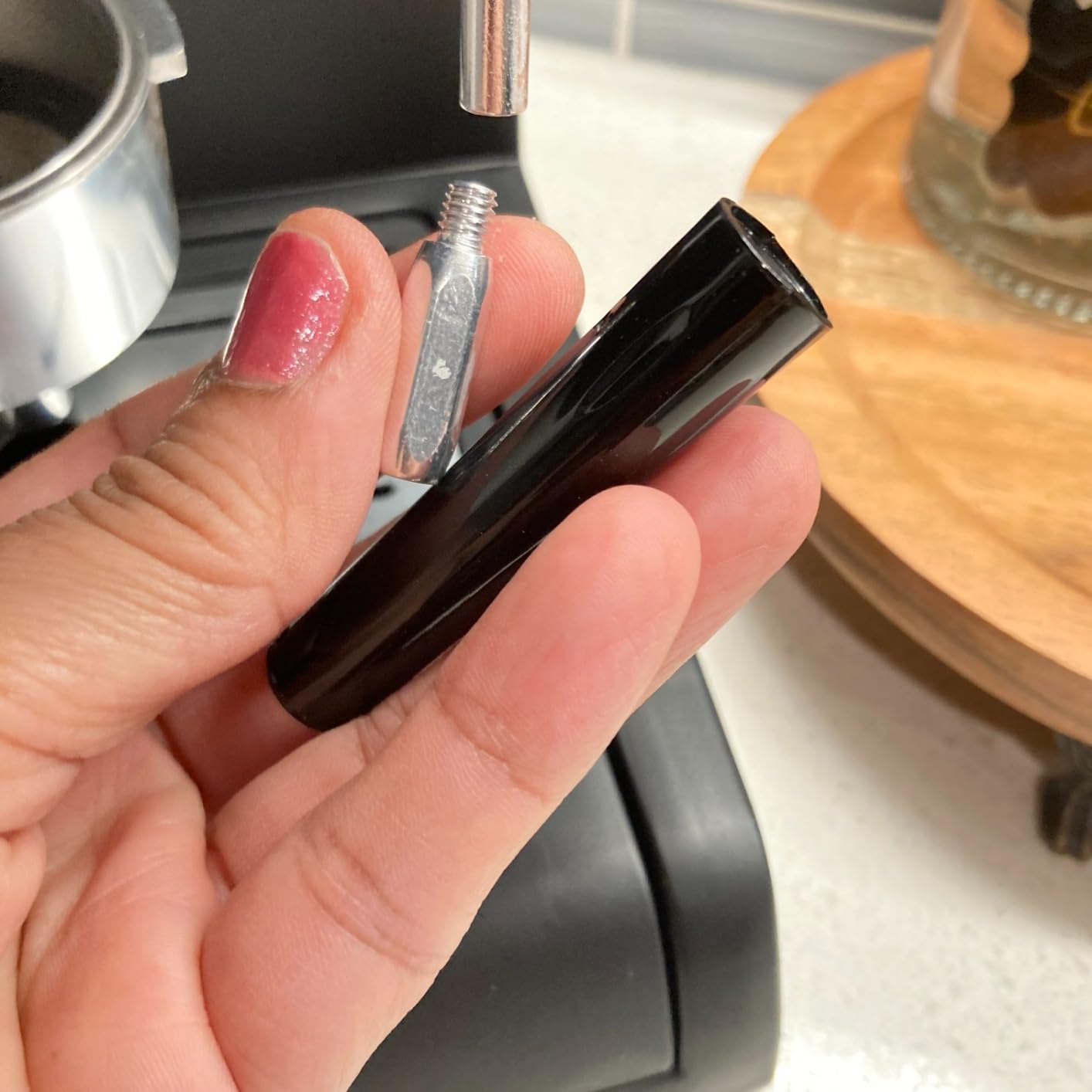
Compared with the Mr. Coffee ECMP1000: the Mr. Coffee wins on single-shot quality because its one spout is not splitting anything. This one wins on throughput and reservoir size. If you want one strong double rather than two weaker drinks, choose the Mr. Coffee. If you want two cups ready at once, the split is a fair trade.
Be clear-eyed about the trade-offs. Brewing and steaming share a single boiler, so switching between them costs a wait, and the pod compatibility covers soft pods only, not standard K-Cup or Nespresso Original capsules. The 4.0 average rating in the reviews reflects those compromises more than any single defect.
5. Gevi ECMG0: Best for Repeatable Shots
Gevi 20 Bar Compact Espresso Machine for Home,Latte、Cappuccino Coffee Maker
- Auto-metered single and double shot buttons
- Pressure gauge for dialing in beans
- Pre-infusion before the pump engages
- Stainless steel housing
- Compact 5.5 inch width
- Shuts off after steaming so a second drink waits
- Plastic spoon tamper is worth replacing
The Gevi solves the single biggest reason first machines disappoint. Its shot buttons meter the water for you, so the second cup tastes like the first one instead of turning sour because you held the button a beat too long. Combined with the pressure gauge and pre-infusion, it removes the two variables that trip up most beginners.
NTC temperature control is what sits behind the consistency. Rather than guessing at heat, the machine measures it, and long-term owners report performance that holds beyond a year of daily use. At 8.6 pounds and 5.5 inches wide it keeps the compact profile that makes it viable in a small kitchen, and the full stainless steel housing is a step up from the plastic-bodied machines in this price band.
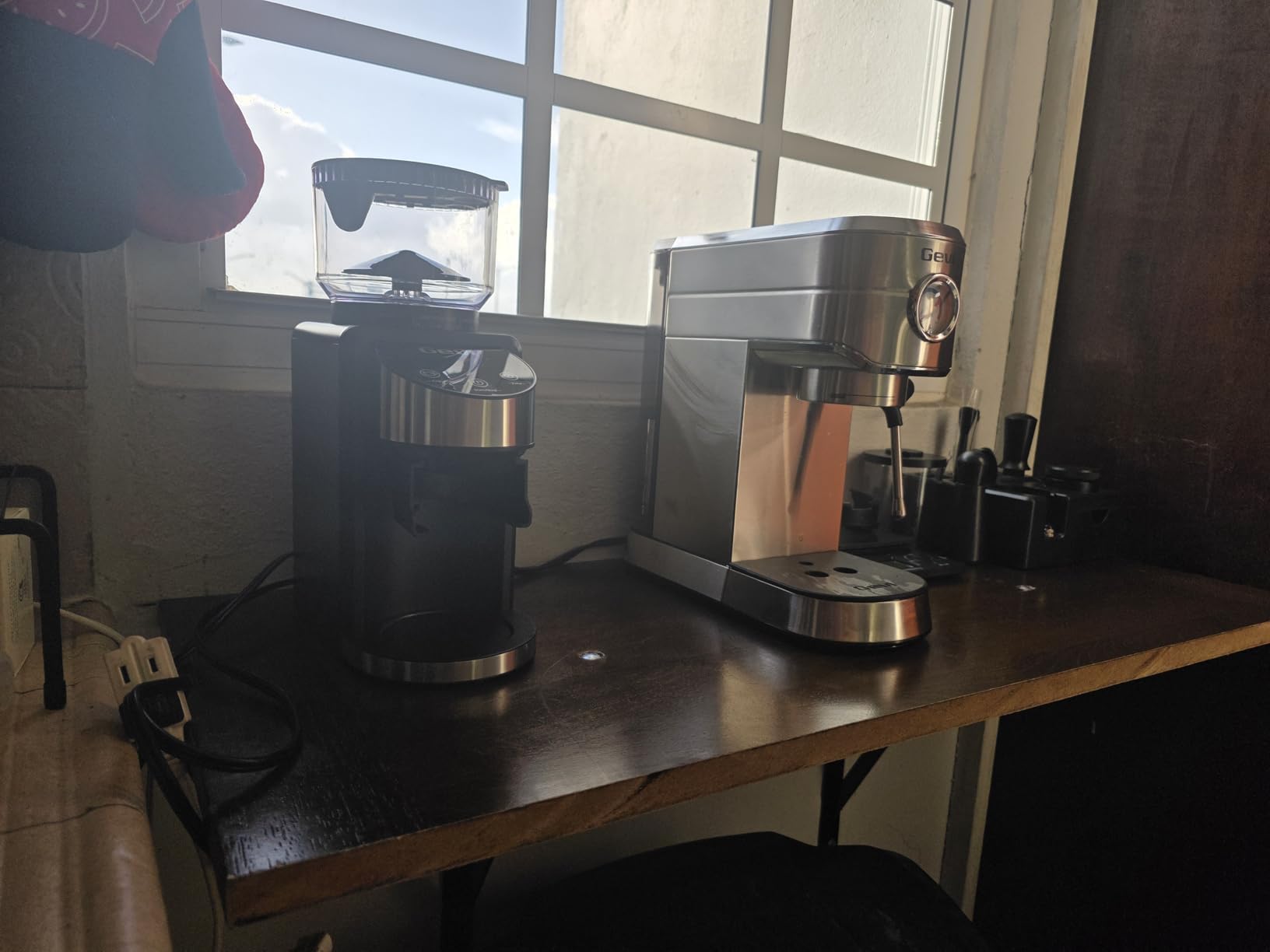
Plan for one interruption. Owners are clear that the machine shuts off after steaming, so a second milk drink means waiting for it to power back on. Owners also suggest a short warm-up for the steam wand before the first pour, and replacing the plastic spoon tamper with a weighted metal one from the start.
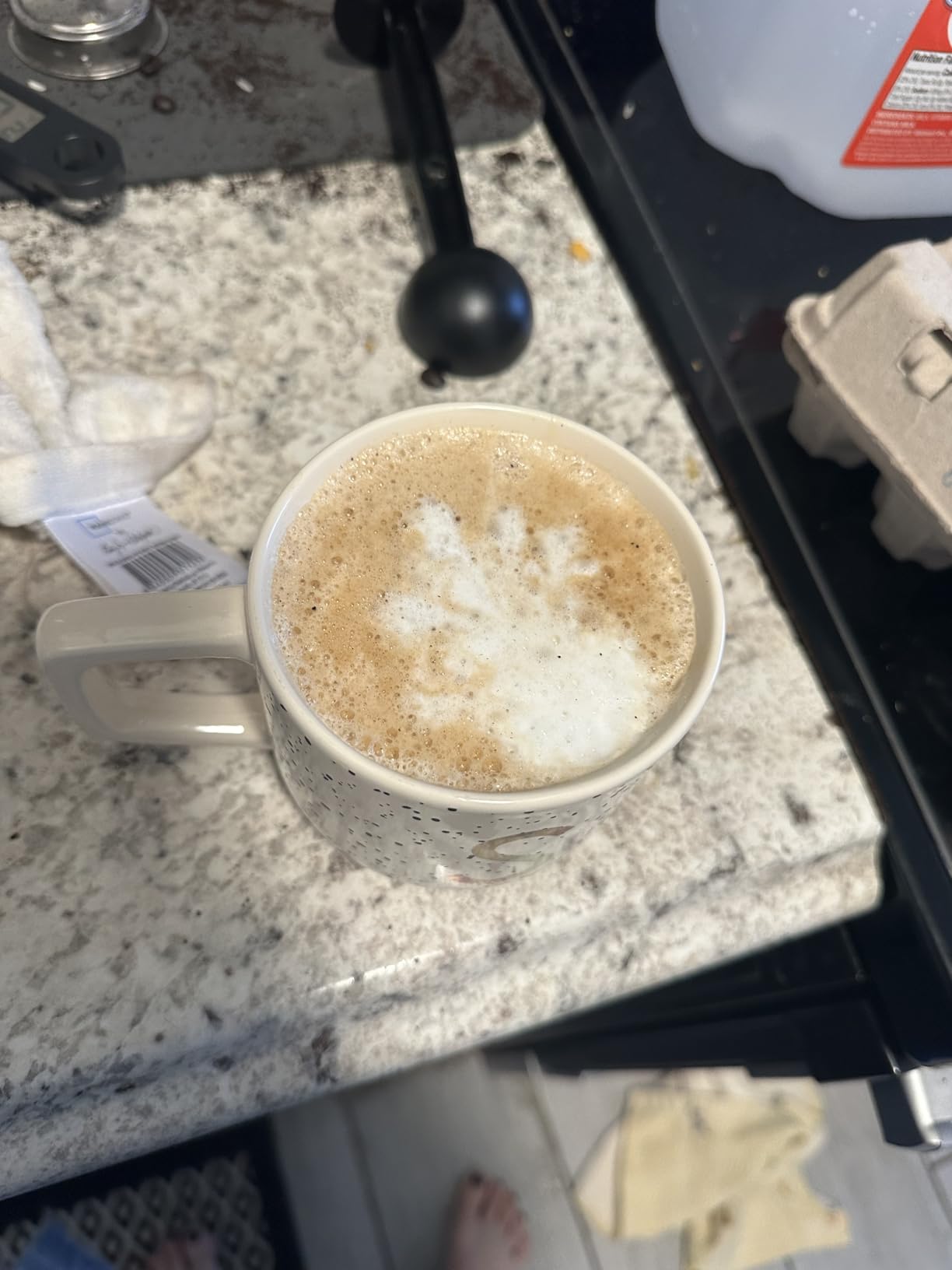
Where it differs from the CASABREWS CM5418 is volume control rather than capability. Both have gauges, both run a 20-bar pump on a 1350W boiler, and both are narrow. The CM5418 leaves the shot in your hands and carries more owner history, so pick it for hands-on work. Pick the Gevi if you would rather press a button and get the same result twice.
6. CASABREWS 3700 Essential: Best for Heavy Morning Use
CASABREWS 3700 Essential Stainless Steel Espresso Machine with Steam Wand
- 43.9 oz tank rarely needs a refill
- Removable tank and drip tray clean easily
- Owners report steady results with daily use
- Solid fit with no rattling
- Compact 5.7 inch width
- No pressure gauge on this model
- Steam wand has a continuous run limit
- Very finicky about grind size
- Plastic spoon tamper gets replaced
This is the workhorse of the list. Owners run it every morning and describe results they are happy to compare against machines well outside this bracket, which is the strongest durability signal in the whole set. The fit and finish are tight with no rattling, and the tank size means a full household can drink espresso without anyone topping up a reservoir mid-morning.
There is a deliberate trade here. It ships without a pressure gauge, so you are dialing in by eye and sound rather than by needle, and the steam wand has a continuous run limit that needs a short recovery pause. For most people that is invisible. For someone who wants to see extraction happen in real time, the CASABREWS CM5418 is the same brand with a gauge added.
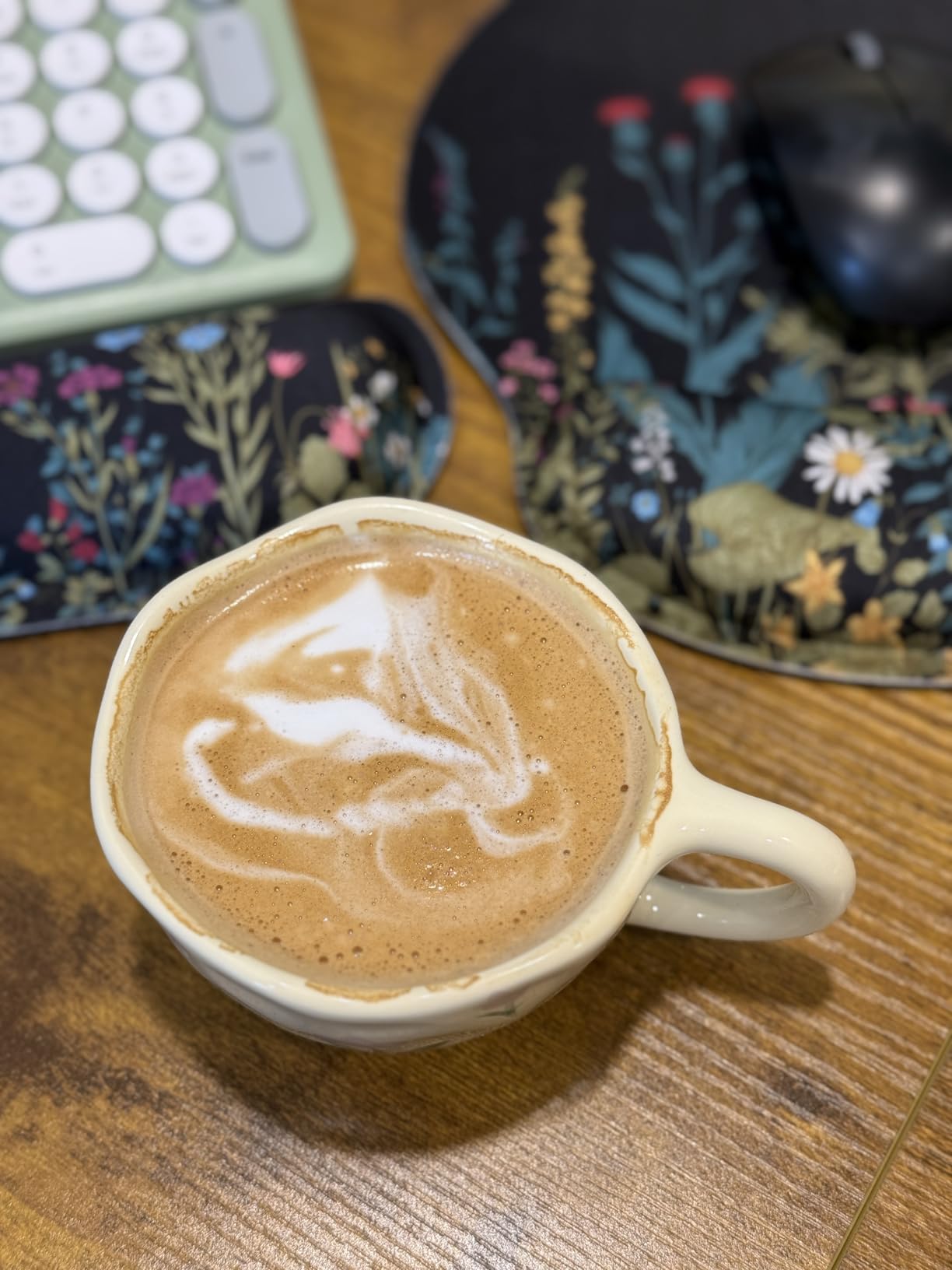
Two owner tips carry most of the value. Flush the group with hot water before the first shot to clear a faint plastic taste from the first cups, and move to a bottomless portafilter once the grind is right. The bundled plastic spoon-tamper is the component most reviewers replace first.
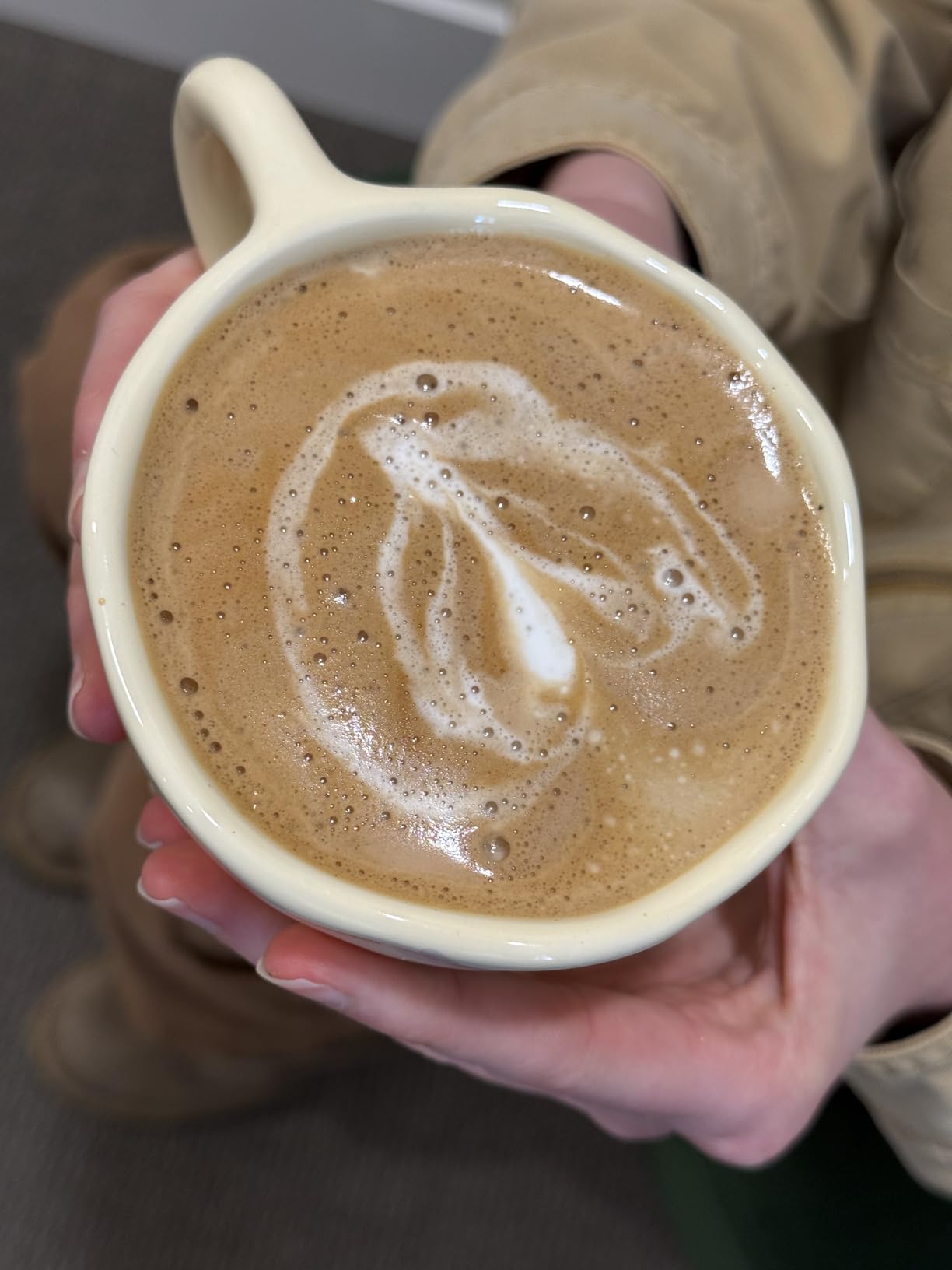
Good to know: this machine is finicky about grind size and struggles with true espresso fineness until you dial it in properly. That is not a flaw so much as the price of the bargain at this level, and it is the single most common reason owners regret a first machine. Pairing it with a real burr grinder removes almost all of it.
7. Neretva PE3670U: Best for Seeing Temperature
Neretva 20 Bar Espresso Machine Super Compact Espresso Coffee Machine
- On-machine temperature display
- Pre-infusion reduces extraction bubbles
- 1.3L removable water tank
- 4.4 average rating on 1330 reviews
- Listed at 17 pounds despite the compact description
- Entry-level build quality for the claims
- Review base is smaller than most picks here
Temperature is the quiet variable behind most disappointing first shots, and this is the one machine here that shows it to you. The on-machine display lets you watch the reading during both brewing and steaming, so you can see a cold group instead of guessing. Owners cite that display and the pre-infusion stage as the reasons this machine performs above its tier.
Pre-infusion wets the puck at low pressure before the full pump engages, which is what reduces air bubbles and uneven extraction. The 1350W boiler and 20-bar pump match the rest of the compact field, and owners report steam that stays steady while you texture milk.
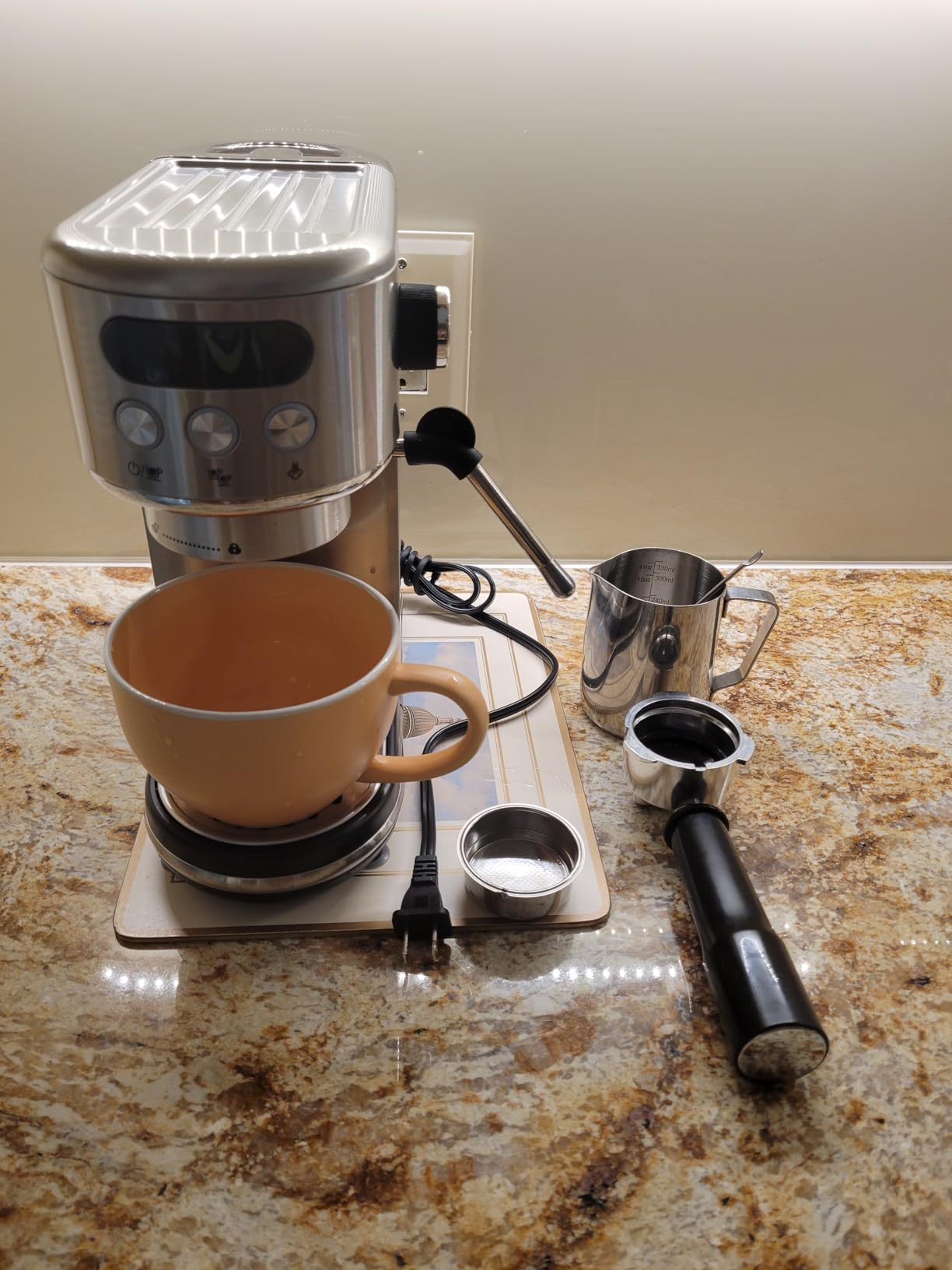
Good to know: two things to weigh before you commit. The listing states 17 pounds, which is heavier than the compact description suggests, so measure the spot where the drip tray slides out. And the review base here is smaller than most machines in this guide, so owner experience here is thinner evidence.
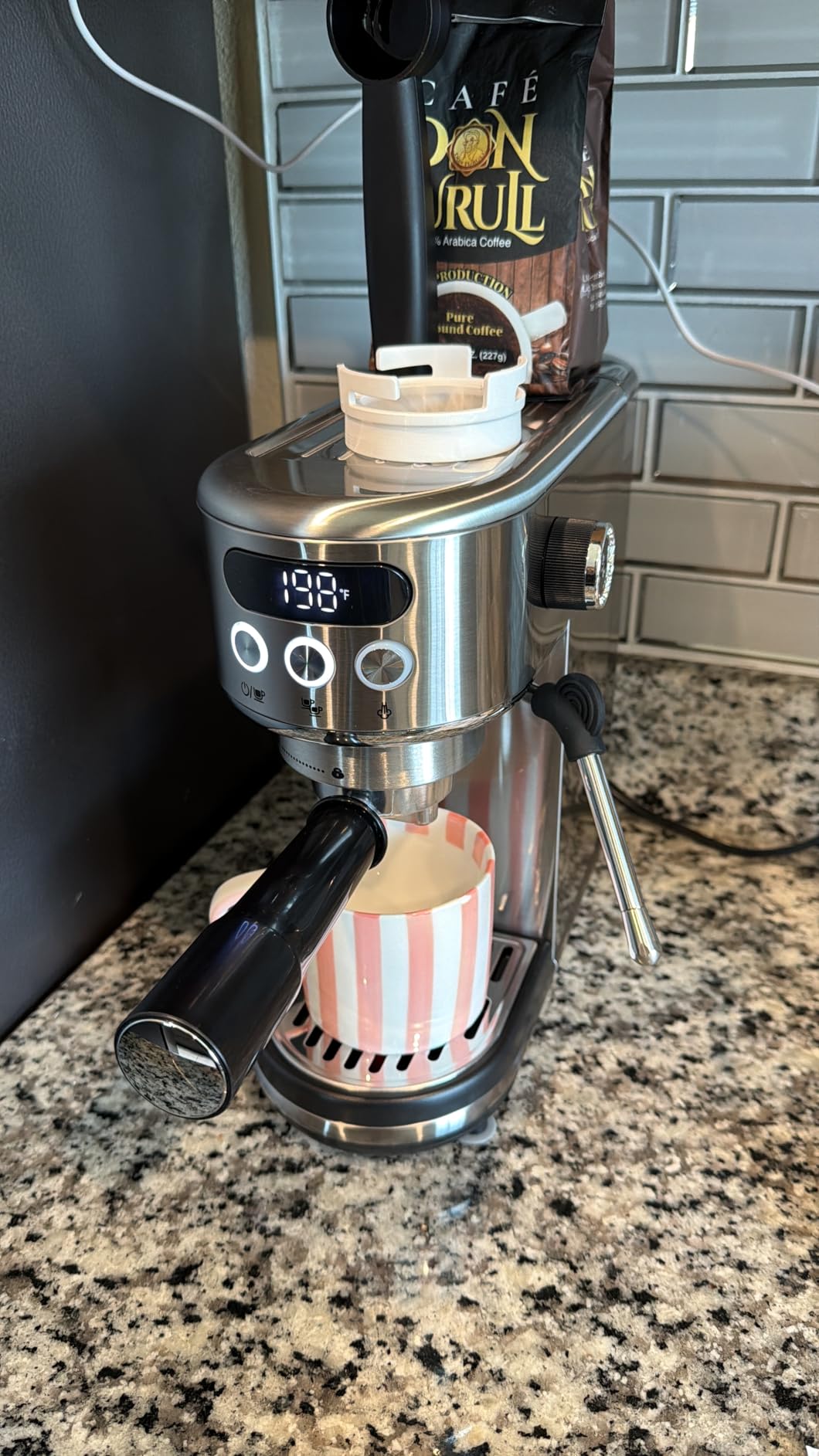
The build quality is entry-level next to the specification claims, and that is the honest reason this one sits below the CM5418 and the Gevi despite a higher average rating. If you want temperature data and a compact body, it delivers. If you want a machine with deep owner history behind it, the CASABREWS 3700 Essential is the safer version of the same idea.
8. Nespresso Vertuo Pop+: Best for Capsule Convenience
Nespresso Vertuo Pop+ Deluxe Coffee Machine with Milk Frother, Titan Silver
- Ready in 30 seconds with automatic pod ejection
- Five cup sizes including espresso and lungo
- Milk frother included in the box
- Brews hot or over ice
- Sleek body small enough to leave out
- Capsules only come in the Vertuo format
- Running cost adds up for heavy drinkers
Nothing else here gets you a drink in the time it takes to boil a kettle. Thirty seconds from cold to a double espresso, automatic pod ejection, and a frother in the box make this the machine for people who do not want a morning project. It also looks good enough to leave on the counter, which matters more than people admit.
The Vertuo capsule format is the dealbreaker to think through first. Capsules come in a wide range of styles including limited editions, and brewing over ice works, but the system is proprietary and the per-cup cost climbs fast for a household drinking three or four drinks a day. There is no separate hot water function either, so it cannot make tea or plain hot water.
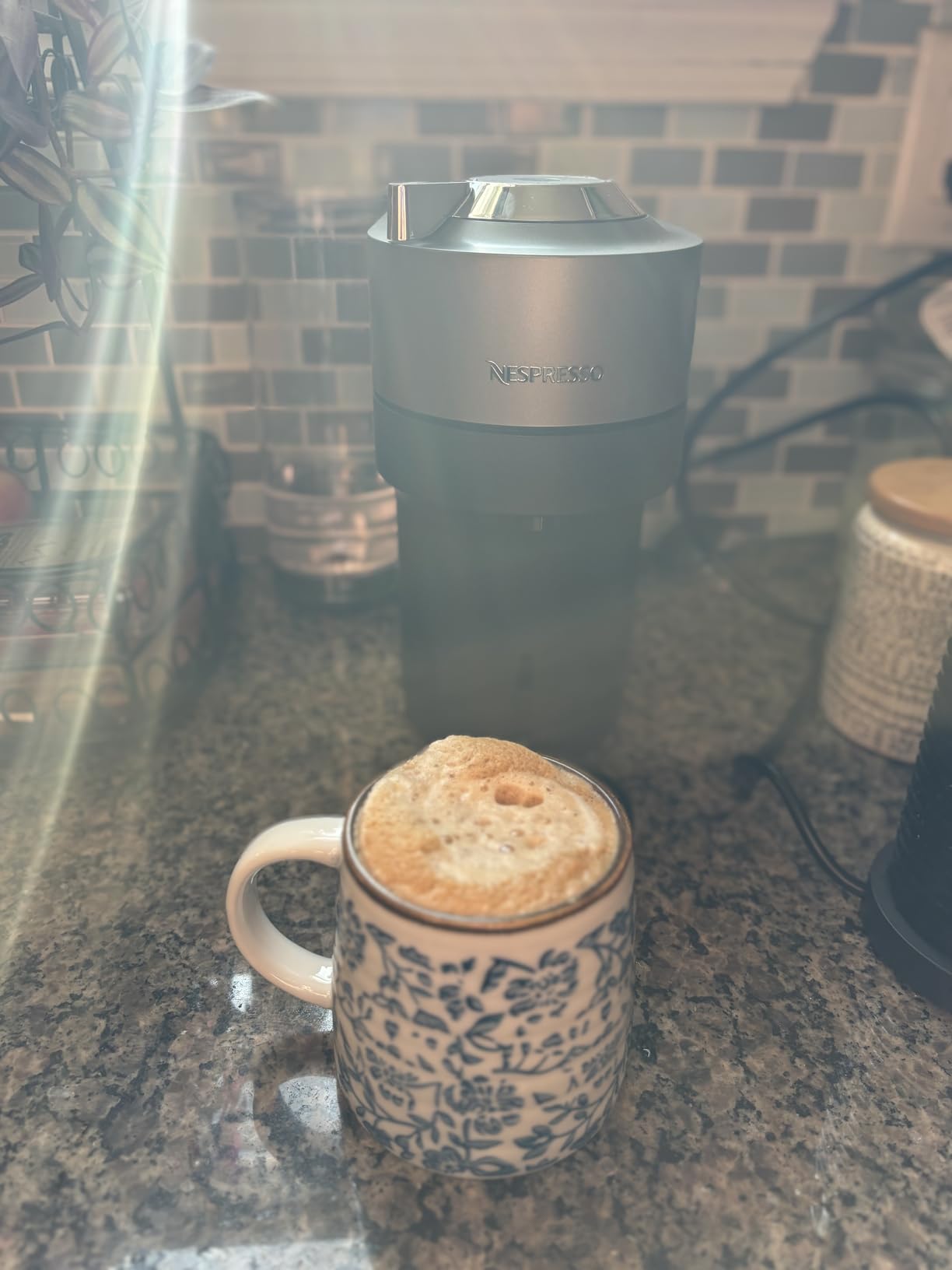
Compared with the rest of the list: every other machine here takes ground coffee and a burr grinder, which costs money up front and less per cup for the long run. This one trades that for zero skill and zero equipment. If you drink one espresso a week, the maths favours it. If espresso is a daily habit, the maths does not.
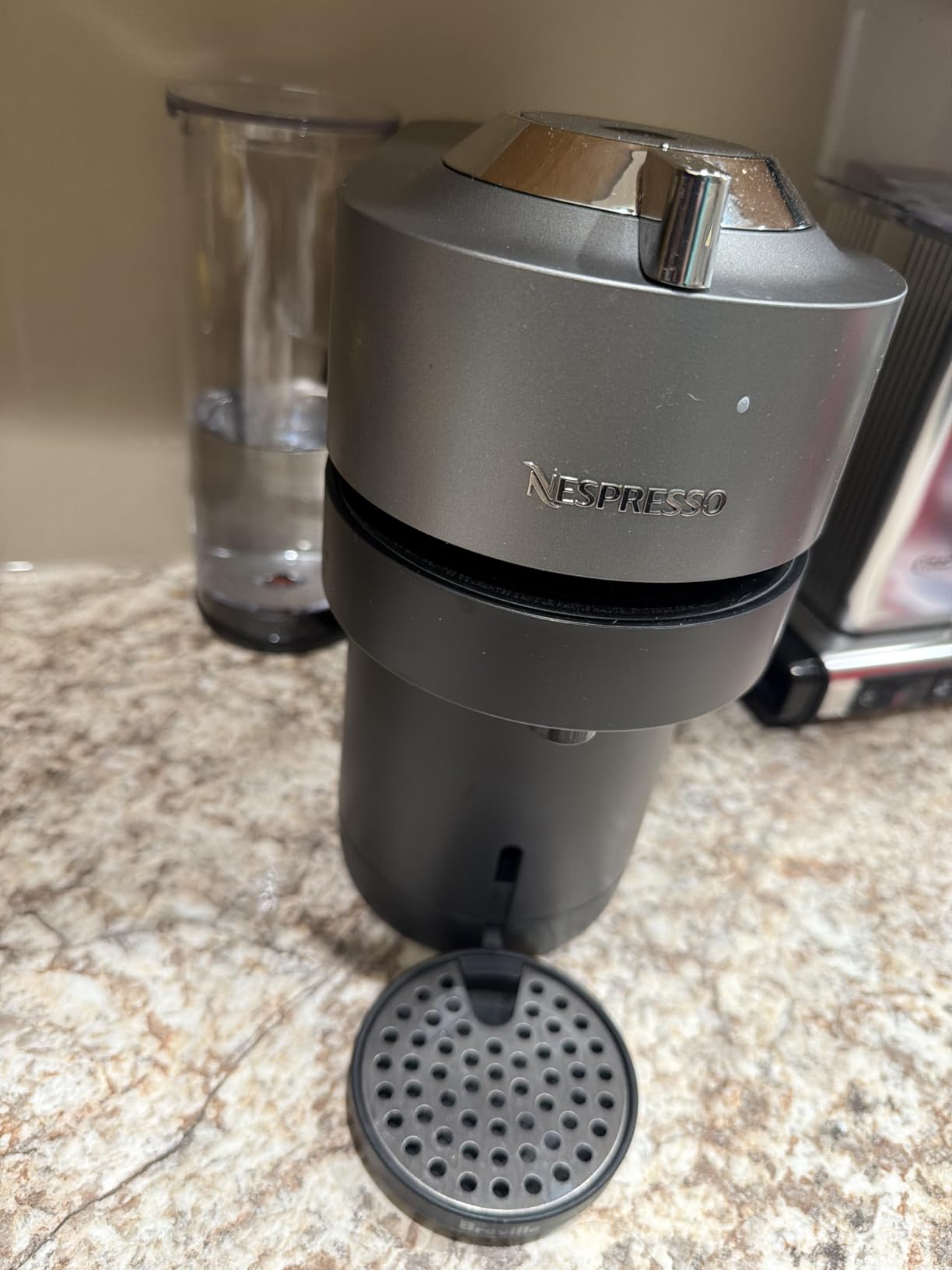
A smaller set of reviews report units that misfire, push coffee into the pod container or leak from the base, and a few buyers find the included frother no better than a cheaper standalone one. The water reservoir is small, so expect refills when you make drinks back to back.
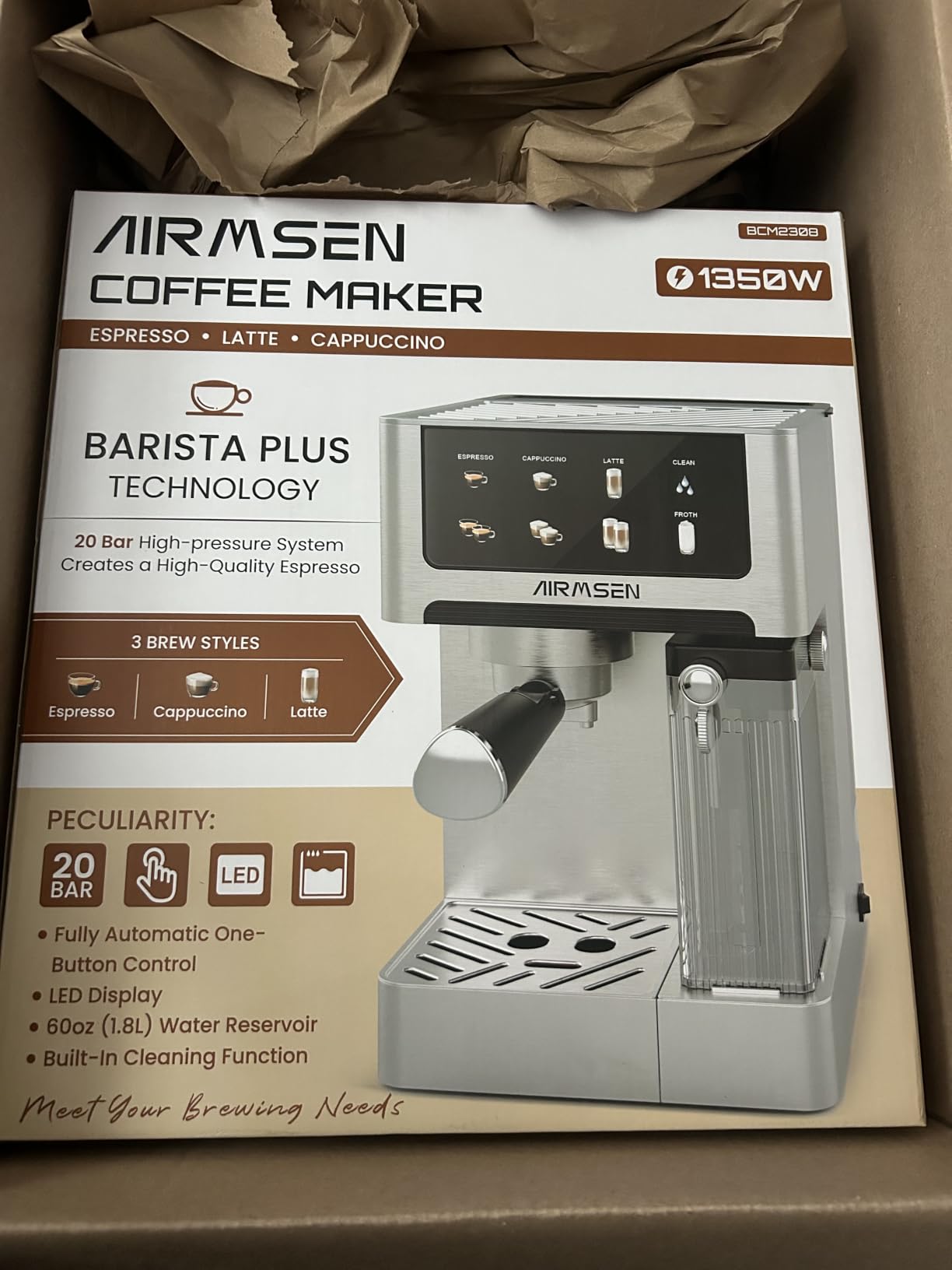
9. AIRMSEN BCM2308: Best for Back-to-Back Milk Drinks
AIRMSEN 20 Bar Espresso Machine with Automatic Milk Frother, Cappuccino & Latte Coffee Maker with Quick Brew Dual Boiler (1350W + 1000W), Stainless Steel, 60oz Water Tank, Touchscreen
- Dual boiler brews and froths with no cool-down
- Automatic milk frother that detaches for cleaning
- LED touchscreen for drink selection
- 61 oz tank cuts refills
- Stainless sides with a cup warmer
- Highest one-star share among these picks
- Body mixes plastic with the stainless panels
- Dual boiler adds weight to a compact frame
The dual boiler is the whole point of this machine. A 1350W extraction boiler and a separate 1000W frothing boiler mean you can pull a shot and steam milk at the same time, with no cool-down pause between drinks. Every other semi-automatic in this list asks you to wait, and on a machine where two people drink at once that wait is the whole problem.
The automatic detachable frother is a close second. It hands you both cups free, the nozzle pulls off for cleaning, and the milk reservoir is large enough for a run of cappuccinos without refilling. The full LED touchscreen makes drink selection simple, and the 61 oz tank means the water lasts as long as the milk.
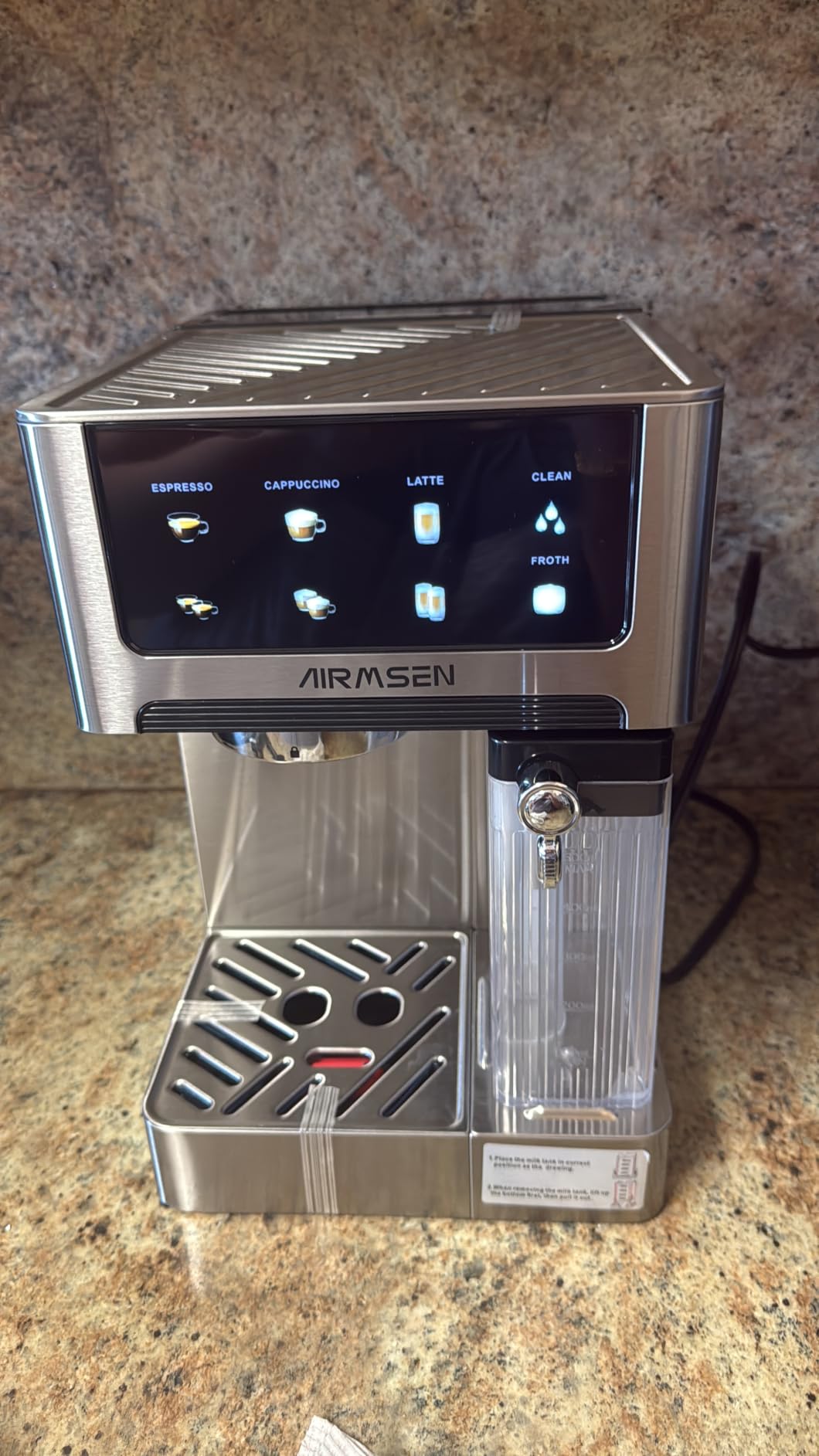
Skip it if: long-term durability is your priority. This machine has the thinnest review base in the guide at 599 reviews and the highest share of one-star ratings, which points to a meaningful failure rate. The stainless exterior also hides a body that mixes plastic with steel, so the finish overpromises a little.
If you want the same no-wait workflow with a proven brand behind it, the Mr. Coffee ECMP1000 gives you automatic milk without the cooling delay, though it needs a step of involvement when you want espresso rather than a preset drink.
How to Choose Espresso Machines During Prime Big Deal Days
Brewing Method and Coffee Compatibility
Manual machines like the De’Longhi Stilosa EC260 put every decision in your hands, which is the fastest way to learn extraction and the slowest way to get through a morning. Semi-automatic machines give you a pump button and a steam wand, which is the right fit for most first purchases. Fully automatic machines and capsule systems trade control for speed and repeatability. If you are still working out which format suits you, our guide to semi-automatic espresso machines breaks down what changes at each step.
Pressure, Temperature, and Espresso Control
The honest number is roughly 9 bar at the group head, and a 20-bar pump claim describes maximum pressure rather than what your shot experiences. Ignore the headline figure and read the boiler wattage instead, where 1350W is common at this level. A pressure gauge helps more than any spec on the box, and an on-machine temperature display helps more still. The bigger practical question is coffee: a burr grinder is the one purchase that changes results more than the machine, and our picks for burr coffee grinders for espresso are worth reading before you finalize.
Milk Frothing and Drink Variety
There are three kinds. A manual steam wand gives you control over texture and teaches you technique fastest. An automatic frother frees both hands and is more consistent day to day. A sleeve-style wand pushes air into milk rather than creating a whirlpool, so expect stiff foam rather than microfoam, and treat latte art as a stretch goal on any machine in this price band. Our roundup of espresso machines with milk frothers covers what separates the systems in more detail.
Counter Size, Tank Capacity, and Kitchen Setup
Measure the width before you order, because the surprise is usually depth and height rather than width. The narrowest machines here sit near 5.5 inches across, which is narrower than a drip coffee maker, and the usual bottleneck is clearance above the group head for a taller cup. For tank size, one person drinking two drinks a day is fine with about 34 oz, while a household or shared office counter wants 50 oz or more so nobody refills mid-morning. Our list of compact espresso machines for small kitchens covers the footprint question in full.
Cleaning, Descaling, and Ongoing Maintenance
Descaling matters more than cleaning because scale is what kills budget boilers. Run the first cleaning cycle before your first cup, then descale on a schedule that matches your water, more often on hard water. Machines with a removable tank, drip tray and filter basket make this routine fast, and the ones that disassemble fully make it a five-minute job rather than a Sunday. Budget for a replacement plastic tamper early, because the bundled ones are the weakest part of most machines here.
How to Shop Espresso Machine Deals During the Sale
Check the model number on the listing rather than the headline, because brands release near-identical versions with different tanks and control panels. Look at what is in the box, especially whether a milk pitcher and a metal tamper are included, since owners replace both. Check who sells and who ships the unit, and whether the machine is new or a renewed listing. Most offers during Prime Big Deal Days need a Prime membership, with a free trial counting, and offer levels change through the event, so a listing worth watching on day one may be different by day two.
- Confirm the model number and the included accessories before you buy.
- Judge the pressure gauge and the display before the bar number.
- Measure counter depth and height, not just width.
- Plan for a burr grinder in the budget, not just the machine.
- Expect a cool-down between brewing and steaming on any single-boiler model.
- Run a cleaning cycle before the first cup and descale on a schedule.
Frequently Asked Questions
What are the best espresso machine deals during Amazon Prime Big Deal Days under $200?
For most buyers the top three are the Mr. Coffee ECMP1000 for hands-free milk drinks, the De’Longhi Stilosa EC260 for learning by hand, and the CASABREWS CM5418 for narrow counters and a pressure gauge. Offer levels move through the event, so treat these as the machines worth watching rather than confirmed discounts.
When does Prime Big Deal Days run, and do you need a Prime membership?
Prime Big Deal Days runs October 6-7, 2026. Most offers on these machines need a Prime membership, and a free trial counts for the length of the trial. Offers can change from hour to hour, so the button on each machine is the only reliable place to see the current number.
What is the difference between 15 bar and 20 bar espresso machines?
The number describes the maximum the pump can push, not the pressure your coffee feels. What matters at the group head is roughly 9 bar, which is what a well-set shot extracts at. In practice a 20-bar claim is marketing, and boiler wattage, temperature control and a pressure gauge tell you far more about how a machine will perform.
Do I need a burr grinder to buy with a budget espresso machine?
If you already own pre-ground coffee or a blade grinder, expect disappointment from any machine at this price. Freshly ground beans from a burr grinder are the single biggest upgrade for the money, and a modest one costs less than the difference between the cheapest and dearest machines here. Most regretful first purchases trace back to skipping it.
Is a cheap espresso machine under $200 actually worth it?
Yes, with the right expectations. A machine at this level pulls a credible double shot with real crema and can steam milk well enough for a good cappuccino. What you give up is temperature stability, steam power and steam wand design. Your first shots will taste sour or bitter for a week or two while you dial in, and that is normal.
Can a sub-$200 espresso machine make latte art?
It can, but only after practice and only once the milk is properly heated. Budget machines typically use sleeve-style steam wands that push air into the milk and produce stiff foam rather than microfoam. A single-boiler model also needs a pause between frothing and brewing. Aim for a smooth, glossy pour before worrying about a rosetta.
Final Verdict: Best Amazon Prime Big Deal Days Espresso Machine Deals Under $200
Buy the Mr. Coffee ECMP1000 if you want lattes and cappuccinos with no learning curve, since its automatic frother and one-touch panel remove every step between waking up and drinking. Pick the De’Longhi Stilosa EC260 instead if you want to learn espresso properly and enjoy the process, since the manual operation shows you exactly what the machine is doing. For the widest counters, the CASABREWS CM5418 is the narrowest body here and the pressure gauge makes it the best buy for anyone who plans to dial in shots.
Go with the Gevi ECMG0 for repeatable results without effort, the CASABREWS 3700 Essential for a household drinking several drinks each morning, the Neretva PE3670U if you want to watch the temperature while it works, the Nespresso Vertuo Pop+ for speed and zero technique, and the AIRMSEN BCM2308 when two people want milk drinks without waiting for a cool-down. Whichever you pick, budget for a burr grinder and a metal tamper from the same order, and add both to an espresso tamper set that will outlast the machine. Check the current number on the button before you buy, since these offers move through the event.