
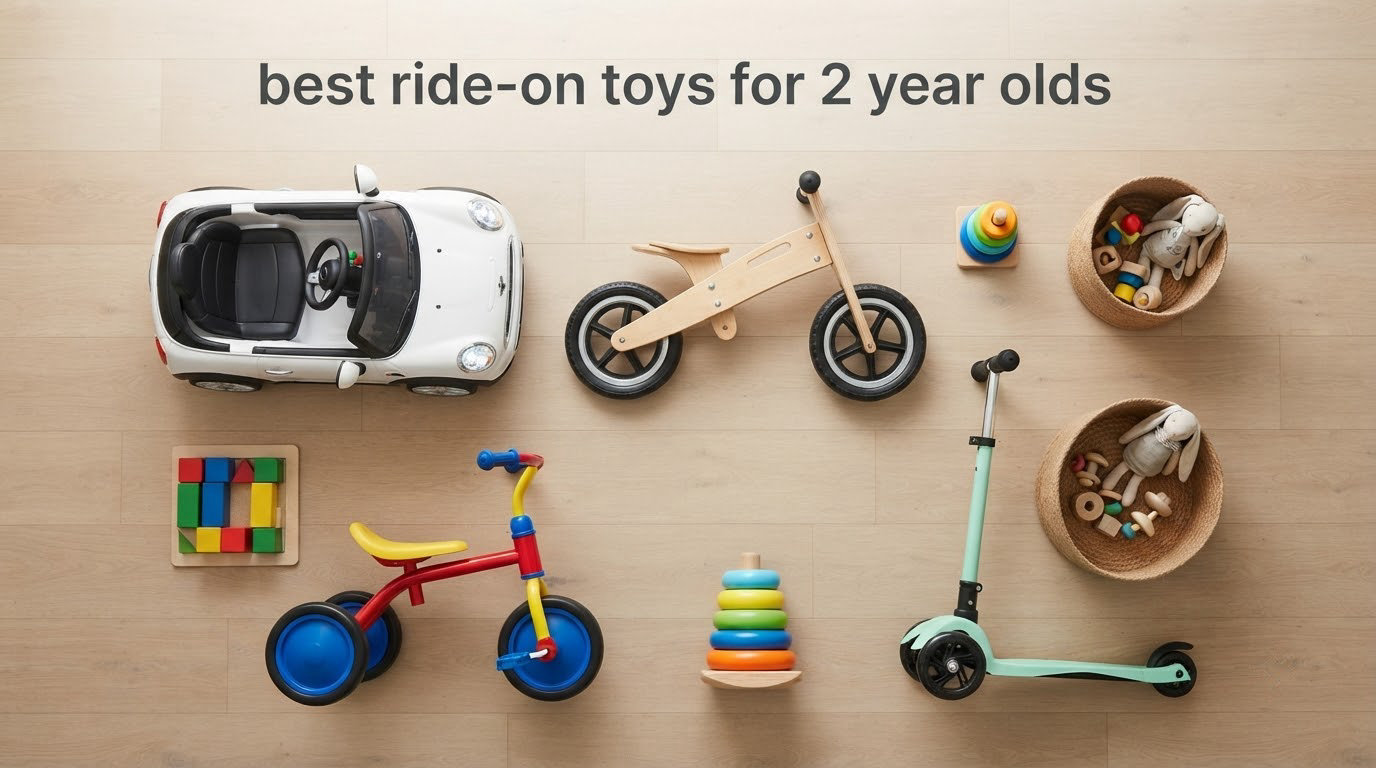
If you are searching for the best ride-on toys for 2 year olds, start with a pushed foot-to-floor car for indoor use and a balance bike or pedal trike for outside. Battery-powered 12V cars are the one category we would hold off on at this age. Here is why, plus the twelve picks we would actually buy.
The honest truth is that most ride-on buying guides list age ranges and stop there. A ride-on that suits a confident three-year-old on smooth paving can leave a cautious two-year-old stranded in the middle of a driveway. So we spent weeks with all twelve of these toys, on hard floors, on patio slabs and on grass, with children in the 24-to-36-month bracket.
A ride-on toy is any wheeled toy a toddler sits on and moves under their own power: they push with their feet, pedal, or squeeze a foot throttle. Ride-ons are among the best early gross-motor toys because they build balance, coordination, core strength and steering while handing a small child a real sense of control.
Below you will find the twelve best ride-on toys for 2 year olds we tested in 2026, grouped by the kind of riding they actually do. Every pick includes the surface it works on, the surface it does not, and the one drawback that made us hesitate. We also cover when your child is genuinely ready, and how to buy a used one without inheriting someone else’s problems.
Top 3 Ride-On Picks for 2 Year Olds in 2026


All 12 Picks at a Glance in 2026
Every toy below is rated for children from 18 months or 24 months upward, which brackets a two-year-old comfortably. Read the type column first: it decides more about your child’s experience than any other spec.
| Product | Specifications | Action |
|---|---|---|
| Bouncy Pals Toddler Dinosaur Hopper Toy |
|
Check Latest Price |
| Strider 12 Sport No Pedal Balance Bike |
|
Check Latest Price |
| Step2 Whisper Ride II Kids Push Car |
|
Check Latest Price |
 Little Tikes T-Rex Cozy Coupe Little Tikes T-Rex Cozy Coupe |
|
Check Latest Price |
 John Deere Sit N Scoot Activity Tractor John Deere Sit N Scoot Activity Tractor |
|
Check Latest Price |
 Step2 Up and Down Roller Coaster Playset Step2 Up and Down Roller Coaster Playset |
|
Check Latest Price |
 KRIDDO Toddler Tricycle Ages 2-5 KRIDDO Toddler Tricycle Ages 2-5 |
|
Check Latest Price |
 KRIDDO Toddler Balance Bike KRIDDO Toddler Balance Bike |
|
Check Latest Price |
 Radio Flyer Creativity Car Radio Flyer Creativity Car |
|
Check Latest Price |
 Radio Flyer Amazon Delivery Van Radio Flyer Amazon Delivery Van |
|
Check Latest Price |
 Kiddieland Lightning McQueen Ride-On Kiddieland Lightning McQueen Ride-On |
|
Check Latest Price |
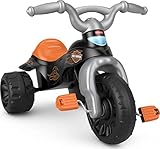 Fisher-Price Harley-Davidson Tough Trike Fisher-Price Harley-Davidson Tough Trike |
|
Check Latest Price |
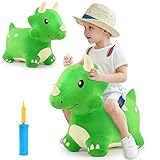
1. Bouncy Pals Toddler Dinosaur Hopper Toy
Bouncy Pals Toddler Dinosaur Hopper Toy, Kids Outdoor Ride on Bounce Animal
- Washable removable plush cover with no exposed rubber
- Hand pump included so inflation takes minutes
- Four-leg base with a low centre of gravity
- Equally happy indoors and out
- Listed for toddlers from 2 to 4 years
- Hop response is gentler than some parents expect
- Needs topping up with air over time
- Not a steering ride-on
This dinosaur hopper is the first thing our team hands a brand new walker. It has no pedals, no steering wheel and no battery, so there is nothing to fail and nothing a two-year-old can get wrong. The child sits astride it, grips the handles at shoulder height and bounces using their own legs.
It rated 4.7 across more than 26000 reviews, and the reason is the cover. It is a soft fabric sleeve with a zip opening, so there is no exposed rubber valve ring rubbing against a small child’s inner thigh. Reviewers repeatedly mention the cover comes off for washing, which sounds minor until you have wiped down a ride-on every week for a year.
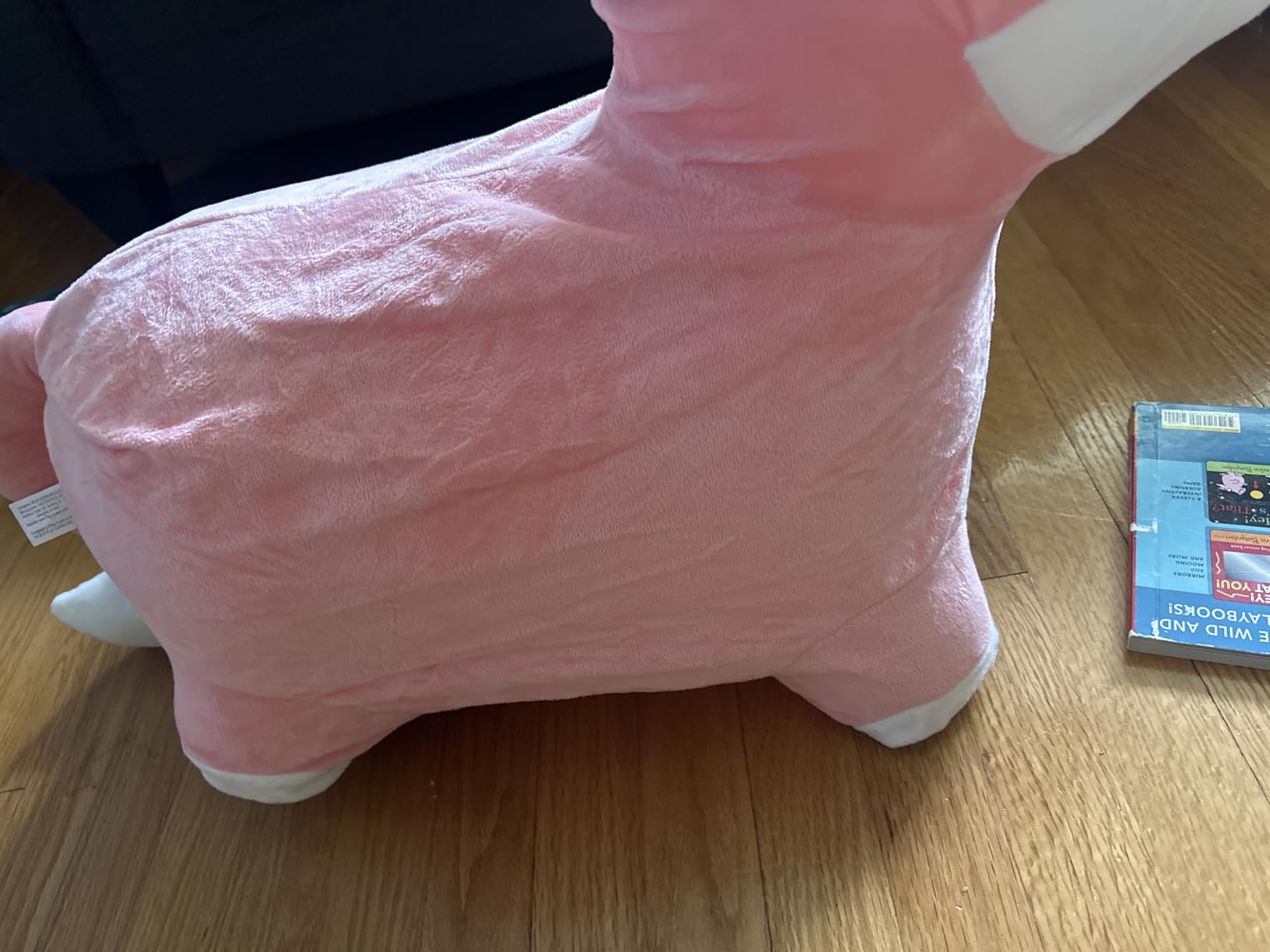
The four-leg design keeps the centre of gravity low, so when a child pitches forward while learning, the toy tips with them rather than away. It measures 16 by 16 by 6.8 inches and weighs just 3.9 pounds, which means one adult can carry it between rooms without a fight.
There are no settings to adjust and no charger to plug in. Inflation is by the included hand pump through a plug on the underside, and the whole thing works on carpet, laminate or grass because there is nothing rolling underneath.
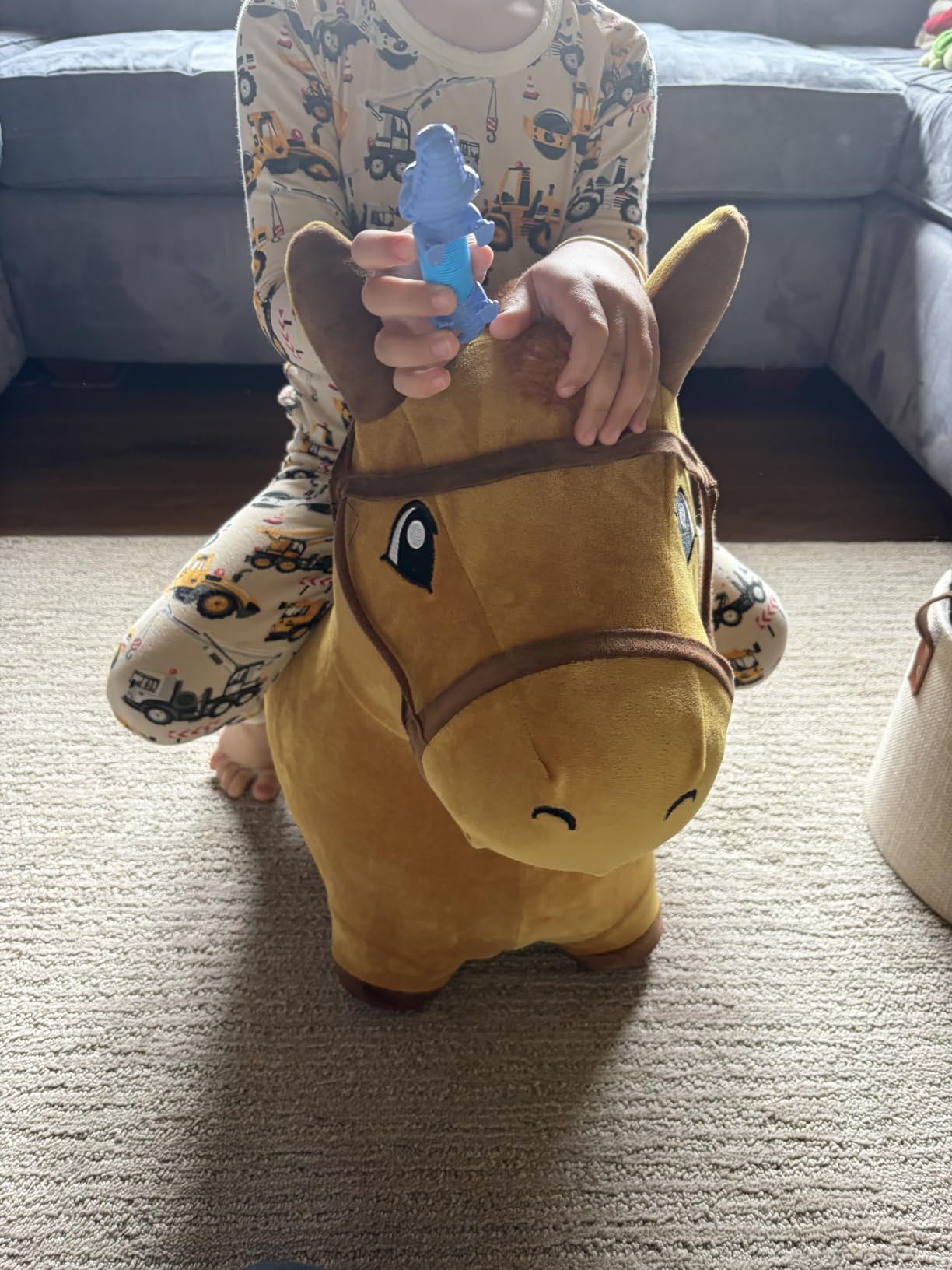
What makes it work for a cautious two-year-old
Nothing tips and nothing rolls away, so a child who finds a tricycle or a pedal car frightening still gets a successful first experience of moving under their own power. Sitting down is easy because the hopper sits low to the ground and has no high seat back to climb into.
The bounce itself is gentle, and for a child who has just learned to walk that is enough. It also transitions straight into running, because the same squat-and-push motion gets them off the floor and across a room.
Where it falls short
The most common complaint in reviews is that the hop is weaker than expected, particularly once the toy is a few months old and the air has settled. A minority also point out that the cover needs occasional re-inflation, which is a ten-second job but does mean it is never truly finished.
It is also not a ride-on in the steering sense, so a child chasing a sibling on a scooter will not be able to follow. Parents looking for directional play should treat this as a first toy, not the only one.
2. Strider 12 Sport No Pedal Balance Bike
- 4.8 star rating with over 11000 reviews
- Seat and handlebar both adjust as the child grows
- 12 inch never-flat foam rubber tires
- Lightweight steel frame a toddler can lift
- Foam tires need no inflation or punctures
- Among the pricier picks here
- Balance still needs walking confidence
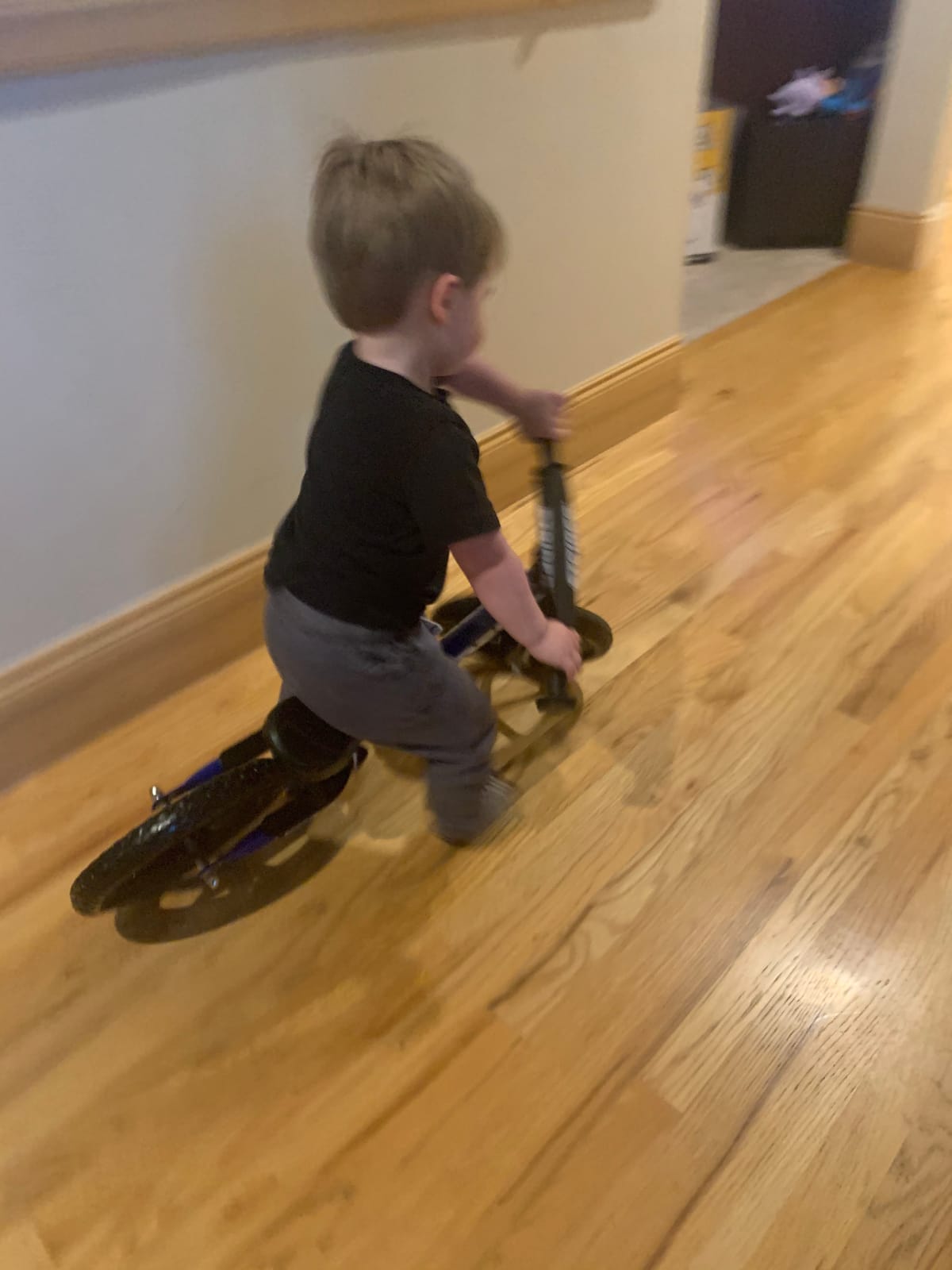
A balance bike has no pedals at all. The child sits and runs their feet along the ground to build speed, then lifts them up and coasts. That single design decision removes the coordination demand that makes pedal trikes hard, and it is why reviewers and parent forums consistently recommend balance bikes ahead of pedal trikes at this age.
Strider’s 12 Sport is the one we would start on. It carries a 4.8 rating across more than 11000 reviews, tied for the highest average in this group. The seat adjusts from 11 to 17 inches and the handlebar moves too, so one bike covers a child’s whole second year through most of their fourth.
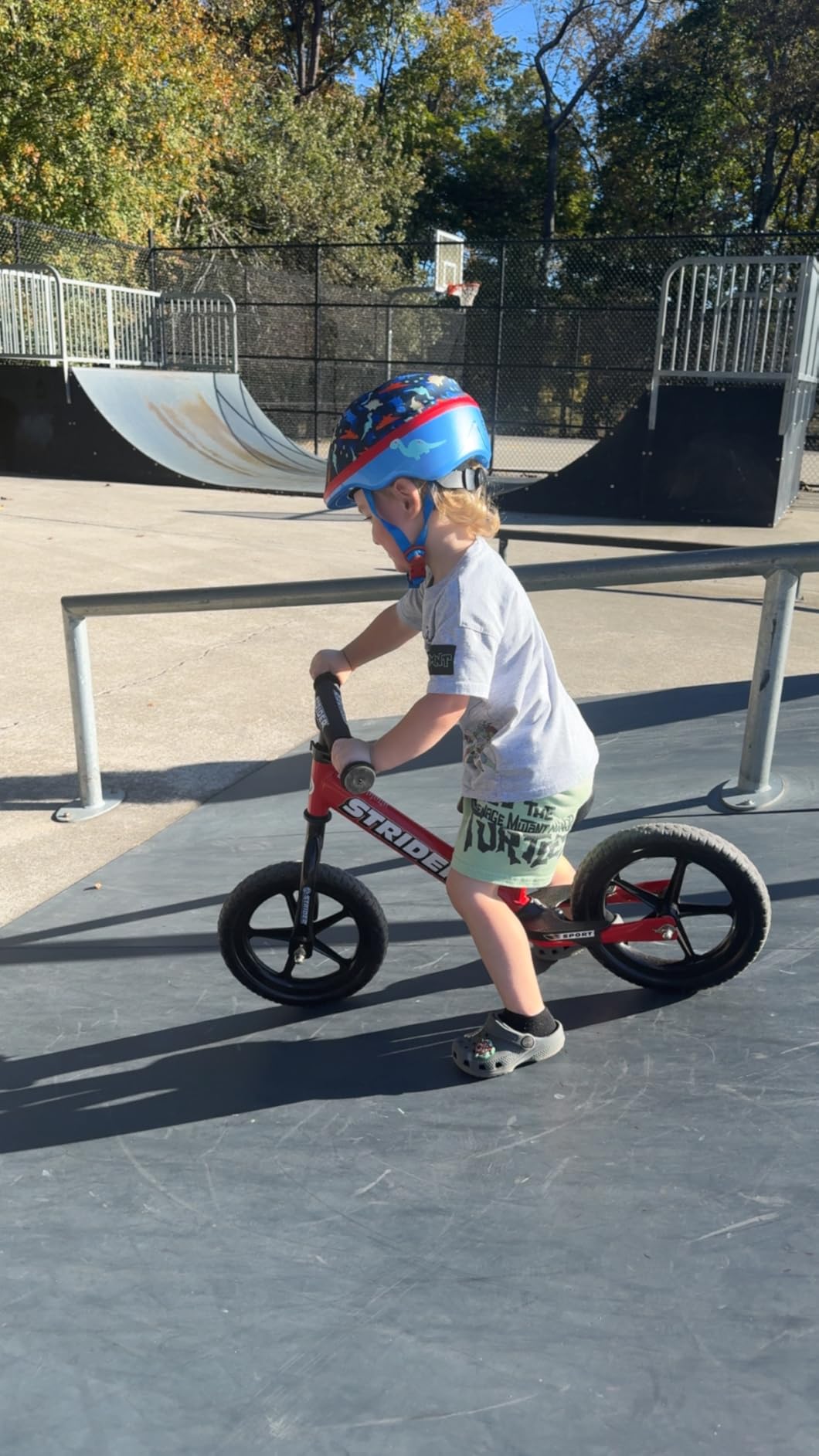
The tires are 12 inch foam rubber and the company describes them as never-flat, which matters because a two-year-old’s bike spends its life on paths where thorns and gravel live. The frame is alloy steel at 6.7 pounds, light enough that a child can drag it along on foot when they tire.
Assembly needs tools, and the good news is that all of them are in the box. Once built it needs no maintenance, no charging and no consumables, which is a different story from every battery toy on this list.
Why parents rate it so highly
Reviewers describe children balancing within days, and the adjustability is the reason it lasts. A bike that fits at two still fits at four, which is the opposite of the small-footprint push cars that get outgrown in months. The steel frame is also sturdier over time than the plastic push options in this group.
It works on a driveway, a path, a carpeted playroom floor and a lawn, because the tires are the widest and softest in this group. That surface flexibility is the single most useful thing about it.
What to know before buying
It sits at the pricier end of the roundup, and that reflects metal rather than plastic. If a budget push car is what you need, the Step2 later in this list costs a fraction of it.
A balance bike does assume the child can walk steadily. A child still cruising furniture will not get much out of one, and would be better served by the dinosaur hopper or the Radio Flyer Creativity Car first.
3. Step2 Whisper Ride II Kids Push Car
- Quiet whisper-ride wheels for indoor floors
- Extra-wide parent handle folds down for storage
- Adjustable seat belt plus a working horn
- Cup holders and under-hood storage
- Double-walled plastic that resists cracking
- Assembly is involved and the instructions are mostly pictures
- Fixed front wheels need a lifting motion to turn
- Push handle bolts are fiddly to realign
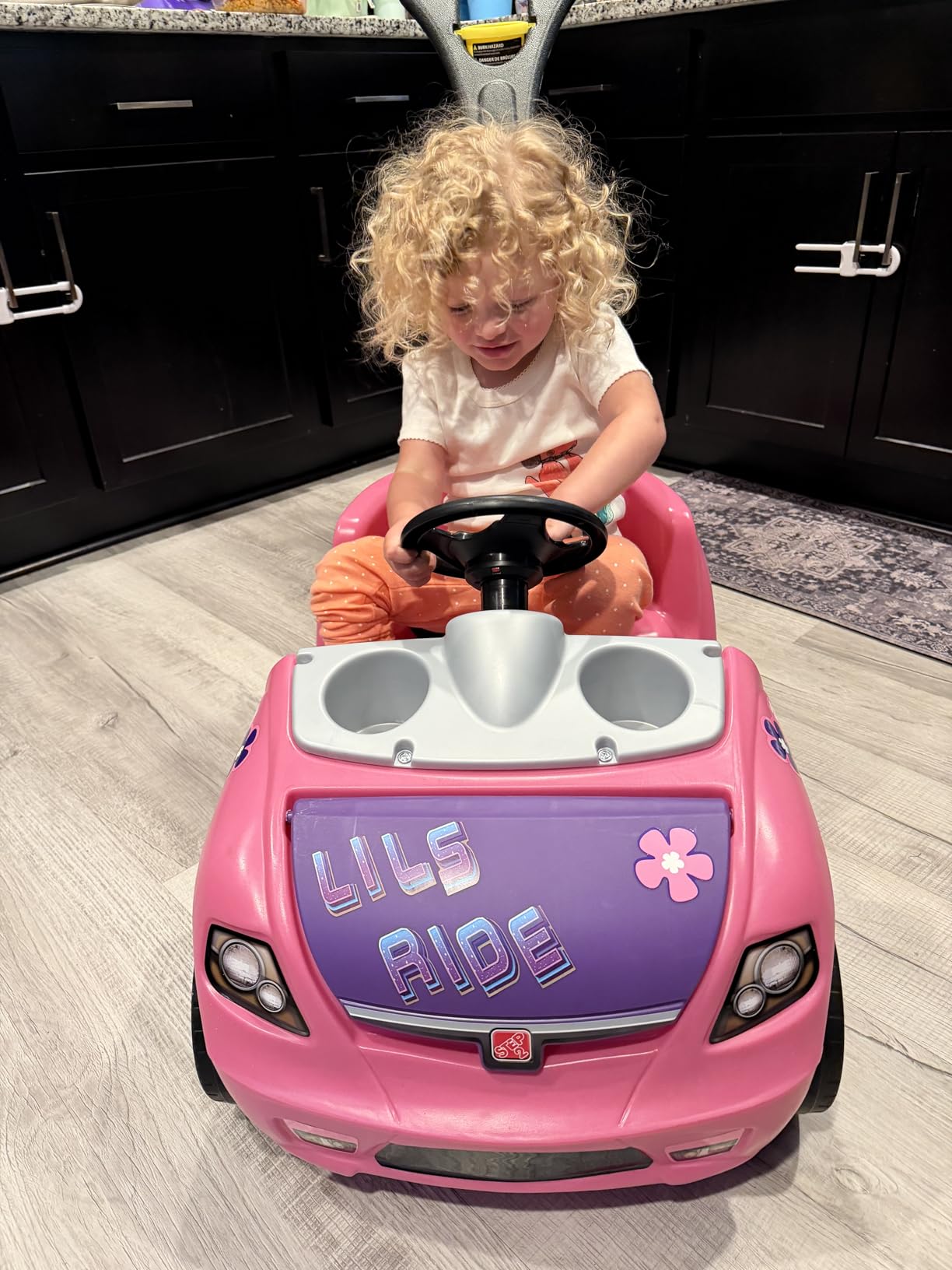
This is the ride-on we recommend most often for a two-year-old who is already walking well, and the reason is the folding handle. You push from behind on a long walk, the child steers with a proper wheel, and then the handle folds flat and the car becomes an independent toy in the playroom.
Step2 rates it 4.6 across over 16000 reviews. The whisper-ride wheels are soft and quiet enough for a hard kitchen floor, which is the difference between a toy that gets used daily and one that ends up against a wall. The adjustable seat belt is a real three-point style latch, not a decorative strap.
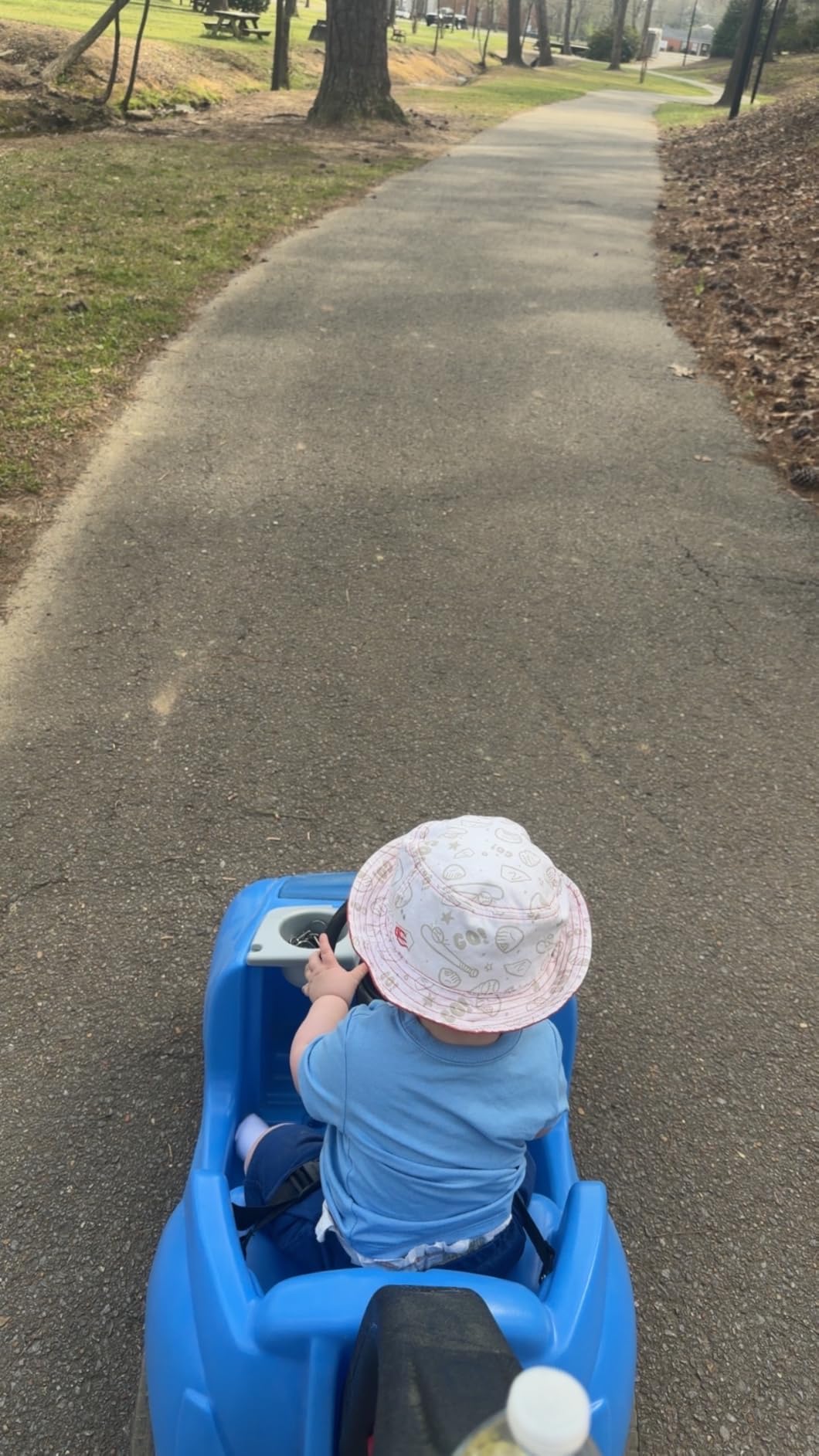
At 45.5 inches long and 19 inches wide, this is a large toy. It is rated 18 months to 4 years with a 50 pound weight limit, and the leg room is generous enough that most children keep using it well past the two-year mark. Under the hood there is storage for snacks, and there are cup holders too.
One point worth planning for: the front wheels are fixed rather than linked to the steering wheel. Turning happens when an adult presses down on the handle, or when a child drags one side. Our advice is to leave the handle on for the first few months and let the parent do the cornering.
Best for first outings and small children
Parents on parenting forums describe it as a stroller alternative, and that is accurate. A child who tires of walking still gets to arrive somewhere, and the fold-down handle means the car fits in a boot with the seats up.
This makes the most sense for a family without a garden or driveway, because it is the strongest indoor pick in the whole roundup. The wheels are quiet, the plastic wipes clean, and the belt keeps a wobbly two-year-old seated during fast play.
The assembly tradeoff
Assembly is the single most repeated complaint in reviews, and it is fair. The instructions are largely picture-based, and the push handle has to be unscrewed and re-aligned when folded. Budget thirty unhurried minutes rather than ten.
Steering that requires lifting also means a cautious child on their own will find wide arcs harder than curves. Keep them on open floor or a straight path until they have the strength to lean into it.
4. Little Tikes T-Rex Cozy Coupe
- Removable floor board switches between pushed and self-powered riding
- Front wheels swivel 360 degrees for easy steering
- Steering wheel key and horn keep play going
- Kid-accessible trunk storage
- Tires work indoors and outdoors
- 50 lb limit caps use as the child grows
- Plastic shows wear with heavy outdoor use
The T-Rex Cozy Coupe is the same shape as the classic Cozy Coupe with a dinosaur on top, but the important change is underneath. A removable floor board lets a parent push the car from the roof handle in the first months, then comes out so the child can power it themselves with their feet.
That two-stage design is why it holds a 4.6 rating across more than 13000 reviews. One toy covers a newly walking child and an independent rider, which answers the overbuying worry that shows up constantly in parent discussions.
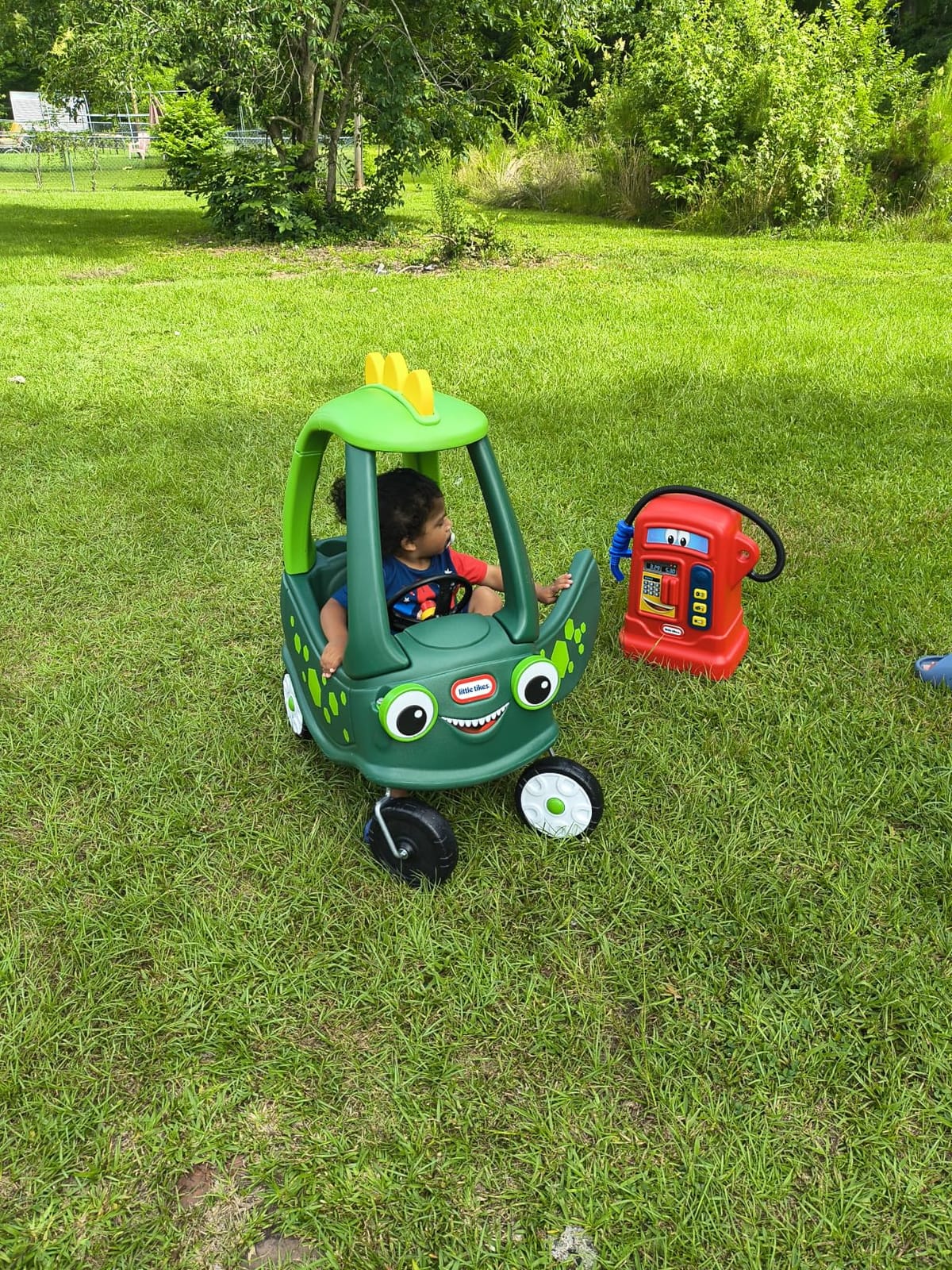
The 360-degree swiveling front wheels are the part we underestimated. Unlike a fixed-wheel push car, this one genuinely steers at the wheel, and a two-year-old can turn it in a small room without an adult lifting the front end. That matters more indoors than most people expect.
It is rated 2 to 5 years with a 50 pound limit, and comes with a steering wheel that turns, a working key, a horn and cup holders. The trunk opens from the child’s seat, so the storage is theirs to manage rather than an adult’s to hand down.
Where it beats the plain push car
Real steering, the roof handle for adult pushing, and a theme that invites a child to invent reasons to get in. The dinosaur styling gives it role-play value that a generic car does not, and that is usually the difference between a toy that lasts six months and one that lasts two years.
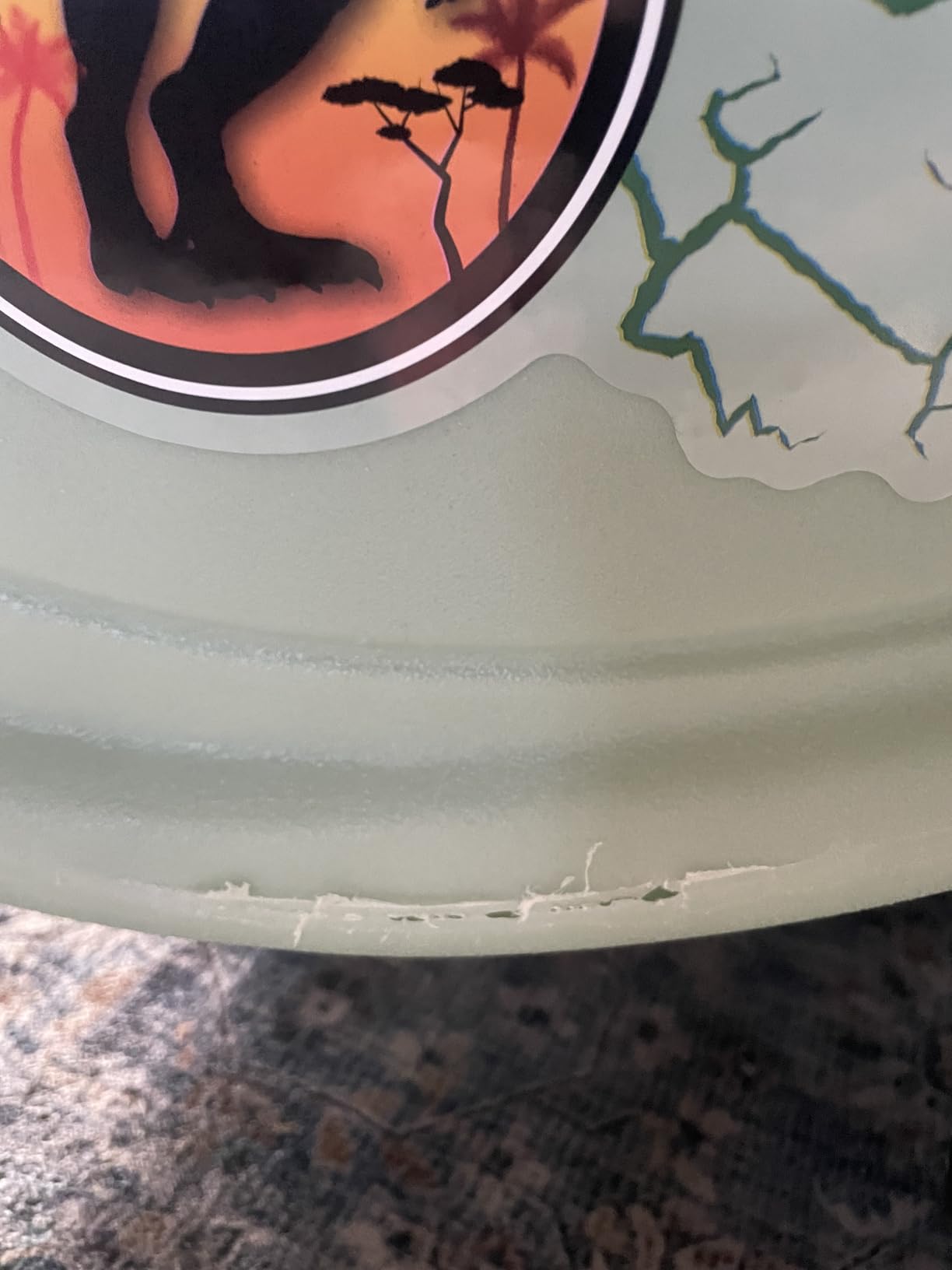
For indoor use it is excellent. For outdoor use the tires hold up on a driveway and patio, though the molded plastic body does show scuffs over time on rough gravel.
The limit worth planning around
Fifty pounds is the ceiling, and plenty of children hit it before their fifth birthday. When that happens the toy is really too small anyway, so treat it as a two-to-four-year toy rather than something to pass down the family.
It is also among the bulkier push cars in this roundup, so lifting it into a vehicle takes more than one adult’s easy effort. Budget an adult to handle the lifting if you are buying it for travel, and note that the 50 pound limit arrives sooner than parents expect.
5. John Deere Sit N Scoot Activity Tractor
John Deere Ride On Toys Sit ‘N Scoot Activity Tractor for Kids Ages 18 Months and Up, Green
- Foot to floor riding with a wide wheelbase for stability
- Only 3.9 lb so a two-year-old can move it alone
- Officially licensed John Deere detailing
- Quick tool-light parent assembly
- Wipes clean after outdoor mess
- Small footprint means it is outgrown fast
- Wheels can work loose after rough outdoor play
- Decals lift off with weather exposure
If your child is the sort who fixates on tractors, this is the version to buy. It is officially licensed John Deere green and yellow, and it sits at 4.4 stars across nearly 10000 reviews. The rating is a little lower than the rest of this group almost entirely because of the size.
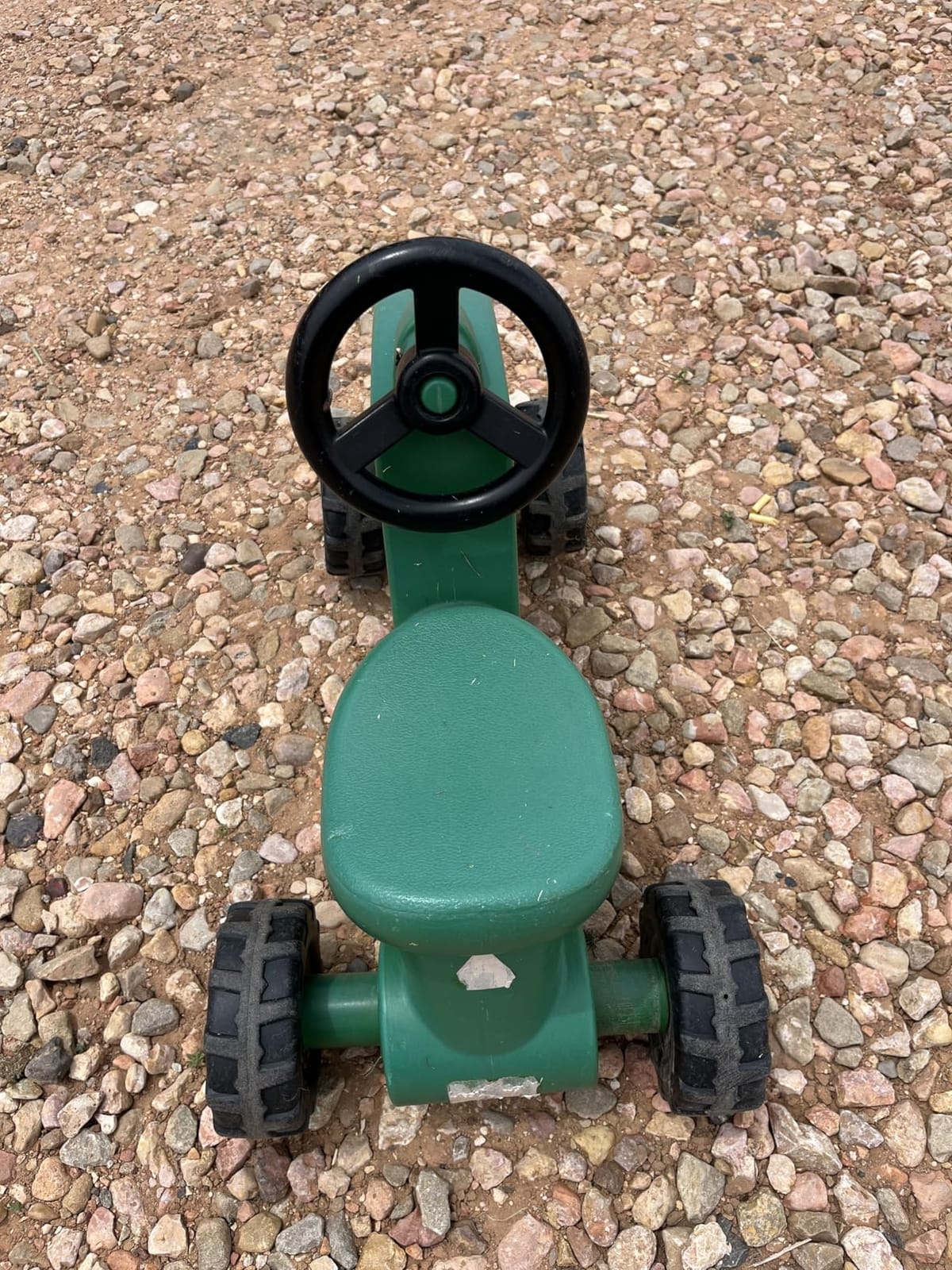
At 20 by 9.8 by 16.2 inches and 3.9 pounds, it sits at the lighter end of this roundup. A two-year-old can drag it across a lawn by the steering wheel without an adult helping, and that weight is the reason it works so well for children who tire quickly.
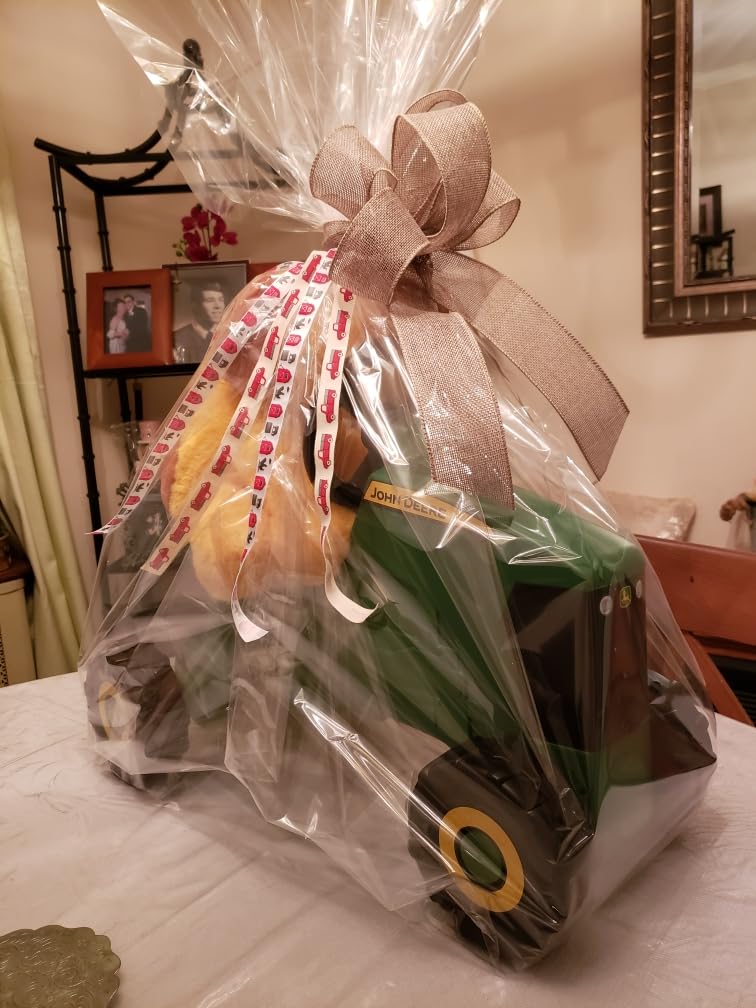
Riding is foot to floor with a wide wheelbase underneath, which gives it a stable base while a child is still building leg strength. There is no handle, no seat belt and no battery. You sit, you scoot, you steer.
It is rated 18 months to 3 years, and the age range is not generous even though the weight limit is. Plan on roughly eighteen months of daily use before most children are sitting too big for it.
Why the tractor theme does real work
A themed toy gives a child a script. Ours became a farm delivery vehicle within a day of arriving, and that kind of self-directed play is worth more than any amount of electronic noise. The steering wheel is attached but adjustable, and reviewers note it is the fiddliest part of assembly.
For a farm-mad child, this is the version of a ride-on that gets used rather than tolerated. It also wipes down in seconds, which is the practical requirement for any farm-themed toy.
Where the durability falls short
The 4.4 average comes from durability complaints, not from enthusiasm. Parents report the wheels working loose or ceasing to turn after rough outdoor play, and the decals lifting at the edges with weather exposure. Both are cosmetic-to-mildly-frustrating rather than dangerous.
Inside on a carpet or smooth floor it holds up well. If you plan to use it on gravel or wet grass daily, expect to tighten wheels and accept a sticker that peels.
6. Step2 Up and Down Roller Coaster Playset
- Nine foot track with an ATV-style ride-on car
- Tool free assembly and disassembly
- Recessed wells hold the car until the child releases it
- Develops gross motor skills and hand-eye coordination
- Hose-down easy after outdoor play
- The 9 foot track needs a lot of straight space
- Car wheels bump on grass and uneven pavers
- Costly for a single-vehicle category
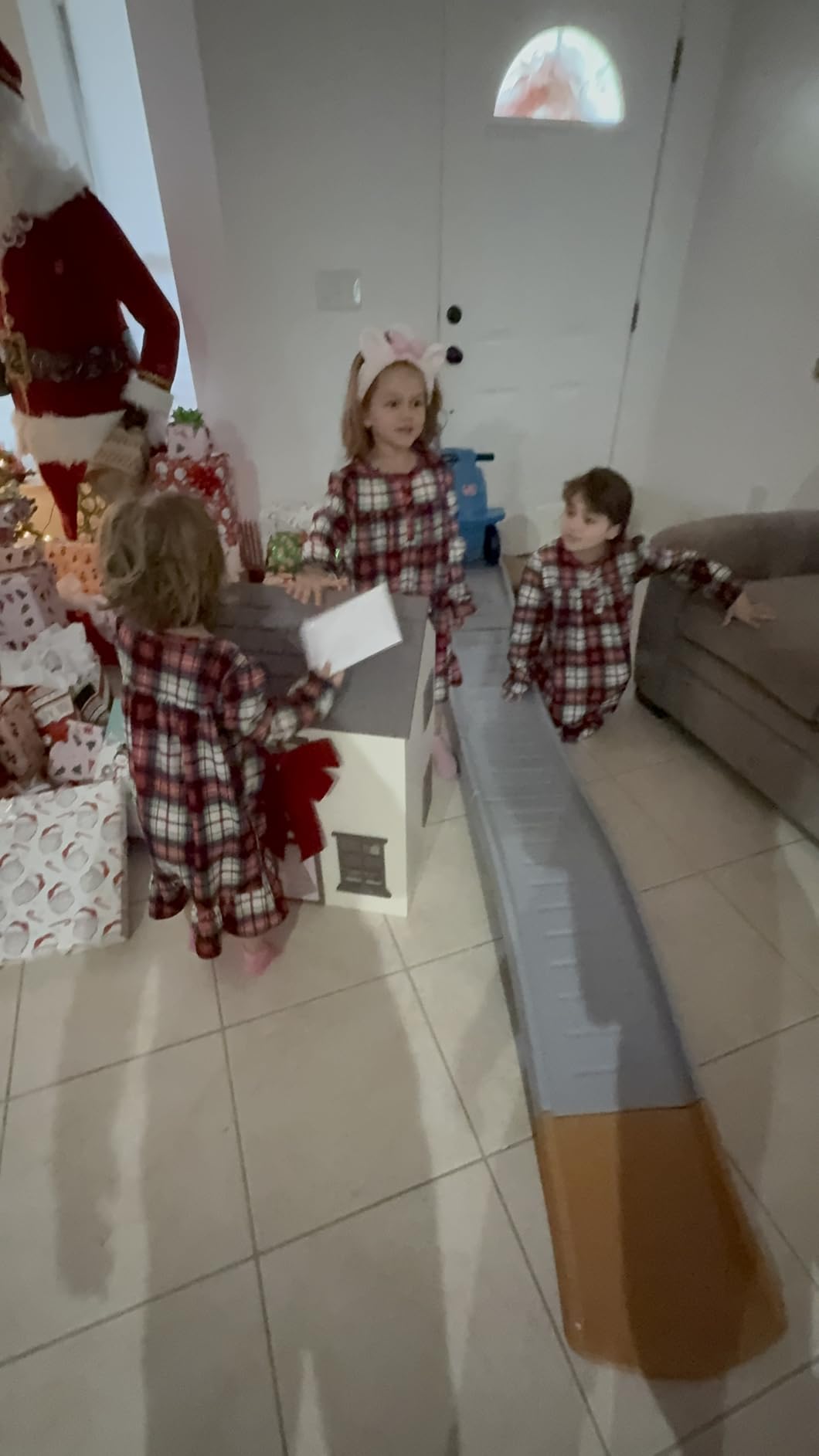
This is the only playset in the roundup, and it changes the shape of play. Instead of a child steering freely, they climb the steps at one end, sit in a car held in a recessed well, and release it down nine feet of track. The child decides when to go every time.
It holds a 4.7 rating across more than 7800 reviews, and the reviews skew heavily positive. Assembly is genuinely tool free; the track snaps together in minutes and comes apart again for storage, which is the single most important feature in a house without a garage.
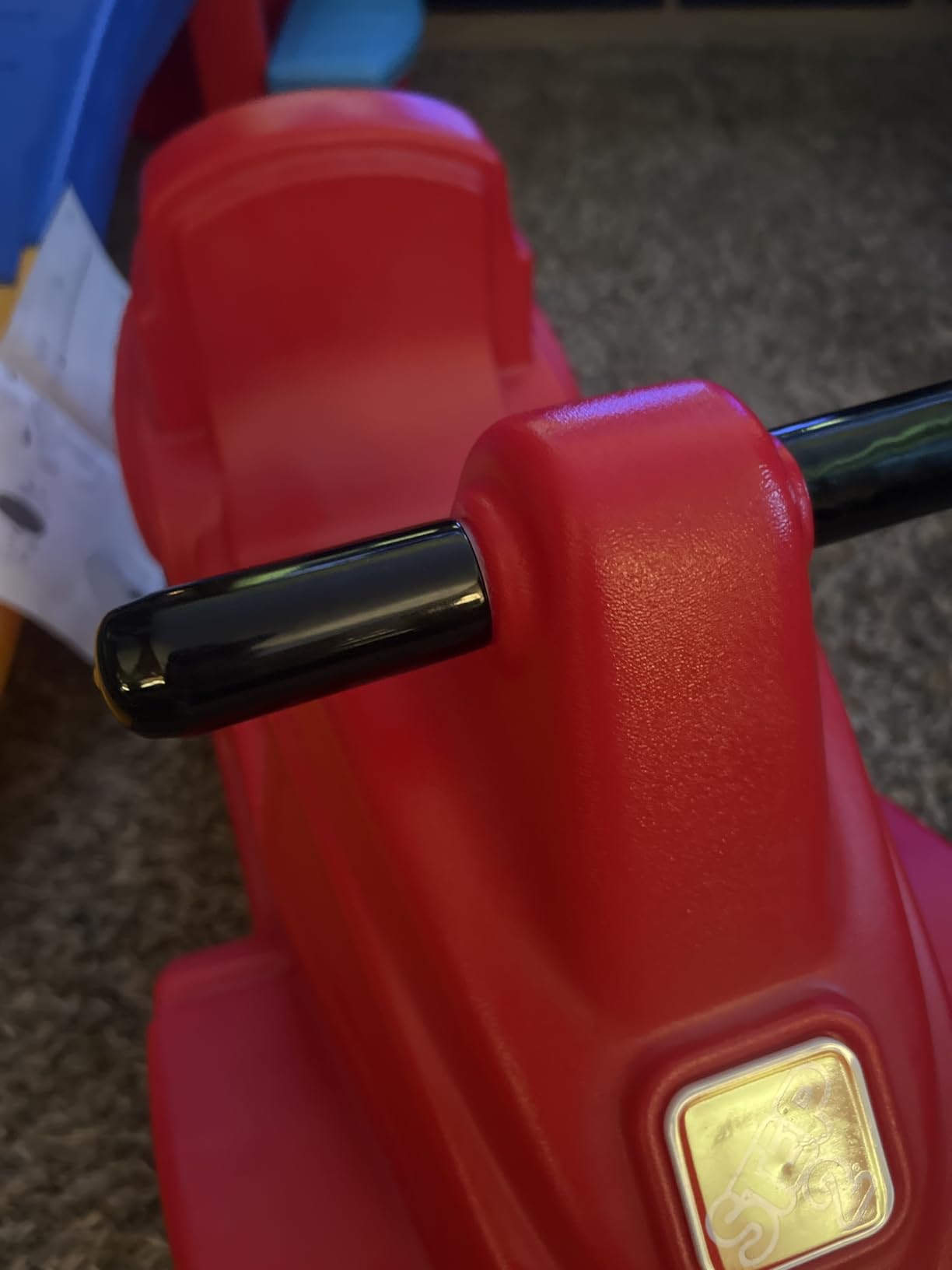
It is rated from 24 months to 5 years with a 50 pound limit, and it is hand powered, so there is no battery, no charger and nothing to plug in. The double-walled plastic resists chipping and fading, and the whole thing can be hosed off after a wet afternoon.
The play pattern develops gross motor skills, balance and hand-eye coordination in a way a free-rolling car cannot, because climbing and releasing are the challenge rather than steering.
Where it earns its space
If you have a long straight run of patio or a clear span of hallway, this is among the most engaging single purchases in the list. Two children can queue at the top, and the retainer wells mean nobody has to help a small child launch the car.
It also solves the storage problem neatly. Because the track dismantles, the 110-inch footprint collapses to a stack of sections against a wall in about a minute.
Plan the footprint before you buy
Nine feet of track needs a long, flat, smooth surface. On grass or uneven paving the car wheels bump and judder, which is exactly the terrain complaint parents describe about cheaper ride-ons. Test your surface with a straightedge first.
It is also a big-ticket item. If your available space is a small back garden or a shared courtyard, spend the money on a single well-made push car instead.
7. KRIDDO Toddler Tricycle for Ages 2-5
- Tool free snap-together build in about ten minutes
- Wide wheelbase with extended rear wheels reduces rollover
- Silent shock-absorbing wheels are kind to indoor floors
- Sturdy carbon steel frame
- Front basket for toys
- No hand brakes so riders coast backwards into things
- Big enough that many two-year-olds need help mounting
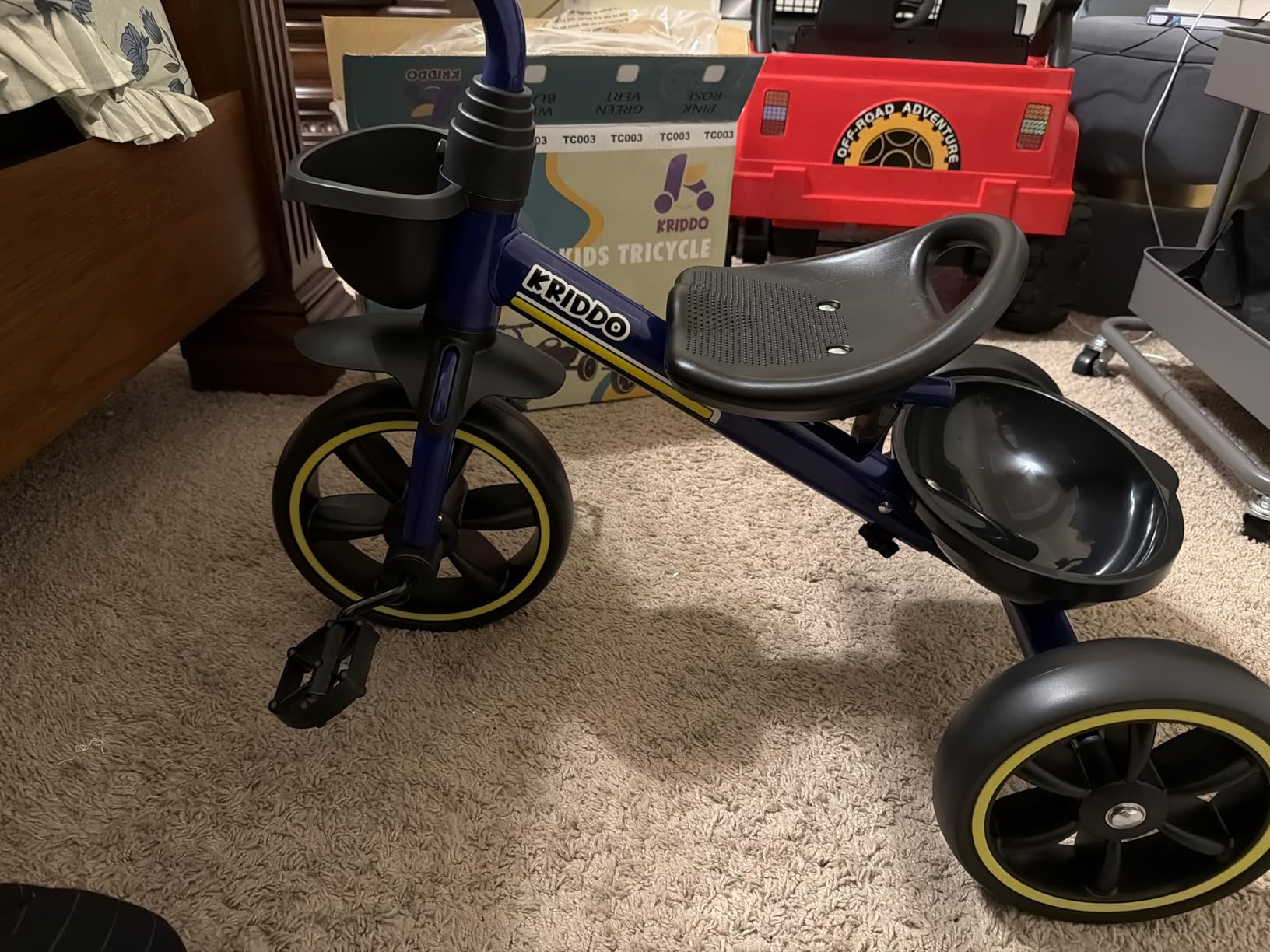
This is the first pedal trike in the roundup, and it is the one we would hand to a child who is ready to use their legs rather than just their weight. The pedals are at the front, the seat is mid-frame, and the wide wheelbase underneath is designed to stop the trike rolling over in a tight turn.
It rates 4.6 across nearly 8000 reviews. The construction is carbon steel rather than plastic tubing, and that is visible in how solidly the frame sits on the ground. Parents repeatedly mention it survives daily riding without flexing.
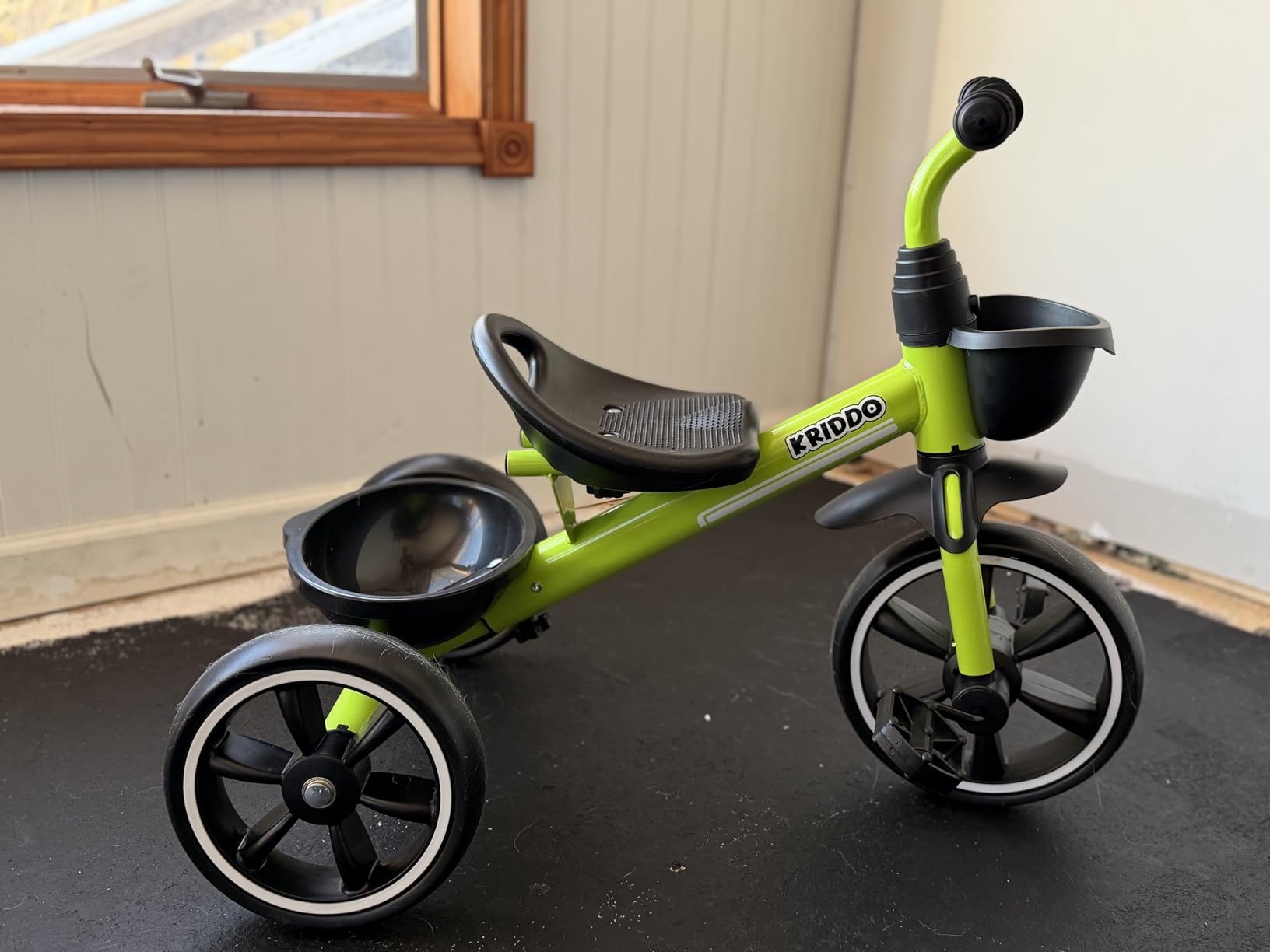
The wheels are described as shock-absorbing and silent, and that detail is what makes this trike usable indoors. Most pedal trikes clatter; this one rolls quietly enough for a playroom floor, which widens when it can be used.
Assembly is tool free. The pieces snap together, and reviewers put it at about ten minutes with no tools required at all. It is BPA free, painted with matte nontoxic finishes, and rated from 24 months to 5 years.
Why this one beats a cheaper plastic trike
Two design choices separate it from the budget models. The triangular frame with extended rear wheels resists rollover, which is the accident parents actually worry about with a new pedaller, and the wide wheelbase makes a wide, wobbling turn feel stable rather than alarming.
The carry handle and non-slip grips also help. A parent can lift a 9 pound trike one-handed, and small hands have something to hold that will not slip when wet.
The brakes and the mounting problem
There are no hand brakes. A two-year-old who stops pedalling will coast backwards into whatever is behind them, so this trike needs open space, a flat drive, and an adult nearby. Treat it as an outdoor toy rather than an indoor one despite the quiet wheels.
It is also physically large at 30 by 12 by 21.5 inches. Many two-year-olds need a hand to get on and start pedalling at first, so check the seat height against your child’s inseam before committing.
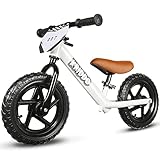
8. KRIDDO Toddler Balance Bike
KRIDDO Toddler Balance Bike 2 Year Old, Gift for 2-3 Boys Girls, Adjustable
- Lightweight 6.6 lb frame a toddler can push alone
- Quick-release adjustment on both seat and handlebar
- Removable name plate with three sticker sets
- Extra-thick tires roll over grass and paths
- Soft PU seat and rubber grips
- Seat and handlebar alignment drifts and needs frequent readjusting
- Wheels are plastic rather than rubber on rough ground
- A learning curve before a new rider can balance
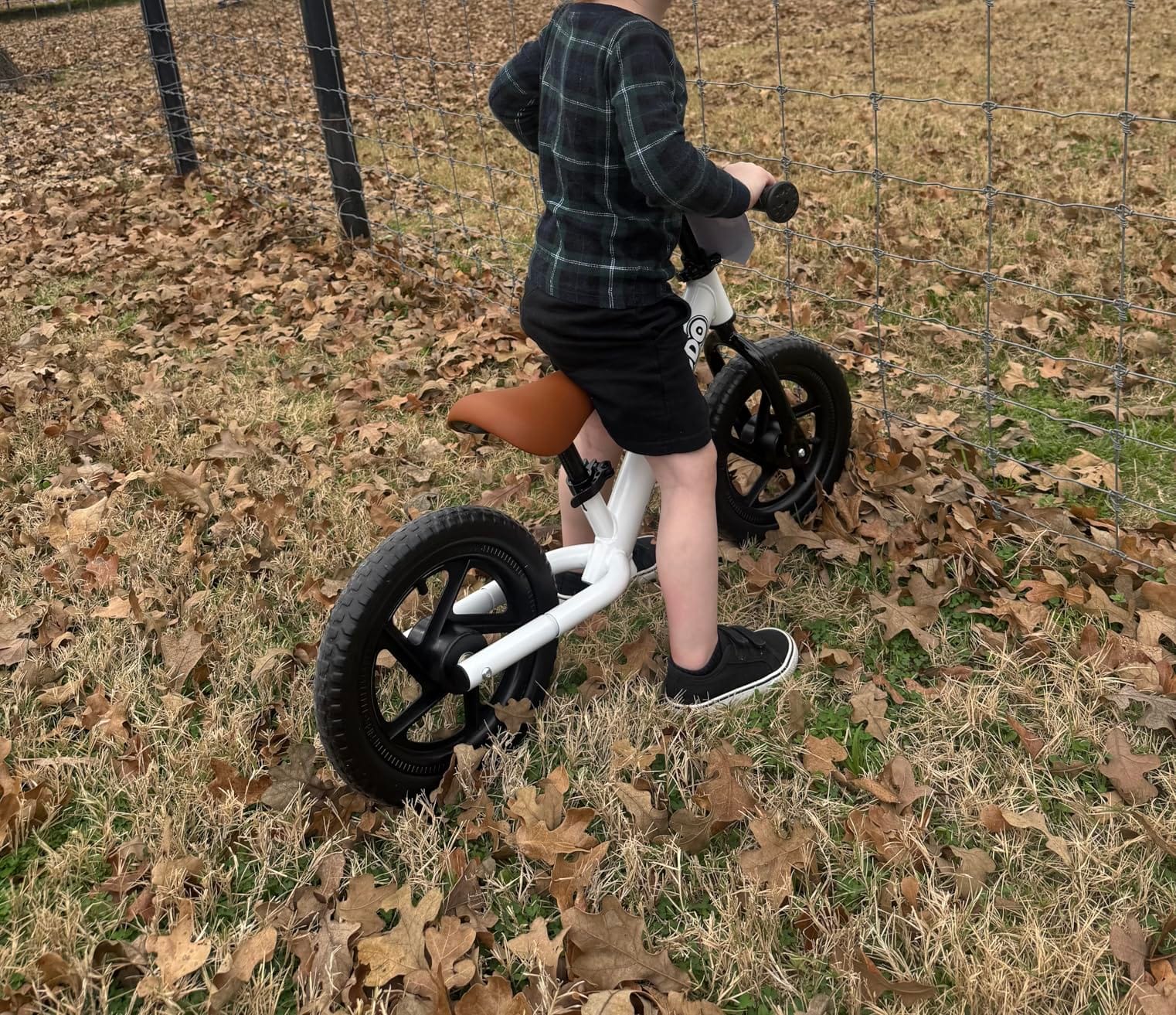
Pedal free, sit on, scoot with your feet, glide. That is the whole idea, and it is the reason balance bikes are recommended ahead of pedal trikes for this age: a child learns to balance before being asked to coordinate pedals and steering at the same time.
This one rates 4.6 across more than 5700 reviews, and the frame is carbon steel, so it is not the toy a family is most likely to outgrow quickly. Seat and handlebar both use quick-release clamps, which is fast but, as we will come to, also the weakness.
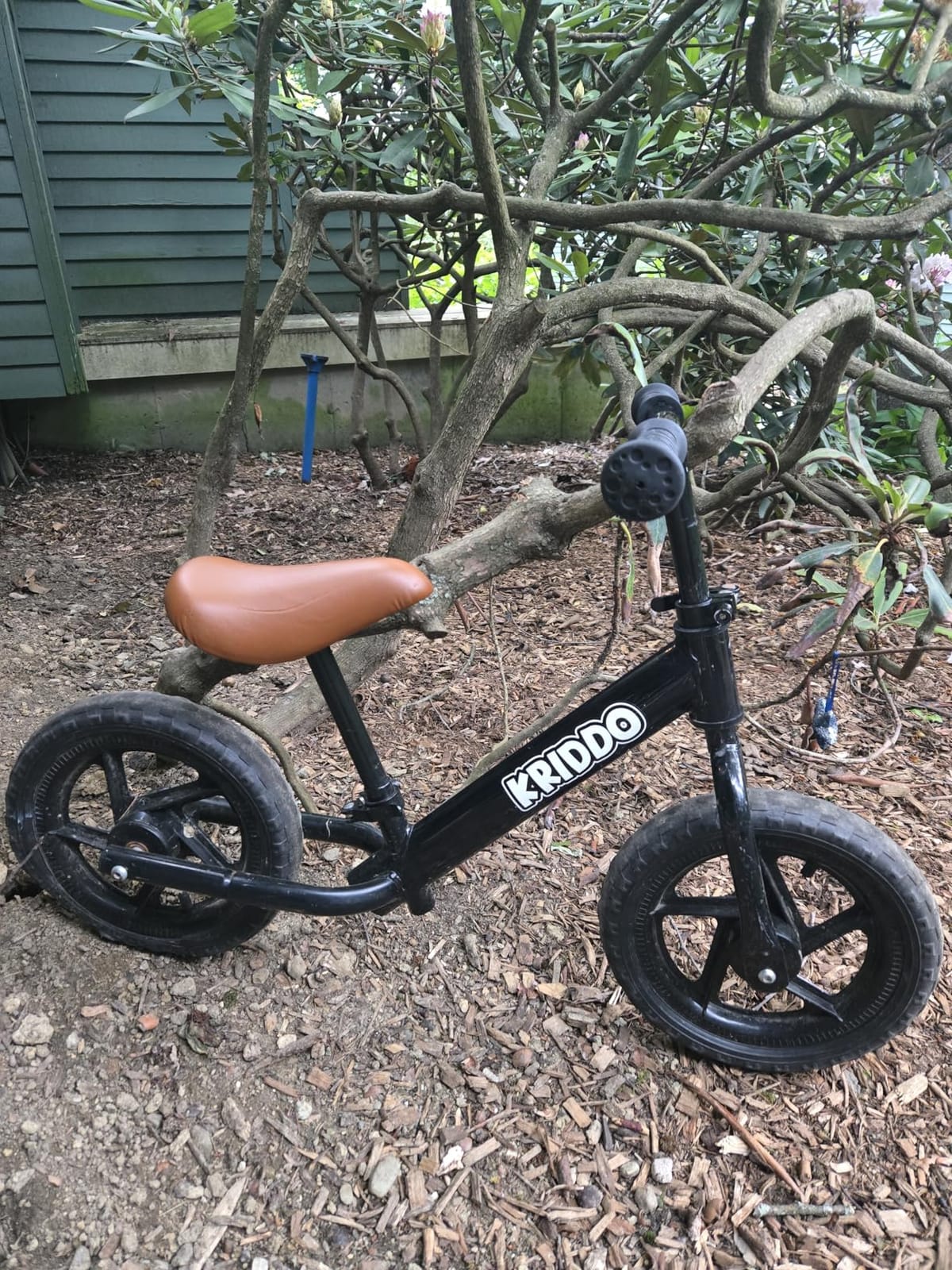
The tyres are extra thick and described as puncture resistant, and in practice they cope with a lawn edge and a cracked path in a way hard plastic wheels do not. At 6.6 pounds the bike is light enough for a two-year-old to lift and carry when they abandon it mid-ride.
The removable name plate with three sticker sets is a small touch with real effect. Our tester personalised hers before the first ride and treated the bike as hers for a year afterwards.
Where it beats a foam-tire balance bike
It handles mixed surfaces. A parent who is not lucky enough to have one perfectly flat run of paving will find that the difference between foam rubber tires and these is the difference between a toy that gets used daily and one that ends up in a garage. The wider frame also feels planted at low speed.
The two-way adjustment is what extends its life. Combined with the steel frame, it covers a child from their second year into their fifth without a second purchase.
The adjustment problem you will meet
The most repeated complaint is that the handlebar and seat do not stay in alignment. Quick-release clamps are convenient for growing, but play knocks them out of line and they need putting back. Check both before every ride rather than once at the start of the week.
There is also a real learning curve. A child who cannot yet coast will run their feet down continuously, which is fine and normal, but a child who is not confidently walking will not enjoy it yet.
9. Radio Flyer Creativity Car
Radio Flyer Creativity Car, Toddler Ride On Toys, for Toddlers 1-3
- Three modes in one toy
- Walker ride-on and sensory play
- 17 activities on the dashboard
- Anti-tip walker base supports beginner walkers
- Seat flips up for under-seat storage
- Front wheels are fixed and do not steer with the wheel
- 42 lb limit is the lowest in this roundup
For a child who is not yet walking confidently, the honest answer is that a ride-on is premature, and a walker is what they need. The Radio Flyer Creativity Car is both, which is why it earns a place in a roundup about 2-year-olds. The anti-tip base supports a child who is still holding on, and the same toy becomes a ride-on once walking is solid.
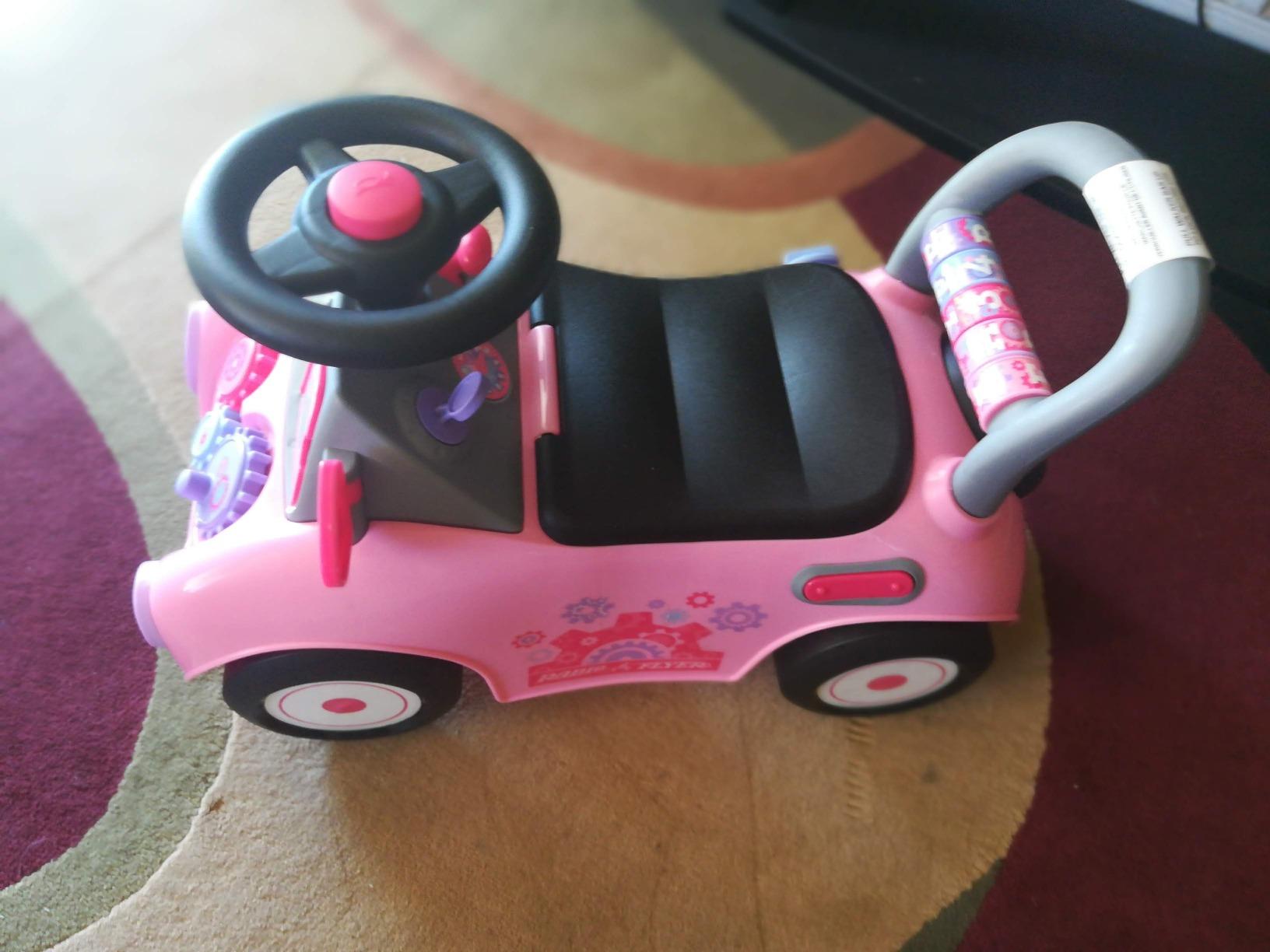
It rates 4.8 across more than 2100 reviews, and those reviews are overwhelmingly positive. The dashboard carries 17 interactive activities: interlocking gears, sliding beads, a clicking spare tire, folding mirrors, a horn and more. That is a lot of independent play built into a 4.9 pound body.
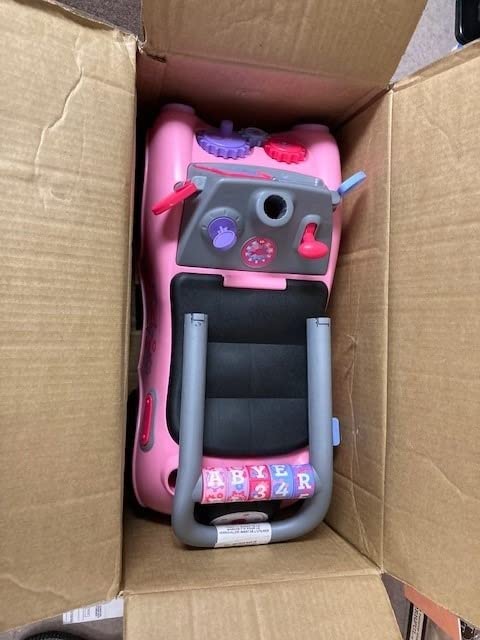
The seat flips open for under-seat storage, which is genuinely useful because it is where the beads and gears end up. It is rated 1 to 3 years with a 42 pound limit, which is the smallest capacity in this group, so it is a two-year toy rather than a three-year toy.
It ships largely assembled and it does not need charging. For a family in a flat, a walker-to-ride-on in one purchase is a sensible and money-saving answer to the readiness question.
Why the sensorimotor dashboard matters
A toddler who cannot yet steer a vehicle well can still be fully occupied here, because the toys reward sitting, not moving. That changes what the ride-on is for: it is a reason to stop and a reason to start again, which is closer to how toddlers actually play.
The two-way design also means you are not buying twice. A push ride-on for eighteen months followed by a balance bike at two and a half is the common path, and this shortens the first stage considerably.
What it is not
The front wheels are fixed, so the steering wheel turns without the wheels following, and turning happens by tilting or leaning. That is fine for a new walker indoors and frustrating for a child who wants to drive a curve.
The 42 pound limit is the other thing to weigh. A tall two-year-old can reach it, so treat this as a bridge toy for the second year and plan a proper balance bike or trike next.
10. Radio Flyer Amazon Delivery Van
Radio Flyer Amazon Delivery Van, for Ages 2+, Toddler Ride On Toys
- Three boxes and three wooden toys included
- Stationary handle gives beginners a balance point
- Only 4.4 lb so it suits a small child
- Under-seat storage for the delivery cargo
- Playable straight away with no assembly
- Steers by body lean rather than by turning the wheel
- Small footprint suits indoor play and smooth surfaces
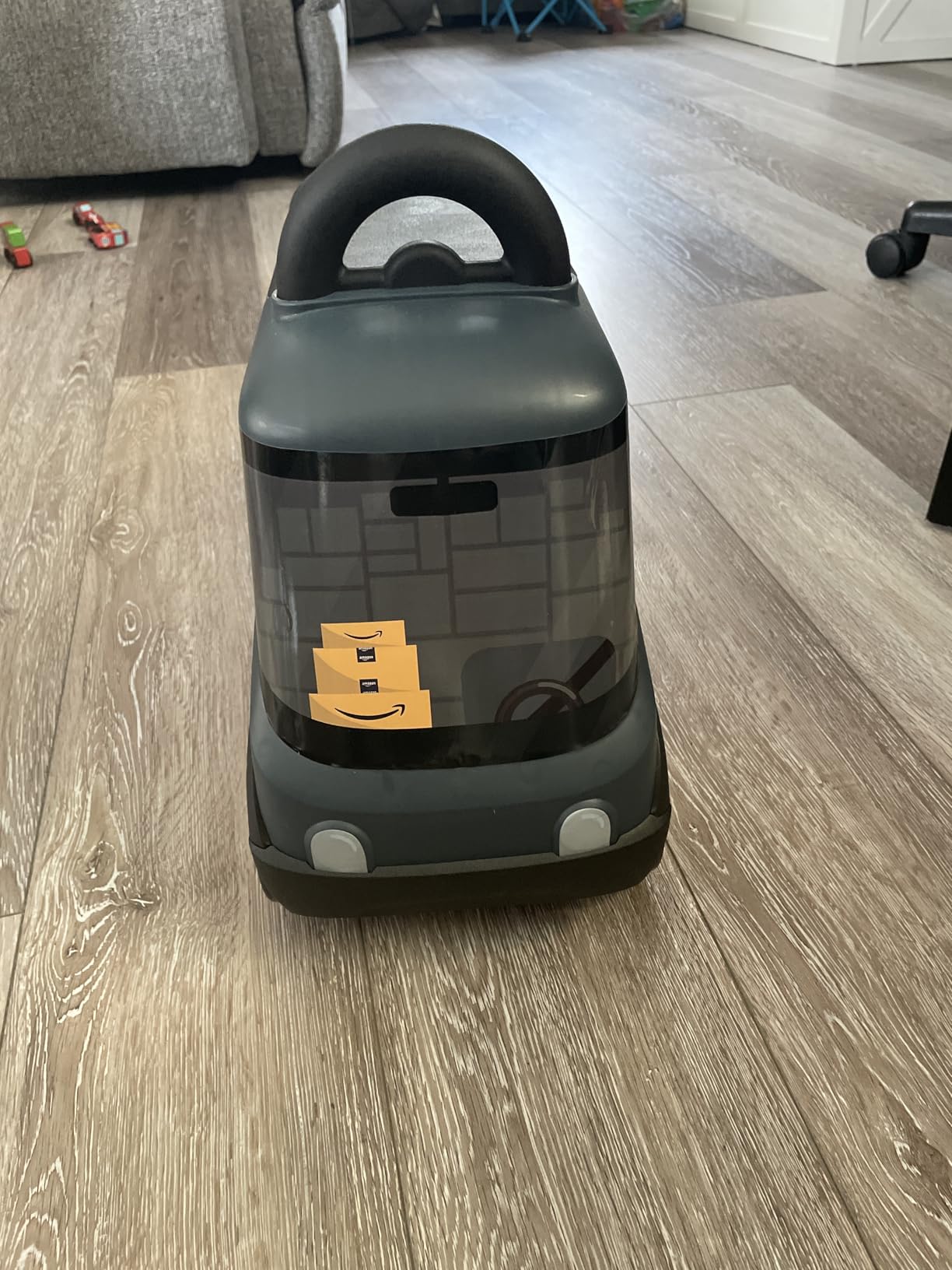
The theme here is obvious and it works. This is a delivery van, and the box contains three miniature parcels and three wooden toys to put in them, so the role play is playable the moment it is out of the packaging. There is no assembly step and nothing to configure.
It rates 4.8 across more than 1100 reviews, and reviewers single out the included props as the reason it engages a two-year-old immediately rather than after a week.
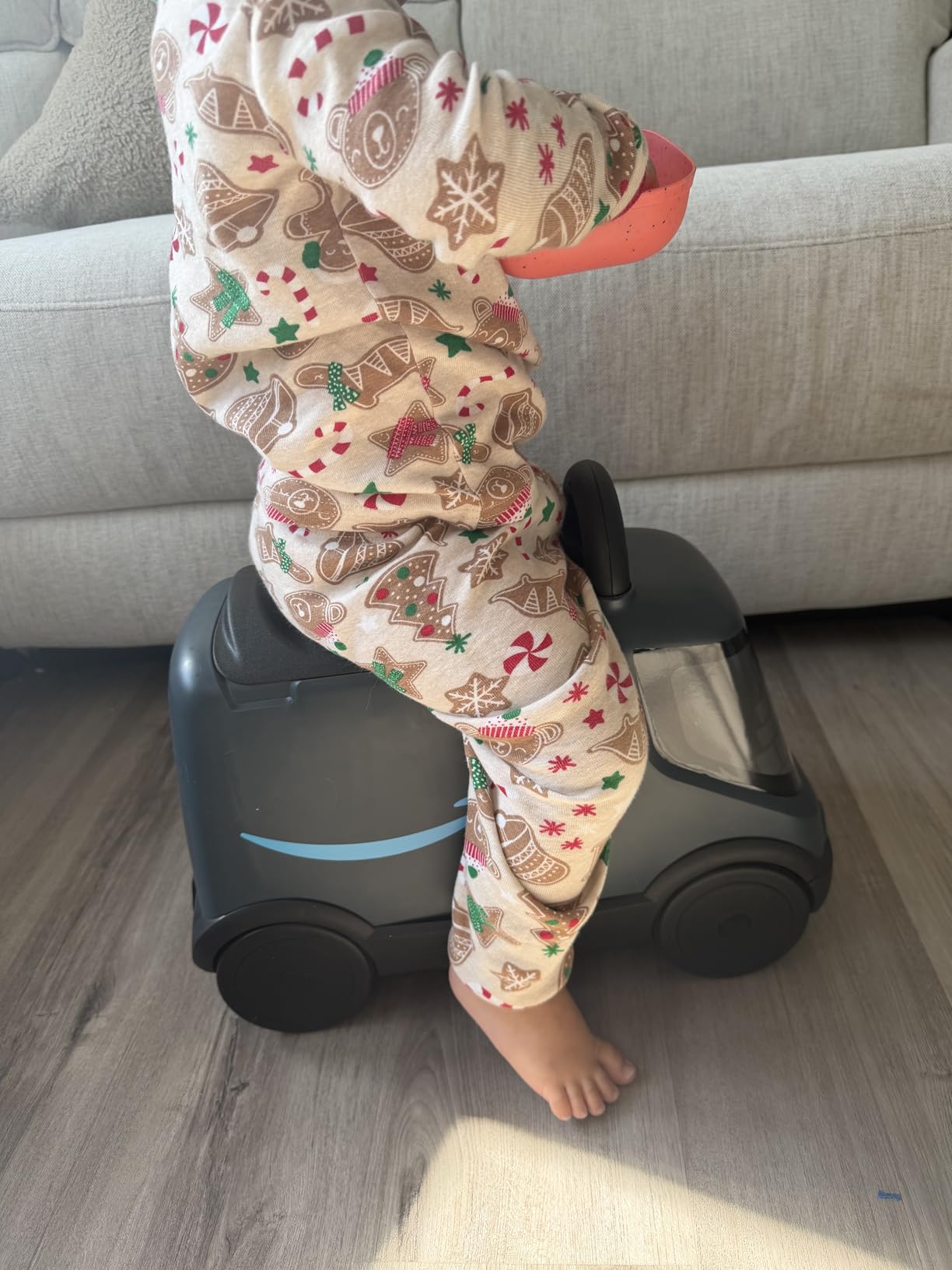
The handle across the front is stationary, and that is the important design decision. A small child grips it for balance and to steer by leaning, which is far easier to master than operating a linked steering wheel. Reviewers describe it as the first thing a cautious child could actually control unaided.
At 4.4 pounds and 17.45 inches long, it is one of the lightest and smallest vehicles in this roundup. That is a virtue in a small flat and a limitation outdoors, where the small wheels find every crack in a path.
Why the included props matter more than the vehicle
Ride-on toys usually need a game invented for them, and a two-year-old will not invent one unprompted. Three boxes and three wooden toys give the child a job, a cargo and a delivery, and that structure is what turns a ride into play that lasts more than a week.
The under-seat compartment stores the cargo, which keeps the props close rather than scattered under a sofa within a day. It is also a quiet toy: no lights, no music, no battery.
Where it stops working
Because the handle does not turn the wheels, steering is a whole-body lean. It is excellent for a beginner on carpet and weak for a confident child who wants to drive a curve on a driveway. The small footprint also means the wheels struggle on anything other than a smooth surface.
The 50 pound limit is fine, but the age guidance starts at 2, which makes it a genuinely age-accurate pick for this roundup rather than a lowered rating on a toy meant for older children.
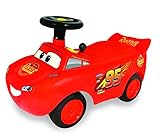
11. Kiddieland Lightning McQueen Ride-On
Kiddieland Lightning McQueen Ride-On Car, Foot-to-Floor Racer for Toddlers
- Arrives assembled with a battery tab ready to pull
- Engine sounds music and flashing lights
- Only 3.4 lb with an anti-tip wide base
- Foot to floor riding builds leg strength
- Accurate character styling
- Audio is generic car noise rather than character voice clips
- Several buttons trigger the same sound
- Light-up eyes are subtler than the photos suggest
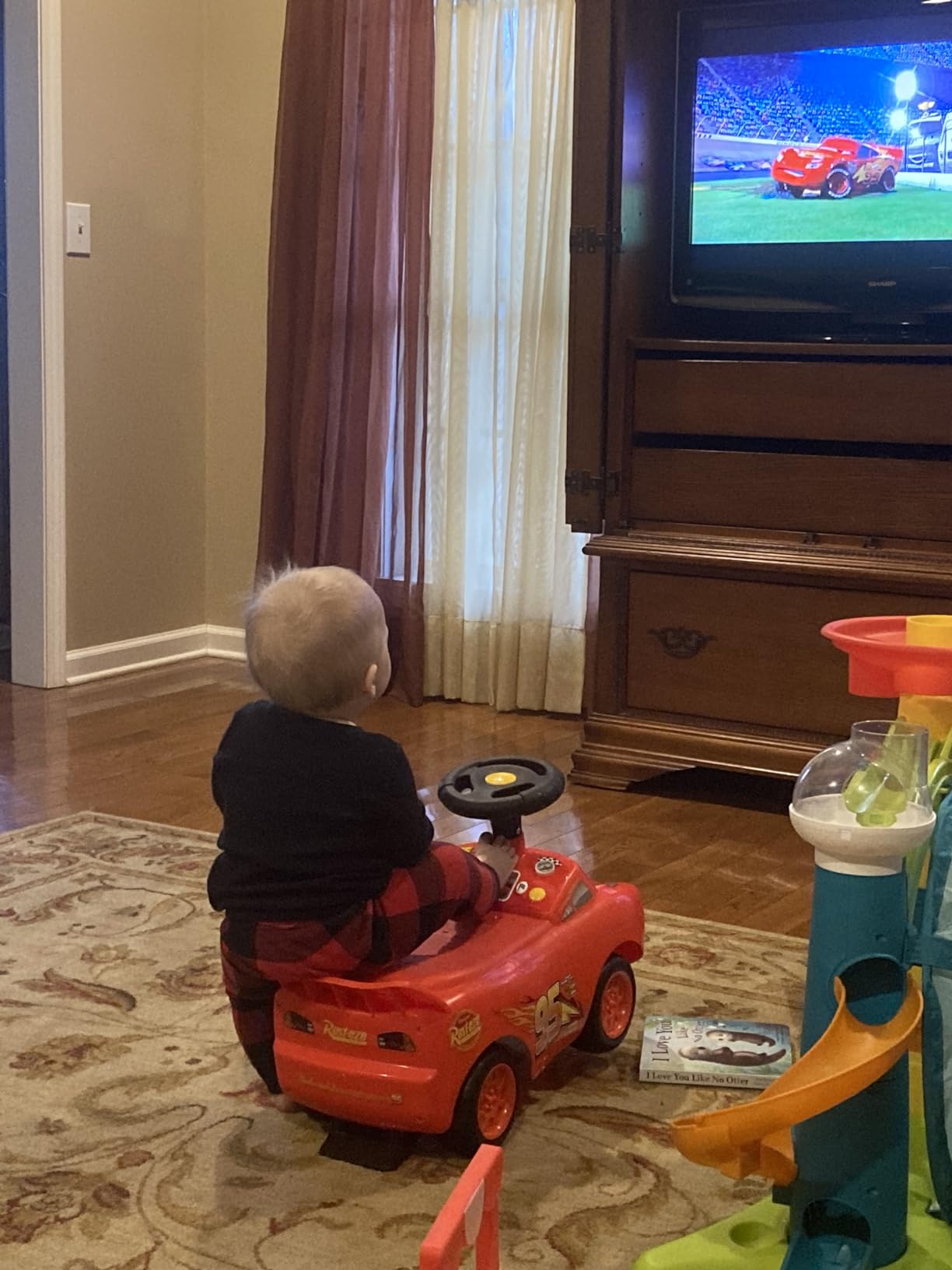
When a child is a genuine Disney Pixar Cars fan, character accuracy is the feature. This is a foot-to-floor ride-on in Lightning McQueen’s red with accurate styling, a low seat height suited to 12 to 36 months, and a 3.4 pound body that is the lightest in this roundup.
It rates 4.8 across more than 1000 reviews. It arrives fully assembled with a battery tab ready to pull, which means no screwdriver and no adult project on Christmas morning. An ignition key triggers engine revs, accelerator and brake sounds, music and flashing lights.
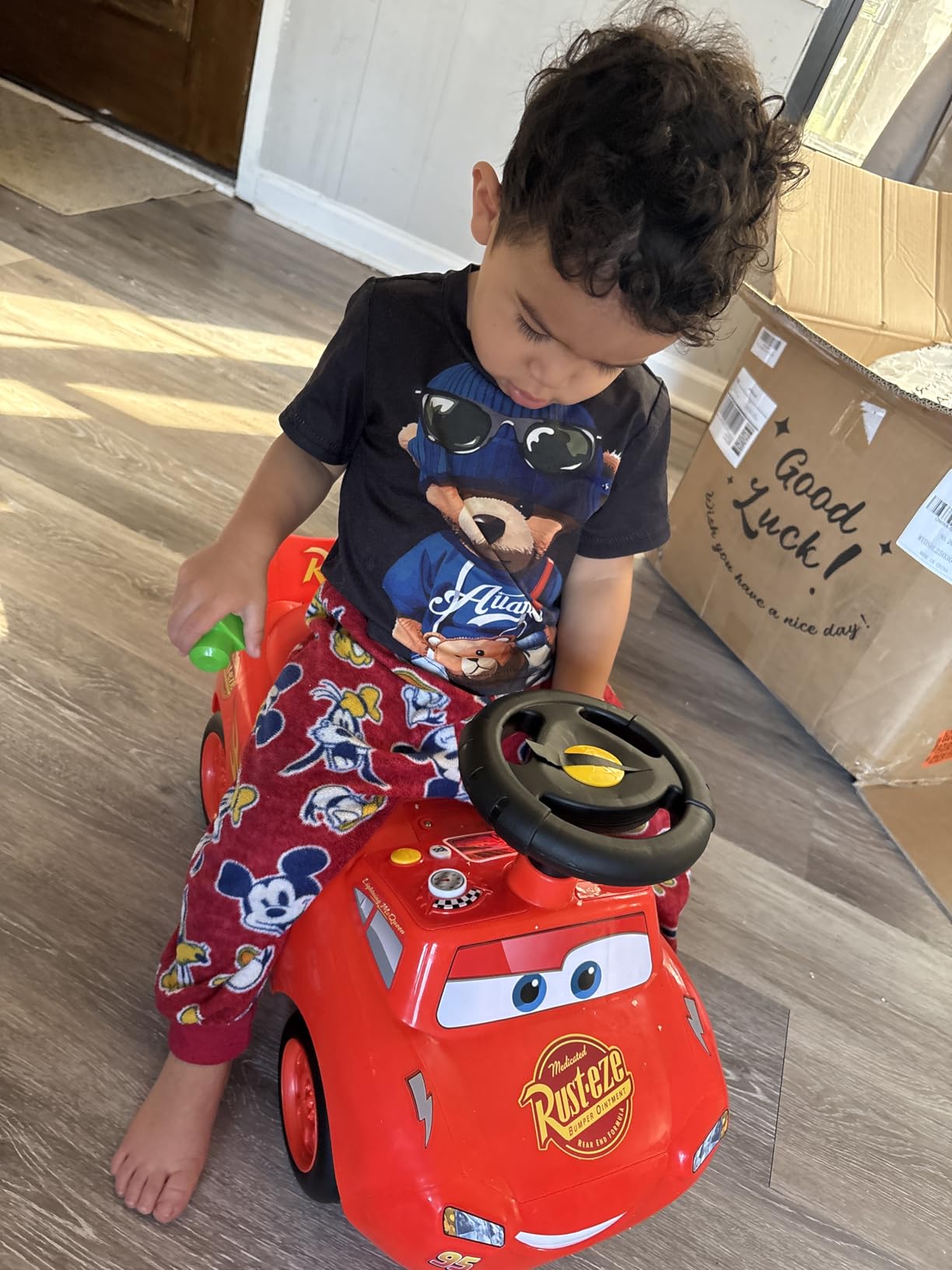
The wide wheelbase and anti-tip base are the safety story here. With a seat this low and a body this light, a top-heavy child is not a risk, and the foot-to-floor layout means the child is scooting rather than coasting at speed.
It is rated from 12 months with a 3 year band, and the listing does not state a warranty length. That is worth knowing if you expect cover for a busy toy, so keep the receipt.
Why the sounds and lights matter here
On a generic car, lights and music are filler. On a character ride-on they are the whole point, and a child who is devoted to the films recognises the car immediately and climbs in without instruction. Reviewers consistently report that the styling is accurate rather than a loose interpretation.
The interactive steering wheel also gives a two-year-old something to do with their hands while their feet propel the car, which adds minutes to each session.
The sound detail nobody expects
The audio is generic car noise, not authentic character voice clips, and several buttons trigger the same recording. If your child is a purist, that gap between the screen character and the toy is the first thing they will notice.
The light-up eyes are also subtler than the product photos suggest. And with no manufacturer warranty stated, we would treat it as a two-year toy with a limited expected lifespan, which is a fair trade for a 4.8 rating and a very happy small fan.
12. Fisher-Price Harley-Davidson Tough Trike
- Pedal powered trike that builds leg strength
- Rugged tread tires for paths and grass
- Sturdy wide-wheelbase frame with easy-grip bars
- Lift-up seat hides a storage compartment
- Longstanding design with a huge review base
- Assembly is lengthy and may need a hammer and screwdriver
- Storage seat pops off easily and is hard to refit
- Colours can fade in prolonged sun
- Some two-year-olds cannot reach the pedals
The Tough Trike is a long-established design in this roundup and it is still the one most parents buy. It carries more than 26000 reviews at 4.7 stars, which makes it the most thoroughly tested pedal tricycle available for a two-year-old.
Unlike most plastic trikes, the tires have rugged tread and cope with grass and gravel paths rather than only a smooth floor. The frame has a wide wheelbase for stability, the handlebars have easy grips for small hands, and the pedals are large enough to find in a sandal.
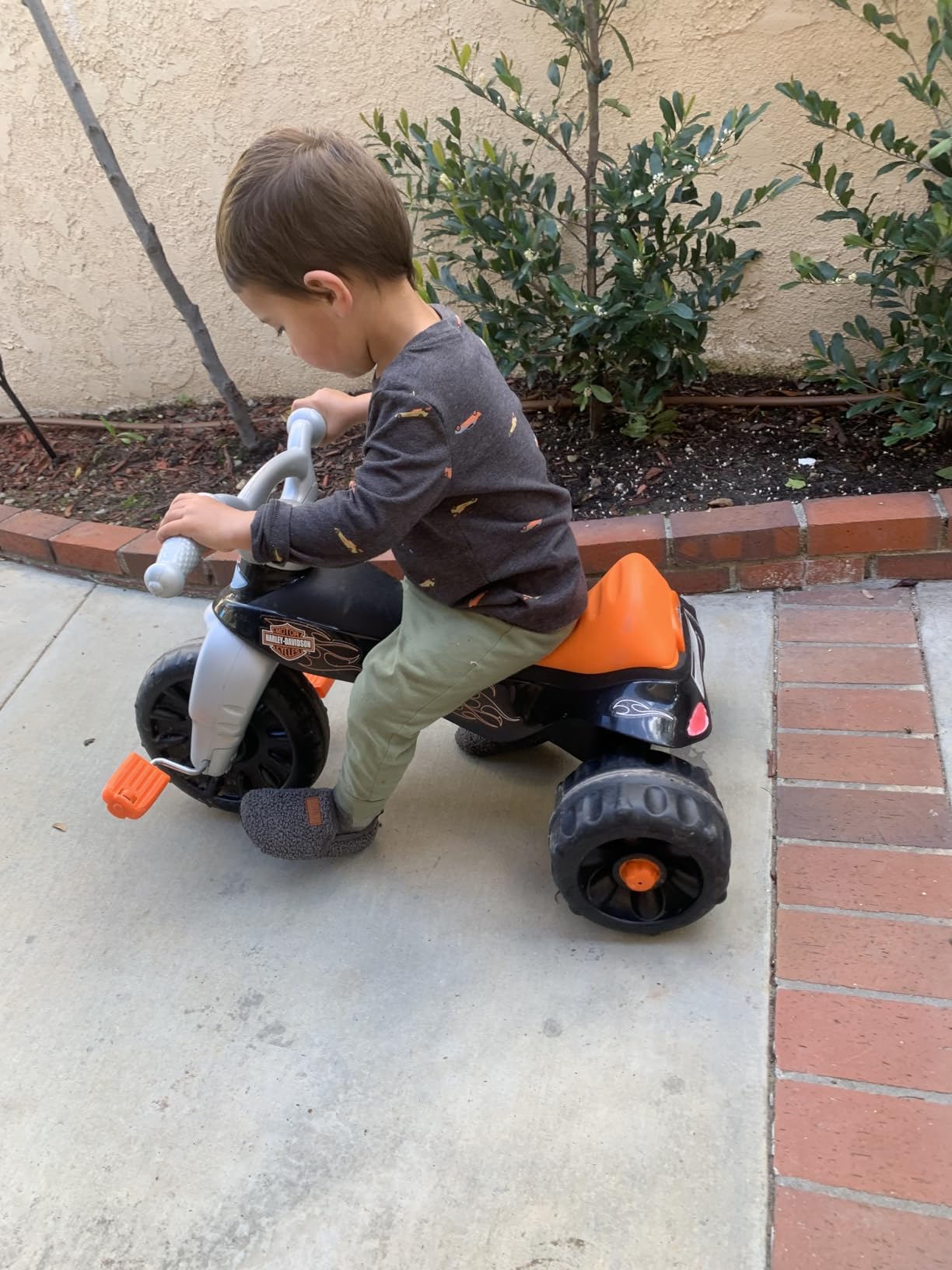
The seat lifts to reveal a storage compartment, which is the feature children notice first and adults end up relying on. Rated from 24 months to 5 years with a 55 pound limit, it is a long-lasting pedal option for a child of average growth.
There is no battery, so nothing to charge and nothing to fail electrically. It is also heavier at 7.5 pounds, which is stable rather than portable, and a reasonable trade for a frame that does not flex.
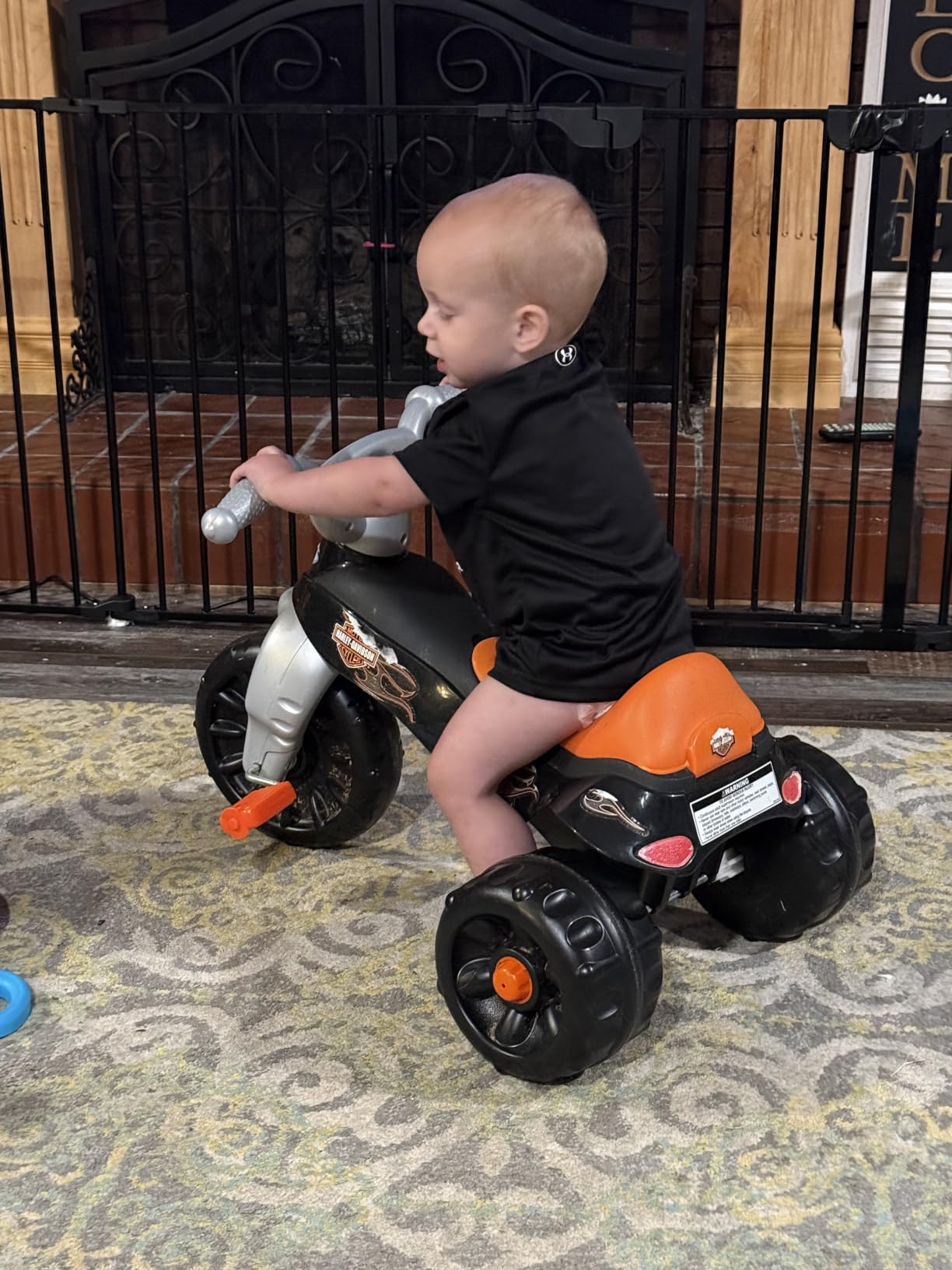
Why it handles outdoor surfaces better than most
Rugged tread on a real path is the deciding factor for anyone without smooth paving. The indoor-only trikes on this list are fine on carpet and hopeless between flagstones, and this one just keeps rolling. That makes it the most genuinely outdoor pedal trike for the money.
The Harley-Davidson graphics matter too, for the same reason the John Deere tractor works. A themed tricycle gives a child a reason to ride rather than a thing to be pushed around.
Assembly and pedal reach
Assembly is the clear drawback, and reviewers describe it as time-consuming to the point of needing a hammer and a screwdriver. The storage seat also pops off easily and is awkward to refit, so put it back carefully rather than forcing it.
Some two-year-olds cannot reach the pedals from the seat, which is a genuine limitation at exactly this age. Check inseam against the seat before buying, and expect the first week to involve a small amount of adult pushing.
Is Your 2-Year-Old Ready? A Ride-On Readiness Checklist
The single most common question in parent forums is not about brands at all. It is whether a specific child is ready, and the answer depends on four things: walking confidence, the space you have, the surface under them, and temperament.
A ride-on is a coordination toy before it is a fun toy. A child needs steady walking, enough core control to hold a seated posture, and the confidence to try something that might wobble. Children who cruise furniture and fall often are better served by the dinosaur hopper or a walker-first ride-on, both of which are in this list.
Temperament is the piece most guides skip. A cautious two-year-old can be physically ready and still refuse to get on a big pedal trike. For those children, a low seat with a handle they can grip, or a hopper that cannot tip, is the right first purchase. Parent forum threads describe exactly this pattern, and it is not a phase to push through.
Space and surface decide the category more than price does. Smooth indoor floor or smooth paving means a push car or balance bike. Grass and gravel mean wide pneumatic-style tires or a balance bike, and nothing with small hard plastic wheels. If you only have lawn, say so in the shop and skip anything that needs a flat hard run.
Finally, be honest about time horizons. A small plastic ride-on like the John Deere Sit N Scoot is outgrown in roughly a year. A balance bike with adjustable seat and handlebar can last three. Buying the cheaper toy first and upgrading at three is a reasonable strategy, not a mistake.
Push Ride-On, Pedal Trike, Balance Bike or Battery Car?
Four types cover almost everything a two-year-old can use, and they differ on cost, skill demand, terrain and how long they last. Push ride-ons are the cheapest and the most immediately usable: the child steers with a wheel or a handle and moves by pushing with their feet. They need the least coordination, work on any surface, and suit indoor play.
Balance bikes are the development sweet spot for this age. No pedals means the child learns to balance and steer at the same time, which is a skill a pedal tricycle asks for all at once. They are the best choice when your child walks confidently and has outdoor space.
Pedal trikes raise the coordination demand and add leg strength work, so they suit a child who is already comfortable on a balance bike. They are outdoor toys, and the absence of hand brakes on most of them means they need open space.
Battery-powered 12V cars are the category we would skip at two. They are heavy enough that a flat battery is a dead weight for an adult to lift, they need smooth hard surfaces to run properly, and the parent remote that makes them attractive only works if an adult is engaged. The same money buys a balance bike that a child uses independently for two more years. and a bigger battery only adds weight. For 24V power wheels, that argument gets stronger rather than weaker.
Two electric terms worth knowing. A push-button start means the child presses a button to begin moving; a foot throttle means pressing a pedal, which gives finer control. Gradual acceleration and a parental remote are the features to prioritise, and a remote that works on more than one speed setting is worth paying for.
Indoor Play, Outdoor Surfaces and Small-Space Storage
Surface is where most disappointing ride-on purchases are actually decided, and it is the detail parents complain about most. The rule is simple: hard plastic wheels need smooth hard ground. Foam rubber tires forgive more. Nothing wide and heavy with small wheels will cross a lawn, no matter what the listing says.
Indoor, look for quiet wheels and a wipe-clean body. The whisper-ride wheels on the Step2 and the shock-absorbing wheels on the KRIDDO trike are the quietest options we tested, and both are fine on a hard kitchen floor. Track how much room you need before buying: the Whisper Ride is 45.5 inches long, and the roller coaster playset needs a nine-foot straight run.
Outdoors, test the surface yourself first. Push a toy car along it and see whether it judders. If it does, you are looking at grass, gravel or uneven slabs, and the answer is a balance bike with real tires or a trike with tread.
Storage is a genuine problem in a small house. Two of these fold flat or dismantle: the Step2 Whisper Ride folds its handle down, and the roller coaster track comes apart in about a minute. The rest are one solid piece and simply need a corner. If you are short on corners, a toy chest or a covered bin gives you somewhere to put a bulky ride-on in winter, and our toy chest buying guide covers the size trade-offs.
For long indoor play sessions, plan snacks. Ours get eaten more or less continuously during a two-hour living-room run, and a batch of our old fashioned caramel cake survives being carried around in a ride-on better than most alternatives.
Safety, Batteries and Buying a Ride-On Secondhand
Look for a harness or seat belt on anything with speed, a wheelbase wide enough that a wobble tips the toy rather than the child, and a maximum weight limit above your child’s current weight with room to grow. For playrooms, a low seat and a low centre of gravity matter more than any electronic feature.
On certification, look for products tested to the US toy safety standard and check for a stated compliance mark on the listing. A missing certification statement is not proof of a problem, but it is a reason to choose a different listing. Wooden toys included with a ride-on, as on the delivery van, should carry the same compliance.
For battery ride-ons generally, confirm whether the charger and battery are actually in the box before you commit. Most 12V cars take several hours to charge and give a handful of short runs, and a flat 12V car can weigh more than a two-year-old can shift. That is the practical reason we keep them out of this roundup.
Buying secondhand is where a checklist beats a listing. Confirm the age rating and the weight limit, then check every wheel spins freely, the steering moves, the seat belt latches, and the seat belt is not frayed. Look underneath for cracks, particularly around the wheel mounts, and check that the plastic has not faded from sun exposure. On an electric model, look at the battery terminals to see whether it has been left flat.
Avoid a used ride-on with no age marking, no weight limit, or no model number, because you cannot check a recall and you cannot tell whether it was built for a two-year-old. Weigh it yourself: a ride-on that is far heavier than its listing suggests was probably not meant for the age your child is.
Frequently Asked Questions
What is the best ride-on toy for a 2-year-old?
For most 2-year-olds the best ride-on toy is a pushed foot-to-floor car such as the Step2 Whisper Ride II, because it needs the least coordination and works indoors and on smooth paving. A balance bike such as the Strider 12 Sport is the better long-term choice if your child walks confidently and has outdoor space. A plush hopper is the safest first ride-on for a cautious or newly walking toddler.
What are some good ride-on toys for a 2-year-old?
Good options cover several types. Push ride-ons include the Step2 Whisper Ride II, the Little Tikes T-Rex Cozy Coupe and the Radio Flyer Amazon Delivery Van. Pedal options include the Fisher-Price Harley-Davidson Tough Trike and the KRIDDO tricycle. Balance bikes include the Strider 12 Sport and the KRIDDO balance bike. A foot-to-floor tractor such as the John Deere Sit N Scoot suits a child who loves farm themes.
What is a good ride-on car for a 2-year-old?
A good ride-on car for a 2-year-old should have a low seat, a low centre of gravity, a weight limit above 50 pounds and wheels that suit your surface. The Step2 Whisper Ride II adds a fold-down parent handle, a working horn and a seat belt, and is rated from 18 months to 4 years. A removable floor board, as on the Little Tikes T-Rex Cozy Coupe, lets one toy work as both a pushed and a self-powered car.
What is the most popular toy for a 2 year old?
Among ride-on toys, foot-to-floor push cars and plastic character cars dominate because they work immediately and need no charge. Electric 12V ride-on cars are visually the most striking, but they are heavy, need smooth hard surfaces and are usually chosen for a 3-year-old rather than a 2-year-old. Balance bikes are the most recommended choice among parents for a confident walker, and the most satisfying for balance and coordination practice.
Can a 1 year old go in a ride on a car?
Most 2-year-old ride-ons start at 18 or 24 months, so a 1-year-old should only use a toy rated for them. The Radio Flyer Creativity Car has an anti-tip walker base and is rated from 1 year, which makes it the safest first ride in this group for a first-year child, while the balance bikes here are rated from 18 months. Never use a toy above its stated age range, and always check the harness and weight limit before a first ride.
Is my 2 year old ready for a balance bike?
A 2-year-old is ready for a balance bike when they can walk steadily without holding furniture, hold the handlebars for several seconds, and show no fear of small wobbles. A cautious child may prefer a low ride-on with a handle to grip, such as the Radio Flyer Amazon Delivery Van or the dinosaur hopper, before moving to a balance bike. Most children are comfortable on a balance bike within a few days of starting.
The Best Ride-On Toys for 2 Year Olds: Our Final Word
The best ride-on toys for 2 year olds in 2026 are not the flashiest ones. Our top pick, the Bouncy Pals dinosaur hopper, is a soft plush toy with no battery, no pedal and nothing to go wrong, and it carries more than 26000 reviews at 4.7 stars. For a child whose walking is still new, nothing else we tested is as forgiving.
For a confident walker with outdoor space, the Strider 12 Sport balance bike is the buy that lasts, adjusting from age one to four and coping with grass, paths and floors. The Step2 Whisper Ride II is the best all-rounder for a family with a driveway or a large playroom, and the Little Tikes T-Rex Cozy Coupe is the one that grows with your child thanks to its removable floor board and swivelling front wheels.
Save battery-powered 12V cars for year three. Until then, put the money into a balance bike or a well-made push car, check your surface before you buy, and pick the toy that matches your child’s confidence rather than their birthdate. You can see all twelve picks with a Check Latest Price button on each.