
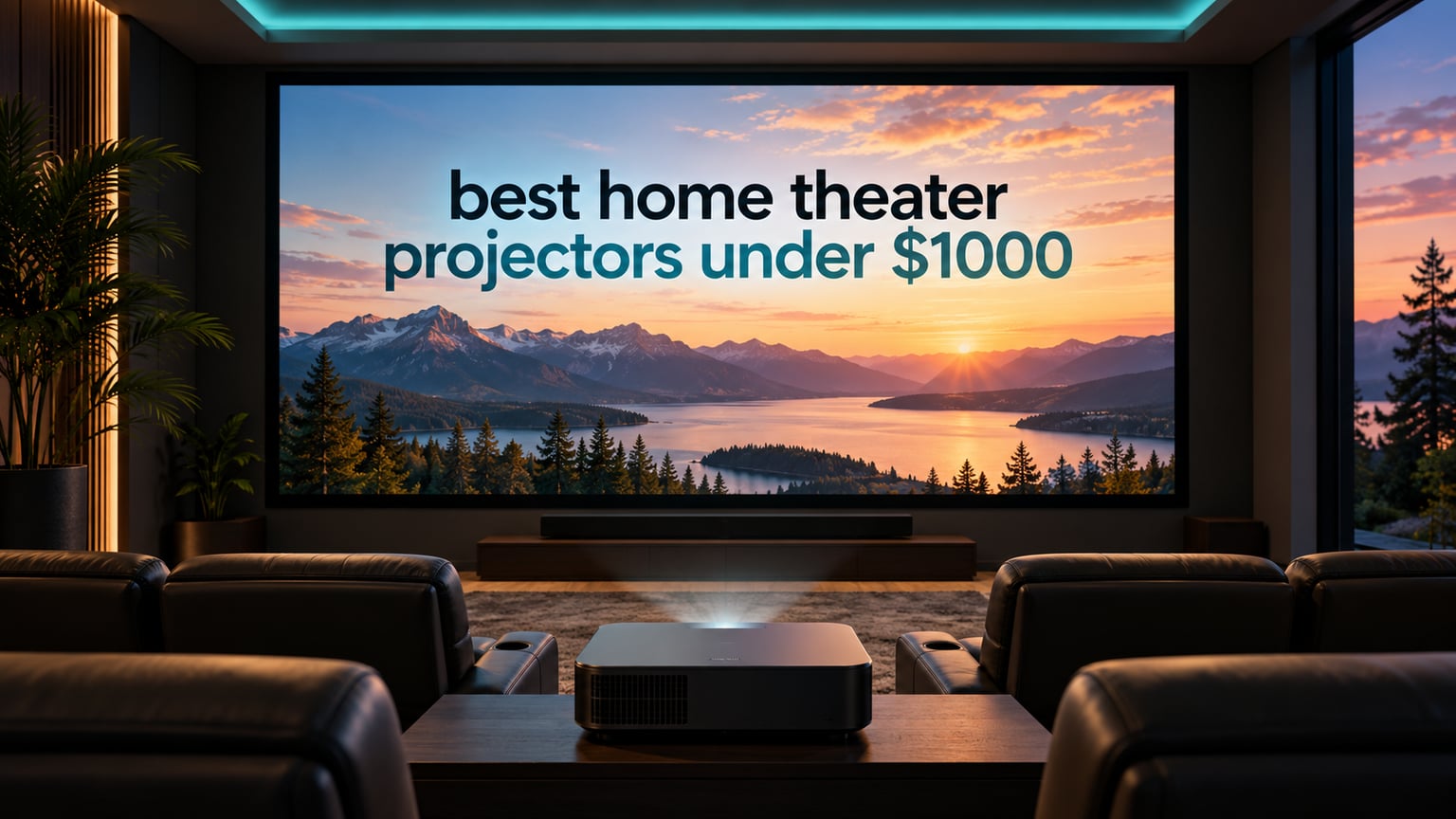
There is a specific kind of silence that falls over a room when a good projector finally switches on. A wall that was just drywall becomes a window, and everyone in the room goes quiet for a second. That is what we kept chasing while pulling together this list of the best home theater projectors under 1,000 dollars for 2026.
Here is the thing about this price tier. Under 1,000 dollars you are not shopping for one category of product, you are shopping for three. You can buy a bright 1080p lamp projector for a lit living room, a native 4K laser projector with licensed streaming built in, or a short throw unit that throws a 100 inch image from across a coffee table. Those three groups barely resemble each other, yet they all sit under the same ceiling.
What you cannot buy under 1,000 dollars is a dedicated theater-grade picture. The contrast and uniformity that the big editorial guides measure on a calibrated bench simply are not available yet at this budget. What you can buy is 100 to 120 inches of genuinely enjoyable image for a fraction of what a 98 inch television costs, and that is a fair trade for most living rooms.
We built this list from published specifications and owner review patterns, and we leaned hard on the two numbers that actually predict whether you will be happy: measured brightness and real contrast. Marketing lumen figures at this budget are frequently inflated, and the more you understand why, the better your choice will be. Our method is simple. Every product below had to have a native resolution of at least 1080p, a documented light source with a rated lifespan, published throw data, and a meaningful volume of owner feedback to draw downside patterns from. We also flag the products where the spec sheet says one thing and buyers say another, because that gap is where regret lives.
If you already own home theater gear, our guide to the best projectors for home theater covers the category at higher price points. This page stays strictly under the 1,000 dollar ceiling.
Top 3 Picks for the Best Home Theater Projectors Under 1,000 in 2026
The three picks below cover the three genuinely different use cases at this budget, so no matter how you watch, one of them fits. The Optoma leads the list because it has the largest owner base in the group and the least demanding setup, the BenQ covers short-throw color accuracy, and the Dangbei covers native 4K with real streaming.


Dangbei DBOX02
- 3840x2160 native 4K
- 2450 ISO lumens laser
- licensed Netflix
- dual 12W Dolby Audio
All 10 Home Theater Projectors Under 1,000 Compared in 2026
Every projector in this roundup, side by side on the specs that change the viewing experience. Brightness figures are quoted exactly as each manufacturer publishes them, which is why some carry an ANSI or ISO rating and others do not.
| Product | Specifications | Action |
|---|---|---|
| Optoma HD146X 1080p Projector |
|
Check Latest Price |
 BenQ TH671ST Short Throw BenQ TH671ST Short Throw |
|
Check Latest Price |
| Dangbei DBOX02 4K Laser |
|
Check Latest Price |
 BenQ TH575 Bright 1080p BenQ TH575 Bright 1080p |
|
Check Latest Price |
 XGIMI Elfin Flip 4K XGIMI Elfin Flip 4K |
|
Check Latest Price |
 Nebula Cosmos 4K SE Nebula Cosmos 4K SE |
|
Check Latest Price |
 ViewSonic LS740HD Laser ViewSonic LS740HD Laser |
|
Check Latest Price |
 ViewSonic PA503HD 1080p ViewSonic PA503HD 1080p |
|
Check Latest Price |
 Epson Home Cinema 980 Epson Home Cinema 980 |
|
Check Latest Price |
 XGIMI MoGo 2 Pro XGIMI MoGo 2 Pro |
|
Check Latest Price |
1. Optoma HD146X – The Best Overall Home Theater Projector Under 1,000
- Bright enough for a lit room
- Native 1080p with Dynamic Black
- Built-in speakers and game display mode
- Ceiling mount capable
- Large owner review base
- Lamp light source means eventual bulb replacement
- Limited smart features and RCA audio path
- Keystone correction limited to 40 mm vertical
The Optoma HD146X is the projector we recommend first, and the reason is not glamorous. It is the unit in this group with the deepest owner history, and at 1234 reviews it is the only one where we can read a long pattern of behaviour rather than a handful of early impressions. That pattern is consistent: people set it up on a coffee table, point it at a wall, and it works.
Optoma publishes 3600 lumens for this model without attaching an ANSI rating to the number, which tells you something important about the entry tier as a whole. The chip is native 1920 by 1080 with a listed contrast ratio of 25000:1, which is a dynamic figure rather than a native one, so treat it as marketing. The physical design is simple, at 8.2 pounds, with ceiling mounting supported and a throw distance that starts at just over 3 feet.
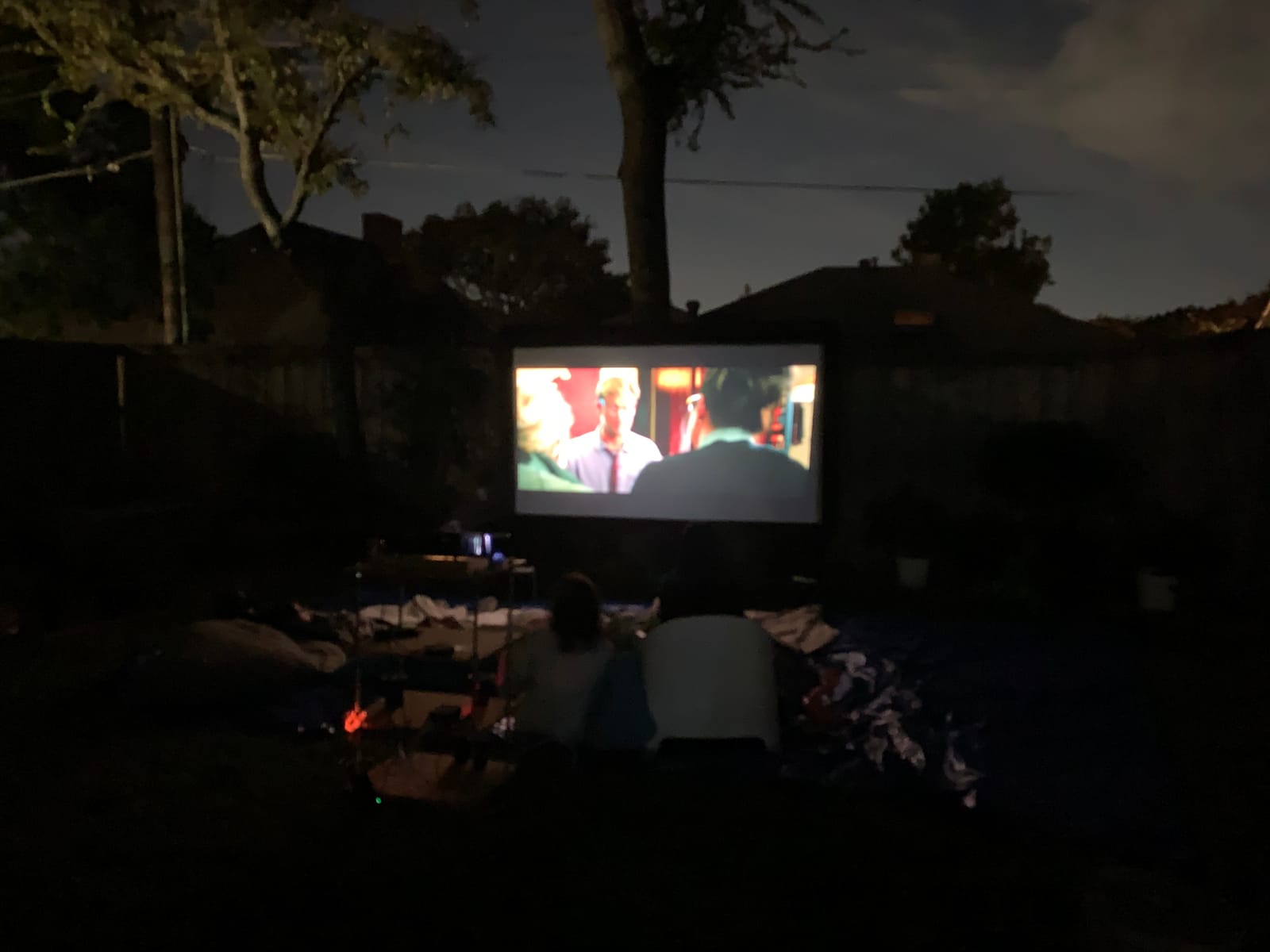
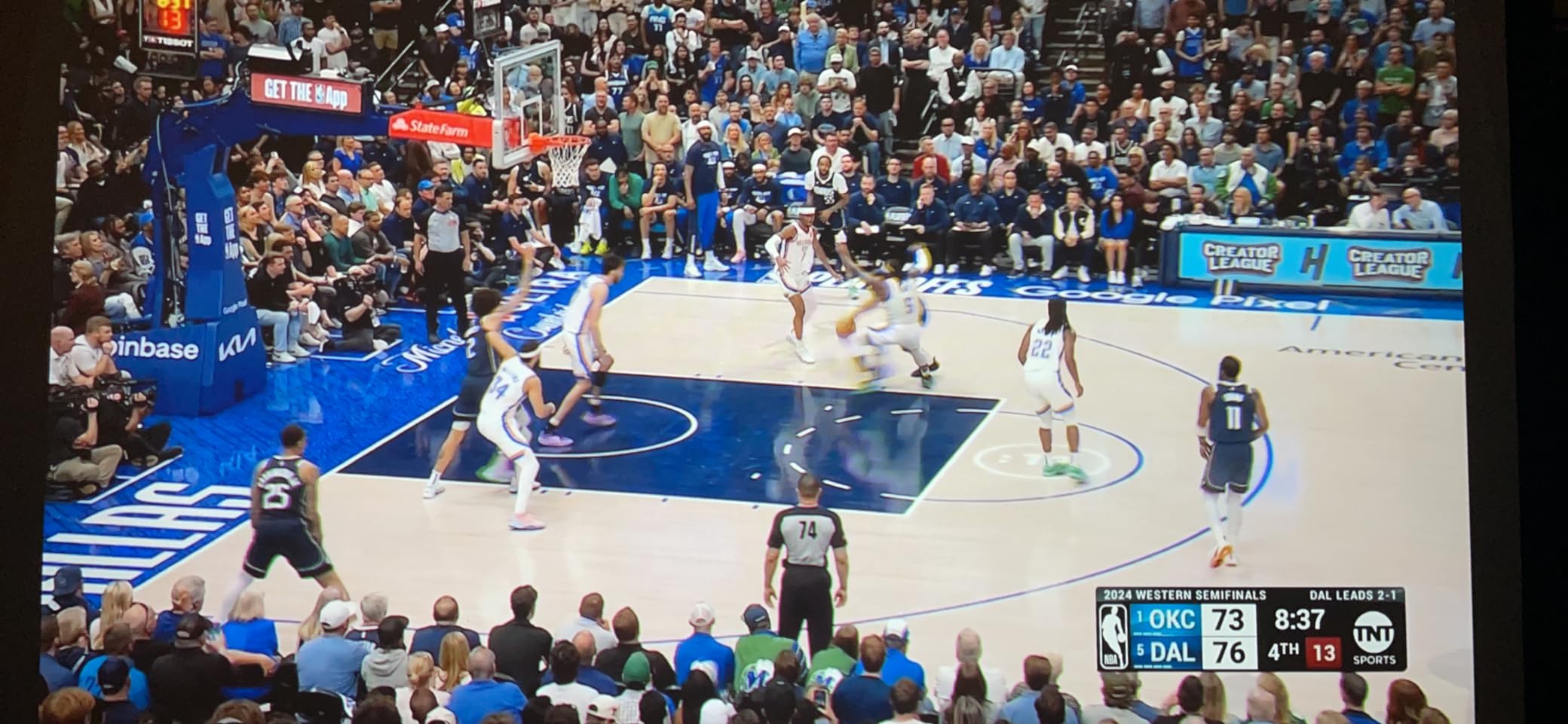
Where the HD146X genuinely earns its place is the combination of a high lamp output with Dynamic Black tone mapping and a 3D-ready optical path, plus a 3.2 foot minimum throw that makes it forgiving in a small apartment. The built-in speakers mean an owner who buys this on a Saturday night can actually watch something that evening without shopping for an audio device first.
There is one real cost to owning it, and it is financial rather than technical. The rated light source life is 15000 hours, and the warranty splits the coverage, with one year on parts and labor but only 90 days on the lamp. Budget for a bulb change somewhere down the line. Plan for the day when you mount it on the ceiling and want keystoning, because the correction is limited to 40 mm of vertical shift and nothing horizontal.
Who the Optoma HD146X suits best
It suits first-time buyers who want a zero-friction path to a 100 inch image, and anyone who watches a lot of daytime sports or live TV in a room that will never be fully dark. The game display mode and the short minimum throw distance both point to casual console play rather than competitive gaming.
It also suits anyone who will not install a ceiling bracket, because it can simply live on a shelf or a side table and still fill a wall. At 8.2 pounds it is easy to move between rooms when the season changes.
Who should look past the Optoma HD146X
Anyone who wants native 4K detail, or who plans to run long 4K gaming sessions at high refresh rates, will find 1080p with a 3D-capable path underwhelming. The lack of a smart operating system also means you are adding a streaming device to the cost of the room.
If rainbow artifacts bother you, single-chip DLP is the technology family that produces them, and the HD146X is a single-chip DLP design. That is a small minority of viewers, but for those of us who notice it on scrolling credits, it rules the projector out.
2. BenQ TH671ST – Short Throw Color Accuracy in a Small Package
- 100 inch image from about 5 feet
- Low input lag for console gaming
- 92% Rec.709 color accuracy
- Bright for a small room
- Three year warranty
- Fixed short throw causes shadows with people nearby
- Single HDMI with no optical audio out
- Lamp life shortens under gaming only use
The BenQ TH671ST is the pick for anyone whose room simply does not have ten feet of depth to spare. Its throw distance is fixed at a 5 foot minimum and maximum, so a 100 inch image lands from across a coffee table and the unit can also fill a wall up to 300 inches wide. That constraint is exactly what a small apartment or a loft needs.
At 4.5 stars across 682 reviews, this is one of the two most highly rated units in the group, and the reason is color discipline. BenQ publishes 92% Rec.709 coverage, which is the standard most film content is graded to, and pairs it with 3000 lumens. At 5.9 pounds it is the lightest full-size unit here and it ships with a remote, power cord and a three year warranty.
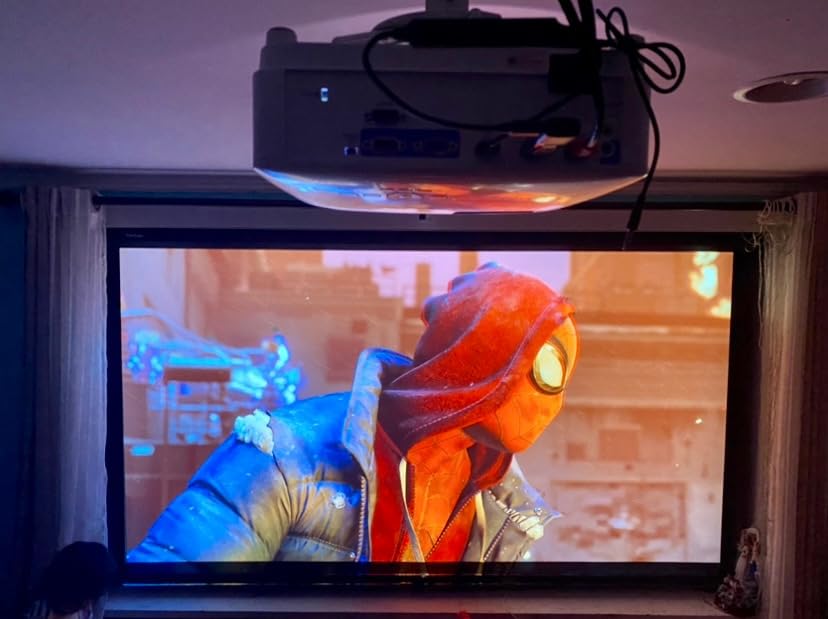
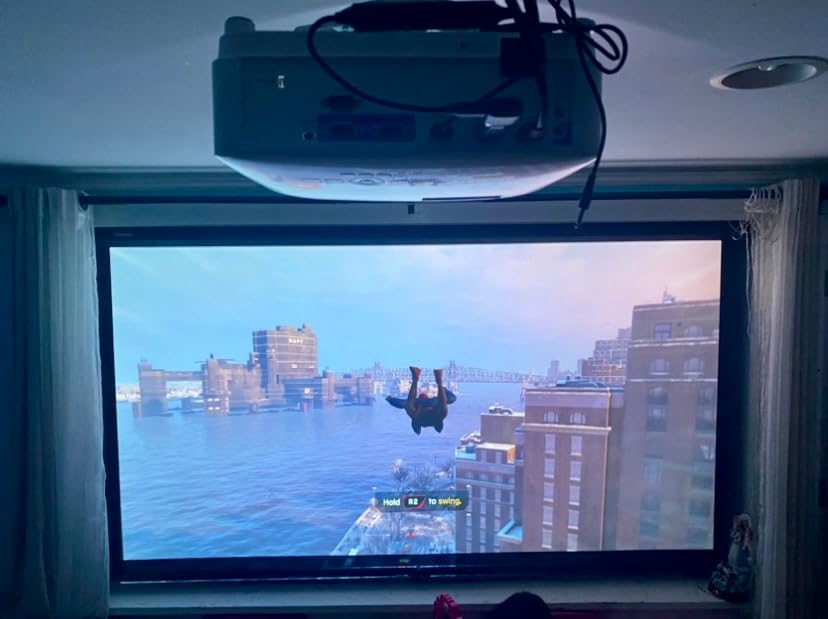
BenQ has also built in the features owners actually use. The stated design intent is low input lag with a refresh rate that matches the output of current generation consoles, and the onboard 5 watt stereo pair is genuinely usable in a normal sized room, which is unusual at any price. Reviewers report multi year durability and a lamp that stays bright.
The short-throw trade-off is real and it is physical. Because the lens sits so close to the wall, anyone walking through the room between the projector and the screen will throw a shadow across the image. That is a genuine annoyance in a family room and a non-issue in a room nobody walks through. There is also a single HDMI port and no optical audio output, so a soundbar has to connect over Bluetooth or the one digital feed.
Who the BenQ TH671ST suits best
It suits small rooms, loft conversions, and anyone who cannot wall-mount because the throw distance to the far wall would be too long. The fixed 5 foot geometry also makes installation almost instant, since there is one correct position and it is easy to find.
Console gamers benefit most from the low latency figures, particularly on a PS4 Pro or an Xbox One X where the projector can match the console output. For a mixed household that watches films during the week and games at the weekend, it is a tidy single box.
Who should look past the BenQ TH671ST
Anyone with a busy path between the seating and the screen will regret the shadow casting. It is not fixable with a mount, because the constraint is the throw ratio itself, not the placement height.
Owners who plan to plug in a full surround system will find the single HDMI limiting, particularly if they want to route audio to an amplifier and keep the projector for video only. The zoom range is also unusually constrained, since it magnifies but does not widen, which means the image size is effectively decided by one distance.
3. Dangbei DBOX02 – Native 4K Laser With Licensed Streaming
- Genuinely bright 4K with lights on
- Licensed Netflix removes the dongle cost
- ALPD laser avoids speckle
- Auto focus and obstacle avoidance
- Dual 12W Dolby Audio and DTS:X
- Rainbow fringing visible on bright scenes
- Google TV setup takes real patience
- Some units report power or boot failures
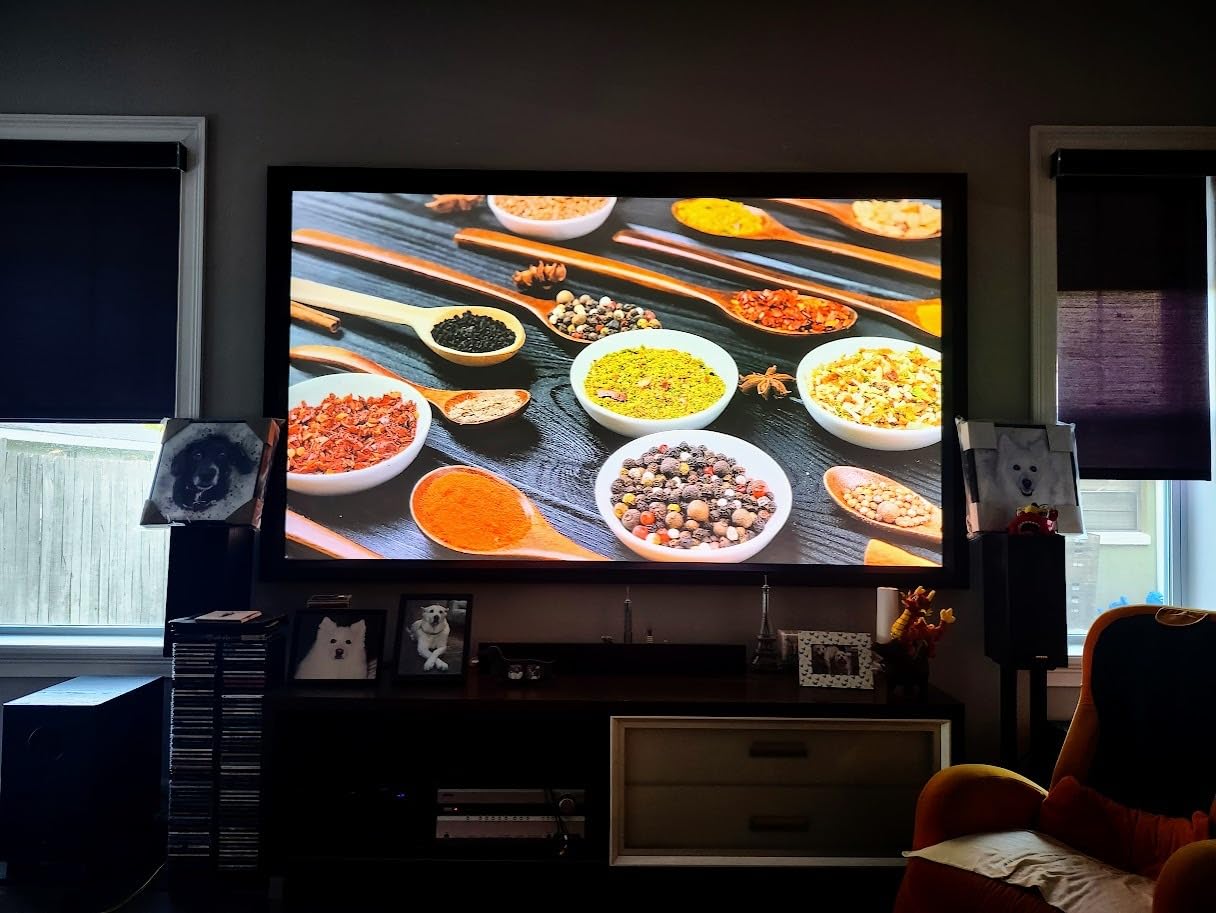
The Dangbei DBOX02 is the only unit in this roundup that delivers a 3840 by 2160 native panel at this budget, and it does so with 2450 ISO lumens from an ALPD laser source rated for 30000 hours. That combination is the reason this projector feels like a step up in class the moment you turn it on, and it is why we rate it the premium pick.
ISO lumens are a real measurement standard rather than a marketing label, which means that 2450 figure is directly comparable to the ANSI figures elsewhere on this page. Add HDR10+ and HLG support, a throw distance between 1.7 and 5 meters, and a listed image size from 60 to 200 inches, and you have a projector that can handle both a dedicated wall and a big screen.

It is also the rare budget projector that ships with properly licensed streaming. The built in Google TV carries an officially licensed Netflix, plus the usual app library and Chromecast sharing, so you are not budgeting for a separate dongle. Audio is handled by dual 12 watt speakers with Dolby Audio and DTS:X decoding, and the dual HDMI set includes an eARC channel for sending sound to a soundbar or receiver.
Setup is close to automatic, with fast autofocus, auto keystone, screen fit and obstacle avoidance all handled in software. Reviewers also report responsive customer support and firmware updates that resolved early 3D and settings-retention problems, which is worth something in a category where software is often abandoned after launch.
It is also the heaviest unit on this list at 4 kilograms, with a 180 watt power supply in the box, and there is no internal battery and no handle, so moving it between rooms means unplugging it. Owners have also documented isolated hardware failures, including units that would not power on after about a year and a first unit that died within two weeks. At 412 reviews the reliability pattern is not yet settled, which is worth weighing against the specification sheet.
Who the Dangbei DBOX02 suits best
It suits anyone who wants true 4K sharpness, Blu-ray 3D playback, and a projector that needs no lamp replacement over the ownership period. At 2450 ISO lumens it is also bright enough for a room with the lights on, which is unusual for a native 4K DLP at this budget.
It also suits buyers who hate accessories. A projector with licensed Netflix, dual 12 watt speakers and an eARC-equipped HDMI output is a complete entertainment box before you add anything.
Who should look past the Dangbei DBOX02
Rainbow artifacts are reported on bright scenes and scrolling credits, which is the standard single-chip DLP complaint. If you have ever noticed color fringing on a projector before, this is the one feature that will decide against it.
Owners also report that the initial Google TV setup and menu navigation need patience, with firmware updates running long out of the box. If you are not technically confident, budget an evening for it rather than an hour.
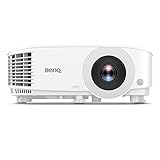
4. BenQ TH575 – 3800 ANSI Lumens Built for Daylight Gaming
BenQ TH575 1080p 3800 Lumens Home Entertainment Projector 16ms Low Latency
- Real ANSI lumen figure so brightness is trustworthy
- 16ms latency with an enhanced game mode
- Dual HDMI and an audio port at this budget
- Quiet fan with a two year warranty
- Recurring reports of units powering off mid-use
- No Bluetooth and no smart operating system
- 3D quality is weak
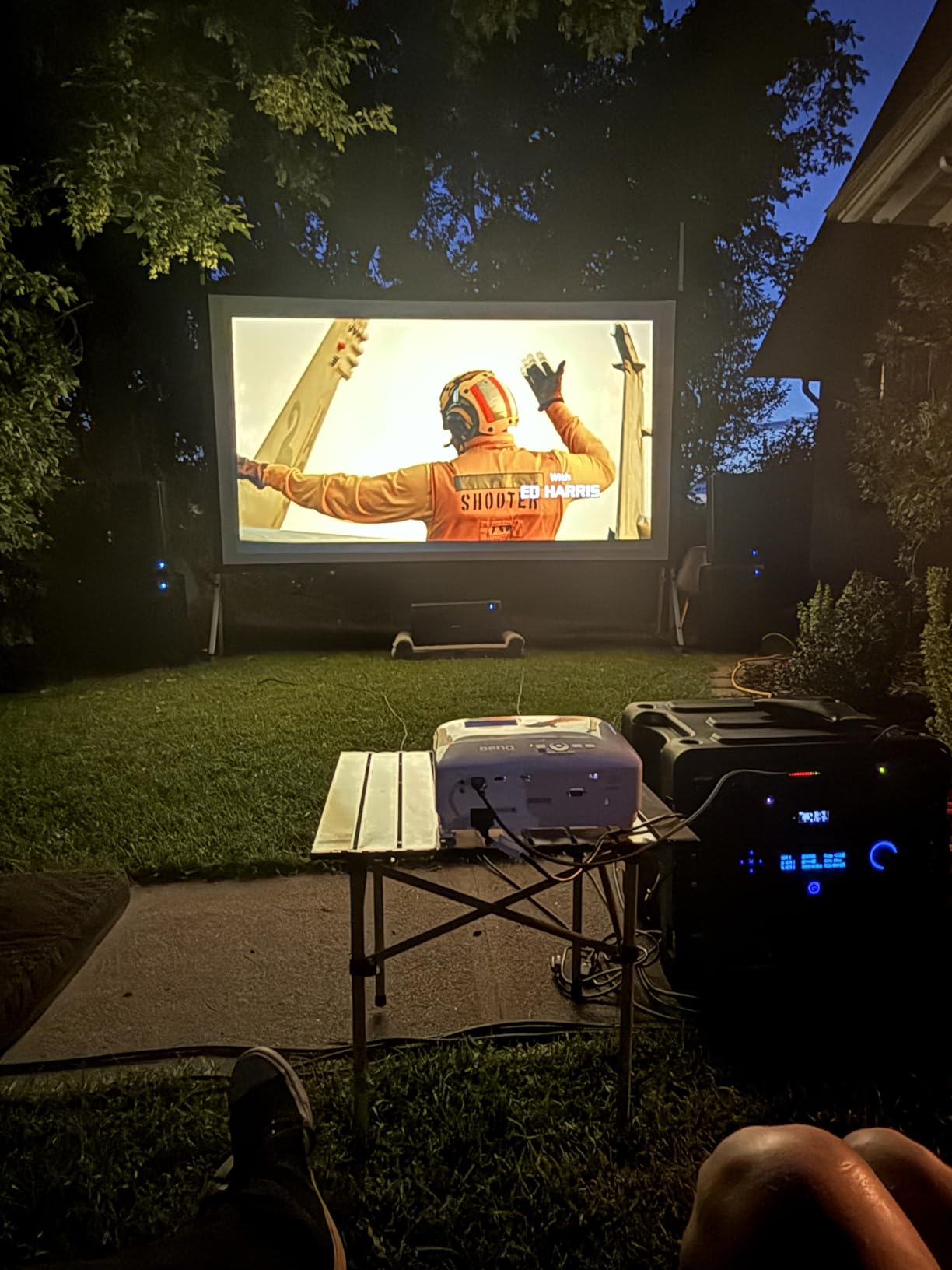
The BenQ TH575 is the unit to buy if your room cannot be darkened and you still want a big picture. It publishes 3800 ANSI lumens, which means the number is measured to a standard rather than derived from a lamp wattage, and in practice owners report it stays punchy with blinds open and only a lamp on.
Gaming is the second reason to consider it, with a stated 16 millisecond input lag at 1080p and 60Hz and a dedicated enhanced game mode. It also has 1.1x optical zoom, dual HDMI, automatic vertical keystone and a 3.5 mm audio port, a feature set that is unusual at this budget and that BenQ explicitly calls out as class-leading for the money.
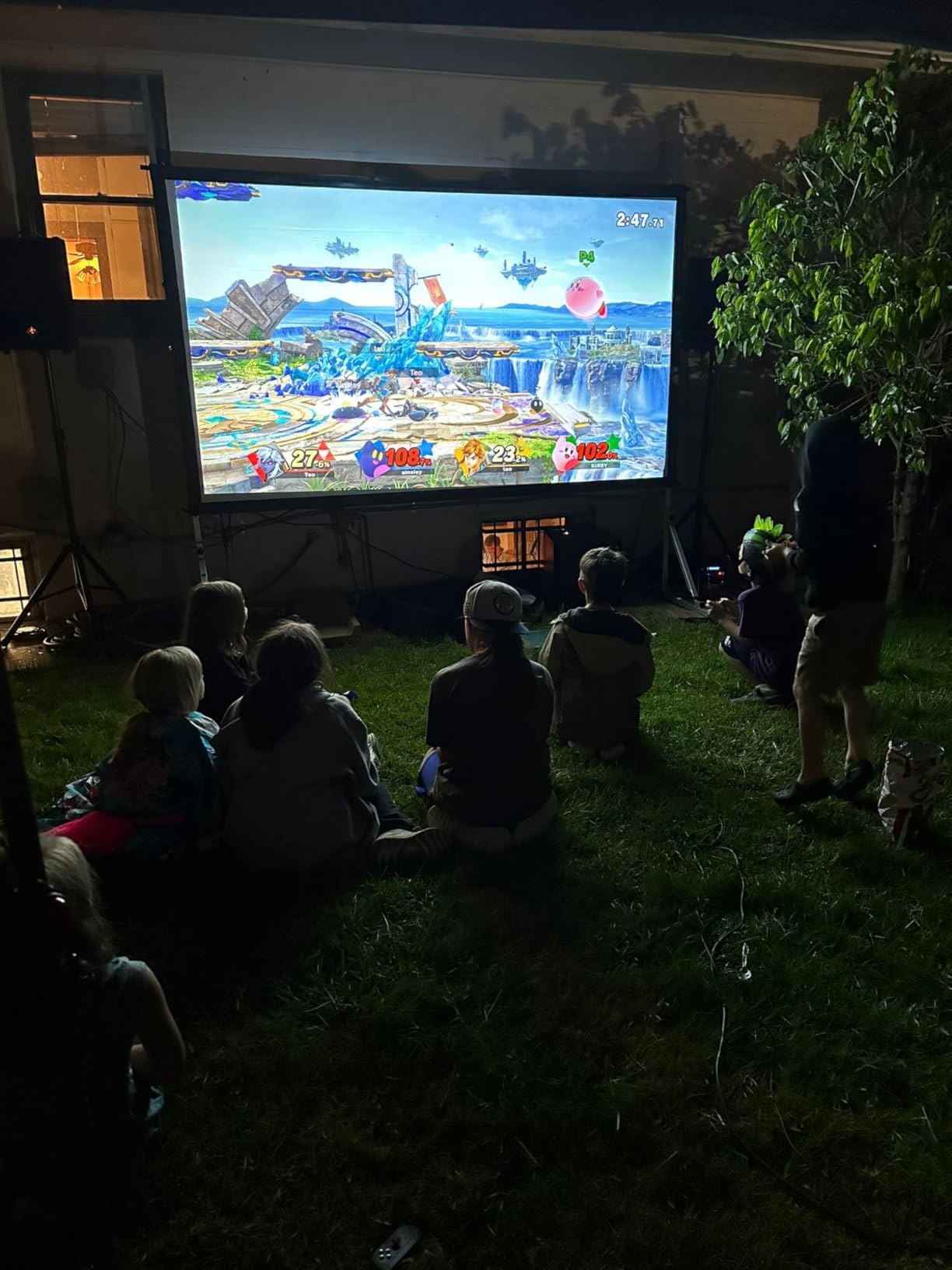
The light source is a lamp rated at 15000 hours, and the contrast figure of 15000:1 is a dynamic FOFO number rather than a native measurement, so do not read it as cinema-grade black. The listed throw data starts at 5 feet for large images and extends to 8 feet, with a 30 to 300 inch range. The chassis is 7.7 pounds, and BenQ covers it with a two year manufacturer warranty.
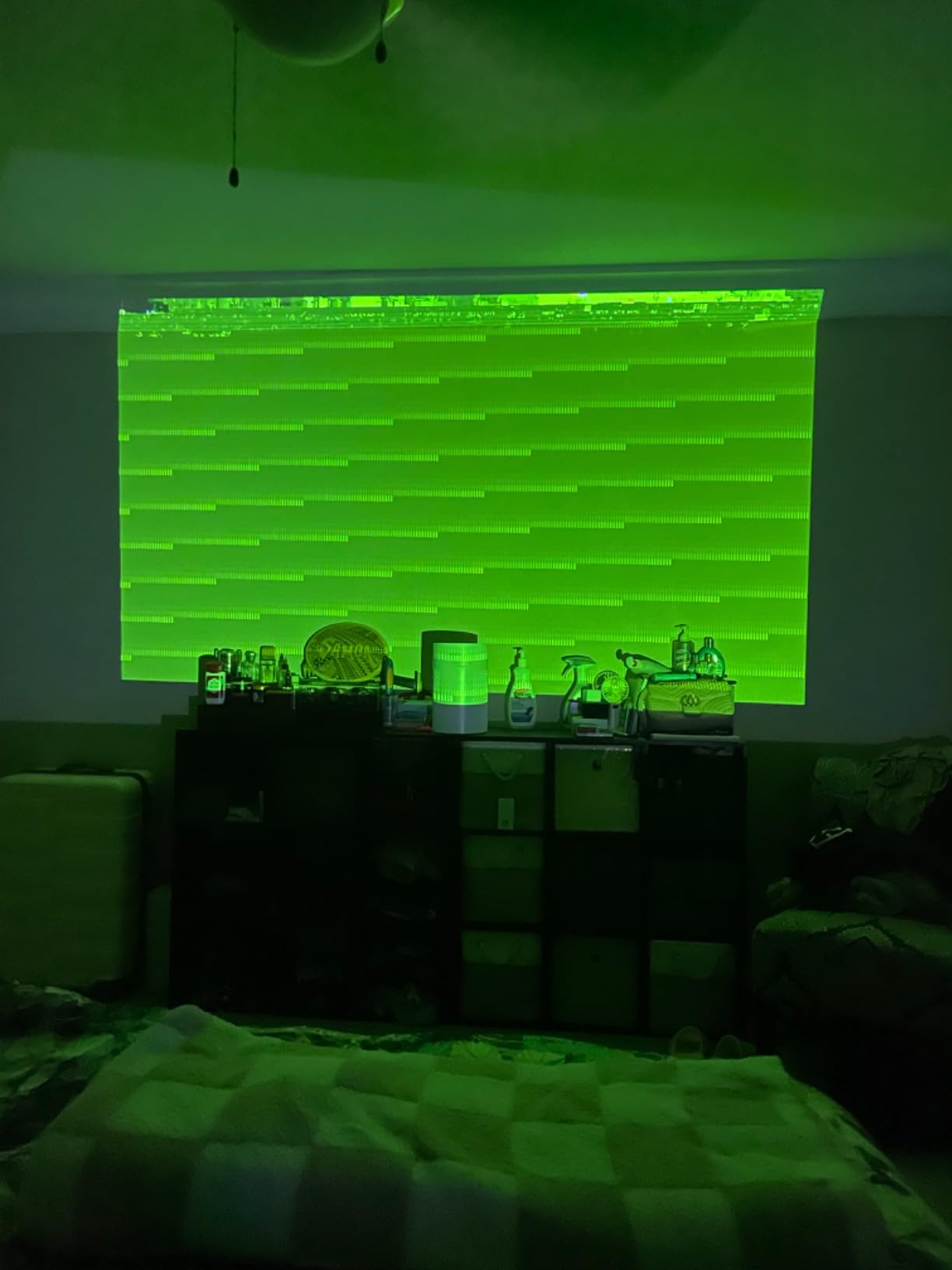
The significant caveat is a reliability cluster. Several owners report units shutting off within minutes of use and recurring audio dropouts, and the pattern points at a power supply design or production issue rather than anything the user did. Support has resolved these as replacements, but 12% of the reviews being one star is unusual for a 4.2 average, and that is worth factoring into a purchase decision.
There is also no built-in streaming. With no Bluetooth and no smart operating system, you are feeding it from a console, a laptop, or a streaming device you buy separately, and the rear USB port is for power only rather than media playback.
Who the BenQ TH575 suits best
It suits families with a living room that stays bright, and it suits gamers who want low latency without chasing the top of the market. The measured ANSI brightness means you can size the screen confidently, because the number reflects real light hitting the screen rather than a marketing calculation.
It also suits anyone who wants a rear audio out and dual HDMI so they can add a soundbar later and still keep a console connected. The optical zoom gives placement flexibility that a fixed-lens unit cannot offer.
Who should look past the BenQ TH575
Anyone who wants a self-contained box should skip it, because without a smart platform you are buying a second device on day one. The same goes for anyone who plans to connect sound over Bluetooth rather than a wired output.
The one-star cluster deserves a real pause. If the unit powers off mid-film, no amount of picture quality compensates, so consider a model with a longer and more settled reliability record for a room that gets used every day.
5. XGIMI Elfin Flip 4K – Triple Laser 4K You Can Carry Between Rooms
XGIMI Elfin Flip 4K Portable Projector with wifi and bluetooth, Google TV
- Native 4K sharpness with RGB triple laser
- Lossless optical zoom from 0.98 to 1.3
- 1ms latency with VRR and ALLM
- Dual Harman Kardon speakers
- Flip design protects the lens
- 1600 ISO lumens needs a dark room
- No Miracast support
- HEVC Main10 playback bug will not be fixed
The XGIMI Elfin Flip 4K is the sharpest image in this roundup, and it gets there with a native 3840 by 2160 panel fed by an RGB triple laser light source. The color figure is the one to notice: SGS certified accuracy with a delta E under 1 and 90% DCI-P3 coverage, which is film-grade territory that nothing else in this list documents.
The second feature that separates it is the lossless optical zoom from 0.98 to 1.3:1. Almost every competitor at this budget offers digital zoom only, which resamples the image and softens it. Optical zoom changes the size optically, so you can resize the image for a room without paying for it in sharpness. Throw distance runs from 0.87 to 5.7 meters with image sizes from 40 to 200 inches.
It is also the most capable gaming unit here on paper, with 1ms latency, variable refresh rate and auto low latency mode support. Audio is handled by dual Harman Kardon speakers, which is unusual and a genuine improvement on the thin speaker pairs most projectors carry. Google TV is built in, the flip hinge protects the lens when the unit is turned off, and the frames double as a carry handle.
Brightness is the catch. At 1600 ISO lumens it is dimmer than the dedicated home theater units on this list, which means it belongs in a dark room or on a smaller screen. Two further issues are worth knowing before you commit. There is no Miracast, so Samsung DeX and similar mirroring options are unavailable, and a confirmed HEVC Main10 level 5.0 decoder bug crashes the onboard player with no firmware fix planned, which matters if you stream from Plex or Jellyfin.
There is no internal battery, so it needs mains power wherever it goes, and the flip stand base is described as tippy while the all-plastic body feels less substantial than the product photography implies.
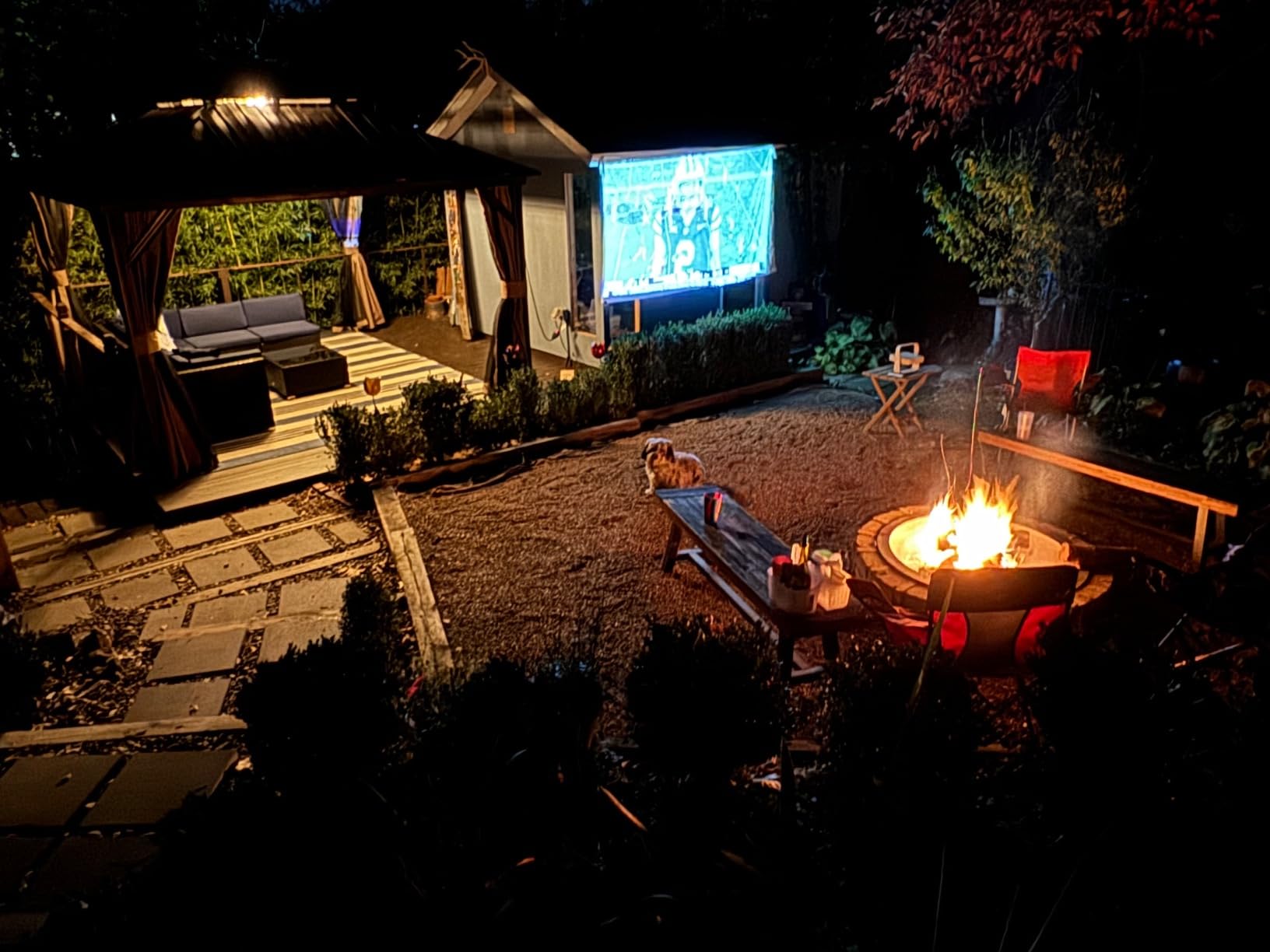
Who the XGIMI Elfin Flip 4K suits best
It suits picture-first buyers who have a dark room and want detail and color accuracy above raw brightness. The 90% DCI-P3 figure and the under-1 delta E rating make it the most cinematic color reproduction in the group.
It also suits anyone whose space changes, because the optical zoom means one unit can cover a bedroom ceiling and a living room wall without a quality penalty. Console and PC gamers get the lowest latency figures here alongside variable refresh rate support.
Who should look past the XGIMI Elfin Flip 4K
Skip it if your room has a window that will never be covered, because 1600 ISO lumens is a dark-room number and a lit room will look washed out. It is not the right tool for daytime sports in a bright family room.
Media library owners who decode HEVC Main10 files locally should also look elsewhere, and anyone who relies on Miracast for phone or laptop mirroring will find a gap. The plastic build and the tippy base are the two things people mention most when the unit is moved between rooms.
6. Nebula Cosmos 4K SE – Dolby Vision and Google TV in One Box
NEBULA Cosmos 4K SE Portable Projector, 1,800 ANSI Lumens
- True 4K with Dolby Vision support
- HybridBeam light holds up with a light on
- Google TV with 4K Netflix and a quick interface
- Auto focus and obstacle avoidance
- Built-in speakers are clear
- 400:1 contrast is low for dark cinema
- Reports of recalibration and cold-start failures
- Interface slower than a streaming stick
The Nebula Cosmos 4K SE is the pick for anyone who wants the streaming experience to feel like a television rather than an experiment. It runs Google TV with Netflix certified for 4K, and owners upgrading from earlier Android TV based Nebula models describe the interface as a step change in speed and polish.
On the picture side it is genuinely native 3840 by 2160 with Dolby Vision support and 1.07 billion colors, fed by a HybridBeam light source that combines LED and laser to deliver 1800 ANSI lumens with a rated life of 25000 hours. The measured brightness holds up with a light on, which is the practical advantage over the pure single-laser units.
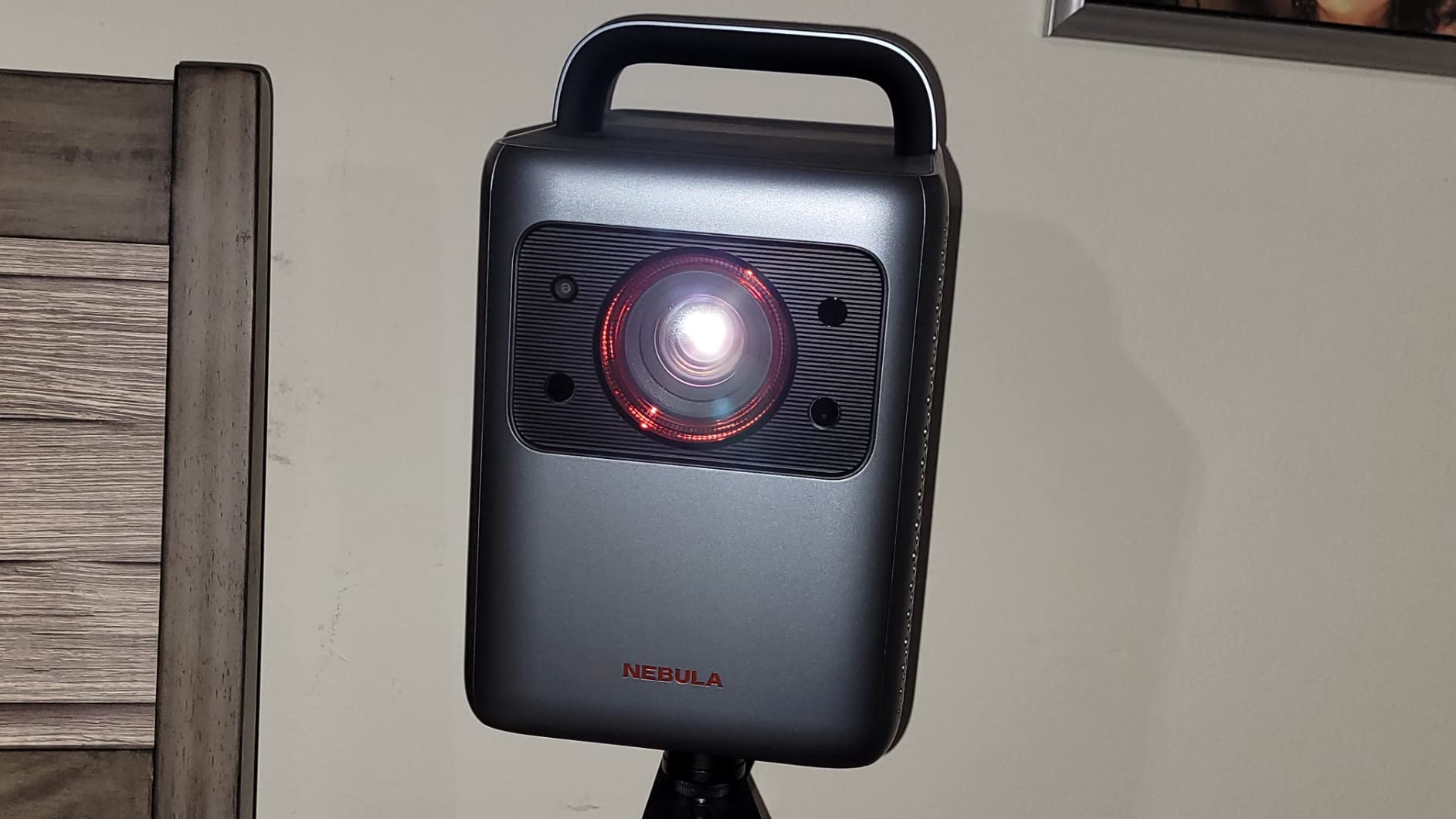
Setup automation is the quiet strength. IEA 4.0 handles real time autofocus, keystone, obstacle avoidance, screen fit, wall colour adaptation and ambient light adaptation, so placing the unit in an awkward corner is a two-minute job. The power supply is built in, so there is no external brick, and the built in speakers are clear enough for a 400 square foot room, with Bluetooth pairing that reportedly stays in sync.
The honest weakness is contrast. A 400:1 ratio is low for dark-room cinema use compared with the laser DLP rivals on this list, and black level in a letterboxed film will show it. Longer-term owners have also reported recurring re-focus and re-calibration needs, freezing interfaces, audio cutouts and cold-start failures after months of use, and the operating system is still slower than a dedicated streaming stick when switching between apps.
At 9.9 pounds with no internal battery, it is the least portable unit on this page despite the portable label. Treat it as a fixture rather than a carry-around device.
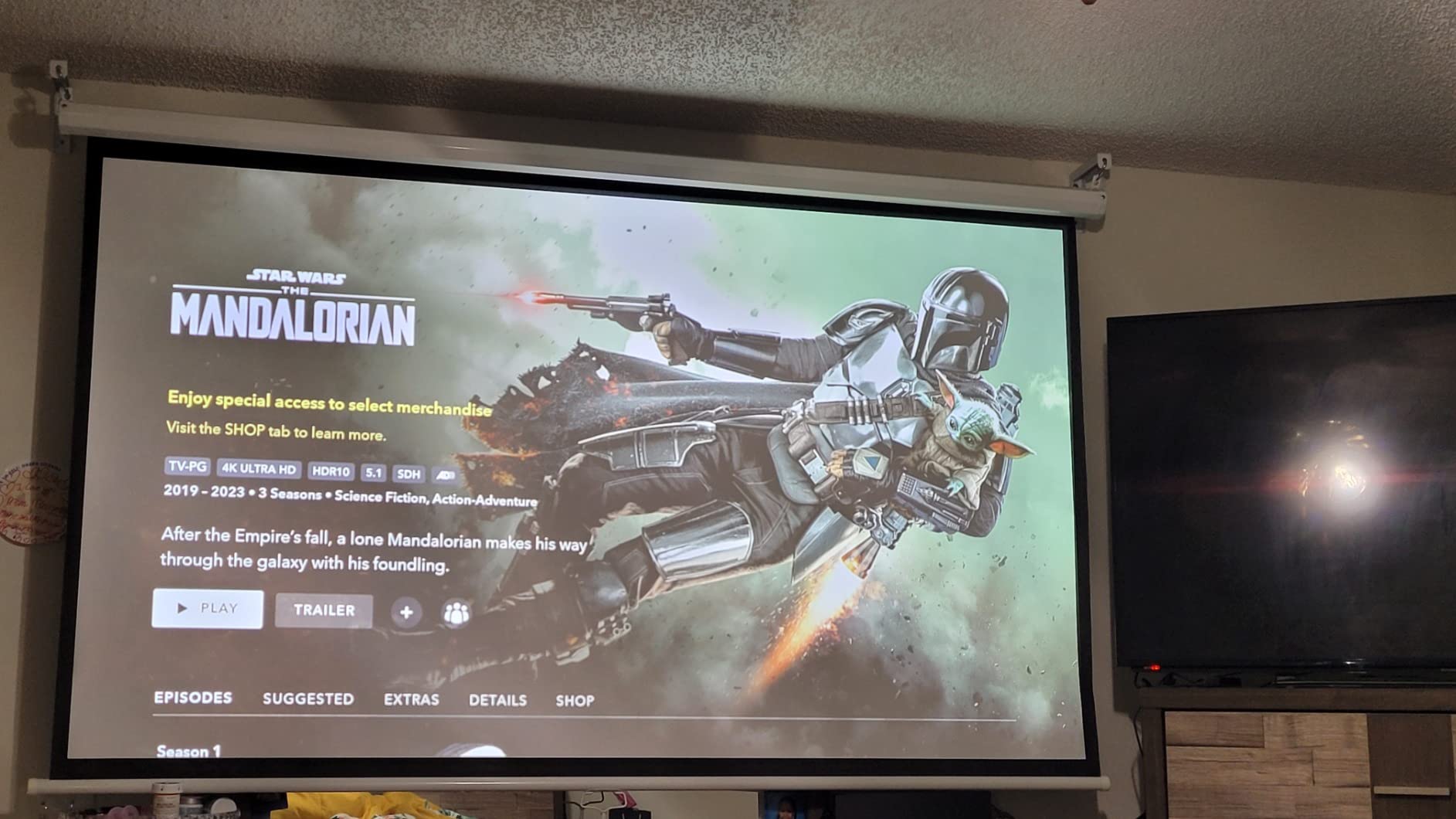
Who the Nebula Cosmos 4K SE suits best
It suits households where one person uses the projector and everyone else is streaming, and it suits anyone who does not want to attach a dongle and configure a third remote. The 4K Netflix certification inside Google TV is a genuine convenience rather than a spec sheet line.
Rooms with awkward geometry also suit it, because the automatic obstacle avoidance and screen fit do work that would otherwise mean manual keystone adjustment every time the unit is moved. Dolby Vision support gives high-end streaming content a better chance of looking right.
Who should look past the Nebula Cosmos 4K SE
Film-first viewers who care about black level and shadow detail should skip it. At 400:1 it is the weakest contrast figure among the laser units here, and a controlled dark room is exactly where that gap becomes obvious.
Anyone expecting a tablet-class interface should temper expectations, since the system still feels slower than a dedicated streaming stick. The reported calibration drift and cold-start issues are also a reason to keep a backup viewing option in a main living room.
7. ViewSonic LS740HD – The Brightest Projector in the Lineup
ViewSonic LS740HD 1080P Laser Projector, 5500 Lumens, Full HD Home Theater
- Brightest unit in the roundup at 5500 ANSI lumens
- Laser runs cool and quiet with no bulb replacement
- 1.3x zoom plus four corner and 360 degree adjustment
- Three year parts and labor warranty
- Golf simulation mode for sports setups
- No lens shift so it must sit on the lens axis
- Built-in speakers are muffled
- Some units report random orange flashing
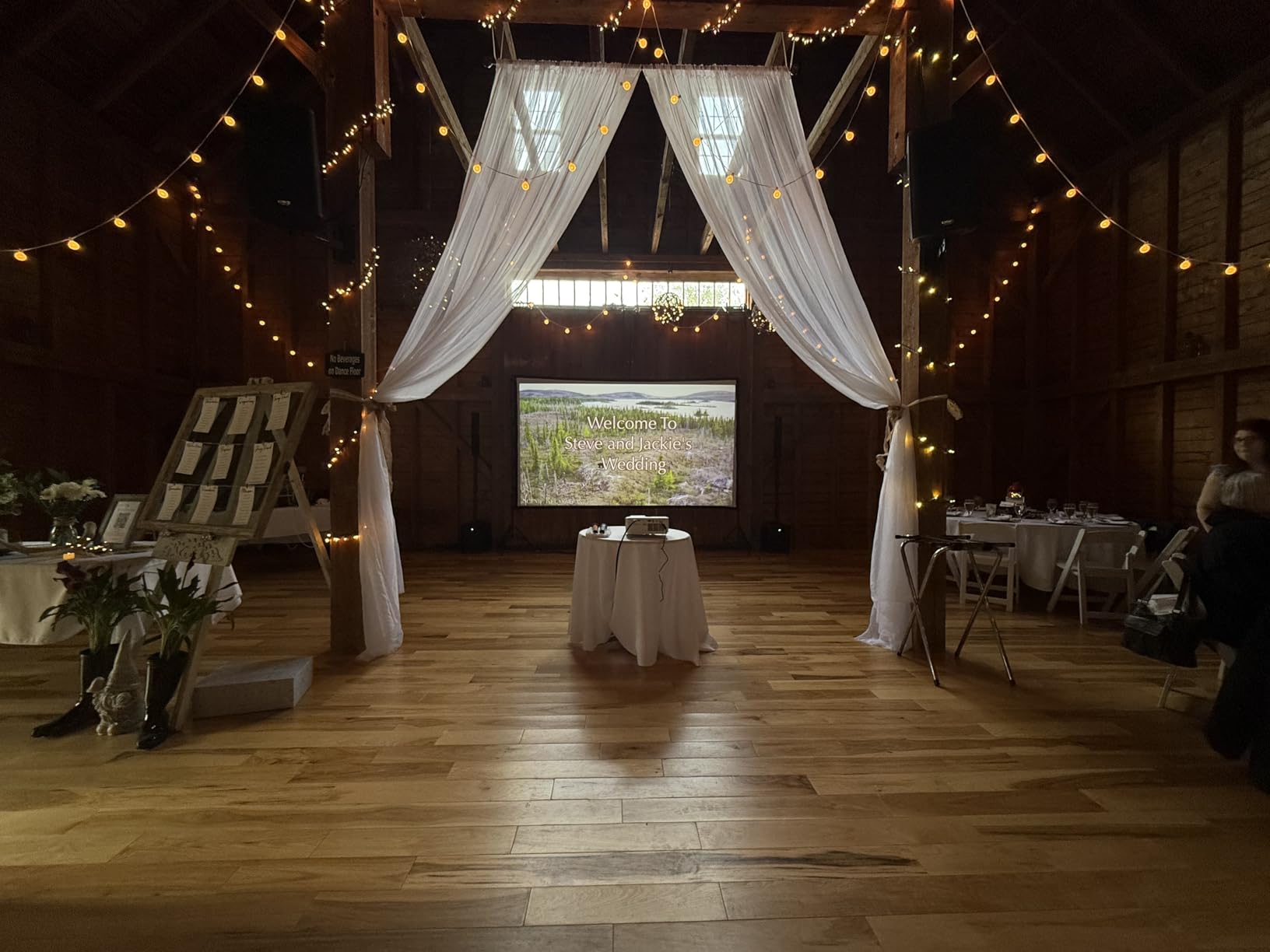
The ViewSonic LS740HD solves the problem nobody else on this list can. At 5500 ANSI lumens it is the brightest projector we reviewed, and that figure is measured to a standard, so it is directly comparable to the other ANSI numbers here. Owners report using it with daylight coming in and on an outdoor screen for a backyard film night.
The light source is a laser rated at 20000 hours with no bulb replacement ever, which removes the running-cost question entirely. It runs cool and quiet, and the listed contrast figure of 3000000:1 is a dynamic number rather than a native measurement, so read it as marketing rather than as cinema-grade black performance.
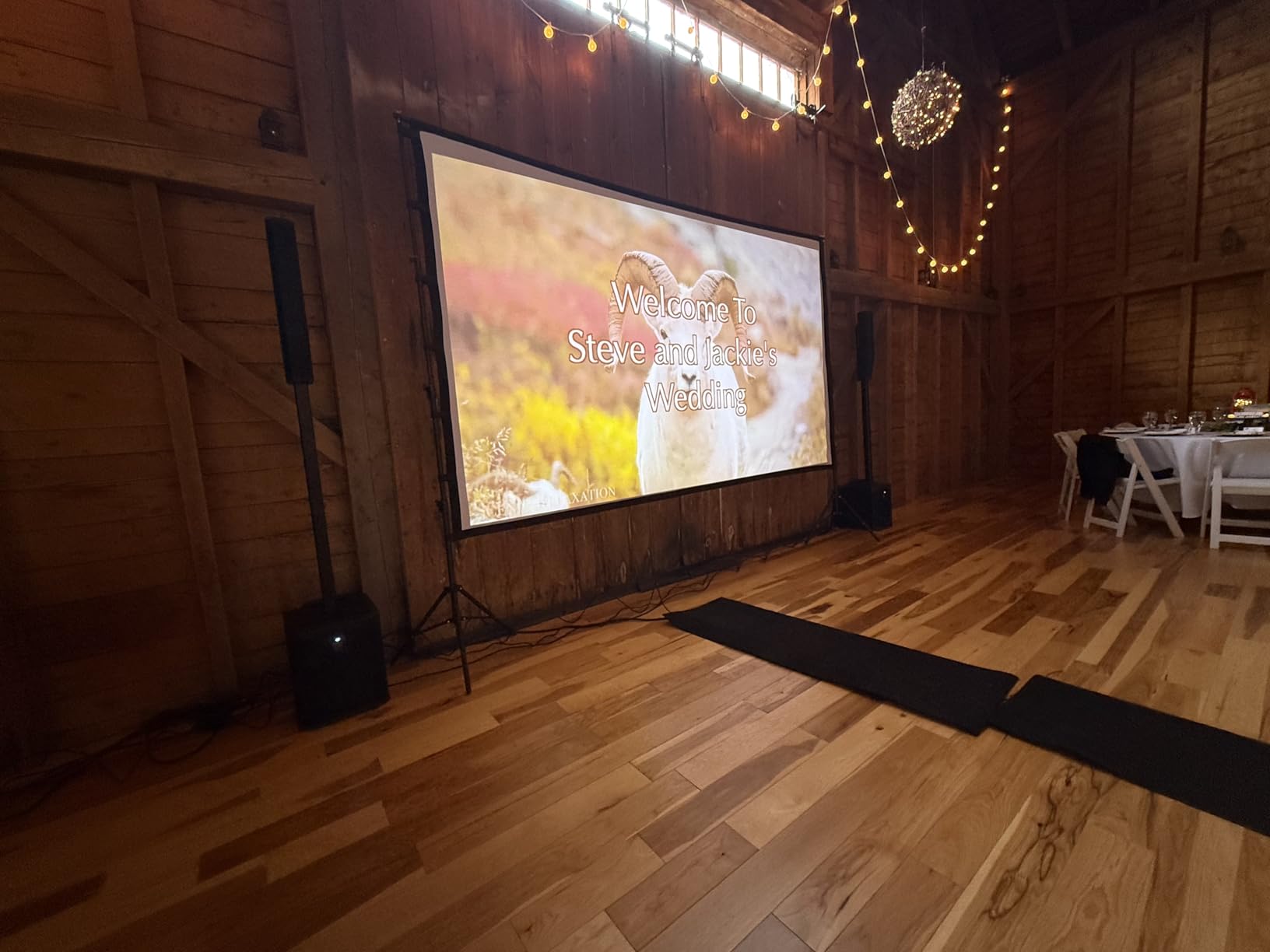
Placement flexibility is the second story. A 1.3x optical zoom plus horizontal and vertical keystone, four-corner adjustment, 360 degree projection and portrait mode means it can be mounted in positions that would defeat a simpler unit. The throw ratio of 1.1 to 1.5 puts a 100 inch image at 8.2 feet, with a range from 1 to 8 meters and image sizes from 30 to 300 inches. It weighs 6.6 pounds and carries a three year parts and labor warranty.
There is a genuinely odd extra feature here, which is a golf simulation mode that tunes environmental colour for training setups. If that is your use case, you will not find it anywhere else at this budget.
Two things to know before buying. There is no lens shift, so the unit must be positioned precisely on the lens axis, which is a real constraint in a room with an awkward ceiling. And the built in speakers are described as muffled and blown out, so budget for external audio if sound matters to you. A minority of owners also report units randomly flashing orange, including a replacement exhibiting the same behaviour.
Who the ViewSonic LS740HD suits best
It suits large bright rooms, media rooms with big windows, and anyone who plans to project outdoors once the weather allows. Nothing else in this roundup pushes this much light at the wall.
It also suits buyers who hate operating costs. With a 20000 hour laser and no lamp to replace, the total cost of ownership over five years of heavy nightly use looks very different from a lamp unit with a 4000 hour bulb.
Who should look past the ViewSonic LS740HD
Skip it if installation precision is going to be a problem, because without lens shift the geometry has to be right the first time. Test the throw distance on the floor before anyone drills a ceiling mount.
Anyone who wants built-in streaming should also look elsewhere, as the menu system is deliberately basic with no smart platform. And if a blown-out built-in speaker is going to bother you nightly, the audio weakness is not fixable in software.
8. ViewSonic PA503HD – 120Hz Brightness Built for Sports and Live TV
ViewSonic PA503HD 4000 Lumens 1080p Full HD DLP Projector, High Brightness
- 4000 ANSI lumens readable in heavy ambient light
- 120Hz refresh with 16ms input latency
- Auto vertical keystone and optical zoom
- Light enough to carry one-handed
- Three year parts and labor warranty
- Lamp rated at only 4000 hours
- Limited vertical tilt on the adjustment feet
- No smart operating system or streaming
The ViewSonic PA503HD is a workhorse built for content that never stops. A 120Hz refresh rate and 16 millisecond input latency keep fast action smooth, which is the combination you want for football, boxing, racing and live news rather than for a dark-room film night.
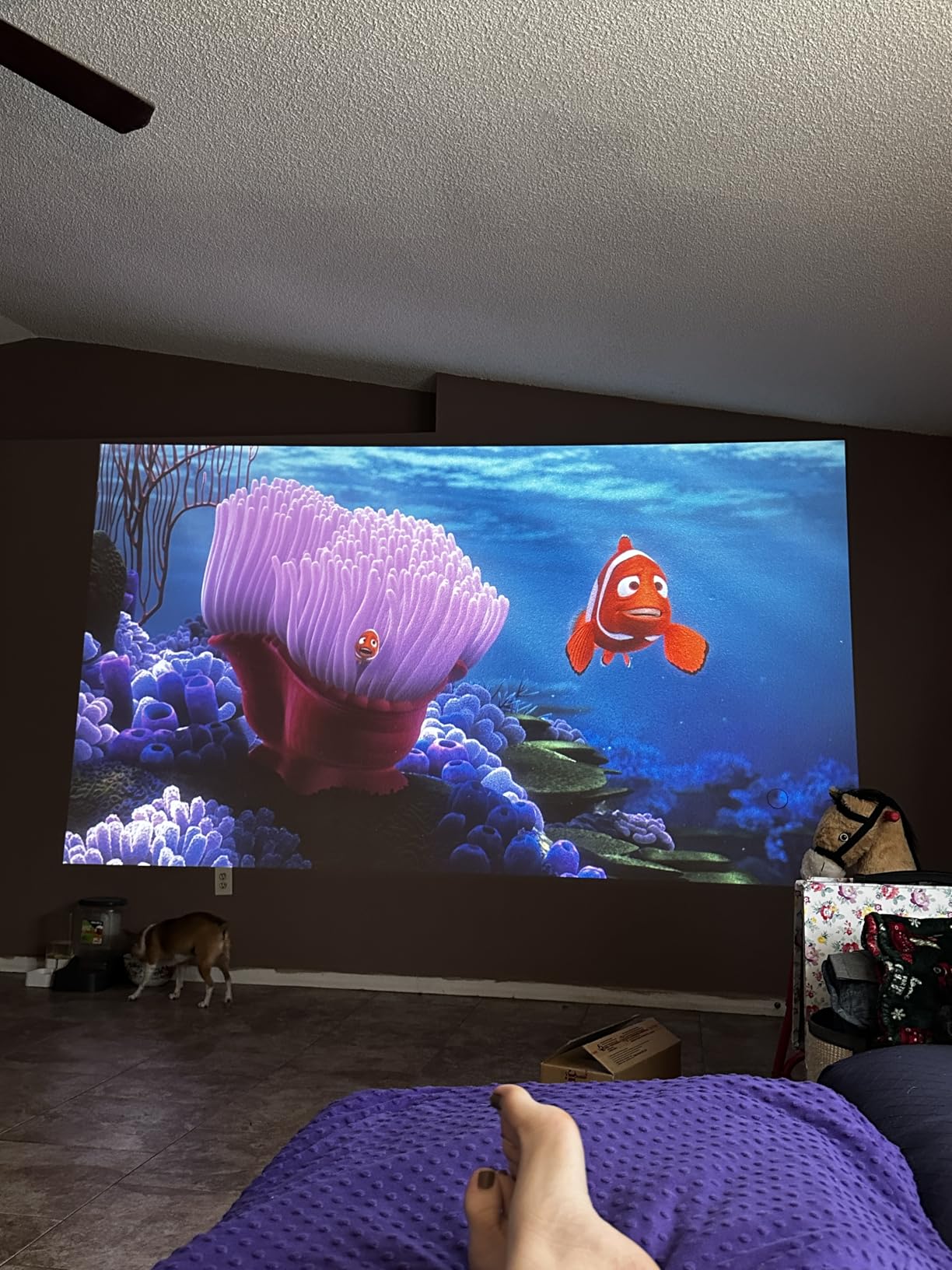
Brightness is the headline. At 4000 ANSI lumens owners report it stays clearly readable with heavy ambient light, and ViewSonic SuperColor handles the color processing alongside a listed 22000:1 dynamic contrast figure. Throw ratio is 1.4 to 1.6, putting a 100 inch image at 10.8 feet, with image sizes from 80 to 150 inches typical and a throw range from 1 to 10 meters.
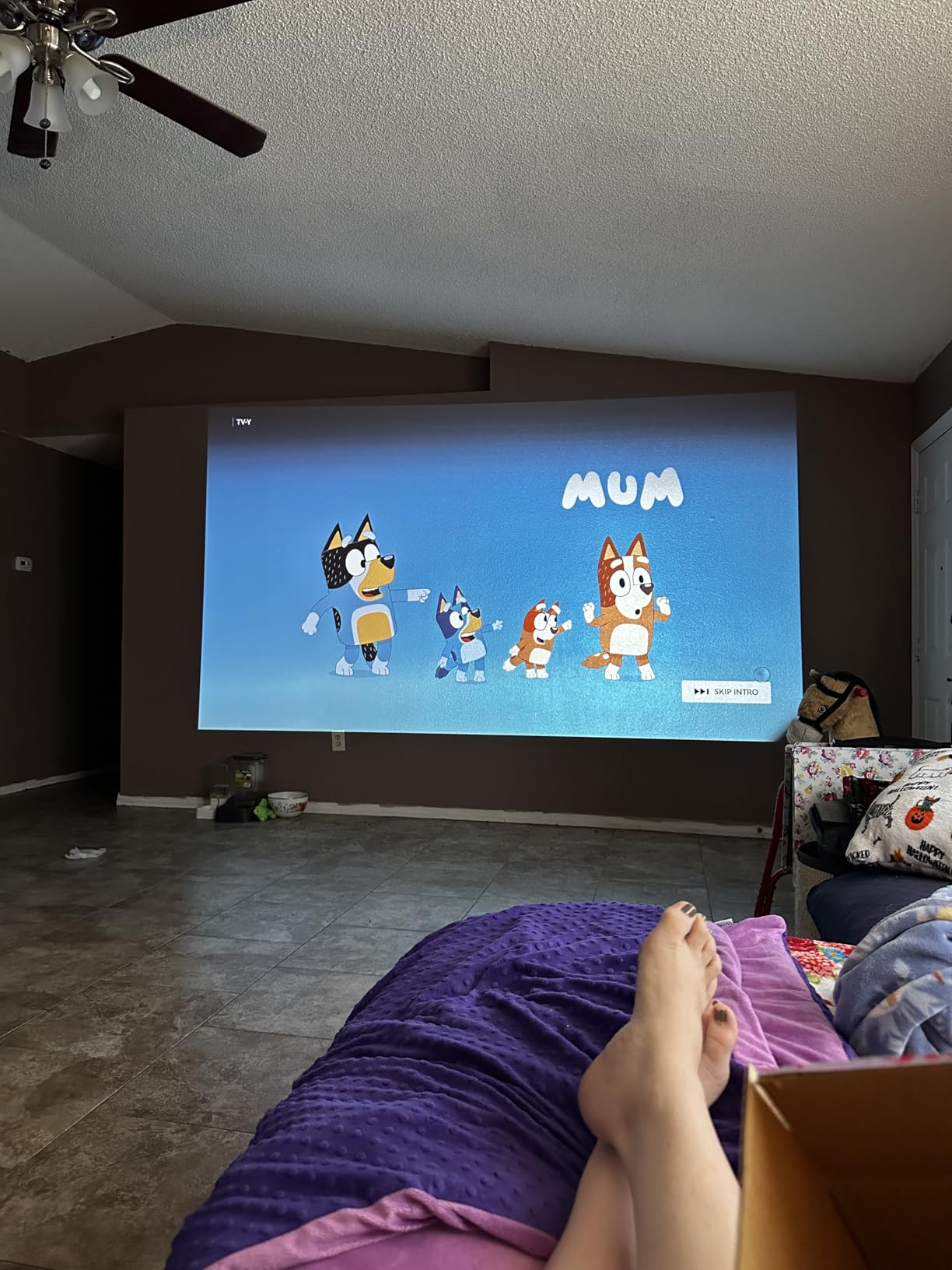
It is also easy to live with. At 6 pounds it can be pulled from the box one-handed, the supplied box doubles as a carry case, and automatic vertical keystone plus 1.1x optical zoom keep the image square when the unit sits at an angle. The warranty is three years on parts and labor with a one year lamp cover and first-year exchange service.
The lamp is the whole downside, and the spec sheet is honest about it. A rated 4000 hour light source is the shortest in this roundup, which means more frequent bulb changes and a running cost that a laser unit avoids entirely. The adjustment feet also offer limited vertical tilt, so a shelf or a small stand is often needed for a window-level projection.
There is no smart operating system, so a streaming source has to be added separately, and one owner reports the on-screen controls randomly resetting settings. Direct sunlight on the screen remains out of reach at this brightness level.
Who the ViewSonic PA503HD suits best
It suits households that watch live sport and news during the day and cannot darken the room. The 120Hz refresh rate and 16ms latency are the differentiators here, since they keep fast motion from looking like a slide show.
It also suits anyone who wants a long-term relationship with a brand warranty behind it, and anyone moving the projector between rooms regularly given how light it is. The carry-case box is a small thing owners appreciate more than expected.
Who should look past the ViewSonic PA503HD
Movie-first buyers should be cautious. A 4000 hour lamp life in a room used nightly is a recurring cost, and there is no smart platform to stream from without adding hardware.
The limited tilt also means the placement has to be worked around rather than adjusted into shape, so measure before you buy. And if your room gets direct sun, no projector in this group solves that. Curtains and a wall do.
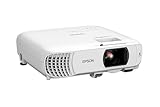
9. Epson Home Cinema 980 – The Best Color Accuracy for Rainbow-Sensitive Viewers
Epson Home Cinema 980 3-Chip 3LCD 1080p Movie Projector
- Highest rated unit in the roundup at 4.6 stars
- 3LCD delivers 100 percent RGB per frame with no rainbowing
- Colors stay vivid in a fully lit room
- Runs quietly and does not overheat
- Lamp rated at only 6000 hours and the chassis runs hot
- Weak internal speakers
- Mounting points sit near the center not the corners
The Epson Home Cinema 980 is the highest rated projector in this roundup, and the reason is a technology difference rather than a spec race. It uses three-chip 3LCD technology, which projects 100% of the RGB color signal for every frame, and that design avoids the rainbow artifacts and color brightness drop-off associated with single-chip DLP.
Brightness is quoted two ways, 4000 lumens of color brightness and 4000 lumens of white brightness, and the white figure is ISO rated, which makes it comparable to the ANSI numbers elsewhere on this page. Owners report colors that do not wash out even in a fully lit room, and a picture that holds detail in dark movie scenes with a listed 16,000:1 contrast ratio.
It is also one of the more cinematic choices here, with a throw distance from 1 to 9 feet supporting image sizes from 34 up to 337 inches. At 6.8 pounds with a 2 year limited warranty, it is a reasonable size to install permanently, and the two HDMI ports leave room for a console and a streaming device at the same time. The USB port is power-only, which is a detail worth knowing before you plan around it.
It also runs quieter than many projectors and does not overheat during long sessions, which matters if you settle in for a film marathon. The built-in speaker means you can start watching immediately, though it is not the reason to buy this projector.
The limitations are honest ones. The lamp is rated at 6000 hours, the unit does get hot with a noticeable fan, and the internal speakers are weak enough that owners using them for backyard movies recommend external speakers. The mounting points sit toward the center rather than the corners, which makes bracket installation awkward, and there are some reports of the lamp and temperature warning icon flashing red and the unit shutting down.
Who the Epson Home Cinema 980 suits best
It suits anyone who is rainbow-sensitive, and it suits film viewers who put color accuracy ahead of having the newest chip on the market. Three-chip 3LCD remains the reference for a clean, stable color image with no fringing on credits.
It also suits lit-room viewers, since owners report colors holding up in a fully lit room rather than fading. The 2 year warranty and the quiet running are both quiet wins for a permanent installation.
Who should look past the Epson Home Cinema 980
Gamers should note that there is no high refresh rate claim here, and the review base is the thinnest in the roundup at 54 reviews. It is a smaller data set than any other unit on this page, so owners are reading fewer patterns than elsewhere.
Anyone planning a ceiling mount should check bracket compatibility first, because the mounting point placement is genuinely awkward. And if the picture will run nightly for years, a 6000 hour lamp is a cost you will meet.
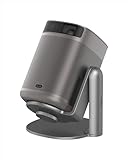
10. XGIMI MoGo 2 Pro – The Best Small-Room Projector Under 1,000
XGIMI MoGo 2 Pro (New) 1080P Portable Projector with Multi-Angle Stand
- Excellent 1080p image even on plain drywall
- 90% DCI-P3 gamut with D65 color temperature
- Autofocus holds as the lens warms
- Google TV with the Play Store
- Dual 8W Dolby Audio speakers
- USB-C power allows power bank use
- 430 ISO lumens means dark room or bedroom only
- Not officially Netflix licensed on this model
- HDMI to USB-C connections clip audio
The XGIMI MoGo 2 Pro is the one on this list that is honest about what it is: a bedroom projector. At 430 ISO lumens it is by far the dimmest unit here, and it belongs in a dark room or under a duvet, not in a living room with the blinds open.
What it does well is image quality for its class. The color specification is the strongest on the page relative to the price, with a D65 white point and 90% DCI-P3 coverage, and owners report a good 1080p picture even projected onto plain drywall at 100 inches. The 120 degree multi-angle stand rotates the image from wall to ceiling, which is a genuinely useful feature in a bedroom.
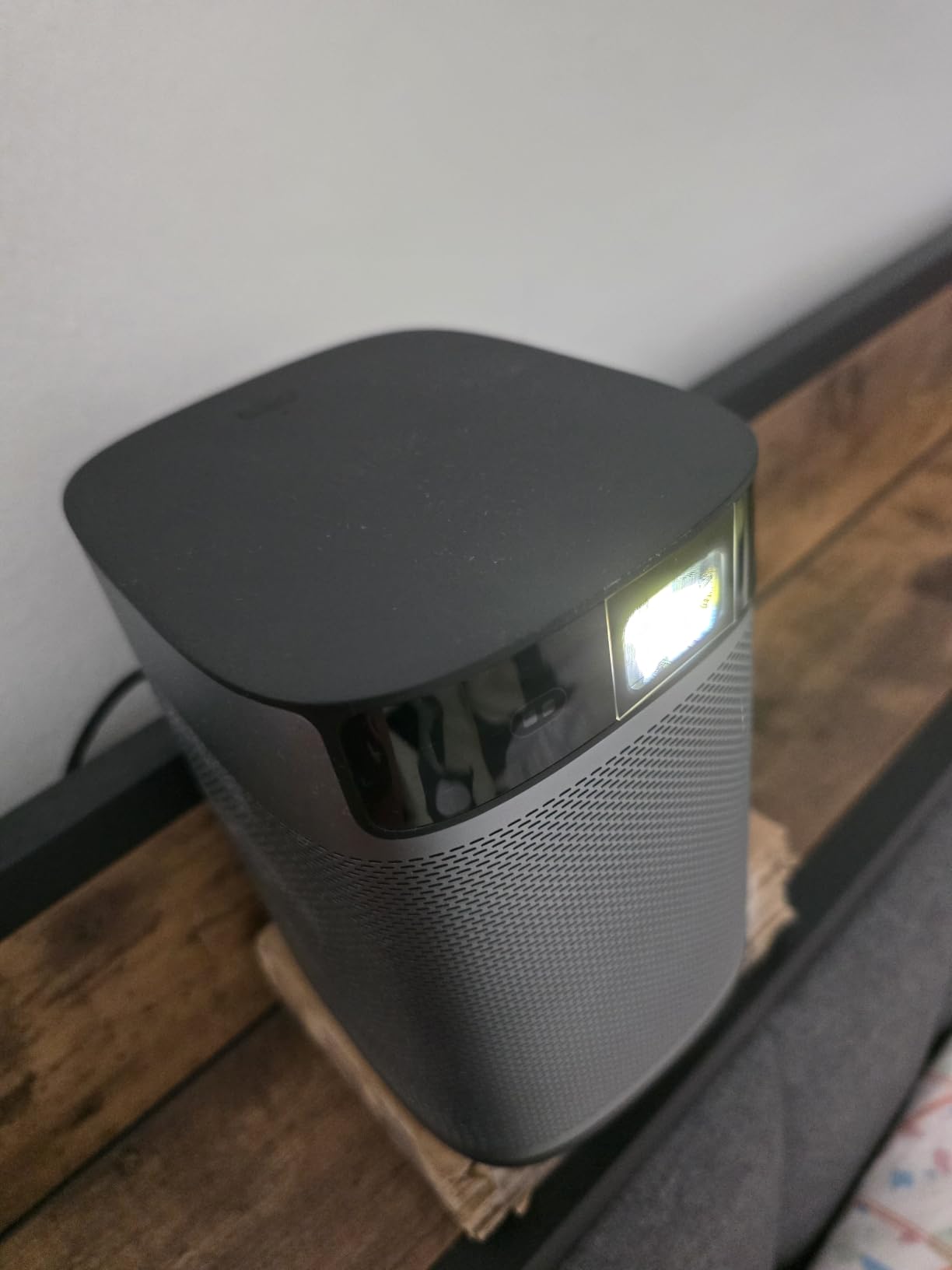
Autofocus is the quiet hero here. It holds focus as the lens warms and re-adjusts when the unit is moved, which removes the most common complaint about portable projectors. The dual 8 watt Dolby Audio pair is clear and loud enough for a small room, and USB-C power input means you can run it from a power bank for an evening outdoors.
It is also a 25000 hour light source, so there is no lamp to replace, and the whole unit weighs 1 kilogram. The rating of 4.1 across 290 reviews is the lowest in the roundup, and the reason is almost entirely the brightness and the streaming gaps.
On streaming, this model runs Google TV with the Play Store, but it is not officially Netflix licensed, and sideloading is unreliable enough that XGIMI has provided a streaming stick instead. There is also an HDMI to USB-C audio clipping issue, a laggy interface with reported resets and Bluetooth desync, and a tendency to default to the dimmer eco mode when powered from anything other the supplied adapter.
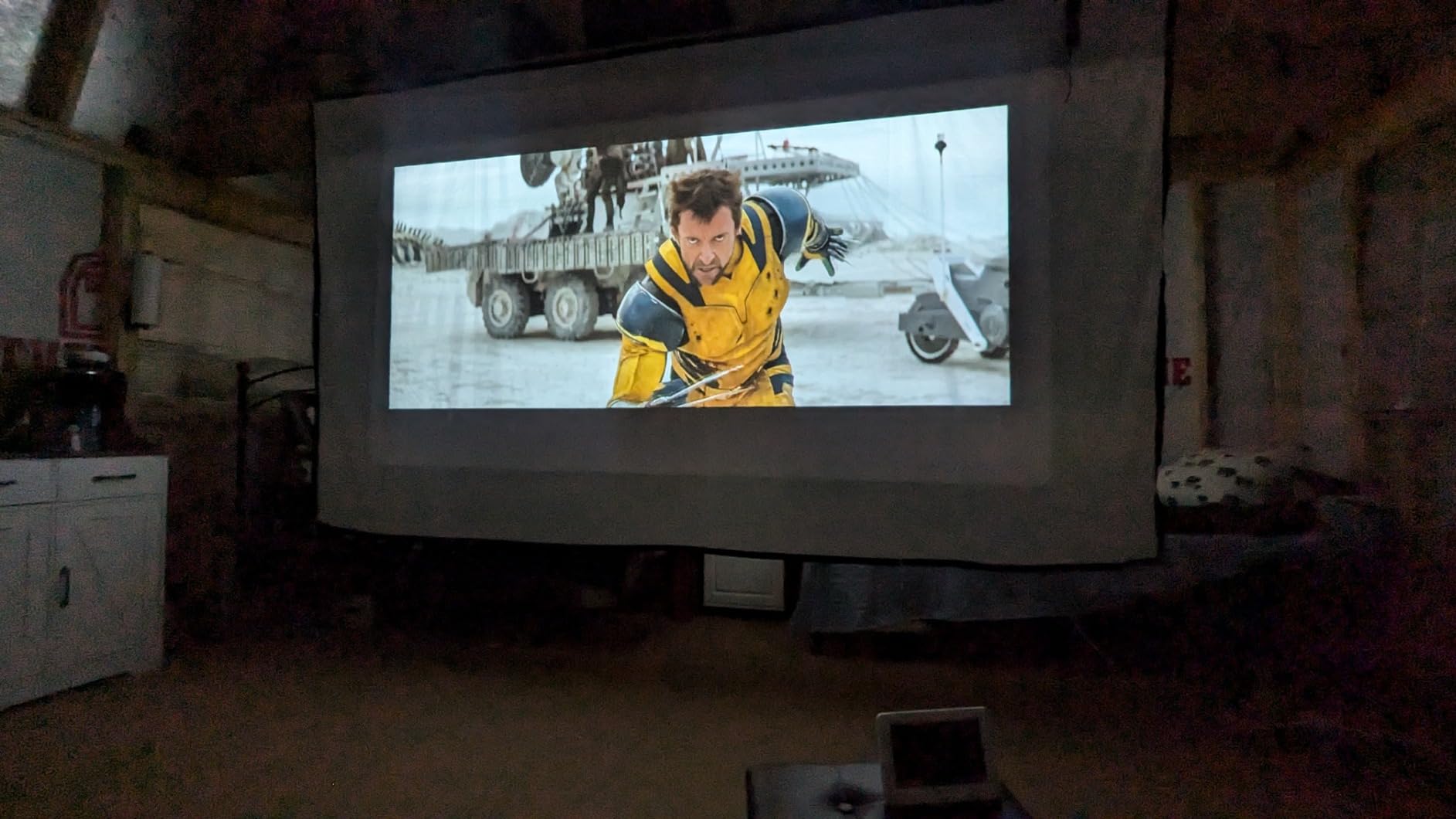
Who the XGIMI MoGo 2 Pro suits best
It suits children bedrooms, a small apartment, and anyone who wants a big image on a ceiling rather than a wall. The multi-angle stand makes ceiling projection a two-second job instead of an equipment problem.
It also suits casual backyard and travel use because USB-C power lets it run from a power bank, and the 1 kilogram weight is genuinely carryable. The D65 and DCI-P3 color figures mean the picture looks right even in a room with no screen.
Who should look past the XGIMI MoGo 2 Pro
Anyone with a bright room should stop here and read the brightness number again. At 430 ISO lumens this projector is unusable with ambient light, and it is the lowest rated unit in the roundup for exactly that reason.
Netflix subscribers should also look elsewhere, since the app is not licensed on this model. Small text is hard to read at 1080p, the remote has no zoom button, and the build finish feels cheaper than the specification list suggests.
What Your Budget Buys at 500, 700 and 1,000 Dollars
The clearest way to understand this tier is to look at three budget bands, because the jump in what you get is not linear. The money is best spent moving between bands rather than sitting at the bottom of one.
Around the 500 dollar mark you are buying a 1080p lamp projector with no smart features and no native 4K. The Optoma HD146X sits here and delivers the essentials: native 1920 by 1080, built-in speakers, and enough brightness for casual evening viewing. What you give up is streaming, and what you accept is a lamp to replace at some point in the ownership period.
Around the 700 dollar mark you gain measured brightness, gaming latency, and optical zoom. The BenQ TH575 and the ViewSonic PA503HD both publish real ANSI lumen figures and 16 millisecond input latency, and both have 1.1x optical zoom plus automatic keystone. This is the band where the projector stops feeling like a compromise and starts behaving like equipment.
At the 1,000 dollar ceiling the category changes shape entirely. Here you can have native 4K panels, laser light sources rated past 20000 hours, Dolby Vision, licensed Netflix, and triple laser color. The ViewSonic LS740HD delivers 5500 ANSI lumens, the Nebula Cosmos 4K SE adds Dolby Vision, and the Dangbei DBOX02 combines native 4K with a 30000 hour laser.
One more framing is useful. If your total room budget is under 1,000 dollars rather than your projector budget, a mid-tier unit is almost always the smarter split. Put the money into a decent screen and a soundbar before you stretch the projector, because a mediocre screen will mask a good projector and a good cheap screen will not rescue a bad one. The seating around it matters just as much, and our picks for home theater sofas and home theater loveseats are built around the same idea of spending where it shows.
How We Picked: The Specs That Actually Matter Under 1,000 Dollars
Every projector below this ceiling publishes a brightness number, and roughly half of them publish a number you can trust. This is the single most important thing to understand before you buy anything in this category.
Read ANSI and ISO lumens, and ignore everything else
ANSI lumens and ISO lumens are measured against a standard, which means the number reflects light actually landing on the screen. Marketing lumens, LED lumens and light source lumens are calculated from lamp wattage, and the relationship between the two is not consistent between brands. In this roundup you can see the difference plainly: the ViewSonic LS740HD, BenQ TH575, ViewSonic PA503HD and Nebula Cosmos 4K SE all publish measured figures, while the Optoma HD146X and BenQ TH671ST do not.
As a working guide, roughly 1500 ANSI lumens is enough for a 100 inch image in a fully dark room, 2500 to 3000 ANSI lumens handles a room with some light, and 4000 ANSI lumens or more works with blinds open. Below 500 ISO lumens, as with the XGIMI MoGo 2 Pro, you are looking at a dark-room device only.
Native 4K and pixel-shifted 4K are different products
A native 4K panel has 3840 by 2160 physical pixels. A pixel-shifted or XPR 4K projector has fewer physical pixels and shifts them rapidly to create a perceived resolution increase, and the Dangbei DBOX02’s 3840 by 2160 native specification is the reason it stands apart in this list. Any listing that says the projector supports 4K input is telling you about the HDMI port, not the panel, and the picture difference is immediately visible on a large screen.
For most viewers on a 100 inch screen at normal viewing distance, 1080p and pixel-shifted 4K are much closer than the price gap suggests. If you sit close, or plan a 120 inch screen, native 4K earns its premium.
Dynamic contrast numbers are not real contrast
Several units here publish figures in the hundreds of thousands or millions to one. Those are dynamic or FOFO measurements that apply a dynamic iris or tone mapping during a scene, and they are not comparable to a native contrast ratio. Two of the laser units in this roundup publish a native-looking figure while the rest publish dynamic numbers, so the only honest comparison available to you at this budget is between units that quote the same type of figure.
Any r/projectors thread about this price range will tell you the same thing. Ignore the ratio, darken the room, and judge the picture. The practical advice from that community is to measure ANSI lumens and real contrast rather than trusting brand claims, and the general view there is that a mediocre screen hides a good projector far more often than a cheap screen rescues a bad one.
DLP versus 3LCD and who should avoid rainbow artifacts
Single-chip DLP projectors can show rainbow artifacts, which are faint colored fringes visible on high-contrast edges like white text on black or scrolling credits. Most viewers never see them, but a minority do consistently, and for that group 3LCD is the only reliable answer. The Epson Home Cinema 980 on this list uses three-chip 3LCD specifically because of that.
Laser light sources add a second consideration, which is speckle. ALPD laser technology, as used in the Dangbei DBOX02, was developed specifically to reduce the speckle effect common in earlier laser projectors, and XGIMI’s triple laser designs produce a very clean image by contrast.
Lamp, LED and laser light sources change your running cost
The rated life figures on this list range from 4000 hours on the ViewSonic PA503HD lamp to 30000 hours on the Dangbei DBOX02 laser. That is a sevenfold difference, and it decides how often you deal with a bulb. The 3LCD Epson sits at 6000 hours, the two Optoma and BenQ lamp units at 15000 hours, and the ViewSonic laser at 20000 hours.
BenQ is the brand that comes up most often in enthusiast discussions at this budget as a safe, reliable choice for a dedicated room, and the warranty terms here support that. The ViewSonic units both carry three years on parts and labor with first-year exchange service, and the BenQ TH671ST carries three years, while the Dangbei is covered for one year.
Throw ratio, optical zoom and lens shift decide whether it fits
Throw ratio describes how far back the projector sits per unit of image width. A unit with a 1.1 to 1.5 ratio is flexible, while a fixed short throw like the BenQ TH671ST at 5 feet gives you one position and one size. Optical zoom lets you resize the image without digital resampling, which is why the 1.3x zoom on the ViewSonic LS740HD and the 0.98 to 1.3:1 optical zoom on the XGIMI Elfin Flip 4K are worth paying for.
Lens shift moves the image without tilting the chassis, and it is the one feature none of the ten products here offers. Plan your mount position carefully instead, and test throw distance on the floor before anyone drills a hole. Installation frustration over throw distance and mounting is the most common regret reported in forum discussions at this price.
Input lag, HDR and HDMI 2.1 reality
Below 1,000 dollars, HDMI 2.1 is mostly a checkbox. The measured figures here are what matter: 1ms on the XGIMI Elfin Flip 4K with variable refresh rate support, 16ms on the BenQ TH575 and the ViewSonic PA503HD, and a 120Hz refresh rate on the PA503HD. None of the lamp-based units claim full 48Gbps HDMI 2.1 bandwidth for 4K at 120Hz, so console gamers should treat high refresh 4K as out of reach at this budget.
HDR support is similarly modest. The Dangbei DBOX02 lists HDR10+ and HLG, and the Nebula Cosmos 4K SE supports Dolby Vision, but at these brightness levels a projector is filling the room with its own light, so the HDR effect is gentler than on a television in the same room.
Smart operating systems and streaming licensing
Check the app list before you fall for a smart badge. The Dangbei DBOX02 and the Nebula Cosmos 4K SE both carry Google TV with officially licensed Netflix, and the XGIMI Elfin Flip 4K has Google TV as well. The XGIMI MoGo 2 Pro has Google TV with the Play Store but is not officially Netflix licensed on that model, and the Optoma HD146X, BenQ TH575, ViewSonic PA503HD and ViewSonic LS740HD have no smart platform at all.
Also check port counts. A single HDMI, as on the BenQ TH671ST, constrains what you can connect later, while the Dangbei DBOX02 offers dual HDMI including eARC plus two USB ports. eARC is the feature that lets you send 5.1 and Atmos audio from the projector to a soundbar over one cable, and it is worth checking for specifically.
Matching the Projector to Your Room, Screen and Soundbar
A projector is a room device, and the same model that is perfect in one space is wrong in another. These are the questions to answer before you buy, in order of how much they will affect your satisfaction.
How dark can the room get? This is the first question and it determines everything else. If you can install blackout curtains, a laser or high-ANSI unit at 1800 lumens or above becomes realistic. If the room is bright all day, you need 4000 ANSI lumens and above, which in this list means the ViewSonic LS740HD, the ViewSonic PA503HD or the BenQ TH575.
How far is the wall? Measure the depth of the room and the distance from the furthest seat to the projection surface, then check the throw ratio. A 1.4 to 1.6 ratio like the ViewSonic PA503HD needs 10.8 feet for a 100 inch image, which does not work in a shallow room, while the BenQ TH671ST needs 5 feet and works anywhere. If the distance does not work, the projector does not go in that room.
What size screen, and is the wall painted? A dedicated screen with a matte white surface reflects light evenly and is the cheapest image improvement available. An ambient light rejecting screen is worth considering only for a room you cannot darken, because it deliberately sacrifices some viewing-angle flexibility to fight stray light. Painting the wall a flat matte white is the budget version of the same idea, and a colored or textured wall will tint the image.
Where does the sound come from? Integrated projector speakers are the most universally panned feature in this category, and owners repeatedly report that external speakers are effectively required for anything beyond casual viewing. Only the XGIMI Elfin Flip 4K, with dual Harman Kardon speakers, and the Dangbei DBOX02, with dual 12 watt Dolby Audio, are described as adequate for a normal room.
Budget for audio, seating, and the screen. The most common forum complaint at this price is not the projector, it is the room around it. Our home theater bars and riser platforms guides cover the rest of the furniture question, and completing the room usually matters more to the experience than swapping a 1080p unit for a 4K one.
Finally, decide on new or used. Enthusiasts in r/projectors repeatedly recommend the used market as a way to reach a far better projector than 1,000 dollars new, and several threads exist purely for that question. The trade-off is lamp hours already used, no warranty, and unknown condition, so factor a possible lamp replacement into any used deal before the numbers work out.
Frequently Asked Questions
What brand of projector is best for home theater?
BenQ is the most consistent name at this budget, appearing twice in this roundup with published specifications, three year warranty coverage and a record of durability in owner reviews. Optoma and ViewSonic are the other two worth knowing, with Optoma offering the widest range of entry models and ViewSonic publishing the most honest ANSI brightness figures. For color accuracy specifically, Epson is the reference brand because its 3LCD technology avoids rainbow artifacts. At any budget the brand matters less than the room you are projecting into.
What is the best projector under 1,000 dollars?
The Optoma HD146X is the best all-round projector under 1,000 dollars for most people, because it pairs native 1080p with 3600 published lumens, built-in speakers and the largest owner review base in this group at 1234 reviews. If your room is very dark and you want maximum sharpness and color accuracy, the XGIMI Elfin Flip 4K is the stronger picture. If you want the brightest image, the ViewSonic LS740HD publishes 5500 ANSI lumens.
How many ANSI lumens do I need for a home theater projector?
Around 1500 ANSI lumens is enough for a 100 inch image in a fully dark room, 2500 to 3000 ANSI lumens handles a room with some ambient light, and 4000 ANSI lumens or more works with blinds open. Only count figures published to the ANSI or ISO standard, since marketing lumens are derived from lamp wattage and are not comparable between brands.
Is 4K worth it under 1,000 dollars for a projector?
It depends on screen size and seating distance. On a 100 inch screen at normal viewing distance, a good 1080p projector and a pixel-shifted 4K projector look closer than the price gap suggests. On a 120 inch screen or when you sit close, native 4K is clearly worth it, and three models in this roundup deliver genuine 3840 by 2160 panels. Pixel-shifted 4K still beats 1080p for fine detail regardless of distance.
Should I get a laser or lamp projector?
Choose laser if you watch nightly or want no running cost. Rated light source life across this list ranges from 4000 hours on the ViewSonic PA503HD lamp to 30000 hours on the Dangbei DBOX02 laser, so laser removes the bulb question entirely. Choose lamp if your budget is tight, because lamp units remain meaningfully cheaper for equivalent brightness, and accept a replacement bulb somewhere down the line.
Do I need a projector screen or can I use a wall?
A plain matte white wall works well and several owners in this roundup report good results projecting onto drywall, especially in a dark room. A dedicated screen gives a flatter surface and a controlled surface color, and enthusiasts consistently note that a mediocre screen will mask a decent projector. Buy the screen before you upgrade the projector, and avoid a textured or colored wall.
What throw ratio do I need for a 120 inch screen?
For a 120 inch image with a 1.2 to 1.6 throw ratio you need roughly 12 to 16 feet of distance between the lens and the screen. A unit with a 1.1 to 1.5 ratio, like the ViewSonic LS740HD which places a 100 inch image at 8.2 feet, scales proportionally. Short-throw models such as the BenQ TH671ST deliver a 100 inch image from about 5 feet but fix that distance, so measure your room before choosing.
Should I buy a new projector under 1,000 dollars or a used one?
A used projector can be a far better machine than a new one at this budget, and enthusiasts in r/projectors recommend the used market routinely for that reason. The cost is lamp hours already used, no warranty coverage, and unknown condition, so price in a possible lamp replacement before a used deal looks like a bargain. If you want the convenience of licensed streaming, autofocus and a warranty, buying new is the better trade.
Final Verdict: The Best Home Theater Projectors Under 1,000
The best home theater projectors under 1,000 dollars in 2026 come down to one question: how much light can your room absorb. For most people the Optoma HD146X is the right starting point, because it is the least complicated unit on this page and the most thoroughly owned. For a dark room, the XGIMI Elfin Flip 4K gives you native 4K and the best color figures in the group, and the Dangbei DBOX02 adds licensed Netflix and a 30000 hour laser.
Whichever you choose, spend the remainder of the budget on a screen, a soundbar, and comfortable seating rather than on stretching the projector further. The room is what makes the picture feel cinematic, and that is where the difference between a good evening and a memorable one actually lives.