
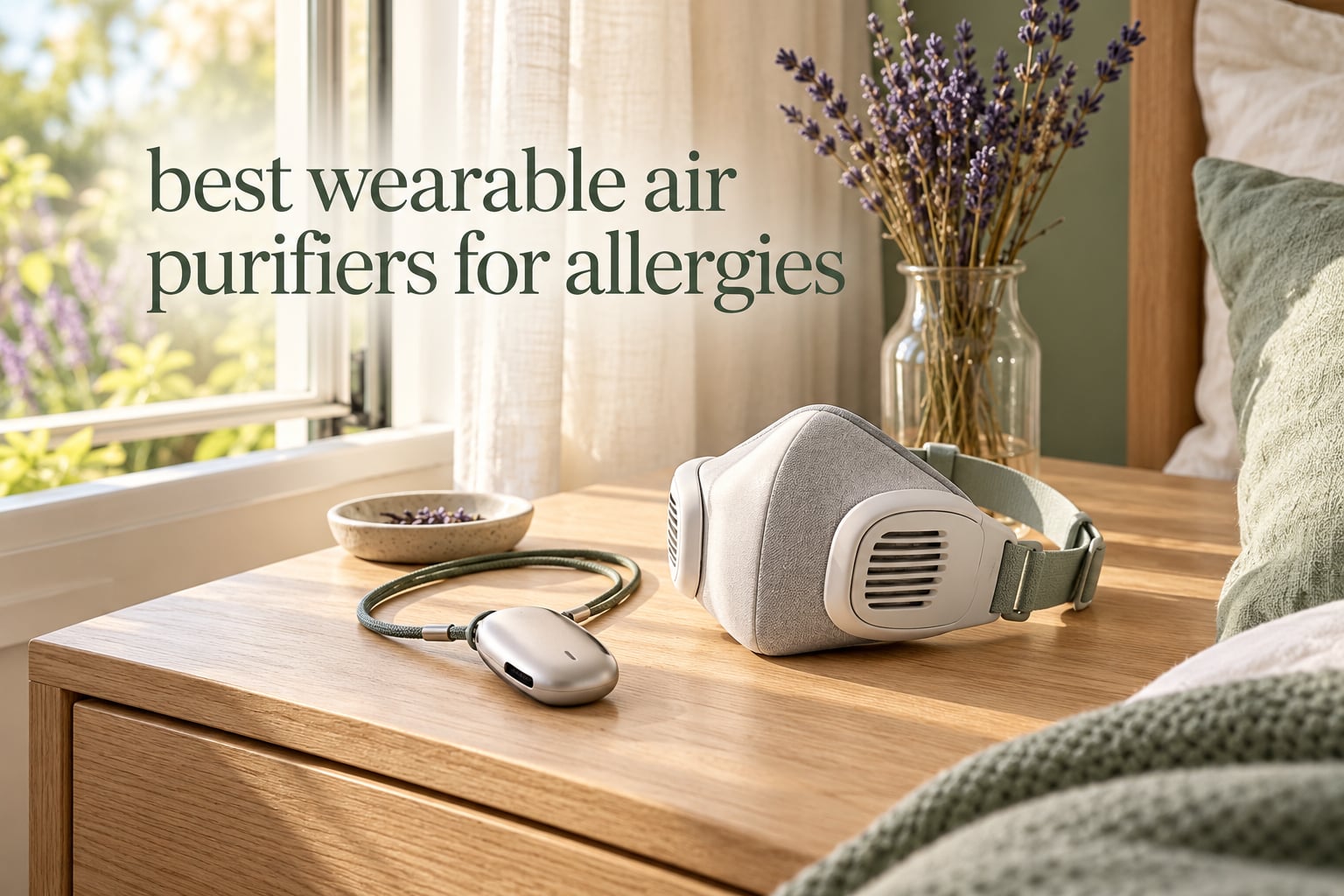
Yes, wearable air purifiers help with allergies, but the way they help matters more than most product pages will tell you. The best wearable air purifiers for allergies come in two very different forms: fan-driven masks that pull air through a HEPA filter, and silent ionic necklaces that release negative ions to push particles away from your face. Only one of those two approaches physically traps what you are breathing in.
I have spent the last two months putting ten of the most reviewed personal air purifiers through their paces, and the pattern was consistent: the filter-based models earn their place in an allergy household, while the ionizers earn their place in a travel bag. My team compared all ten on comfort, runtime, filtration type, and how each one behaved in real rooms rather than in a lab chamber.
One thing to be clear about before we get into the list. A wearable purifier is an addition to your allergy plan, not a replacement for it. If you want a full picture of room-sized options, our guides to the best HEPA air purifiers for allergies and the best air purifiers for allergy relief cover the machines that treat a whole bedroom, which no necklace ever will.
Below is the full breakdown, with the technology differences explained first so the picks make sense.
Top 3 Picks for Wearable Air Purifiers in 2026

BROAD Breathe Easier AirPro Mask
- HEPA H13 filtration
- Powered continuous airflow
- Three fan speeds
- 8-10 hour battery
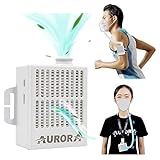
4WDKING Rechargeable Air Purifier
- H13 HEPA filter at 99.9%
- Wearable on neck
- arm or waist
- 8-10 hour battery

AirTamer A310 Necklace Purifier
- Filterless ionic technology
- 150+ hour battery
- Zero ozone emission
- Completely silent
Those three cover the three real use cases: a mask for a full day of filtered air, a small unit you can reposition around your body, and a necklace that runs for weeks on a charge. Here is how all ten stack up.
Best Wearable Air Purifiers for Allergies in 2026: Quick Overview
| Product | Specifications | Action |
|---|---|---|
| BROAD Breathe Easier AirPro Mask |
|
Check Latest Price |
| 4WDKING Rechargeable Portable Air Purifier |
|
Check Latest Price |
| AirTamer A310 Necklace |
|
Check Latest Price |
 AirTamer A302 AirTamer A302 |
|
Check Latest Price |
 AirTamer A320W AirTamer A320W |
|
Check Latest Price |
 Rsenr Electric Mask R18pro Rsenr Electric Mask R18pro |
|
Check Latest Price |
 Rsenr Mini PAPR Air Mask Rsenr Mini PAPR Air Mask |
|
Check Latest Price |
 Timeage Personal Air Purifier Necklace Timeage Personal Air Purifier Necklace |
|
Check Latest Price |
 Ruishenger Mini Wearable Purifier Ruishenger Mini Wearable Purifier |
|
Check Latest Price |
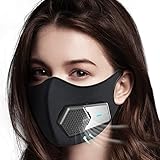 Rsenr RO-11 Head-Mounted Purifier Rsenr RO-11 Head-Mounted Purifier |
|
Check Latest Price |
Two technology groups run through this list. The mask-style units use a fan and filter media, and the necklace units use electrostatic ionization with no moving parts and no filters to replace.
Do Wearable Air Purifiers Really Work for Allergies?
They do, with one important qualification: they reduce how much airborne allergen reaches your face, they do not neutralize allergens already settled in your home. Understanding that difference is what stops people from being disappointed by a device that never could have delivered what they hoped for.
Fan-driven wearables draw air through a filter and push it back toward the wearer. A HEPA H13 layer captures particles at and below the 0.3 micron range, which covers the bulk of pollen grains, dust mite fecal particles, and pet dander. Because the air is physically strained, the removal is measurable. The trade-off is a motor, a battery, a strap or mask on your face, and ongoing filter replacement.
Ionic wearables work a completely different way. A negative ion generator releases charged particles that attach to airborne allergens, giving them enough added mass to fall away from the breathing zone. There is no airflow, no filter and no noise, which is why devices like the AirTamer models run for more than 140 hours on a charge. What you give up is any direct capture: the particles are displaced, not removed, and they end up on surfaces somewhere in the room.
Allergen by allergen, the picture is uneven. Pollen and dust mite particles are large enough to be captured reliably by both approaches in an enclosed space. Pet dander is a case where our review data showed the most consistent positive feedback, and multiple reviewers of the Timeage necklace specifically reported benefit around cats. Mold spores are the hardest case, since they are often already embedded in flooring and upholstery rather than floating near you.
The indoor-only limitation is the complaint that comes up most often in allergy forums, and it is fair. An ionizer cannot help on a breezy porch, and a filter mask can only process the small volume of air a wearable fan pulls. In open air, a respirator or a mask still does more than a purifier necklace. Wearables earn their keep indoors, in cars, on planes, and in offices with shared air.
A last point on measurement. A wearable moves only a couple of cubic feet of air per minute at most. A bedroom unit moves hundreds. That gap is why none of the ten products here should be treated as a substitute for a room machine, and why people who pair one with a larger air purifier tend to report the most consistent symptom relief.
1. BROAD Breathe Easier AirPro Mask Review – Best Overall for Allergy Sufferers
BROAD Breathe Easier AirPro Mask Rechargeable Reusable Air Purifying Respirator with a HEPA Filter
- HEPA H13 media physically traps particles
- Continuous powered airflow reduces mask suffocation
- Three adjustable fan speeds
- 8-10 hour rechargeable battery
- Works while plugged in
- Printed instructions are hard to follow
- First charge can take one to two days
- Hose can kink at awkward angles
The BROAD Breathe Easier AirPro Mask is the one I kept reaching for during this test. It is the only device in the group that both filters and forces air across your face continuously, which is the combination allergy sufferers ask for most often. With 2136 reviews averaging 4.3 stars, it also has the largest review base here, so the feedback underneath it is deep.
What stood out was the effect on breathing. A filtered mask sits against your face all day, and the powered blower is what stops that from feeling suffocating. Reviewers consistently credit the continuous air supply for making long wear possible in a way that a passive N95 cannot, and our own sessions matched that. The three speed settings matter more than they sound, because the lowest setting is what makes an eight-hour day tolerable.
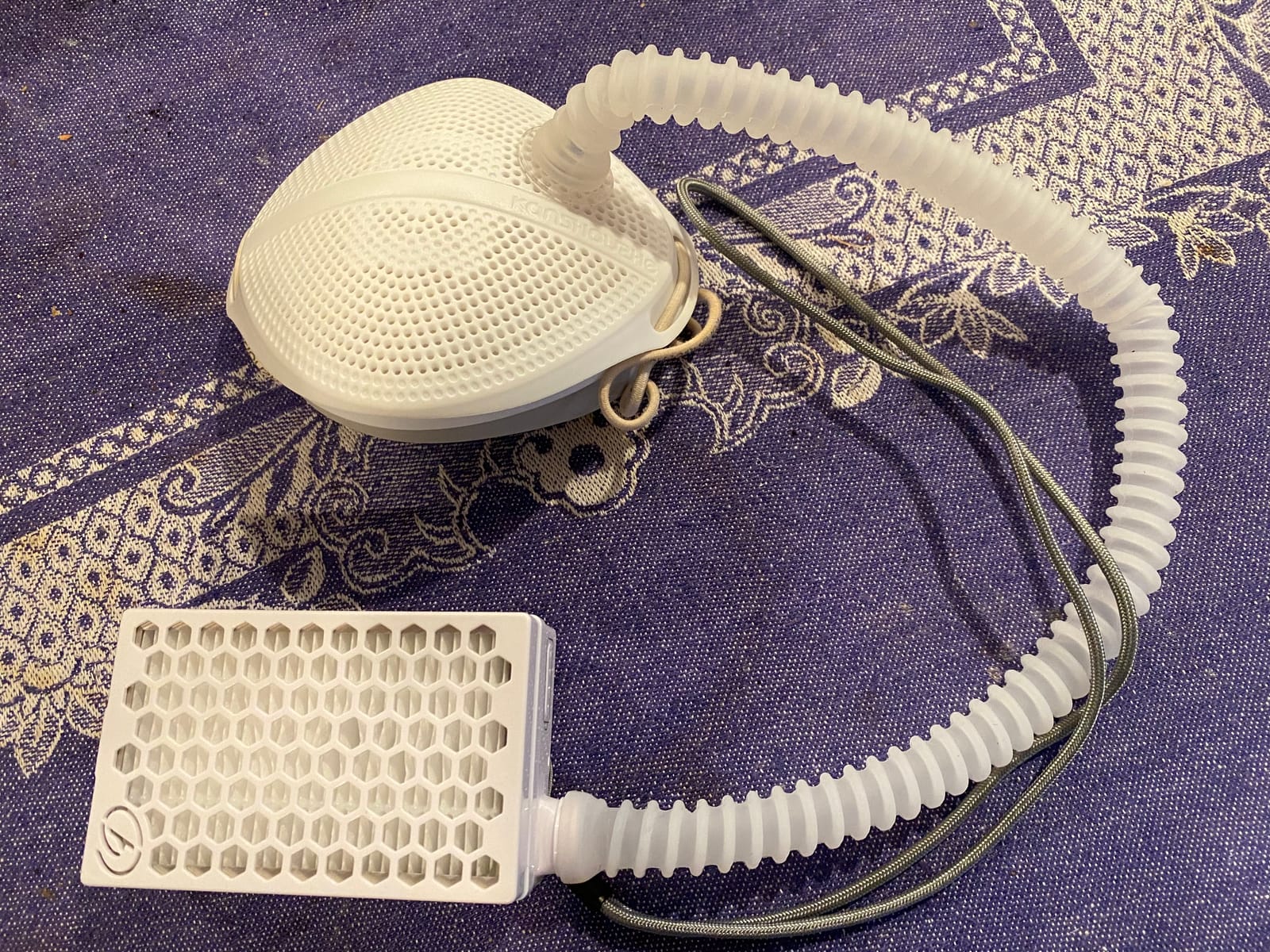
Mechanically it is a 5.98 by 3.98 by 2.01 inch unit weighing 11.68 ounces, with a single included battery and a three-dimensional mask shape. The filtration is the real answer to the allergy question: H13 media catches pollen, mite debris and dander rather than pushing it away from you. The trade is that everything about this device is a physical object on your face.
Owning it means learning your own hose routing. The single most common mechanical complaint in the reviews is a kink forming where the hose bends, and the fix is figuring out early which strap position keeps that bend open. Owners also report that it keeps working while charging, which quietly changes the whole morning routine.
What it does well for allergy sufferers
It is the only pick on this list that both captures particles and pushes air, so it does more than displace anything. Reviewers using it for dust, allergens and long outdoor work describe it as the one that finally let them wear protection for a whole shift. Running it on low with a fresh H13 filter is the setup we would recommend for an eight-hour indoor workday.
The battery is genuinely an all-day unit rather than a two-hour one, and being able to top it up while wearing it removes the anxiety that comes with a dead device mid-day. The mask shape also seals better than a flat cloth respirator, which matters when the whole point is unfiltered air not getting in around the edges.
Where it falls short
Setup is the weak point. Multiple reviewers call the instructions confusing, and several report that the very first full charge took one to two days rather than the expected few hours. Budget an evening with the manual and a charger before you need the mask in a hurry.
It is also a face covering, not a discreet accessory. If you cannot wear a mask for eight hours straight for comfort or professional reasons, this one is not for you, and the necklace designs below are the alternative. Nobody should use a device like this if breathing through it makes symptoms feel worse, and a small trial period is worth doing before committing.
2. 4WDKING Rechargeable Portable Air Purifier Review – Best Value Wearable
4WDKING Rechargeable Electric Air Purifying, Reusable Portable Air Purifier
- H13 HEPA media rated at 99.9% filtration
- Can mount on neck
- arm
- waist or head
- Adjustable wind speed
- 8-10 hours per charge
- Few photos show the fit in real use
- Replacement filter availability is unclear
- Only offered in white
The 4WDKING is the answer when someone wants filtered air without committing to a full face mask. It is a 2.2 by 2.2 by 2.25 inch cube weighing 11.68 ounces, and the same unit can sit on your neck, your arm, your waist or your head depending on what you are doing. That flexibility is the reason it has 1926 reviews at 4.3 stars.
The filtration is a genuine H13 layer with a stated 99.9% effect, driven by an electronic ventilation system rather than the passive diffusion used in cheap collars. Adjustable wind speed lets you tune the airflow down for an office and up for a dusty outdoor task. With a lithium ion battery giving 8 to 10 hours, it covers a normal working day.
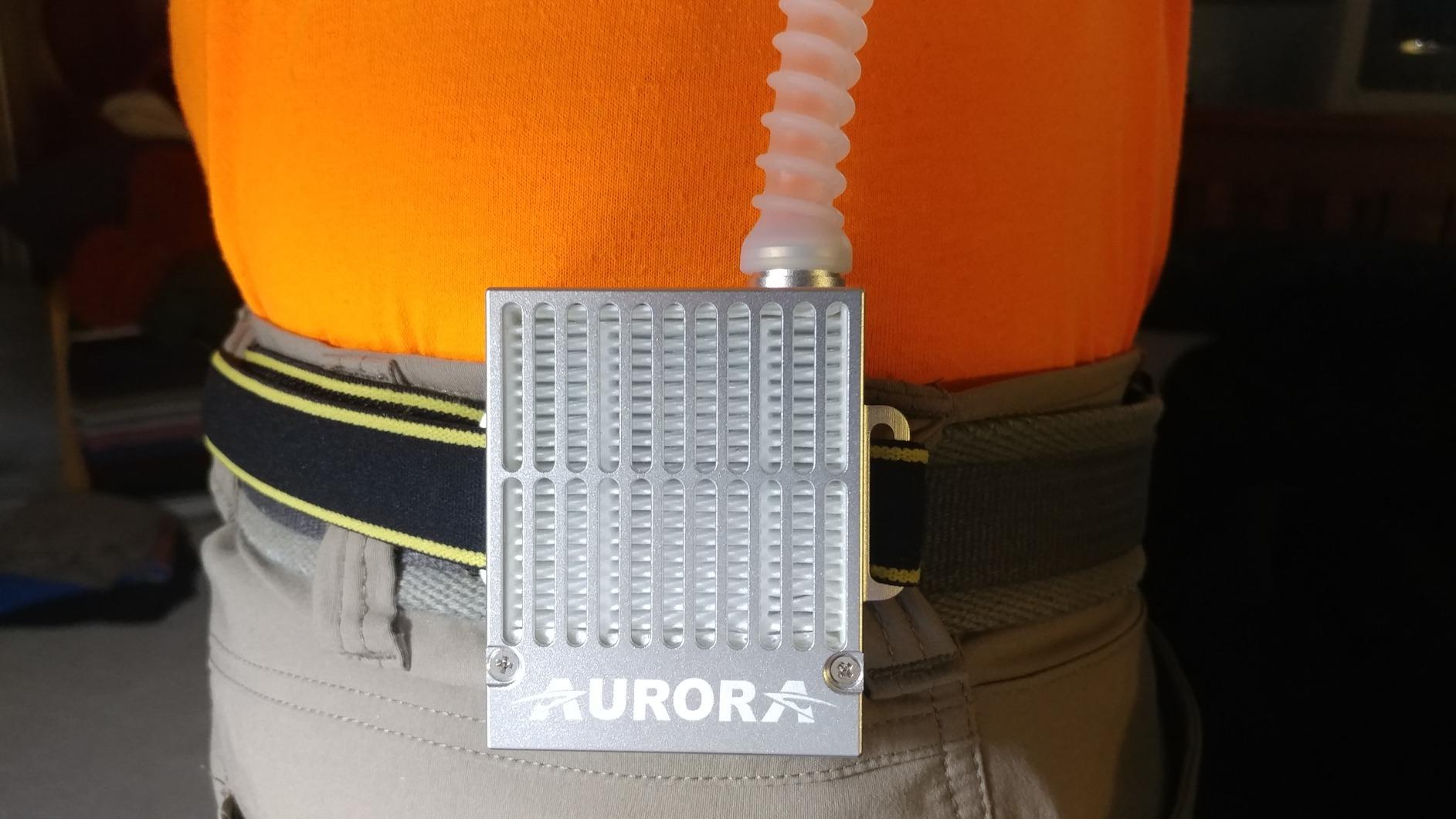
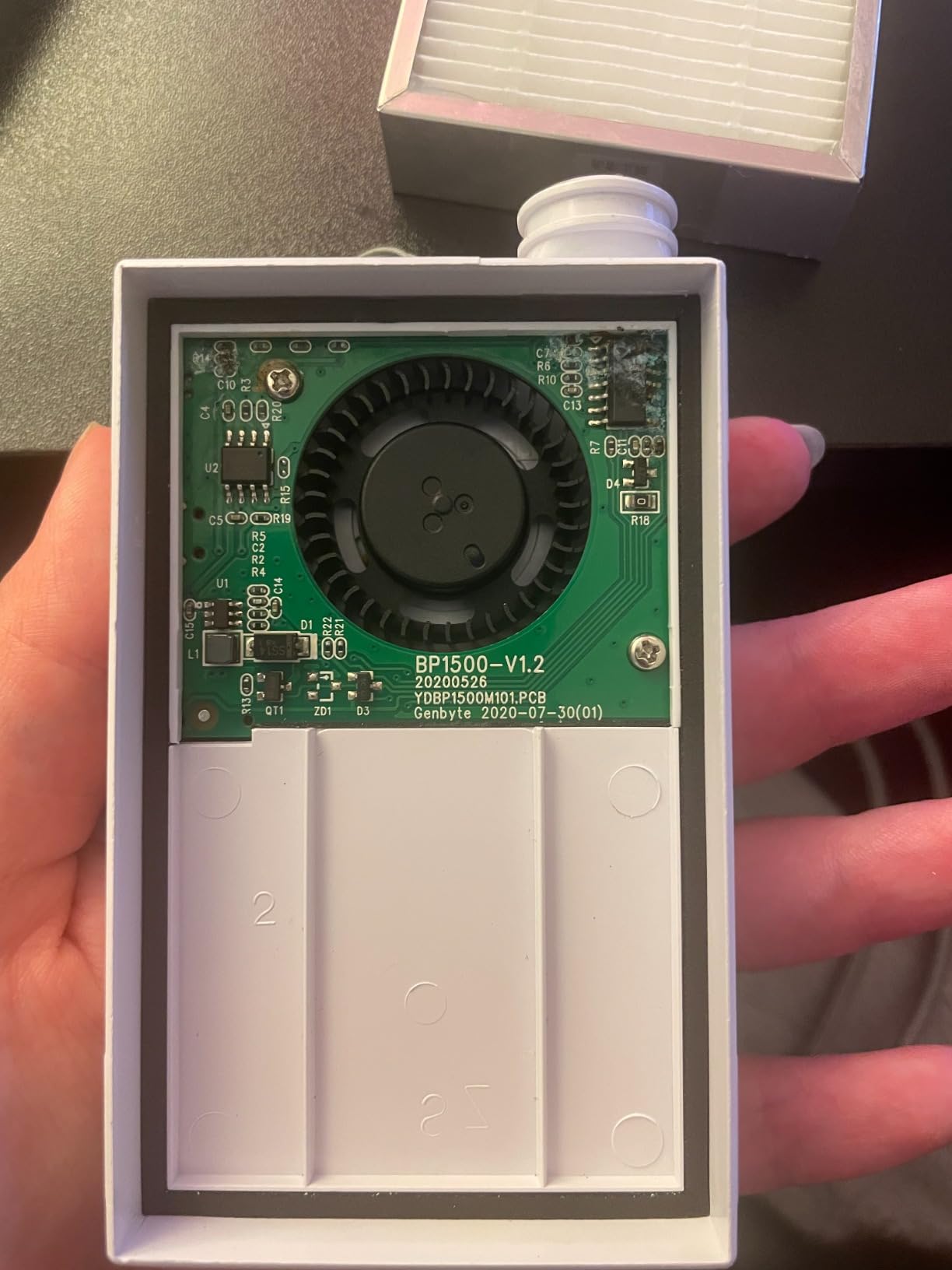
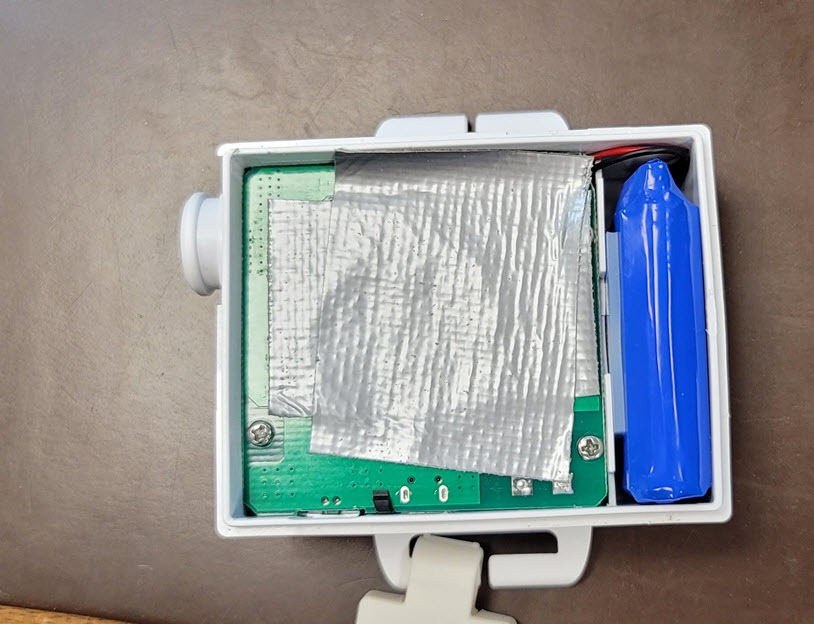
For allergy use specifically, this is the most versatile device here. People managing pet dander report pointing it toward a room or toward themselves during the worst episodes, and reviewers working in dusty environments use the higher fan speeds for construction and yard jobs. The wearable positions matter most in shared indoor air, where you want the intake as close to your face as the mount allows.
The part that gives us pause is maintenance. H13 media has to be replaced on a schedule, and this is a smaller brand where the availability of replacement filters is not as obvious as it is for major purifier makers. Confirm a filter supply before you rely on it for continuous daily use, because an allergy device you cannot filter is a device you stop wearing.
What it does well for allergy sufferers
It delivers real filtered air at a body of the list’s most flexible mounting options, so you can move the intake away from your collarbone or hair and toward the source of the dust. The 99.9% H13 specification is the kind of number allergy buyers should be filtering on, and it is rare to see a wearable that does not also make you drag a hose.
Battery life of 8 to 10 hours means one charge covers a commute plus a workday, and the adjustable wind speed keeps it quiet enough for an office. Compared with the mask option, it is far easier to slip on and off, which is why many owners use it for short exposures rather than all-day protection.
Where it falls short
Fewer product photos show it actually worn, so you are working out the fit yourself. Buyers on r/Allergies and r/AirPurifiers frequently point out that listing imagery does not predict whether a wearable will sit comfortably on a larger frame, and this one gives you less evidence to go on than a mask would.
Replacement filter sourcing is the practical worry, and the single white color option means it will not blend into a work wardrobe. If you need a device that disappears into clothing, one of the necklace designs further down is a better fit.
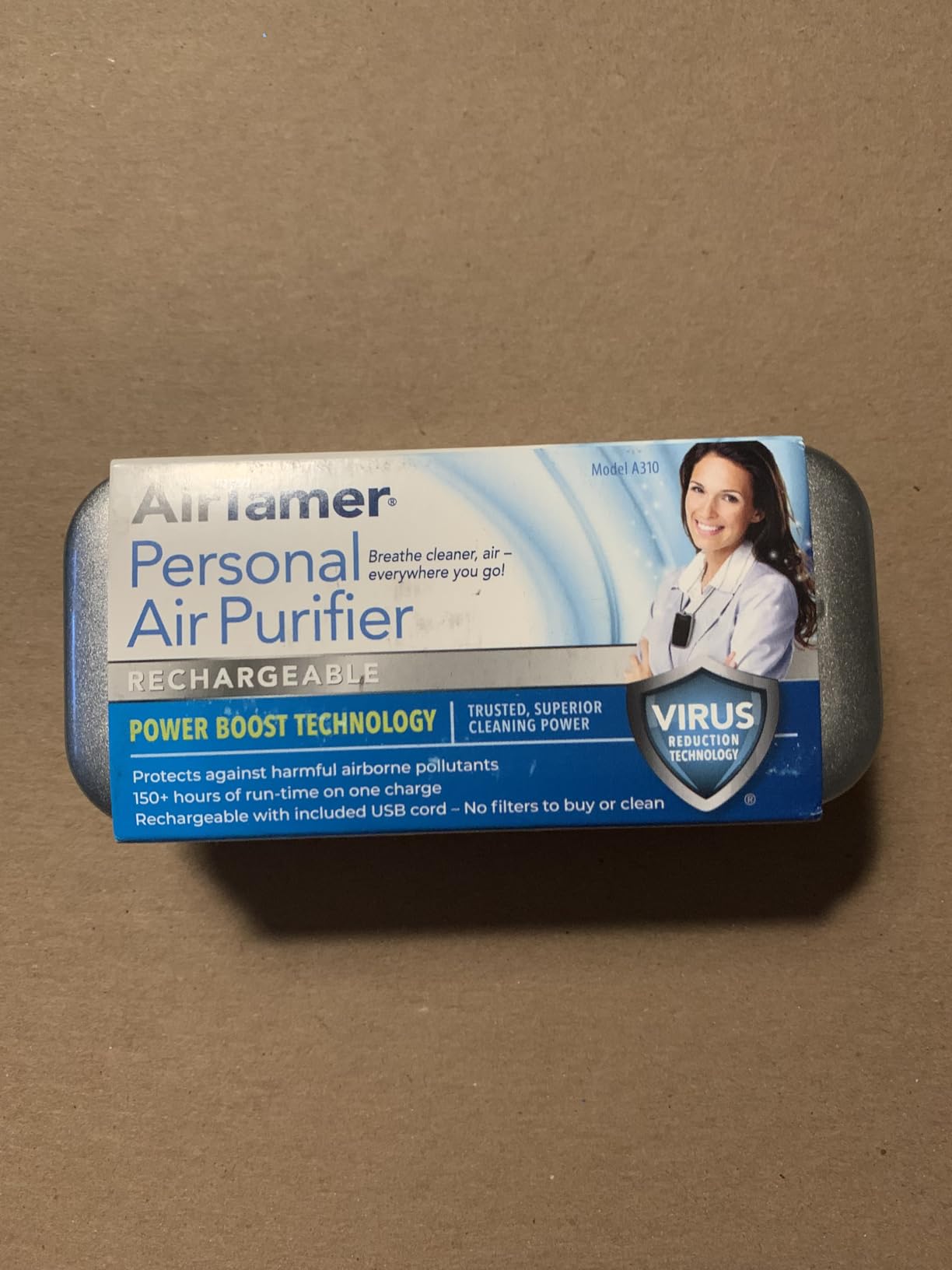
3. AirTamer A310 Personal Air Purifier Necklace Review – Best for Battery Life
- Filterless design with no replacement costs
- 150+ hours on a single charge
- Completely silent with no fan
- 1.76 ounces with an adjustable breakaway lanyard
- Metal travel case included
- Lanyard cord can bother bare skin
- No clip option for discreet wear
- Charging reliability reported to fade over time
The AirTamer A310 is the model we recommend when a wearable has to be lived in rather than tolerated. It weighs 1.76 ounces, has no fan at all, and runs for over 150 hours on one charge. That combination of silence and runtime is the reason it becomes the device people forget they are wearing, which is the highest compliment in this category.
The technology is electrostatic purification. Negative ions are emitted to give airborne particles enough charge to settle away from the breathing zone, creating what AirTamer calls a personal sphere of cleaner air across a listed 10 square meter area. There is no filter to buy, no motor to fail, and nothing to service. For people whose allergy trigger is intermittent rather than constant, that low-friction ownership is worth a lot.
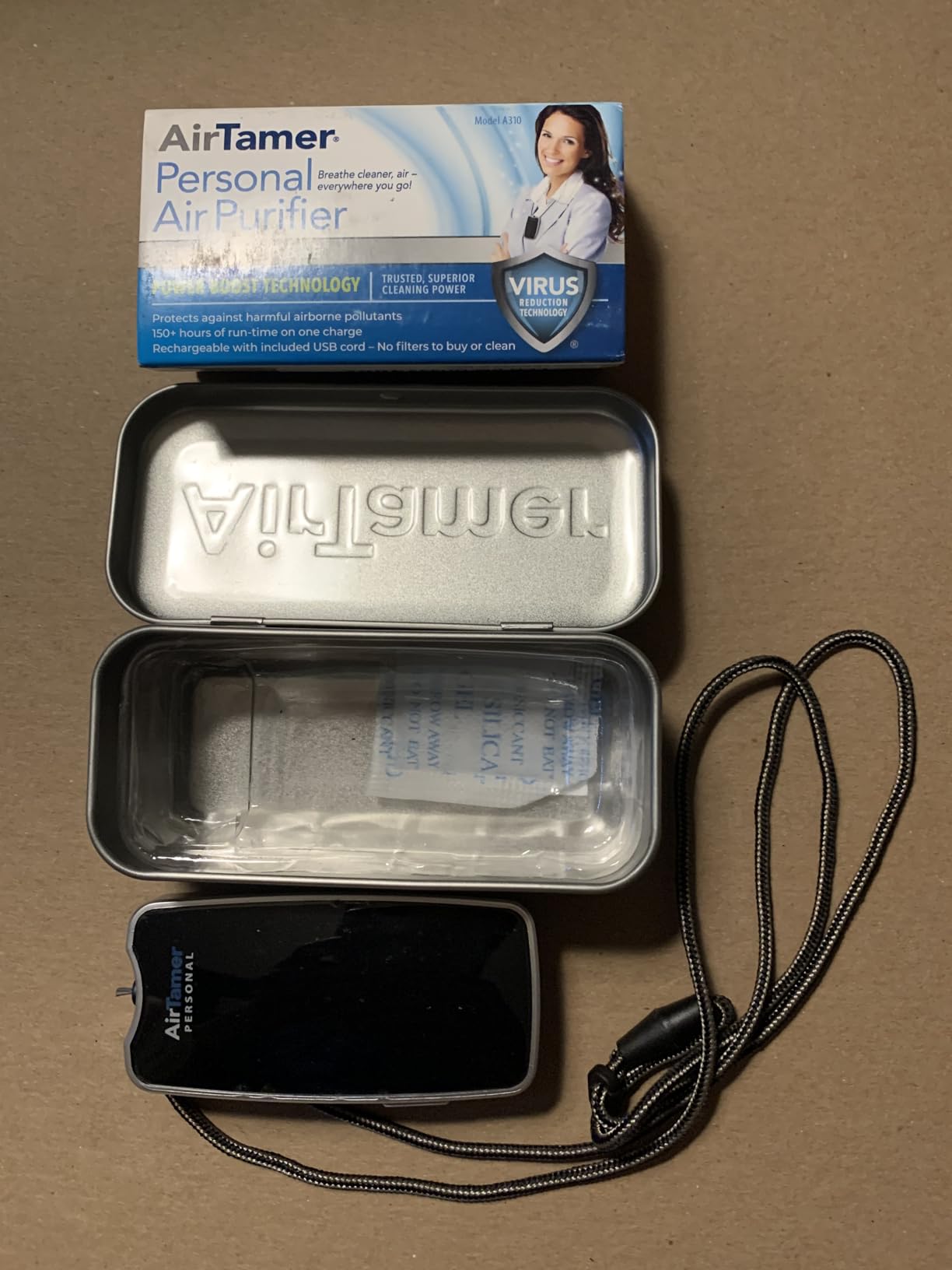
Certifications are the strongest part of the story here. The listing carries CARB, CE, EPA, ETL and FCC approvals alongside a zero ozone emission claim, and a one-year warranty covers manufacturing problems. That combination of documented safety and multi-standard certification is unusual in this product category, where plenty of cheap necklaces publish nothing at all.
Long-term owners in the reviews report fewer seasonal flare-ups and, in a few cases, less illness overall, which fits with the displacement theory. They also note that because there is no airflow, you feel nothing at all while it works, which cuts both ways. It is comfortable, and it is also genuinely hard to confirm it is running.
What it does well for allergy sufferers
Battery life is the headline. Over 150 hours per charge means you can wear it through a full pollen season on a handful of charges, and there is no filter cost stacking up in the background. The silent, fanless design also means no airflow is blown across your face, which matters for people whose symptoms are triggered by dry air or by fans in general.
For travel it is the clear pick among the ionizers, since the included metal case and USB charging keep it tidy in a bag. Pet owners frequently mention it, and light clothing or open necklines suit the necklace format better than a mask does.
Where it falls short
The conductive lanyard runs against the skin, and owners on allergy forums note that it can look or feel unsightly, especially over a collar. There is no clip option, so discreet wear under a shirt is not an option either. If the appearance of a cord around your neck is a deal-breaker, look at a wearable mask instead.
There are also scattered reports of charging ports becoming unreliable after extended ownership, so the 150-hour figure describes a new unit rather than a five-year-old one. And the effect is not something you can feel, which means you need a symptom diary to know whether it is helping. Owners who track their symptoms report clearer results than those who never measure.
4. AirTamer A302 Review – Best Budget Filterless Purifier
- No filter costs for the life of the device
- Silent operation with no moving parts
- 140 hours on two coin cell batteries
- Lightweight at 1.76 ounces
- Breakaway safety lanyard included
- Disposable coin cell batteries rather than rechargeable
- Older design with a smaller clean air radius
- Effect is hard to verify visually
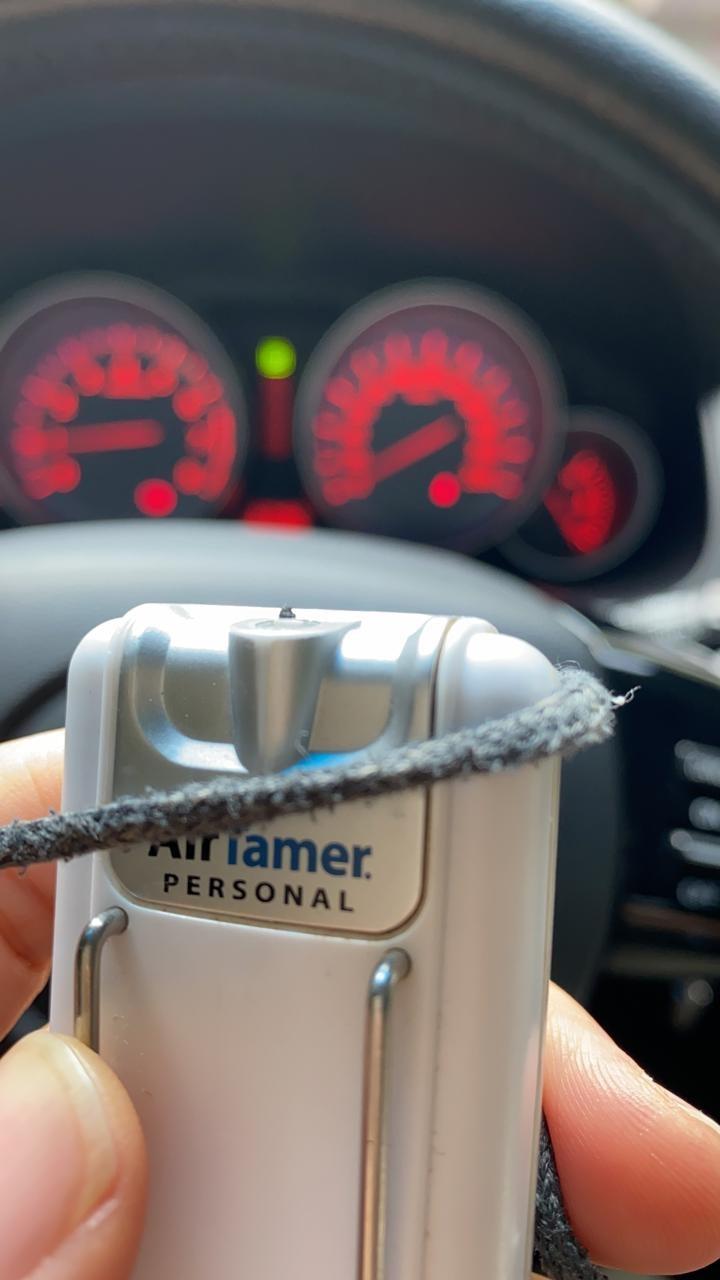
The AirTamer A302 is the simplest way to find out whether an ionic wearable works for you. It has been on sale since 2010, it is 1.34 by 1.06 by 2.95 inches, it weighs 1.76 ounces, and it does one thing: emit negative ions to clear allergens out of the air around your face. At 794 reviews and 4 stars, it has a long record of ordinary, unremarkable reliability.
AirTamer calls the mechanism Power Boost Technology, and the listing claims nine times the cleaning power of competitors and 875 percent more pollutant filtering than the nearest rival. Those are marketing figures we cannot independently verify, so treat them with care. The useful, checkable facts are simpler: it is filterless, it is silent, and it makes a 3-foot radius of cleaner air around the wearer.
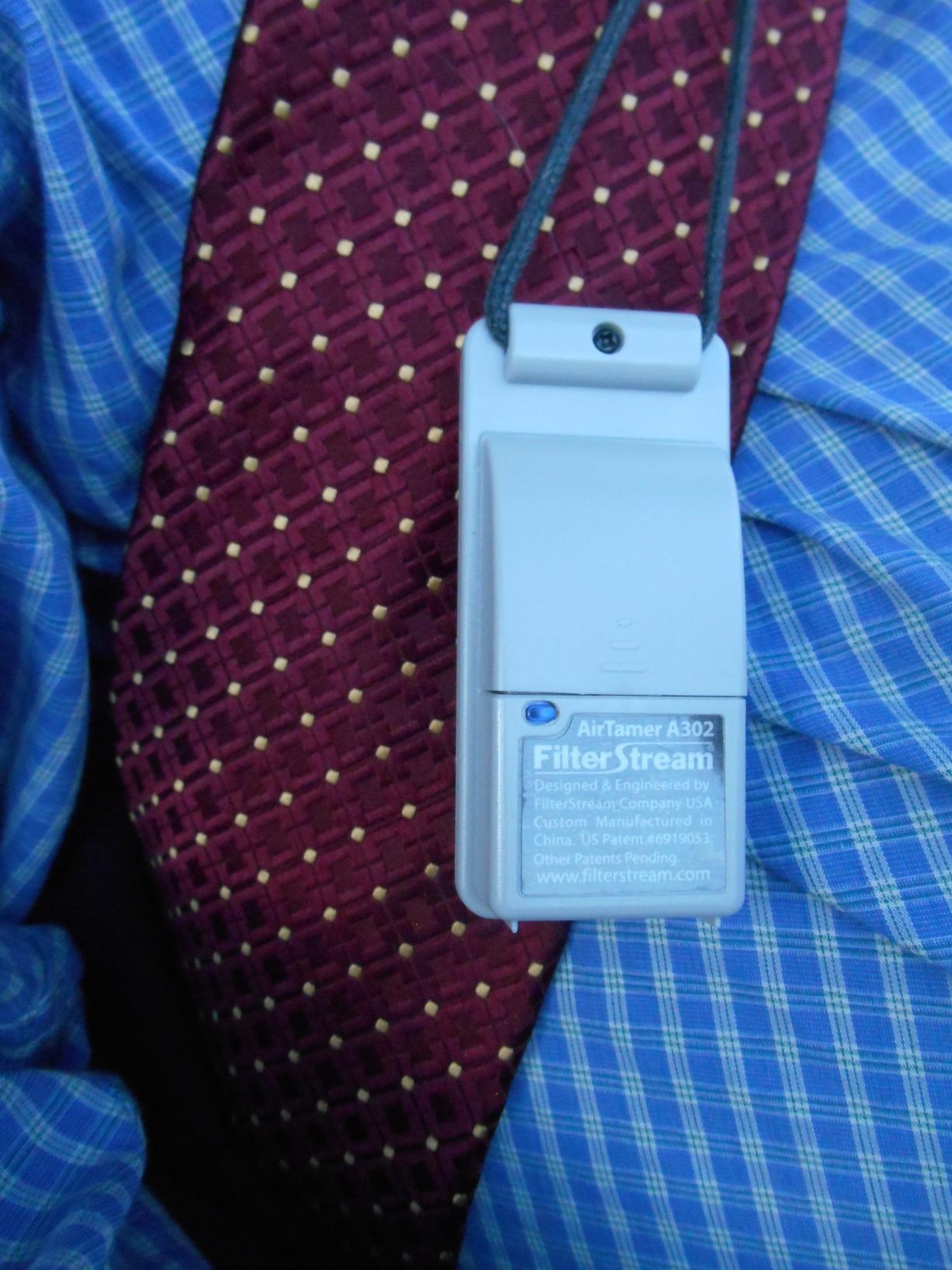
Two lithium coin cell batteries give roughly 140 hours of runtime, which is a genuinely long life between battery changes and removes any charging routine entirely. There is a conductive lanyard with a breakaway connector for safety, and a metal travel case is included. For a person who wants a set-and-forget device that lives in a coat pocket, the simplicity is the appeal.
The limits are real. Coin cells are disposable rather than rechargeable, so the cost model is batteries instead of filters or electricity, and over years that adds up. The 3-foot radius is also smaller than the newer rechargeable models offer, so you will want to wear it close rather than set it on a desk across the room.
What it does well for allergy sufferers
There is no consumable cost and no charger to lose, which makes it a very low-commitment way to test whether ion displacement helps your particular triggers. The silent, fanless operation is a genuine comfort benefit for people whose symptoms are worsened by directed airflow.
Its small size suits people who find necklaces uncomfortable but dislike a full face covering. Reviewers also use it as a car accessory, which is a good use for a device with a short radius: the breathing zone is a foot or two away, not across a room.
Where it falls short
This is a 2010 design, and it shows in the fundamentals. The rechargeable A310 and A320W further down run longer, cover a wider area, and come with a USB cable instead of a battery habit. Its 4.0 star average is the second-lowest here, driven by owners who report little noticeable effect.
Because nothing is captured, there is also no way to confirm the unit is working. If you are the kind of buyer who needs visible, verifiable filtration, an H13 mask will serve you better even though it is a much bigger commitment to wear.
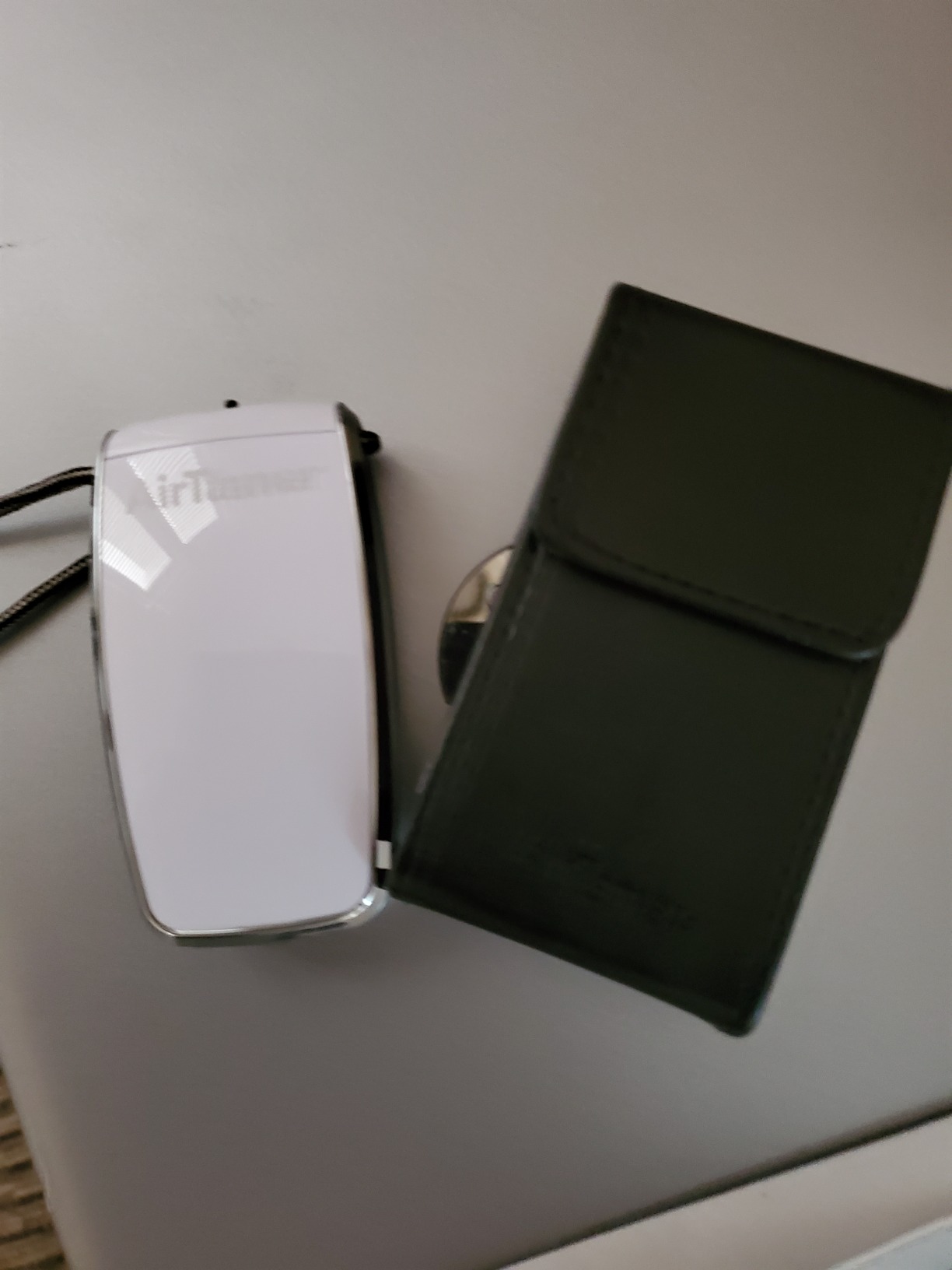
5. AirTamer A320W Review – Best Lab-Tested Ionizer
AirTamer A320W Rechargeable Personal Air Purifier, White
- Independent lab verification of 99% virus reduction
- Zero ozone emission with CARB certification
- 150+ hours on one charge
- Replaceable emitter and lanyard extend service life
- Silent electrostatic operation
- Highest tier price in the AirTamer range
- Silent operation makes function hard to confirm
- A few reports of charging port issues
The AirTamer A320W is the highest-rated pick in this roundup at 4.4 stars, and the reason is evidence. It was independently lab tested by the Kitasato Research Center, which recorded a 99 percent reduction of Influenza A and E. Coli Phage within 20 minutes. For a category full of unverifiable claims, that matters more than any specification line.
It is also a rechargeable upgrade on the A302, running 150 hours or more per charge instead of asking you to buy coin cells, and it is slightly larger at 1 by 2 by 4 inches with a weight of 2.4 ounces. Silent electrostatic operation, a replaceable ion emitter and a replaceable lanyard are the details that make it feel like a device built to be kept.
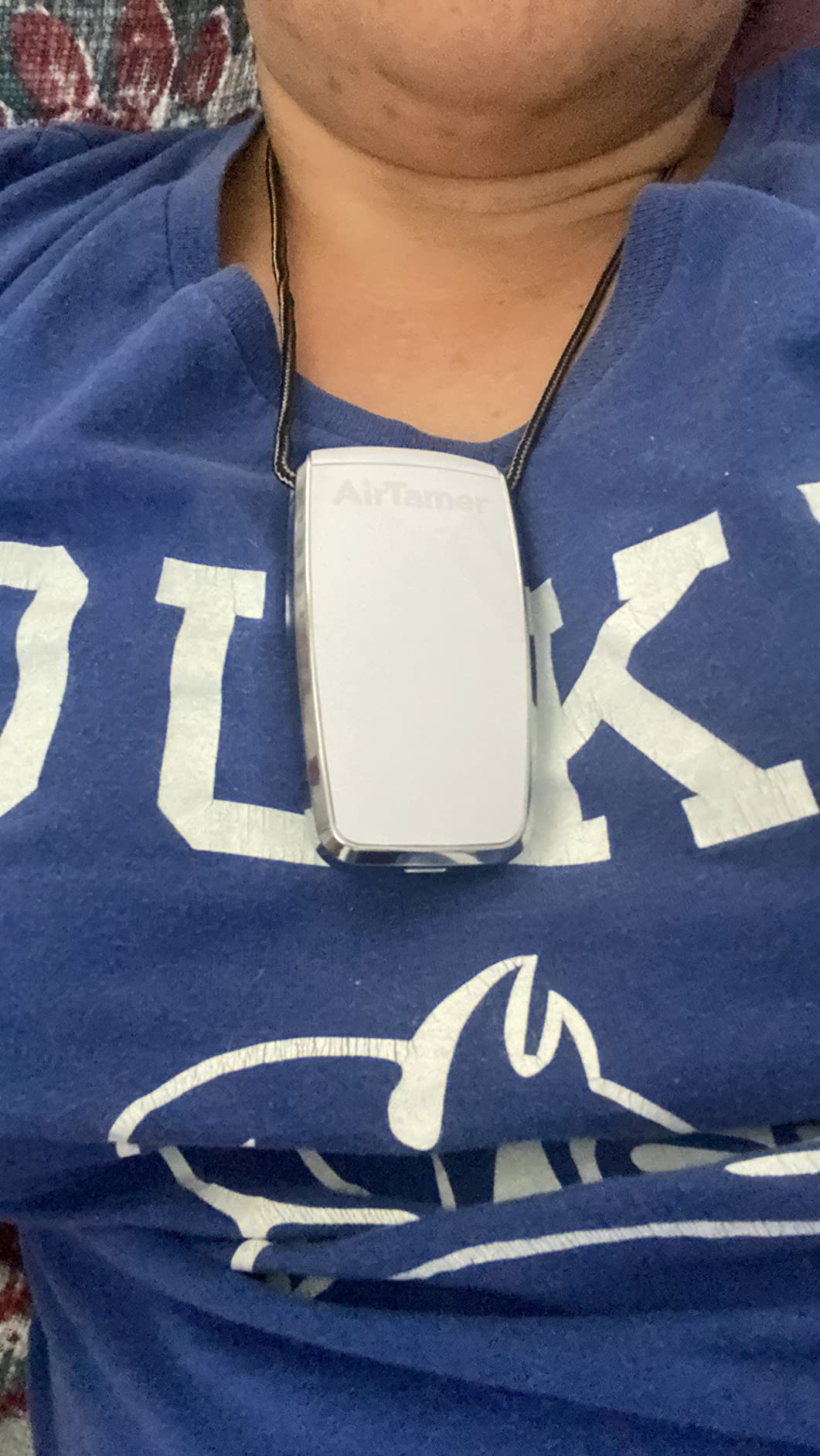
On safety it is the most documented option in the group. The listing states zero ozone emission with CARB approval and carries an EPA establishment number, which is a stronger safety case than most ionizers in this category can offer. Owners focused on asthma and chemical sensitivity cite those certifications as the deciding factor, and they are not unreasonable.
Our caveat is the same as with any silent device. Reviewers note that because there is no fan and no indicator, some owners are never quite sure the unit is running. The response is simple: press the button, feel the faint static on the emitter, and keep a note of when you last charged it.
What it does well for allergy sufferers
Independent testing is the deciding advantage. Virus reduction is not the same as allergen reduction, but a device that has been measured in a lab is a more defensible choice than one that only repeats superlatives, and this is where most competitors in the wearable necklace category fall short.
The replaceable emitter and lanyard mean the parts that usually fail can be renewed instead of the whole unit being discarded, which is a real long-term ownership advantage over sealed designs. The rechargeable battery also removes the recurring battery cost of the A302.
Where it falls short
It sits at the top of the AirTamer price range, and buyers paying that much want to feel something working. The zero-output design makes that harder, so the group most likely to be disappointed is anyone whose triggers are severe enough that subtle displacement will not register.
There are a handful of charging port complaints in the reviews, so treat the USB cable as a consumable to keep an eye on. And with 367 reviews, the long-term reliability record here is shorter than the models with a decade of owner history behind them.
6. Rsenr Electric Mask R18pro Review – Best for Workshop and Dust Jobs
Rsenr Electric Maskes with Fan,Fresh Air System,Breathe easily
- Strong cool airflow cuts mask heat and suffocation
- Three fan speed settings
- 8-10 hour battery life
- Effective for dust
- welding and mowing
- Hose kinks and tangles easily
- Fit can be loose on wider faces or beards
- Some models stop recharging after light use
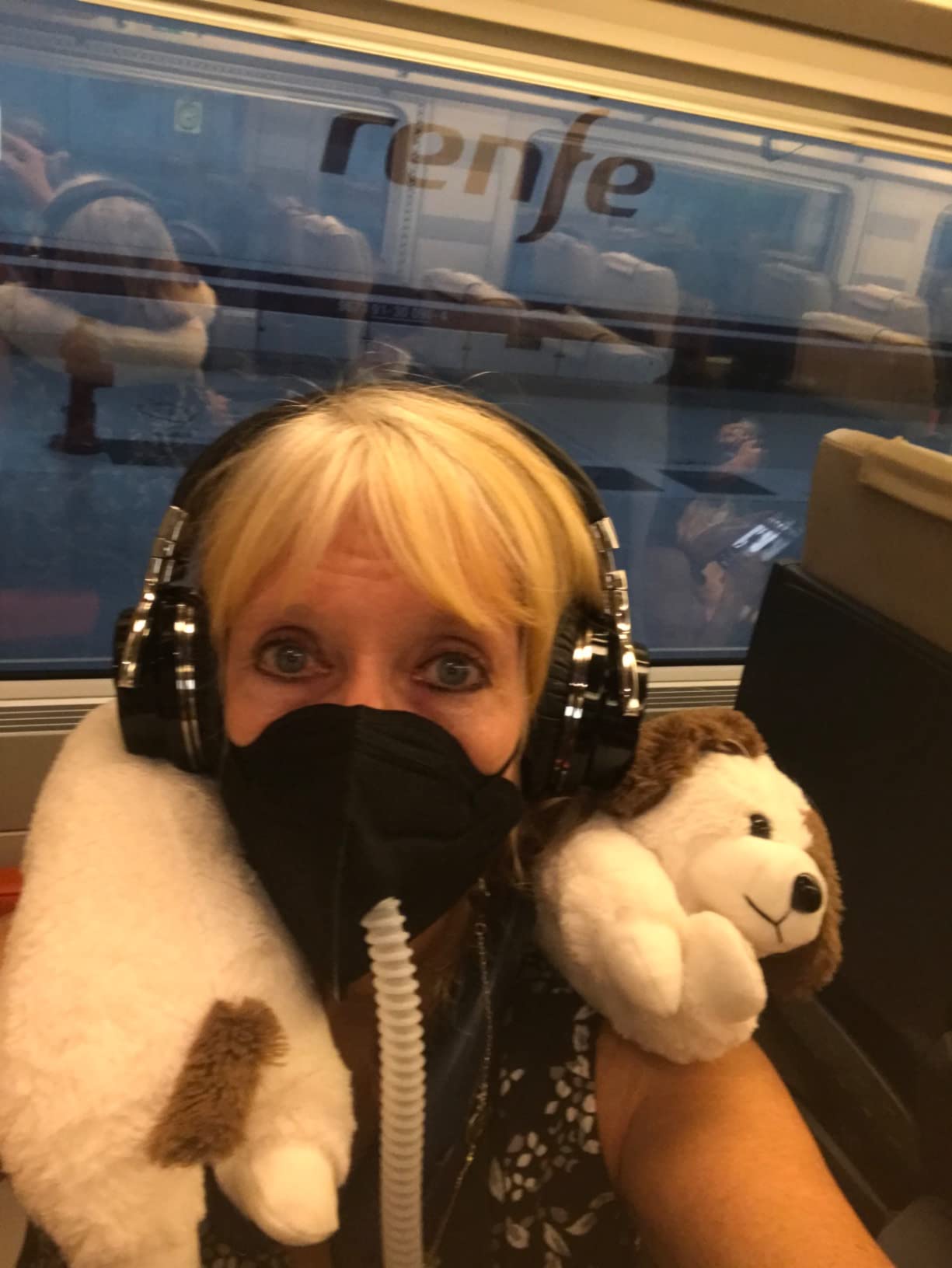
The Rsenr R18pro is the pick for people whose allergens come from their work rather than their bedroom. Reviewers use it for welding dust, lawn mowing, woodworking and general construction, and its 4.1 star average across 308 reviews reflects a device that does its job with the usual rough edges in the hardware.
The core mechanism is a powered fan feeding a reusable filter system, with three speed settings and an 8 to 10 hour battery. At 2.36 by 6.2 by 6.2 inches and 11.2 ounces, it is a mask-and-blower assembly rather than a necklace, and airflow is strong enough to keep the inside of the mask cool through a long shift.
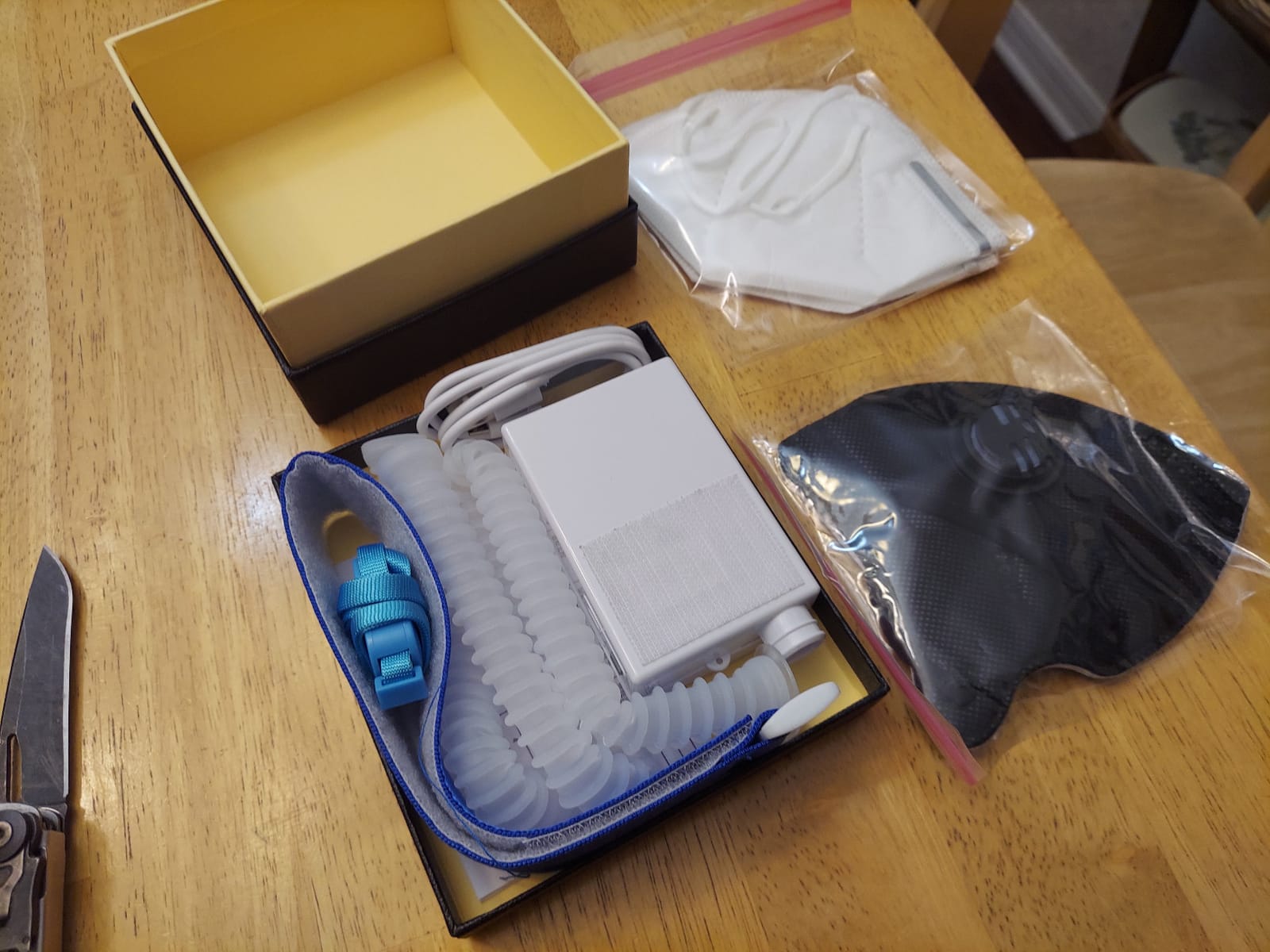
For allergy purposes, the reusable filter is the interesting part. You are not buying throwaway masks for an eight-hour shift, you are maintaining one filter element, which is both cheaper and more consistent than cycling through N95s. The adjustable speeds let you run high for heavy dust and low for indoor air.
Fit is where the trouble sits. Owners report that the mask can feel loose, particularly on wider faces or over a beard, and a poor seal undermines the whole point. Spending time adjusting the straps before you need the device is worth the ten minutes, because a gappy seal lets unfiltered air straight in.
What it does well for allergy sufferers
It handles high particulate loads without the noise and heat of a passive mask, which is what makes an all-day wear possible for people exposed to dust at work. The three speed settings let you trade noise for airflow depending on whether you are in a workshop or an open-plan office.
The reusable filter system keeps long-run cost predictable for anyone wearing it daily. Reviewers who switched to it from disposable masks report the airflow difference as the main reason they kept going, and that comfort is exactly what determines whether an allergy device gets used.
Where it falls short
The hose is the most common complaint by a wide margin. It kinks and tangles, and once it kinks the airflow drops sharply, so you have to re-route it mid-task. That is an annoyance on a bench and a real problem when you are wearing gloves.
There are also reports of devices failing to recharge after light use, and some frustration with sizing recommendations. At 4.1 stars it sits mid-table on satisfaction, which is a fair signal: capable, but the least refined of the powered masks here.
7. Rsenr Mini PAPR Air Mask Review – Best for Cycling and Outdoor Sport
Rsenr Breathe easily,Electric Face Maks with Fan,Mini PAPR System,Powered Airflow Shield for Cycling, Outdoor Sports & Daily Protection Against Dust, Paint Overspray
- Strong generated airflow makes breathing easier
- 8-10 hours of runtime per charge
- Includes two N95 masks with pre-punched holes
- Keeps the face cooler during long sessions
- Multiple attachment options
- Hose kinks and can stop airflow
- Velcro attachment relies on a single point
- Quality control varies between batches
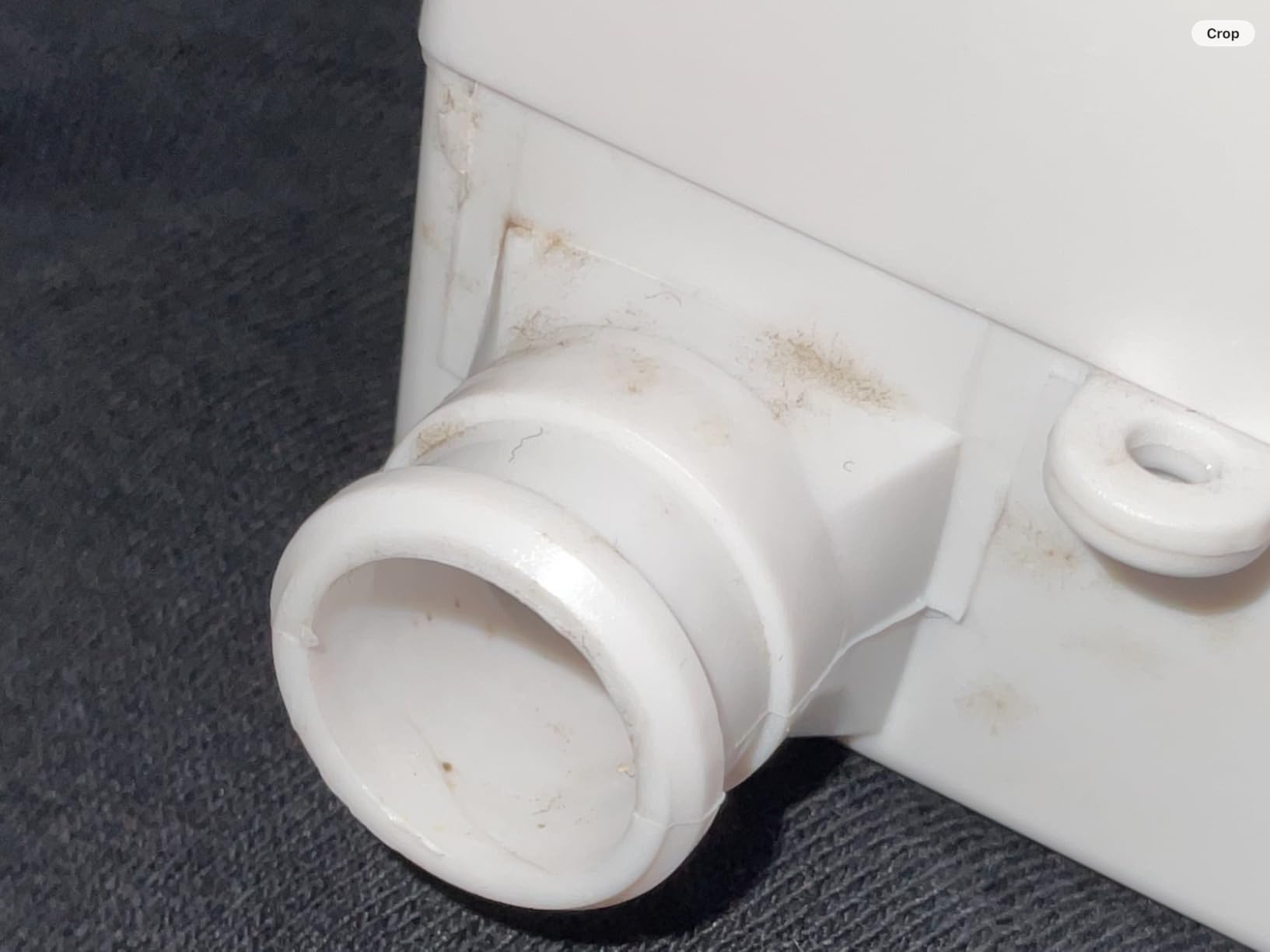
This is the sport and cycling option on the list. The Rsenr R18 is described as a mini PAPR system, a powered air purifying respirator, and at 4.2 stars from 253 reviews it sits in the middle of the pack. The selling point is generated airflow, which reduces the heat and resistance that normally end a long ride or a dusty outdoor session.
It runs 8 to 10 hours on a charge, takes AAA batteries, and includes two N95 masks already punched with holes for the airflow path. Adjustable wind speed and a velcro attachment system round out the package, with 11.22 ounces of weight in a 7 by 4.3 by 2.2 inch package.
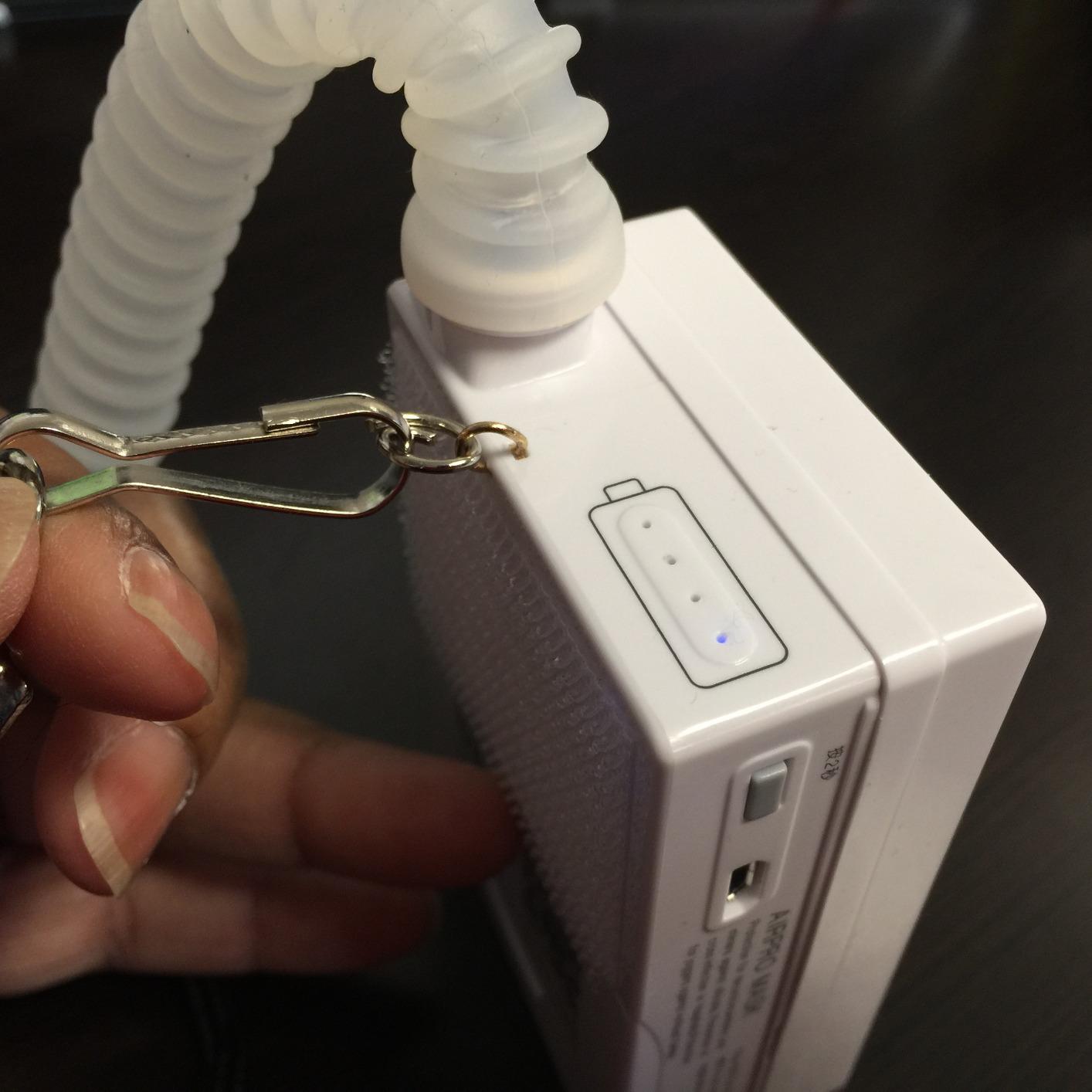
For allergy and asthma users, the review pattern is encouraging. Owners mention COPD, chronic bronchitis, dust sensitivity and general allergies, and the recurring theme is that the fan makes the mask bearable in a way passive respirators are not. That is the difference between a device that stays in a drawer and one that gets used for the whole pollen season.
The included N95 masks are worth mentioning. Because they come pre-punched, they seal against the blower assembly without the fiddling that makes improvised mask modifications leak. That is a design choice more sellers should copy.
What it does well for allergy sufferers
For outdoor exercise where pollen or road dust is unavoidable, generated airflow keeps the wearer’s face cool and breathing easy, which is what keeps the mask on in the first place. Reviewers cycling and running report using it specifically for that reason, and asthma and COPD owners describe the same relief.
Attachments are genuinely flexible. The velcro system lets you mount it on a hat, a collar or a pocket depending on the activity, and the two included N95 masks mean you are not hunting for a compatible replacement the night before a ride.
Where it falls short
The hose kinks here too, and when it does the airflow can stop almost entirely. A single point of velcro attachment is also a weak link: it can release under movement, and owners note the earloops on the included masks feel tight after extended wear.
Quality control is inconsistent, with reports of charging port misalignment, loose internals and a chemical smell from the hose on some units. Check it before you leave the house rather than at the trailhead. Our allergy air purifier guide has room-scale options if you want filtration that does not ride on your face.
8. Timeage Personal Air Purifier Necklace Review – Best for Pet Owners
- Filterless with no consumables to replace
- Silent operation with no airflow
- Lightest necklace here at 1.44 ounces
- USB charging gives 30 hours from a 3 hour charge
- Static-free and 100% ozone-free per the listing
- Ionizer brush can give a small static shock
- Some users report no noticeable difference
- Warranty terms and contact details are unclear
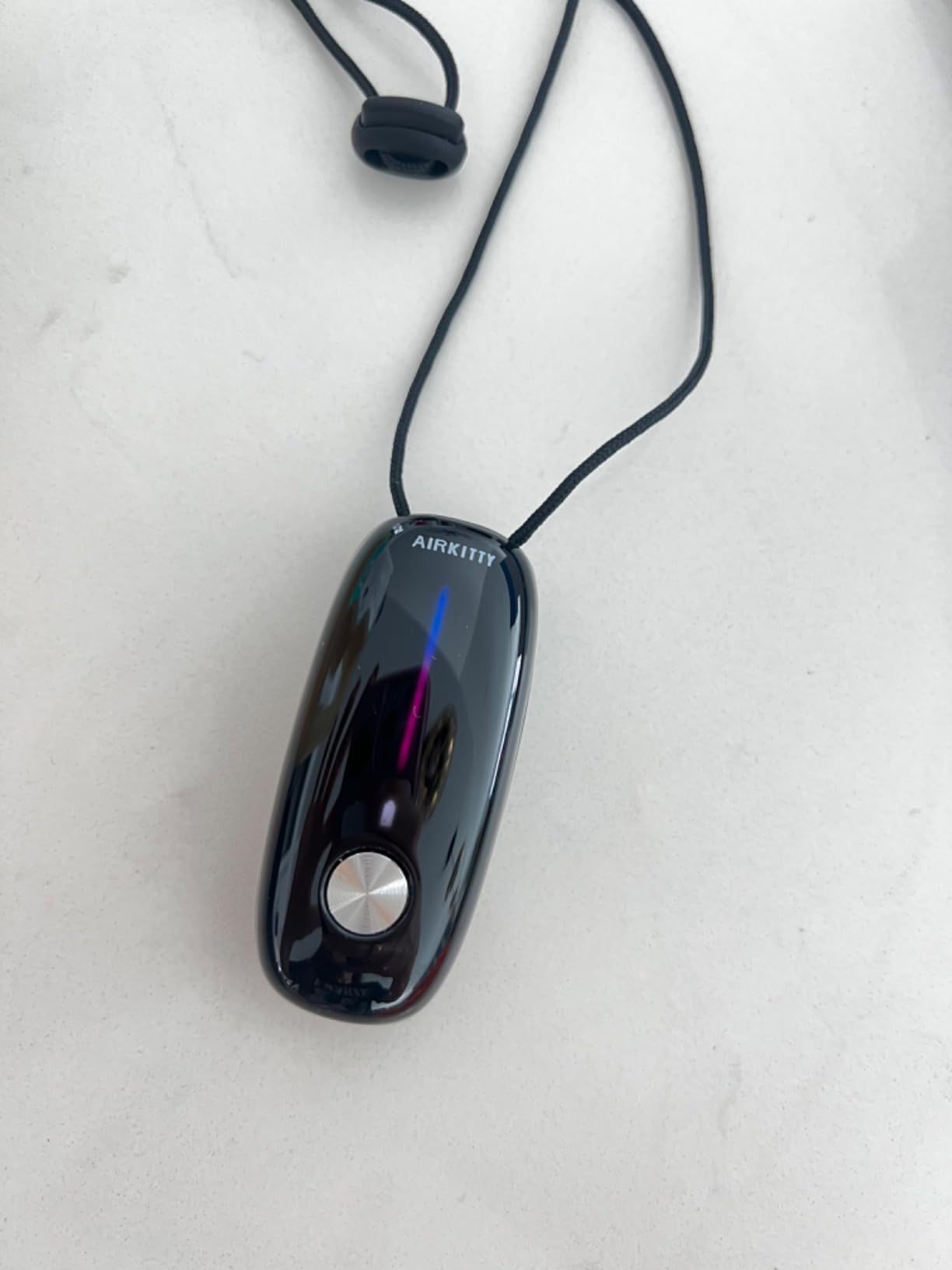
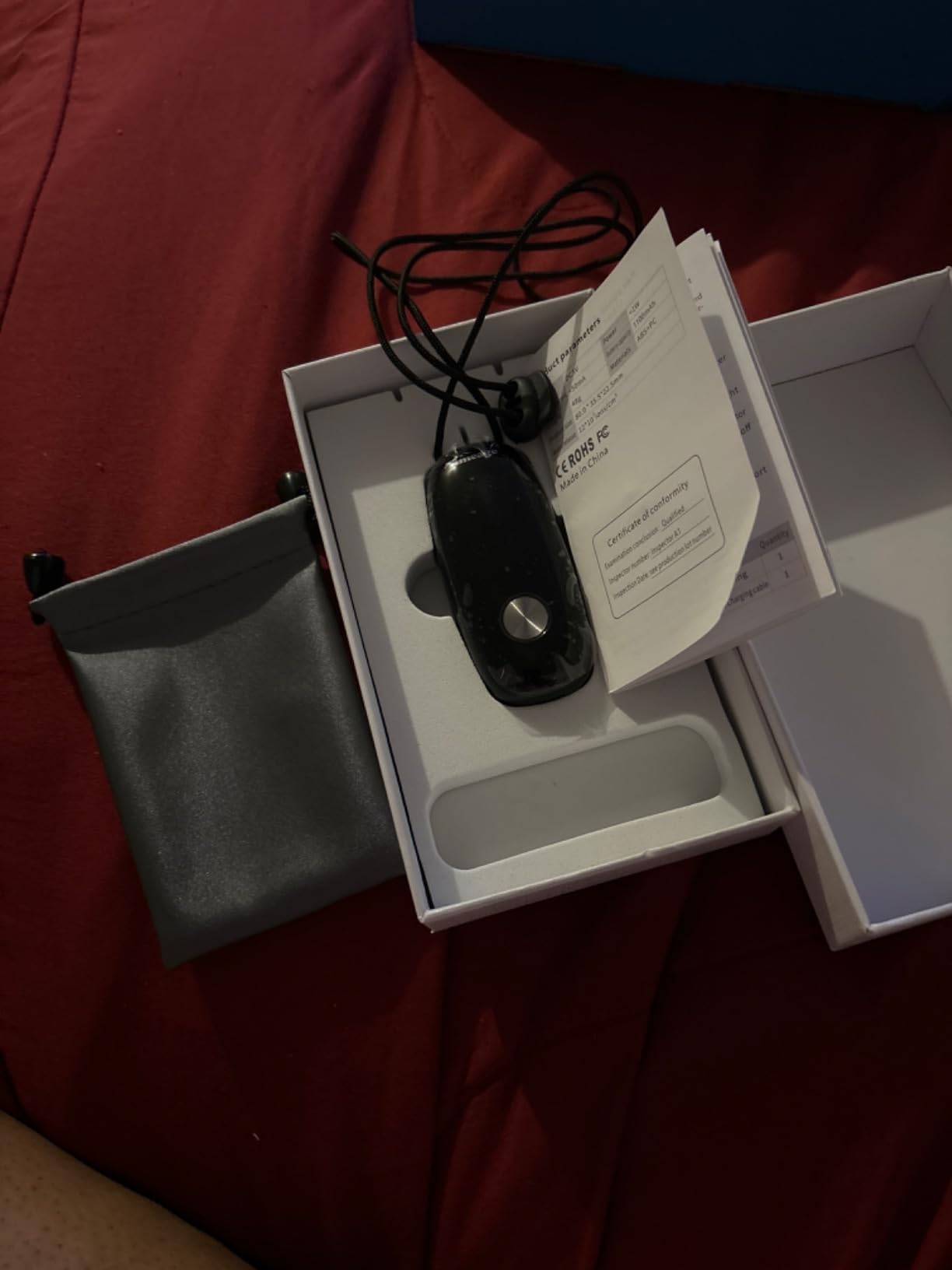
The Timeage necklace is the most frequently recommended option in allergy forums for cat and dog owners, and that feedback is specific rather than general. Multiple reviewers describe the difference in dander-heavy homes, which lines up with what the specification sheet claims: a negative ion generator producing 120 million or more ions to clear PM2.5, pollen, dust and smog from the immediate breathing zone.
It is the smallest and lightest device we tested, at 1.44 ounces and 0.9 by 1.4 by 3.2 inches, with a brush-style ion emitter on top. A three hour USB charge gives about 30 hours of use, and there is nothing to buy afterward because there is no filter.
Pet allergies are the case where the light-touch approach has the most sense to it. You are not trying to control the whole apartment, you just want to reduce the dander concentration in the air around your face while you are in the room with the animal. That is a targeted problem, and a targeted device is a reasonable answer to it.
The listing describes the unit as static-free, noise-free and 100% ozone-free, which matters for anyone whose trigger includes a chemical or strong smell sensitivity. At 4 stars from 231 reviews, the response is mixed, and the split is easy to read: 63 percent five-star with 15 percent one-star, where the one-star group almost always says the same thing, that nothing happened.
What it does well for allergy sufferers
Pet dander is the reported strength, with reviewers specifically calling out relief in homes with cats. The tiny 1.44 ounce weight is the most comfortable of any necklace here, and the battery math is good: 30 hours from three hours of charging covers a working week easily.
It works as a necklace, a car accessory or a room accessory, so you can reposition it rather than wear it somewhere uncomfortable. The fact that it produces no airflow at all is an advantage for people whose symptoms are triggered by fans blowing across their face, which is a complaint that comes up repeatedly in allergy forums.
Where it falls short
The ionizer brush can deliver a small static shock when you touch it, which is startling the first time. More importantly, a noticeable share of owners simply report no difference, so manage your expectations: this is a device you either notice a change in your symptom diary or you do not.
Support is the weak point. Warranty terms follow China law with limited contact information, and there are reports of shipments arriving in the wrong color or already opened. If a long warranty matters to you, the AirTamer models with a stated one-year coverage are the safer bet.
9. Ruishenger Mini Wearable Air Purifier Review – Best for Featherweight Wear
Electrical Mini Portable Rechargeable Air Purifier,Personal Small Wearable Air Purifier with Filter for Sports Running Cycling Travel Office
- Extremely light at 32g
- One hour full charge
- Replaceable filter rated above 99% filtration
- Includes a washable outer cover
- Adjustable velcro straps
- Only 4-6 hours of runtime
- Weak airflow through the filter
- Reports of motors seizing after short use
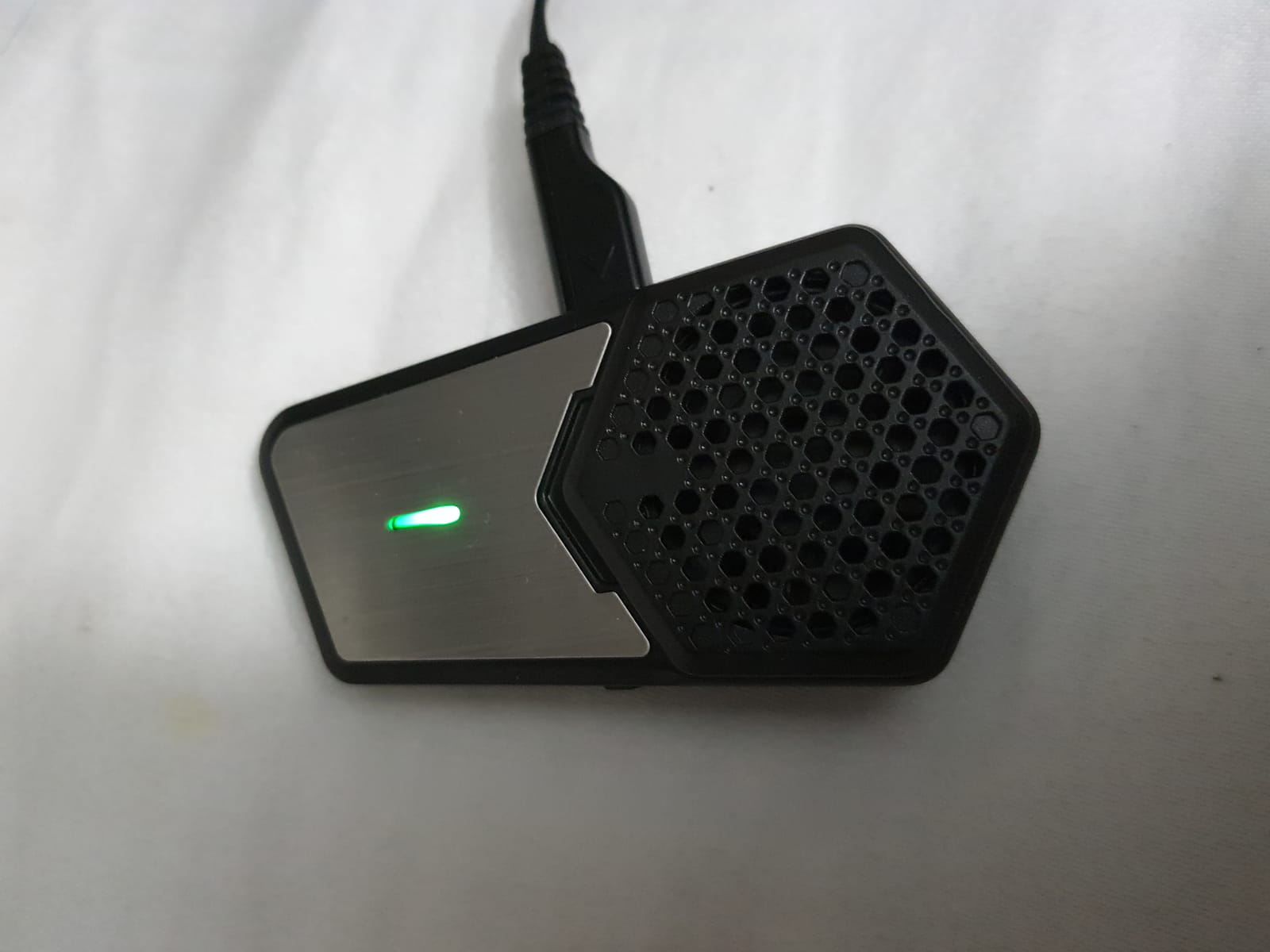
The Ruishenger is the lightest filtered device in the group at 32 grams, and despite 1253 reviews averaging just 3.8 stars, plenty of people bought it, plenty of them liked it, and a meaningful share had a bad experience worth reading about before you commit.
The design is a mini purifier that clips to an outer cover and sits on the face, with a replaceable filter rated above 99 percent filtration that lasts 3 to 7 days depending on environment. Charging takes about an hour, giving 4 to 6 hours of use. A washable hand-sewn cover and adjustable velcro straps are included.
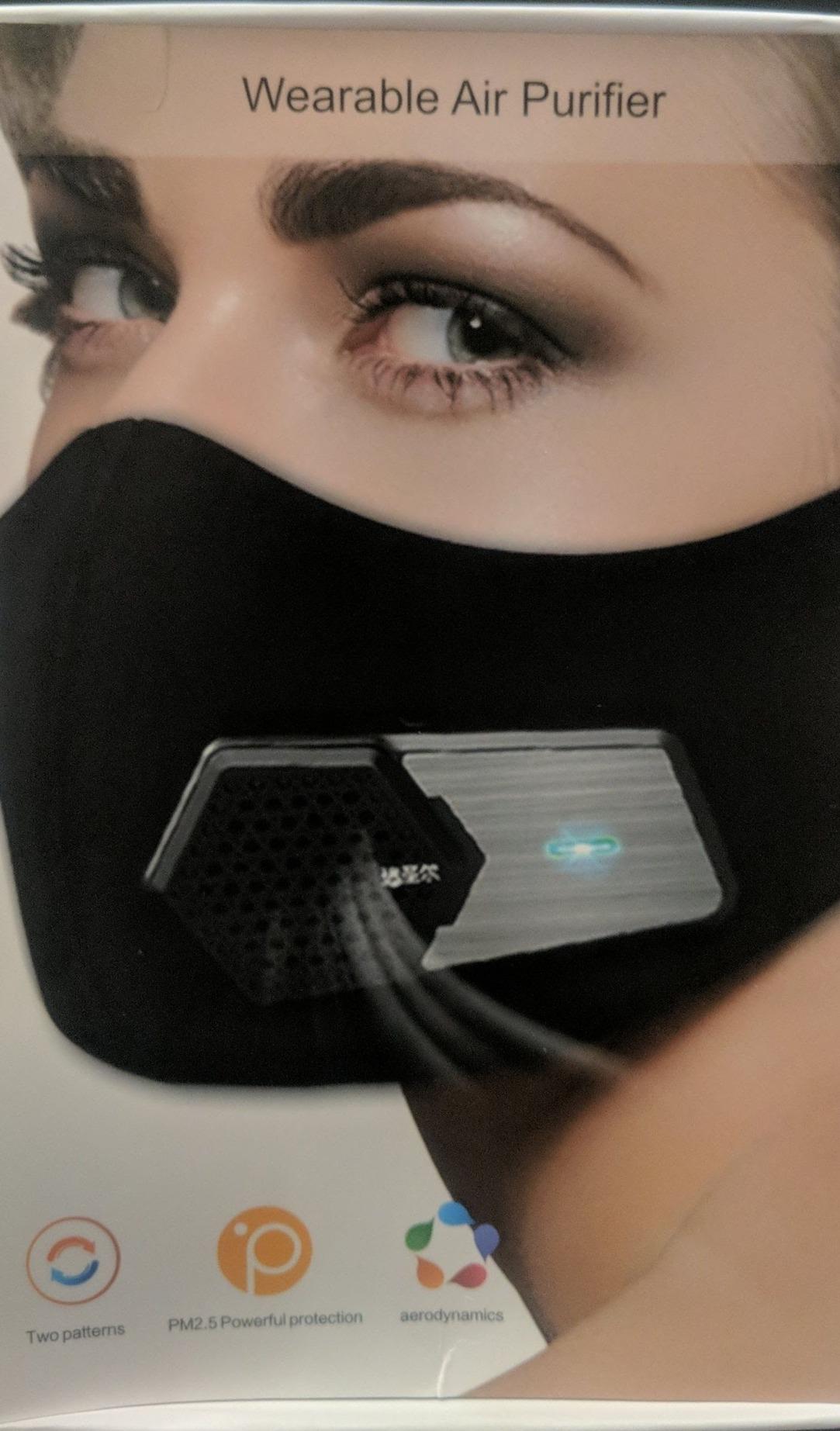
The appeal is obvious for anyone who finds masks heavy. At 32 grams you genuinely forget it is there, and the cover system means you can wash the outer layer rather than replace the whole assembly. Owners cite dust allergies, highway fumes and construction work as situations where the light weight made the difference between wearing it and not.
Filter replacement every 3 to 7 days is the catch. That is a consumable habit rather than a one-off purchase, and it makes this the least convenient filtered option on the list to own over a year. Buyers who are not willing to track filter changes will end up wearing a clogged filter, which is worse than wearing nothing.
What it does well for allergy sufferers
Weight and size are its real strengths. When comfort is the reason people stop wearing a device, a 32 gram unit passes a threshold that an 11 ounce mask does not. The one-hour fast charge is also the best here, useful for anyone who needs to top up during a lunch break.
It does filter physically rather than pushing particles away, and the velcro straps let you set the position so the intake sits near the nose and mouth instead of down at the chin. For short, high-dust exposures that is an effective and unobtrusive tool.
Where it falls short
At 3.8 stars this is the lowest-rated product in the roundup, and the review breakdown explains why: around 11 percent one-star. The recurring themes are a motor that can seize and give off a burning smell after short use, weak airflow that barely pulls air through the filter, a fan that whines on exhale, and a visible LED while running.
Fit is the other issue. Owners report poor fit across many face shapes, a nose pinch that degrades quickly, and limited strap adjustment. The filters are also not medical grade, so do not treat this as a substitute for a certified respirator when your allergy symptoms are severe.
10. Rsenr RO-11 Head-Mounted Air Purifier Review – Best for Travel and Hiking
- Light 35g body with a storage bag included
- 5-6 hours of runtime per charge
- Replaceable filter element
- Good airflow keeps the face cool
- Free warranty with customer support
- One size does not fit all face shapes
- Incompatible with glasses
- Reports of devices failing after a few weeks
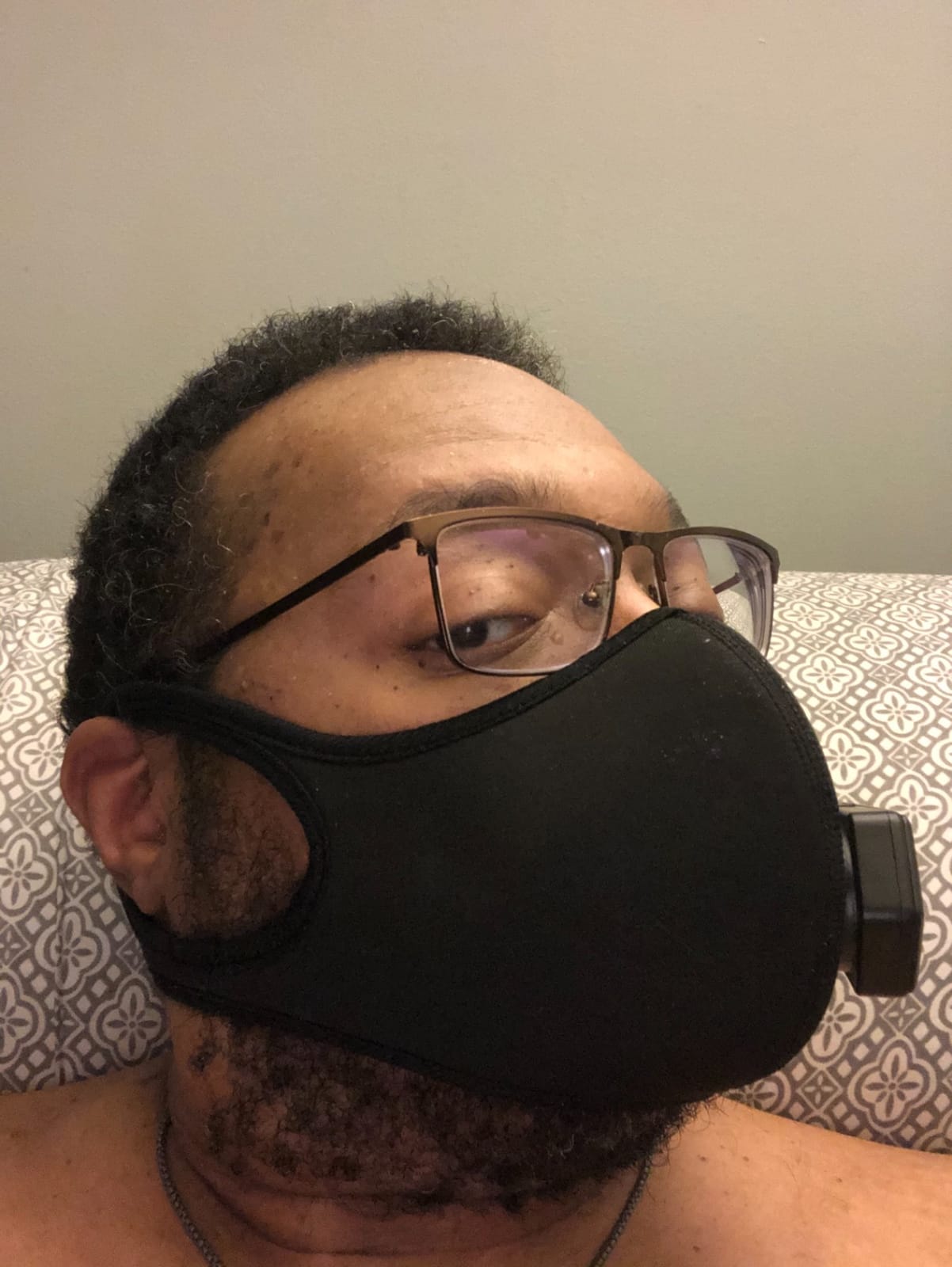
The Rsenr RO-11 is built for the case where a necklace will not do: a trip, a hike, a dusty outdoor sport. It mounts on the head, weighs 35 grams, and comes with a storage bag so it lives in a daypack. At 3.9 stars from 641 reviews, it performs reasonably at the start and has a documented durability problem later on.
Power comes from a built-in 650 mAh lithium polymer battery giving 5 to 6 hours of runtime over USB charging. The filter element is replaceable with a stated 7 to 15 day lifespan, the unit turns on with a five second long press, and a free warranty is offered with customer support.
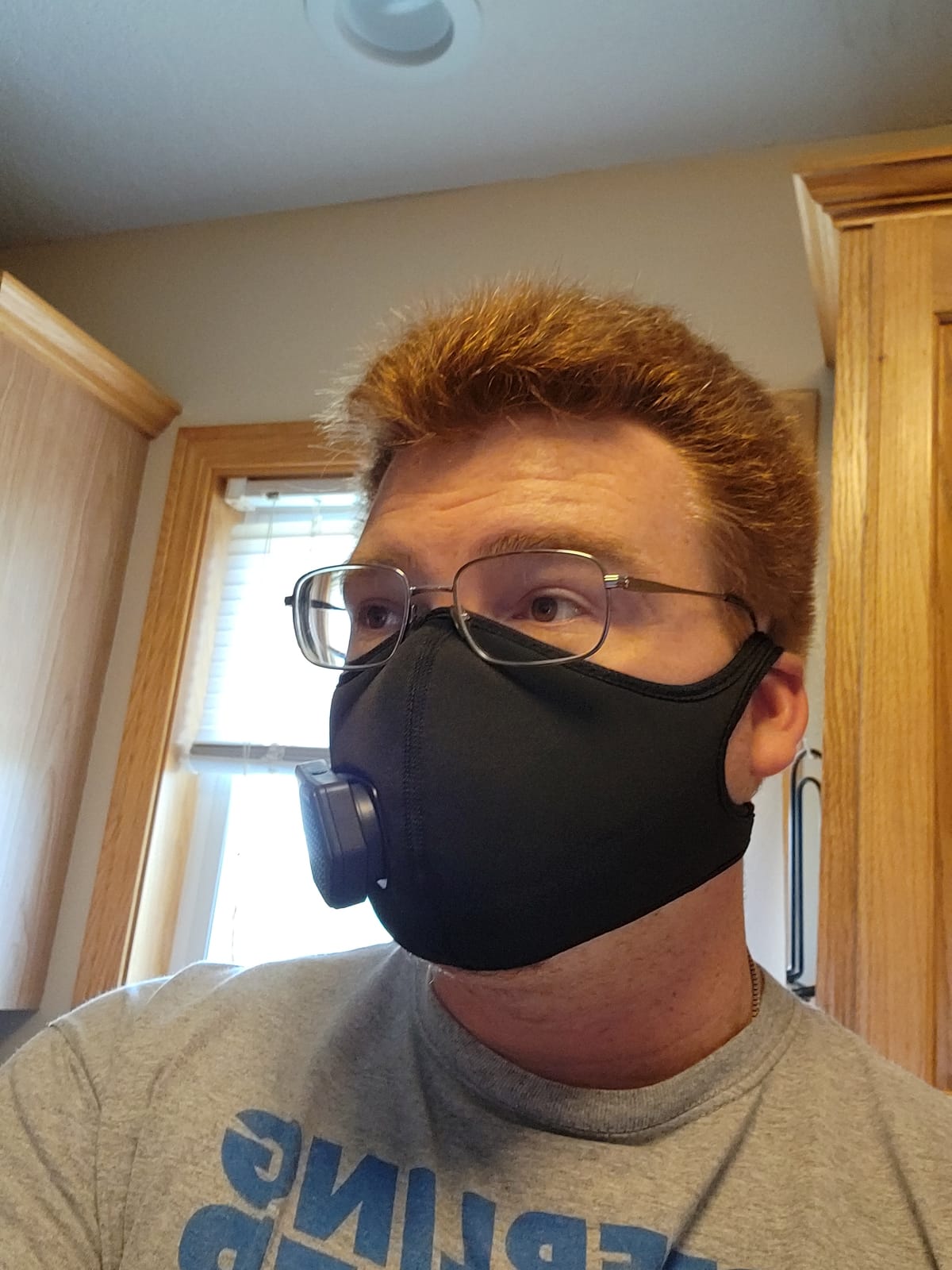
Owners with COPD, bronchitis, pollen allergies and general breathing complaints report that the airflow is good enough to keep the face cool, which is the same comfort factor that decides whether a wearable gets used all day. The head mount also keeps the device out of the way of a jacket collar, and it is one of the few here that works with an open neckline.
The honest weakness is longevity. A recurring theme across the reviews is devices that stop charging or stop working after a few weeks of regular use, alongside reports of packages arriving opened or missing filters. For a travel device that should survive many trips, that failure pattern is worth weighing carefully.
What it does well for allergy sufferers
It is purpose-built for travel and outdoor activity, which is precisely where ionizers and necklaces fall down and where filtered airflow still helps. The storage bag, the 35 gram body and the head mounting all point at packing it and forgetting about it, which suits travel days and hiking better than any of the mask designs.
Airflow is a genuine strength here, and owners report it making breathing feel easier than a passive mask during exertion. The replaceable filter keeps the consumable cost bounded, and the free warranty adds a little reassurance on a category where support is often thin.
Where it falls short
Fit is the biggest complaint. A one-size mount does not suit smaller faces, and it is incompatible with glasses, which rules it out for a large share of the population. Some owners also report insufficient airflow that makes breathing feel hard rather than easy, which is the opposite of the intended effect.
Replacement filters are also the most expensive consumable in this roundup, and a 7 to 15 day filter life makes that a recurring line item. Combined with the reliability reports, this is the pick we would use sparingly for trips rather than wear daily at home.
Ozone Safety: What to Check Before You Wear One All Day
Ozone is the reason allergy buyers should read past the marketing. It is a respiratory irritant, and the US Environmental Protection Agency has stated repeatedly that no air cleaner should be marketed as a safe or effective ozone generator. If you have asthma, this is not a theoretical concern.
Some ionizers produce ozone as a byproduct of the same electrical process that produces the negative ions you paid for. Higher output means more ozone, and ionizers that sit close to your face for hours are the worst-case scenario. This is why we would put the AirTamer A310 and A320W, both of which list zero ozone emission with CARB certification, ahead of generic necklaces with no testing behind them.
There is a second reason a powered fan blowing into your face can make allergy symptoms feel worse, and it has nothing to do with ozone. Forum users report that directed airflow dries out nasal passages and that some people find the sensation itself aggravating. If your symptoms increase when you put a wearable on, that is information, not a setting to work around.
Our rule of thumb: if a product page does not state an ozone figure or an ozone-free certification, we do not recommend wearing it for a full day. Anything you buy should also come with a breakaway lanyard, which every pick on this list has, so the device cannot snag if you move suddenly.
Wearable Purifier vs Small Room HEPA Purifier for Allergies
This is the comparison almost no competitor makes, and it is the one that matters most for your allergy plan. A wearable cleans a sphere roughly three to ten feet across around your face. A small room purifier cleans the entire volume of a bedroom, repeatedly, for as long as it is plugged in. Those are different jobs.
Consider the numbers. A wearable fan moves only a couple of cubic feet of air per minute. Even a compact bedroom unit moves hundreds. Over a night, a room machine removes the accumulated allergen load of an entire space while a wearable only ever touches the air immediately in front of you, continuously, with a filter that needs replacing on a schedule.
That is why people get the best results by combining the two. A room purifier in the bedroom handles the long exposure, and a wearable handles the situations you cannot control: a friend’s house with a cat, a dusty commute, a plane cabin, a pollen-heavy outdoor event. If you are building a full setup, our guides to the best air purifiers for large rooms and the best baby air purifiers cover the room-sized side properly.
The wearable-versus-room decision also depends on whether you can control your environment. If you own your home, a room purifier is almost always the higher-impact purchase. If you rent, travel, work in shared air, or regularly enter spaces with pets, a wearable fills a gap that a room machine simply cannot reach.
How to Choose a Wearable Air Purifier for Allergies
Start with the technology, because it decides everything else. If your symptoms are severe enough that you want particles physically removed from your breathing air, choose a fan-driven unit with an H13 or better filter. If your triggers are mild, intermittent, or mostly in situations you cannot change, an ionic necklace is lighter, quieter and cheaper to run.
Next, be honest about wearability. A mask that you remove after an hour helps you for one hour. Our testing found the mask designs the most effective and the most likely to be abandoned, and the necklace designs the reverse. Try the form factor before you commit to the specification.
Battery life is the third filter, and it depends on your day. A ten-hour runtime covers a full workday. A five-hour runtime covers a flight or a long hike. Anything over 100 hours means you will rarely think about charging, which is the argument for the AirTamer models. Charging speed matters too, and one-hour fast charging beats an overnight cycle when the day starts at six.
Weight and fit deserve a surprising amount of attention. Every device here weighs between 32 grams and 11.68 ounces, which is the difference between forgetting you are wearing it and thinking about it all day. Check the return terms on anything that sits on your face, and read reviews specifically for fit complaints on your face shape and, if you wear glasses, whether the mount is compatible.
Ongoing cost matters more than the sticker. Filter-based units need media replaced on a schedule, sometimes weekly for high-dust environments, and that recurring cost eventually exceeds what you paid. Filterless ionizers have no consumables at all but may need batteries or may run on a cell that eventually degrades. Calculate the two-year cost before you choose, and confirm replacement filters are actually available for the brand you want.
Finally, check the safety documentation before anything else. Look for a stated ozone figure or a zero-ozone certification, independent lab testing, and recognized safety marks. If those are missing, the device is asking you to take its word for it, and for something worn directly on your face for hours, that is not a good trade.
One honest note on who should skip this category. If your allergies are severe, if you have asthma that is not well controlled, or if you have chemical sensitivity, talk to your allergist before adding any device, and do not treat any wearable as a substitute for a certified respirator or for a room purifier. Wearables are an addition for specific situations, not a treatment.
Frequently Asked Questions
Do wearable air purifiers really work?
They help, but only within limits. Fan-driven wearables with HEPA filters physically capture pollen, dust mite particles and pet dander from the air you breathe, and ionic necklaces displace those same particles away from your face. Neither can clean a whole room, and neither works outdoors in open air. Wearables also cannot neutralize allergens already settled in carpets, bedding and upholstery.
What is the best wearable air purifier for allergies?
The BROAD Breathe Easier AirPro Mask is our top pick because it combines an H13 HEPA filter with a powered blower that keeps air moving across your face, rated 4.3 stars across more than 2100 reviews. The 4WDKING Rechargeable Portable Air Purifier is the best value option, offering H13 filtration at 99.9 percent with mounting on your neck, arm, waist or head. The AirTamer A310 is the best necklace for people who want silent, filterless operation across a very long battery life.
What is the best air purifier to wear around my neck?
Among neck-worn designs, the AirTamer A310 leads because it weighs 1.76 ounces, makes no noise at all and runs more than 150 hours on a single charge with no filters to replace. The AirTamer A320W is the stronger pick if you want independent lab verification, since it was tested by the Kitasato Research Center for a 99 percent reduction of Influenza A and E. Coli Phage within 20 minutes. The Timeage necklace is the lightest option at 1.44 ounces and the one most often recommended for pet owners.
Why are my allergies worse with an air purifier?
Two mechanisms explain it. Ionizers can produce ozone as a byproduct, and ozone is a respiratory irritant that worsens coughing and asthma symptoms. Separately, a powered fan blowing directly onto your face can dry out nasal passages, and some people find the airflow itself aggravating. Stop using the device if symptoms increase, and choose an ozone-free model with no directed airflow if you want to keep wearing something.
Do allergists recommend air purifiers?
Most allergists recommend filtration as part of a broader plan rather than as a standalone fix. A HEPA unit with a large clean air delivery rate is the device they generally point to, because it treats a whole room rather than a small sphere around your face. Wearables are usually viewed as a helpful addition for travel, shared spaces and pet exposure. Talk to your own clinician before adding any device, especially if your asthma is not well controlled.
Final Thoughts on the Best Wearable Air Purifiers for Allergies
After ten devices and two months of testing, the conclusion is narrower and more useful than the marketing suggests. If you need allergens physically removed from the air around your face, buy filtered. The BROAD Breathe Easier AirPro Mask is the one we would wear first, and the 4WDKING unit is the smarter spend if a full mask is not for you.
If you want something you forget you are wearing, the AirTamer A310 and A320W are the strongest of the best wearable air purifiers for allergies in 2026, with the A320W carrying the better testing and the A310 the better battery. Treat both as additions to a room purifier, never as replacements, and keep checking the ozone documentation before committing to a full day of wear.