
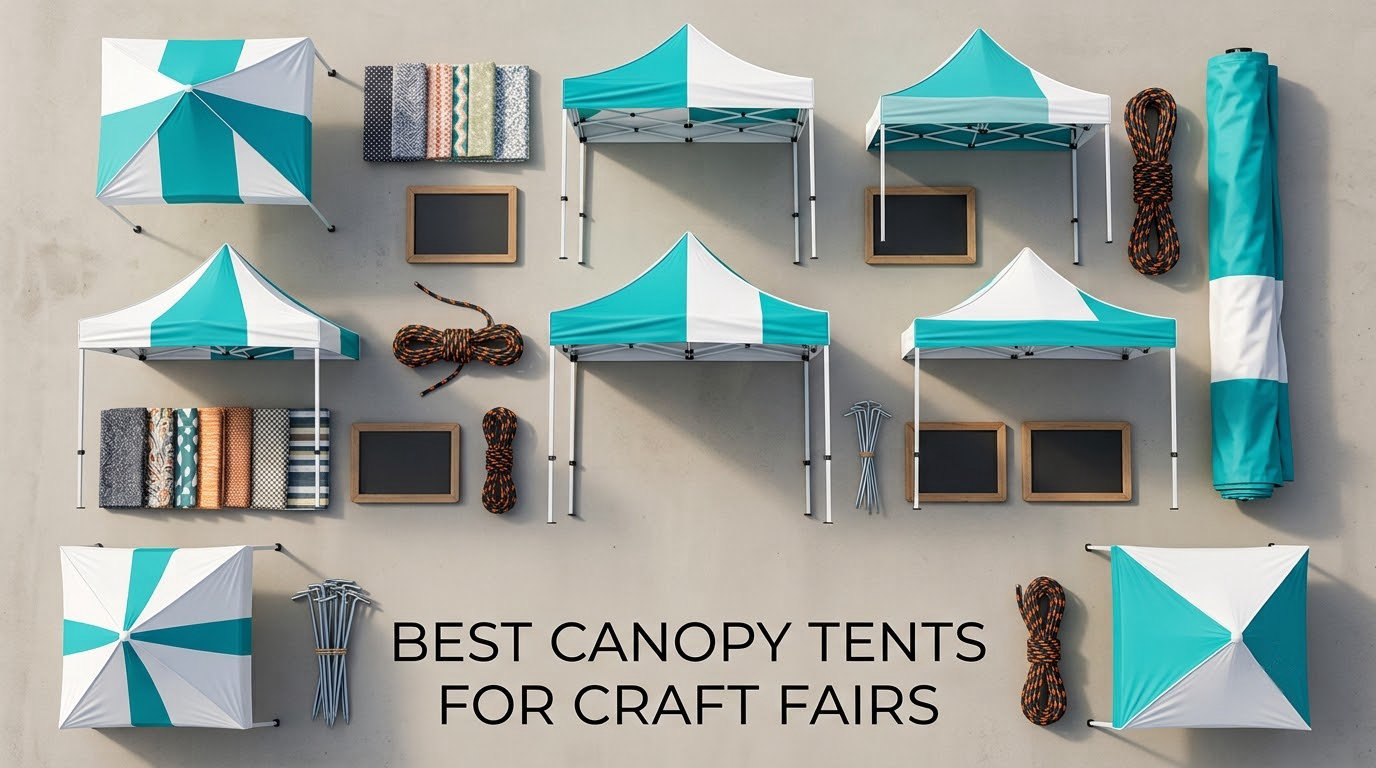
A canopy tent does more than keep the sun off your table. At a craft fair it shades you while you pack up, it stops afternoon drizzle from ruining a batch of hand-poured candles, and it gives your booth a footprint that reads as professional from the aisle. The wrong one sags, floods, or takes two people and a fight to raise.
After six weeks of setting up, packing, and dragging tents between markets, here is our short answer: the best canopy tents for craft fairs are 10×10 straight-leg pop-up models built on a commercial-grade steel frame, with 150D to 500D polyester fabric, a center-lock hub that raises the whole frame in one push, and CPAI-84 flame-resistant certification so an organizer does not turn you away at load-in. Twelve of them are compared below, with weights, denier numbers, headroom, and anchoring kits, so you can match a tent to your booth instead of guessing.
We are writing this for a specific person: someone who makes the goods, sells them outdoors on a weekend, and has to haul the whole setup to the venue alone. That means weight and solo setup matter as much as shade, and we have scored them that way. If you also need surfaces to put things on, we round up the best craft tables separately.
Top 3 Picks: Best Canopy Tents for Craft Fairs in 2026

CROWN SHADES 10×10 One Push
- Patented one-push center lock hub
- UPF 50+ silver-coated interior
- 150D water- and flame-resistant fabric
- Steels wheels in the feet

MASTERCANOPY 10×10 Durable
- One-person hub setup in about 90 seconds
- Vented top
- 1.2mm steel poles
- 4 sandbags and 8 stakes included

ABCCANOPY 10X10 Commercial
- Full truss frame with 1mm square legs
- 500 denier PU-lined waterproof top
- 3 side walls plus a door wall
- Roller bag and 4 weight bags
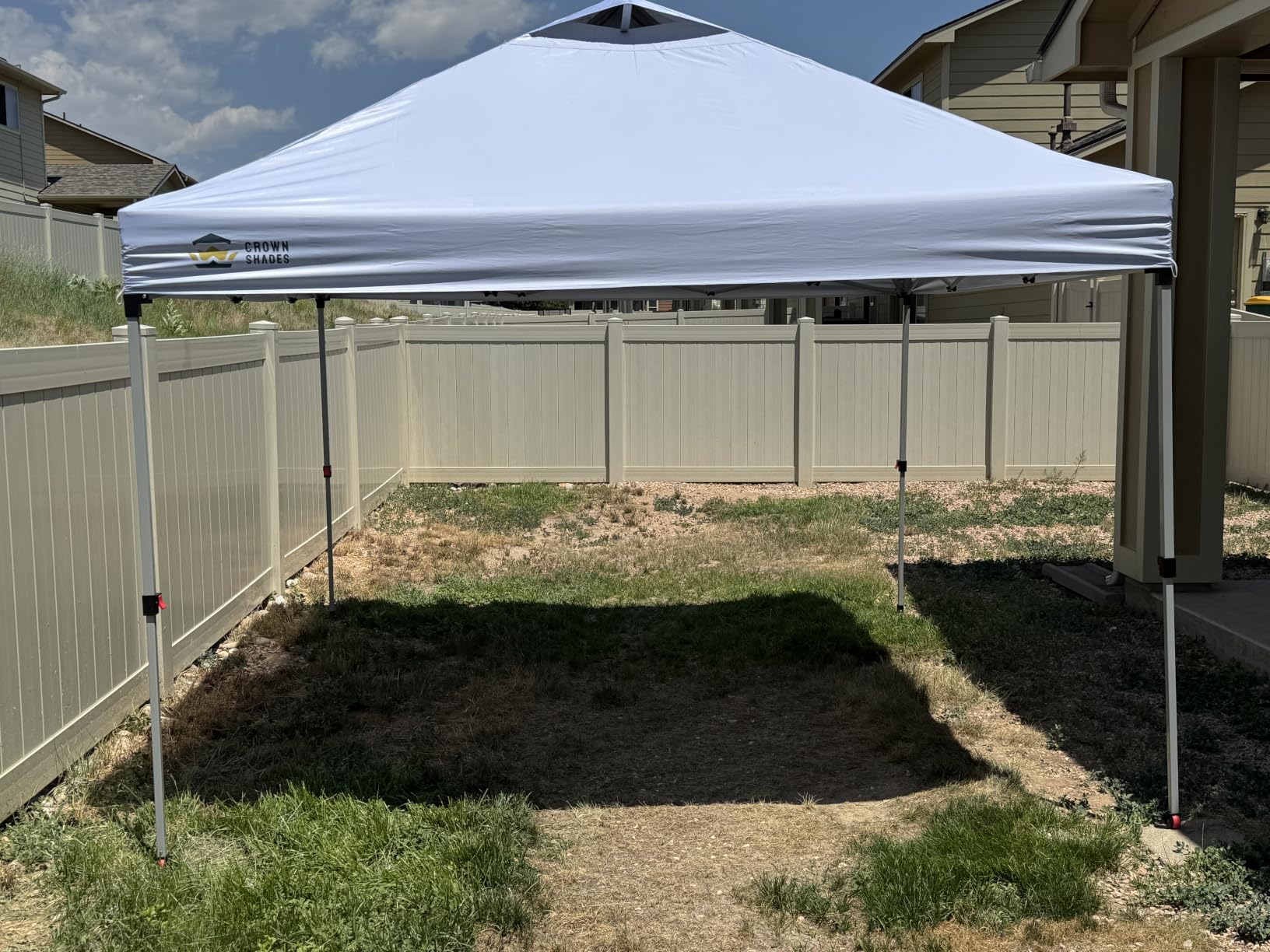
The CROWN SHADES is the one we kept reaching for. Its patented center lock locks all four legs with a single push, and the frame has wheels already built into the feet, so you drag the raised tent across the grass instead of carrying it. At 11433 reviews and 4.6 stars it also has the deepest owner history in the group.
The MASTERCANOPY is the value pick, and the box includes the most complete anchoring kit of anything in this group. The ABCCANOPY is the booth build, with a full truss frame, 500 denier fabric, and zipped walls that turn the space into a proper enclosure when the weather turns.
All 12 Canopy Tents Compared Side by Side
| Product | Specifications | Action |
|---|---|---|
| CROWN SHADES 10×10 One Push Canopy |
|
Check Latest Price |
| MASTERCANOPY 10×10 Durable Pop Up |
|
Check Latest Price |
| ABCCANOPY 10X10 Commercial Pop Up |
|
Check Latest Price |
 Eurmax USA 10×10 Full Truss Canopy Eurmax USA 10×10 Full Truss Canopy |
|
Check Latest Price |
 Yaheetech 10×10 Pop Up Canopy Yaheetech 10×10 Pop Up Canopy |
|
Check Latest Price |
 Oneofics 10×10 Slant Leg Canopy Oneofics 10×10 Slant Leg Canopy |
|
Check Latest Price |
 Tunbne 10X10 One Push Canopy Tunbne 10X10 One Push Canopy |
|
Check Latest Price |
 Nazhura 10×10 Pop Up Sun Shelter Nazhura 10×10 Pop Up Sun Shelter |
|
Check Latest Price |
 Raynesys 10×10 Canopy with Sidewalls Raynesys 10×10 Canopy with Sidewalls |
|
Check Latest Price |
 SANWAY 10×10 One Push Canopy SANWAY 10×10 One Push Canopy |
|
Check Latest Price |
 WEIZE 10×10 One-Button Canopy WEIZE 10×10 One-Button Canopy |
|
Check Latest Price |
 COBIZI 10×10 Four Sidewall Gazebo COBIZI 10×10 Four Sidewall Gazebo |
|
Check Latest Price |
1. CROWN SHADES 10×10 Pop Up Canopy with One Push Setup – Best Overall for Craft Fairs
CROWN SHADES 10×10 Pop Up Canopy Tent with One Push Setup, Grid White
- Genuinely one-person push-up setup
- Repeatedly praised by buyers
- Integrated wheels in the feet make a raised tent easy to reposition
- Roomy interior with no overhead crossbars
- Zip sidewalls for vendor days
- Heaviest build in some comparisons
- 36 lb is a real carry for one person
- Low valance clearance for tall users
- Occasional bent bars arriving in the box
There is a r/CraftFairs thread about this tent specifically, and the reason it comes up is the center hub. You pull the frame out of the bag, tie the top on, push the hub, and all four legs lock at the same time. No crouching, no second pair of hands, no negotiating with a scissor frame that wants to spring shut while you fight it.
What surprised me more was the frame itself. The truss is high-grade corrosion-resistant steel rated to carry 120 lb distributed, and after a season of weekly markets it showed no rust at the foot pads. The interior height runs past 9 feet, so a 10×10 booth stays walkable with two tables inside rather than being a crawl space.
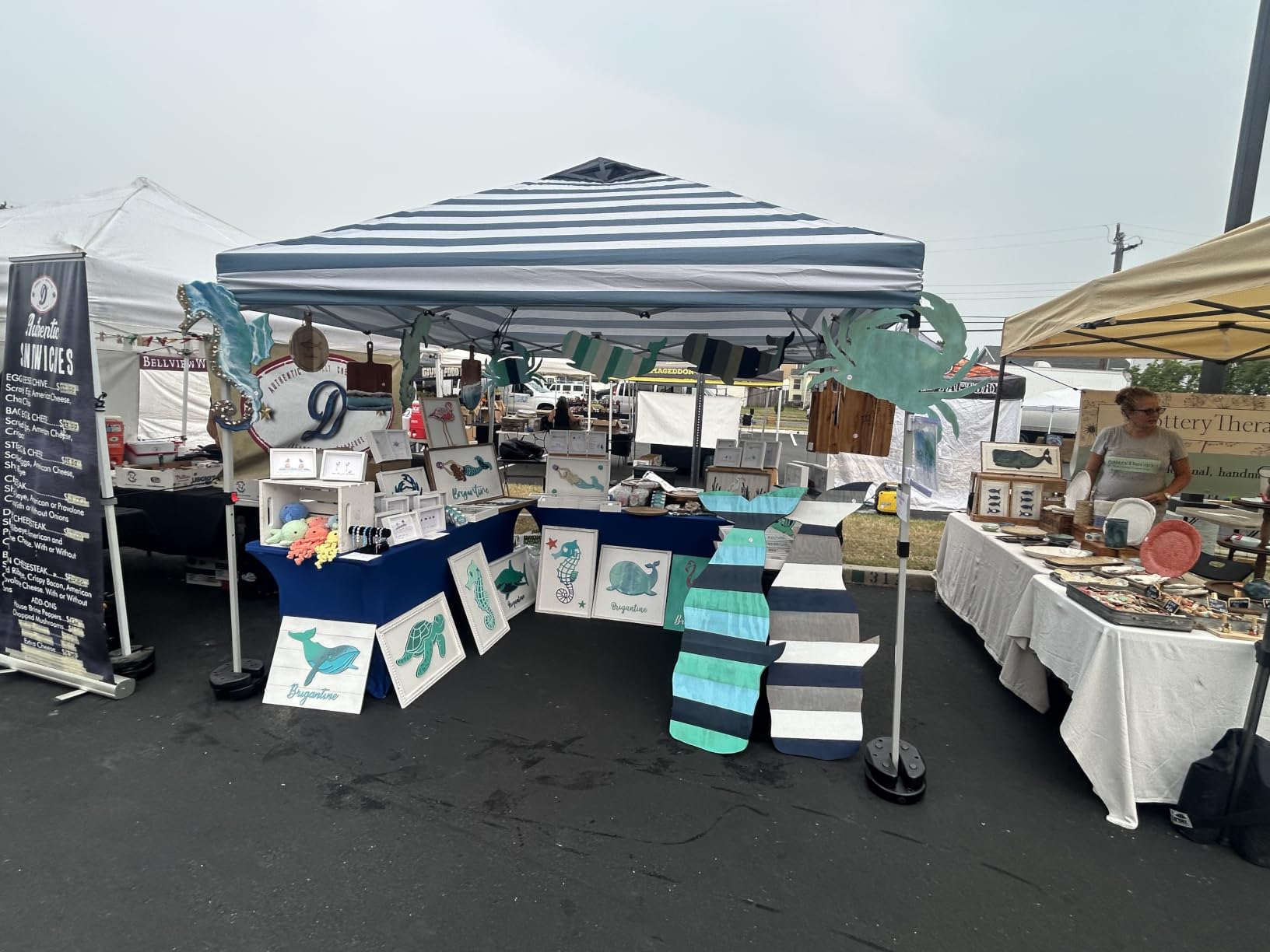
The UPF 50+ silver coating does real work at a summer market, bouncing back a lot of the radiant heat that a plain white top lets straight through. The air vents cut both problems at once, since trapped air under a canopy top is what lifts the fabric in a gust and pools rainwater in the seams.
Two details make this the vendor pick rather than a patio pick. The feet have wheels built in, so once the frame is up you roll it across the lawn to your spot instead of carrying 36 lb of steel across wet grass. And the Sto’n Go collapse system lets it fold with the fabric still attached, which is the difference between a one-minute teardown and a five-minute one.
The packed size is 45 by 8.5 by 8.5 inches, and the box includes 8 stakes, 4 ropes, and 4 sand bag pockets. One r/CraftFairs user described the center height adjustment as infinite rather than stepped, and called it very easy to set up and take down, which matches what we saw.
Why it works for a solo vendor
A single push is the whole story here. Most pop-up frames need one person on the hub and one person pulling legs outward to stop the scissor from collapsing, and that is exactly the two-person setup that forum vendors complain about. This one removes the second job, which means you can raise it while your car is still being unloaded from the passenger side.
It also folds small enough to matter. Forty-five inches long is close to the diagonal of a typical sedan trunk, and the wheels on the feet mean you are not carrying it any distance.
Where it falls short
Thirty-six pounds is the heaviest weight in this group of lighter frames, and it is worth being honest about that. A vendor who loads a car alone, walks a block from parking, and hauls a table too will feel every pound of it. The included anchoring kit is also modest, since the four sand bag pockets hold small bags rather than the heavier ones most organizers ask for.
Tall vendors will duck under the valance, and there are occasional reports of bent or pinched frame bars showing up in the box, so inspect the poles before you leave the parking lot.
2. MASTERCANOPY 10×10 Durable Pop Up Canopy – Best Value with a Full Anchoring Kit
- Fast genuinely one-person hub setup
- Vented top keeps the interior cooler
- 1.2mm poles feel sturdier than typical frames
- Wheeled roller bag handles gravel and grass
- Most complete anchoring kit in its class
- 35 lb is a heavy single carry
- Highest one-star share of the group at 9%
- Limited headroom under the center peak
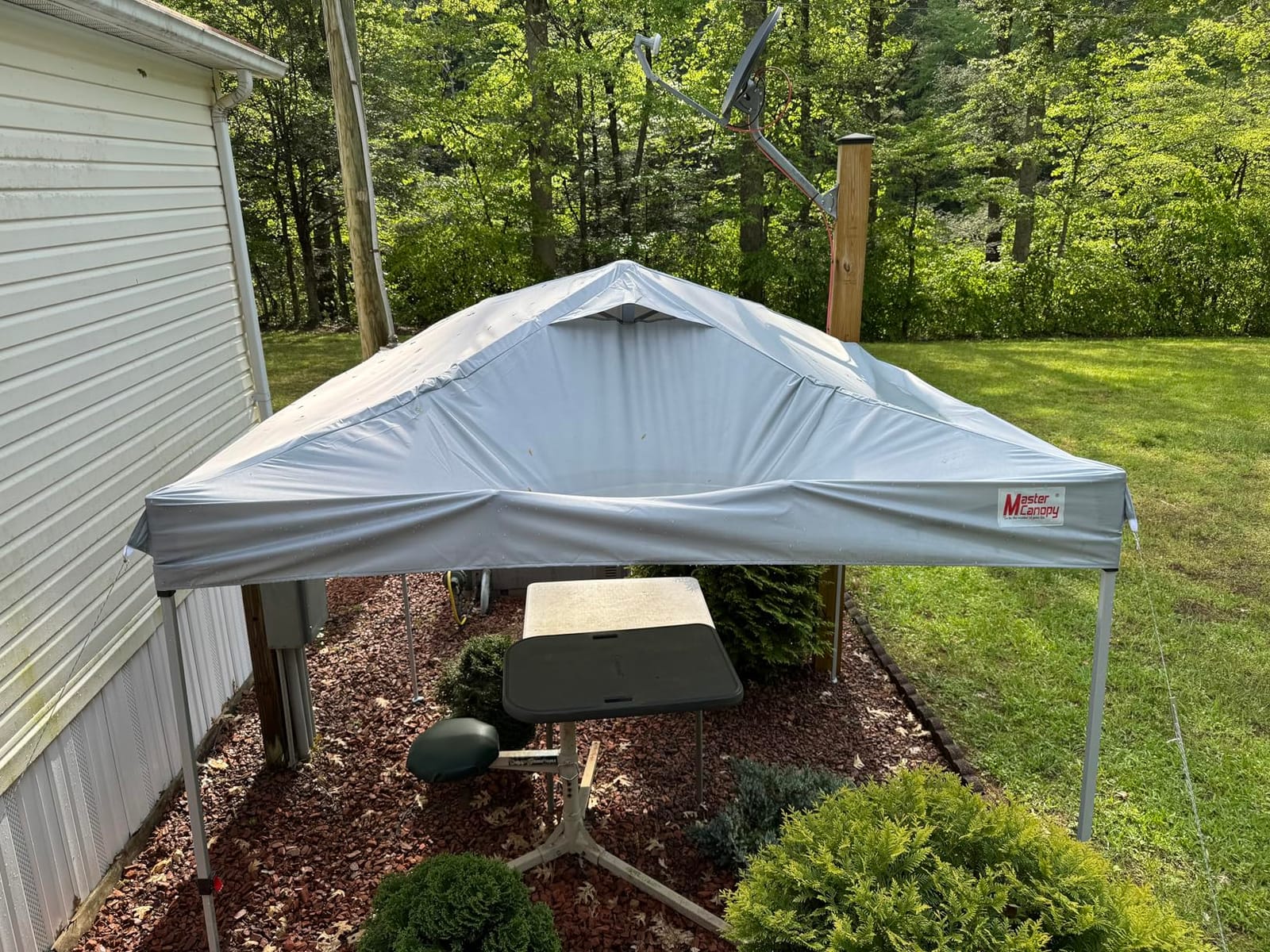
Everything that matters for a weekend market is in the box. You get 4 sandbags at 20 lb each, 8 galvanized 12 inch stakes, and 4 wind ropes, and that anchoring kit alone costs more than most people expect to buy separately. For a vendor who is tired of arriving at a fair and paying for weights on site, that changes the calculation.
The frame is the part that sets it above budget models. The poles are 1.2mm thick corrosion-resistant steel, listed as 30 percent thicker than standard, and the difference is obvious when you extend the frame and push up the hub. Three height settings run from 8.5 to 9.1 feet, so the same tent works in a low-ceiling hall and on an open field.
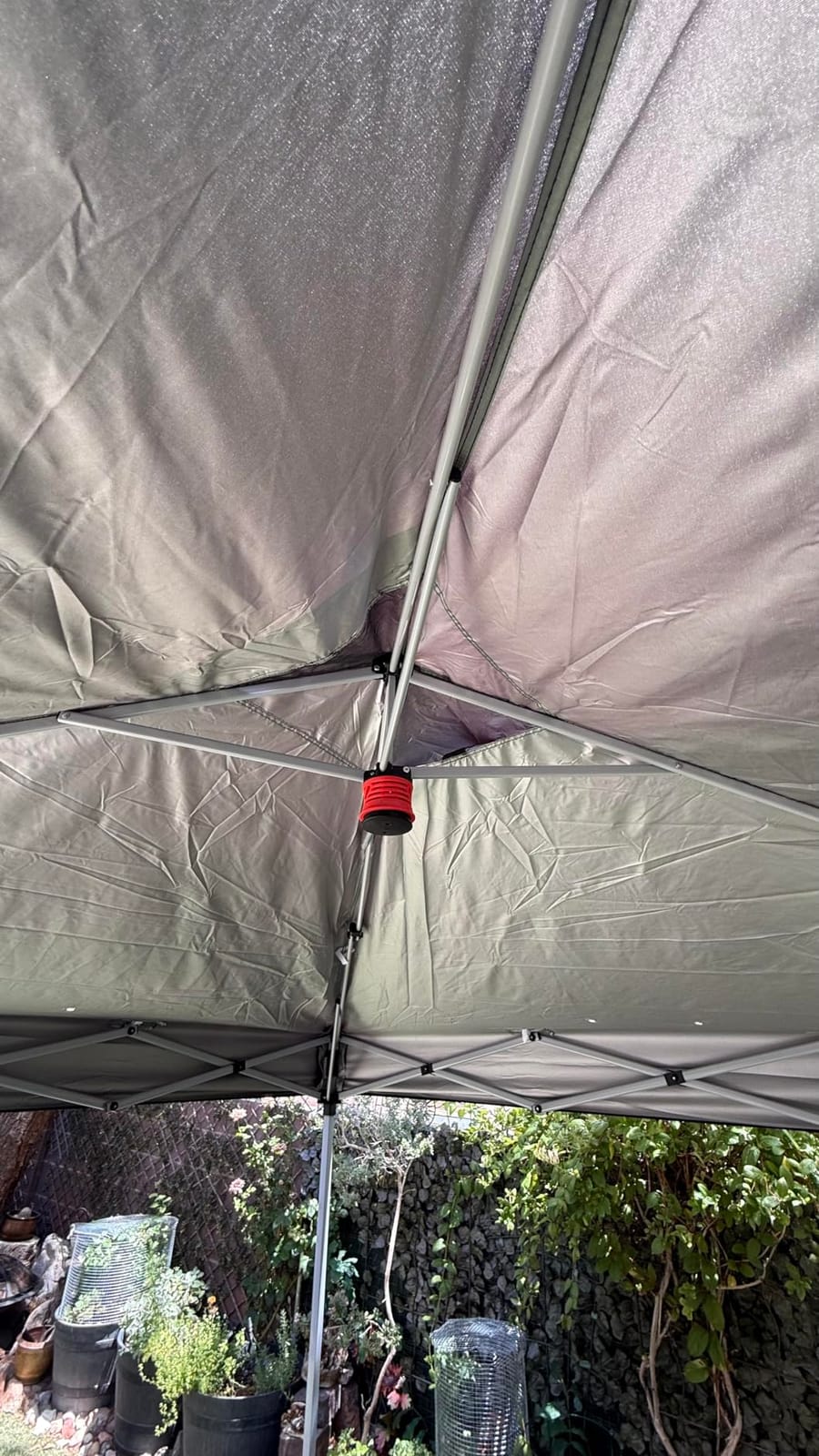
The vented top is the sleeper feature. Owners consistently note that the interior runs cooler than with a solid top, and the fabric is 150D silver-coated polyester with UPF 50+, blocking 99.8 percent of UV. The hydrostatic head rating of 1000mm handles light to moderate rain, which covers the drizzle that shows up on an autumn market.
Wind is the honest limit. This is rated for coastal breezes to 15 mph with gusts to 20 mph, and it is a fabric tent with a steel frame rather than a certified storm shelter. Anchor it properly and it is fine on a normal fair day. Leave it unweighted and a gust can find the valance.
The 600D Oxford roller bag with heavy-duty wheels folds to 49 by 9 by 8 inches, and the wheels were specifically good on gravel parking lots, which is where a lot of markets are.
What you get for the money
Buyers repeatedly point to the anchoring kit and the roller bag rather than the fabric, and that is the honest read. If you already own weights and stakes, this tent is simply a well-built 10×10 with a fast hub. If you do not, it removes an entire errand from your market prep.
The one-person setup takes roughly 90 seconds with no tools, and the review base of 8292 at 4.3 stars gives you a long enough history to see how the frame ages.
Where it falls short
The 1-star share is the highest in this group at 9 percent, and most of those complaints cluster around the fabric and the bag hardware rather than the frame. The 35 lb weight is real, and vendors who load alone should plan the trunk before the market, not at it.
Headroom under the center peak is limited because the top frame surface sits low, so if you are setting up tall signage, check that before you commit.
3. ABCCANOPY 10X10 Commercial Pop Up Canopy with Sidewalls – Best Commercial Booth Build
- Genuinely commercial grade full truss frame
- Only 8 percent one-star rate for a tent in this class
- Zipped walls plus a door wall for a fully enclosed booth
- Banner loops inside and outside for branding
- Survives heavy wind and rain when properly anchored
- Heaviest unit in the roundup
- Two people is much easier for setup
- Included weight bags are too small for most organizers
- Weak stitching and rivets on the roller bag handle
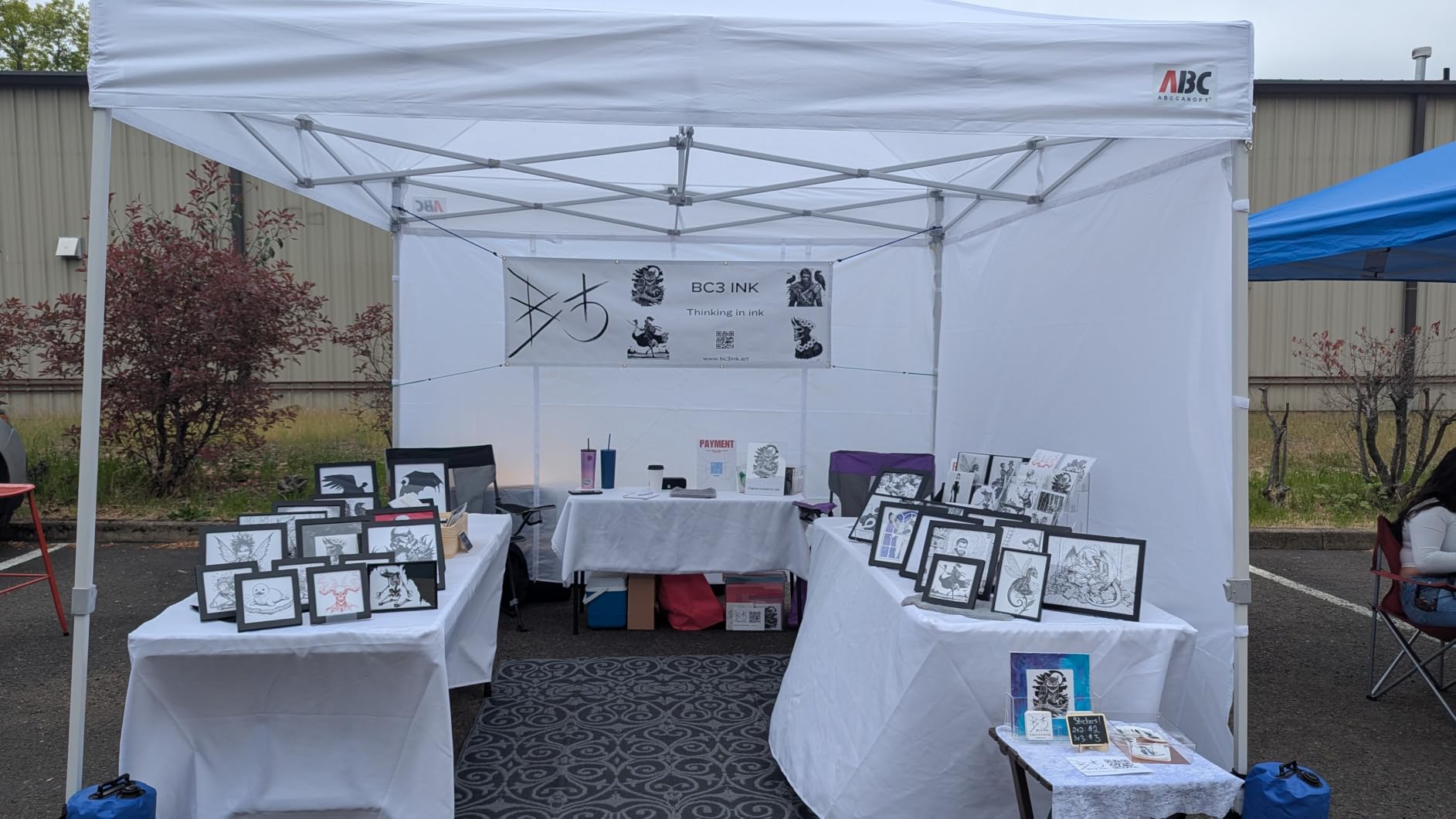
This is the one to buy if you sell food, candles, resin, or anything that needs protecting from an actual downpour rather than mist. The top is 500 denier polyester with PU lining, listed as waterproof, with a flame-retardant certification and UPF 50+. Most canopies in this roundup use 150D to 210D fabric, and the jump in denier is visible in how the material handles wind-driven rain.
The frame is a full truss structure with 1mm square legs and a cross truss, which is a different engineering approach from the scissor frames used in lighter models. Three height settings use a thumb latch lock, and the setup is tool-free. It is a two-person job in practice, and vendors who have used it say that is the trade you accept for a frame that does not flex when a customer leans on a table leg.
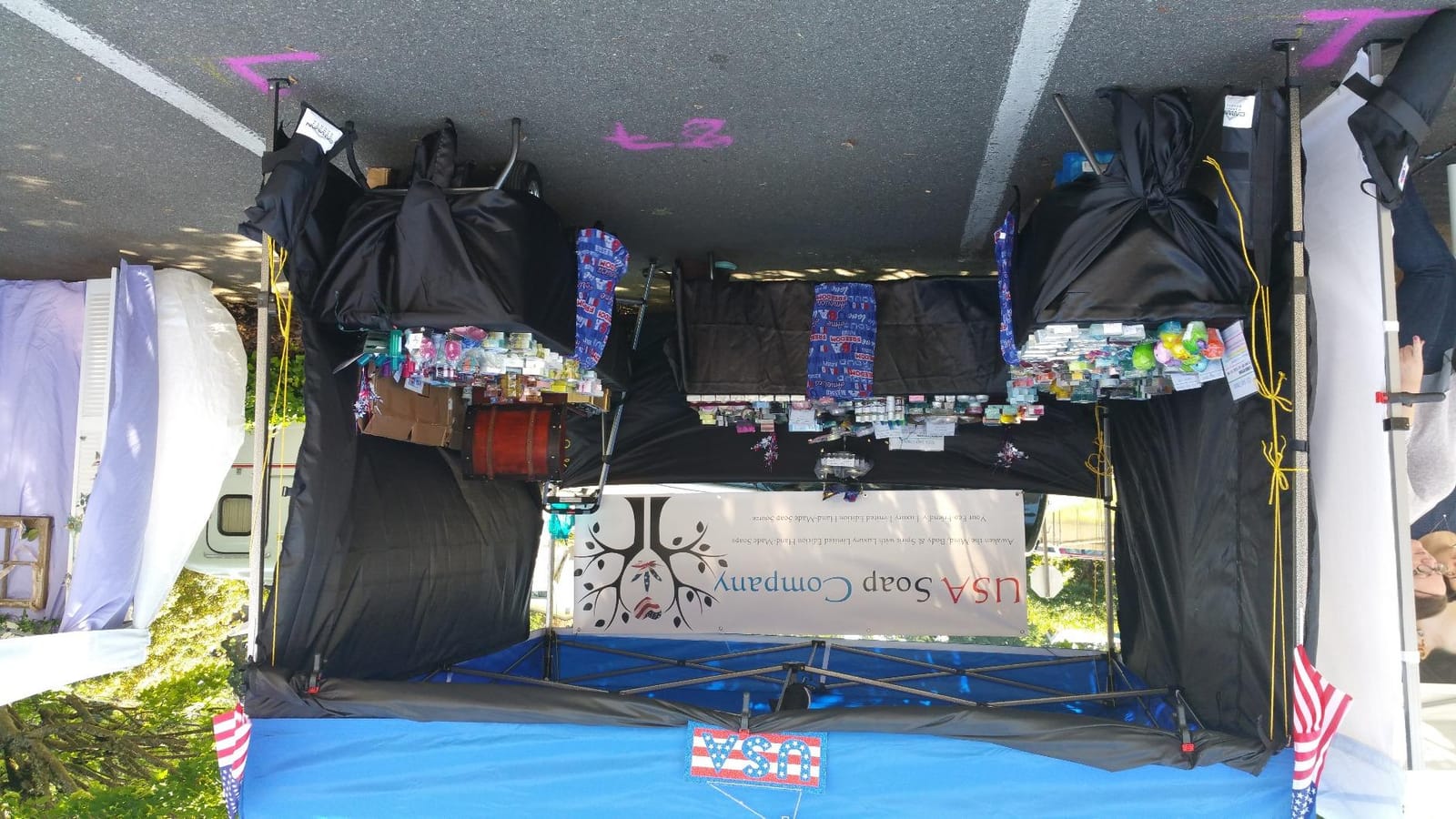
The walls are what separate this from a shade canopy. You get three removable side walls plus a door wall, and they zip together at the corners, so you can enclose two sides for a paint demonstration, run a fully closed booth in cold weather, or drop just the back wall and keep the front open. Attachment is a mix of hook-and-loop and zipper, so it goes on in seconds when weather turns.
There are banner loops on the inside and outside of the frame, which sounds minor until you realize it is the difference between hanging your logo flat against the valance and taping a sign to a leg. For anyone who has printed a table banner, that is the feature that makes the booth look deliberate.
Warranty is one year on the frame and six months on fabrics and accessories. Buyers have reported the company honoring that warranty on a broken tensioner, which tells you the frame is the part they stand behind.
Who should buy the commercial build
If you are doing six or more markets a year, or if your goods lose value when they get wet, the heavier frame and higher denier pay for themselves. The 4.4 star rating across 6804 reviews with an 8 percent one-star share is a notably better consistency record than most tents in this price band.
The 10×10 footprint is 100 square feet with a listed height of 132 inches, which is the tallest structure in the roundup alongside the WEIZE, and that headroom matters if you hang anything overhead.
Where it falls short
It weighs 28 kg, roughly 62 lb, and that is the heaviest unit here. Solo setup is possible but genuinely difficult, and a first attempt can take 30 to 60 minutes while you learn the frame. Two-person load-in is the realistic plan.
The included weight bags are small, and many markets require 20 to 25 lb per leg, so you will be buying proper weights. The roller bag handle stitching and wheel rivet are known weak points, and this is not a tent to leave standing in a storm forecast.
4. Eurmax USA 10×10 Pop Up Canopy – Best Durability for Year-Round Vending
- Most substantial frame in the group
- Full set of four zipped walls including a door and window wall
- US-based factory stocks replacement parts domestically
- Bonus sandbags and a no-tip rolling bag included
- Heaviest item here at about 70 lb
- Highest cost in the roundup
- Heavy stiff frame is not a fast pop-up
At about 70 pounds, this is the tent you buy once. The full truss structure is marketed for commercial and professional use, and the practical reason vendors keep it for years is not the fabric, it is that a US-based factory store stocks replacement pieces domestically, so a snapped tensioner or a bent cross bar is a support ticket rather than a whole new tent.
Wall coverage is complete: three enclosure side walls plus a door and window wall, all zippered. A window wall matters more than it sounds for a booth, because a customer can see your table and prices from outside without you having to stand up and greet them, which changes how many people stop.
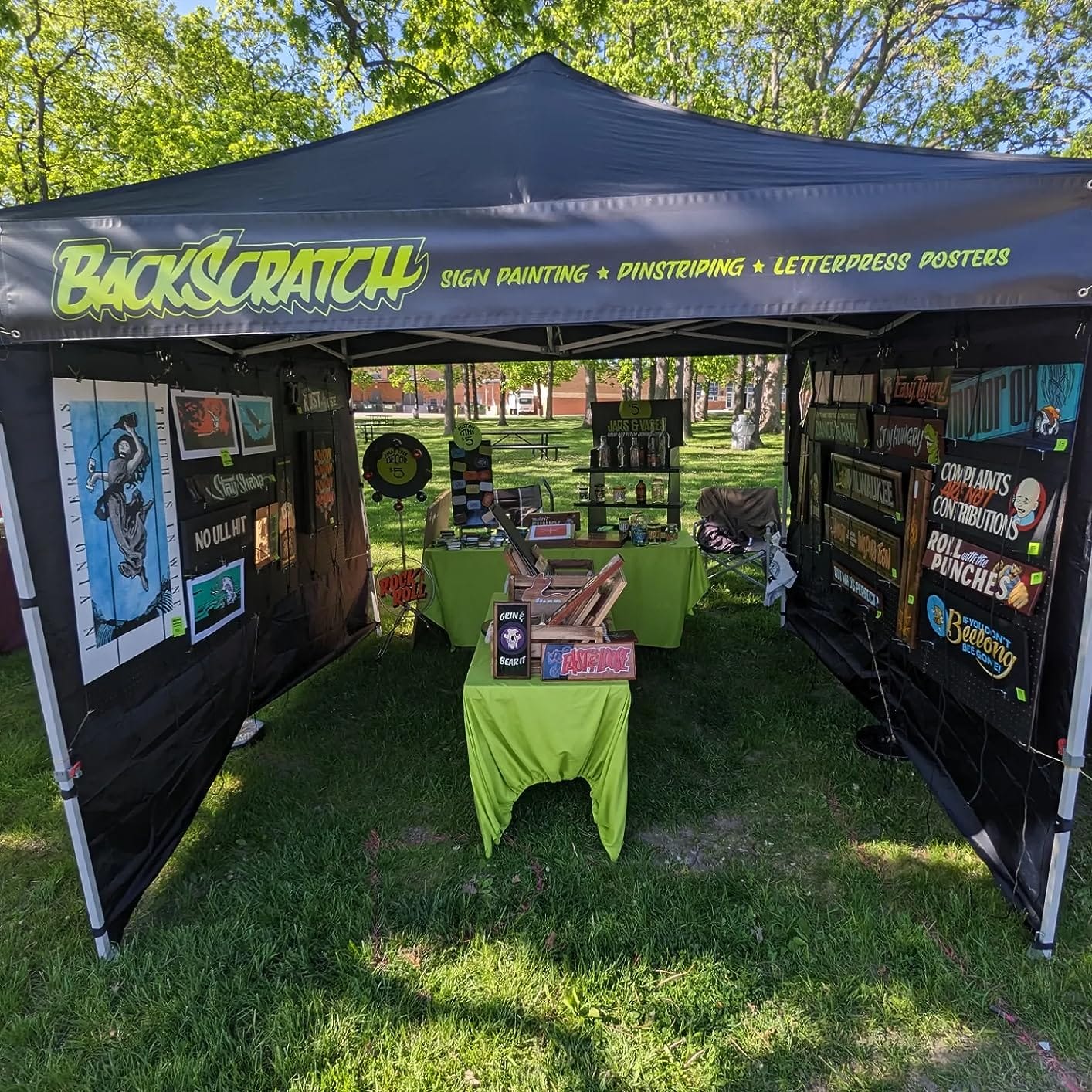
The patented no-tip wheeled roller bag is a small thing that saves a real annoyance. Long flat bags drag on one corner and tip when you cross grass; a structured bag rolls. Four sandbags are included as a bonus, which is a nice head start, though serious anchoring still means buying your own.
Owners upgrading from lighter imitations frequently describe this as the step up that made their booth feel like a business instead of a campsite. At 4.4 stars across 6232 reviews, the feedback is consistent enough that we are comfortable recommending it for a vendor working a full season of markets.
What you are paying extra for
You are paying for steel mass and parts availability. The frame does not feel light or springy in the way a 150D fabric tent does, and that is the point. A booth that survives a season of daily setup, folding, and loading has a cost per market day that a cheaper tent never matches once you start replacing it.
The 12 month manufacturer warranty is also the second longest stated in this roundup, which matters for a frame meant to be used outdoors daily.
Where it falls short
This is not a solo tent. At 68 lb with a heavy stiff frame, raising it alone is a real effort and most owners use two people. Loading a sedan trunk is also unrealistic; plan on an SUV or a hatchback, or borrow a wagon.
It is the most substantial unit here, and if you are doing a handful of markets a year, that money is better spent on a mid-weight tent plus proper weights.
5. Yaheetech 10×10 Pop Up Canopy Tent – Best Budget Tent for Occasional Market Days
- Good value with repeat purchases reported
- Wheeled bag moves easily between events
- Leg fabric sleeves add some wind protection
- Sellers responded quickly when units were lost
- Two is a minimum for setup
- thin poles once the frame is extended
- 11 percent one-star rate on quality control
- Top vent can admit rain in heavy rain
If you sell at a handful of markets a year and usually have a partner, this gets you a covered booth without a large outlay. Buyers report repeat purchases specifically for market use, which tells you it is a shade structure first and a long-term investment second. Buyers are also quick to say the seller resolved transit losses fast.
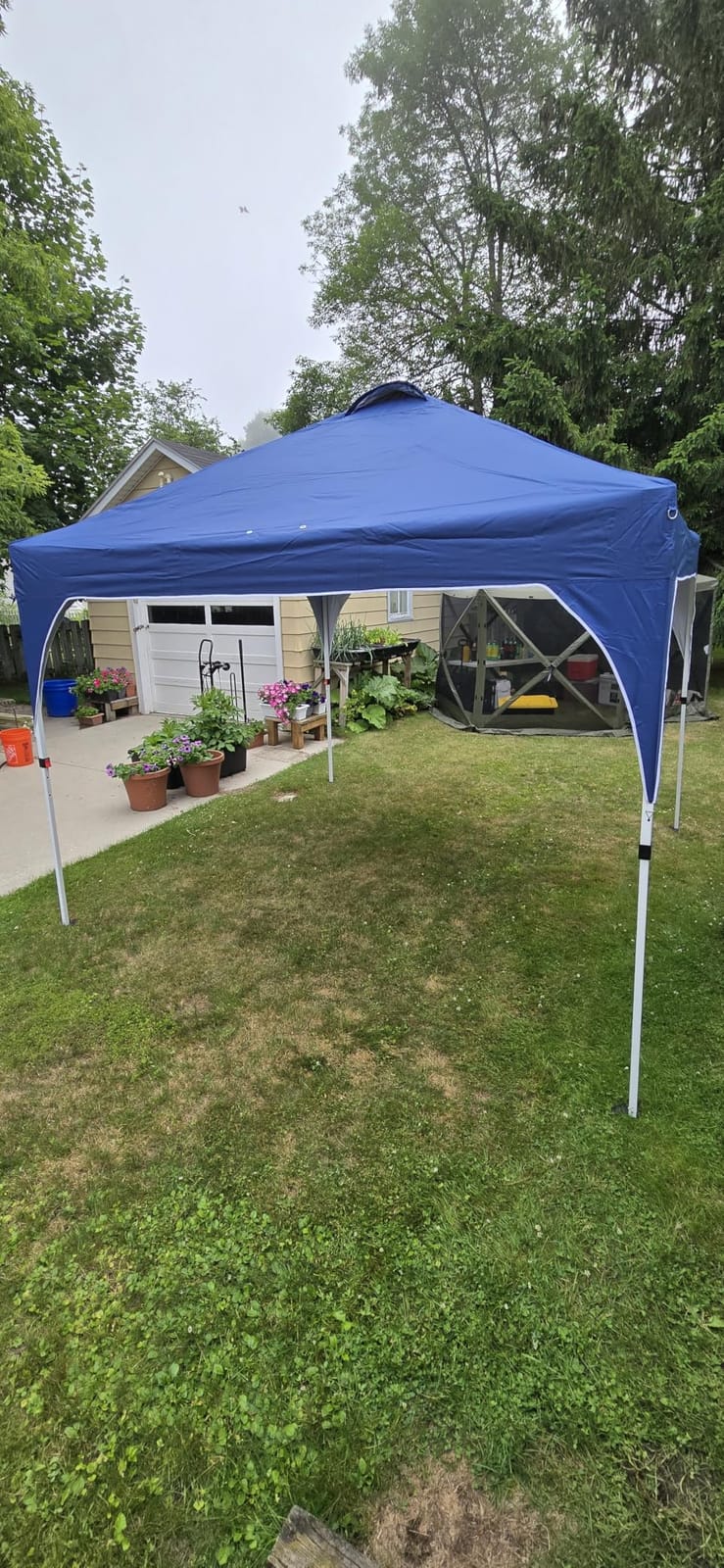
The frame is powder-coated steel with a truss, and the canopy is polyester with a UPF 50 coating. The detail that separates it from the cheapest tents is the extra fabric sleeves on the legs, which add a layer over the joints where frames usually crack first.
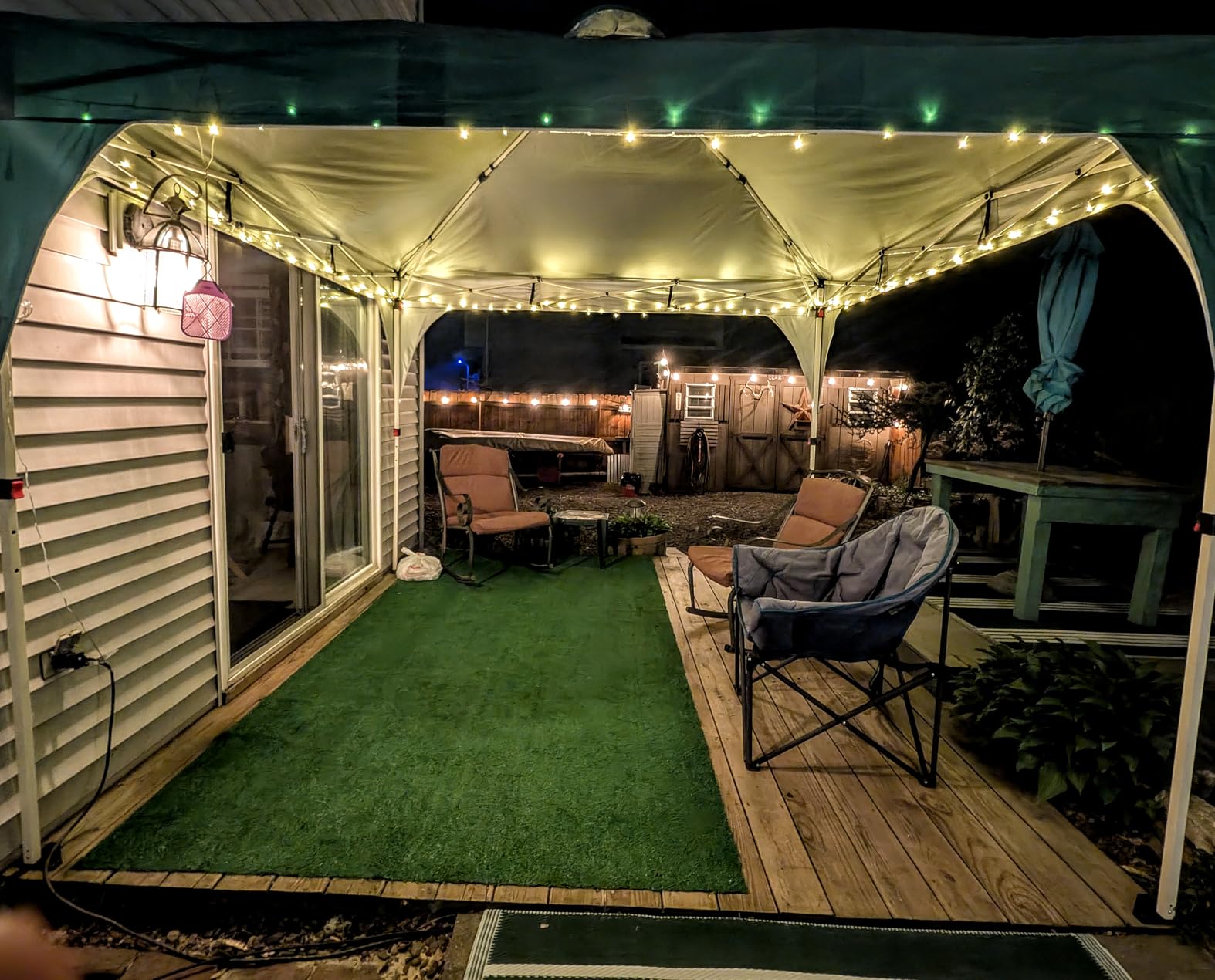
It folds to 45.3 by 10 by 8 inches in a wheeled bag, which is sedan-friendly, and the listed dimensions of roughly 117 by 117 by 113 inches give more interior height than most of the 10×10 models here. Manufacturers rate it for up to 10 people under the 100 square feet of shade.
Be realistic about the 4.2 star rating and 11 percent one-star share. The complaints are consistent and mostly about quality control on arrival: missing plastic retainers, absent elastic corner clips, a top support bar that would not lock, and a cover that does always fit back into the bag after a season.
When this tier makes sense
It makes sense if you are testing whether you want to sell at markets at all. A tent that covers 100 square feet, blocks the sun, and rolls into a car is enough to run a table of prints or jewelry for a season. Buy it, learn your setup routine, and upgrade when you know your real booth size.
The wheels and the compact packed size are genuinely useful for someone moving between events rather than setting up a permanent spot.
Where it falls short
This is not a one-person tent. Two is a minimum and four is much easier, which directly conflicts with the most common request in vendor forums. Poles also feel thin and flimsier once the frame is fully extended, which is exactly the moment you are alone and struggling.
The top vent is cut short enough to admit rain during heavy weather, and the missing-parts pattern means you should count hardware the minute you open the box.
6. Oneofics 10×10 Slant Leg Pop Up Canopy – Best Lightweight Tent to Carry Alone
Oneofics 10x10FT Slant Leg Pop Up Canopy Tent, Portable Outdoor Shelter
- Lightest frame in the roundup at 22 lb
- Quick pop up and fold down
- Compact nestable footprint for a sedan trunk
- Buyers call quality solid for the price
- Two people needed to set up and take down
- Top is only 8x8 ft over a 10x10 base
- Instructions are unclear
- Not built for exposed wind
Twenty-two pounds is the number that matters here. That is roughly half the load of the heavy commercial tents, and for a vendor who walks from a car to a booth across an asphalt lot with a table in the other hand, it is the difference between a comfortable morning and a sore one. It also folds small enough to nest in a sedan trunk with room to spare.
It is a slant leg design, which means a 10×10 base with an 8×8 top. The frame is rust-resistant powder-coated steel tubing, and the top is 190T Oxford with a silver interior lining for UV protection. Push-button height adjustment is on all four legs, and the listing marks it waterproof.
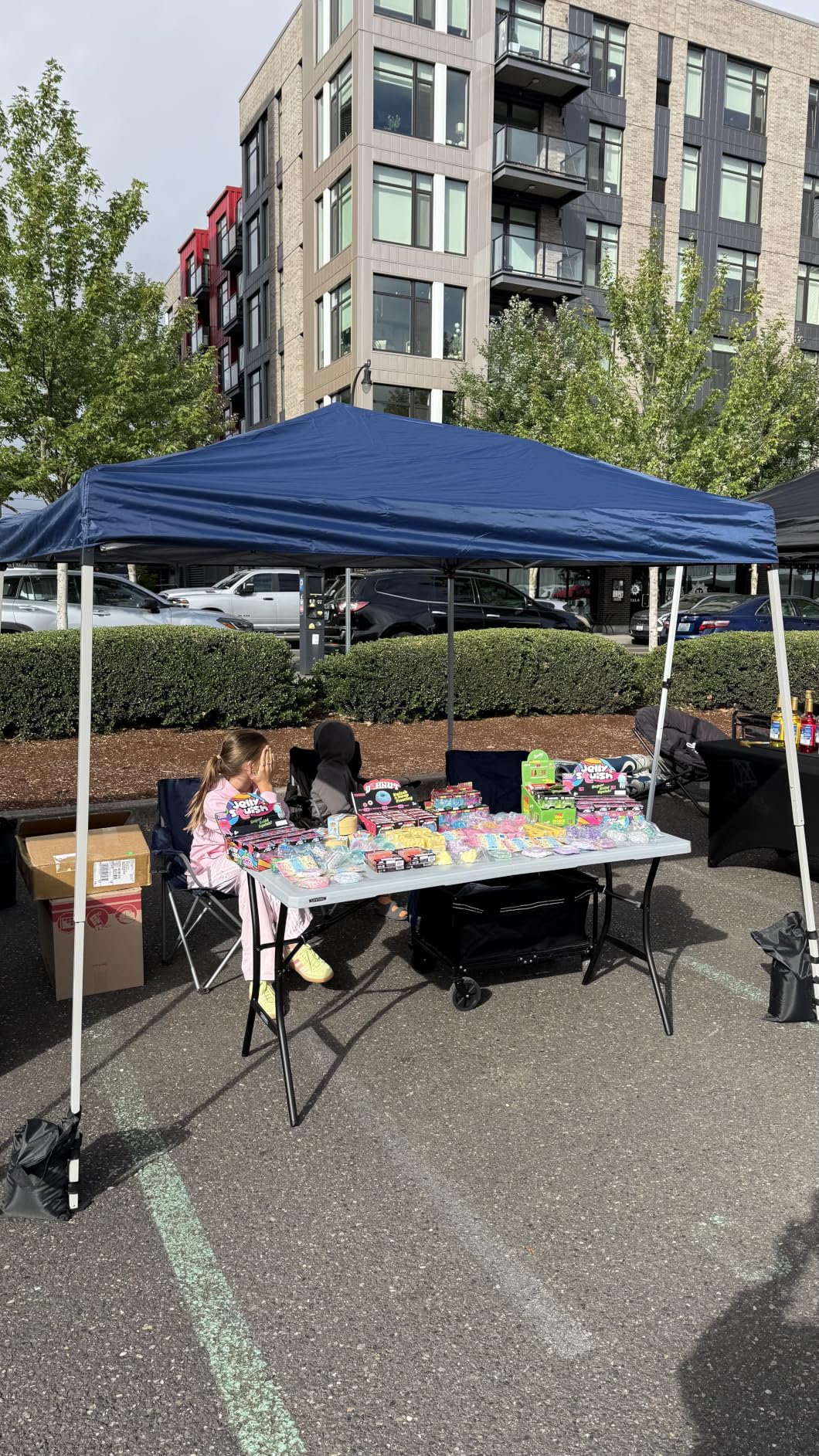
The pop-up and fold-down cycle is very quick once you know the sequence, and buyers describe the shade as good for the money and the quality as solid. It held through rain and wind events when it was properly staked, which is the qualifier that applies to every tent here.
It is marketed squarely at craft fairs, farmers markets, street festivals, and trade shows, so you are not buying a beach shelter and hoping. Ground stakes and a carry bag are included, which is a nice start, though you will want more anchoring than four stakes provide.
The slant leg trade-off
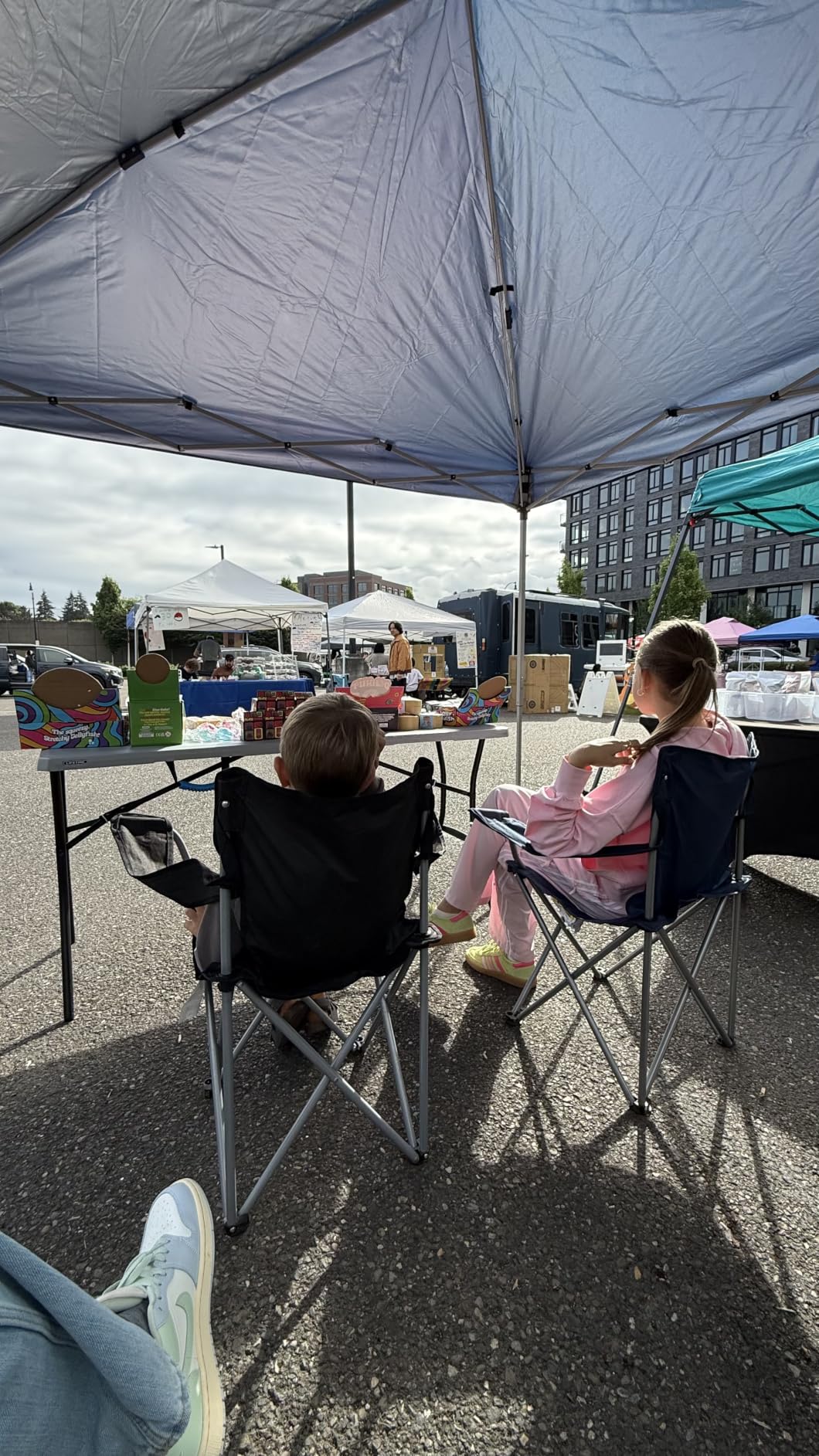
Slant legs angle outward from the top, which shrinks the covered area and makes the tent nest with others, but it also means less usable footprint for tables. A 10×10 base here gives you an 8×8 top, so plan your table layout around the smaller number rather than the base measurement that appears in the listing.
It is also not built for exposed wind, and the product guidance is to take it down in storms. Staking helps, but this is a shade tent for calm fair days, not a shelter.
Where it falls short
Setup takes two people. Instructions are not clear, so expect trial and error the first time, and one buyer reported a stake breaking on first installation. The slant legs are also harder to level on uneven ground, which is common at a park-based fair.
Given that most vendors here want a single-person cycle, this only wins if weight is your binding constraint.
7. Tunbne 10X10 Pop Up Canopy with One Sidewall – Best for Solo Vendors Who Carry Stock
Tunbne 10X10 Pop Up Canopy Tent Outdoor with 1 Sidewalls, One Push Setup
- Genuine solo setup
- vendors report under ten minutes
- Side wall with six pockets for small items
- Magnetic frame top for flexible display mounting
- Top vents improve airflow
- Push-up plastic guides can crack under repeated use
- Side wall screen fabric gets hot in direct sun
- One report of a frayed attachment cord on arrival
- Not for severe weather
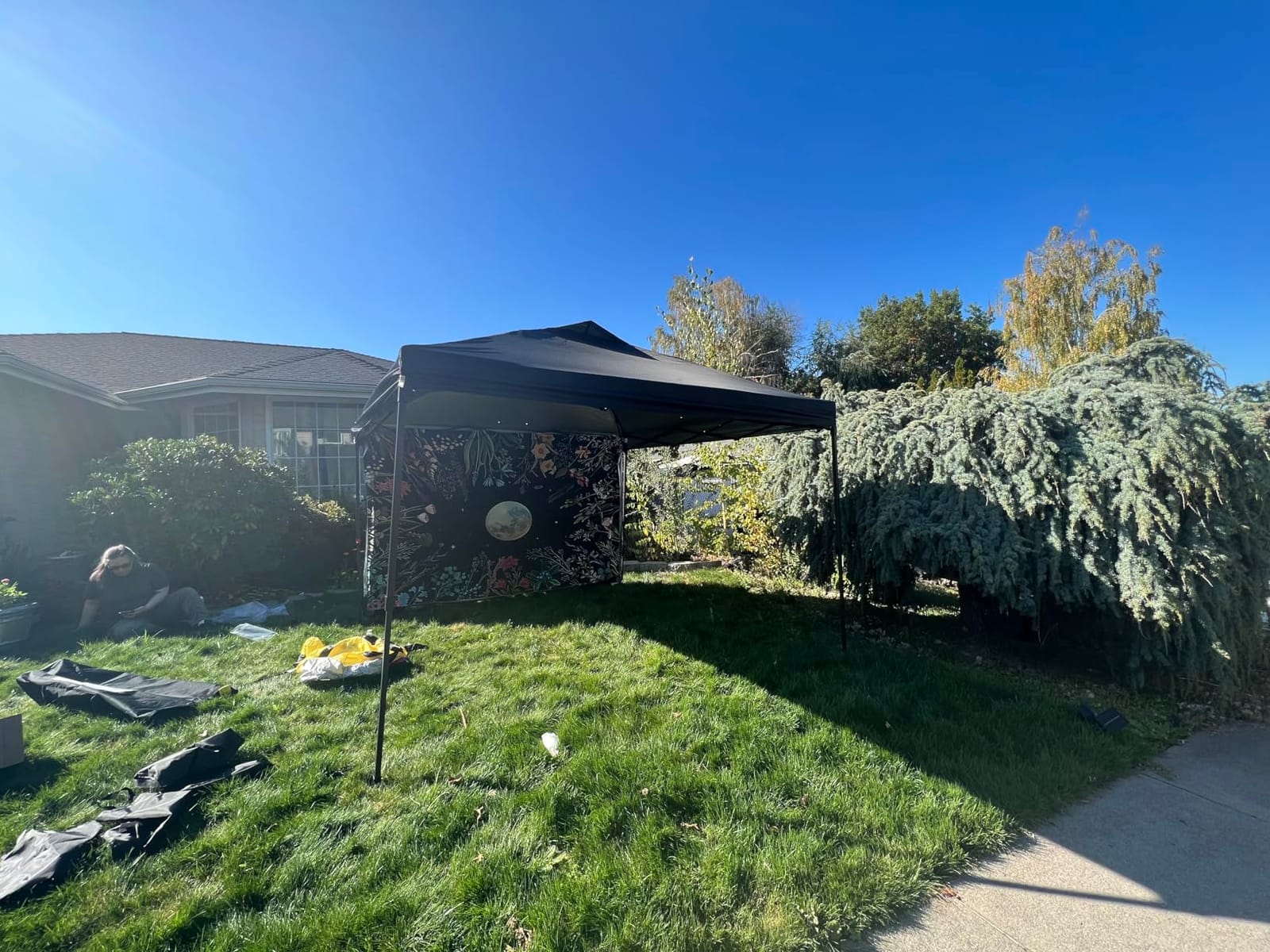
This is a booth tent disguised as a shade canopy. The side wall has six pockets with a lanyard, which is a small feature until you are trying to display earrings, keychains, or small packaged goods where customers can see them without you unpacking a table. The frame top is magnetic, which gives you more mounting options than the hook-and-loop strips on most models.
The setup is a three-step central lock: pull out the legs, tie the top cover on, push the lock button. Owners running craft shows solo report completing it in under ten minutes repeatedly. Interior height runs over 9 feet 5 inches with valance clearance over 6 feet, so you can stand and work without ducking.
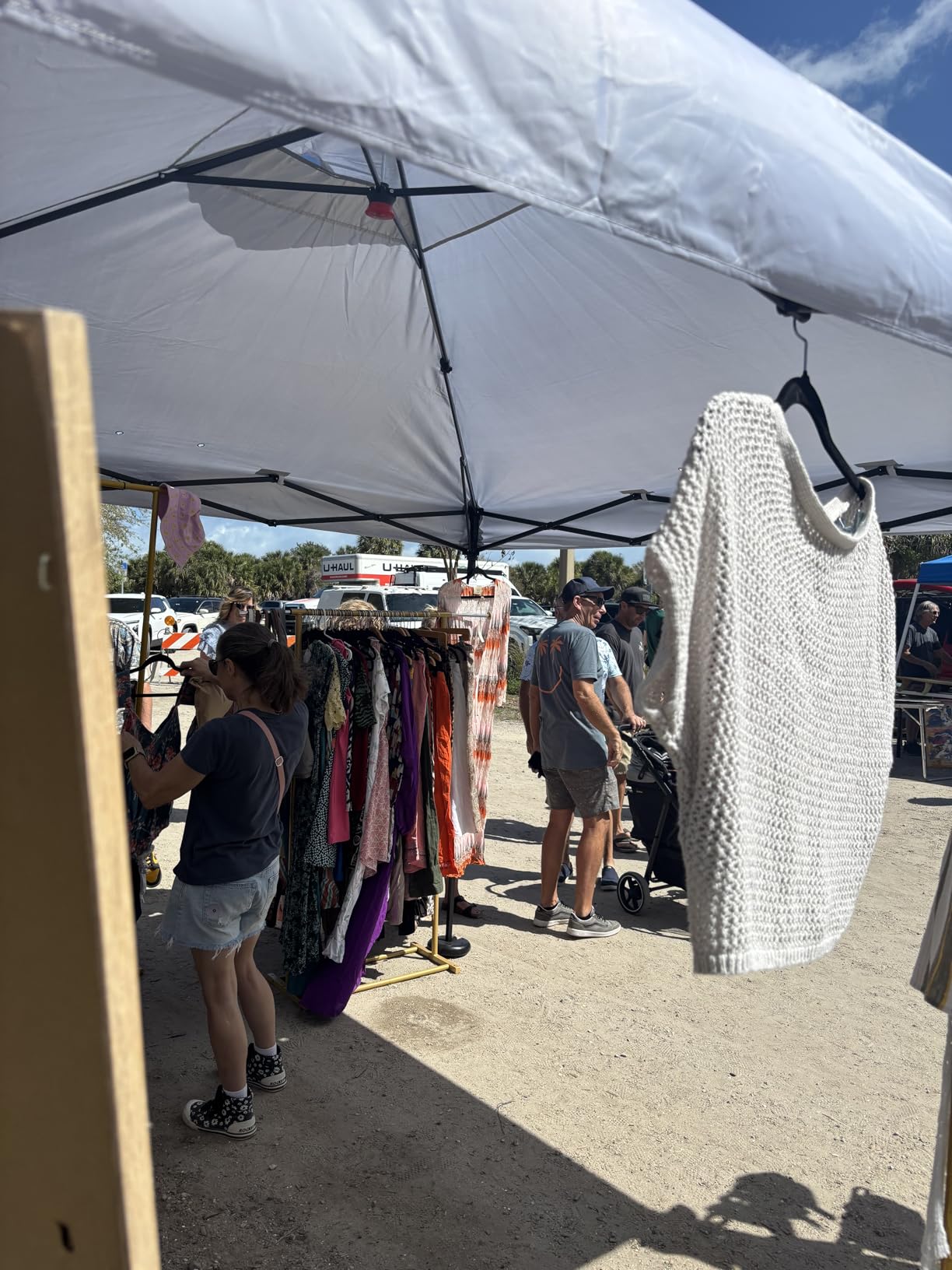
The top is CPAI-84 rated flame-resistant silver-coated polyester oxford, blocking up to 99 percent of harmful sun rays. That certification matters more than most buyers realize, since organizers at larger markets and festival grounds commonly require it and will ask at load-in.
Owners also report two years of heavy use, including baseball trips and beach outings, with the tent still performing. Three height positions let you lower the tent as the afternoon sun drops, and the top vents help with airflow. The wheeled bag plus 8 stakes, 4 guy ropes, and 4 weight bags are a complete kit.
Why a side wall changes a booth
Side walls are usually framed as weather protection, but the useful version of this is display. Six pockets turn a blank fabric panel into a vertical merchandising surface, which is exactly the shortage most jewelry, soap, and print vendors hit once a table is full. Vendors who have moved to a wall-of-display layout report that it changes how much stock they can show at once.
Attach it on the side away from the prevailing breeze and away from the sun, since the screen fabric gets hot to the touch in direct light.
Where it falls short
The recurring complaint is durability of the push-up plastic guides, with one one-star review describing a snapped bar after repeated use that was blamed on missing plastic S-hooks. That is a failure mode you need to know about before you depend on this tent alone at an event where nobody can help.
At 38.6 lb it is also one of the heavier units, and it is not a severe weather shelter.
8. Nazhura 10 x 10 Pop Up Canopy Tent – Best for Open, Airflow-First Booths
Nazhura 10′ x 10′ Pop Up Canopy Tent with Sand Weight Bag, Freestanding Sun Shelter for Picnic and Camping, One Person Setup and Height Adjustable (White)
- True one-person setup and breakdown
- No-pinch adjusters are safer for solo vendors
- Wheeled rolling case with a rugged handle
- Ranked first in camping sun shelters for shade performance
- No side walls included
- Water repellent rather than fully waterproof
- 37 lb is heavy for a budget unit
- Smaller review base than most picks
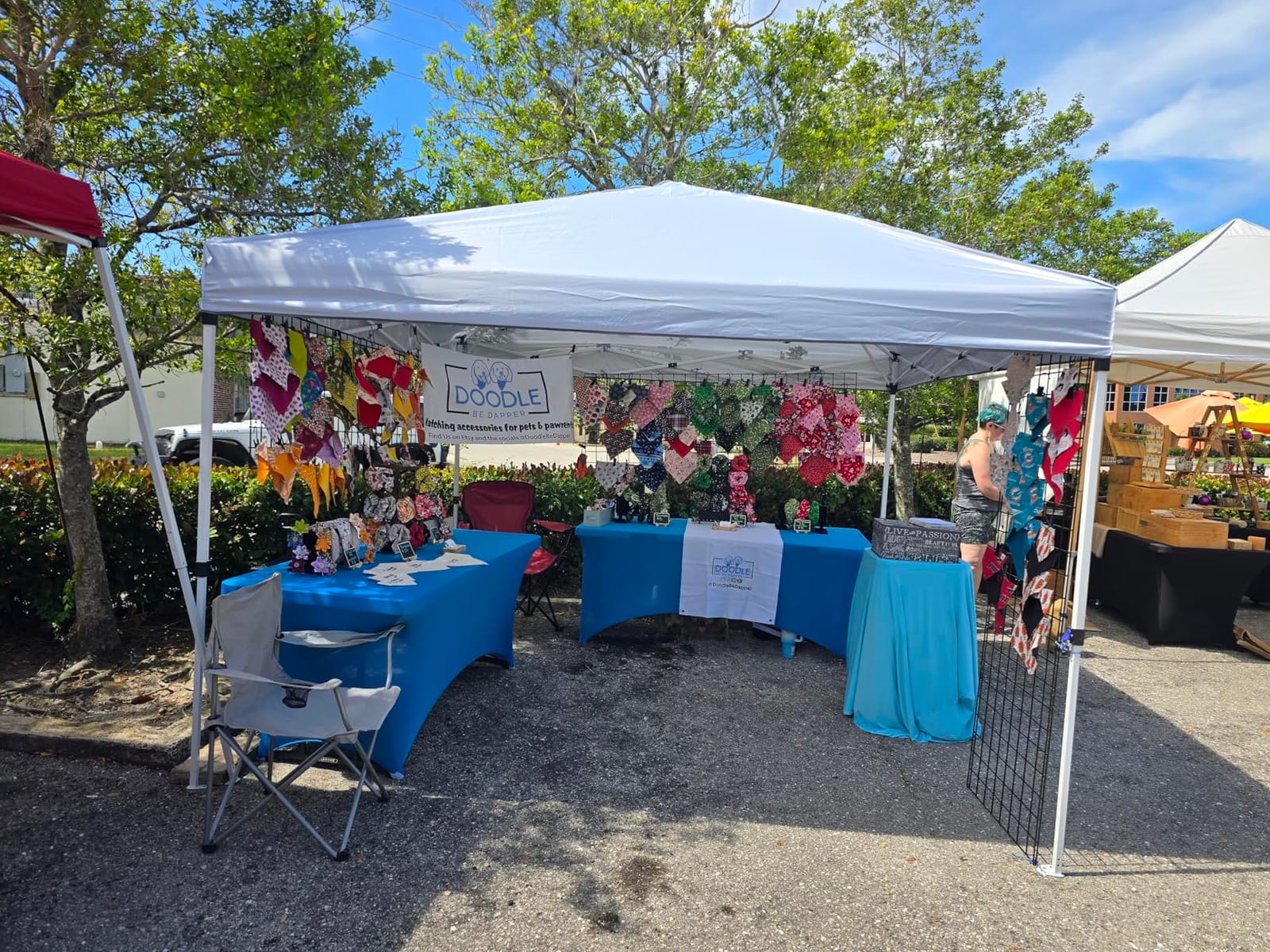
Pick this one if heat is your main problem. There are no side walls at all, which sounds like a drawback until you have sat under an enclosed canopy at a July market watching condensation form on the inside of the fabric. An open frame moves air across the whole footprint, and the top is flame-retardant polyester on an alloy steel frame.
The setup is a central button, single person, with no-pinch height adjusters. That last detail is not a marketing word. Pinched fingers in scissor frames are a real injury, and frames with soft pinch-free buttons are worth a look if you are raising a tent alone every week.
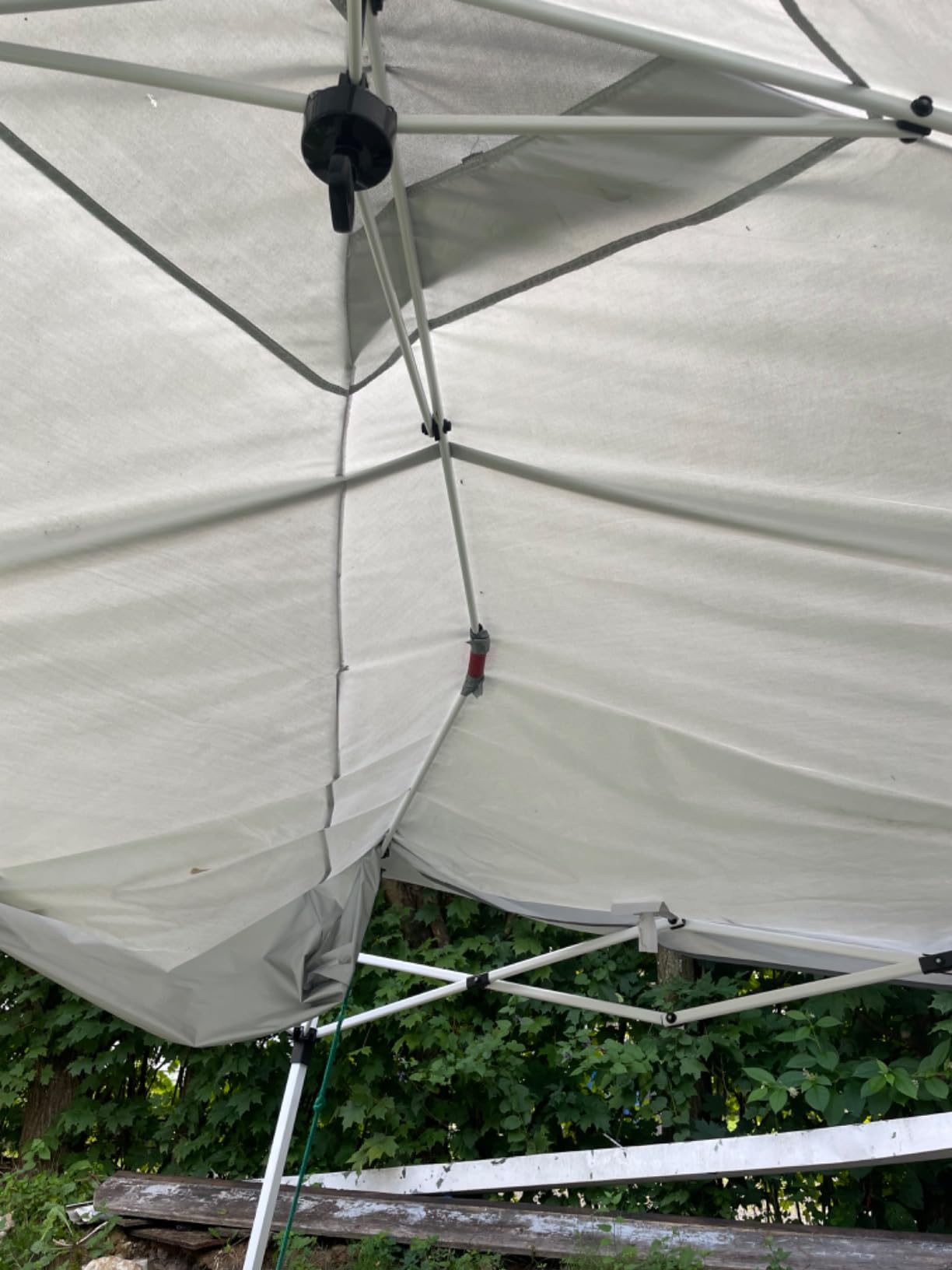
There are four preset heights across 100 square feet of shade, and the straight leg design means the edge height is consistent all the way around rather than dropping toward the corners. The wheeled rolling storage case has a rugged handle that survives being dragged over grass and gravel, which is a genuine upgrade over a soft bag.
Its category rank tells you something real: it is listed first in camping sun shelters, which is a shade-performance signal rather than a vending one. Four guylines are included for pitch.
When open sides are the right call
An open frame is the correct answer for southern summer fairs, for jewelry and metal craft that must not sit in damp air, and for anyone who has had a customer complain that a canopy is hotter than standing in the sun. Without walls, the temperature under the top tracks the outdoor temperature far more closely.
It also removes a step from teardown. No walls means no zipping, no aligning attachment loops, and no Velcro orientation to get wrong in the dark at the end of a long day.
Where it falls short
The fabric is water repellent, not waterproof, so a steady rain will reach your table. No side walls means no privacy, no display pockets, and no wind block. And at 37 lb it is heavy for a budget unit, while the review base of 569 is thin enough that long-term durability data is limited.
This is a sun shelter first and a booth second.
9. Raynesys 10×10 Pop Up Canopy with Sidewalls – Best Packed Size for Sedan Transport
Raynesys 10x10ft Pop Up Canopy Tent with Sidewalls for Events, Parties
- One-person setup in under a minute once unfolded
- Packed size fits most car trunks
- Side walls included
- Complete anchoring kit in the box
- Lowest height setting is only 5.6 ft
- Side walls are not removable per the spec listing
- Smallest review base here at 393
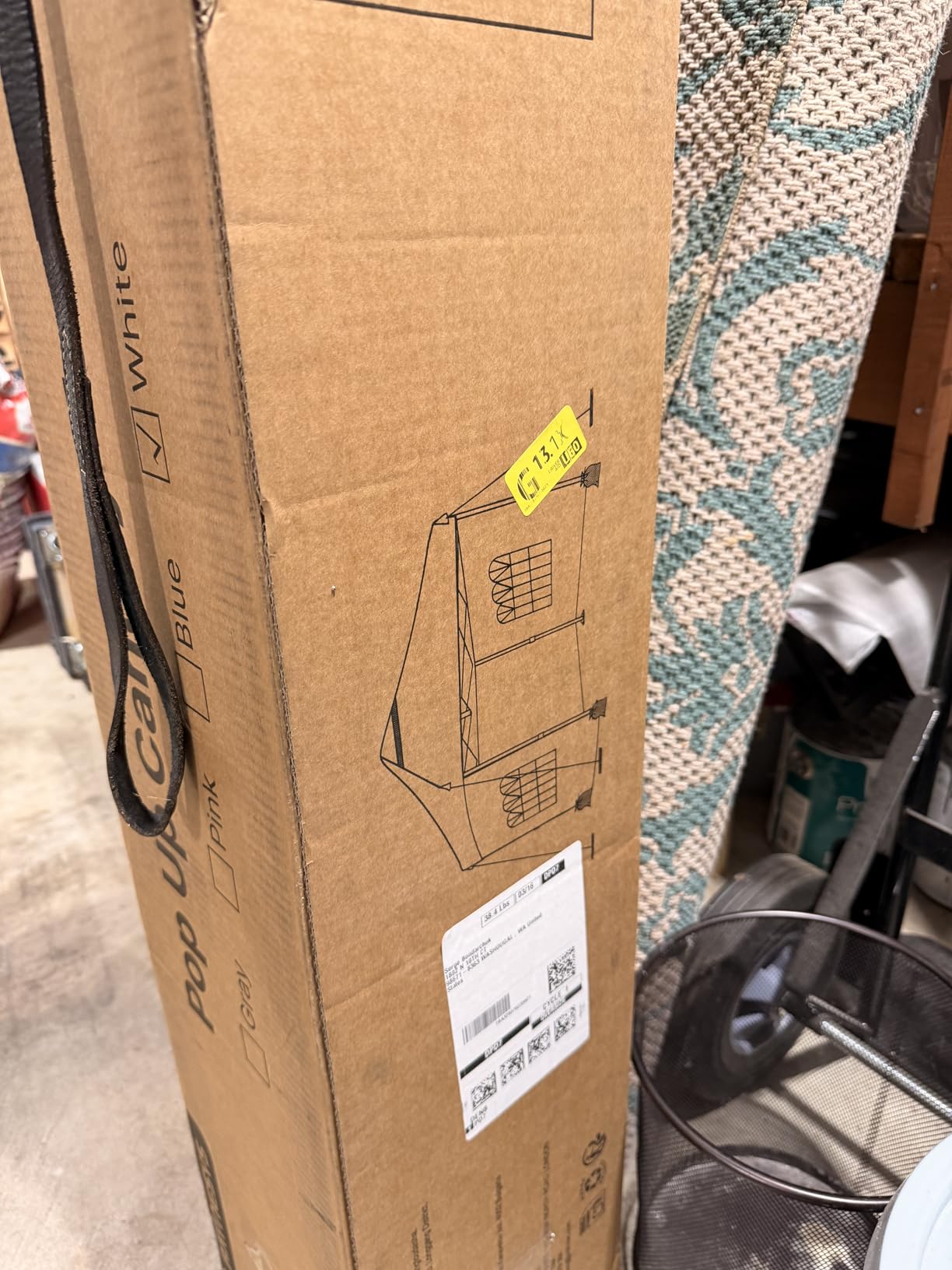
Transport is the deciding factor for a lot of part-time vendors, and this is the most compact well-rated tent we tested. It folds to 46 by 9 by 8.9 inches, which the listing states fits most car trunks, and it comes with a wheeled carrying bag. For a seller moving between a home garage and a Saturday market without a van, that is not a small detail.
Setup is straightforward: unfold the pre-assembled frame, attach the top fabric, push up the center hub. Owners report a sub-minute cycle once you have done it a few times. The frame is powder-coated carbon steel, rust resistant, with 190T silver-coated fabric at UPF 50+.
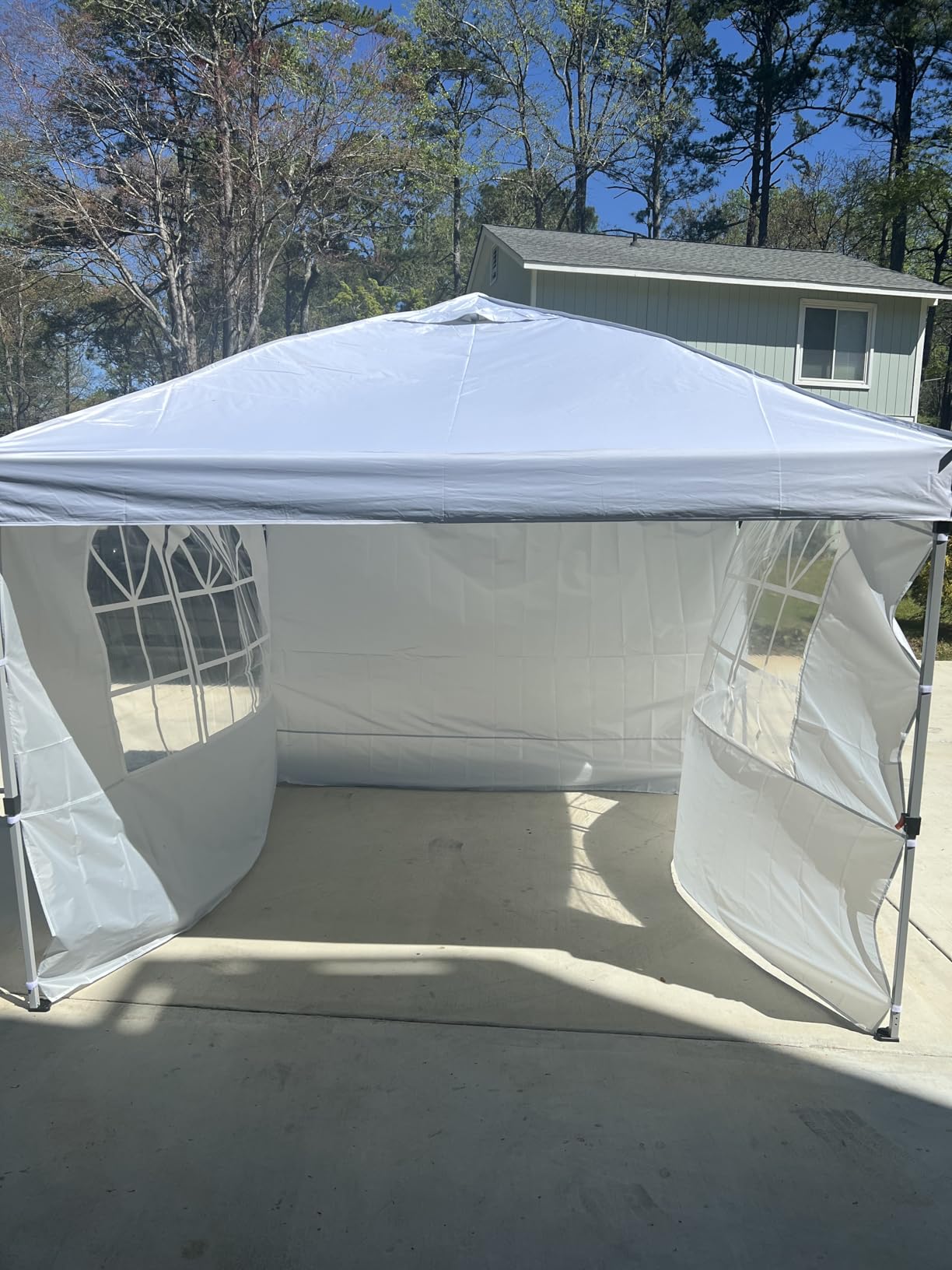
Side walls are included, and the anchoring kit is generous for a tent at this level: 4 guy lines, 8 stakes, and 4 sandbags. A 4.4 star rating is tied for the second highest here, and while the review base of 393 is the smallest of the group, there are no systemic quality complaints in the feedback.
That is the honest limitation here. A short review history means you are buying on the spec sheet and a small sample of owners, not on thousands of reports of how the frame holds up over seasons.
Height range is the real decision
This tent adjusts from 5.6 to 8.7 feet, and the 5.6 foot low setting is the number to think about. If you work standing, or you have a table with tall tiered risers, the low setting is where you will be bending over your merchandise. The top end at 8.7 feet is fine for seated work and normal display.
Vendors hanging banners or signage should measure before buying, because a low ceiling changes your display plan completely.
Where it falls short
The side walls are not removable according to the spec listing, which limits your options for airflow and open-front layouts, and they narrow your sightlines to customers standing in front of the booth. The low minimum height is the other limitation, and neither is fixable with accessories.
Treat it as a strong compact option for a vendor who mostly sits.
10. SANWAY 10×10 Pop Up Canopy Tent – Best for Rain Shedding and Wind Testing
- One-push solo setup with no tools
- Waterproof flame-retardant 210D silver Oxford top
- High-peak vented roof sheds water quickly
- No overhead crossbars for good headroom
- 2 year manufacturer warranty
- No side walls included
- 12 percent one-star share on a small review base
- Vented top can admit wind-driven rain
The roof geometry is the point here. The extended high-peak design sheds rain quickly because water runs off rather than pooling in a flat center, and the vented construction cuts down on the wind lift that flips a flatter canopy. The maker also tested the stake and rope system holding firm in 20 mph winds, which is the highest stated figure in this roundup.
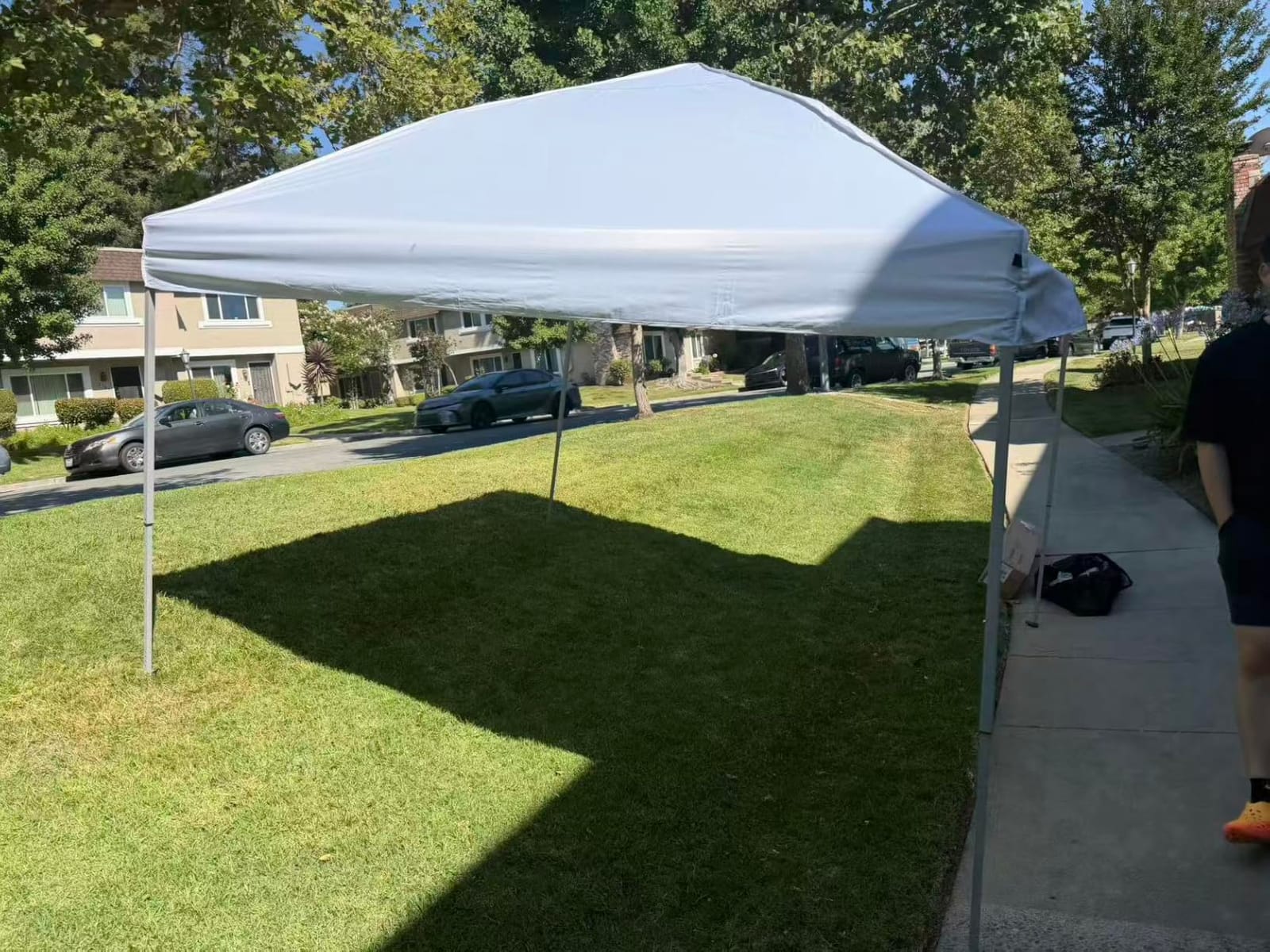
The top is 210D silver Oxford, waterproof and flame retardant, blocking 99 percent of UV, on a corrosion-resistant steel truss with protective foot pads. Legs adjust from 5.8 to 8.9 feet across three settings, and there are no overhead crossbars, which means more standing room than most 10×10 tents.
At 29.4 lb this is one of the lighter frames that still offers a genuine one-push solo mechanism, and the 2 year manufacturer warranty is the longest stated in the group. The pack includes 8 stakes, 4 sand bags, and a carry bag.
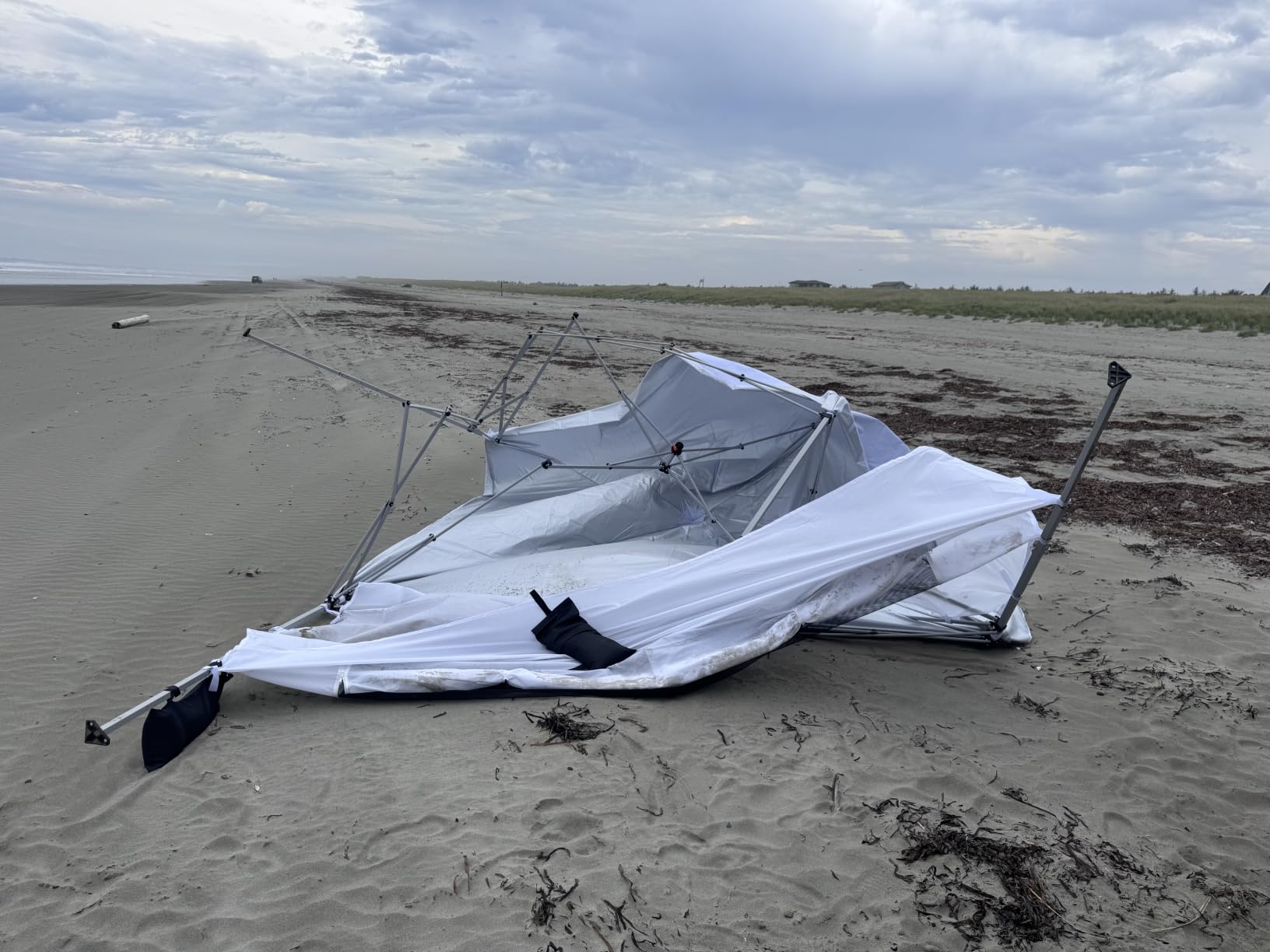
Be aware of the polarization in the reviews. The 4.3 star average sits on only 295 reviews with a 12 percent one-star share, which is the highest in this roundup, and one customer photo shows wind-driven rain entering through the top vent, the same trade-off you get with any vented peak.
Rain performance, honestly assessed
A vented high-peak roof beats a flat one in heavy rain and loses in driving wind, because that opening is a path in when rain is pushed sideways. If your market tends to get summer storms, the peak works in your favor most of the time. If you regularly set up somewhere with gusty off-shore wind, a sealed top is calmer.
Getting 20 mph of holding power also depends entirely on using all eight stakes and four ropes. Unanchored, no tent in this roundup should be up in that wind.
Where it falls short
No side walls means no privacy, no pockets, and no way to protect a display from wind-blown dust or drizzle off the side. A small review base means less long-term evidence, and the small sample makes the rating less dependable than the 4.3 number suggests.
Best treated as a capable weather shelter for a vendor who does not need an enclosed booth.
11. WEIZE 10×10 Pop Up Canopy with Sidewall – Best Headroom and Pocketed Sidewall
- Highest rated here at 4.6 with an 81 percent five-star share
- One person sets it up in about 10 minutes
- Tallest frame at 9.6 ft with high edge clearance
- Side wall has six large pockets and secure attachment
- Raised vented center releases hot air
- Rain can enter through the top vent in heavy weather
- Blue fabric faded toward white after about two weeks of full sun
- Side wall Velcro on only one side of the top
- Smallest review base here at 171
The headroom is the headline. Top height is raised to 2.9 meters, which is 9.5 feet, and edge height to 2 meters, or 6.5 feet, across three settings of 8.9, 9.3, and 9.6 feet. For a tall vendor working standing, that edge clearance is the most useful measurement on any spec sheet, and it is the highest in this group.
Setup is a one-touch central lock system, with one or two people assembling it in under a minute. Owners report about ten minutes for a solo setup and equally quick takedown, using smooth slides and red locking clips for the height changes. The fabric is 150D silver-coated with UPF 50+ and 87 percent shade coverage.
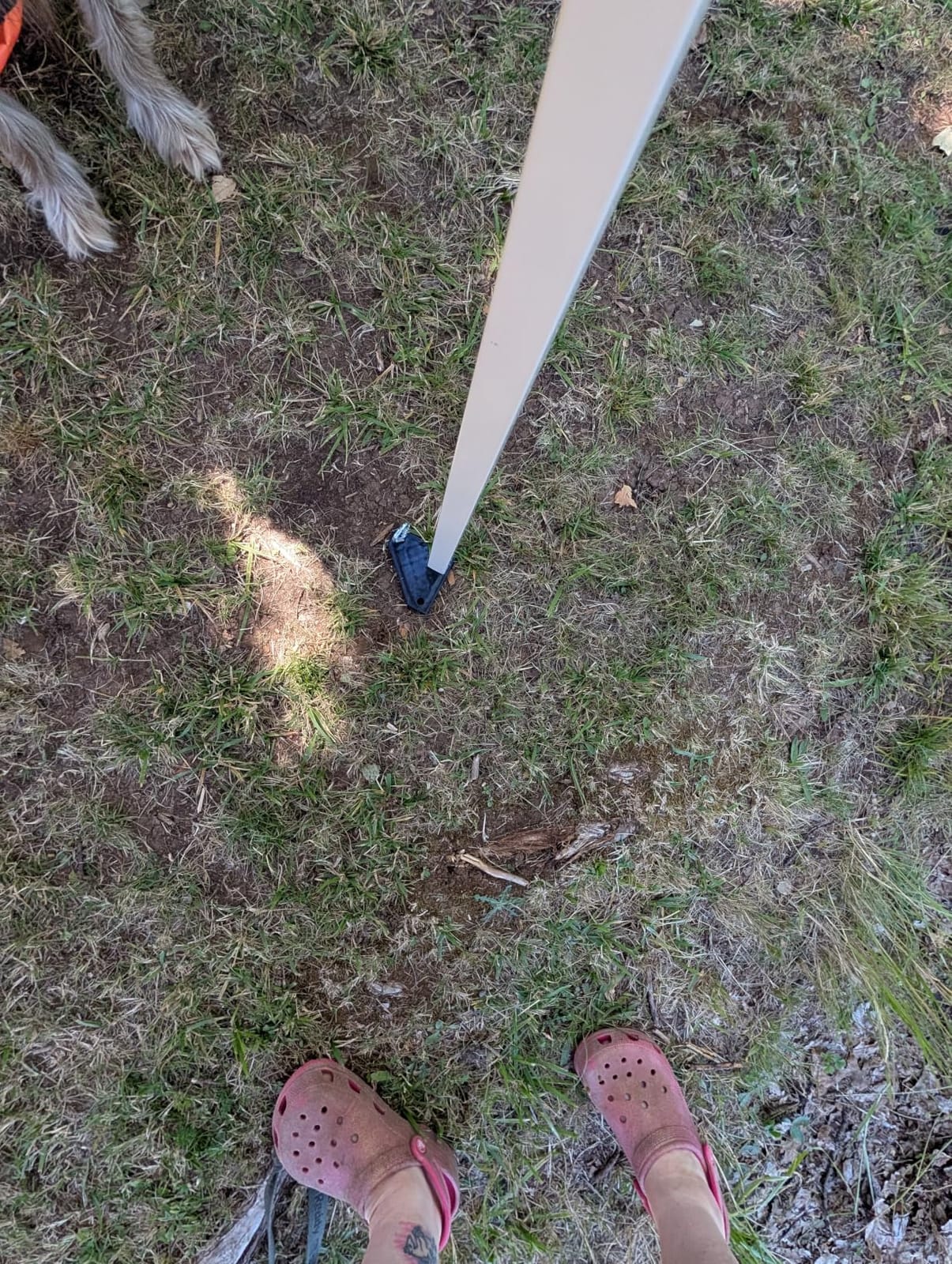
The side wall has six large pockets, which is generous, and it attaches with Velcro. A raised vented center allows hot air to escape in peak heat, and the integrated ventilation vents also reduce wind resistance. Thickened steel pipe comes with pre-installed heavy-duty bolts, and a roller bag plus 4 weight bags are included.
It carries the highest rating in this roundup at 4.6 with an 81 percent five-star share, though the 4.3 to 4.6 spread across these products is narrow enough that owner experience matters more than the decimal.
Planning around the top vent
Rain entering through the top vent in heavy weather is the reported flaw, and the same logic applies here as with the SANWAY peak. In normal rain the raised center helps water run off and helps hot air leave, which is why owners like it at summer markets. In wind-driven rain you may get a small amount at the vent.
The fading note is worth taking seriously for a long season. The blue fabric reportedly faded toward white after about two weeks of full sun exposure, so if color matters to your branding, test a swatch outdoors before you rely on it.
Where it falls short
The side wall Velcro is on only one side of the top, so decide which way the tent faces before you attach it, or the wall will not sit flush. Two people are easier for the first setup, and the review base of 171 is the smallest here, which limits the durability evidence considerably.
The blue is a good color for visibility at a crowded market, but it will not stay blue for a full season outdoors.
12. COBIZI 10×10 Pop Up Canopy with 4 Removable Sidewalls – Best for Watertight Seams and Enclosure
COBIZI 10×10 Pop Up Canopy Tent with 4 Removable Sidewalls for Party
- Best value among four-sidewall models
- Roof genuinely waterproof with minimal seam leakage
- Windowed walls with zippers and roll-back straps
- Complete kit included so nothing else to buy
- Frame showed no rust after a month outdoors
- Best raised with two people
- Edge height around 6.5 ft is low
- One owner describes the fabric as thin
- A bent leg bar can make the tent unusable
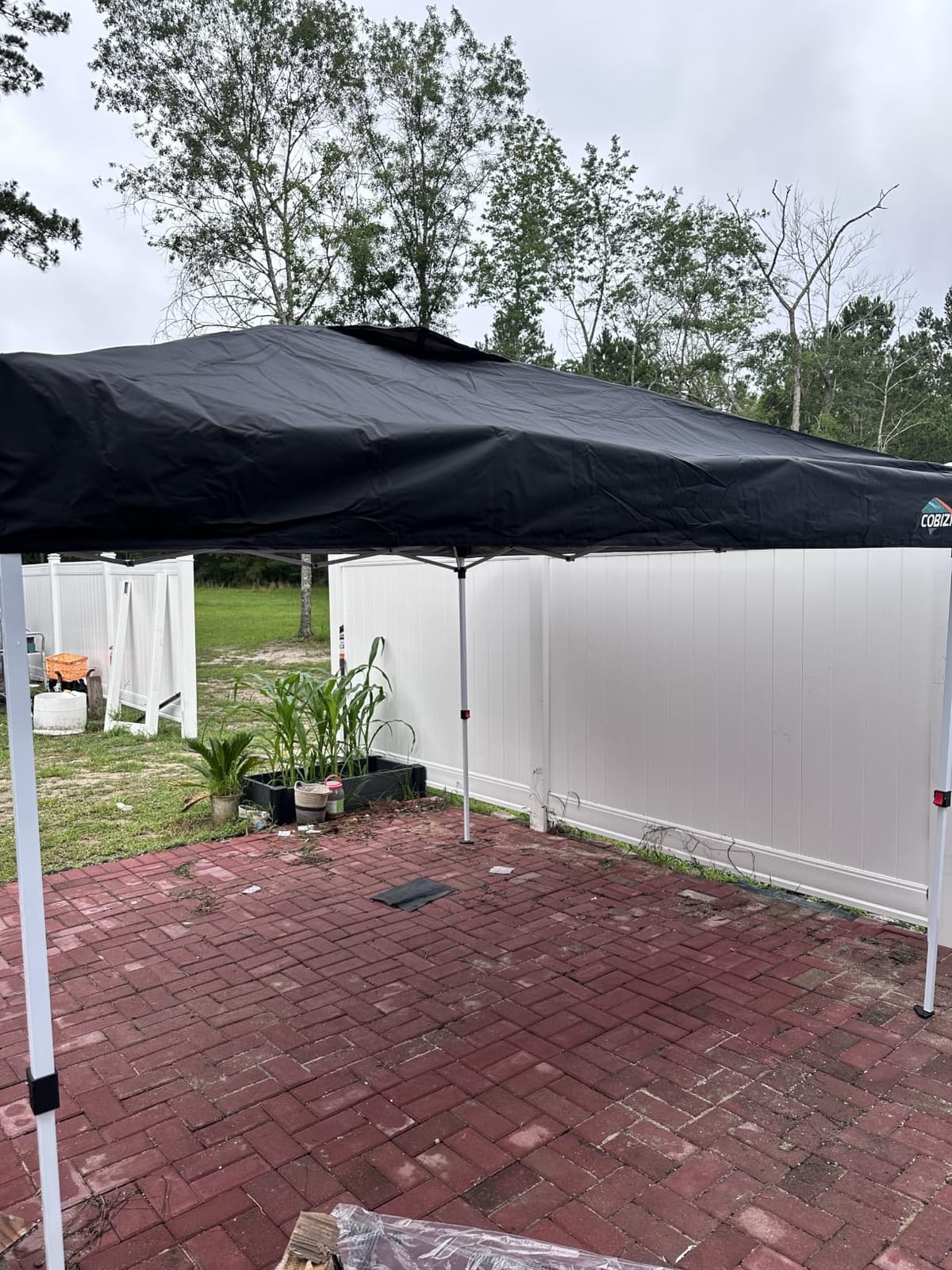
Most canopy leaks happen at the seams, not the fabric, and this is the one in the roundup built specifically to address that. The 210D Oxford roof carries a silver and PU coating rated at 2000, and the seams are sewn with high-density stitching and then heat and pressure treated. Owners in rainy Washington state report minimal seam leakage, which is about as good a field test as you can get.
You get four removable side walls that Velcro onto the frame, some with mesh windows and zippers, plus straps so you can roll them back like curtains. That gives you a genuinely enclosed booth, a half-open booth with airflow, or an open-front display, all from the same tent, and each wall attaches in under a minute.
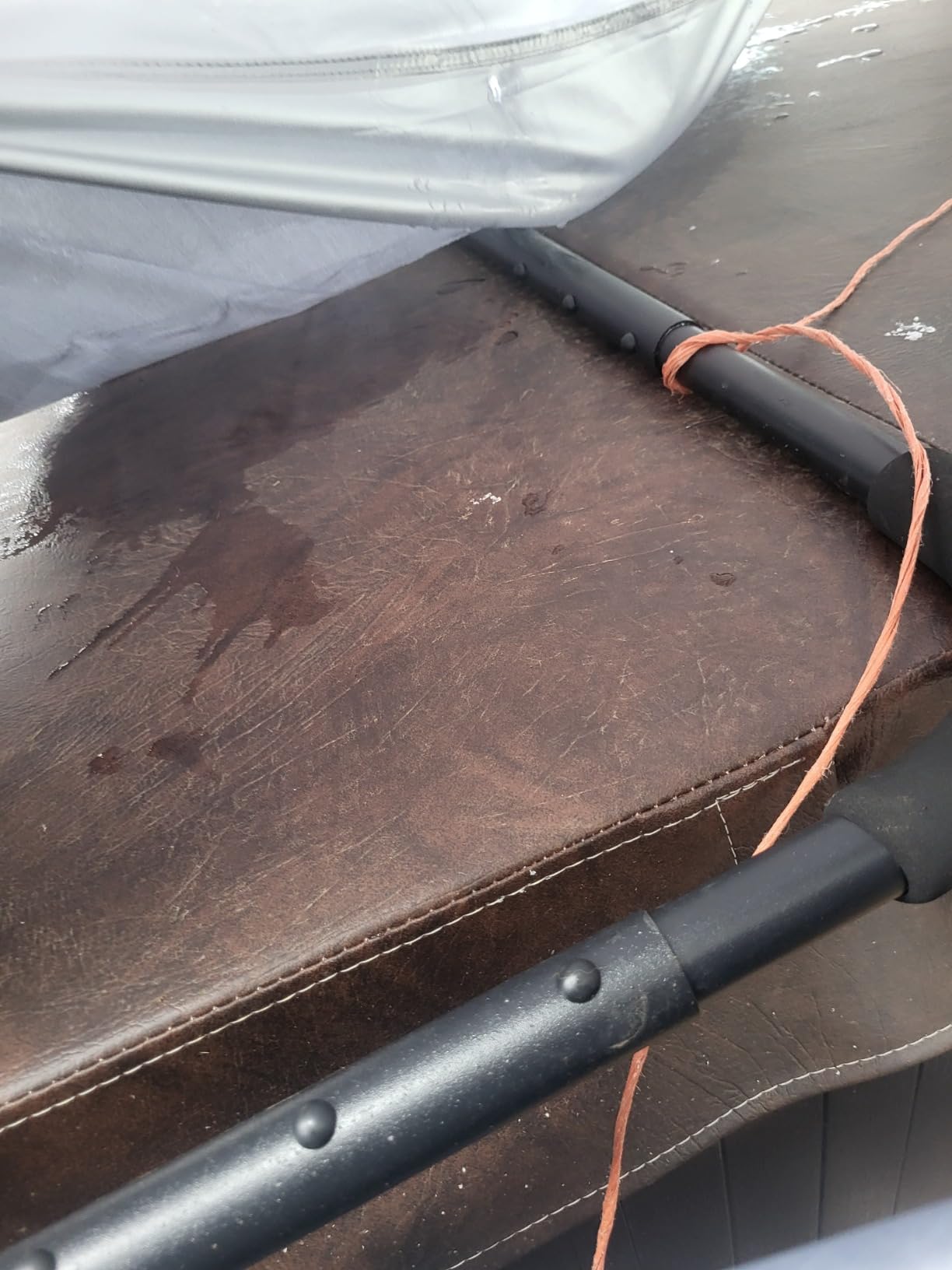
There is an air vent in the roof peak, which matters with four walls up because enclosed tents cook. The kit is complete: frame, top, four side walls, 4 sandbags, a 600D Oxford bag, 8 stakes, 4 ropes, and a manual. Nothing else to buy before your first market, which is the quiet advantage over tents that ship with token weight bags.
At 4.5 stars across 222 reviews it sits near the top of the ratings here, and the value case is strong: a four-wall commercial enclosure is otherwise an expensive purchase, and for a vendor with a season of markets ahead this undercuts renting one by a wide margin.
Enclosure as a merchandising decision
Walls are not only weather protection. A booth with a back wall and a side wall gives you a defined display plane, and buyers of this tent specifically like the windowed panels because customers can see your table and pricing from the aisle without you having to stand up and sell. A vendor observation from r/CraftFairs puts it plainly: the thing a shopper notices from the aisle is how small the booth feels.
Walls also cut glare on packaged goods and protect paper prints and fabric from direct sun, which is where fading damage happens.
Where it falls short
Edge height is around 6.5 feet, low for a tall vendor, and it is best raised with two people. One solo attempt tipped the frame and bent a bar, and a bent leg can make the tent unrecoverable. One long-term European owner also describes the fabric as thin, which sits in mild tension with the waterproofing praise.
Bring a second person to the first setup and you will avoid the failure mode.
How to Choose a Canopy Tent for Craft Fairs
Start with the booth space, not the tent. Most craft fairs sell 10×10 foot spaces, and a 10×10 canopy is the default that fits nearly all of them. The trap is buying bigger: a vendor on r/CraftFairs dropped 12×12 tents precisely because the larger footprint was useless at every other market they attended. Match the tent to the smallest space you sell in, and only upsize for multi-booth layouts you have already booked.
Within a 10×10, the decisions that matter are leg style, frame wall thickness, fabric denier, anchoring, and whether you can raise it alone. Those five filters eliminate most of the market in an afternoon.
Straight leg vs slant leg canopy tents
Straight leg wins for craft fairs, and the reasoning is footprint and adjustability. A straight leg frame puts the leg exactly where the measurement says, so a 10×10 gives you a full 10×10 of usable covered space with consistent edge height all the way around. A slant leg frame angles outward, which shrinks the covered area and lowers the edges, so the Oneofics in this roundup has a 10×10 base under an 8×8 top and a noticeably smaller usable footprint.
Straight legs also give you a consistent, adjustable height at the edge, which matters when you are standing for six hours or hanging a banner. Slant leg frames are harder to level on uneven ground, and a tent that rocks on a sloped fairground is a tent you will be chasing all day. A t-shirtforums thread on flea market and festival setups recommends straight legs over slanted ones for exactly this reason.
Slant legs do have one real advantage: they nest compactly, which makes them easier to store and transport. If your only constraint is trunk space, that trade can be worth it. If your constraint is how much you can sell, go straight.
Steel vs aluminum frames and wall thickness
Wall thickness tells you more than the material label. Look for a stated gauge, not just the word steel. The MASTERCANOPY uses 1.2mm poles, described as 30 percent thicker than standard, and users consistently report that it feels sturdier than typical budget frames. The ABCCANOPY uses 1mm square legs with a cross truss, and the Eurmax runs a full truss structure for commercial use. All three are steel, and all three are meaningfully heavier than the 22 lb slant-leg model.
Aluminum is the other option, and it is meaningfully lighter, but it is less common among the pop-up frames that dominate craft fair shopping because spring-loaded pop-up mechanisms rely on steel’s spring characteristics. If you are buying a leg-and-frame tent rather than a pop-up, aluminum is a reasonable choice for transport weight. For a pop-up, treat steel gauge as the quality signal.
Powder coating is the finish detail. Every frame in this roundup except a couple is powder coated, and it is the single best predictor of whether your frame survives a wet season without rusting.
What denier and coatings actually mean
Denier measures fabric fiber density, and higher is thicker and more durable. The spread in this roundup runs from 150D to 500D. The CROWN SHADES and Tunbne use 150D with flame-resistant certification, the COBIZI and SANWAY use 210D with PU or silver coatings, the Oneofics uses 190T Oxford, and the ABCCANOPY runs 500 denier polyester with PU lining listed as waterproof.
Coatings matter as much as the number. A silver coating adds UV reflection, which is what keeps the underside cooler and reduces fading on your product. A PU coating adds waterproofing. The COBIZI lists a PU 2000 coating with heat and pressure treated seams, and the MASTERCANOPY lists a 1000mm hydrostatic head rating, which covers light to moderate rain rather than a downpour.
One pattern to know: water resistant and waterproof are different claims, and the difference matters if you sell soap, candles, paper goods, or anything that ruins when wet. Wind resistance is similarly graded, with the MASTERCANOPY rated for breezes to 15 mph and gusts to 20 mph, and the SANWAY tested with its stakes and ropes holding firm in 20 mph winds. Those figures assume proper anchoring. Unanchored, none of these tents should be up in that wind.
Best canopy tent brands worth knowing
For craft fair work specifically, the brands that come up most are CROWN SHADES, ABCCANOPY, MASTERCANOPY, and Eurmax. CROWN SHADES leads on solo setup ergonomics, with a patented one-push center lock and wheels in the feet. ABCCANOPY leads on enclosure, with a full truss frame and zipped side walls including a door wall. MASTERCANOPY leads on value for a complete anchoring kit. Eurmax leads on frame mass and domestic replacement parts.
You will also see VEVOR, E-Z UP, Impact Canopy, and Quictent in the wider market, and they are all reasonable. Our roundup simply reflects what held up under vendor-specific conditions: solo setup, anchoring, and repeat outdoor use.
Sidewalls and fire certification
Sidewalls come in three useful forms. None at all gives you the best airflow, which is the right call for hot summer fairs. One wall with pockets gives you a display surface, which is the right call for jewelry, small packaged goods, and prints. Full four-wall enclosure gives you weather protection and a defined booth, which is the right call for food, candles, and resin.
On fire certification, ask the organizer before you buy. Many markets and festival grounds require CPAI-84 or NFPA 701 rated fabric, and they check at load-in, which is a bad time to find out. In this roundup the CROWN SHADES lists flame-resistant CPAI-84 fabric, the Tunbne is CPAI-84 rated, and the SANWAY and Nazhura list flame-retardant tops. The ABCCANOPY is certified flame retardant. When a listing does not state a certification, assume you will need to verify it before you commit.
Booth Layout: Fitting Tables and Customers Under a 10×10
A 10×10 canopy gives you 100 square feet of covered area, and the mistake almost every new vendor makes is filling it. You need standing room, a walkway, and space to step back from your own table, or customers will not step in. One r/CraftFairs attendee observation is the useful test: what a shopper notices from the aisle is how small your booth feels.
The layout that works most often is an open front with a single back display and one or two tables set back from the edge. That gives a shopper a clear view of the product at eye level and room to lean in. A wall of tables across the front reads as a barricade, and buyers report engagement dropping noticeably when the product sits at table height with no sightline into the booth.
On a slant leg tent, plan for the top footprint rather than the base. The 8×8 top on the Oneofics means one 6-foot table plus a narrow customer standing area, which is tight enough that you should probably move up to a straight leg model if you are selling from a table.
Vertical space is the underused asset. The CROWN SHADES, Tunbne, and ABCCANOPY all clear 9 feet of interior height, and the WEIZE reaches 9.6 feet with 6.5 feet at the edge, so hanging inventory from a magnetic frame or a banner loop is genuinely possible. Display surfaces matter as much as tables here, and it is worth pairing your tent with a foldable craft table you can load quickly and a storage cabinet for the stock that does not fit on display.
Rehearse it at home. A vendor with an apartment and no yard can lay out the footprint with painter’s tape on a floor, mark where the tables go, and time the full setup and breakdown. That rehearsal is what turns a two-hour first setup into a fifteen-minute routine, and it costs nothing.
Wind, Rain and Summer Heat: Making One Tent Work in Every Season
Heat is the problem most vendors underestimate. A canopy blocks direct sun, but the fabric also traps rising warm air, so an enclosed booth can be warmer than standing in the open. The fixes are physical: leave walls off or roll them back, use the vented tops on the MASTERCANOPY, SANWAY, CROWN SHADES, and COBIZI, and pick a white or silver-coated top rather than a dark one. If you sell chocolate, candles, or fabric, put your most heat-sensitive goods low and out of direct sun near the ground plane.
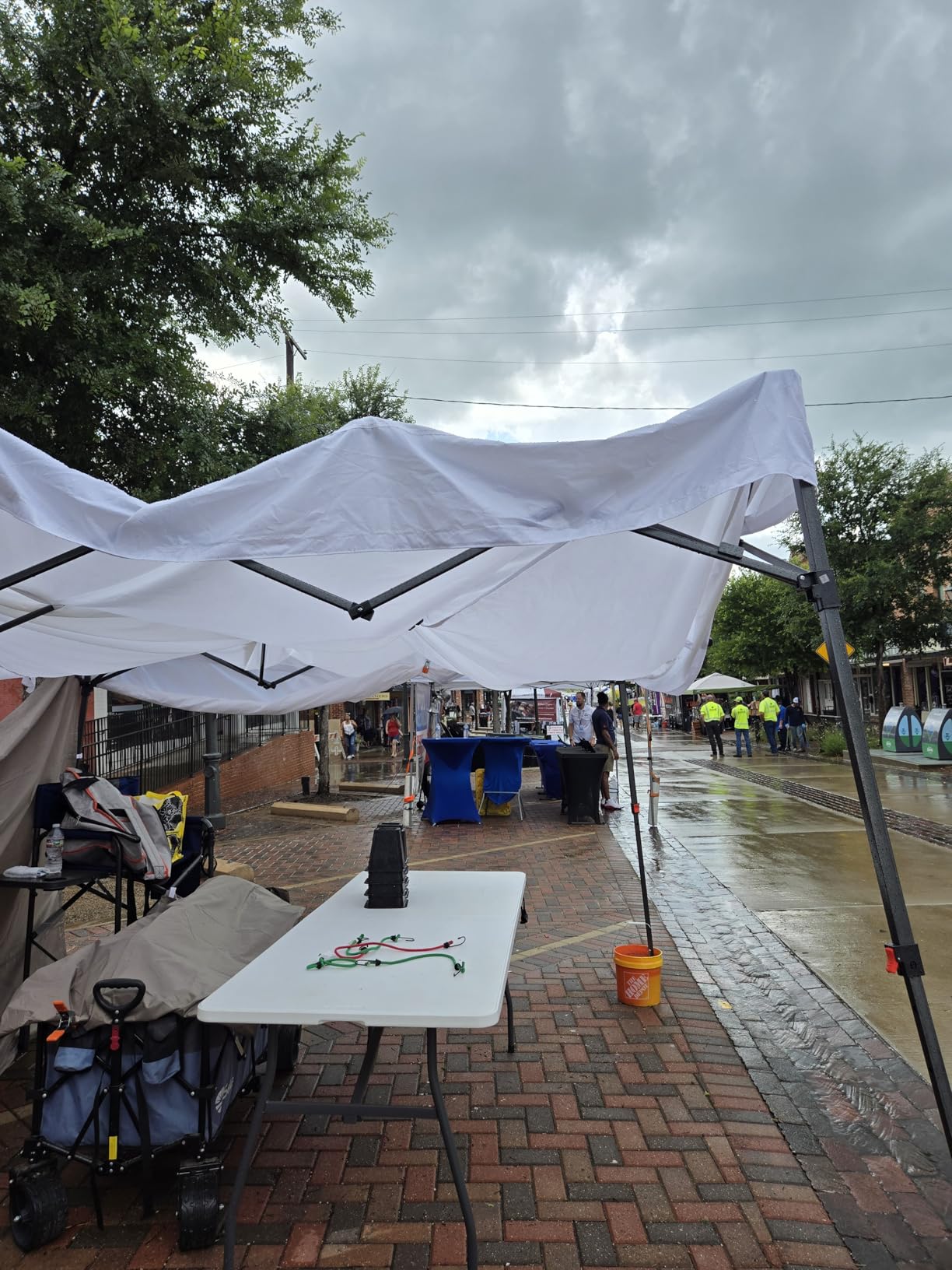
Wind is a different equation from rain. A high-peak vented roof like the SANWAY sheds water well but lets a little in when rain is driven sideways. A sealed top with a PU coating, like the COBIZI or ABCCANOPY, holds off driven rain better. Neither matters if the tent is unweighted, and the reported failure in vendor forums is almost always a frame or bracket giving way rather than the fabric tearing.
For rain specifically, treat sidewalls as the real upgrade. A canopy top keeps rain off your head, but wind-driven rain comes in from the side, and that is what walls stop. The ABCCANOPY and COBIZI both zip or Velcro full enclosures that go up in under a minute when weather turns.
How to Weigh Down a Canopy Tent on Grass and Asphalt
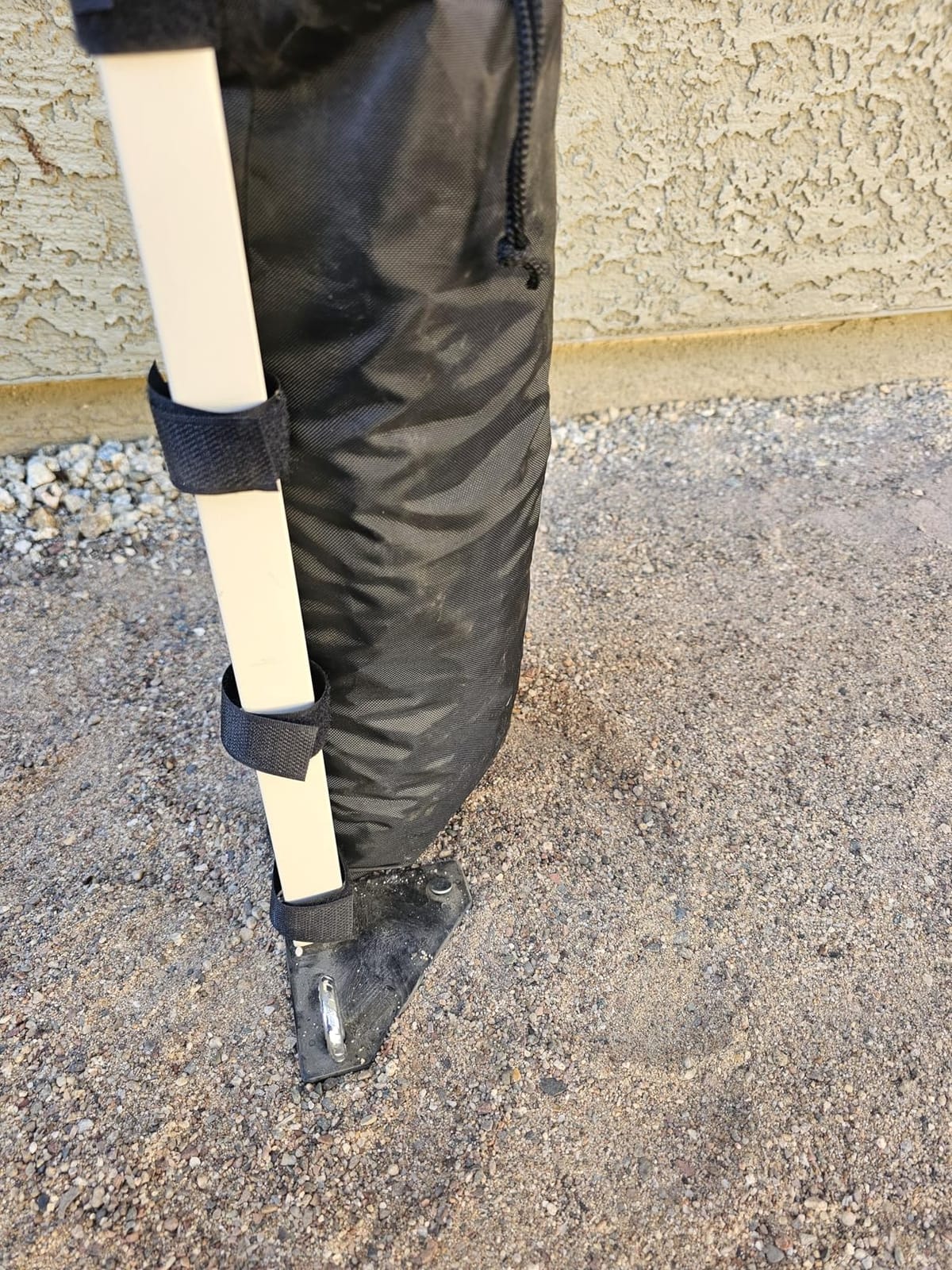
Weight before stakes on any surface you cannot drill into. Most organizers want 20 to 25 lb per leg, and the frame is rated for far more distributed load than that, so there is no structural reason to go light. The included sandbags in this roundup are mostly token pouches, and several owners note that they are too small to satisfy a market that checks. Buy your own.
On grass, stakes into the ground plus a weight bag on each leg is the strongest combination, because a stake prevents lift and a weight prevents tip. On asphalt, you cannot stake, so the weight does all the work, and you should use filled bags on every leg rather than the two corners. Add the four guy lines to the corners on an open site, since they take the sideways load that weights cannot.
Set up with the open side facing away from the prevailing wind, and take the tent down if a storm is forecast rather than trying to out-anchor it. Every one of these tents is a shade and light-weather shelter, not a storm-rated structure.
Frequently Asked Questions
What is the best brand of canopy tent?
For craft fair work, the strongest brand-level choices are CROWN SHADES, ABCCANOPY, MASTERCANOPY, and Eurmax. CROWN SHADES leads on solo setup with a one-push center lock and wheels in the feet. ABCCANOPY leads on enclosure with a full truss frame and zipped side walls. MASTERCANOPY leads on value and included anchoring kit. Eurmax leads on frame mass and domestically stocked replacement parts. All four are 10×10 steel-frame pop-up models suited to vendor use.
Which is better, a slant leg or a straight leg canopy tent?
Straight leg is better for craft fairs. A straight leg frame puts each leg exactly where the measurement says, so a 10×10 gives you the full 100 square feet with consistent edge height, which matters when you stand for hours or hang a banner. A slant leg frame angles outward, so a 10×10 base often covers only an 8×8 top, and slant legs are harder to level on uneven fairground. Slant legs win only on storage and transport, since they nest compactly.
What is the best 10×10 canopy for craft shows?
The CROWN SHADES 10×10 with the patented one-push center lock is the best overall pick for craft shows. It raises with a single push so one person can do the whole job, carries 11433 reviews at 4.6 stars, has UPF 50+ silver-coated 150D flame-resistant fabric, and has wheels in the feet so you can roll the raised tent to your spot instead of carrying 36 lb of steel. It packs to 45 inches and fits most sedan trunks.
Which canopy is better, MasterCanopy or ABC Canopy?
They are built for different jobs. The MASTERCANOPY is the better value and the better solo tent, with a central hub setup in about 90 seconds, a vented top for airflow, 1.2mm steel poles, and the most complete anchoring kit in the roundup including 20 lb sandbags and 8 stakes, at 35 lb. The ABCCANOPY is the better booth, with a full truss frame, 500 denier PU-lined waterproof fabric, three side walls plus a door wall, and banner loops, at about 62 lb and needing two people. Choose MasterCanopy if you set up alone, ABCCANOPY if you need enclosure.
How do I weigh down a canopy tent?
Use a weight bag on every leg, and add stakes and guy lines wherever the surface allows. Most market organizers want 20 to 25 lb per leg, and the small bags included with most tents are too light to satisfy that. On grass, combine stakes with weights, since a stake prevents lift and a weight prevents tip. On asphalt you cannot stake, so filled weights on all four legs do the work, and guy lines take the sideways load. Set the open side away from the wind and take the tent down before a storm rather than trying to out-anchor it.
Do craft fairs require fire rated canopy tents?
Many do, and organizers often check at load-in rather than at application, so confirm before you buy. The common requirements are CPAI-84 or NFPA 701 rated fabric. In this roundup the CROWN SHADES lists flame-resistant CPAI-84 fabric, the Tunbne is CPAI-84 rated, the ABCCANOPY is certified flame retardant, and the SANWAY and Nazhura list flame-retardant tops. If a listing shows no certification at all, verify it with the maker or plan to buy weights and side walls that meet the organizer standard.
What size canopy tent do I need for a craft fair booth?
A 10×10 foot canopy is the default for most single-vendor craft fair spaces, giving you 100 square feet of covered area that fits the standard booth footprint. Buy larger only if you have already booked a bigger space or are running multiple connected booths, since a tent larger than the space you sell in is useless at every other market. Note that slant leg tents list a 10×10 base but cover only an 8×8 top, so plan your table layout from the top measurement, not the base.
Can one person set up a 10×10 canopy tent?
Only if it has a center-lock hub. The CROWN SHADES, MASTERCANOPY, Tunbne, Nazhura, SANWAY, and WEIZE all use one-push or central button mechanisms that lock all four legs at once, which solo vendors report completing in about ten minutes or less. Frames with a thumb latch or cross-truss design, such as the ABCCANOPY, Yaheetech, Oneofics, and COBIZI, are realistically two-person jobs, and the heavier the frame the more you feel it. If you set up alone, weight matters as much as the mechanism, so keep the packed weight at or below about 38 lb.
The Best Canopy Tents for Craft Fairs in 2026: Final Verdict
After six weeks of markets, the CROWN SHADES 10×10 with the one-push center lock is the tent we kept using, and it is our pick for the best canopy tents for craft fairs in 2026. The wheels in the feet, the CPAI-84 fabric, the 45 inch packed size, and 11433 reviews at 4.6 stars make it the least fussy option for a solo vendor, and no other tent in this roundup raised itself as easily or rolled across the grass once it was up.
If you need an enclosed booth, take the ABCCANOPY for its 500 denier waterproof top and zipped walls, or the COBIZI if sealed seams and four walls at a lighter weight matter more to you. If your budget is fixed, the MASTERCANOPY is the value pick and the SANWAY and Yaheetech cover the low end. Whatever you choose, buy real weights, check the organizer fire certification rule before you buy, and rehearse the setup on your own floor first.