
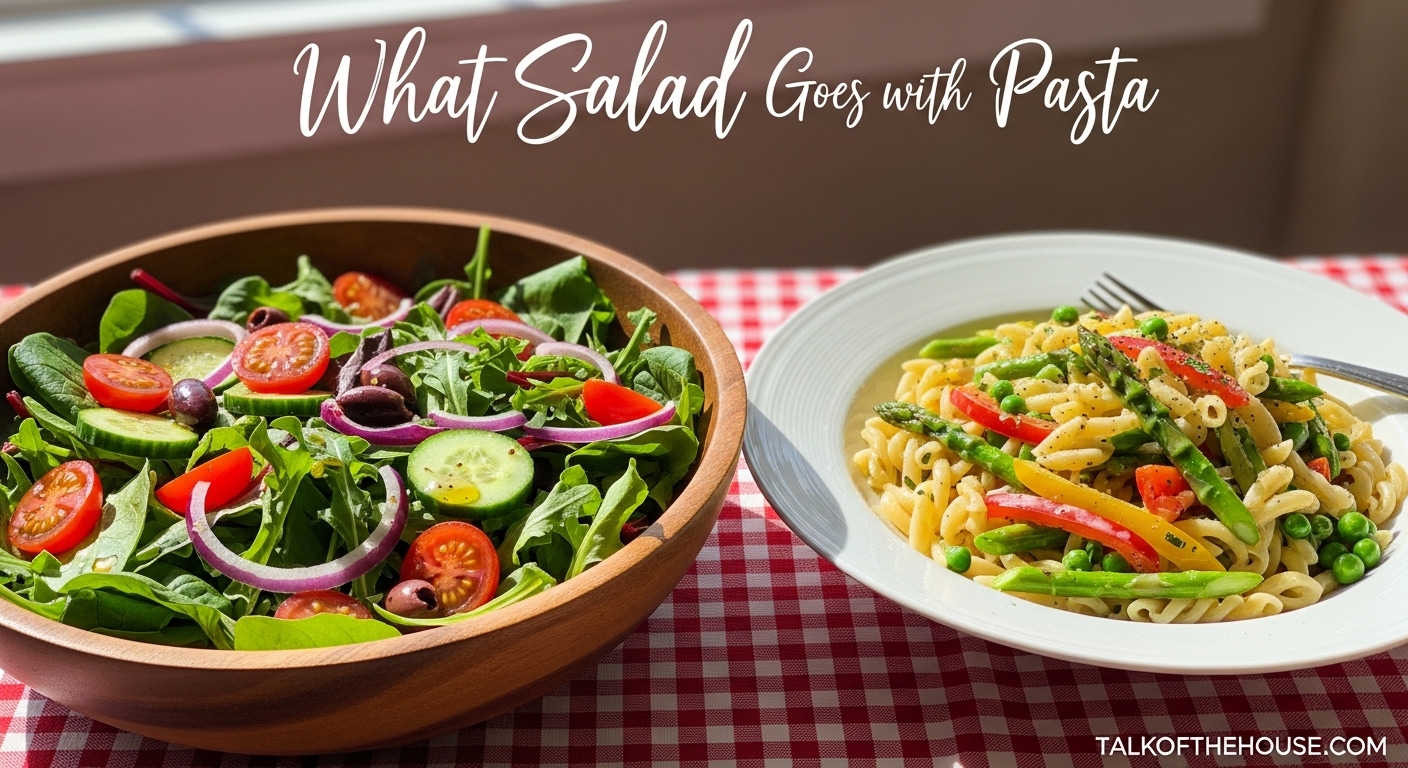
I remember the first time I realized that not all salads are created equal when it comes to pasta night. I had spent an hour perfecting a creamy fettuccine Alfredo, only to serve it with a heavy ranch-dressed iceberg salad that made the whole meal feel like a brick in my stomach. What salad goes with pasta? The answer changed how I approach every Italian dinner I make.
The best salads to pair with pasta are light, acidic, or crunchy salads designed to cut through rich, carbohydrate-heavy pasta dishes. After years of testing combinations in my own kitchen and learning from Italian friends, I have discovered that the right salad does not just fill space on the plate. It transforms the entire meal.
In this guide, I will walk you through my favorite pasta-pairing salads, explain why they work from a flavor science perspective, and share the homemade dressing recipes that make all the difference. Whether you are planning a weeknight family dinner or hosting a dinner party in 2026, these combinations will elevate your pasta nights.
Table of Contents
The 7 Best Salads to Serve with Pasta
When I am asked what salad goes with pasta, these are the seven options I always recommend. Each one offers something unique, whether it is speed, tradition, or pure refreshment.
- Classic Italian Green Salad – The gold standard. Romaine lettuce, pepperoncini, kalamata olives, cherry tomatoes, and a sharp red wine vinegar dressing. This is what you get at authentic Italian restaurants for a reason.
- Caesar Salad – The crowd favorite. Creamy dressing, crunchy croutons, and crisp romaine provide textural contrast that works with almost any pasta shape or sauce.
- Simple Arugula and Lemon Salad – My go-to for busy weeknights. Five ingredients, five minutes, maximum flavor. The peppery arugula and bright citrus cut through even the richest carbonara.
- Caprese Salad – Perfect for summer and light pasta dishes. Fresh mozzarella, ripe tomatoes, and basil with a drizzle of good olive oil. No lettuce required.
- Chopped Italian Salad – Everything diced small so you get all the flavors in every bite. Great for feeding a crowd or potluck situations.
- Cucumber Feta Salad – Cool, crunchy, and refreshing. The briny feta and crisp cucumbers offer a Mediterranean twist that pairs beautifully with tomato-based sauces.
- Mixed Greens with Balsamic Vinaigrette – When you want something elegant but unfussy. Use a mix of tender and crisp greens for the best texture.
Classic Italian Green Salad
This is the salad I make most often when pasta is on the menu. It has become a staple in my home because it hits every note a pasta pairing should hit: acidic, crunchy, and fresh.
What You Will Need
The beauty of this salad is its flexibility. I usually start with a head of romaine lettuce, chopped into bite-sized pieces. Romaine gives you that satisfying crunch without wilting too quickly under dressing.
For the vegetables, I add halved cherry tomatoes, sliced cucumber, and thinly sliced red onion. The tomatoes add sweetness, the cucumber adds hydration and crunch, and the red onion brings a sharp bite that wakes up your palate.
Now for the signature additions that make this an Italian green salad: pepperoncini peppers for mild heat and tang, kalamata olives for briny depth, and shaved parmesan cheese for umami richness. These three ingredients are what separate an Italian salad from a generic green salad.
The Dressing That Makes It
I cannot stress this enough: homemade dressing is the difference between a memorable salad and a forgettable one. Bottled Italian dressing has its place, but when you are serving it with carefully prepared pasta, take the extra three minutes to make your own.
My basic formula is simple. Whisk together one-third cup red wine vinegar, three-quarters cup extra virgin olive oil, one teaspoon Dijon mustard, one minced garlic clove, half a teaspoon dried oregano, salt, and black pepper. The mustard helps emulsify the dressing so it does not separate immediately.
The key is the vinegar-to-oil ratio. You want it more acidic than a standard salad dressing because that acidity is what cuts through the pasta richness. I sometimes bump the vinegar up to half a cup when serving with a particularly creamy dish like fettuccine Alfredo.
Assembly and Timing
I assemble this salad in a specific order to keep everything crisp. Start with the lettuce in a large bowl. Add the vegetables, then the peppers and olives. I hold the parmesan until right before serving, shaving it over the top with a vegetable peeler for those beautiful ribbons.
Timing matters. I dress the salad no more than five minutes before serving. Any earlier and the lettuce starts to wilt. Any later and you are holding up dinner. If I need to prep ahead, I chop everything and store it separately, then toss it together at the last minute.
Caesar Salad
If I am serving pasta to guests and want a guaranteed hit, I make Caesar salad. It is the most popular salad pairing for pasta in America for good reason. The combination of creamy dressing, crunchy croutons, and crisp romaine creates a textural experience that complements rather than competes with pasta.
Why Caesar Works So Well
The magic of Caesar salad with pasta lies in contrast. Pasta is soft and often served warm with smooth sauces. Caesar brings cold crunch and creamy richness that stands up to bold flavors without overwhelming them.
I have served Caesar with everything from simple spaghetti aglio e olio to heavy baked ziti, and it always works. The anchovy in traditional Caesar dressing adds umami that bridges beautifully with tomato-based pasta sauces. The parmesan echoes the cheese in most pasta dishes without redundancy.
My Quick Weeknight Version
For busy nights, I skip the raw egg in traditional Caesar dressing. Instead, I whisk together mayonnaise, lemon juice, minced garlic, Worcestershire sauce, Dijon mustard, and grated parmesan. It takes two minutes and tastes remarkably close to the original.
I make my own croutons when I have time: cube day-old bread, toss with olive oil and garlic powder, and bake until golden. But store-bought croutons work fine in a pinch. The important thing is that crunch factor.
Simple Arugula and Lemon Salad
When I have fifteen minutes until dinner and the pasta is already boiling, this is the salad I reach for. It requires no chopping beyond a quick tear of the greens, and it comes together faster than the pasta takes to cook.
Five Minutes to Freshness
Start with baby arugula. The young leaves are milder and more tender than mature arugula, making them perfect for a simple salad. I buy the pre-washed bags for true emergencies, though washing your own takes only a minute more.
The dressing is just three ingredients: fresh lemon juice, extra virgin olive oil, and flaky sea salt. I squeeze half a lemon over four cups of arugula, drizzle with two tablespoons of olive oil, and sprinkle with salt. Toss with my hands right in the serving bowl.
The peppery bite of arugula and the bright acidity of lemon create a palate cleanser that works especially well with creamy pasta dishes. I serve this with fettuccine Alfredo, carbonara, or any cheese-based sauce. It is also fantastic with pesto pasta, where the lemon echoes the brightness of fresh basil.
Simple Upgrades
If I have an extra minute, I add shaved parmesan or toasted pine nuts. Sometimes I add thinly sliced radishes for extra crunch and a hint of spice. But honestly, the basic three-ingredient version is perfect as-is.
Caprese Salad
For summer dinners when tomatoes are at their peak, I skip the lettuce entirely and make Caprese salad. This Italian classic is technically not a green salad, but it serves the same purpose alongside pasta: fresh, light, and acidic.
The Summer Pairing
Caprese salad works best with lighter pasta dishes. I serve it with pasta primavera, simple tomato sauce with fresh basil, or lemon pasta. It can feel too light alongside a heavy meat sauce, but that is the exception rather than the rule.
The key is ingredient quality. Use the ripest tomatoes you can find, fresh mozzarella (the soft kind packed in water, not the rubbery block cheese), and basil that smells fragrant the moment you touch it. Good olive oil and aged balsamic vinegar complete the dish.
I layer slices of tomato and mozzarella on a platter, tuck basil leaves between them, and drizzle with olive oil and balsamic. A sprinkle of flaky sea salt and freshly cracked black pepper finishes it. No cooking, minimal prep, maximum impact.
Why These Salads Work: The Science of Pairing
After years of wondering why some salads worked with pasta and others fell flat, I did some research into the science of flavor pairing. Understanding these principles has made me a better cook, and it explains why the salads above are so successful.
Acidity Balances Richness
Pasta dishes are often rich. Creamy sauces, cheese, olive oil, and carbohydrates create a heavy mouthfeel that can become overwhelming. Acidic ingredients cut through that richness, cleansing your palate between bites and making each forkful of pasta taste as good as the first.
This is why vinaigrette dressings work better than creamy ranch or blue cheese with pasta. The vinegar or lemon juice literally changes how your taste buds perceive the fat in the pasta dish. I always include an acidic component in any pasta-pairing salad.
Texture Provides Contrast
Pasta is soft. Even al dente pasta yields easily to your teeth. A salad with crunch provides textural contrast that makes the meal more interesting. This is why croutons, crisp romaine, cucumber, and radishes feature so prominently in pasta-pairing salads.
I think of it like a symphony: pasta provides the smooth, continuous melody, and the salad provides the percussive accents that keep things lively. Without that contrast, pasta dinners can feel monotonous halfway through the plate.
Freshness Complements Comfort
Pasta is comfort food. It is warm, filling, and nostalgic. A salad made with fresh, raw vegetables brings a completely different energy to the plate. It adds vitamins and fiber, yes, but it also adds a sense of lightness and health that balances the indulgence of a pasta dinner.
This is why even a simple bowl of dressed greens works. The freshness does not need to be complicated to be effective.
Quick vs. Elaborate: Choosing Your Salad
Not every pasta dinner requires the same level of salad commitment. Over the years, I have developed a mental hierarchy of salads based on time and occasion.
Under 10 Minutes: Emergency Options
When the pasta is almost done and I need something green on the table immediately, I have three go-to options. The arugula and lemon salad mentioned earlier takes literally five minutes. A bagged Italian blend with bottled dressing and a sprinkle of parmesan takes three. Even just slicing cucumbers and tomatoes, drizzling with olive oil and vinegar, and calling it a day is better than nothing.
These quick options are perfect for weeknight family dinners when the focus is on getting food on the table, not culinary perfection.
15-20 Minutes: Standard Dinners
For weekend dinners or when we have guests, I spend a bit more time. The Classic Italian Green Salad takes about fifteen minutes to prep if I work efficiently. A Caesar salad with homemade dressing takes about twenty. This level of effort shows care without requiring hours in the kitchen.
I usually make these salads while the pasta sauce simmers or while the water comes to a boil. The timing works out perfectly.
30+ Minutes: Special Occasions
For dinner parties or holiday meals, I might get more elaborate. A chopped salad with ten different ingredients, all perfectly diced. A composed Caprese with multiple tomato varieties and artisanal mozzarella. These are salads that become conversation pieces themselves.
I also make my own croutons and dressings from scratch for these occasions. The extra effort is noticed and appreciated.
The Secret is in the Dressing
I mentioned this earlier, but it bears repeating: the dressing makes the salad. After talking to dozens of home cooks and reading through forum discussions, one truth emerges consistently. People prefer homemade dressing, even when it is simple.
Basic Vinaigrette Formula
My master ratio is three parts oil to one part acid. For pasta-pairing salads, I often push this to two-and-a-half parts oil to one part acid for extra tang. The acid can be red wine vinegar, white wine vinegar, lemon juice, or even balsamic for sweeter salads.
Emulsification is the key to a dressing that coats the salad rather than pooling at the bottom of the bowl. I add a teaspoon of Dijon mustard to my vinaigrettes, which helps the oil and vinegar bind together. A quick whisk right before pouring is usually enough.
Make-Ahead Tips
Homemade dressing keeps in the refrigerator for up to a week. I often make a jar of Italian vinaigrette on Sunday and use it throughout the week. The flavors actually improve after a day or two as the garlic and herbs infuse into the oil.
Just remember to take it out of the refrigerator ten minutes before dressing your salad. Cold oil does not coat greens as well as room temperature oil.
Salads for Specific Pasta Dishes
While the salads above work with most pasta, some pairings are particularly magical. For baked pasta dishes like lasagna or cannelloni, I have found that a specific approach works best. You can read more about those perfect salad pairings for pasta dishes like lasagna in my dedicated guide.
Generally, baked pasta with heavy cheese and meat sauces calls for the most acidic, crunchy salads you can make. Think extra vinegar in the dressing, extra pepperoncini, and plenty of crisp romaine.
Frequently Asked Questions
What salad goes well with pasta dishes?
The best salads for pasta are light, acidic options like Classic Italian Green Salad, Caesar Salad, and Simple Arugula with Lemon. These salads feature crisp vegetables and tangy vinaigrettes that cut through rich pasta sauces, providing refreshing contrast to heavy dishes.
What is a good side dish for pasta?
Beyond salad, good pasta side dishes include garlic bread, roasted vegetables, antipasto platters, and bruschetta. However, a fresh green salad remains the most popular and balanced choice, offering acidity and crunch that complements pasta without competing with it.
What compliments a pasta dish?
Acidic flavors, crunchy textures, and fresh ingredients best complement pasta dishes. Vinegar-based dressings, crisp vegetables like romaine and cucumber, and bright herbs like basil provide contrast to pasta’s richness. The science is simple: acidity cuts through fat, cleansing your palate between bites.
What is the best salad to eat with lasagna?
The best salad for lasagna is a Classic Italian Green Salad with extra acidic dressing. The sharp red wine vinaigrette and crunchy pepperoncini cut through lasagna’s heavy layers of cheese and meat. Include plenty of crisp romaine, kalamata olives, and shaved parmesan for the ideal balance.
Create the Perfect Pasta Dinner
Figuring out what salad goes with pasta transformed my Italian dinners from heavy, one-note meals to balanced, satisfying experiences. The right salad does not just fill space on the plate. It completes the meal.
Start with the Classic Italian Green Salad for your next pasta night. It is forgiving, universally loved, and teaches you the principles that make all pasta pairings work. Once you understand why the acidity and crunch matter, you can improvise with confidence.
Remember: homemade dressing, fresh ingredients, and proper timing. Those three elements will elevate even the simplest green salad into something memorable. Here is to better pasta dinners in 2026 and beyond.