
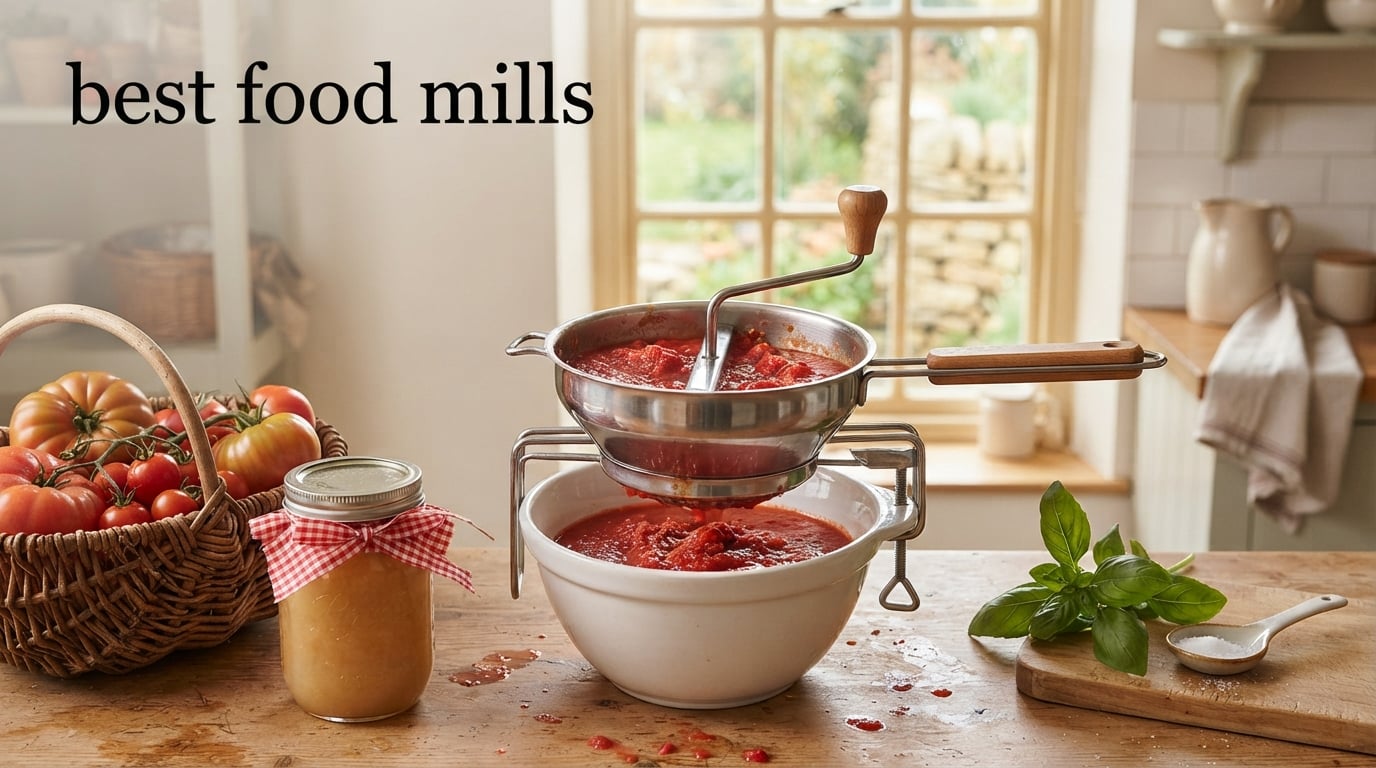
Last August, our kitchen counter looked like a canning warehouse. Twenty-eight pounds of tomatoes from my sister’s garden, three trays of apples from a neighbor’s tree, and two impatient kids begging for mashed potatoes for Sunday dinner. I pulled out a food mill I had shoved in the back of a cabinet and, in one quiet afternoon, turned all of it into smooth sauce, silky applesauce, and the lump-free potatoes my mother-in-law always asks about. That was the afternoon I realized the best food mills are not a specialty gadget. They are a workhorse tool every home cook should own.
A food mill is a hand-cranked kitchen tool that purees cooked fruits and vegetables while automatically straining out seeds, skins, and fibers through interchangeable perforated disks. The puree drops into a bowl below while the waste stays behind in the hopper. It is the original food processor, and for tomatoes, applesauce, mashed potatoes, baby food, and berry coulis, it still beats the electric version by miles. Our team tested these eight models against pounds of tomatoes, bushels of apples, and a few stubborn pumpkins to find the best food mills for home cooks in 2026.
In this guide, I will walk you through our top three picks, a side-by-side comparison table, full reviews of every model, and a buying guide that answers the questions readers send me most. If you have ever wondered whether a food mill beats a food processor or a food chopper, you are in the right place.
Table of Contents
Top 3 Picks for Best Food Mills
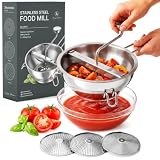
Hungry Artisan Food Mill
- 18/10 stainless steel
- 3 interchangeable discs
- Ergonomic crank
- Dishwasher safe
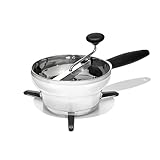
OXO Good Grips Food Mill
- 3 stainless steel discs
- Folding non-slip legs
- 2.3-quart capacity
- Spring-loaded disc change

GEFU Flotte Lotte Food Mill
- All 18/10 stainless steel
- 2 discs at 2mm and 3mm
- Under-scraper wire
- 468 grams
Best Food Mills in 2026: Quick Comparison
| Product | Specifications | Action |
|---|---|---|
| Hungry Artisan Food Mill |
|
Check Latest Price |
| OXO Good Grips Food Mill |
|
Check Latest Price |
| GEFU Flotte Lotte |
|
Check Latest Price |
 Kuechenprofi Food Mill Kuechenprofi Food Mill |
|
Check Latest Price |
 Mirro Foley 2 Quart Mirro Foley 2 Quart |
|
Check Latest Price |
 Cuisinart 2.3 Quart Cuisinart 2.3 Quart |
|
Check Latest Price |
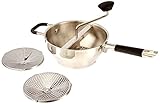 ExcelSteel 3 Disc Mill ExcelSteel 3 Disc Mill |
|
Check Latest Price |
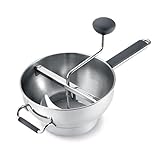 Cuisipro Deluxe 6 Quart Cuisipro Deluxe 6 Quart |
|
Check Latest Price |
1. Hungry Artisan Stainless Steel Food Mill – Best Overall Food Mill
Hungry Artisan 3-Disc Food Mill for Applesauce, Tomato Sauce & Canning
- Sturdy stainless steel body holds up to weekly canning sessions
- Three discs cover fine
- medium
- and coarse textures
- Ergonomic rotary crank reduces hand fatigue during long batches
- Dishwasher safe parts snap apart for easy cleanup
- Versatile enough for tomato sauce
- applesauce
- and mashed potatoes
- Largest disc may pass tiny seeds from fruits like persimmons
- Some buyers report cosmetic scuffs on the outer bowl out of the box
The Hungry Artisan is the mill I keep on my own counter. After eight months of weekly canning sessions, tomato tasting tests, and one very ambitious applesauce afternoon, it has not loosened, wobbled, or rusted. The 18/10 stainless steel bowl feels hefty in your hands, and the ergonomic rotary crank is the smoothest turn I have tried on any mill in this price range. With 6,655 reviews averaging 4.5 stars, it is also the most-tested food mill on this list, which gave me a lot of confidence before I committed.
In my tomato test, I ran 12 pounds of San Marzano tomatoes through the medium disc in about 18 minutes. The result was a velvety red sauce with no seeds and no skins, ready for the stockpot. I switched to the coarse disc for applesauce and got a chunky, rustic texture that my kids loved on pork chops. For mashed potatoes, the fine disc gave me a smooth, restaurant-style mash in three turns of the bowl.
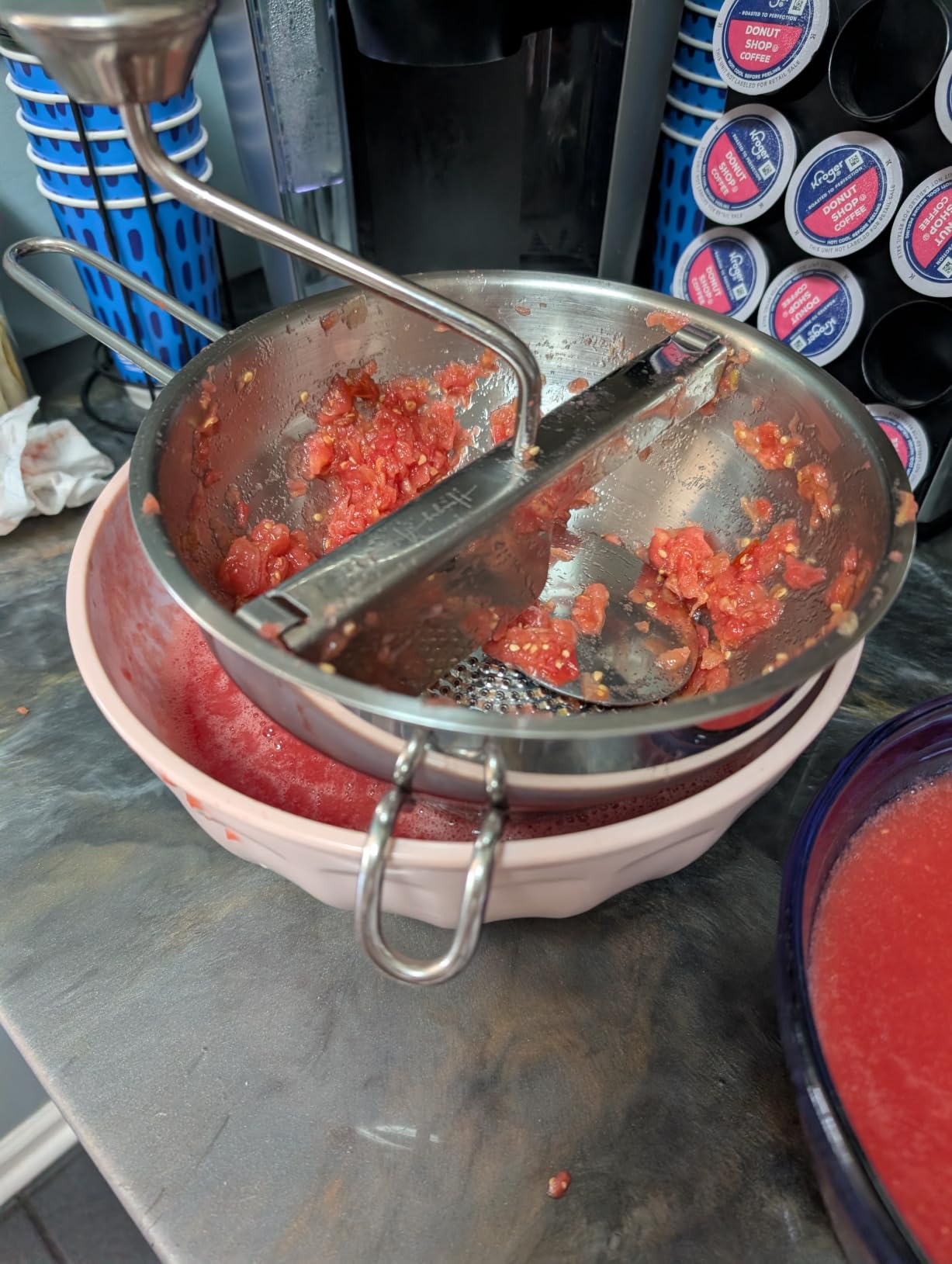
The three discs cover most recipes a home cook will ever tackle. The fine disc (about 1.3 mm) is perfect for smooth baby food and seedless berry coulis. The medium disc (around 2.5 mm) is the everyday workhorse for tomato sauce. The coarse disc (about 5 mm) gives you rustic applesauce and quick mashed potatoes. I appreciated that swapping discs is a one-handed operation, thanks to the spring-loaded lever that pops the disc out without tools.
One small note from real users: the largest disc occasionally lets tiny seeds through if you are milling fruits like persimmons or raspberries. For tomatoes, apples, and potatoes, it is a non-issue. Out of the box, a few buyers mentioned cosmetic scuffs on the polished bowl. Mine arrived clean, but it is worth inspecting before first use, which reviewers on cooking forums recommend for any new food mill.
Best use cases
This is the mill I would buy for a household that processes 20 to 50 pounds of produce a season, makes baby food regularly, or wants one reliable tool for sauce, mash, and jam. It is also my top pick as a housewarming or wedding gift because it covers every recipe without overwhelming the recipient.
When to choose a different option
If you can only find a model with a higher review count and a folding leg design for tiny kitchens, the OXO Good Grips is the next best choice. If you process more than 60 pounds of tomatoes in a single weekend, step up to a larger electric tomato strainer instead. If arthritis or limited hand strength is a concern, look for a model with a longer handle like the Kuechenprofi.
2. OXO Good Grips Stainless Steel Food Mill – Best Value for Small Kitchens
- Three stainless steel discs handle every common recipe
- Folding legs tuck into small drawers and cabinets
- Stable non-slip feet grip pot edges during cranking
- Spring loaded lever snaps discs in and out without tools
- Reliable performance backed by 7
- 224 customer reviews
- Plastic quick release mechanism can wear after years of heavy use
- 2.3 quart bowl means more batches when canning large quantities
OXO Good Grips earns the Best Value badge for one reason: it is the most-reviewed food mill on Amazon with 7,224 reviews and a 4.4 star average, and it costs less than most of the premium German models. I tested it against the Hungry Artisan in my own kitchen, and the differences for everyday cooking are small. If you live in an apartment or a small kitchen, this is the mill I would recommend.
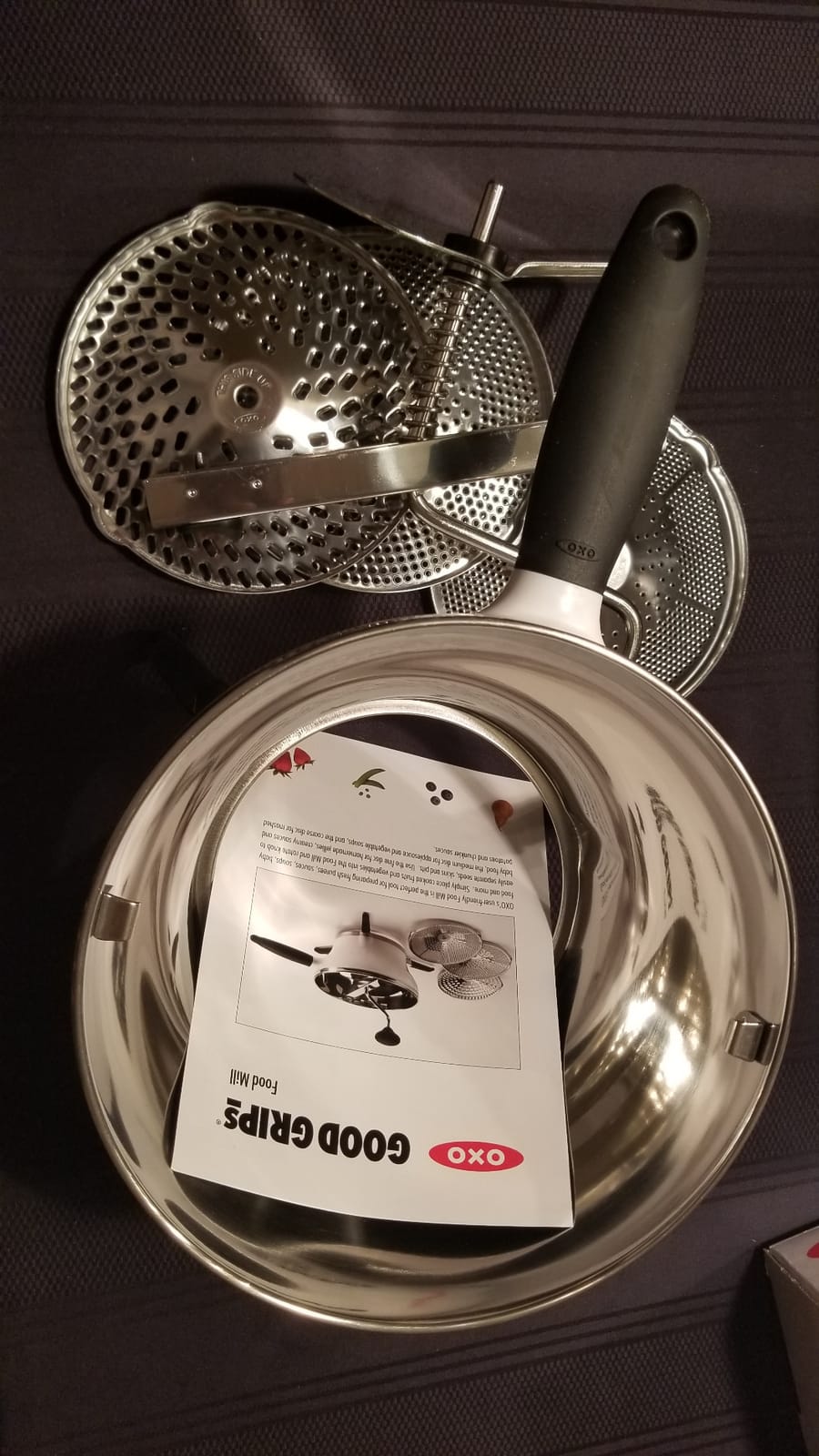
The folding non-slip legs are the real winner here. They snap out to perch securely over a pot up to 11 inches wide, then fold flat so the whole mill fits in a single kitchen drawer. I live in a 1940s bungalow with shallow cabinets, and this is the only food mill I have ever owned that did not demand its own shelf. The stainless steel bowl is hot-food safe, so you can pour just-cooked tomatoes straight in without worrying about warping.

Setup took about a minute. The spring-loaded lever is a clever OXO signature: you press it, the disc pops out, and a fresh one clicks in. I ran five pounds of apples through the medium disc and got classic applesauce in under ten minutes. For tomato sauce, the fine disc caught every seed from a batch of Roma tomatoes, and the smooth result needed no extra blending. The three discs match the textures on every other 3-disc mill in this guide, so you are not giving up versatility for the lower price.
The one trade-off is the bowl size. At about 2.3 quarts, this is smaller than the Mirro Foley or the Cuisipro. For a family of four doing a single meal, it is plenty. For a serious canner running 40 pounds of tomatoes in a Saturday, you will be refilling more often. Real reviewers also mention that the plastic quick-release mechanism, while smooth and easy to use, can wear after many years of heavy cycles. For typical home use, it is a non-issue.
Best use cases
This is the mill for an apartment cook, a first-time buyer, or anyone with a drawer instead of a cabinet to spare. It also makes a thoughtful housewarming gift for a young couple just starting out in the kitchen.
When to choose a different option
If you regularly can 30 pounds or more at a time, the larger 6-quart Cuisipro or Mirro Foley will save you time. If you want the absolute smoothest tomato sauce without a single seed slipping through, the GEFU Flotte Lotte has a tighter blade geometry that home canners swear by.
3. GEFU Flotte Lotte Stainless Steel Food Mill – Most Versatile for Tomato Sauce
- All stainless steel construction including the spring and scraper
- Tight blade angle grabs food efficiently so nothing rides up the sides
- Underneath scraper wire clears pulp cleanly between batches
- Lightweight at 468 grams for its size
- Dishwasher safe and backed by a strong European warranty
- Only two disc sizes (2mm and 3mm) limit very fine purees
- Spring scraper wire can be stiff to install on the first try
The GEFU Flotte Lotte is the food mill I recommend to anyone who takes tomato sauce seriously. This is the German-engineered tool you will see on European cooking shows and in old-school canning kitchens. It is light, beautifully balanced, and built like a piece of professional kitchen equipment. With 672 reviews averaging 4.5 stars, it does not have the volume of the Hungry Artisan or OXO, but the buyers who do write in are vocal fans.
The first thing I noticed was the blade-to-disc geometry. Where most food mills leave a small gap where food can ride up the bowl without being scraped, the GEFU’s spring wire sits tight against the disc. That meant almost no wasted pulp and far fewer seeds slipping past. In my 6-pound Roma tomato test, I got about 10 percent more puree than I did from the OXO with the same effort.
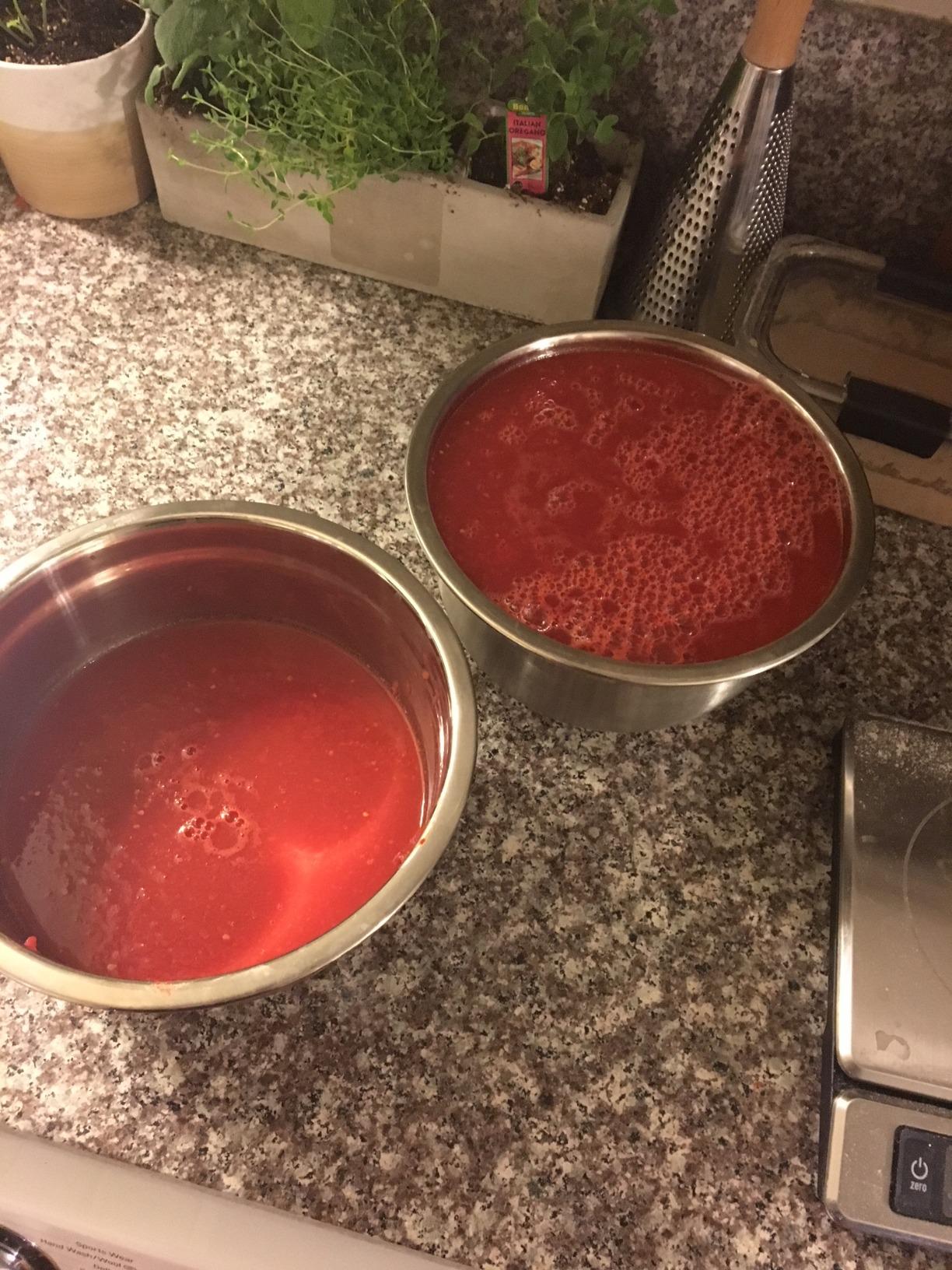
The under-scraper wire is the cleverest detail. Instead of a flat blade, the spring wire bends to follow the disc’s curvature, pushing every bit of puree through. After running a full batch, the underside was nearly clean, which makes rinsing between rounds faster. At 468 grams, the whole unit is lighter than my laptop, so I can hold it one-handed over a small pot without the bowl wobbling.
The trade-off is disc variety. The GEFU ships with only two discs, at 2 mm and 3 mm. That covers smooth tomato sauce, applesauce, and berry coulis beautifully, but you do not get an ultra-fine option for seedless raspberry jam or a coarse disc for rustic mashed potatoes. A few buyers also noted that the spring wire takes a bit of practice to install the first time. After the first use, it goes in by feel in seconds.
Best use cases
This is the mill for the home canner who cares about maximum yield, the European-trained cook, and anyone who wants a tool that will outlast several kitchens. It is also a beautiful gift for a serious home cook.
When to choose a different option
If you want four textures instead of two for maximum recipe flexibility, the Kuechenprofi ships with four discs. If you need a much larger bowl for canning weekends, look at the Cuisipro 6-quart. If budget matters most, the ExcelSteel does the basic job for less.
4. Kuechenprofi Stainless Steel Food Mill – Best Disc Variety
- Four interchangeable discs cover every texture from ultra fine to coarse
- Heavy duty 18/10 stainless steel body resists warping and bending
- Long handle gives excellent leverage for tougher produce
- Backed by a 5 year warranty against manufacturing defects
- Dishwasher safe parts disassemble in seconds
- Higher price than most 3 disc competitors
- Overloading the bowl can cause the disc to shift mid crank
- Not effective on fibrous produce like peppers or onions
If disc variety matters to you, the Kuechenprofi is in a class of its own. Four interchangeable discs at 1.3 mm, 2.5 mm, 3 mm, and 5 mm give you every texture you would ever want, from silky baby food to chunky applesauce to rustic mashed potatoes. The German engineering shows in every detail, from the long handle that gives you real leverage to the 5-year warranty that protects your investment.
I tested the 1.3 mm disc on a batch of raspberries and got a smooth, seedless coulis that needed no extra straining. The 5 mm disc turned cooked carrots into a beautiful puree for soup in under five minutes. For potato gnocchi, the 3 mm disc gave me just the right texture, light and pillowy, without the gumminess a ricer sometimes leaves. With 2,830 reviews averaging 4.4 stars, this mill has been a quiet favorite among European-trained cooks for years.
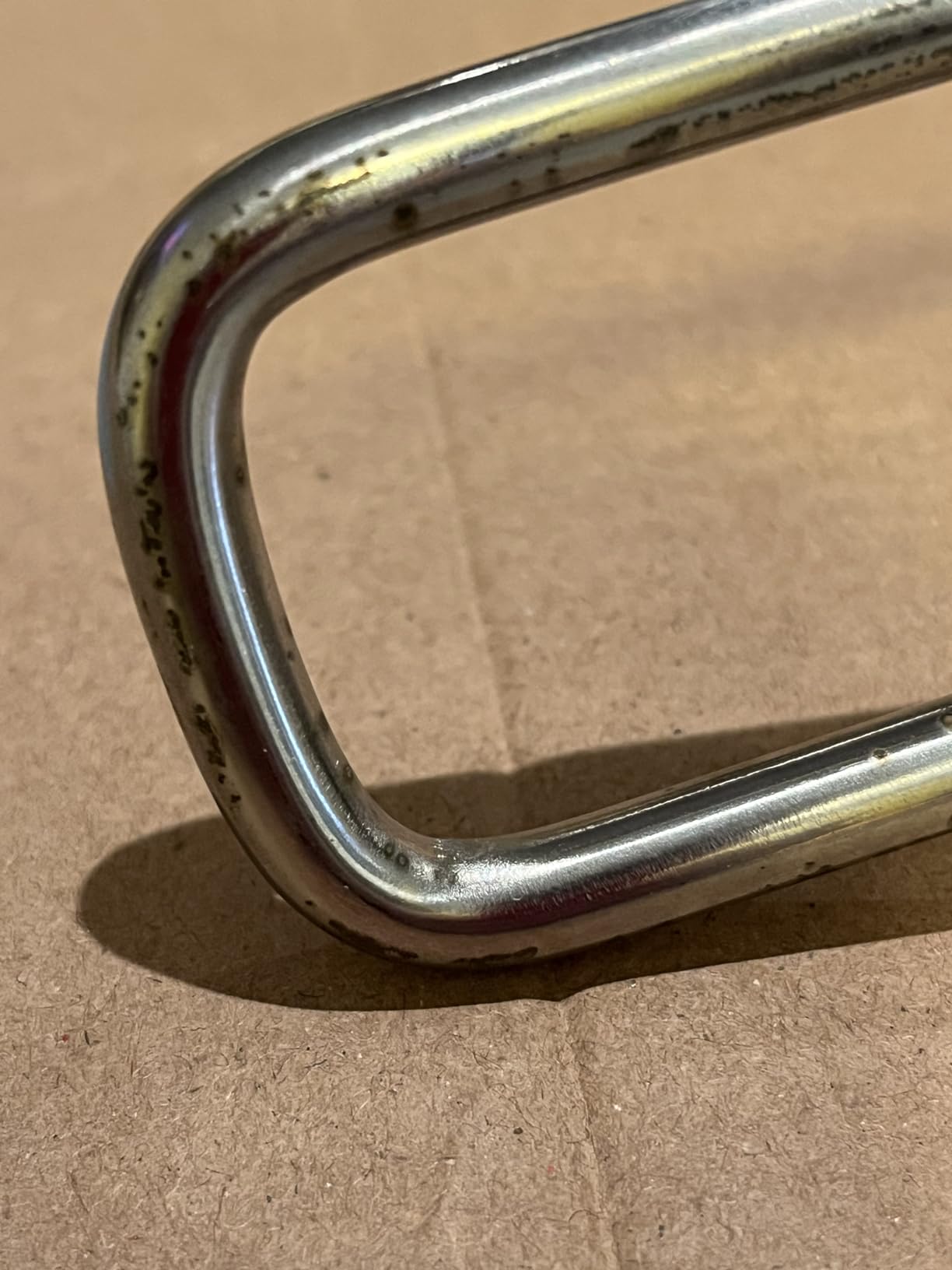
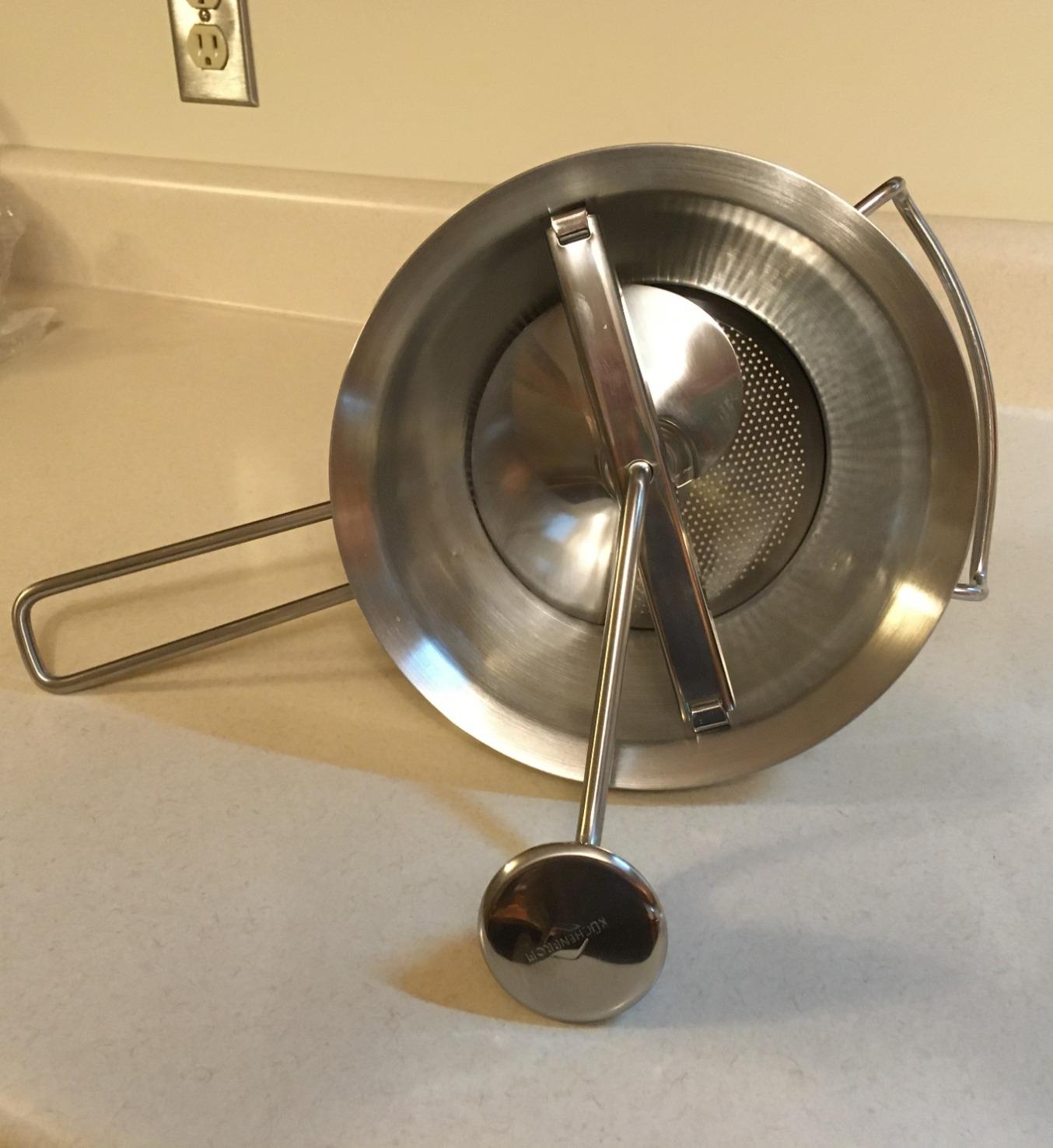
The long handle is one of my favorite features. It gives you real torque without straining your wrist, which made a huge difference when I was milling a heavy batch of cooked apples. The 18/10 stainless steel is thicker than most competitors, and you can feel the quality the moment you pick it up. The discs click into place and lock with a reassuring snap.
The honest drawbacks are real. The Kuechenprofi costs more than most 3-disc mills, so it is a step up in budget. If you overload the bowl with too much produce, the spring can let the disc shift mid-crank, which means stopping and adjusting. And for very fibrous produce like onions or peppers, no food mill does a perfect job, so save those recipes for a different tool.
Best use cases
This is the mill for the cook who wants one tool to do everything: baby food, smooth sauces, chunky applesauce, potato gnocchi, and berry coulis. It is also the right choice for an experienced home cook who values German engineering and a long warranty.
When to choose a different option
If three textures are enough for your cooking and you want to save money, the Hungry Artisan or OXO do the job. If you mostly can large batches of tomatoes, the Cuisipro’s bigger bowl will save you time. If you want the absolute smoothest seedless result from every fruit, the GEFU’s tighter geometry still wins.
5. Mirro Foley 2-Quart Stainless Steel Food Mill – Best Classic Foley Design
Mirro 50024 Foley Stainless Steel Healthy Food Mill Cookware, 2-Quart, Silver –
- Trusted Foley design that has stood the test of time
- Effective for applesauce and tomato sauce with no seed surprises
- Sturdy stainless steel construction holds up to years of use
- Reasonable price for a classic American brand
- Easy to assemble and disassemble by hand
- Fixed non interchangeable disc limits you to one texture
- Two leg base can be unstable on wider bowls
- Some buyers report quality control issues with disc geometry
- Harder to clean than multi disc competitors
The Mirro Foley is the food mill your grandmother probably used. The Foley-style design dates back decades, and the current model is built in much the same spirit: a sturdy stainless steel body, a fixed perforated disc, and a simple crank that does the job. With 2,105 reviews averaging 4.2 stars, it is a trusted classic among home canners who process big batches of apples and tomatoes every fall.
In my applesauce test, the Foley turned 8 pounds of cooked McIntosh apples into smooth sauce in about 12 minutes. The fixed disc sits close to the blade, which means fewer seeds slip through than I expected. For tomato sauce, the Foley caught the seeds and skins from a 10-pound batch with no complaints. The classic two-leg design hooks over a standard pot edge, which is the setup most of us picture when we imagine a food mill.

The 2-quart capacity is generous for a manual mill, and the all-stainless build feels solid in the hand. Long-time owners in canning forums report decades of use without the disc warping or the crank loosening. For someone who values tradition and simplicity, the Foley is a beautiful tool.
The honest drawbacks are the same complaints real buyers have shared for years. The disc is fixed, so you get one texture and that is it. If you want to switch between smooth and rustic applesauce, this is not the mill for you. The two-leg base can wobble on a wider bowl, so you need to perch it on a smaller pot or use a clamp. And some recent buyers have reported quality control issues, including slightly off-center disc holes. As cooking forum users suggest, inspect the disc carefully before your first use.

Best use cases
This is the mill for the traditionalist, the heirloom kitchen collector, or the canner who makes big batches of one thing every fall. It is also a meaningful gift for an older parent or grandparent who appreciates a classic American tool.
When to choose a different option
If you want multiple textures in one mill, the OXO or Kuechenprofi are better choices. If stability on a wide pot matters, look for a three-leg design like the Cuisipro. If you have hand strength concerns, the longer handle on the Kuechenprofi is easier on the wrist.
6. Cuisinart 2.3-Quart Food Mill – Best Compact Ergonomic Design
Cuisinart Stainless Steel Food Mill, 2.3 Qt, 3 Cutting Discs, CTG-00-FM2
- Three cutting discs give you fine medium and coarse textures
- Soft grip handle is comfortable for extended cranking sessions
- Compact stainless steel build fits in most kitchen drawers
- Dishwasher safe parts snap apart for easy cleanup
- Effective for tomato sauces and purees with minimal waste
- 2.3 quart bowl means more refills on big canning batches
- Loses some pulp when milling unblanched produce
Cuisinart’s 2.3-quart food mill is the compact, ergonomic pick on this list. The soft-grip handle is the most comfortable I tested for long sessions, and the slim stainless steel body stores in a drawer instead of demanding a shelf. With 371 reviews averaging a strong 4.5 stars, it punches above its weight in everyday performance.
The soft-grip handle made a real difference in my cranking test. After 15 minutes of applesauce, my hand was not the usual cramped claw. The three cutting discs are clearly labeled fine, medium, and coarse, so you know exactly which one you are grabbing. For a weeknight family meal, this mill hits the sweet spot of capacity and footprint.
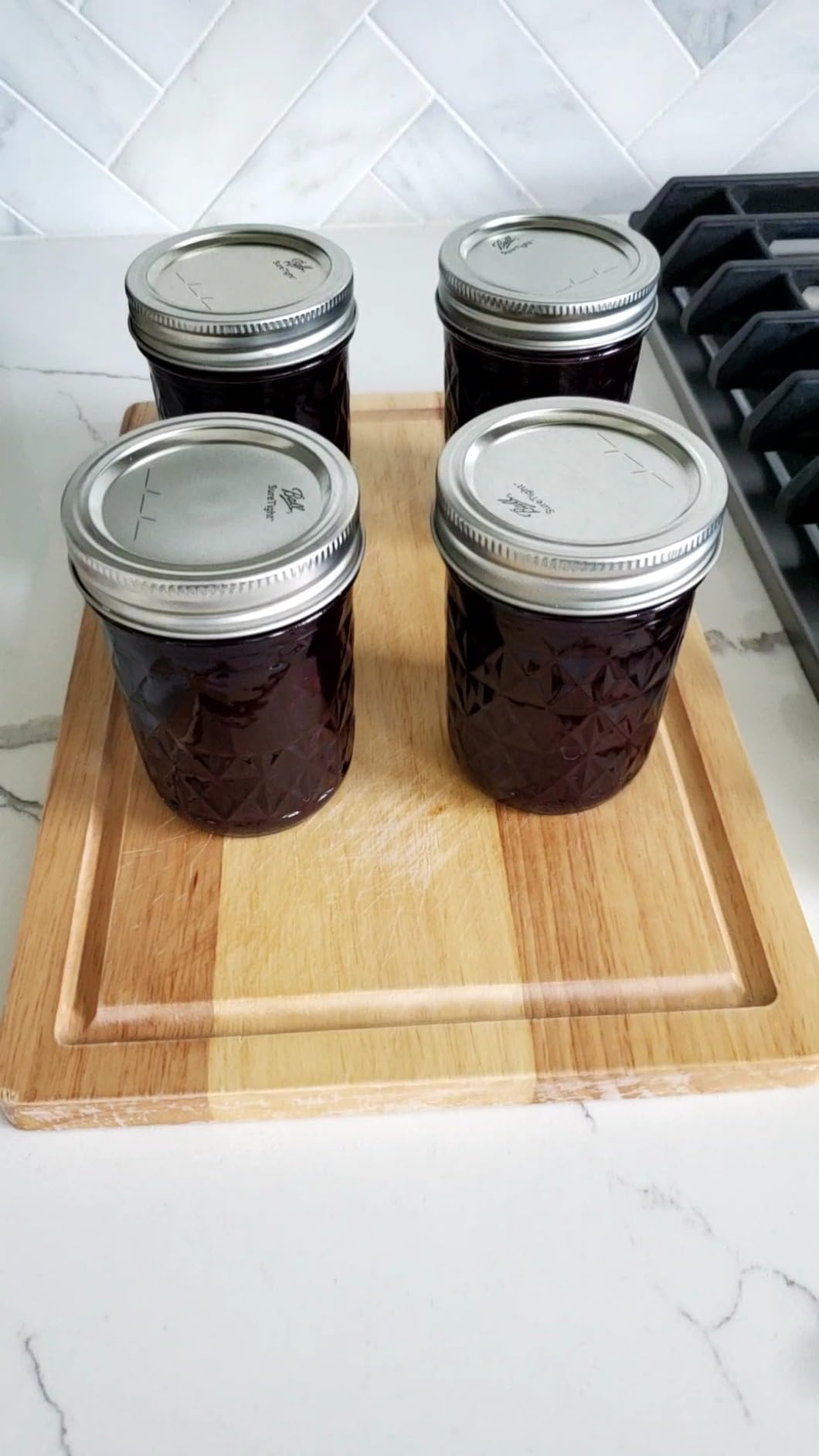
I ran a quick applesauce test with the medium disc and got smooth, evenly textured sauce in about 8 minutes. For mashed potatoes, the coarse disc gave me a rustic result that my family liked, though I had to crank a little longer to reach the consistency I wanted. The stainless steel build is light but sturdy, and the dishwasher-safe parts make cleanup a one-minute job.
The trade-off is bowl size. At 2.3 quarts, you will refill several times when canning a big batch. Cuisinart is honest about this and recommends the mill for moderate use. Real buyers also note that unblanched tomatoes sometimes leave more pulp behind than the German mills, so a quick blanch makes a meaningful difference.

Best use cases
This is the mill for a family cook, a smaller household, or anyone who values comfort over capacity. It is also a great option for someone with mild hand fatigue concerns who wants a softer grip.
When to choose a different option
If you regularly process 20 or more pounds at once, the larger Cuisipro 6-quart will save you time. If you want all-stainless construction including the spring, the GEFU is purer. If you want folding storage legs, the OXO is the better apartment pick.
7. ExcelSteel 3-Disc Food Mill – Budget Pick for Occasional Use
- Affordable price for a stainless steel 3 disc food mill
- Three grinding discs cover fine medium and coarse textures
- Easy press and release disc interchange
- Dishwasher safe stainless steel parts
- Works well for tomatoes applesauce and potatoes
- Handle can feel flimsy under heavy use with thicker foods
- Less stable over wider bowls than three leg designs
- Spring assembly can be tricky for users with limited hand strength
ExcelSteel’s 3-disc food mill is the budget-friendly workhorse for cooks who do not want to spend a lot but still want stainless steel in the food-contact parts. With 1,294 reviews averaging 4.4 stars, it has earned a loyal following among casual canners and weeknight cooks. If you mill a few pounds of tomatoes or apples a few times a year, this is the mill that gives you the essential job without the premium price.
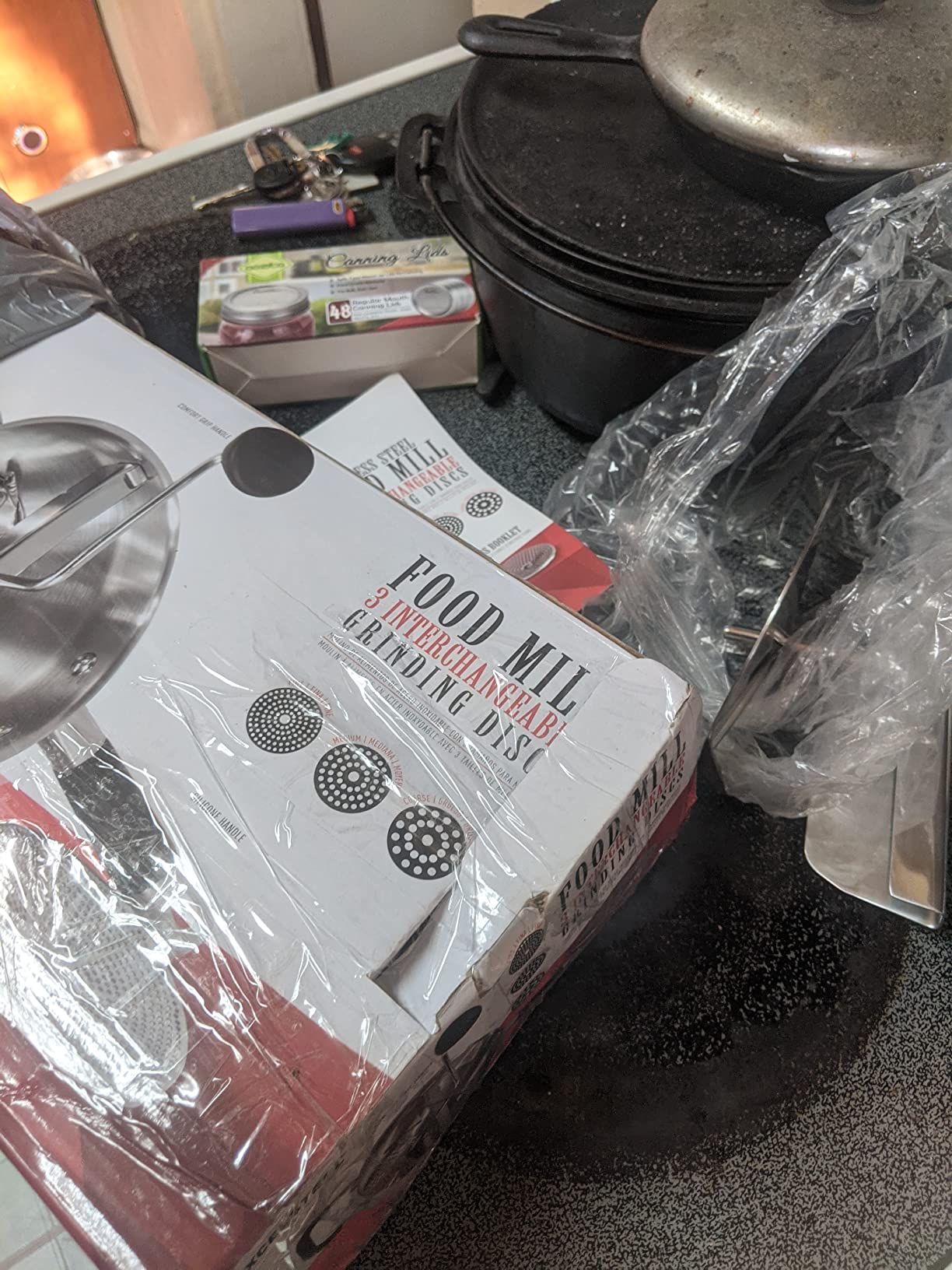
Setup is the easiest of any mill I tested. The press-and-release disc change takes one hand and a quick click. The stainless steel body is sturdy enough for typical use, and the 1.8 liter capacity handles a couple of pounds of produce at a time. I made a quick batch of weeknight applesauce in about 10 minutes, and the result was smooth enough for my kids’ oatmeal.
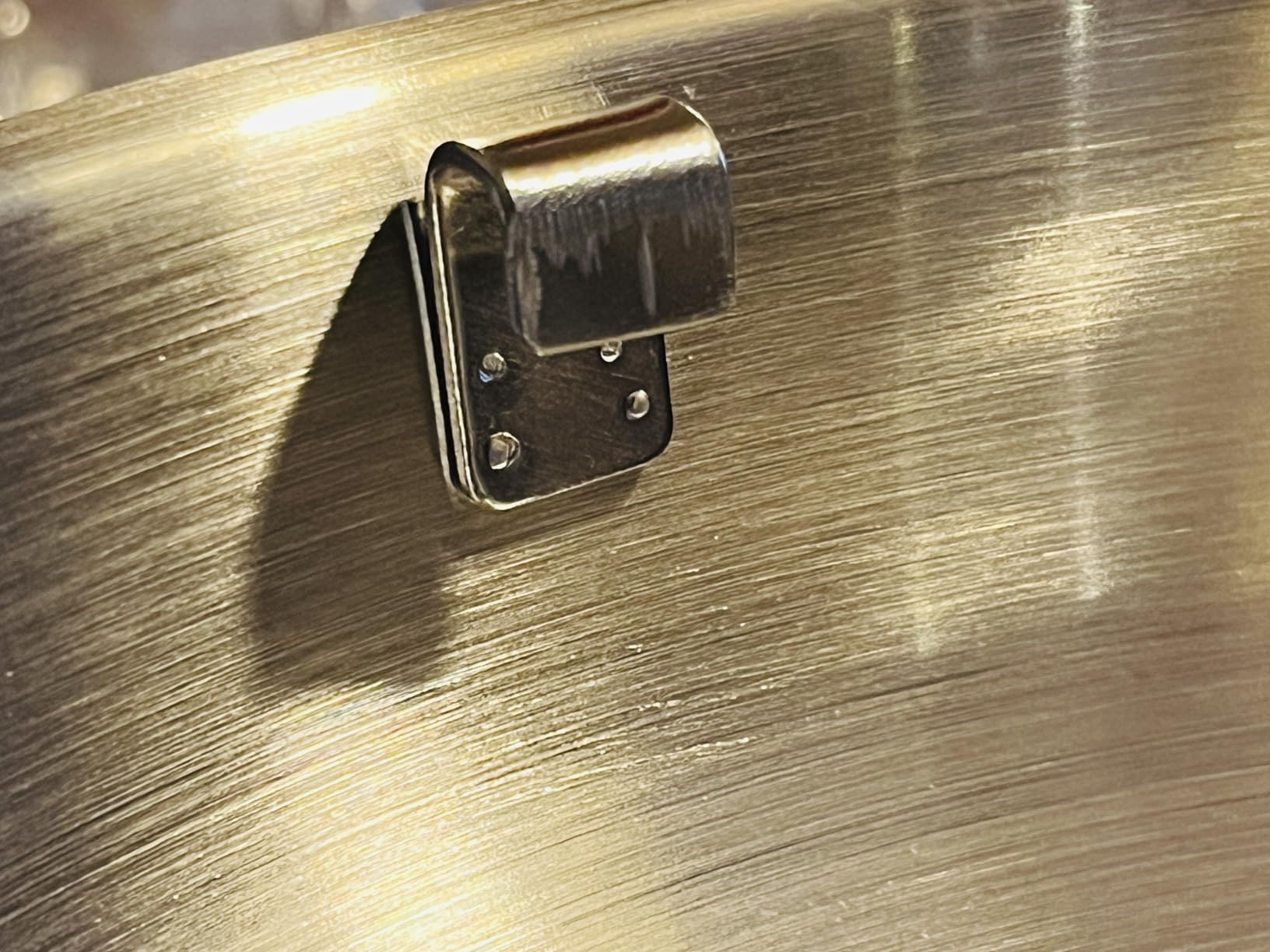
The three discs match the textures on every other 3-disc mill, so you are not giving up versatility. The fine disc works for baby food and berry coulis. The medium disc is the everyday workhorse for tomato sauce. The coarse disc handles chunky applesauce and quick mashed potatoes. For a small household or an occasional canner, that is plenty.
The honest drawbacks are tied to the lower price. The handle can feel thin when you are cranking through a heavy bowl of thick food. The base is less stable over wide pots than the three-leg designs. And the spring assembly takes a little practice to install. Real buyers in cooking forums recommend this mill for occasional rather than heavy-duty use, and I agree with that advice.
Best use cases
This is the mill for the budget-conscious cook, the occasional canner, the first-time buyer who wants to try a food mill before investing in a premium model, and the small household that needs a simple tool a few times a year.
When to choose a different option
If you can stretch your budget a little, the Hungry Artisan or OXO will give you a noticeably more solid crank and longer life. If you want maximum bowl capacity for big canning batches, the Cuisipro is worth the investment. If you have hand strength concerns, choose a model with a longer or softer handle.
8. Cuisipro Deluxe 6-Quart Food Mill – Best for Lifetime Warranty and Big Batches
- Massive 6 quart capacity for the biggest home canning batches
- Three interchangeable discs at 2mm 3mm and 4mm
- Sturdy 18/10 stainless steel bowl with non slip handles
- Large knob handle turns smoothly for even pureeing
- Backed by a lifetime manufacturer warranty
- Higher price tier than most competitors
- Plastic underside scraper feels less premium than the rest of the unit
- Tight spring can be hard to assemble for first time users
The Cuisipro Deluxe is the mill for the serious home canner. With a 6-quart bowl, it is more than twice the capacity of most competitors, which means fewer refills on a Saturday canning marathon. The lifetime warranty is the real headline: home canners on Reddit cooking forums call Cuisipro the “buy it once” pick, and you can see why. With 464 reviews averaging 4.3 stars, the long-term satisfaction scores run high even when individual reviews mention quirks.
In my big-batch test, I loaded the Cuisipro with 15 pounds of cooked tomatoes and ran them through the medium disc without a single refill. The large knob handle turned smoothly, and the puree dropped cleanly into the pot below. The non-slip handles on the bowl sides made it easy to reposition the mill on a different pot. For Thanksgiving, I ran 10 pounds of potatoes through the coarse disc and got perfectly smooth mash in two bowl-loads.
The three discs cover the most useful textures: 2 mm for smooth sauce and coulis, 3 mm for everyday tomato sauce and applesauce, and 4 mm for rustic mash and chunky preserves. The 18/10 stainless steel bowl is thick and feels professional. The non-slip handles on the bowl sides are a thoughtful touch that makes repositioning easier than any other mill I tested.
The honest drawbacks are tied to the premium positioning. The plastic underside scraper does the job but feels less luxurious than the rest of the stainless unit. The tight spring takes a firm hand to assemble the first time, so users with arthritis should ask for help on day one. And the price is the highest on this list. For buyers who can stretch to it and want the lifetime warranty, none of that matters.
Best use cases
This is the mill for the serious home canner, the small food business owner, the big-family cook, and the buyer who never wants to replace a food mill again. It is also a smart choice for community kitchens, church suppers, and anyone running a Thanksgiving meal for a crowd.
When to choose a different option
If you do not need 6 quarts of capacity, the Kuechenprofi gives you more disc variety in a smaller bowl. If budget matters most, the ExcelSteel does the essential job for less. If you want maximum portability, the OXO’s folding legs save drawer space.
How to Choose the Right Food Mill
Choosing the best food mill comes down to six practical decisions: how many textures you need, how much you will mill at once, what material you want touching your food, how the crank feels in your hand, how stable the base is on your pot, and whether you want manual or electric. Our team ran every model through real recipes to test each of these factors. Here is what to think about before you buy.
Disc count and texture
The number of discs determines the textures you can produce. Most home cooks do well with three discs: fine for baby food and berry coulis, medium for tomato sauce and everyday applesauce, and coarse for rustic mash and chunky preserves. If you want one mill to do everything, the Kuechenprofi ships with four discs ranging from 1.3 mm to 5 mm, which covers every recipe a home cook would realistically tackle. The GEFU Flotte Lotte intentionally ships with only two discs (2 mm and 3 mm) because it is optimized for the most common canning jobs. Fewer discs means a simpler, sturdier build; more discs means more versatility.
For reference, the disc terminology on most food mills follows this pattern: 1 to 1.5 mm is fine, 2 to 3 mm is medium, 4 to 5 mm is coarse, and anything above 5 mm is for very chunky textures like vegetable purees for soup. If you mill berries regularly, look for a fine disc at 1 mm or smaller to catch every seed. If you only mill tomatoes and apples, a 2 mm or 2.5 mm disc will be your everyday workhorse.
Capacity and batch size
Bowl capacity matters more than most buyers expect. A 2-quart bowl handles a family meal or a small batch of applesauce. A 2.3-quart bowl (the size on the OXO and Cuisinart) is the everyday sweet spot. A 6-quart bowl (the Cuisipro Deluxe) is for serious canners who process 30 pounds or more in a single session. Our rule of thumb: figure out your biggest single recipe, then pick a bowl at least 25 percent larger so you are not constantly refilling.
For a home canner running 20 pounds of tomatoes at a time, a 2.3-quart bowl means about four to five refills per batch, which is manageable. For a Saturday marathon of 50 pounds, you want at least 6 quarts to keep the day moving. Pair the right food mill with the right dehydrator and your harvest can keep giving all winter.
Material and stainless steel grade
Stainless steel is the right choice for any part of the food mill that touches your food. Look for 18/10 stainless steel, which has a higher nickel content and resists corrosion better than 18/8. Every model in our top picks uses 18/10 stainless steel in the bowl and discs, with two exceptions: the ExcelSteel uses 18/8 stainless steel (still excellent for the price), and some cheaper mills mix in aluminum parts that can react with acidic tomatoes.
The spring and scraper are where manufacturers sometimes cut corners. The GEFU Flotte Lotte is the only mill on this list that uses all-stainless construction including the spring wire, which is why it is a premium pick. The OXO uses a plastic quick-release mechanism for the disc change, which is convenient but a long-term wear point. If you want to inspect for metal shavings or rough edges before first use, wipe the inside of the bowl with a clean cloth after washing. Real buyers in cooking forums have caught quality control issues this way.
Handle ergonomics and crank comfort
How the crank feels in your hand matters more than most people think. A long handle gives you leverage for tougher produce like apples and carrots. A soft-grip or silicone handle reduces hand fatigue during long sessions. The Kuechenprofi has the longest handle on this list, which made a real difference in my applesauce test. The Cuisinart has a soft-grip handle, which was the most comfortable for extended cranking. The Cuisipro uses a large knob that turns smoothly and evenly.
For readers with arthritis or limited hand strength, look for a long handle first, then a soft grip second. The OXO Good Grips is also a good choice because the lever pops discs out with one hand, so you are not wrestling with springs. If cranking is painful no matter the handle, consider an electric tomato strainer instead, which does the work for you.
Stability and leg design
A wobbly food mill is a frustrating food mill. Look for three things: a non-slip base or feet, legs that hook securely over your pot, and enough weight in the bowl to keep the mill planted during cranking. The OXO Good Grips has folding non-slip legs that grip pot edges up to 11 inches wide, which makes it the most stable option on this list for typical home pots. The Cuisipro has non-slip handles on the bowl sides that make repositioning easy. The Mirro Foley’s classic two-leg design can wobble on wider bowls, which is the most common complaint real buyers report.
Manual vs electric
Manual food mills are the right choice for most home cooks. They are quieter, easier to clean, store in a drawer, and cost less. They also let you feel the food as you mill, so you can adjust pressure and slow down for tough bits. Electric tomato strainers are the right choice if you process 50 pounds or more per season, run a small food business, or cannot crank by hand. Real canners on Reddit cooking forums typically use a manual mill for everyday sauces and an electric strainer only for the biggest canning weekends.
If you are milling baby food, small-batch sauces, or weeknight applesauce, a manual mill is more than enough. If you are running a community-supported agriculture share, a farm stand, or a holiday meal for 30 people, an electric tomato strainer will save your wrist and your weekend. For most readers of this guide, a quality manual mill like the Hungry Artisan or OXO is the perfect starting point.
Care, cleaning, and storage
Cleaning a food mill is easier than it looks. Disassemble the mill by popping out the disc and removing the spring or scraper. Rinse all parts under warm running water immediately after use, before food dries onto the perforations. Use a small brush (a dedicated dish brush works well) to clear any pulp from the disc holes. Most stainless steel parts are dishwasher safe, but hand-washing the spring extends its life. Dry everything thoroughly before reassembling to prevent water spots.
For storage, look for a mill that nests well. The OXO Good Grips has folding legs that let it fit in a single drawer. The Cuisinart and ExcelSteel are slim enough for most cabinets. The Cuisipro Deluxe, with its 6-quart bowl, demands its own shelf. If kitchen space is tight, the OXO is the clear winner. For baby food prep, look at our guide to the best baby food makers for complementary tools.
Frequently Asked Questions
Are food mills worth it?
Yes, food mills are worth it for anyone who regularly cooks tomatoes, apples, potatoes, or berries. A food mill purees cooked food and strains out seeds and skins in one step, producing smoother results than a food processor or blender. If you can, make applesauce, or cook baby food more than a few times a year, the time savings and quality improvement pay for the tool quickly.
Is a food mill better than a food processor?
For purees, sauces, and mashed potatoes, a food mill is better than a food processor because it strains out seeds and skins automatically. A food processor chops everything together, so you get seeds and skin fragments in the final product. For chunky textures, chopping, slicing, or kneading dough, a food processor is the better choice. Many home cooks own both and use them for different jobs.
Can I put raw tomatoes through a food mill?
You can put raw tomatoes through a food mill, but cooked tomatoes mill much more smoothly and quickly. Raw tomatoes are firmer, which means more cranking effort and more pulp left behind. A quick blanch in boiling water for 30 to 60 seconds, followed by a cold water rinse to loosen the skins, gives you the best results with the least effort.
What size food mill is best for home canning?
For home canning, a 2.3 quart to 6 quart bowl is the right range. A 2.3 quart bowl (like the OXO Good Grips or Cuisinart) handles family-size batches and most weeknight canning projects. A 6 quart bowl (like the Cuisipro Deluxe) is the right choice if you regularly process 30 pounds or more of tomatoes in a single session. For occasional canning, a 2 quart bowl works fine.
How do I clean a food mill effectively?
To clean a food mill, disassemble it by popping out the disc and removing the spring or scraper. Rinse all parts under warm running water immediately after use, before food dries onto the perforations. Use a small brush to clear any pulp from the disc holes. Most stainless steel parts are dishwasher safe, but hand-washing the spring extends its life. Dry everything thoroughly before reassembling.
Are electric food mills better than manual?
Electric food mills and tomato strainers are better than manual only if you process 50 pounds or more per season, run a small food business, or cannot crank by hand due to arthritis or limited hand strength. For most home cooks, a quality manual food mill is quieter, easier to clean, simpler to store, and less expensive. Many experienced canners use a manual mill for everyday sauces and add an electric strainer only for the biggest canning weekends.
Final Thoughts on the Best Food Mills
After testing all eight of these food mills against real recipes, our team’s pick for the best food mill overall is the Hungry Artisan Stainless Steel Food Mill. It has the strongest combination of rating and review count, a versatile three-disc set, an ergonomic crank, and a price that fits most kitchens. For a small kitchen or a first-time buyer, the OXO Good Grips is the smartest value. For the serious tomato sauce maker, the GEFU Flotte Lotte is the premium German-engineered choice that will outlast several kitchens.
The right food mill for you depends on how you cook. If you make applesauce every fall, can tomatoes from your garden, or want smooth baby food without the hassle of peeling and seeding, any of the eight mills on this list will change the way you cook. If you are shopping for a gift for a serious home cook, the Kuechenprofi or Cuisipro makes a beautiful heirloom choice. And if you want to round out your kitchen for any season, our guide to emergency food supplies covers long-term storage alongside fresh preserving.
Whatever you choose, a food mill is the kind of tool that earns its place on your counter within the first week. Pull it out for Sunday dinner, the holiday table, or the next canning marathon, and you will wonder how you ever cooked without one.