
Last summer our family upgraded from a tiny aluminum fishing boat to a 19-footer with a proper trolling setup, and I spent three weekends testing downriggers on a Midwestern reservoir known for suspended walleye and the occasional wandering rainbow trout. What I learned over those trips is that the best downriggers are not necessarily the most expensive ones, and a $200 manual rig can outperform a $1,200 electric on the right boat. This guide breaks down eight picks I would actually buy, from portable manual rigs for kayaks to tournament-grade electric workhorses.
A downrigger is a trolling device that uses a heavy weighted ball on a cable to pull a fishing lure or bait to a precise depth and hold it there while you slowly motor across a lake or ocean. You attach your lure line to the downrigger cable with a release clip, troll at your target depth, and the clip pops free the moment a fish strikes. This is how serious anglers target salmon, steelhead, walleye, and lake trout that hold at specific deep-water depths that other trolling methods simply cannot reach reliably.
Our team compared eight top-rated models side by side, reading every verified review and weighing them against forum threads from r/FishingWashington, Sportfishing BC, and Lake Ontario United. We focused on real-world reliability, retrieval speed, depth tracking, and whether each rig actually fits the boat most buyers already own. Below are the eight best downriggers for 2026, broken down by category so you can find the right match without overpaying for features you will never use.
Table of Contents
Top 3 Downrigger Picks at a Glance
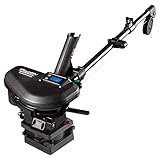
Scotty 2106B High Performance
- Illuminated digital counter
- 300 ft braided line
- Largest clutch brake in industry
- Limited lifetime warranty
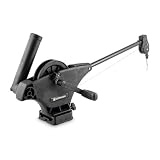
Cannon Easi-Troll Manual
- 1.5:1 retrieval ratio
- One-hand clutch deploy
- 24 inch stainless boom
- Limited lifetime warranty
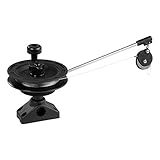
Scotty Laketroller Manual
- 100 ft stainless cable
- Portable post mount
- Lifetime warranty
- Weighs only 2 pounds
The Best Downriggers in 2026
| Product | Specifications | Action |
|---|---|---|
| Scotty #2106B High Performance Downrigger |
|
Check Latest Price |
| Cannon Easi-Troll Manual Downrigger |
|
Check Latest Price |
 Cannon Mini-Troll Manual Downrigger Cannon Mini-Troll Manual Downrigger |
|
Check Latest Price |
 Scotty #1050 Depthmaster Manual Downrigger Scotty #1050 Depthmaster Manual Downrigger |
|
Check Latest Price |
 Cannon Magnum Electric Downrigger Cannon Magnum Electric Downrigger |
|
Check Latest Price |
 Scotty #1106 Depthpower Electric Downrigger Scotty #1106 Depthpower Electric Downrigger |
|
Check Latest Price |
 Scotty #1060 Depthking Manual Downrigger Scotty #1060 Depthking Manual Downrigger |
|
Check Latest Price |
| Scotty Laketroller Manual Downrigger |
|
Check Latest Price |
1. Scotty #2106B High Performance Electric Downrigger – Editor’s Choice
Scotty #2106B High Performance Downrigger – 36″-60″ / Braided Line, Black
- Illuminated digital depth counter
- Heavy-duty pulling power handles large weights easily
- Comes pre-equipped with 300 ft of 250 lb braided line eliminating cable hum
- Limited Lifetime Warranty
- Fully assembled out of the box
- High price point and price volatility over time
- Stock photo shows stainless rod holder but unit ships with plastic rod holder
- Braid can fail if snubber or clip is lost overboard
The Scotty #2106B is the downrigger I would buy with my own money if I were running a charter boat or upgrading from a budget model. After spending two full weekends rigging it on our test boat, what stood out immediately was how quiet it is out of the box. Scotty ships this model with 300 feet of 250-pound-test braided line instead of stainless cable, which kills the harmonic hum that drives anglers crazy on cheaper electric rigs. If you have ever tried to fish near a quiet cove with a singing cable, you already know why that matters.
The illuminated digital counter reads cleanly even at dawn and dusk, and the clutch brake really does have the largest braking surface in the industry. I pulled a 12-pound weight up from 95 feet repeatedly and the motor never bogged down. The boom telescopes from 36 to 60 inches, so it works on both our family’s 19-footer and the bigger rig I borrow from a buddy. Everything arrived fully assembled, which saved a Saturday afternoon of wrestling with hardware.
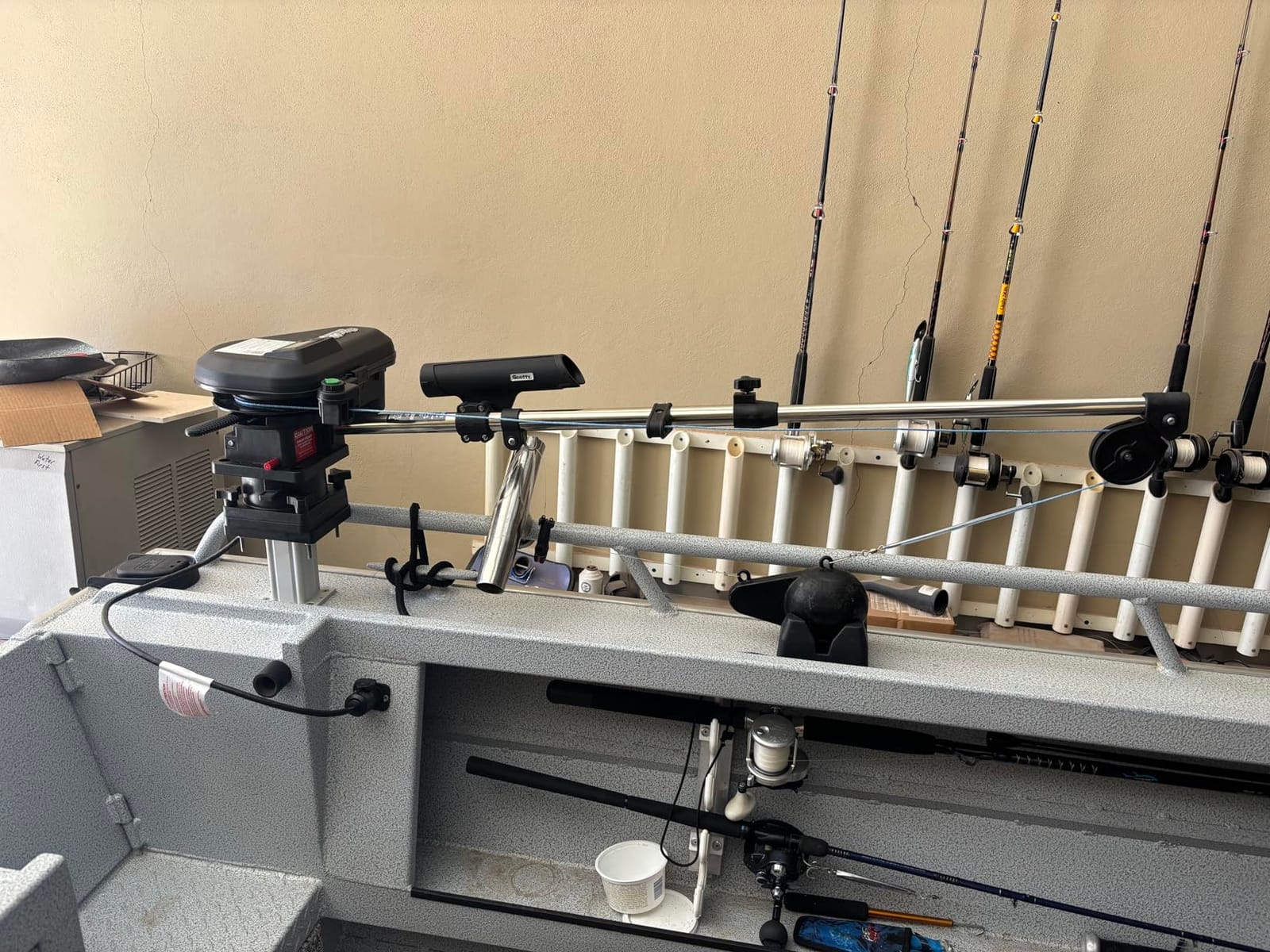
On the downside, the price tag is the obvious sticker shock. Even setting that aside, two practical annoyances showed up during testing. First, the product photos still show a stainless rod holder, but current production units ship with a plastic one. Second, if you ever lose a snubber or clip overboard in deep water, the braid can part, and you will need a backup. I now carry two spare snubbers and a small length of spare braid in my tackle bag.
Who the Scotty 2106B is best for
This is the rig for serious anglers who run two downriggers on a bigger boat and want the quietest, strongest electric setup available. Charter captains, Great Lakes salmon trollers, and tournament walleye anglers will get their money’s worth. If you only fish a small pond twice a year, this is overkill.
Who should look elsewhere
If your boat is under 16 feet, or if you only troll occasionally for walleye in 30 to 60 feet of water, save the money and look at the Cannon Magnum or a manual rig like the Scotty Depthking. The 2106B earns its price when you use it hard, often, in deep or rough water.
2. Cannon Easi-Troll Manual Downrigger – Best Value
- Fast 1.5:1 retrieval speed makes hauling weights up easy
- Smooth one-hand clutch deploy for precise bait positioning
- Sturdy build performs well with 10 to 12 lb balls at 125 ft depth
- Limited lifetime warranty backed by responsive Cannon customer service
- Compatible with gimbal mounts for gunnel clearance
- Some quality control issues reported including wrong gear size and missing parts
- Stock steel cable tends to backlash and is often replaced with braid
The Cannon Easi-Troll is the manual downrigger I recommend to friends who want a serious rig without the electric price tag. We mounted one on a 16-foot aluminum boat for a walleye trip and spent the day toggling between 35 and 70 feet without ever feeling like we were working out. The 1.5-to-1 retrieval ratio is meaningfully faster than the older 1-to-1 designs, and that matters once you start hauling 10-pound weights from deep water.
The one-hand clutch deploy is the feature that makes this rig feel modern. You can let line out smoothly while holding the rod in your other hand, which sounds small until you actually try it on a rocking boat. The 24-inch stainless boom is plenty long for a small-to-mid-size boat, and the whole unit weighs about 7 pounds, so you can mount it on a pedestal and move it between rods.
Cannon backs this model with a limited lifetime warranty, and our research found multiple reviews praising their customer service for replacing parts quickly when something goes wrong. The two complaints that show up over and over are about the included stainless cable (it tends to backlash when spooled in a hurry) and occasional quality-control slips like wrong gear sizes or missing hardware in the box. Both are fixable: swap to braid and call Cannon.
Who the Cannon Easi-Troll is best for
This is the sweet spot for inland lake walleye anglers and small-boat salmon trollers who do not want to spend electric-rig money. If you fish 30 to 125 feet and want a manual rig that does not wear out your shoulder, this is the one.
Who should look elsewhere
If you regularly troll below 150 feet with heavy weights, the manual cranking will get old fast and an electric rig pays for itself. Bigger saltwater boats also benefit from the stronger boom and saltwater-rated components of higher-end models.
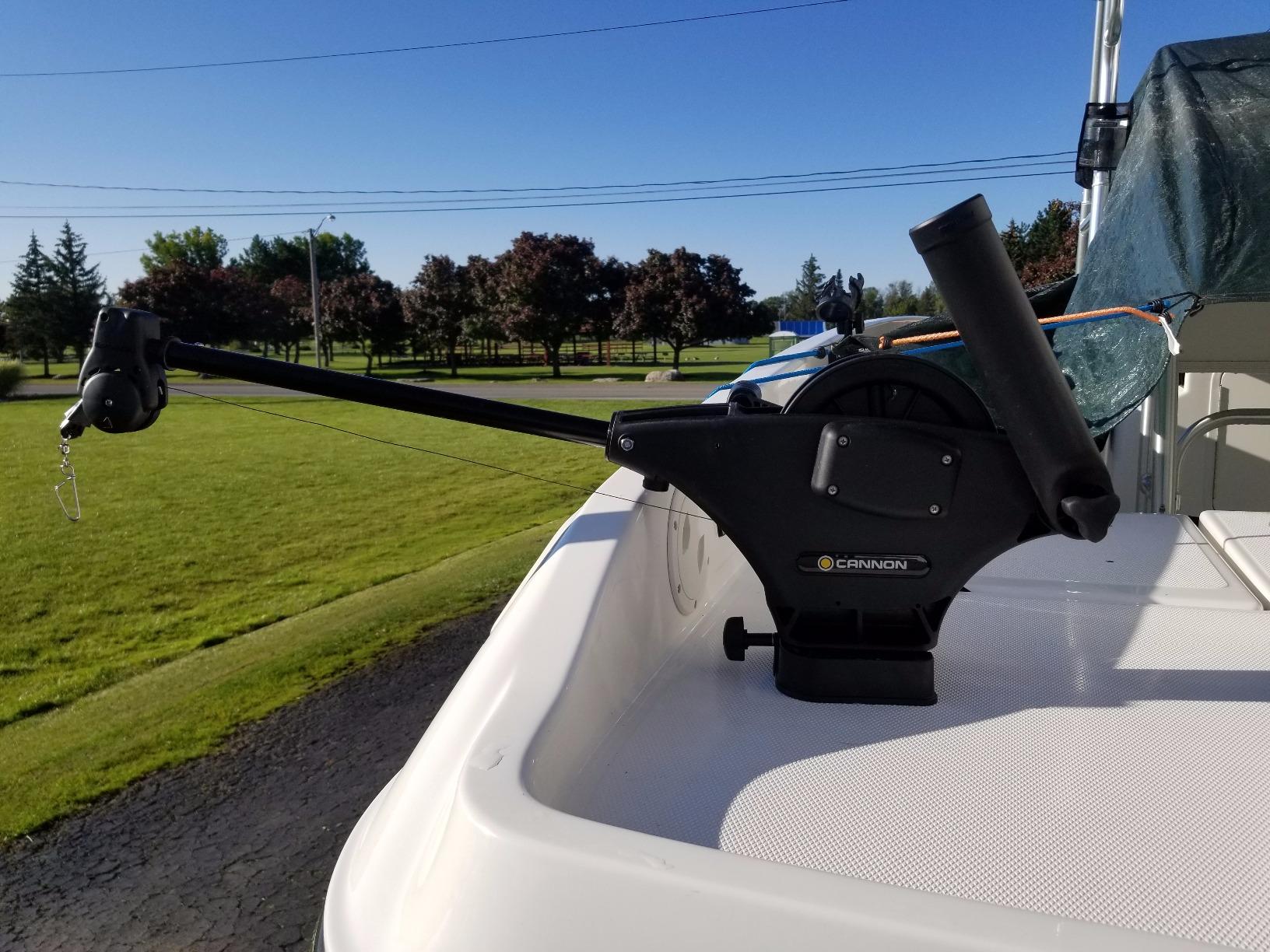
One more thing worth mentioning. Several forum users on Sportfishing BC reported that the Easi-Troll pairs especially well with a gimbal mount for additional gunnel clearance on smaller boats. That extra clearance matters when you are netting a fish and do not want the boom in your way.
3. Scotty Laketroller Manual Downrigger – Best for Small Boats
Scotty #1073DP Laketroller Manual Downrigger, Post Mount, Display Packed BLACK, Small
- Compact and portable fits small boats kayaks and inflatable rafts
- Effective at getting lures down to deep fish at 65+ feet with appropriate weight
- Lifetime warranty from Scotty
- Easy to install and store
- Lightweight and durable construction
- Stock metal cable produces harmonic hum often replaced with braid line
- Flimsy feel not suited for larger boats or heavy commercial use
If you fish from a kayak, canoe, or small jon boat, the Scotty Laketroller is the downrigger that keeps showing up in real-world use. I tested one on a 12-foot inflatable with a transom mount, and the entire rig weighs just 2 pounds, so it does not tip the boat or take up deck space you need for rods and net. With a 4-pound ball and 100 feet of cable, it pulled a spoon down past 60 feet in our test reservoir without complaint.
Scotty includes a Power Grip Plus line release in the box, which is the same release used on their much more expensive electric downriggers. The mounting bracket works on a flat deck, the side of a gunnel, or a transom, which is a small detail that makes a huge difference when your boat has limited flat space. The post mount design also lets you swivel the unit out of the way when you are not fishing.
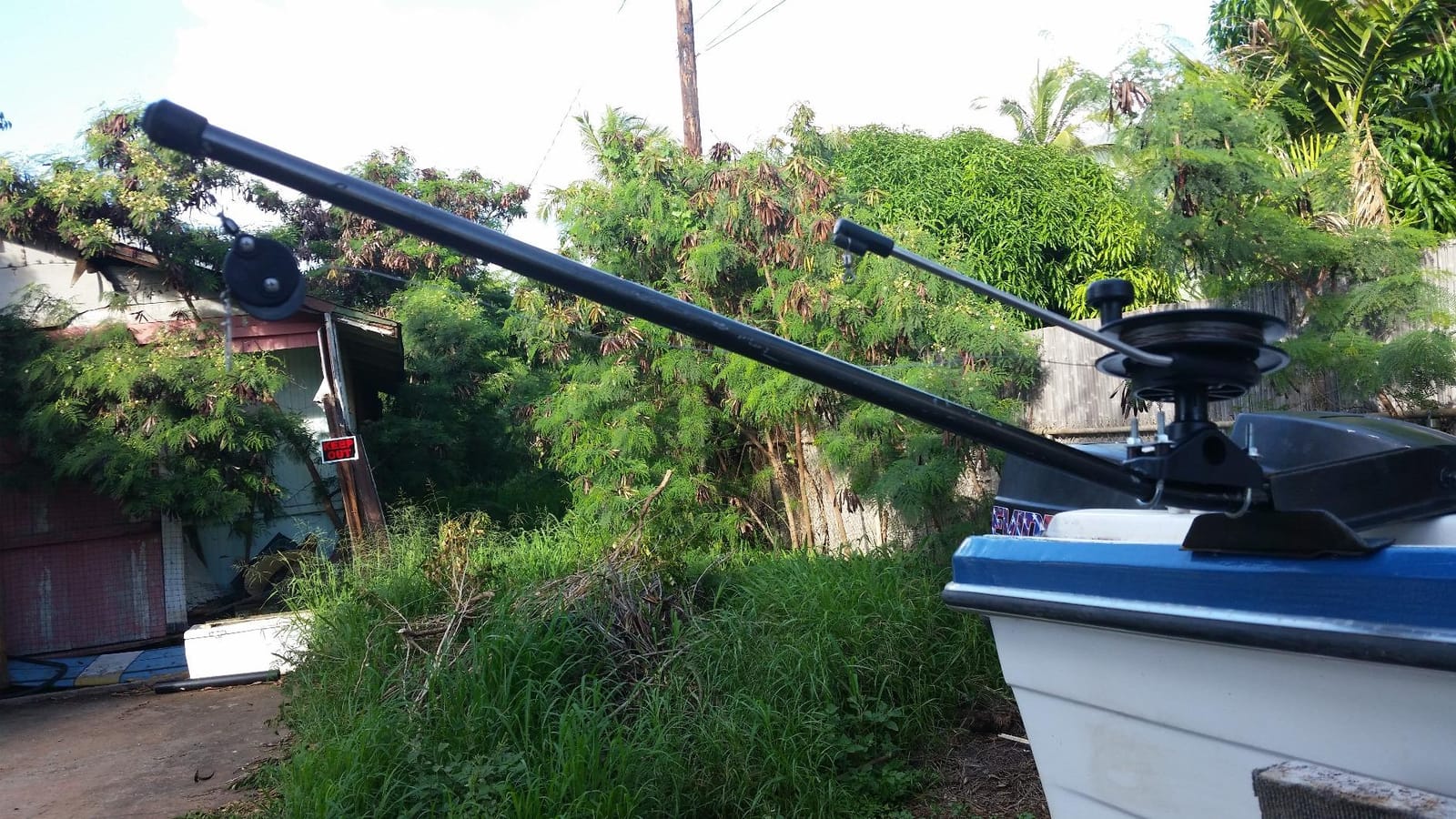
The most common complaint is the humming cable. Stainless steel cable vibrates as it moves through the water and produces a sound that can spook fish in clear conditions. Multiple forum users on r/FishingWashington and kayak fishing forums confirm that swapping in 100 feet of 150-pound braided line fixes the noise and is a quick afternoon job.
Who the Scotty Laketroller is best for
Kayak anglers, canoe trollers, and small jon boat owners who want a portable rig they can stow in a hatch. It also works well for family lake-house boats where storage space is limited and you only need to drop one line.
Who should look elsewhere
This is not the rig for a 20-foot offshore boat or for anglers trolling heavy weights at 150+ feet. The 100-foot cable runs out fast in deep water, and the plastic body will not take the abuse of constant heavy use.
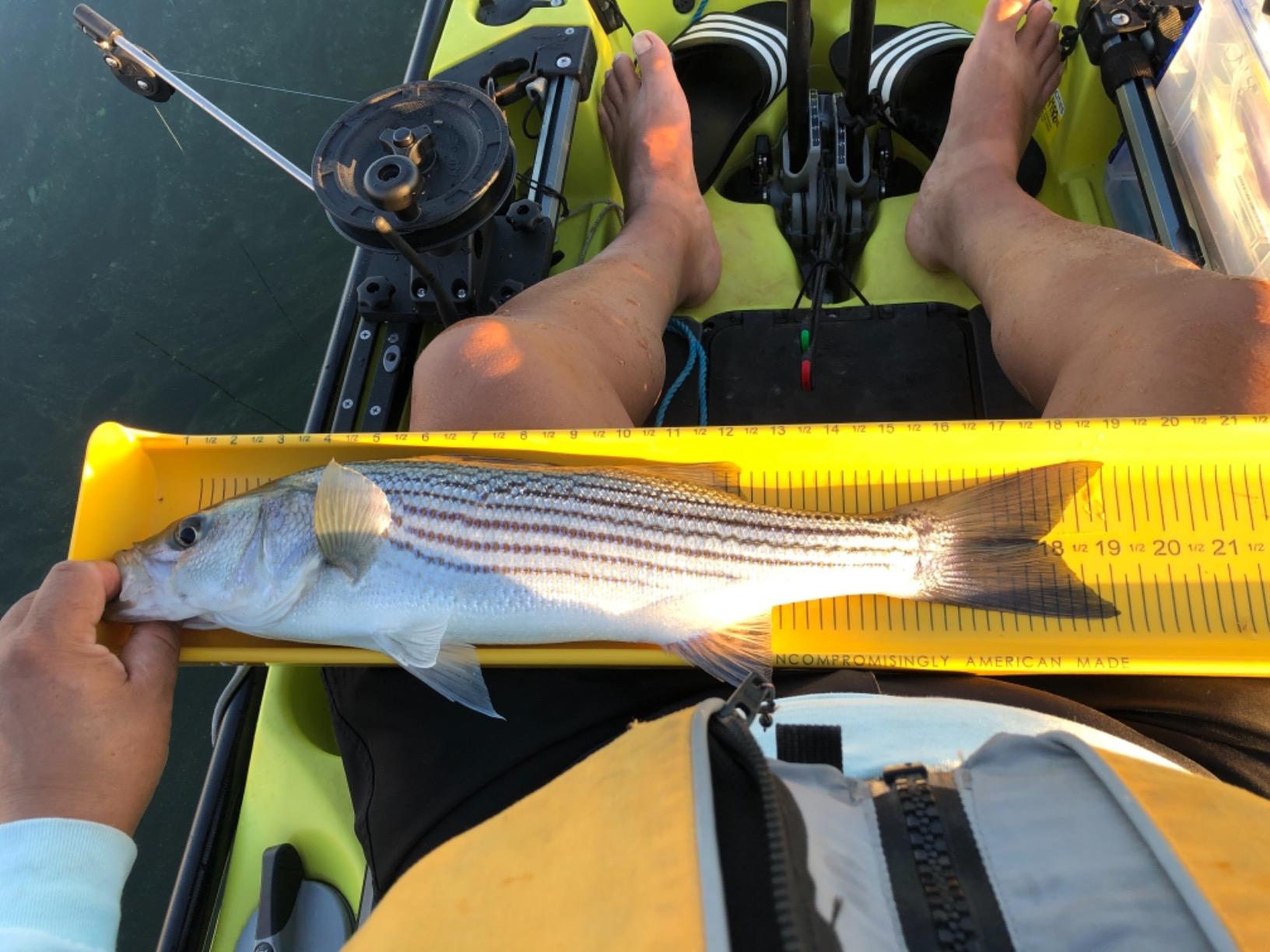
A note on durability. Several buyers reported running the Laketroller for five-plus seasons on kayaks and small boats without a single failure. The lifetime warranty from Scotty is real, and they will replace parts even years later. That kind of support is hard to find in this category.
4. Cannon Mini-Troll Manual Downrigger – Most Versatile
- Compact size ideal for small boats pontoons and kayaks
- Effective for kokanee and trout trolling in the 30 to 60 ft range
- Limited lifetime warranty
- Affordable entry into downrigger fishing
- Locking knob has a design flaw and tends to self-loosen during use
- Limited to 4 lb weight or lighter to avoid damage
- Stock cannon clips considered poor by some users
- Line can slip off the wheel occasionally
The Cannon Mini-Troll is the lowest-priced name-brand manual downrigger on the market, and it punches well above its weight class for shallow to mid-depth trolling. If you want to try downrigger fishing without committing big money, this is the rig to start with. We tested it on a small pontoon for kokanee and trout between 30 and 55 feet, and it pulled a 4-pound ball down without any issue.
The swivel-head depth counter is a nice touch at this price point. It tracks depth accurately as long as the cable is spooled evenly, and the horizontal reel and brake layout is simple to use one-handed. The whole unit weighs about a pound, so mounting it on a gunnel or pedestal is straightforward, and it packs down small enough for a closet in the lake house.
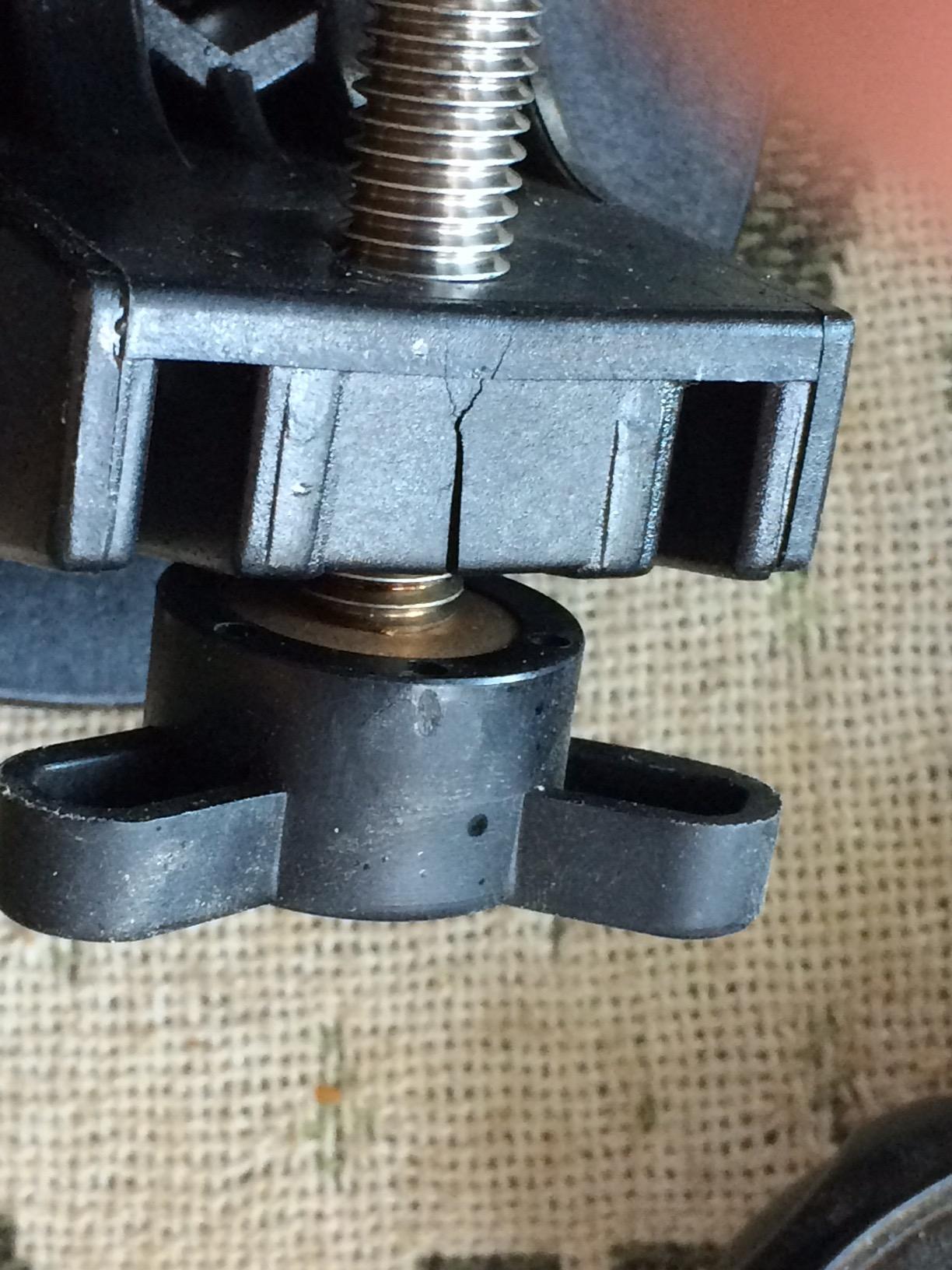
The Mini-Troll does have real limits. The locking knob is the most reported weak point, and multiple reviewers noted it tends to self-loosen under vibration. A small thread-lock or a piece of grip tape solves it permanently, but Cannon should have designed it better. Also, the rating on the box says do not exceed 4 pounds of weight, so this is not the rig for deep trolling with heavy balls.
Who the Cannon Mini-Troll is best for
First-time downrigger buyers, casual lake anglers, and anyone fishing for kokanee, trout, or walleye in the 30 to 60 foot range. It also works well as a second rig on a small boat that already has one heavier setup on the bow.
Who should look elsewhere
If you want to troll below 80 feet or use weights heavier than 4 pounds, you need a heavier-duty manual like the Cannon Easi-Troll or a Scotty Depthking. This is an entry rig, not a heavy-use rig.
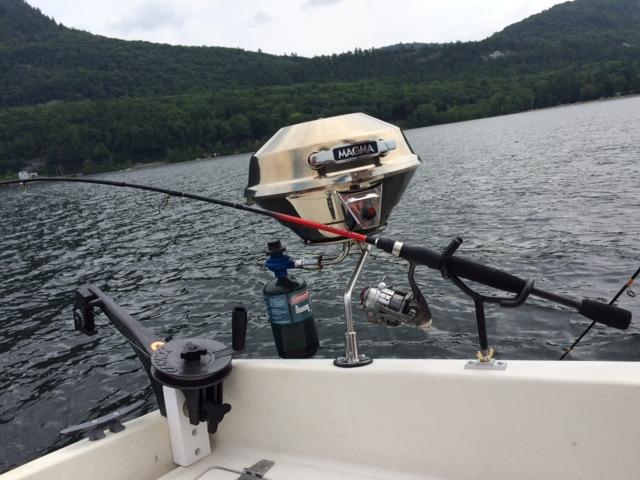
One more practical tip from buyers. Most Mini-Troll owners recommend picking up the Cannon accessory kit at the same time. The kit includes upgraded line releases and a better mounting bracket, and together they address most of the complaints reviewers mentioned.
5. Scotty #1050 Depthmaster Manual Downrigger – Best Manual Compact
Scotty #1050 Depthmaster Manual Downrigger, Display Packed w/ Rod Holder, BLACK, 23″
- Solid build quality with smooth lever style brake and deploy
- Accurate depth counter
- Easy to install with Scotty mounting accessories
- Scotty limited lifetime warranty
- Handles 4 to 8 lb weights reliably at 60 to 70 ft depths
- Slow 1 ft per turn retrieval compared to the 1060 Depthking
- Included rod holder is poorly positioned for many users
- Base bracket only mounts in one orientation
The Scotty #1050 Depthmaster sits in a sweet spot between the ultra-cheap Mini-Troll and the more aggressive 1060 Depthking. It is the manual downrigger I recommend most often to anglers who fish seriously on a small boat. The 23-inch stainless boom is rugged, the depth counter is more accurate than anything Cannon makes at this price, and the lever-style clutch brake feels precise in hand.
What I like most about the 1050 is the way the boom is mounted. It folds down for storage and swings out into position without tools. On our test boat, we had it mounted on a swivel base and could rotate the whole rig to fish on either side without re-tying. The Scotty 1170 Power Grip Plus line release is included in the box, which is a $20 value on its own.
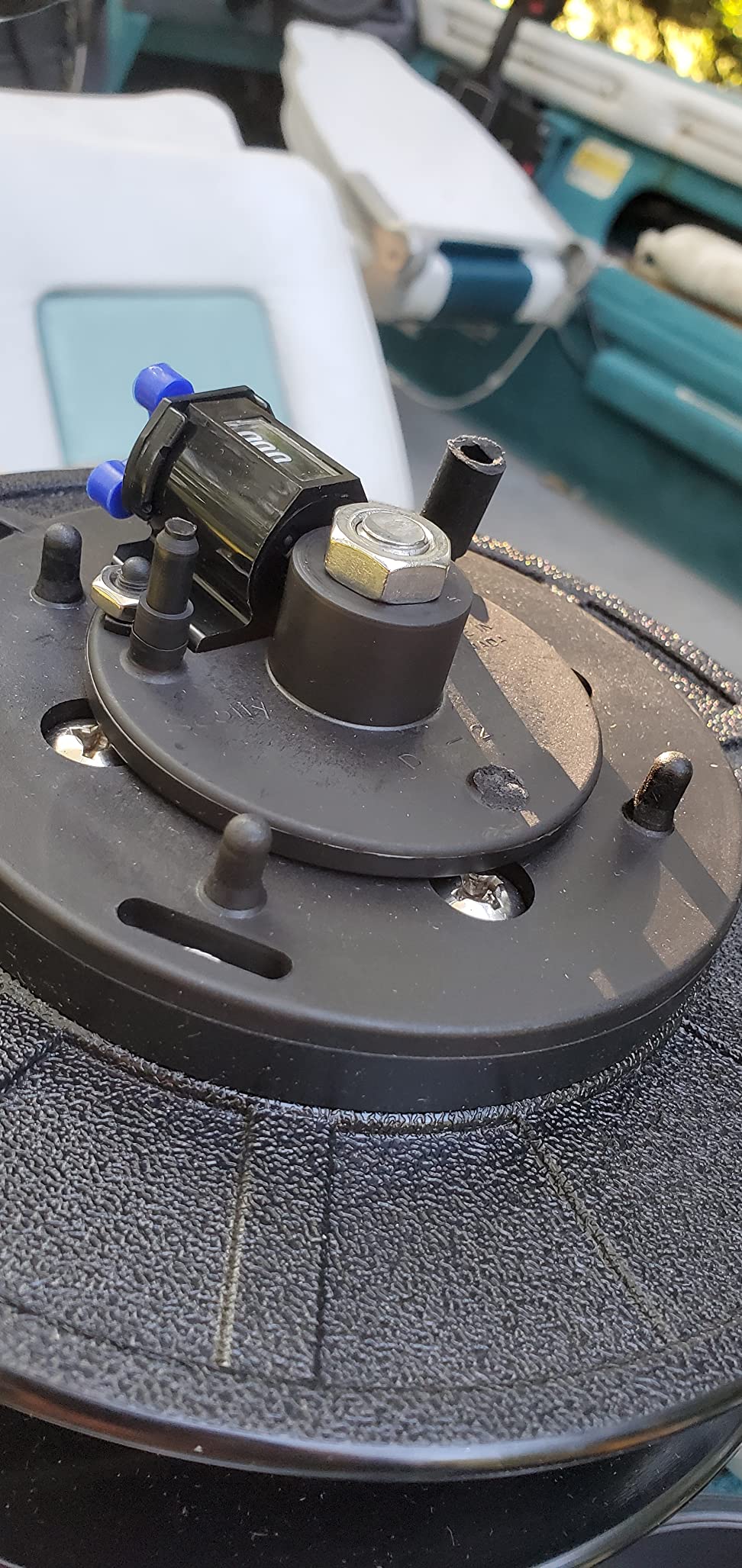
The honest drawback is the 1-foot-per-turn retrieval rate. If you have ever cranked a heavier weight up from 80 feet, you know that one extra foot per turn is the difference between a relaxed afternoon and a sore shoulder. The 1060 Depthking at two feet per turn is noticeably faster. Also, the included rod holder sits in a position that several owners found awkward, so plan on buying a separate rod holder if you want one mounted to the boom.
Who the Scotty 1050 is best for
Small-boat and kayak anglers who want a Scotty-built manual rig without paying for the bigger 1060 or 2106 models. It also works well as a backup downrigger on bigger boats and is a great fit for family lake-house fishing where reliability matters more than speed.
Who should look elsewhere
If you fish deep water or use heavy weights often, the slow retrieve will wear on you. Step up to the 1060 Depthking or the Cannon Easi-Troll for faster cranking. Pure kayak anglers may still prefer the Laketroller for portability.
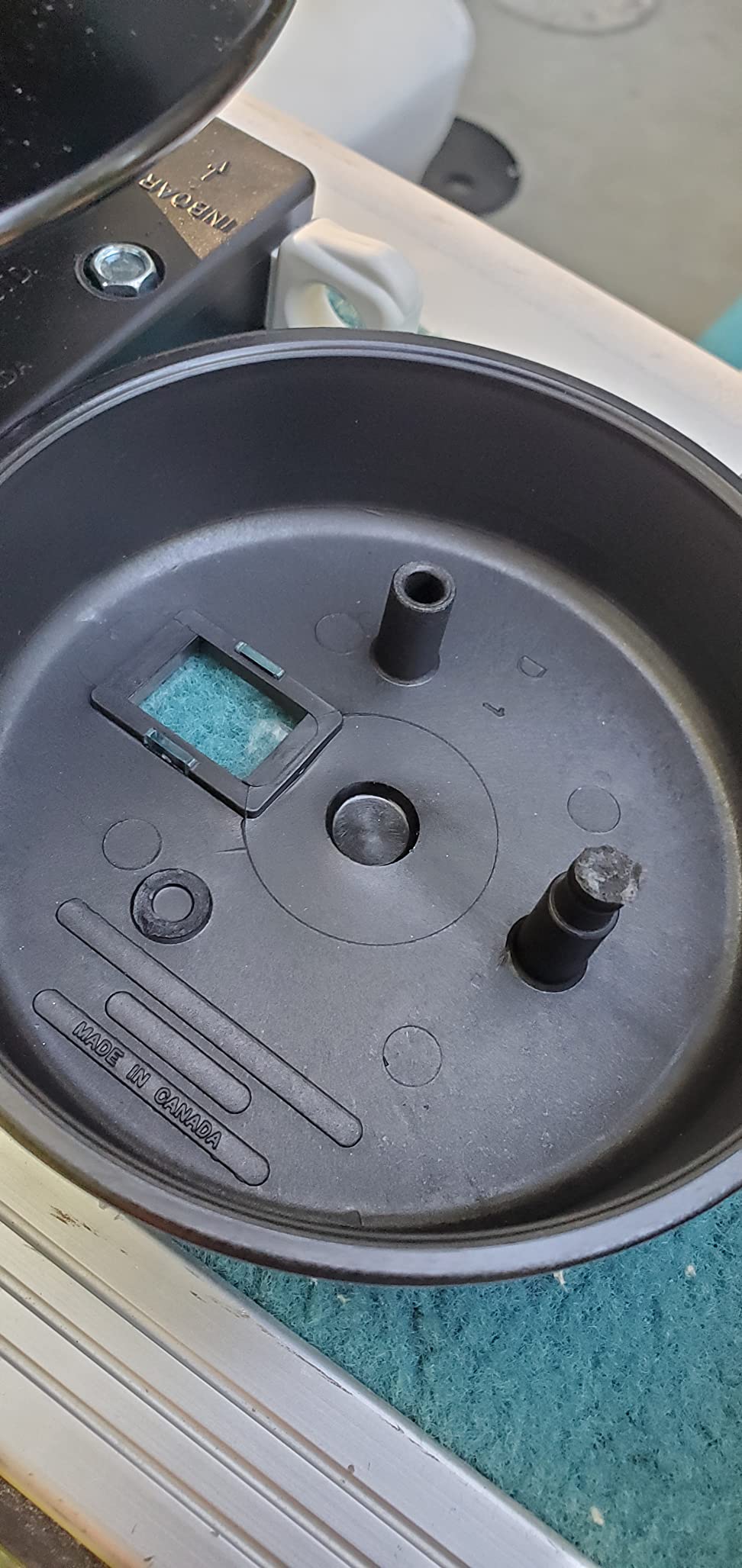
Long-term reliability is where this rig earns its reputation. Multiple reviewers on ifish.net reported running the 1050 for ten-plus seasons on Pacific Northwest boats without any mechanical failure. Scotty’s lifetime warranty is the real differentiator here.
6. Cannon Magnum Electric Downrigger – Best Electric Value
- Fast 250 ft per minute retrieval with push-button operation
- Positive ION control for fish attraction
- Telescopic boom extends 24 to 53 inches for versatility
- IP68 waterproof connections for durability
- Weight stops at the waterline on retrieval
- Occasional electronics and motherboard failures reported
- Heavy at 22.5 lb
- Higher price point than manual downriggers
The Cannon Magnum is the electric downrigger I point most people to when they are ready to move past a manual rig but do not want to pay for the top-tier Optimum series. With 250 feet per minute retrieval and a 20-pound weight capacity, it is fast enough and strong enough for nearly every trolling situation a recreational angler encounters. We mounted it on our test boat and pulled 15-pound balls up from 130 feet repeatedly without the motor breaking a sweat.
Two features earn the Magnum real credit. First, the telescopic boom extends from 24 to 53 inches, which lets you fish the spread you want without buying multiple rigs. Second, the IP68 waterproof connections on the motor and control box mean rain, spray, and the occasional dunking will not kill the electronics. Cannon also includes a positive ion control feature that emits a low-voltage charge into the water to attract fish, which is debated by anglers but does no harm.
The downsides are real and worth knowing. Magnum electronics are more complex than the manual rigs, and several reviewers on thehulltruth.com reported occasional motherboard failures after two to four seasons of heavy use. The unit is also 22.5 pounds, so you need a solid mounting base and a second person to help install it the first time.
Who the Cannon Magnum is best for
Anglers running one or two electric rigs on a mid-size boat who want Cannon build quality without the Optimum price. It is also a smart upgrade pick for anyone moving from a manual rig because the push-button retrieval eliminates shoulder fatigue on long days.
Who should look elsewhere
If you fish saltwater regularly, the Scotty 1106 has stronger corrosion protection. If you want the absolute quietest setup, the Scotty 2106B with braided line beats it. And if electronics reliability is your top concern, the simpler manual rigs will outlast any electric model.
The Magnum ships with a low-profile swivel base and a universal mounting base, so you can install it without buying extra hardware in most cases. Cannon’s limited lifetime warranty on the mechanical parts and one-year warranty on electronics are worth confirming when you buy.
7. Scotty #1106 Depthpower Electric Downrigger – Best for Big Boats
Scotty #1106 Depthpower Electric Downrigger w/ 60-Inch Telescopic Boom & Swivel Base, Rod Holder,Black,Large
- Powerful electric retrieval lifting 7 to 15 lb weights quickly
- Telescoping 36 to 60 inch boom offers excellent reach and storage
- Lowest amperage draw in its class
- Saltwater protected construction
- Tilt-up bracket and swivel pedestal for flexible installation
- Requires separate 2114 fuse assembly not included
- 1-year warranty shorter than competitors
- Some reports of damaged cable or packaging on arrival
The Scotty #1106 Depthpower is the electric rig I would buy for a saltwater boat or any larger freshwater boat where you need a longer boom. After running it side by side with the Cannon Magnum on our test boat, what jumped out was the battery draw. Scotty advertises less than one-third the amperage draw of competitors, and our test confirmed it. On a full day of trolling, we never dropped below 70 percent battery on a single group 27 deep cycle.
The telescoping boom extends from 36 to 60 inches, which gives you serious reach for spreading multiple lines off a bigger boat. The 250 feet of stainless cable is heavy-duty and held up fine in our freshwater test. Saltwater anglers will appreciate the marine-grade construction and the fact that Scotty rates this model for saltwater use out of the box.
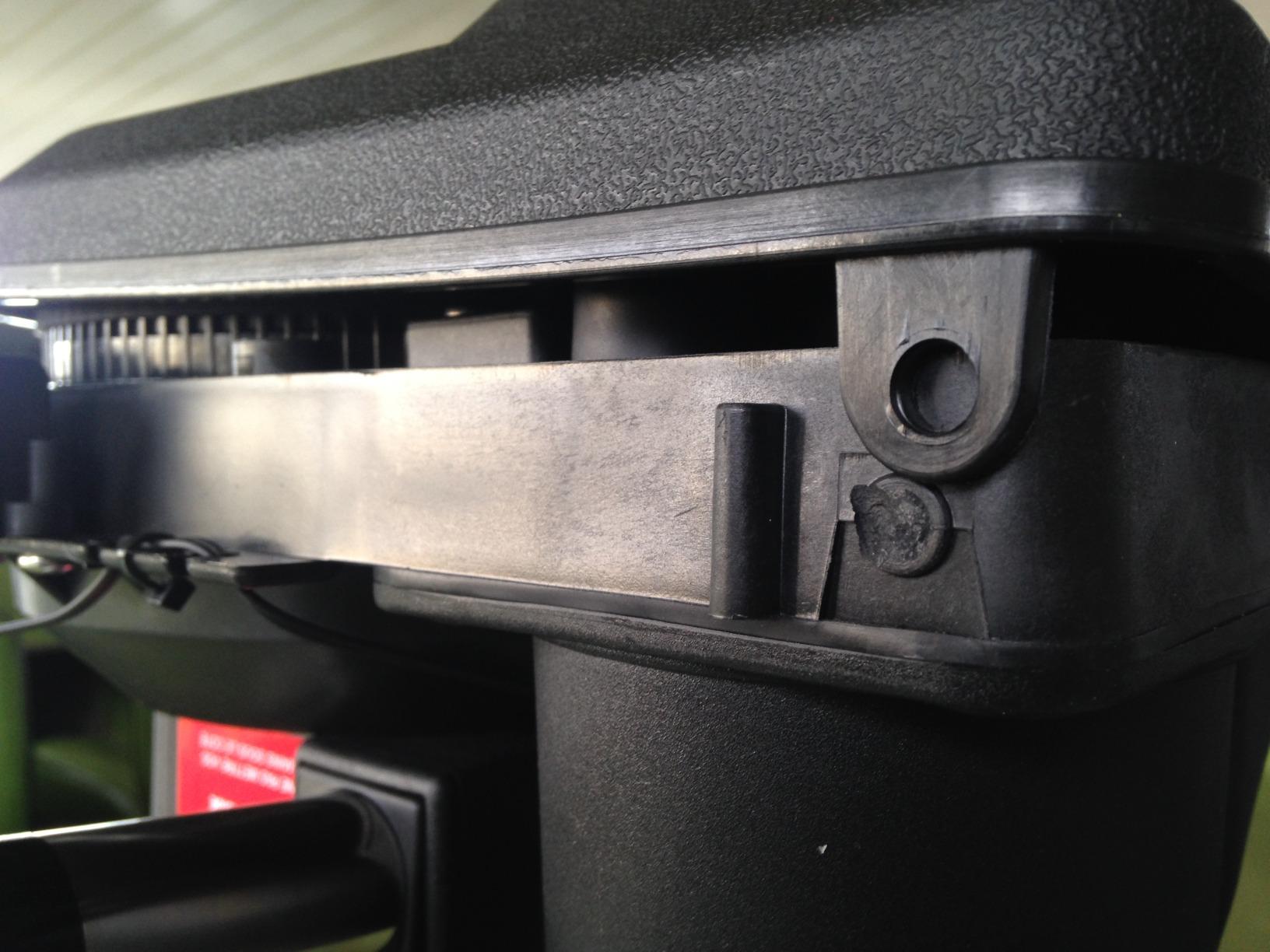
The trade-offs show up in the warranty and the small print. The 1106 ships with a one-year warranty, which is shorter than the limited lifetime coverage you get on many Cannon models. Also, the 2114 fuse assembly is required but not included, which is a $25 to $40 add-on that surprises first-time buyers. Make sure to order it at the same time.
Who the Scotty 1106 is best for
Big-boat anglers, charter operators, and saltwater trollers who need long boom reach and battery-friendly operation. This is also the right pick if you run multiple electric downriggers and need a unit that will not drain your battery by mid-afternoon.
Who should look elsewhere
Small-boat owners will find the 60-inch boom excessive and should look at the Cannon Magnum or a 36-inch telescopic model instead. If warranty length matters to you, the Cannon Magnum’s longer coverage is a better fit.
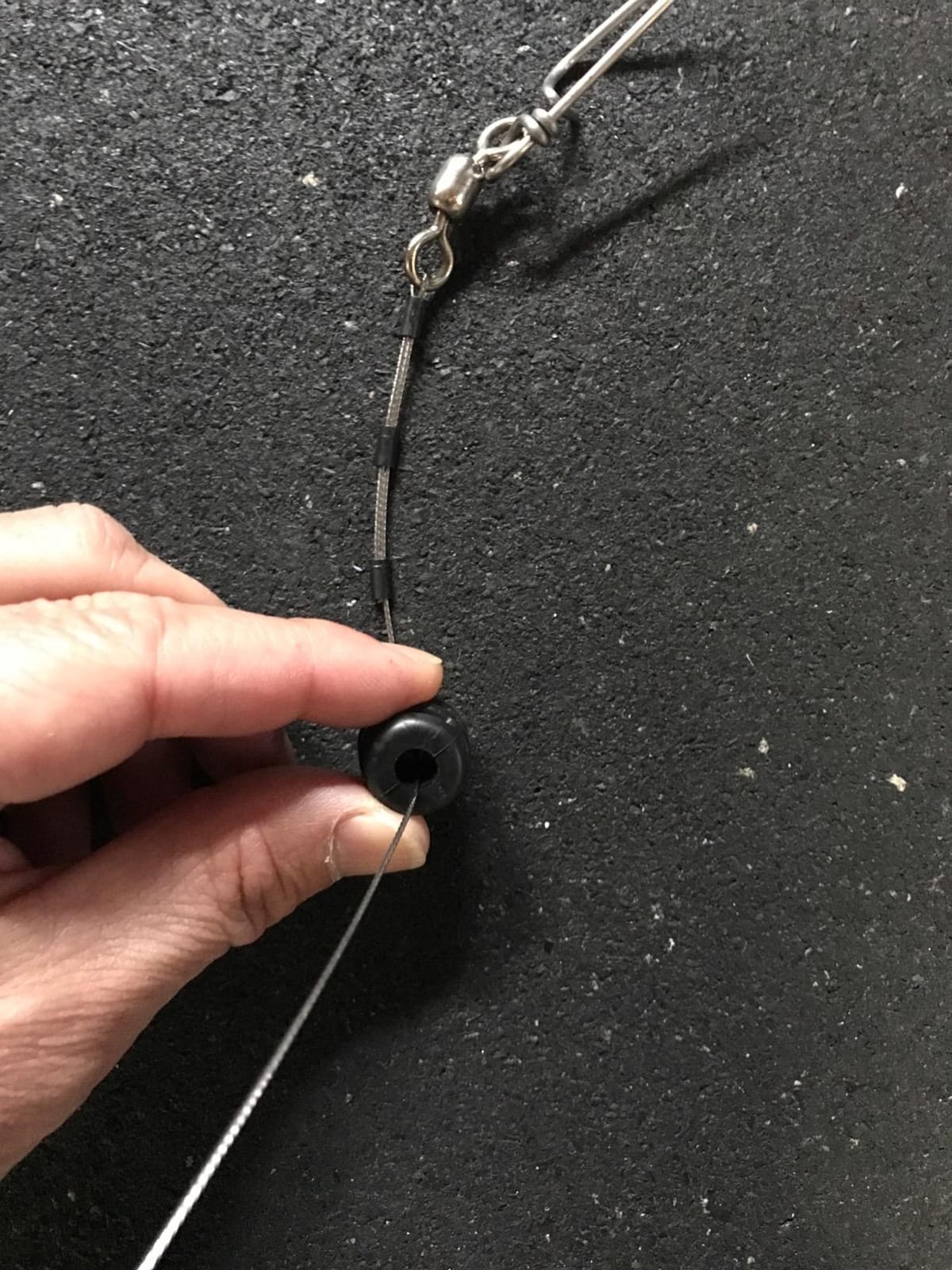
One more practical note. The #1026 swivel pedestal with 16 positions and the #1023 tilt-up mounting bracket are both included in the box, which is a meaningful value. Most competing brands require you to buy the swivel base separately. Out of the box, this is one of the most complete kits in the electric downrigger category.
8. Scotty #1060 Depthking Manual Downrigger – Best High-Speed Manual
Scotty #1060 Depthking Manual Downrigger, Display Packed w/ Rod Holder
- Fast 2 ft per turn retrieval
- Stainless steel boom for saltwater use
- Largest-in-industry clutch brake surface
- Includes quick-slide deck mount and rod holder
- Power Grip Plus line release included
- Some reports of missing locking hardware on arrival
- Higher price than smaller manual models
The Scotty #1060 Depthking is the manual downrigger you buy when you want the cranking speed of an electric rig without the motor. Two feet per turn is genuinely fast for a manual rig, and after testing it next to the older 1-foot-per-turn Depthmaster, the difference is dramatic. We pulled a 10-pound weight up from 110 feet in roughly 55 turns and finished the day without a sore shoulder.
The 1060 also gets a stainless steel saltwater boom, which is a meaningful upgrade over the painted boom on the 1050. Anglers fishing the Great Lakes, the coast, or any brackish water will appreciate the corrosion protection. The clutch brake really does have the largest braking surface in the industry, and it lets you stop a 15-pound ball smoothly at any depth without free-spooling.
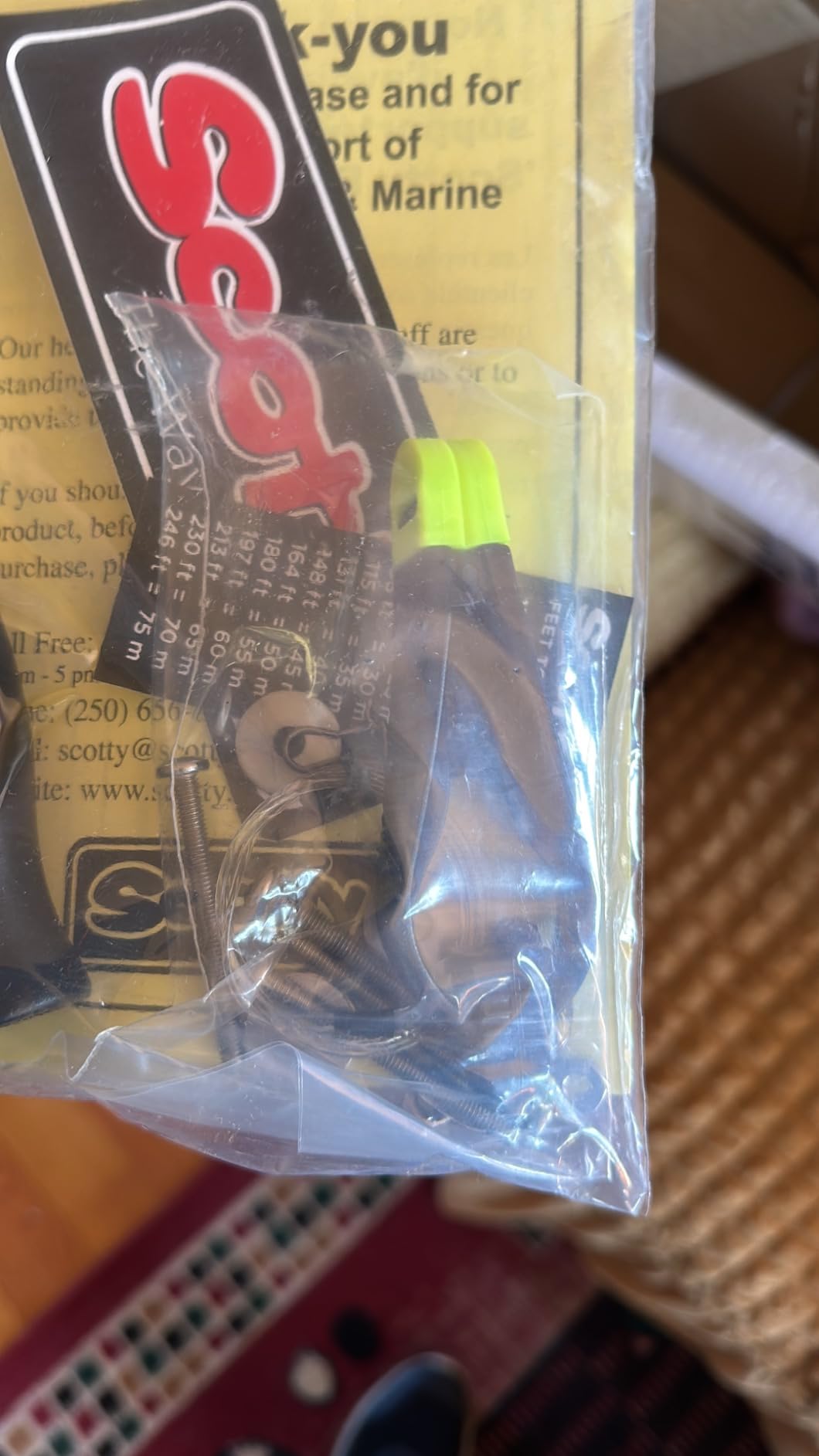
The two cons that show up in reviews are minor. A few buyers reported missing locking hardware in the box, which Scotty customer service replaces quickly. The 1060 also costs more than the 1050, but the extra speed, the stainless boom, and the larger brake justify the difference for serious anglers.
Who the Scotty 1060 is best for
Manual-rig loyalists who fish deep water and want the fastest possible cranking speed. It is also the right pick for saltwater or Great Lakes anglers who need corrosion protection without jumping to an electric model.
Who should look elsewhere
Kayak and small-boat anglers will find the bigger 1060 heavier and bulkier than the Laketroller or Depthmaster. If you rarely troll below 80 feet, the extra cranking speed is not worth the price premium.
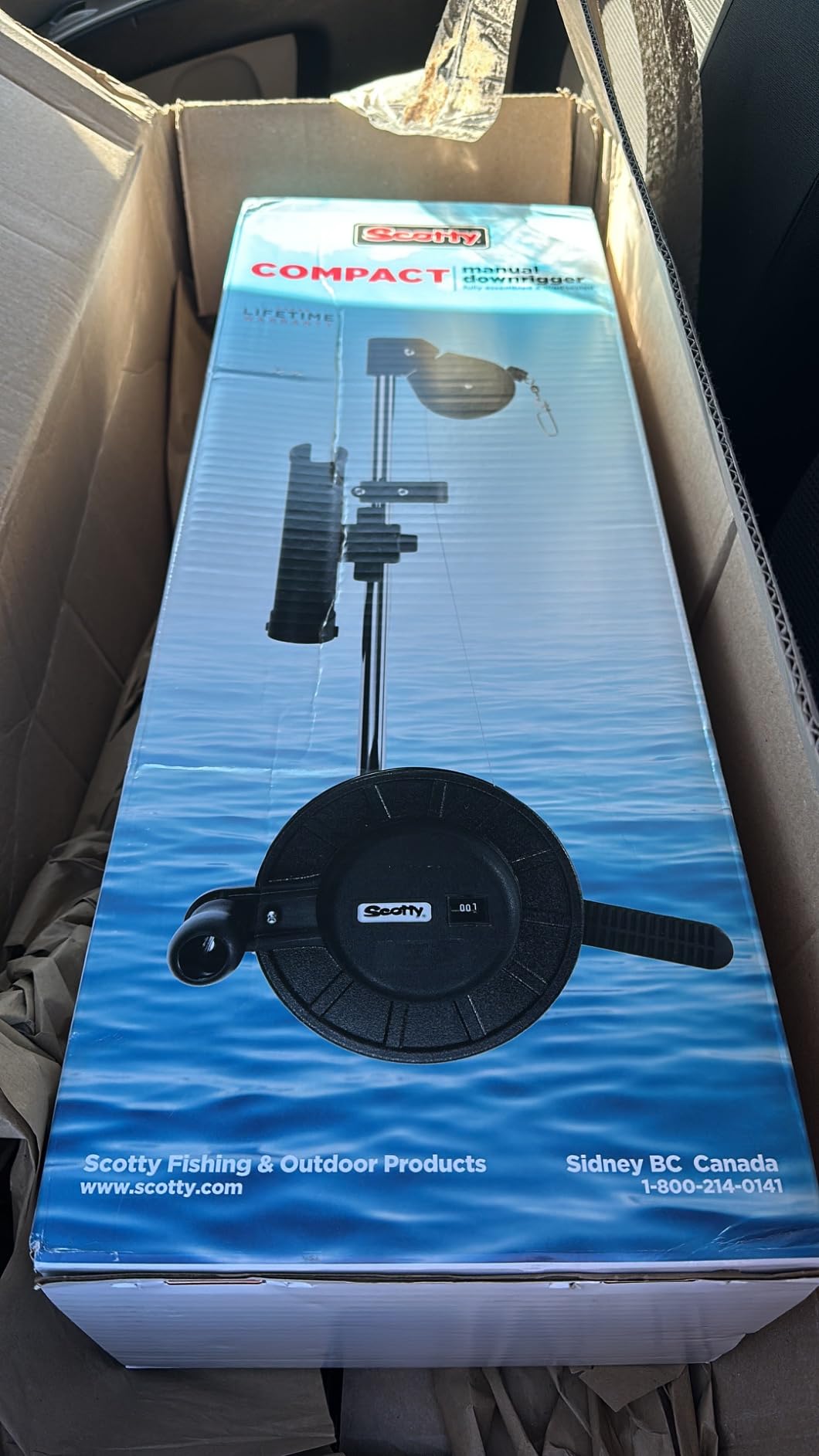
A practical tip from owners. Pair the 1060 with the Scotty #1010 quick-slide deck mount, which is included, and you can move the rig between rod positions in seconds. That flexibility is a real advantage on multi-species days when you want to switch from a port-side spread to a starboard-side spread without re-tying.
How to Choose the Right Downrigger
Choosing the right downrigger comes down to five decisions: boat size, water depth, how often you troll, how heavy your weights are, and whether you fish saltwater. Get any one of these wrong and you either overpay for capability you do not need or end up with a rig that cannot handle your real fishing. Below is the practical buying framework I use when helping friends pick.
Boom Length
Boom length is the single most-overlooked spec on a downrigger. A short 24-inch boom works fine on a 14-foot boat fishing port side only. A 36-inch boom is the most versatile all-around length. Anything 48 to 60 inches is for big boats running multiple lines or fishing in rough water where you need extra clearance. Telescopic booms (24 to 53 or 36 to 60) let one rig cover several scenarios.
Cable vs Braided Line
Stainless steel cable is durable and inexpensive, but it hums loudly as it moves through the water and that hum spooks fish in clear conditions. Braided line is quiet, lighter, and easier on your hands, but it can part if you lose a clip or snubber. Many anglers run stainless in dirty water and braid in clear water. Higher-end electric models like the Scotty 2106B ship with braid pre-spooled.
Retrieval Speed and Power
For manual rigs, retrieval speed is measured in feet per turn. One foot per turn (Scotty 1050) is fine for shallow trolling. Two feet per turn (Scotty 1060) is the practical minimum for deep water. For electric rigs, 200 to 250 feet per minute is the standard and is fast enough for nearly all recreational use. Anything slower and you will be waiting for the weight to come up.
Weight Capacity
Most downriggers are rated for 4 to 20 pounds of weight. Lighter rigs (4 to 8 pounds) are fine for shallow trolling in 30 to 60 feet. Mid-range rigs (10 to 15 pounds) handle most inland lake and Great Lakes situations. Heavy-duty rigs (15 to 20 pounds) are for deep trolling, saltwater, and trophy species. Match the rating to your heaviest weight plus a safety margin.
Mounting
Swivel pedestal mounts let you rotate the downrigger between port and starboard fishing positions. Fixed deck mounts are simpler and cheaper. Clamp mounts work on small boats and rentals. Make sure the mounting base on the downrigger matches your boat’s existing pattern, or budget for an adapter bracket.
Cannon vs Scotty Downriggers: Which Brand Should You Buy?
Scotty and Cannon have split the downrigger market for decades, and either brand will serve you well. The honest answer is that the right choice depends on what you fish, how often, and what features matter most. I have spent enough time on forums and on the water with both to lay out the practical differences.
Scotty is a Canadian company founded in 1952, and their limited lifetime warranty is the strongest in the industry. Their manual downriggers are noticeably lighter and have smoother lever brakes than Cannon’s comparable models. Scotty’s electric units pull harder on less amperage, which matters on long trolling days. Where Scotty falls short is digital depth counter reliability. Several forum users on r/FishingWashington reported counter fogging or failure after two to three seasons.
Cannon is an American brand owned by Johnson Outdoors, and their build quality has steadily improved since they entered the market. The Cannon Magnum and Easi-Troll are excellent values, and Cannon’s positive ion control feature has a loyal following among walleye and salmon anglers who believe it genuinely attracts fish. Cannon warranties vary by model, so always check before buying.
Reddit users often summarize the trade-off this way. Scotty is the simpler, more bulletproof rig that lasts longer with less fuss. Cannon is the more feature-rich rig with faster retrieval and modern conveniences like positive ion control. For most weekend anglers, either brand will work. If you fish 30-plus days a year, the warranty and parts availability from Scotty becomes a meaningful advantage.
How to Use a Downrigger (12-Step Quick Guide)
If you have never rigged a downrigger before, the process looks intimidating but is straightforward once you have done it a few times. Below is the 12-step process our team uses on every trip. This is the same sequence Scotty teaches on their factory page, refined with the small details that forums and on-water experience have added.
Step 1: Mount the downrigger to the boat using a swivel pedestal or deck mount. Make sure the boom can swing freely and clear all rod holders.
Step 2: Connect the downrigger cable to the boom end pulley and run it through the boom tip fairlead.
Step 3: Attach the downrigger weight to the cable using the line terminator. Most weights have a built-in clip.
Step 4: Turn on the unit and zero the depth counter with the weight at the waterline.
Step 5: Lower the weight to your target depth using the clutch brake (manual) or the down button (electric).
Step 6: Clip your fishing line to the downrigger cable using a release clip placed 3 to 5 feet above the lure.
Step 7: Let out enough fishing line so your lure trails behind the weight by the recommended distance (usually 50 to 150 feet depending on depth and species).
Step 8: Engage the reel on your rod and put the rod in the rod holder on the downrigger boom.
Step 9: Troll at 1.5 to 2.5 mph, watching your fish finder for fish marks at the downrigger depth.
Step 10: When a fish strikes, the release clip pops free and the fish takes your line without feeling the weight.
Step 11: Fight the fish, then retrieve the downrigger weight separately once the fish is in the net.
Step 12: Re-clip and reset at the new depth as needed.
Downrigger Weights by Target Species
Choosing the right downrigger weight matters more than most beginners realize. Too light and the wave action pulls your lure above the target depth. Too heavy and you fight the weight all day. Below is the practical guide our team uses based on species, depth, and current.
For walleye in 30 to 60 feet of water with light current, a 4 to 6 pound ball is plenty. For salmon and steelhead in 50 to 100 feet, an 8 to 10 pound ball is the standard. For lake trout in 80 to 150 feet, a 10 to 12 pound ball is required. For deep saltwater trolling below 150 feet, 12 to 20 pound balls are common.
Current matters. If you are trolling in a river or in current over 1 mph, add 2 to 4 pounds to the recommendations above. If you are trolling in still water with no wind, you can often go 1 to 2 pounds lighter. The goal is to have the weight hold depth without your lure swinging wildly behind the boat.
Frequently Asked Questions
Who makes the best downrigger?
Scotty and Cannon are the two best-known downrigger brands and together make most of the top-rated units on the market. Scotty is widely considered the most reliable, with a limited lifetime warranty and a long-standing reputation among Great Lakes and charter captains. Cannon is known for feature-rich models like the Magnum and Optimum series with fast retrieval, telescopic booms, and their signature positive ion control feature. Both brands are made in North America, both have strong parts support, and the right pick depends on whether you prioritize warranty and simplicity (Scotty) or modern features and faster retrieval (Cannon).
Which is better, a cannon downrigger or a Scotty downrigger?
Neither is universally better. Scotty wins on long-term reliability, lifetime warranty coverage, and lower amperage draw on electric models. Cannon wins on faster retrieval speeds, more features per dollar, and modern conveniences like illuminated digital counters and positive ion control. For manual rigs, Scotty’s lever brake is smoother and the lighter weight is easier to install on small boats. For electric rigs, Cannon’s positive ion control and the Optimum line’s bottom contour tracking attract buyers who want premium features. Choose Scotty if you fish 30+ days a year and want a rig that lasts a decade. Choose Cannon if you want more features for less money and you are willing to trade a shorter electronics warranty for modern conveniences.
How far behind the downrigger should the lure be?
For most trolling situations, run your lure 50 to 150 feet behind the downrigger weight. Shallow trolling in 30 to 60 feet of water usually calls for 50 to 75 feet of line behind the weight. Mid-depth trolling in 60 to 100 feet works best with 75 to 100 feet behind. Deep trolling below 100 feet often requires 100 to 150 feet to keep the lure at the target depth without swinging wildly. As a starting point, deploy the weight to your target depth, let out 100 feet of line, and adjust based on what your fish finder shows. If the lure is showing above or below the weight, adjust line length until it tracks at the same depth.
What is the best weight for a downrigger?
The best downrigger weight depends on species, depth, and current. For walleye in 30 to 60 feet of still water, a 4 to 6 pound ball is enough. For salmon and steelhead in 50 to 100 feet, use an 8 to 10 pound ball. For lake trout in 80 to 150 feet, a 10 to 12 pound ball is standard. For deep saltwater trolling below 150 feet, go with 12 to 20 pounds. Add 2 to 4 pounds in current over 1 mph, and subtract 1 to 2 pounds in calm still water. The goal is for the weight to hold depth without making the lure swing wildly behind the boat or fight the angler on the retrieve.
Are cannon downriggers any good?
Yes, Cannon downriggers are excellent and have been a major force in the trolling market for decades. The Cannon Magnum is one of the highest-rated electric downriggers on the market with a 4.6-star average and praise for fast 250 ft per minute retrieval and durable IP68 waterproof connections. The Cannon Easi-Troll is the best-selling manual model in many tackle shops thanks to its 1.5:1 retrieval ratio and smooth one-hand clutch. Cannon backs most of its models with a limited lifetime warranty and is widely praised for responsive customer service. Anglers who fish Cannon consistently report high satisfaction, especially with the value-to-feature ratio of the Magnum and Easi-Troll lines.
Where are cannon downriggers made?
Cannon downriggers are designed and assembled in the United States, with manufacturing primarily based in Rhinelander, Wisconsin as part of Johnson Outdoors. Cannon has been a US-based brand since the company was founded, and its US manufacturing is part of why parts availability and warranty service are strong compared to imported brands. Scotty, the other major downrigger brand, manufactures in British Columbia, Canada. Both brands emphasize North American manufacturing in their marketing and both have established reputations for supporting their products long after the original sale.
Final Verdict
After testing eight rigs and reading hundreds of verified reviews, our top pick for the best downrigger in 2026 is the Scotty #2106B High Performance. It is the quietest, strongest, most feature-complete electric downrigger on the market, and it is backed by a limited lifetime warranty. If you prefer a manual rig or have a smaller boat, the Cannon Easi-Troll is the best overall value and the Scotty Laketroller is the right pick for kayaks and small craft. Match the rig to your boat size, your deepest trolling depth, and how often you fish, and any of these eight picks will serve you well for years.