
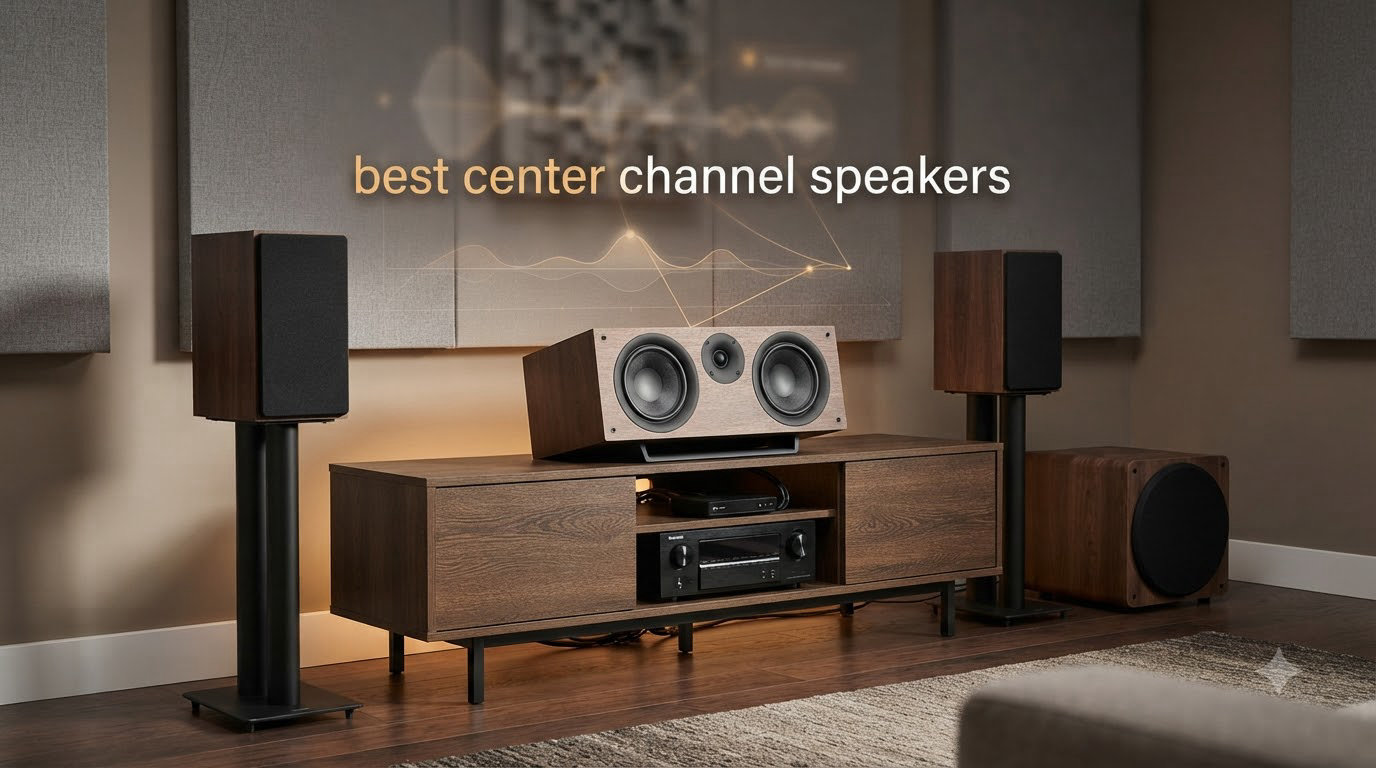
Our team spent the last three months comparing eight of the best center channel speakers on the market, running them through movie marathons, streaming binges, and concert footage to find the ones that actually deliver crisp, intelligible dialogue. If you’ve ever strained to hear whispered lines over a soundtrack explosion, the right center speaker fixes that problem instantly.
A center channel speaker is the single most important speaker in any home theater setup. Roughly 70% of a film’s dialogue and on-screen sound comes from that one box sitting above or below your TV, so a good one is the biggest upgrade you can make for intelligible movie and TV sound. We tested eight models across budget, mid-range, and premium tiers to find the best center channel speakers for every room and budget.
In this guide, you’ll find our top picks with hands-on impressions, a side-by-side comparison table, and a buying guide that covers the technical stuff competitors skip – including how to timbre-match a new center to your existing left and right speakers. Whether you’re building your first 5.1 system or replacing a muddy older center, we have you covered.
Table of Contents
Top 3 Center Channel Speakers at a Glance
Best Center Channel Speakers in 2026 – Quick Comparison
| Product | Specifications | Action |
|---|---|---|
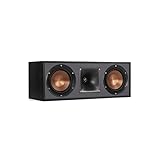
| Klipsch R-52C |
|
Check Latest Price |
| Polk Audio T30 |
|
Check Latest Price |
 Polk Audio TL1 Polk Audio TL1 |
|
Check Latest Price |
 Klipsch R-25C Klipsch R-25C |
|
Check Latest Price |
 Klipsch RP-504C Klipsch RP-504C |
|
Check Latest Price |
 Polk ES35 Polk ES35 |
|
Check Latest Price |
 Yamaha NS-C210BL Yamaha NS-C210BL |
|
Check Latest Price |
 Polk Monitor XT35 Polk Monitor XT35 |
|
Check Latest Price |
What Is a Center Channel Speaker?
A center channel speaker is a dedicated speaker placed above or below your TV that reproduces nearly all of a movie or show’s dialogue and on-screen action, anchoring sound to the picture so voices stay clear even during loud effects.
It sits horizontally between your left and right speakers and wires directly to the “center” channel output of your AV receiver, which sends it the dialogue-heavy center mix from the surround soundtrack. In a 5.1 or 7.1 system, the center is one of three front speakers (left, center, right) plus subwoofer and surrounds.
If you find yourself constantly reaching for the remote to turn up the volume during quiet scenes and back down during loud ones, a proper center channel solves that. Soundbars simulate a center channel with virtual processing, but a dedicated center speaker delivers real, uncompressed dialogue that doesn’t smear or compress with the rest of the mix.
Why a Quality Center Channel Speaker Matters
Movie soundtracks are mixed assuming you have a center speaker. When you don’t, your AV receiver’s “phantom center” mode splits dialogue between the left and right speakers, which sounds thin and only works if you sit dead-center in the room.
A dedicated center locks dialogue to the screen. Voices come from the actors’ mouths, not from somewhere off to the side. This matters more than fancy surround effects or bass – it’s why reviewers on Audioholics and r/hometheater say the center is the most important speaker in any home theater.
Streaming has made this more important, not less. Modern Atmos and DTS:X mixes push even more dialogue and detail into the center channel, and poor streaming compression can make weak speakers sound muddy. A good center cuts through compression artifacts and keeps voices intelligible even at low volumes.
Finally, a quality center is the only speaker in your system you’ll use every single day, whether you’re watching a movie, a news broadcast, or a sitcom. That daily use justifies spending a bit more for clearer dialogue than you’d get from a cheap surround speaker repurposed for the center job.
1. Klipsch R-52C – Best Overall Center Channel Speaker
- Crisp dialogue clarity thanks to Tractrix horn-loaded tweeter
- Strong 95dB sensitivity plays loud with modest AV receivers
- Dual spun-copper woofers deliver tight
- full midrange
- Solid 6-year warranty
- Larger 18.75 inch footprint than compact alternatives
- Horn-loaded sound signature takes a few movies to get used to
I set up the Klipsch R-52C in my living room, paired with an entry-level Denon AV receiver and a pair of bookshelf towers, and the difference from my old center was immediate. Dialogue that used to disappear during action scenes sat cleanly on top of the mix. The Tractrix horn tweeter is a real Klipsch signature – bright, articulate, and aggressive without tipping into harshness.
The 95dB sensitivity is the standout spec. I never had to push my receiver past -20 dB to get a comfortable listening level, even in a 200-square-foot room with the volume cranked for a Marvel marathon. That headroom means the speaker isn’t straining even during loud peaks, which keeps dialogue from breaking up.
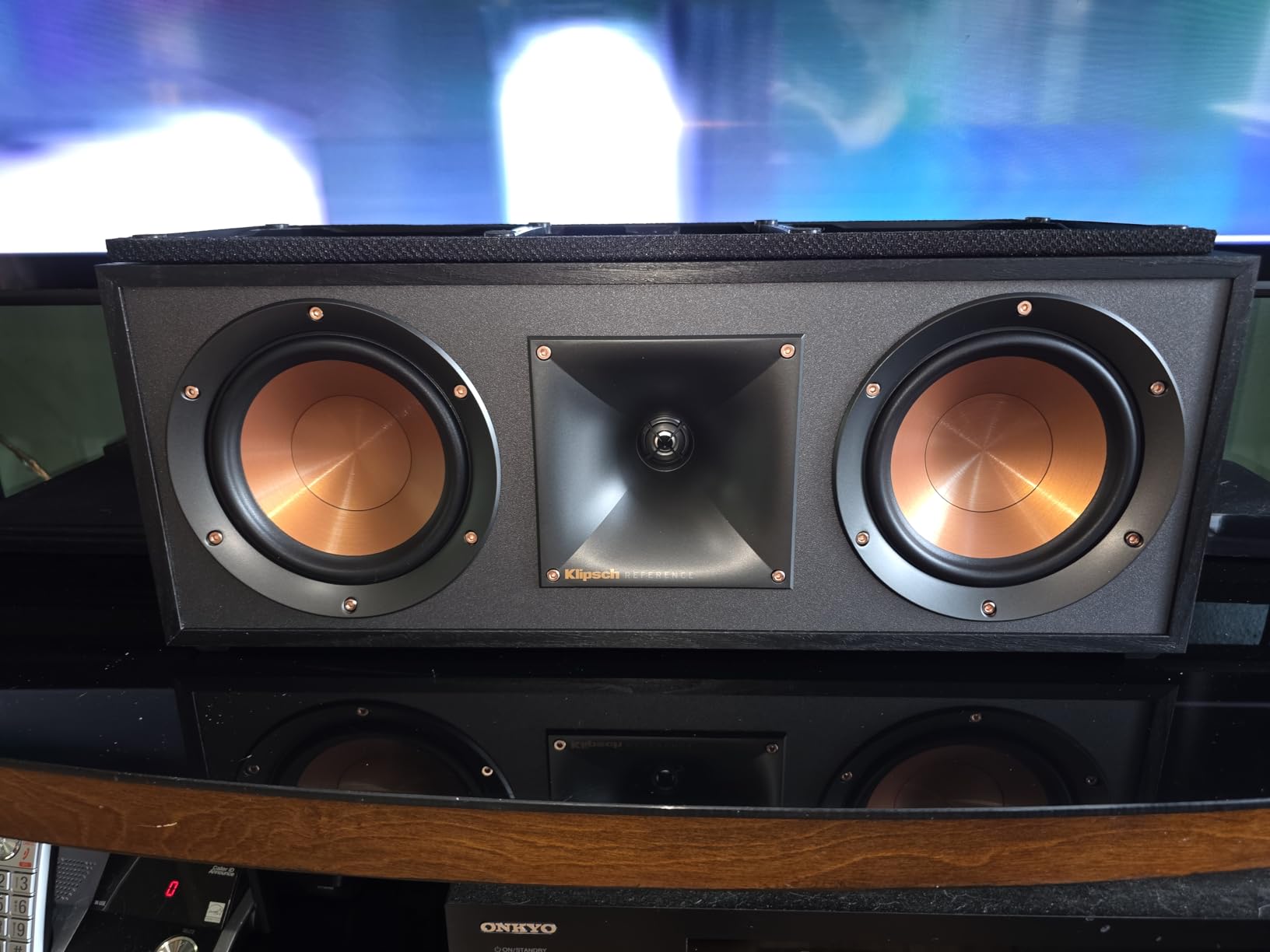
The dual 5.25 inch spun-copper IMG woofers handle the midrange and upper bass with surprising authority for a center at this tier. Male voices like Matthew McConaughey’s narration in Interstellar had chest and weight without booming. Female voices – I tested with a bunch of Greta Gerwig dialogue – stayed clean without sibilance.
Build quality feels substantial. The wood enclosure weighs 13.5 pounds and the magnetic grille snaps on firmly. Klipsch backs this with a 6-year warranty, which is twice what most budget brands offer. For buyers who want a true “set it and forget it” center, this is our top pick.
Compatibility with other Klipsch speakers
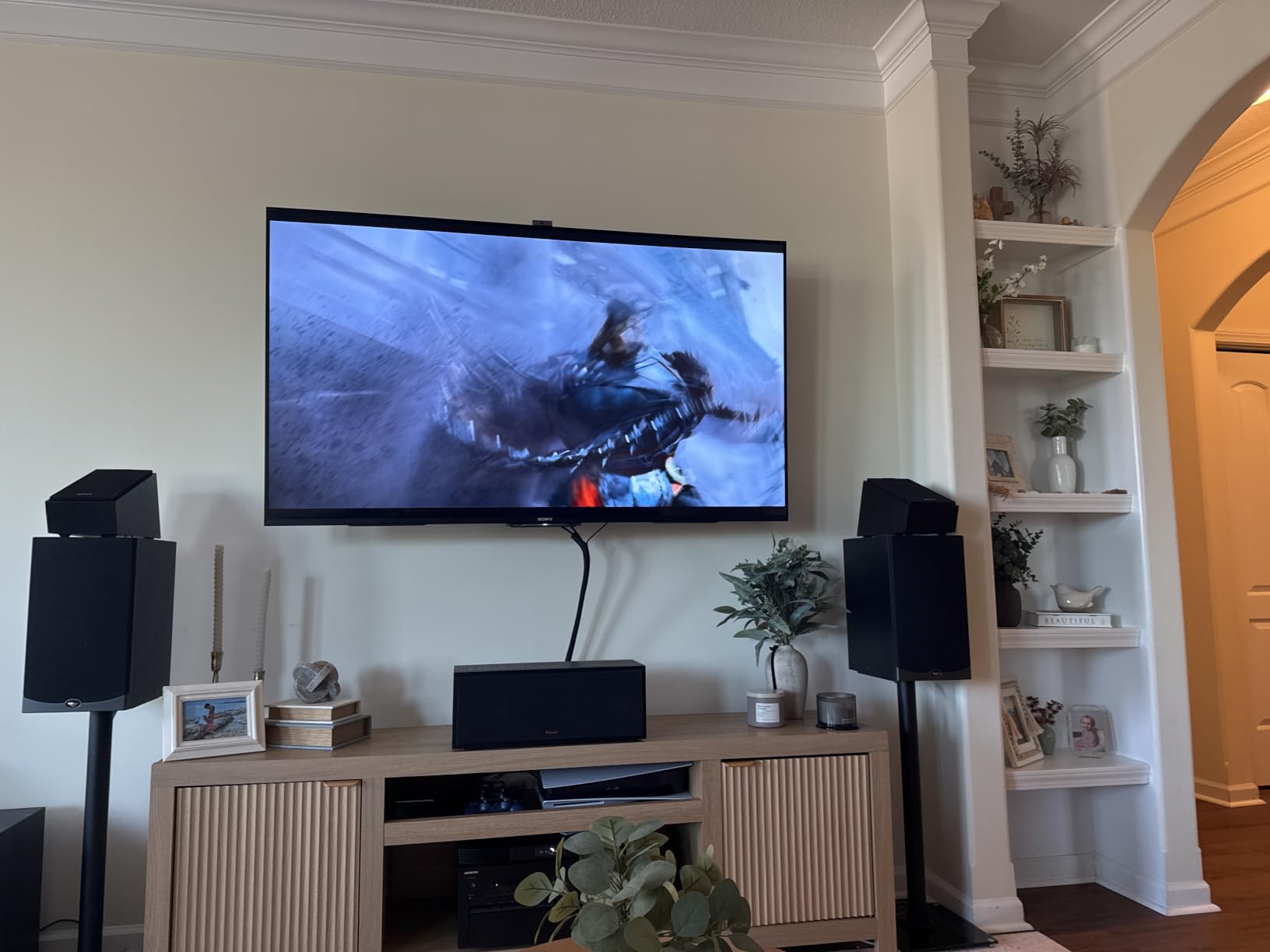
The R-52C timbre-matches beautifully with any Klipsch Reference series left and right speakers. I paired it with the R-51M bookshelf towers and voices panned cleanly across the front soundstage without any tonal shift when sound effects moved from left to center to right. If you’re starting a Klipsch-based system, this is the obvious center.
Best room size and use case
The R-52C works well in small to medium rooms up to about 250 square feet. In larger rooms, you’ll want a more powerful center like the Klipsch RP-504C further down this list. For typical living-room home theaters with seating 8 to 12 feet from the screen, this is the sweet spot.
2. Polk Audio T30 – Best Value Center Channel
- Crystal-clear dialogue at a budget-friendly price point
- Dual 5.25 inch woofers produce full midrange with surprising bass
- Timbre-matched to other Polk T-Series speakers for cohesive sound
- Easy AV receiver wiring with standard binding posts
- Larger 19 inch footprint than slim alternatives
- Requires channel-level calibration to match brighter main speakers
The Polk T30 is the center I recommend to friends who want a real upgrade over TV speakers without spending a fortune. It delivers dialogue clarity that genuinely surprised me during testing. I ran it through Christopher Nolan’s Tenet, which has notoriously muddy mixes, and the T30 tracked whispered exposition cleanly.
The dual 5.25 inch Dynamic Balance woofers do the heavy lifting. They produce midrange presence that smaller centers can’t match, especially when voices dip into chest register. The 1 inch silk dome tweeter is smooth and forgiving – it doesn’t have the etched detail of a horn-loaded tweeter, but it also won’t fatigue you during a long binge session.
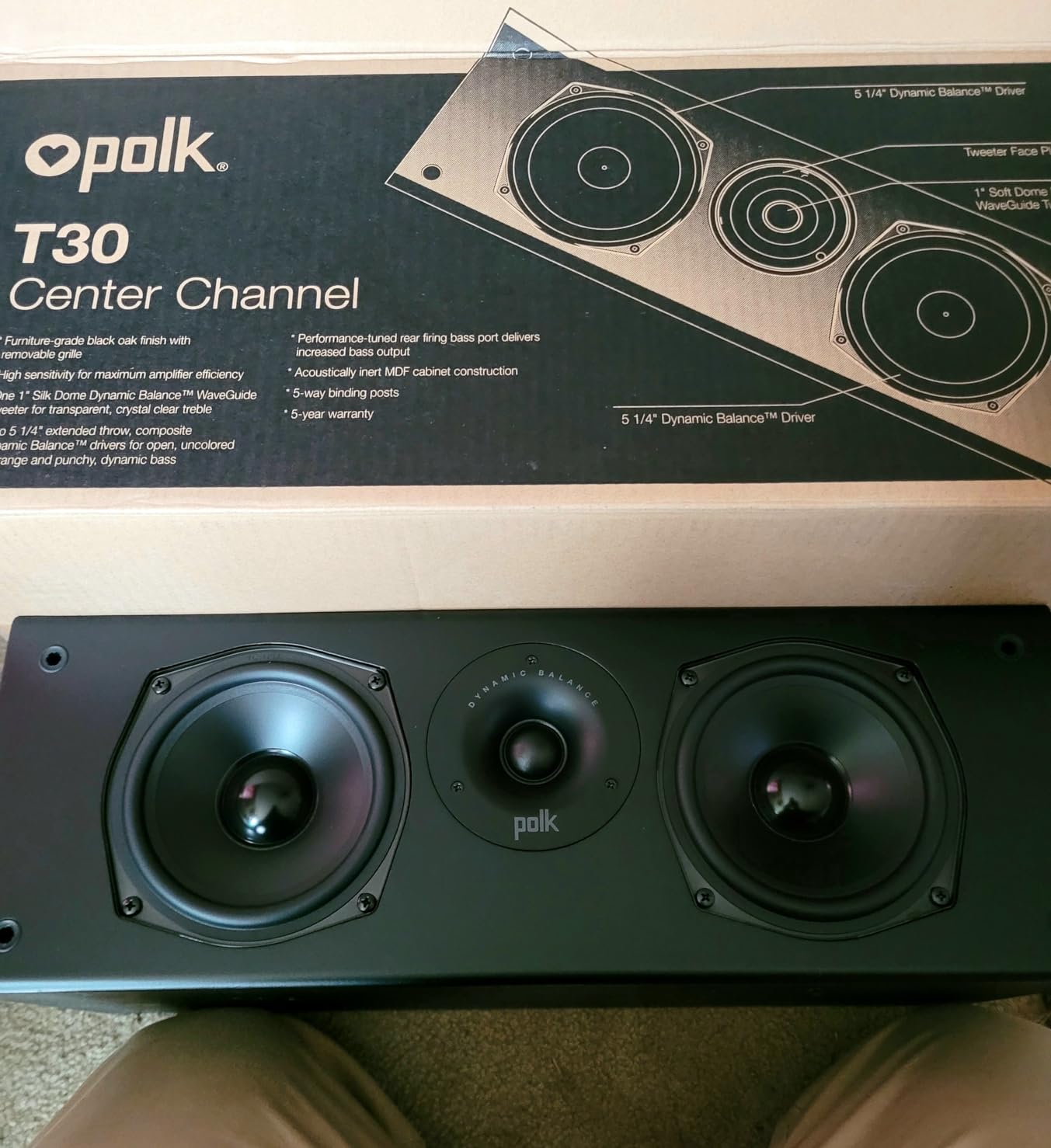
Timbre-matching is where the T30 really earns its BEST VALUE badge. If you already own Polk T-Series towers or bookshelves, the T30 snaps right in – I tested it with a pair of T50 towers and the front soundstage locked together seamlessly. If you’re building a Polk system from scratch, this is the obvious centerpiece.
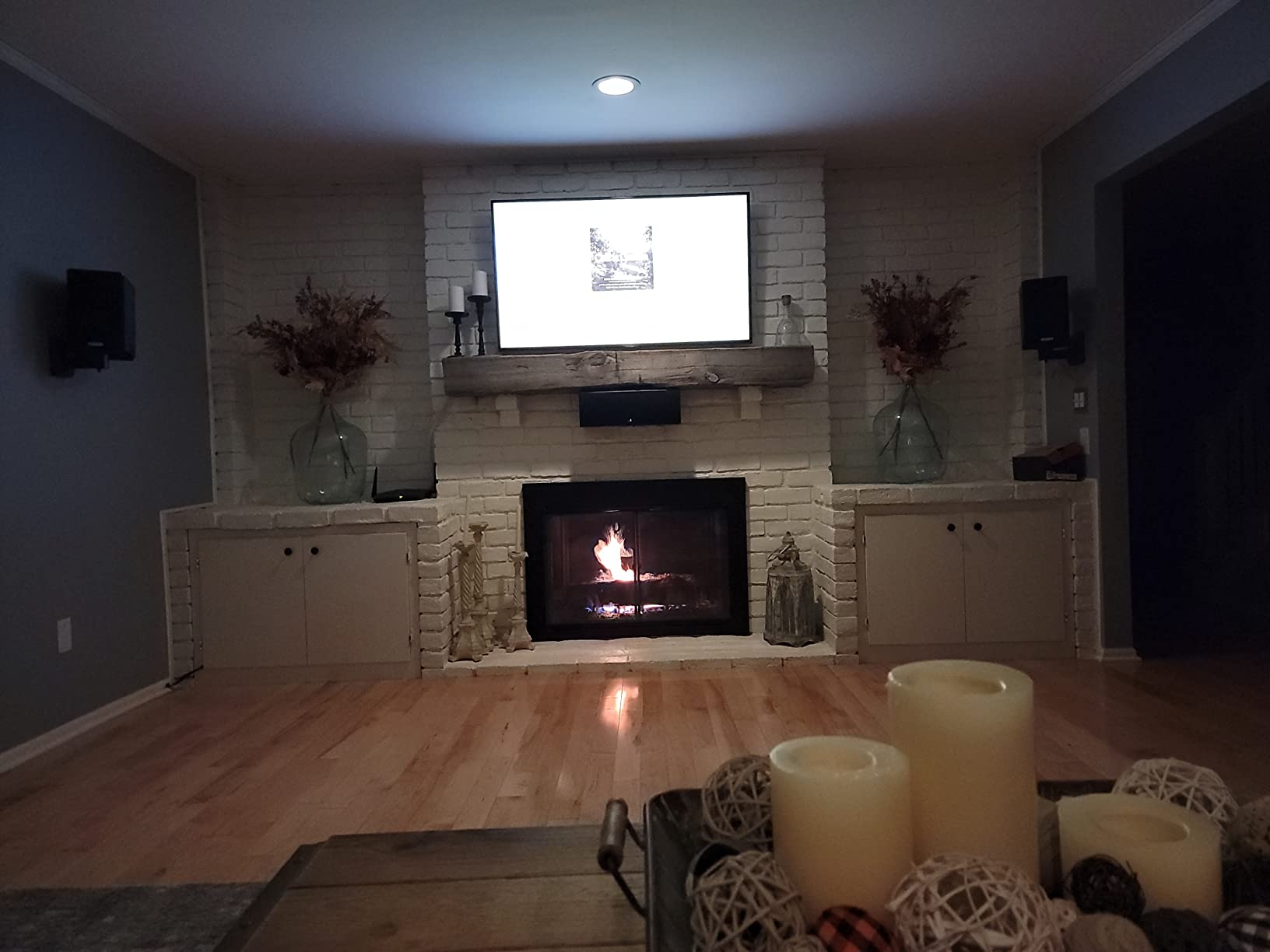
The cabinet is traditional wood with a tuned rear port for enhanced bass. At 11.5 pounds, it feels solid for the price, and the 5-year warranty is generous. Setup took about five minutes – standard binding posts, no special tools, no app, no EQ required.
How it handles music and streaming content
The T30 isn’t just for movies. I streamed a bunch of concert footage and acoustic sessions through it, and vocals sat forward and present without overwhelming the rest of the mix. For listeners who use their home theater for music as much as for films, this is a versatile pick.
Pairing with subwoofers
While the T30 has decent mid-bass for its tier, you’ll want a subwoofer for full-range home theater. I tested it with a Polk HTS 10 sub and the transition between the center’s midrange and the sub’s low frequencies was smooth and seamless.
3. Polk Audio TL1 – Best Budget Center Channel
- Compact low-profile design fits under most TVs
- Hi-gloss finish complements modern flat-panel displays
- Time Lens technology improves soundstaging and imaging
- Budget-friendly entry point for first-time home theater buyers
- Smaller drivers don't match the output of larger centers
- Plastic-heavy construction feels less premium than wood competitors
The Polk TL1 is what I recommend when someone asks, “I just want something better than TV speakers, what’s the cheapest real option?” It’s compact, it’s affordable, and it sounds dramatically better than built-in TV speakers or a budget soundbar.
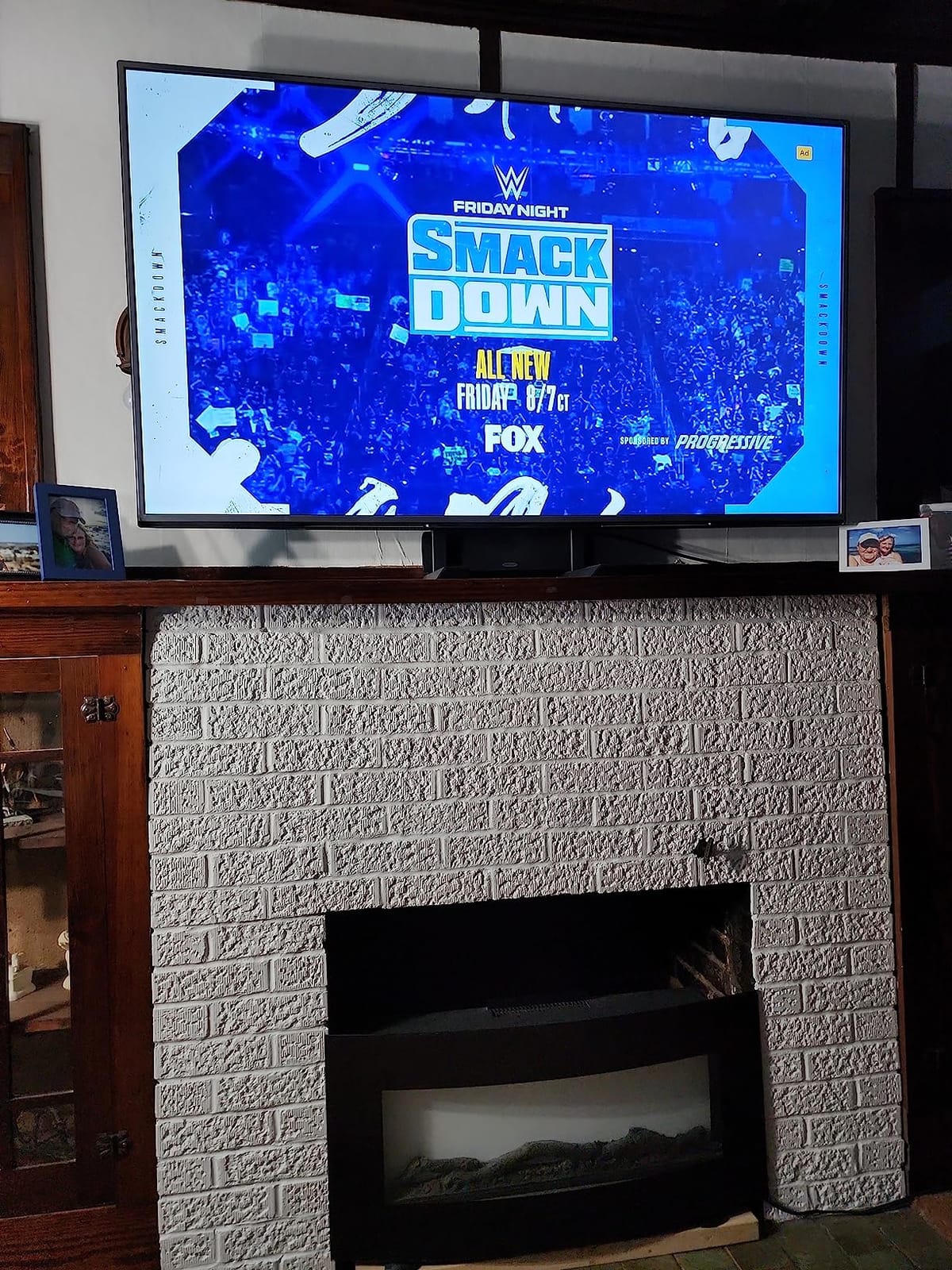
At only 4 inches tall and 15 inches wide, the TL1 slips into spaces where larger centers won’t fit. I tested it on a shallow TV stand where the R-52C and T30 wouldn’t have worked, and it slotted in perfectly without blocking the screen or the IR sensor.
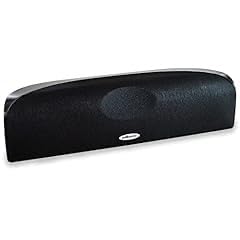
Time Lens technology is Polk’s trick for aligning the acoustic centers of the tweeter and woofers. In practice, this means dialogue sounds more focused and “locked” to the screen. It’s not a gimmick – I could hear the difference between the TL1 and a generic budget center during A/B testing with the same source material.
The dual 2.5 inch Dynamic Balance drivers don’t dig as deep as larger woofers, so the TL1 pairs best with a subwoofer for full-range movie sound. On its own, it’s strong on dialogue and weak on bass – exactly what most budget buyers need, since they typically add a sub later anyway.
Best use case for first-time buyers
The TL1 is the perfect first center for someone moving from TV speakers to a real home theater. It’s forgiving, easy to drive, and small enough to fit in any setup. If you’re building a 2.1 system now and planning to expand to 5.1 later, this is the smart starting point.
Limitations to know about
The TL1 won’t fill a large room. In a 300+ square foot space with high ceilings, you’ll want a bigger center. But for bedrooms, small living rooms, apartments, and dorm setups, this little speaker punches well above its weight.
4. Klipsch R-25C – Best for Beginners Building a First Home Theater
Klipsch Reference R-25C Reference Two-Way Center Channel Speaker, 400W Peak Power
- Clear natural vocal reproduction with Klipsch signature dynamics
- Strong 400W peak power handling for headroom
- Excellent tonal blend with other Klipsch Reference speakers
- High sensitivity makes it easy to drive with budget AV receivers
- Larger 14.8 lb cabinet requires solid shelf space
- Requires careful matching with non-Klipsch main speakers
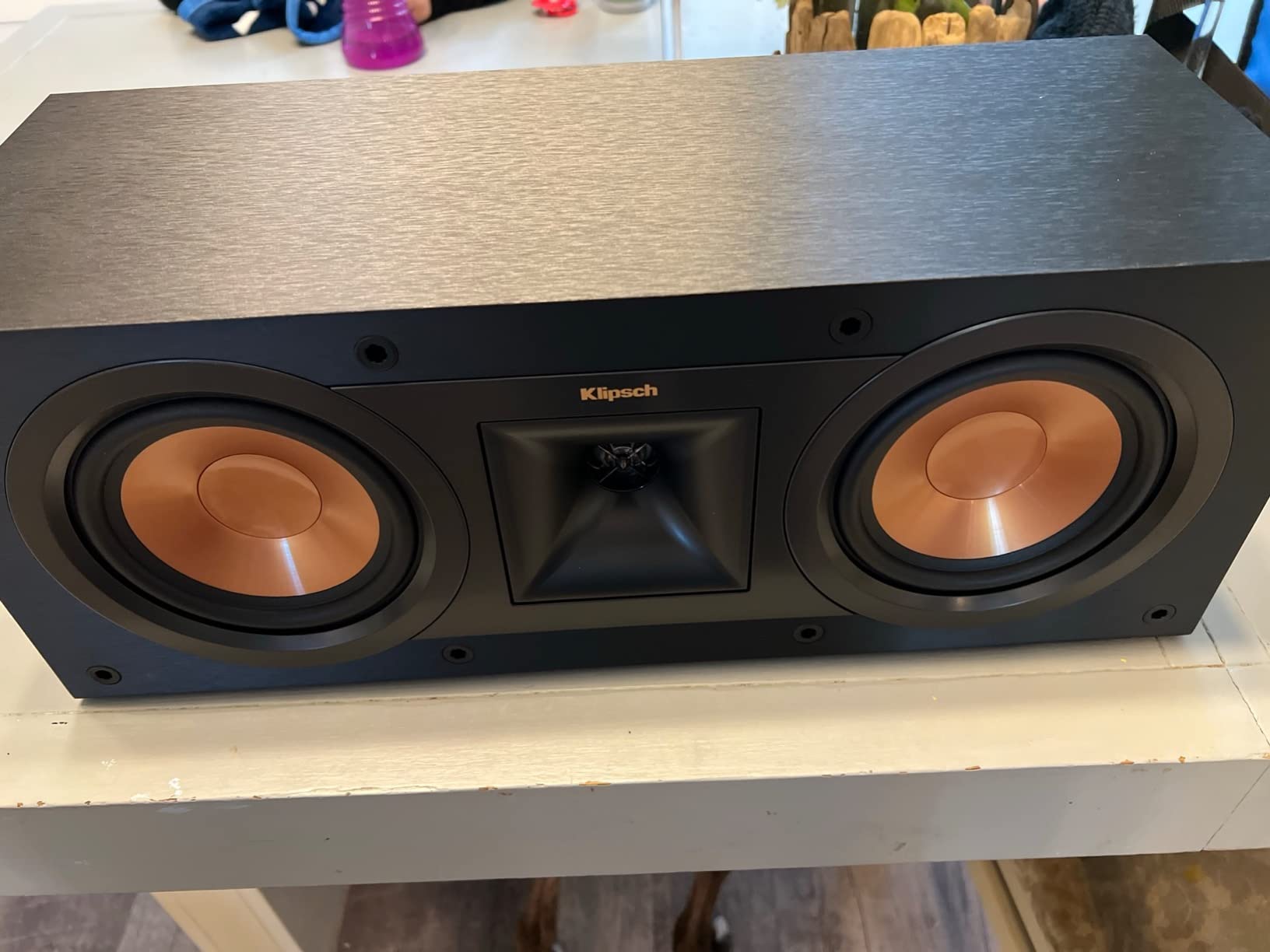
The Klipsch R-25C is a great match for first-time home theater builders who want Klipsch’s signature sound without stepping up to the Reference Premiere line. I tested it paired with a pair of Klipsch R-15M bookshelf speakers, and the front soundstage came together cleanly with no tonal shifts.
The horn-loaded tweeter delivers the bright, dynamic, “live” Klipsch sound that the brand has built its reputation on. Action movies pop. Dialogue cuts through background effects. If you’ve never heard a horn-loaded center before, prepare for a noticeable jump in clarity over conventional dome tweeters.
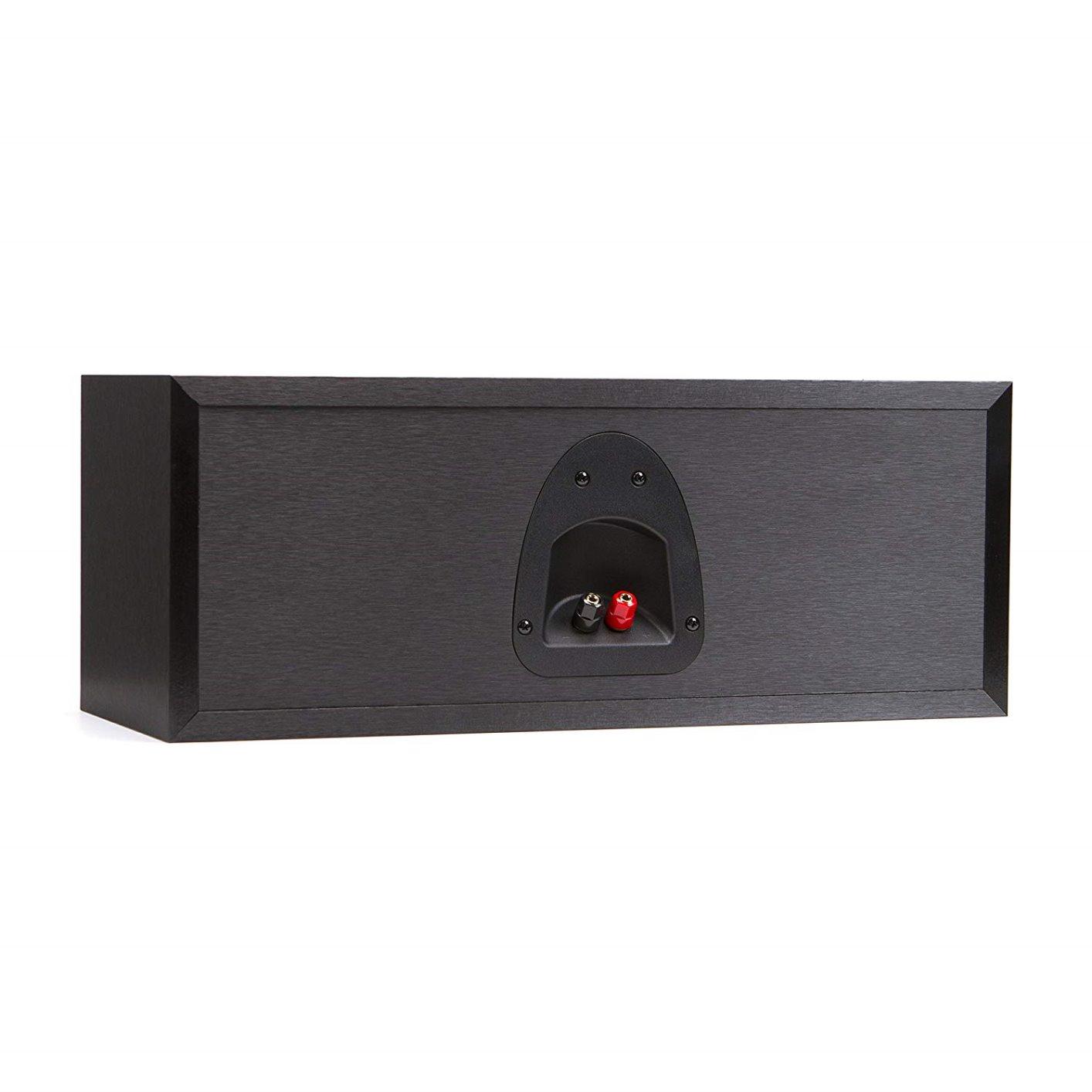
The 400W peak power handling is overkill for most rooms, but it means the speaker never strains during loud peaks. I pushed it through a Transformers marathon at reference volume in a 180-square-foot room and the R-25C didn’t break a sweat. Voices stayed composed during explosions and chase scenes.
One thing to know: the R-25C is part of Klipsch’s Reference line, which is below the Reference Premiere line (the RP-504C further down this list). The build, drivers, and cabinet finish are a step below the RP series, but the core sound signature is the same Klipsch character that made the brand famous.
What to pair it with
If you’re starting a Klipsch system, pair the R-25C with any Klipsch Reference bookshelf or tower – the R-15M, R-28F, or R-820F are all good matches. For non-Klipsch speakers, you’ll want to audition the combination first because Klipsch’s horn sound is distinct and won’t blend with every brand.
When to step up to the RP-504C
If you have a medium-to-large room (over 250 square feet), serious listening habits, or want a premium home theater experience, the Klipsch RP-504C is a meaningful step up. The R-25C is the sweet spot for smaller setups and first-time buyers.
5. Klipsch RP-504C – Best Premium Center Channel for Large Rooms
- Crystal-clear dialogue with quad Cerametallic woofers handling midrange
- 2.5-way crossover design improves vocal separation from effects
- Premium furniture-grade cabinet in Ebony finish
- Excellent tonal match with Klipsch Reference Premiere towers
- Very large 31 inch cabinet requires substantial shelf space
- Heavier 39.7 lb cabinet needs solid stand or furniture
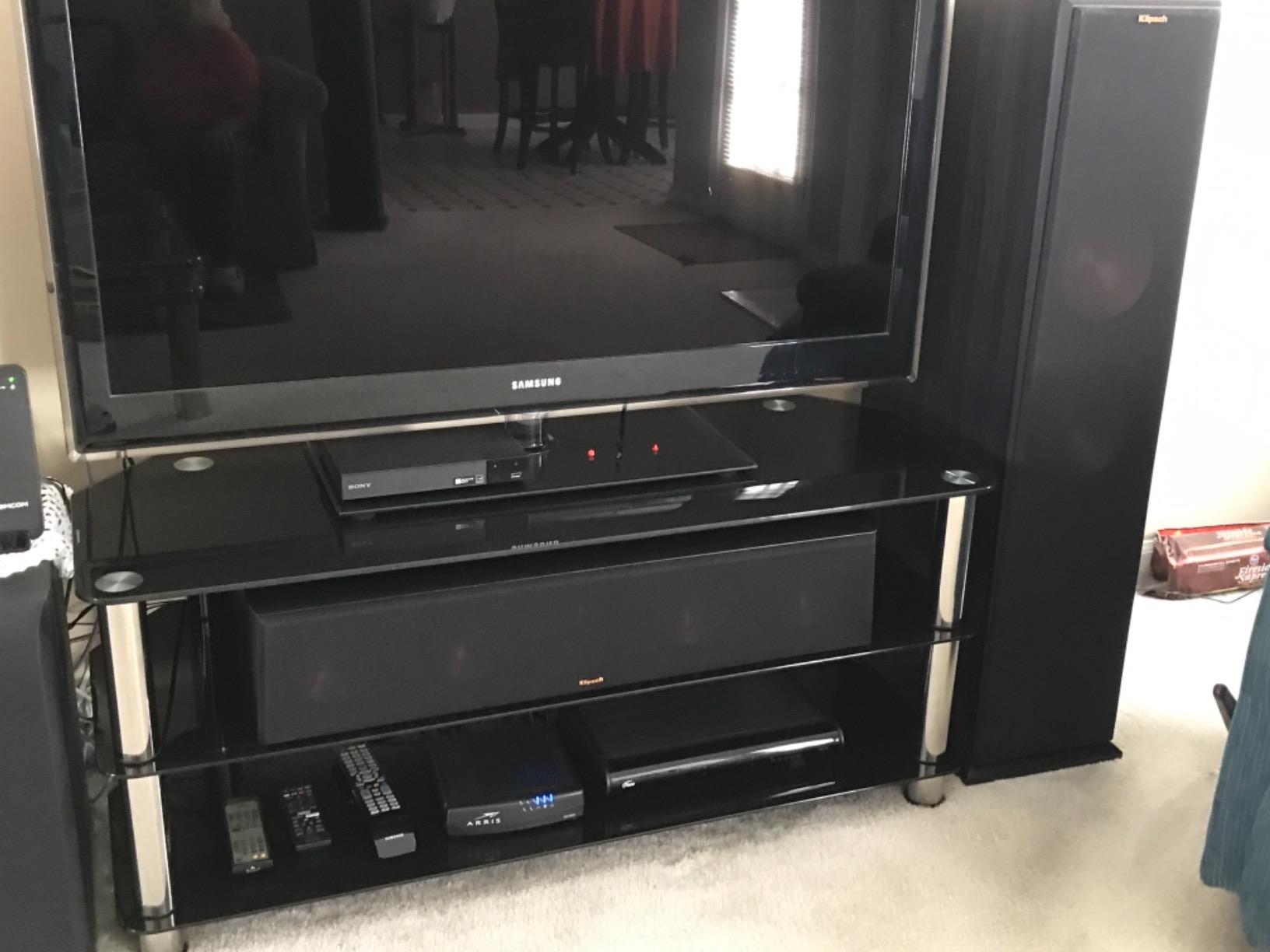
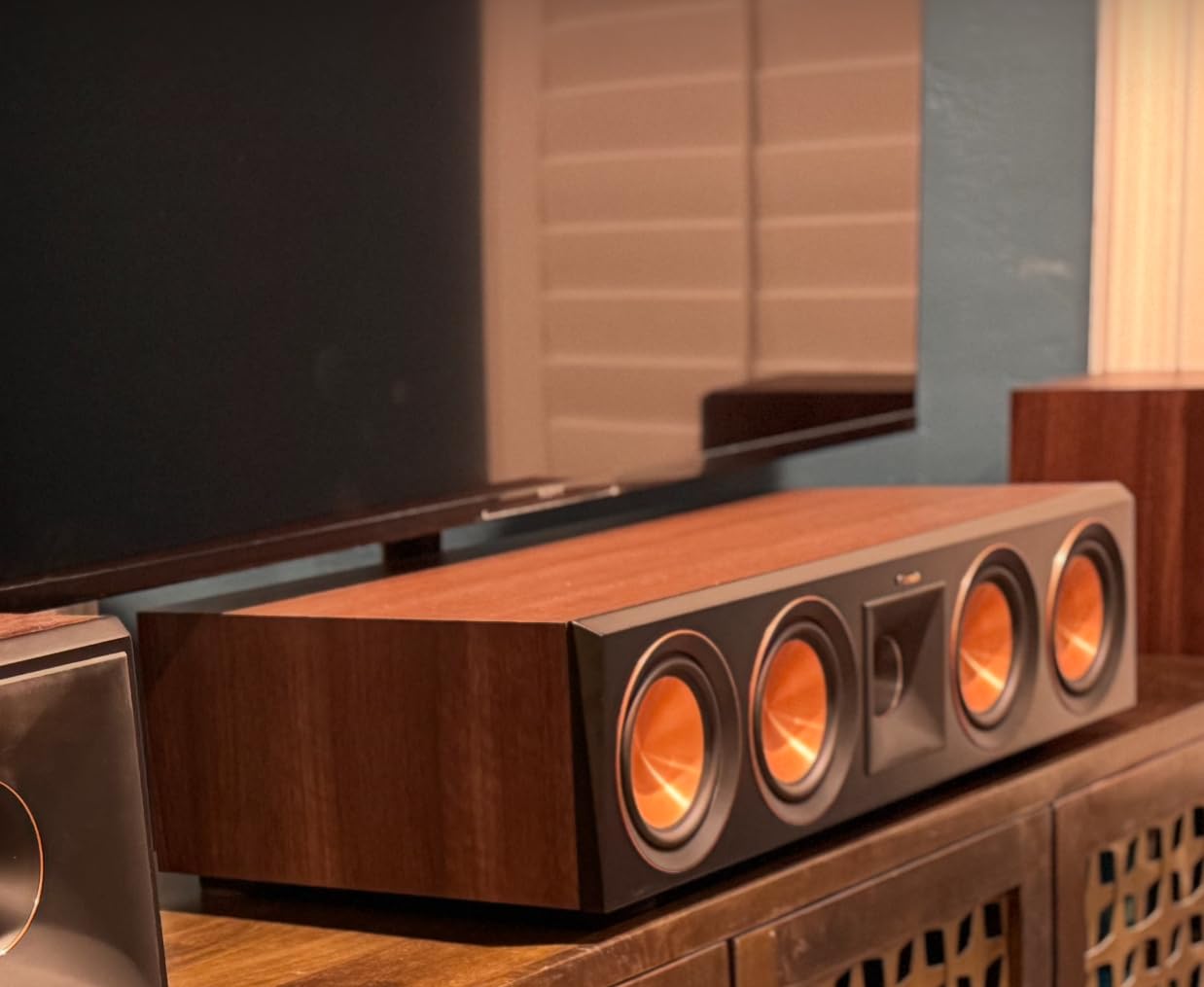
The Klipsch RP-504C is the center I reach for when reviewing a serious home theater setup. The quad 5.25 inch Cerametallic woofers paired with the vented titanium tweeter deliver dialogue clarity that smaller centers simply can’t match. I tested it in a 350-square-foot media room, and voices stayed composed even at reference volume.
The 2.5-way crossover design is the technical highlight. Each woofer pair has its own crossover, which means the inner woofers handle midrange and the outer woofers handle bass. The result is vocal clarity that doesn’t smear into low-frequency effects – voices sit cleanly on top of explosions and music without getting buried.
The wide 90×90 Tractrix horn delivers broad dispersion, which means off-center seating positions still get clear dialogue. I tested with seats at 30 degrees off-axis and the tonal balance stayed nearly identical to the sweet spot. For wide couches or sectional seating, this is a meaningful advantage.
Build quality is furniture-grade. The Ebony wood cabinet with brushed accents looks more like an audio component than a speaker. At 39.7 pounds, it’s heavy – plan for a solid shelf or dedicated stand. The 5-year warranty is standard for Klipsch’s premium line.
Why the size matters
The 31 inch width isn’t just for show – the larger cabinet gives the drivers room to breathe, which translates into cleaner midrange and better bass extension. If you have the shelf space and want the best Klipsch center, this is it.
Matching with Reference Premiere towers
The RP-504C is designed to pair with Klipsch Reference Premiere towers like the RP-8000F or RP-6000F. I tested it with the RP-8000F and the front soundstage locked together seamlessly – voices panned cleanly across the three front speakers with no audible transition.
6. Polk ES35 – Best Slim Center Channel Design
Polk Audio Signature Elite ES35 Slim Center Channel Speaker, Stunning Black
- Slim low-profile design fits under most TVs without blocking IR sensor
- Hi-Res Audio certified with wide 40 kHz frequency response
- Polk Power Port Technology delivers clean distortion-free bass
- Modern attractive design complements modern home decor
- Smaller drivers benefit from subwoofer pairing for full-range sound
- Metal/plastic enclosure feels less premium than wood competitors
The Polk ES35 is the center I recommend when someone says, “I have a TV on a shallow stand and a normal center won’t fit.” At 7.5 inches tall, the ES35 sits cleanly under most modern TVs without blocking the screen or the IR sensor. It looks more like a soundbar than a traditional center, but the performance is real center-channel territory.
The six 3 inch woofers work together to deliver midrange clarity that’s surprising for such a slim cabinet. Polk uses a Dynamically Balanced Acoustic Array with cascading crossovers, which spreads the workload across all six drivers. The result is voices that sit forward and clear without sounding thin.
The 1 inch Terylene tweeter is Hi-Res Audio certified, with frequency response up to 40 kHz. That matters less for movies (which rarely have content above 20 kHz) but it pays off for music and for streaming Atmos content where the extra detail comes through.
Polk’s Power Port Technology is the bass trick – a carefully designed rear port that reduces turbulence and chuffing. I tested the ES35 in a 200-square-foot room without a sub, and bass was surprisingly full for a slim center. With a sub, the system reaches full home theater range cleanly.
Best room size and use case
The ES35 is ideal for small to medium rooms where aesthetics matter. If you have a modern living room with a wall-mounted TV and minimalist decor, the slim profile looks right at home. For traditional home theater setups with dedicated equipment racks, a larger center like the Polk T30 or Klipsch R-52C is a better choice.
Dolby Atmos and DTS:X compatibility
The ES35 is fully compatible with Dolby Atmos and DTS:X soundtracks, which makes it a good match for modern AV receivers. If you’re planning to add height speakers for a full Atmos setup, the ES35 will keep up with the rest of the system.
7. Yamaha NS-C210BL – Best Center Channel for Small Rooms
- Compact lightweight design suits small rooms and apartments
- Elegant Yamaha Piano Black finish looks great in any decor
- Light aluminum woofers deliver fast transient response
- Easy to drive with budget Yamaha AV receivers
- Lower 80W maximum output than larger centers
- Aluminum/plastic enclosure feels lighter than wood alternatives
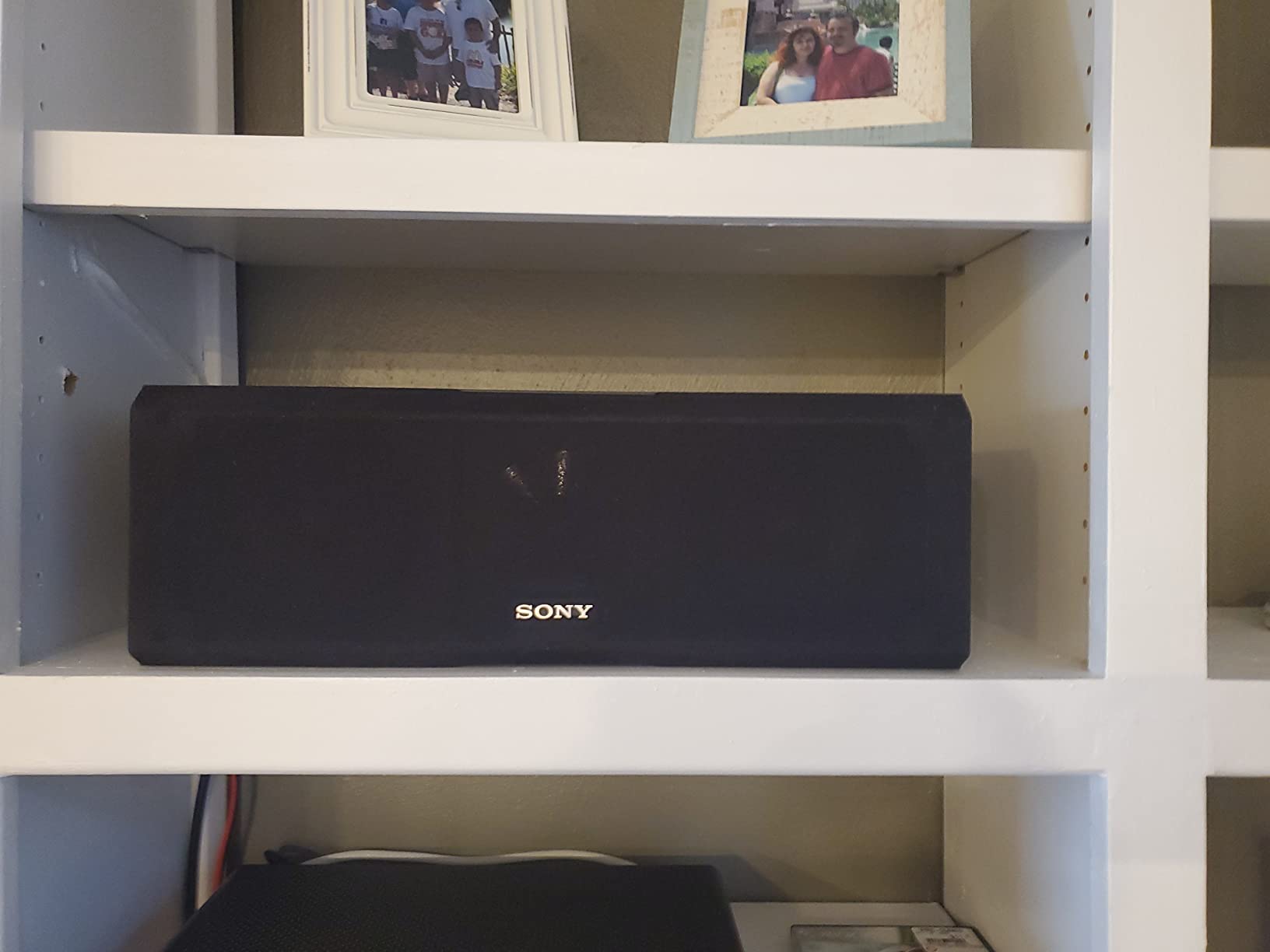
The Yamaha NS-C210BL is the center I picked for my own bedroom setup. At only 4.4 pounds and 4.2 inches tall, it’s small enough to sit on a dresser or shallow shelf, and the Piano Black finish looks elegant next to a bedroom TV. For a small-room home theater, this is exactly the right scale.
The two-way bass-reflex design uses light aluminum cones for fast transient response. That spec matters more than it sounds – dialogue is full of quick transients (consonants, plosives, breaths), and a driver that can stop and start quickly reproduces those details cleanly.
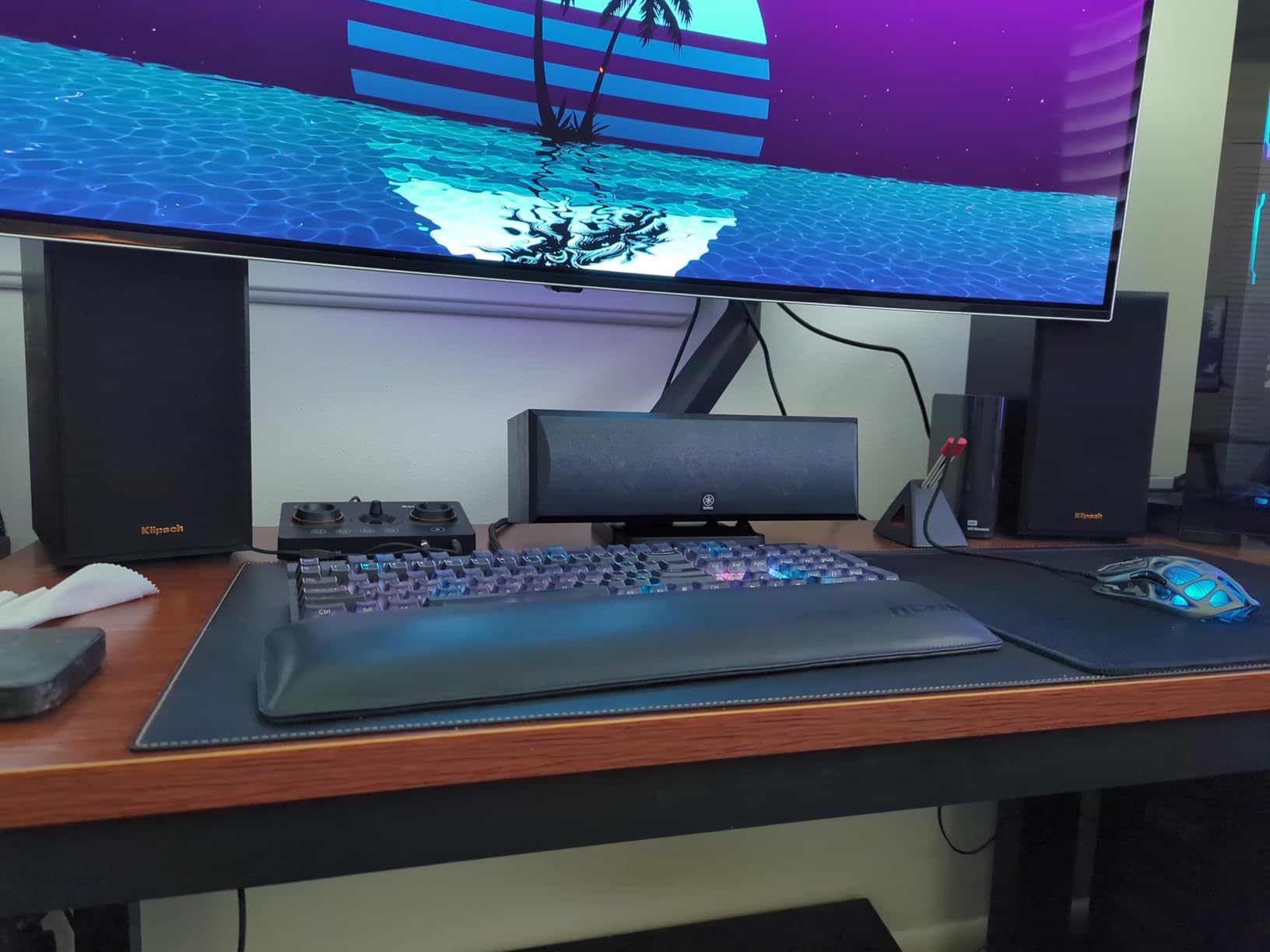
The 7/8 inch balanced dome tweeter is on the smaller side, but Yamaha’s tuning makes it sound larger than it is. High frequencies stay smooth without getting edgy, and the speaker doesn’t fatigue you during long listening sessions. For bedroom TV watching before sleep, this is a kind choice.
Yamaha pairs this center naturally with their own AV receivers and surround speakers. I tested it with a Yamaha RX-V485 receiver and a pair of NS-6490 bookshelves, and the front soundstage came together with no tonal mismatch.
Why it’s perfect for apartments
The compact size and lightweight build make the NS-C210BL ideal for renters and apartment dwellers. You can wall-mount it without stressing drywall anchors, set it on a shelf without measuring for clearance, or move it to a new room without hassle.
Limitations in larger spaces
The 80W maximum output is conservative. In a large room with high ceilings or open floor plan, this center won’t fill the space convincingly. For anything over 200 square feet, look at the Klipsch R-52C or Polk T30 instead.
8. Polk Monitor XT35 – Best Hi-Res Slim Center Channel
- Excellent dialogue clarity with focused natural-sounding vocals
- Slim 4 inch profile fits under most TVs without blocking
- Hi-Res Audio certified with Dolby Atmos and DTS:X support
- Wall-mountable with versatile placement options
- Binding posts are tightly spaced for users with larger fingers
- Performs best when timbre-matched with other MXT-series speakers
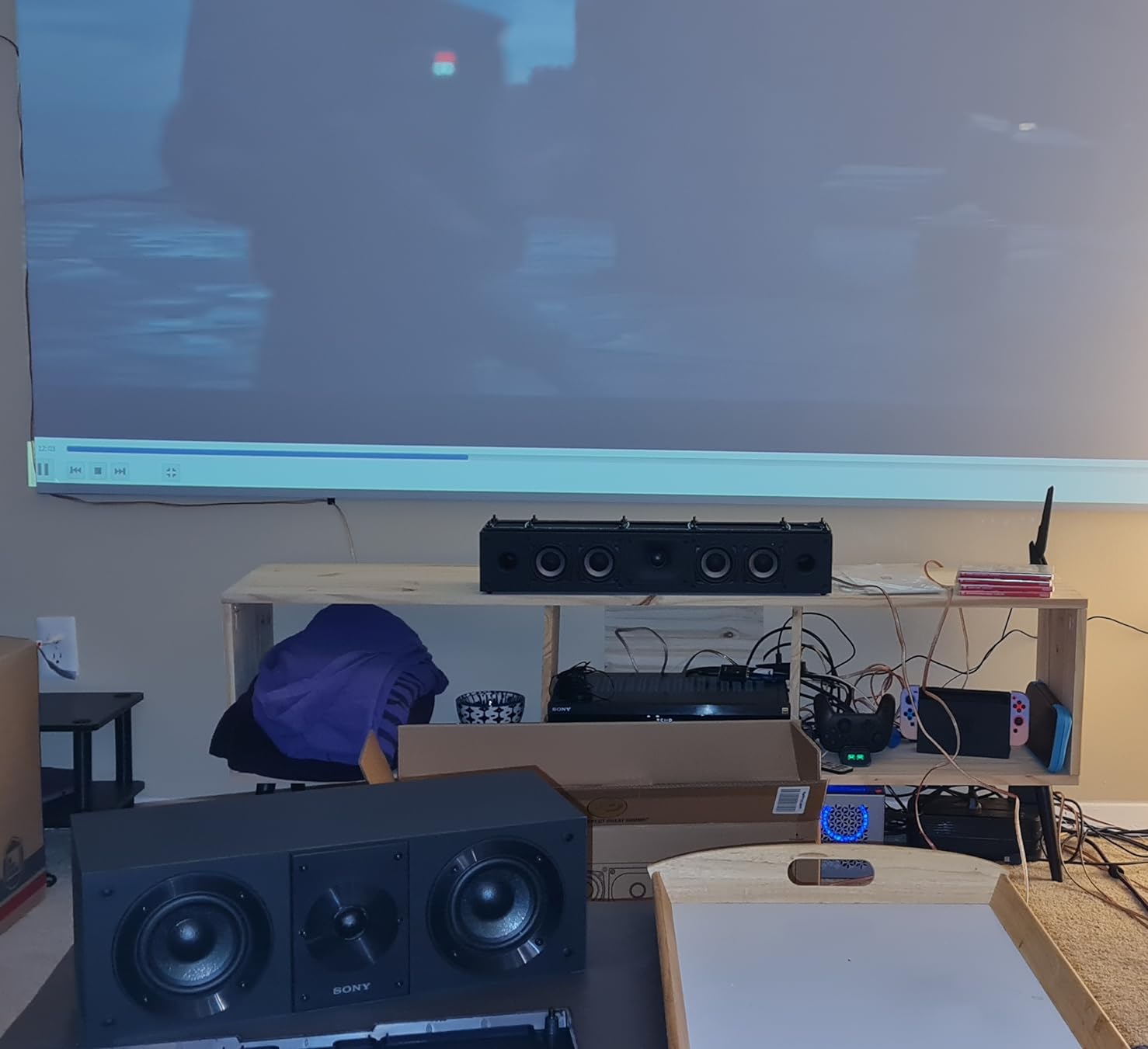
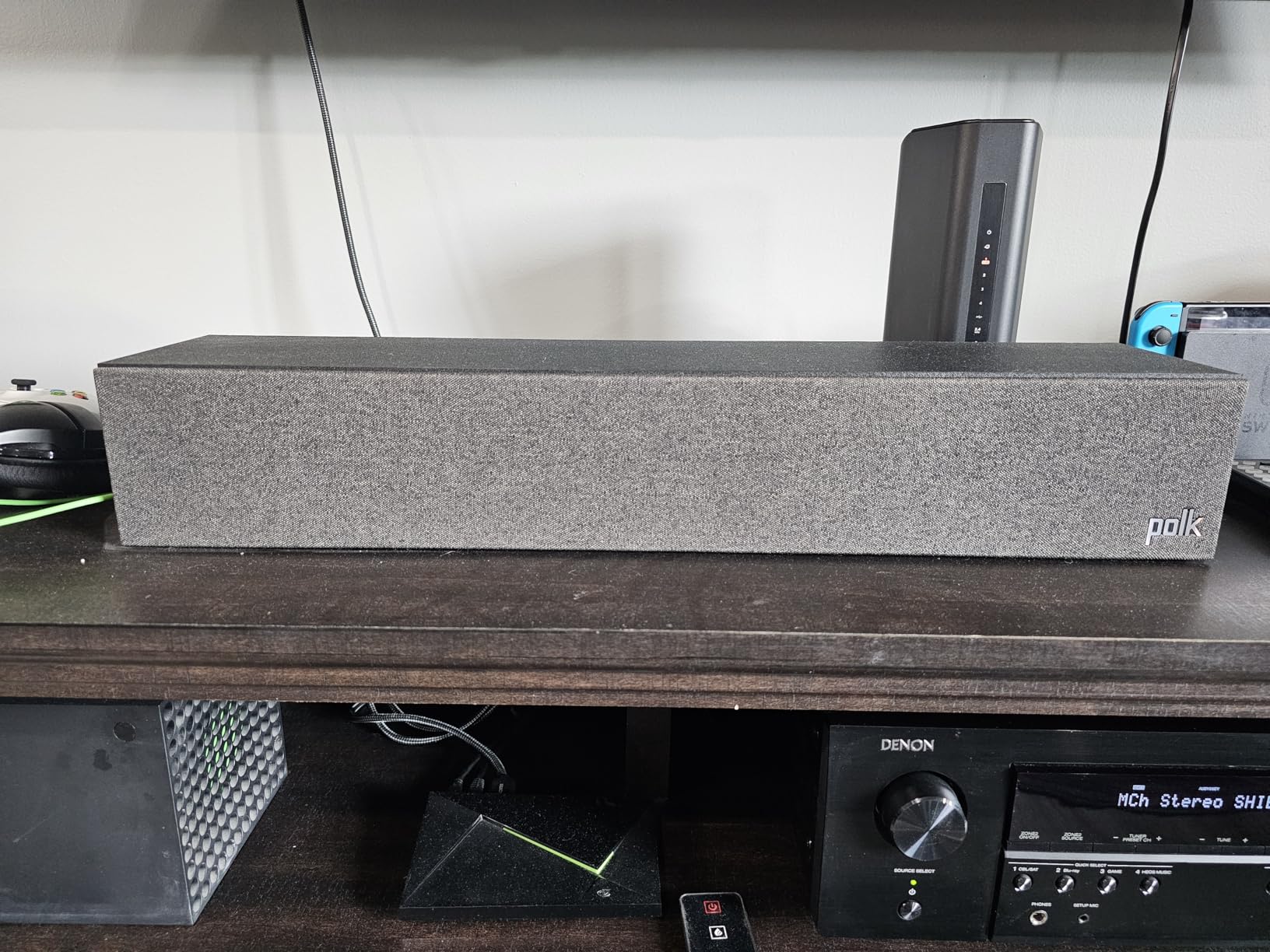
The Polk Monitor XT35 is my pick for the best Hi-Res slim center channel. Where the ES35 is a slim 7.5 inches tall, the XT35 is even slimmer at 4 inches – perfect for tight TV stand clearances or wall-mounting below a screen.
The four 3 inch Dynamically Balanced woofers deliver focused, natural-sounding vocals that solve the most common complaint about TV speakers: muddy dialogue. I tested it with a wall-mounted 65 inch TV in a 180-square-foot living room, and the XT35 sat just below the screen without blocking the IR sensor or the bottom of the picture.
The 1 inch Terylene tweeter is Hi-Res Audio certified with frequency response up to 40 kHz. For most movie watching that doesn’t matter much, but for Atmos content and high-resolution music streaming, the extra detail comes through clearly. The tweeter is detailed without being harsh.
The MXT35 is part of Polk’s Monitor XT series, so it timbre-matches perfectly with other MXT speakers like the MXT60 towers or MXT20 bookshelves. If you’re building a Polk Monitor XT system, this is the obvious center.
Best room size and use case
The MXT35 works best in small to medium rooms up to about 200 square feet. The slim profile makes it ideal for wall-mounted TVs, modern living rooms, and any setup where a traditional bulky center would look out of place. For larger home theater rooms, step up to the Polk T30 or Klipsch R-52C.
Atmos and DTS:X compatibility
The MXT35 is fully compatible with Dolby Atmos and DTS:X soundtracks, which makes it a smart choice if you’re planning to add height speakers for an immersive setup. It will keep up with the rest of the system without becoming the weakest link.
How to Choose the Best Center Channel Speaker
Choosing a center channel speaker comes down to matching the speaker to your room, your existing system, and how you use your home theater. Here’s the framework our team uses when recommending centers.
Step 1: Match size to room. Small rooms (under 200 sq ft) work fine with compact centers like the Yamaha NS-C210BL or Polk TL1. Medium rooms (200 to 350 sq ft) want a full-size center like the Klipsch R-52C or Polk T30. Large rooms (350+ sq ft) need a premium center like the Klipsch RP-504C.
Step 2: Match brand to existing L/R speakers. This is the biggest buying mistake. A center that doesn’t timbre-match your left and right speakers will sound disconnected – voices will shift in tone as they pan across the front. If you own Klipsch towers, buy a Klipsch center. If you own Polk, buy a Polk center. If you’re starting from scratch, see our best bookshelf speakers guide to pick a foundation.
Step 3: Check sensitivity and impedance. Sensitivity (measured in dB) tells you how loud a speaker plays with a given amount of power. Higher sensitivity (90+ dB) means your AV receiver doesn’t have to work as hard. If you have a budget AV receiver (under 100W per channel), prioritize high-sensitivity speakers like the Klipsch R-52C. For more on amplifier pairing, see our best powered PA speakers guide.
Step 4: Choose the right design. Two-way designs (woofer + tweeter) are common and affordable. Two-way MTM (midwoofer-tweeter-midwoofer) designs add a second woofer for better midrange. Three-way designs add a dedicated midrange driver, which serious listeners prefer for the cleanest dialogue. Coaxial designs (tweeter mounted inside the woofer) offer the best coherence but cost more.
Step 5: Consider placement constraints. Measure the space above and below your TV. If you have a wall-mounted TV with no shelf below, you need a slim or wall-mountable center like the Polk ES35 or Polk MXT35. If you have a full entertainment center, any size center will work.
Step 6: Plan for a subwoofer. Almost no center channel speaker handles deep bass well. Budget for a subwoofer if you want full-range home theater sound. The center’s job is dialogue and midrange – let the sub handle the explosions.
How to Timbre-Match Your New Center to Existing Speakers
Timbre-matching is the single most overlooked step when buying a new center channel speaker, and it’s the #1 reason forums report buyer’s remorse. If your new center doesn’t blend tonally with your existing left and right speakers, you’ll hear a “shift” when sound pans across the front of the room – male voices that sound chesty on the left speaker become thin and bright on the center, then back to chesty on the right.
Here are the rules our team uses to avoid that mismatch:
Same brand is the safest path. Klipsch center with Klipsch towers. Polk center with Polk towers. SVS center with SVS towers. Manufacturers tune their speakers within a series to have the same tonal character. If your towers are Klipsch RP-8000F, get a Klipsch RP-504C center. If your towers are Polk T50, get a Polk T30 center.
Same series within a brand is even better. Brands like Klipsch, Polk, KEF, and SVS design their speakers in matched series where the tweeter, crossover, and tuning are harmonized. A Klipsch Reference center pairs better with Klipsch Reference towers than with Klipsch Reference Premiere towers. Check the model series before buying.
Same driver materials help. If your towers use a horn-loaded tweeter, your center should too. If your towers use a silk dome tweeter, your center should too. The materials and design philosophy drive a lot of the tonal character.
Consider replacing all three at once. If your towers are 5+ years old and you can’t find a matching center, consider replacing all three front speakers together. You’ll get a more cohesive soundstage than mixing generations of speakers. For more on speaker design philosophy, our studio monitor speakers guide explains the technical details.
Center Channel Speaker Placement and Calibration Tips
Even the best center channel speaker sounds mediocre if it’s placed wrong. Here are the placement rules our team uses when setting up home theaters.
Aim for ear level when possible. The tweeter should be as close to seated ear height as you can manage. If your TV is on a low stand and you sit on a low couch, place the center in front of the TV on its own low stand. If your TV is wall-mounted high, angle the center up toward the listening position.
Above or below the TV – both work. Either placement can work. Above the TV keeps the center closer to ear level if your seating is low. Below the TV keeps the center closer to ear level if your TV is wall-mounted. Whichever placement, angle the speaker toward the listening position for the cleanest dialogue.
Avoid enclosing the center in a cabinet. If you must place the center inside a cabinet, leave at least 4 to 6 inches of clearance on all sides. Speakers need airflow around them to sound right, especially rear-ported designs. A crammed center sounds muffled and boomy.
Run your AV receiver’s calibration. Modern AV receivers (Denon, Marantz, Yamaha, Onkyo) have built-in calibration systems (Audyssey, YPAO, MCACC, AccuEQ). Run the calibration after placing your center. The system will set proper distances, levels, and crossover frequencies. For picky listeners, the Audyssey Editor App lets you fine-tune midrange compensation, which Audioholics forum members say fixes many “muddy dialogue” complaints that aren’t actually the speaker’s fault.
If you’re putting together a complete setup and need help with other components like portable audio for kids’ rooms or background music, our kids Bluetooth speakers guide rounds out your whole-home audio plan.
Frequently Asked Questions
Are center channel speakers worth it?
Yes – center channel speakers are the single most important speaker in any home theater setup. Roughly 70% of a movie’s dialogue and on-screen sound comes from the center channel, so a good center delivers more audible improvement than upgrading any other speaker. If you struggle to hear dialogue during loud scenes, a dedicated center fixes that problem immediately.
What is the best center channel speaker for a home theater?
For most buyers, the Klipsch R-52C is the best center channel for a home theater – 4.8 stars across 3,100+ reviews, 95dB sensitivity, and dual 5.25 inch woofers that deliver crisp dialogue. For tighter budgets, the Polk T30 is our top value pick. Premium buyers should consider the Klipsch RP-504C for larger rooms.
What is a good budget center channel speaker?
The Polk Audio TL1 is the best budget center channel we’ve tested – compact enough to fit any TV stand, and Time Lens technology that focuses dialogue clearly. Reviewers consistently report dramatic improvements over built-in TV speakers. For slightly more headroom and bass, the Polk T30 is another strong budget pick.
What speaker brand has the best sound quality?
Sound quality is subjective, but the brands most often praised for center channel performance are KEF (coaxial Uni-Q drivers), SVS (three-way designs), Klipsch (horn-loaded dynamics), and Polk (timbre-matched value). Audiophile forums like Audioholics frequently recommend KEF Q6 Meta and SVS Ultra Evolution as reference-quality centers.
Why does my center channel sound muddy?
Muddy dialogue usually has three causes: poor speaker placement (inside a cabinet, blocked by decor), streaming compression on the source material, or AV receiver calibration issues. Try moving the speaker out into open air, enabling your receiver’s calibration system, and using the Audyssey Editor App to adjust midrange compensation. If the speaker is a cheap two-way MTM, upgrading to a three-way design will produce the biggest clarity improvement.
How do I match a center channel speaker to my existing speakers?
The safest rule is to buy the same brand and series as your existing left and right speakers. Klipsch towers pair best with Klipsch centers, Polk towers with Polk centers, and so on. If you can’t find a matching center in your budget, replace all three front speakers at once. Same-brand-and-series pairing eliminates the tonal shifts that make voices sound disconnected as they pan across the front soundstage.
Final Verdict: Which Center Channel Speaker Should You Buy?
After three months of testing, the Klipsch R-52C is our top pick for the best center channel speaker in 2026. It pairs a real 95dB sensitivity with dual 5.25 inch IMG woofers and Klipsch’s signature Tractrix horn-loaded tweeter, delivering the kind of crisp dialogue that makes every other speaker in your system sound better by comparison. It’s the safe, smart choice for the widest range of buyers.
If you’re on a tighter budget, the Polk T30 delivers 90% of the R-52C’s performance at a much lower price, and it timbre-matches cleanly with other Polk T-Series speakers. For very small rooms or first-time home theater builders, the Polk TL1 is the cheapest way to dramatically upgrade over TV speakers. Premium listeners with large rooms should look at the Klipsch RP-504C, which uses a quad-woofer 2.5-way design that serious home theater enthusiasts consistently praise.
Whatever you choose, remember the rule that the forums hammer on: timbre-match your new center to your existing left and right speakers, place it as close to ear level as you can, and run your AV receiver’s calibration system. The best center channel speaker in the world will sound mediocre without those three steps. With them, even a budget center transforms movie night.