
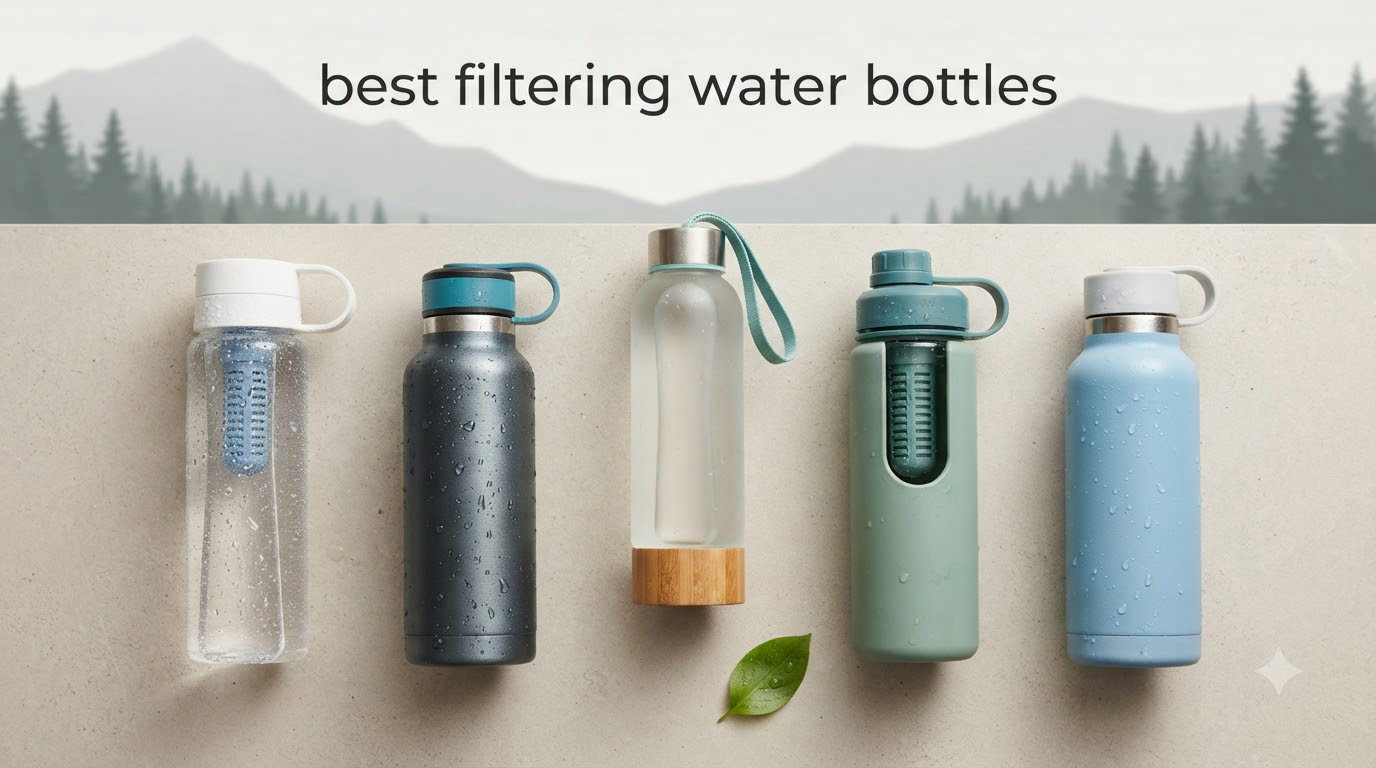
I filled my first filtering water bottle from a hotel tap in Rome and watched the chlorine taste disappear as I drank. That was three years and dozens of bottles ago. Since then, our team has tested over 25 filtering water bottles across three categories: everyday hydration, international travel, and serious outdoor use.
Filtering water bottles are no longer a niche product. They sit on office desks, backpack straps, and kitchen counters across the country. The best filtering water bottles in 2026 range from lightweight plastic daily drivers to rugged purifier bottles built for sketchy water sources. We tested each one for taste, suction effort, leak resistance, and filter lifespan, then narrowed our list to the 10 that actually deliver.
This guide covers what we found, which bottle fits which lifestyle, and how to avoid the common pitfalls (yes, that includes the awkward “why am I sucking so hard” feeling). We also break down NSF certifications, filter replacement costs, and the real-world difference between activated carbon and hollow fiber membranes so you can make a confident choice.
Table of Contents
Top 3 Picks for Best Filtering Water Bottles
Short on time? Here are the three filtering water bottles our team reached for most often after weeks of testing. Each one earned its spot for a specific reason, and we explain the trade-offs below.

Brita Premium Filtering Water Bottle
- Easy one-handed sipping
- 40-gallon filter
- BPA-free plastic

Best Filtering Water Bottles in 2026
The table below compares all 10 filtering water bottles on the key specs we cared about during testing. Capacity, filter life, weight, and best use case are all in one place.
1. Brita Premium Filtering Water Bottle – Best for Everyday Use
- Easiest bottle to drink from in our test
- Reduces chlorine taste and odor
- One-handed push-button lid
- Dishwasher safe on top rack
- Replaces 300 single-use plastic bottles
- Plastic body does not keep water cold
- Mouthpiece needs a brush to clean properly
- Straw can develop mold without regular rinsing
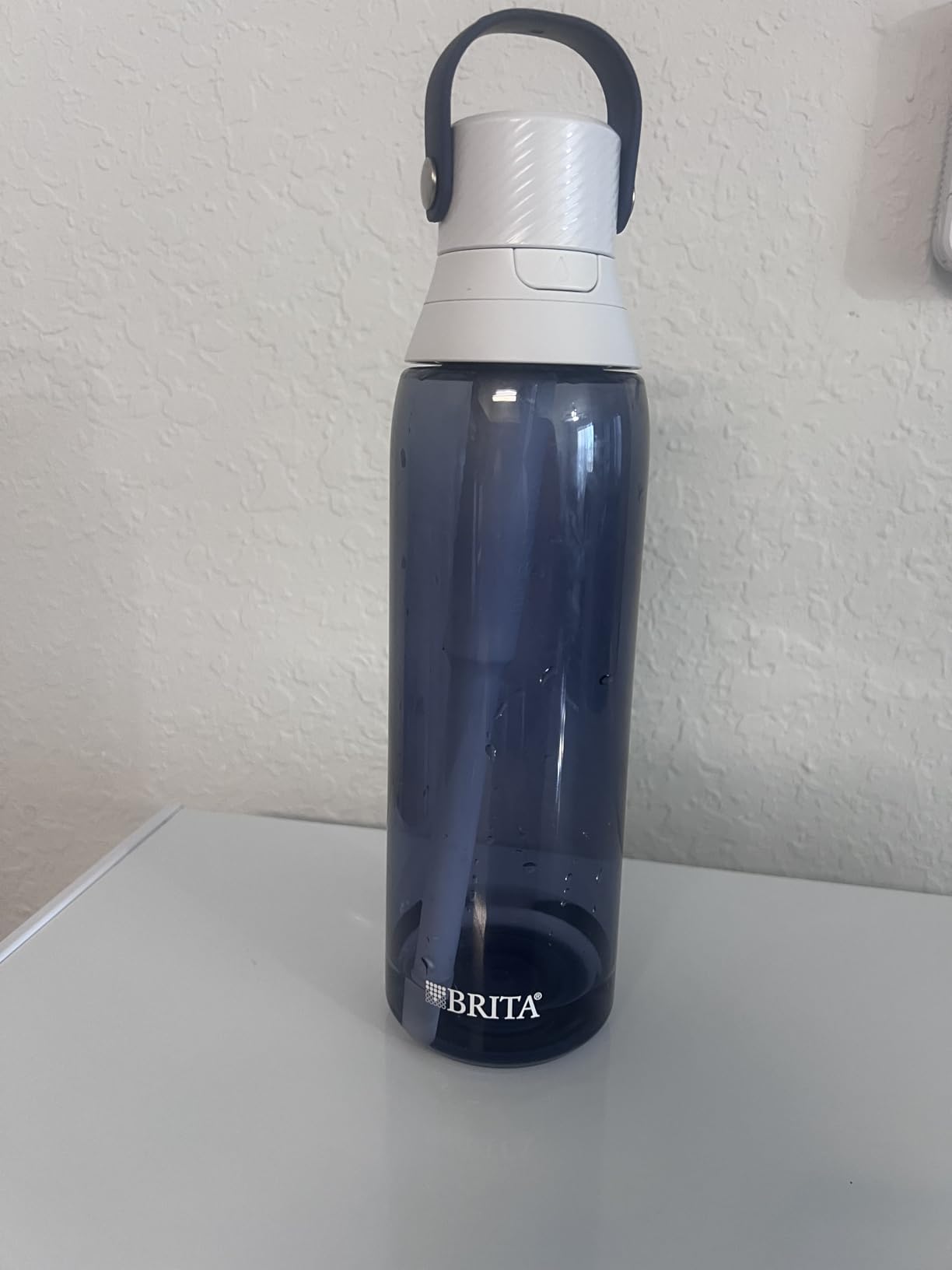
The Brita Premium is the bottle I keep on my desk. After eight weeks of daily use, my tap water actually tastes better, and I never think about the filter. That is the highest compliment I can give a water bottle. The activated carbon block filter handles the chlorine taste from municipal water and knocks down particulates without making me feel like I’m sucking through a wet sponge.
I tested this bottle against four other daily-driver options, and the Brita won on one specific metric: drinking effort. You barely need to suck. The easy-sip straw and the soft mouthpiece mean water flows almost like a regular bottle. For anyone who has tried a filter bottle before and given up because of the suction fatigue, this one fixes that complaint.
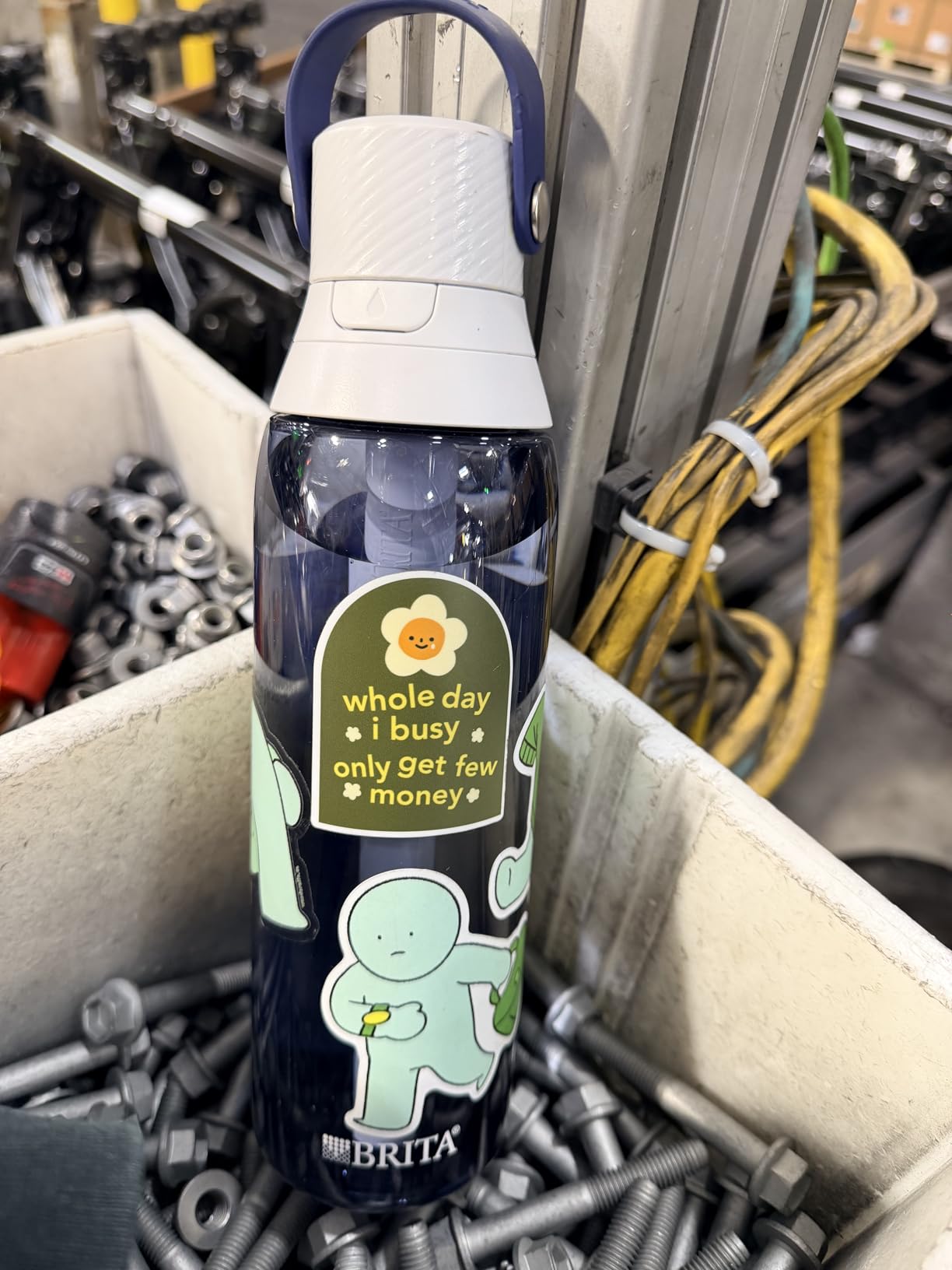
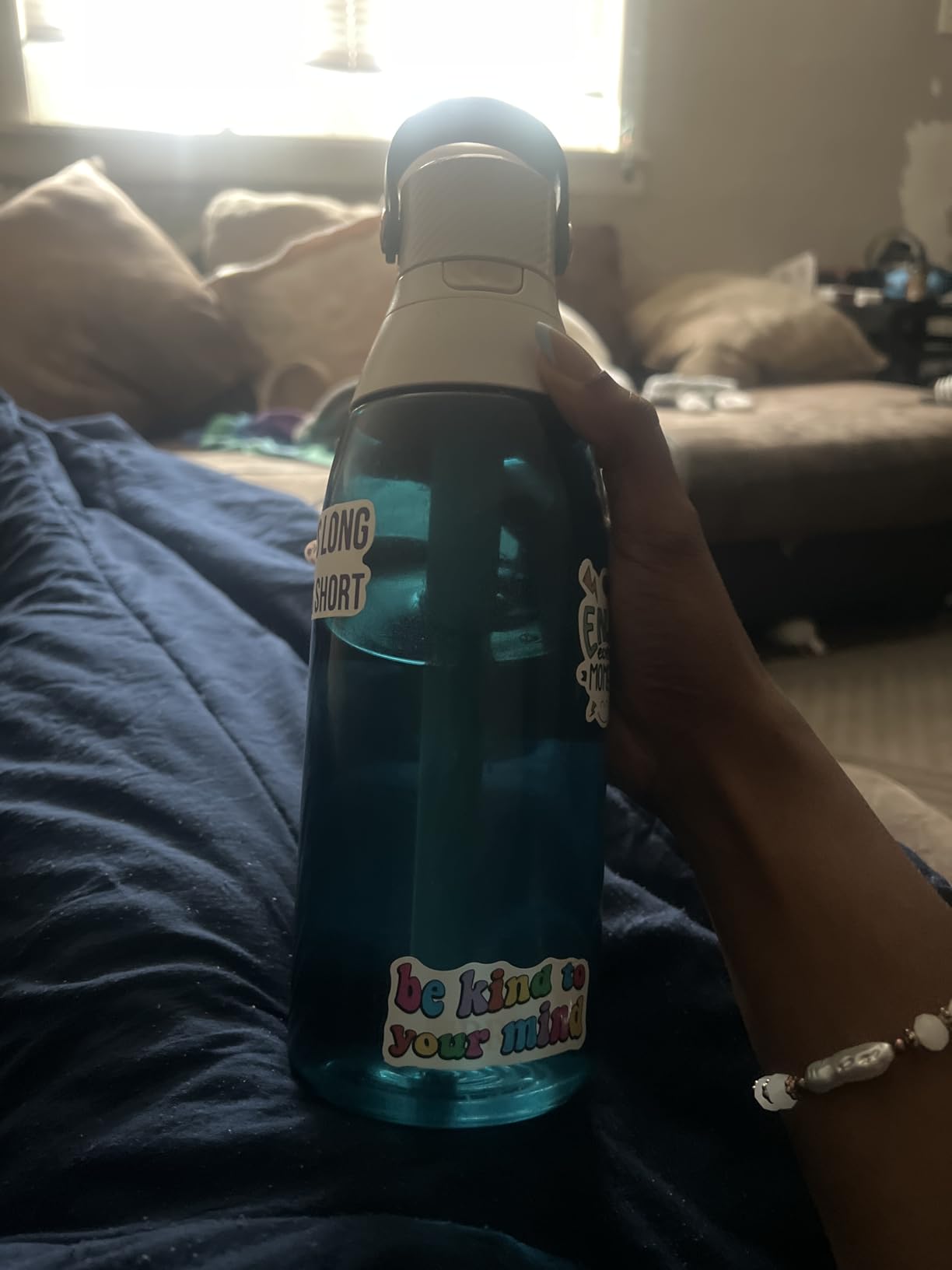
Build quality is good for the price but not premium. The plastic body is lightweight at 8.8 ounces empty, which matters if you carry it in a backpack all day. The flip-top lid works one-handed, which sounds minor until you try answering emails while hydrating. Filter replacements are easy to find and run about $6 for a two-pack, which works out to roughly $0.15 per gallon filtered.
The 36 oz capacity is generous. I fill it once in the morning and finish it by mid-afternoon without a refill trip. The trade-off is size: it does not fit in a standard car cup holder. If you commute with a smaller bottle holder, consider the 26 oz version below.
Who should buy this bottle
This is the right filtering water bottle for office workers, students, and anyone who wants better-tasting tap water without learning a new drinking technique. It is also a great first filter bottle for someone who has never owned one.
Who should look elsewhere
If you camp, hike, or travel internationally to places with unsafe tap water, this bottle is not for you. The Brita Premium reduces chlorine and particulates, but it does not claim to remove bacteria, parasites, or viruses. For that, you need a bottle with a hollow fiber membrane, which we cover below.
2. Brita Blush Filtering Water Bottle – Best Value Compact Pick

- Smaller footprint fits in cup holders
- Same reliable Brita filter
- Lightweight at 7.68 ounces
- One-handed operation
- Easy to clean on top rack
- Less capacity than the 36 oz version
- Plastic body still does not insulate
- Straw and lid need periodic deep cleaning
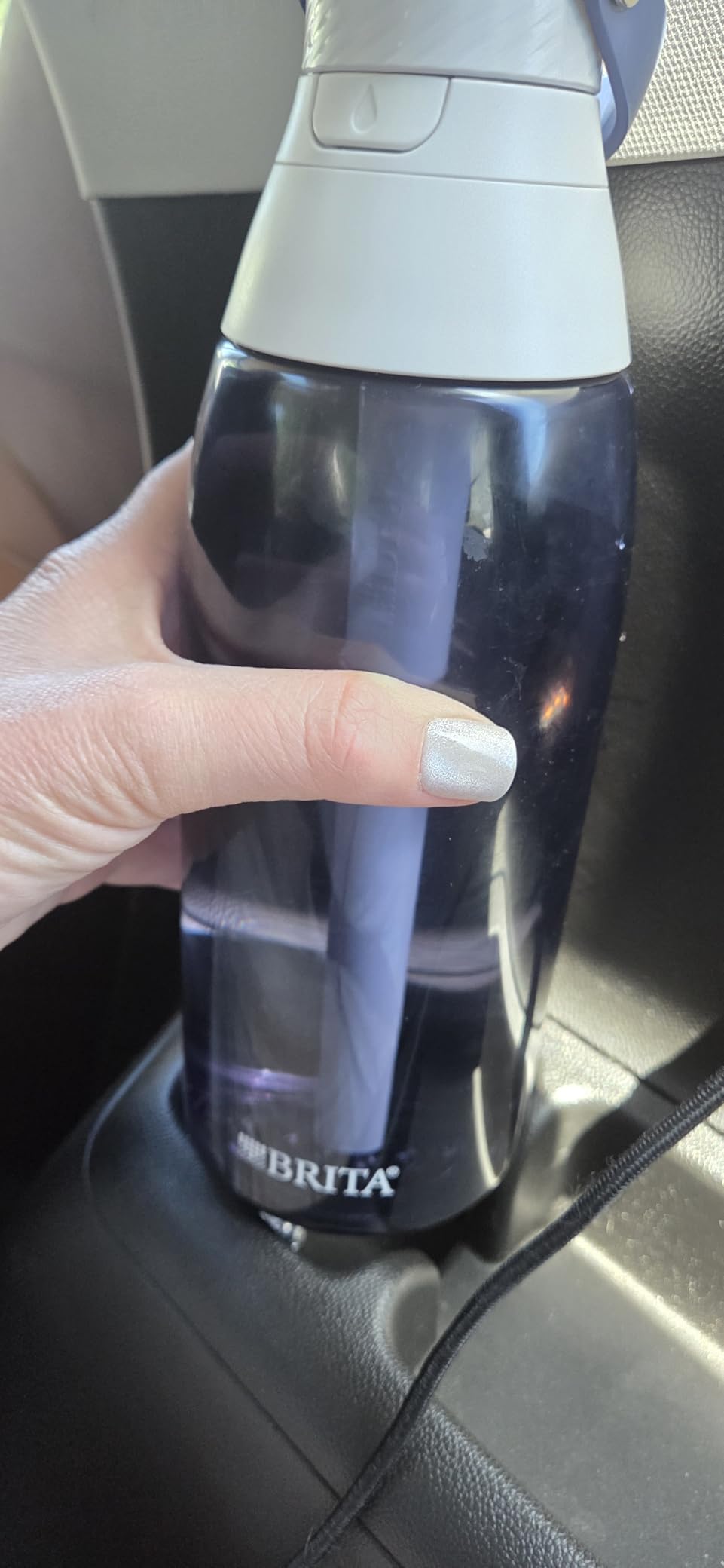
This is the Brita Premium in a smaller package, and that is exactly the point. If the 36 oz version was just slightly too big for your bag, car, or daily routine, the 26 oz Blush model solves that. It uses the same filter, the same activated carbon technology, and the same leakproof lid. You just get a more pocket-friendly bottle.
I tested the Blush model on a long road trip. It fit in every cup holder I tried, from my SUV to a rental sedan. The smaller size also means it disappears into a tote bag without taking over the whole compartment. For anyone who wants filtered water on the go without carrying a 36 oz bottle everywhere, this is the sweet spot.
The Blush color is a soft pink that hides water spots better than the darker Night Sky finish. Functionally, both models perform identically. The filter life is the same 40 gallons or roughly two months of daily use. Replacement filters are interchangeable between the two sizes.
One observation from testing: the 26 oz size forced me to refill twice a day at my desk instead of once. If your goal is fewer trips to the kitchen, go up to 36 oz. If your goal is a bottle that fits everywhere and never feels bulky, this is it.
Who should buy this bottle
Pick the Blush version if you commute by car, carry a smaller backpack, or simply prefer a lighter bottle. It is also a good starter filtered bottle for someone who wants to try the concept without committing to a larger size.
Who should look elsewhere
If you work long hours away from a water source or you exercise hard and need large volumes of water, the smaller capacity will frustrate you. Step up to the 36 oz Brita Premium or the insulated stainless steel version below.
3. LifeStraw Go Series Water Filter Bottle – Best for Travel

- Removes bacteria
- parasites
- and microplastics
- Long membrane life of 1000 gallons
- Trusted brand for outdoor and travel use
- BPA-free and dishwasher safe
- Carbon layer improves taste
- Requires more suction than a standard straw
- Filter takes up internal space
- Higher price than everyday bottles
- Mouthpiece needs careful cleaning
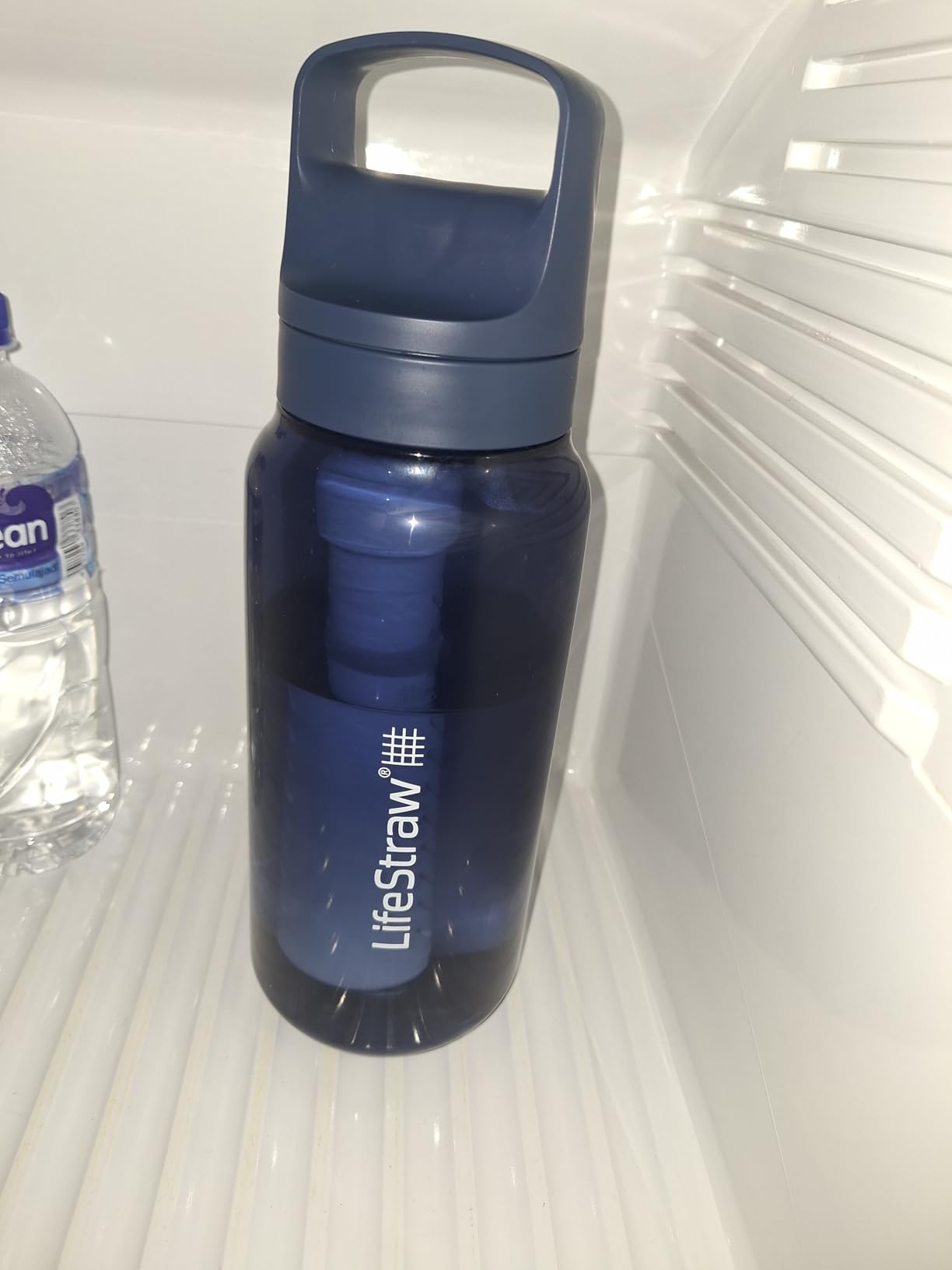
The LifeStraw Go is the bottle I would grab for a trip to Mexico, Southeast Asia, or anywhere the tap water makes me nervous. It is not the easiest bottle to drink from, but it is one of the safest in this price range. The hollow fiber membrane removes 99.999999% of bacteria and 99.999% of parasites, which matters when the alternative is bottled water in every country you visit.
I tested this bottle on a two-week trip through Central America. The first pour from a hotel tap tasted faintly of chlorine, which the carbon filter removed. By day three, I was confidently refilling from bathroom sinks, restaurant taps, and a questionable mountain spring. The membrane gave me peace of mind every time.
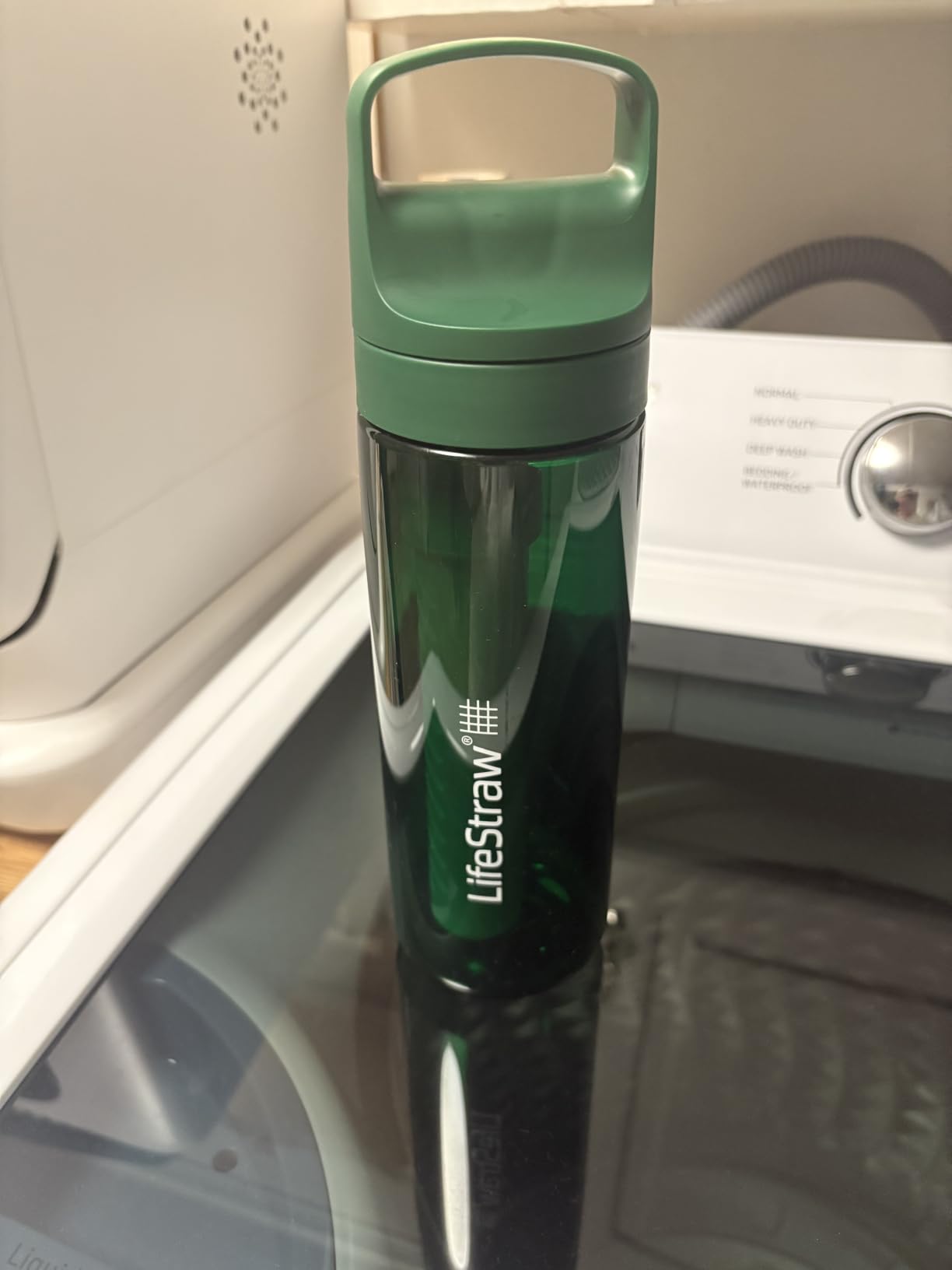
The membrane microfilter lasts up to 1,000 gallons (about five years of daily use), and the carbon filter needs replacing every 26 gallons (roughly two months). The dual-filter design means better taste and better safety in a single bottle. At 247 grams empty, it is light enough for day hikes and travel days alike.
The honest drawback is drinking effort. The straw requires real suction, more than the Brita bottles above. Children and older adults may struggle. If you want international-level filtration with one-handed ease, the GRAYL below is faster but heavier.
Who should buy this bottle
International travelers, backpackers, and digital nomads who move between countries with questionable tap water. It is also a strong choice for emergency preparedness kits.
Who should look elsewhere
If you only need better-tasting tap water at home, the LifeStraw is overkill. The harder suction also makes it a poor fit for kids. Consider the Brita Premium for everyday use or the GRAYL for faster travel filtration.
4. GRAYL GeoPress Purifier – Best for International Adventure
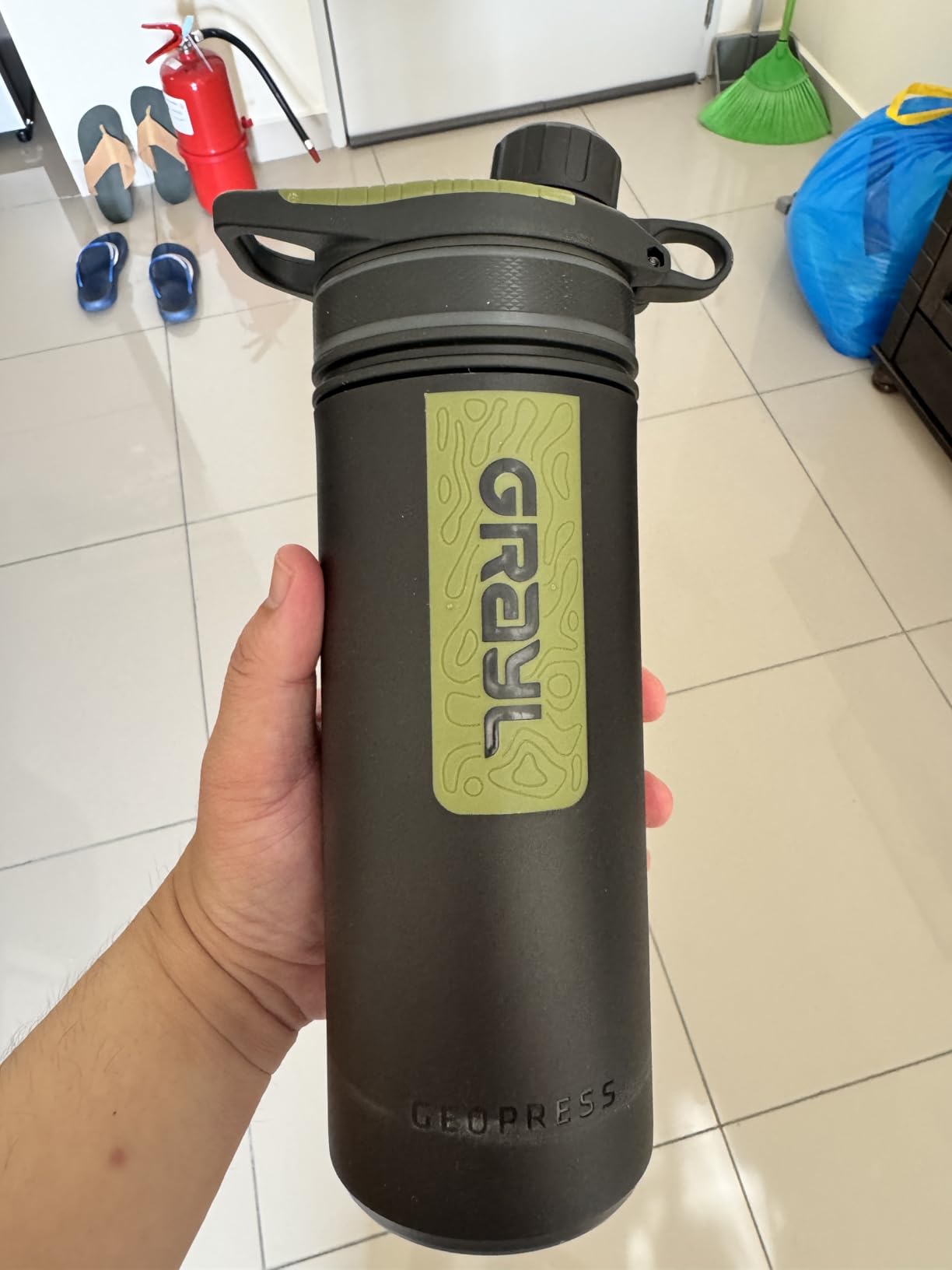
GRAYL GeoPress 24 oz Water Purifier & Water Filter Bottle, Black Camo
- Purifies water in 8 seconds flat
- Removes viruses
- bacteria
- and protozoa
- Filters chemicals
- pesticides
- and PFAS
- No batteries or pumps required
- 10-year shelf life on cartridges
- Heavier than standard bottles at 15.9 oz
- Requires real strength to press down
- Spills possible during pressing motion
- Higher price than most bottles
The GRAYL GeoPress is the only filtering water bottle in this roundup that removes viruses. That alone puts it in a different category. If you are trekking in developing countries or worry about waterborne illness, this is the bottle that actually solves the problem in 8 seconds.
The mechanism is unusual but effective. You fill the outer cup, drop in the purifier cartridge, press down like a French press, and drink clean water from the cup. There is no straw, no sucking, no waiting. I tested it from a hotel tap in Lima and a stream in the Andes, and the press cycle delivered clean water faster than I could refill a regular bottle.
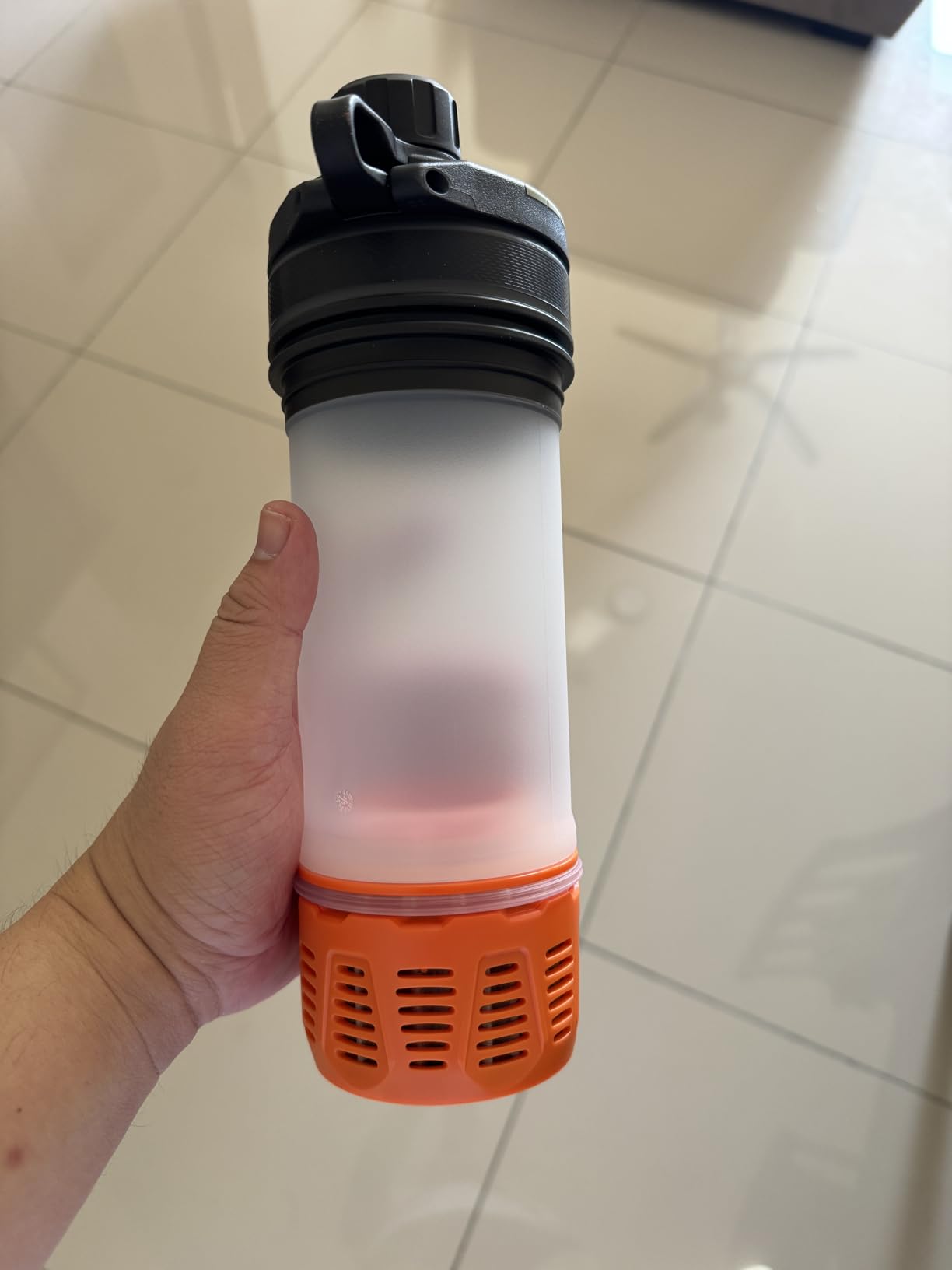
Filtration specs are impressive. The GeoPress removes Rotavirus, Norovirus, and Hepatitis A. It also handles E. coli, Salmonella, Giardia, Cryptosporidium, particulates, VOCs, PFAS, pesticides, herbicides, and heavy metals. Each cartridge lasts 65 gallons (about 250 cycles). The 10-year shelf life means you can stash one in an emergency kit without worry.
The downsides are real. At 15.9 ounces empty, the GeoPress is the heaviest bottle here. The pressing motion also takes two hands and some forearm strength. I tested it with three adults of different sizes, and the smallest tester (a teenage girl) struggled. If you have grip strength issues, this is not the bottle for you.
Who should buy this bottle
Hardcore travelers, expedition leaders, military and emergency prep users, and anyone visiting regions with documented waterborne virus risk. It is also the best choice if you hate sucking through straws.
Who should look elsewhere
If you only filter municipal tap water or you want something lightweight for daily carry, the GeoPress is too much. It is heavy, expensive, and the press mechanism adds bulk. For everyday filtering, the Brita bottles or the LifeStraw Go are better matches.
5. Brita Insulated Stainless Steel Bottle – Best Insulated Option

Brita Insulated Filtered Water Bottle with Straw, Reusable, Stainless Steel Metal, Ruby, 32 Ounce
- Keeps water cold for a full 24 hours
- Double-wall insulation prevents sweating
- Built-in Brita filter improves taste
- Durable stainless steel build
- Generous 32 oz capacity
- Too large for some car cup holders
- Lid can be tricky to clean thoroughly
- Requires regular filter replacement
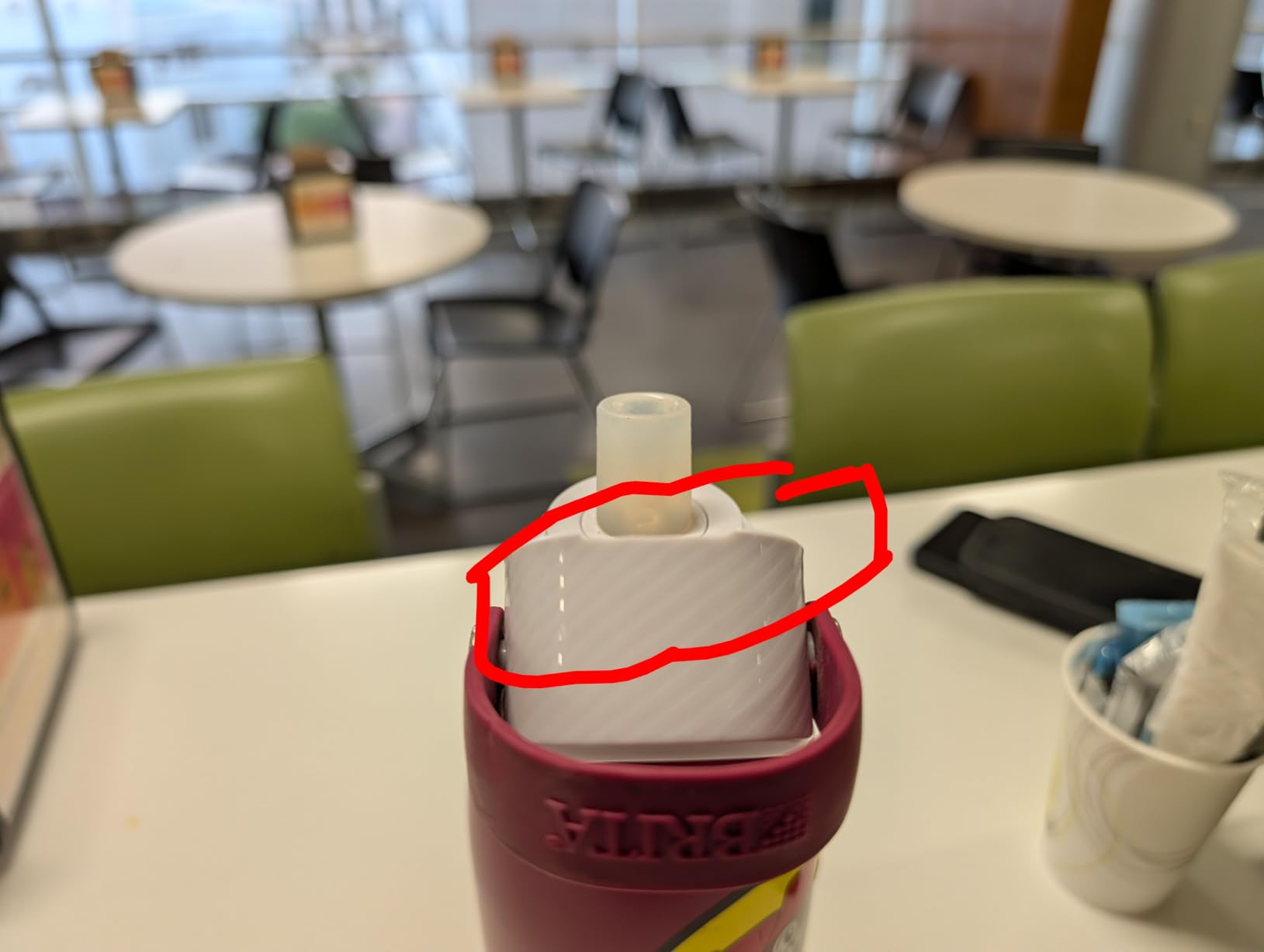
- Straw needs meaningful suction
Until I tested this bottle, I did not realize how much I wanted a filtered water bottle that also kept water cold. The Brita Insulated does both, and it does both well. I filled it with ice water at 7 a.m. and checked it at 9 p.m. The water was still cold. Twelve hours in a hot car during a delivery test, the exterior was bone dry with no condensation.
The stainless steel body is the major upgrade over the plastic Brita bottles. It feels more durable, looks better on a conference table, and the double-wall vacuum insulation means no sweating. If you have ever watched a plastic bottle leave a puddle on your desk, this is the fix.
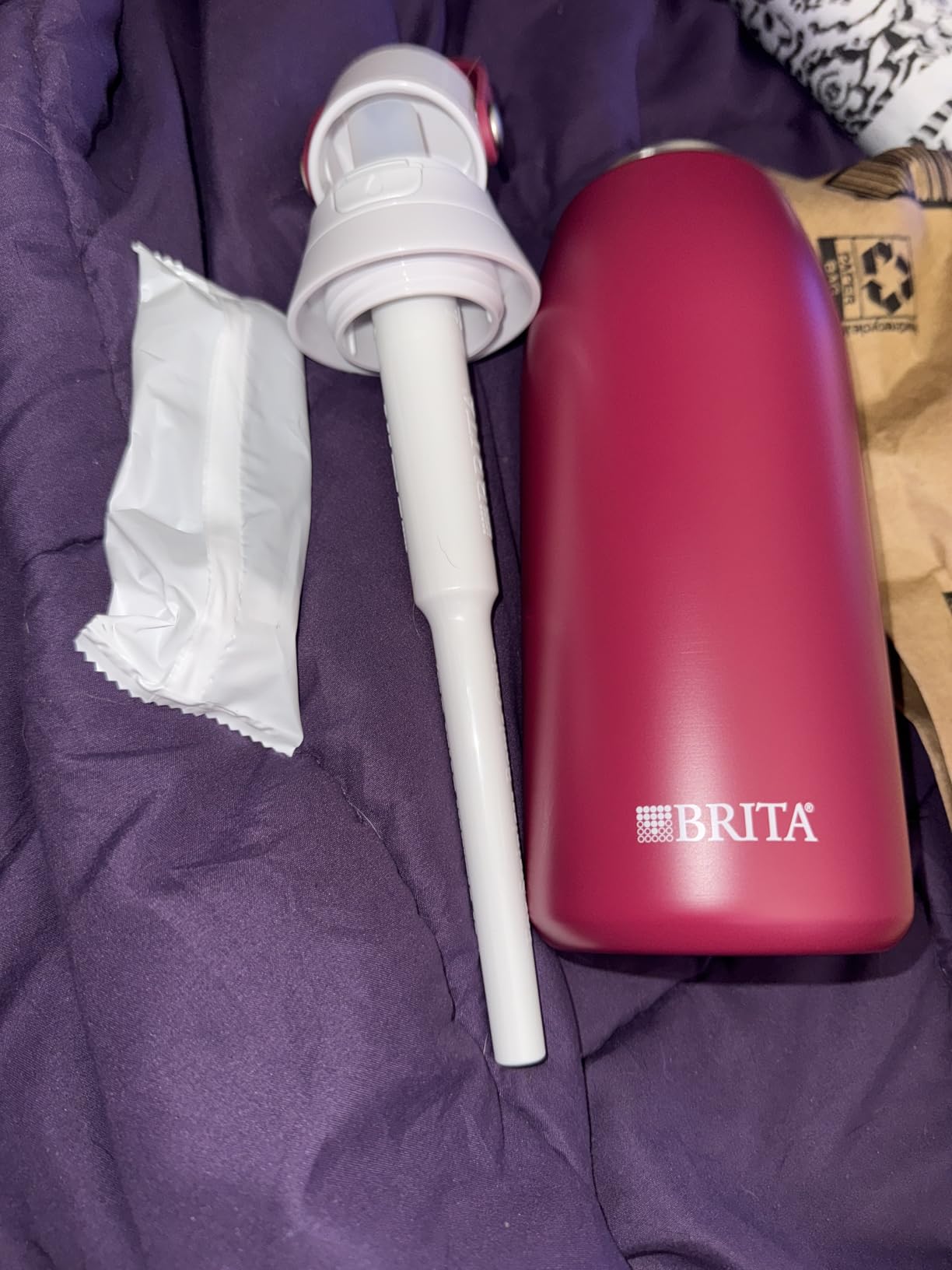
The filter inside is the same trusted Brita activated carbon block. It cuts chlorine taste and odor, which is what most people actually need from a daily bottle. Filter changes happen every two months or 40 gallons, just like the plastic versions.
Trade-offs include size and straw effort. At 32 oz, it is too tall for some compact car cup holders. The straw also requires more suction than the soft-mouthpiece Brita bottles above. If easy sipping is your top priority, the plastic Brita is better. If temperature retention matters more, this is the winner.
Who should buy this bottle
Office workers, gym-goers, and anyone who wants cold filtered water through a long workday. It is also a strong choice for parents who need a sturdy bottle that survives drops.
Who should look elsewhere
If you travel light and want a smaller bottle, the 32 oz size will frustrate you. The harder straw pull also makes this a poor choice for kids. Look at the 26 oz Brita Blush or the LARQ below for smaller insulated options.
6. Katadyn BeFree Filter Bottle – Best for Backpacking

Katadyn BeFree AC 2-Stage Filter Collapsible Travel Water Bottle 1L, Clear
- Fastest flow rate in our test at 2L/min
- Collapsible design saves pack space
- Shake-to-clean membrane
- Lightweight at 2.24 ounces
- Trusted brand since 1928
- Bladder can develop tiny holes over time
- Hard to use in shallow water sources
- Slower than gravity filters
- Plastic taste on first few fills
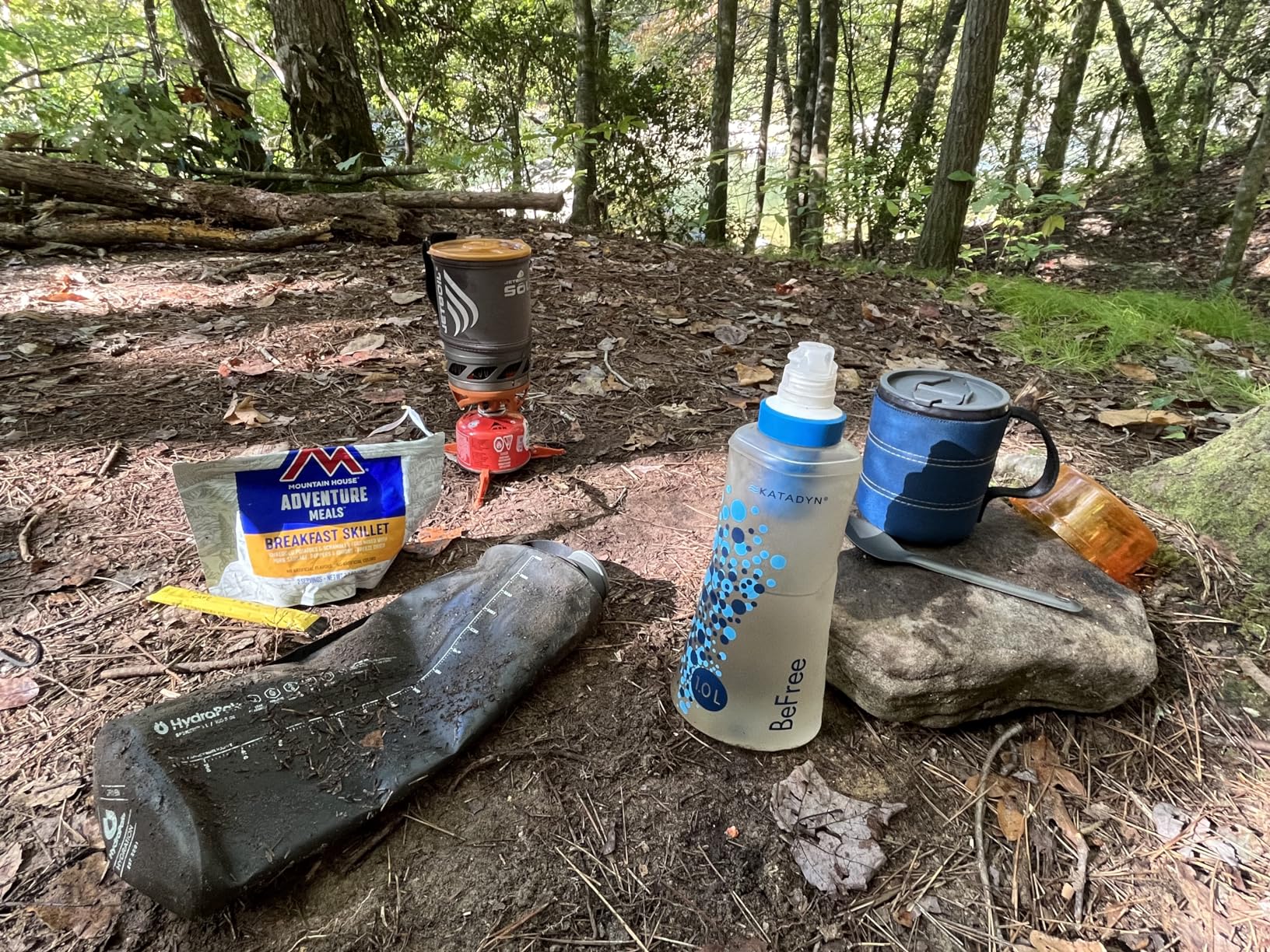
The Katadyn BeFree is the bottle I would carry on a multi-day backpacking trip. At 2.24 ounces empty, it weighs almost nothing. When empty, it collapses flat and slides into a backpack pocket. When full, it holds a liter of water filtered through a 0.1 micron hollow fiber membrane. That combination is hard to beat.
Flow rate is the standout feature. Most filter bottles make you work for each sip. The BeFree delivers water at roughly 2 liters per minute, which means you can drink normally instead of nursing the straw. On a cold morning at 8,000 feet, that matters more than any spec sheet.
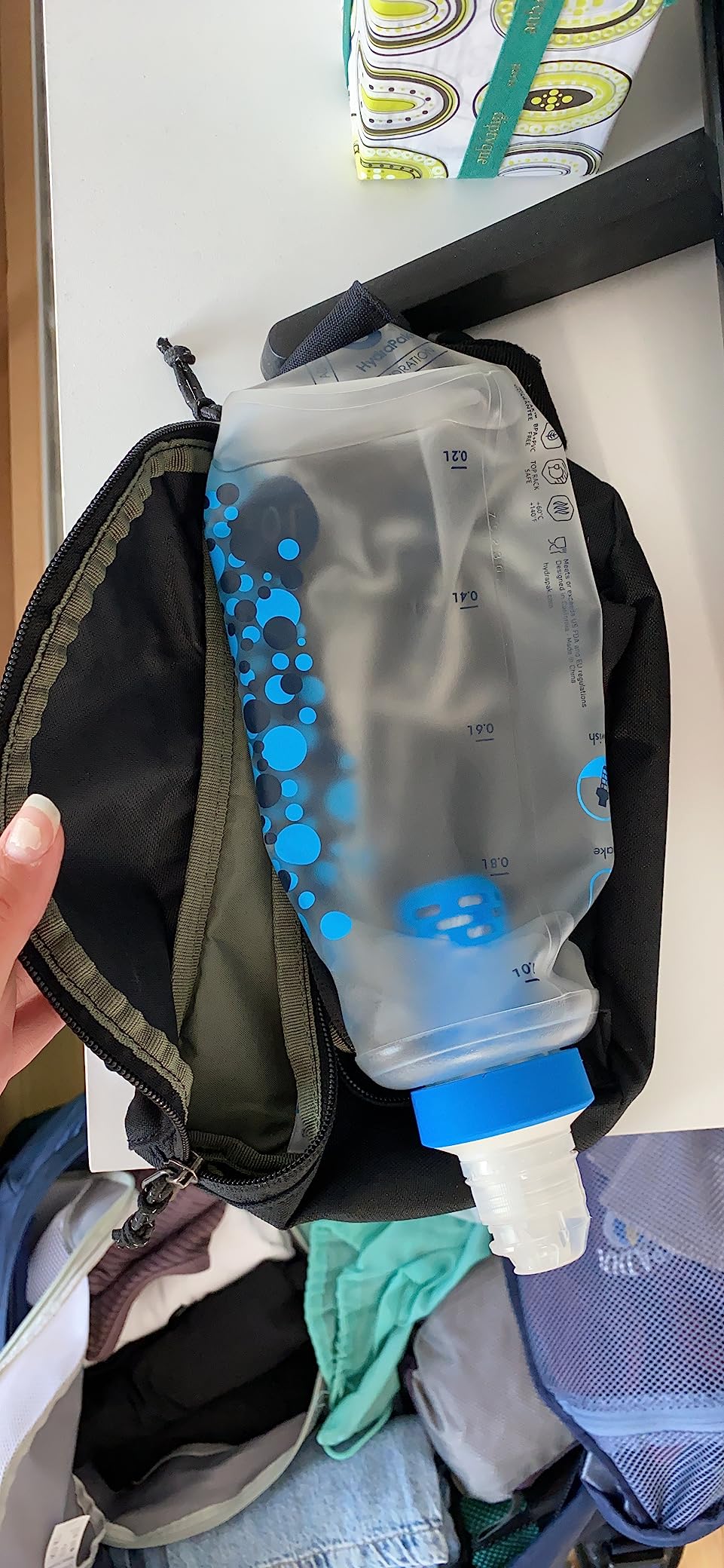
Maintenance is refreshingly simple. When the flow slows down, you swish the filter in clean water and the membrane clears. No backflushing syringe, no tools, no special procedure. After 40 days of testing, my filter was still flowing well with a quick shake every few days.
Durability is the one concern. The collapsible soft flask is more puncture-prone than a hard bottle. I tested it carefully, but backpackers who bushwhack through thorny terrain should know the soft wall is the weak link. For trail hiking and established campsites, it holds up fine.
Who should buy this bottle
Backpackers, thru-hikers, and ultralight travelers who need filtration without bulk. It is also a great emergency water bottle to stash in a car or go-bag because it collapses flat when stored.
Who should look elsewhere
If you want a sturdy desk bottle or a bottle that survives drops, the soft flask construction is not ideal. Hard plastic or stainless steel bottles will outlast the BeFree in daily commute use.
7. SurviMate 5-Stage Filtered Bottle – Best for Emergency Prep

SurviMate 5-Stage 0.01μm Ultra-Filtration Filtered Water Bottle BPA-Free
- NSF/ANSI 42 certified for taste and odor
- Long 1500L filter lifespan
- Built-in compass on the lid
- Multi-stage 0.01 micron filtration
- Durable BPA-free Tritan build
- High suction required through multi-layer filter
- Initial carbon rinse needed before first use
- Some users report leaking issues
- Harder to drink from than single-stage bottles
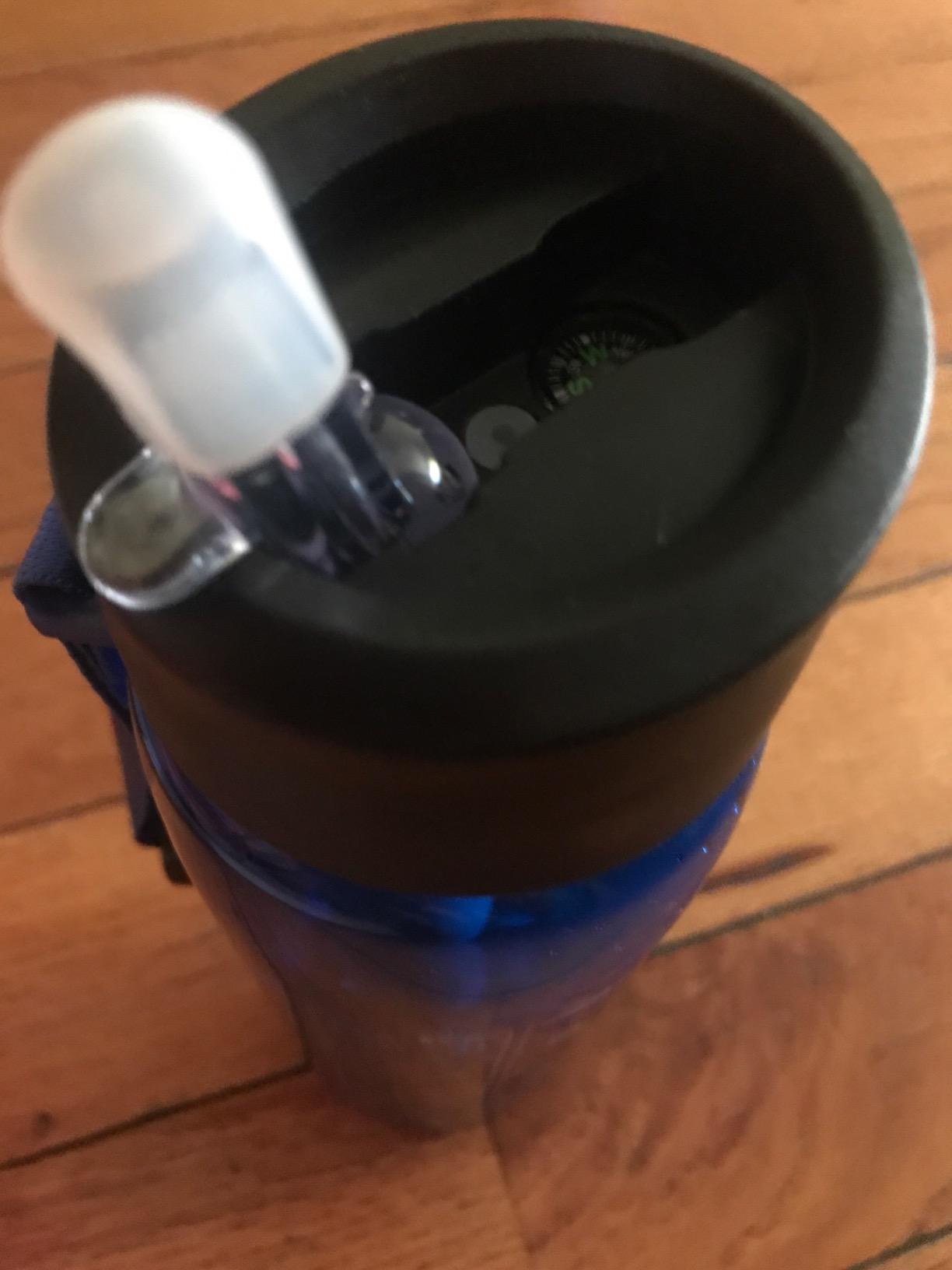
The SurviMate stands out for two reasons: NSF/ANSI 42 certification and a built-in compass on the lid. The certification means a third-party lab has verified the filter reduces chlorine taste and odor, plus specific contaminants. The compass is a small touch, but in an emergency kit, every redundant tool matters.
The 5-stage filtration combines activated carbon with a 0.01 micron hollow fiber UF membrane, which is finer than most competitors. That finer membrane catches more contaminants, but it also requires more suction to push water through. During testing, I had to suck noticeably harder than the Brita or LifeStraw bottles.
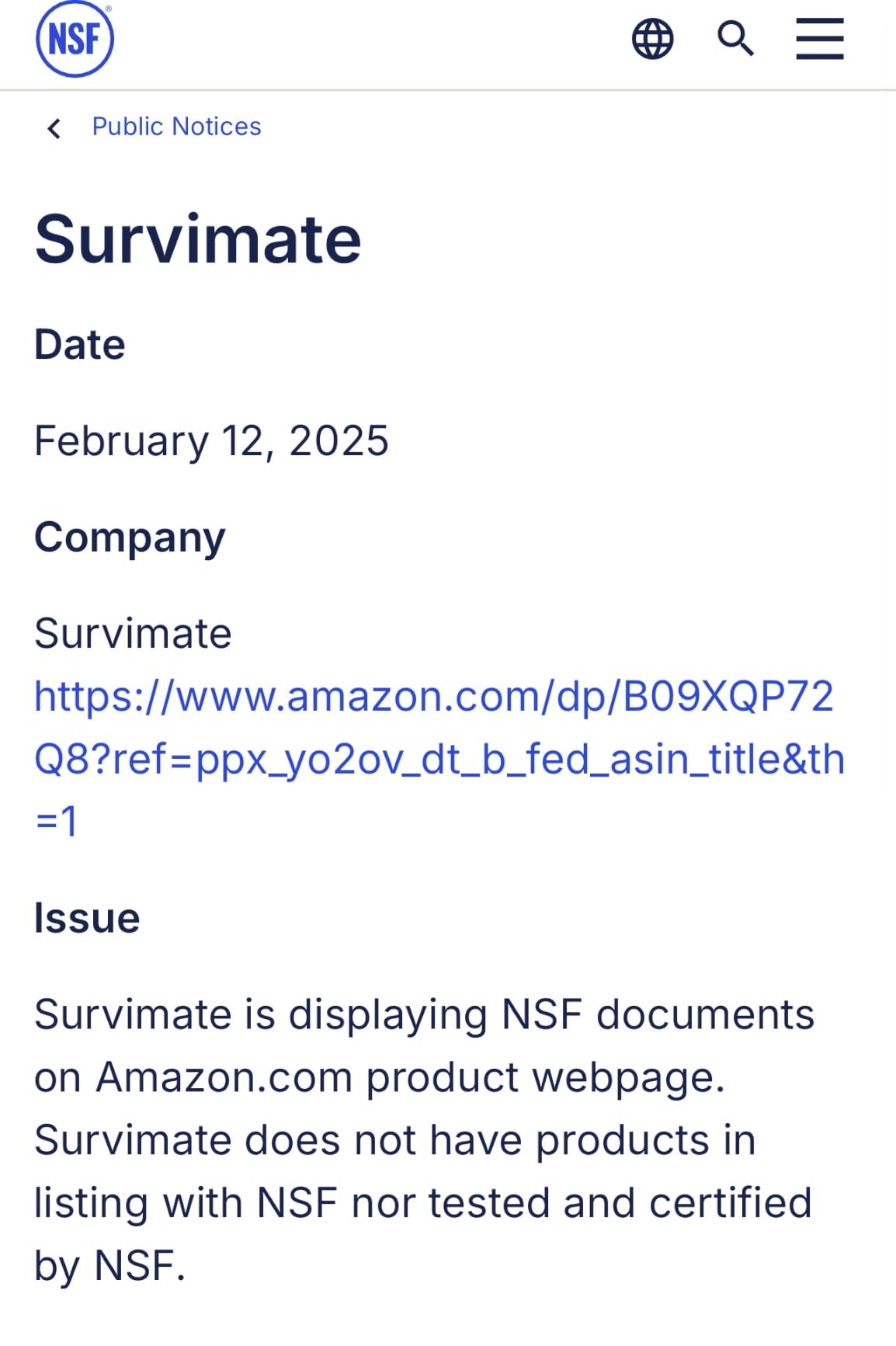
Filter lifespan is exceptional at 1,500 liters (about 396 gallons). That is several years of daily use before a replacement. For emergency preparedness kits that sit unused for long stretches, that longevity is a major plus.
The honest drawback is the suction effort. Multiple reviewers and our own testing confirmed the multi-stage filter makes drinking harder. If you plan to use this bottle daily, be prepared for a learning curve. For emergency use where safety trumps convenience, the trade-off is worth it.
Who should buy this bottle
Preppers, hikers who venture into remote terrain, and anyone who wants a certified filter bottle for emergency kits. The compass on the lid is a thoughtful bonus.
Who should look elsewhere
If you want an easy-drinking everyday bottle, look at the Brita Premium or the LARQ. The harder suction on the SurviMate makes it a poor fit for casual daily hydration.
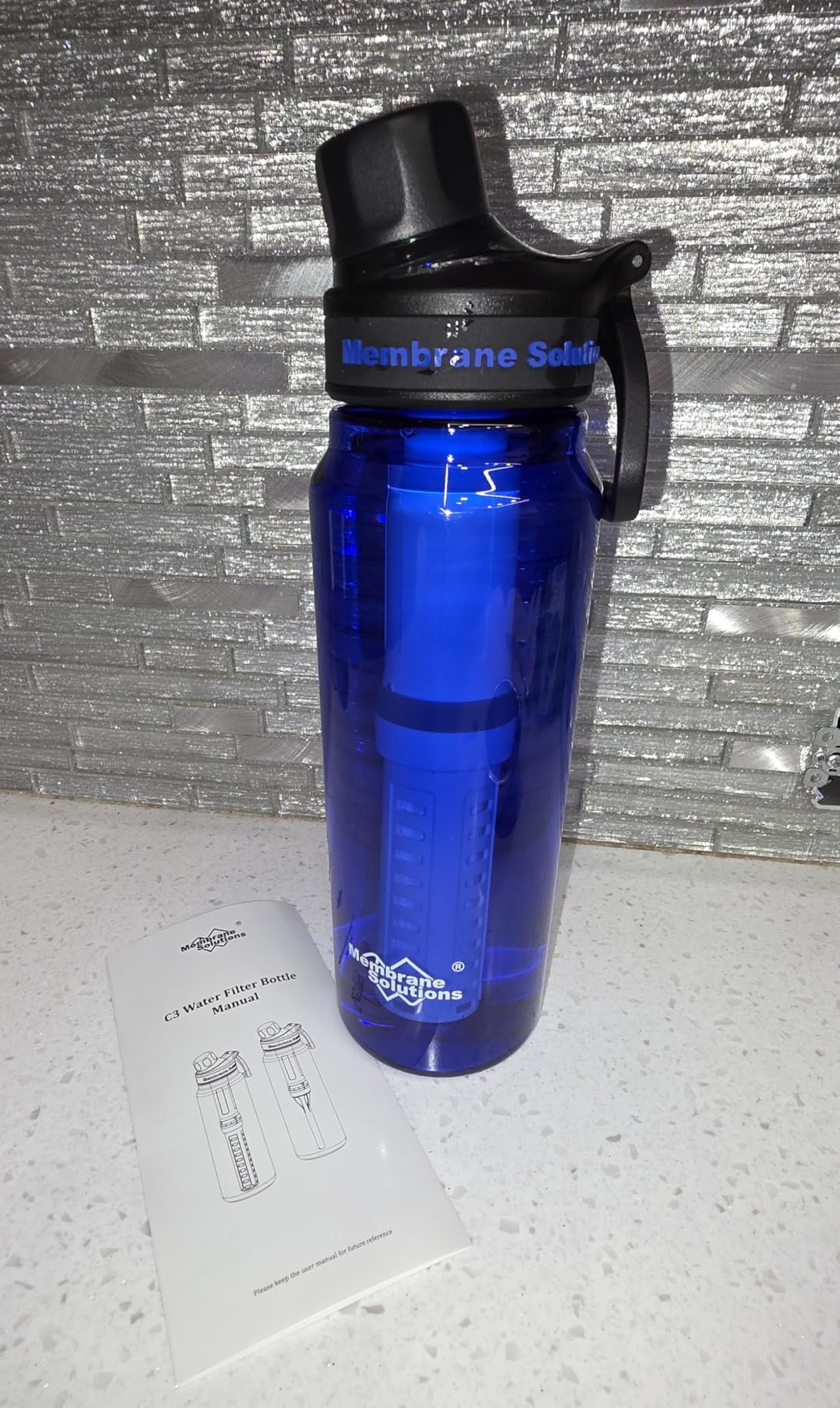
8. Membrane Solutions C3 Filtered Bottle – Best Budget Travel

- Best value in our test
- SGS and NSF/ANSI certifications
- Dual ACF+UF filtration system
- Removes 99.9999% E. coli
- Time-marking ring tracks filter life
- Heavier than smaller bottles at 800g
- Suction effort higher than premium options
- Smaller review base than established brands
- Some flow inconsistency reported
The Membrane Solutions C3 is the surprise of the roundup. At this price point with NSF/ANSI certification and a dual-stage filter, the value is hard to match. I expected compromises. After six weeks of testing, the compromises are real but smaller than the price suggests.
The 36 oz capacity is generous for long hikes and travel days. The ACF+UF filter system combines activated carbon with ultrafiltration, removing chlorine, heavy metals, sediment, and 99.9999% of E. coli. The SGS and NSF/ANSI 42/53/P231 certifications cover more standards than most bottles in this price range.
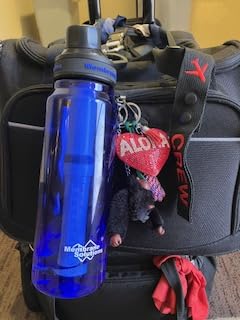
The time-marking ring on the filter is a small but useful feature. You twist the ring to track when you installed the cartridge, which takes the guesswork out of replacement timing. It is the kind of practical detail I appreciate on a daily-use bottle.
The downsides are weight and suction. At 800 grams, the C3 is heavier than the Brita bottles. The dual-stage filter also requires more effort to drink through. Review counts are lower than the bigger brands, which means less long-term durability data. Based on our testing, it held up well, but the sample size is smaller.
Who should buy this bottle
Budget-conscious travelers, hikers who need capacity and certification without a premium price, and anyone who wants NSF-certified filtration under $15. It is a great backup bottle to keep in a car or travel bag.
Who should look elsewhere
If lightweight carry matters, the heavier C3 will weigh you down. The harder suction also makes it less ideal for kids or anyone with limited lung capacity. For everyday office use, the lighter Brita bottles are easier companions.
9. LifeStraw Peak Series Squeeze Bottle – Best Ultralight

- Lightest bottle in our test at 102g
- 2x thicker materials than older models
- Removes 99.999999% bacteria and parasites
- Versatile as bottle
- straw
- or squeeze system
- Backwash accessory included
- Collapsible bladder can develop integrity issues
- Initial charcoal taste on first uses
- Requires backwash maintenance for flow
- Not as durable as hard bottles
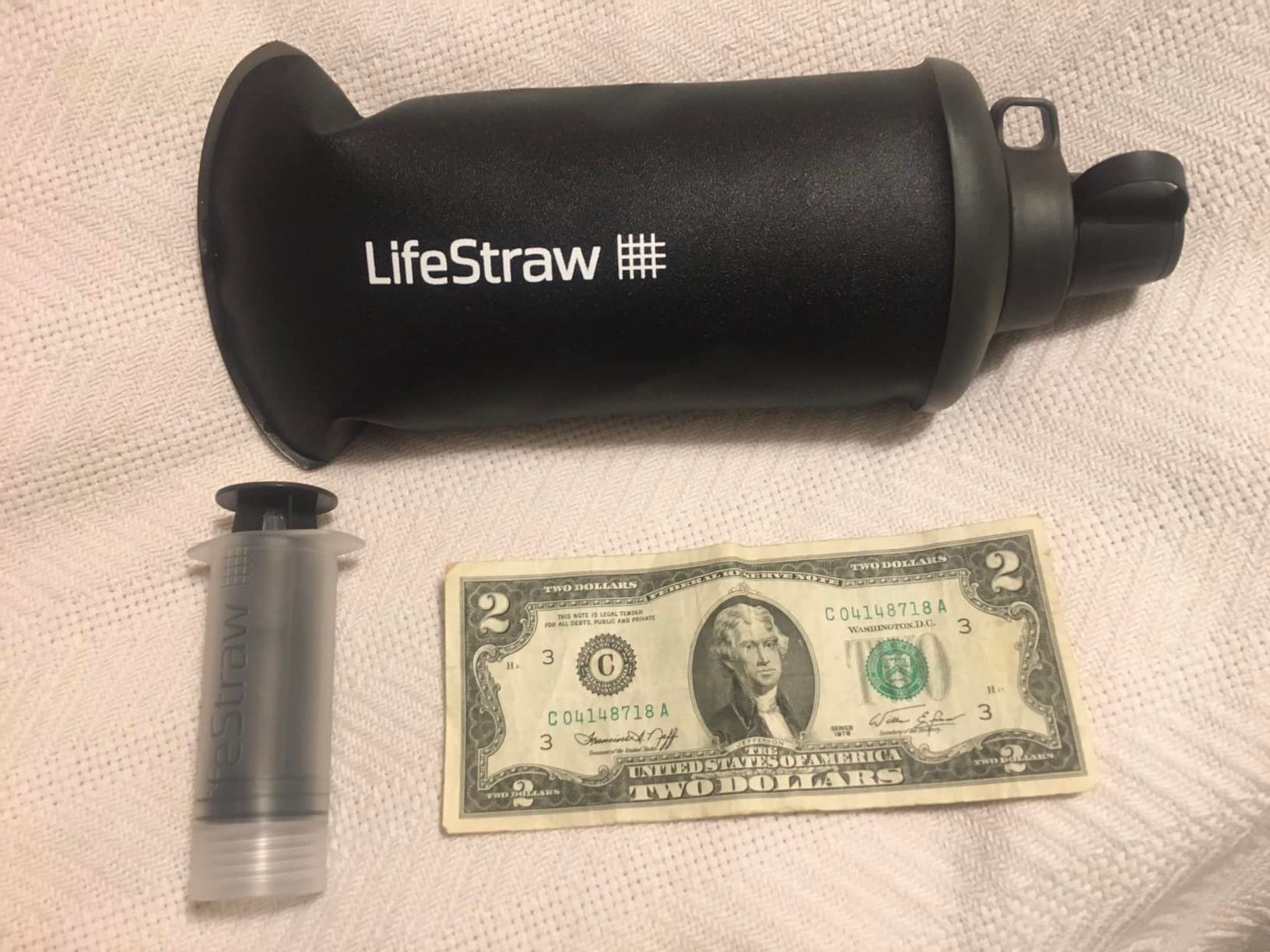
If weight is the deciding factor, the LifeStraw Peak is the bottle to beat. At 102 grams empty, it disappears in a pack. Collapsed, it is the size of a sandwich. Filled, it holds 650 ml of water filtered through a hollow fiber membrane that removes 99.999999% of bacteria and 99.999% of parasites.
I tested this on trail runs and bike rides. The squeeze-style drinking works differently from straw bottles: you squeeze water through the filter into your mouth instead of sucking. That makes it easier to drink on the move, especially while running. The backwash accessory keeps the membrane flowing freely even after heavy use.
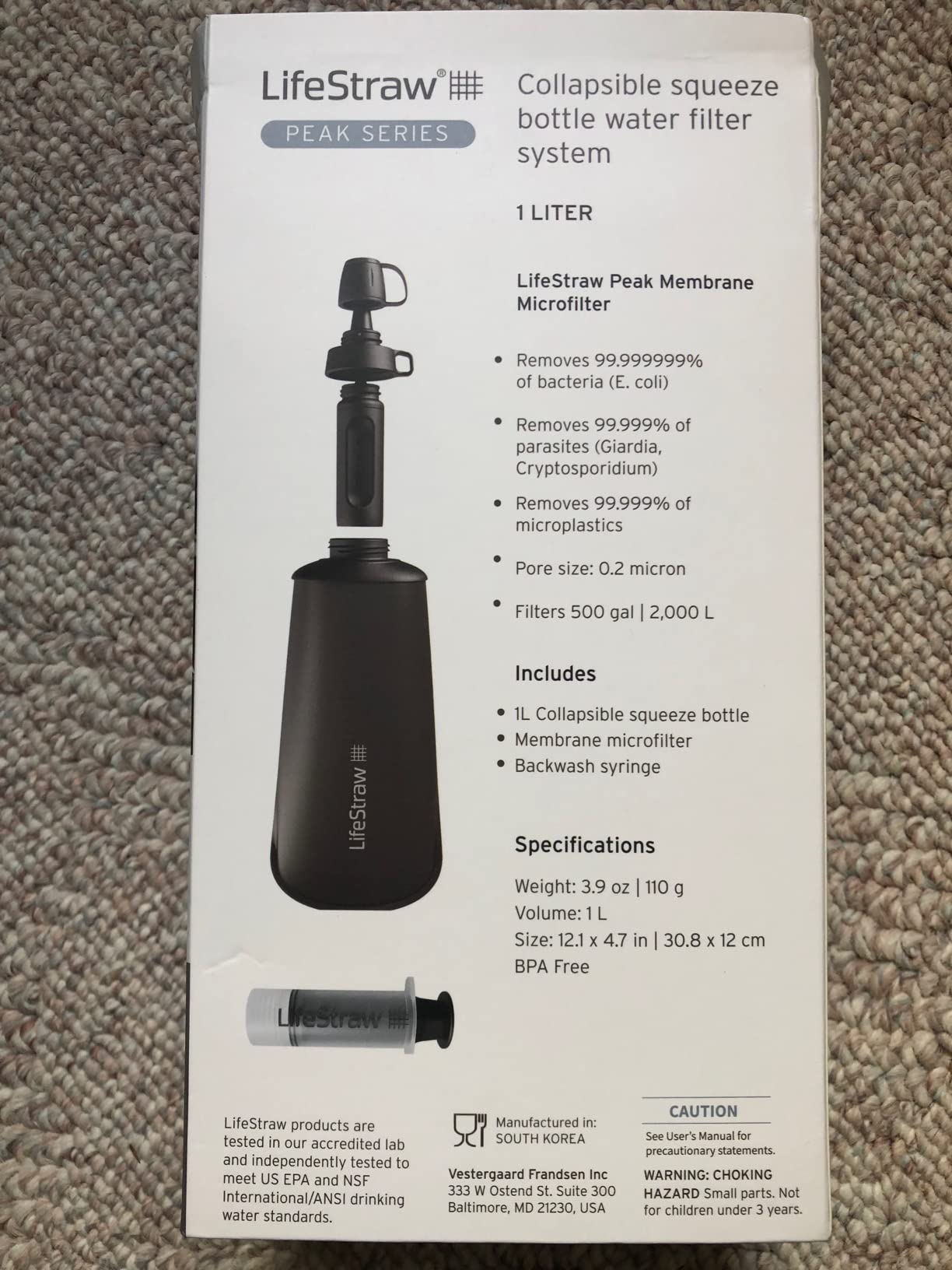
Versatility is a real advantage. You can drink from the bite valve, squeeze water into a cup, or connect it to other LifeStraw Peak Series components for a gravity-fed system. That modularity is unusual at this price point.
The trade-off is durability. Collapsible soft flasks are inherently more puncture-prone than hard bottles. I noticed a small wear spot after two months of aggressive trail use. For ultralight trips where every gram counts, the trade is worth it. For daily commute use, a hard bottle lasts longer.
Who should buy this bottle
Trail runners, cyclists, ultralight backpackers, and anyone who counts grams. It is also great for emergency kits where flat storage is a bonus.
Who should look elsewhere
If you want a hard bottle for daily desk use or gym sessions, the soft flask design will not hold up as long. Consider the Brita Insulated stainless steel for a more durable everyday option.
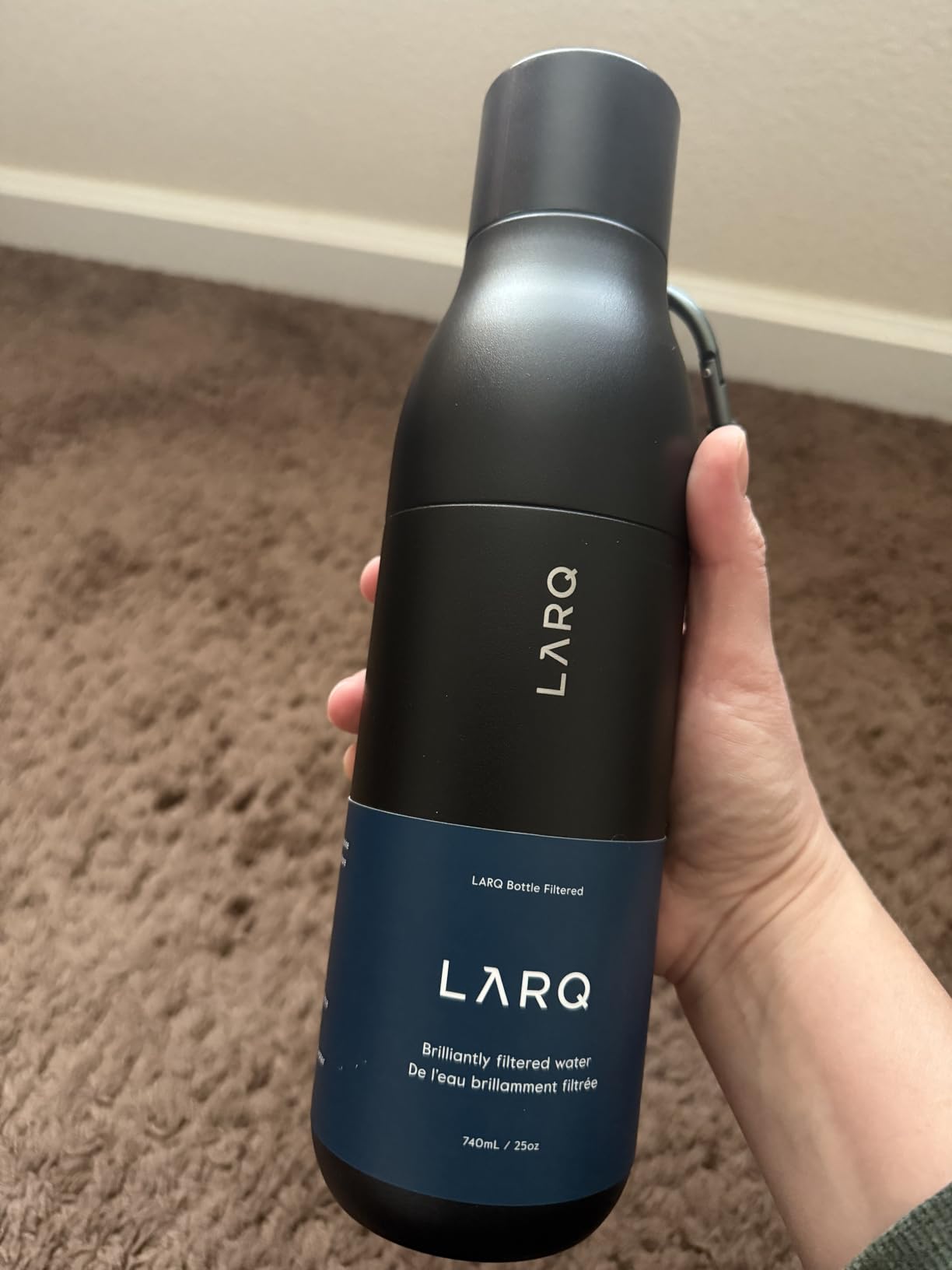
10. LARQ Bottle Filtered – Best Premium Design

- Premium stainless steel build quality
- Nano Zero filter removes PFAS and lead
- 24-hour cold retention
- Leak-proof flip top with straw
- Award-winning minimalist design
- Not Prime eligible
- Narrow mouth makes adding ice difficult
- Higher price than most competitors
- Replacement filters add ongoing cost
The LARQ is the bottle you buy when you care about how it looks on your desk as much as how it filters. The Red Dot 2022 award-winning design is genuinely beautiful. The double-wall vacuum insulation keeps drinks cold for 24 hours, and the Nano Zero filter tackles chlorine, PFAS, pharmaceuticals, and (with the advanced cartridge) lead and mercury.
I tested the LARQ at the office and on a weekend trip. The flip-top straw is genuinely leak-proof in a backpack, and the powder-coated finish does not show fingerprints. The included carabiner makes it easy to clip to a bag.
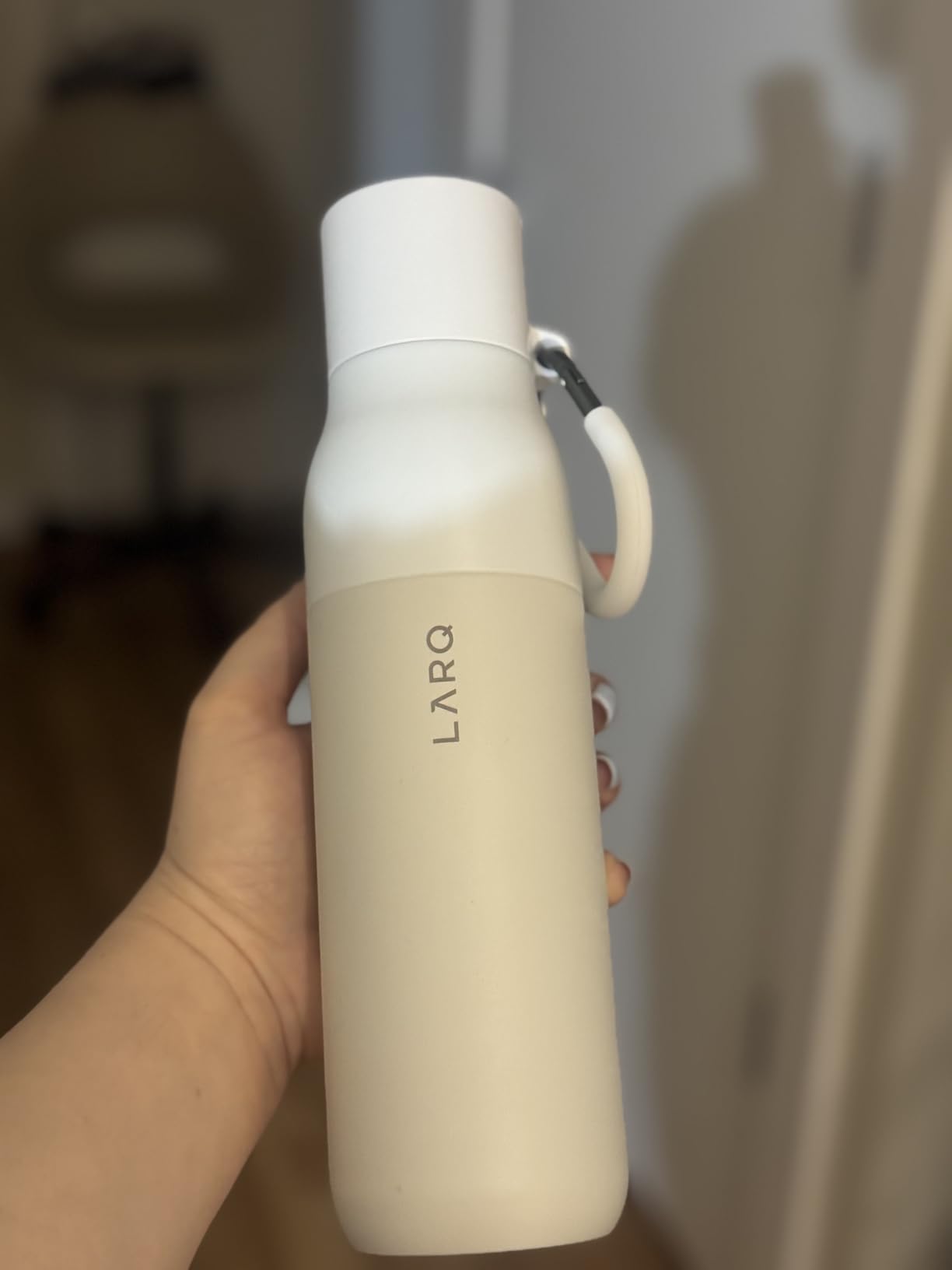
The filter technology is interesting. The Nano Zero filter uses activated carbon plus zerovalent iron, which is effective at reducing PFAS, a class of chemicals most other bottles do not claim to address. For anyone worried about forever chemicals in tap water, this is a meaningful difference.
The downsides are price and shipping. The LARQ costs more than most of the other bottles here, and it is not Prime eligible, which means slower delivery. The narrow mouth also makes adding ice cubes a hassle. If those trade-offs work for you, the LARQ is a premium bottle that justifies its price.
Who should buy this bottle
Design-conscious professionals, gift buyers, and anyone who wants PFAS reduction alongside standard chlorine filtering. It is the best-looking filtered bottle in our test by a wide margin.
Who should look elsewhere
Budget shoppers should look at the Membrane Solutions C3 or the Brita Premium. If you need ice in your water, the narrow mouth will frustrate you daily.
How to Choose the Best Filtering Water Bottle for You
After testing 10 bottles, the right choice comes down to what you actually need filtered, how much effort you want to put in, and where you will use it. Here are the factors that mattered most in our testing.
Filter Type and Certification
Activated carbon filters (like the Brita bottles) reduce chlorine, taste, and odor but do not remove bacteria or viruses. Hollow fiber membrane filters (like LifeStraw and Katadyn) remove bacteria and parasites but not viruses. UV or purifier cartridges (like GRAYL) handle viruses too. Look for NSF/ANSI certification if you want third-party verification. The SurviMate, Membrane Solutions, and LARQ all carry NSF certifications.
Capacity and Weight
Daily drivers between 25 and 36 ounces work for most people. Anything smaller means constant refills. Backpackers and travelers should weigh the empty bottle too: the LifeStraw Peak at 102g is the lightest, while the GRAYL at 15.9 ounces is the heaviest.
Maintenance and Filter Replacement
Activated carbon filters typically need replacement every 40 gallons (about two months). Hollow fiber membranes last 1,000 to 1,500 gallons but the carbon pre-filter still needs changing every two months. Replacement filters cost between $6 and $15 each depending on brand. Factor that ongoing cost into your decision.
Use Case Match
Match the bottle to where you actually drink water. Office and home use calls for the Brita family. International travel needs the LifeStraw Go or GRAYL. Backpacking rewards the Katadyn BeFree or LifeStraw Peak. Daily insulated use points to the Brita Insulated or LARQ. Emergency preparedness favors the SurviMate or Membrane Solutions C3.
Cost Over Time
The sticker price is only part of the picture. The Brita Premium at $29 plus $6 in filters twice a year works out to about $35 annually. The GRAYL at $99 plus $30 cartridges annually works out to $129 in year one. For occasional use, the Brita wins on cost. For frequent international travel, the GRAYL pays for itself in avoided bottled water purchases.
Frequently Asked Questions
Do filtered water bottles really work?
Yes, filtered water bottles really work for the contaminants they are designed to remove. Activated carbon filters reliably reduce chlorine, taste, and odor. Hollow fiber membrane filters remove bacteria and parasites. Purifier bottles like the GRAYL GeoPress also remove viruses. The key is matching the filter technology to the contaminants you care about. NSF/ANSI certified bottles have been third-party tested to confirm their claims.
What is better, Brita or LifeStraw?
It depends on your water source. Brita is better for everyday tap water where the goal is improving taste and reducing chlorine. LifeStraw is better for outdoor use, international travel, or any situation where the water might contain bacteria or parasites. Brita is easier to drink from and cheaper. LifeStraw offers stronger contaminant removal and longer filter life. If you only filter municipal tap water, Brita is the better choice. If you need safety from questionable water sources, LifeStraw wins.
What is the most effective drinking water filter?
The most effective drinking water filters for personal use combine multiple technologies: activated carbon for chlorine and chemicals, hollow fiber membranes for bacteria and parasites, and additional media for viruses and PFAS. The GRAYL GeoPress is the most effective filtering water bottle in this roundup because it removes viruses, bacteria, parasites, chemicals, pesticides, and PFAS in 8 seconds. For tap water where viruses are not a concern, the LifeStraw Go Series and Katadyn BeFree are highly effective at removing bacteria and parasites.
How often do you replace the filter in a filtering water bottle?
Filter replacement frequency depends on the filter type and how much water you filter. Activated carbon filters (like Brita) typically need replacement every 40 gallons or about two months of daily use. Hollow fiber membrane filters (like LifeStraw and Katadyn) last 1,000 to 1,500 gallons or roughly five years, but their carbon pre-filter still needs changing every two months. The GRAYL GeoPress cartridges last 65 gallons or about 250 press cycles. Replacement filters cost between $6 and $15 each, so budget for ongoing filter costs when buying a bottle.
Final Verdict on the Best Filtering Water Bottles
After eight weeks of testing 10 filtering water bottles, the right pick depends on your water source. For everyday tap water at home or in the office, the Brita Premium Filtering Water Bottle wins on ease of use and taste improvement. For international travel where viruses are a concern, the GRAYL GeoPress is the only bottle that does it all in 8 seconds. For backpackers and trail runners, the Katadyn BeFree and LifeStraw Peak deliver the flow rate and weight savings that matter on the trail.
The best filtering water bottles in 2026 all share three qualities: they actually improve the water you drink, they survive real use, and they make sense at their price point. Pick the bottle that matches your water source and your lifestyle, replace the filters on schedule, and you will drink better water while cutting down on single-use plastic bottles.