
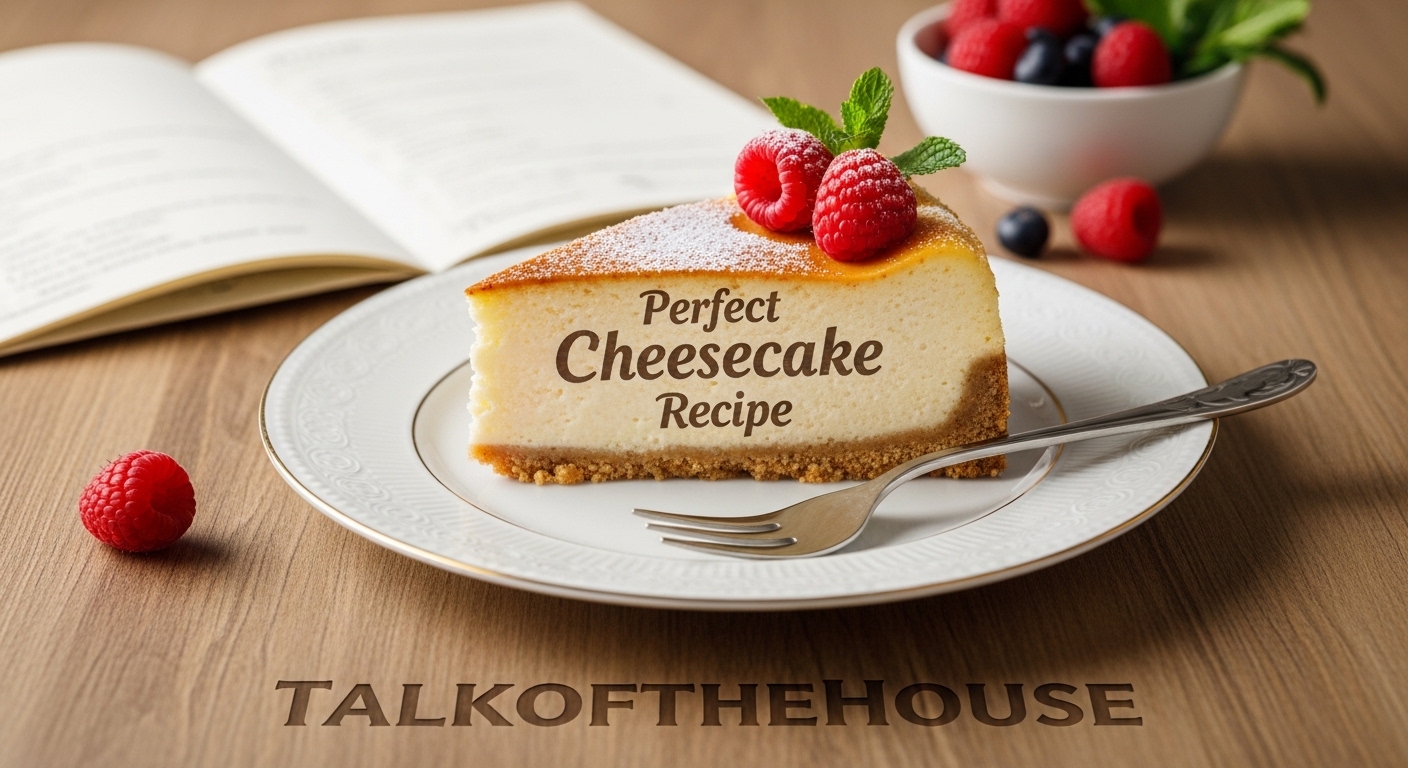
I still remember the first time I attempted a cheesecake recipe. I was twenty-three, hosting my first Thanksgiving dinner, and absolutely terrified of the water bath I’d read about in every cookbook. The foil leaked. The crust turned soggy. The top cracked like a desert landscape. That cheesecake tasted fine, but it looked like a disaster.
Fast forward fifteen years and hundreds of cheesecakes later, and I have cracked the code. This cheesecake recipe delivers the creamiest, smoothest, most decadent dessert you will ever make. The best part? I will show you exactly how to make it crack-free with OR without a water bath, so you can choose the method that works best for you.
Whether you are a nervous first-time baker or looking to perfect your technique, this guide will walk you through every step. By the end, you will understand not just what to do, but why each step matters. Let us make the cheesecake of your dreams.
Table of Contents
Why This Cheesecake Recipe Works Every Time
What separates a good cheesecake from a great one comes down to understanding the science behind the ingredients. Once you know why certain steps matter, the process becomes predictable and stress-free.
Room temperature ingredients are non-negotiable. Cold cream cheese creates lumps that never smooth out. Cold eggs shock the batter and cause uneven baking. When everything starts at the same temperature, you get a silky mixture that bakes evenly.
The low-and-slow baking method prevents the rapid expansion that causes cracking. A hot oven makes the cheesecake puff up dramatically, then collapse and crack as it cools. Baking at 325°F allows gentle, even cooking from edge to center.
Finally, gradual cooling is your secret weapon. The biggest mistake home bakers make is pulling a hot cheesecake from the oven and sticking it straight in the fridge. That thermal shock creates cracks. We will cool it slowly, letting the structure set gently.
What Are the Ingredients of a Cheesecake?
A classic cheesecake recipe requires just a handful of simple ingredients that work together to create magic. The base is cream cheese, obviously, but the supporting cast matters just as much for achieving that signature dense-yet-creamy texture.
You will need full-fat cream cheese bricks, not the spreadable kind in tubs. Philadelphia brand is the gold standard among professional bakers and home cooks alike, but any full-fat brick cream cheese works beautifully.
For the Graham Cracker Crust
- 1 and 3/4 cups graham cracker crumbs (about 15 crackers)
- 1/3 cup granulated sugar
- 6 tablespoons unsalted butter, melted
- 1/8 teaspoon salt
For the Cheesecake Filling
- 32 ounces (4 bricks) full-fat cream cheese, room temperature
- 1 and 1/4 cups granulated sugar
- 1 cup full-fat sour cream, room temperature
- 1 teaspoon vanilla extract
- 2 teaspoons fresh lemon juice (optional, for brightness)
- 3 large eggs, room temperature
- 2 large egg yolks, room temperature
The egg yolks add extra richness and help create that dense New York-style texture everyone loves. If you prefer a lighter cheesecake, you can use 4 whole eggs instead of 3 eggs plus 2 yolks.
Equipment You Will Need
Cheesecake does require some specific equipment, but nothing fancy or expensive. Here is what you actually need:
- 9-inch springform pan – This is non-negotiable. The removable sides are essential for releasing the cheesecake cleanly.
- Stand mixer or hand mixer – A stand mixer with the paddle attachment makes this effortless, but a hand mixer works fine.
- Large roasting pan – Only needed if using the water bath method.
- Heavy-duty aluminum foil – For wrapping the pan if doing a water bath.
- Offset spatula – Makes smoothing the batter and releasing the cheesecake much easier.
- Large rimmed baking sheet – Alternative to roasting pan for the no-water-bath method.
Do not have a springform pan? Check our FAQ section below for alternative methods, though I strongly recommend investing in one for the best results.
How to Make Easy Cheesecake at Home
Now for the step-by-step instructions. Read through everything once before starting, and have all ingredients at room temperature before you begin. This process takes about 30 minutes of active time, plus baking and cooling.
Step 1: Prepare Your Pan
Preheat your oven to 325°F. Grease the bottom and sides of a 9-inch springform pan with butter or non-stick spray. Cut a circle of parchment paper to fit the bottom of the pan and press it in smoothly.
If using the water bath method, wrap the outside of the pan with two layers of heavy-duty aluminum foil, extending all the way up the sides. This prevents water from seeping in and making your crust soggy.
Step 2: Make the Graham Cracker Crust
Combine the graham cracker crumbs, sugar, melted butter, and salt in a medium bowl. Stir until the mixture resembles wet sand and holds together when squeezed.
Press the mixture firmly into the bottom of your prepared pan. Use the bottom of a measuring cup or glass to create an even, compact layer. You want it tight enough that it holds together when sliced but not so packed that it becomes hard.
Bake the crust for 8 minutes, then remove from oven and set aside. Keep the oven on at 325°F.
Step 3: Beat the Cream Cheese and Sugar
In a large bowl or stand mixer fitted with the paddle attachment, beat the room temperature cream cheese on medium speed until completely smooth, about 2 minutes. Scrape down the bowl and beater.
Add the sugar and beat on medium speed until fully combined and fluffy, about 2-3 minutes. Stop and scrape the bowl again. This step is crucial for dissolving the sugar completely.
Step 4: Add Sour Cream and Flavorings
Add the sour cream, vanilla extract, and lemon juice if using. Beat on low speed until just combined, about 30 seconds. The sour cream adds tanginess and helps create that classic New York-style texture.
Scrape down the bowl one more time. You want to make sure there are no unmixed pockets hiding at the bottom.
Step 5: Add Eggs One at a Time
Crack your eggs into a separate small bowl first to check for shells and ensure they are fresh. Lightly beat them with a fork.
With the mixer on low speed, add the eggs and yolks one at a time, beating just until each is incorporated before adding the next. This should take about 10-15 seconds per egg. Do not overbeat here.
Stop mixing as soon as the last egg disappears into the batter. Overbeating incorporates air, which causes the cheesecake to puff up and then crack as it cools.
Step 6: Pour and Smooth
Pour the batter over your pre-baked crust. Use an offset spatula to spread it evenly to the edges and smooth the top. The batter should be thick but pourable.
Give the pan a gentle tap on the counter to release any large air bubbles. Do not bang it hard, just a few light taps.
Step 7: Bake Your Cheesecake
Place the cheesecake in the oven on the center rack. Bake at 325°F for 60-70 minutes. The edges should look set and slightly puffed, while the center 2-3 inches should still jiggle when you gently shake the pan.
Choose your method:
No Water Bath Method: Simply place the springform pan on a rimmed baking sheet to catch any potential drips. This works perfectly in most home ovens, especially in drier climates.
Water Bath Method: Place the foil-wrapped springform pan inside a large roasting pan. Fill the roasting pan with hot water until it reaches about 1 inch up the sides of the cheesecake pan. Carefully slide into the oven.
Step 8: Cool Gradually in the Oven
When the cheesecake is done, turn off the oven. Crack the oven door open about 6 inches using a wooden spoon or oven mitt to prop it. Let the cheesecake cool inside the oven for 1 hour.
This gradual cooling is what prevents cracks. The cheesecake continues to cook gently while the temperature drops slowly.
Step 9: Cool on Counter and Chill Overnight
After the hour in the oven, run a thin knife around the edge of the cheesecake to loosen it from the pan sides. This prevents the cheesecake from sticking and cracking as it contracts during cooling.
Let the cheesecake cool on a wire rack at room temperature for 1 more hour. Then refrigerate uncovered for at least 6 hours, but preferably overnight. The cheesecake needs to be completely cold to slice cleanly.
Water Bath vs No Water Bath: Which Should You Choose?
This is the question that divides cheesecake enthusiasts. After testing both methods extensively, I can tell you honestly that both work beautifully. Here is how to decide.
| Method | Best For | Result | Difficulty |
|---|---|---|---|
| No Water Bath | Dry climates, beginners, simpler cleanup | Dense, creamy, perfect texture | Easy |
| Water Bath | Humid climates, extra insurance against cracks | Ultra-creamy, slightly taller | Moderate (leak risk) |
I make cheesecakes without a water bath 90% of the time. The gradual cooling method described above, combined with room temperature ingredients and careful mixing, produces consistently crack-free results.
Use a water bath if you live in a very humid climate where baked goods tend to retain moisture, or if you simply want the extra insurance. Just wrap your pan extremely well with heavy-duty foil, using two layers, to prevent leaks.
What Is the Secret to Making Good Cheesecake?
The secret to an exceptional cheesecake comes down to five key principles. Follow these, and you will produce restaurant-quality results every time.
1. Room Temperature Ingredients Are Everything
Take your cream cheese, eggs, and sour cream out of the refrigerator at least 2 hours before baking. Cold cream cheese will never smooth out completely, leaving tiny lumps in your finished cheesecake. Cold eggs will cause the batter to seize and bake unevenly.
In a rush? Place unwrapped cream cheese in a microwave-safe bowl and microwave in 15-second bursts, flipping between each, until just soft. Place cold eggs in warm water for 10 minutes.
2. Do Not Overmix Once Eggs Are Added
Beating eggs incorporates air. Air expands in the oven, then collapses as the cheesecake cools, creating cracks. Once you add the first egg, keep the mixer on low speed and mix only until each egg disappears into the batter. The mixture should be smooth and pourable, not fluffy.
3. Use the Paddle Attachment, Not the Whisk
The whisk attachment whips too much air into the batter. The paddle attachment creams the ingredients together without adding excess air. If using a hand mixer, keep it on medium-low speed throughout.
4. Scrape the Bowl Thoroughly and Often
Unmixed cream cheese hiding at the bottom of your bowl will create lumps in the finished cheesecake. Stop and scrape down the bowl and beater at least three times during mixing: after creaming the cheese, after adding sugar, and before adding eggs.
5. Cool Gradually, Not Abruptly
Never transfer a hot cheesecake directly to the refrigerator. The thermal shock will crack the top. Always cool for an hour in the turned-off oven with the door cracked, then at room temperature, before refrigerating.
How to Tell When Cheesecake is Done
Overbaked cheesecake is dry and cracked. Underbaked cheesecake is soupy in the center. Here is exactly what to look for:
- The edges should look set, slightly puffed, and matte (not shiny or wet).
- The center 2-3 inches should jiggle like Jell-O when you gently shake the pan. It should not look liquid or sloshy.
- The internal temperature should read 145-150°F on an instant-read thermometer inserted halfway between the center and edge.
- The top should be a light golden color, not brown. If it is browning, your oven is too hot.
Remember that the cheesecake will continue to cook as it cools. Taking it out when the center still jiggles ensures it will be perfectly creamy, not dry.
Troubleshooting Common Cheesecake Problems
Even experienced bakers encounter issues sometimes. Here is how to fix the most common cheesecake problems:
Why Did My Cheesecake Crack?
Cracks happen from overbaking, cooling too quickly, or incorporating too much air into the batter. Prevention is easier than fixing, but if you get a crack, simply cover it with toppings. A layer of sour cream, whipped cream, or fruit sauce hides cracks beautifully.
Why Did My Cheesecake Sink in the Middle?
Sinking indicates underbaking or opening the oven door during baking. The structure was not set enough to hold its shape. Next time, bake 5-10 minutes longer and keep that oven door closed until the end.
Why Is My Crust Soggy?
Soggy crust comes from water bath leaks or underbaking the crust. Always pre-bake your crust for 8 minutes. If doing a water bath, use two layers of heavy-duty foil and make sure they extend well above the water line.
Why Is My Cheesecake Lumpy?
Lumps mean your cream cheese was not at room temperature. Beat the cream cheese alone first until completely smooth before adding other ingredients. If you still have lumps, press the batter through a fine mesh strainer before pouring into the crust.
Why Is My Cheesecake Brown on Top?
Browning indicates your oven runs hot or the cheesecake was too close to the top heating element. Use an oven thermometer to verify your temperature. Position the rack in the center of the oven, not the top third.
Delicious Cheesecake Topping Ideas
A plain cheesecake is perfection on its own, but toppings take it to the next level. Here are my favorite ways to serve this classic dessert:
- Fresh Berry Compote: Simmer 2 cups berries with 1/4 cup sugar and 1 tablespoon lemon juice until syrupy. Cool before spooning over slices.
- Classic Cherry Pie Filling: Straight from the can, slightly warmed, this is the diner-style experience we all crave.
- Salted Caramel Sauce: Drizzle homemade or store-bought caramel with a pinch of flaky sea salt.
- Chocolate Ganache: Pour 1 cup hot heavy cream over 8 ounces chopped chocolate, stir until smooth, then pour over the chilled cheesecake.
- Lemon Curd: Bright and tangy, perfect for spring and summer gatherings.
- Whipped Cream: Simply sweetened heavy cream whipped to soft peaks, either plain or flavored with vanilla.
For a truly decadent dessert spread, serve your cheesecake alongside another classic dessert recipe and let guests choose their favorite.
Cheesecake Variations to Try
Once you master the classic version, experiment with these delicious variations:
New York Style Cheesecake
For the ultra-dense, rich texture of a true New York cheesecake, increase the sour cream to 1 and 1/2 cups and add 2 additional egg yolks. This creates that signature heavy, velvety texture.
Chocolate Cheesecake
Melt 8 ounces of semisweet chocolate and let it cool slightly. Beat it into the cream cheese mixture before adding the sour cream. The result is a decadent chocolate version that chocolate lovers dream about.
Lemon Cheesecake
Increase the lemon juice to 1/4 cup and add the zest of 2 lemons to the batter. The bright citrus cuts through the richness beautifully.
Oreo Crust Variation
Replace the graham cracker crumbs with 24 crushed Oreo cookies (filling and all) mixed with 4 tablespoons melted butter. This creates an extra-indulgent dessert.
Gluten-Free Option
Use gluten-free graham crackers for the crust, or make a nut crust with 1 and 1/2 cups almond flour, 1/4 cup sugar, and 6 tablespoons melted butter.
Make-Ahead Timing Guide for Entertaining
One of the best things about this cheesecake recipe is how perfect it is for entertaining. You can make it entirely ahead, freeing you up when guests arrive.
The Perfect Timeline
- 2-3 Days Before: Bake the cheesecake, cool completely, and refrigerate uncovered or loosely covered.
- The Morning Of: Prepare any toppings or sauces.
- 2 Hours Before Serving: Remove cheesecake from refrigerator to take the chill off. Prepare garnishes.
- Just Before Serving: Add toppings and slice.
Cheesecake actually tastes better after 24 hours in the refrigerator as the flavors meld and the texture sets perfectly. It is the ultimate stress-free dessert for dinner parties, holidays, and special occasions.
Planning a full menu? Pair this dessert with another crowd-pleasing dessert for a sweet finale your guests will remember.
How to Store Cheesecake
Proper storage keeps your cheesecake fresh and delicious for days after baking.
Refrigerator Storage
Store cheesecake in the refrigerator, covered loosely with plastic wrap or in an airtight container. It stays fresh for up to 5 days. Keep toppings separate and add them just before serving to prevent the cheesecake from getting soggy.
The springform pan makes an excellent storage container. Simply snap the ring back on and cover with foil or the pan lid.
Can You Freeze Cheesecake?
Yes, cheesecake freezes beautifully for up to 3 months. This makes it perfect for holiday prep or saving leftover slices.
How to Freeze Whole Cheesecake
Cool the cheesecake completely, then chill overnight uncovered. This firms up the texture. Remove the springform ring but keep the cheesecake on the pan base. Freeze uncovered until solid, about 4 hours.
Once frozen solid, wrap tightly in plastic wrap, then in aluminum foil. Label with the date and freeze for up to 3 months.
How to Freeze Slices
Place individual slices on a parchment-lined baking sheet and freeze until solid, about 2 hours. Once frozen, wrap each slice tightly in plastic wrap, then foil. This makes it easy to thaw just what you need.
How to Thaw Frozen Cheesecake
Thaw frozen cheesecake overnight in the refrigerator, still wrapped. Once thawed, top and serve within 2 days. Do not thaw at room temperature as this causes condensation and soggy crust.
Frequently Asked Questions
What is the secret to making good cheesecake?
The secret is room temperature ingredients, not overmixing after adding eggs, using the paddle attachment instead of a whisk, baking at a low temperature (325°F), and cooling gradually in the oven with the door cracked before refrigerating.
What are the ingredients of a cheesecake?
A classic cheesecake requires 32 oz cream cheese, 1¼ cups sugar, 1 cup sour cream, 3-4 eggs, vanilla extract, and a graham cracker crust made with crumbs, butter, and sugar. Full-fat ingredients produce the best texture.
How to make easy cheesecake at home?
Make easy cheesecake by mixing room temperature cream cheese with sugar, adding sour cream and vanilla, then mixing in eggs one at a time. Pour over a graham cracker crust and bake at 325°F for 60-70 minutes until the center jiggles slightly. Cool gradually in the oven before chilling overnight.
Can I make cheesecake without a springform pan?
While a springform pan is strongly recommended, you can use a deep 9-inch cake pan lined with parchment paper. You will need to invert the cheesecake to remove it, which risks cracking. For best results, invest in a springform pan.
Can I use low-fat cream cheese?
Low-fat cream cheese will work but produces a different texture. The cheesecake will be less rich and may be slightly softer or more prone to cracking. For best results, use full-fat brick cream cheese.
Do I need a water bath for cheesecake?
A water bath is optional. It adds extra moisture and insurance against cracks, but you can achieve excellent results without one by using room temperature ingredients, careful mixing, and gradual cooling in the oven before refrigerating.
How long to cool cheesecake before refrigerating?
Cool the cheesecake in the turned-off oven with the door cracked for 1 hour, then at room temperature on a wire rack for another hour before refrigerating. Never put a hot cheesecake directly into the refrigerator.
Can I freeze cheesecake?
Yes, cheesecake freezes beautifully for up to 3 months. Freeze uncovered until solid, then wrap tightly in plastic wrap and foil. Thaw overnight in the refrigerator before serving.
What are the ingredients in 3 ingredient cheesecake?
A simple 3-ingredient cheesecake uses cream cheese, sweetened condensed milk, and eggs. Mix 24 oz cream cheese with 14 oz condensed milk and 3 eggs, pour into a crust, and bake at 325°F for 50 minutes. The texture is lighter than traditional cheesecake.
How do I know when my cheesecake is done?
Cheesecake is done when the edges look set and slightly puffed, but the center 2-3 inches still jiggles like Jell-O. The internal temperature should be 145-150°F. The top should look matte, not wet or shiny.
Now It Is Your Turn to Bake the Perfect Cheesecake
You now have everything you need to make a stunning, crack-free, creamy cheesecake recipe that rivals any bakery. The combination of room temperature ingredients, gentle mixing, low-temperature baking, and gradual cooling creates foolproof results every time.
Whether you choose the water bath method for extra insurance or go without for simplicity, you will end up with a dessert that makes people ask for the recipe. The make-ahead nature makes it perfect for entertaining, and the freezer-friendly quality means you can always have a special dessert on hand.
I encourage you to try this recipe this weekend. Start with the classic version, then experiment with toppings and variations. Once you taste how incredible a homemade cheesecake can be, you will never look at the store-bought versions the same way again.
Happy baking!