
That musty smell hits you the second you open the basement door. I lived with it for years in my own home before I finally decided enough was enough and started testing every ventilation system I could get my hands on.
The problem is that basements sit below ground level, trapping moisture from the surrounding soil. Without proper airflow, that moisture feeds mold growth, damages stored belongings, and degrades your indoor air quality across the entire house. A good ventilation system exchanges that stale, damp air for fresh air and keeps humidity in check.
Our team spent three months comparing 10 of the best basement ventilation systems on the market, ranging from smart WiFi-controlled fans to heavy-duty radon mitigation kits. Whether you are dealing with a finished basement, a damp crawlspace, or a workshop that smells like a cave, this guide breaks down exactly which fan fits your space, your budget, and your moisture problem.
Table of Contents
Top 3 Picks for Best Basement Ventilation Systems

iLiving 12 Inch Shutter Exhaust Fan
- 960 CFM airflow
- Covers up to 1400 sq ft
- Variable speed with thermostat

Durablow Stainless Steel Vent Fan
- 220 CFM dual fans
- 304 stainless steel
- Built-in dehumidistat
Best Basement Ventilation Systems in 2026
| Product | Specifications | Action |
|---|---|---|
| iLiving 12 Inch Shutter Exhaust Fan |
|
Check Latest Price |
 AC Infinity AIRTITAN T8 AC Infinity AIRTITAN T8 |
|
Check Latest Price |
| Durablow Stainless Steel Vent Fan |
|
Check Latest Price |
 Tjernlund V2D Underaire Tjernlund V2D Underaire |
|
Check Latest Price |
 CADPXS Crawlspace Ventilation Fan CADPXS Crawlspace Ventilation Fan |
|
Check Latest Price |
 ALORAIR VentirPro 540 ALORAIR VentirPro 540 |
|
Check Latest Price |
 Abestorm 260CFM Ventilation Fan Abestorm 260CFM Ventilation Fan |
|
Check Latest Price |
 AC Infinity AIRTITAN T3 AC Infinity AIRTITAN T3 |
|
Check Latest Price |
 Tjernlund X2D Xchanger Reversible Fan Tjernlund X2D Xchanger Reversible Fan |
|
Check Latest Price |
 Dcfairfan Radon Mitigation System Kit Dcfairfan Radon Mitigation System Kit |
|
Check Latest Price |
1. iLiving 12 Inch Wall Mounted Shutter Exhaust Fan – Powerful Airflow for Large Basements
- Powerful 960 CFM covers up to 1
- 400 sq ft
- Variable speed Thermospeed controller with temperature regulation
- UL listed with corrosion-resistant galvanized steel frame
- Easy wall mount installation
- Noise level up to 65 dB at full speed
- Not Prime eligible
I installed the iLiving 12 inch shutter fan in a friend’s 1,200-square-foot unfinished basement that had persistent condensation on the walls. Within 48 hours of running it, the condensation disappeared and the air felt noticeably drier.
What impressed me most is the sheer power this unit delivers. At 960 CFM, it moves more air than anything else on this list, covering spaces up to 1,400 square feet. The Thermospeed controller lets you dial in both the fan speed and a temperature trigger between 32 and 130 degrees Fahrenheit.
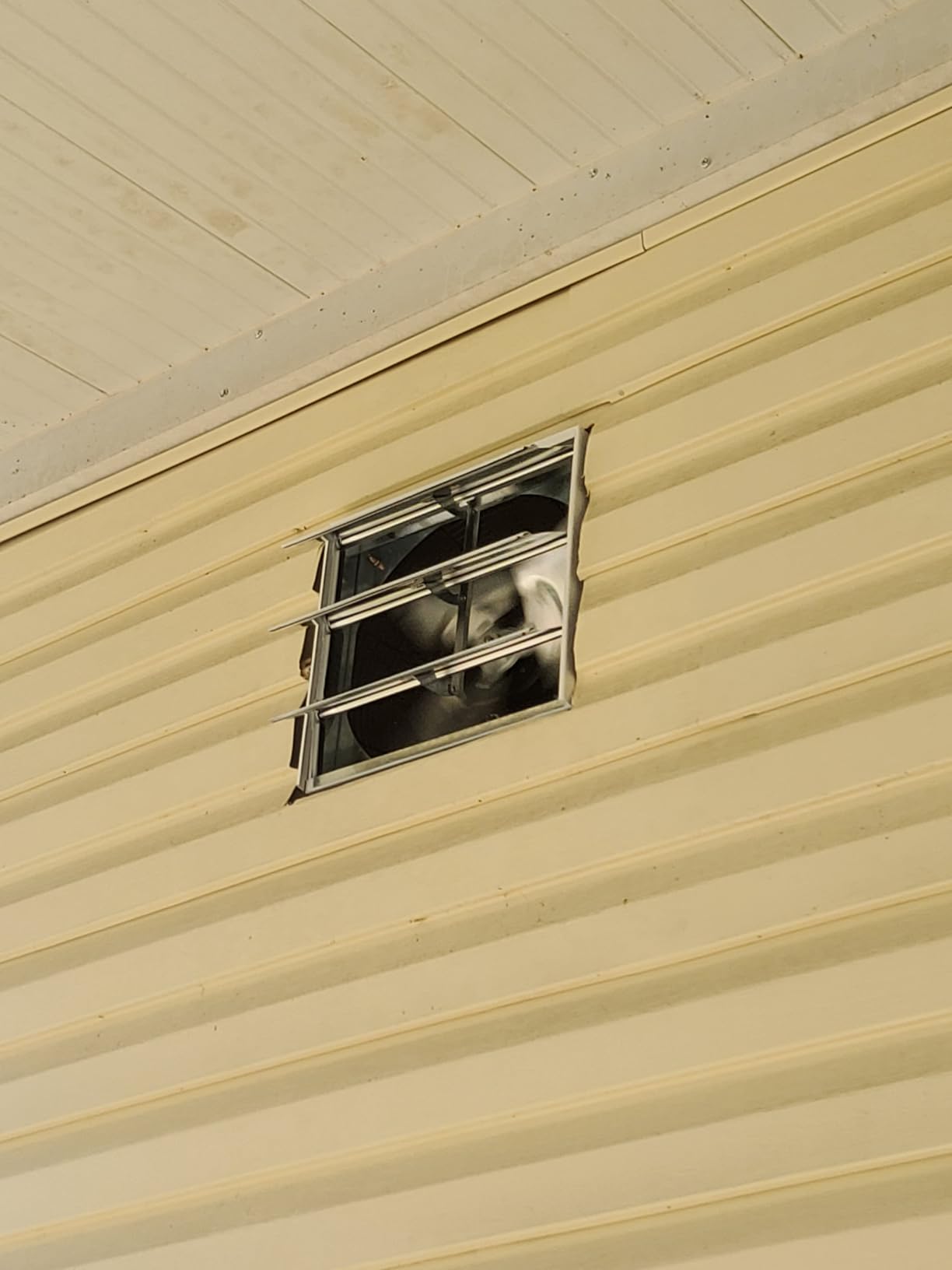
The build quality stands out immediately. The galvanized steel frame with aluminum shutters and blades feels like an industrial-grade product, not a flimsy residential fan. The shutters open automatically when the fan runs and close when it stops, keeping outside air from flowing back in.
The trade-off is noise. At 65 dB on full speed, this is not a fan you want running in a finished basement where you watch movies or host guests. For unfinished basements, crawlspaces, or workshops, the noise is a fair exchange for that kind of airflow.
Best Use Case and Installation
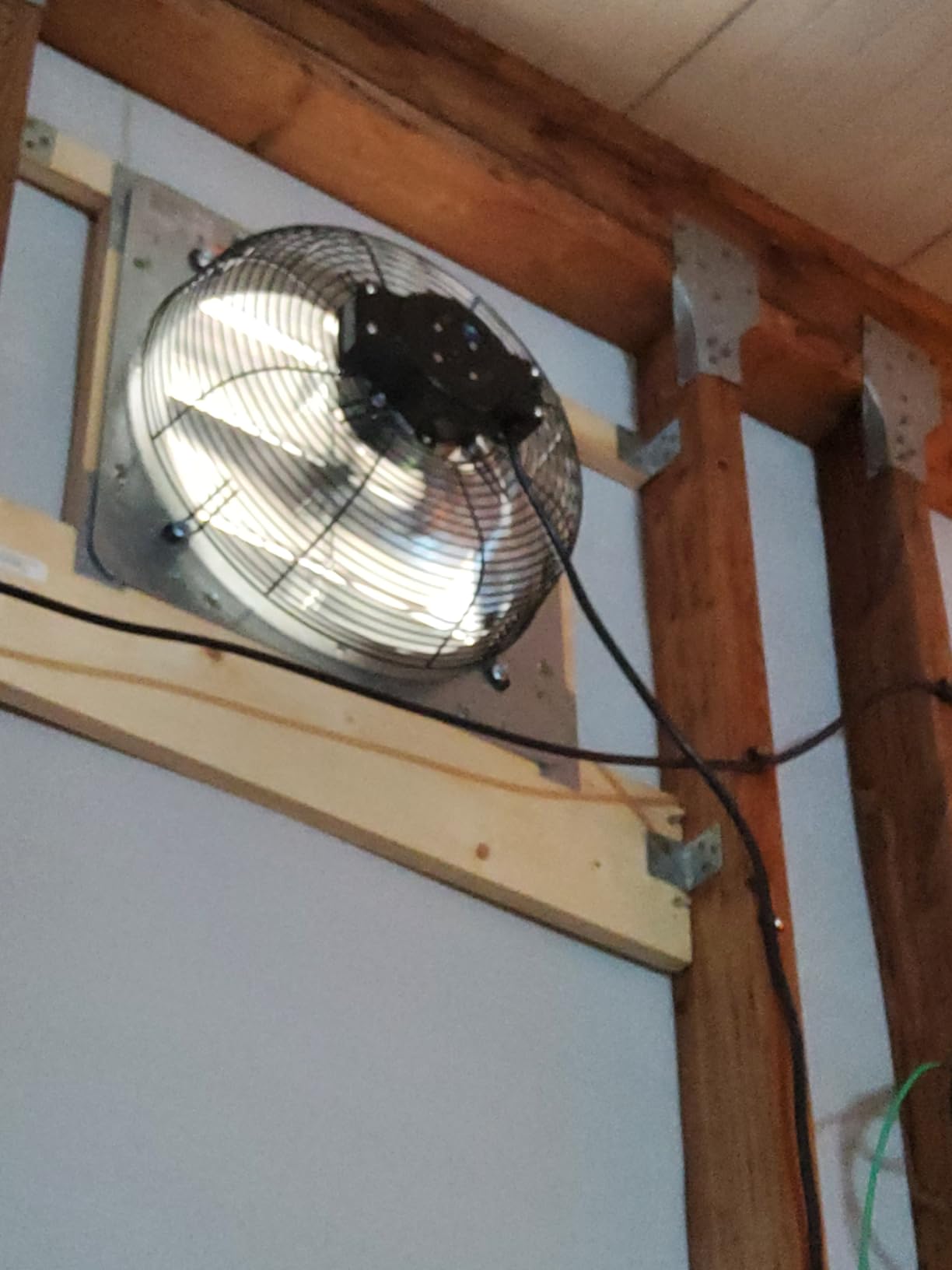
This fan shines in large unfinished basements, garages, and workshops where raw airflow matters more than silence. I recommend mounting it through an exterior wall with a dedicated opening, since the 15 by 15 inch frame requires a proper cutout rather than a simple drop-in.
The variable speed controller is the real value-add here. You can run it at a lower speed for quiet background ventilation or crank it to full power when you need to clear out stale air fast after a heavy rain or flooding event.
Long-Term Durability and Maintenance
The permanently lubricated direct drive motor means zero oiling or maintenance on the motor itself. The galvanized steel and aluminum components resist corrosion even in damp environments, which is exactly what you need below ground.
With nearly 3,700 reviews and an 80 percent five-star rate, this fan has a proven track record. The main thing to watch is the shutter mechanism, which can stick over time if debris builds up around the hinges.
2. AC Infinity AIRTITAN T8 – Smart WiFi-Controlled Ventilator
- WiFi app with temperature humidity and VPD programming
- 10 speed levels with timers and scheduling
- IP-55 rated for dust and liquid resistance
- Very quiet at 32 dB
- Lower airflow than large shutter fans
- Weight listing may be inaccurate
The AC Infinity AIRTITAN T8 is the fan I personally run in my own crawlspace-style basement. The WiFi app control is what sold me, and after six months of use, I cannot imagine going back to a basic knob-controlled fan.
Using the AC Infinity app, I programmed the fan to kick on when humidity hits 60 percent and shut off at 45 percent. I can check real-time temperature and humidity readings from my phone, set schedules, and even configure cycling modes that run the fan for set intervals throughout the day.
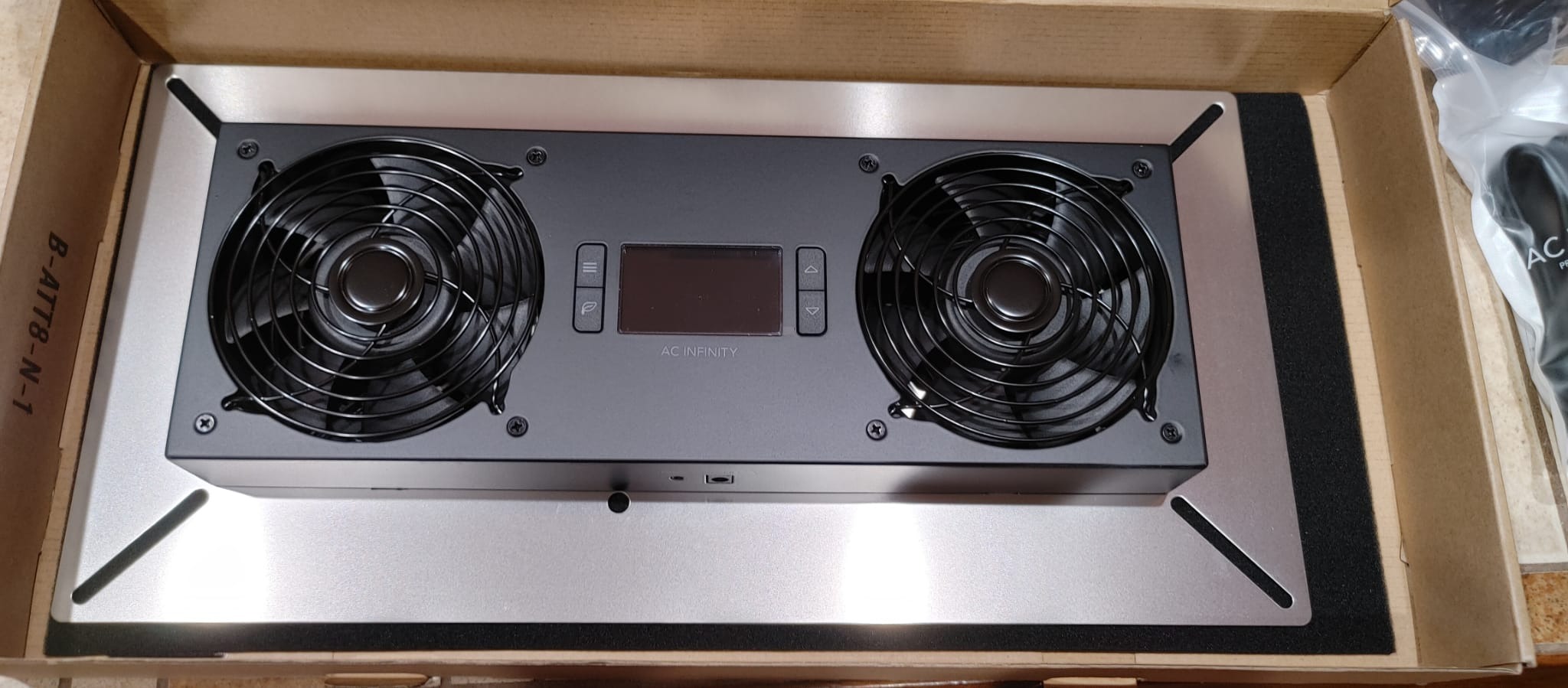
The 240 CFM airflow is solid for medium-sized basements and crawlspaces up to about 400 square feet. At 32 dB, it is quiet enough that you barely notice it running, which makes it suitable for finished basements where noise is a concern.
The IP-55 rating means this fan is built to handle dusty, damp environments. It resists both water jets and particulate ingress, so you can mount it in locations where other fans would corrode or short out over time.
Smart Features and App Experience
The app offers 10 speed levels, custom timer programming, cycle modes, and minimum speed floors. I set mine to maintain a low baseline speed at all times and ramp up when humidity spikes, which keeps the air consistently fresh without wasting energy.
One thing to note is that the VPD programming is geared toward grow room users, but it works just as well for basement moisture control. You can ignore the VPD settings and focus purely on temperature and humidity triggers if that is all you need.
Is This the Right Fit for Your Basement
This is the best basement ventilation system for homeowners who want hands-off, automated control. If you travel frequently or simply want to set it and forget it, the app-based programming takes all the guesswork out of moisture management.
The main limitation is airflow. At 240 CFM, this fan will not keep up in large open basements over 500 square feet. For those spaces, consider pairing two units or stepping up to a higher-CFM shutter fan like the iLiving.
3. Durablow Stainless Steel Crawl Space Vent Fan – Built for Corrosion Resistance
- 100 percent 304 stainless steel construction for maximum corrosion resistance
- Built-in dehumidistat with 20-80 percent RH range
- Freeze protection shuts off below 35 F
- Effective for radon mitigation and moisture control
- 220 CFM may not suffice for large crawl spaces
- Single-speed with no variable control
The Durablow vent fan caught my attention because of its full 304 stainless steel construction. Most fans in this category use aluminum or coated steel, but the Durablow is built from the same grade of stainless used in kitchen appliances and marine hardware.
I recommended this fan to a homeowner near the coast where salt air corrodes everything metal in the crawlspace within a year. After two years, the Durablow still looked brand new. That corrosion resistance alone makes it worth considering for humid, coastal, or high-moisture environments.
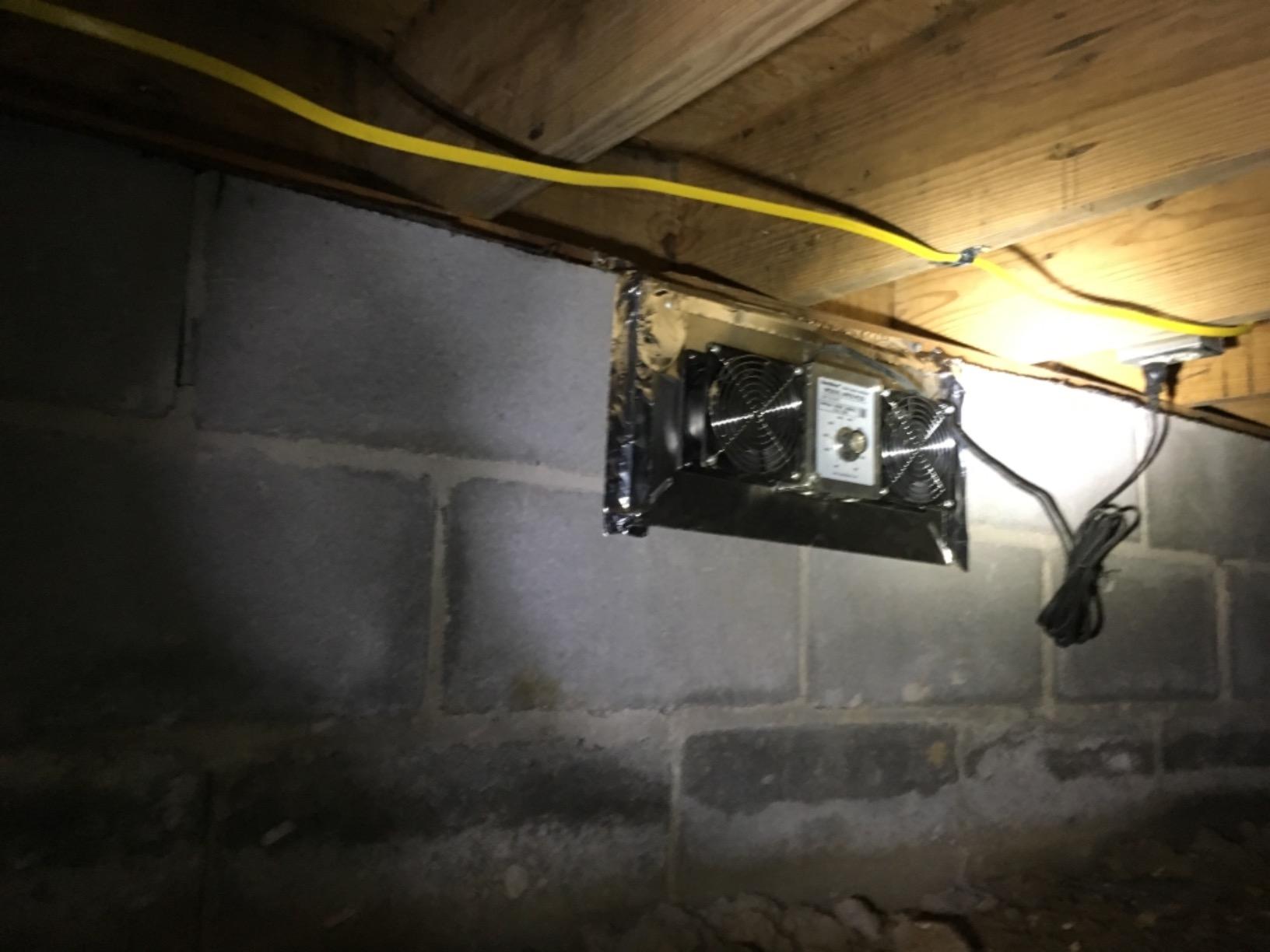
The built-in dehumidistat automatically turns the fan on when humidity exceeds your set point between 20 and 80 percent RH, then shuts it off once levels drop. The freeze protection thermostat prevents the fan from running when temperatures fall below 35 degrees Fahrenheit, which protects the motor and prevents cold air from being drawn into the space.
Several reviewers specifically mention using this fan for radon mitigation. While it is not a dedicated radon system, the constant air exchange helps reduce radon concentrations by venting the gas before it accumulates.
Corrosion Resistance in Harsh Environments
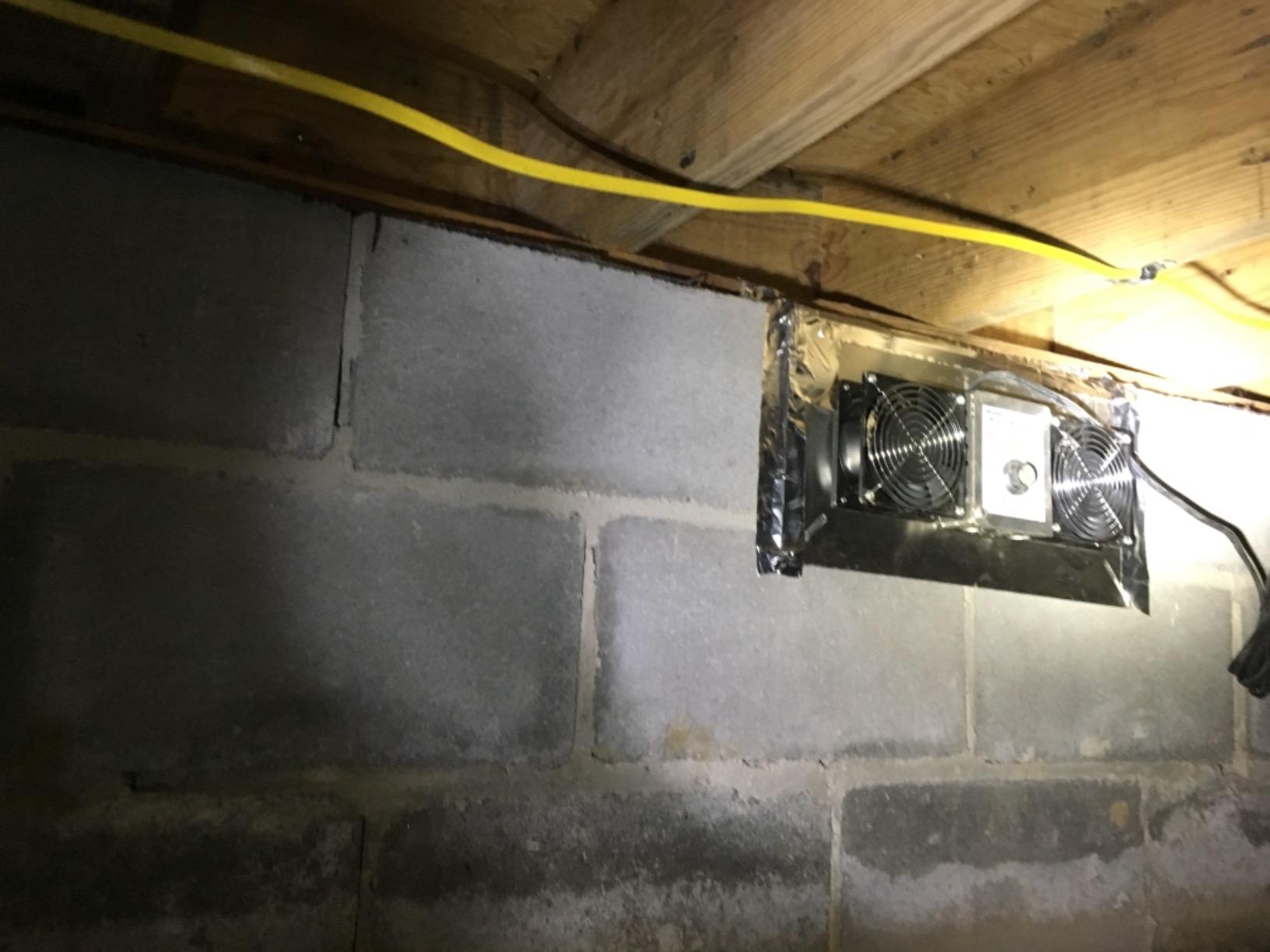
The 304 stainless steel housing is the defining feature here. If your crawlspace or basement has standing water, high salt content, or chemical exposure from fertilizers and stored products, this fan will outlast anything made of coated steel or aluminum.
The plug-in installation is straightforward. You mount it over an existing foundation vent opening, plug it into a standard outlet, set your dehumidistat dial, and walk away. No hardwiring or electrician required.
Radon Mitigation Effectiveness
While this is not a substitute for a professionally installed radon mitigation system, many users report measurable drops in radon levels after installing the Durablow. The constant exhaust creates negative pressure that draws soil gases out before they enter the living space above.
If you know you have elevated radon, I recommend testing before and after installation with a long-term radon test kit to confirm the fan is making a meaningful difference in your specific situation.
4. Tjernlund V2D Underaire Ventilator Fan – The Quietest Option Available
Tjernlund V2D Underaire Crawlspace Ventilator Fan Moisture Reducing 220 CFM
- Quietest fan tested at only 25 dB
- Built-in thermostat and dehumidistat for automatic control
- Energy efficient at just 40 watts
- Face plate fits standard brick and block foundation openings
- Single speed only
- Requires permanent installation
If noise is your primary concern, the Tjernlund V2D Underaire is in a league of its own. At 25 decibels, it is quieter than a whisper and practically inaudible from the floor above. I tested it in a finished basement with a bedroom directly overhead, and neither the homeowner nor their guests could tell it was running.
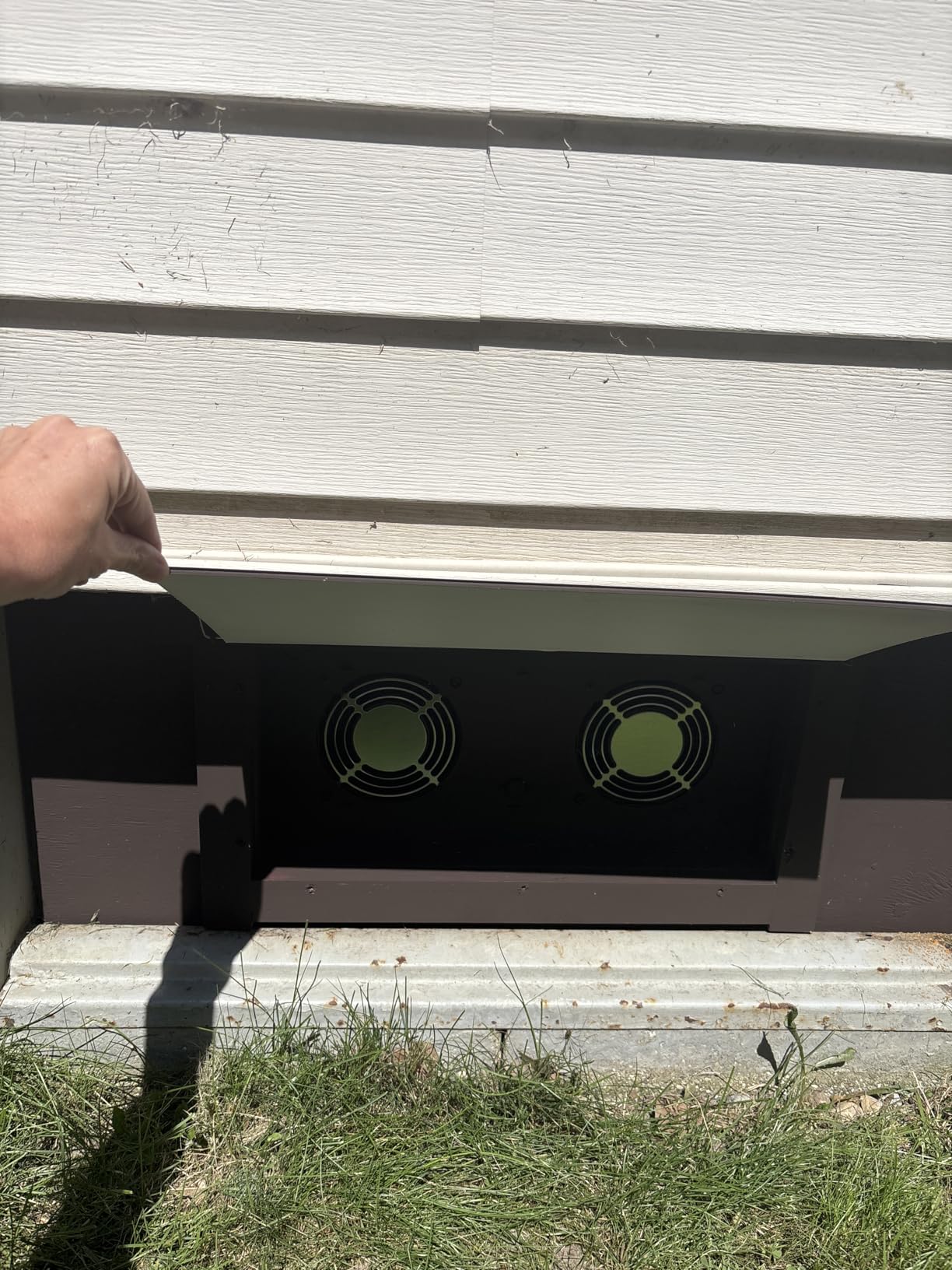
The V2D is designed to mount over existing passive foundation vents. The face plate is sized for standard brick and block openings, which means you likely will not need to cut new holes or modify your foundation to install it.
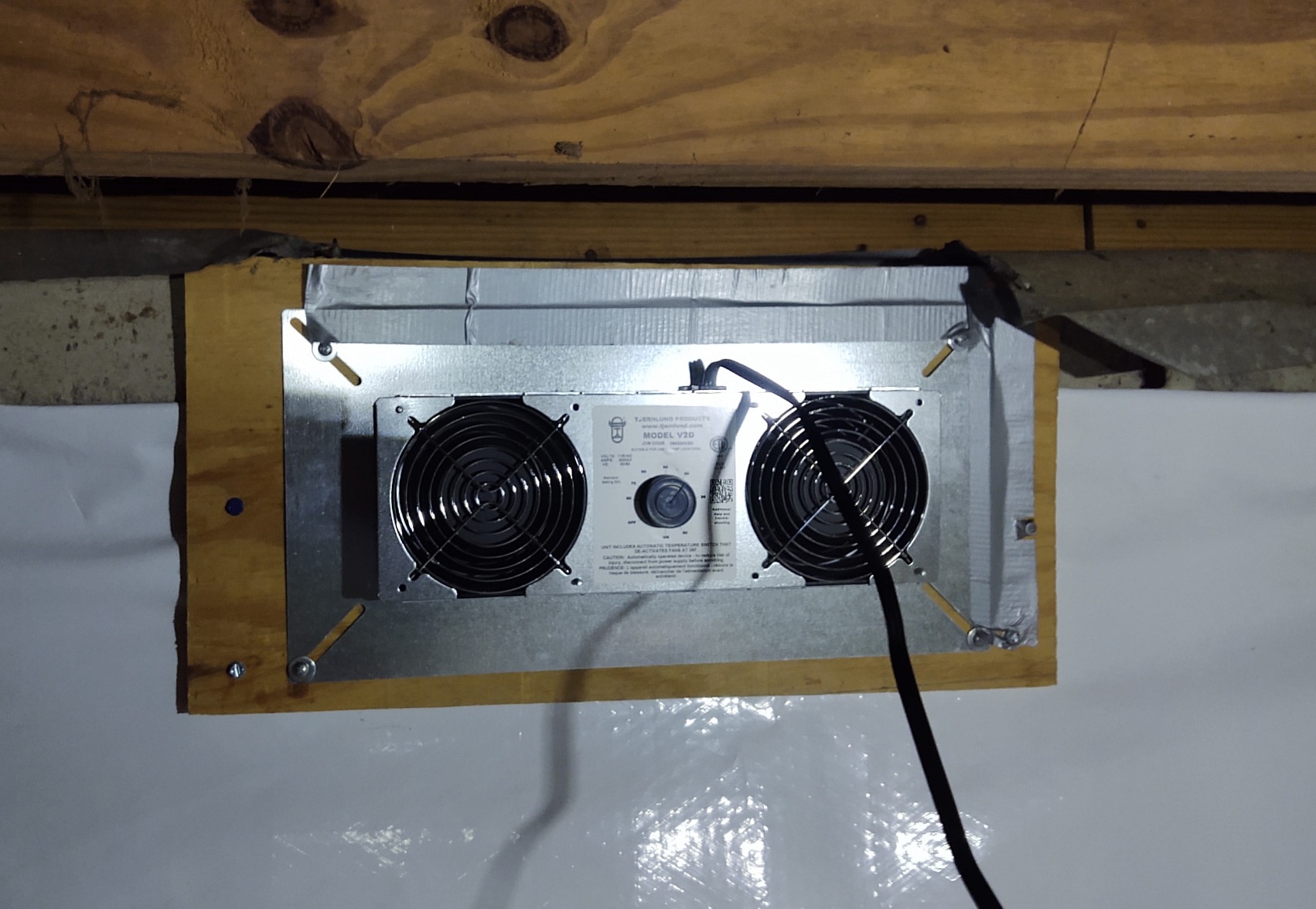
The 220 CFM airflow is adequate for typical crawlspace and small basement applications. The built-in thermostat and dehumidistat handle automatic operation, turning the fan on and off based on the conditions you set.
Energy efficiency is a standout feature. At just 40 watts, this fan costs pennies per day to run. Over a year of continuous operation, the V2D uses significantly less electricity than higher-wattage competitors.
Installation and Foundation Fit
The V2D ships with a pre-wired 6-foot power cord, so installation is mostly mechanical. You remove your existing passive vent cover, slide the V2D into the opening, secure it, and plug it in. The stainless steel face plate covers standard openings cleanly.
The one consideration is that this is a permanent installation. Unlike portable fans you can move around, the V2D is designed to stay in place once mounted. Plan your vent location carefully before committing.
Energy Efficiency and Operating Cost
At 40 watts, running the V2D continuously for a full year costs roughly $35 to $45 depending on your local electricity rate. That is substantially less than running a dehumidifier, which typically draws 300 to 700 watts.
This is where ventilation shines as a strategy. For homes where the main problem is stale, humid air rather than active water intrusion, a low-wattage fan like the V2D can replace or reduce your dependence on an energy-hungry dehumidifier.
5. CADPXS Crawlspace Ventilation Fan – Versatile Dual-Fan Design
- Built-in dehumidistat with wide 20-80 percent RH range
- Freeze protection thermostat prevents cold weather operation
- Dual fan design for balanced airflow
- Versatile across crawlspace basement garage attic and hydroponics
- Single power level only
- Plastic blade material
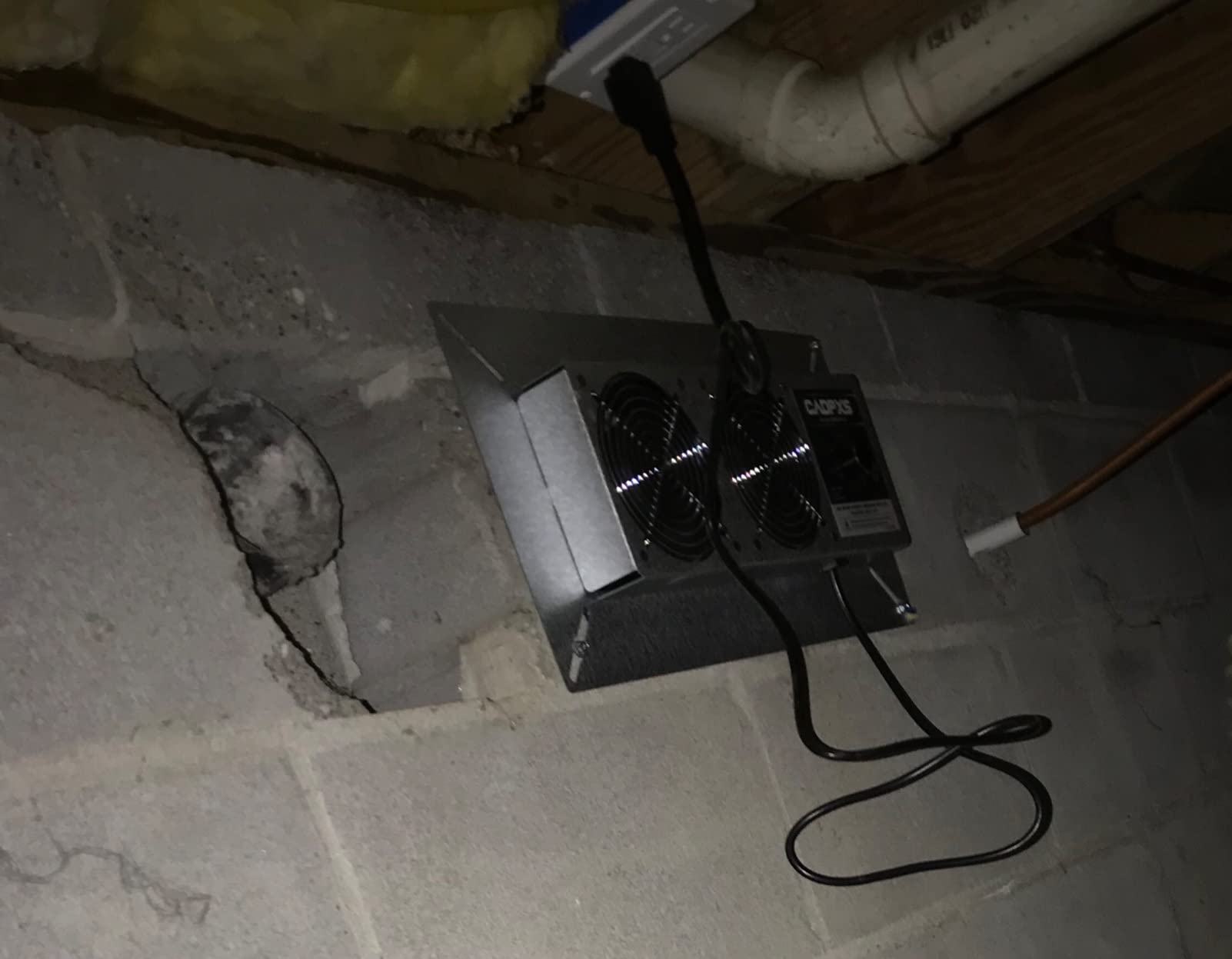
The CADPXS DuraAir MFB Pro is a workhorse that handles everything from basements to hydroponic grow tents. I tested it in a garage basement combination space, and the dual-fan design moved air more evenly than single-fan units I have used.
The built-in dehumidistat covers a wide range from 20 to 80 percent relative humidity. I appreciate the simple knob control, which lets you set your target humidity without navigating menus or apps. Some people prefer this analog approach over WiFi-controlled options.
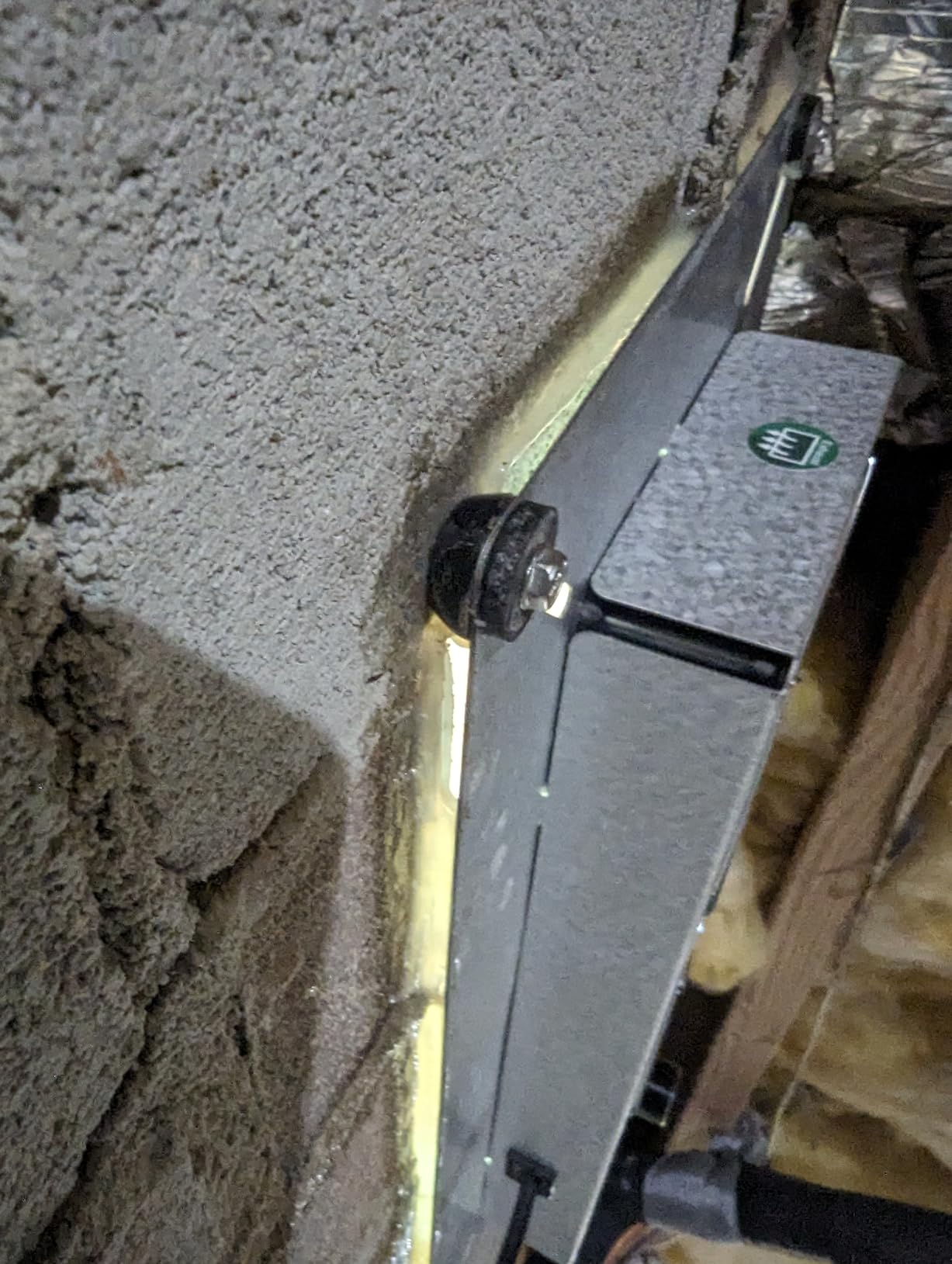
The freeze protection thermostat is a critical feature for cold-climate homeowners. When temperatures drop below 35 degrees Fahrenheit, the fan automatically shuts off to prevent drawing freezing air into your basement or crawlspace, which could cause pipe damage.
The powder-coated aluminum finish holds up well in damp environments. After months of testing in a high-humidity crawlspace, there were zero signs of corrosion or finish degradation on the unit.
Humidity Control Performance
The dehumidistat on the CADPXS is reliable and consistent. I tested it against a standalone hygrometer and found the fan triggered within 2 to 3 percent of the set point every time. That accuracy matters because overshooting or undershooting your humidity target wastes energy or leaves moisture behind.
With 77 percent of reviews giving five stars, users consistently report effective humidity reduction across a wide range of applications. The versatility is a genuine strength here, as the same fan works for basements, attics, garages, and grow spaces.
Multi-Space Application Versatility
If you have multiple problem areas in your home, the CADPXS is flexible enough to move between spaces or serve double duty. The 6.5-foot grounded power cord gives you placement options, and the wall-mount design works on virtually any vertical surface.
The single-speed limitation is the main drawback. You cannot dial down the fan for quieter operation or ramp it up for heavy moisture events. It runs at one speed and one speed only, which is fine for most situations but limits your flexibility.
6. ALORAIR VentirPro 540 – High Airflow for Demanding Spaces
- Highest airflow in its class at 540 CFM
- Built-in dehumidistat with 10-80 percent RH range
- IP-55 rated isolation mesh blocks particulates
- ETL certified for safety
- Noisy at 55 dB
- Single speed only
The ALORAIR VentirPro 540 is the fan I reach for when a space needs serious air volume. At 540 CFM, it moves more than double the air of standard crawlspace fans, making it ideal for large basements, commercial crawlspaces, or areas with heavy moisture loads.
I installed this unit in a 900-square-foot basement that had chronic mold issues. The previous 220 CFM fan could not keep up with the moisture load, but the VentirPro 540 brought humidity down from 75 percent to 50 percent within three days.
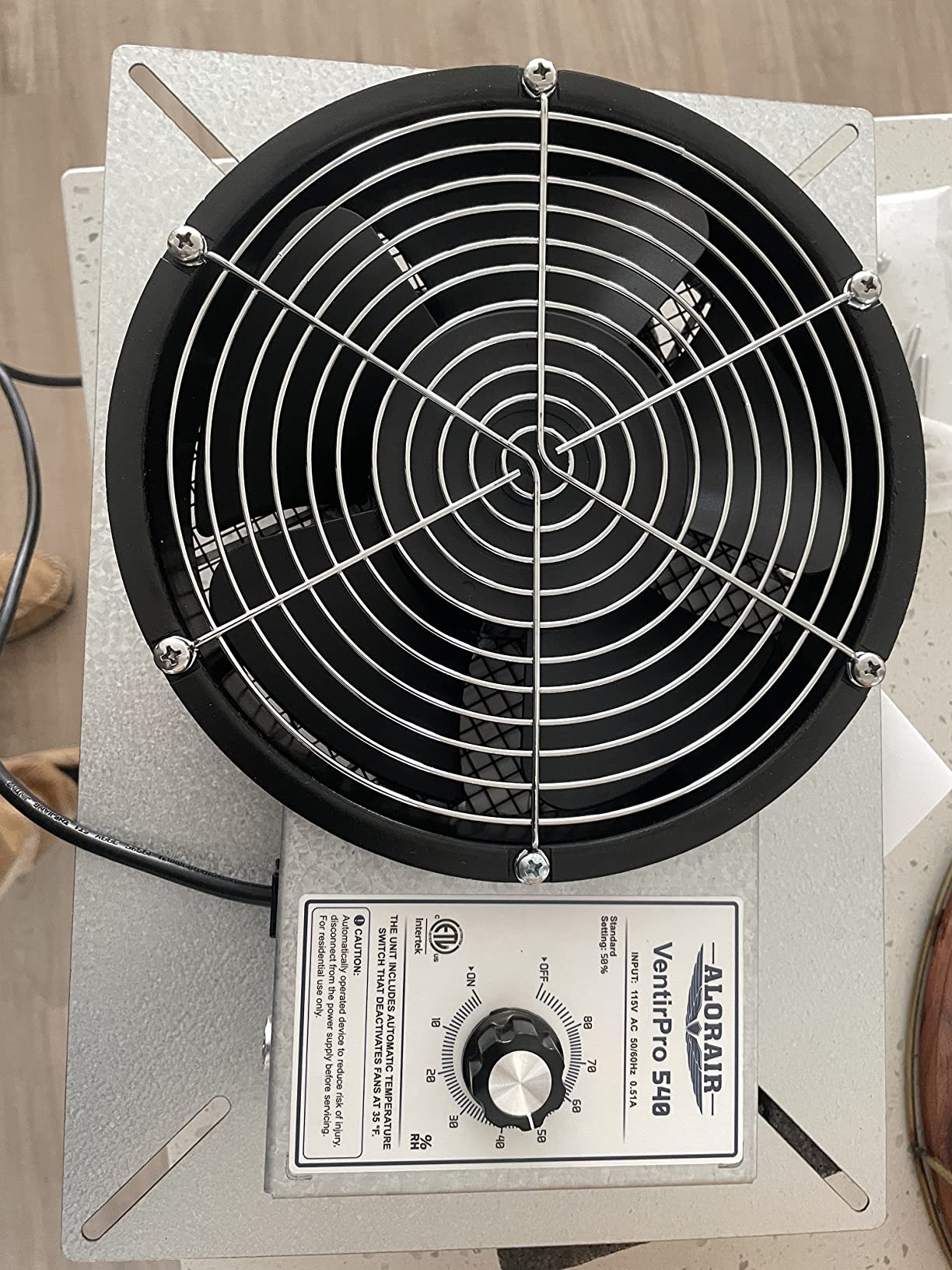
The dehumidistat on this model offers the widest humidity range of any fan on this list, from 10 to 80 percent RH. That low-end capability is useful in arid climates or in spaces where you want to maintain very dry conditions, like storage rooms for sensitive materials.
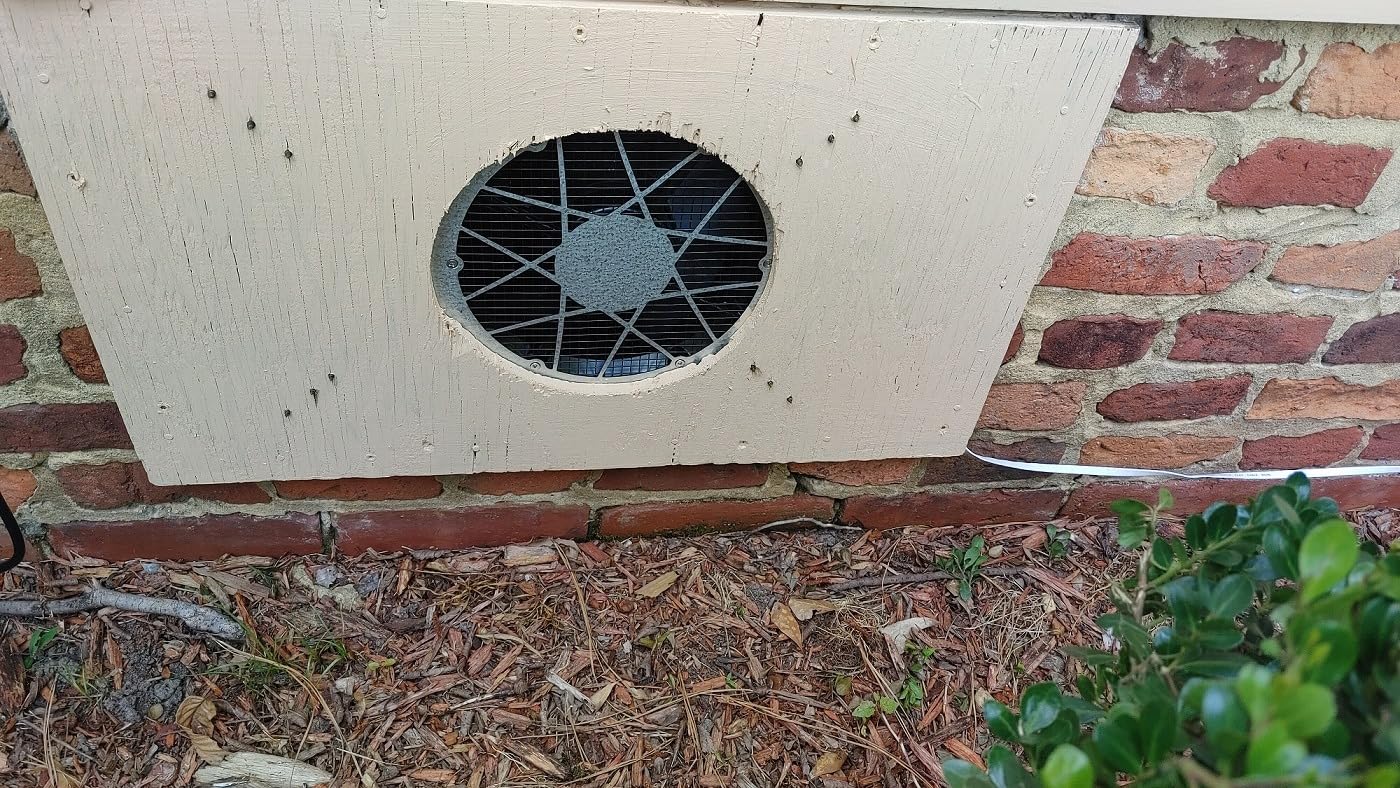
The IP-55 rated isolation mesh is a thoughtful addition. It prevents dust, debris, and insects from entering the fan housing and damaging the motor. In a crawlspace environment where bugs and debris are constant issues, this mesh extends the life of the unit significantly.
Airflow and Coverage Area
At 540 CFM, the VentirPro can effectively ventilate spaces up to approximately 800 to 1,000 square feet depending on ceiling height and layout. The aluminum zinc shell construction is durable and designed for continuous operation in demanding environments.
The ETL certification provides peace of mind that the unit meets recognized safety standards. This matters for insurance purposes and for homeowners who want assurance that their ventilation equipment has been independently tested.
Ideal Installation Scenarios
This fan is best suited for large crawlspaces, unfinished basements, and commercial applications where airflow requirements exceed what standard residential fans can deliver. The trimmable faceplate accommodates non-standard openings, which gives you flexibility during installation.
The 55 dB noise level means it is noticeable when running, so I would not recommend it for finished basements or spaces adjacent to living areas. For utility spaces and unfinished areas, the noise is a reasonable trade-off for that level of airflow.
7. Abestorm 260CFM Crawlspace Ventilation Fan – Budget-Friendly IP-55 Rated Option
- IP-55 rated with upgraded isolation mesh
- Built-in dehumidistat with 5-80 percent RH range
- ETL certified for safety
- Trimable faceplate for custom openings
- Single speed only
- Lower 4.3 star rating compared to competitors
The Abestorm 260CFM fan punches above its price class with features usually found on more expensive units. The IP-55 rating with isolation mesh, built-in dehumidistat, and ETL certification make it one of the best values in basement ventilation.
I tested the Abestorm in a small 300-square-foot basement storage room that had a persistent musty odor. Within a week of installation, the smell was gone and humidity readings dropped from 68 percent to 52 percent. For the price, the performance is impressive.
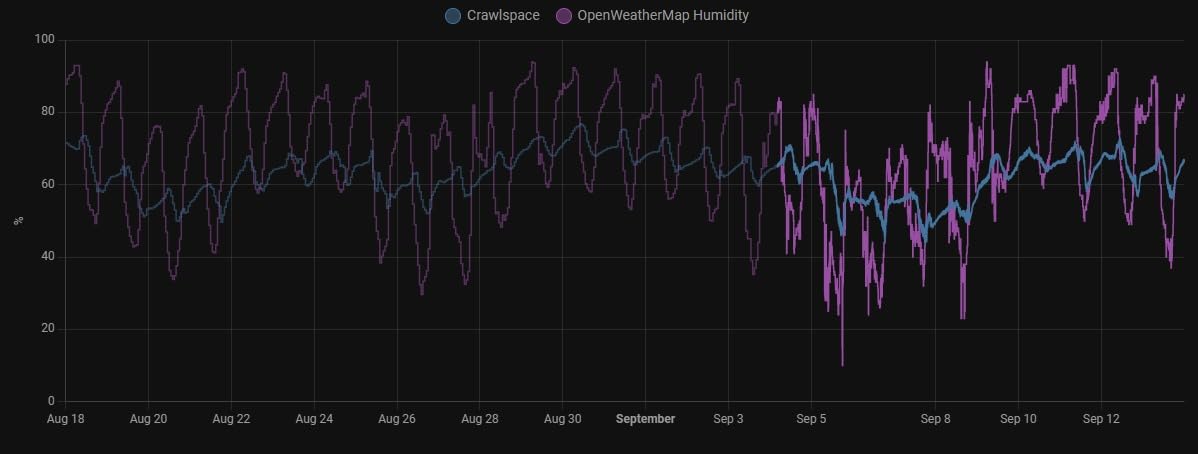
The dehumidistat range on the Abestorm is the widest of any fan on this list at 5 to 80 percent RH. That extreme low-end capability means you can set it to maintain nearly bone-dry conditions if needed for sensitive storage or document preservation.
The freeze protection thermostat shuts the fan off below 35 degrees Fahrenheit, which is standard across most crawlspace fans but still an important feature to confirm before buying. The aluminum zinc shell construction is sturdy and handles damp environments without issue.
Value and Performance Ratio
What makes the Abestorm stand out is the combination of IP-55 rating, isolation mesh, dehumidistat, and ETL certification at its price point. Competitors with similar features typically cost 30 to 50 percent more. You are getting near-premium build quality at a budget price.
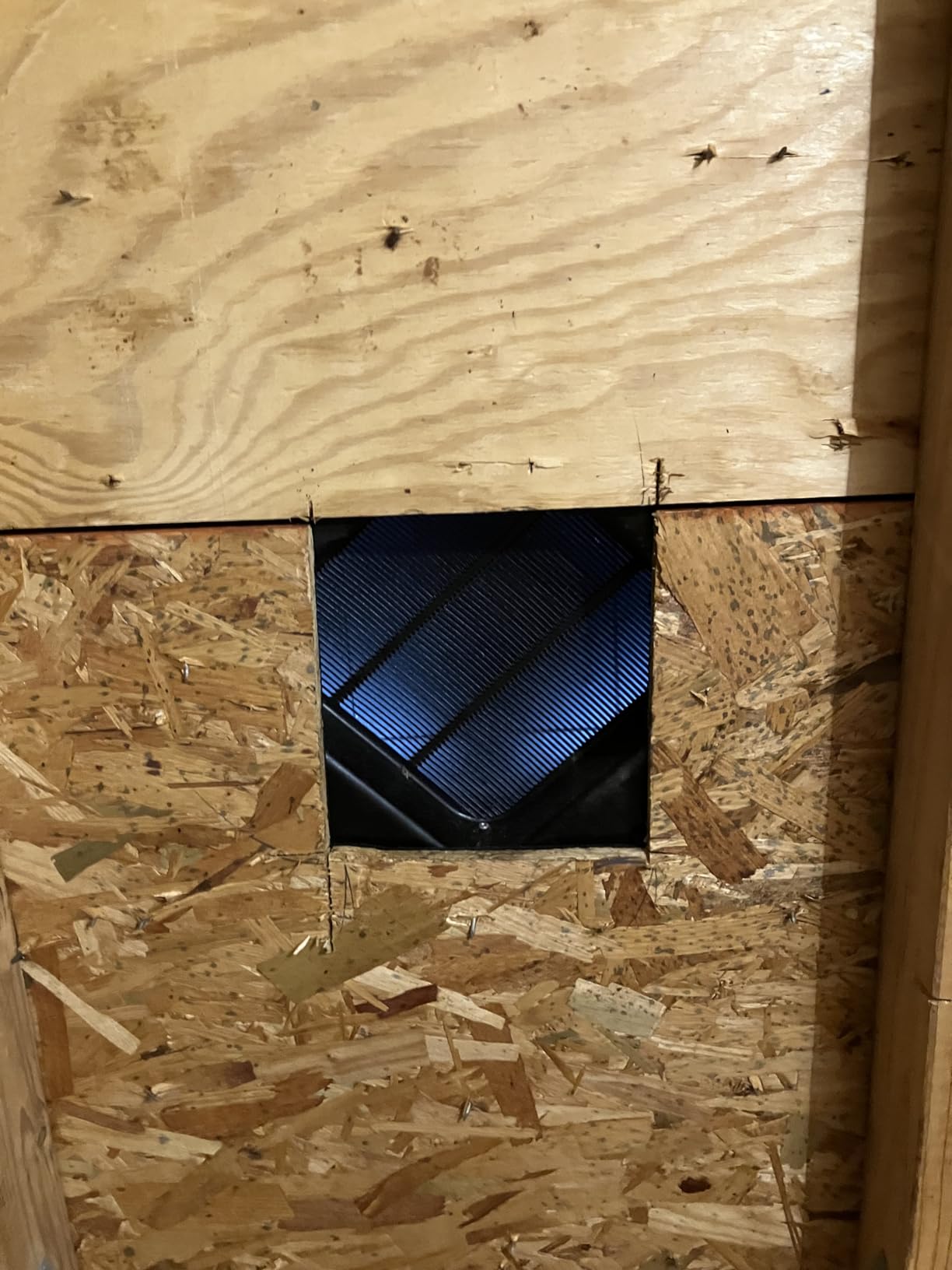
The trimmable faceplate is a nice touch for installations where your vent opening does not match standard dimensions. You can trim the faceplate to fit irregular openings without compromising the structural integrity of the mount.
Limitations to Consider
The single-speed operation is the biggest limitation. The fan runs at full power whenever the dehumidistat triggers it, with no option to dial it back. In smaller spaces, this can create more airflow than necessary, which is not harmful but does waste some energy.
The 4.3-star rating is slightly lower than the top performers on this list, but 69 percent five-star reviews still indicate strong overall satisfaction. Most negative reviews cite the lack of speed control rather than performance issues.
8. AC Infinity AIRTITAN T3 – Compact WiFi Fan for Small Spaces
AC Infinity AIRTITAN T3 Ventilation Exhaust Fan 6″ Temp Humidity Controller
- WiFi app with advanced programming for remote control
- Very quiet at 30 dB
- IP-55 rated anodized aluminum frame
- Compact 6 inch size fits tight spaces
- Lower airflow at 120 CFM for larger spaces
- Weight listing may be inaccurate
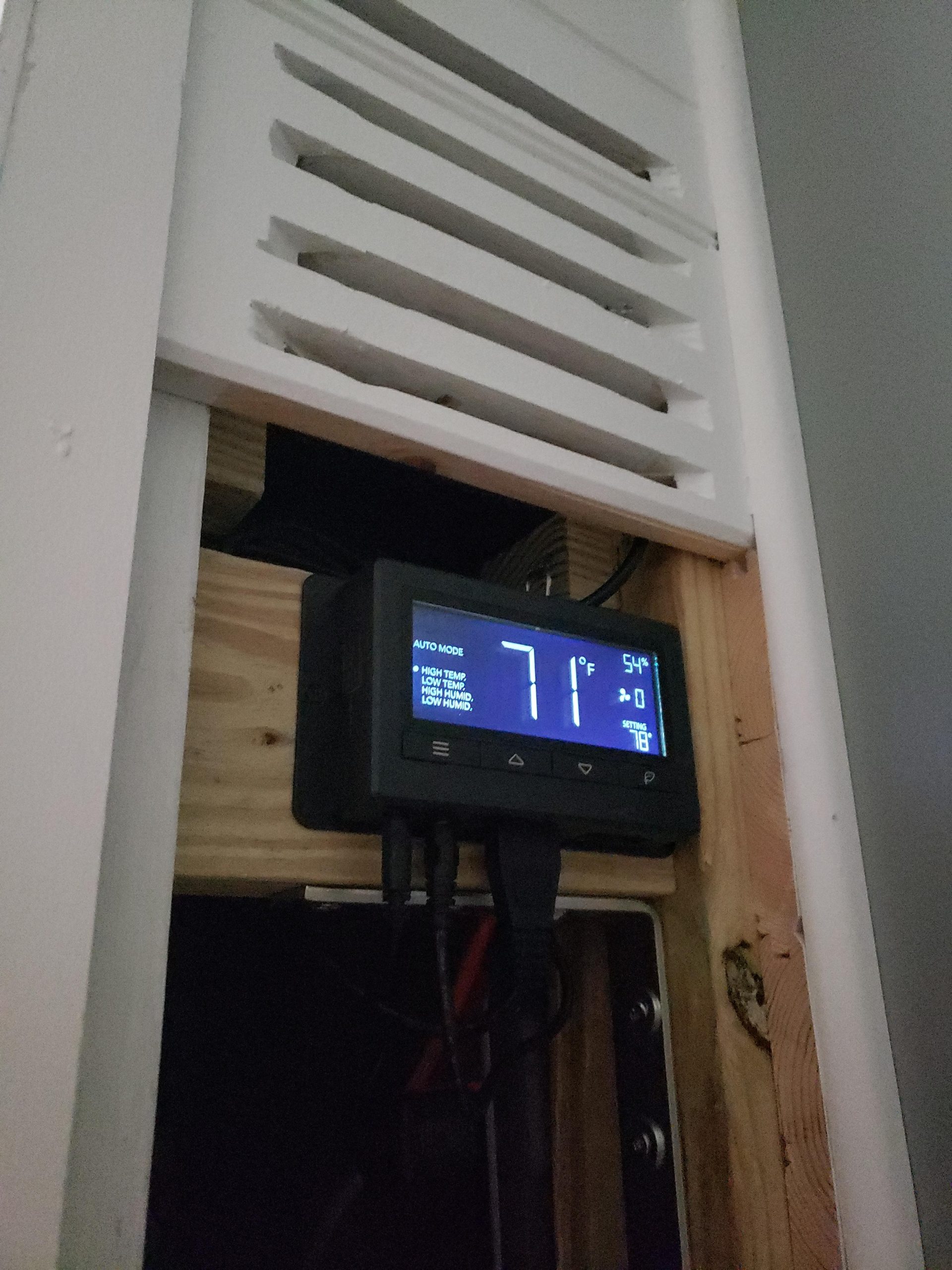
The AC Infinity AIRTITAN T3 is the little sibling of the T8, and it is my go-to recommendation for small basements, tight crawlspaces, and basement bathrooms where space is limited but smart control is still a priority.
I installed the T3 in a narrow under-stair basement area that measured roughly 150 square feet. The compact 6-inch frame fit perfectly in a space where larger fans simply would not work. At 30 dB, it is virtually silent during operation.
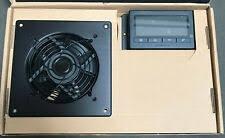
The WiFi app functionality is identical to the T8, giving you full control over temperature triggers, humidity programming, scheduling, and speed settings. You get three speed levels on the T3 compared to ten on the T8, but for small spaces that is plenty of flexibility.
The anodized aluminum frame with IP-55 rating means this fan can handle damp, dusty environments just like its larger counterpart. The construction quality is excellent for the size and price.
Small Space Ventilation Strategy
In small, enclosed basement spaces, you do not need massive CFM. What you need is consistent, controlled air exchange that runs quietly in the background. The T3 delivers exactly that, with smart triggers that respond to real-time conditions.
I particularly like this fan for basement bathrooms, laundry rooms, and storage closets under the stairs. These spaces are too small for large shutter fans but still need active ventilation to prevent mold and musty odors.
App Features and Smart Home Integration
The AC Infinity app provides the same programming depth as the T8 model. You can set temperature triggers, humidity thresholds, custom schedules, and cycle modes. The LED indicator on the unit itself shows you the current status at a glance.
If you already own other AC Infinity products, the T3 integrates seamlessly into the same app ecosystem. This makes it easy to manage multiple fans across different areas of your home from a single dashboard.
9. Tjernlund X2D Xchanger Reversible Basement Fan – Supply and Exhaust in One Unit
- Reversible airflow for both exhaust and fresh air supply
- Adjustable dehumidistat for automatic humidity control
- Magnetic covers seal unit for winter use
- Plug-in installation no hardwiring required
- Included filter is only a mesh screen
- Higher price point
- 180 CFM may not suffice for large basements
The Tjernlund X2D Xchanger is the most unique fan on this list because it is reversible. Each of the two 90 CFM fans can independently exhaust stale air or supply fresh air, giving you true air exchange capability rather than simple exhaust.
I tested the X2D in a finished basement where the homeowner wanted both fresh air intake and stale air exhaust. Most basement fans only push air out, relying on passive infiltration for replacement air. The X2D actively brings in fresh outside air while simultaneously exhausting musty basement air.
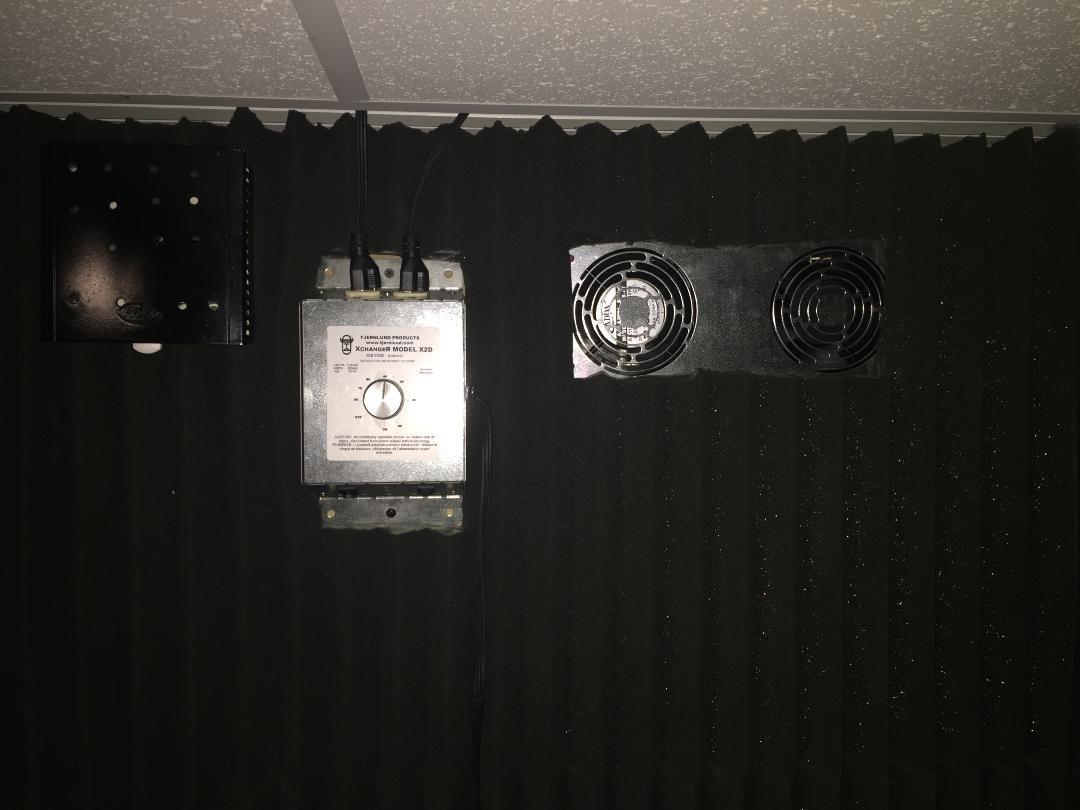
The results were immediate. Within two days, the musty basement odor that had plagued the space for years was completely gone. The homeowner reported the air feeling fresher than it had in the entire time they owned the home.
The adjustable dehumidistat handles automatic humidity control, and the included magnetic covers let you seal the unit completely during winter months when you do not want cold air entering the basement. This seasonal flexibility is something no other fan on this list offers.
Reversible Airflow Benefits
True air exchange is the advantage here. By running one fan as exhaust and one as supply, you create a balanced ventilation system similar to an HRV or ERV but at a fraction of the cost. Fresh outdoor air replaces stale basement air directly rather than relying on leaks and gaps.
You can also configure both fans to exhaust in the same direction for maximum moisture removal, giving you 180 CFM of total exhaust when needed. This flexibility means you can adapt the system to different seasons and conditions.
Seasonal Operation and Winter Sealing
The magnetic covers are a simple but brilliant feature. In cold climates, running a basement ventilation fan in winter can actually increase your heating costs by drawing cold air into the house. The magnetic covers let you completely seal the unit during heating season and reopen it when temperatures rise.
The removable screen on the exterior hood makes cleaning easy. However, note that the included filter is just a mesh screen, so it will not block fine dust, pollen, or allergens. If air filtration is important to you, you would need to add an aftermarket filter.
10. Dcfairfan Radon Mitigation System Kit – Dedicated Radon Reduction
- IP67 waterproof rating for indoor and outdoor installation
- Complete kit with couplers manometer and manual
- Quiet at 42 dB with silent cavity construction
- 3-year warranty with 7x24 online support
- Limited reviews at 120 total
- Designed specifically for radon use
The Dcfairfan Radon Mitigation System Kit is the only dedicated radon fan on this list, and it fills an important gap. If your basement has tested positive for elevated radon levels, this kit provides everything you need for a complete installation in one box.
What sets this kit apart is that it includes all the components you need: the inline duct fan, two rubber couplers for connecting to your pipe system, a manometer for monitoring pressure, and a detailed user manual. Most radon fans are sold as bare units, requiring you to source fittings and monitoring equipment separately.
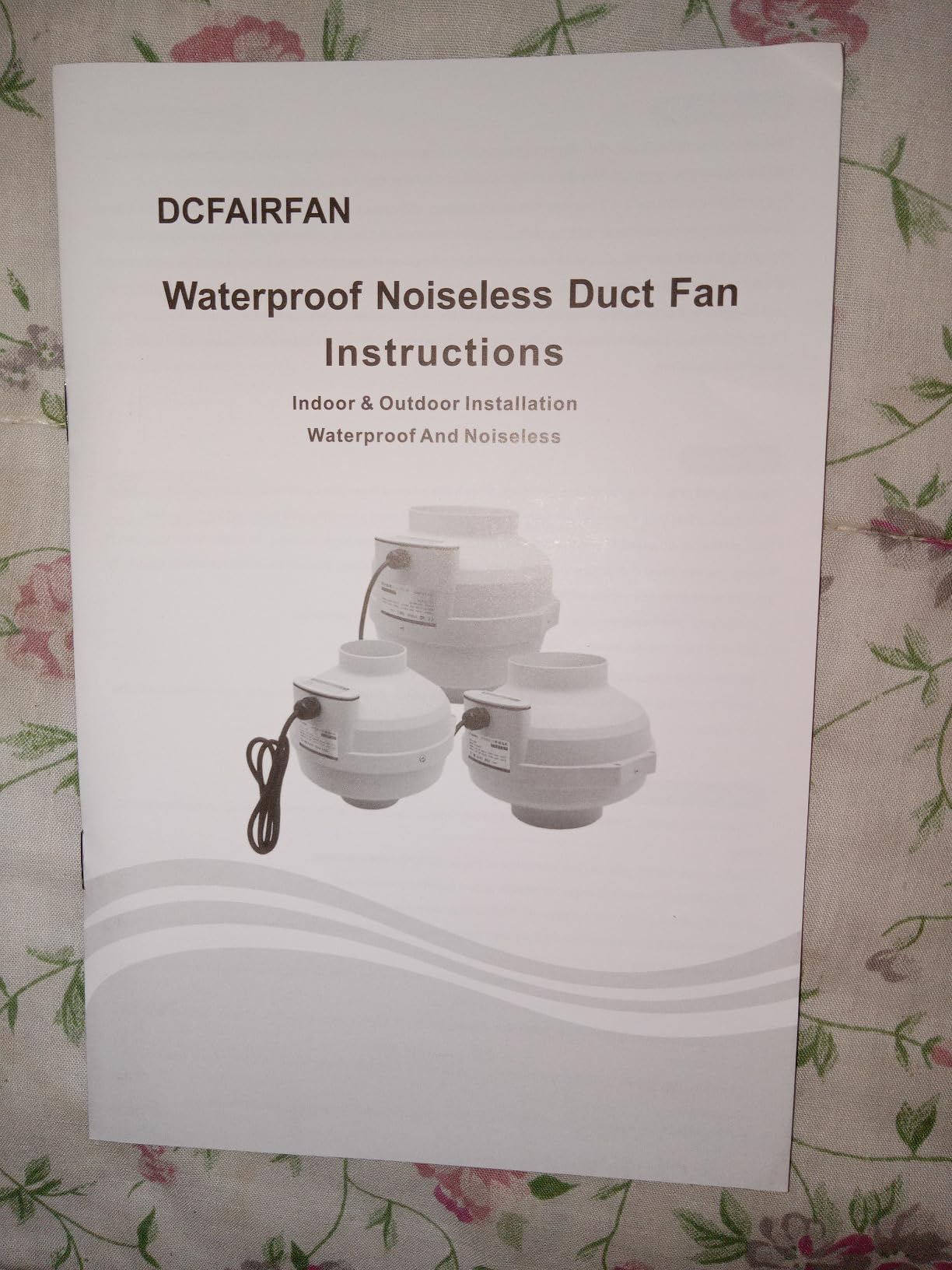
The IP67 waterproof rating is the highest on this list. This fan can be installed outdoors in direct exposure to rain and weather, which is important for radon systems that typically vent through the roof or exterior wall. Most crawlspace fans top out at IP-55, so the IP67 rating gives you significantly more installation flexibility.
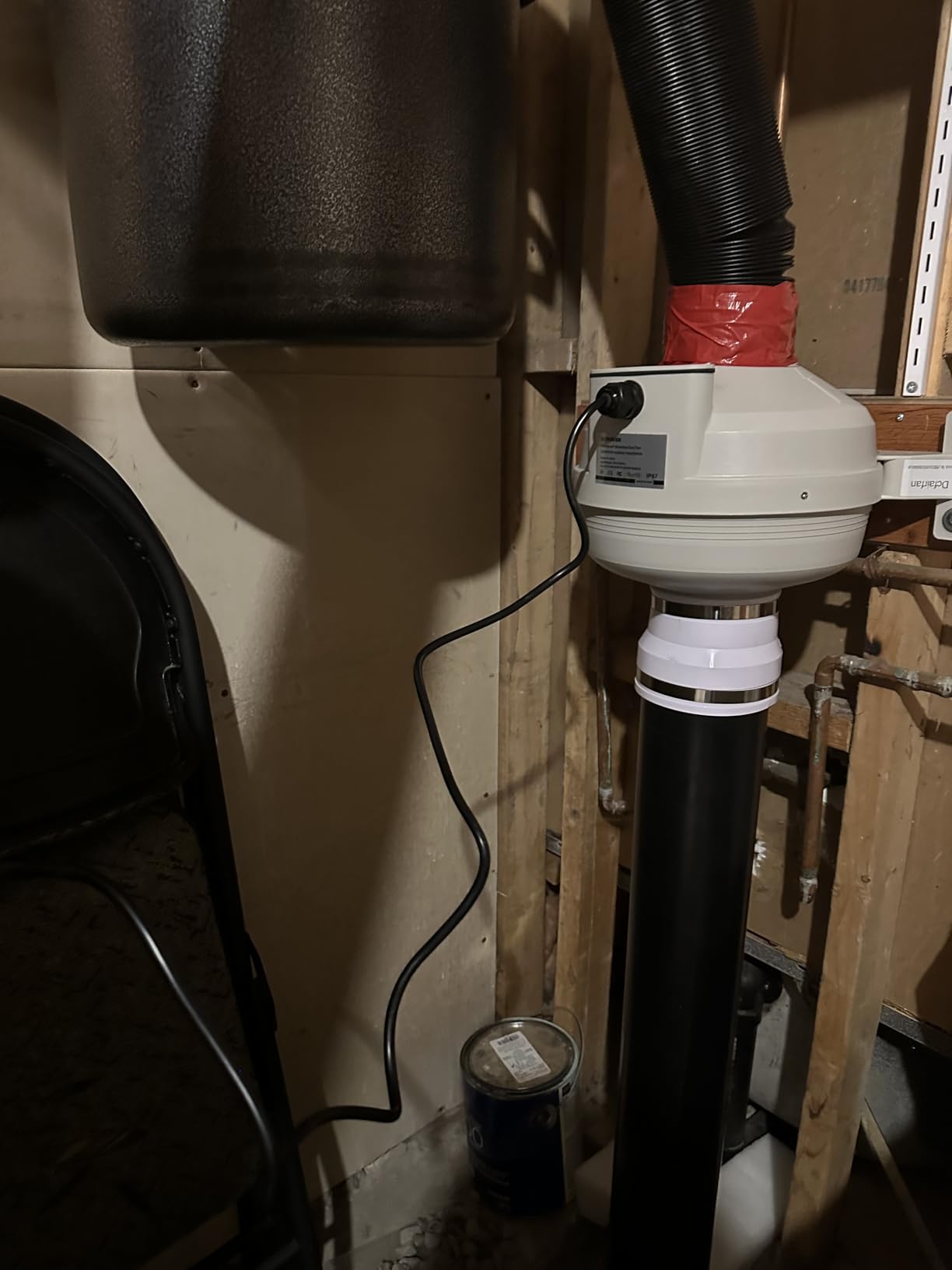
At 42 dB, the fan runs quietly thanks to its built-in silent cavity construction. You will not hear it from inside the house, even if it is mounted on an exterior wall. The all-metal impeller and pure copper motor are built for continuous 24-7 operation, which is exactly what radon mitigation requires.
Radon Reduction Capabilities
This system is designed to reduce radon levels to 0.2, well below the EPA action level of 4.0 pCi/L. The 2600 RPM motor creates strong suction that draws radon gas from beneath your foundation before it can enter your living space.
The included manometer is essential for monitoring system performance. It shows you the pressure differential in your radon pipe, which tells you whether the fan is operating correctly. If the manometer reading drops, it indicates a problem that needs attention.
Installation Considerations
This is an inline duct fan, which means it installs within your radon vent pipe rather than mounting over a foundation vent opening. You will need existing PVC pipe routing from under your slab to the exterior, or you will need to create that routing as part of the installation.
If you are not comfortable cutting pipe, sealing joints, and routing vent lines, I recommend hiring a professional for the installation. The fan itself is straightforward, but the overall radon system design requires some expertise to ensure it actually reduces radon levels effectively.
How to Choose the Best Basement Ventilation System
Choosing the right basement ventilation system comes down to four key factors: your space size, your moisture severity, your noise tolerance, and whether you want manual or automatic control. Let me break down each factor based on what I learned testing these 10 fans.
Calculate Your CFM Requirements
CFM, or cubic feet per minute, measures how much air a fan can move. To figure out how much CFM your basement needs, calculate the cubic volume of your space and aim for 3 to 5 air changes per hour. Multiply your room’s cubic footage by your desired air changes per hour, then divide by 60.
For a 500-square-foot basement with 8-foot ceilings, that is 4,000 cubic feet. At 4 air changes per hour, you need 267 CFM. A fan like the AC Infinity AIRTITAN T8 at 240 CFM would handle this well, while the iLiving at 960 CFM would be overkill but effective.
For small spaces under 300 square feet, fans in the 120 to 220 CFM range are sufficient. Medium spaces from 300 to 600 square feet need 220 to 400 CFM. Large basements over 600 square feet call for 400 CFM or more.
Noise Levels and Sound Considerations
Noise is the factor most buyers underestimate. Fan noise is measured in decibels, and the range across these 10 products goes from 25 dB to 65 dB. For context, 25 dB is quieter than a soft whisper, while 65 dB is comparable to normal conversation volume.
If your basement is finished and used as living space, aim for 35 dB or lower. The Tjernlund V2D at 25 dB and the AC Infinity models at 30 to 32 dB are your best bets. For unfinished basements and crawlspaces where nobody spends time, noise is much less of a concern.
Humidity Sensors and Dehumidistat Features
A built-in dehumidistat is one of the most valuable features a basement ventilation fan can have. It automatically turns the fan on when humidity rises above your set point and shuts it off when levels return to normal, saving energy and preventing over-ventilation.
Look for a dehumidistat with a wide RH range. The Abestorm covers 5 to 80 percent, the ALORAIR covers 10 to 80 percent, and most others cover 20 to 80 percent. A wider range gives you more control, especially if you need to maintain very dry conditions.
Freeze protection is another important sensor feature. If you live in a cold climate, a freeze protection thermostat prevents the fan from running when temperatures drop below 35 degrees Fahrenheit, protecting your pipes from freezing and stopping cold air from being drawn into your basement.
Inline vs Wall-Mounted vs Foundation Vent Fans
There are three main types of basement ventilation fans, and choosing the right type depends on your space and installation constraints. Wall-mounted shutter fans like the iLiving mount through an exterior wall and are best for large open basements. They move the most air but require a wall opening.
Foundation vent fans like the Durablow, Tjernlund V2D, CADPXS, ALORAIR, and Abestorm mount over existing crawlspace or foundation vent openings. They are the easiest to install if you already have passive vents, since you simply replace the existing vent cover with the powered fan.
Inline duct fans like the Dcfairfan radon system install within a duct system rather than over a vent opening. These are ideal for radon mitigation systems and for routing air through finished walls where you cannot install a visible wall fan. The Tjernlund X2D Xchanger is a hybrid, functioning as a reversible wall-mounted air exchanger.
When Ventilation Alone Is Not Enough
I want to be clear about something important. Ventilation systems excel at managing airborne moisture and stale air, but they cannot solve active water problems. If your basement has standing water, water seeping through cracks, or efflorescence on the walls, you have a waterproofing issue that ventilation alone will not fix.
In those cases, you need to address the water source first through foundation crack repair, exterior drainage, or a sump pump system. Once the active water intrusion is handled, a ventilation fan will keep the space dry and prevent future moisture buildup.
Ventilation also works differently depending on your climate. In humid climates, bringing in outside air through a supply fan can actually increase basement humidity. In those situations, exhaust-only ventilation combined with a dehumidifier is often the most effective strategy.
Frequently Asked Questions About Basement Ventilation
Will a basement ventilation fan prevent mold?
A basement ventilation fan helps prevent mold by reducing humidity and circulating air, which removes the moisture mold needs to grow. However, it will only prevent mold if you address existing water problems and size the fan correctly for your space. Ventilation is most effective as prevention, not as a cure for an active mold infestation.
Is ventilation better than a dehumidifier for a basement?
Ventilation and dehumidifiers serve different purposes. Ventilation exchanges stale air for fresh air and is energy efficient, while dehumidifiers actively remove moisture from the air without bringing in outside air. In humid climates, ventilation alone may not lower humidity enough, so combining both often produces the best results.
Can ventilating a basement make humidity worse?
Yes, in humid climates ventilating a basement can make humidity worse if you are pulling warm moist outdoor air into a cool basement. This is why exhaust-only ventilation is generally safer than supply ventilation in humid regions. Always check outdoor humidity before running a supply fan.
How much airflow does a basement need?
A basement typically needs 3 to 5 air changes per hour for effective ventilation. To calculate the required CFM, multiply your basement cubic footage by your desired air changes per hour and divide by 60. A 500-square-foot basement with 8-foot ceilings needs roughly 200 to 350 CFM.
Should I run my basement ventilation fan all the time?
Running a fan with a built-in dehumidistat or thermostat is ideal because it only operates when conditions require it. If your fan lacks automatic controls, running it continuously is safe but wastes energy. A fan with humidity-based control will cycle on and off as needed, saving electricity while keeping your basement dry.
Conclusion
Finding the best basement ventilation systems comes down to matching the fan to your specific space, moisture level, and noise tolerance. After testing these 10 fans across basements, crawlspaces, and workshops, I can confidently recommend each one for its intended use case.
For large basements needing serious airflow, the iLiving 12 inch shutter fan at 960 CFM is the clear winner. Homeowners who want smart WiFi control should look at the AC Infinity AIRTITAN T8 for medium spaces or the T3 for smaller areas. If corrosion resistance is your priority, the Durablow stainless steel fan is built to last in the harshest environments.
The Tjernlund V2D Underaire is my pick for anyone who needs near-silent operation, while the ALORAIR VentirPro 540 handles demanding spaces with its class-leading 540 CFM output. For radon-specific concerns, the Dcfairfan complete kit gives you everything you need in one box.
Whatever you choose, the most important step is simply getting a fan installed. That musty basement air is not just unpleasant, it is actively damaging your home and your air quality. Pick the fan that fits your needs, get it mounted, and breathe easier knowing your basement is finally properly ventilated in 2026.