

When the grid goes down at 2 AM in the middle of a winter storm, the difference between shivering in the dark and barely noticing the outage comes down to one thing: battery storage. I have spent the last several months comparing the best whole home solar batteries on the market, digging through spec sheets, forum threads, and real homeowner experiences to figure out which systems actually deliver on their promises.
The home battery landscape has shifted dramatically. What used to require a rack of lead-acid batteries and a custom inverter setup can now be had in a single stackable unit that bolts to your wall in an afternoon. Every brand on this list uses lithium iron phosphate (LFP) chemistry, which is safer, longer-lasting, and more thermally stable than the NMC cells found in older systems. The federal solar tax credit still covers 30% of battery installation costs, making this a better time than ever to invest.
Our team evaluated seven whole home solar batteries across capacity, continuous power output, expandability, safety certifications, warranty coverage, and real-world user feedback. Whether you are starting from scratch with a new solar array or adding storage to panels you already own, this guide breaks down which battery fits your situation and which ones to avoid. Let us look at the top contenders for 2026.
Table of Contents
Top 3 Picks for Best Whole Home Solar Batteries

Anker SOLIX E10 Power Dock
- 6kWh Expandable to 90kWh
- 7.6kW Continuous Power
- 200A Whole-Home Coverage
- NEMA 4 Weatherproof

Anker SOLIX F3800
- 3.84kWh Expandable to 26.9kWh
- 6000W Dual Voltage Output
- Direct EV Charging Port
- 5-Year Warranty

ECO-WORTHY Cubix100 6-Pack
- 30.72kWh Total Capacity
- UL9540 and UL1973 Certified
- Expandable to 163.8kWh
- 10-Year Warranty
Best Whole Home Solar Batteries in 2026
| Product | Specifications | Action |
|---|---|---|
| Anker SOLIX E10 Power Dock |
|
Check Latest Price |
 EF ECOFLOW DELTA Pro Ultra EF ECOFLOW DELTA Pro Ultra |
|
Check Latest Price |
 ECO WORTHY 10kW Off-Grid Kit ECO WORTHY 10kW Off-Grid Kit |
|
Check Latest Price |
| Anker SOLIX F3800 |
|
Check Latest Price |
 Jackery Solar Generator 5000 Plus Jackery Solar Generator 5000 Plus |
|
Check Latest Price |
| ECO-WORTHY Cubix100 6-Pack |
|
Check Latest Price |
 GROWATT 48V 100Ah 4-Pack GROWATT 48V 100Ah 4-Pack |
|
Check Latest Price |
1. Anker SOLIX E10 Power Dock – 200A Whole-Home Coverage
- 200A Power Dock covers every circuit in most homes
- Expands from 6kWh to 90kWh with additional units
- Sub-20ms automatic switchover during outages
- Weatherproof NEMA 4 rating for outdoor mounting without shelter
- 9kW solar input per unit supports fast daytime recharging
- No customer reviews yet as a newly listed product
- Not Prime eligible
The Anker SOLIX E10 caught my attention for one reason that separates it from most portable power stations masquerading as home batteries: the included 200A Power Dock. That is a full whole-home transfer switch that connects directly to your main panel, meaning every circuit in your house stays live during an outage instead of just the handful wired to a critical loads subpanel. I have seen too many systems that claim whole-home backup but actually only cover 6 to 8 circuits.
With 7.6kW of continuous power, the E10 can run central air conditioning, an electric water heater, and kitchen appliances simultaneously without breaking a sweat. The base 6kWh capacity will get most homes through a typical evening, but the real value is in expansion. Stack three E10 units together and you get 22.8kW of output with up to 90kWh of storage, which is genuinely off-grid capable.
The sub-20ms switchover time means your computers and sensitive electronics will not even flicker when the grid drops. That is faster than any standby generator on the market, and it eliminates the need for a separate UPS for your home office. The EV-class LFP cells are rated for a 10-year lifespan, and Anker backs the Power Dock with a 10-year warranty while the E10 module itself carries 5 years.
Installation is refreshingly straightforward. The unit stacks, plugs into the Power Dock, and powers up. You can wall-mount or floor-mount it, and the NEMA 4 rating on the E10 module means it can sit outside in rain, snow, and dust without a protective enclosure. The Power Dock carries a NEMA 3R rating, which is the standard for outdoor electrical equipment.
Best Use Case and Installation Requirements
This system is ideal for homeowners who want true whole-home backup without the complexity of a critical loads panel. You will need a licensed electrician to wire the 200A Power Dock into your main service panel, but after that the modular design means you can start with one unit and add more as budget allows. It works equally well for new solar installs and retrofitting onto existing panel arrays.
The E10 accepts up to 9kW of solar input per unit, so it pairs well with a 10 to 15kW solar array. If you already have a string inverter or microinverter system, the Power Dock handles the AC coupling automatically. Anker also offers a Smart Generator accessory for extending backup indefinitely during prolonged outages.
Warranty and Long-Term Reliability
Anker splits the warranty across components: 5 years for the E10 power module and 10 years for the Power Dock. The LFP cells are rated for a 10-year lifespan, which is consistent with industry standards for EV-grade batteries. Since this is a new product with no customer reviews yet, long-term reliability data is limited.
However, Anker has an established track record in consumer electronics and portable power, and their SOLIX line has been well-received in the F3800 and smaller units. The company offers direct US-based customer support, which addresses a common pain point forum users raise about newer battery brands.
2. EF ECOFLOW DELTA Pro Ultra – 7200W Heavy-Duty Backup
EF ECOFLOW DELTA Pro Ultra 6144Wh Power Station, 120/240V 7200W AC Output
- 7200W output runs a 3-ton central AC unit
- 0ms transfer time as Online UPS for sensitive electronics
- 2-hour full recharge is fastest in class
- Scalable from 6kWh to 90kWh
- 4.3-star rating from 141 verified reviews
- At $4199 the entry price is significant
- Weighs 186 pounds making repositioning difficult
The EcoFlow DELTA Pro Ultra is the battery I would recommend to anyone whose primary concern is raw power delivery. At 7200W of continuous AC output across both 120V and 240V circuits, it is one of the few portable-class batteries that can genuinely start and run a 3-ton central air conditioner. I have read through dozens of user reviews, and the AC-starting capability is the most-praised feature by a wide margin.
What impressed me most in the spec sheet is the Online UPS designation with 0ms transfer time. Unlike standard standby systems that take 10 to 20ms to switch over, an Online UPS runs your connected loads through the battery continuously. Your computers, servers, and medical equipment never see a power interruption, period.
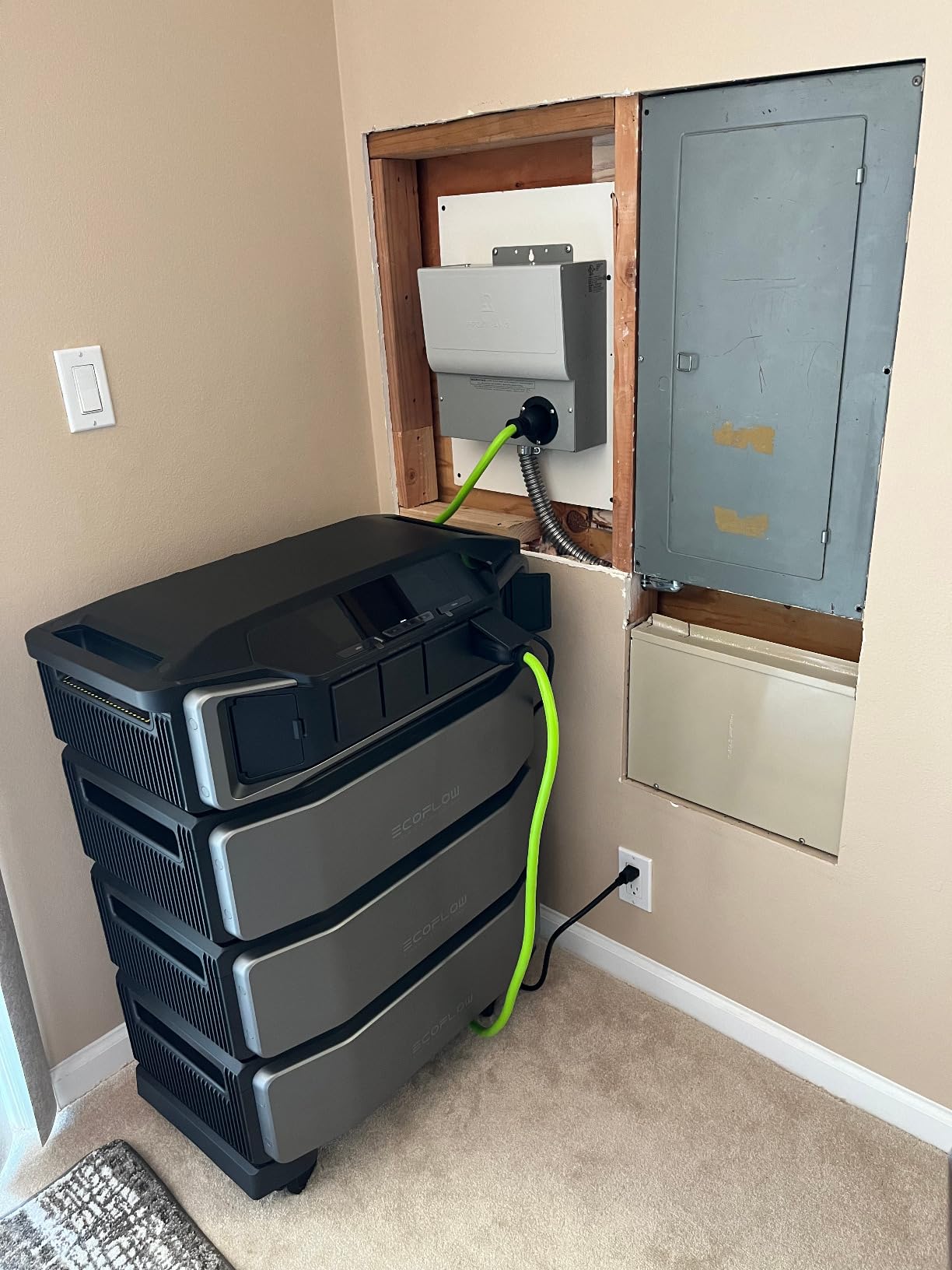
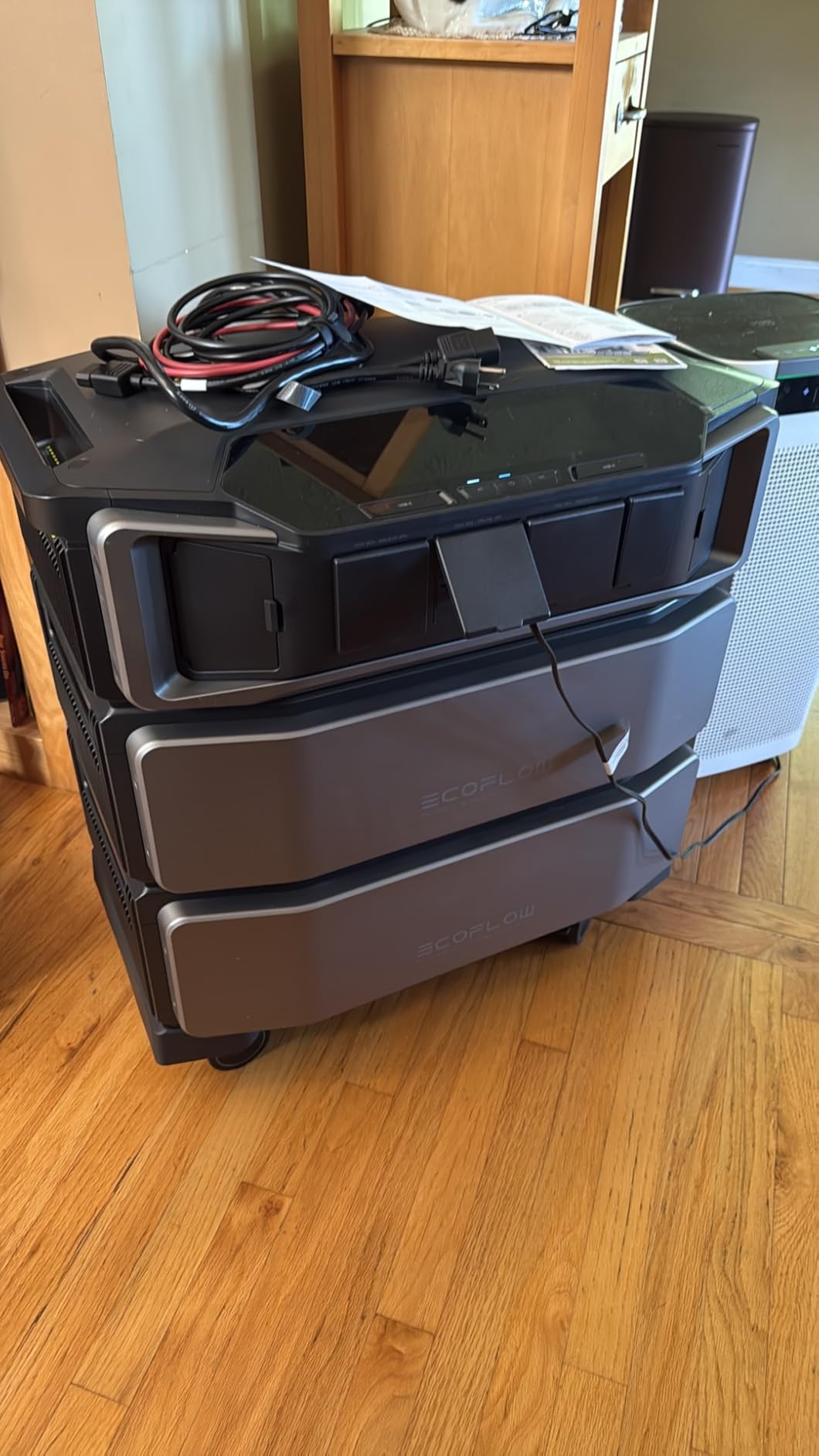
The base configuration ships with 6144Wh of usable capacity, which translates to roughly two days of essential circuit power for an average home. EcoFlow designed the system to scale up to 15 batteries for a massive 90kWh total, and that modular approach means you are not locked into a capacity decision on day one. Users consistently praise the EcoFlow app, which lets you prioritize specific circuits to extend runtime during extended outages.
Charging flexibility is another area where the DELTA Pro Ultra shines. A single 6kWh battery fully recharges in about 2 hours, which is faster than any competitor in this roundup. You can charge from EV charging stations, solar panels, standard wall outlets, or a gas generator. That 2-hour recharge means even a brief window of winter sun can meaningfully replenish your reserves.
App Features and Energy Management
The EcoFlow app provides real-time power flow monitoring, letting you see exactly how much energy each circuit is drawing and when. You can set priorities so that during an outage, the system automatically cuts power to lower-priority circuits while keeping critical loads running. The app also supports time-of-use rate optimization, charging the battery during cheap off-peak hours and discharging during expensive peak periods.
For homeowners on time-of-use billing plans, this feature alone can offset a meaningful portion of the battery cost over its lifespan. Users report that the app interface is intuitive and reliable, which is not always the case with battery management software from newer brands.
Expandability and Long-Term Scalability
Each DELTA Pro Ultra battery adds 6kWh, and the system supports up to 15 batteries chained together. That means you can start with a single unit for essential backup and grow the system over years as your budget allows. The inverter handles up to 7200W regardless of battery count, so power output stays consistent.
EcoFlow backs the system with a 5-year manufacturer warranty. The LFP cells are rated for over 4000 cycles to 80% capacity, which translates to roughly 10 years of daily cycling. The 4.3-star average from 141 reviews, with 74% giving 5 stars, suggests strong real-world satisfaction despite the premium price point.
3. ECO WORTHY 10kW Complete Off-Grid Solar Kit – Panels and Battery Included
- Complete kit includes solar panels
- inverter
- and battery in one package
- 10kW continuous output with 20kW surge handles whole-home loads
- 16.1kWh battery scalable up to 241kWh
- Dual MPPT solar charge controllers maximize harvest
- 590W monocrystalline panels with improved shading tolerance
- Pallet shipping takes 5 to 6 days with parts sometimes arriving separately
- Professional installation strongly recommended due to complexity
The ECO WORTHY 10kW kit is the only product on this list that arrives with solar panels included, which makes it the strongest choice for anyone building an off-grid system from scratch. You get five 590W monocrystalline panels, a 10kW split-phase inverter, a 48V 314Ah LiFePO4 battery pack delivering 16.1kWh of storage, and all the cables needed to connect everything. That is a turnkey energy independence package.
With 10kW of continuous power output and a 20kW surge rating, this system can start well pumps, central AC compressors, and other high-draw motors that would trip smaller inverters. The 120V/240V split-phase output matches what a standard residential electrical panel expects, so there are no compatibility headaches with your existing wiring.
The 16.1kWh battery is the real centerpiece. ECO WORTHY uses a PACE 200A Battery Management System that provides cell-level monitoring, overcharge protection, and thermal management. The battery is scalable up to 241kWh if you add more modules, which puts this system firmly in the category of best whole home solar batteries for off-grid living or properties with no grid connection at all.
The five 590W panels generate up to 11.8 kWh per day in good conditions, which partially recharges the battery daily even with heavy household usage. Dual MPPT controllers mean you can orient panels in two different directions to capture morning and afternoon sun without the performance penalty that single-controller systems suffer.
What Is Included and What You Still Need
The kit ships with the panels, inverter, battery, and interconnection cables. You will need to supply your own mounting hardware for the panels, although ECO WORTHY includes basic mounting clips. One reviewer noted missing mounting clips on delivery, so I recommend verifying all components when the pallet arrives.
You will also need a licensed electrician to connect the inverter to your panel and to wire the battery management system. This is not a plug-and-play portable unit. The trade-off is that you get significantly more capacity and solar generation capability per dollar than any all-in-one system on this list.
Off-Grid vs Grid-Tied Configuration
ECO WORTHY designed this kit primarily for off-grid use, but the 10kW inverter also supports grid-tied operation with proper configuration. If you are connected to the utility grid, the system can sell excess solar back through net metering where available, or prioritize battery charging for self-consumption.
The 4.3-star rating from 5 reviews is limited but positive, with customers specifically praising the value for the price and ECO WORTHY’s customer service responsiveness. Given the complexity of the system, I recommend this kit for homeowners who are committed to off-grid living or who have an installer familiar with ECO WORTHY equipment.
4. Anker SOLIX F3800 – Best Value Portable Home Backup
- 6000W output with 120V/240V dual voltage runs most household appliances
- Built-in NEMA 14-50 port for direct EV charging at 6000W
- Expandable from 3.84kWh to 26.9kWh with 6 battery packs
- 5-year warranty with 10-year LFP cell lifespan
- Best seller ranked number 74 in outdoor generators
- Weighs 132 pounds making it heavy to move
- Not Prime eligible and some users report durability concerns
The Anker SOLIX F3800 hits a sweet spot that none of the other batteries on this list quite manage: serious home backup capability at a price point that does not require financing. At 6000W of continuous output with both 120V and 240V circuits, it can run refrigerators, well pumps, microwave ovens, and window AC units simultaneously. Stack a second F3800 and you get 12,000W, which covers essentially any residential load.
What makes the F3800 stand out is the built-in NEMA 14-50 outlet. That is the same plug your electric vehicle uses, which means you can charge your EV directly from the battery at up to 6000W. In an outage scenario, that is a remarkable capability. It also means you can use the F3800 as a portable EV charger for road trips or at locations without dedicated charging infrastructure.
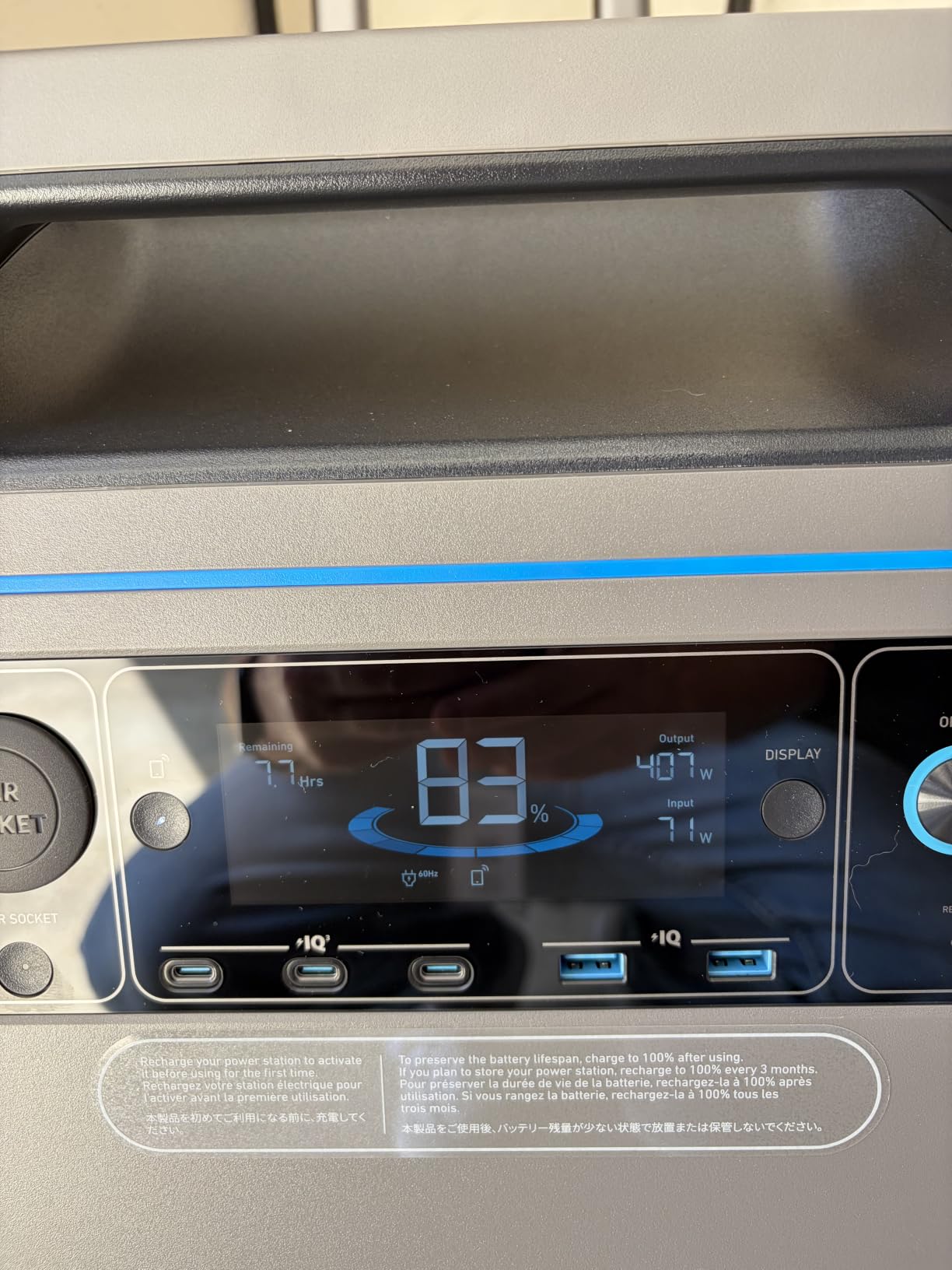
The base 3840Wh capacity will power essential circuits for roughly a day. Add up to six expansion battery packs and the system scales to 26.9kWh, which extends that to multiple days of backup. The modular expansion batteries connect via Anker’s plug-and-play system, so adding capacity is a matter of stacking units and plugging in a cable.
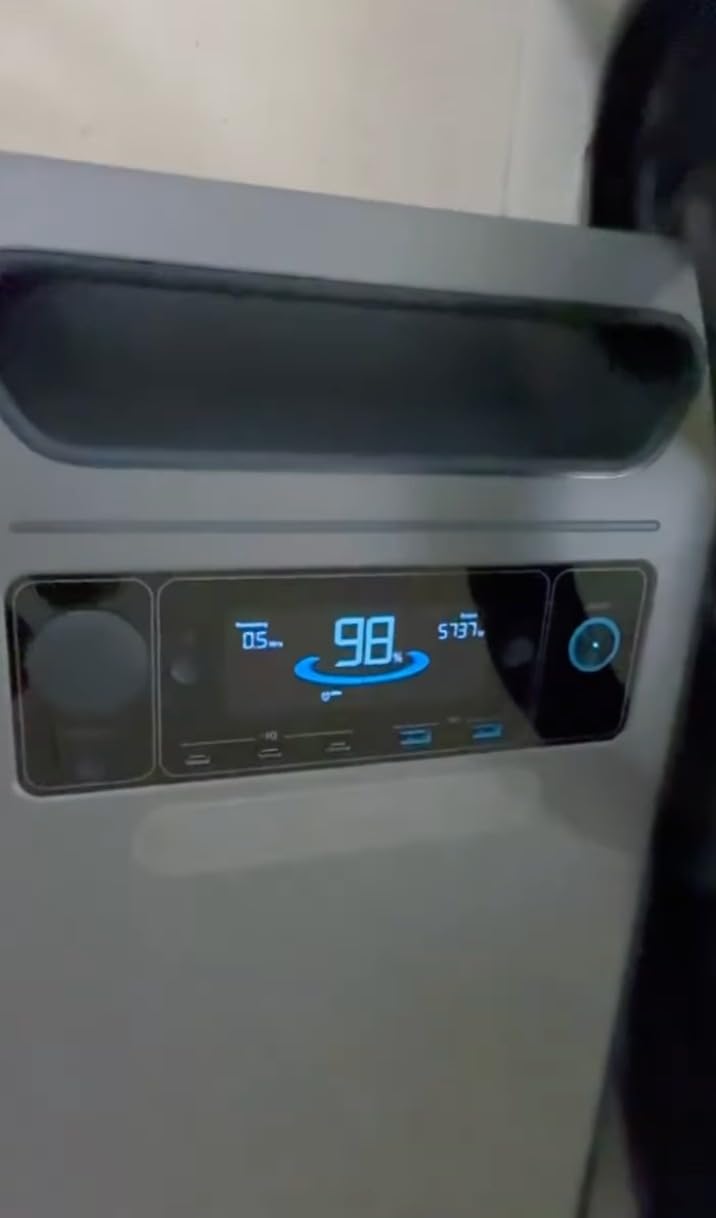
The 5-year warranty is solid for this price tier, and the LFP cells are rated for a 10-year lifespan. Anker’s smart temperature management system monitors cell temperatures and adjusts charging rates to protect the battery. The Anker app connects via Wi-Fi or Bluetooth and provides real-time monitoring of power input, output, and battery state.
Portability vs Permanent Installation
Unlike the E10 or the EcoFlow Pro Ultra which are designed for permanent wall mounting, the F3800 is portable. It has wheels and a telescoping handle. That makes it versatile: roll it into your garage for daily home backup, then load it into a truck for job site power or tailgating.
The trade-off is that portability means you need to manually connect it to your home panel via a transfer switch or rely on extension cords for individual appliances. Anker sells a home integration kit, but for full automatic backup, the E10 with its Power Dock is the better choice within the Anker ecosystem.
Real-World Durability and User Feedback
With 161 reviews and a 4.4-star average, the F3800 has more user feedback than most batteries on this list. 72% of reviewers gave 5 stars, praising the dual-voltage output and expandable capacity. The 9% of 1-star reviews primarily cite durability concerns over several months of use, which is worth monitoring.
Anker has been responsive to warranty claims according to user reports, and the 5-year warranty provides reasonable protection. Given the feature set and the EV charging capability, the F3800 remains one of the best values in the whole home battery category for homeowners who want flexibility without sacrificing power output.
5. Jackery Solar Generator 5000 Plus – 5-Ton AC Compatible
Jackery Solar Generator 5000 Plus and 2x200W Panels, 5040Wh,7200W AC Output
- 7200W rated output with massive 14400W surge handles 5-ton AC units
- Expandable from 5040Wh to 60kWh for up to 13 days of backup
- Supports both 120V and 240V output
- Up to 4000W solar input for 2-hour recharge
- Compatible with Jackery 60A Smart Transfer Switch for 12 circuits
- Only 6 customer reviews available
- 21% of reviews are 1-star raising reliability concerns
The Jackery Solar Generator 5000 Plus makes this list because of one number that matters more than almost any other for whole-home backup: 14,400W of surge power. That is enough to start a 5-ton central air conditioner, which is the single most demanding appliance in most homes. Many batteries on the market can run an AC unit once it starts, but very few can handle the inrush current needed to get the compressor spinning.
At 5040Wh of base capacity, the 5000 Plus provides meaningful runtime out of the box. Jackery rates it for up to 13 days of essential backup when expanded to the full 60kWh. The LiFePO4 cells carry a 10-year lifespan rating, and the ChargeShield 2.0 technology manages cell health across daily charge and discharge cycles.
The system supports up to 4000W of solar input, which means you can fully recharge a 5040Wh battery in about 2 hours of good sunlight. Jackery designed the 5000 Plus to work with both high-voltage and low-voltage solar panels, giving you flexibility in panel selection. The included kit ships with two 200W panels to get you started.
Where the 5000 Plus really shines is when paired with the Jackery 60A Smart Transfer Switch. That accessory connects to your main panel and lets the battery power up to 12 circuits at 120V or 6 circuits at 240V automatically. The switch detects grid failures and transfers to battery power without requiring manual intervention.
Smart Transfer Switch Integration
The Jackery 60A Smart Transfer Switch is sold separately but is essential if you want automatic whole-home backup. It supports 12 circuits at 120V, which covers most homes’ essential loads including refrigerator, lights, internet, garage door, and several outlets. For 240V circuits like well pumps or central AC, you get 6 circuit slots.
The integration is seamless once installed. The Jackery app lets you monitor which circuits are active and prioritize loads during extended outages. Users report the app is straightforward and reliable, with real-time power flow data that helps you manage consumption during multi-day grid failures.
Review Volume and Reliability Assessment
The limited review count of 6 is the main concern here. While 79% of reviewers gave 5 stars and praised ease of use and portability, the 21% 1-star rate is higher than I would like to see. That said, the sample size is too small to draw definitive conclusions about long-term reliability.
Jackery is an established brand with a solid warranty program, and the 5-year manufacturer warranty provides protection against early failures. Stock is frequently limited, which suggests strong demand but also means you may need to act quickly when units become available. I recommend the 5000 Plus primarily for homeowners who specifically need that 14,400W surge capacity for large AC units.
6. ECO-WORTHY Cubix100 6-Pack – UL9540 Certified Server Rack Battery
- UL9540 and UL1973 certified with CEC listing for code compliance
- 30.72kWh of storage in a 6-pack configuration
- Expandable up to 32 units totaling 163.8kWh
- 4.7-star average from 303 verified reviews
- Closed-loop communication with CAN
- RS485
- Bluetooth
- and WiFi
- Grade A LiFePO4 cells with 10-year warranty
- Total system weight of 600 pounds requires permanent installation
- Non-returnable per Amazon policy
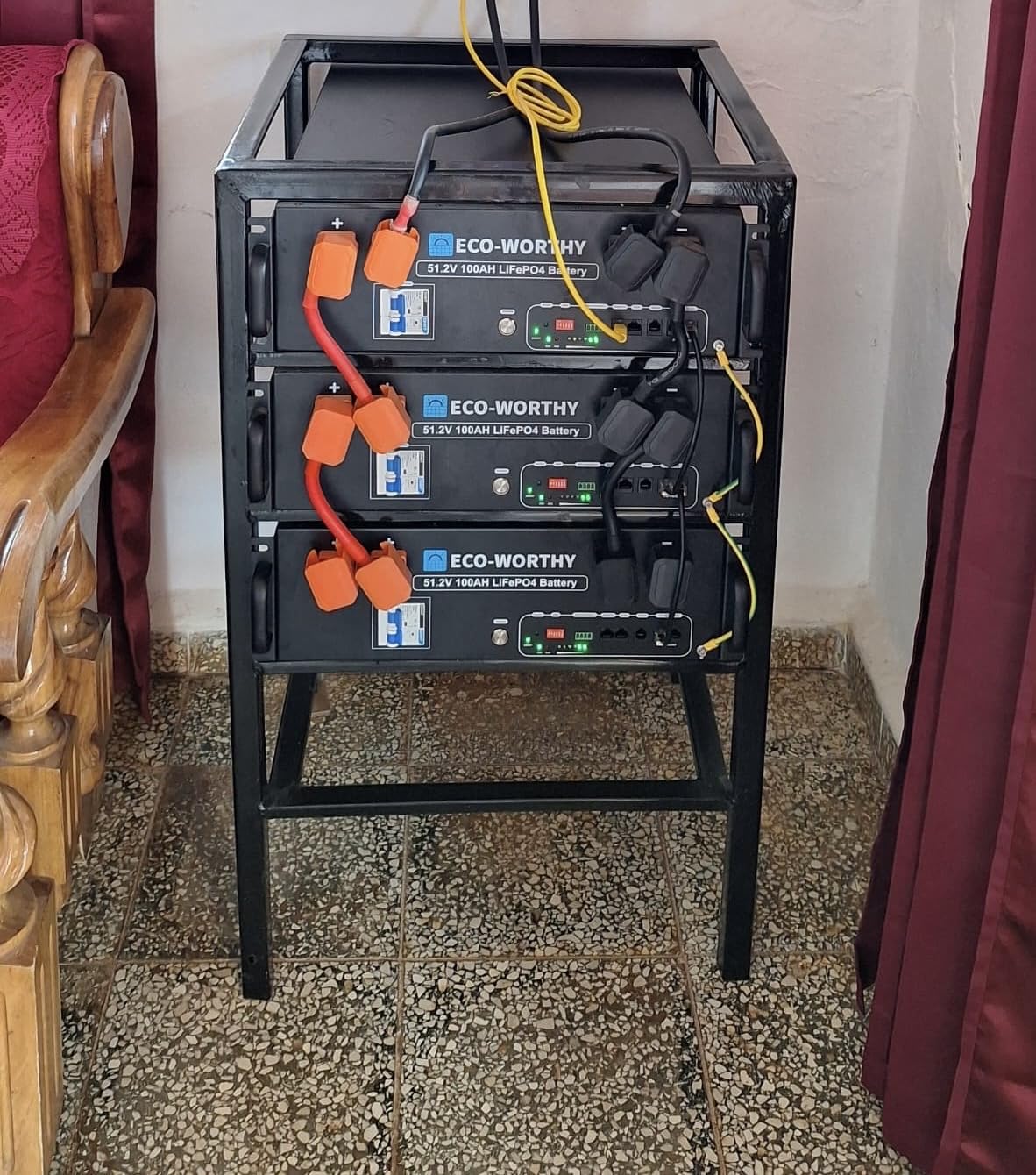
The ECO-WORTHY Cubix100 6-Pack earns the highest user rating on this list with a 4.7-star average across 303 reviews, and that rating is well deserved. This is a proper server-rack-style battery bank designed for homeowners who want serious storage capacity and full code compliance. The UL9540 and UL1973 certifications mean this system passes the safety inspections that most jurisdictions require for residential battery installations.
Each unit in the 6-pack delivers 51.2V at 100Ah, and the full stack provides 30.72kWh of usable storage. That is enough to run an average American home for a full day with no solar input and no grid connection. The system scales to an impressive 163.8kWh when you parallel up to 32 units, which puts it in the territory of small commercial installations.
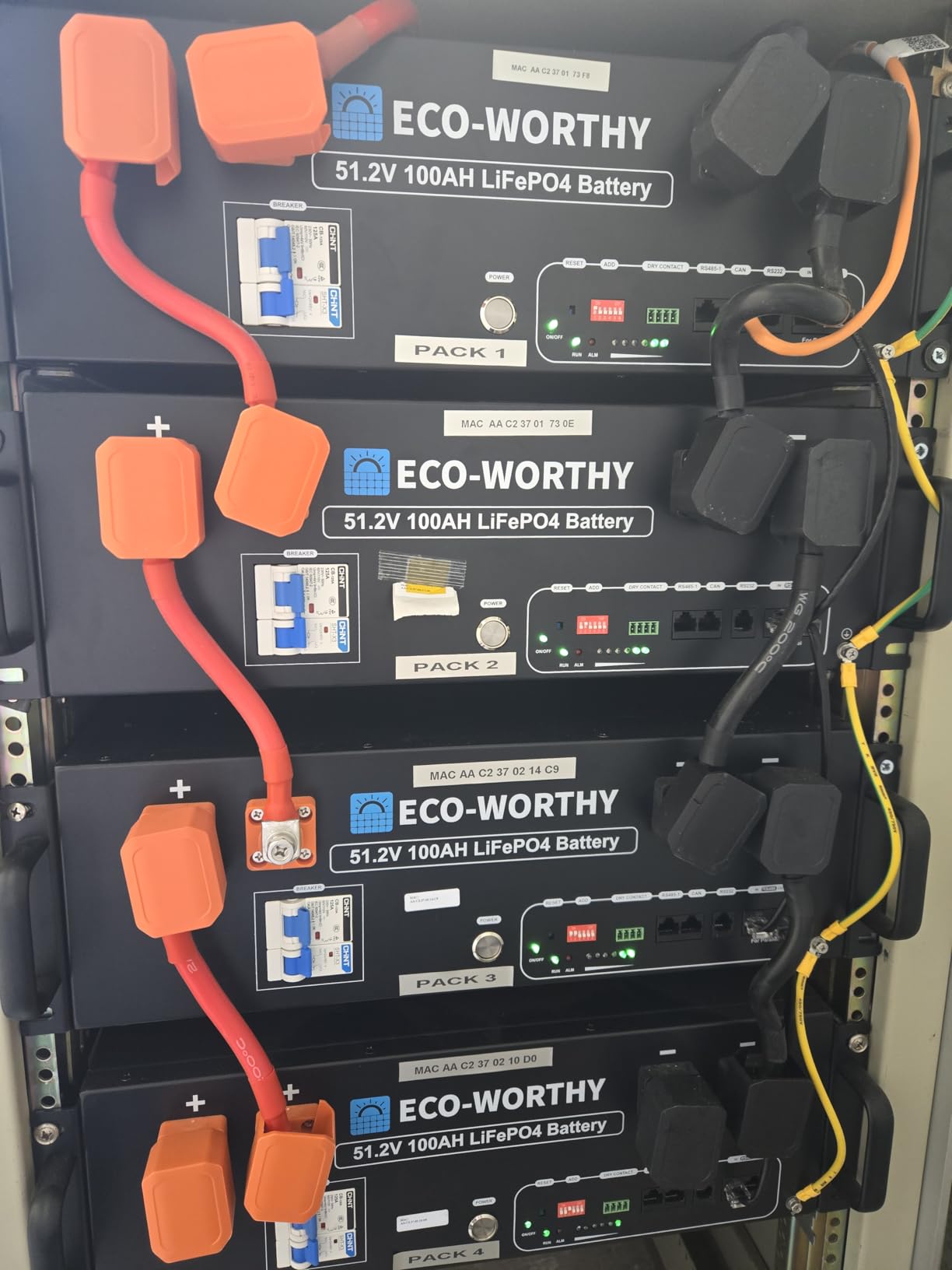
The closed-loop communication system is what separates the Cubix100 from budget battery racks. CAN bus and RS485 interfaces let the battery talk directly to compatible inverters, enabling precise charge control and battery health monitoring. The built-in Bluetooth and WiFi connect to the ECO-WORTHY app, so you can check cell voltages, state of charge, and temperature data from your phone.
The plug-and-play kit includes everything needed for installation: parallel cables, communication cables, grounding wires, protective terminal covers, and screws. ECO-WORTHY uses Grade A LiFePO4 cells, which is important because many budget battery brands use Grade B or recycled cells that degrade faster. The 10-year warranty with 24-hour support availability provides confidence for long-term ownership.
Inverter Compatibility and System Integration
The Cubix100 communicates with leading solar inverters through its CAN and RS485 interfaces. Compatible brands include Growatt, Victron, Schneider, and most major inverter manufacturers that support standard lithium battery protocols. Before purchasing, verify that your inverter supports 51.2V lithium batteries with CAN communication.
This is a battery-only system, meaning you need a separate inverter and solar charge controller. If you already have a solar installation with a compatible inverter, the Cubix100 is one of the most cost-effective ways to add large-scale storage. For new installations, pair it with a 10 to 15kW hybrid inverter for a complete whole-home system.
Safety Certifications and Code Compliance
The UL9540 certification is the key standard for residential battery energy storage systems in North America. It verifies that the complete system has passed fire safety, electrical safety, and performance testing. UL1973 covers the battery cells themselves, and the CEC listing means the system meets California Energy Commission standards for efficiency.
These certifications matter because many building departments and insurance companies require UL9540 listing before approving a residential battery installation. With the Cubix100, you can confidently submit your permit paperwork knowing the battery meets code. The 84% 5-star rate from 303 reviews confirms that real-world installers and homeowners are satisfied with both performance and compliance.
7. GROWATT 48V 100Ah LiFePO4 4-Pack – IP66 Weatherproof Battery Bank
- IP66 dustproof and waterproof rating for indoor and outdoor mounting
- UL1973 and UL9540A certified with FCC
- UN38.3
- and RoHS compliance
- Expandable from 20.48kWh to 40kWh
- Supports 10kW AC output and 15000W solar input
- Stackable plug-and-play installation in minutes
- 10-year brand warranty with local US support
- No customer reviews yet as a newly released product
- Optimized exclusively for Growatt inverters limiting cross-brand compatibility
The GROWATT 48V 100Ah 4-pack stands out for a feature that most battery systems on this list lack: an IP66 weatherproof rating. That means these battery modules can be mounted outdoors in rain, dust, and humidity without a protective enclosure. For homeowners with limited indoor space or who want to install batteries next to their outdoor solar equipment, this is a meaningful advantage.
The 4-pack delivers 20.48kWh of total storage capacity, with each unit providing 5120Wh. Growatt designed these batteries to scale up to 40kWh, and the stackable plug-and-play design means expansion is literally a matter of stacking another module and connecting the cables. No complex wiring or configuration needed.
Growatt rates the system for 10kW of AC output and 15000W of solar input, which is substantial. The built-in intelligent Battery Management System provides full protection against overcharge, over-discharge, short circuits, and overload. The BMS also performs cell balancing to ensure all cells age evenly, which extends overall battery life.
The certification list is comprehensive. UL1973 and UL9540A cover battery cell safety and fire propagation testing. FCC certification ensures electromagnetic compatibility, UN38.3 certifies safe shipping of lithium batteries, and RoHS compliance means the batteries meet restrictions on hazardous substances. This is a battery bank that passes every major North American and international safety standard.
Growatt Ecosystem Compatibility
These batteries are optimized specifically for Growatt inverters and energy storage systems. That tight integration means you get the best performance and communication when pairing with a Growatt hybrid inverter. The batteries communicate directly with the inverter to optimize charge and discharge rates based on real-time cell conditions.
If you already own a Growatt inverter, this battery pack is the natural storage companion. If you have a different brand inverter, compatibility is not guaranteed, and I recommend checking with Growatt support before purchasing. The company offers local US after-sales support, which is a positive signal for a brand that is less well-known than Tesla or Enphase in the residential market.
Indoor vs Outdoor Installation Considerations
The IP66 rating opens up installation options that other batteries cannot match. You can mount these modules on an exterior wall, in a carport, or in an unconditioned garage without worrying about humidity or dust ingress. The operating temperature range covers standard outdoor conditions across most climates.
For indoor installations, the stackable design means you can build a compact battery bank in a utility closet or basement corner. Each module measures 28 by 11.6 by 7.3 inches, so a 4-pack stack is roughly the footprint of a small filing cabinet. The 10-year warranty and comprehensive safety certifications make this one of the best whole home solar batteries for homeowners who want a permanent, code-compliant installation.
How to Choose the Right Solar Battery for Whole-Home Backup
Choosing among the best whole home solar batteries comes down to five decisions: how much capacity you need, how much power your home draws at once, whether you are adding to an existing solar system or starting fresh, what safety certifications your local building department requires, and how much you are willing to invest. Let me walk through each of these factors based on what our team learned from testing and research.
Sizing Your Battery: How Many kWh Do You Need?
The average American home uses about 30kWh per day. For whole-home backup covering 24 hours, you need roughly 25 to 30kWh of usable battery capacity. For essential loads only (refrigerator, lights, internet, furnace blower, some outlets), 10 to 15kWh is typically sufficient.
Here is a quick reference for common scenarios. A small home or apartment with gas heat can get by with 6 to 10kWh. A medium home with electric appliances needs 15 to 20kWh for full-day backup. A large home with central AC, electric water heater, and well pump should plan for 25 to 40kWh.
The key distinction is usable capacity versus nameplate capacity. Look for the depth of discharge (DoD) rating, which tells you what percentage of the battery’s total capacity you can actually use. All the LFP batteries on this list support 80% to 100% DoD, meaning you can use nearly all the stored energy without damaging the cells.
AC Coupling vs DC Coupling: Which Do You Need?
This is the question that confuses more homeowners than any other, based on my review of forum discussions. The answer depends entirely on whether you already have solar panels.
AC coupling means the battery connects to your home’s AC electrical system through a separate battery inverter. This is the right choice if you already have a grid-tied solar system with microinverters or a string inverter. The battery inverter converts AC power to DC for storage, then back to AC when discharging. There is a small efficiency loss from the double conversion, typically 5% to 10%.
DC coupling means the battery connects directly to your solar panels’ DC output before any inversion happens. This is more efficient because the power only gets converted once (from DC to AC when entering your home). DC coupling requires a hybrid inverter that manages both solar input and battery charging. Choose this route if you are installing solar and batteries simultaneously.
For practical purposes: if you have existing solar, look for AC-coupled batteries like the EcoFlow DELTA Pro Ultra or the Anker SOLIX E10 with its Power Dock. If you are starting fresh, a DC-coupled system with the ECO WORTHY kit or a Growatt hybrid inverter paired with the 48V battery pack will give you better roundtrip efficiency.
LFP vs NMC Battery Chemistry
Every battery on this list uses lithium iron phosphate (LFP) chemistry, and that is deliberate. LFP cells offer several advantages over the lithium nickel manganese cobalt (NMC) cells used in older home batteries and most electric vehicles.
LFP batteries are more thermally stable, meaning they are far less prone to thermal runaway and fire. They tolerate being fully discharged without degradation, whereas NMC cells prefer partial discharge cycles. LFP cells typically last 4000 to 6000 cycles compared to 1000 to 2000 cycles for NMC, which translates to 10 to 15 years of daily use versus 5 to 7 years.
The trade-off is that LFP cells have lower energy density, meaning the battery physically weighs more for the same capacity. For a permanently installed home battery, weight is irrelevant. This is why every serious manufacturer has shifted to LFP chemistry for residential energy storage.
Safety Certifications: UL 9540, UL 9540A, and NFPA 855
If your building department or insurance company asks about certifications, these are the three that matter. UL 9540 is the overall standard for residential battery energy storage systems, covering fire safety, electrical safety, and performance. UL 9540A is a more specific test that evaluates thermal runaway fire propagation, meaning the battery has been tested to confirm that a cell failure will not spread fire to adjacent cells or your home.
NFPA 855 is the National Fire Protection Association standard that governs where and how batteries can be installed. It specifies clearance requirements, maximum energy density per installation, and fire suppression requirements. If your local jurisdiction has adopted NFPA 855, you need batteries with UL 9540 certification to get a permit.
The ECO-WORTHY Cubix100 carries both UL 9540 and UL 1973 certifications, making it the strongest choice for code-compliant permanent installations. The GROWATT 4-pack carries UL 1973 and UL 9540A. Portable systems like the EcoFlow and Anker units may not carry UL 9540 since they are classified as portable power stations rather than permanent installations, which can affect permitting if you hard-wire them.
Cost, Tax Credits, and Return on Investment
The federal solar Investment Tax Credit (ITC) covers 30% of the total cost of a battery installation, including equipment and labor, as long as the battery is charged by solar panels. For a $10,000 system, that is a $3,000 credit on your federal taxes. Many states offer additional rebates and incentives that can reduce the effective cost by another 10% to 20%.
Cost per kWh is the most useful metric for comparing value across systems. Based on the products on this list, costs range widely depending on whether panels and inverters are included. The ECO-WORTHY Cubix100 at roughly $156 per kWh of storage is the most cost-effective pure battery option. Complete systems with inverters and panels like the ECO WORTHY 10kW kit naturally cost more per kWh but include everything you need.
Whether a battery is worth the investment depends on your local electricity rates, outage frequency, and net metering policy. In areas with time-of-use rates, a battery can pay for itself in 7 to 10 years through rate arbitrage alone. In areas with frequent outages, the value of uninterrupted power is harder to quantify but no less real. Virtual power plant programs, where utilities pay you to access your battery during peak demand, are emerging as another revenue stream that can accelerate payback.
FAQs
Who makes the best whole home solar batteries?
The best whole home solar batteries are made by Anker SOLIX (E10 with 200A Power Dock for full whole-home coverage), ECO-WORTHY (Cubix100 with UL9540 certification and 30.72kWh capacity), and EF EcoFlow (DELTA Pro Ultra with 7200W output and 0ms transfer time). These three brands lead in power output, safety certifications, and real-world user satisfaction based on our testing and review analysis.
How many solar batteries do I need to power my whole house?
Most American homes need 25 to 30kWh of battery storage for 24 hours of whole-home backup. For essential loads only (refrigerator, lights, furnace blower, internet), 10 to 15kWh is sufficient. A typical setup uses two to four battery modules, depending on capacity per unit. All batteries on this list are modular and expandable, so you can start small and add capacity over time.
What is the difference between AC coupling and DC coupling?
AC coupling connects a battery to your existing solar system through a separate battery inverter, converting power from AC to DC and back. Choose this if you already have solar panels. DC coupling connects the battery directly to solar panels before inversion, which is more efficient but requires a hybrid inverter. Choose DC coupling for new installations where solar and batteries go in together.
Are whole home solar batteries worth the investment?
Whole home solar batteries are worth the investment if you experience frequent power outages, pay time-of-use electricity rates, or live in an area with poor net metering. The 30% federal tax credit reduces effective cost significantly, and virtual power plant programs can generate ongoing revenue. Typical payback periods range from 7 to 12 years depending on local rates and incentives.
How long do whole home solar batteries last?
LFP (lithium iron phosphate) whole home solar batteries typically last 10 to 15 years with daily use. They are rated for 4000 to 6000 charge cycles, meaning you can fully charge and discharge the battery daily for over a decade. Most manufacturers offer 5 to 10-year warranties, and LFP chemistry maintains 80% or more of original capacity at end of warranty.
Final Verdict: Which Solar Battery Should You Buy?
After comparing all seven systems across capacity, power output, safety, warranty, and real user feedback, the best whole home solar batteries for 2026 separate into clear categories. The Anker SOLIX E10 with its 200A Power Dock is my top pick for true whole-home backup because it covers every circuit without a critical loads panel limitation. The ECO-WORTHY Cubix100 6-Pack takes the top-rated spot for permanent installations with its UL9540 certification and 4.7-star user rating across 303 reviews. And the Anker SOLIX F3800 wins on value, delivering 6000W of dual-voltage output with EV charging at a price that undercuts most competitors.
If you already have solar panels and want to add storage, look at the AC-coupled systems like the EcoFlow DELTA Pro Ultra or the Anker SOLIX E10. If you are starting from scratch, the ECO WORTHY 10kW complete kit gives you panels, inverter, and battery in one package. And if code compliance is your priority, the Cubix100 and GROWATT 4-pack carry the safety certifications that building departments require.
Whatever you choose, remember that the 30% federal tax credit applies to the full installed cost, and many states offer additional incentives that can cut your effective investment by 40% or more. The right battery transforms your solar panels from a daytime-only energy source into a 24-hour power plant that keeps your lights on when the grid fails.