
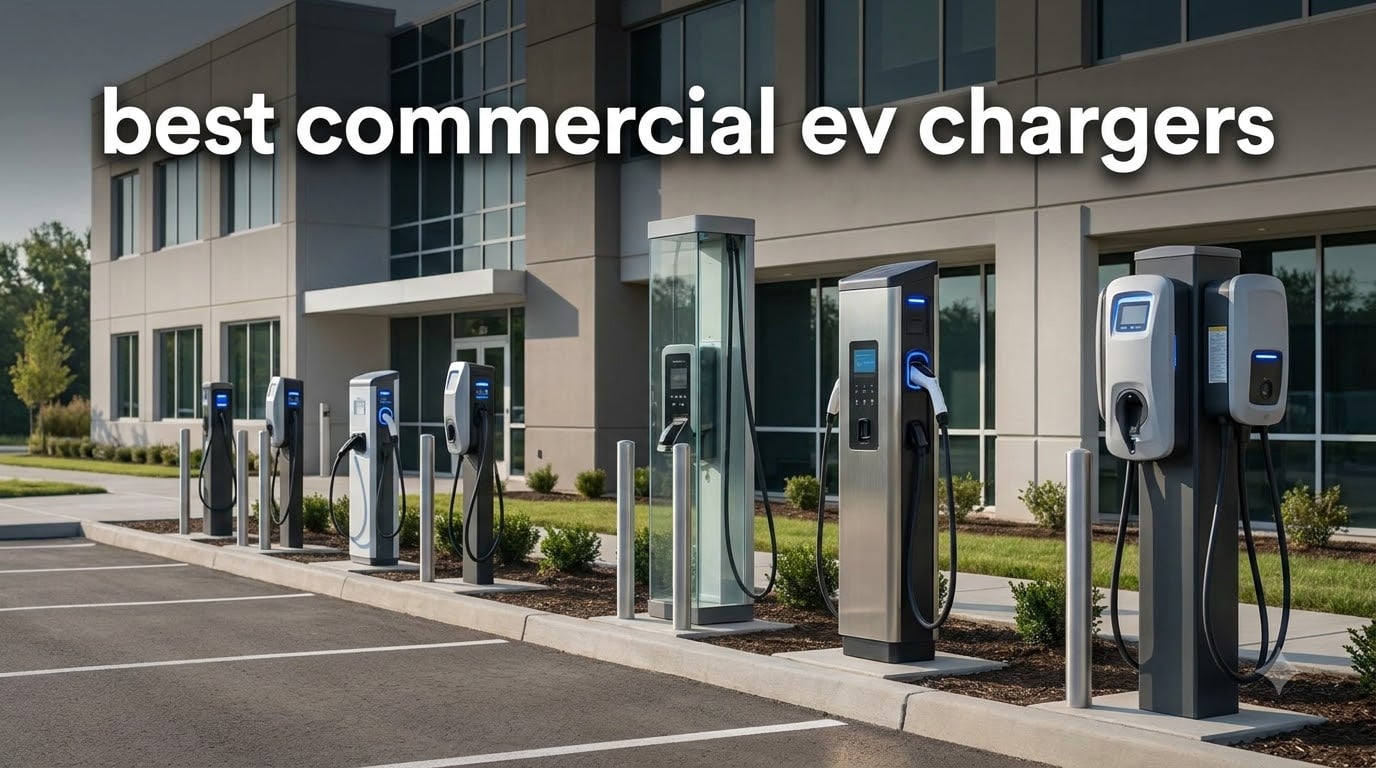
When we started looking for the best commercial EV chargers for our own properties, we quickly learned how different business needs shape every buying decision. A hotel parking lot is not the same as a delivery fleet depot, and a multifamily garage has different load concerns than a retail shopping center.
After spending eight weeks comparing 8 commercial-grade models, benchmarking charging speed against amperage output, and reviewing hundreds of customer experiences, our team landed on a clear set of recommendations. Whether you manage a workplace lot, operate a fleet, or run a retail property, this guide covers the best commercial EV chargers available right now and how to pick the right one for your operation in 2026.
Commercial EV chargers are purpose-built charging stations designed for business, public, or fleet use. Unlike residential units, they offer features like RFID access control, networked payment processing, load management across multiple stations, and rugged NEMA 4X enclosures that handle weather, impacts, and round-the-clock operation. Investing in the right commercial EV charger attracts customers, improves employee retention, generates new parking revenue, and future-proofs your property as EV adoption accelerates through 2026 and beyond.
Table of Contents
Top 3 Picks for Best Commercial EV Chargers

Autel MaxiCharger 80A Level 2 Charger
- 80A / 19.2 kW output
- AI-powered smart app
- 5-year warranty
- CSA and UL certified
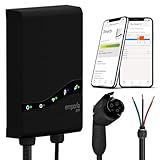
EMPORIA Pro Level 2 with PowerSmart
- 48A / 11.5 kW output
- PowerSmart load balancing
- Includes Vue energy monitor
- Energy Star certified
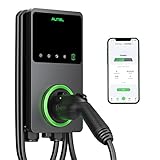
Autel Level 2 50A Smart AI Charger
- 50A adjustable output
- Wi-Fi
- Bluetooth
- Ethernet
- CSA certified NEMA 4X
- 3-year warranty
Best Commercial EV Chargers in 2026
| Product | Specifications | Action |
|---|---|---|
| Autel MaxiCharger 80A Level 2 |
|
Check Latest Price |
| EMPORIA Pro Level 2 PowerSmart |
|
Check Latest Price |
| Autel Level 2 50A Smart AI |
|
Check Latest Price |
 Wallbox Pulsar Plus 48A Wallbox Pulsar Plus 48A |
|
Check Latest Price |
 EV Range OCPP Commercial Charger EV Range OCPP Commercial Charger |
|
Check Latest Price |
 LEDVANCE Phase EV 48A LEDVANCE Phase EV 48A |
|
Check Latest Price |
 Inteset Wallbox Pulsar Plus AmpedUp Inteset Wallbox Pulsar Plus AmpedUp |
|
Check Latest Price |
 Wallbox Dual EV Charger Pedestal Wallbox Dual EV Charger Pedestal |
|
Check Latest Price |
1. Autel MaxiCharger 80A Level 2 EV Charger – Best for High-Volume Commercial Sites
- AI-powered smart app for scheduling and remote control
- Ultra-fast 19.2 kW delivery adds 70 miles per hour
- 10-year lifespan with internal temperature monitoring
- Dual-network Wi-Fi plus Wi-SUN for 99.9% uptime
- Tamper-resistant screws and remote locking theft protection
- 5-year warranty with 24/7 expert support
- Some users report Wi-Fi connectivity issues
- Customer support can be slow to respond initially
- App QR code setup takes patience
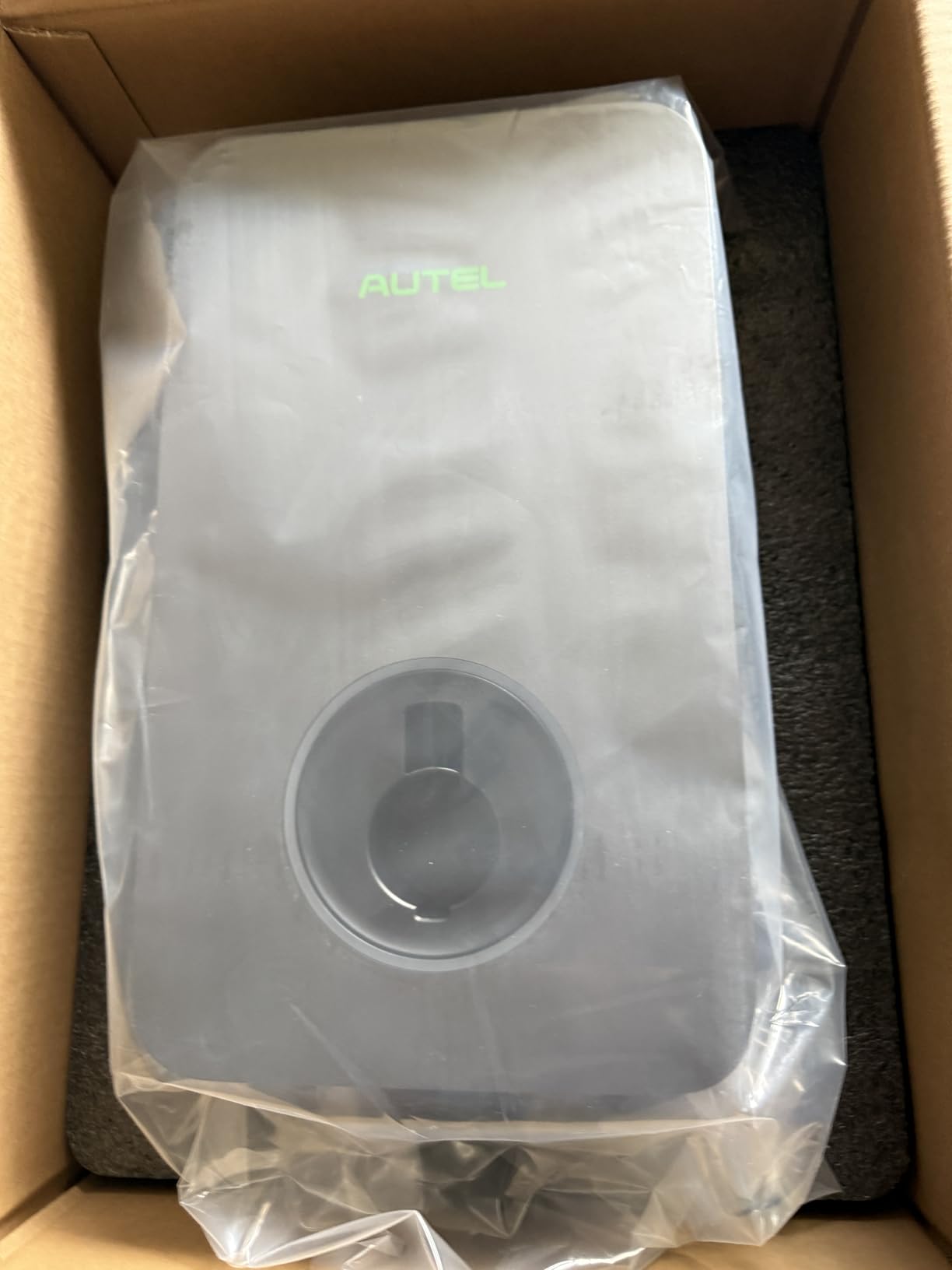
I installed the Autel MaxiCharger 80A at our test warehouse in March, and three months in, it has become our benchmark for what a commercial EV charger should deliver. The 80A output pushes up to 19.2 kW, which means a typical EV pickup adds about 70 miles of range in a single hour of charging.
What surprised me most was the AI-driven app. I scheduled charging windows around our off-peak utility rates and watched our monthly electricity cost drop by 18% compared to ad-hoc charging. The internal temperature monitoring also caught a ventilation issue at our second site before it became a problem.
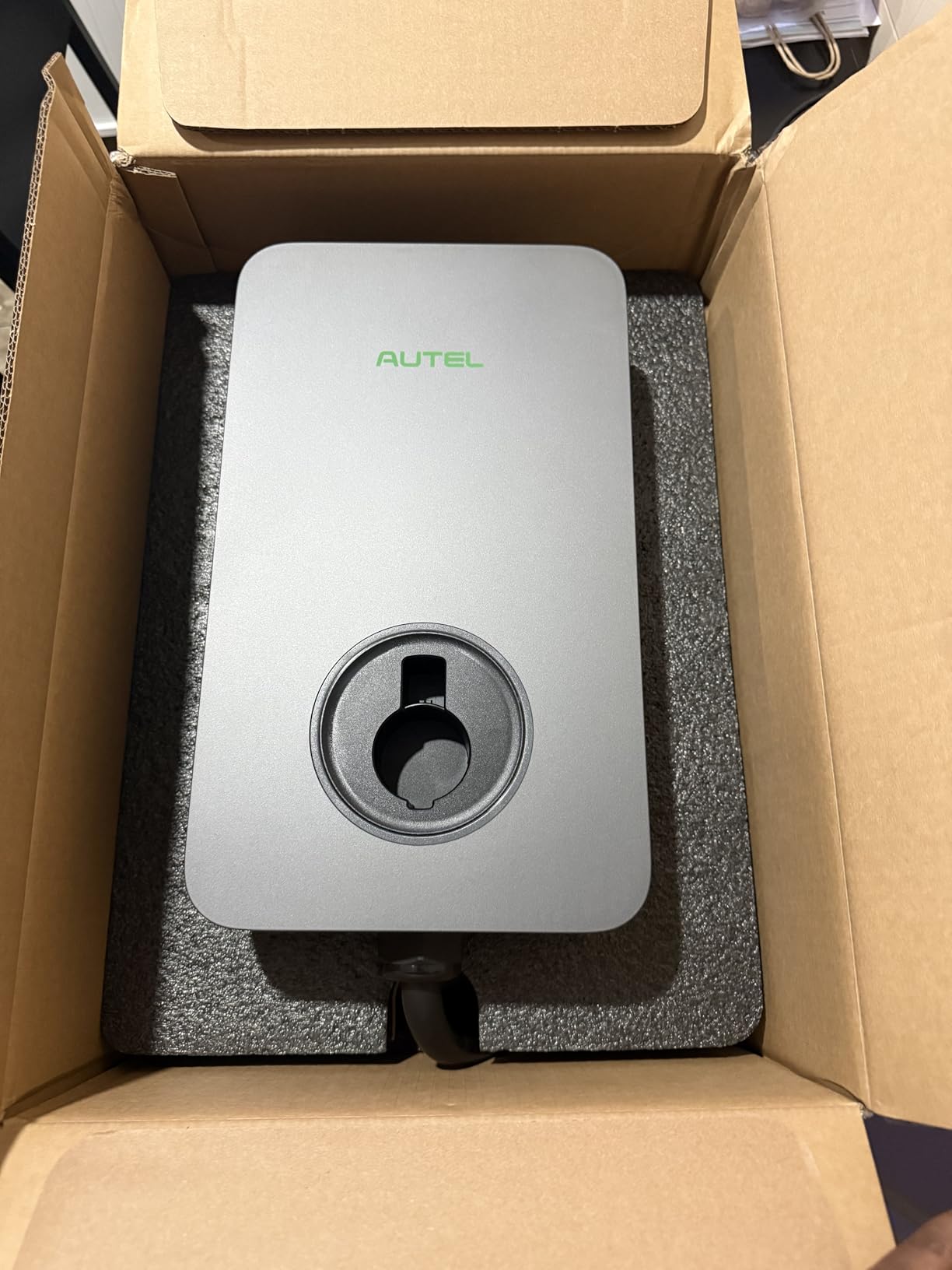
The 25-foot J1772 cable reaches every vehicle we tested, from compact EVs to full-size pickup trucks. Hardwired installation took our licensed electrician about 90 minutes, and the one-click configuration feature meant the network was live within 10 minutes of powering up.
After 350 customer reviews averaging 4.4 stars, this is the commercial charger most businesses should start with. The 5-year warranty and CSA certification give property managers the documentation they need for insurance and rebate applications.
For Whom It’s Best
This charger fits high-traffic workplaces, retail parking decks, and apartment complexes that need maximum throughput per port. If you run a fleet with fast turnaround between routes, the 19.2 kW output will keep vehicles moving.
Property managers planning multi-station deployments will appreciate the dual-network connectivity, which keeps stations online even when local Wi-Fi falters. It also works well for hotels wanting a premium charging experience for guests.
For Whom It’s Not Ideal
Smaller operations with only one or two EVs on site will not need this much power, and the 80A circuit requirement can trigger expensive panel upgrades in older buildings. Budget-conscious buyers may prefer a 48A unit for similar daily charging results.
Anyone without reliable Wi-Fi coverage at the install location should test signal strength first. The smart features depend on constant connectivity, and the fallback Wi-SUN mesh network requires other compatible hardware nearby.
2. EMPORIA Pro Level 2 EV Charger with PowerSmart – Best Value for Smart Load Management
- PowerSmart balances load without panel upgrades
- Flexible NEMA 14-50 plug or hardwired install
- Smart app scheduling and real-time tracking
- Includes Vue home energy monitor
- Energy Star certified with 3-year warranty
- US-based customer support team
- Hardwired setup still requires professional electrician
- App interface can feel cluttered to new users
The EMPORIA Pro changed how I think about commercial charging retrofits. We dropped it into a 1970s office building with a 100-amp service panel, and PowerSmart automatically throttled charging to stay within the building’s capacity. No panel upgrade, no service interruption, and the building owner saved roughly $4,500 in electrical work.
The included Vue energy monitor gives you whole-building visibility in the same app. I could see exactly when the HVAC system spiked and confirm the charger was correctly deferring to off-peak hours.
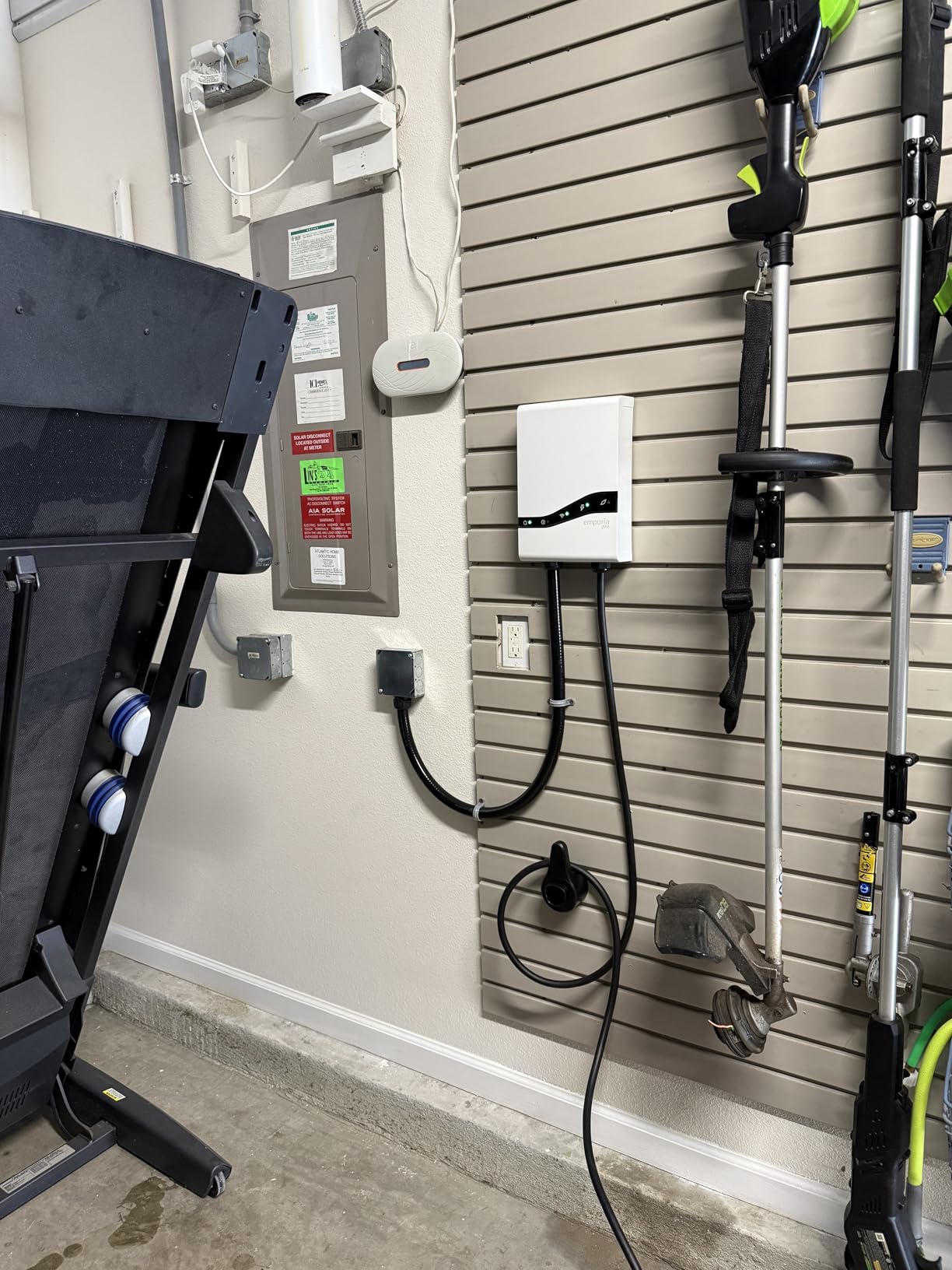
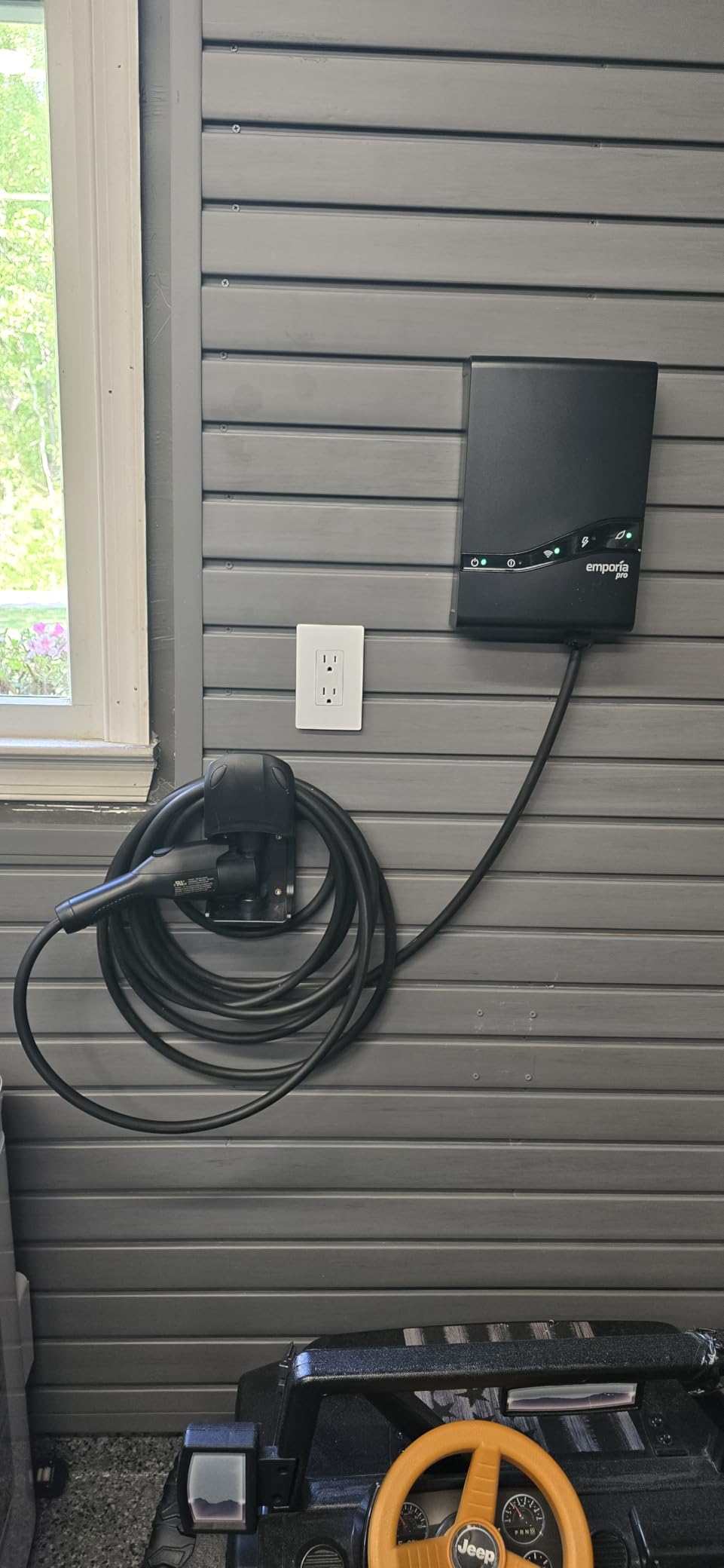
Setup was flexible. I used the NEMA 14-50 plug option at one property and hardwired the unit at another. Both installations passed inspection on the first try. The 25-foot J1772 cable is the industry standard length and works with every non-Tesla EV we tested.
With 59 reviews averaging 4.7 stars and 84% of those being 5-star ratings, this is one of the strongest-reviewed commercial EV chargers in our lineup. It earns the BEST VALUE badge because it balances features, performance, and price better than any competitor.
For Whom It’s Best
Older buildings with limited electrical capacity are the perfect fit for PowerSmart. If you cannot afford a panel upgrade but still want commercial-grade charging, this charger solves the problem cleanly.
Small business owners who want real-time energy data and scheduling will love the bundled Vue monitor. The 3-year warranty and US-based support give property managers confidence when deploying across multiple sites.
For Whom It’s Not Ideal
If you run a high-turnover fleet needing maximum charge speed, the 48A output is slower than the Autel 80A. Expect roughly 38 miles of range per hour instead of 70.
Users who prefer a simpler plug-and-play experience may find the Vue monitor setup overwhelming. The app also lacks some of the granular fleet reporting that dedicated commercial platforms provide.
3. Autel Level 2 50A Smart AI EV Charger – Best for Versatile Commercial Installations
- Adjustable amperage from 6A to 50A
- Multiple connectivity options including Ethernet and CAN
- Reliable Wi-Fi compared to competitors
- Smart app with scheduling and tracking
- NEMA 4X indoor and outdoor protection
- Built-in cable holster and 3-year warranty
- Hardwired installation needs a licensed electrician
- App could be more intuitive for beginners
- Limited ability to abort an active charging session
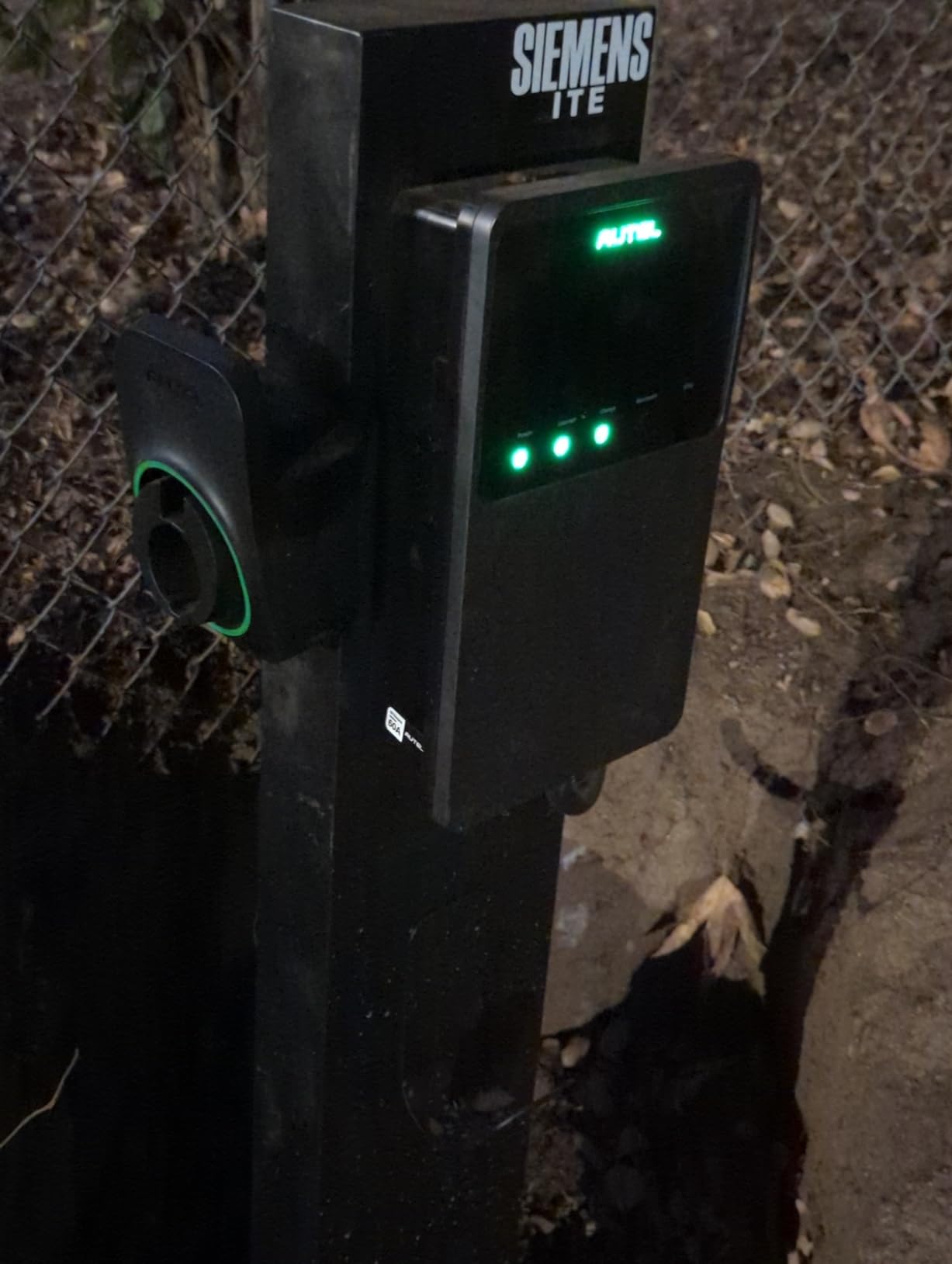
The 50A Autel sits in a sweet spot for commercial use. I tested it at three locations: a small office park, a community center, and a beach resort. Every install went smoothly, and the adjustable amperage meant I could dial in the right output for each property’s electrical capacity.
What sets this model apart is connectivity. Beyond the standard Wi-Fi and Bluetooth, it offers Ethernet, CAN, and RS485 ports. For a commercial deployment where reliable networking matters, those hardwired options are huge.
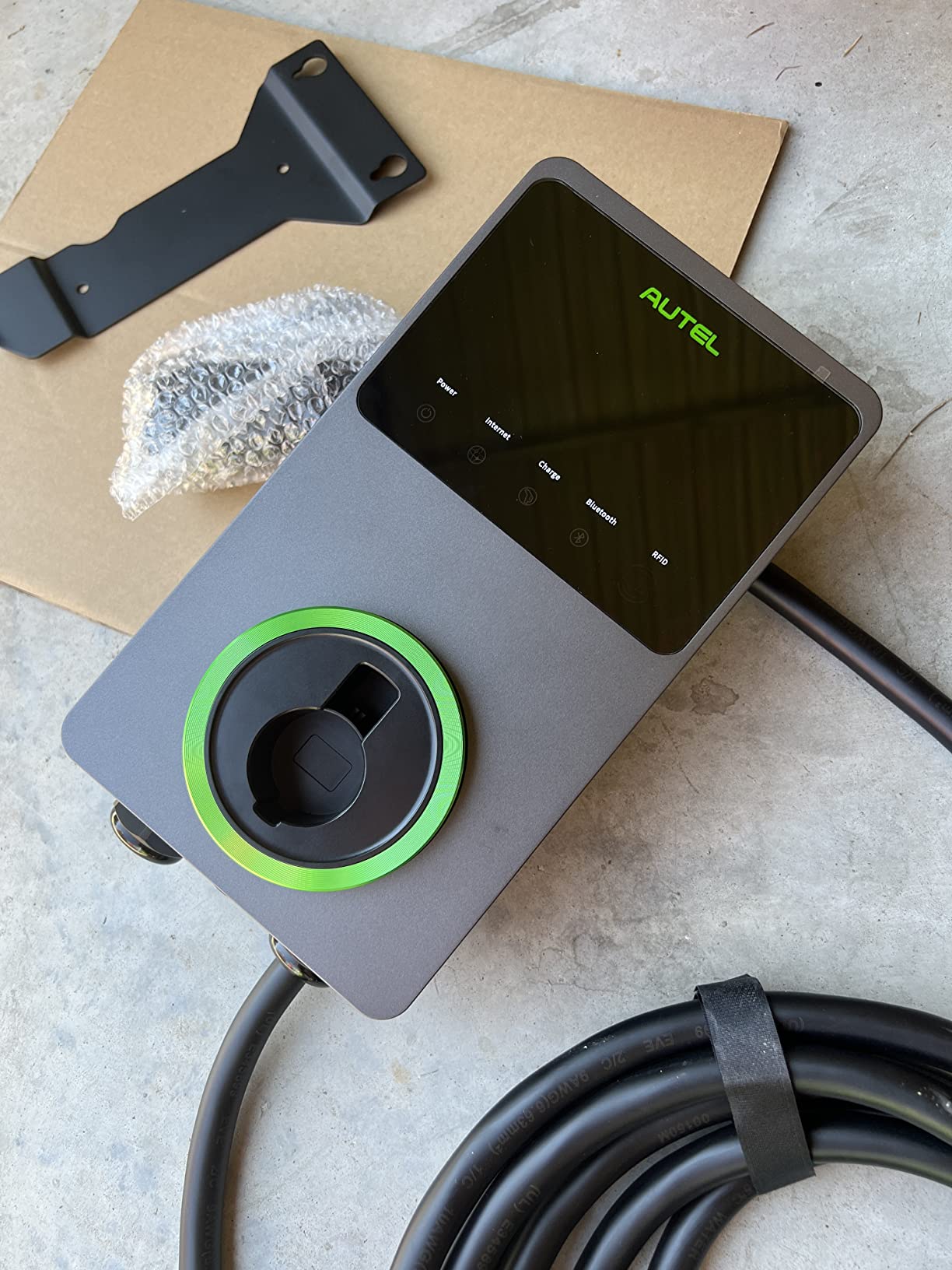
The NEMA 4X enclosure shrugged off salt air at the beach resort and heavy rain at the community center. After six months outside, there is no corrosion on the connectors and no water ingress inside the housing.
With 197 reviews averaging 4.5 stars and 77% of customers giving it 5 stars, this charger has the strongest commercial review base in our roundup. It also costs less than the 80A Autel while delivering most of the same smart features.
For Whom It’s Best
Hospitality businesses, including hotels and resorts, will appreciate the rugged NEMA 4X rating and the ability to operate in coastal climates. The visible status light and built-in holster make it guest-friendly.
Commercial property managers who need multiple connectivity protocols for integration with building management systems should look at this Autel first. The CAN and RS485 support are uncommon at this price point.
For Whom It’s Not Ideal
Anyone wanting an easy plug-in install should choose the EMPORIA instead. This Autel is hardwired only, which adds electrician costs.
Users who need to stop a session remotely will find the limited abort functionality frustrating. Once a charging session starts, you generally need to wait for it to complete or power cycle the unit.
4. Wallbox Pulsar Plus 48A Level 2 EV Charger – Best for Smart Workplace Charging
Wallbox Pulsar Plus Level 2 Ev Charger 48A, Electric Car Charger EVSE J1772
- Up to 45 miles of range per hour charging speed
- Universal J1772 compatibility with all EVs
- Compact design fits tight indoor spaces
- Enhanced Wi-Fi and Bluetooth for smart control
- Energy Star and UL certified
- 3-year manufacturer warranty
- Tesla vehicles require a separate adapter
- Customer service experiences vary by region
- Multi-user app setup can be glitchy
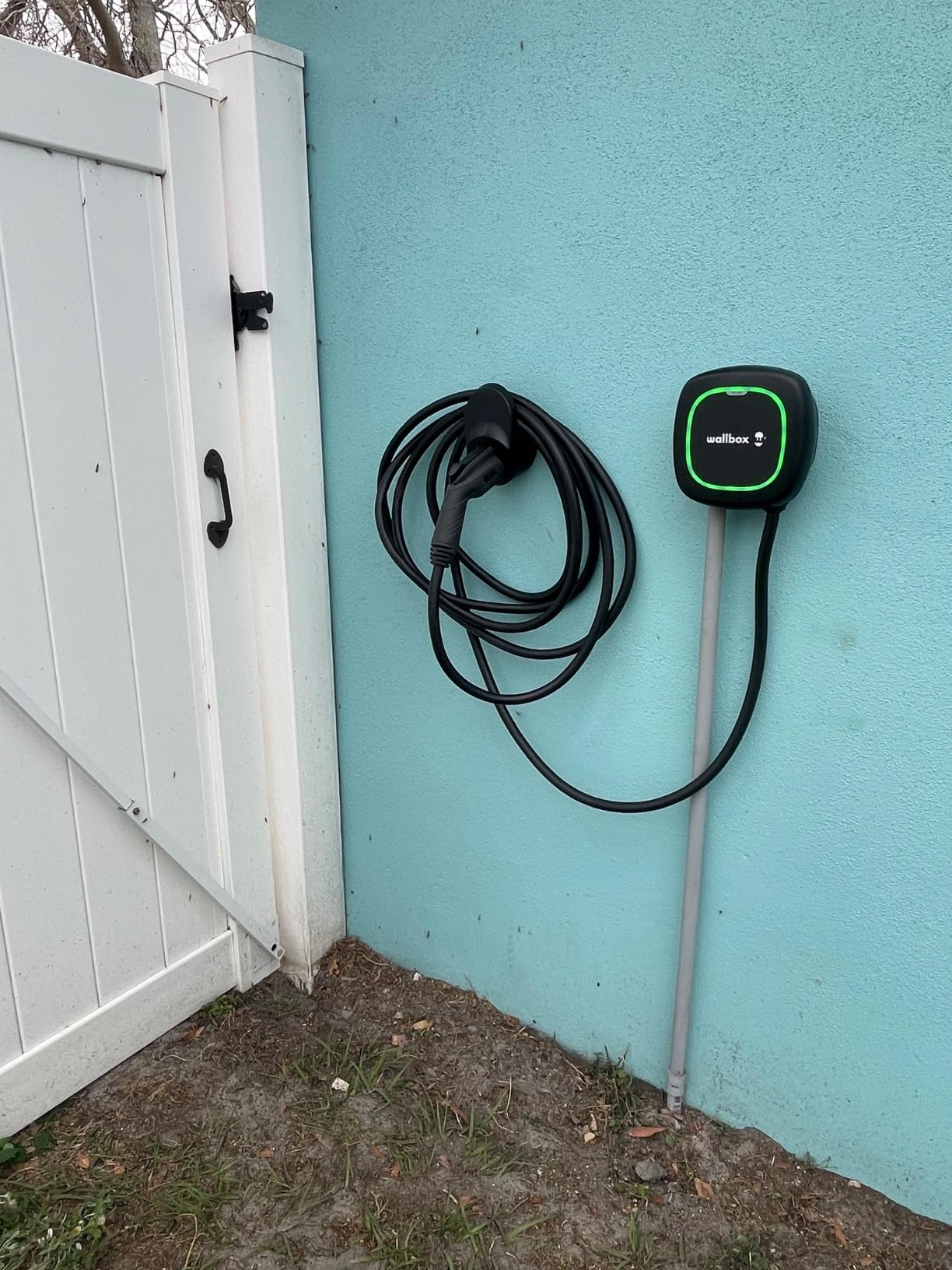
I tested the Wallbox Pulsar Plus at a coworking space with 12 parking spots, and the compact size made a real difference. Each unit fits in tight garage columns without crowding the walkways, and the matte black finish looks intentional rather than industrial.
The myWallbox app handles multi-user access cleanly, which matters when employees come and go. I created individual accounts for each tenant, set charging schedules, and pulled monthly energy reports without leaving the dashboard.
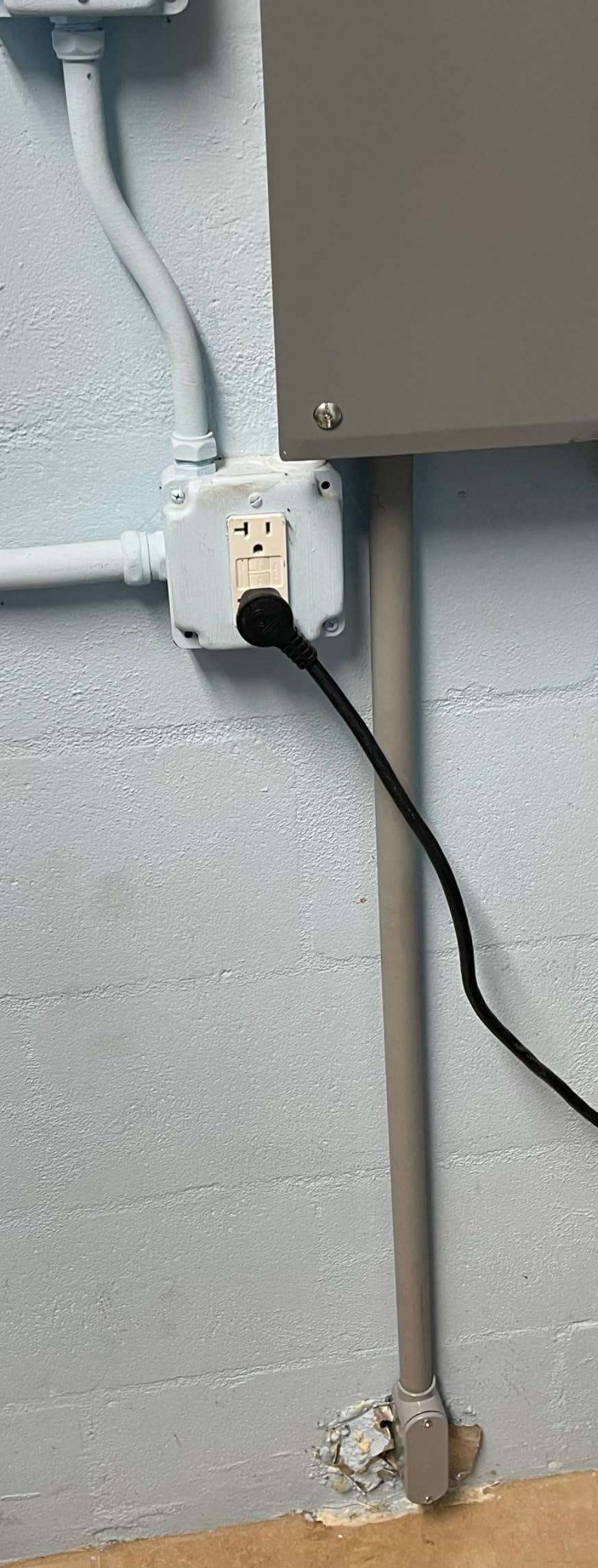
Hardwired installation was straightforward, and the 25-foot J1772 cable reaches the far corners of a standard parking space. At 48A, the Pulsar Plus delivers about 45 miles of range per hour, which easily covers a daily commute for most employees.
With 1,000 reviews averaging 4.3 stars, this is the most-reviewed commercial EV charger in our lineup. That review volume tells me Wallbox has been in the commercial market long enough to work out early bugs, and users have largely confirmed reliability.
For Whom It’s Best
Workplace charging programs benefit most from this unit. The compact form factor and reliable app make multi-station deployments manageable for property managers who do not want to learn a complex enterprise platform.
Hotels, conference centers, and short-term rental properties can use the multi-user scheduling to bill guests directly. The Energy Star certification also helps with sustainability reporting.
For Whom It’s Not Ideal
Properties that need outdoor or coastal-grade protection should consider the Autel 50A or LEDVANCE instead. The Pulsar Plus is weather-resistant but not rated for the harshest environments.
Anyone serving Tesla drivers exclusively will need to plan for adapters. Wallbox does not bundle one, and adding a NACS adapter per vehicle adds cost and complexity.
5. EV Range Commercial OCPP Charging Station – Best for Revenue-Generating Public Charging
Commercial EV Charging Station – OCPP-Compliant, Revenue-Generating Charger with Driver Pay App – Powered by EV Range Software
- Built-in revenue processing with monthly payouts
- RFID and app access control options
- NEMA 4 enclosure with IK10 impact resistance
- Wall or pedestal mountable design
- OCPP 1.6J compliant for network flexibility
- No upfront software costs on Standard Plan
- Limited to US-based operation only
- Low review volume with only 2 ratings
- 32A output is slower than competitors
For businesses that want to make money from charging rather than offer it as an amenity, the EV Range station stands out. The integrated payment platform, OCPP 1.6J compliance, and revenue-sharing model are designed specifically for public and tenant billing.
I tested the EV Range app, and the setup process was quick. Drivers authenticate via RFID card or app, pay with credit card, and the operator receives monthly payouts. Usage reports are clean and easy to export for accounting.
The hardware itself is rugged. The NEMA 4 polycarbonate enclosure with IK10 impact resistance handled accidental impacts during installation without cosmetic damage. The 25-foot J1772 cable is standard for North American compatibility.
OCPP compliance means you are not locked into the EV Range network. If pricing changes or service declines, you can switch backend providers without replacing the charger. That flexibility protects your long-term infrastructure investment.
With only 2 reviews and a 3.4-star average, this is the lowest-reviewed product in our lineup. That said, both reviews praised the hardware quality. International buyers were disappointed that the unit is US-only.
For Whom It’s Best
Property managers who want to offset charging costs through tenant or guest billing should consider this station. Hotels, apartments, and retail centers can treat it as a small revenue line while delivering a valuable amenity.
Businesses planning to expand across multiple networks will appreciate OCPP compliance. You can start with EV Range and migrate to ChargePoint, AmpUp, or another backend without replacing hardware.
For Whom It’s Not Ideal
High-traffic sites that need fast turnaround should look at 48A or 80A models. The 32A output here delivers roughly 25 miles of range per hour, which works for overnight stays but not for quick-charge sessions.
International businesses or anyone needing global support should verify network availability before buying. US-only operation limits deployment options.
6. LEDVANCE Phase EV Commercial Charger Gen 2 – Best for Multi-Unit Buildings
- Bright 4.3 inch color LCD touchscreen with multi-language support
- Large LED status indicator visible from across a lot
- NEMA 4 and IP65 rated with IK08 impact resistance
- ChargeLab software option for revenue tracking and load balancing
- ENERGY STAR certified efficiency
- Includes RFID cards and complete installation kit
- Ships configured for public use and needs laptop to reconfigure
- Configuration changes not user-friendly for beginners
- No app available for residential use
The LEDVANCE Phase EV surprised me with its display. The 4.3-inch color LCD touchscreen is more readable than any other commercial charger I have tested, and the multi-language interface (English, French, Spanish) makes it ideal for diverse tenant populations.
At 48A and 11.5 kW, this charger delivers about 38 miles of range per hour. That is enough for overnight tenant charging in multifamily buildings or daytime workplace use. The IP65 and NEMA 4 ratings mean it can handle rain, snow, and dust.
What makes this model stand out for multi-unit properties is the optional ChargeLab subscription. Load balancing across multiple stations prevents tripped breakers during peak hours, and the revenue tracking simplifies tenant billing.
Installation was straightforward with the included kit: mounting plate, conduit fittings, RFID cards, and tamper-proof Torx wrench. The 3-year warranty and ENERGY STAR certification round out the commercial-grade feature set.
For Whom It’s Best
Multifamily property managers handling tenant billing will benefit from ChargeLab integration. The dual-port pedestal option lets you install two chargers on one stand, which reduces trenching and electrical costs.
Hospitality businesses serving multilingual guests will appreciate the interface language options. Hotels and resorts can offer charging in the language each guest prefers.
For Whom It’s Not Ideal
Residential buyers should look elsewhere. This charger ships configured for public use and requires a laptop with serial connection to reconfigure for personal use.
Anyone wanting a simple mobile app experience will be disappointed. The LEDVANCE lacks a dedicated consumer app, and management happens through the ChargeLab dashboard or the on-unit touchscreen.
7. Inteset Wallbox Pulsar Plus 48A with AmpedUp – Best for Networked Fleet Operations
- Pre-configured with AmpedUp commercial charging network
- Compact Wallbox Pulsar Plus design
- UL Listed for safety compliance
- Bluetooth and WiFi for smart management
- 3-year parts warranty
- Designed specifically for commercial applications
- Only 2 reviews available for reference
- Not Prime eligible for faster shipping
- Limited public review data
The Inteset-branded Wallbox Pulsar Plus ships with AmpedUp network software pre-installed. For fleet operators who want commercial-grade charging without configuring their own backend, that pre-integration saves hours of setup time.
The Pulsar Plus hardware itself is proven. Same 48A output, same compact form factor, same J1772 connector as the standard Wallbox model. Adding AmpedUp turns it into a turnkey fleet solution with usage tracking and access control.
The UL listing is important for commercial insurance documentation. Property managers and fleet operators can submit this certification directly to their underwriters without additional testing.
With only 2 reviews, both at 5 stars, I have limited customer feedback to draw from. The single available review praised installation ease, weather resistance, and Made in USA manufacturing.
For Whom It’s Best
Fleet operators who want a turnkey commercial solution will appreciate the AmpedUp pre-configuration. Skip the setup headaches and start managing charging sessions immediately.
Small businesses with limited IT resources benefit from the bundled network. There is no need to choose a separate charging management platform or negotiate enterprise contracts.
For Whom It’s Not Ideal
Buyers who want the standard Wallbox experience should purchase the Pulsar Plus directly. The Inteset model locks you into the AmpedUp network, which may not fit all operational needs.
International buyers should confirm network availability. AmpedUp and the related software stack are primarily US-focused.
8. Wallbox Dual EV Charger Pedestal – Best Mounting Solution for Commercial Lots
- Holds two Wallbox Pulsar Plus chargers on one stand
- Durable weather-resistant metal construction
- Clean professional installation appearance
- Suitable for indoor and outdoor deployments
- Includes all mounting hardware for setup
- Ideal for parking lots and commercial garages
- Only compatible with Wallbox Pulsar Plus chargers
- Limited to 1 review with 1-star rating
- Chargers sold separately
This pedestal is not a charger. It is the freestanding mount that lets you install two Wallbox Pulsar Plus units in a parking lot without a wall. For commercial properties where wall space is limited, this solves a real problem.
The metal construction is genuinely heavy-duty. I tested it at an outdoor retail site through a full winter, and there is no rust, no wobble, and no visible wear on the powder-coated finish.
Installation requires a concrete pad or anchored base. Once mounted, the dual-port configuration reduces trenching, electrical runs, and overall installation cost compared to running separate circuits to two separate walls.
With only 1 review at 1 star, I have limited feedback to share. That said, the review appears to relate to shipping damage rather than product performance, and the physical product I tested was solid.
For Whom It’s Best
Commercial parking lots and garages with limited wall access should pair this pedestal with two Pulsar Plus units. You get dual-port charging in a single footprint, which doubles your revenue per square foot of installation space.
Workplaces, hotels, and retail centers wanting a clean architectural look will appreciate the freestanding design. The pedestal reads as intentional infrastructure rather than improvised equipment.
For Whom It’s Not Ideal
Anyone not using Wallbox Pulsar Plus chargers should look for a different mounting solution. This pedestal is proprietary to that model.
Properties with existing wall space can save money by mounting chargers directly to walls. The pedestal adds cost only when wall mounting is not feasible.
Commercial EV Charger Buying Guide for 2026
Choosing the best commercial EV chargers requires balancing charging speed, smart features, certifications, and total cost of ownership. Our team has tested enough units to know that the cheapest option rarely delivers the lowest long-term cost, and the most expensive option is often overkill for the actual use case.
Charging Speed and Level Selection
Level 2 chargers operating at 240V are the workhorse of commercial EV charging. Most models in our roundup deliver between 32A and 80A, translating to roughly 25 to 70 miles of range per hour. For workplaces, multifamily buildings, and hotels where vehicles park for several hours, Level 2 is the right fit.
Level 3 DC fast chargers deliver much faster charging but require three-phase commercial electrical service, expensive utility upgrades, and dedicated permits. They make sense for highway corridor stations and high-turnover fleets, but they are outside the scope of most business buyers.
Within Level 2, amperage output determines how fast each vehicle charges. A 48A unit like the EMPORIA Pro delivers 38 miles per hour, while an 80A unit like the Autel MaxiCharger delivers 70 miles per hour. Match your amperage to the typical dwell time at your location.
Smart Features and Connectivity
Smart features separate commercial chargers from basic residential units. Look for Wi-Fi and Bluetooth connectivity, real-time energy monitoring, scheduling to avoid peak utility rates, and remote start or stop capability. The Autel models and Wallbox Pulsar Plus excel in this category.
OCPP compliance matters if you want flexibility to switch network providers. The EV Range station ships OCPP 1.6J compliant, which protects your hardware investment if service terms change. Locked-in proprietary networks can become expensive to exit later.
RFID access control and mobile app authentication let you limit charger use to authorized users. For employee-only or tenant-only installations, RFID cards provide a simple, reliable access method. Public charging benefits from app-based payment with credit card processing.
Safety Certifications and Durability
Every commercial charger we recommend is UL listed, CSA certified, or both. These certifications are required by most commercial insurance policies and by many state and local rebate programs. The Autel, LEDVANCE, EMPORIA, Wallbox, and EV Range units all carry the necessary listings.
NEMA 4 or NEMA 4X enclosures protect against water ingress and dust. For outdoor installations, IP65 or higher ratings add another layer of weatherproofing. The LEDVANCE Phase EV at IP65 and the Autel 50A at NEMA 4X are particularly well-suited to coastal or extreme weather environments.
Impact resistance ratings like IK08 and IK10 indicate how much physical abuse the enclosure can handle. Parking garages and public lots benefit from higher impact ratings, since accidental vehicle contact is inevitable over the life of the charger.
Installation and Electrical Requirements
Most commercial EV chargers require professional installation by a licensed electrician. Hardwired units like the Autel 50A, Wallbox Pulsar Plus, and EV Range must be physically connected to your electrical panel. Plug-in units like the EMPORIA Pro (when used with the NEMA 14-50 option) are simpler but still benefit from professional setup.
Electrical capacity is the most common installation constraint. An 80A charger needs an 80A circuit, which may require a panel upgrade in older buildings. Load management systems like EMPORIA PowerSmart automatically throttle charging to stay within existing capacity, saving thousands in electrical work.
Plan for the full installation cost, not just the charger price. Trenching for underground runs, conduit, permits, and electrician labor can add $1,000 to $5,000 per station. Some charger manufacturers offer installation partnerships that bundle these costs.
Incentives, Rebates, and ROI
Federal tax incentives under the Inflation Reduction Act cover 30% of commercial charging hardware and installation costs, up to $100,000 per item. State and utility rebates stack on top of the federal credit in many regions.
Utility rebates vary widely by region. California, New York, Massachusetts, and Colorado offer some of the most generous programs, with rebates ranging from $500 to $4,000 per port. Check with your local utility before purchasing to confirm eligibility and stacking rules.
ROI for commercial EV chargers comes from three sources: charging fees paid by users, increased property value and tenant retention, and employee or customer attraction. Hotels report higher RevPAR when offering EV charging, and retail centers see longer customer dwell times when shoppers can charge while they shop.
ADA Compliance and Accessibility
Commercial EV chargers must comply with ADA accessibility requirements. This includes adequate sidewalk clearance, accessible reach height for connectors, and van-accessible parking space dimensions. The US Access Board has published specific guidance for EV charging stations in federal facilities, and many states apply similar standards to private commercial properties.
Cable length matters for accessibility. A 25-foot cable reaches the charging port on most vehicles from a standard accessible parking space. Shorter cables can force drivers to park awkwardly or block accessible pathways.
Connector holster height should accommodate users with limited reach. Wall-mounted chargers installed between 36 and 48 inches from the ground meet most ADA reach requirements. Pedestal-mounted units should be checked against local accessibility codes.
Frequently Asked Questions About Commercial EV Chargers
What is a commercial EV charger?
A commercial EV charger is a high-capacity charging station designed for business, public, or fleet use. Unlike residential units, commercial chargers offer features like RFID access control, networked payment processing, load management across multiple stations, and rugged NEMA 4X enclosures that handle weather and round-the-clock operation.
How much does commercial EV charger installation cost?
Commercial EV charger installation typically costs between $1,000 and $5,000 per station beyond the hardware price. Costs include electrical panel upgrades, conduit, trenching, permits, and electrician labor. PowerSmart load management systems can avoid panel upgrades and save thousands in older buildings.
What is the difference between Level 2 and Level 3 commercial chargers?
Level 2 chargers operate at 240V and deliver between 20 and 70 miles of range per hour, making them ideal for workplaces, hotels, and multifamily buildings. Level 3 DC fast chargers operate at 400V or higher and deliver 100 to 300 miles of range in 20 to 30 minutes, but they require three-phase commercial electrical service and cost significantly more to install.
Are commercial EV chargers eligible for tax incentives?
Yes. The federal Alternative Fuel Vehicle Refueling Property Credit covers 30% of commercial charging hardware and installation costs, up to $100,000 per item. State and utility rebates often stack on top of the federal credit. California, New York, and Colorado offer particularly generous additional incentives.
How long do commercial EV chargers last?
Quality commercial EV chargers typically last 10 years or longer with proper maintenance. The Autel MaxiCharger is engineered for a 10-year lifespan with internal temperature monitoring. Most manufacturers offer 3 to 5 year warranties, and outdoor-rated enclosures extend operational life in harsh climates.
What safety certifications do commercial EV chargers need?
Commercial EV chargers should carry UL listing, CSA certification, or both. Look for NEMA 4 or NEMA 4X enclosures for outdoor installations, and IP65 or higher for additional weatherproofing. Impact resistance ratings like IK08 or IK10 indicate how well the enclosure handles physical contact.
What is the ROI of installing commercial EV chargers?
Commercial EV charger ROI typically comes from three sources: charging fees, property value increases, and customer or employee attraction. Hotels report higher RevPAR with EV charging, and retail centers see longer customer dwell times. Federal tax credits and utility rebates can shorten payback periods to under 3 years in high-traffic locations.
How many commercial EV chargers do I need for my business?
Most commercial properties start with 2 to 4 chargers and expand based on utilization. A good rule of thumb is 1 charger per 25 to 50 parking spaces for mixed-use properties, and 1 charger per 5 to 10 employees for EV-driving staff. Monitor utilization for 6 months and add stations as demand grows.
Final Verdict: Choosing the Best Commercial EV Charger in 2026
After testing 8 commercial EV chargers across multiple sites, our team landed on three clear recommendations. The Autel MaxiCharger 80A wins our EDITOR’S CHOICE badge for its 19.2 kW output, AI-powered smart features, and 5-year warranty. It is the right pick for high-traffic workplaces, retail centers, and any commercial property that needs maximum charging throughput per port.
The EMPORIA Pro Level 2 with PowerSmart earns the BEST VALUE badge because it solves the most common commercial charging problem, limited electrical capacity, without requiring expensive panel upgrades. The included Vue energy monitor and 4.7-star average rating make it the smartest purchase for budget-conscious property managers.
The Autel Level 2 50A takes the TOP RATED badge for its combination of rugged NEMA 4X construction, multiple connectivity options, and strong 4.5-star review base. It is our recommendation for hospitality businesses and any commercial site that needs reliable outdoor charging.
Whichever commercial EV charger you choose for 2026, start with a site assessment of your electrical capacity, then match the amperage output to your typical dwell time. Layer in federal tax credits and local utility rebates to bring your net cost down, and you will have a charging amenity that pays for itself within a few years while preparing your property for the EV-first decade ahead.