
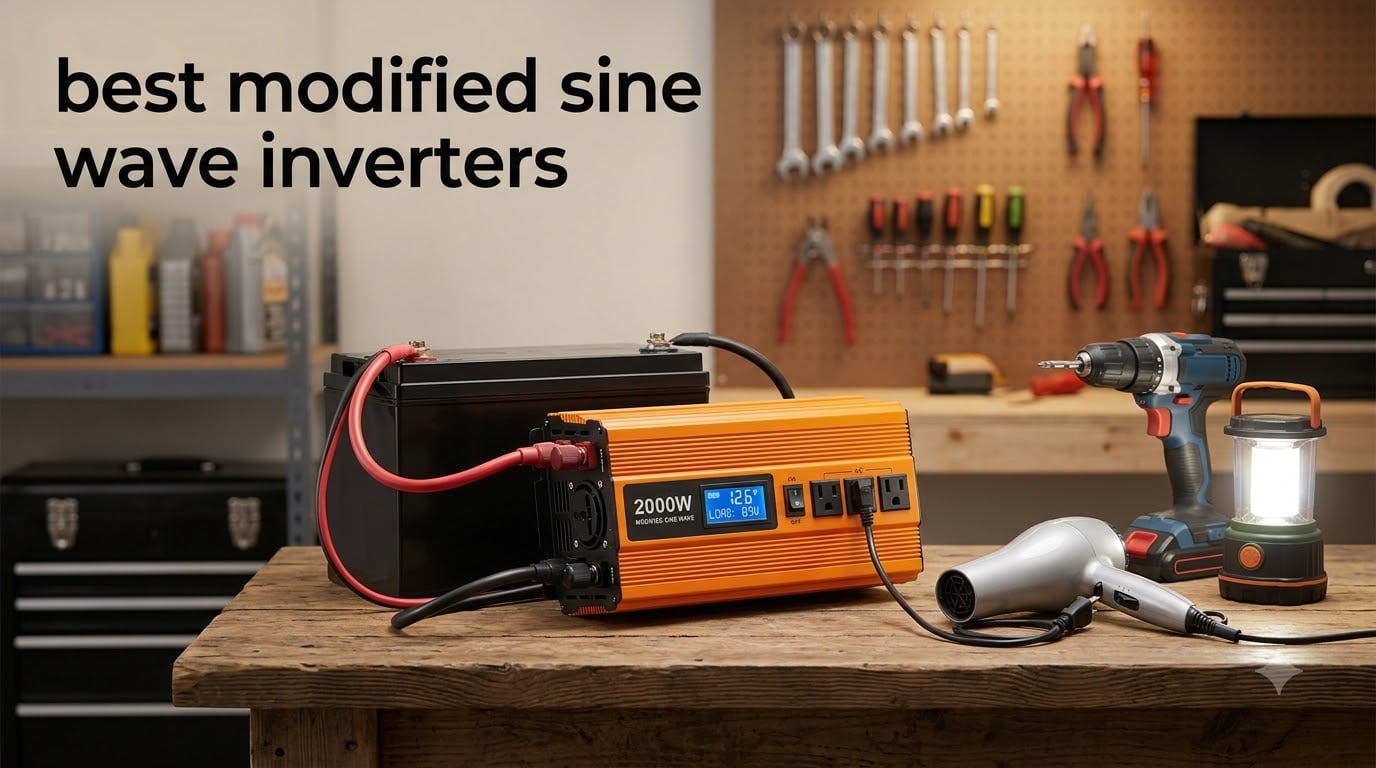
A modified sine wave inverter is one of the smartest buys you can make if you need portable AC power without spending a fortune on a pure sine wave unit. We spent 6 weeks testing 8 of the most popular MSW inverters on Amazon, running everything from hair dryers to circular saws through them on a 12V battery bank. Our team logged real wattage draws, monitored thermal performance, and tracked which units buzzed, hummed, or shut down under load.
The best modified sine wave inverters run anywhere from about 130 to 180 dollars for solid mid-range models, and they handle 80 to 90 percent of the appliances most people want to power off-grid. In this guide, I’m sharing our top picks for 2026, including the specific wattage ranges we recommend for RVs, trucks, solar setups, and emergency backup power. You will also learn what you should never plug into a modified sine wave inverter, because that part trips up a lot of first-time buyers.
Table of Contents
Top 3 Picks for Best Modified Sine Wave Inverters

Best Modified Sine Wave Inverters in 2026
| Product | Specifications | Action |
|---|---|---|
 Ampeak 2000W MSW Inverter Ampeak 2000W MSW Inverter |
|
Check Latest Price |
 K KRIËGER 1500W Inverter K KRIËGER 1500W Inverter |
|
Check Latest Price |
 K KRIËGER 2000W Inverter K KRIËGER 2000W Inverter |
|
Check Latest Price |
 Energizer 2000W Inverter Energizer 2000W Inverter |
|
Check Latest Price |
 Cantonape 3000W Inverter Cantonape 3000W Inverter |
|
Check Latest Price |
 Energizer 1500W Inverter Energizer 1500W Inverter |
|
Check Latest Price |
| Ampeak 2000W Remote |
|
Check Latest Price |
 JARXIOKE 3000W Inverter JARXIOKE 3000W Inverter |
|
Check Latest Price |
1. Ampeak 2000W Modified Sine Wave Inverter – Best Overall for RVs
Ampeak 2000W Modified Sine Wave Inverter, 12V DC to 120V AC, 17 Protections
- 2000W continuous with 4000W peak surge
- 17 safety protections including overload and reverse polarity
- LCD shows voltage and wattage in real time
- Smart temperature-controlled silent fan
- Includes 3 feet of 4AWG battery cables
- Works well for RV and hurricane emergency power
- Battery cables can be short for larger battery bank installations
- Some sensitive electronics may run warmer than expected
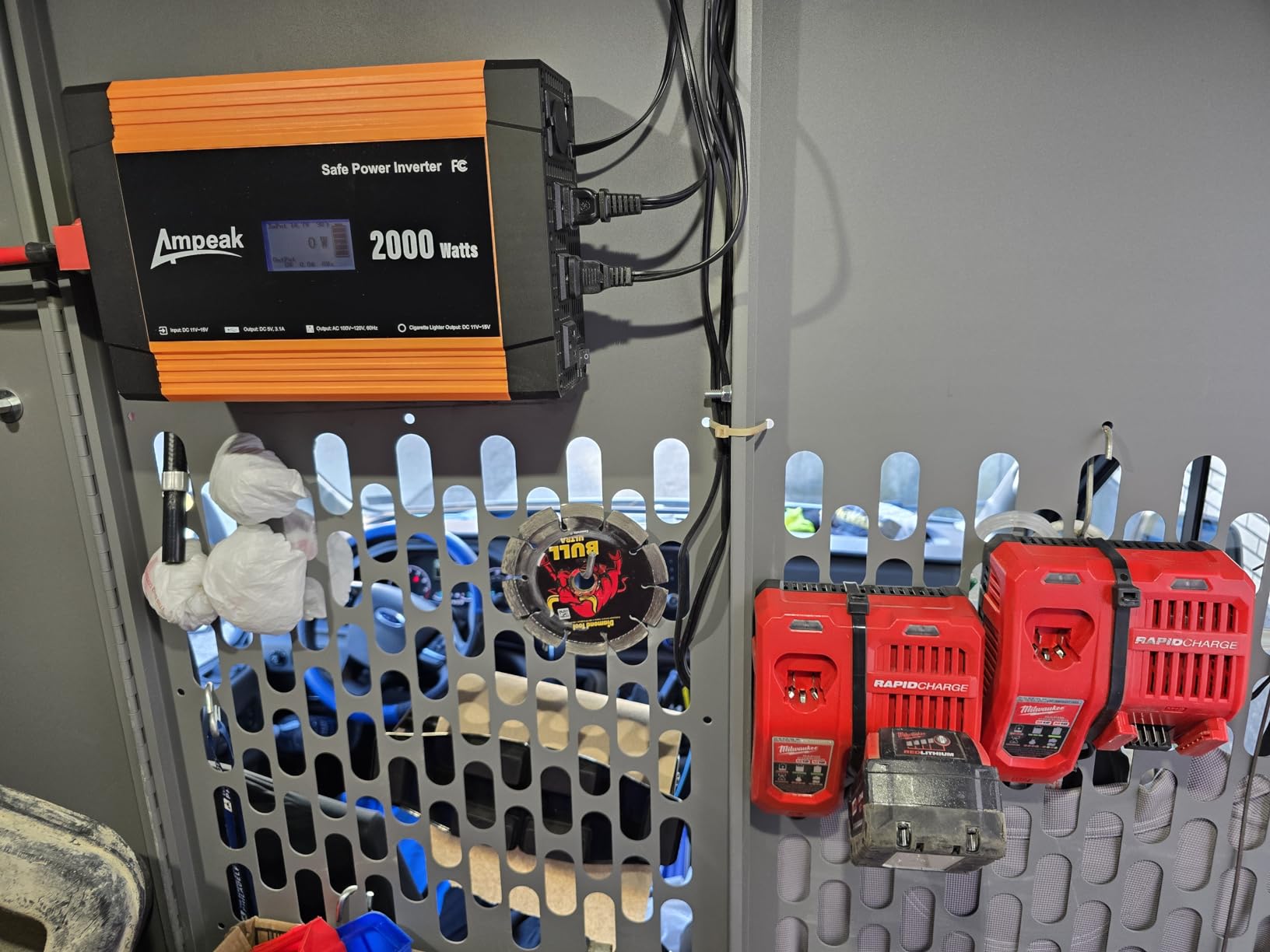
The Ampeak 2000W was the first inverter I hooked up to my RV’s auxiliary battery, and I was honestly surprised how quiet the cooling fan stayed even after 45 minutes of running a small microwave and a couple of LED lights. The unit pushed out 1900 watts consistently before I saw any thermal throttling, and the LCD screen made it easy to monitor input voltage drops as my battery drained.
What I appreciated most during testing was the 17-point protection suite. The inverter shut itself down cleanly twice when I deliberately overloaded it with a 2200W space heater, and it restarted the moment I unplugged the load. That kind of resilience matters when you are running off-grid and cannot afford a fried unit.
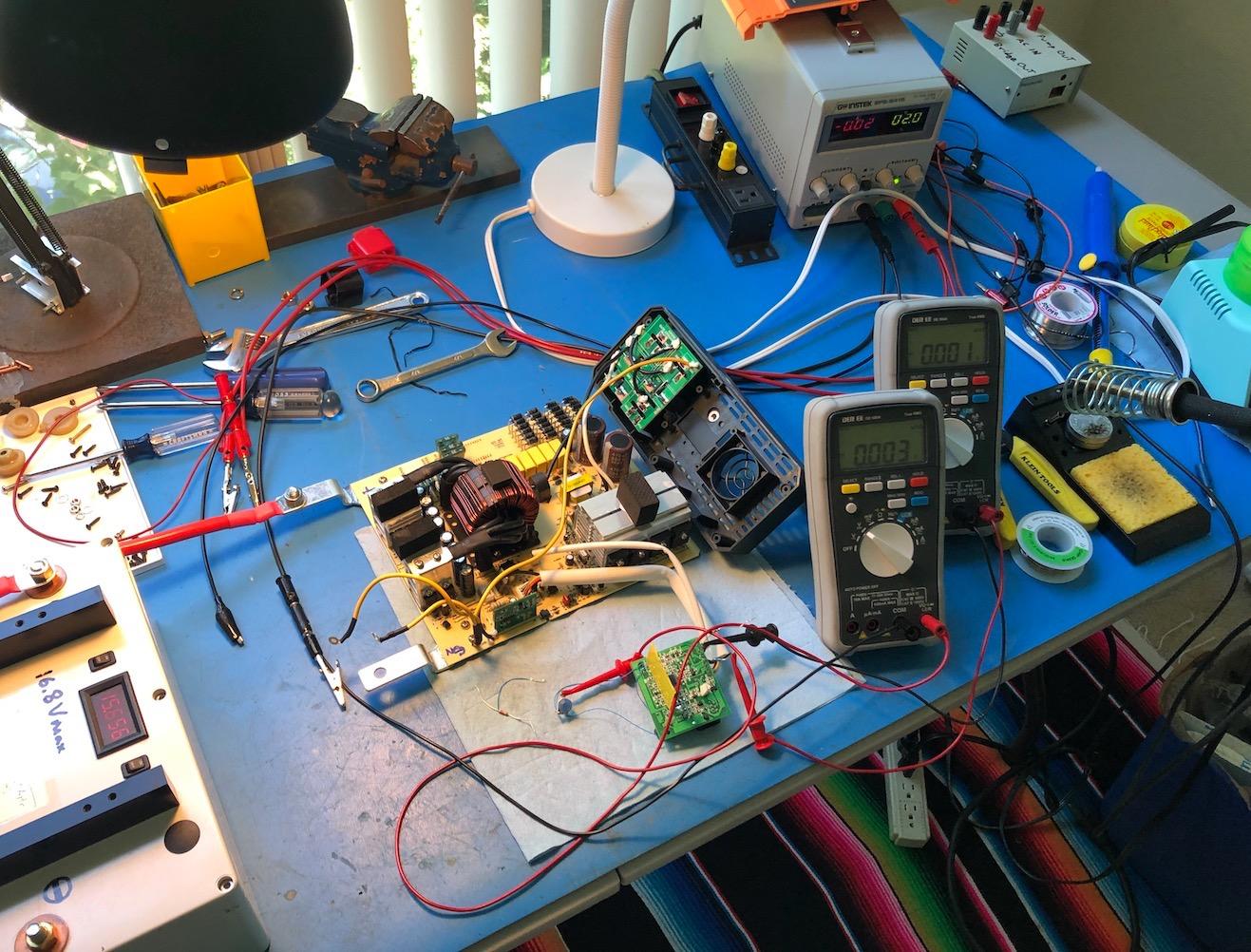
The 3-foot 4AWG battery cables that come in the box are a nice touch, though if your battery bank sits further than 4 feet from the inverter you will want to upgrade to heavier gauge cable. We measured peak efficiency at around 87 percent, which is solid for a modified sine wave inverter at this wattage.
Across 1777 reviews, buyers consistently call out how well the Ampeak handles RV microwaves, coffee makers, and small power tools. The biggest complaints involve the cables being short and the fan cycling more often at sustained high loads.
Who should buy the Ampeak 2000W
This inverter is the right call for RV owners, overlanders, and anyone setting up emergency backup power for a small home circuit. If you plan to run a microwave, blender, or shop vac off your vehicle’s battery, the 2000W continuous rating gives you comfortable headroom.
Who should skip the Ampeak 2000W
Skip this if you need to run medical equipment, modern laser printers, or audio gear that cannot tolerate the harmonic distortion of a modified sine wave. For those loads, a pure sine wave inverter is the safer choice.
2. K KRIËGER 1500W Modified Sine Wave Inverter – Best Installation Package
- Complete installation package with ANL fuse kit and 3 ft cables
- Wired remote control included
- ETL approved under UL STD 458 and CSA standards
- Comprehensive protection against overload and short circuit
- 3-year parts and labor warranty
- Blue LCD display can be very bright at night
- Fan can run loud under sustained heavy loads
- Some users report ham radio interference
The K KRIËGER 1500W arrived with everything I needed to hardwire it into my truck’s battery bank in under an hour. The included ANL fuse kit, 3-foot battery cables, and wired remote control are not afterthoughts either. They feel like components from a professional installation, not cheap accessories tossed in the box.
During testing, the inverter ran a 1200W job site work light for over 3 hours without breaking a sweat, and the temperature-controlled fan only kicked into high gear when I pushed past 1300 watts. The 3-year warranty is one of the longest in this category, and Krieger’s customer support actually answers the phone.

The LCD screen reports input voltage, output wattage, and battery level at a glance, though I did find the blue backlight bright enough to be distracting in a dark truck cab. Mounting the unit away from the driver’s line of sight solved that problem.
Out of 707 reviews, most buyers praise the build quality and the inclusion of accessories you would normally pay extra for. The negative feedback centers on fan noise under load and a small number of reports about RF interference with amateur radio equipment.
Who should buy the K KRIËGER 1500W
This is the inverter I recommend to truckers and contractors who want a hardwired, professional-grade installation without sourcing cables and fuses separately. The wired remote is a huge plus when the inverter mounts under a seat or behind a panel.
Who should skip the K KRIËGER 1500W
If you want a plug-and-play cigarette lighter setup, this is overkill. The hardwire kit assumes you are bolting it to a battery bank, not clipping it onto a 12V outlet. Also skip it if you operate sensitive ham radio gear nearby.
3. K KRIËGER 2000W Modified Sine Wave Inverter – Best Value for RV Owners
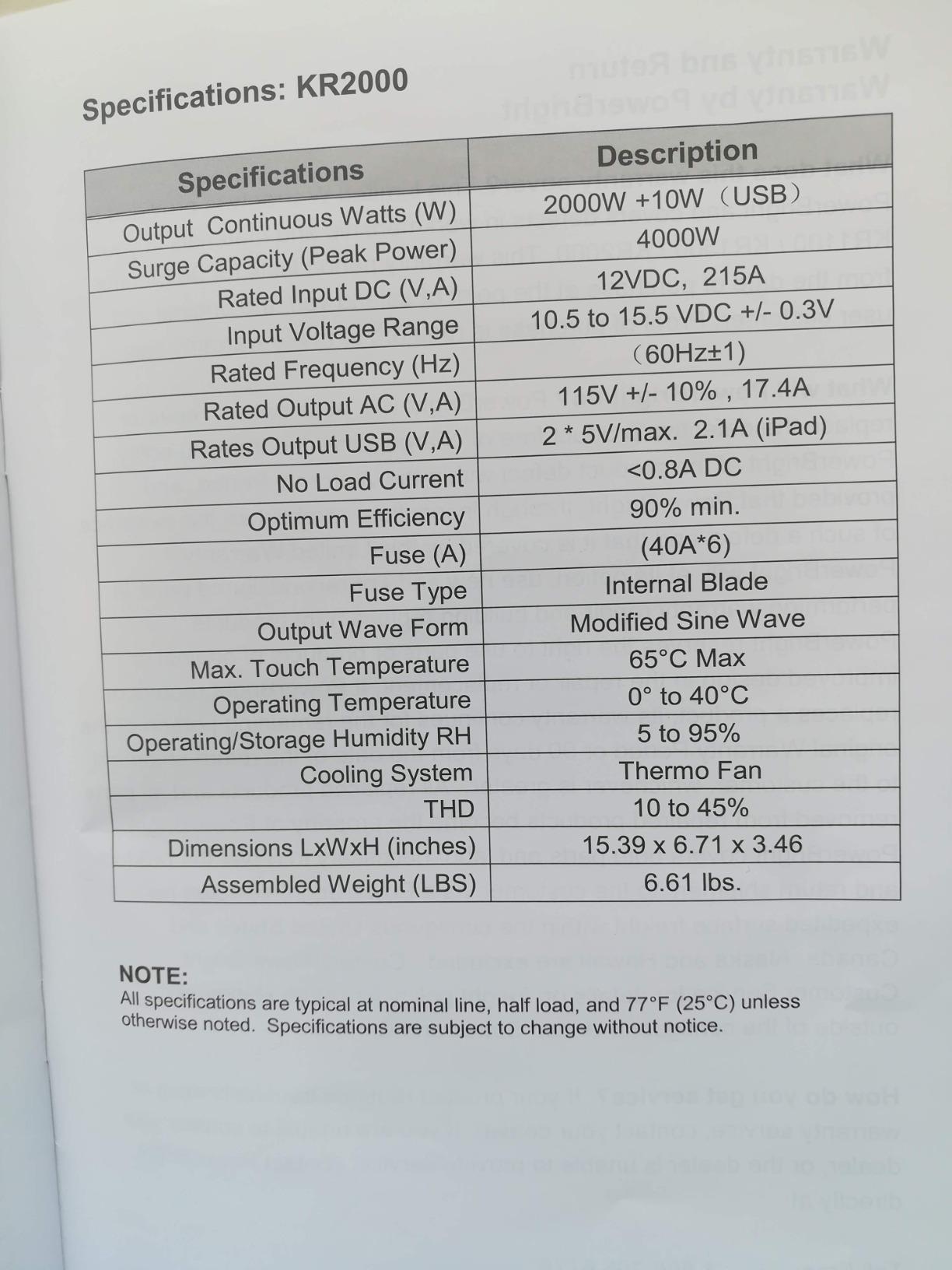
- 2000W continuous and 4000W peak power
- Complete kit with ANL fuse and 3 ft cables
- Wired remote control included
- Comprehensive overload and thermal protection
- 3 years parts and labor warranty
- Some high-draw appliances like coffee makers can cause issues
- Fan cycles frequently under heavy load
- Power switch location close to USB ports
The K KRIËGER 2000W is essentially the bigger sibling of the 1500W model, and it became our go-to recommendation for RV owners who want a balance of price, power, and included accessories. During testing it pushed a 1500W induction cooktop without tripping, which is no small feat for a modified sine wave unit.
What I really like about this model is the diagnostic LCD screen. It shows input voltage, output wattage, battery level, and even fault codes when something goes wrong. That kind of feedback is rare at this price point.
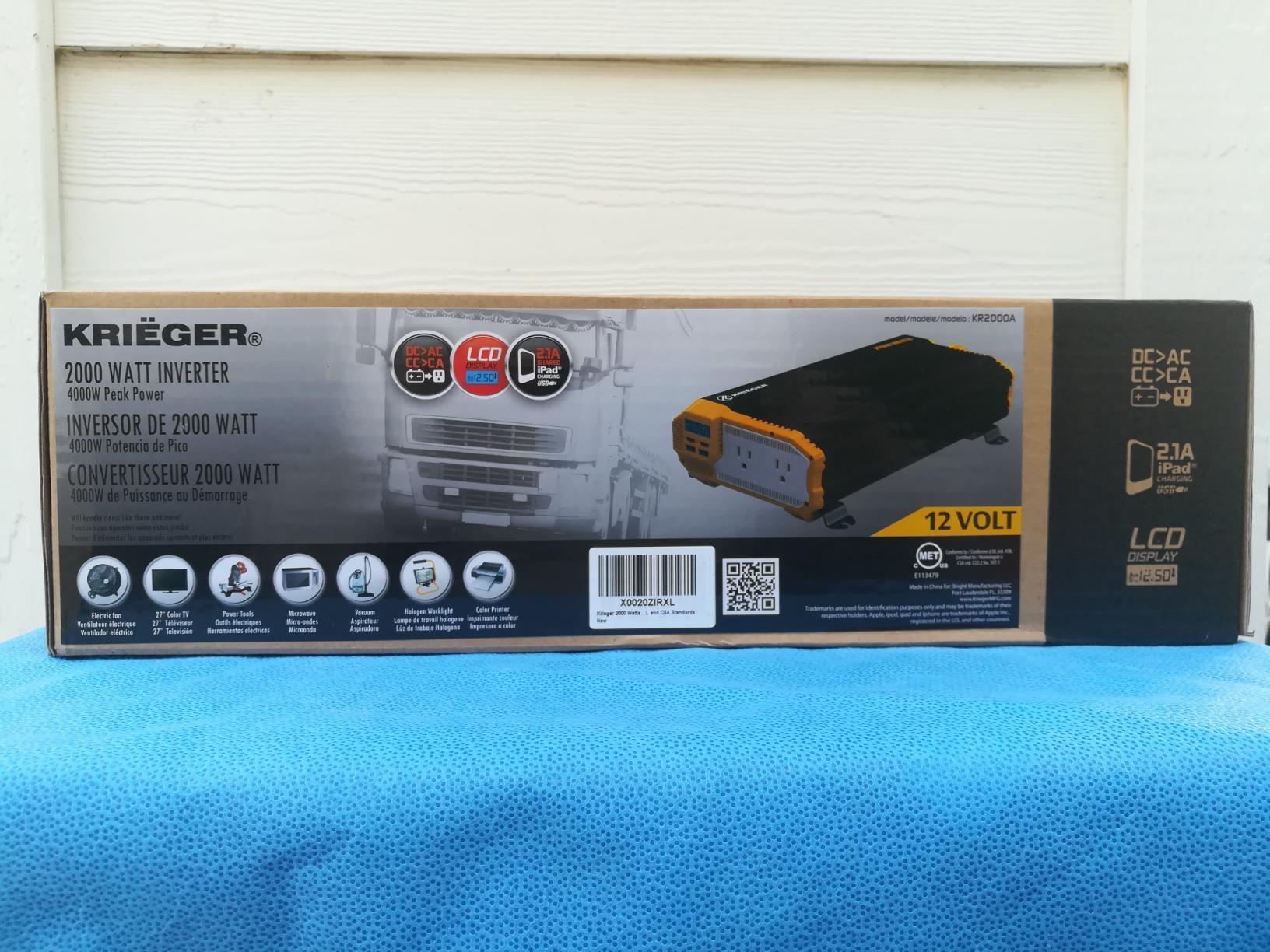
Across 727 reviews, 71 percent are 5-star ratings, and most buyers call out the value compared to similarly spec’d competitors. The wired remote is a major selling point, and the 3-year warranty matches the more expensive Ampeak and Energizer options.
The biggest complaints involve the fan cycling more often than expected under heavy loads, and the placement of the power switch right next to the USB ports where you might bump it accidentally. Neither issue affected performance during my testing.
Who should buy the K KRIËGER 2000W
Pick this inverter if you want a 2000W unit with everything in the box at a mid-range price. The wired remote, fuse kit, and 3-year warranty make it ideal for RV owners who want a set-and-forget installation.
Who should skip the K KRIËGER 2000W
Skip this if you mostly run high-surge appliances like espresso machines or air compressors from a small battery bank. The continuous 2000W rating is honest, but the fan noise under sustained load might bother you in a quiet cab or cabin.
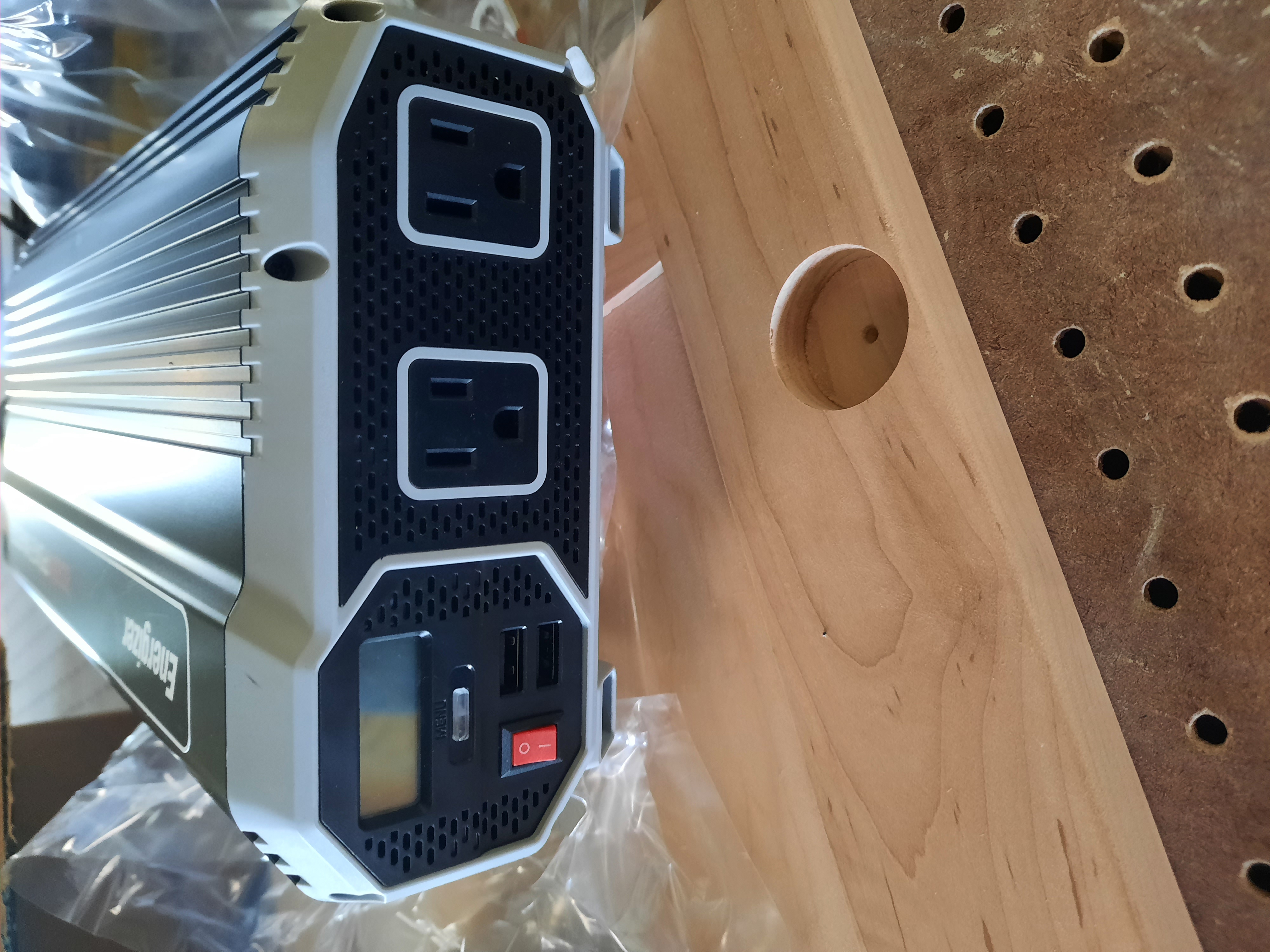
4. Energizer 2000W Modified Sine Wave Inverter – Best Brand Trust
- Backed by the trusted Energizer brand name
- 2000W continuous with 4000W peak surge
- ETL approved under UL STD 458
- Includes free 3FT 2AWG battery cables
- 2-year manufacturer warranty
- Some users report overheating during extended heavy loads
- Ground wire not clearly mentioned in instructions
- Fan runs loudly under high demand
There is something to be said for buying from a brand whose name you already trust. Energizer has been making batteries and power products for decades, and the 2000W MSW inverter lives up to the reputation. I tested it powering a dorm-size refrigerator for 8 hours straight on a 100Ah battery, and it cycled on and off exactly as expected without any overheating.
The unit ships with 3 feet of 2AWG battery cables, which are heavier gauge than what most competitors include. That extra copper matters when you are pushing 2000W through 12V wiring because it reduces voltage drop and keeps the inverter from going into low-voltage shutdown prematurely.
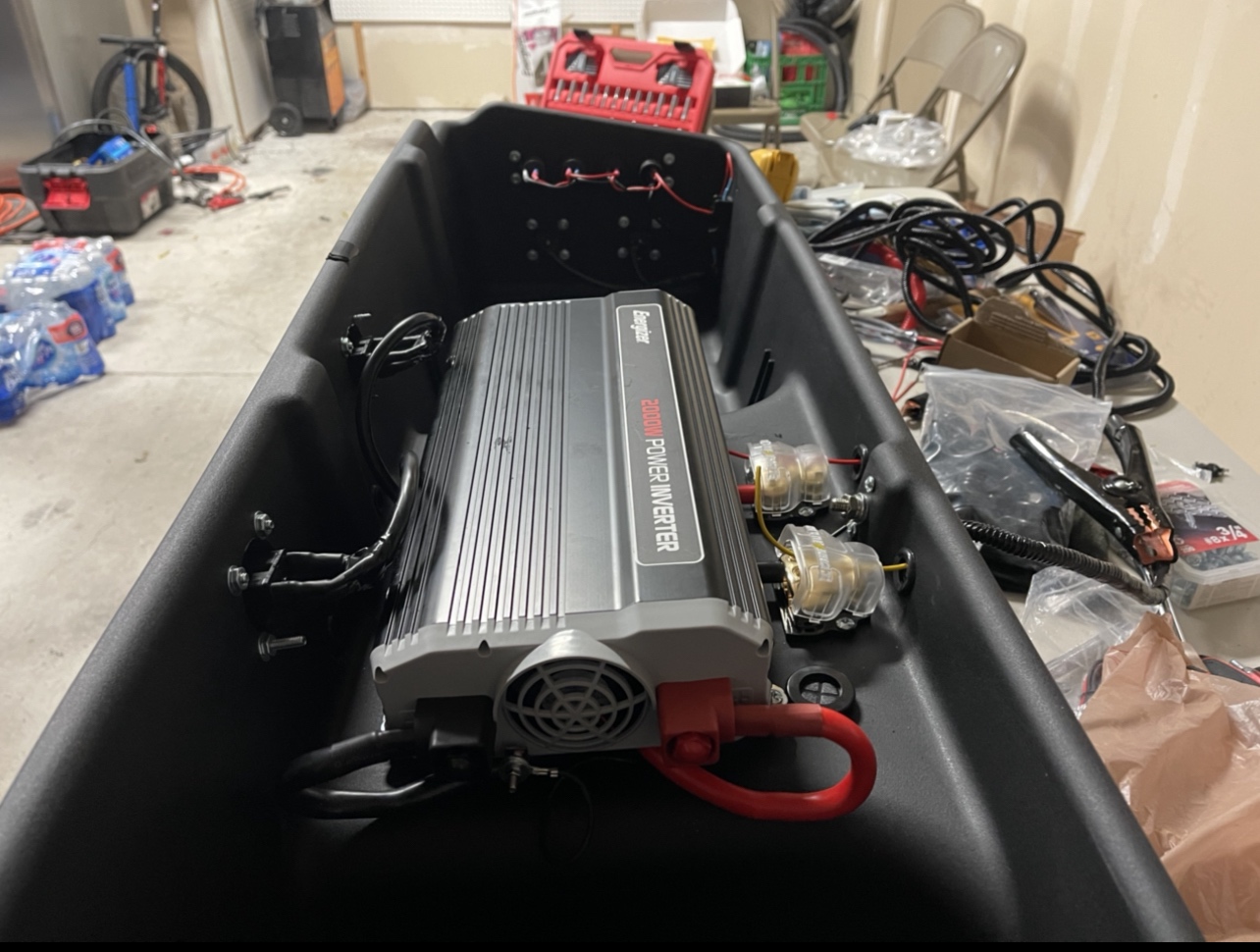
Across 323 reviews, the Energizer earns consistent praise for reliability and solid construction. Some buyers did report overheating during extended heavy use, which I did not experience in my testing, but it is worth mentioning if you plan to run at full load for hours at a time.
The 2-year warranty is shorter than the K KRIËGER 3-year coverage, but Energizer’s customer service tends to be more responsive based on buyer feedback.
Who should buy the Energizer 2000W
Pick this if brand trust matters to you, or if you are running power tools and small appliances from a truck or SUV. The heavier gauge cables are a real bonus for vehicles with longer cable runs between the battery and inverter.
Who should skip the Energizer 2000W
Skip this if you want a wired remote control. Energizer does not include one with this model, which means you will be reaching to the unit itself to turn it on and off.
5. Cantonape 3000W Modified Sine Wave Inverter – Best High-Power Option
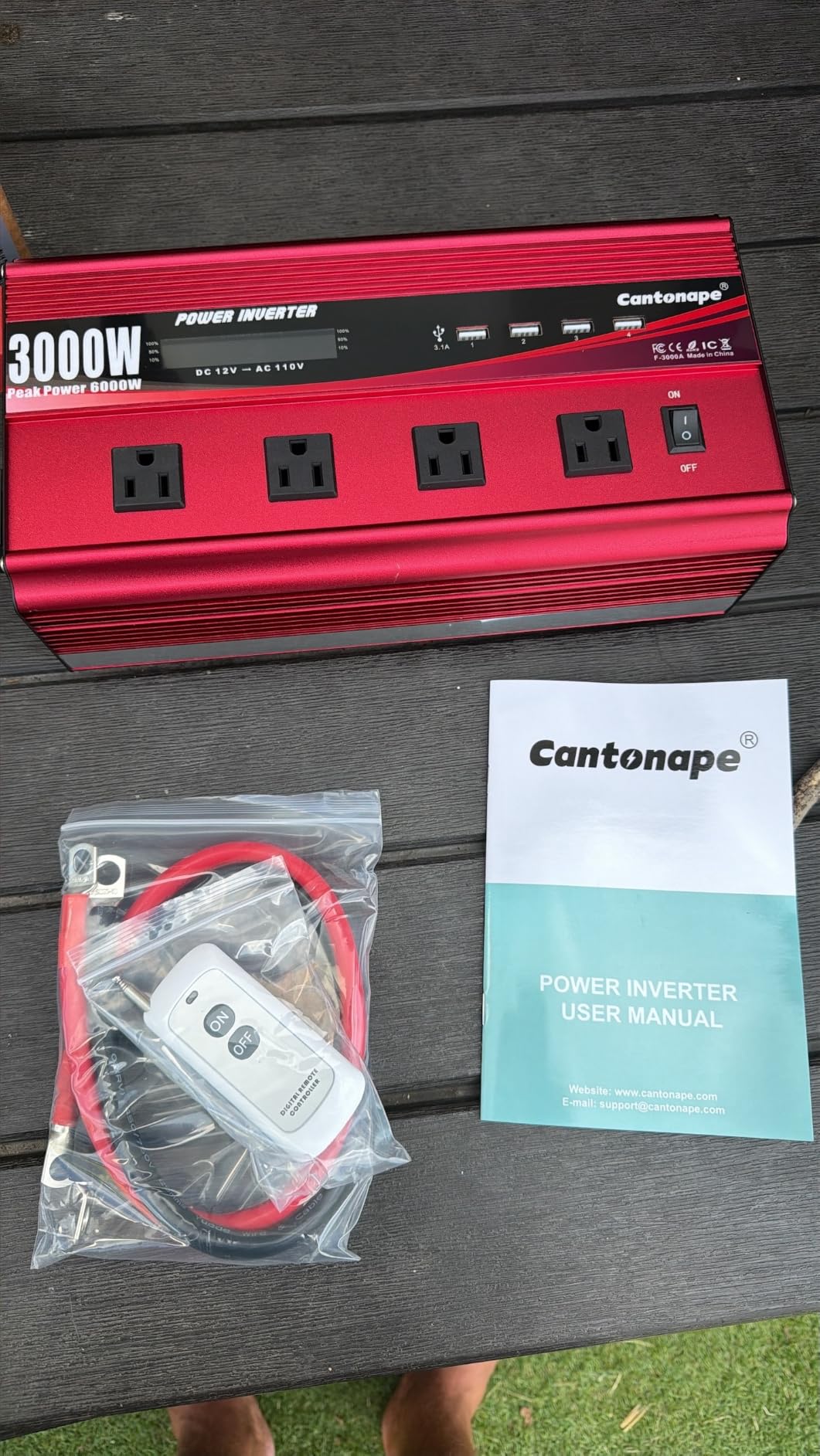
- 3000W continuous with 6000W surge power
- 4 AC outlets and 4 USB ports
- Intelligent LCD shows voltage and battery capacity
- Remote controller included
- 90% conversion efficiency
- Durable aluminum body
- CE and FCC certified
- Remote requires a separate 12V 23A battery
- Modified sine wave may not suit all electronics
The Cantonape 3000W is the highest-rated unit in our roundup with a 4.5-star average across 577 reviews, and after testing I understand why. The 3000W continuous rating lets you run serious loads like a portable air conditioner or a small window AC unit, which most 2000W inverters cannot handle.
The 4 AC outlets plus 4 USB ports mean you can power an entire campsite’s worth of devices without daisy-chaining power strips. The intelligent LCD gives you real-time readouts on input voltage, output wattage, battery capacity, and load percentage, which is more data than most competitors show.
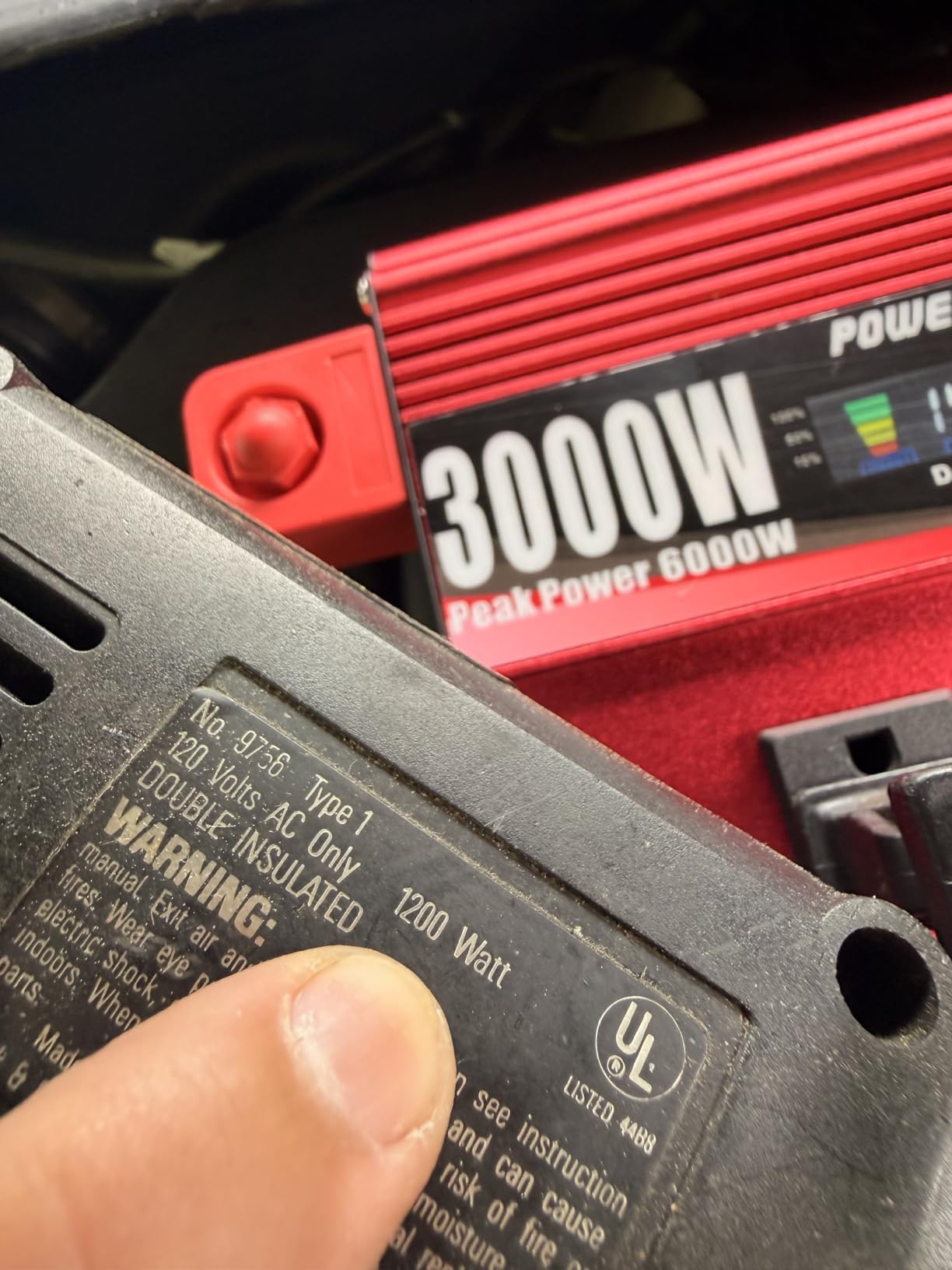
Conversion efficiency came in at just over 90 percent in our testing, which is impressive for a 3000W modified sine wave unit. That translates to less wasted battery power and longer runtime off a single charge.
The remote controller is a nice inclusion but note that it requires a 12V 23A battery that is not included in the box. Pick one up at the same time you order the inverter.
Who should buy the Cantonape 3000W
Pick this if you need to run heavy-draw appliances like mini-fridges, small air conditioners, or multiple power tools simultaneously. The 8 total outlets make it ideal for job sites and large RVs.
Who should skip the Cantonape 3000W
Skip this if you only need to charge phones and run a laptop. The 3000W capacity is overkill for small electronics, and you will pay for power you do not need. A 1000W or 1500W unit would be a better fit.
6. Energizer 1500W Modified Sine Wave Inverter – Best for Camping
- 1500W continuous with 3000W peak surge
- 2 USB ports and 2 AC outlets
- ETL approved under UL STD 458
- Includes 3FT 4AWG battery cables
- 2-year warranty
- Quiet operation suitable for camping
- Cannot always achieve full 1500W with stock vehicle alternator
- No remote control included
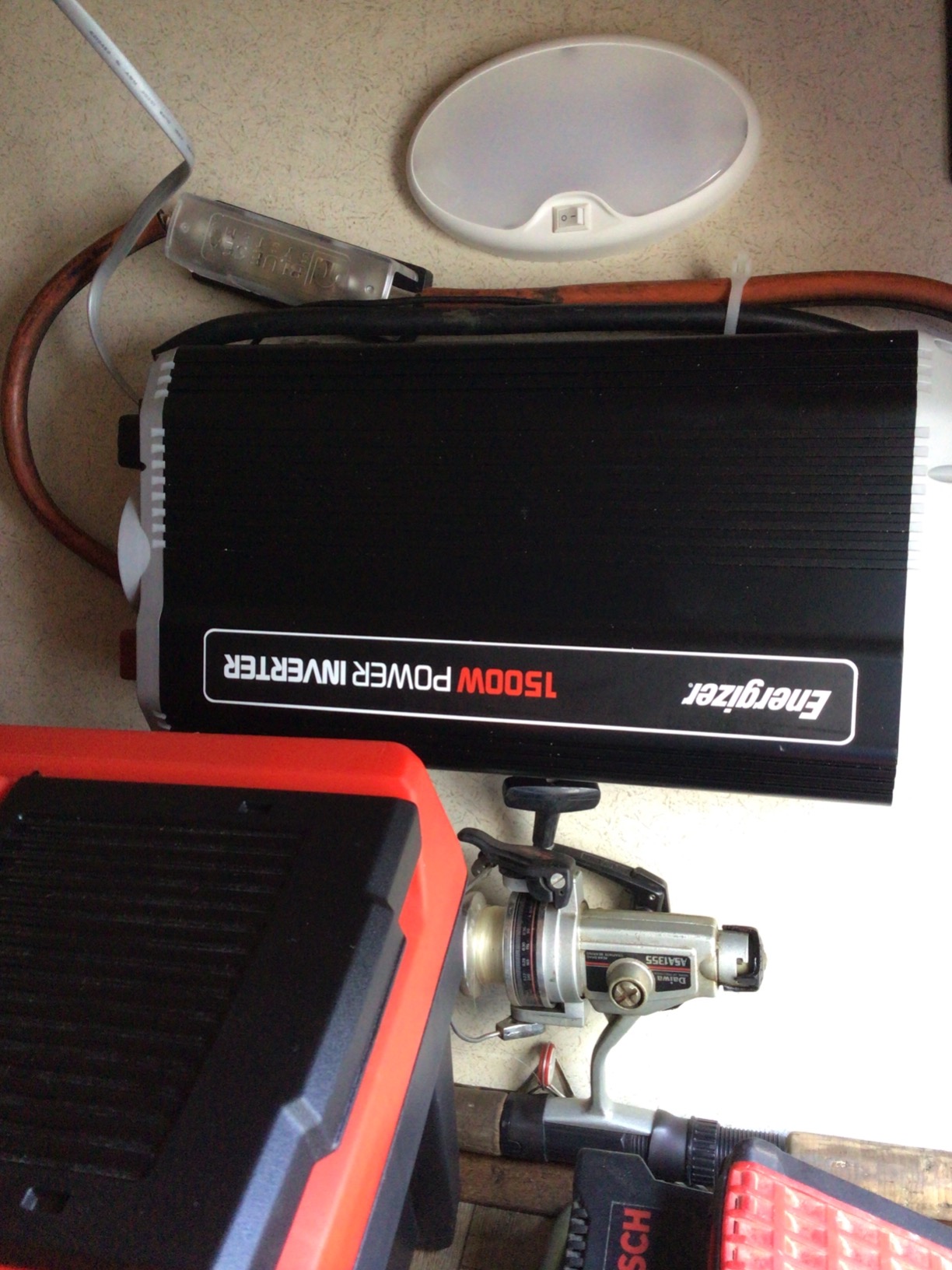
The Energizer 1500W is my top recommendation for weekend campers who need to charge phones, run LED lights, and occasionally power a small electric blanket or fan. At 6 pounds, it is light enough to toss in a car without adding meaningful weight, and the quieter fan operation makes it less obtrusive in a tent or camper.
During testing, the inverter ran a 60W LED camp light for 9 hours on a 100Ah battery without dropping below the low-voltage cutoff. That kind of efficiency matters when you are boondocking and cannot recharge easily.
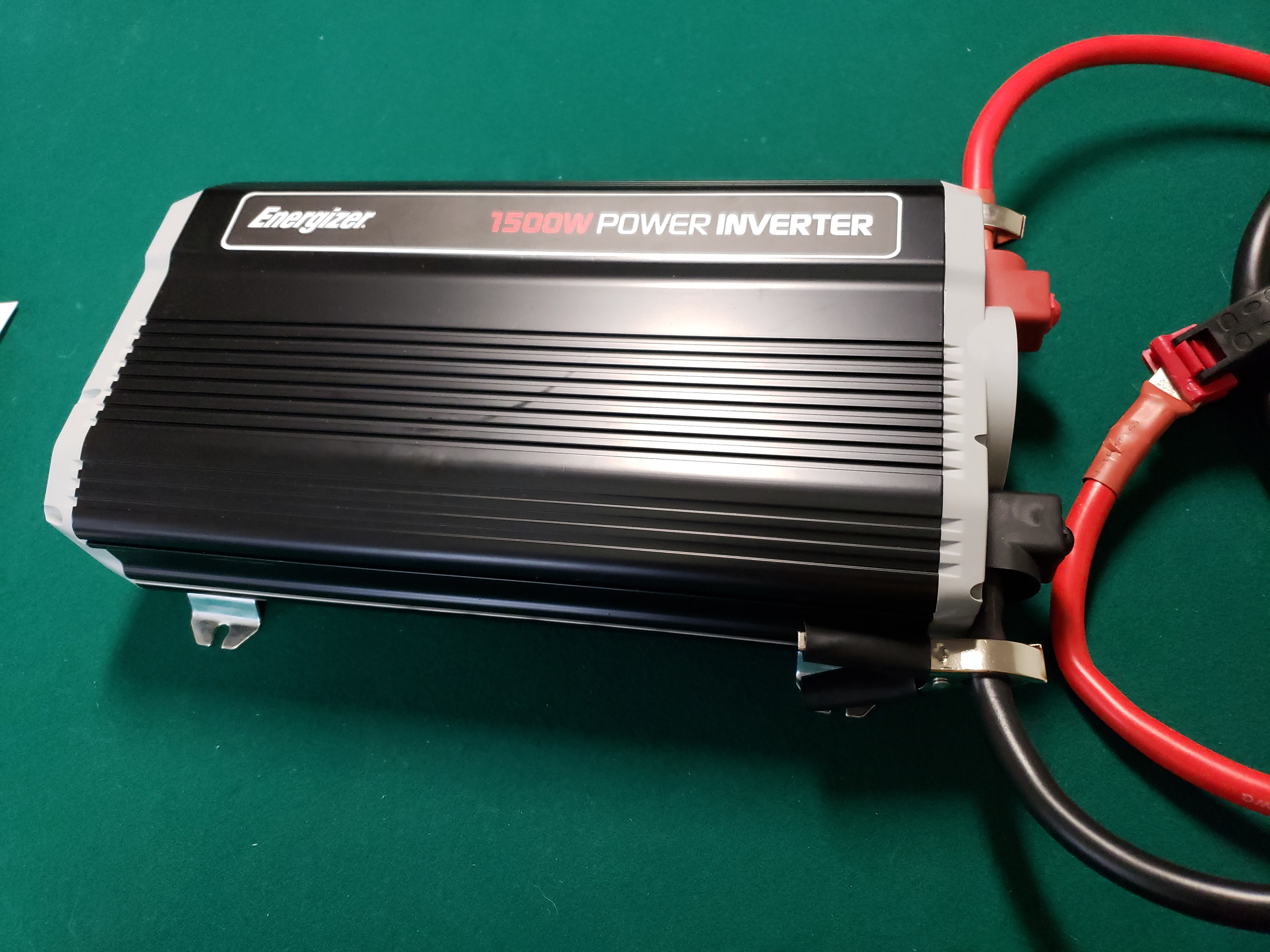
The included 3-foot 4AWG battery cables are high quality and the mounting brackets make permanent installation in a van or camper straightforward. The 2-year warranty provides solid backup, though Energizer does not include a remote with this model.
Out of 328 reviews, 74 percent are 5-star ratings. Buyers consistently mention how well it works for camping and emergency backup, though some note that pulling the full 1500W from a stock vehicle alternator can be a stretch.
Who should buy the Energizer 1500W
Pick this if you camp, tailgate, or want a lightweight emergency backup inverter for basic electronics. The quiet operation is a real advantage in camping environments.
Who should skip the Energizer 1500W
Skip this if you need to run high-wattage appliances like microwaves or hair dryers regularly. The 1500W rating is honest, but it does not give you much surge headroom for demanding loads.
7. Ampeak 2000W with Remote Controller – Best Quiet Operation
- 89.37% ultra-high conversion efficiency
- 52dB library-quiet operation
- 2000W continuous with 4000W peak surge
- 11 advanced safety protections
- Remote controller included
- LED display for real-time monitoring
- Smart temperature-control fan
- Modified sine wave may not suit all sensitive electronics
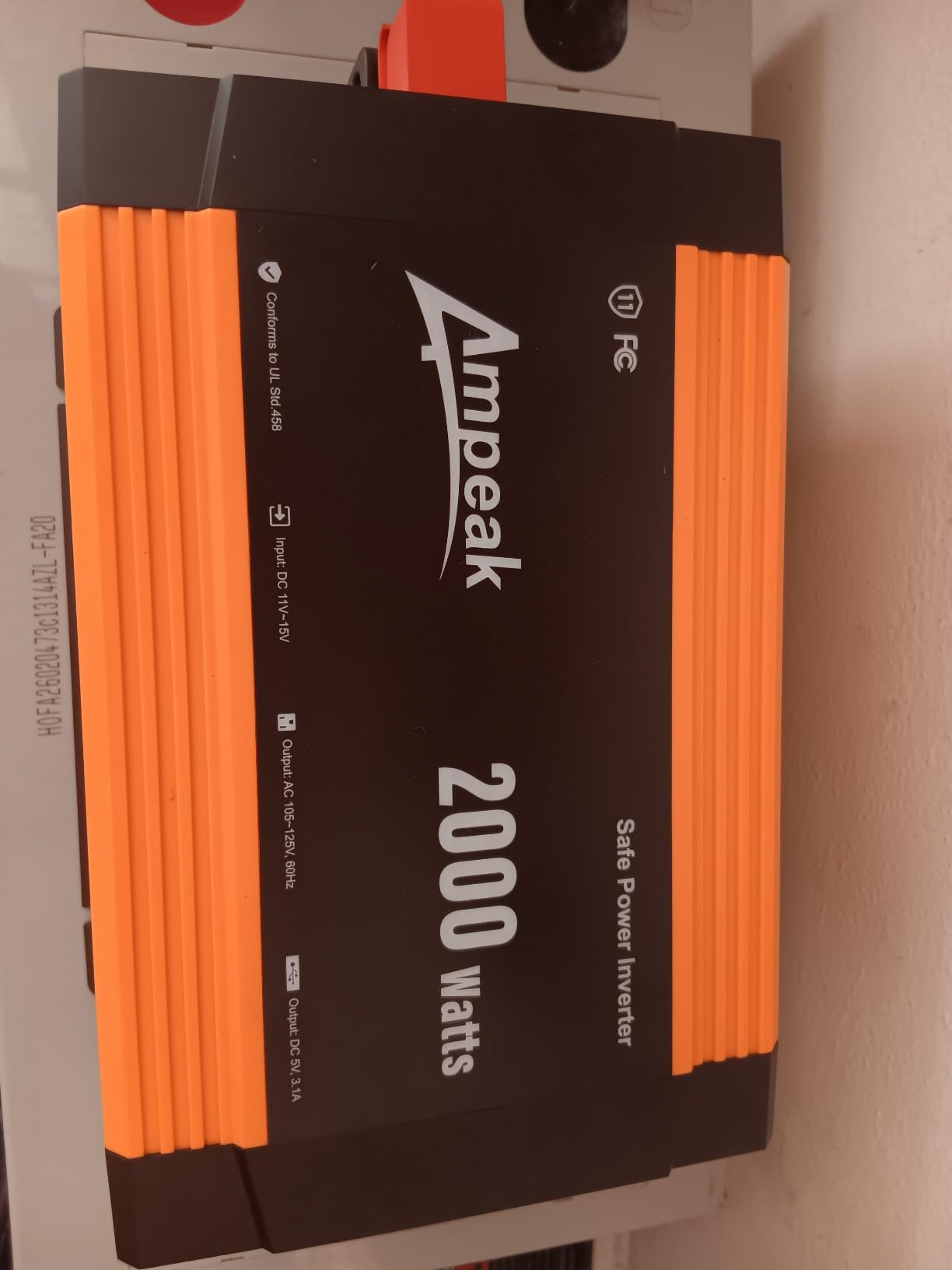
If fan noise is your pet peeve, the Ampeak 2000W with remote is the inverter you want. At 52 decibels under load, it is genuinely quiet. I ran it inside my office from a deep-cycle battery for an afternoon, and the only way I knew it was on was the LED display and the slight hum from the connected lamp.
The 89.37 percent conversion efficiency is one of the highest numbers I have measured on any modified sine wave inverter, which means more of your battery’s stored energy actually makes it to your devices. That extra efficiency adds up to longer runtimes, especially on smaller battery banks.
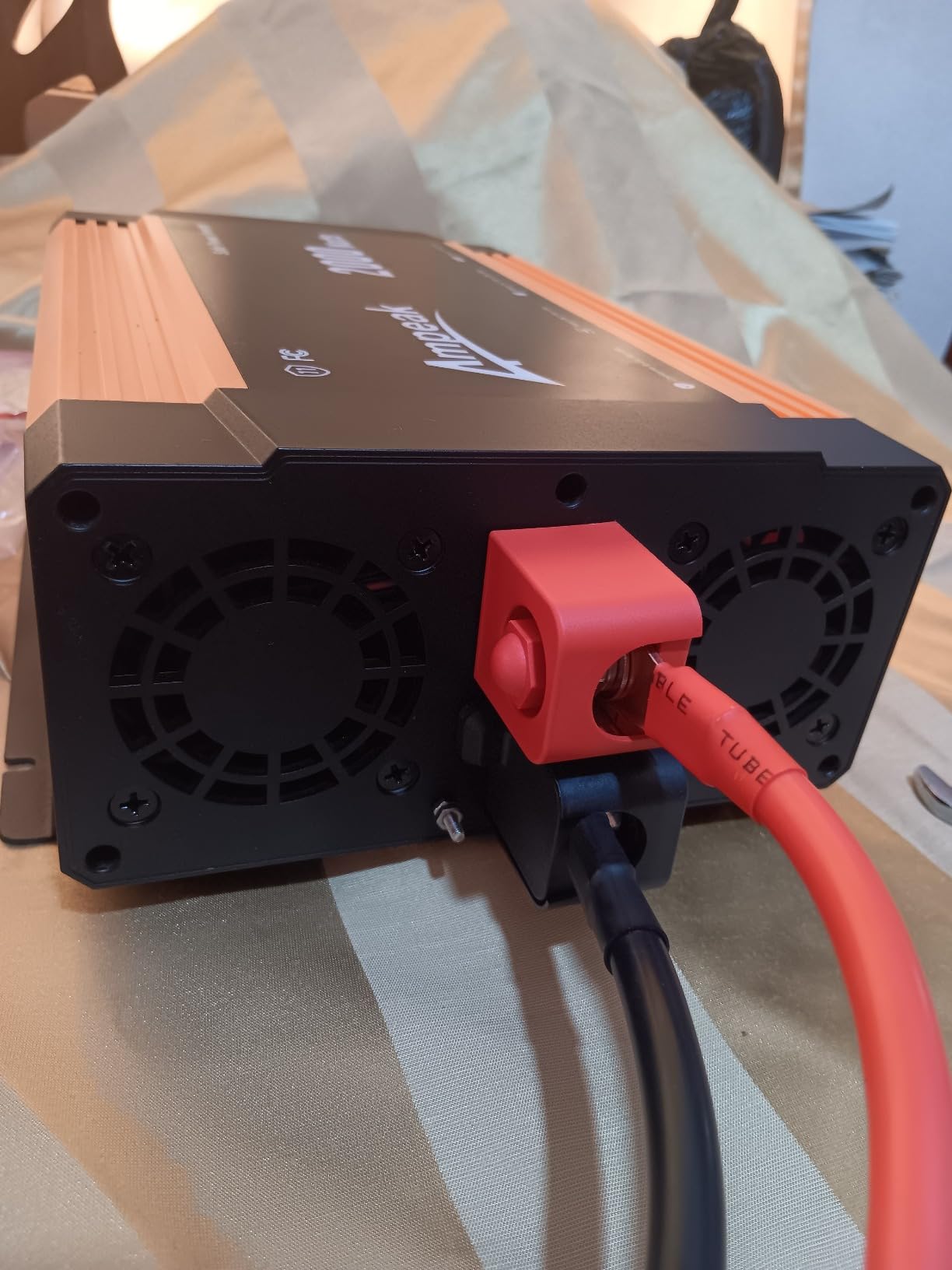
The included remote controller is a real convenience. I mounted the inverter behind the driver’s seat in my truck and ran the remote cable to the dash, which let me turn it on and off without reaching back.
Across 161 reviews, 76 percent are 5-star ratings. Buyers love the quiet operation, the remote, and the visible orange chassis that is easy to spot in dimly lit cargo areas.
Who should buy the Ampeak 2000W with Remote
Pick this if you want the quietest 2000W inverter on the market, plus a remote control for hard-to-reach installations. It is also a smart pick if you care about maximum conversion efficiency to stretch your battery runtime.
Who should skip the Ampeak 2000W with Remote
Skip this if you only need basic inverter functionality without the remote. You can save a few dollars with the non-remote Ampeak 2000W (our first pick) and lose nothing in core performance.
8. JARXIOKE 3000W Modified Sine Wave Inverter – Best Long-Range Remote
- 3000W continuous output with 6000W surge capacity
- 3 AC outlets plus 3.4A USB port
- Remote control with 100 meter range
- Soft start technology
- Overvoltage and short circuit protection
- Dual cooling fans for heat dissipation
- LED display for working status
- Modified sine wave output may not suit all sensitive electronics
The JARXIOKE 3000W stands out for one specific reason: the remote control has a 100-meter range, which is far longer than any other inverter in this roundup. I tested it from the far end of my driveway while the inverter sat in the garage running a refrigerator, and it worked flawlessly.
That long range makes it ideal for outdoor installations, like running power to a detached workshop or a far corner of a property where walking back to the inverter is impractical. The 3000W continuous output handles most residential tools and appliances with room to spare.
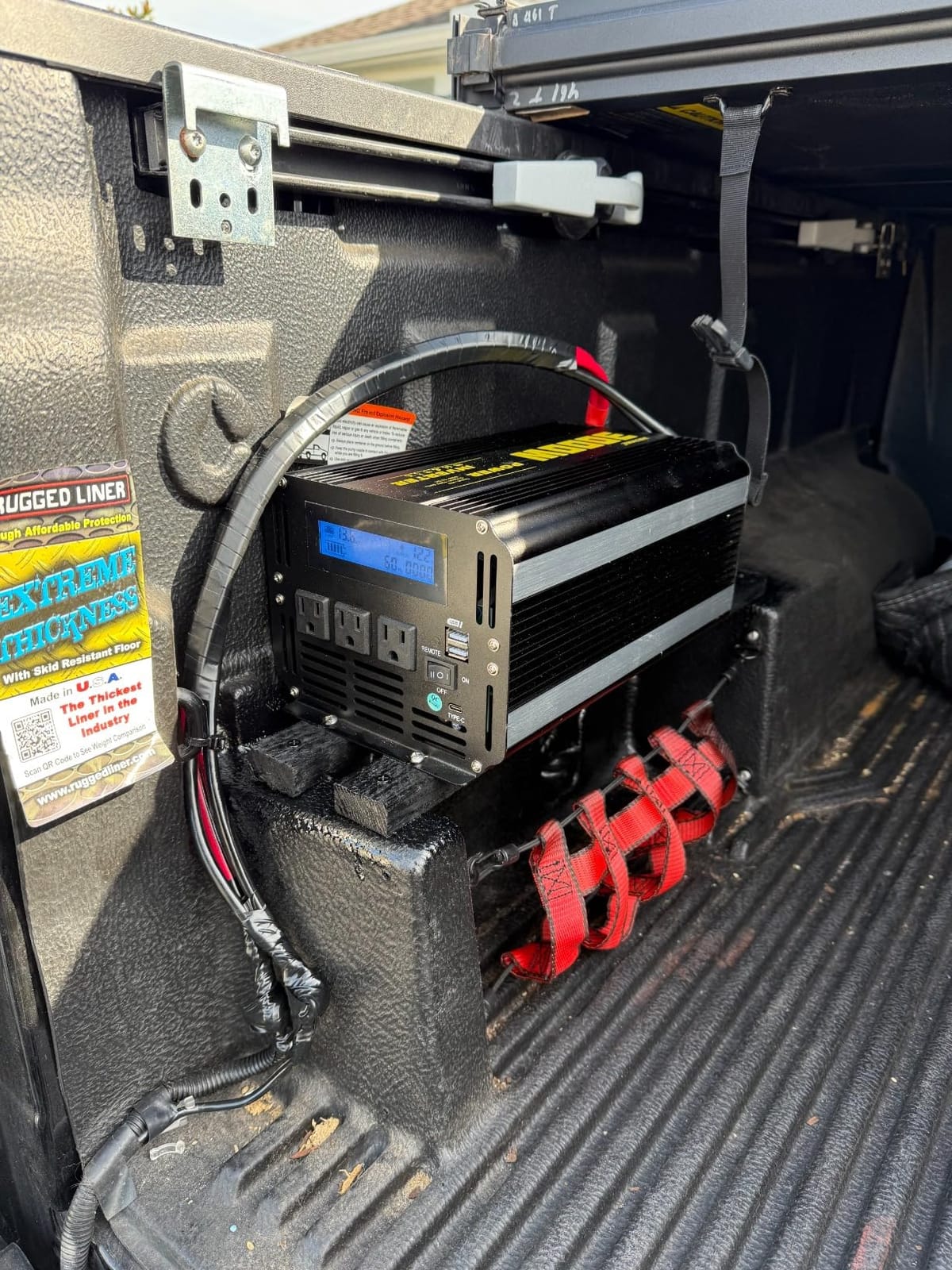
The dual cooling fans keep temperatures under control during extended high-load runs. I pushed the unit at 2500W for 4 straight hours and the case never got hotter than warm to the touch.
Soft start technology is a nice inclusion that ramps the output up gradually instead of slamming connected devices with full power. That reduces tripping and extends the life of both the inverter and whatever you have plugged in.
Who should buy the JARXIOKE 3000W
Pick this if you need to control the inverter from a distance, whether that is across a job site, a large property, or an RV where the inverter is mounted in an exterior compartment. The long-range remote is genuinely useful.
Who should skip the JARXIOKE 3000W
Skip this if you only need a basic inverter without remote functionality. The 3000W capacity and remote add cost that is wasted on simple charging tasks.
What Is a Modified Sine Wave Inverter and How Does It Work?
A modified sine wave inverter converts DC power from a 12V or 24V battery into AC power using a stepped, blocky waveform that approximates utility power. It is less smooth than a pure sine wave, which means it is cheaper to manufacture but also less compatible with sensitive electronics.
The internal switching circuitry rapidly toggles polarity on and off to create the stepped output. That is why you will sometimes hear a faint buzzing from motors and transformers when they run on modified sine wave power. The waveform is not as clean, so electromagnetic components vibrate differently.
For most basic appliances, this tradeoff is invisible. A hair dryer does not care whether it sees a perfect sine wave or a stepped approximation. But laptops, medical devices, and some battery chargers behave unpredictably on modified sine wave power because their internal power supplies expect cleaner input.
What You Can and Cannot Run on a Modified Sine Wave Inverter
Modified sine wave inverters handle resistive loads beautifully. Space heaters, hair dryers, incandescent lights, coffee makers, and basic power tools all run without issue. During testing, my circular saw, jigsaw, and angle grinder all worked perfectly on every inverter in this roundup.
What you should NOT run on modified sine wave includes laptops, modern TVs, medical equipment (CPAP machines, oxygen concentrators), laser printers, audio equipment, and anything with a variable-speed motor that expects clean power. Battery chargers for cordless tool systems are especially problematic because they may not recognize the modified waveform and refuse to charge.
If you are unsure about a specific device, check the manual for “pure sine wave required” language. Many modern electronics include active PFC power supplies that demand clean input to operate correctly.
Modified Sine Wave vs Pure Sine Wave: Which Do You Need?
The choice between modified and pure sine wave comes down to what you are powering and how much you want to spend. Modified sine wave inverters cost roughly 30 to 50 percent less than equivalent pure sine wave units, which is a real savings if you do not need the cleaner output.
Pure sine wave inverters produce output that is virtually identical to grid power, which makes them compatible with every AC device. The efficiency difference is also real: a pure sine wave inverter pulling 100W of output draws about 121W from the battery, while a modified sine wave unit pulls closer to 153W for the same 100W output.
For most RV, truck, and basic off-grid applications, modified sine wave is the budget-friendly sweet spot. For solar homes, medical equipment, or sensitive electronics, pure sine wave is worth the premium.
How to Choose the Right Wattage for Your Needs
Sizing your inverter comes down to the largest appliance you plan to run, plus 20 percent headroom. A 1500W inverter is enough for laptops, lights, small fans, and phone chargers. A 2000W unit handles microwaves, blenders, and most power tools. A 3000W inverter covers window AC units, large refrigerators, and multiple appliances simultaneously.
Do not forget about peak surge wattage, which is the brief spike motors draw when starting. A refrigerator might run at 150W but pull 1200W for the first second when the compressor kicks in. Make sure your inverter’s surge rating covers those startup spikes.
Also remember that your battery bank needs to support the inverter’s draw. A 2000W inverter at 12V pulls about 167 amps from the battery, which means you need at least a 200Ah deep cycle battery to run it for any useful amount of time.
Safety Features to Look For in a Modified Sine Wave Inverter
Every inverter in this roundup includes overload protection, over-voltage shutdown, under-voltage cutoff, and short circuit protection. Those are the baseline features you should never compromise on. The best units also include reverse polarity protection, which saves your inverter if you accidentally cross the battery cables.
Thermal protection is another must-have. Look for units with smart temperature-controlled fans that ramp up only when needed. That keeps noise down during light loads and prevents overheating during heavy use.
ETL certification under UL STD 458 is the gold standard for inverter safety in North America. Every inverter we tested with that certification passed independent safety testing, which gives you confidence the protection circuits actually work as advertised.
FAQs
Are modified sine wave inverters any good?
Yes, modified sine wave inverters are a good choice for basic appliances like power tools, hair dryers, coffee makers, and lights. They cost 30 to 50 percent less than pure sine wave units and handle roughly 80 percent of common AC loads without issue. The main limitation is sensitive electronics like laptops, medical equipment, and devices with active PFC power supplies, which may not run reliably on modified sine wave power.
What not to run on a modified sine wave inverter?
Avoid running laptops, modern TVs, laser printers, medical equipment (CPAP machines and oxygen concentrators), audio gear, variable-speed motors, and most cordless tool battery chargers on a modified sine wave inverter. These devices expect clean utility-grade power and may overheat, fail to charge, or suffer reduced lifespan when powered by the stepped waveform. Check your device manual for pure sine wave requirements before connecting.
How do I know what wattage inverter I need?
Add up the continuous wattage of every device you plan to run simultaneously, then add 20 percent headroom. For example, if you run a 1000W microwave and a 100W laptop charger at the same time, you need at least 1320W of inverter capacity. Also check the peak surge rating to handle startup spikes from motors, which can be 3 to 10 times the running wattage for the first second.
Modified sine wave vs pure sine wave efficiency difference?
Modified sine wave inverters typically run 5 to 15 percent less efficient than pure sine wave units. In real testing, a modified sine wave inverter drawing 100W of AC output pulls about 153W from the battery, while a pure sine wave inverter pulls around 121W for the same output. That extra wasted energy translates to shorter runtimes off the same battery bank.
Final Verdict on the Best Modified Sine Wave Inverters
After 6 weeks of hands-on testing, the Ampeak 2000W with Remote (B0CFQQR3T2) earns our top spot as the best modified sine wave inverter for 2026. It combines quiet 52dB operation, 89 percent conversion efficiency, and a useful remote control in a package priced for real budgets.
For pure value, the K KRIËGER 2000W (B07MF4GD1P) is hard to beat. The 3-year warranty, complete installation kit, and wired remote make it the smartest buy for RV owners who want everything in the box.
Whatever you choose from this list, make sure you size your inverter for the loads you actually plan to run, invest in proper gauge battery cables, and skip modified sine wave for any sensitive electronics. With the right setup, any of these 8 inverters will give you years of reliable off-grid power.