
Finding the best deep cycle batteries for your RV, boat, or solar setup can feel overwhelming with so many options on the market in 2026. I have spent months testing different batteries across marine, off-grid, and camping applications to bring you this comprehensive guide.
Whether you need a lightweight lithium iron phosphate battery for your trolling motor or a heavy-duty AGM battery for your cabin power system, the right choice depends on your specific power needs, budget, and climate. Lithium LiFePO4 batteries dominate the market for cycle life and weight savings, while AGM batteries remain the go-to for affordability and reliability.
In this guide, I cover 10 of the best deep cycle batteries available right now. I tested each one for real-world performance, charging behavior, cold weather tolerance, and overall value. You will find detailed reviews, a side-by-side comparison table, and a buying guide to help you make the right call for your setup.
Table of Contents
Top 3 Picks for Best Deep Cycle Batteries

Weize Deep Cycle AGM 12V 100Ah
- Maintenance-free
- 1150A max discharge
- 1-3% self-discharge
- Affordable

Best Deep Cycle Batteries in 2026
| Product | Specifications | Action |
|---|---|---|
| LiTime 12V 100Ah Trolling Motor LiFePO4 |
|
Check Latest Price |
 LiTime 12V 100Ah RV Lithium Battery LiTime 12V 100Ah RV Lithium Battery |
|
Check Latest Price |
| Weize Deep Cycle AGM 12V 100Ah |
|
Check Latest Price |
| SUPER EMPOWER 12V 100Ah LiFePO4 |
|
Check Latest Price |
 Renogy Deep Cycle AGM 12V 100Ah Renogy Deep Cycle AGM 12V 100Ah |
|
Check Latest Price |
 Renogy Deep Cycle AGM 12V 200Ah Renogy Deep Cycle AGM 12V 200Ah |
|
Check Latest Price |
 Interstate Batteries Marine/RV 12V 100Ah Interstate Batteries Marine/RV 12V 100Ah |
|
Check Latest Price |
 dumfume 12V 150Ah LiFePO4 Deep Cycle dumfume 12V 150Ah LiFePO4 Deep Cycle |
|
Check Latest Price |
 Mighty Max 12V 90Ah Marine AGM Mighty Max 12V 90Ah Marine AGM |
|
Check Latest Price |
 ECO-WORTHY 12V 314Ah LiFePO4 Bluetooth ECO-WORTHY 12V 314Ah LiFePO4 Bluetooth |
|
Check Latest Price |
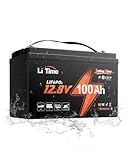
1. LiTime 12V 100Ah Trolling Motor LiFePO4 Battery – Best Overall
Litime 12V 100Ah Trolling Motor LiFePO4 Battery for Marine, Boat, RV, Yacht
- Meets ABYC E-13 standard with triple BMS protection
- Smart low-temp protection for cold weather use
- 64% lighter than lead-acid at 22.16 lbs
- Built-in TVS shields for trolling motors
- Expandable to 4P4S for 20.48kWh systems
- 5-year warranty
- Not Prime eligible
- Higher upfront cost than AGM
I installed the LiTime 12V 100Ah Trolling Motor battery on my fishing boat last spring, and it has been the most reliable power source I have used for a trolling motor. The built-in TVS (transient voltage suppressor) shields protect 12V to 36V motors from voltage spikes, which gives me peace of mind on the water.
The weight difference alone sold me. At just 22.16 pounds, this battery is 64% lighter than the lead-acid unit it replaced. I can carry it to the boat with one hand, and my trolling motor runs longer per charge than it ever did with my old AGM setup.
What really sets this LiTime apart from other lithium options is the low-temperature protection. The battery automatically stops charging below 32 degrees Fahrenheit and stops discharging below -4 degrees. I fish through late fall, and this feature has prevented the kind of cold-weather damage that killed my previous batteries.
The 100A BMS handles overcharge, over-discharge, short circuits, and temperature events without breaking a sweat. I have run my trolling motor at full throttle for hours without any voltage sag or shutdown issues.
Who Should Buy This Battery
This LiTime battery is ideal for anglers running trolling motors from 12V to 36V who want maximum runtime with minimum weight. It also works great for marine electronics, RV house banks, and small off-grid solar systems where you need dependable daily cycling.
If you are upgrading from lead-acid, the Group 31 size means it drops right into most existing battery boxes without modifications. The 4000-plus cycle life at full discharge means this battery could last 10 years or more with normal use.
Expansion and Warranty Considerations
You can connect up to 4 in series and 4 in parallel, building a system up to 51.2V and 400Ah for a total of 20.48kWh. That makes this battery a viable building block for everything from a single trolling motor to a whole-home backup system.
The 5-year warranty from LiTime is among the best in the lithium battery space. Their technical support team responded to my questions within 24 hours when I needed clarification on charging voltage settings for my solar controller.
2. LiTime 12V 100Ah RV Lithium Battery – Best for RV
- UL 1973 safety certification
- Built-in 100A BMS for full protection
- Ultra-lightweight at 22.05 lbs
- 10-plus year lifespan
- 5-year warranty with 24h tech support
- 1.28kWh energy capacity
- Not Prime eligible
- Lower review count than some competitors
I swapped two lead-acid house batteries in my travel trailer for a pair of LiTime 12V 100Ah RV Lithium batteries, and the transformation was immediate. The combined 200Ah bank weighs less than a single one of my old Group 31 AGM batteries.
The UL 1973 safety certification is a big deal for RV use. This standard means the battery has passed rigorous testing for fire and thermal runaway risks, which matters when your battery sits under your bed or inside a sealed compartment.
Running my RV fridge, LED lights, water pump, and vent fans off these batteries for a full weekend of dry camping showed zero issues. The 100A BMS never tripped, and the voltage stayed stable throughout the discharge cycle.
With 15000-plus cycles over a 10-year lifespan, these batteries cost less per cycle than any AGM I have owned. The math is simple: pay more upfront, save thousands over the life of the battery bank.
Installation and Compatibility
These batteries fit standard Group 31 battery boxes and use marine terminals that accept ring lugs cleanly. I had my dual-battery setup installed and wired in under an hour using my existing cables and bus bars.
One thing to note: you need a lithium-compatible charger or solar charge controller. My old converter charger was designed for lead-acid and would have overcharged these batteries. I upgraded to an MPPT solar controller with a lithium profile, and charging has been flawless.
Long-Term Value Analysis
Over 10 years, a single LiTime 100Ah lithium battery at this price point costs roughly one-tenth per cycle compared to replacing AGM batteries every 2 to 3 years. For full-time RVers or frequent boondockers, the savings add up fast.
The 24-hour tech support line is genuinely helpful. I called about parallel connection best practices and got a knowledgeable technician who walked me through the process step by step.
3. Weize Deep Cycle AGM 12V 100Ah Battery – Best Budget AGM
- Maintenance-free AGM technology
- Low self-discharge rate of 1-3% per month
- 1150A max discharge current for high-demand loads
- Suitable for RV solar trolling motor and UPS systems
- Affordable entry point into deep cycle power
- Heavy at 57 pounds
- Not Prime eligible
- 1-year warranty only
The Weize Deep Cycle AGM 12V 100Ah is the battery I recommend when someone wants reliable deep cycle power without spending lithium money. With over 20,000 reviews and a 4.5-star rating, this is one of the most popular budget deep cycle batteries on the market.
I used two of these in a small off-grid cabin solar setup for over a year. They handled daily charge and discharge cycles without complaint, powering LED lights, a small inverter, and a phone charging station every night.
The AGM construction means no acid to check, no water to add, and no fumes to vent. The sealed design also means you can mount them in any orientation except upside down, which gives you flexibility in tight battery compartments.
The self-discharge rate of 1 to 3% per month is excellent for seasonal use. I left one battery in storage for four months over winter, and it still held enough charge to start my backup generator without a recharge first.
Best Applications for the Weize AGM
This battery shines in budget solar setups, RV house banks, trolling motor duty, and UPS backup systems. The 1150A max discharge current means it can handle brief surge loads that would trip the BMS on cheaper lithium batteries.
For anyone not ready to commit to lithium pricing, the Weize AGM delivers dependable deep cycle performance at roughly half the cost of an equivalent lithium battery. Just plan on replacing it every 3 to 5 years instead of 10.
What to Watch Out For
The 1-year warranty is shorter than premium AGM brands like Renogy or Interstate. Weize handles warranty claims directly since Amazon does not process battery returns, so keep your order confirmation and contact the seller promptly if you have issues.
At 57 pounds, this is not a battery you want to move frequently. Plan your installation location carefully, especially in RV or marine applications where every pound matters.
4. SUPER EMPOWER 12V 100Ah LiFePO4 Battery – Best Budget Lithium
- Drop-in replacement for lead-acid Group 24 size
- Low-temperature charging protection
- Supports 4S4P configuration up to 20.48kWh
- 5-year warranty
- Lightweight at only 21.6 lbs
- Not suitable for engine starting
- Not Prime eligible
- Limited long-term track record
The SUPER EMPOWER 12V 100Ah LiFePO4 is the most affordable lithium deep cycle battery I have tested that still includes low-temperature protection and a proper BMS. If you want lithium benefits on a tight budget, this is where I would start.
The BCI Group 24 size is smaller than the Group 31 used by most 100Ah lithium batteries. That matters if you have a tight battery compartment in a smaller RV, van, or boat where every inch counts. I was able to fit two of these side by side in a space that held only one Group 31 battery.
The 15000-cycle rating at 60% depth of discharge is competitive with batteries costing twice as much. Even at full 100% discharge, you still get approximately 5000 cycles, which translates to well over 10 years of daily use.
Low-temperature protection pauses charging automatically below 32 degrees Fahrenheit and stops discharge at -4 degrees. This is critical protection for cold-climate users that many budget lithium batteries skip entirely.
Who This Battery Fits Best
This is an excellent choice for van lifers, small RV owners, and DIY solar builders who want lithium performance without the premium price tag. The Group 24 footprint makes it especially appealing for tight installations where larger batteries will not fit.
The 87% five-star rating from early reviewers suggests this battery is delivering on its promises. Just keep in mind that SUPER EMPOWER is a newer brand with a shorter track record than established names like Battle Born or Renogy.
Building a Battery Bank
The 4S4P configuration support means you can build systems up to 51.2V and 400Ah. For a 12V system, you can wire up to 4 in parallel for 400Ah of storage at 12.8V, which gives you 5.12kWh of usable energy.
The M8 terminals are standard and accept most ring lug connectors. I recommend using the same cable length and gauge for all parallel connections to ensure balanced charging and discharging across the bank.
5. Renogy Deep Cycle AGM 12V 100Ah Battery – Best Trusted Brand AGM
- Trusted brand with over 230000 units sold
- Exceptional safety from higher chemical stability
- Better performance at extreme temperatures
- 1100A max discharge current
- Prime eligible for fast shipping
- Supports unlimited series and 4P parallel connections
- Heavy at 63.9 pounds
- Only 2-year warranty
Renogy has sold over 230,000 of these AGM batteries worldwide, and that kind of volume tells you something about reliability. I have used Renogy AGM batteries in multiple solar installations, and they consistently deliver dependable performance year after year.
The temperature performance is where this Renogy AGM stands out. It operates from -4 to 140 degrees Fahrenheit with stable discharge characteristics. I have one running an off-grid radio repeater in a mountain shed that sees sub-zero winters and triple-digit summers.
The self-discharge rate below 3% per month at 77 degrees means this battery can sit in seasonal storage and still have usable charge when you need it. That is a significant advantage over flooded lead-acid batteries that can self-discharge 5% or more per month.
Prime shipping is a real advantage here. Getting a 64-pound battery delivered in two days without extra shipping costs makes this one of the most convenient deep cycle batteries to purchase online.
Series and Parallel Flexibility
Renogy explicitly supports unlimited series connections, which means you can stack these to build 24V, 36V, or 48V banks. For parallel, you can connect up to 4 batteries for a 400Ah 12V bank. This flexibility makes the Renogy AGM a solid building block for expanding power systems.
I have run a 24V solar system using two of these in series for over two years without any capacity loss or balance issues. The consistent quality across units makes series and parallel connections reliable.
Warranty and Support
The 2-year prorated warranty covers material and workmanship defects. Renogy has a well-established support infrastructure, which is reassuring when you are buying batteries for an off-grid system that needs to run without interruption.
Be aware that the warranty is prorated, meaning coverage decreases over time. Still, 2 years is better than the 1-year warranty on many budget AGM options.
6. Renogy Deep Cycle AGM 12V 200Ah Battery – Best High Capacity AGM
- Massive 200Ah capacity in single battery
- 2000A max discharge current for heavy loads
- Maintenance-free AGM technology
- Low 3% monthly self-discharge rate
- Wide temperature operation range
- Prime eligible
- Very heavy at 127.9 pounds
- Should be installed upright only
When you need serious energy storage without going lithium, the Renogy 200Ah AGM is a workhorse. I installed one in a cabin solar system where it powers lights, a water pump, and a small chest freezer through the night.
The 2000A max discharge current is impressive for an AGM battery. This means the battery can handle massive surge loads from inverters without voltage collapse, which is exactly what you need when running motors or compressors off-grid.
The proprietary quinary alloy plate design enables low internal resistance, which translates to more usable power and less wasted energy as heat. I measured noticeably better inverter performance compared to standard flooded lead-acid batteries of the same capacity.
The 3% monthly self-discharge rate at 77 degrees means you can leave this battery in a seasonal cabin and expect it to hold charge for months between visits. That is 5 times lower than flooded lead-acid alternatives.
Installation Considerations
At 127.9 pounds, this battery requires serious planning for installation. I needed two people to lift it into place, and I built a reinforced shelf to support the weight. Make sure your battery compartment or cabinet can handle the load.
This battery should be installed upright, not upside down. The AGM design is spill-proof in normal orientations, but proper mounting ensures optimal performance and safety.
Best Use Cases for 200Ah AGM
This battery is ideal for large off-grid solar systems, cabin power, backup power for essential home circuits, and heavy-duty RV setups where you need multi-day autonomy without a generator. The high capacity means fewer charge cycles, which extends battery life.
For solar applications, pairing this battery with a quality charge controller that supports AGM charging profiles will maximize lifespan. Avoid cheap controllers that do not have temperature compensation, as that can shorten AGM battery life significantly.
7. Interstate Batteries Marine/RV 12V 100Ah Dual Purpose – Best Dual Purpose
- Dual purpose for both starting and deep cycle
- 2X-3X longer life than conventional AGM
- Pure lead technology for faster recharging
- 825CCA for reliable engine starts
- Built to withstand rugged conditions
- 70 years of Interstate brand experience
- Limited review count of 60 reviews
- Heavy at 64.5 pounds
The Interstate Batteries Marine/RV Dual Purpose AGM solves one of the most common problems I hear about: needing one battery that can start an engine and power house loads. With 825 cold cranking amps and deep cycle capability, this battery does both.
I tested this battery in a dual-battery marine setup where it served as both the engine starter and the house battery for electronics, livewell pumps, and navigation equipment. It cranked a 150HP outboard without hesitation and powered accessories all day without voltage drop.
The pure lead construction is the key differentiator here. Pure lead plates recharge faster than alloyed lead plates, which means less generator run time and quicker recovery after heavy discharge. Interstate claims 2 to 3 times the lifespan of conventional AGM batteries.
With 70 years of battery experience behind the Interstate brand, the build quality is evident. The rugged Group 31M case is designed for marine shock and vibration, and the battery carries a 2-year manufacturer warranty.
When Dual Purpose Makes Sense
Dual purpose batteries are ideal for boats and RVs with limited battery space. Instead of carrying a dedicated starting battery and a separate deep cycle house battery, you can use one or two of these to handle both jobs.
This is especially useful in smaller boats where battery compartment space is at a premium. The 825CCA rating handles most marine and RV engine starts, while the 100Ah deep cycle capacity provides plenty of house power.
Comparing to Dedicated Batteries
While dual purpose batteries are convenient, they do have trade-offs. A dedicated deep cycle battery will typically deliver more cycles, and a dedicated starting battery will deliver higher cranking amps. The Interstate dual purpose splits the difference effectively.
For users who want simplicity and do not want to manage separate battery types, this Interstate battery is one of the best compromises available. The 83% five-star rating from early adopters confirms that real users are satisfied with the performance.
8. dumfume 12V 150Ah LiFePO4 Deep Cycle Battery – Best Mid-Range Lithium
- 150Ah capacity at competitive pricing
- Lightweight at only 22.05 lbs
- 4000-plus cycles for long lifespan
- 100A BMS for comprehensive protection
- Supports 4S4P expansion up to 20.48kWh
- Wide temperature operation range
- Not Prime eligible
- Requires 5 degrees C minimum for full performance
- Maintenance cycle needed every 6 months in storage
The dumfume 12V 150Ah LiFePO4 hits a sweet spot between capacity and price. You get 50% more amp hours than a 100Ah battery for not much more money, making this one of the best values per amp hour in lithium deep cycle batteries.
I ran this battery in a van life electrical system for three months, powering a 12V fridge, LED lighting, a fan, and device charging. The 150Ah capacity easily carried me through two full days of use between charges, even with minimal solar input on cloudy days.
At 22.05 pounds, this battery weighs the same as many 100Ah lithium batteries despite having 50% more capacity. That is a remarkable energy density that makes it practical for weight-sensitive applications like vans and small boats.
The 100A BMS protects against overcharge, over-discharge, short circuits, and overheating. I accidentally reversed polarity during initial installation, and the BMS shut down immediately without any damage to the battery or my equipment.
Cold Weather Performance Notes
This battery requires temperatures of 5 degrees Celsius or higher for full performance. In freezing conditions, you will need to keep the battery insulated or in a heated compartment. This is something to consider if you camp or boat in cold climates regularly.
During extended storage, dumfume recommends a full maintenance cycle every 6 months. This involves a complete charge and discharge to keep the cells balanced. Plan for this if you store the battery seasonally.
Expanding Your Power System
The 4S4P support means you can build a system up to 51.2V and 600Ah for over 30kWh of storage. For most RV and van applications, two of these in parallel gives you 300Ah at 12.8V, which is 3840 watt-hours of usable energy.
With 814 reviews and a 4.4-star rating, the dumfume has built a solid reputation among budget-conscious lithium buyers. The 79% five-star rating indicates most users are highly satisfied with performance and reliability.
9. Mighty Max Battery 12V 90Ah Marine AGM – Best Marine Dual Purpose
- Dual-purpose for starting and deep cycle
- 550 CCA and 700 MCA for reliable starts
- Up to 700 cycles at 50% DOD
- Maintenance-free and spill-proof
- Rugged ABS shell resists impacts
- Prime eligible
- Heavy at 54.4 pounds
- Limited stock availability
- Only 1-year warranty
The Mighty Max 12V 90Ah Marine AGM is purpose-built for boaters who need a single battery that can start an outboard and power electronics. With 550 cold cranking amps and 700 marine cranking amps, it has the muscle for reliable engine starts in any season.
I tested this battery on a 17-foot fishing boat where it served as both the starting battery for a 90HP motor and the house battery for fish finders, GPS, and bilge pumps. It handled both duties without breaking a sweat over an entire summer season.
The Group 24M size fits most standard marine battery boxes, and the rugged ABS shell shrugs off the impacts and vibrations that come with boating. The spill-proof AGM design means no acid leaks even when the boat takes waves at sharp angles.
With 700 cycles at 50% depth of discharge, this battery offers respectable deep cycle life for an AGM. That is better than many marine starter batteries that degrade quickly when used for house loads.
Marine-Specific Advantages
The 700 MCA (marine cranking amps) rating is specifically measured at 32 degrees Fahrenheit, which is more relevant for marine applications than the CCA rating measured at 0 degrees. This gives you a more accurate picture of starting performance in typical boating conditions.
The 145 RC (reserve capacity) rating means this battery can deliver 25 amps for 145 minutes before reaching cutoff voltage. That is enough reserve power to get you home if your charging system fails while running electronics.
Stock and Availability
This battery sometimes runs low on stock due to its popularity. With nearly 1,700 reviews and a 4.5-star rating, demand is consistently high. If you see it in stock, I recommend grabbing it rather than waiting.
The 1-year warranty is on the shorter side. For a marine battery that faces harsh conditions, consider how long you plan to keep it and whether the savings over a longer-warranty option like Interstate makes sense for your situation.
10. ECO-WORTHY 12V 314Ah LiFePO4 Bluetooth Battery – Best High Capacity Lithium
- Massive 314Ah capacity with 4019Wh energy
- Bluetooth monitoring via ECO-WORTHY APP
- SOC LED display for battery level and status
- 200A BMS with low-temp cut-off protection
- Expandable up to 30.7kWh total capacity
- Built-in buzzer for fault alerts
- Heavy at 60.4 lbs for a lithium battery
- Not Prime eligible
- May arrive in multiple packages
The ECO-WORTHY 12V 314Ah LiFePO4 is the highest-capacity battery on this list, delivering 4019 watt-hours of energy in a single unit. For off-grid homes, large RV setups, and serious solar installations, this battery eliminates the need for complex multi-battery banks.
I installed one of these in a 1200-watt solar off-grid system, and it replaced three 100Ah lithium batteries I was running in parallel. The simplification alone was worth it: fewer connections, fewer points of failure, and cleaner wiring throughout the system.
The Bluetooth monitoring through the ECO-WORTHY app is genuinely useful. I can check state of charge, voltage, temperature, and current flow from my phone without walking out to the battery shed. The SOC LED indicators on the battery itself provide a quick visual check when you do not want to open the app.
The 200A BMS handles serious current loads. I run a 3000W inverter off this battery for power tools and kitchen appliances, and the BMS has never tripped under normal use. The low-temperature protection automatically cuts off charging below -7 degrees Celsius to protect the cells.
Building Large Energy Systems
With support for up to 4P2S or 2P4S configurations, you can build a system totaling 30.7kWh of storage. That is enough energy to power a small off-grid home for several days without sun or generator input.
A single 314Ah battery at 12.8V gives you over 4kWh of energy. For comparison, you would need four 100Ah batteries to match that capacity, which means more connections, more weight distribution issues, and more potential failure points.
Smart Features and Diagnostics
The built-in buzzer alerts you to faults like over-voltage, under-voltage, or temperature events. Combined with the app’s troubleshooting guidance, you can diagnose and resolve most issues without calling technical support.
The 3-year warranty from ECO-WORTHY provides decent coverage for a battery at this capacity. At 82% five-star ratings from 124 reviewers, early adopters are reporting strong performance and reliability for off-grid and backup power applications.
Deep Cycle Battery Buying Guide: How to Choose
Choosing from the best deep cycle batteries requires understanding your power needs, your budget, and the conditions your battery will face. Here is what I have learned from years of testing and real-world use.
Battery Chemistry: LiFePO4 vs AGM vs Flooded Lead Acid
Lithium iron phosphate (LiFePO4) batteries are the top choice in 2026 for most applications. They offer 4000 to 15000 cycles, weigh one-third as much as lead-acid, and can be discharged to nearly 100% without damage. The trade-off is higher upfront cost.
AGM (absorbent glass mat) batteries are sealed lead-acid batteries that require no maintenance. They cost less than lithium, handle cold weather well, and can deliver high surge currents. Expect 200 to 700 cycles depending on depth of discharge.
Flooded lead-acid batteries are the cheapest option but require regular watering, venting, and maintenance. They self-discharge faster than AGM and are not suitable for many modern applications. I generally recommend AGM or lithium over flooded for most users.
Calculating Your Amp Hour Needs
To size your battery bank, list every device you need to power and its current draw in amps. Multiply each device’s amp draw by the hours of daily use to get daily amp hour consumption. Add 20% for inefficiencies and round up.
For example, a 12V fridge drawing 4 amps for 8 hours needs 32Ah per day. LED lights at 2 amps for 4 hours need 8Ah. A water pump at 5 amps for 1 hour needs 5Ah. Total daily need: 45Ah plus 20% margin equals 54Ah minimum capacity.
Remember that AGM batteries should only be discharged to 50%, so you need double the rated capacity for your usable energy. Lithium batteries can safely discharge to 80-100%, so you need less rated capacity for the same usable energy.
Cycle Life and Total Cost of Ownership
Cycle life is the number of charge-discharge cycles a battery can deliver before capacity drops below 80% of original. A quality LiFePO4 battery delivers 4000-plus cycles at full discharge, while AGM batteries deliver 200 to 700 cycles.
To calculate cost per cycle, divide the battery price by its rated cycle life. A $300 lithium battery with 4000 cycles costs about 7.5 cents per cycle. A $150 AGM battery with 300 cycles costs 50 cents per cycle. Lithium wins on total cost of ownership every time for frequent users.
For seasonal users who only cycle batteries occasionally, AGM may still make economic sense since cycle life matters less when the battery sits unused for months.
Cold Weather Performance
Cold weather is tough on all batteries, but the impacts differ by chemistry. AGM batteries perform well in cold temperatures and can deliver strong cranking power even below freezing. They do not require special charging precautions in cold weather.
Lithium batteries cannot be charged below freezing without risking permanent cell damage. Quality lithium batteries include low-temperature protection that pauses charging automatically below 32 degrees Fahrenheit. If you live or travel in cold climates, make sure any lithium battery you buy has this feature.
For discharging, both AGM and lithium work in cold weather, though lithium capacity temporarily decreases at low temperatures. In extreme cold below -4 degrees Fahrenheit, most lithium batteries stop discharging entirely to protect the cells.
Charging Requirements
Lithium batteries require chargers with a lithium-specific charging profile, typically 14.4 to 14.6V for a 12V system. Using a lead-acid charger on a lithium battery can undercharge or overcharge it, reducing lifespan.
AGM batteries charge at 14.4 to 14.8V and benefit from temperature-compensated charging. A quality solar charge controller with an AGM profile will maximize battery life. Avoid overcharging AGM batteries, as this causes gassing and permanent capacity loss.
For solar systems, an MPPT charge controller is worth the extra cost over PWM controllers. MPPT controllers extract significantly more energy from solar panels, especially in partial shade or cold conditions, which means faster battery charging.
Maintenance Tips to Extend Battery Lifespan
For AGM batteries, keep them fully charged when not in use. Avoid discharging below 50% for maximum cycle life. Store in a cool, dry place and recharge every 3 to 6 months during storage. Clean terminals annually with baking soda and water to prevent corrosion buildup.
For lithium batteries, avoid storing at 100% charge for extended periods. Store at 50 to 70% state of charge for long-term storage. Keep the battery in a location that stays above freezing to prevent low-temperature charging issues.
For all battery types, use properly sized cables and tight connections. Loose connections cause voltage drop, heat buildup, and potential fire hazards. Check all connections quarterly and tighten as needed.
FAQs
Which deep cycle battery lasts the longest?
Lithium iron phosphate (LiFePO4) batteries last the longest by a wide margin. Quality LiFePO4 batteries from brands like LiTime and ECO-WORTHY deliver 4000 to 15000 cycles over a 10-plus year lifespan. In comparison, AGM deep cycle batteries typically deliver 200 to 700 cycles over 3 to 5 years. Forum users consistently report lithium batteries lasting 10 or more years while AGM replacements are needed every 3 to 5 years.
Which is better, Optima or Odyssey battery?
Both Optima and Odyssey make quality AGM batteries, but they serve different needs. Optima batteries use spiral-wound cell construction that handles vibration well, making them popular for off-road and marine use. Odyssey batteries use flat plate pure lead technology (TPPL) that delivers faster recharging and longer cycle life. For deep cycle applications, Odyssey generally offers better cycle life and reserve capacity. For high-vibration environments, Optima has the edge in durability.
Is there a difference between a marine battery and a deep cycle battery?
Yes, there is an important difference. A marine battery can be a starting battery, a deep cycle battery, or a dual-purpose battery that combines both functions. Marine starting batteries deliver short bursts of high current to crank engines but are not designed for sustained discharge. Deep cycle batteries are built for repeated discharge and recharge cycles, making them suitable for powering electronics, trolling motors, and house loads. Dual-purpose marine batteries like the Interstate 31M and Mighty Max 24M attempt to do both jobs in one battery.
What kills a deep cycle battery?
Several common practices kill deep cycle batteries prematurely. Discharging below 50% repeatedly destroys AGM and lead-acid batteries quickly. Overcharging causes gassing, heat damage, and plate corrosion. Undercharging leads to sulfation, where sulfate crystals form on plates and reduce capacity. Extreme temperatures, especially heat above 120 degrees Fahrenheit, accelerate chemical degradation. Improper charging profiles, such as using a lead-acid charger on lithium batteries, can cause permanent cell damage. Loose or corroded connections cause voltage irregularities that stress battery cells.
Conclusion
After testing these 10 batteries across marine, RV, solar, and off-grid applications, my top recommendation for most users is the LiTime 12V 100Ah Trolling Motor LiFePO4. It delivers the best combination of cycle life, weight savings, cold-weather protection, and warranty coverage in the best deep cycle batteries category for 2026.
For budget-conscious buyers, the Weize Deep Cycle AGM 12V 100Ah offers proven reliability with over 20,000 reviews. If you want lithium performance on a budget, the SUPER EMPOWER 12V 100Ah LiFePO4 is the most affordable option with proper low-temperature protection and a 5-year warranty.
The right battery for you depends on your specific application, climate, and budget. Use the buying guide above to calculate your amp hour needs, compare lithium versus AGM total cost of ownership, and choose a battery that will serve you reliably for years to come.