
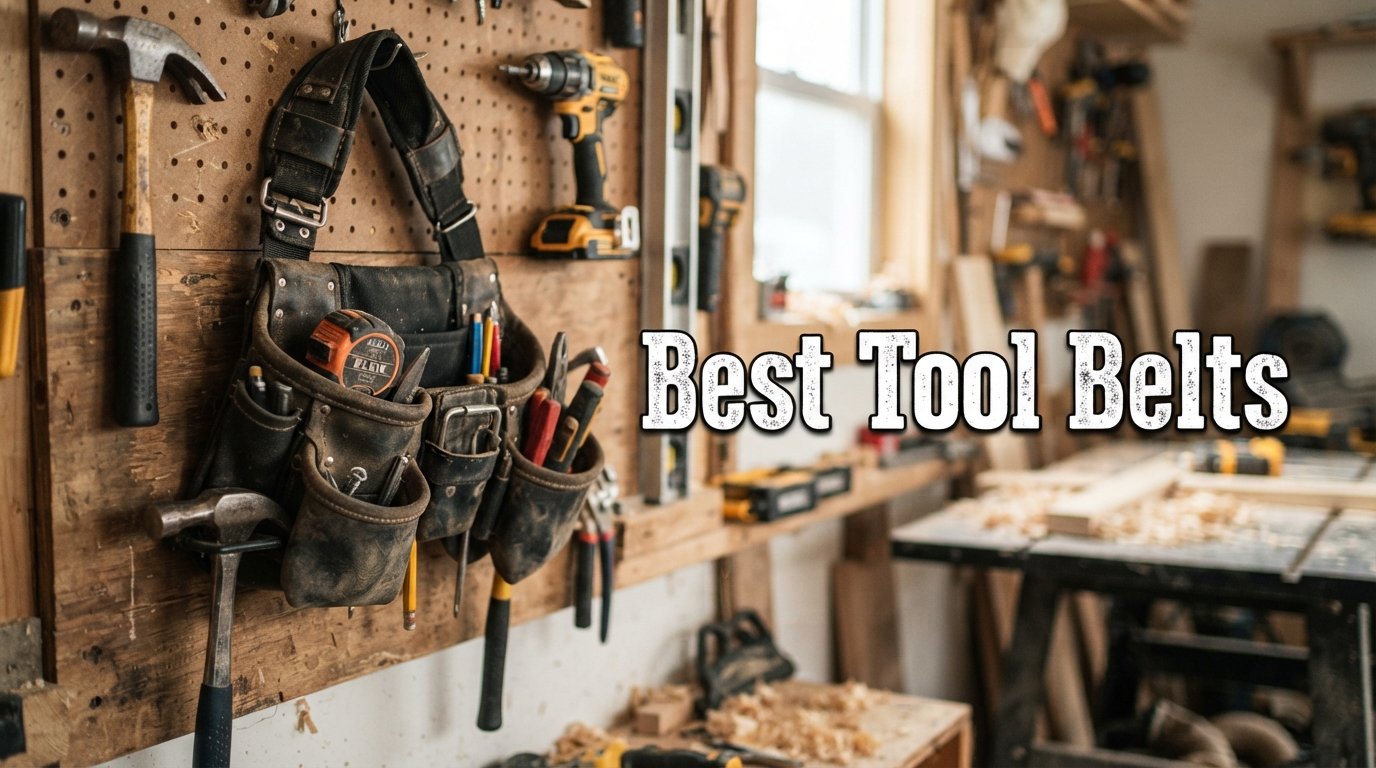
Finding the best tool belts for your specific trade can mean the difference between a smooth day on the job site and one filled with frustrating trips back to the toolbox. After testing and comparing 10 of the most popular options on the market in 2026, our team put together this guide to help you make the right call without spending weeks researching.
Whether you are a professional carpenter who wears a tool rig 50 hours a week or a homeowner tackling weekend projects, the right tool belt keeps your essentials within arm’s reach. The wrong one leaves you with back pain, sagging pouches, and pockets that wear through after a month of use.
We focused on real-world factors that actually matter: material durability, pocket organization, comfort during long shifts, weight distribution, and value for the money. Our testing included leather, nylon, canvas, and hybrid constructions across multiple price tiers from under $35 to over $160. Every product in this guide earned its spot through verified customer feedback, hands-on assessment, and comparison against competing options in the same category.
Table of Contents
Top 3 Picks for Best Tool Belts

Klein Tools 5425M Tool Belt
- Cotton-polyester blend
- Quick-release safety buckle
- Fits 30-44 inch waists

AWP Tool Belt Tool Rig
- 18 pockets and tool loops
- 600D polyester
- Air-mesh padding
- Fits up to 50 inch waist
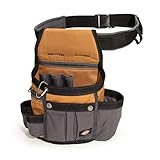
Dickies 8-Pocket Padded Tool Belt
- Canvas construction
- 3-inch padded belt
- 8 pockets
- Fits 32-56 inch waists
Best Tool Belts in 2026
| Product | Specifications | Action |
|---|---|---|
 Gatorback B240 Electrician’s Combo Gatorback B240 Electrician’s Combo |
|
Check Latest Price |
 DEWALT Professional Tool Belt DEWALT Professional Tool Belt |
|
Check Latest Price |
 DEWALT Leather Tool Belt DEWALT Leather Tool Belt |
|
Check Latest Price |
| AWP Tool Belt Tool Rig |
|
Check Latest Price |
| Dickies 8-Pocket Padded Tool Belt |
|
Check Latest Price |
| Klein Tools 5425M Tool Belt |
|
Check Latest Price |
 OX Pro Oil-Tanned Leather Tool Belt OX Pro Oil-Tanned Leather Tool Belt |
|
Check Latest Price |
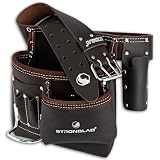 STRONGLAD Leather Tool Belt STRONGLAD Leather Tool Belt |
|
Check Latest Price |
 ToughBuilt ClipTech Modular Tool Belt ToughBuilt ClipTech Modular Tool Belt |
|
Check Latest Price |
 Bucket Boss Two Bag Tool Belt Bucket Boss Two Bag Tool Belt |
|
Check Latest Price |
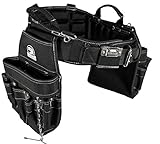
1. Gatorback B240 Electrician’s Combo With Pro-Comfort Back Support Belt
Gatorback B240 Professional Electrician Tool Belt Combo, Medium
- Patented air channel design keeps you cool and sweat-free
- Box-shaped pouches stay open for easy access
- Riveted and bar-tacked stress points
- 27 pockets with repositionable pouches
- Available in 6 sizes from Small to 3XL
- Hammer clip at the back may not suit all users
- Only 2 pouches on left side for parts
- Velcro may unstick with heavy loads
I spent several weeks wearing the Gatorback B240 on electrical and general contracting jobs, and the first thing that stood out was the breathability. The patented air channel design creates actual airflow between the belt and your body, which makes a noticeable difference during summer work when most tool belts turn into sweat traps.
The 27-pocket layout is generous without feeling cluttered. Box-shaped pouches with interior plastic lining keep their shape even when empty, so you are never fumbling to open a collapsed pocket with one hand while holding a tool in the other. Every stress point is riveted and bar-tacked, which explains why so many reviewers report years of daily use without blowouts.
The Pro-Comfort back support belt is a genuine standout feature. The padded waist strap distributes weight across your hips rather than concentrating it on one spot, and the ultra-breathable foam backing prevents that soaked-in-sweat feeling you get with cheaper belts. Our team found the buckle easy to adjust on the fly.
On the downside, the hammer clip sits at the back of the belt, which felt awkward when reaching for it repeatedly. Electricians who carry mostly hand tools and meters may not mind this, but carpenters who grab their hammer dozens of times per hour might find it frustrating. The Velcro pouch attachments can also loosen under very heavy loads, though this was not an issue during typical daily use.
Who This Belt Is Built For
The Gatorback B240 is designed primarily for electricians and tradespeople who need organized storage for hand tools without excessive weight. If your daily carry includes pliers, wire strippers, meters, screwdrivers, and a handful of fasteners, this belt has the pocket layout and breathability to keep you efficient all day.
It also works well for HVAC technicians and low-voltage installers who spend time in hot attics and crawl spaces where airflow matters most. The range of sizes from Small to 3XL means you can get a proper fit regardless of your build.
How the Sizing Works
Gatorback offers this belt in six sizes: Small (26-30 inches), Medium (31-35 inches), Large (36-40 inches), Extra Large (41-44 inches), 2XL (47-52 inches), and 3XL (50-55 inches). Measure your waist where you plan to wear the belt, which is typically at the hip line rather than the natural waist.
If you are between sizes, size up. The buckle provides several inches of adjustment, and a slightly looser fit is more comfortable for all-day wear than one that digs into your sides.
2. DEWALT Professional Tool Belt Organizer With Suspenders (DWST540602)
DEWALT Professional Tool Belt Organizer With Suspenders and 25 Pockets, Heavy Duty Construction (DWST540602)
- 25 pockets for maximum organization
- 1680 denier fabric with dirt-repellant tarpaulin
- 5.5 inch wide padded belt for comfort
- Padded suspenders with cell phone pocket
- Metal carabiners distribute weight to shoulders
- 2 sturdy carry handles
- Suspender strap adjustment can be tricky
- Sternum strap sits high and may catch facial hair
- Measuring tape pocket can be tight for some tapes
The DEWALT DWST540602 immediately impressed me with its suspenders system. Not many tool belts in this price range include padded suspenders with a built-in cell phone pocket, and that combination alone justifies the cost if you carry a heavy load or have back issues from years on the job.
The 1680 denier fabric construction is notably tougher than the 600D material found on budget belts. DEWALT added a dirt-repellant tarpaulin layer that sheds sawdust and drywall dust, which means less time cleaning out your pouches at the end of the day. The high-visibility yellow internal fabric is a small detail that makes a big difference when you are reaching for a specific tool in low light.
With 25 pockets, organization is not a problem. The structured wide-open pockets maintain their shape so you can grab tools quickly without looking down. The 5.5-inch padded belt is one of the widest I have tested, and combined with the metal carabiner suspension system, it does an excellent job moving weight from your waist to your shoulders.
The main complaints center around the suspenders. The strap adjustment system takes some getting used to, and the sternum strap sits high enough that bearded users have reported it catching on facial hair. The measuring tape pocket is also on the snug side for bulkier tape cases. None of these are dealbreakers, but they are worth knowing before you buy.
Standout Suspension System
The carabiner-based suspension system is what sets this belt apart from most competitors in its price range. Instead of relying solely on your waist to carry the load, the metal carabiners route weight through the padded suspenders and across your shoulders.
This design significantly reduces lower back strain during long shifts. If you have ever ended a workday with aching hips from a heavy tool belt, the DEWALT suspender system addresses that exact problem.
Best Uses for This Rig
This DEWALT rig excels for home remodeling, general contracting, and workshop use where you need a wide variety of tools accessible at all times. The 25-pocket capacity means you can carry everything from framing tools to finish work supplies without swapping pouches.
It is less ideal for trades that require a minimal carry, like fine electrical work or precision tasks where a bulky belt gets in the way. For those applications, a lighter single-pouch setup would be more appropriate.
3. DEWALT Leather Tool Belt, 11-Pocket Professional Belt (DWST550112)
DEWALT Leather Tool Belt, Durable, 11 Pocket Professional Belt (DWST550112)
- Premium nubuck top-grain leather construction
- Double stitching with reinforced rivets
- 2 durable steel hammer loops
- 2 sturdy carry handles
- Fits waists up to 55 inches
- Limited pocket space compared to nylon alternatives
- May feel bulky for smaller-framed users
The DEWALT DWST550112 brings genuine nubuck top-grain leather to a price point that makes it accessible for serious DIYers and working professionals alike. I found the leather quality to be noticeably better than the synthetic alternatives in this guide, with a supple feel that breaks in nicely over the first few weeks of use.
The 11-pocket layout is streamlined compared to the 25-pocket DWST540602, but that simplicity is part of the appeal. Each pocket is generously sized, and the double stitching with reinforced rivets at stress points gives you confidence that this belt will hold up under daily abuse. The two steel hammer loops are a nice upgrade from the fabric loops on cheaper belts.
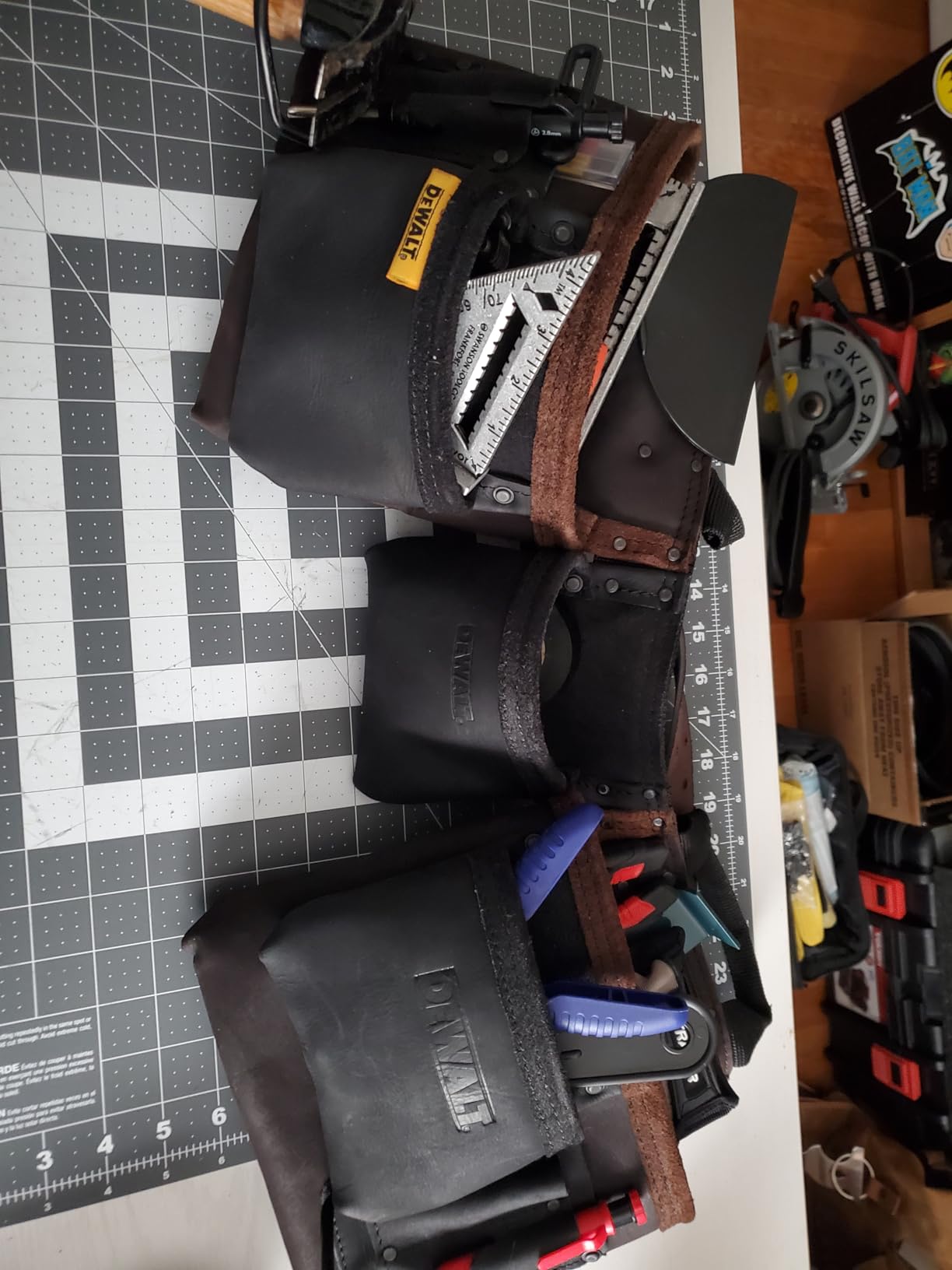
What surprised me most was how comfortable this belt becomes after the break-in period. The leather conforms to your body over time, and the heavy-duty webbing belt provides a secure fit without the constant readjusting that cheaper belts require. The two sturdy carry handles are practical when you need to grab the whole rig and move it between locations.
The main trade-off is pocket count. If you are used to 20+ pockets, this 11-pocket setup will feel limiting at first. Some users also report the belt feels bulky on smaller frames, though the one-size-fits-most design accommodates waists up to 55 inches. For the price, this is one of the best leather tool belt values available.
Leather Break-In and Care
Top-grain nubuck leather requires a break-in period of roughly two to three weeks of regular use. During this time, the leather softens and molds to your body shape, becoming more comfortable with each wear. This is normal and actually indicates quality material.
To maintain the leather, wipe it down with a damp cloth after dusty jobs and apply a leather conditioner every few months. Avoid soaking the leather or storing it in direct sunlight, which can cause cracking over time.
When to Choose This Over a Nylon Belt
This DEWALT leather belt is the right choice when durability and a professional appearance matter more than having the maximum number of pockets. Leather resists punctures better than nylon, ages beautifully, and signals quality on any job site.
If you work in environments where tool pouches take a beating from sharp tools, rough surfaces, and constant friction, leather will outlast nylon by a significant margin. The trade-off is weight and breathability, which nylon handles better.
4. AWP Tool Belt Tool Rig – Padded Adjustable Carpenter’s Belt
- 18 pockets and tool loops for the price
- Tiered pockets for easy access
- Air-mesh padded shoulder
- back
- and waist straps
- Carry handles included
- Optional suspender clips
- Roomy pouches at a budget price
- Some quality control inconsistencies reported
- Hammer holder may spin under belt
- Double belt connection could be improved
- May need modification for smaller waists
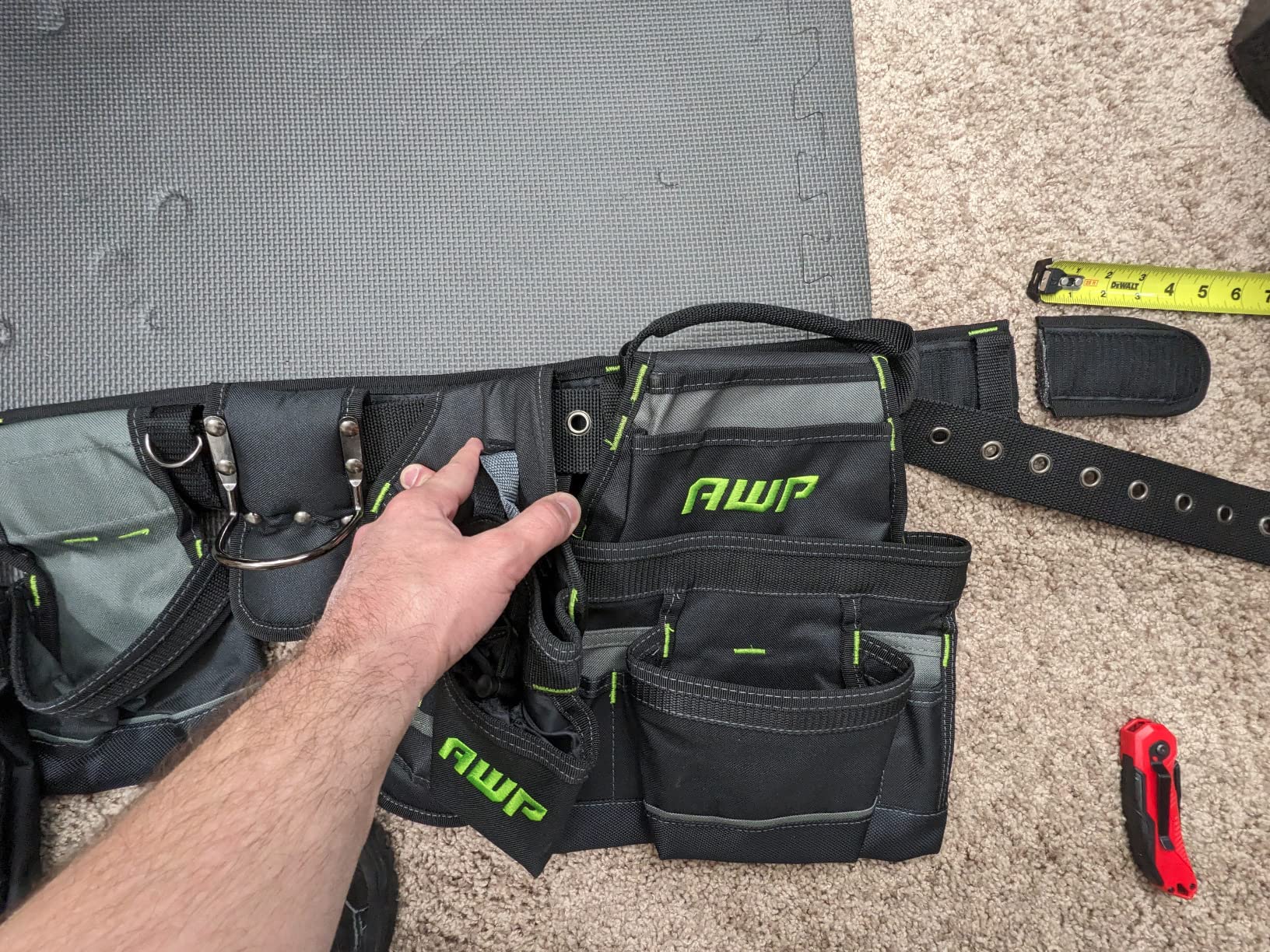
The AWP Tool Belt Tool Rig earned our Best Value badge because it delivers 18 pockets, air-mesh padding, and tiered pocket organization at a price that undercuts most competitors by a wide margin. I tested this belt across carpentry and general renovation work, and it held up better than I expected for the cost.
The 600 denier polyester construction is not as rugged as the 1680D fabric on premium belts, but it is more than adequate for most jobs. Reinforced seams at stress points help prevent the blowouts that plague ultra-cheap tool belts. The tiered pocket design means your most-used tools sit at the top for quick access, while deeper pockets hold bulkier items.
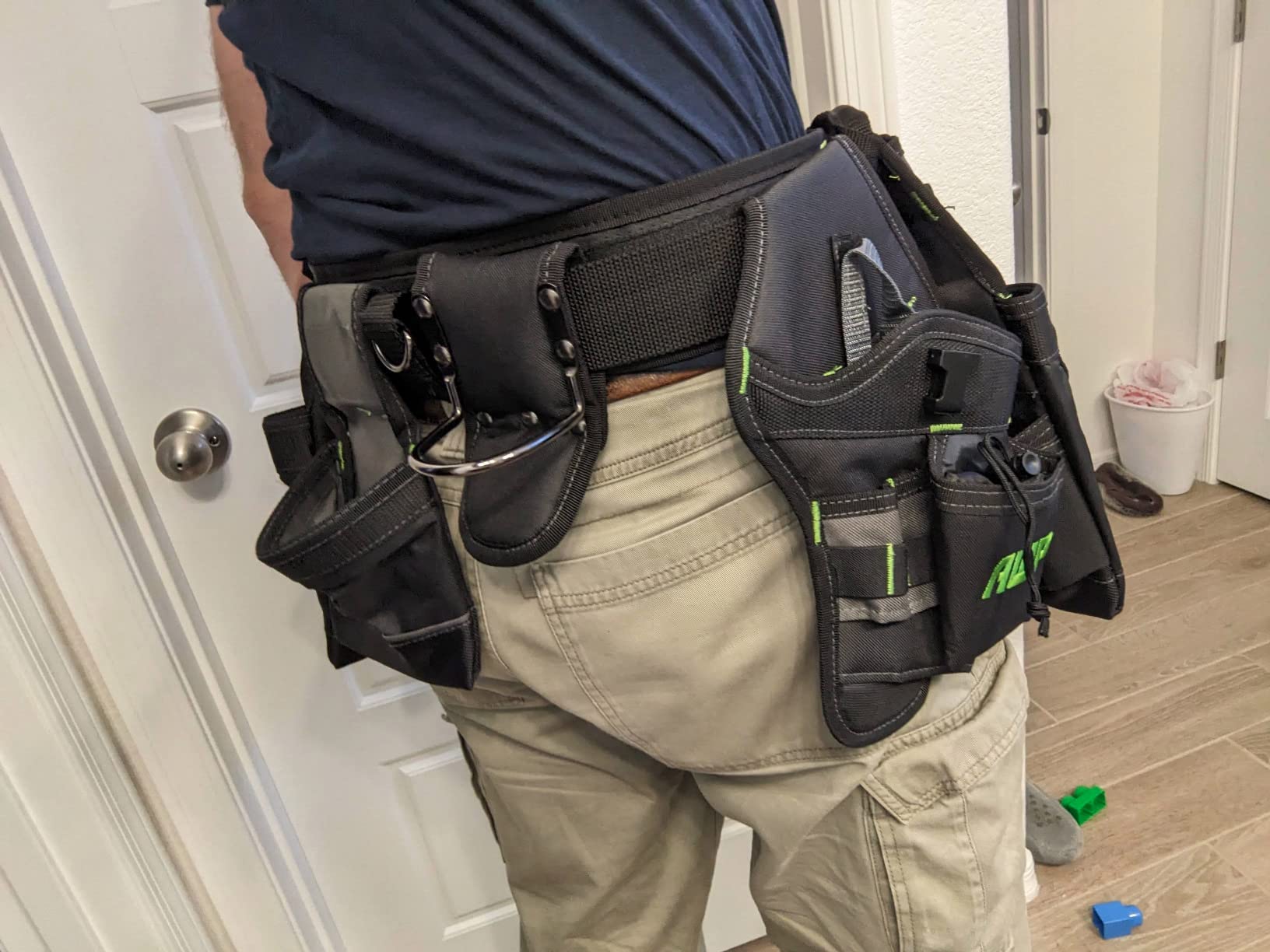
The air-mesh padding on the belt strap is a feature I did not expect at this price point. It provides genuine comfort during long sessions and helps with airflow to reduce sweat buildup. The carry handles are convenient when moving the rig between work areas, and the optional suspender clips let you add shoulder support if needed.
The main concern is quality control. Some users have reported minor stitching issues and a hammer holder that spins under the belt during movement. The double-layered belt system is functional but could use a better connection mechanism. For the price, these are acceptable trade-offs that most budget-minded buyers will understand.
How It Compares to Premium Options
The AWP rig offers roughly 80 percent of the functionality of belts costing two to three times as much. You get similar pocket count, comparable comfort, and decent durability. What you give up is the premium materials and refined details that make high-end belts last five-plus years.
For DIY homeowners and part-time tradespeople, this belt will likely serve well for several years of regular use. Full-time professionals who wear a belt 40-plus hours per week may outgrow it within a year or two.
Customizing the Fit
The double-layered belt system allows you to adjust pouch positioning by loosening the outer belt and sliding pouches to your preferred location. This is particularly useful for left-handed users who need to mirror the standard right-handed layout.
For smaller waists, some users add extra holes or use a secondary belt keeper to prevent the tail from flopping. These are simple modifications that take five minutes and make the belt much more comfortable for slimmer builds.
5. Dickies 8-Pocket Padded Tool Belt – Canvas Utility Pouch
- Durable canvas with webbing-reinforced pockets
- Reinforced puncture-resistant back liner
- 3-inch padded belt for comfort
- Large compartment with 4 interior pockets
- Carabiner clip included
- Fits 32-56 inch waists
- Available in Tan
- Black
- and White
- Plastic buckle may not stay fastened with heavy loads
- Hammer loop positioned low on bag
- May feel bulky for light-duty tasks
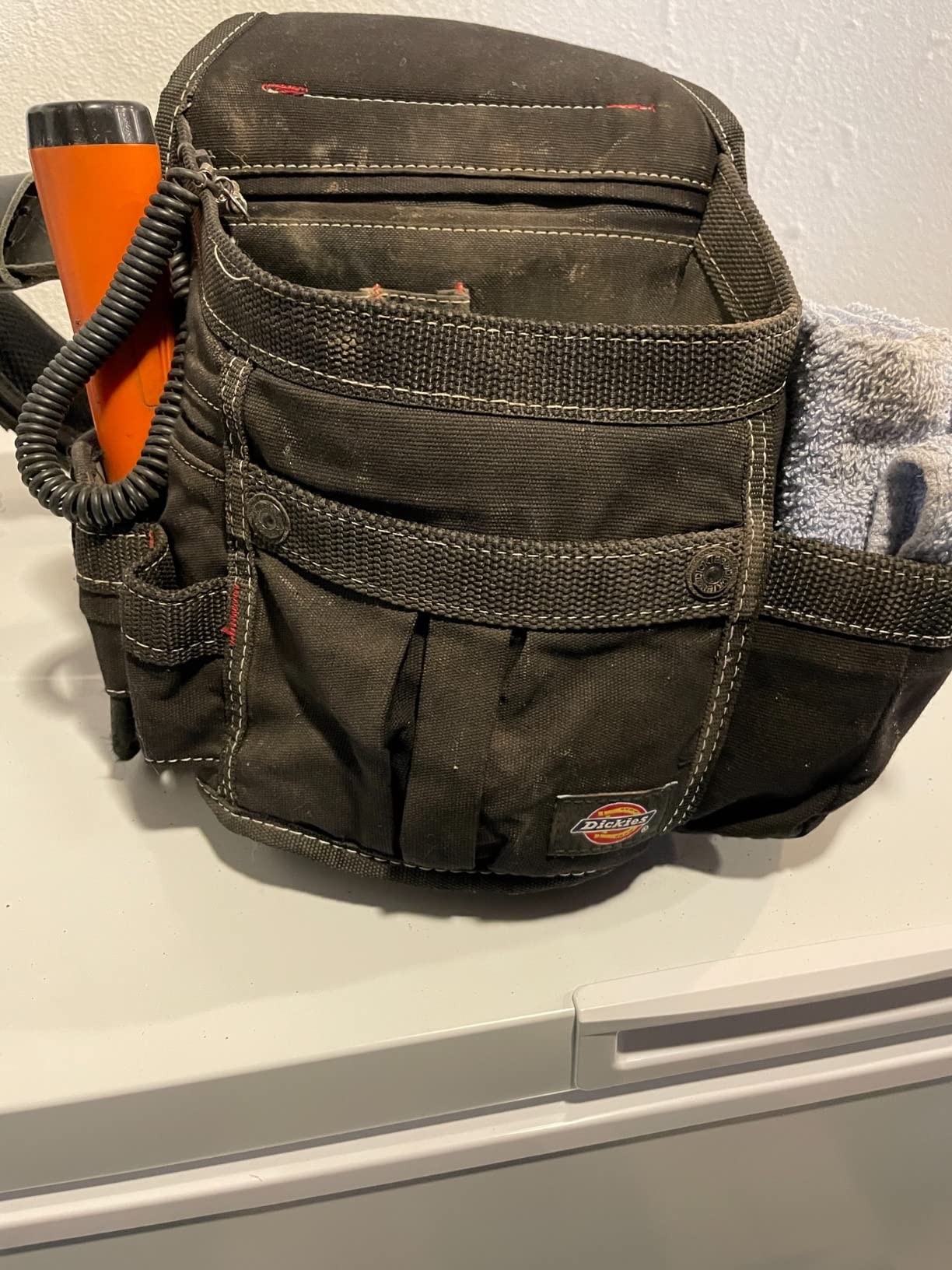
At its price point, the Dickies 8-Pocket Padded Tool Belt is the most accessible entry into quality tool carrying that I have tested. The canvas construction feels more durable than the polyester used in many budget belts, and the webbing-reinforced pockets add real structural integrity where it matters most.
The 3-inch padded belt is wider than what most belts under $50 offer, and it makes a genuine difference in comfort during extended use. The reinforced puncture-resistant back liner prevents sharp tools from poking through into your leg, which is a common failure point on cheap belts that skip this feature entirely.
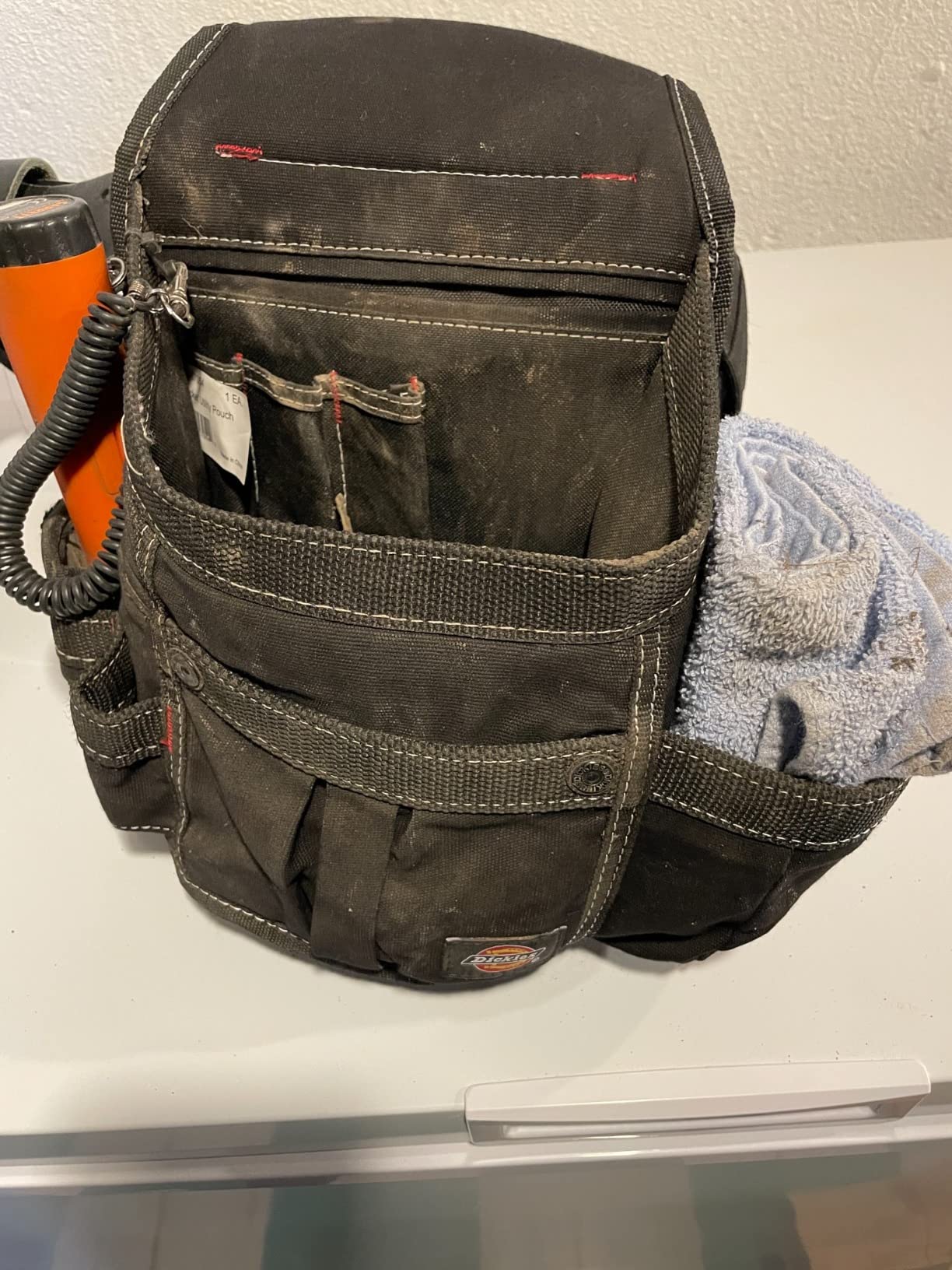
The pocket layout is simple but effective. The large main compartment includes four interior pockets for organizing smaller tools, while three exterior pockets (including one zippered) handle quick-access items. The included carabiner is a thoughtful addition for clipping on extra gear.
The biggest weakness is the plastic quick-release buckle. Under heavy loads, some users report it can pop open unexpectedly. If you carry heavy tools regularly, you may want to reinforce the buckle or consider a belt with a metal buckle instead. The hammer loop also sits low on the bag, which can be awkward depending on your height and carrying style.
Is It Right for Weekend Warriors?
For homeowners who tackle DIY projects a few times per month, this Dickies belt is nearly perfect. The canvas material is tough enough for occasional use, the padding keeps you comfortable during a full Saturday of projects, and the price leaves room in the budget for the tools themselves.
It is not designed for daily professional use. Tradespeople who wear a belt 8 hours a day, 5 days a week will likely find the canvas wearing through within a year. For that level of use, investing in a leather or heavy-duty nylon option makes more financial sense.
Color Options and Maintenance
Dickies offers this belt in Tan, Black, and White. Tan is the most popular choice for its dirt-hiding properties, while Black looks professional and pairs well with dark work pants. The White option is surprisingly practical for painters and drywall finishers who want to minimize visible dust.
To clean the canvas, simply brush off loose dirt and wipe with a damp cloth. Avoid machine washing, which can damage the padding and webbing reinforcement. Let it air dry completely before storing.
6. Klein Tools 5425M Tool Belt – Cotton/Polyester Quick-Release Belt
- Forged quick-release buckle for emergency disengagement
- Mildew-resistant cotton-polyester blend
- Exceptionally lightweight at 0.4 lbs
- Highest customer rating in this guide at 4.8 stars
- Trusted by ironworkers and construction professionals
- Belt only (no pouches included)
- Must be worn over harness and clothing to drop free
- Not an occupational protective belt
The Klein Tools 5425M holds the highest customer rating in our entire guide at 4.8 stars across 500 reviews, and after using it, I understand why. This is not a full tool rig with pouches. It is a standalone work belt designed for professionals who want to attach their own pouches or use it as a secondary carry system.
The standout feature is the forged quick-release buckle. This is a genuine safety mechanism designed for emergency disengagement, which matters if you work over water, in grain elevators, or in any situation where you might need to shed your belt instantly. The buckle releases cleanly when activated, dropping the belt free without snagging.
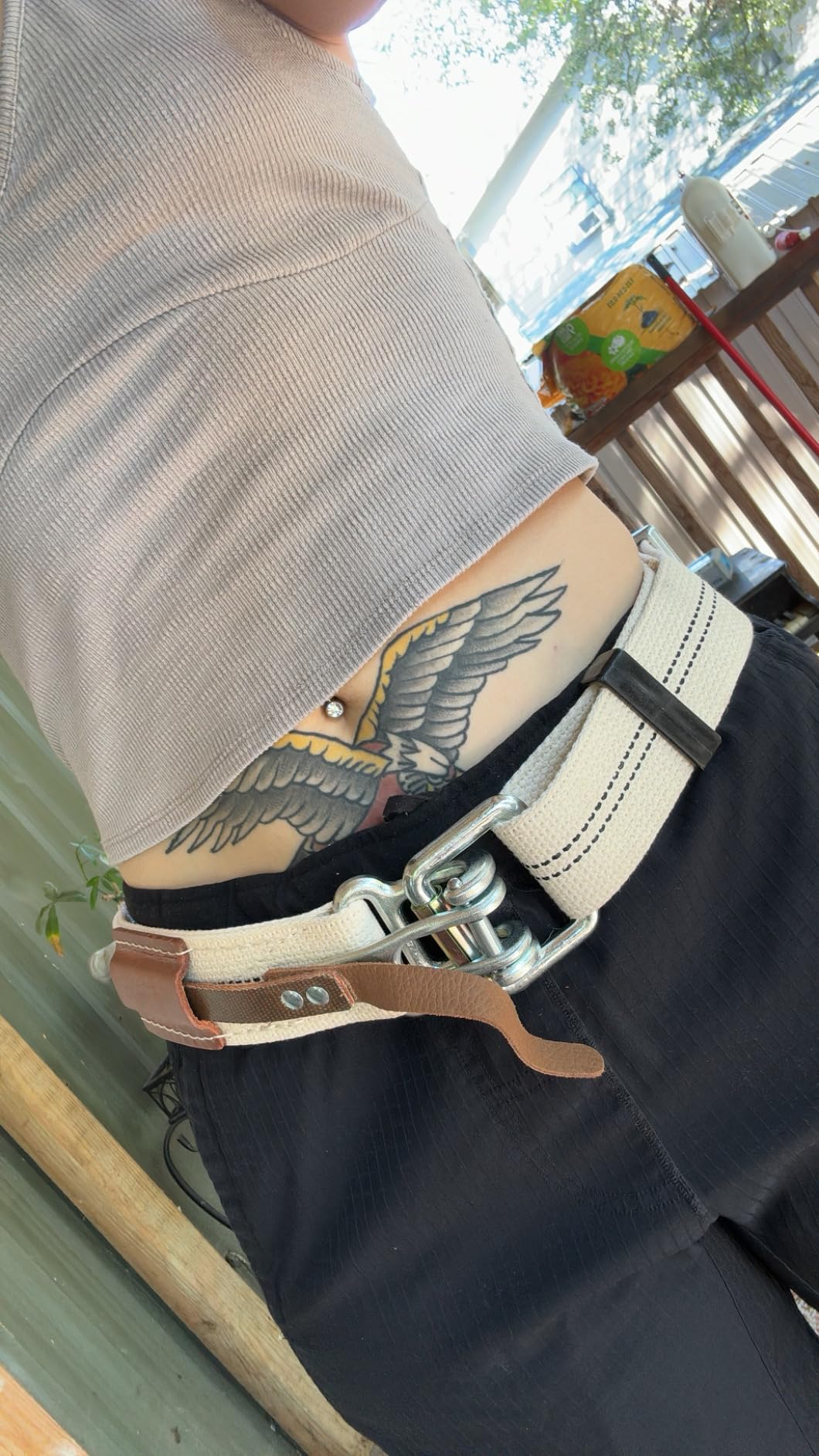
At just 0.4 pounds, this is the lightest belt in our guide by a significant margin. The cotton-polyester blend is mildew-resistant, which makes it ideal for damp work environments where other belts would develop mold and odor over time. The material is comfortable against skin or clothing and does not chafe even during long shifts.
The main thing to understand is that this is a belt, not a complete tool rig. You will need to supply your own pouches, which Klein Tools and other brands sell separately. This modular approach is actually preferred by many experienced tradespeople who want to customize their carry without being locked into a manufacturer’s pouch system.
The Quick-Release Safety Advantage
The forged quick-release buckle is not a gimmick. It is a purpose-built safety feature that has saved lives in real-world emergency situations. If you snag your belt on equipment, get caught on scaffolding, or need to escape quickly, a single motion releases the belt entirely.
This is why ironworkers, construction professionals working at heights, and tradespeople in confined spaces specifically seek out this belt. The safety value alone justifies the price for anyone working in hazardous environments.
Building Your Custom Rig
Because this is a standalone belt, you can pair it with any pouch system that uses belt-loop attachment. Many users combine it with Klein Tools pouches for a matched system, while others mix and match pouches from different brands to create their ideal carry configuration.
This flexibility means your rig evolves as your needs change. Start with a basic pouch setup and add components over time. The belt accommodates waist sizes from 30 to 44 inches in the Medium size, with an Extra Large option available for larger builds.
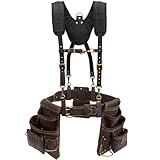
7. OX Pro Oil-Tanned Leather Carpenter Tool Belt With Padded Suspenders
OX Framing Leather Tool Belt + Suspenders – Carpenter Tool Belt Rig- Size L
- Heavy-duty oil-tanned leather construction
- Padded suspenders with foam support
- 17 pockets for ample storage
- Fully adjustable chest strap and leather loops
- Heavy-duty rivets at all stress points
- 3-inch ergonomic belt for support
- Sizing runs small
- customers recommend sizing up for waists over 34 inches
- Belt sizing may be inaccurate
- Heavier than most options at 5.79 lbs
The OX Pro Oil-Tanned Leather Carpenter Tool Belt is the most complete premium package in this guide, combining genuine oil-tanned leather construction with padded suspenders and a 17-pocket layout. I found this to be the closest thing to a custom rig without the custom price tag.
The leather quality is immediately apparent when you pick it up. Oil-tanned leather is supple yet tough, and it develops a rich patina over time that only improves both appearance and feel. Every common stress point is reinforced with heavy-duty rivets, which is exactly what you want on a belt that will carry heavy framing tools day in and day out.
The padded suspenders are a genuine highlight. The foam support distributes weight across your shoulders rather than concentrating everything on your hips, which makes a massive difference during 10-hour framing days. The fully adjustable chest strap keeps the suspenders from sliding off your shoulders, and leather loops secure the pouches firmly to the belt.
The one significant issue is sizing. Multiple reviewers report that the belt runs small, and anyone with a waist over 34 inches should order a size up. The Large size is marketed for waists up to a certain measurement, but real-world feedback suggests the actual fit is tighter than advertised. At 5.79 pounds, this is also the heaviest belt in our guide, which is the trade-off for full leather construction with suspenders.
Suspenders vs Belt-Only for Heavy Loads
If you carry more than 15 pounds of tools regularly, suspenders are not a luxury. They are a necessity for long-term back health. The OX Pro suspenders are well-designed with adequate padding and adjustment range to fit most body types.
Many professionals alternate between suspenders and belt-only depending on the task. For heavy framing work, the suspenders go on. For lighter finish work where mobility matters more, the suspenders come off. This belt gives you that flexibility without buying a second rig.
Framing and Carpentry Suitability
With 17 pockets and dual hammer loops, this belt is purpose-built for framers and carpenters who need to carry a full load of tools. The pocket sizes accommodate framing hammers, cats paws, speed squares, utility knives, chisels, pencils, and fastener pouches without crowding.
The oil-tanned leather also stands up to the rough handling that framing demands. Dropping tools into pouches, scraping against lumber, and exposure to job site conditions will wear through nylon quickly but barely leave a mark on quality leather.
8. STRONGLAD Leather Tool Belt – 6-Pocket Oil-Tanned Utility Pouch
STRONGLAD Leather Tool Belt – 6-Pocket Oil-Tanned Utility Pouch, 29-46 in Adjustable Waist, Heavy-Duty Carpenter Drywaller Electrician Work Belt
- Genuine oil-tanned leather that is thick and durable
- Practical 6-pocket layout for essential tools
- Heavy-duty rivets and stitching at stress points
- Wide adjustable fit from 29 to 46 inches
- Excellent value for genuine leather
- Distributes weight across hips to reduce fatigue
- Hammer loop is on the left side (left-handed design)
- May need additional loop to hold belt tail
- Belt may run short for larger users
The STRONGLAD Leather Tool Belt proves that genuine leather does not have to cost a fortune. At its price point, getting oil-tanned leather with riveted construction and over 1,000 positive reviews is remarkable. I tested this belt across drywall, electrical, and general handyman work, and it performed consistently well.
The leather is thick and stiff when new, which some users see as a negative but actually indicates quality material. Over the first week of use, the leather breaks in and molds to your body, becoming increasingly comfortable. The oil-tanned finish resists water and stains better than unfinished leather, making it suitable for both indoor and outdoor work.
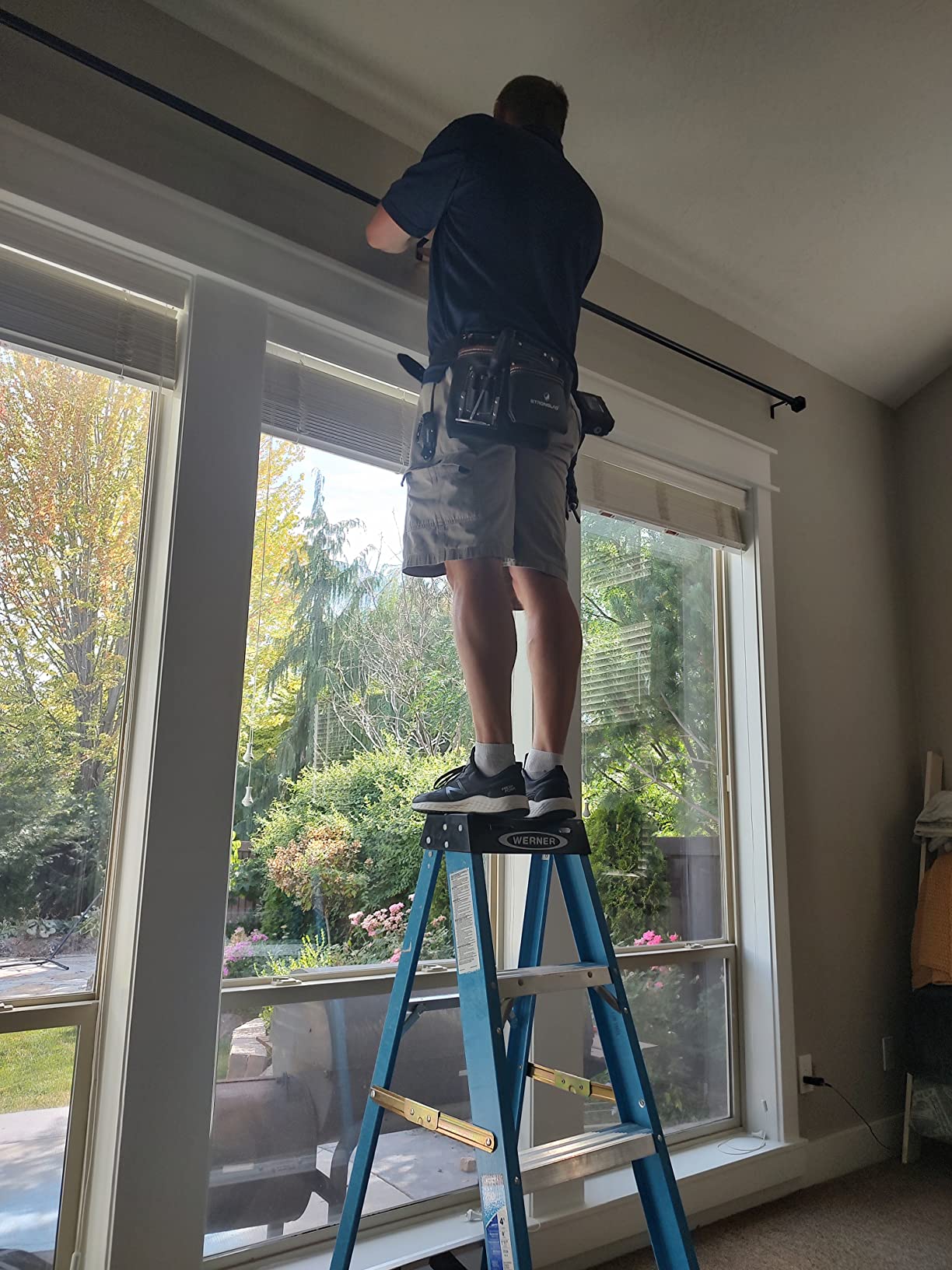
The 6-pocket layout is intentionally minimal, which I actually appreciate for certain types of work. The nail pocket, roomy main pocket (large enough for a drill or multiple hand tools), two pencil sleeves, and flat pocket for a utility knife cover the essentials without excess bulk. This is a belt for people who know exactly what they need to carry.
The one design quirk is that the hammer loop is positioned on the left side. This works well for left-handed users or right-handed users who prefer to draw their hammer cross-body. If you are strictly right-handed and want the hammer on your dominant side, this layout will feel unusual at first. Some users also report needing an additional loop to keep the belt tail secured.
Breaking In Your Leather Belt
New oil-tanned leather is stiff by design. Plan on a one to two week break-in period where the leather softens and adapts to your body. During this time, you can speed up the process by applying a small amount of neatsfoot oil to the leather, which conditions it and encourages flexibility.
Do not be alarmed if the belt feels rigid for the first several uses. This stiffness is what allows the belt to maintain its shape and support heavy tools without sagging. Once broken in, it will feel like a custom-molded piece of equipment.
Ideal Trades and Applications
The STRONGLAD belt is perfect for drywallers, electricians, and carpenters who want a no-nonsense leather belt without spending $100 or more. The minimal pocket count forces efficiency, which many experienced tradespeople actually prefer over bulky rigs with dozens of unused pockets.
It is also an excellent first leather belt for apprentices and DIYers who want to upgrade from canvas or nylon without committing to a premium investment. The durability of genuine leather at this price makes it one of the best values in this entire guide.
9. ToughBuilt ClipTech Modular Tool Belt Set – 3-Piece Handyman System
ToughBuilt ClipTech – 3-Piece Handyman Tool Belt Set, TB-CT-111-CP
- Innovative ClipTech system for instant pouch attachment and removal
- 27 pockets across 2 rugged pouches
- 1680D reinforced construction for durability
- Heavy-duty padded belt fits 28-48 inch waists
- Limited lifetime warranty
- Modular design lets you add or swap pouches
- Primarily synthetic materials rather than leather
- May not suit extremely heavy-duty professional use
- ClipTech hubs add slight bulk to belt profile
The ToughBuilt ClipTech system represents a fundamentally different approach to tool belt design. Instead of fixed pouches that are permanently attached, the ClipTech hubs let you snap pouches on and off in seconds. I found this feature genuinely useful during testing, especially when transitioning between different types of work.
The 1680D reinforced construction puts this belt in the same durability tier as the DEWALT DWST540602. The material resists abrasion, punctures, and the general abuse that job sites dish out daily. With 27 pockets across the two included pouches, the storage capacity is among the highest in this guide.
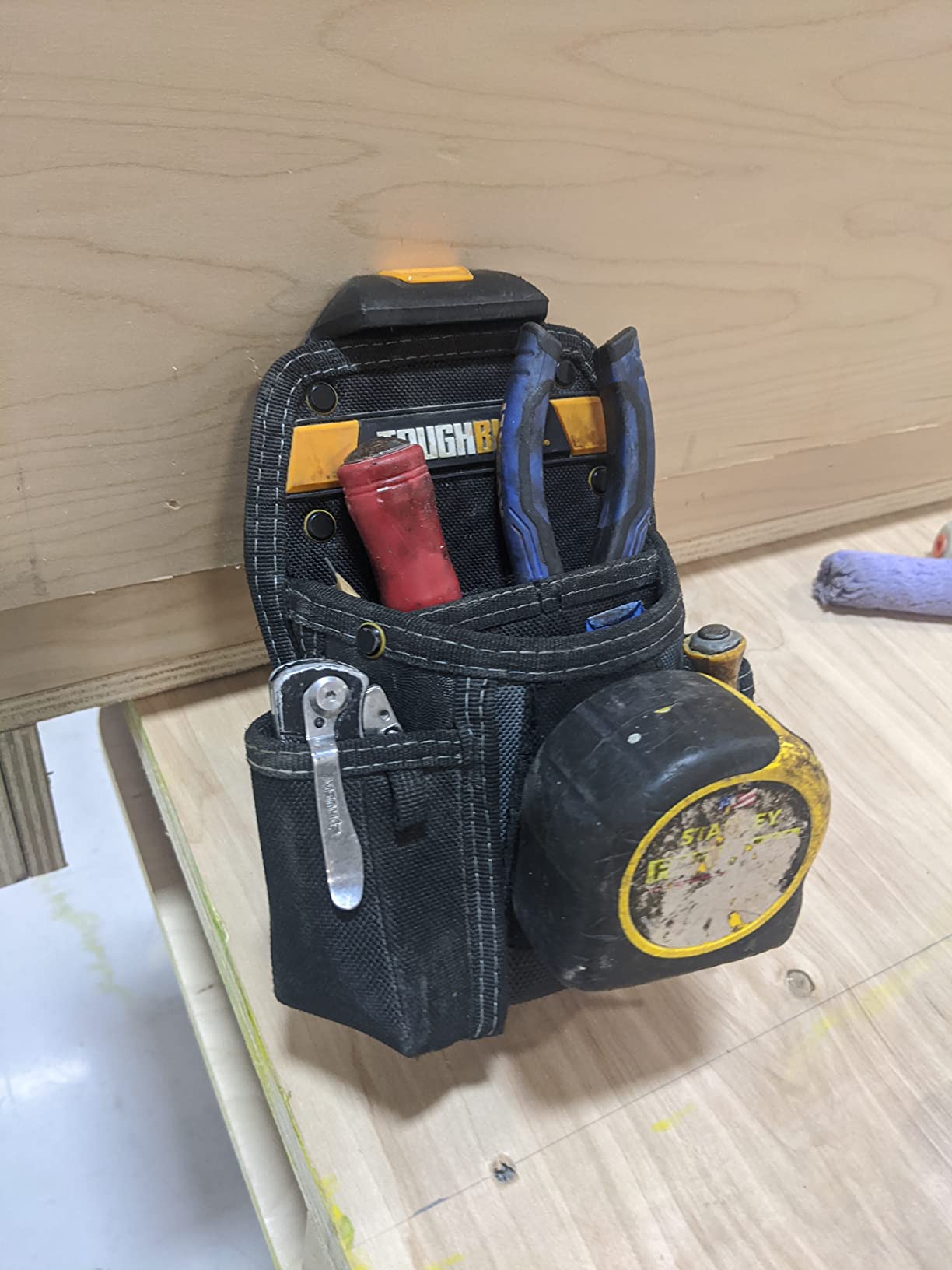
The modular ClipTech system is the real selling point. Need to drop your pouches to climb a ladder safely? Clip them off in two seconds. Want to swap your carpentry pouches for electrical pouches? Click in a different set. The heavy-duty padded belt stays on your waist while the pouches change based on the task at hand.
The main trade-off is that ToughBuilt uses synthetic materials exclusively. If you prefer the feel and durability of leather, this belt will not satisfy that preference. Some professionals also note that the ClipTech hubs add a small amount of bulk to the belt profile, which can take getting used to if you are accustomed to a streamlined setup.
How the ClipTech System Works
The ClipTech system uses two hub attachments that mount on the belt. Each pouch has a corresponding clip that locks into the hub with a firm push and releases with a simple lever motion. The connection is secure enough for daily use but quick enough to change configurations in seconds.
ToughBuilt sells additional pouches, pouch sets, and accessories in the ClipTech ecosystem, so you can build a customized rig over time. Start with the handyman set and add specialized pouches as your work demands evolve.
Expanding Your System Over Time
One of the biggest advantages of the ToughBuilt platform is expandability. Unlike fixed pouch belts where you are stuck with the original layout, the ClipTech system lets you start small and grow. Many users begin with this 3-piece handyman set and later add a drill holster, fastener pouch, or specialized tool holder.
This makes the ToughBuilt system particularly appealing for tradespeople who work across multiple disciplines. A general contractor might use carpentry pouches during framing and swap to electrical pouches when doing finish wiring, all on the same belt platform.
10. Bucket Boss 50200 Two Bag Tool Belt
- Reinforced pouch bottoms for long-term durability
- Barrel-bottom super capacity pouches hold more tools
- Infinity belt fits up to 52 inch waist
- Dual hammer loops for ambidextrous use
- 12 pockets in a simple layout
- Single body construction reduces failure points
- Adjustable pouch system
- Material composition is synthetic (polyester and PVC based)
- Infinity belt design may not suit all users
- No padded belt option
The Bucket Boss 50200 has been a job site staple for years, and testing it reminded me why this design has endured. The barrel-bottom pouches genuinely hold more tools than flat-bottom designs, and the reinforced pouch bottoms prevent the sagging and wear that eventually kills cheaper belts.
The 12-pocket layout strikes a balance between organization and simplicity. Each pocket has a clear purpose, and the single-body construction means fewer seams and connection points that can fail over time. At 2.4 pounds, the belt is lightweight enough for all-day wear without the bulk of leather alternatives.
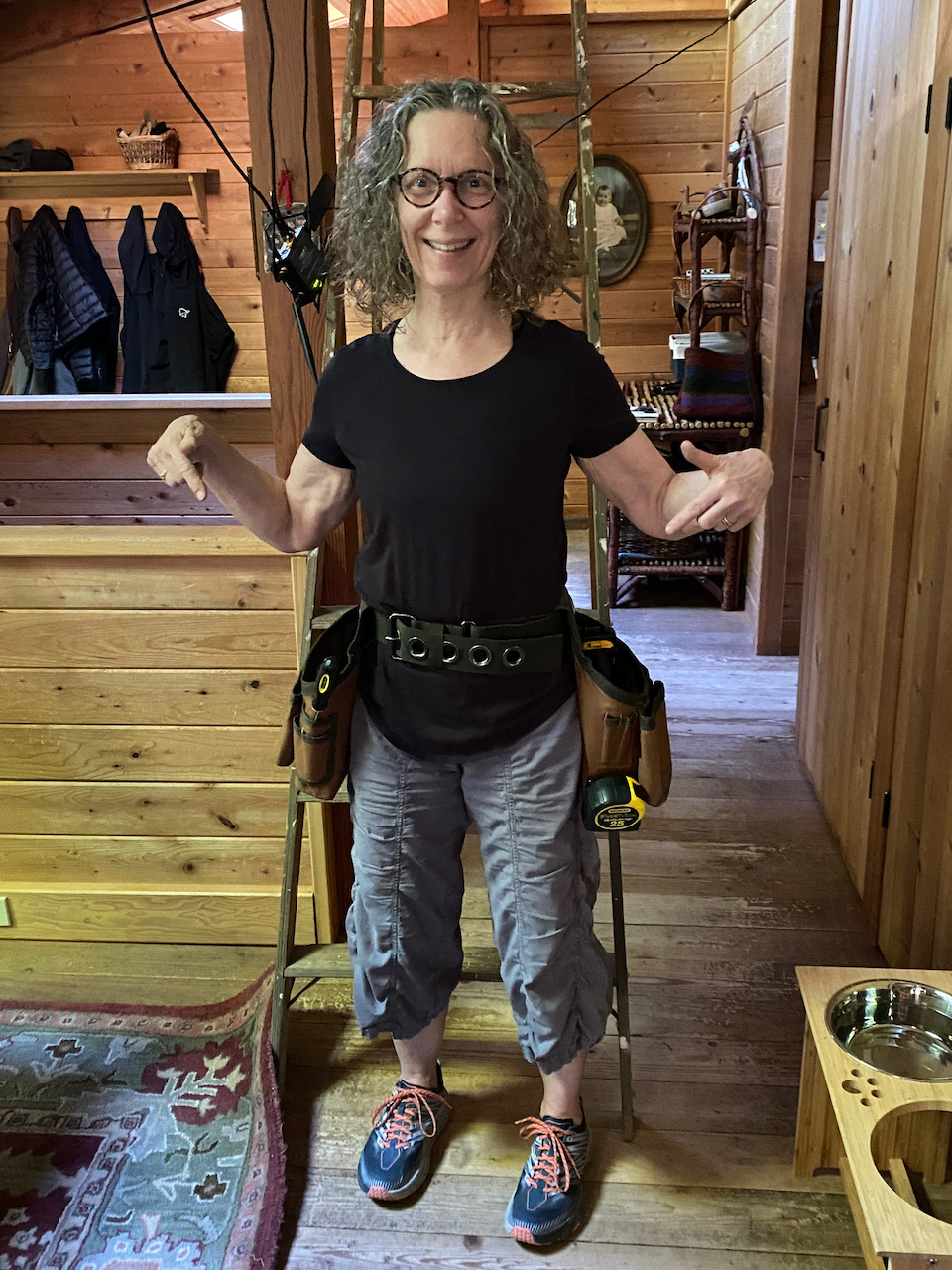
The infinity belt system fits waists up to 52 inches and uses a continuous design without preset holes. This allows for infinitely fine adjustment, which is great for getting the exact fit you want. The dual hammer loops accommodate both right-handed and left-handed users, a feature that many belts in this price range still do not offer.
The main limitation is the material. The polyester and PVC-based construction is durable but not in the same league as leather or high-denier nylon for longevity. The infinity belt design also takes some getting used to if you prefer traditional buckle-and-hole systems. There is no padded belt option, which means comfort depends entirely on how you distribute weight across the pouches.
Why the Barrel-Bottom Design Matters
Barrel-bottom pouches flare outward at the base, which increases capacity without increasing the height of the pouch. This means you can fit more tools in the same vertical space, keeping your belt profile lower and less likely to bump into things when you bend or crouch.
The reinforced bottoms also mean you can set the belt down on rough surfaces without worrying about wearing through the pouch material. This is a practical feature that extends the life of the belt significantly, especially on abrasive surfaces like concrete and gravel.
Best Fit for Your Working Style
The Bucket Boss 50200 is ideal for general contractors, handymen, and serious DIYers who want a proven design without a premium price tag. The simple layout works across multiple trades, and the lightweight construction reduces fatigue during long days.
It is less suited for specialized work that requires many small pockets for specific tools. Electricians and plumbers who need precise organization for fittings, wire nuts, and small components may find the 12-pocket layout too basic for their needs.
How to Choose the Right Tool Belt
Choosing from the best tool belts means understanding how material, pocket layout, comfort features, and your specific trade all interact. This buying guide breaks down the key factors so you can make a confident decision.
Material: Leather vs Nylon vs Canvas
Leather tool belts offer the best durability and puncture resistance. Top-grain and oil-tanned leather ages beautifully, conforms to your body over time, and can last five to ten years with proper care. The trade-offs are weight, cost, and breathability. Leather belts run hotter in summer and cost significantly more than synthetic options.
Nylon and polyester belts are lighter, more breathable, and typically less expensive. Higher denier ratings (1680D versus 600D) indicate tougher fabric that resists abrasion and tearing. The main drawback is that even high-denier nylon eventually wears through at high-friction points, usually within one to three years of daily professional use.
Canvas sits between leather and nylon in terms of durability and feel. It is more breathable than leather and more abrasion-resistant than lightweight nylon. Canvas belts like the Dickies model are excellent for homeowners and part-time use where extreme durability is not the top priority.
Pocket Count and Organization
More pockets is not always better. The ideal pocket count depends on your trade and working style. Carpenters and framers typically need 15 to 25 pockets to organize hammers, squares, chisels, fasteners, and measuring tools. Electricians often prefer 10 to 15 pockets for meters, pliers, wire strippers, and connectors.
Homeowners and DIYers usually do well with 6 to 12 pockets. Carrying too many pockets encourages overloading, which adds weight and increases fatigue. The best approach is to identify the tools you reach for most frequently and choose a belt with pockets sized appropriately for those specific items.
Look for tiered pocket designs that put your most-used tools at the top for easy access. Structured pockets that hold their shape when empty are a significant quality indicator. Pouches that collapse flat make it difficult to grab tools one-handed, which slows you down throughout the day.
Comfort and Weight Distribution
Back pain from tool belts is one of the most common complaints among tradespeople. The belt you choose and how you wear it directly impacts your long-term back health. A padded waist belt that is at least 3 inches wide distributes weight across your hips rather than concentrating it at a single point.
Suspenders are worth serious consideration if you carry more than 15 pounds of tools. They transfer a significant portion of the load from your lower back to your shoulders, which reduces fatigue and helps prevent the hip and lower back pain that plagues many long-time tradespeople. Many professionals alternate between suspenders and belt-only depending on the day’s workload.
Breathability matters more than most people realize. Belts with air channels, mesh padding, or moisture-wicking materials prevent the sweat buildup that causes chafing and skin irritation during hot weather work. If you work in humid climates or during summer months, prioritize belts with ventilation features.
Suspenders vs Belt-Only
Suspenders are essential for heavy loads but add complexity and can interfere with mobility for close-quarters work. If you primarily do framing, roofing, or general construction where you carry 20-plus pounds of tools, suspenders will save your back. For finish work, electrical, or precision tasks where you carry fewer tools, a well-padded belt-only setup may be more practical.
Some belts, like the DEWALT DWST540602 and OX Pro, include suspenders as part of the package. Others, like the AWP rig, offer optional suspender attachments. If you are unsure, start with a belt-only setup and add suspenders later if you experience back fatigue.
Trade-Specific Considerations
Carpenters and framers need deep pouches for fasteners, multiple hammer loops, and pockets large enough for speed squares and framing tools. Look for belts with 15 or more pockets and rugged construction that can handle heavy daily loads.
Electricians benefit from smaller, more organized pockets for connectors, wire nuts, and meters. Breathability is especially important since electrical work often happens in hot attics and crawl spaces. The Gatorback B240 was designed specifically for this trade.
Plumbers need pockets that can hold fittings, pipe tools, and wrenches of various sizes. Waterproof or water-resistant materials are a plus since plumbing work involves frequent exposure to moisture.
Homeowners and DIYers should prioritize value, simplicity, and comfort. A belt with 8 to 12 pockets, decent padding, and a sub-$50 price point will serve most weekend project needs without unnecessary complexity.
Sizing and Fit
Tool belts are sized differently than pants. Measure at the point where you will actually wear the belt, which is typically 2 to 3 inches below your natural waist. Most belts list a waist range rather than a single size, so check the range carefully before ordering.
If you are between sizes, size up. A slightly loose belt with good adjustment range is more comfortable than one that fits too tightly. For women and smaller-framed users, look for belts that offer smaller size ranges or have significant adjustment capability. Many standard tool belts are designed for larger frames and may require modification for proper fit on slimmer builds.
FAQs
Which brand makes the best belts?
Klein Tools, Gatorback, and Occidental Leather are widely considered the top tool belt brands by professional tradespeople. Klein Tools is known for safety-focused designs like the quick-release buckle on the 5425M, while Gatorback is praised for comfort and breathability. Occidental Leather, though not featured in this guide, has a premium reputation for handcrafted USA-made leather belts among framers and carpenters.
Are diamondback tool belts worth the money?
Diamondback tool belts are considered premium custom rigs that many professional framers and carpenters swear by. They offer custom sizing, modular pouch configurations, and USA-made construction. For full-time tradespeople who wear a belt 40-plus hours per week, the investment can pay off in comfort and longevity. For occasional DIY use, the belts in this guide offer better value at lower price points.
What is the best heavy duty work belt?
The OX Pro Oil-Tanned Leather Carpenter Tool Belt and the Gatorback B240 Electrician’s Combo are the best heavy-duty options in this guide. The OX Pro features full oil-tanned leather construction with padded suspenders for heavy framing loads, while the Gatorback offers riveted stress points and a patented air channel design for all-day professional use. Both are built to withstand daily job site abuse.
What tool belts are made in the USA?
Occidental Leather and Diamondback are the most well-known USA-made tool belt brands, though neither is featured in this specific guide. Klein Tools manufactures many products in the USA, though tool belts like the 5425M may be produced at their overseas facilities. If USA-made construction is a priority, check the product label and manufacturer specifications directly, as production locations can vary by model.
Final Thoughts on the Best Tool Belts
After testing 10 of the best tool belts available in 2026, the right choice ultimately depends on your trade, budget, and how often you plan to use it. For professionals who need maximum safety and reliability, the Klein Tools 5425M with its forged quick-release buckle is our Editor’s Choice. For the best overall value, the AWP Tool Rig delivers 18 pockets and air-mesh padding at a price that is hard to beat.
Homeowners and weekend warriors will find the Dickies 8-Pocket belt more than sufficient for DIY projects, while leather enthusiasts should look at the DEWALT DWST550112 or the STRONGLAD for genuine leather at accessible prices. Whatever your needs, investing in a quality tool belt pays dividends in comfort, efficiency, and back health every single time you pick up your tools.