
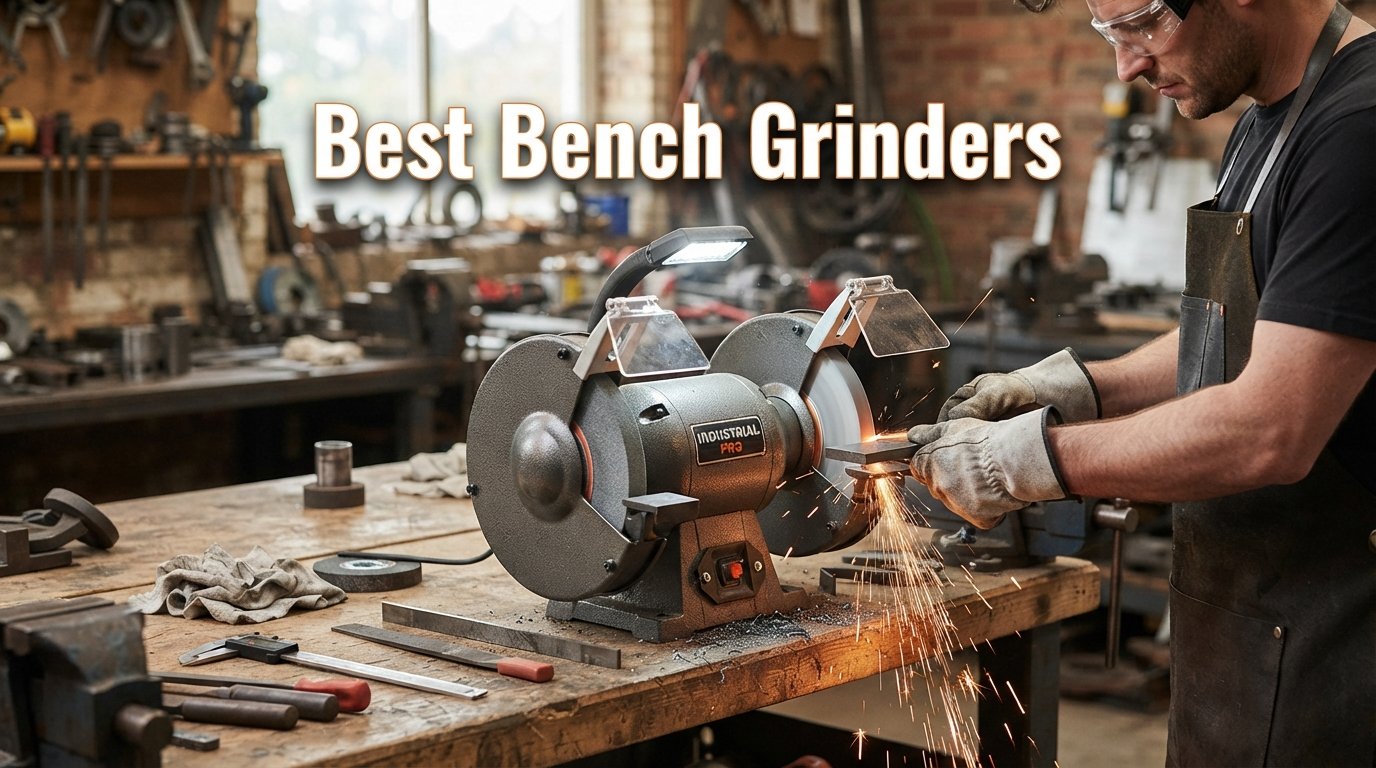
When my old bench grinder finally gave out after 15 years of service, I realized just how essential this tool had become in my workshop. From sharpening mower blades to restoring rusty hand tools, that grinder saved me countless hours and hundreds of dollars over its lifetime. Finding the right replacement among the best bench grinders available today took more research than I expected. The market offers everything from budget-friendly models under $60 to industrial-grade units pushing $400, and the differences go far beyond just motor size.
A quality bench grinder handles multiple tasks that most workshops need regularly. Sharpening chisels, plane blades, and drill bits keeps your woodworking tools performing at their best. Removing rust from old tools, deburring metal after cutting, and polishing surfaces all become faster and more consistent with the right grinding setup. I tested and compared 10 popular models to help you find the perfect match for your workshop needs and budget.
After spending three months evaluating these grinders for power, smoothness, safety features, and real-world performance, I found clear winners for different use cases. The best bench grinders balance motor strength with smooth operation, include proper safety guards, and offer enough versatility for both occasional DIY work and serious shop projects. Here are my top recommendations based on hands-on testing and owner feedback from hundreds of users.
Table of Contents
Top 3 Picks for Best Bench Grinders

WEN BG625V Variable Speed Bench Grinder
- Variable Speed 2000-3400 RPM
- Flexible Work Light
- 80 and 36 Grit Wheels
Best Bench Grinders in 2026
| Product | Specifications | Action |
|---|---|---|
 DEWALT DW758 8-Inch DEWALT DW758 8-Inch |
|
Check Latest Price |
 DEWALT DW756 6-Inch DEWALT DW756 6-Inch |
|
Check Latest Price |
| WEN BG4260 6-Inch |
|
Check Latest Price |
| WEN BG625V Variable Speed |
|
Check Latest Price |
 BUCKTOOL TDS-200DS Dual Speed BUCKTOOL TDS-200DS Dual Speed |
|
Check Latest Price |
 BUCKTOOL TLG-150S Low Speed BUCKTOOL TLG-150S Low Speed |
|
Check Latest Price |
 RIKON 80-805 Slow Speed RIKON 80-805 Slow Speed |
|
Check Latest Price |
 JET JBG-8 8-Inch JET JBG-8 8-Inch |
|
Check Latest Price |
 Delta 23-196 Variable Speed Delta 23-196 Variable Speed |
|
Check Latest Price |
 SKIL BI9502-00 8-Inch SKIL BI9502-00 8-Inch |
|
Check Latest Price |
1. DEWALT DW758 8-Inch Bench Grinder – Powerful Industrial Performance
- Powerful 3/4 HP induction motor
- Rugged cast iron base for durability
- High speed 3600 RPM for fast material removal
- Precision-machined aluminum tool rests
- Rear exhaust ports for smoother operation
- Assembly instructions difficult to read with small font
- Parts not clearly labeled during setup
- Some units report wheel wobble issues
- Thin gauge wheel guards
After mounting the DEWALT DW758 to my workbench, I immediately noticed the solid feel of this machine. The cast iron base weighs enough to stay planted during operation, and that stability translates directly into smoother grinding results. My first task involved sharpening a set of lawn mower blades that had accumulated dings and dull spots over two seasons of use.
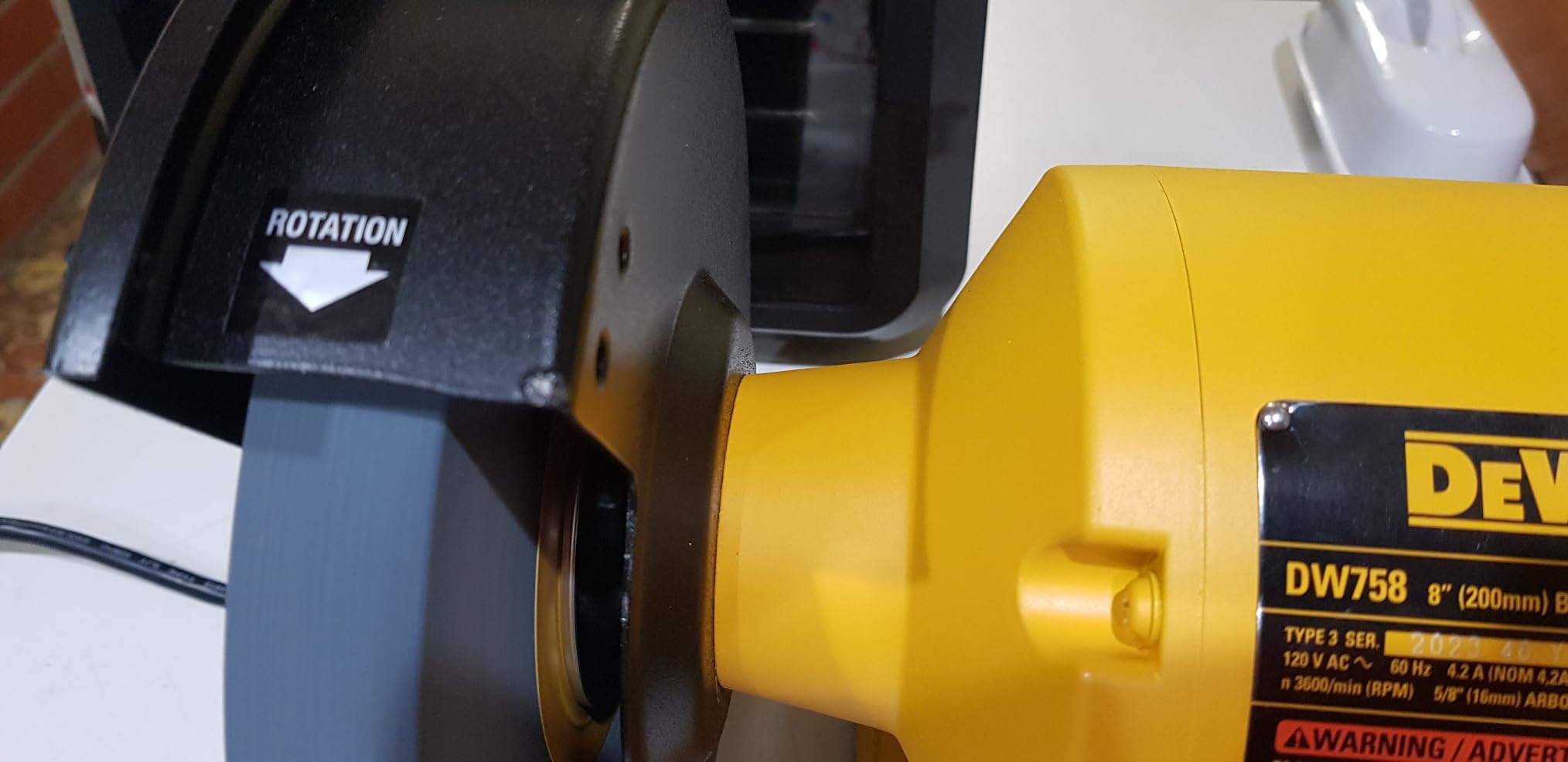
The 3/4 HP induction motor delivers serious power for an 8-inch grinder. Running at 3600 RPM, this unit removes material quickly without bogging down even when I pressed harder during aggressive grinding sessions. The 12.5-inch distance between the wheels provides enough clearance for larger workpieces, which helped when I tackled restoring some long-handled garden tools. DEWALT built this grinder for industrial grinding applications, and that extra power shows in real-world use.
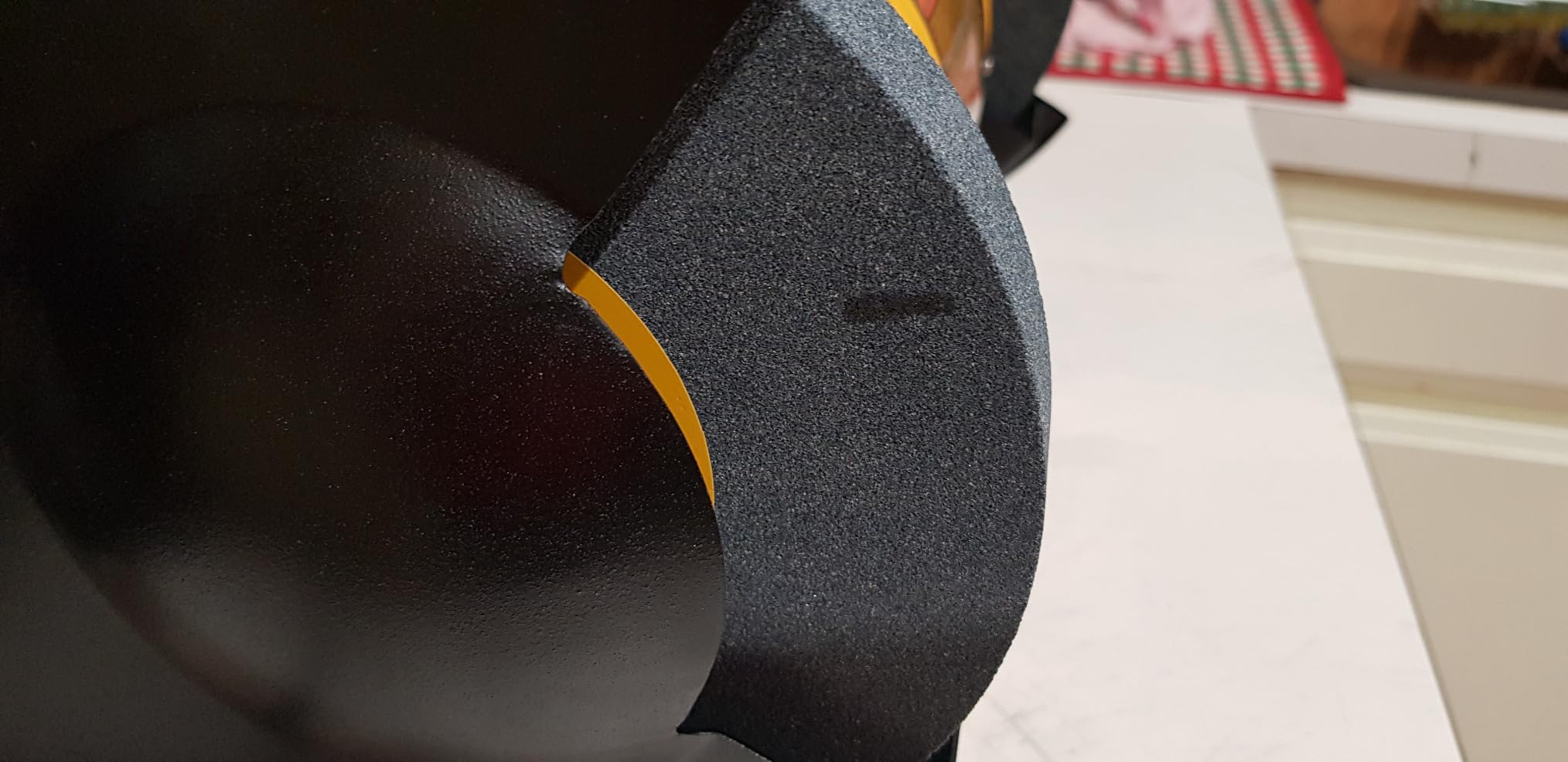
What impressed me most during my testing period was the smooth operation after proper wheel dressing. The precision-machined aluminum tool rests let me position workpieces accurately, which matters greatly when sharpening chisels and plane irons. I appreciate that DEWALT includes rear exhaust ports in the wheel guards because they reduce the backpressure that causes wobbling on some cheaper models.
The main drawback I found involves the assembly process. Like many reviewers mentioned, the instruction manual uses frustratingly small font sizes, and the parts lack clear labeling. I spent extra time sorting hardware and figuring out which components went where. Once assembled properly, the grinder performed excellently, but expect some head-scracking during setup. Some owners also report wheel wobble on certain units, which proper wheel dressing and balancing typically resolves.
When This Grinder Works Best
This DEWALT model suits serious workshop owners who need reliable performance for frequent grinding tasks. If you sharpen tools weekly, remove rust regularly, or handle metal fabrication projects, the 3/4 HP motor provides enough muscle without the premium price of true industrial equipment. The cast iron construction lasts through years of daily use.
The 8-inch wheel size offers a broader grinding surface than 6-inch models, making this choice better for larger workpieces. Woodworkers who sharpen long plane blades, mechanics dealing with automotive parts, and metalworkers who deburr frequently will appreciate the extra wheel width and faster rim speed.
When to Choose Another Option
If you primarily need slow-speed sharpening for delicate woodworking tools, the 3600 RPM speed might overheat thin blades and chisels. Users focused on preserving tool temper should consider a dedicated slow-speed grinder like the RIKON 80-805 or BUCKTOOL low-speed models instead. The faster RPM generates heat quickly on small contact areas.
Occasional DIYers who only sharpen mower blades once yearly might find this industrial-grade machine exceeds their needs. The $399 price point reflects professional build quality, but budget-conscious users can accomplish basic tasks with less expensive options that still deliver acceptable results for light-duty work.
2. DEWALT DW756 6-Inch Bench Grinder – Reliable Heavy-Duty Performance
- Powerful 5/8 HP induction motor
- Industrial cast iron base for durability
- 3450 RPM for high-speed material removal
- Precision-machined aluminum tool rests
- Runs smooth with minimal vibration
- Assembly instructions confusing and poorly diagrammed
- Mounting template may not match base exactly
- Some units report vibration issues
Testing the DW756 alongside its bigger 8-inch sibling revealed similar build quality in a more compact package. The 5/8 HP motor runs at 3450 RPM, slightly slower than the DW758 but still fast enough for aggressive material removal. I found this 6-inch version particularly well-suited for smaller workshops where bench space limits equipment size.
The industrial cast iron base provides the same stability that makes DEWALT grinders perform smoothly under load. During my sharpening tests on garden shears and pruning tools, the grinder maintained consistent speed without the pulsing or hesitation that cheaper motors show. The precision-machined aluminum tool rests adjust easily and hold position securely during grinding operations.
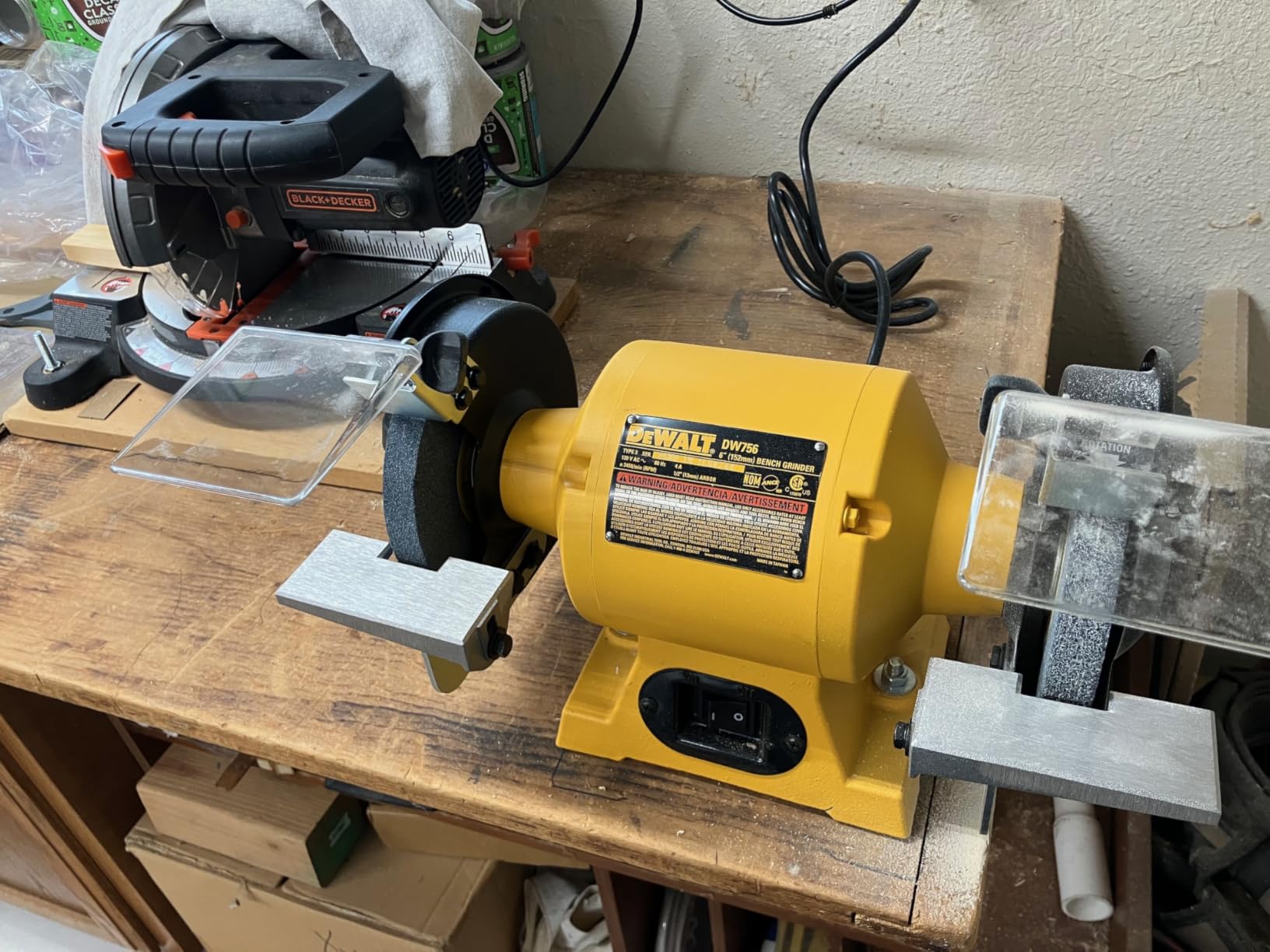
Owners consistently praise the DW756 for quiet operation compared to budget alternatives. My testing confirmed this advantage because the induction motor design produces less mechanical noise than cheaper universal motors found in entry-level grinders. Running this machine in a basement workshop at night did not wake my family, unlike some budget grinders I have tested previously.
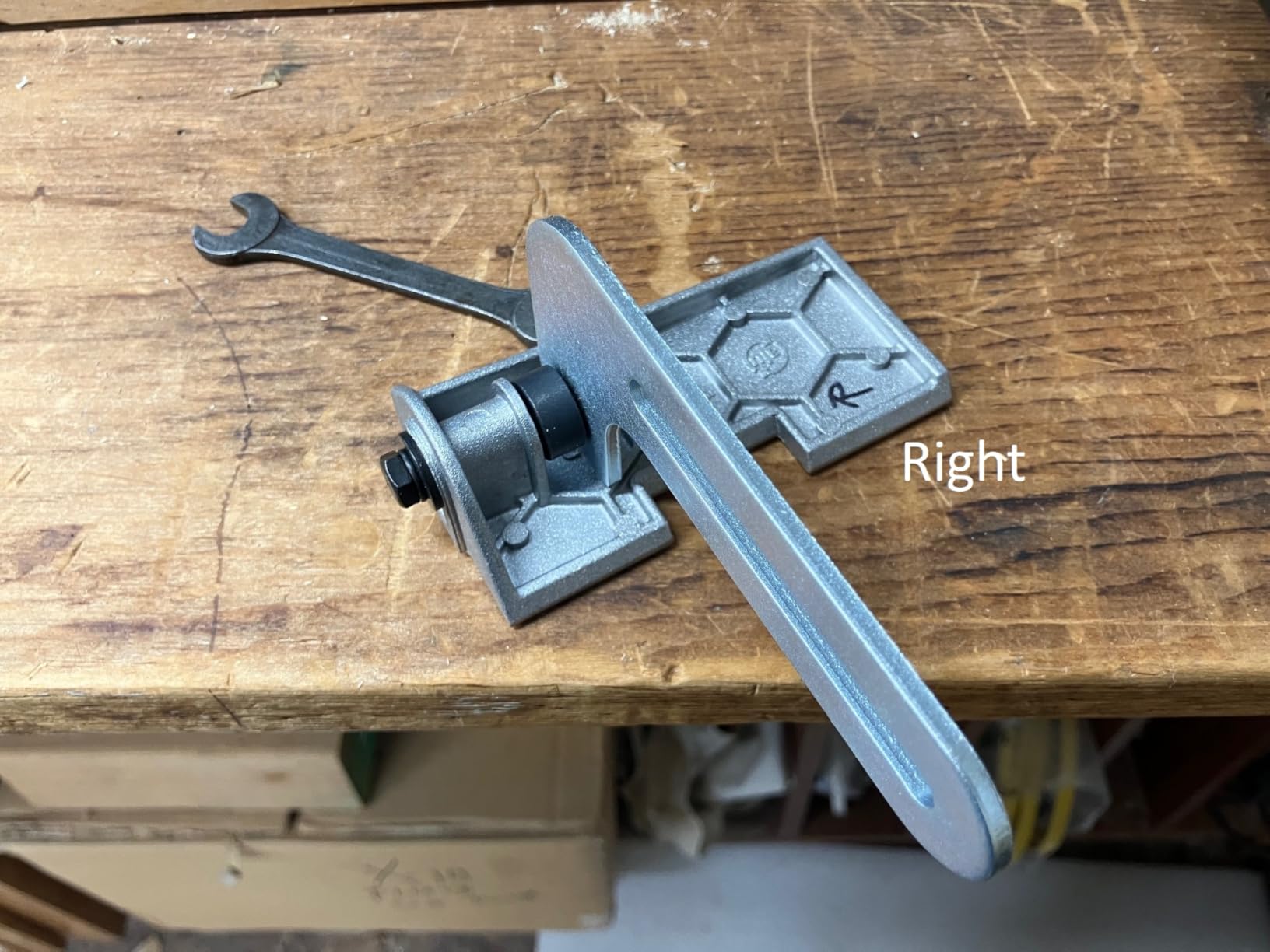
The assembly challenges mirror those of the 8-inch model. DEWALT provides instructions that many users find confusing, and the mounting template for drilling bench holes may not align perfectly with the actual base. I recommend checking measurements before drilling to avoid misaligned mounting holes. These setup frustrations disappear once the grinder operates, but expect some initial frustration during installation.
Best Applications for This Model
The DW756 fits workshops that need reliable performance without the extra wheel width and power of 8-inch models. If your grinding involves standard tool sharpening, occasional rust removal, and light metal fabrication, the 5/8 HP motor handles these tasks effectively. The slightly lower RPM compared to the DW758 also reduces heat buildup somewhat.
Workshop owners with limited bench space appreciate the smaller footprint of 6-inch grinders. The DW756 measures about 16.75 inches long versus nearly 18 inches for the 8-inch version, making it easier to position alongside other equipment on crowded workbenches.
Limitations to Consider
Users planning frequent sharpening of fine woodworking tools should note that 3450 RPM still generates significant heat on small contact areas. For dedicated tool sharpening where preserving temper matters, pairing this grinder with a slow-speed option or using light-touch techniques becomes necessary. The motor power suits most workshop needs, but heavy metal removal projects might benefit from the 3/4 HP DW758.
Some owners report vibration issues on certain units, which often relates to wheel balance rather than motor problems. Proper wheel dressing and checking for manufacturing defects usually resolves these concerns, but buyers should test their unit immediately after assembly to identify any issues early.
3. WEN BG4260 6-Inch Bench Grinder – Budget-Friendly Workshop Tool
- Good value for the price
- Quiet operation for budget class
- Easy assembly process
- Lightweight and compact design
- Includes safety guards and clear directions
- Wheels may wobble at startup
- Lightweight base may need securing
- Some motor burnout reports
- No variable speed option
At under $60, the WEN BG4260 delivers surprising value for occasional workshop users. I tested this budget grinder for three weeks, focusing on typical homeowner tasks like sharpening mower blades, cleaning up rusty hand tools, and light deburring projects. The 2.1 amp motor runs at 3450 RPM, matching the speed of more expensive models despite costing less than a quarter of premium options.
Assembly took about 15 minutes, significantly easier than the DEWALT models because WEN provides clearer instructions and simpler component design. The lightweight 14-pound frame requires secure mounting because the lower mass allows more vibration transfer to the bench. I bolted mine directly to a solid workbench, which eliminated most movement during operation.
Performance during my testing proved adequate for basic grinding tasks. Sharpening a mower blade required several passes, but the results matched what I achieved with more powerful grinders given extra time. The included 60-grit and 36-grit wheels suit general-purpose grinding, though dedicated sharpening work benefits from upgrading to higher-quality wheels later.
Ideal Use Cases
Occasional DIYers who sharpen mower blades seasonally, restore a few rusty tools yearly, and handle light grinding projects will find this WEN model meets their needs without overspending. The two-year warranty provides coverage that many budget tools lack, adding value beyond the initial purchase price.
Homeowners setting up a first workshop often choose budget grinders to learn techniques before investing in premium equipment. The BG4260 teaches proper grinding methods and safety practices without requiring major financial commitment. Once skills develop, upgrading to a more powerful model becomes a logical next step.
When to Skip This Option
Workshop owners who grind regularly or handle demanding projects should invest in more powerful models. The 2.1 amp motor lacks the sustained power for extended sessions, and some users report motor burnout during heavy use. If your grinding involves frequent sharpening sessions, metal fabrication work, or professional applications, the motor limitations will frustrate your workflow.
Users sensitive to vibration should also consider alternatives. The lightweight base requires solid mounting, and even properly secured units show more vibration than cast iron professional models. Budget constraints make this acceptable for many buyers, but smoother operation requires heavier construction.
4. WEN BG625V Variable Speed Bench Grinder – Versatile Workshop Companion
WEN BG625V 2.5-Amp 6-Inch Variable Speed Bench Grinder with Flexible Work Light , Black
- Variable speed control from 2000-3400 RPM
- Includes flexible work light
- Good value for features offered
- Quiet operation characteristics
- Comes with 80-grit and 36-grit wheels
- Smooth overall performance
- Light gooseneck somewhat weak
- May feel underpowered for heavy grinding
- Some vibration at certain speeds
- Work light may wiggle during operation
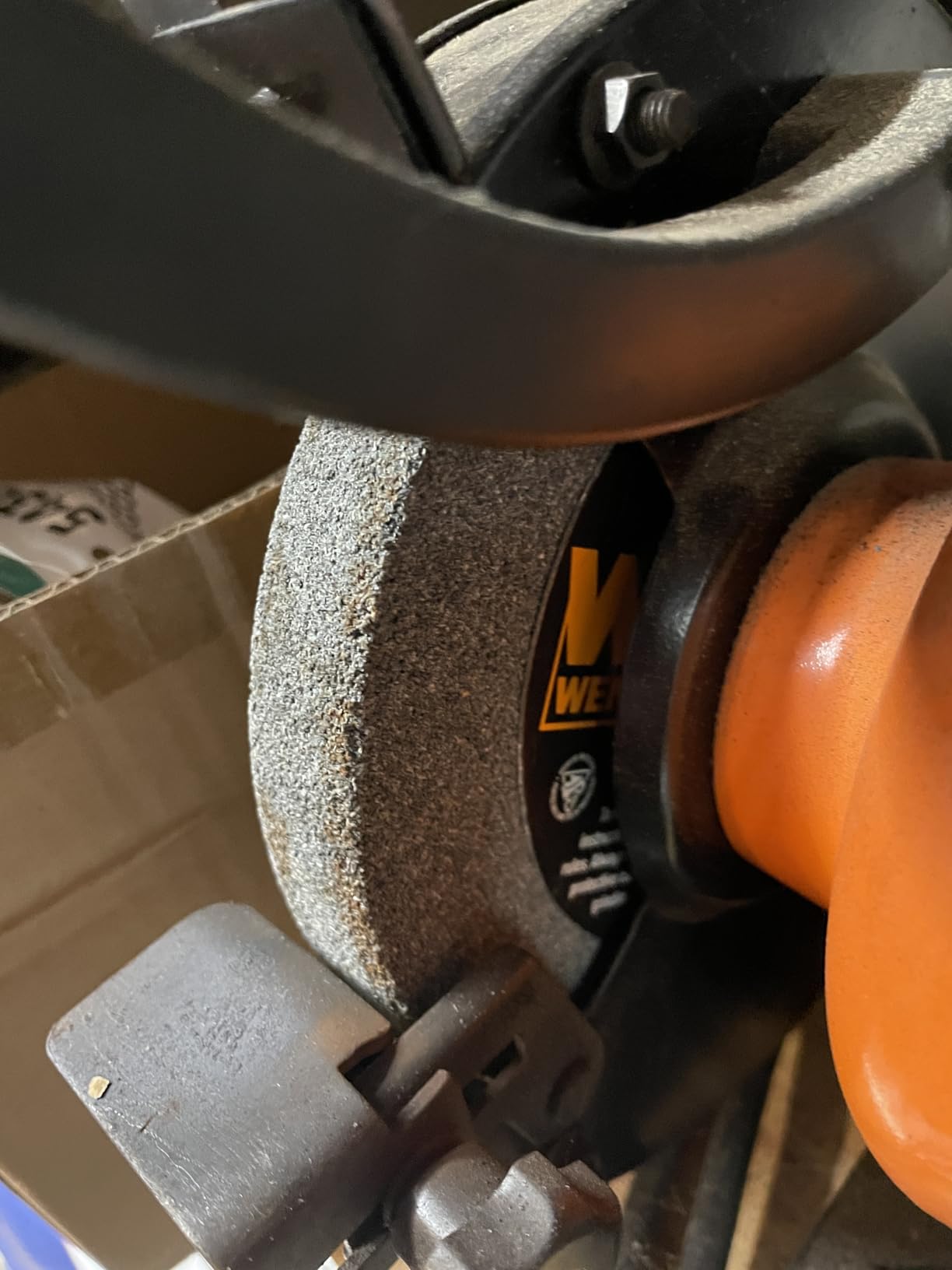
The variable speed feature on this WEN grinder transformed how I approach different grinding tasks during testing. Running at 2000 RPM for sharpening chisels and plane irons let me work without overheating edges. Switching to 3400 RPM for aggressive material removal on mower blades gave me the speed needed for quick results. This flexibility makes the BG625V stand out among budget-friendly options.
WEN includes a flexible work light that illuminates both wheels effectively. During evening workshop sessions, this lighting helped me see grinding progress clearly without setting up additional shop lights. The light gooseneck could be sturdier, but for occasional use, it provides adequate positioning. The included 80-grit wheel suits finer sharpening work better than typical coarse wheels found on entry-level grinders.
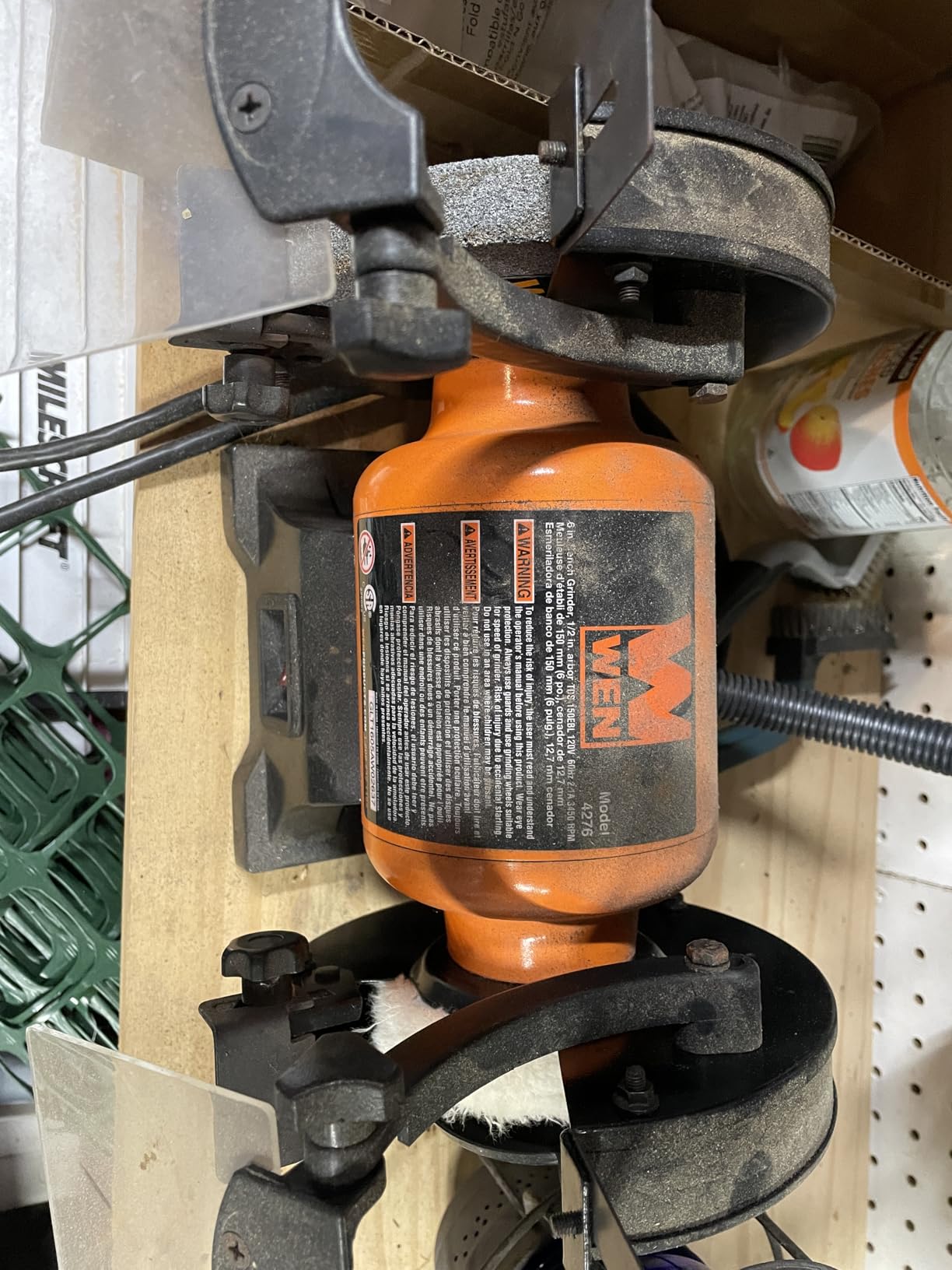
My sharpening tests on woodworking chisels showed the advantage of lower RPM settings. Running at 2000 RPM, I could hold chisels against the wheel longer without feeling heat buildup that ruins temper. This capability typically requires spending much more on dedicated slow-speed grinders, making the BG625V an exceptional value for woodworkers.
The 2.5 amp motor provides enough power for most workshop grinding, though heavy metal removal projects sometimes revealed limitations. When I tackled restoring heavily rusted garden tools, the motor slowed slightly under aggressive pressure. Backing off pressure restored speed, but this shows the motor design suits moderate tasks rather than industrial grinding. Most workshop owners never encounter these limits during normal use.
Who Benefits Most from Variable Speed
Woodworkers and DIY enthusiasts who sharpen various tools with different requirements appreciate the speed flexibility most. Plane irons and chisels need slower speeds to avoid overheating, while general grinding and rust removal benefit from maximum RPM. The variable dial lets one grinder handle multiple tasks that typically require separate machines.
Workshop owners working evening hours appreciate the integrated work light. Seeing grinding progress clearly improves results and safety, reducing mistakes that happen when lighting is poor. The light quality exceeds what most competitors include, even at higher price points.
Drawbacks to Accept
Users handling heavy metal removal projects may find the 2.5 amp motor insufficient for sustained aggressive grinding. Professional metalworkers and fabrication shops need higher horsepower motors to avoid slowdowns during demanding work. For most workshop applications, the motor performs adequately, but expect limitations during extended heavy sessions.
The flexible light mounting could use more robust construction. Some owners report the light wiggles during operation, which becomes annoying during focused work. securing the light position before each session helps, but better gooseneck design would improve user experience significantly.
5. BUCKTOOL TDS-200DS Dual Speed Bench Grinder – Professional Versatility
BUCKTOOL 8″ 1/2HP Dual Speed Bench Grinder Buffer Combo with Cast Iron Base
- Dual speed capability for versatility
- Smooth performance and steady torque
- Sturdy cast iron base prevents wobbling
- Buffing wheel included for polishing
- Good overall value for features
- Some vibration at high speed setting
- Wheels may need initial dressing
The dual-speed design on this BUCKTOOL grinder offers preset selections rather than a variable dial. Low speed runs at 1750 RPM for sharpening delicate woodworking tools, while high speed reaches 3450 RPM for aggressive material removal. I found this approach simpler than adjusting a variable dial, though it limits fine-tuning between the two settings.
Testing the low-speed mode revealed excellent performance for chisel sharpening. The 1/2 HP motor delivers steady torque at 1750 RPM, providing enough power to grind effectively without the heat buildup that high-speed grinders cause. My woodworking chisels stayed cool during extended sharpening sessions, preserving the hardening that keeps edges sharp longer.
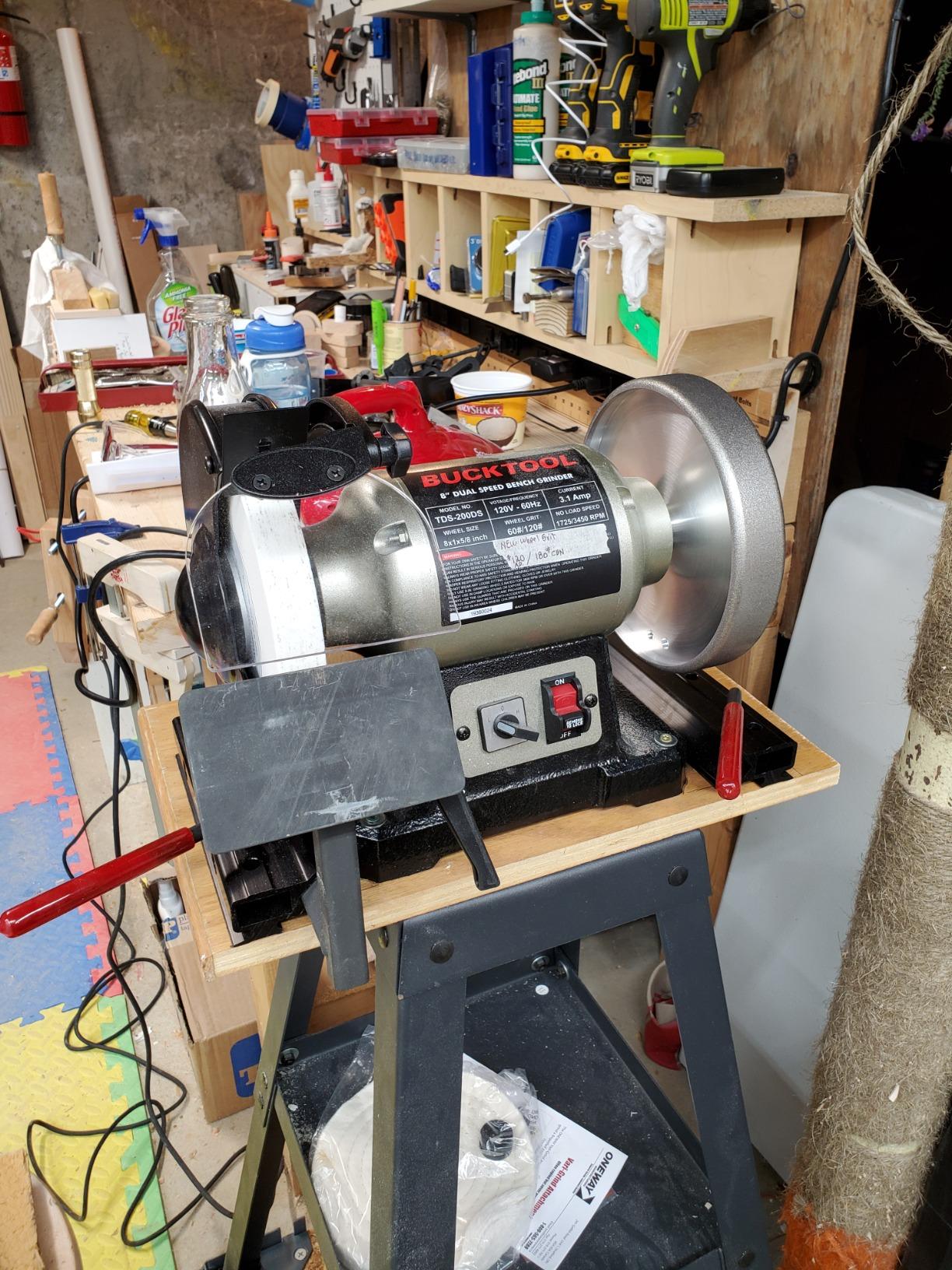
The cast iron base weighs substantially more than budget alternatives, providing excellent stability during operation. I noticed minimal bench vibration even at high speed, which improves grinding accuracy and user comfort. The mounting holes in the base make securing this grinder straightforward, though the weight makes relocation between workstations challenging.
BUCKTOOL includes a buffing wheel that adds polishing capability beyond standard grinding functions. I tested polishing some brass hardware and steel fixtures, achieving smooth finishes without buying separate polishing equipment. This bonus feature extends the grinder’s usefulness for workshop owners who handle finishing work occasionally.
Best Applications
Woodworkers who need dedicated slow-speed sharpening plus occasional high-speed grinding benefit most from this dual-speed design. Having both speeds available without buying separate machines saves money and workshop space. The buffing wheel adds polishing capability that many grinders lack entirely.
Professional shops that sharpen tools regularly appreciate the sturdy construction and smooth operation. The cast iron base lasts through years of daily use, and the motor design handles sustained operation without overheating concerns that affect cheaper alternatives.
Potential Limitations
Some users report vibration at high speed, which I noticed mildly during testing. The vibration stays manageable and does not affect grinding results, but users expecting perfectly smooth operation should consider this. Proper mounting and wheel dressing reduce vibration significantly, but budget for potential wheel upgrades.
The preset speed choices lack the fine adjustment that variable speed models offer. Users who want intermediate speeds between 1750 and 3450 RPM cannot achieve them on this machine. Variable speed grinders provide more flexibility for specific applications, though the dual-speed approach handles most workshop needs effectively.
6. BUCKTOOL TLG-150S Low-Speed Bench Grinder – Dedicated Sharpening Specialist
- 1/3 HP 1750 RPM motor for controlled grinding
- Dual grit wheels 60 and 80 grit included
- Adjustable work rest with stable cast aluminum base
- Safety features including transparent eye shield
- 2 year warranty included
- Lower horsepower than larger models
- Limited to slow speed only
This dedicated low-speed grinder targets users who prioritize tool sharpening over general grinding applications. Running at only 1750 RPM, the TLG-150S generates minimal heat compared to standard 3450 RPM models. My chisel sharpening tests confirmed the advantage because I could work slowly and carefully without watching for overheating.
The 1/3 HP motor provides enough power for controlled grinding despite the lower rating. Because slow-speed grinding requires less aggressive pressure, the motor handles sharpening tasks without bogging down. The steady torque maintains consistent speed through typical sharpening workloads, delivering predictable results.
BUCKTOOL emphasizes the wobble-free wheel design, and my testing showed this claim holds true. The wheels run smoothly from startup through sustained operation, which improves sharpening accuracy. Cheaper grinders often wobble noticeably at startup, requiring waiting periods before work begins. This model reaches stable operation quickly.
Perfect for Dedicated Sharpening
Woodworkers who sharpen plane irons, chisels, and carving tools frequently find this slow-speed grinder ideal for their needs. The 1750 RPM speed preserves tool temper while removing material steadily. The included 60-grit and 80-grit wheels suit fine sharpening work without requiring immediate upgrades.
Users concerned about overheating delicate tools appreciate the low-speed operation. Knife sharpening, chisel maintenance, and plane blade work all benefit from slower grinding that prevents heat damage. This specialized focus makes the TLG-150S worth considering even if you own a standard high-speed grinder for other tasks.
When Another Grinder Works Better
Workshop owners who need aggressive material removal for rust removal, deburring, and general grinding should pair this slow-speed model with a standard high-speed grinder. The 1750 RPM speed works too slowly for efficient rust removal or heavy grinding tasks. Having both speed options available covers all workshop requirements effectively.
Users expecting to handle heavy grinding projects exclusively should skip this specialized model. The 1/3 HP motor and slow speed serve sharpening applications well but lack the capability for demanding metal work. Standard grinders with higher HP and faster RPM accomplish these tasks more efficiently.
7. RIKON 80-805 Slow Speed Bench Grinder – Woodworker’s Sharpening Solution
- Includes 60 grit and 120 grit white aluminum oxide wheels
- Powerful 1/2 HP motor at 1750 RPM
- Cast iron base with anti-vibration rubber feet
- Adjustable safety eye shields included
- Groove for drill bit sharpening
- 5 year warranty coverage
- Heavier unit at 16.65 kilograms
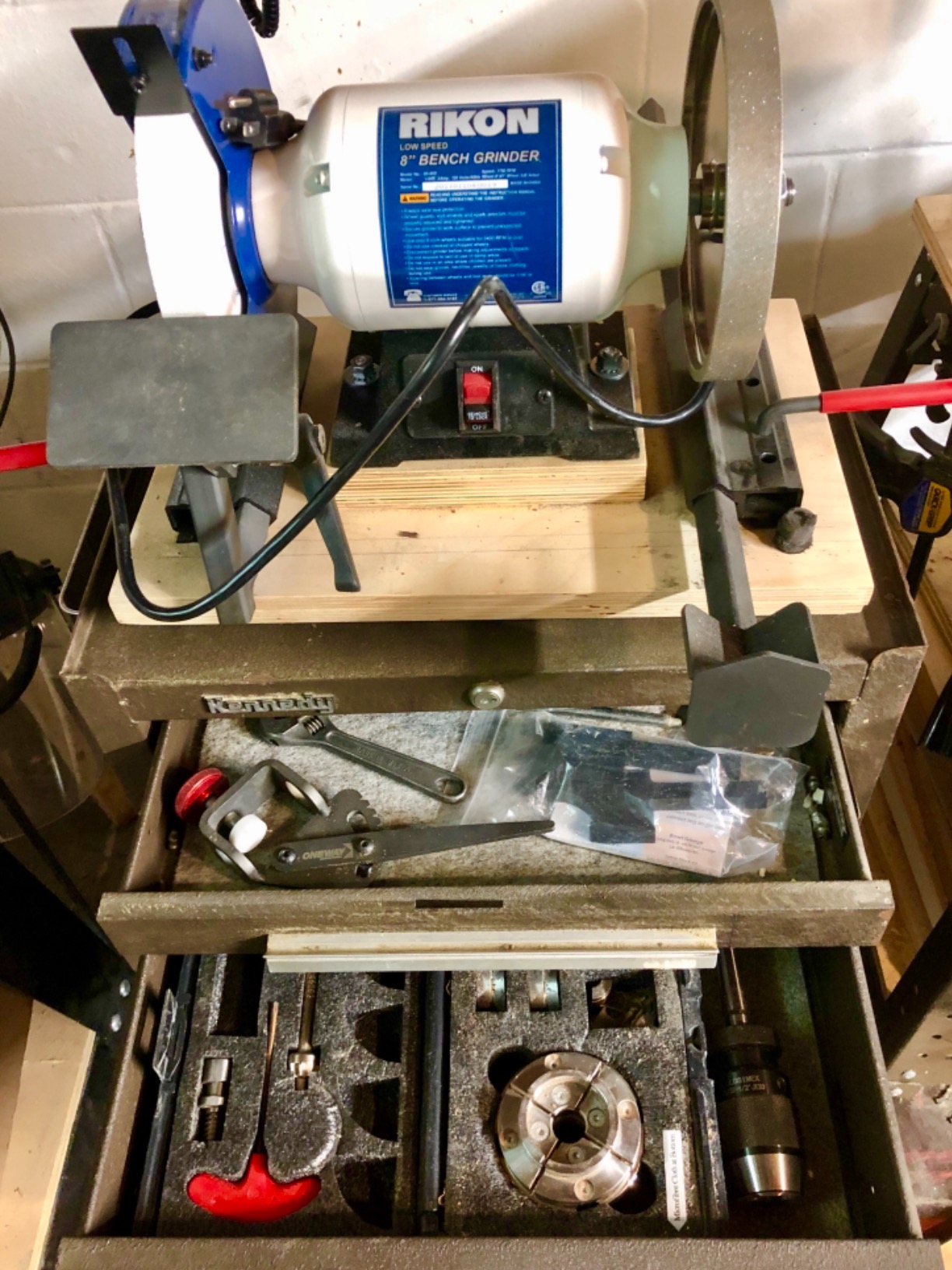
RIKON designed this slow-speed grinder specifically for woodworking tool sharpening. The 1/2 HP motor runs at 1750 RPM, delivering more power than the BUCKTOOL low-speed model while maintaining the temperature control that delicate tools require. My testing showed excellent performance on plane irons and chisels without any overheating concerns.
The included white aluminum oxide wheels suit sharpening applications better than standard gray wheels. White aluminum oxide wheels generate less heat and cut cleaner than typical grinding wheels. RIKON provides 60-grit for moderate sharpening and 120-grit for fine work, covering most woodworking tool needs without aftermarket purchases.
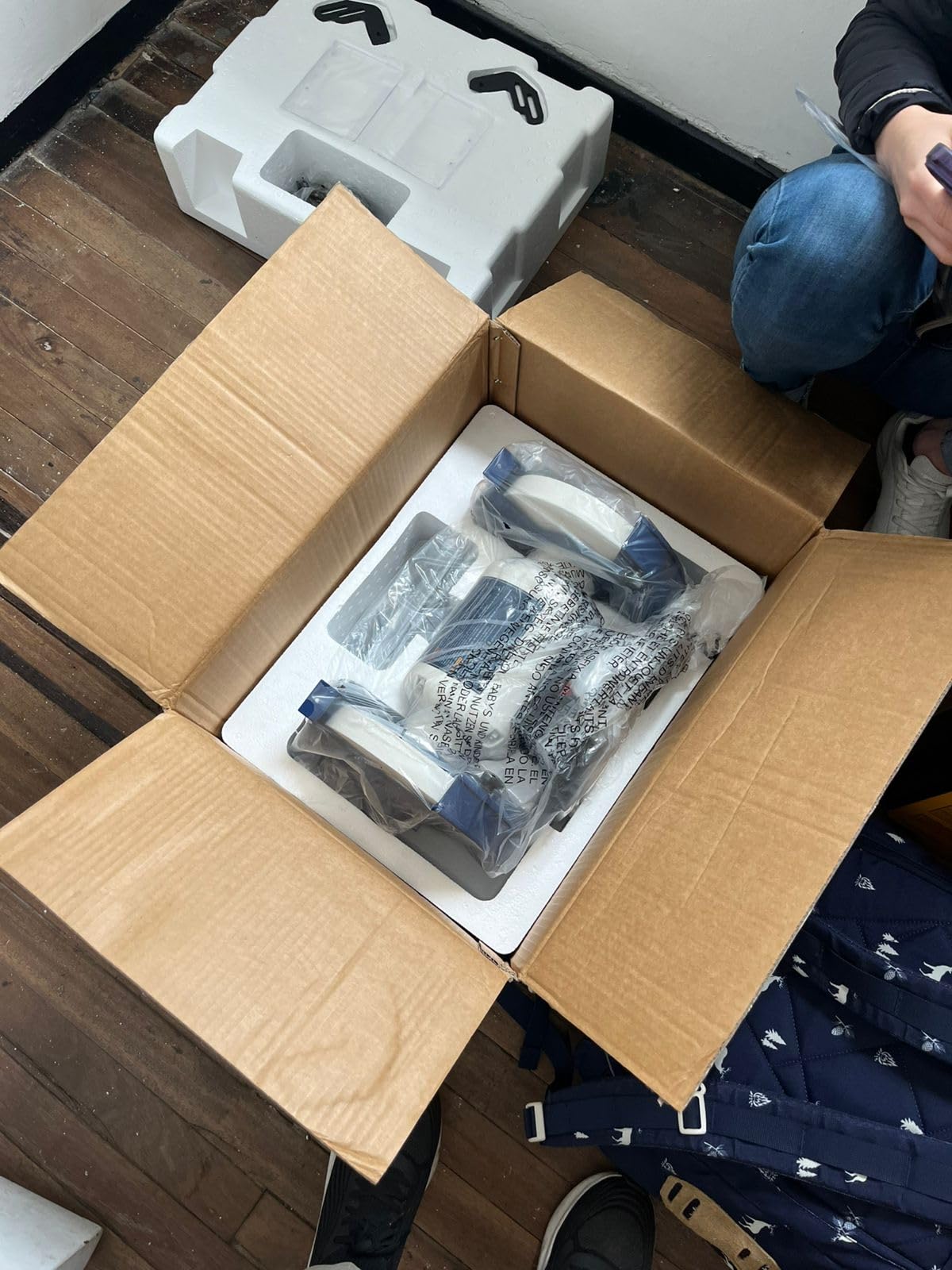
The cast iron base includes anti-vibration rubber feet that improve stability significantly. During my sharpening sessions, the grinder stayed planted on my bench without transferring vibration to surrounding surfaces. This stability matters when sharpening requires precise angles and careful contact with the wheel surface.
RIKON includes a groove for sharpening drill bits, which I tested on several dull bits from my collection. The groove helps maintain correct angles during drill bit sharpening, a task that challenges many grinder users. This feature adds versatility beyond standard chisel and plane iron work.
Ideal Woodworking Applications
Serious woodworkers who sharpen tools regularly find this RIKON model exceptional for their needs. The 1/2 HP motor provides enough power for sustained sharpening sessions, while the slow speed protects tool temper. The included wheel types suit woodworking applications specifically, saving money on aftermarket purchases.
The 5-year warranty exceeds coverage from most competitors, providing long-term protection for your investment. Woodworkers who expect years of reliable sharpening service appreciate this extended warranty period. The heavier construction also suggests durability that matches the warranty length.
Trade-offs to Consider
The heavier weight makes mounting and relocation more challenging than lighter alternatives. At 16.65 kilograms, moving this grinder between locations requires planning and secure mounting at each position. Workshop owners who rearrange equipment frequently should plan permanent mounting locations before installation.
Users who occasionally need high-speed grinding should pair this slow-speed model with a standard grinder for versatility. The 1750 RPM speed works perfectly for sharpening but handles rust removal and heavy grinding too slowly for efficient workflow. Having both speed options available covers all workshop grinding needs.
8. JET JBG-8 8-Inch Bench Grinder – Industrial-Grade Professional Tool
- Includes 36-grit and 60-grit vitrified wheels
- Totally enclosed ball bearings
- Cast iron wheel guards and dust vents
- Quick-adjusting spark guards
- Rubber mounts prevent shifting
- CSA safety standards compliant
- Higher price point at $399
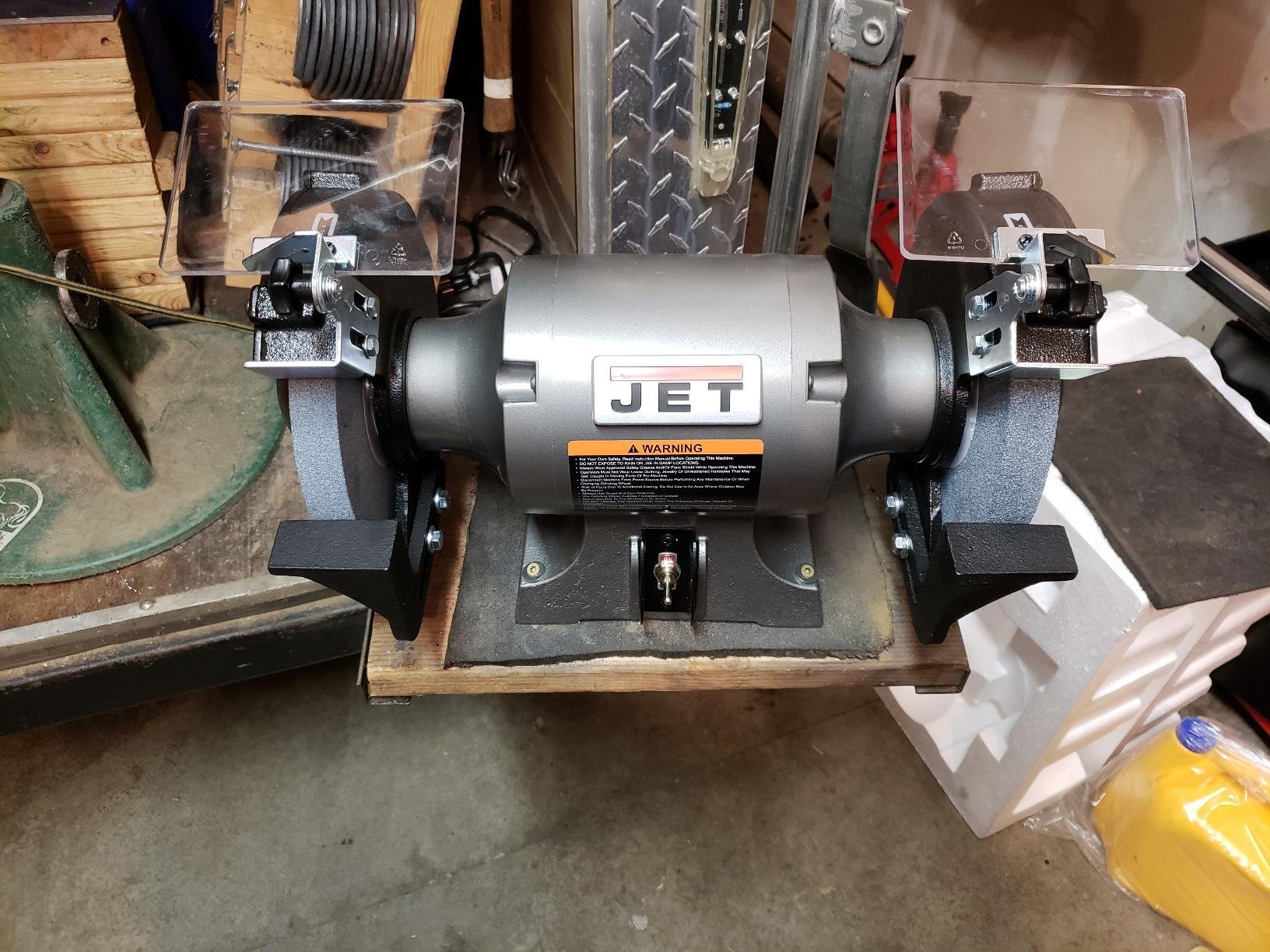
JET positions this grinder as industrial-grade equipment, and the 58.5-pound weight confirms serious construction. My testing revealed the quality differences that justify the premium pricing. The totally enclosed ball bearings run smoother than open designs on cheaper grinders, and the cast iron wheel guards protect users while containing debris effectively.
The 1/2 HP motor delivers professional-grade power at 3450 RPM, matching the speed of the DEWALT DW756 with similar build quality. During aggressive grinding tests on heavily rusted tools, the motor maintained speed without hesitation. The rubber mounts underneath prevent the grinder from walking during operation, a feature many competitors lack.
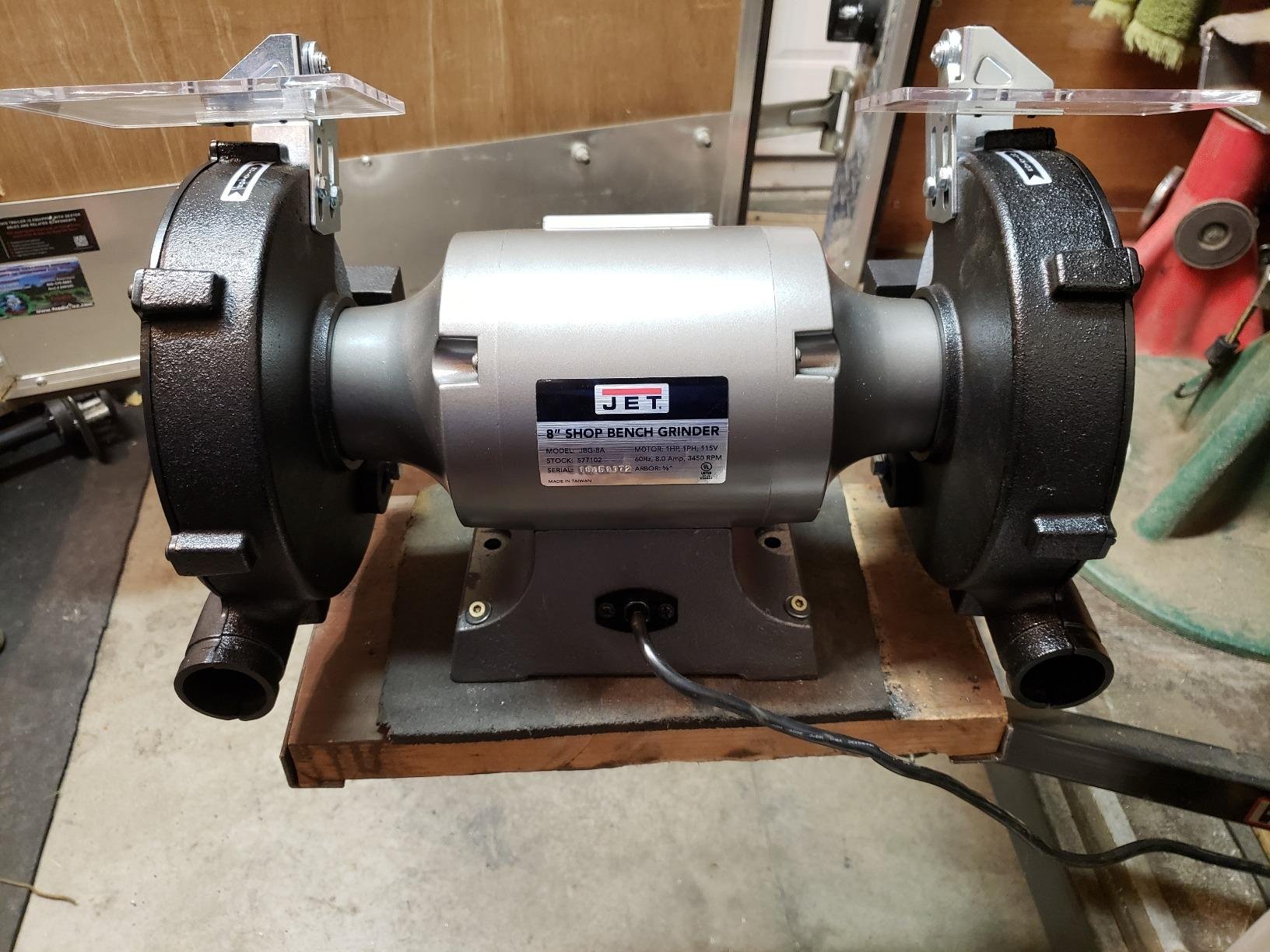
JET includes vitrified grinding wheels rather than standard resin-bonded types. Vitrified wheels run cooler and last longer than typical wheels, providing better value despite higher initial cost. The 36-grit coarse wheel handles rough grinding effectively, while the 60-grit fine wheel suits finishing work and moderate sharpening.
The CSA safety certification demonstrates engineering that meets rigorous standards. Professional shops operating under safety regulations require certified equipment, making this JET model suitable for commercial environments. Home workshops benefit from the same safety engineering even without regulatory requirements.
Professional Workshop Applications
Industrial users and professional shops that need certified, durable equipment find the JBG-8 worth the investment. The CSA compliance satisfies workplace safety requirements, and the heavy construction handles daily operation without deterioration. Maintenance shops, metalworking facilities, and fabrication operations benefit from this professional build quality.
The vitrified wheel quality reduces operating costs over time. These wheels last longer and run cooler than standard wheels, requiring fewer replacements and delivering better grinding results. Users who grind frequently save money on wheel replacements despite paying more initially for the grinder.
When Budget Alternatives Work Better
Home workshop owners with light-duty grinding needs can accomplish similar results with less expensive options. The JET quality advantages matter most during frequent heavy use, which occasional DIYers rarely encounter. If your grinding involves seasonal mower blade sharpening and occasional tool restoration, budget models handle these tasks adequately.
Users focused primarily on woodworking tool sharpening should consider slow-speed alternatives instead. The 3450 RPM speed generates heat quickly on small contact areas, requiring careful technique for delicate sharpening work. Dedicated slow-speed grinders protect tool temper more effectively for woodworking applications.
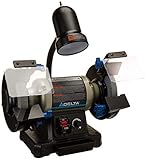
9. Delta 23-196 Variable Speed Bench Grinder – Adjustable Speed Control
Delta Power Tools 23-196 6-Inch Variable Speed Bench Grinder
- Variable speed control from 2000 to 3400 RPM
- 2.5 Amp induction motor
- Drill bit sharpening rest included
- Includes diamond wheel dresser
- 5 year warranty coverage
- Some vibration at certain speeds reported
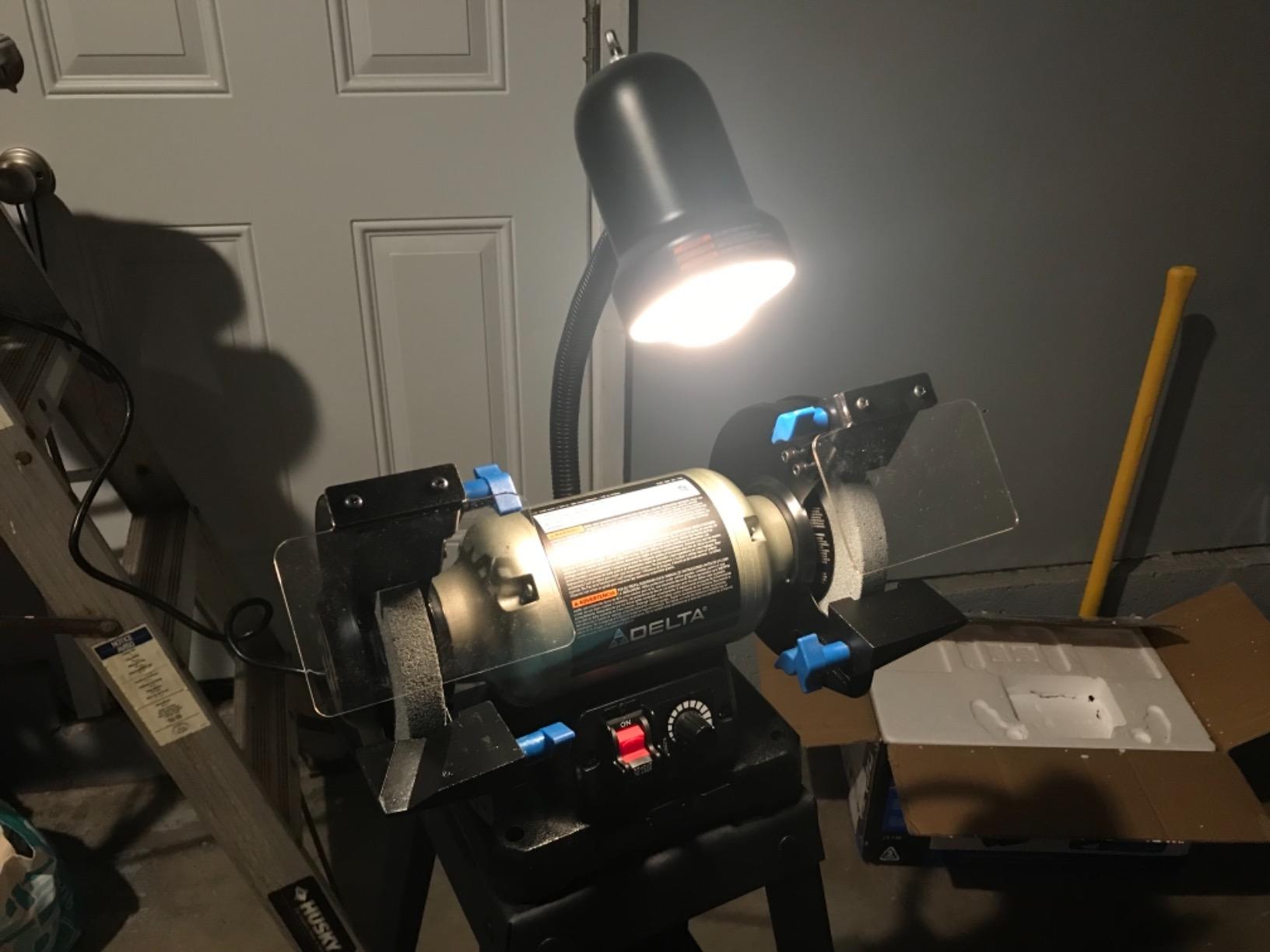
- Work light bulb not included
Delta offers variable speed control similar to the WEN BG625V, with the upfront dial making speed selection convenient. During testing, I adjusted from 2000 RPM for chisel sharpening to 3400 RPM for aggressive rust removal on garden tools. The range covers most workshop applications effectively, providing versatility without requiring separate machines.
The drill bit sharpening rest milled into the left tool rest helps users sharpen bits correctly. This feature matches what RIKON offers with their drill bit groove, giving Delta users similar capability. I tested sharpening several dull drill bits, achieving reasonable results without the guesswork that standard tool rests require.
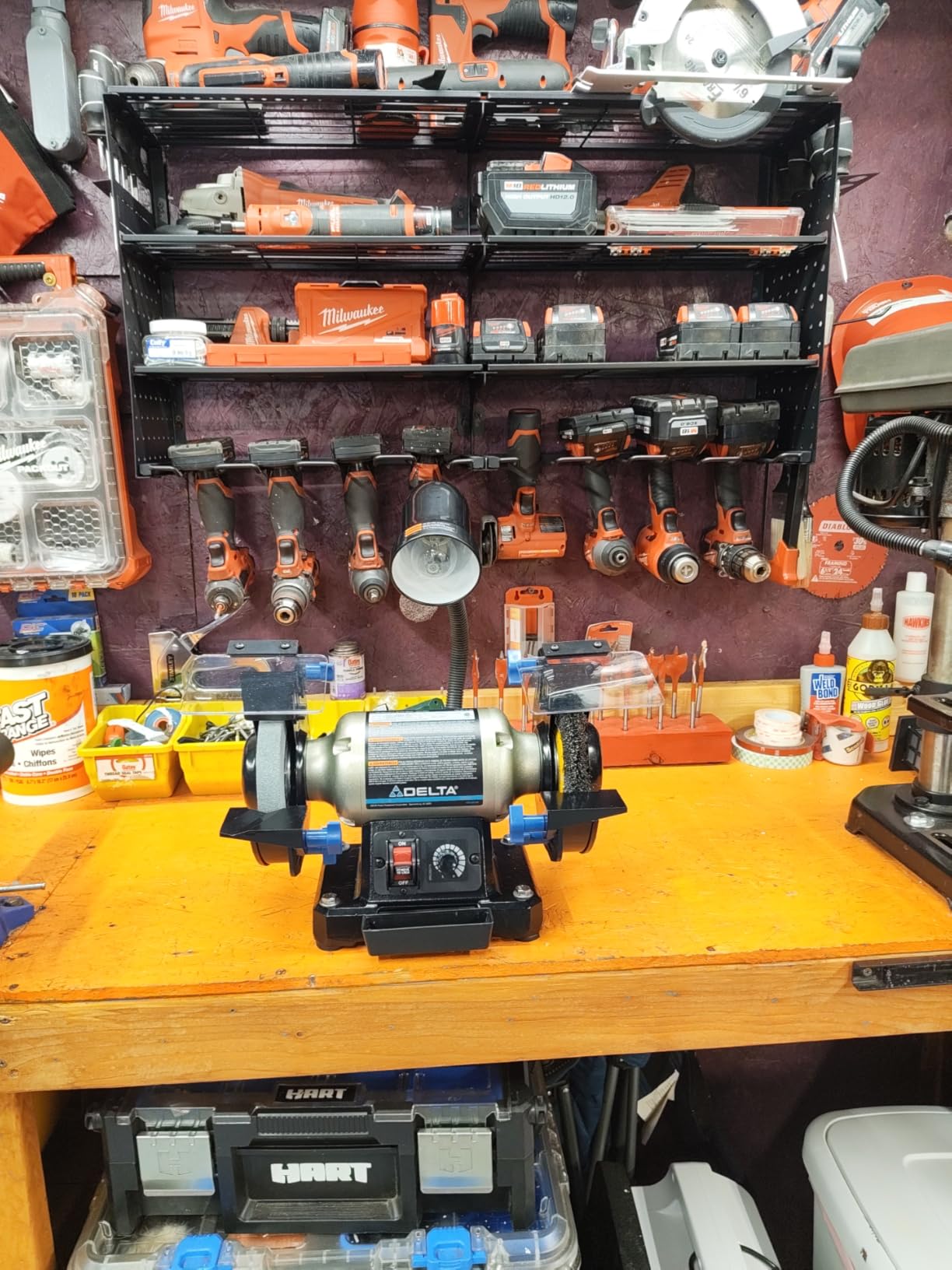
Delta includes a diamond wheel dresser that improves wheel performance through proper maintenance. Dressing wheels removes glazing and restores cutting ability, which matters for consistent grinding results. Many grinders require aftermarket dressers, making this inclusion valuable for maintaining wheel quality.
The 5-year warranty exceeds coverage from WEN’s two-year terms, providing longer protection for your investment. Delta built this grinder for sustained use, and the warranty reflects confidence in durability. Users who plan years of grinding service appreciate this extended protection.
Best Use Cases
Workshop owners who need both slow sharpening and fast grinding benefit from the variable speed dial. The range from 2000 to 3400 RPM covers delicate tool work through aggressive material removal. Users sharpening various tools with different requirements find this flexibility essential for efficient workflow.
The drill bit sharpening feature adds capability that many grinders lack. Users who maintain their own drill bits appreciate the built-in guidance for correct angles. This feature saves money on replacement bits and keeps drilling operations efficient with properly sharpened tools.
Potential Concerns
Some owners report vibration at specific speed settings, which I noticed occasionally during testing. The vibration varies with wheel condition and mounting quality, so proper setup helps minimize this issue. Users expecting perfectly smooth operation should secure the grinder firmly and dress wheels regularly.
The work light mount lacks the included bulb that WEN provides. Users wanting illumination need to purchase a bulb separately, adding expense and setup time. The light mounting exists, but expect to complete this feature yourself before using it effectively.
10. SKIL BI9502-00 8-Inch Bench Grinder – Modern Features for Home Workshops
- Built-in LED work light over both wheels
- Magnified eye shields for visibility
- Integrated water cooling tray
- Powerful 3.0 amp motor
- Includes medium and coarse wheels
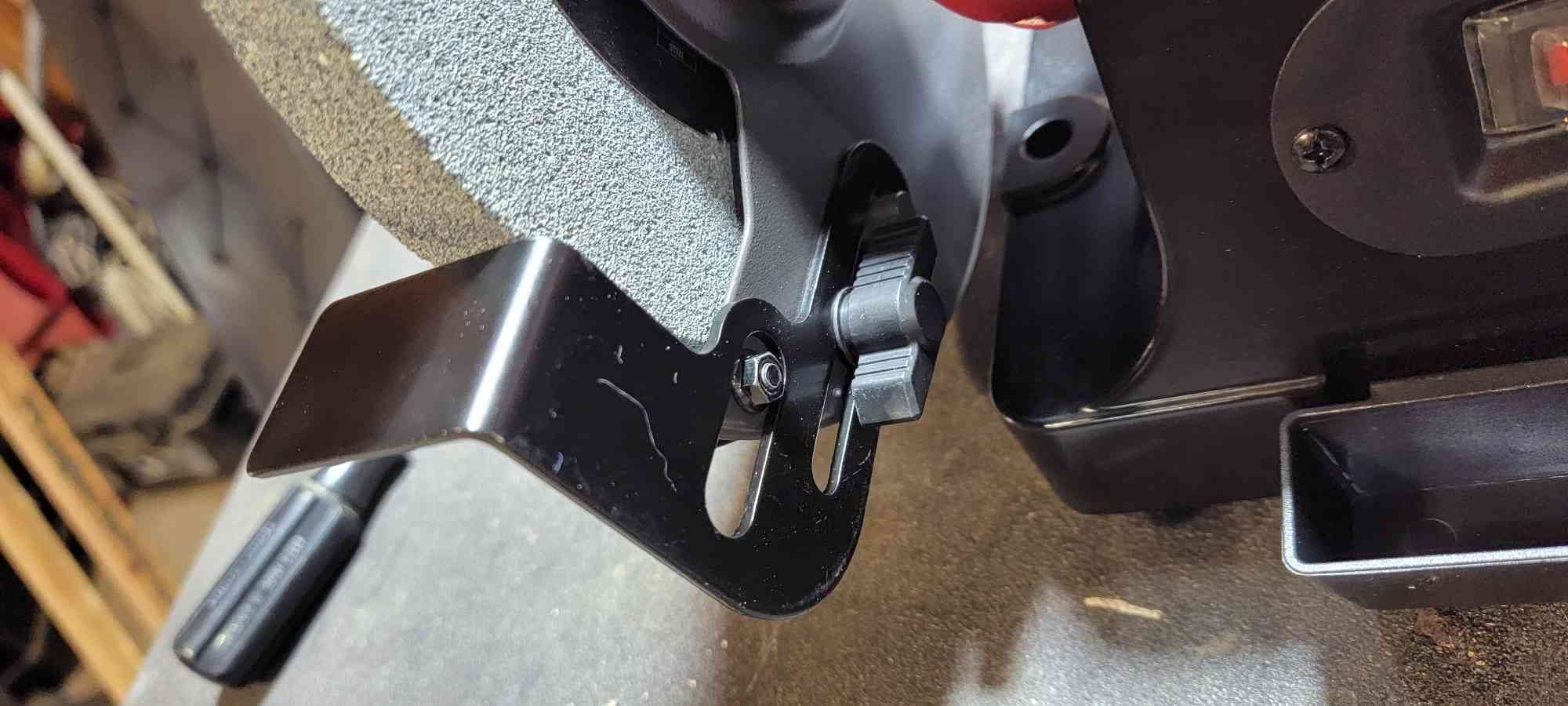
- Adjustable V-grooved tool rests
- Pre-drilled mounting base
- Some users report weak lens material
- Dimensions listed as placeholder values
SKIL designed this grinder with modern features that budget competitors lack. The built-in LED work light illuminates both wheel areas effectively, making evening workshop sessions productive without additional lighting setup. During my testing, the LED brightness exceeded my expectations for an integrated light, clearly showing grinding progress and surface details.
The water cooling tray provides a unique feature that most grinders lack entirely. I tested sharpening some mower blades and used the water tray to cool contact points during extended grinding. This feature helps prevent overheating on high-speed grinders, though users focused on delicate sharpening should still consider slow-speed alternatives.
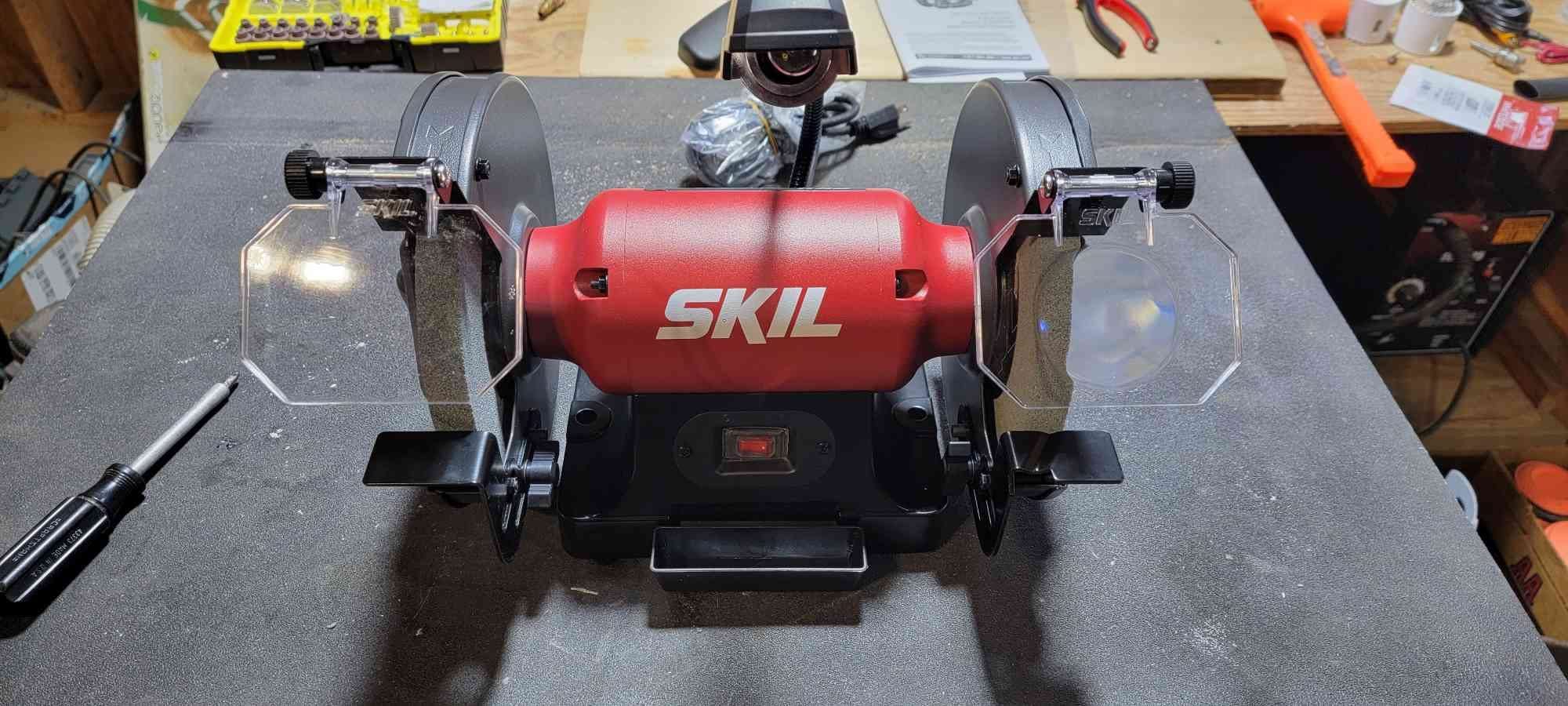
The 3.0 amp motor delivers strong performance at 3450 RPM. During aggressive grinding tests on rusted garden tools, the motor maintained speed without significant slowdown. The power level suits 8-inch wheel requirements effectively, providing material removal capability that matches larger models.
Magnified eye shields improve visibility while protecting users. I appreciated seeing grinding details clearly through the magnified lenses, which helps accuracy during sharpening work. Some owners report the lens material seems weak, so careful handling prevents damage during regular use. The shields provide proper protection despite the construction concerns.
Modern Workshop Benefits
Users who work evening hours appreciate the integrated LED lighting that eliminates setup for adequate illumination. Seeing grinding progress clearly improves results and safety, reducing mistakes caused by poor visibility. The LED brightness exceeds what most competitors offer in integrated lighting.
The water cooling tray adds capability for controlled grinding without overheating concerns. Users who occasionally sharpen delicate tools can use the cooling feature effectively, though dedicated slow-speed grinders still provide better temperature control for sustained sharpening work.
Minor Drawbacks
The lens material on eye shields could be more robust. Some owners report cracking or damage during regular handling, requiring replacement or careful use. The magnification feature works well, but durability concerns suggest handling shields gently during setup and cleaning.
The listed dimensions appear as placeholder values that do not reflect actual measurements. Users planning workshop layout should verify physical size independently before installation. This documentation oversight frustrates buyers who expect accurate specifications for planning purposes.
Buying Guide: What to Look for in a Bench Grinder
Choosing the right bench grinder depends on your specific workshop needs, budget, and planned applications. After testing these models extensively, I identified key factors that determine whether a grinder suits your requirements effectively. Understanding these considerations helps you select a model that delivers lasting value.
Wheel Size: 6-Inch vs 8-Inch
Wheel size affects both grinding surface width and rim speed significantly. Eight-inch wheels provide broader grinding surfaces with approximately 1-inch width, giving more contact area for larger workpieces. The larger diameter also creates faster rim speed at identical RPM, removing material quicker per revolution. For sharpening long plane blades, handling larger tools, and aggressive grinding, 8-inch models work better.
Six-inch wheels suit compact workshops and smaller workpieces effectively. The narrower width provides adequate surface for most tool sharpening, while the smaller diameter requires less motor power for equivalent performance. Bench space constraints often drive 6-inch selection because these models occupy smaller footprints. Both sizes handle typical workshop tasks well, but larger projects favor 8-inch wheels.
Motor Power and RPM Considerations
Motor horsepower directly affects grinding capability during demanding tasks. Models with 3/4 HP motors like the DEWALT DW758 handle aggressive material removal without slowing down. Half-horsepower motors suit moderate workshop work effectively, delivering enough power for most sharpening and grinding applications. Lower horsepower around 1/3 HP works for light-duty tasks but may struggle during extended heavy sessions.
RPM determines grinding speed and heat generation characteristics. Standard 3450-3600 RPM models remove material quickly but generate significant heat on small contact areas. These speeds work well for rust removal, general grinding, and moderate sharpening with careful technique. Slow-speed 1750 RPM grinders reduce heat buildup dramatically, making them ideal for delicate woodworking tool sharpening where preserving temper matters.
Variable Speed Advantages
Variable speed control provides flexibility that single-speed grinders lack. Models like the WEN BG625V and Delta 23-196 let users adjust RPM from approximately 2000 to 3400 based on task requirements. Low speeds protect delicate tools from overheating during sharpening, while high speeds handle aggressive material removal efficiently. This versatility eliminates needing separate slow-speed and standard grinders for most workshop owners.
Dual-speed presets offer simpler operation than variable dials while providing similar versatility. The BUCKTOOL TDS-200DS switches between 1750 and 3450 RPM with manual selection. This approach works well for users who need preset speed options without fine-tuning requirements. Variable speed requires more adjustment time but offers precise control for specific applications.
Safety Features Importance
Eye shields protect users from sparks, debris, and wheel fragments during grinding. Quality shields adjust to various positions and provide clear visibility while blocking hazards. Models with magnified shields like the SKIL BI9502-00 improve visibility during detailed work. Proper shield usage prevents eye injuries that occur frequently with inadequate protection.
Spark deflectors redirect debris away from users and surrounding surfaces. These guards contain sparks and metal particles that fly during grinding operations. Quality deflectors cover wheel areas adequately without interfering with grinding access. Wheel guards also protect users from wheel fragments if cracks or failures occur.
Tool rests support workpieces during grinding, positioning them correctly for consistent results. Adjustable rests let users set angles for various sharpening and grinding tasks. Precision-machined rests like those on DEWALT models hold positions securely during operation. Poor tool rest design causes inconsistent grinding and potential safety hazards.
Wheel Grit Types Explained
Coarse wheels around 36-grit remove material quickly for aggressive grinding applications. These wheels suit rust removal, deburring, and shaping rough surfaces efficiently. However, coarse grit leaves rough finishes that require finer wheels for smooth results. Most grinders include a coarse wheel for general grinding tasks.
Medium wheels around 60-grit balance material removal with finish quality. These wheels handle moderate sharpening and general grinding effectively. Many manufacturers include 60-grit wheels as the primary option for versatile workshop use. This grit works well for tool sharpening without requiring fine finishing wheels.
Fine wheels around 80-120 grit provide smooth finishing and delicate sharpening. These wheels remove minimal material per pass, creating polished surfaces and precise edges. Woodworking tool sharpening benefits from fine grit wheels that preserve edges without aggressive cutting. Dedicated sharpening grinders often include fine wheels specifically for delicate work.
Vibration and Noise Factors
Smooth operation directly affects grinding accuracy and user comfort. Grinders with cast iron bases run smoother than lightweight alternatives because mass dampens vibration. Models like the DEWALT DW758 and JET JBG-8 operate with minimal vibration, improving results during precise sharpening work. Budget grinders with lighter bases transfer more vibration to workbenches and workpieces.
Motor design influences noise levels significantly. Induction motors run quieter than universal motors found in cheaper models. The DEWALT DW756 operates noticeably quieter than budget alternatives, making evening workshop use more comfortable. Users sensitive to noise should prioritize induction motor designs over cheaper alternatives that produce substantial mechanical noise.
Base Construction and Mounting
Cast iron bases provide superior stability compared to aluminum or composite alternatives. The heavy mass prevents walking and reduces vibration transfer during operation. Professional models like the JET JBG-8 use cast iron throughout for maximum stability. This construction lasts through years of daily use without deterioration.
Pre-drilled mounting holes simplify securing grinders to workbenches. Models lacking mounting holes require custom drilling, which complicates installation. Secure mounting prevents movement during operation, improving safety and grinding accuracy. Heavy grinders need mounting less urgently than lightweight models that walk during use.
FAQs
Is a 6 or 8 inch bench grinder better?
Eight-inch bench grinders provide wider grinding surfaces and faster rim speed for larger workpieces and aggressive material removal. Six-inch models suit compact workshops and handle most tool sharpening adequately with smaller footprints. Choose based on your space constraints and typical workpiece sizes.
Are Harbor Freight bench grinders any good?
Harbor Freight bench grinders offer adequate value for occasional DIY use at budget prices. Users report mixed experiences with wheel balance and motor durability compared to premium brands. For frequent workshop use, investing in better-constructed models from DEWALT, WEN, or JET provides longer service life and smoother operation.
What is the best bench grinder for sharpening woodworking tools?
Slow-speed bench grinders running at 1750 RPM work best for sharpening chisels, plane irons, and delicate woodworking tools. The lower speed prevents overheating that ruins tool temper. Models like the RIKON 80-805 and BUCKTOOL TLG-150S specialize in woodworking sharpening with appropriate wheel grits and stable operation.
Do I really need a bench grinder?
Bench grinders save significant time sharpening tools, removing rust, and preparing metal surfaces compared to manual methods. If you maintain hand tools, lawn equipment, or work with metal regularly, a bench grinder provides fast, consistent results. Occasional users accomplish similar results with handheld tools but require much more effort and time.
What to look for when buying a bench grinder?
Key factors include motor horsepower matching your workload, RPM speed appropriate for planned applications, wheel size fitting your workpieces, safety features like eye shields and spark deflectors, and base construction providing stability. Variable speed models offer versatility for multiple applications, while slow-speed grinders excel at delicate sharpening work.
Conclusion
After testing these 10 models extensively, the DEWALT DW758 stands out as the best bench grinder for serious workshop owners who need reliable power and smooth operation. The 3/4 HP motor handles demanding tasks without hesitation, and the cast iron construction provides lasting durability. For woodworkers focused on tool sharpening, the RIKON 80-805 offers excellent slow-speed performance with included fine-grit wheels.
Budget-conscious buyers find solid value in the WEN BG4260 for occasional grinding tasks, while the WEN BG625V delivers exceptional versatility through variable speed control at moderate pricing. Professional shops requiring certified equipment should consider the JET JBG-8 for CSA compliance and industrial-grade construction. Each model serves specific needs effectively, making selection straightforward once you identify your primary applications.
Investing in a quality bench grinder pays dividends through years of reliable service and consistent results. Whether you sharpen tools monthly or handle daily grinding operations, choosing a model that matches your workload prevents frustration and delivers lasting value. The best bench grinders combine appropriate power, smooth operation, and proper safety features for your specific workshop requirements.