
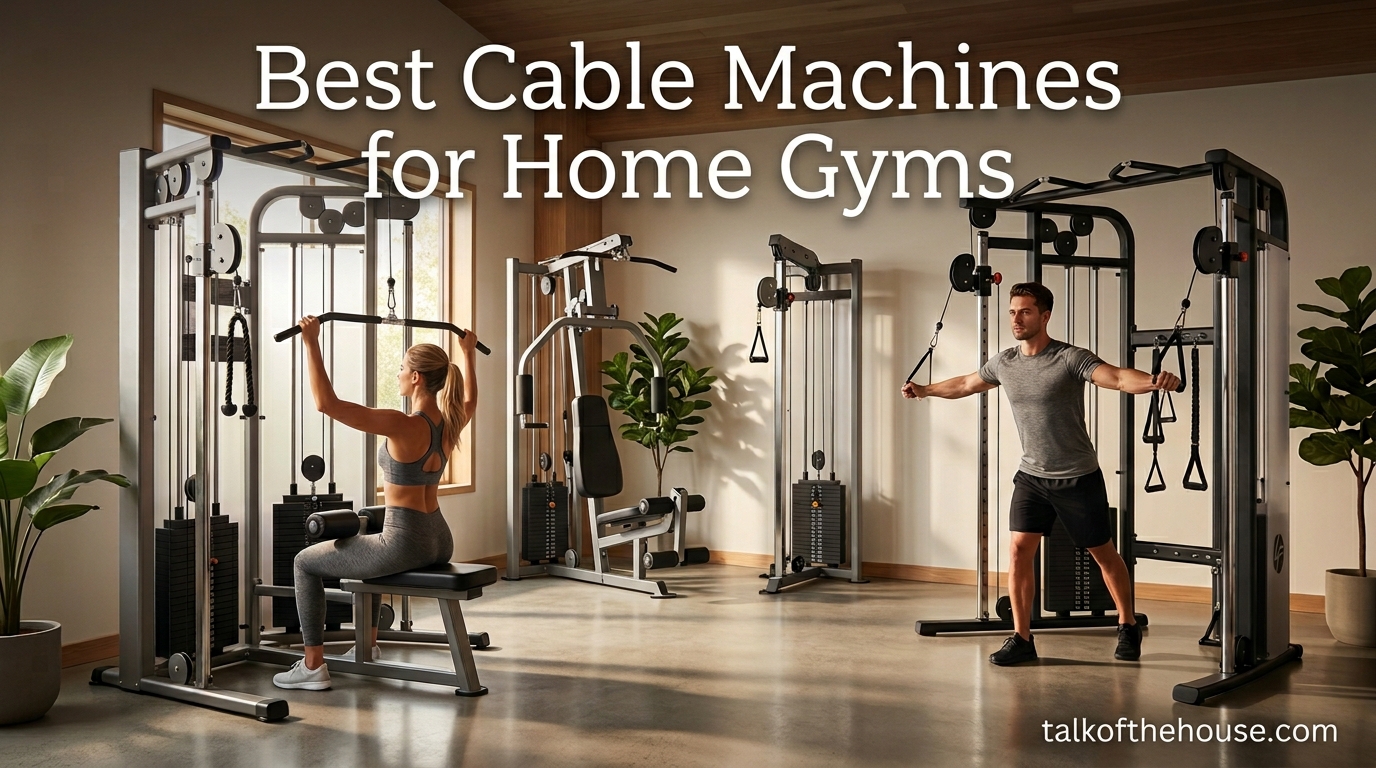
Building a home gym without a cable machine is like having a kitchen without a stove. You can make it work, but you are missing out on so much. After testing cable machines in my own garage gym over the past 18 months, I can tell you that the best cable machines for home gyms transform how you train. They give you constant tension through the entire range of motion, unlock dozens of exercises that dumbbells alone cannot replicate, and save you from needing five separate machines.
Whether you want lat pulldowns, cable crossovers, triceps pushdowns, face pulls, or low rows, a quality cable pulley system handles all of it. The challenge is sorting through the options. Prices range from under $200 to over $2,500. Some mount to your wall and disappear when not in use, while others are freestanding units that dominate your gym floor. Cable ratios, weight stacks, and build quality vary wildly.
Our team spent weeks comparing 12 of the most popular cable machines for home use, digging through thousands of customer reviews, and analyzing what real users on forums like r/GarageGym and r/homegym actually recommend. This guide breaks down exactly which machine fits your space, budget, and training style so you can make the right call the first time.
Table of Contents
Top 3 Picks for Best Cable Machines for Home Gyms

XMark Functional Trainer
- Dual 200 lb Weight Stacks
- 19 Cable Positions
- Multi-Grip Pull-Up Station

Mikolo M-G3 Wall Mount Cable Station
- 18 Height Positions
- 400 lb Capacity
- Space-Saving Wall Design

Best Cable Machines for Home Gyms in 2026


1. XMark Functional Trainer – Dual 200 lb Weight Stacks and 19 Cable Positions
- Commercial-grade build quality
- Smooth and quiet pulley operation
- 19 cable positions for full exercise variety
- Multi-grip pull-up station included
- Dual 200 lb weight stacks with 2:1 ratio
- 800 lb unit requires reinforced flooring
- Assembly takes 4+ hours with two people
After setting up the XMark Functional Trainer in my buddy’s garage gym, I understood immediately why it has nearly 850 reviews and a 4.8-star rating. This machine feels like it belongs in a commercial facility. The dual 200 lb weight stacks with a 2:1 resistance ratio give you 100 lbs per side at a 1:1 feel, which is plenty for isolation work, and you can combine both stacks for heavier compound movements.
The pulley action is buttery smooth. No sticking, no jerking, no cable drag. XMark uses quality pulleys and cables throughout, and it shows the moment you start doing lat pulldowns or cable flyes. Every rep feels controlled from start to finish. The 19 vertical cable positions let you set the pulleys anywhere from floor level to the top of the frame, so whether you are doing low rows, mid-height cable crossovers, or high triceps pushdowns, you have the right angle.
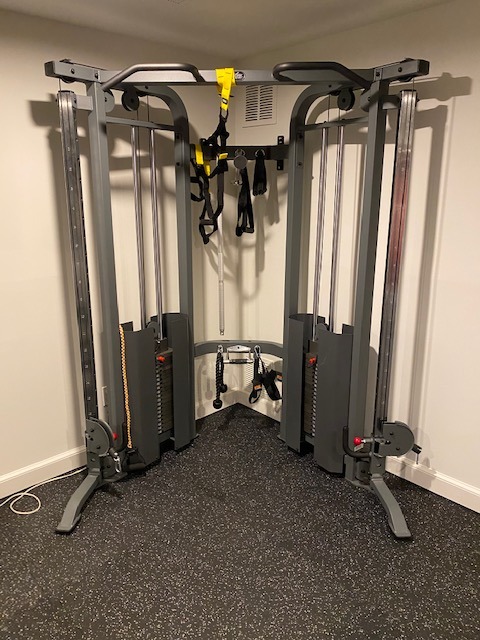
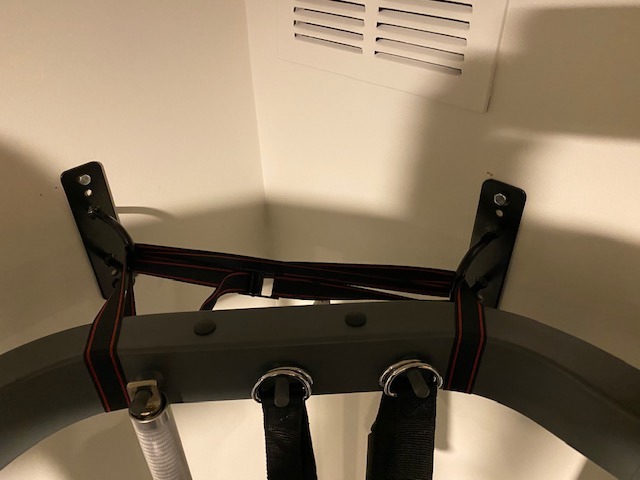
At 800 pounds, this unit does not budge during heavy pull-ups or aggressive cable crossovers. The multi-grip pull-up station at the top offers wide, narrow, and angled grips, which is a nice bonus that eliminates the need for a separate pull-up bar. However, the weight is also the main drawback. You absolutely need a solid floor and at least one other person to help with assembly.
Freight delivery is required, so expect a delivery appointment rather than a standard package drop-off. The included accessories cover the basics: hand straps, a triceps rope, and ankle straps. For the quality you get, the XMark punches well above its weight class and is the top pick for anyone serious about their home gym training.
Who Should Buy the XMark Functional Trainer
This is the right pick if you have the space and budget for a no-compromise cable machine. It works best for intermediate to advanced lifters who want commercial-grade smoothness and enough weight stack capacity for heavy back work. The 2:1 ratio means each 200 lb stack delivers 100 lbs of resistance per side, ideal for most single-arm exercises.
It also suits families where multiple people will use the machine, since the selectorized weight stacks let anyone change resistance in seconds without loading plates. Just make sure your floor can handle 800 pounds of equipment plus the weight of the user.
Who Should Skip It
If you are working with limited floor space or need something you can move by yourself, the XMark is overkill. Apartment dwellers and anyone with a small spare room gym should look at wall-mounted options instead. Also, if you are on a tight budget, there are capable machines for a fraction of the cost.
The freight shipping requirement and 4-plus hour assembly process are also dealbreakers if you want something quick to set up. This machine demands commitment in space, money, and installation time.
2. Inspire Fitness FTX Functional Trainer – Compact Design with Dual 165 lb Weight Stacks

- Commercial-grade construction quality
- Smooth gliding pulley system
- Compact footprint for home gyms
- Includes comprehensive accessory kit
- CENTR app subscription included
- 544 lb weight needs reinforced flooring
- Assembly requires two people and significant time
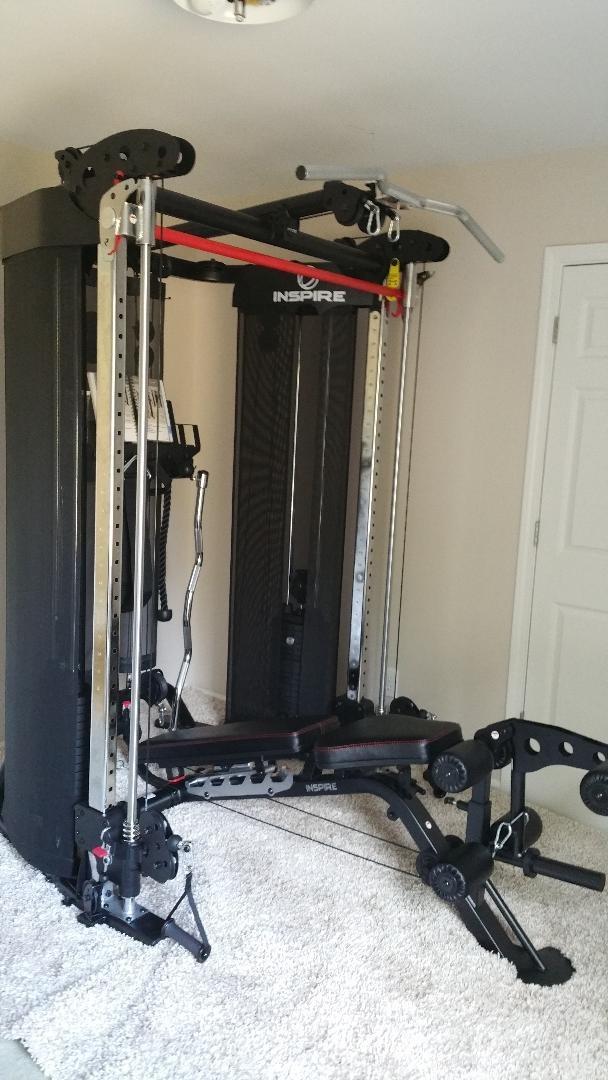
The Inspire Fitness FTX is one of those machines that shows up in forum discussions constantly, and for good reason. Users on r/homegym praise it as the gold standard for compact functional trainers. The dual 165 lb weight stacks at a 2:1 ratio give you 82.5 lbs per side, which covers most isolation exercises comfortably. For heavier compound movements, you can use both stacks together.
What sets the FTX apart is the attention to detail. The pulley system glides with near-zero friction. The built-in accessory storage keeps your handles and ropes organized instead of scattered on the floor. There is even a phone and tablet holder, which is more useful than it sounds when you are following along with a workout program. The included CENTR app subscription gives you guided workouts for the first three months.
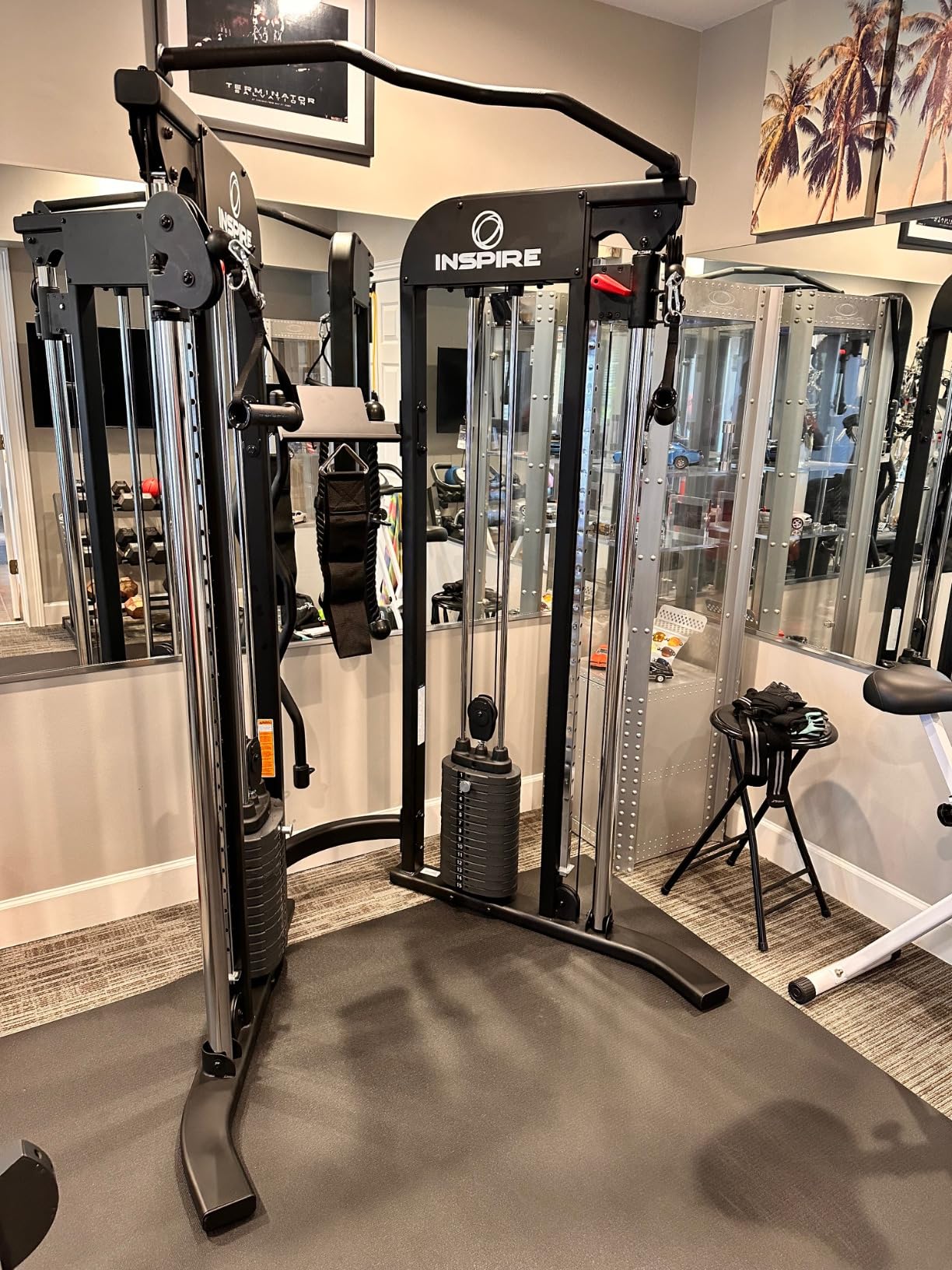
The footprint is surprisingly compact at 54 inches deep by 40 inches wide. It fits in corners and small gym spaces better than most dual-stack units. The pull-up bar integrated into the top frame is a solid addition. Build quality is excellent throughout, with alloy steel construction that feels like it will last decades.
The downsides are familiar for this category: at 544 pounds, moving it into place is a project. Assembly took me and a friend about three hours, and the instructions could be clearer. For taller users over 6 feet, some exercises at the top of the frame may feel slightly constrained. But these are minor complaints for what is otherwise one of the finest home cable machines available.
Who Should Buy the Inspire Fitness FTX
This is the ideal machine for home gym owners who want a premium, compact functional trainer without going full commercial. It fits well in a garage corner or dedicated room, and the selectorized weight stacks make transitions between exercises fast enough for supersets and circuits.
If you value smooth operation and included accessories over raw maximum weight, the FTX delivers. The CENTR app integration also makes it appealing for beginners who want guided workouts to get started.
Who Should Skip It
If you are a heavy lifter who needs more than 165 lbs per stack for back rows or lat pulldowns, the weight limit may frustrate you over time. Advanced lifters might outgrow the stacks and wish they had gone with something that supports plate loading for unlimited weight.
The price point also places it firmly in the premium category. If you are just dipping your toes into cable training, there are capable wall-mounted and freestanding options that cost significantly less.
3. Mikolo M-G3 Wall Mount Cable Station – Space-Saving Wall-Mounted Design with 18 Positions
- Excellent value for money
- Smooth operation despite stock pulleys
- Compact corner-friendly design
- Easy assembly with clear layout
- 18 adjustable height positions
- Plastic pulleys have friction (upgrade to aluminum recommended)
- Cable assembly instructions could be clearer
Wall-mounted cable stations have become incredibly popular in the home gym community, and the Mikolo M-G3 is one of the best values you will find. I installed this in a corner of my garage, and it immediately freed up floor space that a freestanding unit would have consumed. The 14-gauge steel frame feels solid when properly mounted to studs or a concrete wall.
The dual independent pulleys with 18 height positions give you plenty of exercise variety. You can do lat pulldowns, triceps pushdowns, cable crossovers, face pulls, biceps curls, and low rows all from one station. The nylon-coated aircraft-quality cables have a 2,200-pound tensile strength rating, which inspires confidence when you are loading up plates for heavy rows.
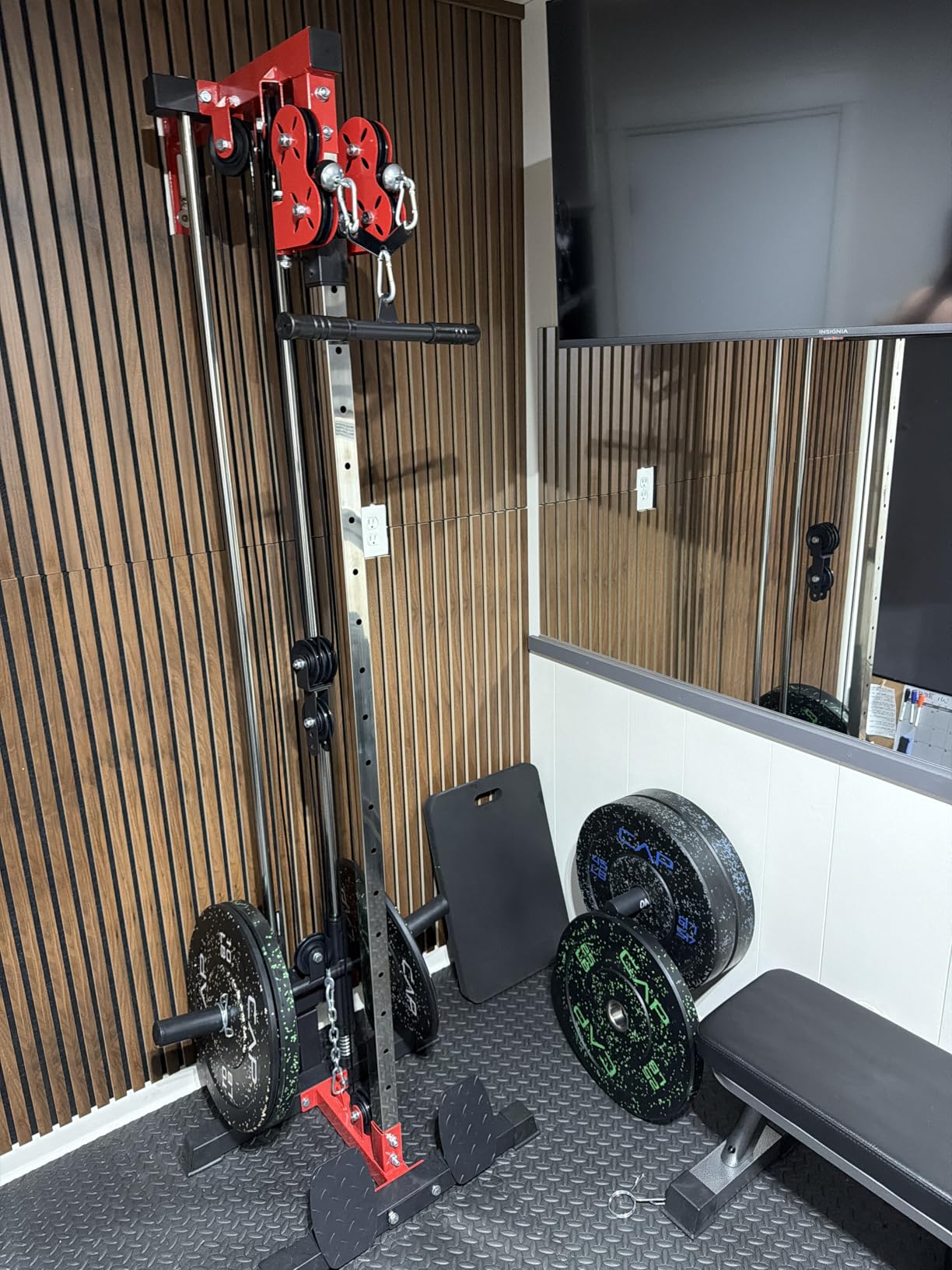
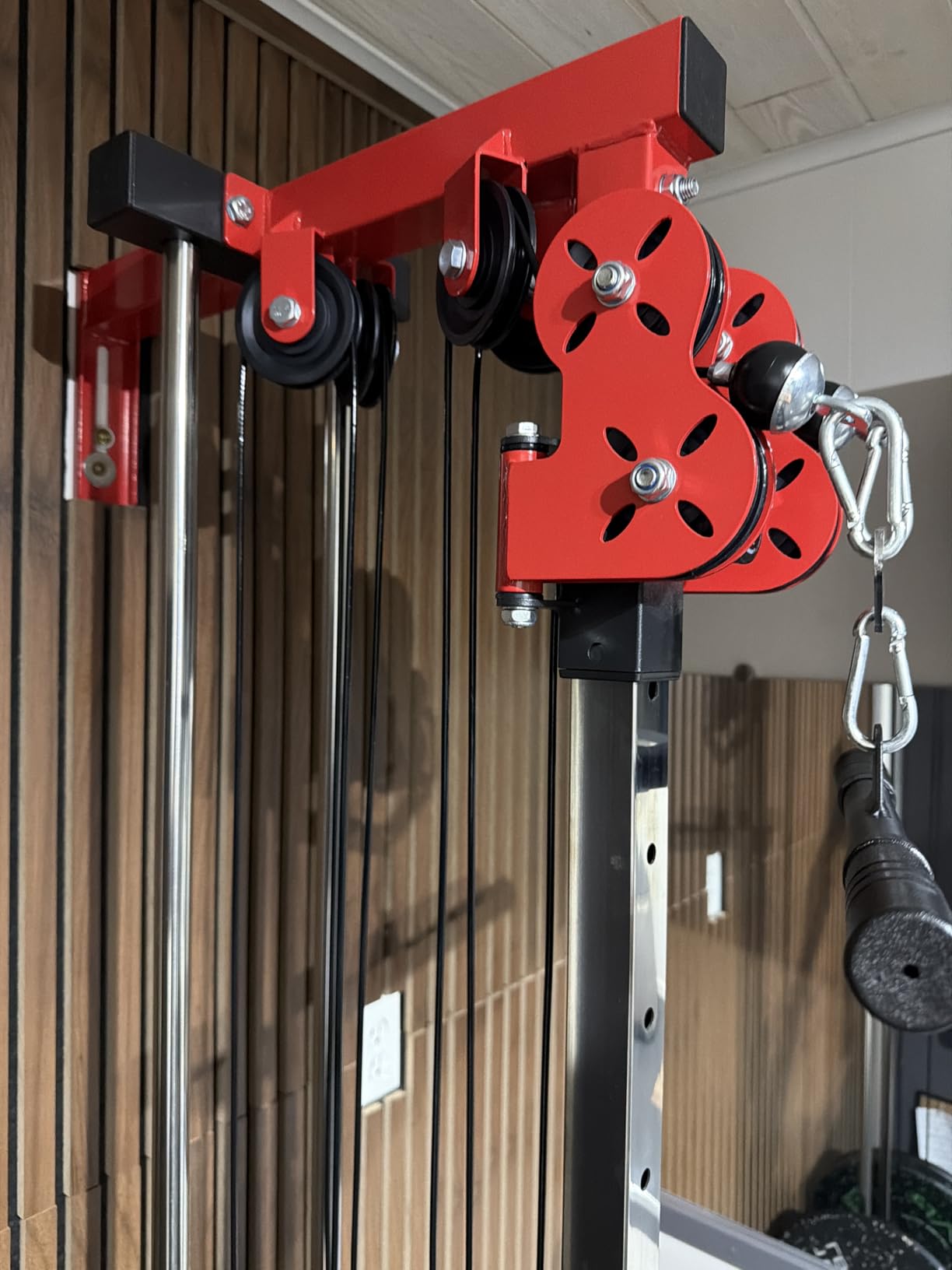
The stock plastic pulleys work, but they do introduce some friction that heavier users will notice. Several forum members on r/GarageGym recommend swapping them for aluminum pulleys, which costs about $20 and takes 15 minutes. After that upgrade, the M-G3 operates almost as smoothly as machines costing three times as much. The included lat bar, cable bar, and tricep rope cover the basics well.
Assembly is straightforward if you have basic tools and a helper for mounting the frame to the wall. The H-shaped base plate keeps the weight plates stable and prevents the whole unit from swaying during exercises. For the price, this is a remarkable amount of cable machine capability.
Who Should Buy the Mikolo M-G3
This is the perfect pick for anyone with limited floor space who wants a full cable station experience. Garage gym owners, basement gym builders, and anyone training in a spare bedroom will appreciate the wall-mounted design that keeps the center of the room open.
It is also a great option for budget-conscious lifters who already own weight plates. Since the M-G3 uses plate loading rather than a weight stack, you can use plates you already have instead of buying into a proprietary system.
Who Should Skip It
If you do not have a solid wall to mount it on, this is not the right choice. The M-G3 requires secure anchoring into studs or masonry. renters and anyone with drywall-only walls should look at freestanding options instead.
The plate-loading system also means changing weights takes longer than a selectorized stack. If you do a lot of supersets or drop sets and want instant weight changes, a weight stack machine will serve you better.
4. Mikolo G2 LAT Pulldown Machine – Affordable Lat Pulldown and Cable Row Combo
- Affordable lat pulldown option
- Smooth pulleys and stable operation
- Compact 10ft footprint
- Easy assembly with good instructions
- Includes lat bar
- cable bar
- and barbell clamps
- Not ideal for tall users over 6 feet
- No anchor point included
- Not Prime eligible
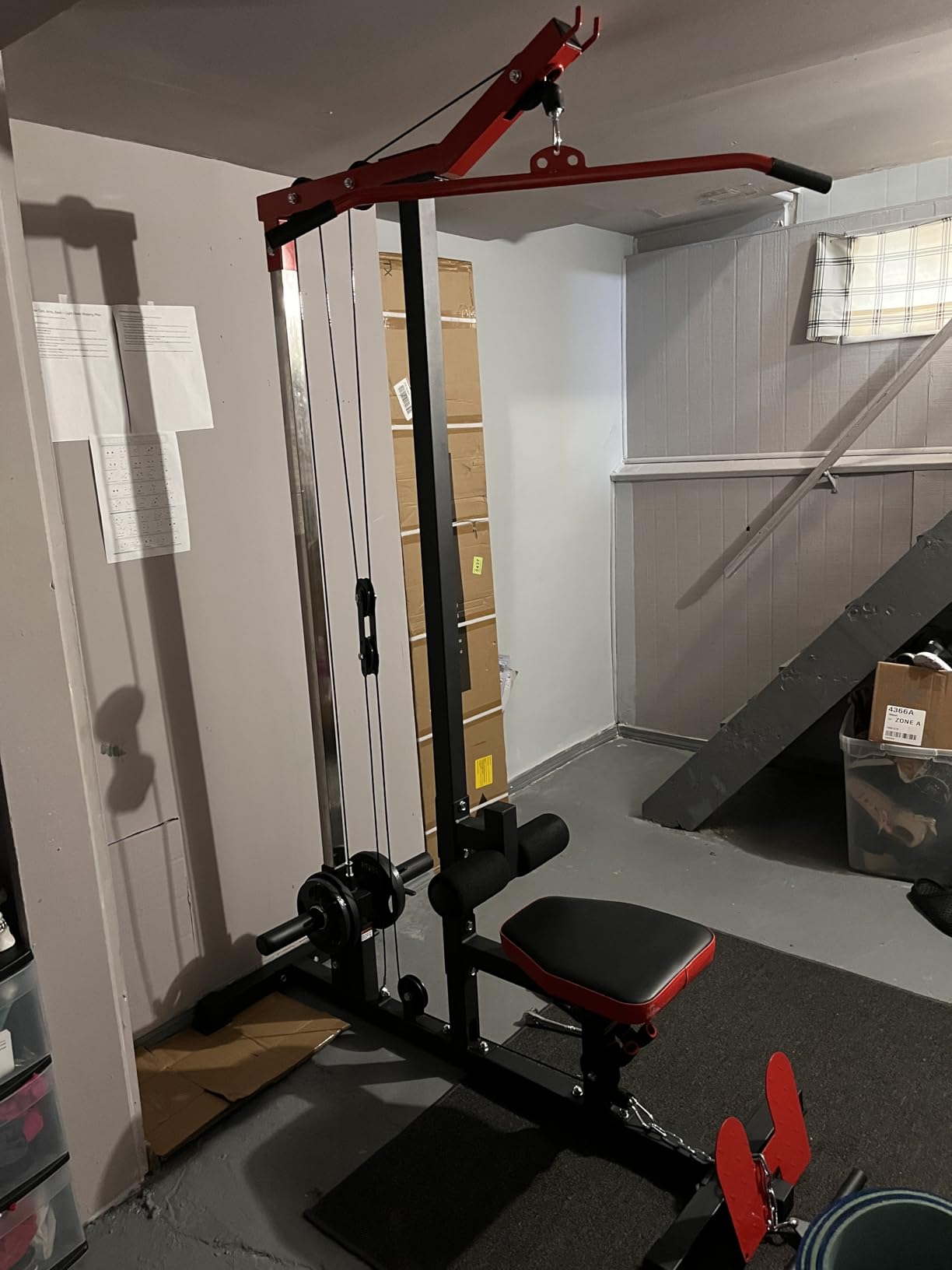
The Mikolo G2 is proof that you do not need to spend a fortune to get a capable cable machine for home gym workouts. This freestanding lat pulldown and cable row machine delivers the two most popular cable exercises at a price that is hard to beat. The 2mm thick steel tubing and 800 lb tensile strength cables give it a sturdy feel that belies its low cost.
Setting it up took me about 45 minutes by myself. The instructions are clear and all the hardware is well-organized. The 10 square foot footprint is impressively compact, fitting easily in a corner. The high and low pulley stations let you do lat pulldowns, seated rows, biceps curls, and triceps pushdowns. The adjustable seat has three height settings, and the included leg hold-down attachment keeps you locked in during heavy pulldowns.
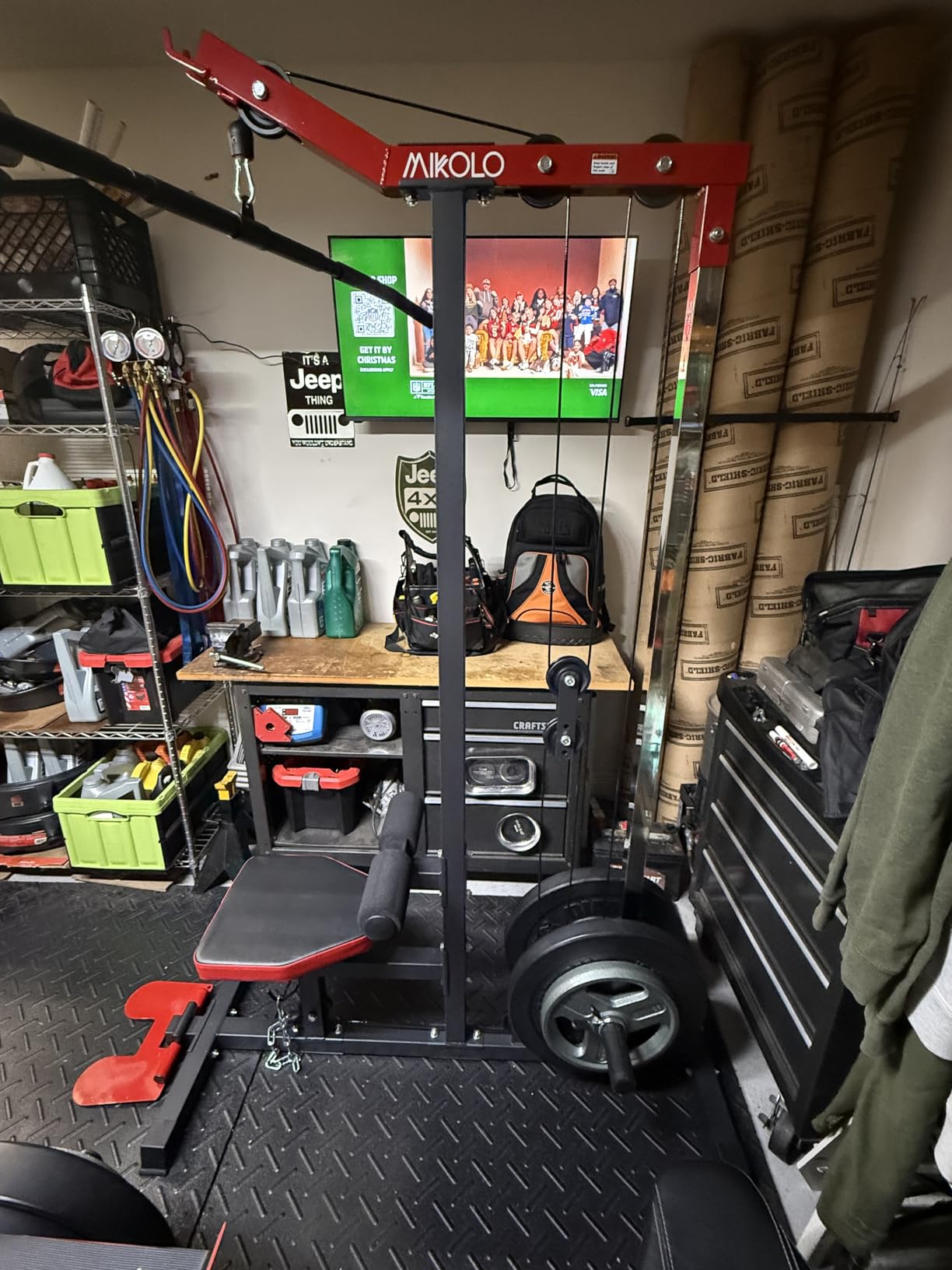
The detachable weight sleeve accepts both 1-inch and 2-inch plates, so you can use standard or Olympic weights. At 75 pounds, the unit itself is light enough to move around your gym, but that also means you may need to weigh down the base or bolt it down for stability during heavy rows. Some users report that the rubber footings can come loose over time.
For users under about 6 feet tall, the G2 provides a comfortable range of motion for pulldowns and rows. Taller users may find the cable travel slightly short for full lat stretch. But at this price point, those are acceptable compromises for a machine that delivers smooth, reliable cable training.
Who Should Buy the Mikolo G2
Beginners building their first home gym will love the G2. It gives you lat pulldowns and seated rows without requiring wall mounting or a massive footprint. If you already own weight plates, you can start training immediately.
It is also a smart pick for anyone on a tight budget who wants the core benefits of cable training. The smooth pulley operation and included attachments mean you get a complete package without extra purchases.
Who Should Skip It
Tall users over 6 feet should look elsewhere, as the limited cable travel and height will restrict your range of motion on pulldowns. Heavy lifters who need serious stability for aggressive rows may also find the lightweight frame limiting without anchoring it down.
If you want a machine that does crossovers or bilateral exercises, the single-tower design of the G2 will not support those movements. You would need a dual-tower or wall-mounted system for that.
5. Goimu WM1 Wall Mount Cable Station – Dual Pulley System with 17 Height Positions

- Solid build quality with 14-gauge steel
- Smooth cable motion
- Compact 3.28 sq.ft footprint
- Includes multiple attachments
- 2-year warranty
- Assembly challenging for one person
- Highest and lowest positions may not engage properly
- Plastic pulleys could be upgraded
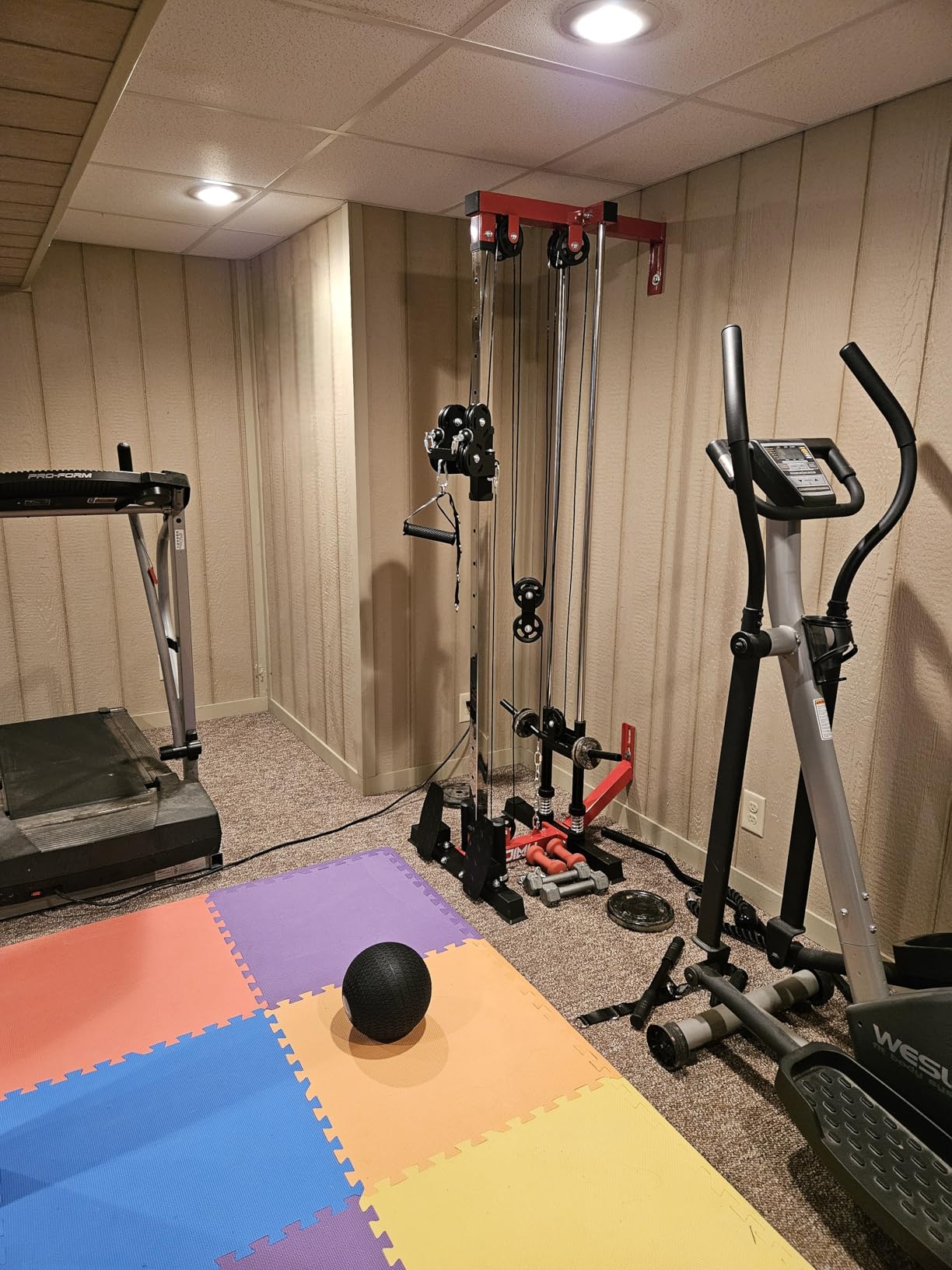
The Goimu WM1 takes a slightly different approach to the wall-mounted cable station, offering a dual independent pulley system with SmartT technology that supports both 1:1 and 2:1 cable ratios. That means you can switch between heavier resistance for compound movements and lighter resistance for isolation work on the same machine.
With 17 height positions, the WM1 covers all the exercises you would expect: lat pulldowns, cable crossovers, triceps pushdowns, face pulls, biceps curls, and low rows. The anti-sway system with the H-shaped base keeps everything stable during unilateral movements, which is a common complaint with cheaper wall-mounted units.
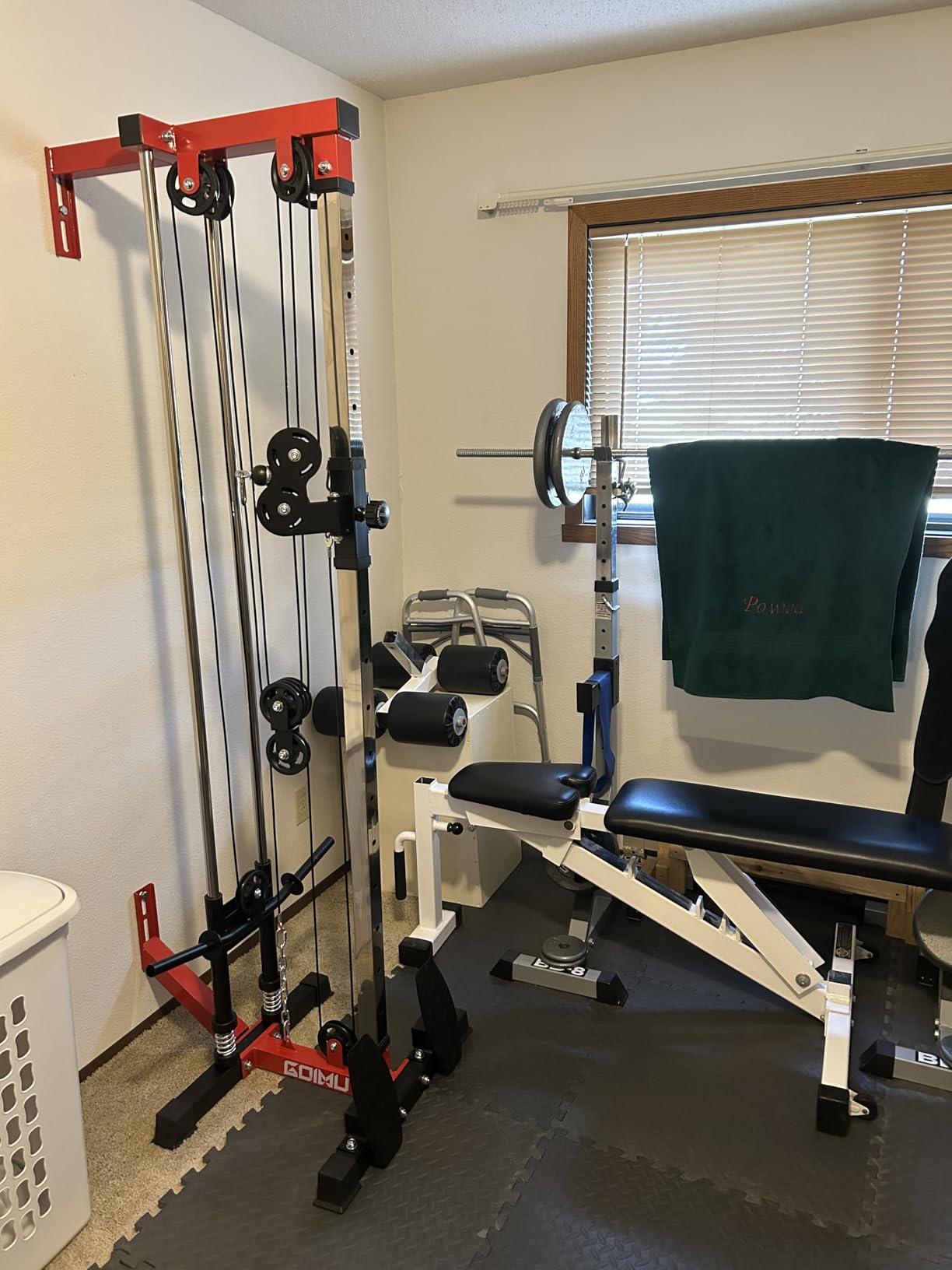
The 3.28 square foot footprint is one of the smallest on this list, making the WM1 a great choice for tight garage corners or small home gym spaces. The included attachments are generous: a lat pulldown bar, cable bar, tricep rope, and D-ring handles. The 2-year warranty provides peace of mind that Goimu stands behind their product.
Assembly is the main pain point. The unit ships in pieces that require careful alignment, and mounting it solo is difficult. I recommend having a second person for the wall-mounting step. Some users also report that the very highest and lowest pulley positions do not engage smoothly, so the effective range may be closer to 15 usable positions.
Who Should Buy the Goimu WM1
Anyone who values a compact footprint and wants both 1:1 and 2:1 cable ratios in one machine will appreciate the WM1. The dual ratio system is rare at this price point and gives you more flexibility for programming different exercises at different resistances.
Home gym owners who already have a solid wall and their own weight plates will get the most value here. The included attachments mean you can start training right away without buying extras.
Who Should Skip It
If you need more than 300 lbs of capacity for heavy back work, the WM1 may limit you. Powerlifters and strong intermediate lifters might find the weight ceiling too low for progressive overload on rows and pulldowns.
Those without a suitable wall for mounting should also pass. Like all wall-mounted stations, the WM1 needs solid anchoring into studs or masonry to be safe and stable during use.
6. ER KANG Wall Mount Cable Station – Flip-Up Footplate and 18 Adjustable Positions
- Great value for the price
- Very sturdy when properly installed
- Compact footprint
- Smooth operation after setup
- Includes lat bar
- cable bar
- and tricep rope
- Picture-only instructions with no text
- Stock nylon pulleys have friction
- Height may be low for taller users
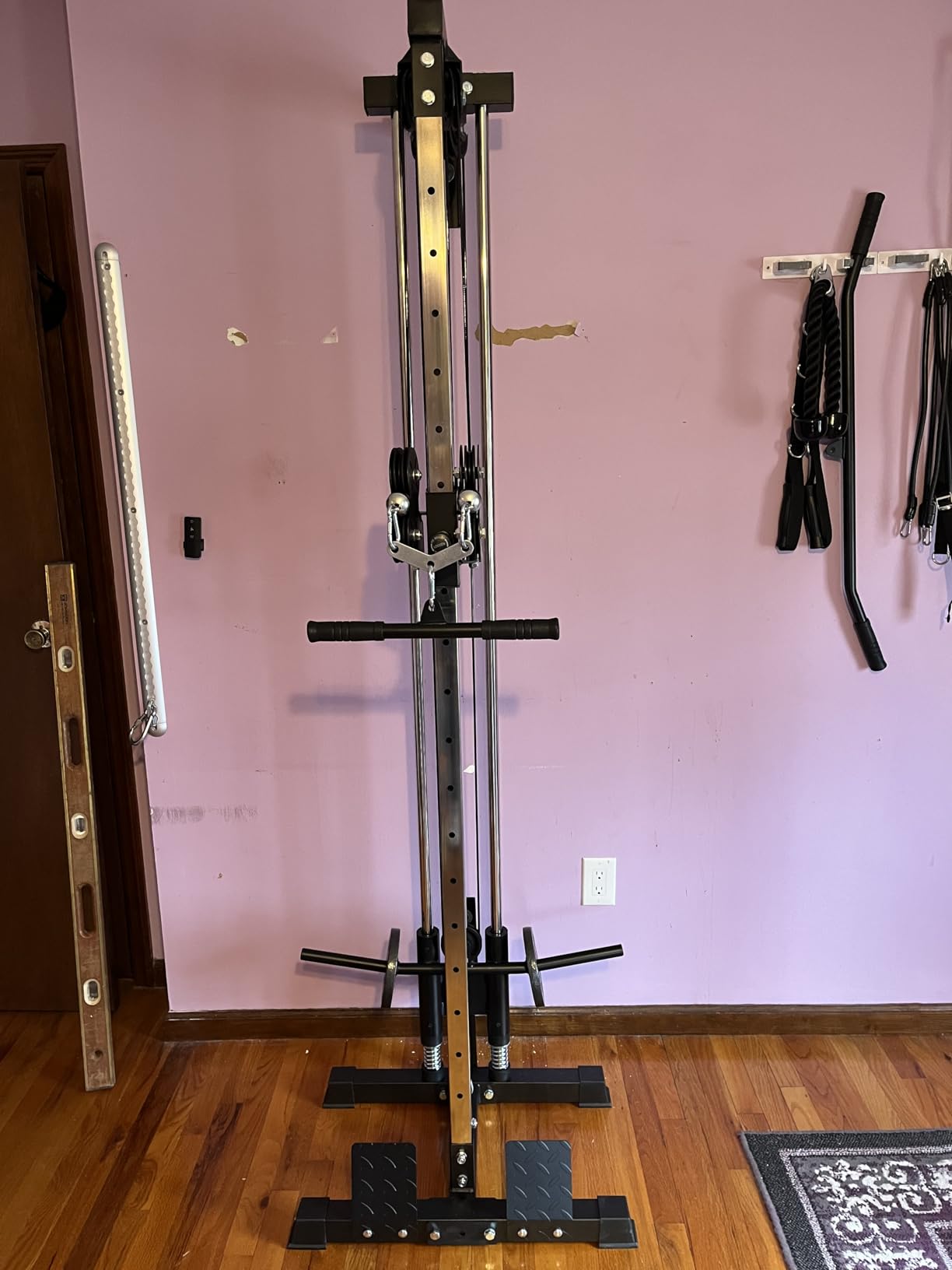
The ER KANG Wall Mount Cable Station brings commercial-grade 11-gauge steel to a wall-mounted package. That is thicker steel than most competitors at this price point use, and it translates to a rock-solid feel once mounted. The dual pulley system with 18 adjustable positions covers exercises from floor-level low rows to overhead triceps work.
One feature that sets this unit apart is the flip-up footplate. When you want to do seated rows, you flip it down and anchor your feet. When you are done, it folds flat against the frame and stays out of the way. It is a small detail, but it makes a real difference in a compact home gym where every inch matters.
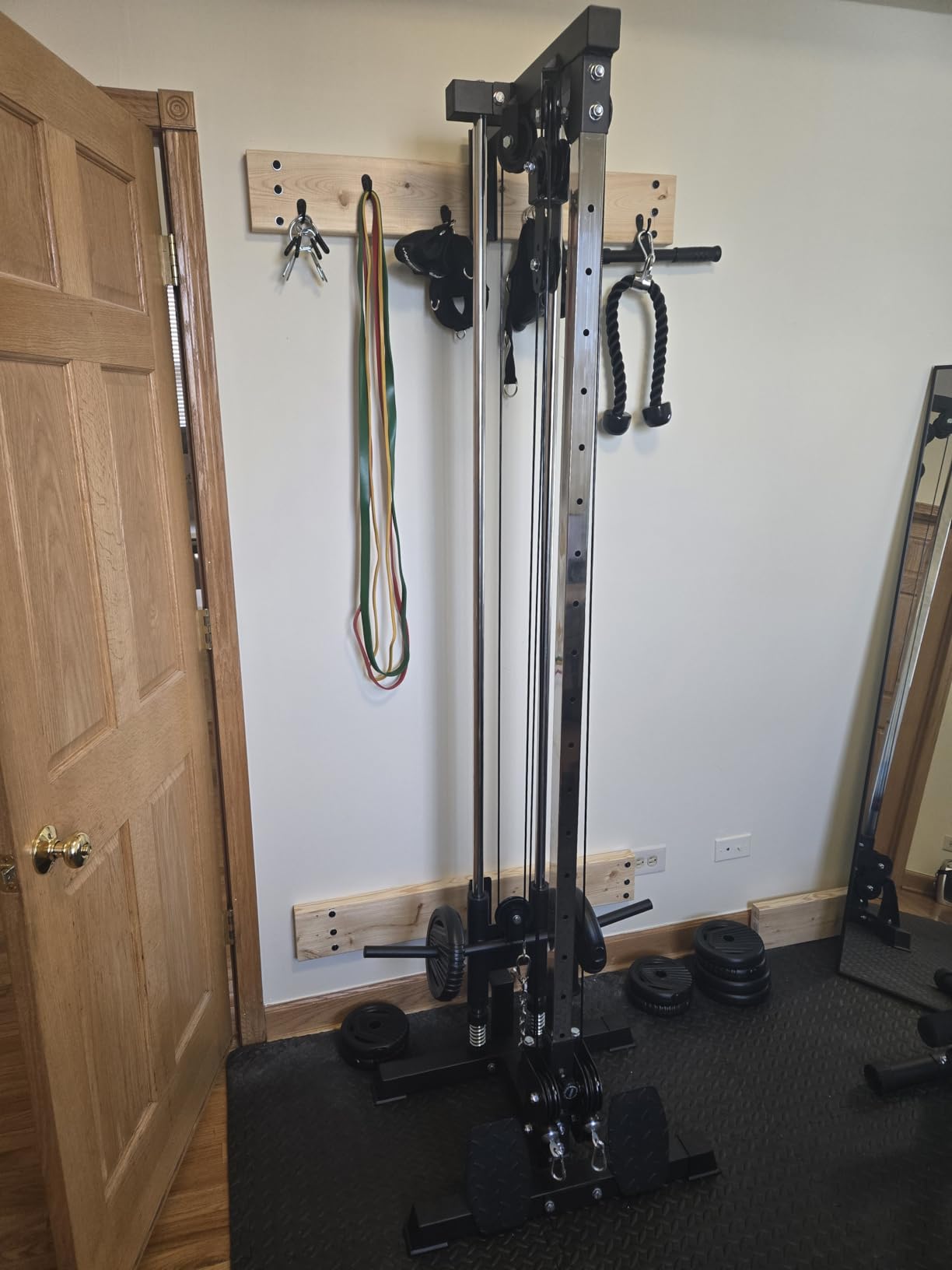
The nylon-coated cables have a 2,200-pound tensile strength rating, matching the Mikolo M-G3. The included accessories cover the basics well: lat bar, cable bar, tricep rope, and four adjustable-length strap handles. The 400-pound weight capacity is solid for a wall-mounted unit at this price.
The main frustration is the instructions. They are pictures only with no written guidance, and the cable routing sequence in particular can be confusing. Several users report having to partially disassemble and re-route cables after an incorrect first attempt. Also, the unit must be mounted perfectly vertical or the weight plate guides will bind, which adds time to the installation process.
Who Should Buy the ER KANG Cable Station
Lifters who want heavy-duty steel construction in a wall-mounted format should look here first. The 11-gauge frame is thicker than most competitors, giving you confidence for years of use. The flip-up footplate is a smart feature for anyone doing seated rows in a tight space.
It is a strong pick for garage gym owners who want the sturdiest possible wall-mounted station and are comfortable with a slightly more involved installation process.
Who Should Skip It
If you are not confident in your ability to install a wall-mounted system from picture-only instructions, consider the Mikolo M-G3 instead, which has clearer documentation. Taller users above 5 feet 11 inches may also find the frame height limiting for overhead exercises.
The stock nylon pulleys and bushings create more friction than aluminum alternatives. If you want the smoothest possible operation, plan on spending another $20 to $30 on upgraded pulleys after purchase.
7. Yes4All LAT Pull Down Machine – 500 lb Capacity with 4-Level Adjustable Seat

- Sturdy construction for the price
- Smooth cable operation
- Easy to build with clear instructions
- Good exercise variety
- 500 lbs weight capacity
- Plate holder bars can slip when changing plates
- Missing parts reported occasionally
- Not for power lifter strength levels
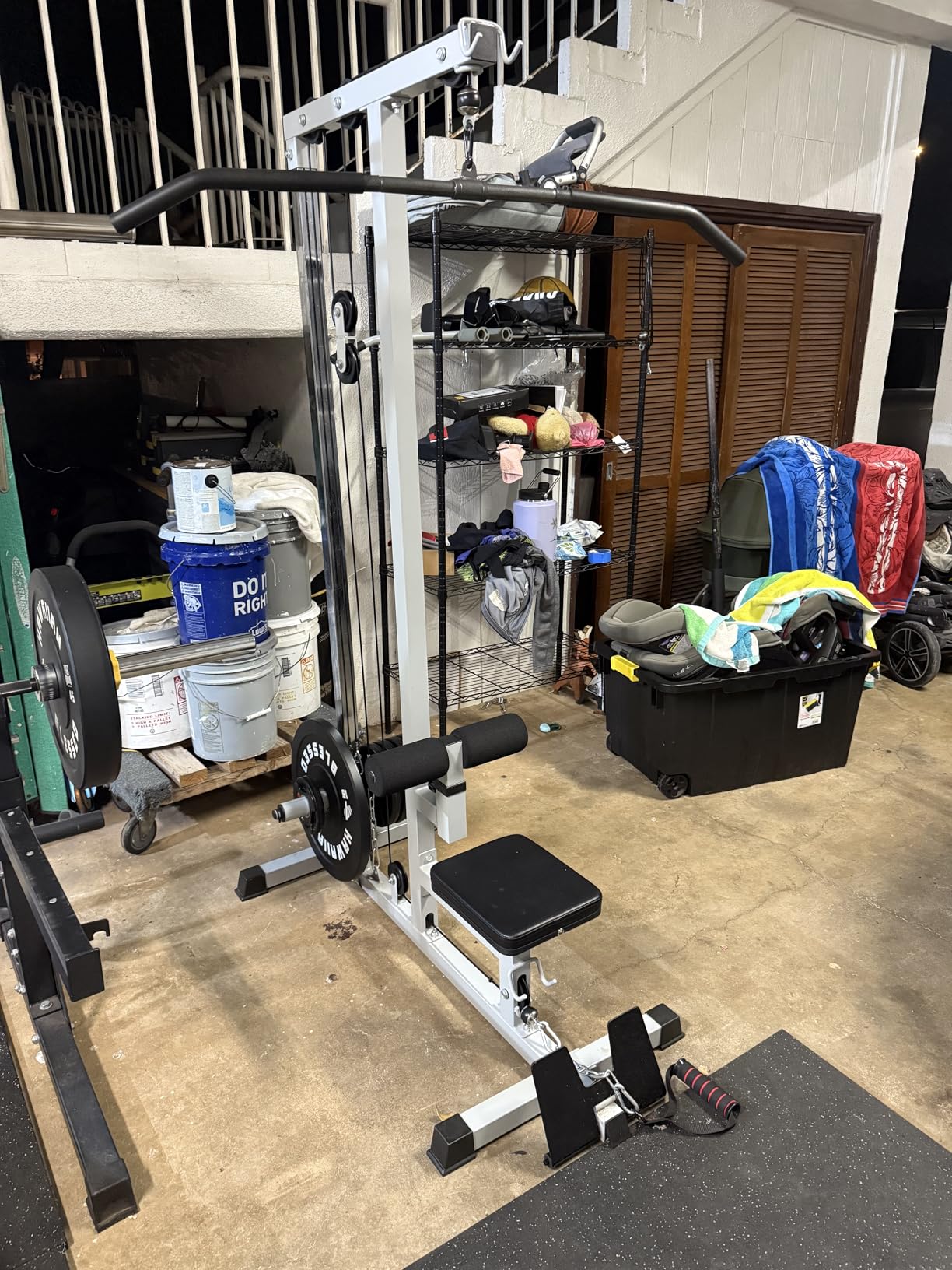
The Yes4All LAT Pull Down Machine is a freestanding tower that focuses on doing two things really well: lat pulldowns and seated rows. The high and low pulley stations give you both movements, plus you can attach different handles for biceps curls, triceps pushdowns, and face pulls. With a 500-pound weight capacity, it handles more than most budget options.
What impressed me most about this machine is the adjustability. The seat has four height levels, and the knee support also adjusts at four levels. That means whether you are 5 foot 4 or 6 foot 1, you can find a comfortable position. The high-density dual-layered seat pad is firm enough to support you during heavy pulldowns without bottoming out.
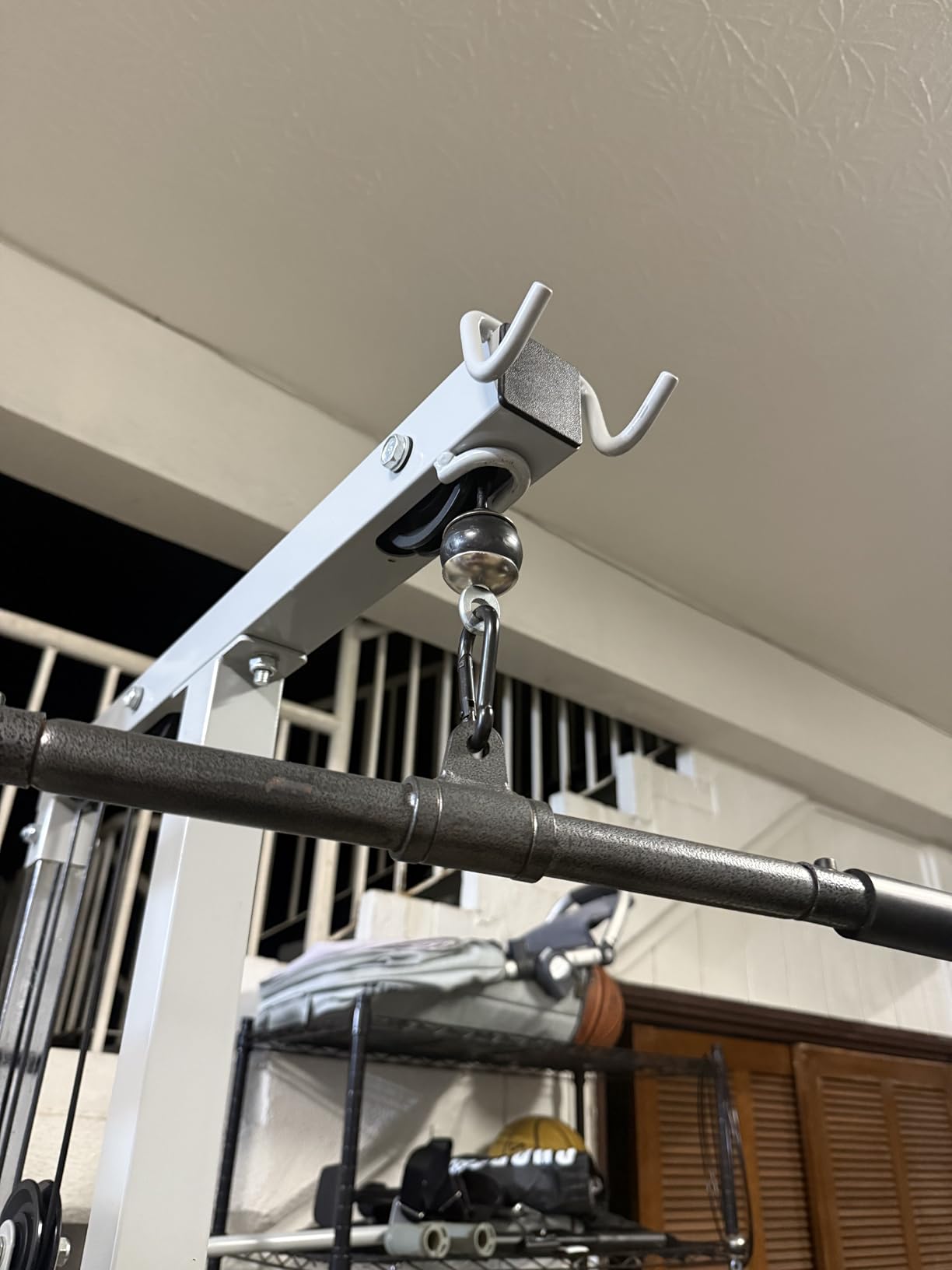
Assembly is straightforward with clear written instructions, which is a refreshing change from picture-only guides. Most users report completing the build in under 90 minutes. The anti-slip foot board keeps your feet planted during rows, and the included additional pulley cable gives you routing options for different exercises.
The main issue users report is the plate holder bars slipping when you are changing plates. This is annoying but not dangerous, and can be mitigated by tightening the collars securely. A few users also received missing parts, though Yes4All customer service generally resolves these issues quickly. For the price, this is a solid choice for focused lat and row training.
Who Should Buy the Yes4All LAT Machine
If your primary goal is lat pulldowns and seated rows, the Yes4All delivers excellent value. The multiple seat and knee pad adjustments make it work for a wide range of user heights, which is great for households where multiple people share the machine.
It is also a good entry point for beginners who want cable training without committing to a wall-mounted installation. The freestanding design means you can set it up anywhere and move it if needed.
Who Should Skip It
Advanced lifters who need heavy weight for compound movements may find the stability lacking compared to heavier, more expensive units. If you want cable crossovers or bilateral pressing movements, the single-tower design will not support them.
Anyone looking for a do-it-all machine should consider one of the all-in-one options on this list instead. The Yes4All is focused on pulldowns and rows, and it does those well, but it is not a full cable crossover replacement.
8. Goimu LS01 LAT Pulldown Machine – 3-in-1 Pulley Stations with AB Crunch
- 3-in-1 pulley stations for full body workout
- Pro-grade attachments included
- Ergonomic padded seat with 3 height adjustments
- Rock-solid 2mm thick steel construction
- Space-saving 3.12 sq.ft footprint
- Not Prime eligible
- Total pull length about 5 feet
- May be clunky for taller users over 6 feet
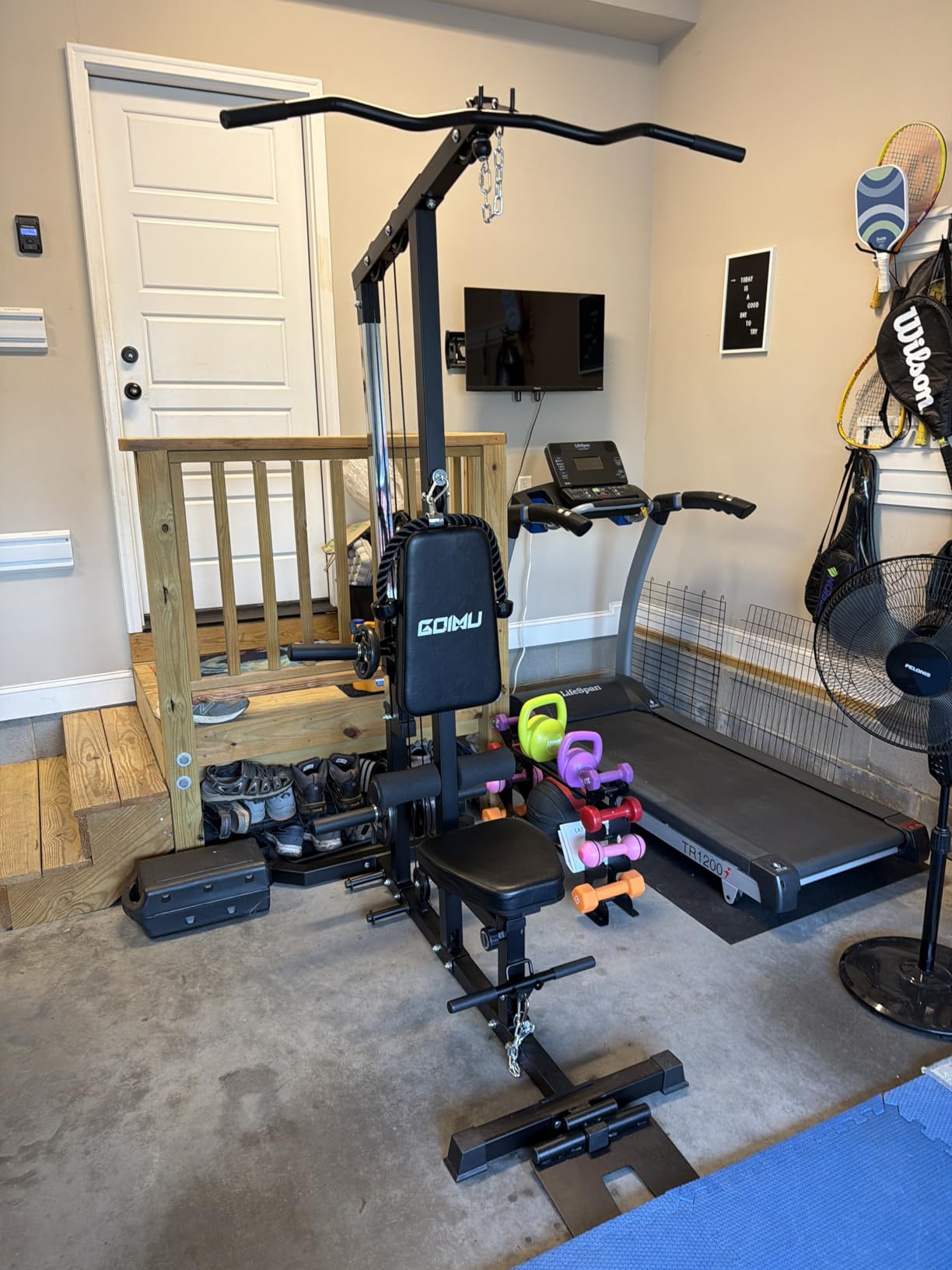
The Goimu LS01 takes a different approach by adding an AB crunch station to the standard lat pulldown and cable row setup. That third station gives you a full core training option without needing a separate machine, which is a smart space-saving move for home gyms. The 2mm thick steel tubing supports up to 730 pounds, making it one of the highest-capacity freestanding options in its price range.
I like that Goimu includes a comprehensive set of attachments: a lat bar, cable bar, band pegs, tricep rope, and the AB crunch handle. The padded seat adjusts to three heights and the manufacturer claims it fits users from 5 foot 2 to 6 foot 4. In practice, users closer to 6 feet and above report some clunkiness with cable travel length, which measures about 5 feet total.
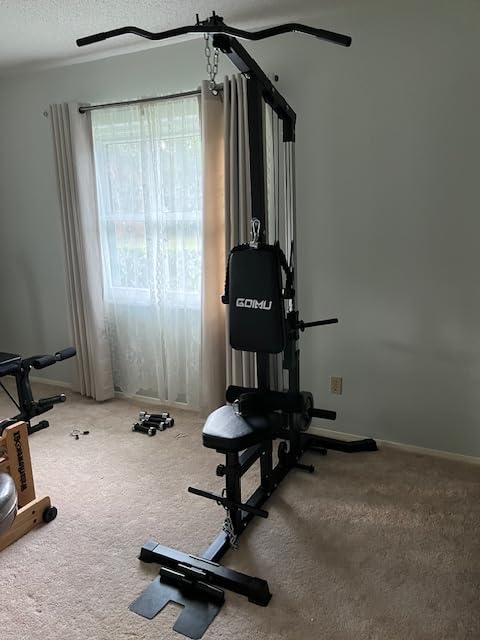
The 3.12 square foot footprint is impressively small for a machine that offers three exercise stations. The detachable weight sleeve works with both 1-inch and 2-inch plates, so you can use whatever you already own. Assembly is manageable in about an hour with basic tools.
The AB crunch station is a legitimate addition, not a gimmick. You anchor your feet under the leg hold-down and use the cable resistance for weighted crunches. It adds variety to your core training that you normally only get at a commercial gym. However, the total cable pull length of about 5 feet is shorter than some competitors, which limits the stretch on lat pulldowns for taller users.
Who Should Buy the Goimu LS01
Anyone who wants core training built into their cable machine will appreciate the LS01. The AB crunch station adds genuine exercise variety without increasing the footprint. It is also a strong pick for beginners and intermediate lifters who want a full-body cable setup in minimal space.
The generous included attachments mean you do not need to buy extras separately. If you already own weight plates, this machine is ready to go out of the box.
Who Should Skip It
Taller users over 6 feet should test the cable travel length before committing. The 5-foot pull may not provide a full stretch on lat pulldowns or seated rows, which reduces exercise effectiveness for your body type.
Advanced lifters who need smooth, high-end pulley performance should consider spending more on a machine with better stock pulleys. The LS01 is functional but the pulleys are basic for the price range.
9. Eonfit E1 2.0 Wall Mounted Cable Machine – 3D Free Motion Arms with 33 Height Settings
- Ultra-smooth dual pulley system
- Double 3D free motion adjustable arms
- 33 height settings for versatile workouts
- 5-year warranty on main frame
- Excellent customer service
- Plastic pulleys not very smooth (upgrade recommended)
- Assembly can be challenging
- Tight tolerances require precise installation
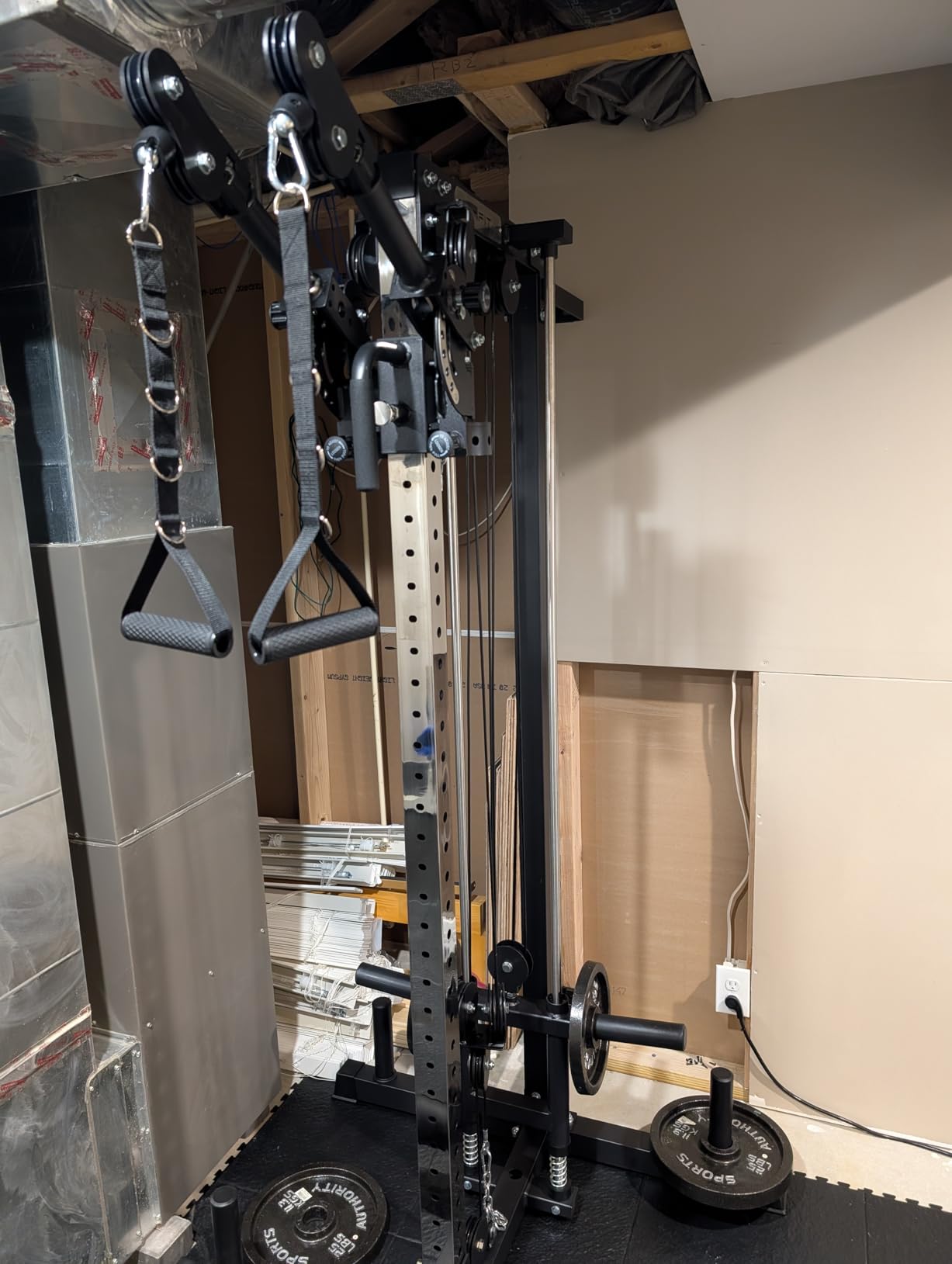
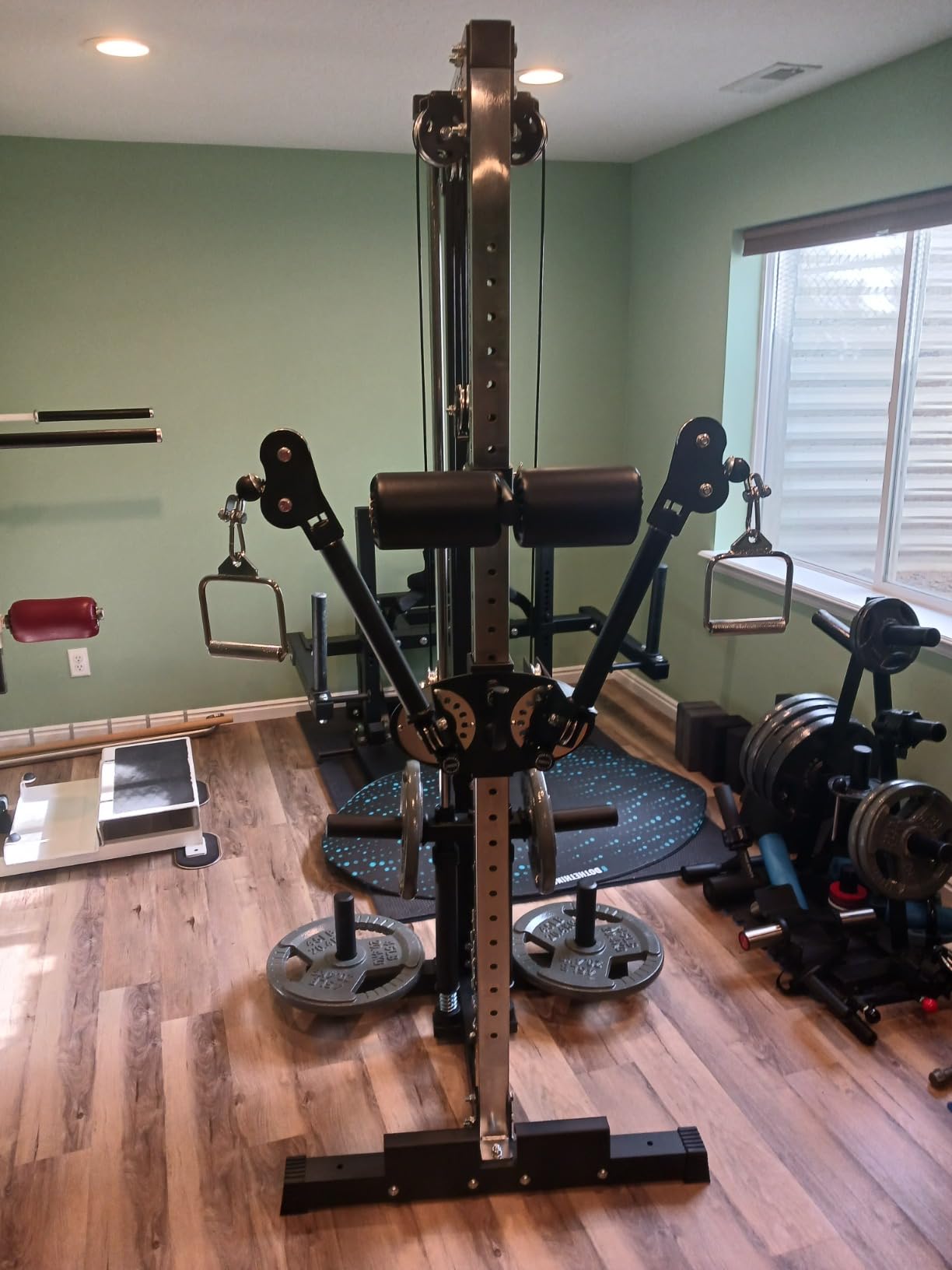
The Eonfit E1 2.0 stands out with its double 3D free motion adjustable arms. Unlike fixed pulley brackets that only move up and down, these arms articulate in multiple directions, giving you a more natural feel during exercises like cable crossovers and unilateral movements. The 2:1 strength ratio means you get half the loaded weight as resistance, which is standard for functional trainers.
With 33 height settings, this machine offers more adjustment positions than anything else on this list. Whether you are doing floor-level glute kickbacks or overhead triceps extensions, you can dial in the exact pulley height. The 14-gauge steel frame with 2.3 by 2.3-inch tubing feels substantial and supports up to 800 pounds.
The 5-year warranty on the main frame is one of the longest in this category and speaks to Eonfit’s confidence in their build quality. Customer service gets consistent praise in reviews for being responsive and helpful with replacement parts and setup questions.
The trade-offs are real though. The stock plastic pulleys introduce friction that is noticeable during smooth, controlled movements. Many users report upgrading to aluminum pulleys for a significant improvement. Assembly is also more complex than typical wall-mounted units because the articulating arms have tight tolerances that require precise alignment. Plan for a longer installation session.
Who Should Buy the Eonfit E1 2.0
Lifters who want maximum adjustability will love the 33 height positions and 3D articulating arms. If you do a wide variety of exercises and need precise cable angles for each one, this machine delivers more customization than any competitor at this price.
The 5-year frame warranty also makes it appealing for anyone planning a long-term home gym investment. Eonfit’s customer service reputation adds confidence to that warranty.
Who Should Skip It
If you want smooth operation straight out of the box without modifications, the stock plastic pulleys on the E1 2.0 will disappoint. Plan to spend extra time and money on pulley upgrades if smoothness matters to you.
Those who are not comfortable with precise mechanical assembly should also consider simpler options. The articulating arms add versatility but also add complexity to the installation process.
10. Mikolo Folding Squat Rack with Cable Crossover – 5-in-1 Folding Power Rack with Cable System
- Space-efficient folding design
- All-in-one machine with 5 adjustable function modes
- Dual independent cable crossover system
- 1000 lbs weight capacity
- Over 80 full-body exercises possible
- Mounting hardware only for concrete or brick walls
- Assembly requires patience and basic handiwork
- Some plastic sleeves arrive damaged
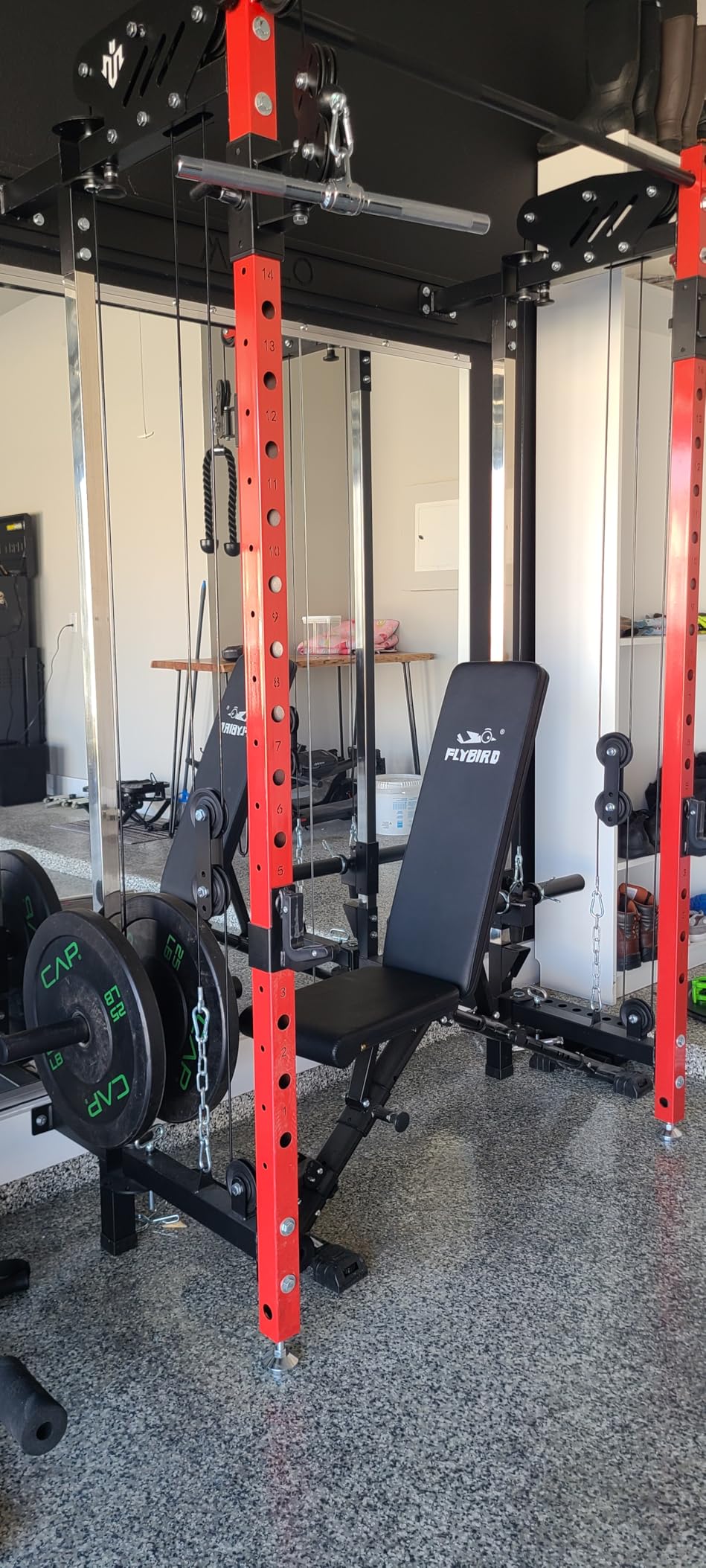
The Mikolo Folding Squat Rack is one of the most clever home gym machines I have seen. It combines a folding power rack, cable crossover, functional trainer, and squat rack into one wall-mounted unit. When you are done training, the arms fold flat against the wall, reducing the footprint from 9.5 square feet down to just 3 square feet. That is a game-changer for garages that double as parking spaces.
The five adjustable function modes cover folded storage, semi-open for basic exercises, full power rack for barbell work, functional trainer for unilateral cable exercises, and cable crossover for bilateral movements. With 15 height positions on the pulley system, you can program over 80 different full-body exercises.
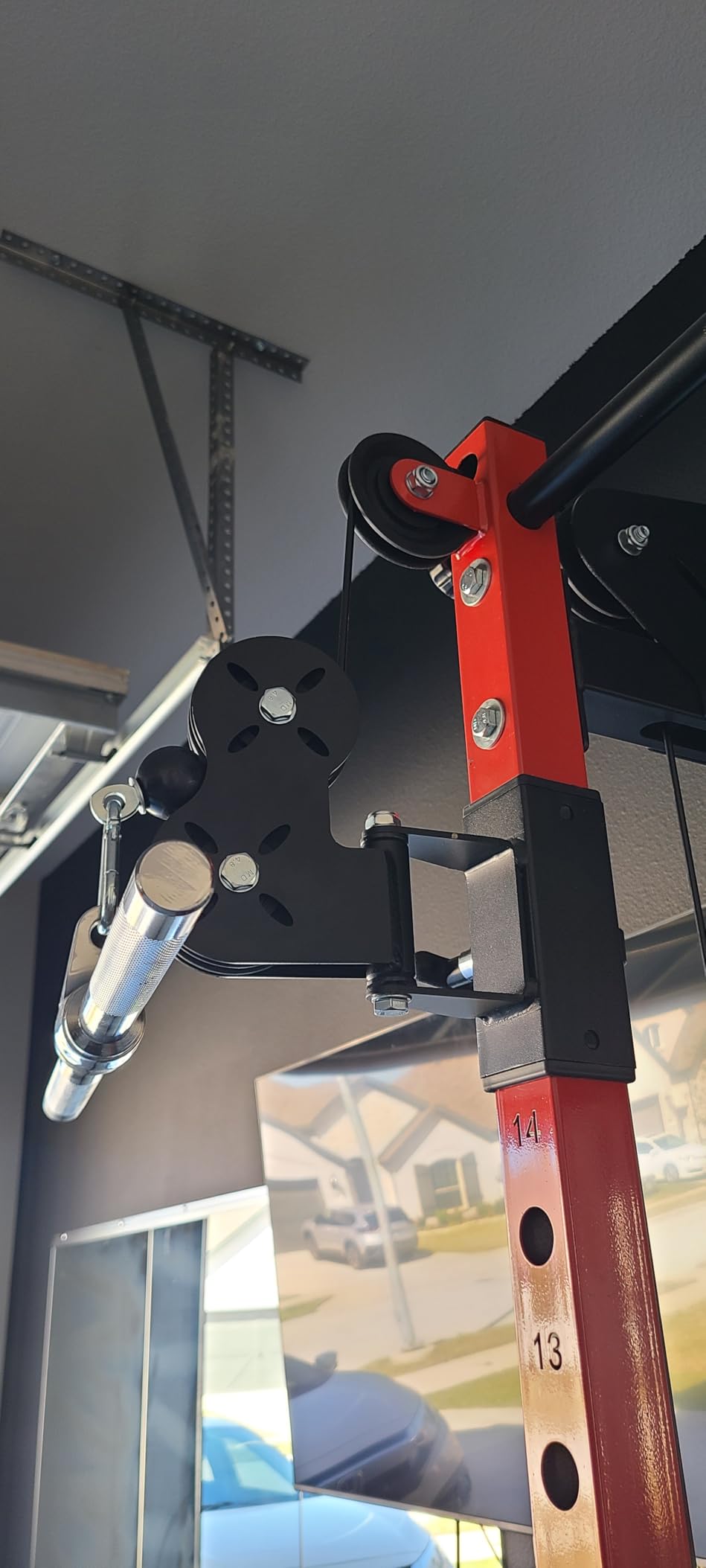
The 1,000-pound weight capacity with 14-gauge steel construction means this rack can handle heavy squats, bench press, and cable work without flexing. The detachable pull-up bar and premium J-hooks add even more functionality. The dual independent cable system lets you train both sides simultaneously or independently.
The catch is installation. The mounting hardware is designed for concrete or brick walls only. If you have a wood-frame wall, you will need to source your own heavy-duty anchors and potentially reinforce the mounting points. Some users also report that plastic sleeves on the carriage arrive damaged, which can cause sticking during the folding motion. A little lubricant usually resolves this.
Who Should Buy the Mikolo Folding Squat Rack
Anyone who needs their gym space to serve double duty will love this machine. If your garage needs to fit a car when you are not working out, the folding design is the solution. It is also ideal for small home gyms where you need a squat rack, cable system, and pull-up bar but only have one wall to work with.
Experienced lifters who already have a barbell and weight plates will get the most value here, since the rack replaces multiple standalone pieces of equipment.
Who Should Skip It
If you do not have a concrete or masonry wall to mount it on, the included hardware will not work and you will need to invest in additional mounting solutions. This is not a freestanding unit, so it absolutely requires wall mounting.
Beginners who do not plan to use the barbell squat rack functionality may be better served by a dedicated cable machine that costs less and offers a simpler setup. The folding mechanism is impressive but adds complexity you may not need.
11. SunHome Smith Machine – 3-in-1 Smith Machine with Cable Crossover
- 3-in-1 system combining Smith Machine
- Squat Rack
- and Cable Crossover
- Patented butterfly chest station
- Auto-lock safety hooks for solo lifting
- Built-in storage for plates and accessories
- Professional rolling bearing pulley system
- Very heavy at 410 lbs requiring help to move
- Assembly takes 4 to 8 hours with help
- Ships in multiple boxes
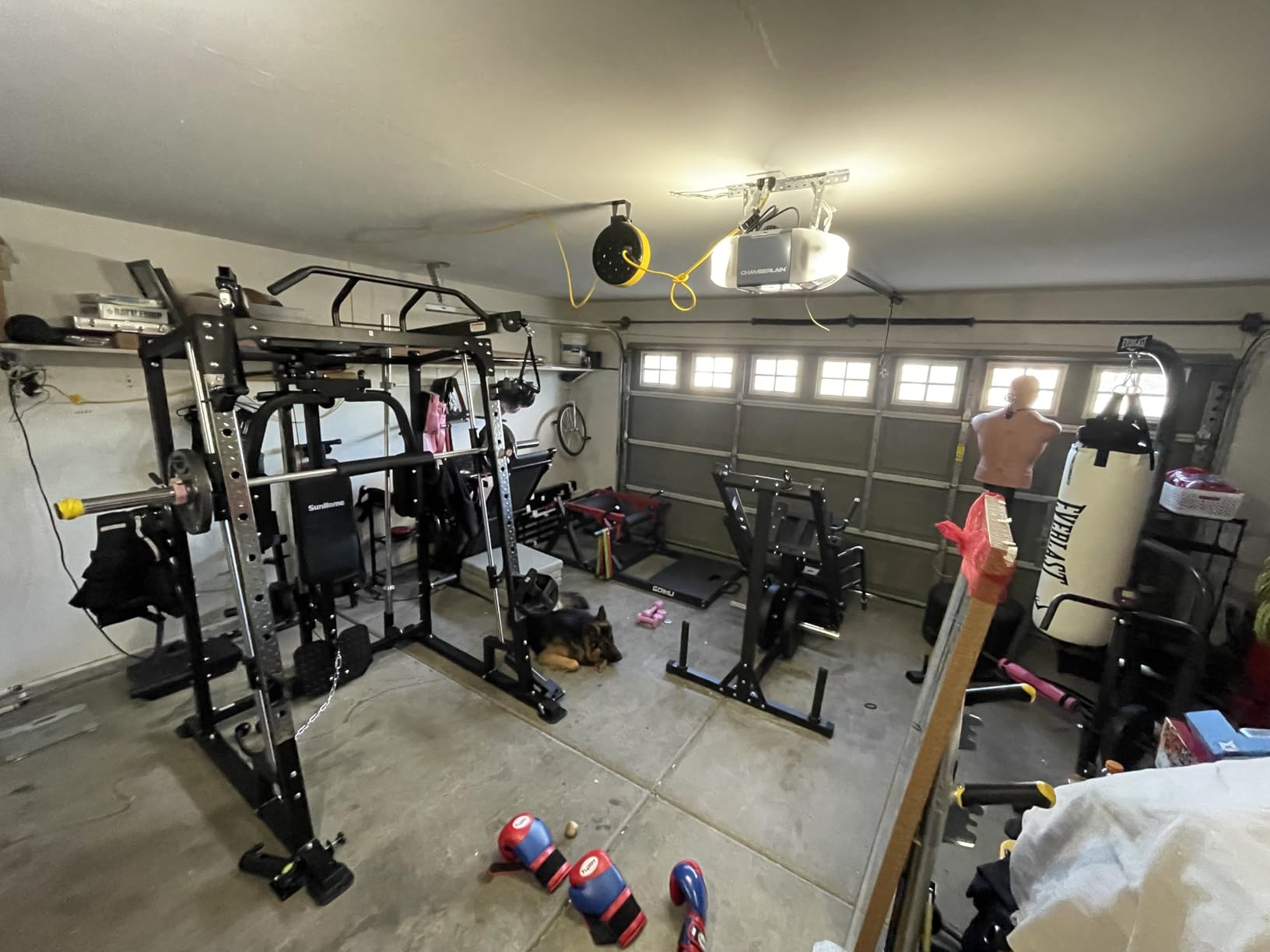
The SunHome Smith Machine is a full home gym in one unit. It combines a Smith machine with auto-lock safety hooks, a squat rack, a cable crossover system, and a patented butterfly chest station for cable flyes. At 410 pounds, this thing is built to stay put, and the professional rolling bearing pulley system is smoother and quieter than anything else at this price point.
I was particularly impressed by the auto-lock safety hooks on the Smith bar. When you twist the bar during a bench press or squat, it locks into place instantly. This makes solo lifting genuinely safe without needing a spotter. The patented butterfly chest station lets you do cable flyes from a seated position, which is an exercise normally reserved for gyms with dedicated pec deck machines.
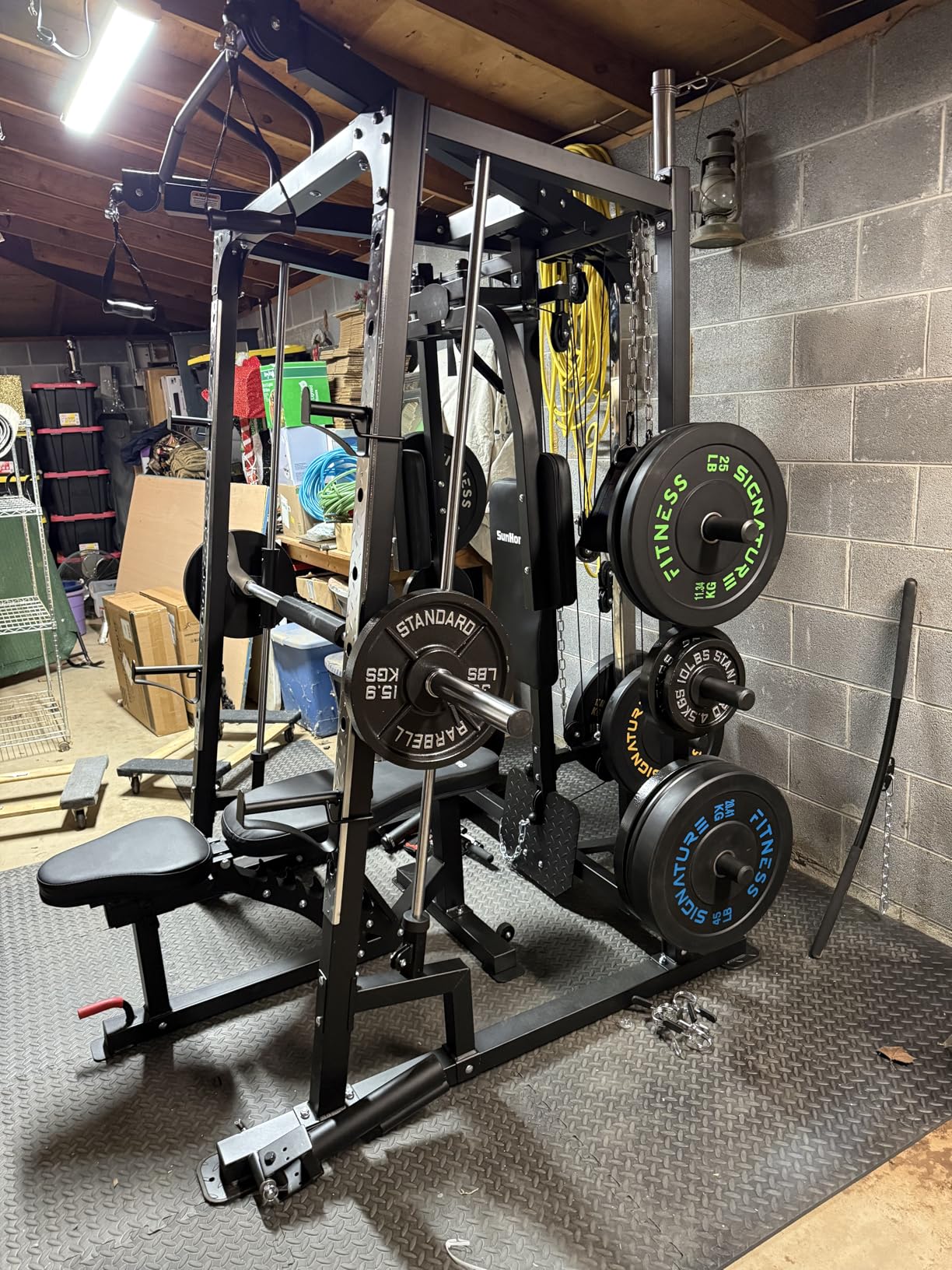
Storage is well thought out with six weight plate storage posts, one barbell storage post, and accessory hooks. Everything has a place, which keeps your gym organized. The 2mm thickened steel construction gives the whole unit a commercial feel that inspired confidence during heavy Smith machine squats.
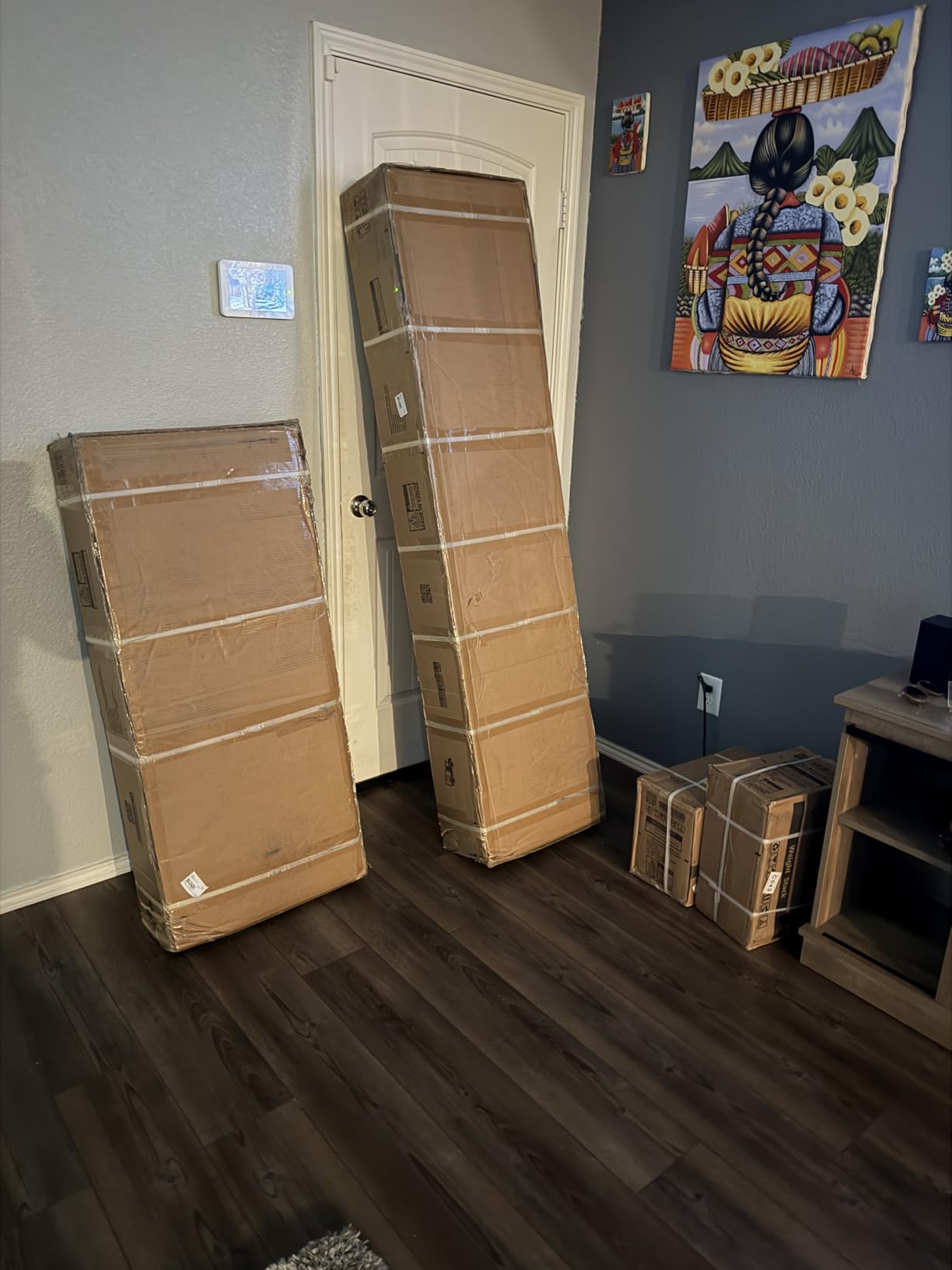
The biggest drawback is assembly. At 410 pounds shipping in multiple boxes, getting everything unboxed and into position is a workout before the real workout begins. Assembly typically takes 4 to 8 hours with two people, and all the tools required are metric. Plan a full weekend for this project. But once it is built, you have a complete home gym that covers every major movement pattern.
Who Should Buy the SunHome Smith Machine
Lifters who train alone and want the safety of a Smith machine combined with cable crossover capability should strongly consider this unit. The auto-lock safety hooks make solo bench press and squat training safe, and the cable system adds all the isolation work you need.
It is also ideal for anyone who wants a complete gym in one footprint. Between the Smith bar, cable crossover, butterfly station, and plate storage, this single unit replaces four or five separate pieces of equipment.
Who Should Skip It
If you do not have a large dedicated space for a permanent gym setup, the SunHome is too big and heavy to be practical. It does not fold, it does not move easily, and once it is set up, you are committed to that floor plan.
The long assembly time and heavy weight also mean this is not a casual purchase. If you are not prepared to spend a full weekend building it and you do not have a helper, look at simpler freestanding or wall-mounted options instead.
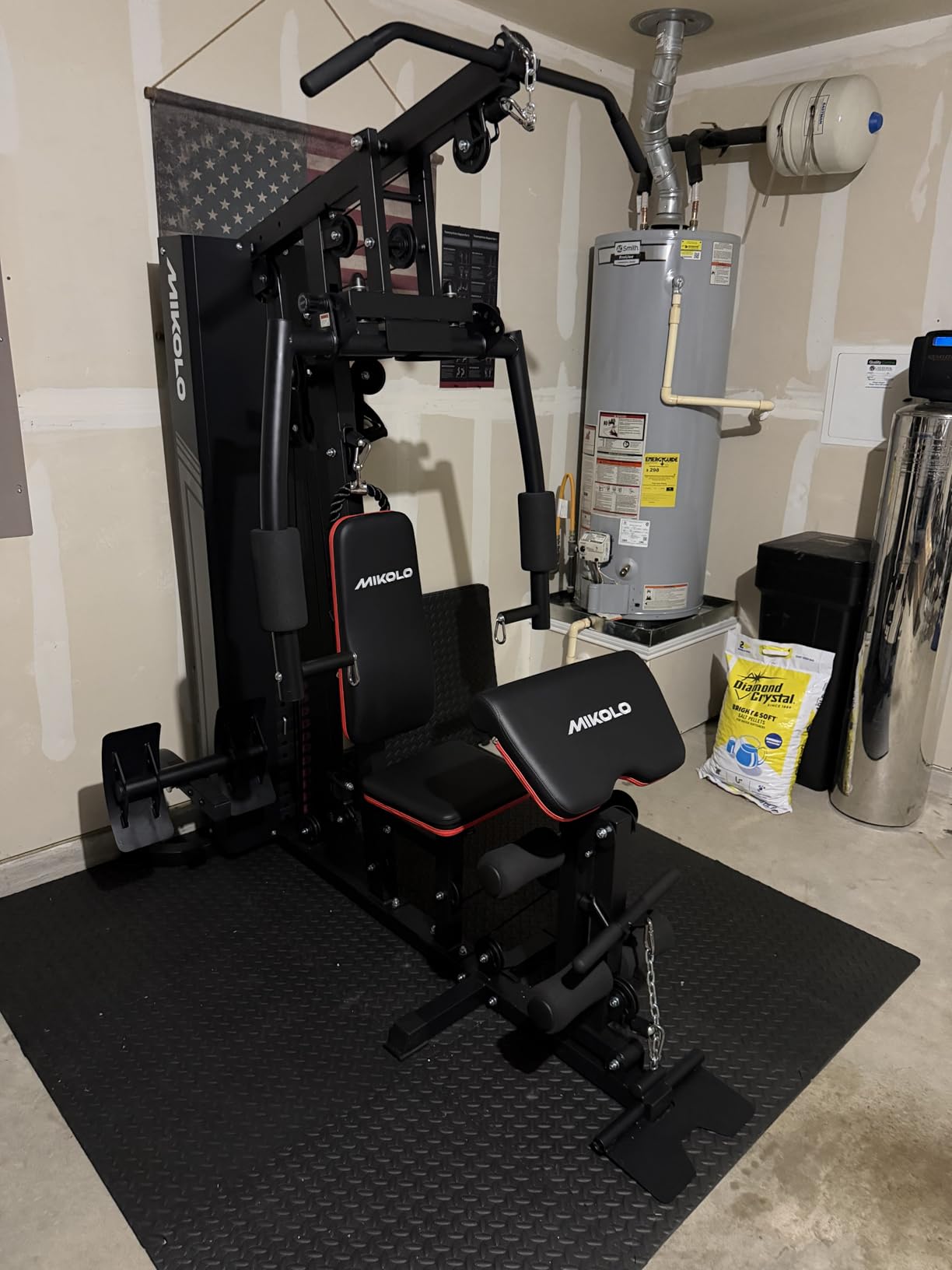
12. Mikolo Home Gym Workout Station – All-in-One with 150 lb Weight Stack and 90+ Exercises
- All-in-one machine with 90+ exercise options
- 14-gauge steel with sturdy construction
- 150 lb weight stack for supersets and dropsets
- Removable preacher curl and leg press attachments
- Excellent customer service from Mikolo
- May be too small for users taller than 6 feet 1 inch
- Seat and backrest use pressboard with limited support
- Leg press position is awkward and close to machine
The Mikolo Home Gym Workout Station is the closest thing to a commercial gym machine you can put in your house. The 150 lb selectorized weight stack with 12 adjustable levels lets you change resistance with a pin pull, which makes supersets and drop sets fast and convenient. No loading and unloading plates between sets.
The exercise variety is staggering. Over 90 movements covering pec fly, lat pulldown, low row, chest press, leg extension, leg press, preacher curl, calf training, seated row, and mid row. The high, mid, and low pulley positions combined with the chest press and fly arms give you a full-body workout without needing any additional equipment.
The professional bearing cable bar reduces wrist stress during pressing movements, which is a thoughtful touch. The removable preacher curl pad and leg press accessories let you customize the setup for your workout. Mikolo includes D-handles, a short cable bar, lat pulldown bar, tricep rope, and a chain attachment, so you have everything you need from day one.
The main limitations are height-related. Users above about 6 feet 1 inch report that the machine feels cramped, particularly on lat pulldowns and the leg press station. The seat and backrest use pressboard padding that some users find insufficient for heavy use. And the leg press position sits close to the machine, which creates an awkward angle for some body types. But Mikolo’s customer service receives consistent praise for being responsive and helpful.
Who Should Buy the Mikolo Workout Station
Anyone who wants the convenience of a selectorized weight stack in a compact all-in-one package will love this machine. The pin-select weight changes make it perfect for circuit training, supersets, and anyone who wants fast transitions between exercises.
It is also a strong choice for beginners who want guided exercise options. The included movement guide and exercise sheet help you build a complete program without needing to hire a trainer. The lifetime frame warranty adds long-term confidence.
Who Should Skip It
Tall users over 6 feet 1 inch will likely find the machine uncomfortable for multiple exercises. The compact dimensions that make it space-efficient also limit the range of motion for longer limbs.
Strong lifters who need more than 150 lbs of resistance for pressing and pulling movements will outgrow the weight stack quickly. There is no option to add plates beyond the built-in stack, so the 150 lb limit is hard-capped.
What to Consider When Buying a Cable Machine for Your Home Gym
Choosing the right cable machine comes down to understanding your space, budget, and training goals. Here are the key factors that separate a great purchase from a frustrating one.
Cable Ratio: 1:1 vs 2:1 vs 4:1
The cable ratio determines how much resistance you feel relative to the loaded weight. A 1:1 ratio means 100 lbs on the stack or plates gives you 100 lbs of resistance. A 2:1 ratio means 100 lbs loaded gives you 50 lbs at the handle, but with twice the cable travel distance. Most functional trainers use a 2:1 ratio because it provides smoother movement and longer range of motion for isolation exercises. If you want to go heavy on rows and pulldowns, look for a 1:1 or switchable ratio like the Goimu WM1 offers.
Weight Stack vs Plate Loaded
Selectorized weight stacks like those on the XMark, Inspire FTX, and Mikolo Workout Station let you change resistance instantly by moving a pin. This is ideal for supersets, drop sets, and circuits where speed matters. Plate-loaded machines like the Mikolo M-G3 and ER KANG require you to physically add and remove weight plates, which takes longer but gives you unlimited resistance potential since you can keep adding plates. If you already own a set of plates, a plate-loaded machine saves you money.
Wall-Mounted vs Freestanding
Wall-mounted cable stations like the Mikolo M-G3, Goimu WM1, and ER KANG save floor space by mounting to your wall studs or masonry. They typically cost less because they use your wall for structural support instead of a heavy freestanding base. Freestanding units like the XMark, Inspire FTX, and Yes4All do not require wall mounting and can be positioned anywhere, but they consume more floor space and are harder to move once positioned.
Space and Footprint Requirements
Before buying, measure your available space and add at least 2 feet of clearance on each side for cable movement. The smallest options on this list are the wall-mounted units with footprints under 4 square feet. The largest, like the SunHome Smith Machine at 65.7 by 80.1 inches, need a dedicated room or garage bay. Also consider ceiling height, since most cable towers stand between 78 and 87 inches tall.
Build Quality and Warranty
Look for 11 to 14-gauge steel construction, nylon-coated cables with at least 2,000-pound tensile strength ratings, and warranties that cover the frame for at least a year. The Eonfit E1 2.0 stands out with a 5-year frame warranty. Cable pulleys are worth paying attention to as well. Many budget machines use plastic pulleys that create friction, and upgrading to aluminum pulleys is a common and worthwhile modification.
Attachments and Accessories
Most machines include basic attachments like a lat bar, tricep rope, and sometimes D-handles. More comprehensive accessory kits like those included with the Inspire FTX and Mikolo Workout Station add significant value. Consider what exercises you want to do and whether the included attachments cover them, or if you will need to buy extras like ankle straps, curl bars, or rope handles separately.
FAQs
What is the best cable machine for home gyms?
The XMark Functional Trainer is the best overall cable machine for home gyms, earning our Editor’s Choice for its commercial-grade build, dual 200 lb weight stacks, 19 cable positions, and 4.8-star rating from over 840 reviews. For budget shoppers, the Mikolo G2 LAT Pulldown Machine delivers excellent value with a 450 lb capacity and compact 10ft footprint. If you have limited space, the Mikolo M-G3 Wall Mount Cable Station offers 18 adjustable positions in a wall-mounted design.
Are cable machines good for home gyms?
Yes, cable machines are excellent for home gyms because they provide constant tension throughout the entire range of motion, which free weights cannot replicate at every angle. A single cable machine can replace multiple pieces of equipment by allowing you to do lat pulldowns, seated rows, cable crossovers, triceps pushdowns, face pulls, biceps curls, and dozens of other exercises. They are also space-efficient compared to buying separate machines for each movement.
How much space do I need for a cable machine?
Wall-mounted cable stations need as little as 3 to 4 square feet of floor space plus a solid wall for mounting. Freestanding units typically require 10 to 40 square feet depending on the model. Always add at least 2 feet of clearance on each side for cable movement and exercise range of motion. Most cable towers are between 78 and 87 inches tall, so ceiling height is also a consideration.
What is the difference between a functional trainer and a cable machine?
A functional trainer is a specific type of cable machine with two independent weight stacks and adjustable pulleys on each side, allowing bilateral and unilateral exercises with separate resistance on each arm. A cable machine is a broader term that includes any equipment using a cable and pulley system for resistance, including single-tower lat pulldown machines, wall-mounted cable stations, and cable crossover machines. All functional trainers are cable machines, but not all cable machines are functional trainers.
Can you build muscle with a cable machine at home?
Absolutely. Cable machines provide constant tension through the full range of motion, which is highly effective for muscle hypertrophy. You can target every major muscle group including chest (cable flyes, crossovers), back (lat pulldowns, rows), shoulders (lateral raises, face pulls), arms (curls, pushdowns), and legs (glute kickbacks, cable pull-throughs). The key is progressive overload, which you achieve by increasing the weight on the stack or plates over time, just like with free weights.
Final Thoughts on the Best Cable Machines for Home Gyms
The best cable machines for home gyms in 2026 cover a wide range of budgets and spaces. For the absolute best experience, the XMark Functional Trainer delivers commercial-grade quality with smooth operation and 19 cable positions. If wall space is all you have, the Mikolo M-G3 and ER KANG offer outstanding value in wall-mounted formats. Budget-conscious buyers get real capability from the Mikolo G2 and Yes4All lat machines without breaking the bank.
Think about your wall situation, your available floor space, and whether you prefer the speed of a weight stack or the unlimited potential of plate loading. Any of the 12 machines on this list will give you years of effective cable training in your home gym. Pick the one that matches your setup and start training.