
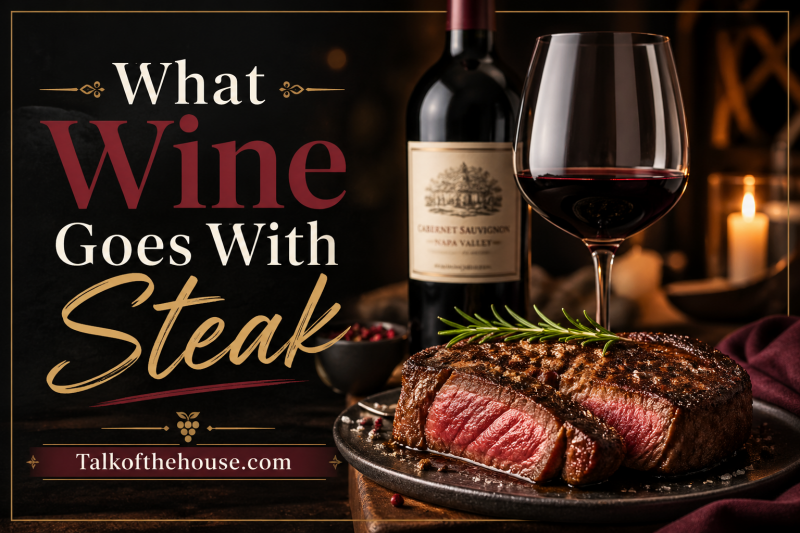
Steak pairs best with dry red wines. Rich, fatty cuts like ribeye call for full-bodied wines with high tannins—such as Cabernet Sauvignon or Syrah—that cut through the fat. Leaner cuts like filet mignon pair beautifully with lighter reds like Pinot Noir or Merlot that complement without overpowering. For the perfect match, align the wine’s body to the steak’s marbling.
I have hosted countless dinner parties over the years, and nothing sparks conversation quite like the sizzle of a perfectly seared steak accompanied by a well-chosen bottle of wine. The question of what wine goes with steak comes up at nearly every gathering I host. Guests want to know the secret behind that magical combination that makes both the beef and the wine taste better than they would alone.
The answer lies in a beautiful scientific dance between tannins and fat. Tannins are naturally occurring compounds in red wine that create that slightly dry, astringent sensation on your palate. When these tannins meet the rich intramuscular fat in a beautifully marbled steak, they bind together and soften each other. The fat mellows the wine’s harshness while the wine cuts through the meat’s richness, leaving your palate refreshed and ready for the next bite.
Table of Contents
Quick Reference: Wine and Steak Pairing at a Glance
Before diving into the details, here is a quick cheat sheet you can reference when planning your next dinner party:
- Ribeye: Cabernet Sauvignon, Syrah, Barolo, Zinfandel
- Filet Mignon: Pinot Noir, Merlot, Chianti Classico, Cote-Rotie
- New York Strip: Cabernet Sauvignon, Northern Rhone Syrah, Malbec
- Sirloin: Tempranillo, Sangiovese, Carmenere, Malbec
- Porterhouse/T-Bone: Bordeaux blends, Chateauneuf-du-Pape, Cabernet Franc
- Flank/Skirt: GSM blends, Dolcetto, Mencia, Blaufrankisch
Save this list to your phone or print it for your kitchen. I keep a copy tucked inside my recipe binder for quick access when menu planning.
Why Wine and Steak Work So Well Together
The marriage between wine and steak is not just tradition—it is chemistry. Understanding why certain combinations work helps you make better choices and even improvise when your preferred bottle is not available.
The Tannin-Fat Relationship
Tannins in red wine come from grape skins, seeds, and stems. These compounds create structure and that characteristic drying sensation in your mouth. When you bite into a fatty ribeye, the fat coats your tongue and palate. A tannic wine binds with that fat, essentially scrubbing your palate clean between bites. This refreshing effect keeps every bite tasting as vibrant as the first.
Highly marbled cuts like ribeye and porterhouse demand wines with assertive tannins. Leaner cuts like filet mignon or sirloin need less aggressive tannins, which is why lighter reds work beautifully with them. Pair a delicate cut with an overpowering wine, and you will mask the meat’s subtle flavors.
Matching Body to Marbling
Wine body refers to the weight and fullness you feel in your mouth. Full-bodied wines feel rich and coating, while light-bodied wines feel more delicate and refreshing. The rule is simple: match the wine’s body to the meat’s richness.
A ribeye with abundant intramuscular fat stands up to the heft of a Napa Valley Cabernet Sauvignon or a Northern Rhone Syrah. A tender filet mignon, despite its luxurious texture, has less fat and pairs more gracefully with the medium body of a Burgundy Pinot Noir or a Tuscan Chianti Classico.
Acidity Cuts Through Richness
Beyond tannins, acidity plays a crucial role. Wines with bright acidity slice through rich, buttery flavors and reset your palate. This is why even full-bodied wines with good acidity, like Barolo or Chianti, work so well with steak despite having moderate tannin levels.
Steak Cut by Cut: The Perfect Wine for Each
Not all steaks are created equal, and neither are all red wines. Here is my cut-by-cut breakdown based on years of entertaining and plenty of trial and error.
Ribeye and Bone-In Ribeye
The ribeye is the king of marbling. With its abundant intramuscular fat and rich, beefy flavor, this cut demands a wine that can stand toe-to-toe with its intensity. You need full-bodied wines with plenty of tannins and structure.
Cabernet Sauvignon is the classic choice for good reason. Wines from Napa Valley, Bordeaux, or Chile’s Maipo Valley bring blackcurrant, cedar, and often a touch of vanilla from oak aging that complements the char on a grilled ribeye. I reach for Cabernet when I want a safe, crowd-pleasing pairing.
Syrah and Shiraz offer a peppery, smoky alternative. Northern Rhone wines like Cote-Rotie, Cornas, or Saint-Joseph deliver elegance with their bacon-fat and black olive notes. Australian Shiraz from Barossa Valley brings bolder blackberry and chocolate flavors that match a heavily charred steak.
Barolo and other Nebbiolo-based wines provide a more adventurous pairing. These Italian gems offer high acidity and firm tannins with notes of tar, roses, and cherries. They age beautifully and bring an Old World sophistication to your ribeye dinner.
Zinfandel works wonderfully for barbecued or spice-rubbed ribeyes. The wine’s jammy blackberry and briary flavors, often with a touch of sweetness, complement smoky, caramelized crusts.
Filet Mignon (Tenderloin)
The filet mignon is the most tender cut but also among the leanest. Its subtle flavor and buttery texture call for wines that complement rather than overwhelm. You want medium-bodied reds with moderate tannins and elegant profiles.
Pinot Noir is my go-to for filet. Oregon’s Willamette Valley and California’s Sonoma Coast produce beautiful examples with red cherry, mushroom, and earthy notes. Burgundy offers the benchmark with complex, silky wines that elevate an elegant filet dinner.
Merlot provides a plush, fruit-forward alternative. Washington State and Chile produce excellent value Merlots with plum, chocolate, and soft tannins that wrap around a tender filet without masking its delicate flavor.
Chianti Classico brings Italian flair with its bright acidity and tart cherry notes. The wine’s savory, herbal qualities complement a filet served with mushroom sauce or herb butter.
Cote-Rotie and other Northern Rhone Syrah-based wines offer a step up in intensity while maintaining elegance. Their violet, smoked meat, and olive notes create a luxurious pairing for special occasion filets.
New York Strip
The New York Strip strikes a beautiful balance between tenderness and beefy flavor. It has moderate marbling—more than filet but less than ribeye—making it one of the most versatile cuts for wine pairing.
Cabernet Sauvignon works beautifully here, perhaps even better than with ribeye because the strip’s leaner profile lets the wine’s complexity shine. I particularly love Bordeaux blends with strip steak—the Merlot and Cabernet Franc in the mix add silkiness.
Northern Rhone Syrah brings an earthier, more savory dimension. The strip’s firmer texture stands up to these wines while their olive and herb notes complement the meat’s clean beef flavor.
Malbec from Argentina offers incredible value and a plush, fruit-forward profile. These wines bring blackberry, plum, and sometimes a touch of sweetness that works wonderfully with the caramelized exterior of a pan-seared strip.
Zinfandel from California or Primitivo from Italy can handle strip steaks with bold seasoning or barbecue sauce. The wines’ jammy intensity matches the sweet-smoky flavors.
Sirloin
Sirloin is leaner and more budget-friendly, with a robust beef flavor that makes it perfect for weeknight dinners. Because it lacks the fat of pricier cuts, you want wines that enhance rather than compete.
Tempranillo-based wines like Rioja Reserva or Ribera del Duero are fantastic choices. Spanish Tempranillo offers strawberry, tomato, and leather notes with moderate tannins and refreshing acidity that complements sirloin’s lean profile.
Sangiovese from Chianti or Brunello di Montalcino brings tart cherry, dried herbs, and earthy notes. The high acidity cuts through any remaining fat while the savory qualities enhance the meat’s flavor.
Malbec works well here too, especially Argentine versions that offer plush fruit without overwhelming tannin structure. Look for wines from Mendoza in the $15-20 range for excellent value.
Carmenere from Chile provides an interesting alternative with its bell pepper, black fruit, and herbaceous notes. It is often overlooked but offers great value and a distinctive flavor profile.
Porterhouse and T-Bone
These showstoppers combine two textures in one cut—the tenderloin on one side of the bone and the strip on the other. You need wines that can handle both the lean tenderloin and the meatier strip.
Bordeaux blends are my top recommendation. The combination of Cabernet Sauvignon, Merlot, Cabernet Franc, and sometimes Petit Verdot creates complex, balanced wines with enough structure for the strip and enough elegance for the tenderloin. Look for wines from Saint-Emilion or Pomerol for the right balance.
Chateauneuf-du-Pape and other Grenache-based Rhone blends bring power and finesse. These wines offer garrigue (wild herbs), cherry, and spice notes with smooth tannins that work across the whole cut.
Cabernet Franc from the Loire Valley, particularly Chinon or Saumur-Champigny, provides a lighter but still structured option. These wines bring red fruit, graphite, and herbal notes that complement both sides of the steak.
Budget-Friendly Wine Picks That Impress
Great wine and steak pairings do not require a big budget. I have found excellent options at supermarkets and big box wine stores that deliver impressive quality for under $20.
For Cabernet Sauvignon, look to Chile. Wines from Maipo Valley and Colchagua Valley consistently over-deliver for their price. Brands like Casillero del Diablo, Concha y Toro Marques series, and Santa Rita Reserva offer solid structure and blackcurrant flavors perfect for ribeye.
Argentine Malbec remains the value champion. At $12-18, you can find wines with plush fruit, soft tannins, and enough complexity to pair with any cut. Trapiche, Catena, and Luigi Bosca are reliable producers widely available in the United States.
Spanish Tempranillo from Rioja offers incredible value in the Crianza and Reserva categories. Look for Campo Viejo, Marques de Caceres, or Lan. These wines bring complexity, oak aging, and food-friendly acidity for $15-20.
For Pinot Noir on a budget, Chile’s Casablanca Valley and California’s Central Coast produce respectable options. Mark West, Avalon, and Cono Sur Bicicleta offer drinkable Pinot for $12-15 that works with filet mignon.
Italian Reds like Montepulciano d’Abruzzo, Primitivo from Puglia, and Chianti from reliable co-ops deliver authentic Italian character at friendly prices. Masciarelli, Farnese, and Ruffino are brands you can trust.
Can You Drink White Wine with Steak?
The conventional wisdom says red wine with steak, but rules are made to be broken. White wine can absolutely work with steak, especially certain cuts and preparations.
The key is choosing full-bodied white wines with enough structure and acidity to stand up to beef. Light, delicate whites like Pinot Grigio will be overwhelmed, but bolder options can create surprisingly delicious pairings.
Oaked Chardonnay from California or Burgundy is the most successful white pairing for steak. The wine’s body, often described as creamy or buttery, matches the richness of the meat while the oak and acidity provide enough structure. Look for wines with some age or barrel fermentation.
White Rhone blends like those from Chateauneuf-du-Pape (Roussanne, Grenache Blanc, Marsanne) offer waxy texture, herbal notes, and body that complement leaner cuts like filet mignon or sirloin.
Aged white Rioja made from Viura offers a unique experience. These wines develop nutty, honeyed complexity while maintaining acidity. They pair beautifully with grilled steaks finished with herb butter.
Champagne and sparkling wine work surprisingly well, particularly with lean cuts. The bubbles and high acidity act like scrubbing bubbles on your palate. Blanc de Noirs, made from Pinot Noir grapes, offers extra body and red fruit notes that bridge the gap between white and red.
I particularly enjoy white wine with steak during summer months when a heavy red feels too warming. A chilled, oaked Chardonnay with a grilled sirloin makes for a refreshing and elegant warm-weather dinner.
How Cooking Method Changes Your Wine Choice
How you cook your steak matters almost as much as the cut itself when selecting wine.
Grilling over charcoal or wood introduces smoky flavors that pair beautifully with wines having earthy, savory notes. Syrah, Carmenere, and wines from the Northern Rhone or some Australian Shiraz complement that smoky char.
Pan-searing with butter creates a rich, caramelized crust that calls for wines with bright acidity to cut through the richness. Chianti Classico, Barolo, and high-acid Cabernet Sauvignon work wonderfully.
Reverse searing or slow roasting produces evenly cooked steak with less aggressive char. These gentler cooking methods pair well with more elegant wines like Pinot Noir, Merlot, or medium-bodied blends.
Seasonings and sauces also influence your choice. Peppercorn sauce loves Syrah’s peppery notes. Mushroom sauces call for earthy Pinot Noir or Nebbiolo. Blue cheese demands bold, tannic Cabernet. Chimichurri works with juicy, fruit-forward Malbec or Carmenere.
Frequently Asked Questions
What wines go well with steak?
Steak pairs best with dry red wines. Rich cuts like ribeye work with full-bodied wines such as Cabernet Sauvignon, Syrah, Malbec, and Barolo. Leaner cuts like filet mignon pair better with medium-bodied wines like Pinot Noir, Merlot, and Chianti Classico. The key is matching the wine’s body and tannin level to the steak’s marbling and fat content.
Is steak better with red or white wine?
Steak is traditionally paired with red wine because the tannins in red wine bind with the fat in steak, creating a harmonious balance. However, full-bodied white wines like oaked Chardonnay, white Rhone blends, or aged white Rioja can work well with leaner cuts. Red wine remains the classic choice, especially for richly marbled steaks.
What is the 3-3-3 steak rule?
The 3-3-3 steak rule is a cooking technique, not a wine pairing rule. It refers to cooking steak for 3 minutes on one side, 3 minutes on the other side, and then resting for 3 minutes. This method helps achieve a medium-rare doneness. For wine pairing, remember the different principle: match the wine’s body to the steak’s marbling.
Final Thoughts
Understanding what wine goes with steak opens up a world of delicious possibilities for your dinner table. The principles are simple: match the wine’s body to the meat’s richness, let tannins and fat work their magic together, and do not be afraid to experiment.
I have served Cabernet Sauvignon with ribeye at formal dinner parties and Argentine Malbec with grilled sirloin at casual backyard gatherings. Both were perfect because they honored the fundamental pairing principles while fitting the occasion.
Remember that personal preference trumps any rule. If you love Pinot Noir with your ribeye, that is the right pairing for you. The best wine is always the one you enjoy drinking with the people you care about.
For more entertaining inspiration and food pairing guidance, explore our other food pairing guides here at Talk of the House. Happy pairing in 2026!